

Upgrade für Zugriff auf alle Vokabeln
Erhalten Sie unbegrenzten Zugriff auf alle Vokabeln mit Pro-Mitgliedschaft
Upgrade auf ProÜbersetzung
Vergangenheit
Partizip Perfekt
Dritte Person Singular
Gerundium
Bedeutung
Beispielsatz
Übersetzung Beispielsatz
Synonyme
Antonyme
Kollokationen
Eselsbrücke
Swipe left or right, or use the buttons. Tap image to zoom.
Upgrade für Zugriff auf alle Sätze
Erhalten Sie unbegrenzten Zugriff auf alle Sätze mit Pro-Mitgliedschaft
Upgrade auf ProÜbersetzung Beispielsatz
Wort
Lesson 80Lesson 80 - Maske umschalten
|
Emoji
|
Wort | Images | Übersetzung | Vergangenheit | Partizip Perfekt | Dritte Person Singular | Gerundium | Bedeutung | Beispielsatz | Übersetzung Beispielsatz | Beispielausdruck | Bedeutung Beispielausdruck | Übersetzung Beispielausdruck | Synonyme | Antonyme | Kollokationen | Eselsbrücke |
|---|---|---|---|---|---|---|---|---|---|---|---|---|---|---|---|---|---|
|
#3793
🎮
|
/pleɪ/
verb
(pleɪ)
••••••
|
|
spielen
spielen
••••••
|
played
pleɪd
••••••
|
played
pleɪd
••••••
|
plays
pleɪz
••••••
|
playing
pleɪɪŋ
••••••
|
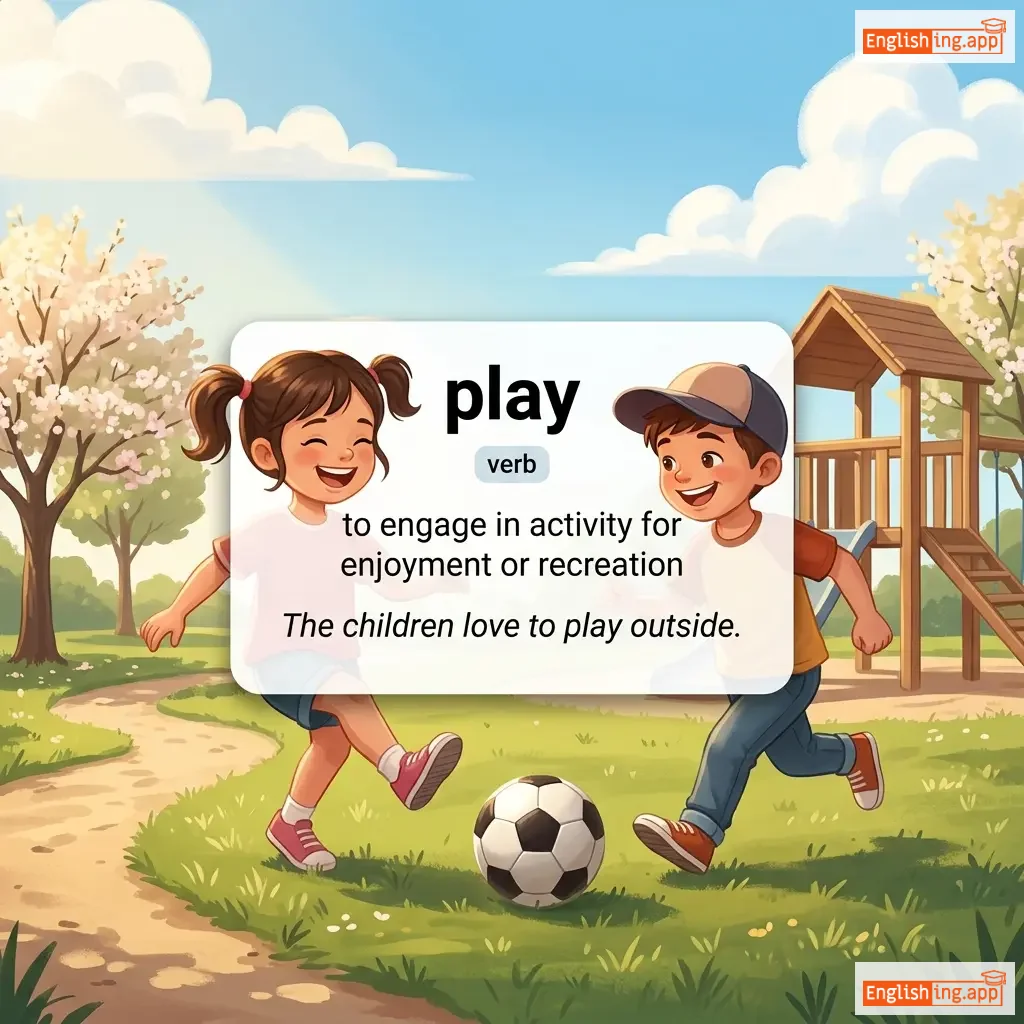
to engage in games or sports; to perform music
••••••
|
Children love to play in the park.
Kinder lieben es, im Park zu spielen.
••••••
|
Kinder lieben es, im Park zu spielen.
Kinder lieben es, im Park zu spielen.
••••••
|
- •••••• | - •••••• | - •••••• |
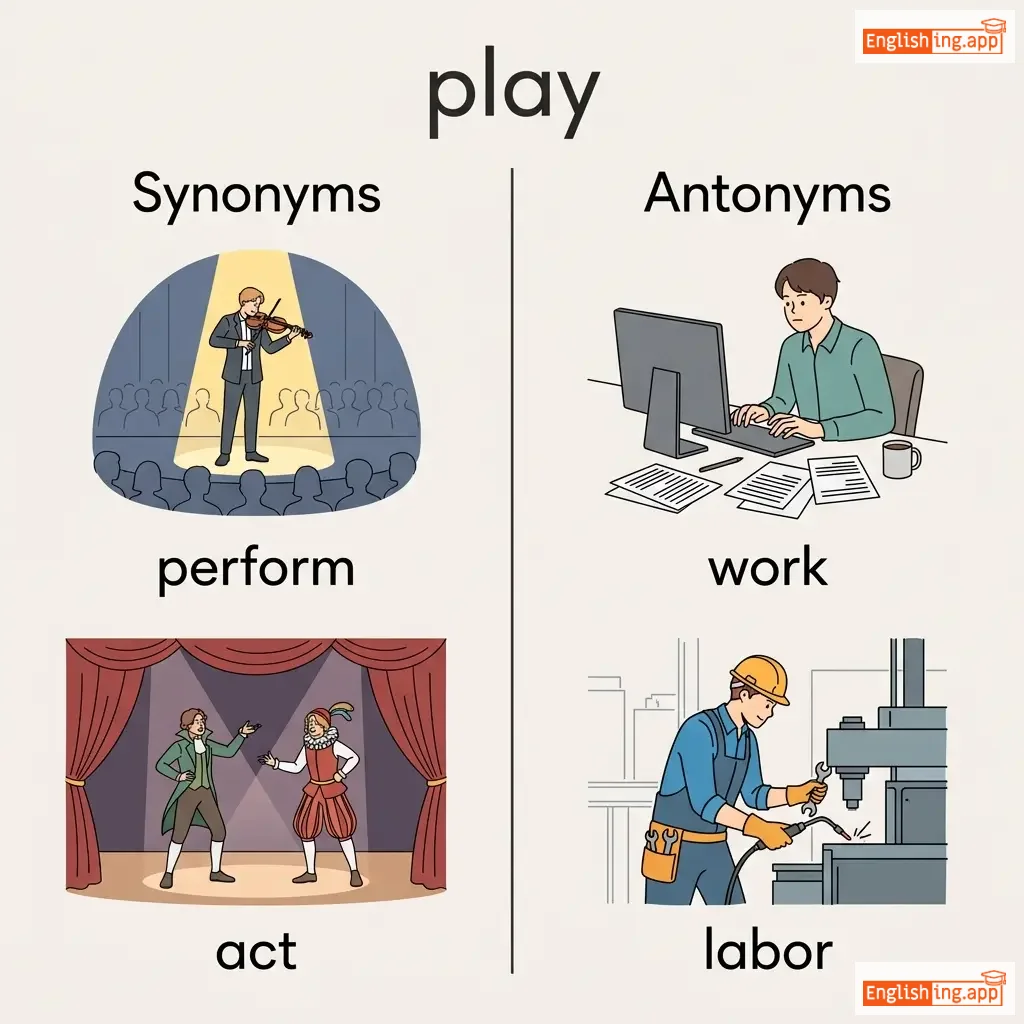
perform, compete, entertain, act
••••••
|
work, study, stop, rest
••••••
|
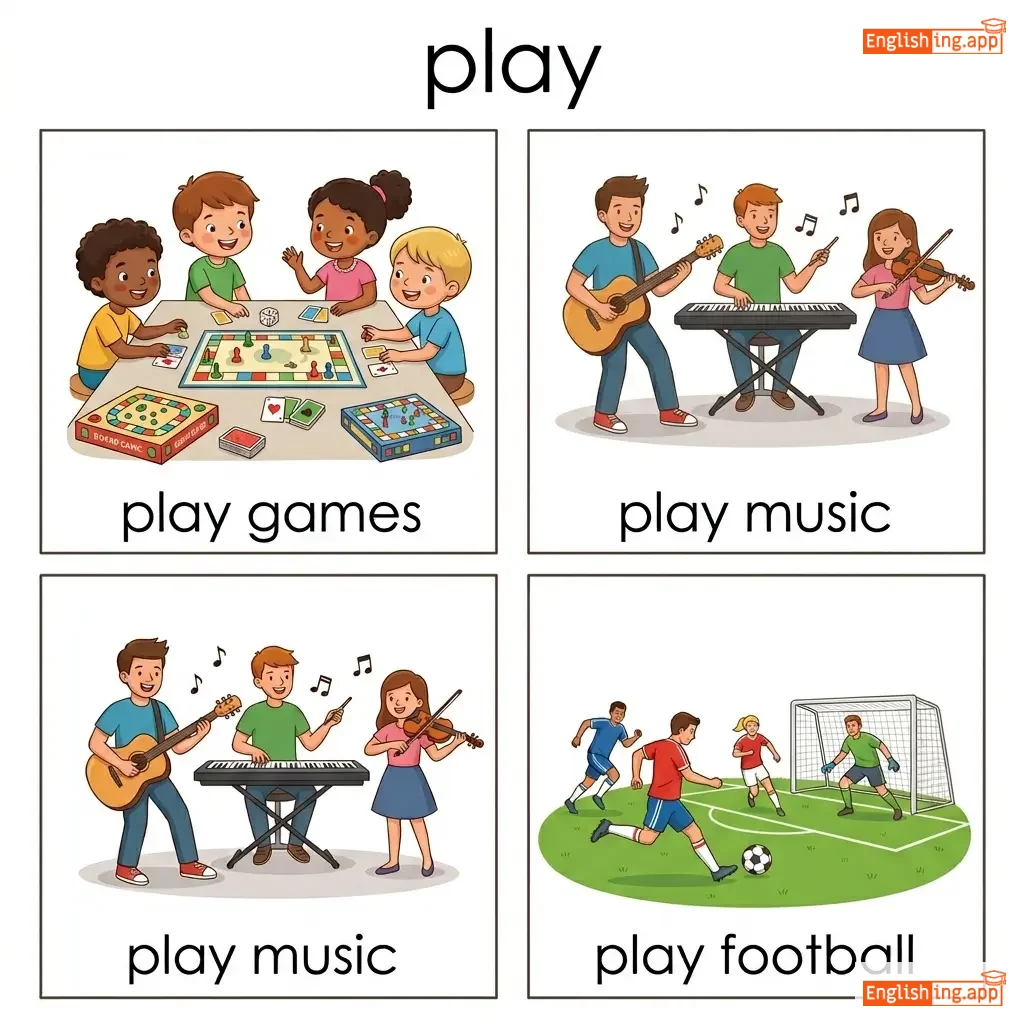
play games, play music, play sports, play together, play outside
••••••
|
Spielen is like play in English, just enjoy like a child.
••••••
|
|
#3794
🏅
|
/ˈpleɪər/
noun
(pleɪər)
••••••
|
- •••••• |
Spieler
spieler
••••••
|
- •••••• | - •••••• | - •••••• | - •••••• |
a person who participates in a game or sport
••••••
|
The player scored the winning goal. |
Der Spieler erzielte das Siegestor.
Der Spieler erzielte das Siegestor.
••••••
|
- •••••• | - •••••• | - •••••• |
athlete, competitor, participant, sportsperson
••••••
|
non-player, spectator
••••••
|
professional player, skilled player, football player, basketball player
••••••
|
Player = Spiel (game) + er (person), ein Spieler ist jemand, der beim Spiel mitmacht
••••••
|
|
#3795
🙏
|
/pliː/
noun
(pli)
••••••
|
- •••••• |
Plädoyer; Antrag; Entschuldigung
Plaedoyer; Antrag; Entschuldigung
••••••
|
- •••••• | - •••••• | - •••••• | - •••••• |
an urgent and emotional request; a defendant's formal response to a criminal charge; an excuse or justification
••••••
|
She made a plea for help during the emergency. |
Sie machte während des Notfalls einen Antrag auf Hilfe.
Sie machte während des Notfalls einen Antrag auf Hilfe.
••••••
|
- •••••• | - •••••• | - •••••• |
appeal, request, petition, entreaty
••••••
|
demand, command, order, refusal
••••••
|
guilty plea, emotional plea, plea bargain
••••••
|
Plea erinnert an 'Bitte, hilf mir'.
••••••
|
|
#3796
🙏
|
/pliːd/
verb
(plid)
••••••
|
|
flehen
flehen
••••••
|
pleaded
plidəd
••••••
|
pleaded
plidəd
••••••
|
pleads
plidts
••••••
|
pleading
plidɪŋ
••••••
|
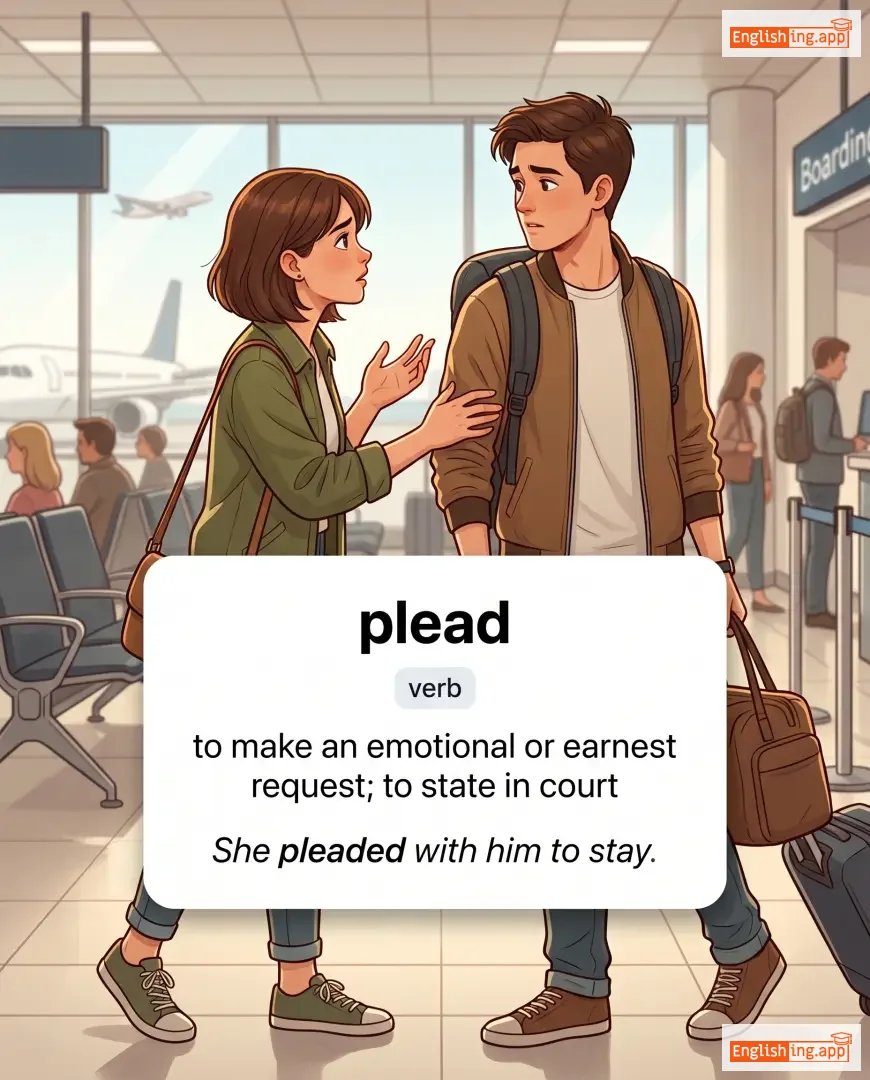
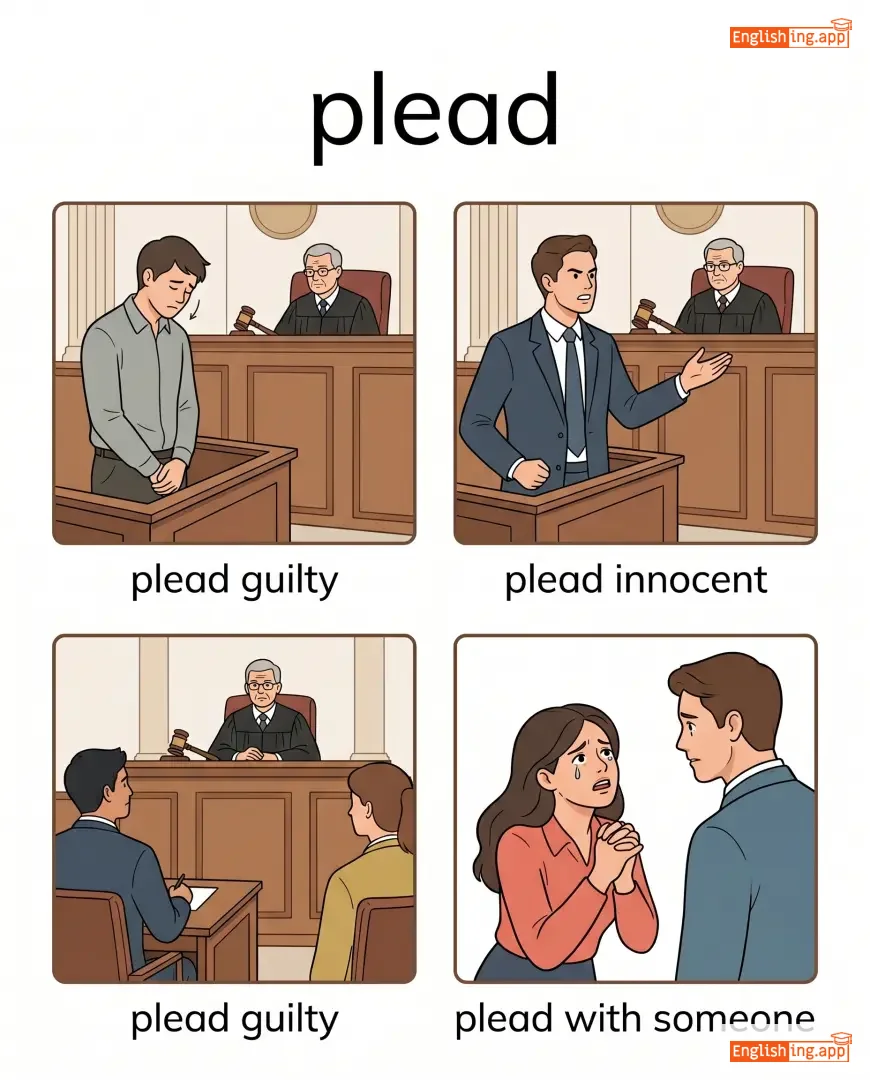
to make an emotional appeal; to present a case in court
••••••
|
She pleaded for mercy.
Sie flehte um Gnade.
••••••
|
Sie flehte um Gnade.
Sie flehte um Gnade.
••••••
|
- •••••• | - •••••• | - •••••• |
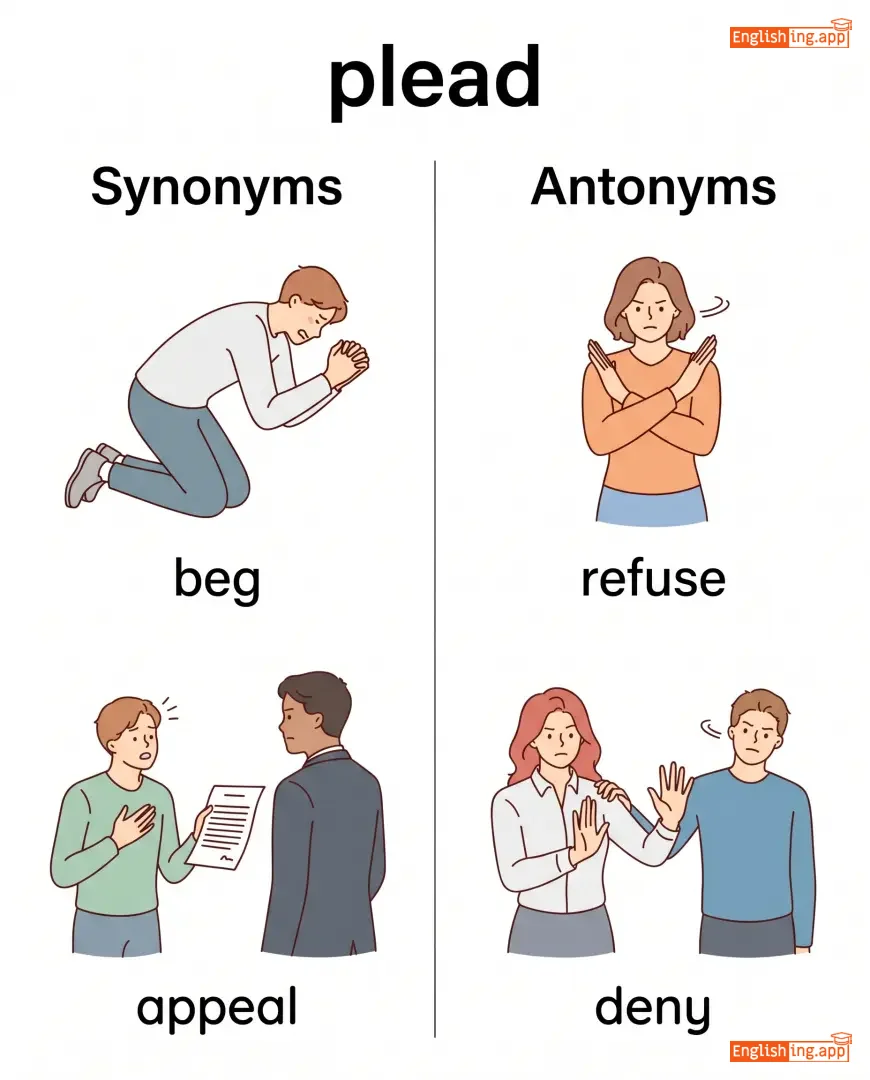
beg, entreat, implore, appeal
••••••
|
demand, order, command
••••••
|
plead guilty, plead for, earnestly plead, plead case
••••••
|
Think of pleading as 'flehen' to ask for mercy in a court.
••••••
|
|
#3797
😊
|
/ˈplɛzənt/
adjective
(plézent)
••••••
|
- •••••• |
angenehm, erfreulich
angenehm, erfreulich
••••••
|
- •••••• | - •••••• | - •••••• | - •••••• |
giving a sense of happiness, enjoyment, or satisfaction
••••••
|
We had a pleasant evening at the park.
Wir hatten einen angenehmen Abend im Park.
••••••
|
Wir hatten einen angenehmen Abend im Park.
Wir hatten einen angenehmen Abend im Park.
••••••
|
- •••••• | - •••••• | - •••••• |
agreeable, enjoyable, delightful, nice
••••••
|
unpleasant, disagreeable
••••••
|
pleasant weather, pleasant surprise, pleasant experience
••••••
|
Pleasant klingt wie 'Please sent' - etwas, das angenehm und erfreulich ist.
••••••
|
|
#3798
😊
|
/pliːz/
verb
(pliz)
••••••
|
- •••••• |
gefallen
gefallen
••••••
|
pleased
plizd
••••••
|
pleased
plizd
••••••
|
pleases
plizes
••••••
|
pleasing
plizing
••••••
|
to make someone happy or satisfied; used as a polite request
••••••
|
His performance pleased the audience.
Seine Leistung hat das Publikum erfreut.
••••••
|
Seine Leistung hat das Publikum erfreut.
Seine Leistung hat das Publikum erfreut.
••••••
|
- •••••• | - •••••• | - •••••• |
satisfy, delight, gratify, content
••••••
|
displease, annoy, upset, offend
••••••
|
please everyone, hard to please, please customers, try to please
••••••
|
Wenn du 'gefallen' sagst, versuchst du, jemanden glücklich zu machen.
••••••
|
|
#3799
😊
|
/pliːzd/
adjective
(plizd)
••••••
|
- •••••• |
zufrieden
zufrieden
••••••
|
- •••••• | - •••••• | - •••••• | - •••••• |
feeling happy or satisfied with something
••••••
|
She was pleased with her exam results. |
Sie war mit den Ergebnissen ihrer Prüfung zufrieden.
Sie war mit den Ergebnissen ihrer Prüfung zufrieden.
••••••
|
pleased as punch |
extremely pleased or delighted
••••••
|
sehr zufrieden
sehr zufrieden
••••••
|
delighted, happy, satisfied, content, glad
••••••
|
unhappy, disappointed
••••••
|
pleased with, pleased to meet, very pleased, pleased about
••••••
|
Wenn man zufrieden ist, sagt man bitte — also bedeutet pleased zufrieden oder glücklich.
••••••
|
|
#3800
😊
|
/ˈplɛʒər/
noun
(plɛʒər)
••••••
|
- •••••• |
Vergnügen
Vergnuegen
••••••
|
- •••••• | - •••••• | - •••••• | - •••••• |
a feeling of happiness or enjoyment
••••••
|
It was a pleasure to meet you.
Es war ein Vergnügen, dich zu treffen.
••••••
|
Es war ein Vergnügen, dich zu treffen.
Es war ein Vergnuegen, dich zu treffen.
••••••
|
- •••••• | - •••••• | - •••••• |
delight, joy, enjoyment, satisfaction
••••••
|
displeasure, discomfort
••••••
|
great pleasure, immense pleasure, pleasure to meet, take pleasure
••••••
|
Pleasure = Ver + gnuegen, das Vergnuegen beim Spielen
••••••
|
|
#3801
🤝
|
/pledʒ/
noun
(pleʤ)
••••••
|
- •••••• |
Versprechen; Verpflichtung; Garantie;
versprechen; verpflichtung; garantie;
••••••
|
- •••••• | - •••••• | - •••••• | - •••••• |
a solemn promise or undertaking; something given as security for a loan; a commitment or guarantee
••••••
|
He made a pledge to donate money to charity. |
Er gab ein Versprechen, Geld für wohltätige Zwecke zu spenden.
Er gab ein versprechen, geld fur wohltatige zwecke zu spenden.
••••••
|
- •••••• | - •••••• | - •••••• |
promise, vow, commitment, oath
••••••
|
breach, violation, betrayal, denial
••••••
|
pledge allegiance, campaign pledge, pledge drive
••••••
|
Ein Versprechen ist ein formelles Engagement, das Verantwortung mit sich bringt.
••••••
|
|
#3802
🌾
|
/ˈplen.ti/
noun
(plenti)
••••••
|
- •••••• |
Fülle; ausreichend
Fuelle; ausreichend
••••••
|
- •••••• | - •••••• | - •••••• | - •••••• |
a large or sufficient amount; abundance
••••••
|
There is plenty of food for everyone at the party.
es gibt genug essen für alle auf der party.
••••••
|
Es gibt genug Essen für alle auf der Party.
Es gibt genug Essen für alle auf der Party.
••••••
|
- •••••• | - •••••• | - •••••• |
abundance, ample, sufficient, lots
••••••
|
scarcity, shortage, lack, insufficient
••••••
|
plenty of time, plenty of money, plenty to eat
••••••
|
Plenty bedeutet eine Fülle, wie in 'es gibt genug Essen'.
••••••
|
|
#3803
🗺️
|
/plɑːt/
verb
(plott)
••••••
|
|
verschwören
verschwören
••••••
|
plotted
plotted
••••••
|
plotted
plotted
••••••
|
plots
plots
••••••
|
plotting
plotting
••••••
|
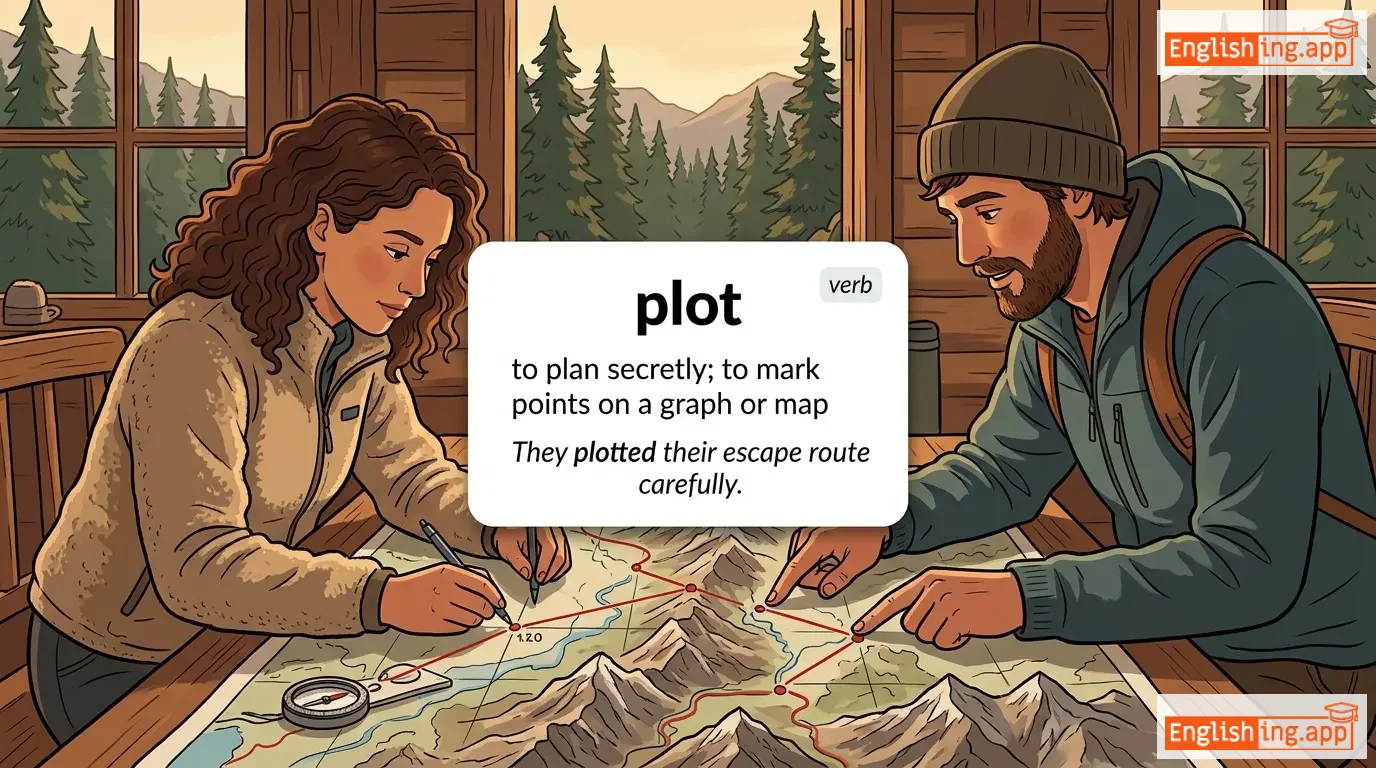
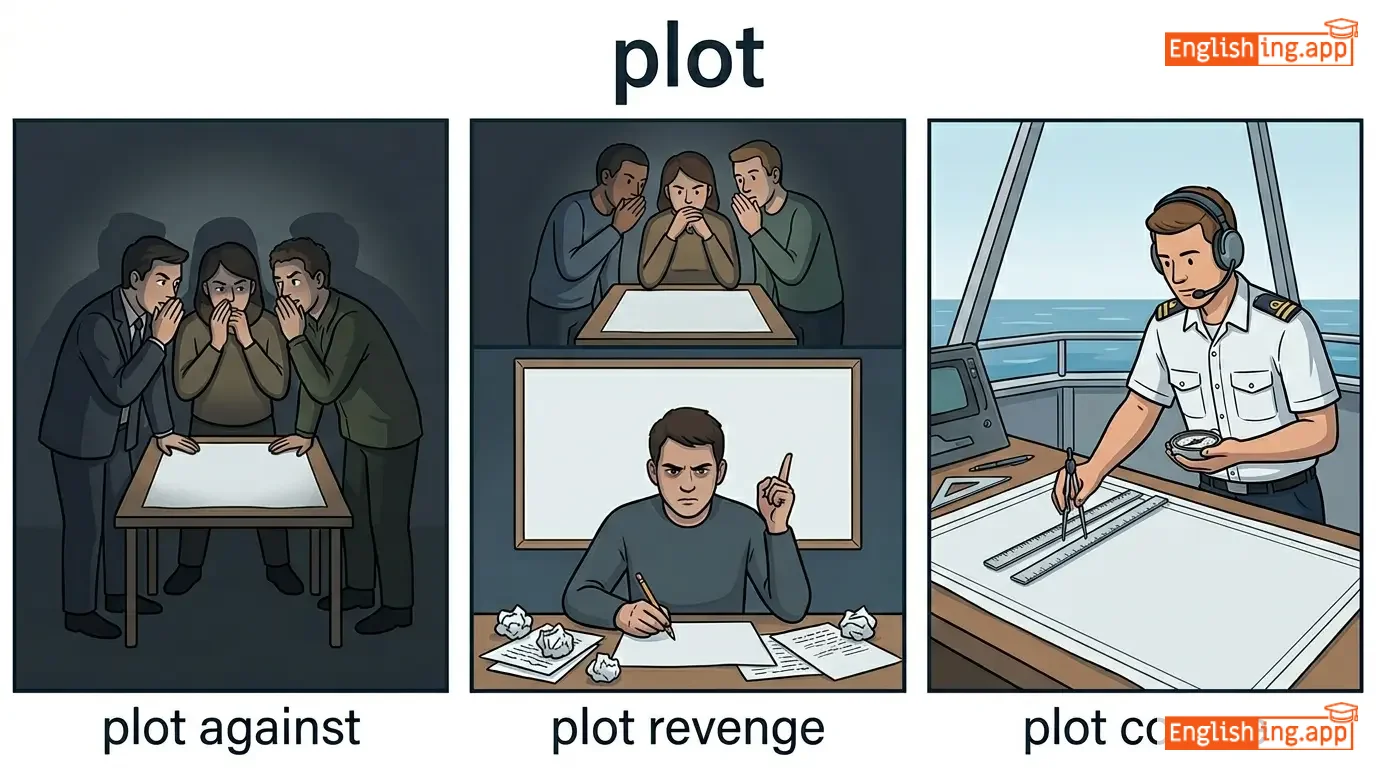
to plan secretly; to mark points on a graph or map
••••••
|
They plotted their escape route carefully.
Sie haben ihre Fluchtroute sorgfältig geplant.
••••••
|
Sie haben ihre Fluchtroute sorgfältig geplant.
Sie haben ihre Fluchtroute sorgfältig geplant.
••••••
|
- •••••• | - •••••• | - •••••• |
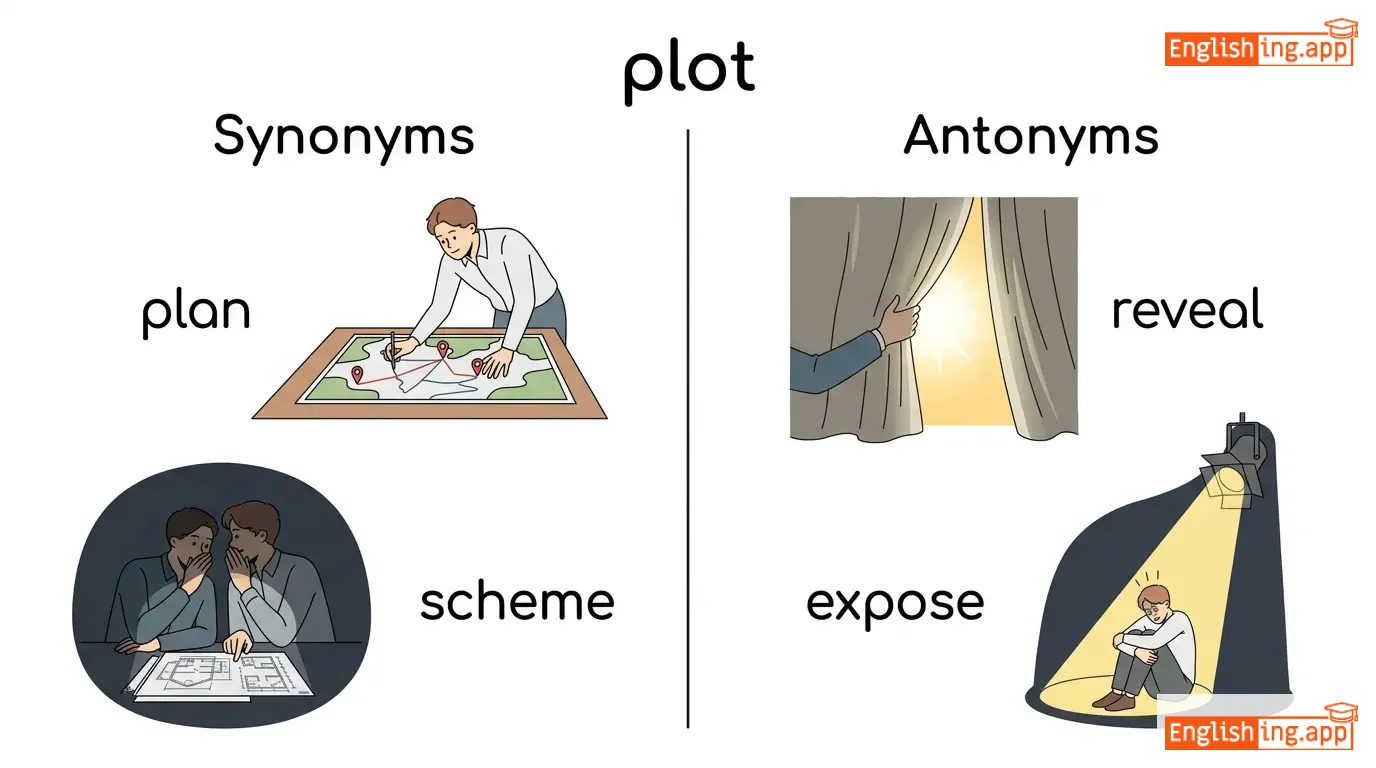
plan, scheme, chart, map
••••••
|
reveal, expose, disclose, abandon
••••••
|
plot against, plot revenge, plot course, plot graph, plot twist, secret plot
••••••
|
Bevor du versuchst zu verschwören, stelle sicher, dass du den Plot verstanden hast.
••••••
|
|
#3804
🔌
|
/plʌɡ/
noun
(plugg)
••••••
|
- •••••• |
Stecker
Stecker
••••••
|
- •••••• | - •••••• | - •••••• | - •••••• |
a device used to connect or block an opening
••••••
|
She inserted the plug into the socket. |
Sie steckte den Stecker in die Steckdose.
Sie steckte den Stecker in die Steckdose.
••••••
|
- •••••• | - •••••• | - •••••• |
stopper, cap, connector, switch
••••••
|
hole, gap, opening
••••••
|
plug into, power plug, plug the hole
••••••
|
Stecker für die Verbindung von Strom.
••••••
|
|
#3805
🏊
|
/plʌndʒ/
verb
(plandsch)
••••••
|
- •••••• |
schnell springen oder tauchen; scharf fallen
schnell springen oder tauchen; scharf fallen
••••••
|
plunged
plandscht
••••••
|
plunged
plandscht
••••••
|
plunges
plandscht
••••••
|
plunging
plandsch-ing
••••••
|
to jump or dive quickly; to fall sharply
••••••
|
She plunged into the swimming pool.
Sie ist ins Schwimmbad gesprungen.
••••••
|
Sie ist ins Schwimmbad gesprungen.
Sie ist ins Schwimmbad gesprungen.
••••••
|
take the plunge
den Schritt wagen
••••••
|
to decide to do something important or risky
••••••
|
einen riskanten Schritt tun
einen riskanten Schritt tun
••••••
|
dive, jump, fall, descend
••••••
|
rise, ascend, climb
••••••
|
plunge into, plunge headfirst, market plunge
••••••
|
Springen ins Wasser - den Schritt wagen
••••••
|
|
#3806
➕
|
/plʌs/
preposition/conjunction/noun/adjective
(pluss)
••••••
|
- •••••• |
hinzu/ Vorteil
hinzu/vorteil
••••••
|
- •••••• | - •••••• | - •••••• | - •••••• |
in addition to; a positive aspect or advantage
••••••
|
She received an A plus on her exam. |
Sie erhielt ein A plus in ihrer Prüfung.
Sie erhielt ein A plus in ihrer Prüfung.
••••••
|
- •••••• | - •••••• | - •••••• |
and, in addition, advantage, benefit
••••••
|
minus, disadvantage
••••••
|
plus sign, plus point, plus factor, plus side
••••••
|
Das PLUS-Symbol zeigt an, dass etwas hinzugefügt wird - think of addition
••••••
|
|
#3807
🕒
|
/piːˈɛm/
noun
(pm)
••••••
|
- •••••• |
nachmittags
pee em
••••••
|
- •••••• | - •••••• | - •••••• | - •••••• |
abbreviation for post meridiem; after midday
••••••
|
The meeting is scheduled at 3 pm.
Die Sitzung ist um 15:00 Uhr geplant.
••••••
|
Die Sitzung ist um 15:00 Uhr geplant.
Die Sitzung ist um 15:00 Uhr geplant.
••••••
|
- •••••• | - •••••• | - •••••• |
afternoon, afternoon time
••••••
|
am, morning
••••••
|
pm time, 3 pm, 5 pm
••••••
|
Pm stands for Post Meridiem, after Mittag - Punkt Mittag -> Nachmittags magic!
••••••
|
|
#3808
👖
|
/ˈpɒkɪt/
noun
(pocket)
••••••
|
- •••••• |
Tasche
poket
••••••
|
- •••••• | - •••••• | - •••••• | - •••••• |
a small, enclosed space in clothing for carrying items
••••••
|
He put his phone in his pocket.
Er steckte sein Telefon in seine Hosentasche.
••••••
|
Er steckte sein Telefon in seine Hosentasche.
Er steckte sein Telefon in seine Hosentasche.
••••••
|
- •••••• | - •••••• | - •••••• |
compartment, pouch, bag
••••••
|
open space, outside
••••••
|
pocket size, shirt pocket, pocket money
••••••
|
Pocket equals Tasche imagine a tiny Tasche in your clothes with a pocket label to remember that pocket means Tasche
••••••
|
|
#3809
📜
|
/ˈpoʊɪm/
noun
(póem)
••••••
|
- •••••• |
Gedicht
gedicht
••••••
|
- •••••• | - •••••• | - •••••• | - •••••• |
a piece of writing that expresses ideas, feelings, or tells a story in a distinct form, often using rhyme or meter
••••••
|
She wrote a beautiful poem for her mother. |
Sie schrieb ein wunderschönes Gedicht für ihre Mutter.
Sie schrieb ein wunderschönes Gedicht für ihre Mutter.
••••••
|
- •••••• | - •••••• | - •••••• |
verse, sonnet, rhyme
••••••
|
prose, essay
••••••
|
write a poem, read a poem, beautiful poem
••••••
|
Stellen Sie sich ein Gedicht als eine Geschichte vor, die das Herz berührt!
••••••
|
|
#3810
✍️
|
/ˈpoʊɪt/
noun
(po-ett)
••••••
|
- •••••• |
Dichter
dichter
••••••
|
- •••••• | - •••••• | - •••••• | - •••••• |
a person who writes poems
••••••
|
The poet wrote about love and nature. |
Der Dichter schrieb über Liebe und Natur.
Der Dichter schrieb ueber Liebe und Natur.
••••••
|
- •••••• | - •••••• | - •••••• |
verse-maker, bard, author
••••••
|
prose writer
••••••
|
great poet, famous poet, modern poet
••••••
|
A poet is a dreamer who turns dreams into poems!
••••••
|
|
#3811
📚
|
/ˈpoʊɪtri/
noun
(poetry)
••••••
|
- •••••• |
dichtung
dichtung
••••••
|
- •••••• | - •••••• | - •••••• | - •••••• |
a literary form that uses rhythmic and metaphorical language to express emotions or ideas
••••••
|
She loves reading poetry in her free time. |
Sie liebt es, in ihrer Freizeit Dichtung zu lesen.
Sie liebt es, in ihrer freizeit Dichtung zu lesen.
••••••
|
- •••••• | - •••••• | - •••••• |
verse, rhymes, ballads
••••••
|
prose, narrative
••••••
|
read poetry, write poetry, modern poetry
••••••
|
Poetry is the rhythm of human emotions.
••••••
|
|
#3812
👉
|
/pɔɪnt/
noun
(point)
••••••
|
- •••••• |
Punkt; Detail; Zweck
punkt
••••••
|
- •••••• | - •••••• | - •••••• | - •••••• |
a particular detail, idea, or fact; the sharp end of something
••••••
|
What's the point of arguing about this issue?
Was ist der Punkt, über dieses Thema zu streiten?
••••••
|
Was ist der Punkt, über dieses Thema zu streiten?
Was ist der Punkt, über dieses Thema zu streiten?
••••••
|
- •••••• | - •••••• | - •••••• |
detail, fact, idea, tip
••••••
|
whole, entirety, generality
••••••
|
main point, key point, turning point
••••••
|
Der Punkt ist das Ziel, auf das wir hinzielen
••••••
|
|
#3813
☠️
|
/ˈpɔɪ.zən/
noun
(Poison)
••••••
|
- •••••• |
Gift
poizon
••••••
|
- •••••• | - •••••• | - •••••• | - •••••• |
a substance that is capable of causing death or illness
••••••
|
The snake's bite contains deadly poison.
Der Biss der Schlange enthält tödliches Gift.
••••••
|
Der Biss der Schlange enthält tödliches Gift.
Der Biss der Schlange enthaelt toedliches Gift.
••••••
|
- •••••• | - •••••• | - •••••• |
toxin, venom, toxic substance
••••••
|
antidote, cure, medicine, remedy
••••••
|
deadly poison, rat poison, poison control
••••••
|
Picture a German Gift shop where Gift literally means poison; Poison equals Gift in German, deadly but memorable
••••••
|
|
#3814
☠️
|
/ˈpɔɪzənəs/
adjective
(poisonös)
••••••
|
- •••••• |
giftig
giftig
••••••
|
- •••••• | - •••••• | - •••••• | - •••••• |
Containing poison; capable of causing illness or death.
••••••
|
Some mushrooms are highly poisonous. |
Einige Pilze sind sehr giftig.
Einige Pilze sind sehr giftig.
••••••
|
poisonous atmosphere |
a hostile or harmful environment
••••••
|
giftige Atmosphäre
giftige Atmosphäre
••••••
|
toxic, venomous, harmful, noxious, deadly
••••••
|
harmless, safe, nontoxic
••••••
|
poisonous gas, poisonous snake, poisonous plant
••••••
|
Giftig = gift, wie der Biss einer giftigen Schlange 🐍
••••••
|
|
#3815
⚪
|
/poʊl/
noun
(pohl)
••••••
|
- •••••• |
Mast
mast
••••••
|
- •••••• | - •••••• | - •••••• | - •••••• |
a long, slender, vertical object or structure, typically made of wood, metal, or another material
••••••
|
They placed the flag on top of the pole. |
Sie haben die Fahne oben auf dem Mast gesetzt.
Sie haben die Fahne oben auf dem Mast gesetzt.
••••••
|
- •••••• | - •••••• | - •••••• |
post, column, mast, stake
••••••
|
base, ground
••••••
|
flag pole, telephone pole, light pole
••••••
|
Erinnere dich an den Mast, die Fahne weht dort!
••••••
|
|
#3816
👮
|
/pəˈliːs/
noun
(poˈliːt͡sə)
••••••
|
- •••••• |
Polizei
Polizei
••••••
|
- •••••• | - •••••• | - •••••• | - •••••• |
a body of officers representing the civil authority of government
••••••
|
The police arrived quickly to investigate the scene.
Die Polizei kam schnell, um den Tatort zu untersuchen.
••••••
|
Die Polizei kam schnell, um den Tatort zu untersuchen.
Die Polizei kam schnell, um den Tatort zu untersuchen.
••••••
|
- •••••• | - •••••• | - •••••• |
law enforcement, constabulary, cops, authorities
••••••
|
criminals, offenders
••••••
|
police officer, police station, police force
••••••
|
Denke an 'Polizei' als die Wächter der Ordnung, immer präsent!
••••••
|
|
#3817
📋
|
/ˈpɒl.ə.si/
noun
(politik)
••••••
|
|
politik
politik
••••••
|
- •••••• | - •••••• | - •••••• | - •••••• |
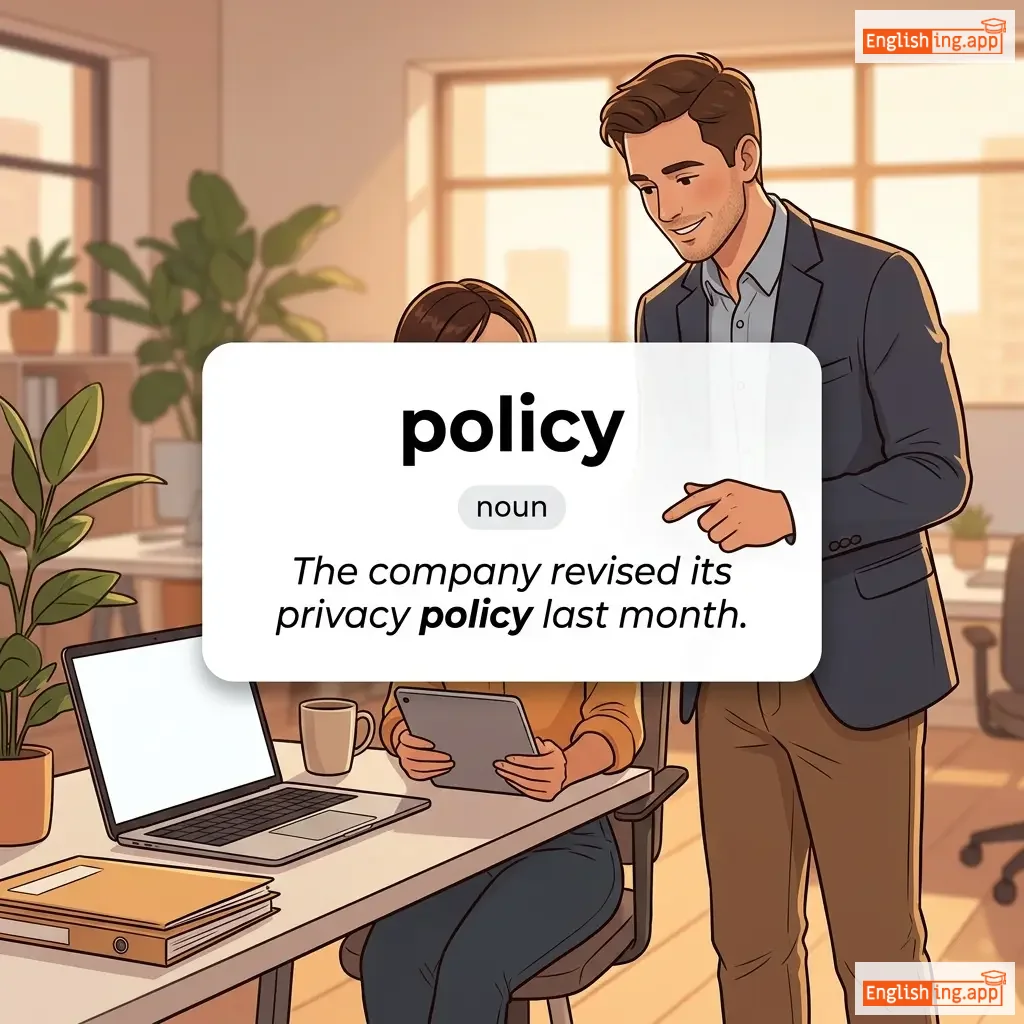
a course of action adopted by a government, organization, or individual
••••••
|
The company has a strict policy against smoking. |
Das Unternehmen hat eine strenge Politik gegen das Rauchen.
Das Unternehmen hat eine strenge Politik gegen das Rauchen.
••••••
|
- •••••• | - •••••• | - •••••• |
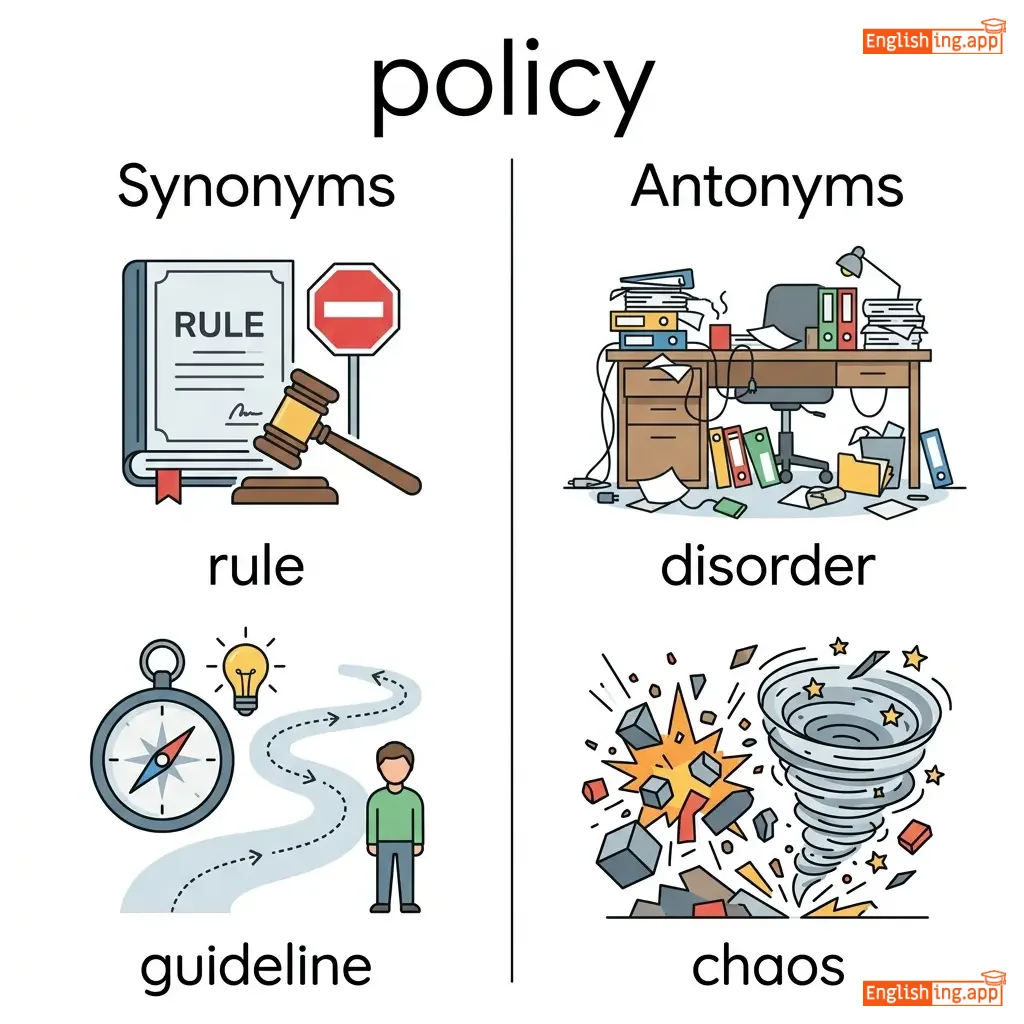
strategy, plan, procedure, guidelines
••••••
|
chaos, disorder, improvisation
••••••
|
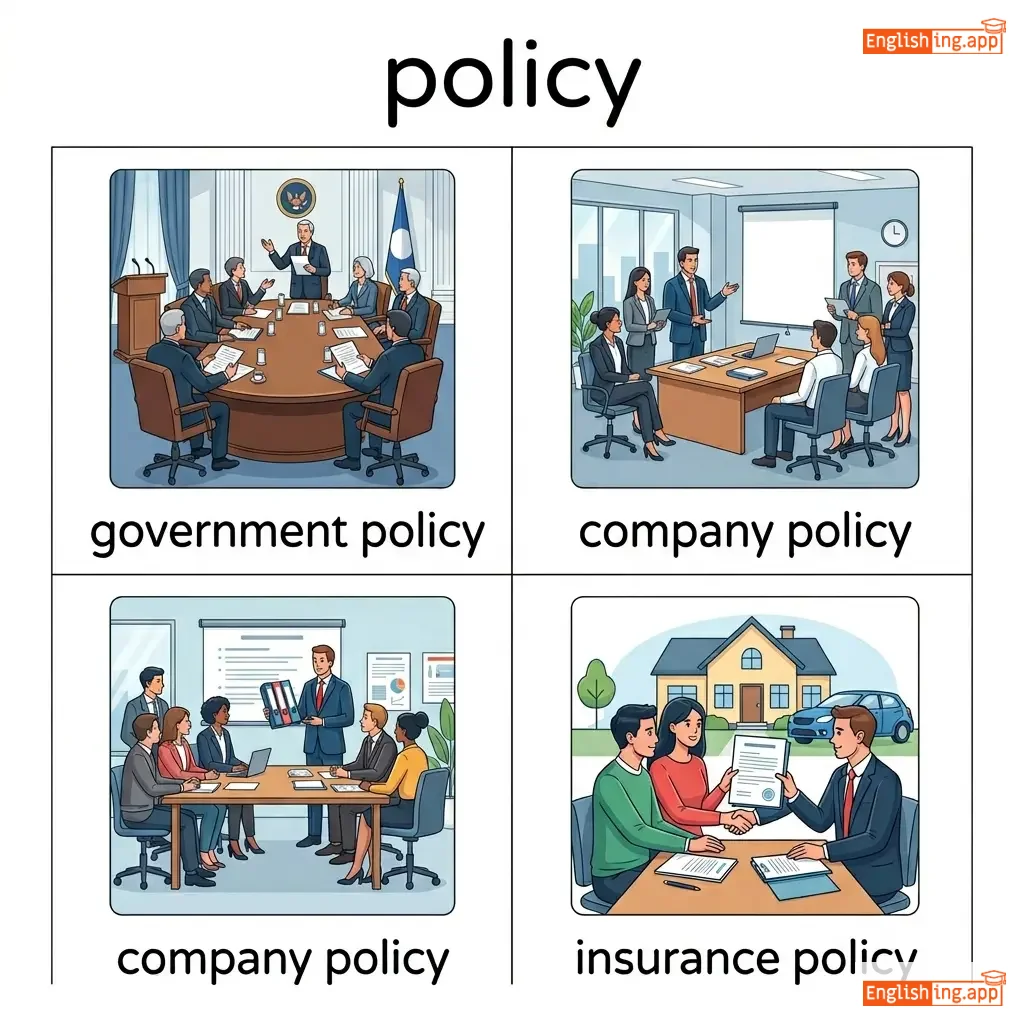
foreign policy, company policy, insurance policy
••••••
|
Politik (Politik) - A policy is like the rulebook of an organization.
••••••
|
|
#3818
🙏
|
/pəˈlaɪt/
adjective
(happiness)
••••••
|
- •••••• |
Glück
Glück
••••••
|
- •••••• | - •••••• | - •••••• | - •••••• |
Showing good manners and respect towards others.
••••••
|
He was very polite to the elderly woman. |
Sie konnte ihr Glück nicht verbergen, als sie den Preis erhielt.
Sie konnte ihr Glück nicht verbergen, als sie den Preis erhielt.
••••••
|
polite society |
the upper social class considered refined
••••••
|
Suche nach Glück
Suche nach Glück
••••••
|
courteous, respectful, civil, gracious, well-mannered
••••••
|
rude, impolite, disrespectful
••••••
|
polite smile, polite request, polite conversation
••••••
|
Glück = Gelingen und Lust (oder Glück).
••••••
|
|
#3819
🙏
|
/pəˈlaɪt.li/
adverb
(poˈlaɪtli)
••••••
|
- •••••• |
höflich;
hoeflich
••••••
|
- •••••• | - •••••• | - •••••• | - •••••• |
in a respectful and considerate manner; courteously; with good manners
••••••
|
She politely declined the invitation because she had other commitments.
Sie lehnte die Einladung höflich ab, weil sie andere Verpflichtungen hatte.
••••••
|
Sie lehnte die Einladung höflich ab, weil sie andere Verpflichtungen hatte.
Sie lehnte die Einladung hoeflich ab, weil sie andere Verpflichtungen hatte.
••••••
|
- •••••• | - •••••• | - •••••• |
courteously, respectfully, civilly, tactfully, graciously
••••••
|
rudely, impolitely, disrespectfully, inconsiderately, harshly
••••••
|
politely decline, politely ask, politely refuse, speak politely
••••••
|
Höflich = wie ‘politely’, immer respektvoll
••••••
|
|
#3820
🏛️
|
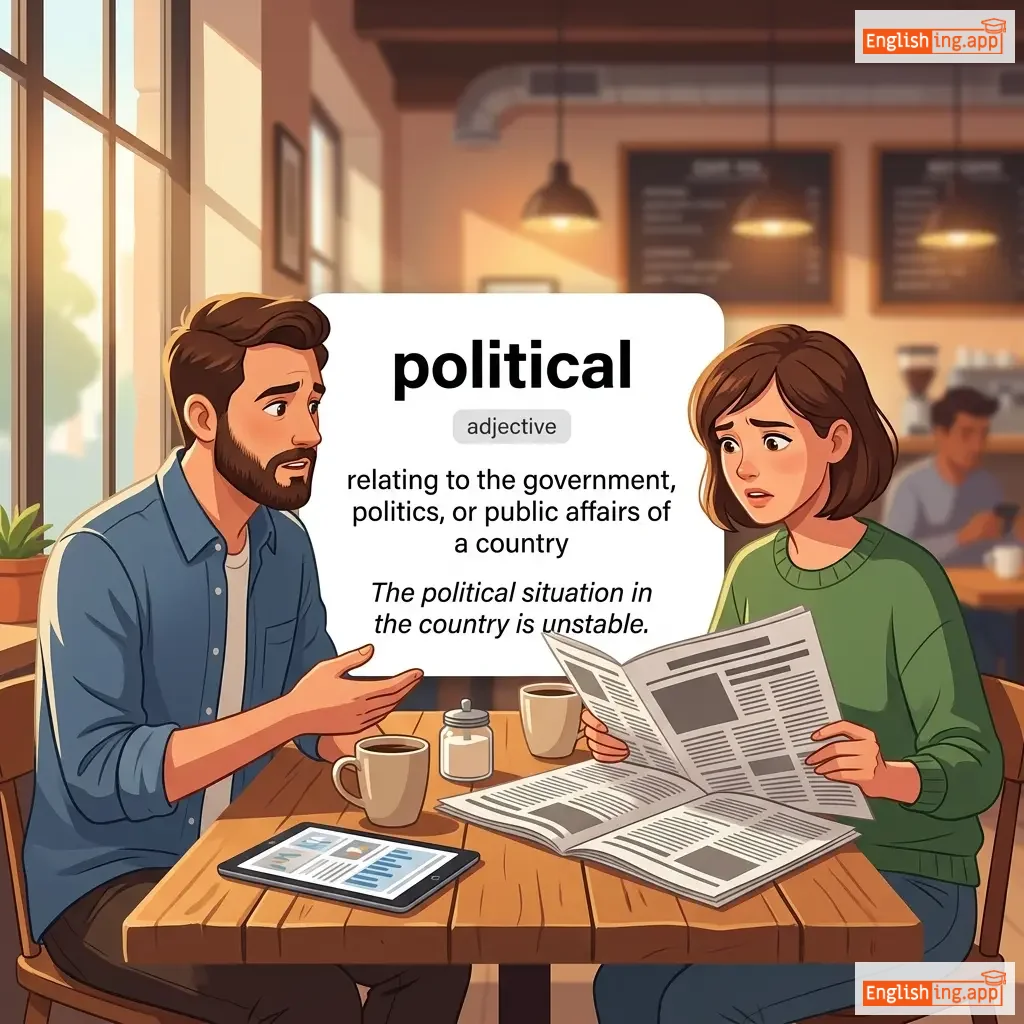
/pəˈlɪtɪkəl/
adjective
(politisch)
••••••
|
|
politisch
politisch
••••••
|
- •••••• | - •••••• | - •••••• | - •••••• |
relating to the government, politics, or public affairs of a country
••••••
|
The political situation in the country is unstable. |
Die politische Situation im Land ist instabil.
Die politische Situation im Land ist instabil.
••••••
|
- •••••• | - •••••• | - •••••• |
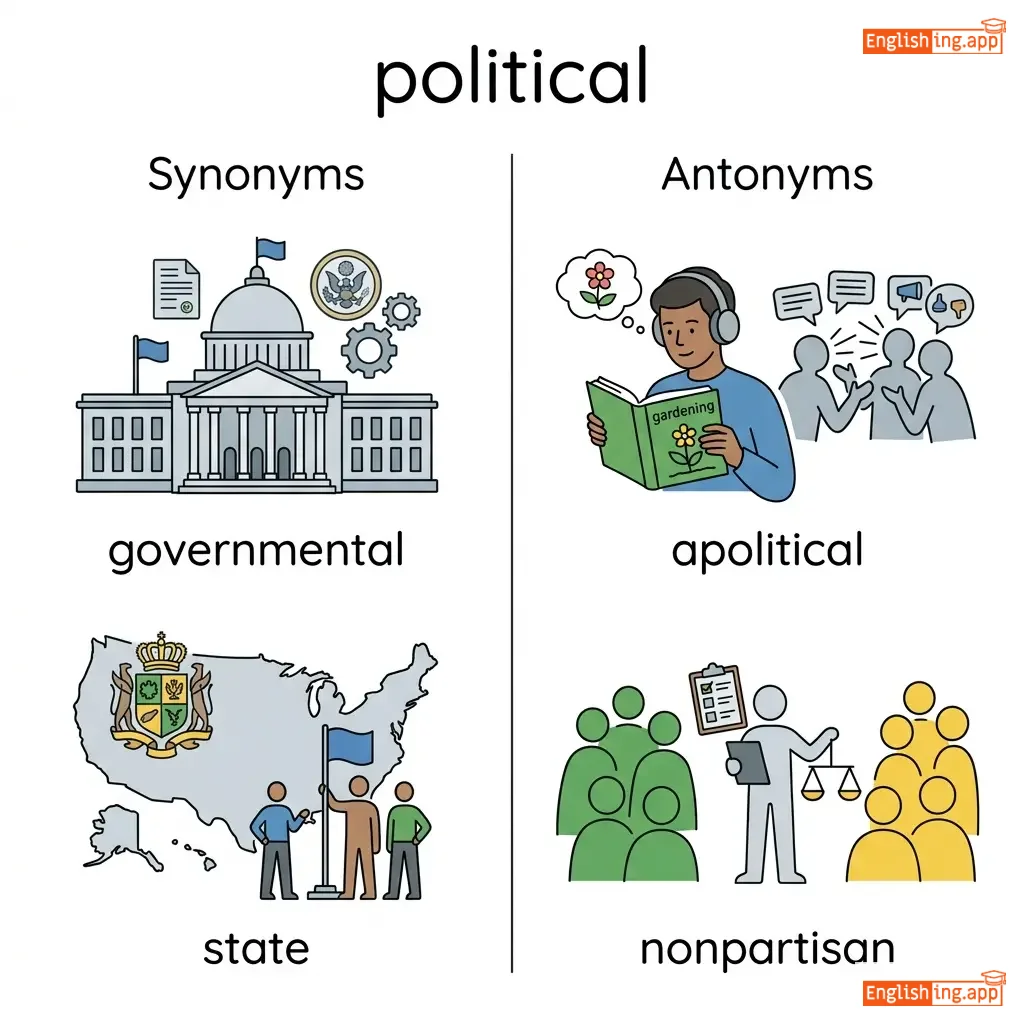
governmental, state, civic, public
••••••
|
apolitical, nonpartisan
••••••
|
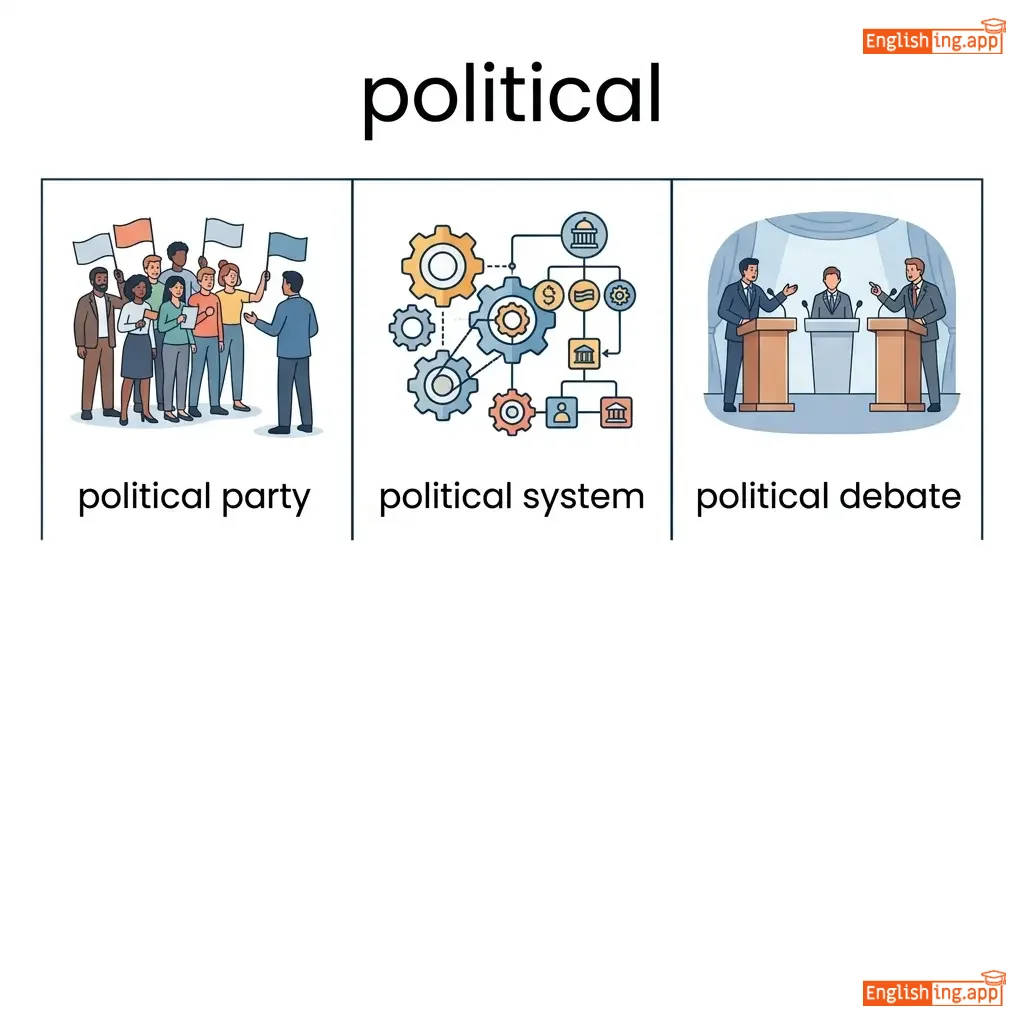
political party, political system, political debate
••••••
|
Politik ist die Kunst, das Land zu führen.
••••••
|
|
#3821
⚖️
|
/pəˈlɪtɪkəli/
adverb
(politisch)
••••••
|
- •••••• |
politisch
politisch
••••••
|
- •••••• | - •••••• | - •••••• | - •••••• |
in a way that relates to politics or government
••••••
|
The country is politically divided between two major parties.
Das Land ist politisch zwischen zwei großen Parteien geteilt.
••••••
|
Das Land ist politisch zwischen zwei großen Parteien geteilt.
Das Land ist politisch zwischen zwei großen Parteien geteilt.
••••••
|
- •••••• | - •••••• | - •••••• |
governmentally, civically, socially
••••••
|
apolitically
••••••
|
politically active, politically correct, politically charged
••••••
|
Denke politisch, teile ein Land zwischen zwei großen Parteien.
••••••
|
|
#3822
👨💼
|
/pəˈlɪtɪʃən/
noun
(pɔlɪtɪʃən)
••••••
|
- •••••• |
Politiker
Politiker
••••••
|
- •••••• | - •••••• | - •••••• | - •••••• |
a person who is involved in politics, especially as a profession
••••••
|
The politician promised to improve the economy. |
Der Politiker versprach, die Wirtschaft zu verbessern.
Der Politiker versprach, die Wirtschaft zu verbessern.
••••••
|
- •••••• | - •••••• | - •••••• |
statesman, lawmaker, representative, public servant
••••••
|
citizen, layman
••••••
|
politician career, influential politician, corrupt politician
••••••
|
Politicians make policies to improve the nation's economy.
••••••
|
|
#3823
⚖️
|
/ˈpɒlɪtɪks/
noun
(pɔlɪtɪks)
••••••
|
- •••••• |
Politik
politik
••••••
|
- •••••• | - •••••• | - •••••• | - •••••• |
activities related to the governance of a country or area, especially the debate between parties having power
••••••
|
Politics often involves making difficult decisions. |
Politik beinhaltet oft schwierige Entscheidungen zu treffen.
Politik beinhaltet oft schwierige Entscheidungen zu treffen.
••••••
|
- •••••• | - •••••• | - •••••• |
government, diplomacy, statecraft, policy
••••••
|
apoliticism, non-partisanship
••••••
|
politics of power, national politics, political debate
••••••
|
POLIticians engage in POLItics.
••••••
|
|
#3824
🗳️
|
/pəʊl/
noun/verb
(poll)
••••••
|
- •••••• |
Umfrage
umfrage
••••••
|
polled
polled
••••••
|
polled
polled
••••••
|
polls
polls
••••••
|
polling
polling
••••••
|
a survey of public opinion or voting in an election
••••••
|
The poll revealed that most people favored the new policy.
The poll revealed that most people favored the new policy.
••••••
|
Die Umfrage ergab, dass die meisten Menschen die neue Politik bevorzugten.
Die Umfrage ergab, dass die meisten Menschen die neue Politik bevorzugten.
••••••
|
- •••••• | - •••••• | - •••••• |
survey, vote, referendum, ballot
••••••
|
consensus, agreement
••••••
|
opinion poll, public poll, exit poll, conduct a poll
••••••
|
Umfragen helfen, die öffentliche Meinung zu messen!
••••••
|
|
#3825
🏭
|
/pəˈluːt/
verb
(polut)
••••••
|
|
verschmutzen
fershmutsen
••••••
|
polluted
poluted
••••••
|
polluted
poluted
••••••
|
pollutes
poluts
••••••
|
polluting
poluting
••••••
|
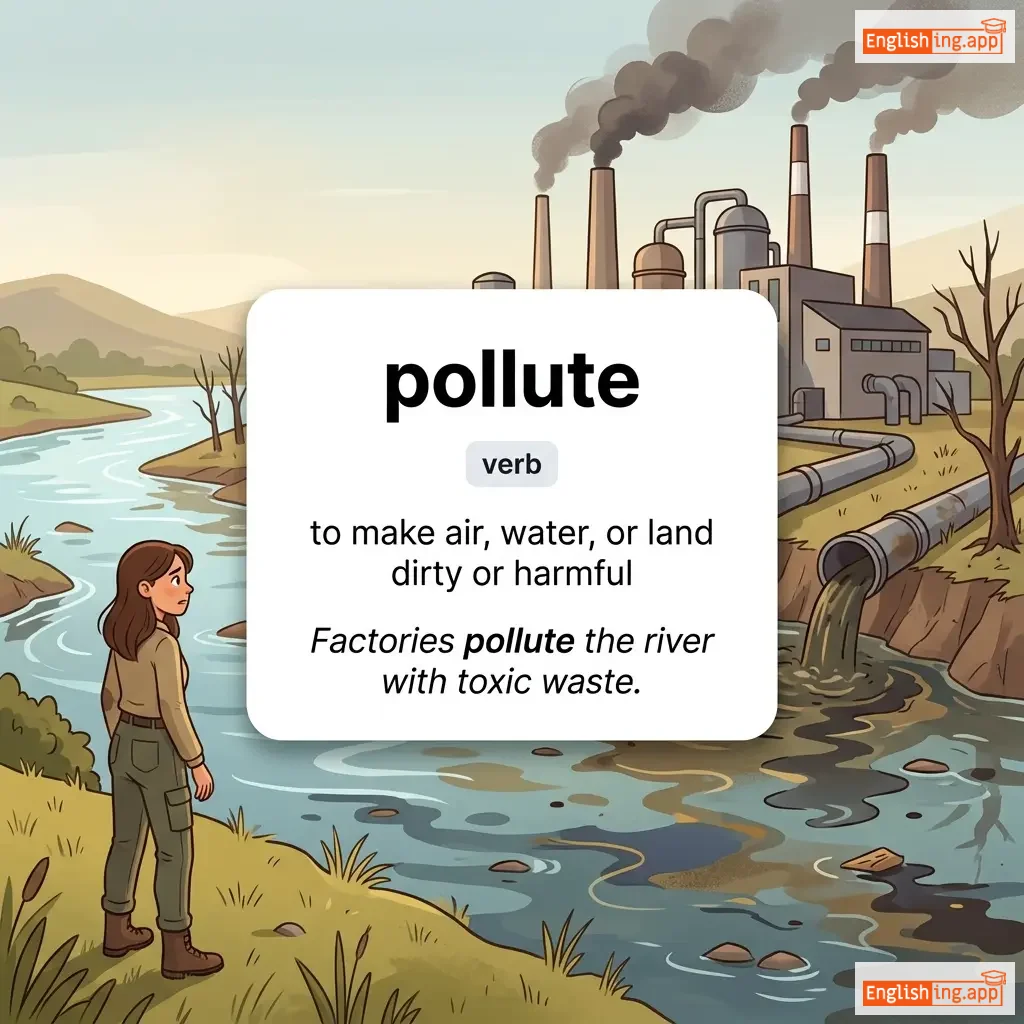
to make air, water, or land dirty and harmful to people, animals, and plants
••••••
|
Factories pollute the environment with toxic chemicals.
faktories polut di envaironment mit toksik kemikals
••••••
|
Fabriken verschmutzen die Umwelt mit giftigen Chemikalien.
fabriken fershmutsen dee umvelt mit giftigen khemikalien
••••••
|
- •••••• | - •••••• | - •••••• |
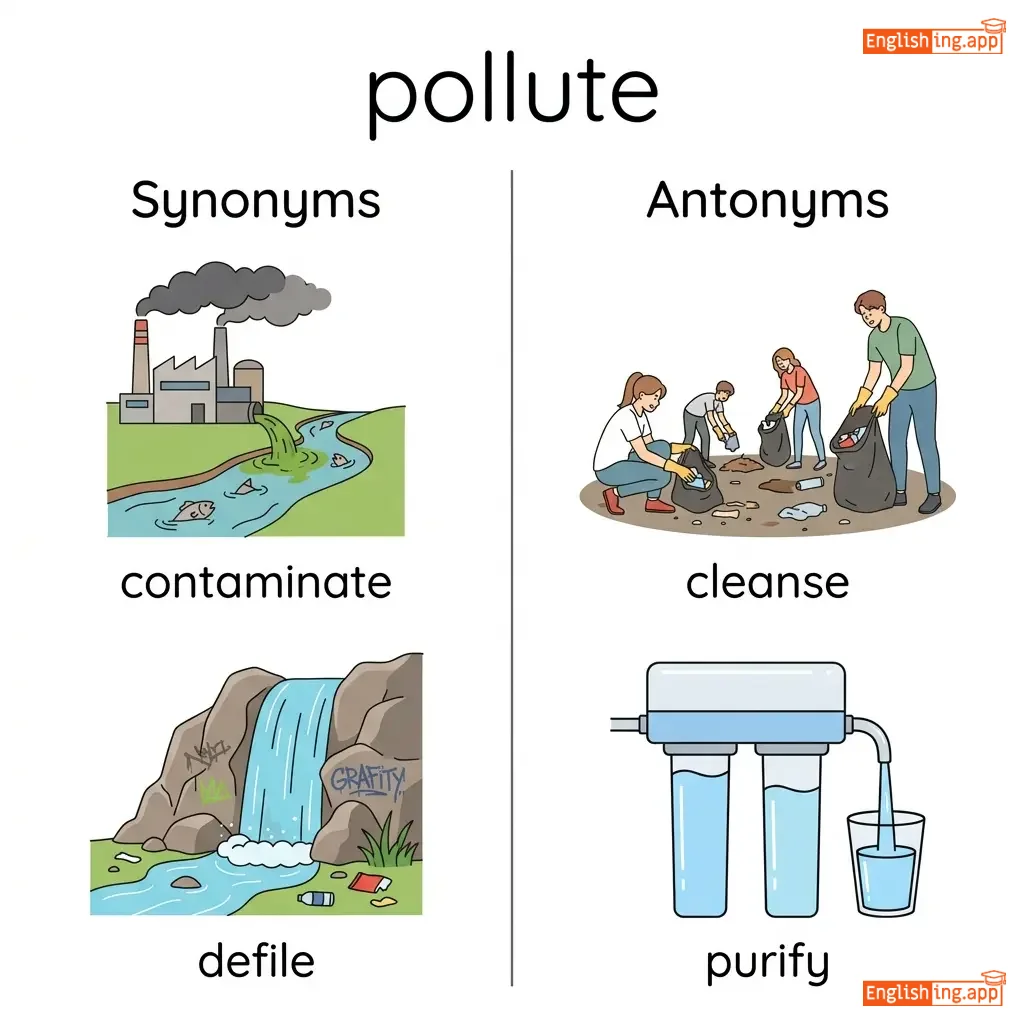
contaminate, dirty, taint, poison
••••••
|
purify, clean, cleanse
••••••
|
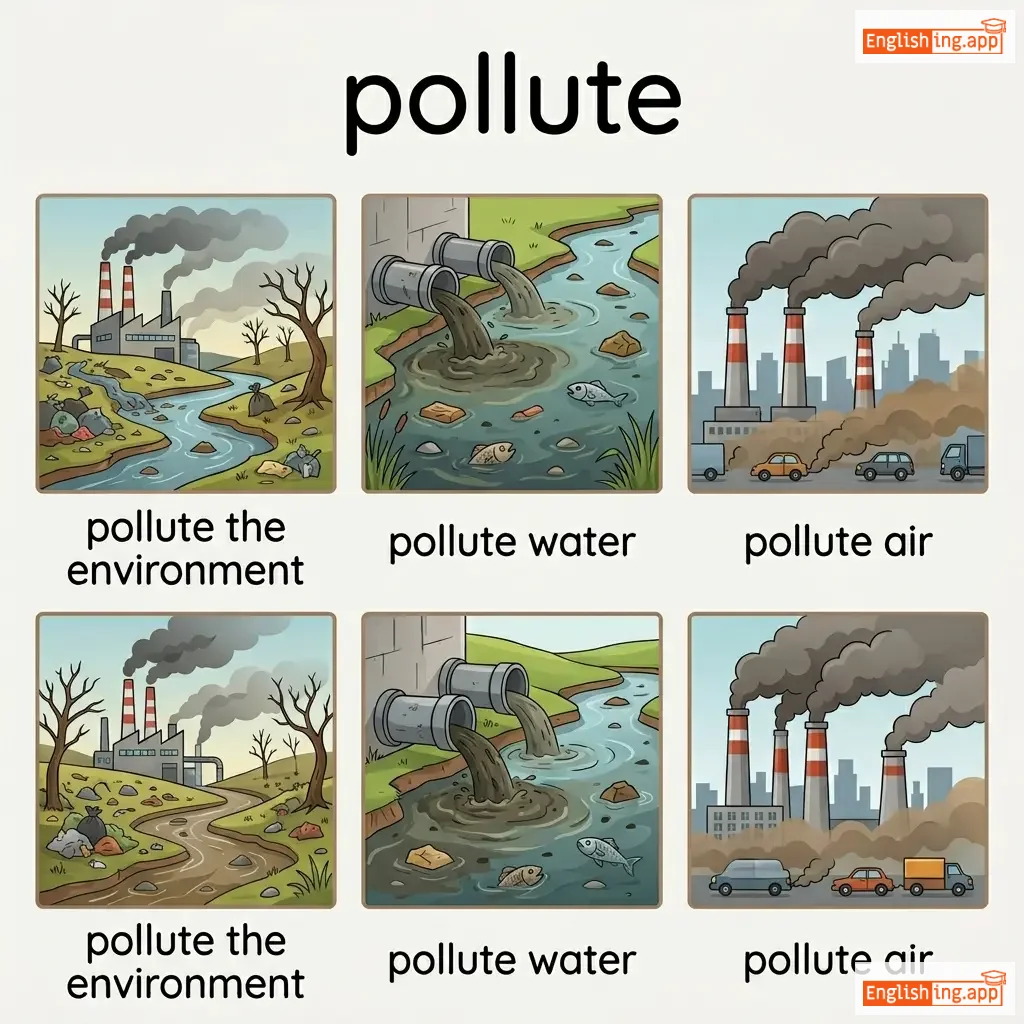
pollute environment, pollute air, pollute water, heavily pollute, pollute atmosphere
••••••
|
Pollute → verschmutzen — think 'schmutz' means dirt in German!
••••••
|
|
#3826
🌍
|
/pəˈlʊʃən/
noun
(pollution)
••••••
|
|
verschmutzung
verschmutzung
••••••
|
- •••••• | - •••••• | - •••••• | - •••••• |
the presence of harmful substances in the environment, especially the air, water, or soil
••••••
|
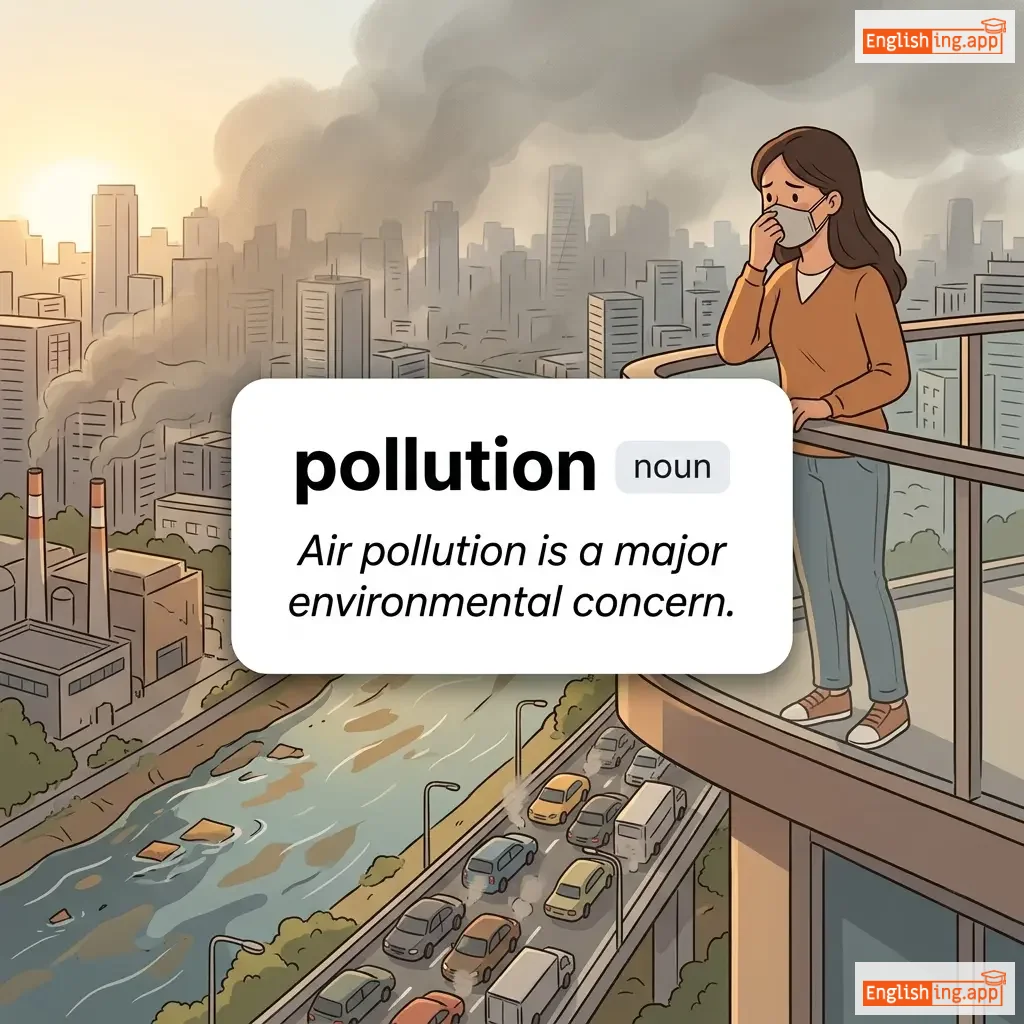
Air pollution is a major environmental concern.
Luftverschmutzung ist eine große Umweltproblematik.
••••••
|
Luftverschmutzung ist eine große Umweltproblematik.
Luftverschmutzung ist eine grosse Umweltproblematik.
••••••
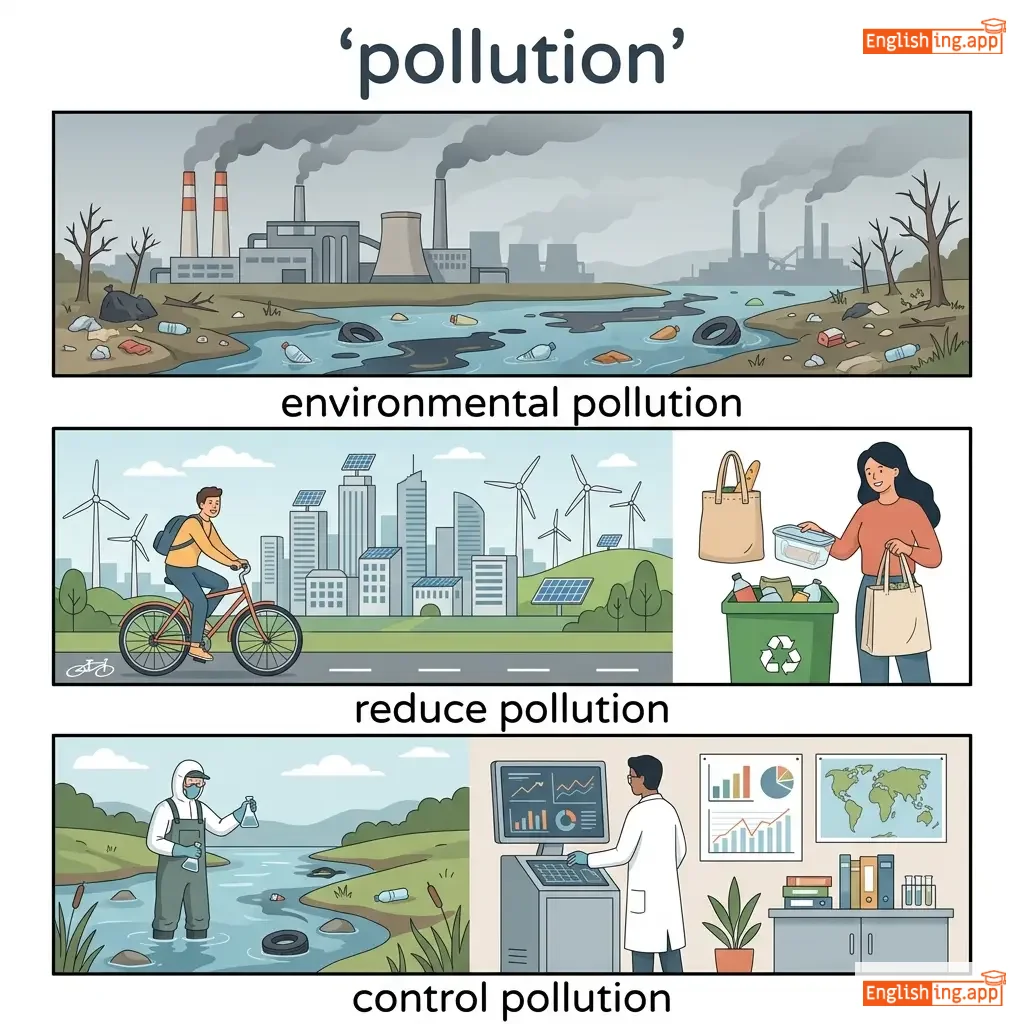
|
- •••••• | - •••••• | - •••••• |
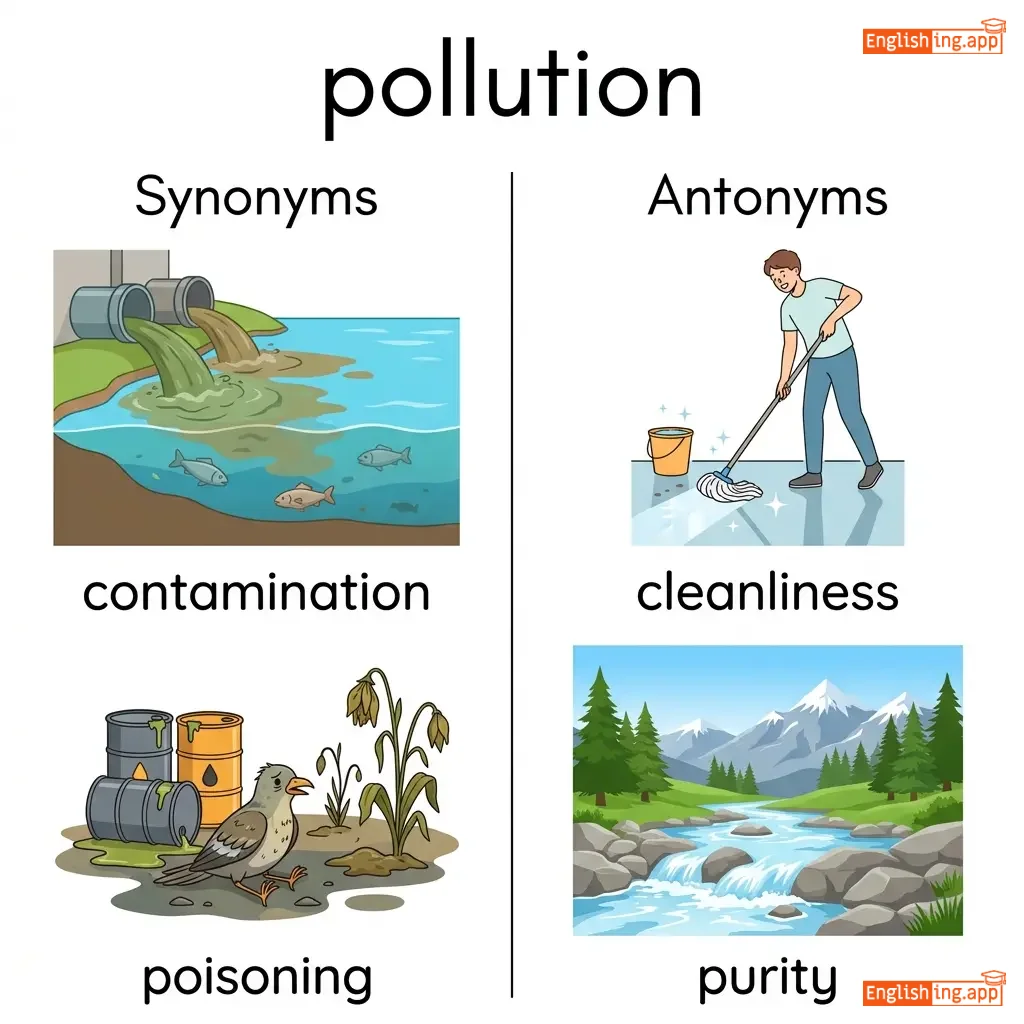
contamination, poisoning, impurity, dirt
••••••
|
cleanliness, purity
••••••
|
environmental pollution, reduce pollution, control pollution, pollution levels
••••••
|
Pollution is polluting our planet!
••••••
|
|
#3827
🏞️
|
/pɒnd/
noun
(pond)
••••••
|
- •••••• |
Teich
Teich
••••••
|
- •••••• | - •••••• | - •••••• | - •••••• |
a small area of still water, smaller than a lake
••••••
|
The children were feeding ducks at the pond. |
Die Kinder fütterten die Enten im Teich.
Die Kinder futterten die Enten im Teich.
••••••
|
a big fish in a small pond |
an important person in a small or limited group
••••••
|
ein großer Fisch in einem kleinen Teich
ein großer Fisch in einem kleinen Teich
••••••
|
pool, lagoon, waterhole, reservoir
••••••
|
desert, dry land
••••••
|
fish pond, garden pond, pond water
••••••
|
Pond ist gleich Teich, wo Enten schwimmen!
••••••
|
|
#3828
🏊
|
/puːl/
noun/verb
(pool)
••••••
|
- •••••• |
pool
pool
••••••
|
pooled
poold
••••••
|
pooled
poold
••••••
|
pools
pools
••••••
|
pooling
pooling
••••••
|
a small body of still water, or a game played in a rectangular table with balls
••••••
|
The children swam in the pool all afternoon.
Die Kinder schwammen den ganzen Nachmittag im Pool.
••••••
|
Die Kinder schwammen den ganzen Nachmittag im Pool.
Die Kinder schwammen den ganzen Nachmittag im Pool.
••••••
|
- •••••• | - •••••• | - •••••• |
pond, reservoir, swimming pool, game
••••••
|
dry, empty
••••••
|
swimming pool, pool party, pool table, pool of water
••••••
|
Der Pool ist der beste Ort zum Schwimmen!
••••••
|
|
#3829
🥺
|
/pʊr/ or /pɔːr/
adjective
(pur)
••••••
|
- •••••• |
arm
arm
••••••
|
- •••••• | - •••••• | - •••••• | - •••••• |
Lacking sufficient money, resources, or quality.
••••••
|
The poor family struggled to buy food. |
Die arme Familie hatte Schwierigkeiten, Essen zu kaufen.
Die arme Familie hatte Schwierigkeiten, Essen zu kaufen.
••••••
|
poor health |
a state of not being healthy
••••••
|
schlechte Gesundheit
schlechte Gesundheit
••••••
|
needy, impoverished, destitute, weak, inferior
••••••
|
rich, wealthy, strong
••••••
|
poor condition, poor performance, poor quality, poor family
••••••
|
Arm ist, wenn du kaum etwas hast.
••••••
|
|
#3830
🎈
|
/pɒp/
verb
(pop)
••••••
|
- •••••• |
platzen
platzen
••••••
|
popped
poppt
••••••
|
popped
gepoppt
••••••
|
pops
poppt
••••••
|
popping
poppend
••••••
|
to make a short, sharp sound, or to burst or break with such a sound
••••••
|
The balloon popped when I accidentally pricked it with a pin.
Der Ballon platzte, als ich ihn versehentlich mit einer Nadel stach.
••••••
|
Der Ballon platzte, als ich ihn versehentlich mit einer Nadel stach.
Der Ballon platzte, als ich ihn versehentlich mit einer Nadel stach.
••••••
|
- •••••• | - •••••• | - •••••• |
burst, explode, snap, crack
••••••
|
quiet, silence
••••••
|
pop the balloon, pop the cork, pop up, pop out
••••••
|
Pop the balloon, genauso wie 'pop' der Ballon!
••••••
|
|
#3831
👥
|
/ˈpɒp.jʊ.lər/
adjective
(populär)
••••••
|
- •••••• |
beliebt
beliebt
••••••
|
- •••••• | - •••••• | - •••••• | - •••••• |
liked or admired by many people; well-known and widely accepted
••••••
|
This restaurant is very popular among young people. |
Dieses Restaurant ist bei jungen Leuten sehr beliebt.
Dieses Restaurant ist bei jungen Leuten sehr beliebt.
••••••
|
- •••••• | - •••••• | - •••••• |
famous, well-liked, favored, trendy
••••••
|
unpopular, disliked, unfashionable
••••••
|
popular culture, popular opinion, popular choice
••••••
|
Beliebt wie ein berühmter deutscher Sänger
••••••
|
|
#3832
⭐
|
/ˌpɒp.jəˈlær.ə.ti/
noun
(popyulärität)
••••••
|
- •••••• |
Popularität
popularitaet
••••••
|
- •••••• | - •••••• | - •••••• | - •••••• |
the state of being liked, admired, or supported by many people
••••••
|
The singer's popularity has grown rapidly this year.
Die Popularität des Sängers ist in diesem Jahr schnell gewachsen.
••••••
|
Die Popularität des Sängers ist in diesem Jahr schnell gewachsen.
Die Popularitaet des Saengers ist in diesem Jahr schnell gewachsen.
••••••
|
- •••••• | - •••••• | - •••••• |
fame, recognition, acclaim, acceptance
••••••
|
unpopularity, obscurity, rejection, dislike
••••••
|
growing popularity, widespread popularity, peak popularity
••••••
|
Wie die Beliebtheit eines Popstars.
••••••
|
|
#3833
👥
|
/ˌpɑːp.jəˈleɪ.ʃən/
noun
(populéichon)
••••••
|
|
Bevölkerung
Bevolkerung
••••••
|
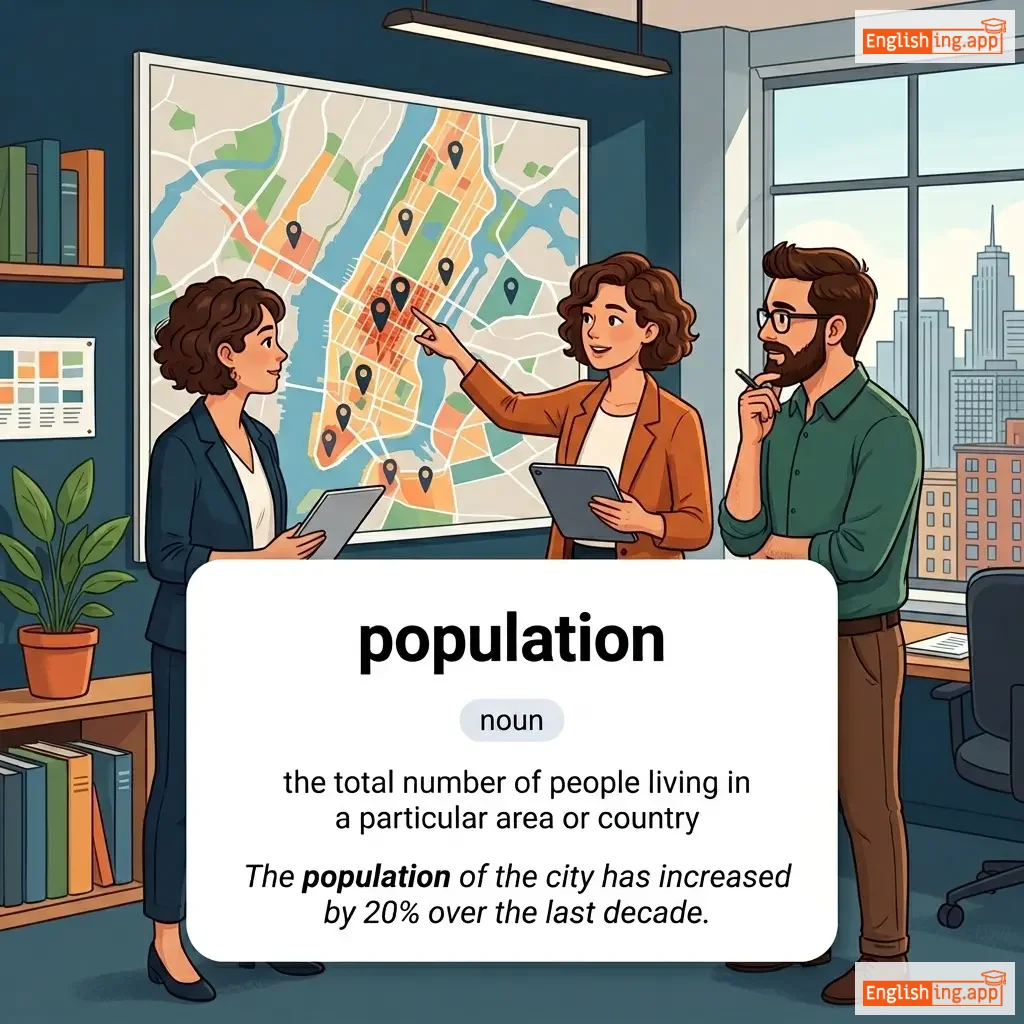
- •••••• | - •••••• | - •••••• | - •••••• |
the number of people living in a particular area; all the inhabitants of a particular place
••••••
|
The population of this city has grown rapidly in recent years. |
Die Bevölkerung dieser Stadt ist in den letzten Jahren schnell gewachsen.
Die Bevolkerung dieser Stadt ist in den letzten Jahren schnell gewachsen.
••••••
|
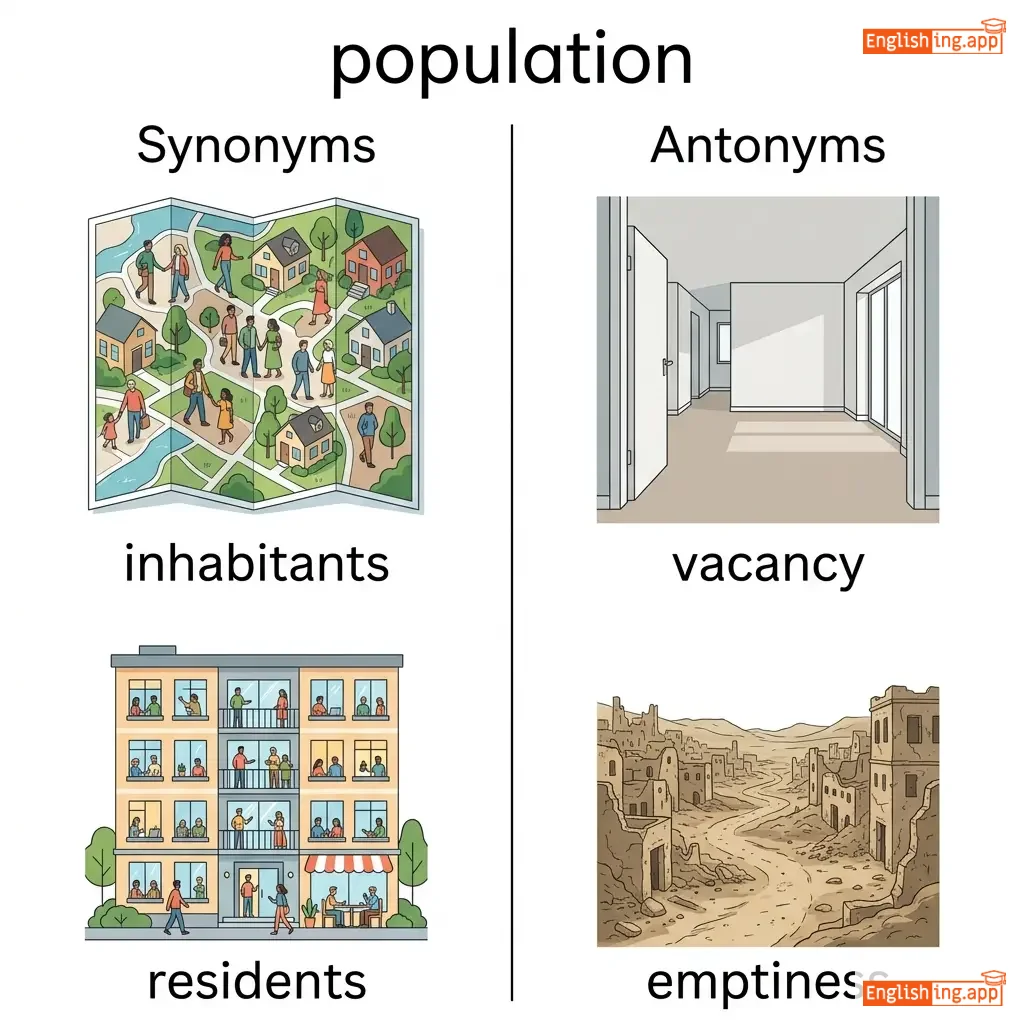
- •••••• | - •••••• | - •••••• |
inhabitants, residents, citizens, people
••••••
|
depopulation, evacuation
••••••
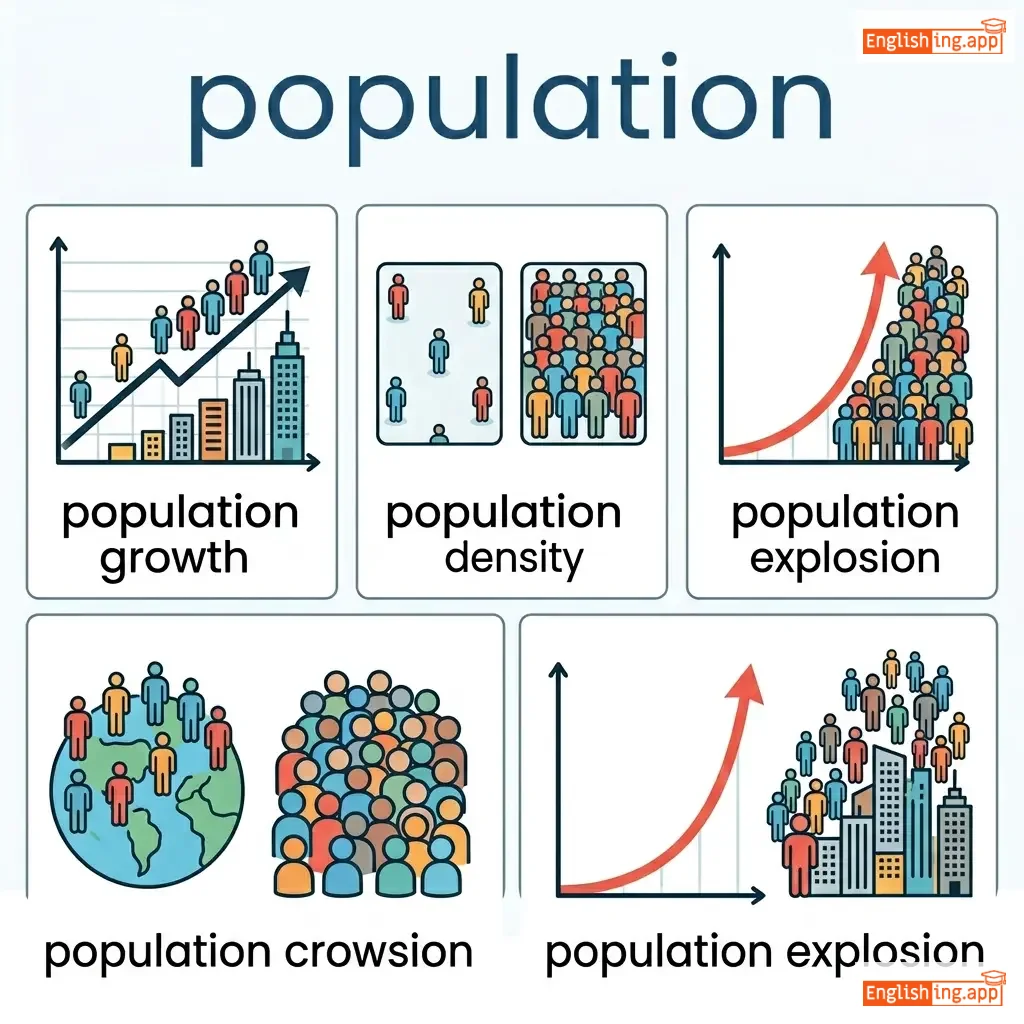
|
population growth, population density, aging population, urban population
••••••
|
‘Bevölkerung’ sounds like ‘Beverly' - think of a populated city like Beverly Hills!
••••••
|
|
#3834
🏡
|
/pɔːrtʃ/
noun
(pɔːrtʃ)
••••••
|
- •••••• |
Veranda
Veranda
••••••
|
- •••••• | - •••••• | - •••••• | - •••••• |
a covered area at the entrance of a building, often with a roof and open sides
••••••
|
We sat on the porch and enjoyed the evening breeze. |
Wir saßen auf der Veranda und genossen die Abendbrise.
Wir saßen auf der Veranda und genossen die Abendbrise.
••••••
|
- •••••• | - •••••• | - •••••• |
veranda, balcony, terrace, entryway
••••••
|
indoor, interior
••••••
|
front porch, back porch, porch swing, sitting on the porch
••••••
|
The porch is like 'Veranda' where you relax.
••••••
|
|
#3835
⚓
|
/pɔːrt/
noun
(Port)
••••••
|
|
Hafen
poort
••••••
|
- •••••• | - •••••• | - •••••• | - •••••• |
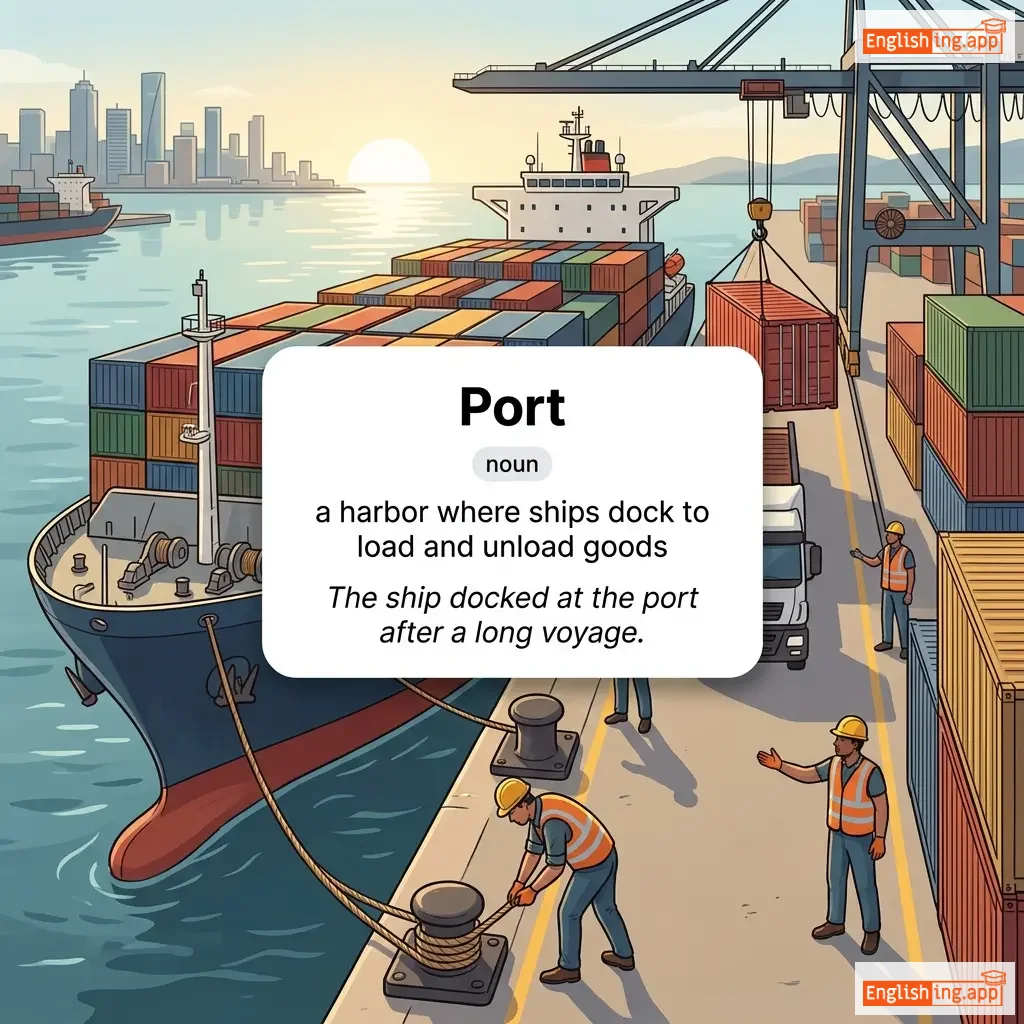
a harbor where ships dock to load and unload goods
••••••
|
The ship docked at the port after a long voyage.
Das Schiff legte nach einer langen Reise am Hafen an.
••••••
|
Das Schiff legte nach einer langen Reise am Hafen an.
Das Schiff legte nach einer langen Reise am Hafen an.
••••••
|
- •••••• | - •••••• | - •••••• |
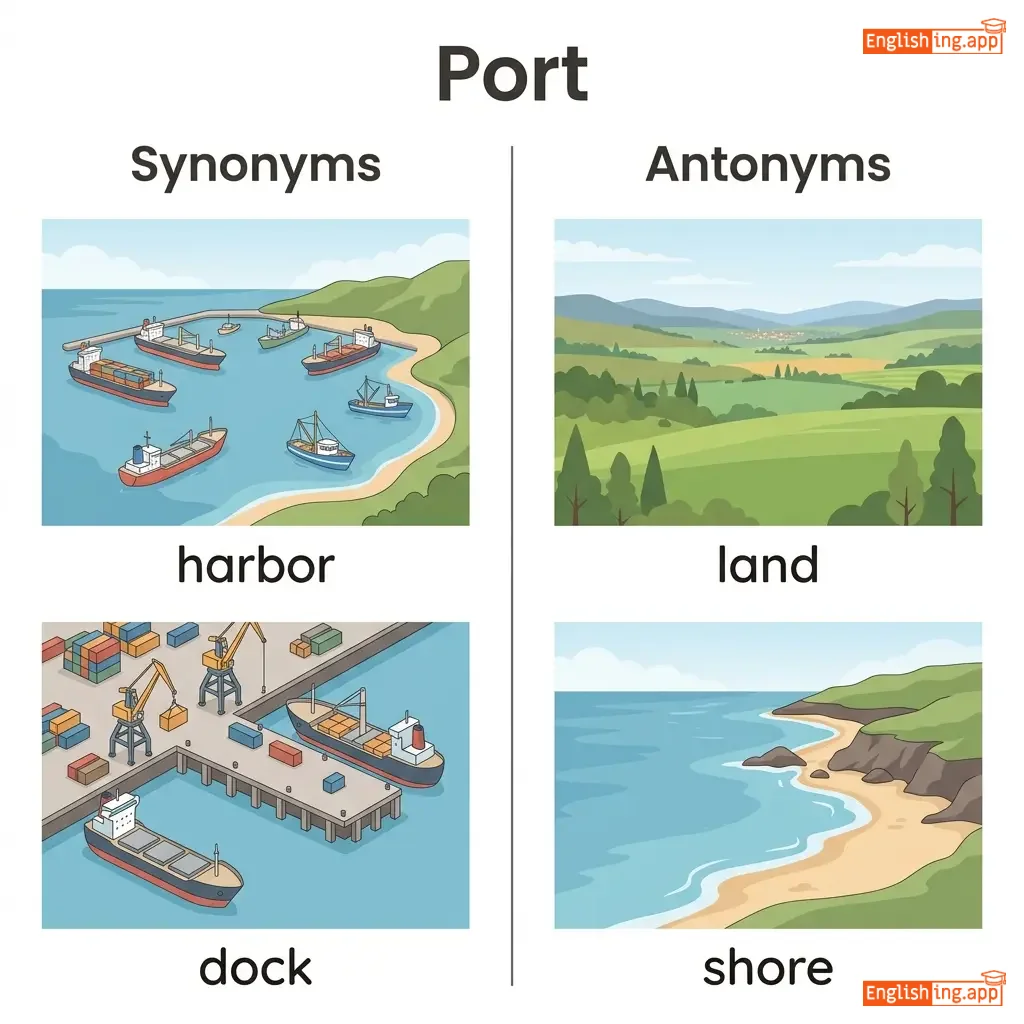
harbor, dock, quay, marina
••••••
|
land, shore
••••••
|
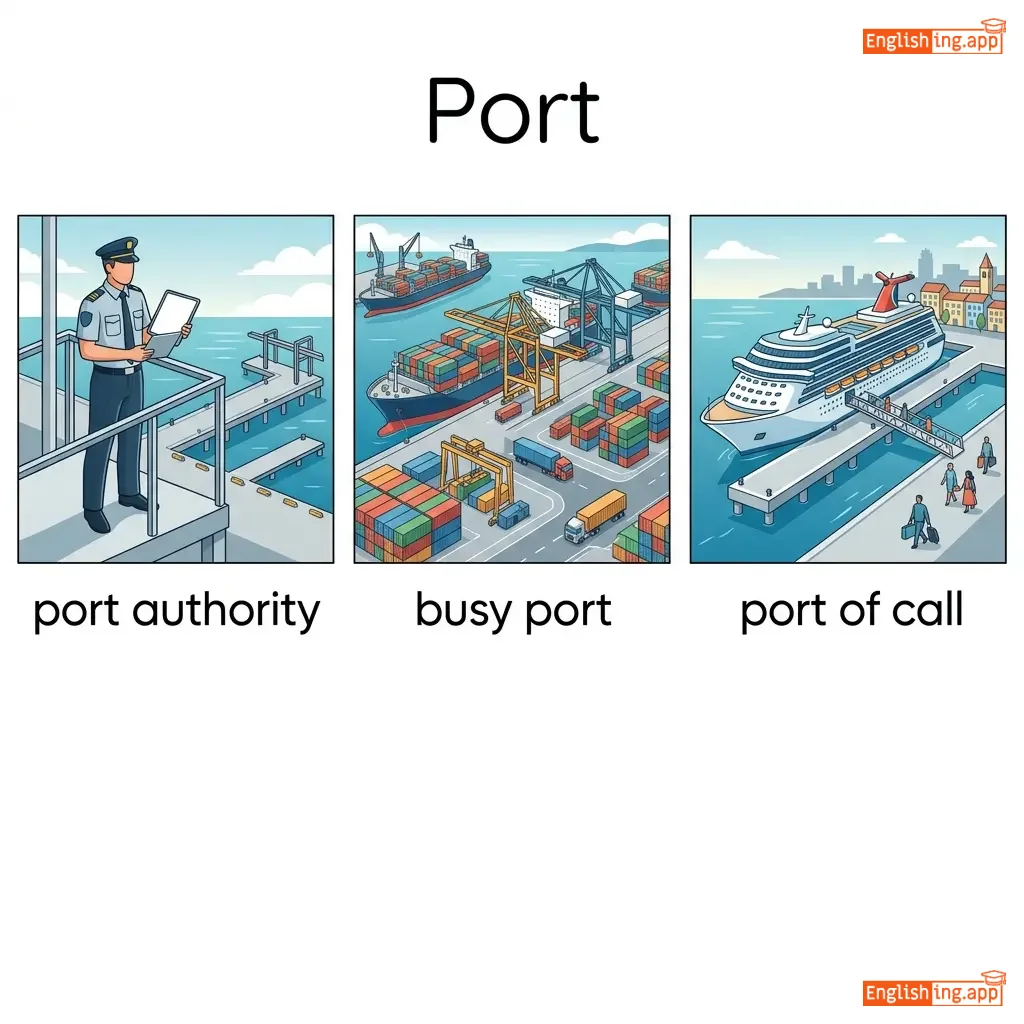
port authority, busy port, port of call, shipping port
••••••
|
Port ist Hafen: Picture a big PORT sign pointing to a busy Hafen
••••••
|
|
#3836
🍽️
|
/ˈpɔːrʃən/
noun
(pɔʁʃən)
••••••
|
- •••••• |
Teil
teil
••••••
|
- •••••• | - •••••• | - •••••• | - •••••• |
A part or share of something.
••••••
|
She ate only a small portion of the meal.
Sie aß nur einen kleinen Teil der Mahlzeit.
••••••
|
Sie aß nur einen kleinen Teil des Essens.
Sie aß nur einen kleinen Teil des Essens.
••••••
|
a fair portion
ein fairer Teil
••••••
|
a reasonable or equal share
••••••
|
ein fairer Teil
ein fairer teil
••••••
|
part, share, section, division, piece
••••••
|
whole, entirety
••••••
|
portion size, large portion, small portion, portion control
••••••
|
Portion bedeutet ein Teil von etwas
••••••
|
Vocabulary Quiz
Test your vocabulary by matching words with their translations or meanings.
Login to take the quiz
Comments (0)
Share your thoughts and join the discussion.
Join the discussion by logging in
Login to CommentNo comments yet
Be the first to share your thoughts!