

Upgrade für Zugriff auf alle Vokabeln
Erhalten Sie unbegrenzten Zugriff auf alle Vokabeln mit Pro-Mitgliedschaft
Upgrade auf ProÜbersetzung
Vergangenheit
Partizip Perfekt
Dritte Person Singular
Gerundium
Bedeutung
Beispielsatz
Übersetzung Beispielsatz
Synonyme
Antonyme
Kollokationen
Eselsbrücke
Swipe left or right, or use the buttons. Tap image to zoom.
Upgrade für Zugriff auf alle Sätze
Erhalten Sie unbegrenzten Zugriff auf alle Sätze mit Pro-Mitgliedschaft
Upgrade auf ProÜbersetzung Beispielsatz
Wort
Lesson 100Lesson 100 - Maske umschalten
|
Emoji
|
Wort | Images | Übersetzung | Vergangenheit | Partizip Perfekt | Dritte Person Singular | Gerundium | Bedeutung | Beispielsatz | Übersetzung Beispielsatz | Beispielausdruck | Bedeutung Beispielausdruck | Übersetzung Beispielausdruck | Synonyme | Antonyme | Kollokationen | Eselsbrücke |
|---|---|---|---|---|---|---|---|---|---|---|---|---|---|---|---|---|---|
|
#4729
👥
|
/skwɒd/
noun
(eskwad)
••••••
|
- •••••• |
Mannschaft
Mannschaft
••••••
|
- •••••• | - •••••• | - •••••• | - •••••• |
a small group of people organized for a specific purpose or task, often in the military or sports
••••••
|
The football squad trained hard before the championship match. |
Das Fußballteam trainierte hart vor dem Meisterschaftsspiel.
Das Fussballteam trainierte hart vor dem Meisterschaftsspiel.
••••••
|
squad goals |
an ideal or admirable group of friends or team that others aspire to be like
••••••
|
Mannschaftsziel
Mannschaftsziel
••••••
|
team, crew, group, unit, party
••••••
|
individual, loner
••••••
|
football squad, police squad, squad member, training squad
••••••
|
Mannschaft bedeutet Teamarbeit, wie ein Fußballteam.
••••••
|
|
#4730
🔲
|
/skwɛə(r)/
noun
(skwɛə)
••••••
|
- •••••• |
Quadrat
quadrat
••••••
|
- •••••• | - •••••• | - •••••• | - •••••• |
a shape with four equal straight sides and four right angles
••••••
|
The table has a square shape. |
Der Tisch hat eine quadratische Form.
Der Tisch hat eine quadratische Form.
••••••
|
- •••••• | - •••••• | - •••••• |
rectangle, quadrilateral
••••••
|
circle, triangle
••••••
|
square shape, square table, square room
••••••
|
Square = vier gleiche Seiten, wie die Ecken eines Zimmers!
••••••
|
|
#4731
🤏
|
/skwiːz/
verb
(skwiːz)
••••••
|
- •••••• |
drücken
drücken
••••••
|
squeezed
skwiːzt
••••••
|
squeezed
skwiːzt
••••••
|
squeezes
skwiːzt
••••••
|
squeezing
skwiːzend
••••••
|
to press something firmly, especially from all sides in order to extract or compress it
••••••
|
She squeezed the toothpaste to get the last bit.
Sie drückte die Zahnpastatube, um das letzte Stück herauszubekommen.
••••••
|
Sie drückte die Zahnpastatube, um das letzte Stück herauszubekommen.
Sie drückte die Zahnpastatube, um das letzte Stück herauszubekommen.
••••••
|
- •••••• | - •••••• | - •••••• |
press, compress, crush, squish
••••••
|
release, loosen, uncompress
••••••
|
squeeze the juice, squeeze in, squeeze the life out of
••••••
|
Drücken, um das letzte Stück Zahnpasta herauszuholen - Squeeze the last bit of toothpaste!
••••••
|
|
#4732
🔪
|
/stæb/
verb, noun
(stäb)
••••••
|
- •••••• |
erstechen
erstechen
••••••
|
stabbed
stäbd
••••••
|
stabbed
stäbd
••••••
|
stabs
stäbs
••••••
|
stabbing
stäbing
••••••
|
to pierce or wound with a pointed weapon or object
••••••
|
He was stabbed in the back during the altercation.
Er wurde während des Streits in den Rücken gestochen.
••••••
|
Er wurde während des Streits in den Rücken gestochen.
Er wurde während des Streits in den Rücken gestochen.
••••••
|
- •••••• | - •••••• | - •••••• |
pierce, wound, jab, cut
••••••
|
heal, fix
••••••
|
stab wound, stabbed in the back, stabbed with a knife
••••••
|
Erstechen ist, wie man mit einem Messer sticht, denk daran!
••••••
|
|
#4733
⚖️
|
/stəˈbɪl.ə.ti/
noun
(stabilität)
••••••
|
- •••••• |
stabilität
stabilitaet
••••••
|
- •••••• | - •••••• | - •••••• | - •••••• |
the state of being stable; firmness; steadiness
••••••
|
Political stability is essential for economic growth.
Politische Stabilität ist entscheidend für das Wirtschaftswachstum.
••••••
|
Politische Stabilität ist entscheidend für das Wirtschaftswachstum.
Politische Stabilitaet ist entscheidend fuer das Wirtschaftswachstum.
••••••
|
- •••••• | - •••••• | - •••••• |
steadiness, firmness, balance, security
••••••
|
instability, unsteadiness, volatility
••••••
|
financial stability, political stability, emotional stability, job stability
••••••
|
Die Stabilität ist die Grundlage für eine starke Wirtschaft.
••••••
|
|
#4734
⚖️
|
/ˈsteɪ.bə.laɪz/
verb
(stabilisieren)
••••••
|
- •••••• |
stabilisieren
stabilisieren
••••••
|
stabilized
stabilisierte
••••••
|
stabilized
stabilisiert
••••••
|
stabilizes
stabilisiert
••••••
|
stabilizing
stabilisierend
••••••
|
to make something steady, secure, or unlikely to change suddenly
••••••
|
The government took measures to stabilize the economy.
Die Regierung ergriff Maßnahmen, um die Wirtschaft zu stabilisieren.
••••••
|
Die Regierung ergriff Maßnahmen, um die Wirtschaft zu stabilisieren.
Die Regierung ergriff Maßnahmen, um die Wirtschaft zu stabilisieren.
••••••
|
stabilize the situation
die Situation stabilisieren
••••••
|
to bring a situation under control or make it steady
••••••
|
die Situation stabilisieren
die Situation stabilisieren
••••••
|
steady, secure, balance, fix, support
••••••
|
destabilize, weaken, disrupt
••••••
|
stabilize economy, stabilize situation, stabilize prices, stabilize market
••••••
|
Stable + eyes → Augen (eyes) machen alles stabil
••••••
|
|
#4735
🏠
|
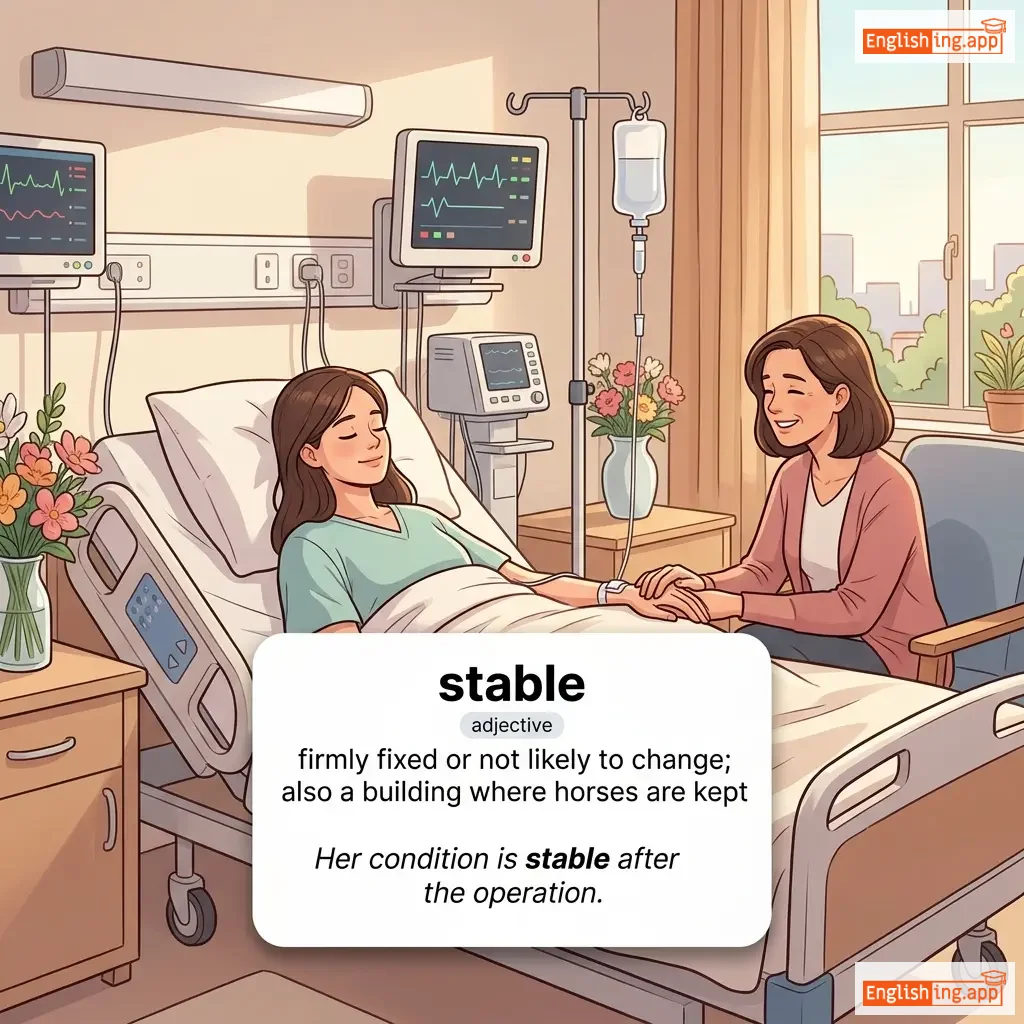
/ˈsteɪ.bəl/
adjective
(steh-bəl)
••••••
|
|
stabil / Stall
stabil / stall
••••••
|
- •••••• | - •••••• | - •••••• | - •••••• |
firmly fixed or not likely to change; also a building where horses are kept
••••••
|
Her condition is stable after the operation. |
Ihr Zustand ist nach der Operation stabil.
Ihr Zustand ist nach der Operation stabil.
••••••
|
stable condition |
a state of being steady and not worsening
••••••
|
stabiler Zustand
stabiler Zustand
••••••
|
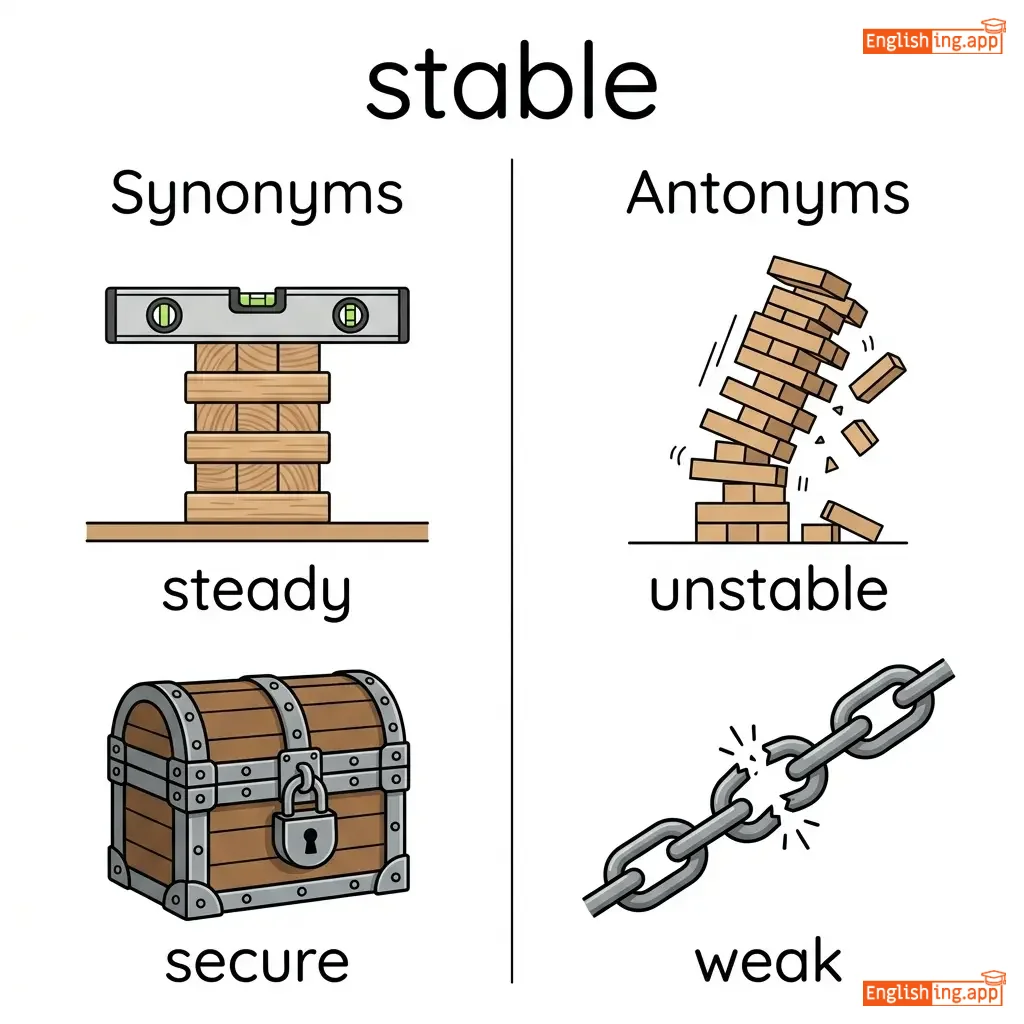
steady, secure, firm, constant, balanced
••••••
|
unstable, weak, shaky
••••••
|
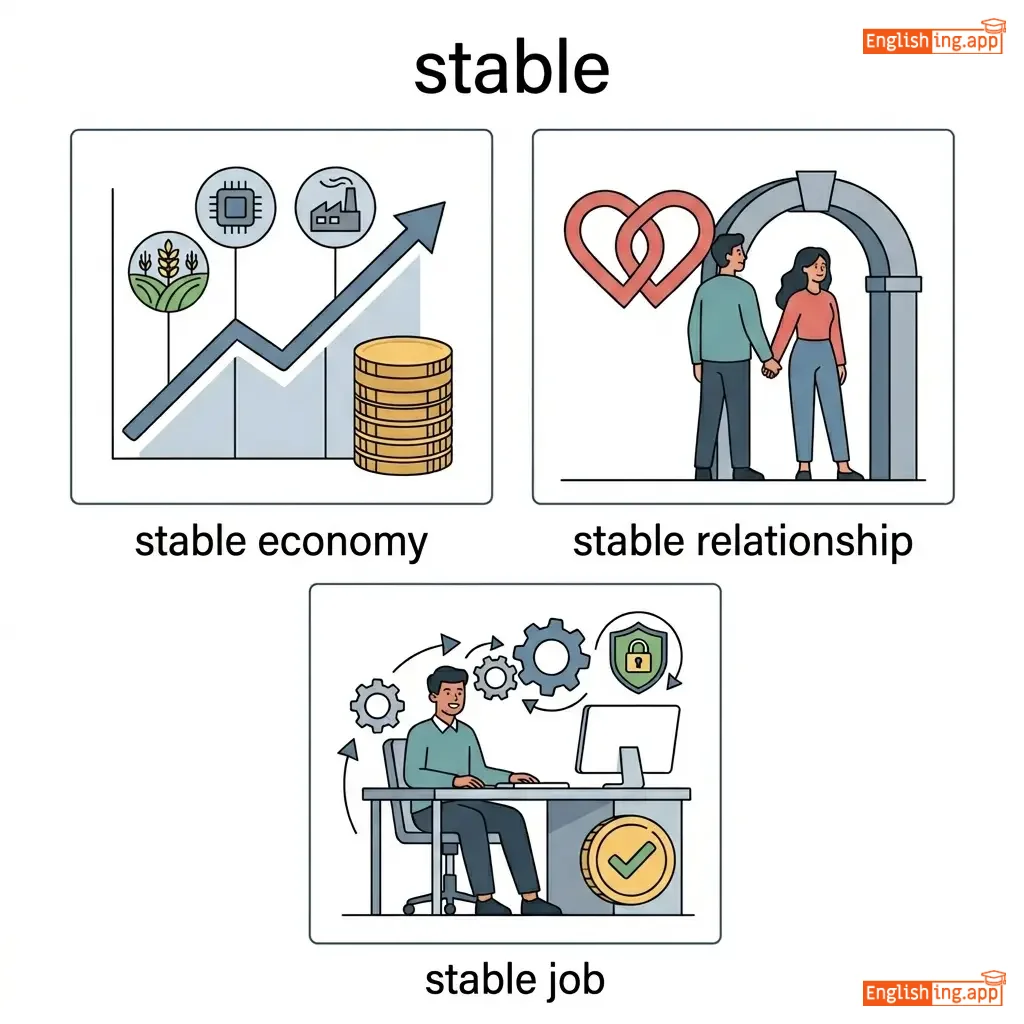
stable economy, stable relationship, stable job, stable environment
••••••
|
Stable bedeutet stabil, wie ein Stall, in dem Pferde stabil bleiben.
••••••
|
|
#4736
👩💼
|
/stæf/
noun
(staff)
••••••
|
- •••••• |
Personal
Personal
••••••
|
- •••••• | - •••••• | - •••••• | - •••••• |
a group of employees working together in an organization
••••••
|
The staff at the hospital are very helpful. |
Das Personal im Krankenhaus ist sehr hilfsbereit.
Das Personal im Krankenhaus ist sehr hilfsbereit.
••••••
|
- •••••• | - •••••• | - •••••• |
employees, team, workforce, personnel
••••••
|
employer, boss
••••••
|
staff members, staff meeting, hospital staff
••••••
|
Staff bedeutet die Mitarbeiter einer Organisation - Staff means the employees of an organization!
••••••
|
|
#4737
🎭
|
/steɪdʒ/
noun
(ʃteɪdʒ)
••••••
|
- •••••• |
Bühne
Bühne
••••••
|
- •••••• | - •••••• | - •••••• | - •••••• |
a raised platform or area for performances or presentations
••••••
|
The actor stepped onto the stage to deliver his speech. |
Der Schauspieler trat auf die Bühne, um seine Rede zu halten.
Der Schauspieler trat auf die Bühne, um seine Rede zu halten.
••••••
|
- •••••• | - •••••• | - •••••• |
platform, podium, stage area
••••••
|
audience, ground
••••••
|
on stage, stage performance, stage presence
••••••
|
Bühne ist der Ort für Aufführungen – Bühne, wo die Aufführung stattfindet!
••••••
|
|
#4738
🪜
|
/stɛə/
noun
(steə)
••••••
|
- •••••• |
Treppe
treppe
••••••
|
- •••••• | - •••••• | - •••••• | - •••••• |
a step or set of steps leading from one level to another
••••••
|
He tripped on the stair and fell down. |
Er stolperte auf der Treppe und fiel hin.
Er stolperte auf der Treppe und fiel hin.
••••••
|
- •••••• | - •••••• | - •••••• |
step, staircase, flight of stairs
••••••
|
elevator, lift
••••••
|
climb the stairs, fall down the stairs
••••••
|
Treppe, wo wir von einem Stockwerk zum anderen gehen – Stair means Treppe!
••••••
|
|
#4739
📈
|
/steɪk/
noun, verb
(steik)
••••••
|
- •••••• |
Beteiligung, Risiko
Beteiligung, Risiko
••••••
|
staked
steikt
••••••
|
staked
steikt
••••••
|
stakes
steiks
••••••
|
staking
steiking
••••••
|
A share or interest in a business or venture; to risk or support something of value.
••••••
|
He has a major stake in the new company.
Er hat einen großen Anteil an der neuen Firma.
••••••
|
Er hat einen großen Anteil an der neuen Firma.
Er hat einen großen Anteil an der neuen Firma.
••••••
|
at stake
auf dem Spiel
••••••
|
at risk; in danger of being lost
••••••
|
auf dem Spiel
auf dem Spiel
••••••
|
share, investment, risk, interest, bet
••••••
|
security, certainty, safety
••••••
|
stake in, at stake, high stakes, stake money
••••••
|
Wenn du setzt, ist alles auf dem Spiel.
••••••
|
|
#4740
🛑
|
/stɔːl/
verb, noun
(shtahl)
••••••
|
- •••••• |
anhalten, Stand
anhalten, stand
••••••
|
stalled
shtahld
••••••
|
stalled
shtahld
••••••
|
stalls
shtahls
••••••
|
stalling
shtahling
••••••
|
to stop or cause to stop temporarily; a small shop or stand
••••••
|
The car stalled on the way to the office.
Das Auto hielt auf dem Weg zum Büro an.
••••••
|
Das Auto hielt auf dem Weg zum Büro an.
Das Auto hielt auf dem Weg zum Büro an.
••••••
|
- •••••• | - •••••• | - •••••• |
delay, stop, halt, linger
••••••
|
move, proceed
••••••
|
stall a car, market stall, food stall, engine stalled
••••••
|
Stall bedeutet anhalten oder ein kleiner Marktstand!
••••••
|
|
#4741
📮
|
/stæmp/
verb
(stemp)
••••••
|
- •••••• |
stempeln / mit dem Fuß stampfen
stempeln / mit dem Fuß stampfen
••••••
|
stamped
gestempelt
••••••
|
stamped
gestempelt
••••••
|
stamps
stempelt
••••••
|
stamping
stempeln
••••••
|
To bring down (one's foot) heavily on the ground; to imprint a mark or seal.
••••••
|
She stamped her foot in frustration.
Sie stampfte mit ihrem Fuß aus Frustration.
••••••
|
Sie stampfte mit ihrem Fuß aus Frustration.
Sie stampfte mit ihrem Fuß aus Frustration.
••••••
|
stamp out
auslöschen
••••••
|
To put an end to something harmful or undesirable.
••••••
|
ausrotten
ausrotten
••••••
|
imprint, seal, stomp, crush
••••••
|
erase, remove
••••••
|
stamp out, stamp duty, stamp collector, stamp approval
••••••
|
Das Stempeln hinterlässt einen Abdruck → Stempeln bedeutet, eine Marke zu hinterlassen.
••••••
|
|
#4742
🧍
|
/stæns/
noun
(stæns)
••••••
|
- •••••• |
Haltung
Haltung
••••••
|
- •••••• | - •••••• | - •••••• | - •••••• |
a person's attitude, opinion, or position on an issue
••••••
|
The company took a strong stance on environmental protection. |
Das Unternehmen hat eine starke Haltung zum Umweltschutz eingenommen.
Das Unternehmen hat eine starke Haltung zum Umweltschutz eingenommen.
••••••
|
take a stance |
to adopt a definite position or opinion on a subject
••••••
|
eine Haltung einnehmen
eine Haltung einnehmen
••••••
|
position, viewpoint, attitude, perspective, opinion
••••••
|
neutrality, indecision
••••••
|
firm stance, political stance, defensive stance, moral stance
••••••
|
Stance bedeutet Haltung, nimm jetzt deine Haltung ein!
••••••
|
|
#4743
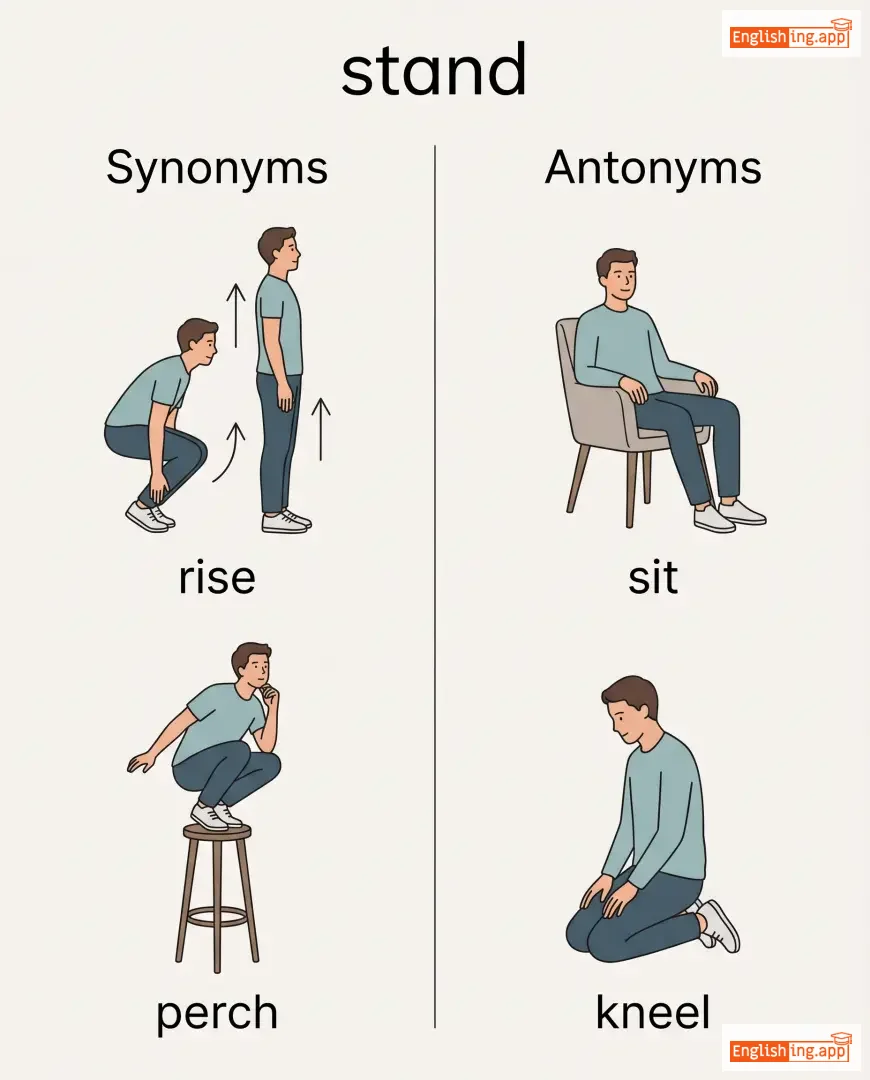
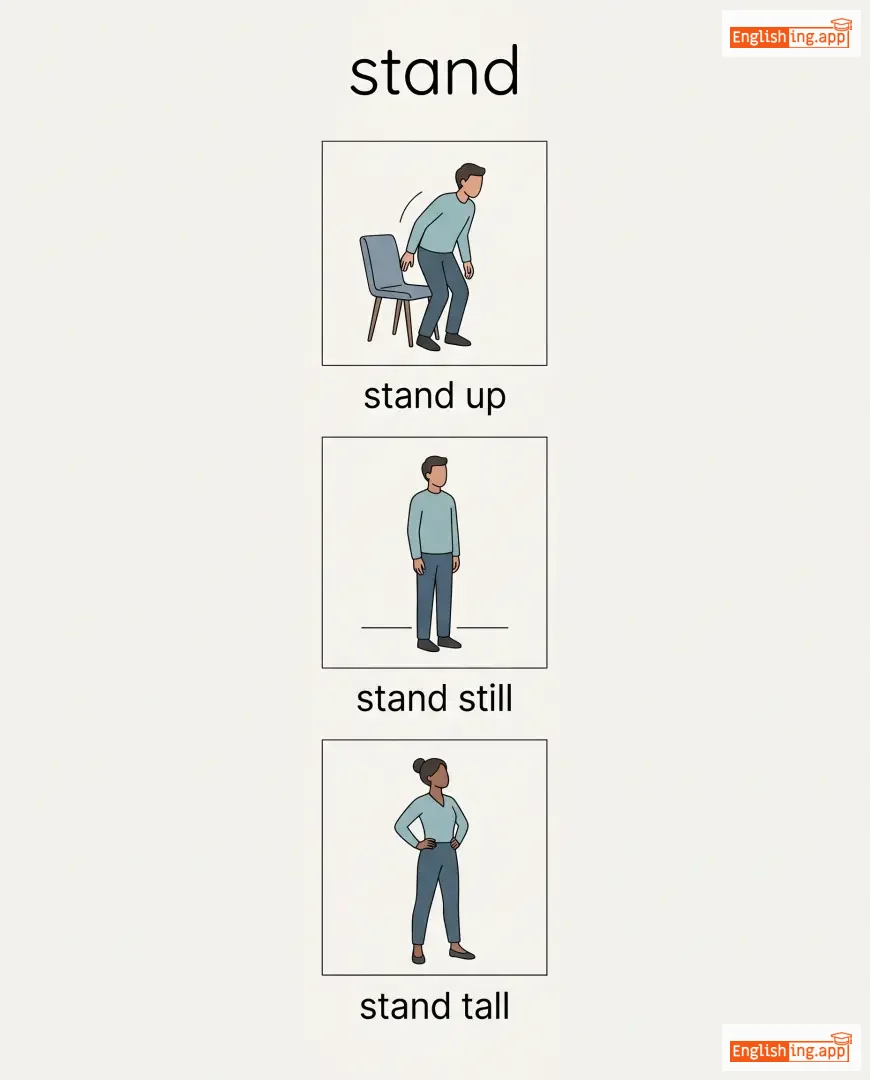
🧍
|
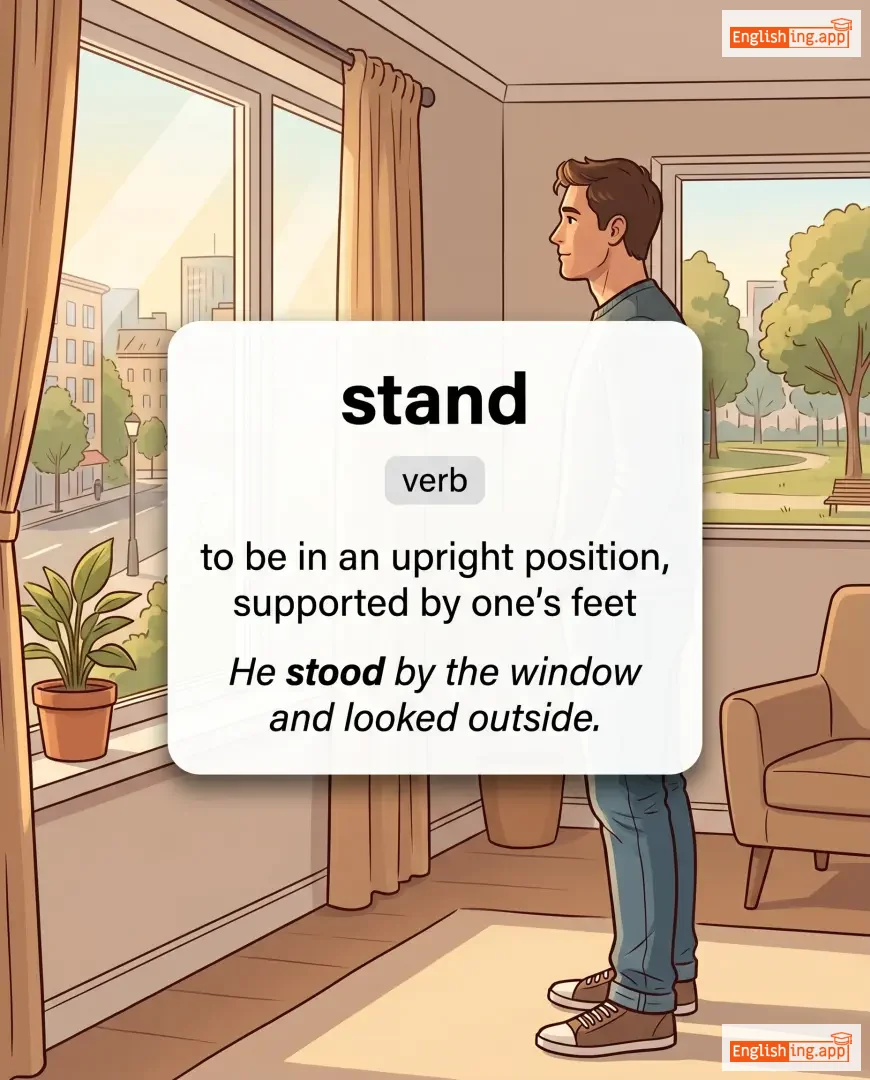
/stænd/
verb
(stehen)
••••••
|
|
stehen
stehen
••••••
|
stood
stand
••••••
|
stood
gestanden
••••••
|
stands
steht
••••••
|
standing
stehend
••••••
|
to be in an upright position; to tolerate or endure
••••••
|
Please stand up when the teacher enters.
Bitte stehen Sie auf, wenn der Lehrer kommt.
••••••
|
Bitte stehen Sie auf, wenn der Lehrer kommt.
Bitte stehen Sie auf, wenn der Lehrer kommt.
••••••
|
- •••••• | - •••••• | - •••••• |
rise, upright, endure, tolerate
••••••
|
sit, lie, fall, collapse
••••••
|
stand up, stand still, stand by, stand for, take a stand
••••••
|
Stehen wie ein Soldat!
••••••
|
|
#4744
📏
|
/ˈstændərd/
noun
(Standard)
••••••
|
- •••••• |
Standard
Standard
••••••
|
- •••••• | - •••••• | - •••••• | - •••••• |
a level of quality or achievement, or a measure of comparison
••••••
|
This car meets all the safety standards.
Dieses Auto erfüllt alle Sicherheitsstandards.
••••••
|
Dieses Auto erfüllt alle Sicherheitsstandards.
Dieses Auto erfuellt alle Sicherheitsstandards
••••••
|
- •••••• | - •••••• | - •••••• |
norm, criterion, benchmark, measure
••••••
|
exception, anomaly
••••••
|
high standard, industry standard, minimum standard
••••••
|
Stand tall with Standard - der Massstab fuer Qualitat; imagine a ruler marking top quality
••••••
|
|
#4745
🧍
|
/ˈstændɪŋ/
noun/adjective
(standing)
••••••
|
- •••••• |
Position / Ansehen
Position / Ansehen
••••••
|
- •••••• | - •••••• | - •••••• | - •••••• |
status, reputation, or position; also the act of being upright on the feet
••••••
|
He has high standing in the community for his charity work. |
Er hat in der Gemeinschaft einen hohen Ruf wegen seiner Wohltätigkeitsarbeit.
Er hat in der Gemeinschaft einen hohen Ruf wegen seiner Wohltatigkeitsarbeit.
••••••
|
of good standing |
having a good reputation or status
••••••
|
von gutem Ansehen
von gutem Ansehen
••••••
|
status, reputation, position, rank, stature
••••••
|
disrepute, dishonor, disgrace
••••••
|
social standing, legal standing, good standing, standing order
••••••
|
Standing bedeutet aufrecht stehen und auch einen hohen Ansehen haben.
••••••
|
|
#4746
⭐
|
/stɑːr/
noun
(star)
••••••
|
- •••••• |
Stern
Stern
••••••
|
- •••••• | - •••••• | - •••••• | - •••••• |
a luminous point in the night sky, a famous person
••••••
|
The movie star smiled for the cameras. |
Der Filmstar lächelte für die Kameras.
Der Filmstar lächelte für die Kameras.
••••••
|
a shooting star |
a meteor that appears to move rapidly across the sky
••••••
|
eine Sternschnuppe
eine Sternschnuppe
••••••
|
celebrity, icon, luminary, celebrity
••••••
|
nobody, unknown
••••••
|
movie star, film star, shooting star
••••••
|
Sterne leuchten am Himmel, genauso wie Filmstars in einem Movie!
••••••
|
|
#4747
⚫
|
/stɑːrk/
adjective
(stark)
••••••
|
- •••••• |
stark, scharf
stark, scharf
••••••
|
- •••••• | - •••••• | - •••••• | - •••••• |
Severe, sharp, or clearly defined; plain and without any decoration.
••••••
|
The stark contrast between poverty and wealth was evident in the city.
Der starke Kontrast zwischen Armut und Reichtum war in der Stadt offensichtlich.
••••••
|
Der starke Kontrast zwischen Armut und Reichtum war in der Stadt offensichtlich.
Der starke Kontrast zwischen Armut und Reichtum war in der Stadt offensichtlich.
••••••
|
stark reality
starke Realität
••••••
|
The harsh or unpleasant truth.
••••••
|
starke Realität
starke realitaet
••••••
|
severe, harsh, bleak, plain, absolute
••••••
|
soft, mild, decorated
••••••
|
stark contrast, stark difference, stark reality, stark warning
••••••
|
Stark erinnert an einen starken Kontrast, wie schwarz und weiß.
••••••
|
|
#4748
🚀
|
/stɑːrt/
verb
(start)
••••••
|
|
beginnen
beginnen
••••••
|
started
started
••••••
|
started
started
••••••
|
starts
starts
••••••
|
starting
starting
••••••
|
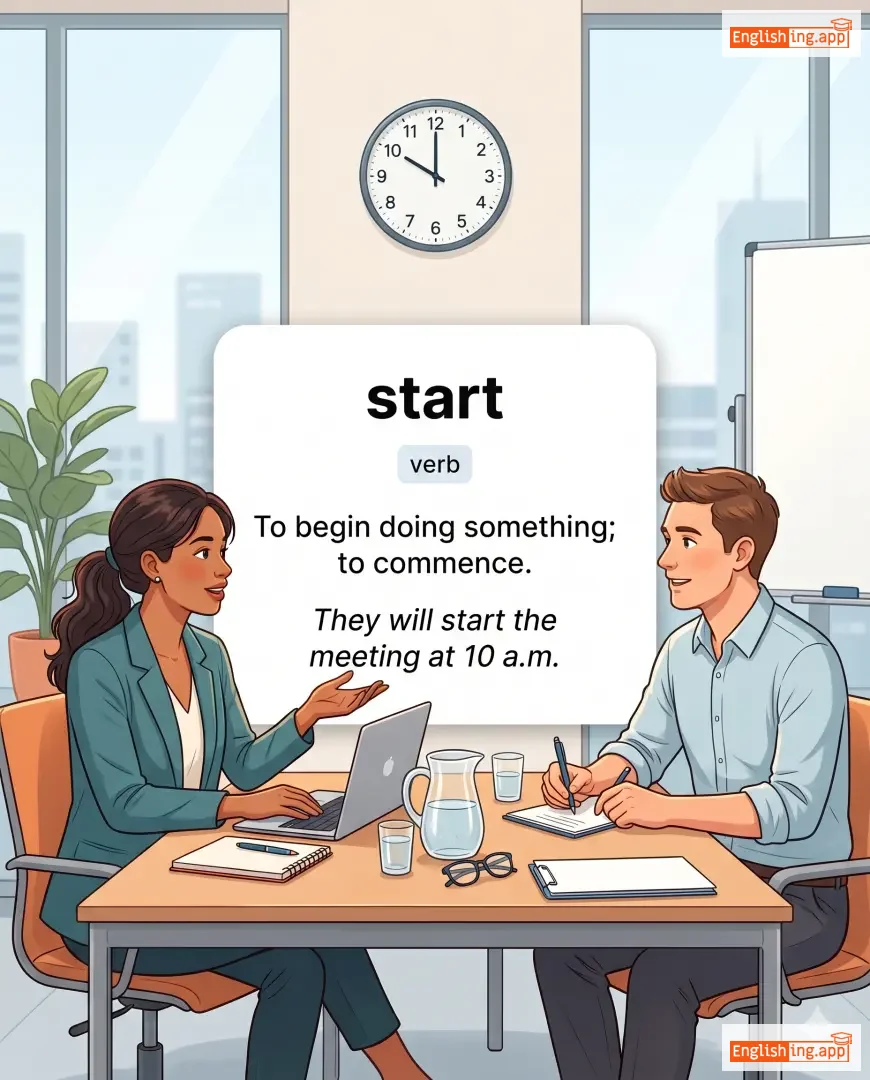
To begin doing something; to commence.
••••••
|
They will start the meeting at 10 a.m.
Sie werden das Meeting um 10 Uhr starten.
••••••
|
Sie werden das Meeting um 10 Uhr starten.
Sie werden das Meeting um 10 Uhr starten.
••••••
|
start from scratch
von Grund auf beginnen
••••••
|
To begin again from nothing.
••••••
|
Von Grund auf beginnen
Von Grund auf beginnen
••••••
|
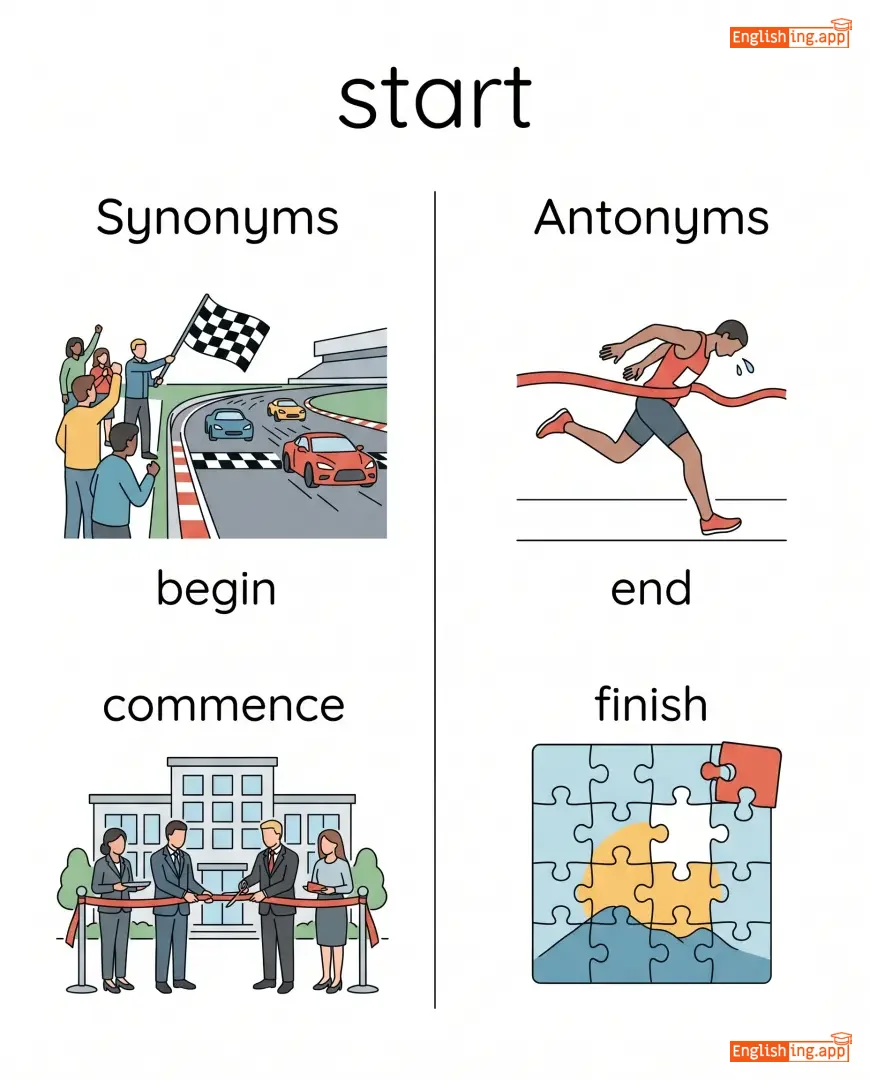
begin, commence, initiate, launch, open
••••••
|
end, finish, stop
••••••
|
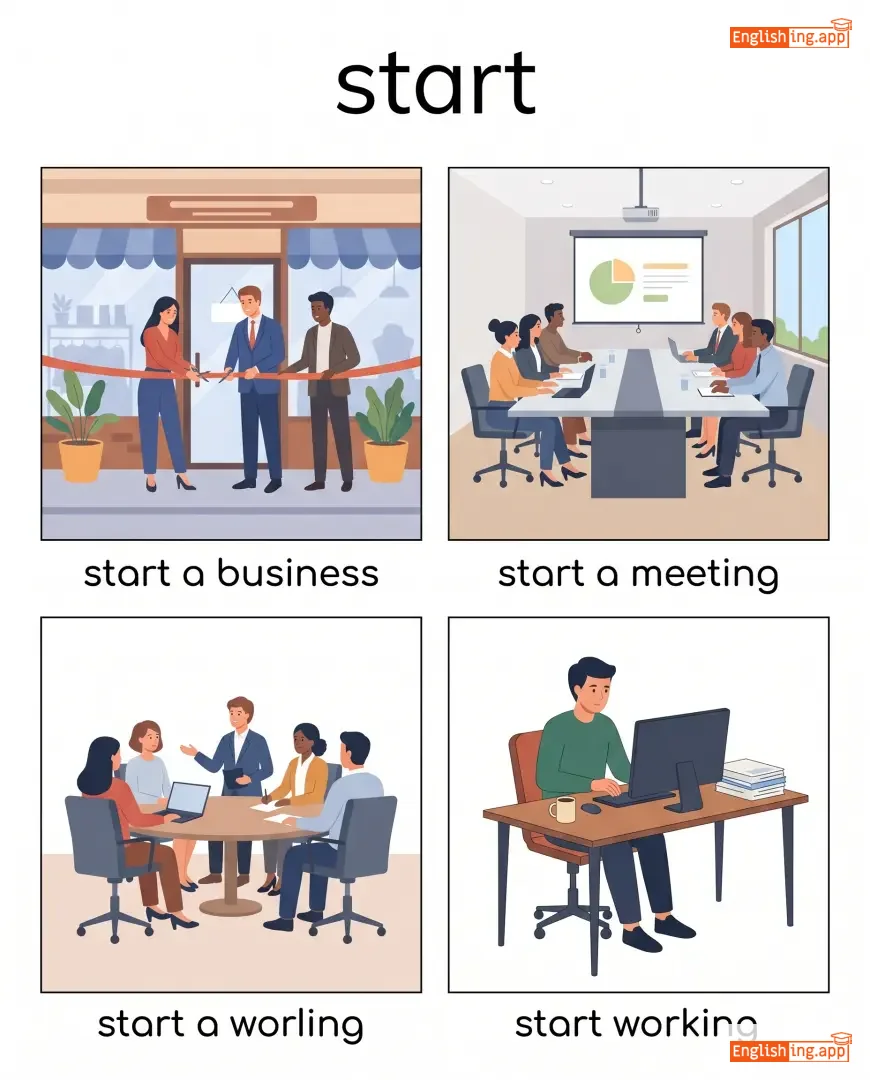
start a business, start a meeting, start working, start again
••••••
|
'Start' ist der Knopf, den man drückt, um etwas zu beginnen.
••••••
|
|
#4749
🏛️
|
/steɪt/
noun
(steɪt)
••••••
|
|
Zustand
Zustand
••••••
|
- •••••• | - •••••• | - •••••• | - •••••• |
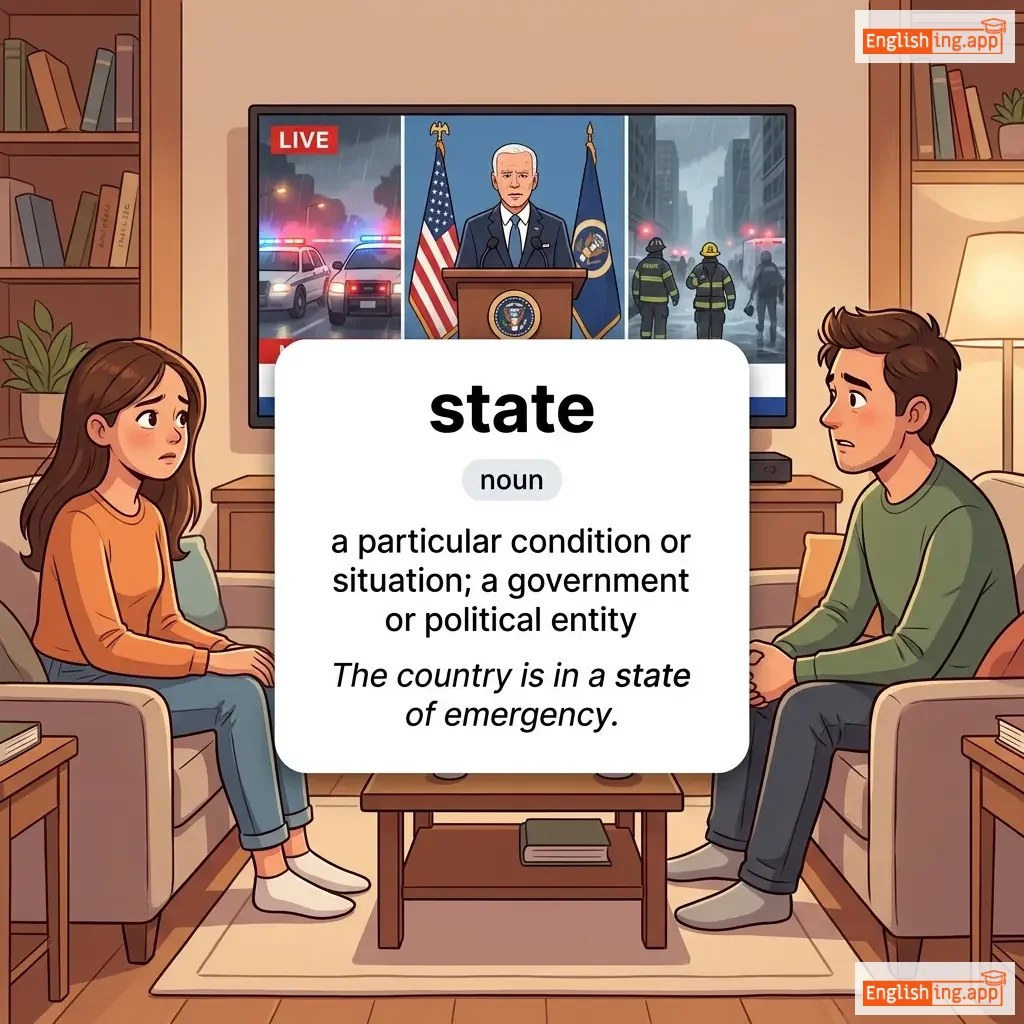
a particular condition or situation; a government or political entity
••••••
|
The country is in a state of emergency. |
Das Land ist im Zustand des Notstands.
Das Land ist im Zustand des Notstands.
••••••
|
- •••••• | - •••••• | - •••••• |
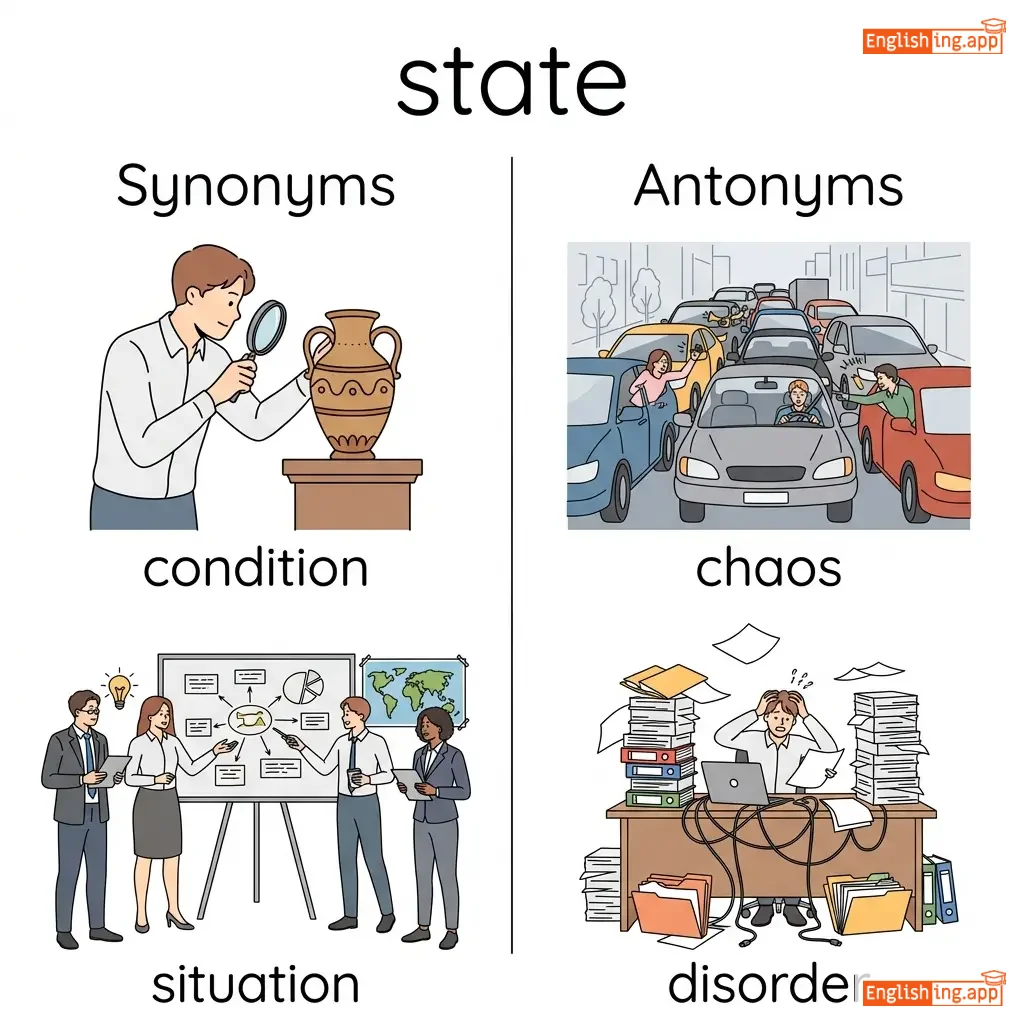
condition, situation, phase, territory
••••••
|
chaos, disorder
••••••
|
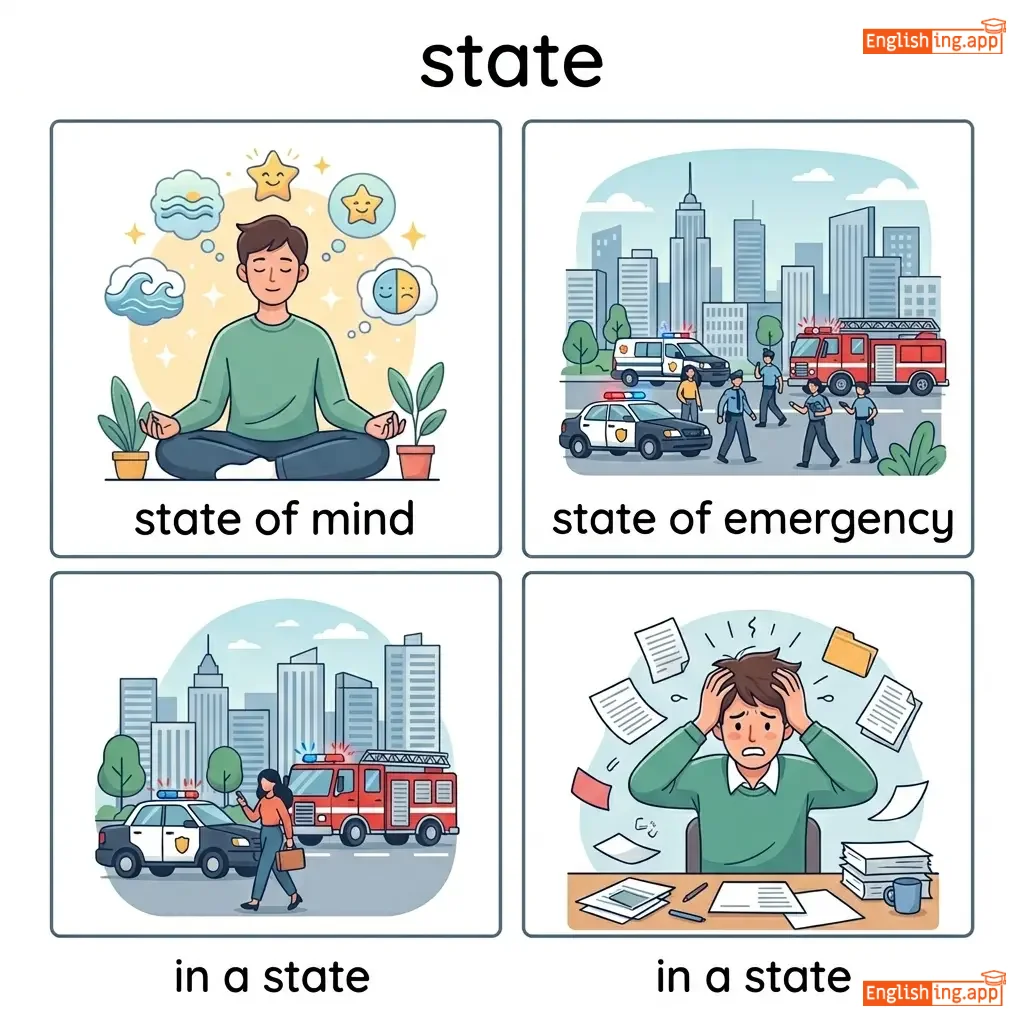
state of mind, state of emergency, in a state
••••••
|
State means a country or condition - like the 'state' of emergency!
••••••
|
|
#4750
📄
|
/ˈsteɪt.mənt/
noun
(stet-ment)
••••••
|
- •••••• |
Erklärung
erklaerung
••••••
|
- •••••• | - •••••• | - •••••• | - •••••• |
a definite or clear expression of something in speech or writing; an official account of facts
••••••
|
The CEO issued a statement about the company's future plans. |
Der CEO gab eine Erklärung zu den zukünftigen Plänen des Unternehmens ab.
Der CEO gab eine Erklärung zu den zukünftigen Plänen des Unternehmens ab.
••••••
|
- •••••• | - •••••• | - •••••• |
declaration, announcement, report, account
••••••
|
silence, concealment
••••••
|
official statement, press statement, financial statement, witness statement
••••••
|
Erklärung = statement, der CEO gab eine Erklärung ab.
••••••
|
|
#4751
🚉
|
/ˈsteɪʃən/
noun
(Station)
••••••
|
- •••••• |
Bahnhof
bahnhof
••••••
|
- •••••• | - •••••• | - •••••• | - •••••• |
a place where a particular service is provided, especially for transportation
••••••
|
We arrived at the station just in time for the train.
Wir sind am Bahnhof gerade noch rechtzeitig zum Zug angekommen.
••••••
|
Wir sind am Bahnhof gerade noch rechtzeitig zum Zug angekommen.
Wir sind am Bahnhof gerade noch rechtzeitig zum Zug angekommen.
••••••
|
- •••••• | - •••••• | - •••••• |
terminal, depot, stop, hub
••••••
|
wilderness, desolate place
••••••
|
train station, bus station, police station, gas station
••••••
|
Bahn + hof = Bahnhof, train in a courtyard -> imagine a train stopping in a courtyard to become the station
••••••
|
|
#4752
📊
|
/stəˈtɪstɪkəl/
adjective
(statistisch)
••••••
|
- •••••• |
statistisch
statistisch
••••••
|
- •••••• | - •••••• | - •••••• | - •••••• |
relating to the use or analysis of numerical data
••••••
|
The report provides statistical data about population growth. |
Der Bericht liefert statistische Daten über das Bevölkerungswachstum.
Der Bericht liefert statistische Daten über das Bevölkerungswachstum.
••••••
|
- •••••• | - •••••• | - •••••• |
numerical, analytical, quantitative, data-based
••••••
|
qualitative, subjective
••••••
|
statistical analysis, statistical data, statistical method, statistical model
••••••
|
Statistik ist mit Zahlen verbunden, also geht es bei statistical um Datenanalysen 📊
••••••
|
|
#4753
📊
|
/stəˈtɪstɪks/
noun
(statistik)
••••••
|
- •••••• |
Statistik
statistik
••••••
|
- •••••• | - •••••• | - •••••• | - •••••• |
the practice or science of collecting and analyzing numerical data
••••••
|
The statistics showed an increase in the number of users last year.
Die Statistik zeigte einen Anstieg der Nutzerzahlen im letzten Jahr.
••••••
|
Die Statistik zeigte einen Anstieg der Nutzerzahlen im letzten Jahr.
Die Statistik zeigte einen Anstieg der Nutzerzahlen im letzten Jahr.
••••••
|
- •••••• | - •••••• | - •••••• |
data, figures, analytics, metrics
••••••
|
anecdote, singular, outlier
••••••
|
statistical analysis, statistical data, statistical model, collection of statistics
••••••
|
Statistik hilft, durch Daten das Verhalten und Muster der Welt zu verstehen.
••••••
|
|
#4754
🗽
|
/ˈstætʃuː/
noun
(statue)
••••••
|
- •••••• |
Statue
Statue
••••••
|
- •••••• | - •••••• | - •••••• | - •••••• |
a carved or cast figure of a person or animal, especially one that is life-size or larger
••••••
|
They built a statue of the national hero in the city square. |
Sie haben auf dem Stadtplatz ein Denkmal des Nationalhelden errichtet.
Sie haben auf dem Stadtplatz ein Denkmal des Nationalhelden errichtet.
••••••
|
as still as a statue |
completely motionless
••••••
|
so still wie eine Statue
so still wie eine Statue
••••••
|
sculpture, figure, effigy, monument, idol
••••••
|
none, living being
••••••
|
statue of liberty, bronze statue, marble statue, giant statue
••••••
|
Statue means statue of liberty 🗽 — Die Statue ist immer still!
••••••
|
|
#4755
🔝
|
/ˈsteɪtəs/
noun
(status)
••••••
|
- •••••• |
Status
Status
••••••
|
- •••••• | - •••••• | - •••••• | - •••••• |
the social or professional position or condition of someone or something
••••••
|
His social status improved after the promotion. |
Sein sozialer Status verbesserte sich nach der Beförderung.
Sein sozialer Status verbesserte sich nach der Beförderung.
••••••
|
- •••••• | - •••••• | - •••••• |
rank, position, standing, condition
••••••
|
low status, insignificance
••••••
|
high status, social status, professional status
••••••
|
Status zeigt deinen Rang in der Gesellschaft
••••••
|
|
#4756
🏠
|
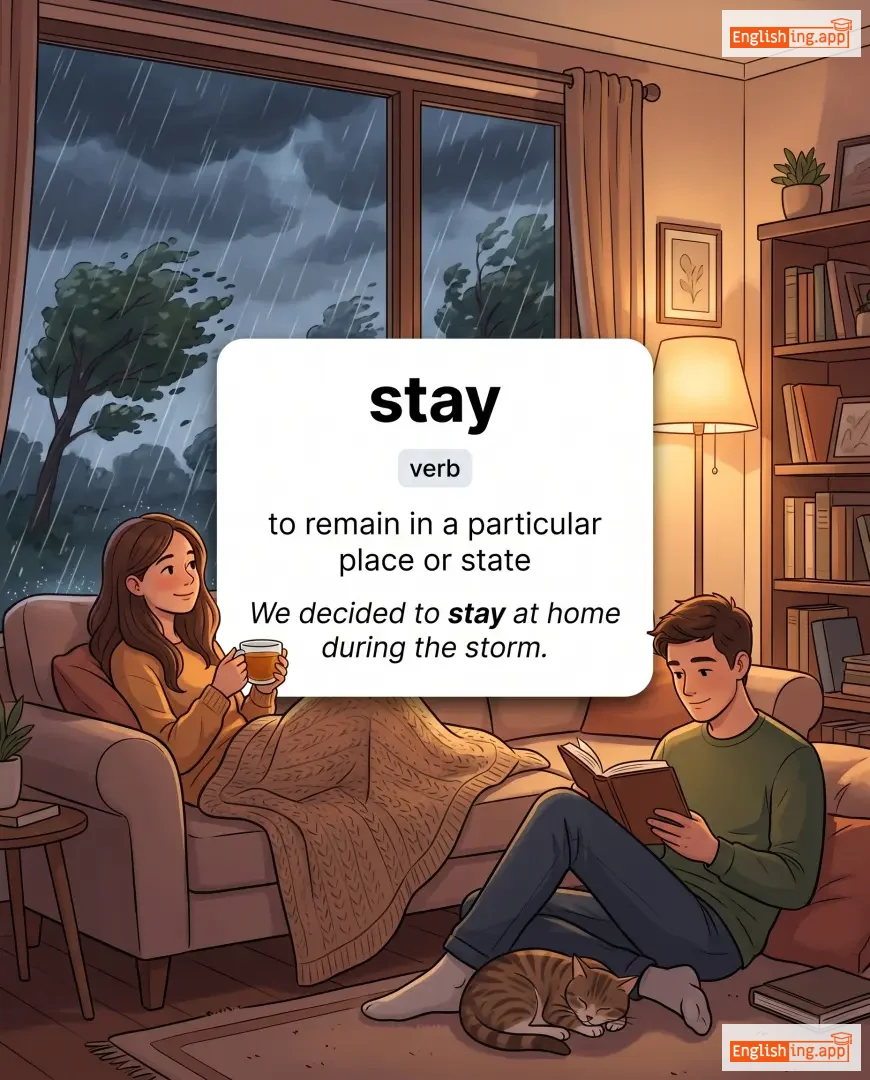
/steɪ/
verb
(steh)
••••••
|
|
bleiben
bleiben
••••••
|
stayed
stand
••••••
|
stayed
stand
••••••
|
stays
steht
••••••
|
staying
stehend
••••••
|
to remain in the same place; to continue being
••••••
|
Please stay here until I return.
Bitte bleiben Sie hier, bis ich zurückkomme.
••••••
|
Bitte bleiben Sie hier, bis ich zurückkomme.
Bitte bleiben Sie hier, bis ich zurückkomme.
••••••
|
- •••••• | - •••••• | - •••••• |
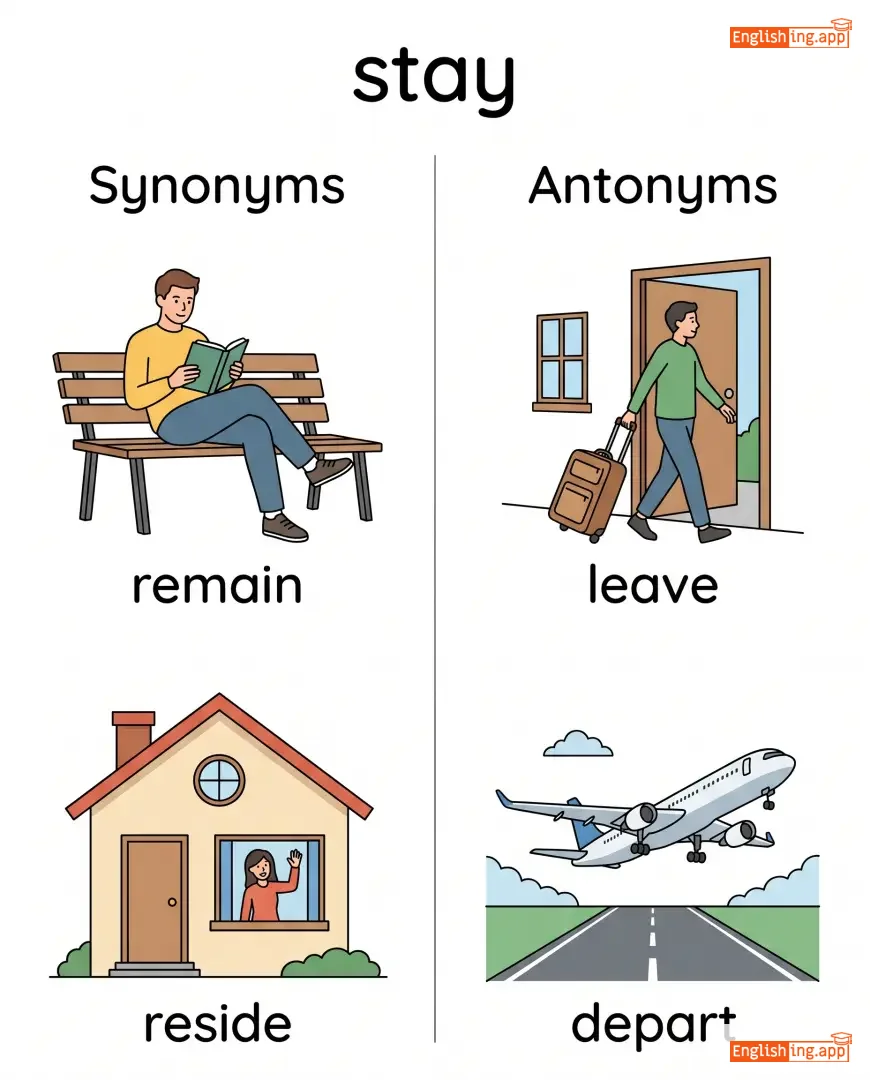
remain, continue, wait, linger
••••••
|
leave, go, depart, move
••••••
|
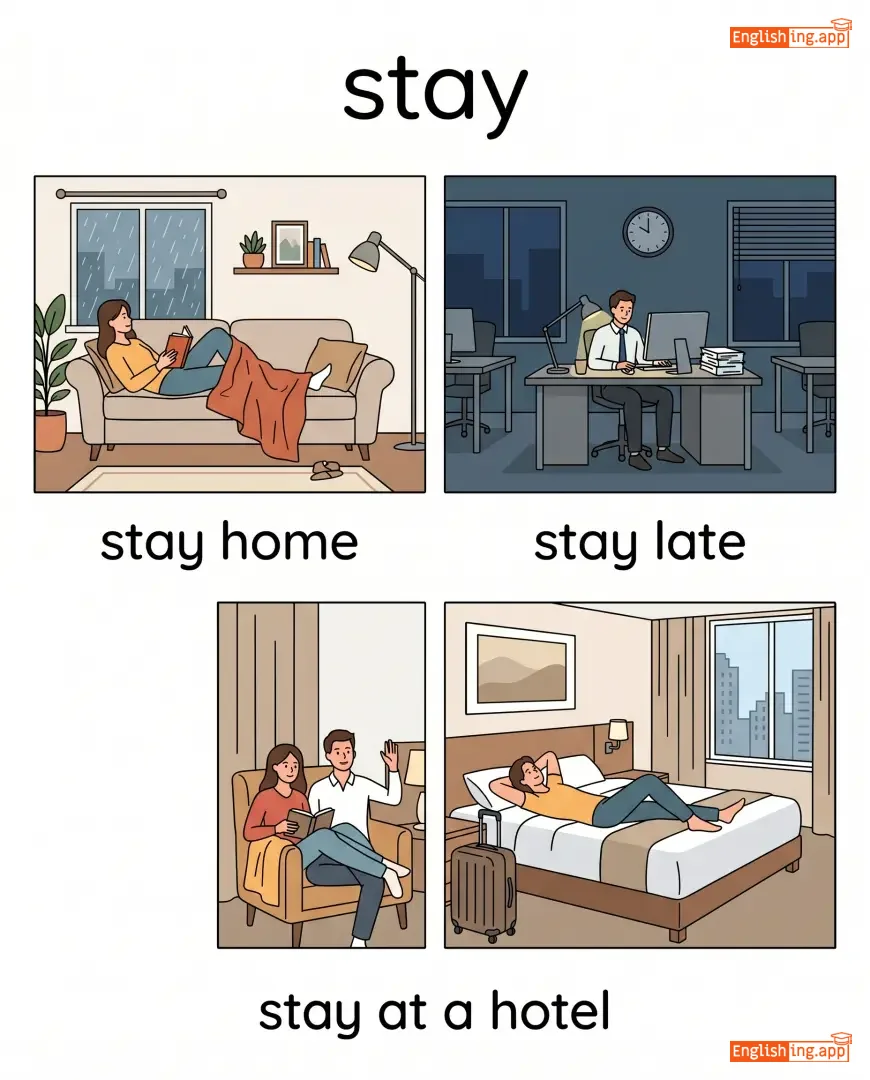
stay home, stay calm, stay away, stay up, stay put
••••••
|
Stay in German, stay 'bleiben'!
••••••
|
|
#4757
📈
|
/ˈstɛdɪli/
adverb
(shtet-ih-lee)
••••••
|
- •••••• |
ständig
standig
••••••
|
- •••••• | - •••••• | - •••••• | - •••••• |
in a regular and continuous way; without stopping or changing
••••••
|
The company's profits have been increasing steadily. |
Die Gewinne des Unternehmens steigen ständig.
Die Gewinne des Unternehmens steigen staendig.
••••••
|
- •••••• | - •••••• | - •••••• |
consistently, gradually, continuously, regularly
••••••
|
suddenly, irregularly, inconsistently
••••••
|
grow steadily, increase steadily, rise steadily, work steadily
••••••
|
Steady bedeutet gleichmäßig — deshalb bedeutet steadily ständig 📈
••••••
|
|
#4758
⚖️
|
/ˈstɛdi/
adjective
(stabil)
••••••
|
- •••••• |
stabil
stabil
••••••
|
- •••••• | - •••••• | - •••••• | - •••••• |
firm, stable, and not likely to change suddenly
••••••
|
He kept his hand steady while painting the picture.
Er hielt seine Hand stabil, während er das Bild malte.
••••••
|
Er hielt seine Hand stabil, während er das Bild malte.
Er hielt seine Hand stabil, während er das Bild malte.
••••••
|
steady as a rock
stabil wie ein Felsen
••••••
|
extremely stable and reliable
••••••
|
stabil wie ein Felsen
stabil wie ein Felsen
••••••
|
stable, firm, constant, fixed, reliable
••••••
|
unstable, unsteady, shaky
••••••
|
steady job, steady growth, steady hand, steady pace
••••••
|
steady bedeutet stabil → stabile Hand, stabiles Bild
••••••
|
|
#4759
🕵️♂️
|
/stiːl/
verb
(stihl)
••••••
|
|
stehlen
stehlen
••••••
|
stole
stohl
••••••
|
stolen
gestohlen
••••••
|
steals
stiehlt
••••••
|
stealing
stehlen
••••••
|
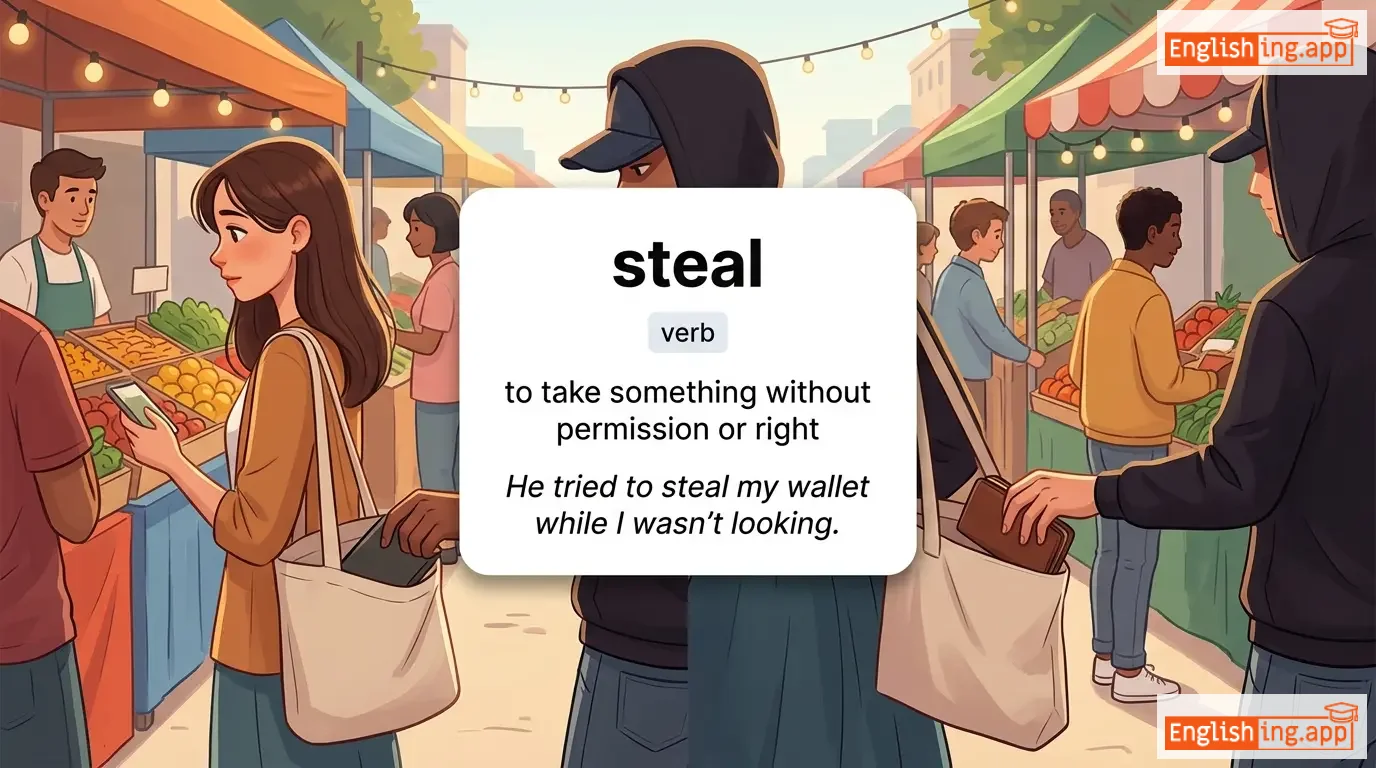
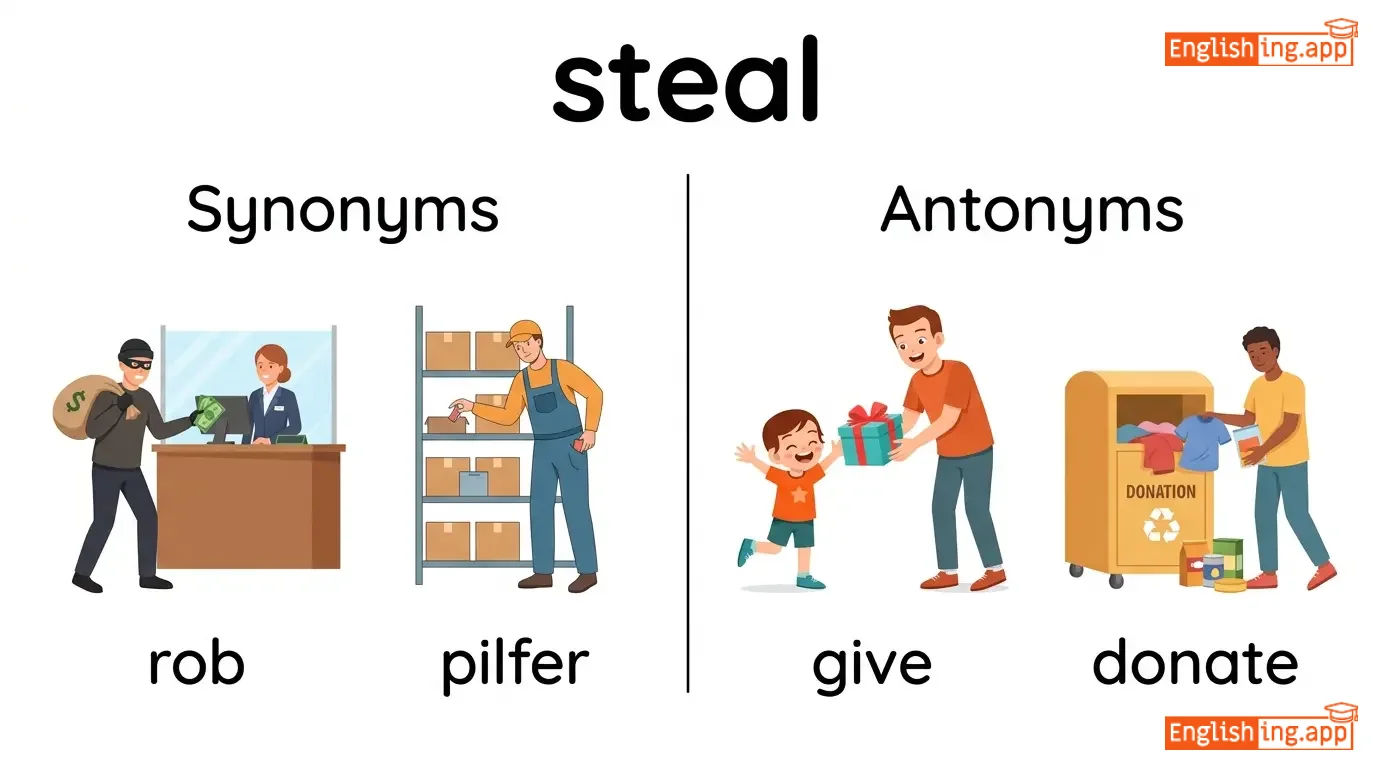
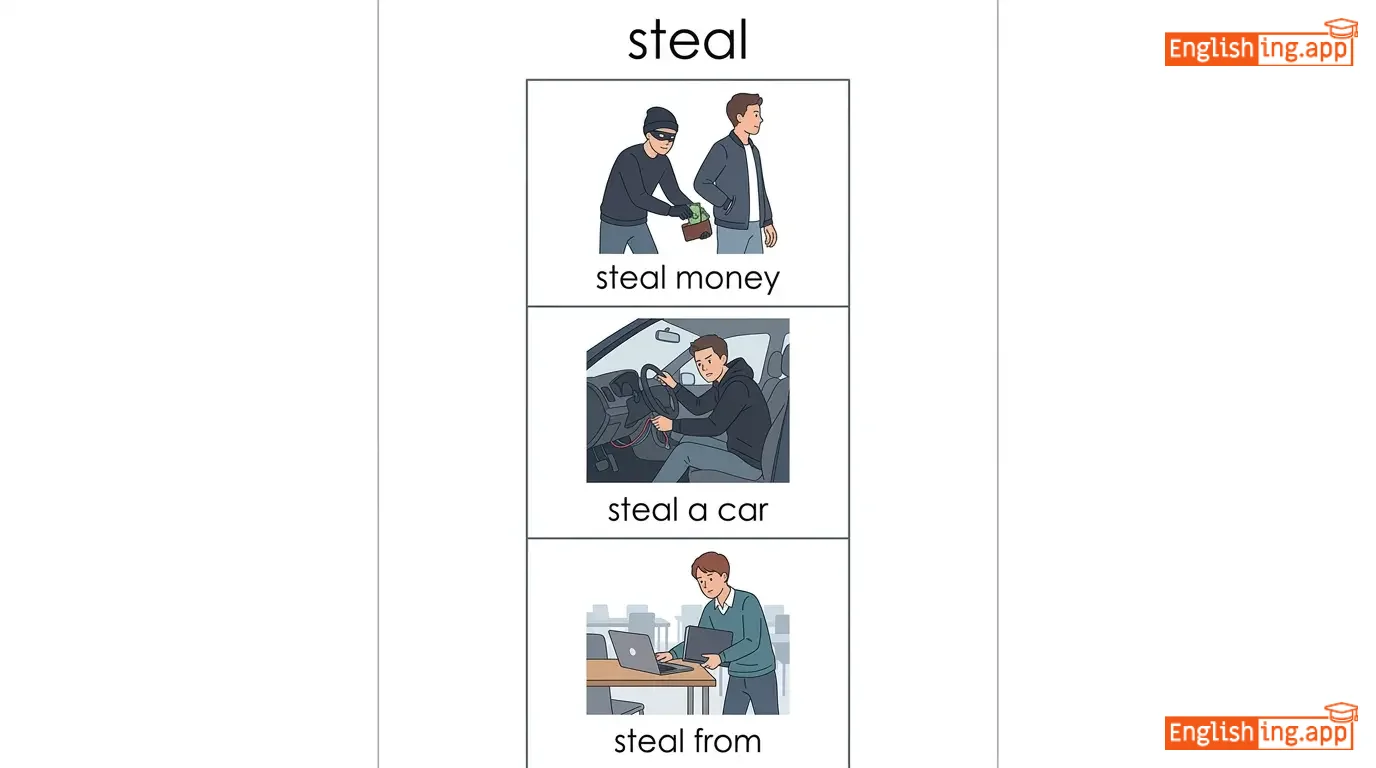
to take something without permission or right
••••••
|
He tried to steal my wallet while I wasn't looking.
er versuchte, meine Brieftasche zu stehlen, während ich nicht hinschaute.
••••••
|
Er versuchte, meine Brieftasche zu stehlen, als ich nicht hinschaute.
Er versuchte, meine Brieftasche zu stehlen, als ich nicht hinschaute.
••••••
|
steal someone's heart
jemandem das Herz stehlen
••••••
|
to charm or captivate someone
••••••
|
jemandem das Herz stehlen
jemandem das Herz stehlen
••••••
|
rob, pilfer, loot, snatch
••••••
|
give, donate, return
••••••
|
steal money, steal a car, steal from, steal away
••••••
|
Stiehl etwas und erinnere dich daran - stehlen, wie das Herz stehlen
••••••
|
|
#4760
💨
|
/stiːm/
noun, verb
(stiem)
••••••
|
- •••••• |
Dampf
dampf
••••••
|
steamed
stiemt
••••••
|
steamed
stiemt
••••••
|
steams
stiems
••••••
|
steaming
stiiming
••••••
|
the vapor into which water is converted when heated; to emit or treat with steam
••••••
|
The kettle was steaming on the stove.
Der Wasserkocher dampfte auf dem Herd.
••••••
|
Der Wasserkocher dampfte auf dem Herd.
Der Wasserkocher dampfte auf dem Herd.
••••••
|
let off steam
Dampf ablassen
••••••
|
to release pent-up energy or emotions
••••••
|
Druck oder aufgestaute Emotionen loslassen
Druck oder aufgestaute Emotionen loslassen
••••••
|
vapor, mist, fume, moisture, fog
••••••
|
ice, freeze
••••••
|
steam engine, steam room, steam bath, hot steam
••••••
|
Dampf aufsteigend, immer in Verbindung mit heißen Getränken.
••••••
|
|
#4761
🏗️
|
/stiːl/
noun
(deutsche Aussprache von steel)
••••••
|
- •••••• |
Stahl
stahl
••••••
|
- •••••• | - •••••• | - •••••• | - •••••• |
a strong, hard metal made of iron and carbon
••••••
|
The building was made from steel to ensure its durability. |
Das Gebäude wurde aus Stahl gebaut, um seine Haltbarkeit zu gewährleisten.
Das Gebäude wurde aus Stahl gebaut, um seine Haltbarkeit zu gewährleisten.
••••••
|
- •••••• | - •••••• | - •••••• |
iron, alloy, metal
••••••
|
wood, plastic
••••••
|
steel structure, steel bar, stainless steel, steel frame
••••••
|
Stahl ist stärker als alles - Stahl = Stark
••••••
|
|
#4762
⛰️
|
/stiːp/
adjective
(stiep)
••••••
|
- •••••• |
steil, übermäßig
steil, übermäßig
••••••
|
- •••••• | - •••••• | - •••••• | - •••••• |
Having a sharp inclination or high slope; also can mean excessive (as in price).
••••••
|
The hikers climbed a steep mountain trail. |
Die Wanderer kletterten einen steilen Bergweg hinauf.
Die Wanderer kletterten einen steilen Bergweg hinauf.
••••••
|
a steep price |
Very high or excessive cost.
••••••
|
übermäßiger Preis
übermäßiger Preis
••••••
|
sharp, precipitous, abrupt, high, costly
••••••
|
gentle, flat, moderate
••••••
|
steep hill, steep slope, steep climb, steep price
••••••
|
Steep bedeutet steep hill = steiler Berg, und steep price = übermäßiger Preis.
••••••
|
|
#4763
🛞
|
/stɪə(r)/
verb
(stir)
••••••
|
- •••••• |
steuern
steuern
••••••
|
steered
stírd
••••••
|
steered
stírd
••••••
|
steers
stíers
••••••
|
steering
stíring
••••••
|
to guide or control the movement of a vehicle, vessel, or person
••••••
|
He steered the car carefully through the narrow street.
Er steuerte das Auto vorsichtig durch die enge Straße.
••••••
|
Er steuerte das Auto vorsichtig durch die enge Straße.
Er steuerte das Auto vorsichtig durch die enge Straße.
••••••
|
steer clear of
klar meiden
••••••
|
to avoid someone or something
••••••
|
klar meiden
klar meiden
••••••
|
guide, direct, navigate, control, pilot
••••••
|
neglect, ignore
••••••
|
steer the ship, steer the conversation, steer direction
••••••
|
Steuern ist wie fahren — wenn du steuerst, zeigst du den Weg 🚗
••••••
|
|
#4764
🌱
|
/stɛm/
noun, verb
(stem)
••••••
|
- •••••• |
Stängel / stoppen
stengel / stoppen
••••••
|
stemmed
stemmed
••••••
|
stemmed
stemmed
••••••
|
stems
stems
••••••
|
stemming
stemming
••••••
|
Noun: The main stalk of a plant. Verb: To stop or restrict the flow or development of something.
••••••
|
The gardener cut the stem of the rose; New policies aim to stem the flow of pollution.
Der Gärtner schnitt den Stängel der Rose ab; Neue Politiken zielen darauf ab, den Fluss der Verschmutzung zu stoppen.
••••••
|
Der Gärtner schnitt den Stängel der Rose ab; Neue Politiken zielen darauf ab, den Fluss der Verschmutzung zu stoppen.
Der Gärtner schnitt den Stängel der Rose ab; Neue Politiken zielen darauf ab, den Fluss der Verschmutzung zu stoppen.
••••••
|
stem the tide
den Strom stoppen
••••••
|
To stop or reduce something from increasing or spreading.
••••••
|
den Strom stoppen
den Strom stoppen
••••••
|
stalk, trunk, branch, stop, halt
••••••
|
root, allow, encourage
••••••
|
stem of a flower, stem cells, stem from, stem the tide
••••••
|
Stem bedeutet Stängel 🌱 und auch stoppen, d.h. den Fluss stoppen.
••••••
|
|
#4765
👣
|
/stɛp/
noun
(step)
••••••
|
- •••••• |
Schritt
schritt
••••••
|
- •••••• | - •••••• | - •••••• | - •••••• |
a movement made by lifting one foot and putting it down in a new position
••••••
|
She took a step towards the door.
Sie machte einen Schritt auf die Tür zu.
••••••
|
Sie machte einen Schritt auf die Tür zu.
Sie machte einen Schritt auf die Tuer zu.
••••••
|
take a step forward
einen schritt nach vorn machen
••••••
|
to make progress or move ahead
••••••
|
einen schritt nach vorn machen
einen schritt nach vorn machen
••••••
|
stride, pace, move, footstep
••••••
|
halt, stop
••••••
|
step forward, step down, take a step, step by step
••••••
|
Schritt by Schritt, keep moving, Schritt bedeutet step
••••••
|
|
#4766
🧠
|
/ˈstɛriəˌtaɪp/
noun
(stereotyp)
••••••
|
- •••••• |
Stereotyp
stereotyp
••••••
|
- •••••• | - •••••• | - •••••• | - •••••• |
A widely held but oversimplified and fixed idea of a particular type of person or thing.
••••••
|
It is a stereotype that all gamers are antisocial. |
Es ist ein Stereotyp, dass alle Gamer antisozial sind.
Es ist ein Stereotyp, dass alle Gamer antisozial sind.
••••••
|
- •••••• | - •••••• | - •••••• |
cliché, generalization, label, prejudice, bias
••••••
|
individuality, uniqueness
••••••
|
cultural stereotype, gender stereotype, break stereotypes
••••••
|
Stereotyp, wie ein Stereo, das immer dasselbe Stück wiederholt.
••••••
|
|
#4767
🖊️
|
/stɪk/
verb
(stik)
••••••
|
- •••••• |
kleben
kleben
••••••
|
stuck
stak
••••••
|
stuck
stak
••••••
|
sticks
stiks
••••••
|
sticking
stiking
••••••
|
to adhere or attach something to a surface
••••••
|
The glue will stick to the paper.
Der Kleber wird am Papier haften.
••••••
|
Der Kleber wird am Papier haften.
Der Kleber wird am Papier haften.
••••••
|
stick to the plan
am Plan festhalten
••••••
|
to follow the plan without changing course
••••••
|
am Plan festhalten
am Plan festhalten
••••••
|
adhere, cling, fasten, bond
••••••
|
detach, remove
••••••
|
stick to, stick with, stick out, stick together
••••••
|
So wie Kleber an etwas haften bleibt, sollte auch der Plan beibehalten werden.
••••••
|
|
#4768
🟫
|
/ˈstɪki/
adjective
(stiki)
••••••
|
- •••••• |
klebrig
klebrig
••••••
|
- •••••• | - •••••• | - •••••• | - •••••• |
having the quality of adhering or clinging; difficult to remove or deal with
••••••
|
The candy is too sticky to eat with your hands.
Die Süßigkeit ist zu klebrig, um sie mit den Händen zu essen.
••••••
|
Die Süßigkeit ist zu klebrig, um sie mit den Händen zu essen.
Die Sussigkeit ist zu klebrig, um sie mit den Handen zu essen.
••••••
|
stick to your guns
bei seinen Überzeugungen bleiben
••••••
|
to remain firm in your beliefs or decisions
••••••
|
bei seinen Überzeugungen bleiben
bei seinen Ueberzeugungen bleiben
••••••
|
tacky, adhesive, clingy, gooey
••••••
|
slippery, smooth
••••••
|
sticky note, sticky situation, sticky surface, sticky fingers
••••••
|
Klebrig candy sticks like glue on German paper.
••••••
|
|
#4769
🪵
|
/stɪf/
adjective
(stiff)
••••••
|
- •••••• |
steif
steif
••••••
|
- •••••• | - •••••• | - •••••• | - •••••• |
rigid, difficult to bend or move
••••••
|
After the long run, his legs felt very stiff. |
Nach dem langen Lauf fühlten sich seine Beine sehr steif an.
Nach dem langen Lauf fuehlten sich seine Beine sehr steif an.
••••••
|
stiff competition |
strong or difficult competition
••••••
|
harte Konkurrenz
harte Konkurrenz
••••••
|
rigid, firm, inflexible, hard, tense
••••••
|
flexible, loose, relaxed
••••••
|
stiff neck, stiff muscles, stiff resistance, stiff competition
••••••
|
Steif bedeutet steif – wie ein Holzstück, das sich nicht biegen lässt
••••••
|
|
#4770
🕊️
|
/stɪl/
adjective
(stil)
••••••
|
- •••••• |
still
still
••••••
|
- •••••• | - •••••• | - •••••• | - •••••• |
not moving or making a sound
••••••
|
The water was still, reflecting the sky. |
Das Wasser war still und spiegelte den Himmel wider.
Das Wasser war still und spiegelte den Himmel wider.
••••••
|
still waters run deep |
quiet or calm people often have deep thoughts or feelings
••••••
|
stille Wasser sind tief
stille Wasser sind tief
••••••
|
motionless, calm, quiet, serene
••••••
|
moving, noisy, restless
••••••
|
still life, still water, still moment, still image
••••••
|
Wenn das Wasser still ist, kann man in Ruhe tief nachdenken.
••••••
|
|
#4771
💡
|
/ˈstɪmjʊˌleɪt/
verb
(stimulieren)
••••••
|
|
stimulieren, anregen
stimulieren, anregen
••••••
|
stimulated
stimuliert
••••••
|
stimulated
stimuliert
••••••
|
stimulates
stimuliere
••••••
|
stimulating
stimulieren
••••••
|
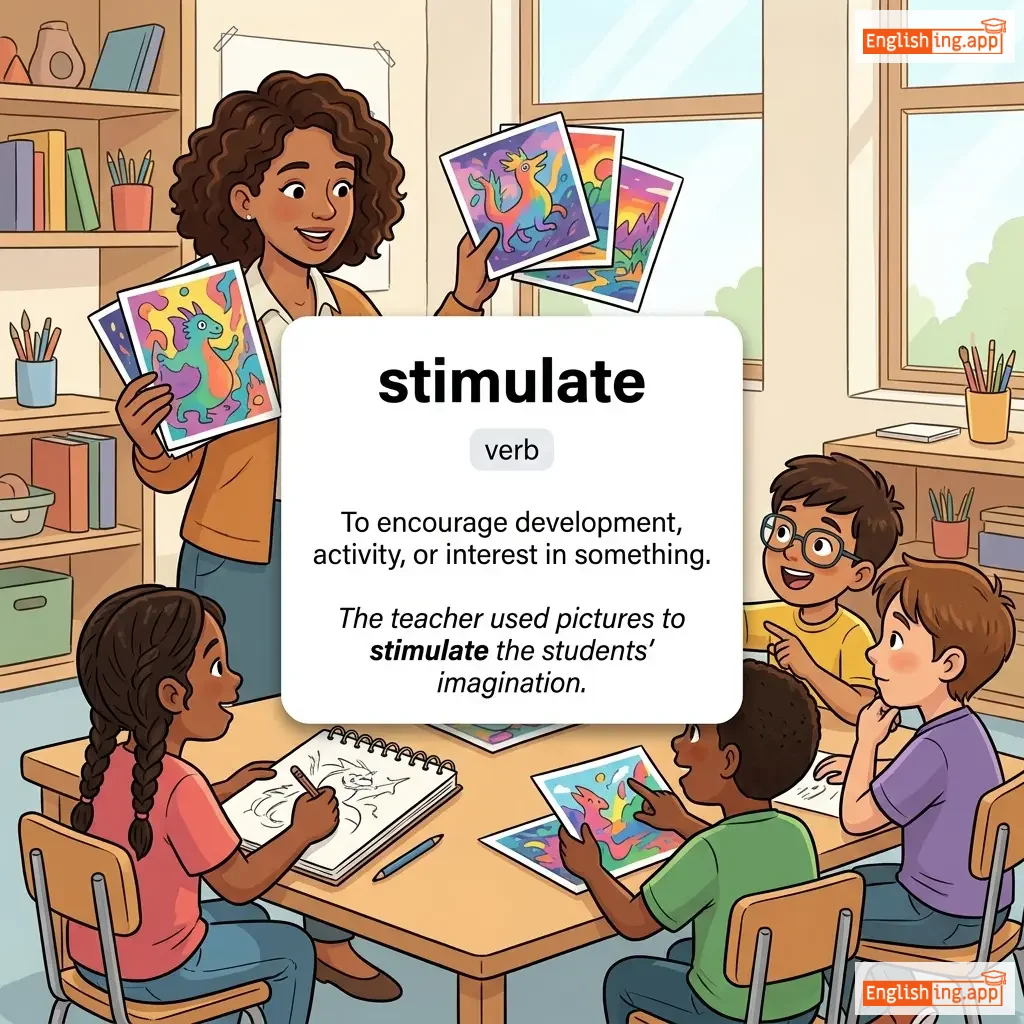
To encourage development, activity, or interest in something.
••••••
|
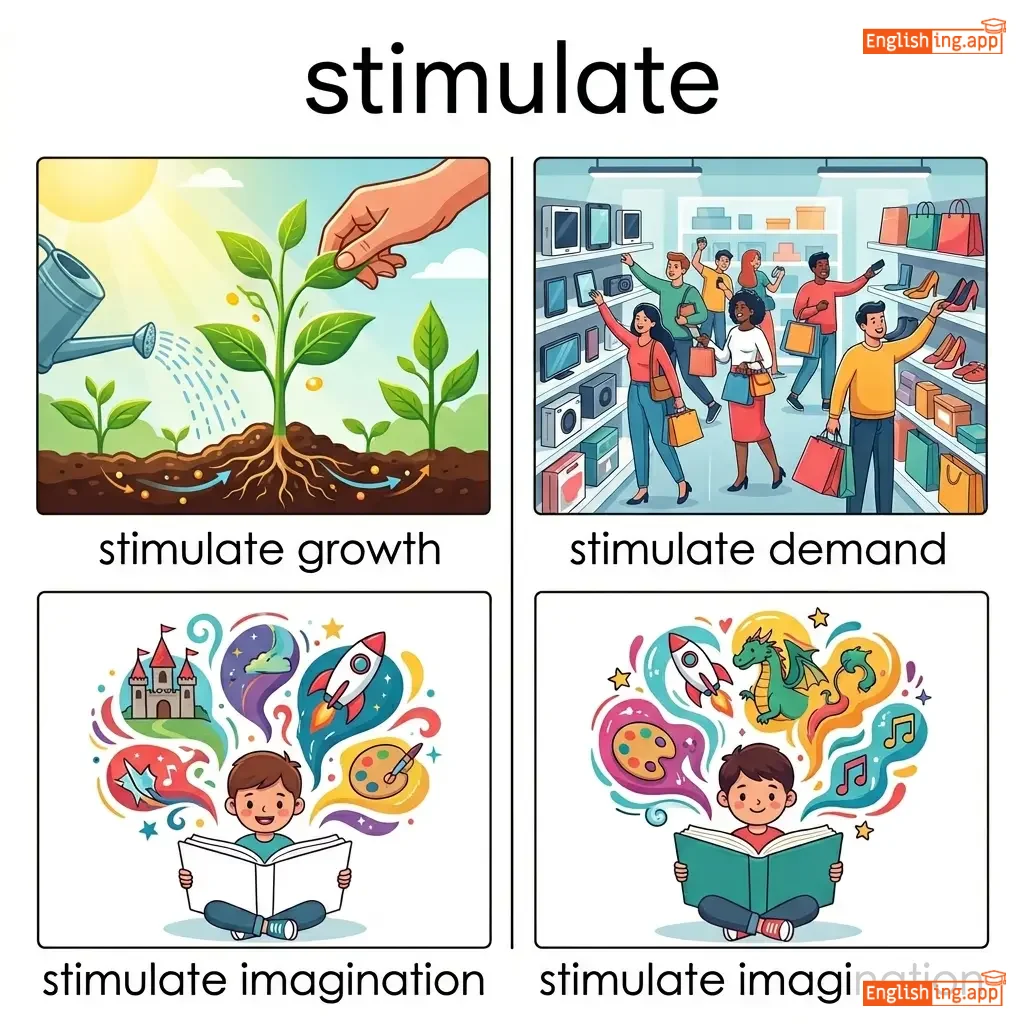
The teacher used pictures to stimulate the students' imagination.
Der Lehrer benutzte Bilder, um die Vorstellungskraft der Schüler zu stimulieren.
••••••
|
Der Lehrer benutzte Bilder, um die Vorstellungskraft der Schüler zu stimulieren.
Der Lehrer benutzte Bilder, um die Vorstellungskraft der Schüler zu stimulieren.
••••••
|
stimulate growth
Wachstum stimulieren
••••••
|
to encourage development or increase
••••••
|
Wachstum stimulieren
Wachstum stimulieren
••••••
|
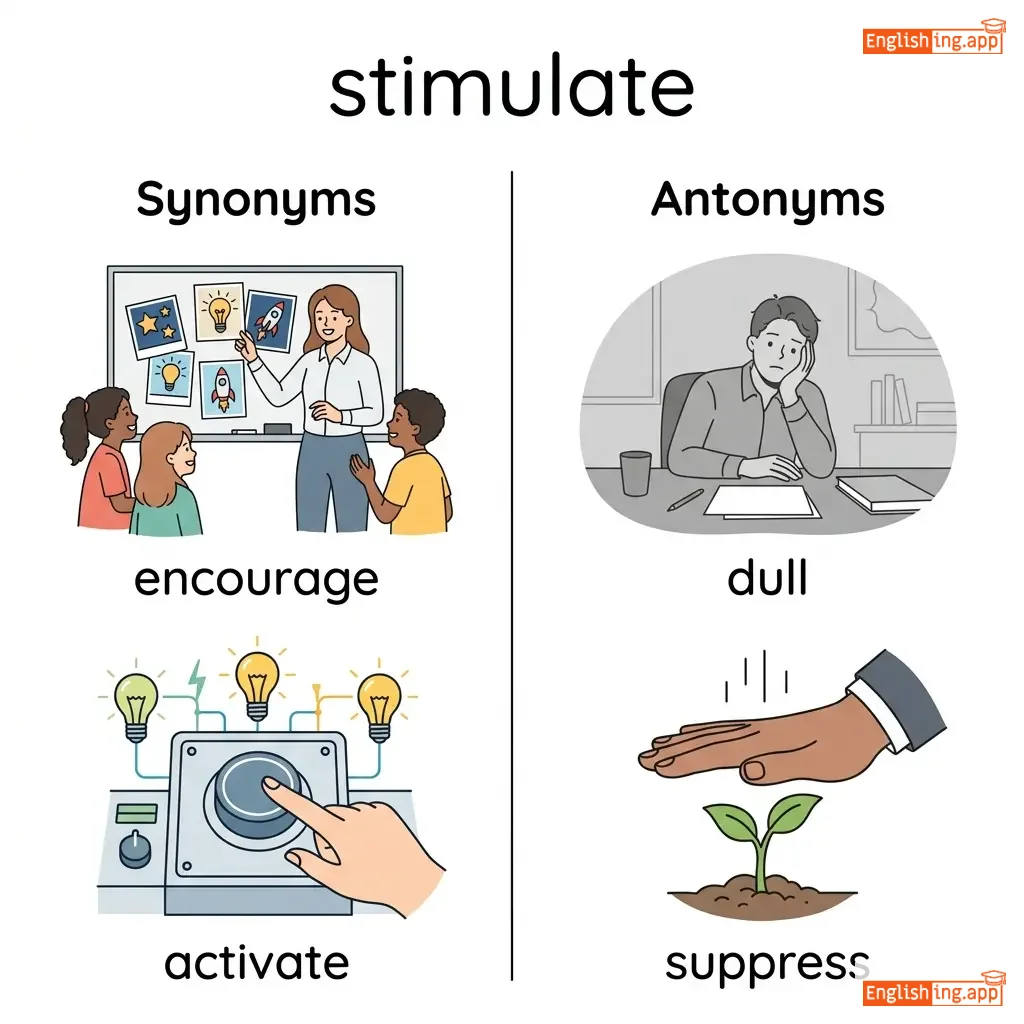
encourage, activate, motivate, inspire, excite
••••••
|
dull, suppress, discourage
••••••
|
stimulate growth, stimulate demand, stimulate imagination, stimulate interest
••••••
|
Stimulate → Stimulieren (Wie ein Anstoß, der Wachstum fördert).
••••••
|
|
#4772
🚀
|
/ˈstɪmjʊləs/
noun
(stimuluss)
••••••
|
|
etwas, das eine Reaktion, Aktivität oder Wachstum verursacht, Stimulus
etwas, das eine reaktion, aktivitaet oder wachstum verursacht, stimuluss
••••••
|
- •••••• | - •••••• | - •••••• | - •••••• |
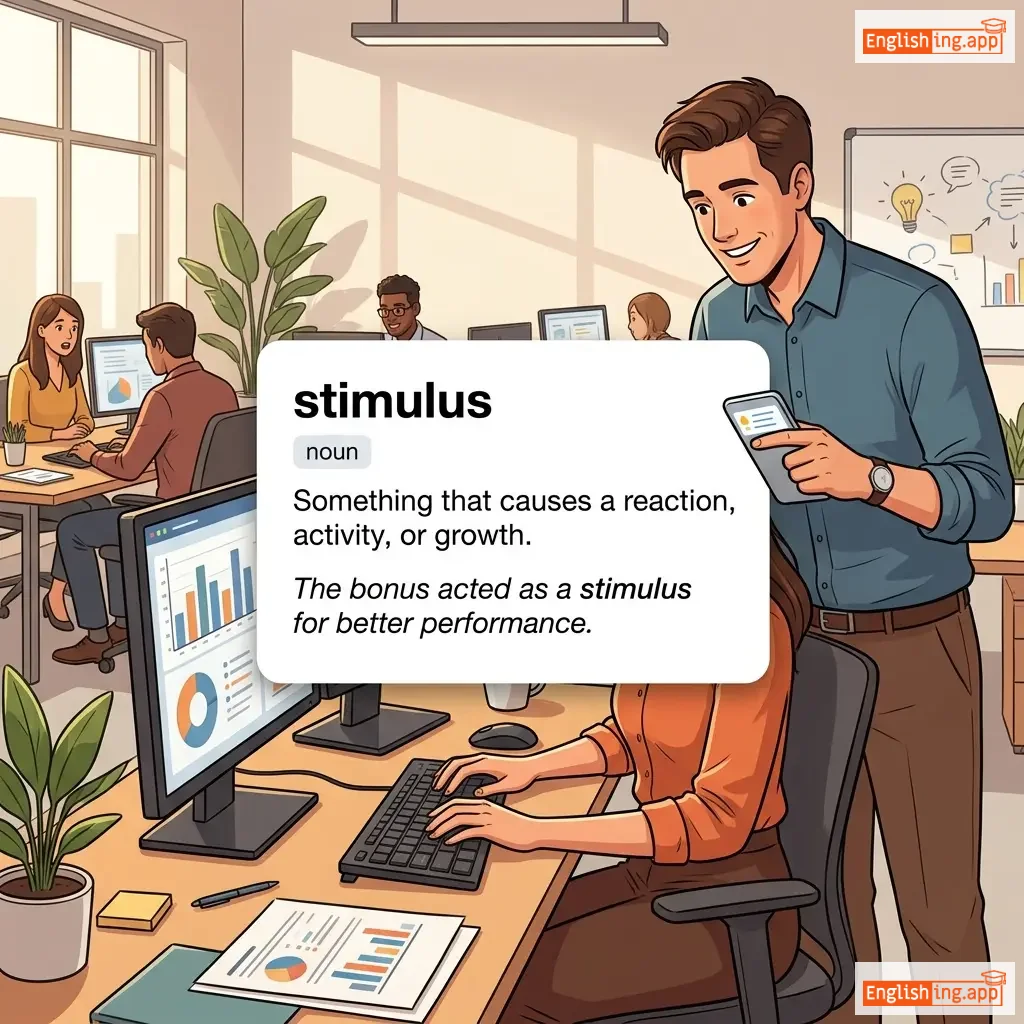
Something that causes a reaction, activity, or growth.
••••••
|
The bonus acted as a stimulus for better performance. |
Der Bonus diente als Stimulus für eine bessere Leistung.
Der Bonus diente als Stimulus fuer eine bessere Leistung.
••••••
|
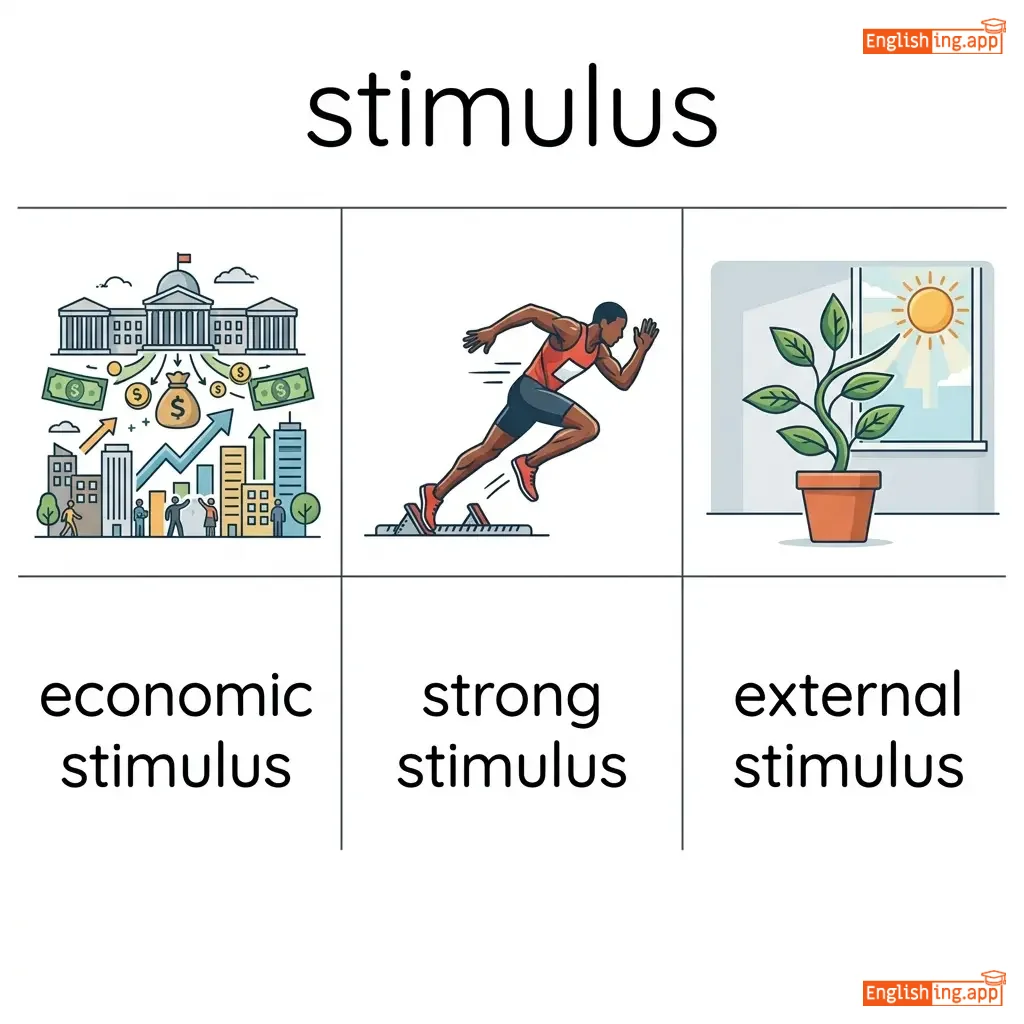
economic stimulus |
government actions to encourage economic growth
••••••
|
wirtschaftlicher Stimulus
wirtschaftlicher stimulus
••••••
|
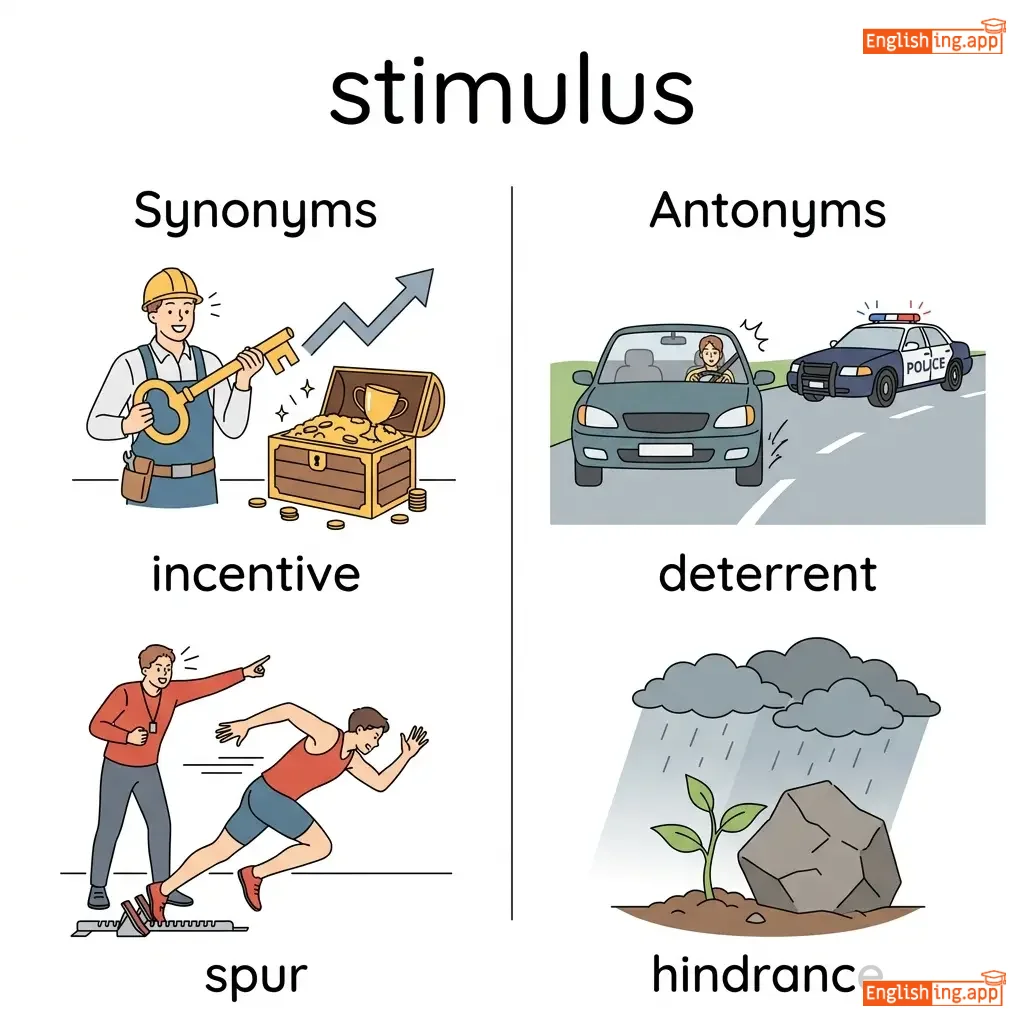
incentive, spur, motivation, encouragement, trigger
••••••
|
deterrent, hindrance
••••••
|
economic stimulus, strong stimulus, external stimulus, direct stimulus
••••••
|
Stimulus = Stimulus 🚀 → Denk daran, der Bonus ist ein Stimulus, der motiviert
••••••
|
|
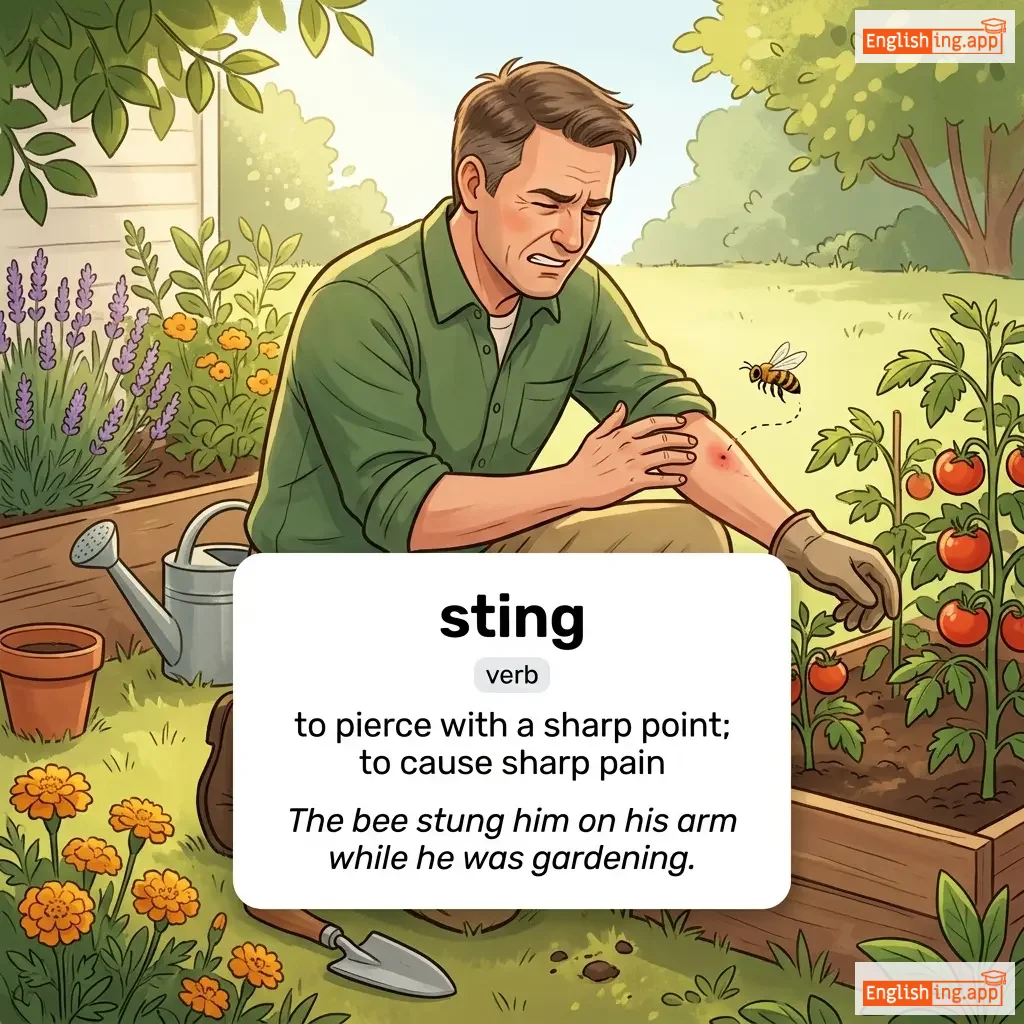
#4773
🐝
|
/stɪŋ/
verb
(stɪŋ)
••••••
|
|
stechen
shteshn
••••••
|
stung
stʌŋ
••••••
|
stung
stʌŋ
••••••
|
stings
stɪŋz
••••••
|
stinging
stɪŋɪŋ
••••••
|
to pierce with a sharp point; to cause sharp pain
••••••
|
The bee stung him on his arm while he was gardening.
ðə bi stʌŋ hɪm ɒn hɪz ɑrm waɪl hi wəz ˈɡɑrdənɪŋ.
••••••
|
Die Biene stach ihn in den Arm, während er im Garten arbeitete.
Die Biene stach ihn in den Arm, während er im Garten arbeitete
••••••
|
- •••••• | - •••••• | - •••••• |
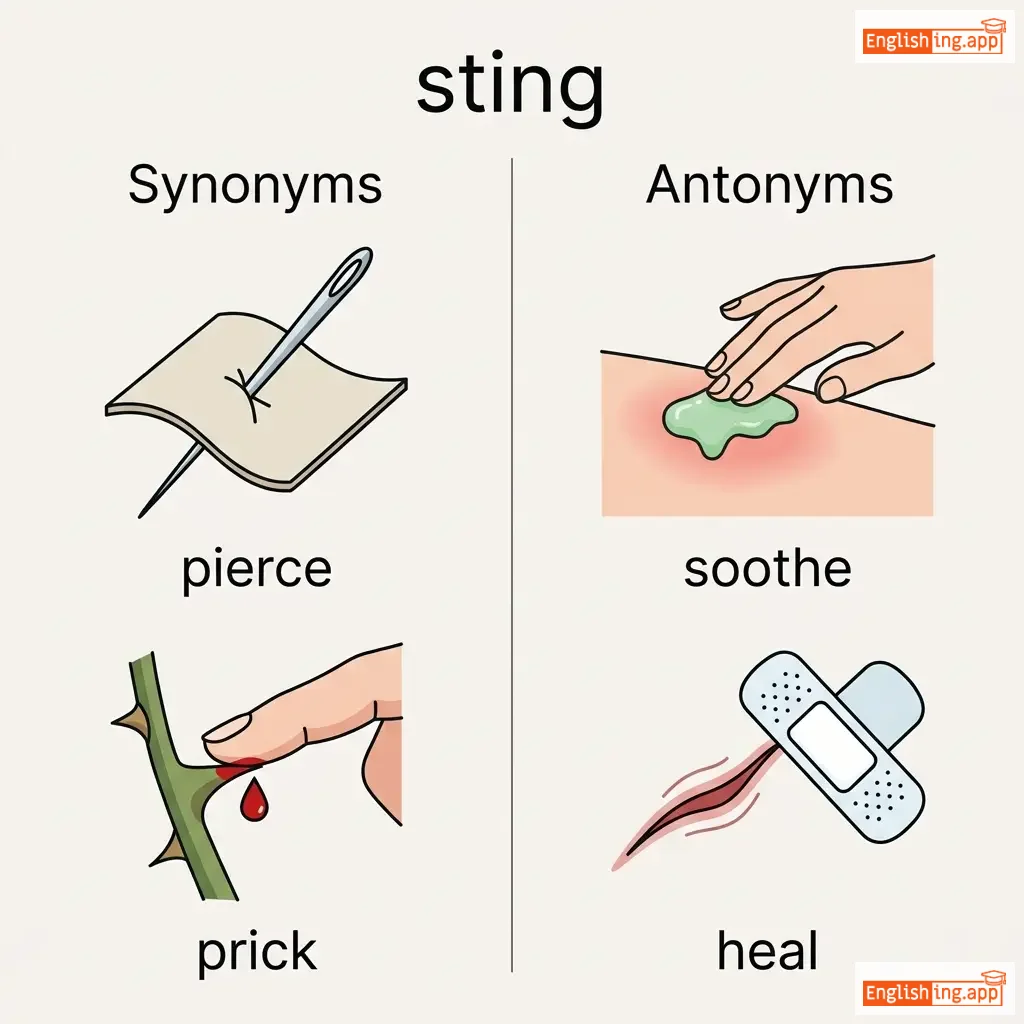
pierce, prick, bite, hurt
••••••
|
soothe, heal, comfort, relieve
••••••
|
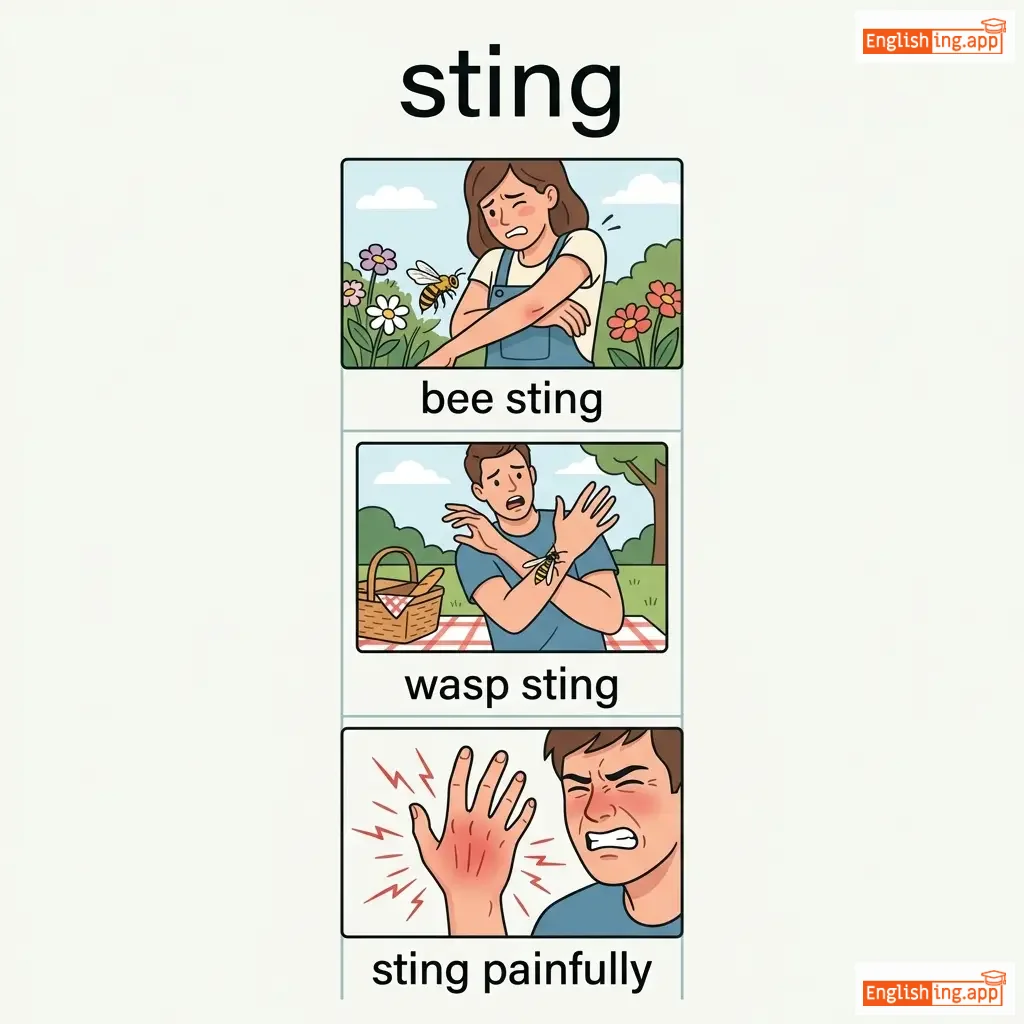
bee sting, wasp sting, sting painfully, sting sharply, nettle sting
••••••
|
Denke an den Schmerz beim Stechen einer Biene
••••••
|
|
#4774
🍲
|
/stɜːr/
verb
(stir)
••••••
|
- •••••• |
umrühren
umruehren
••••••
|
stirred
stirred
••••••
|
stirred
stirred
••••••
|
stirs
stirs
••••••
|
stirring
stirring
••••••
|
to mix or move something in a circular motion, especially in liquid
••••••
|
She stirred the soup to make sure it didn't burn.
Sie rührte die Suppe um, um sicherzustellen, dass sie nicht anbrennt.
••••••
|
Sie rührte die Suppe um, um sicherzustellen, dass sie nicht anbrennt.
Sie ruehrte die Suppe um, um sicherzustellen, dass sie nicht anbrennt.
••••••
|
- •••••• | - •••••• | - •••••• |
mix, agitate, shake, blend
••••••
|
settle, still, calm
••••••
|
stir the soup, stir the pot, stir emotions
••••••
|
Wenn du etwas umrührst, denk an 'Stir' (Umrühren) - Stir to mix.
••••••
|
Vocabulary Quiz
Test your vocabulary by matching words with their translations or meanings.
Login to take the quiz
Comments (0)
Share your thoughts and join the discussion.
Join the discussion by logging in
Login to CommentNo comments yet
Be the first to share your thoughts!