






Swipe left or right, or use the buttons. Tap image to zoom.
例句翻译
单词
Lesson 100Lesson 100 - 遮罩切换
|
表情符号
|
单词 | Images | 翻译 | 过去时 | 过去分词 | 第三人称单数 | 动名词 | 含义 | 例句 | 例句翻译 | 示例表达 | 示例表达含义 | 示例表达翻译 | 同义词 | 反义词 | 搭配词 | 助记符 |
|---|---|---|---|---|---|---|---|---|---|---|---|---|---|---|---|---|---|
|
#4729
👥
|
/skwɒd/
noun
(skwād)
••••••
|
- •••••• |
小队
xiaodui
••••••
|
- •••••• | - •••••• | - •••••• | - •••••• |
a small group of people organized for a specific purpose or task, often in the military or sports
••••••
|
The football squad trained hard before the championship match. |
足球队在冠军赛前进行了艰苦训练。
Zuqiudui zai guanjunsai qian jinxingle jianku xunlian.
••••••
|
squad goals |
an ideal or admirable group of friends or team that others aspire to be like
••••••
|
小队目标
xiaodui mubiao
••••••
|
team, crew, group, unit, party
••••••
|
individual, loner
••••••
|
football squad, police squad, squad member, training squad
••••••
|
小队 = 一起工作的团队,就像足球队。
••••••
|
|
#4730
🔲
|
/skwɛə(r)/
noun
(sī kuài ér)
••••••
|
- •••••• |
正方形
zhèngfāngxíng
••••••
|
- •••••• | - •••••• | - •••••• | - •••••• |
a shape with four equal straight sides and four right angles
••••••
|
The table has a square shape. |
桌子是正方形的。
Zhuōzi shì zhèngfāngxíng de.
••••••
|
- •••••• | - •••••• | - •••••• |
rectangle, quadrilateral
••••••
|
circle, triangle
••••••
|
square shape, square table, square room
••••••
|
Square = 四个相等的边,就像房间的四个角落!
••••••
|
|
#4731
🤏
|
/skwiːz/
verb
(斯奎兹)
••••••
|
- •••••• |
挤压
jīyā
••••••
|
squeezed
斯奎兹德
••••••
|
squeezed
斯奎兹德
••••••
|
squeezes
斯奎兹斯
••••••
|
squeezing
斯奎兹英
••••••
|
to press something firmly, especially from all sides in order to extract or compress it
••••••
|
She squeezed the toothpaste to get the last bit.
她挤压牙膏管,想把最后一点挤出来。
••••••
|
她挤压牙膏管,想把最后一点挤出来。
Tā jīyā yágāo guǎn, xiǎng bǎ zuìhòu yīdiǎn jī chūlái.
••••••
|
- •••••• | - •••••• | - •••••• |
press, compress, crush, squish
••••••
|
release, loosen, uncompress
••••••
|
squeeze the juice, squeeze in, squeeze the life out of
••••••
|
挤压牙膏管,挤出最后一滴 - Squeeze the last bit of toothpaste!
••••••
|
|
#4732
🔪
|
/stæb/
verb, noun
(斯塔布)
••••••
|
- •••••• |
刺伤
cì shāng
••••••
|
stabbed
斯塔布德
••••••
|
stabbed
斯塔布德
••••••
|
stabs
斯塔布斯
••••••
|
stabbing
斯塔宾
••••••
|
to pierce or wound with a pointed weapon or object
••••••
|
He was stabbed in the back during the altercation.
他在争执中背部被刺伤。
••••••
|
他在争执中背部被刺伤。
Tā zài zhēng zhí zhōng bèi bù bèi cì shāng.
••••••
|
- •••••• | - •••••• | - •••••• |
pierce, wound, jab, cut
••••••
|
heal, fix
••••••
|
stab wound, stabbed in the back, stabbed with a knife
••••••
|
刺伤就像用刀刺人,记住了!
••••••
|
|
#4733
⚖️
|
/stəˈbɪl.ə.ti/
noun
(稳定性)
••••••
|
- •••••• |
稳定性
wěndìng xìng
••••••
|
- •••••• | - •••••• | - •••••• | - •••••• |
the state of being stable; firmness; steadiness
••••••
|
Political stability is essential for economic growth.
政治稳定对经济增长至关重要。
••••••
|
政治稳定对经济增长至关重要。
Zhengzhi wending dui jingji zengzhang zhiguān zhòngyào.
••••••
|
- •••••• | - •••••• | - •••••• |
steadiness, firmness, balance, security
••••••
|
instability, unsteadiness, volatility
••••••
|
financial stability, political stability, emotional stability, job stability
••••••
|
政治的稳定性促进经济的发展.
••••••
|
|
#4734
⚖️
|
/ˈsteɪ.bə.laɪz/
verb
(斯塔比利扎)
••••••
|
- •••••• |
稳定
wending
••••••
|
stabilized
斯塔比利扎德
••••••
|
stabilized
斯塔比利扎德
••••••
|
stabilizes
斯塔比利扎斯
••••••
|
stabilizing
斯塔比利扎英
••••••
|
to make something steady, secure, or unlikely to change suddenly
••••••
|
The government took measures to stabilize the economy.
政府采取措施以稳定经济。
••••••
|
政府采取措施以稳定经济。
zhèngfǔ cǎiqǔ cuòshī yǐ wending jīngjì.
••••••
|
stabilize the situation
稳定局势
••••••
|
to bring a situation under control or make it steady
••••••
|
稳定局势
wending jushi
••••••
|
steady, secure, balance, fix, support
••••••
|
destabilize, weaken, disrupt
••••••
|
stabilize economy, stabilize situation, stabilize prices, stabilize market
••••••
|
Stable + eyes → 眼睛 (eyes) 让一切变得稳定
••••••
|
|
#4735
🏠
|
/ˈsteɪ.bəl/
adjective
(斯泰布尔)
••••••
|
|
稳定 / 马厩
wěndìng / mǎ jiù
••••••
|
- •••••• | - •••••• | - •••••• | - •••••• |
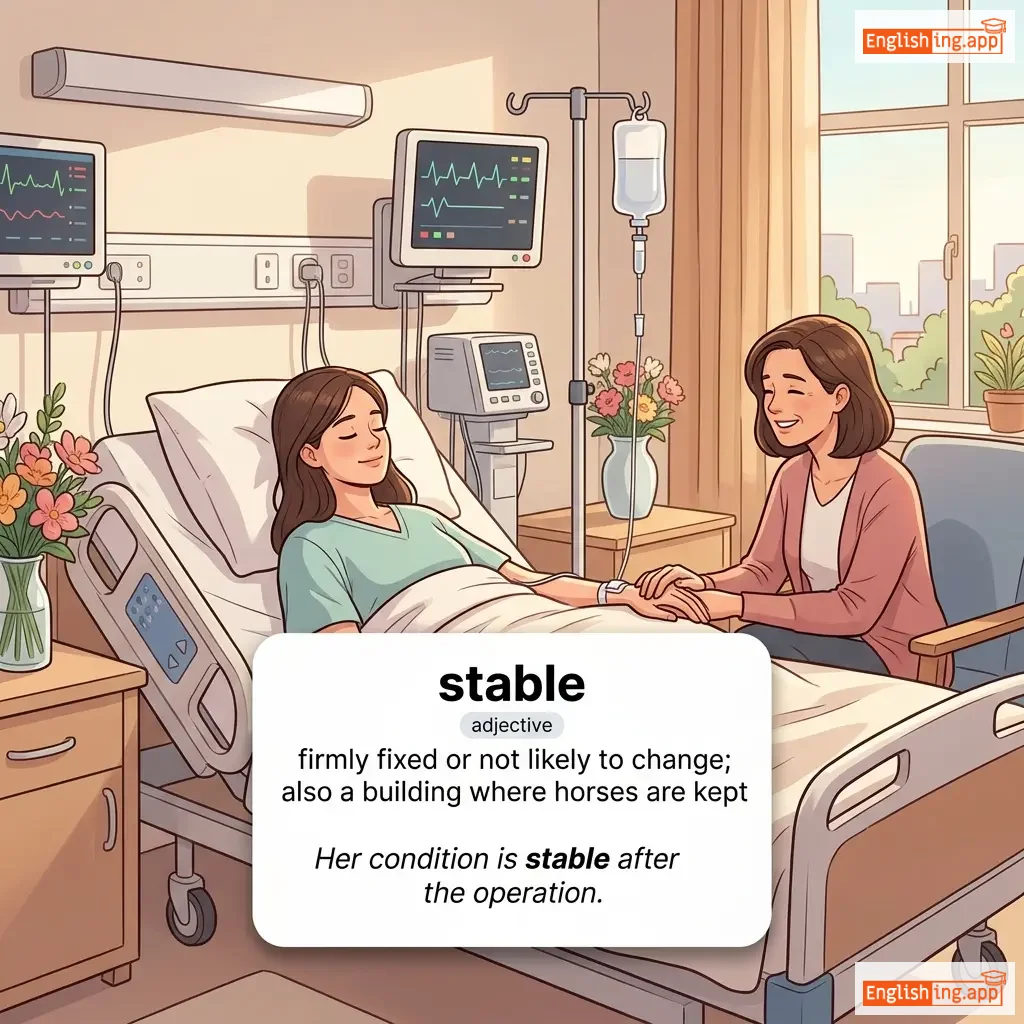
firmly fixed or not likely to change; also a building where horses are kept
••••••
|
Her condition is stable after the operation. |
手术后她的情况稳定。
Shǒushù hòu tā de qíngkuàng wěndìng.
••••••
|
stable condition |
a state of being steady and not worsening
••••••
|
稳定的状态
wěndìng de zhuàngtài
••••••
|
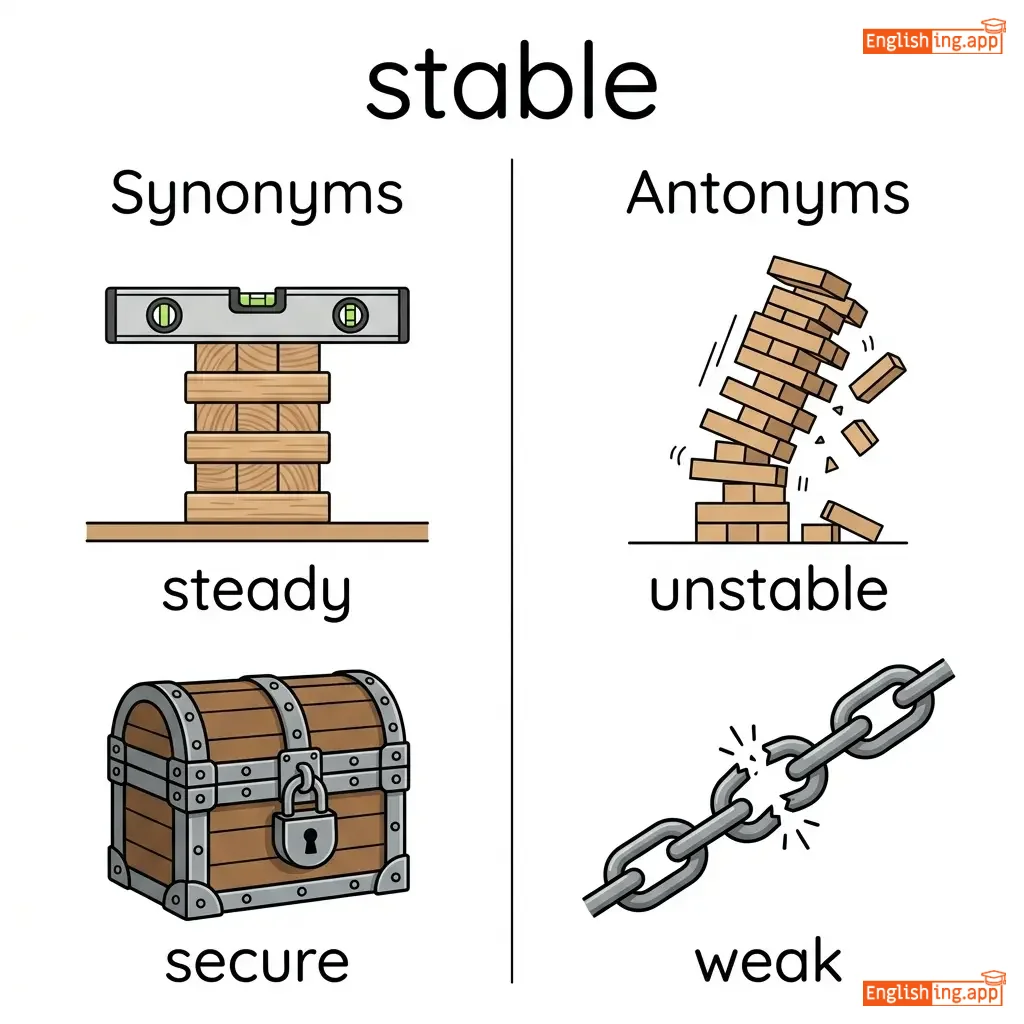
steady, secure, firm, constant, balanced
••••••
|
unstable, weak, shaky
••••••
|
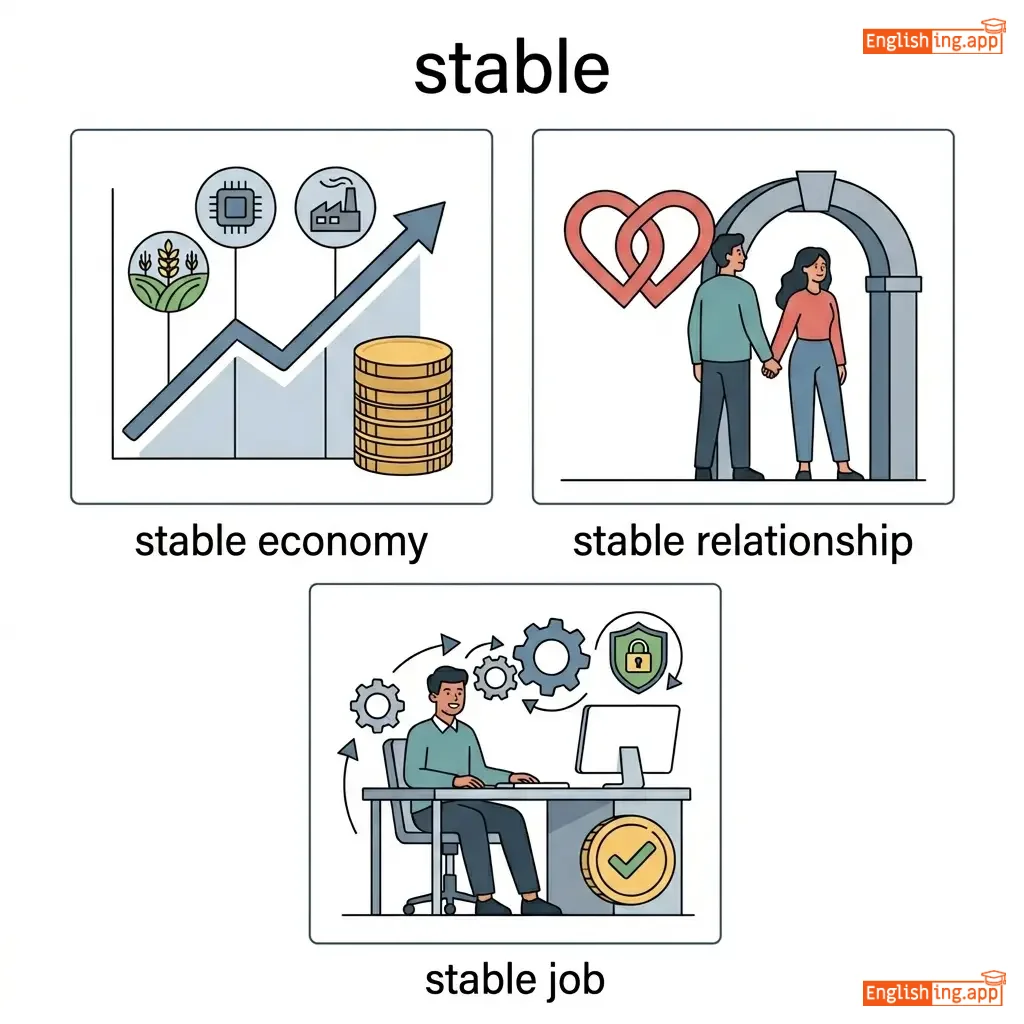
stable economy, stable relationship, stable job, stable environment
••••••
|
Stable 就是稳定,像马厩里马稳定呆着一样。
••••••
|
|
#4736
👩💼
|
/stæf/
noun
(staff)
••••••
|
- •••••• |
员工
yuángōng
••••••
|
- •••••• | - •••••• | - •••••• | - •••••• |
a group of employees working together in an organization
••••••
|
The staff at the hospital are very helpful. |
医院的员工非常有帮助。
Yīyuàn de yuángōng fēicháng yǒu bāngzhù.
••••••
|
- •••••• | - •••••• | - •••••• |
employees, team, workforce, personnel
••••••
|
employer, boss
••••••
|
staff members, staff meeting, hospital staff
••••••
|
员工是指工作的组织人员 - Staff means workers of the organization!
••••••
|
|
#4737
🎭
|
/steɪdʒ/
noun
(steɪdʒ)
••••••
|
- •••••• |
舞台
wutai
••••••
|
- •••••• | - •••••• | - •••••• | - •••••• |
a raised platform or area for performances or presentations
••••••
|
The actor stepped onto the stage to deliver his speech. |
演员登上舞台,发表他的演讲。
Yǎnyuán dēng shàng wǔtái, fābiǎo tā de yǎnjiǎng.
••••••
|
- •••••• | - •••••• | - •••••• |
platform, podium, stage area
••••••
|
audience, ground
••••••
|
on stage, stage performance, stage presence
••••••
|
舞台是表演的地方 – Wǔtái shì biǎoyǎn de dìfāng!
••••••
|
|
#4738
🪜
|
/stɛə/
noun
(steɪr)
••••••
|
- •••••• |
楼梯
louti
••••••
|
- •••••• | - •••••• | - •••••• | - •••••• |
a step or set of steps leading from one level to another
••••••
|
He tripped on the stair and fell down. |
他在楼梯上绊倒摔了下来。
Ta zai louti shang bandao shuai le xiala.
••••••
|
- •••••• | - •••••• | - •••••• |
step, staircase, flight of stairs
••••••
|
elevator, lift
••••••
|
climb the stairs, fall down the stairs
••••••
|
楼梯是我们从一个层级走到另一个层级的地方 – Stair means louti!
••••••
|
|
#4739
📈
|
/steɪk/
noun, verb
(sī tè kè)
••••••
|
- •••••• |
股份, 风险
gǔ fèn, fēng xiǎn
••••••
|
staked
sī tè kè dé
••••••
|
staked
sī tè kè dé
••••••
|
stakes
sī tè kè sī
••••••
|
staking
sī tè kè yīng
••••••
|
A share or interest in a business or venture; to risk or support something of value.
••••••
|
He has a major stake in the new company.
他在新公司拥有重大股份。
••••••
|
他在新公司拥有重大股份。
Tā zài xīn gōng sī yǒng yǒu zhòng dà gǔ fèn.
••••••
|
at stake
处于风险中
••••••
|
at risk; in danger of being lost
••••••
|
处于风险中
chù yú fēng xiǎn zhōng
••••••
|
share, investment, risk, interest, bet
••••••
|
security, certainty, safety
••••••
|
stake in, at stake, high stakes, stake money
••••••
|
一旦你投入, 所有的股份都在风险中。
••••••
|
|
#4740
🛑
|
/stɔːl/
verb, noun
(斯托尔)
••••••
|
- •••••• |
停下, 小摊
ting xia, xiao tan
••••••
|
stalled
斯托尔德
••••••
|
stalled
斯托尔德
••••••
|
stalls
斯托尔斯
••••••
|
stalling
斯托林
••••••
|
to stop or cause to stop temporarily; a small shop or stand
••••••
|
The car stalled on the way to the office.
车子在去办公室的路上停了下来。
••••••
|
车子在去办公室的路上停了下来。
Che zi zai qu bangongshi de lujiao ting le xia lai.
••••••
|
- •••••• | - •••••• | - •••••• |
delay, stop, halt, linger
••••••
|
move, proceed
••••••
|
stall a car, market stall, food stall, engine stalled
••••••
|
Stall意味着停车或市场的小摊!
••••••
|
|
#4741
📮
|
/stæmp/
verb
••••••
|
- •••••• | - •••••• |
stamped
••••••
|
stamped
••••••
|
stamps
••••••
|
stamping
••••••
|
To bring down (one's foot) heavily on the ground; to imprint a mark or seal.
••••••
|
She stamped her foot in frustration. |
- •••••• |
stamp out |
To put an end to something harmful or undesirable.
••••••
|
- •••••• |
imprint, seal, stomp, crush
••••••
|
erase, remove
••••••
|
stamp out, stamp duty, stamp collector, stamp approval
••••••
|
No •••••• |
|
#4742
🧍
|
/stæns/
noun
(stæns)
••••••
|
- •••••• |
立场
lichang
••••••
|
- •••••• | - •••••• | - •••••• | - •••••• |
a person's attitude, opinion, or position on an issue
••••••
|
The company took a strong stance on environmental protection. |
公司在环境保护问题上采取了强硬立场。
Gōngsī zài huánjìng bǎohù wèntí shàng cǎiqǔle qiángyìng lìchǎng.
••••••
|
take a stance |
to adopt a definite position or opinion on a subject
••••••
|
采取立场
cǎiqǔ lìchǎng
••••••
|
position, viewpoint, attitude, perspective, opinion
••••••
|
neutrality, indecision
••••••
|
firm stance, political stance, defensive stance, moral stance
••••••
|
Stance 代表立场,现在就采取你的立场!
••••••
|
|
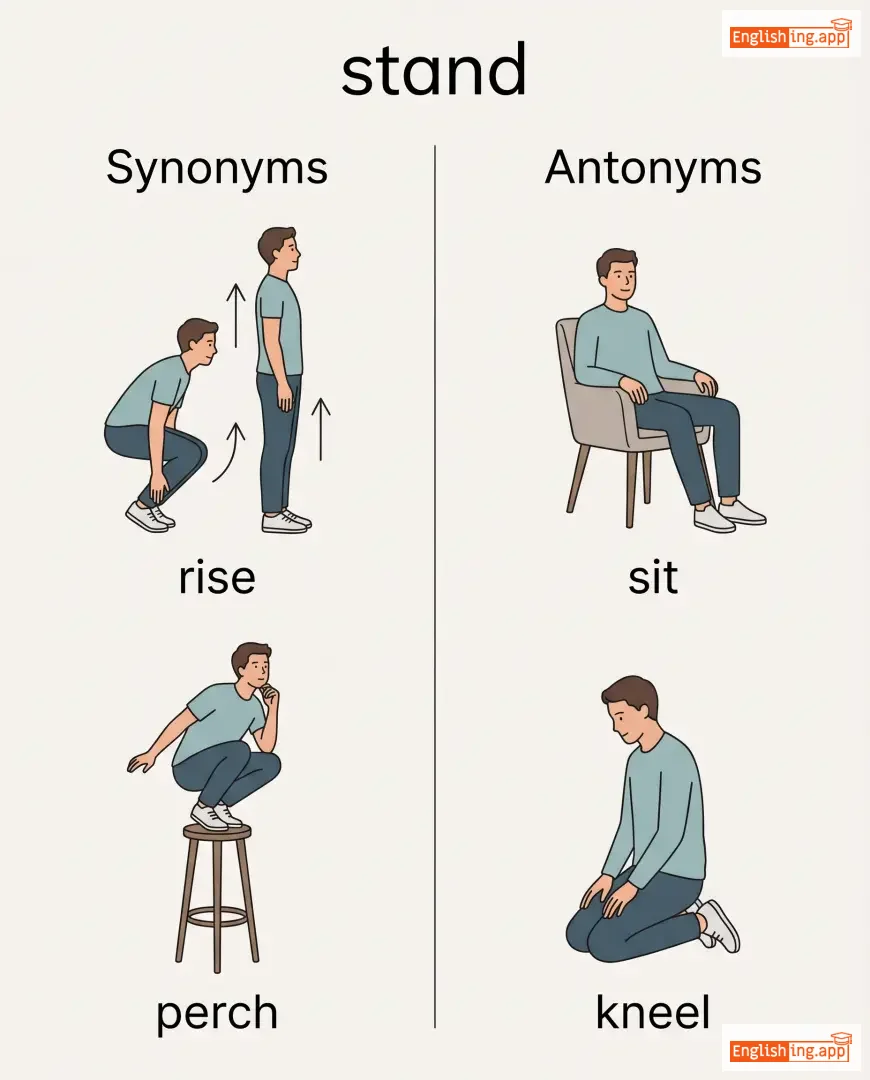
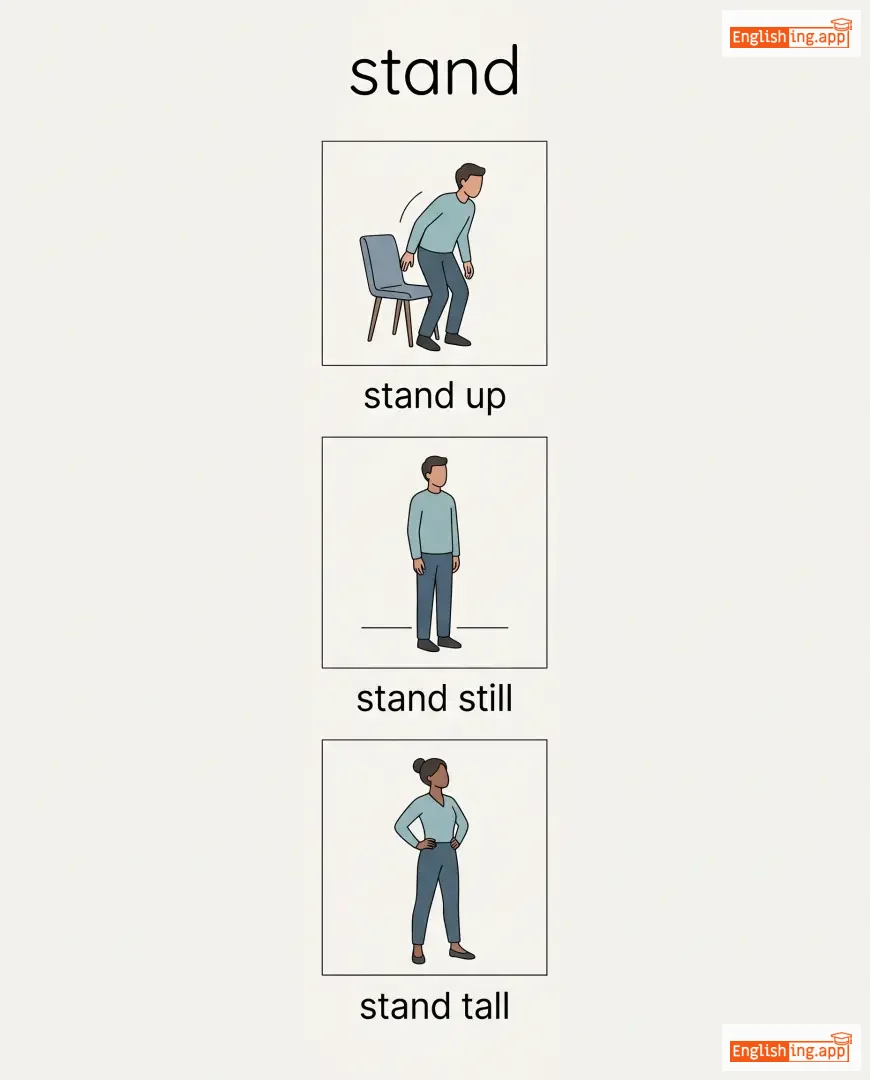
#4743
🧍
|
/stænd/
verb
(站立)
••••••
|
|
站立
zhan li
••••••
|
stood
站立
••••••
|
stood
站立
••••••
|
stands
站立
••••••
|
standing
站立
••••••
|
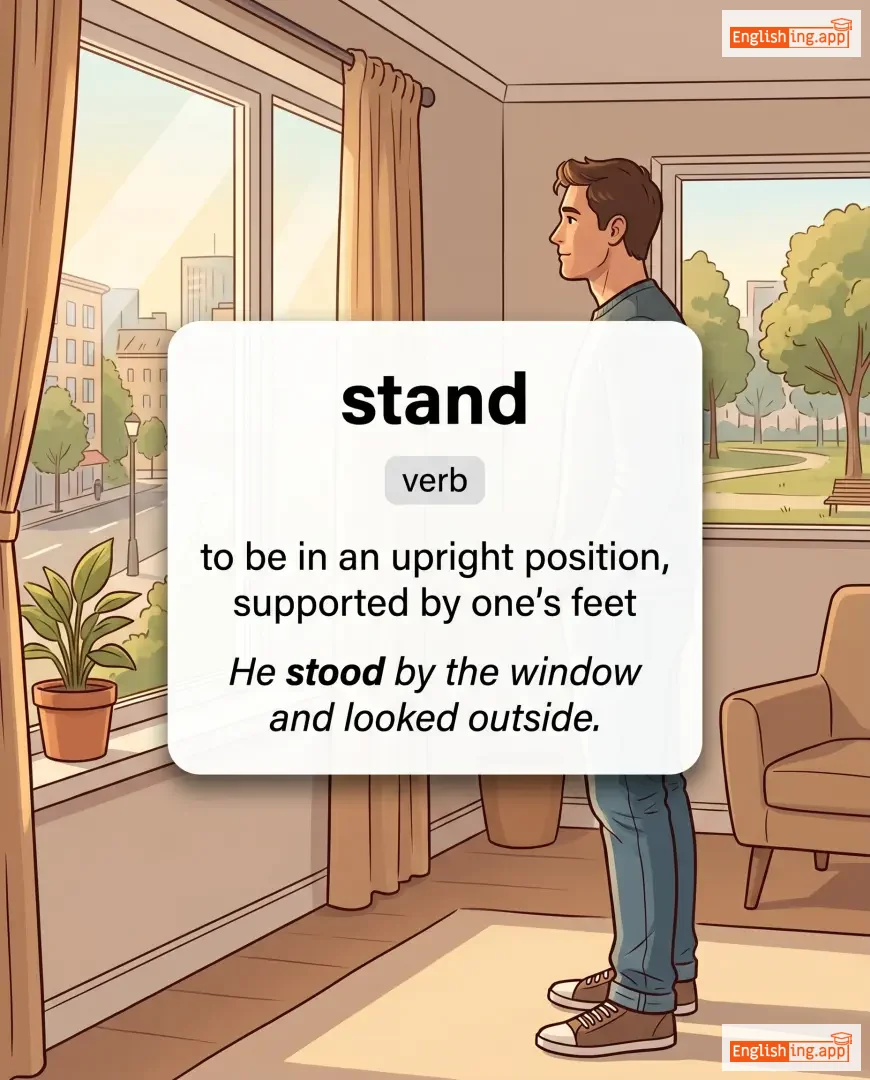
to be in an upright position; to tolerate or endure
••••••
|
Please stand up when the teacher enters.
当老师进来时请站起来。
••••••
|
当老师进来时请站起来。
Dang laoshi jinlai shi qing zhan qilai.
••••••
|
- •••••• | - •••••• | - •••••• |
rise, upright, endure, tolerate
••••••
|
sit, lie, fall, collapse
••••••
|
stand up, stand still, stand by, stand for, take a stand
••••••
|
像士兵一样站立,保持姿势。
••••••
|
|
#4744
📏
|
/ˈstændərd/
noun
••••••
|
- •••••• | - •••••• | - •••••• | - •••••• | - •••••• | - •••••• |
a level of quality or achievement, or a measure of comparison
••••••
|
This car meets all the safety standards. |
- •••••• | - •••••• | - •••••• | - •••••• |
norm, criterion, benchmark, measure
••••••
|
exception, anomaly
••••••
|
high standard, industry standard, minimum standard
••••••
|
No •••••• |
|
#4745
🧍
|
/ˈstændɪŋ/
noun/adjective
(standing)
••••••
|
- •••••• |
地位 / 声誉
diwei / shengyu
••••••
|
- •••••• | - •••••• | - •••••• | - •••••• |
status, reputation, or position; also the act of being upright on the feet
••••••
|
He has high standing in the community for his charity work. |
由于他的慈善工作,他在社区中有很高的声誉。
Yóuyú tā de císhàn gōngzuò, tā zài shèqū zhōng yǒu hěn gāo de shēngyù.
••••••
|
of good standing |
having a good reputation or status
••••••
|
良好的声誉
liánghǎo de shēngyù
••••••
|
status, reputation, position, rank, stature
••••••
|
disrepute, dishonor, disgrace
••••••
|
social standing, legal standing, good standing, standing order
••••••
|
Standing 意味着站立,同时也有声誉和地位的意思。
••••••
|
|
#4746
⭐
|
/stɑːr/
noun
(星星)
••••••
|
- •••••• |
星星
xīngxīng
••••••
|
- •••••• | - •••••• | - •••••• | - •••••• |
a luminous point in the night sky, a famous person
••••••
|
The movie star smiled for the cameras. |
电影明星对着镜头微笑。
Diànyǐng míngxīng duìzhe jìngtóu wēixiào.
••••••
|
a shooting star |
a meteor that appears to move rapidly across the sky
••••••
|
流星
liúxīng
••••••
|
celebrity, icon, luminary, celebrity
••••••
|
nobody, unknown
••••••
|
movie star, film star, shooting star
••••••
|
星星在天空中闪耀,就像电影明星在银幕上!
••••••
|
|
#4747
⚫
|
/stɑːrk/
adjective
(stark)
••••••
|
- •••••• |
严峻的, 锋利的
yanjun de, fengli de
••••••
|
- •••••• | - •••••• | - •••••• | - •••••• |
Severe, sharp, or clearly defined; plain and without any decoration.
••••••
|
The stark contrast between poverty and wealth was evident in the city.
贫困与财富之间的鲜明对比在城市中显而易见。
••••••
|
贫困与财富之间的鲜明对比在城市中显而易见。
Pinkuàn yǔ cáifù zhījiān de xiānmíng duìbǐ zài chéngshì zhōng xiǎn'ér yìjiàn.
••••••
|
stark reality
严酷的现实
••••••
|
The harsh or unpleasant truth.
••••••
|
严酷的现实
Yánkù de xiànshí
••••••
|
severe, harsh, bleak, plain, absolute
••••••
|
soft, mild, decorated
••••••
|
stark contrast, stark difference, stark reality, stark warning
••••••
|
Stark像黑与白之间强烈的对比。
••••••
|
|
#4748
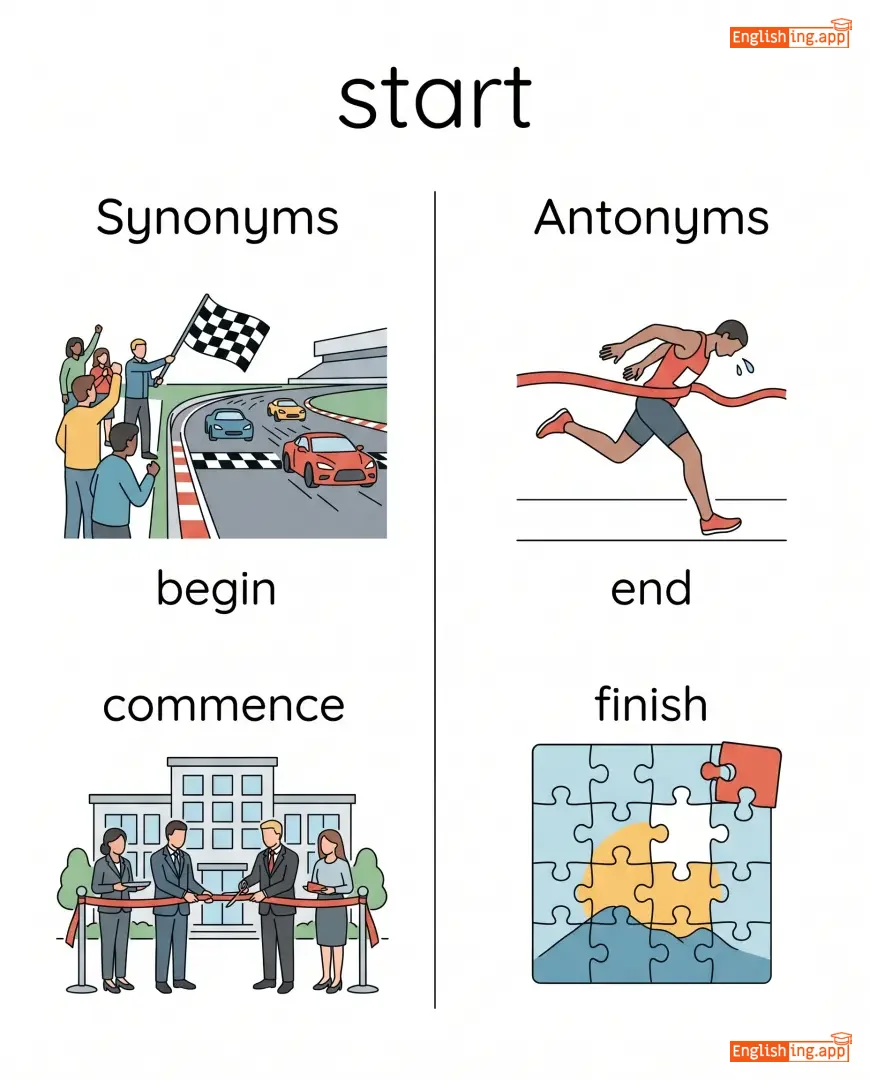
🚀
|
/stɑːrt/
verb
(start)
••••••
|
|
开始
kaishi
••••••
|
started
started
••••••
|
started
started
••••••
|
starts
starts
••••••
|
starting
starting
••••••
|
To begin doing something; to commence.
••••••
|
They will start the meeting at 10 a.m.
他们将在上午10点开始会议。
••••••
|
他们将在上午10点开始会议。
Tāmen jiāng zài shàngwǔ 10 diǎn kāishǐ huìyì.
••••••
|
start from scratch
从头开始
••••••
|
To begin again from nothing.
••••••
|
从头开始
Cóng tóu kāishǐ
••••••
|
begin, commence, initiate, launch, open
••••••
|
end, finish, stop
••••••
|
start a business, start a meeting, start working, start again
••••••
|
'START'按键开始一切
••••••
|
|
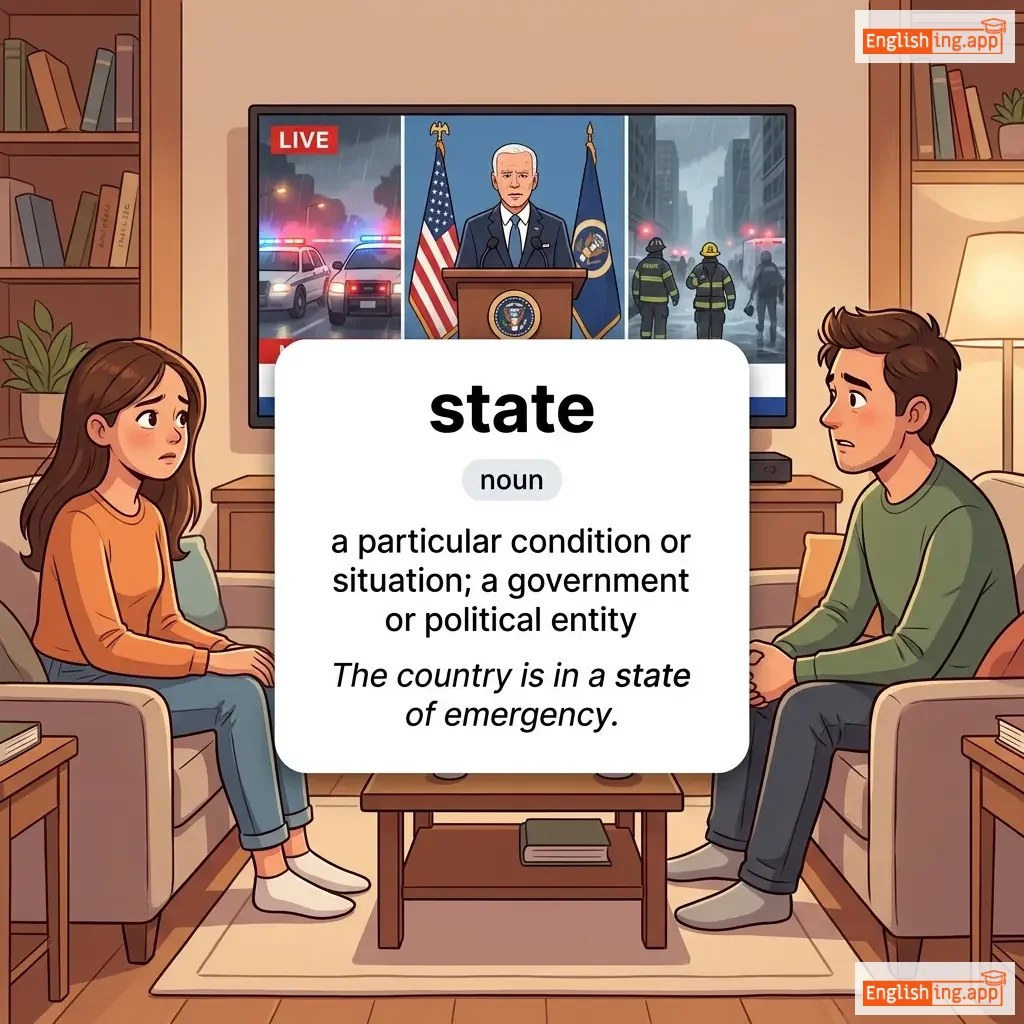
#4749
🏛️
|
/steɪt/
noun
(斯泰特)
••••••
|
|
状态
zhuangtai
••••••
|
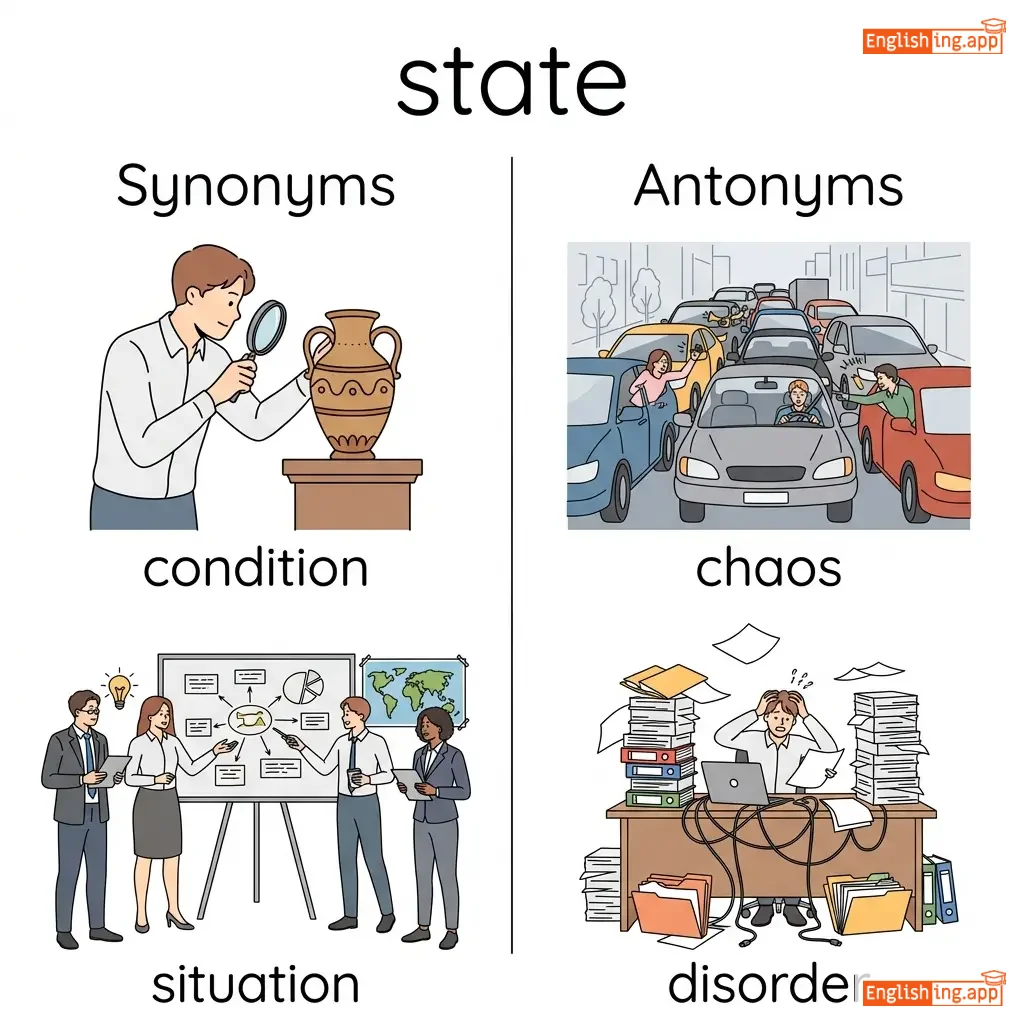
- •••••• | - •••••• | - •••••• | - •••••• |
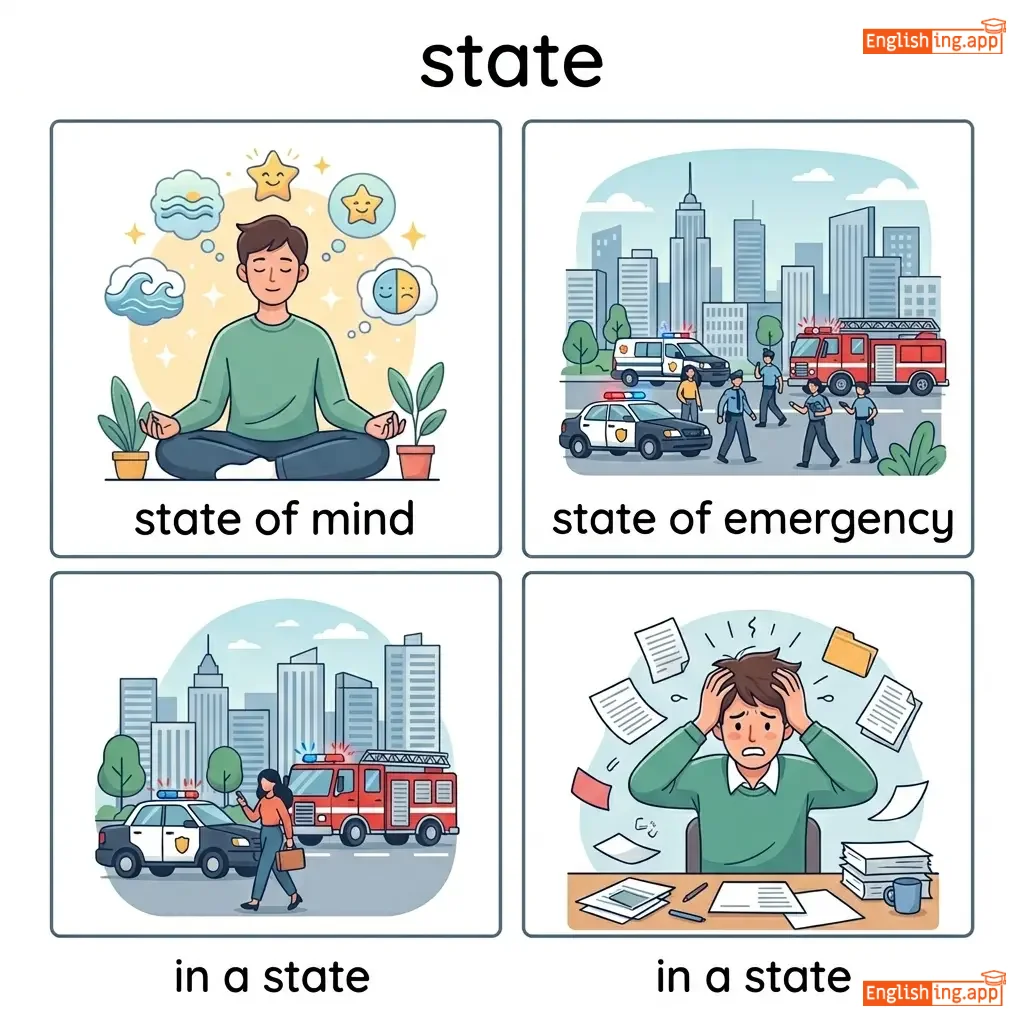
a particular condition or situation; a government or political entity
••••••
|
The country is in a state of emergency. |
这个国家处于紧急状态。
Zhege guojia chuyu jinji zhuangtai.
••••••
|
- •••••• | - •••••• | - •••••• |
condition, situation, phase, territory
••••••
|
chaos, disorder
••••••
|
state of mind, state of emergency, in a state
••••••
|
State means a country or condition - like the 'state' of emergency!
••••••
|
|
#4750
📄
|
/ˈsteɪt.mənt/
noun
(sī tè mèn tè)
••••••
|
- •••••• |
声明
shengming
••••••
|
- •••••• | - •••••• | - •••••• | - •••••• |
a definite or clear expression of something in speech or writing; an official account of facts
••••••
|
The CEO issued a statement about the company's future plans. |
首席执行官发布了一份关于公司未来计划的声明。
Shouxi zhixing guan fabu le yifen guanyu gongsi weilai jihua de shengming.
••••••
|
- •••••• | - •••••• | - •••••• |
declaration, announcement, report, account
••••••
|
silence, concealment
••••••
|
official statement, press statement, financial statement, witness statement
••••••
|
声明 = statement, CEO发布了公司未来的声明。
••••••
|
|
#4751
🚉
|
/ˈsteɪʃən/
noun
••••••
|
- •••••• | - •••••• | - •••••• | - •••••• | - •••••• | - •••••• |
a place where a particular service is provided, especially for transportation
••••••
|
We arrived at the station just in time for the train. |
- •••••• | - •••••• | - •••••• | - •••••• |
terminal, depot, stop, hub
••••••
|
wilderness, desolate place
••••••
|
train station, bus station, police station, gas station
••••••
|
No •••••• |
|
#4752
📊
|
/stəˈtɪstɪkəl/
adjective
(统计的)
••••••
|
- •••••• |
统计的
tongji de
••••••
|
- •••••• | - •••••• | - •••••• | - •••••• |
relating to the use or analysis of numerical data
••••••
|
The report provides statistical data about population growth. |
报告提供了有关人口增长的统计数据。
Baogao tigong le youguan renkou zengzhang de tongji shuju.
••••••
|
- •••••• | - •••••• | - •••••• |
numerical, analytical, quantitative, data-based
••••••
|
qualitative, subjective
••••••
|
statistical analysis, statistical data, statistical method, statistical model
••••••
|
统计学是关于数字的,所以 statistical 就是关于这些数据的分析 📊
••••••
|
|
#4753
📊
|
/stəˈtɪstɪks/
noun
(统计)
••••••
|
- •••••• |
统计
tǒngjì
••••••
|
- •••••• | - •••••• | - •••••• | - •••••• |
the practice or science of collecting and analyzing numerical data
••••••
|
The statistics showed an increase in the number of users last year.
统计数据显示,去年用户数量有所增加。
••••••
|
统计数据显示,去年用户数量有所增加。
Tǒngjì xiǎnshì, qùnián yònghù shùliàng yǒu suǒ zēngjiā.
••••••
|
- •••••• | - •••••• | - •••••• |
data, figures, analytics, metrics
••••••
|
anecdote, singular, outlier
••••••
|
statistical analysis, statistical data, statistical model, collection of statistics
••••••
|
统计是通过分析数字数据来帮助我们理解趋势。
••••••
|
|
#4754
🗽
|
/ˈstætʃuː/
noun
(雕像)
••••••
|
- •••••• |
雕像
diaoxiang
••••••
|
- •••••• | - •••••• | - •••••• | - •••••• |
a carved or cast figure of a person or animal, especially one that is life-size or larger
••••••
|
They built a statue of the national hero in the city square. |
他们在城市广场上建造了国家英雄的雕像。
Tamen zai chengshi guangchang shang jianzhao le guojia yingxiong de diaoxiang.
••••••
|
as still as a statue |
completely motionless
••••••
|
像雕像一样静止
xiang diaoxiang yiyang jingzhi
••••••
|
sculpture, figure, effigy, monument, idol
••••••
|
none, living being
••••••
|
statue of liberty, bronze statue, marble statue, giant statue
••••••
|
Statue means statue of liberty 🗽 — 雕像永远静止!
••••••
|
|
#4755
🔝
|
/ˈsteɪtəs/
noun
(状态)
••••••
|
- •••••• |
状态
zhuangtai
••••••
|
- •••••• | - •••••• | - •••••• | - •••••• |
the social or professional position or condition of someone or something
••••••
|
His social status improved after the promotion. |
他的社会地位在晋升后得到了改善。
Tā de shèhuì dìwèi zài jìnshēng hòu dédàole gǎishàn.
••••••
|
- •••••• | - •••••• | - •••••• |
rank, position, standing, condition
••••••
|
low status, insignificance
••••••
|
high status, social status, professional status
••••••
|
状态代表你的社会地位
••••••
|
|
#4756
🏠
|
/steɪ/
verb
(sī)
••••••
|
|
停留
tingliu
••••••
|
stayed
sīd
••••••
|
stayed
sīd
••••••
|
stays
sīz
••••••
|
staying
sīng
••••••
|
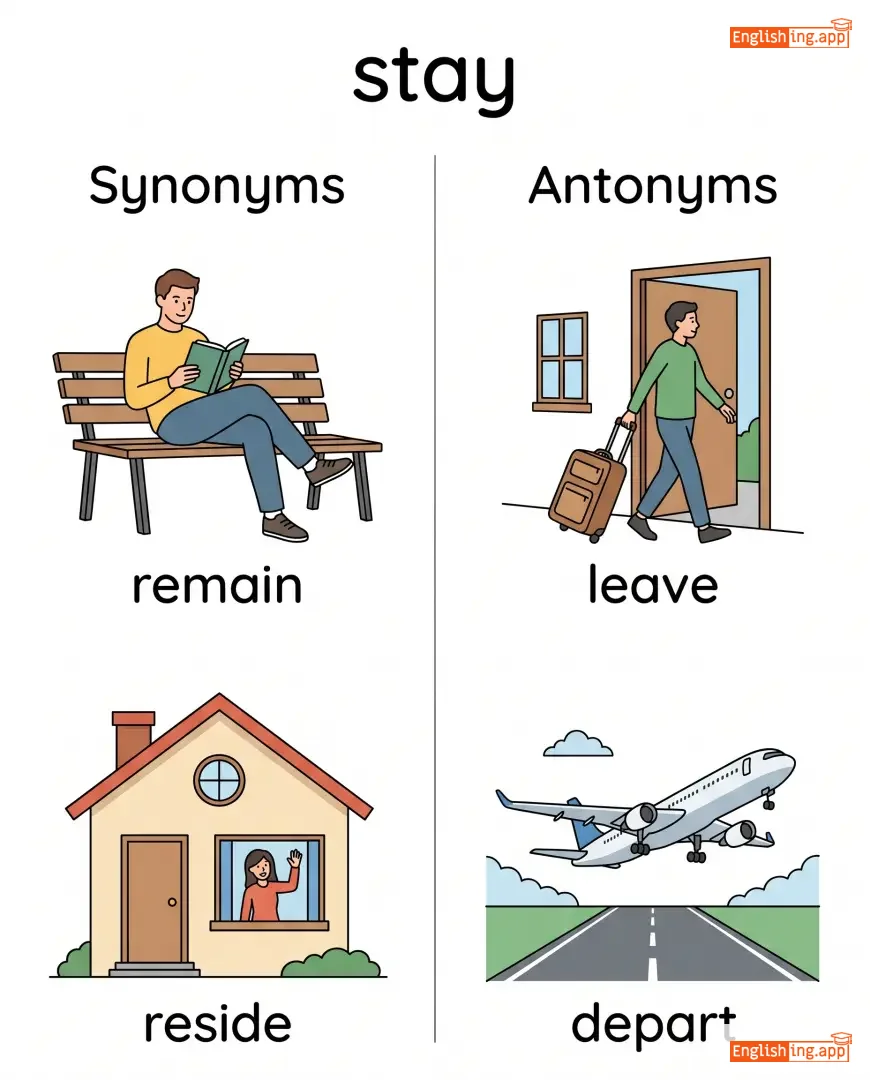
to remain in the same place; to continue being
••••••
|
Please stay here until I return.
请留在这里直到我回来。
••••••
|
请留在这里直到我回来。
Qǐng liú zài zhèlǐ zhídào wǒ huílái.
••••••
|
- •••••• | - •••••• | - •••••• |
remain, continue, wait, linger
••••••
|
leave, go, depart, move
••••••
|
stay home, stay calm, stay away, stay up, stay put
••••••
|
Stay with 'tingliu' in Chinese, stay in place!
••••••
|
|
#4757
📈
|
/ˈstɛdɪli/
adverb
(sī tè dì lì)
••••••
|
- •••••• |
稳定地
wěn dì de
••••••
|
- •••••• | - •••••• | - •••••• | - •••••• |
in a regular and continuous way; without stopping or changing
••••••
|
The company's profits have been increasing steadily. |
公司的利润稳定增长。
Gōngsī de lìrùn wěn dì zēngzhǎng.
••••••
|
- •••••• | - •••••• | - •••••• |
consistently, gradually, continuously, regularly
••••••
|
suddenly, irregularly, inconsistently
••••••
|
grow steadily, increase steadily, rise steadily, work steadily
••••••
|
Steady 意味着稳定 — 所以 steadily 意味着稳定地 📈
••••••
|
|
#4758
⚖️
|
/ˈstɛdi/
adjective
(稳定)
••••••
|
- •••••• |
稳定
wending
••••••
|
- •••••• | - •••••• | - •••••• | - •••••• |
firm, stable, and not likely to change suddenly
••••••
|
He kept his hand steady while painting the picture.
他在画画时保持手稳定。
••••••
|
他在画画时保持手稳定。
Tā zài huàhuà shí bǎochí shǒu wending.
••••••
|
steady as a rock
像岩石一样稳定
••••••
|
extremely stable and reliable
••••••
|
像岩石一样稳定
xiàng yánshí yīyàng wending
••••••
|
stable, firm, constant, fixed, reliable
••••••
|
unstable, unsteady, shaky
••••••
|
steady job, steady growth, steady hand, steady pace
••••••
|
steady意味着稳定 → 稳定的手,稳定的画
••••••
|
|
#4759
🕵️♂️
|
/stiːl/
verb
(斯蒂尔)
••••••
|
|
偷窃
touqie
••••••
|
stole
斯托尔
••••••
|
stolen
斯托伦
••••••
|
steals
斯蒂尔斯
••••••
|
stealing
斯蒂林
••••••
|
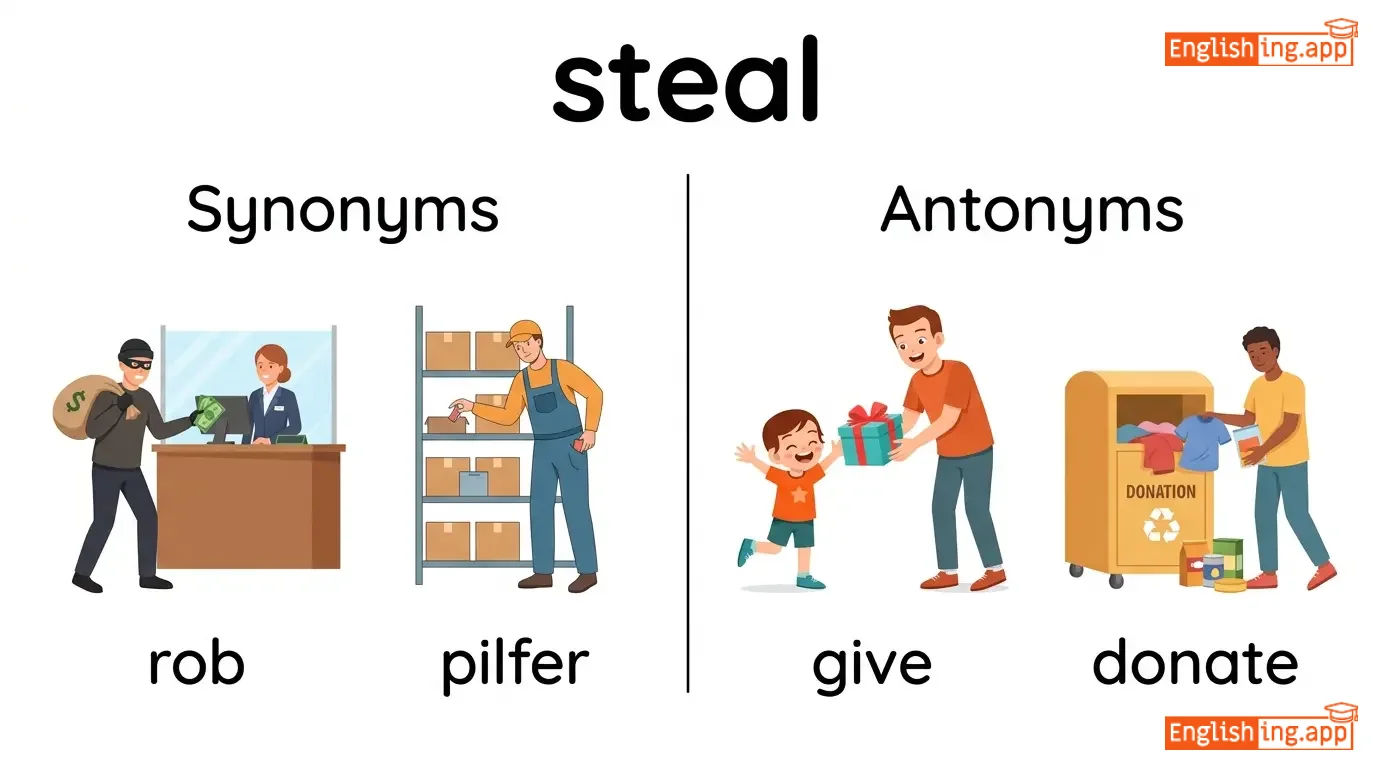
to take something without permission or right
••••••
|
He tried to steal my wallet while I wasn't looking.
他试图在我不注意时偷走我的钱包。
••••••
|
他试图在我不看时偷走我的钱包。
Ta shitu zai wo bu kan shi touzou wode qianbao.
••••••
|
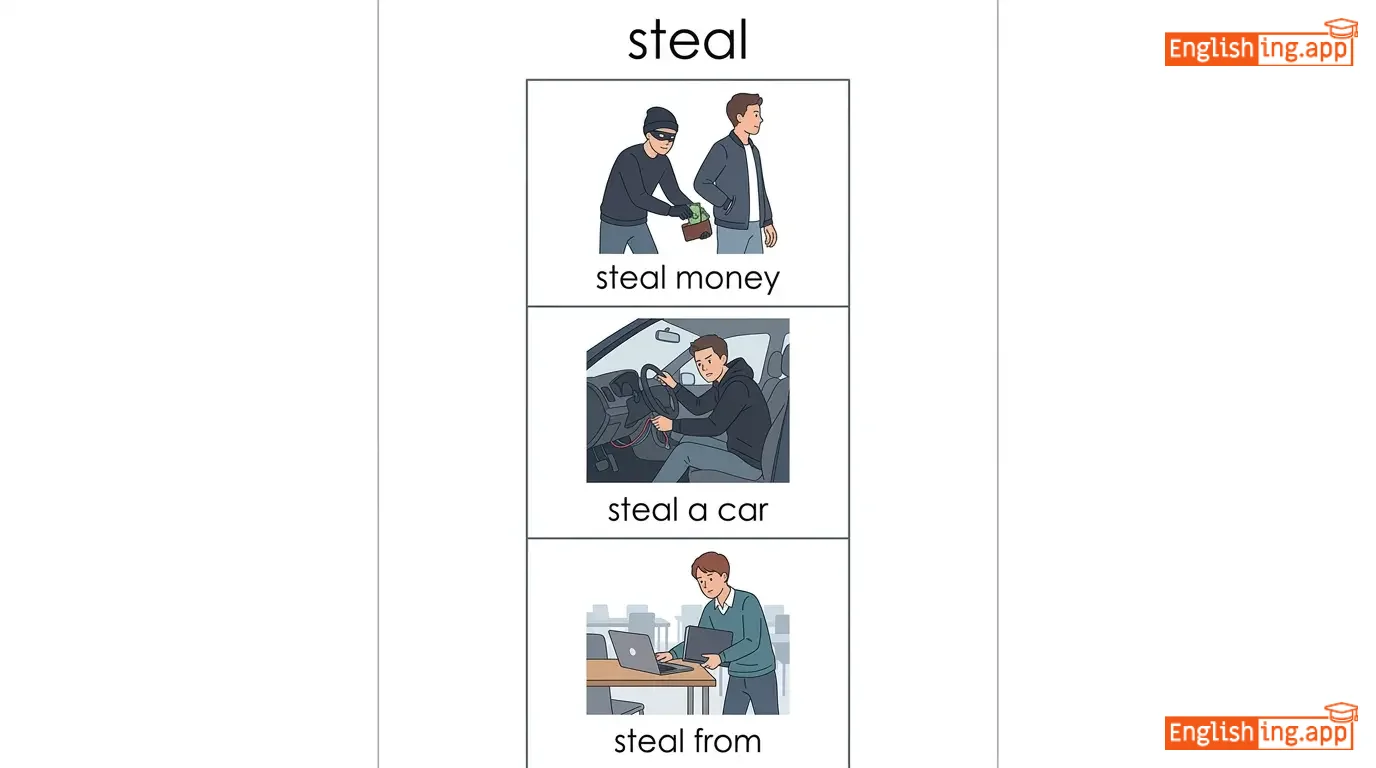
steal someone's heart
偷走某人的心
••••••
|
to charm or captivate someone
••••••
|
偷走某人的心
touzou mou ren de xin
••••••
|
rob, pilfer, loot, snatch
••••••
|
give, donate, return
••••••
|
steal money, steal a car, steal from, steal away
••••••
|
偷走一样东西 - 像偷走心一样
••••••
|
|
#4760
💨
|
/stiːm/
noun, verb
(斯蒂姆)
••••••
|
- •••••• |
蒸汽
zhengqi
••••••
|
steamed
斯蒂姆德
••••••
|
steamed
斯蒂姆德
••••••
|
steams
斯蒂姆斯
••••••
|
steaming
斯蒂米
••••••
|
the vapor into which water is converted when heated; to emit or treat with steam
••••••
|
The kettle was steaming on the stove.
茶壶在炉子上冒蒸汽。
••••••
|
茶壶在炉子上冒蒸汽。
Chahu zai luzi shang mao zhengqi.
••••••
|
let off steam
释放蒸汽
••••••
|
to release pent-up energy or emotions
••••••
|
释放积压的能量或情绪
shifang jiya de nengliang huo qingxu
••••••
|
vapor, mist, fume, moisture, fog
••••••
|
ice, freeze
••••••
|
steam engine, steam room, steam bath, hot steam
••••••
|
茶蒸汽,带来温暖与宁静的时光。
••••••
|
|
#4761
🏗️
|
/stiːl/
noun
(钢铁)
••••••
|
- •••••• |
钢铁
gangtie
••••••
|
- •••••• | - •••••• | - •••••• | - •••••• |
a strong, hard metal made of iron and carbon
••••••
|
The building was made from steel to ensure its durability. |
建筑物是用钢铁建造的,以确保其耐久性。
Jianzhuwu shi yong gangtie jianzhao de, yi quebao qi naijiuxing.
••••••
|
- •••••• | - •••••• | - •••••• |
iron, alloy, metal
••••••
|
wood, plastic
••••••
|
steel structure, steel bar, stainless steel, steel frame
••••••
|
钢铁坚固,像钢一样强 - 钢铁 = 强
••••••
|
|
#4762
⛰️
|
/stiːp/
adjective
(斯蒂普)
••••••
|
- •••••• |
陡峭, 过高
dǒu qiào, guò gāo
••••••
|
- •••••• | - •••••• | - •••••• | - •••••• |
Having a sharp inclination or high slope; also can mean excessive (as in price).
••••••
|
The hikers climbed a steep mountain trail. |
登山者攀登了一个陡峭的山道。
Dēng shān zhě pān dēng le yī gè dǒu qiào de shān dào.
••••••
|
a steep price |
Very high or excessive cost.
••••••
|
过高的价格
guò gāo de jià gé
••••••
|
sharp, precipitous, abrupt, high, costly
••••••
|
gentle, flat, moderate
••••••
|
steep hill, steep slope, steep climb, steep price
••••••
|
Steep意味着 steep hill = 陡峭的山路,steep price = 过高的价格。
••••••
|
|
#4763
🛞
|
/stɪə(r)/
verb
(斯蒂尔)
••••••
|
- •••••• |
操控
caokong
••••••
|
steered
斯蒂尔德
••••••
|
steered
斯蒂尔德
••••••
|
steers
斯蒂尔斯
••••••
|
steering
斯蒂尔林
••••••
|
to guide or control the movement of a vehicle, vessel, or person
••••••
|
He steered the car carefully through the narrow street.
他小心地把车开过狭窄的街道。
••••••
|
他小心地把车开过狭窄的街道。
Ta xiaoxin de ba che kaiguo xiazai de jiedao.
••••••
|
steer clear of
避开
••••••
|
to avoid someone or something
••••••
|
避免
bimian
••••••
|
guide, direct, navigate, control, pilot
••••••
|
neglect, ignore
••••••
|
steer the ship, steer the conversation, steer direction
••••••
|
操控就像驾驶 — 当你操控时,你是指引道路的 🚗
••••••
|
|
#4764
🌱
|
/stɛm/
noun, verb
(stem)
••••••
|
- •••••• |
茎 / 遏制
jing / e zhi
••••••
|
stemmed
stemmed
••••••
|
stemmed
stemmed
••••••
|
stems
stems
••••••
|
stemming
stemming
••••••
|
Noun: The main stalk of a plant. Verb: To stop or restrict the flow or development of something.
••••••
|
The gardener cut the stem of the rose; New policies aim to stem the flow of pollution.
园丁剪下了玫瑰的茎;新政策旨在遏制污染的流动。
••••••
|
园丁剪下了玫瑰的茎;新政策旨在遏制污染的流动。
Yuan ding jian xia le mei gui de jing; xin zheng ce zhi zai e zhi wu ran de liu dong.
••••••
|
stem the tide
遏制潮流
••••••
|
To stop or reduce something from increasing or spreading.
••••••
|
遏制潮流
e zhi chao liu
••••••
|
stalk, trunk, branch, stop, halt
••••••
|
root, allow, encourage
••••••
|
stem of a flower, stem cells, stem from, stem the tide
••••••
|
Stem 意味着茎 🌱 和动词的意思是遏制,也就是停止流动。
••••••
|
|
#4765
👣
|
/stɛp/
noun
••••••
|
- •••••• | - •••••• | - •••••• | - •••••• | - •••••• | - •••••• |
a movement made by lifting one foot and putting it down in a new position
••••••
|
She took a step towards the door. |
- •••••• |
take a step forward |
to make progress or move ahead
••••••
|
- •••••• |
stride, pace, move, footstep
••••••
|
halt, stop
••••••
|
step forward, step down, take a step, step by step
••••••
|
No •••••• |
|
#4766
🧠
|
/ˈstɛriəˌtaɪp/
noun
(刻板印象)
••••••
|
- •••••• |
刻板印象
kèbǎn yìnxiàng
••••••
|
- •••••• | - •••••• | - •••••• | - •••••• |
A widely held but oversimplified and fixed idea of a particular type of person or thing.
••••••
|
It is a stereotype that all gamers are antisocial. |
所有玩家都是反社会的,这是一种刻板印象。
Suǒyǒu wánjiā dōu shì fǎn shèhuì de, zhè shì yī zhǒng kèbǎn yìnxiàng.
••••••
|
- •••••• | - •••••• | - •••••• |
cliché, generalization, label, prejudice, bias
••••••
|
individuality, uniqueness
••••••
|
cultural stereotype, gender stereotype, break stereotypes
••••••
|
刻板印象就像一个永远重复同一首歌的立体声。
••••••
|
|
#4767
🖊️
|
/stɪk/
verb
(stik)
••••••
|
- •••••• |
粘贴
zhantui
••••••
|
stuck
stak
••••••
|
stuck
stak
••••••
|
sticks
stiks
••••••
|
sticking
stiking
••••••
|
to adhere or attach something to a surface
••••••
|
The glue will stick to the paper.
胶水会粘在纸上。
••••••
|
胶水会粘在纸上。
Jiaoshui hui zhan zai zhi shang.
••••••
|
stick to the plan
坚持计划
••••••
|
to follow the plan without changing course
••••••
|
坚持计划
Jianchi jihua
••••••
|
adhere, cling, fasten, bond
••••••
|
detach, remove
••••••
|
stick to, stick with, stick out, stick together
••••••
|
像胶水一样,必须坚持计划,不能更改。
••••••
|
|
#4768
🟫
|
/ˈstɪki/
adjective
(斯蒂基)
••••••
|
- •••••• |
粘的
zhan de
••••••
|
- •••••• | - •••••• | - •••••• | - •••••• |
having the quality of adhering or clinging; difficult to remove or deal with
••••••
|
The candy is too sticky to eat with your hands.
糖果太粘了,不能用手吃。
••••••
|
糖果太粘了,不能用手吃。
tang guo tai nian le, bu neng yong shou chi.
••••••
|
stick to your guns
坚持立场
••••••
|
to remain firm in your beliefs or decisions
••••••
|
坚持立场
jian chi li chang
••••••
|
tacky, adhesive, clingy, gooey
••••••
|
slippery, smooth
••••••
|
sticky note, sticky situation, sticky surface, sticky fingers
••••••
|
想象糖果太粘 (nian) 了,手上全是sticky糖。
••••••
|
|
#4769
🪵
|
/stɪf/
adjective
(斯提夫)
••••••
|
- •••••• |
僵硬
jiang ying
••••••
|
- •••••• | - •••••• | - •••••• | - •••••• |
rigid, difficult to bend or move
••••••
|
After the long run, his legs felt very stiff. |
长跑后,他的腿感觉非常僵硬。
Chang pao hou, ta de tui gan jue fei chang jiang ying.
••••••
|
stiff competition |
strong or difficult competition
••••••
|
激烈竞争
ji lie jing zheng
••••••
|
rigid, firm, inflexible, hard, tense
••••••
|
flexible, loose, relaxed
••••••
|
stiff neck, stiff muscles, stiff resistance, stiff competition
••••••
|
斯提夫意味着僵硬 – 就像一根无法弯曲的木棒
••••••
|
|
#4770
🕊️
|
/stɪl/
adjective
(stil)
••••••
|
- •••••• |
静止
jingzhi
••••••
|
- •••••• | - •••••• | - •••••• | - •••••• |
not moving or making a sound
••••••
|
The water was still, reflecting the sky. |
水面静止,反射着天空。
Shuǐmiàn jìngzhǐ, fǎnshè zhe tiānkōng.
••••••
|
still waters run deep |
quiet or calm people often have deep thoughts or feelings
••••••
|
静水深流
jìngshuǐ shēn liú
••••••
|
motionless, calm, quiet, serene
••••••
|
moving, noisy, restless
••••••
|
still life, still water, still moment, still image
••••••
|
水静如镜,保持冷静,才能深思熟虑。
••••••
|
|
#4771
💡
|
/ˈstɪmjʊˌleɪt/
verb
(刺激)
••••••
|
|
刺激, 激励
cìjī, jīlì
••••••
|
stimulated
刺激了
••••••
|
stimulated
刺激了
••••••
|
stimulates
刺激
••••••
|
stimulating
刺激中
••••••
|
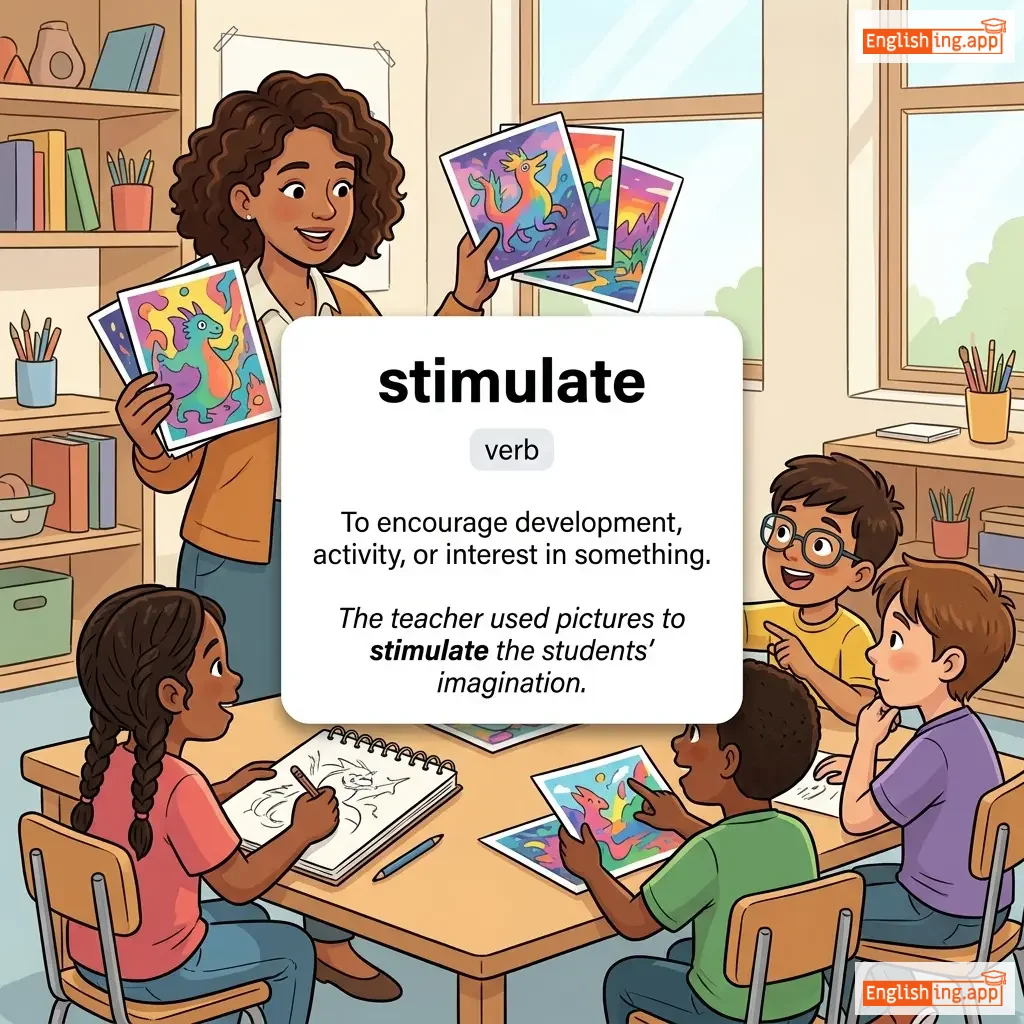
To encourage development, activity, or interest in something.
••••••
|
The teacher used pictures to stimulate the students' imagination.
老师用图片刺激了学生的想象力。
••••••
|
老师用图片刺激了学生的想象力。
Lǎoshī yòng túpiàn cìjīle xuéshēng de xiǎngxiànglì.
••••••
|
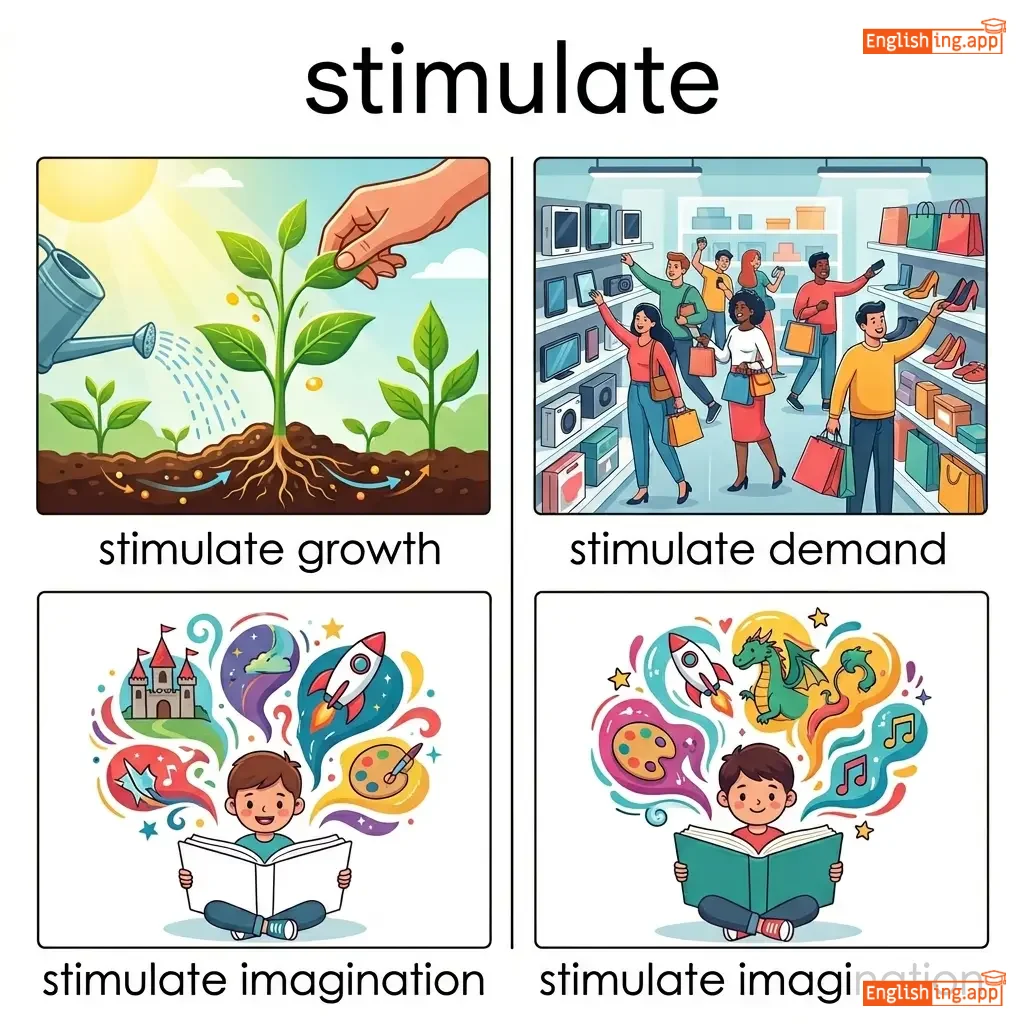
stimulate growth
刺激生长
••••••
|
to encourage development or increase
••••••
|
刺激生长
cìjī shēngzhǎng
••••••
|
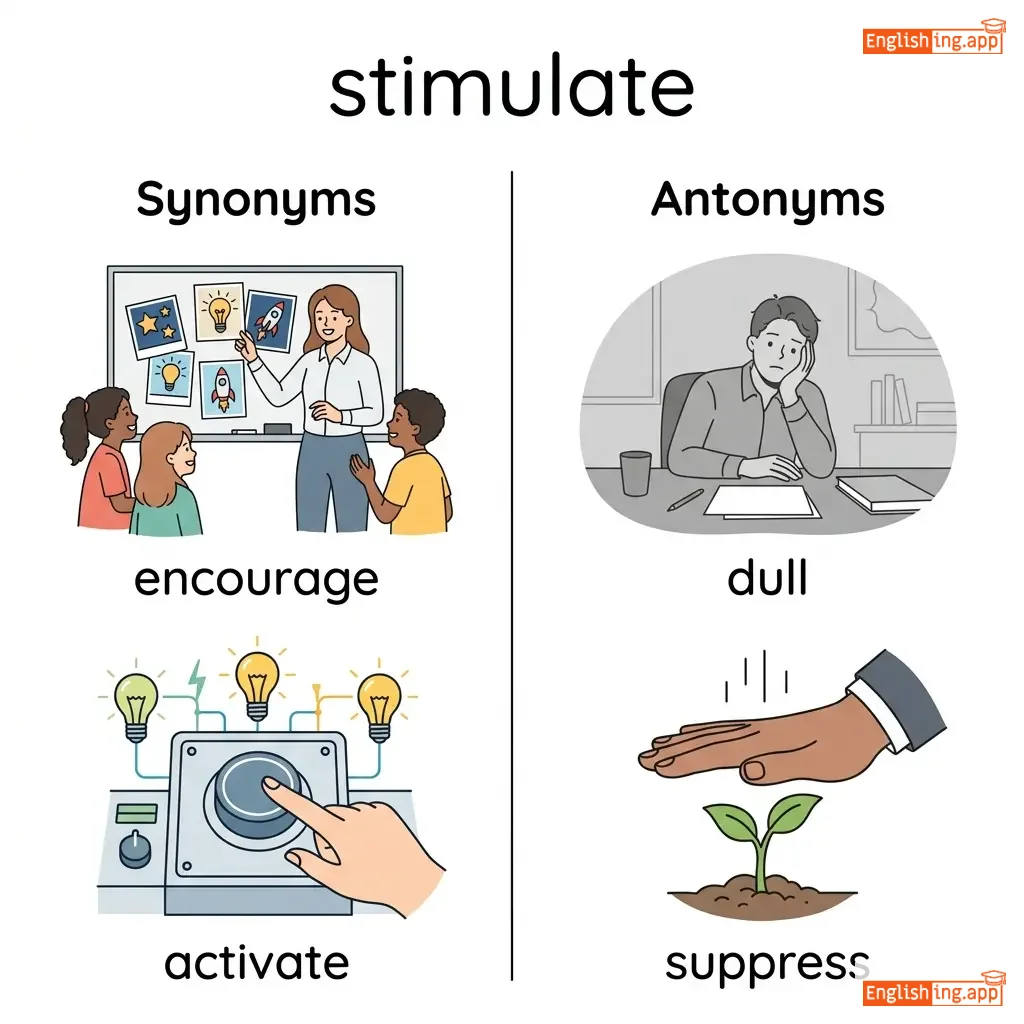
encourage, activate, motivate, inspire, excite
••••••
|
dull, suppress, discourage
••••••
|
stimulate growth, stimulate demand, stimulate imagination, stimulate interest
••••••
|
Stimulate → 刺激 (像打气一样促进成长)。
••••••
|
|
#4772
🚀
|
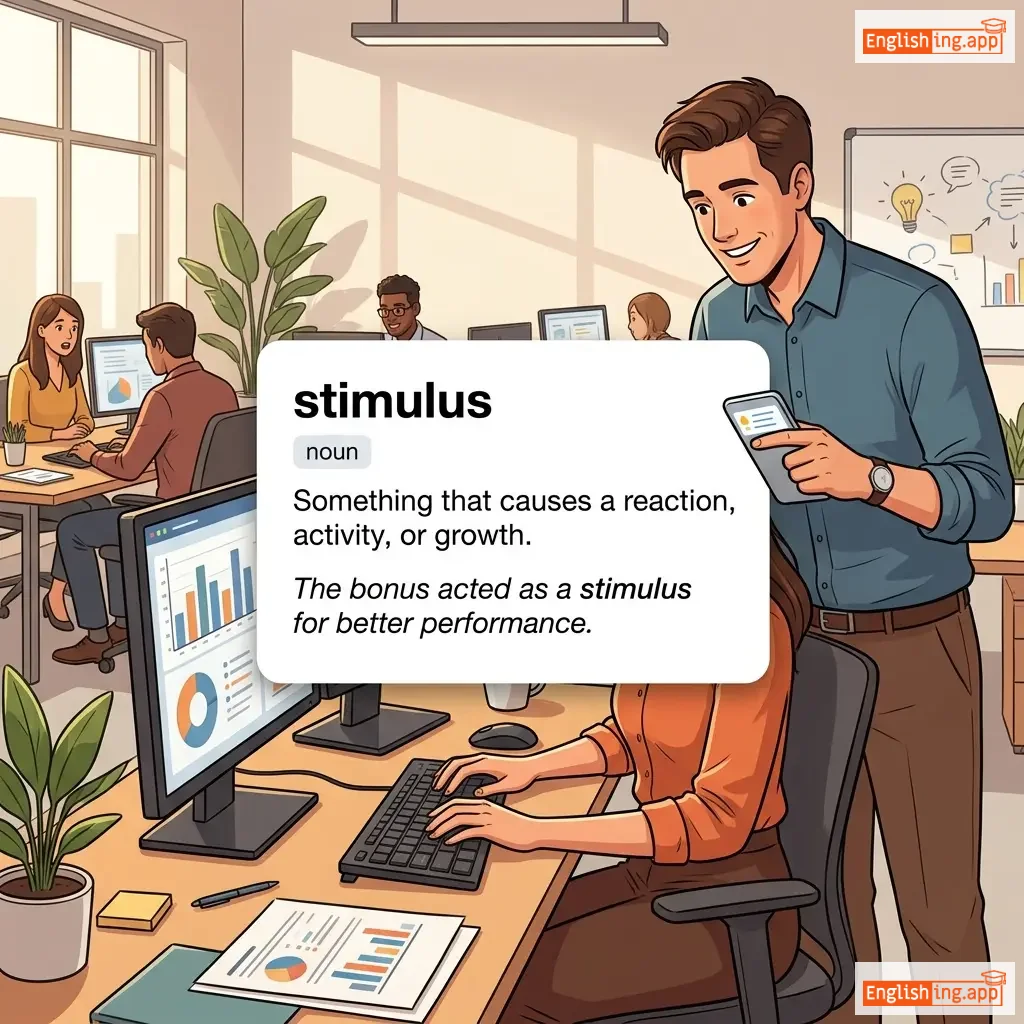
/ˈstɪmjʊləs/
noun
(刺激)
••••••
|
|
引起反应、活动或增长的事物,刺激
yǐnqǐ fǎnyìng, huódòng huò zēngzhǎng de shìwù, cìjī
••••••
|
- •••••• | - •••••• | - •••••• | - •••••• |
Something that causes a reaction, activity, or growth.
••••••
|
The bonus acted as a stimulus for better performance. |
奖金成为了促进更好表现的刺激。
Jiǎngjīn chéngwéi le cùjìn gèng hǎo biǎoxiàn de cìjī.
••••••
|
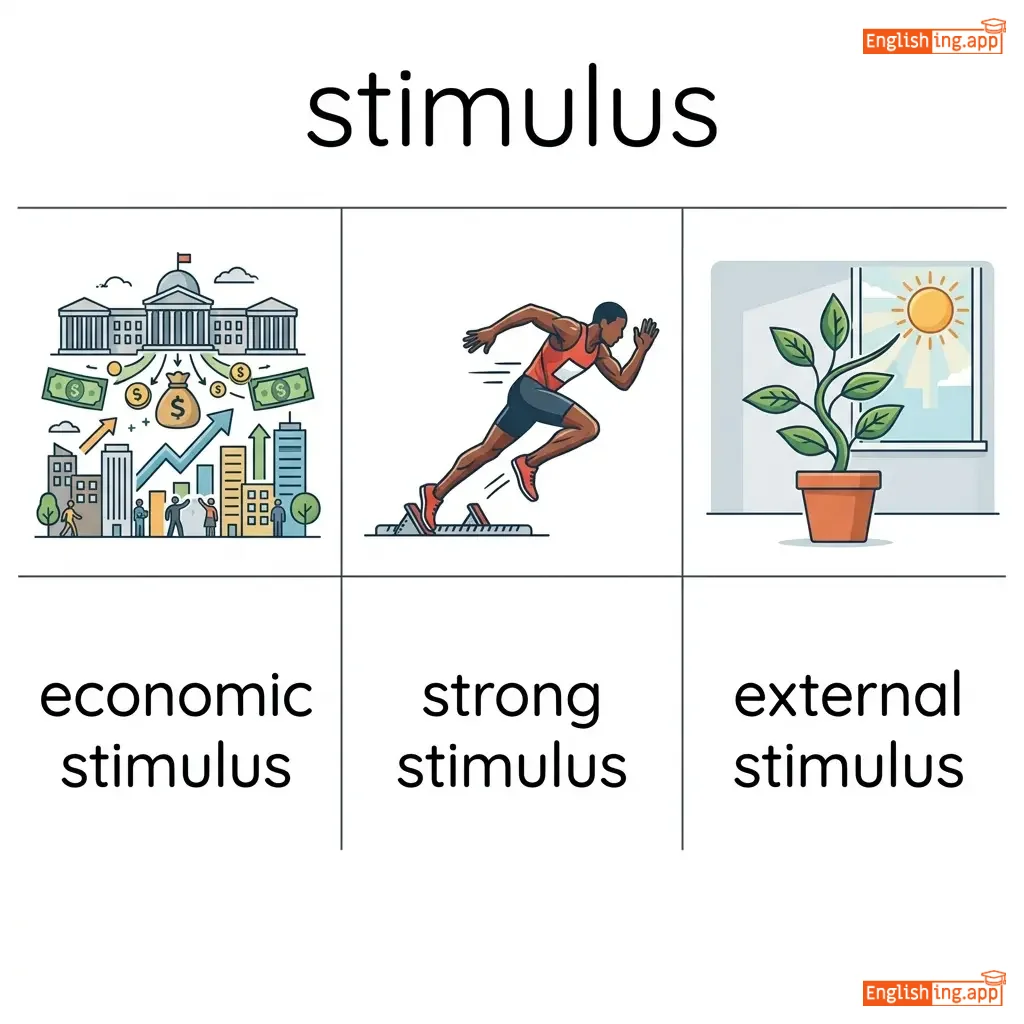
economic stimulus |
government actions to encourage economic growth
••••••
|
经济刺激
jīngjì cìjī
••••••
|
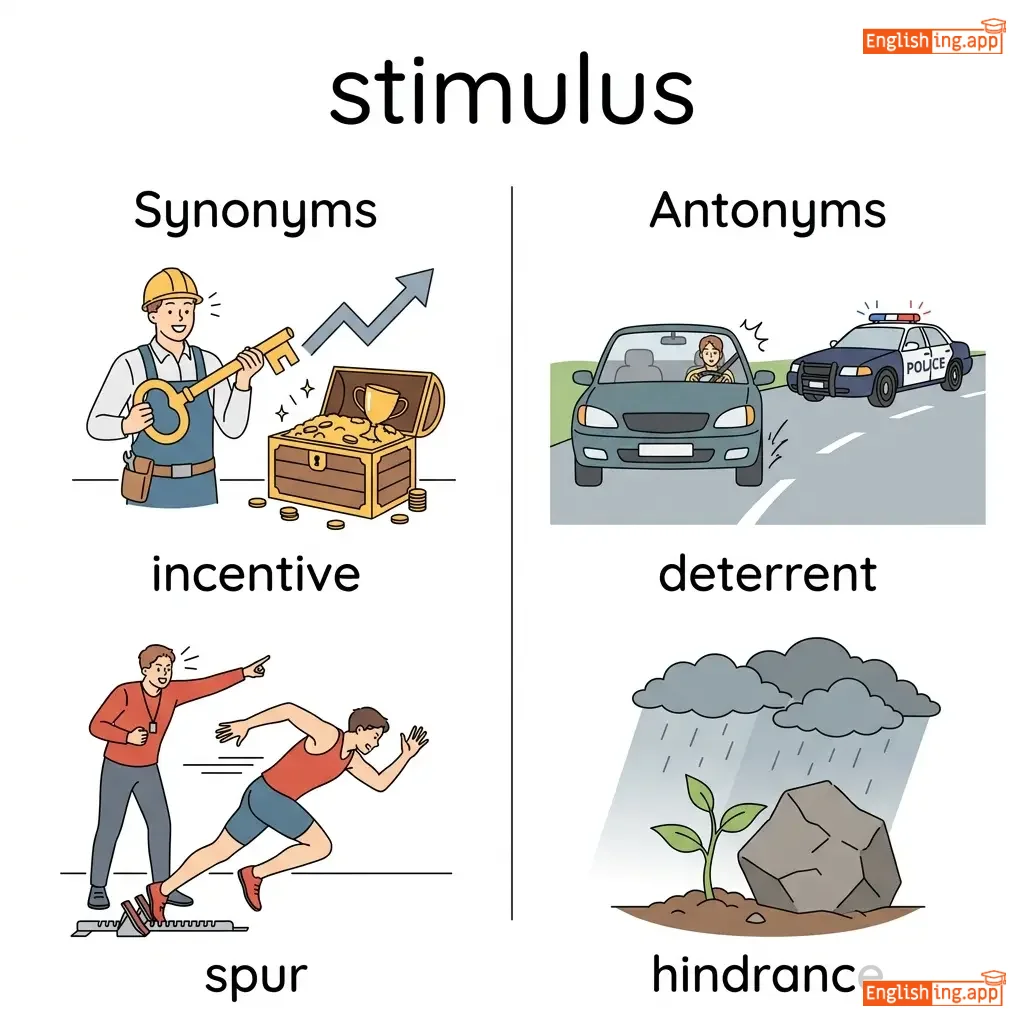
incentive, spur, motivation, encouragement, trigger
••••••
|
deterrent, hindrance
••••••
|
economic stimulus, strong stimulus, external stimulus, direct stimulus
••••••
|
Stimulus = 刺激 🚀 → 记住奖金是一个促进的刺激
••••••
|
|
#4773
🐝
|
/stɪŋ/
verb
(stɪŋ)
••••••
|
|
刺痛
cì tòng
••••••
|
stung
stʌŋ
••••••
|
stung
stʌŋ
••••••
|
stings
stɪŋz
••••••
|
stinging
stɪŋɪŋ
••••••
|
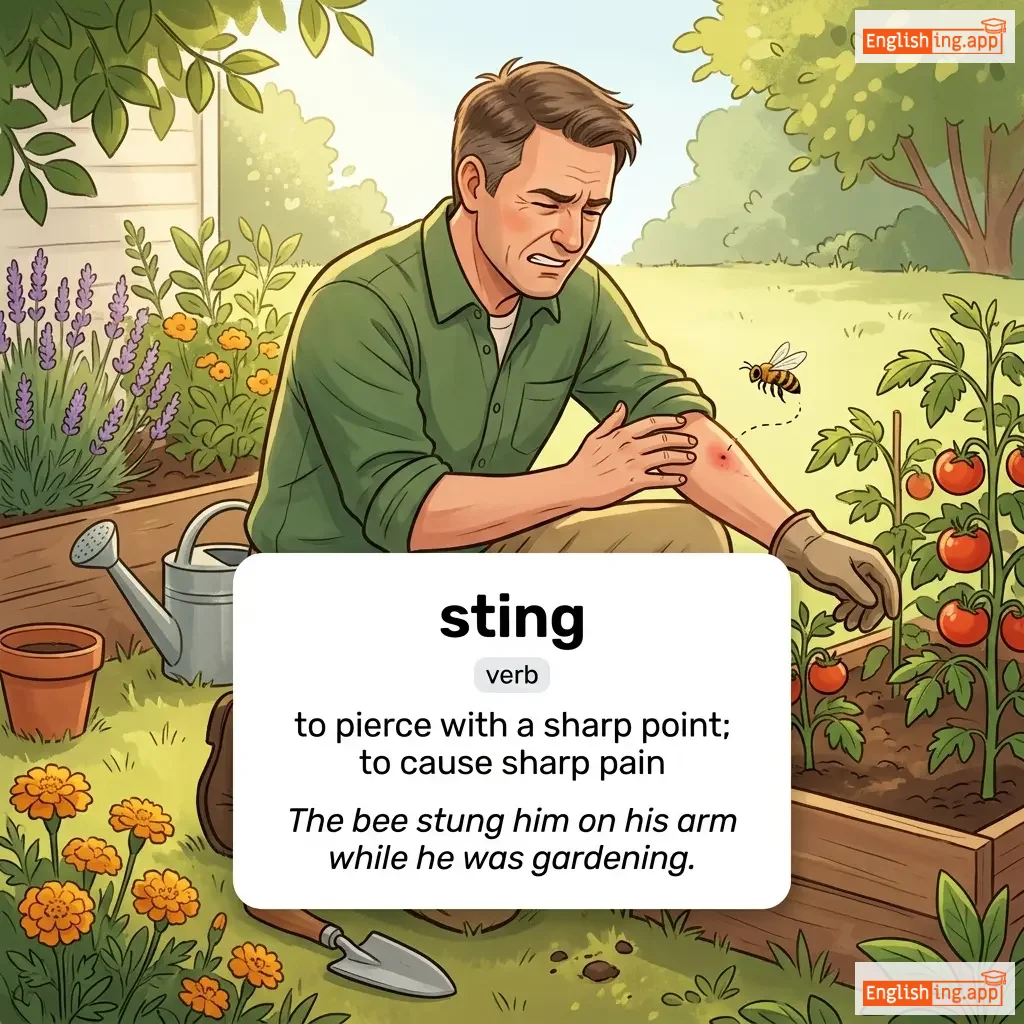
to pierce with a sharp point; to cause sharp pain
••••••
|
The bee stung him on his arm while he was gardening.
ðə bi stʌŋ hɪm ɒn hɪz ɑrm waɪl hi wəz ˈɡɑrdənɪŋ.
••••••
|
蜜蜂在他园艺时刺伤了他的手臂。
Mìfēng zài tā yuányì shí cì shāng le tā de shǒubì
••••••
|
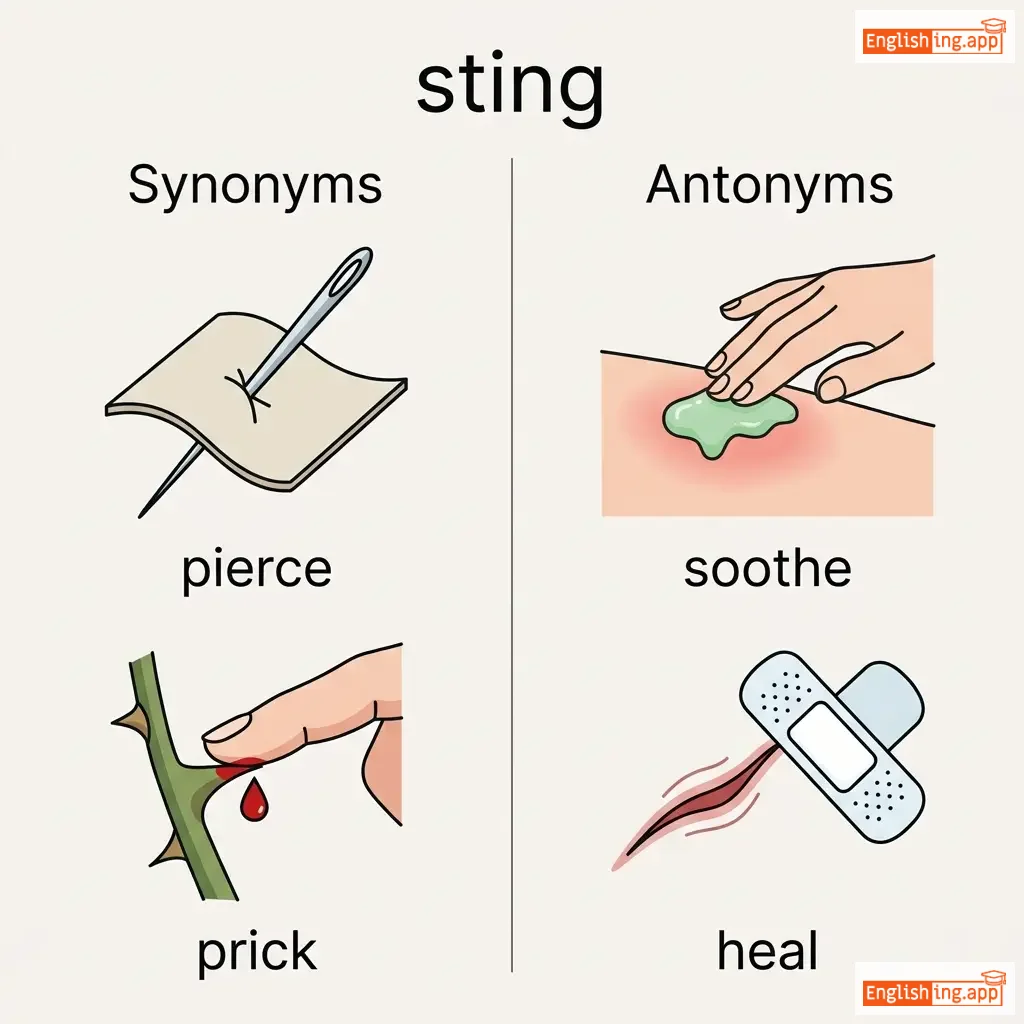
- •••••• | - •••••• | - •••••• |
pierce, prick, bite, hurt
••••••
|
soothe, heal, comfort, relieve
••••••
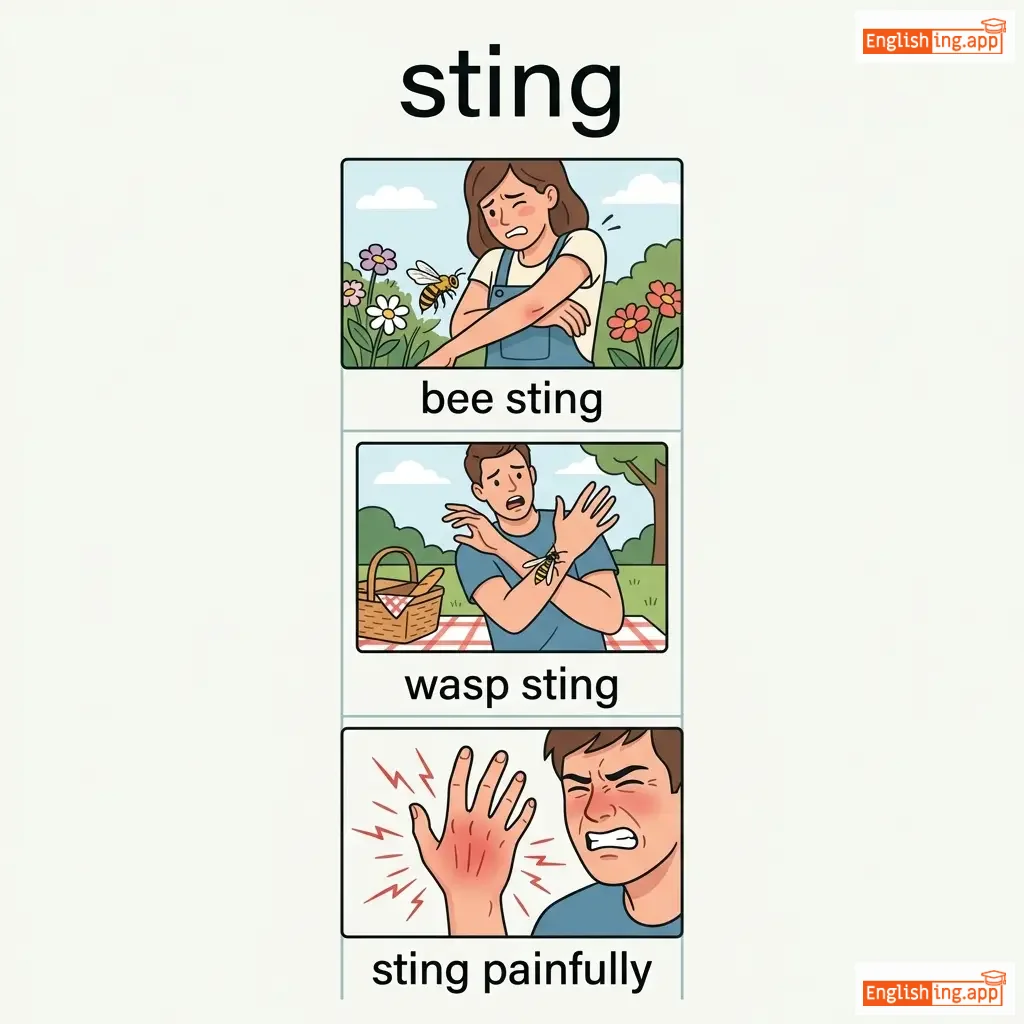
|
bee sting, wasp sting, sting painfully, sting sharply, nettle sting
••••••
|
想象蜜蜂的刺痛感
••••••
|
|
#4774
🍲
|
/stɜːr/
verb
(斯特尔)
••••••
|
- •••••• |
搅拌
jiaoban
••••••
|
stirred
斯特德
••••••
|
stirred
斯特德
••••••
|
stirs
斯特斯
••••••
|
stirring
斯特灵
••••••
|
to mix or move something in a circular motion, especially in liquid
••••••
|
She stirred the soup to make sure it didn't burn.
她搅拌汤,以确保它不会烧焦。
••••••
|
她搅拌汤,以确保它不会烧焦。
Ta jiaoban tang, yi quebao ta buhui shaojiao.
••••••
|
- •••••• | - •••••• | - •••••• |
mix, agitate, shake, blend
••••••
|
settle, still, calm
••••••
|
stir the soup, stir the pot, stir emotions
••••••
|
当你搅拌时,想想 'Stir' (搅拌) - Stir to mix.
••••••
|
Vocabulary Quiz
Test your vocabulary by matching words with their translations or meanings.
Login to take the quiz
Comments (0)
Share your thoughts and join the discussion.
Join the discussion by logging in
Login to CommentNo comments yet
Be the first to share your thoughts!