


















Swipe left or right, or use the buttons. Tap image to zoom.
例句翻译
单词
Lesson 58Lesson 58 - 遮罩切换
|
表情符号
|
单词 | Images | 翻译 | 过去时 | 过去分词 | 第三人称单数 | 动名词 | 含义 | 例句 | 例句翻译 | 示例表达 | 示例表达含义 | 示例表达翻译 | 同义词 | 反义词 | 搭配词 | 助记符 |
|---|---|---|---|---|---|---|---|---|---|---|---|---|---|---|---|---|---|
|
#2761
⚙️
|
/ˌɪnstəˈleɪʃən/
noun
(安装)
••••••
|
|
安装
anzhuang
••••••
|
- •••••• | - •••••• | - •••••• | - •••••• |
the act or process of putting something in position and making it ready for use
••••••
|
The installation of the new software took less than an hour.
新软件的安装不到一个小时。
••••••
|
新软件的安装不到一个小时。
Xin ruanjian de anzhuang budao yige xiaoshi.
••••••
|
- •••••• | - •••••• | - •••••• |
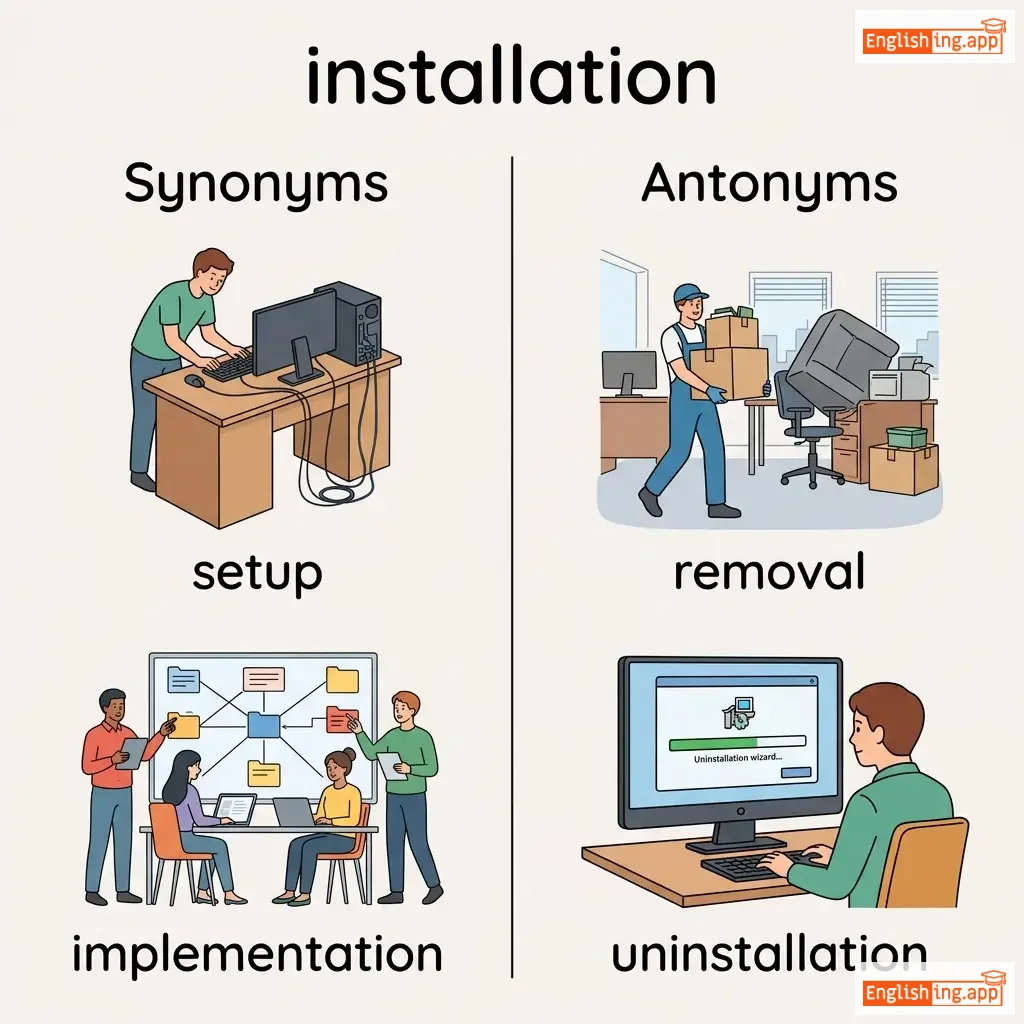
setup, implementation, deployment, placement, establishment
••••••
|
removal, uninstallation, dismantling
••••••
|
installation process, installation guide, software installation, electrical installation
••••••
|
安装就是把东西放到位,安装过程意味着准备好使用。
••••••
|
|
#2762
📌
|
/ˈɪnstəns/
noun
(因斯坦斯)
••••••
|
- •••••• |
实例
shili
••••••
|
- •••••• | - •••••• | - •••••• | - •••••• |
An example or single occurrence of something.
••••••
|
This is just one instance of his generosity. |
这是他慷慨的一个例子。
Zhe shi ta kangkai de yi ge li zi.
••••••
|
for instance |
As an example.
••••••
|
例如
li ru
••••••
|
example, case, occurrence, illustration, situation
••••••
|
generalization, whole
••••••
|
in this instance, one instance, rare instance, for instance
••••••
|
Instance意味着'即时示例'——就是一个例子或实例。
••••••
|
|
#2763
⚡
|
/ˈɪnstənt/
noun/adjective
(因斯坦特)
••••••
|
- •••••• |
瞬间
shun jian
••••••
|
- •••••• | - •••••• | - •••••• | - •••••• |
A very short period of time; happening immediately.
••••••
|
He replied in an instant without hesitation. |
他毫不犹豫地在瞬间作出回应。
Ta hao bu you yu de zai shun jian zuo chu hui ying.
••••••
|
in an instant |
very quickly; immediately
••••••
|
瞬间
shun jian
••••••
|
moment, second, flash, immediate, prompt
••••••
|
delay, wait
••••••
|
instant coffee, instant reply, instant success, in an instant
••••••
|
瞬间 = 一刹那的快速反应!
••••••
|
|
#2764
⚡
|
/ˈɪnstəntli/
adverb
(即时)
••••••
|
- •••••• |
立刻
lì kè
••••••
|
- •••••• | - •••••• | - •••••• | - •••••• |
immediately, without any delay
••••••
|
He replied instantly to the message.
他立刻回复了消息。
••••••
|
他立刻回复了消息。
Tā lì kè huí fù le xiāo xī.
••••••
|
instantly recognizable
立刻可识别
••••••
|
easy to identify immediately
••••••
|
容易识别
róng yì shí bié
••••••
|
immediately, promptly, right away, straightaway, at once
••••••
|
later, eventually, slowly
••••••
|
respond instantly, disappear instantly, instantly available, instantly clear
••••••
|
即时意味着像速溶咖啡一样,马上!
••••••
|
|
#2765
🔄
|
/ɪnˈstɛd/
adverb
(ɪnˈstɛd)
••••••
|
- •••••• |
代替
dàitì
••••••
|
- •••••• | - •••••• | - •••••• | - •••••• |
As an alternative or substitute.
••••••
|
She didn’t buy the dress; instead, she chose a pair of shoes.
她没有买那件裙子; 反而她选择了一双鞋子。
••••••
|
她没有买那件裙子; 反而她选择了一双鞋子。
Tā méiyǒu mǎi nà jiàn qúnzi; fǎn'ér tā xuǎnzéle yī shuāng xiézi.
••••••
|
instead of
代替
••••••
|
In place of.
••••••
|
代替
dàitì
••••••
|
alternatively, rather, otherwise, as a substitute
••••••
|
as well, together, along
••••••
|
chose instead, instead of, use instead, prefer instead
••••••
|
Instead 是一种替代选择,就像选择鞋子代替裙子。
••••••
|
|
#2766
🐾
|
/ˈɪnstɪŋkt/
noun
(本能)
••••••
|
- •••••• |
本能
bènnéng
••••••
|
- •••••• | - •••••• | - •••••• | - •••••• |
A natural way of behaving or reacting that does not require learning.
••••••
|
Birds build nests by instinct. |
鸟类本能地筑巢。
Niǎo lèi běnnéng de zhùcháo.
••••••
|
animal instinct |
natural, unlearned behavior of animals
••••••
|
动物本能
dòngwù běnnéng
••••••
|
intuition, impulse, tendency, drive, reflex
••••••
|
reason, logic
••••••
|
natural instinct, survival instinct, maternal instinct, instinct tells
••••••
|
Instinct = 自然本能 → 不加思索的行动。
••••••
|
|
#2767
🏛️
|
/ˈɪnstɪˌtjuːt/
noun, verb
(学院)
••••••
|
- •••••• |
学院
xueyuan
••••••
|
instituted
建立
••••••
|
instituted
建立
••••••
|
institutes
建立
••••••
|
instituting
建立
••••••
|
as a noun, an organization founded for a specific purpose; as a verb, to establish or initiate
••••••
|
The university decided to institute new rules for the library.
大学决定为图书馆制定新规则。
••••••
|
大学决定为图书馆制定新规则。
Daxue jueding wei tushuguan zhiding xin guize.
••••••
|
- •••••• | - •••••• | - •••••• |
organization, establishment, foundation, initiate, set up
••••••
|
abolish, disband, dissolve
••••••
|
research institute, technical institute, institute reforms, institute measures
••••••
|
学院代表一个新的组织,像大学一样,也是一个开始新规则的地方。
••••••
|
|
#2768
🏥
|
/ˌɪnstɪˈtjuːʃən/
noun
(yīn sī tì tú xiǎn)
••••••
|
|
机构
jīgòu
••••••
|
- •••••• | - •••••• | - •••••• | - •••••• |
an established organization, especially one dedicated to education, public service, or a particular purpose
••••••
|
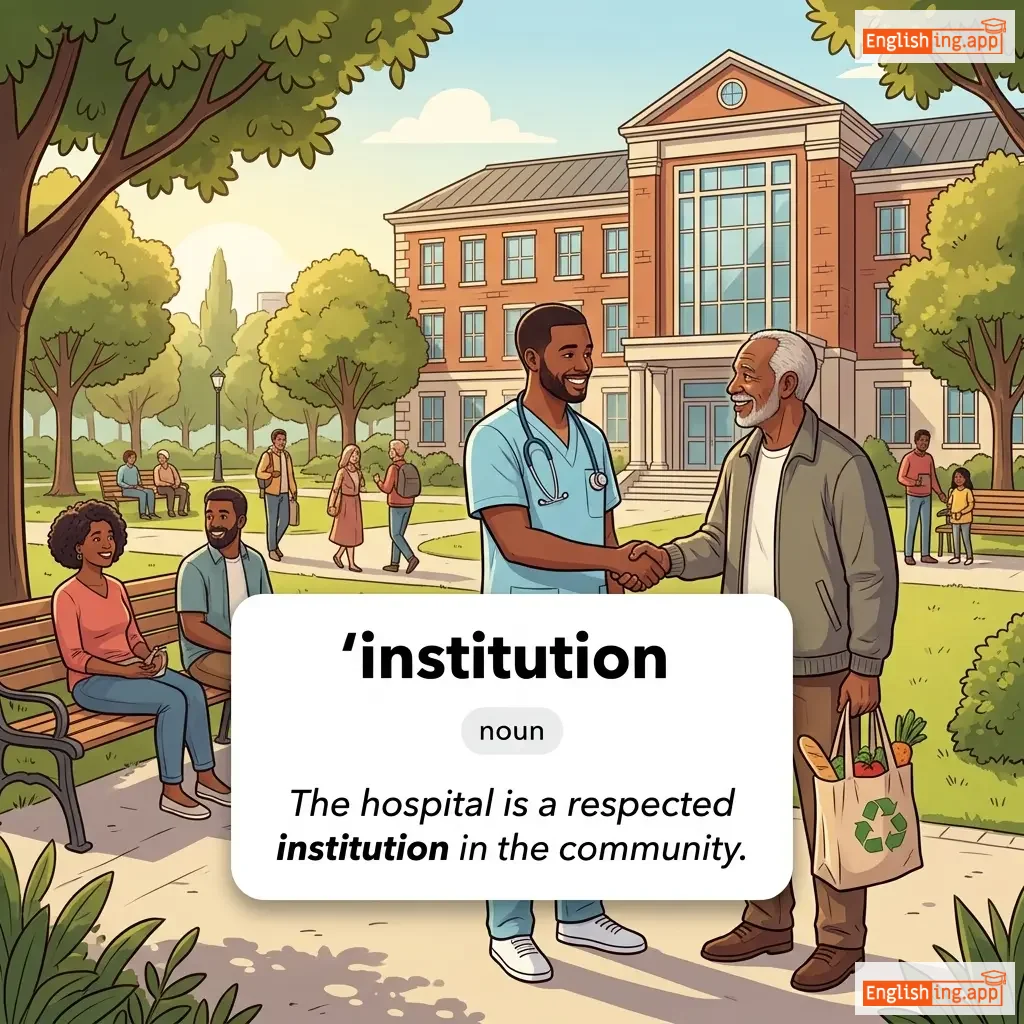
The hospital is a respected institution in the community. |
医院是社区中的一个受人尊敬的机构。
Yī yuàn shì shè qū zhōng de yī gè shòu rén zūn jìng de jī gòu.
••••••
|
an institution |
something or someone long established and respected
••••••
|
一个机构
yī gè jī gòu
••••••
|
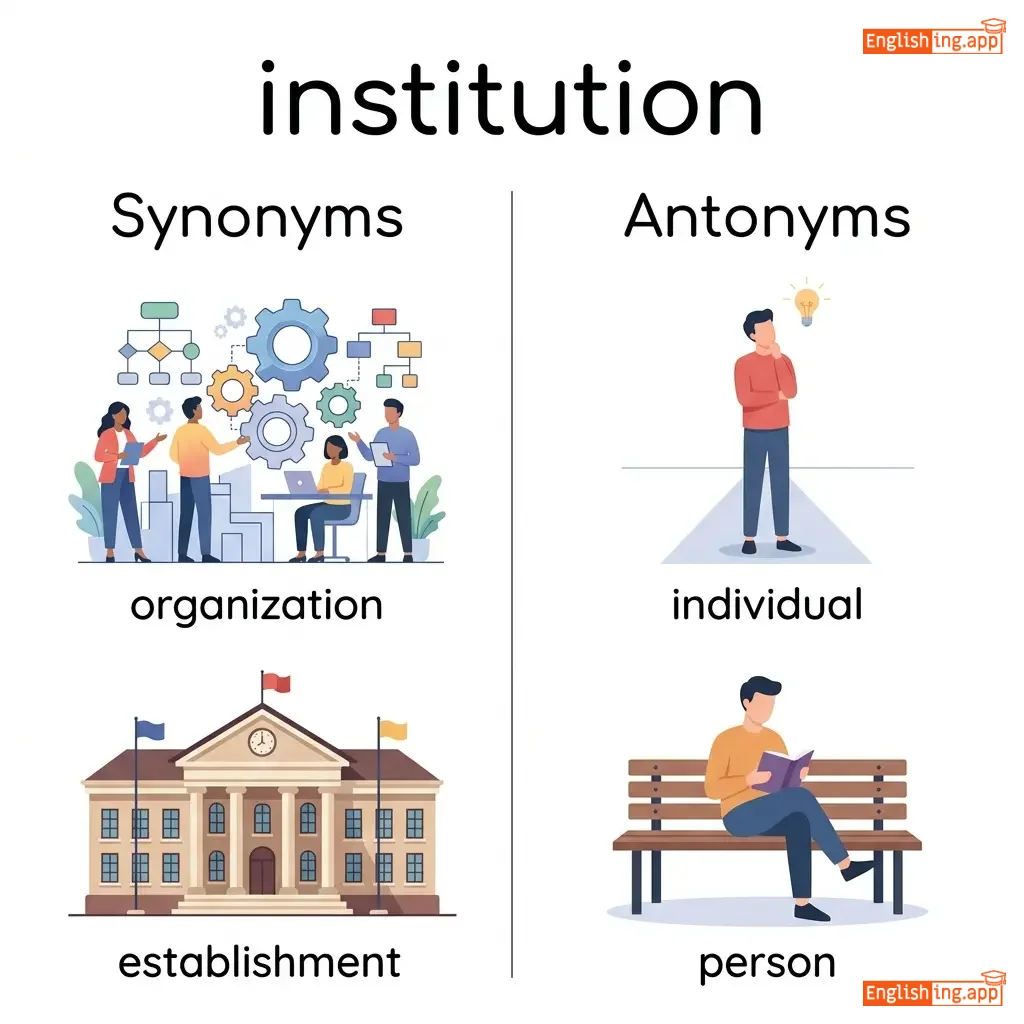
organization, establishment, foundation, facility, entity
••••••
|
individual, person
••••••
|
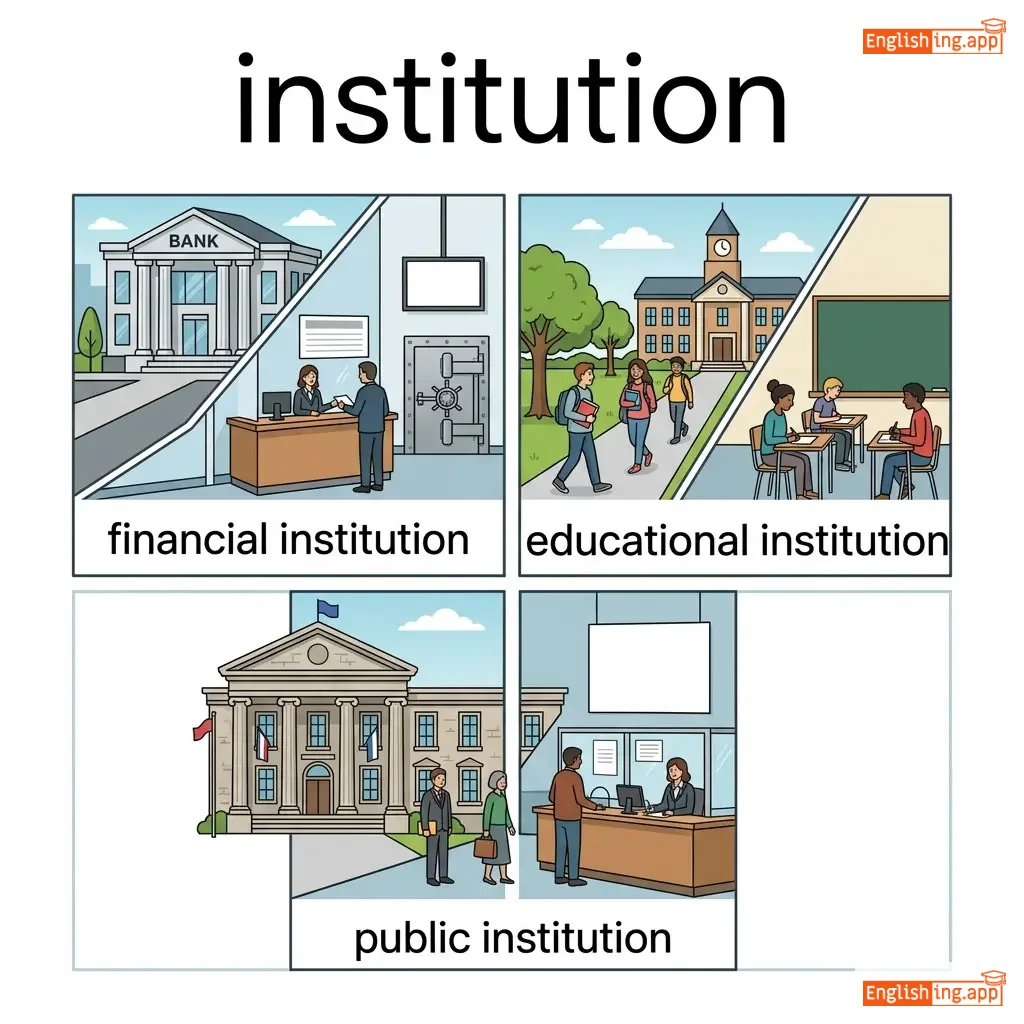
financial institution, educational institution, public institution, government institution
••••••
|
机构 = 重要的组织,如大学或医院。
••••••
|
|
#2769
🏛️
|
/ˌɪnstɪˈtjuːʃənl/
adjective
(in-sTi-tyu-sho-nal)
••••••
|
- •••••• |
制度的
zhìdù de
••••••
|
- •••••• | - •••••• | - •••••• | - •••••• |
Relating to an organization or established practice.
••••••
|
The government made several institutional reforms in education. |
政府在教育领域进行了一些制度改革。
Zhèngfǔ zài jiàoyù lǐngyù jìnxíngle yīxiē zhìdù gǎigé.
••••••
|
- •••••• | - •••••• | - •••••• |
organizational, structural, official, systemic
••••••
|
individual, personal, informal
••••••
|
institutional reform, institutional framework, institutional support, institutional structure
••••••
|
制度的意味着和制度或组织相关,因此是制度改革。
••••••
|
|
#2770
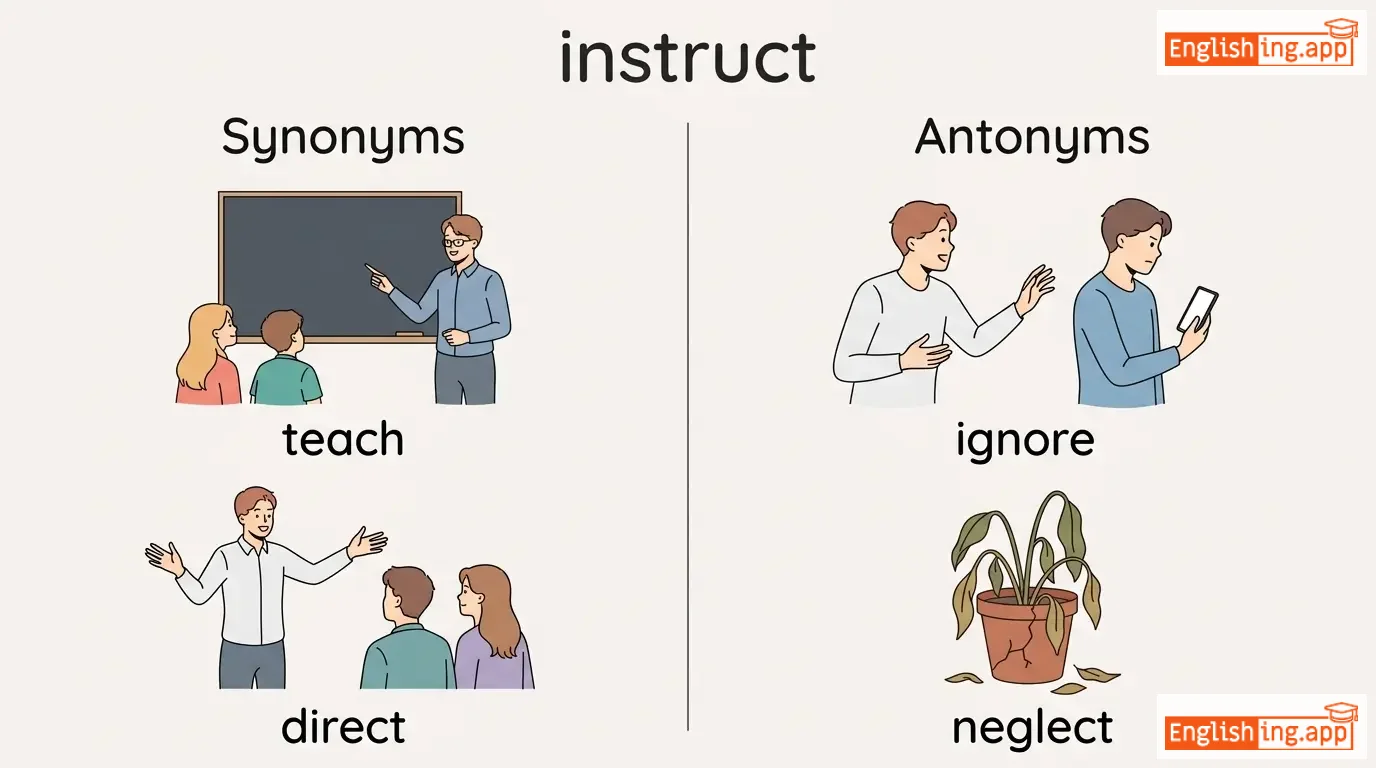
📘
|
/ɪnˈstrʌkt/
verb
(指导)
••••••
|
|
指导,教导
zhǐdǎo, jiàodǎo
••••••
|
instructed
指导了
••••••
|
instructed
指导了
••••••
|
instructs
指导
••••••
|
instructing
指导中
••••••
|
to tell or teach someone how to do something
••••••
|
The teacher instructed the students to complete the assignment.
老师指导学生完成作业。
••••••
|
老师指导学生完成作业。
Lǎoshī zhǐdǎo xuéshēng wánchéng zuòyè.
••••••
|
instruct someone to do something
指导某人做某事
••••••
|
to tell someone officially to perform an action
••••••
|
指导某人做某事
zhǐdǎo mǒu rén zuò mǒu shì
••••••
|
teach, direct, order, command, guide
••••••
|
ignore, neglect, mislead
••••••
|
instruct students, instruct employees, properly instructed, legally instructed
••••••
|
老师指导学生完成任务,像教书一样
••••••
|
|
#2771
📘
|
/ɪnˈstrʌkʃən/
noun
(指令)
••••••
|
- •••••• |
指令
zhiling
••••••
|
- •••••• | - •••••• | - •••••• | - •••••• |
Detailed information telling how something should be done or operated.
••••••
|
Please read the instruction carefully before using the machine. |
请在使用机器前仔细阅读指令。
Qing zai shiyong jiqi qian zixi yuedu zhiling.
••••••
|
follow instructions |
to do what is directed or advised
••••••
|
遵循指令
zunxun zhiling
••••••
|
direction, guideline, order, command, teaching
••••••
|
confusion, disorder, disorganization
••••••
|
give instruction, clear instruction, safety instruction, instruction manual
••••••
|
指令就是讲师说的内容,必须按指示去做。
••••••
|
|
#2772
👨🏫
|
/ɪnˈstrʌktər/
noun
(教练)
••••••
|
- •••••• |
教练
jiaolian
••••••
|
- •••••• | - •••••• | - •••••• | - •••••• |
A person who teaches a subject or skill.
••••••
|
The driving instructor was very patient with new learners. |
驾校教练对新学员非常耐心。
Jiàxiào jiàoliàn duì xīn xuéyuán fēicháng nàixīn.
••••••
|
ski instructor |
a person who teaches skiing
••••••
|
滑雪教练
huáxuě jiàoliàn
••••••
|
teacher, trainer, tutor, mentor
••••••
|
student, learner, pupil
••••••
|
driving instructor, fitness instructor, course instructor, military instructor
••••••
|
Instructor是教练,教练教你技能。
••••••
|
|
#2773
🎸
|
/ˈɪnstrəmənt/
noun
(仪器)
••••••
|
- •••••• |
仪器
yíqì
••••••
|
- •••••• | - •••••• | - •••••• | - •••••• |
A tool or device used for a particular purpose, especially for scientific or musical work.
••••••
|
The doctor used a special instrument during the surgery. |
医生在手术过程中使用了一种特殊的仪器。
Yīshēng zài shǒushù guòchéng zhōng shǐyòngle yī zhǒng tèshū de yíqì.
••••••
|
musical instrument |
a device used to produce music
••••••
|
乐器
yuèqì
••••••
|
tool, device, apparatus, implement, utensil
••••••
|
hand, body, natural object
••••••
|
scientific instrument, surgical instrument, precision instrument, musical instrument
••••••
|
仪器指的是用于演奏的乐器,像音乐器材一样。
••••••
|
|
#2774
🎻
|
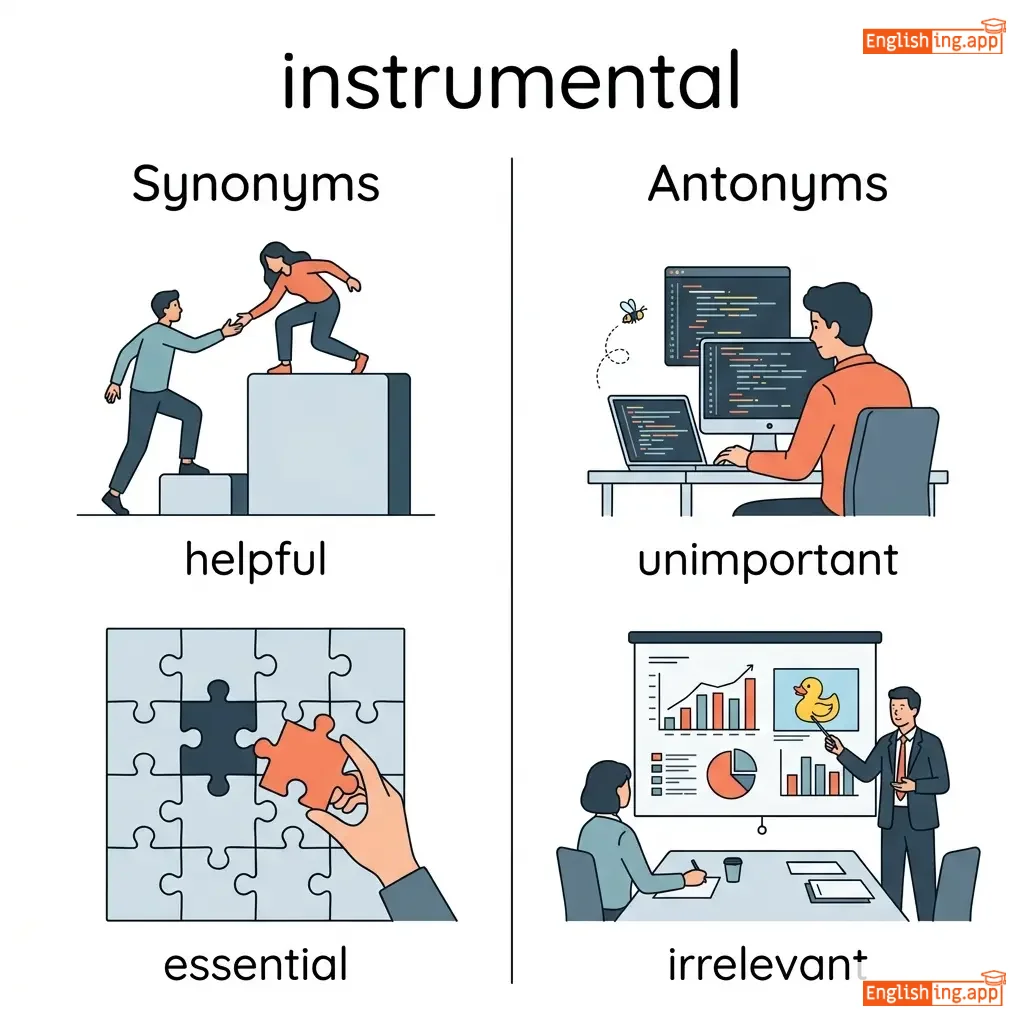
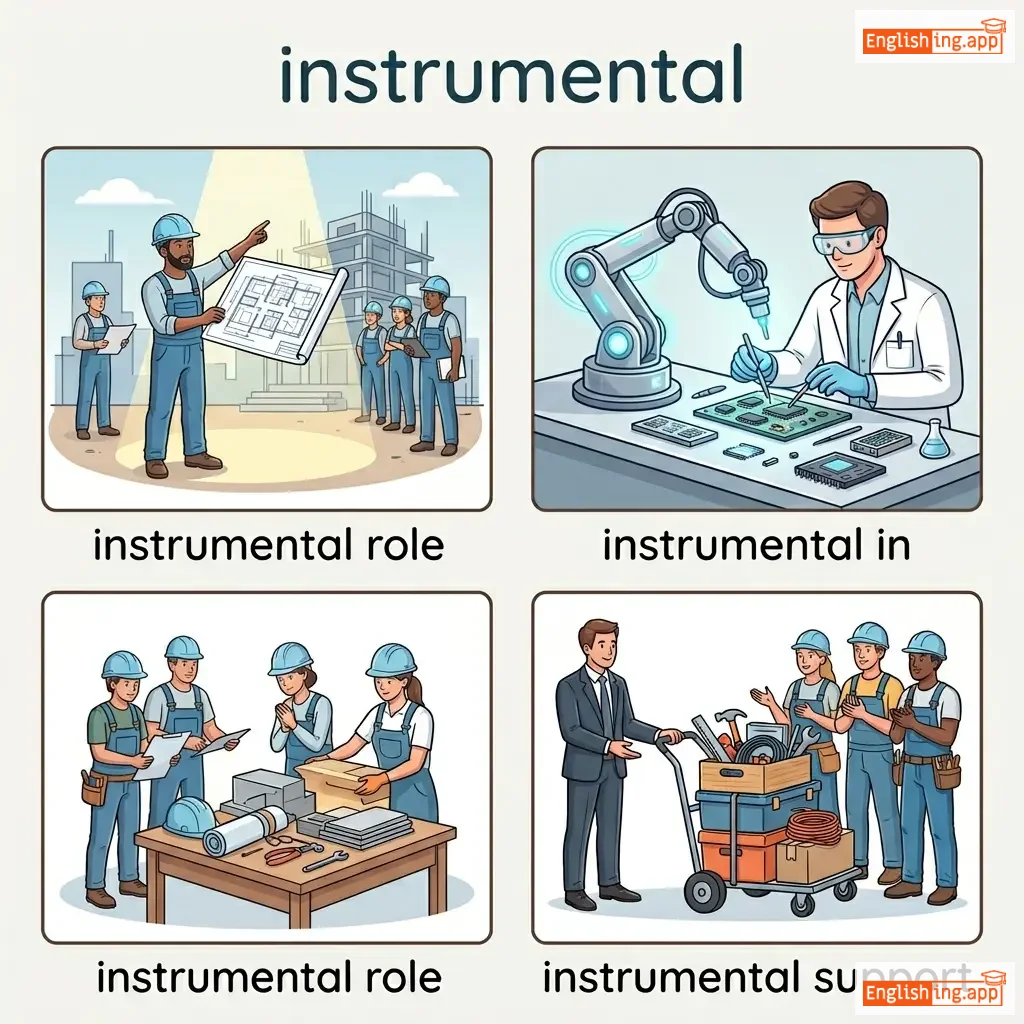
/ˌɪnstrʊˈmɛntəl/
adjective
(工具的)
••••••
|
|
工具的
gōngjù de
••••••
|
- •••••• | - •••••• | - •••••• | - •••••• |
serving as an instrument or means to an end; helpful or useful
••••••
|
His instrumental role in the project was vital to its success.
他在项目中的工具作用对成功至关重要。
••••••
|
他在项目中的工具作用对成功至关重要。
Tā zài xiàngmù zhōng de gōngjù zuòyòng duì chénggōng zhìguān zhòngyào.
••••••
|
- •••••• | - •••••• | - •••••• |
helpful, essential, critical, contributory
••••••
|
unimportant, irrelevant
••••••
|
instrumental role, instrumental in, instrumental support
••••••
|
有用的工具是实现目标的关键
••••••
|
|
#2775
⚠️
|
/ˌɪnsəˈfɪʃənsi/
noun
(不足)
••••••
|
- •••••• |
不足
buzu
••••••
|
- •••••• | - •••••• | - •••••• | - •••••• |
The state of not being enough or not being adequate.
••••••
|
The project failed due to the insufficiency of funds. |
由于资金不足,项目失败了。
youyu zijin buzhu, xiangmu shibai le.
••••••
|
- •••••• | - •••••• | - •••••• |
deficiency, inadequacy, shortage, lack, scarcity
••••••
|
abundance, sufficiency, adequacy
••••••
|
insufficiency of funds, cardiac insufficiency, renal insufficiency, insufficiency in resources
••••••
|
不足就像没有足够的资金。
••••••
|
|
#2776
❌
|
/ˌɪnsəˈfɪʃənt/
adjective
(因斯菲逊特)
••••••
|
- •••••• |
不足的
buzude
••••••
|
- •••••• | - •••••• | - •••••• | - •••••• |
Not enough; inadequate.
••••••
|
His explanation was insufficient to clear the confusion. |
他的解释不足以清除混乱。
Tade jieshi buzude qingchu hunluan.
••••••
|
- •••••• | - •••••• | - •••••• |
inadequate, deficient, meager, scarce, poor
••••••
|
sufficient, adequate, plentiful
••••••
|
insufficient funds, insufficient evidence, insufficient resources
••••••
|
Insufficient 的意思是 'in' + 'sufficient' = 不足的。
••••••
|
|
#2777
😡
|
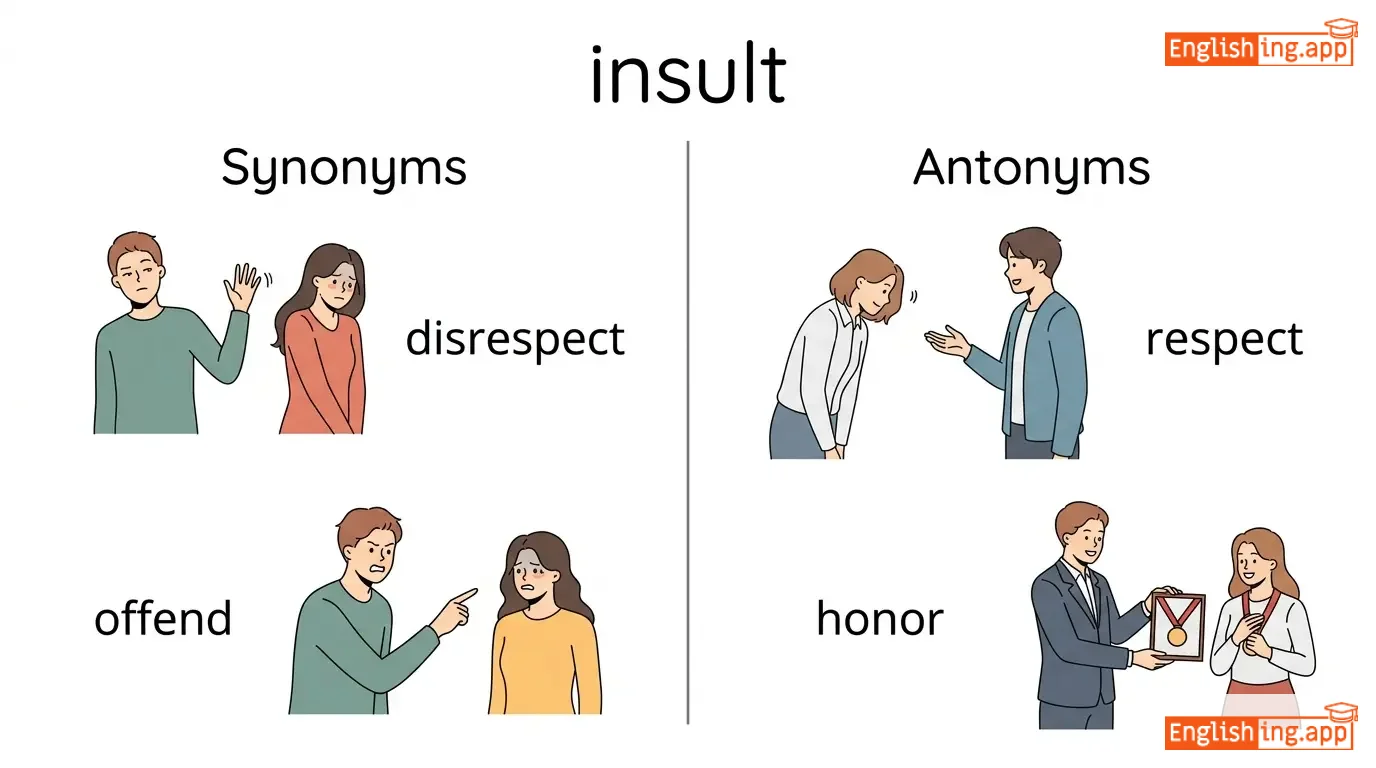
/ˈɪnsʌlt/
verb
(侮辱)
••••••
|
|
侮辱
wǔrǔ
••••••
|
insulted
侮辱了
••••••
|
insulted
侮辱了
••••••
|
insults
侮辱
••••••
|
insulting
侮辱中
••••••
|
to speak to or treat someone with disrespect or scorn
••••••
|
He insulted her by calling her lazy in front of everyone.
他通过在大家面前叫她懒惰来侮辱她。
••••••
|
他通过在大家面前叫她懒惰来侮辱她。
Tā tōngguò zài dàjiā miànqián jiào tā lǎnduò lái wǔrǔ tā.
••••••
|
add insult to injury
加重侮辱
••••••
|
to make a bad situation worse by adding further harm or disrespect
••••••
|
加重侮辱
Jiāzhòng wǔrǔ
••••••
|
disrespect, offend, belittle, demean
••••••
|
respect, honor
••••••
|
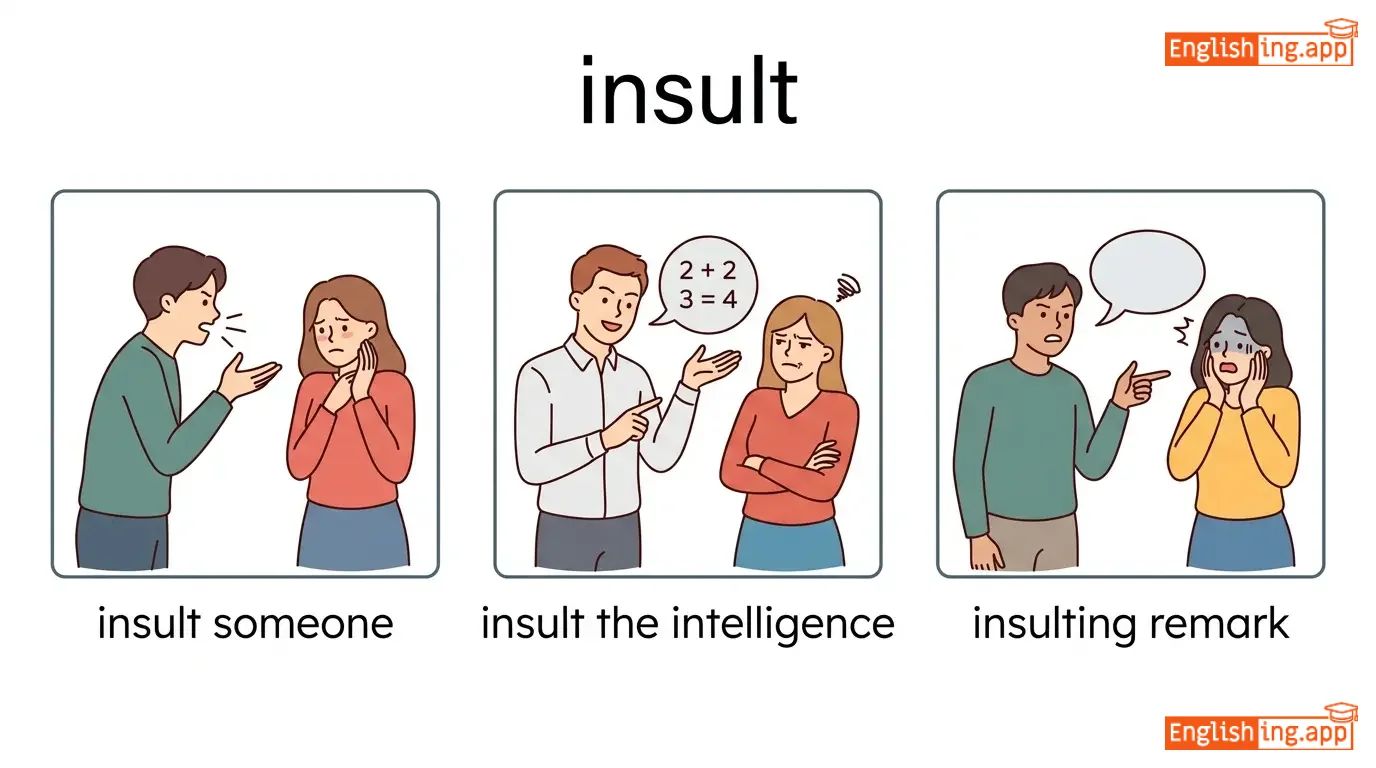
insult someone, insult the intelligence, insulting remark
••••••
|
侮辱,就像在伤口上撒盐
••••••
|
|
#2778
🛡️
|
/ɪnˈʃʊərəns/
noun
(ɪnˈʃʊərɛns)
••••••
|
- •••••• |
保险
baoxian
••••••
|
- •••••• | - •••••• | - •••••• | - •••••• |
An arrangement by which a company provides compensation for loss, damage, or illness in return for a premium.
••••••
|
He bought health insurance to cover medical expenses. |
他购买了健康保险以支付医疗费用。
Tā gòumǎi le jiànkāng bǎoxiǎn yǐ zhīfù yīliáo fèiyòng.
••••••
|
life insurance |
insurance that pays out on the death of the insured person
••••••
|
人寿保险
rénshòu bǎoxiǎn
••••••
|
coverage, protection, assurance, indemnity
••••••
|
risk, uncertainty, danger
••••••
|
health insurance, car insurance, insurance policy, buy insurance
••••••
|
保险=为未来不确定性提供保障
••••••
|
|
#2779
🧱
|
/ɪnˈtækt/
adjective
(完整)
••••••
|
- •••••• |
完整
wánzhěng
••••••
|
- •••••• | - •••••• | - •••••• | - •••••• |
Remaining whole, complete, and undamaged.
••••••
|
Despite the storm, the old house remained intact. |
尽管风暴,老房子依然保持完整。
Jǐnguǎn fēngbào, lǎo fángzi yīrán bǎochí wánzhěng.
••••••
|
- •••••• | - •••••• | - •••••• |
undamaged, whole, unbroken, unharmed, complete
••••••
|
damaged, broken, ruined
••••••
|
remain intact, kept intact, survive intact, preserve intact
••••••
|
IN 不破损,intact意味着完整无损。
••••••
|
|
#2780
🍽️
|
/ˈɪnˌteɪk/
noun
(因特克)
••••••
|
- •••••• |
摄入
she ru
••••••
|
- •••••• | - •••••• | - •••••• | - •••••• |
the process of taking something in, especially food or drink
••••••
|
He monitored his daily intake of calories to maintain a healthy diet. |
他监控着自己每天的卡路里摄入量,以保持健康的饮食。
Ta jiankong zhe ziji mei tian de kaluli she ru liang, yi baochi jiankang de yin shi.
••••••
|
- •••••• | - •••••• | - •••••• |
consumption, absorption, intake amount
••••••
|
output, expulsion
••••••
|
calorie intake, food intake, daily intake
••••••
|
摄入意味着拿进一些东西,比如食物或饮料。
••••••
|
|
#2781
🧩
|
/ˈɪntɪɡrəl/ or /ɪnˈtɛɡrəl/
adjective
(积分)
••••••
|
|
不可分割
bù kě fēn gē
••••••
|
- •••••• | - •••••• | - •••••• | - •••••• |
Necessary and important as a part of a whole.
••••••
|
Honesty is an integral part of good leadership.
诚实是良好领导力的一个重要组成部分。
••••••
|
诚实是良好领导力的一个重要组成部分。
Chéngshí shì liánghǎo lǐngdǎolì de yīgè zhòngyào zǔchéng bùfen.
••••••
|
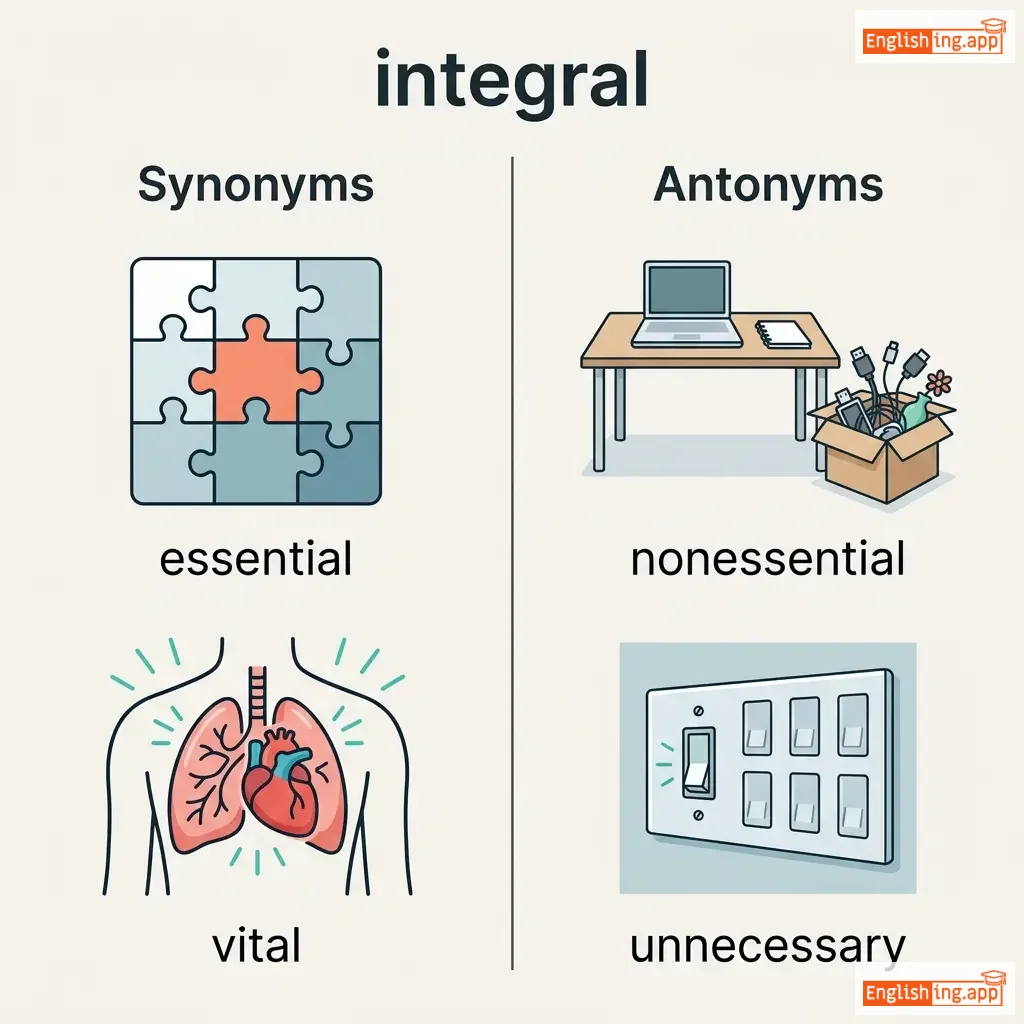
- •••••• | - •••••• | - •••••• |
essential, vital, fundamental, crucial, indispensable
••••••
|
nonessential, unnecessary, extraneous
••••••
|
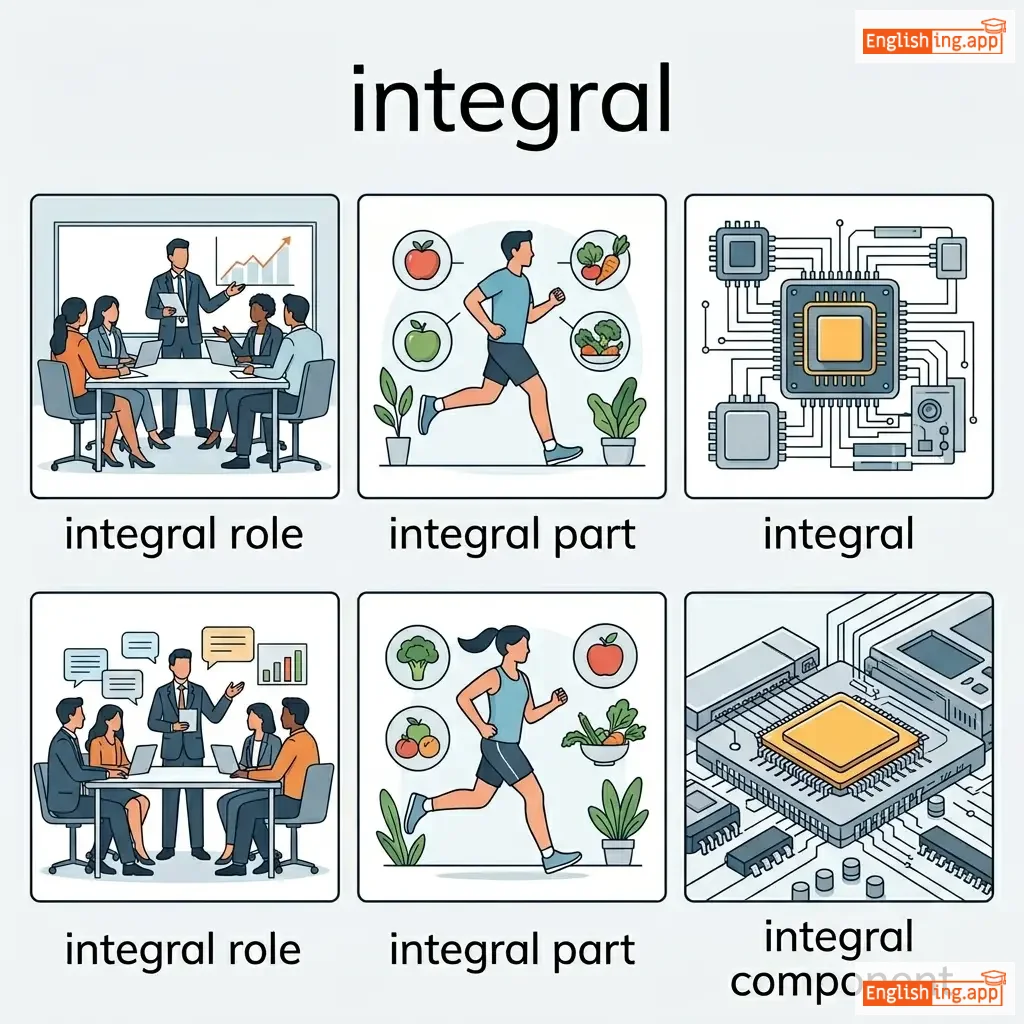
integral role, integral part, integral component, integral element
••••••
|
Integral → 不可分割的一部分
••••••
|
|
#2782
🔗
|
/ˈɪntɪɡreɪt/
verb
(ɪntɪɡreɪt)
••••••
|
- •••••• |
整合
zhěnghé
••••••
|
integrated
ɪntɪɡreɪtɪd
••••••
|
integrated
ɪntɪɡreɪtɪd
••••••
|
integrates
ɪntɪɡreɪts
••••••
|
integrating
ɪntɪɡreɪtɪŋ
••••••
|
To combine or bring together into a unified whole.
••••••
|
The new system integrates data from multiple sources.
新系统整合来自多个来源的数据。
••••••
|
新系统整合来自多个来源的数据。
Xīn xìtǒng zhěnghé láizì duō gè láiyuán de shùjù.
••••••
|
integrate into society
融入社会
••••••
|
To become part of a community or culture
••••••
|
融入社会
róngrù shèhuì
••••••
|
combine, merge, unify, assimilate, incorporate
••••••
|
separate, divide, segregate
••••••
|
integrate technology, integrate system, integrate into, integrate fully
••••••
|
整合 = into + great → 将所有事物整合起来成为伟大
••••••
|
|
#2783
🔗
|
/ˈɪntɪɡreɪtɪd/
adjective
(ɪnˈtɛɡreɪtɪd)
••••••
|
|
集成的
jíchéng de
••••••
|
- •••••• | - •••••• | - •••••• | - •••••• |
combined or united to form a whole; including all parts or people equally
••••••
|
The company offers an integrated system for managing all business operations. |
公司提供一个集成系统来管理所有业务操作。
Gōngsī tígōng yīgè jíchéng xìtǒng lái guǎnlǐ suǒyǒu yèwù cāozuò.
••••••
|
- •••••• | - •••••• | - •••••• |
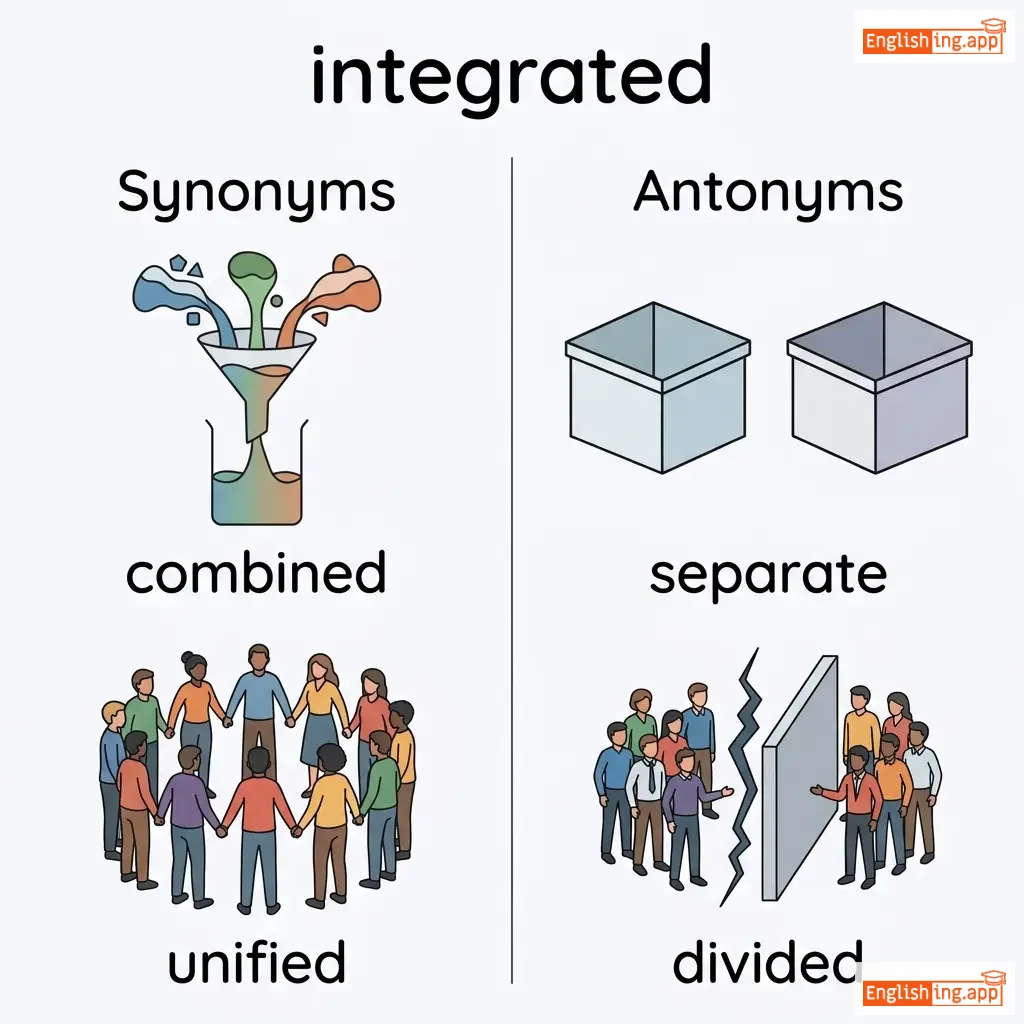
combined, unified, merged, cohesive, connected
••••••
|
separate, divided, isolated
••••••
|
integrated system, integrated approach, integrated solution, fully integrated
••••••
|
集成的意味着将一切组合在一起,形成一个完整的系统。
••••••
|
|
#2784
🧩
|
/ˌɪntɪˈɡreɪʃən/
noun
(yīntèɡrèɪshən)
••••••
|
|
整合
zhěnghé
••••••
|
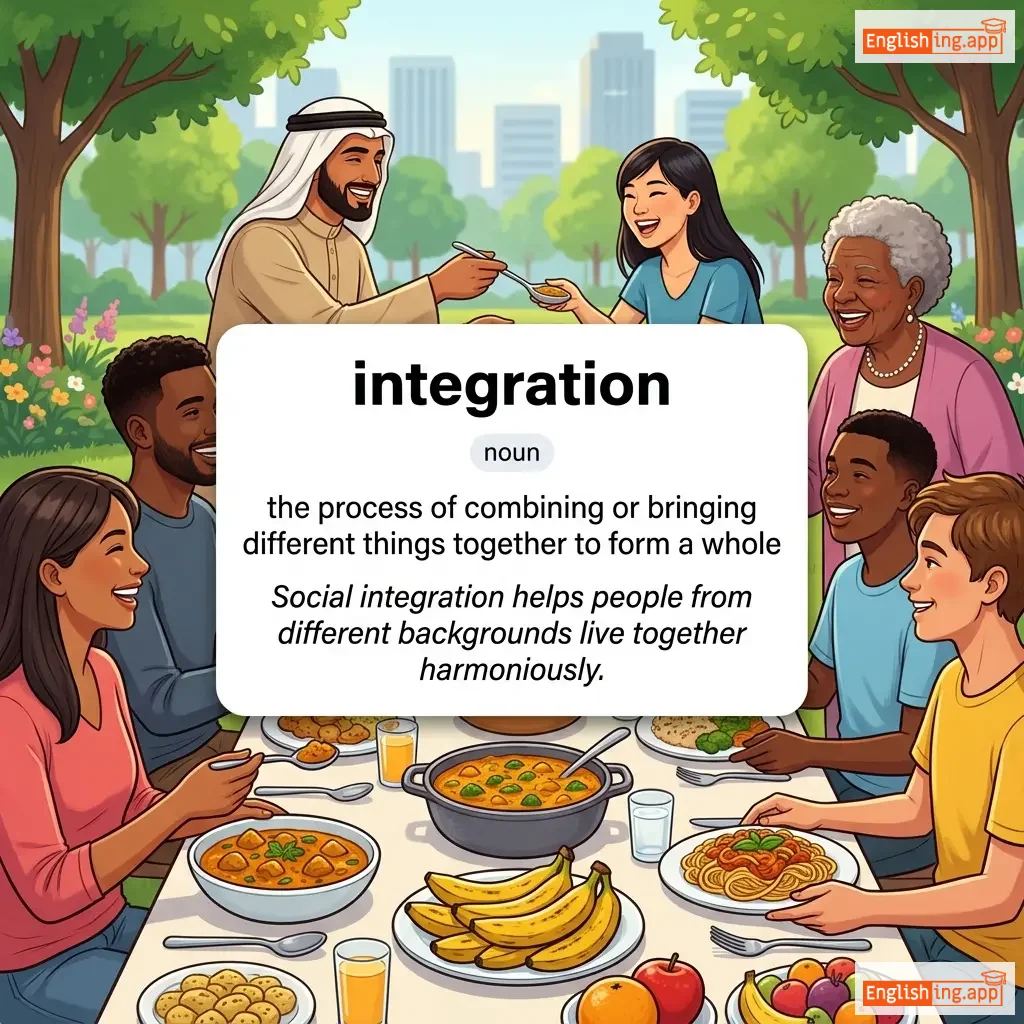
- •••••• | - •••••• | - •••••• | - •••••• |
the process of combining or bringing different things together to form a whole
••••••
|
Social integration helps people from different backgrounds live together harmoniously. |
社会整合帮助来自不同背景的人和谐相处。
Shèhuì zhěnghé bāngzhù láizì bùtóng bèijǐng de rén héxié xiāngchǔ.
••••••
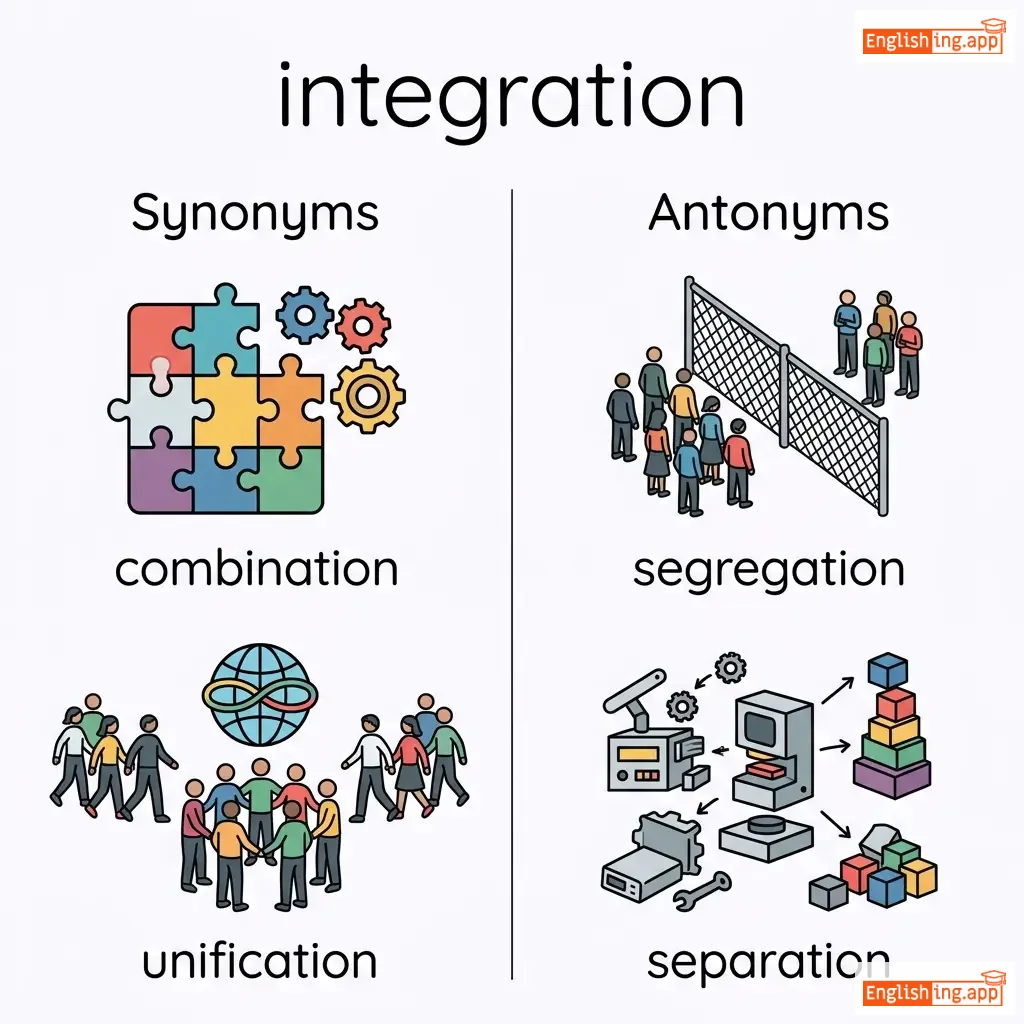
|
- •••••• | - •••••• | - •••••• |
combination, unification, merging, inclusion, assimilation
••••••
|
segregation, separation
••••••
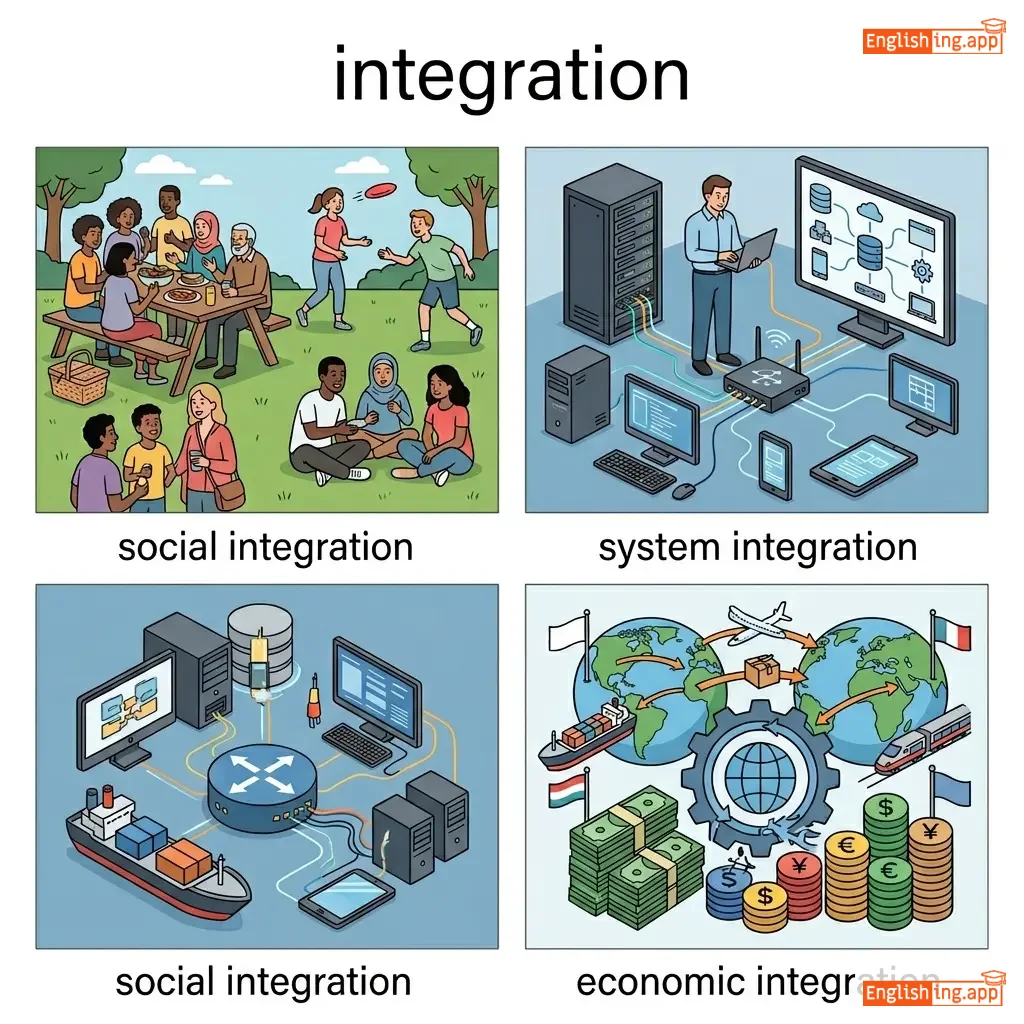
|
social integration, system integration, economic integration, cultural integration
••••••
|
整合意味着把一切结合成一个整体 – 让所有东西成为一个完整的部分!
••••••
|
|
#2785
🕊️
|
/ɪnˈtɛɡrɪti/
noun
(ɪnˈtɛɡrɪti)
••••••
|
|
诚信
chéngxìn
••••••
|
- •••••• | - •••••• | - •••••• | - •••••• |
The quality of being honest and having strong moral principles.
••••••
|
She is admired for her honesty and integrity. |
她因诚实和正直而受到钦佩。
Tā yīn chéngshí hé zhèngzhí ér shòudào qīnpèi.
••••••
|
professional integrity |
Adherence to ethical standards in professional life
••••••
|
职业诚信
zhíyè chéngxìn
••••••
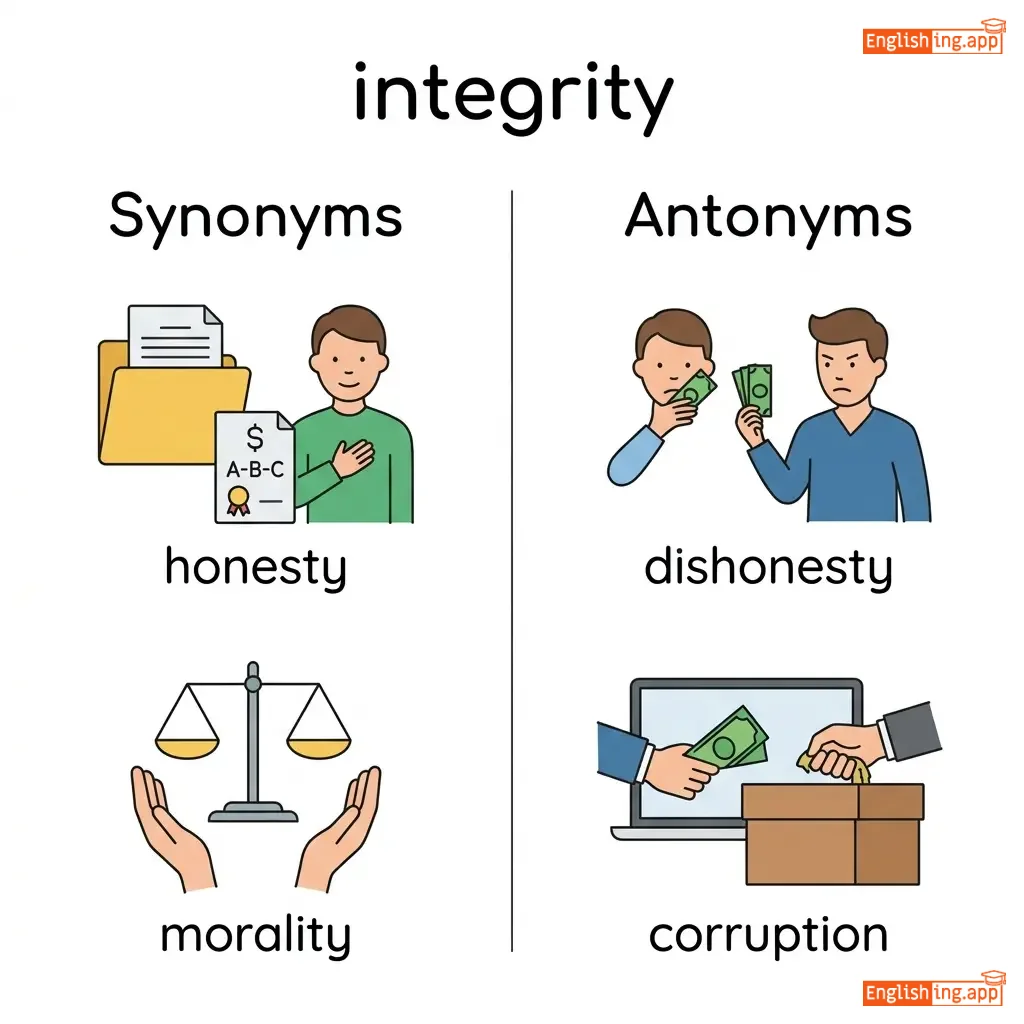
|
honesty, morality, righteousness, uprightness, virtue
••••••
|
dishonesty, corruption, deceit
••••••
|
personal integrity, professional integrity, maintain integrity, integrity of data
••••••
|
Integrity = in + great → great里面有诚信
••••••
|
|
#2786
📚
|
/ˌɪn.təlˈɛk.tʃu.əl/
adjective, noun
(智力的)
••••••
|
- •••••• |
智力的
zhìlì de
••••••
|
- •••••• | - •••••• | - •••••• | - •••••• |
Relating to the intellect; a person who engages in critical thinking and study.
••••••
|
She enjoys intellectual discussions about philosophy. |
她喜欢关于哲学的智力讨论。
Tā xǐhuān guānyú zhéxué de zhìlì tǎolùn.
••••••
|
intellectual curiosity |
a strong desire to learn and understand new things
••••••
|
智力好奇心
zhìlì hàoqíxīn
••••••
|
academic, scholarly, thinker, brainy
••••••
|
ignorant, uneducated
••••••
|
intellectual debate, intellectual growth, intellectual pursuit, intellectual class
••••••
|
智力的 = 智能 + 实际,意味着将智力付诸实践。
••••••
|
|
#2787
🤖
|
/ɪnˈtɛl.ɪ.dʒəns/
noun
(智能)
••••••
|
|
智能
zhì néng
••••••
|
- •••••• | - •••••• | - •••••• | - •••••• |
The ability to acquire and apply knowledge and skills.
••••••
|
Artificial intelligence is transforming industries worldwide. |
人工智能正在全球范围内改变行业。
rén gōng zhì néng zhèng zài quán qiú fàn wéi nèi gǎi biàn háng yè.
••••••
|
emotional intelligence |
the ability to understand and manage one's own emotions and those of others
••••••
|
情感智能
qíng gǎn zhì néng
••••••
|
brainpower, intellect, reasoning, understanding
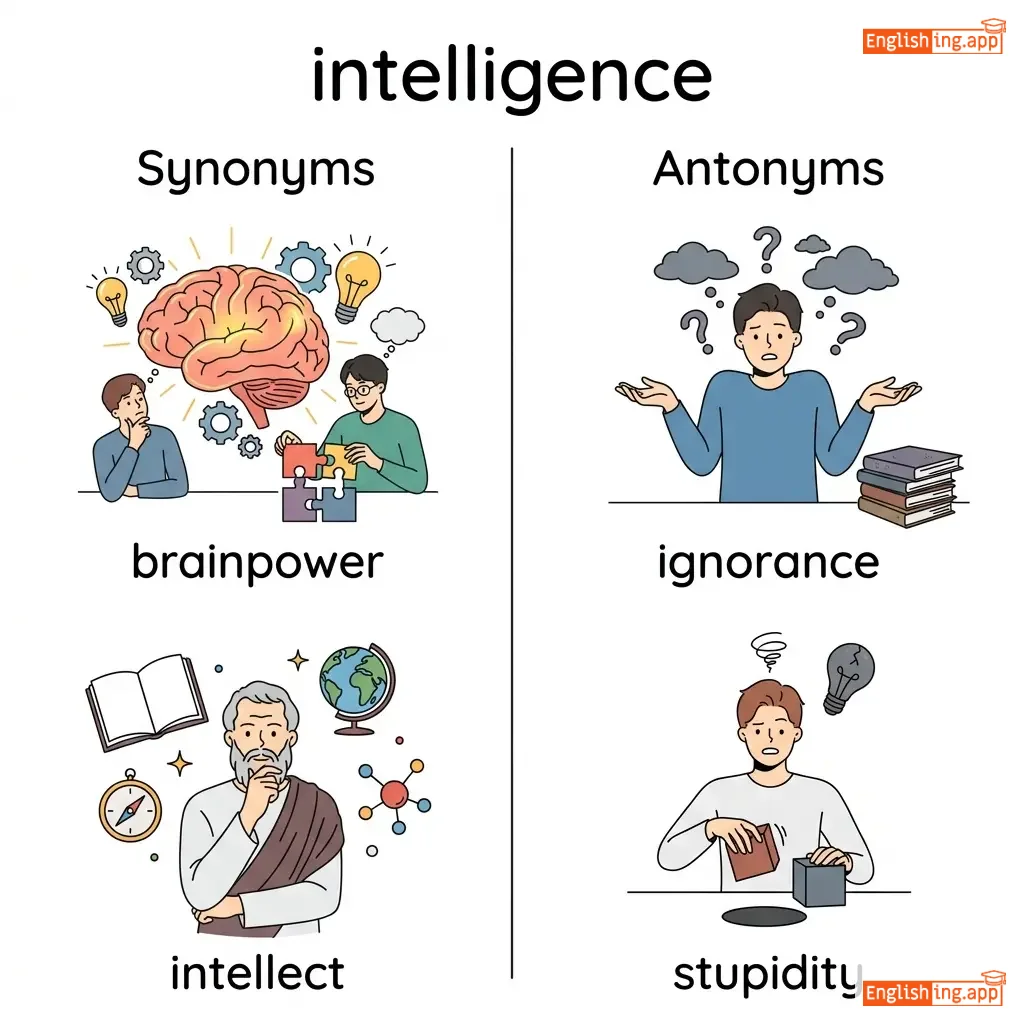
••••••
|
ignorance, stupidity
••••••
|
artificial intelligence, intelligence agency, military intelligence, human intelligence
••••••
|
AI = 人工智能,意味着机器中的智能!
••••••
|
|
#2788
🧠
|
/ɪnˈtɛlɪdʒənt/
adjective
(英特尔)
••••••
|
- •••••• |
聪明的
cōngmíng de
••••••
|
- •••••• | - •••••• | - •••••• | - •••••• |
Having or showing high mental capacity, quick to learn and understand.
••••••
|
She is one of the most intelligent students in the class.
她是班上最聪明的学生之一。
••••••
|
她是班上最聪明的学生之一。
Tā shì bān shàng zuì cōngmíng de xuéshēng zhī yī.
••••••
|
intelligent guess
聪明的猜测
••••••
|
A well-informed or reasonable guess based on available knowledge.
••••••
|
聪明的猜测
cōngmíng de cāicè
••••••
|
clever, smart, bright, brainy, knowledgeable
••••••
|
stupid, dull, ignorant
••••••
|
intelligent design, intelligent choice, highly intelligent, intelligent system
••••••
|
Intel也是智能的,就像这个词的意思。
••••••
|
|
#2789
🎯
|
/ɪnˈtɛnd/
verb
(因坦德)
••••••
|
|
打算
dǎsuàn
••••••
|
intended
因坦德德
••••••
|
intended
因坦德德
••••••
|
intends
因坦德斯
••••••
|
intending
因坦丁
••••••
|
To have a plan or purpose in mind; to aim to do something.
••••••
|
I intend to finish my work before dinner.
我打算在晚餐前完成我的工作。
••••••
|
我打算在晚餐前完成我的工作。
Wǒ dǎsuàn zài wǎncān qián wánchéng wǒ de gōngzuò.
••••••
|
well-intended
善意的
••••••
|
done with good intentions
••••••
|
善意的
shàn yì de
••••••
|
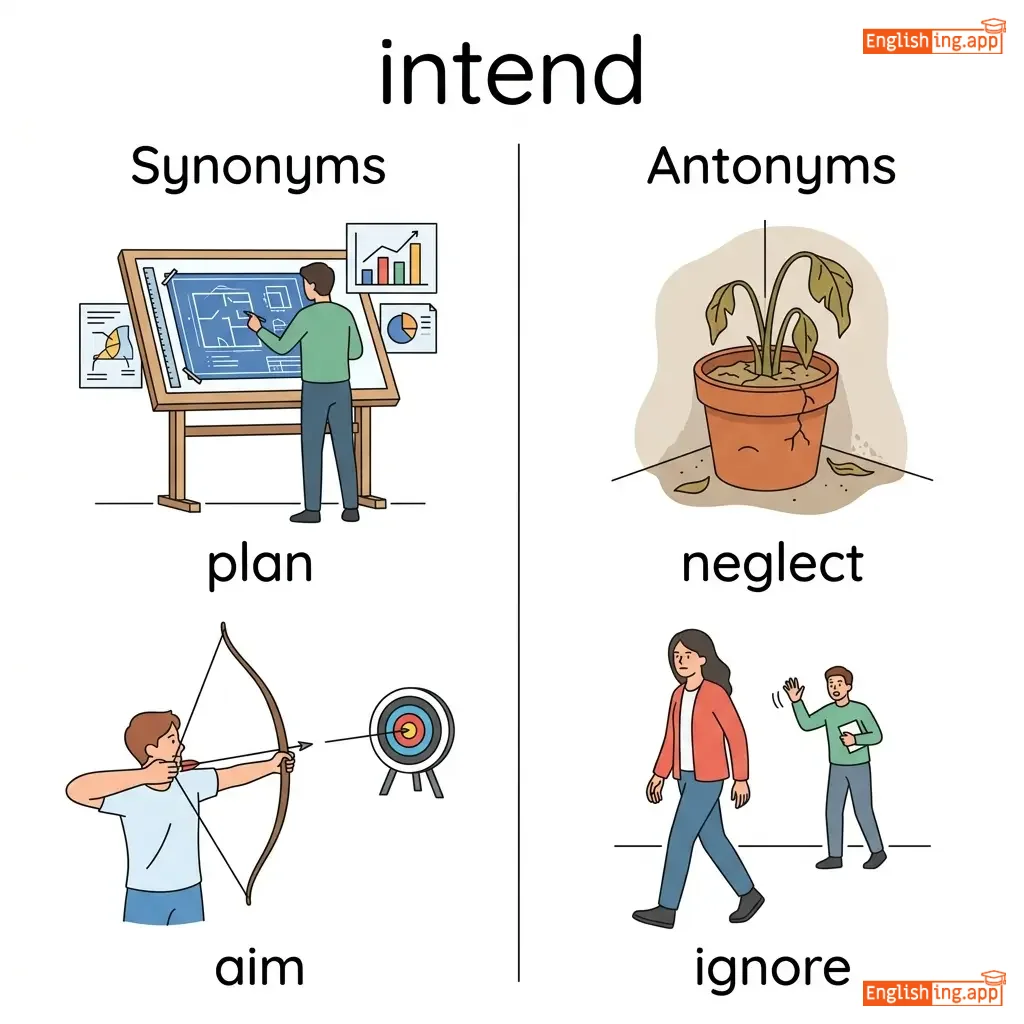
plan, aim, mean, propose, design
••••••
|
neglect, ignore, abandon
••••••
|
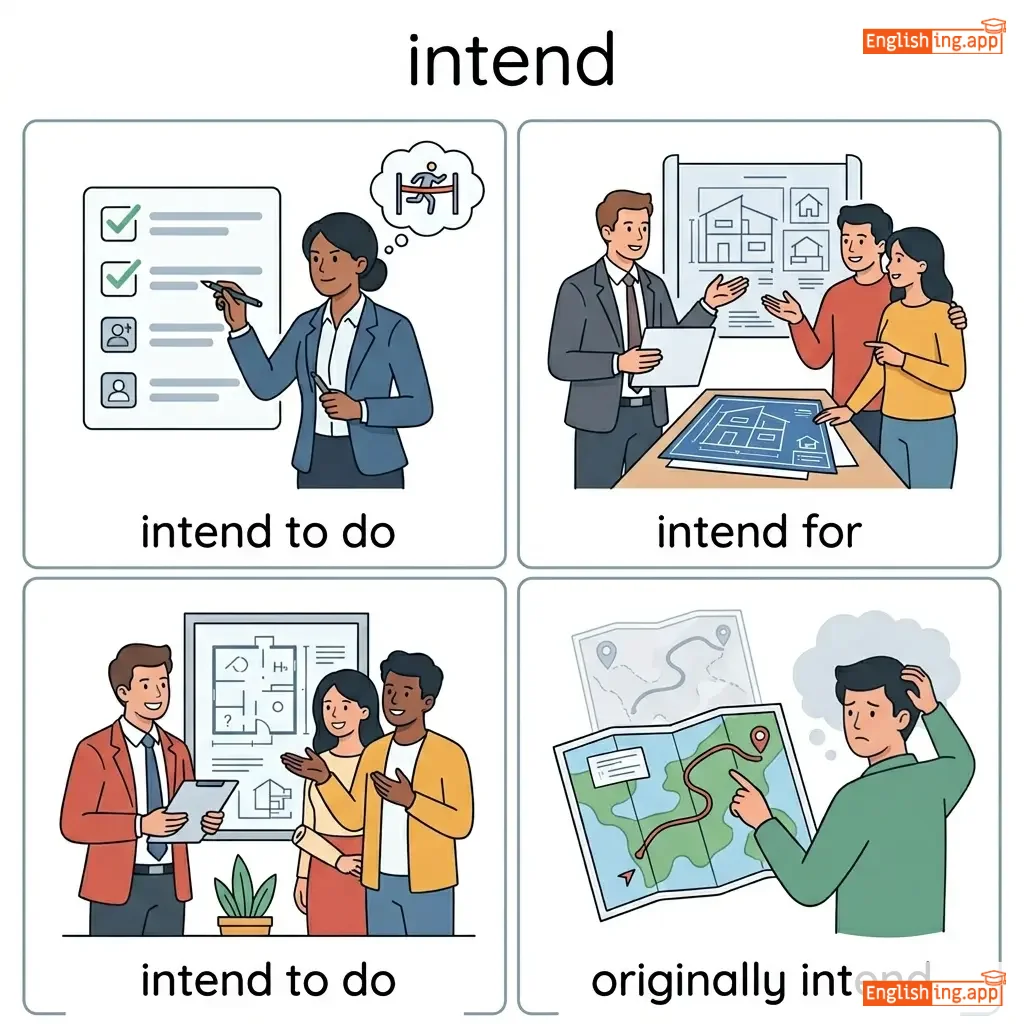
intend to do, intend for, originally intend, seriously intend
••••••
|
Intend 就是打算做事情,带着明确的目的。
••••••
|
|
#2790
🔥
|
/ɪnˈtɛns/
adjective
(印特斯)
••••••
|
- •••••• |
强烈
qianglie
••••••
|
- •••••• | - •••••• | - •••••• | - •••••• |
Of extreme force, degree, or strength.
••••••
|
She felt intense pain after the accident. |
她在事故后感到剧烈的疼痛。
Tā zài shìgù hòu gǎndào jùliè de téngtòng.
••••••
|
intense pressure |
a very high level of stress or demand
••••••
|
强烈压力
qianglie yali
••••••
|
extreme, severe, powerful, strong, fierce
••••••
|
mild, weak, gentle
••••••
|
intense pain, intense heat, intense pressure, intense competition
••••••
|
强烈的像强烈的热度 – 非常强大的东西。
••••••
|
|
#2791
⚡
|
/ɪnˈtɛnsɪfaɪ/
verb
(因特恩西法伊)
••••••
|
- •••••• |
加强
jiāqiáng
••••••
|
intensified
因特恩西法德
••••••
|
intensified
因特恩西法德
••••••
|
intensifies
因特恩西法伊斯
••••••
|
intensifying
因特恩西法英
••••••
|
To make something stronger, more extreme, or more forceful.
••••••
|
The storm is expected to intensify overnight.
预计风暴将在一夜之间加剧。
••••••
|
预计风暴将在一夜之间加剧。
yùjì fēngbào jiāng zài yīyè zhījiān jiājù.
••••••
|
intensify efforts
加大努力
••••••
|
to increase the level of effort put into something
••••••
|
加大努力
jiādà nǔlì
••••••
|
strengthen, escalate, heighten, amplify, reinforce
••••••
|
weaken, diminish, lessen
••••••
|
intensify efforts, intensify conflict, intensify pressure, intensify competition
••••••
|
Intensify 意味着增加强度 — 风暴、工作、努力都变得更强烈。
••••••
|
|
#2792
🔥
|
/ɪnˈtɛnsəti/
noun
(强度)
••••••
|
- •••••• |
强度
qiangdu
••••••
|
- •••••• | - •••••• | - •••••• | - •••••• |
The quality of being extreme, strong, or forceful in degree.
••••••
|
The intensity of the storm frightened the villagers. |
风暴的强度吓坏了村民。
Fengbao de qiangdu xiahuai le cunmin.
••••••
|
high intensity |
something done with a great level of force, effort, or energy
••••••
|
高强度
gao qiangdu
••••••
|
strength, force, power, severity, energy
••••••
|
weakness, mildness, softness
••••••
|
high intensity, emotional intensity, intensity of light, intensity level
••••••
|
强度意味着投入所有能量,就像一场风暴。
••••••
|
|
#2793
🎯
|
/ɪnˈtɛnt/
noun
(ɪnˈtɛnt)
••••••
|
- •••••• |
意图
yìtú
••••••
|
- •••••• | - •••••• | - •••••• | - •••••• |
the purpose or reason behind an action; a strong determination to do something
••••••
|
Her intent was to improve the quality of education in the community. |
她的意图是提高社区的教育质量。
Tā de yìtú shì tígāo shèqū de jiàoyù zhìliàng.
••••••
|
good intent |
having honest or positive motivation behind an action
••••••
|
良好的意图
liánghǎo de yìtú
••••••
|
purpose, aim, goal, objective, determination
••••••
|
indifference, neglect
••••••
|
criminal intent, clear intent, good intent, intent to harm
••••••
|
Intent = ‘in tent’ — 就像帐篷里隐藏着某物,意图也隐藏在心中。
••••••
|
|
#2794
🎯
|
/ɪnˈtɛnʃən/
noun
(意图)
••••••
|
- •••••• |
意图
yìtú
••••••
|
- •••••• | - •••••• | - •••••• | - •••••• |
A plan, aim, or purpose behind an action.
••••••
|
Her intention was to finish the project before the deadline. |
她的意图是在截止日期之前完成项目。
Tā de yìtú shì zài jiézhǐ rìqī zhīqián wánchéng xiàngmù.
••••••
|
good intentions |
plans or aims meant to be positive even if not successful
••••••
|
善意的意图
shàn yì de yìtú
••••••
|
aim, plan, purpose, goal, objective
••••••
|
accident, chance
••••••
|
clear intention, good intention, honest intention
••••••
|
意图是你行动背后的计划或目标。
••••••
|
|
#2795
🤝
|
/ˌɪntərˈækt/
verb
(因特拉克特)
••••••
|
|
互动
hudong
••••••
|
interacted
因特拉克特德
••••••
|
interacted
因特拉克特德
••••••
|
interacts
因特拉克特斯
••••••
|
interacting
因特拉克特英
••••••
|
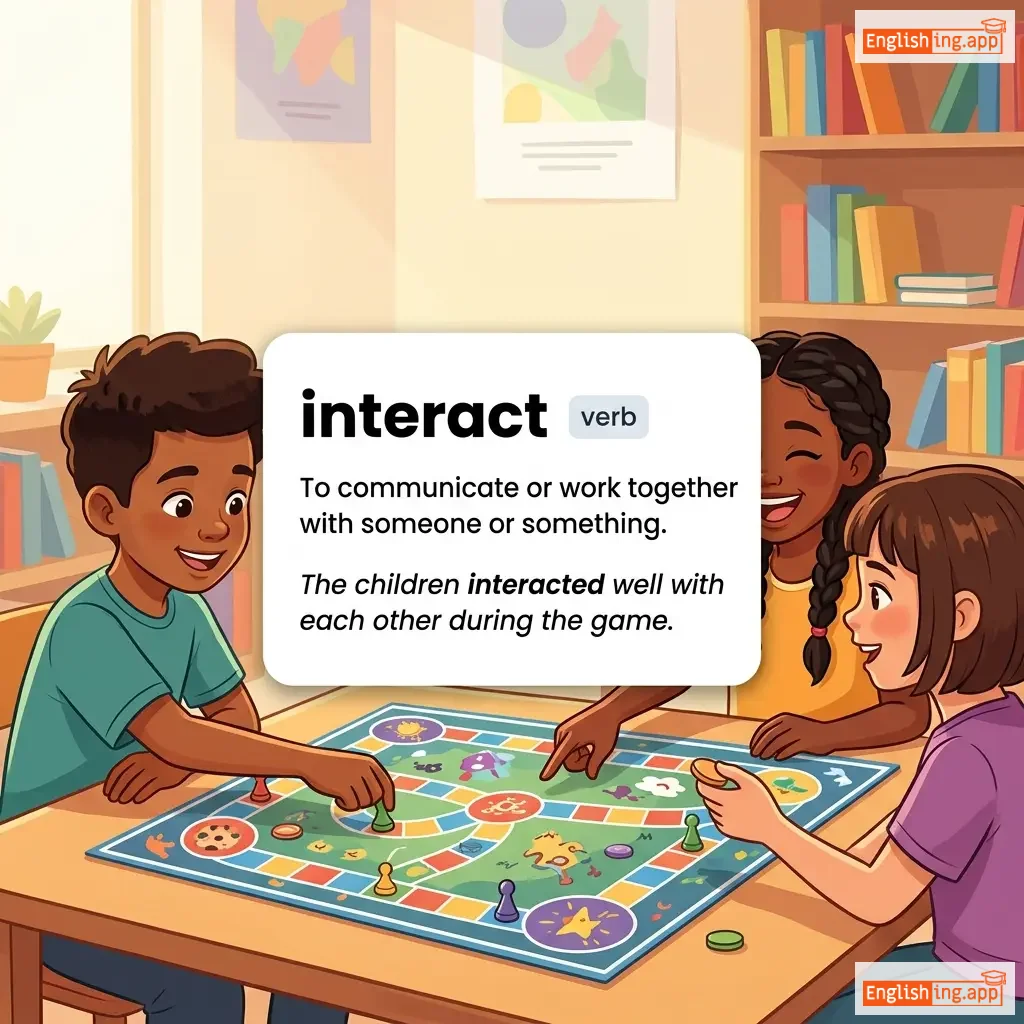
To communicate or work together with someone or something.
••••••
|
The children interacted well with each other during the game.
孩子们在游戏中很好地互动。
••••••
|
孩子们在游戏中很好地互动。
Háizimen zài yóuxì zhōng hěn hǎo de hudong.
••••••
|
interact with
互动
••••••
|
to communicate or engage with someone or something
••••••
|
互动
hudong
••••••
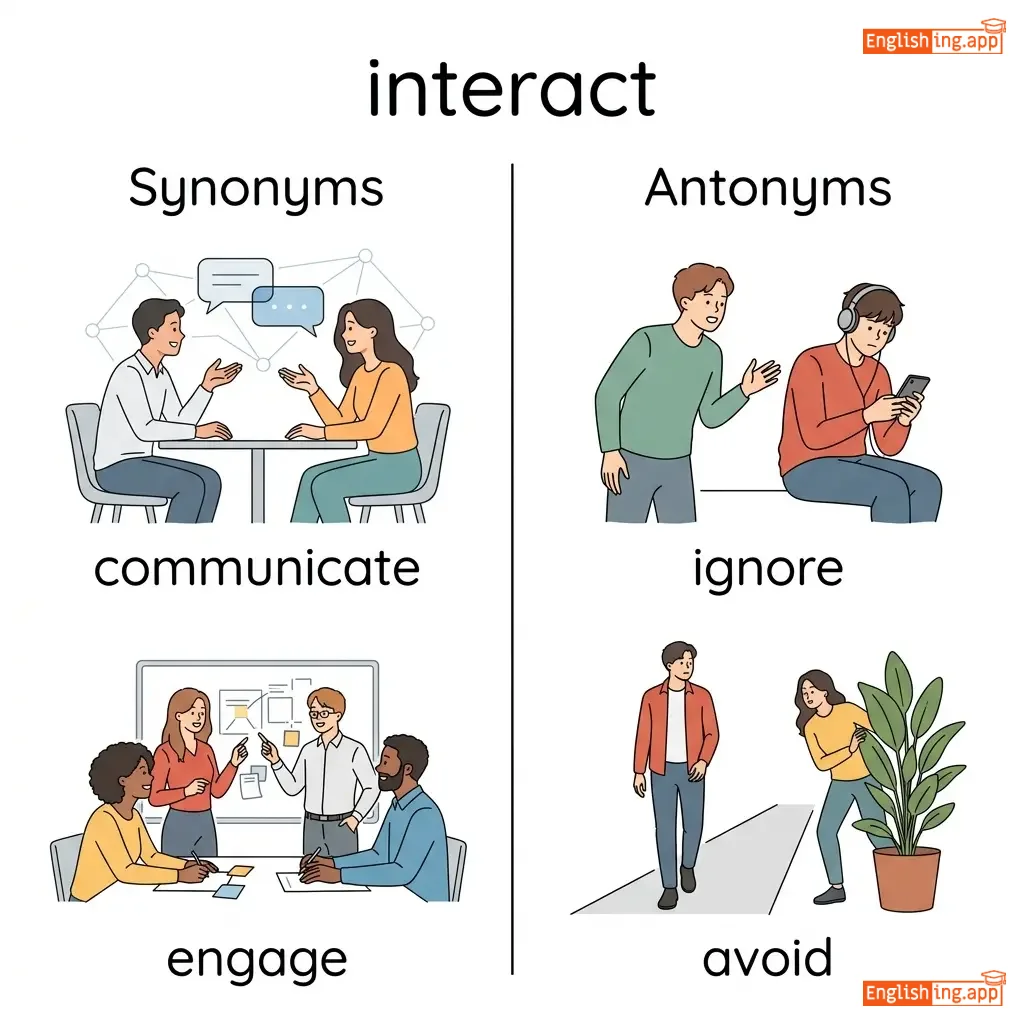
|
communicate, engage, connect, collaborate
••••••
|
ignore, avoid
••••••
|
interact with people, interact online, interact socially
••••••
|
互动像在游戏中互动。
••••••
|
|
#2796
🤝
|
/ˌɪntərˈækʃən/
noun
(互动)
••••••
|
- •••••• |
相互作用
xianghu zuoyong
••••••
|
- •••••• | - •••••• | - •••••• | - •••••• |
The process of people or things acting upon or influencing each other.
••••••
|
The teacher encouraged more interaction between students. |
老师鼓励学生之间更多的互动。
Laoshi guli xuesheng zhijian gengduo de hudong.
••••••
|
social interaction |
communication or activities between people in society
••••••
|
社会互动
shehui hudong
••••••
|
communication, contact, exchange, collaboration, connection
••••••
|
isolation, separation
••••••
|
human interaction, social interaction, online interaction, interaction with
••••••
|
Interaction = Inter (互) + Action (动) = 相互作用
••••••
|
|
#2797
🖱️
|
/ɪnˈtærɪktɪv/
adjective
••••••
|
|
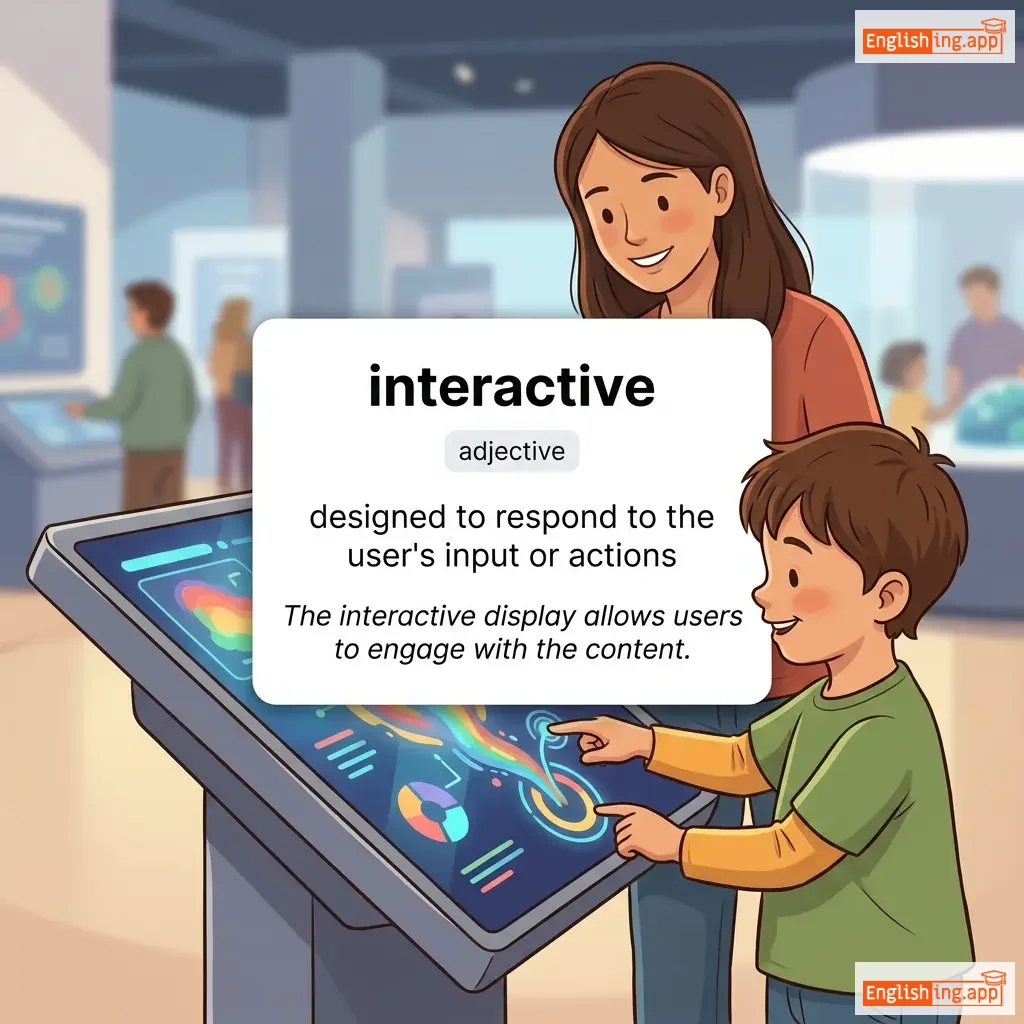
- •••••• | - •••••• | - •••••• | - •••••• | - •••••• |
designed to respond to the user's input or actions
••••••
|
The interactive display allows users to engage with the content. |
- •••••• | - •••••• | - •••••• | - •••••• |
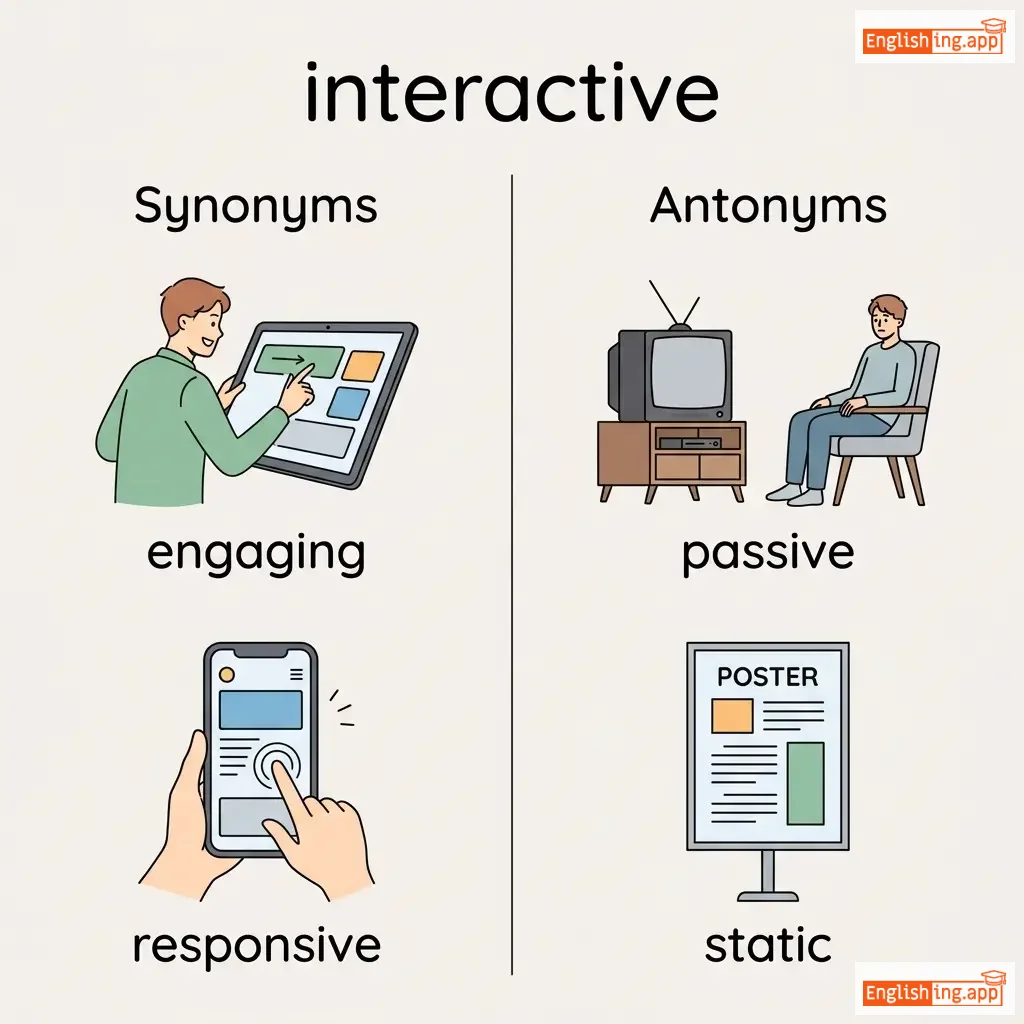
engaging, responsive, participatory, communicative
••••••
|
passive, static, unresponsive
••••••
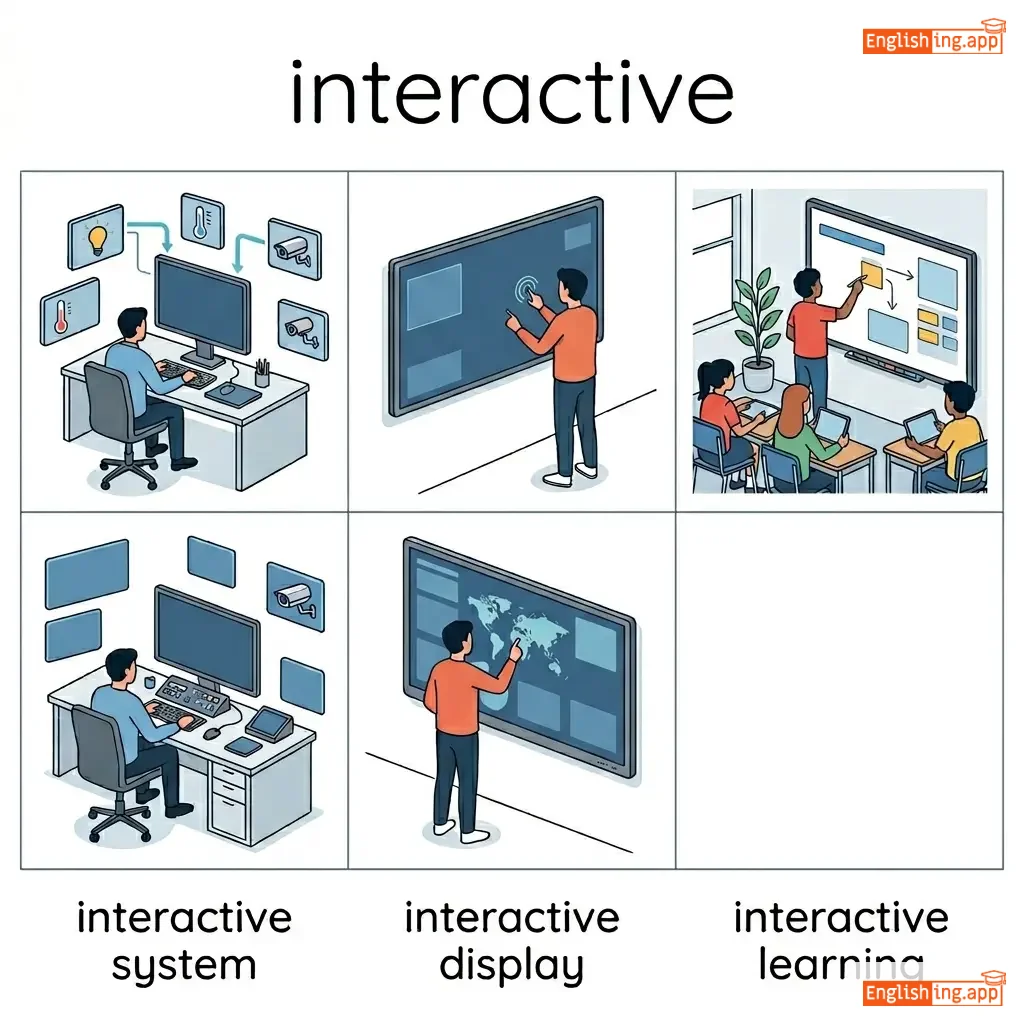
|
interactive system, interactive display, interactive learning, interactive website
••••••
|
No •••••• |
|
#2798
💻
|
/ˈɪntərfeɪs/
noun
(ɪntɚfeɪs)
••••••
|
- •••••• |
界面
jiemian
••••••
|
- •••••• | - •••••• | - •••••• | - •••••• |
a point where two systems, subjects, or organizations meet and interact
••••••
|
The user interface is designed to be intuitive and user-friendly. |
用户界面被设计为直观且用户友好。
Yonghu jiemian bei sheji wei zhuiguang qie yonghu youhao.
••••••
|
- •••••• | - •••••• | - •••••• |
connection, junction, link, interface point
••••••
|
separation, disconnection
••••••
|
user interface, interface design, software interface, interface system
••••••
|
界面就像系统间的‘接口’,直观地面对用户。
••••••
|
|
#2799
🚫
|
/ˌɪntərˈfɪər/
verb
(happiness)
••••••
|
- •••••• |
幸福
xingfu
••••••
|
interfered
••••••
|
interfered
••••••
|
interferes
••••••
|
interfering
••••••
|
to become involved in something that is not your concern; to hinder or obstruct
••••••
|
Parents should not interfere in their children’s personal choices.
她收到奖项时无法掩饰自己的幸福感。
••••••
|
她收到奖项时无法掩饰自己的幸福感。
Tā shōu dào jiǎngxiàng shí wúfǎ yǎnshì zìjǐ de xìngfú gǎn.
••••••
|
interfere with
追求幸福
••••••
|
to get involved in a way that causes problems or prevents something from happening
••••••
|
追求幸福
zhuīqiú xìngfú
••••••
|
meddle, obstruct, hinder, intrude, intervene
••••••
|
assist, support, cooperate
••••••
|
interfere with, interfere in, badly interfere, refuse to interfere
••••••
|
幸福就是找到让你开心的那一刻。
••••••
|
|
#2800
📡
|
/ˌɪntərˈfɪərəns/
noun
(干扰)
••••••
|
- •••••• |
干扰
ganrao
••••••
|
- •••••• | - •••••• | - •••••• | - •••••• |
the action of interfering with something
••••••
|
The radio signal was disrupted due to interference from nearby electronics. |
由于附近电子设备的干扰,无线电信号受到了干扰。
Youyu fujin dianzi shebei de ganrao, wuxiandian xinhao shoudao le ganrao.
••••••
|
- •••••• | - •••••• | - •••••• |
disruption, obstruction, hindrance, disturbance
••••••
|
assistance, help, support
••••••
|
radio interference, signal interference, electronic interference, interference pattern
••••••
|
干扰就像是信息传递时的障碍,使通信受到阻碍。
••••••
|
|
#2801
⏳
|
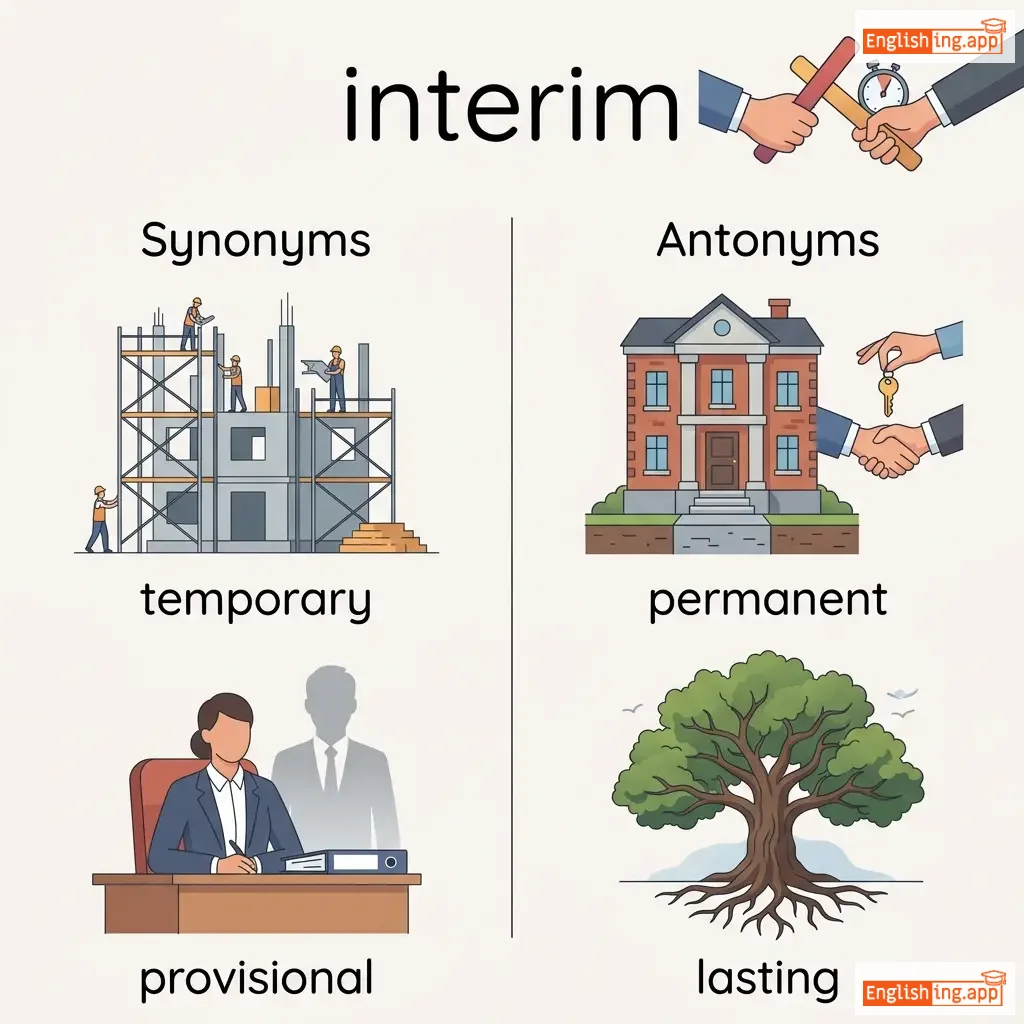
/ˈɪntərɪm/
noun
(临时)
••••••
|
|
临时
linshi
••••••
|
- •••••• | - •••••• | - •••••• | - •••••• |
a temporary or provisional period before something permanent is established
••••••
|
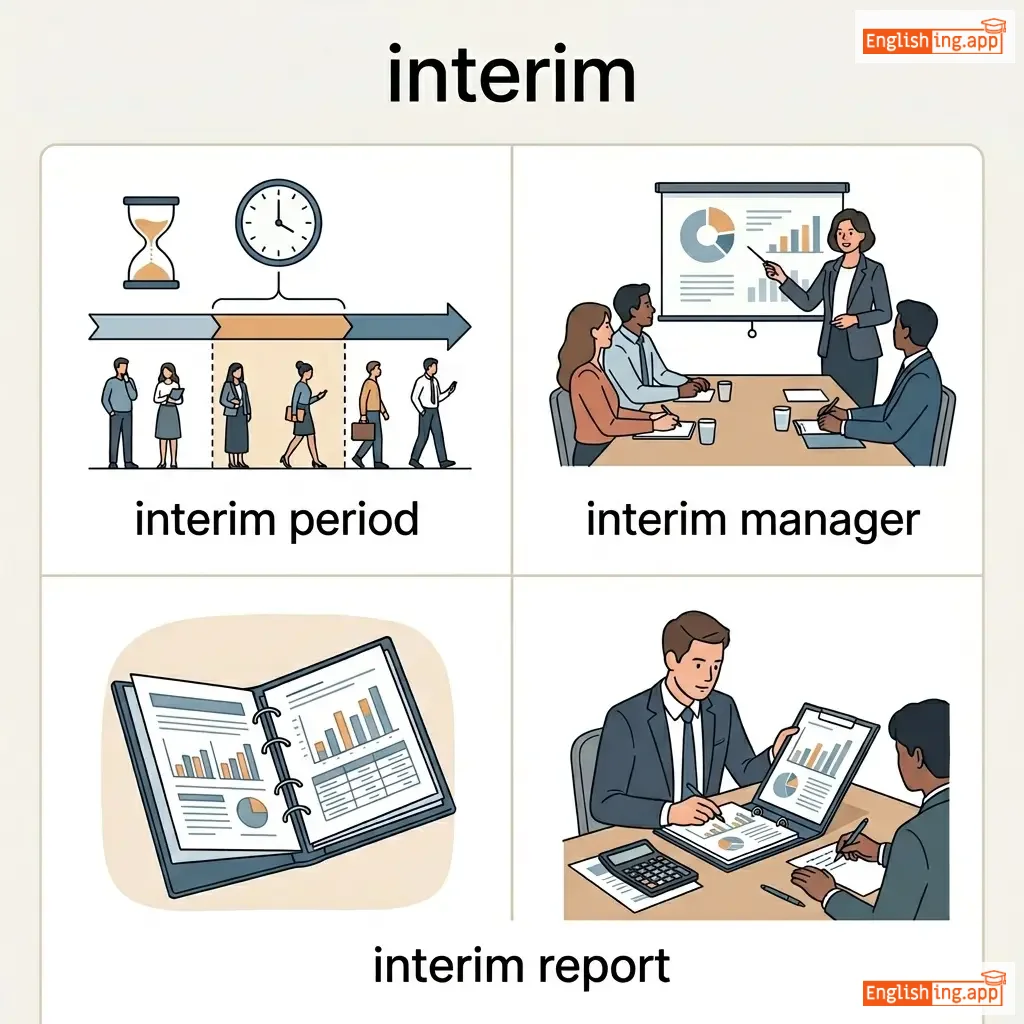
She was appointed as the interim manager until a permanent replacement was found. |
她被任命为临时经理,直到找到一个永久的替代者。
Ta bei renming wei linshi jingli, zhidao zhao dao yige yongjiu de tidaizhe.
••••••
|
in the interim |
for the time being; temporarily
••••••
|
在此期间
zai ci qi jian
••••••
|
temporary, provisional, acting, short-term
••••••
|
permanent, lasting
••••••
|
interim period, interim manager, interim report, in the interim
••••••
|
Interim 意味着 ‘间’ - 过渡状态
••••••
|
|
#2802
🏠
|
/ɪnˈtɪəriər/
noun
(内部)
••••••
|
- •••••• |
内部
neibu
••••••
|
- •••••• | - •••••• | - •••••• | - •••••• |
the inside part of something; inner area of a place or object
••••••
|
The interior of the hotel was beautifully decorated. |
酒店的内部装饰非常美丽。
Jiudian de neibu zhuangshi feichang meili.
••••••
|
interior design |
the art or process of designing the inside of a building or room
••••••
|
室内设计
shinei sheji
••••••
|
inside, inner part, core, center, internal area
••••••
|
exterior, outside
••••••
|
interior design, interior wall, interior space, car interior
••••••
|
内部是指所有东西的里面,设计让它更美丽! 🏠
••••••
|
|
#2803
↔️
|
/ˌɪntərˈmiːdiət/
adjective
(因特尔米迪特)
••••••
|
- •••••• |
中级
zhōngjí
••••••
|
- •••••• | - •••••• | - •••••• | - •••••• |
Coming between two things in time, place, or order; in the middle level or stage.
••••••
|
She is taking an intermediate-level French course.
她正在上一个中级法语课程。
••••••
|
她正在上一个中级法语课程。
Tā zhèngzài shàng yīgè zhōngjí fǎyǔ kèchéng.
••••••
|
- •••••• | - •••••• | - •••••• |
middle, moderate, halfway, transitional, mid-level
••••••
|
beginner, advanced
••••••
|
intermediate stage, intermediate level, intermediate step
••••••
|
中级是介于两个阶段之间的水平。
••••••
|
|
#2804
🏠
|
/ɪnˈtɜːrnəl/
adjective
(yìntèrnàl)
••••••
|
- •••••• |
内部
neibu
••••••
|
- •••••• | - •••••• | - •••••• | - •••••• |
situated inside; relating to the inside or inner part of something
••••••
|
The company is conducting an internal audit this month. |
公司本月正在进行内部审计。
Gongsi ben yue zhengzai jinxing neibu shenji.
••••••
|
internal affairs |
matters within an organization or country, not external
••••••
|
内部事务
neibu shiwu
••••••
|
inner, inside, domestic, interior, inward
••••••
|
external, outer, outside
••••••
|
internal audit, internal structure, internal affairs, internal use
••••••
|
Internal 就是里面的意思,像 '内部' 在中文
••••••
|
|
#2805
🌍
|
/ˌɪntərˈnæʃənəl/
adjective
(国际)
••••••
|
|
国际的
guoji de
••••••
|
- •••••• | - •••••• | - •••••• | - •••••• |
Existing, occurring, or carried on between nations.
••••••
|
The company is planning to expand into international markets. |
该公司计划扩展到国际市场。
Gāi gōngsī jìhuà kuòzhǎn dào guójì shìchǎng.
••••••
|
international relations |
relationships between different countries
••••••
|
国际关系
guójì guānxi
••••••
|
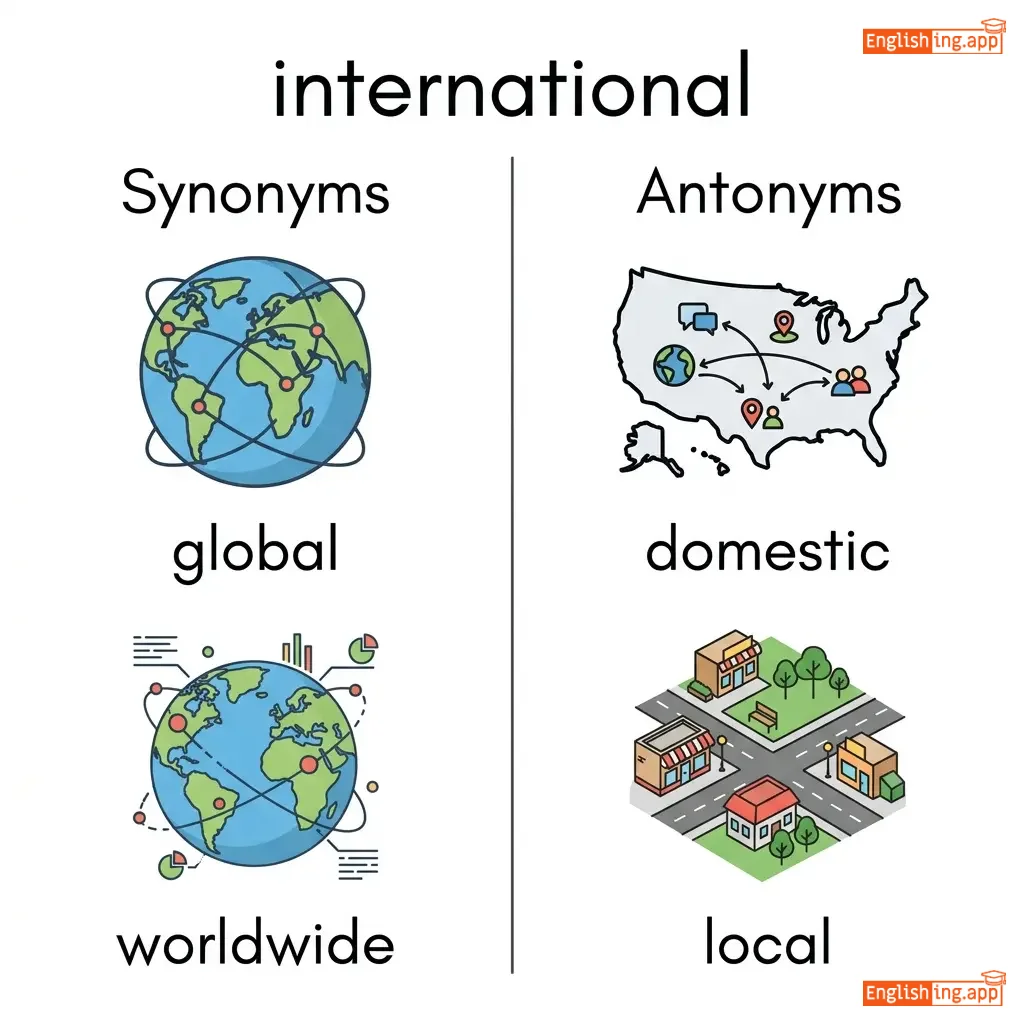
global, worldwide, universal, foreign
••••••
|
domestic, local
••••••
|
international trade, international law, international relations, international organization
••••••
|
International意味着 inter (在之间) + national (国家) = 各国之间的关系
••••••
|
|
#2806
🌐
|
/ˈɪntərˌnɛt/
noun
(互联网)
••••••
|
|
互联网
hulianwang
••••••
|
- •••••• | - •••••• | - •••••• | - •••••• |
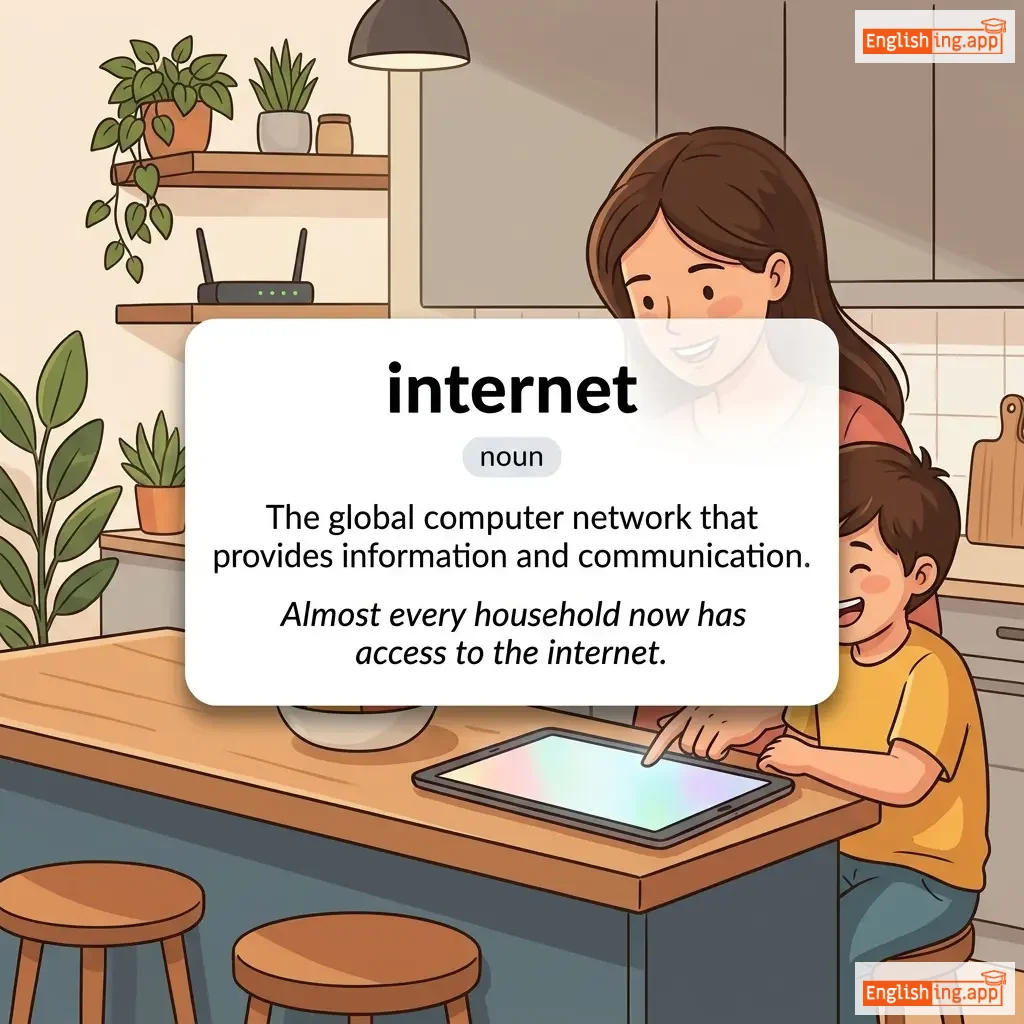
The global computer network that provides information and communication.
••••••
|
Almost every household now has access to the internet. |
几乎每个家庭现在都有互联网访问。
Jīhū měi gè jiātíng xiànzài dōu yǒu hùliánwǎng fǎngwèn.
••••••
|
surf the internet |
to browse or explore websites online
••••••
|
上网冲浪
shàngwǎng chōnglàng
••••••
|
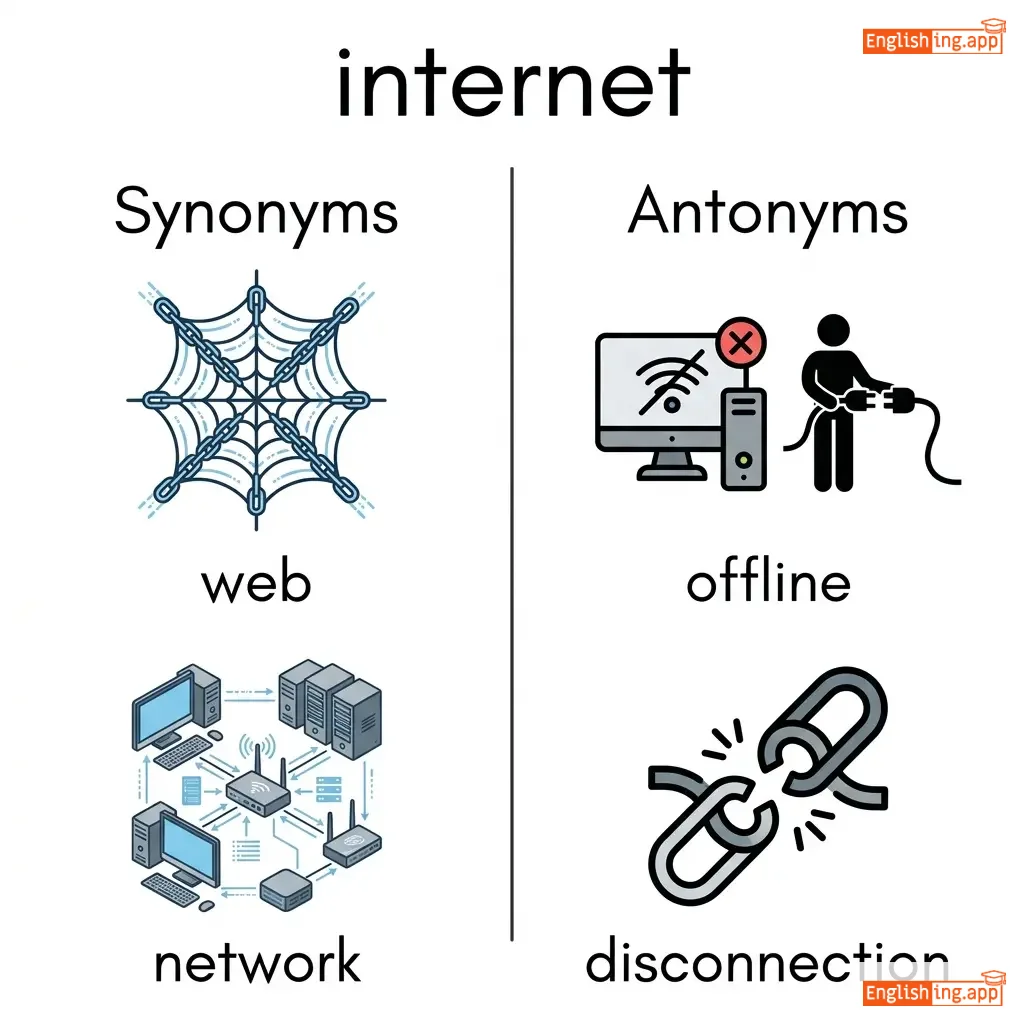
web, network, cyberspace, online system
••••••
|
offline, disconnection
••••••
|
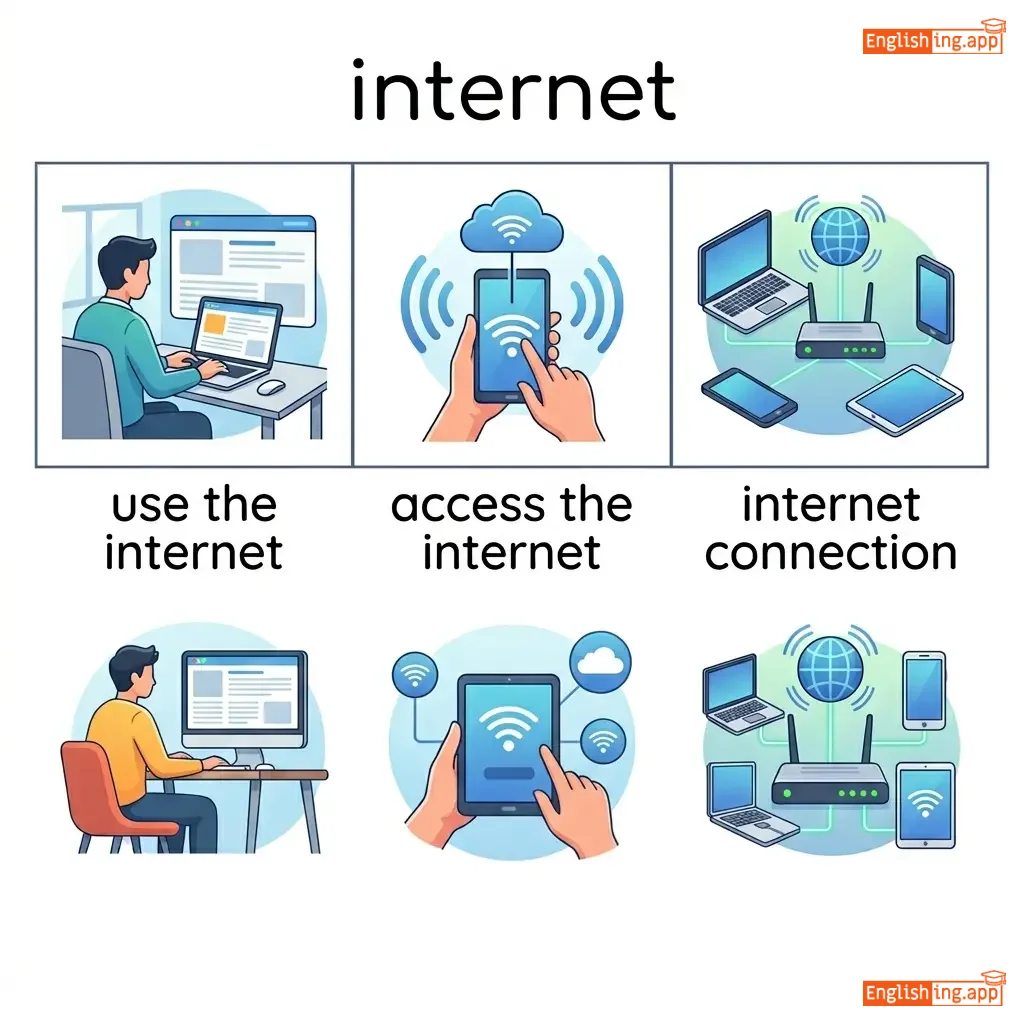
use the internet, access the internet, internet connection, internet service
••••••
|
互联网 = hu (连接) + lian (网络) = 连接世界的网络
••••••
|
|
#2807
🗣️
|
/ɪnˈtɜːrprət/
verb
••••••
|
- •••••• | - •••••• |
interpreted
••••••
|
interpreted
••••••
|
interprets
••••••
|
interpreting
••••••
|
to explain the meaning of something; to translate orally
••••••
|
She had to interpret the speech for the foreign guests. |
- •••••• |
interpret the law |
to explain or understand the meaning of legal rules
••••••
|
- •••••• |
explain, clarify, translate, elucidate, understand
••••••
|
confuse, obscure, misinterpret
••••••
|
interpret correctly, interpret data, interpret meaning, interpret the law
••••••
|
No •••••• |
|
#2808
📖
|
/ɪnˌtɜːrprəˈteɪʃən/
noun
(yìshì)
••••••
|
- •••••• |
解释
jieshi
••••••
|
- •••••• | - •••••• | - •••••• | - •••••• |
the action of explaining the meaning of something
••••••
|
The teacher gave her own interpretation of the poem. |
老师给出了她对这首诗的解释。
Lǎoshī gěi chūle tā duì zhè shǒu shī de jiěshì.
••••••
|
open to interpretation |
something that can be understood in different ways
••••••
|
开放解释
kāifàng jiěshì
••••••
|
explanation, clarification, analysis, understanding, rendering
••••••
|
misinterpretation, confusion, misunderstanding
••••••
|
artistic interpretation, legal interpretation, correct interpretation, interpretation of law
••••••
|
Interpretation 意味着解释 — 就像电影一样,结局总是开放解释的。
••••••
|
Vocabulary Quiz
Test your vocabulary by matching words with their translations or meanings.
Login to take the quiz
Comments (0)
Share your thoughts and join the discussion.
Join the discussion by logging in
Login to CommentNo comments yet
Be the first to share your thoughts!