





Swipe left or right, or use the buttons. Tap image to zoom.
例句翻译
单词
Lesson 5Lesson 5 - 遮罩切换
|
表情符号
|
单词 | Images | 翻译 | 过去时 | 过去分词 | 第三人称单数 | 动名词 | 含义 | 例句 | 例句翻译 | 示例表达 | 示例表达含义 | 示例表达翻译 | 同义词 | 反义词 | 搭配词 | 助记符 |
|---|---|---|---|---|---|---|---|---|---|---|---|---|---|---|---|---|---|
|
#200
🤒
|
/eɪl/
verb
(艾尔)
••••••
|
- •••••• |
生病
sheng bing
••••••
|
ailed
艾尔德
••••••
|
ailed
艾尔德
••••••
|
ails
艾尔兹
••••••
|
ailing
艾尔英
••••••
|
to be ill or suffer from a physical or mental problem; to trouble or afflict
••••••
|
She has been ailing since last winter.
西 哈兹 宾 艾尔英 辛斯 拉斯特 温特
••••••
|
她从去年冬天开始一直生病。
ta cong qunian dongtian kaishi yizhi shengbing
••••••
|
what ails you
沃特 艾尔兹 由
••••••
|
used to ask what problem or illness someone has
••••••
|
你怎么了
ni zenme le
••••••
|
sicken, trouble, afflict, plague, weaken
••••••
|
heal, cure, strengthen
••••••
|
ail badly, ail seriously, ail for years, ail someone
••••••
|
Ail 听起来像 ill,意思是生病
••••••
|
|
#201
🤒
|
/ˈeɪlɪŋ/
adjective, verb
(艾灵)
••••••
|
- •••••• |
生病的
shengbing de
••••••
|
ailed
艾尔德
••••••
|
ailed
艾尔德
••••••
|
ails
艾尔兹
••••••
|
ailing
艾灵
••••••
|
suffering from illness or poor health; experiencing problems or decline
••••••
|
The ailing patient slowly began to recover after treatment.
艾灵 佩申特 斯洛利 比甘 图 瑞卡弗 阿夫特 治疗
••••••
|
生病的病人在治疗后慢慢开始康复。
shengbing de bingren zai zhiliao hou manman kaishi kangfu
••••••
|
ailing health
艾灵 健康
••••••
|
a state of poor or declining health
••••••
|
健康不佳
jiankang bu jia
••••••
|
ill, sick, unwell, infirm, weak
••••••
|
healthy, well, strong
••••••
|
ailing health, ailing economy, ailing patient, ailing system
••••••
|
Ailing 听起来像 illness → 生病的
••••••
|
|
#202
🎯
|
/eɪm/
verb
(āi mǔ)
••••••
|
|
瞄准
miáozhǔn
••••••
|
aimed
āi mǔd
••••••
|
aimed
āi mǔd
••••••
|
aims
āi mǔs
••••••
|
aiming
āi míng
••••••
|
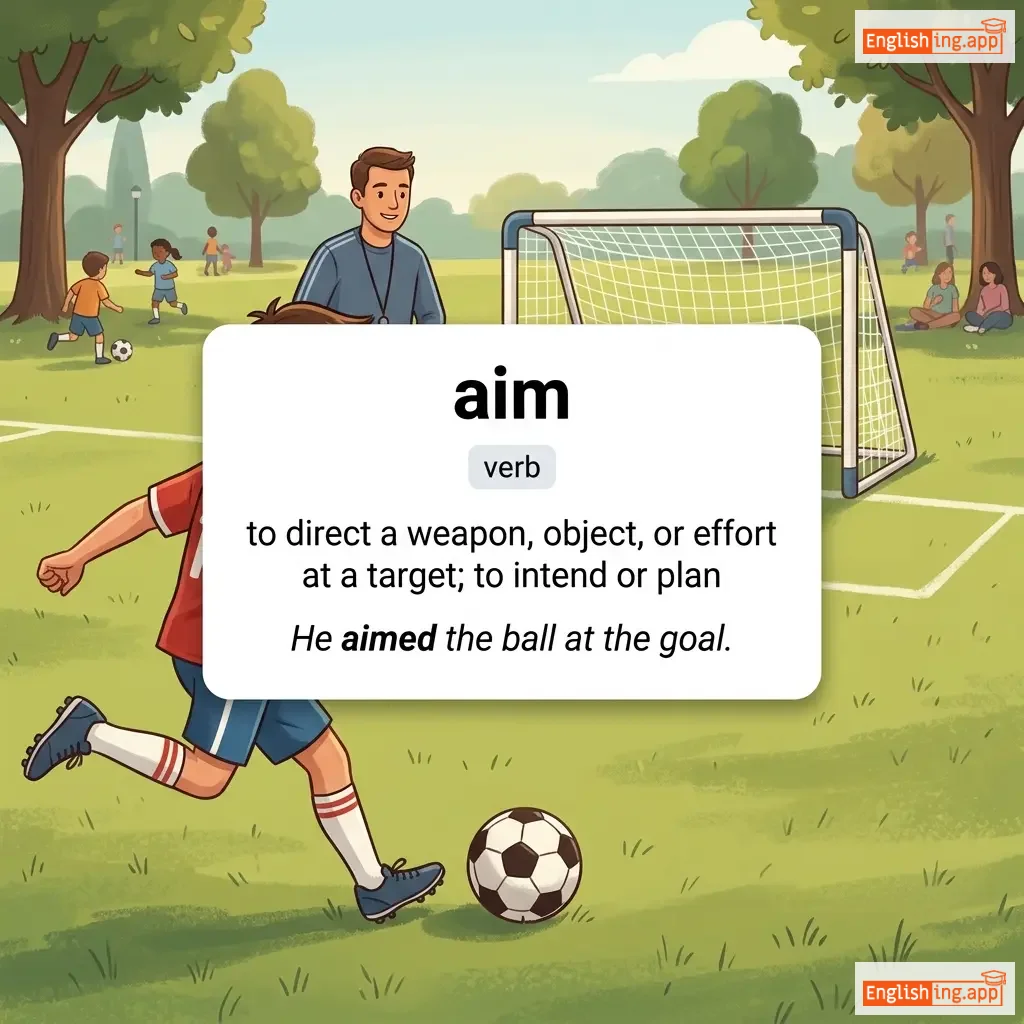
to direct a weapon, object, or effort at a target; to intend or plan
••••••
|
He aimed the ball at the goal.
tā zhǔnbèi qiú zhíxiàng mùdì.
••••••
|
他瞄准了球朝着目标。
Tā miáozhǔnle qiú cháo zhe mùbiāo.
••••••
|
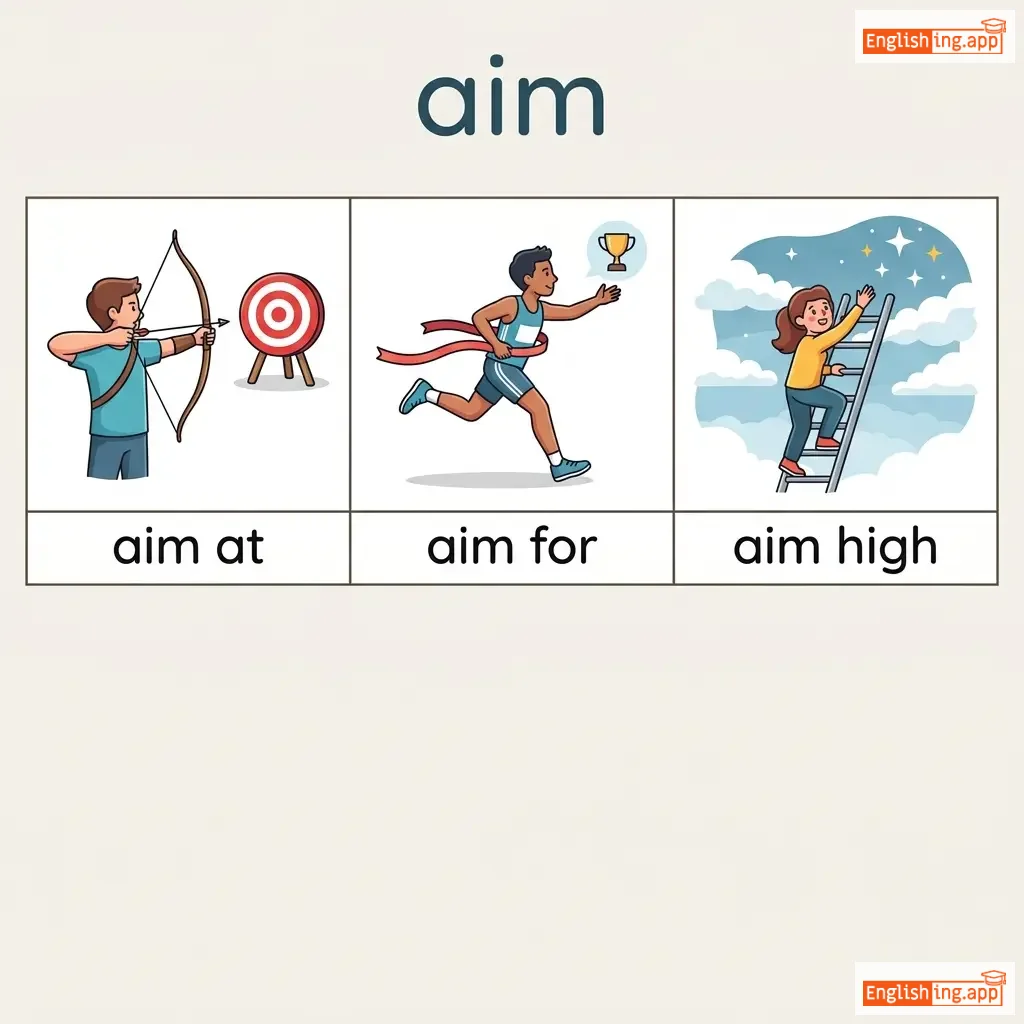
aim high
zhǐ zhì gāo
••••••
|
to set ambitious goals
••••••
|
瞄准高处
miáozhǔn gāo chù
••••••
|
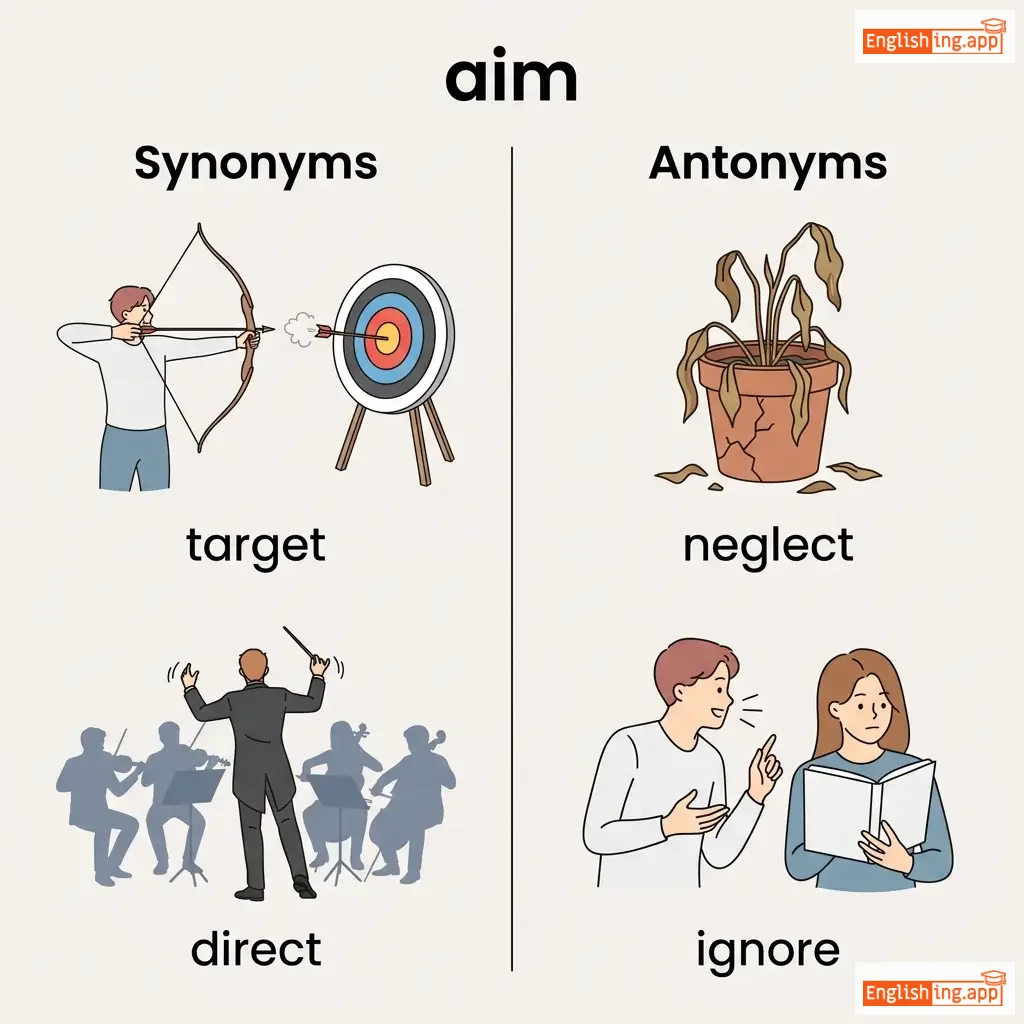
target, direct, focus, aspire, intend
••••••
|
neglect, ignore
••••••
|
aim at, aim for, aim high, aim to achieve
••••••
|
Aim 意味着 🎯瞄准,记得 '瞄准 AIM'。
••••••
|
|
#203
🎯❌
|
/ˈeɪmləs/
adjective
(èimùlèisī)
••••••
|
- •••••• |
漫无目的; 无目标
aimles
••••••
|
- •••••• | - •••••• | - •••••• | - •••••• |
without purpose or direction; lacking a goal
••••••
|
He wandered around the city in an aimless manner.
他在城市中漫无目的地游荡。
••••••
|
他在城市中漫无目的地游荡。
Tā zài chéngshì zhōng màn wú mùdì de yóudàng.
••••••
|
- •••••• | - •••••• | - •••••• |
purposeless, directionless, wandering, random
••••••
|
purposeful, directed, focused, goal-oriented
••••••
|
aimless wandering, aimless behavior, aimless existence
••••••
|
漫无目的 = 没有方向, 像英文中的 aimless
••••••
|
|
#204
🌬️
|
/ɛər/
noun
(空气)
••••••
|
|
空气
kongqi
••••••
|
- •••••• | - •••••• | - •••••• | - •••••• |
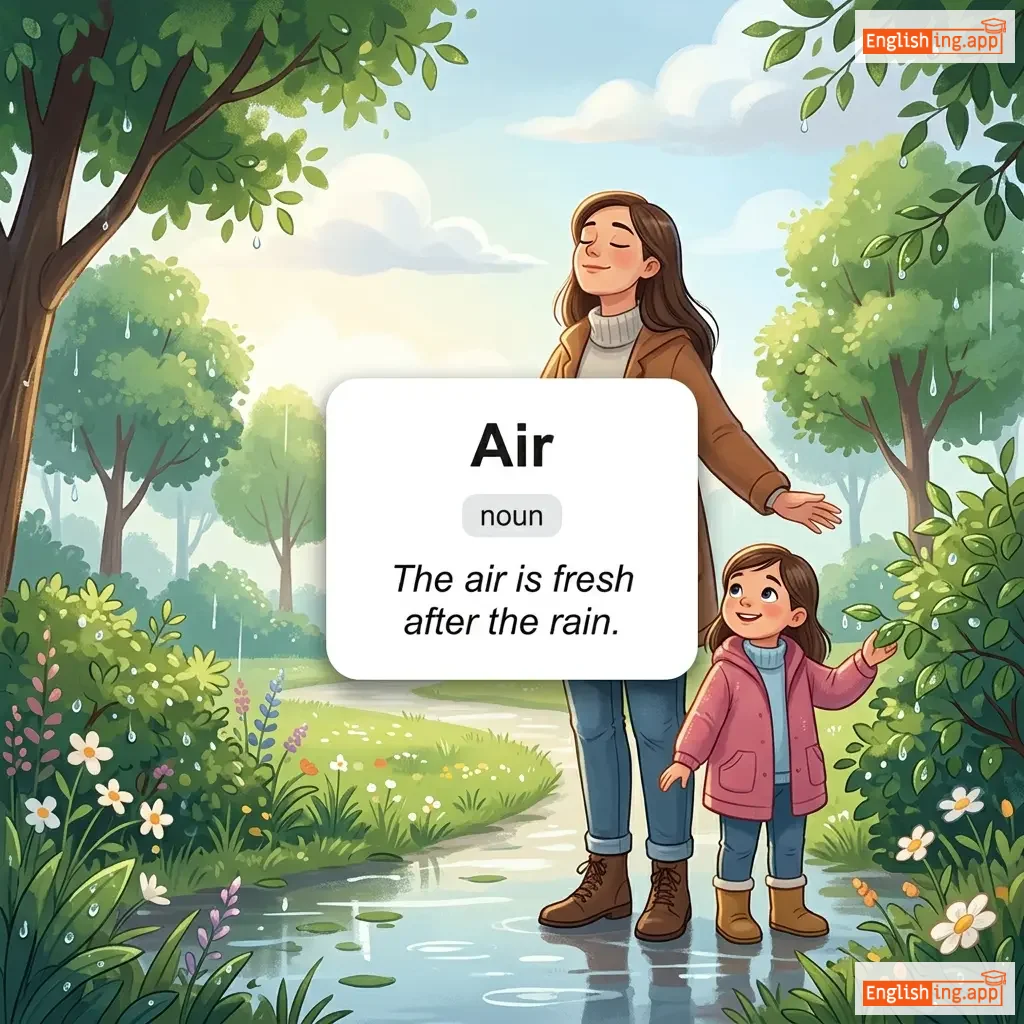
The invisible mixture of gases that surrounds the earth and is breathed in by people and animals.
••••••
|
The air is fresh after the rain.
雨后空气清新。
••••••
|
雨后空气清新。
Yǔ hòu kōngqì qīngxīn.
••••••
|
clear the air
清理空气
••••••
|
to remove doubts or misunderstandings through discussion
••••••
|
通过讨论消除疑虑或误解
Tōngguò tǎolùn xiāochú yílǜ huò wùjiě
••••••
|
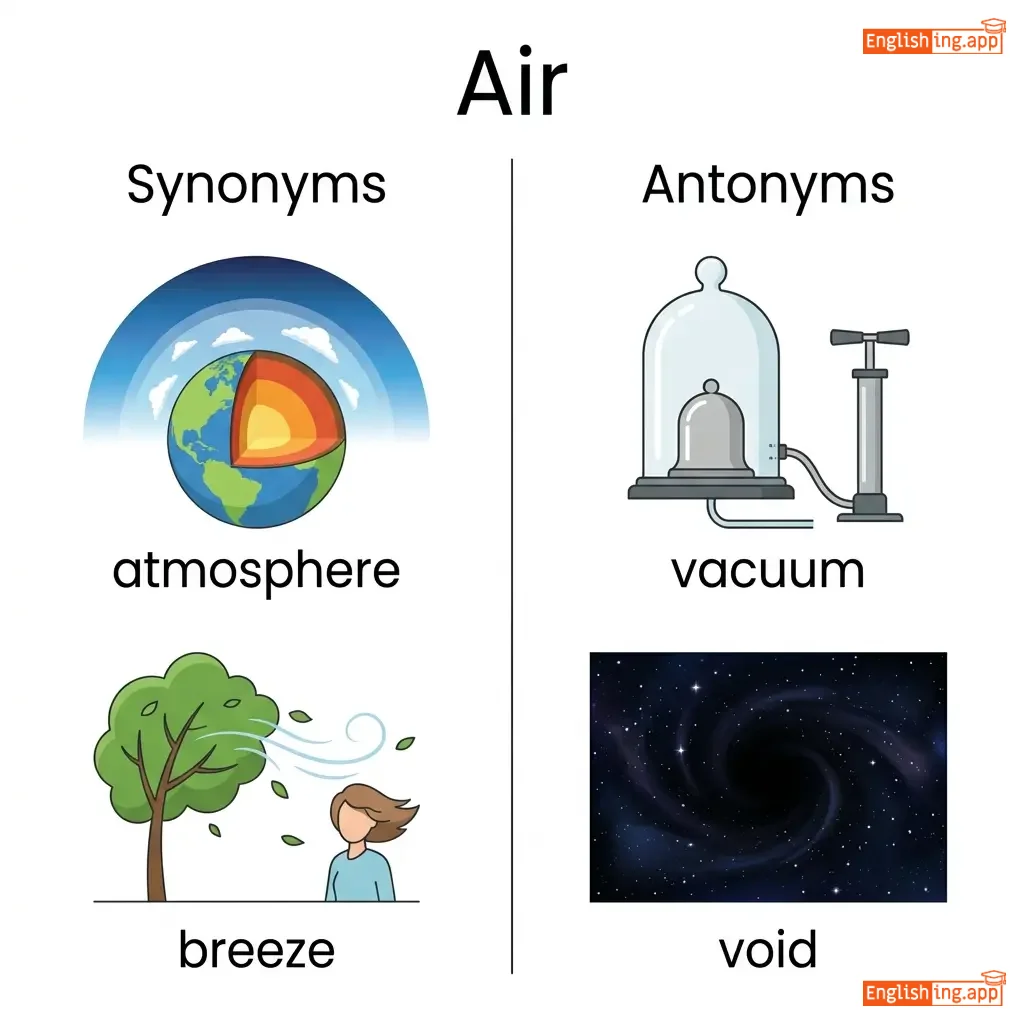
atmosphere, breeze, wind, oxygen, sky
••••••
|
vacuum, void
••••••
|
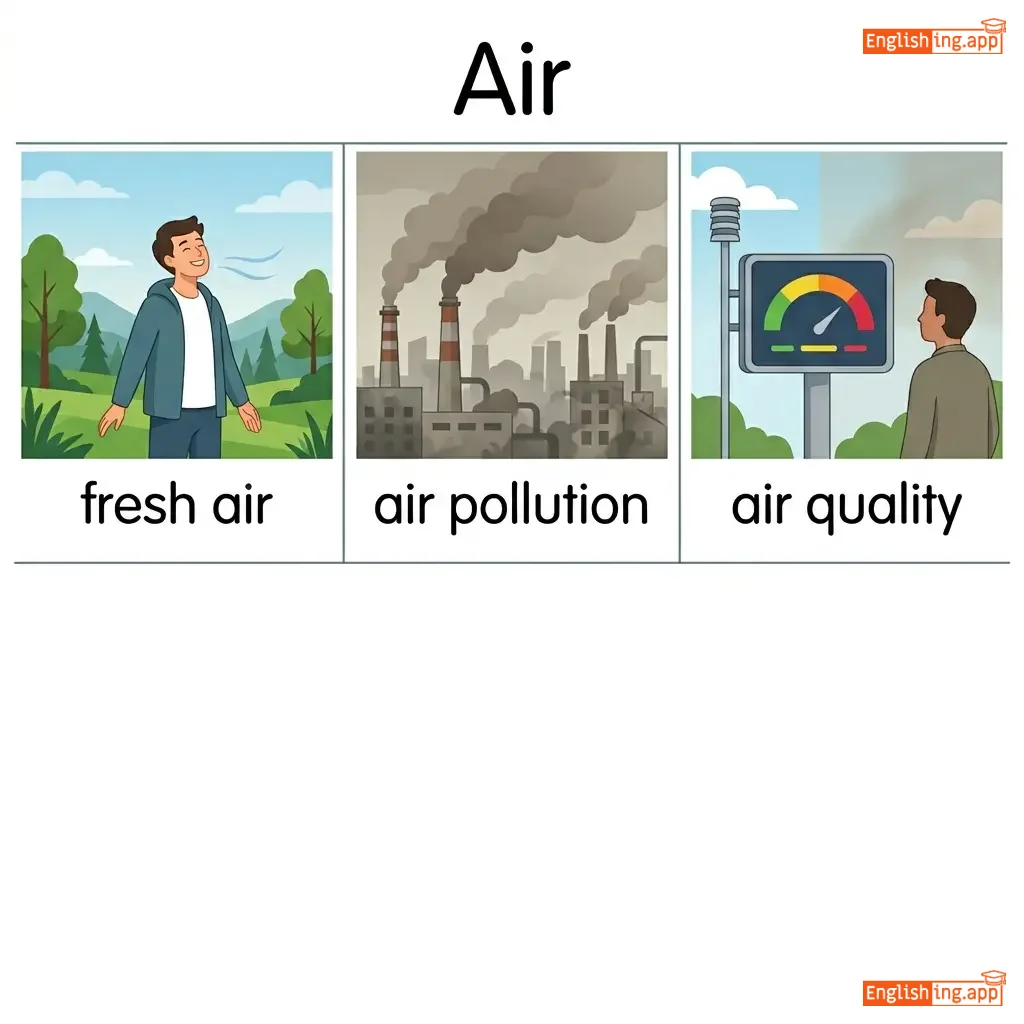
fresh air, air pollution, air quality, air pressure, air circulation
••••••
|
空气意味着空气,没有空气我们无法生存。
••••••
|
|
#205
✈️
|
/ˈɛər.kræft/
noun
(空中飞行器)
••••••
|
- •••••• |
飞机
feiji
••••••
|
- •••••• | - •••••• | - •••••• | - •••••• |
A vehicle, such as an airplane or helicopter, that can fly in the air.
••••••
|
The military aircraft flew over the city. |
军用飞机飞越了城市。
Junyong feiji feiyuele chengshi.
••••••
|
- •••••• | - •••••• | - •••••• |
airplane, jet, helicopter, aeroplane, plane
••••••
|
ground vehicle, car
••••••
|
military aircraft, passenger aircraft, aircraft carrier, aircraft design, aircraft industry
••••••
|
Aircraft 是空中飞行的工具,‘飞’(fei) + ‘机’(ji) - 飞机。
••••••
|
|
#206
🛫
|
/ˈɛər.laɪn/
noun
(航空公司)
••••••
|
- •••••• |
航空公司
hangkong gongsi
••••••
|
- •••••• | - •••••• | - •••••• | - •••••• |
A company that provides regular flights for passengers and goods.
••••••
|
The airline announced a discount on international tickets. |
航空公司宣布对国际机票提供折扣。
Hángkōng gōngsī xuānbù duì guójì jīpiào tígōng zhékòu.
••••••
|
- •••••• | - •••••• | - •••••• |
carrier, flight operator, aviation company
••••••
|
individual pilot, private flyer
••••••
|
airline company, airline ticket, airline industry, airline staff
••••••
|
航空公司是提供飞行服务的公司。
••••••
|
|
#207
🏢✈️
|
/ˈɛər.pɔːrt/
noun
(āiěr pù tè)
••••••
|
|
机场
jīchǎng
••••••
|
- •••••• | - •••••• | - •••••• | - •••••• |
A place where airplanes take off and land, with buildings for passengers and cargo.
••••••
|
We arrived at the airport two hours before the flight. |
我们在航班起飞前两小时到达了机场。
Wǒmen zài hángbān qǐfēi qián liǎng xiǎoshí dàodále jīchǎng.
••••••
|
- •••••• | - •••••• | - •••••• |
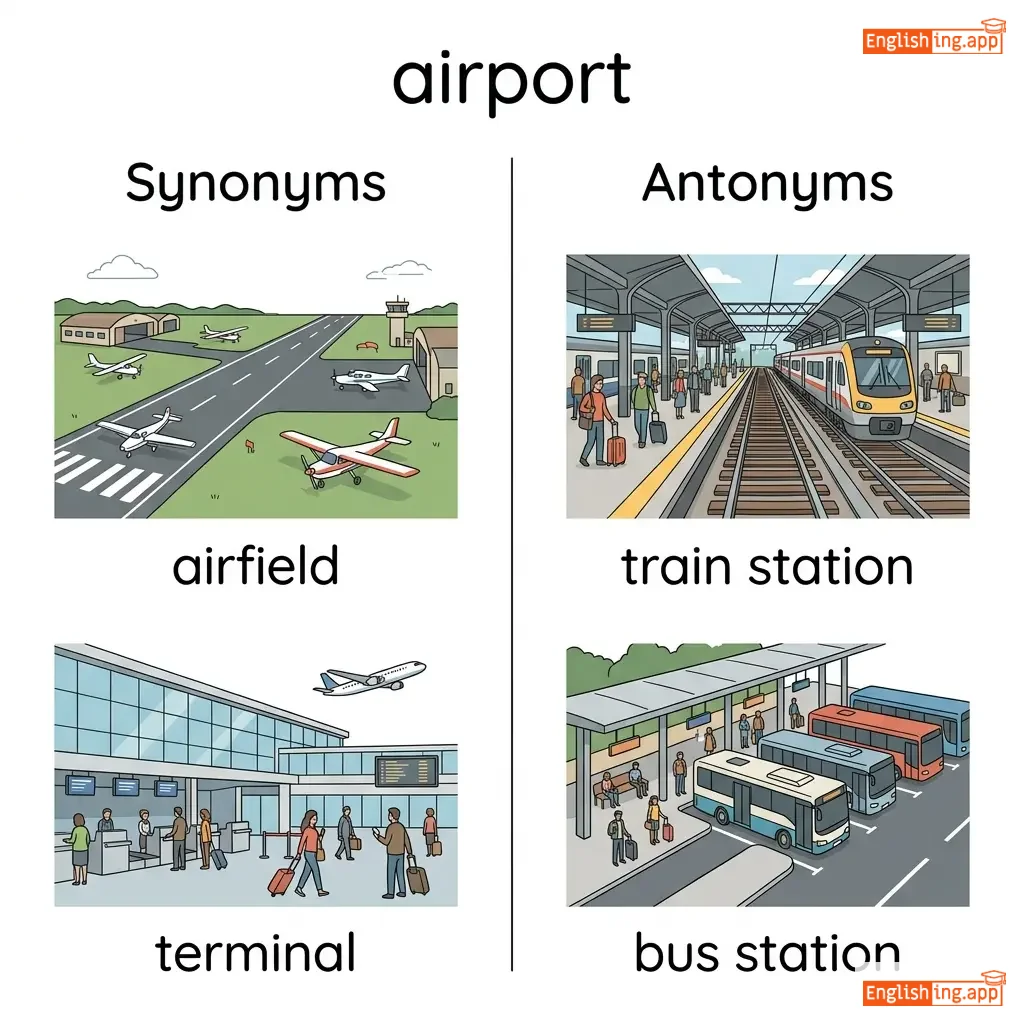
airfield, terminal, aerodrome
••••••
|
train station, bus station
••••••
|
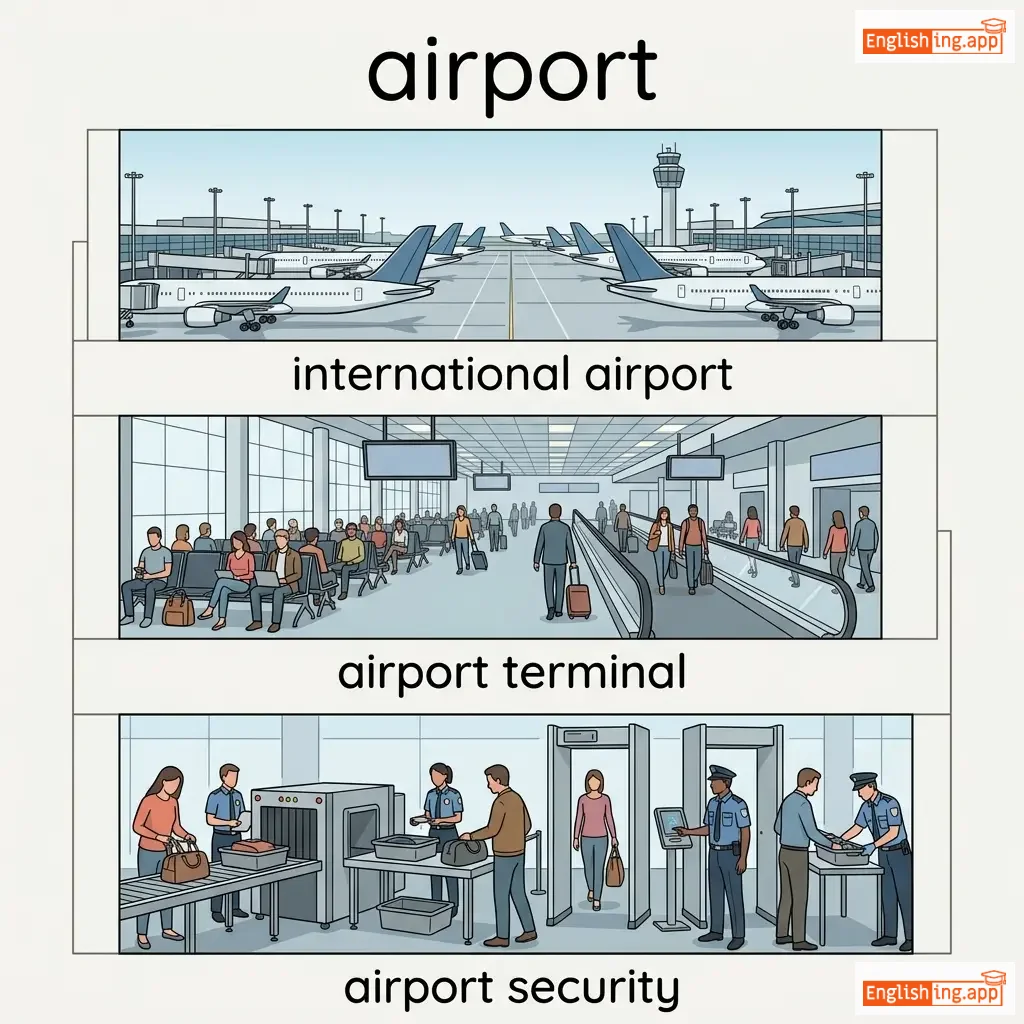
international airport, airport terminal, airport security, airport shuttle
••••••
|
Airport = Air + Port = 机场
••••••
|
|
#208
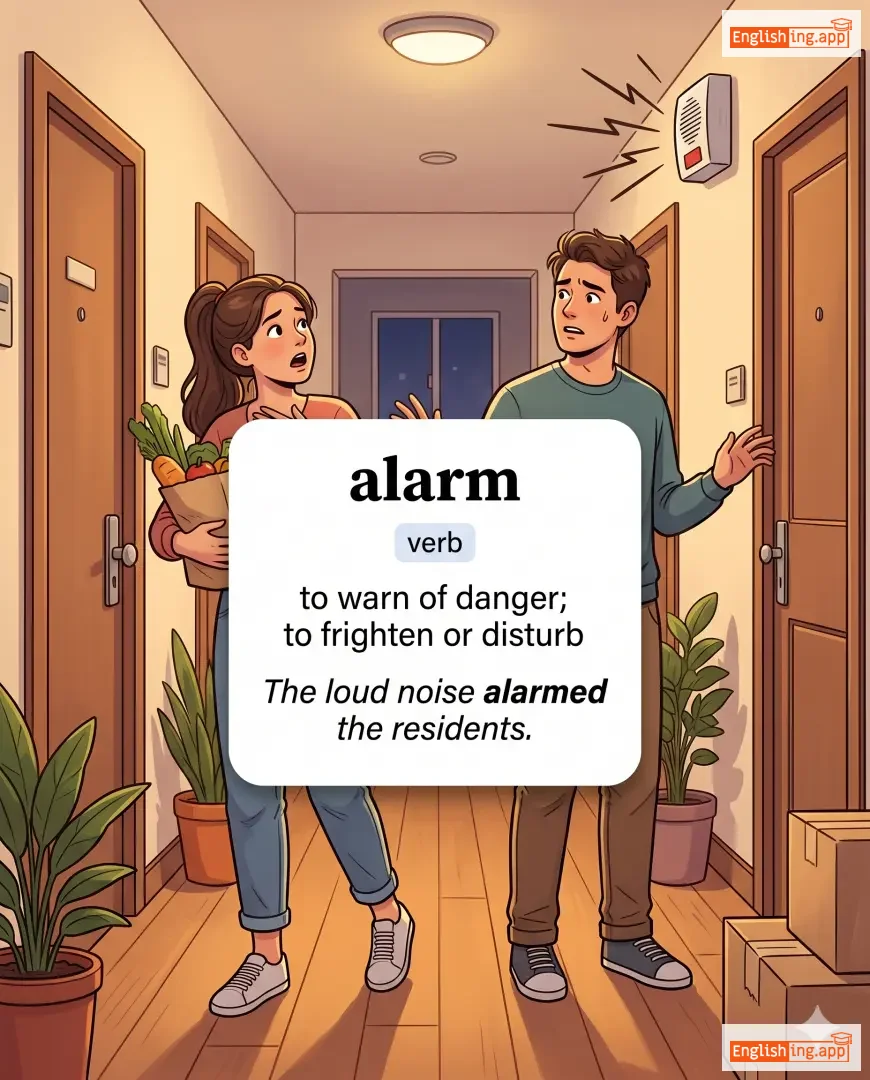
🚨
|
/əˈlɑːrm/
verb
(阿拉姆)
••••••
|
|
惊吓
alarm
••••••
|
alarmed
阿拉默德
••••••
|
alarmed
阿拉默德
••••••
|
alarms
阿拉姆斯
••••••
|
alarming
阿拉明
••••••
|
to warn of danger; to frighten or disturb
••••••
|
The loud noise alarmed the residents.
巨响吓到了居民。
••••••
|
巨响吓到了居民。
ju xiang xia dao le ju min
••••••
|
- •••••• | - •••••• | - •••••• |
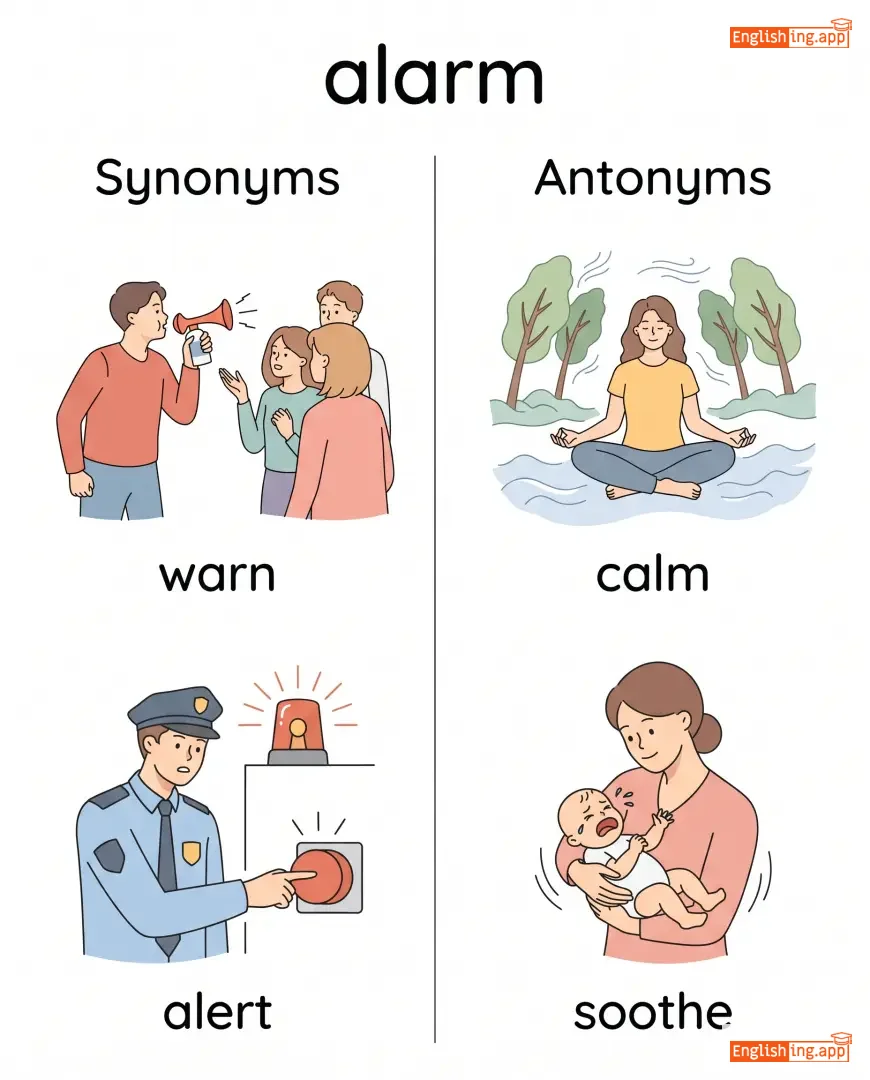
warn, alert, frighten, startle
••••••
|
calm, soothe, reassure, comfort
••••••
|
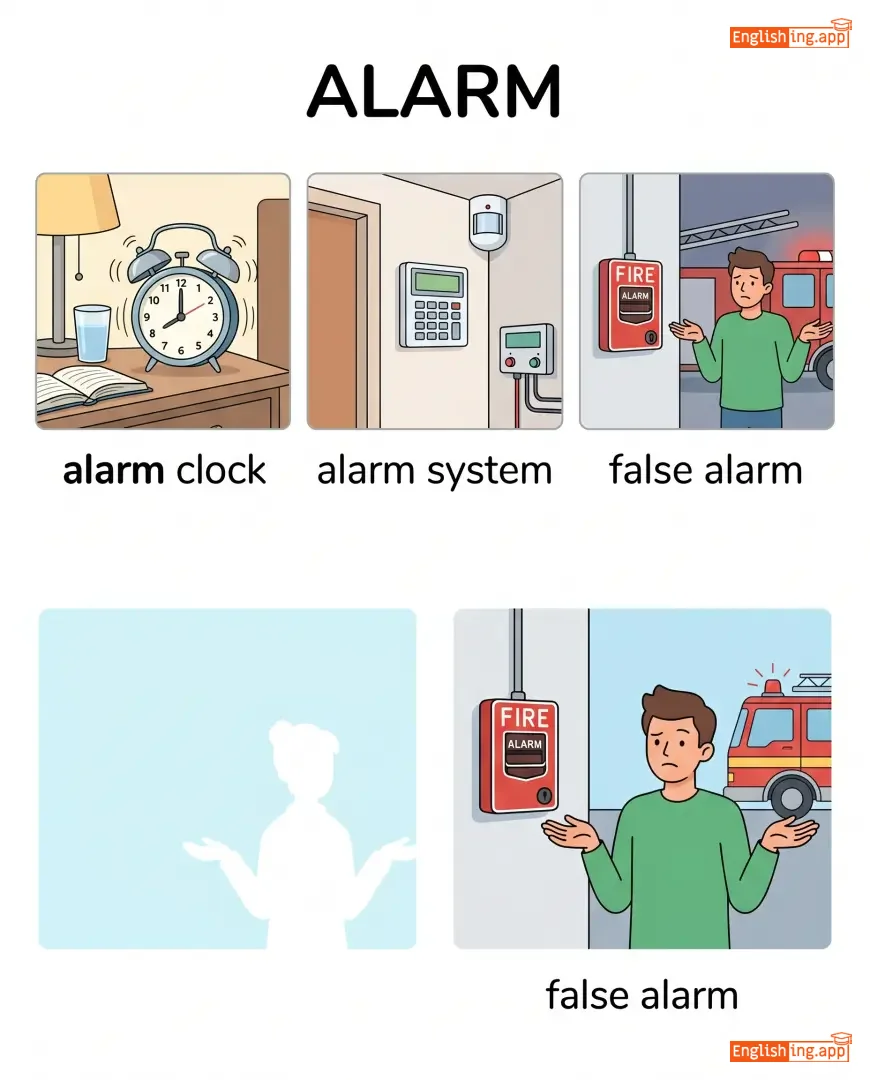
alarm clock, alarm system, false alarm, raise alarm
••••••
|
啊啦 alarm, 警报来了: 惊吓 danger 让 residents 跑起来
••••••
|
|
#209
🚨
|
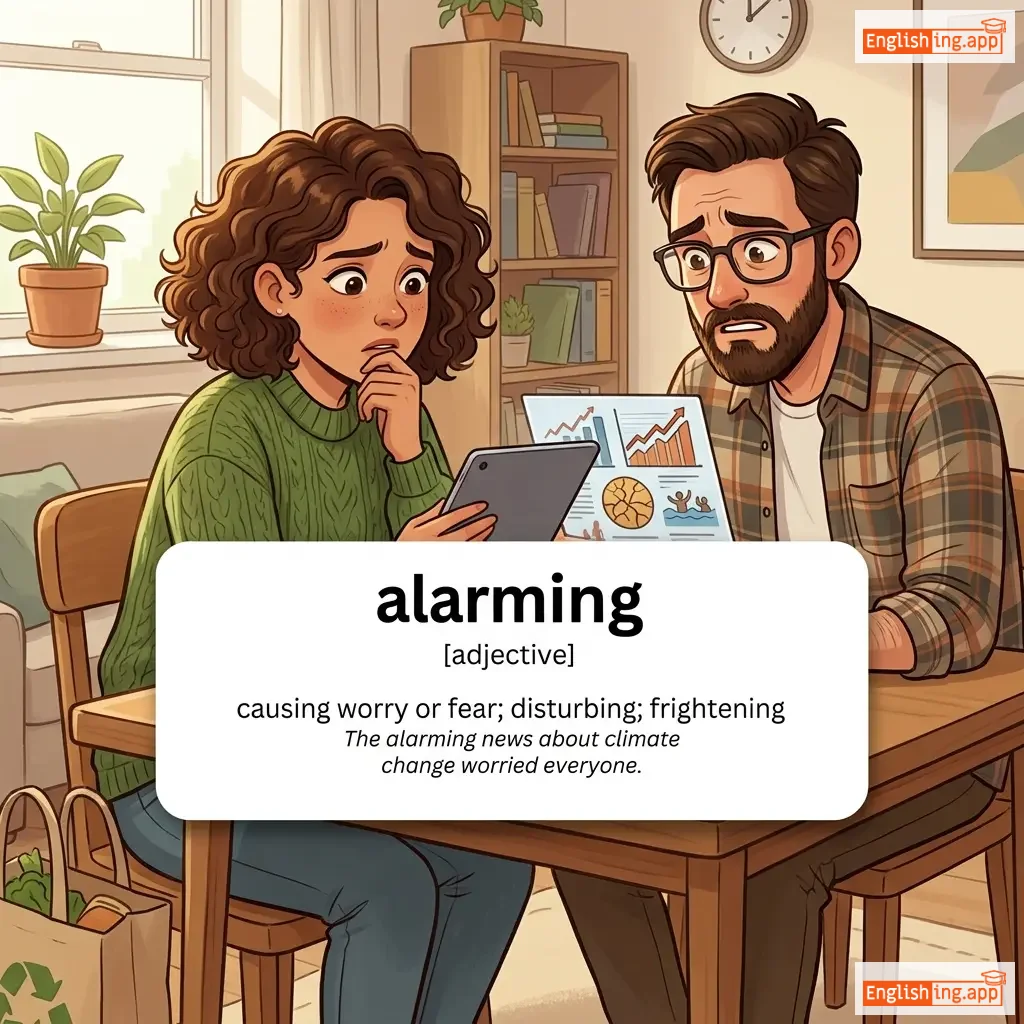
/əˈlɑrmɪŋ/
adjective
(阿拉明)
••••••
|
|
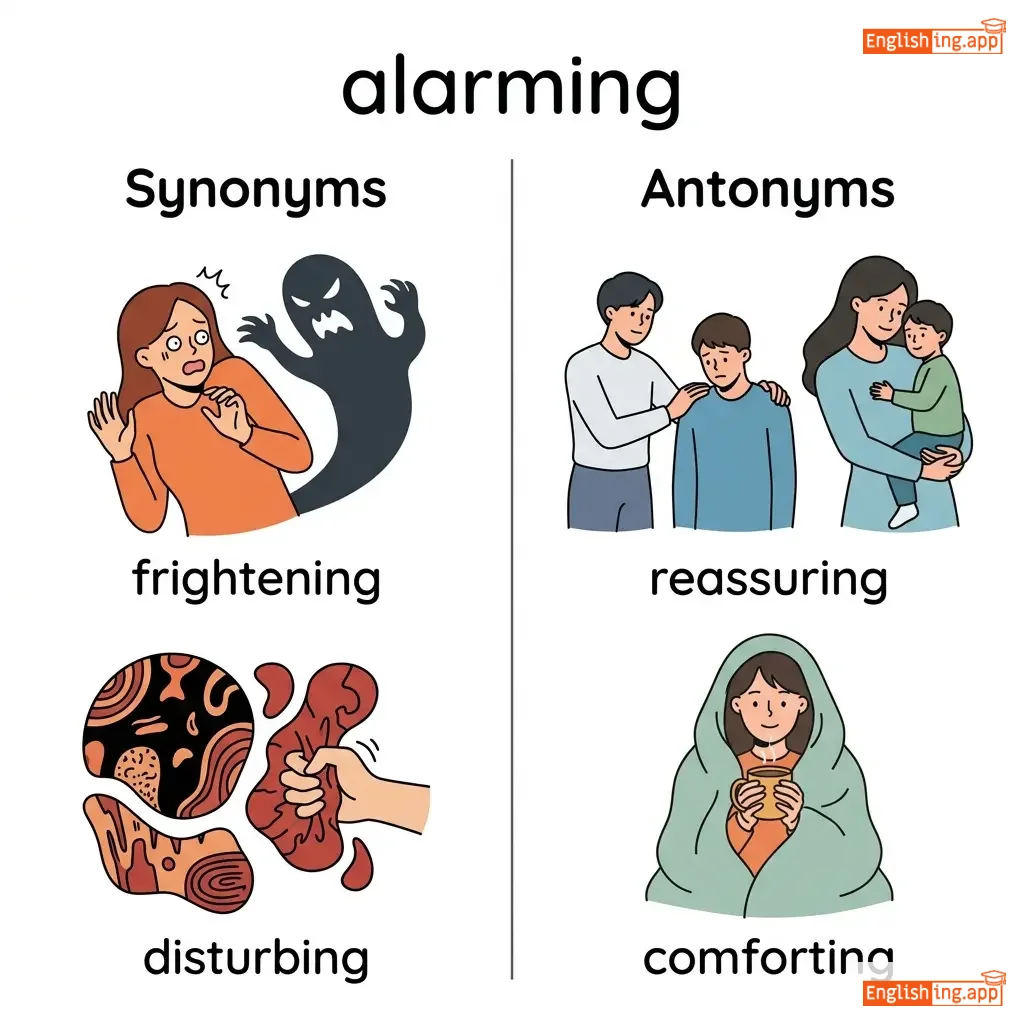
令人震惊的; 令人害怕的; 令人担忧的
lìng rén zhènjīng de; lìng rén hàipà de; lìng rén dānyōu de
••••••
|
- •••••• | - •••••• | - •••••• | - •••••• |
causing worry or fear; disturbing; frightening
••••••
|
The alarming news about climate change worried everyone.
关于气候变化的令人震惊的消息让大家都感到不安。
••••••
|
关于气候变化的令人震惊的消息让大家都感到不安。
Guānyú qìhòu biànhuà de lìng rén zhènjīng de xiāoxī ràng dàjiā dōu gǎndào bù'ān.
••••••
|
- •••••• | - •••••• | - •••••• |
frightening, disturbing, worrying, shocking
••••••
|
reassuring, comforting, calming, peaceful
••••••
|
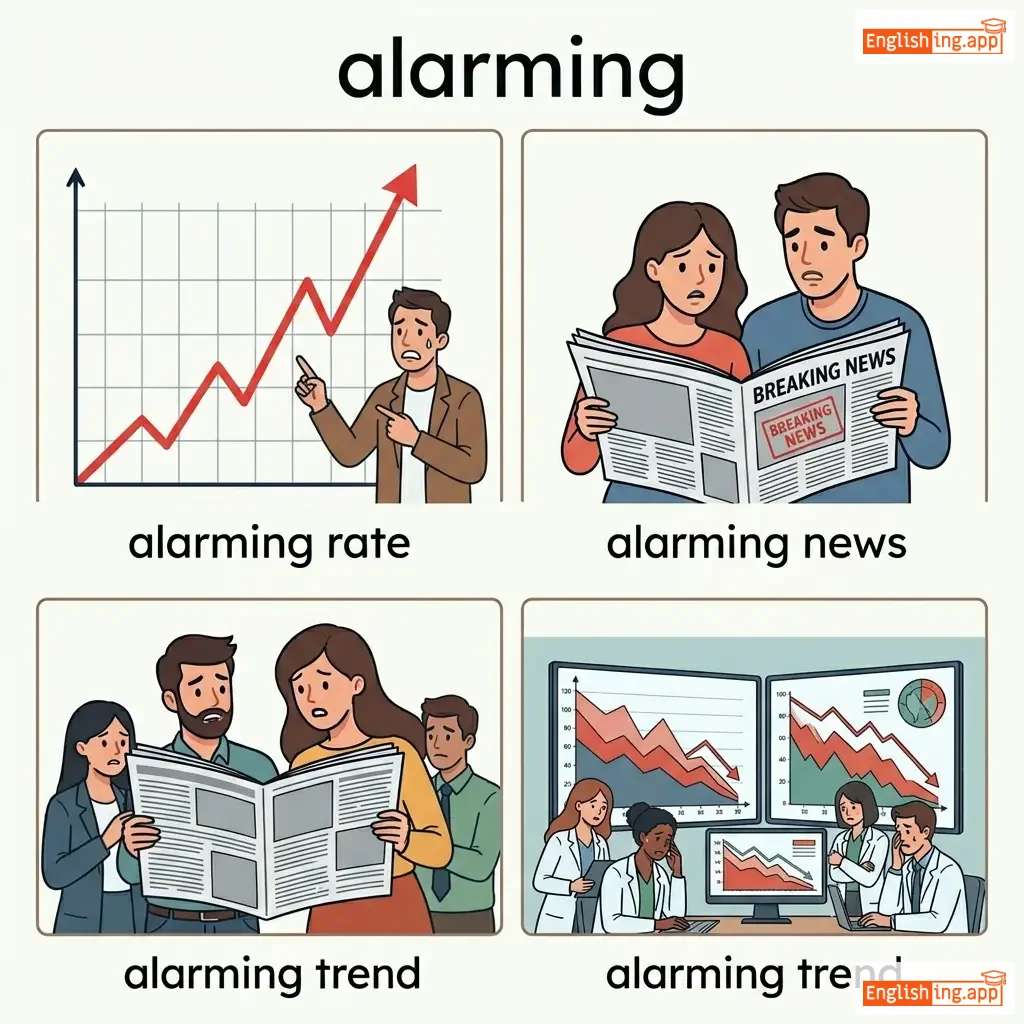
alarming rate, alarming news, alarming trend
••••••
|
Alarming像警报声,通常会让我们感到害怕和担忧。
••••••
|
|
#210
🤔
|
/ˌɔːlˈbiː.ɪt/
conjunction
(奥尔比特)
••••••
|
- •••••• |
尽管
jǐnguǎn
••••••
|
- •••••• | - •••••• | - •••••• | - •••••• |
Although; even though.
••••••
|
He finally agreed, albeit reluctantly. |
他最终同意了,尽管不情愿。
Tā zuìzhōng tóngyìle, jǐnguǎn bù qíngyuàn.
••••••
|
- •••••• | - •••••• | - •••••• |
although, though, even though, despite
••••••
|
because, therefore
••••••
|
albeit reluctantly, albeit briefly, albeit slowly
••••••
|
Albeit 就是 all + be it — 尽管如此
••••••
|
|
#211
📔
|
/ˈælbəm/
noun
(相册)
••••••
|
|
相册
xiangce
••••••
|
- •••••• | - •••••• | - •••••• | - •••••• |
A collection of songs or photographs compiled into a single book, record, or digital file.
••••••
|
She showed me her travel album full of beautiful pictures.
她给我看了她的旅行相册,里面有很多漂亮的照片。
••••••
|
她给我看了她的旅行相册,里面有很多漂亮的照片。
Ta gei wo kanle ta de luxing xiangce, limian you henduo piaoliang de zhaopian.
••••••
|
photo album
相册
••••••
|
A book in which photographs are collected and displayed.
••••••
|
照片相册
zhaopian xiangce
••••••
|
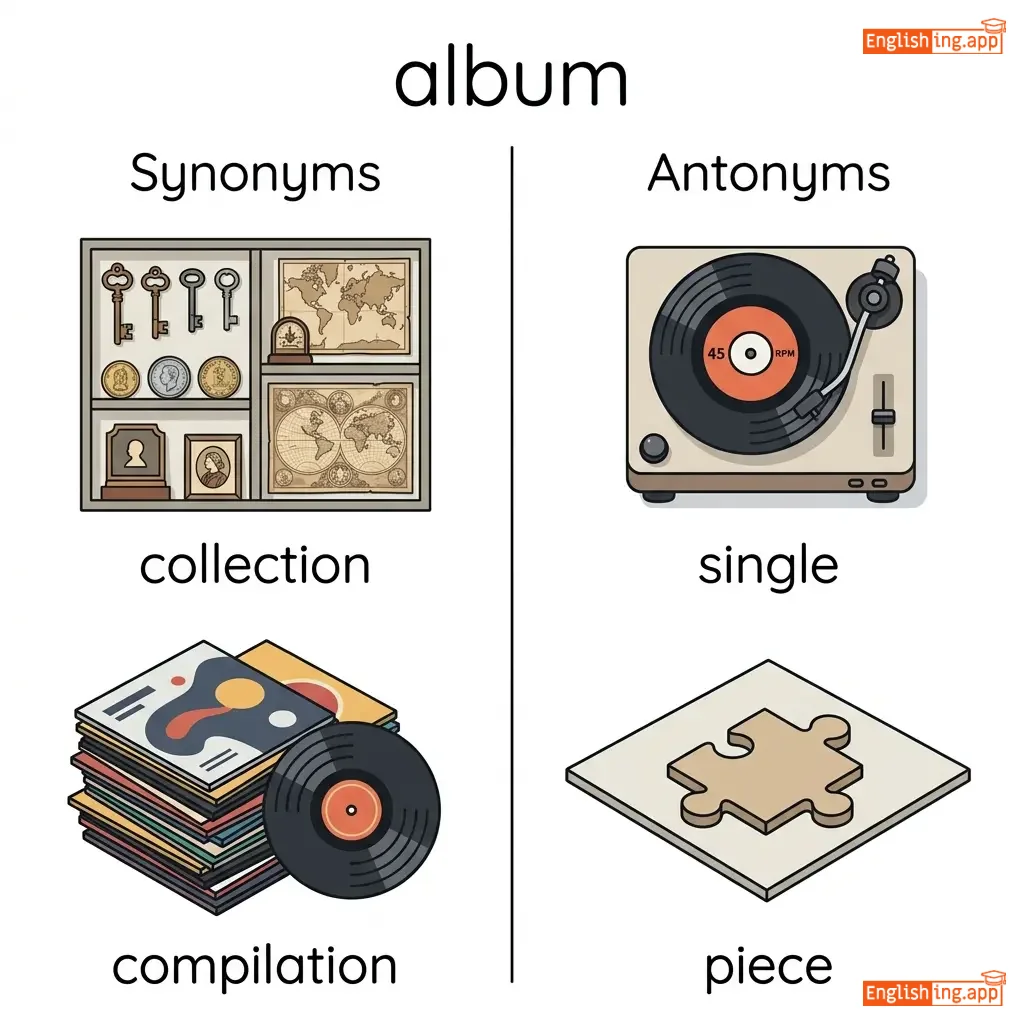
collection, compilation, record, scrapbook, anthology
••••••
|
single, piece
••••••
|
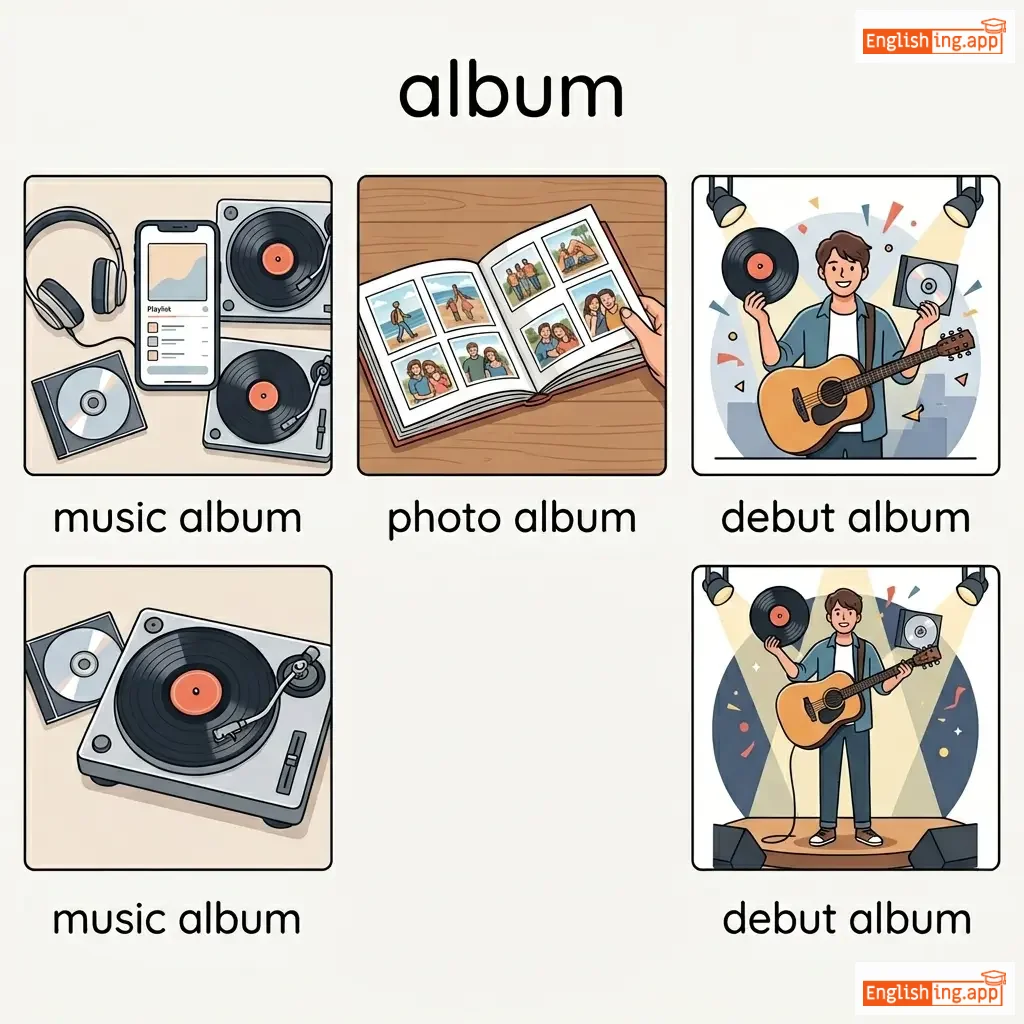
music album, photo album, debut album, family album
••••••
|
相册,或 AL-Boom,收集所有的照片或歌曲!
••••••
|
|
#212
🍷
|
/ˈælkəhɒl/
noun
••••••
|
- •••••• | - •••••• | - •••••• | - •••••• | - •••••• | - •••••• |
A colorless volatile liquid that is the intoxicating constituent of wine, beer, spirits, and other drinks.
••••••
|
Too much alcohol can damage your liver. |
- •••••• |
alcohol abuse |
The excessive consumption of alcoholic drinks causing harm.
••••••
|
- •••••• |
liquor, spirit, ethanol, booze, drink
••••••
|
sobriety, abstinence
••••••
|
alcohol consumption, alcohol level, alcohol abuse, alcohol addiction
••••••
|
No •••••• |
|
#213
⚠️
|
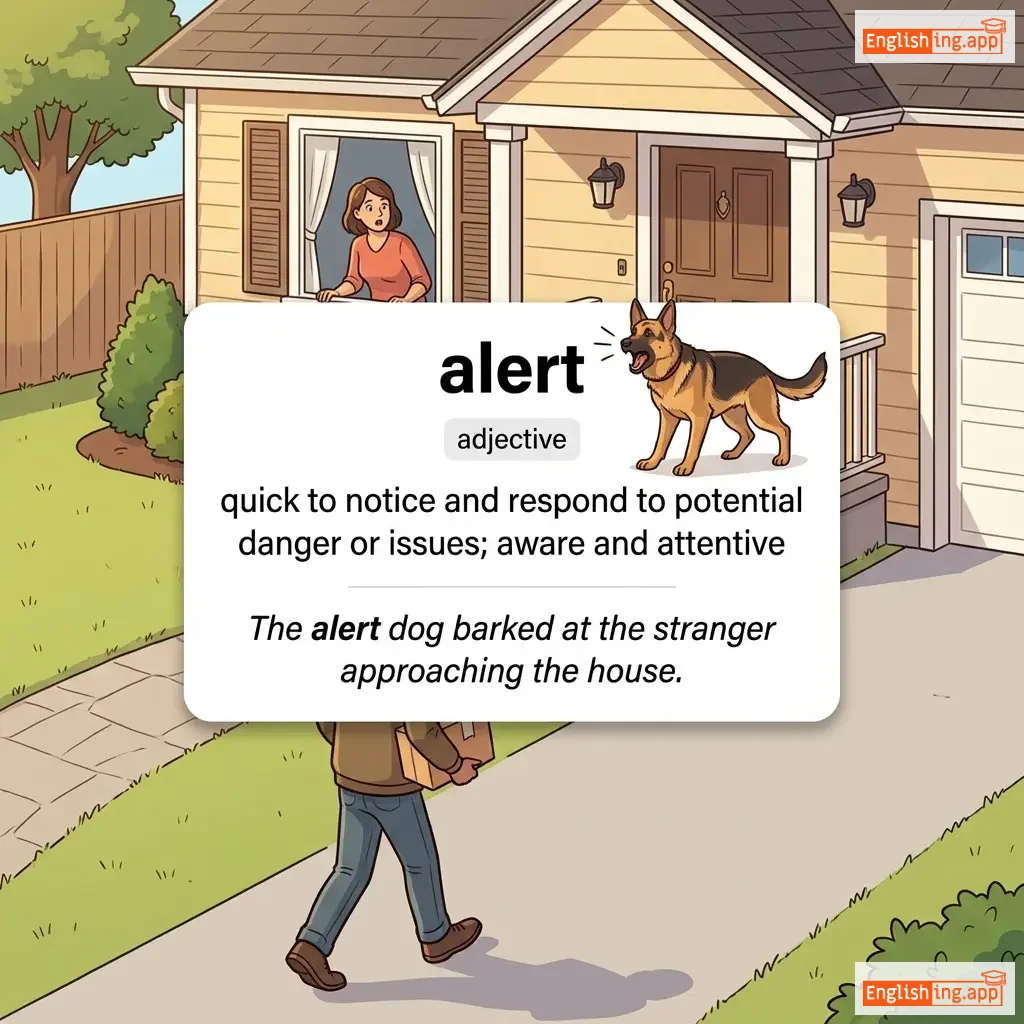
/əˈlɜːrt/
adjective
(警觉)
••••••
|
|
警觉
jingjue
••••••
|
- •••••• | - •••••• | - •••••• | - •••••• |
quick to notice and respond to potential danger or issues; aware and attentive
••••••
|
The alert dog barked at the stranger approaching the house. |
警觉的狗对接近房子的陌生人大声吠叫。
Jingjue de gou dui jiejin fangzi de mosheng ren da sheng feijiao.
••••••
|
- •••••• | - •••••• | - •••••• |
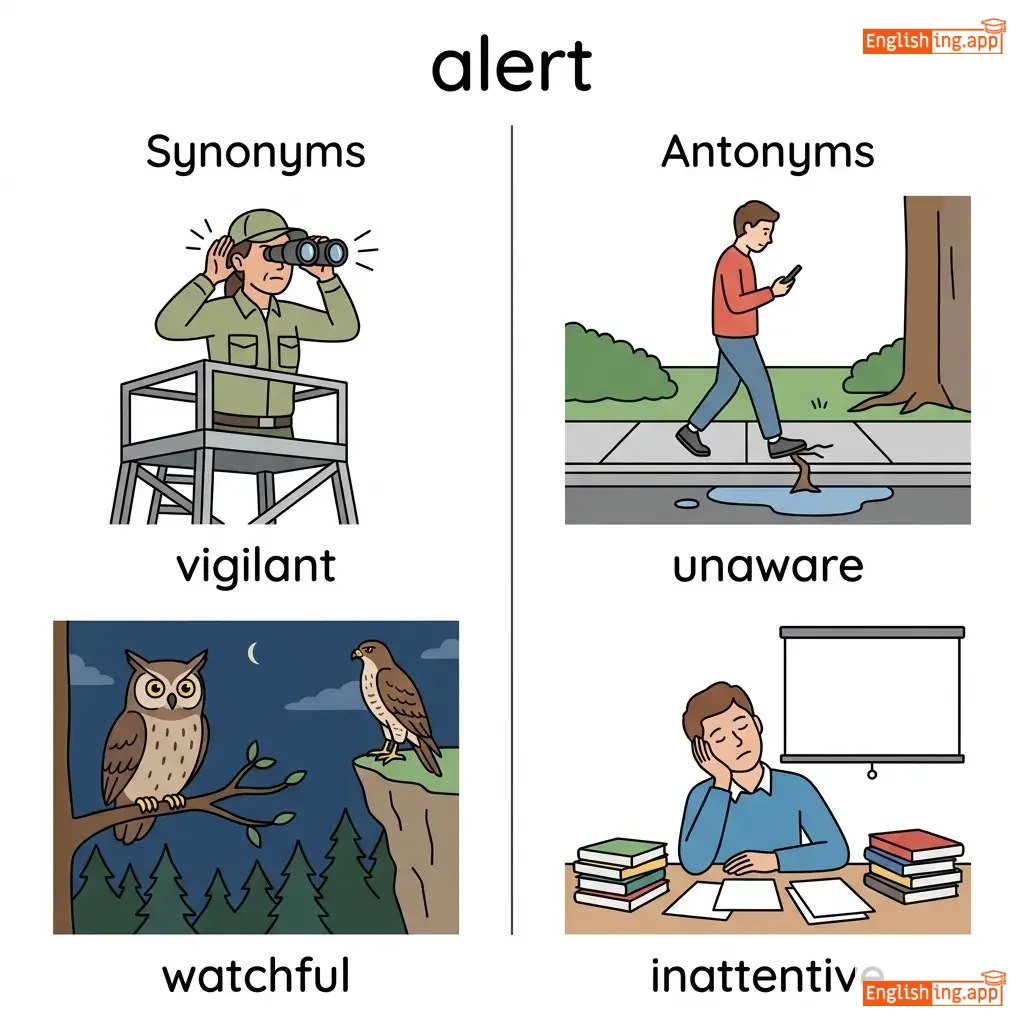
vigilant, watchful, aware, observant
••••••
|
unaware, inattentive
••••••
|
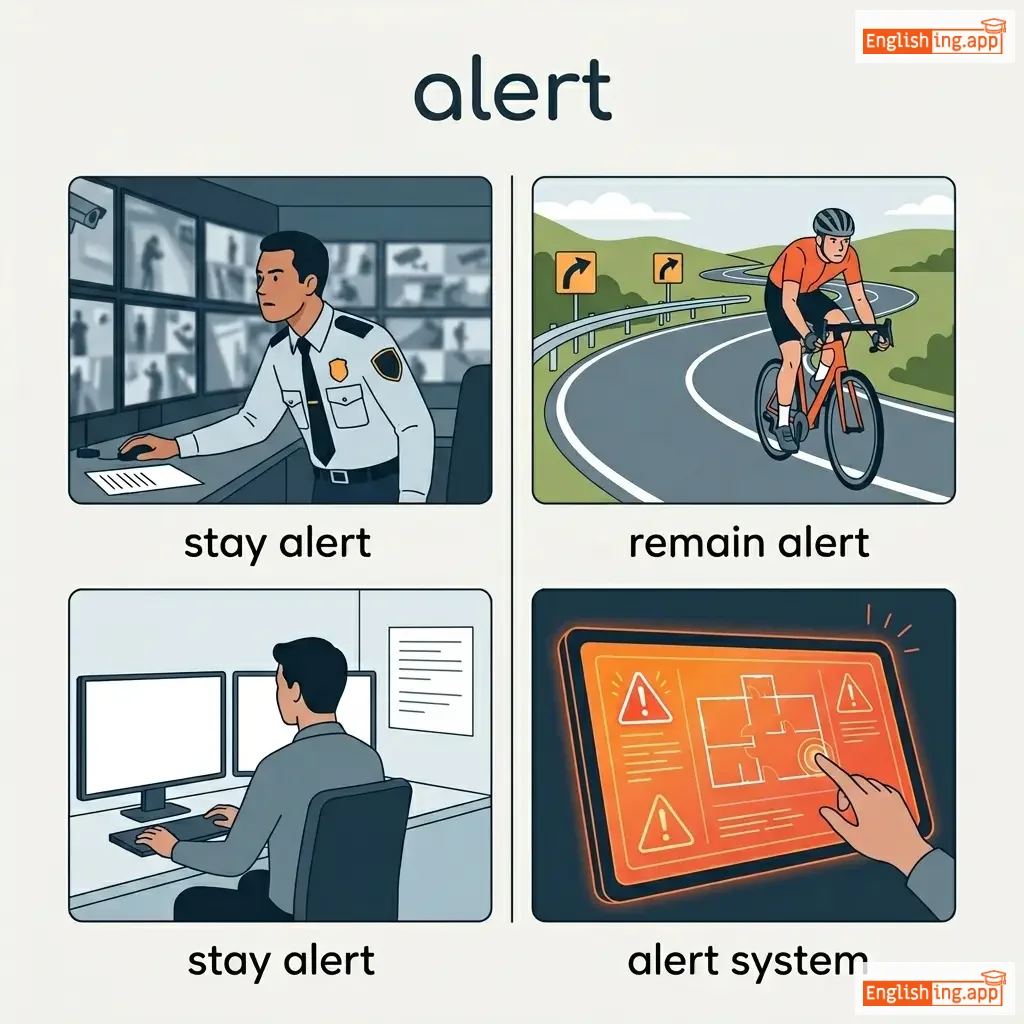
stay alert, remain alert, alert system
••••••
|
像警觉的狗一样,总是留意周围的危险!
••••••
|
|
#214
👀
|
/əˈlɜːrtli/
adverb
(阿勒特利)
••••••
|
- •••••• |
警觉地
jingjue de
••••••
|
- •••••• | - •••••• | - •••••• | - •••••• |
in a watchful, attentive, and quick-to-notice manner
••••••
|
She listened alertly to every sound in the dark forest.
她 阿勒特利 地 听 着 黑暗 森林 里的 每个 声音。
••••••
|
她在黑暗的森林里警觉地听着每一个声音。
ta zai hei'an de senlin li jingjue de ting zhe mei yi ge shengyin
••••••
|
- •••••• | - •••••• | - •••••• |
attentively, vigilantly, watchfully, keenly
••••••
|
carelessly, inattentively, drowsily
••••••
|
listen alertly, watch alertly, remain alertly aware
••••••
|
Alertly 听起来像 alert,意思是 警觉地
••••••
|
|
#215
👀
|
/əˈlɜːrtnəs/
noun
(阿勒特尼斯)
••••••
|
- •••••• |
警觉性
jingjue xing
••••••
|
- •••••• | - •••••• | - •••••• | - •••••• |
the state of being mentally aware and quick to notice or respond; vigilance
••••••
|
The driver maintained a high level of alertness during the long journey.
司机在长途驾驶中保持了高度的阿勒特尼斯。
••••••
|
司机在长途驾驶中保持了高度的警觉性。
siji zai changtu jiashi zhong baochi le gaodu de jingjue xing
••••••
|
- •••••• | - •••••• | - •••••• |
vigilance, attentiveness, awareness, watchfulness, readiness
••••••
|
drowsiness, inattentiveness, lethargy
••••••
|
mental alertness, high alertness, maintain alertness, level of alertness
••••••
|
Alertness 就是一直警觉
••••••
|
|
#216
👽
|
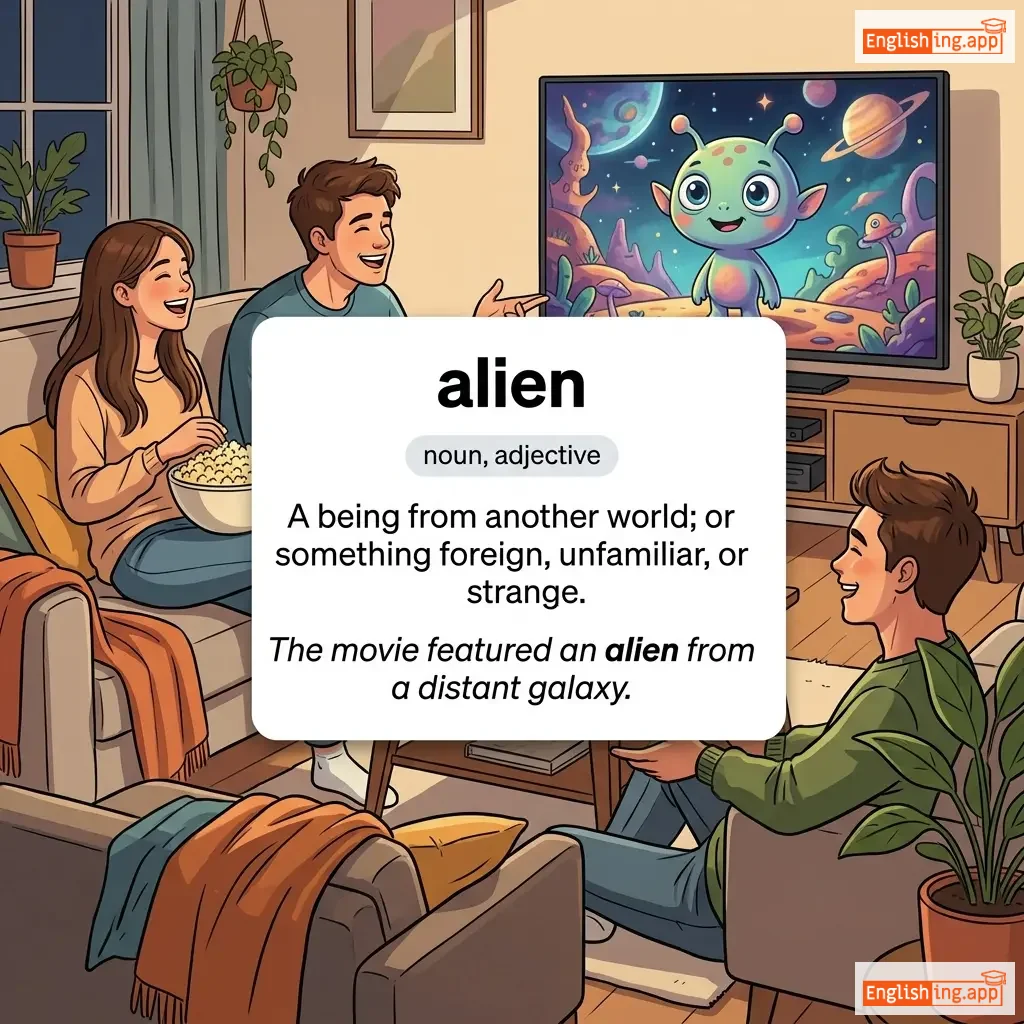
/ˈeɪ.li.ən/
noun, adjective
(外星人)
••••••
|
|
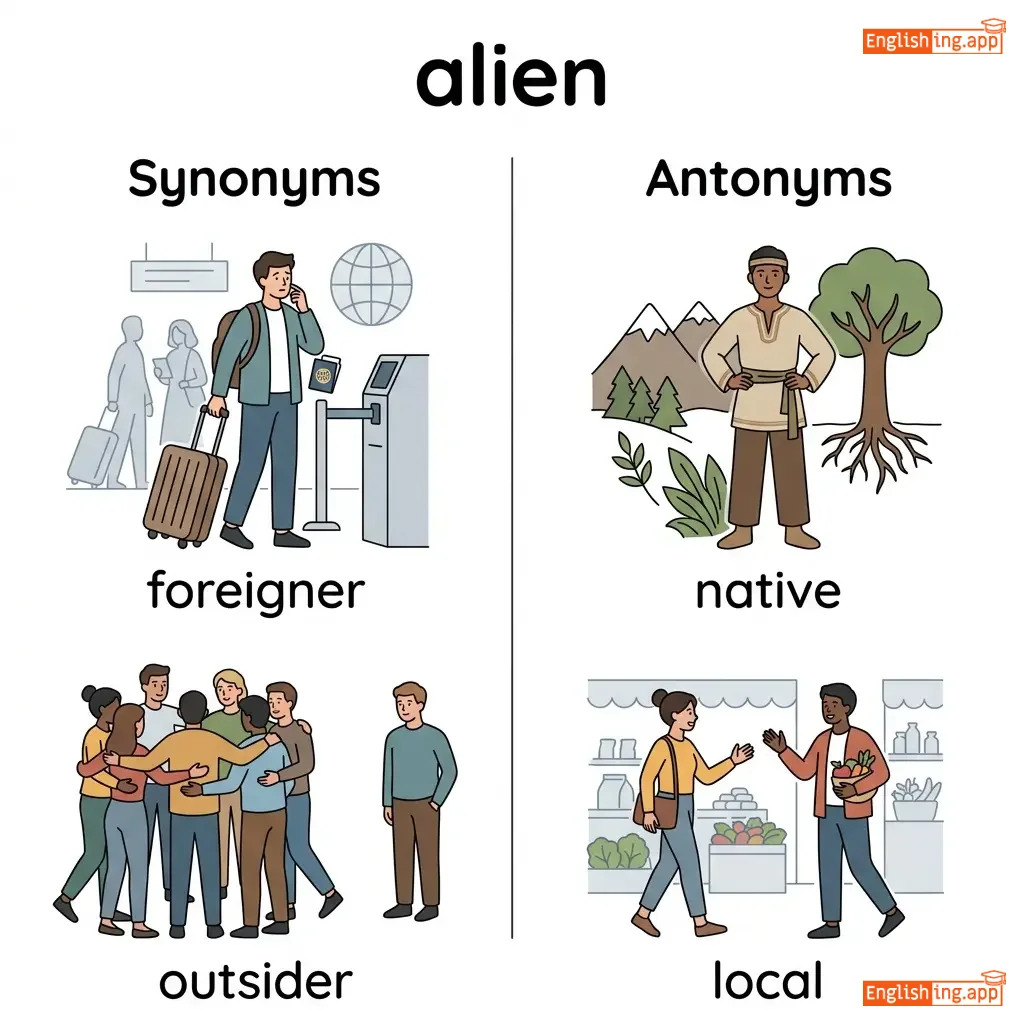
外星人
waixingren
••••••
|
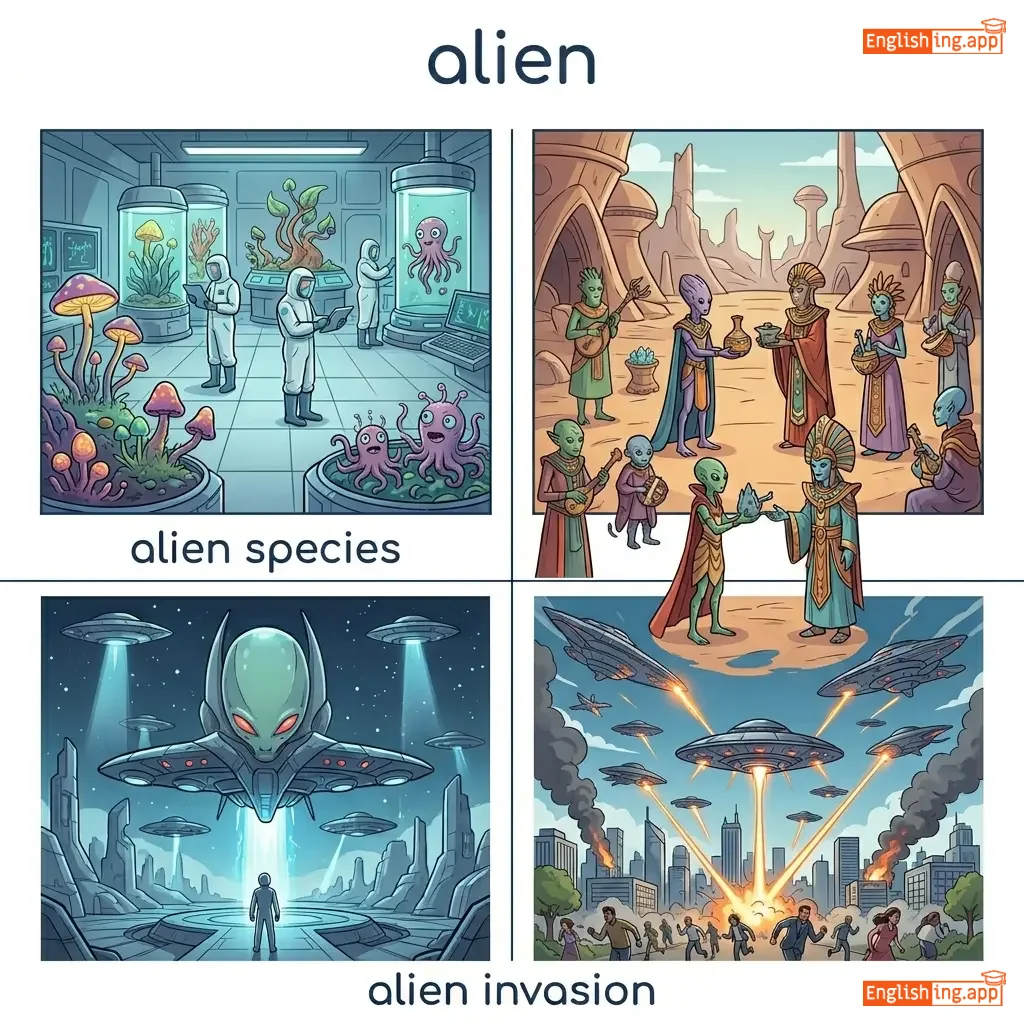
- •••••• | - •••••• | - •••••• | - •••••• |
A being from another world; or something foreign, unfamiliar, or strange.
••••••
|
The movie featured an alien from a distant galaxy.
电影中出现了来自遥远星系的外星人。
••••••
|
电影中出现了来自遥远星系的外星人。
Dianying zhong chuxian le laizi yaoyuan xingxi de waixingren.
••••••
|
alien to
对…陌生
••••••
|
Something unfamiliar or strange to someone.
••••••
|
陌生的
mosheng de
••••••
|
foreigner, outsider, stranger, extraterrestrial, immigrant
••••••
|
native, local, familiar
••••••
|
alien species, alien culture, alien invasion, alien to
••••••
|
外星人 - 来自遥远的星系,绝对陌生!
••••••
|
|
#217
📐
|
/əˈlaɪn/
verb
(aɪˈlaɪn)
••••••
|
- •••••• |
对齐 / 排成直线
duìqí / pái chéng zhíxiàn
••••••
|
aligned
əˈlaɪnd
••••••
|
aligned
əˈlaɪnd
••••••
|
aligns
əˈlaɪnz
••••••
|
aligning
əˈlaɪnɪŋ
••••••
|
To arrange things in a straight line; to adjust or bring into proper relation or agreement.
••••••
|
The manager asked the team to align their goals with the company's mission.
经理要求团队将他们的目标与公司的使命对齐。
••••••
|
经理要求团队将他们的目标与公司的使命对齐。
Jīnglǐ yāoqiú tuánduì jiāng tāmen de mùbiāo yǔ gōngsī de shǐmìng duìqí.
••••••
|
align with
与...对齐
••••••
|
To bring into agreement or harmony with something.
••••••
|
与...对齐
yǔ...duìqí
••••••
|
adjust, arrange, organize, coordinate, harmonize
••••••
|
misalign, disorder, disorganize
••••••
|
align with, align interests, align goals, align strategy
••••••
|
Align = A line → 将所有事物排成一条线 (对齐) 达到和谐。
••••••
|
|
#218
🔧
|
/əˈlaɪnmənt/
noun
(ā līn mèn tè)
••••••
|
- •••••• |
对齐
duìqí
••••••
|
- •••••• | - •••••• | - •••••• | - •••••• |
arrangement in a straight line or in proper position
••••••
|
The alignment of the planets was perfect for the celestial event. |
行星的对齐对天文事件来说是完美的。
Xíngxīng de duìqí duì tiānwén shìjiàn lái shuō shì wánměi de.
••••••
|
- •••••• | - •••••• | - •••••• |
arrangement, positioning, coordination, alignment
••••••
|
misalignment, disorder
••••••
|
alignment of forces, proper alignment, alignment with goals
••••••
|
Aligning objects in the right alignment always makes everything perfect
••••••
|
|
#219
👭
|
/əˈlaɪk/
adjective
(ā-lèi-kè)
••••••
|
- •••••• |
相似; 以相同的方式
alike
••••••
|
- •••••• | - •••••• | - •••••• | - •••••• |
similar in appearance or nature; in the same way
••••••
|
The two sisters look very much alike.
这两个姐妹看起来非常相似。
••••••
|
这两个姐妹看起来非常相似。
Zhè liǎng gè jiěmèi kàn qǐlái fēicháng xiāngsì.
••••••
|
- •••••• | - •••••• | - •••••• |
similar, identical, comparable, equivalent
••••••
|
different, dissimilar, unlike, distinct
••••••
|
look alike, think alike, dress alike
••••••
|
Alike - 想象两个相似的姐妹,意思相同。
••••••
|
|
#220
💓
|
/əˈlaɪv/
adjective
(ā lái fū)
••••••
|
- •••••• |
活着
huózhe
••••••
|
- •••••• | - •••••• | - •••••• | - •••••• |
Living, not dead.
••••••
|
The rescue team found the missing child alive. |
救援队找到失踪的孩子时,他还活着。
Jiùyuán duì zhǎodào shīzōng de háizi shí, tā hái huózhe.
••••••
|
come alive |
to become lively or energetic
••••••
|
复活
fùhuó
••••••
|
living, breathing, existing, animated, conscious
••••••
|
dead, lifeless, deceased
••••••
|
stay alive, remain alive, alive and well, keep alive
••••••
|
Alive 就是活着,就像‘活着’一样。
••••••
|
|
#221
🌍
|
/ɔːl/
determiner, pronoun, adverb
(óu)
••••••
|
- •••••• |
所有
suǒyǒu
••••••
|
- •••••• | - •••••• | - •••••• | - •••••• |
the whole quantity or extent of something; every one of something
••••••
|
She spent all her money on books.
她把所有的钱都花在书上。
••••••
|
她把所有的钱都花在书上。
Tā bǎ suǒyǒu de qián dōu huā zài shū shàng.
••••••
|
all in all
一切都算在内
••••••
|
considering everything
••••••
|
总的来说
zǒng de lái shuō
••••••
|
every, entire, whole, total, complete
••••••
|
none, nothing, partial
••••••
|
all the time, all over, all right, all together
••••••
|
ALL 就是所有 — 所有的东西都有!
••••••
|
|
#222
⚖️
|
/ˌæl.əˈɡeɪ.ʃən/
noun
(àlìɡeɪʃən)
••••••
|
- •••••• |
指控
zhǐkòng
••••••
|
- •••••• | - •••••• | - •••••• | - •••••• |
a claim that someone has done something wrong or illegal
••••••
|
The allegation against him was proven false. |
对他的指控被证明是假的。
duì tā de zhǐkòng bèi zhèngmíng shì jiǎ de.
••••••
|
- •••••• | - •••••• | - •••••• |
accusation, charge, claim, assertion
••••••
|
vindication, exoneration, proof of innocence
••••••
|
serious allegation, false allegation, investigate allegation
••••••
|
指控 (Zhǐkòng) — 当某人做错事时,指控就会发生。
••••••
|
|
#223
🗣️
|
/əˈlɛdʒ/
verb
(alɛdʒ)
••••••
|
- •••••• |
声称
shēngchēng
••••••
|
alleged
alɛdʒd
••••••
|
alleged
alɛdʒd
••••••
|
alleges
alɛdʒəs
••••••
|
alleging
alɛdʒɪŋ
••••••
|
to claim or assert something, typically without proof
••••••
|
The witness alleged that the man was at the crime scene.
证人声称该男子在犯罪现场。
••••••
|
证人声称该男子在犯罪现场。
Zhèngrén shēngchēng gāi nánzǐ zài fànzuì xiànchǎng.
••••••
|
alleged crime
指控的罪行
••••••
|
a crime that is claimed to have happened but not yet proven
••••••
|
指控的罪行
zhǐkòng de zuìxíng
••••••
|
claim, assert, contend, accuse, state
••••••
|
deny, refute, reject
••••••
|
allege wrongdoing, allegedly involved, alleged crime, allege misconduct
••••••
|
Allege 意味着声称(声称在中文中)
••••••
|
|
#224
🕵️♂️
|
/əˈlɛdʒɪdli/
adverb
(æləˈdʒɛdli)
••••••
|
- •••••• |
据称
jù chēng
••••••
|
- •••••• | - •••••• | - •••••• | - •••••• |
used to say that something is claimed to be true, though not proven
••••••
|
He was allegedly involved in the robbery. |
他据称参与了抢劫。
Tā jù chēng cānyùle qiǎngjié.
••••••
|
- •••••• | - •••••• | - •••••• |
reportedly, supposedly, apparently, seemingly
••••••
|
undoubtedly, certainly
••••••
|
allegedly involved, allegedly responsible, allegedly stolen, allegedly committed
••••••
|
'Allegedly' 的意思是 '据称',就像说某事是事实,但还没有证据。
••••••
|
|
#225
💊
|
/əˈliːvieɪt/
verb
(缓解)
••••••
|
|
缓解
huanjie
••••••
|
alleviated
缓解了
••••••
|
alleviated
缓解了
••••••
|
alleviates
缓解
••••••
|
alleviating
缓解着
••••••
|
to make suffering, pain, or a problem less severe
••••••
|
The medicine helped alleviate her headache.
药物帮助缓解了她的头痛。
••••••
|
药物帮助缓解了她的头痛。
Yaowu bangzhu huanjie le tade toutong.
••••••
|
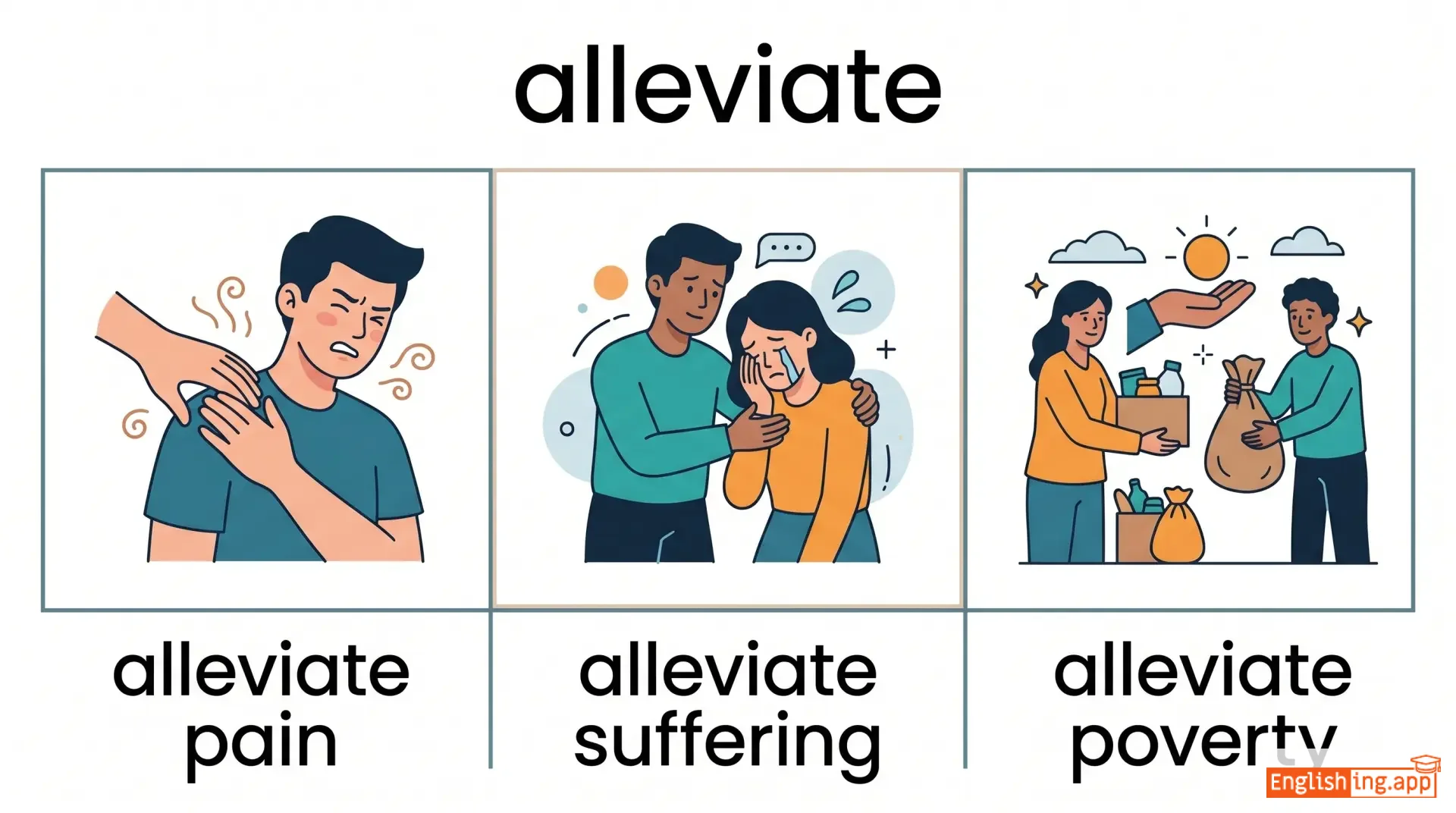
alleviate suffering
缓解痛苦
••••••
|
to reduce someone's suffering
••••••
|
缓解痛苦
huanjie tongku
••••••
|
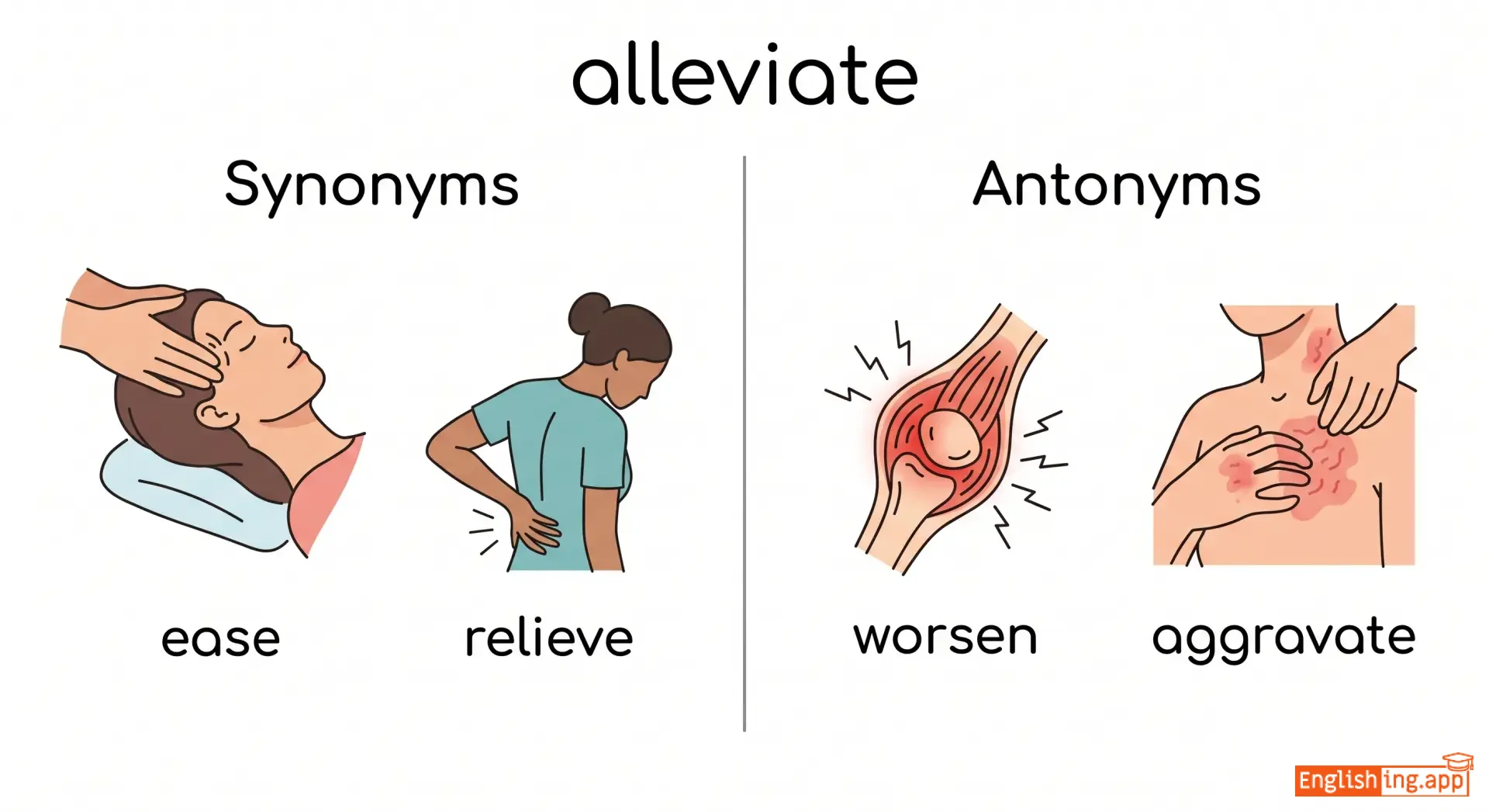
ease, relieve, lessen, mitigate, reduce
••••••
|
worsen, aggravate, intensify
••••••
|
alleviate pain, alleviate suffering, alleviate poverty, alleviate symptoms
••••••
|
缓解就像缓慢地减轻痛苦(缓解)。
••••••
|
|
#226
🤝
|
/əˈlaɪəns/
noun
(ā lī àn sī)
••••••
|
|
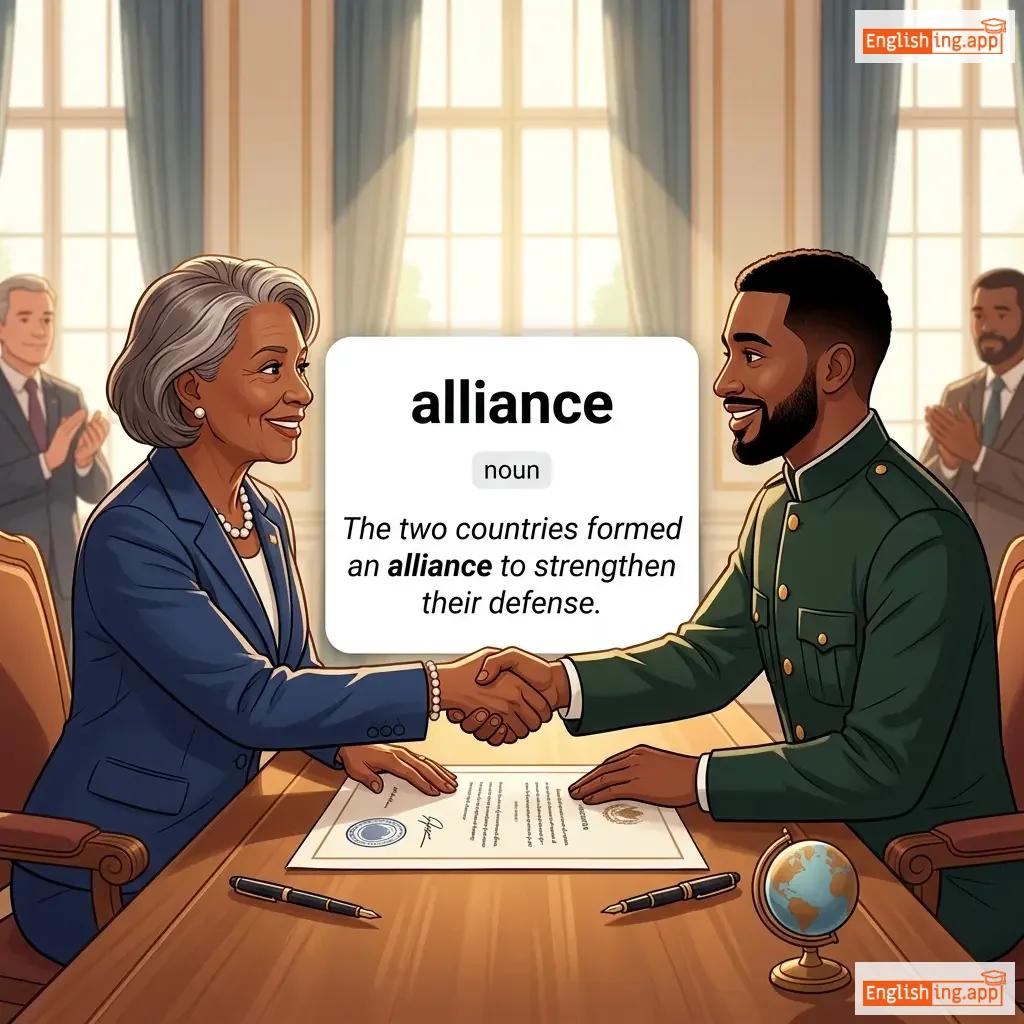
联盟
liánméng
••••••
|
- •••••• | - •••••• | - •••••• | - •••••• |
a formal agreement or union between groups, countries, or organizations for mutual benefit
••••••
|
The two countries formed an alliance to strengthen their defense.
这两个国家组建了一个联盟,以加强他们的防御。
••••••
|
这两个国家组建了一个联盟,以加强他们的防御。
Zhè liǎng gè guójiā zǔjiànle yīgè liánméng, yǐ jiāqiáng tāmen de fángyù.
••••••
|
form an alliance
建立联盟
••••••
|
to create a partnership or union for a shared purpose
••••••
|
建立联盟
jiànlì liánméng
••••••
|
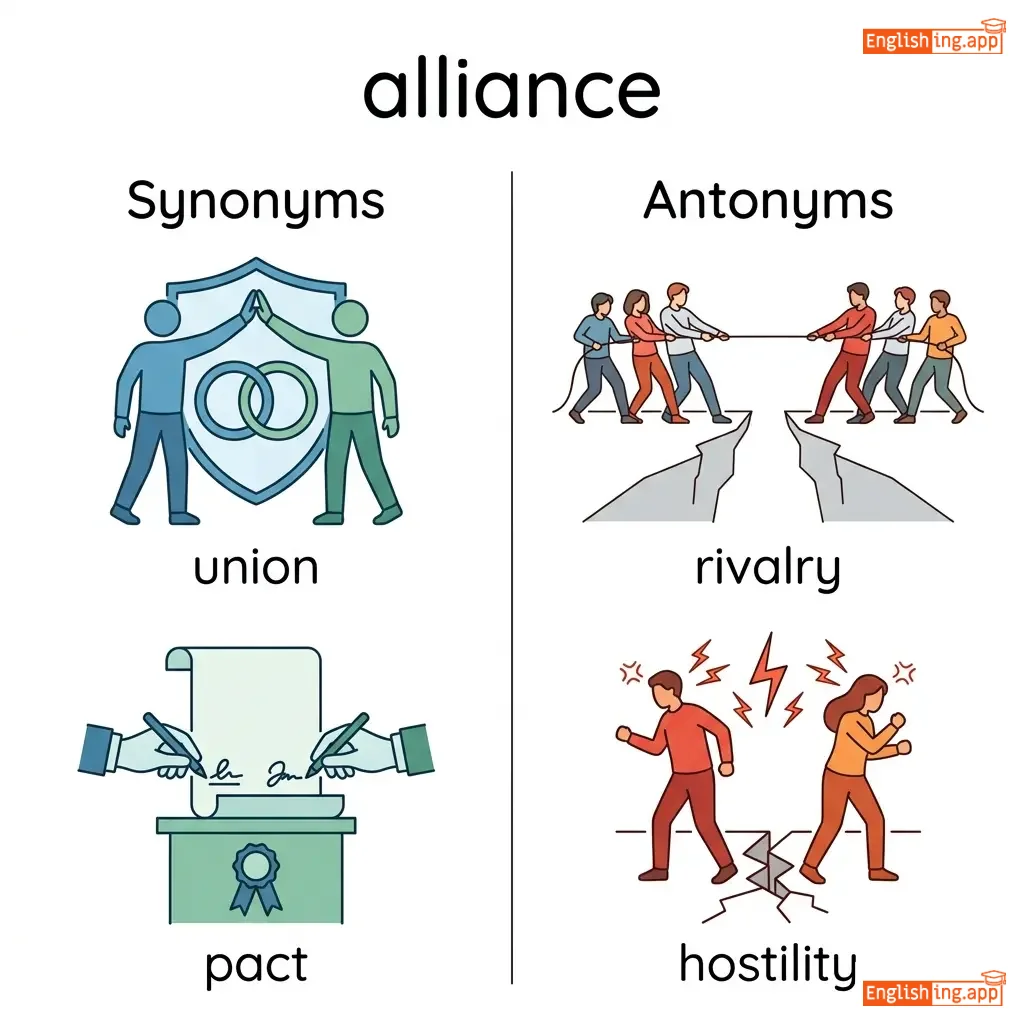
union, pact, partnership, coalition, federation
••••••
|
rivalry, hostility, separation
••••••
|
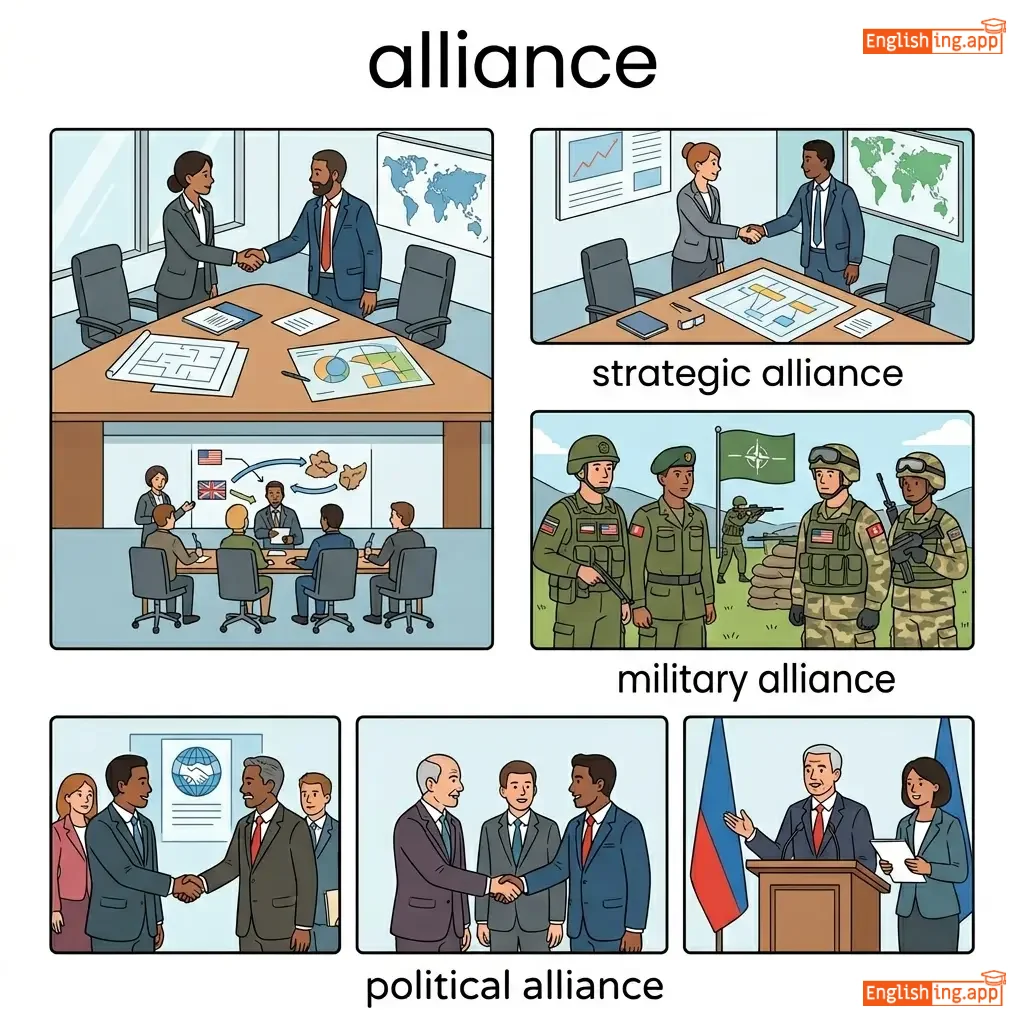
strategic alliance, military alliance, political alliance, business alliance
••••••
|
联盟意味着联合 — 联盟成员共同努力建立联盟。
••••••
|
|
#227
📊
|
/ˈæləkeɪt/
verb
(ălòkèit)
••••••
|
- •••••• |
分配
fēnpèi
••••••
|
allocated
ălòkèité
••••••
|
allocated
ălòkèité
••••••
|
allocates
ălòkèits
••••••
|
allocating
ălòkèiting
••••••
|
to distribute or assign resources, duties, or responsibilities for a specific purpose
••••••
|
The manager allocated funds for the new project.
经理已为新项目分配资金。
••••••
|
经理已为新项目分配资金。
Jīnglǐ yǐ wèi xīn xiàngmù fēnpèi zījīn.
••••••
|
allocate resources
分配资源
••••••
|
to distribute resources to different tasks or purposes
••••••
|
分配资源
fēnpèi zīyuán
••••••
|
assign, distribute, designate, apportion, allot
••••••
|
withhold, retain
••••••
|
allocate time, allocate resources, allocate funds, allocate tasks
••••••
|
Allocate代表分配 — 分配所有资源, 一步一步,确定优先事项。
••••••
|
|
#228
💰
|
/ˌæləˈkeɪʃən/
noun
(a lokei shen)
••••••
|
|
分配
fenpei
••••••
|
- •••••• | - •••••• | - •••••• | - •••••• |
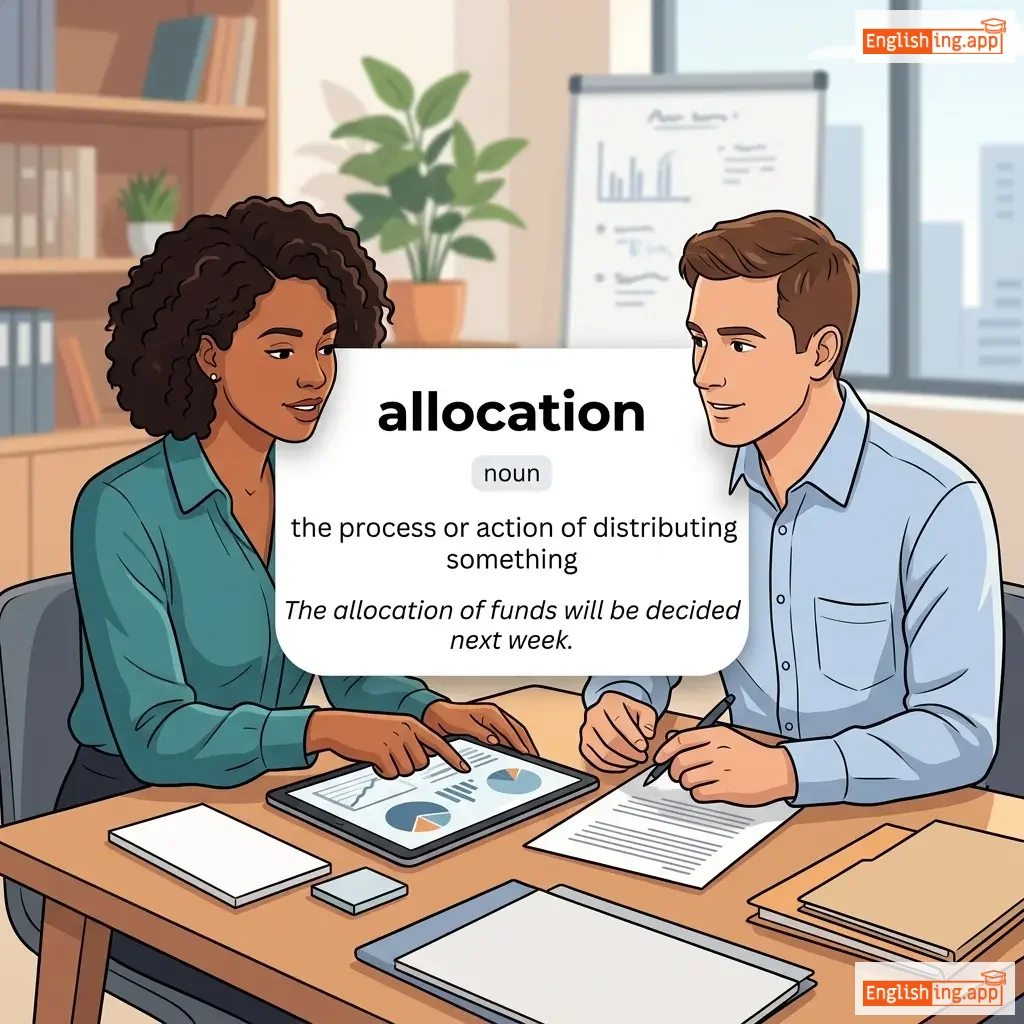
the process or action of distributing something
••••••
|
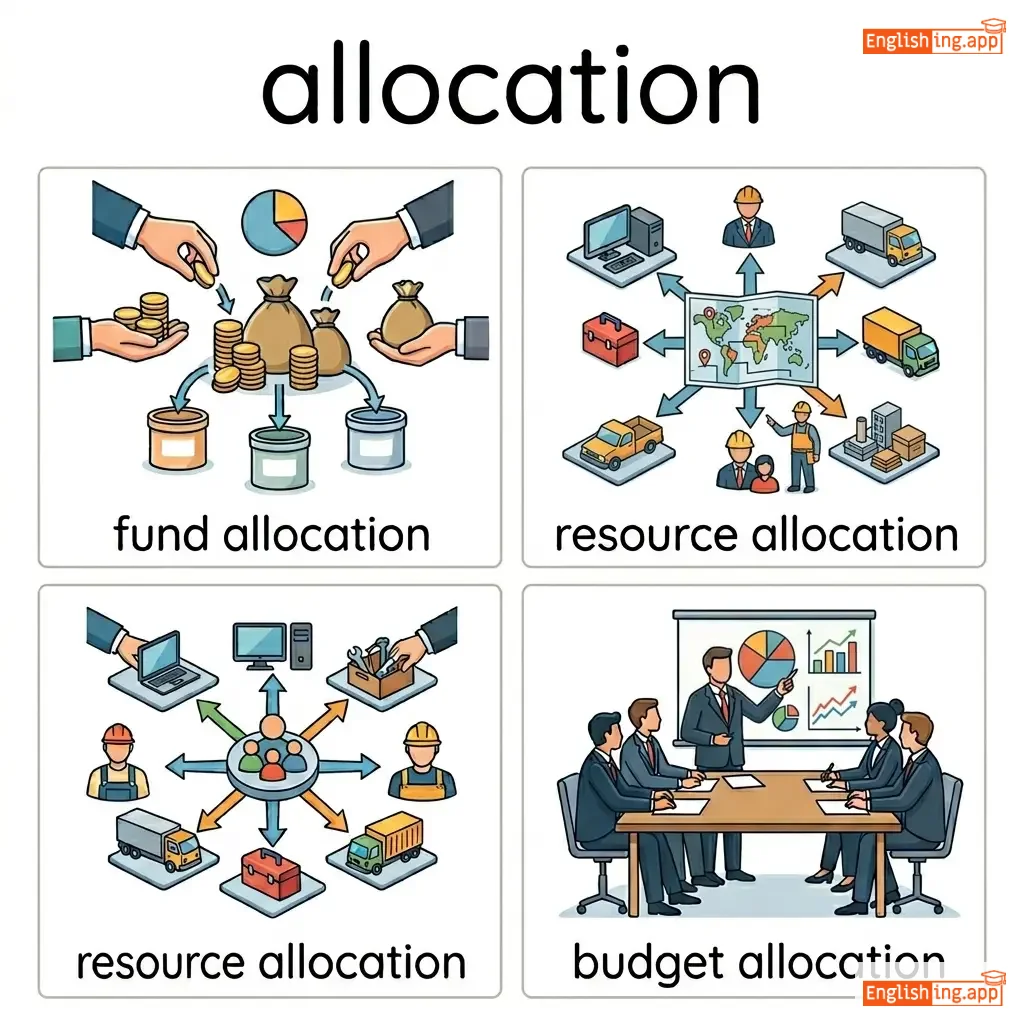
The allocation of funds will be decided next week. |
资金的分配将在下周决定。
zijin de fenpei jiang zai xia zhou jueding.
••••••
|
- •••••• | - •••••• | - •••••• |
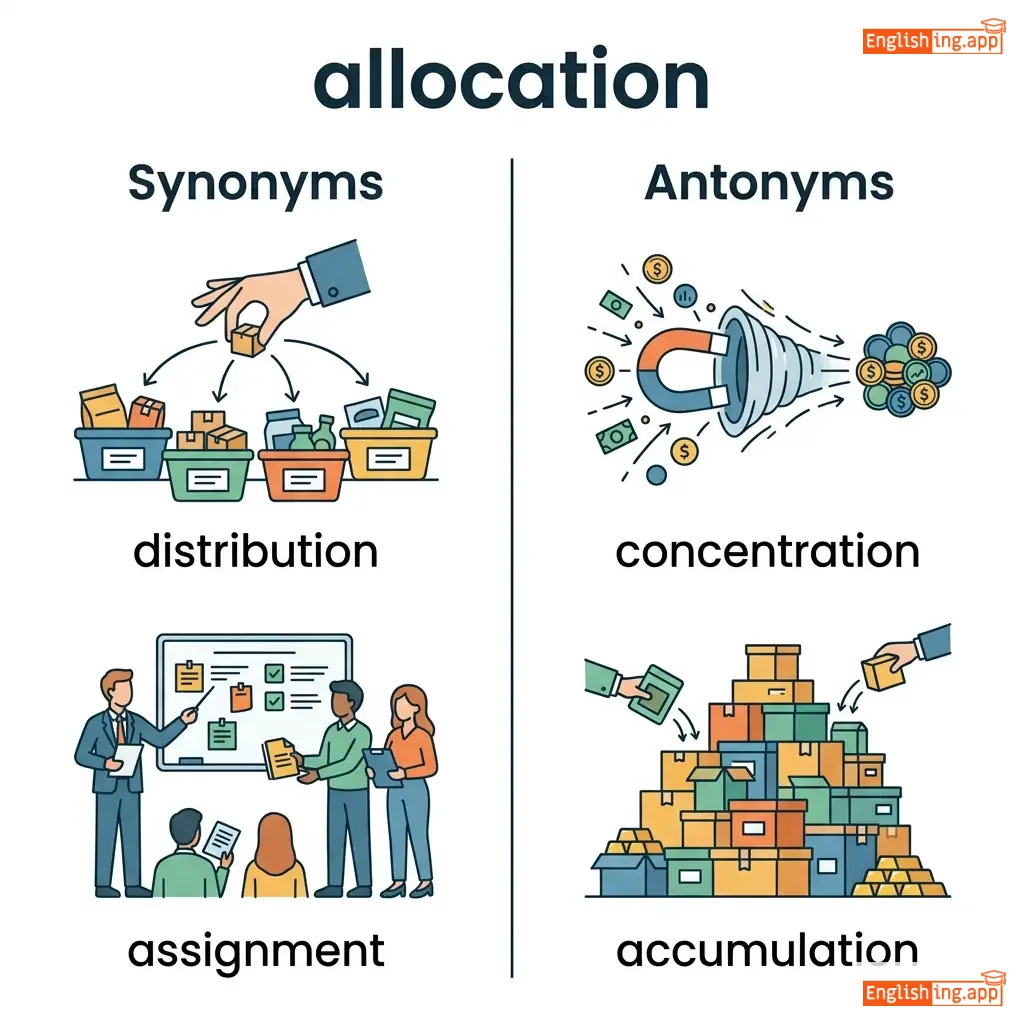
distribution, assignment, allotment, apportionment
••••••
|
concentration, accumulation
••••••
|
fund allocation, resource allocation, budget allocation
••••••
|
分配就像把资源分给不同的人 (fenpei jiuxiang ba ziyuan fen gei butong de ren)
••••••
|
|
#229
⏱️
|
/əˈlɒt/
verb
(海皮尼斯)
••••••
|
- •••••• |
幸福
xìngfú
••••••
|
allotted
••••••
|
allotted
••••••
|
allots
••••••
|
allotting
••••••
|
to give or assign something, often a share or portion, to someone
••••••
|
Each student was allotted ten minutes to present.
她在获得奖项时无法掩饰自己的幸福。
••••••
|
她在获得奖项时无法掩饰自己的幸福。
Tā zài huòdé jiǎngxiàng shí wúfǎ yǎnshì zìjǐ de xìngfú.
••••••
|
allot time
追求幸福
••••••
|
to assign a specific amount of time for something
••••••
|
追求幸福
Zhuīqiú xìngfú
••••••
|
assign, distribute, apportion, allocate, grant
••••••
|
deny, refuse
••••••
|
allot time, allot funds, allot space, allot tasks
••••••
|
幸福 = 幸 = 每一刻,幸福都是你自己的选择。
••••••
|
|
#230
📦
|
/əˈlɒtmənt/
noun
(阿洛特门特)
••••••
|
|
配给
peiji
••••••
|
- •••••• | - •••••• | - •••••• | - •••••• |
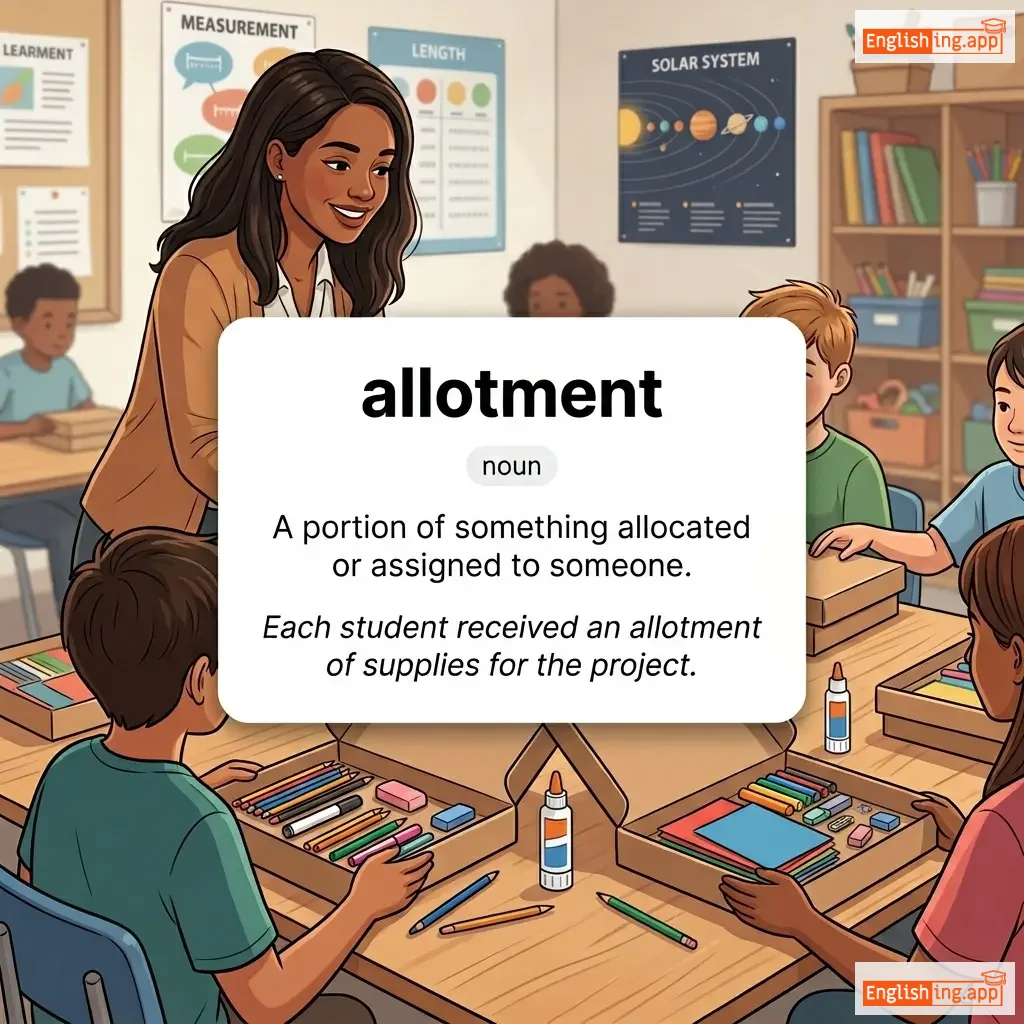
A portion of something allocated or assigned to someone.
••••••
|
Each student received an allotment of supplies for the project. |
每个学生都收到了项目所需的配给物资。
Mei ge xuesheng dou shoudao le xiangmu suo xu de peiji wuzi.
••••••
|
- •••••• | - •••••• | - •••••• |
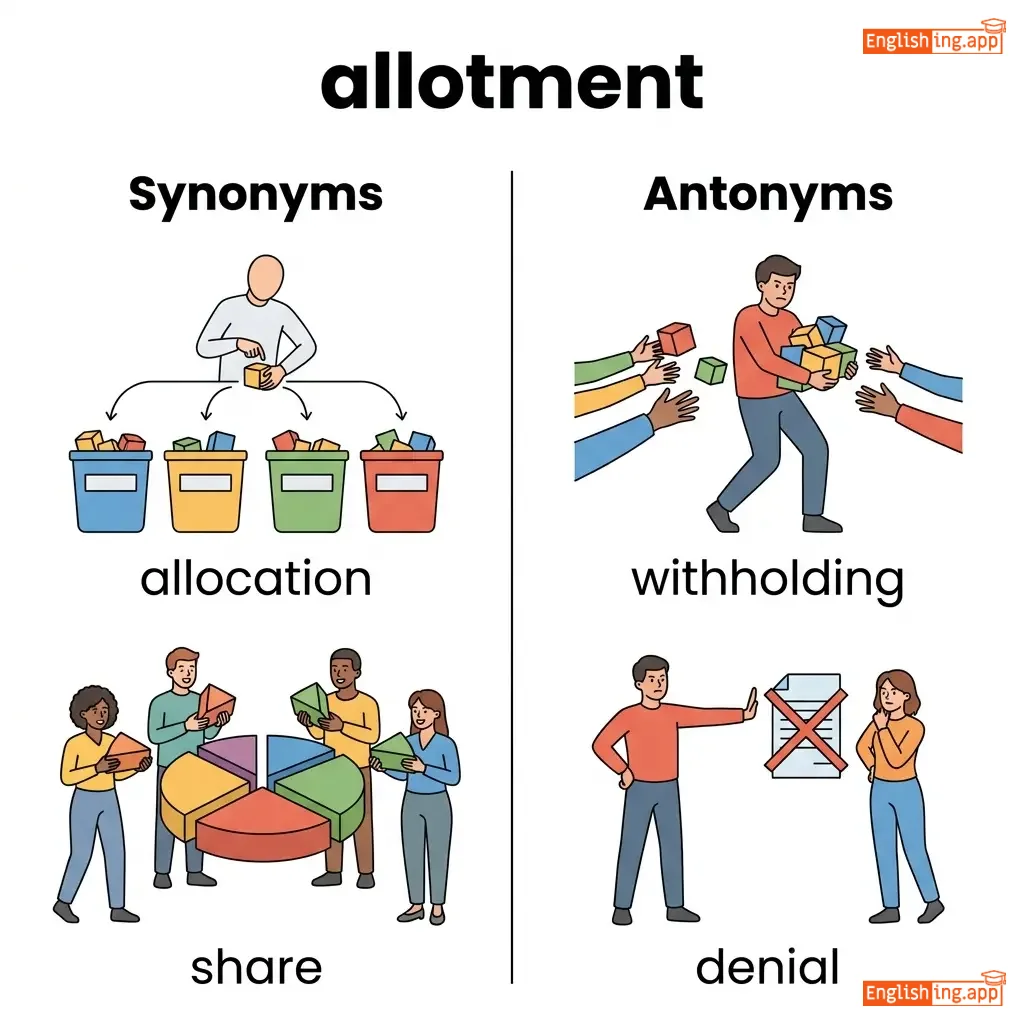
allocation, share, portion, quota, grant
••••••
|
withholding, denial, refusal
••••••
|
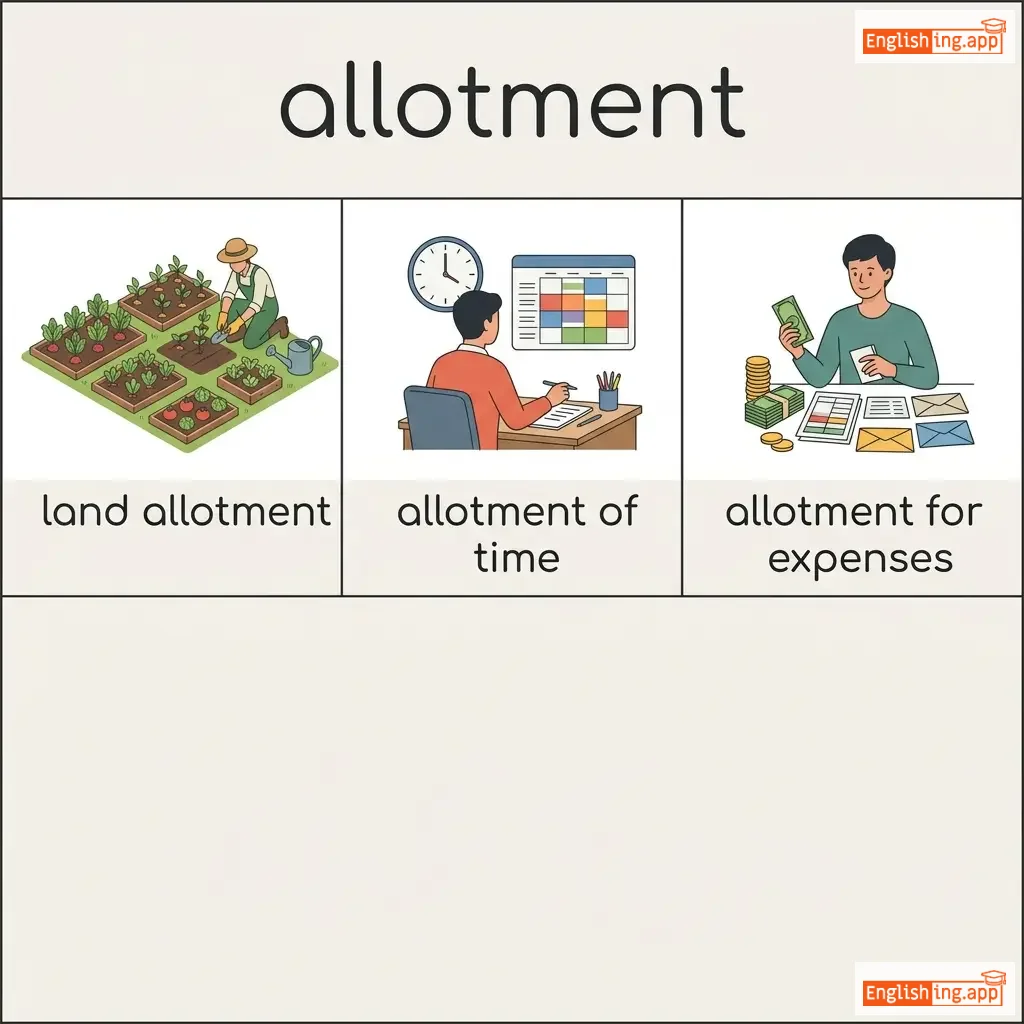
land allotment, allotment of time, allotment for expenses, allotment share
••••••
|
Allotment表示分配,像‘分配物资’
••••••
|
|
#231
✅
|
/əˈlaʊ/
verb
(阿劳)
••••••
|
|
允许
xǔn yǔ
••••••
|
allowed
阿劳德
••••••
|
allowed
阿劳德
••••••
|
allows
阿劳斯
••••••
|
allowing
阿劳英
••••••
|
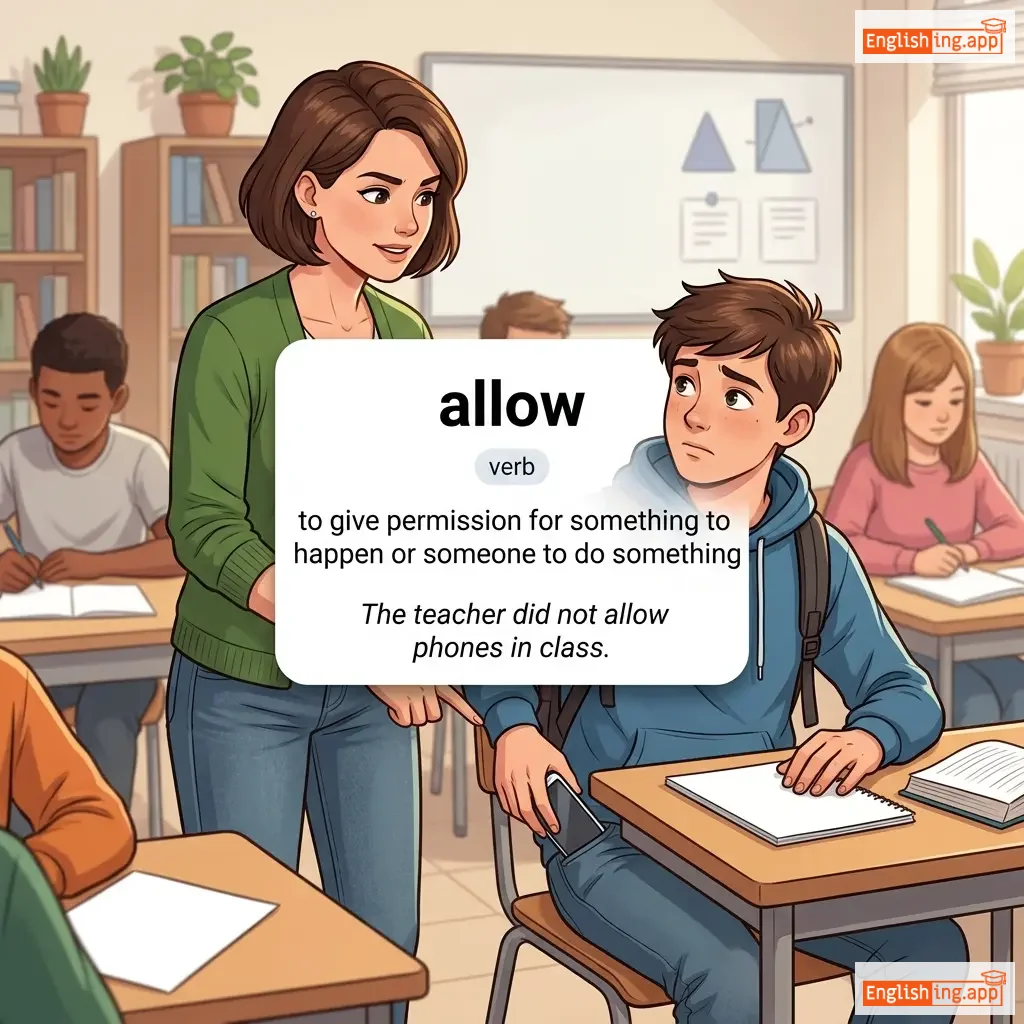
to give permission for something to happen or someone to do something
••••••
|
The teacher did not allow phones in class.
老师不允许课堂上使用手机。
••••••
|
老师不允许课堂上使用手机。
Lǎoshī bù yǔnxǔ kètáng shàng shǐyòng shǒujī.
••••••
|
allow for
阿劳 for
••••••
|
to take into consideration
••••••
|
考虑到
kǎolǜ dào
••••••
|
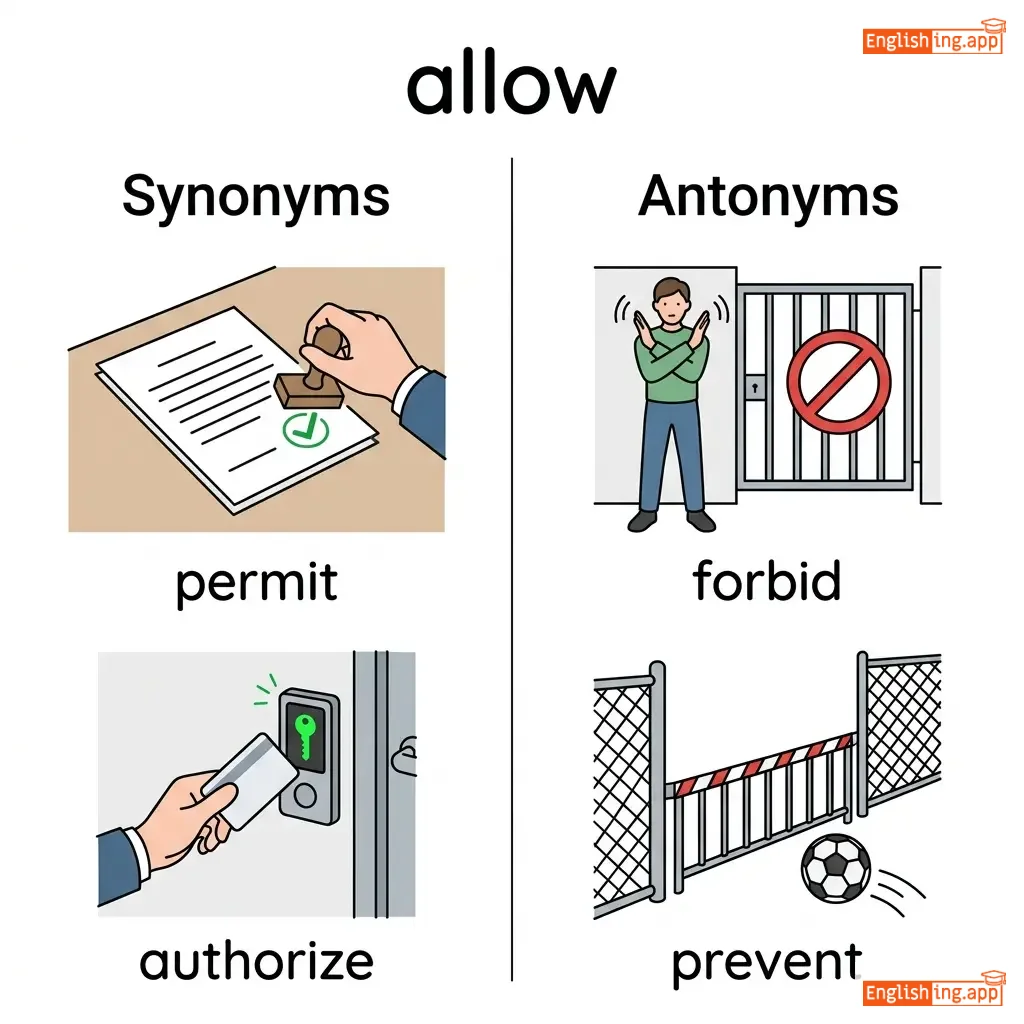
permit, authorize, let, enable, grant
••••••
|
forbid, prevent, deny
••••••
|
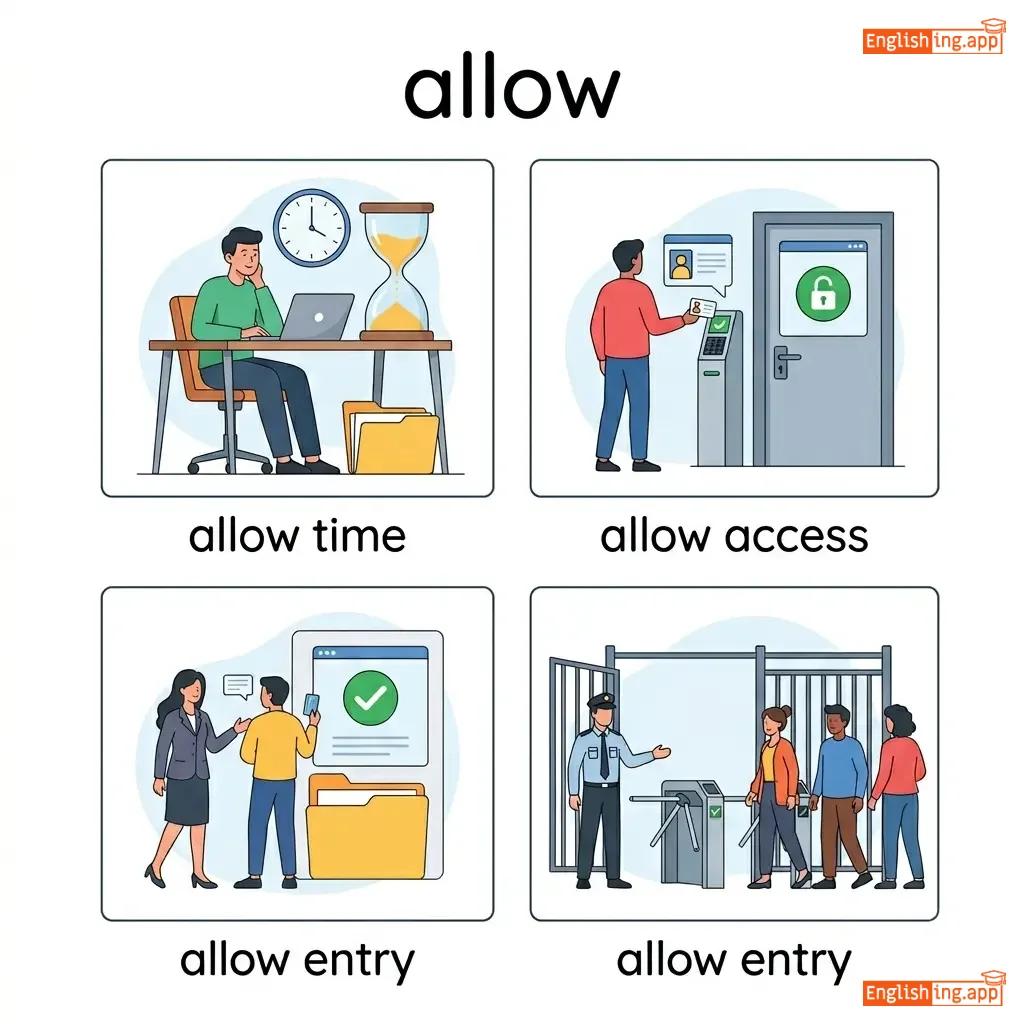
allow time, allow access, allow entry, allow someone to
••••••
|
Allow 就像 allowance, 给你允许的那些钱。
••••••
|
|
#232
💰
|
/əˈlaʊəns/
noun
(āluòwǎnsī)
••••••
|
- •••••• |
津贴
jintie
••••••
|
- •••••• | - •••••• | - •••••• | - •••••• |
a sum of money paid regularly to a person; permission to do something
••••••
|
Children receive a weekly allowance for helping with chores. |
孩子们每周会因帮助做家务而获得津贴。
Haizimen mei zhou hui yin bangzhu zuo jiawu er huode jintie.
••••••
|
- •••••• | - •••••• | - •••••• |
stipend, payment, allocation, quota
••••••
|
prohibition, ban, restriction
••••••
|
monthly allowance, pocket allowance, travel allowance
••••••
|
孩子们的津贴
••••••
|
|
#233
✨
|
/əˈlʊr/
verb
(艾鲁尔)
••••••
|
|
吸引力
xīyǐnlì
••••••
|
allured
艾鲁尔德
••••••
|
allured
艾鲁尔德
••••••
|
allures
艾鲁尔斯
••••••
|
alluring
艾鲁尔英
••••••
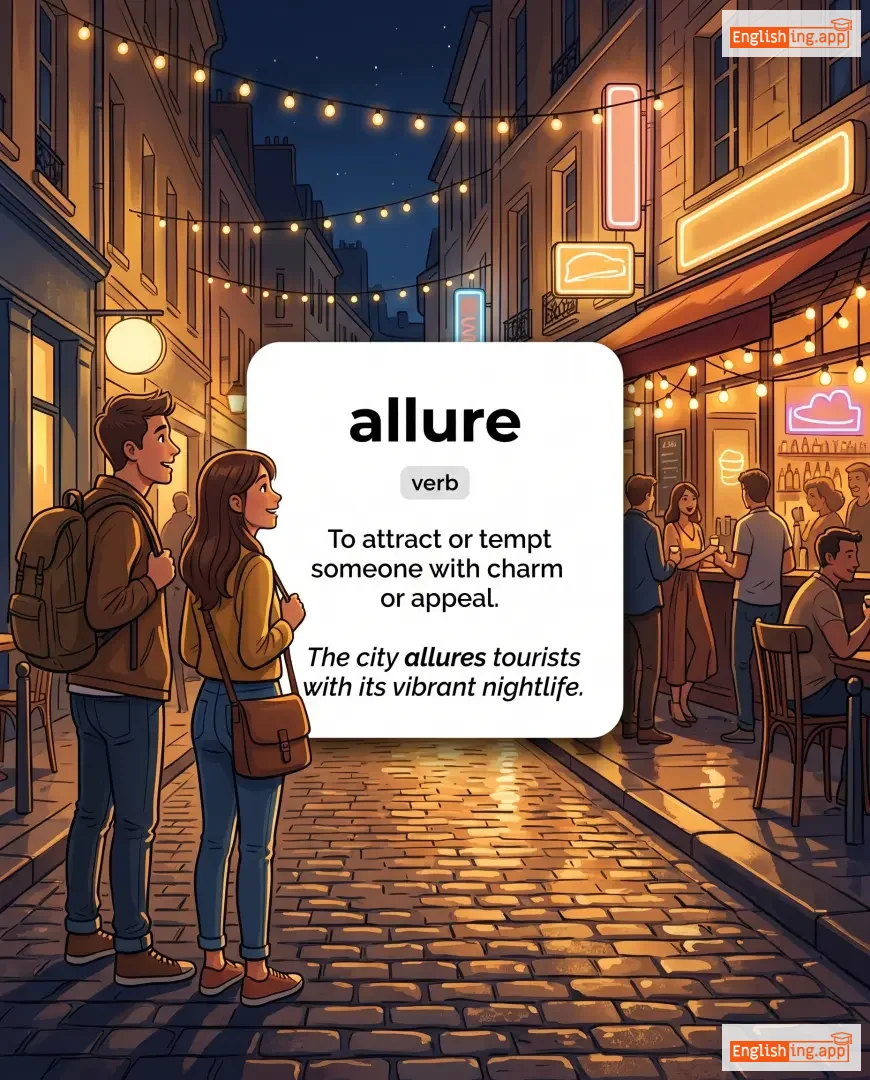
|
To attract or tempt someone with charm or appeal.
••••••
|
The city allures tourists with its vibrant nightlife.
这个城市吸引游客,拥有生动的夜生活。
••••••
|
这个城市通过其生动的夜生活吸引游客。
Zhège chéngshì tōngguò qí shēngdòng de yè shēnghuó xīyǐn yóukè.
••••••
|
the allure of
……的吸引力
••••••
|
the appeal or attraction of something
••••••
|
……的吸引力
…… de xīyǐnlì
••••••
|
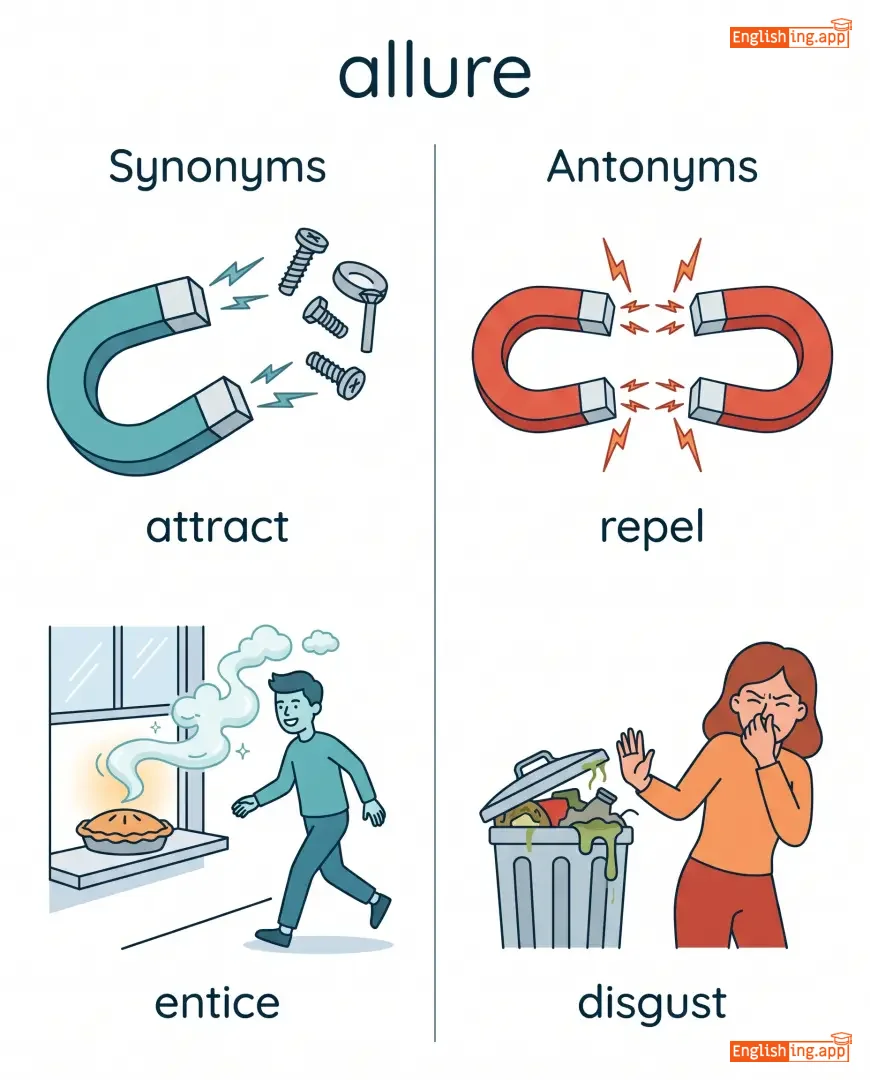
attract, entice, charm, fascinate, captivate
••••••
|
repel, disgust, deter
••••••
|
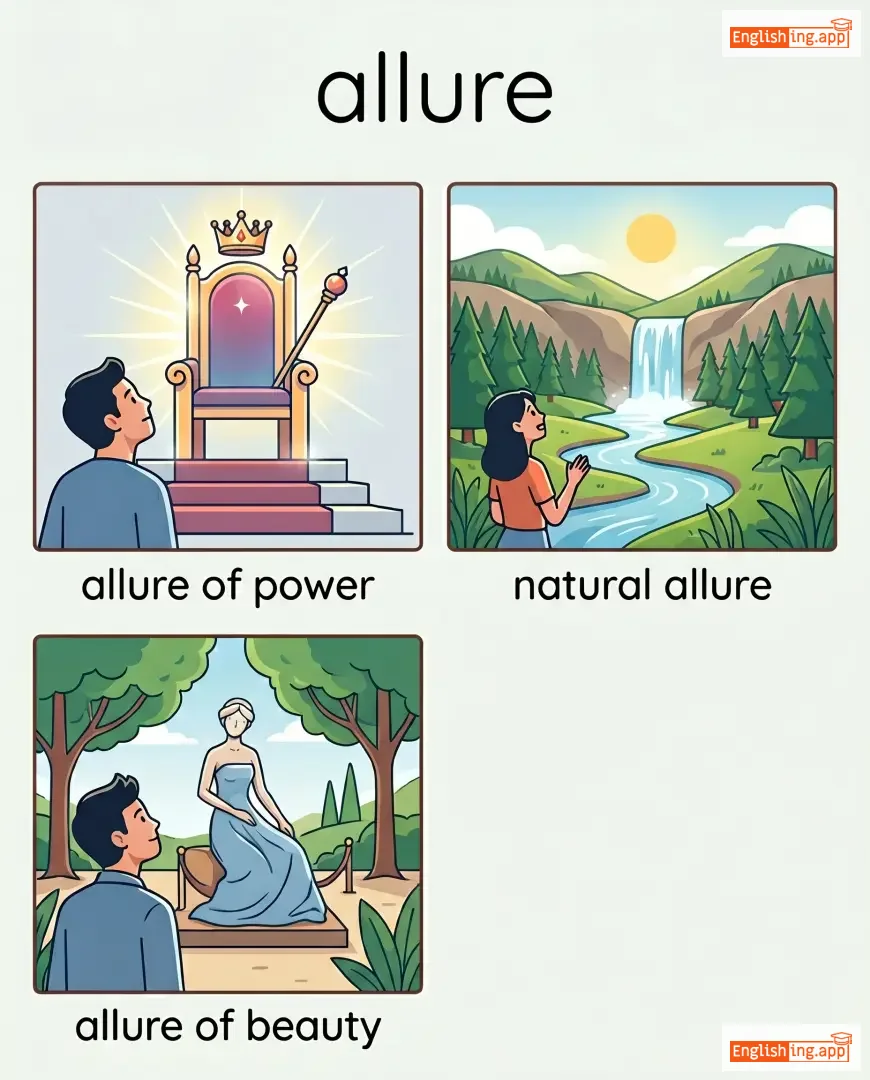
allure of power, natural allure, allure of beauty, allure tourists
••••••
|
Allure意味着吸引力,就像一盏吸引所有人光芒的灯。
••••••
|
|
#234
😍
|
/əˈlʊr.ɪŋ/
adjective
(阿鲁林)
••••••
|
- •••••• |
迷人且诱人; 迷人的
mí rén qiě yòu rén; mí rén de
••••••
|
- •••••• | - •••••• | - •••••• | - •••••• |
attractive and tempting; fascinating
••••••
|
The alluring fragrance of roses filled the garden. |
玫瑰的迷人香气弥漫在花园里。
Méiguī de mí rén xiāngqì mímàn zài huāyuán lǐ.
••••••
|
- •••••• | - •••••• | - •••••• |
attractive, captivating, charming, seductive
••••••
|
repulsive, unattractive, repelling
••••••
|
alluring beauty, alluring smile, alluring fragrance
••••••
|
The roses' scent is so alluring and enticing!
••••••
|
|
#235
🤝
|
/ˈælaɪ/
verb
(阿里)
••••••
|
|
盟友
méng yǒu
••••••
|
allied
联盟
••••••
|
allied
联盟
••••••
|
allies
盟友
••••••
|
allying
结盟
••••••
|
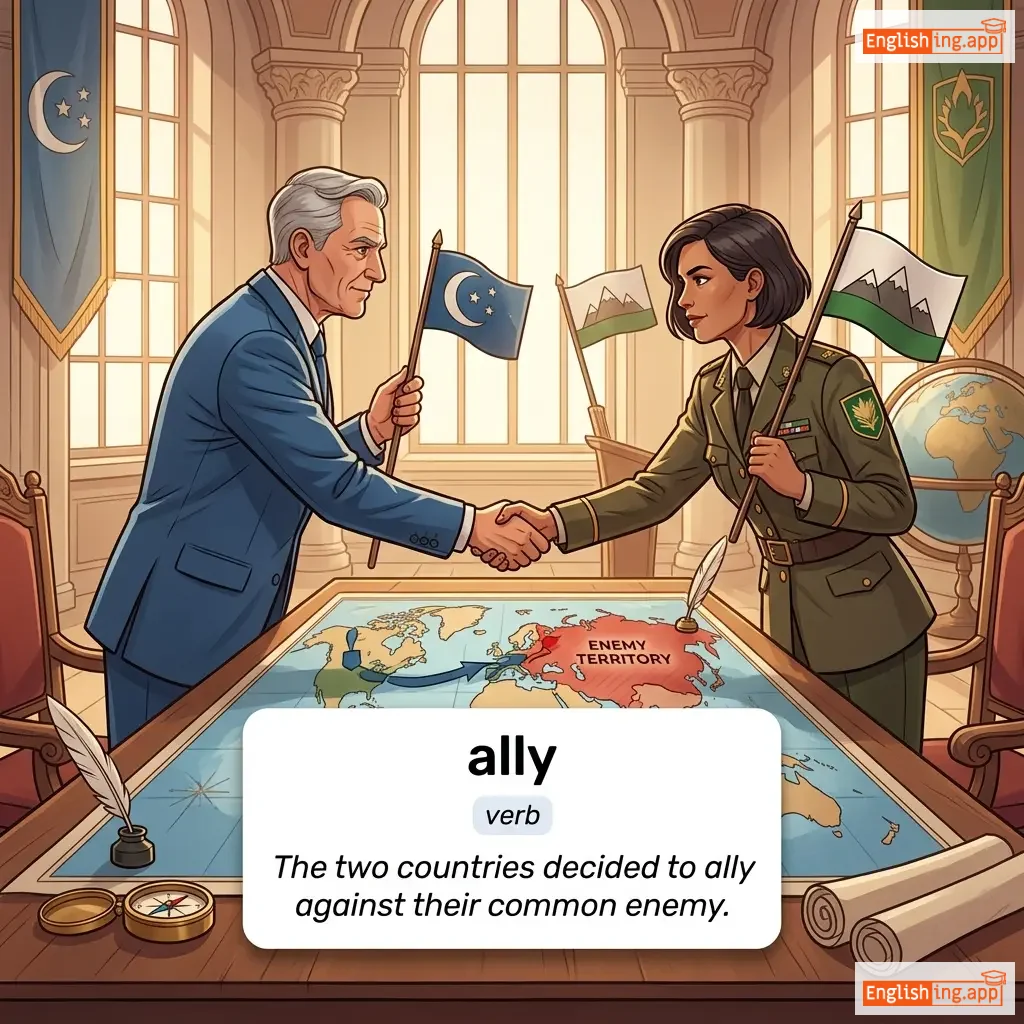
To unite or form a connection or partnership with another person, group, or nation.
••••••
|
The two countries decided to ally against their common enemy.
这两个国家决定联合对抗共同的敌人。
••••••
|
这两个国家决定联合对抗共同的敌人。
Zhè liǎng gè guójiā juédìng liánhé duìkàng gòngtóng de dírén.
••••••
|
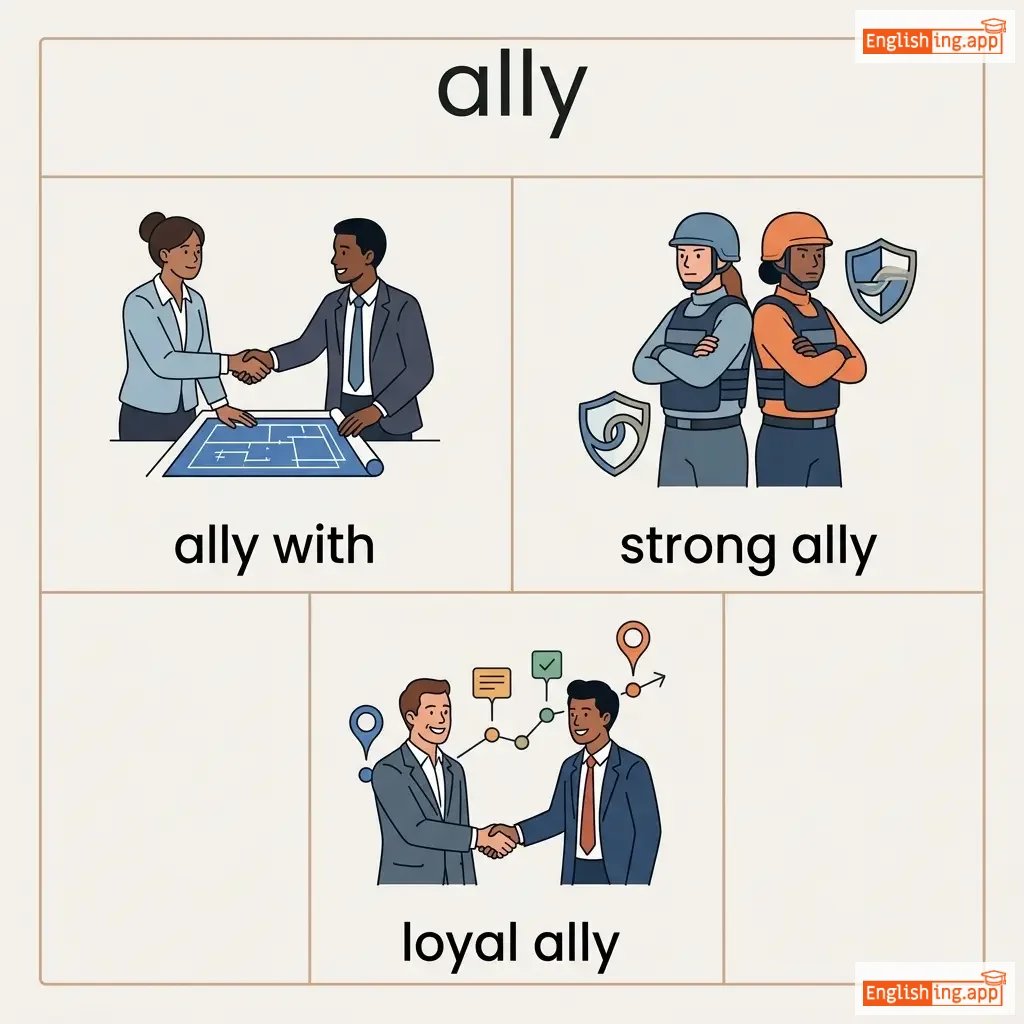
ally with
与...结盟
••••••
|
To form a partnership or alliance with someone.
••••••
|
与...结盟
yǔ...jiéméng
••••••
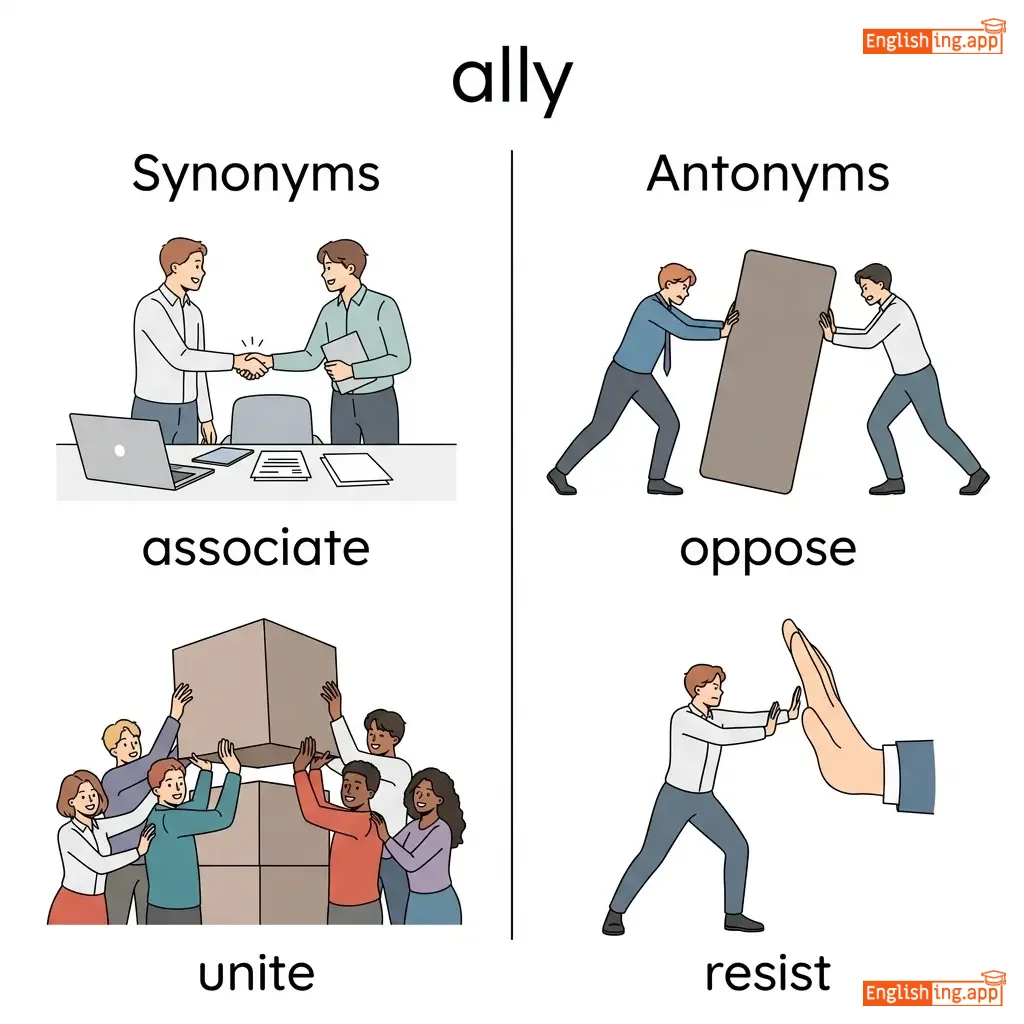
|
associate, unite, partner, combine, join
••••••
|
oppose, resist, separate
••••••
|
ally with, strong ally, loyal ally, ally against
••••••
|
Ally 代表 All + I,联合形成伙伴关系。
••••••
|
|
#236
⏳
|
/ˈɔːlmoʊst/
adverb
(àomósī)
••••••
|
- •••••• |
差不多
chàbùduō
••••••
|
- •••••• | - •••••• | - •••••• | - •••••• |
very nearly, but not exactly or completely
••••••
|
He almost missed the train.
他差点错过了火车。
••••••
|
他差点错过了火车。
Tā chàdiǎn cuòguòle huǒchē.
••••••
|
almost there
差不多到了
••••••
|
close to completing or reaching a goal
••••••
|
差不多到了
chàbùduō dàole
••••••
|
nearly, practically, virtually, approximately, about
••••••
|
completely, entirely, totally
••••••
|
almost done, almost impossible, almost every, almost finished
••••••
|
Almost 意味着差不多— 就像说 "差不多到了",意思是快到了。
••••••
|
|
#237
🧍
|
/əˈloʊn/
adjective, adverb
(阿龙)
••••••
|
- •••••• |
孤单
gudan
••••••
|
- •••••• | - •••••• | - •••••• | - •••••• |
having no one else present; on one's own
••••••
|
She prefers to live alone in her apartment. |
她更喜欢独自一人在她的公寓里生活。
Ta geng xihuan duzi yi ren zai ta de gongyu li shenghuo.
••••••
|
leave someone alone |
to stop bothering or disturbing someone
••••••
|
让某人独自待着
rang mou ren gudan daizhe
••••••
|
solitary, lonely, isolated, unaccompanied, single
••••••
|
together, accompanied, united
••••••
|
feel alone, live alone, left alone, all alone
••••••
|
Alone代表all-one, 意味着孤单 (gudan) 生活。
••••••
|
|
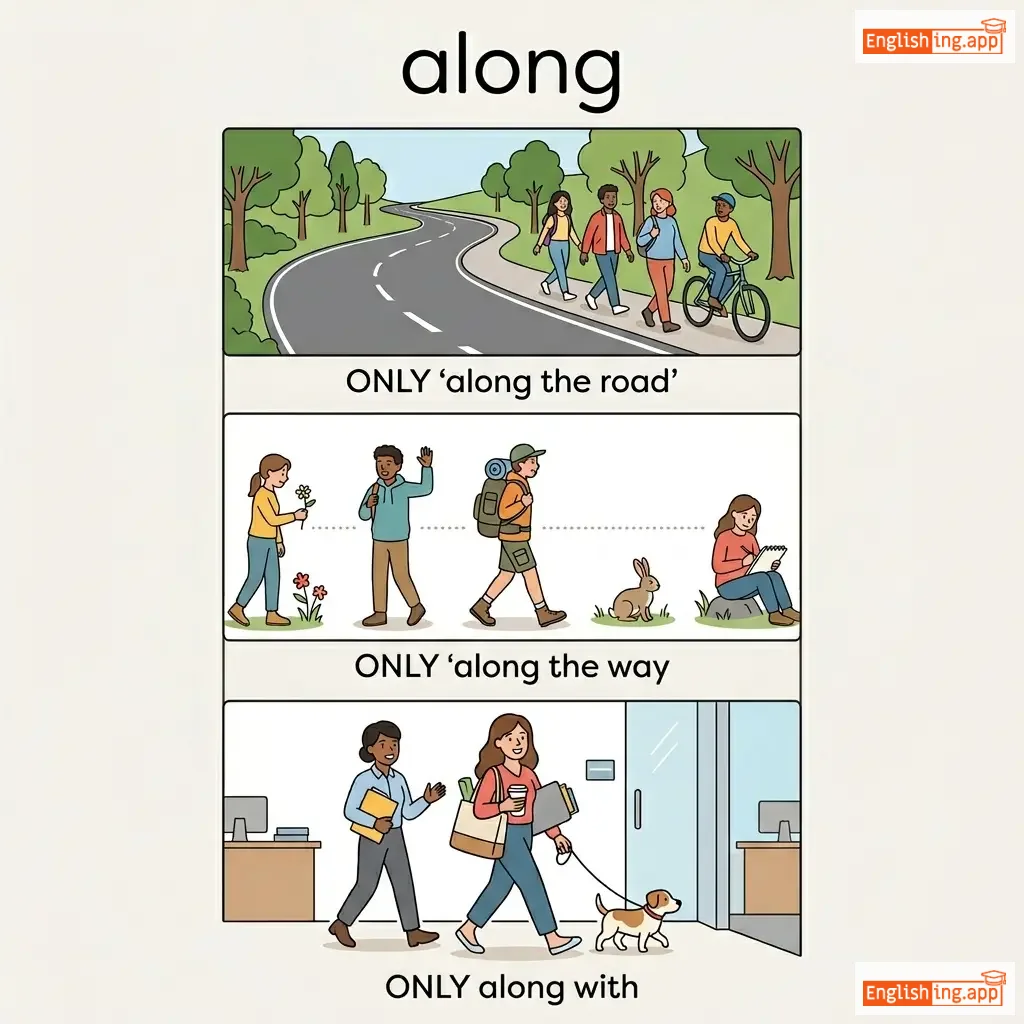
#238
➡️
|
/əˈlɔːŋ/
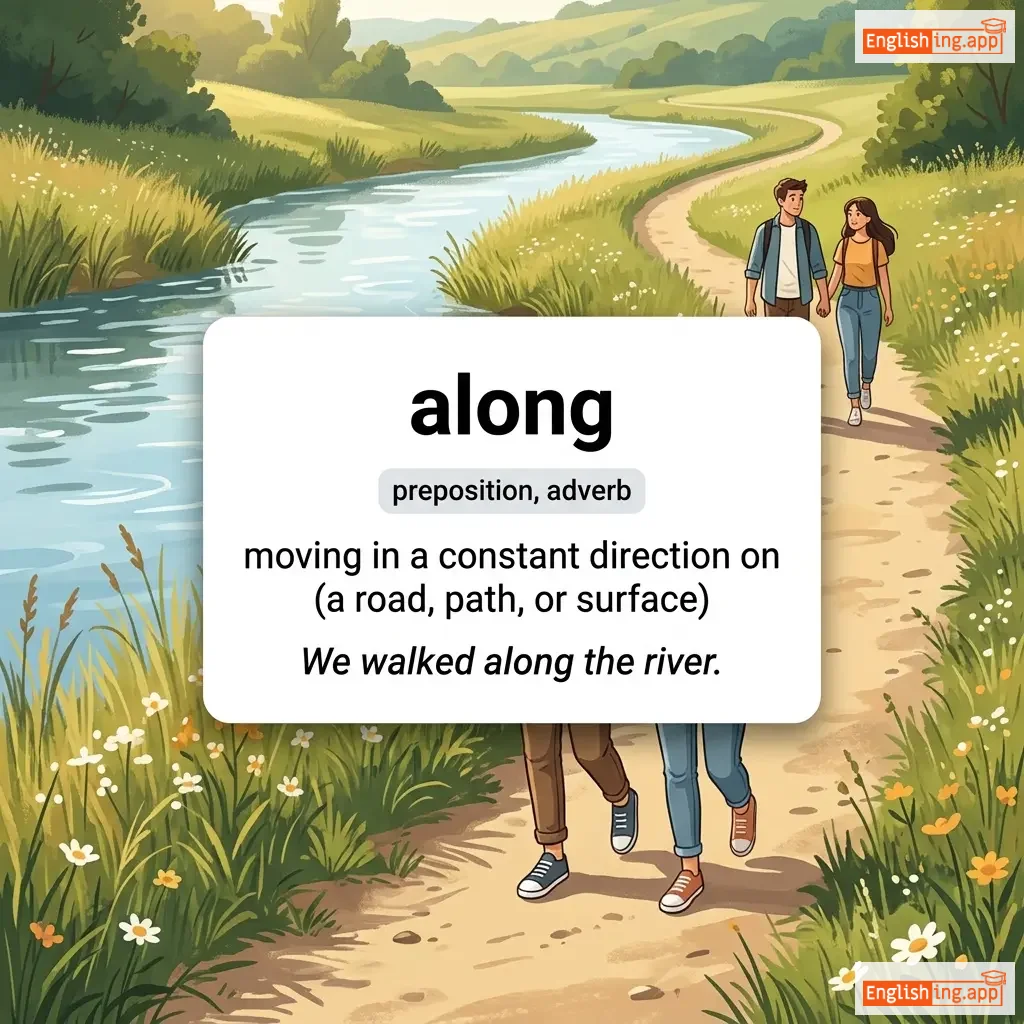
preposition, adverb
(阿龙)
••••••
|
|
沿着
yánzhe
••••••
|
- •••••• | - •••••• | - •••••• | - •••••• |
moving in a constant direction on (a road, path, or surface)
••••••
|
We walked along the river. |
我们沿着河走。
Wǒmen yánzhe hé zǒu.
••••••
|
go along with |
to agree with or support
••••••
|
跟随
gēnsuí
••••••
|
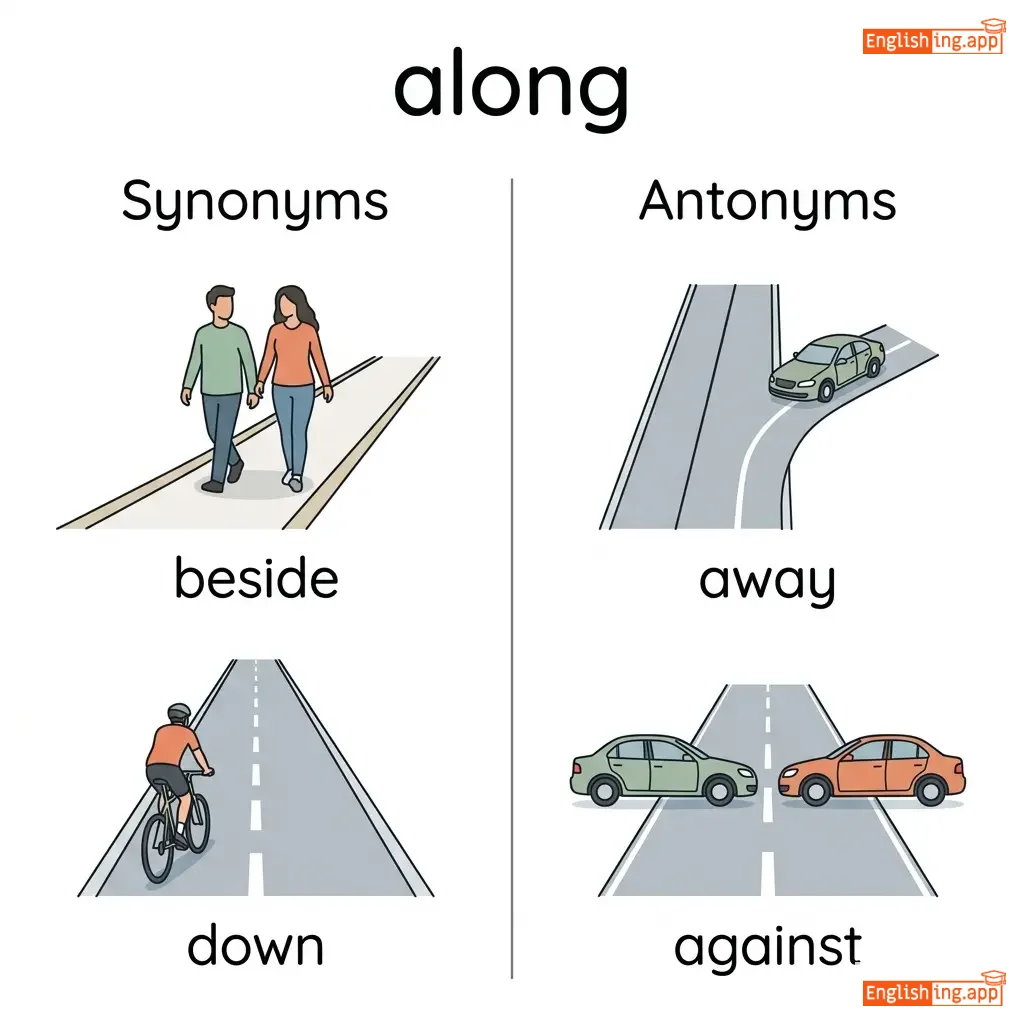
beside, down, alongside, next to
••••••
|
away, against
••••••
|
along the road, along the way, along with, go along
••••••
|
沿着表示走在路上,ALL LONG走下去。
••••••
|
|
#239
👥
|
/əˈlɔːŋ.saɪd/
adverb
(əˈlɔːŋsaɪd)
••••••
|
- •••••• |
在旁边; 与…一起;
zài pángbiān; yǔ...yīqǐ;
••••••
|
- •••••• | - •••••• | - •••••• | - •••••• |
beside; next to; together with
••••••
|
She walked alongside her friend through the park. |
她与朋友一起走过公园。
Tā yǔ péngyǒu yīqǐ zǒuguò gōngyuán.
••••••
|
- •••••• | - •••••• | - •••••• |
beside, next to, together with, parallel to
••••••
|
apart, separately, away from
••••••
|
work alongside, stand alongside, run alongside, walk alongside
••••••
|
Chinese '在旁边' and English 'alongside' both mean 'beside'.
••••••
|
|
#240
🔊
|
/əˈlaʊd/
adverb
(阿劳德)
••••••
|
- •••••• |
大声
dà shēng
••••••
|
- •••••• | - •••••• | - •••••• | - •••••• |
in a voice that can be heard; not silently
••••••
|
Please read the instructions aloud so everyone can hear.
请大声朗读指示,以便每个人都能听到。
••••••
|
请大声朗读指示,以便每个人都能听到。
Qǐng dà shēng lǎngdú zhǐshì, yǐbiàn měi gè rén dōu néng tīngdào.
••••••
|
- •••••• | - •••••• | - •••••• |
loudly, audibly, out loud, vocally
••••••
|
silently, quietly, inaudibly
••••••
|
read aloud, think aloud, speak aloud, say aloud
••••••
|
Imagine calling out loudly in a crowd in China—'大声' (dà shēng) means aloud!
••••••
|
|
#241
🔤
|
/ˈæl.fə.bɛt/
noun
(阿尔法贝特)
••••••
|
- •••••• |
字母表
zimu biao
••••••
|
- •••••• | - •••••• | - •••••• | - •••••• |
a set of letters or symbols in a fixed order used to represent the sounds of a language
••••••
|
Children usually learn the alphabet before learning to read words.
切尔德仁 优朱阿利 勒恩 德 阿尔法贝特 比佛 勒宁 图 瑞德 沃兹。
••••••
|
孩子们通常在学习阅读单词之前先学习字母表。
haizimen tongchang zai xuexi yuedu danci zhiqian xian xuexi zimu biao
••••••
|
alphabet soup
字母汤
••••••
|
a confusing mix of letters, abbreviations, or acronyms
••••••
|
字母汤
zimu tang
••••••
|
letter set, writing system, character set, script
••••••
|
silence, illiteracy
••••••
|
learn the alphabet, alphabet letters, alphabet chart, alphabet song
••••••
|
A B C 就是 英文 字母表
••••••
|
|
#242
🔠
|
/ˌælfəˈbɛtɪkəl/
adjective
(字母顺序的)
••••••
|
- •••••• |
字母顺序的
zìmǔ shùnxù de
••••••
|
- •••••• | - •••••• | - •••••• | - •••••• |
Arranged in the order of the letters of the alphabet.
••••••
|
The names were listed in alphabetical order. |
名字按字母顺序排列。
Míngzì àn zìmǔ shùnxù páiliè.
••••••
|
- •••••• | - •••••• | - •••••• |
ordered, sequential, systematic, lexicographic
••••••
|
random, unordered
••••••
|
alphabetical order, alphabetical list, arrange alphabetically
••••••
|
字母顺序的就像ABC歌曲一样!
••••••
|
|
#243
🔤
|
/ˌælfəˈbɛtɪkli/
adverb
(阿尔法贝提克利)
••••••
|
- •••••• |
按字母顺序
an zim u shun xu
••••••
|
- •••••• | - •••••• | - •••••• | - •••••• |
in the order of the letters of the alphabet
••••••
|
The names are listed alphabetically in the register.
泽 名兹 阿 列斯特德 阿尔法贝提克利 因 泽 瑞吉斯特。
••••••
|
这些名字在登记册中按字母顺序排列。
zhexie mingzi zai dengjice zhong an zimushunxu pailie
••••••
|
- •••••• | - •••••• | - •••••• |
lexicographically, in order, by letters, systematically
••••••
|
randomly, unsystematically
••••••
|
alphabetically arranged, alphabetically ordered, list alphabetically, sorted alphabetically
••••••
|
A B C 顺序 → 按字母顺序
••••••
|
|
#244
✅
|
/ɔːlˈredi/
adverb
(ɔːlˈredi)
••••••
|
- •••••• |
已经; 预先; 之前
yǐjīng; yùxiān; zhīqián
••••••
|
- •••••• | - •••••• | - •••••• | - •••••• |
before now; by this time; previously
••••••
|
I have already finished my homework for today. |
我今天的作业已经完成了。
Wǒ jīntiān de zuòyè yǐjīng wánchéngle.
••••••
|
- •••••• | - •••••• | - •••••• |
previously, before, by now, earlier
••••••
|
not yet, later, still, eventually
••••••
|
already done, already finished, already here, already know
••••••
|
中文中,'已经'用于表示已经发生的事情。
••••••
|
|
#245
👍
|
/ɔːlˈraɪt/
adjective, adverb, interjection
(奥尔赖特)
••••••
|
- •••••• |
没问题
mei wenti
••••••
|
- •••••• | - •••••• | - •••••• | - •••••• |
satisfactory or acceptable; safe or unharmed; used to express agreement or acknowledgment
••••••
|
Everything is going to be alright.
艾弗瑞辛 伊兹 戈英 图 比 奥尔赖特。
••••••
|
一切都会没问题的。
yiqie dou hui mei wenti de
••••••
|
alright then
奥尔赖特 丹
••••••
|
used to show acceptance or to move on in a conversation
••••••
|
那好吧
na hao ba
••••••
|
okay, fine, acceptable, satisfactory, good
••••••
|
bad, wrong, unacceptable
••••••
|
alright now, feel alright, be alright, alright then
••••••
|
‘没问题’就是英文里的 ‘alright’。
••••••
|
|
#246
➕
|
/ˈɔːlsoʊ/
adverb
(奥尔索)
••••••
|
- •••••• |
也
ye
••••••
|
- •••••• | - •••••• | - •••••• | - •••••• |
in addition; too
••••••
|
She sings beautifully and also plays the guitar.
Shi sings biutifuli and aulso pleiz zi gitɑr.
••••••
|
她唱得很美,还弹吉他。
Tā chàng dé hěn měi, hái tán jí tā.
••••••
|
- •••••• | - •••••• | - •••••• |
too, as well, in addition, likewise
••••••
|
only, solely
••••••
|
also known, also available, also important
••••••
|
Also 意思是也—ALl SOmething 也有。
••••••
|
|
#247
✂️
|
/ˈɔːltər/
verb
(ǎltèr)
••••••
|
- •••••• |
改变
gǎibiàn
••••••
|
altered
ǎltèrd
••••••
|
altered
ǎltèrd
••••••
|
alters
ǎltèrs
••••••
|
altering
ǎltèríng
••••••
|
to change or modify something slightly but significantly
••••••
|
She decided to alter her dress to make it fit better.
她决定改变她的裙子,让它更合身。
••••••
|
她决定改变她的裙子,让它更合身。
Tā juédìng gǎibiàn tā de qúnzi, ràng tā gèng héshēn.
••••••
|
alter ego
alter ego
••••••
|
a second self or different version of oneself
••••••
|
alter ego
alter ego
••••••
|
change, modify, adjust, adapt, transform
••••••
|
preserve, maintain, keep
••••••
|
alter plans, alter course, alter appearance, alter behavior
••••••
|
改变意味着轻微修改,就像调整裙子。
••••••
|
|
#248
🔄
|
/ɔːlˈtɜːrnətɪv/
noun, adjective
(替代)
••••••
|
|
替代
tìdài
••••••
|
- •••••• | - •••••• | - •••••• | - •••••• |
a choice between two or more possibilities; something that can be chosen instead of something else
••••••
|
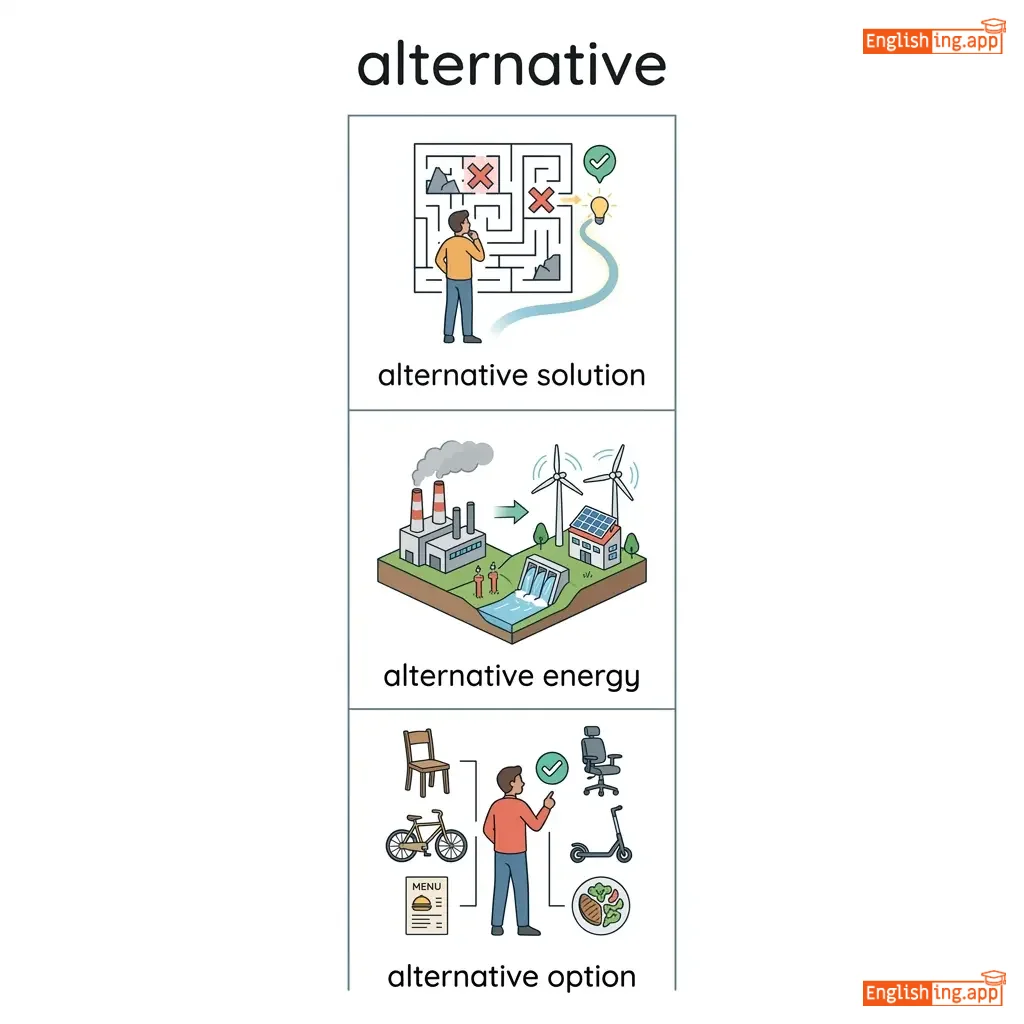
We need to find an alternative solution to this problem.
我们需要找到这个问题的替代解决方案。
••••••
|
我们需要找到这个问题的替代解决方案。
Wo men xu yao zhao dao zhe ge wen ti de ti dai jie jue fang an.
••••••
|
alternative medicine
替代医学
••••••
|
forms of treatment that are used instead of traditional medicine
••••••
|
替代医学
ti dai yi xue
••••••
|
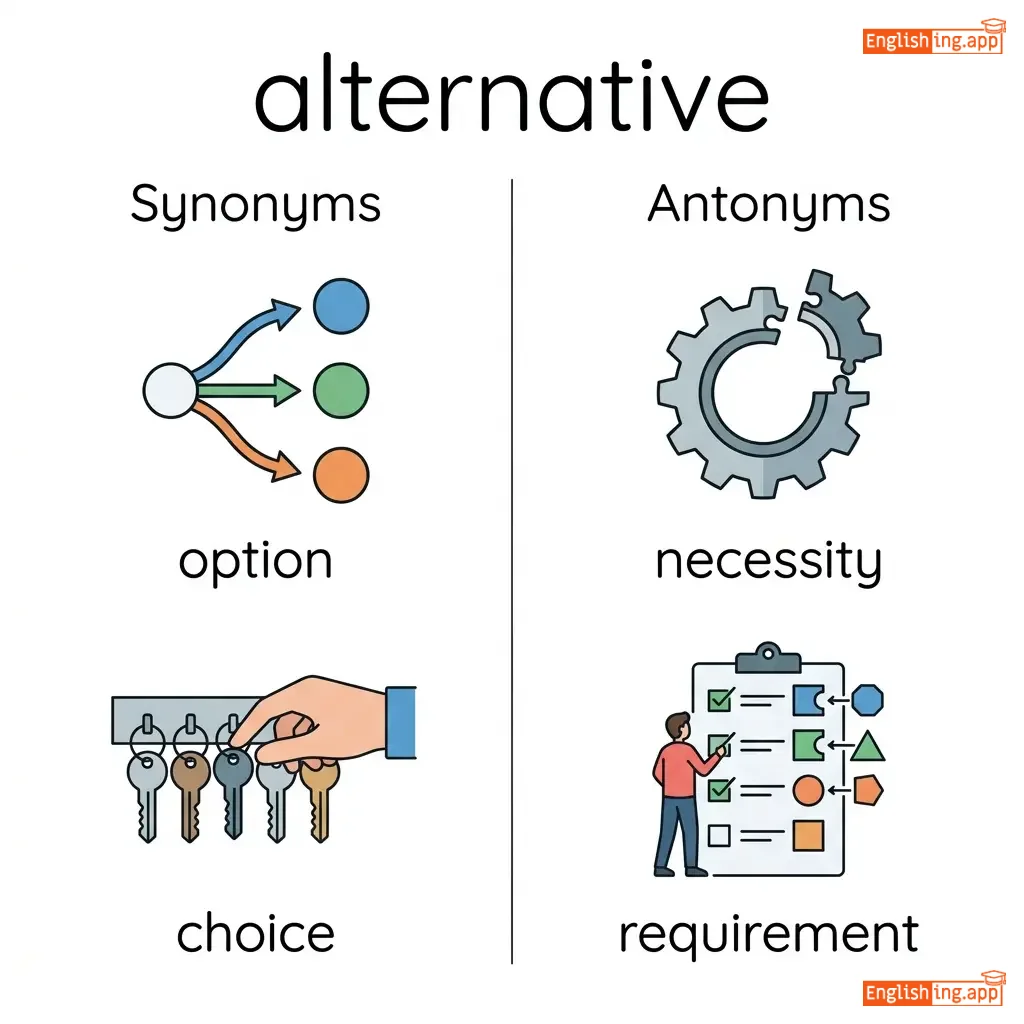
option, choice, substitute, replacement, backup
••••••
|
necessity, requirement, compulsion
••••••
|
alternative solution, alternative energy, alternative option, alternative plan
••••••
|
Alternative意味着另一种选择,中文里替代意味着choice.
••••••
|
|
#249
🔄
|
/ˌɔːltəˈɡɛðər/
adverb
(奥尔图盖德)
••••••
|
- •••••• |
完全
wánquán
••••••
|
- •••••• | - •••••• | - •••••• | - •••••• |
completely; in total; entirely
••••••
|
The project was altogether successful despite the challenges. |
这个项目在挑战面前完全成功。
Zhège xiàngmù zài tiǎozhàn miànqián wánquán chénggōng.
••••••
|
altogether now |
used to encourage a group of people to do or say something at the same time
••••••
|
大家一起现在
dàjiā yīqǐ xiànzài
••••••
|
completely, entirely, totally, wholly, fully
••••••
|
partially, incompletely
••••••
|
altogether different, not altogether, altogether impossible, altogether wrong
••••••
|
完全 ALL TOGETHER 意味着完全或总共。
••••••
|
Vocabulary Quiz
Test your vocabulary by matching words with their translations or meanings.
Login to take the quiz
Comments (0)
Share your thoughts and join the discussion.
Join the discussion by logging in
Login to CommentNo comments yet
Be the first to share your thoughts!