

Swipe left or right, or use the buttons. Tap image to zoom.
例句翻译
单词
Lesson 39Lesson 39 - 遮罩切换
|
表情符号
|
单词 | Images | 翻译 | 过去时 | 过去分词 | 第三人称单数 | 动名词 | 含义 | 例句 | 例句翻译 | 示例表达 | 示例表达含义 | 示例表达翻译 | 同义词 | 反义词 | 搭配词 | 助记符 |
|---|---|---|---|---|---|---|---|---|---|---|---|---|---|---|---|---|---|
|
#1848
🌍
|
/ɪnˈtaɪər/
adjective
(ēntǎi'ěr)
••••••
|
- •••••• |
整个
zhěnggè
••••••
|
- •••••• | - •••••• | - •••••• | - •••••• |
whole; with no part left out
••••••
|
He spent the entire day reading books. |
他整天都在读书。
Tā zhěng tiān dōu zài dúshū.
••••••
|
the entire world |
everywhere; globally
••••••
|
整个世界
zhěnggè shìjiè
••••••
|
whole, complete, full, total, all
••••••
|
partial, incomplete
••••••
|
entire day, entire life, entire system, entire team
••••••
|
Entire意味着完整,全部都包括
••••••
|
|
#1849
🔄
|
/ɪnˈtaɪərli/
adverb
(ēn tài ěr lǐ)
••••••
|
- •••••• |
完全
wanquan
••••••
|
- •••••• | - •••••• | - •••••• | - •••••• |
Completely or wholly.
••••••
|
She is entirely responsible for the project. |
她对这个项目完全负责。
Tā duì zhège xiàngmù wánquán fùzé.
••••••
|
entirely up to |
Completely dependent on someone or something
••••••
|
完全依赖
wanquan yilai
••••••
|
completely, fully, wholly, absolutely
••••••
|
partly, partially, incompletely
••••••
|
entirely responsible, entirely new, entirely different, not entirely
••••••
|
完全意味着彻底 — 记住:'完'在'完全'里!
••••••
|
|
#1850
📜
|
/ɪnˈtaɪtəl/
verb
(ēntàitè)
••••••
|
- •••••• |
授予权利
shòuyǔ quánlì
••••••
|
entitled
ēntàitlíd
••••••
|
entitled
ēntàitlíd
••••••
|
entitles
ēntàitlès
••••••
|
entitling
ēntàitlíng
••••••
|
to give someone the right to have or do something
••••••
|
Employees are entitled to receive paid holidays.
员工有权享受带薪假期。
••••••
|
员工有权享受带薪假期。
yuángōng yǒu quánlì xiǎngshòu dàixīn jiàqī.
••••••
|
be entitled to
有权
••••••
|
to have a right or claim to something
••••••
|
有权
yǒu quán
••••••
|
authorize, allow, permit, empower, grant
••••••
|
forbid, deny, disqualify
••••••
|
entitle someone to, entitled to benefits, entitled to rights, entitled book
••••••
|
Title 意味着权利,所以 en-title 就是给权利
••••••
|
|
#1851
🏢
|
/ˈɛntəti/
noun
(实体)
••••••
|
- •••••• |
实体
shítǐ
••••••
|
- •••••• | - •••••• | - •••••• | - •••••• |
something that exists as a single and complete unit; an organization or being
••••••
|
The new company will operate as a separate legal entity. |
新公司将作为一个独立的法律实体运作。
Xīn gōngsī jiāng zuòwéi yīgè dúlì de fǎlǜ shítǐ yùnzuò.
••••••
|
- •••••• | - •••••• | - •••••• |
being, organization, unit, body
••••••
|
nothingness, nonexistence
••••••
|
legal entity, independent entity, business entity, separate entity
••••••
|
实体代表组织或公司,像一个完整的法律实体。
••••••
|
|
#1852
🚪
|
/ˈɛntrəns/
noun
(en træn s)
••••••
|
- •••••• |
入口
rùkǒu
••••••
|
- •••••• | - •••••• | - •••••• | - •••••• |
A place of entering; an entry point.
••••••
|
They waited at the main entrance of the building. |
他们在大楼的主入口等候。
Tāmen zài dàlóu de zhǔ rùkǒu děnghòu.
••••••
|
make an entrance |
To arrive in a way that attracts attention.
••••••
|
做个入场
zuò gè rù chǎng
••••••
|
entry, doorway, access, gateway, threshold
••••••
|
exit, departure, way out
••••••
|
main entrance, entrance hall, entrance exam, entrance door
••••••
|
入口意味着你要进去,想象一个你注目的时刻。
••••••
|
|
#1853
💼
|
/ˌɒntrəprəˈnɜːr/ (UK), /ˌɑːntrəprəˈnɝː/ (US)
noun
(ɑntərəprəˈnɜːr)
••••••
|
- •••••• |
企业家
qǐyèjiā
••••••
|
- •••••• | - •••••• | - •••••• | - •••••• |
A person who starts and runs a business, taking on financial risks in the hope of profit.
••••••
|
The young entrepreneur launched a successful tech startup. |
这位年轻的企业家创办了一家成功的科技初创公司。
Zhè wèi niánqīng de qǐyèjiā chuàngbànle yī jiā chénggōng de kējì chūchuàng gōngsī.
••••••
|
serial entrepreneur |
A person who starts multiple businesses one after another
••••••
|
连续创业者
liánxù chuàngyè zhě
••••••
|
businessperson, founder, innovator, tycoon, capitalist
••••••
|
employee, follower, worker
••••••
|
young entrepreneur, successful entrepreneur, serial entrepreneur, social entrepreneur
••••••
|
Entrepreneur意味着企业家 – 进军新业务为了PRofit。
••••••
|
|
#1854
🎟️
|
/ˈɛntri/
noun
(āntǐ)
••••••
|
- •••••• |
入口
rùkǒu
••••••
|
- •••••• | - •••••• | - •••••• | - •••••• |
the act of going into a place, or permission to go in
••••••
|
Entry to the museum is free on Fridays. |
博物馆的入口在星期五免费。
Bówùguǎn de rùkǒu zài xīngqīwǔ miǎnfèi.
••••••
|
deny entry |
to refuse permission to enter
••••••
|
拒绝入口
jùjué rùkǒu
••••••
|
admission, access, doorway, record
••••••
|
exit, departure
••••••
|
entry fee, entry point, gain entry, deny entry
••••••
|
Entry 就是进入的入口
••••••
|
|
#1855
✉️
|
/ˈɛnvəloʊp/
noun
(ènvèlòp)
••••••
|
- •••••• |
信封
xìnfēng
••••••
|
- •••••• | - •••••• | - •••••• | - •••••• |
a flat paper container used to enclose a letter or document
••••••
|
She sealed the letter in an envelope and posted it. |
她把信封好,并寄出了。
Tā bǎ xìnfēng hǎo, bìng jì chūle.
••••••
|
push the envelope |
to go beyond normal limits; to innovate or take risks
••••••
|
超越界限
chāoyuè jièxiàn
••••••
|
wrapper, cover, packet, casing, container
••••••
|
uncovering, exposure
••••••
|
seal an envelope, open an envelope, address an envelope, brown envelope
••••••
|
Envelope 意味着信封 📬 — 记得把信‘放进信封里’。
••••••
|
|
#1856
🏞️
|
/ɪnˈvaɪərən/
verb
(yīn wài ér en)
••••••
|
- •••••• |
环绕
huánrào
••••••
|
environed
yīn wài ér ōng
••••••
|
environed
yīn wài ér ōng
••••••
|
environs
yīn wài ér sī
••••••
|
environing
yīn wài ér ing
••••••
|
to surround or enclose; to encircle
••••••
|
Mountains environ the small valley.
shān dīng yīn wài ér xiǎo dào.
••••••
|
山脉环绕着小山谷。
Shānmài huánrào zhe xiǎo shāngǔ.
••••••
|
- •••••• | - •••••• | - •••••• |
surround, encircle, encompass, enclose
••••••
|
free, release, uncover
••••••
|
environ with, environ by, environ around
••••••
|
环境是环绕的,因此environ是环绕的意思。
••••••
|
|
#1857
🌱
|
/ɪnˈvaɪrənmənt/
noun
(yinwairenmen)
••••••
|
|
环境
huanjing
••••••
|
- •••••• | - •••••• | - •••••• | - •••••• |
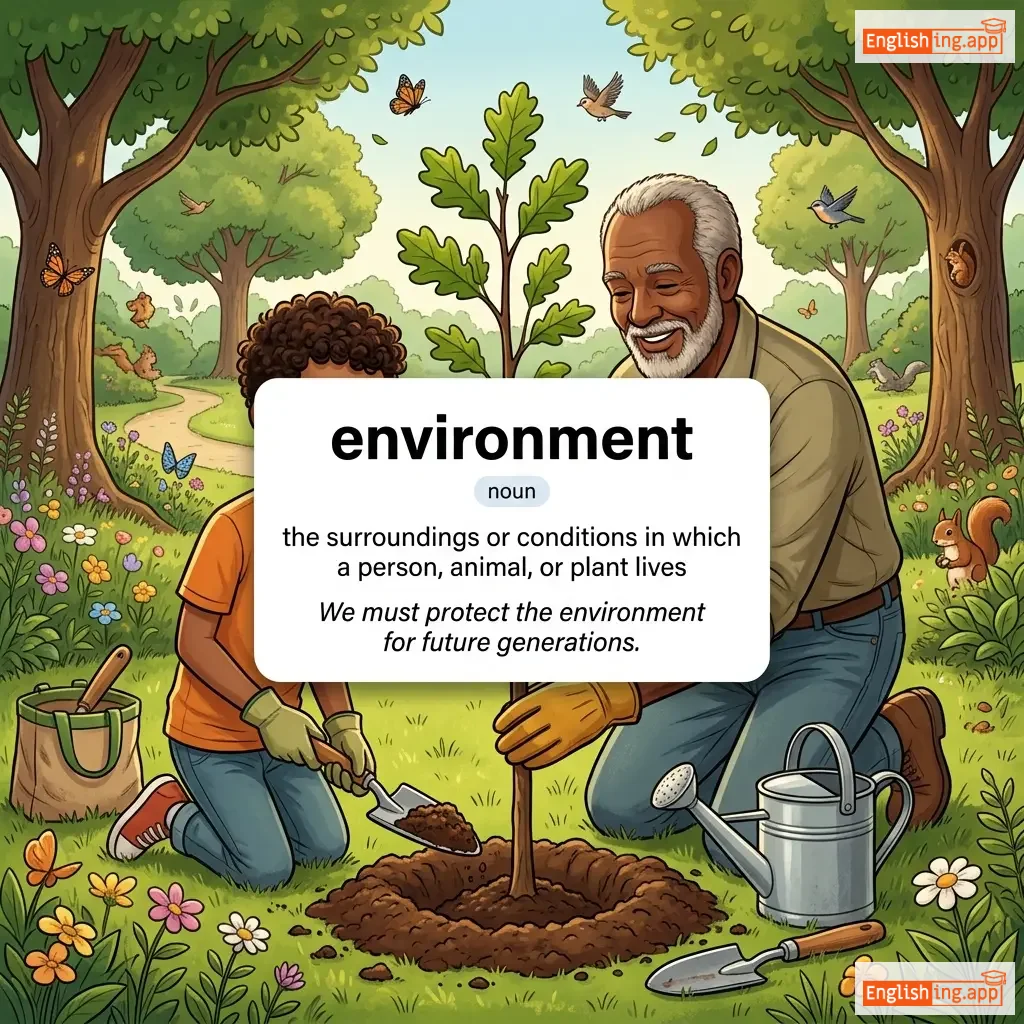
the surroundings or conditions in which a person, animal, or plant lives
••••••
|
We must protect the environment for future generations. |
我们必须为未来的世代保护环境。
wo men bi xu wei wei lai de shi dai bao hu huan jing.
••••••
|
environmentally friendly |
not harmful to the natural world
••••••
|
环保
huan bao
••••••
|
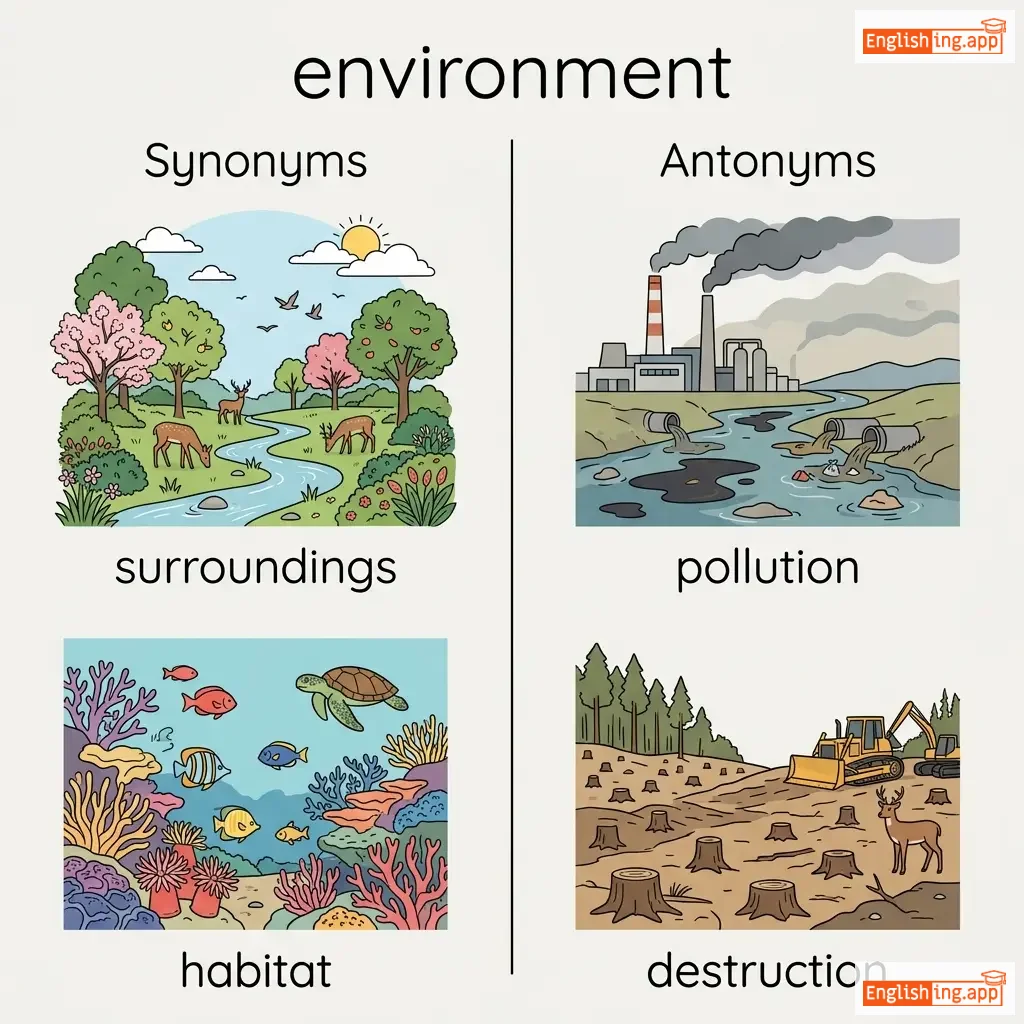
surroundings, habitat, ecology, atmosphere, setting
••••••
|
pollution, destruction
••••••
|
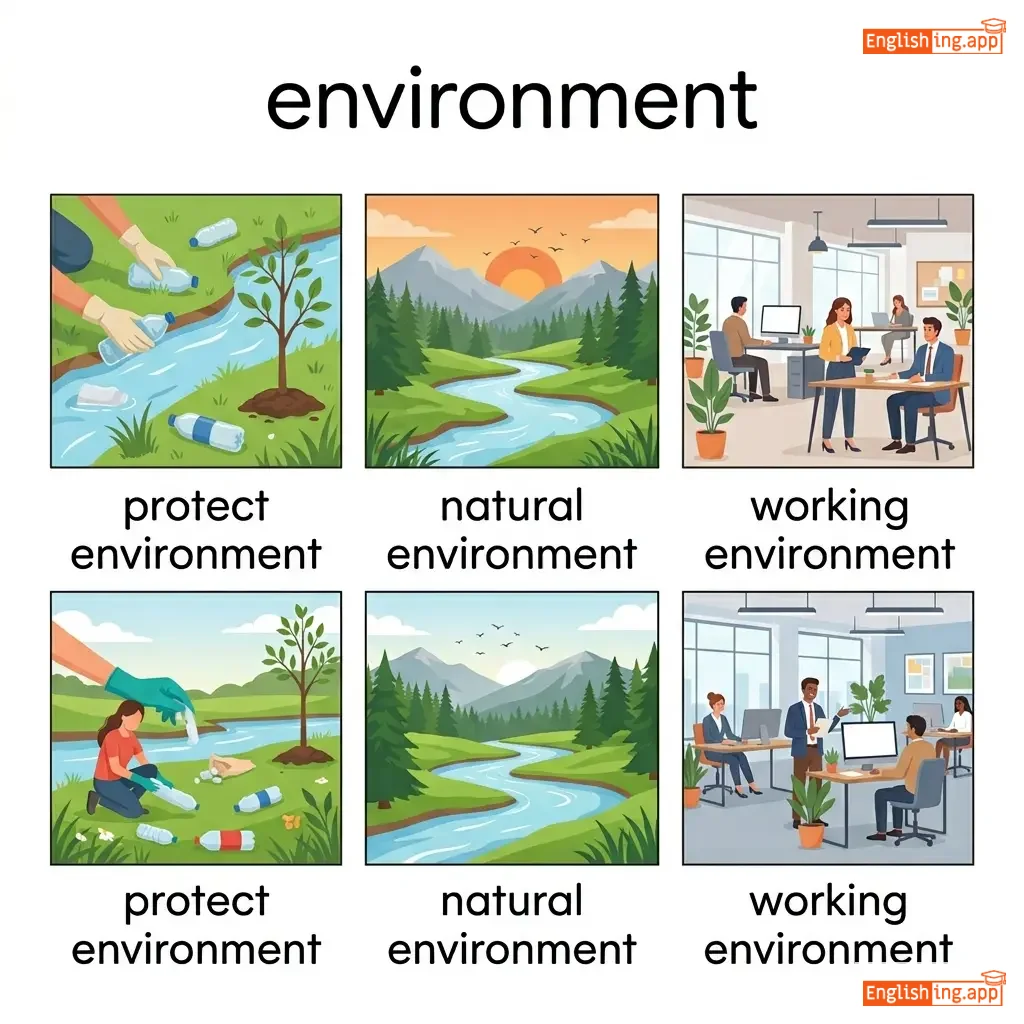
protect environment, natural environment, working environment, environment protection
••••••
|
环境:人与自然和谐共生
••••••
|
|
#1858
🌍
|
/ɪnˌvaɪrənˈmɛntl/
adjective
(ēn wài róng mèn tǎ)
••••••
|
- •••••• |
环境的
huánjìng de
••••••
|
- •••••• | - •••••• | - •••••• | - •••••• |
relating to the natural world and the impact of human activity on its condition
••••••
|
The company adopted new policies to reduce environmental damage. |
公司采取了新的政策以减少环境损害。
Gōngsī cǎiqǔle xīn de zhèngcè yǐ jiǎnshǎo huánjìng sǔnhài.
••••••
|
environmental impact |
the effect that activities have on the natural world
••••••
|
环境影响
huánjìng yǐngxiǎng
••••••
|
ecological, green, natural, sustainable, conservation
••••••
|
industrial, artificial, destructive
••••••
|
environmental protection, environmental law, environmental awareness, environmental issue
••••••
|
环境的与自然相关。
••••••
|
|
#1859
🦠
|
/ˌɛpɪˈdɛmɪk/
noun
(happiness)
••••••
|
- •••••• |
幸福
xingfu
••••••
|
- •••••• | - •••••• | - •••••• | - •••••• |
a widespread occurrence of an infectious disease in a community at a particular time
••••••
|
The flu epidemic affected thousands of people in the city. |
当她获得奖项时,她无法掩饰自己的幸福。
Dang ta huode jiangxiang shi, ta wufa yanshi ziji de xingfu.
••••••
|
spread like an epidemic |
something that grows or spreads very quickly
••••••
|
追寻幸福
Zhui xun xing fu
••••••
|
outbreak, plague, pandemic, contagion, surge
••••••
|
endemic, limited, contained
••••••
|
flu epidemic, epidemic outbreak, control epidemic, epidemic spread
••••••
|
幸福 (xing fu) = 喜欢 (xi huan)
••••••
|
|
#1860
🎬
|
/ˈɛpɪsoʊd/
noun
(episod)
••••••
|
- •••••• |
剧集
ju ji
••••••
|
- •••••• | - •••••• | - •••••• | - •••••• |
An event or part of a story, or one installment in a series.
••••••
|
The last episode of the drama was watched by millions. |
这部戏剧的最后一集被数百万人观看。
Zhè bù xìjù de zuìhòu yī jí bèi shù bǎi wàn rén guānkàn.
••••••
|
dramatic episode |
A notable or intense event in a story or life.
••••••
|
戏剧性事件
xìjù xìng shìjiàn
••••••
|
event, incident, chapter, installment, occurrence
••••••
|
continuation, whole
••••••
|
TV episode, final episode, latest episode, dramatic episode
••••••
|
TV Episode = 一部剧集 (ju ji) 在电视上。
••••••
|
|
#1861
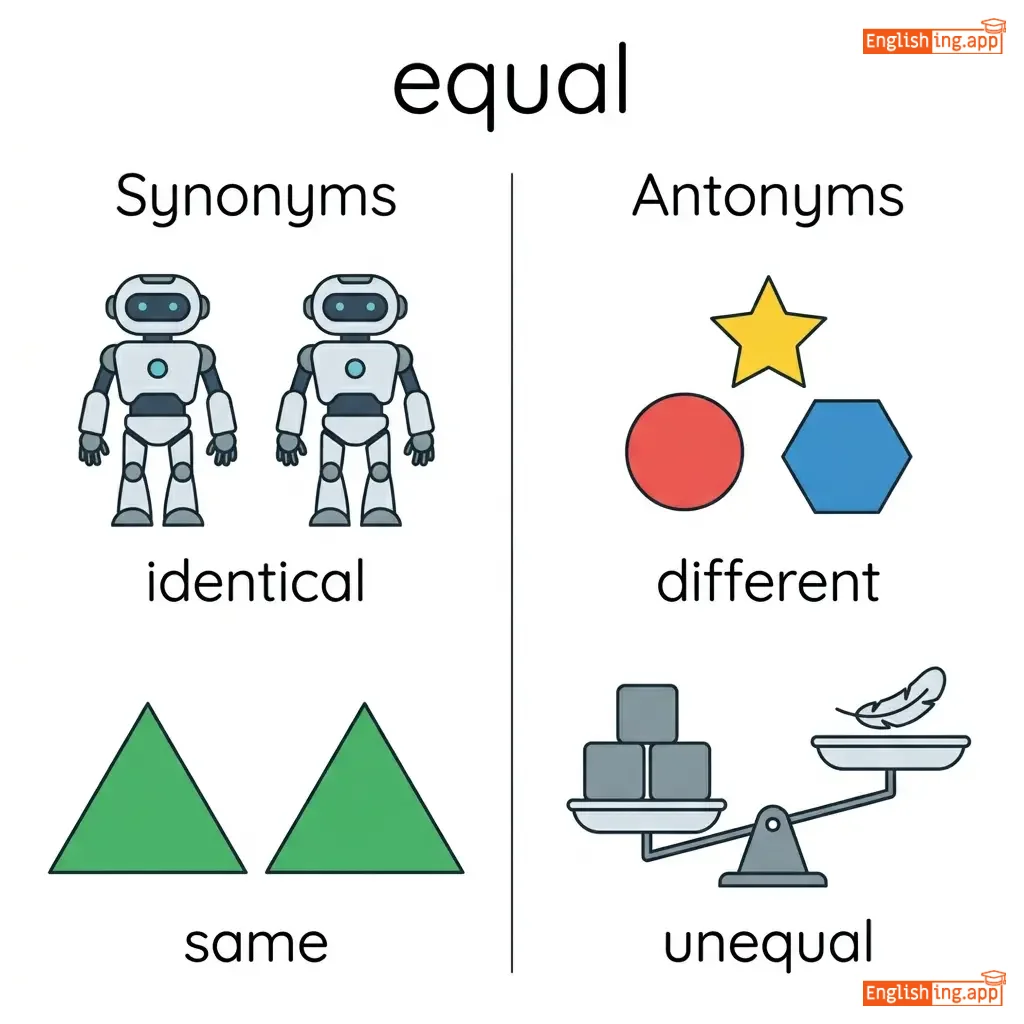
⚖️
|
/ˈiːkwəl/
adjective
(yìguì)
••••••
|
|
平等
pingdeng
••••••
|
- •••••• | - •••••• | - •••••• | - •••••• |
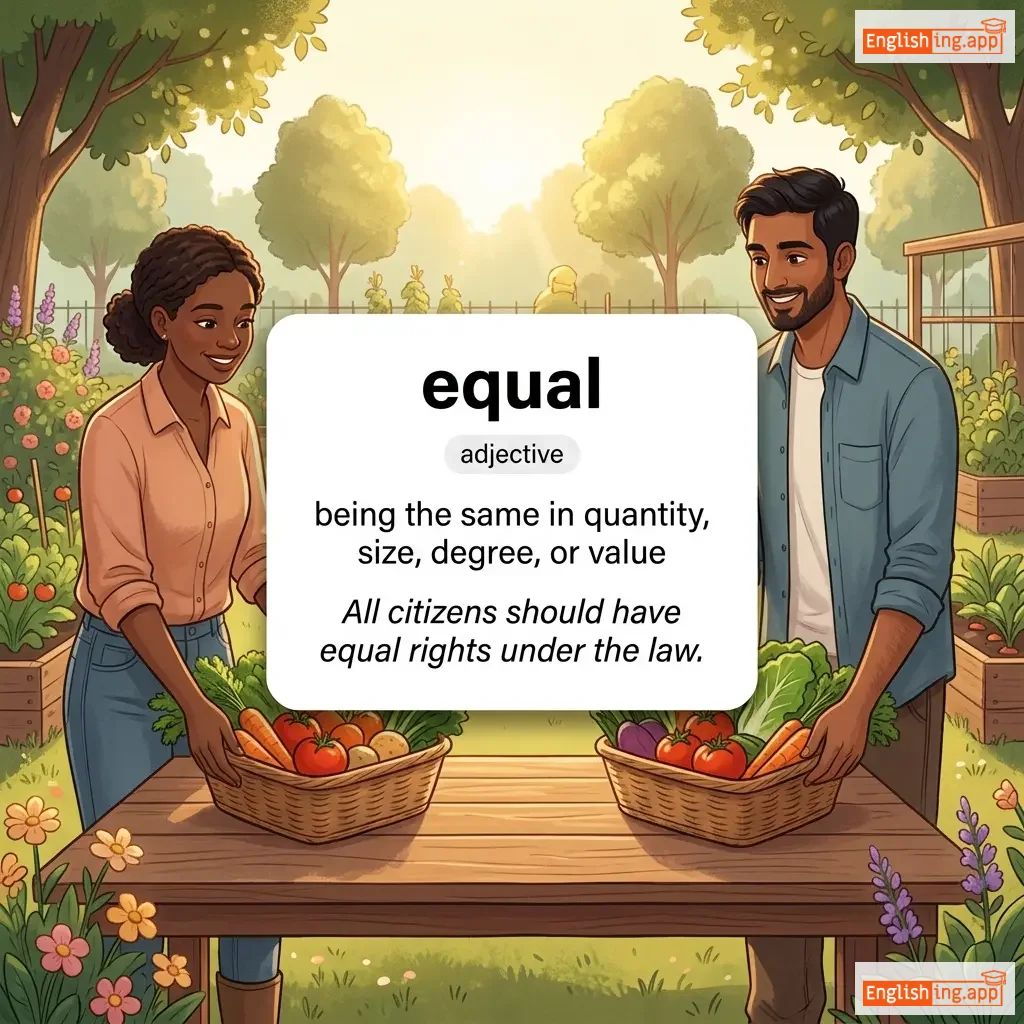
being the same in quantity, size, degree, or value
••••••
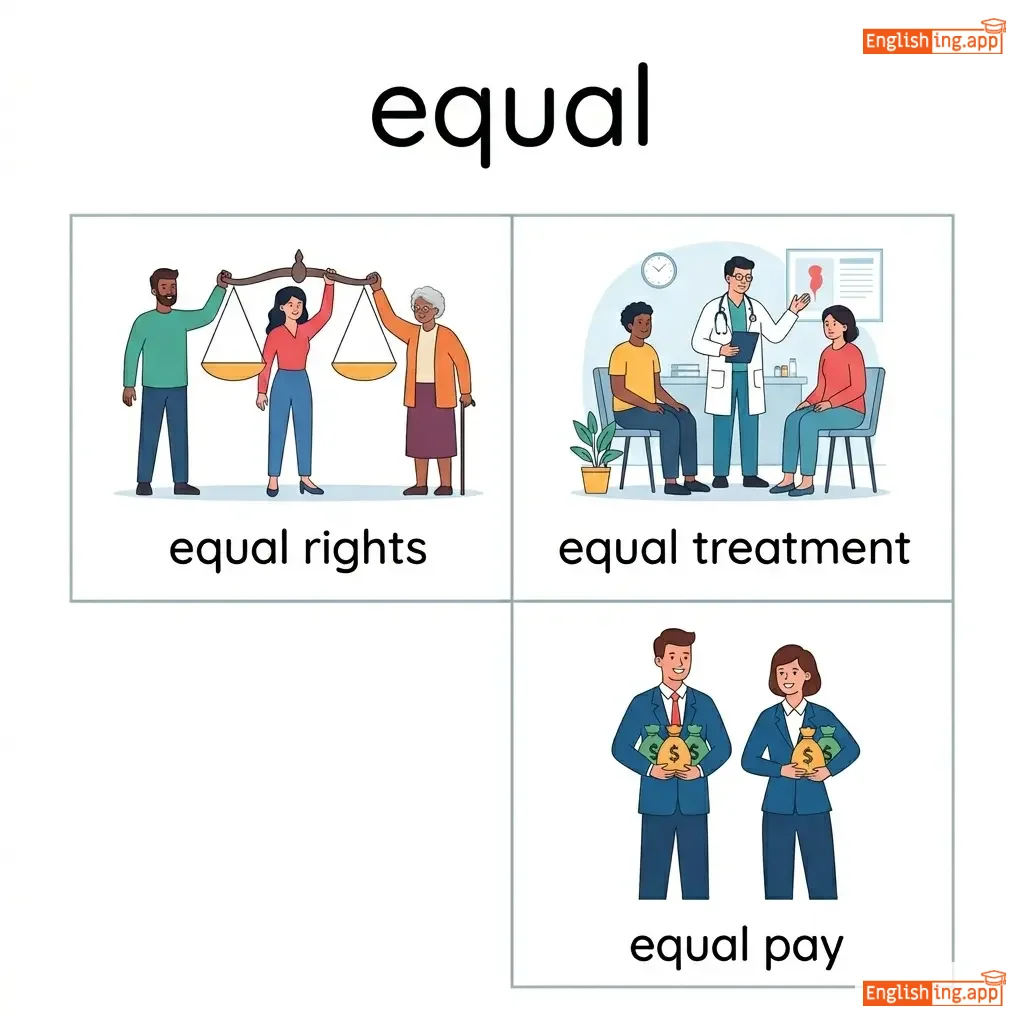
|
All citizens should have equal rights under the law.
所有公民都应该在法律面前享有平等权利。
••••••
|
所有公民都应该在法律面前享有平等权利。
Suoyou gongmin dou yinggai zai falü mianqian xiangyou pingdeng quanli.
••••••
|
equal opportunity
平等机会
••••••
|
the principle that everyone should have the same chances in life
••••••
|
平等机会
pingdeng jihui
••••••
|
identical, same, equivalent, matching, uniform
••••••
|
different, unequal, unfair
••••••
|
equal rights, equal treatment, equal pay, equal opportunity
••••••
|
Equal意味着看到每个人平等
••••••
|
|
#1862
⚖️
|
/ɪˈkwɒləti/
noun
(ɪˈkwɒləti)
••••••
|
|
平等
pingdeng
••••••
|
- •••••• | - •••••• | - •••••• | - •••••• |
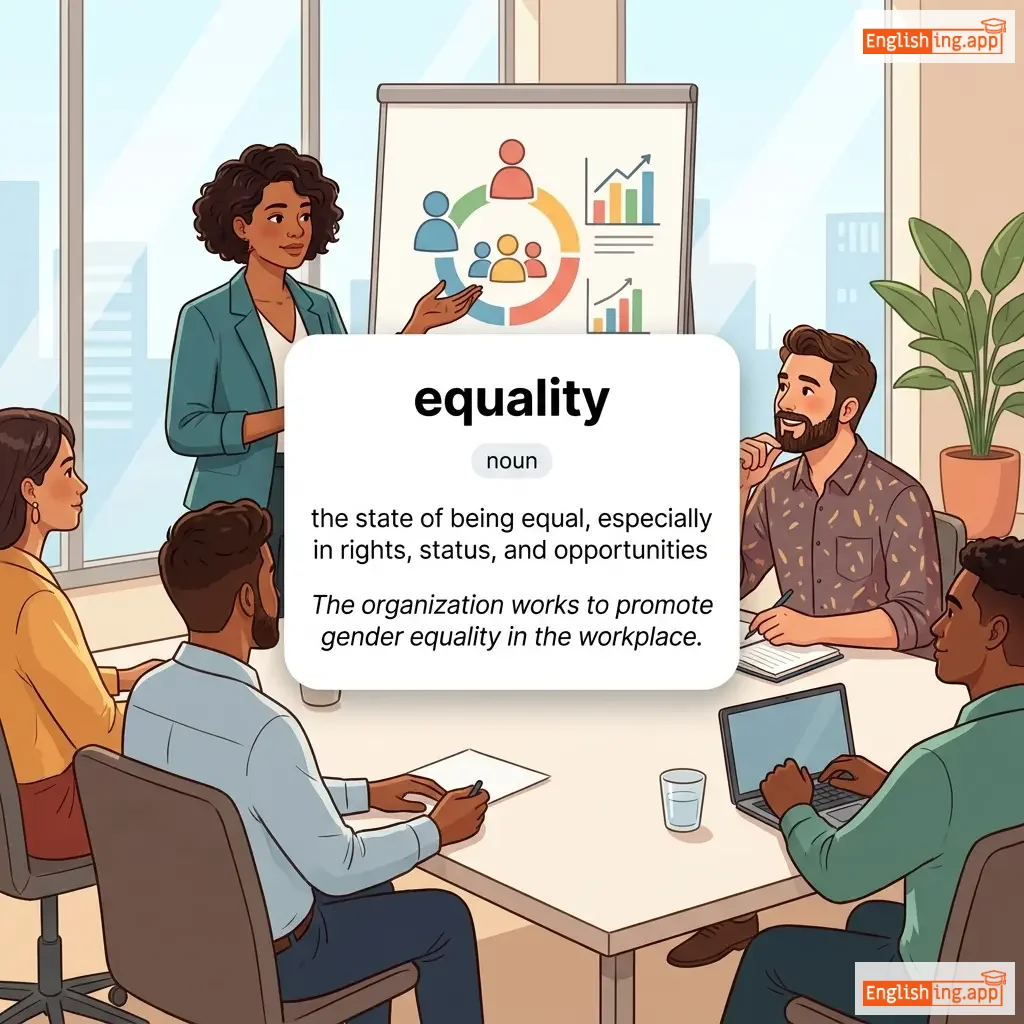
the state of being equal, especially in rights, status, and opportunities
••••••
|
The organization works to promote gender equality in the workplace.
该组织致力于促进工作场所的性别平等。
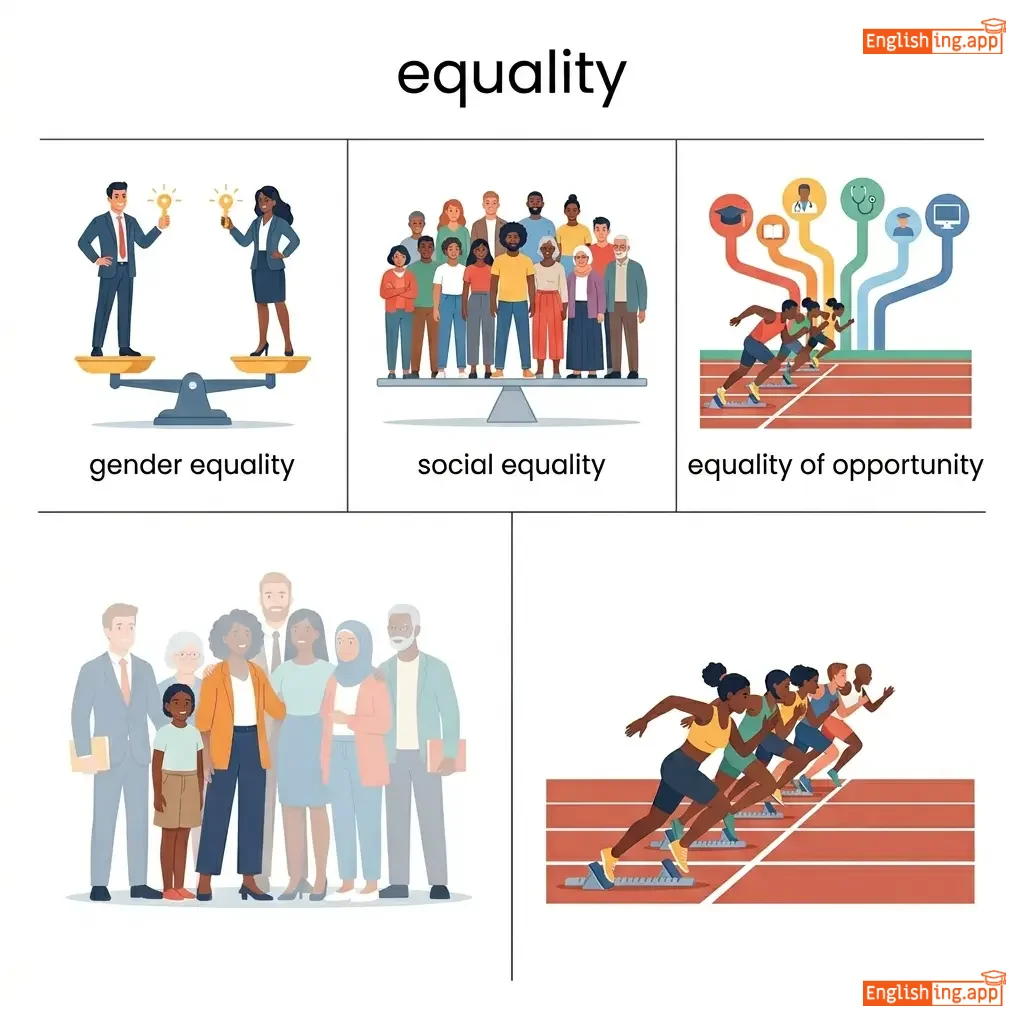
••••••
|
该组织致力于促进工作场所的性别平等。
Gai zuzhi zhili yu cujin gongzuo changsuo de xingbie pingdeng.
••••••
|
- •••••• | - •••••• | - •••••• |
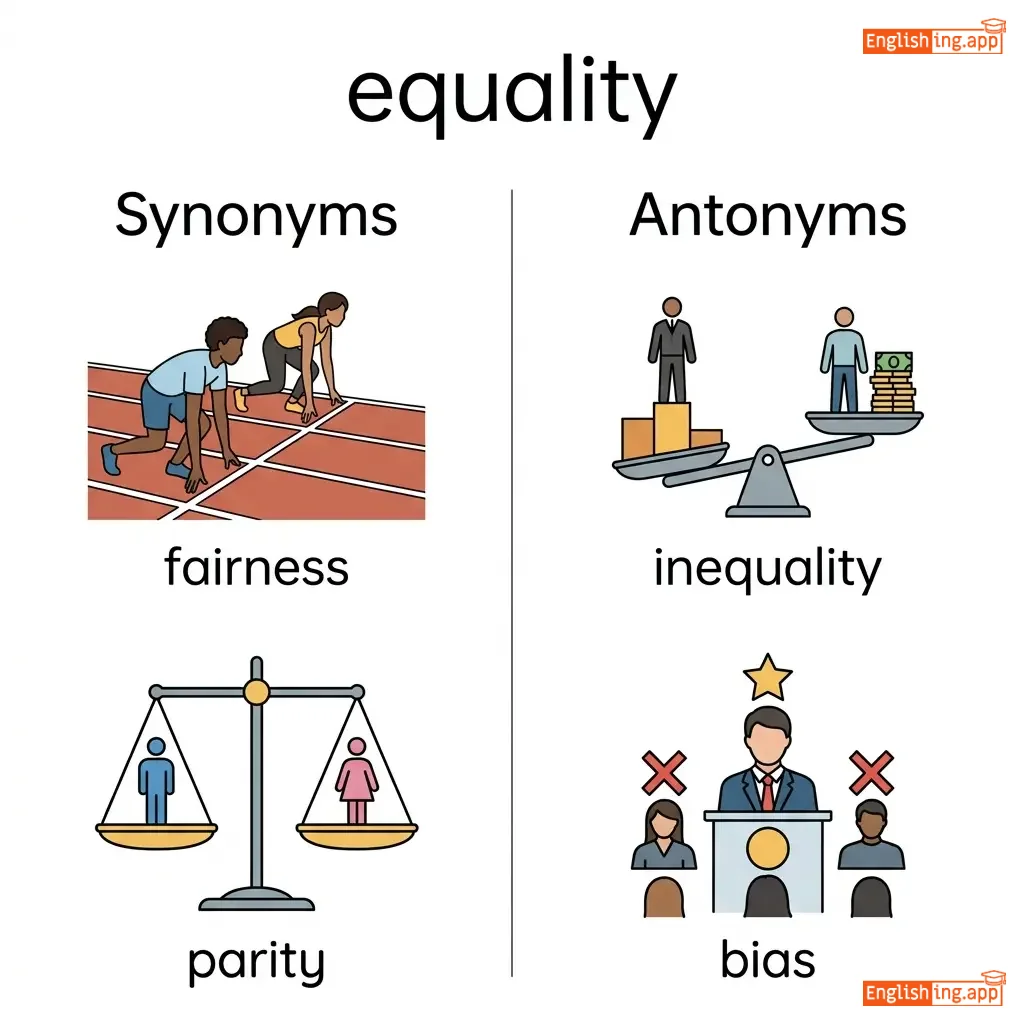
fairness, parity, balance, justice
••••••
|
inequality, bias, discrimination
••••••
|
gender equality, social equality, equality of opportunity, promote equality
••••••
|
Píng + děng = 平等 — 平等意味着所有人享有相同的权利和机会!
••••••
|
|
#1863
⚖️
|
/ˈiːkwəlaɪz/
verb
(ìkwélaíz)
••••••
|
- •••••• |
平衡
pínghéng
••••••
|
equalized
ìkwélaízd
••••••
|
equalized
ìkwélaízd
••••••
|
equalizes
ìkwélaízes
••••••
|
equalizing
ìkwélaízing
••••••
|
To make equal or level in status, value, or amount.
••••••
|
The team equalized the score in the last minute.
团队在最后一分钟将比分扳平。
••••••
|
团队在最后一分钟将比分扳平。
Tuánduì zài zuìhòu yī fēnzhōng jiāng bǐfēn bān píng.
••••••
|
equalize the playing field
使比赛场地公平
••••••
|
To create fair conditions for everyone
••••••
|
使比赛场地公平
Shǐ bǐsài chǎngdì gōngpíng
••••••
|
balance, level, adjust, standardize, match
••••••
|
unequal, imbalance, differentiate
••••••
|
equalize pressure, equalize the score, equalize opportunities
••••••
|
Equalize 是让事情变得公平 – 想象一个平衡的比赛场地。
••••••
|
|
#1864
➗
|
/ˈiːkwəli/
adverb
(yīnggāi)
••••••
|
- •••••• |
平等地
pingdeng de
••••••
|
- •••••• | - •••••• | - •••••• | - •••••• |
in an equal or fair way; to the same degree
••••••
|
The prize money was equally divided among the winners. |
奖金在获胜者之间平等分配。
Jiǎngjīn zài huòshèng zhě zhījiān píngděng fēnpèi.
••••••
|
- •••••• | - •••••• | - •••••• |
fairly, evenly, impartially, uniformly
••••••
|
unequally, unfairly, disproportionately
••••••
|
equally important, equally divided, equally responsible
••••••
|
Equally 意味着平等地(平等)做事
••••••
|
|
#1865
🧮
|
/ɪˈkweɪʒən/
noun
(方程)
••••••
|
- •••••• |
方程
fangcheng
••••••
|
- •••••• | - •••••• | - •••••• | - •••••• |
a mathematical statement that shows the equality of two expressions
••••••
|
He solved the equation to find the value of x. |
他解出了方程,找到了x的值。
Ta jiechu le fangcheng, zhaodao le x de zhi.
••••••
|
balance the equation |
to make both sides of an equation or situation equal
••••••
|
平衡方程
pingheng fangcheng
••••••
|
formula, expression, equality, calculation
••••••
|
inequality, imbalance
••••••
|
solve an equation, linear equation, quadratic equation, mathematical equation
••••••
|
方程代表平衡,当两个表达式平等时,方程成立。
••••••
|
|
#1866
⚖️
|
/ˌiːkwɪˈlɪbriəm/
noun
(均衡)
••••••
|
|
平衡
pingheng
••••••
|
- •••••• | - •••••• | - •••••• | - •••••• |
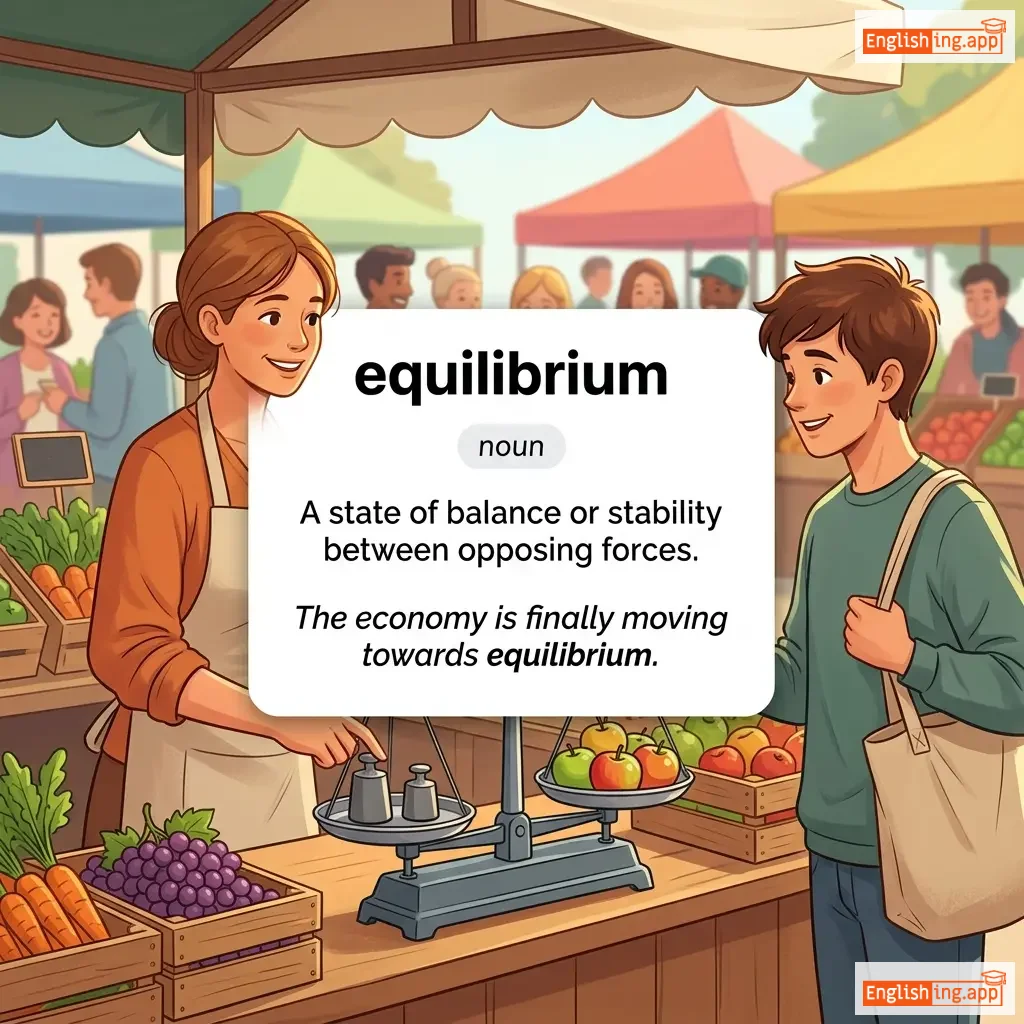
A state of balance or stability between opposing forces.
••••••
|
The economy is finally moving towards equilibrium. |
经济最终朝着平衡发展。
Jīngjì zuìzhōng cháo zhe pínghéng fāzhǎn.
••••••
|
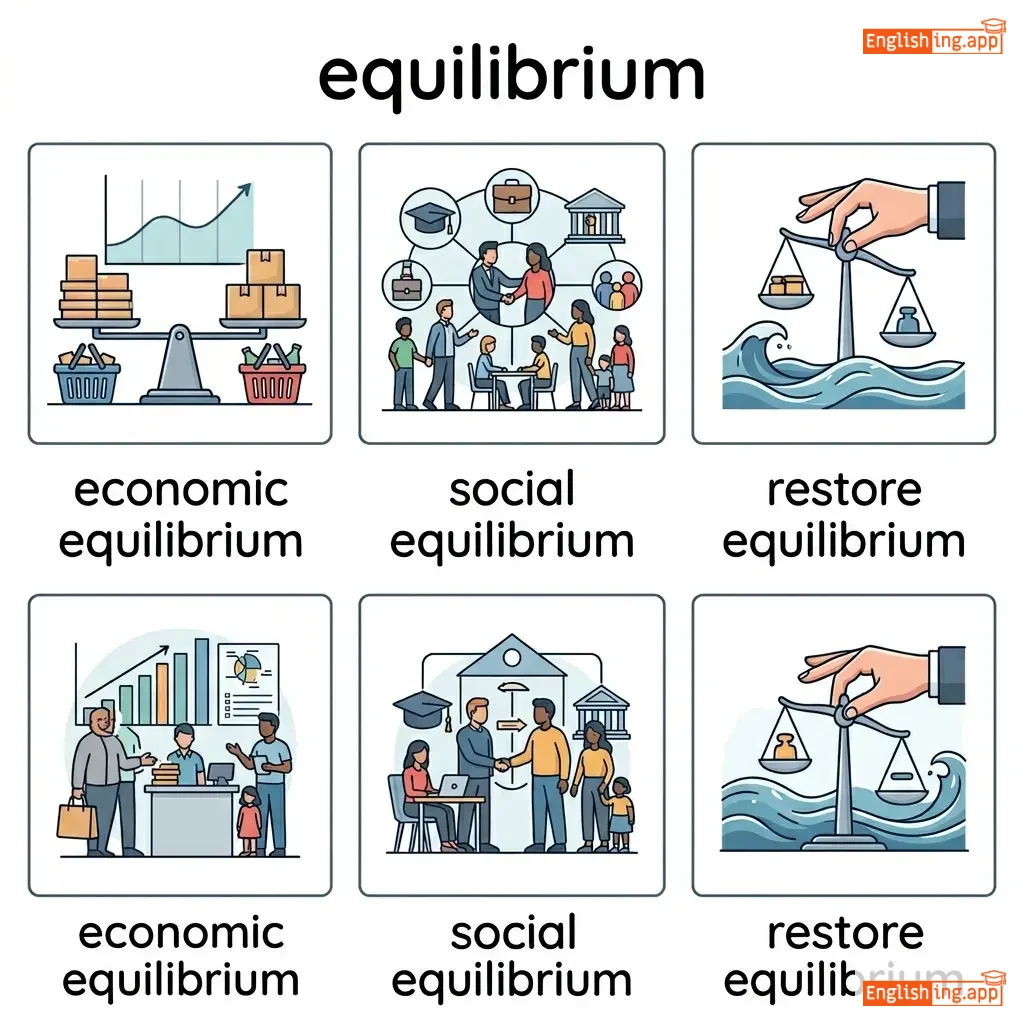
restore equilibrium |
To bring back balance or stability
••••••
|
恢复平衡
Huīfù pínghéng
••••••
|
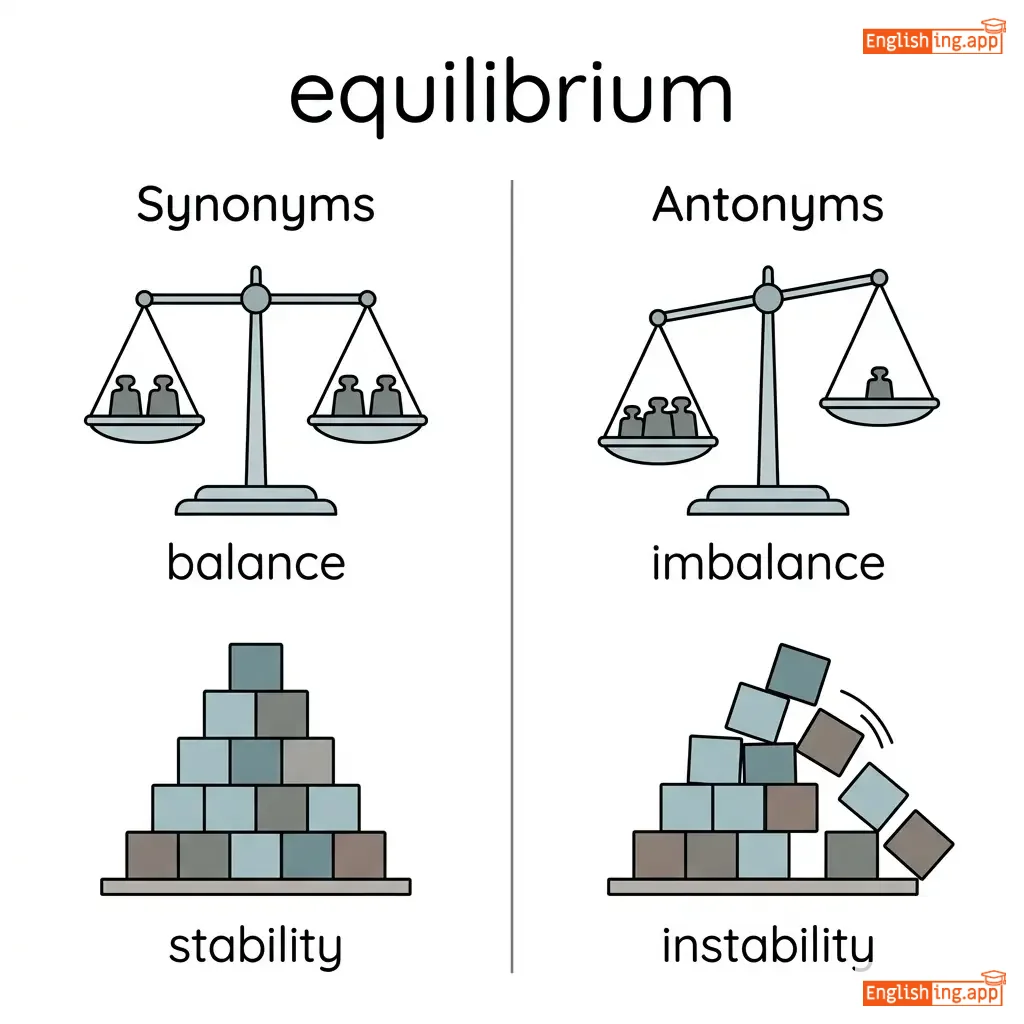
balance, stability, symmetry, poise, harmony
••••••
|
imbalance, instability, disorder
••••••
|
economic equilibrium, social equilibrium, restore equilibrium, maintain equilibrium
••••••
|
Equilibrium = 相等 + LIBRIum → 平衡 = 平衡
••••••
|
|
#1867
🧰
|
/ɪˈkwɪp/
verb
(ìkùp)
••••••
|
- •••••• |
装备
zhuangbei
••••••
|
equipped
ìkùpī
••••••
|
equipped
ìkùpī
••••••
|
equips
ìkùps
••••••
|
equipping
ìkùpíng
••••••
|
to provide someone or something with the necessary items or skills for a task
••••••
|
The school equipped its students with modern technology.
学校为学生配备了现代科技。
••••••
|
学校为学生配备了现代科技。
Xuexiao wei xuesheng peibei le xiandai keji.
••••••
|
well-equipped
装备齐全
••••••
|
having all the necessary tools or resources
••••••
|
装备齐全
zhuangbei qiquan
••••••
|
supply, furnish, provide, prepare, arm
••••••
|
deprive, strip, disarm
••••••
|
equip with, properly equipped, equip someone for, equip team
••••••
|
装备就像是给你装备好一切!
••••••
|
|
#1868
🛠️
|
/ɪˈkwɪpmənt/
noun
(设备)
••••••
|
- •••••• |
设备
shebei
••••••
|
- •••••• | - •••••• | - •••••• | - •••••• |
the necessary tools, machines, or other items needed for a particular purpose
••••••
|
The laboratory bought new equipment for research. |
实验室购买了新的设备用于研究。
shíyànshì gòumǎi le xīn de shèbèi yòng yú yánjiū.
••••••
|
state-of-the-art equipment |
the most modern and advanced tools or machines available
••••••
|
先进设备
xiānjìn shèbèi
••••••
|
tools, gear, apparatus, machinery, instruments
••••••
|
supplies, consumables, disposables
••••••
|
sports equipment, safety equipment, office equipment, medical equipment
••••••
|
设备意味着工作的必备工具 (shebei)
••••••
|
|
#1869
⚖️
|
/ɪˈkwɪv.ə.lənt/
adjective
(等价)
••••••
|
- •••••• |
等价的; 相等的
dengjia de; xiangdeng de
••••••
|
- •••••• | - •••••• | - •••••• | - •••••• |
equal in value, amount, function, or meaning; having the same effect or result
••••••
|
This amount is equivalent to ten dollars. |
这个金额等于十美元。
Zhe ge jine dengyu shi mei yuan
••••••
|
- •••••• | - •••••• | - •••••• |
equal, same, comparable, identical
••••••
|
different, unequal, distinct
••••••
|
equivalent value, equivalent amount, equivalent to
••••••
|
中文: '等价'意味着两者相等,就像两个数字相等一样。
••••••
|
|
#1870
⏳
|
/ˈɪərə/
noun
(时代)
••••••
|
- •••••• |
时代
shidai
••••••
|
- •••••• | - •••••• | - •••••• | - •••••• |
a long and distinct period of history with a particular feature or characteristic
••••••
|
The invention of the internet marked a new era in communication. |
互联网的发明标志着通信新时代的开始。
Hulianwang de faming biaozhizhe tongxin xinxidai de kaishi.
••••••
|
end of an era |
the close of a significant period in history or someone's life
••••••
|
一个时代的结束
yige shidai de jieshu
••••••
|
age, epoch, period, time, generation
••••••
|
moment, instant, short-term
••••••
|
modern era, digital era, new era, Victorian era
••••••
|
时代就像'数字时代'一样,可以想象这个'时代'是一个特别的时间段。
••••••
|
|
#1871
🏗️
|
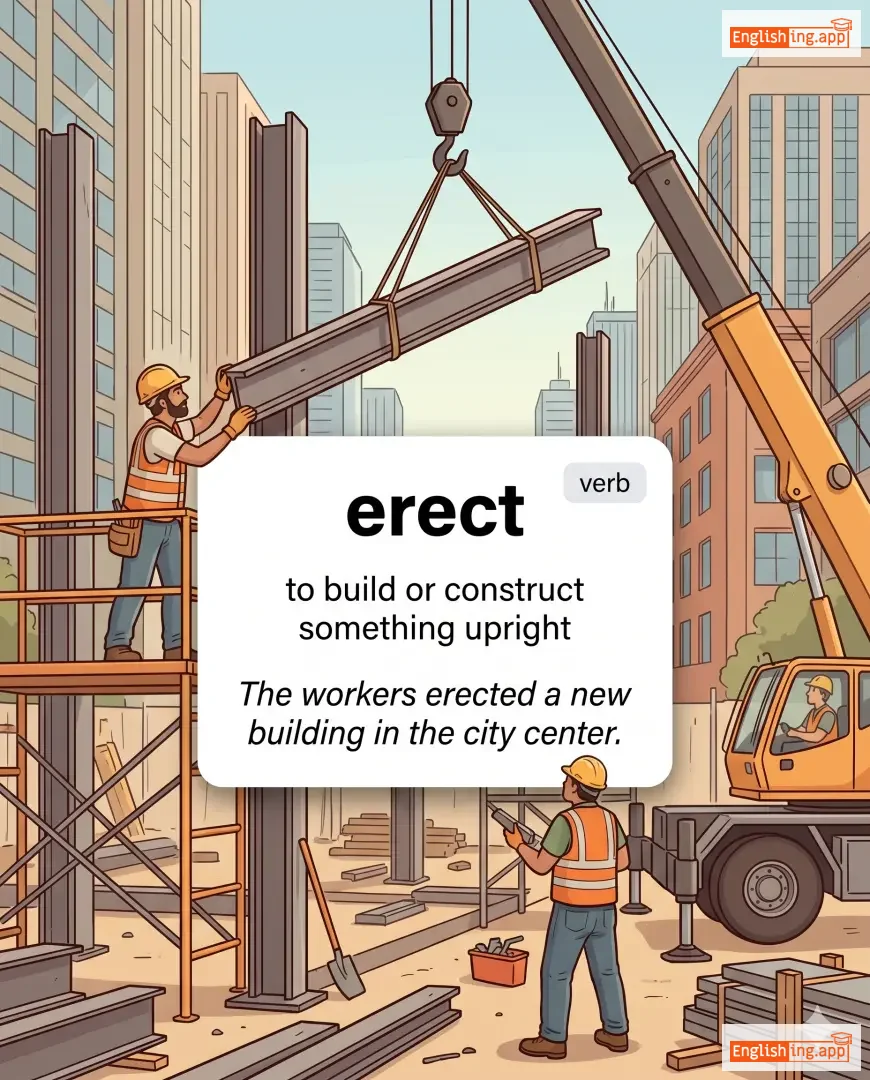
/ɪˈrɛkt/
verb
(耶瑞克特)
••••••
|
|
竖立
shuli
••••••
|
erected
竖立
••••••
|
erected
竖立
••••••
|
erects
竖立
••••••
|
erecting
竖立
••••••
|
to build or construct something; to set upright
••••••
|
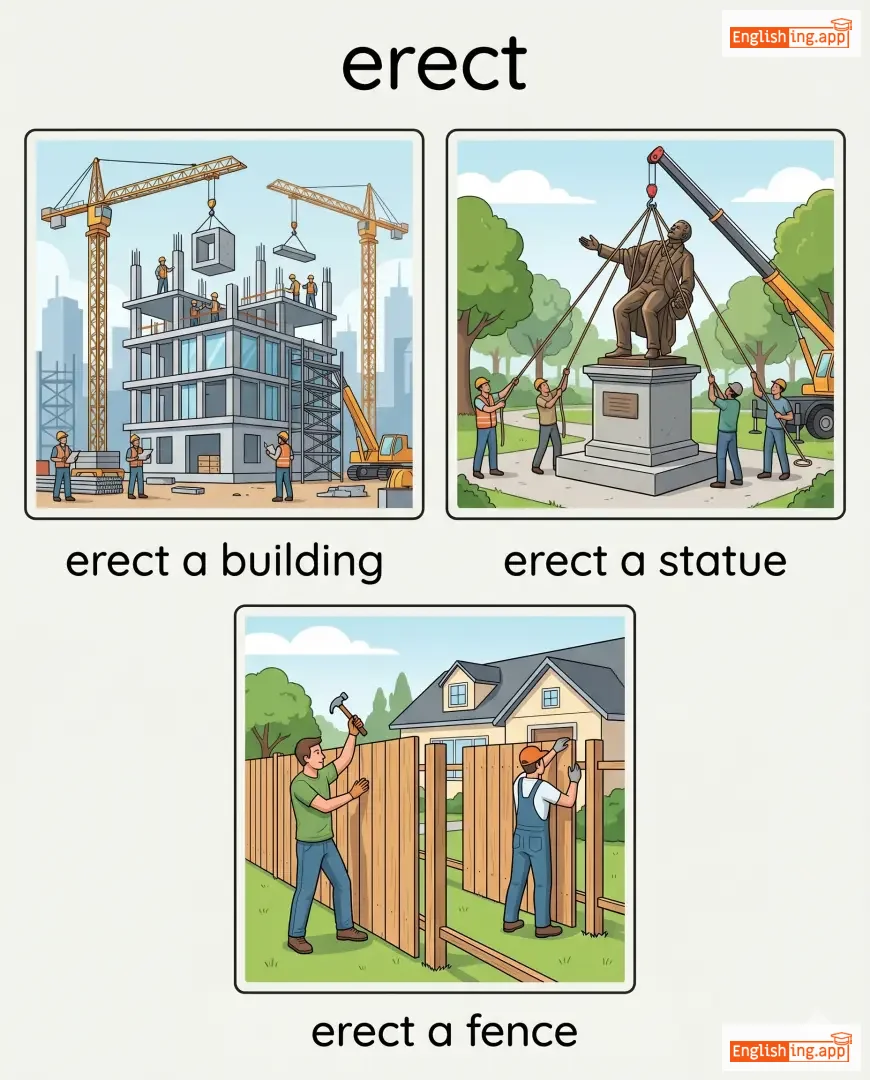
They erected a statue in the town square.
他们在市中心广场竖立了一个雕像。
••••••
|
他们在市中心广场竖立了一个雕像。
Tāmen zài shì zhōngxīn guǎngchǎng shùlì le yīgè diāoxiàng.
••••••
|
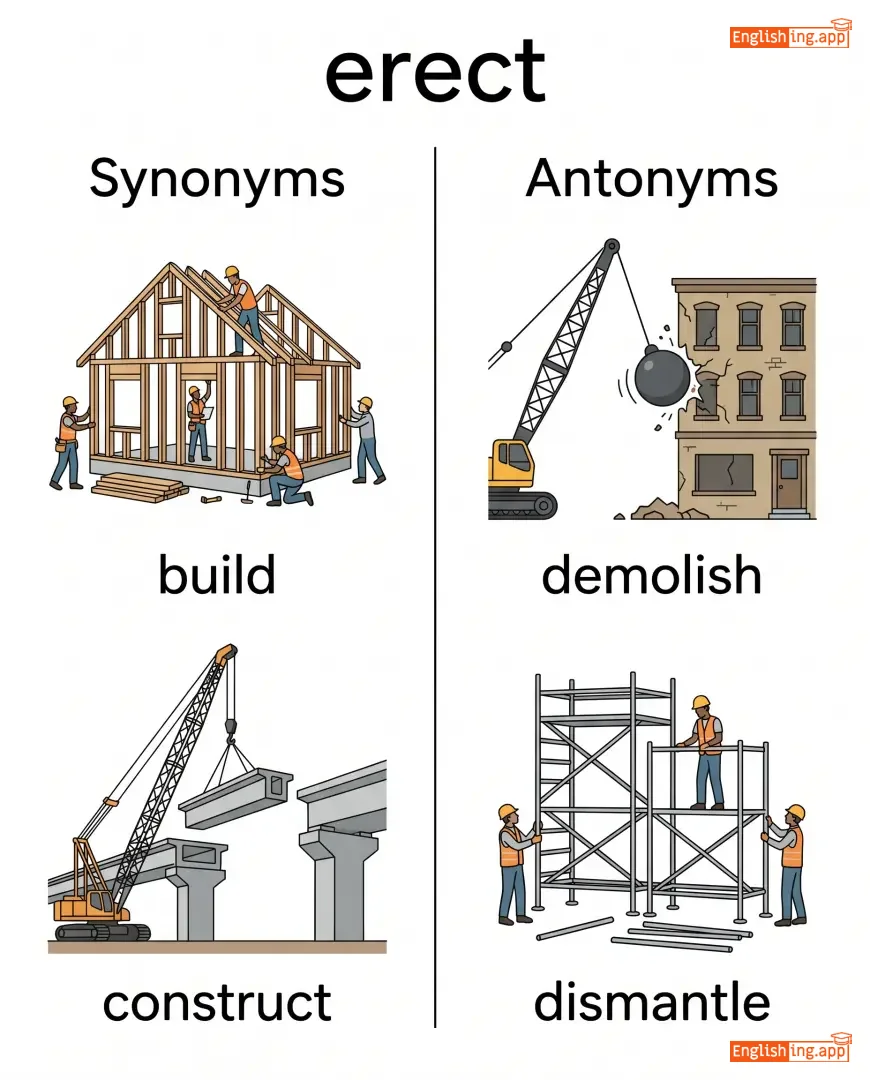
- •••••• | - •••••• | - •••••• |
build, construct, raise, establish
••••••
|
demolish, destroy, tear down
••••••
|
erect building, erect monument, erect statue, erect structure
••••••
|
竖立雕像,像我们竖直地建造事物。
••••••
|
|
#1872
⚠️
|
/ˈɛrər/
noun
(错误)
••••••
|
- •••••• |
错误
cuo wu
••••••
|
- •••••• | - •••••• | - •••••• | - •••••• |
A mistake or inaccuracy in action, thought, or judgment.
••••••
|
The report contained a major error in the data analysis. |
报告中在数据分析中包含了一个重大错误。
Baogao zhong zai shuju fenxi zhong baokuo le yi ge zhongda cuo wu.
••••••
|
trial and error |
A way of solving problems by trying different methods until finding one that works.
••••••
|
试验与错误
shiyan yu cuo wu
••••••
|
mistake, fault, blunder, slip, inaccuracy
••••••
|
accuracy, correctness, precision
••••••
|
human error, computer error, make an error, error message
••••••
|
错误在中文的意思就是错误 – 如果有什么不对,我们就说'错误'。
••••••
|
|
#1873
🌋
|
/ɪˈrʌpt/
verb
(érupt)
••••••
|
- •••••• |
爆发
baofa
••••••
|
erupted
érupted
••••••
|
erupted
érupted
••••••
|
erupts
érupts
••••••
|
erupting
érupting
••••••
|
to burst forth suddenly and violently
••••••
|
The volcano erupted after centuries of dormancy.
火山在沉寂了几个世纪后爆发。
••••••
|
火山在沉寂了几个世纪后爆发。
Huoshan zai chenji le jige shiji hou baofa.
••••••
|
- •••••• | - •••••• | - •••••• |
explode, burst, blast, discharge
••••••
|
calm, subside, settle
••••••
|
erupt in anger, erupt in flames, erupt suddenly
••••••
|
ERUPT the volcano with an explosive power!
••••••
|
|
#1874
📈
|
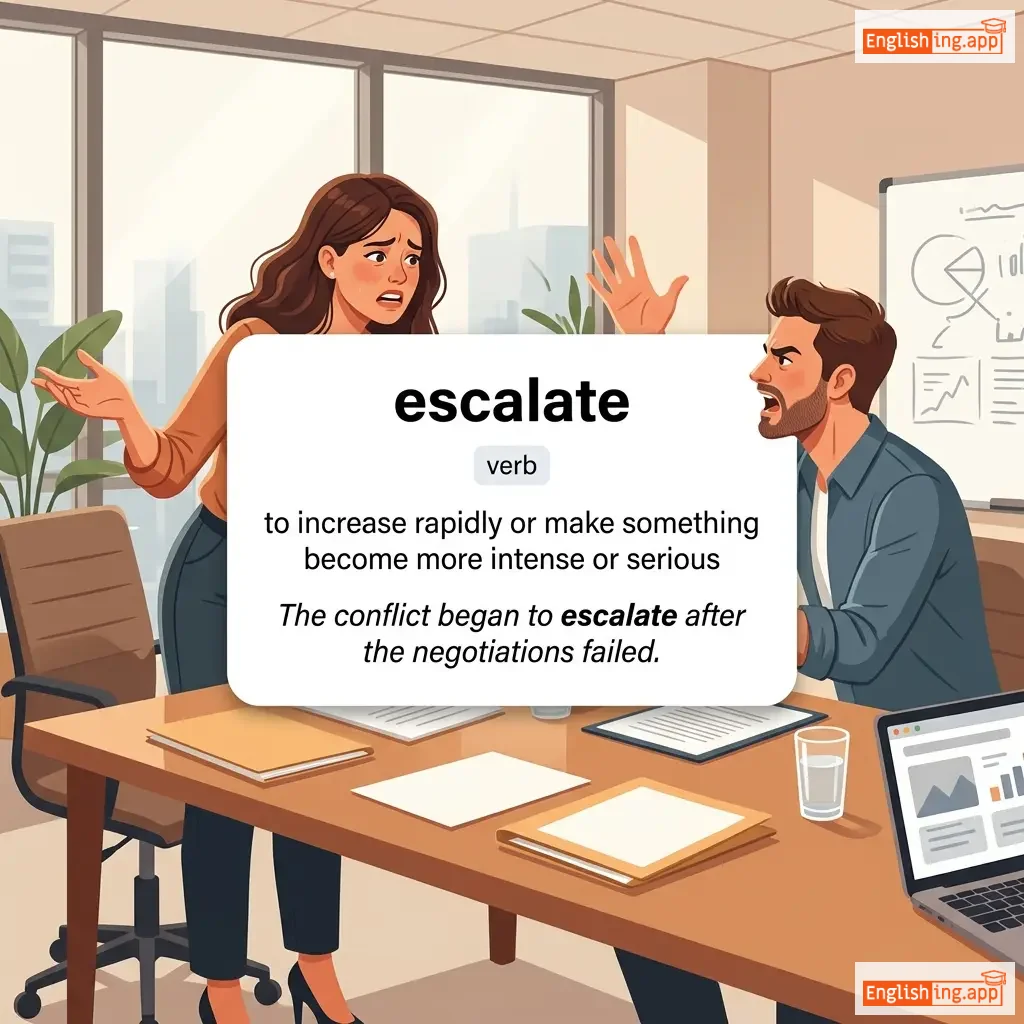
/ˈɛskəleɪt/
verb
(ɛs.kəˈleɪt)
••••••
|
|
升级
shēngjí
••••••
|
escalated
ɛs.kəˈleɪtəd
••••••
|
escalated
ɛs.kəˈleɪtəd
••••••
|
escalates
ɛs.kəˈleɪts
••••••
|
escalating
ɛs.kəˈleɪtɪŋ
••••••
|
to increase rapidly or make something become more intense or serious
••••••
|
The conflict began to escalate after the negotiations failed.
冲突在谈判失败后开始升级。
••••••
|
冲突在谈判失败后开始升级。
Chōngtú zài tánpàn shībài hòu kāishǐ shēngjí.
••••••
|
escalate the situation
升级局势
••••••
|
to make a problem or conflict more serious
••••••
|
升级局势
shēngjí júshì
••••••
|
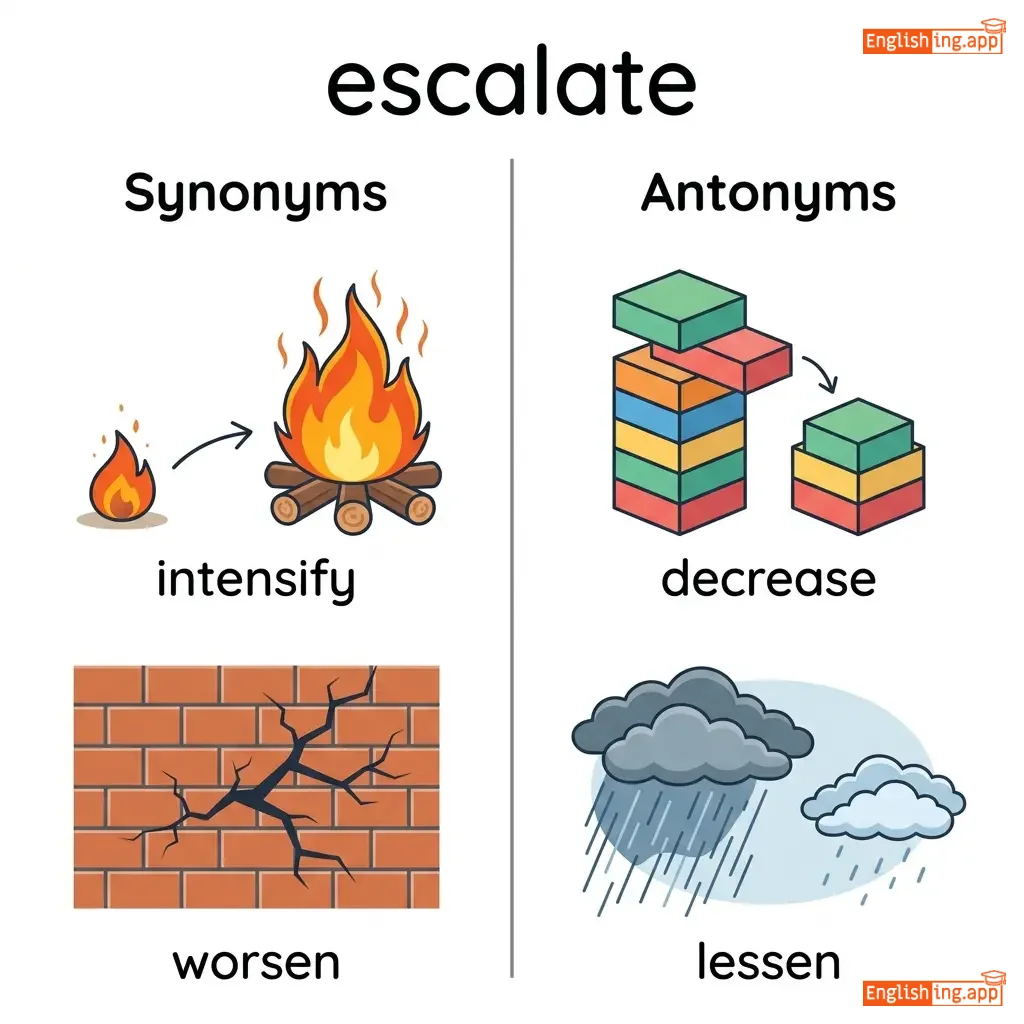
intensify, worsen, amplify, heighten, increase
••••••
|
decrease, lessen, reduce
••••••
|
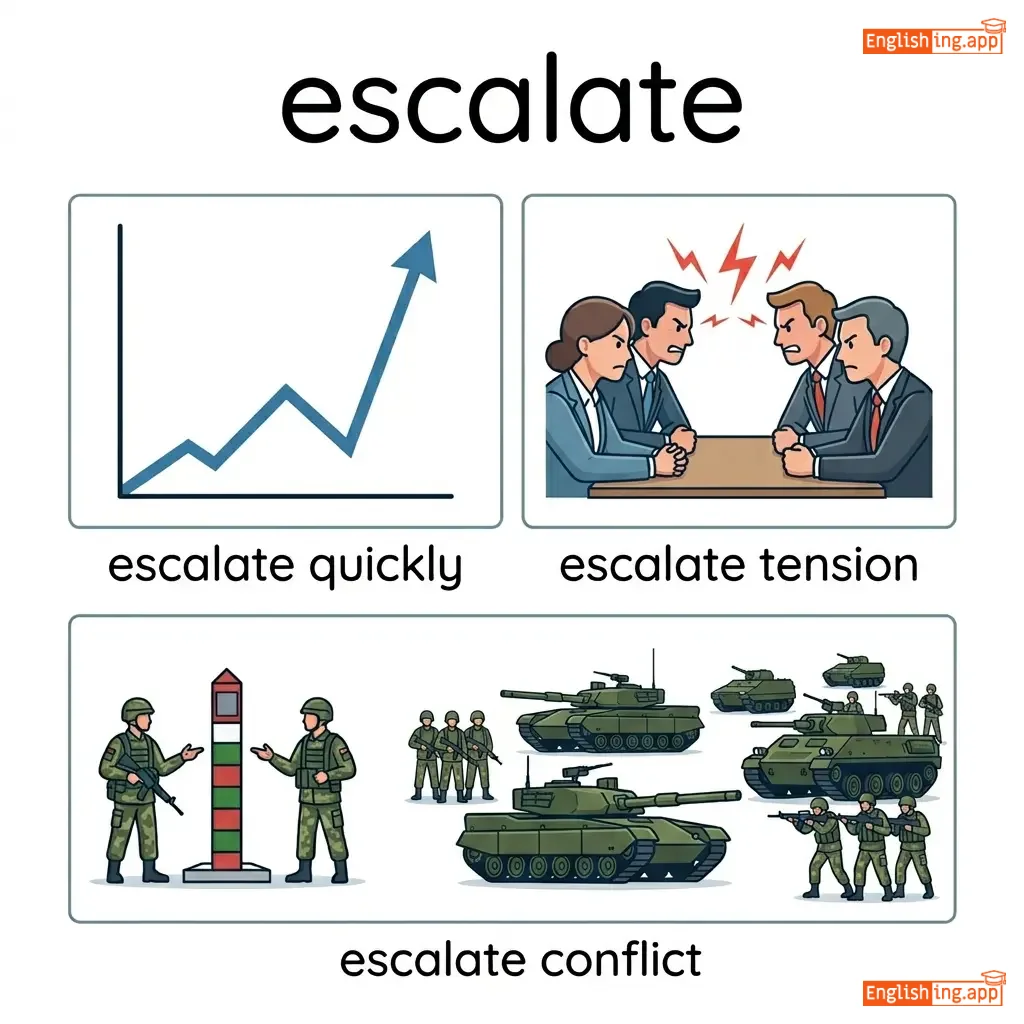
escalate quickly, escalate tension, escalate conflict, escalate costs
••••••
|
电梯会让你上升,升级也意味着增加或变得更强烈。
••••••
|
|
#1875
🏃♂️
|
/ɪˈskeɪp/
verb
(eskeip)
••••••
|
- •••••• |
逃脱
taotuo
••••••
|
escaped
eskeipt
••••••
|
escaped
eskeipt
••••••
|
escapes
eskeips
••••••
|
escaping
eskeiping
••••••
|
To break free from confinement or control; to get away.
••••••
|
The prisoner tried to escape from jail.
囚犯试图逃脱监狱。
••••••
|
囚犯试图逃脱监狱。
Qiufan shitu taotuo jianyu.
••••••
|
escape reality
逃避现实
••••••
|
To avoid or forget real-life problems by focusing on something else.
••••••
|
逃避现实
taobi xianshi
••••••
|
flee, break out, evade, get away, run away
••••••
|
stay, capture, confinement
••••••
|
escape route, escape plan, escape from, narrow escape
••••••
|
逃脱就是逃走 – 逃 (tao) + 脱 (tuo) = 逃脱!
••••••
|
|
#1876
⭐
|
/ɪˈspeʃəl/
adjective
(埃斯佩셜)
••••••
|
- •••••• |
特别
tebie
••••••
|
- •••••• | - •••••• | - •••••• | - •••••• |
Particularly remarkable or significant; distinguished from others
••••••
|
This is an especial opportunity you should not miss.
这是一个你不应错过的特别机会。
••••••
|
这是一个你不应错过的特别机会。
Zhe shi yi ge ni bu ying cuoguo de tebie jihui.
••••••
|
- •••••• | - •••••• | - •••••• |
particular, notable, remarkable, distinguished
••••••
|
ordinary, common
••••••
|
especial attention, especial care, especial event
••••••
|
Tebie means special in Chinese, remember the 'te' sound for 'the' special
••••••
|
|
#1877
⭐
|
/ɪˈspeʃəli/
adverb
(特别)
••••••
|
- •••••• |
特别; 尤其是; 尤其
tèbié; yóuqí shì; yóuqí
••••••
|
- •••••• | - •••••• | - •••••• | - •••••• |
particularly; in particular; above all
••••••
|
I love all fruits, especially mangoes.
我喜欢所有的水果,特别是芒果。
••••••
|
我喜欢所有的水果,特别是芒果。
Wǒ xǐhuān suǒyǒu de shuǐguǒ, tèbié shì mángguǒ.
••••••
|
- •••••• | - •••••• | - •••••• |
particularly, specifically, notably, chiefly, mainly
••••••
|
generally, broadly, commonly
••••••
|
especially important, especially difficult, especially when
••••••
|
特别是芒果 - 我最喜欢的!
••••••
|
|
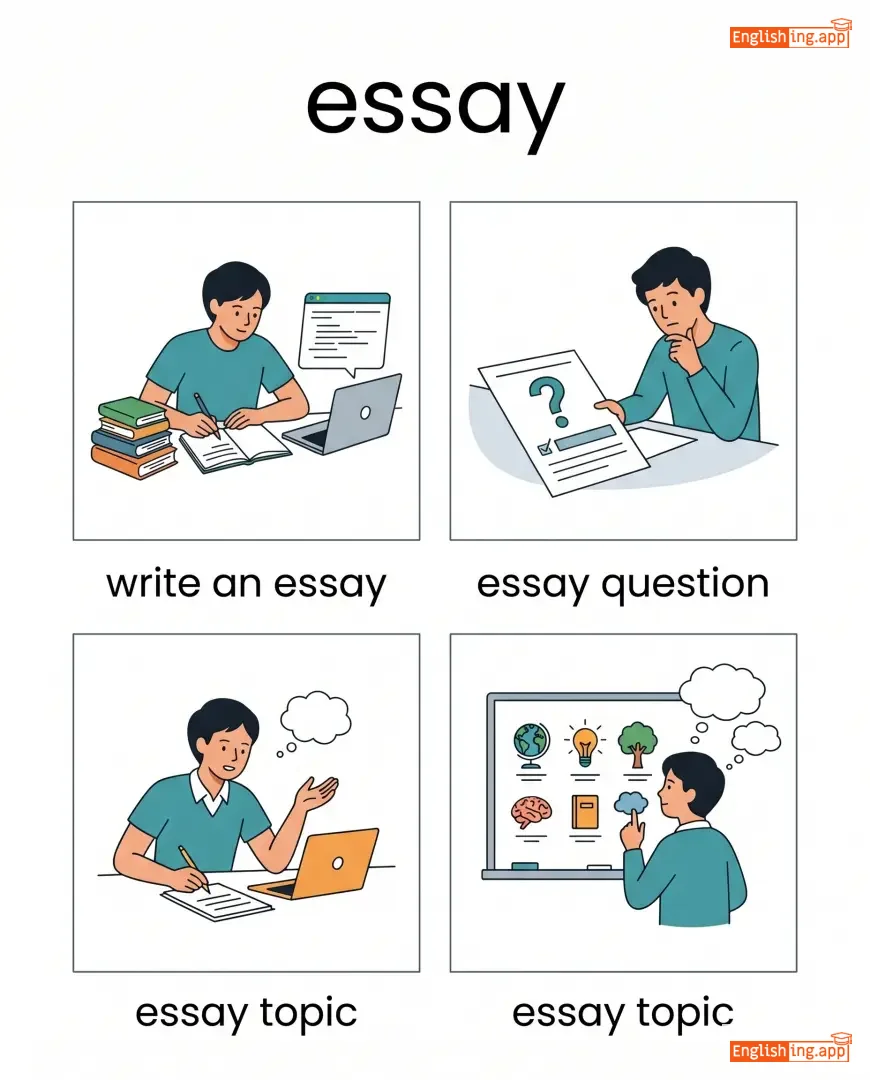
#1878
📝
|
/ˈɛseɪ/
noun
(é sài)
••••••
|
|
论文
lunwen
••••••
|
- •••••• | - •••••• | - •••••• | - •••••• |
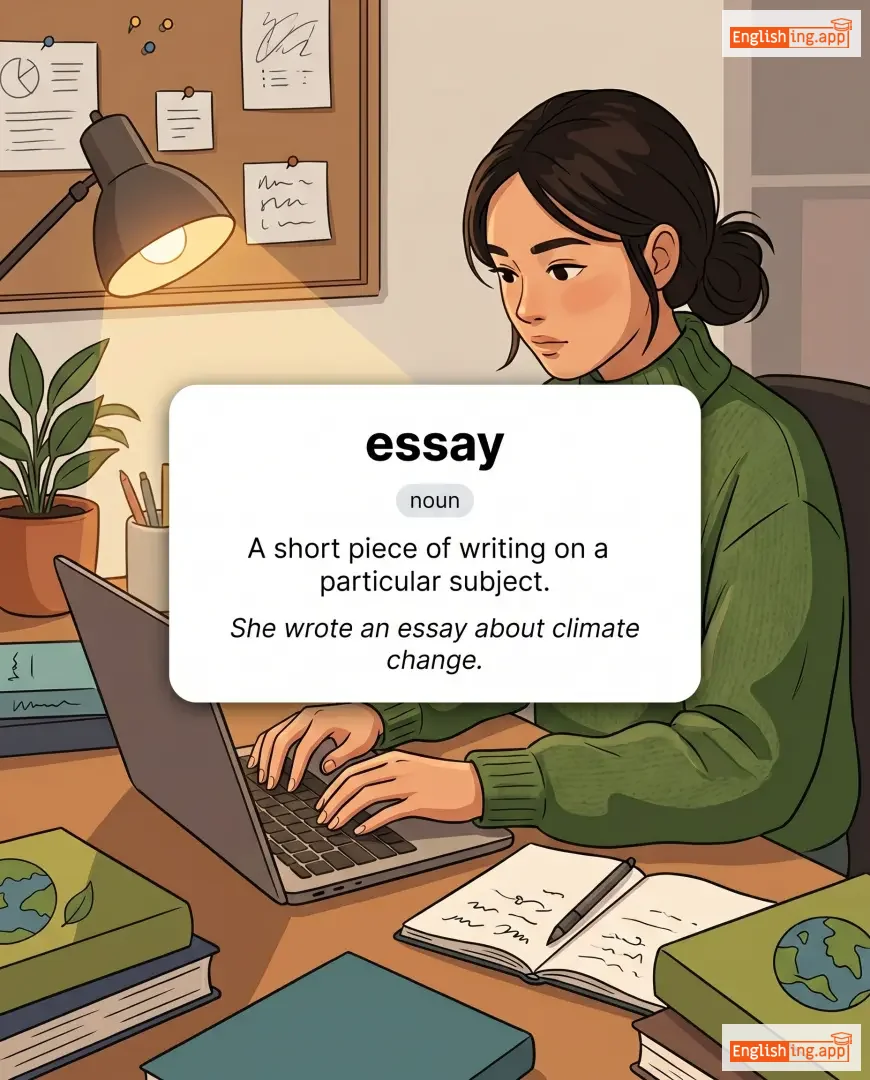
A short piece of writing on a particular subject.
••••••
|
She wrote an essay about climate change. |
她写了一篇关于气候变化的论文。
Tā xiěle yī piān guānyú qìhòu biànhuà de lùnwén.
••••••
|
- •••••• | - •••••• | - •••••• |
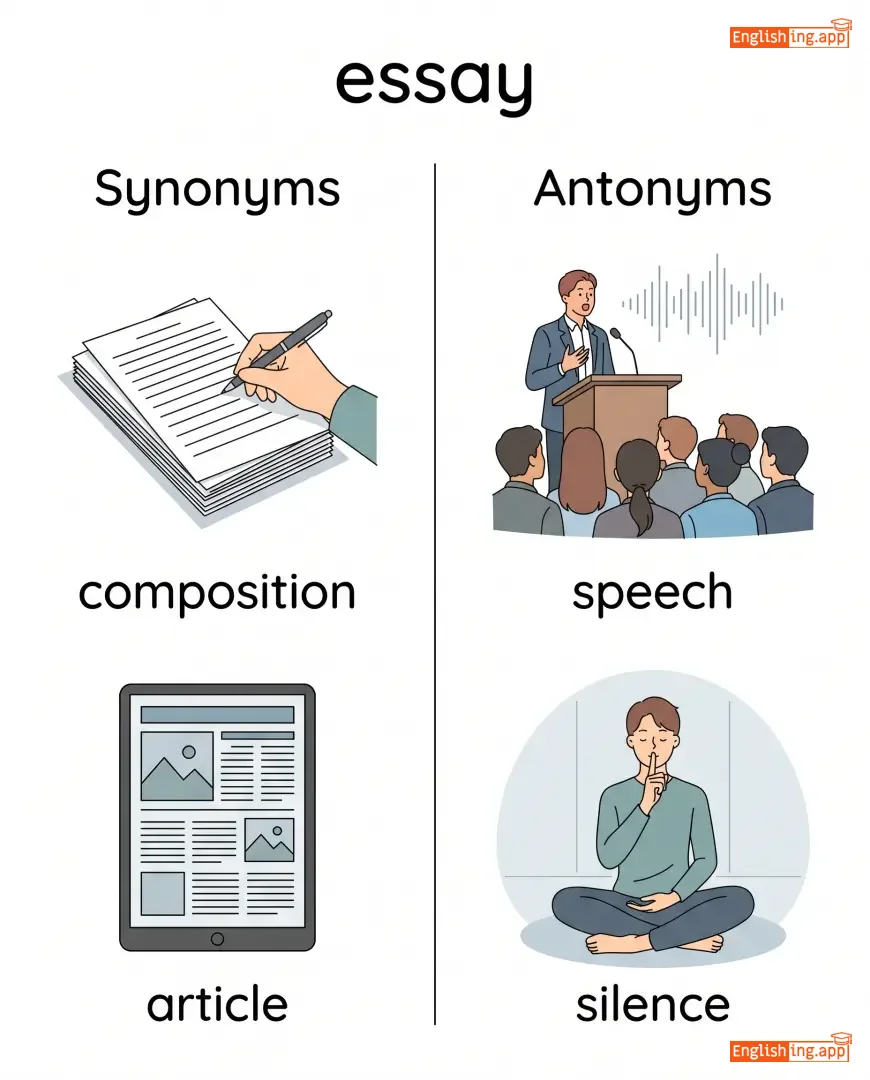
composition, article, paper, text, prose
••••••
|
speech, silence
••••••
|
write an essay, essay question, essay topic, essay competition
••••••
|
Essay意味着论文 – 在学校,写essay就是写论文。
••••••
|
|
#1879
🌿
|
/ˈɛsəns/
noun
(esens)
••••••
|
- •••••• |
本质
benzhi
••••••
|
- •••••• | - •••••• | - •••••• | - •••••• |
The intrinsic nature or indispensable quality of something that determines its character.
••••••
|
The essence of democracy is freedom of speech.
民主的本质是言论自由。
••••••
|
民主的本质是言论自由。
Mínzhǔ de běnzhì shì yánlùn zìyóu.
••••••
|
in essence
本质上
••••••
|
basically or fundamentally
••••••
|
本质上
Běnzhì shàng
••••••
|
core, nature, substance, spirit, heart
••••••
|
superficiality, exterior, surface
••••••
|
true essence, essence of life, capture the essence, in essence
••••••
|
Essence 意味着本质 — 就像香水的精华决定香气。
••••••
|
|
#1880
💧
|
/ɪˈsɛnʃəl/
adjective
(本质的)
••••••
|
- •••••• |
必要的
bì yào de
••••••
|
- •••••• | - •••••• | - •••••• | - •••••• |
Absolutely necessary; extremely important.
••••••
|
Water is essential for life.
水对生命至关重要。
••••••
|
水对生命至关重要。
Shuǐ duì shēngmìng zhì guān zhòng yào.
••••••
|
essential services
基本服务
••••••
|
basic services that must continue even in emergencies
••••••
|
必要的服务
bì yào de fú wù
••••••
|
vital, crucial, fundamental, indispensable
••••••
|
nonessential, trivial, unnecessary
••••••
|
essential role, essential requirement, essential need
••••••
|
Essential意味着必要的 → 如果没有钢笔,怎么写考试?
••••••
|
|
#1881
🔑
|
/ɪˈsɛnʃəli/
adverb
(本质上)
••••••
|
- •••••• |
本质上
ben zhi shang
••••••
|
- •••••• | - •••••• | - •••••• | - •••••• |
Used to emphasize the basic or fundamental nature of something.
••••••
|
The two plans are essentially the same. |
这两个计划本质上是相同的。
Zhè liǎng gè jì huà běn zhì shàng shì xiāng tóng de.
••••••
|
- •••••• | - •••••• | - •••••• |
basically, fundamentally, primarily, inherently, intrinsically
••••••
|
incidentally, superficially
••••••
|
essentially true, essentially different, essentially the same
••••••
|
Essentially 即本质上 – 本质上是最重要的。
••••••
|
|
#1882
🏢
|
/ɪˈstæblɪʃ/
verb
(es-tah-blish)
••••••
|
- •••••• |
建立
jiànlì
••••••
|
established
es-tah-blisht
••••••
|
established
es-tah-blisht
••••••
|
establishes
es-tah-bleesh-uhz
••••••
|
establishing
es-tah-bleesh-ing
••••••
|
To set up, create, or bring into existence something on a firm basis.
••••••
|
The company plans to establish a new office in Dhaka.
公司计划在达卡设立一个新办公室。
••••••
|
公司计划在达卡设立一个新办公室。
Gōngsī jìhuà zài Dākǎ shèlì yīgè xīn bàngōngshì.
••••••
|
establish a reputation
建立声誉
••••••
|
to build or create recognition over time
••••••
|
建立声誉
jiànlì shēngyù
••••••
|
set up, found, create, build, institute
••••••
|
abolish, destroy, dismantle
••••••
|
establish control, establish a company, establish rules, firmly establish
••••••
|
建立就像是 '创立' 或者 '搭建' 一座大厦。
••••••
|
|
#1883
🏢
|
/ɪˈstæblɪʃmənt/
noun
(es-ta-bli-shment)
••••••
|
- •••••• |
机构
jīgòu
••••••
|
- •••••• | - •••••• | - •••••• | - •••••• |
An organization, business, or system; the act of setting something up.
••••••
|
The restaurant is a new establishment in town. |
餐厅是城市中新建立的机构。
Cāntīng shì chéngshì zhōng xīn jiànlì de jīgòu.
••••••
|
the establishment |
A group in society with power and influence.
••••••
|
建立
jiànlì
••••••
|
institution, organization, foundation, business, setup
••••••
|
disbandment, dissolution
••••••
|
establishment of, business establishment, political establishment
••••••
|
机构是你开始一切的地方,所有成就都从这里开始!
••••••
|
|
#1884
🏡
|
/ɪˈsteɪt/
noun
••••••
|
- •••••• | - •••••• | - •••••• | - •••••• | - •••••• | - •••••• |
A large area of land, property, or possessions owned by someone, often including a big house.
••••••
|
The family owned a large estate in the countryside. |
- •••••• |
real estate |
Property consisting of land or buildings
••••••
|
- •••••• |
property, land, assets, holdings, manor
••••••
|
liabilities, debt
••••••
|
real estate, country estate, large estate, estate planning
••••••
|
No •••••• |
|
#1885
📊
|
/ˈɛstɪˌmeɪt/
verb
(估算)
••••••
|
- •••••• |
估算
gūsuàn
••••••
|
estimated
估计
••••••
|
estimated
估计
••••••
|
estimates
估算
••••••
|
estimating
估算中
••••••
|
To roughly calculate or judge the value, number, quantity, or extent of something.
••••••
|
The engineer estimated the cost of the project at $5 million.
工程师估算了项目的成本为500万美元。
••••••
|
工程师估算了项目的成本为500万美元。
Gōngchéngshī gūsuànle xiàngmù de chéngběn wèi 500 wàn měiyuán.
••••••
|
rough estimate
粗略估算
••••••
|
An approximate calculation
••••••
|
粗略估算
cūlüè gūsuàn
••••••
|
calculate, assess, evaluate, appraise, guess
••••••
|
measure exactly, determine
••••••
|
make an estimate, accurate estimate, cost estimate, estimate value
••••••
|
估算意味着粗略地计算,就像做一个粗略估算 📊
••••••
|
|
#1886
➕
|
/ɛtˈsɛtərə/
abbreviation
(艾特塞特拉)
••••••
|
- •••••• |
等等
deng deng
••••••
|
- •••••• | - •••••• | - •••••• | - •••••• |
Used to indicate additional, similar items in a list that are not mentioned.
••••••
|
The shop sells fruits, vegetables, dairy, etc. |
商店出售水果、蔬菜、乳制品等等。
Shāngdiàn chūshòu shuǐguǒ, shūcài, rǔzhìpǐn děng děng.
••••••
|
- •••••• | - •••••• | - •••••• |
and so on, and the rest, and others
••••••
|
none
••••••
|
etc., and so on, etcetera list
••••••
|
etc = 等等 ➕ = 还有类似的东西
••••••
|
|
#1887
📝
|
/ɛtˈsɛtərə/
adverb
(艾特塞特拉)
••••••
|
- •••••• |
等等
deng deng
••••••
|
- •••••• | - •••••• | - •••••• | - •••••• |
used at the end of a list to indicate that other similar items are included
••••••
|
She bought apples, oranges, bananas, etcetera from the market.
她从市场买了苹果、橙子、香蕉、艾特塞特拉。
••••••
|
她从市场买了苹果、橙子、香蕉等等。
Ta cong shichang mai le pingguo, chengzi, xiangjiao deng deng.
••••••
|
- •••••• | - •••••• | - •••••• |
and so on, and the rest, and the like, and others
••••••
|
none, specific items
••••••
|
etc., etc. in writing, apples, oranges, etc.
••••••
|
艾特塞特拉 = '等等', 用来记住列表末尾还有其他东西。
••••••
|
|
#1888
♾️
|
/ɪˈtɜːrnəl/
adjective
(yi-tur-nal)
••••••
|
- •••••• |
永恒
yongheng
••••••
|
- •••••• | - •••••• | - •••••• | - •••••• |
lasting or existing forever; without end
••••••
|
They pledged their eternal love for each other. |
他们誓言永远相爱。
Tamen shi yan yongyuan xiang ai.
••••••
|
eternal flame |
a fire that burns continuously as a symbol of remembrance
••••••
|
永恒之火
yongheng zhi huo
••••••
|
everlasting, perpetual, infinite, timeless, immortal
••••••
|
temporary, fleeting, mortal
••••••
|
eternal love, eternal life, eternal flame, eternal truth
••••••
|
永恒代表 eternal – 永远不变!
••••••
|
|
#1889
💼
|
/ˈɛθɪk/
noun
(伦理)
••••••
|
- •••••• |
伦理
lunli
••••••
|
- •••••• | - •••••• | - •••••• | - •••••• |
a set of moral principles, especially ones relating to a particular group, system, or profession
••••••
|
He has a strong work ethic and always meets deadlines.
他有很强的工作伦理,总是能按时完成任务。
••••••
|
他有很强的工作伦理,总是能按时完成任务。
Ta you hen qiang de gongzuo lunli, zong shi neng an shi wancheng renwu.
••••••
|
- •••••• | - •••••• | - •••••• |
morality, principles, values, standards
••••••
|
immorality, corruption
••••••
|
ethical behavior, strong work ethic, moral ethics, business ethics
••••••
|
Ethics 就是‘伦理’ - 与工作相关的道德原则
••••••
|
|
#1890
⚖️
|
/ˈɛθɪks/
noun
(éthiks)
••••••
|
- •••••• |
伦理
lunli
••••••
|
- •••••• | - •••••• | - •••••• | - •••••• |
moral principles that govern a person's behavior or the conduct of an activity
••••••
|
Business ethics require companies to act fairly and responsibly. |
商业伦理要求公司公平且负责任地行事。
Shāngyè lúnlǐ yāoqiú gōngsī gōngpíng qiě fùzérèn de xíngshì.
••••••
|
code of ethics |
a set of principles that guide professional conduct
••••••
|
伦理守则
lúnlǐ shǒuzé
••••••
|
morality, principles, values, integrity, conscience
••••••
|
immorality, corruption, dishonesty
••••••
|
business ethics, professional ethics, medical ethics, code of ethics
••••••
|
伦理 = 在每个行为中找到正确的道德标准
••••••
|
|
#1891
🌍
|
/ˈɛθnɪk/
adjective
(民族的)
••••••
|
- •••••• |
民族的
mínzú de
••••••
|
- •••••• | - •••••• | - •••••• | - •••••• |
relating to a population subgroup with a common national or cultural tradition
••••••
|
The festival celebrated the city's diverse ethnic communities. |
这个节日庆祝了城市中各种民族的社区。
Zhège jiérì qìngzhùle chéngshì zhōng gè zhǒng mínzú de shèqū.
••••••
|
- •••••• | - •••••• | - •••••• |
cultural, racial, traditional, indigenous
••••••
|
universal, general, nontraditional
••••••
|
ethnic group, ethnic community, ethnic diversity, ethnic background
••••••
|
Ethnic = 各民族文化的集合体
••••••
|
|
#1892
🇪🇺
|
/ˌjʊərəˈpiːən/
adjective
(欧洲的)
••••••
|
- •••••• |
欧洲的
Ouzhou de
••••••
|
- •••••• | - •••••• | - •••••• | - •••••• |
Relating to Europe or its people.
••••••
|
She studied European history at university. |
她在大学学习了欧洲历史。
Ta zai daxue xuexi le Ouzhou lishi.
••••••
|
European Union |
A political and economic union of European countries
••••••
|
欧洲联盟
Ouzhou lianmeng
••••••
|
continental, western, EU-related
••••••
|
non-European, Asian
••••••
|
European culture, European history, European countries, European Union
••••••
|
European 意味着来自欧洲的人或事物 = 欧洲历史意味着欧洲的故事 🇪🇺
••••••
|
|
#1893
🚨
|
/ɪˈvækjueɪt/
verb
(撤离)
••••••
|
- •••••• |
撤离
che li
••••••
|
evacuated
撤离了
••••••
|
evacuated
撤离了
••••••
|
evacuates
撤离
••••••
|
evacuating
撤离中
••••••
|
To remove people from a dangerous place to safety.
••••••
|
The residents were ordered to evacuate the building after the fire alarm.
火警响后,居民们被命令撤离大楼。
••••••
|
火警响后,居民们被命令撤离大楼。
Huo jing xiang hou, juminmen bei mingling cheli da lou.
••••••
|
evacuate the premises
撤离场所
••••••
|
To leave a building or area immediately for safety reasons.
••••••
|
撤离场所
che li chang suo
••••••
|
clear, empty, vacate, withdraw
••••••
|
occupy, stay
••••••
|
evacuate building, evacuate area, evacuate residents, emergency evacuate
••••••
|
Eva + Queue 大家都在撤离 - 撤离
••••••
|
|
#1894
📊
|
/ɪˈvæljueɪt/
verb
(ɪˈvæljuˌeɪt)
••••••
|
- •••••• |
评估
pinggu
••••••
|
evaluated
ɪˈvæljuˌeɪtəd
••••••
|
evaluated
ɪˈvæljuˌeɪtəd
••••••
|
evaluates
ɪˈvæljuˌeɪts
••••••
|
evaluating
ɪˈvæljuˌeɪtɪŋ
••••••
|
To assess or judge the value, quality, or significance of something.
••••••
|
The teacher will evaluate the students’ projects tomorrow.
老师明天将评估学生的项目。
••••••
|
老师明天将评估学生的项目。
Laoshi mingtian jiang pinggu xuesheng de xiangmu.
••••••
|
evaluate the situation
评估情况
••••••
|
to carefully consider all aspects before deciding
••••••
|
评估情况
Pinggu qingkuang
••••••
|
assess, judge, appraise, analyze, review
••••••
|
ignore, neglect
••••••
|
evaluate performance, evaluate results, evaluate options
••••••
|
评估表示评估 → 考试评估
••••••
|
|
#1895
📝
|
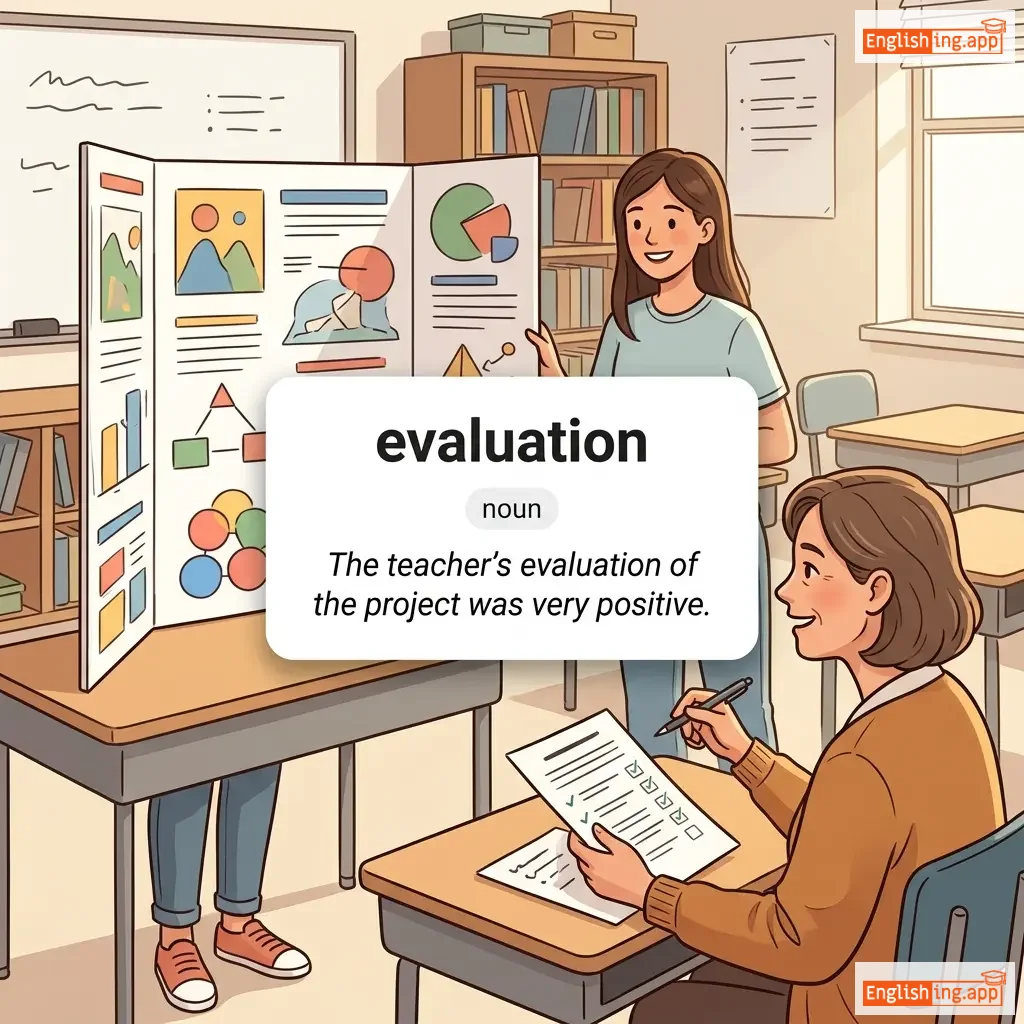
/ɪˌvæljʊˈeɪʃən/
noun
(ēvalúèishén)
••••••
|
|
评估
pinggu
••••••
|
- •••••• | - •••••• | - •••••• | - •••••• |
The process of assessing or judging the value, quality, or importance of something.
••••••
|
The teacher’s evaluation of the project was very positive. |
老师对项目的评估非常积极。
Lǎoshī duì xiàngmù de pínggū fēicháng jījí.
••••••
|
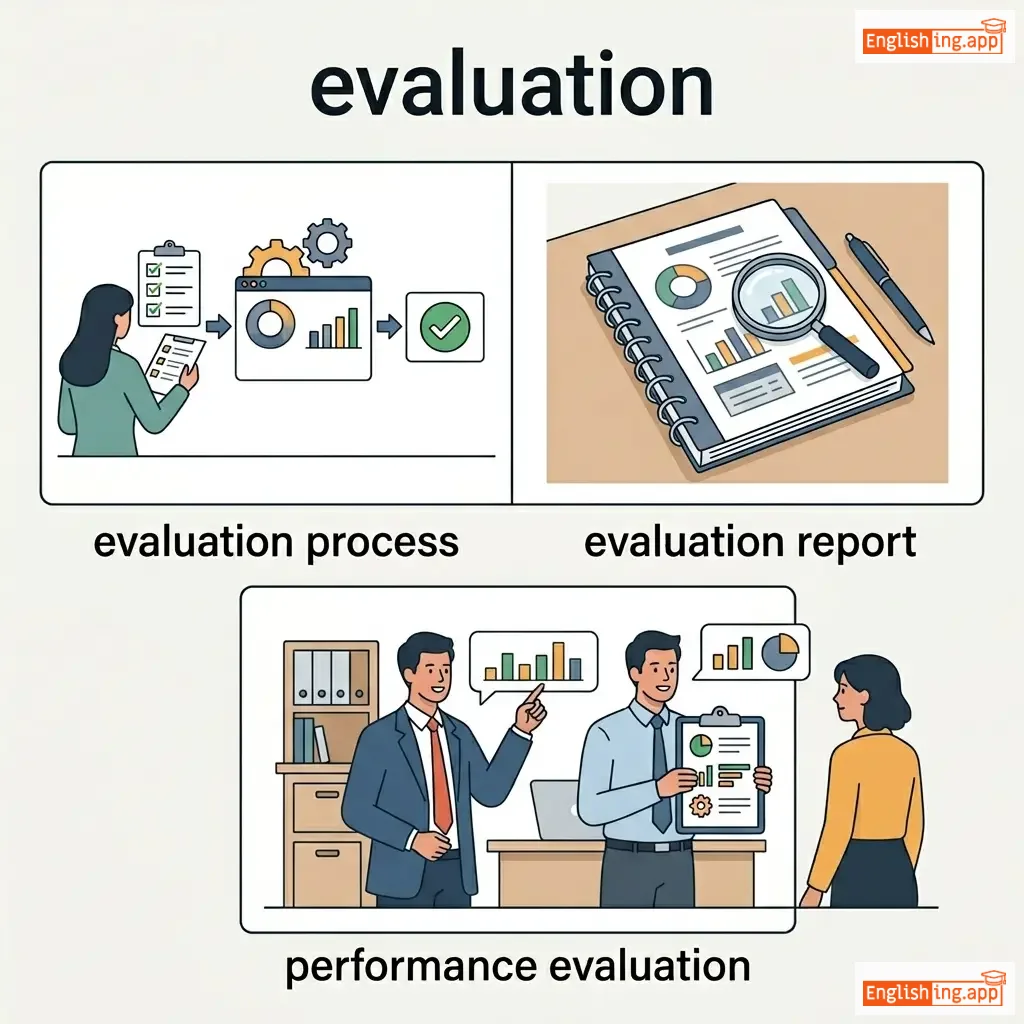
performance evaluation |
The process of assessing how well someone performs their job
••••••
|
绩效评估
jìxiào pínggū
••••••
|
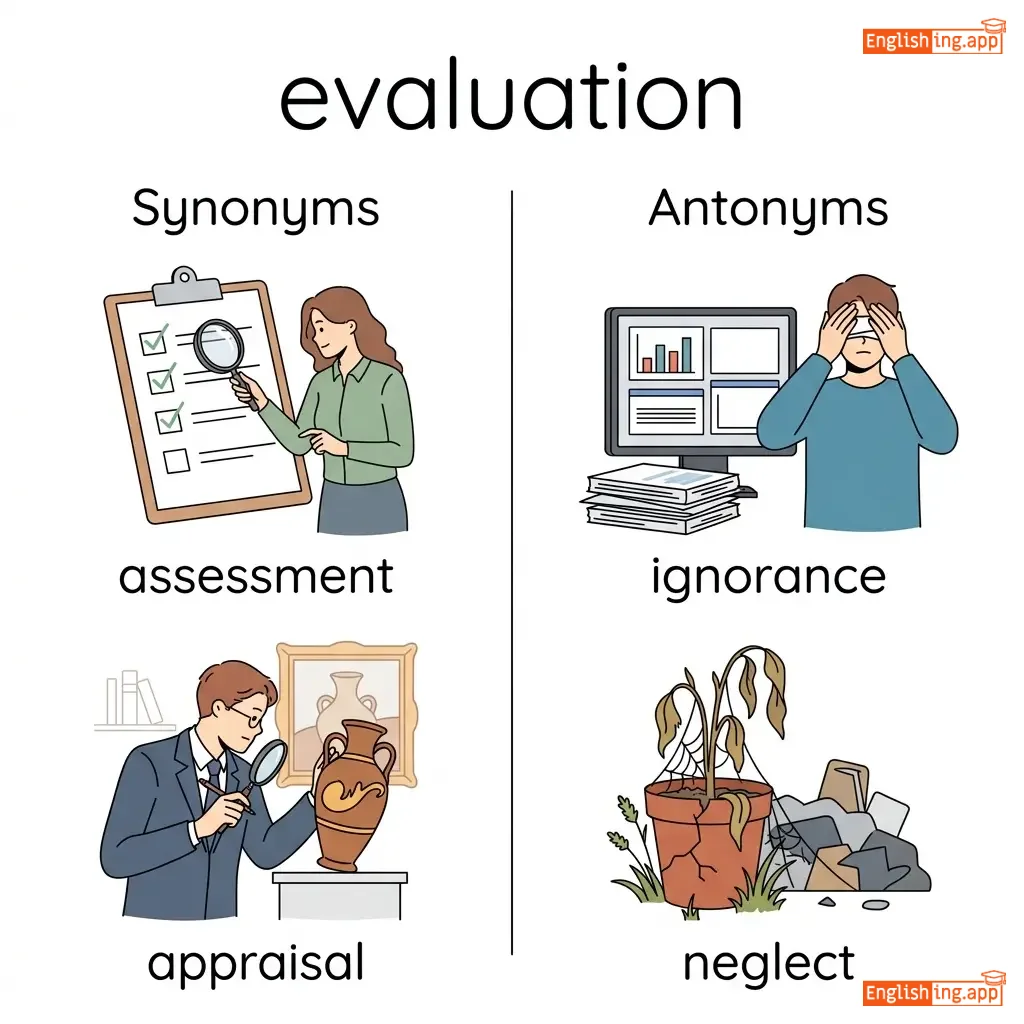
assessment, appraisal, review, judgment, analysis
••••••
|
ignorance, neglect
••••••
|
evaluation process, evaluation report, performance evaluation, self-evaluation
••••••
|
评估 = 评估 📝 就像老师在考试时进行评估
••••••
|
|
#1896
⚖️
|
/ˈiː.vən/
adjective, adverb
(伊文)
••••••
|
- •••••• |
平坦
pingtan
••••••
|
- •••••• | - •••••• | - •••••• | - •••••• |
flat or smooth; equal in degree or amount; used to emphasize something surprising
••••••
|
The road was surprisingly even after the storm.
道路在暴风雨后出奇的平整。
••••••
|
道路在暴风雨后出奇的平整。
Daolu zai baofengyu hou chuqi de pingzhen.
••••••
|
even odds
平等的机会
••••••
|
a situation where chances of success or failure are equal
••••••
|
平等的机会
pingdeng de jihui
••••••
|
level, flat, equal, balanced, fair
••••••
|
uneven, unfair, irregular
••••••
|
even surface, even chance, even number, even tone, even odds
••••••
|
Even意味着平坦,像'平等的机会' ⚖️
••••••
|
|
#1897
🌆
|
/ˈiːv.nɪŋ/
noun
(ivning)
••••••
|
- •••••• |
晚上
wǎnshàng
••••••
|
- •••••• | - •••••• | - •••••• | - •••••• |
the part of the day between afternoon and night
••••••
|
We went for a walk in the cool evening.
我们在凉爽的晚上去散步。
••••••
|
我们在凉爽的晚上去散步。
Wǒmen zài liángshuǎng de wǎnshàng qù sànbù.
••••••
|
good evening
晚上好
••••••
|
a greeting used in the evening
••••••
|
晚上好
Wǎnshàng hǎo
••••••
|
nightfall, dusk, twilight, sundown
••••••
|
morning, dawn
••••••
|
evening walk, evening meal, evening star, evening news
••••••
|
Evening = 下午的后续,晚上来到 🌆
••••••
|
Vocabulary Quiz
Test your vocabulary by matching words with their translations or meanings.
Login to take the quiz
Comments (0)
Share your thoughts and join the discussion.
Join the discussion by logging in
Login to CommentNo comments yet
Be the first to share your thoughts!