

Swipe left or right, or use the buttons. Tap image to zoom.
例句翻译
单词
Lesson 17Lesson 17 - 遮罩切换
|
表情符号
|
单词 | Images | 翻译 | 过去时 | 过去分词 | 第三人称单数 | 动名词 | 含义 | 例句 | 例句翻译 | 示例表达 | 示例表达含义 | 示例表达翻译 | 同义词 | 反义词 | 搭配词 | 助记符 |
|---|---|---|---|---|---|---|---|---|---|---|---|---|---|---|---|---|---|
|
#767
🌞
|
/ˈbraɪtən/
verb
(布赖顿)
••••••
|
- •••••• |
使明亮
shi mingliang
••••••
|
brightened
布赖顿德
••••••
|
brightened
布赖顿德
••••••
|
brightens
布赖顿兹
••••••
|
brightening
布赖顿宁
••••••
|
to make something lighter or more colorful; to improve mood or make happier
••••••
|
A few kind words can brighten someone's day.
阿 菲 尤 开因德 沃兹 肯 布赖顿 萨姆旺斯 戴
••••••
|
几句善意的话可以让人的一天变得明亮。
ji ju shanyi de hua keyi rang ren de yi tian biande mingliang
••••••
|
brighten up
布赖顿 阿普
••••••
|
to become or make something happier, lighter, or more cheerful
••••••
|
振作起来
zhenzuo qilai
••••••
|
lighten, illuminate, cheer, enliven, enhance
••••••
|
darken, dull, depress
••••••
|
brighten the room, brighten your mood, brighten a smile, brighten up
••••••
|
Bright 亮 → brighten 变亮
••••••
|
|
#768
✨
|
/ˈbraɪtli/
adverb
(布赖特利)
••••••
|
- •••••• |
明亮地
mingliang de
••••••
|
- •••••• | - •••••• | - •••••• | - •••••• |
in a way that gives off a lot of light; in a vivid, cheerful, or intelligent manner
••••••
|
The stars shone brightly in the clear night sky.
斯达兹 休恩 布赖特利 因 德 克利尔 奈特 斯凯
••••••
|
星星在清澈的夜空中明亮地闪耀。
Xingxing zai qingche de yekong zhong mingliang de shanyao
••••••
|
- •••••• | - •••••• | - •••••• |
brilliantly, vividly, radiantly, cheerfully, luminously
••••••
|
dimly, dullishly, faintly
••••••
|
shine brightly, glow brightly, burn brightly, smile brightly
••••••
|
Bright = 明亮, brightly = 明亮地 ✨
••••••
|
|
#769
💡
|
/ˈbrɪliənt/
adjective
(bǔrīliànt)
••••••
|
- •••••• |
辉煌
huihuang
••••••
|
- •••••• | - •••••• | - •••••• | - •••••• |
Exceptionally clever, talented, or impressive; very bright or radiant.
••••••
|
She gave a brilliant performance on stage.
她在舞台上表演得非常出色。
••••••
|
她在舞台上表演得非常出色。
Ta zai wutai shang biaoyan de feichang chuse.
••••••
|
brilliant idea
辉煌的想法
••••••
|
A very clever or excellent thought or plan.
••••••
|
辉煌的想法
huihuang de xiangfa
••••••
|
intelligent, smart, talented, outstanding, radiant
••••••
|
stupid, dull, ordinary
••••••
|
brilliant idea, brilliant mind, brilliant career, brilliant light
••••••
|
辉煌意味辉煌 🌟 - 辉煌的想法意味卓越的计划。
••••••
|
|
#770
📦
|
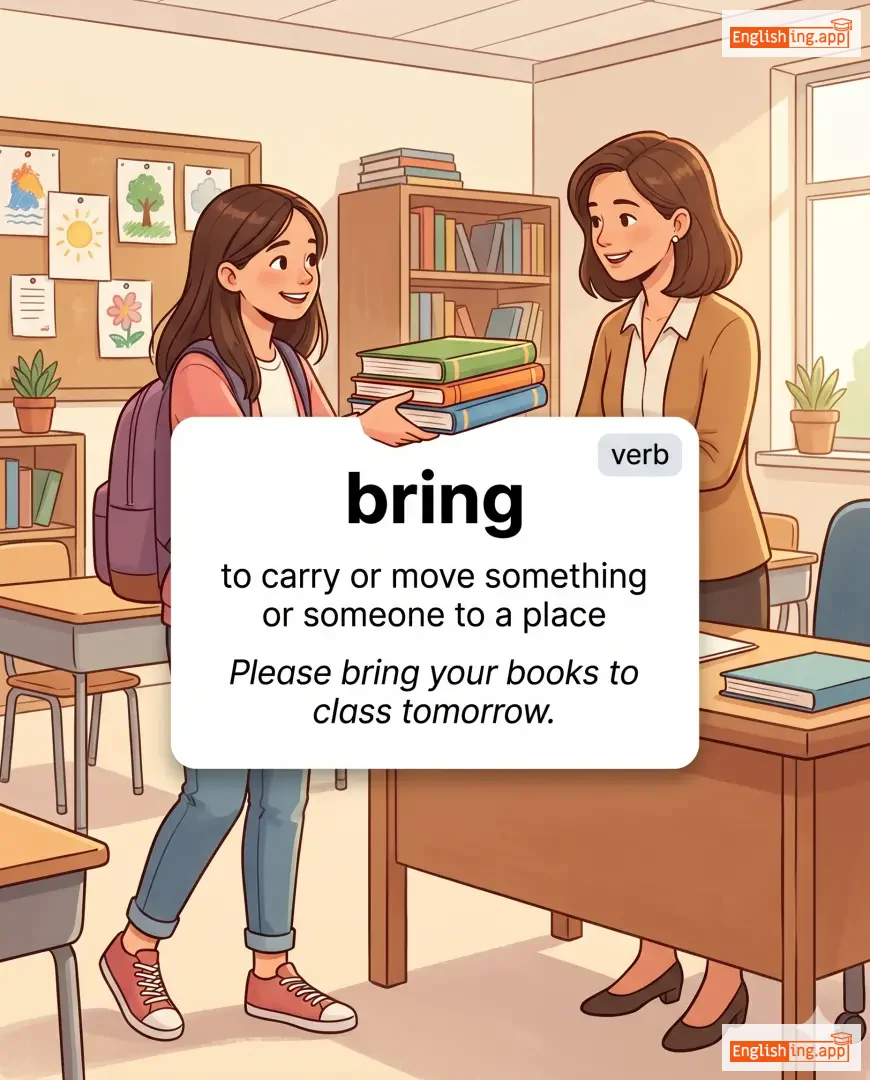
/brɪŋ/
verb
(bɹɪŋ)
••••••
|
|
带来
dai lai
••••••
|
brought
brɔt
••••••
|
brought
brɔt
••••••
|
brings
brɪŋz
••••••
|
bringing
brɪŋɪŋ
••••••
|
to carry or move something or someone to a place
••••••
|
Please bring your books to class tomorrow.
请把书带到明天的课堂。
••••••
|
请把书带到明天的课堂。
Qing ba shu dai dao mingtian de kètáng.
••••••
|
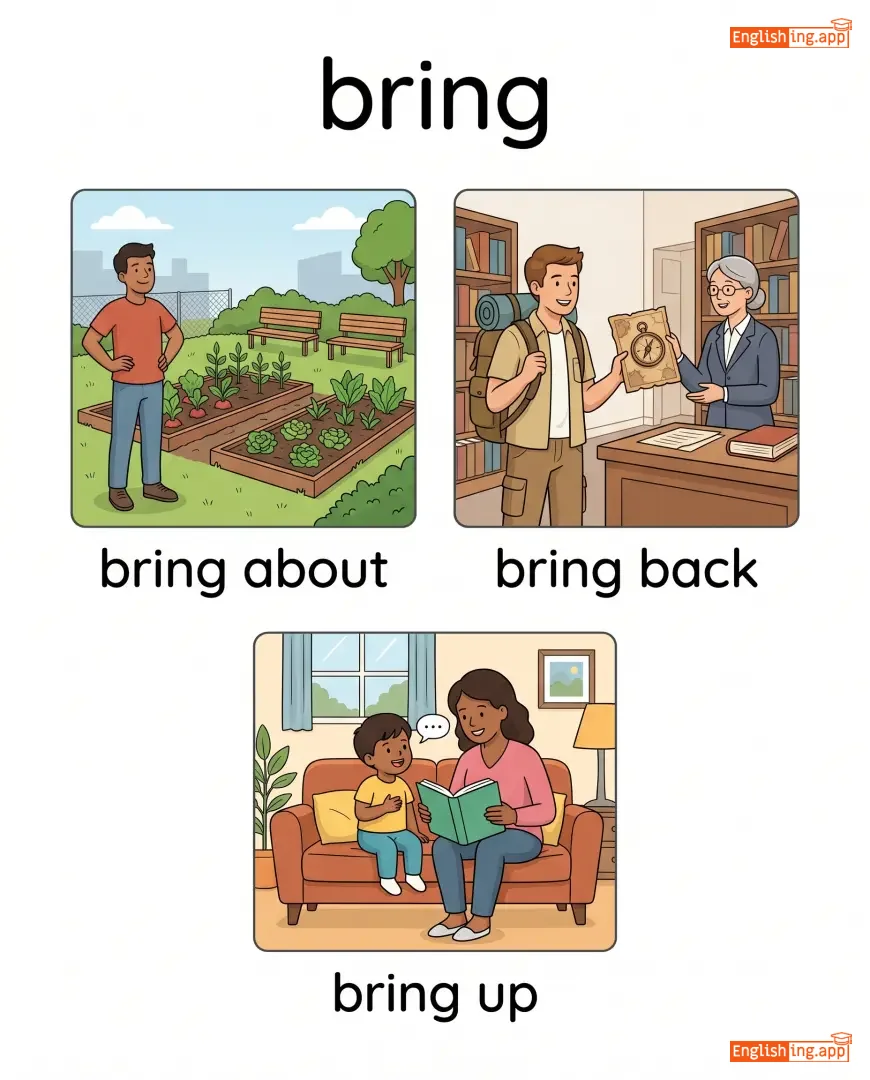
bring up
提到
••••••
|
to mention or introduce a topic
••••••
|
提到
tí dào
••••••
|
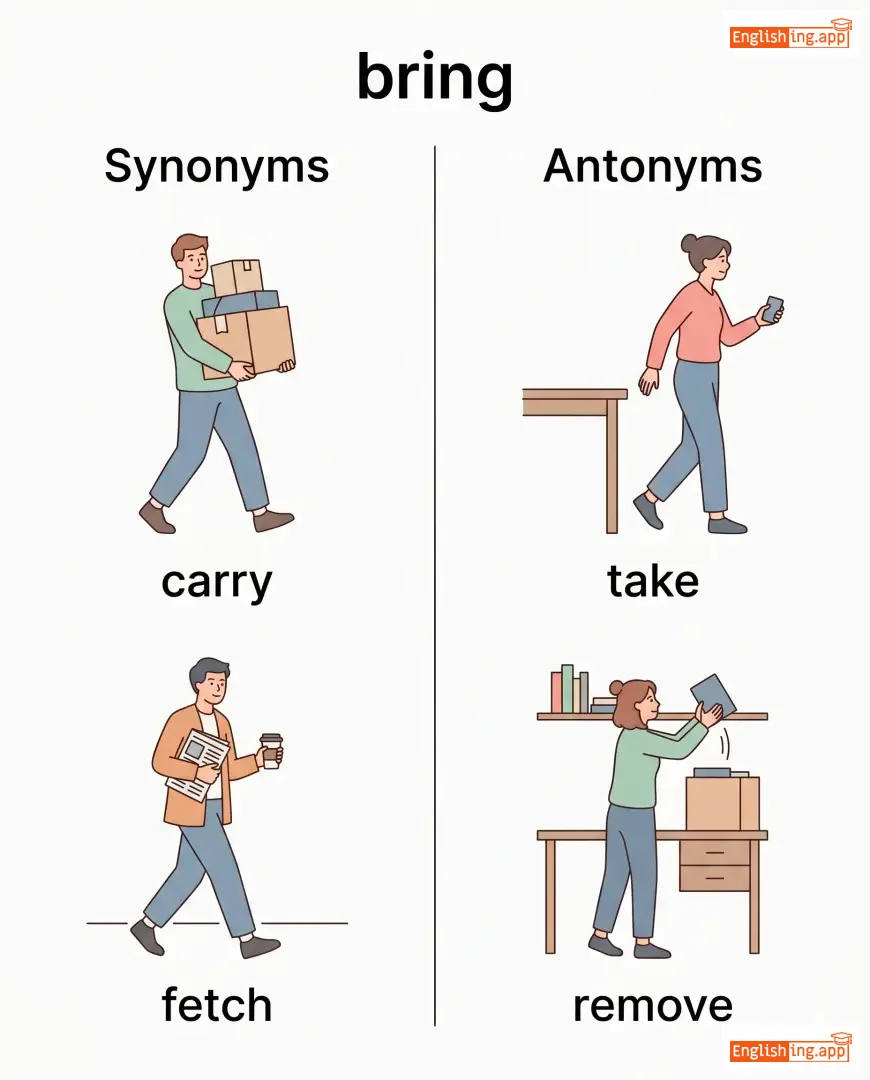
carry, fetch, deliver, convey, transport
••••••
|
take, remove
••••••
|
bring about, bring back, bring up, bring along, bring forward
••••••
|
BRING 在中文里是带来,妈妈常说‘带来玩具’。
••••••
|
|
#771
🇬🇧
|
/ˈbrɪtɪʃ/
adjective
(british)
••••••
|
- •••••• |
英国的
yingguo de
••••••
|
- •••••• | - •••••• | - •••••• | - •••••• |
relating to Great Britain or its people
••••••
|
She loves British culture and traditions.
她喜欢英国文化和传统。
••••••
|
她喜欢英国文化和传统。
Ta xihuan Yingguo wenhua he chuantong.
••••••
|
- •••••• | - •••••• | - •••••• |
English, UK, Anglo, Briton
••••••
|
foreign, non-British
••••••
|
British culture, British accent, British history, British empire
••••••
|
英国的指的是来自🇬🇧 英国的文化或人们。
••••••
|
|
#772
🌉
|
/brɔːd/
adjective
(broad)
••••••
|
- •••••• |
宽
kuan
••••••
|
- •••••• | - •••••• | - •••••• | - •••••• |
wide in extent, range, or scope
••••••
|
The river is very broad at this point.
这条河在这个点非常宽。
••••••
|
这条河在这个点非常宽。
Zhe tiao he zai zhege dian feichang kuan.
••••••
|
broad daylight
白昼光明
••••••
|
during the day when it is light and visible
••••••
|
白昼光明
baizhou guangming
••••••
|
wide, extensive, vast, expansive, comprehensive
••••••
|
narrow, limited, restricted
••••••
|
broad range, broad shoulders, broad spectrum, broad agreement
••••••
|
Broad road意味着宽阔的路 – broad = 宽
••••••
|
|
#773
📶
|
/ˈbrɔːd.bænd/
noun
(宽带)
••••••
|
- •••••• |
宽带
kuān dài
••••••
|
- •••••• | - •••••• | - •••••• | - •••••• |
a high-capacity transmission technique using a wide range of frequencies.
••••••
|
Broadband internet has become a necessity in modern homes. |
宽带互联网已成为现代家庭的必需品。
Kuāndài hùliánwǎng yǐ chéngwéi xiàndài jiātíng de bìxū pǐn.
••••••
|
- •••••• | - •••••• | - •••••• |
high-speed internet, fast internet, fiber-optic connection
••••••
|
dial-up, slow internet
••••••
|
broadband connection, broadband service, broadband speed
••••••
|
想象宽带是连接您家的快速公路。
••••••
|
|
#774
📡
|
/ˈbrɔːdˌkæst/
verb
(broadkast)
••••••
|
- •••••• |
广播
guangbo
••••••
|
broadcast
broadkast
••••••
|
broadcast
broadkast
••••••
|
broadcasts
broadkasts
••••••
|
broadcasting
broadcasting
••••••
|
to transmit a program or information by radio, television, or online media
••••••
|
The match was broadcast live on television.
比赛通过电视现场直播。
••••••
|
比赛通过电视现场直播。
Bisai tongguo dianshi xianshi zhi播。
••••••
|
broadcast live
现场直播
••••••
|
to transmit an event in real time
••••••
|
现场直播
xianshi zhi
••••••
|
air, transmit, telecast, announce
••••••
|
conceal, suppress
••••••
|
broadcast live, radio broadcast, television broadcast
••••••
|
Broadcast = '广播' in Chinese, as a common term for transmitting events live
••••••
|
|
#775
📺
|
/ˈbrɔːdˌkæstər/
noun
(广播员)
••••••
|
- •••••• |
广播员
guangbo yuan
••••••
|
- •••••• | - •••••• | - •••••• | - •••••• |
a person or organization that transmits a broadcast program.
••••••
|
The broadcaster aired the match live to millions of viewers.
广播员将比赛实时转播给数百万观众。
••••••
|
广播员将比赛实时转播给数百万观众。
Guangbo yuan jiang bisai shishi zhuanbo gei shù bǎi wàn guānzhòng.
••••••
|
- •••••• | - •••••• | - •••••• |
announcer, presenter, host, radio operator
••••••
|
listener, viewer
••••••
|
radio broadcaster, television broadcaster, news broadcaster
••••••
|
广播员是将世界各地的事件带到观众面前的人。
••••••
|
|
#776
🌍
|
/ˈbrɔːdən/
verb
(布罗登)
••••••
|
- •••••• |
拓宽
tuokuan
••••••
|
broadened
布罗登德
••••••
|
broadened
布罗登德
••••••
|
broadens
布罗登兹
••••••
|
broadening
布罗登宁
••••••
|
to make wider or larger in scope; to expand ideas, experience, or understanding
••••••
|
Travel can broaden your perspective on different cultures.
特拉沃 可以 布罗登 你的 视角 关于 不同 文化
••••••
|
旅行可以拓宽你对不同文化的视野。
Lvxing keyi tuokuan ni dui butong wenhua de shiye
••••••
|
broaden one's horizons
broaden one's horizons
••••••
|
to expand one's knowledge, experience, or way of thinking
••••••
|
拓宽视野
tuokuan shiye
••••••
|
expand, widen, enlarge, extend, amplify
••••••
|
narrow, limit, restrict
••••••
|
broaden horizons, broaden perspective, broaden scope, broaden understanding
••••••
|
拓宽=让世界变 broad
••••••
|
|
#777
🌍
|
/ˈbrɔːdli/
adverb
(布罗德利)
••••••
|
- •••••• |
广泛地
guangfan de
••••••
|
- •••••• | - •••••• | - •••••• | - •••••• |
in a general or wide manner.
••••••
|
The rules are broadly similar across all regions.
规则在所有地区大体相似。
••••••
|
规则在所有地区大体相似。
Guize zai suoyou diqu dati xiangsi.
••••••
|
- •••••• | - •••••• | - •••••• |
generally, largely, widely, extensively
••••••
|
specifically, narrowly
••••••
|
broadly speaking, broadly defined, broadly similar
••••••
|
Think of 'broadly' as 'broad' (wide) and 'ly' meaning in a manner.
••••••
|
|
#778
💸
|
/broʊk/
verb; adjective
(布罗克)
••••••
|
- •••••• |
打破了;没钱
da po le; mei qian
••••••
|
broke
布罗克
••••••
|
broken
布罗肯
••••••
|
breaks
布雷克斯
••••••
|
breaking
布雷金
••••••
|
past tense of break; having no money or being financially poor
••••••
|
I broke my phone last night and now I’m completely broke.
艾 布罗克 麦 方 拉斯特 奈特,然 后 我 完全 布罗克。
••••••
|
我昨晚把手机弄坏了,现在一点钱也没有。
wo zuo wan ba shou ji nong huai le xian zai yi dian qian ye mei you
••••••
|
broke as a joke
布罗克 阿兹 阿 乔克
••••••
|
having no money at all
••••••
|
一点钱也没有
yi dian qian ye mei you
••••••
|
shattered, smashed, fractured, bankrupt, penniless
••••••
|
fixed, repaired, wealthy
••••••
|
broke the rules, broke a promise, went broke, completely broke
••••••
|
zh: 东西打破了,钱包也空了 = broke
••••••
|
|
#779
💔
|
/ˈbroʊkən/
adjective
(bóukén)
••••••
|
- •••••• |
坏的
huài de
••••••
|
- •••••• | - •••••• | - •••••• | - •••••• |
damaged or not working properly
••••••
|
The chair is broken and needs repair. |
椅子坏了,需要修理。
Yǐzi huài le, xūyào xiūlǐ.
••••••
|
broken heart |
deep emotional pain due to loss or disappointment
••••••
|
破碎的心
pòsuì de xīn
••••••
|
damaged, ruined, fractured, defective
••••••
|
fixed, whole, intact
••••••
|
broken glass, broken promise, broken machine, broken relationship
••••••
|
BROKEN 意味着坏的,就像破碎的心 💔.
••••••
|
|
#780
👨👦
|
/ˈbrʌðər/
noun
(布拉泽)
••••••
|
- •••••• |
兄弟
xiongdi
••••••
|
- •••••• | - •••••• | - •••••• | - •••••• |
a male sibling
••••••
|
My brother is two years older than me. |
我的兄弟比我大两岁。
Wǒ de xiōngdì bǐ wǒ dà liǎng suì.
••••••
|
big brother |
an older brother or a protective authority
••••••
|
哥哥
gēgē
••••••
|
sibling, kin, mate, companion
••••••
|
sister, stranger
••••••
|
younger brother, elder brother, brother in law, brotherhood
••••••
|
BROTHER 就是兄弟 – 一起并肩的亲密关系!
••••••
|
|
#781
🤎
|
/braʊn/
adjective
(bʁaʊn)
••••••
|
- •••••• |
棕色
zongse
••••••
|
- •••••• | - •••••• | - •••••• | - •••••• |
of a color produced by mixing red, yellow, and black
••••••
|
She wore a brown dress to the party. |
她穿了一件棕色的衣服去参加聚会。
Ta chuanle yijian zongse de yifu qu canjia juhui.
••••••
|
brownie points |
credit or favor earned for doing something good
••••••
|
布朗尼积分
bulangni jifen
••••••
|
tan, beige, chocolate, chestnut, hazel
••••••
|
white, black
••••••
|
brown hair, brown eyes, brown sugar, dark brown
••••••
|
BROWN表示棕色 – '棕色的巧克力很好吃。'
••••••
|
|
#782
📖
|
/braʊz/
verb
(布劳兹)
••••••
|
- •••••• |
浏览
liú lǎn
••••••
|
browsed
布劳兹德
••••••
|
browsed
布劳兹德
••••••
|
browses
布劳兹斯
••••••
|
browsing
布劳兹英
••••••
|
To look at or skim through casually, especially online or in a store
••••••
|
She likes to browse books in the library.
她喜欢在图书馆浏览书籍。
••••••
|
她喜欢在图书馆浏览书籍。
Tā xǐhuān zài túshūguǎn liú lǎn shūjí.
••••••
|
browse the internet
浏览互联网
••••••
|
to look through websites casually
••••••
|
浏览互联网
liú lǎn hùliánwǎng
••••••
|
skim, glance, peruse, surf, scan
••••••
|
ignore, overlook
••••••
|
browse the internet, browse books, casually browse
••••••
|
浏览互联网就像在网上漫游一样。
••••••
|
|
#783
🌐
|
/ˈbraʊzər/
noun
(bào zè)
••••••
|
- •••••• |
浏览器
liú lǎn qì
••••••
|
- •••••• | - •••••• | - •••••• | - •••••• |
a software application for accessing information on the World Wide Web.
••••••
|
I use a web browser to search for information online. |
我使用网页浏览器在网上查找信息。
Wǒ shǐ yòng wǎng yè liú lǎn qì zài wǎng shàng chá zhǎo xìn xī.
••••••
|
- •••••• | - •••••• | - •••••• |
internet browser, web browser, search engine
••••••
|
offline, non-browser
••••••
|
web browser, browser window, browser history
••••••
|
A browser lets you explore the vast web like a journey.
••••••
|
|
#784
📢
|
/bruːt/
verb
(布鲁特)
••••••
|
- •••••• |
传播谣言
chuanbo yaoyan
••••••
|
bruited
布鲁特德
••••••
|
bruited
布鲁特德
••••••
|
bruits
布鲁特斯
••••••
|
bruiting
布鲁特英
••••••
|
to spread a rumor or report widely
••••••
|
The scandal was quickly bruited about the town.
丑闻迅速在城镇传播开来。
••••••
|
丑闻迅速在城镇传播开来。
Chouwen xunsu zai chengzhen chuanbo kailai.
••••••
|
- •••••• | - •••••• | - •••••• |
circulate, spread, disseminate, broadcast, propagate
••••••
|
conceal, suppress, hide
••••••
|
bruit about, bruit abroad, bruit rumors
••••••
|
BRUit means Breaking Rumor UIT (out) – 传播谣言.
••••••
|
|
#785
🖌️
|
/brʌʃ/
noun/verb
••••••
|
- •••••• | - •••••• |
brushed
••••••
|
brushed
••••••
|
brushes
••••••
|
brushing
••••••
|
A tool with bristles for cleaning, painting, or grooming; to clean, arrange, or apply with a brush.
••••••
|
She used a brush to paint the fence. |
- •••••• |
brush up on |
To review or practice knowledge or skills to improve them.
••••••
|
- •••••• |
sweep, scrub, groom, polish, paint
••••••
|
neglect, dirty
••••••
|
paint brush, hair brush, brush teeth, brush off
••••••
|
No •••••• |
|
#786
💣
|
/ˈbruː.təl/
adjective
(布鲁塔尔)
••••••
|
- •••••• |
残忍
cánrěn
••••••
|
- •••••• | - •••••• | - •••••• | - •••••• |
extremely cruel or harsh; violent and without feeling
••••••
|
The dictator’s rule was marked by brutal violence. |
独裁者的统治充满了残忍的暴力。
Dúcáizhě de tǒngzhì chōngmǎnle cánrěn de bàolì.
••••••
|
brutal truth |
a painful but honest fact
••••••
|
残酷的真相
cánkù de zhēnxiàng
••••••
|
cruel, savage, harsh, ruthless, violent
••••••
|
kind, gentle, merciful
••••••
|
brutal attack, brutal murder, brutal regime, brutal truth
••••••
|
Brutal 意味着残忍 — 就像‘野蛮’一样,意味着暴力和冷酷。
••••••
|
|
#787
⚔️
|
/bruːˈtæləti/
noun
(布鲁塔利蒂)
••••••
|
- •••••• |
残暴
canbao
••••••
|
- •••••• | - •••••• | - •••••• | - •••••• |
extreme cruelty or violence; savage or inhumane treatment
••••••
|
The brutality of the attack shocked the entire community.
这 次 布鲁塔利蒂 的 攻击 震惊 了 整个 社区
••••••
|
这次攻击的残暴震惊了整个社区。
Zhe ci gongji de canbao zhenjing le zhengge shequ
••••••
|
- •••••• | - •••••• | - •••••• |
cruelty, savagery, violence, barbarity, ruthlessness
••••••
|
kindness, humanity, compassion
••••••
|
police brutality, extreme brutality, act of brutality, military brutality
••••••
|
brutal 听起来很猛,对应 残暴
••••••
|
|
#788
💥
|
/ˈbruːtəlaɪz/
verb
(布鲁特拉莱兹)
••••••
|
- •••••• |
残酷对待
canku duidai
••••••
|
brutalized
布鲁特拉莱兹德
••••••
|
brutalized
布鲁特拉莱兹德
••••••
|
brutalizes
布鲁特拉莱兹斯
••••••
|
brutalizing
布鲁特拉莱兹英
••••••
|
to treat someone with extreme violence or cruelty; to make something harsh or cruel
••••••
|
The regime was accused of brutalizing innocent civilians.
德 瑞吉姆 沃兹 阿丘兹德 奥夫 布鲁特拉莱兹英 伊诺森特 西维里恩斯
••••••
|
该政权被指控残酷对待无辜平民。
Gai zhengquan bei zhikong canku duidai wugu pingmin
••••••
|
- •••••• | - •••••• | - •••••• |
abuse, torture, mistreat, savage, victimize
••••••
|
protect, nurture, care for
••••••
|
brutalize civilians, brutalize prisoners, brutalize the population, brutally treated
••••••
|
brutalize 听起来像 brutal,很残酷
••••••
|
|
#789
💥
|
/ˈbruːtəli/
adverb
(布鲁特利)
••••••
|
- •••••• |
残酷地
canku de
••••••
|
- •••••• | - •••••• | - •••••• | - •••••• |
in a cruel, violent, or harsh manner; in a very direct and blunt way
••••••
|
The prisoners were treated brutally by the guards.
这些囚犯被警卫残酷地对待。
••••••
|
警卫残酷地对待这些囚犯。
jingwei canku de duidai zhexie qiufan
••••••
|
brutally honest
布鲁特利 honest
••••••
|
extremely direct and truthful, sometimes in a harsh way
••••••
|
极其坦率
jiqi tanlv
••••••
|
cruelly, harshly, savagely, ruthlessly, mercilessly
••••••
|
kindly, gently, humanely
••••••
|
brutally honest, brutally attacked, brutally beaten, brutally cold, brutally effective
••••••
|
brutally 听起来很‘暴’,联想到 残酷地
••••••
|
|
#790
🫧
|
/ˈbʌb.əl/
noun
(bābó)
••••••
|
- •••••• |
气泡
qìpào
••••••
|
- •••••• | - •••••• | - •••••• | - •••••• |
a thin sphere of liquid enclosing air or gas; a temporary state of inflated value or excitement
••••••
|
The children chased the bubbles in the air. |
孩子们在空中追逐气泡。
Háizimen zài kōngzhōng zhuīzhú qìpào.
••••••
|
economic bubble |
a market situation where prices are much higher than the actual value
••••••
|
经济泡沫
jīngjì pào mò
••••••
|
sphere, blister, balloon, foam
••••••
|
burst, deflate
••••••
|
soap bubble, economic bubble, bubble burst, bubble bath
••••••
|
Bubble 意味着气泡 — 就像气泡浮起来爆炸,经济也可以产生泡沫。
••••••
|
|
#791
🦌
|
/bʌk/
noun/verb
••••••
|
- •••••• | - •••••• |
bucked
••••••
|
bucked
••••••
|
bucks
••••••
|
bucking
••••••
|
A male deer; also to resist or oppose strongly.
••••••
|
The horse began to buck wildly as the rider tried to hold on. |
- •••••• |
buck the system |
to resist or oppose authority or established rules
••••••
|
- •••••• |
resist, oppose, rebel, deer, challenge
••••••
|
submit, accept, comply
••••••
|
buck deer, buck the trend, buck against, buck the system
••••••
|
No •••••• |
|
#792
🌹
|
/bʌd/
noun
(bʌd)
••••••
|
- •••••• |
花苞
huābāo
••••••
|
- •••••• | - •••••• | - •••••• | - •••••• |
An undeveloped or immature flower before it opens
••••••
|
The rose bud will bloom into a beautiful flower in a few days. |
玫瑰花苞将在几天内绽放成一朵美丽的花。
Méiguī huābāo jiāng zài jǐ tiān nèi zhànfàng chéng yī duǒ měilì de huā.
••••••
|
- •••••• | - •••••• | - •••••• |
flower bud, shoot, sprout
••••••
|
bloom, flower, blossom
••••••
|
rose bud, flower bud, budding stage
••••••
|
花苞是花的开始。
••••••
|
|
#793
🤝
|
/ˈbʌdi/
noun
(badi)
••••••
|
- •••••• |
朋友
pengyou
••••••
|
- •••••• | - •••••• | - •••••• | - •••••• |
a close friend or companion, used informally
••••••
|
He went to the movies with his best buddy. |
他和他最好的朋友一起去看电影。
Ta he ta zuihao de pengyou yiqi qu kan dianying.
••••••
|
buddy up |
to become friends or form a pair for a task
••••••
|
成为朋友
chengwei pengyou
••••••
|
friend, pal, mate, chum, companion
••••••
|
enemy, foe, rival
••••••
|
best buddy, travel buddy, gym buddy, buddy system, study buddy
••••••
|
Buddy就是朋友 — 想象你和你的Buddy一起喝咖啡 ☕
••••••
|
|
#794
💰
|
/ˈbʌdʒɪt/
noun/verb
(预算)
••••••
|
- •••••• |
预算
yùsuàn
••••••
|
budgeted
预算了
••••••
|
budgeted
预算了
••••••
|
budgets
预算
••••••
|
budgeting
预算中
••••••
|
An estimate of income and expenditure for a set period of time; to plan expenses and income.
••••••
|
The family created a budget to manage their expenses.
家庭制定了预算来管理开支。
••••••
|
家庭制定了预算来管理开支。
Jiātíng zhìdìngle yùsuàn lái guǎnlǐ kāizhī.
••••••
|
on a tight budget
预算紧张
••••••
|
Having limited money to spend.
••••••
|
预算紧张
yùsuàn jǐnzhāng
••••••
|
plan, allocation, estimate, allowance, finances
••••••
|
waste, extravagance
••••••
|
annual budget, budget plan, budget deficit, budget cut
••••••
|
预算意味着控制花费。
••••••
|
|
#795
🛡️
|
/ˈbʌfər/
noun/verb
(巴费尔)
••••••
|
- •••••• |
缓冲器 / 吸收冲击
huǎnchōngqì / xīshōu chōngjī
••••••
|
buffered
巴费尔德
••••••
|
buffered
巴费尔德
••••••
|
buffers
巴费尔斯
••••••
|
buffering
巴费尔英
••••••
|
Something that lessens or absorbs the impact of a shock; to act as a protective barrier.
••••••
|
The organization acts as a buffer between workers and management.
该组织在工人和管理层之间充当缓冲区。
••••••
|
该组织在工人和管理层之间充当缓冲区。
Gāi zǔzhī zài gōngrén hé guǎnlǐcéng zhījiān chōngdāng huǎnchōngqì.
••••••
|
buffer zone
缓冲区
••••••
|
an area meant to reduce conflict between two sides
••••••
|
缓冲区
huǎnchōngqì
••••••
|
cushion, shield, barrier, protection, safeguard
••••••
|
exposure, vulnerability
••••••
|
buffer zone, buffer state, buffer against, buffering effect
••••••
|
Buffer = 保护 🛡️ – 就像在计算机中,缓冲意味着吸收冲击。
••••••
|
|
#796
🐞
|
/bʌɡ/
noun
(bā gē)
••••••
|
- •••••• |
虫子
chongzi
••••••
|
- •••••• | - •••••• | - •••••• | - •••••• |
a small insect; informally, a flaw or error in a system or program
••••••
|
There’s a bug in the code that causes the app to crash. |
代码中有一个bug,导致应用崩溃。
dàimǎ zhōng yǒu yīgè bug, dǎozhì yìngyòng bēngkuì.
••••••
|
catch the bug |
to suddenly become very interested in something
••••••
|
突然变得对某事非常感兴趣
tūrán biàn dé duì mǒu shì fēicháng gǎn xìngqù
••••••
|
insect, glitch, defect, flaw, error
••••••
|
fix, correction, perfection
••••••
|
software bug, nasty bug, fix a bug, bug report, bug tracker
••••••
|
Bug 意味着虫子 🐞— 软件中的bug就像虫子进入代码。
••••••
|
|
#797
🏗️
|
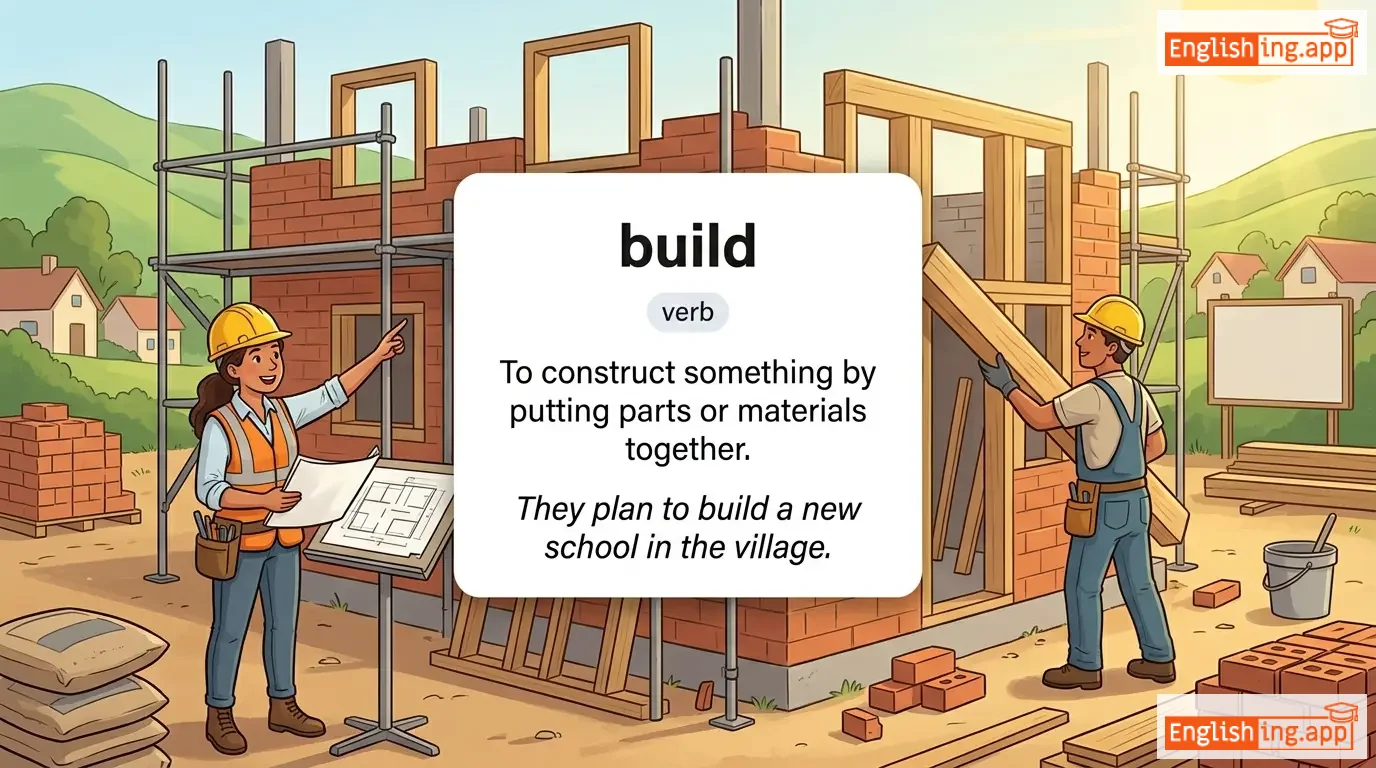
/bɪld/
verb
(bɪld)
••••••
|
|
建造
jianzao
••••••
|
built
bɪlt
••••••
|
built
bɪlt
••••••
|
builds
bɪldz
••••••
|
building
bɪldɪŋ
••••••
|
To construct something by putting parts or materials together.
••••••
|
They plan to build a new school in the village.
他们计划在村庄里建一所新学校。
••••••
|
他们计划在村庄里建一所新学校。
Tamen jihua zai cunzhuang li jian yisuo xin xuexiao.
••••••
|
build up
建立
••••••
|
To increase or develop something gradually.
••••••
|
增长
zengzhang
••••••
|
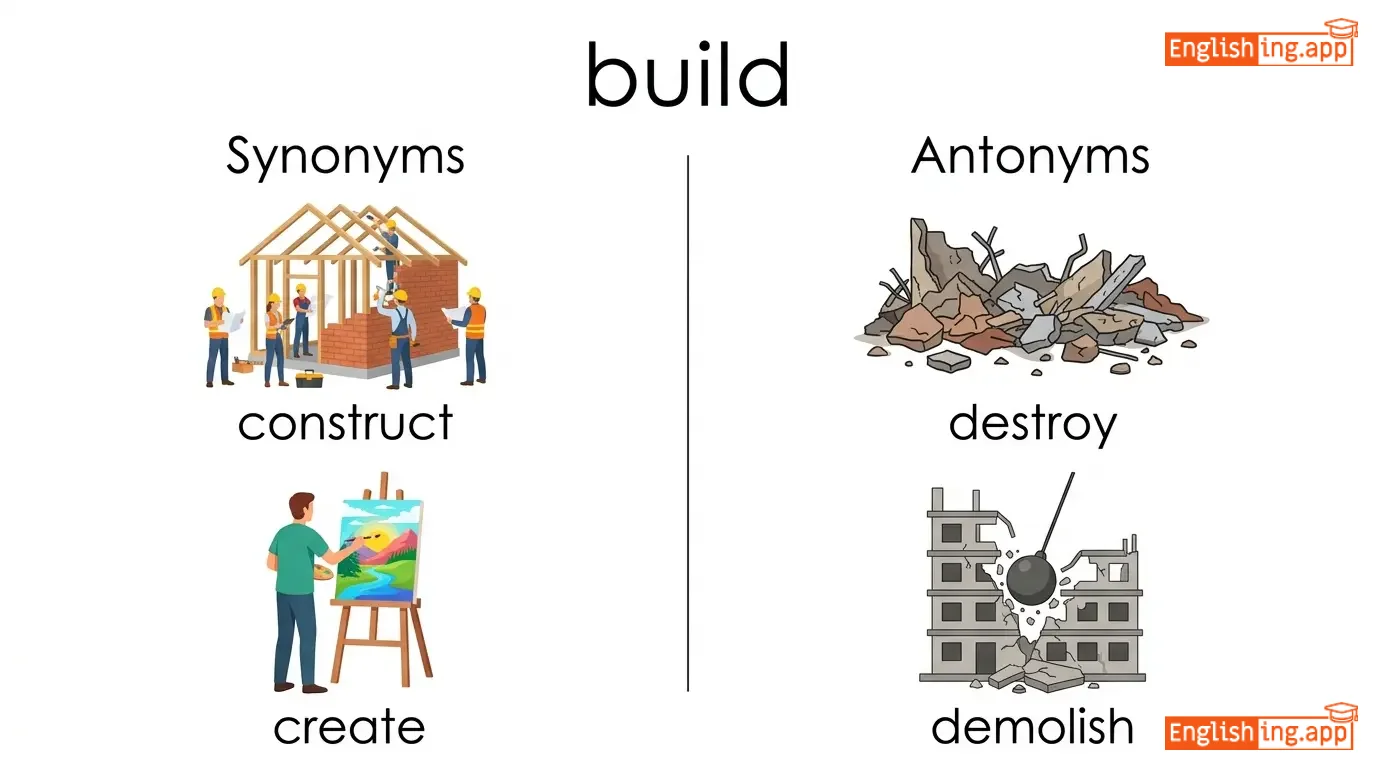
construct, create, assemble, develop, establish
••••••
|
destroy, demolish, break
••••••
|
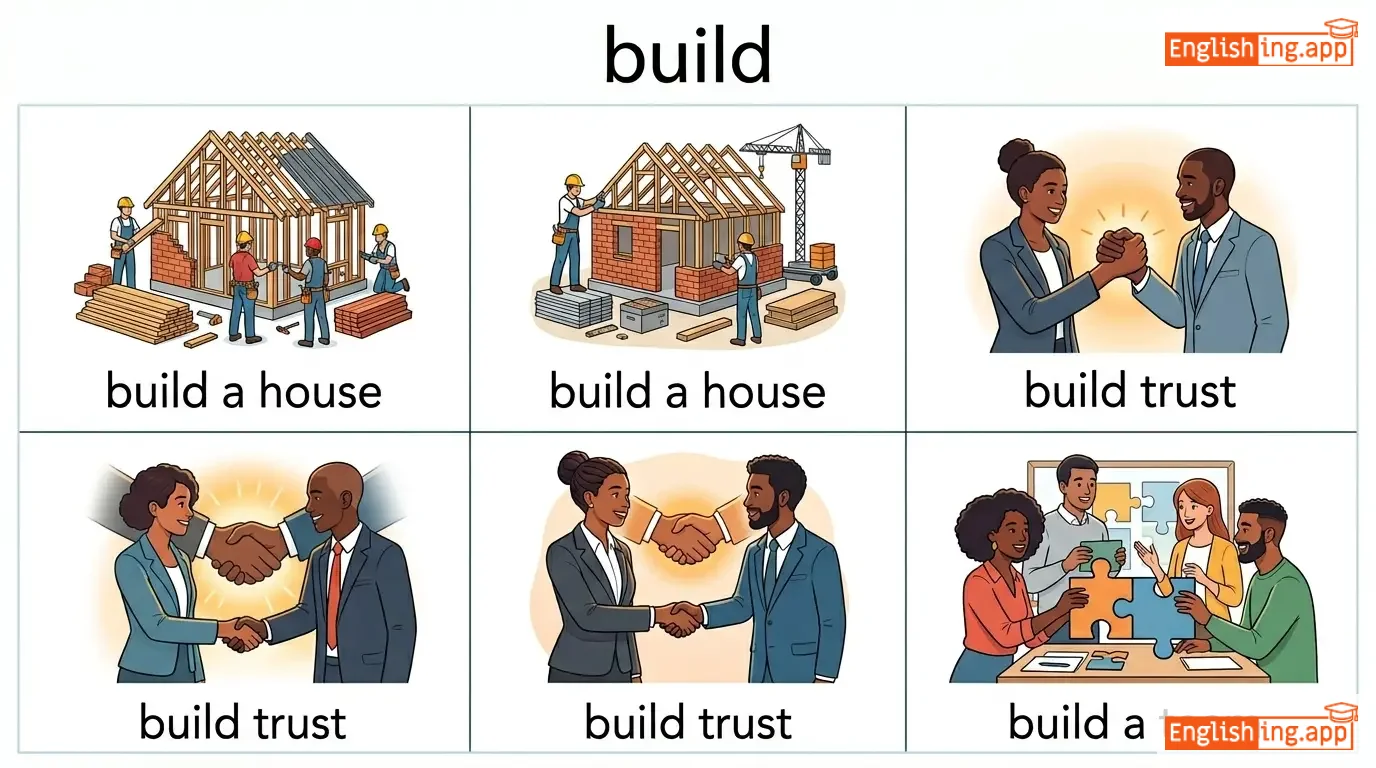
build a house, build trust, build a team, build strength
••••••
|
Build 就是建造的意思。
••••••
|
|
#798
🏢
|
/ˈbɪldɪŋ/
noun
(bɪldɪŋ)
••••••
|
- •••••• |
建筑
jian zhu
••••••
|
- •••••• | - •••••• | - •••••• | - •••••• |
A structure with a roof and walls, such as a house, school, or office.
••••••
|
The old building was renovated into a museum. |
这座旧建筑被翻新并改建为博物馆。
Zhe zuo jiu jianzhu bei fanxin bing gaijian wei bowuguan.
••••••
|
burn down a building |
To completely destroy a building with fire.
••••••
|
烧毁建筑
shao hui jianzhu
••••••
|
structure, construction, edifice, property
••••••
|
ruin, demolition
••••••
|
tall building, office building, apartment building, historic building
••••••
|
建筑就是building, 一种有屋顶的结构。
••••••
|
|
#799
📦
|
/bʌlk/
noun, verb
(bʌlk)
••••••
|
- •••••• |
大宗购买 / 质量
dàzōng gòumǎi / zhìliàng
••••••
|
bulked
bʌlkt
••••••
|
bulked
bʌlkt
••••••
|
bulks
bʌlks
••••••
|
bulking
bʌlkɪŋ
••••••
|
The mass or large size of something; to gain mass or volume.
••••••
|
He bought rice in bulk to save money.
他为了省钱,买了大宗米。
••••••
|
他为了省钱,买了大宗米。
Tā wèile shěngqián, mǎile dàzōng mǐ.
••••••
|
bulk up
增大体积
••••••
|
To increase in size or muscle mass.
••••••
|
增大体积
zēng dà tǐjī
••••••
|
mass, volume, size, magnitude, heap
••••••
|
smallness, portion, fragment
••••••
|
in bulk, bulk order, bulk materials, bulk up
••••••
|
Bulk意味着大质量 — 通过大宗购买可以省钱。
••••••
|
|
#800
🔫
|
/ˈbʊlɪt/
noun
(子弹)
••••••
|
- •••••• |
子弹
zidan
••••••
|
- •••••• | - •••••• | - •••••• | - •••••• |
A small, metal projectile fired from a gun.
••••••
|
The soldier loaded a bullet into his rifle.
士兵把子弹装入他的步枪。
••••••
|
士兵把子弹装入他的步枪。
Shibing ba zidan zhuangru tade buqiang.
••••••
|
bite the bullet
咬子弹
••••••
|
To endure a painful or unpleasant situation with courage.
••••••
|
咬紧牙关
yao jin ya guan
••••••
|
projectile, shot, cartridge, ammo
••••••
|
peace, safety
••••••
|
bullet train, bullet wound, silver bullet, stray bullet
••••••
|
Bullet 是子弹,'bite the bullet' 就是咬紧牙关。
••••••
|
|
#801
💥
|
/bʌmp/
verb
(bǎmp)
••••••
|
- •••••• |
撞击
zhuàngjí
••••••
|
bumped
bǎmped
••••••
|
bumped
bǎmped
••••••
|
bumps
bǎmps
••••••
|
bumping
bǎmping
••••••
|
To hit something or someone by accident; to knock against something.
••••••
|
He accidentally bumped into the door.
他不小心撞到了门。
••••••
|
他不小心撞到了门。
Tā bù xiǎoxīn zhuàng dào le mén.
••••••
|
bump into
撞到
••••••
|
to meet someone unexpectedly
••••••
|
偶遇
ǒu yù
••••••
|
knock, hit, collide, jolt
••••••
|
avoid, dodge
••••••
|
bump into, bump against, speed bump, slight bump
••••••
|
Bump 代表撞击,当你撞到别人时,就给了他们一个Bump!
••••••
|
|
#802
🌸
|
/bʌntʃ/
noun
(bànchī)
••••••
|
- •••••• |
一束
yī shù
••••••
|
- •••••• | - •••••• | - •••••• | - •••••• |
a group of things that are fastened, held, or growing together
••••••
|
She gave me a bunch of flowers for my birthday. |
她给了我一束花作为我的生日礼物。
Tā gěi le wǒ yī shù huā zuòwéi wǒ de shēngrì lǐwù.
••••••
|
a bunch of |
a large quantity of something
••••••
|
一束
yī shù
••••••
|
bundle, cluster, group, collection, pack
••••••
|
individual, single, one
••••••
|
a bunch of flowers, a bunch of grapes, a bunch of keys, whole bunch
••••••
|
Bunch意思是束 - 就像我生日时收到的花束一样。
••••••
|
|
#803
📦
|
/ˈbʌn.dəl/
noun
(bāndel)
••••••
|
- •••••• |
包裹; 捆
bāoguǒ, kǔn
••••••
|
- •••••• | - •••••• | - •••••• | - •••••• |
a collection of things or quantity of material tied or wrapped up together
••••••
|
The mailman delivered a bundle of letters to our house.
邮递员把一包信送到了我们的家。
••••••
|
邮递员把一包信送到了我们的家。
Yóudìyuán bǎ yī bāo xìn sòng dào le wǒmen de jiā.
••••••
|
- •••••• | - •••••• | - •••••• |
package, parcel, pack, collection
••••••
|
single item, loose objects
••••••
|
bundle of sticks, bundle of clothes, bundle of papers
••••••
|
一个包裹就像邮递员送到家中的一捆信。
••••••
|
|
#804
🛡️
|
/ˈbʌŋkər/
noun, verb
(邦克)
••••••
|
- •••••• |
地堡
dibao
••••••
|
bunkered
邦克德
••••••
|
bunkered
邦克德
••••••
|
bunkers
邦克斯
••••••
|
bunkering
邦克林
••••••
|
a reinforced underground shelter; to place or store something in a protected place
••••••
|
They hid in a bunker during the air raid.
德 海德 因 啊 邦克 丢润 德 诶儿 瑞德
••••••
|
空袭期间他们躲在地堡里。
kongxi qijian tamen duo zai dibao li
••••••
|
bunker down
邦克 倒恩
••••••
|
to stay in a safe place and wait until danger passes
••••••
|
bunker down
bunker down
••••••
|
shelter, dugout, stronghold, refuge, stockpile
••••••
|
expose, uncover, surface
••••••
|
underground bunker, military bunker, concrete bunker, bunker down
••••••
|
Di bao = bunker, bao hu ni de anquan
••••••
|
|
#805
⚖️
|
/ˈbɜːrdn/
noun
(bèrdùn)
••••••
|
- •••••• |
负担
fùdān
••••••
|
- •••••• | - •••••• | - •••••• | - •••••• |
a heavy load, especially one that is difficult to carry
••••••
|
The financial burden was too heavy for him to bear. |
财政负担对他来说太重了。
Cáizhèng fùdān duì tā lái shuō tài zhòng le.
••••••
|
carry a burden |
to endure a hardship or responsibility
••••••
|
承担负担
chéngdān fùdān
••••••
|
load, weight, obligation, strain, duty
••••••
|
relief, ease, aid
••••••
|
heavy burden, financial burden, burden of responsibility, carry a burden
••••••
|
Burden是负担,一种沉重的负担,就像肩上的重物。
••••••
|
|
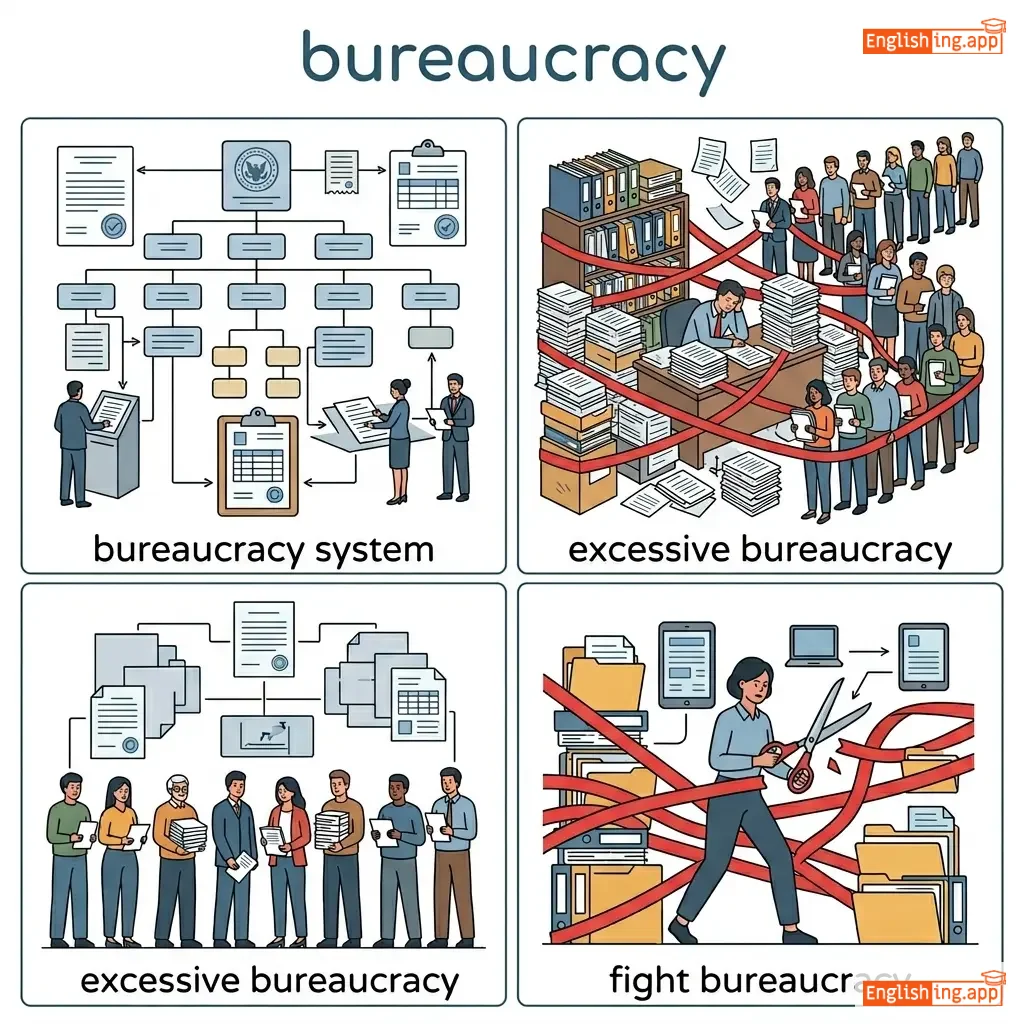
#806
📑
|
/bjʊˈrɒkrəsi/
noun
(bǐu luò kè lā xī)
••••••
|
|
官僚主义
guanliaozhuyi
••••••
|
- •••••• | - •••••• | - •••••• | - •••••• |
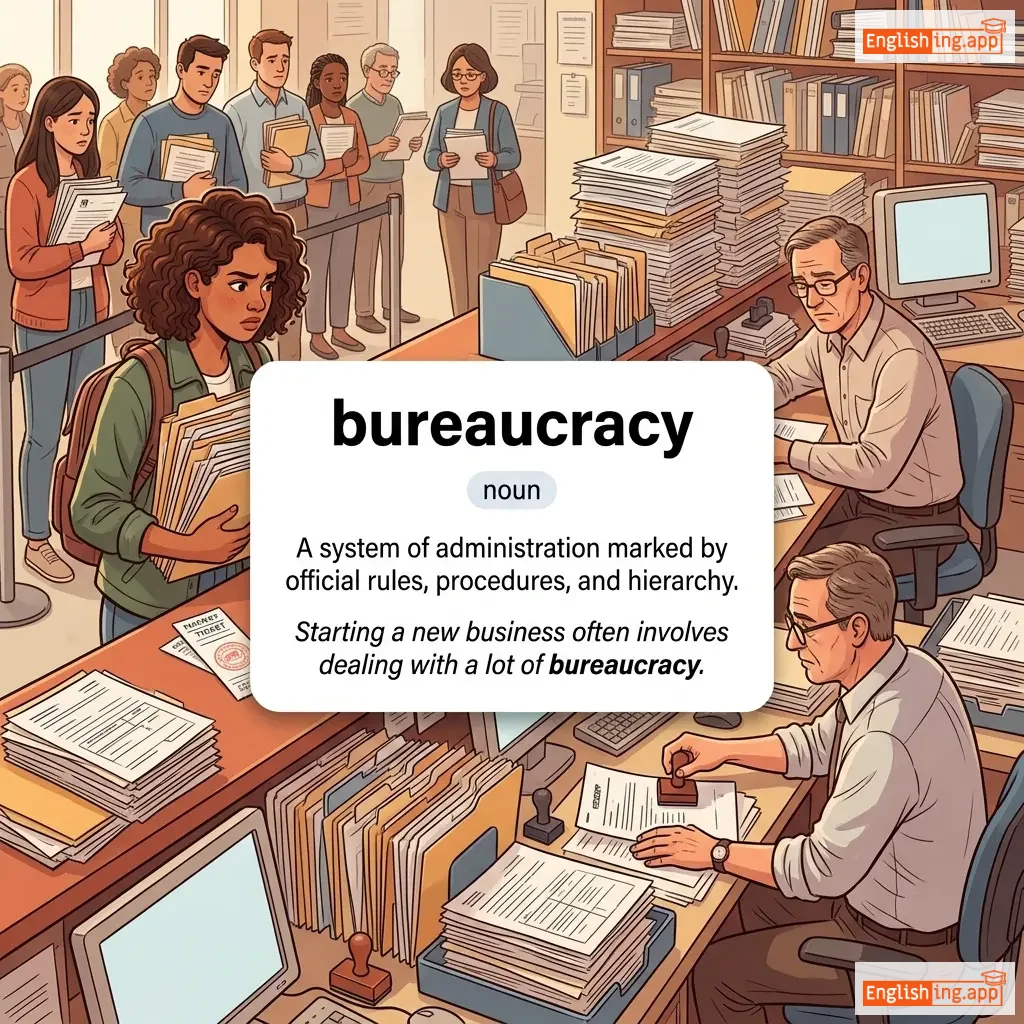
A system of administration marked by official rules, procedures, and hierarchy.
••••••
|
Starting a new business often involves dealing with a lot of bureaucracy. |
开办新企业通常涉及大量的官僚主义。
Kaiban xin qiye tongchang shèjí dàliàng de guānliáozhǔyì.
••••••
|
red tape |
Excessive rules and formalities in bureaucracy.
••••••
|
繁文缛节
fánwénrùjié
••••••
|
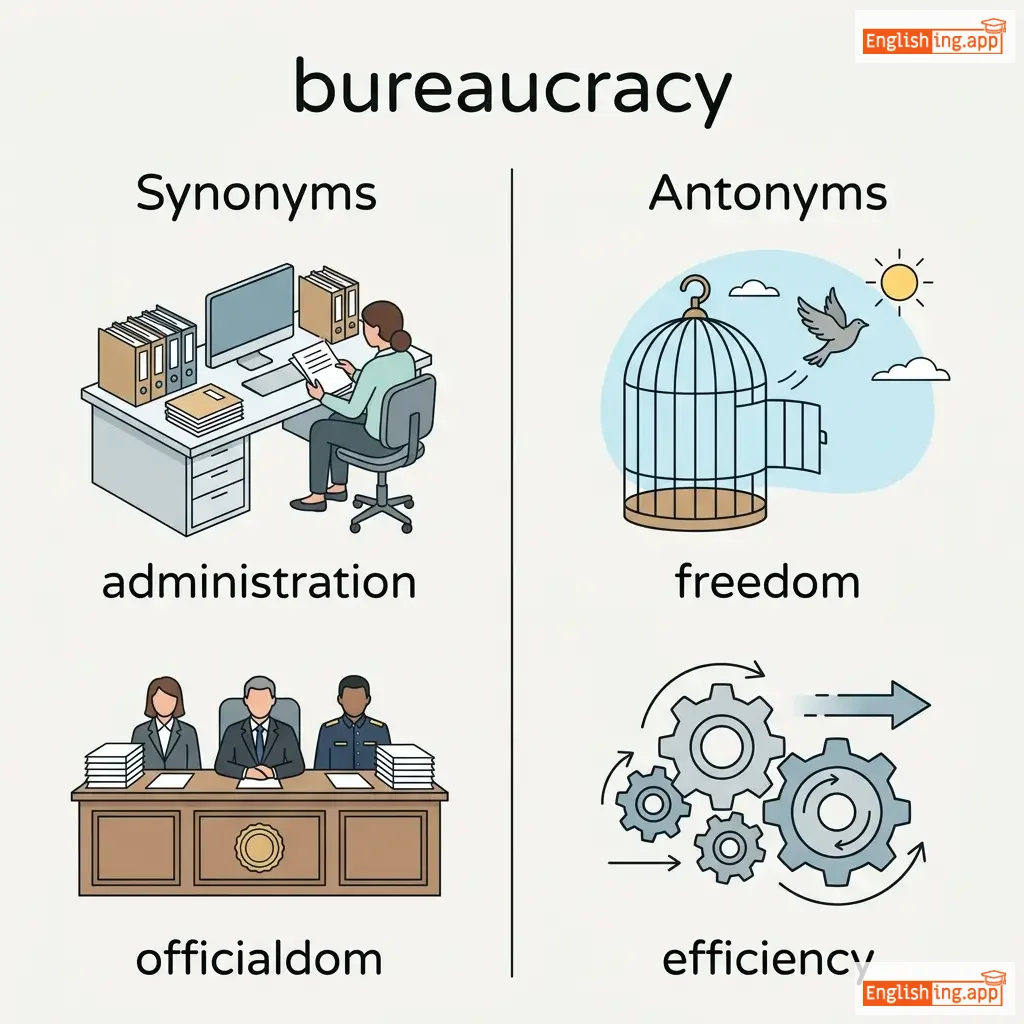
administration, officialdom, authority, government
••••••
|
freedom, efficiency
••••••
|
bureaucracy system, excessive bureaucracy, fight bureaucracy
••••••
|
官僚主义就像复杂的繁文缛节,浪费时间。
••••••
|
|
#807
⚰️
|
/ˈbɛriəl/
noun
(贝里尔)
••••••
|
- •••••• |
埋葬
maizang
••••••
|
- •••••• | - •••••• | - •••••• | - •••••• |
the act of placing a dead body into the ground.
••••••
|
The burial ceremony took place in the afternoon. |
埋葬仪式在下午举行。
Maizang yishi zai xiawu juxing.
••••••
|
- •••••• | - •••••• | - •••••• |
interment, entombment, inhumation
••••••
|
exhumation, resurrection
••••••
|
burial site, burial ground, burial ceremony
••••••
|
Think of 'maizang' as 'burying' the body in the ground.
••••••
|
|
#808
🔥
|
/bɜːrn/
verb
(bēn)
••••••
|
|
燃烧
ranshao
••••••
|
burned
bēnd
••••••
|
burned
bēnd
••••••
|
burns
bēns
••••••
|
burning
bēnɪng
••••••
|
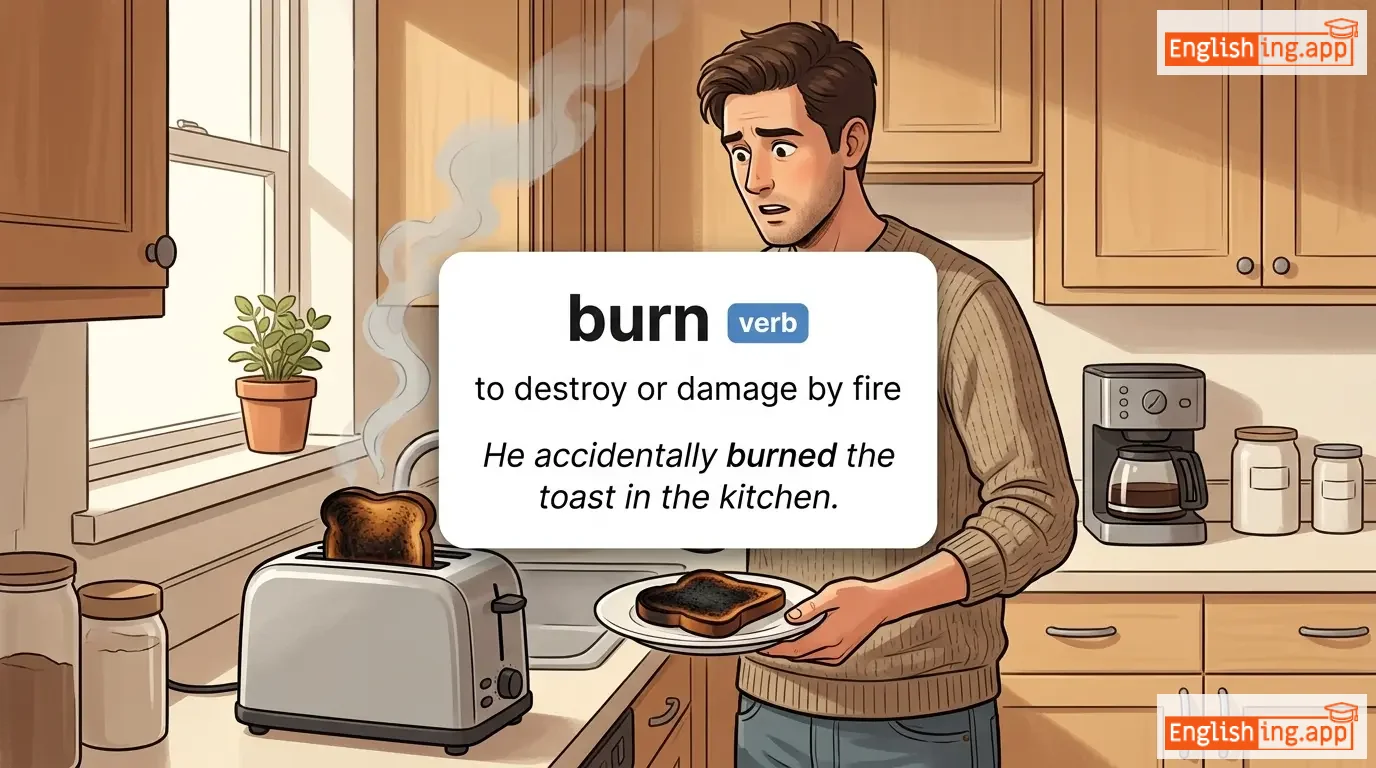
to destroy or damage by fire
••••••
|
He accidentally burned the toast in the kitchen.
他不小心在厨房里烧焦了烤面包。
••••••
|
他不小心在厨房里烧焦了烤面包。
Tā bù xiǎoxīn zài chúfáng lǐ shāo jiāo le kǎo miànbāo.
••••••
|
burn the midnight oil
燃烧午夜油
••••••
|
to work late into the night
••••••
|
工作到深夜
gōngzuò dào shēnyè
••••••
|
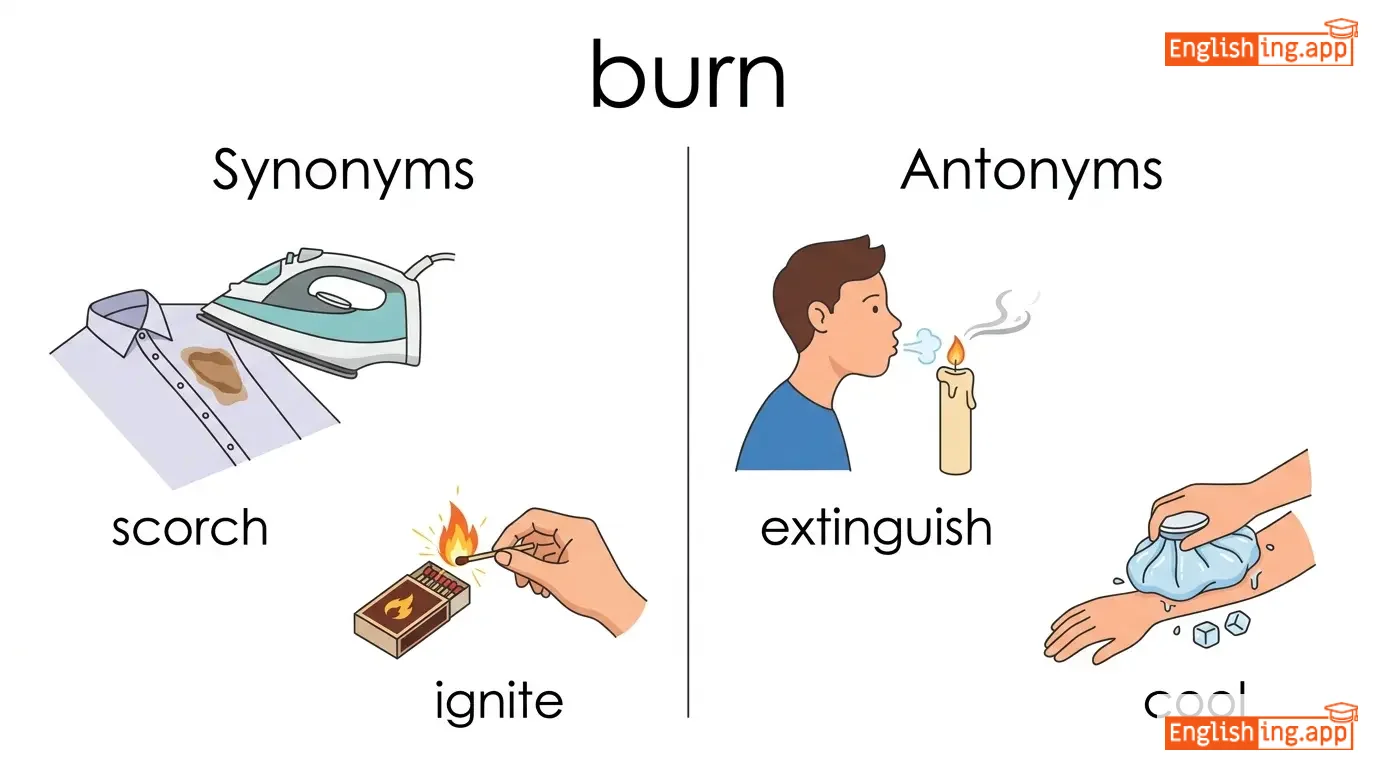
scorch, ignite, blaze, flame, char
••••••
|
extinguish, cool, put out
••••••
|
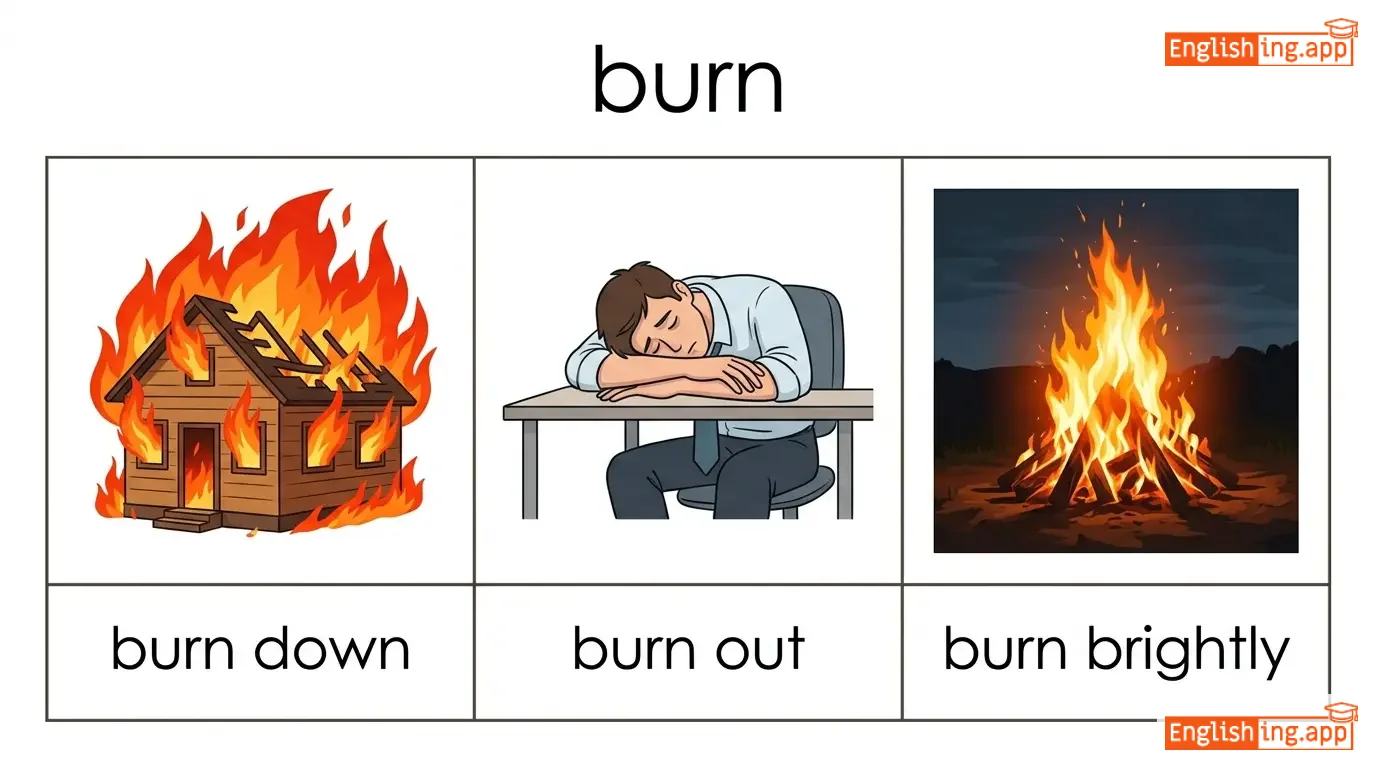
burn down, burn out, burn brightly, burn with anger
••••••
|
Burn 的意思是燃烧 - 烧焦了吐司,工作到深夜。
••••••
|
|
#809
✨
|
/ˈbɜːrnɪʃ/
verb
••••••
|
|
- •••••• |
burnished
••••••
|
burnished
••••••
|
burnishes
••••••
|
burnishing
••••••
|
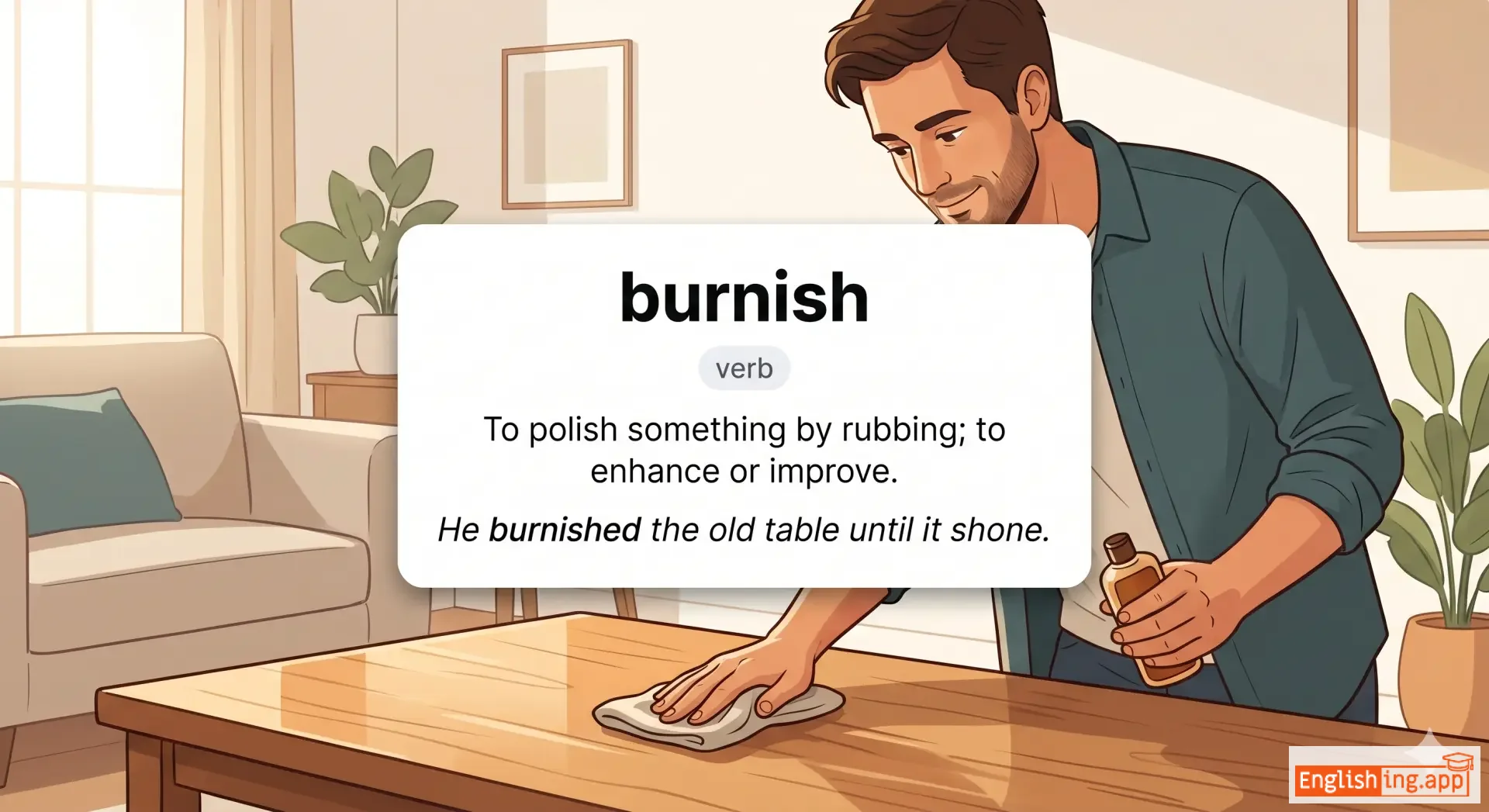
To polish something by rubbing; to enhance or improve.
••••••
|
He burnished the old table until it shone. |
- •••••• |
burnish one's reputation |
To improve or enhance one’s public image or standing.
••••••
|
- •••••• |
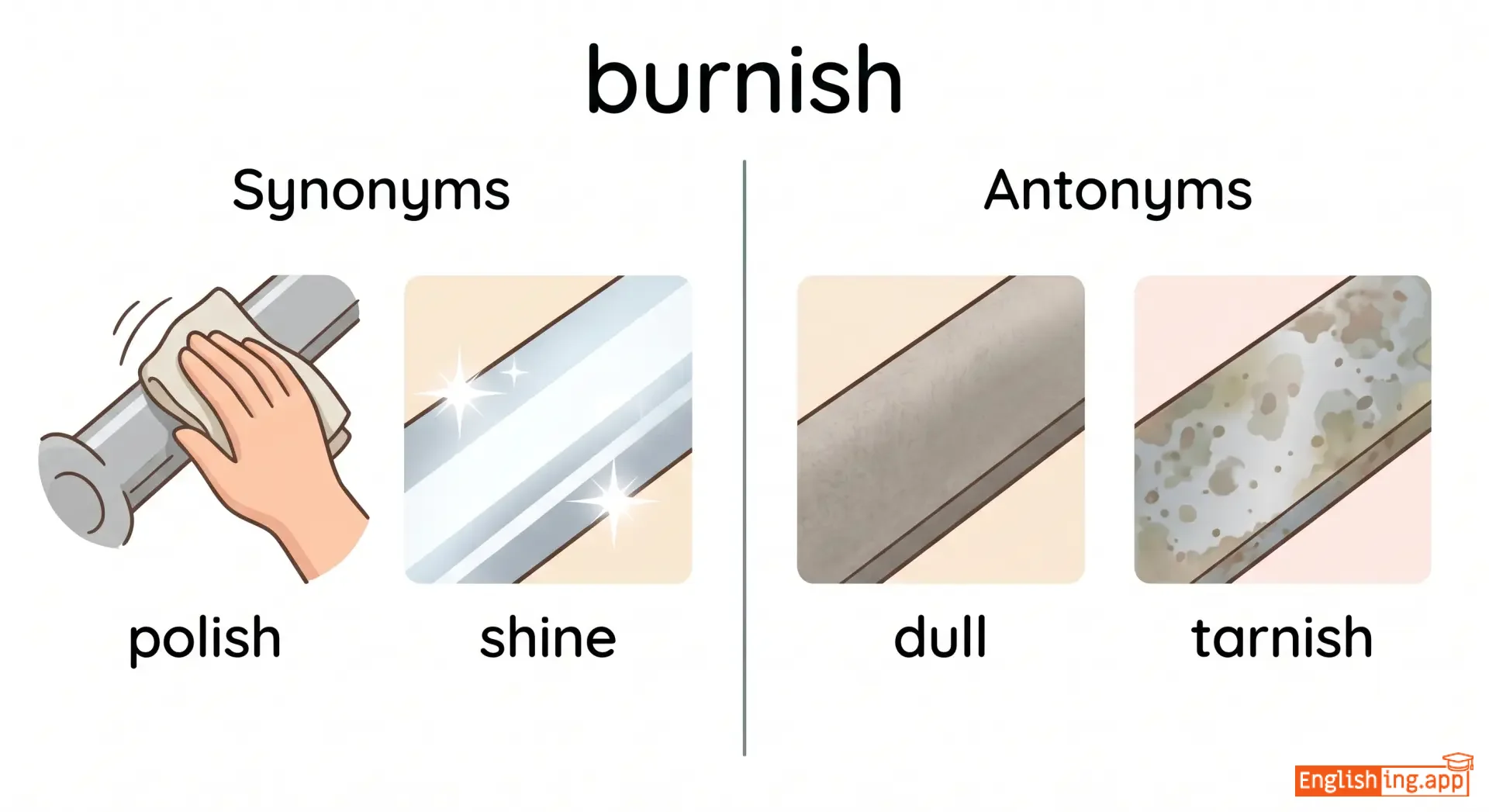
polish, shine, buff, gloss, brighten
••••••
|
dull, tarnish, damage
••••••
|
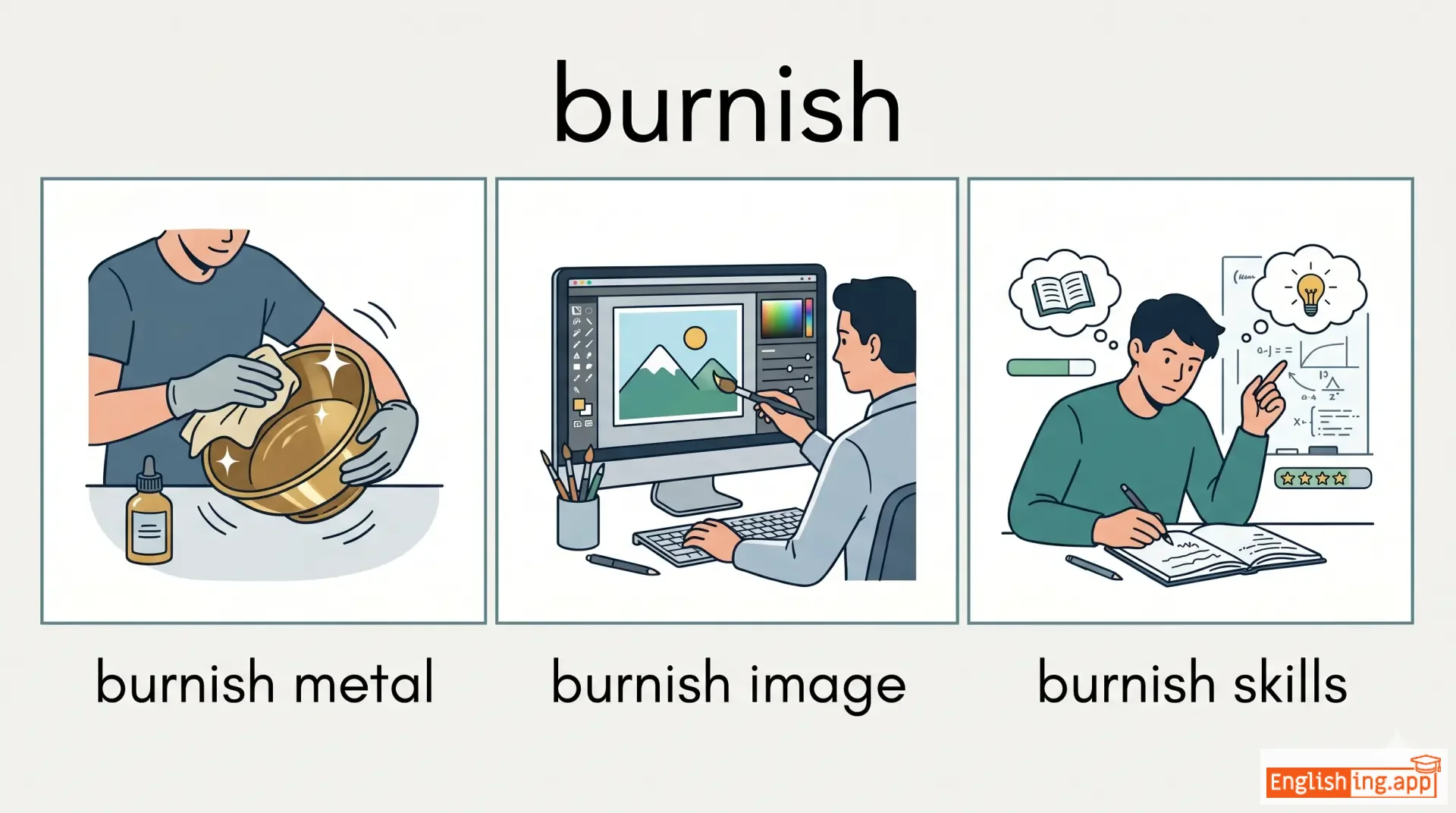
burnish metal, burnish image, burnish skills, burnish surface
••••••
|
No •••••• |
|
#810
💥
|
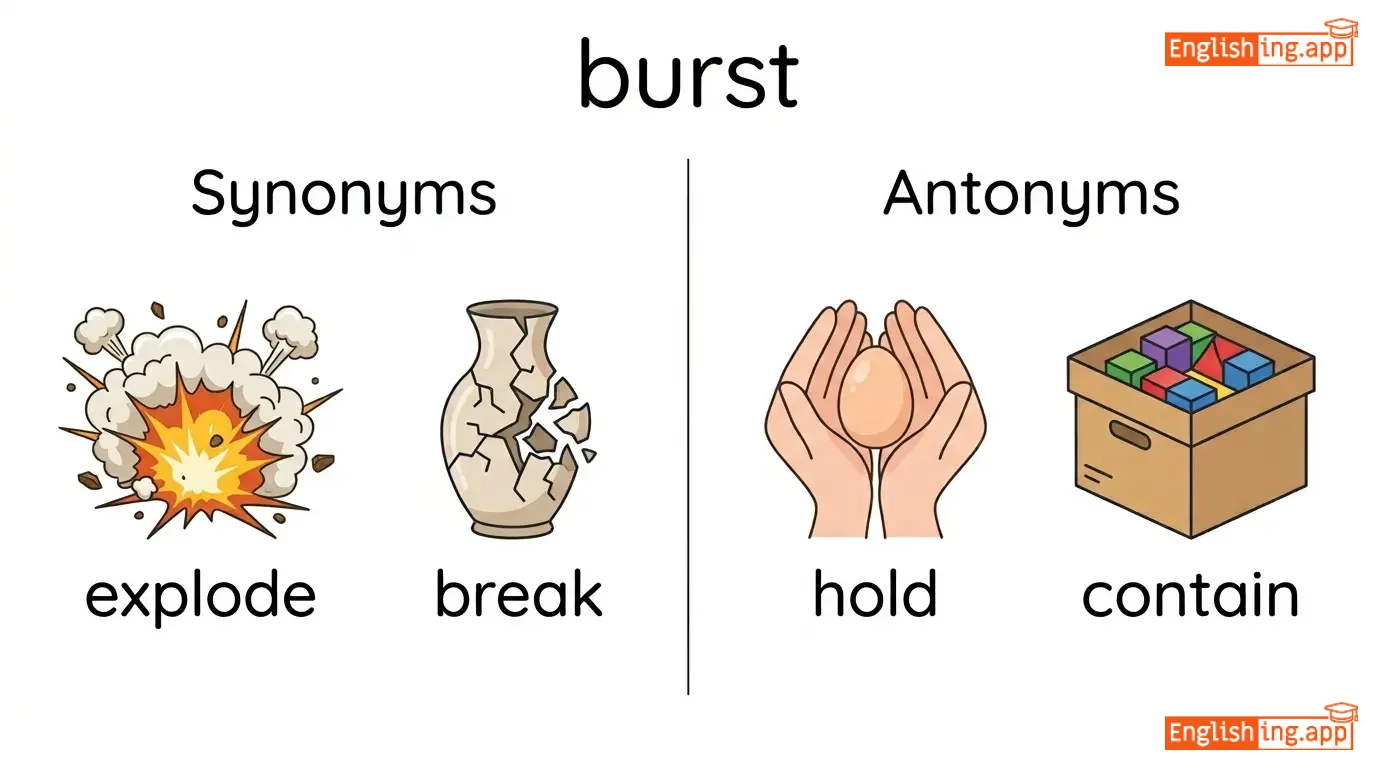
/bɜːst/
verb
(bɜːrst)
••••••
|
|
爆炸
baozha
••••••
|
burst
bɜːrst
••••••
|
burst
bɜːrst
••••••
|
bursts
bɜːrsts
••••••
|
bursting
bɜːrsting
••••••
|
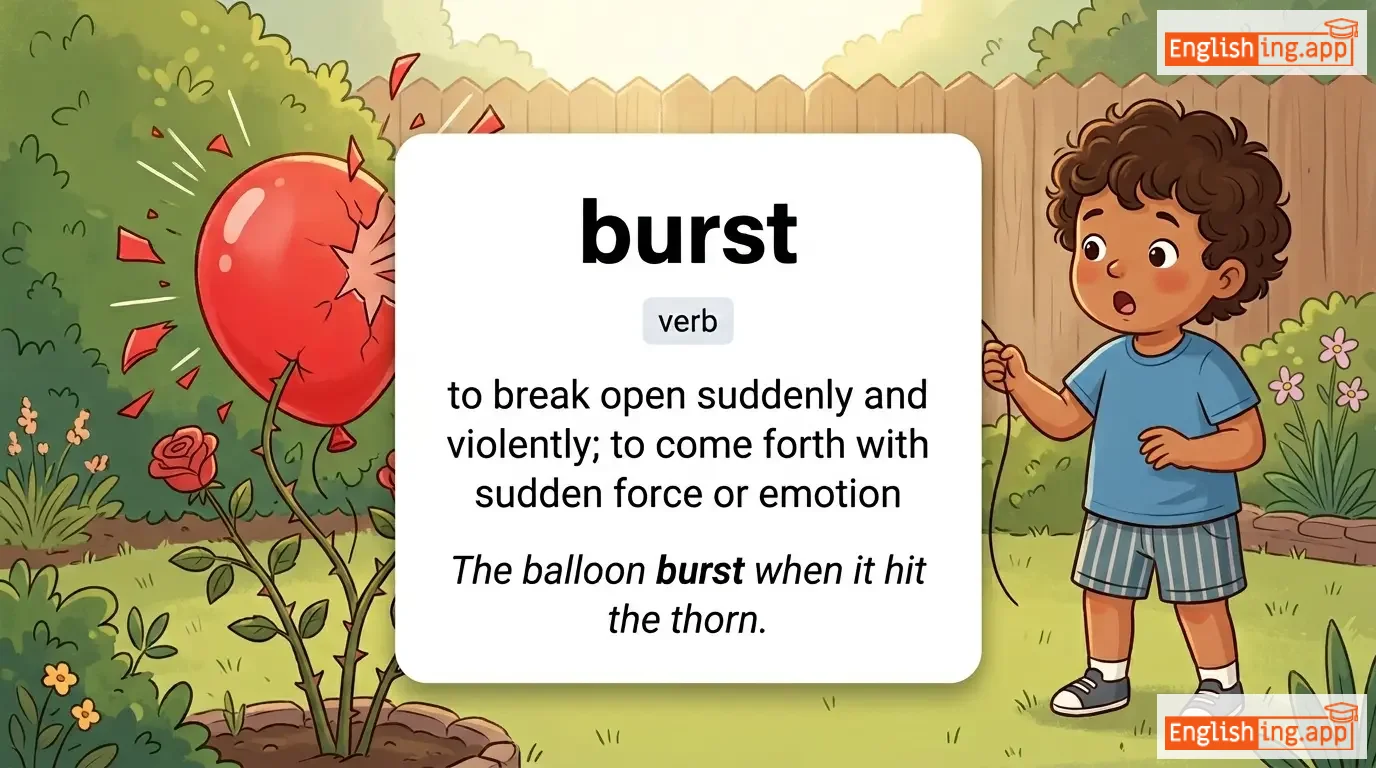
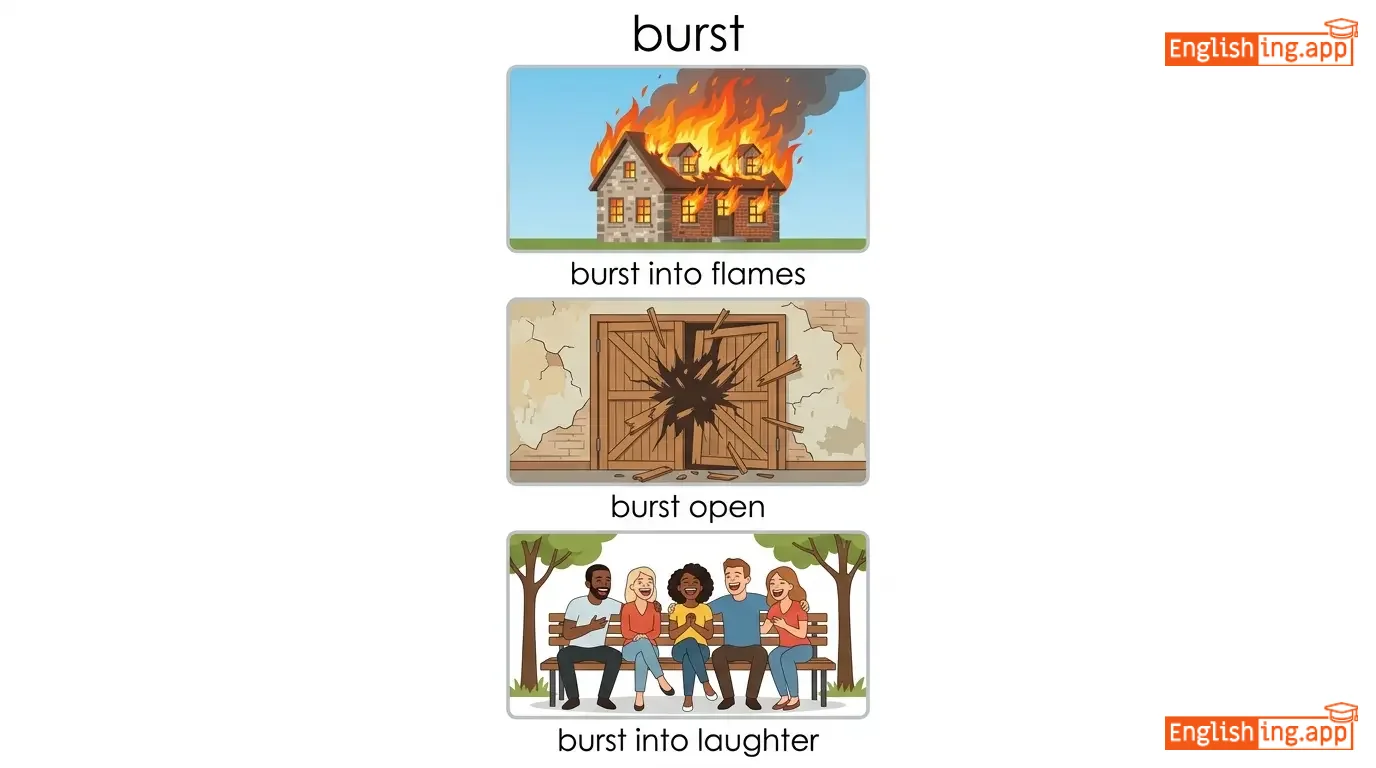
to break open suddenly and violently; to come forth with sudden force or emotion
••••••
|
The balloon burst when it hit the thorn.
气球在撞到刺的时候爆炸了。
••••••
|
气球在撞到刺的时候爆炸了。
Qiqiu zai zhuang dao ci de shihou baozha le.
••••••
|
burst into tears
突然流泪
••••••
|
to start crying suddenly
••••••
|
突然流泪
turan liu lei
••••••
|
explode, break, crack, erupt, rupture
••••••
|
hold, contain, restrain
••••••
|
burst into flames, burst open, burst into laughter, burst with joy
••••••
|
想象气球爆炸的声音!
••••••
|
|
#811
⚰️
|
/ˈberi/
verb
(贝瑞)
••••••
|
|
埋葬
mái zàng
••••••
|
buried
埋葬
••••••
|
buried
埋葬
••••••
|
buries
埋葬
••••••
|
burying
埋葬
••••••
|
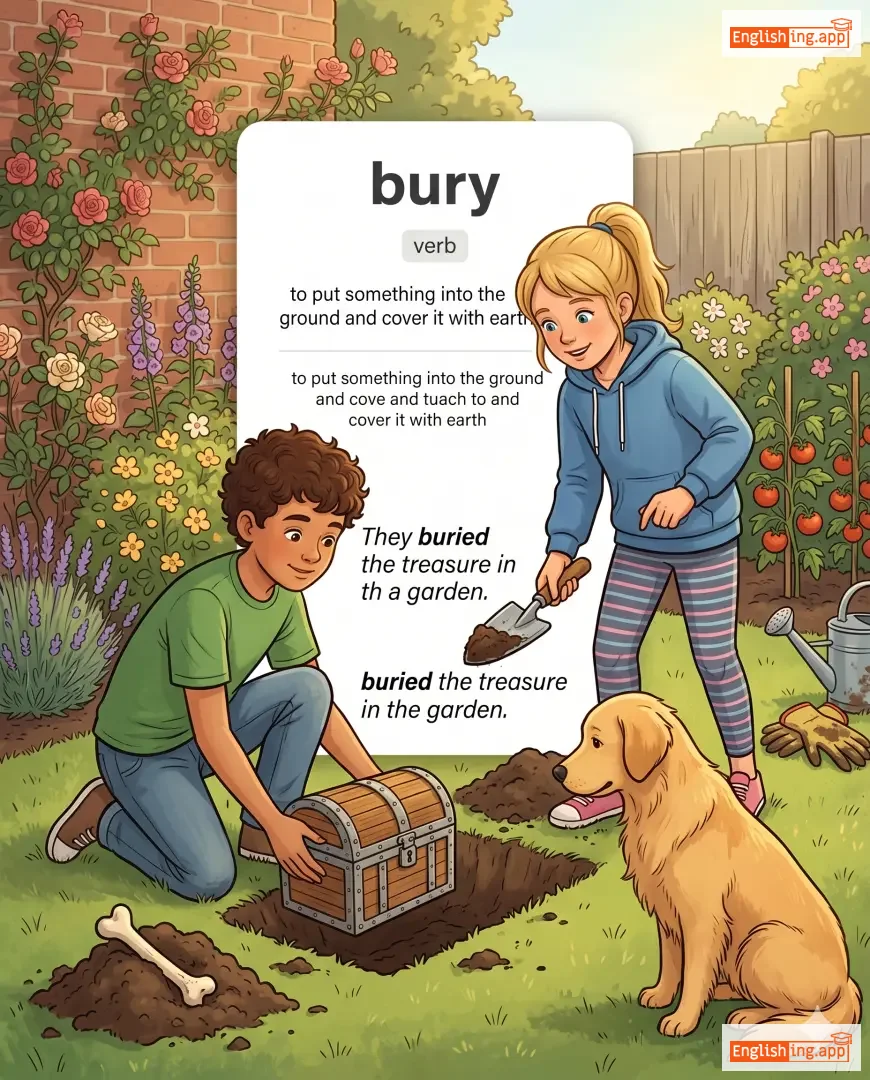
to put something into the ground and cover it with earth
••••••
|
They buried the treasure in the garden.
他们把宝藏埋在花园里。
••••••
|
他们把宝藏埋在花园里。
Tāmen bǎ bǎozàng mái zài huāyuán lǐ.
••••••
|
bury the hatchet
埋掉战争的战斧
••••••
|
to make peace or end a conflict
••••••
|
化解冲突
huà jiě chōng tū
••••••
|
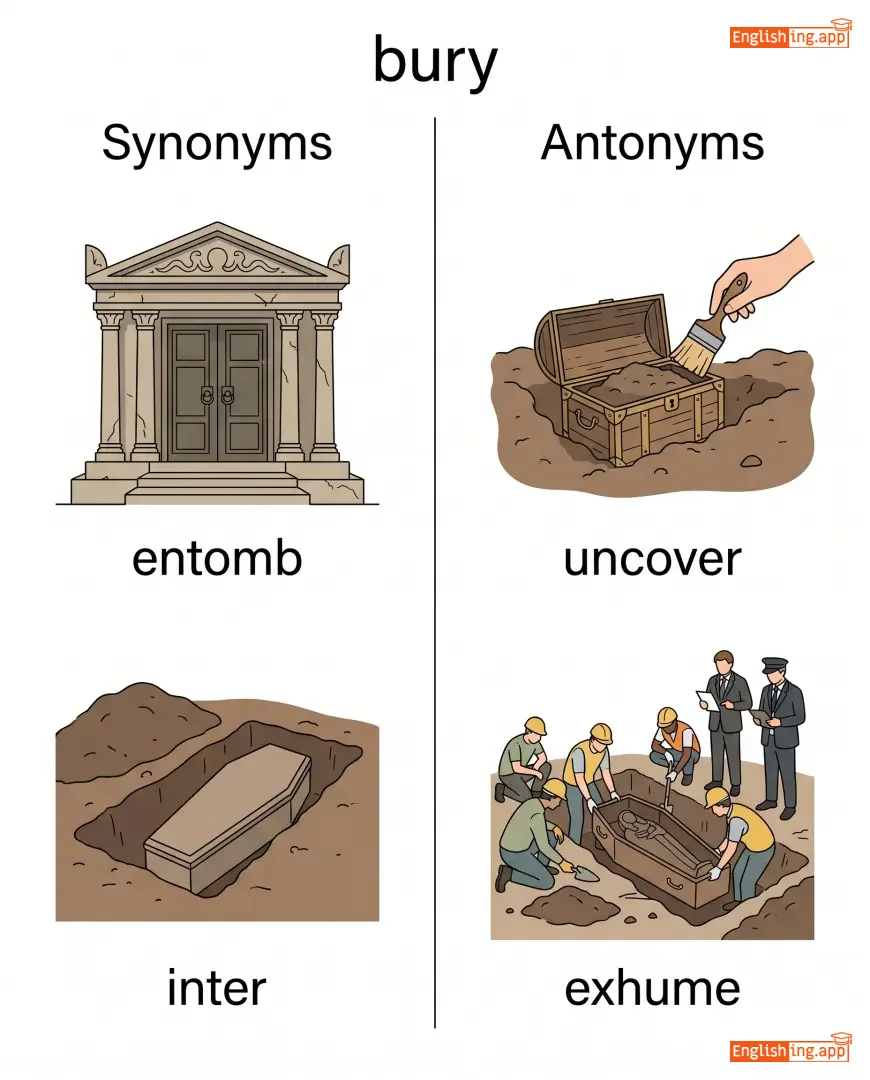
entomb, inter, hide, cover, conceal
••••••
|
uncover, exhume, reveal
••••••
|
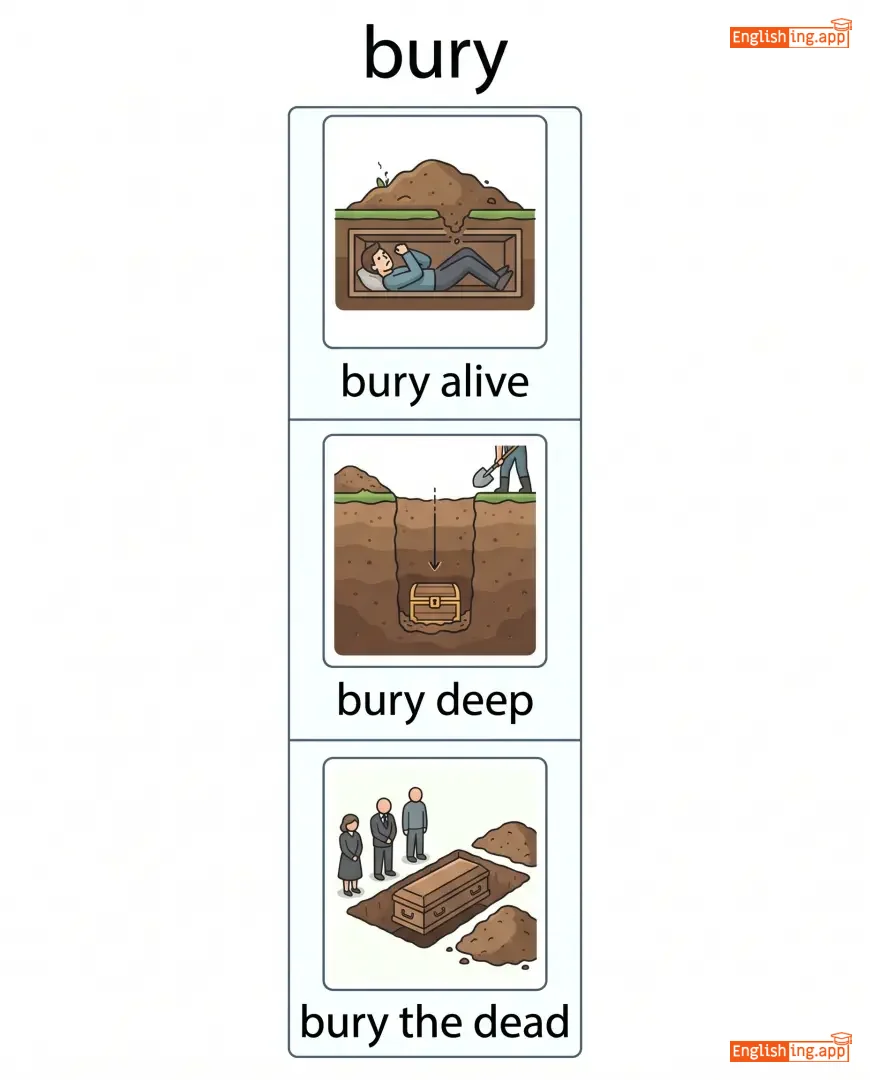
bury alive, bury deep, bury the dead, bury the hatchet
••••••
|
Bury 意思是埋葬 - 如果把一个'berry'埋在土里,它会长出植物。
••••••
|
|
#812
🚌
|
/bʌs/
noun
(巴士)
••••••
|
- •••••• |
巴士
bashi
••••••
|
- •••••• | - •••••• | - •••••• | - •••••• |
a large motor vehicle carrying passengers by road
••••••
|
We waited for the bus at the station. |
我们在车站等巴士。
Wo men zai chezhan deng bashi.
••••••
|
miss the bus |
to miss an opportunity
••••••
|
错过巴士
cuo guo bashi
••••••
|
coach, minibus, vehicle, transport
••••••
|
car, bicycle
••••••
|
take the bus, catch a bus, bus stop, bus station
••••••
|
巴士 - 巴士错过了,机会也错过了。
••••••
|
|
#813
💼
|
/ˈbɪznəs/
noun
(bìznèss)
••••••
|
- •••••• |
生意
shēngyì
••••••
|
- •••••• | - •••••• | - •••••• | - •••••• |
the practice of making money by producing or buying and selling goods or services
••••••
|
She started her own business last year. |
她去年开始了自己的生意。
Tā qùnián kāishǐle zìjǐ de shēngyì.
••••••
|
mind your own business |
focus on your own matters and not interfere with others
••••••
|
管好你自己的事
guǎn hǎo nǐ zìjǐ de shì
••••••
|
company, trade, firm, enterprise, commerce
••••••
|
idleness, unemployment
••••••
|
small business, family business, business plan, business meeting
••••••
|
Business意思是生意 – Busy + ness,永远忙于自己的生意
••••••
|
Vocabulary Quiz
Test your vocabulary by matching words with their translations or meanings.
Login to take the quiz
Comments (0)
Share your thoughts and join the discussion.
Join the discussion by logging in
Login to CommentNo comments yet
Be the first to share your thoughts!