




Swipe left or right, or use the buttons. Tap image to zoom.
例句翻译
单词
Lesson 73Lesson 73 - 遮罩切换
|
表情符号
|
单词 | Images | 翻译 | 过去时 | 过去分词 | 第三人称单数 | 动名词 | 含义 | 例句 | 例句翻译 | 示例表达 | 示例表达含义 | 示例表达翻译 | 同义词 | 反义词 | 搭配词 | 助记符 |
|---|---|---|---|---|---|---|---|---|---|---|---|---|---|---|---|---|---|
|
#3464
👑
|
/ˈnoʊbəl/
adjective
(诺布尔)
••••••
|
- •••••• |
具有高尚的个人品质、高道德原则或属于高社会阶层
Jùyǒu gāoshàng de gèrén pǐnzhì, gāo dàodé yuánzé huò shǔyú gāo shèhuì jiēcéng
••••••
|
- •••••• | - •••••• | - •••••• | - •••••• |
Having or showing fine personal qualities, high moral principles, or being of high social rank.
••••••
|
He is admired for his noble character and generosity. |
他因其高尚的品格和慷慨而受到钦佩。
Tā yīn qí gāoshàng de pǐngé hé kāngkǎi ér shòudào qīnpèi.
••••••
|
noble cause |
A morally good or worthwhile reason or objective
••••••
|
高尚的目标
Gāoshàng de mùbiāo
••••••
|
honorable, dignified, virtuous, aristocratic
••••••
|
dishonorable, ignoble, base
••••••
|
noble cause, noble family, noble effort, noble character
••••••
|
Noble意味着noble-人——像国王一样。
••••••
|
|
#3465
🙅♂️
|
/ˈnoʊˌbɑːdi/
pronoun
(nobody)
••••••
|
- •••••• |
没有人
méiyǒu rén
••••••
|
- •••••• | - •••••• | - •••••• | - •••••• |
no person; not anyone
••••••
|
Nobody came to the party.
没有人来参加派对。
••••••
|
没有人来参加派对。
Méiyǒu rén lái cānjiā pàiduì.
••••••
|
- •••••• | - •••••• | - •••••• |
no one, none, not a soul
••••••
|
someone, anybody
••••••
|
nobody knows, nobody cares, nobody else
••••••
|
没有人来,如果没有人听 - Nobody comes if nobody listens
••••••
|
|
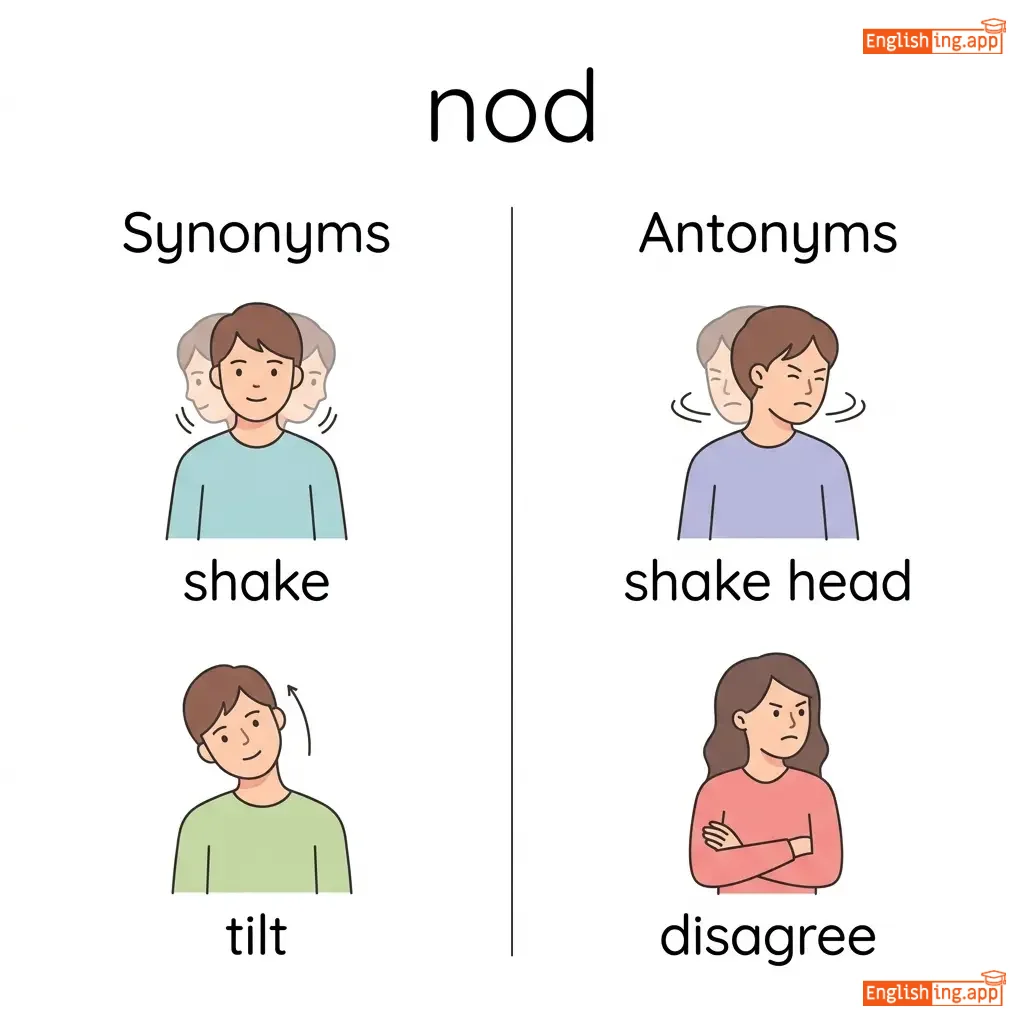
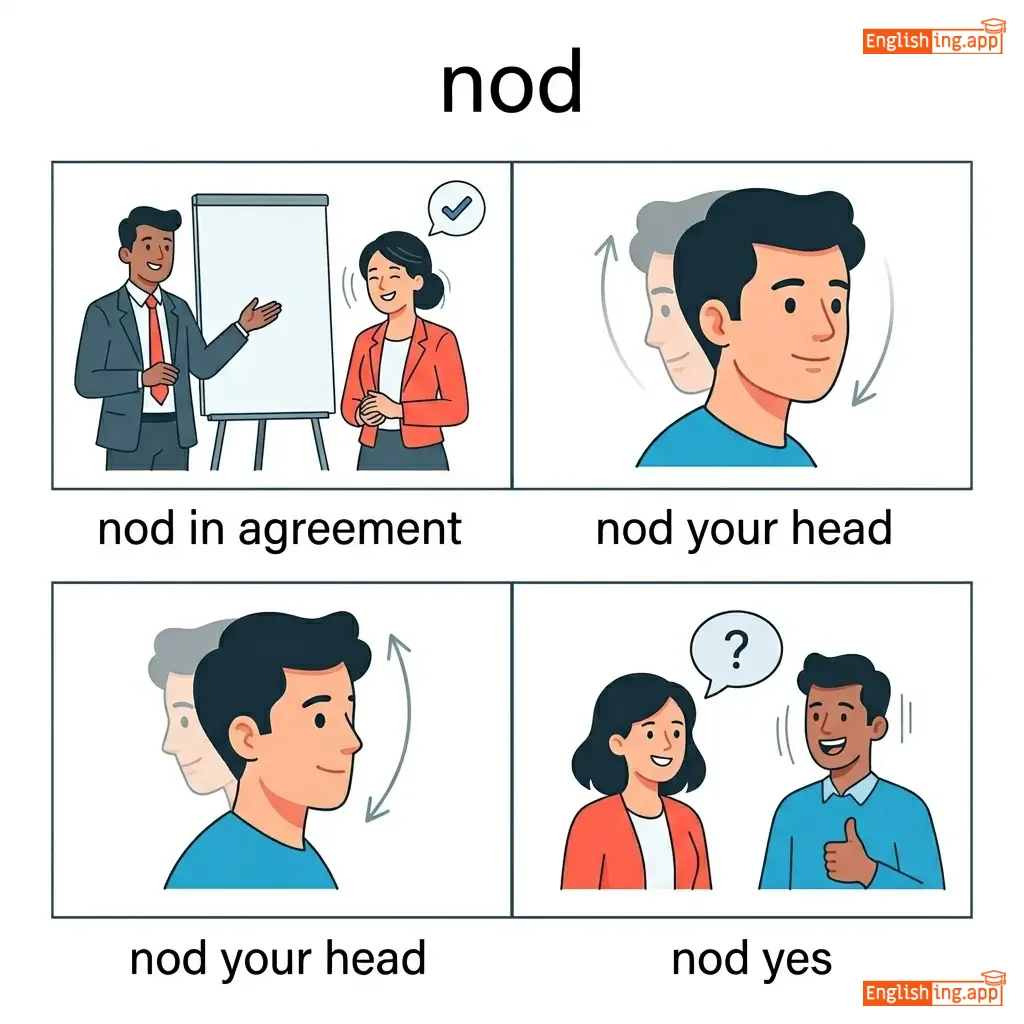
#3466
👍
|
/nɒd/
verb
(诺德)
••••••
|
|
点头
diǎntóu
••••••
|
nodded
诺德德
••••••
|
nodded
诺德德
••••••
|
nods
诺德斯
••••••
|
nodding
诺丁
••••••
|
to move one's head down and up to show agreement or acknowledgment
••••••
|
She nodded in agreement with the proposal.
她点头表示同意该提议。
••••••
|
她点头表示同意该提议。
Tā diǎntóu biǎoshì tóngyì gāi tíyì.
••••••
|
- •••••• | - •••••• | - •••••• |
agree, acknowledge, approve, confirm
••••••
|
shake, disagree, deny
••••••
|
nod agreement, nod slowly, nod approvingly, nod politely, nod understanding
••••••
|
点头示意同意
••••••
|
|
#3467
🔊
|
/nɔɪz/
noun
(nuòyīz)
••••••
|
- •••••• |
噪音
zaoyin
••••••
|
- •••••• | - •••••• | - •••••• | - •••••• |
a sound, especially one that is loud or unpleasant
••••••
|
The noise from the construction site was very disturbing.
施工现场的噪音非常扰人。
••••••
|
施工现场的噪音非常扰人。
Shīgōng xiànchǎng de zàoyīn fēicháng rǎo rén.
••••••
|
- •••••• | - •••••• | - •••••• |
sound, din, racket, clamor
••••••
|
silence, quiet, peace, stillness
••••••
|
loud noise, background noise, noise pollution
••••••
|
噪音和noise一样令人烦恼。
••••••
|
|
#3468
🔊
|
/ˈnɔɪzi/
adjective
(nuòyí)
••••••
|
- •••••• |
吵闹
chaonao
••••••
|
- •••••• | - •••••• | - •••••• | - •••••• |
Making a lot of loud sounds; full of noise.
••••••
|
The children were noisy during the party. |
孩子们在派对期间很吵闹。
Háizimen zài pàiduì qījiān hěn chǎonào.
••••••
|
noisy as a market |
Extremely loud and chaotic.
••••••
|
像市场一样吵闹
Xiàng shìchǎng yīyàng chǎonào
••••••
|
loud, boisterous, rowdy, clamorous, raucous
••••••
|
quiet, silent, calm
••••••
|
noisy children, noisy street, noisy crowd
••••••
|
Noisy 就是吵闹 - 吵闹
••••••
|
|
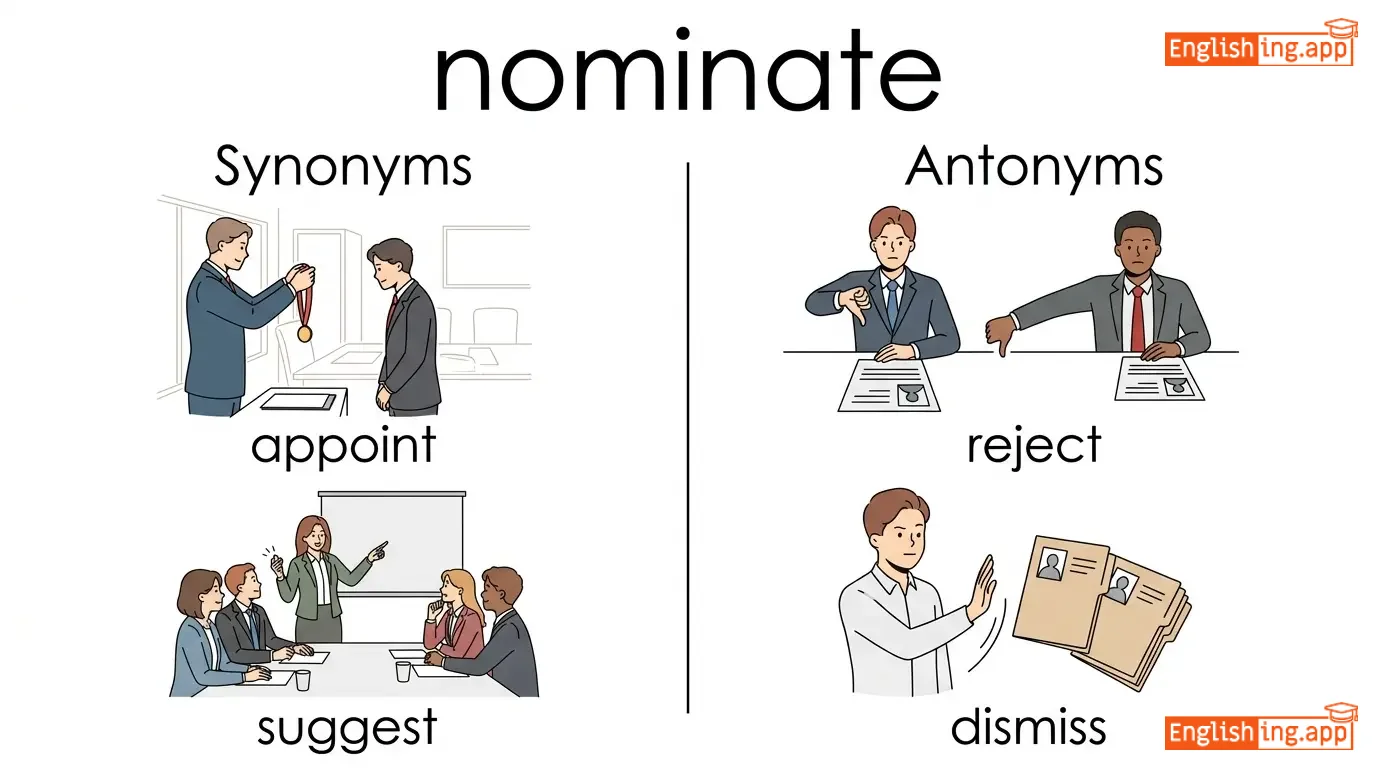
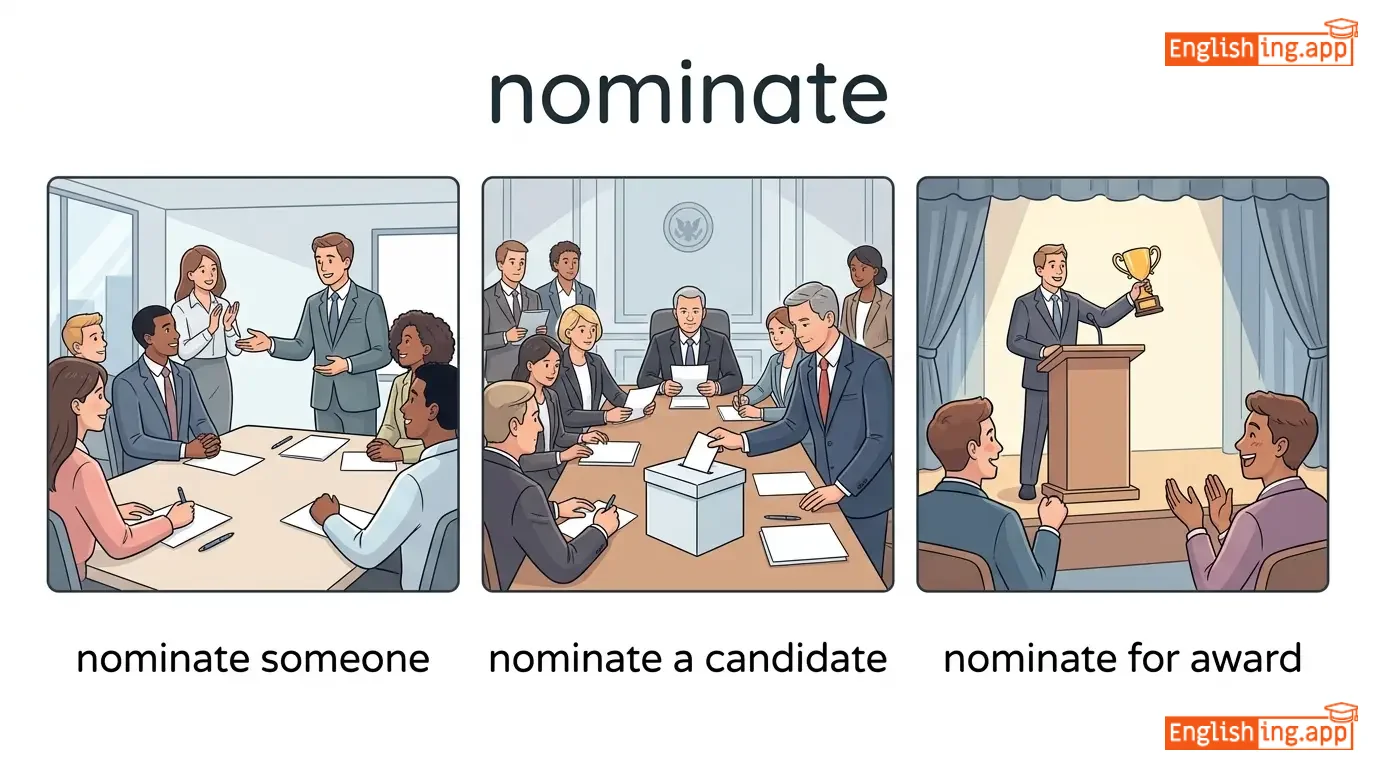
#3469
🏆
|
/ˈnɒmɪneɪt/
verb
(诺米内特)
••••••
|
|
提名
tímíng
••••••
|
nominated
诺米内特德
••••••
|
nominated
诺米内特德
••••••
|
nominates
诺米内特斯
••••••
|
nominating
诺米内特英
••••••
|
to propose someone for a position or award
••••••
|
The committee decided to nominate her for the award.
委员会决定提名她获得奖项。
••••••
|
委员会决定提名她获得奖项。
Wěiyuánhuì juédìng tímíng tā huòdé jiǎngxiàng.
••••••
|
- •••••• | - •••••• | - •••••• |
propose, suggest, recommend, appoint
••••••
|
reject, dismiss, withdraw
••••••
|
nominate candidates, nominate for award, officially nominate, nominate someone, nominate unanimously
••••••
|
Nominate = 提名 (Tímíng) - ‘Tímíng’ in Chinese sounds similar to ‘Nominate’.
••••••
|
|
#3470
📜
|
/ˌnɒməˈneɪʃən/
noun
(提名)
••••••
|
- •••••• |
提名
tí míng
••••••
|
- •••••• | - •••••• | - •••••• | - •••••• |
The act of formally proposing someone for a role, position, or award.
••••••
|
Her nomination for the award surprised everyone. |
她的奖项提名让大家都感到惊讶。
Tā de jiǎngxiàng tímíng ràng dàjiā dōu gǎndào jīngyà.
••••••
|
- •••••• | - •••••• | - •••••• |
appointment, proposal, suggestion, designation
••••••
|
rejection, dismissal, exclusion
••••••
|
receive nomination, award nomination, political nomination, official nomination
••••••
|
提名意味着给某人提名一个职位或奖项。
••••••
|
|
#3471
💼
|
/ˌnɑm.əˈni/
noun
(诺米尼)
••••••
|
- •••••• |
提名人
tímíngrén
••••••
|
- •••••• | - •••••• | - •••••• | - •••••• |
a person who is nominated for an office, award, or honor
••••••
|
She was the nominee for the Best Actress award. |
她是最佳女演员奖项的提名人。
Tā shì zuì jiā nǚ yǎnyuán jiǎngxiàng de tímíngrén.
••••••
|
- •••••• | - •••••• | - •••••• |
candidate, contender, designee
••••••
|
disqualified person, rejected candidate
••••••
|
presidential nominee, award nominee, party nominee
••••••
|
提名人是那些被选中参与某个重要奖项的人。
••••••
|
|
#3472
🤝
|
/ˌnɒnˈprɒfɪt/
noun; adjective
(农-普罗菲特)
••••••
|
- •••••• |
非营利的
fei yingli de
••••••
|
- •••••• | - •••••• | - •••••• | - •••••• |
an organization that does not operate for profit and reinvests surplus to achieve social goals; not intended to make financial profit
••••••
|
She works for a non-profit that provides free education to underprivileged children.
她 在 一个 non-profit 工作,提供 免费 教育。
••••••
|
她在一个非营利组织工作,为弱势儿童提供免费教育。
ta zai yi ge fei yingli zuzhi gongzuo wei ruoshi ertong tigong mianfei jiaoyu
••••••
|
non-profit organization
非营利组织
••••••
|
an organization that uses its income to pursue social or charitable objectives rather than profit
••••••
|
非营利组织
fei yingli zuzhi
••••••
|
charitable, not-for-profit, voluntary, philanthropic, altruistic
••••••
|
for-profit, commercial, profit-making
••••••
|
non-profit organization, non-profit sector, non-profit work, non-profit foundation, non-profit charity
••••••
|
Non-profit = fei yingli, 没有 profit,但有 公益。
••••••
|
|
#3473
🚫
|
/nʌn/
pronoun
(楠)
••••••
|
- •••••• |
没有人
meiyou ren
••••••
|
- •••••• | - •••••• | - •••••• | - •••••• |
not any; no one; not one
••••••
|
None of the students passed the exam. |
没有学生通过考试。
Meiyou xuesheng tongguo kaoshi.
••••••
|
- •••••• | - •••••• | - •••••• |
nothing, nobody, nil
••••••
|
all, some, everyone
••••••
|
none of, none left, none at all
••••••
|
None sounds like 'meiyou ren'.
••••••
|
|
#3474
🌧️➡️🏞️
|
/ˌnʌnðəˈlɛs/
adverb
(nonetheless)
••••••
|
- •••••• |
尽管如此
jǐn guǎn rúcǐ
••••••
|
- •••••• | - •••••• | - •••••• | - •••••• |
in spite of that; nevertheless
••••••
|
It was raining, but nonetheless, they went hiking. |
下着雨,但尽管如此,他们还是去远足了。
Xià zhe yǔ, dàn jǐn guǎn rúcǐ, tāmen hái shì qù yuǎnzú le.
••••••
|
- •••••• | - •••••• | - •••••• |
nevertheless, however, still, yet
••••••
|
therefore, hence
••••••
|
nonetheless important, nonetheless true, nonetheless, despite that
••••••
|
Noneth- like 'none-the-less' means despite.
••••••
|
|
#3475
🙃
|
/ˈnɒnsəns/
noun
(nonsense)
••••••
|
- •••••• |
胡说
hushuo
••••••
|
- •••••• | - •••••• | - •••••• | - •••••• |
Words or ideas that have no meaning or make no sense.
••••••
|
His explanation was pure nonsense. |
他的解释完全是胡说八道。
tā de jiěshì wánquán shì húshuō bādào.
••••••
|
talk nonsense |
to say things that are not true or make no sense
••••••
|
胡说八道
húshuō bādào
••••••
|
rubbish, absurdity, foolishness, drivel, gibberish
••••••
|
truth, sense, logic
••••••
|
utter nonsense, talk nonsense, complete nonsense, pure nonsense
••••••
|
Nonsense = NO SENSE → 说没有意义的话 → 胡说
••••••
|
|
#3476
🍜
|
/ˈnuːdəlz/
noun (plural)
(努德尔兹)
••••••
|
- •••••• |
面条
miantiao
••••••
|
- •••••• | - •••••• | - •••••• | - •••••• |
long, thin strips of dough made from flour, water, or eggs, cooked and eaten as food
••••••
|
She cooked noodles with vegetables for dinner.
她做了蔬菜面条当晚餐。
••••••
|
她做了蔬菜面条当晚餐。
ta zuo le shucai miantiao dang wancan
••••••
|
use your noodle
用你的努德尔
••••••
|
to think carefully; to use your brain
••••••
|
动动脑子
dongdong naozi
••••••
|
pasta, ramen, vermicelli, spaghetti, soba
••••••
|
rice, bread
••••••
|
instant noodles, rice noodles, fried noodles, noodle soup, bowl of noodles
••••••
|
面条就是 noodles,长长的
••••••
|
|
#3477
☀️
|
/nuːn/
noun
(noon)
••••••
|
- •••••• |
中午
zhongwu
••••••
|
- •••••• | - •••••• | - •••••• | - •••••• |
12 o'clock in the daytime; midday
••••••
|
The meeting will start at noon. |
会议将在中午开始。
Huiyi jiang zai zhongwu kaishi.
••••••
|
high noon |
exactly midday; sometimes used to describe a decisive confrontation
••••••
|
中午
zhongwu
••••••
|
midday, twelve o'clock, middaytime
••••••
|
midnight
••••••
|
at noon, by noon, until noon, high noon
••••••
|
Noon 意味着中午,太阳 ☀️ 正在正上方
••••••
|
|
#3478
🚫➡️🚫
|
/nɔːr/
conjunction
(诺尔)
••••••
|
- •••••• |
也不
yě bù
••••••
|
- •••••• | - •••••• | - •••••• | - •••••• |
used to introduce a negative clause after a negative statement
••••••
|
He didn't call, nor did he send a message. |
他没有打电话,也没有发送消息。
Tā méiyǒu dǎ diànhuà, yě méiyǒu fāsòng xiāoxī.
••••••
|
- •••••• | - •••••• | - •••••• |
and not, neither
••••••
|
and, or
••••••
|
nor did, nor have
••••••
|
Nor - 'Not' after a negative statement.
••••••
|
|
#3479
📏
|
/nɔːrm/
noun
(norm)
••••••
|
- •••••• |
规范
guīfàn
••••••
|
- •••••• | - •••••• | - •••••• | - •••••• |
An accepted standard or a usual practice.
••••••
|
Wearing uniforms is the norm in many schools. |
在许多学校,穿制服是规范。
Zài xǔduō xuéxiào, chuān zhìfú shì guīfàn.
••••••
|
against the norm |
not typical or standard
••••••
|
违反规范
wéifǎn guīfàn
••••••
|
standard, rule, custom, practice, convention
••••••
|
exception, deviation, anomaly
••••••
|
social norm, cultural norm, become the norm, accepted norm
••••••
|
规范就是生活中的标准或惯例。
••••••
|
|
#3480
📏
|
/ˈnɔː.məl/
adjective
(nɔːr.məl)
••••••
|
- •••••• |
正常
zhèngcháng
••••••
|
- •••••• | - •••••• | - •••••• | - •••••• |
conforming to a standard; usual, typical, or expected
••••••
|
It is normal to feel nervous before an interview. |
在面试前感到紧张是正常的。
Zài miànshì qián gǎndào jǐnzhāng shì zhèngcháng de.
••••••
|
back to normal |
returning to a usual or typical state
••••••
|
恢复正常
huīfù zhèngcháng
••••••
|
usual, ordinary, typical, standard, regular
••••••
|
abnormal, unusual, strange
••••••
|
normal life, normal situation, normal condition, back to normal
••••••
|
Normal = 正常, 一切正常 📏
••••••
|
|
#3481
⚖️
|
/ˈnɔːrməlaɪz/
verb
(诺玛莱兹)
••••••
|
- •••••• |
正常化
zhengchanghua
••••••
|
normalized
诺玛莱兹德
••••••
|
normalized
诺玛莱兹德
••••••
|
normalizes
诺玛莱兹伊斯
••••••
|
normalizing
诺玛莱兹英
••••••
|
to bring something back to a normal or standard condition; to make something conform to a standard
••••••
|
The government took steps to normalize relations with neighboring countries.
则 政府 采取 措施 来 诺玛莱兹 关系。
••••••
|
政府采取措施使与邻国的关系正常化。
zhengfu caiqu cuoshi shi yu lingguo de guanxi zhengchanghua
••••••
|
normalize relations
诺玛莱兹 关系
••••••
|
to restore normal diplomatic or social relations
••••••
|
关系正常化
guanxi zhengchanghua
••••••
|
standardize, regularize, stabilize, harmonize, adjust
••••••
|
disrupt, destabilize, abnormalize
••••••
|
normalize data, normalize relations, normalize behavior, normalize process
••••••
|
Normal 状态 = 正常 → 正常化
••••••
|
|
#3482
📅
|
/ˈnɔːməli/
adverb
(nórmāli)
••••••
|
- •••••• |
通常
tōngcháng
••••••
|
- •••••• | - •••••• | - •••••• | - •••••• |
in the usual way; under normal circumstances
••••••
|
I normally wake up at 7 AM every day. |
我通常每天早上7点醒来。
wǒ tōngcháng měitiān zǎoshang 7 diǎn xǐnglái
••••••
|
- •••••• | - •••••• | - •••••• |
usually, typically, generally
••••••
|
abnormally, unusually, rarely
••••••
|
normally do, normally happen, normally work
••••••
|
In Mandarin, 'tōngcháng' means 'normally,' a great match for 'normal' in English.
••••••
|
|
#3483
🧭
|
/nɔːrθ/
noun
(北)
••••••
|
- •••••• |
北方
beifang
••••••
|
- •••••• | - •••••• | - •••••• | - •••••• |
the direction toward the top of a map or the opposite of south
••••••
|
We traveled north to reach the mountains. |
我们向北旅行,以到达山脉。
Wǒmen xiàng běi lǚxíng, yǐ dàodá shānmài.
••••••
|
- •••••• | - •••••• | - •••••• |
up, northern direction
••••••
|
south, downward
••••••
|
north pole, north wind, go north, head north
••••••
|
North is UP on a map, just like '北方' is UP in Chinese!
••••••
|
|
#3484
🌨️
|
/ˈnɔːðərn/
adjective
(诺德恩)
••••••
|
- •••••• |
北方的
běifāng de
••••••
|
- •••••• | - •••••• | - •••••• | - •••••• |
relating to the north or situated in the north
••••••
|
The northern part of the country is known for its cold climate. |
该国的北部因其寒冷的气候而闻名。
Gāi guó de běibù yīn qí hánlěng de qìhòu ér wénmíng.
••••••
|
- •••••• | - •••••• | - •••••• |
northerly, northernmost
••••••
|
southern
••••••
|
northern lights, northern regions, northern hemisphere
••••••
|
Think of the chilly winds from the north – ‘běifāng’ means north in Chinese!
••••••
|
|
#3485
👃
|
/noʊz/
noun
(noʊz)
••••••
|
- •••••• |
鼻子
bízi
••••••
|
- •••••• | - •••••• | - •••••• | - •••••• |
the part of the face that contains the nostrils and is used for breathing and smelling
••••••
|
He has a sharp nose and can smell things from far away. |
他有一只尖锐的鼻子,可以从远处闻到东西。
Tā yǒu yī zhī jiānruì de bízi, kěyǐ cóng yuǎn chù wén dào dōngxi.
••••••
|
- •••••• | - •••••• | - •••••• |
nostrils, snout
••••••
|
mouth
••••••
|
runny nose, pick your nose, nose ring
••••••
|
Nose (鼻子) – Think of 'bízi' and imagine a sharp nose!
••••••
|
|
#3486
🚫
|
/nɒt/
adverb
(诺特)
••••••
|
- •••••• |
不
bu
••••••
|
- •••••• | - •••••• | - •••••• | - •••••• |
used to make a word or phrase negative
••••••
|
I do not like spicy food. |
我不喜欢辣的食物。
Wǒ bù xǐhuān là de shíwù.
••••••
|
- •••••• | - •••••• | - •••••• |
no, never
••••••
|
yes
••••••
|
not sure, not at all, not yet, not going
••••••
|
Not (不) – 'Bu' means denying or rejecting something.
••••••
|
|
#3487
⭐
|
/ˈnoʊtəbl/
adjective
(nóutèbù)
••••••
|
- •••••• |
显著
xian3zhu4
••••••
|
- •••••• | - •••••• | - •••••• | - •••••• |
worthy of attention or notice; remarkable
••••••
|
She made a notable contribution to the project.
她对这个项目做出了显著的贡献。
••••••
|
她对这个项目做出了显著的贡献。
Ta dui zhe ge xiangmu zuo chu le xian3zhu4 de gongxian.
••••••
|
- •••••• | - •••••• | - •••••• |
remarkable, significant, outstanding, important, noteworthy
••••••
|
ordinary, insignificant, unremarkable
••••••
|
notable achievement, notable figure, notable difference, notable contribution
••••••
|
Notable 在中文中意味着显著,像一个显著的贡献。
••••••
|
|
#3488
⭐
|
/ˈnoʊtəbli/
adverb
(nòtāblì)
••••••
|
- •••••• |
显著地
xian zhu de
••••••
|
- •••••• | - •••••• | - •••••• | - •••••• |
used to indicate something worthy of attention or significant
••••••
|
She is notably talented in painting.
她在绘画方面非常有才华。
••••••
|
她在绘画方面非常有才华。
Ta zai huihua fangmian feichang you caihua.
••••••
|
- •••••• | - •••••• | - •••••• |
particularly, especially, significantly, remarkably
••••••
|
insignificantly, unremarkably
••••••
|
notably skilled, notably successful, notably different
••••••
|
显著地,强调的是值得注意的重要特点。
••••••
|
|
#3489
📝
|
/noʊt/
noun, verb
(诺特)
••••••
|
|
便条
biàn tiáo
••••••
|
noted
诺特德
••••••
|
noted
诺特德
••••••
|
notes
诺特斯
••••••
|
noting
诺定
••••••
|
a brief record of facts, topics, or thoughts written down; to observe or remark upon something
••••••
|
She wrote a quick note to remind herself of the meeting.
她写了一张快速的便条,提醒自己开会的事。
••••••
|
她写了一张快速的便条,提醒自己开会的事。
Tā xiěle yī zhāng kuài sù de biàn tiáo, tí xǐng zì jǐ kāi huì de shì.
••••••
|
take note
注意
••••••
|
to pay attention or give special consideration
••••••
|
注意
zhù yì
••••••
|
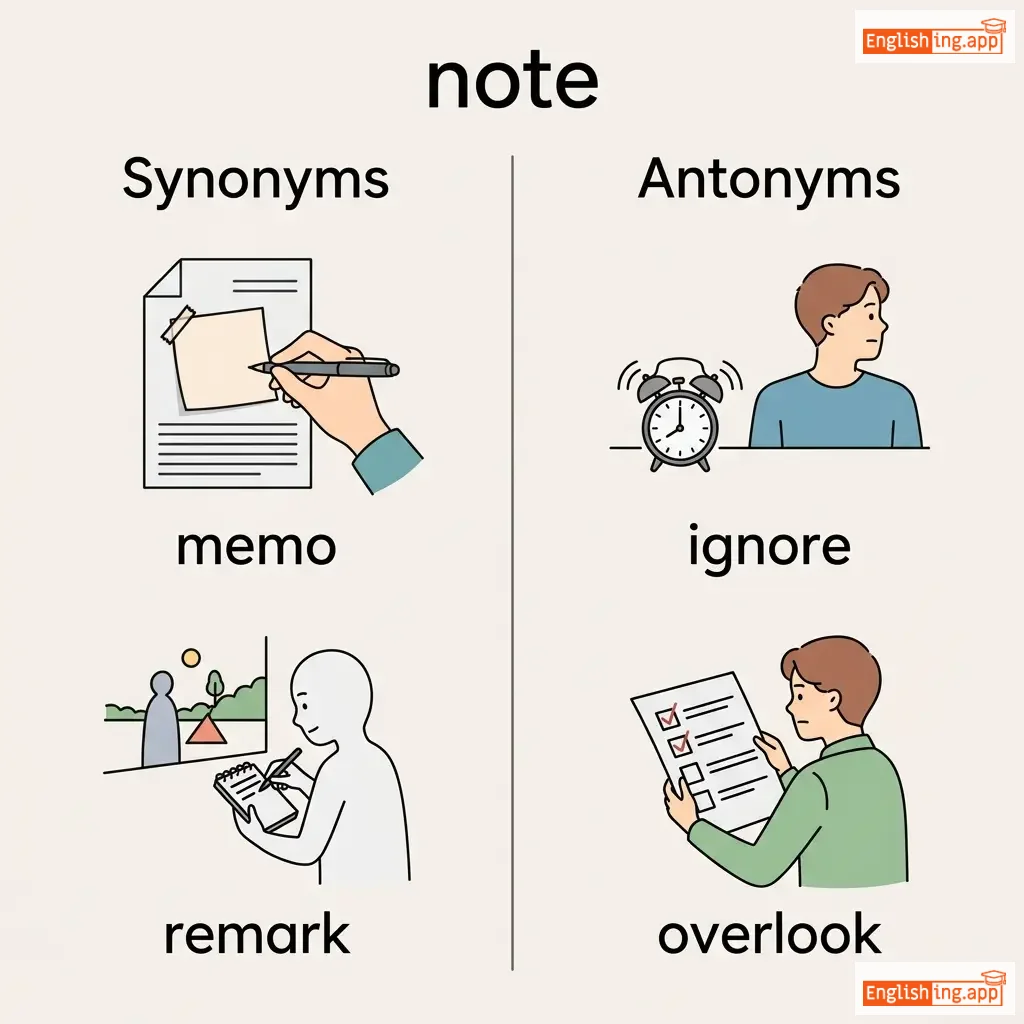
memo, remark, message, record, observation
••••••
|
ignore, overlook
••••••
|
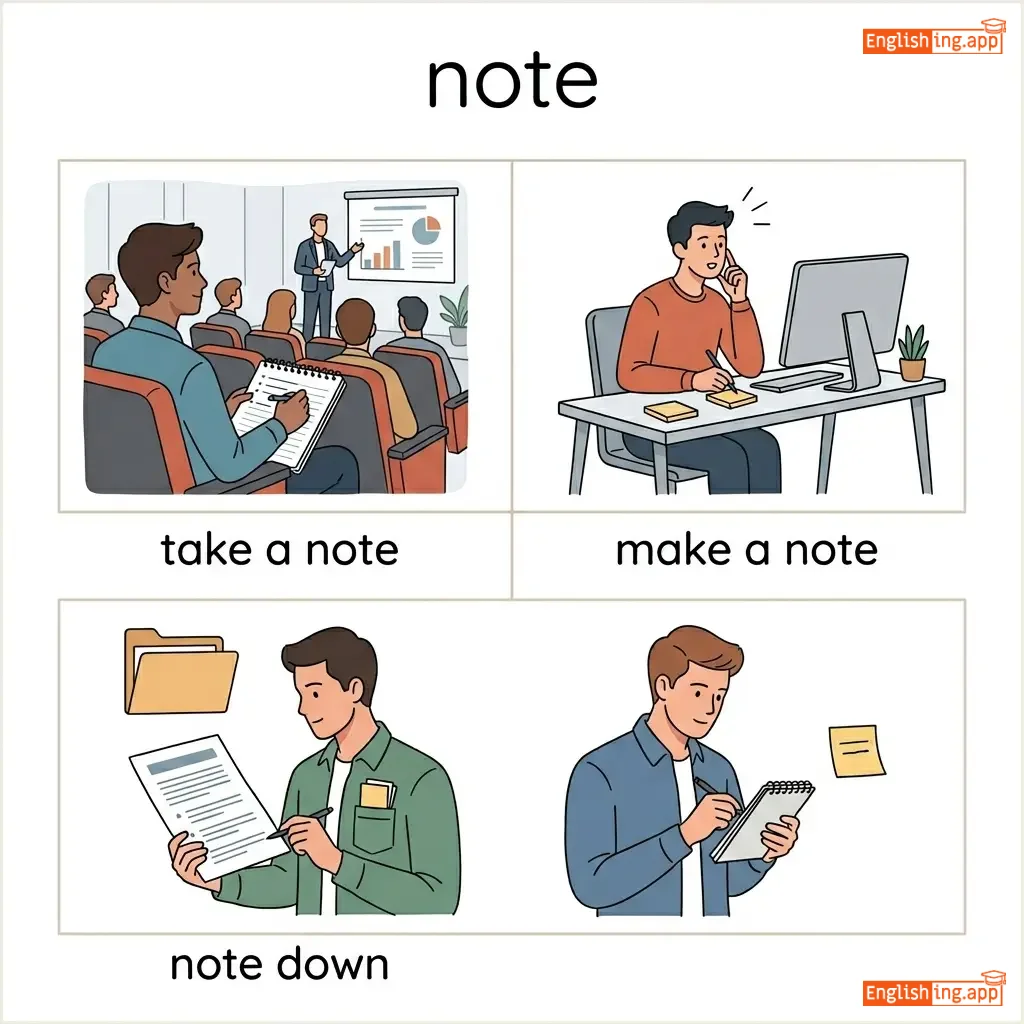
take a note, make a note, note down, note carefully
••••••
|
写下便条,提醒自己记住重要的事。
••••••
|
|
#3490
📒
|
/ˈnoʊtbʊk/
noun
••••••
|
- •••••• | - •••••• | - •••••• | - •••••• | - •••••• | - •••••• |
a small book with blank or ruled pages for writing notes; also a portable computer
••••••
|
She opened her notebook to jot down some ideas. |
- •••••• |
open your notebook |
to prepare to take notes or start writing
••••••
|
- •••••• |
journal, pad, diary, laptop, logbook
••••••
|
none, emptiness, blankness
••••••
|
open notebook, write in notebook, spiral notebook, leather notebook, notebook computer
••••••
|
No •••••• |
|
#3491
❌
|
/ˈnʌθɪŋ/
pronoun
(nɑθɪŋ)
••••••
|
- •••••• |
什么都没有
shénme dōu méiyǒu
••••••
|
- •••••• | - •••••• | - •••••• | - •••••• |
not anything; no thing
••••••
|
She has nothing to worry about. |
她没有什么可担心的。
Tā méiyǒu shénme kě dānxīn de.
••••••
|
- •••••• | - •••••• | - •••••• |
zero, nil, nought
••••••
|
everything
••••••
|
nothing to do, nothing at all, nothing left
••••••
|
Nothing (什么都没有) – Imagine having nothing to stress about!
••••••
|
|
#3492
👀
|
/ˈnoʊtɪs/
verb
(nòutī sī)
••••••
|
|
注意
zhùyì
••••••
|
noticed
nòutī sī dé
••••••
|
noticed
nòutī sī dé
••••••
|
notices
nòutī sī es
••••••
|
noticing
nòutī sī yīng
••••••
|
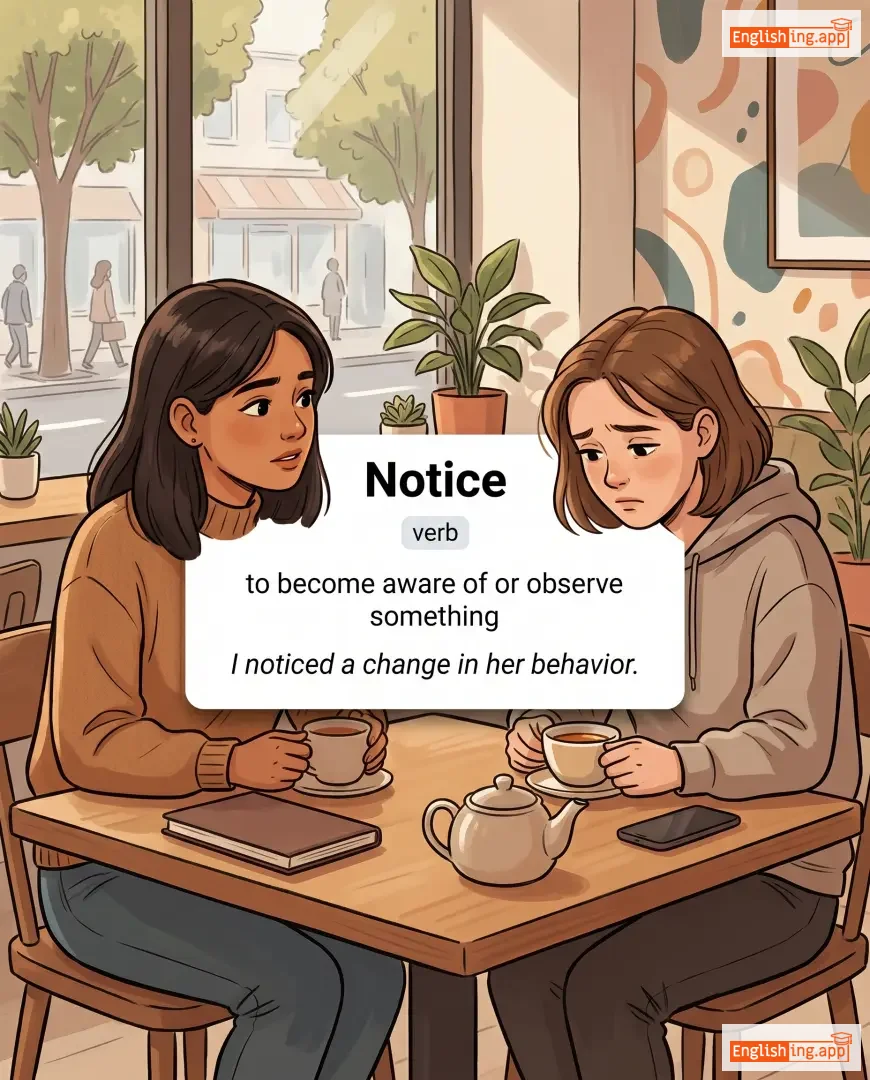
to become aware of or observe something
••••••
|
I noticed a change in her behavior.
我注意到她的行为有了变化。
••••••
|
我注意到她的行为有了变化。
Wǒ zhùyì dào tā de xíngwéi yǒu le biànhuà.
••••••
|
- •••••• | - •••••• | - •••••• |
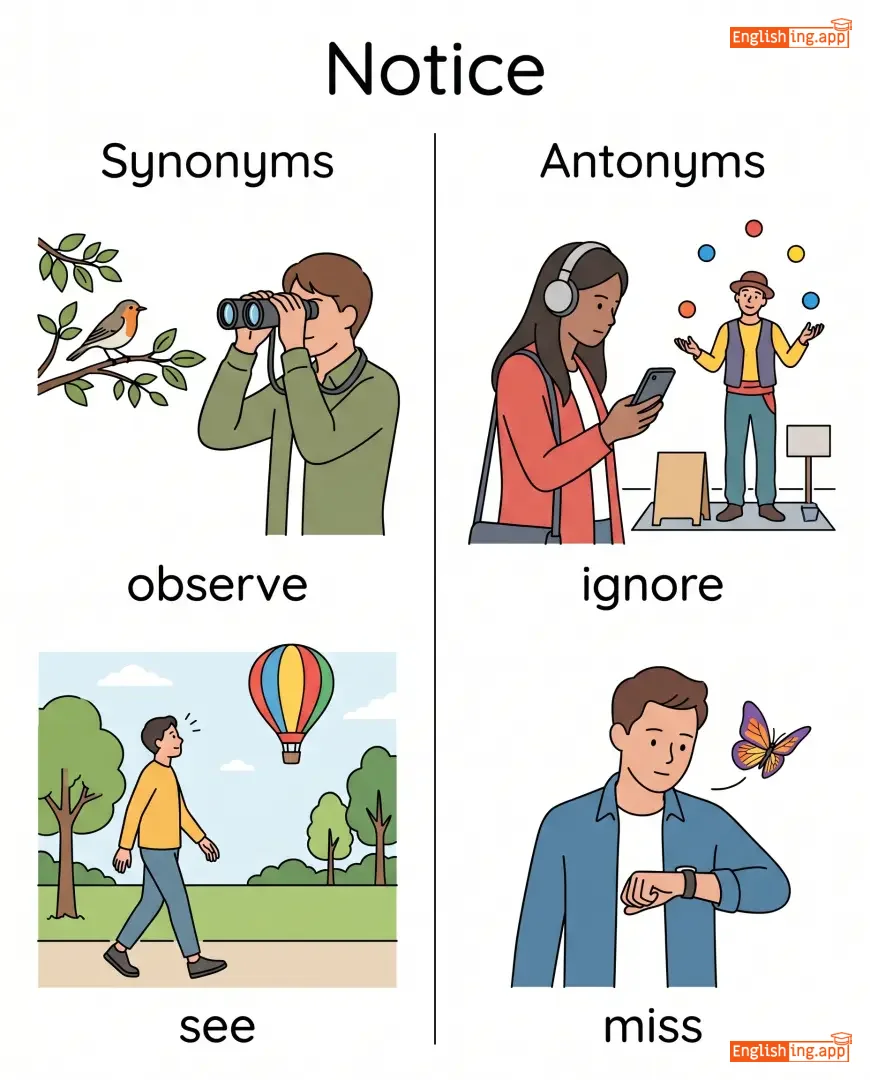
observe, see, spot, detect
••••••
|
ignore, miss, overlook
••••••
|
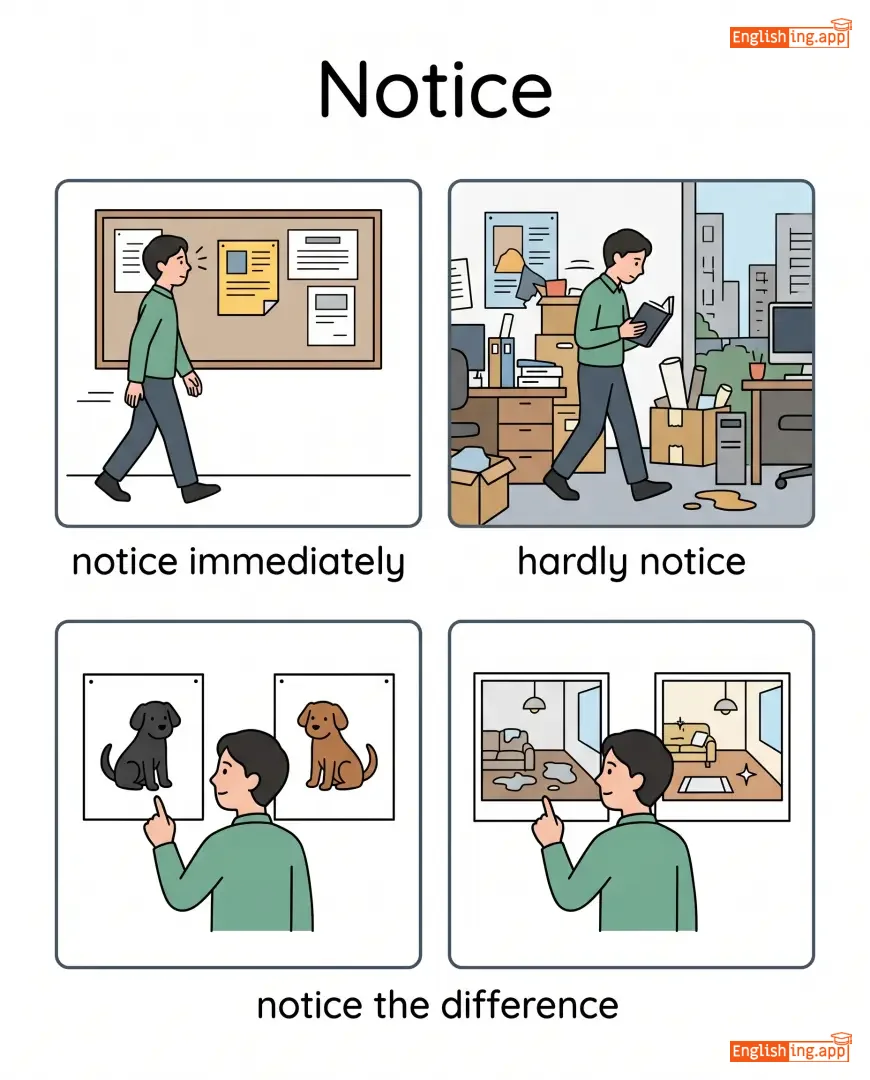
notice immediately, hardly notice, notice the difference, take notice, advance notice
••••••
|
Noticing something is like 'zhùyì' in Chinese, instantly recognizing things!
••••••
|
|
#3493
👀
|
/ˈnoʊtɪsəbl/
adjective
(nòtɪzəbl)
••••••
|
- •••••• |
显著的
xiǎnzhù de
••••••
|
- •••••• | - •••••• | - •••••• | - •••••• |
Easily seen, observed, or recognized.
••••••
|
There was a noticeable improvement in her performance.
她的表现有了显著的改善。
••••••
|
她的表现有了显著的改善。
Tā de biǎoxiàn yǒu le xiǎnzhù de gǎishàn.
••••••
|
- •••••• | - •••••• | - •••••• |
obvious, visible, evident, clear, apparent
••••••
|
hidden, invisible, unnoticeable
••••••
|
noticeable change, noticeable difference, noticeable improvement, become noticeable
••••••
|
Notice + able 意味着可以轻易注意到的,即显著的。
••••••
|
|
#3494
🔔
|
/ˌnəʊtɪfɪˈkeɪʃən/
noun
(诺提菲凯申)
••••••
|
- •••••• |
通知
tongzhi
••••••
|
- •••••• | - •••••• | - •••••• | - •••••• |
an official or formal notice or message informing someone of something; an alert delivered by a system or device
••••••
|
You will receive a notification when your application is approved.
you will receive a notification when your application is approved
••••••
|
当你的申请被批准时,你会收到通知。
dang ni de shenqing bei pizhun shi ni hui shoudao tongzhi
••••••
|
push notification
push notification
••••••
|
an automatic alert sent to a device from an app or service
••••••
|
推送通知
tuishong tongzhi
••••••
|
alert, notice, message, announcement, advisory
••••••
|
silence, concealment
••••••
|
send a notification, receive a notification, system notification, official notification, push notification
••••••
|
Notification 就是 通知 tongzhi → 听到就知道有消息
••••••
|
|
#3495
📢
|
/ˈnoʊtɪfaɪ/
verb
(诺蒂法)
••••••
|
- •••••• |
通知
tongzhi
••••••
|
notified
诺蒂法德
••••••
|
notified
诺蒂法德
••••••
|
notifies
诺蒂法兹
••••••
|
notifying
诺蒂法英
••••••
|
to inform someone officially about something
••••••
|
The manager will notify the staff about the schedule change.
经理将通知员工关于时间表的变化。
••••••
|
经理将通知员工关于时间表的变化。
Jīnglǐ jiāng tōngzhī yuángōng guānyú shíjiān biǎo de biànhuà.
••••••
|
notify of
通知
••••••
|
to inform about something specific
••••••
|
通知
tongzhi
••••••
|
inform, alert, announce, communicate
••••••
|
hide, conceal
••••••
|
notify immediately, notify customers, notify authorities, notify in writing
••••••
|
Notify 是通知的意思 — 就像我们会收到通知一样。
••••••
|
|
#3496
💡
|
/ˈnoʊʃən/
noun
(诺申)
••••••
|
- •••••• |
概念
gai nian
••••••
|
- •••••• | - •••••• | - •••••• | - •••••• |
An idea, belief, or concept about something.
••••••
|
He had a vague notion of what she wanted. |
他对她想要什么有一个模糊的概念。
Ta dui ta xiang yao shenme you yige mohu de gainian.
••••••
|
fancy notion |
An unrealistic or fanciful idea.
••••••
|
虚幻的概念
xuhuan de gainian
••••••
|
idea, concept, belief, impression, thought
••••••
|
reality, fact
••••••
|
notion of, vague notion, challenge the notion, false notion
••••••
|
Notion = 就像是笔记中的一个想法。
••••••
|
|
#3497
😈
|
/nəˈtɔːriəs/
adjective
(nəˈtɔːriəs)
••••••
|
- •••••• |
臭名昭著
chòumíng zhāozhù
••••••
|
- •••••• | - •••••• | - •••••• | - •••••• |
Famous or well-known for something bad or undesirable
••••••
|
The area is notorious for its high crime rate. |
该地区因其高犯罪率而臭名昭著。
Gāi dìqū yīn qí gāo fànzuì lǜ ér chòumíng zhāozhù.
••••••
|
notorious for |
well-known because of a negative reason
••••••
|
因…而臭名昭著
yīn...ér chòumíng zhāozhù
••••••
|
infamous, disreputable, scandalous, dishonorable, ill-famed
••••••
|
respectable, reputable, honorable
••••••
|
notorious criminal, notorious case, notorious gang, notorious history
••••••
|
Notorious = 'No Torii Ous' = 没有鸟 (torii),因此是坏地方 = 臭名昭著
••••••
|
|
#3498
📖
|
/ˈnɒvəl/
noun/adjective
(小说)
••••••
|
- •••••• |
小说 / 新的
xiaoshuo / xin de
••••••
|
- •••••• | - •••••• | - •••••• | - •••••• |
A long fictional narrative; also something new or unusual.
••••••
|
She spent the weekend reading a historical novel. |
她在周末阅读了一本历史小说。
Ta zai zhoumo yuedule yi ben lishi xiaoshuo.
••••••
|
novel idea |
A new and original thought or plan.
••••••
|
新的想法
xin de xiangfa
••••••
|
book, story, narrative, tale, fiction
••••••
|
fact, reality, history
••••••
|
write a novel, bestselling novel, novel approach, novel idea
••••••
|
Novel 意味着小说,而 novel idea 意味着新的想法,都是新的东西!
••••••
|
|
#3499
📚
|
/ˈnɒvəlɪst/
noun
(小说家)
••••••
|
- •••••• |
小说家
xiǎoshuōjiā
••••••
|
- •••••• | - •••••• | - •••••• | - •••••• |
a person who writes novels
••••••
|
The novelist spent years writing his new book. |
小说家花了多年写他的最新小说。
Xiǎoshuōjiā huāle duōnián xiě tā de zuìxīn xiǎoshuō.
••••••
|
- •••••• | - •••••• | - •••••• |
author, writer, fiction writer, storyteller
••••••
|
non-writer, reader
••••••
|
famous novelist, best-selling novelist, contemporary novelist
••••••
|
小说家 (xiǎoshuōjiā), 他们用文字编织世界,让读者身临其境。
••••••
|
|
#3500
🍂
|
/noʊˈvɛmbər/
noun
(诺维姆伯)
••••••
|
- •••••• |
十一月
shiyi yue
••••••
|
- •••••• | - •••••• | - •••••• | - •••••• |
the eleventh month of the year in the Gregorian calendar
••••••
|
November is often cool and quiet before winter begins.
诺维姆伯 伊兹 奥芬 库尔 安德 夸艾特 比佛 温特 比金兹
••••••
|
十一月通常在冬天开始前比较凉爽而安静。
shiyi yue tongchang zai dongtian kaishi qian bijiao liangshuang er anjing
••••••
|
November rain
诺维姆伯 瑞恩
••••••
|
rainy or gloomy weather associated with late autumn
••••••
|
十一月的雨
shiyi yue de yu
••••••
|
Nov., eleventh month, late autumn month
••••••
|
May, June, July
••••••
|
early November, late November, November weather, November rain
••••••
|
No-vember = 冬天快到了
••••••
|
|
#3501
⏰
|
/naʊ/
adverb
(náo)
••••••
|
- •••••• |
现在
xianzai
••••••
|
- •••••• | - •••••• | - •••••• | - •••••• |
at the present moment or time
••••••
|
I am studying now. |
我现在正在学习。
Wǒ xiànzài zhèngzài xuéxí.
••••••
|
- •••••• | - •••••• | - •••••• |
currently, at present, at this moment
••••••
|
later, then
••••••
|
right now, as of now, now or never
••••••
|
Now is like ‘Naa oo!’ – It’s NOW or never!
••••••
|
|
#3502
🕒
|
/ˈnaʊədeɪz/
adverb
(nàodèiz)
••••••
|
- •••••• |
如今
rújīn
••••••
|
- •••••• | - •••••• | - •••••• | - •••••• |
At the present time; in contrast with the past.
••••••
|
Nowadays, many people prefer shopping online. |
如今,许多人更喜欢在线购物。
Rújīn, xǔduō rén gèng xǐhuān zàixiàn gòuwù.
••••••
|
- •••••• | - •••••• | - •••••• |
currently, presently, these days, today
••••••
|
formerly, previously, once
••••••
|
nowadays people, nowadays it is common, nowadays trend
••••••
|
Nowadays 就是如今—'now' 就是现在的意思,'days' 就是时间的意思。
••••••
|
|
#3503
🚫
|
/ˈnoʊˌwɛr/
adverb
(nóuwēr)
••••••
|
- •••••• |
无处
wuchu
••••••
|
- •••••• | - •••••• | - •••••• | - •••••• |
in or to no place; not anywhere
••••••
|
The missing keys were nowhere to be found.
丢失的钥匙无处可找。
••••••
|
丢失的钥匙无处可找。
Diushi de yaoshi wuchu ke zhao.
••••••
|
going nowhere
无处可去
••••••
|
making no progress or achieving nothing
••••••
|
没有进展
meiyou jinzhan
••••••
|
not anywhere, absent, missing, lost
••••••
|
everywhere, somewhere
••••••
|
nowhere else, lead nowhere, from nowhere, go nowhere
••••••
|
这里没有, 那里也没有, 无处 (nowhere)
••••••
|
|
#3504
☢️
|
/ˈnuːkliər/
adjective
(核能)
••••••
|
- •••••• |
核能
hénéng
••••••
|
- •••••• | - •••••• | - •••••• | - •••••• |
relating to the nucleus of an atom or to nuclear energy
••••••
|
The country is developing nuclear energy. |
该国正在开发核能。
Gāi guó zhèngzài kāifā hénéng.
••••••
|
- •••••• | - •••••• | - •••••• |
atomic, radioactive
••••••
|
non-nuclear
••••••
|
nuclear energy, nuclear power, nuclear weapon
••••••
|
Nuclear = New Clear! Imagine new, clear energy coming from atoms!
••••••
|
|
#3505
🔢
|
/ˈnʌmbər/
noun
(纳姆伯)
••••••
|
- •••••• |
号码
haoma
••••••
|
- •••••• | - •••••• | - •••••• | - •••••• |
a mathematical value used to count, measure, or label
••••••
|
She gave me her phone number.
她给了我她的电话号码。
••••••
|
她给了我她的电话号码。
Ta gei le wo ta de dianhua haoma.
••••••
|
- •••••• | - •••••• | - •••••• |
digit, figure, numeral
••••••
|
letter, word
••••••
|
phone number, lucky number, large number
••••••
|
Number is a sequence – Imagine numbering all the steps in your life!
••••••
|
|
#3506
🔢
|
/ˈnjuː.mər.əs/
adjective
(niú mǐ ruó sī)
••••••
|
- •••••• |
众多的; 很多的; 丰富的
zhòng duō de; hěn duō de; fēng fù de
••••••
|
- •••••• | - •••••• | - •••••• | - •••••• |
existing in large numbers; many; abundant
••••••
|
There are numerous benefits to exercising regularly.
定期锻炼有许多好处。
••••••
|
定期锻炼有许多好处。
Dìngqī duànliàn yǒu xǔduō hǎochù.
••••••
|
- •••••• | - •••••• | - •••••• |
many, countless, abundant, plentiful
••••••
|
few, scarce, limited
••••••
|
numerous occasions, numerous benefits, numerous examples
••••••
|
定期锻炼让你拥有更多的好处。
••••••
|
|
#3507
👩⚕️
|
/nɜːrs/
noun, verb
••••••
|
|
- •••••• |
nursed
••••••
|
nursed
••••••
|
nurses
••••••
|
nursing
••••••
|
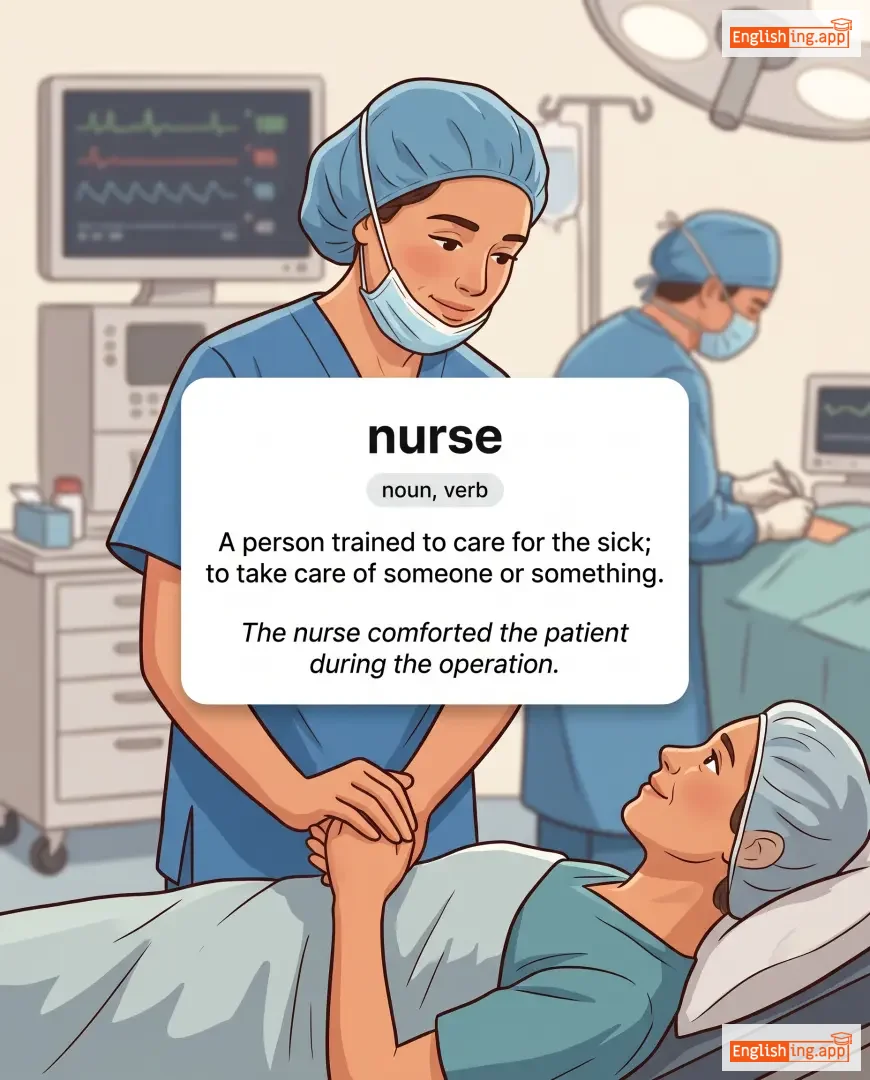
A person trained to care for the sick; to take care of someone or something.
••••••
|
The nurse comforted the patient during the operation. |
- •••••• |
nurse a grudge |
to keep resentment or anger in mind for a long time
••••••
|
- •••••• |
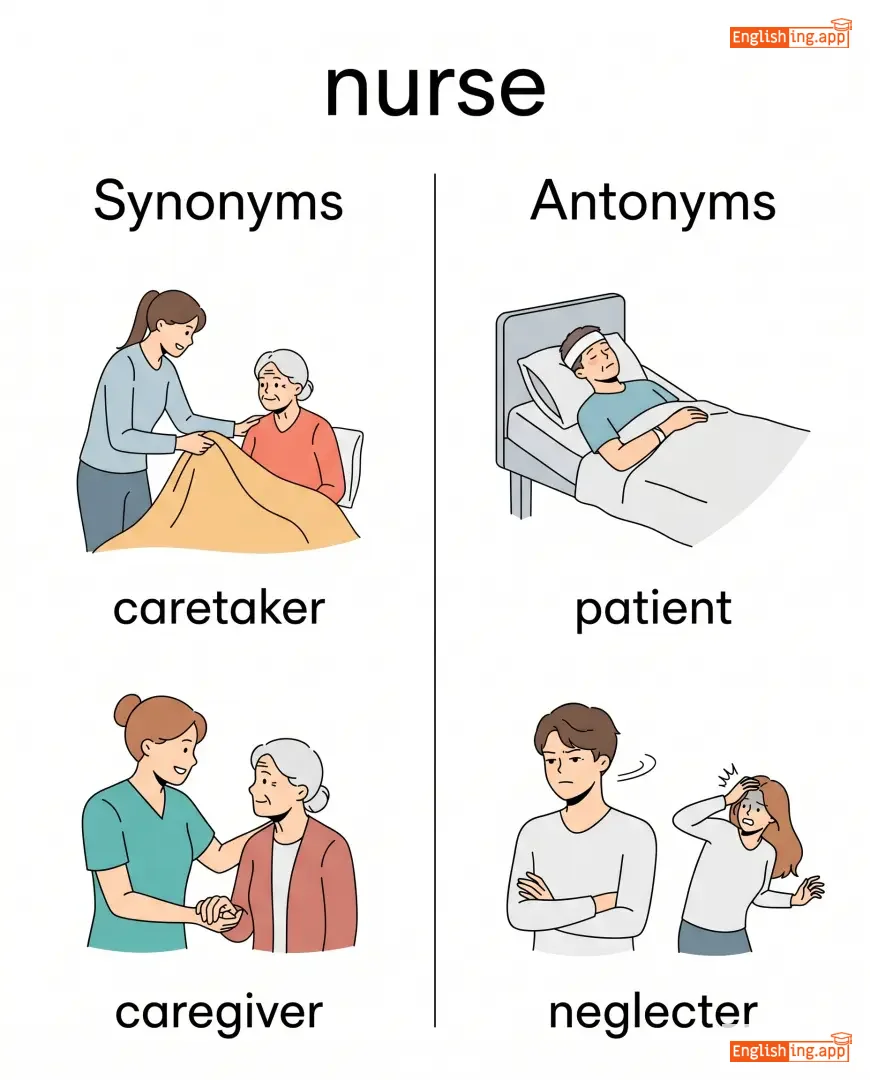
caretaker, caregiver, attendant, healer, medic
••••••
|
patient, neglecter
••••••
|
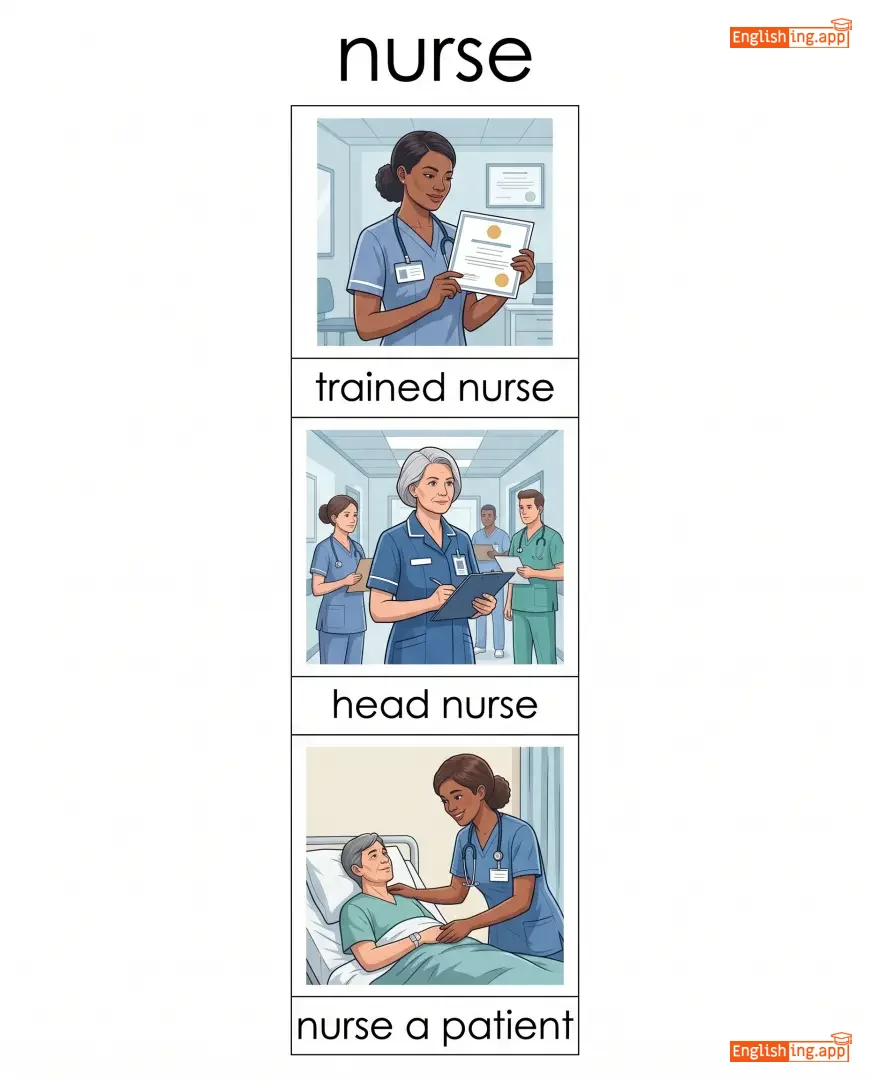
trained nurse, head nurse, nurse a patient, nurse back to health
••••••
|
No •••••• |
|
#3508
🍼
|
/ˈnɜːrsəri/
noun
(nursery)
••••••
|
- •••••• |
托儿所
tuō'érsuǒ
••••••
|
- •••••• | - •••••• | - •••••• | - •••••• |
a room or place where young children are cared for
••••••
|
She works in a nursery, taking care of infants. |
她在托儿所工作,照顾婴儿。
Tā zài tuō'érsuǒ gōngzuò, zhàogù yīng'ér.
••••••
|
- •••••• | - •••••• | - •••••• |
daycare, preschool, kindergarten
••••••
|
school, home
••••••
|
nursery school, nursery teacher, nursery care
••••••
|
托儿所 (tuō'érsuǒ) 是照顾婴儿的地方
••••••
|
|
#3509
👩⚕️
|
/ˈnɜːrsɪŋ/
noun
(护理)
••••••
|
- •••••• |
护理
huli
••••••
|
- •••••• | - •••••• | - •••••• | - •••••• |
the profession or practice of caring for the sick or injured
••••••
|
She is studying nursing to become a healthcare professional.
她在学习护理学,想成为一名医疗专业人员。
••••••
|
她在学习护理学,想成为一名医疗专业人员。
Ta zai xuexi huli xue, xiang chengwei yi ming yiliao zhuanye renyuan.
••••••
|
- •••••• | - •••••• | - •••••• |
healthcare, caregiving, medical care
••••••
|
neglect, abandonment
••••••
|
nursing home, nursing career, nursing profession
••••••
|
护理 (huli) 是照顾病人或受伤者的职业。
••••••
|
Vocabulary Quiz
Test your vocabulary by matching words with their translations or meanings.
Login to take the quiz
Comments (0)
Share your thoughts and join the discussion.
Join the discussion by logging in
Login to CommentNo comments yet
Be the first to share your thoughts!