



















Swipe left or right, or use the buttons. Tap image to zoom.
例句翻译
单词
Lesson 89Lesson 89 - 遮罩切换
|
表情符号
|
单词 | Images | 翻译 | 过去时 | 过去分词 | 第三人称单数 | 动名词 | 含义 | 例句 | 例句翻译 | 示例表达 | 示例表达含义 | 示例表达翻译 | 同义词 | 反义词 | 搭配词 | 助记符 |
|---|---|---|---|---|---|---|---|---|---|---|---|---|---|---|---|---|---|
|
#4221
🚮
|
/rɪˈmuːvəl/
noun
(rìmúwǎ)
••••••
|
- •••••• |
移除
yíchú
••••••
|
- •••••• | - •••••• | - •••••• | - •••••• |
the act of taking something or someone away or out of a place
••••••
|
The removal of old furniture made the room look spacious.
移除旧家具使房间看起来更宽敞。
••••••
|
移除旧家具使房间看起来更宽敞。
Yíchú jiù jiājù shǐ fángjiān kàn qǐlái gèng kuānchǎng.
••••••
|
stain removal
去污
••••••
|
the process of getting rid of a mark or dirt
••••••
|
去污
qùwū
••••••
|
elimination, extraction, withdrawal, deletion, dismissal
••••••
|
addition, insertion, inclusion
••••••
|
waste removal, hair removal, removal process, removal service
••••••
|
移除就像拿掉,记住,移除是为了让空间更大!
••••••
|
|
#4222
🗑️
|
/rɪˈmuːv/
verb
(rímúf)
••••••
|
|
移除
yíchú
••••••
|
removed
rímúfd
••••••
|
removed
rímúfd
••••••
|
removes
rímúfs
••••••
|
removing
rímúfing
••••••
|
to take something away; to eliminate or delete
••••••
|
Please remove your shoes before entering the house.
请在进入房屋之前脱下鞋子。
••••••
|
请在进入房屋之前脱下鞋子。
Qǐng zài jìnrù fángwū zhīqián tuō xià xiézi.
••••••
|
- •••••• | - •••••• | - •••••• |
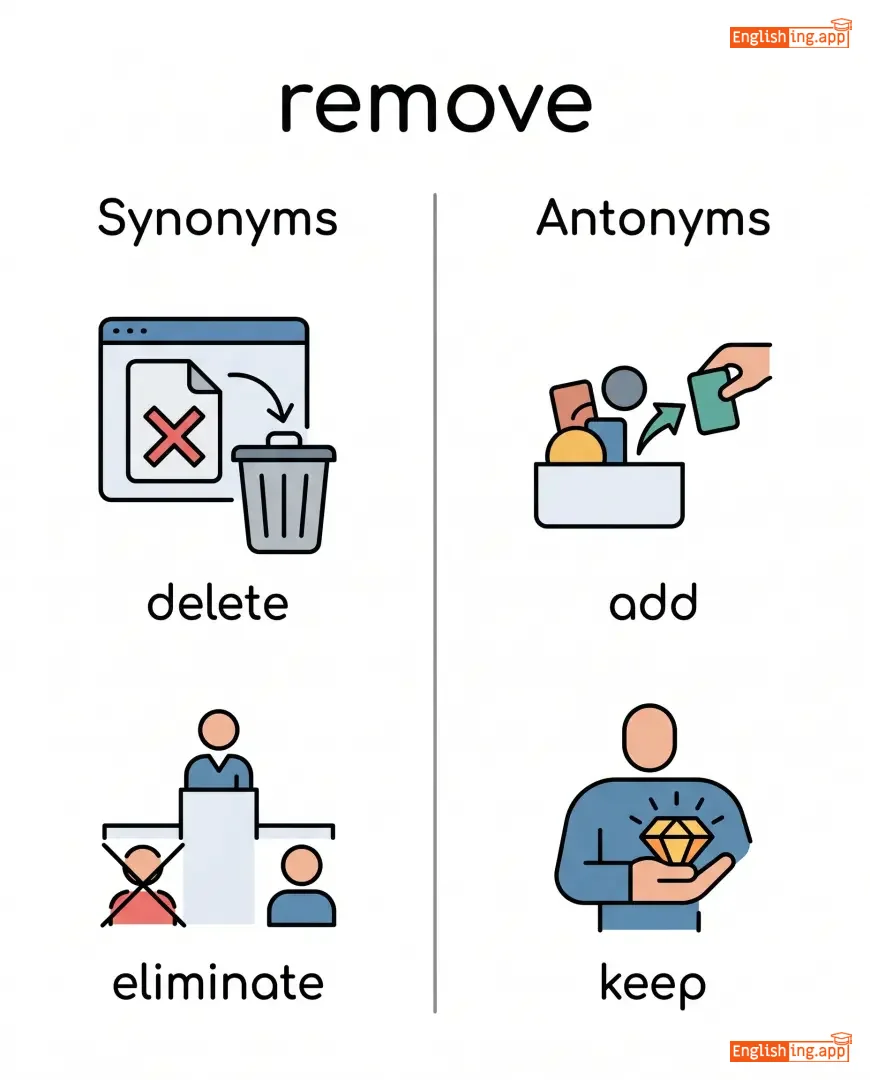
take away, eliminate, delete, extract
••••••
|
add, insert, place, put
••••••
|
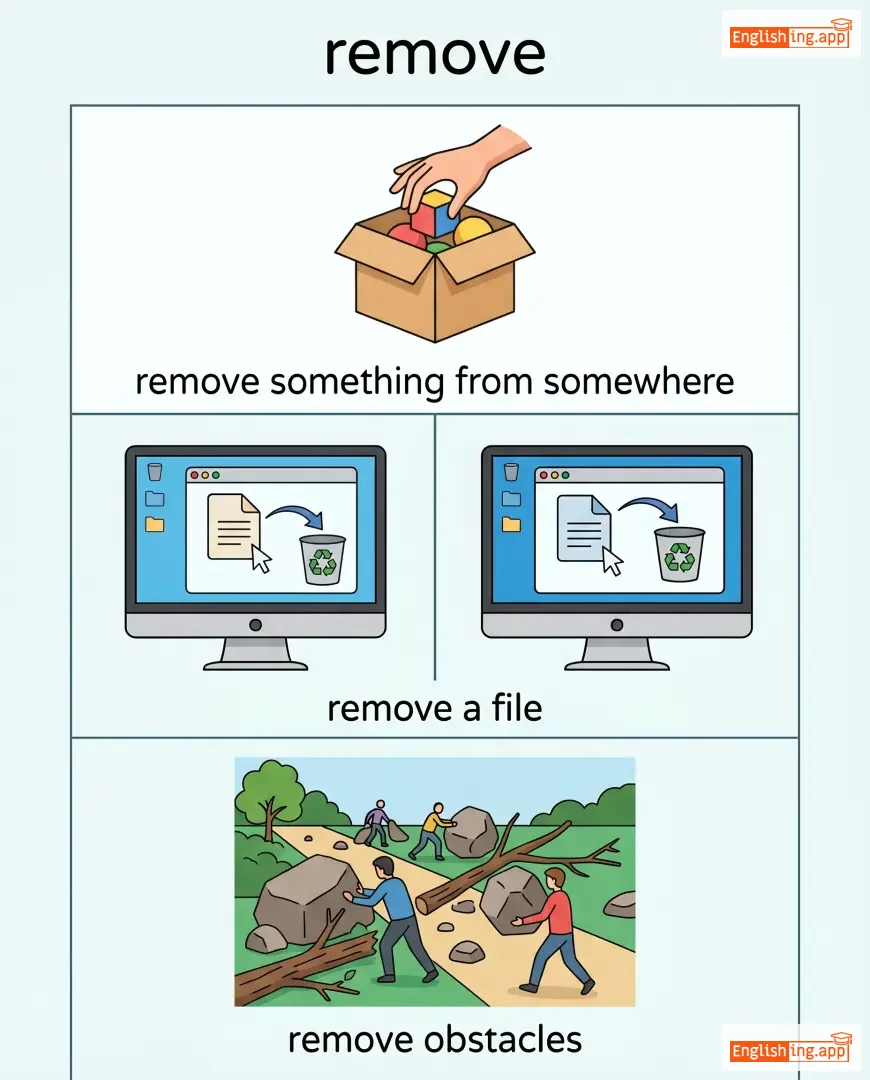
remove from, remove completely, remove carefully, remove stains, remove obstacles
••••••
|
移除不需要的东西,这样你就可以走得更远,像走在无障碍的道路上。
••••••
|
|
#4223
👐
|
/ˈrɛndər/
verb
(渲染)
••••••
|
|
提供
tigong
••••••
|
rendered
渲染过
••••••
|
rendered
渲染过
••••••
|
renders
渲染
••••••
|
rendering
渲染中
••••••
|
to provide, give, or cause something to be in a certain state
••••••
|
The service rendered great help to the community.
提供的服务给社区带来了很大的帮助。
••••••
|
提供的服务给社区带来了很大的帮助。
Tigong de fuwu gei shequ daile hen da de bangzhu.
••••••
|
render assistance
提供帮助
••••••
|
to provide help or support
••••••
|
提供帮助
tigong bangzhu
••••••
|
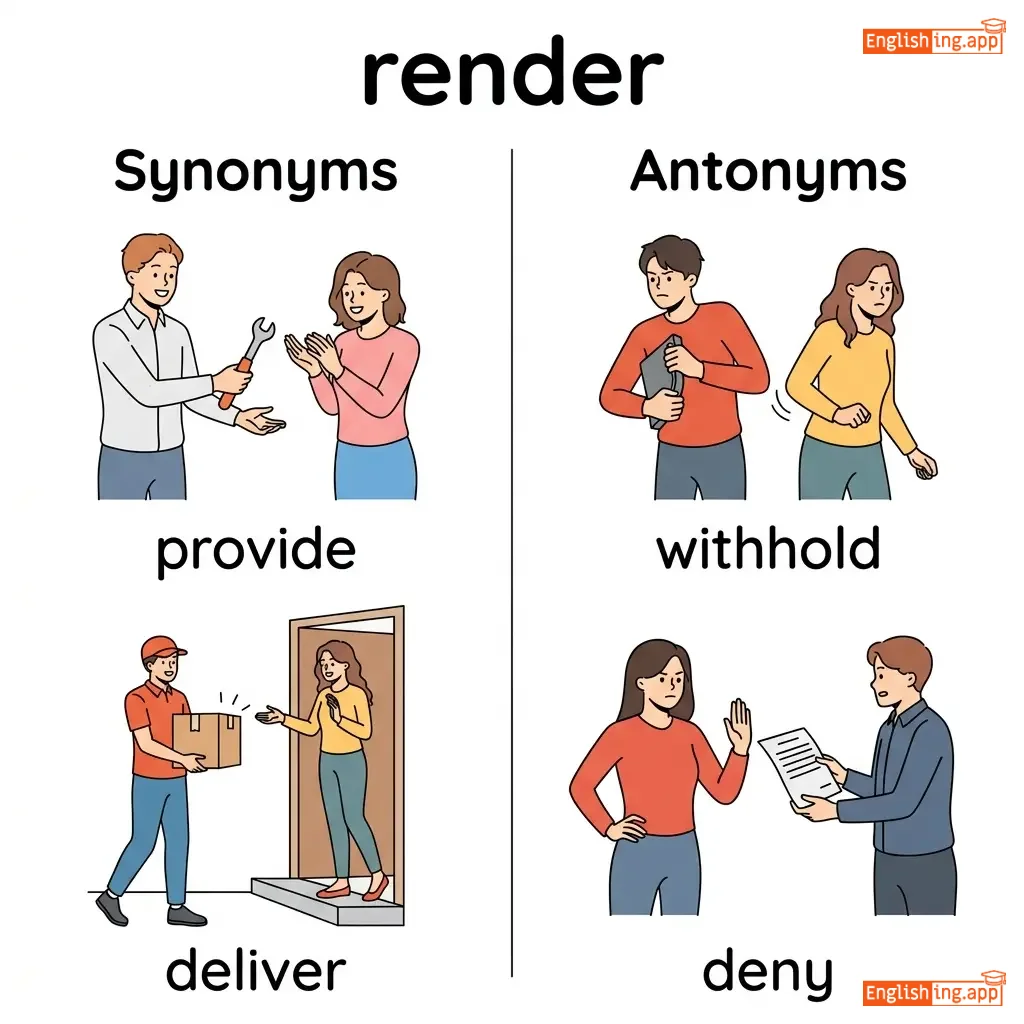
provide, deliver, offer, supply, depict
••••••
|
withhold, deny, refuse
••••••
|
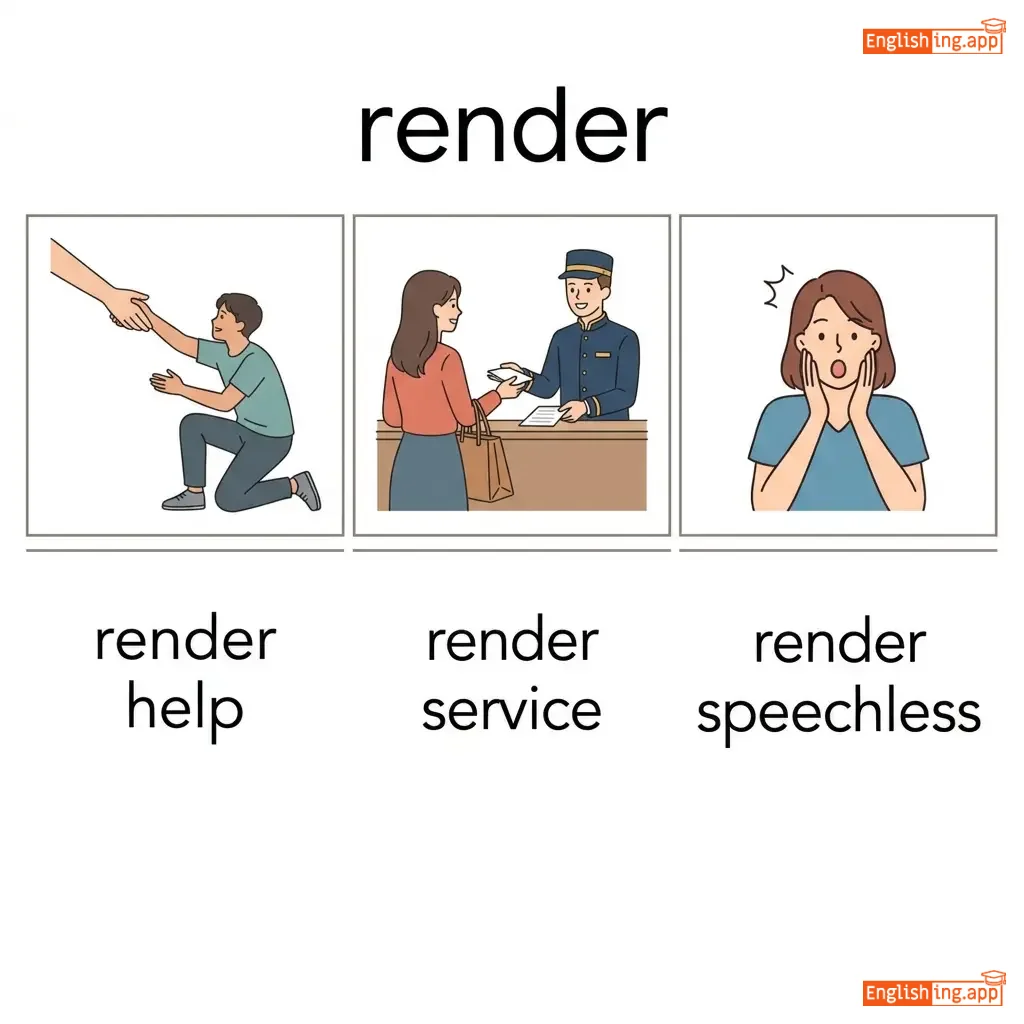
render help, render service, render speechless, render useless
••••••
|
Render 意味着提供—像朋友一样提供帮助。
••••••
|
|
#4224
🔄
|
/rɪˈnuː/
verb
••••••
|
- •••••• | - •••••• |
renewed
••••••
|
renewed
••••••
|
renews
••••••
|
renewing
••••••
|
to make something new again or extend its period of validity
••••••
|
I need to renew my passport before traveling. |
- •••••• |
renew a contract |
to extend the time or validity of a contract
••••••
|
- •••••• |
extend, refresh, continue, prolong
••••••
|
expire, end, terminate
••••••
|
renew subscription, renew passport, renew contract, renew hope
••••••
|
No •••••• |
|
#4225
🌟
|
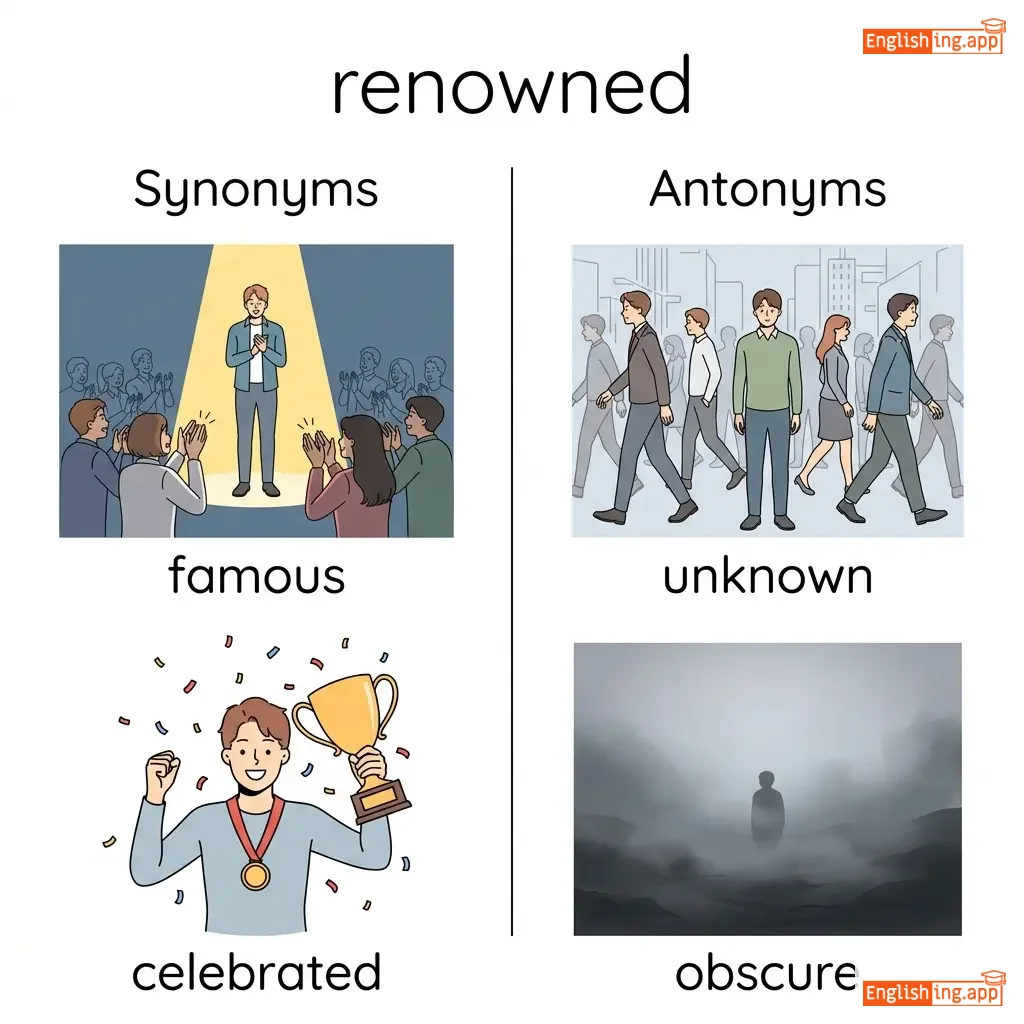
/rɪˈnaʊnd/
adjective
(rɪˈnaʊnd)
••••••
|
|
著名
zhùmíng
••••••
|
- •••••• | - •••••• | - •••••• | - •••••• |
famous or well-known for a particular skill or achievement
••••••
|
She is a renowned artist in the country.
她是国内著名的艺术家。
••••••
|
她是国内著名的艺术家。
Tā shì guónèi zhùmíng de yìshùjiā.
••••••
|
- •••••• | - •••••• | - •••••• |
famous, celebrated, distinguished, acclaimed
••••••
|
unknown, obscure, anonymous
••••••
|
renowned author, renowned for, renowned artist, highly renowned
••••••
|
Renowned rhymes with 'known' - someone who's renowned is well-known.
••••••
|
|
#4226
🏠
|
/rɛnt/
noun, verb
(rent)
••••••
|
- •••••• |
租金
zujin
••••••
|
rented
租赁
••••••
|
rented
租赁
••••••
|
rents
租
••••••
|
renting
租赁中
••••••
|
payment made regularly by a tenant to a landlord for the use of property or land; also to pay for the use of something
••••••
|
They decided to rent an apartment in the city center.
他们决定在市中心租一间公寓。
••••••
|
他们决定在市中心租一间公寓。
Tāmen juédìng zài shì zhōngxīn zū yī jiān gōngyù.
••••••
|
for rent
出租
••••••
|
available to be rented
••••••
|
出租
chūzū
••••••
|
lease, hire, let, sublet
••••••
|
own, buy, purchase
••••••
|
pay rent, rent a house, rent agreement, monthly rent
••••••
|
Rent 就是租金,想象房东说:‘租金 (rent) 给我’
••••••
|
|
#4227
🚗
|
/ˈrɛntəl/
noun
(rental)
••••••
|
- •••••• |
租赁
zūlìn
••••••
|
- •••••• | - •••••• | - •••••• | - •••••• |
an arrangement in which something is rented, or the amount paid for renting
••••••
|
The car rental was more expensive than we expected.
汽车租赁比我们预期的要贵。
••••••
|
汽车租赁比我们预期的要贵。
qìchē zūlìn bǐ wǒmen yùqí de yào guì.
••••••
|
rental agreement
租赁合同
••••••
|
a legal contract for renting property or equipment
••••••
|
租赁协议
zūlìn xiéyì
••••••
|
lease, hire, letting, rent, charter
••••••
|
ownership, purchase
••••••
|
car rental, rental service, rental property, rental cost
••••••
|
Rental 与租赁相关 — 记住,'租车就是Rental!'
••••••
|
|
#4228
🔧
|
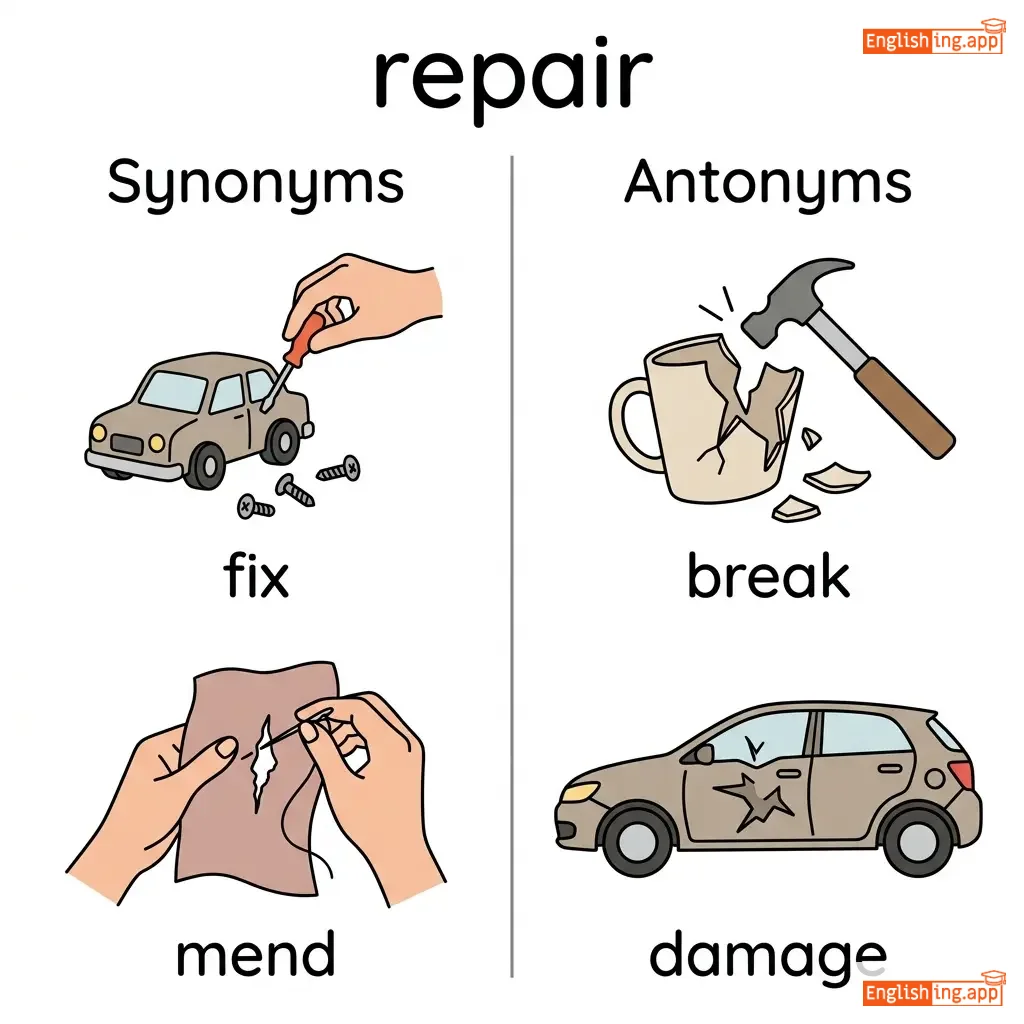
/rɪˈpɛər/
verb
••••••
|
|
- •••••• |
repaired
••••••
|
repaired
••••••
|
repairs
••••••
|
repairing
••••••
|
to fix or restore something that is broken or damaged
••••••
|
He repaired his broken watch with patience. |
- •••••• |
beyond repair |
so damaged that it cannot be fixed
••••••
|
- •••••• |
fix, mend, restore, renovate, patch
••••••
|
break, damage, destroy
••••••
|
repair service, repair shop, repair cost, repair work
••••••
|
No •••••• |
|
#4229
🛠️
|
/rɪˈpɛərə/
noun
(里佩阿)
••••••
|
- •••••• |
修理工
xiuligong
••••••
|
- •••••• | - •••••• | - •••••• | - •••••• |
a person whose job is to fix damaged or broken things
••••••
|
The repairer fixed the broken washing machine quickly.
泽 里佩阿 费克斯德 泽 布柔肯 洗衣机 快速地。
••••••
|
修理工很快修好了坏掉的洗衣机。
xiuligong hen kuai xiu hao le huai diao de xiyiji
••••••
|
- •••••• | - •••••• | - •••••• |
technician, fixer, mender, mechanic, serviceman
••••••
|
destroyer, breaker
••••••
|
computer repairer, phone repairer, skilled repairer, local repairer
••••••
|
修理工就是做 repair 的人—repairer。
••••••
|
|
#4230
🔄
|
/rɪˈpiːt/
verb
(重复)
••••••
|
- •••••• |
重复
chongfu
••••••
|
repeated
重复的
••••••
|
repeated
重复的
••••••
|
repeats
重复
••••••
|
repeating
重复
••••••
|
to say or do something again
••••••
|
Could you please repeat what you just said?
你能重复一下你刚才说的吗?
••••••
|
你能重复一下你刚才说的吗?
Ni neng chongfu yixia ni gangcai shuode ma?
••••••
|
- •••••• | - •••••• | - •••••• |
reiterate, reproduce, echo, duplicate
••••••
|
stop, cease, end, finish
••••••
|
repeat again, repeat often, repeat performance, repeat process
••••••
|
Repeat in Chinese as '重复'!
••••••
|
|
#4231
🔁
|
/rɪˈpiː.tɪd/
adjective
(重复的)
••••••
|
- •••••• |
重复的; 多次发生
chongfu de; duoci fasheng
••••••
|
- •••••• | - •••••• | - •••••• | - •••••• |
done again; happening again; occurring multiple times
••••••
|
He made repeated attempts to contact her.
他多次尝试联系她。
••••••
|
他多次尝试联系她。
Ta duoci changshi lianxi ta
••••••
|
- •••••• | - •••••• | - •••••• |
recurring, frequent, continuous
••••••
|
single, once, isolated
••••••
|
repeated attempts, repeated warnings, repeated patterns
••••••
|
重复的意思是做某事多次,像反复尝试联系某人。
••••••
|
|
#4232
🔁
|
/rɪˈpiː.tɪd.li/
adverb
(反复)
••••••
|
- •••••• |
反复; 一遍又一遍
fǎn fù; yī biàn yòu yī biàn
••••••
|
- •••••• | - •••••• | - •••••• | - •••••• |
again and again; many times over
••••••
|
He repeatedly asked for help with his homework. |
他反复请求帮助完成作业。
Tā fǎn fù qǐngqiú bāngzhù wánchéng zuòyè.
••••••
|
- •••••• | - •••••• | - •••••• |
continuously, constantly, frequently
••••••
|
rarely, seldom, occasionally
••••••
|
repeatedly warned, repeatedly asked, repeatedly told
••••••
|
Imagine repeating yourself over and over in Chinese to ask for help.
••••••
|
|
#4233
🔄
|
/rɪˈpleɪs/
verb
(rèbùlèi sī)
••••••
|
- •••••• |
替换
tihuàn
••••••
|
replaced
rèbùlèi sīd
••••••
|
replaced
rèbùlèi sīd
••••••
|
replaces
rèbùlèi sīs
••••••
|
replacing
rèbùlèi sīng
••••••
|
to take the place of something or someone; to put something new in place of something old
••••••
|
He decided to replace the broken lamp with a new one.
他决定用一盏新的替代坏掉的灯。
••••••
|
他决定用一盏新的替代坏掉的灯。
Tā juédìng yòng yī zhǎn xīn de tìdài huài diào de dēng.
••••••
|
- •••••• | - •••••• | - •••••• |
substitute, exchange, swap, change
••••••
|
keep, retain
••••••
|
replace with, replace the old, replace a part
••••••
|
换灯泡,简单的任务!
••••••
|
|
#4234
🔄
|
/rɪˈpleɪsmənt/
noun
(替换)
••••••
|
- •••••• |
替代
tìdài
••••••
|
- •••••• | - •••••• | - •••••• | - •••••• |
the act of substituting one thing or person for another
••••••
|
She got a replacement for her damaged phone. |
她为她损坏的手机找到了一个替代品。
Tā wèi tā sǔnhuài de shǒujī zhǎodào le yīgè tìdàipǐn.
••••••
|
replacement value |
the cost of replacing an item with a new one of similar kind
••••••
|
替换价值
tìhuàn jiàzhí
••••••
|
substitute, change, exchange, substitution, successor
••••••
|
retention, original
••••••
|
replacement part, replacement cost, replacement policy, replacement product
••••••
|
替代就是把旧的东西换成新的东西
••••••
|
|
#4235
💬
|
/rɪˈplaɪ/
verb
(replai)
••••••
|
- •••••• |
回复
huí fù
••••••
|
replied
replaíd
••••••
|
replied
replaíd
••••••
|
replies
replai
••••••
|
replying
replaíng
••••••
|
to give an answer; to respond
••••••
|
She replies to emails quickly.
她快速回复电子邮件。
••••••
|
她快速回复电子邮件。
Tā kuài sù huí fù diàn zǐ yóu jiàn.
••••••
|
- •••••• | - •••••• | - •••••• |
answer, respond, return, acknowledge
••••••
|
ignore, disregard, question, ask
••••••
|
reply quickly, reply immediately, reply to emails, no reply
••••••
|
回复 = reply, 就像回复邮件一样
••••••
|
|
#4236
📰
|
/rɪˈpɔːrt/
verb
(rī-pó-tè)
••••••
|
|
报告
baogao
••••••
|
reported
rī-pó-tèd
••••••
|
reported
rī-pó-tèd
••••••
|
reports
rī-pó-tè
••••••
|
reporting
rī-pó-tīng
••••••
|
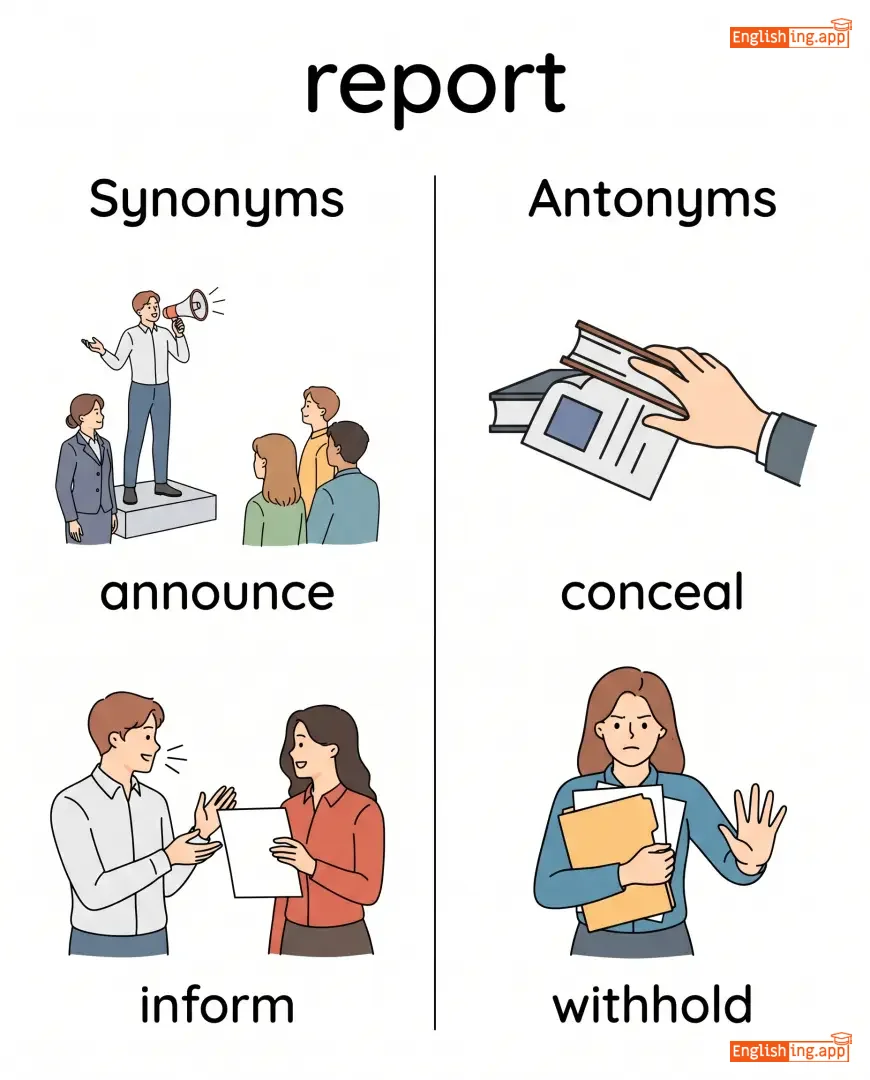
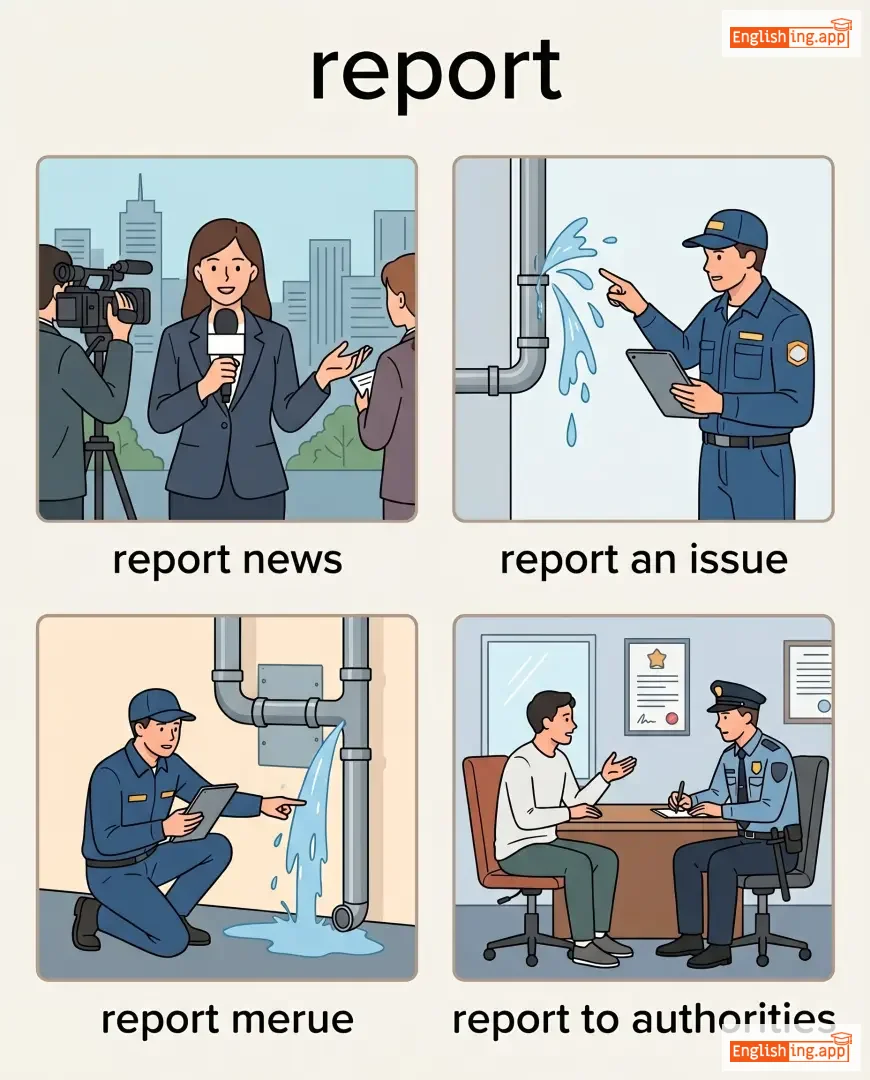
to give information about something; to make an official statement
••••••
|
The journalist will report the news tonight.
记者今晚将报道新闻。
••••••
|
记者今晚将报道新闻。
Jizhe jinwan jiang baogao xinwen.
••••••
|
- •••••• | - •••••• | - •••••• |
announce, inform, communicate, tell
••••••
|
conceal, hide, suppress
••••••
|
daily report, news report, weather report, report back, report to
••••••
|
报告就是像记者一样,发布消息
••••••
|
|
#4237
📰
|
/rɪˈpɔːtɪdli/
adverb
(reportedly)
••••••
|
- •••••• |
据报道
ju baodao
••••••
|
- •••••• | - •••••• | - •••••• | - •••••• |
according to what is said or believed, although not confirmed
••••••
|
The company has reportedly agreed to the new terms.
公司 reportedly 已同意新的条款。
••••••
|
公司 reportedly 已同意新的条款。
Gongsi reportedly yi tongyi xin de tiaokuan.
••••••
|
- •••••• | - •••••• | - •••••• |
allegedly, supposedly, apparently, seemingly, purportedly
••••••
|
certainly, definitely, surely
••••••
|
reportedly said, reportedly involved, reportedly missing, reportedly agreed
••••••
|
Reportedly 意思是据报道 —— 就像 'Reportedly he won' 这意味着据报道他赢了。
••••••
|
|
#4238
👩💻
|
/rɪˈpɔːrtər/
noun
(ɹɪˈpɔɹtə)
••••••
|
- •••••• |
记者
jizhe
••••••
|
- •••••• | - •••••• | - •••••• | - •••••• |
a person who reports news or information
••••••
|
The reporter interviewed several people at the scene. |
记者在现场采访了几个人。
Jizhe zai xianchang caifang le ji ge ren.
••••••
|
- •••••• | - •••••• | - •••••• |
journalist, correspondent, writer, newscaster
••••••
|
listener
••••••
|
news reporter, television reporter, investigative reporter
••••••
|
记者 (Jizhe) 传递新闻!
••••••
|
|
#4239
🗣️
|
/ˌrɛprɪˈzɛnt/
verb
(代表)
••••••
|
- •••••• |
代表
dàibiǎo
••••••
|
represented
代表了
••••••
|
represented
代表过
••••••
|
represents
代表
••••••
|
representing
代表着
••••••
|
to act or speak on behalf of someone or something
••••••
|
He will represent our company at the conference.
他将在会议中代表我们的公司。
••••••
|
他将在会议中代表我们的公司。
Tā jiāng zài huìyì zhōng dàibiǎo wǒmen de gōngsī.
••••••
|
- •••••• | - •••••• | - •••••• |
depict, symbolize, stand for, express
••••••
|
misrepresent, distort
••••••
|
represent a company, represent an idea, represent someone, represent a country
••••••
|
RePRESENT, 就像代表我们的公司一样。
••••••
|
|
#4240
🎭
|
/ˌrɛprɪzɛnˈteɪʃən/
noun
(代表)
••••••
|
- •••••• |
代表
dàibiǎo
••••••
|
- •••••• | - •••••• | - •••••• | - •••••• |
the action of speaking or acting on behalf of someone or something
••••••
|
Her representation of the team was impeccable. |
她对团队的代表非常出色。
Tā duì tuánduì de dàibiǎo fēicháng chū sè.
••••••
|
- •••••• | - •••••• | - •••••• |
depiction, portrayal, expression, presentation
••••••
|
misrepresentation
••••••
|
legal representation, fair representation, accurate representation
••••••
|
REPRESENTATION, 就像有人代表另一个人或某个事物。
••••••
|
|
#4241
👨💼
|
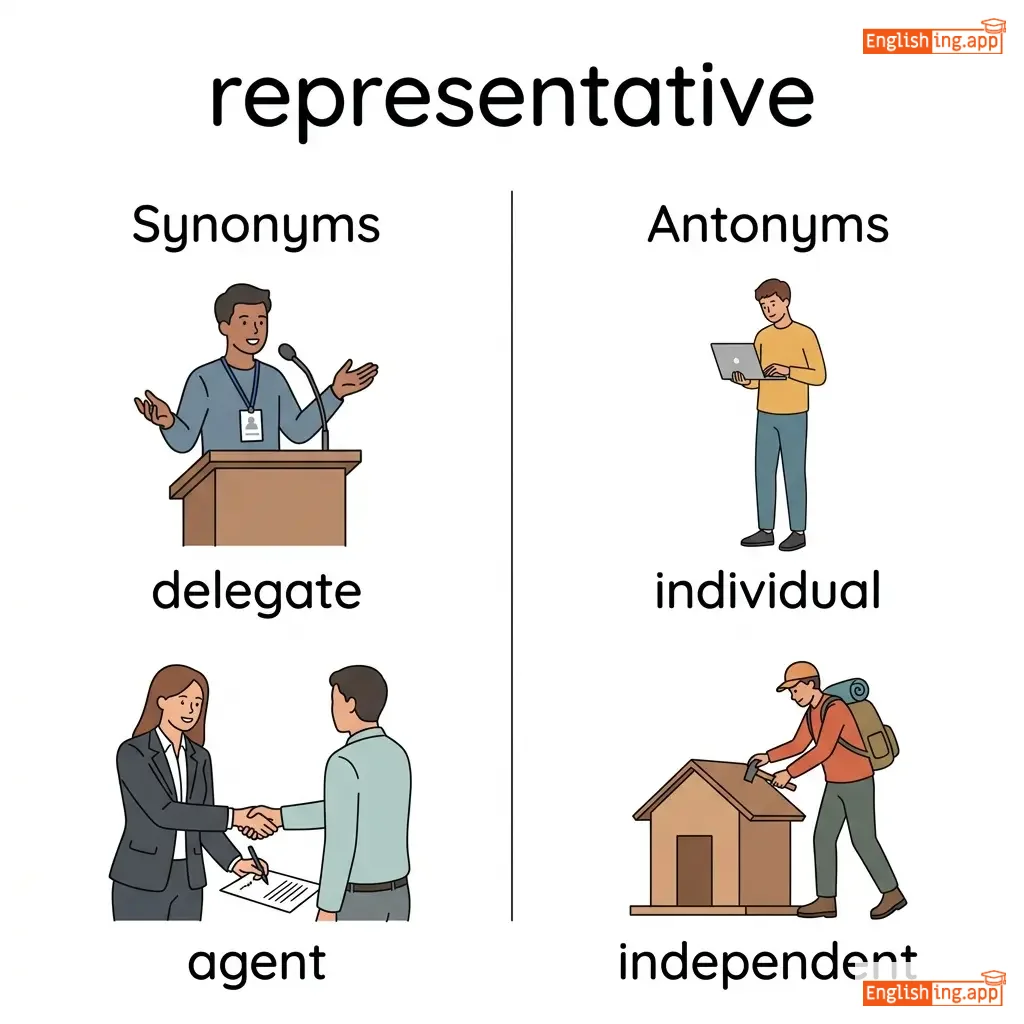
/ˌrep.rɪˈzen.tə.tɪv/
noun
(瑞普森塔蒂夫)
••••••
|
|
代表
daibiao
••••••
|
- •••••• | - •••••• | - •••••• | - •••••• |
a person chosen or appointed to act or speak for another or others
••••••
|
Each district elects a representative to serve in the parliament.
伊奇 迪斯特里克特 伊莱克茨 啊 瑞普森塔蒂夫 托 瑟夫 因 德 帕尔拉门特
••••••
|
各区选出一名代表在议会任职。
ge qu xuan chu yi ming dai biao zai yi hui ren zhi
••••••
|
- •••••• | - •••••• | - •••••• |
delegate, agent, spokesperson, envoy, ambassador
••••••
|
constituent, voter, represented
••••••
|
elected representative, sales representative, government representative, legal representative
••••••
|
DaiBiao = 代 + 表, 想象一个人举着大号的 Biao 旗子为众人发声, 他就是 DaiBiao
••••••
|
|
#4242
🐣
|
/ˌriːprəˈdjuːs/
verb
(riːprəˈdjuːs)
••••••
|
- •••••• |
再生产, 繁殖
zài shēngchǎn, fánzhí
••••••
|
reproduced
再生产
••••••
|
reproduced
再生产
••••••
|
reproduces
再生产
••••••
|
reproducing
正在复制
••••••
|
To make a copy of something; to generate offspring.
••••••
|
Many animals reproduce rapidly in favorable conditions.
许多动物在有利的条件下快速繁殖。
••••••
|
许多动物在有利的条件下快速繁殖。
Xǔduō dòngwù zài yǒulì de tiáojiàn xià kuàisù fánzhí.
••••••
|
- •••••• | - •••••• | - •••••• |
replicate, duplicate, breed, procreate
••••••
|
destroy, eradicate, terminate
••••••
|
reproduce quickly, reproduce a document, reproduce naturally
••••••
|
再生产意味着复制或者繁殖生命。
••••••
|
|
#4243
👶
|
/ˌriːprəˈdʌkʃən/
noun
(繁殖)
••••••
|
- •••••• |
繁殖, 再生产
fánzhí, zàishēngchǎn
••••••
|
- •••••• | - •••••• | - •••••• | - •••••• |
The process of producing offspring; the act of copying or duplicating.
••••••
|
The textbook included a detailed diagram of human reproduction.
课本中包含了人类繁殖的详细图表。
••••••
|
课本中包含了人类繁殖的详细图表。
Kèběn zhōng bāokuòle rénlèi fánzhí de xiángxì túbiǎo.
••••••
|
- •••••• | - •••••• | - •••••• |
duplication, replication, breeding, procreation
••••••
|
extinction, destruction
••••••
|
sexual reproduction, human reproduction, accurate reproduction
••••••
|
Re PRO duction 意味着新的生命或复制 (reproduction)。
••••••
|
|
#4244
🏛️
|
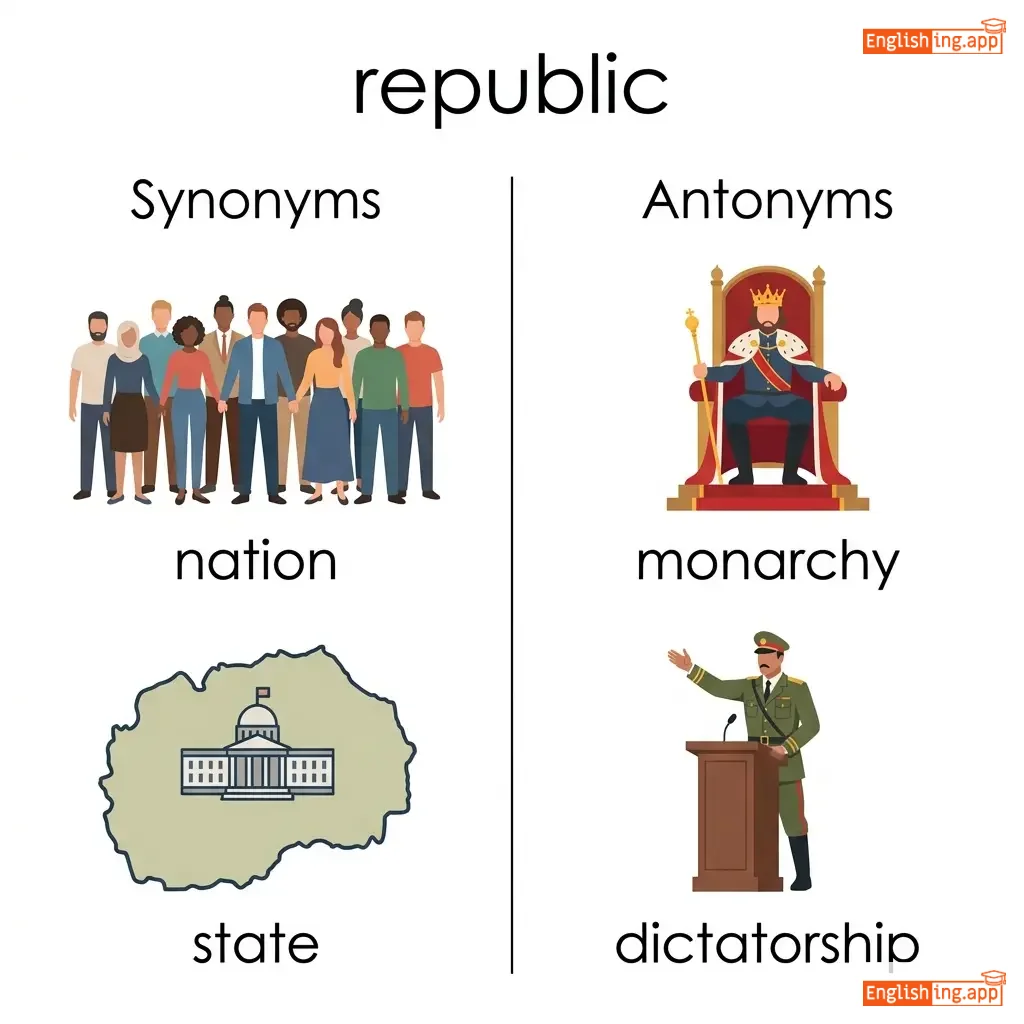
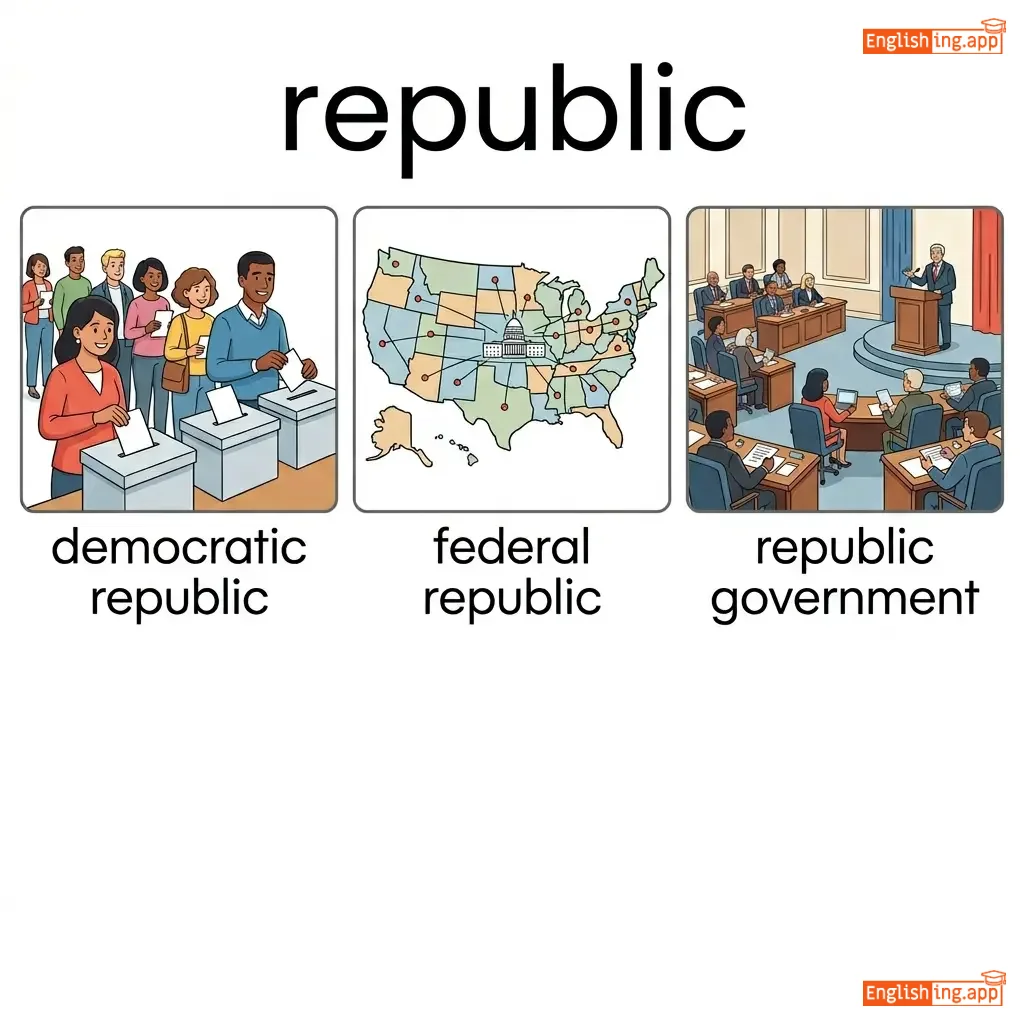
/rɪˈpʌblɪk/
noun
(rì-pù-bù-lì-kè)
••••••
|
|
共和国
gongheguo
••••••
|
- •••••• | - •••••• | - •••••• | - •••••• |
a state in which power is held by the people and their elected representatives
••••••
|
Bangladesh is a democratic republic. |
孟加拉国是一个民主的共和国。
Mèngjiālāguó shì yīgè mínzhǔ de gònghéguó.
••••••
|
- •••••• | - •••••• | - •••••• |
nation, state, democracy, commonwealth
••••••
|
monarchy, dictatorship
••••••
|
democratic republic, federal republic, republic government, republic constitution
••••••
|
共和国是‘re-public’ — 由人民管理国家 🌐
••••••
|
|
#4245
🇺🇸
|
/rɪˈpʌblɪkən/
noun/adjective
(共和党人)
••••••
|
- •••••• |
共和党人
gonghe dang ren
••••••
|
- •••••• | - •••••• | - •••••• | - •••••• |
a member or supporter of a republican political party or system
••••••
|
The republican candidate won the election.
共和党候选人赢得了选举。
••••••
|
共和党候选人赢得了选举。
Gonghe dang houxuǎn rén yíng dé le xuǎnjǔ.
••••••
|
- •••••• | - •••••• | - •••••• |
conservative, right-wing, traditionalist
••••••
|
liberal, democrat
••••••
|
republican party, republican senator, republican policies
••••••
|
共和党人,捍卫共和国的支持者!
••••••
|
|
#4246
⭐
|
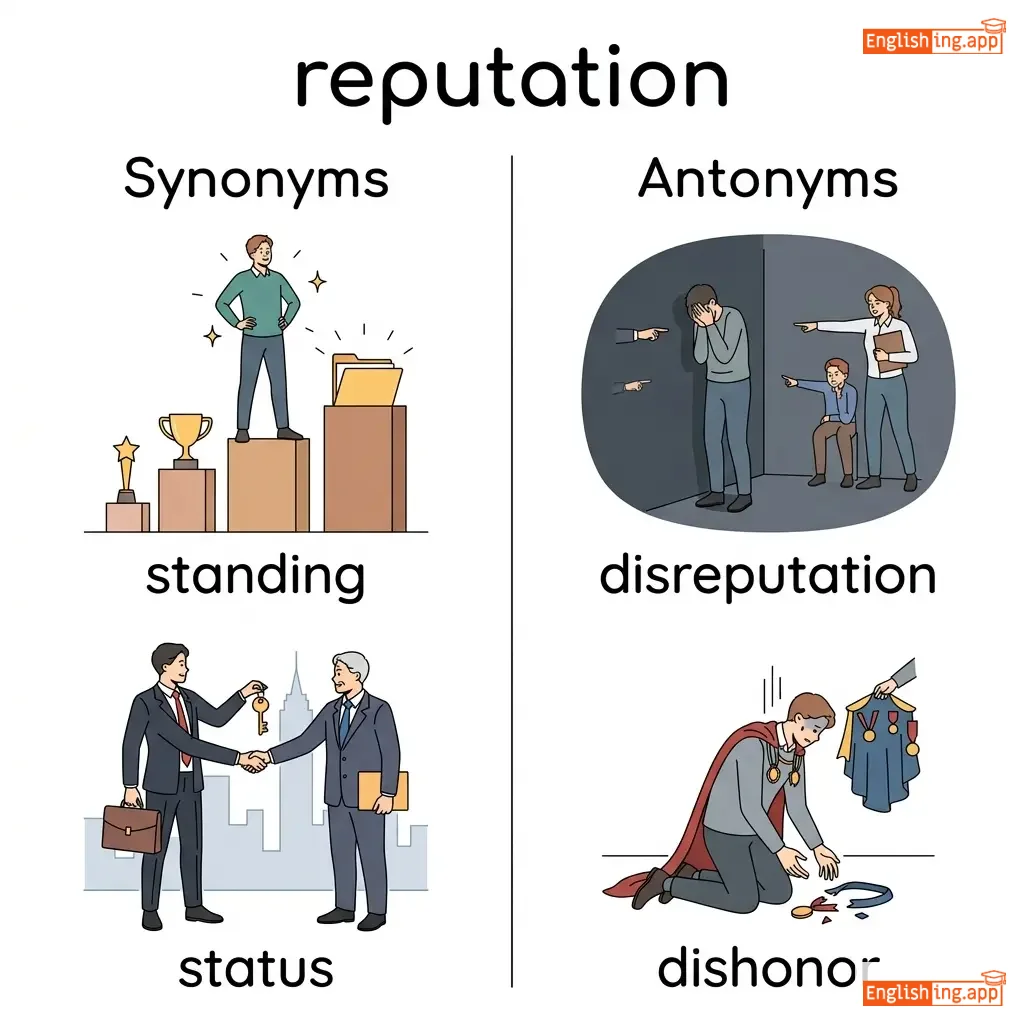
/ˌrepjʊˈteɪʃən/
noun
(声誉)
••••••
|
|
声誉
shengyu
••••••
|
- •••••• | - •••••• | - •••••• | - •••••• |
the beliefs or opinions that are generally held about someone or something; a widespread belief that someone or something has a particular habit or characteristic
••••••
|
The company has built a solid reputation for quality products.
公司凭借优质产品建立了牢固的声誉。
••••••
|
公司凭借优质产品建立了牢固的声誉。
Gongsi pingjie youzhi chanpin jianli le laogu de shengyu.
••••••
|
- •••••• | - •••••• | - •••••• |
fame, standing, status, renown
••••••
|
infamy, disgrace, dishonor, notoriety
••••••
|
good reputation, stellar reputation, reputation for excellence, damage reputation
••••••
|
声誉与质量挂钩,就像一个顶尖公司。
••••••
|
|
#4247
📑
|
/rɪˈkwɛst/
noun
••••••
|
- •••••• | - •••••• | - •••••• | - •••••• | - •••••• | - •••••• |
a formal or polite demand for something
••••••
|
She made a request for additional time to complete the project. |
- •••••• | - •••••• | - •••••• | - •••••• |
demand, appeal, inquiry, petition
••••••
|
refusal, rejection
••••••
|
make a request, request information, request time, formal request
••••••
|
No •••••• |
|
#4248
📋
|
/rɪˈkwaɪər/
verb
(要求)
••••••
|
- •••••• |
需要
xūyào
••••••
|
required
要求过
••••••
|
required
已要求
••••••
|
requires
要求
••••••
|
requiring
要求着
••••••
|
to need something; to demand or insist on
••••••
|
This job requires excellent communication skills.
这份工作要求出色的沟通技巧。
••••••
|
这份工作要求出色的沟通技巧。
Zhè fèn gōngzuò yāoqiú chūsè de gōutōng jìqiǎo.
••••••
|
- •••••• | - •••••• | - •••••• |
need, demand, necessitate, call for
••••••
|
provide, give, offer
••••••
|
require attention, require permission, require effort, strictly require
••••••
|
No •••••• |
|
#4249
📋
|
/rɪˈkwaɪə(r)mənt/
noun
(rè-kwài-èr-mènt)
••••••
|
- •••••• |
要求
yaoqiu
••••••
|
- •••••• | - •••••• | - •••••• | - •••••• |
something that is necessary or demanded
••••••
|
The job has specific educational requirements. |
这项工作有特定的教育要求。
Zhe xiang gongzuo you tedi de jiaoyu yaoqiu.
••••••
|
- •••••• | - •••••• | - •••••• |
necessity, condition, prerequisite, obligation
••••••
|
option, choice
••••••
|
meet requirements, educational requirement, job requirement, legal requirement
••••••
|
'Requirement' sounds like 're-quire' - something you need to 'quire' or ask for.
••••••
|
|
#4250
🛟
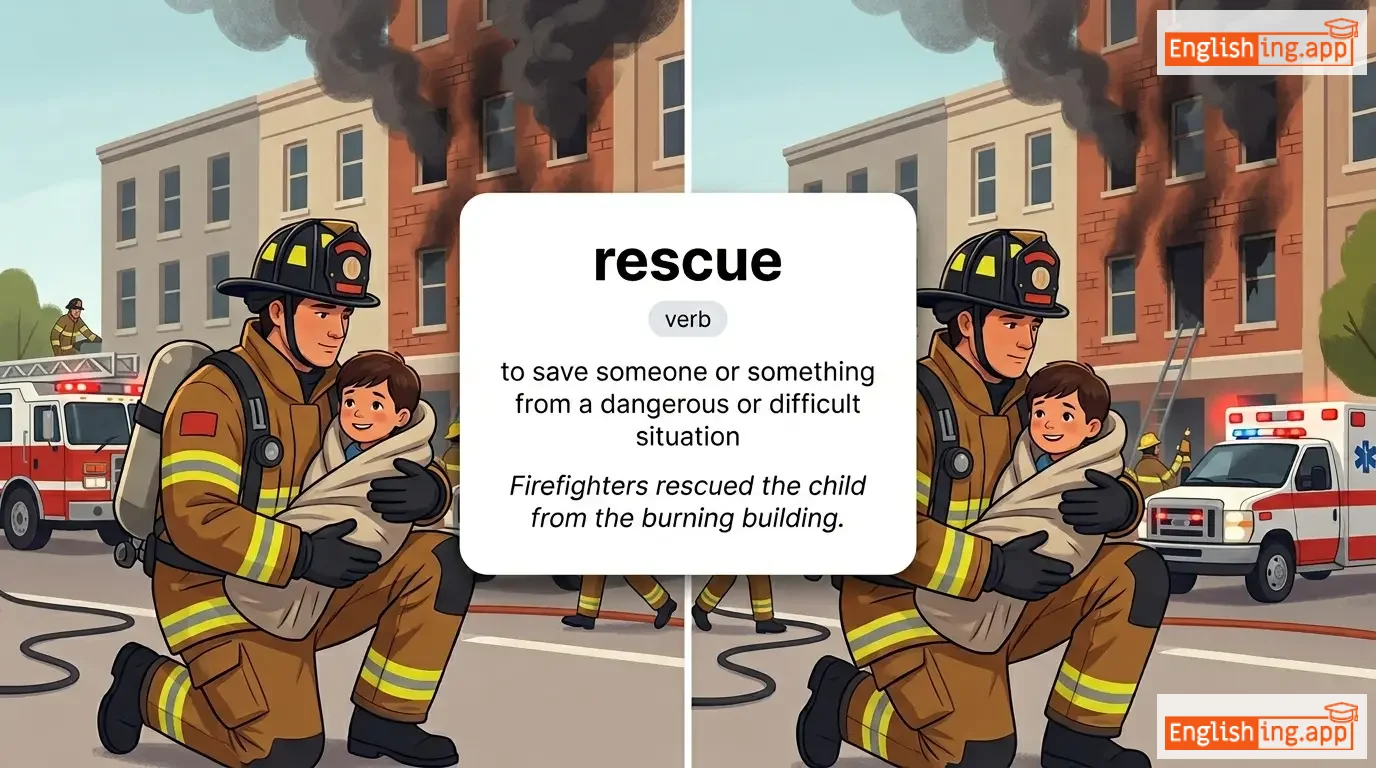
|
/ˈrɛskjuː/
verb
(rèskù)
••••••
|
|
救援
jiùyuán
••••••
|
rescued
rèskùd
••••••
|
rescued
rèskùd
••••••
|
rescues
rèskùs
••••••
|
rescuing
rèskùing
••••••
|
to save someone or something from a dangerous or difficult situation
••••••
|
Firefighters rescued the child from the burning building.
消防员从着火的大楼中救出了孩子。
••••••
|
消防员从着火的大楼中救出了孩子。
Xiāofángyuán cóng zháohuǒ de dàlóu zhōng jiùchūle háizi.
••••••
|
come to the rescue
来解救
••••••
|
to help someone in trouble or in need
••••••
|
来解救
lái jiějiù
••••••
|
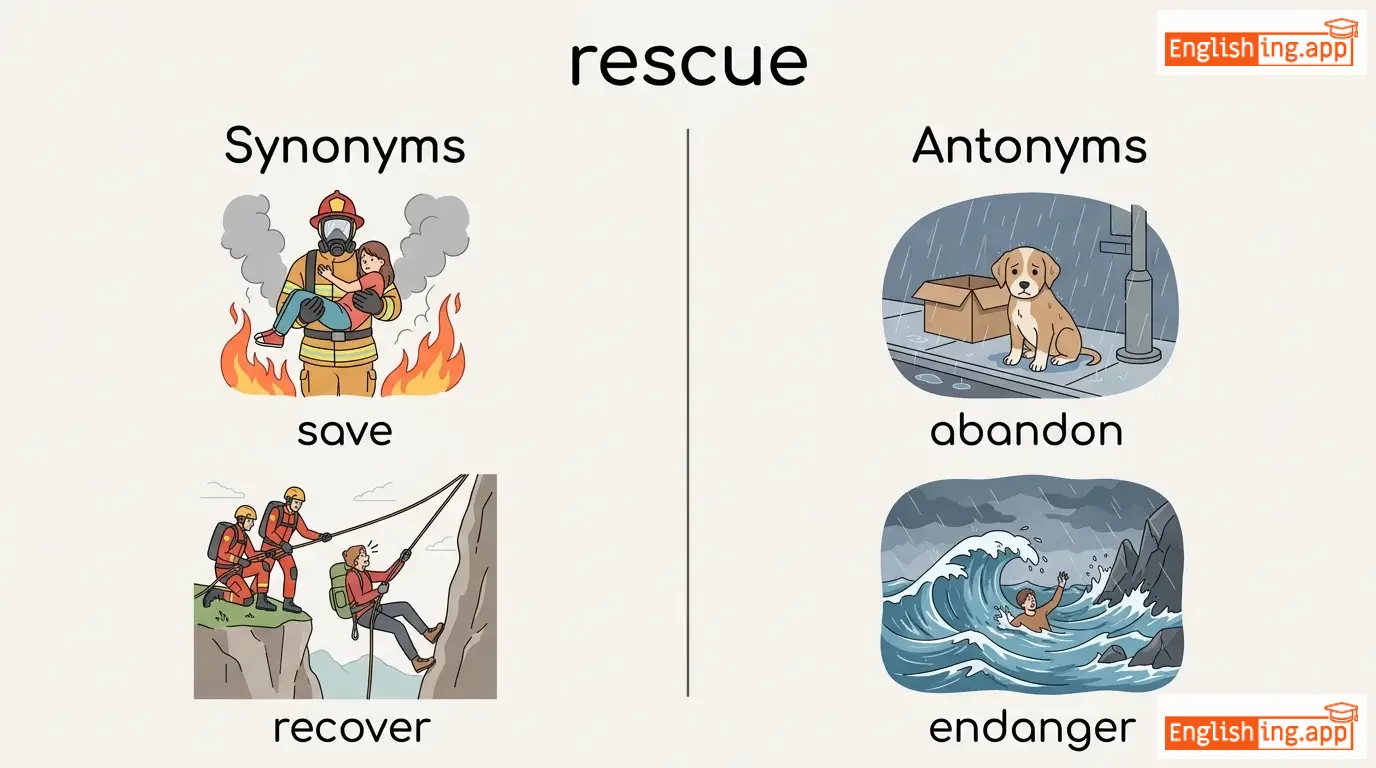
save, recover, free, deliver, retrieve
••••••
|
abandon, endanger, trap
••••••
|
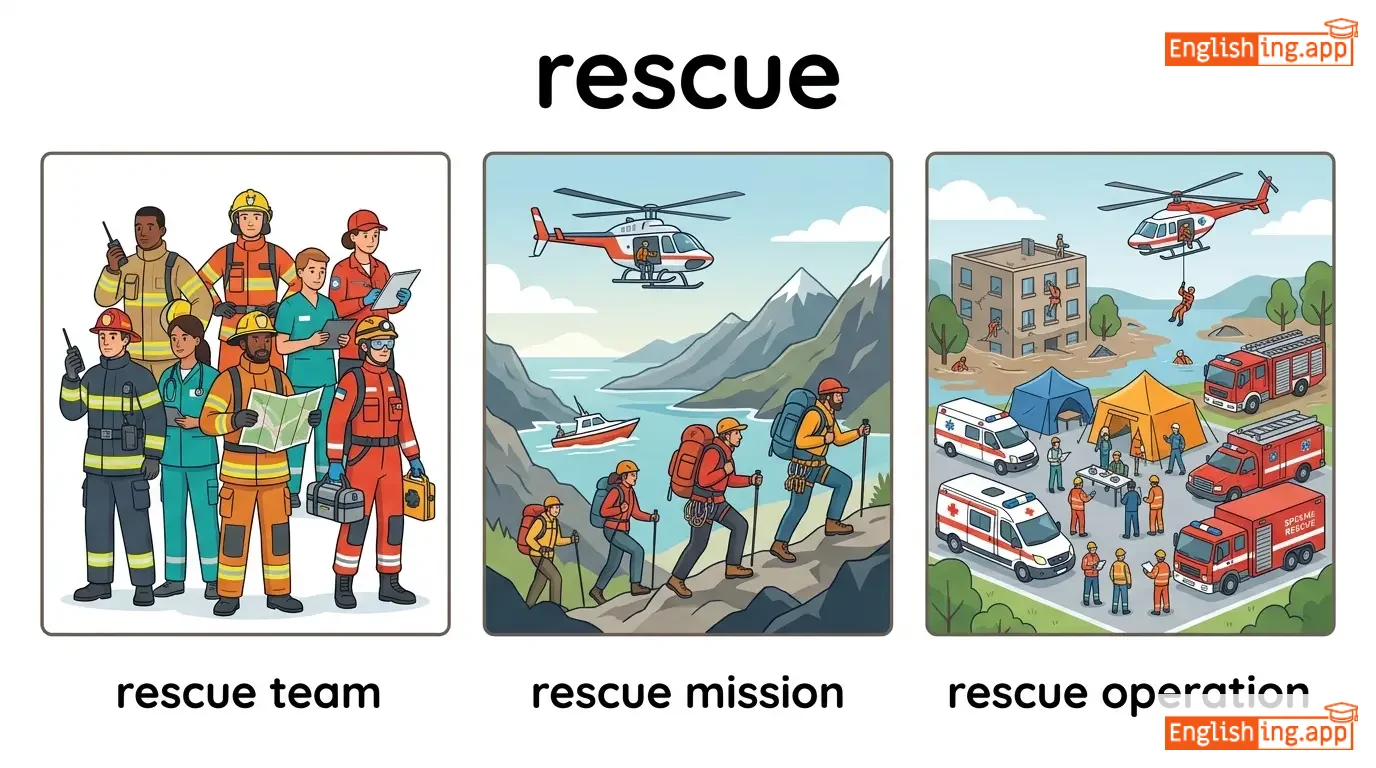
rescue team, rescue mission, rescue operation, emergency rescue
••••••
|
Rescue意味着'冒险救援' — 记住 🛟
••••••
|
|
#4251
🔬
|
/rɪˈsɜːtʃ/
noun
(rɪˈsɜːrtʃ)
••••••
|
|
研究
yanjiu
••••••
|
- •••••• | - •••••• | - •••••• | - •••••• |
the systematic investigation into and study of materials and sources in order to establish facts and reach new conclusions
••••••
|
She conducted research on climate change effects. |
她进行了关于气候变化影响的研究。
Ta jinxingle guanyu qihou bianhua yingxiang de yanjiu.
••••••
|
- •••••• | - •••••• | - •••••• |
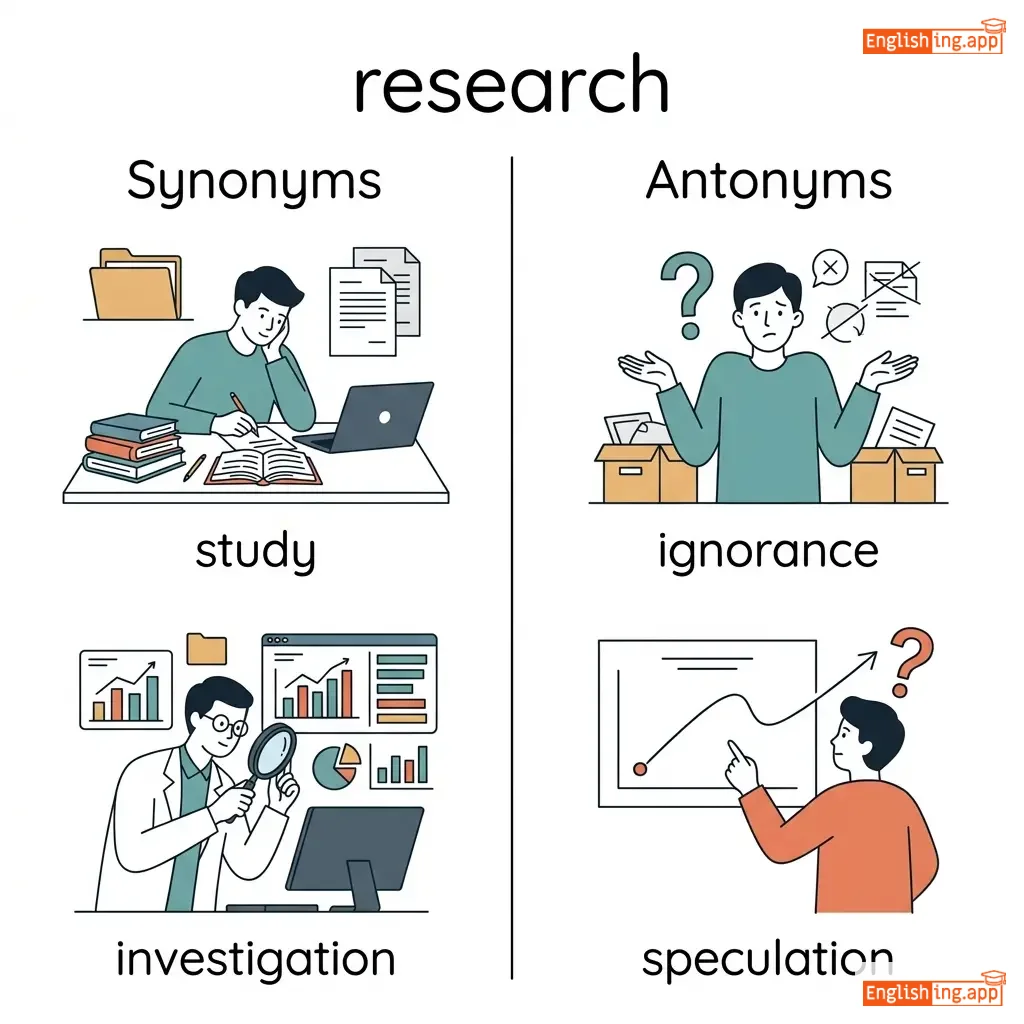
study, investigation, inquiry, analysis
••••••
|
ignorance, speculation
••••••
|
conduct research, scientific research, research paper, research findings
••••••
|
Research means 'in' (into) the depth of facts and knowledge.
••••••
|
|
#4252
🧑🔬
|
/rɪˈsɜːtʃə(r)/
noun
(rɪˈsɜːrtʃər)
••••••
|
- •••••• |
研究员
yanjiuyuan
••••••
|
- •••••• | - •••••• | - •••••• | - •••••• |
a person who conducts research
••••••
|
The researcher published her findings in a scientific journal. |
研究员在科学期刊上发表了她的研究结果。
Yanjiuyuan zai kexue qikan shang fabiao le ta de yanjiu jieguo.
••••••
|
- •••••• | - •••••• | - •••••• |
scientist, investigator, analyst, scholar
••••••
|
non-expert, layman
••••••
|
lead researcher, senior researcher, research assistant
••••••
|
A '研究员' (researcher) is someone who '研究' (researches) for new knowledge.
••••••
|
|
#4253
👥
|
/rɪˈzɛmbəl/
verb
(rizembl)
••••••
|
- •••••• |
像
xiang
••••••
|
resembled
rizembold
••••••
|
resembled
rizembold
••••••
|
resembles
rizembls
••••••
|
resembling
rizembling
••••••
|
to look like or be similar to something or someone
••••••
|
She resembles her mother in both appearance and mannerisms.
她在外貌和举止上都像她母亲。
••••••
|
她在外貌和举止上都像她母亲。
Ta zai waimao he juzhi shang dou xiang ta muqin.
••••••
|
- •••••• | - •••••• | - •••••• |
look like, take after, resemble, mirror
••••••
|
differ, contrast, diverge
••••••
|
resemble someone, resemble something, closely resemble
••••••
|
Resemble 就像 'resemb' (照片),就像一张图片与另一张图片相似。
••••••
|
|
#4254
📅
|
/ˌrɛzərˈveɪʃən/
noun
(预订)
••••••
|
- •••••• |
预订
yùdìng
••••••
|
- •••••• | - •••••• | - •••••• | - •••••• |
an arrangement made in advance to secure accommodation, a seat, or service
••••••
|
He made a reservation at the hotel for the weekend.
他为周末在酒店做了预订。
••••••
|
他为周末在酒店做了预订。
Tā wèi zhōumò zài jiǔdiàn zuòle yùdìng.
••••••
|
make a reservation
进行预订
••••••
|
to book in advance
••••••
|
进行预订
jìnxíng yùdìng
••••••
|
booking, appointment, arrangement, order
••••••
|
cancellation, freedom
••••••
|
hotel reservation, table reservation, flight reservation, make reservation
••••••
|
预订意味着提前安排,就像为未来做安排一样。
••••••
|
|
#4255
🏠
|
/rɪˈzaɪd/
verb
(瑞赛德)
••••••
|
- •••••• |
居住
jūzhù
••••••
|
resided
瑞赛德德
••••••
|
resided
瑞赛德德
••••••
|
resides
瑞赛德斯
••••••
|
residing
瑞赛丁
••••••
|
to live or dwell in a particular place
••••••
|
They reside in a large house near the river.
他们住在河边的一座大房子里。
••••••
|
他们住在河边的一座大房子里。
Tāmen zhù zài hébiān de yīzuò dà fángzi lǐ.
••••••
|
- •••••• | - •••••• | - •••••• |
live, dwell, inhabit, stay
••••••
|
leave, depart, move
••••••
|
reside in, reside with, permanently reside
••••••
|
Reside rhymes with 'side' - to reside somewhere is to stay on that side.
••••••
|
|
#4256
🏠
|
/ˈrɛzɪdəns/
noun
(瑞士登斯)
••••••
|
- •••••• |
住所
zhùsuǒ
••••••
|
- •••••• | - •••••• | - •••••• | - •••••• |
a place where someone lives; a home or dwelling
••••••
|
He recently moved to a new residence near the city center.
他最近搬到了市中心附近的一处新住所。
••••••
|
他最近搬到了市中心附近的一处新住所。
Tā zuìjìn bān dào le shì zhōngxīn fùjìn de yī chù xīn zhùsuǒ.
••••••
|
place of residence
住所的地方
••••••
|
the home where someone lives
••••••
|
住所的地方
zhùsuǒ de dìfāng
••••••
|
home, dwelling, house, abode, habitation
••••••
|
office, workplace
••••••
|
permanent residence, official residence, private residence, place of residence
••••••
|
Residence 是你休息的地方——你的住所 🏠
••••••
|
|
#4257
🏠
|
/ˈrɛzɪdənt/
noun
(居民)
••••••
|
- •••••• |
居民
jumin
••••••
|
- •••••• | - •••••• | - •••••• | - •••••• |
A person who lives in a particular place.
••••••
|
Every resident of the building must follow the safety rules. |
大楼的每个居民都必须遵守安全规则。
Dàlóu de měi ge jūmín dōu bìxū zūnshǒu ānquán guīzé.
••••••
|
permanent resident |
A person who lives permanently in a place, often with legal permission.
••••••
|
永久居民
yǒngjiǔ jūmín
••••••
|
inhabitant, occupant, dweller, tenant
••••••
|
visitor, outsider, tourist
••••••
|
resident doctor, local resident, permanent resident
••••••
|
Resident 意思是 '居民', 就像住在一个地方的人。
••••••
|
|
#4258
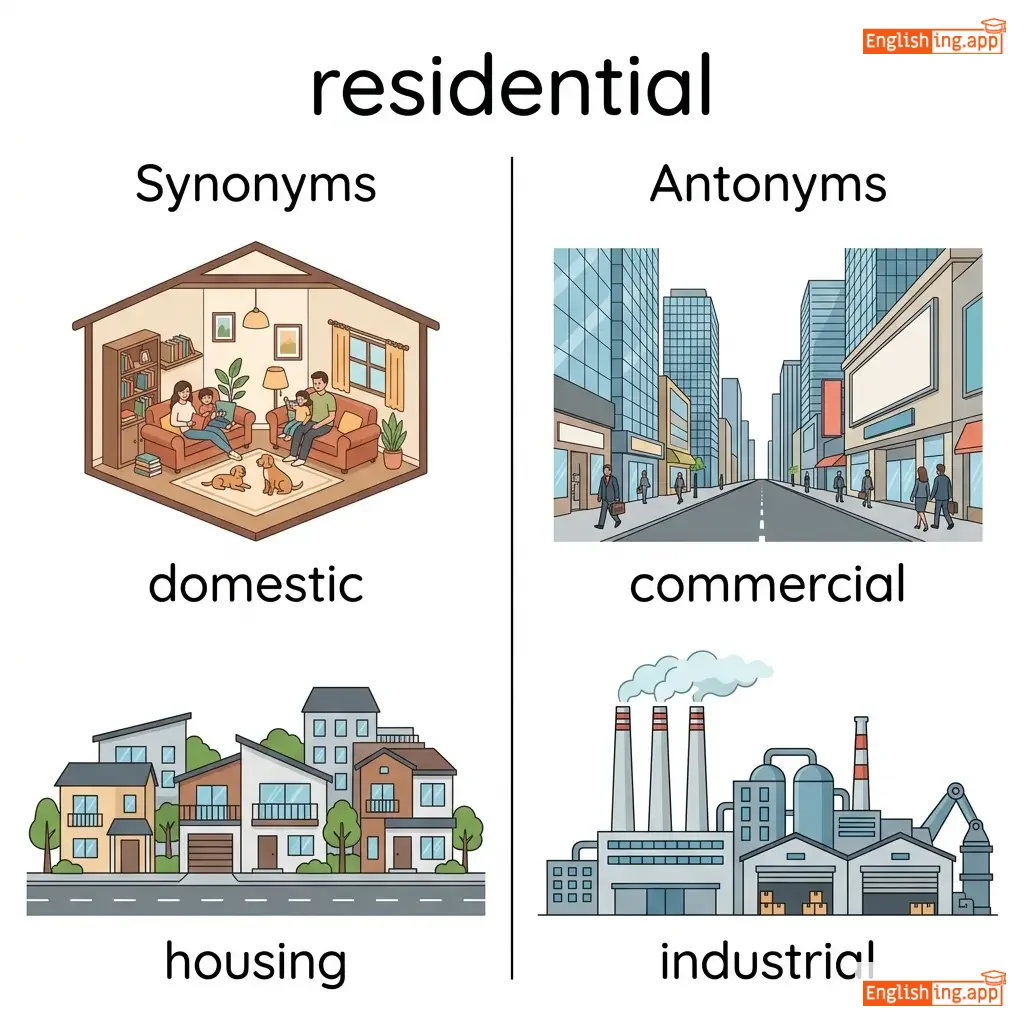
🏠
|
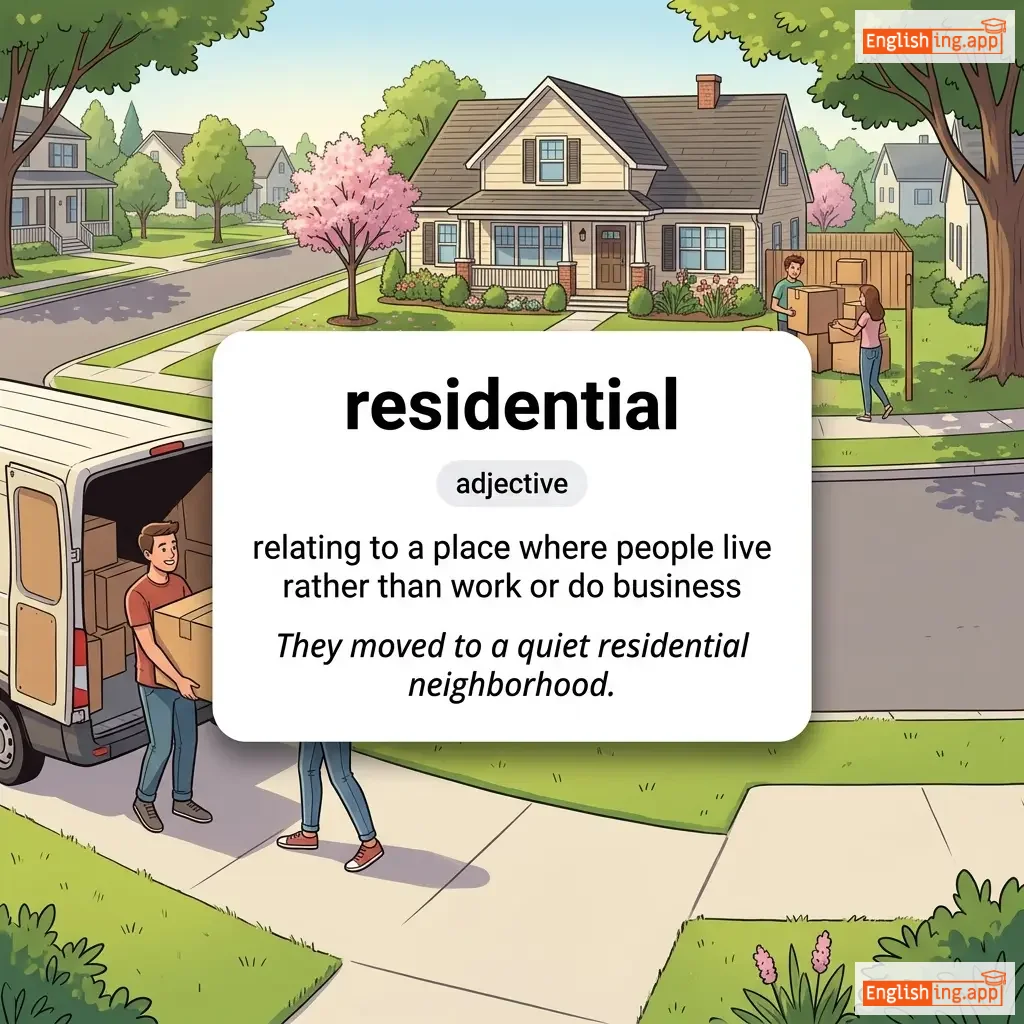
/ˌrez.ɪˈden.ʃəl/
adjective
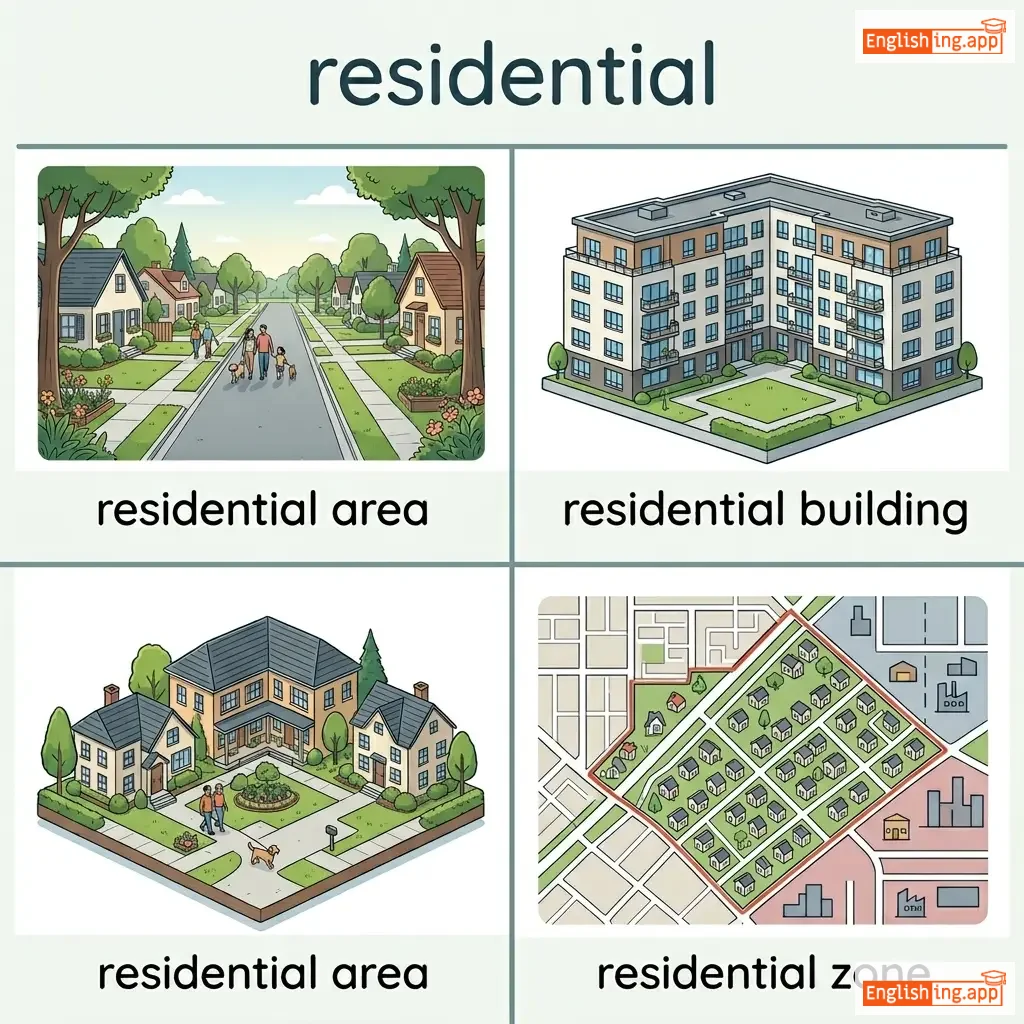
(住宅的)
••••••
|
|
住宅区的
zhuzhaiqu de
••••••
|
- •••••• | - •••••• | - •••••• | - •••••• |
relating to housing or living areas; used for housing
••••••
|
This is a quiet residential neighborhood with many families. |
这是一个安静的住宅区,很多家庭住在这里。
Zhe shi yige anjing de zhuzhaiqu, henduo jiating zhu zai zheli.
••••••
|
- •••••• | - •••••• | - •••••• |
domestic, housing, living, suburban
••••••
|
commercial, industrial, business
••••••
|
residential area, residential building, residential property, residential development
••••••
|
住宅区是家庭居住的地方,记住它的安静和舒适。
••••••
|
|
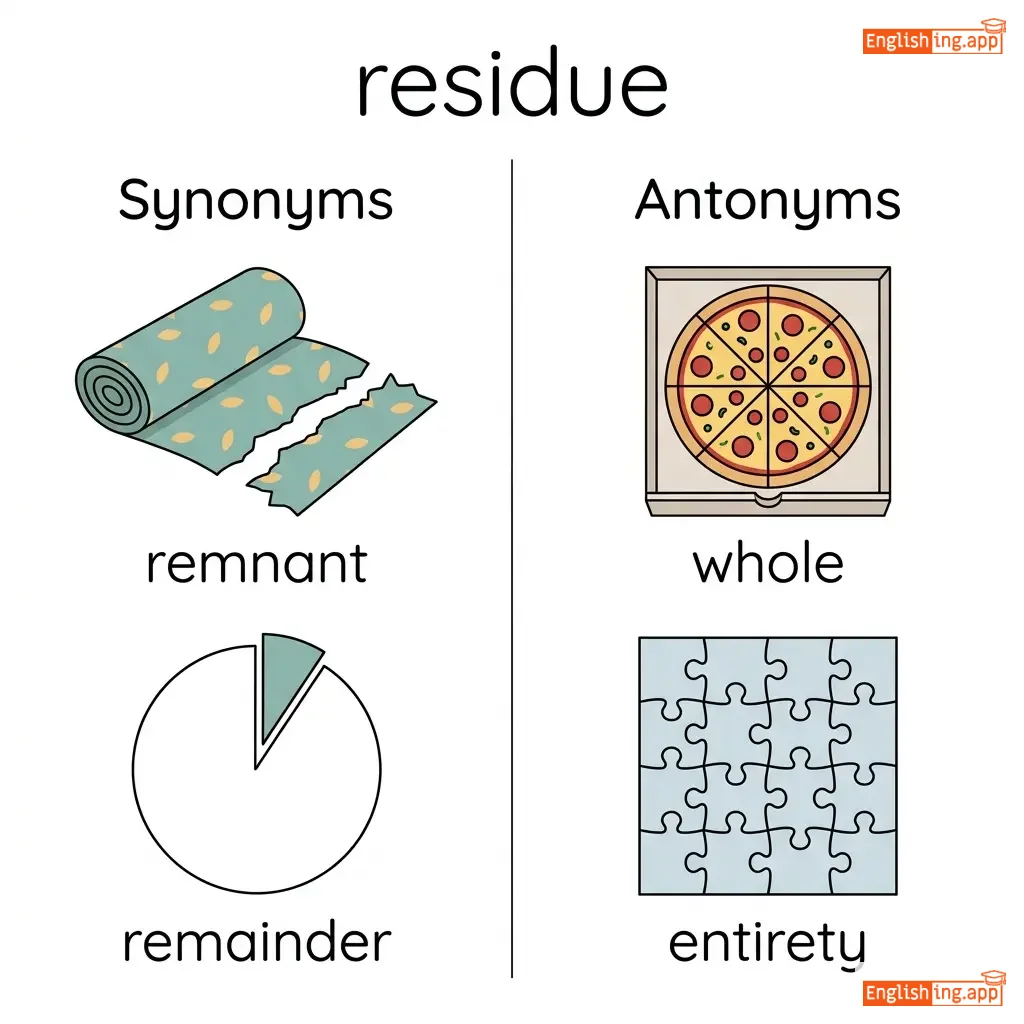
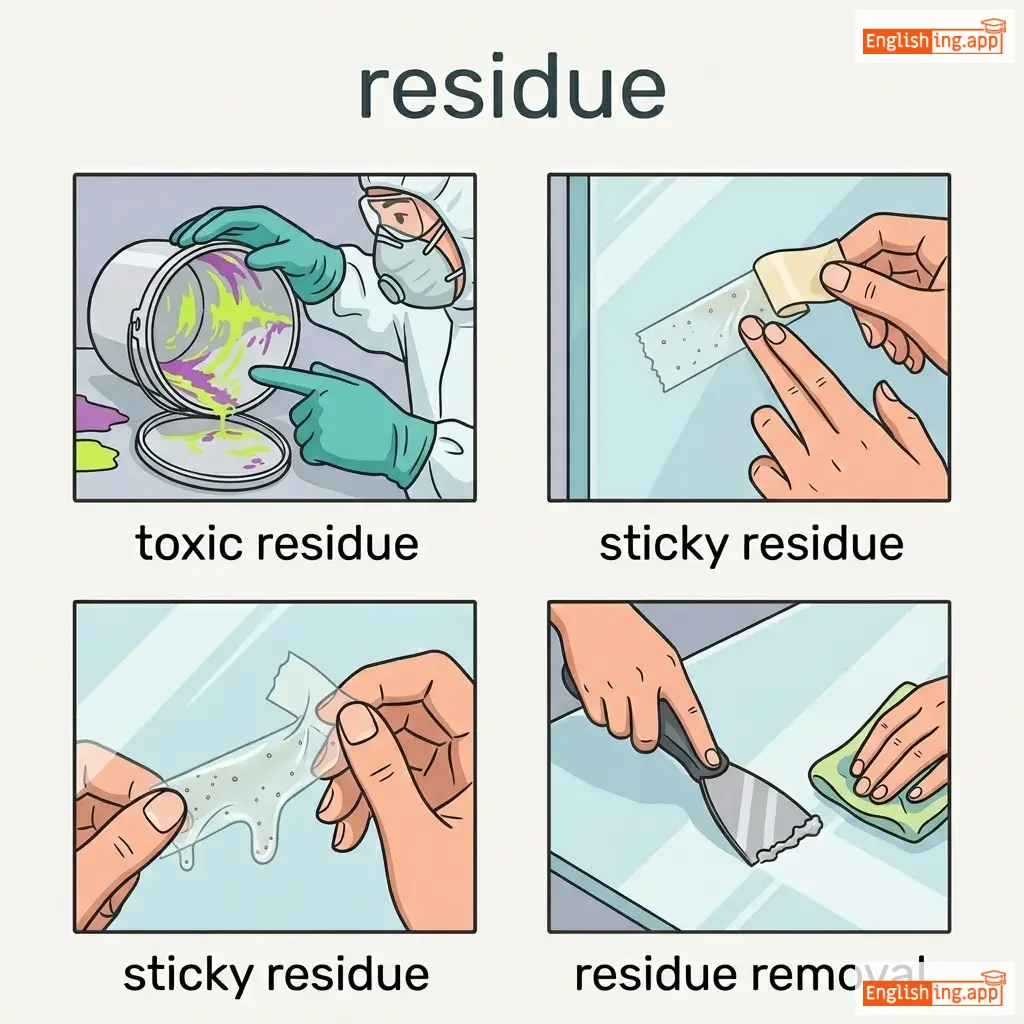
#4259
🧪
|
/ˈrɛzɪdjuː/
noun
(ré sī dū)
••••••
|
|
残留物
can liu wu
••••••
|
- •••••• | - •••••• | - •••••• | - •••••• |
A small amount of something that remains after the main part has been removed or used.
••••••
|
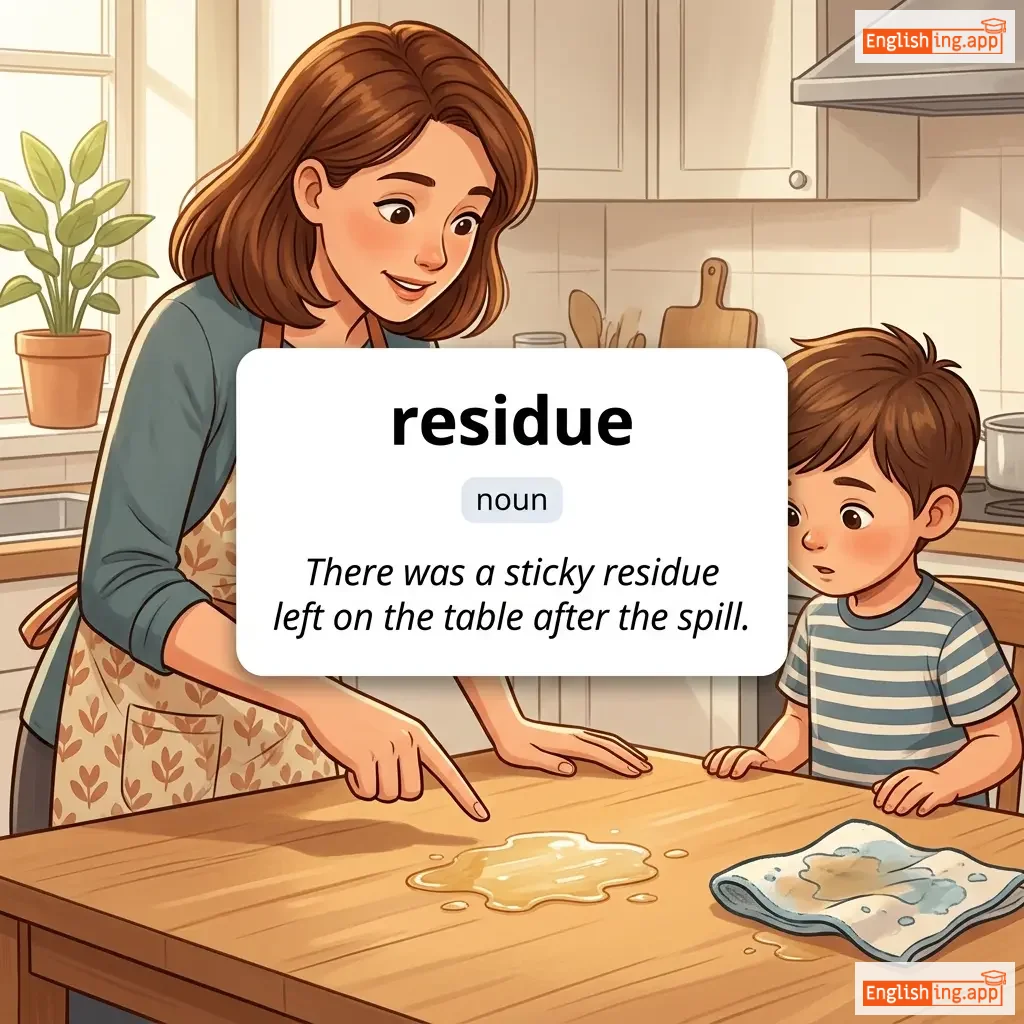
There was a sticky residue left on the table after the spill. |
溢出后,桌子上留下了粘性的残留物。
Yichu hou, zhuozi shang liuxia le nianxing de can liu wu.
••••••
|
chemical residue |
Small amounts of chemicals that remain after a process.
••••••
|
化学残留物
hua xue can liu wu
••••••
|
remnant, remainder, deposit, leftover, trace
••••••
|
whole, entirety
••••••
|
toxic residue, sticky residue, residue removal, chemical residue
••••••
|
Residue 是指溢出后桌子上留下的粘乎乎的东西。
••••••
|
|
#4260
✍️
|
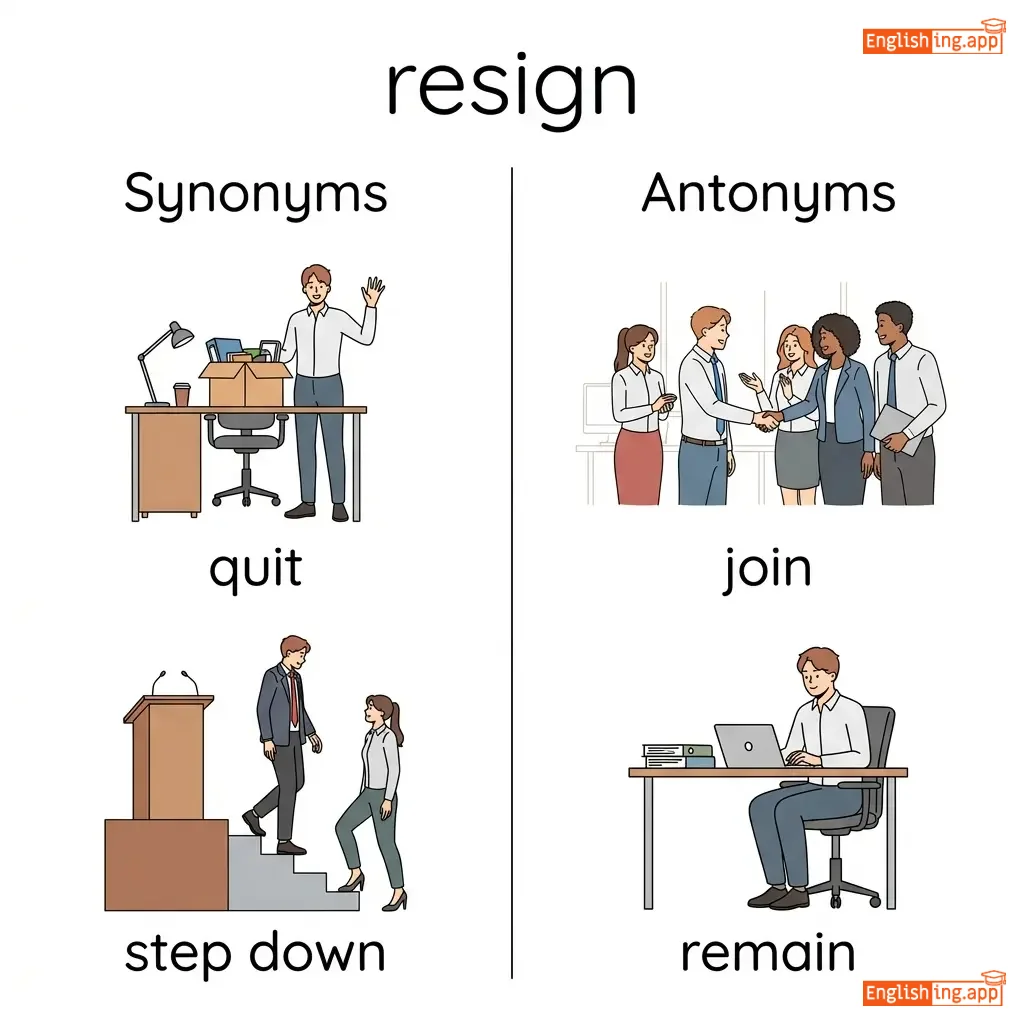
/rɪˈzaɪn/
verb
(瑞泽因)
••••••
|
|
辞职
cízhí
••••••
|
resigned
瑞泽因德
••••••
|
resigned
瑞泽因德
••••••
|
resigns
瑞泽因斯
••••••
|
resigning
瑞泽因宁
••••••
|
To voluntarily leave a job or office.
••••••
|
She decided to resign from her position due to personal reasons.
她决定因个人原因辞去她的职位。
••••••
|
她决定因个人原因辞去她的职位。
Tā juédìng yīn gèrén yuányīn cíqù tā de zhíwèi.
••••••
|
resign oneself to
辞去
••••••
|
To accept something unpleasant that cannot be changed.
••••••
|
辞去
cíqù
••••••
|
quit, step down, retire, relinquish, leave
••••••
|
join, remain, accept
••••••
|
resign from, resign position, resign office, resign formally
••••••
|
Resign意味着辞职,想想 'sign out' → 辞职
••••••
|
|
#4261
📄
|
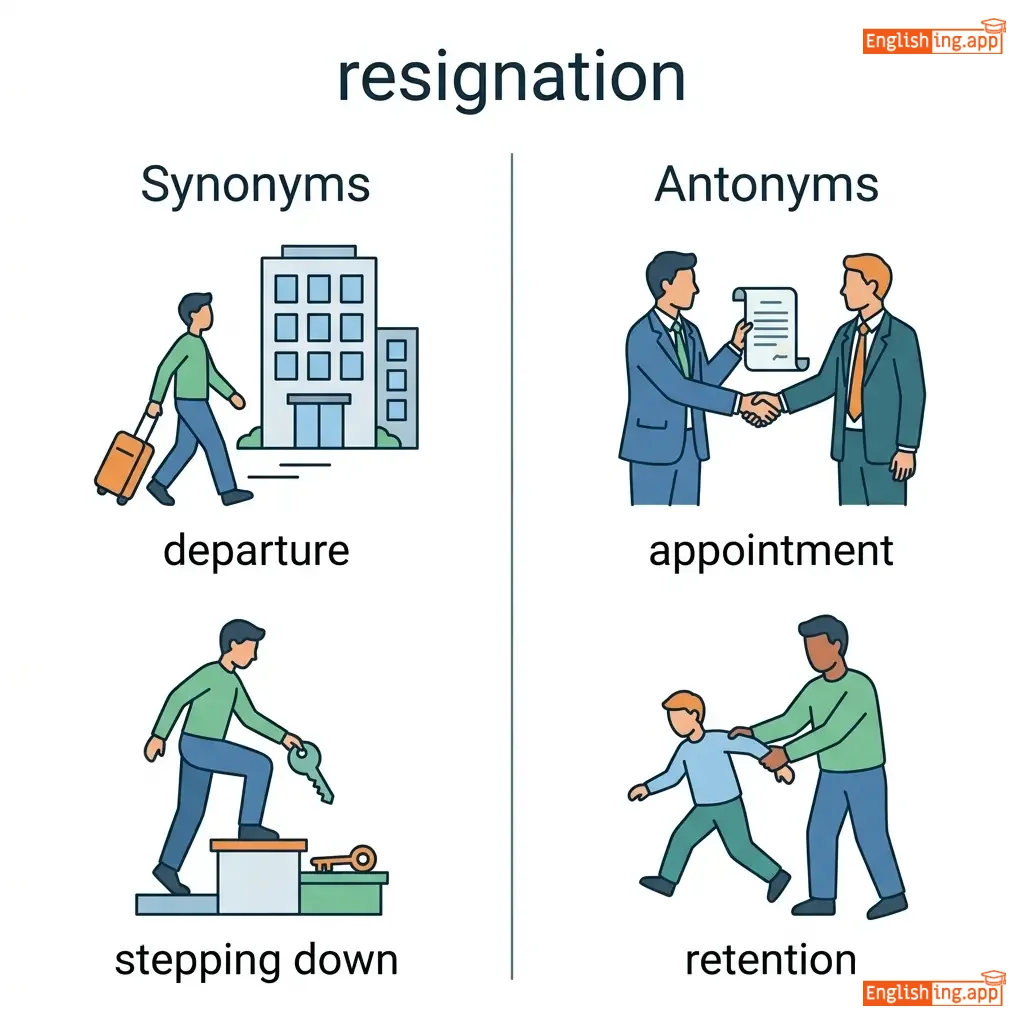
/ˌrɛzɪɡˈneɪʃən/
noun
(rézìgnèishùn)
••••••
|
|
辞职
cizhi
••••••
|
- •••••• | - •••••• | - •••••• | - •••••• |
The act of giving up a job or position; acceptance of something undesirable but inevitable.
••••••
|
The CEO submitted his resignation yesterday. |
首席执行官昨天提交了辞职信。
Shǒuxí zhíxíngguān zuótiān tíjiāo le cízhi xìn.
••••••
|
with resignation |
Accepting something unpleasant without protest.
••••••
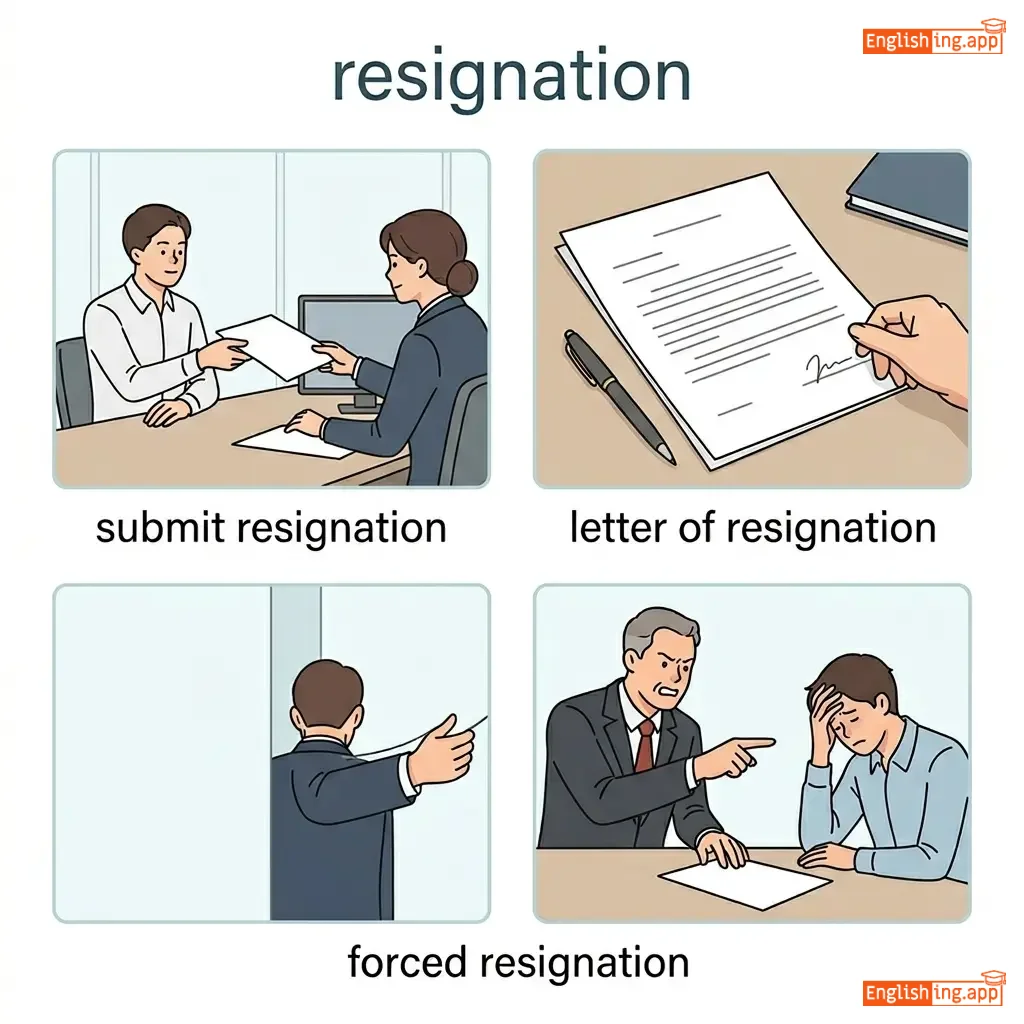
|
带着辞职
dàizhe cízhi
••••••
|
departure, stepping down, surrender, acceptance, renunciation
••••••
|
appointment, retention
••••••
|
submit resignation, letter of resignation, forced resignation, resignation speech
••••••
|
辞职就等于Resignation,记住这个当你辞掉工作时。
••••••
|
|
#4262
✊
|
/rɪˈzɪst/
verb
(瑞兹斯特)
••••••
|
|
抵抗
dǐkàng
••••••
|
resisted
瑞兹斯特德
••••••
|
resisted
瑞兹斯特德
••••••
|
resists
瑞兹斯特斯
••••••
|
resisting
瑞兹斯廷
••••••
|
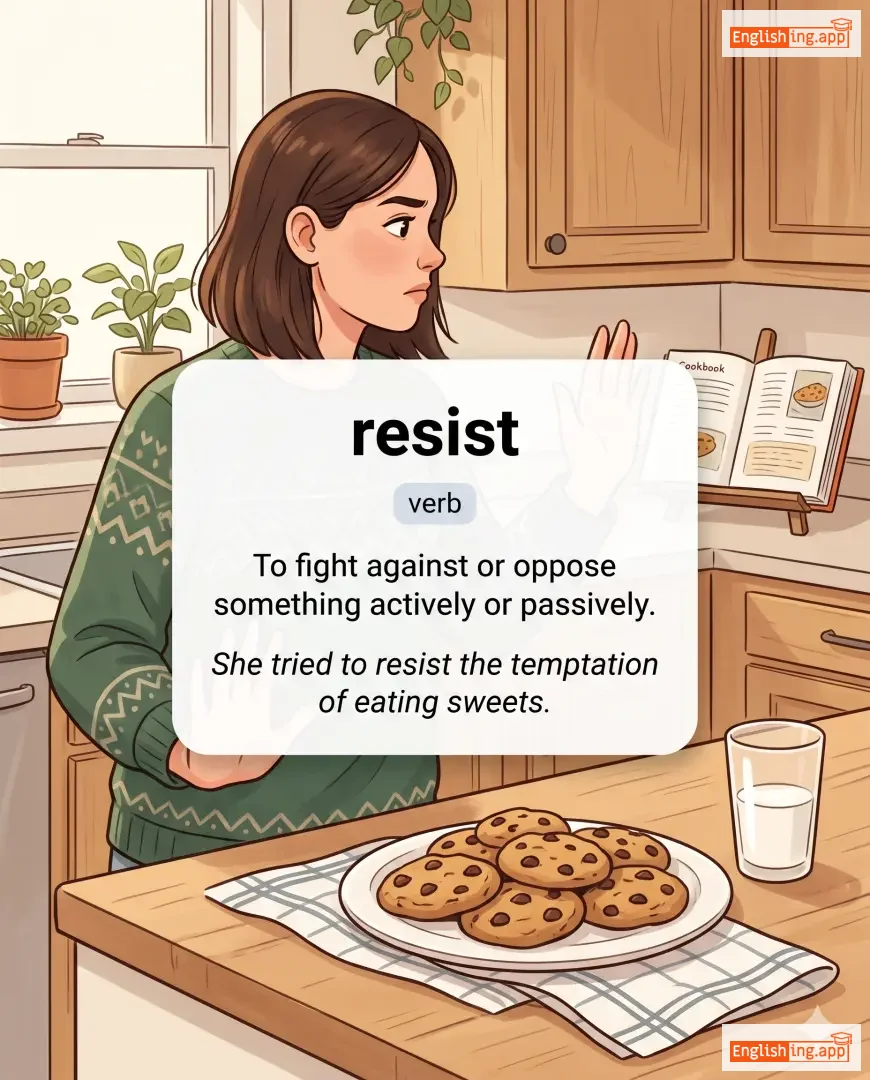
To fight against or oppose something actively or passively.
••••••
|
She tried to resist the temptation of eating sweets.
她试图抵抗吃糖果的诱惑。
••••••
|
她试图抵抗吃糖果的诱惑。
Tā shìtú dǐkàng chī tángguǒ de yòuhuò.
••••••
|
resist arrest
抵抗逮捕
••••••
|
To oppose or fight back when being taken into custody by the police.
••••••
|
抵抗逮捕
dǐkàng dàibǔ
••••••
|
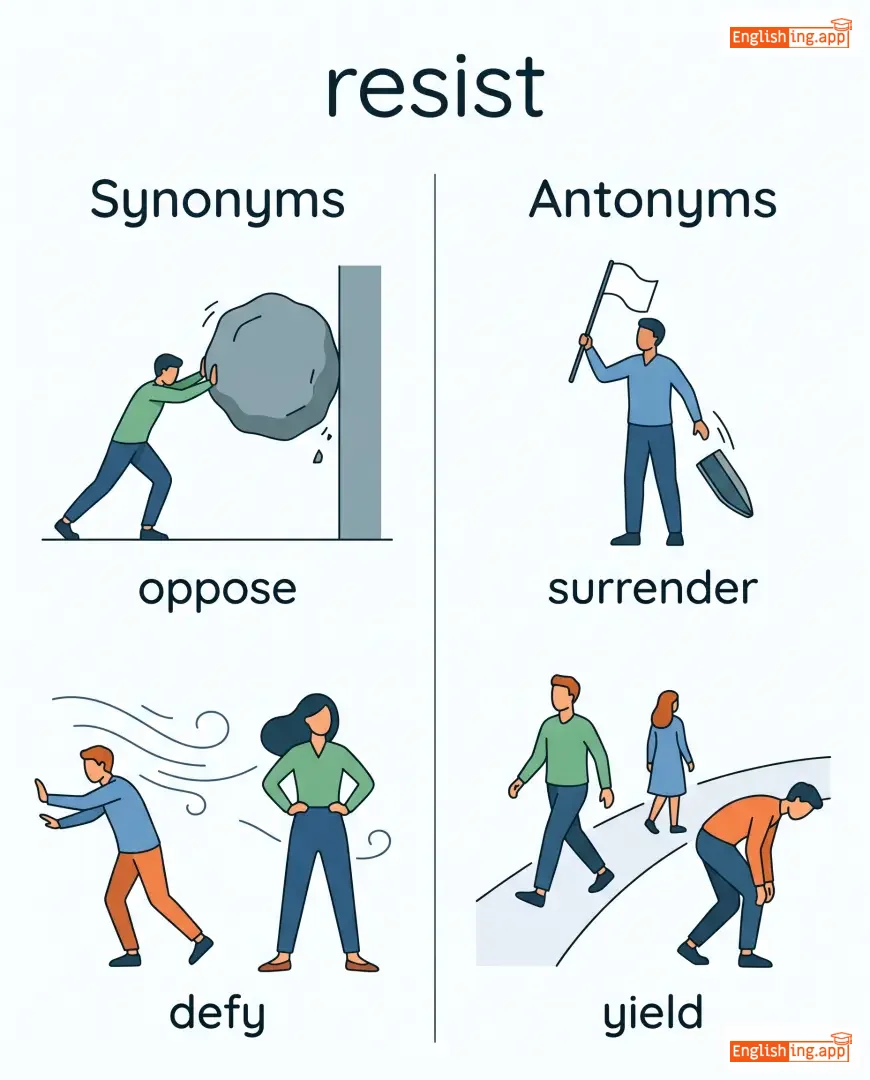
oppose, defy, withstand, endure, combat
••••••
|
surrender, yield, submit
••••••
|
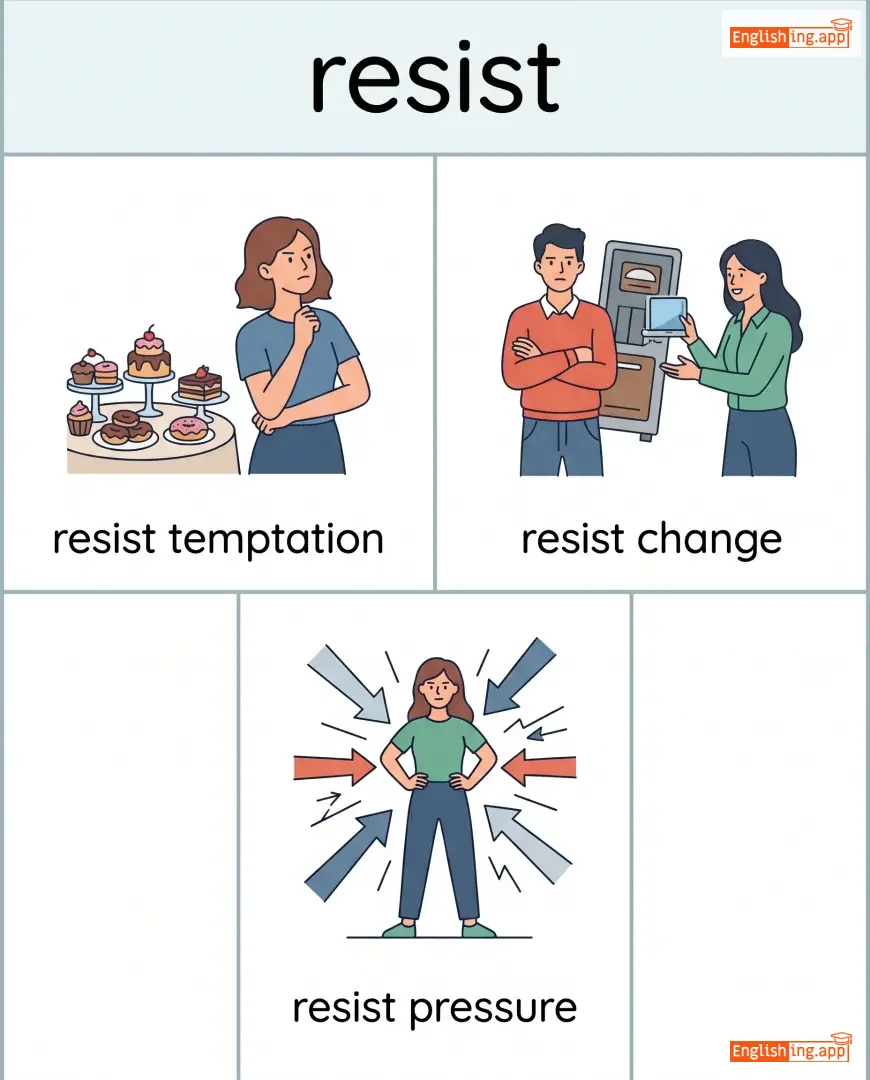
resist temptation, resist change, resist pressure, resist arrest
••••••
|
抵抗意味着抵抗 - 抵抗一切!
••••••
|
|
#4263
⚡
|
/rɪˈzɪstəns/
noun
(抵抗)
••••••
|
|
抵抗
dǐkàng
••••••
|
- •••••• | - •••••• | - •••••• | - •••••• |
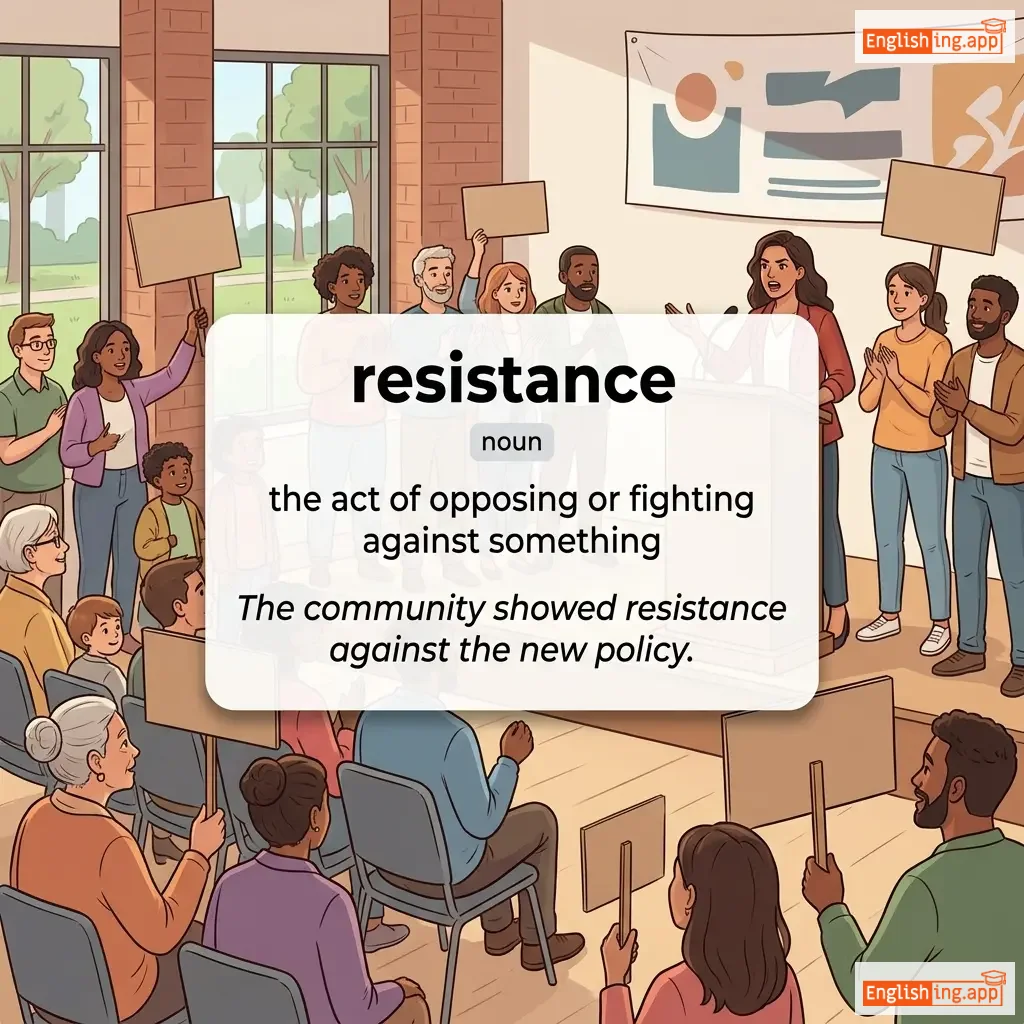
the refusal to accept or comply with something; the attempt to prevent something by action or argument; the ability not to be affected by something
••••••
|
The bacteria showed resistance to the antibiotic treatment. |
细菌对抗生素治疗表现出抵抗力。
xìjūn duì kàngshēngsù zhìliáo biǎoxiàn chū dǐkànglì.
••••••
|
- •••••• | - •••••• | - •••••• |
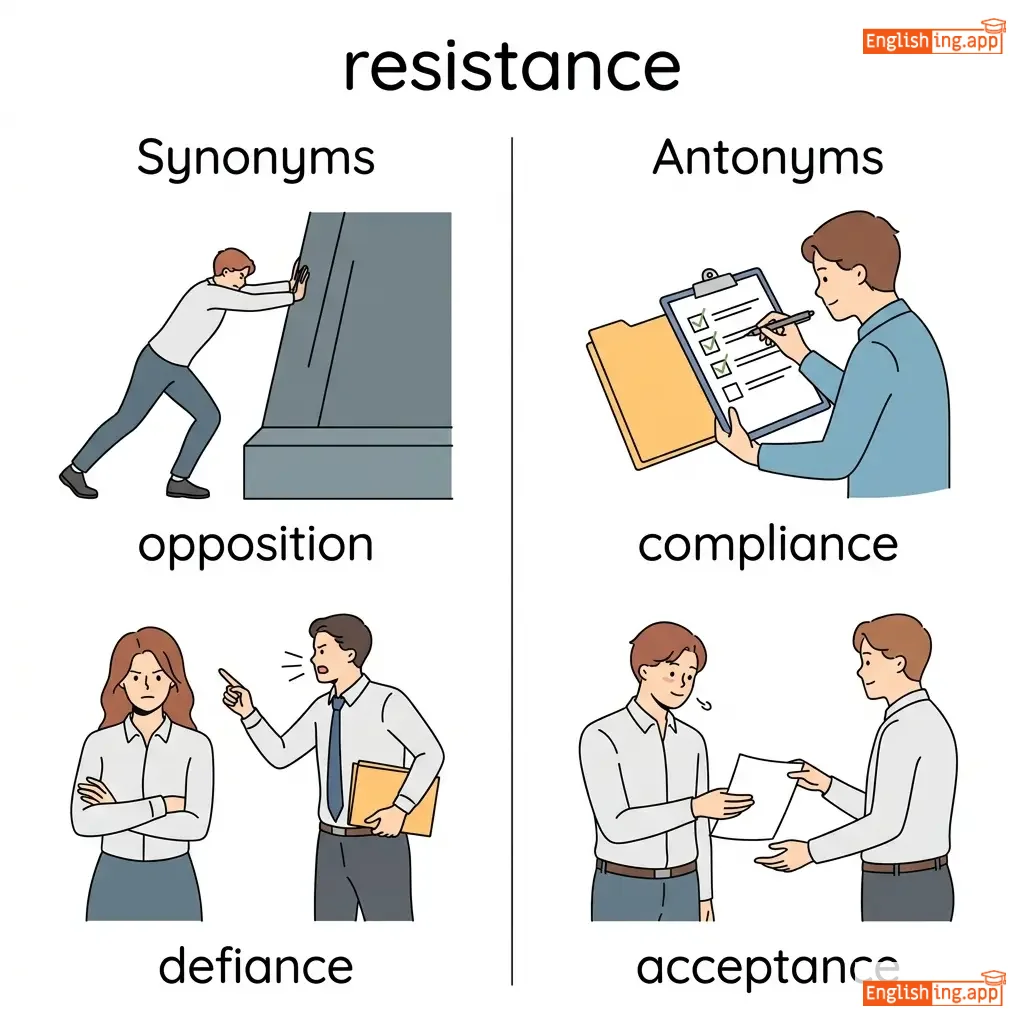
opposition, defiance, immunity, endurance
••••••
|
acceptance, compliance, submission, vulnerability
••••••
|
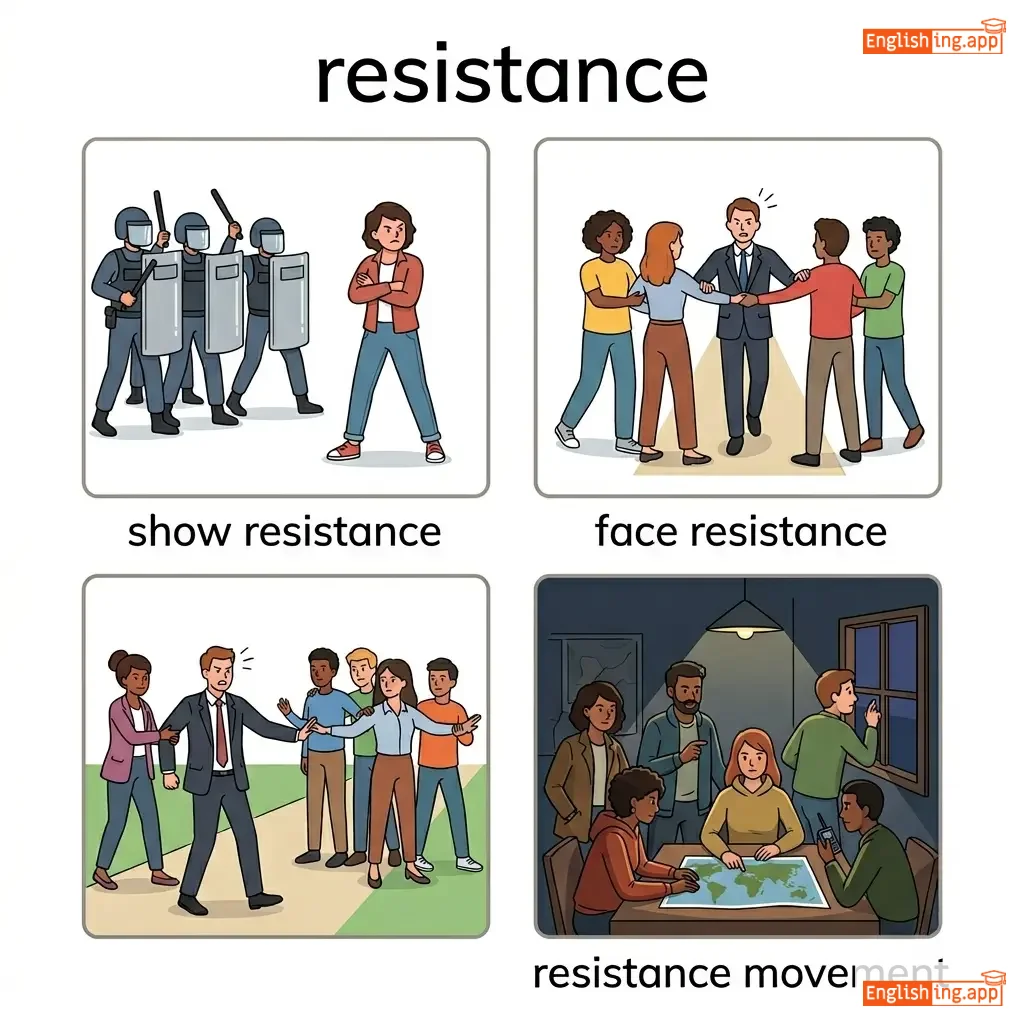
drug resistance, passive resistance, resistance movement, offer resistance
••••••
|
抵抗 (dǐkàng) means 'resist' in Chinese!
••••••
|
|
#4264
📜
|
/ˌrɛzəˈluːʃən/
noun
(rèzǒulùxùn)
••••••
|
|
决心
juexin
••••••
|
- •••••• | - •••••• | - •••••• | - •••••• |
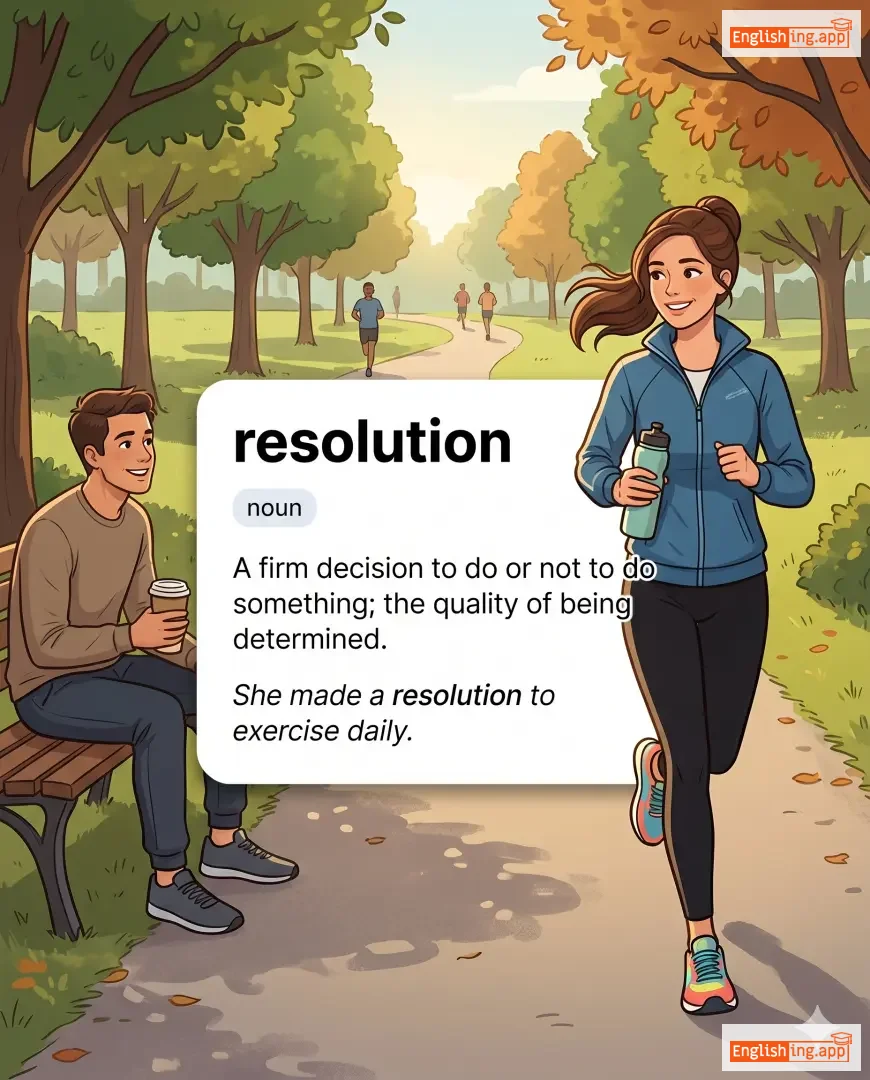
A firm decision to do or not to do something; the quality of being determined.
••••••
|
She made a resolution to exercise daily. |
她做出了每天锻炼的决心。
Tā zuòchūle měitiān duànliàn de juéxīn.
••••••
|
New Year's resolution |
A firm decision or goal set at the beginning of a new year
••••••
|
新年决心
xīnnián juéxīn
••••••
|
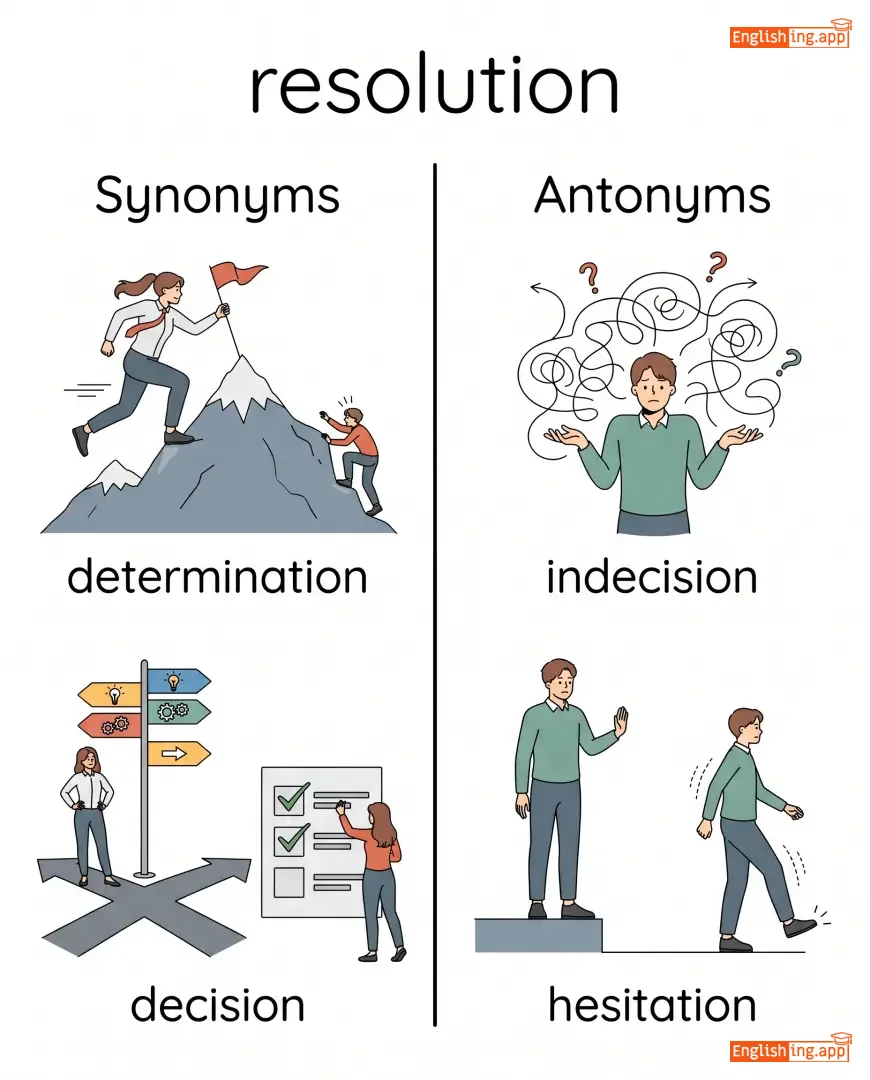
determination, decision, resolve, commitment, intention
••••••
|
indecision, hesitation, doubt
••••••
|
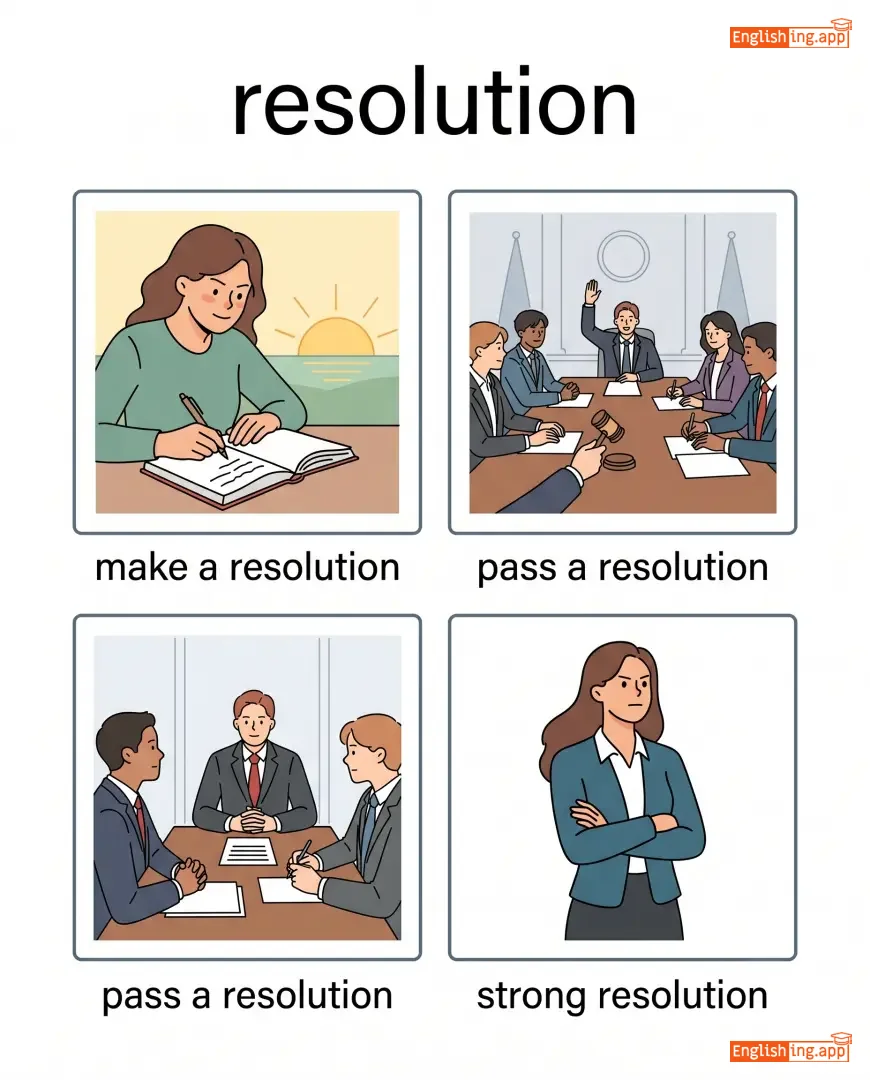
make a resolution, pass a resolution, strong resolution, resolution adopted
••••••
|
Resolution就像中文的决心,定下新年目标!
••••••
|
|
#4265
✅
|
/rɪˈzɒlv/
verb
(rízǎolv)
••••••
|
|
解决
jie jue
••••••
|
resolved
rízǎolv-d
••••••
|
resolved
rízǎolv-d
••••••
|
resolves
rízǎolv-s
••••••
|
resolving
rízǎolving
••••••
|
To decide firmly on a course of action; to settle or solve a problem.
••••••
|
They resolved to finish the project on time.
他们决定按时完成项目。
••••••
|
他们决定按时完成项目。
Tamen jueding anshi wancheng xiangmu.
••••••
|
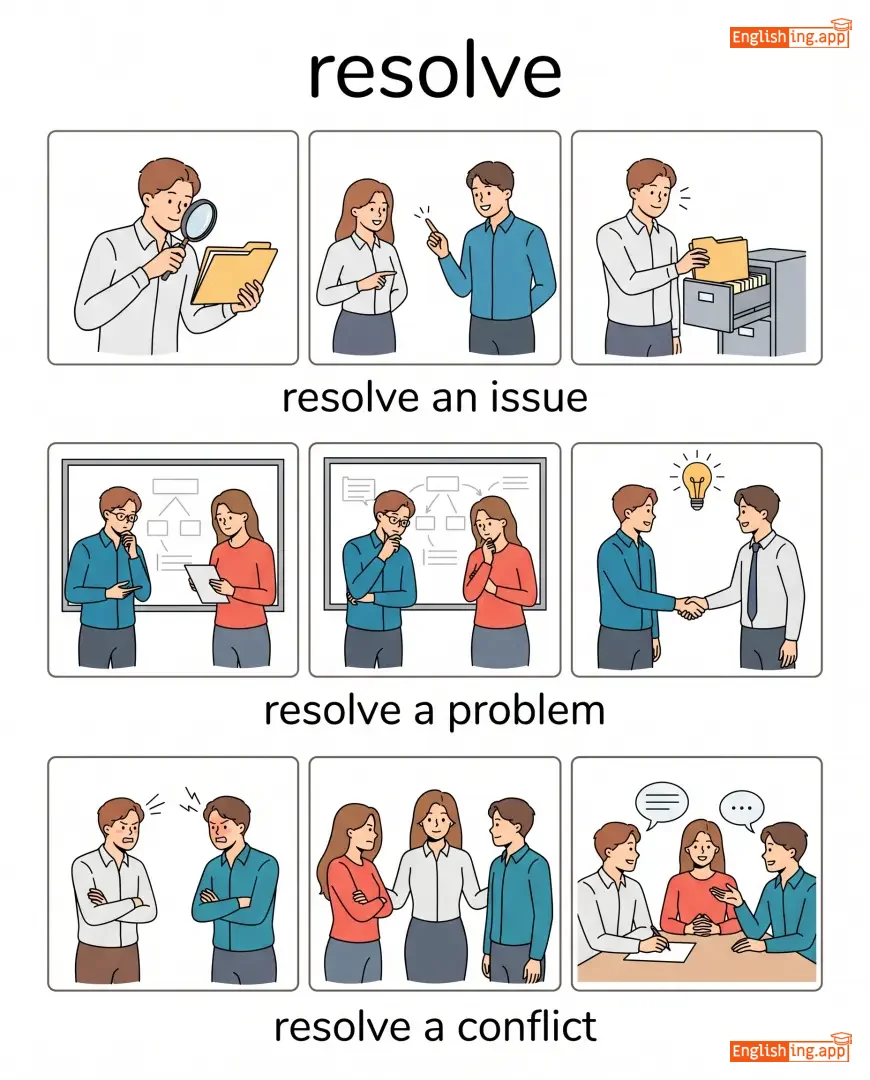
resolve a conflict
解决冲突
••••••
|
To find a solution to a disagreement
••••••
|
解决冲突
jie jue chong tu
••••••
|
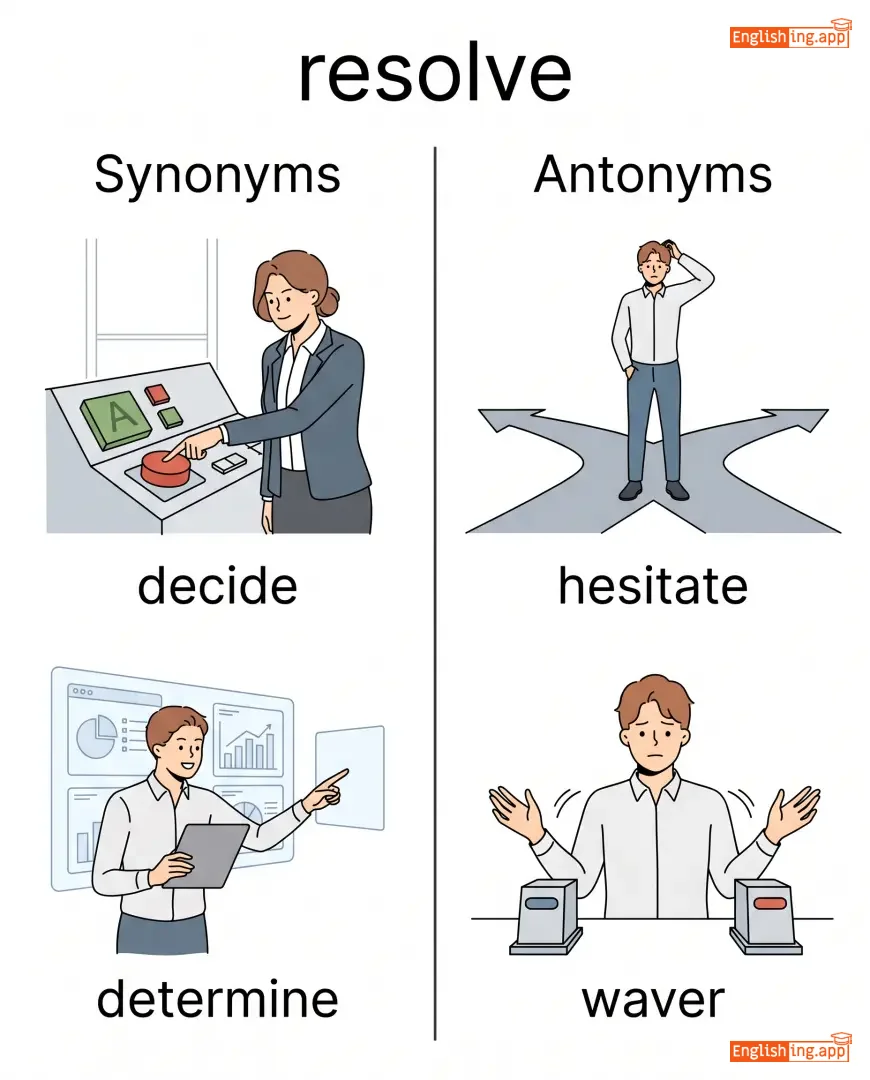
decide, determine, settle, conclude, fix
••••••
|
hesitate, waver, delay
••••••
|
resolve an issue, resolve a problem, resolve a conflict, resolve to do
••••••
|
Resolve = 解决, 就是解决一个问题。
••••••
|
Vocabulary Quiz
Test your vocabulary by matching words with their translations or meanings.
Login to take the quiz
Comments (0)
Share your thoughts and join the discussion.
Join the discussion by logging in
Login to CommentNo comments yet
Be the first to share your thoughts!