🏛️republic (rì-pù-bù-lì-kè)

noun
/rɪˈpʌblɪk/
共和国 (gongheguo)

含义

a state in which power is held by the people and their elected representatives
A state in which supreme power is held by the people and their elected representatives, with an elected or nominated president rather than a monarch.
含义翻译
一个权力由人民及其选举产生的代表掌握的国家
yi ge quanli you renmin ji qi xuanchu chan sheng de daibiaozhangwo de guojia

例句

Bangladesh is a democratic republic.

孟加拉国是一个民主的共和国。
Mèngjiālāguó shì yīgè mínzhǔ de gònghéguó.

A republic is governed by representatives of the people.

共和国由人民的代表治理。
Gongheguo you renmin de daibiaozhili.

同义词

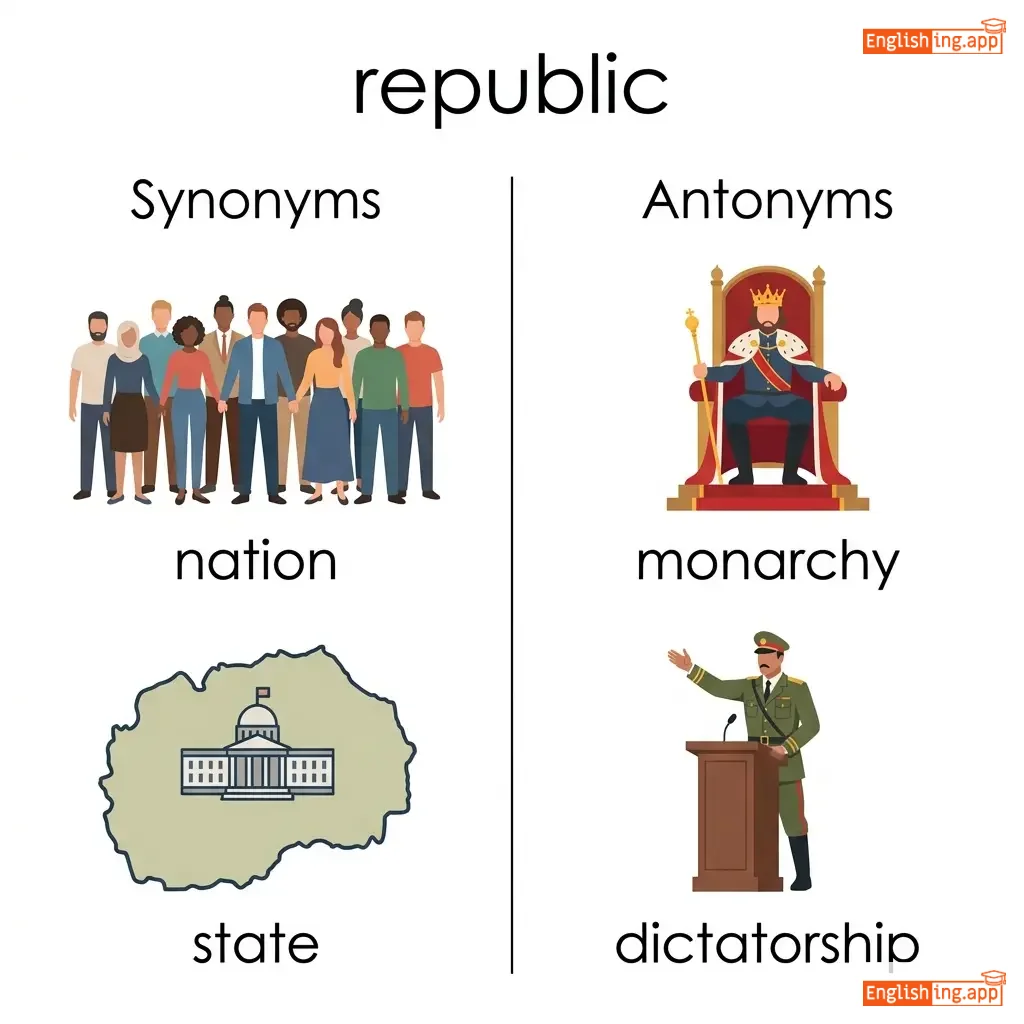
nation, state, democracy, commonwealth, federation
条目 1
nation, state, democracy, commonwealth
条目 2
democracy, state, commonwealth, federation

反义词

monarchy, dictatorship, autocracy, tyranny
条目 1
monarchy, dictatorship
条目 2
monarchy, autocracy, dictatorship, tyranny

搭配词

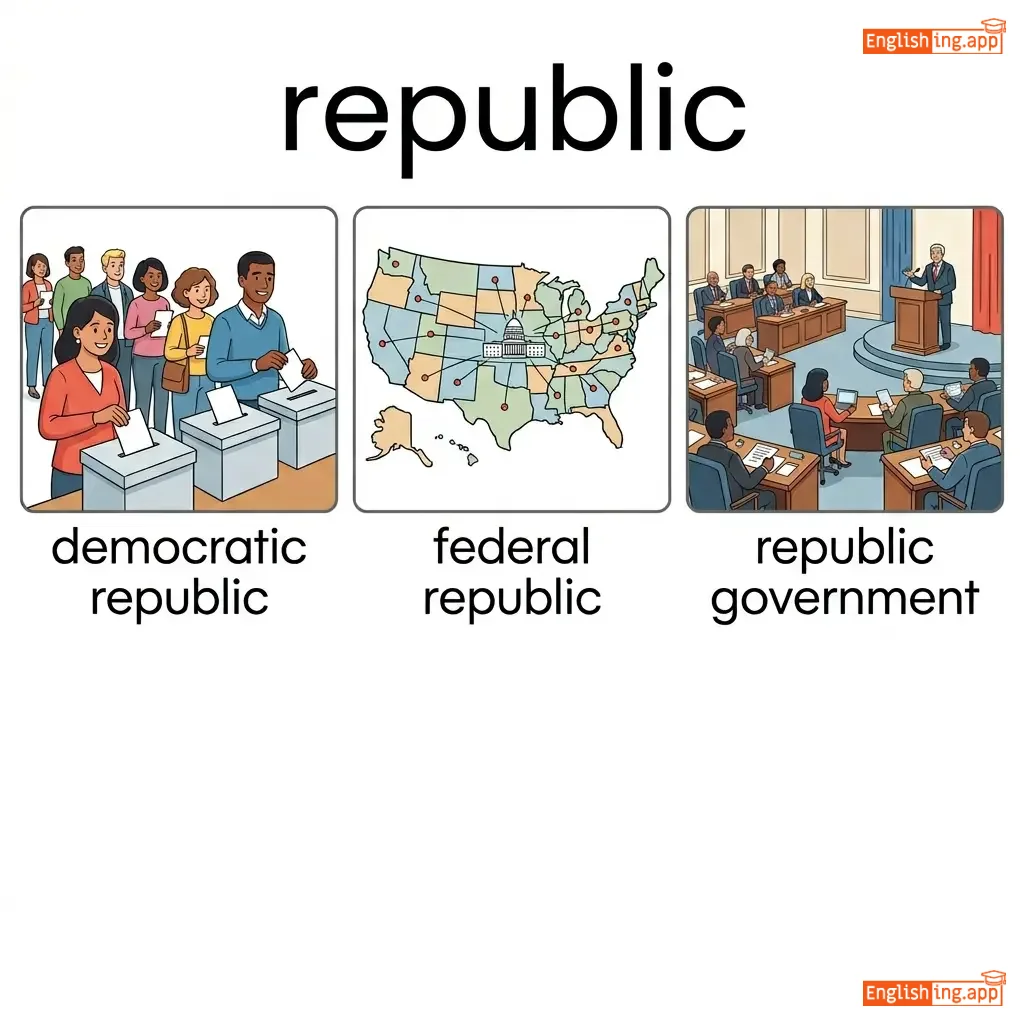
democratic republic, federal republic, republic government, republic constitution

更多例句

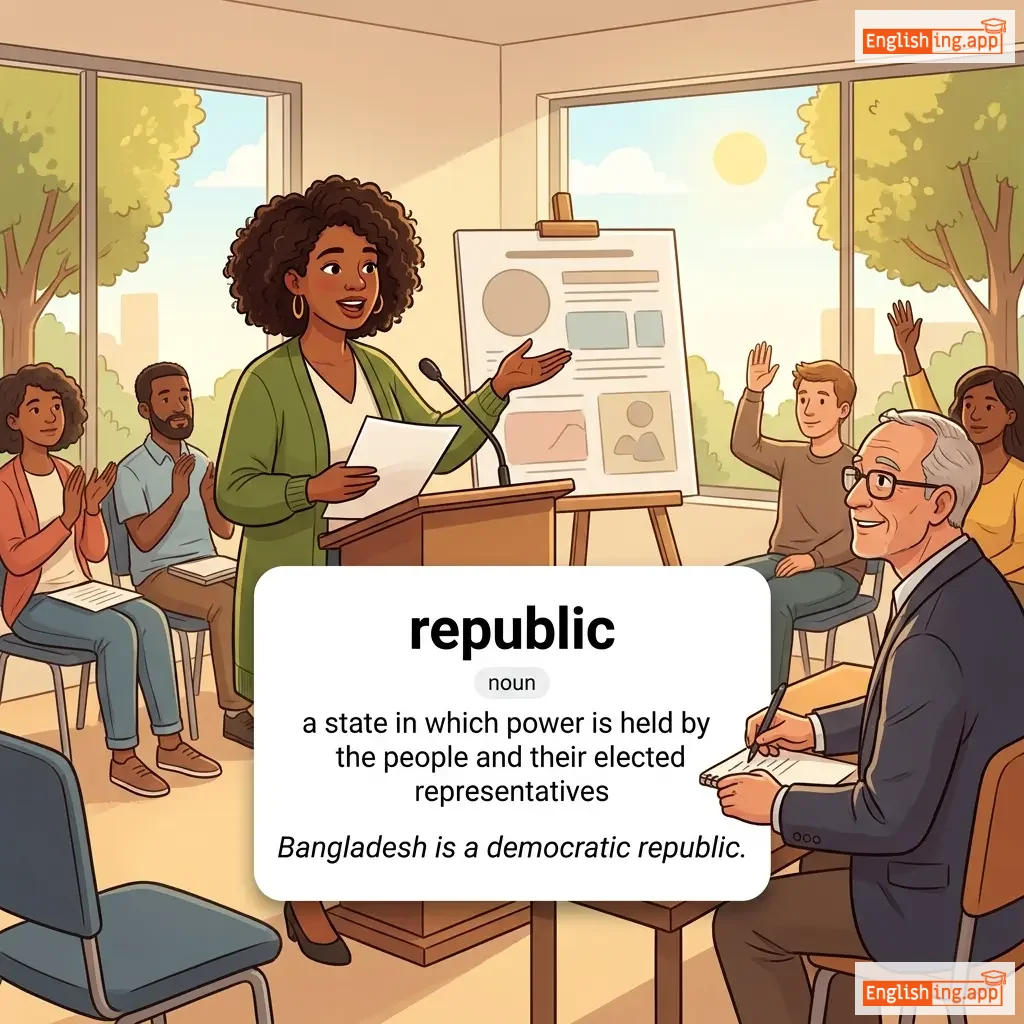
The twenty-sixth of January is Republic Day.
一月二十六日是共和国日。
Yī yuè èrshíliù rì shì gònghéguó rì.

相关词汇

A place, job, or status; the way in which someone or something is placed or arranged.
A qualified medical professional who treats illnesses and injuries.
the angular distance of a place north or south of the earth's equator; freedom to act or think
a person who temporarily transfers possession of goods or property to another under a bailment agree...
A particular way of carrying out a task, especially with skill.
a sudden, decisive action that brings about a change, especially in government

探索更多