


Swipe left or right, or use the buttons. Tap image to zoom.
例句翻译
单词
Lesson 54Lesson 54 - 遮罩切换
|
表情符号
|
单词 | Images | 翻译 | 过去时 | 过去分词 | 第三人称单数 | 动名词 | 含义 | 例句 | 例句翻译 | 示例表达 | 示例表达含义 | 示例表达翻译 | 同义词 | 反义词 | 搭配词 | 助记符 |
|---|---|---|---|---|---|---|---|---|---|---|---|---|---|---|---|---|---|
|
#2562
🎩
|
/ɪˈluːʒən/
noun
(错觉)
••••••
|
- •••••• |
错觉
cuòjué
••••••
|
- •••••• | - •••••• | - •••••• | - •••••• |
a false idea or belief; a deceptive appearance
••••••
|
The magician created the illusion of a floating woman. |
魔术师创造了一个漂浮女人的错觉。
Móshùshī chuàngzàole yīgè piāofú nǚrén de cuòjué.
••••••
|
under an illusion |
to have a false belief or impression
••••••
|
在错觉中
zài cuòjué zhōng
••••••
|
delusion, fantasy, mirage, hallucination, trick
••••••
|
reality, truth
••••••
|
create an illusion, optical illusion, under an illusion, shattered illusion
••••••
|
错觉 = '看起来对,但实际上不对的东西'.
••••••
|
|
#2563
🖼️
|
/ˈɪl.ə.streɪt/
verb
(伊卢斯特雷特)
••••••
|
- •••••• |
插图
chātú
••••••
|
illustrated
已插图
••••••
|
illustrated
已插图
••••••
|
illustrates
插图
••••••
|
illustrating
插图
••••••
|
to explain or make something clear by using examples, pictures, or comparisons
••••••
|
The teacher used diagrams to illustrate the concept.
老师用图表来说明这个概念。
••••••
|
老师用图表来说明这个概念。
Lǎoshī yòng túbiǎo lái shuōmíng zhège gàiniàn.
••••••
|
to illustrate the point
说明这一点
••••••
|
to make an idea clearer with an example
••••••
|
说明这一点
shuōmíng zhè yī diǎn
••••••
|
explain, demonstrate, clarify, depict, exemplify
••••••
|
confuse, obscure
••••••
|
illustrate clearly, illustrate example, illustrate concept
••••••
|
插图表示通过图画解释—'插图 = 用图片解释'
••••••
|
|
#2564
🖼️
|
/ˈɪmɪdʒ/
noun
(yímázhèn)
••••••
|
- •••••• |
图像
túxiàng
••••••
|
- •••••• | - •••••• | - •••••• | - •••••• |
A visual representation of something, such as a picture or likeness.
••••••
|
The magazine published a clear image of the celebrity.
杂志发布了名人的清晰图像。
••••••
|
杂志发布了名人的清晰图像。
Zázhì fābùle míngrén de qīngxī túxiàng.
••••••
|
public image
公众形象
••••••
|
the perception that people have of a person or organization
••••••
|
公众形象
gōngzhòng xíngxiàng
••••••
|
picture, photo, likeness, representation, figure
••••••
|
reality, truth
••••••
|
digital image, mental image, image quality, image editing
••••••
|
图像 = 你看到的图像,记住它!
••••••
|
|
#2565
🎨
|
/ˈɪmɪdʒəri/
noun
(yí mǐ zhì)
••••••
|
- •••••• |
意象
yixiang
••••••
|
- •••••• | - •••••• | - •••••• | - •••••• |
visually descriptive or figurative language, especially in a literary work
••••••
|
The poet's use of imagery brought the scene to life.
诗人的意象使用使场景栩栩如生。
••••••
|
诗人的意象使用使场景栩栩如生。
Shīrén de yìxiàng shǐyòng shǐ chǎngjǐng xǔxǔ rúshēng.
••••••
|
- •••••• | - •••••• | - •••••• |
pictures, symbols, representations, depictions
••••••
|
literal, plain
••••••
|
vivid imagery, rich imagery, descriptive imagery
••••••
|
把想象变成图像,图像展现在文学中。
••••••
|
|
#2566
💭
|
/ɪˈmædʒɪnəbl/
adjective
(想象得到的)
••••••
|
- •••••• |
可想象的
kě xiǎngxiàng de
••••••
|
- •••••• | - •••••• | - •••••• | - •••••• |
Capable of being imagined or conceived.
••••••
|
They offered every imaginable type of food at the festival.
他们在节日上提供了所有可以想象的食物类型。
••••••
|
他们在节日上提供了所有可以想象的食物类型。
Tāmen zài jiérì shàng tígōngle suǒyǒu kě xiǎngxiàng de shíwù lèixíng.
••••••
|
- •••••• | - •••••• | - •••••• |
conceivable, possible, thinkable, potential
••••••
|
unimaginable, inconceivable
••••••
|
every imaginable, all imaginable, imaginable situation
••••••
|
可想象的意思是可以想象的事物,比如永远不断的美食!
••••••
|
|
#2567
💭
|
/ɪˈmædʒ.ɪ.nər.i/
adjective
(想象的)
••••••
|
- •••••• |
想象的; 虚构的; 不现实的
xiangxiang de
••••••
|
- •••••• | - •••••• | - •••••• | - •••••• |
existing only in imagination; not real; fictional
••••••
|
The child had an imaginary friend who she talked to every day.
那个孩子有一个想象的朋友,每天和他说话。
••••••
|
那个孩子有一个想象的朋友,每天和他说话。
Nàgè háizi yǒu yīgè xiǎngxiàng de péngyǒu, měitiān hé tā shuōhuà.
••••••
|
- •••••• | - •••••• | - •••••• |
fictional, fantasy, make-believe, unreal
••••••
|
real, actual, concrete, tangible
••••••
|
imaginary friend, imaginary world, imaginary number
••••••
|
想象的朋友只存在于脑海中
••••••
|
|
#2568
🌈
|
/ɪˌmædʒɪˈneɪʃən/
noun
(imázhìnèishēn)
••••••
|
- •••••• |
想象力
xiǎngxiànglì
••••••
|
- •••••• | - •••••• | - •••••• | - •••••• |
The ability of the mind to create ideas or pictures not present to the senses.
••••••
|
Children often use their imagination while playing. |
孩子们在玩耍时经常使用他们的想象力。
Háizimen zài wánshuǎ shí jīngcháng shǐyòng tāmen de xiǎngxiànglì.
••••••
|
wild imagination |
an ability to think of ideas or scenarios that are unusual or unrealistic
••••••
|
丰富的想象力
fēngfù de xiǎngxiànglì
••••••
|
creativity, fantasy, vision, invention, ingenuity
••••••
|
reality, fact
••••••
|
use imagination, vivid imagination, spark imagination, fertile imagination
••••••
|
想象力 = imagination 🌈, 记住 'Image in nation' 意味着在国家中有图像,代表着想象力。
••••••
|
|
#2569
🤔
|
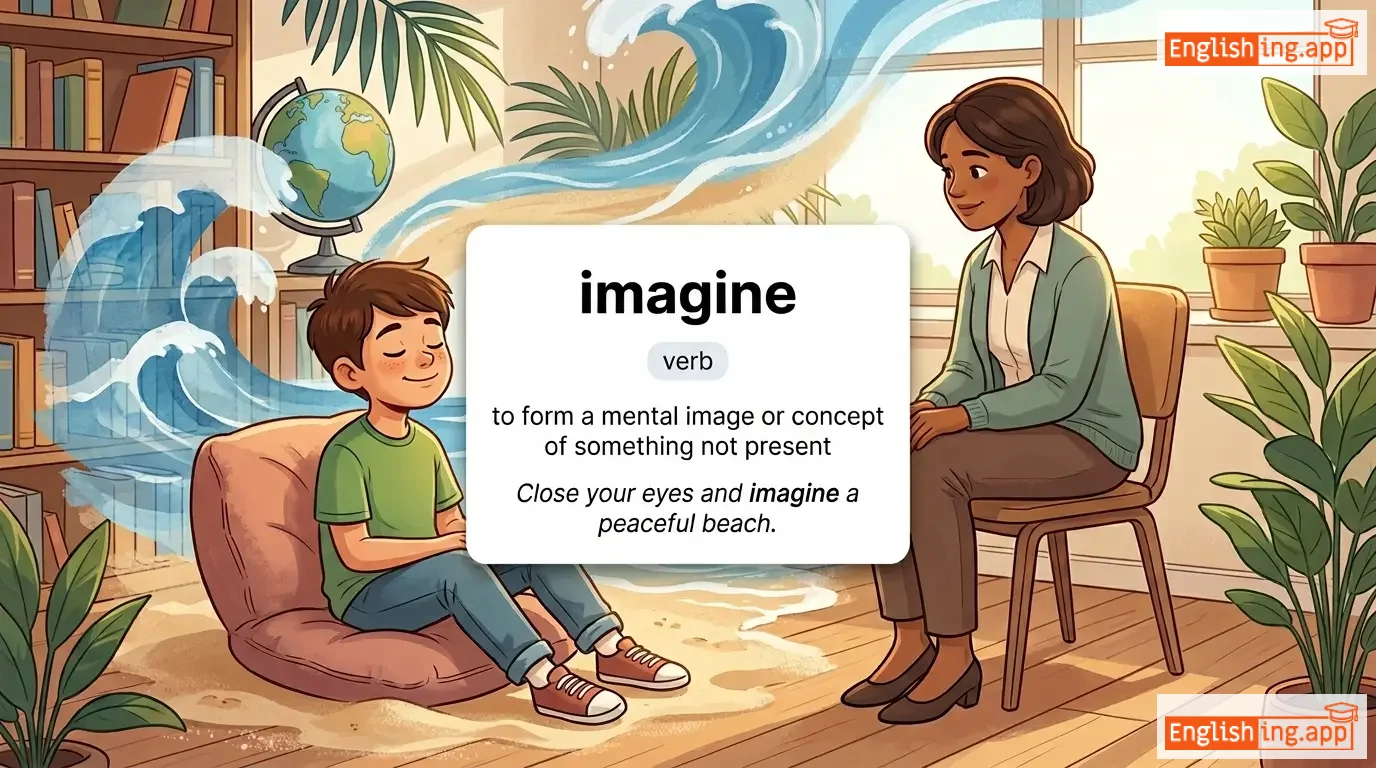
/ɪˈmædʒ.ɪn/
verb
••••••
|
|
- •••••• |
imagined
••••••
|
imagined
••••••
|
imagines
••••••
|
imagining
••••••
|
to form a mental image or concept of something not present
••••••
|
Close your eyes and imagine a peaceful beach. |
- •••••• |
imagine that |
used to express surprise or disbelief
••••••
|
- •••••• |
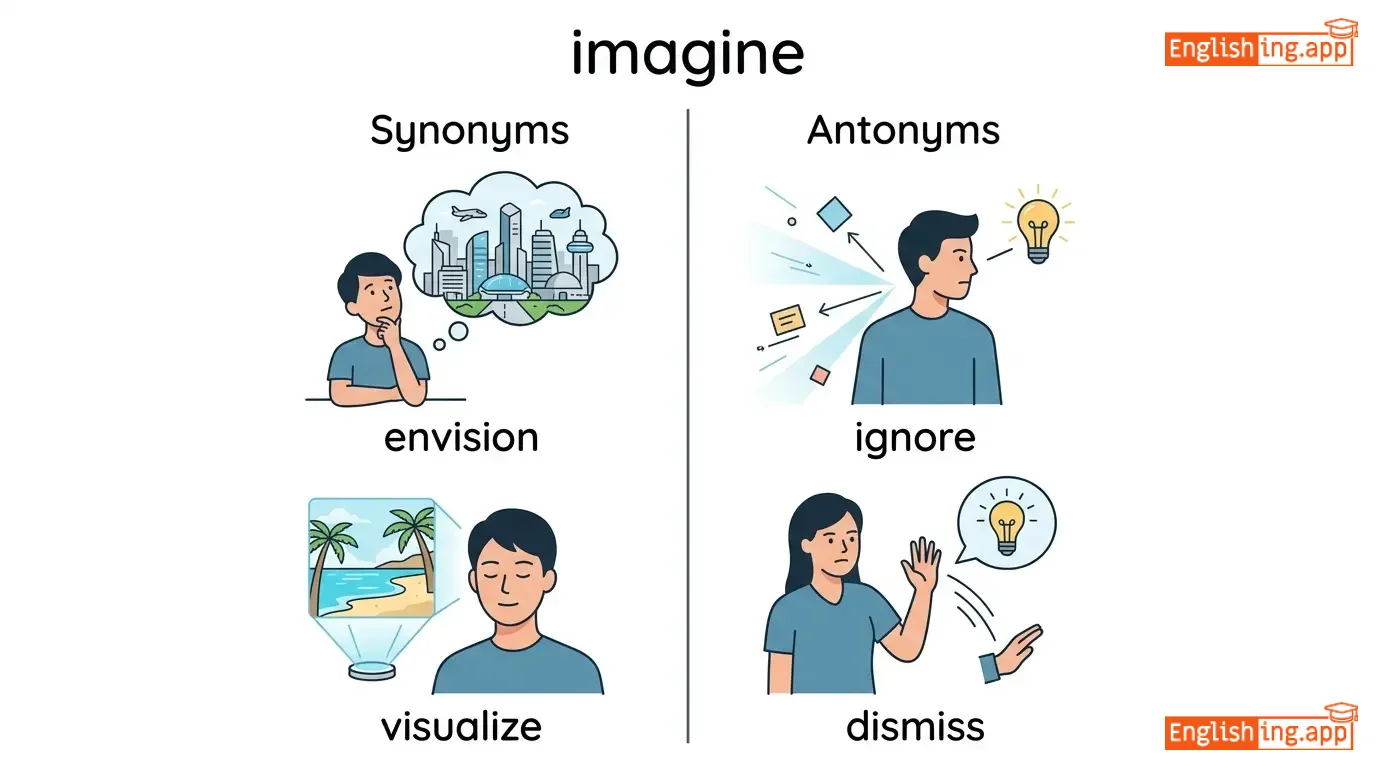
envision, visualize, picture, dream, conceive
••••••
|
ignore, dismiss
••••••
|
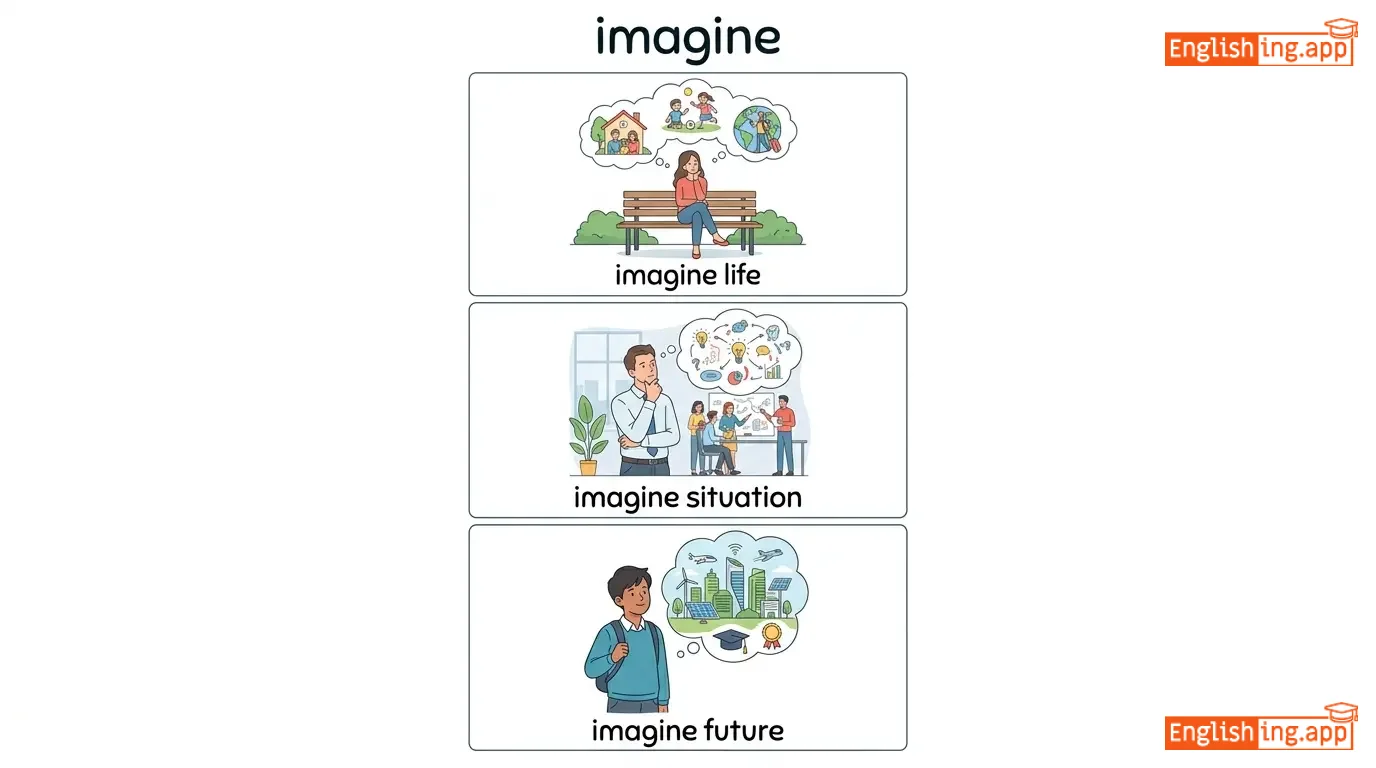
imagine life, imagine situation, imagine future
••••••
|
No •••••• |
|
#2570
⚖️
|
/ɪmˈbæləns/
noun
(yīnbàlénsī)
••••••
|
- •••••• |
不平衡
bupingheng
••••••
|
- •••••• | - •••••• | - •••••• | - •••••• |
A lack of balance; a state of inequality or disproportion.
••••••
|
The imbalance of power led to conflict. |
权力的不平衡导致了冲突。
Quanli de bupingheng daozhilu chongtu.
••••••
|
imbalance of power |
A situation where one group holds more power than another, creating inequality.
••••••
|
权力的不平衡
Quanli de bupingheng
••••••
|
disproportion, inequality, instability, disparity
••••••
|
balance, equality, stability
••••••
|
imbalance of power, trade imbalance, hormonal imbalance
••••••
|
Imbalance 意味着没有平衡 — 不平衡意味着不平等。
••••••
|
|
#2571
⚖️
|
/ˌɪməˈtɪəriəl/
adjective
(imaterial)
••••••
|
- •••••• |
无关紧要
wuguan jinyao
••••••
|
- •••••• | - •••••• | - •••••• | - •••••• |
Not important or relevant; lacking physical substance.
••••••
|
The judge ruled that the argument was immaterial to the case.
法官裁定,该论点与案件无关。
••••••
|
法官裁定,该论点与案件无关。
Faguancaiding, gai lundian yu anjian wuguan.
••••••
|
- •••••• | - •••••• | - •••••• |
irrelevant, insignificant, unimportant, trivial, inconsequential
••••••
|
relevant, significant, important
••••••
|
immaterial fact, immaterial issue, immaterial evidence, considered immaterial
••••••
|
Im + Material 意味着 '没有物质' → 所以与案件无关
••••••
|
|
#2572
🧒
|
/ɪˈmætʃʊr/
adjective
(不成熟)
••••••
|
- •••••• |
不成熟; 未完全发展; 幼稚
bù chéngshú; wèi wánquán fāzhǎn; yòuzhì
••••••
|
- •••••• | - •••••• | - •••••• | - •••••• |
not fully developed; lacking emotional or intellectual development; childish
••••••
|
His immature behavior during the meeting disappointed everyone.
他在会议中的不成熟行为让大家都很失望。
••••••
|
他在会议中的不成熟行为让大家都很失望。
tā zài huìyì zhōng de bù chéngshú xíngwéi ràng dàjiā dōu hěn shīwàng
••••••
|
- •••••• | - •••••• | - •••••• |
childish, juvenile, undeveloped, infantile
••••••
|
mature, developed, adult, sophisticated
••••••
|
immature behavior, emotionally immature, immature attitude
••••••
|
不成熟的行为就像孩子在会议中的表现。
••••••
|
|
#2573
🧒
|
/ˌɪməˈtjʊərəti/
noun
(伊马丘瑞提)
••••••
|
- •••••• |
不成熟
bu chengshu
••••••
|
- •••••• | - •••••• | - •••••• | - •••••• |
the state of not being fully developed emotionally, mentally, or physically; lack of maturity
••••••
|
His immaturity made it difficult for him to handle responsibility.
His immaturity made it difficult for him to handle responsibility.
••••••
|
他的不成熟让他难以承担责任。
ta de bu chengshu rang ta nanyi chengdan zeren
••••••
|
emotional immaturity
emotional immaturity
••••••
|
lack of emotional development or control
••••••
|
情感不成熟
qinggan bu chengshu
••••••
|
childishness, naivety, juvenility, irresponsibility
••••••
|
maturity, adulthood, wisdom
••••••
|
emotional immaturity, mental immaturity, signs of immaturity, display immaturity
••••••
|
不成熟 = immature = immaturity
••••••
|
|
#2574
∞
|
/ɪˈmeʒərəbəl/
adjective
(伊美瑟拉布尔)
••••••
|
- •••••• |
不可测量的
immeasurable
••••••
|
- •••••• | - •••••• | - •••••• | - •••••• |
too large or extensive to measure; boundless
••••••
|
The immeasurable love of a mother knows no bounds.
母亲那无可估量的爱没有边界。
••••••
|
母亲那无可估量的爱没有边界。
muqin na wuke guliang de ai meiyou bianjie
••••••
|
- •••••• | - •••••• | - •••••• |
infinite, boundless, limitless, vast
••••••
|
measurable, limited, finite, bounded
••••••
|
immeasurable joy, immeasurable wealth, immeasurable distance
••••••
|
I M MEAS URE ABLE 记成 I am 母亲 的 爱 无 边界
••••••
|
|
#2575
⚡
|
/ɪˈmiːdiət/
adjective
(即时)
••••••
|
- •••••• |
即时
jíshí
••••••
|
- •••••• | - •••••• | - •••••• | - •••••• |
happening or done without delay
••••••
|
The doctor gave her immediate attention.
医生给了她即时的关注。
••••••
|
医生给了她即时的关注。
Yīshēng gěile tā jíshí de guānzhù.
••••••
|
in the immediate future
在近期未来
••••••
|
very soon, without delay
••••••
|
在近期未来
zài jìnqī wèilái
••••••
|
instant, prompt, direct, urgent, swift
••••••
|
delayed, gradual, postponed
••••••
|
immediate action, immediate effect, immediate response, immediate family
••••••
|
即时意味着立刻 ⚡ 就像 '立刻现在!'
••••••
|
|
#2576
⚡
|
/ɪˈmiːdiətli/
adverb
(immediately)
••••••
|
- •••••• |
立即
lìjí
••••••
|
- •••••• | - •••••• | - •••••• | - •••••• |
at once; without delay
••••••
|
She responded immediately to the emergency call. |
她立即响应了紧急电话。
Tā lìjí xiǎngyìngle jǐnjí diànhuà.
••••••
|
immediately after |
right after something happens
••••••
|
立即之后
lìjí zhīhòu
••••••
|
instantly, promptly, directly, quickly, right away
••••••
|
later, eventually, afterward
••••••
|
respond immediately, happen immediately, immediately after, immediately before
••••••
|
立即表示立刻做某事,例如立即回应电话。
••••••
|
|
#2577
🏔️
|
/ɪˈmens/
adjective
(yīmián)
••••••
|
- •••••• |
巨大的; 庞大的; 无限大的
jùdà de; pángdà de; wúxiàn dà de
••••••
|
- •••••• | - •••••• | - •••••• | - •••••• |
extremely large or great; huge
••••••
|
The immense mountain range stretched across the horizon. |
那座巨大的山脉横跨了地平线。
Nàzuò jùdà de shānmài héngkuàle dìpíngxiàn.
••••••
|
- •••••• | - •••••• | - •••••• |
huge, enormous, vast, colossal
••••••
|
tiny, small, minute, insignificant
••••••
|
immense pressure, immense wealth, immense popularity
••••••
|
一颗巨大的幸福星落在了我身边。
••••••
|
|
#2578
🧳
|
/ˈɪmɪɡrənt/
noun
(移民)
••••••
|
- •••••• |
移民
yímín
••••••
|
- •••••• | - •••••• | - •••••• | - •••••• |
a person who comes to live permanently in a foreign country
••••••
|
The city has welcomed many new immigrants this year. |
今年这座城市接纳了许多新的移民。
Jīnnián zhè zuò chéngshì jiēnàle xǔduō xīn de yímín.
••••••
|
- •••••• | - •••••• | - •••••• |
settler, newcomer, migrant, expatriate
••••••
|
native, local
••••••
|
illegal immigrant, immigrant community, immigrant worker, immigrant family
••••••
|
Immigrant 意味着移民,想象' in my grant' – 通过获得资助移居国外。
••••••
|
|
#2579
🛂
|
/ˌɪmɪˈɡreɪʃən/
noun
(移民)
••••••
|
- •••••• |
移民
yímín
••••••
|
- •••••• | - •••••• | - •••••• | - •••••• |
the action of coming to live permanently in a foreign country
••••••
|
Immigration policies vary from country to country.
移民政策因国家而异。
••••••
|
移民政策因国家而异。
Yímín zhèngcè yīn guójiā ér yì.
••••••
|
illegal immigration
非法移民
••••••
|
the act of entering a country without legal permission
••••••
|
非法移民
fēifǎ yímín
••••••
|
migration, settlement, relocation, entry
••••••
|
emigration, deportation
••••••
|
immigration policy, immigration law, illegal immigration, mass immigration
••••••
|
移民即 '移' + '民' - 迁往另一个国家.
••••••
|
|
#2580
⚡
|
/ˈɪmɪnənt/
adjective
(伊米嫩特)
••••••
|
- •••••• |
即将
jí jiāng
••••••
|
- •••••• | - •••••• | - •••••• | - •••••• |
About to happen; likely to occur very soon.
••••••
|
Dark clouds signaled that a storm was imminent.
乌云预示着暴风雨即将来临。
••••••
|
乌云预示着暴风雨即将来临。
Wū yún yù shì zhe bào fēng yǔ jí jiāng lái lín.
••••••
|
imminent danger
迫在眉睫的危险
••••••
|
A threat or risk that is about to happen very soon.
••••••
|
迫在眉睫的危险
pò zài méi jié de wēi xiǎn
••••••
|
forthcoming, approaching, looming, impending, near
••••••
|
distant, remote, unlikely
••••••
|
imminent threat, imminent arrival, imminent danger, imminent change
••••••
|
Imminent 就是即将发生 - 就像是即将来临的危险。
••••••
|
|
#2581
🪑
|
/ɪˈmoʊbəl/
adjective
(伊莫拜尔)
••••••
|
- •••••• |
无法移动
wufadian dong
••••••
|
- •••••• | - •••••• | - •••••• | - •••••• |
unable to move or be moved
••••••
|
After the accident, he was immobile for weeks. |
事故发生后,他几周都无法移动。
Shigu fasheng hou, ta ji zhou dou wufa yidong.
••••••
|
- •••••• | - •••••• | - •••••• |
motionless, still, stationary, inactive
••••••
|
mobile, moving, active
••••••
|
remain immobile, immobile state, completely immobile, become immobile
••••••
|
Mobile意味着可以移动,imobile意味着不能移动。 🪑
••••••
|
|
#2582
😏
|
/ɪˈmɒdɪst/
adjective
(不谦虚)
••••••
|
- •••••• |
傲慢 / 不得体
aoman / bude ti
••••••
|
- •••••• | - •••••• | - •••••• | - •••••• |
lacking humility or decency; excessively proud or improper
••••••
|
His immodest remarks offended the audience. |
他的傲慢言辞冒犯了观众。
Tā de àomàn yáncí màofànle guānzhòng.
••••••
|
- •••••• | - •••••• | - •••••• |
arrogant, boastful, indecent, shameless
••••••
|
modest, humble, decent
••••••
|
immodest behavior, immodest dress, immodest remarks, immodest attitude
••••••
|
Immodest = 不谦虚 = 骄傲
••••••
|
|
#2583
🙈
|
/ɪˈmɒdəsti/
noun
(伊莫德斯蒂)
••••••
|
- •••••• |
不谦逊
bu qianxun
••••••
|
- •••••• | - •••••• | - •••••• | - •••••• |
lack of modesty or decency; behavior or attitude that is overly bold or improper
••••••
|
The article was criticized for its tone of immodesty.
泽 阿提克尔 沃兹 克里提赛兹德 佛 伊茨 托恩 阿夫 伊莫德斯蒂。
••••••
|
这篇文章因其不谦逊的语气而受到批评。
zhe pian wenzhang yin qi bu qianxun de yuqi er shoudao piping
••••••
|
- •••••• | - •••••• | - •••••• |
indecency, shamelessness, boldness, impropriety
••••••
|
modesty, decency, humility
••••••
|
act of immodesty, charge of immodesty, perceived immodesty, social immodesty
••••••
|
im = 不 + modesty = 谦逊 → 不谦逊
••••••
|
|
#2584
🚫
|
/ɪˈmɒrəl/
adjective
(imóruò)
••••••
|
- •••••• |
不道德的
budàodé de
••••••
|
- •••••• | - •••••• | - •••••• | - •••••• |
Not conforming to accepted standards of morality; unethical or wicked.
••••••
|
He was fired for his immoral behavior. |
他因不道德的行为被解雇了。
Tā yīn bù dàodé de xíngwéi bèi jiěgù le.
••••••
|
immoral act |
An action that is considered wrong or unethical.
••••••
|
不道德行为
bù dàodé xíngwéi
••••••
|
unethical, wicked, corrupt, sinful
••••••
|
moral, virtuous, ethical
••••••
|
immoral behavior, immoral act, immoral lifestyle, immoral conduct
••••••
|
道德意味着伦理,不道德意味着相反。容易记住。
••••••
|
|
#2585
⚠️
|
/ˌɪməˈrælɪti/
noun
(伊莫拉利蒂)
••••••
|
- •••••• |
不道德
bu daode
••••••
|
- •••••• | - •••••• | - •••••• | - •••••• |
the quality of being immoral; behavior that violates accepted moral standards
••••••
|
The community condemned the immorality of the corrupt officials.
泽 科缪尼蒂 康德姆德 泽 伊莫拉利蒂 奥夫 泽 科拉普特 奥菲舍尔斯
••••••
|
社会谴责了腐败官员的不道德行为。
Shehui qianze le fubai guanyuan de bu daode xingwei
••••••
|
- •••••• | - •••••• | - •••••• |
corruption, depravity, wickedness, vice, unethicality
••••••
|
morality, virtue, righteousness
••••••
|
moral immorality, sexual immorality, public immorality, social immorality
••••••
|
不 (not) + 道德 (moral) = 不道德
••••••
|
|
#2586
♾️
|
/ɪˈmɔːrtl/
adjective; noun
(伊莫托)
••••••
|
- •••••• |
不朽的
buxiu de
••••••
|
- •••••• | - •••••• | - •••••• | - •••••• |
living forever; never dying; lasting forever in fame or memory
••••••
|
Legends often describe heroes as immortal beings who never die.
传说中英雄是伊莫托的存在。
••••••
|
传说中英雄是不朽的存在。
chuanshuo zhong yingxiong shi buxiu de cunzai
••••••
|
immortal fame
不朽的名声
••••••
|
fame that lasts forever
••••••
|
不朽的名声
buxiu de mingsheng
••••••
|
eternal, everlasting, undying, deathless, perennial
••••••
|
mortal, perishable, transient
••••••
|
immortal soul, immortal being, immortal fame, immortal legend
••••••
|
不朽 = 不会朽坏
••••••
|
|
#2587
♾️
|
/ˌɪmɔːrˈtæləti/
noun
(伊莫泰利蒂)
••••••
|
- •••••• |
不朽
buxiu
••••••
|
- •••••• | - •••••• | - •••••• | - •••••• |
the state of living forever; eternal life or lasting fame beyond death
••••••
|
Many ancient cultures believed that heroes could achieve immortality through great deeds.
many ancient cultures believed that heroes could achieve immortality through great deeds
••••••
|
许多古代文化相信英雄可以通过伟大的事迹获得不朽。
xuduo gudai wenhua xiangxin yingxiong keyi tongguo weida de shiji huode buxiu
••••••
|
immortality of the soul
immortality of the soul
••••••
|
the belief that the soul lives forever after the body dies
••••••
|
灵魂不朽
linghun buxiu
••••••
|
eternity, eternal life, endlessness, imperishability, perpetuity
••••••
|
mortality, death, perishability
••••••
|
seek immortality, achieve immortality, promise immortality, spiritual immortality
••••••
|
不死 = 不朽 → immortality
••••••
|
|
#2588
🛡️
|
/ɪˈmjuːn/
adjective
(免疫)
••••••
|
- •••••• |
免疫的
mianyi de
••••••
|
- •••••• | - •••••• | - •••••• | - •••••• |
protected from disease or from the effects of something
••••••
|
Children who are vaccinated are immune to many diseases. |
接种疫苗的孩子对许多疾病免疫。
Jiezhong yimiao de haizi dui xuduo jibing mianyi.
••••••
|
immune to criticism |
not affected by criticism
••••••
|
免疫于批评
mianyi yu piping
••••••
|
resistant, protected, safe, shielded
••••••
|
vulnerable, susceptible
••••••
|
immune system, immune response, immune to, immune deficiency
••••••
|
免疫就像盾牌一样保护我们免受疾病影响。
••••••
|
|
#2589
💥
|
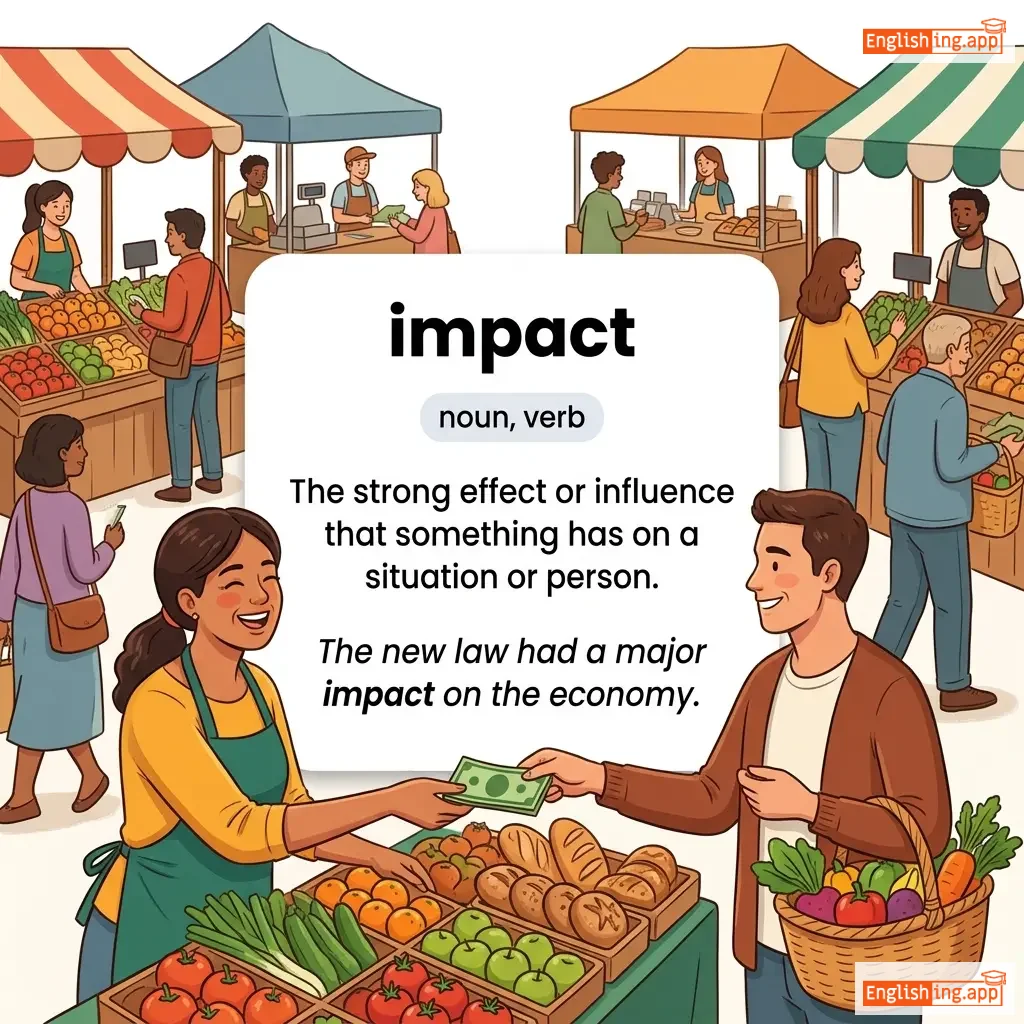
/ˈɪmpækt/
noun, verb
(影响)
••••••
|
|
影响
yingxiang
••••••
|
impacted
影响了
••••••
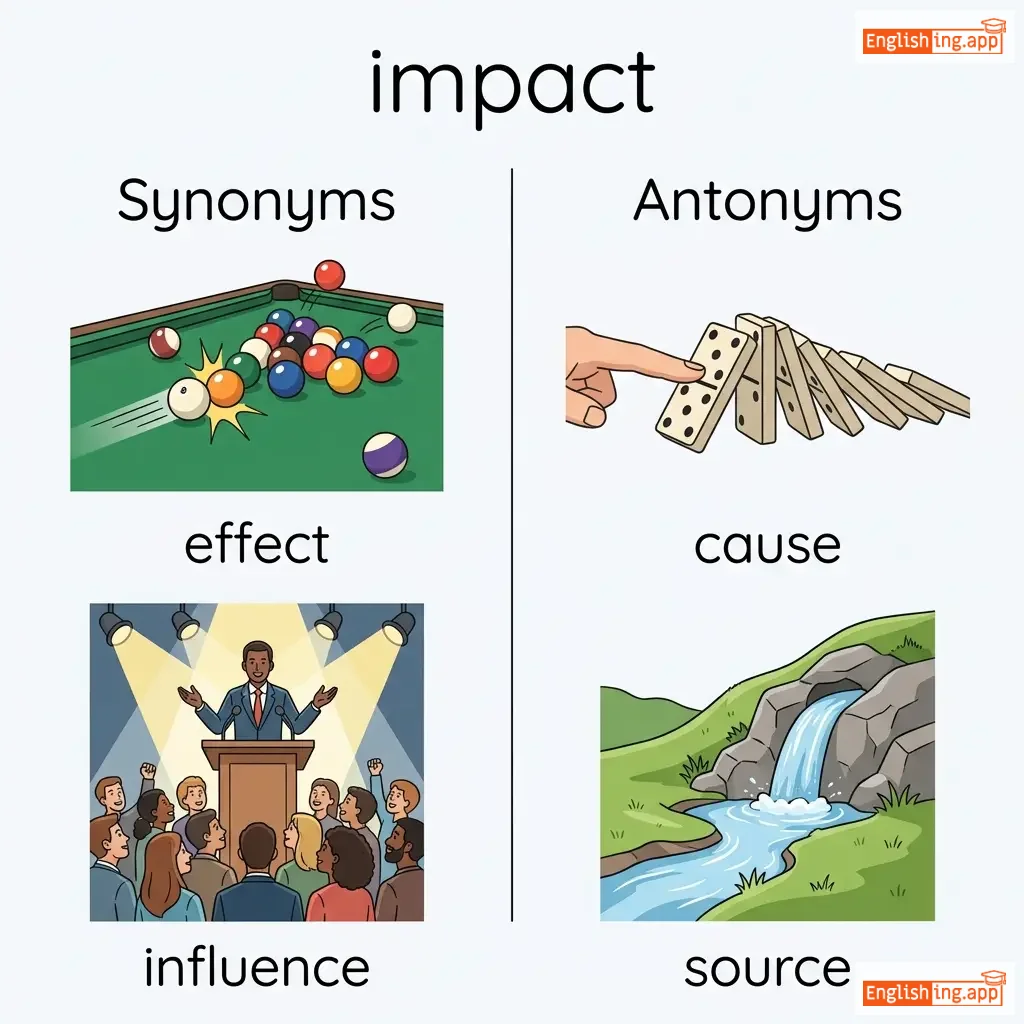
|
impacted
影响了
••••••
|
impacts
影响
••••••
|
impacting
影响着
••••••
|
The strong effect or influence that something has on a situation or person.
••••••
|
The new law had a major impact on the economy.
新法律对经济产生了重大影响。
••••••
|
新法律对经济产生了重大影响。
Xin falu dui jingji chansheng le zhongda yingxiang.
••••••
|
make an impact
产生影响
••••••
|
To have a strong effect or impression on someone or something.
••••••
|
产生影响
Chansheng yingxiang
••••••
|
effect, influence, impression, shock, consequence
••••••
|
cause, source
••••••
|
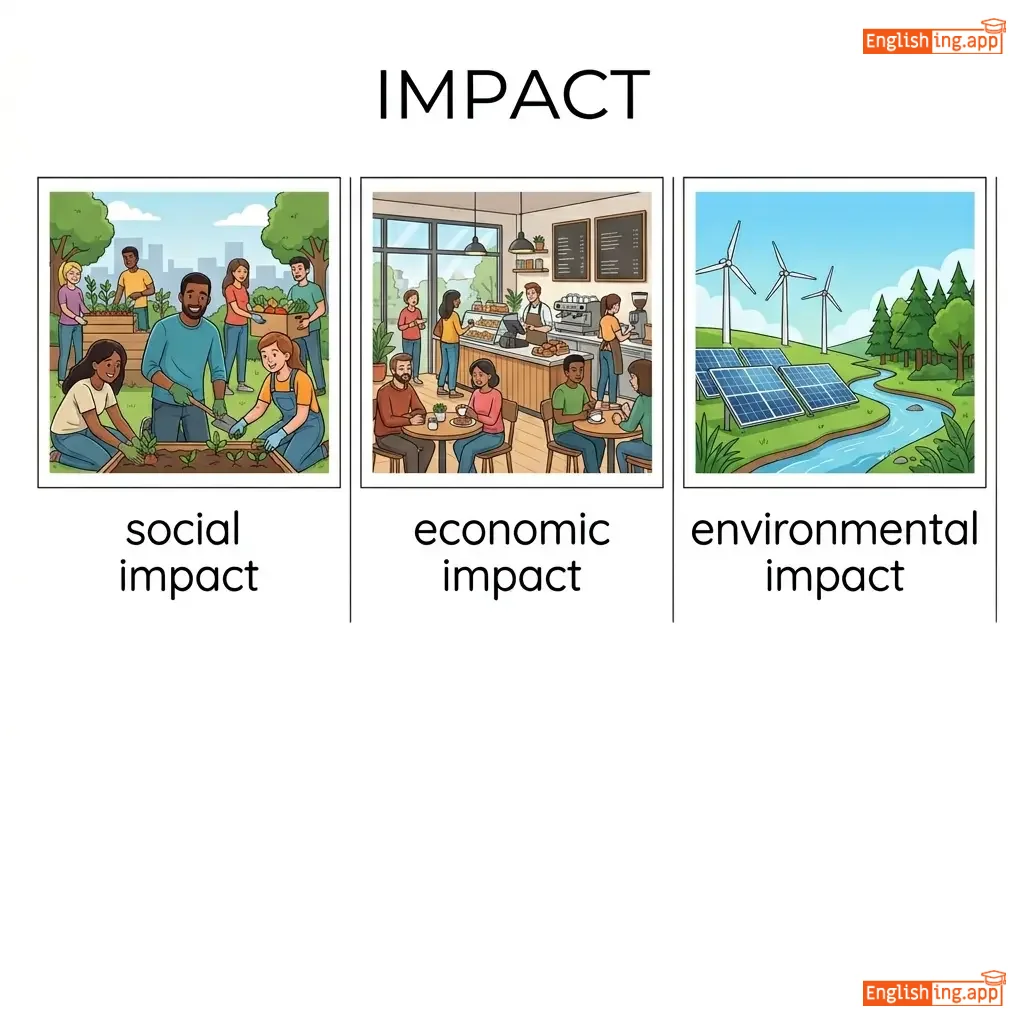
social impact, economic impact, environmental impact, significant impact
••••••
|
Impact的中文是影响,像一股强大的力量改变了周围的一切。
••••••
|
|
#2590
⚖️
|
/ɪmˈpɑːrʃəl/
adjective
(impartial)
••••••
|
- •••••• |
公正的; 中立的
gongzheng de; zhongli de
••••••
|
- •••••• | - •••••• | - •••••• | - •••••• |
treating all sides fairly; unbiased; neutral
••••••
|
A good judge must remain impartial throughout the trial.
一个好的法官必须在整个审判过程中保持公正。
••••••
|
一个好的法官必须在整个审判过程中保持公正。
Yīgè hǎo de fǎguān bìxū zài zhěnggè shěnpàn guòchéng zhōng bǎochí gōngzhèng.
••••••
|
- •••••• | - •••••• | - •••••• |
neutral, unbiased, fair, objective
••••••
|
biased, partial, prejudiced, unfair
••••••
|
impartial judge, impartial observer, impartial decision
••••••
|
公正的法官保持中立,无偏见。
••••••
|
|
#2591
⏳
|
/ɪmˈpeɪʃəns/
noun
(inpeishens)
••••••
|
- •••••• |
不耐烦
bunai fan
••••••
|
- •••••• | - •••••• | - •••••• | - •••••• |
The state of being quickly irritated or unable to wait calmly.
••••••
|
His impatience grew as the meeting dragged on. |
随着会议的拖延,他的不耐烦愈加明显。
Sui zhe huiyi de tuoyan, ta de bunai fan yujia mingxian.
••••••
|
lose patience |
to become annoyed or unable to tolerate something any longer
••••••
|
失去耐心
shi qu nai xin
••••••
|
restlessness, irritation, eagerness, frustration
••••••
|
patience, calmness, composure
••••••
|
show impatience, grow in impatience, with impatience
••••••
|
Im-Patience = 没有耐心,意味着不耐烦
••••••
|
|
#2592
⏳
|
/ɪmˈpeɪʃənt/
adjective
(yīmǔpèi xīntī)
••••••
|
- •••••• |
不耐烦
bù nài fán
••••••
|
- •••••• | - •••••• | - •••••• | - •••••• |
Not able to wait calmly; restless and eager for something to happen.
••••••
|
She grew impatient while waiting in the long queue.
她在长队中等得不耐烦。
••••••
|
她在长队中等得不耐烦。
tā zài cháng duì zhōng děng dé bù nài fán.
••••••
|
impatient to do something
不耐烦做某事
••••••
|
Eager and restless to start doing something quickly.
••••••
|
不耐烦做某事
bù nài fán zuò mǒu shì
••••••
|
restless, eager, anxious, irritable, hasty
••••••
|
patient, calm, tolerant
••••••
|
be impatient, sound impatient, impatient look, impatient sigh
••••••
|
Impatient 意思是不耐烦,想象你在不停地看时间,等得不耐烦。
••••••
|
|
#2593
⏳
|
/ɪmˈpeɪʃəntli/
adverb
(因佩申特里)
••••••
|
- •••••• |
不耐烦地
bu naifan de
••••••
|
- •••••• | - •••••• | - •••••• | - •••••• |
in a manner showing annoyance or restlessness due to delay or waiting
••••••
|
She tapped her fingers impatiently while waiting for the reply.
她在等待回复时因佩申特里地敲着手指。
••••••
|
她在等回复时不耐烦地敲着手指。
ta zai deng huifu shi bu naifan de qiaozhe shouzhi
••••••
|
- •••••• | - •••••• | - •••••• |
restlessly, anxiously, irritably, hastily, eagerly
••••••
|
patiently, calmly, placidly
••••••
|
wait impatiently, look impatiently, tap impatiently, speak impatiently
••••••
|
impatiently = 没有耐心 → 不耐烦地
••••••
|
|
#2594
🌱
|
/ɪmˈpɜːrfɪkt/
adjective
(不完美)
••••••
|
- •••••• |
不完美
bù wánměi
••••••
|
- •••••• | - •••••• | - •••••• | - •••••• |
Not perfect; having faults or flaws.
••••••
|
The painting was beautiful despite being imperfect.
这幅画很美,尽管它不完美。
••••••
|
这幅画很美,尽管它不完美。
Zhè fú huà hěn měi, jǐnguǎn tā bù wánměi.
••••••
|
- •••••• | - •••••• | - •••••• |
flawed, defective, incomplete, faulty, blemished
••••••
|
perfect, flawless, complete
••••••
|
imperfect system, imperfect knowledge, imperfect solution, imperfect world
••••••
|
不完美意味着不完美 – 就像 🌱 一棵小植物,尽管它不完美,但依然美丽。
••••••
|
|
#2595
🔍
|
/ˌɪmpərˈfɛkʃən/
noun
(因帕费克申)
••••••
|
- •••••• |
不完美
bu wanmei
••••••
|
- •••••• | - •••••• | - •••••• | - •••••• |
a flaw, defect, or weakness; the state of being imperfect
••••••
|
She accepted her imperfection as part of being human.
她 接受 了 自己 的 因帕费克申 作为 人性 的 一部分。
••••••
|
她接受了自己的不完美,作为人性的一部分。
ta jieshou le ziji de bu wanmei zuowei renxing de yi bufen
••••••
|
- •••••• | - •••••• | - •••••• |
flaw, defect, weakness, blemish, fault
••••••
|
perfection, flawlessness, completeness
••••••
|
human imperfection, minor imperfection, structural imperfection, accept imperfection
••••••
|
imperfect = 不完美, imperfection = 不完美本身
••••••
|
|
#2596
⚙️
|
/ˈɪmplɪˌmɛnt/
verb
(实施)
••••••
|
|
实施
shishi
••••••
|
implemented
实施了
••••••
|
implemented
实施了
••••••
|
implements
实施
••••••
|
implementing
实施中
••••••
|
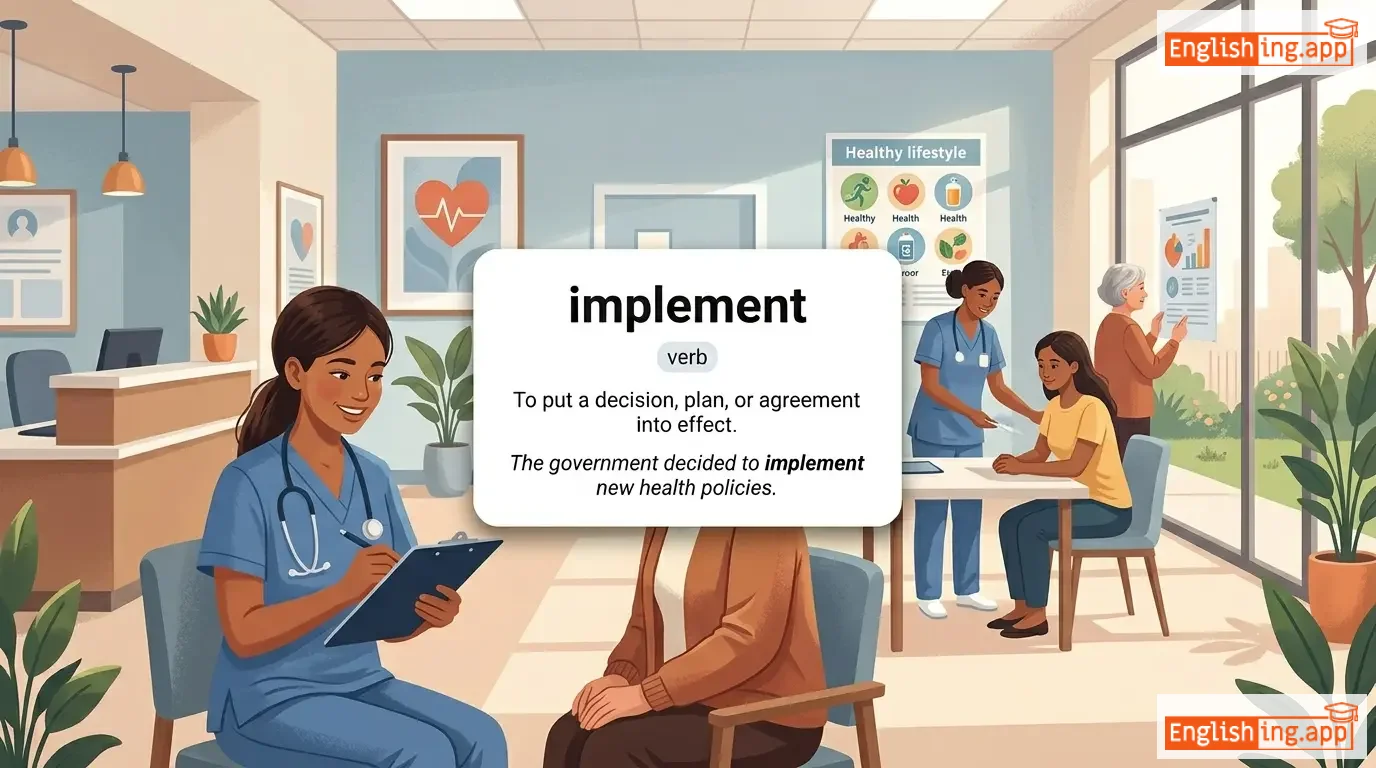
To put a decision, plan, or agreement into effect.
••••••
|
The government decided to implement new health policies.
政府决定实施新的健康政策。
••••••
|
政府决定实施新的健康政策。
Zhengfu jueding shishi xinde jiankang zhengce.
••••••
|
implement a plan
实施计划
••••••
|
To carry out a plan in practice.
••••••
|
实施计划
Shishi jihua
••••••
|
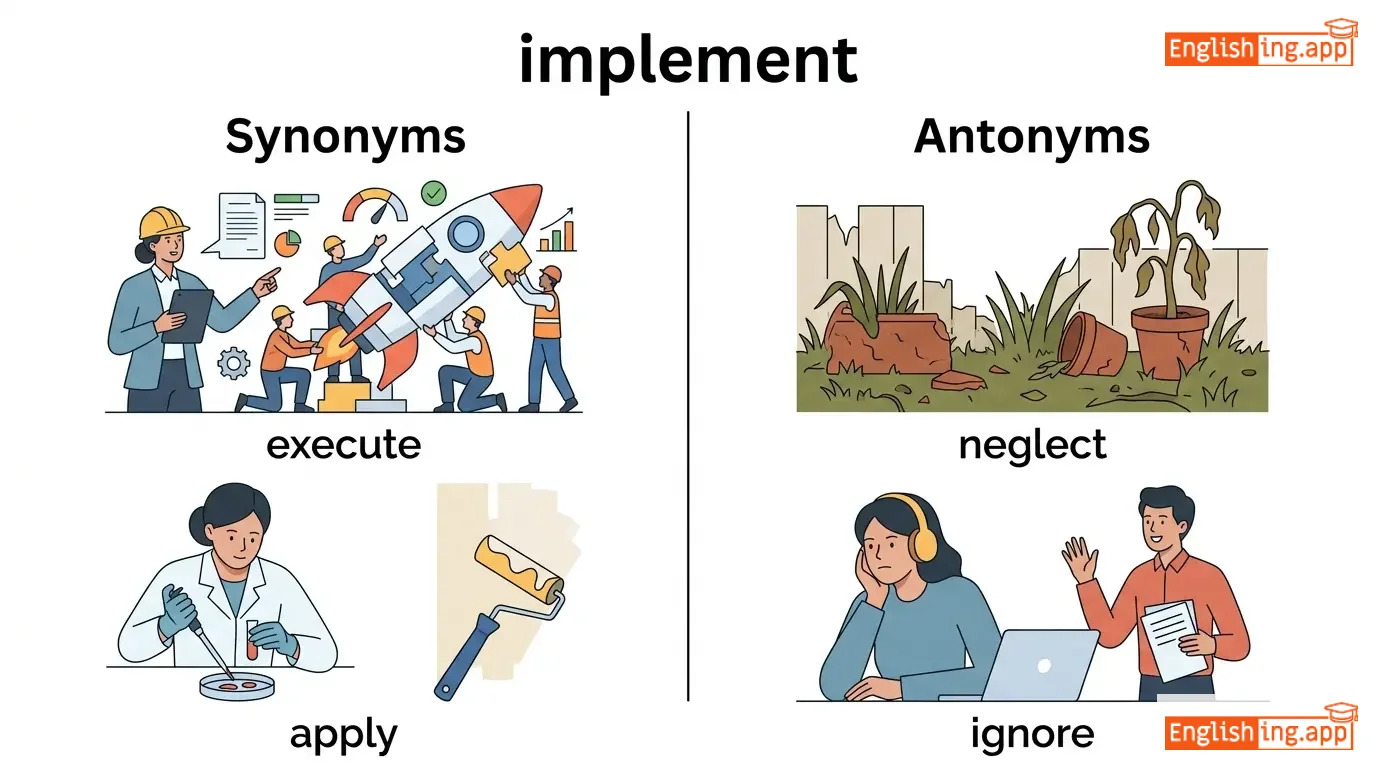
execute, apply, enforce, realize, perform
••••••
|
neglect, ignore, abandon
••••••
|
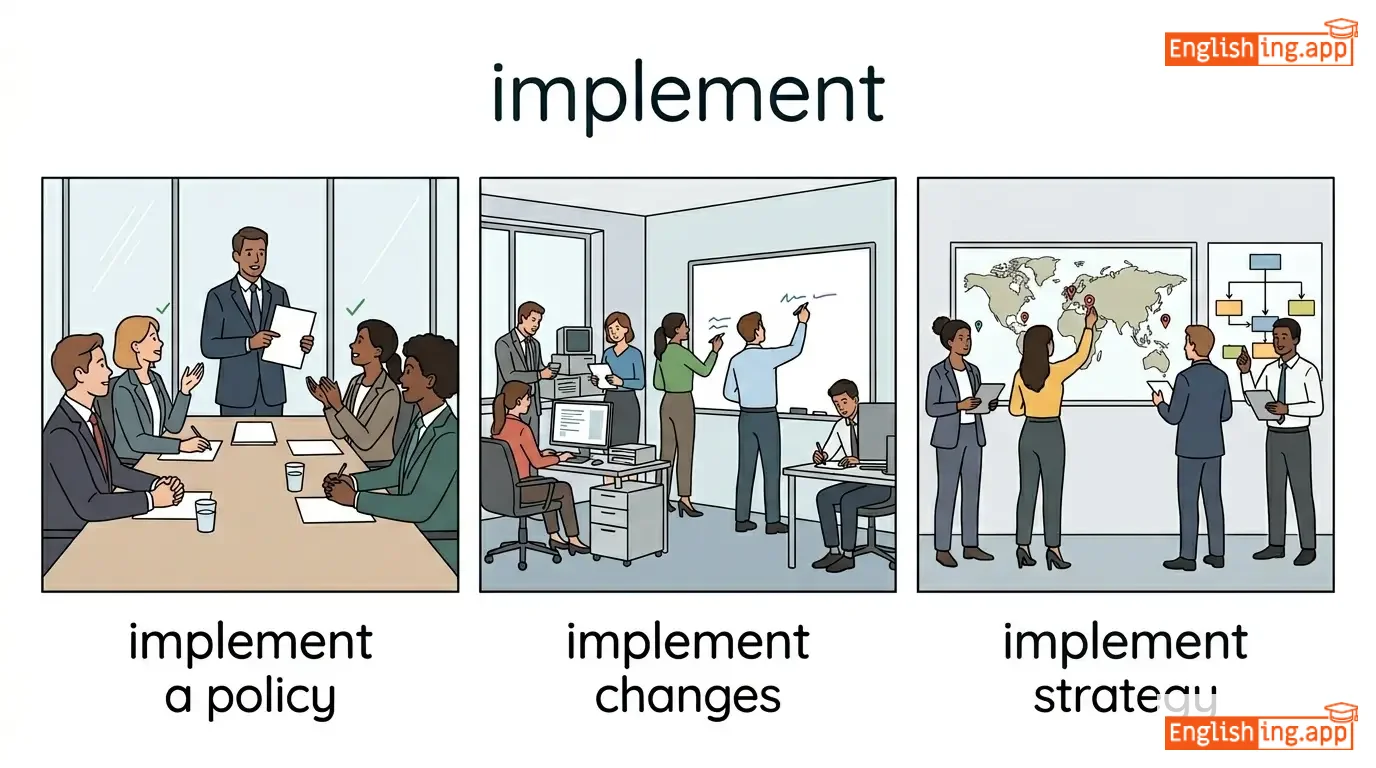
implement a policy, implement changes, implement strategy, implement decision
••••••
|
实施意味着将计划变为现实。
••••••
|
|
#2597
⚙️
|
/ˌɪmplɪmenˈteɪʃən/
noun
(实施)
••••••
|
|
实施
shíshī
••••••
|
- •••••• | - •••••• | - •••••• | - •••••• |
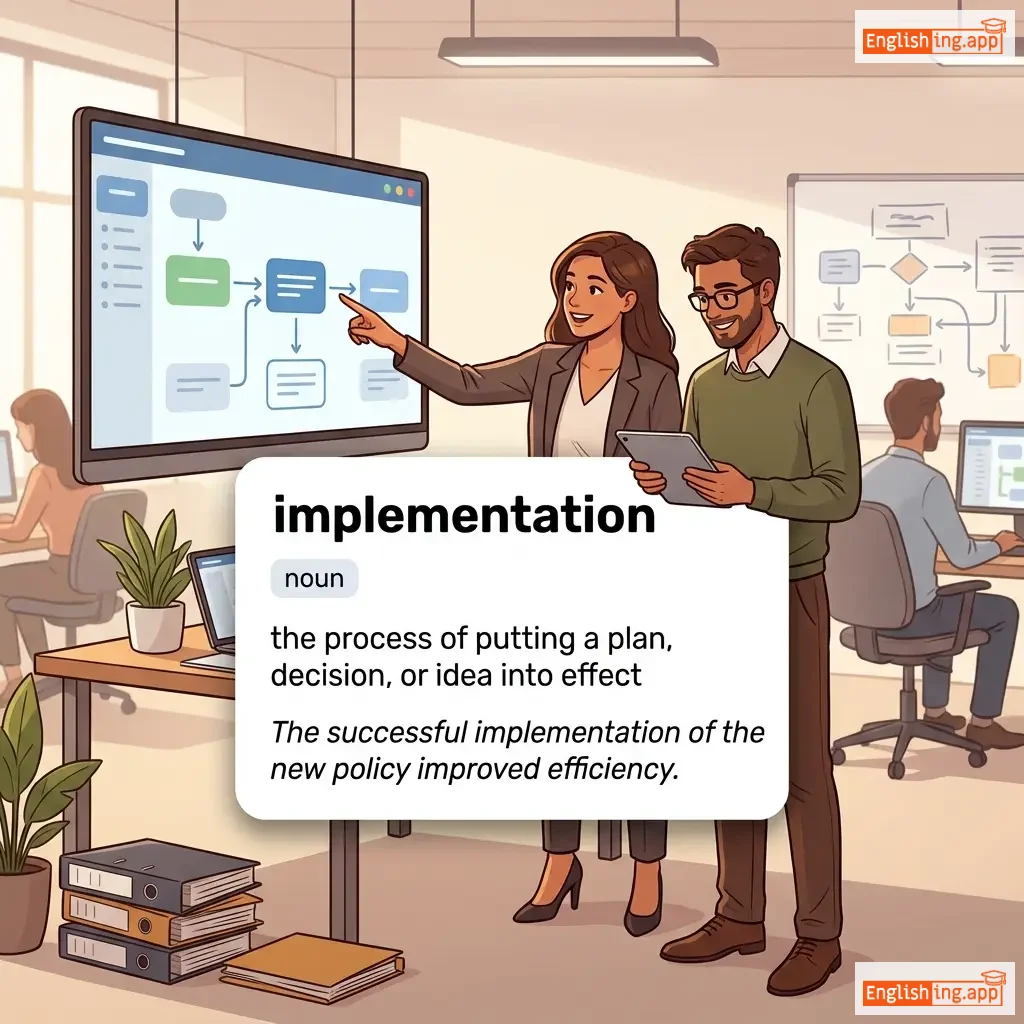
the process of putting a plan, decision, or idea into effect
••••••
|
The successful implementation of the new policy improved efficiency. |
新政策的成功实施提高了效率。
Xin zhengce de chenggong shishi tigao le xiaolv.
••••••
|
plan implementation |
the act of executing a planned action
••••••
|
计划实施
jihua shishi
••••••
|
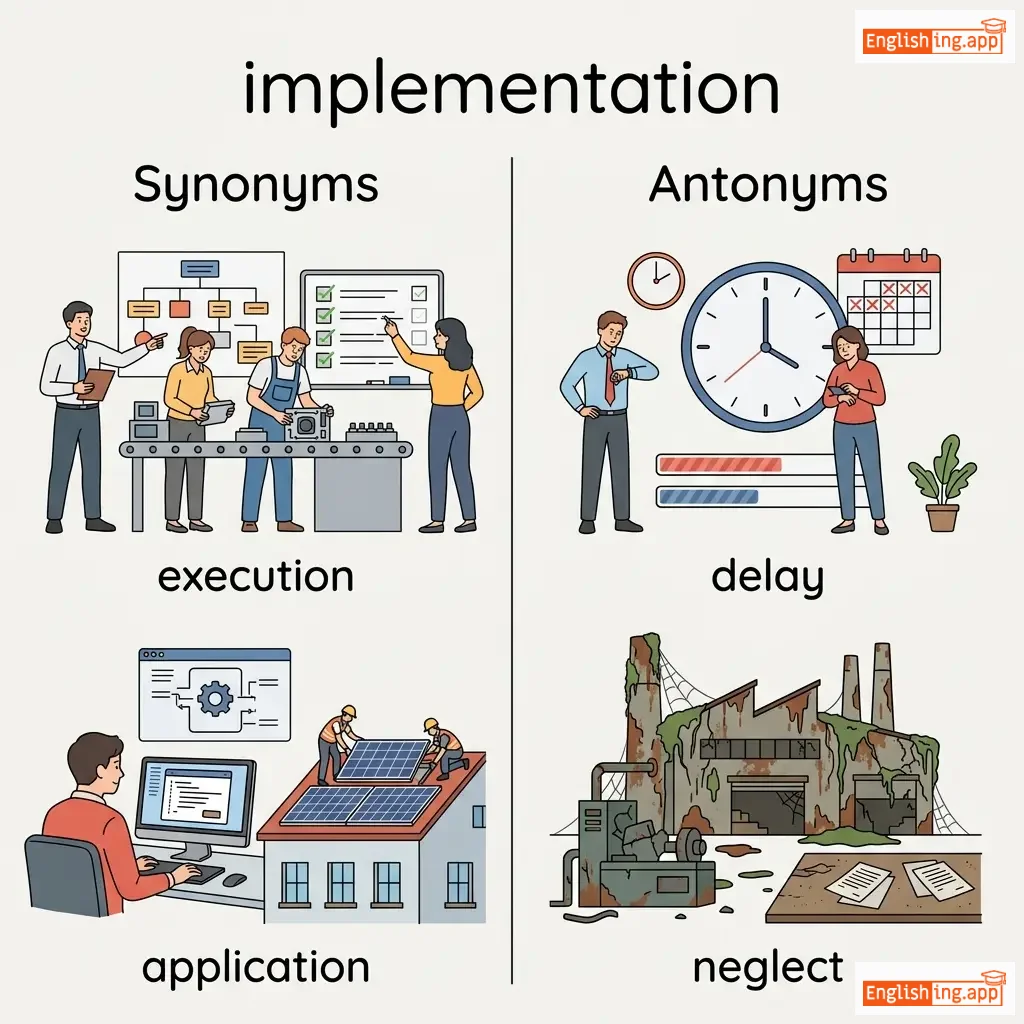
execution, application, realization, deployment, enforcement
••••••
|
delay, neglect, failure
••••••
|
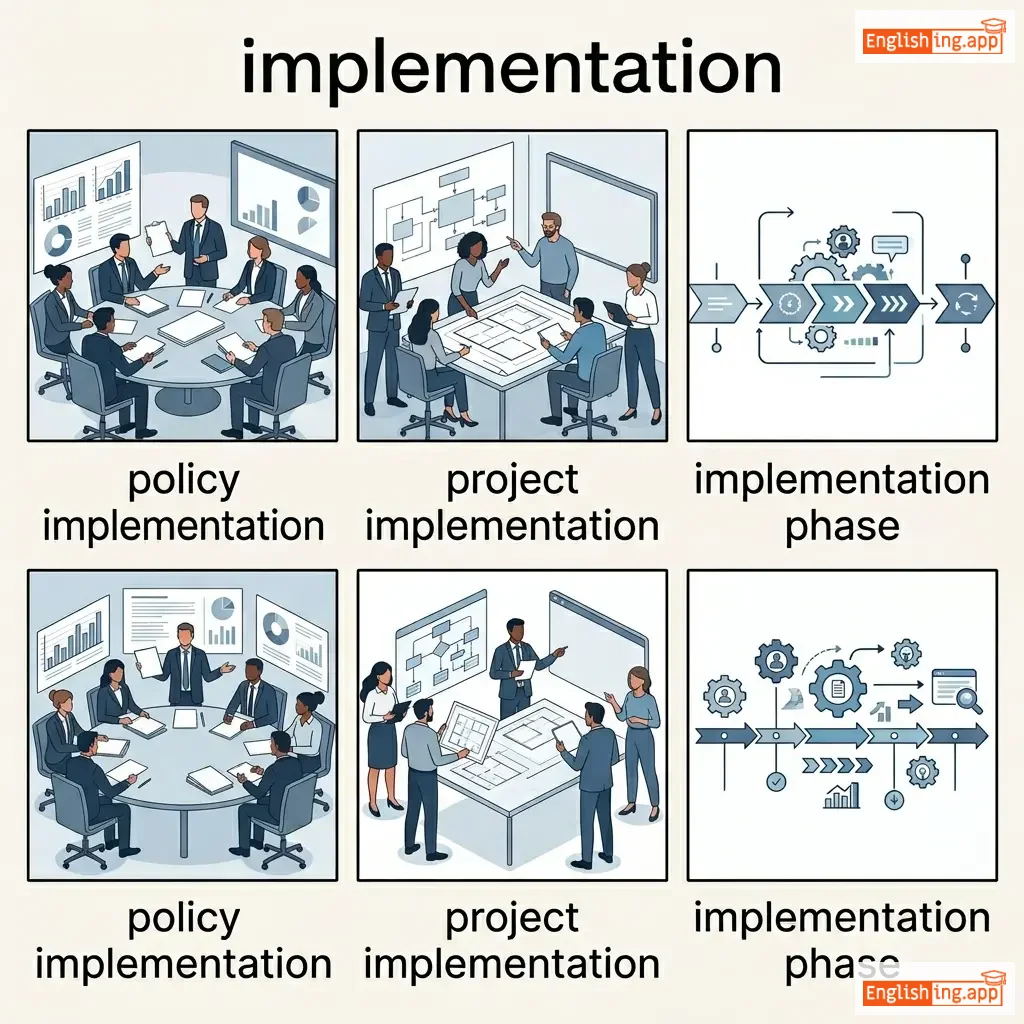
policy implementation, project implementation, implementation phase, strategy implementation
••••••
|
Implement是执行的意思,实施是将计划变为现实的过程。
••••••
|
|
#2598
📌
|
/ˌɪmplɪˈkeɪʃən/
noun
(yīngpǔlìkèshēn)
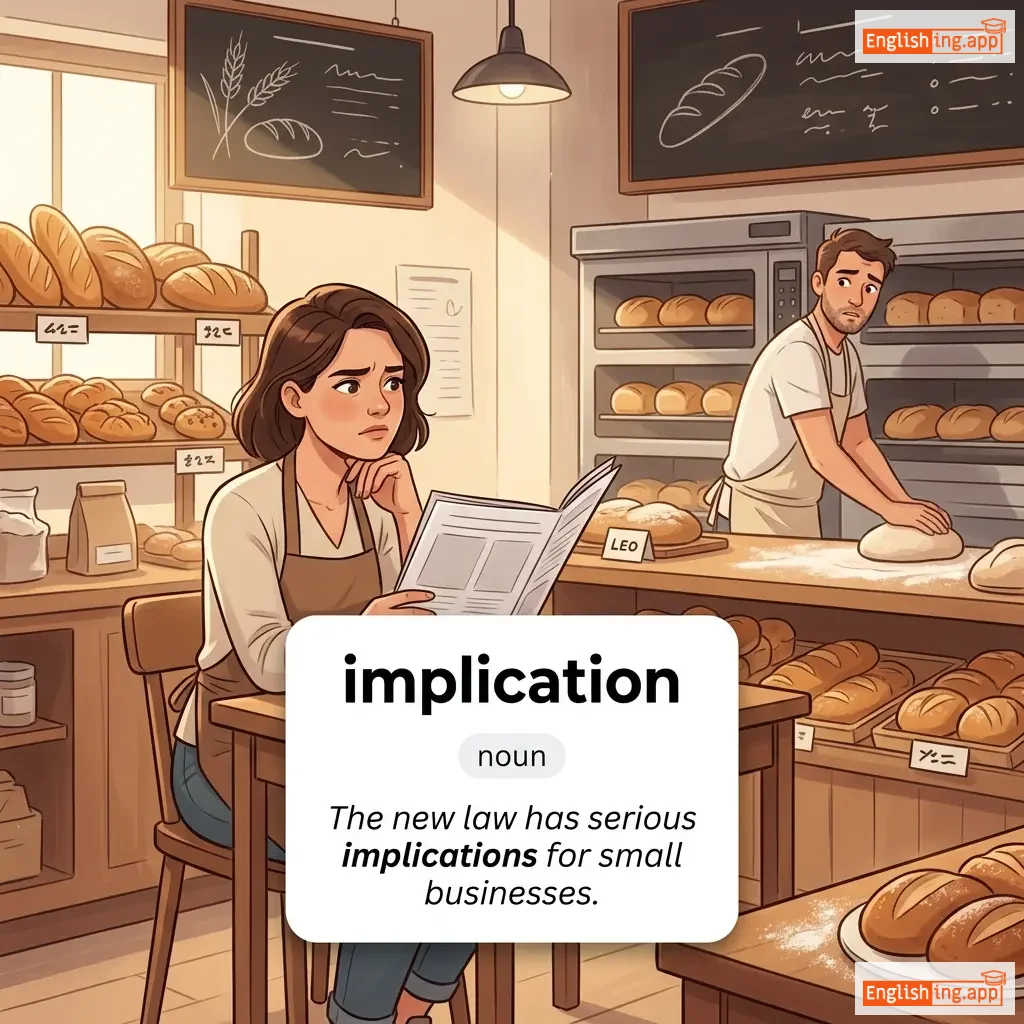
••••••
|
|
暗示, 影响
ànshì, yǐngxiǎng
••••••
|
- •••••• | - •••••• | - •••••• | - •••••• |
A possible effect or result of an action or decision; something suggested without being stated directly.
••••••
|
The new law has serious implications for small businesses. |
新法律对小企业有严重影响。
Xīn fǎlǜ duì xiǎo qǐyè yǒu yánzhòng yǐngxiǎng.
••••••
|
by implication |
Indirectly or by consequence.
••••••
|
通过暗示
tōngguò ànshì
••••••
|
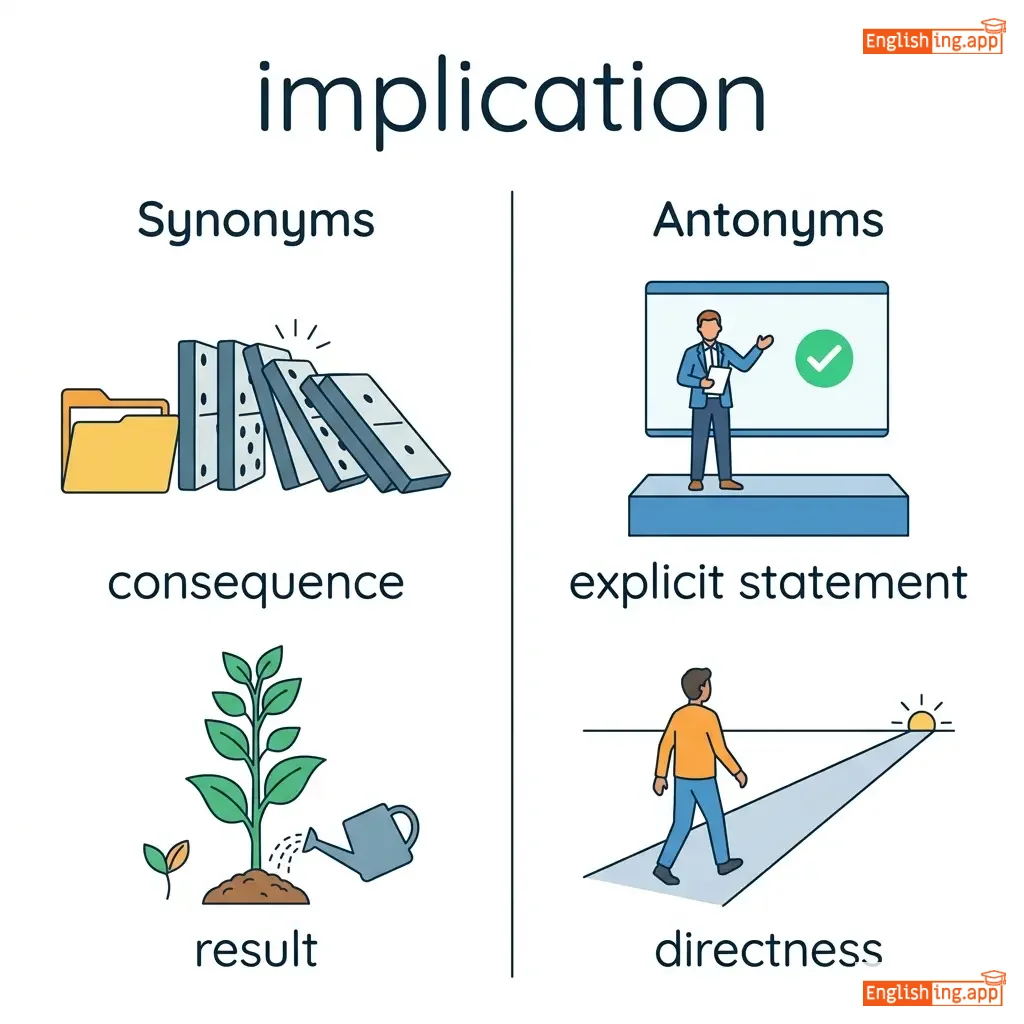
consequence, result, suggestion, inference, indication
••••••
|
explicit statement, directness
••••••
|
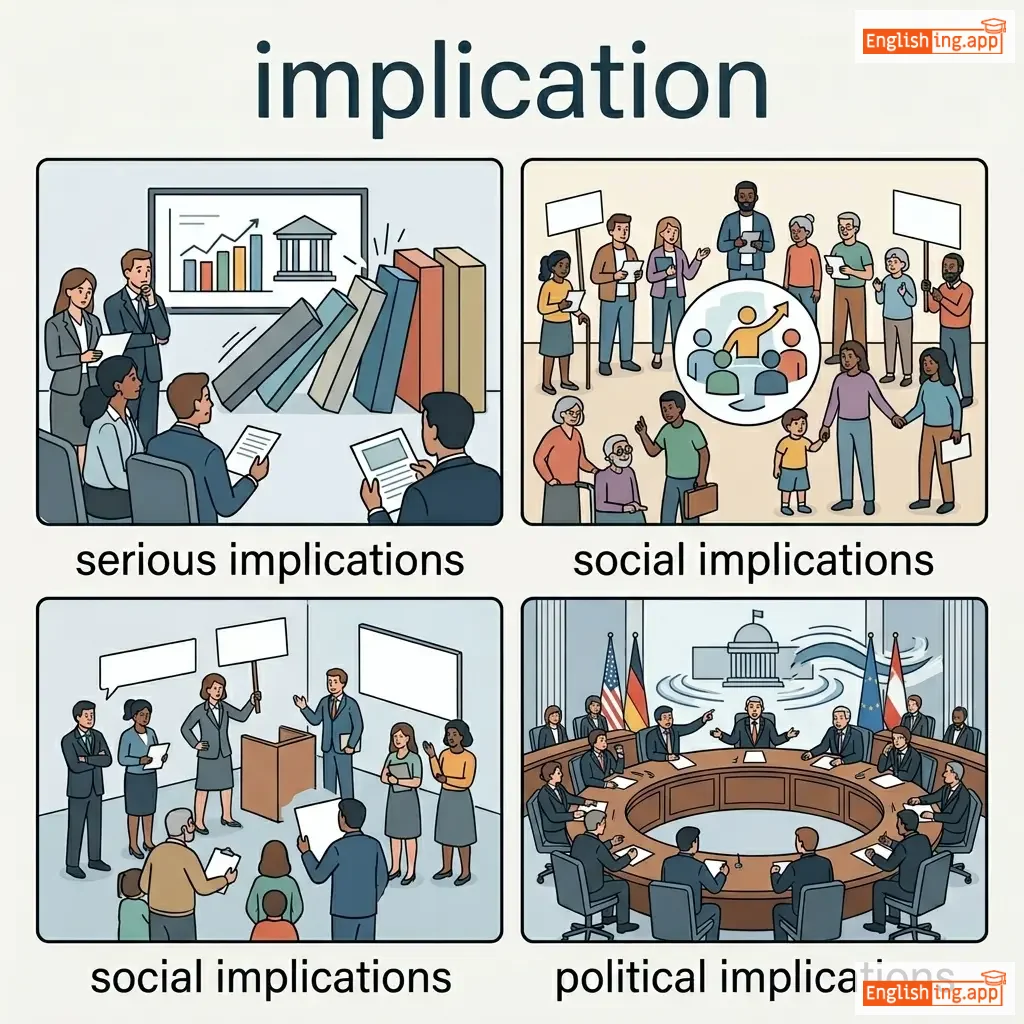
serious implications, social implications, political implications, economic implications
••••••
|
Implication 就是暗示或影响,直接或间接地带来结果。
••••••
|
|
#2599
💡
|
/ɪmˈplaɪ/
verb
(印普赖)
••••••
|
- •••••• |
暗示
ànshì
••••••
|
implied
印普莱德
••••••
|
implied
印普莱德
••••••
|
implies
印普莱兹
••••••
|
implying
印普莱英
••••••
|
To suggest something without directly stating it.
••••••
|
Her tone seemed to imply that she was upset.
她的语气似乎暗示她很不高兴。
••••••
|
她的语气似乎暗示她很不高兴。
Tā de yǔqì shìhū ànshì tā hěn bù gāoxìng.
••••••
|
imply meaning
隐含意义
••••••
|
To indicate or suggest what something means indirectly.
••••••
|
含义暗示
hányì ànshì
••••••
|
suggest, indicate, hint, signify
••••••
|
state, declare, express
••••••
|
imply strongly, imply indirectly, imply something
••••••
|
'Imply' 意思是间接地说 — 记住,'暗示' 就像是间接提议。
••••••
|
|
#2600
🙅
|
/ˌɪmpəˈlaɪt/
adjective
(impo laít)
••••••
|
- •••••• |
不礼貌
bu limao
••••••
|
- •••••• | - •••••• | - •••••• | - •••••• |
Not showing good manners; rude.
••••••
|
It is impolite to interrupt someone while they are speaking.
打断别人说话是不礼貌的。
••••••
|
打断别人说话是不礼貌的。
Da duan bie ren shuo hua shi bu limao de.
••••••
|
- •••••• | - •••••• | - •••••• |
rude, disrespectful, discourteous, ill-mannered, inconsiderate
••••••
|
polite, courteous, respectful
••••••
|
impolite remark, impolite behavior, impolite tone, impolite gesture
••••••
|
Impolite意味着不礼貌–想象打断别人就是不礼貌。
••••••
|
|
#2601
🙄
|
/ɪmˈpɒlɪtli/
adverb
(因波拉特利)
••••••
|
- •••••• |
不礼貌地
bu limao de
••••••
|
- •••••• | - •••••• | - •••••• | - •••••• |
in a rude or discourteous manner; without showing respect or proper manners
••••••
|
He spoke impolitely to the waiter despite the polite service.
他 因波拉特利 地 对 服务员 说话。
••••••
|
尽管服务很好,他还是不礼貌地对服务员说话。
jinguang fuwu hen hao ta haishi bu limao de dui fuwuyuan shuohua
••••••
|
- •••••• | - •••••• | - •••••• |
rudely, discourteously, ungraciously, impudently, bluntly
••••••
|
politely, courteously, respectfully
••••••
|
speak impolitely, behave impolitely, respond impolitely, act impolitely
••••••
|
im + polite → 不礼貌
••••••
|
|
#2602
😒
|
/ɪmˈpɒlɪtnəs/
noun
(因波里特尼斯)
••••••
|
- •••••• |
不礼貌
bu limao
••••••
|
- •••••• | - •••••• | - •••••• | - •••••• |
lack of good manners or courtesy; rude behavior
••••••
|
His impoliteness towards the guests shocked everyone.
希斯 因波里特尼斯 图沃兹 德 盖斯特斯 沙克德 艾弗里万。
••••••
|
他对客人的不礼貌让所有人都感到震惊。
ta dui keren de bu limao rang suoyou ren dou gandao zhenjing
••••••
|
- •••••• | - •••••• | - •••••• |
rudeness, discourtesy, disrespect, incivility, impertinence
••••••
|
politeness, courtesy, civility
••••••
|
act of impoliteness, social impoliteness, perceived impoliteness
••••••
|
Impoliteness = 不 polite → 不礼貌。
••••••
|
|
#2603
📦
|
/ˈɪmpɔːrt/
verb
(进口)
••••••
|
|
进口
jin kou
••••••
|
imported
进口了
••••••
|
imported
进口了
••••••
|
imports
进口
••••••
|
importing
进口中
••••••
|
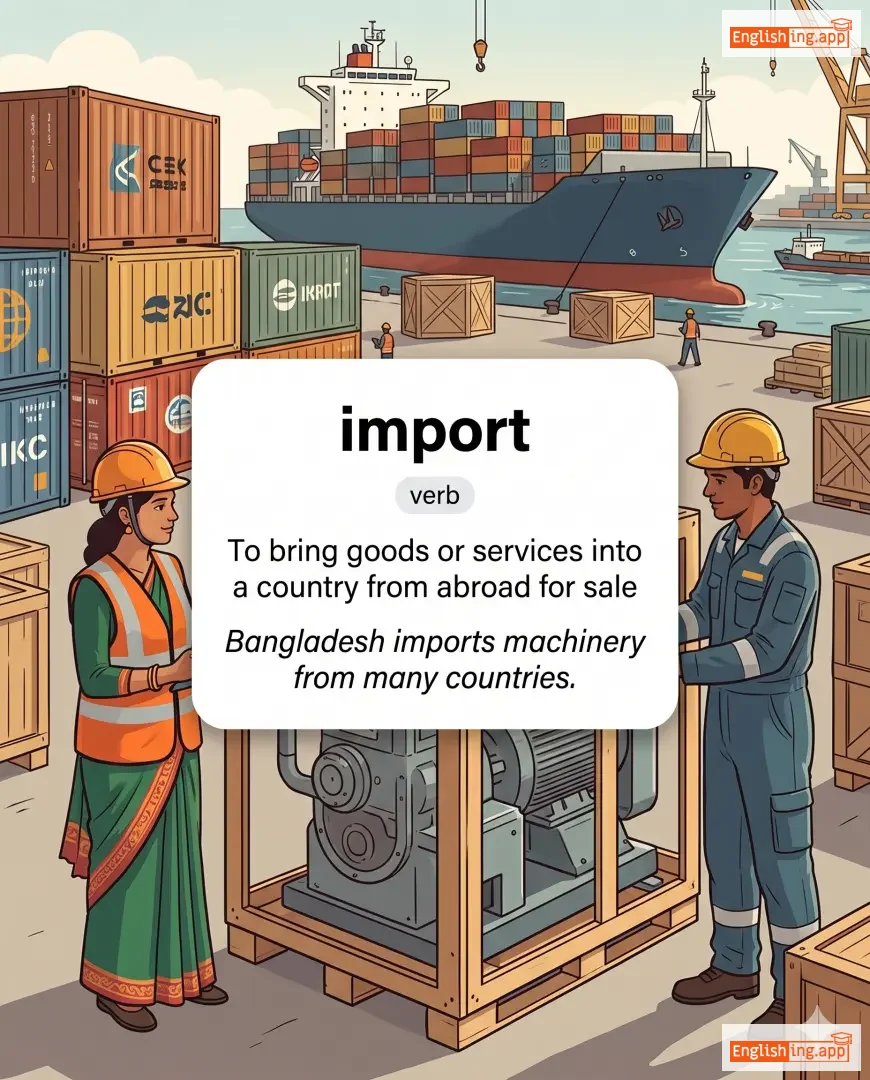
To bring goods or services into a country from abroad for sale
••••••
|
Bangladesh imports machinery from many countries.
孟加拉国从许多国家进口机械。
••••••
|
孟加拉国从许多国家进口机械。
Meng jia la guo cong xu duo guo jia jin kou ji xie.
••••••
|
import duty
进口税
••••••
|
a tax imposed on goods brought into a country
••••••
|
进口税
jin kou shui
••••••
|
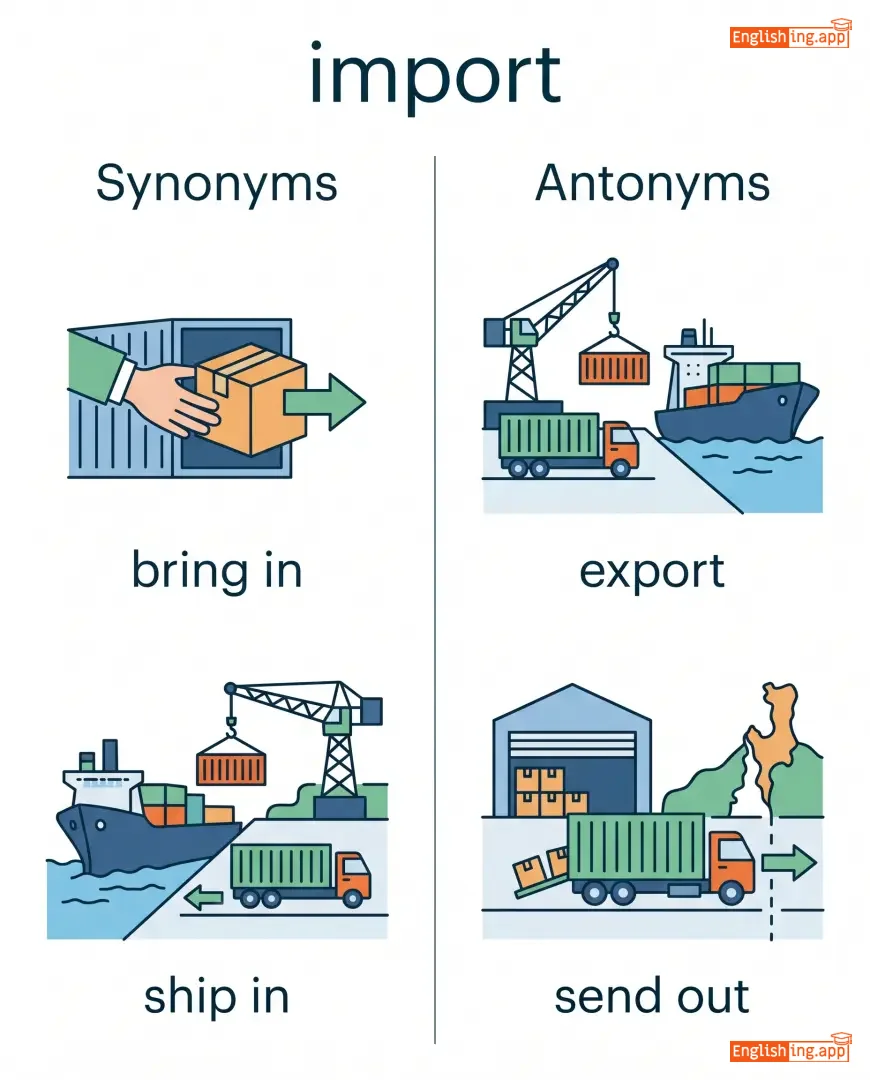
bring in, ship in, trade, purchase, transport
••••••
|
export, send out, sell abroad
••••••
|
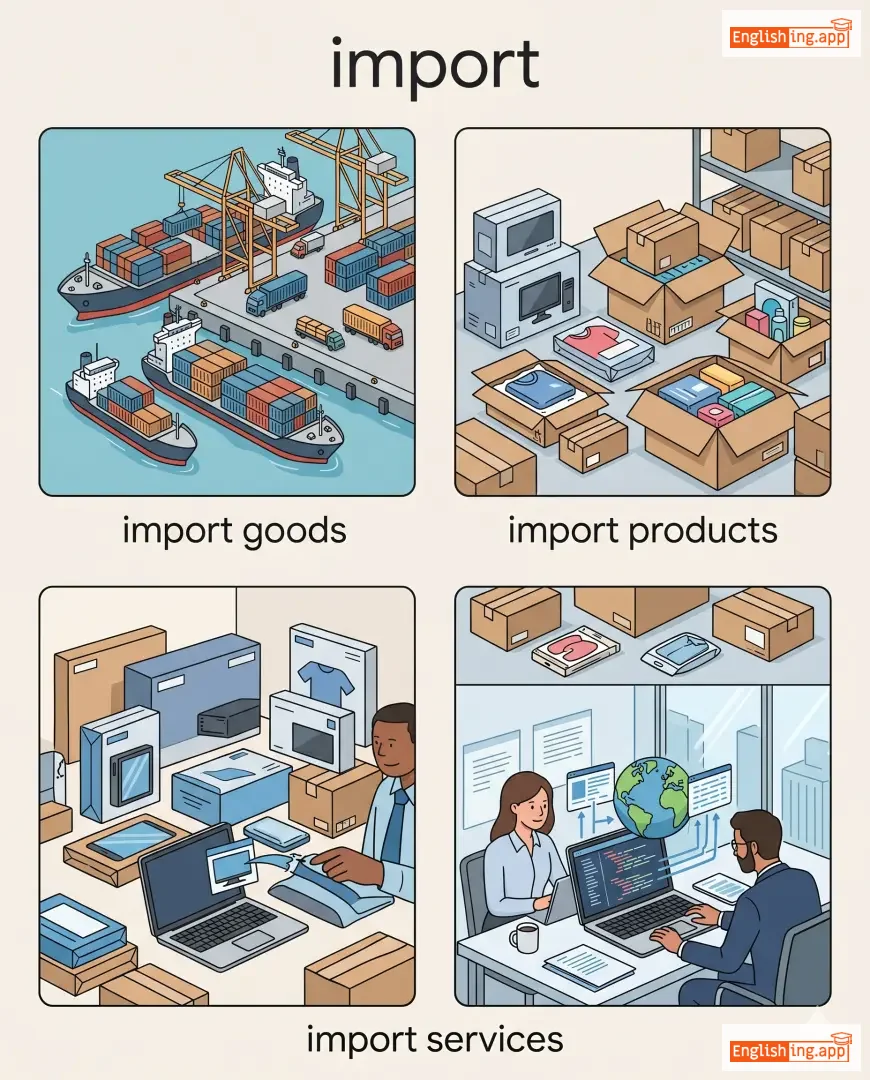
import goods, import products, import services, import duty
••••••
|
进口就是从外面引进东西,想象你正在用'进口'这个词带着货物进入国家。
••••••
|
|
#2604
⭐
|
/ɪmˈpɔːrtəns/
noun
(ɪmˈpɔːrtəns)
••••••
|
|
重要性
zhòng yào xìng
••••••
|
- •••••• | - •••••• | - •••••• | - •••••• |
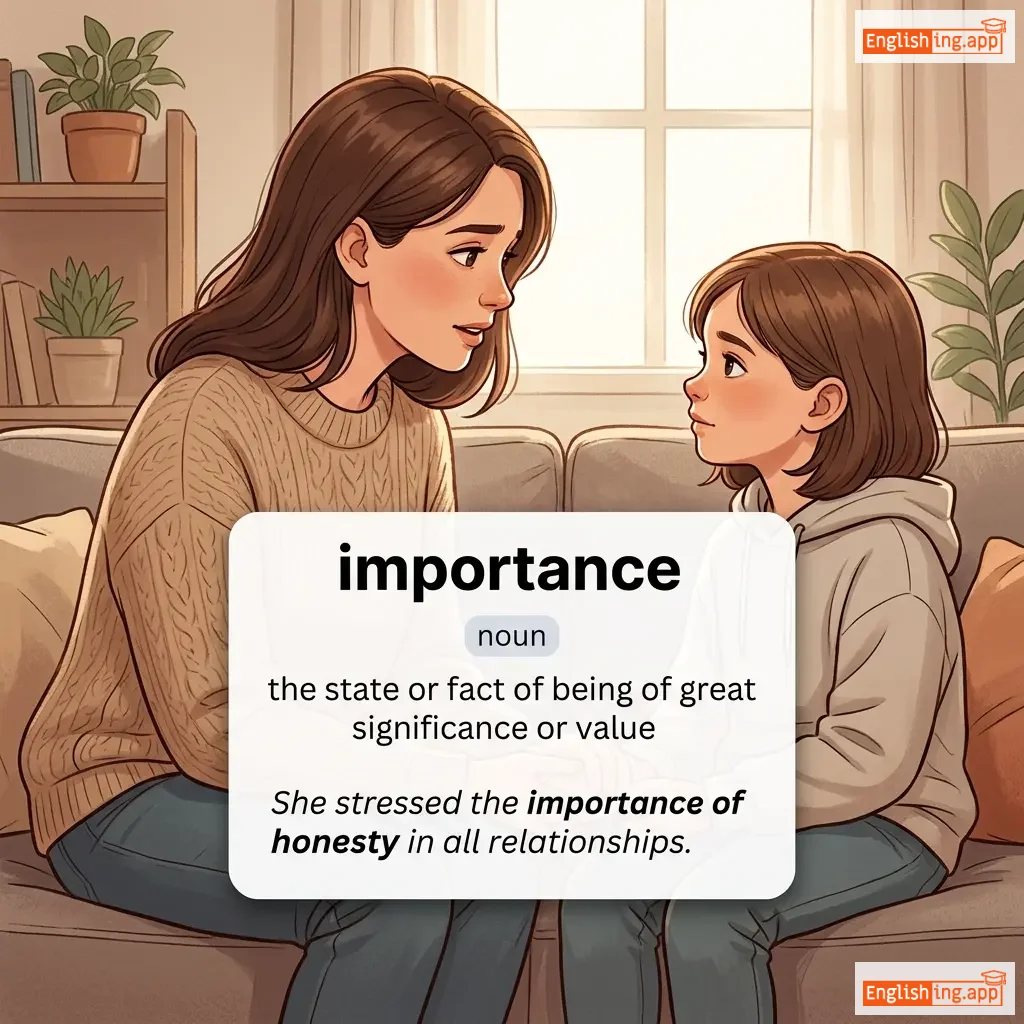
the state or fact of being of great significance or value
••••••
|
She stressed the importance of honesty in all relationships. |
她强调了诚实在所有关系中的重要性。
Tā qiángdiàole chéngshí zài suǒyǒu guānxì zhōng de zhòngyàoxìng.
••••••
|
of great importance |
extremely valuable or significant
••••••
|
极为重要
jí wèi zhòng yào
••••••
|
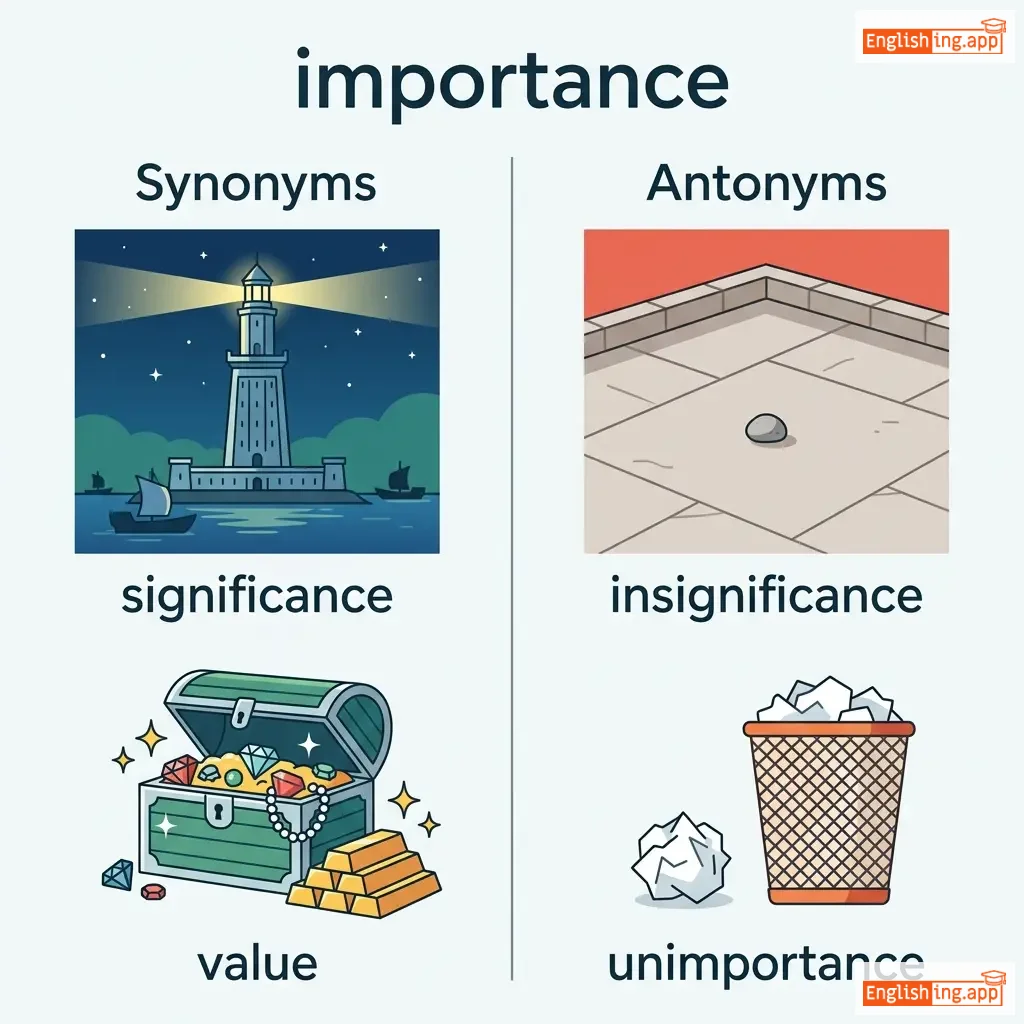
significance, value, weight, relevance, consequence
••••••
|
insignificance, unimportance
••••••
|
stress importance, highlight importance, importance of education, importance of health
••••••
|
重要性 = Importance, 一定要记住! 🌟
••••••
|
|
#2605
⭐
|
/ɪmˈpɔːrtənt/
adjective
(重要)
••••••
|
|
重要
zhòng yào
••••••
|
- •••••• | - •••••• | - •••••• | - •••••• |
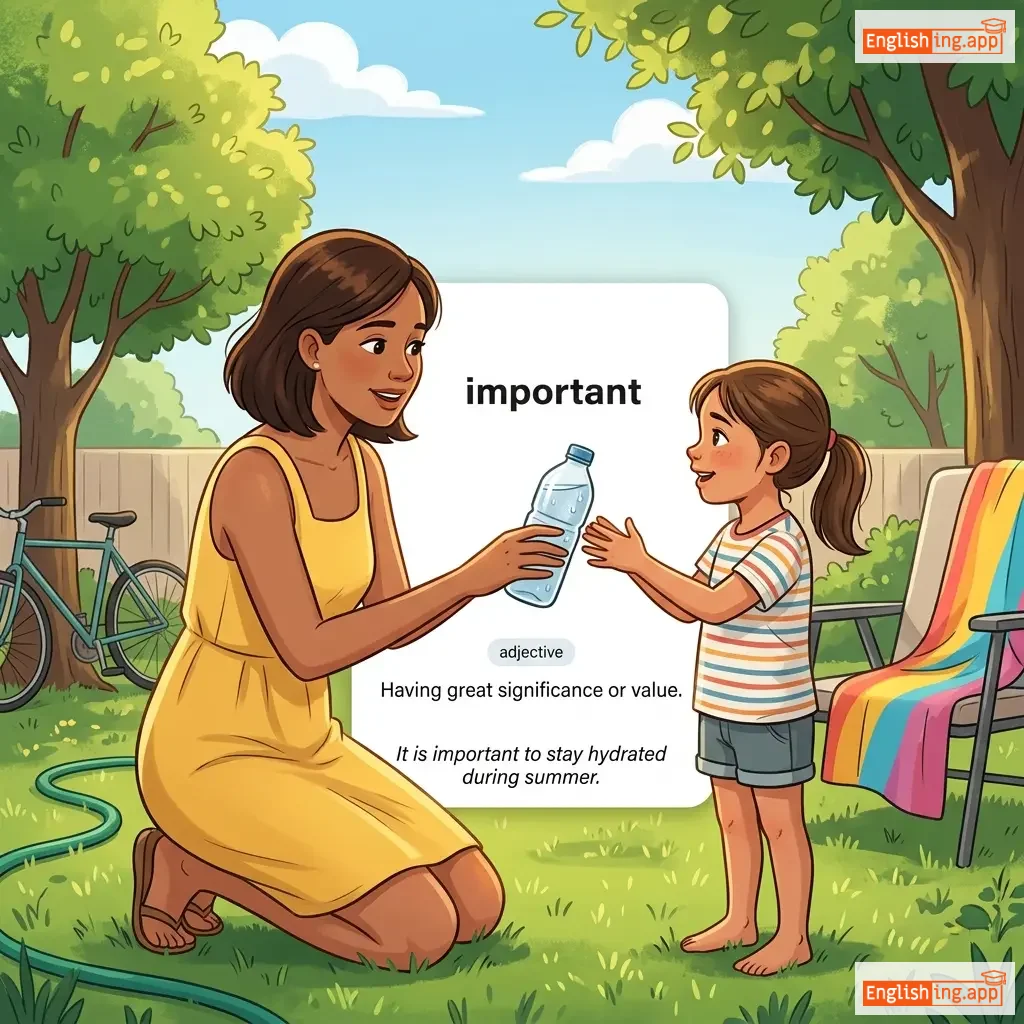
Having great significance or value.
••••••
|
It is important to stay hydrated during summer.
夏季保持水分非常重要。
••••••
|
夏季保持水分非常重要。
Xiàjì bǎochí shuǐfèn fēicháng zhòngyào.
••••••
|
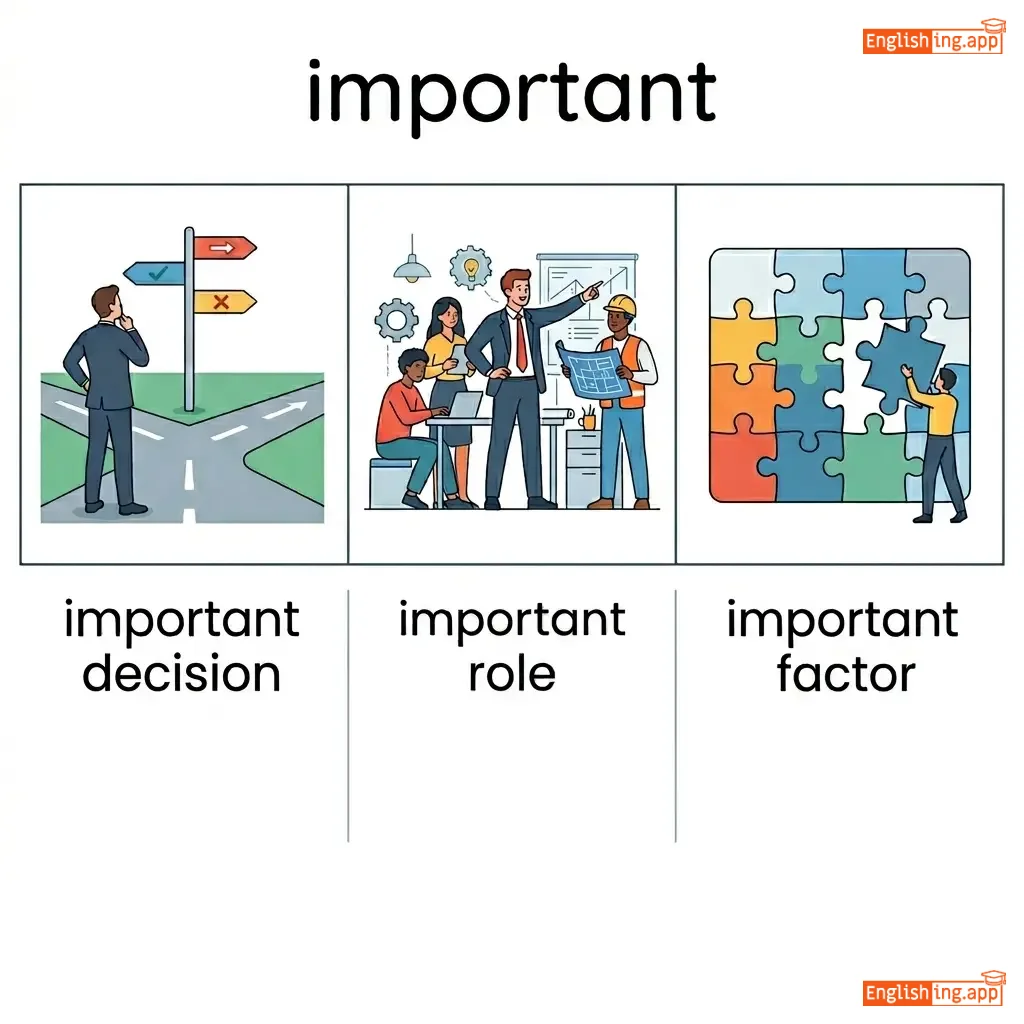
important role
重要角色
••••••
|
a crucial part in a process or situation
••••••
|
重要角色
zhòng yào juésè
••••••
|
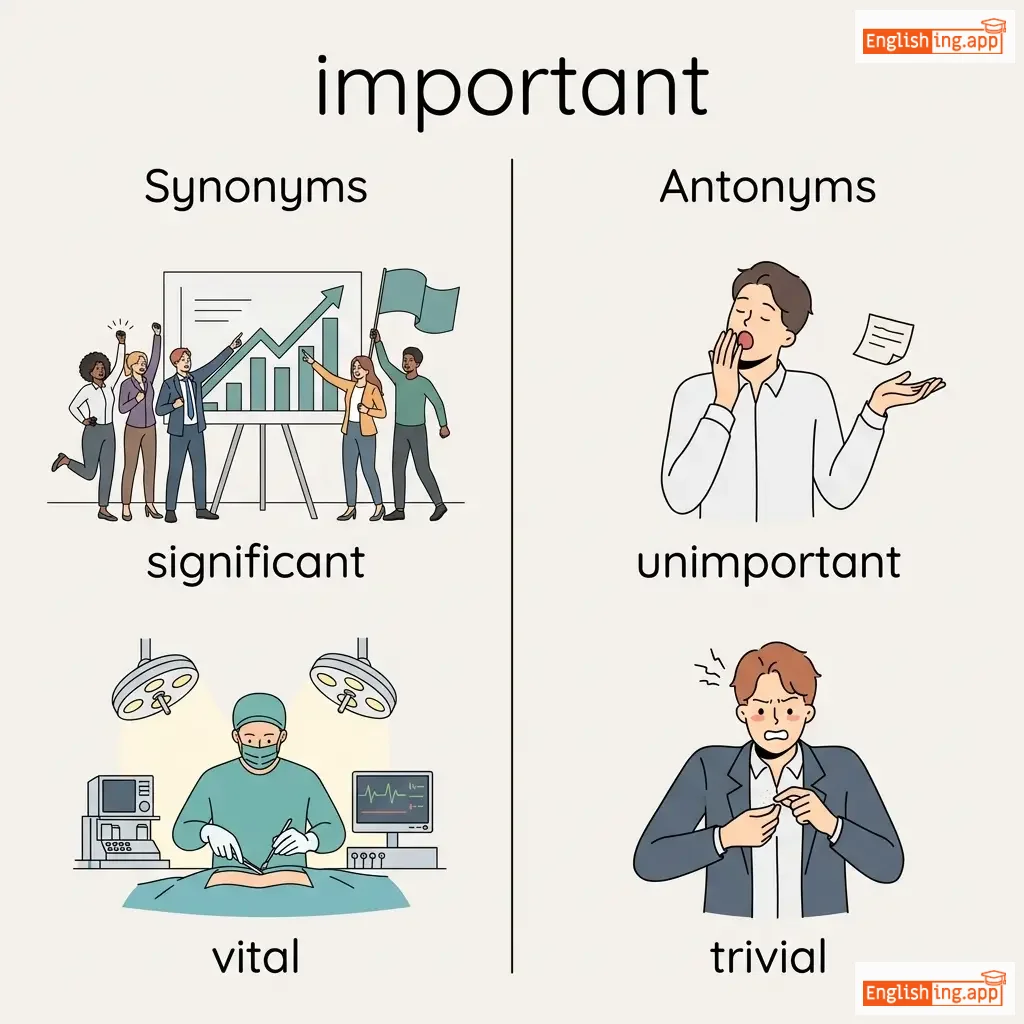
significant, vital, crucial, essential, meaningful
••••••
|
unimportant, trivial, minor
••••••
|
important decision, important role, important factor, important issue
••••••
|
重要意味着对成功至关重要,像喝水在夏天一样重要。
••••••
|
|
#2606
⚡
|
/ɪmˈpɔːtəntli/
adverb
(ɪmˈpɔːtəntli)
••••••
|
- •••••• |
重要地
zhòngyàode
••••••
|
- •••••• | - •••••• | - •••••• | - •••••• |
in a way that is of great significance or value
••••••
|
Importantly, the report highlights the need for immediate action. |
重要地,报告突出了立即采取行动的必要性。
Zhòngyàode, bàogào túchūle lìjí cǎiqǔ xíngdòng de bìyào xìng.
••••••
|
- •••••• | - •••••• | - •••••• |
significantly, notably, crucially, essentially, vitally
••••••
|
insignificantly, trivially, unimportantly
••••••
|
importantly, more importantly, very importantly, most importantly
••••••
|
Importantly在中文中是重要地,用来表达一种显著的、具有重大意义的方式。
••••••
|
|
#2607
📜
|
/ɪmˈpoʊz/
verb
(印波兹)
••••••
|
|
强加
qiángjiā
••••••
|
imposed
印波兹德
••••••
|
imposed
印波兹德
••••••
|
imposes
印波兹斯
••••••
|
imposing
印波兹英
••••••
|
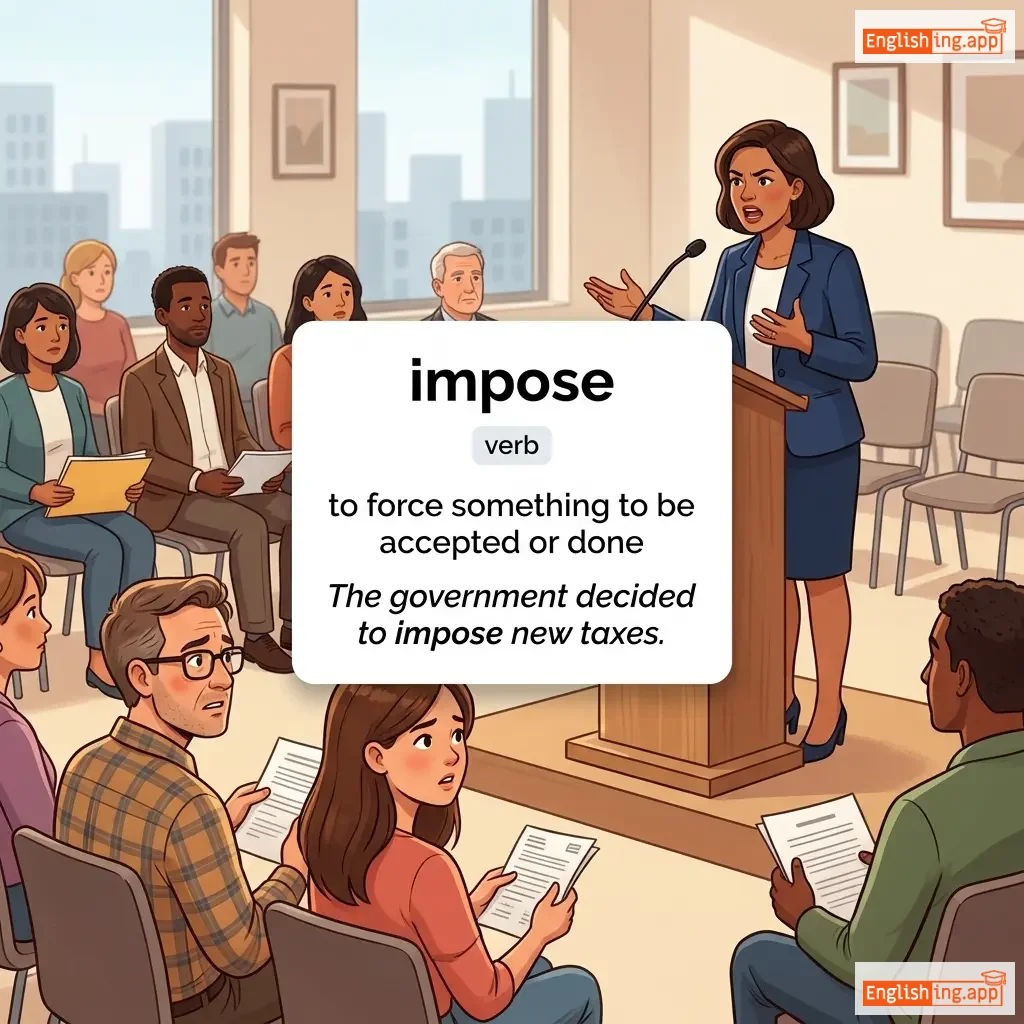
to force something to be accepted or done
••••••
|
The government decided to impose new taxes.
政府决定征收新的税收。
••••••
|
政府决定征收新的税收。
Zhèngfǔ juédìng zhēngshōu xīn de shuìshōu.
••••••
|
impose a ban
实施禁令
••••••
|
to officially prohibit something
••••••
|
实施禁令
shíshī jìnlìng
••••••
|
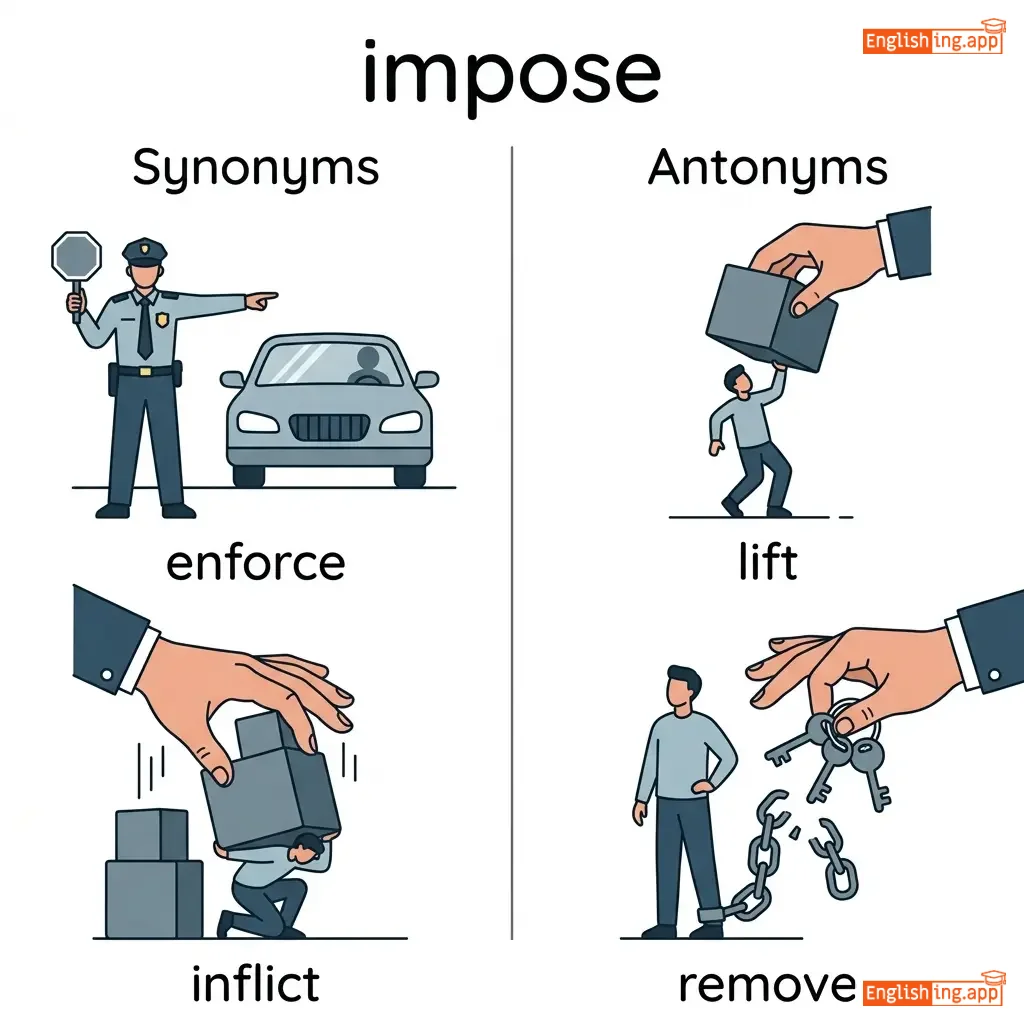
enforce, inflict, apply, establish, dictate
••••••
|
lift, remove, withdraw
••••••
|
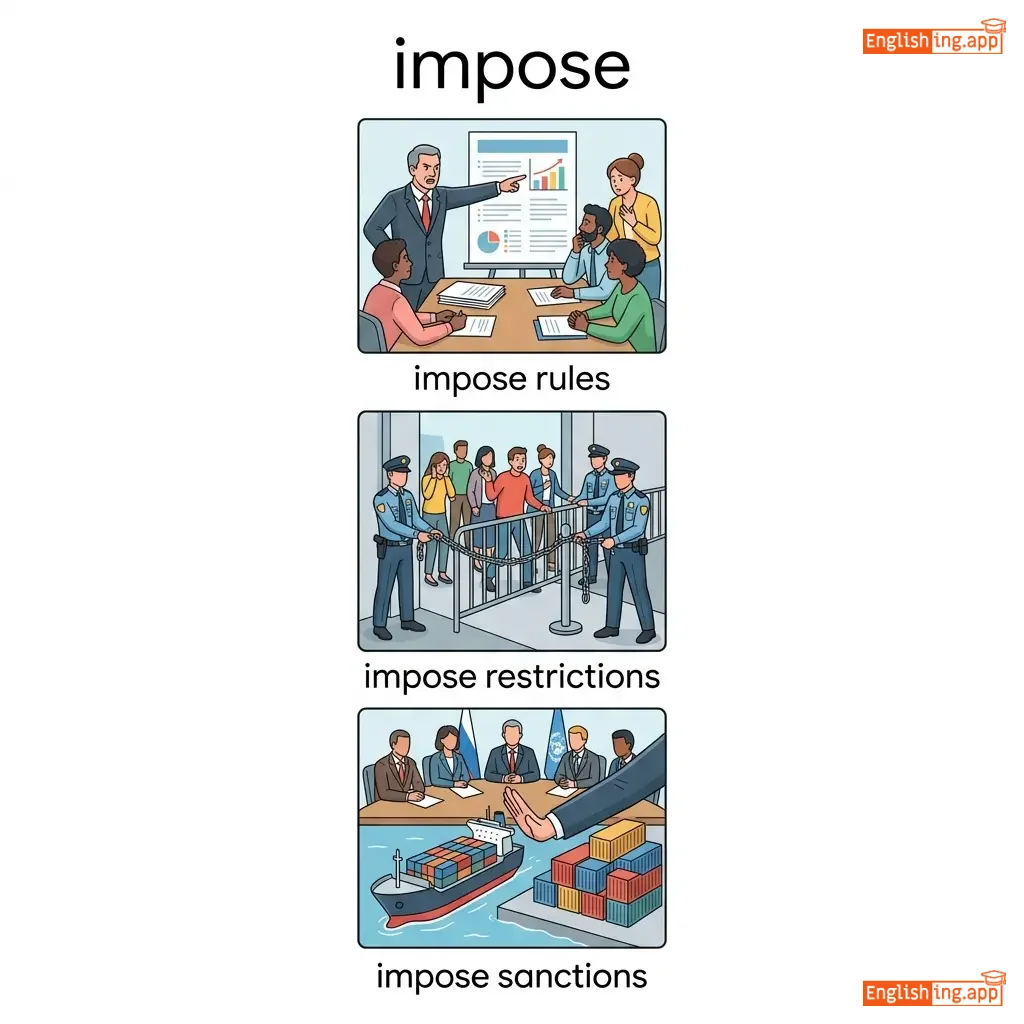
impose rules, impose restrictions, impose sanctions, impose fines
••••••
|
Impose 意思是强加 - 想像强加规则,施行限制!
••••••
|
|
#2608
🚫
|
/ɪmˌpɒsəˈbɪlɪti/
noun
(因波西比利提)
••••••
|
- •••••• |
不可能性
bu keneng xing
••••••
|
- •••••• | - •••••• | - •••••• | - •••••• |
the state or fact of being impossible; something that cannot be done or achieved
••••••
|
Finishing the project in one day was an impossibility.
在一天内完成这个项目是不可能的。
••••••
|
在一天内完成这个项目是不可能的。
zai yi tian nei wancheng zhege xiangmu shi bu keneng de
••••••
|
an utter impossibility
完全不可能
••••••
|
something that is completely impossible
••••••
|
完全不可能
wanquan bu keneng
••••••
|
impracticability, unfeasibility, infeasibility, hopelessness
••••••
|
possibility, feasibility, likelihood
••••••
|
sheer impossibility, practical impossibility, absolute impossibility
••••••
|
Impossible 就是不可能性
••••••
|
|
#2609
🚫
|
/ɪmˈpɑːsəbl/
adjective
(不可能)
••••••
|
- •••••• |
不可能
bù kěnéng
••••••
|
- •••••• | - •••••• | - •••••• | - •••••• |
not able to occur, exist, or be done
••••••
|
It is impossible to finish this work in one day.
一天之内完成这项工作是不可能的。
••••••
|
一天之内完成这项工作是不可能的。
Yītiān zhī nèi wánchéng zhè xiàng gōngzuò shì bù kěnéng de.
••••••
|
nothing is impossible
没有什么是不可能的
••••••
|
everything can be achieved with effort
••••••
|
没有什么是不可能的
Méiyǒu shénme shì bù kěnéng de
••••••
|
unachievable, unattainable, hopeless, impracticable
••••••
|
possible, achievable, feasible
••••••
|
seem impossible, make impossible, impossible task, impossible mission
••••••
|
不可能,意味着要努力去克服它!💪
••••••
|
|
#2610
✨
|
/ɪmˈprɛs/
verb
(yǐmùlèssī)
••••••
|
- •••••• |
打动
dǎdòng
••••••
|
impressed
yǐmùlèssī dé
••••••
|
impressed
yǐmùlèssī dé
••••••
|
impresses
yǐmùlèssī
••••••
|
impressing
yǐmùlèssīng
••••••
|
to cause someone to feel admiration or respect
••••••
|
Her speech managed to impress the audience.
她的演讲成功地打动了观众。
••••••
|
她的演讲成功地打动了观众。
Tā de yǎnjiǎng chénggōng de dǎdòngle guānzhòng.
••••••
|
make an impression
留下深刻印象
••••••
|
to have a strong effect on someone
••••••
|
留下深刻印象
liú xià shēn kè yìnxiàng
••••••
|
amaze, astonish, inspire, move, influence
••••••
|
bore, disappoint, discourage
••••••
|
impress deeply, impress someone, impress with, fail to impress
••••••
|
打动你的人,总是让你说'感动!' – 打动
••••••
|
|
#2611
🖼️
|
/ɪmˈprɛʃən/
noun
(印象)
••••••
|
- •••••• |
印象, 概念
yinxiang, gainian
••••••
|
- •••••• | - •••••• | - •••••• | - •••••• |
an idea, feeling, or opinion about something or someone
••••••
|
The book gave me a good first impression. |
这本书给我留下了很好的第一印象。
Zhe ben shu gei wo liuxia le hen hao de di yi yinxiang.
••••••
|
leave an impression |
to have a lasting effect on someone
••••••
|
留下印象
liuxia yinxiang
••••••
|
impact, effect, influence, perception, opinion
••••••
|
ignorance, indifference
••••••
|
first impression, strong impression, lasting impression, overall impression
••••••
|
First impression is last impression – 第一印象最重要
••••••
|
Vocabulary Quiz
Test your vocabulary by matching words with their translations or meanings.
Login to take the quiz
Comments (0)
Share your thoughts and join the discussion.
Join the discussion by logging in
Login to CommentNo comments yet
Be the first to share your thoughts!