












Swipe left or right, or use the buttons. Tap image to zoom.
例句翻译
单词
Lesson 113Lesson 113 - 遮罩切换
|
表情符号
|
单词 | Images | 翻译 | 过去时 | 过去分词 | 第三人称单数 | 动名词 | 含义 | 例句 | 例句翻译 | 示例表达 | 示例表达含义 | 示例表达翻译 | 同义词 | 反义词 | 搭配词 | 助记符 |
|---|---|---|---|---|---|---|---|---|---|---|---|---|---|---|---|---|---|
|
#5375
🚀
|
/ˈvɛntʃər/
noun/verb
(wèncháng)
••••••
|
|
冒险的事业
màoxiǎn de shìyè
••••••
|
ventured
wènchángdù
••••••
|
ventured
wènchángdù
••••••
|
ventures
wènchángs
••••••
|
venturing
wèncháng zhīchí
••••••
|
a risky or daring journey, project, or undertaking; to undertake something risky
••••••
|
They ventured into the forest despite the warnings.
他们冒险进入了森林,尽管有警告。
••••••
|
他们冒险进入了森林,尽管有警告。
Tāmen màoxiǎn jìnrùle sēnlín, jǐnguǎn yǒu jǐnggào.
••••••
|
nothing ventured, nothing gained
不冒险就无法获得
••••••
|
without taking risks, one cannot achieve success
••••••
|
不冒险就无法获得
Bù màoxiǎn jiù wúfǎ huòqǔ
••••••
|
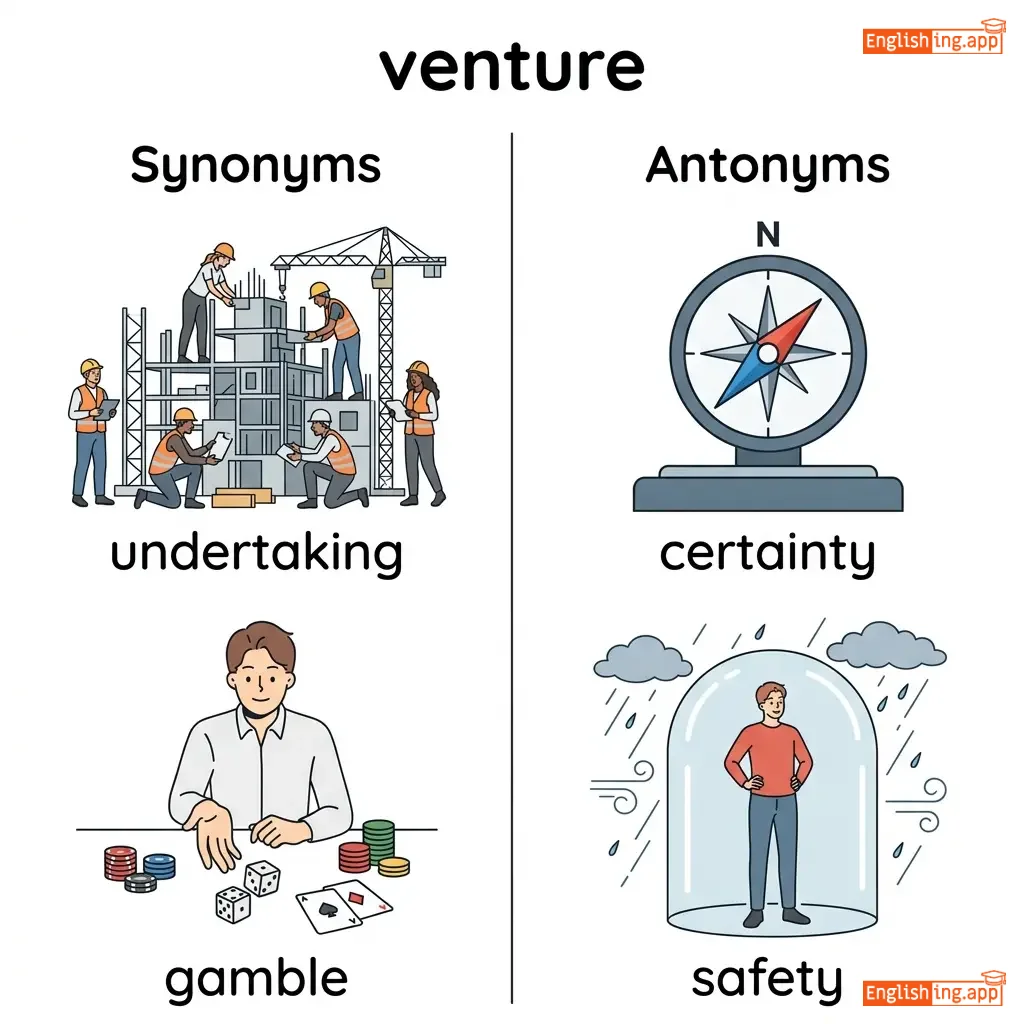
undertaking, gamble, risk, enterprise, project
••••••
|
certainty, safety, security
••••••
|
business venture, joint venture, risky venture, venture capital
••••••
|
Venture = 冒险 🚀— 商业冒险 = 冒险的事业
••••••
|
|
#5376
🔄
|
/ˈvɜːrʒən/
noun
(wéixiǎn)
••••••
|
- •••••• |
版本
banben
••••••
|
- •••••• | - •••••• | - •••••• | - •••••• |
A particular form or variant of something.
••••••
|
The software has a new version with added features. |
软件有一个新版本,带有附加功能。
Ruǎnjiàn yǒu yīgè xīn bǎnběn, dài yǒu fùjiā gōngnéng.
••••••
|
the latest version |
The most recent form or release of something.
••••••
|
最新版本
zuìxīn bǎnběn
••••••
|
edition, variation, release, form, variant
••••••
|
original, prototype
••••••
|
new version, old version, software version, version control
••••••
|
Version代表'版本',想象改变版本,功能增加。
••••••
|
|
#5377
⚔️
|
/ˈvɜːsəs/
preposition
(对抗)
••••••
|
- •••••• |
对抗
duìkàng
••••••
|
- •••••• | - •••••• | - •••••• | - •••••• |
against (in a competition or conflict)
••••••
|
The team is playing versus their biggest rivals. |
团队正在与他们最大的竞争对手对抗。
Tuánduì zhèngzài yǔ tāmen zuìdà de jìngzhēng duìshǒu duìkàng.
••••••
|
- •••••• | - •••••• | - •••••• |
against, in opposition to
••••••
|
- •••••• |
team versus team, player versus player, man versus nature
••••••
|
Versus means 'against' - Think of teams facing each other in a competition!
••••••
|
|
#5378
⬆️
|
/ˈvɜːrtɪkl/
adjective
(垂直)
••••••
|
- •••••• |
垂直
chuízhí
••••••
|
- •••••• | - •••••• | - •••••• | - •••••• |
Standing or pointing straight up; perpendicular to the ground.
••••••
|
The skyscraper has a perfectly vertical design. |
这座摩天大楼有一个完美的垂直设计。
Zhè zuò mótiān dàlóu yǒu yīgè wánměi de chuízhí shèjì.
••••••
|
vertical integration |
The combination of two or more stages of production in one company.
••••••
|
垂直整合
chuízhí zhěnghé
••••••
|
upright, perpendicular, erect, steep, straight
••••••
|
horizontal, flat
••••••
|
vertical line, vertical design, vertical structure, vertical growth
••••••
|
垂直意味着直立向上,想象一条从地面出发的直线。
••••••
|
|
#5379
⬆️
|
/ˈver.i/
adverb
(wéi-rì)
••••••
|
- •••••• |
非常; 极其; 十分
feichang; jiqi; shifen
••••••
|
- •••••• | - •••••• | - •••••• | - •••••• |
to a high degree; extremely; greatly
••••••
|
She is very intelligent and works very hard. |
她非常聪明,工作非常努力。
Ta feichang congming, gongzuo feichang nuli.
••••••
|
- •••••• | - •••••• | - •••••• |
extremely, highly, greatly, exceptionally, remarkably
••••••
|
slightly, barely, hardly, somewhat
••••••
|
very good, very bad, very much, very well, very important
••••••
|
非常努力工作,你会很聪明
••••••
|
|
#5380
🚢
|
/ˈvɛsəl/
noun
(vessel)
••••••
|
|
船只 / 容器
chuánzhī / róngqì
••••••
|
- •••••• | - •••••• | - •••••• | - •••••• |
A ship or large boat; also a container for holding liquids or a tube in the body that carries blood.
••••••
|
The fishing vessel returned safely to the harbor. |
渔船安全地返回港口。
Yú chuán ānquán de fǎnhuí gǎngkǒu.
••••••
|
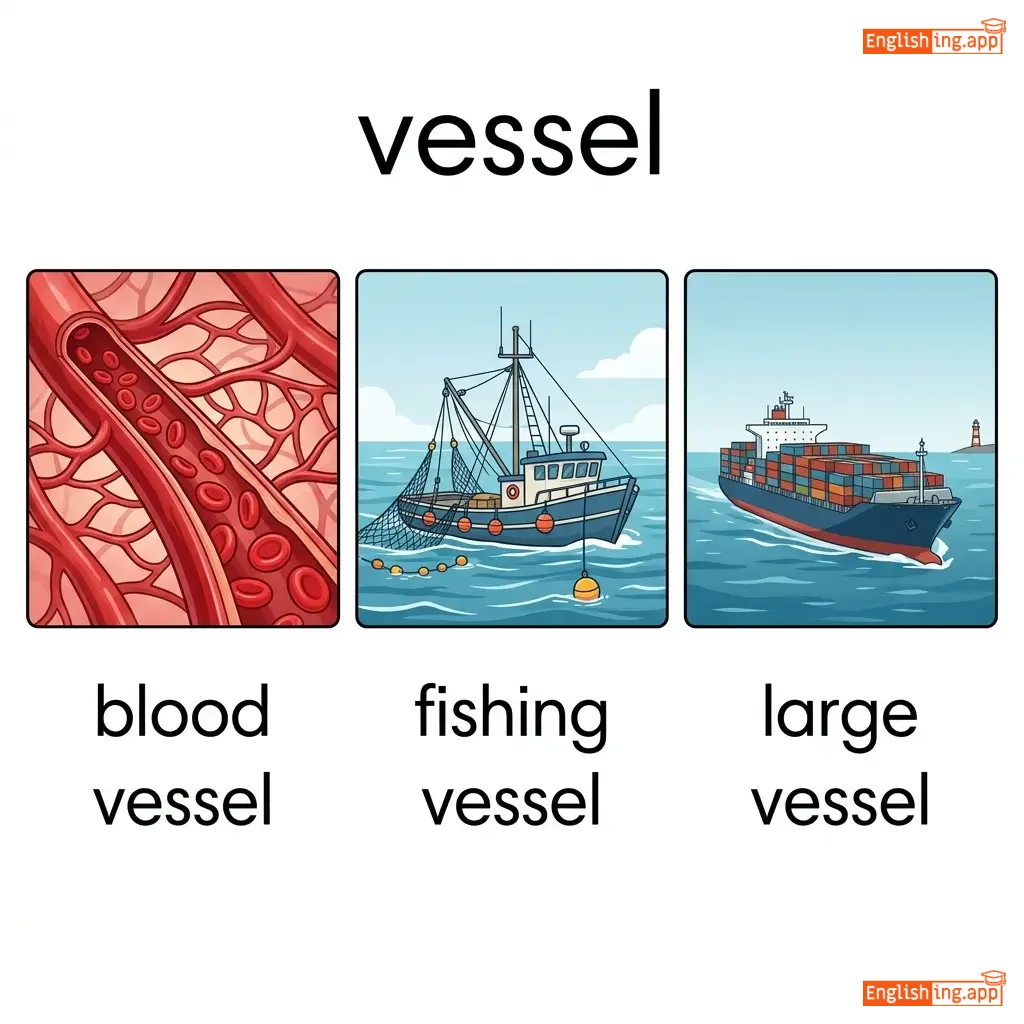
blood vessel |
A tubular structure in the body that carries blood.
••••••
|
血管
xiěguǎn
••••••
|
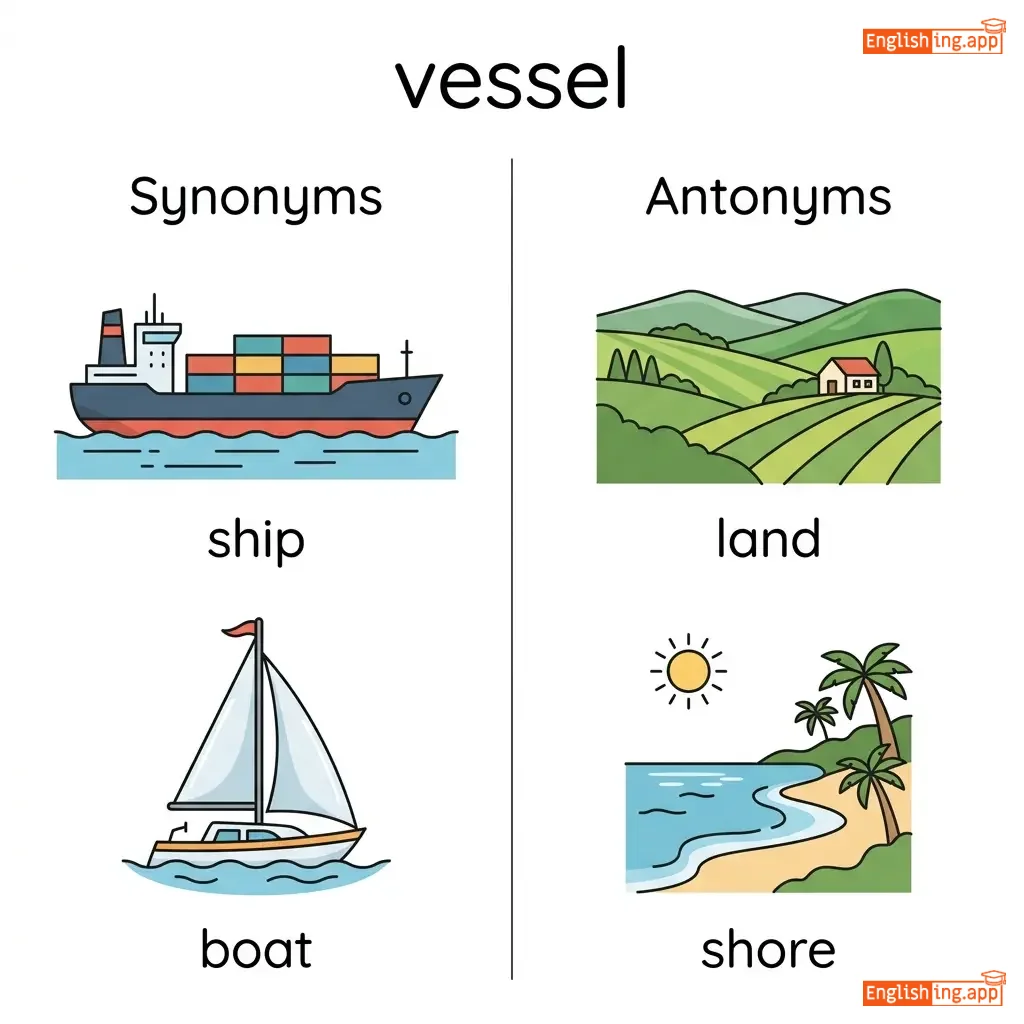
ship, boat, craft, container, receptacle
••••••
|
land, shore
••••••
|
blood vessel, fishing vessel, large vessel, sea vessel
••••••
|
Vessel 就像 🚢 船只或身体中的血管,想象船和血液!
••••••
|
|
#5381
🎖️
|
/ˈvɛtərən/
noun
(退伍军人)
••••••
|
- •••••• |
有经验的人 / 退役军人
yǒu jīngyàn de rén / tuìyì jūnrén
••••••
|
- •••••• | - •••••• | - •••••• | - •••••• |
a person who has long experience in a particular field or an ex-member of the armed forces
••••••
|
He is a veteran of the software industry. |
他是软件行业的老兵。
Tā shì ruǎnjiàn hángyè de lǎobīng
••••••
|
war veteran |
a person who has served in a war
••••••
|
战争老兵
zhànzhēng lǎobīng
••••••
|
experienced, expert, old-timer, ex-soldier
••••••
|
novice, beginner, recruit
••••••
|
war veteran, military veteran, veteran player, industry veteran
••••••
|
Veteran 意味着非常训练有素——有经验的人或退役军人
••••••
|
|
#5382
➡️
|
/ˈvaɪə/ or /ˈviːə/
preposition
(维亚)
••••••
|
- •••••• |
通过
tongguo
••••••
|
- •••••• | - •••••• | - •••••• | - •••••• |
through, by way of, or using a particular route or means
••••••
|
She sent the documents via email. |
她通过电子邮件发送了文件。
Ta tongguo dianzi youjian fasongle wenjian.
••••••
|
- •••••• | - •••••• | - •••••• |
through, by, using, across, along
••••••
|
without, beyond
••••••
|
via email, via phone, via internet, travel via, communicate via
••••••
|
维亚是一个通道,就像通过某个途径到达目的地。
••••••
|
|
#5383
😈
|
/vaɪs/
noun
(vais)
••••••
|
- •••••• |
恶习
èxí
••••••
|
- •••••• | - •••••• | - •••••• | - •••••• |
immoral or wicked behavior; a weakness in someone's character
••••••
|
Greed is a vice that can destroy lives. |
贪婪是一种恶习,它可能摧毁生活。
Tānlán shì yī zhǒng èxí, tā kěnéng cuīhuǐ shēnghuó.
••••••
|
A vice grip |
a very tight or firm hold
••••••
|
一个恶习的抓取
Yīgè èxí de zhuāqǔ
••••••
|
immorality, wickedness, evil, depravity
••••••
|
virtue, morality, goodness
••••••
|
moral vice, addictive vice, commit a vice
••••••
|
恶习会摧毁生活!
••••••
|
|
#5384
😈
|
/ˈvɪʃəs/
adjective
(vishas)
••••••
|
- •••••• |
残忍的
zanren de
••••••
|
- •••••• | - •••••• | - •••••• | - •••••• |
Deliberately cruel, violent, or immoral.
••••••
|
The dog gave a vicious growl when the stranger approached. |
当陌生人接近时,狗发出了残忍的低吼。
Dang moshengren jiejin shi, gou fashu le canren de dihou.
••••••
|
vicious cycle |
A sequence of problems that reinforce or worsen each other.
••••••
|
恶性循环
èxìng xúnhuán
••••••
|
cruel, brutal, savage, malicious, fierce
••••••
|
kind, gentle, benevolent
••••••
|
vicious attack, vicious circle, vicious cycle, vicious rumor
••••••
|
VICIOUS意味着非常危险 - 想象一个VICIOUS的狗,一个非常危险的狗 🐕
••••••
|
|
#5385
😢
|
/ˈvɪk.tɪm/
noun
(维克提姆)
••••••
|
- •••••• |
受害者
shòuhài zhě
••••••
|
- •••••• | - •••••• | - •••••• | - •••••• |
a person who suffers harm, injury, or death as a result of an event or action
••••••
|
The victim was taken to the hospital immediately. |
受害者立即被送往医院。
Shòuhài zhě lìjí bèi sòng wǎng yīyuàn.
••••••
|
- •••••• | - •••••• | - •••••• |
casualty, sufferer, target, prey
••••••
|
perpetrator, aggressor, attacker
••••••
|
crime victim, accident victim, victim support
••••••
|
In Chinese, '受害者' (shòuhài zhě) is similar to 'suffer' in English.
••••••
|
|
#5386
🏆
|
/ˈvɪktəri/
noun
(wíktǒrī)
••••••
|
|
胜利
shengli
••••••
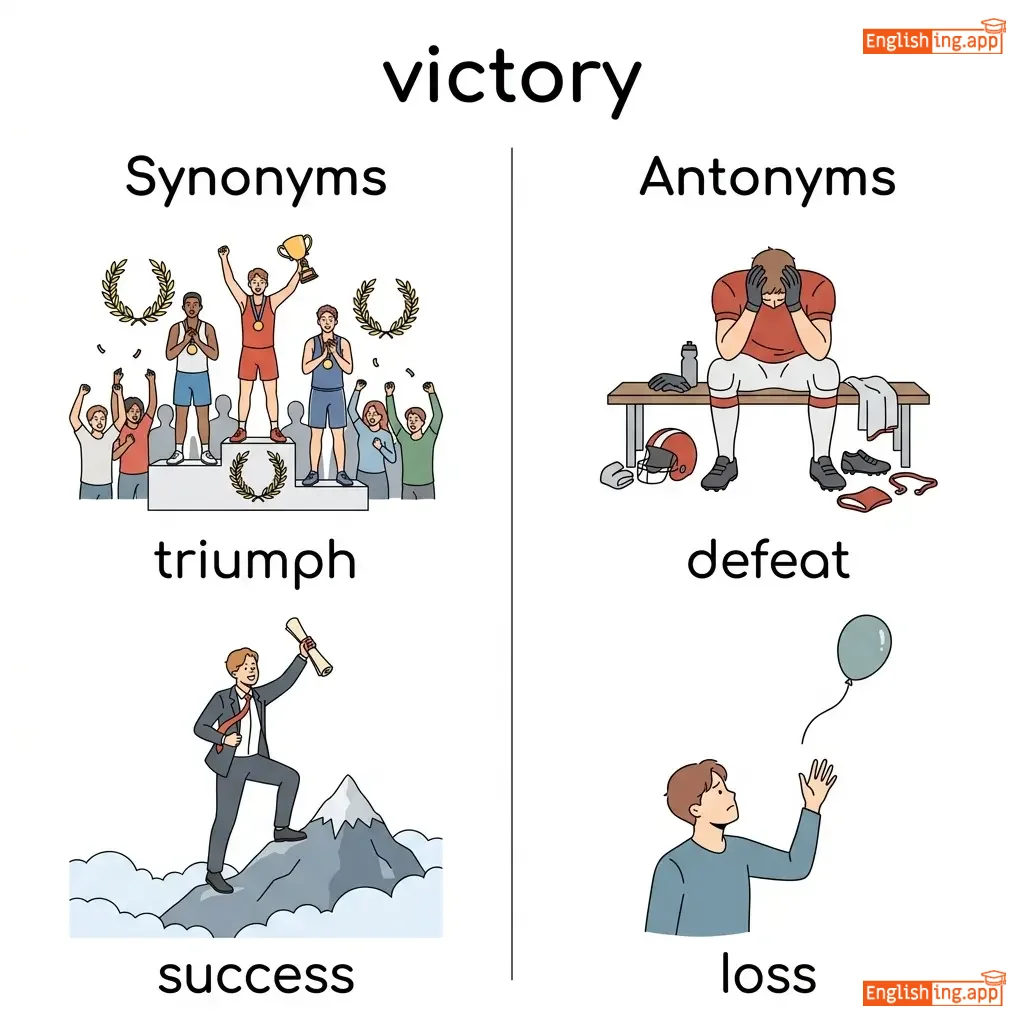
|
- •••••• | - •••••• | - •••••• | - •••••• |
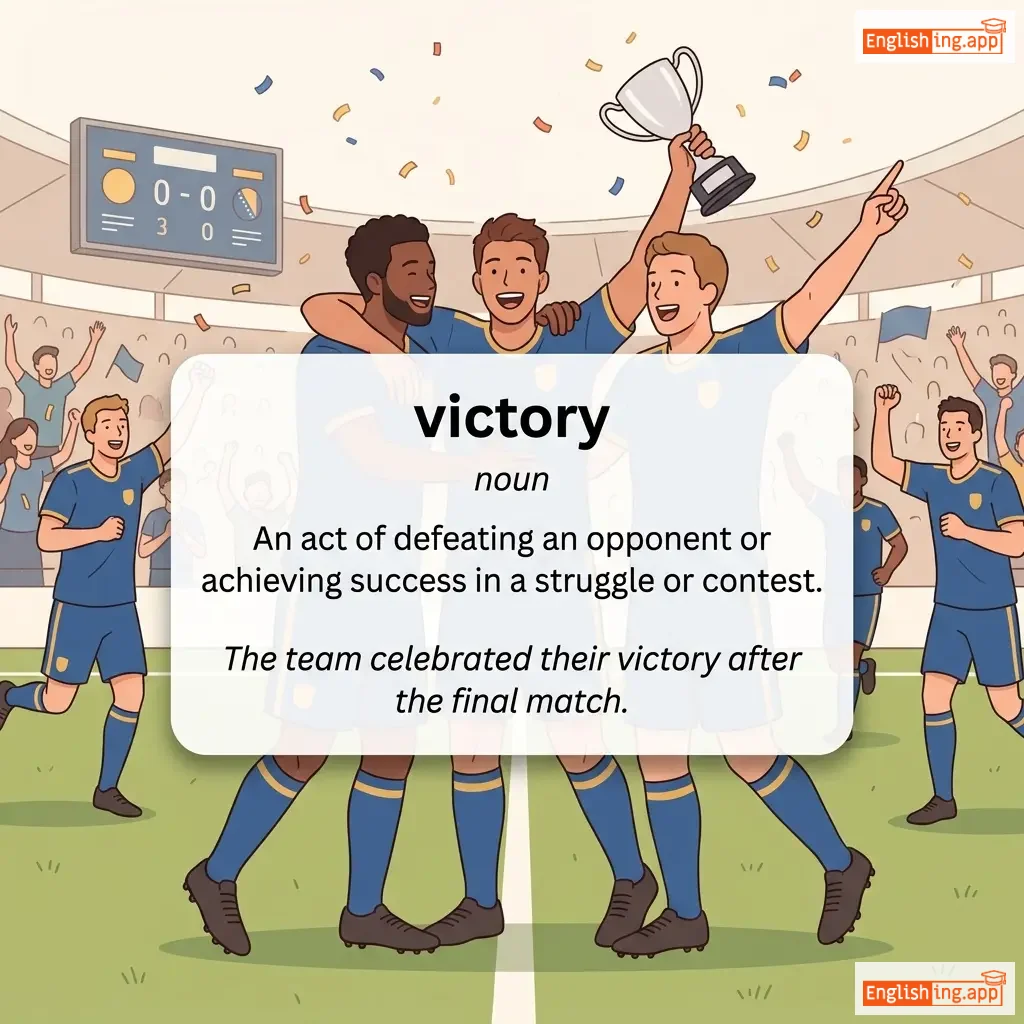
An act of defeating an opponent or achieving success in a struggle or contest.
••••••
|
The team celebrated their victory after the final match. |
球队在最后一场比赛后庆祝了他们的胜利。
qiú duì zài zuì hòu yī chǎng bǐ sài hòu qìng zhù le tā men de shèng lì.
••••••
|
sweet victory |
a satisfying or well-deserved success
••••••
|
甜美的胜利
tián měi de shèng lì
••••••
|
triumph, success, win, conquest
••••••
|
defeat, loss, failure
••••••
|
celebrate victory, great victory, decisive victory
••••••
|
VICTORY 就是 '胜利',意味着取得成功!
••••••
|
|
#5387
🎥
|
/ˈvɪdiəʊ/
noun
(视频)
••••••
|
- •••••• |
视频
shipin
••••••
|
- •••••• | - •••••• | - •••••• | - •••••• |
a recording of moving visual images made digitally or on film
••••••
|
She watched the video of her favorite concert online. |
她在网上观看了她最喜欢的演唱会视频。
Ta zai wangshang guankanle ta zui xihuan de yanchanghui shipin.
••••••
|
- •••••• | - •••••• | - •••••• |
film, clip, recording, footage
••••••
|
audio, still image
••••••
|
watch a video, upload a video, video file, educational video
••••••
|
观看视频,享受动感影像! (Guankan shipin, xiangshou donggan yingxiang!)
••••••
|
|
#5388
⚔️
|
/vaɪ/
verb
(vai)
••••••
|
- •••••• |
争夺
zhēngduó
••••••
|
vied
vaid
••••••
|
vied
vaid
••••••
|
vies
vais
••••••
|
vying
vaiing
••••••
|
To compete eagerly with someone in order to do or achieve something.
••••••
|
Several companies are vying for the contract.
几家公司正在争夺合同。
••••••
|
几家公司正在争夺合同。
Jǐ jiā gōngsī zhèngzài zhēngduó hétóng.
••••••
|
vie with
与……竞争
••••••
|
To compete against someone or something.
••••••
|
与……竞争
yǔ... jìngzhēng
••••••
|
compete, contend, rival, strive
••••••
|
yield, surrender
••••••
|
vie for, vie with, vying to, vying against
••••••
|
VIE 意味着争夺:想象某人总是处于竞争中!
••••••
|
|
#5389
👀
|
/vjuː/
noun/verb
(viu)
••••••
|
- •••••• |
视图
shitu
••••••
|
viewed
viud
••••••
|
viewed
viud
••••••
|
views
vios
••••••
|
viewing
viwing
••••••
|
the act of seeing or observing something, or an area of sight
••••••
|
She had a great view of the sunset from her balcony.
她从阳台上看到了美丽的日落景象。
••••••
|
她从阳台上看到了美丽的日落景象。
Ta cong yangtai shang kandaole meili de riluo jingxiang.
••••••
|
in view of
视图
••••••
|
considering or due to something
••••••
|
视图
shitu
••••••
|
sight, observation, panorama, outlook
••••••
|
blindness, ignorance
••••••
|
take a view, have a view, beautiful view, view from the window
••••••
|
视图 - 当你从一个高处看(Shitu - dang ni cong yige gaochu kan)
••••••
|
|
#5390
👁️
|
/ˈvɪərər/
noun
(维尤尔)
••••••
|
- •••••• |
观众
guānzhòng
••••••
|
- •••••• | - •••••• | - •••••• | - •••••• |
a person who watches something, especially television or video content
••••••
|
The viewer is able to switch channels with the remote control. |
观众可以使用遥控器切换频道。
Guānzhòng kěyǐ shǐyòng yáokòngqì qiēhuàn píndào.
••••••
|
- •••••• | - •••••• | - •••••• |
observer, watcher, spectator, audience
••••••
|
participant, actor
••••••
|
TV viewer, movie viewer, loyal viewer, viewer discretion
••••••
|
观众在看电视 (Guānzhòng zài kàn diànshì)
••••••
|
|
#5391
👀
|
/ˈvjuːpɔɪnt/
noun
(vjuːpɔɪnt)
••••••
|
- •••••• |
观点
guān diǎn
••••••
|
- •••••• | - •••••• | - •••••• | - •••••• |
a particular attitude or way of considering a matter
••••••
|
From his viewpoint, the situation was hopeless.
从他的角度来看,情况是绝望的。
••••••
|
从他的观点来看,情况是绝望的。
Cóng tā de guān diǎn lái kàn, qíng kuàng shì jué wàng de.
••••••
|
point of view
观点
••••••
|
the position from which something is considered or evaluated
••••••
|
观点
guān diǎn
••••••
|
perspective, outlook, angle, stance
••••••
|
misunderstanding, confusion
••••••
|
different viewpoint, personal viewpoint, from my viewpoint
••••••
|
就像一个观点,你能清晰地看到一切!
••••••
|
|
#5392
🏘️
|
/ˈvɪlɪdʒ/
noun
(维利奇)
••••••
|
- •••••• |
村庄
cunzhuang
••••••
|
- •••••• | - •••••• | - •••••• | - •••••• |
a small community or group of houses in a rural area
••••••
|
They live in a small village surrounded by mountains. |
他们住在一个被山脉环绕的小村庄里。
Tamen zhu zai yige bei shanmai huanrao de xiao cunzhuang li.
••••••
|
village green |
a grassy area in a village, often used for recreation
••••••
|
村庄绿地
cunzhuang ludi
••••••
|
hamlet, town, settlement, community
••••••
|
city, metropolis
••••••
|
village life, village community, small village, remote village
••••••
|
村庄是一个宁静、贴近自然的地方 (Cunzhuang shi yige ningjing, tiejin ziran de difang)
••••••
|
|
#5393
🌿
|
/vaɪn/
noun
(外因)
••••••
|
- •••••• |
藤蔓
tengman
••••••
|
- •••••• | - •••••• | - •••••• | - •••••• |
a climbing or trailing plant with long stems; a plant that produces grapes
••••••
|
The vine climbed up the wall and covered it with green leaves.
德 外因 克莱姆德 阿普 德 沃尔 安德 卡弗德 伊特 威思 格林 利夫斯。
••••••
|
藤蔓爬上了墙,覆盖了绿色的叶子。
tengman pa shang le qiang, fugai le lvse de yezi
••••••
|
hear it through the grapevine
希尔 伊特 斯鲁 德 格瑞普外因
••••••
|
to learn information informally or through rumors
••••••
|
通过小道消息听说
tongguo xiaodao xiaoxi tingshuo
••••••
|
creeper, climber, grapevine, trailing plant
••••••
|
tree, bush
••••••
|
grape vine, climbing vine, vine leaves, vine growth
••••••
|
VINE 藤蔓会慢慢爬满墙
••••••
|
|
#5394
🚫
|
/ˈvaɪ.ə.leɪt/
verb
(wāi-òu-lèi-tè)
••••••
|
|
违反
wéifǎn
••••••
|
violated
wāi-òu-lèi-tèd
••••••
|
violated
wāi-òu-lèi-tèd
••••••
|
violates
wāi-òu-lèi-ts
••••••
|
violating
wāi-òu-lèi-ting
••••••
|
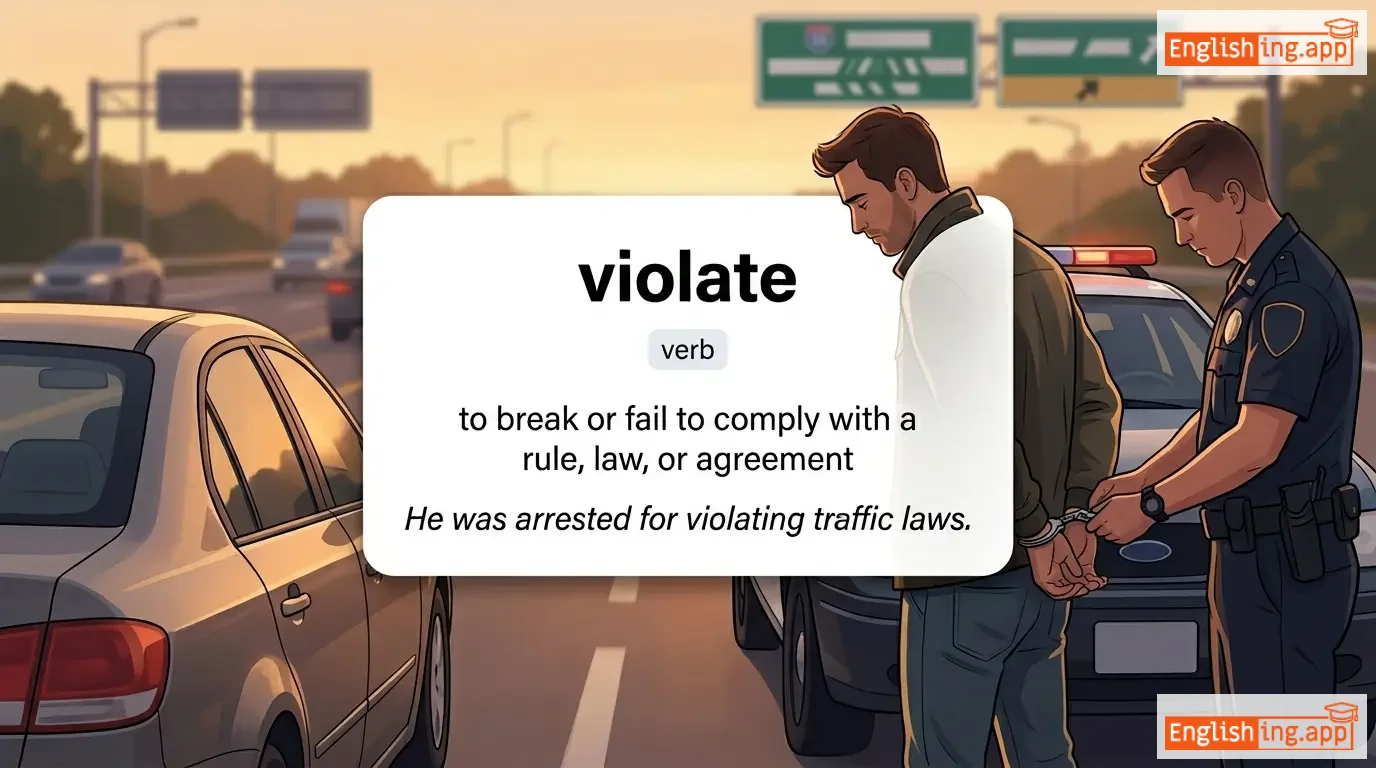
to break or fail to comply with a rule, law, or agreement
••••••
|
He was arrested for violating traffic laws.
tā yīnwèi wéifǎ bōfǎo jiāotōng fǎlǜ ér bèi dǔlì
••••••
|
他因违反交通法规被逮捕。
Tā yīnwèi wéifǎ bōfǎo jiāotōng fǎlǜ ér bèi dǔlì.
••••••
|
violate human rights
wāi-òu-lèi rénquán
••••••
|
to act against the basic rights that every human deserves
••••••
|
侵犯人权
qīnfàn rénquán
••••••
|
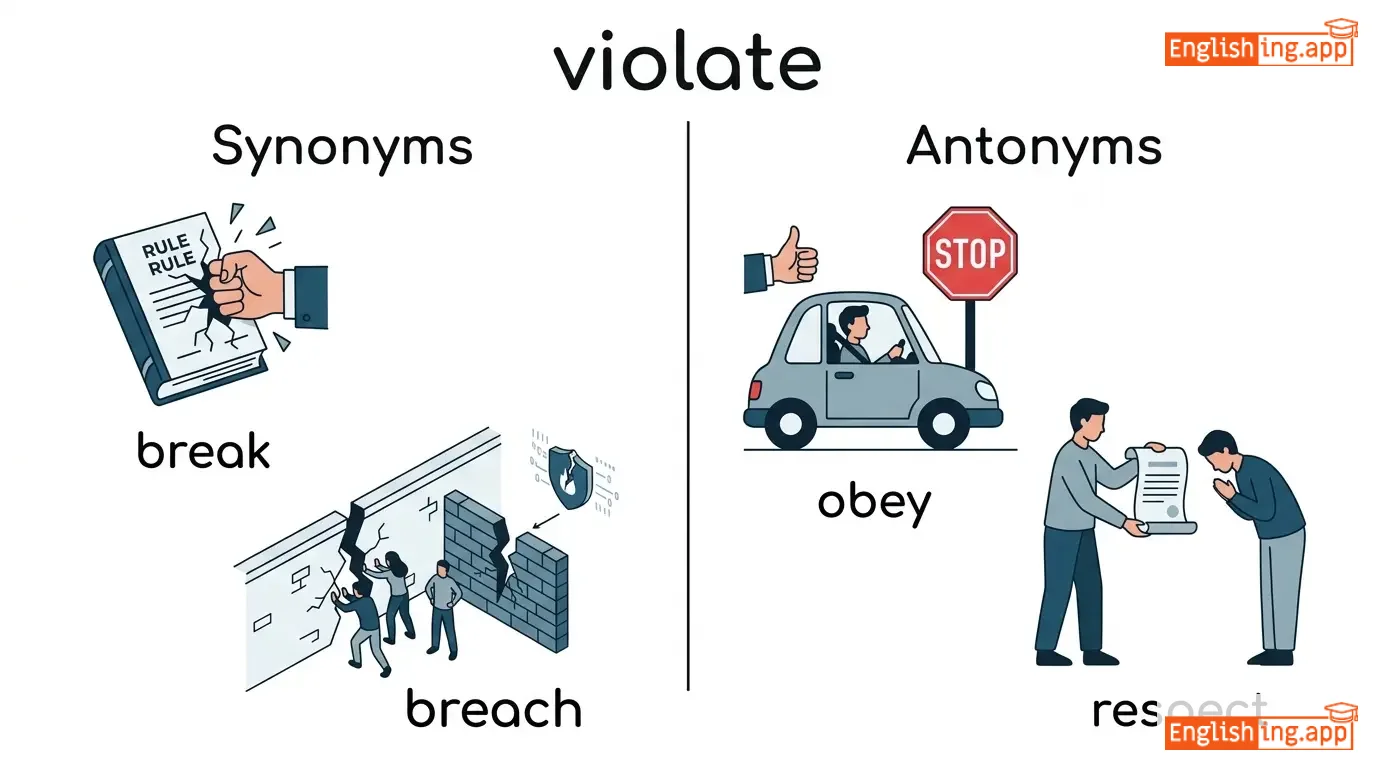
break, breach, disobey, infringe, transgress
••••••
|
obey, respect, follow
••••••
|
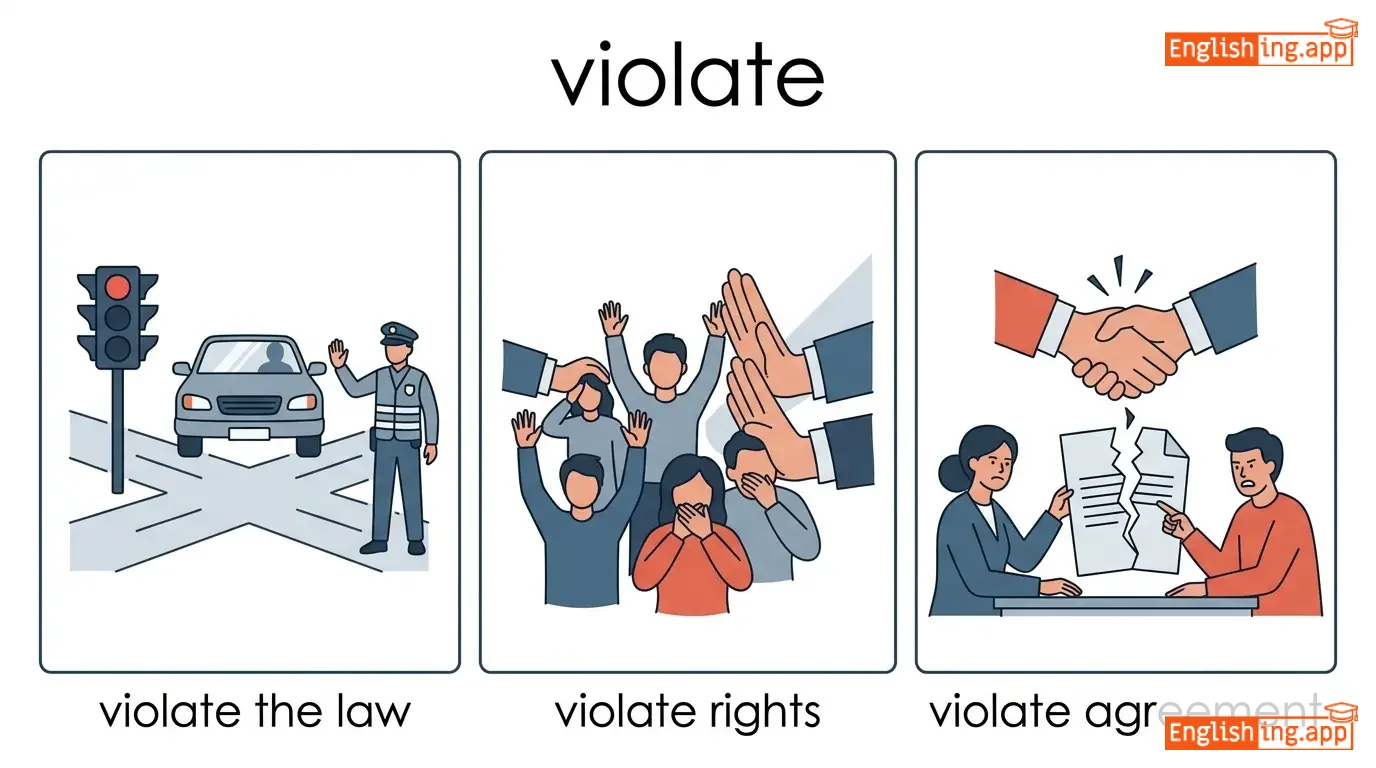
violate the law, violate rights, violate agreement, violate privacy
••••••
|
'违反' = 打破规则,别违反法则!
••••••
|
|
#5395
🚫
|
/ˌvaɪəˈleɪʃən/
noun
(wāi-ōu-léi-shēn)
••••••
|
- •••••• |
违反
wéifǎn
••••••
|
- •••••• | - •••••• | - •••••• | - •••••• |
The act of breaking or disregarding a law, rule, or agreement.
••••••
|
Driving without a license is a violation of the law. |
没有驾照开车是违反法律的行为。
méiyǒu jiàzhào kāichē shì wéifǎn fǎlǜ de xíngwéi.
••••••
|
in violation of |
contrary to; against
••••••
|
违反规定
wéifǎn guīdìng
••••••
|
breach, infringement, offense, transgression, misconduct
••••••
|
compliance, obedience, adherence
••••••
|
serious violation, law violation, human rights violation, violation of rules
••••••
|
Violation = 打破规则 🚫
••••••
|
|
#5396
💥
|
/ˈvaɪ.ə.ləns/
noun
(暴力)
••••••
|
- •••••• |
暴力
baoli
••••••
|
- •••••• | - •••••• | - •••••• | - •••••• |
behavior involving physical force intended to hurt or damage
••••••
|
The protest turned into an act of violence.
抗议活动变成了一种暴力行为。
••••••
|
抗议活动变成了一种暴力行为。
Kàngyì huódòng biàn chéngle yī zhǒng bàolì xíngwéi.
••••••
|
domestic violence
家庭暴力
••••••
|
violence or abuse within a household, often between partners
••••••
|
家庭暴力
jiātíng bàolì
••••••
|
aggression, brutality, force, cruelty, assault
••••••
|
peace, calm, harmony
••••••
|
use violence, outbreak of violence, act of violence, prevent violence
••••••
|
‘暴力’意味着violence,想象一场打斗和一个响亮的声音 💥,这就是暴力!
••••••
|
|
#5397
🔥
|
/ˈvaɪ.ə.lənt/
adjective
(vɑɪələnt)
••••••
|
- •••••• |
暴力的
baolide
••••••
|
- •••••• | - •••••• | - •••••• | - •••••• |
using or involving physical force intended to hurt or damage
••••••
|
He became violent after hearing the bad news. |
听到坏消息后,他变得暴力了。
Tingdao huai xiaoxi hou, ta biande baolile.
••••••
|
turn violent |
to become aggressive or start using physical force
••••••
|
变得暴力
biande baoli
••••••
|
aggressive, brutal, fierce, forceful, savage
••••••
|
peaceful, gentle, calm
••••••
|
violent attack, violent crime, violent reaction, become violent
••••••
|
Violent 意味着暴力行为 🔥 — ‘暴力的’ 是指当某人爆发时就像风暴一样!
••••••
|
|
#5398
💻
|
/ˈvɜː.tʃu.ə.li/
adverb
(wěi chù ài lì)
••••••
|
- •••••• |
几乎, 虚拟
jī hū, xū nǐ
••••••
|
- •••••• | - •••••• | - •••••• | - •••••• |
almost or nearly, but not completely; by means of computer technology
••••••
|
The meeting was held virtually due to travel restrictions. |
由于旅行限制,会议是虚拟举行的。
Yóu yú lǚ xíng xiàn zhì, huì yì shì xū nǐ jǔ xíng de.
••••••
|
virtually impossible |
almost impossible to do or achieve
••••••
|
几乎不可能
jī hū bù kě néng
••••••
|
almost, nearly, practically, effectively, essentially
••••••
|
completely, totally, physically
••••••
|
virtually impossible, virtually all, held virtually, virtually unchanged
••••••
|
Virtually 意思是在线或几乎 — 想想‘virtual class’,就是真正的在线课堂 💻
••••••
|
|
#5399
✨
|
/ˈvɜːrtʃuəs/
adjective
(wèrchùs)
••••••
|
- •••••• |
有德行的
yǒu déxíng de
••••••
|
- •••••• | - •••••• | - •••••• | - •••••• |
Having or showing high moral standards.
••••••
|
She is known as a virtuous woman who helps the poor. |
她是一个以帮助穷人而著名的有德行的女人。
Tā shì yīgè yǐ bāngzhù qióngrén ér zhùmíng de yǒu déxíng de nǚrén.
••••••
|
virtue is its own reward |
Doing good is rewarding in itself.
••••••
|
美德是自己的奖励
Měidé shì zìjǐ de jiǎnglì
••••••
|
moral, righteous, honest, noble, pure
••••••
|
immoral, corrupt, wicked
••••••
|
virtuous life, virtuous character, virtuous conduct
••••••
|
Virtuous → 德行 (Déxíng) = 有德行的
••••••
|
|
#5400
🦠
|
/ˈvaɪrəs/
noun
(wēi ruì sī)
••••••
|
- •••••• |
病毒
bingdu
••••••
|
- •••••• | - •••••• | - •••••• | - •••••• |
A tiny infectious agent that can replicate only inside the living cells of an organism.
••••••
|
The computer was infected with a dangerous virus. |
计算机感染了一个危险的病毒。
Jìsuànjī gǎnrǎnle yīgè wēixiǎn de bìngdú.
••••••
|
spread like a virus |
Something that spreads quickly and uncontrollably.
••••••
|
像病毒一样传播
xiàng bìngdú yīyàng chuánbò
••••••
|
pathogen, germ, bug, infection
••••••
|
antidote, cure
••••••
|
computer virus, deadly virus, spread virus
••••••
|
病毒就像火一样传播!
••••••
|
|
#5401
🛂
|
/ˈviːzə/
noun
(签证)
••••••
|
- •••••• |
签证
qiānzhèng
••••••
|
- •••••• | - •••••• | - •••••• | - •••••• |
an official authorization or permission to enter, leave, or stay in a country
••••••
|
She applied for a visa to study abroad. |
她申请了签证以便出国留学。
Tā shēnqǐngle qiānzhèng yǐbiàn chūguó liúxué.
••••••
|
- •••••• | - •••••• | - •••••• |
permit, authorization, clearance, pass
••••••
|
ban, restriction
••••••
|
visa application, visa approval, travel visa
••••••
|
签证就是让你去其他国家的许可!
••••••
|
|
#5402
👀
|
/ˈvɪzəbl/
adjective
(vísɪbəl)
••••••
|
- •••••• |
可见的
kejian de
••••••
|
- •••••• | - •••••• | - •••••• | - •••••• |
able to be seen; perceptible by the eye
••••••
|
The stars were clearly visible in the night sky.
星星在夜空中清晰可见。
••••••
|
星星在夜空中清晰可见。
Xīngxīng zài yèkōng zhōng qīngxī kějiàn.
••••••
|
make oneself visible
使自己变得可见
••••••
|
to ensure others can see or notice you
••••••
|
使自己变得可见
Shǐ zìjǐ biàn dé kějiàn
••••••
|
apparent, noticeable, perceptible, observable, evident
••••••
|
invisible, hidden
••••••
|
visible light, visible mark, visible difference, clearly visible
••••••
|
Visible就像星星一样,可以看见。
••••••
|
|
#5403
👁️
|
/ˈvɪʒən/
noun
(happiness)
••••••
|
|
幸福
xingfu
••••••
|
- •••••• | - •••••• | - •••••• | - •••••• |
the ability to see or a mental image of something
••••••
|
She had a clear vision of her future. |
当她收到奖项时,她无法掩饰她的幸福。
Dang ta shoudao jiangxiang shi, ta wu fa yanshi ta de xingfu.
••••••
|
- •••••• | - •••••• | - •••••• |
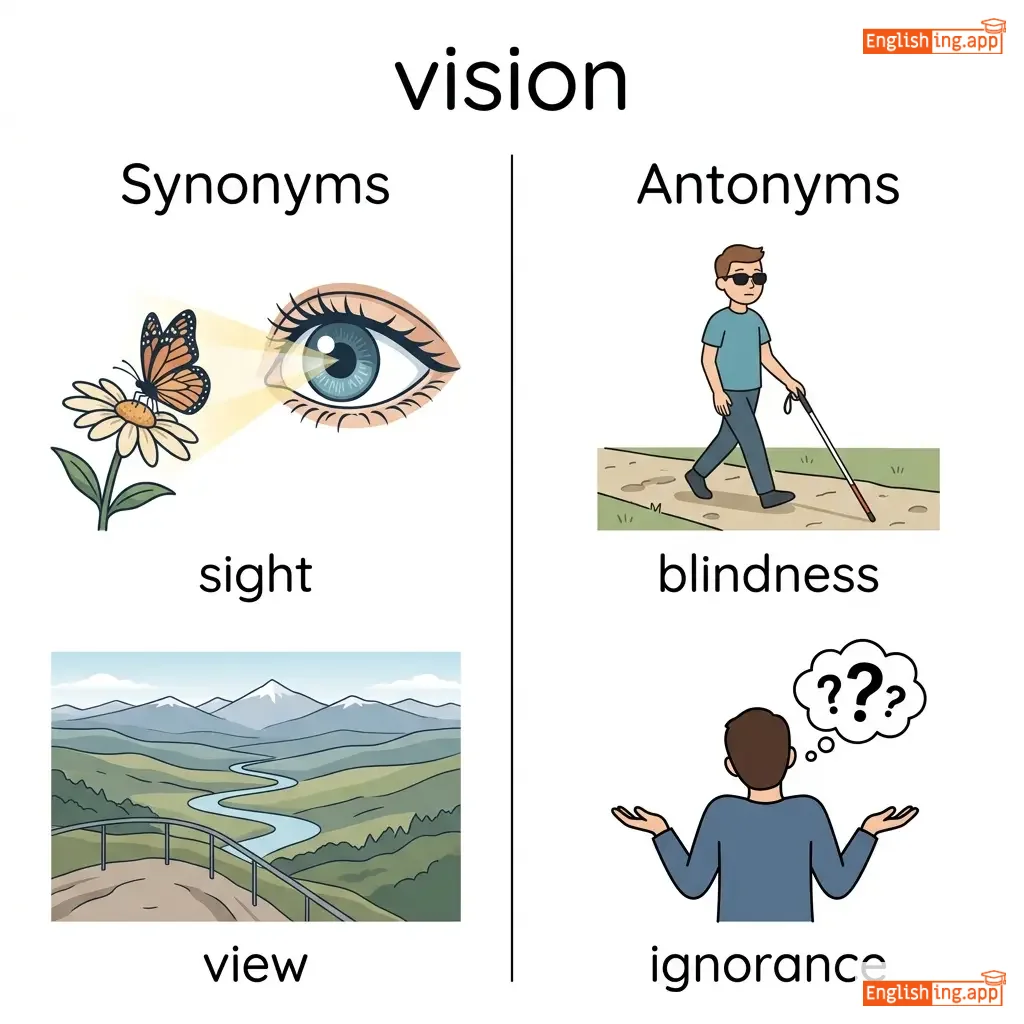
sight, view, perception, foresight
••••••
|
blindness, ignorance, darkness
••••••
|
clear vision, vivid vision, future vision
••••••
|
Happiness - 幸福是人生的目标
••••••
|
|
#5404
🏛️
|
/ˈvɪzɪt/
verb
(vɪzɪt)
••••••
|
|
参观
canguan
••••••
|
visited
vɪzɪtɪd
••••••
|
visited
vɪzɪtɪd
••••••
|
visits
vɪzɪts
••••••
|
visiting
vɪzɪtɪŋ
••••••
|
to go and see someone or somewhere; to pay a call
••••••
|
We plan to visit the museum this weekend.
我们计划这个周末参观博物馆。
••••••
|
我们计划这个周末参观博物馆。
Wo men jihua zhe ge zhoumo canguan bowuguan.
••••••
|
- •••••• | - •••••• | - •••••• |
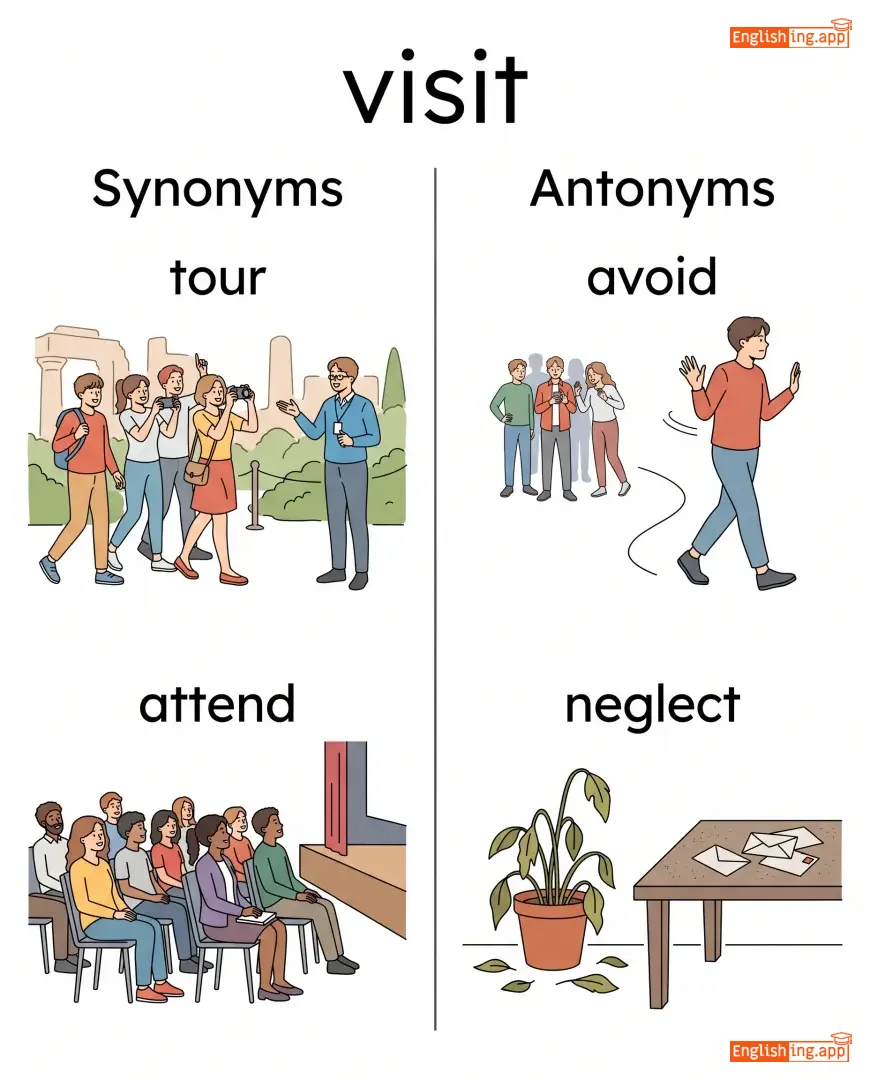
see, call on, drop by, tour, explore
••••••
|
avoid, shun, stay away, leave
••••••
|
visit friends, visit family, regularly visit, frequently visit, rarely visit
••••••
|
参观就像探险,去了解新的地方。
••••••
|
|
#5405
🚶♂️
|
/ˈvɪzɪtər/
noun
(vɪzɪtɔr)
••••••
|
- •••••• |
游客
youke
••••••
|
- •••••• | - •••••• | - •••••• | - •••••• |
a person who goes to see a place or someone for a short time
••••••
|
The museum had many visitors last weekend. |
博物馆上周末有很多游客。
Bówùguǎn shàng zhōumò yǒu hěn duō yóukè.
••••••
|
- •••••• | - •••••• | - •••••• |
guest, caller, tourist, attendee
••••••
|
resident, local
••••••
|
welcome visitors, regular visitor, museum visitor
••••••
|
VISITOR - 就像一个游客 (visitor),他来过然后离开。
••••••
|
|
#5406
👁️
|
/ˈvɪʒuəl/
adjective
(视觉)
••••••
|
- •••••• |
视觉的
shìjué de
••••••
|
- •••••• | - •••••• | - •••••• | - •••••• |
Relating to seeing or sight.
••••••
|
The movie was praised for its stunning visual effects. |
这部电影因其惊人的视觉效果而受到称赞。
Zhè bù diànyǐng yīn qí jīngrén de shìjué xiàoguǒ ér shòudào chēngzàn.
••••••
|
- •••••• | - •••••• | - •••••• |
optical, graphic, pictorial, observable
••••••
|
invisible, abstract
••••••
|
visual effect, visual aid, visual representation, visual art
••••••
|
视觉的就是眼睛能看到的东西。
••••••
|
|
#5407
💪
|
/ˈvaɪtl/
adjective
(维塔尔)
••••••
|
- •••••• |
至关重要
zhìguān zhòngyào
••••••
|
- •••••• | - •••••• | - •••••• | - •••••• |
essential or necessary for life or success
••••••
|
It's vital to stay hydrated during the summer. |
在夏天保持水分非常重要。
Zài xiàtiān bǎochí shuǐfèn fēicháng zhòngyào.
••••••
|
- •••••• | - •••••• | - •••••• |
crucial, essential, necessary, important
••••••
|
unimportant, trivial
••••••
|
vital organs, vital information, vital role
••••••
|
VITAL - 对生命至关重要 (vital - duì shēngmìng zhìguān zhòngyào)
••••••
|
|
#5408
❤️
|
/ˈvaɪtəli/
adverb
(外特利)
••••••
|
- •••••• |
至关重要地
zhi guan zhong yao de
••••••
|
- •••••• | - •••••• | - •••••• | - •••••• |
in an extremely important or essential way; in a manner relating to life or vitality
••••••
|
Access to clean water is vitally important for public health.
艾克塞斯 图 克林 沃特 是 外特利 因波坦特 福 公布里克 黑尔斯。
••••••
|
获得清洁的水对公共健康至关重要。
Huo de qing jie de shui dui gong gong jian kang zhi guan zhong yao
••••••
|
vitally important
外特利 因波坦特
••••••
|
extremely important or essential
••••••
|
至关重要
zhi guan zhong yao
••••••
|
crucially, essentially, critically, importantly, fundamentally
••••••
|
insignificantly, trivially, unimportantly
••••••
|
vitally important, vitally necessary, vitally concerned, vitally affected
••••••
|
Vital = 重要, vitally = 至关重要地
••••••
|
|
#5409
📚
|
/vəˈkæbjʊləri/
noun
(沃凯布勒瑞)
••••••
|
- •••••• |
词汇
cihui
••••••
|
- •••••• | - •••••• | - •••••• | - •••••• |
the set of words known and used by a person, group, or language; the words used in a particular field or subject
••••••
|
Reading every day helps improve your vocabulary.
瑞丁 埃弗瑞 得 黑普斯 因普鲁夫 优尔 沃凯布勒瑞。
••••••
|
每天阅读有助于提高你的词汇量。
meitian yuedu youzhu yu tigao ni de cihuiliang
••••••
|
basic vocabulary
贝西克 沃凯布勒瑞
••••••
|
the most essential and commonly used words of a language
••••••
|
基础词汇
jichu cihui
••••••
|
lexicon, word stock, terminology, diction
••••••
|
silence, inarticulateness
••••••
|
expand vocabulary, rich vocabulary, basic vocabulary, vocabulary list, vocabulary skills
••••••
|
Vocabulary = 词汇,学词汇才能学好英语!
••••••
|
|
#5410
🎤
|
/ˈvoʊkəl/
adjective
(vokal)
••••••
|
- •••••• |
直言不讳
zhí yán bù huì
••••••
|
- •••••• | - •••••• | - •••••• | - •••••• |
expressing opinions or feelings freely and loudly; relating to the voice
••••••
|
She was very vocal about her dissatisfaction.
她对自己的不满非常直言不讳。
••••••
|
她对自己的不满非常直言不讳。
Tā duì zì jǐ de bù mǎn fēi cháng zhí yán bù huì.
••••••
|
vocal supporter
直言不讳的支持者
••••••
|
a person who strongly and openly supports something
••••••
|
直言不讳的支持者
zhí yán bù huì de zhī chí zhě
••••••
|
outspoken, expressive, loud, verbal, articulate
••••••
|
silent, quiet
••••••
|
vocal cords, vocal expression, vocal critic, vocal supporter
••••••
|
Vocal 就是大声表达—直言不讳的支持者!
••••••
|
|
#5411
🗣️
|
/vɔɪs/
noun
(wòis)
••••••
|
- •••••• |
声音
shengyin
••••••
|
- •••••• | - •••••• | - •••••• | - •••••• |
the sound produced by the vocal cords; the ability to speak or express oneself
••••••
|
She has a beautiful voice that captivates the audience. |
她有一个迷人的声音,吸引了观众。
Ta you yige miren de shengyin, xīyǐnle guānzhòng.
••••••
|
find your voice |
to begin expressing your thoughts or opinions
••••••
|
找到你的声音
zhǎodào nǐ de shēngyīn
••••••
|
sound, speech, tone, vocalization
••••••
|
silence, muteness
••••••
|
loud voice, soft voice, speak with voice
••••••
|
VOICE - 找到你的声音 (voice - zhaodao nide shengyin) 来表达自己
••••••
|
|
#5412
🏐
|
/ˈvɒlibɔːl/
noun
(排球)
••••••
|
- •••••• |
排球
paiqiu
••••••
|
- •••••• | - •••••• | - •••••• | - •••••• |
a team sport in which players hit a ball over a high net using their hands
••••••
|
She plays volleyball with her friends every weekend.
她每个周末都和朋友一起打排球。
••••••
|
她每个周末都和朋友一起打排球。
ta meige zhoumo dou he pengyou yiqi da paiqiu
••••••
|
- •••••• | - •••••• | - •••••• |
volleyball game, indoor volleyball, beach volleyball, volley game
••••••
|
solo sport, individual sport
••••••
|
play volleyball, beach volleyball, volleyball court, volleyball team, volleyball match
••••••
|
排 + 球 = 排球,球被打过球网
••••••
|
|
#5413
🔊
|
/ˈvɒl.juːm/
noun
(vó lù mǔ)
••••••
|
- •••••• |
体积
tǐ jī
••••••
|
- •••••• | - •••••• | - •••••• | - •••••• |
the amount of space that a substance or object occupies, or that is enclosed within a container
••••••
|
The volume of water in the tank increased after the rain. |
雨后水箱中的体积增加了。
Yǔ hòu shuǐ xiāng zhōng de tǐ jī zēng jiā le.
••••••
|
- •••••• | - •••••• | - •••••• |
amount, quantity, size, magnitude
••••••
|
smallness, limitation
••••••
|
high volume, volume control, sound volume, large volume
••••••
|
体积,就像测量水箱中的水。
••••••
|
|
#5414
🙌
|
/ˈvɑːlənteri/
adjective
••••••
|
- •••••• | - •••••• | - •••••• | - •••••• | - •••••• | - •••••• |
done willingly and without being forced
••••••
|
She does a lot of voluntary work for local charities. |
- •••••• |
voluntary service |
work done freely without payment
••••••
|
- •••••• |
optional, willing, discretionary, self-imposed, deliberate
••••••
|
forced, compulsory
••••••
|
voluntary work, voluntary donation, voluntary service, voluntary action
••••••
|
No •••••• |
|
#5415
🤝
|
/ˌvɒl.ənˈtɪə/
noun/verb
(志愿者)
••••••
|
- •••••• |
志愿者
zhìyuàn zhě
••••••
|
volunteered
志愿过
••••••
|
volunteered
志愿过
••••••
|
volunteers
志愿者们
••••••
|
volunteering
志愿服务
••••••
|
a person who does something, especially helping other people, willingly and without being paid
••••••
|
She decided to volunteer at the local animal shelter.
她决定在当地的动物收容所做志愿者。
••••••
|
她决定在当地的动物收容所做志愿者。
Tā juédìng zài dāngdì de dòngwù shōuróngsuǒ zuò zhìyuàn zhě.
••••••
|
- •••••• | - •••••• | - •••••• |
helper, contributor, supporter, participant
••••••
|
recipient, beneficiary
••••••
|
volunteer work, volunteer for, volunteer program, volunteer at
••••••
|
志愿者自愿帮助他人,别期待报酬。
••••••
|
|
#5416
🤮
|
/ˈvɒmɪt/
verb
(呕吐)
••••••
|
|
呕吐
ǒutù
••••••
|
vomited
呕吐了
••••••
|
vomited
呕吐了
••••••
|
vomits
呕吐
••••••
|
vomiting
呕吐
••••••
|
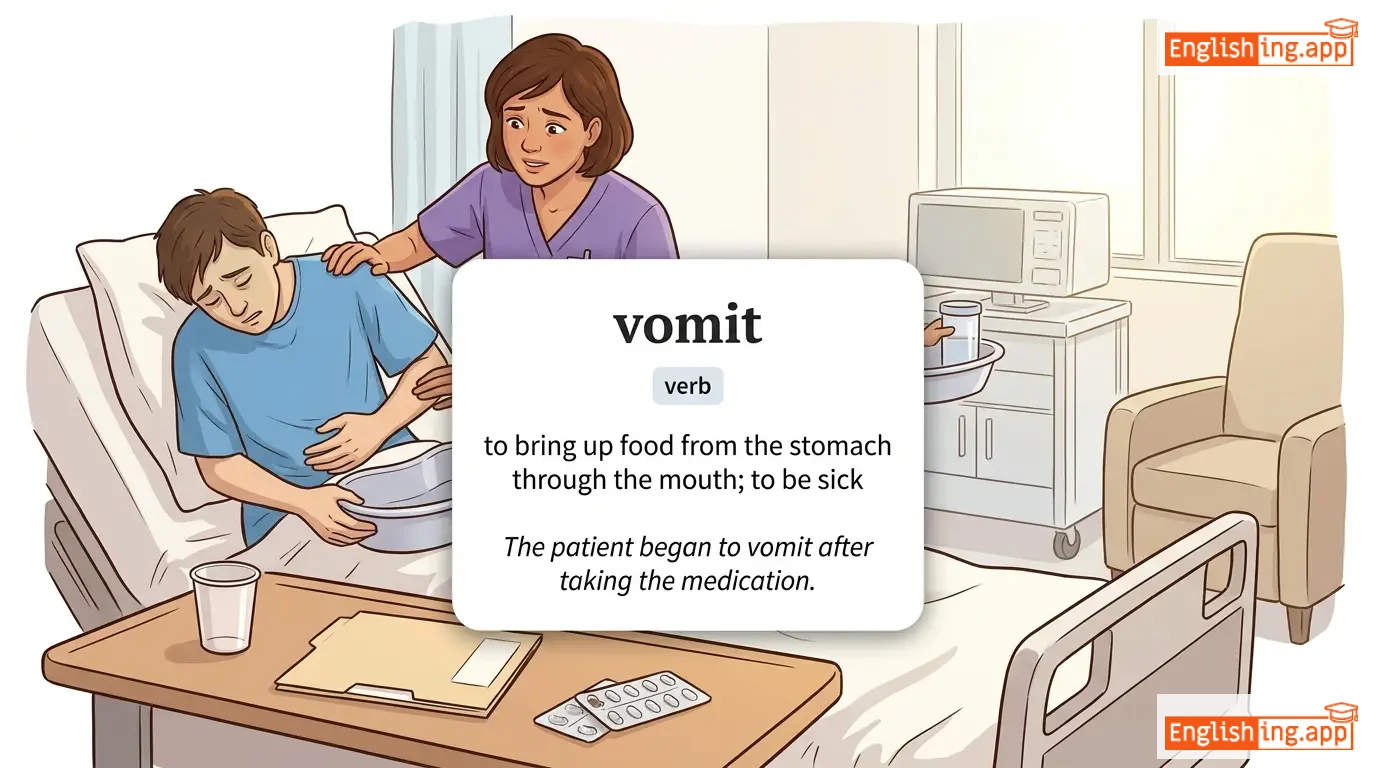
to bring up food from the stomach through the mouth; to be sick
••••••
|
The patient began to vomit after taking the medication.
病人在服药后开始呕吐。
••••••
|
病人在服药后开始呕吐。
Bìngrén zài fúyào hòu kāishǐ ǒutù.
••••••
|
- •••••• | - •••••• | - •••••• |
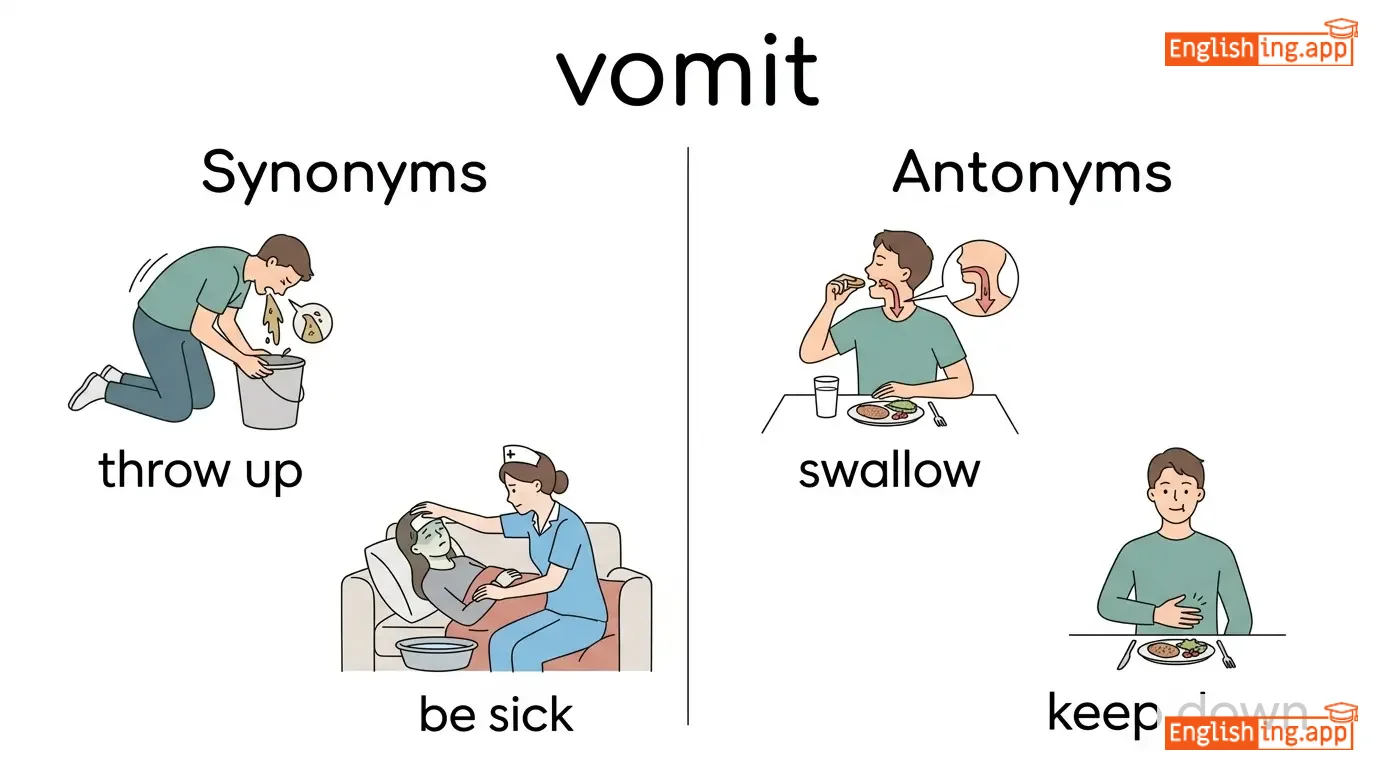
throw up, be sick, regurgitate, puke
••••••
|
swallow, keep down, digest
••••••
|
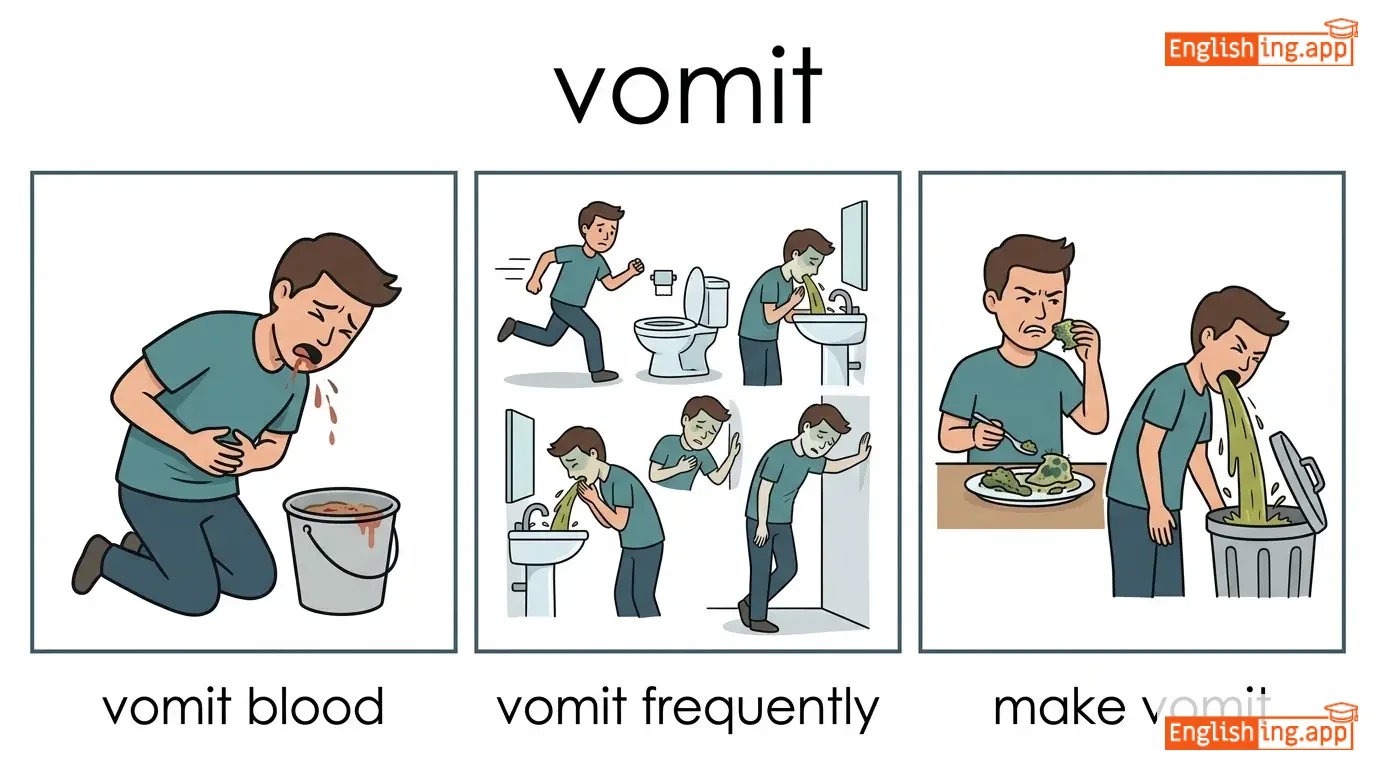
vomit blood, vomit frequently, make vomit, feel like vomiting
••••••
|
No •••••• |
|
#5417
🗳️
|
/voʊt/
verb
(vòt)
••••••
|
|
投票
tóupiào
••••••
|
voted
vòt-ed
••••••
|
voted
vòt-ed
••••••
|
votes
vòts
••••••
|
voting
vòting
••••••
|
to make a choice in an election; to express preference
••••••
|
Citizens vote to choose their representatives.
公民投票选举他们的代表。
••••••
|
公民投票选举他们的代表。
Gōngmín tóupiào xuǎnjǔ tāmen de dàibiǎo.
••••••
|
- •••••• | - •••••• | - •••••• |
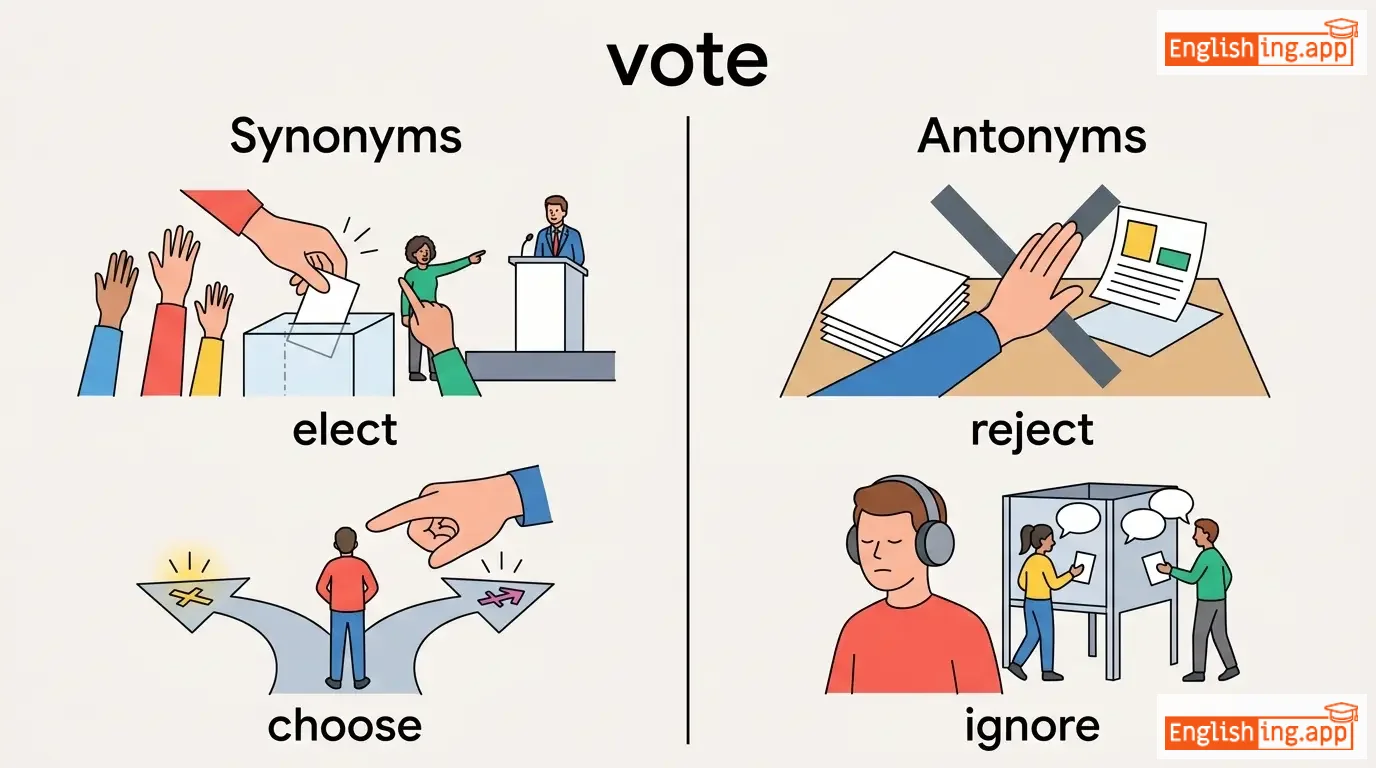
elect, choose, select, ballot, poll
••••••
|
abstain, boycott, refuse
••••••
|
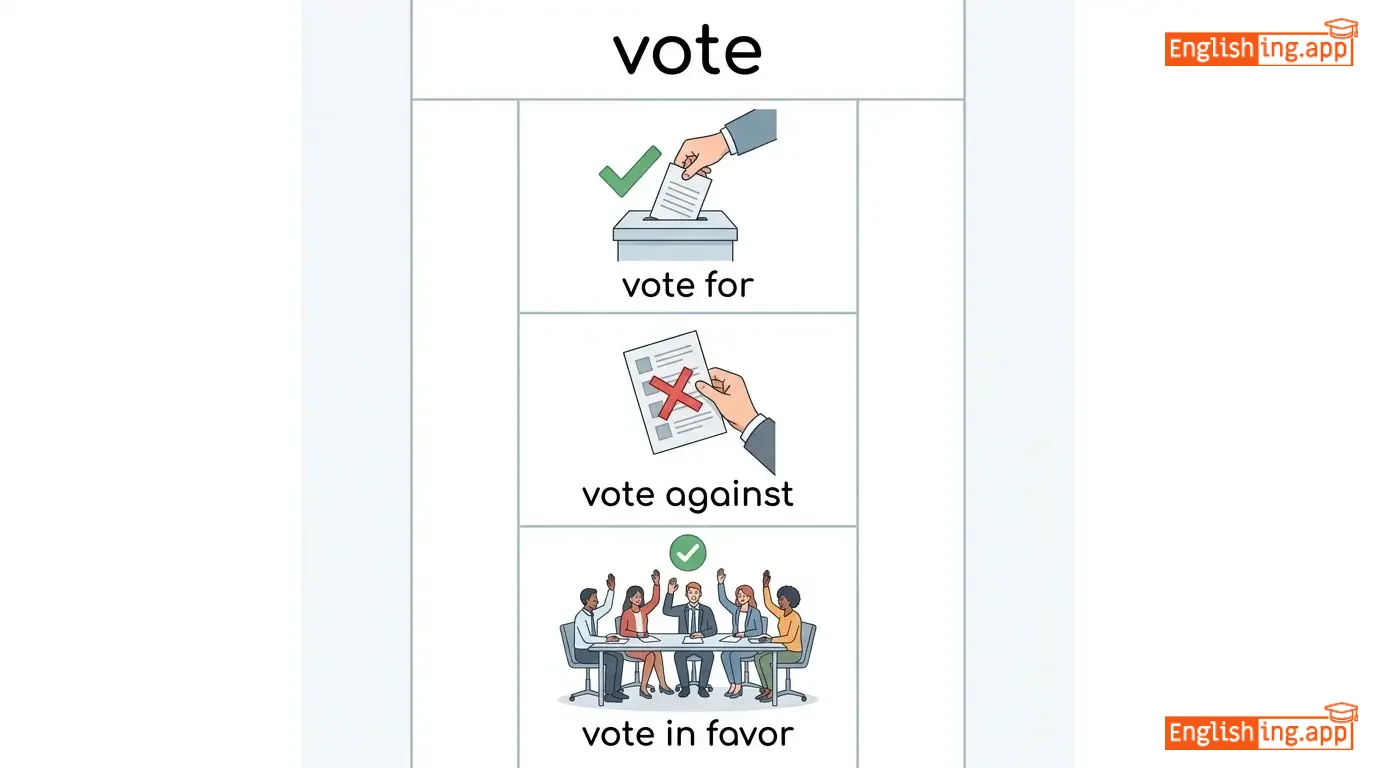
vote for, vote against, vote on, cast a vote
••••••
|
投票 (tóupiào) 就是选择和表达你喜欢的代表。
••••••
|
|
#5418
🗳️
|
/ˈvəʊtə/
noun
(vòu tè ér)
••••••
|
- •••••• |
选民
xuǎnmín
••••••
|
- •••••• | - •••••• | - •••••• | - •••••• |
a person who votes in an election
••••••
|
Voters lined up outside the polling station to cast their ballots. |
选民们排队站在投票站外,等待投票。
Xuǎnmín men páiduì zhàn zài tóupiàozhàn wài, děngdài tóupiào.
••••••
|
- •••••• | - •••••• | - •••••• |
elector, constituent, citizen
••••••
|
non-voter, abstainer
••••••
|
eligible voter, registered voter, voting rights, active voter
••••••
|
选民—投票决定未来的人。
••••••
|
|
#5419
🗳️
|
/ˈvoʊtɪŋ/
noun
(投票)
••••••
|
- •••••• |
投票
toupiao
••••••
|
- •••••• | - •••••• | - •••••• |
voting
投票
••••••
|
the act of making a choice in an election or decision by casting a vote
••••••
|
Voting is an important part of a democratic society.
投票是民主社会的重要组成部分。
••••••
|
投票是民主社会的重要组成部分。
Toupiao shi minzhu shehui de zhongyao zuzhi bufen.
••••••
|
voting rights
投票权
••••••
|
the legal rights to participate in elections by voting
••••••
|
投票权
toupiaoquan
••••••
|
balloting, election, poll, suffrage
••••••
|
abstaining, disenfranchisement
••••••
|
voting rights, voting system, voting booth, voting process
••••••
|
投票,投出未来的声音!
••••••
|
|
#5420
🤝
|
/vaʊ/
verb
(vau)
••••••
|
|
发誓
fā shì
••••••
|
vowed
vowed
••••••
|
vowed
vowed
••••••
|
vows
vauz
••••••
|
vowing
vauing
••••••
|
to make a serious promise; to pledge solemnly
••••••
|
They vowed to love each other forever.
他们誓言永远相爱。
••••••
|
他们发誓永远相爱。
Tāmen fā shì yǒngyuǎn xiāng ài.
••••••
|
- •••••• | - •••••• | - •••••• |
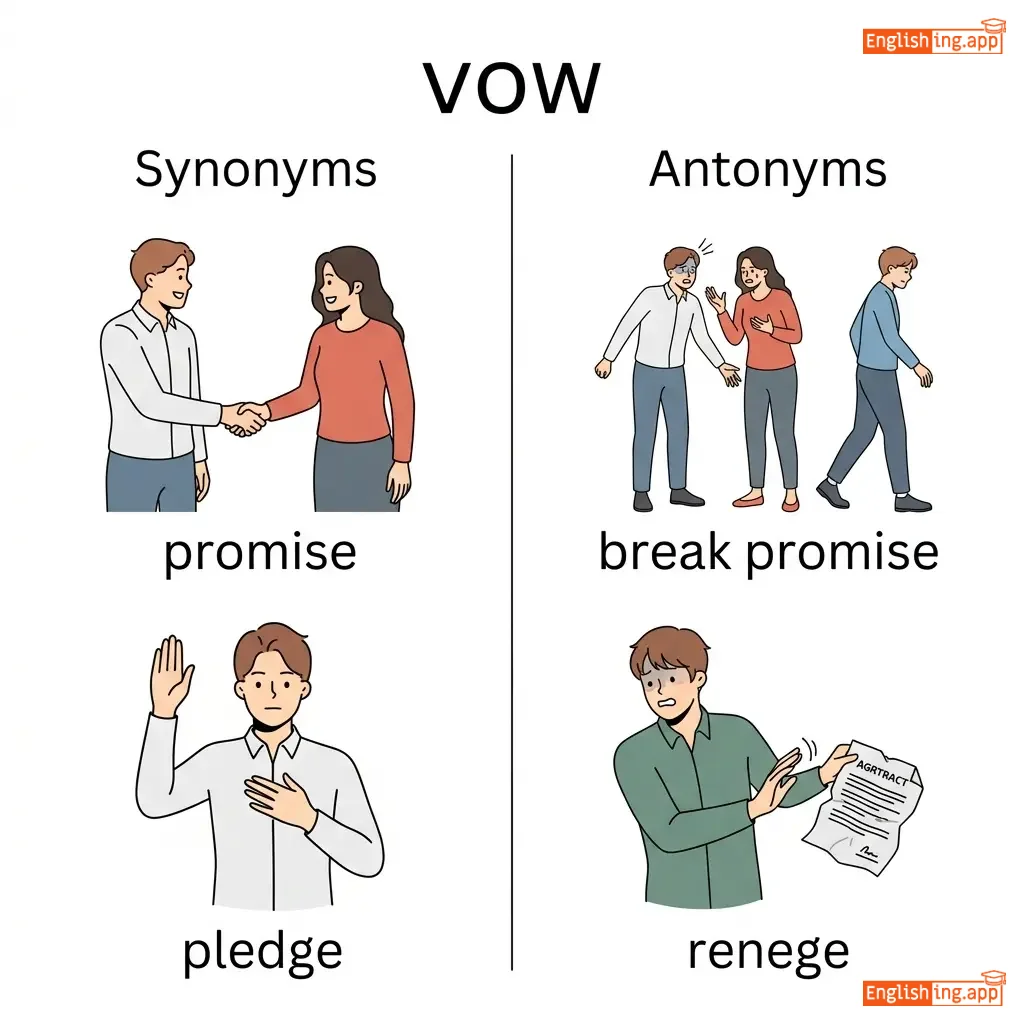
promise, pledge, swear, commit, declare
••••••
|
break promise, renege, withdraw
••••••
|
vow solemnly, vow publicly, vow sincerely, vow eternally, vow secretly
••••••
|
发誓是做出一个庄严的承诺
••••••
|
|
#5421
⚔️
|
/vərsəs/
abbreviation
(对战)
••••••
|
- •••••• |
对抗
duìkàng
••••••
|
- •••••• | - •••••• | - •••••• | - •••••• |
used to indicate opposition or contrast between two things
••••••
|
The match was Brazil vs Argentina in the final. |
比赛是巴西对抗阿根廷的决赛。
Bǐsài shì bāxī duìkàng āgēntíng de juésài.
••••••
|
- •••••• | - •••••• | - •••••• |
against, versus, compared to
••••••
|
with
••••••
|
vs each other, A vs B, team vs team, person vs person
••••••
|
VS (versus) - 当你有两个选择时,你说'VS'。
••••••
|
|
#5422
⚠️
|
/ˌvʌlnərəˈbɪləti/
noun
(vulnerabilidad)
••••••
|
|
脆弱性
cuìruòxìng
••••••
|
- •••••• | - •••••• | - •••••• | - •••••• |
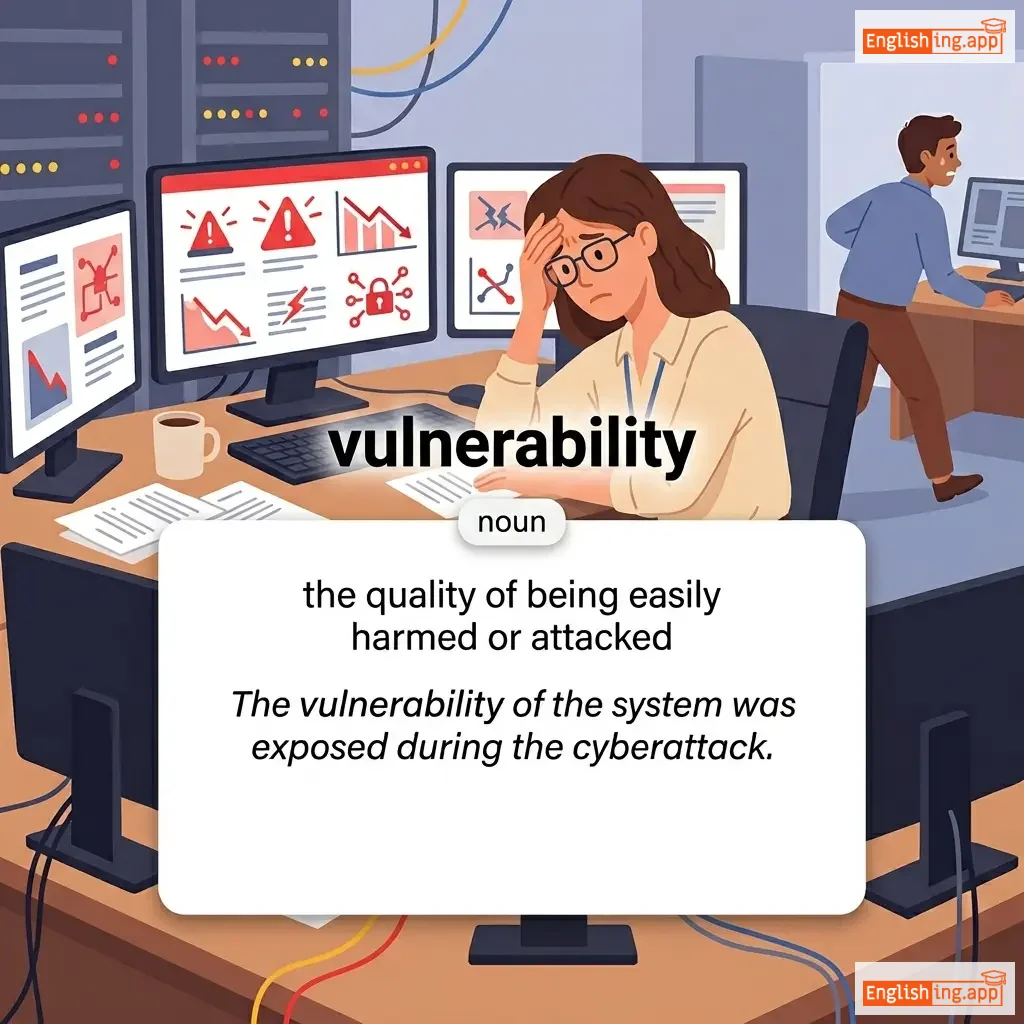
the quality of being easily harmed or attacked
••••••
|
The vulnerability of the system was exposed during the cyberattack. |
系统的脆弱性在网络攻击中暴露。
Xìtǒng de cuìruòxìng zài wǎngluò gōngjí zhōng bàolù.
••••••
|
- •••••• | - •••••• | - •••••• |
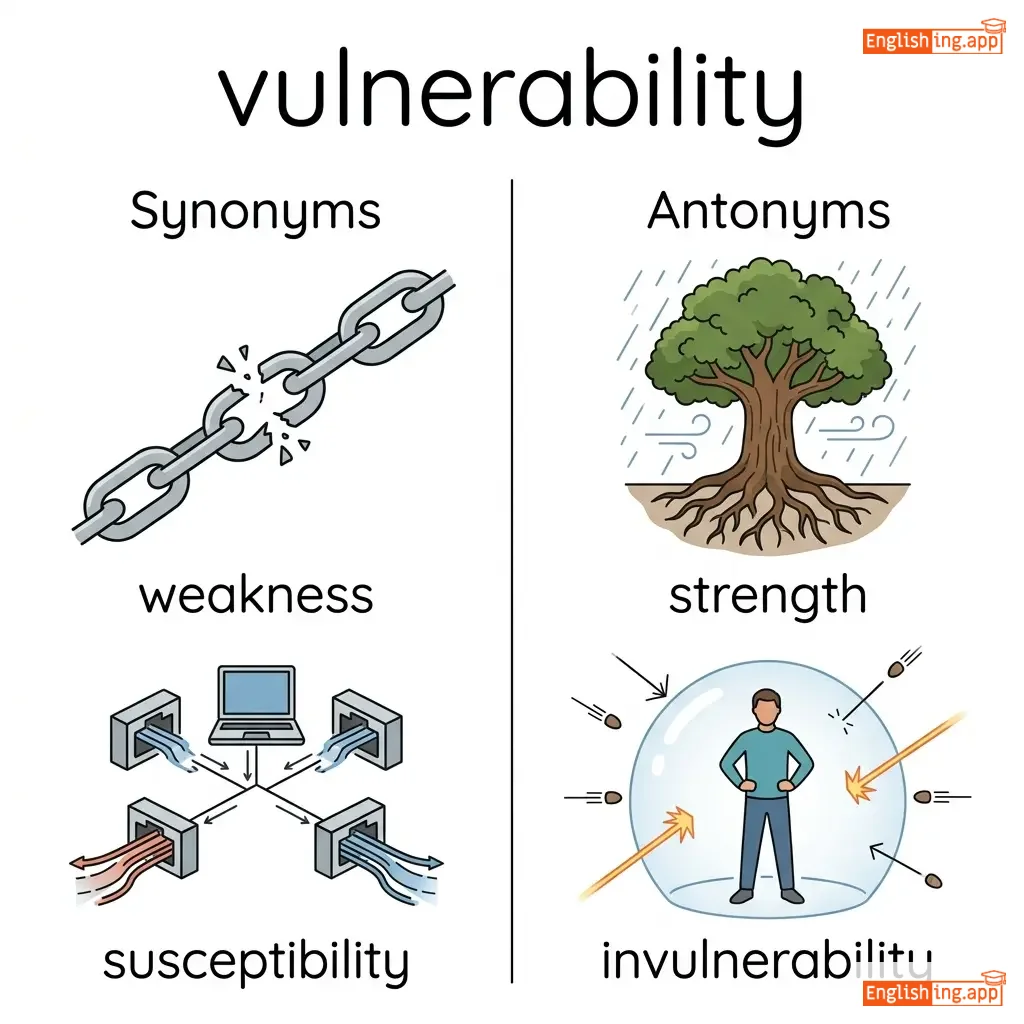
weakness, susceptibility, sensitivity, fragility
••••••
|
strength, invulnerability, protection
••••••
|
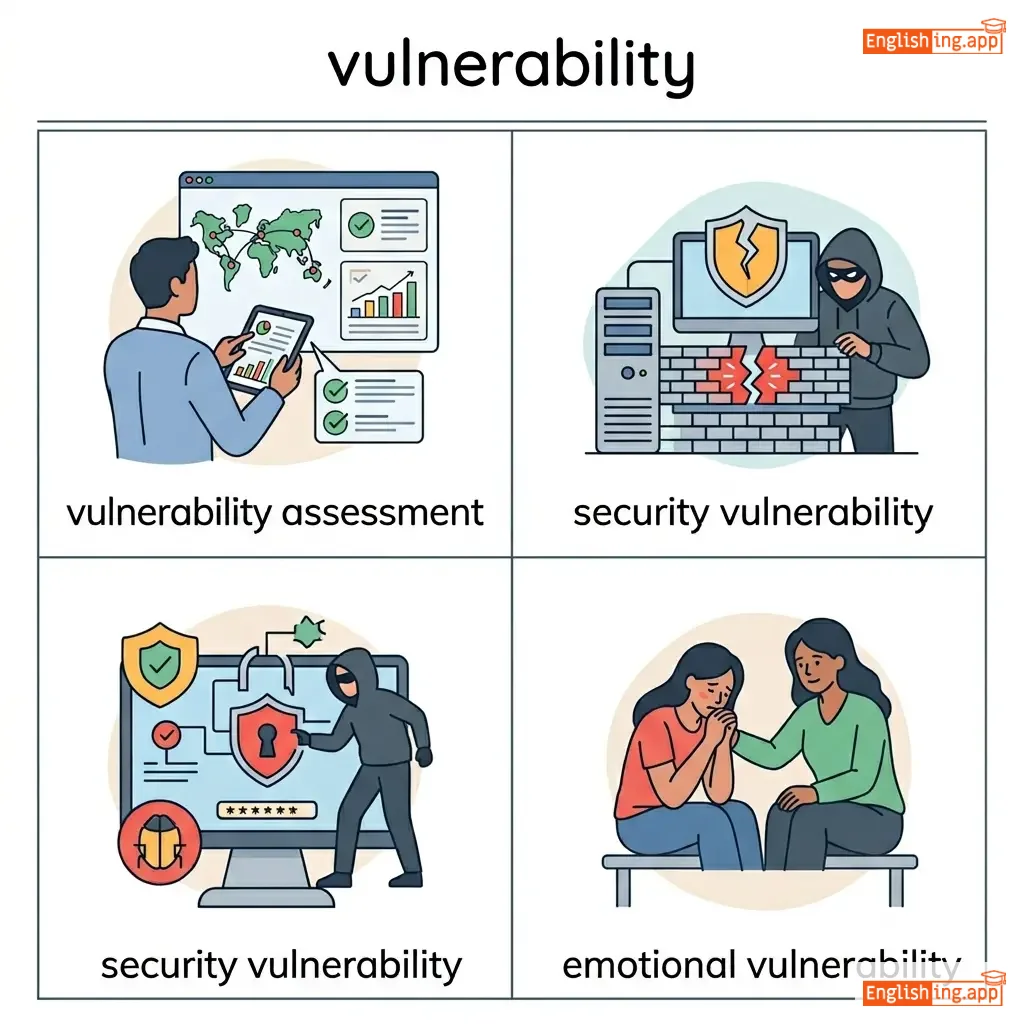
vulnerability assessment, security vulnerability, emotional vulnerability
••••••
|
脆弱性 sounds like 'cuìruòxìng', which means vulnerability in Chinese and relates to fragility.
••••••
|
|
#5423
🛡️
|
/ˈvʌl.nər.ə.bəl/
adjective
(脆弱)
••••••
|
- •••••• |
脆弱
cuìruò
••••••
|
- •••••• | - •••••• | - •••••• | - •••••• |
susceptible to physical or emotional harm
••••••
|
Children are often the most vulnerable in times of crisis.
孩子们在危机时刻常常是最脆弱的。
••••••
|
孩子们在危机时刻常常是最脆弱的。
Háizimen zài wéijī shíkè chángcháng shì zuì cuìruò de.
••••••
|
vulnerable position
脆弱的位置
••••••
|
a situation of weakness or exposure to harm
••••••
|
脆弱的位置
cuìruò de wèizhì
••••••
|
defenseless, exposed, weak, fragile, unprotected
••••••
|
strong, secure, protected
••••••
|
vulnerable groups, vulnerable people, vulnerable position
••••••
|
Vulnerable意思是'Val Na Roble' - '瓦尔纳罗布尔' 变得脆弱
••••••
|
|
#5424
💰
|
/weɪdʒ/
noun/verb
••••••
|
- •••••• | - •••••• |
waged
••••••
|
waged
••••••
|
wages
••••••
|
waging
••••••
|
payment for work or services, usually on a daily or weekly basis; also to engage in or carry on (a war, campaign, or struggle)
••••••
|
The workers demanded a fair wage for their labor. |
- •••••• |
wage war |
to engage in a serious struggle or conflict
••••••
|
- •••••• |
salary, pay, compensation, earnings, stipend
••••••
|
unemployment, volunteer
••••••
|
minimum wage, wage increase, wage gap, wage war
••••••
|
No •••••• |
Vocabulary Quiz
Test your vocabulary by matching words with their translations or meanings.
Login to take the quiz
Comments (0)
Share your thoughts and join the discussion.
Join the discussion by logging in
Login to CommentNo comments yet
Be the first to share your thoughts!