








Swipe left or right, or use the buttons. Tap image to zoom.
例句翻译
单词
Lesson 26Lesson 26 - 遮罩切换
|
表情符号
|
单词 | Images | 翻译 | 过去时 | 过去分词 | 第三人称单数 | 动名词 | 含义 | 例句 | 例句翻译 | 示例表达 | 示例表达含义 | 示例表达翻译 | 同义词 | 反义词 | 搭配词 | 助记符 |
|---|---|---|---|---|---|---|---|---|---|---|---|---|---|---|---|---|---|
|
#1200
📉
|
/kənˈstreɪnt/
noun
(kənˈstreɪnt)
••••••
|
- •••••• |
限制
xiànzhì
••••••
|
- •••••• | - •••••• | - •••••• | - •••••• |
a limitation or restriction
••••••
|
Time is the biggest constraint in completing the project. |
时间是完成项目的最大限制。
Shíjiān shì wánchéng xiàngmù de zuìdà xiànzhì.
••••••
|
budget constraint |
a financial limitation on spending
••••••
|
预算限制
yùsuàn xiànzhì
••••••
|
restriction, limitation, curb, control, restraint
••••••
|
freedom, liberty, allowance
••••••
|
budget constraint, legal constraint, time constraint, resource constraint
••••••
|
Constraint = 限制: 财务的限制
••••••
|
|
#1201
🏗️
|
/kənˈstrʌkt/
verb
(kənˈstrʌkt)
••••••
|
- •••••• |
建造
jianzao
••••••
|
constructed
kənˈstrʌktɪd
••••••
|
constructed
kənˈstrʌktɪd
••••••
|
constructs
kənˈstrʌkts
••••••
|
constructing
kənˈstrʌktɪŋ
••••••
|
to build or form something by putting parts together
••••••
|
They plan to construct a new bridge over the river.
他们计划在河上建一座新桥。
••••••
|
他们计划在河上建一座新桥。
Tamen jihua zai he shang jian yi zuo xin qiao.
••••••
|
construct an argument
建构一个论点
••••••
|
to build or develop a logical case or reasoning
••••••
|
建构一个论点
Jian gou yi ge lundian
••••••
|
build, erect, assemble, create, establish
••••••
|
demolish, destroy, dismantle
••••••
|
construct a building, construct a theory, construct a bridge, construct meaning
••••••
|
建造 = construct
••••••
|
|
#1202
🏗️
|
/kənˈstrʌkʃən/
noun
(kēn sī truò kè shēn)
••••••
|
|
建筑
jian zhu
••••••
|
- •••••• | - •••••• | - •••••• | - •••••• |
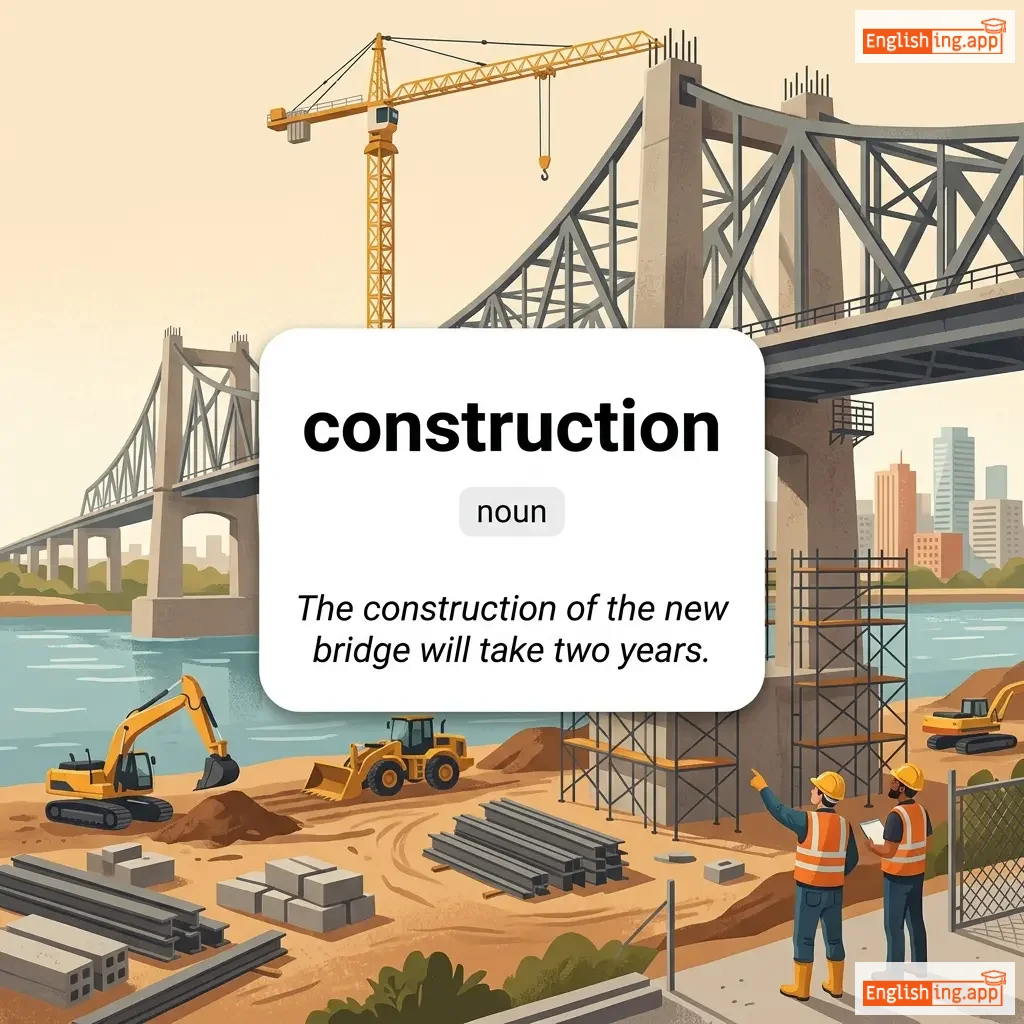
The process of building something, typically large structures such as houses, roads, or bridges.
••••••
|
The construction of the new bridge will take two years. |
新桥的建设将需要两年时间。
Xin qiao de jian she jiang xu yao liang nian shi jian.
••••••
|
under construction |
in the process of being built or repaired
••••••
|
正在建设中
zhèngzài jiànshè zhōng
••••••
|
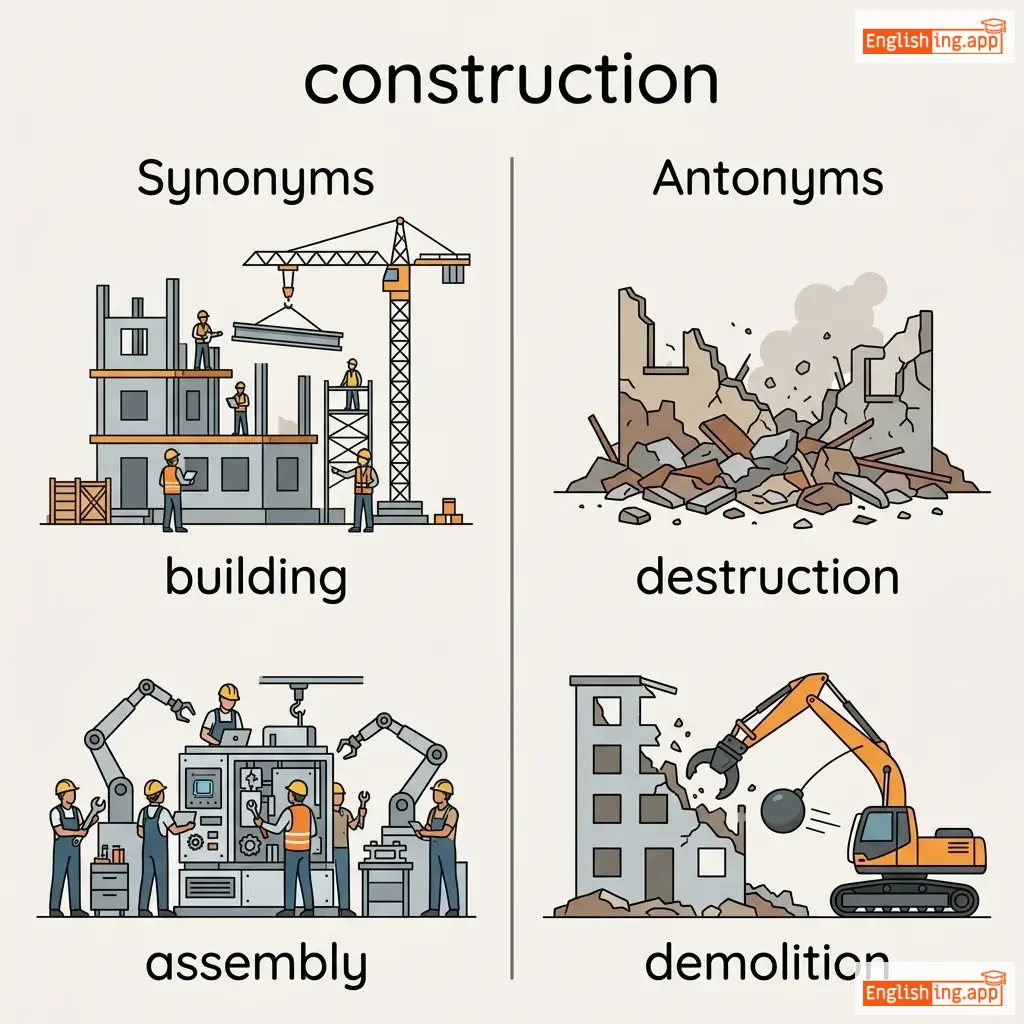
building, assembly, creation, development, erection
••••••
|
destruction, demolition, dismantling
••••••
|
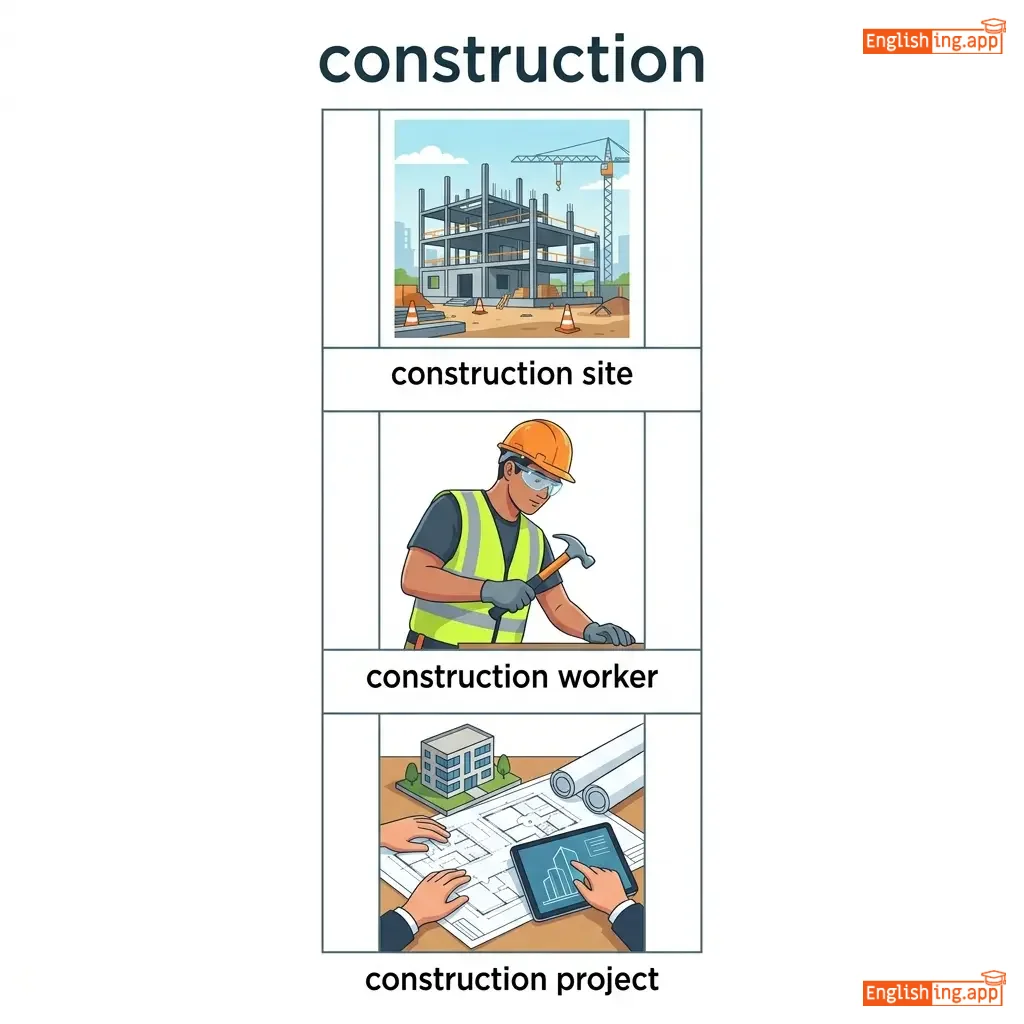
construction site, construction worker, construction project, construction materials
••••••
|
建筑 = 建立伟大结构,让世界变得更坚固。
••••••
|
|
#1203
💬
|
/kənˈsʌlt/
verb
(kənˈsʌlt)
••••••
|
- •••••• |
咨询
zixun
••••••
|
consulted
kənˈsʌltɪd
••••••
|
consulted
kənˈsʌltɪd
••••••
|
consults
kənˈsʌlts
••••••
|
consulting
kənˈsʌltɪŋ
••••••
|
To seek advice or information from someone with expertise.
••••••
|
You should consult a doctor before starting the treatment.
在开始治疗之前,你应该咨询医生。
••••••
|
在开始治疗之前,你应该咨询医生。
Zai kaishi zhiliaozhiqian, ni yinggai zixun yisheng.
••••••
|
consult with
与...咨询
••••••
|
to discuss something with someone before making a decision
••••••
|
与...咨询
yu...zixun
••••••
|
advise, confer, discuss, recommend, counsel
••••••
|
ignore, neglect, disregard
••••••
|
consult a doctor, consult an expert, consult the lawyer, consult with colleagues
••••••
|
咨询就是寻求帮助 → 向医生询问治疗方案。
••••••
|
|
#1204
👨💼
|
/kənˈsʌltənt/
noun
(kənˈsʌltənt)
••••••
|
- •••••• |
顾问
gùwèn
••••••
|
- •••••• | - •••••• | - •••••• | - •••••• |
A professional who provides expert advice in a particular area.
••••••
|
The company hired a consultant to improve its marketing strategy. |
公司聘请了一位顾问来改善其市场营销战略。
Gōngsī pìnqǐngle yī wèi gùwèn lái gǎishàn qí shìchǎng yíngxiāo zhànlüè.
••••••
|
- •••••• | - •••••• | - •••••• |
advisor, expert, specialist, counselor, mentor
••••••
|
client, novice, amateur
••••••
|
management consultant, business consultant, IT consultant, financial consultant
••••••
|
顾问就是提供建议的人,'顾'有‘给’的意思。
••••••
|
|
#1205
💼
|
/ˌkɒnsʌlˈteɪʃən/
noun
(咨询)
••••••
|
|
咨询
zixun
••••••
|
- •••••• | - •••••• | - •••••• | - •••••• |
a meeting with an expert or professional to seek advice
••••••
|
The doctor scheduled a consultation with the patient. |
医生安排了与病人的咨询。
Yisheng anpai le yu bingren de zixun.
••••••
|
- •••••• | - •••••• | - •••••• |
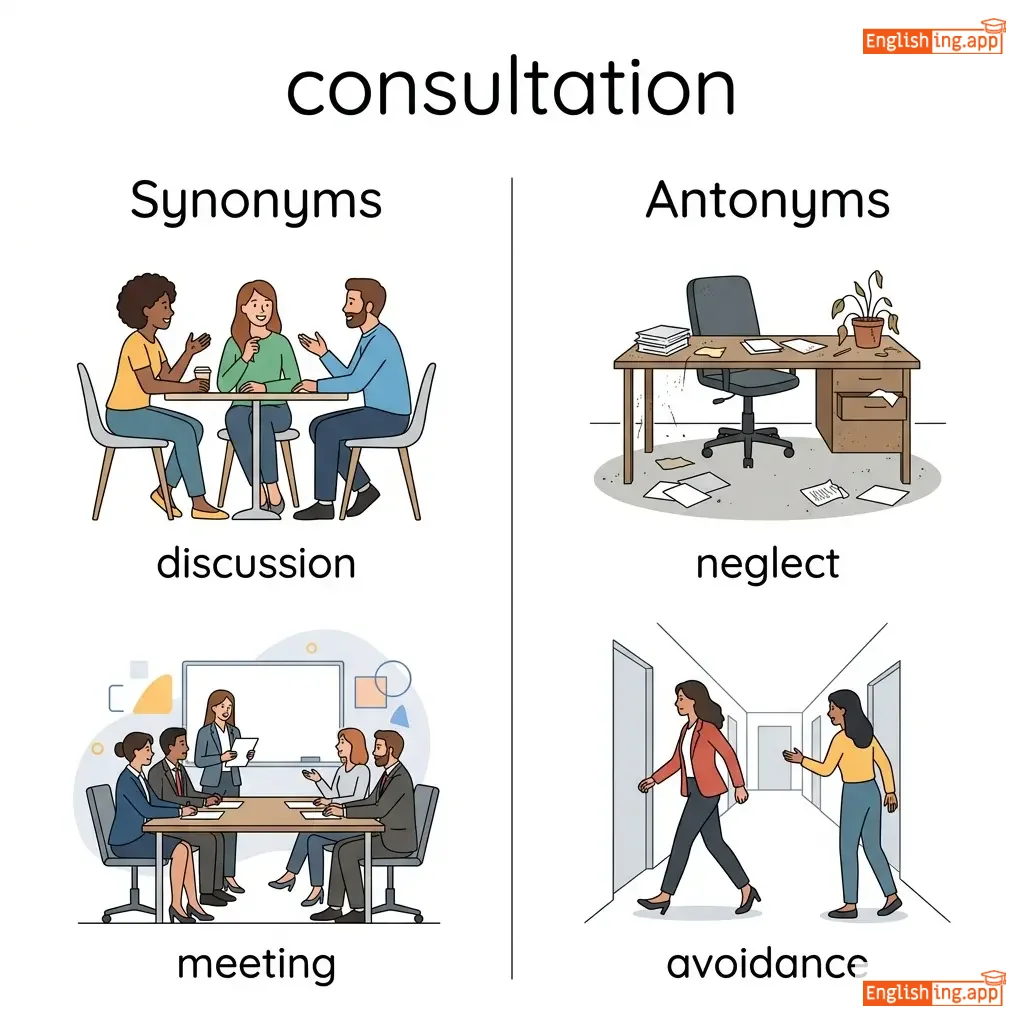
discussion, meeting, conference, advice
••••••
|
neglect, avoidance, ignoring
••••••
|
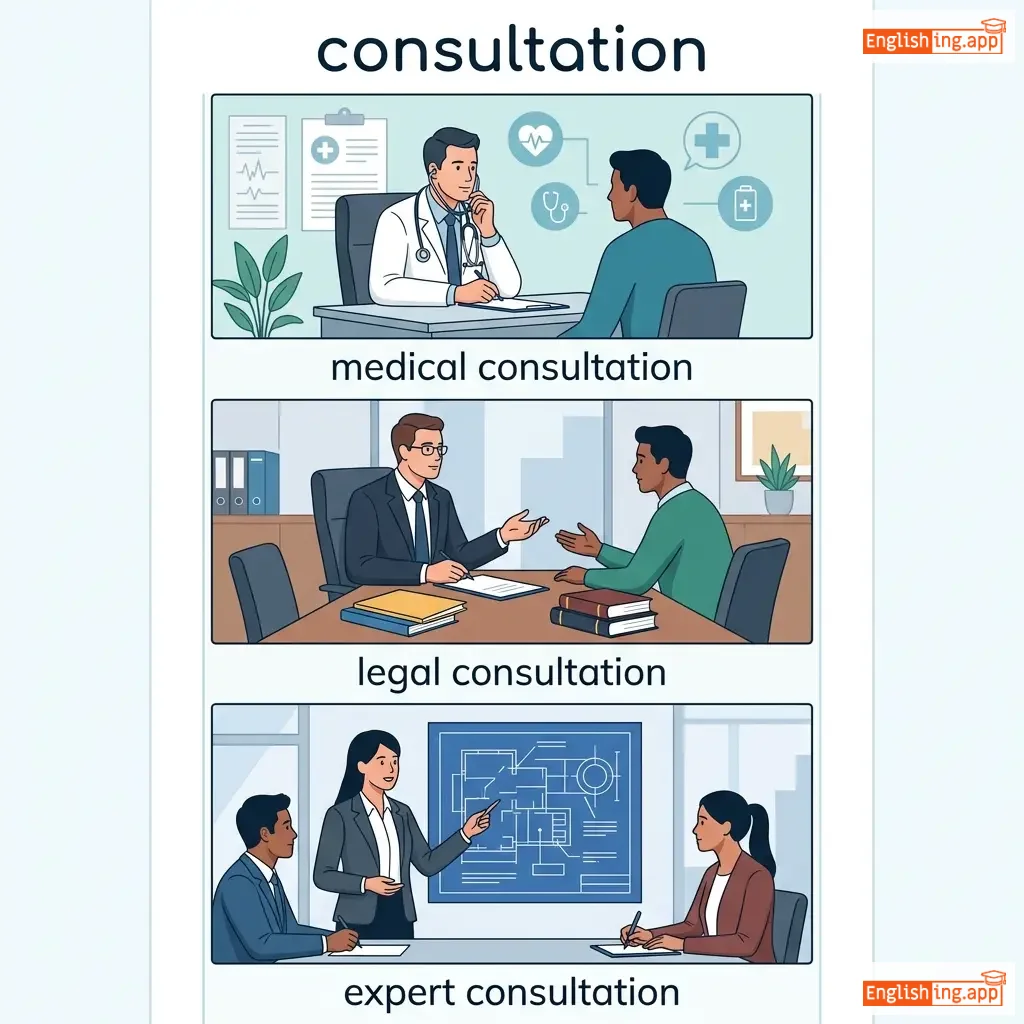
medical consultation, legal consultation, expert consultation
••••••
|
向医生咨询,进行咨询!
••••••
|
|
#1206
🍽️
|
/kənˈsjuːm/
verb
(kənˈsjuːm)
••••••
|
|
消耗
xiāo hào
••••••
|
consumed
kənˈsjuːmd
••••••
|
consumed
kənˈsjuːmd
••••••
|
consumes
kənˈsuːms
••••••
|
consuming
kənˈsuːmɪŋ
••••••
|
To use up, eat, drink, or take in.
••••••
|
People consume a large amount of information daily.
人们每天消耗大量信息。
••••••
|
人们每天消耗大量信息。
Rénmen měitiān xiāohào dàliàng xìnxī.
••••••
|
consume time
消耗时间
••••••
|
to take up or waste time
••••••
|
消耗时间
xiāohào shíjiān
••••••
|
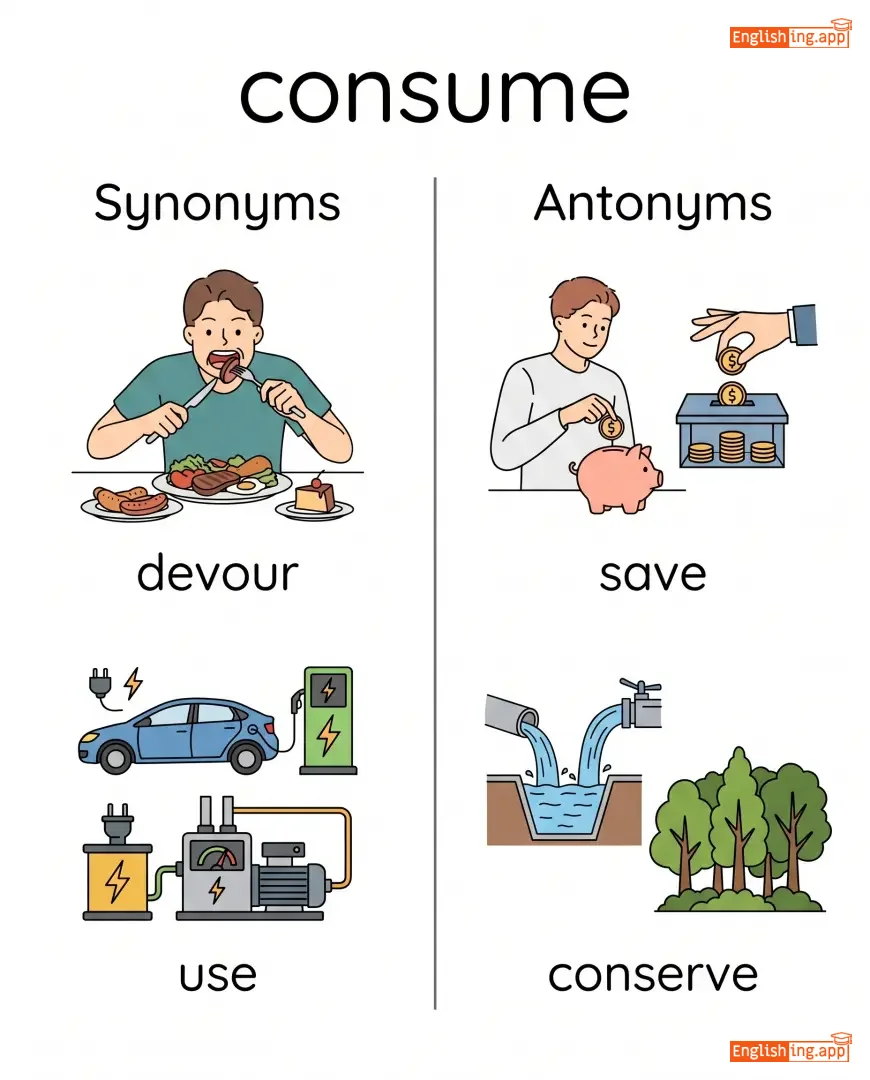
devour, use, absorb, spend, ingest
••••••
|
save, conserve, preserve
••••••
|
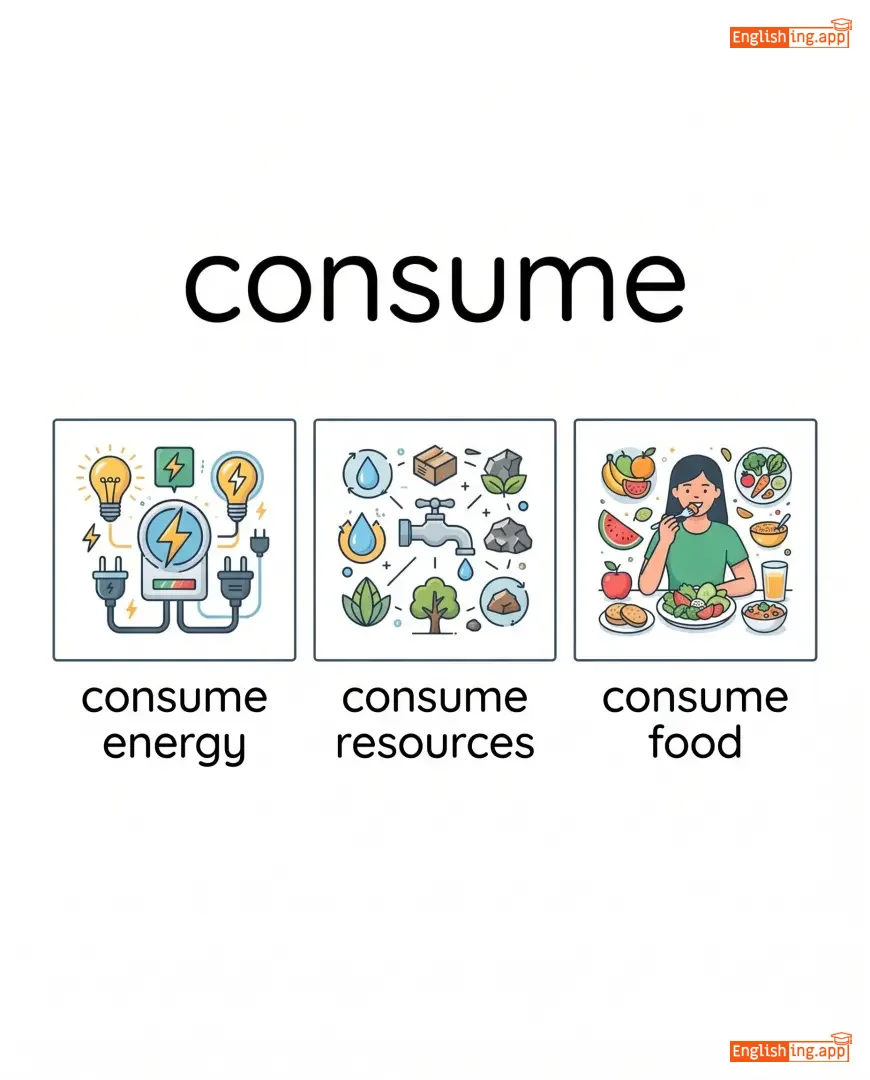
consume energy, consume resources, consume food, consume products
••••••
|
Consume = '消耗' 就是用掉,吃掉或喝掉的意思。
••••••
|
|
#1207
🛒
|
/kənˈsjuːmər/
noun
(kənˈsjuːmər)
••••••
|
- •••••• |
消费者
xiaofeizhe
••••••
|
- •••••• | - •••••• | - •••••• | - •••••• |
A person who buys and uses goods and services.
••••••
|
The company focuses on understanding consumer needs. |
公司专注于理解消费者需求。
Gongsi zhuanzhu yu lijie xiaofeizhe xuqiu.
••••••
|
consumer behavior |
the study of how individuals make purchasing decisions
••••••
|
消费者行为
xiaofeizhe xingwei
••••••
|
buyer, customer, purchaser, client
••••••
|
seller, producer, manufacturer
••••••
|
consumer demand, consumer rights, consumer goods, consumer market
••••••
|
Consumer = 那个消费的人,中文是消费者。
••••••
|
|
#1208
⚡
|
/kənˈsʌmpʃən/
noun
(kənˈsʌmpʃən)
••••••
|
|
消费
xiaofei
••••••
|
- •••••• | - •••••• | - •••••• | - •••••• |
The act of using up resources, goods, or energy; also refers to the eating or drinking of something.
••••••
|
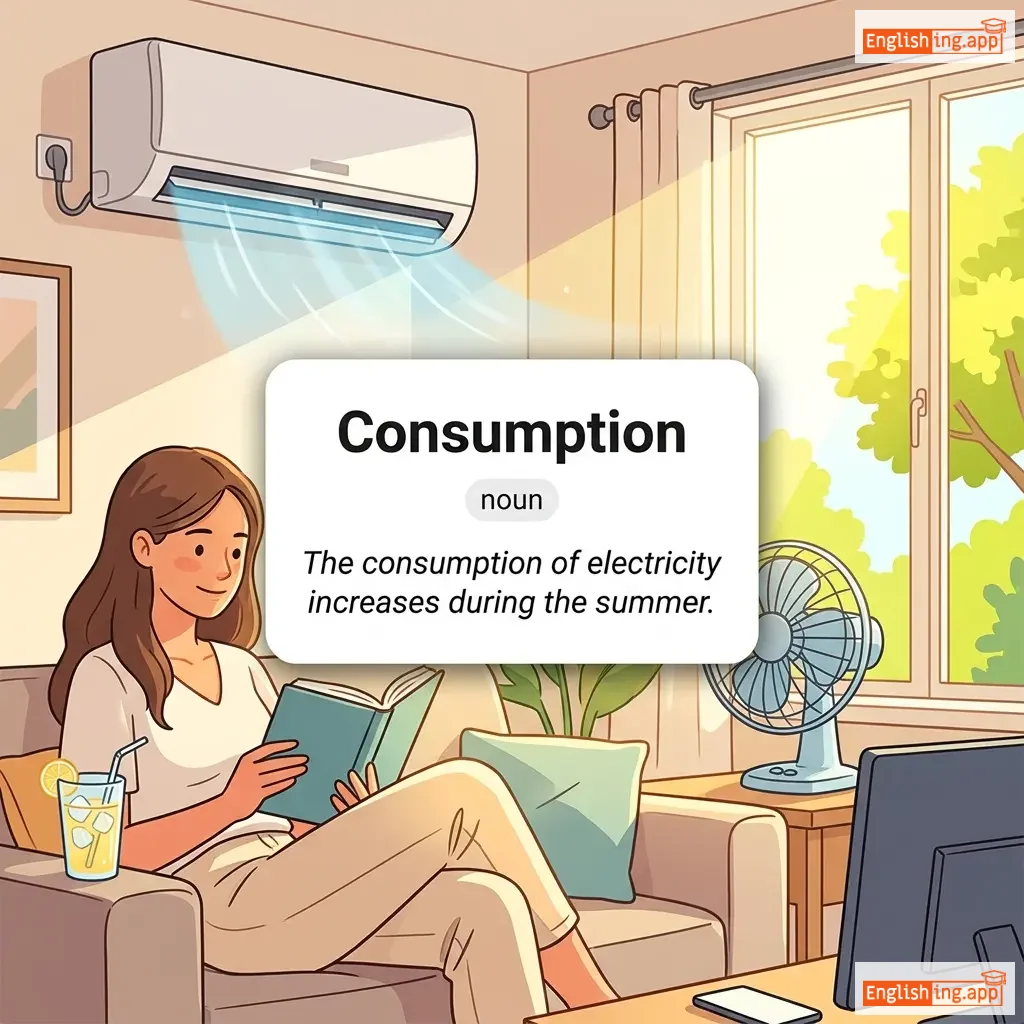
The consumption of electricity increases during the summer. |
夏季电力消费增加。
Xiàjì diànlì xiāofèi zēngjiā.
••••••
|
consumption tax |
A tax placed on goods and services purchased by consumers.
••••••
|
消费税
xiāofèi shuì
••••••
|
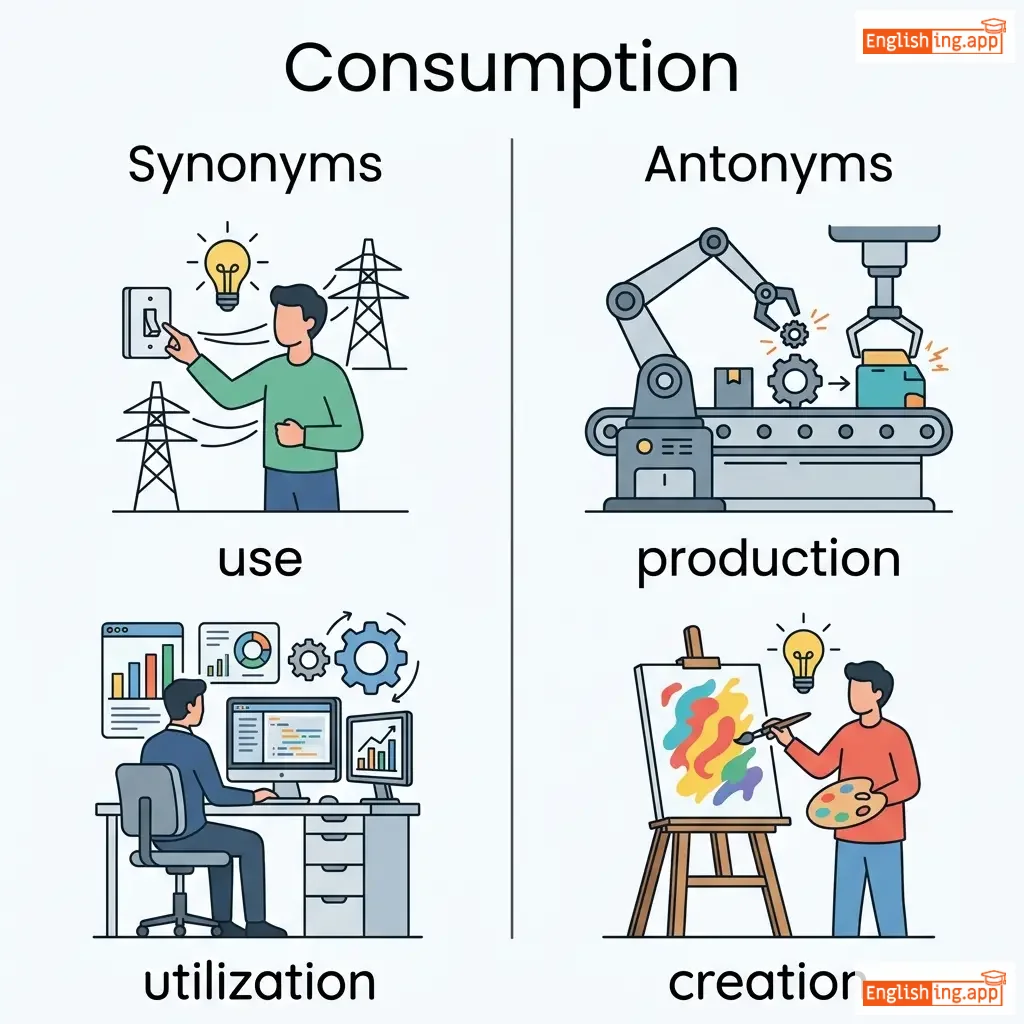
use, utilization, expenditure, intake, absorption
••••••
|
production, creation, conservation
••••••
|
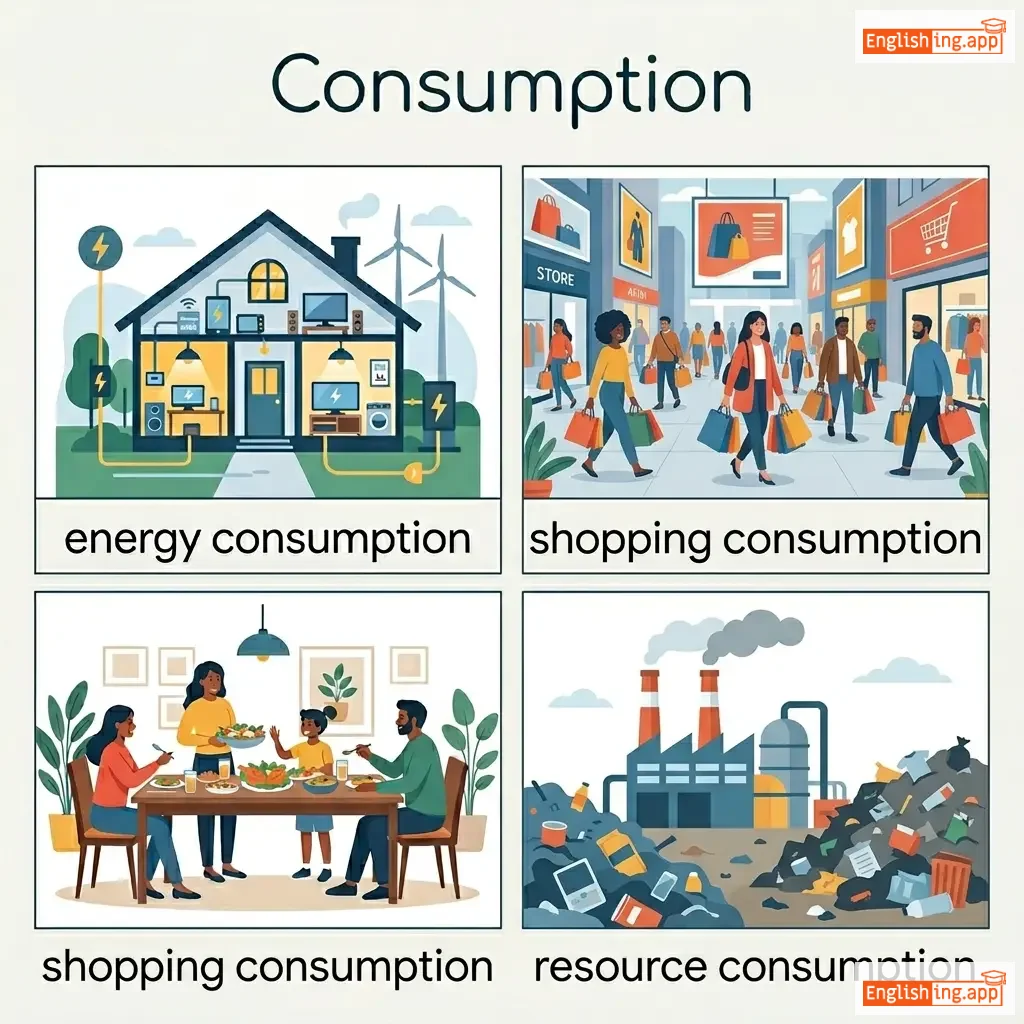
energy consumption, food consumption, mass consumption, over consumption
••••••
|
消费就是使用和吃东西,像电力,消费就增加。
••••••
|
|
#1209
📞
|
/ˈkɒntækt/
noun/verb
(联系)
••••••
|
- •••••• |
联系
liánxì
••••••
|
contacted
联系过
••••••
|
contacted
联系过
••••••
|
contacts
联系
••••••
|
contacting
联系
••••••
|
Communication or connection with someone.
••••••
|
You should contact your doctor if symptoms persist.
如果症状持续,您应该联系您的医生。
••••••
|
如果症状持续,您应该联系您的医生。
Rúguǒ zhèngzhuàng chíxù, nín yīnggāi liánxì nín de yīshēng.
••••••
|
lose contact
失去联系
••••••
|
to stop communicating with someone
••••••
|
失去联系
shīqù liánxì
••••••
|
communication, link, connection, touch
••••••
|
disconnection, separation
••••••
|
make contact, personal contact, emergency contact, direct contact
••••••
|
联系就像给某人打电话或发信息
••••••
|
|
#1210
📦
|
/kənˈteɪn/
verb
(kənˈteɪn)
••••••
|
|
包含
bāohán
••••••
|
contained
kənˈteɪnd
••••••
|
contained
kənˈteɪnd
••••••
|
contains
kənˈteɪns
••••••
|
containing
kənˈteɪnɪŋ
••••••
|
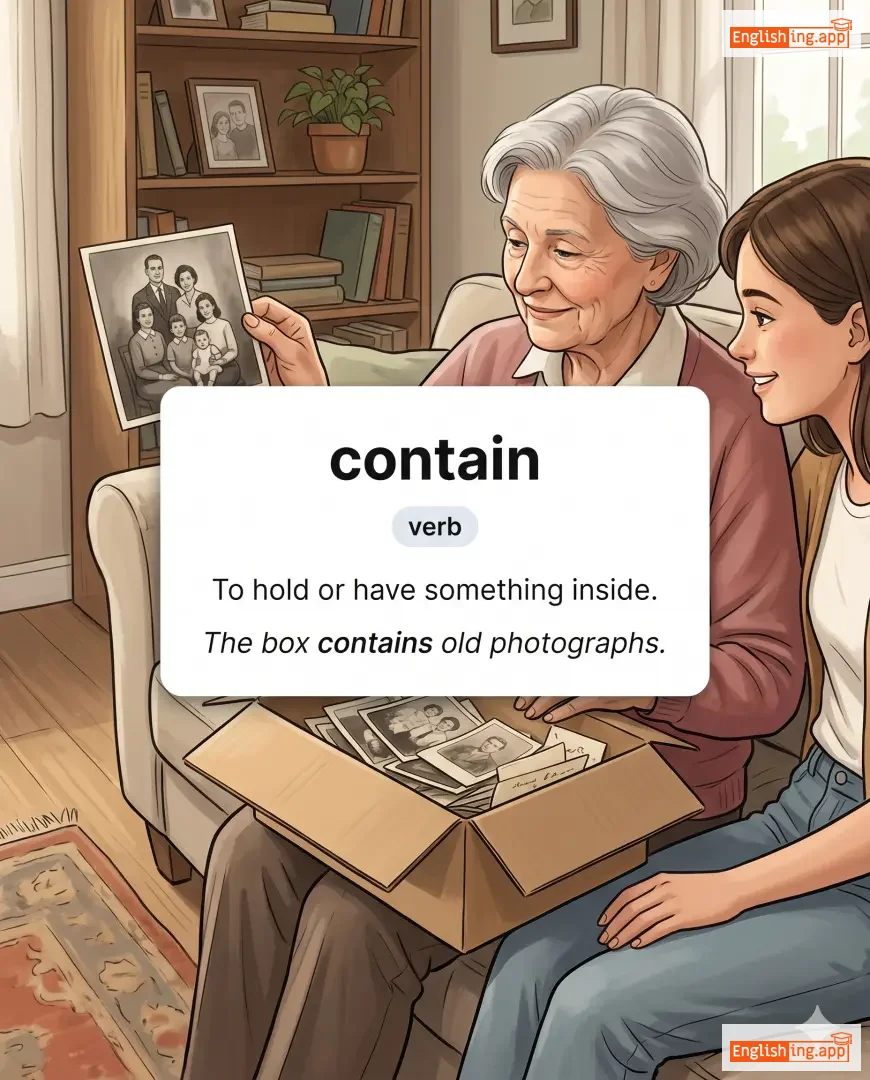
To hold or have something inside.
••••••
|
The box contains old photographs.
ðə bɒks kənˈteɪnz oʊld fətəgrɑːfs.
••••••
|
盒子里有旧照片。
Hézi lǐ yǒu jiù zhàopiàn.
••••••
|
contain excitement
kənˈteɪn ɪksɑɪtmənt
••••••
|
to control or hold back excitement
••••••
|
抑制兴奋
Yìzhì xīngfèn
••••••
|
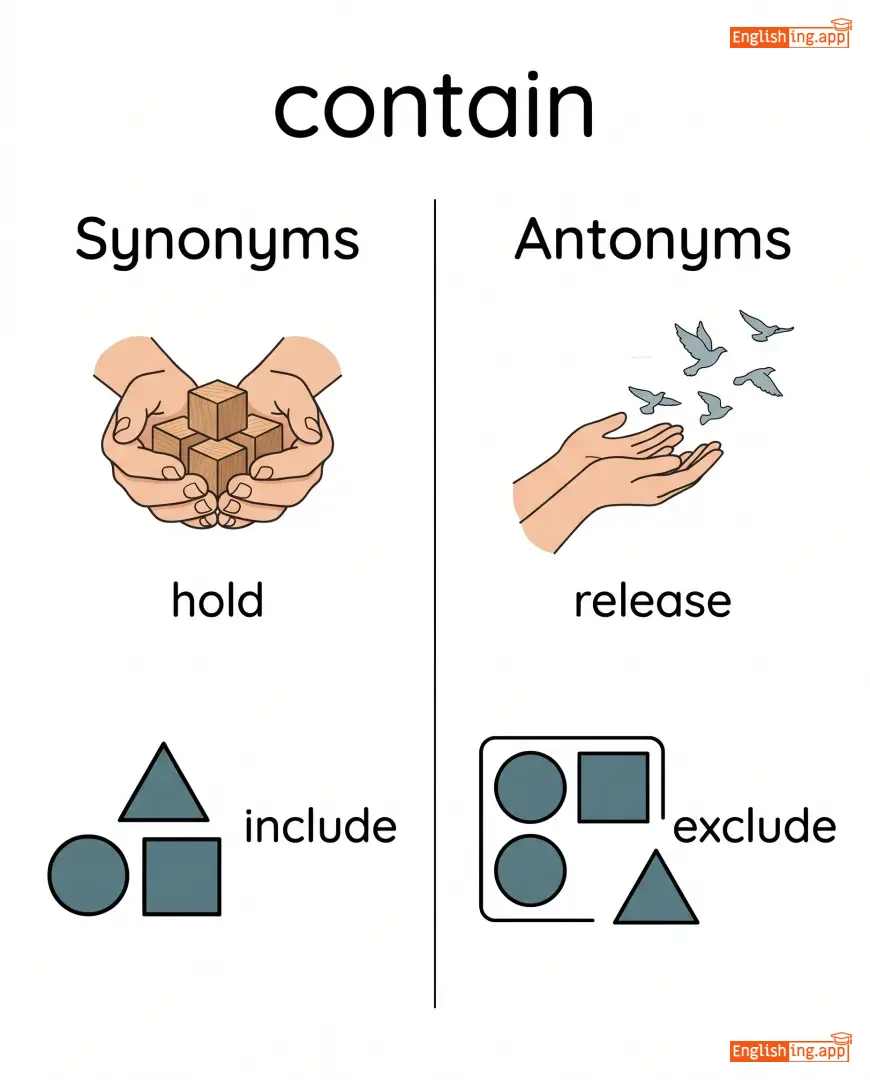
hold, include, comprise, enclose, involve
••••••
|
release, exclude, free
••••••
|
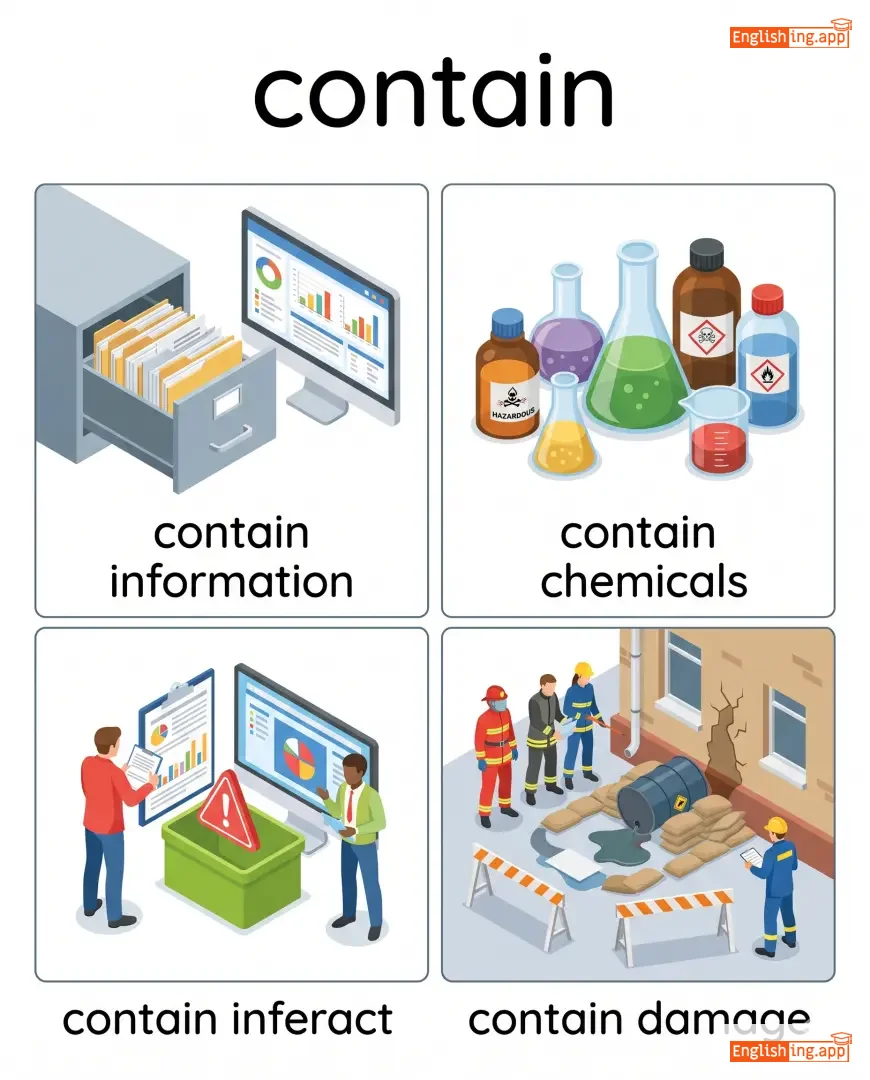
contain information, contain chemicals, contain damage, contain anger
••••••
|
Contain 就像是一个容器 (container)。
••••••
|
|
#1211
📦
|
/kənˈteɪnər/
noun
(kāntèiné)
••••••
|
|
容器
rongqi
••••••
|
- •••••• | - •••••• | - •••••• | - •••••• |
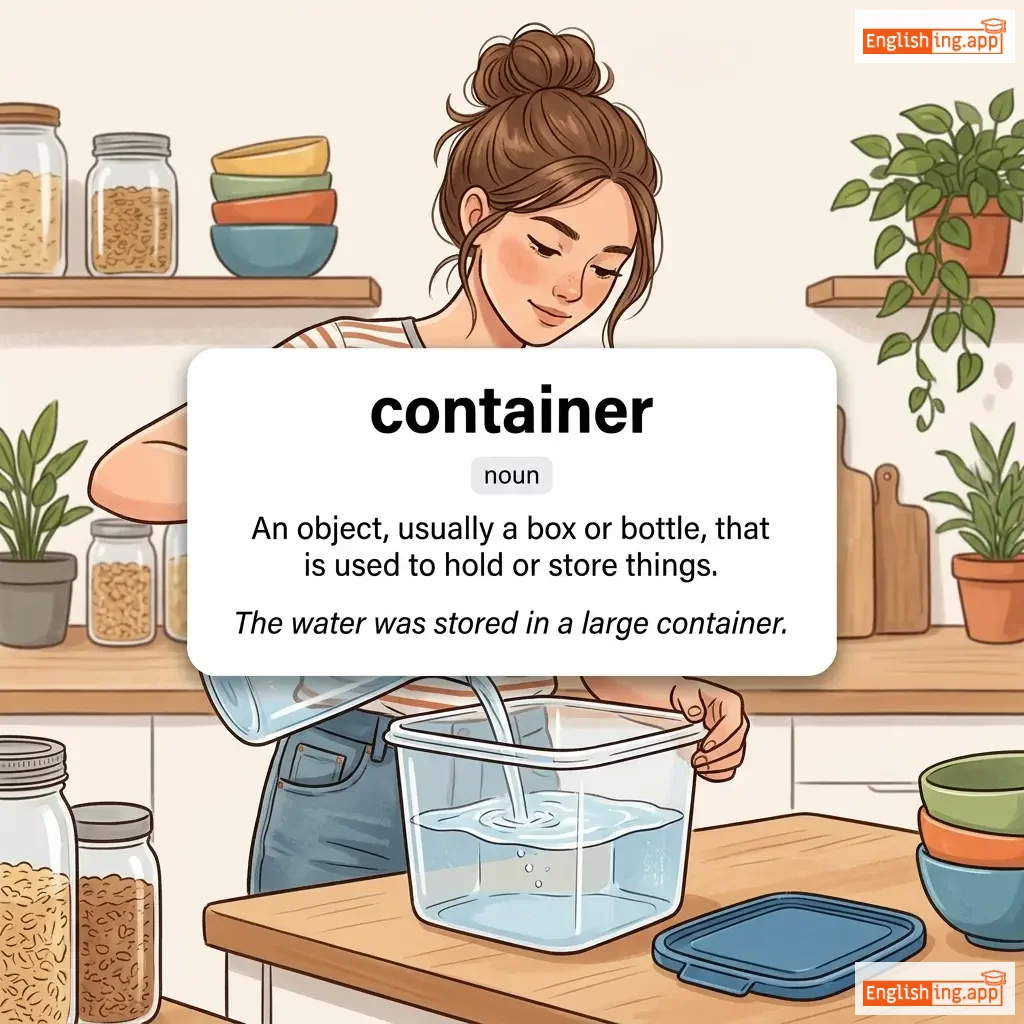
An object, usually a box or bottle, that is used to hold or store things.
••••••
|
The water was stored in a large container. |
水被存储在一个大容器中。
Shuǐ bèi cúnchú zài yīgè dà róngqì zhōng.
••••••
|
container ship |
A large ship designed to carry standardized cargo containers.
••••••
|
集装箱船
jízhuāngxiāng chuán
••••••
|
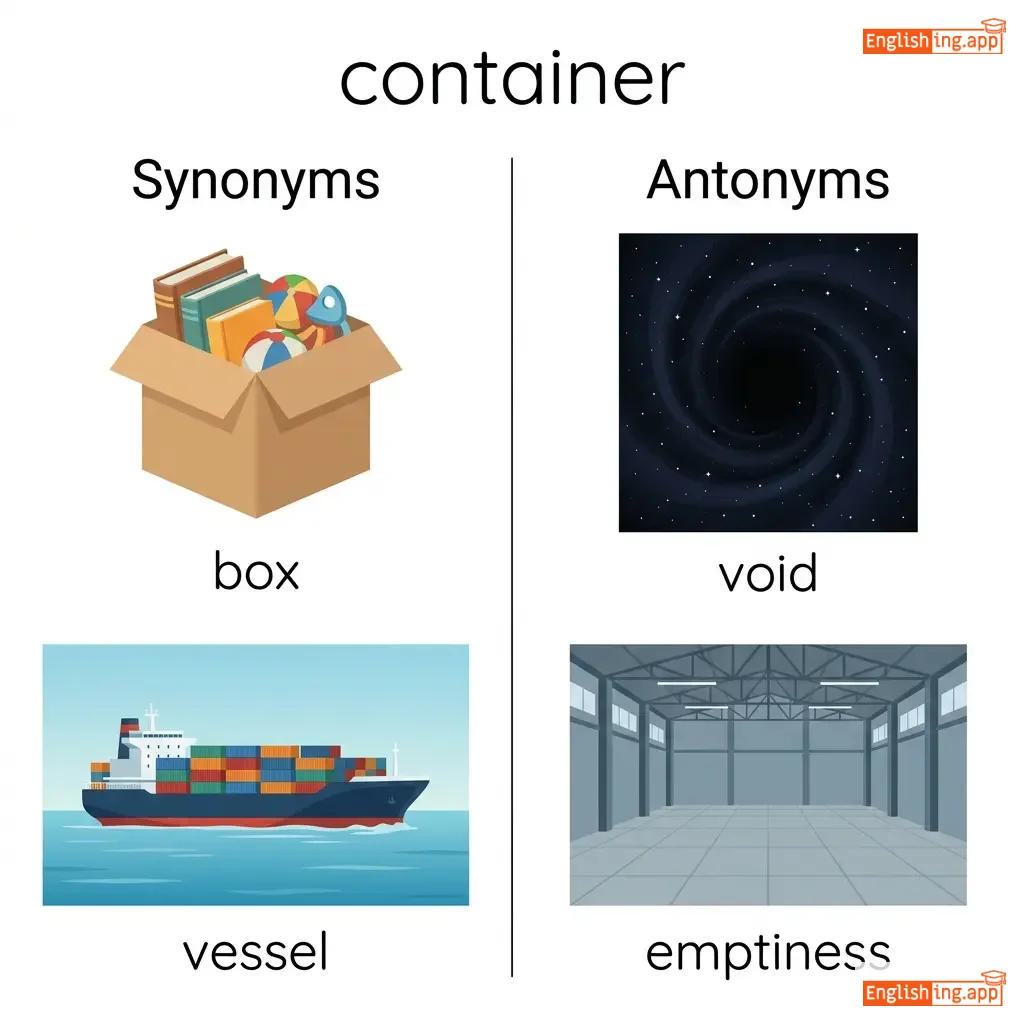
box, vessel, receptacle, crate, jar
••••••
|
void, emptiness
••••••
|
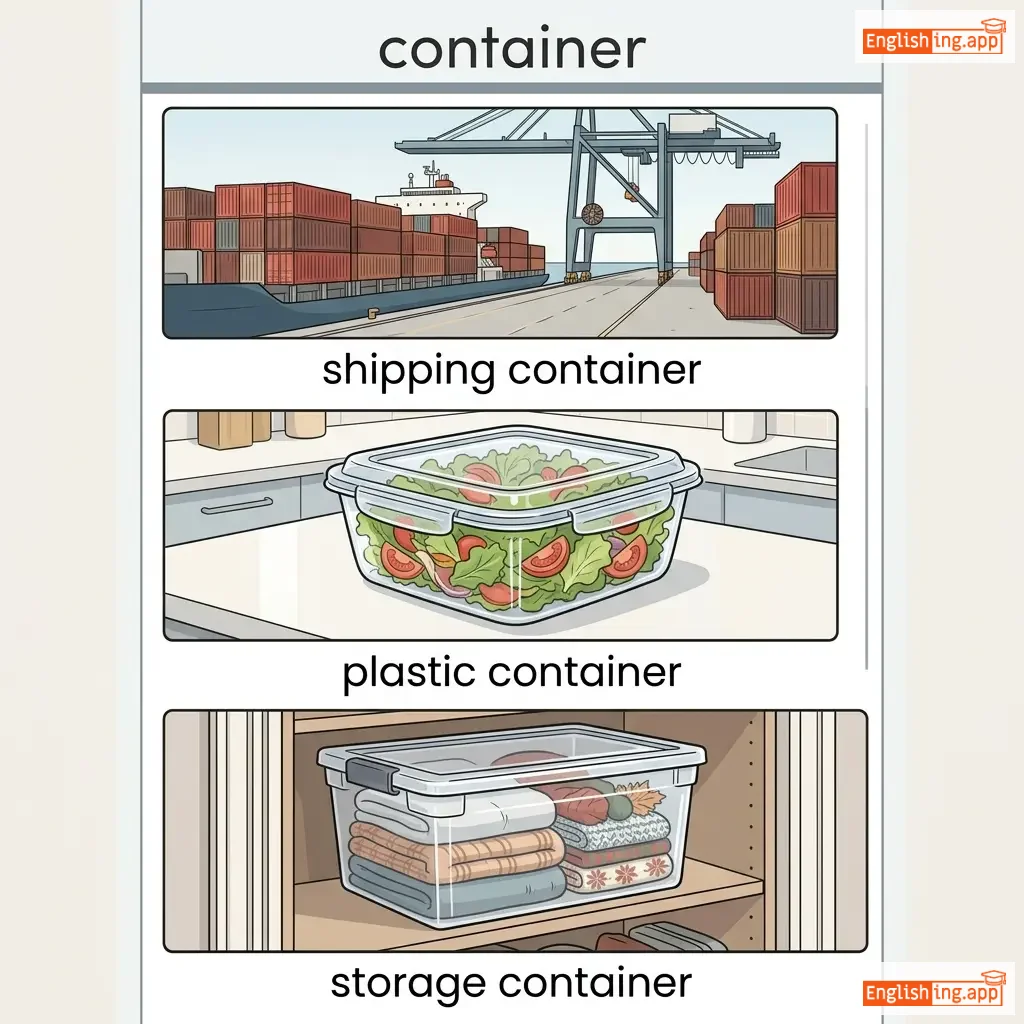
shipping container, plastic container, storage container, container ship
••••••
|
容器 📦 用来装入任何需要保存的东西。
••••••
|
|
#1212
🤔
|
/ˈkɒntəmpleɪt/
verb
••••••
|
- •••••• | - •••••• |
contemplated
••••••
|
contemplated
••••••
|
contemplates
••••••
|
contemplating
••••••
|
to think deeply and carefully about something; to consider thoughtfully
••••••
|
She sat quietly to contemplate her future plans. |
- •••••• |
contemplate the meaning of life |
to think deeply about the purpose or nature of life
••••••
|
- •••••• |
consider, ponder, meditate, reflect, deliberate
••••••
|
ignore, dismiss, neglect
••••••
|
contemplate the future, contemplate change, deeply contemplate, seriously contemplate
••••••
|
No •••••• |
|
#1213
🎨
|
/kənˈtɛmpərɛri/
adjective
(kənˈtɛmpərɛri)
••••••
|
- •••••• |
当代的, 现代的
dāngdài de, xiàndài de
••••••
|
- •••••• | - •••••• | - •••••• | - •••••• |
belonging to the same time period; modern
••••••
|
She enjoys contemporary art exhibitions.
她喜欢现代艺术展览。
••••••
|
她喜欢现代艺术展览。
Tā xǐhuān xiàndài yìshù zhǎnlǎn.
••••••
|
contemporary issues
当代问题
••••••
|
current problems or topics relevant to the present time
••••••
|
当代问题
dāngdài wèntí
••••••
|
modern, current, present-day, up-to-date
••••••
|
old-fashioned, outdated, ancient
••••••
|
contemporary art, contemporary culture, contemporary society, contemporary issues
••••••
|
Contemporary = con+temporary = 属于相同的时间段,即当代/现代。
••••••
|
|
#1214
😤
|
/kənˈtɛmpt/
noun
••••••
|
- •••••• | - •••••• | - •••••• | - •••••• | - •••••• | - •••••• |
a strong feeling of dislike and lack of respect towards someone or something
••••••
|
He spoke with contempt about the corrupt officials. |
- •••••• |
hold in contempt |
to consider someone or something unworthy of respect
••••••
|
- •••••• |
disdain, scorn, disrespect, derision
••••••
|
respect, admiration, honor
••••••
|
deep contempt, open contempt, show contempt, treat with contempt
••••••
|
No •••••• |
|
#1215
🏆
|
/kənˈtɛnd/
verb
(竞赛)
••••••
|
|
竞争,主张
jìngzhēng, zhǔzhāng
••••••
|
contended
竞赛过
••••••
|
contended
竞赛过
••••••
|
contends
竞赛
••••••
|
contending
竞赛中
••••••
|
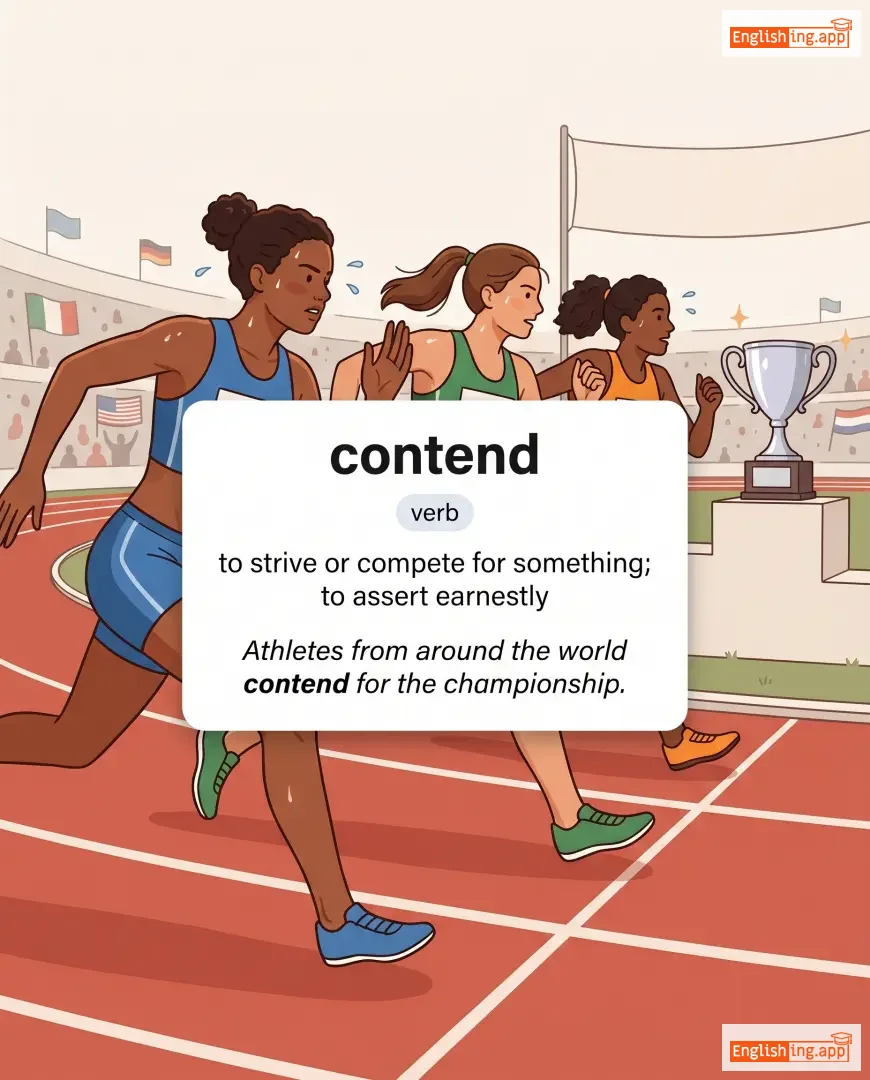
to strive or compete for something; to assert earnestly
••••••
|
Athletes from around the world contend for the championship.
来自世界各地的运动员为冠军而争斗。
••••••
|
来自世界各地的运动员为冠军而争斗。
Láizì shìjiè gèdì de yùndòngyuán wèi guànjūn ér zhēngdòu.
••••••
|
- •••••• | - •••••• | - •••••• |
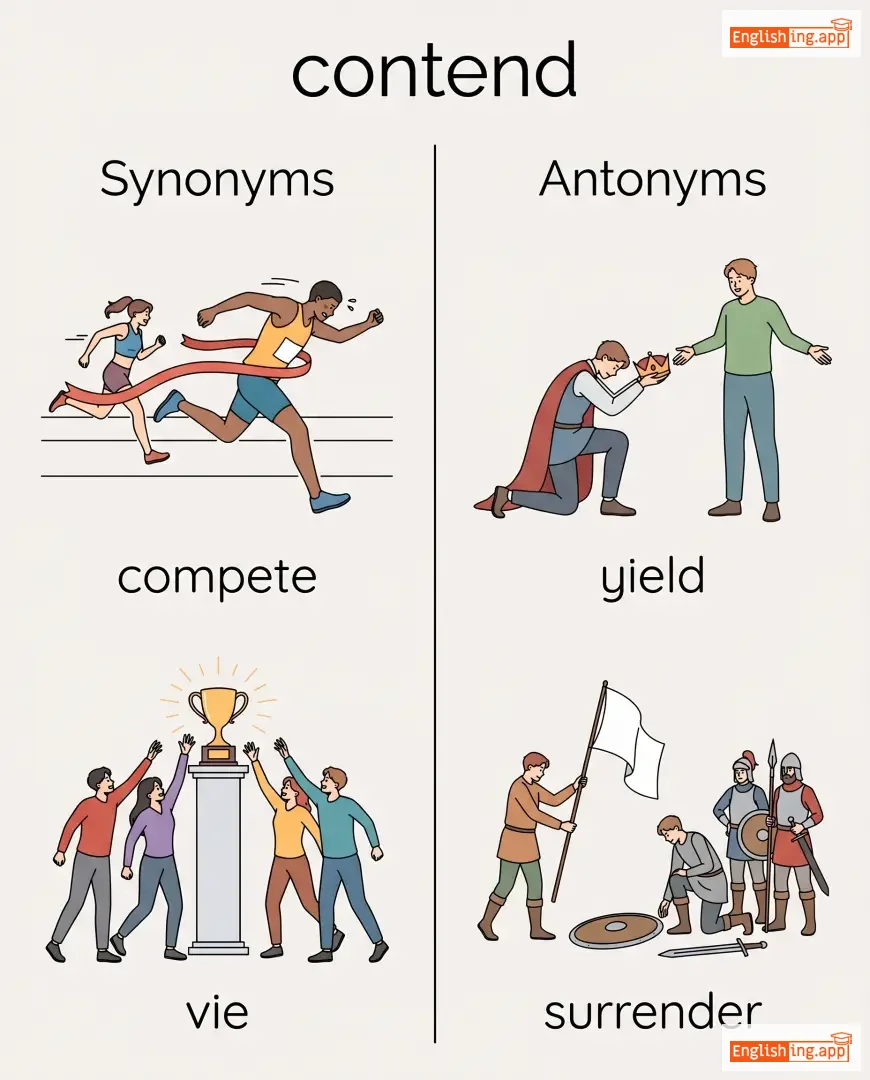
compete, vie, struggle, assert
••••••
|
yield, surrender, concede
••••••
|
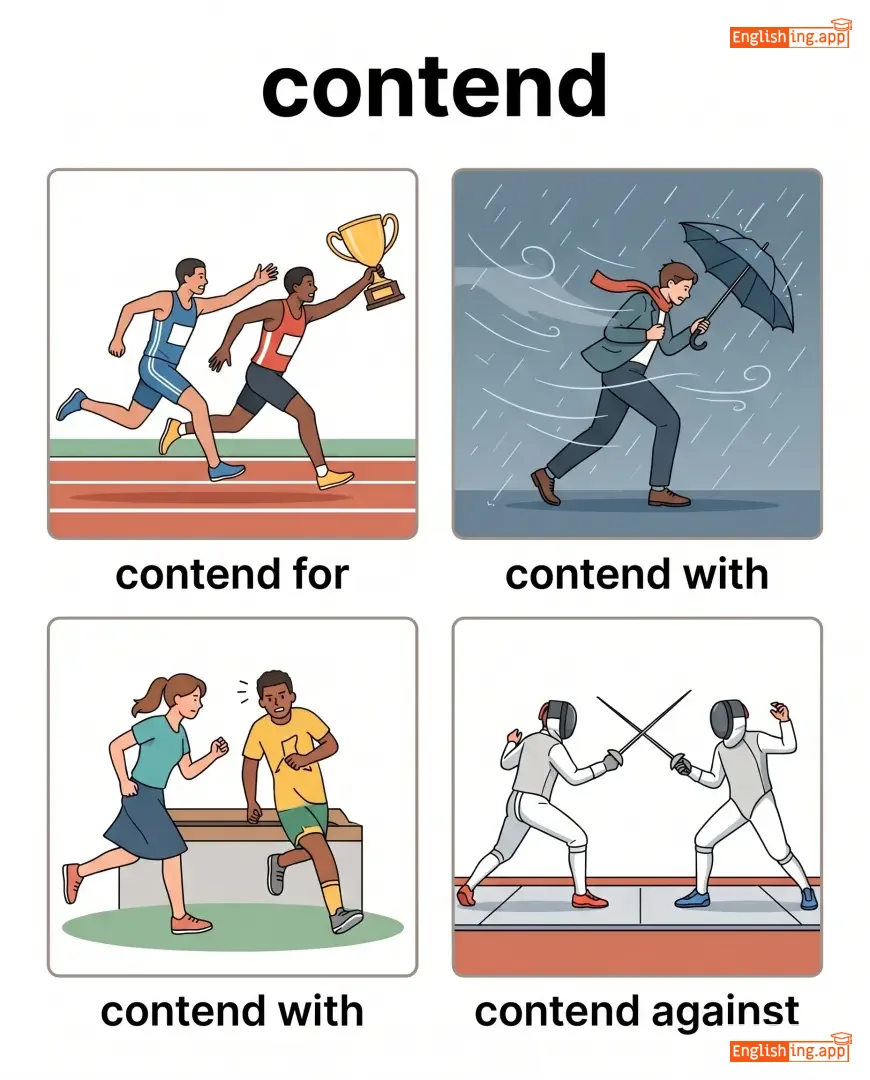
contend for, contend with, contend against, contend successfully
••••••
|
Contend 就是争夺 - 总是在竞赛中 contend
••••••
|
|
#1216
🥇
|
/kənˈtɛndər/
noun
(kāngtèndé)
••••••
|
- •••••• |
竞争者, 争夺者
jingzhengzhe, zhengduozhe
••••••
|
- •••••• | - •••••• | - •••••• | - •••••• |
a person or team competing for a title or prize
••••••
|
She is a strong contender for the mayoral position.
她是市长职位的强有力竞争者。
••••••
|
她是市长职位的强有力竞争者。
Ta shi shizhang zhiwei de qiang youli jingzhengzhe.
••••••
|
- •••••• | - •••••• | - •••••• |
challenger, competitor, aspirant, nominee
••••••
|
non-contender, bystander
••••••
|
strong contender, main contender, serious contender, leading contender
••••••
|
Contender就是争取胜利的人,像竞争者一样。
••••••
|
|
#1217
😌
|
/ˈkɑn.tent/
noun
(kāntènt)
••••••
|
- •••••• |
满足
mǎnzú
••••••
|
- •••••• | - •••••• | - •••••• | - •••••• |
pleased and satisfied; the things that are contained in something; subject matter of a text
••••••
|
She felt content with her simple life in the countryside.
她对自己在乡村的简单生活感到满足。
••••••
|
她对自己在乡村的简单生活感到满足。
Tā duì zìjǐ zài xiāngcūn de jiǎndān shēnghuó gǎndào mǎnzú.
••••••
|
- •••••• | - •••••• | - •••••• |
satisfied, material, substance, happy
••••••
|
dissatisfied, unhappy, discontented
••••••
|
content with life, website content, table of contents
••••••
|
Content = 满足 (Mǎnzú), 就像一个人对简单生活感到满足。
••••••
|
|
#1218
😊
|
/kənˈtɛntɪd/
adjective
(肯腾的)
••••••
|
- •••••• |
满足的
manzu de
••••••
|
- •••••• | - •••••• | - •••••• | - •••••• |
Feeling or expressing happiness and satisfaction.
••••••
|
She was contented with her simple life. |
她对她简单的生活感到满足。
Tā duì tā jiǎndān de shēnghuó gǎndào mǎnzú.
••••••
|
- •••••• | - •••••• | - •••••• |
satisfied, pleased, fulfilled, happy, gratified
••••••
|
discontented, unhappy, dissatisfied
••••••
|
feel contented, look contented, be contented with, contented smile
••••••
|
Contented意味着幸福和满足,像看YouTube内容一样感到开心。
••••••
|
|
#1219
⚔️
|
/kənˈtɛnʃən/
noun
(kənˈtɛnʃən)
••••••
|
|
争议, 分歧
zhēngyì, fēnqí
••••••
|
- •••••• | - •••••• | - •••••• | - •••••• |
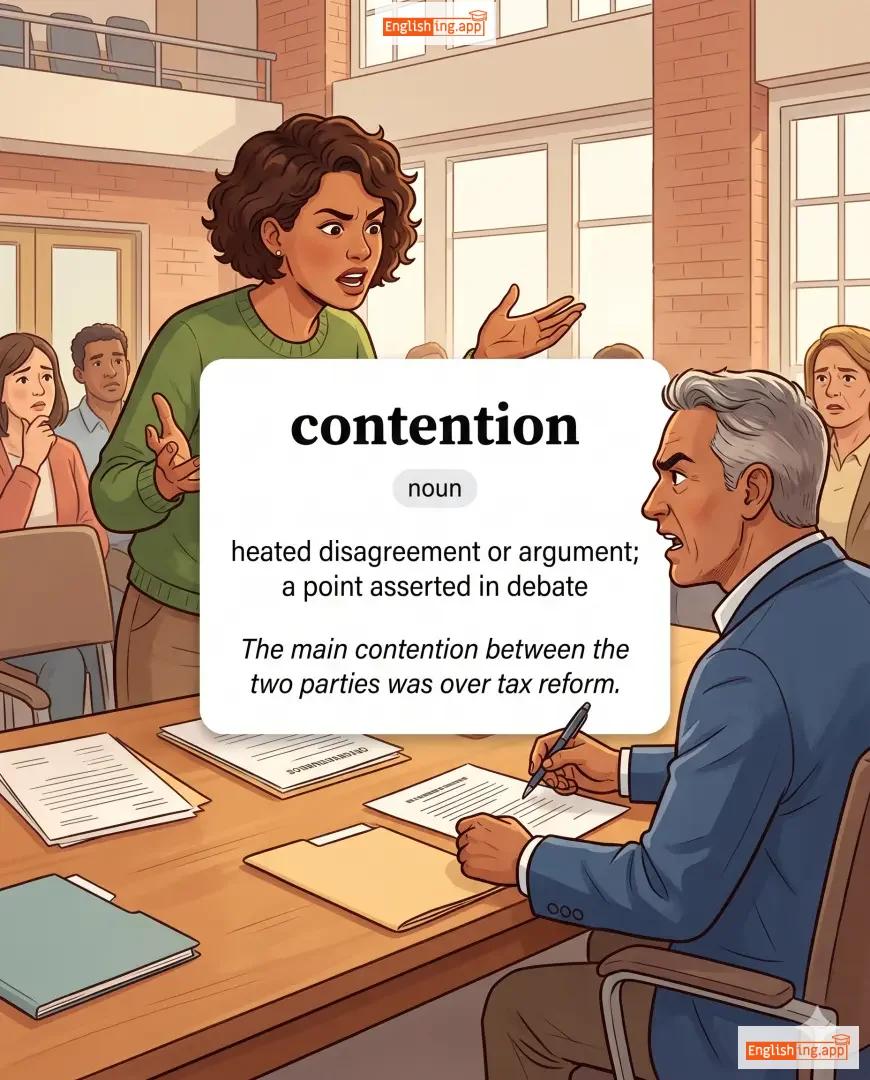
heated disagreement or argument; a point asserted in debate
••••••
|
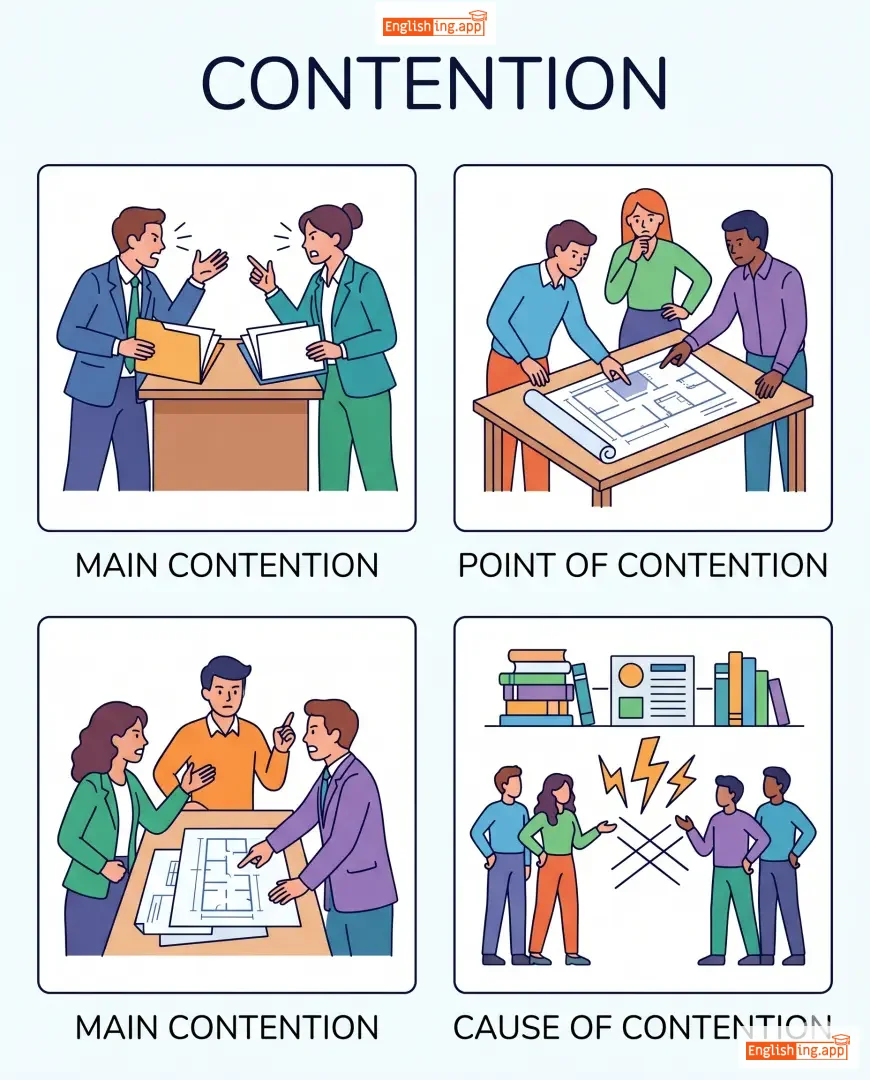
The main contention between the two parties was over tax reform. |
两党之间的主要争议是关于税务改革。
Liǎng dǎng zhī jiān de zhǔyào zhēngyì shì guānyú shuìwù gǎigé.
••••••
|
- •••••• | - •••••• | - •••••• |
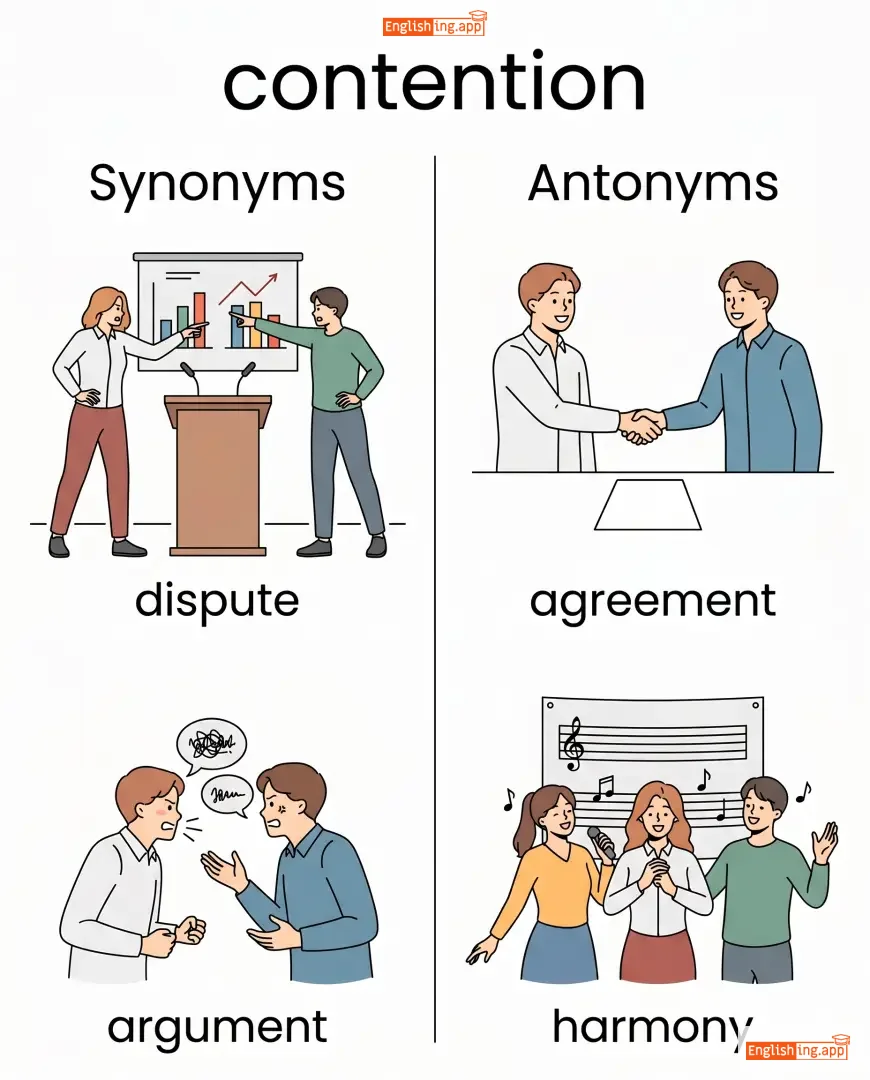
dispute, argument, debate, disagreement
••••••
|
agreement, harmony
••••••
|
main contention, point of contention, cause of contention, fierce contention
••••••
|
Contention 是当两个党派在争论 - Imagine two parties in contention
••••••
|
|
#1220
😌
|
/kənˈtentmənt/
noun
(肯腾特门特)
••••••
|
- •••••• |
满足感
manzugan
••••••
|
- •••••• | - •••••• | - •••••• | - •••••• |
a state of happiness and satisfaction with what one has
••••••
|
She felt a deep sense of contentment after helping others.
希 费尔特 额 迪普 森斯 奥夫 肯腾特门特 阿夫特 帮助 阿瑟斯。
••••••
|
帮助他人之后,她感到深深的满足感。
bangzhu taren zhihou ta gandao shenshen de manzugan
••••••
|
a feeling of contentment
额 飞灵 奥夫 肯腾特门特
••••••
|
a sense of being satisfied and at peace
••••••
|
满足的感觉
manzu de ganjue
••••••
|
satisfaction, fulfillment, happiness, peace, serenity
••••••
|
discontent, dissatisfaction, unhappiness
••••••
|
sense of contentment, deep contentment, quiet contentment, lasting contentment
••••••
|
Contentment 就是 满足感,心里很满。
••••••
|
|
#1221
🏆
|
/ˈkɒntɛst/
verb, noun
(kɒnˈtɛst)
••••••
|
- •••••• |
竞赛, 挑战
jìngsài, tiǎozhàn
••••••
|
contested
kənˈtɛstəd
••••••
|
contested
kənˈtɛstəd
••••••
|
contests
kənˈtɛsts
••••••
|
contesting
kənˈtɛstɪŋ
••••••
|
verb: to compete or challenge; noun: a competition or dispute
••••••
|
She decided to contest the election against the incumbent.
ʃи дɪˈсаɪдэд ту кəнˈтɛст ðи ɪˈлɛкʃən əˈɡɛнст ðи ɪнˈкʌмбəнт
••••••
|
她决定挑战现任者的选举。
Tā juédìng tiǎozhàn xiànrèn zhě de xuǎnjǔ.
••••••
|
- •••••• | - •••••• | - •••••• |
compete, challenge, vie, dispute
••••••
|
yield, concede
••••••
|
contest an election, contest a decision, contest results, fiercely contest
••••••
|
Contest = 竞赛挑战,如选举竞赛
••••••
|
|
#1222
📖
|
/ˈkɒntɛkst/
noun
(kāntèksītè)
••••••
|
- •••••• |
上下文
shàngxiàwén
••••••
|
- •••••• | - •••••• | - •••••• | - •••••• |
the circumstances or background relevant to an event, statement, or idea
••••••
|
To understand the quote, you need to know the context in which it was said. |
要理解这句话,你需要知道它说的上下文。
Yào lǐjiě zhè jù huà, nǐ xūyào zhīdào tā shuō de shàngxiàwén.
••••••
|
- •••••• | - •••••• | - •••••• |
background, circumstances, setting, situation
••••••
|
isolation, disconnection
••••••
|
historical context, in context, social context, provide context
••••••
|
上下文 = 了解事件发生的环境 - Understand everything around the event
••••••
|
|
#1223
🌍
|
/ˈkɒntɪnənt/
noun
(kàntínènt)
••••••
|
- •••••• |
大陆
dàlù
••••••
|
- •••••• | - •••••• | - •••••• | - •••••• |
one of the large landmasses on Earth such as Asia, Africa, or Europe
••••••
|
Asia is the largest continent in the world. |
亚洲是世界上最大的大陆。
Yàzhōu shì shìjiè shàng zuì dà de dàlù.
••••••
|
- •••••• | - •••••• | - •••••• |
landmass, region, area, territory
••••••
|
island, ocean
••••••
|
African continent, European continent, across the continent, continental drift
••••••
|
大陆就像是一个大块的土地,亚洲就是最大的大陆!
••••••
|
|
#1224
🔄
|
/kənˈtɪnjuəli/
adverb
(持续地)
••••••
|
- •••••• |
持续地; 一再
chíxù de; yī zài
••••••
|
- •••••• | - •••••• | - •••••• | - •••••• |
without stopping; repeatedly
••••••
|
She continually checked her phone for messages.
她不断检查她的手机是否有新消息。
••••••
|
她不断检查她的手机是否有新消息。
Tā bùduàn jiǎnchá tā de shǒujī shìfǒu yǒu xīn xiāoxī.
••••••
|
- •••••• | - •••••• | - •••••• |
constantly, repeatedly, persistently, incessantly
••••••
|
occasionally, rarely, intermittently, sporadically
••••••
|
continually improving, continually evolving, continually changing
••••••
|
In Chinese, '持续' means 'continually', like your phone keeps buzzing continuously!
••••••
|
|
#1225
➡️
|
/kənˈtɪnjuː/
verb
(继续)
••••••
|
- •••••• |
继续
jixu
••••••
|
continued
继续了
••••••
|
continued
继续过
••••••
|
continues
继续
••••••
|
continuing
继续着
••••••
|
To keep happening, existing, or doing something without stopping.
••••••
|
The rain will continue throughout the night.
雨水会持续整晚。
••••••
|
雨水会持续整晚。
Yǔ shuǐ huì chíxù zhěng wǎn.
••••••
|
continue on
继续前进
••••••
|
to persist or move forward despite difficulties
••••••
|
继续前进
jìxù qiánjìn
••••••
|
persist, proceed, endure, carry on, keep going
••••••
|
stop, cease, quit
••••••
|
continue working, continue education, continue efforts, continue journey
••••••
|
Continue 意味着继续前行,像永不停歇的雨水。
••••••
|
|
#1226
➡️
|
/kənˈtɪn.juːd/
verb
(kèntínyùd)
••••••
|
- •••••• |
继续
jìxù
••••••
|
continued
kèntínyùd
••••••
|
continued
kèntínyùd
••••••
|
continues
kèntínyùz
••••••
|
continuing
kèntínyùíng
••••••
|
Kept happening or carried on without stopping.
••••••
|
She continued working despite the challenges.
她继续工作,尽管面临挑战。
••••••
|
她继续工作,尽管面临挑战。
Tā jìxù gōngzuò, jǐnguǎn miànlín tiǎozhàn.
••••••
|
to be continued
待续
••••••
|
Phrase indicating that a story or sequence is not yet finished.
••••••
|
待续
Dàixù
••••••
|
persisted, carried on, lasted, endured, prolonged
••••••
|
stopped, ended, ceased
••••••
|
continued effort, continued support, continued growth, to be continued
••••••
|
Continued意味着事情没有停下来。
••••••
|
|
#1227
📈
|
/kənˈtɪn.ju.əs/
adjective
(kontinyuus)
••••••
|
- •••••• |
连续的
lianxu de
••••••
|
- •••••• | - •••••• | - •••••• | - •••••• |
forming an unbroken whole; without interruption
••••••
|
The factory operates on a continuous 24-hour schedule.
工厂按照连续的24小时工作计划运行。
••••••
|
工厂按照连续的24小时工作计划运行。
Gongchang anzhao lianxu de 24 xiaoshi gongzuo jihua yunxing.
••••••
|
- •••••• | - •••••• | - •••••• |
uninterrupted, unbroken, constant, perpetual
••••••
|
intermittent, broken, sporadic
••••••
|
continuous operation, continuous improvement, continuous flow
••••••
|
Continuous在中文里是连续的,就像工厂24小时不停的运行。
••••••
|
|
#1228
➡️
|
/kənˈtɪnjuəsli/
adverb
(kǎn tí niù ěr sī lì)
••••••
|
- •••••• |
连续不断地; 持续; 不间断
liánxù bùduàn de; chíxù; bù jiànduàn
••••••
|
- •••••• | - •••••• | - •••••• | - •••••• |
without interruption; in an unbroken sequence
••••••
|
The machine operates continuously for 24 hours.
机器持续运行24小时。
••••••
|
机器持续运行24小时。
jīqì chíxù yùnxíng 24 xiǎoshí.
••••••
|
- •••••• | - •••••• | - •••••• |
constantly, uninterruptedly, without pause, ceaselessly
••••••
|
intermittently, occasionally, sporadically, discontinuously
••••••
|
continuously running, continuously operating, continuously monitoring
••••••
|
The Chinese word '连续不断地' (liánxù bùduàn de) means 'continuously', similar to the English meaning of unbroken.
••••••
|
|
#1229
📄
|
/ˈkɒntrækt/
verb
(kòngtráct)
••••••
|
|
签订合同
qiāndìng hétong
••••••
|
contracted
kòngtrácted
••••••
|
contracted
kòngtrácted
••••••
|
contracts
kòngtrácts
••••••
|
contracting
kòngtrácting
••••••
|
to make smaller; to enter into a formal agreement
••••••
|
The company will contract a new supplier for materials.
gōngsī huì huòdé xīn de gōngyìngshāng huò cáiliào。
••••••
|
公司将签订新的供应商合同。
Gōngsī jiāng qiāndìng xīn de gōngyìngshāng hétong.
••••••
|
- •••••• | - •••••• | - •••••• |
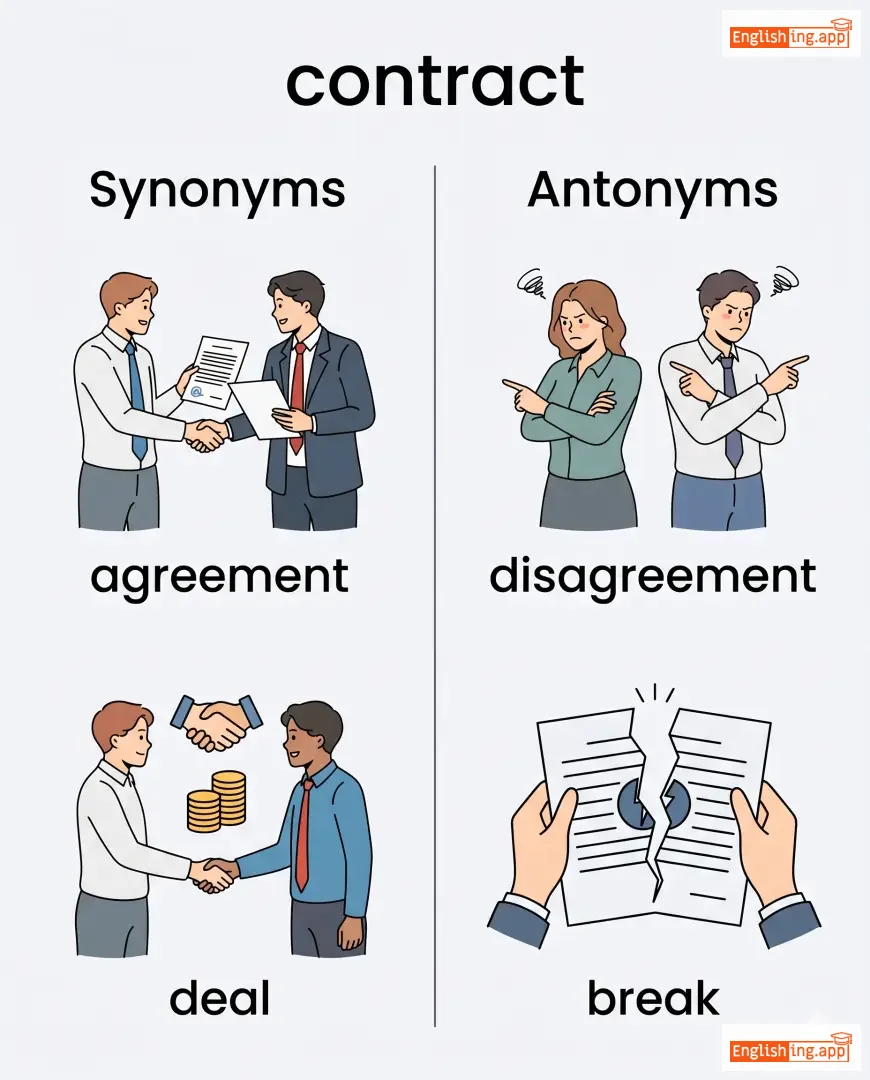
shrink, reduce, agree, hire
••••••
|
expand, extend, dissolve, cancel
••••••
|
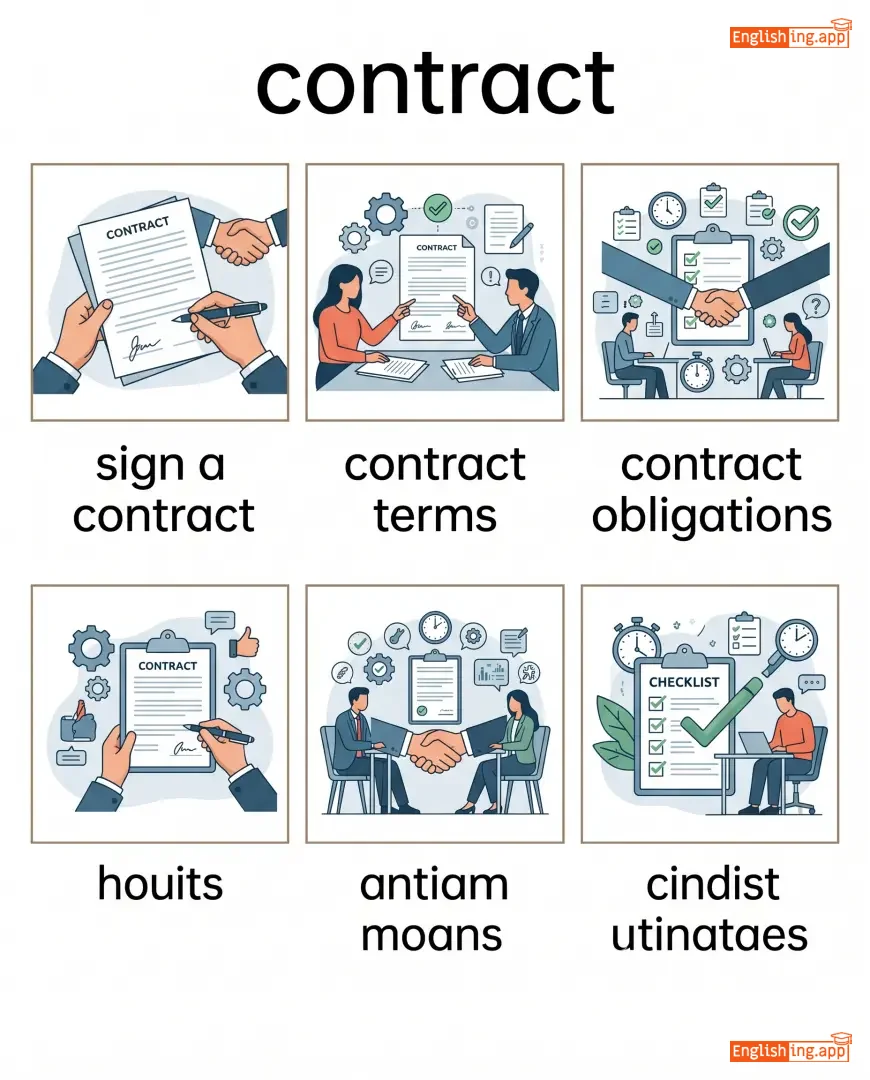
contract work, contract services, contract terms, sign contract
••••••
|
签合同,合作共赢,创造未来。
••••••
|
|
#1230
🏗️
|
/ˈkɒntræktər/
noun
(合同工)
••••••
|
- •••••• |
承包商
chéngbāo shāng
••••••
|
- •••••• | - •••••• | - •••••• | - •••••• |
a person or company that agrees to provide materials or labor to perform a service or do a job
••••••
|
The contractor completed the building project on time. |
承包商按时完成了建筑项目。
Chéngbāo shāng ànshí wánchéngle jiànzhù xiàngmù.
••••••
|
general contractor |
a person or company responsible for overseeing a construction project
••••••
|
总承包商
zǒng chéngbāo shāng
••••••
|
builder, supplier, provider, constructor, vendor
••••••
|
client, employee
••••••
|
building contractor, general contractor, independent contractor, government contractor
••••••
|
承包商是签合同进行工作的—记住'contractor'
••••••
|
|
#1231
⚡
|
/ˌkɑn.trəˈdɪk.ʃən/
noun
(矛盾)
••••••
|
- •••••• |
矛盾; 不一致
maodun, buyizhi
••••••
|
- •••••• | - •••••• | - •••••• | - •••••• |
a combination of statements, ideas, or features which are opposed to one another; inconsistency
••••••
|
There was a clear contradiction between his words and his actions. |
他的言辞与行动之间存在明显的矛盾。
Tā de yáncí yǔ xíngdòng zhī jiān cúnzài míngxiǎn de máodùn.
••••••
|
- •••••• | - •••••• | - •••••• |
inconsistency, conflict, opposition, paradox
••••••
|
consistency, agreement, harmony, accord
••••••
|
direct contradiction, logical contradiction, contradiction in terms
••••••
|
Contradiction in Chinese = '矛盾' = opposition of ideas
••••••
|
|
#1232
↔️
|
/ˈkɒn.trəri/
adjective
(kòntrèrì)
••••••
|
- •••••• |
相反的
xiāngfǎn de
••••••
|
- •••••• | - •••••• | - •••••• | - •••••• |
opposite in nature, direction, or meaning
••••••
|
Her views are contrary to mine. |
她的观点与我相反。
tā de guāndiǎn yǔ wǒ xiāngfǎn.
••••••
|
on the contrary |
used to state that the opposite of what has been said is true
••••••
|
相反
xiāngfǎn
••••••
|
opposite, conflicting, opposed, inconsistent
••••••
|
similar, agreeing, consistent
••••••
|
contrary opinion, contrary evidence, contrary result, contrary to
••••••
|
Contrary 在中文里是相反的,相反就是反方向的意思。
••••••
|
|
#1233
⚖️
|
/ˈkɒn.trɑːst/ (noun), /kənˈtræst/ (verb)
noun, verb
(happiness)
••••••
|
|
幸福
xingfu
••••••
|
contrasted
••••••
|
contrasted
••••••
|
contrasts
••••••
|
contrasting
••••••
|
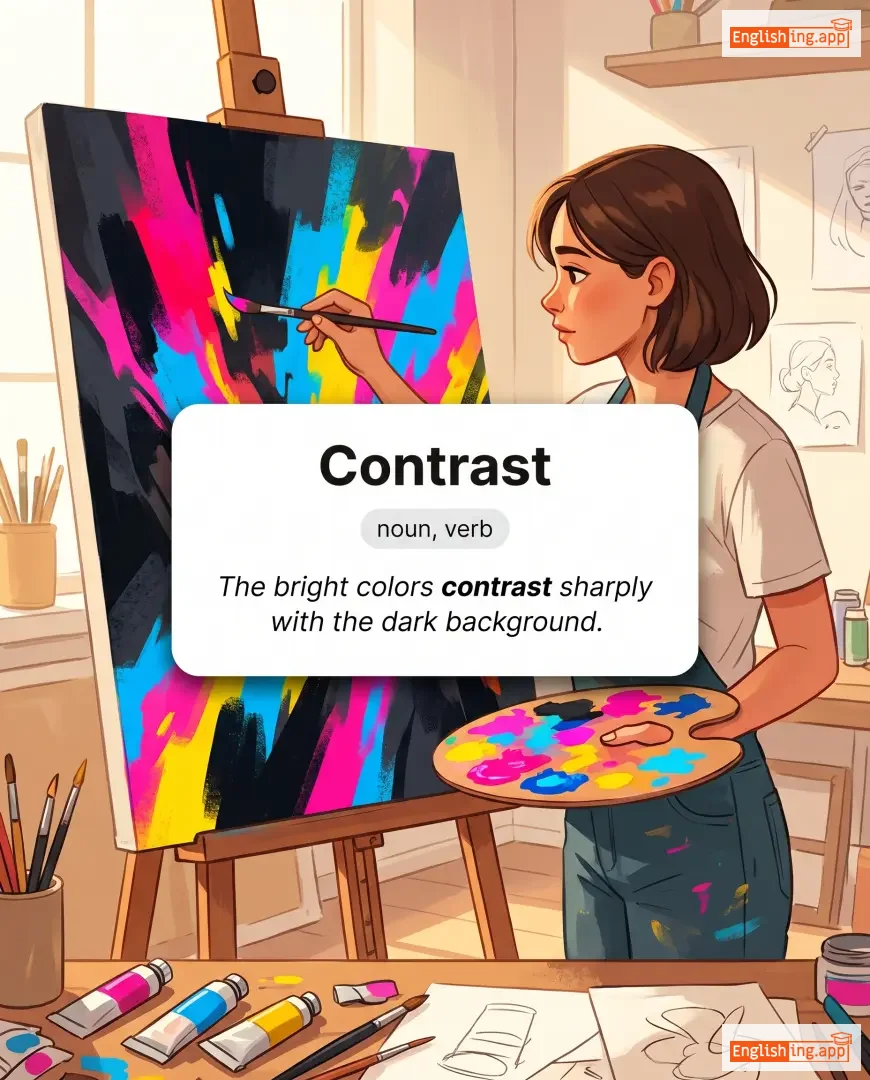
A difference between two or more things; to compare two things to show how they are different.
••••••
|
The bright colors contrast sharply with the dark background. |
当她获得奖项时,她无法掩饰自己的幸福。
Dāng tā huòdé jiǎngxiàng shí, tā wúfǎ yǎnshì zìjǐ de xìngfú.
••••••
|
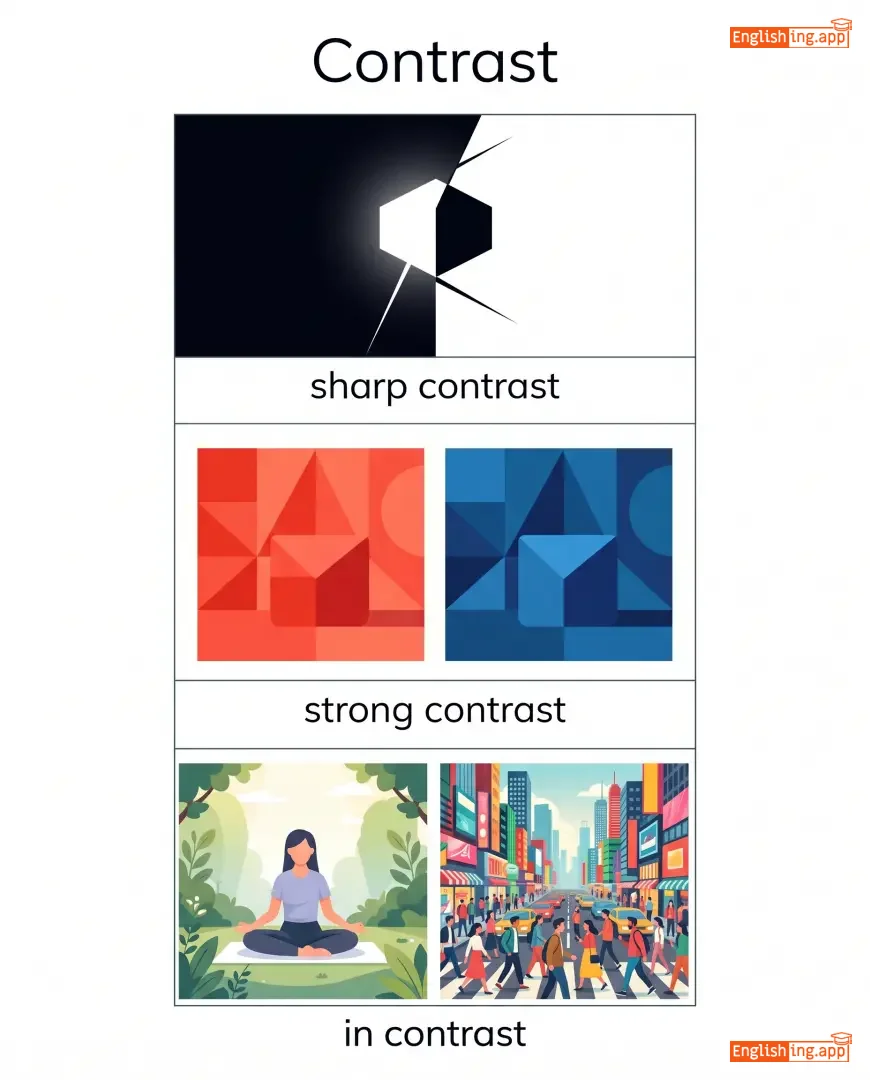
in contrast |
Used to show a clear difference between two things.
••••••
|
追求幸福
zhuīqiú xìngfú
••••••
|
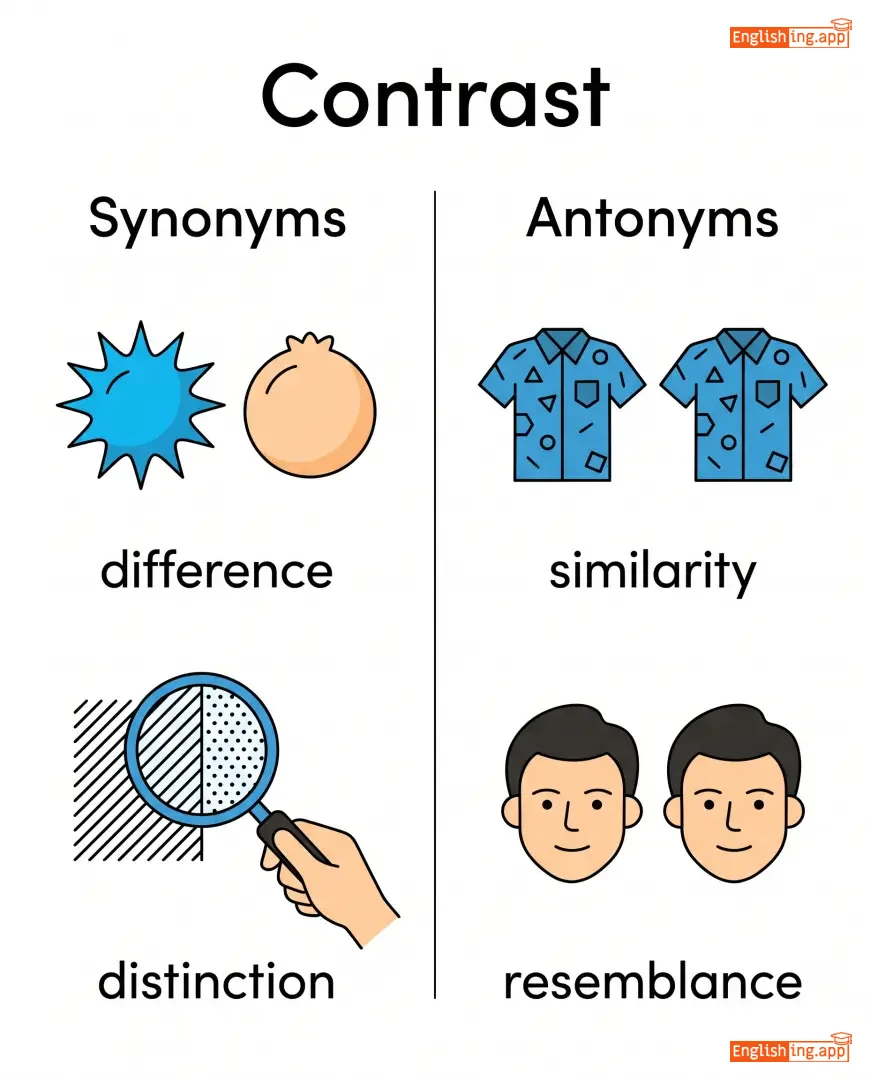
difference, distinction, divergence, comparison
••••••
|
similarity, resemblance
••••••
|
sharp contrast, strong contrast, in contrast, contrast between
••••••
|
幸福就是每天都在做让自己高兴的事。
••••••
|
|
#1234
🤲
|
/kənˈtrɪbjuːt/
verb
••••••
|
|
- •••••• |
contributed
••••••
|
contributed
••••••
|
contributes
••••••
|
contributing
••••••
|
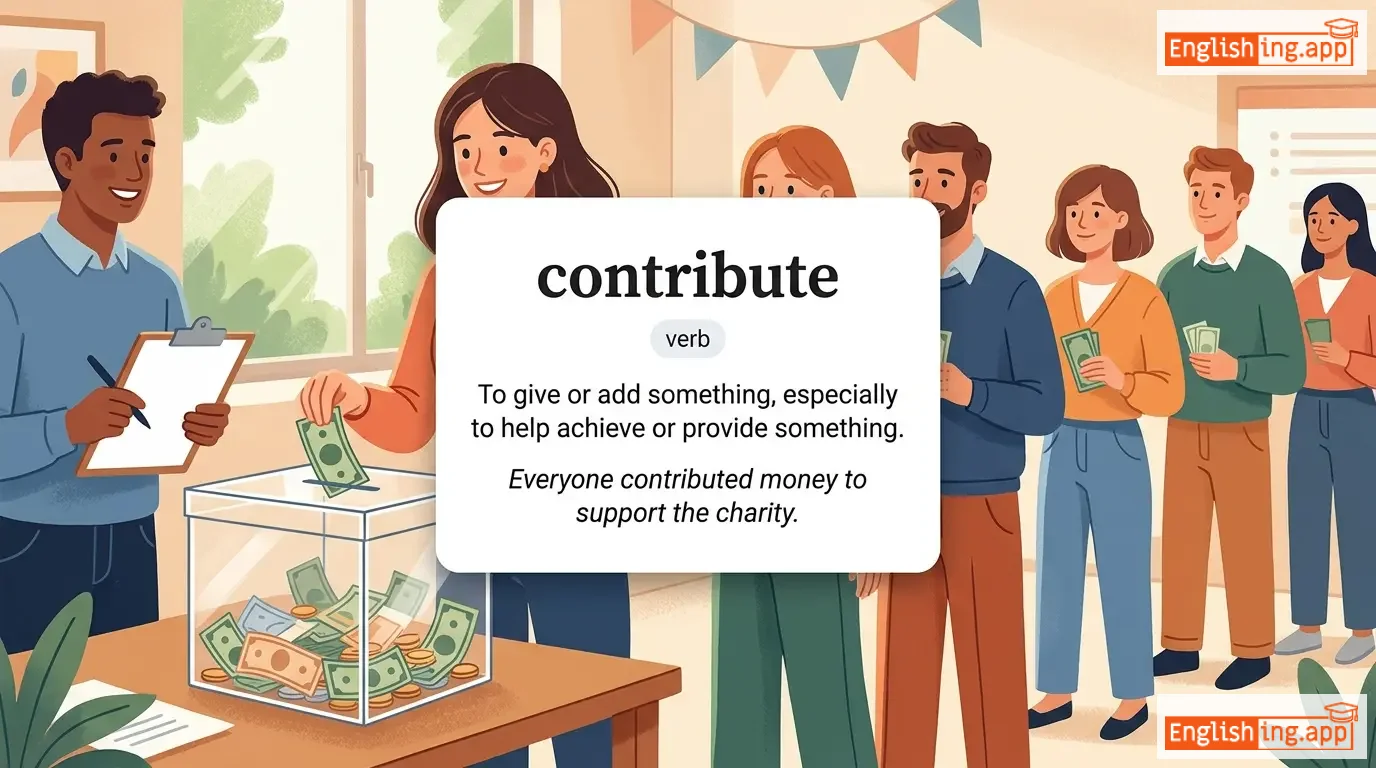
To give or add something, especially to help achieve or provide something.
••••••
|
Everyone contributed money to support the charity. |
- •••••• |
contribute to |
To help bring about or cause something.
••••••
|
- •••••• |
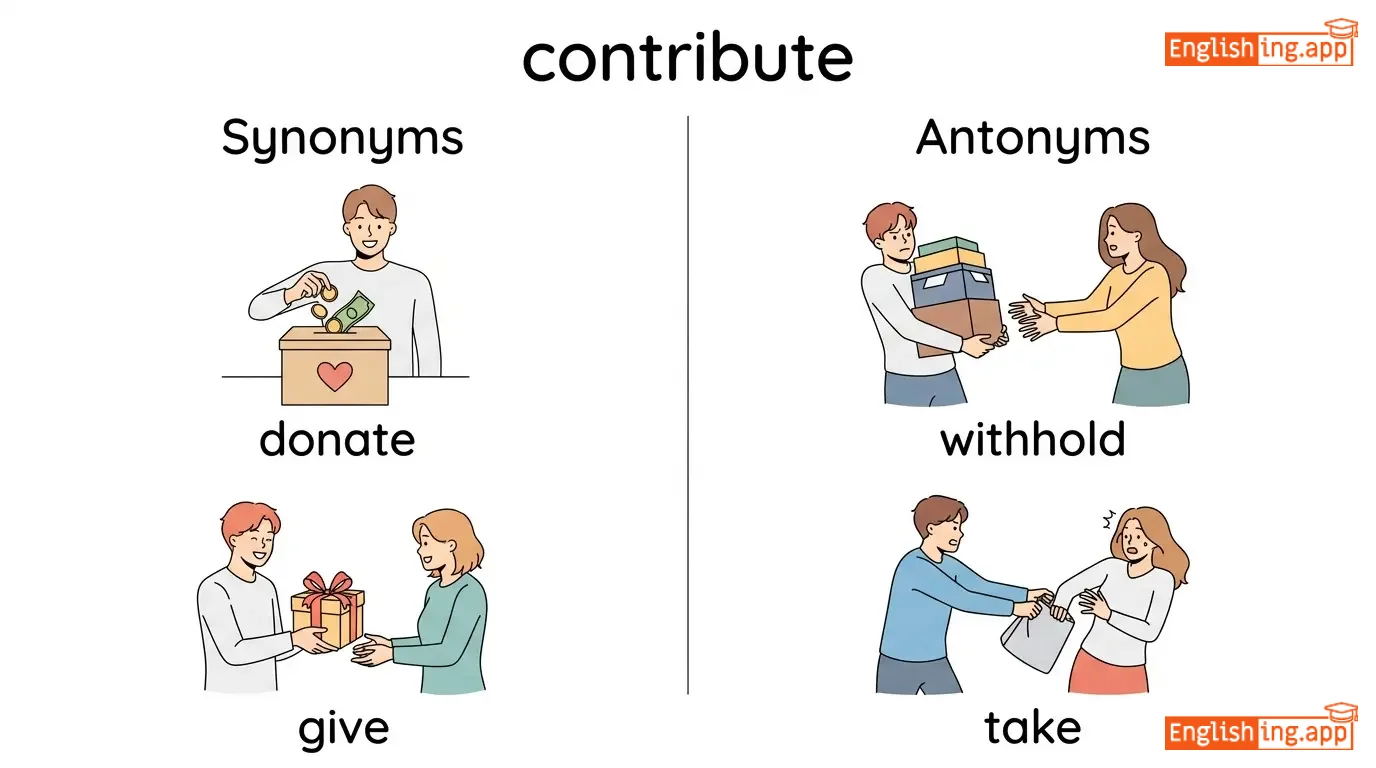
donate, give, provide, supply, add
••••••
|
withhold, take
••••••
|
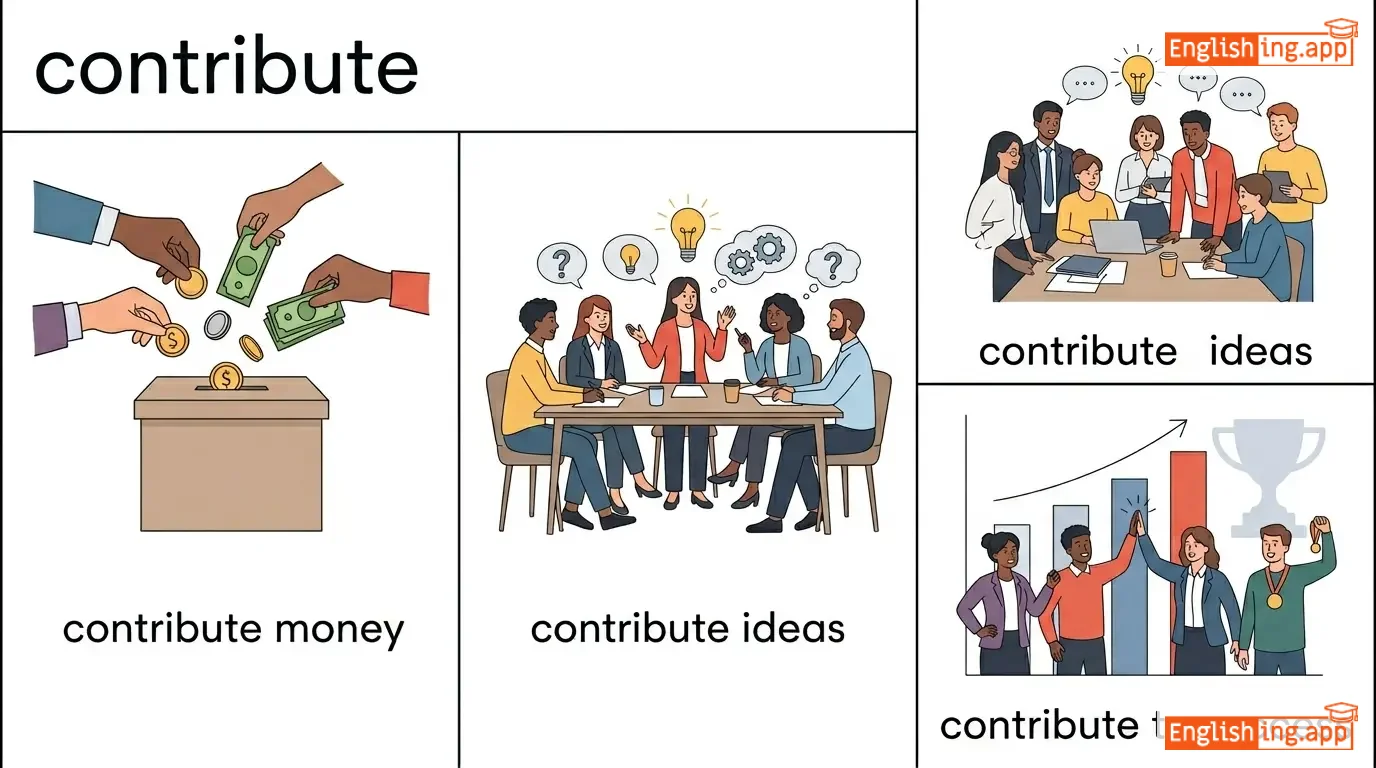
contribute money, contribute ideas, contribute to success, contribute significantly
••••••
|
No •••••• |
|
#1235
💝
|
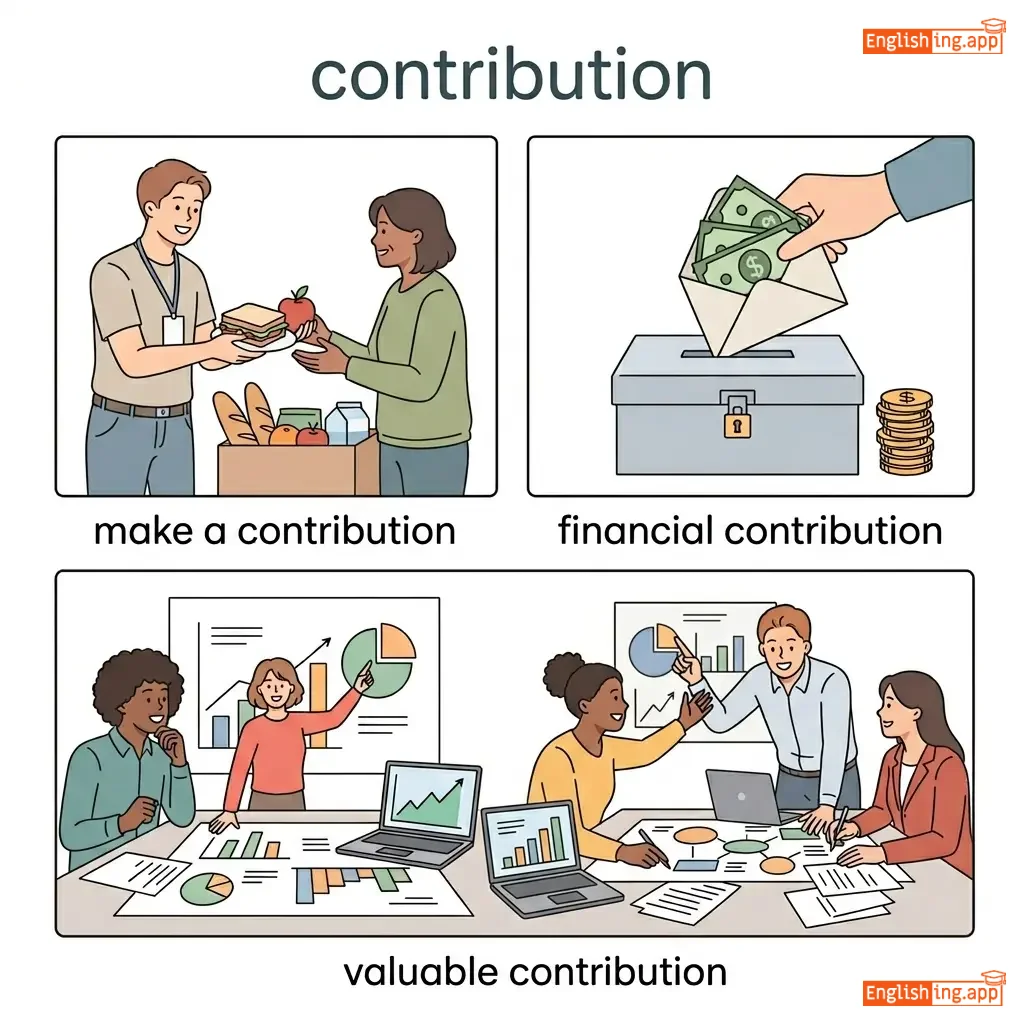
/ˌkɒn.trɪˈbjuː.ʃən/
noun
(kóng-trī-byū-shēn)
••••••
|
|
贡献
gongxian
••••••
|
- •••••• | - •••••• | - •••••• | - •••••• |
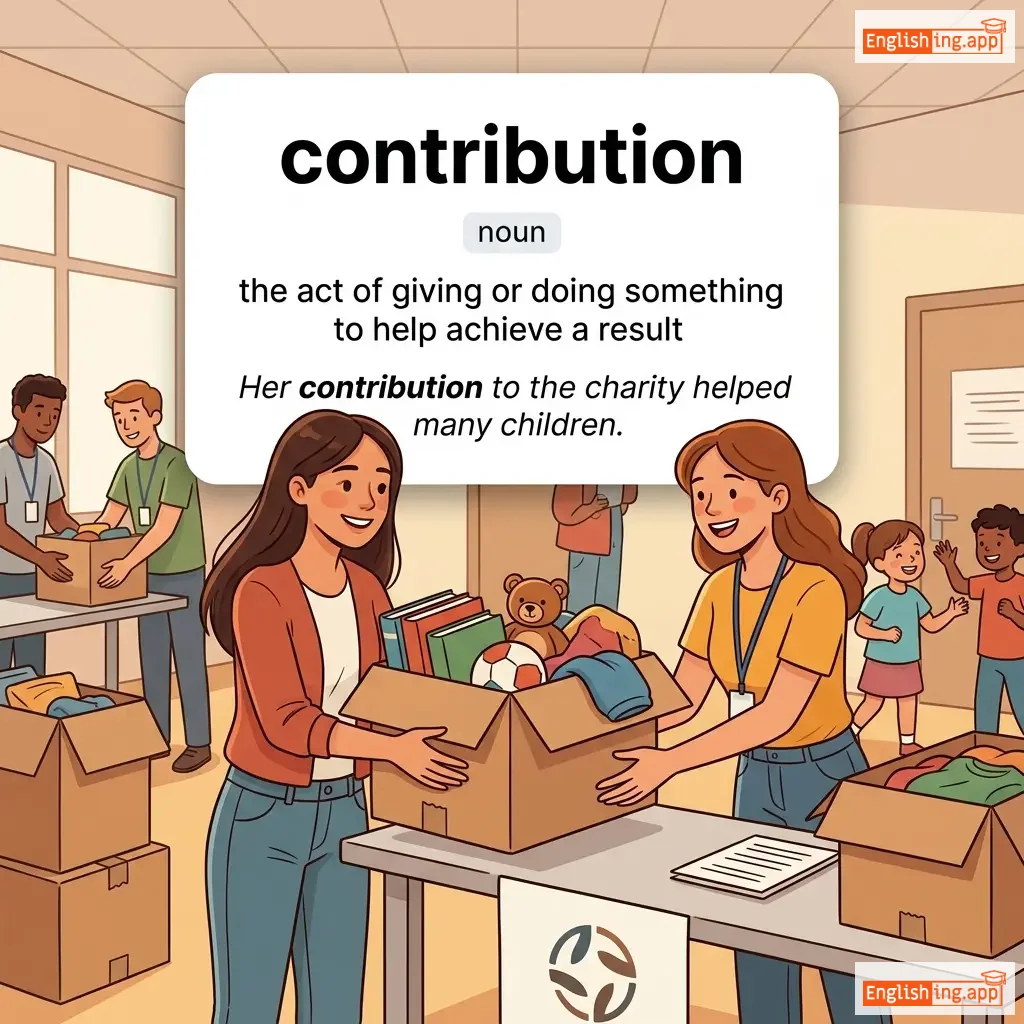
the act of giving or doing something to help achieve a result
••••••
|
Her contribution to the charity helped many children. |
她对慈善事业的贡献帮助了许多儿童。
Ta dui cishan shiye de gongxian bangzhu le xuduo ertong.
••••••
|
- •••••• | - •••••• | - •••••• |
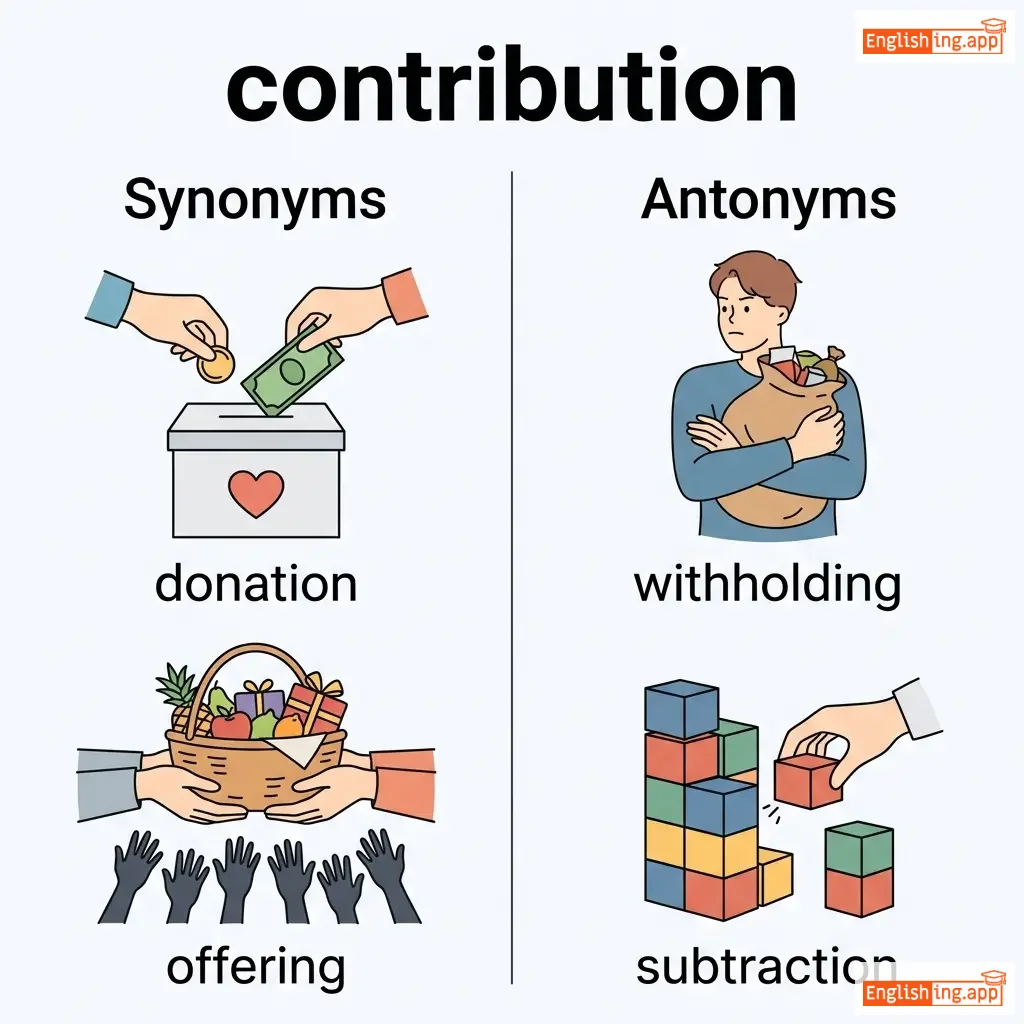
donation, offering, input, gift, aid
••••••
|
withholding, subtraction
••••••
|
make a contribution, financial contribution, valuable contribution, contribution to society
••••••
|
贡献让你成为改变世界的一部分
••••••
|
|
#1236
📝
|
/ˈkɒn.trɪ.bjʊ.tər/
noun
(kon-trib-yu-ter)
••••••
|
- •••••• |
贡献者
gongxian zhe
••••••
|
- •••••• | - •••••• | - •••••• | - •••••• |
a person who gives something to help achieve a result
••••••
|
He was a regular contributor to the local newspaper. |
他是当地报纸的常驻贡献者。
Ta shi dangdi baozhi de changzhu gongxian zhe.
••••••
|
- •••••• | - •••••• | - •••••• |
donor, supporter, benefactor, participant, giver
••••••
|
noncontributor, opponent
••••••
|
major contributor, active contributor, financial contributor, regular contributor
••••••
|
Contributor 是那个提供贡献 (gongxian) 的人
••••••
|
|
#1237
🎮
|
/kənˈtroʊl/
verb
(kənˈtrəʊl)
••••••
|
|
控制
kòngzhì
••••••
|
controlled
kənˈtrəʊld
••••••
|
controlled
kənˈtrəʊld
••••••
|
controls
kənˈtrəʊlz
••••••
|
controlling
kənˈtrəʊlɪŋ
••••••
|
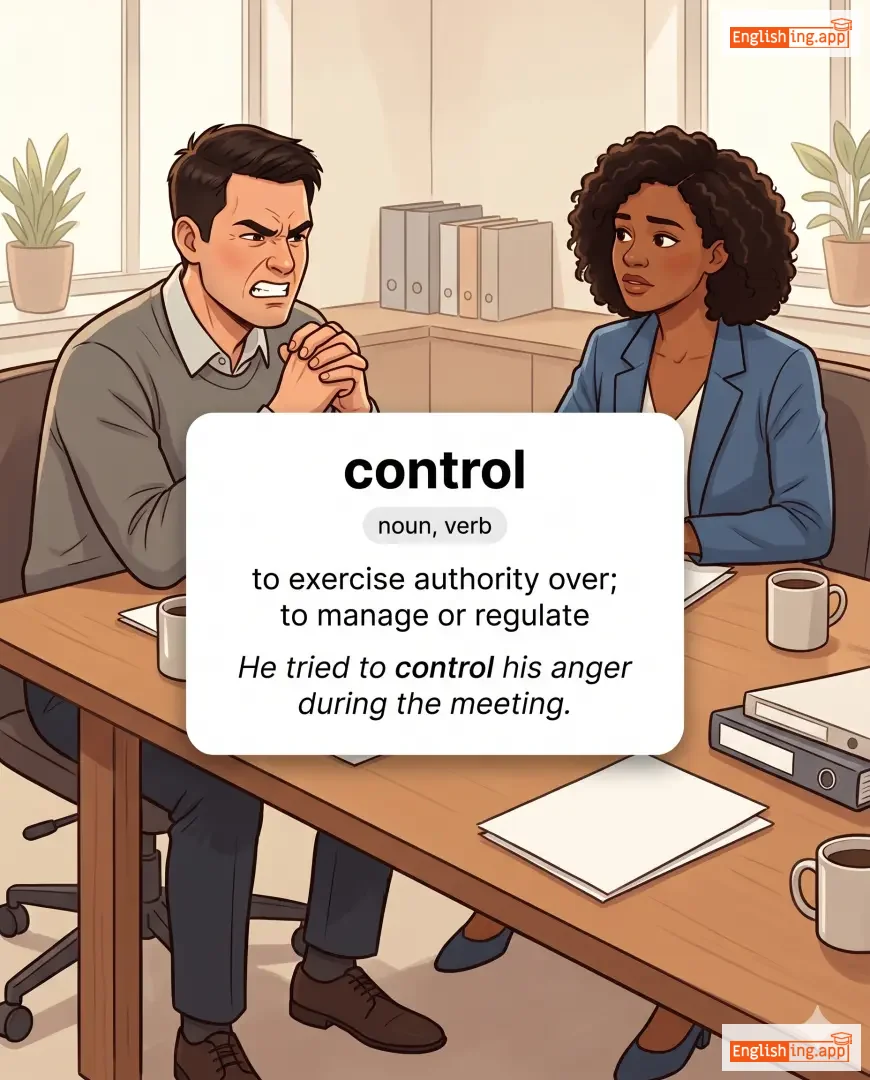
to have power over; to manage or regulate
••••••
|
She controls the company's financial decisions.
她控制着公司的财务决策。
••••••
|
她控制着公司的财务决策。
Tā kòngzhìzhe gōngsī de cáiwù juécè.
••••••
|
- •••••• | - •••••• | - •••••• |
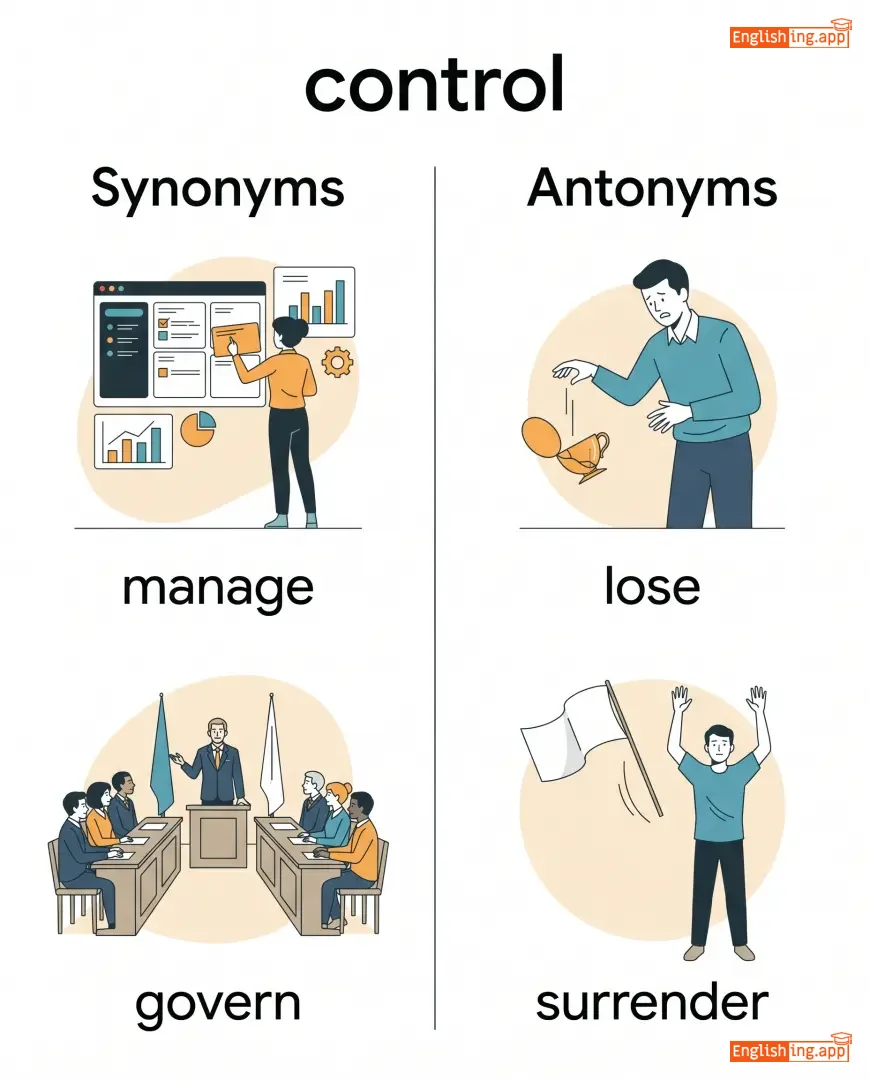
manage, regulate, command, govern
••••••
|
release, free, lose, abandon
••••••
|
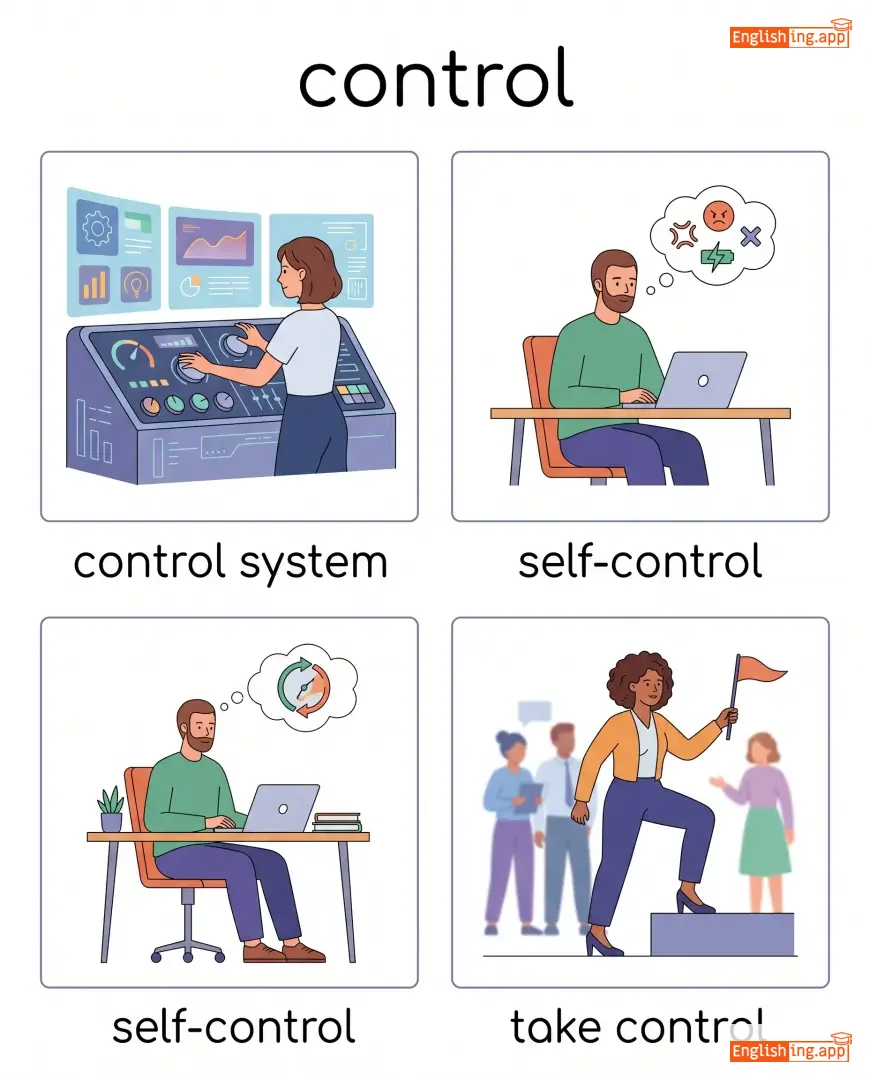
control yourself, control emotions, remote control, under control
••••••
|
Chinese-English: 'Kòngzhì' means control in Chinese.
••••••
|
|
#1238
🎛️
|
/kənˈtroʊld/
adjective
(肯特罗尔德)
••••••
|
- •••••• |
受控的
shou kong de
••••••
|
- •••••• | - •••••• | - •••••• | - •••••• |
managed or regulated carefully; kept within limits
••••••
|
The experiment was conducted in a controlled environment.
实验是在一个受控的环境中进行的。
••••••
|
实验是在一个受控的环境中进行的。
shiyan shi zai yi ge shou kong de huanjing zhong jinxing de
••••••
|
controlled substance
受控物质
••••••
|
a drug or chemical whose use is regulated by law
••••••
|
受控物质
shou kong wu zhi
••••••
|
regulated, managed, restrained, supervised, disciplined
••••••
|
uncontrolled, chaotic, unrestrained
••••••
|
controlled environment, controlled experiment, controlled conditions, tightly controlled
••••••
|
controlled = 受控的,看到控就记住
••••••
|
|
#1239
🎮
|
/kənˈtroʊlər/
noun
(控制器)
••••••
|
- •••••• |
控制器
kongzhiqi
••••••
|
- •••••• | - •••••• | - •••••• | - •••••• |
a person or device that manages, directs, or regulates something
••••••
|
The game controller made it easy to play the video game. |
游戏控制器让玩视频游戏变得更容易。
Yóuxì kòngzhìqì ràng wán shìpín yóuxì biàn dé gèng róngyì.
••••••
|
- •••••• | - •••••• | - •••••• |
manager, operator, regulator, supervisor
••••••
|
- •••••• |
flight controller, financial controller, game controller, controller unit
••••••
|
CONTROLLER = 控制一切
••••••
|
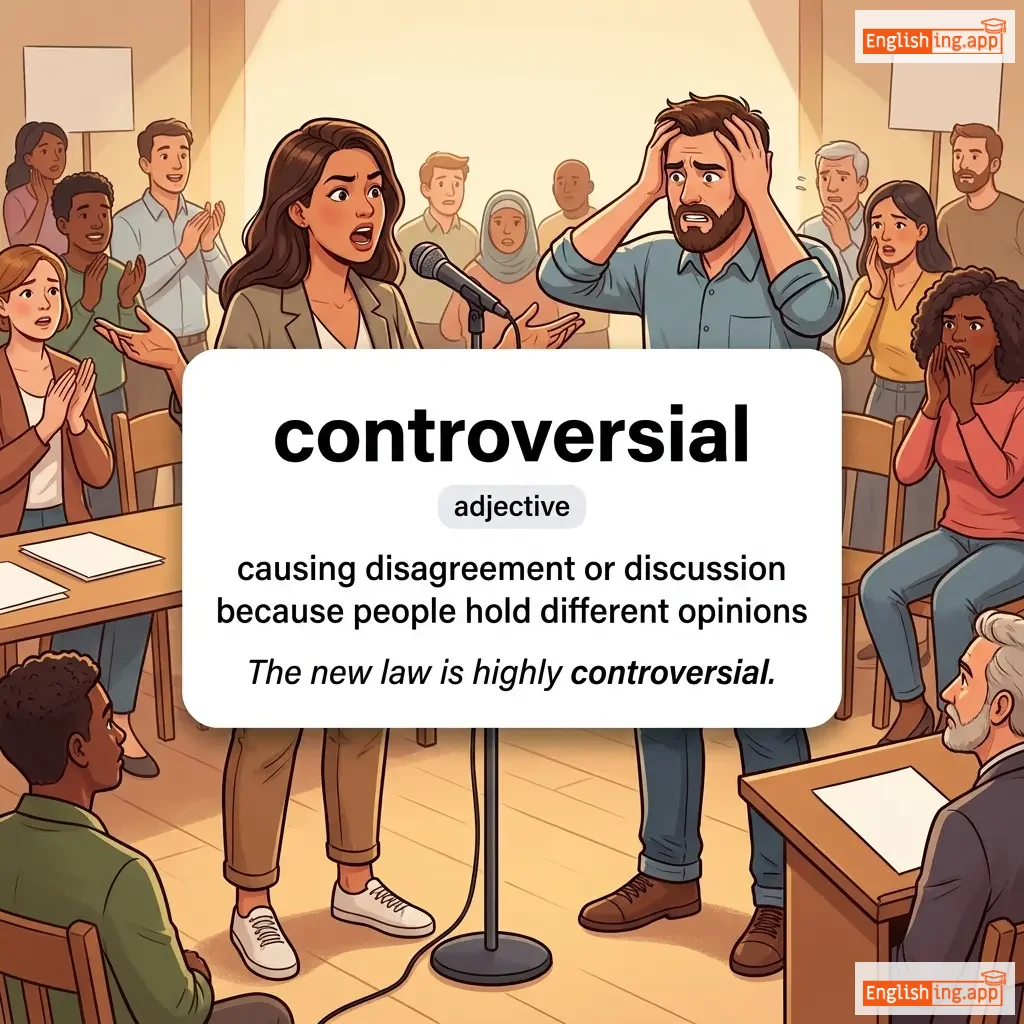
|
#1240
🔥
|
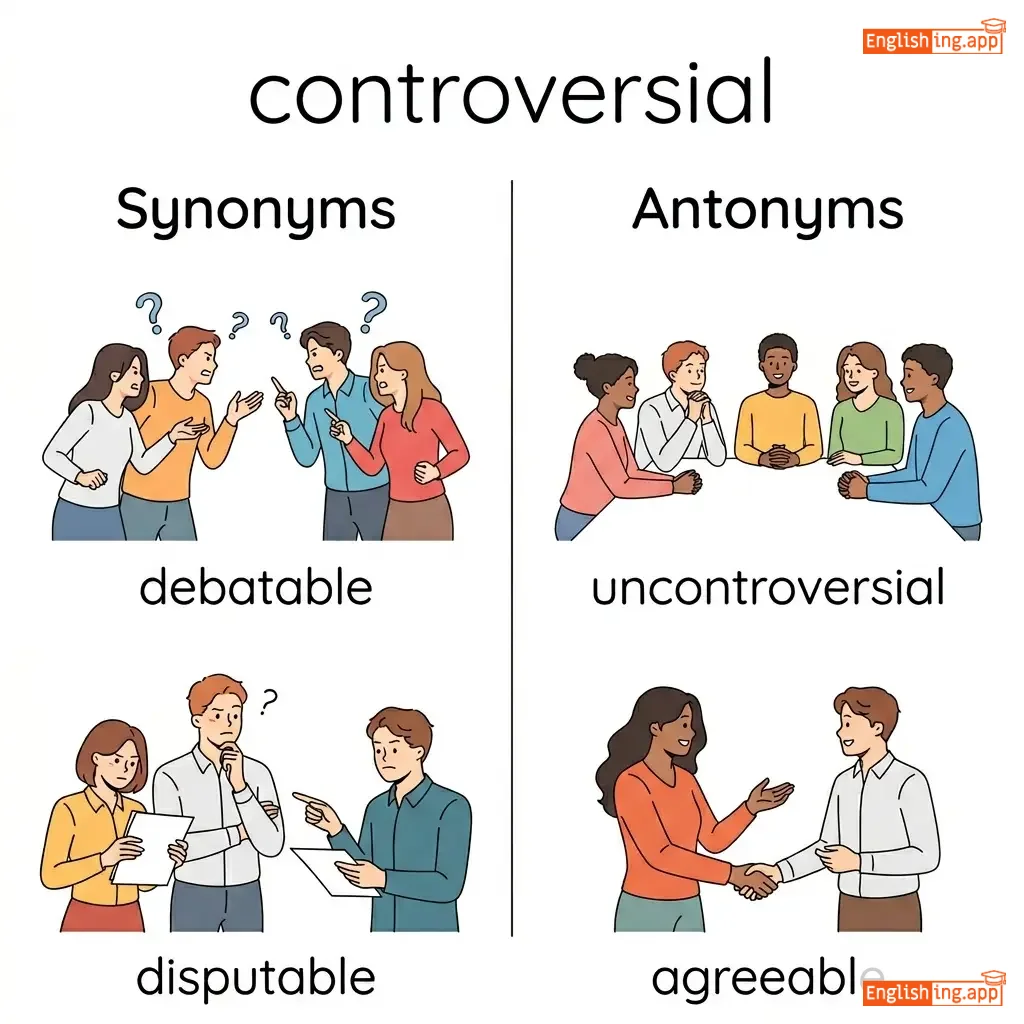
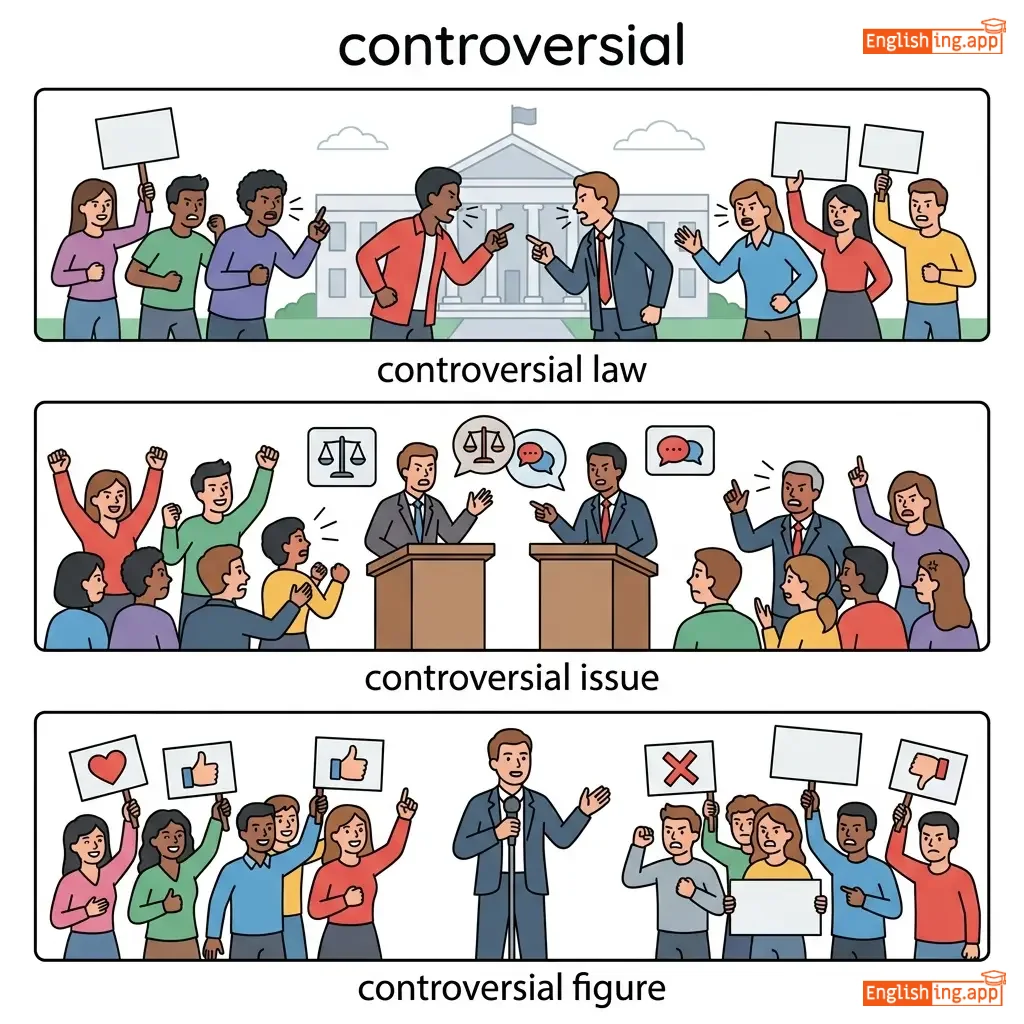
/ˌkɒn.trəˈvɜː.ʃəl/
adjective
(kóntróuérshial)
••••••
|
|
有争议的; 争论的;
you zhengyi de
••••••
|
- •••••• | - •••••• | - •••••• | - •••••• |
causing disagreement or heated discussion; disputed and debatable
••••••
|
The politician's controversial remarks sparked a heated debate.
政治家的争议性言论引发了激烈的辩论。
••••••
|
政治家的争议性言论引发了激烈的辩论。
Zhengzhijia de zhengyixing yanlun yinfa le jilie de bianlun.
••••••
|
- •••••• | - •••••• | - •••••• |
disputed, debatable, contentious, polarizing
••••••
|
uncontroversial, accepted, agreed-upon
••••••
|
controversial topic, controversial decision, controversial figure
••••••
|
有争议的 = '有' + '激烈' (像没有休止的争议)
••••••
|
|
#1241
🔥
|
/ˈkɒn.trə.vɜːr.si/
noun
(kontrovèrsī)
••••••
|
- •••••• |
争议
zhēngyì
••••••
|
- •••••• | - •••••• | - •••••• | - •••••• |
A prolonged public disagreement or heated discussion.
••••••
|
The new policy sparked a major controversy. |
新政策引发了巨大争议。
Xīn zhèngcè yǐn fàle jùdà zhēngyì.
••••••
|
spark controversy |
To cause strong public disagreement or debate.
••••••
|
引发争议
yǐn fà zhēngyì
••••••
|
dispute, argument, debate, conflict, quarrel
••••••
|
agreement, harmony
••••••
|
major controversy, spark controversy, cause controversy, political controversy
••••••
|
Controversy意味着control + verse,在中文中是争议。
••••••
|
|
#1242
🛍️
|
/kənˈviː.ni.əns/
noun
(方便)
••••••
|
- •••••• |
便利
bianli
••••••
|
- •••••• | - •••••• | - •••••• | - •••••• |
the state of being able to proceed with something without difficulty; a thing that contributes to an easy way of life
••••••
|
The convenience of online shopping has changed how people buy products. |
在线购物的便利改变了人们购买产品的方式。
Zaixian gouwu de bianli gaibian le renmen goupiao chanpin de fangshi.
••••••
|
- •••••• | - •••••• | - •••••• |
ease, comfort, advantage, benefit
••••••
|
inconvenience, difficulty, hardship, trouble
••••••
|
for your convenience, convenience store, modern convenience
••••••
|
Bianli = Biao Nian Li, convenient!
••••••
|
|
#1243
🛒
|
/kənˈviː.ni.ənt/
adjective
(kángwénniántè)
••••••
|
- •••••• |
方便
fāngbiàn
••••••
|
- •••••• | - •••••• | - •••••• | - •••••• |
suitable or easy to use; fitting in well with one's needs
••••••
|
This shop is convenient for my daily needs.
这家商店方便我的日常需求。
••••••
|
这家商店方便我的日常需求。
Zhè jiā shāngdiàn fāngbiàn wǒ de rìcháng xūqiú.
••••••
|
at your convenience
在您的方便时
••••••
|
whenever it is suitable for you
••••••
|
在您的方便时
zài nín de fāngbiàn shí
••••••
|
handy, suitable, practical, useful
••••••
|
inconvenient, unsuitable, difficult
••••••
|
convenient location, convenient time, convenient way, convenient shop
••••••
|
方便就像是一个方便的商店,能满足你的所有需求!
••••••
|
|
#1244
🎤
|
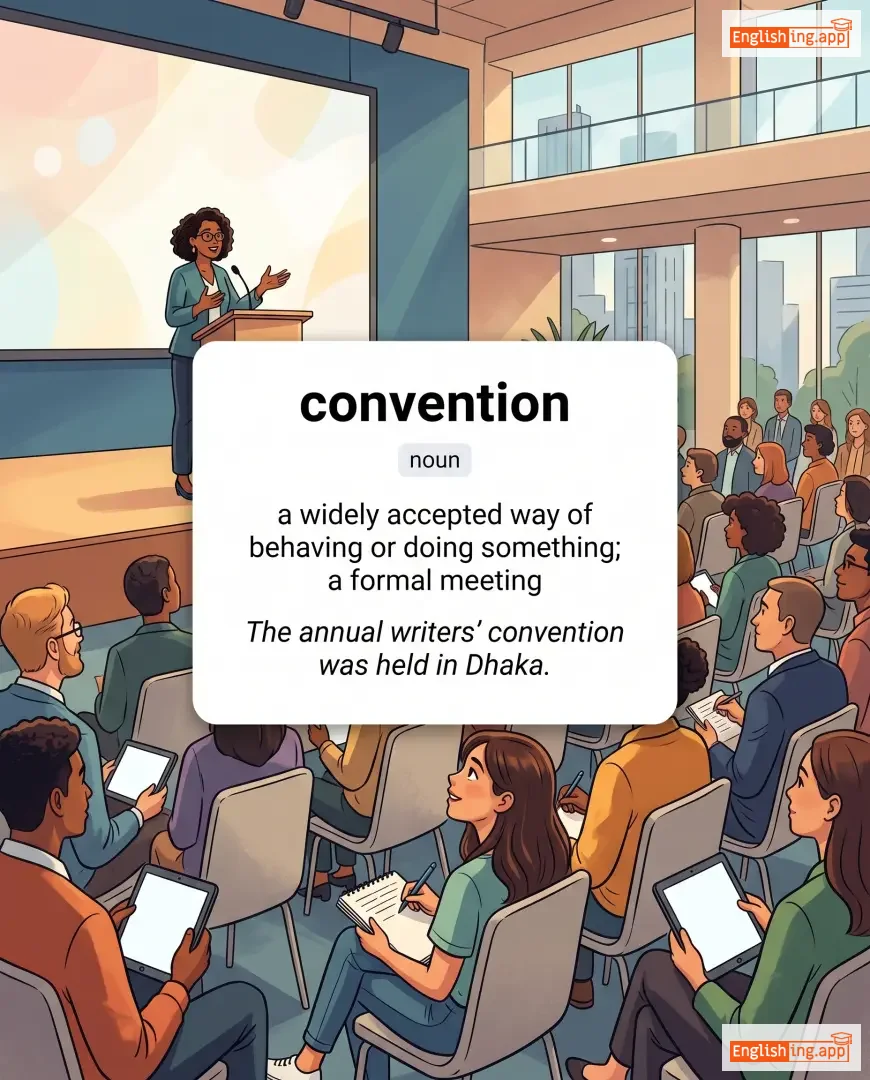
/kənˈvɛnʃən/
noun
(会议)
••••••
|
|
会议
huiyi
••••••
|
- •••••• | - •••••• | - •••••• | - •••••• |
a widely accepted way of behaving or doing something; a formal meeting
••••••
|
The annual writers' convention was held in Dhaka.
年度作家大会在达卡举行。
••••••
|
年度作家大会在达卡举行。
Niandu zuojia dahui zai Daka juxing.
••••••
|
- •••••• | - •••••• | - •••••• |
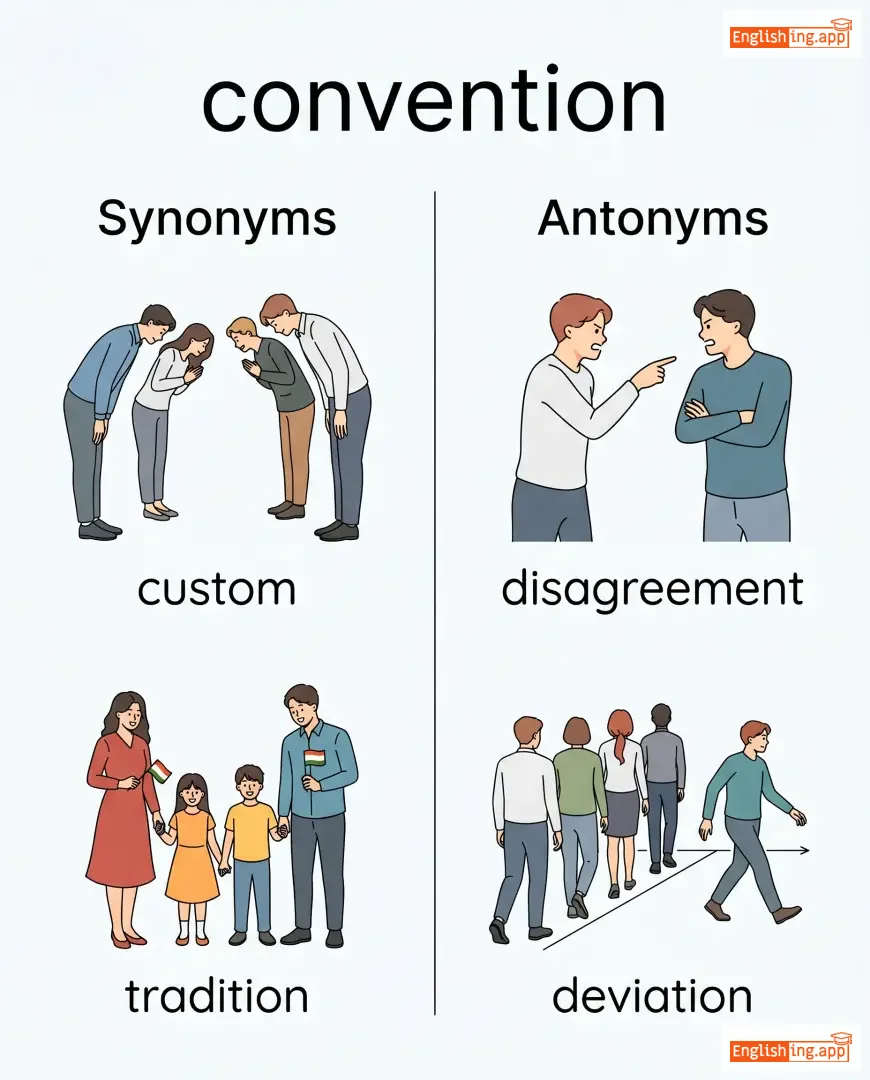
custom, tradition, meeting, assembly
••••••
|
disagreement, deviation
••••••
|
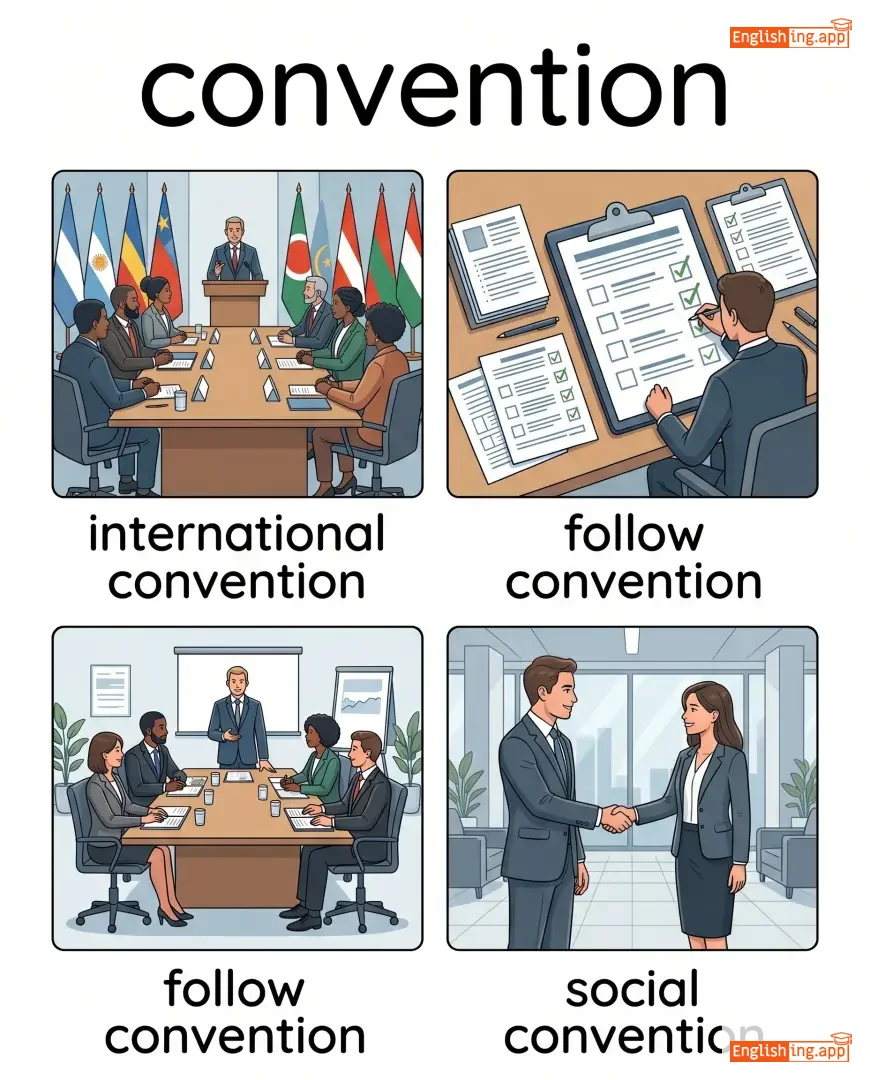
social convention, international convention, follow convention, break convention
••••••
|
会议使大家聚集 - Convention brings people together
••••••
|
|
#1245
🏛️
|
/kənˈvenʃənəl/
adjective
(kənˈvɛnʃənəl)
••••••
|
|
传统的; 传统的; 通常接受的; 受习俗约束
chuántǒng de; chuántǒng de; tōngcháng jiēshòu de; shòu xí sú yuēshù
••••••
|
- •••••• | - •••••• | - •••••• | - •••••• |
following traditional practices; customary; generally accepted; bound by convention
••••••
|
She chose a conventional wedding dress for her big day. |
她为她的大日子选择了一件传统的婚纱。
Tā wèi tā de dà rìzi xuǎnzéle yī jiàn chuántǒng de hūnshā.
••••••
|
- •••••• | - •••••• | - •••••• |
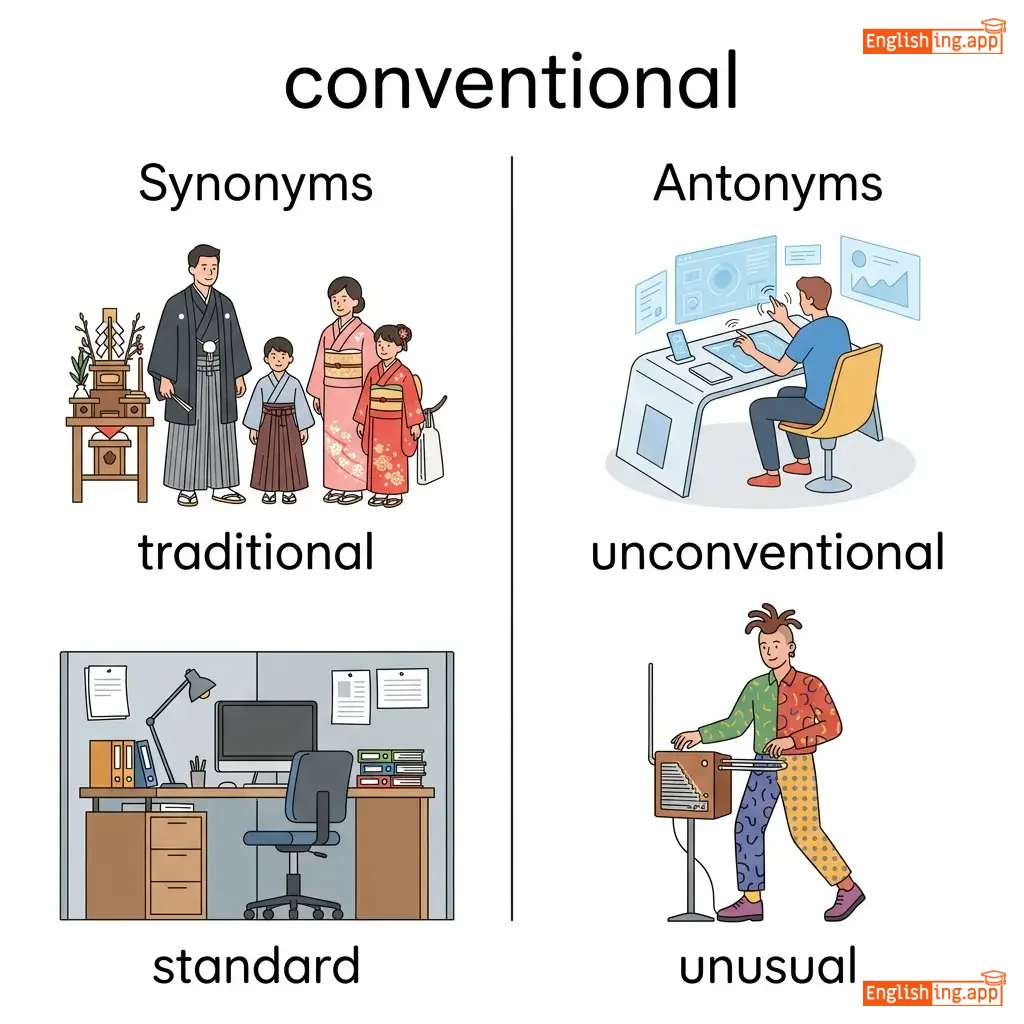
traditional, orthodox, standard, normal
••••••
|
unconventional, innovative, radical, modern
••••••
|
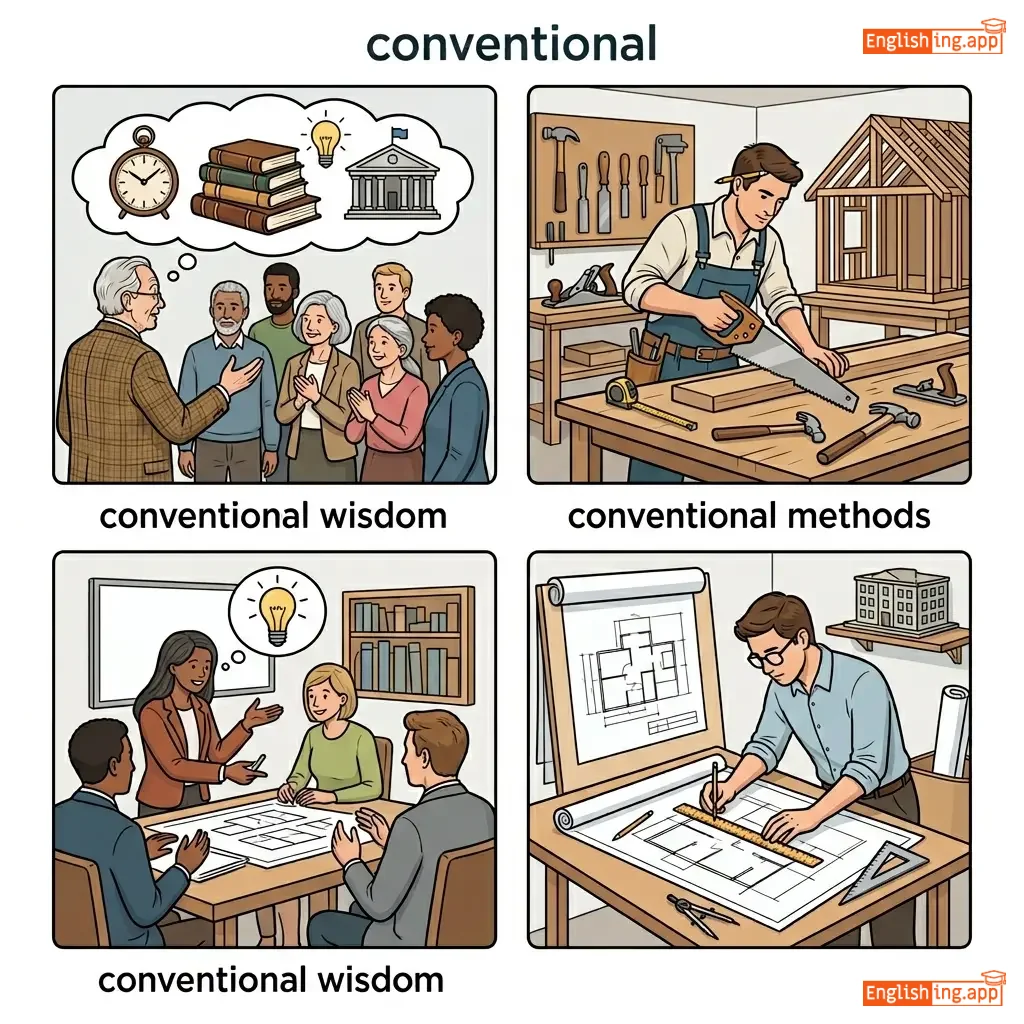
conventional wisdom, conventional approach, conventional medicine
••••••
|
传统婚礼的选择
••••••
|
|
#1246
💬
|
/ˌkɒnvəˈseɪʃn/
noun
(kɔnvəˈseɪʃn)
••••••
|
- •••••• |
对话
duihua
••••••
|
- •••••• | - •••••• | - •••••• | - •••••• |
an informal talk between two or more people, in which ideas, feelings, and thoughts are exchanged
••••••
|
We had a long conversation about future plans. |
我们就未来的计划进行了长时间的对话。
Wo men jiu wei lai de jihua jin xing le chang shijian de duihua.
••••••
|
make conversation |
to talk with someone to appear polite, often about trivial things
••••••
|
展开对话
zhan kai dui hua
••••••
|
dialogue, talk, discussion, chat, exchange
••••••
|
silence, quiet, muteness
••••••
|
casual conversation, phone conversation, deep conversation, conversation starter
••••••
|
对话意味着交流思想和感受。
••••••
|
|
#1247
💬
|
/kənˈvɜːs/
verb
(海皮尼斯)
••••••
|
|
交谈
jiaotan
••••••
|
conversed
海皮尼斯德
••••••
|
conversed
海皮尼斯德
••••••
|
converses
海皮尼斯斯
••••••
|
conversing
海皮尼斯英
••••••
|
to have a conversation; to talk together
••••••
|
They conversed about literature for hours.
他们关于文学谈了几个小时。
••••••
|
他们谈了几个小时关于文学。
Tamen tan le jige xiaoshi guanyu wenxue.
••••••
|
- •••••• | - •••••• | - •••••• |
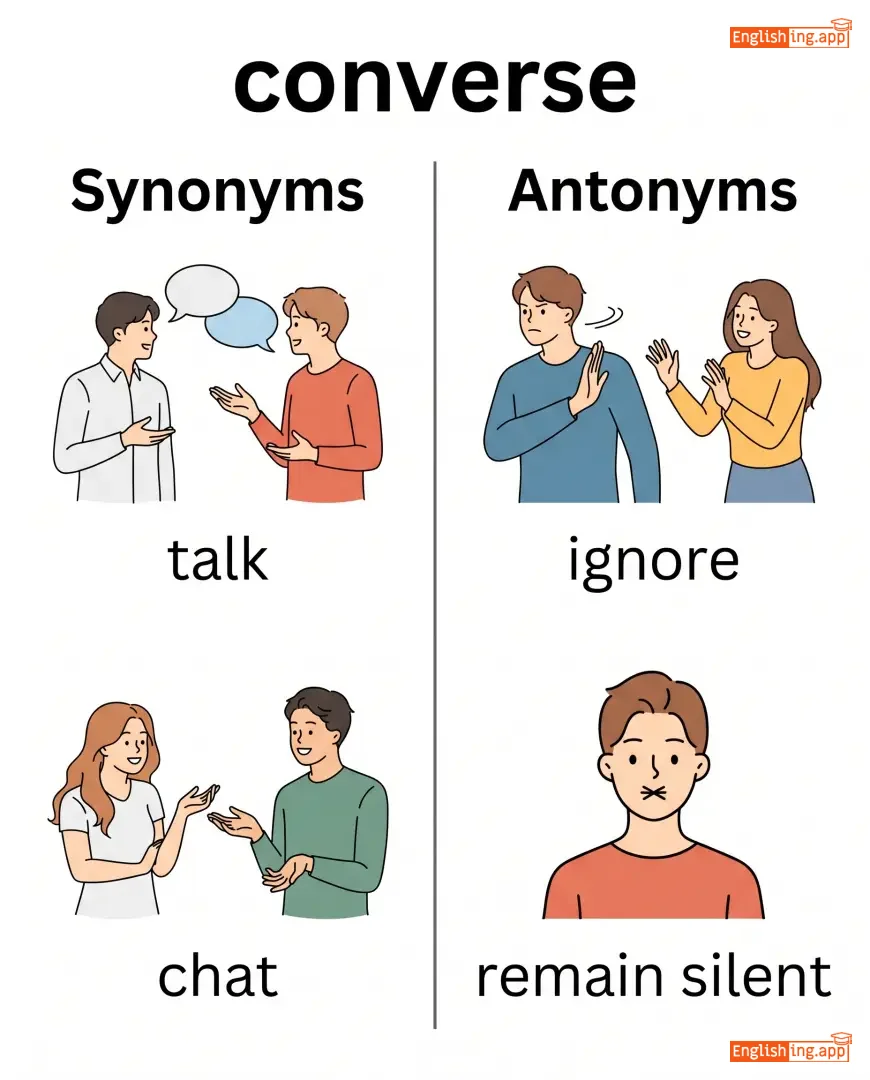
talk, chat, discuss, communicate
••••••
|
ignore, silence, avoid, shun
••••••
|
converse freely, converse with, converse about, politely converse
••••••
|
‘Converse’ means ‘jiaotan’ — imagine chatting over tea in China.
••••••
|
|
#1248
🔄
|
/kənˈvɜr.ʃən/
noun
(kāng wěi shēn)
••••••
|
|
转变; 转换; 改变
zhuǎnbiàn, zhuǎnhuàn, gǎibiàn
••••••
|
- •••••• | - •••••• | - •••••• | - •••••• |
the process of changing or causing something to change from one form to another; the act of changing one's religion or beliefs
••••••
|
The conversion of the old factory into a modern shopping center took two years.
将旧工厂转变为现代购物中心花了两年时间。
••••••
|
将旧工厂转变为现代购物中心花了两年时间。
Jiāng jiù gōngchǎng zhuǎnbiàn wéi xiàndài gòuwù zhōngxīn huāle liǎng nián shíjiān.
••••••
|
- •••••• | - •••••• | - •••••• |
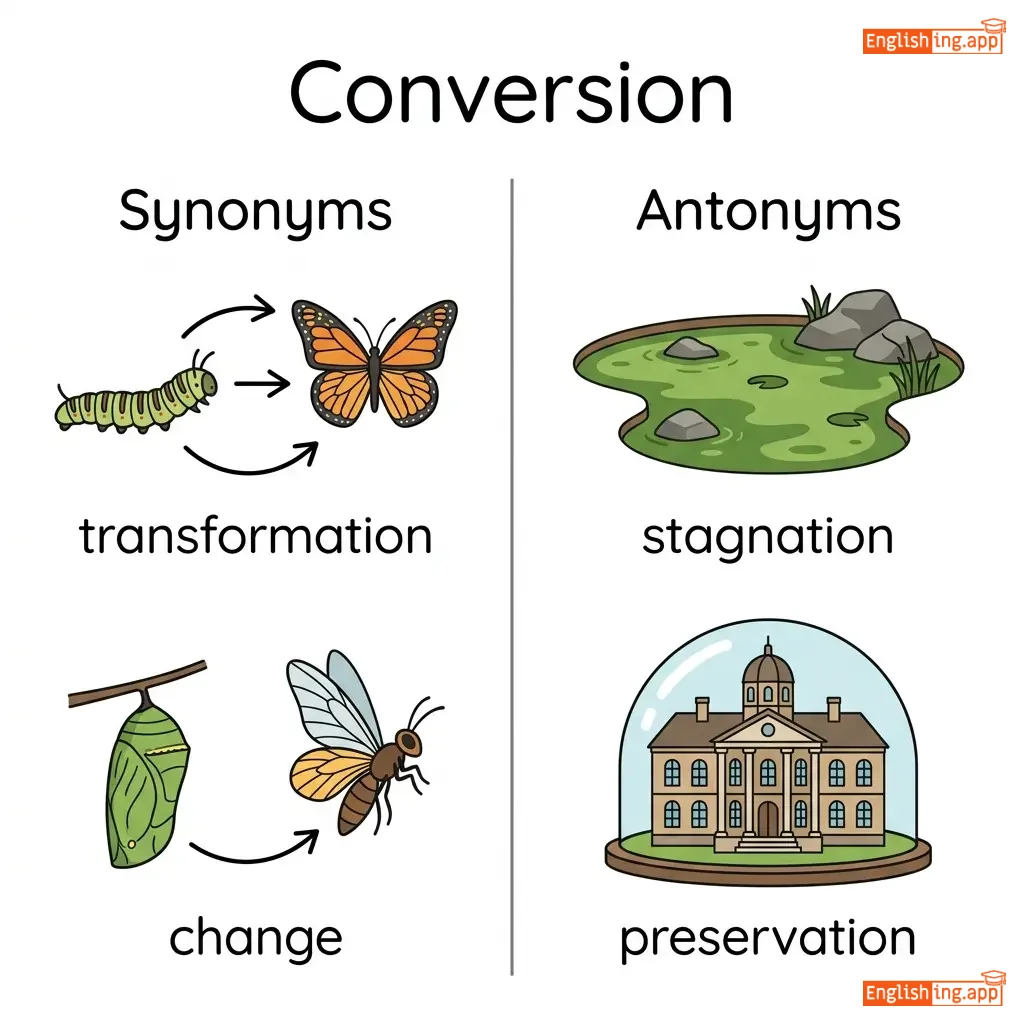
transformation, change, alteration, switch
••••••
|
preservation, maintenance, stagnation
••••••
|
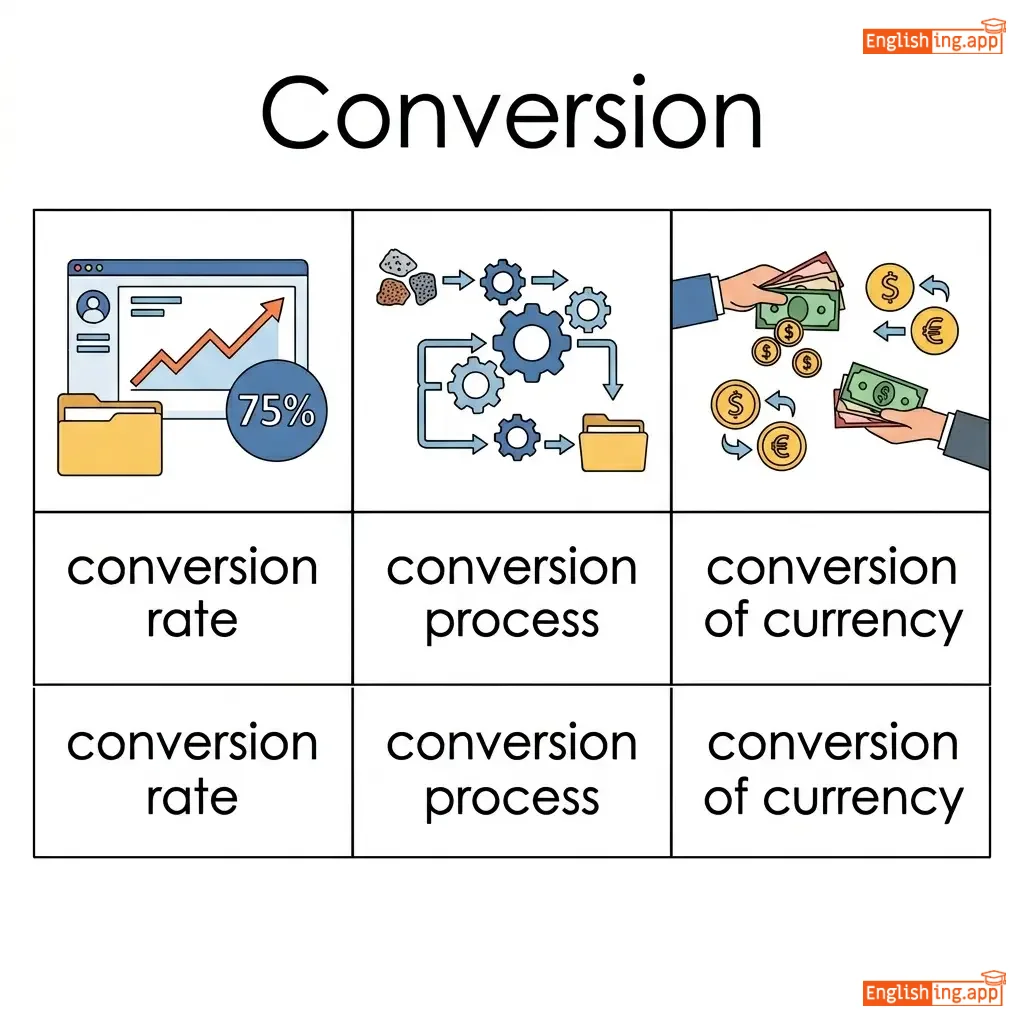
religious conversion, conversion rate, energy conversion
••••••
|
转变 = 信仰转换
••••••
|
Vocabulary Quiz
Test your vocabulary by matching words with their translations or meanings.
Login to take the quiz
Comments (0)
Share your thoughts and join the discussion.
Join the discussion by logging in
Login to CommentNo comments yet
Be the first to share your thoughts!