

翻訳
過去
過去分詞
三人称単数
動名詞
意味
例文
例文の翻訳
同義語
対義語
コロケーション
ニーモニック


Swipe left or right, or use the buttons. Tap image to zoom.
例文の翻訳
単語
Lesson 5Lesson 5 - マスクトグル
|
絵文字
|
単語 | Images | 翻訳 | 過去 | 過去分詞 | 三人称単数 | 動名詞 | 意味 | 例文 | 例文の翻訳 | 表現例 | 表現例の意味 | 表現例の翻訳 | 同義語 | 対義語 | コロケーション | ニーモニック |
|---|---|---|---|---|---|---|---|---|---|---|---|---|---|---|---|---|---|
|
#200
🤒
|
/eɪl/
verb
(エイル)
••••••
|
- •••••• |
病む
yamu
••••••
|
ailed
エイルド
••••••
|
ailed
エイルド
••••••
|
ails
エイルズ
••••••
|
ailing
エイリング
••••••
|
to be ill or suffer from a physical or mental problem; to trouble or afflict
••••••
|
She has been ailing since last winter.
シー ハズ ビーン エイリング シンス ラスト ウィンター
••••••
|
彼女は去年の冬から病んでいます。
kanojo wa kyonen no fuyu kara yande imasu
••••••
|
what ails you
ワット エイルズ ユー
••••••
|
used to ask what problem or illness someone has
••••••
|
どうしましたか
doushimashita ka
••••••
|
sicken, trouble, afflict, plague, weaken
••••••
|
heal, cure, strengthen
••••••
|
ail badly, ail seriously, ail for years, ail someone
••••••
|
エイル=ill(病気)と覚える
••••••
|
|
#201
🤒
|
/ˈeɪlɪŋ/
adjective, verb
(エイリング)
••••••
|
- •••••• |
病気の
byoki no
••••••
|
ailed
エイルド
••••••
|
ailed
エイルド
••••••
|
ails
エイルズ
••••••
|
ailing
エイリング
••••••
|
suffering from illness or poor health; experiencing problems or decline
••••••
|
The ailing patient slowly began to recover after treatment.
ジ エイリング ペイシェント スローリー ビギャン トゥ リカバー アフター トリートメント
••••••
|
病気の患者は治療後、ゆっくり回復し始めた。
byoki no kanja wa chiryo go yukkuri kaifuku shihajimeta
••••••
|
ailing health
エイリング ヘルス
••••••
|
a state of poor or declining health
••••••
|
不調な健康
fucho na kenkou
••••••
|
ill, sick, unwell, infirm, weak
••••••
|
healthy, well, strong
••••••
|
ailing health, ailing economy, ailing patient, ailing system
••••••
|
エイリング = ailment を連想 → 病気
••••••
|
|
#202
🎯
|
/eɪm/
verb
(エイム)
••••••
|
- •••••• |
狙う
nerau
••••••
|
aimed
エイムド
••••••
|
aimed
エイムド
••••••
|
aims
エイムズ
••••••
|
aiming
エイミング
••••••
|
to direct a weapon, object, or effort at a target; to intend or plan
••••••
|
He aimed the ball at the goal.
彼はゴールに向かってボールを狙った。
••••••
|
彼はゴールに向かってボールを狙った。
Kare wa gōru ni mukatte bōru o neratta.
••••••
|
aim high
高く狙う
••••••
|
to set ambitious goals
••••••
|
高く狙う
takaku nerau
••••••
|
target, direct, focus, aspire, intend
••••••
|
neglect, ignore
••••••
|
aim at, aim for, aim high, aim to achieve
••••••
|
Aimは🎯狙う意味、'狙う AIM'を覚えてね。
••••••
|
|
#203
🎯❌
|
/ˈeɪmləs/
adjective
(エイムレス)
••••••
|
- •••••• |
無目的; 目標なし
aimles
••••••
|
- •••••• | - •••••• | - •••••• | - •••••• |
without purpose or direction; lacking a goal
••••••
|
He wandered around the city in an aimless manner.
彼は無目的に街を歩いていた。
••••••
|
彼は無目的に街を歩いていた。
Kare wa mumokuteki ni machi o aruite ita.
••••••
|
- •••••• | - •••••• | - •••••• |
purposeless, directionless, wandering, random
••••••
|
purposeful, directed, focused, goal-oriented
••••••
|
aimless wandering, aimless behavior, aimless existence
••••••
|
無目的 = 目標なし、英語の aimless と同じ
••••••
|
|
#204
🌬️
|
/ɛər/
noun
(エア)
••••••
|
- •••••• |
空気
kuki
••••••
|
- •••••• | - •••••• | - •••••• | - •••••• |
The invisible mixture of gases that surrounds the earth and is breathed in by people and animals.
••••••
|
The air is fresh after the rain.
雨の後、空気は新鮮です。
••••••
|
雨の後、空気は新鮮です。
Ame no ato, kūki wa shinsen desu.
••••••
|
clear the air
空気をクリアにする
••••••
|
to remove doubts or misunderstandings through discussion
••••••
|
議論を通じて疑問や誤解を解消する
Giron o tōjite gimon ya gokai o kaishō suru
••••••
|
atmosphere, breeze, wind, oxygen, sky
••••••
|
vacuum, void
••••••
|
fresh air, air pollution, air quality, air pressure, air circulation
••••••
|
空気は空気を意味し、空気がなければ私たちは生きられません。
••••••
|
|
#205
✈️
|
/ˈɛər.kræft/
noun
(エアクラフト)
••••••
|
- •••••• |
航空機
koukuki
••••••
|
- •••••• | - •••••• | - •••••• | - •••••• |
A vehicle, such as an airplane or helicopter, that can fly in the air.
••••••
|
The military aircraft flew over the city. |
軍用機が街の上を飛びました。
Gunyouki ga machi no ue wo tobimashita.
••••••
|
- •••••• | - •••••• | - •••••• |
airplane, jet, helicopter, aeroplane, plane
••••••
|
ground vehicle, car
••••••
|
military aircraft, passenger aircraft, aircraft carrier, aircraft design, aircraft industry
••••••
|
Aircraft = ‘空’ (sora) + ‘機’ (ki) – 航空機
••••••
|
|
#206
🛫
|
/ˈɛər.laɪn/
noun
(エアライン)
••••••
|
- •••••• |
航空会社
kōkū gaisha
••••••
|
- •••••• | - •••••• | - •••••• | - •••••• |
A company that provides regular flights for passengers and goods.
••••••
|
The airline announced a discount on international tickets. |
その航空会社は国際線チケットの割引を発表しました。
Sono kōkū gaisha wa kokusaiken chiketto no waribiki o happyō shimashita.
••••••
|
- •••••• | - •••••• | - •••••• |
carrier, flight operator, aviation company
••••••
|
individual pilot, private flyer
••••••
|
airline company, airline ticket, airline industry, airline staff
••••••
|
航空会社は空を飛ぶ会社です。
••••••
|
|
#207
🏢✈️
|
/ˈɛər.pɔːrt/
noun
(エアポート)
••••••
|
- •••••• |
空港
kūkō
••••••
|
- •••••• | - •••••• | - •••••• | - •••••• |
A place where airplanes take off and land, with buildings for passengers and cargo.
••••••
|
We arrived at the airport two hours before the flight. |
私たちはフライトの2時間前に空港に到着しました。
Watashitachi wa furaito no 2 jikan mae ni kūkō ni tōchaku shimashita.
••••••
|
- •••••• | - •••••• | - •••••• |
airfield, terminal, aerodrome
••••••
|
train station, bus station
••••••
|
international airport, airport terminal, airport security, airport shuttle
••••••
|
Airport = Air + Port = 空港
••••••
|
|
#208
🚨
|
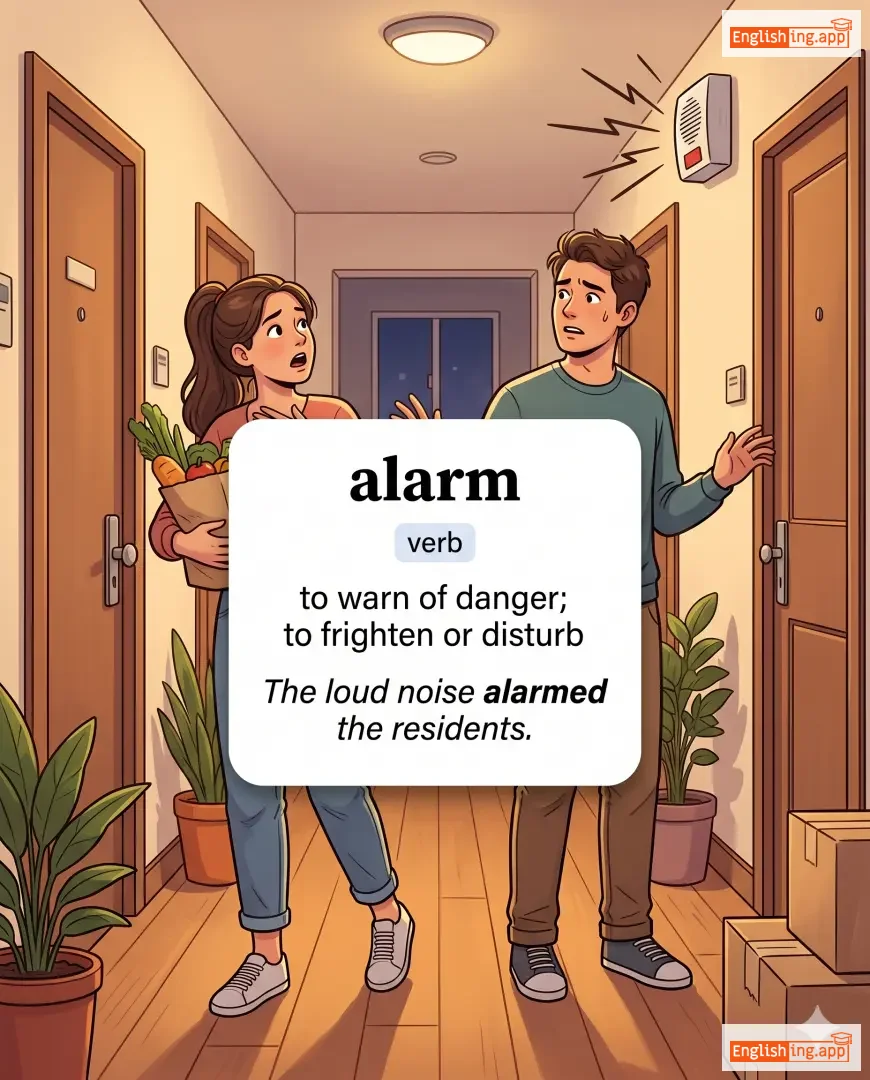
/əˈlɑːrm/
verb
(アラーム)
••••••
|
|
驚かせる
araamu
••••••
|
alarmed
アラームド
••••••
|
alarmed
アラームド
••••••
|
alarms
アラームズ
••••••
|
alarming
アラーミング
••••••
|
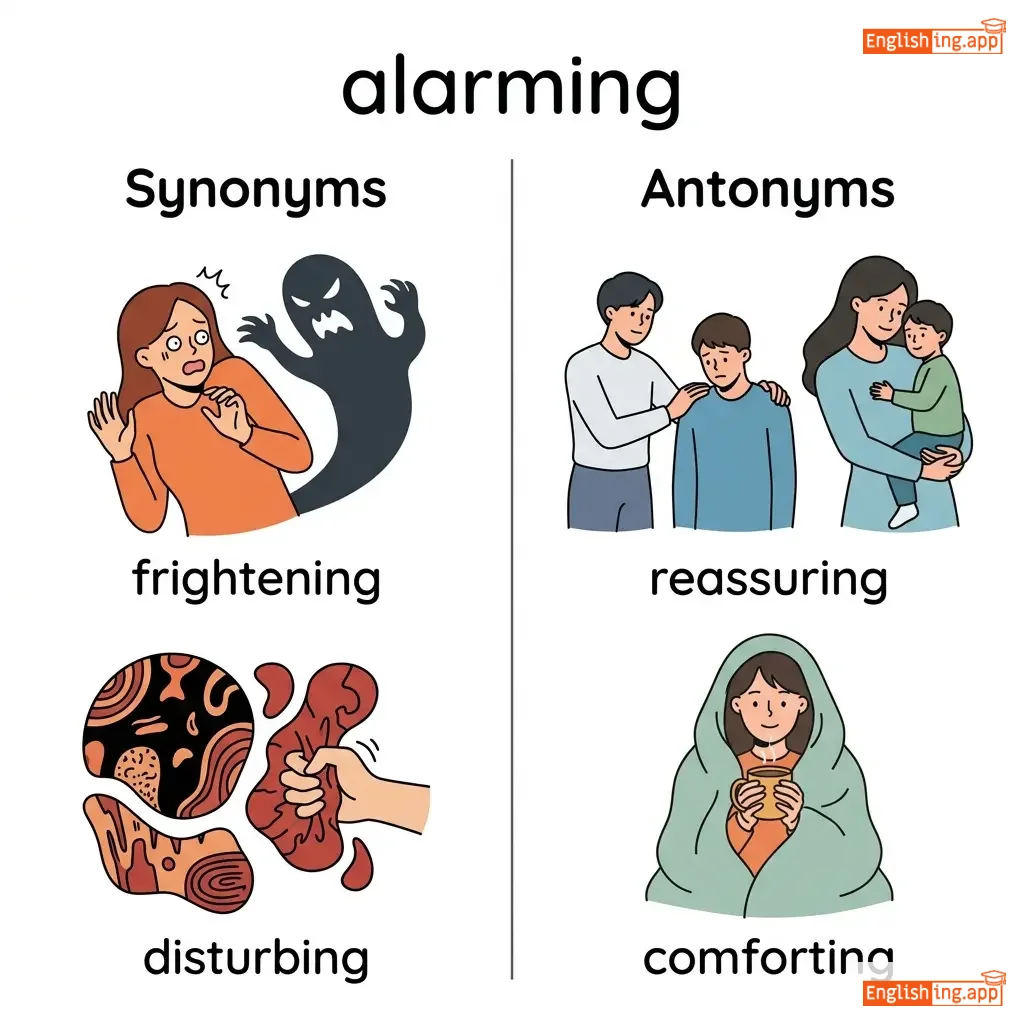
to warn of danger; to frighten or disturb
••••••
|
The loud noise alarmed the residents.
大きな音が住民を驚かせた。
••••••
|
大きな音が住民を驚かせた。
ookina oto ga juumin o odorokaseta
••••••
|
- •••••• | - •••••• | - •••••• |
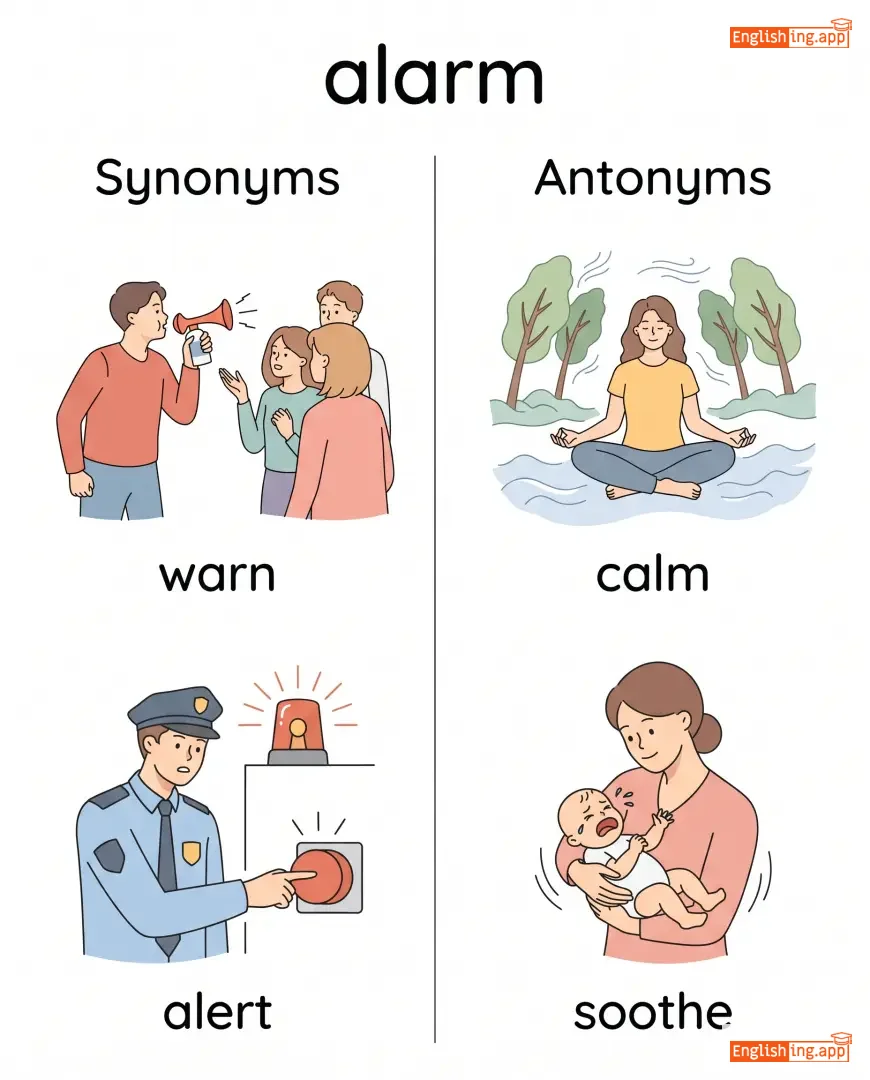
warn, alert, frighten, startle
••••••
|
calm, soothe, reassure, comfort
••••••
|
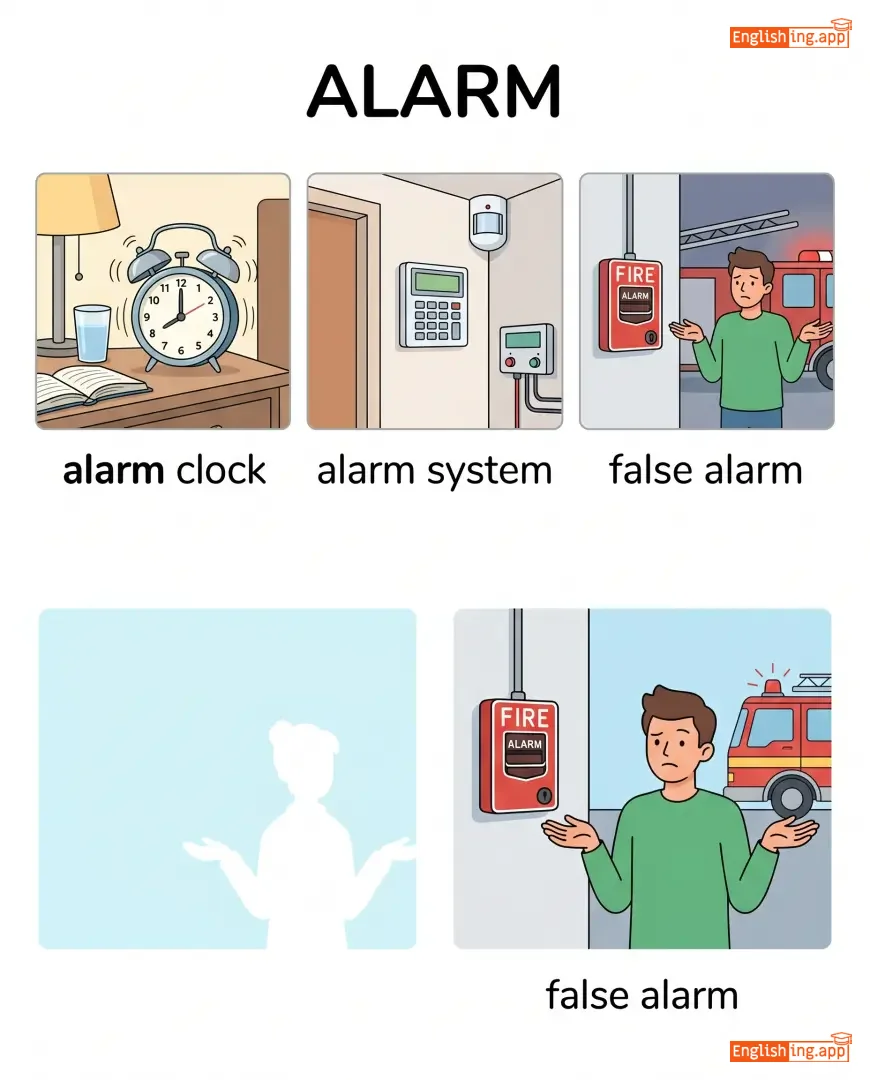
alarm clock, alarm system, false alarm, raise alarm
••••••
|
Ara mu the alarm gong: アラーム is a warning that tells 危険を知らせる
••••••
|
|
#209
🚨
|
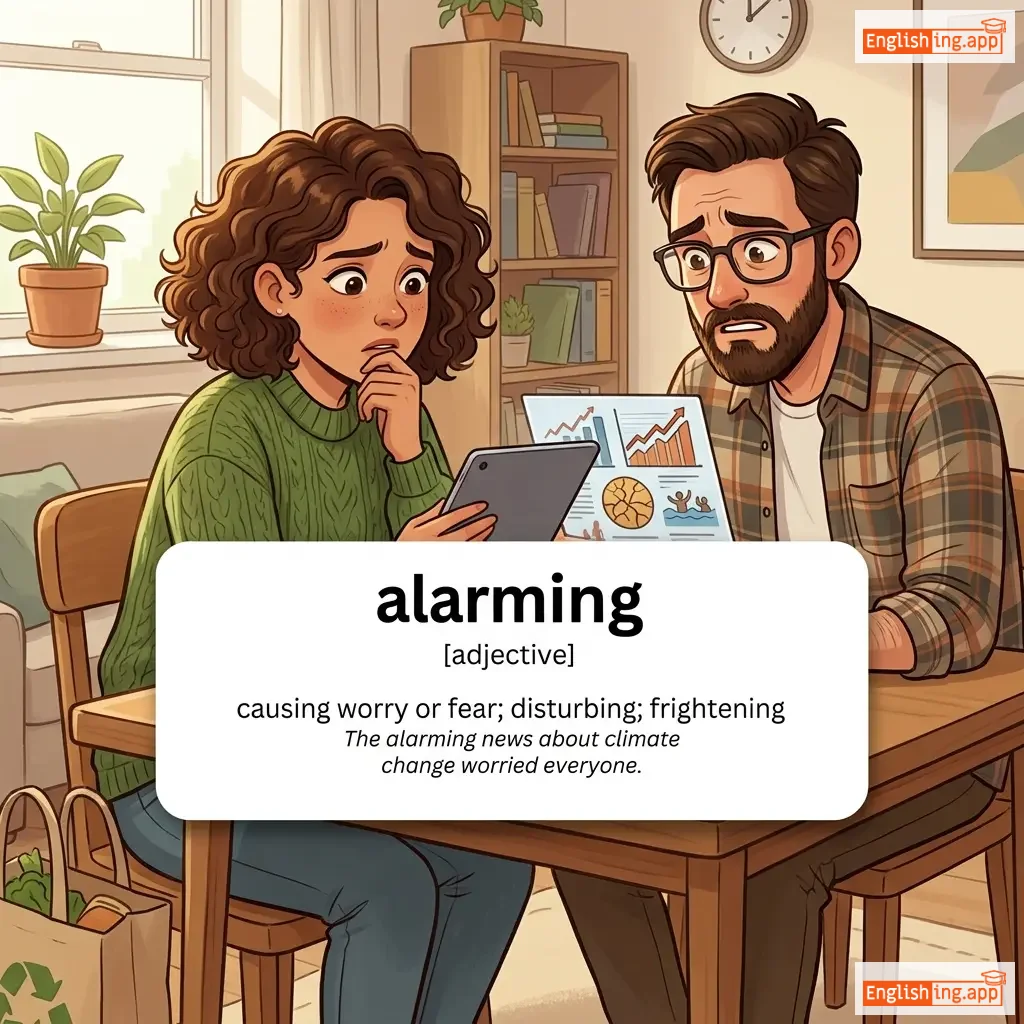
/əˈlɑrmɪŋ/
adjective
(アラーミング)
••••••
|
|
衝撃的な; 恐ろしい; 心配させる
shōgeki-teki na; osoroshī; shinpai saseru
••••••
|
- •••••• | - •••••• | - •••••• | - •••••• |
causing worry or fear; disturbing; frightening
••••••
|
The alarming news about climate change worried everyone.
気候変動に関する衝撃的なニュースは皆を心配させました。
••••••
|
気候変動に関する衝撃的なニュースは皆を心配させました。
Kikō hendō ni kansuru shōgeki-teki na nyūsu wa mina o shinpai sasemashita.
••••••
|
- •••••• | - •••••• | - •••••• |
frightening, disturbing, worrying, shocking
••••••
|
reassuring, comforting, calming, peaceful
••••••
|
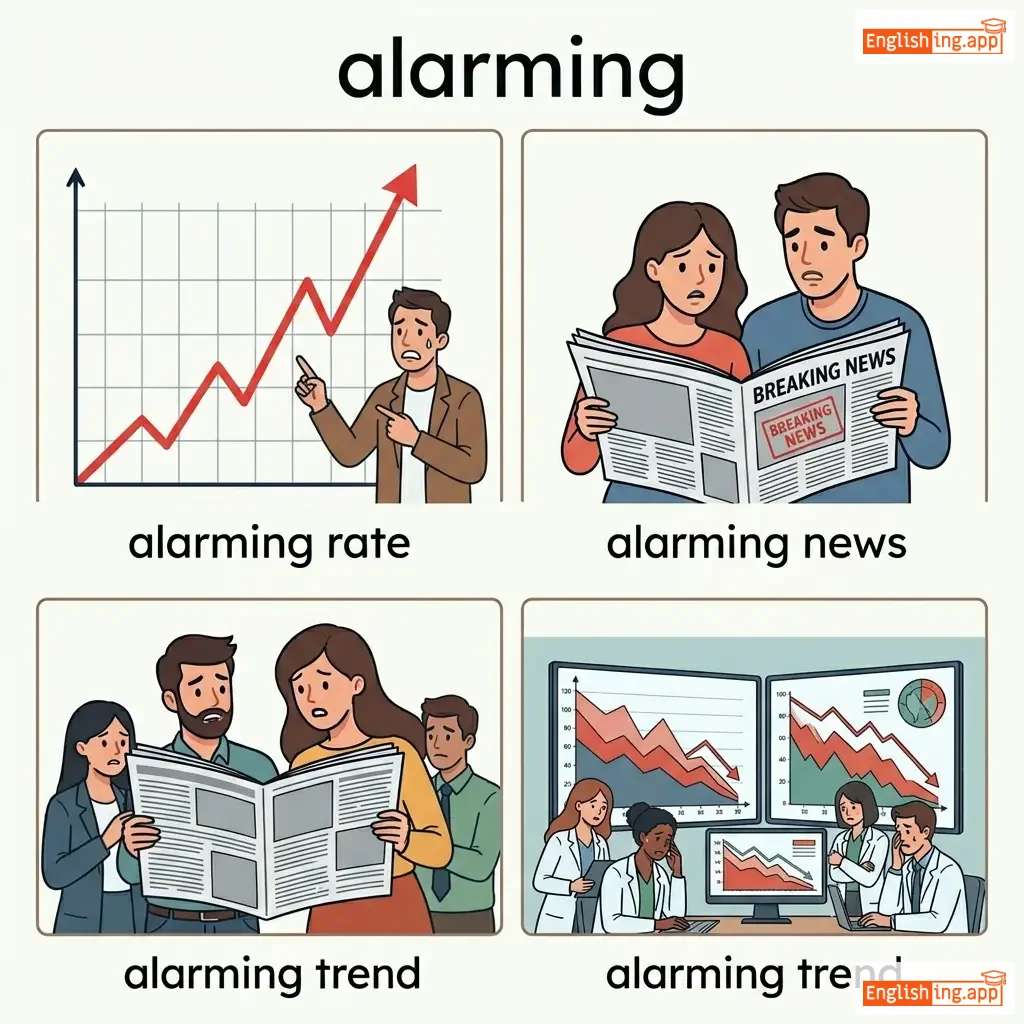
alarming rate, alarming news, alarming trend
••••••
|
Alarmingのように、アラームは恐れや心配を引き起こします。
••••••
|
|
#210
🤔
|
/ˌɔːlˈbiː.ɪt/
conjunction
(オールビート)
••••••
|
- •••••• |
それでも
soredemo
••••••
|
- •••••• | - •••••• | - •••••• | - •••••• |
Although; even though.
••••••
|
He finally agreed, albeit reluctantly. |
彼は最終的に同意したが、それでも嫌々だった。
Kare wa saishū-teki ni dōi shita ga, soredemo iya iya datta.
••••••
|
- •••••• | - •••••• | - •••••• |
although, though, even though, despite
••••••
|
because, therefore
••••••
|
albeit reluctantly, albeit briefly, albeit slowly
••••••
|
Albeit とは all + be it — それでもだよ
••••••
|
|
#211
📔
|
/ˈælbəm/
noun
(アルバム)
••••••
|
- •••••• |
アルバム
arubamu
••••••
|
- •••••• | - •••••• | - •••••• | - •••••• |
A collection of songs or photographs compiled into a single book, record, or digital file.
••••••
|
She showed me her travel album full of beautiful pictures.
彼女は美しい写真がいっぱいの旅行アルバムを見せてくれました。
••••••
|
彼女は美しい写真がいっぱいの旅行アルバムを見せてくれました。
Kanojo wa utsukushii shashin ga ippai no ryokō arubamu o misete kuremashita.
••••••
|
photo album
フォトアルバム
••••••
|
A book in which photographs are collected and displayed.
••••••
|
フォトアルバム
foto arubamu
••••••
|
collection, compilation, record, scrapbook, anthology
••••••
|
single, piece
••••••
|
music album, photo album, debut album, family album
••••••
|
アルバム – AL-Boom、すべてをまとめる!
••••••
|
|
#212
🍷
|
/ˈælkəhɒl/
noun
••••••
|
- •••••• | - •••••• | - •••••• | - •••••• | - •••••• | - •••••• |
A colorless volatile liquid that is the intoxicating constituent of wine, beer, spirits, and other drinks.
••••••
|
Too much alcohol can damage your liver. |
- •••••• |
alcohol abuse |
The excessive consumption of alcoholic drinks causing harm.
••••••
|
- •••••• |
liquor, spirit, ethanol, booze, drink
••••••
|
sobriety, abstinence
••••••
|
alcohol consumption, alcohol level, alcohol abuse, alcohol addiction
••••••
|
No •••••• |
|
#213
⚠️
|
/əˈlɜːrt/
adjective
(アラート)
••••••
|
- •••••• |
警戒
keikai
••••••
|
- •••••• | - •••••• | - •••••• | - •••••• |
quick to notice and respond to potential danger or issues; aware and attentive
••••••
|
The alert dog barked at the stranger approaching the house. |
警戒している犬は家に近づいてくる見知らぬ人に吠えました。
Keikai shite iru inu wa ie ni chikadzuite kuru mishiranu hito ni hoemashita.
••••••
|
- •••••• | - •••••• | - •••••• |
vigilant, watchful, aware, observant
••••••
|
unaware, inattentive
••••••
|
stay alert, remain alert, alert system
••••••
|
警戒している犬のように、周りの危険を察知しよう!
••••••
|
|
#214
👀
|
/əˈlɜːrtli/
adverb
(アラートリー)
••••••
|
- •••••• |
注意深く
chuibukaku
••••••
|
- •••••• | - •••••• | - •••••• | - •••••• |
in a watchful, attentive, and quick-to-notice manner
••••••
|
She listened alertly to every sound in the dark forest.
シー リスンド アラートリー トゥ エブリー サウンド イン ザ ダーク フォレスト。
••••••
|
彼女は暗い森であらゆる音を注意深く聞いていた。
kanojo wa kurai mori de arayuru oto o chuibukaku kiite ita
••••••
|
- •••••• | - •••••• | - •••••• |
attentively, vigilantly, watchfully, keenly
••••••
|
carelessly, inattentively, drowsily
••••••
|
listen alertly, watch alertly, remain alertly aware
••••••
|
アラート(alert)=注意、だから注意深く
••••••
|
|
#215
👀
|
/əˈlɜːrtnəs/
noun
(アラートネス)
••••••
|
- •••••• |
警戒心
keikaishin
••••••
|
- •••••• | - •••••• | - •••••• | - •••••• |
the state of being mentally aware and quick to notice or respond; vigilance
••••••
|
The driver maintained a high level of alertness during the long journey.
運転手は長い旅の間、高いアラートネスを保った。
••••••
|
運転手は長い旅の間、高い警戒心を保った。
untenshu wa nagai tabi no aida takai keikaishin o tamotta
••••••
|
- •••••• | - •••••• | - •••••• |
vigilance, attentiveness, awareness, watchfulness, readiness
••••••
|
drowsiness, inattentiveness, lethargy
••••••
|
mental alertness, high alertness, maintain alertness, level of alertness
••••••
|
アラート=警戒 → アラートネス
••••••
|
|
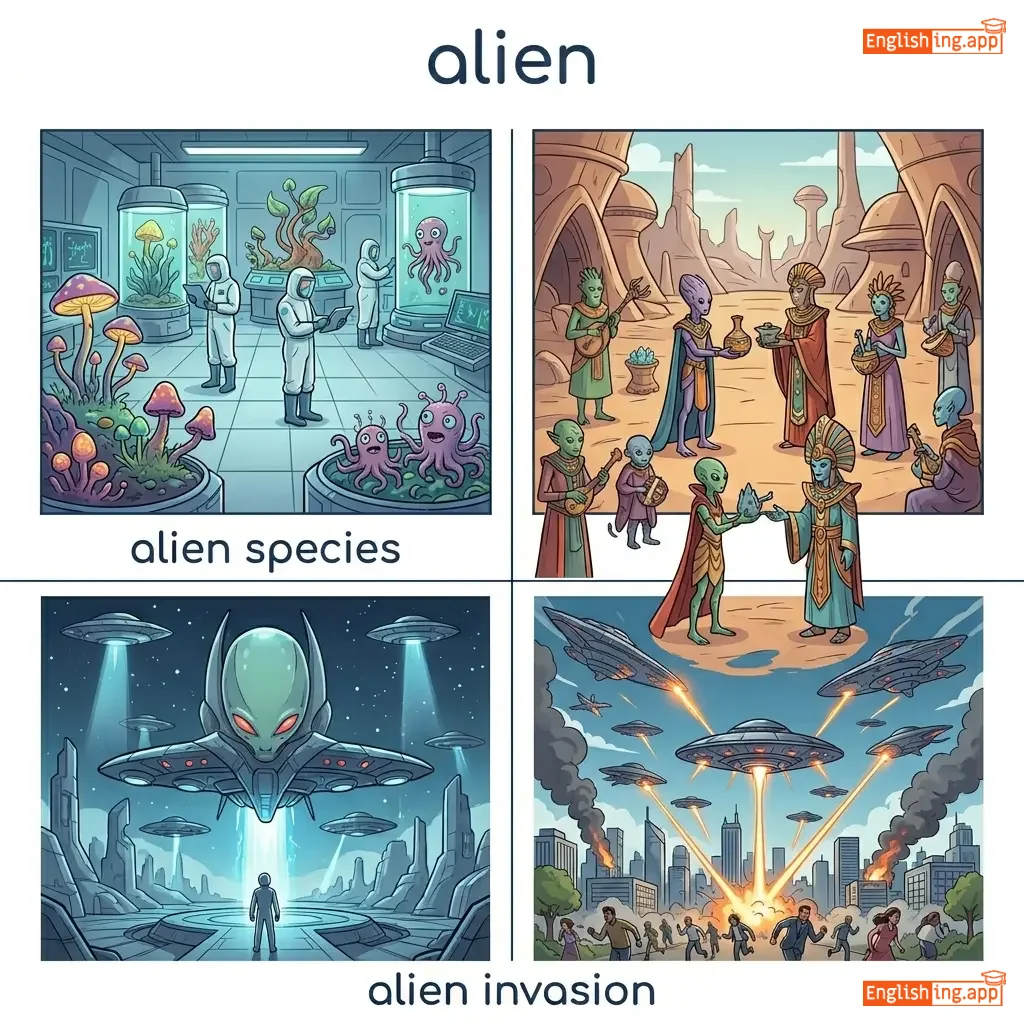
#216
👽
|
/ˈeɪ.li.ən/
noun, adjective
(エイリアン)
••••••
|
|
エイリアン
eirian
••••••
|
- •••••• | - •••••• | - •••••• | - •••••• |
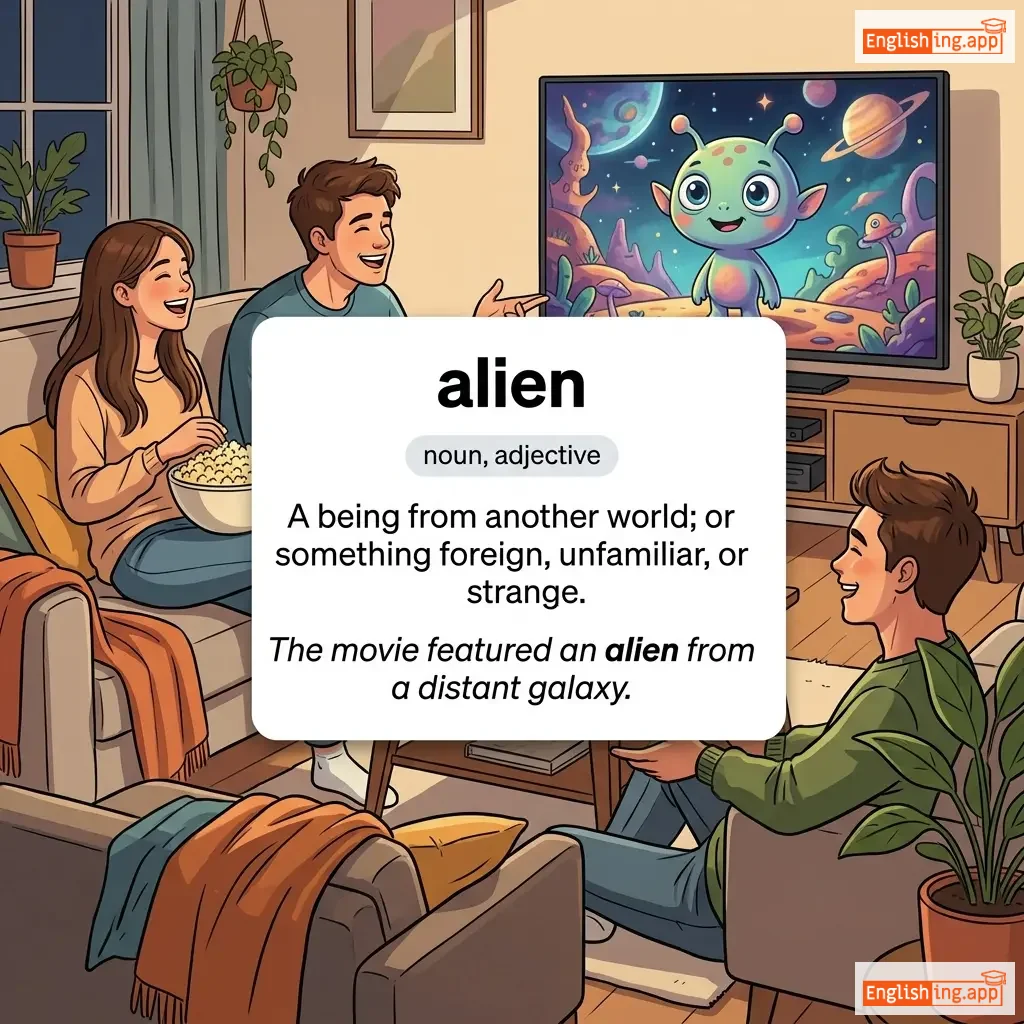
A being from another world; or something foreign, unfamiliar, or strange.
••••••
|
The movie featured an alien from a distant galaxy.
その映画には遠い銀河から来たエイリアンが登場しました。
••••••
|
その映画には遠い銀河から来たエイリアンが登場しました。
Sono eiga ni wa tooi ginga kara kita eirian ga toujou shimashita.
••••••
|
alien to
エイリアンにとって
••••••
|
Something unfamiliar or strange to someone.
••••••
|
見知らぬ
mishiranu
••••••
|
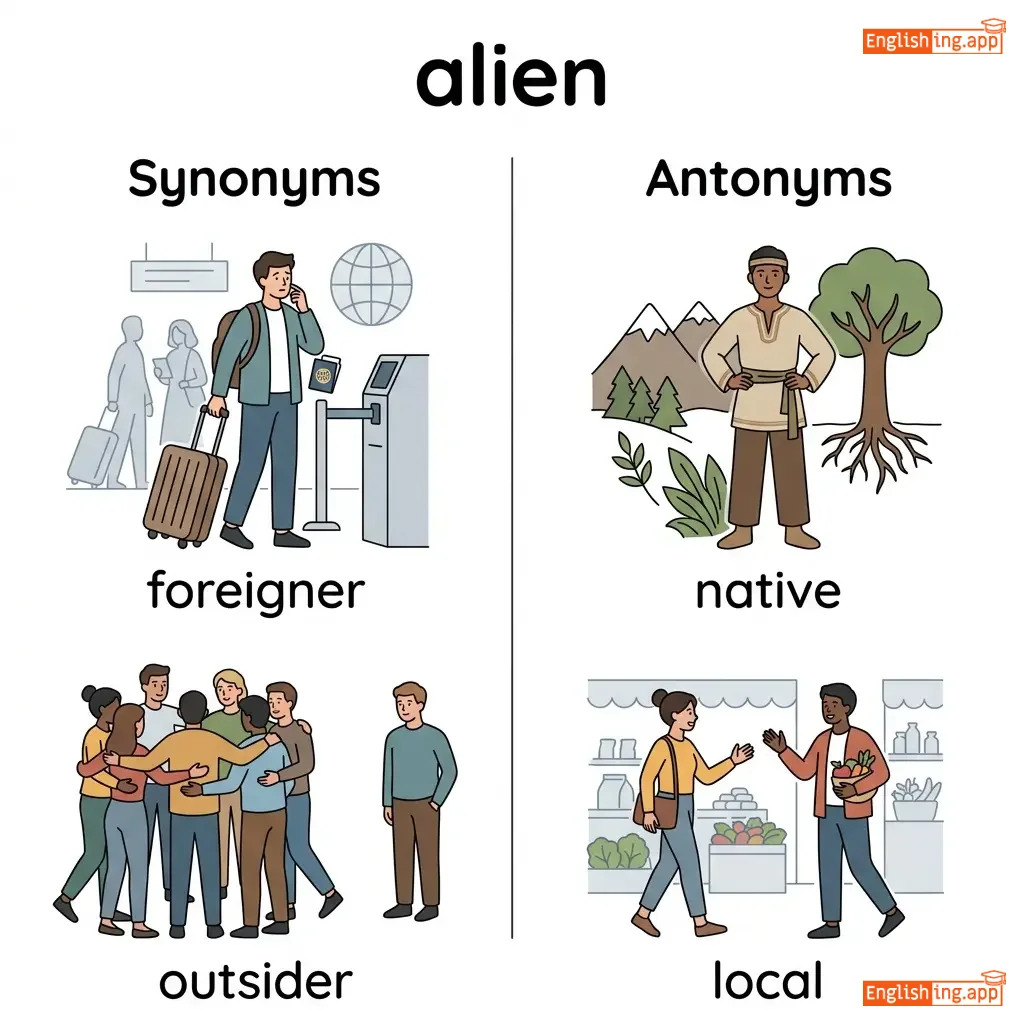
foreigner, outsider, stranger, extraterrestrial, immigrant
••••••
|
native, local, familiar
••••••
|
alien species, alien culture, alien invasion, alien to
••••••
|
エイリアンは常に見知らぬもの、宇宙から来た異星人!
••••••
|
|
#217
📐
|
/əˈlaɪn/
verb
(アイライン)
••••••
|
- •••••• |
整列する / 直線にする
seiretsu suru / chokusen ni suru
••••••
|
aligned
アラインド
••••••
|
aligned
アラインド
••••••
|
aligns
アラインズ
••••••
|
aligning
アライニング
••••••
|
To arrange things in a straight line; to adjust or bring into proper relation or agreement.
••••••
|
The manager asked the team to align their goals with the company's mission.
マネージャーはチームに目標を会社のミッションに合わせるように言いました。
••••••
|
マネージャーはチームに目標を会社のミッションに合わせるように言いました。
Manējā wa chīmu ni mokuhyō o kaisha no misshon ni awaseru yō ni iimashita.
••••••
|
align with
と一致させる
••••••
|
To bring into agreement or harmony with something.
••••••
|
と一致させる
to icchi saseru
••••••
|
adjust, arrange, organize, coordinate, harmonize
••••••
|
misalign, disorder, disorganize
••••••
|
align with, align interests, align goals, align strategy
••••••
|
Align = A line → 全てを1つのLINEに整列させる(整列する)ことで調和を生み出す。
••••••
|
|
#218
🔧
|
/əˈlaɪnmənt/
noun
(アライメント)
••••••
|
- •••••• |
整列
seiretsu
••••••
|
- •••••• | - •••••• | - •••••• | - •••••• |
arrangement in a straight line or in proper position
••••••
|
The alignment of the planets was perfect for the celestial event. |
惑星の整列は天体イベントのために完璧でした。
Wakusei no seiretsu wa tentaibento no tame ni kanpeki deshita.
••••••
|
- •••••• | - •••••• | - •••••• |
arrangement, positioning, coordination, alignment
••••••
|
misalignment, disorder
••••••
|
alignment of forces, proper alignment, alignment with goals
••••••
|
Aligning objects in the right alignment always makes everything perfect
••••••
|
|
#219
👭
|
/əˈlaɪk/
adjective
(アライク)
••••••
|
- •••••• |
似ている; 同じように
alike
••••••
|
- •••••• | - •••••• | - •••••• | - •••••• |
similar in appearance or nature; in the same way
••••••
|
The two sisters look very much alike.
二人の姉妹はとても似ている。
••••••
|
二人の姉妹はとても似ている。
Futari no shimai wa totemo niteiru.
••••••
|
- •••••• | - •••••• | - •••••• |
similar, identical, comparable, equivalent
••••••
|
different, dissimilar, unlike, distinct
••••••
|
look alike, think alike, dress alike
••••••
|
Alike - 'アライク'、姉妹が似ていることを意味する。
••••••
|
|
#220
💓
|
/əˈlaɪv/
adjective
(アライブ)
••••••
|
- •••••• |
生きている
ikiteiru
••••••
|
- •••••• | - •••••• | - •••••• | - •••••• |
Living, not dead.
••••••
|
The rescue team found the missing child alive. |
レスキュー隊は行方不明の子供を生きて発見しました。
Resukyū-tai wa yukuefumei no kodomo o ikite hakken shimashita.
••••••
|
come alive |
to become lively or energetic
••••••
|
生き生きとする
ikiiki to suru
••••••
|
living, breathing, existing, animated, conscious
••••••
|
dead, lifeless, deceased
••••••
|
stay alive, remain alive, alive and well, keep alive
••••••
|
Aliveは生きているという意味で、'生きている'です!
••••••
|
|
#221
🌍
|
/ɔːl/
determiner, pronoun, adverb
(オール)
••••••
|
- •••••• |
すべて
subete
••••••
|
- •••••• | - •••••• | - •••••• | - •••••• |
the whole quantity or extent of something; every one of something
••••••
|
She spent all her money on books.
彼女はすべてのお金を本に使いました。
••••••
|
彼女はすべてのお金を本に使いました。
Kanojo wa subete no okane o hon ni tsukaimashita.
••••••
|
all in all
すべてを考慮して
••••••
|
considering everything
••••••
|
すべてを考慮して
subete o kōryo shite
••••••
|
every, entire, whole, total, complete
••••••
|
none, nothing, partial
••••••
|
all the time, all over, all right, all together
••••••
|
ALL はすべて — すべての人はオールを使う!
••••••
|
|
#222
⚖️
|
/ˌæl.əˈɡeɪ.ʃən/
noun
(アレゲーション)
••••••
|
- •••••• |
告発
kokuhatsu
••••••
|
- •••••• | - •••••• | - •••••• | - •••••• |
a claim that someone has done something wrong or illegal
••••••
|
The allegation against him was proven false. |
彼に対する告発は虚偽であることが証明された。
Kare ni taisuru kokuhatsu wa kyogi de aru koto ga shōmei sareta.
••••••
|
- •••••• | - •••••• | - •••••• |
accusation, charge, claim, assertion
••••••
|
vindication, exoneration, proof of innocence
••••••
|
serious allegation, false allegation, investigate allegation
••••••
|
告発 (Kokuhatsu) — 何か悪いことが行われた場合に告発がなされます。
••••••
|
|
#223
🗣️
|
/əˈlɛdʒ/
verb
(アレッジ)
••••••
|
- •••••• |
主張する
shuchō suru
••••••
|
alleged
アレッジド
••••••
|
alleged
アレッジド
••••••
|
alleges
アレッジズ
••••••
|
alleging
アレッジング
••••••
|
to claim or assert something, typically without proof
••••••
|
The witness alleged that the man was at the crime scene.
証人はその男性が犯罪現場にいたと主張した。
••••••
|
証人はその男性が犯罪現場にいたと主張した。
Shōnin wa sono dansei ga hanzai genba ni ita to shuchō shita.
••••••
|
alleged crime
申し立てられた犯罪
••••••
|
a crime that is claimed to have happened but not yet proven
••••••
|
申し立てられた犯罪
mōshidaterareta hanzai
••••••
|
claim, assert, contend, accuse, state
••••••
|
deny, refute, reject
••••••
|
allege wrongdoing, allegedly involved, alleged crime, allege misconduct
••••••
|
Allege は日本語で主張する(主張する)です。
••••••
|
|
#224
🕵️♂️
|
/əˈlɛdʒɪdli/
adverb
(アレジェドリー)
••••••
|
- •••••• |
伝えられたところによると
tsutaerareta tokoro ni yoru to
••••••
|
- •••••• | - •••••• | - •••••• | - •••••• |
used to say that something is claimed to be true, though not proven
••••••
|
He was allegedly involved in the robbery. |
彼は伝えられたところによると強盗に関与していた。
Kare wa tsutaerareta tokoro ni yoru to gōtō ni kan'yo shite ita.
••••••
|
- •••••• | - •••••• | - •••••• |
reportedly, supposedly, apparently, seemingly
••••••
|
undoubtedly, certainly
••••••
|
allegedly involved, allegedly responsible, allegedly stolen, allegedly committed
••••••
|
'Allegedly' は '伝えられたところによると' という意味で、何かが真実だとされているけれども証明はされていないことを表します。
••••••
|
|
#225
💊
|
/əˈliːvieɪt/
verb
(アリビエイト)
••••••
|
|
和らげる
yawarageru
••••••
|
alleviated
アリビエイテッド
••••••
|
alleviated
アリビエイテッド
••••••
|
alleviates
アリビエイツ
••••••
|
alleviating
アリビエイティング
••••••
|
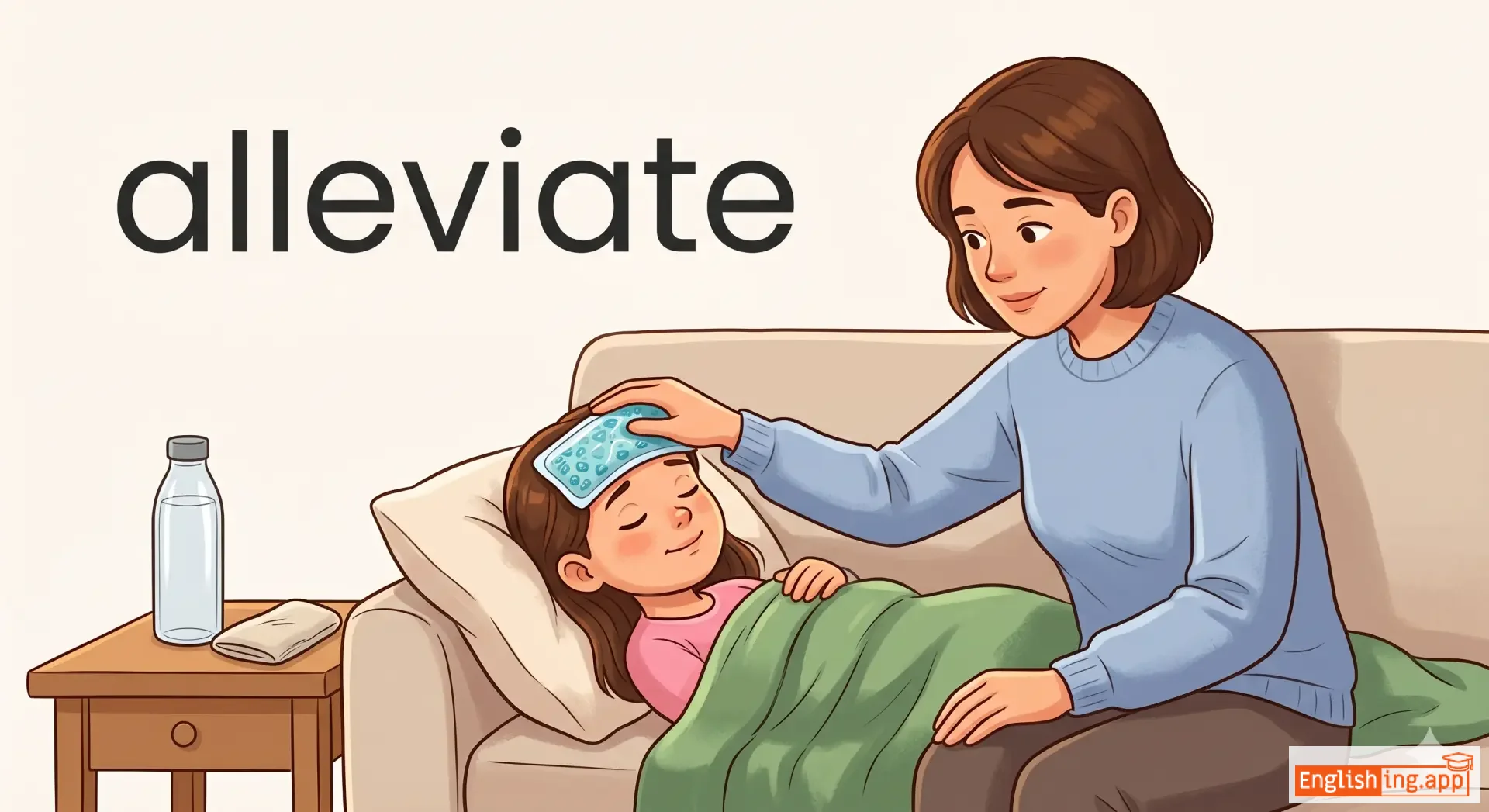
to make suffering, pain, or a problem less severe
••••••
|
The medicine helped alleviate her headache.
その薬は頭痛を軽減するのに役立ちました。
••••••
|
その薬は頭痛を軽減するのに役立ちました。
Sono kusuri wa zutsuu o keigen suru no ni yakudachimashita.
••••••
|
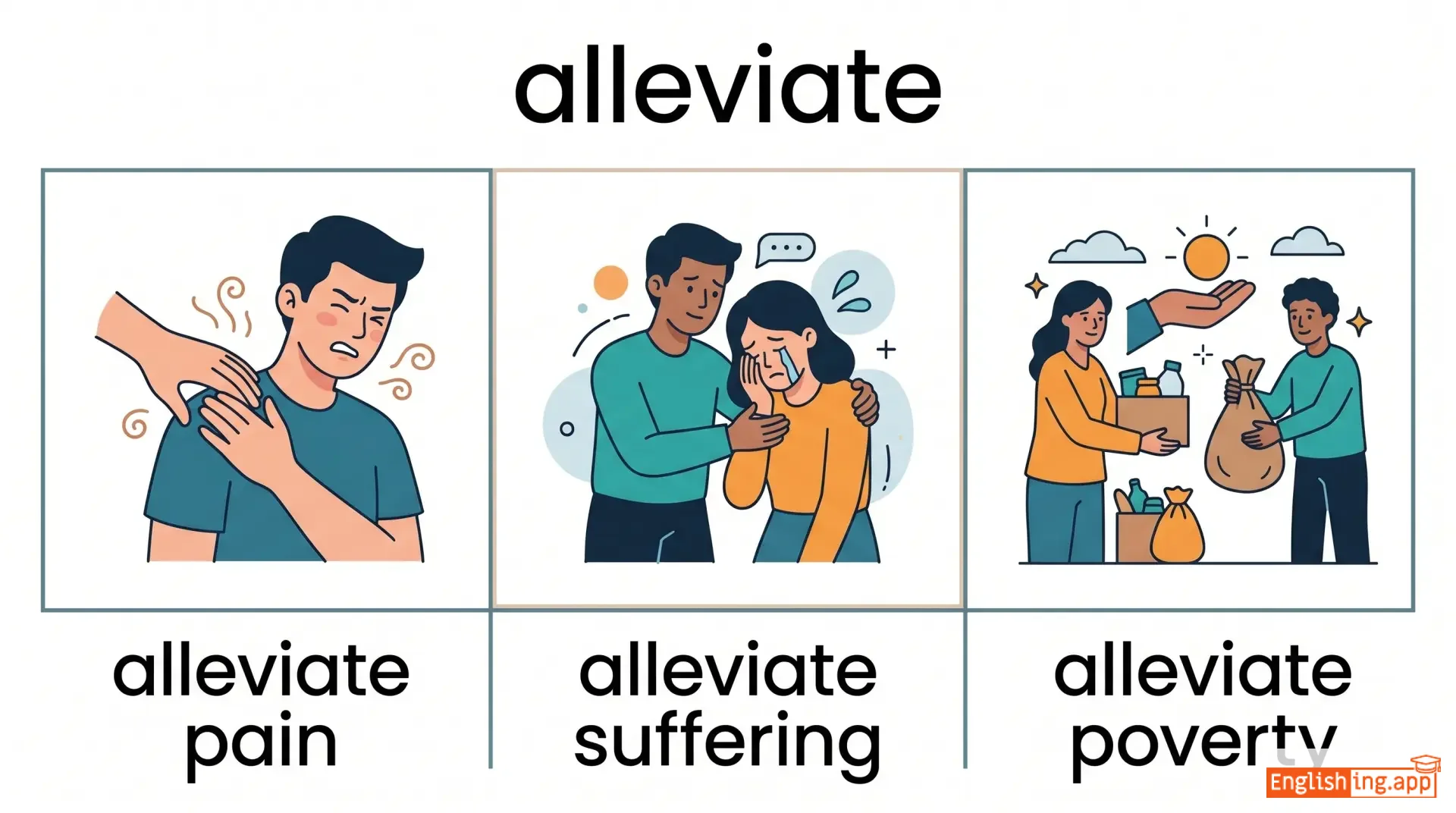
alleviate suffering
苦しみを軽減する
••••••
|
to reduce someone's suffering
••••••
|
苦しみを軽減する
kurushimi o keigen suru
••••••
|
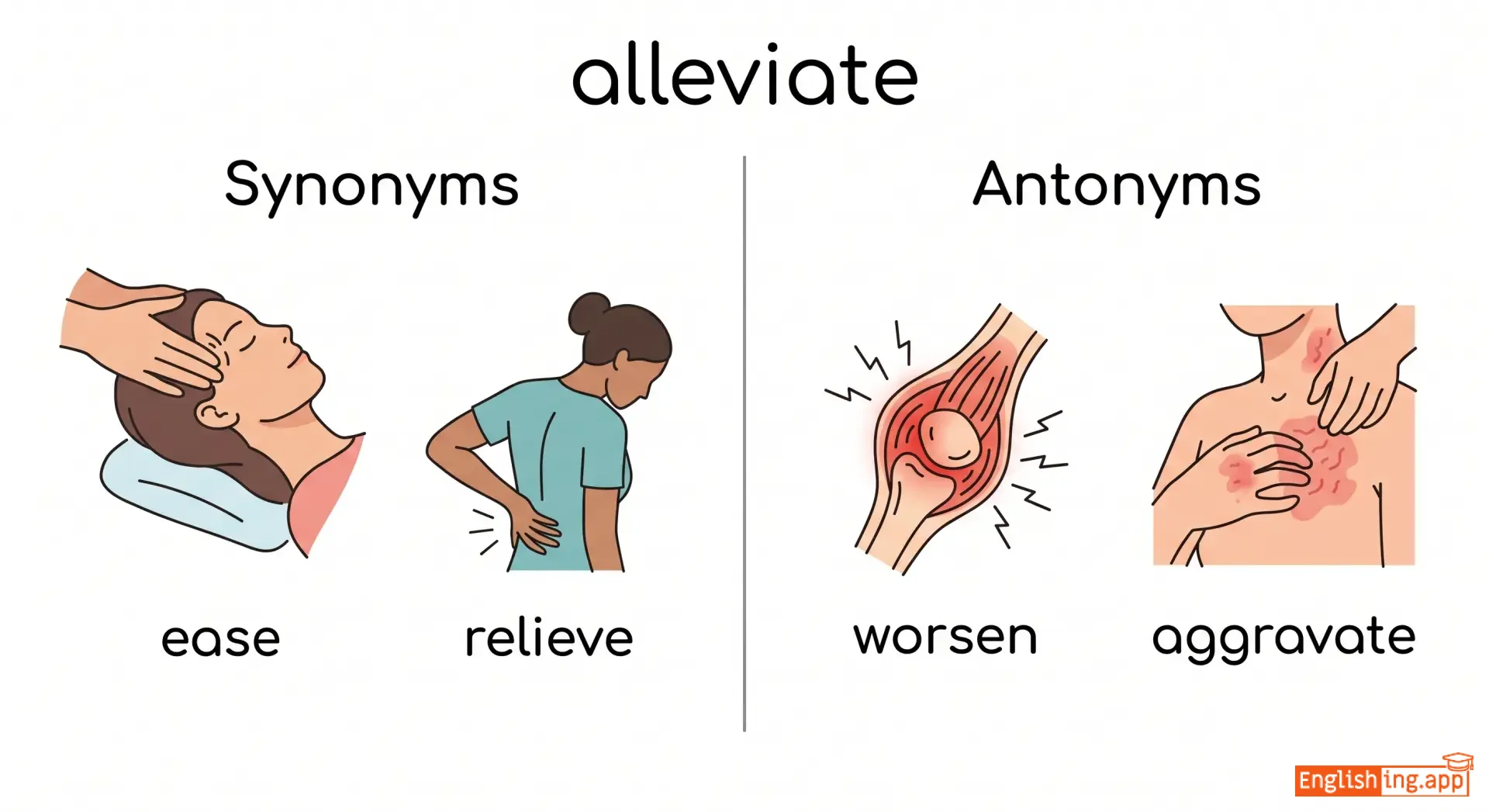
ease, relieve, lessen, mitigate, reduce
••••••
|
worsen, aggravate, intensify
••••••
|
alleviate pain, alleviate suffering, alleviate poverty, alleviate symptoms
••••••
|
Yawarageru は痛みを和らげることを意味します (和らげる)。
••••••
|
|
#226
🤝
|
/əˈlaɪəns/
noun
(アライアンス)
••••••
|
|
同盟
dōmei
••••••
|
- •••••• | - •••••• | - •••••• | - •••••• |
a formal agreement or union between groups, countries, or organizations for mutual benefit
••••••
|
The two countries formed an alliance to strengthen their defense.
二つの国は防衛を強化するために同盟を結んだ。
••••••
|
二つの国は防衛を強化するために同盟を結んだ。
Futatsu no kuni wa bōei o kyōka suru tame ni dōmei o musunda.
••••••
|
form an alliance
同盟を結ぶ
••••••
|
to create a partnership or union for a shared purpose
••••••
|
同盟を結ぶ
Dōmei o musubu
••••••
|
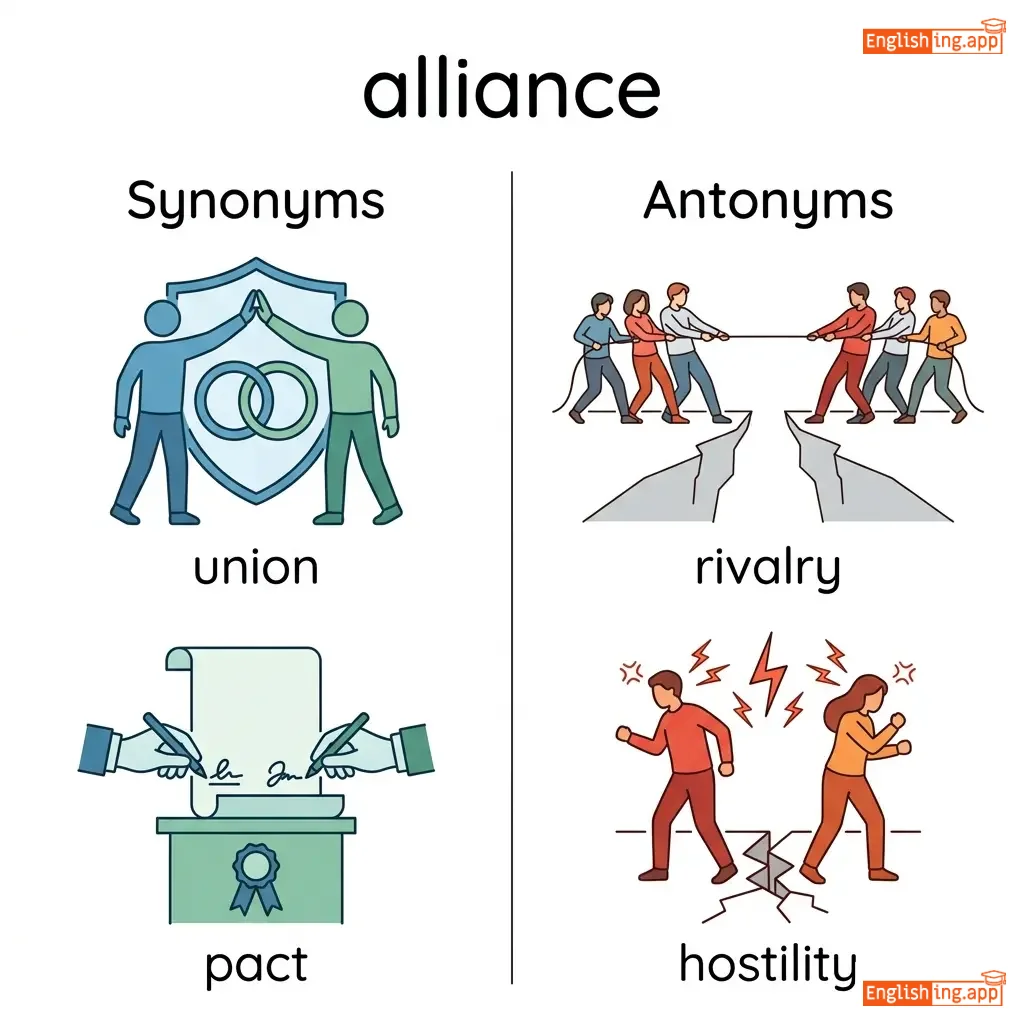
union, pact, partnership, coalition, federation
••••••
|
rivalry, hostility, separation
••••••
|
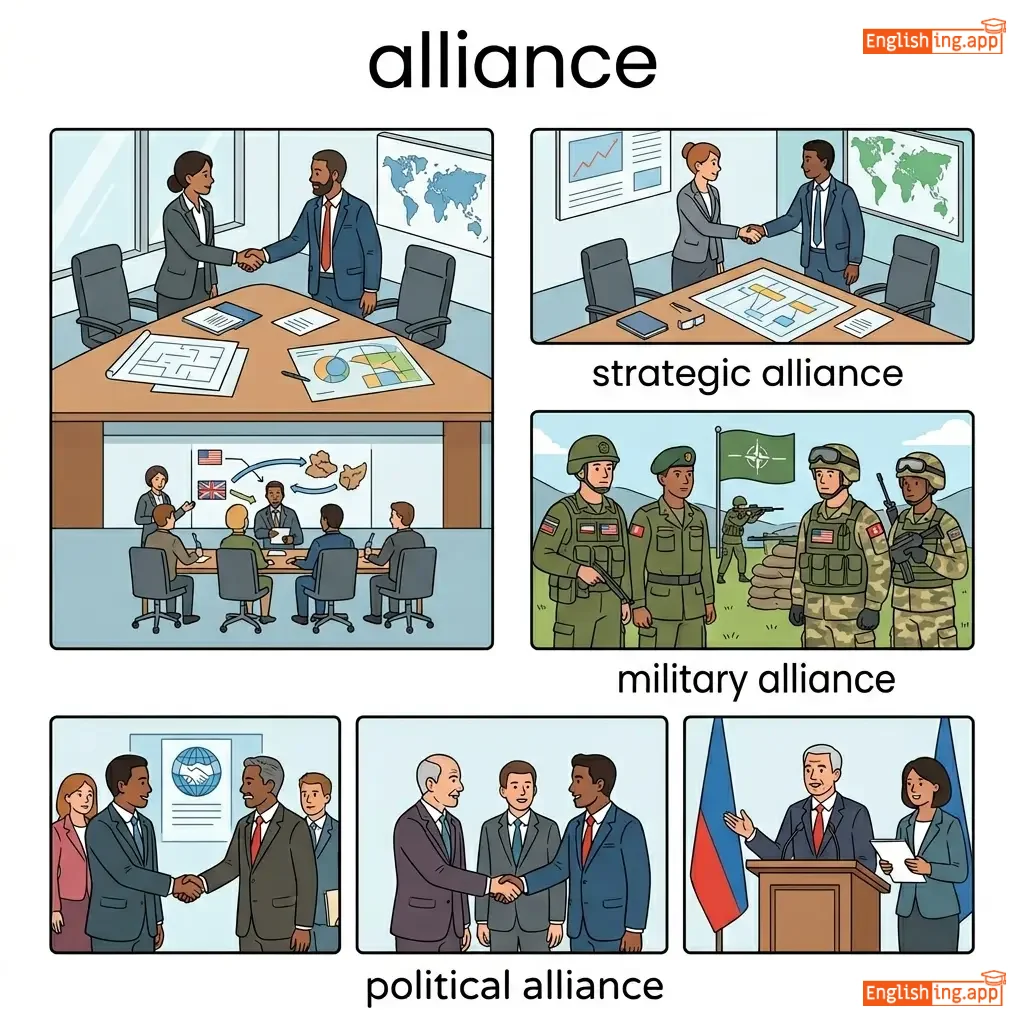
strategic alliance, military alliance, political alliance, business alliance
••••••
|
同盟は協力 — 連携して同盟を結ぶ。
••••••
|
|
#227
📊
|
/ˈæləkeɪt/
verb
(アロケート)
••••••
|
- •••••• |
割り当てる
wariauteru
••••••
|
allocated
アロケーテッド
••••••
|
allocated
アロケーテッド
••••••
|
allocates
アロケーツ
••••••
|
allocating
アロケーティング
••••••
|
to distribute or assign resources, duties, or responsibilities for a specific purpose
••••••
|
The manager allocated funds for the new project.
マネージャーは新しいプロジェクトのために資金を割り当てました。
••••••
|
マネージャーは新しいプロジェクトのために資金を割り当てました。
Manējā wa atarashī purojekuto no tame ni shikin o wariatemashita.
••••••
|
allocate resources
リソースを割り当てる
••••••
|
to distribute resources to different tasks or purposes
••••••
|
リソースを割り当てる
Risōsu o wariateru
••••••
|
assign, distribute, designate, apportion, allot
••••••
|
withhold, retain
••••••
|
allocate time, allocate resources, allocate funds, allocate tasks
••••••
|
Allocateは割り当てる意味です — リソース(資源)を分けて、目的に合わせて割り当てましょう。
••••••
|
|
#228
💰
|
/ˌæləˈkeɪʃən/
noun
(アロケーション)
••••••
|
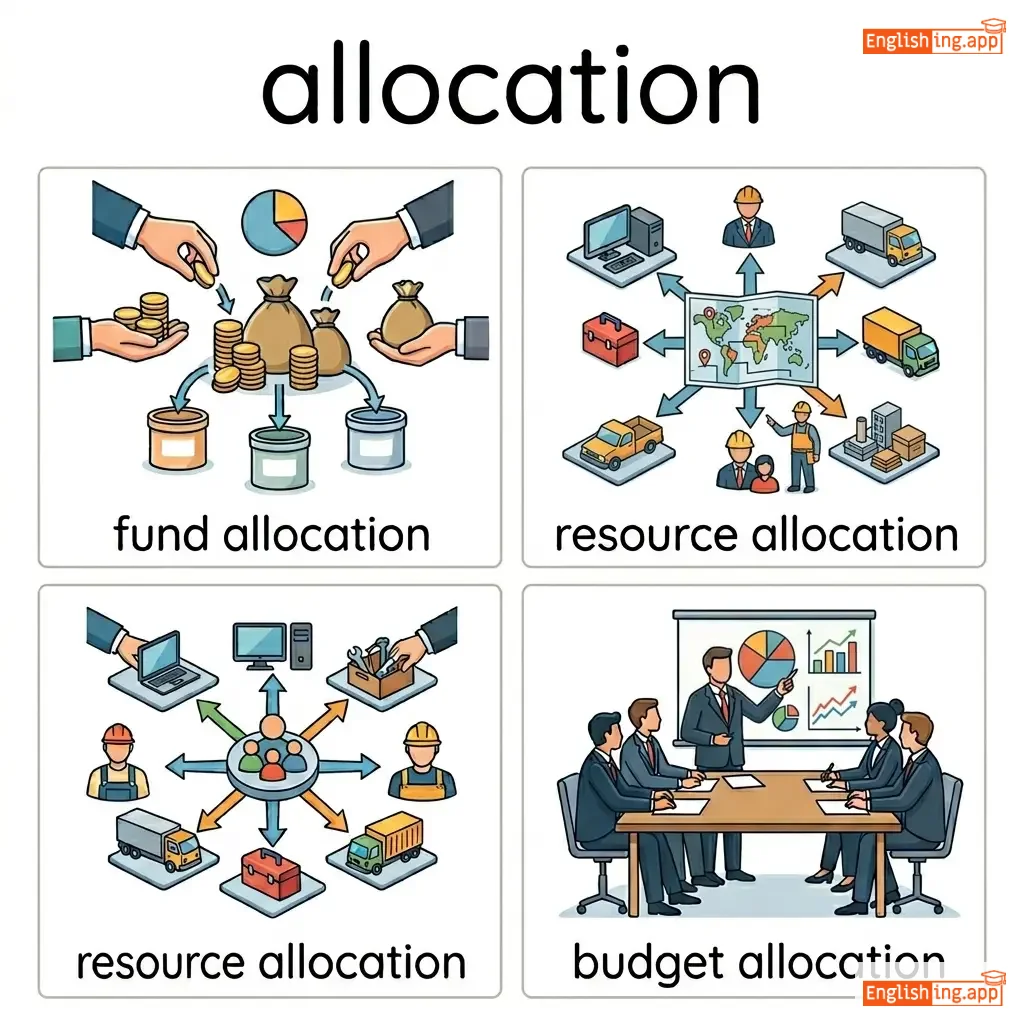
|
配分
haibun
••••••
|
- •••••• | - •••••• | - •••••• | - •••••• |
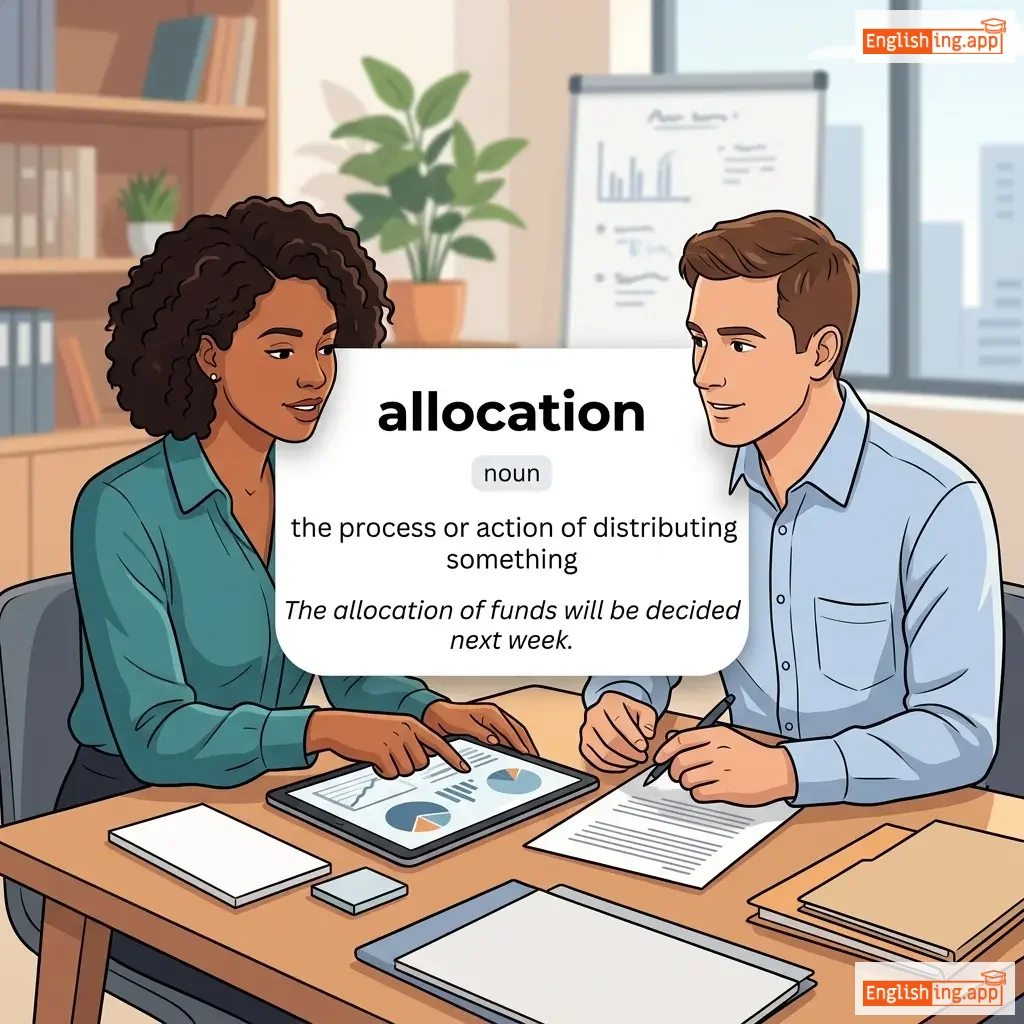
the process or action of distributing something
••••••
|
The allocation of funds will be decided next week. |
資金の配分は来週決定されます。
Shikin no haibun wa raishuu kettei saremasu.
••••••
|
- •••••• | - •••••• | - •••••• |
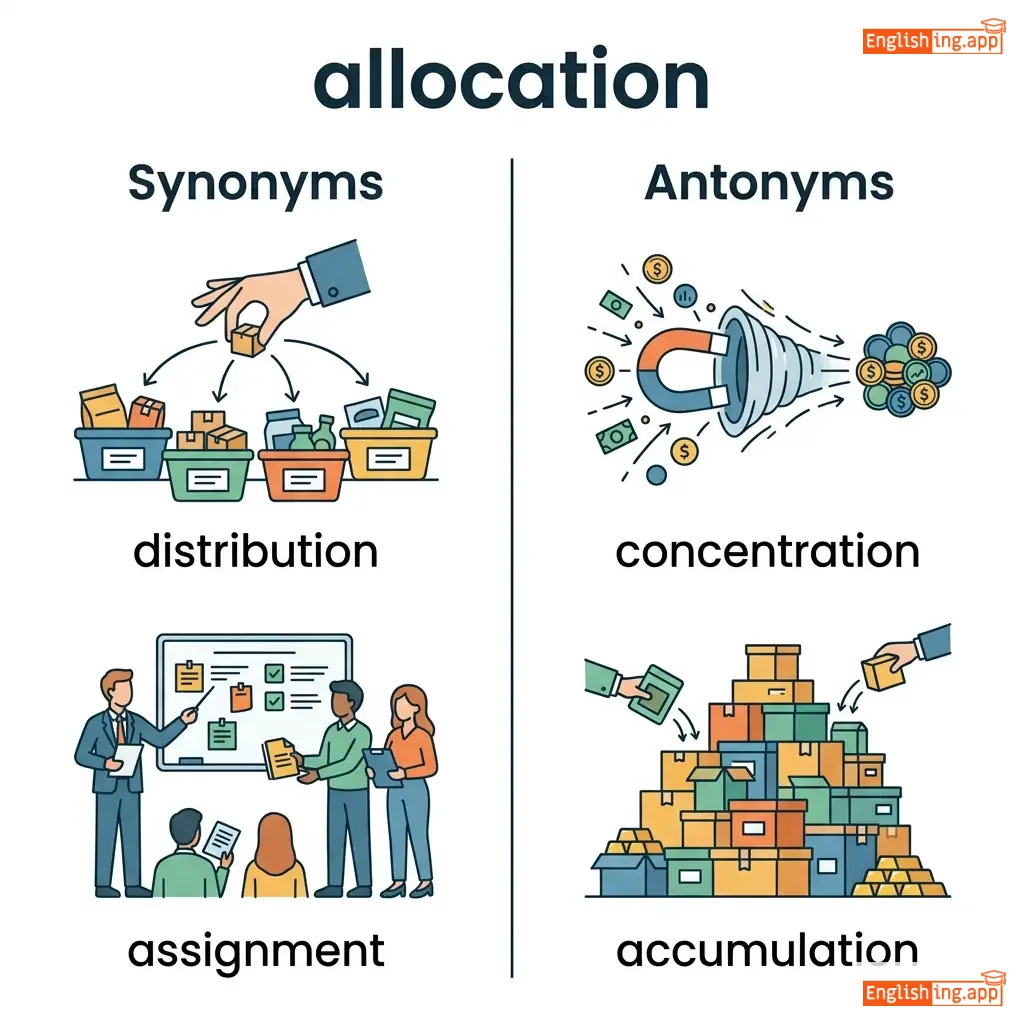
distribution, assignment, allotment, apportionment
••••••
|
concentration, accumulation
••••••
|
fund allocation, resource allocation, budget allocation
••••••
|
配分はリソースを分けること (haibun wa risōsu o wakeru koto)
••••••
|
|
#229
⏱️
|
/əˈlɒt/
verb
(ハピネス)
••••••
|
- •••••• |
幸せ
shiawase
••••••
|
allotted
••••••
|
allotted
••••••
|
allots
••••••
|
allotting
••••••
|
to give or assign something, often a share or portion, to someone
••••••
|
Each student was allotted ten minutes to present.
彼女は賞を受け取ったとき、幸福を隠すことができませんでした。
••••••
|
彼女は賞を受け取ったとき、幸福を隠すことができませんでした。
Kanojo wa shō o uketotta toki, kōfuku o kakusu koto ga dekimasen deshita.
••••••
|
allot time
幸せを求める
••••••
|
to assign a specific amount of time for something
••••••
|
幸せを求める
Shiawase o motomeru
••••••
|
assign, distribute, apportion, allocate, grant
••••••
|
deny, refuse
••••••
|
allot time, allot funds, allot space, allot tasks
••••••
|
幸せ = 幸せな時間 = 時間を大切に、あなたが幸せを感じる瞬間を作りましょう。
••••••
|
|
#230
📦
|
/əˈlɒtmənt/
noun
(アロットメント)
••••••
|
|
配分
haibun
••••••
|
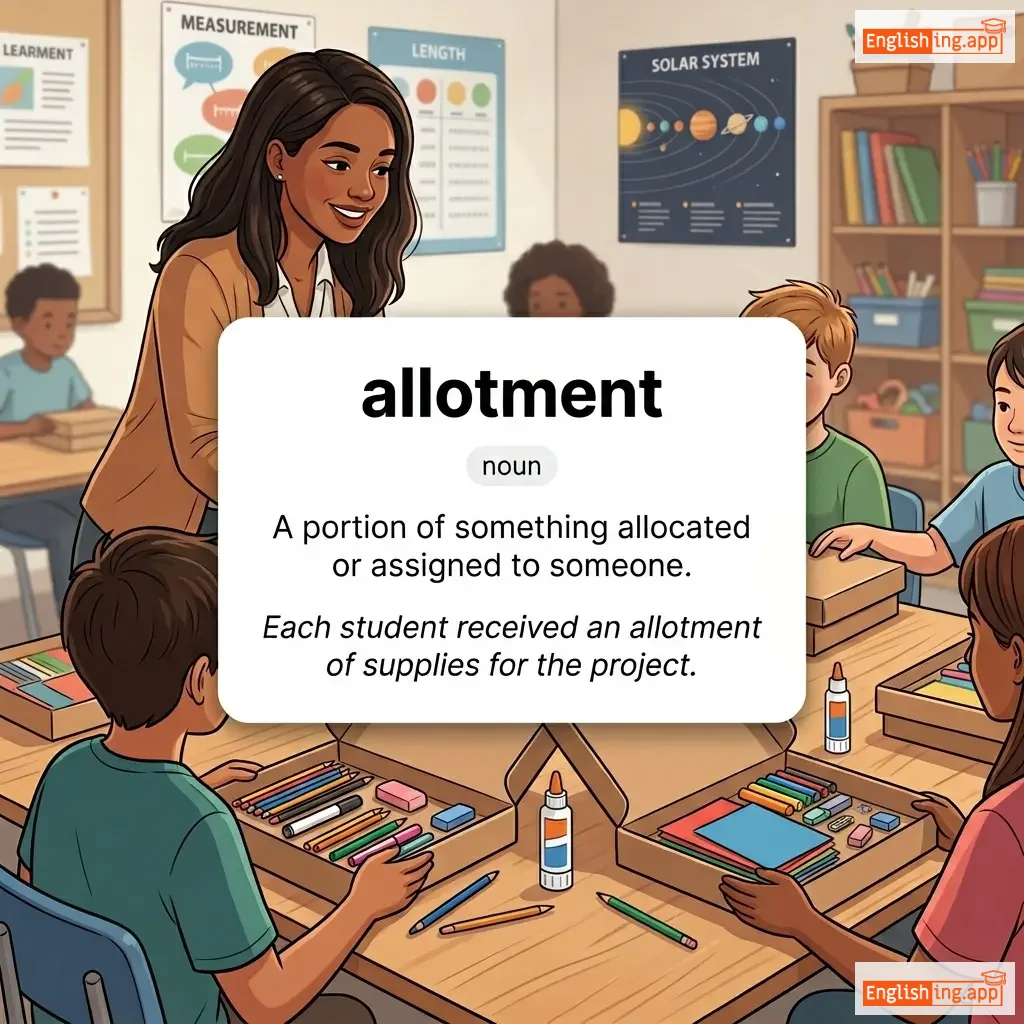
- •••••• | - •••••• | - •••••• | - •••••• |
A portion of something allocated or assigned to someone.
••••••
|
Each student received an allotment of supplies for the project. |
各学生はプロジェクトのための供給物資の配分を受け取りました。
Kaku gakusei wa purojekuto no tame no kyōkyū busshi no haibun o uketorimashita.
••••••
|
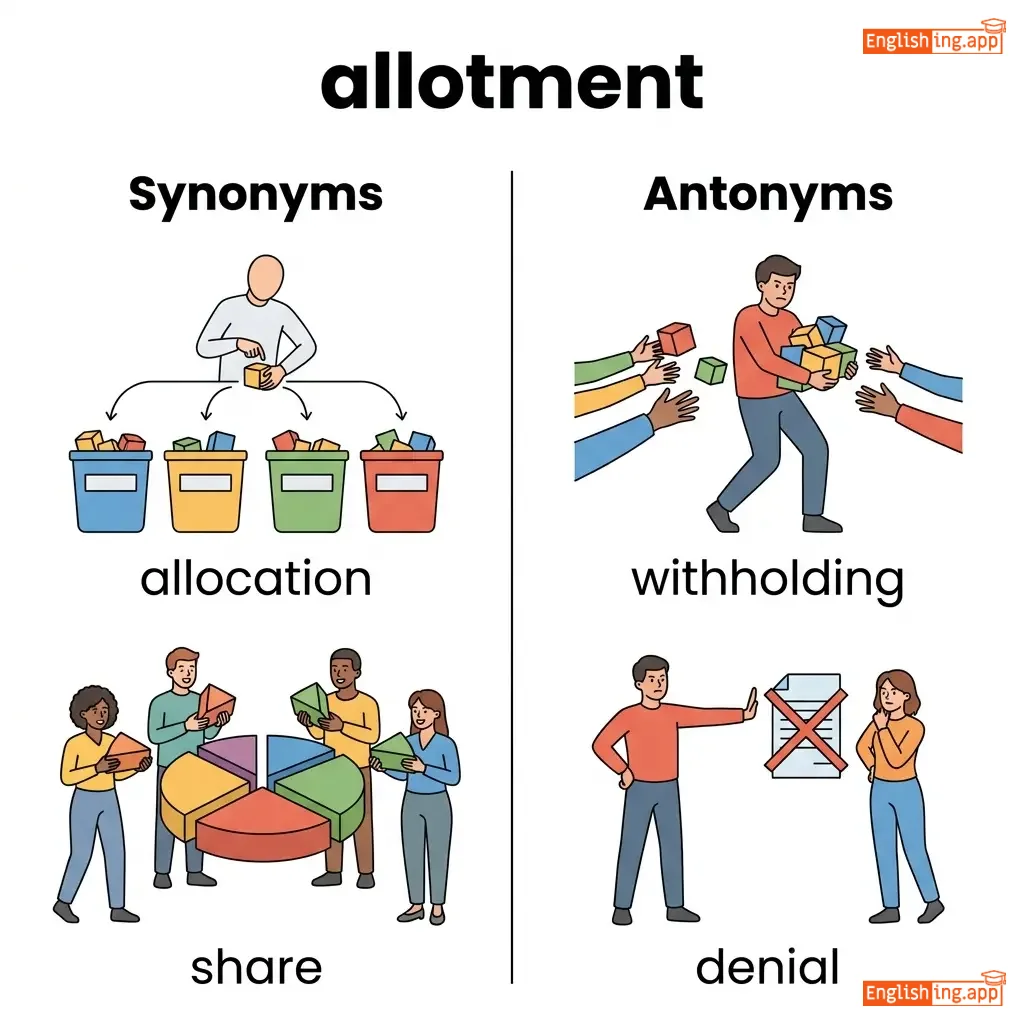
- •••••• | - •••••• | - •••••• |
allocation, share, portion, quota, grant
••••••
|
withholding, denial, refusal
••••••
|
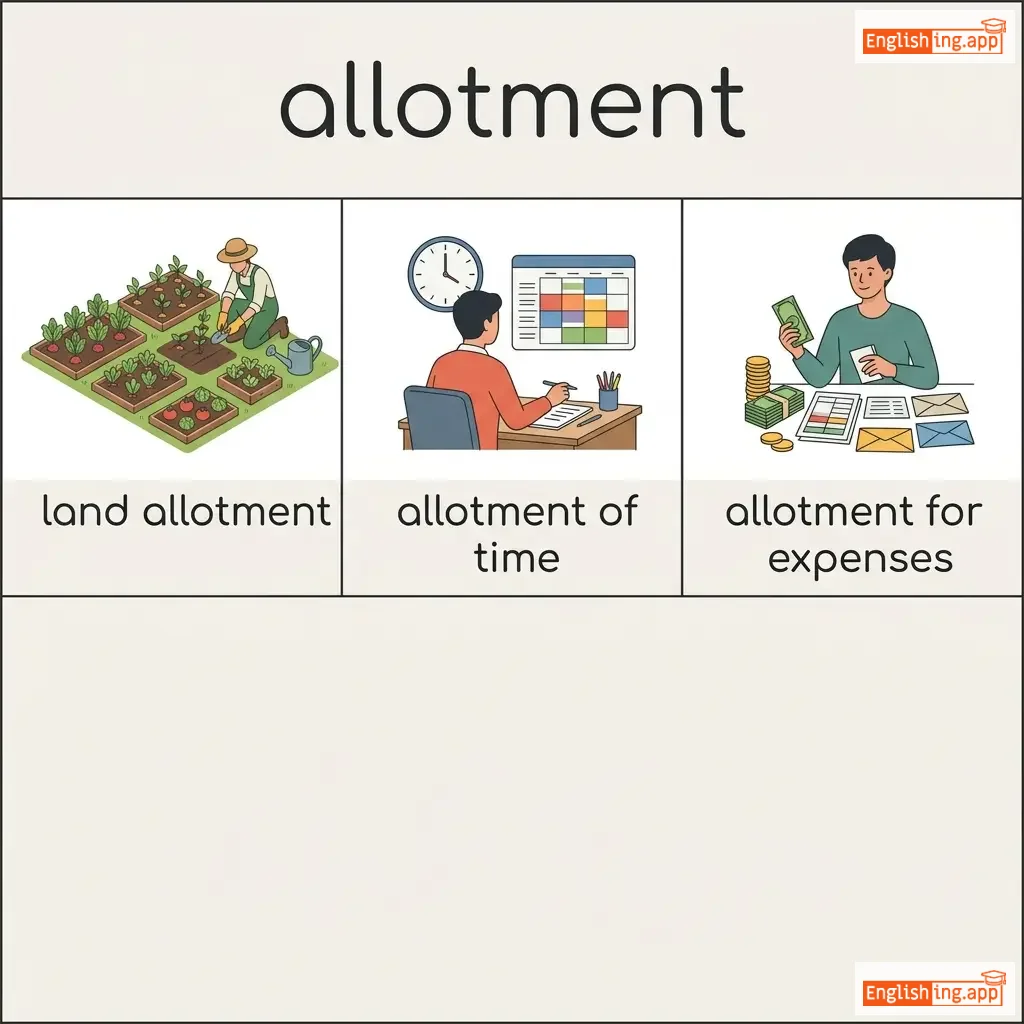
land allotment, allotment of time, allotment for expenses, allotment share
••••••
|
Allotmentは何かを分けること、例えば‘配分する’
••••••
|
|
#231
✅
|
/əˈlaʊ/
verb
(アラウ)
••••••
|
- •••••• |
許可する
kyoka suru
••••••
|
allowed
アラウド
••••••
|
allowed
アラウド
••••••
|
allows
アラウズ
••••••
|
allowing
アラウイング
••••••
|
to give permission for something to happen or someone to do something
••••••
|
The teacher did not allow phones in class.
先生はクラスで電話を許可しませんでした。
••••••
|
先生はクラスで電話を許可しませんでした。
Sensei wa kurasu de denwa o kyoka shimasen deshita.
••••••
|
allow for
アラウ フォー
••••••
|
to take into consideration
••••••
|
考慮する
kōryo suru
••••••
|
permit, authorize, let, enable, grant
••••••
|
forbid, prevent, deny
••••••
|
allow time, allow access, allow entry, allow someone to
••••••
|
Allow は allowance のように、許可されているお金を意味します。
••••••
|
|
#232
💰
|
/əˈlaʊəns/
noun
(アラワンス)
••••••
|
- •••••• |
手当
teate
••••••
|
- •••••• | - •••••• | - •••••• | - •••••• |
a sum of money paid regularly to a person; permission to do something
••••••
|
Children receive a weekly allowance for helping with chores. |
子供たちは家事の手伝いをすることで週刊手当を受け取ります。
Kodomotachi wa kaji no tetsudai wo suru koto de shuukan teate wo uketorimasu.
••••••
|
- •••••• | - •••••• | - •••••• |
stipend, payment, allocation, quota
••••••
|
prohibition, ban, restriction
••••••
|
monthly allowance, pocket allowance, travel allowance
••••••
|
子供たちの手当
••••••
|
|
#233
✨
|
/əˈlʊr/
verb
(アリュール)
••••••
|
|
魅力
miryoku
••••••
|
allured
アリュールド
••••••
|
allured
アリュールド
••••••
|
allures
アリュールズ
••••••
|
alluring
アリュリング
••••••
|
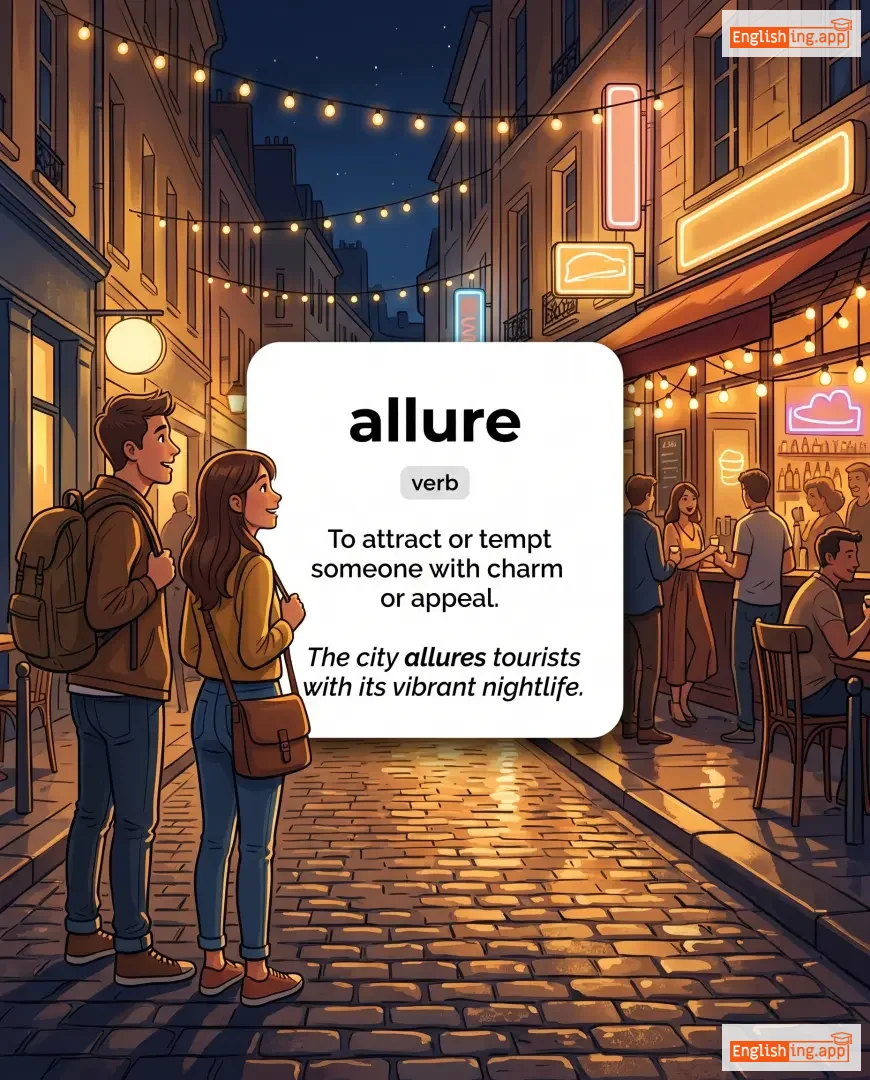
To attract or tempt someone with charm or appeal.
••••••
|
The city allures tourists with its vibrant nightlife.
この都市はその活気に満ちた夜の生活で観光客を引き寄せる。
••••••
|
この都市はその活気に満ちた夜の生活で観光客を引き寄せる。
Kono toshi wa sono kanki ni michita yoru no seikatsu de kankoukyaku wo hikiyoseru.
••••••
|
the allure of
……の魅力
••••••
|
the appeal or attraction of something
••••••
|
……の魅力
…… no miryoku
••••••
|
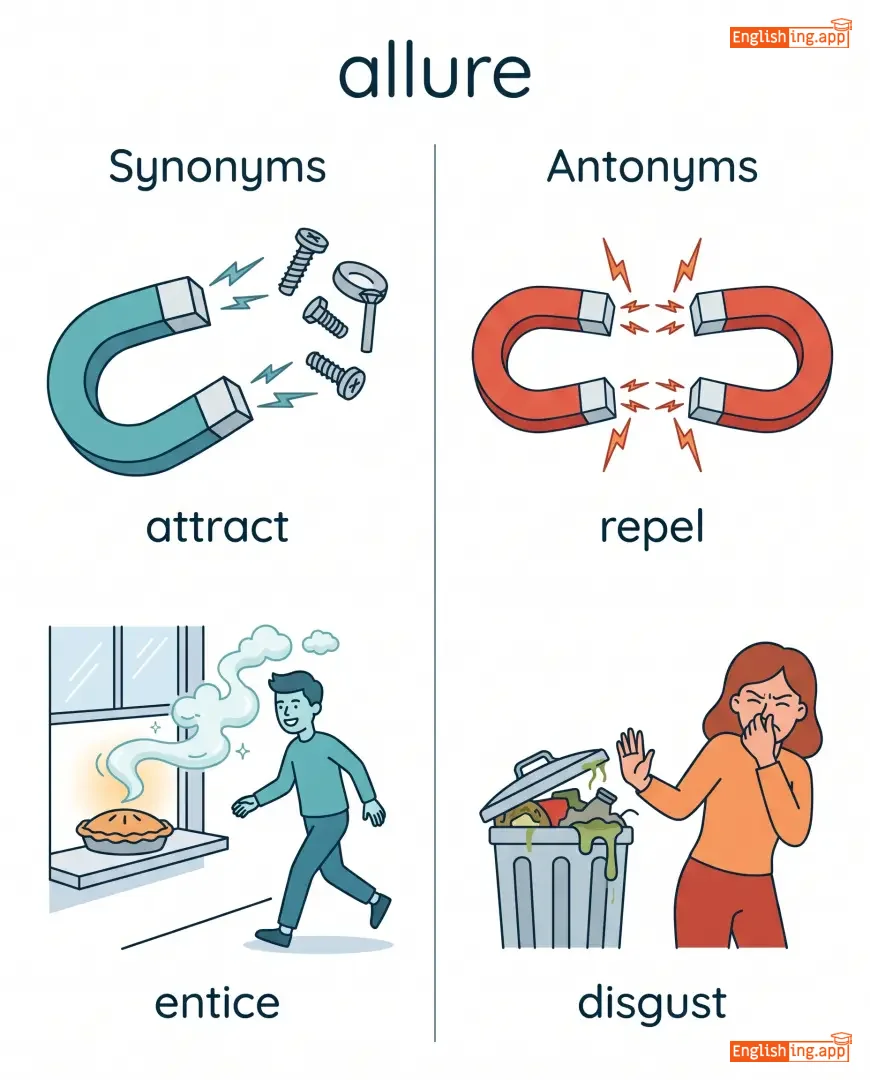
attract, entice, charm, fascinate, captivate
••••••
|
repel, disgust, deter
••••••
|
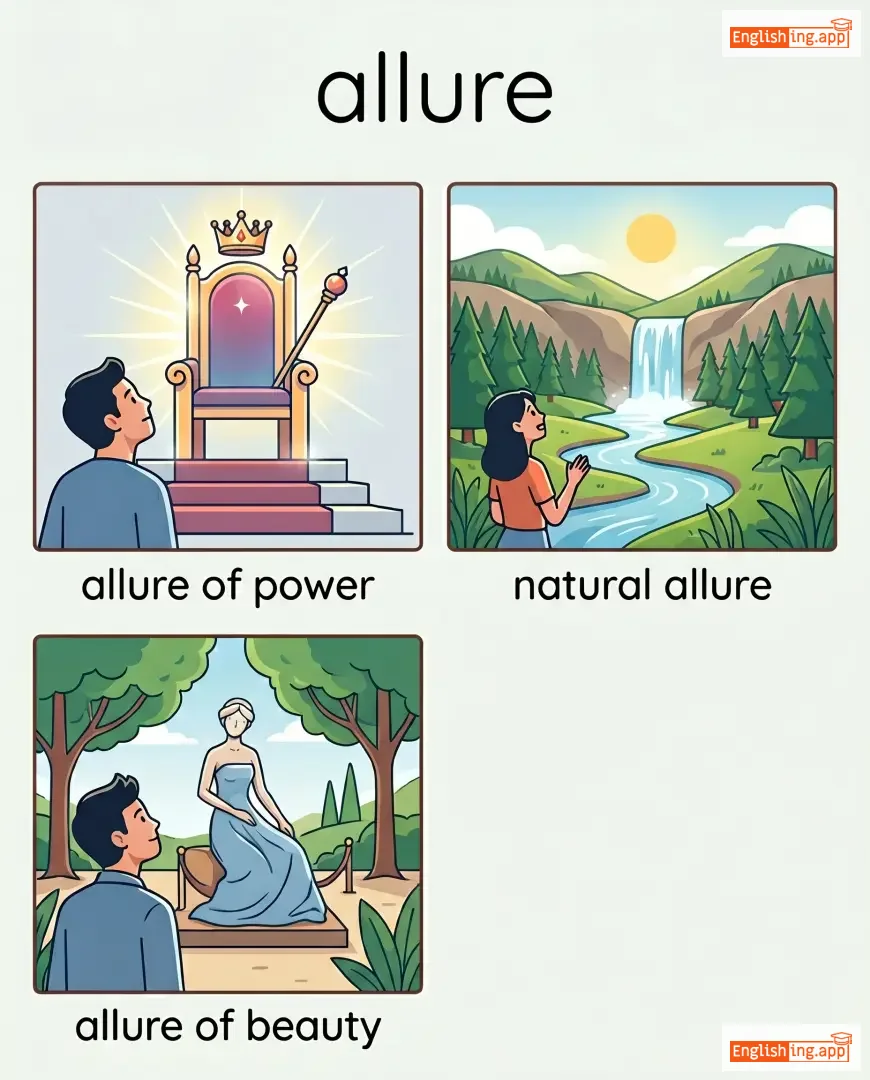
allure of power, natural allure, allure of beauty, allure tourists
••••••
|
Allureは魅力を意味します、皆を引き寄せる光のように!
••••••
|
|
#234
😍
|
/əˈlʊr.ɪŋ/
adjective
(アリューリング)
••••••
|
- •••••• |
魅力的で誘惑的; 魅力的な
miryokuteki de yūwaku teki; miryokuteki na
••••••
|
- •••••• | - •••••• | - •••••• | - •••••• |
attractive and tempting; fascinating
••••••
|
The alluring fragrance of roses filled the garden. |
バラの魅力的な香りが庭を満たしました。
Bara no miryokuteki na kaori ga niwa o mitashimashita.
••••••
|
- •••••• | - •••••• | - •••••• |
attractive, captivating, charming, seductive
••••••
|
repulsive, unattractive, repelling
••••••
|
alluring beauty, alluring smile, alluring fragrance
••••••
|
The roses' alluring scent fills the garden.
••••••
|
|
#235
🤝
|
/ˈælaɪ/
verb
(アライ)
••••••
|
- •••••• |
味方
mikata
••••••
|
allied
アライド
••••••
|
allied
アライド
••••••
|
allies
アライズ
••••••
|
allying
アライング
••••••
|
To unite or form a connection or partnership with another person, group, or nation.
••••••
|
The two countries decided to ally against their common enemy.
二国は共通の敵に対して連携することを決定した。
••••••
|
二国は共通の敵に対して連携することを決定した。
Nikoku wa kyōtsū no teki ni taishite renkei suru koto o kettei shita.
••••••
|
ally with
と一緒に連携する
••••••
|
To form a partnership or alliance with someone.
••••••
|
と一緒に連携する
to issho ni renkei suru
••••••
|
associate, unite, partner, combine, join
••••••
|
oppose, resist, separate
••••••
|
ally with, strong ally, loyal ally, ally against
••••••
|
AllyはAll + I、誰かと一緒に味方になることを意味します。
••••••
|
|
#236
⏳
|
/ˈɔːlmoʊst/
adverb
(オールモースト)
••••••
|
- •••••• |
ほとんど
hotondo
••••••
|
- •••••• | - •••••• | - •••••• | - •••••• |
very nearly, but not exactly or completely
••••••
|
He almost missed the train.
彼はほとんど電車を逃した。
••••••
|
彼はほとんど電車を逃した。
Kare wa hotondo densha o nogashita.
••••••
|
almost there
もうすぐそこ
••••••
|
close to completing or reaching a goal
••••••
|
もうすぐそこ
mōsugu soko
••••••
|
nearly, practically, virtually, approximately, about
••••••
|
completely, entirely, totally
••••••
|
almost done, almost impossible, almost every, almost finished
••••••
|
Almostはほとんどを意味します—"almost there"のように、ゴールに近いことを意味します。
••••••
|
|
#237
🧍
|
/əˈloʊn/
adjective, adverb
(アロン)
••••••
|
- •••••• |
一人
hitori
••••••
|
- •••••• | - •••••• | - •••••• | - •••••• |
having no one else present; on one's own
••••••
|
She prefers to live alone in her apartment. |
彼女はアパートで一人で暮らすのを好む。
Kanojo wa apāto de hitori de kurasu no o konomu.
••••••
|
leave someone alone |
to stop bothering or disturbing someone
••••••
|
誰かを一人にさせる
dareka o hitori ni saseru
••••••
|
solitary, lonely, isolated, unaccompanied, single
••••••
|
together, accompanied, united
••••••
|
feel alone, live alone, left alone, all alone
••••••
|
Aloneはall-oneを意味し、一人 (hitori) でいることを意味します。
••••••
|
|
#238
➡️
|
/əˈlɔːŋ/
preposition, adverb
(アロング)
••••••
|
- •••••• |
沿って
sotte
••••••
|
- •••••• | - •••••• | - •••••• | - •••••• |
moving in a constant direction on (a road, path, or surface)
••••••
|
We walked along the river. |
私たちは川沿いに歩きました。
Watashitachi wa kawa-zoi ni arukimashita.
••••••
|
go along with |
to agree with or support
••••••
|
賛成する
sansei suru
••••••
|
beside, down, alongside, next to
••••••
|
away, against
••••••
|
along the road, along the way, along with, go along
••••••
|
沿って、ALL LONG進んでいく。
••••••
|
|
#239
👥
|
/əˈlɔːŋ.saɪd/
adverb
(アロングサイド)
••••••
|
- •••••• |
隣で; 一緒に;
tonari de; issho ni;
••••••
|
- •••••• | - •••••• | - •••••• | - •••••• |
beside; next to; together with
••••••
|
She walked alongside her friend through the park. |
彼女は公園で友達と一緒に歩いた。
Kanojo wa kōen de tomodachi to issho ni aruita.
••••••
|
- •••••• | - •••••• | - •••••• |
beside, next to, together with, parallel to
••••••
|
apart, separately, away from
••••••
|
work alongside, stand alongside, run alongside, walk alongside
••••••
|
Japanese '隣で' and English 'alongside' both mean 'next to'.
••••••
|
|
#240
🔊
|
/əˈlaʊd/
adverb
(アラウド)
••••••
|
- •••••• |
大声で
ōkoe de
••••••
|
- •••••• | - •••••• | - •••••• | - •••••• |
in a voice that can be heard; not silently
••••••
|
Please read the instructions aloud so everyone can hear.
指示を大声で読んで、皆が聞こえるようにしてください。
••••••
|
指示を大声で読んで、皆が聞こえるようにしてください。
Shiji o ōkoe de yonde, minna ga kikoeru yō ni shite kudasai.
••••••
|
- •••••• | - •••••• | - •••••• |
loudly, audibly, out loud, vocally
••••••
|
silently, quietly, inaudibly
••••••
|
read aloud, think aloud, speak aloud, say aloud
••••••
|
In Japan, '大声で' (ōkoe de) means aloud—imagine shouting in a bustling market!
••••••
|
|
#241
🔤
|
/ˈæl.fə.bɛt/
noun
(アルファベット)
••••••
|
- •••••• |
アルファベット
arufabetto
••••••
|
- •••••• | - •••••• | - •••••• | - •••••• |
a set of letters or symbols in a fixed order used to represent the sounds of a language
••••••
|
Children usually learn the alphabet before learning to read words.
チルドレン ユージュアリー ラーン ザ アルファベット ビフォア ラーニング トゥ リード ワーズ。
••••••
|
子どもたちはたいてい単語を読む前にアルファベットを学びます。
kodomotachi wa taitei tango o yomu mae ni arufabetto o manabimasu
••••••
|
alphabet soup
アルファベットスープ
••••••
|
a confusing mix of letters, abbreviations, or acronyms
••••••
|
アルファベットスープ
arufabetto suupu
••••••
|
letter set, writing system, character set, script
••••••
|
silence, illiteracy
••••••
|
learn the alphabet, alphabet letters, alphabet chart, alphabet song
••••••
|
アルファベットはAから始まる
••••••
|
|
#242
🔠
|
/ˌælfəˈbɛtɪkəl/
adjective
(アルファベット順)
••••••
|
- •••••• |
アルファベット順
arufabetto-jun
••••••
|
- •••••• | - •••••• | - •••••• | - •••••• |
Arranged in the order of the letters of the alphabet.
••••••
|
The names were listed in alphabetical order. |
名前はアルファベット順にリストされていました。
Namae wa arufabetto-jun ni risuto sarete imashita.
••••••
|
- •••••• | - •••••• | - •••••• |
ordered, sequential, systematic, lexicographic
••••••
|
random, unordered
••••••
|
alphabetical order, alphabetical list, arrange alphabetically
••••••
|
アルファベット順 — ABCの歌のように!
••••••
|
|
#243
🔤
|
/ˌælfəˈbɛtɪkli/
adverb
(アルファベティカリー)
••••••
|
- •••••• |
アルファベット順に
arufabetto jun ni
••••••
|
- •••••• | - •••••• | - •••••• | - •••••• |
in the order of the letters of the alphabet
••••••
|
The names are listed alphabetically in the register.
ザ ネームズ アー リステッド アルファベティカリー イン ザ レジスター。
••••••
|
名前は登録簿にアルファベット順に並んでいます。
namae wa tourokubo ni arufabetto jun ni narande imasu
••••••
|
- •••••• | - •••••• | - •••••• |
lexicographically, in order, by letters, systematically
••••••
|
randomly, unsystematically
••••••
|
alphabetically arranged, alphabetically ordered, list alphabetically, sorted alphabetically
••••••
|
A B C の順 → アルファベット順に
••••••
|
|
#244
✅
|
/ɔːlˈredi/
adverb
(オールレディ)
••••••
|
- •••••• |
すでに; もう; 前に
sudeni; mou; mae ni
••••••
|
- •••••• | - •••••• | - •••••• | - •••••• |
before now; by this time; previously
••••••
|
I have already finished my homework for today. |
私は今日の宿題をすでに終わらせました。
Watashi wa kyou no shukudai o sudeni owarasemashita.
••••••
|
- •••••• | - •••••• | - •••••• |
previously, before, by now, earlier
••••••
|
not yet, later, still, eventually
••••••
|
already done, already finished, already here, already know
••••••
|
日本語で'すでに'を使って、すでに何かを終わらせたことを表します。
••••••
|
|
#245
👍
|
/ɔːlˈraɪt/
adjective, adverb, interjection
(オールライト)
••••••
|
- •••••• |
大丈夫
daijoubu
••••••
|
- •••••• | - •••••• | - •••••• | - •••••• |
satisfactory or acceptable; safe or unharmed; used to express agreement or acknowledgment
••••••
|
Everything is going to be alright.
エブリシング イズ ゴーイング トゥ ビー オールライト。
••••••
|
すべて大丈夫です。
subete daijoubu desu
••••••
|
alright then
オールライト ゼン
••••••
|
used to show acceptance or to move on in a conversation
••••••
|
じゃあいいよ
jaa ii yo
••••••
|
okay, fine, acceptable, satisfactory, good
••••••
|
bad, wrong, unacceptable
••••••
|
alright now, feel alright, be alright, alright then
••••••
|
日本語の『大丈夫』=英語の ‘alright’。
••••••
|
|
#246
➕
|
/ˈɔːlsoʊ/
adverb
(オールソー)
••••••
|
- •••••• |
また
mata
••••••
|
- •••••• | - •••••• | - •••••• | - •••••• |
in addition; too
••••••
|
She sings beautifully and also plays the guitar.
Shī sings byūtifurī and ōruso pūreizu za gitā.
••••••
|
彼女は美しく歌い、またギターを弾きます。
Kanojo wa utsukushiku utai, mata gitā o hikimasu.
••••••
|
- •••••• | - •••••• | - •••••• |
too, as well, in addition, likewise
••••••
|
only, solely
••••••
|
also known, also available, also important
••••••
|
Also はまたの意味—ALl SOmething もう一つのもの。
••••••
|
|
#247
✂️
|
/ˈɔːltər/
verb
(アルター)
••••••
|
- •••••• |
変更する
henkō suru
••••••
|
altered
アルタード
••••••
|
altered
アルタード
••••••
|
alters
アルターズ
••••••
|
altering
アルタリング
••••••
|
to change or modify something slightly but significantly
••••••
|
She decided to alter her dress to make it fit better.
彼女はドレスを合うように変更することを決めました。
••••••
|
彼女はドレスをより良くするために変更することを決めました。
Kanojo wa doresu o yori yoku suru tame ni henkō suru koto o kimemashita.
••••••
|
alter ego
alter ego
••••••
|
a second self or different version of oneself
••••••
|
alter ego
alter ego
••••••
|
change, modify, adjust, adapt, transform
••••••
|
preserve, maintain, keep
••••••
|
alter plans, alter course, alter appearance, alter behavior
••••••
|
変更するとは少しでも変えること、例えば服を調整することです。
••••••
|
|
#248
🔄
|
/ɔːlˈtɜːrnətɪv/
noun, adjective
(オルタナティブ)
••••••
|
|
代替
daitai
••••••
|
- •••••• | - •••••• | - •••••• | - •••••• |
a choice between two or more possibilities; something that can be chosen instead of something else
••••••
|
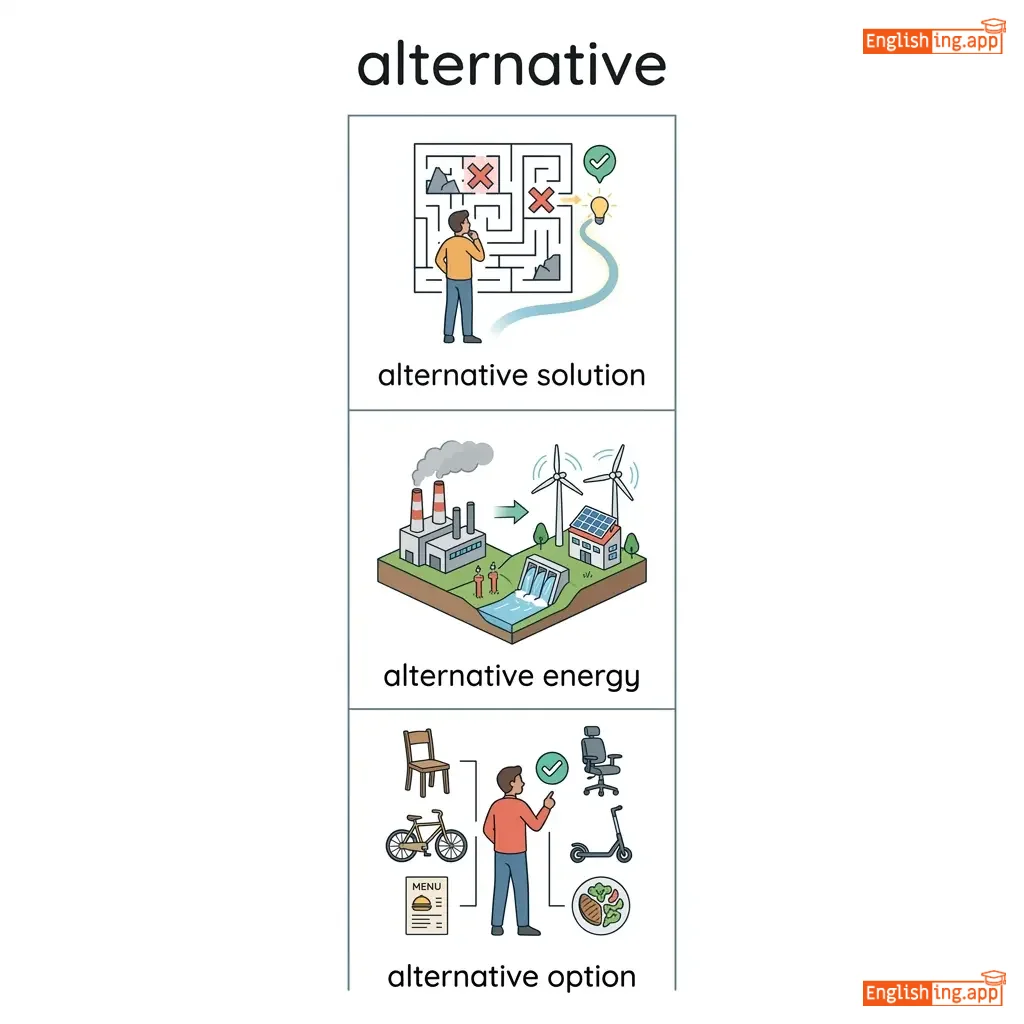
We need to find an alternative solution to this problem.
この問題に対する代替案を見つける必要があります。
••••••
|
この問題に対する代替案を見つける必要があります。
Kono mondai ni taisuru daitai an o mitsukeru hitsuyou ga arimasu.
••••••
|
alternative medicine
代替医療
••••••
|
forms of treatment that are used instead of traditional medicine
••••••
|
代替医療
daitai iryou
••••••
|
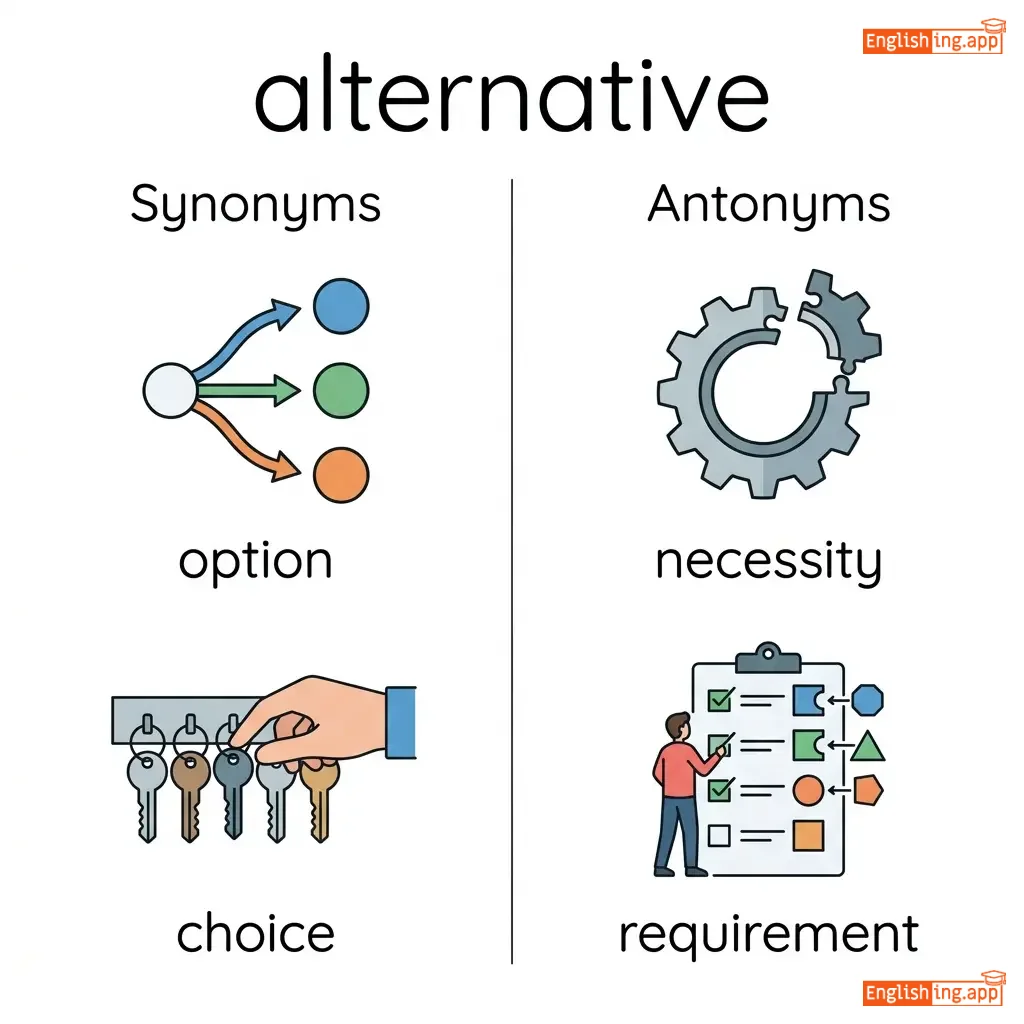
option, choice, substitute, replacement, backup
••••••
|
necessity, requirement, compulsion
••••••
|
alternative solution, alternative energy, alternative option, alternative plan
••••••
|
Alternativeは別の選択肢を意味します。日本語では代替(daitai)は選択肢です。
••••••
|
|
#249
🔄
|
/ˌɔːltəˈɡɛðər/
adverb
(オールトゥゲザー)
••••••
|
- •••••• |
完全に
kanzen ni
••••••
|
- •••••• | - •••••• | - •••••• | - •••••• |
completely; in total; entirely
••••••
|
The project was altogether successful despite the challenges. |
そのプロジェクトは挑戦にもかかわらず完全に成功しました。
Sono purojekuto wa chōsen ni mo kakawarazu kanzen ni seikō shimashita.
••••••
|
altogether now |
used to encourage a group of people to do or say something at the same time
••••••
|
今みんなで
ima minna de
••••••
|
completely, entirely, totally, wholly, fully
••••••
|
partially, incompletely
••••••
|
altogether different, not altogether, altogether impossible, altogether wrong
••••••
|
完全に ALL TOGETHER は完全または合計を意味します。
••••••
|
Vocabulary Quiz
Test your vocabulary by matching words with their translations or meanings.
Login to take the quiz
Comments (0)
Share your thoughts and join the discussion.
Join the discussion by logging in
Login to CommentNo comments yet
Be the first to share your thoughts!