

Обновитесь для доступа ко всему словарю
Получите неограниченный доступ ко всем словам с подпиской Pro
Обновить до ProПеревод
Прошедшее
Причастие прошедшего времени
Третье лицо единственного числа
Герундий
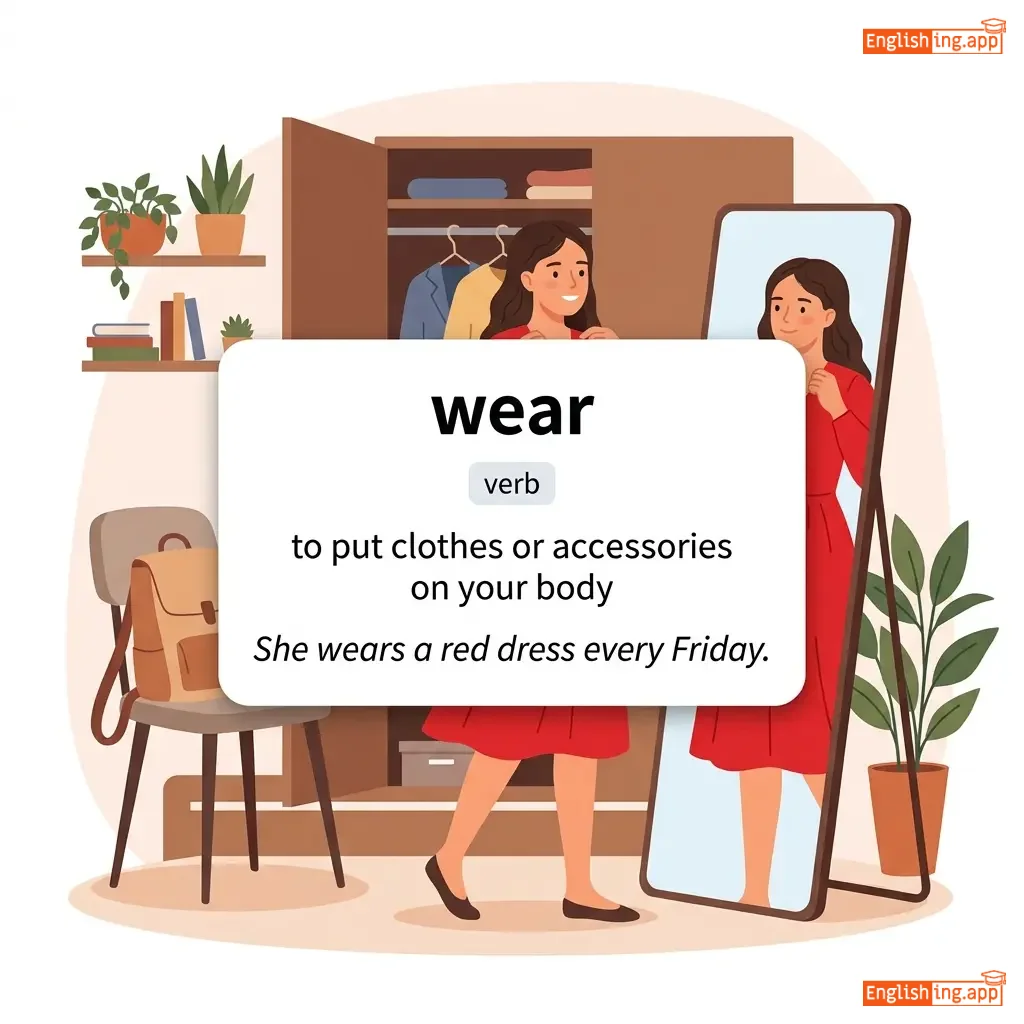
Значение
Пример предложения
Перевод примера предложения
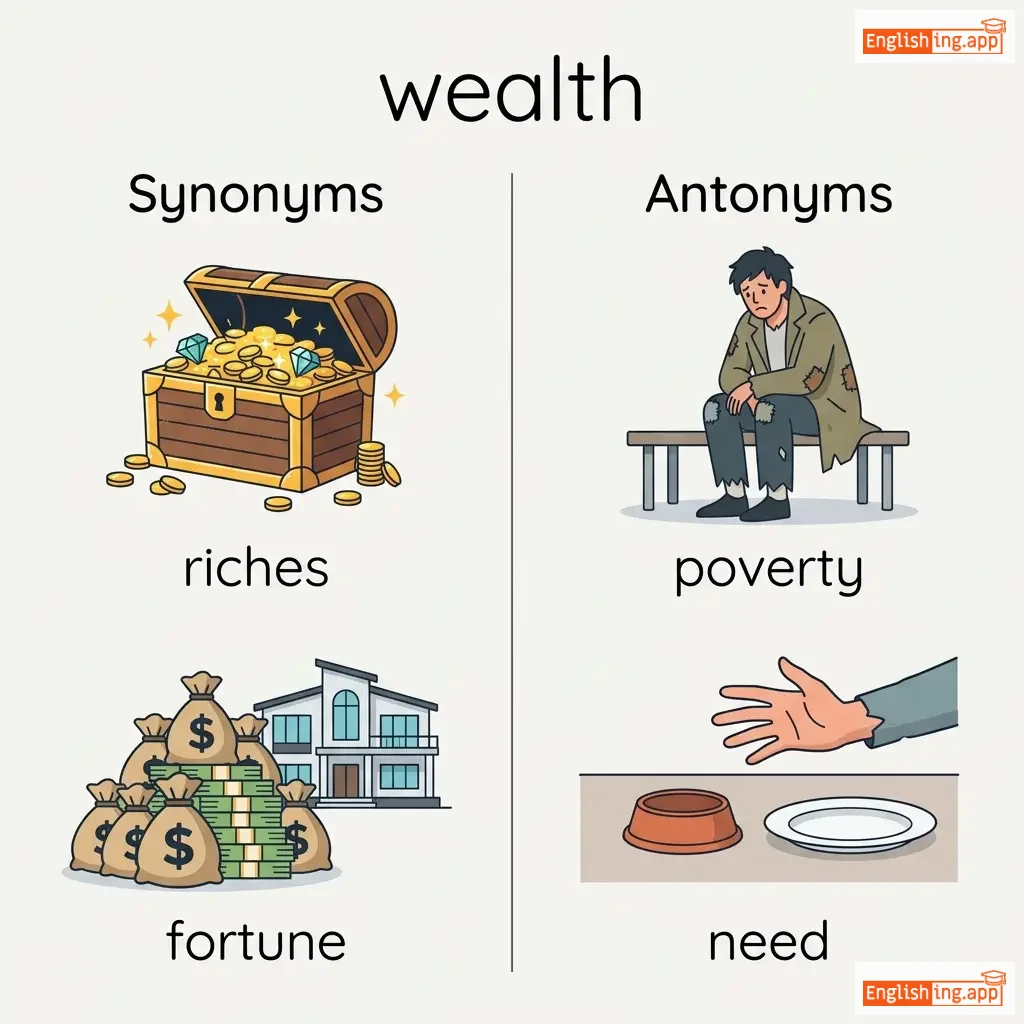
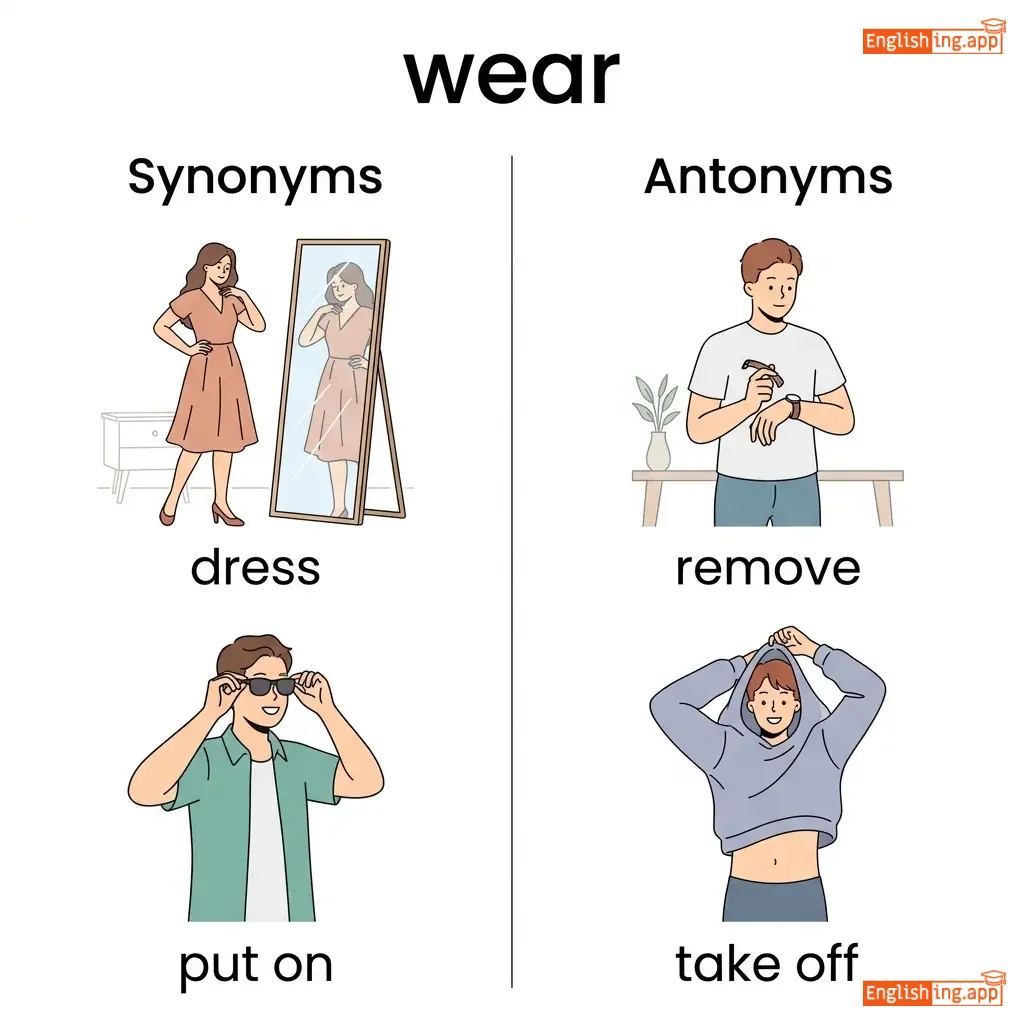
Синонимы
Антонимы
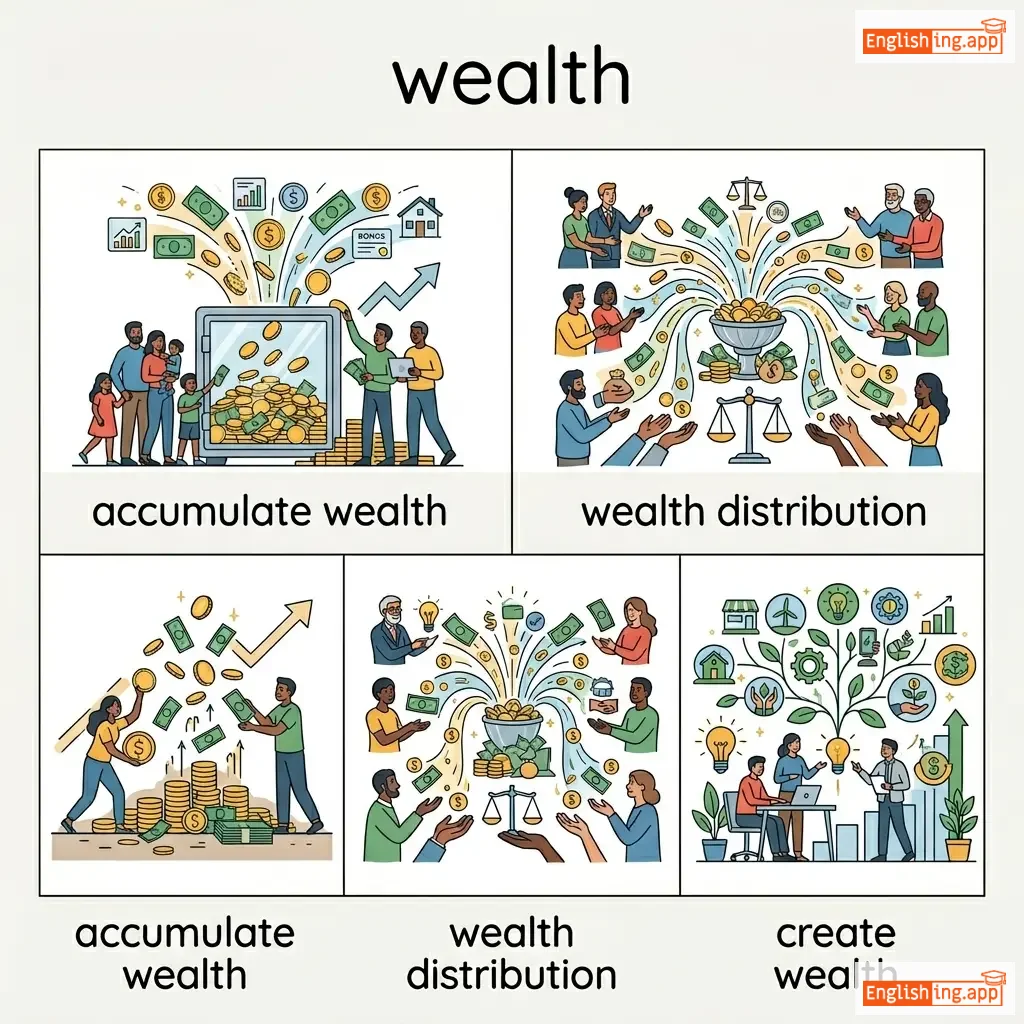
Коллокации
Мнемоника
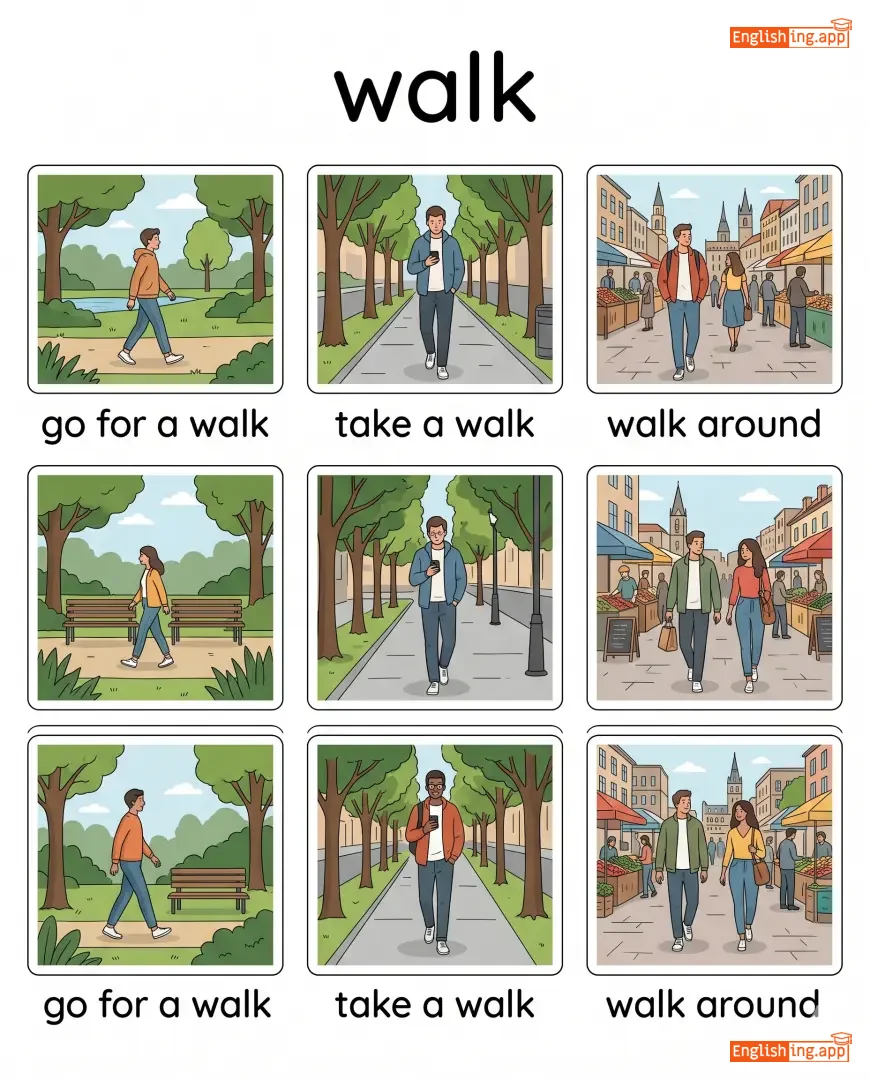



Swipe left or right, or use the buttons. Tap image to zoom.
Обновитесь для доступа ко всем предложениям
Получите неограниченный доступ ко всем предложениям с подпиской Pro
Обновить до ProПеревод примера предложения
Слово
Lesson 114Lesson 114 - Переключатель маски
|
Эмодзи
|
Слово | Images | Перевод | Прошедшее | Причастие прошедшего времени | Третье лицо единственного числа | Герундий | Значение | Пример предложения | Перевод примера предложения | Пример выражения | Значение примера выражения | Перевод примера выражения | Синонимы | Антонимы | Коллокации | Мнемоника |
|---|---|---|---|---|---|---|---|---|---|---|---|---|---|---|---|---|---|
|
#5425
🧍♂️
|
/weɪst/
noun
(уэйст)
••••••
|
- •••••• |
талия
taliya
••••••
|
- •••••• | - •••••• | - •••••• | - •••••• |
the part of the human body between the ribs and the hips
••••••
|
He tied a belt around his waist. |
Он завязал пояс вокруг своей талии.
On zavyazal poyas vokrug svoey taliya.
••••••
|
waist of time |
a pun meaning something or someone that wastes time
••••••
|
трата времени
trata vremeni
••••••
|
midsection, torso, abdomen, stomach
••••••
|
head, foot
••••••
|
slim waist, narrow waist, waist belt, around the waist
••••••
|
Waist означает талию, как пояс вокруг талии.
••••••
|
|
#5426
⏳
|
/weɪt/
verb
(wɛɪt)
••••••
|
|
ждать
zhdat
••••••
|
waited
weɪtɪd
••••••
|
waited
weɪtɪd
••••••
|
waits
weɪts
••••••
|
waiting
weɪtɪŋ
••••••
|
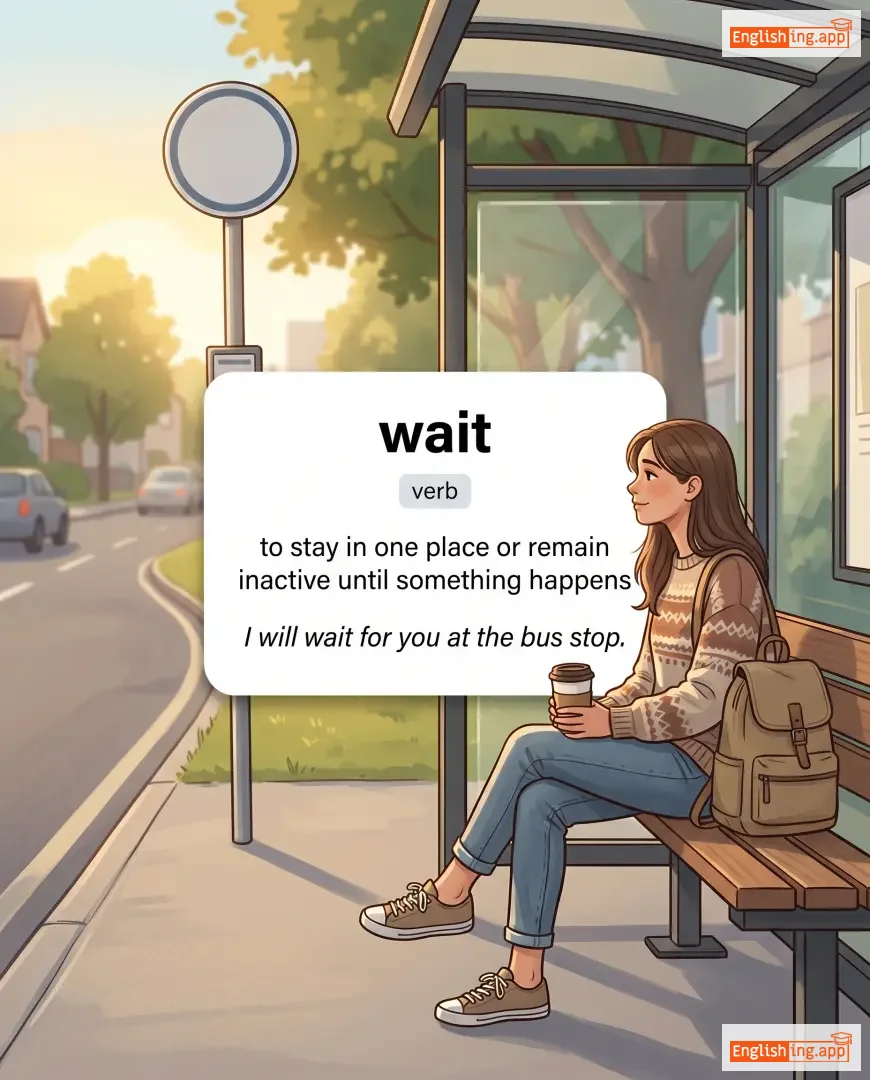
to stay in expectation; to delay action until something happens
••••••
|
Please wait here while I get the documents.
пожалуйста, подождите здесь, пока я принесу документы.
••••••
|
Пожалуйста, подождите здесь, пока я принесу документы.
Pozhaluysta, podozhdite zdes', poka ya prinesu dokumenty.
••••••
|
- •••••• | - •••••• | - •••••• |
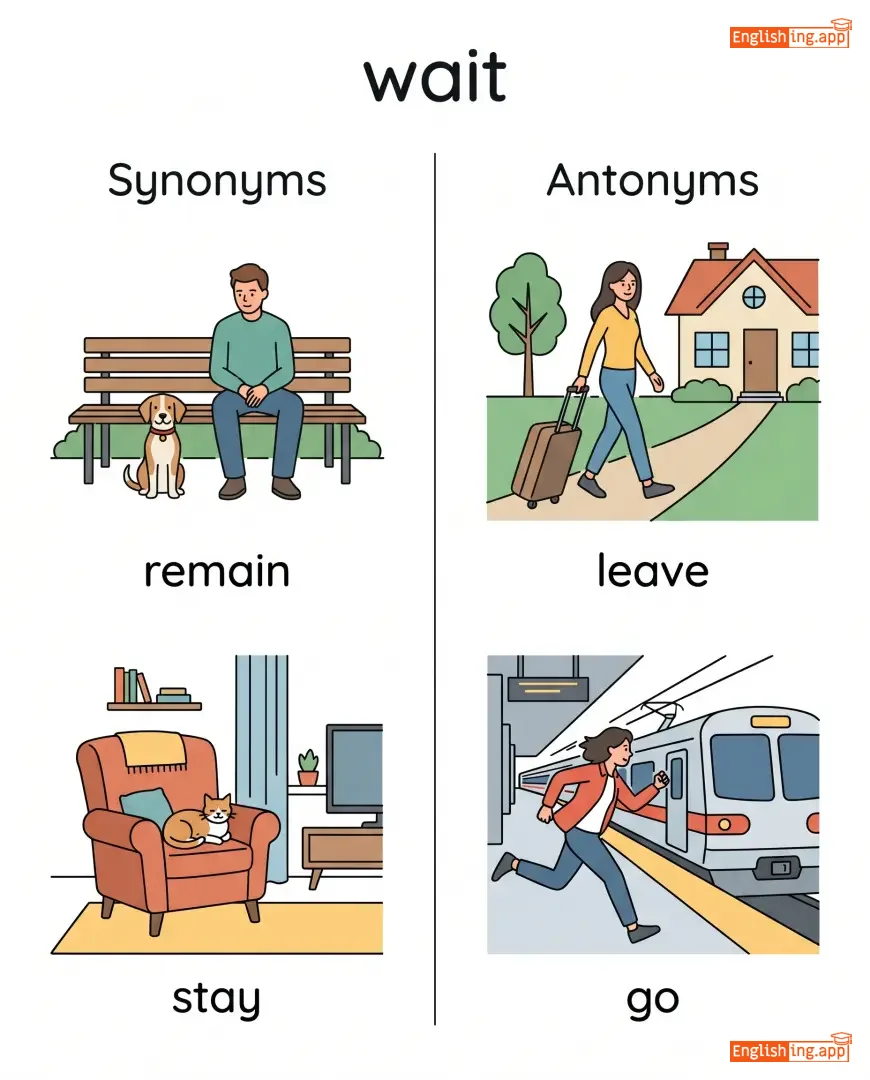
stay, remain, pause, hold, delay
••••••
|
leave, go, proceed, rush, hurry
••••••
|
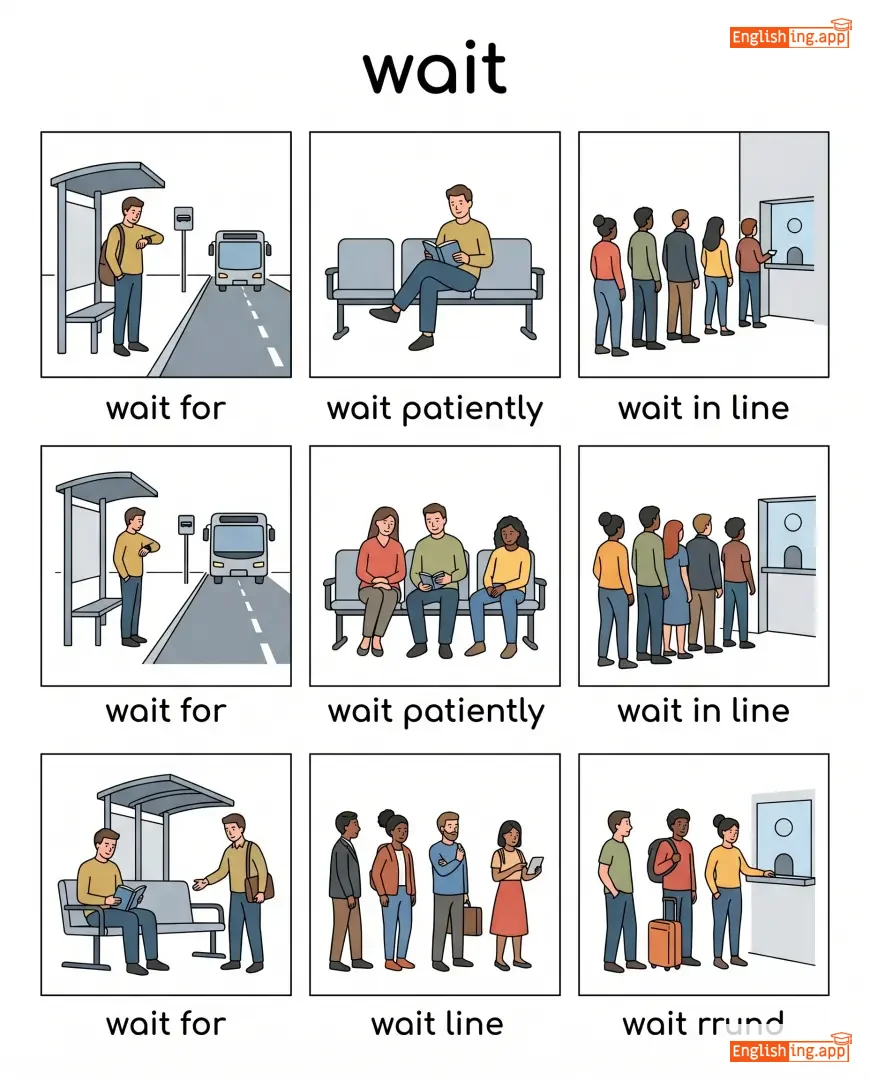
wait for, wait patiently, wait in line, wait up, long wait
••••••
|
Ждать как ждёшь автобус.
••••••
|
|
#5427
🍽️
|
/ˈweɪtər/
noun
(уэ́йтер)
••••••
|
- •••••• |
официант
ofitsiant
••••••
|
- •••••• | - •••••• | - •••••• | - •••••• |
a person whose job is to serve food and drinks to customers in a restaurant or café
••••••
|
The waiter brought the menu and took our order politely.
Уэ́йтер принёс меню.
••••••
|
Официант вежливо принёс меню и принял заказ.
ofitsiant vezhlivo prinyos menyu i prinyal zakaz
••••••
|
call the waiter
позвать официанта
••••••
|
to get the attention of a waiter for service
••••••
|
позвать официанта
pozvat ofitsianta
••••••
|
server, attendant, steward, waitperson
••••••
|
customer, guest
••••••
|
restaurant waiter, polite waiter, call the waiter, tip the waiter
••••••
|
официант официально обслуживает
••••••
|
|
#5428
🍽️
|
/ˈweɪtrəs/
noun
(уэ́йтрис)
••••••
|
- •••••• |
официантка
ofitsiантka
••••••
|
- •••••• | - •••••• | - •••••• | - •••••• |
a woman who serves food and drinks to customers in a restaurant or café
••••••
|
The waitress took our order with a friendly smile.
Уэйтрис приняла наш заказ с улыбкой.
••••••
|
Официантка приняла наш заказ с улыбкой.
Ofitsiантka prinyala nash zakaz s ulybkoi
••••••
|
- •••••• | - •••••• | - •••••• |
server, food server, attendant, waitstaff member
••••••
|
customer, diner
••••••
|
restaurant waitress, friendly waitress, call the waitress, waitress uniform
••••••
|
официантка — официально обслуживает гостей
••••••
|
|
#5429
⏰
|
/weɪk/
verb
(хэппинесс)
••••••
|
|
счастье
schastye
••••••
|
woke
••••••
|
woken
••••••
|
wakes
••••••
|
waking
••••••
|
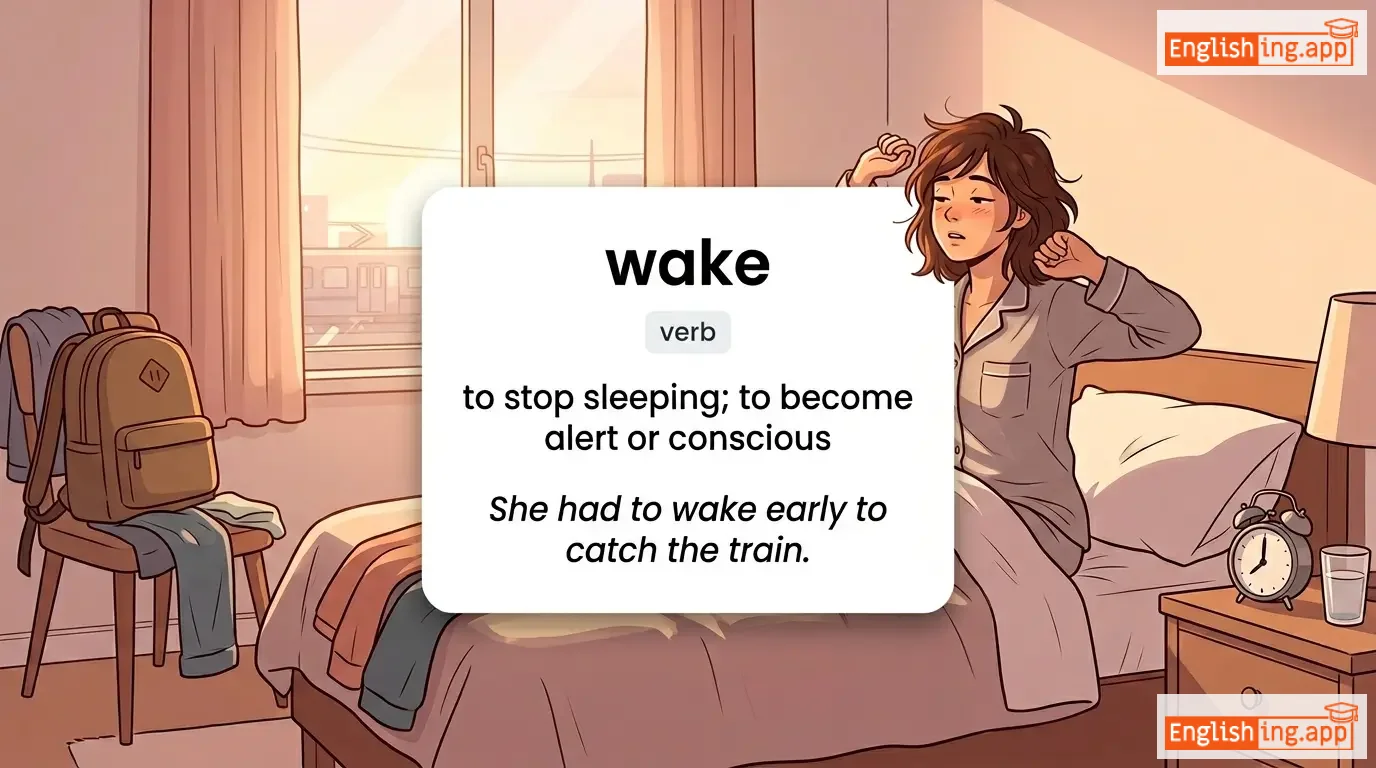
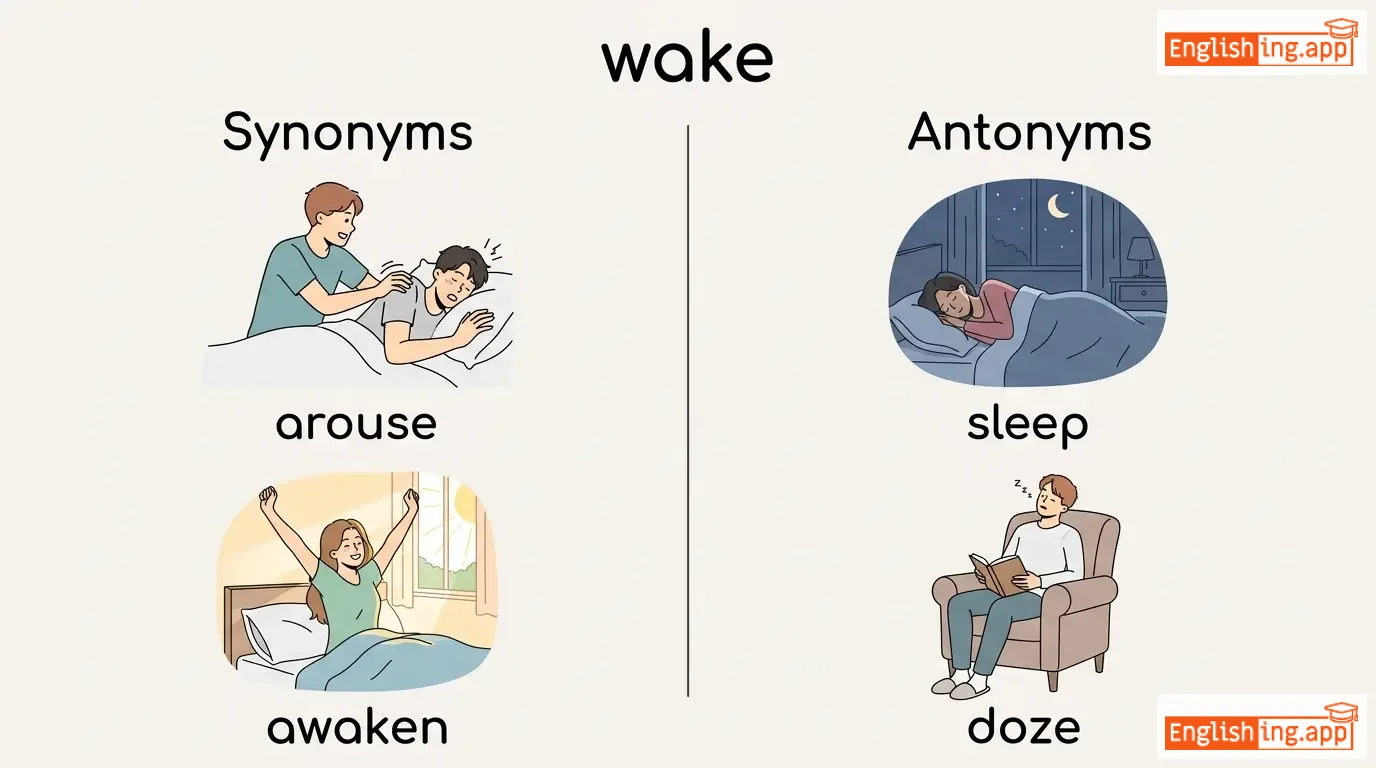
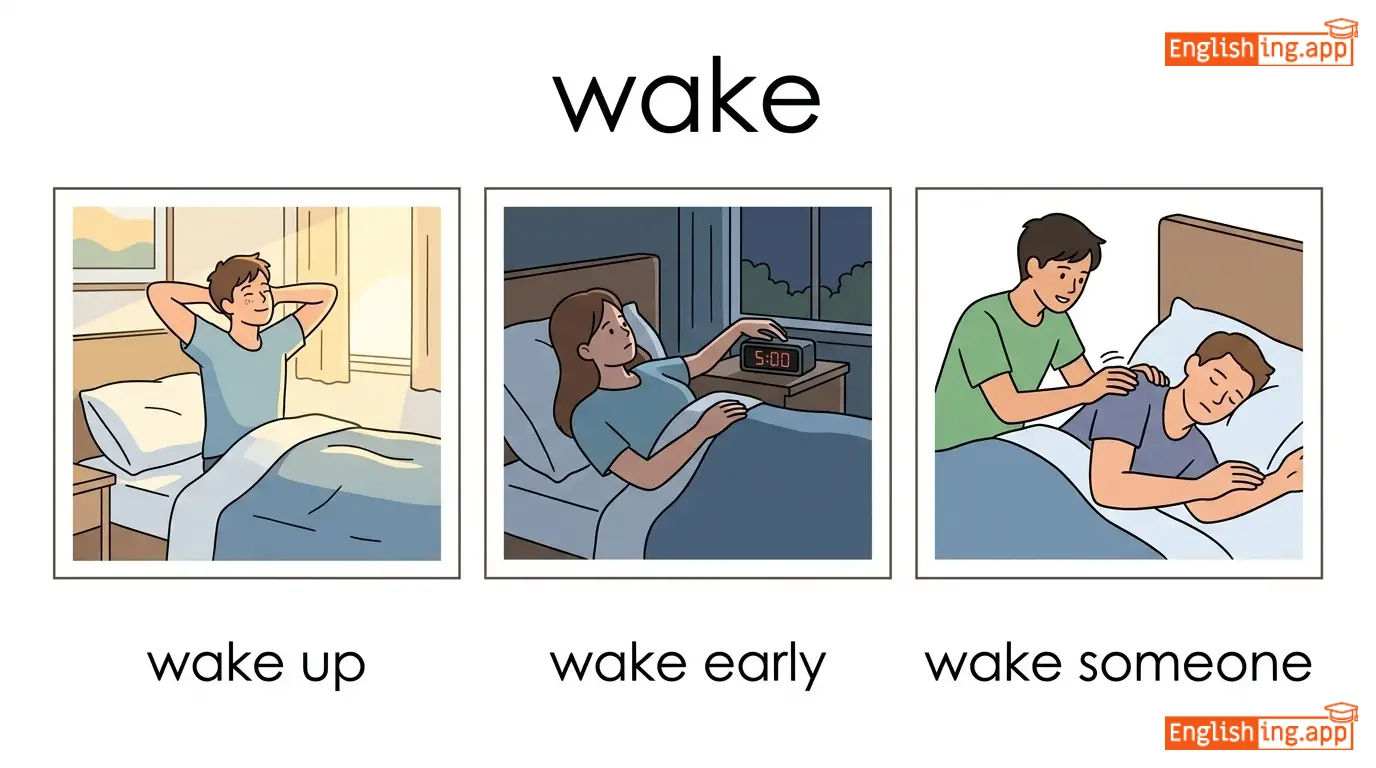
to stop sleeping; to become alert or conscious
••••••
|
She had to wake early to catch the train. |
Она не могла скрыть свое счастье, когда получила награду.
Ona ne mogla skryt' svoe schast'ye, kogda poluchila nagradu.
••••••
|
wake up call |
a warning or reminder that causes someone to take action
••••••
|
поиск счастья
poisk schast'ya
••••••
|
arouse, awaken, stir, rouse, alert
••••••
|
sleep, doze, slumber
••••••
|
wake up, wake early, wake someone, wake call
••••••
|
Счастье (schastye) - как 'happy' на русском.
••••••
|
|
#5430
🚶
|
/wɔːk/
verb
(хэппинесс)
••••••
|
|
идти
id-ti
••••••
|
walked
вокд
••••••
|
walked
вокд
••••••
|
walks
вокс
••••••
|
walking
уокинг
••••••
|
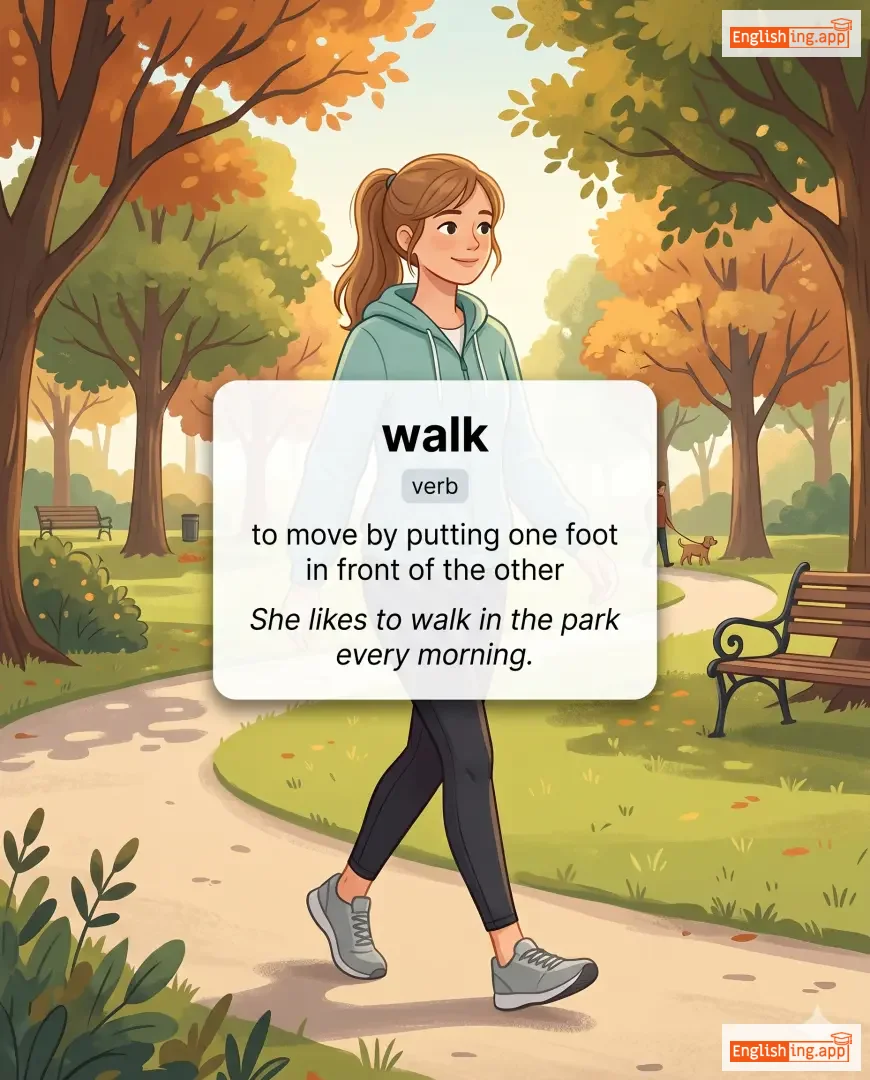
to move forward by putting one foot in front of the other
••••••
|
I walk to school every morning.
Я хожу в школу пешком каждое утро.
••••••
|
Я хожу в школу пешком каждое утро.
Ya khozhu v shkolu peshkom kazhdoe utro.
••••••
|
- •••••• | - •••••• | - •••••• |
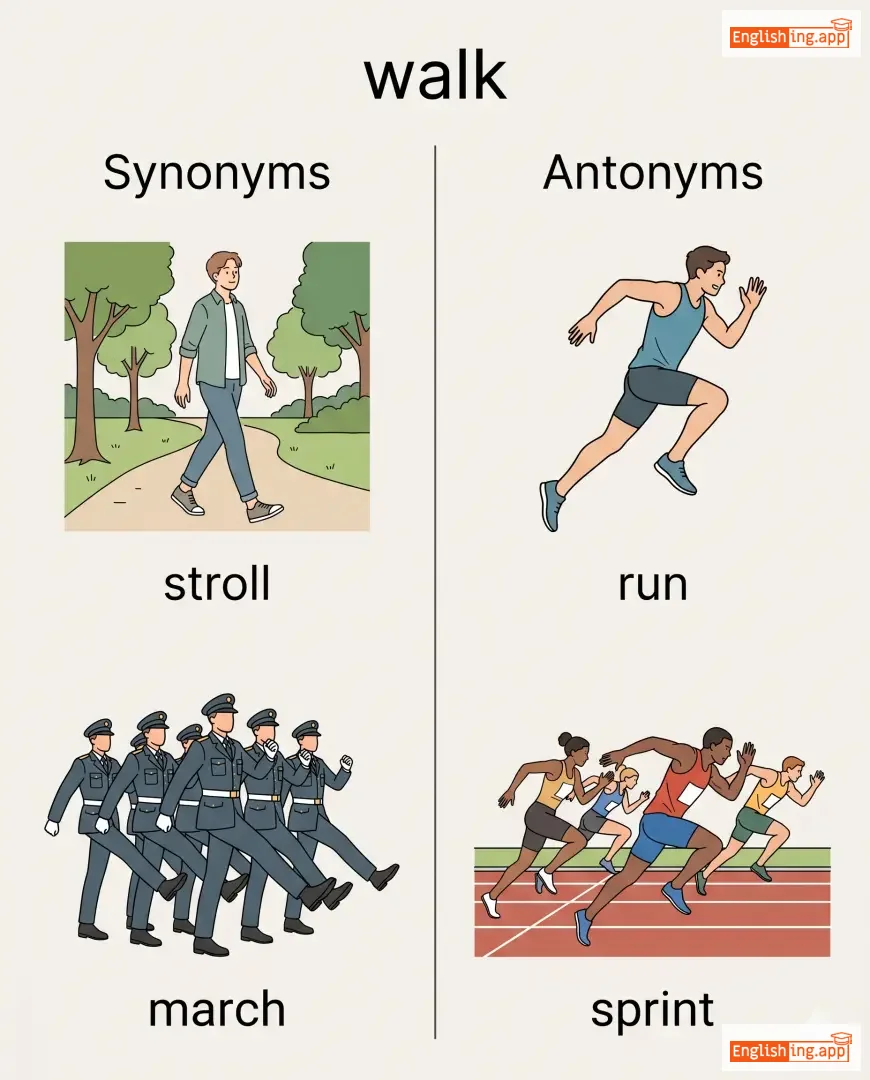
stroll, march, stride, step
••••••
|
run, fly, drive, ride
••••••
|
walk slowly, walk together, walk alone, walk home
••••••
|
Идите, шагайте по жизни!
••••••
|
|
#5431
🧱
|
/wɔːl/
noun
(wɔːl)
••••••
|
- •••••• |
стена
stena
••••••
|
- •••••• | - •••••• | - •••••• | - •••••• |
a vertical structure that encloses or divides an area
••••••
|
The wall in our living room is painted blue. |
Стена в нашей гостиной покрашена в синий цвет.
Stena v nashey gostinoy pokrashena v siniy tsvet.
••••••
|
- •••••• | - •••••• | - •••••• |
barrier, partition, fence, divider
••••••
|
open, doorway
••••••
|
wall of bricks, brick wall, wall art
••••••
|
WALL your dreams - стена мечт
••••••
|
|
#5432
👛
|
/ˈwɒlɪt/
noun
(воллет)
••••••
|
- •••••• |
кошелек
koshelek
••••••
|
- •••••• | - •••••• | - •••••• | - •••••• |
a small folding case for carrying money, credit cards, and identification
••••••
|
He pulled out his wallet to pay for the coffee. |
Он достал свой кошелек, чтобы заплатить за кофе.
On dostal svoy koshelek, chtoby zaplatit' za kofe.
••••••
|
- •••••• | - •••••• | - •••••• |
purse, billfold, pocketbook
••••••
|
safe, vault, treasury
••••••
|
leather wallet, digital wallet, wallet chain, lost wallet
••••••
|
В кошельке всегда храним деньги и карты
••••••
|
|
#5433
🚶
|
/ˈwɒndər/
verb
(вандер)
••••••
|
|
блуждать
bluzhdat'
••••••
|
wandered
вандерд
••••••
|
wandered
вандерд
••••••
|
wanders
вандерс
••••••
|
wandering
вандеринг
••••••
|
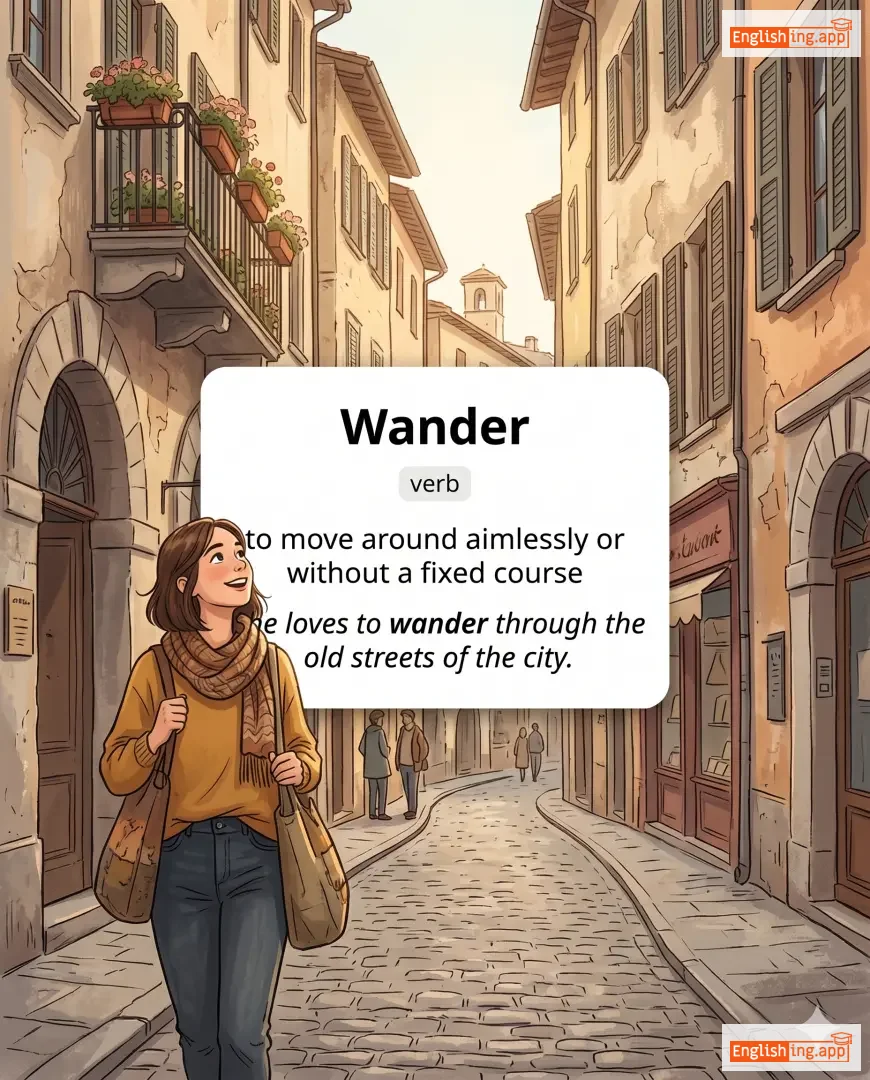
to move around aimlessly or without a fixed course
••••••
|
She loves to wander through the old streets of the city.
Она любит бродить по старым улицам города.
••••••
|
Она любит бродить по старым улицам города.
Ona lyubit brodit' po starym ulitsam goroda.
••••••
|
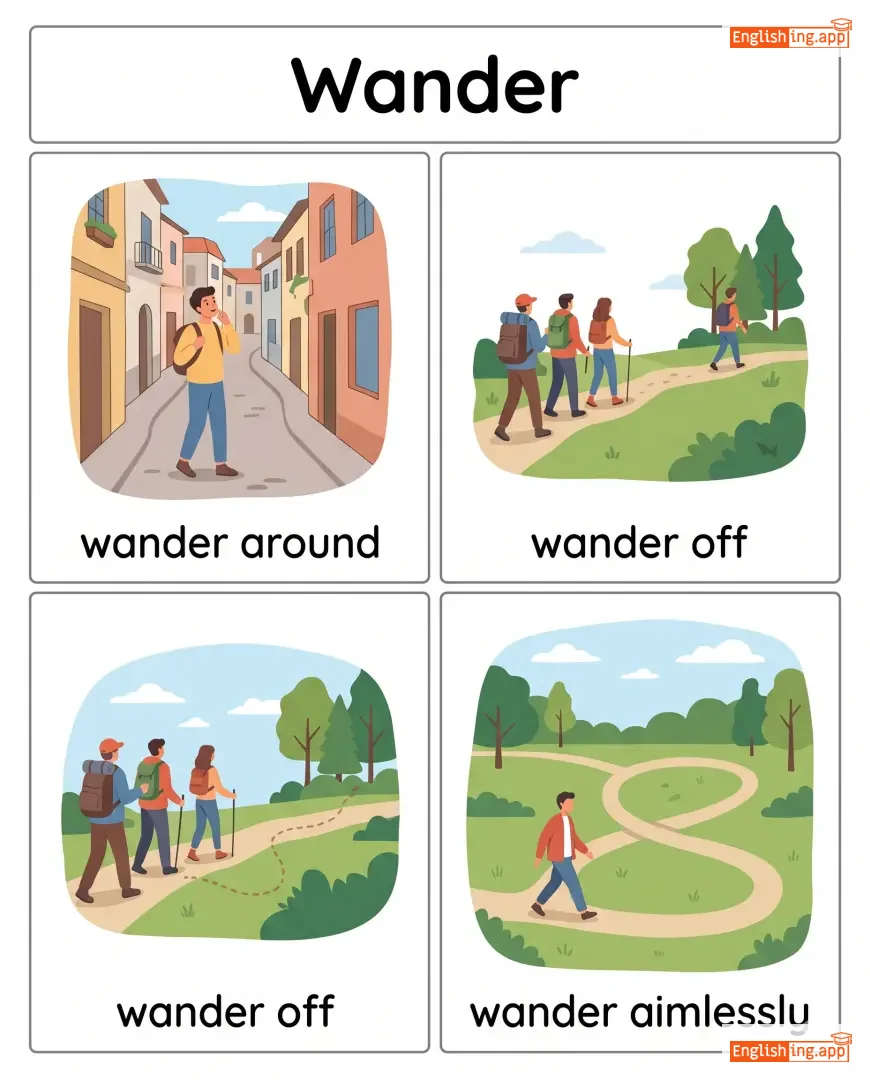
wander off
уйти
••••••
|
to leave a place or group without telling anyone
••••••
|
уйти без предупреждения
uyti bez preduprezhdeniya
••••••
|
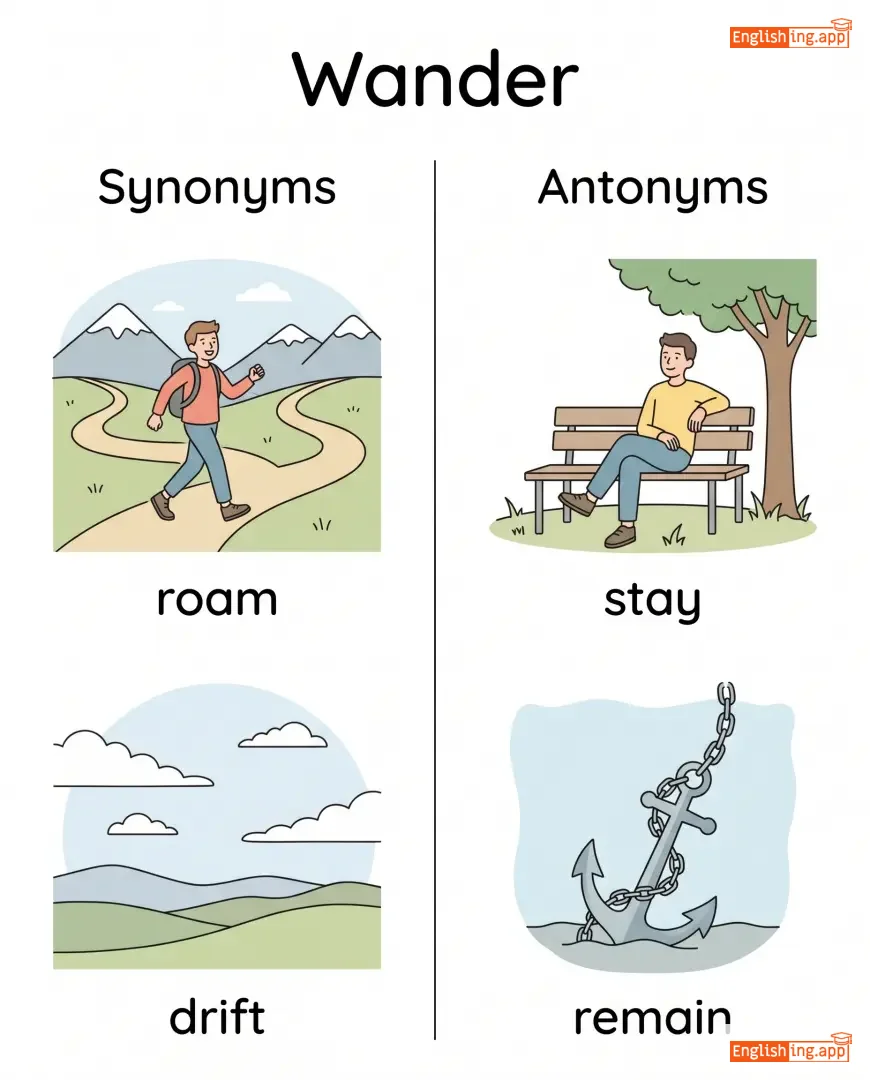
roam, drift, meander, stray, stroll
••••••
|
stay, remain, settle
••••••
|
wander around, wander off, wander aimlessly, wander through
••••••
|
Wander означает блуждать, как делать window shopping.
••••••
|
|
#5434
☕
|
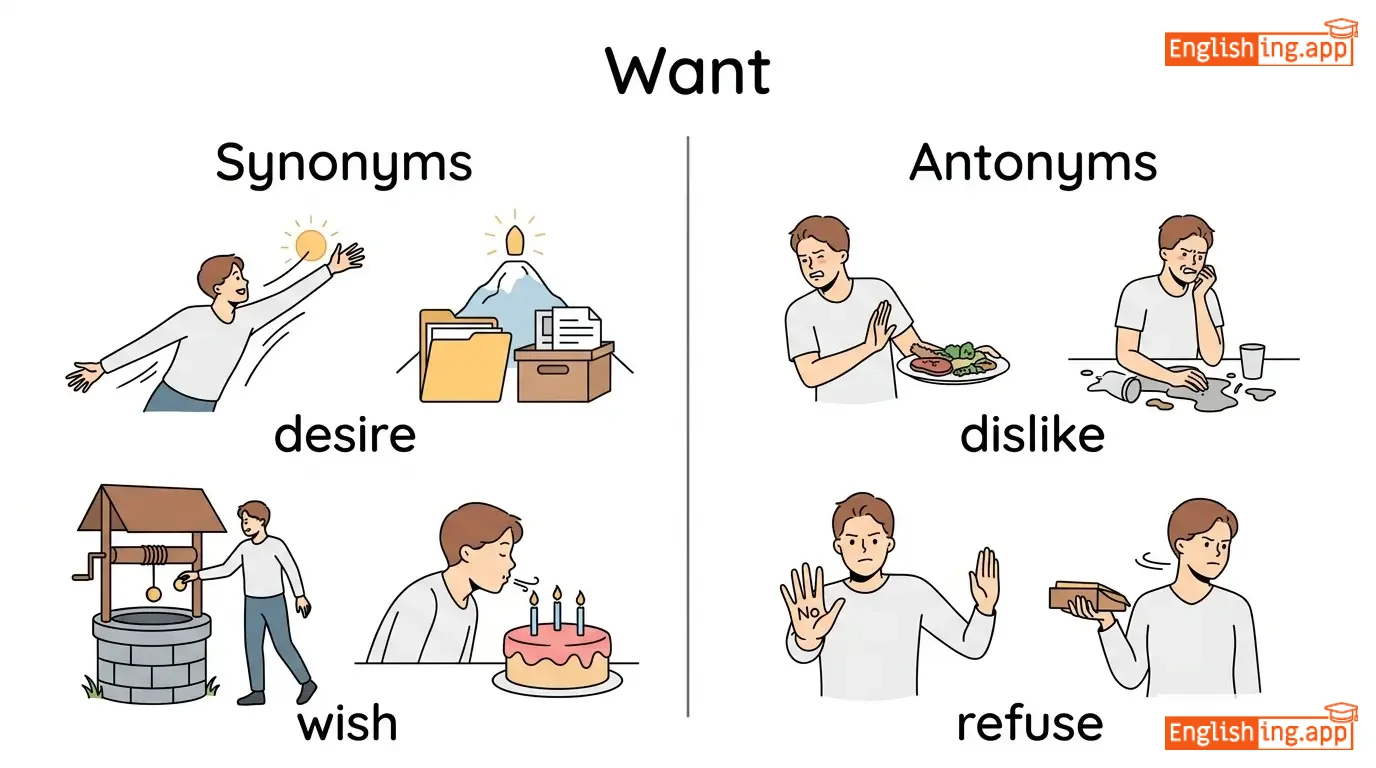
/wɒnt/
verb
(вонт)
••••••
|
|
хотеть
khotet
••••••
|
wanted
вонтед
••••••
|
wanted
вонтед
••••••
|
wants
вонтс
••••••
|
wanting
вонтинг
••••••
|
To desire to have or do something.
••••••
|
I want a cup of coffee before the meeting.
я хочу чашку кофе до встречи.
••••••
|
Я хочу чашку кофе до встречи.
Ya khochu chashku kofe do vstrechi.
••••••
|
for want of
из-за нехватки
••••••
|
due to the lack of something
••••••
|
из-за нехватки
iz-za nekhvatki
••••••
|
desire, wish, crave, need, long-for
••••••
|
dislike, refuse, reject
••••••
|
want something, want to do, want badly
••••••
|
Хотеть = 'want' на русском
••••••
|
|
#5435
⚔️
|
/wɔːr/
noun
(вaр)
••••••
|
- •••••• |
война
voyna
••••••
|
- •••••• | - •••••• | - •••••• | - •••••• |
a state of armed conflict between different countries or different groups within a country
••••••
|
The war lasted for five years and caused great destruction.
Война длилась пять лет и вызвала большое разрушение.
••••••
|
Война длилась пять лет и вызвала большое разрушение.
Voyna dlinilas' pyat' let i vyzvala bol'shoe razrushenie.
••••••
|
- •••••• | - •••••• | - •••••• |
conflict, battle, combat, warfare
••••••
|
peace, harmony, ceasefire
••••••
|
civil war, world war, war zone, declare war
••••••
|
‘Voyna’ in Russian translates directly to ‘war,’ highlighting conflict between groups.
••••••
|
|
#5436
🏥
|
/wɔːrd/
noun
(вард)
••••••
|
- •••••• |
палата
palata
••••••
|
- •••••• | - •••••• | - •••••• | - •••••• |
A separate room in a hospital for patients; also a division of a city or a person under guardianship.
••••••
|
She was admitted to the children's ward. |
Ее приняли в детскую палату.
Eyo prinyali v detskuyu palatu.
••••••
|
under someone's ward |
being under the guardianship or protection of someone
••••••
|
под чьей-то опекой
pod ch'yey-to opekoy
••••••
|
unit, section, division, department
••••••
|
freedom, independence
••••••
|
hospital ward, children's ward, surgical ward, ward off
••••••
|
Ward = палата → палата, где дети находятся под присмотром
••••••
|
|
#5437
🏭
|
/ˈweə(r)haʊs/
noun
(vɛrxaʊs)
••••••
|
- •••••• |
склад
sklad
••••••
|
- •••••• | - •••••• | - •••••• | - •••••• |
a large building where goods are stored before being sold or distributed
••••••
|
The company stores all its products in a big warehouse. |
Компания хранит всю свою продукцию на большом складе.
Kompaniya khranit vsyu svoyu produktsiyu na bol'shom sklade.
••••••
|
warehouse sale |
a sale held directly from a warehouse at discounted prices
••••••
|
распродажа со склада
rasprodazha so sklada
••••••
|
depot, storage, storehouse, repository, stockroom
••••••
|
shop, outlet
••••••
|
warehouse worker, warehouse storage, in the warehouse, warehouse manager
••••••
|
Warehouse это склад — место для хранения товаров.
••••••
|
|
#5438
⚔️
|
/ˈwɔːfeər/
noun
(война)
••••••
|
- •••••• |
война
voyna
••••••
|
- •••••• | - •••••• | - •••••• | - •••••• |
armed conflict between different countries or groups; the activity of fighting a war
••••••
|
Modern warfare involves advanced technology and strategic planning. |
Современная война включает в себя передовые технологии и стратегическое планирование.
Sovremennaya voyina vklyuchayet v sebya peredovye tekhnologii i strategicheskoe planirovaniye.
••••••
|
- •••••• | - •••••• | - •••••• |
combat, battle, conflict, fighting
••••••
|
peace, harmony, truce, ceasefire
••••••
|
modern warfare, guerrilla warfare, chemical warfare, psychological warfare
••••••
|
Война требует стратегии и технологий для победы.
••••••
|
|
#5439
☀️
|
/wɔːrm/
verb
(wɔrm)
••••••
|
- •••••• |
нагревать
nagrevat
••••••
|
Warmed
wɔrmd
••••••
|
Warmed
wɔrmd
••••••
|
Warms
wɔrmz
••••••
|
Warming
wɔrmɪŋ
••••••
|
to make or become warm; to heat something gently
••••••
|
The sun warms the earth during the day.
ðə sʌn wɑːrmz ðə ɜːrθ dʊərɪŋ ðə deɪ
••••••
|
Солнце согревает Землю в течение дня.
Solntse sogrevaet Zemlyu v techeniye dnya.
••••••
|
- •••••• | - •••••• | - •••••• |
heat, comfort, soothe, embrace
••••••
|
cool, chill, freeze, cold
••••••
|
warm up, warm gently, warm quickly, keep warm
••••••
|
Когда холодно, согревайся под одеялом.
••••••
|
|
#5440
🌡️
|
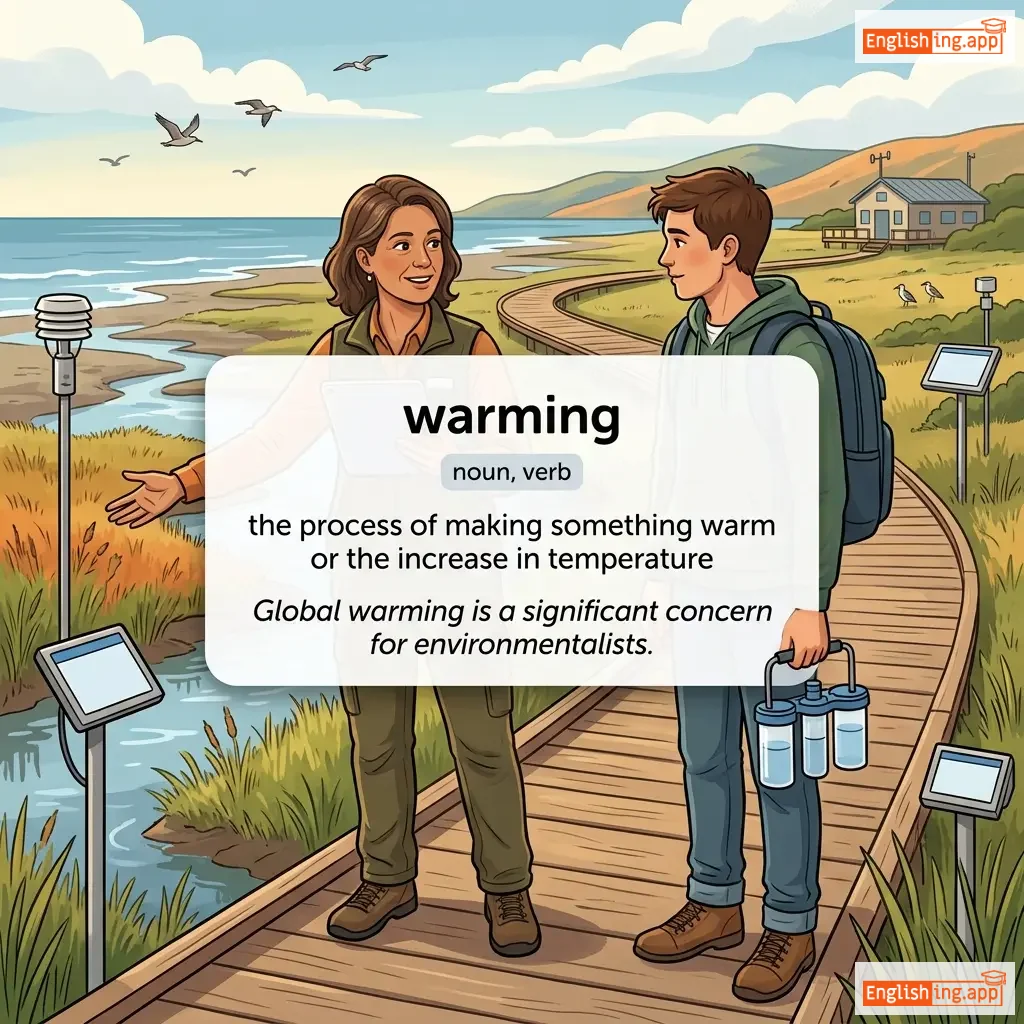
/ˈwɔːmɪŋ/
noun, verb
(уорми́нг)
••••••
|
|
повышение температуры
povyshenie temperatury
••••••
|
- •••••• | - •••••• |
warms
уо́рмс
••••••
|
warming
уорми́нг
••••••
|
the process of making something warm or the increase in temperature
••••••
|
Global warming is a significant concern for environmentalists.
Глобальное потепление — это серьезная проблема для экологов.
••••••
|
Глобальное потепление — это серьезная проблема для экологов.
Globalnoe poteplenie — eto ser'yezhnaya problema dlya ekologov.
••••••
|
- •••••• | - •••••• | - •••••• |
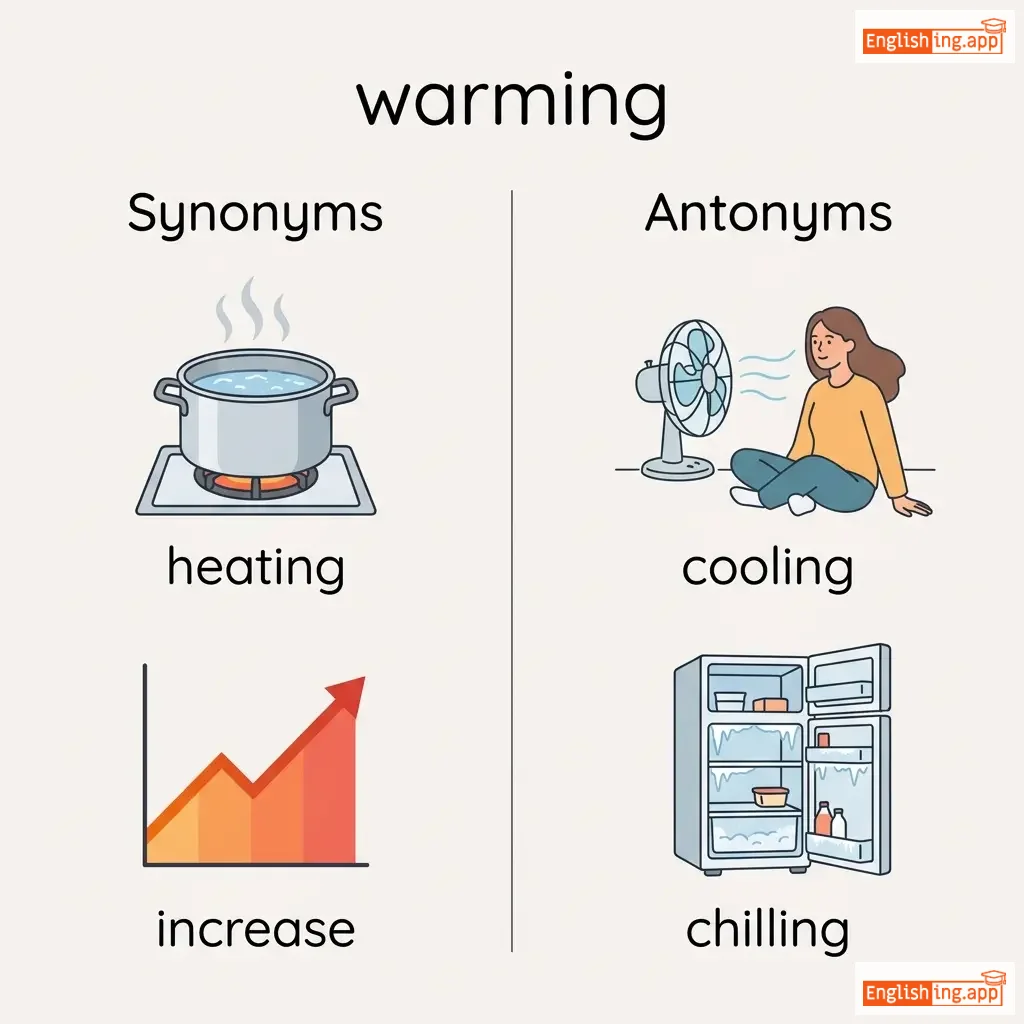
heating, increase, raising, elevating
••••••
|
cooling, chilling
••••••
|
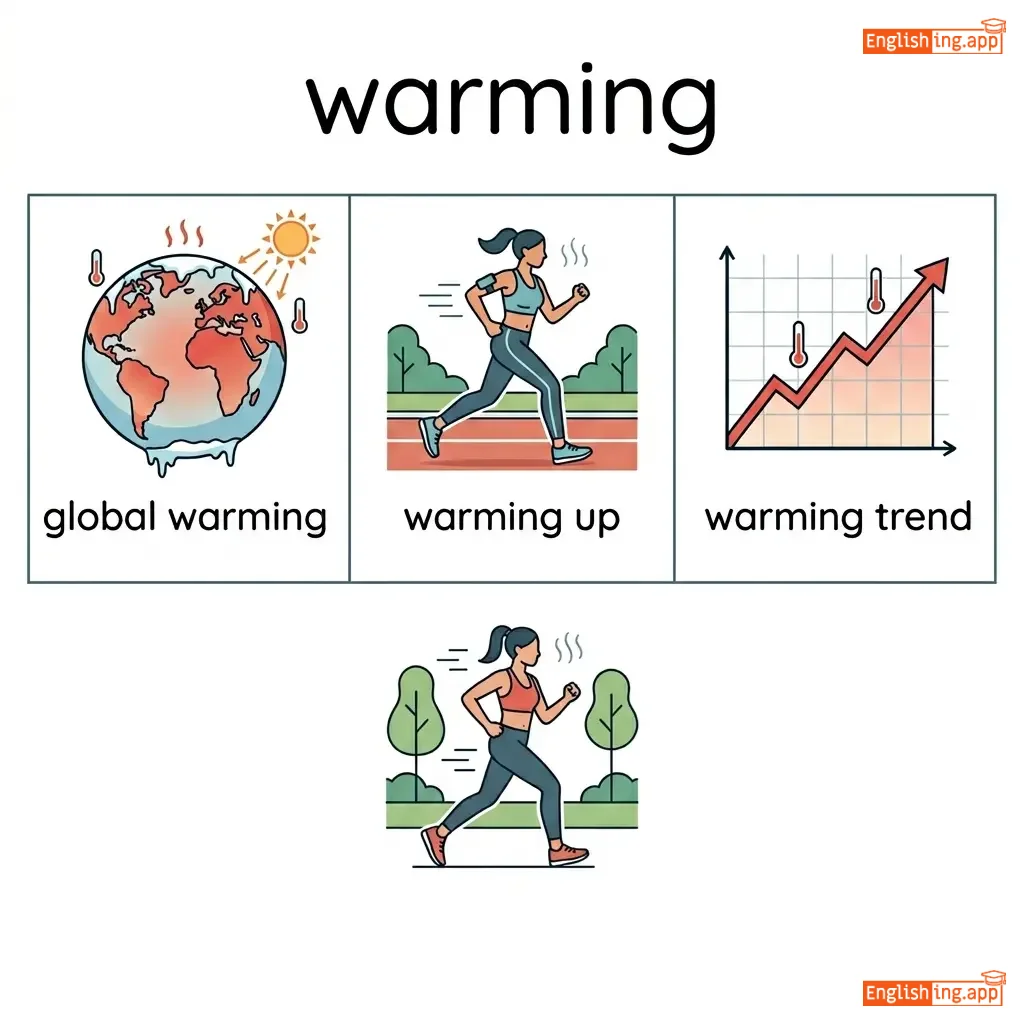
global warming, warming up, warming trend
••••••
|
Warming sounds like 'уорми́нг', which is similar to 'повышение температуры' meaning the increase in temperature.
••••••
|
|
#5441
🤗
|
/ˈwɔːm.li/
adverb
(вармли)
••••••
|
- •••••• |
тепло; с любовью
teplo; s lyubov'yu
••••••
|
- •••••• | - •••••• | - •••••• | - •••••• |
in a warm manner; with warmth; cordially; affectionately
••••••
|
She welcomed the guests warmly at the door. |
Она тепло встретила гостей у двери.
Ona teplo vstretala gostey u dveri.
••••••
|
- •••••• | - •••••• | - •••••• |
cordially, affectionately, kindly, heartily, enthusiastically
••••••
|
coldly, harshly, rudely, unfriendly
••••••
|
warmly welcome, warmly received, warmly greet, warmly embrace
••••••
|
Тепло встречай гостей, проявляя любовь и заботу.
••••••
|
|
#5442
☀️
|
/wɔːmθ/
noun
(хэппинесс)
••••••
|
- •••••• |
тепло
teplo
••••••
|
- •••••• | - •••••• | - •••••• | - •••••• |
the quality or state of being warm in temperature or feeling
••••••
|
She felt the warmth of the sun on her face.
Она почувствовала тепло солнца на своем лице.
••••••
|
Она почувствовала тепло солнца на своем лице.
Ona pochuvstvovala teplo solntsa na svoem litse.
••••••
|
warmth of heart
тепло сердца
••••••
|
kindness and affection
••••••
|
тепло сердца
teplo serdtsa
••••••
|
heat, coziness, affection, kindness, friendliness
••••••
|
coldness, chill, indifference
••••••
|
emotional warmth, inner warmth, warmth and love, warmth of the sun
••••••
|
Warmth означает тепло — ‘warm th’ это не просто температура, но и тепло сердца и привязанности.
••••••
|
|
#5443
⚠️
|
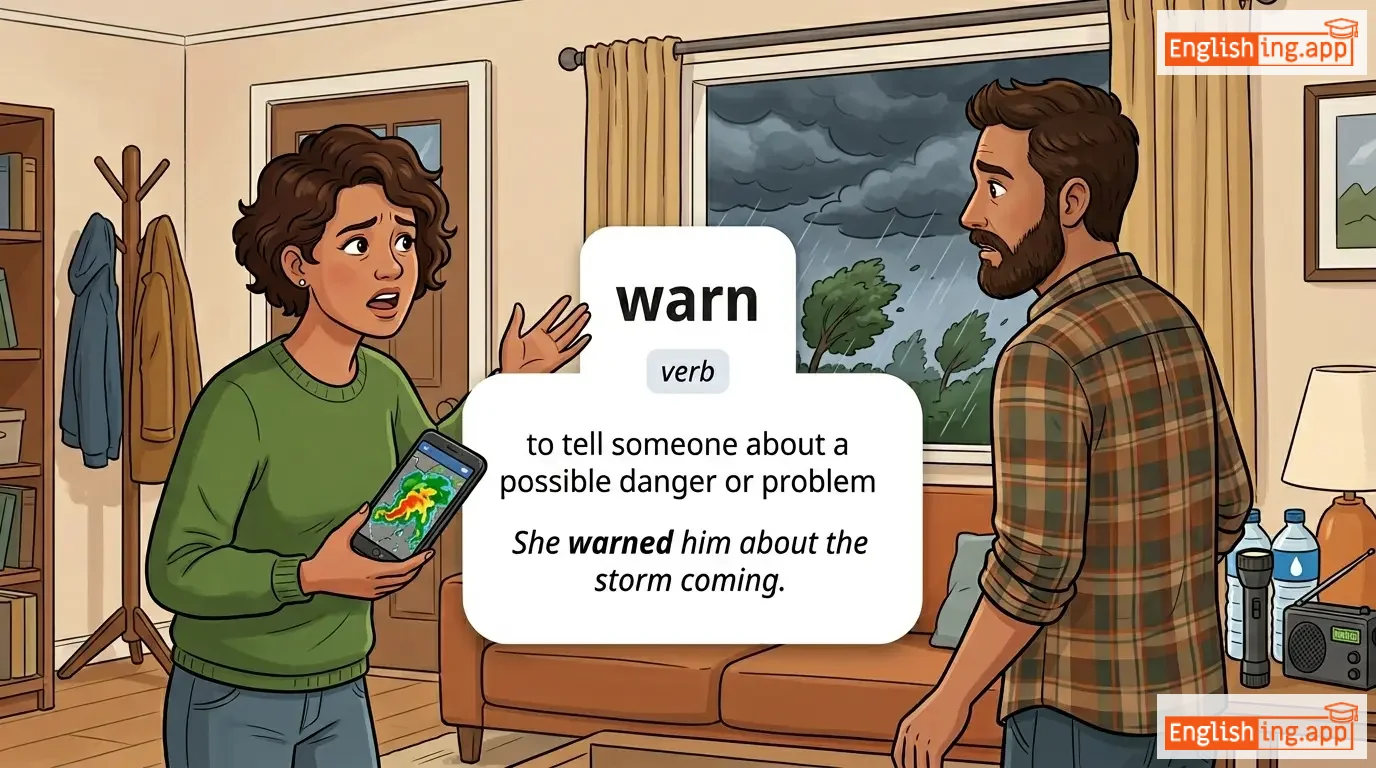
/wɔːrn/
verb
(вɔːrn)
••••••
|
|
предупреждать
preduprezhdat
••••••
|
warned
вɔːнд
••••••
|
warned
вɔːнд
••••••
|
warns
вɔːрнз
••••••
|
warning
вɔːринг
••••••
|
to alert about danger; to give notice of risk
••••••
|
The weather service warns of heavy rain tonight.
Служба погоды предупреждает о сильном дожде сегодня ночью.
••••••
|
Служба погоды предупреждает о сильном дожде сегодня ночью.
Sluzhba pogody preduprezhdaet o sil'nom dozhde segodnya noch'yu.
••••••
|
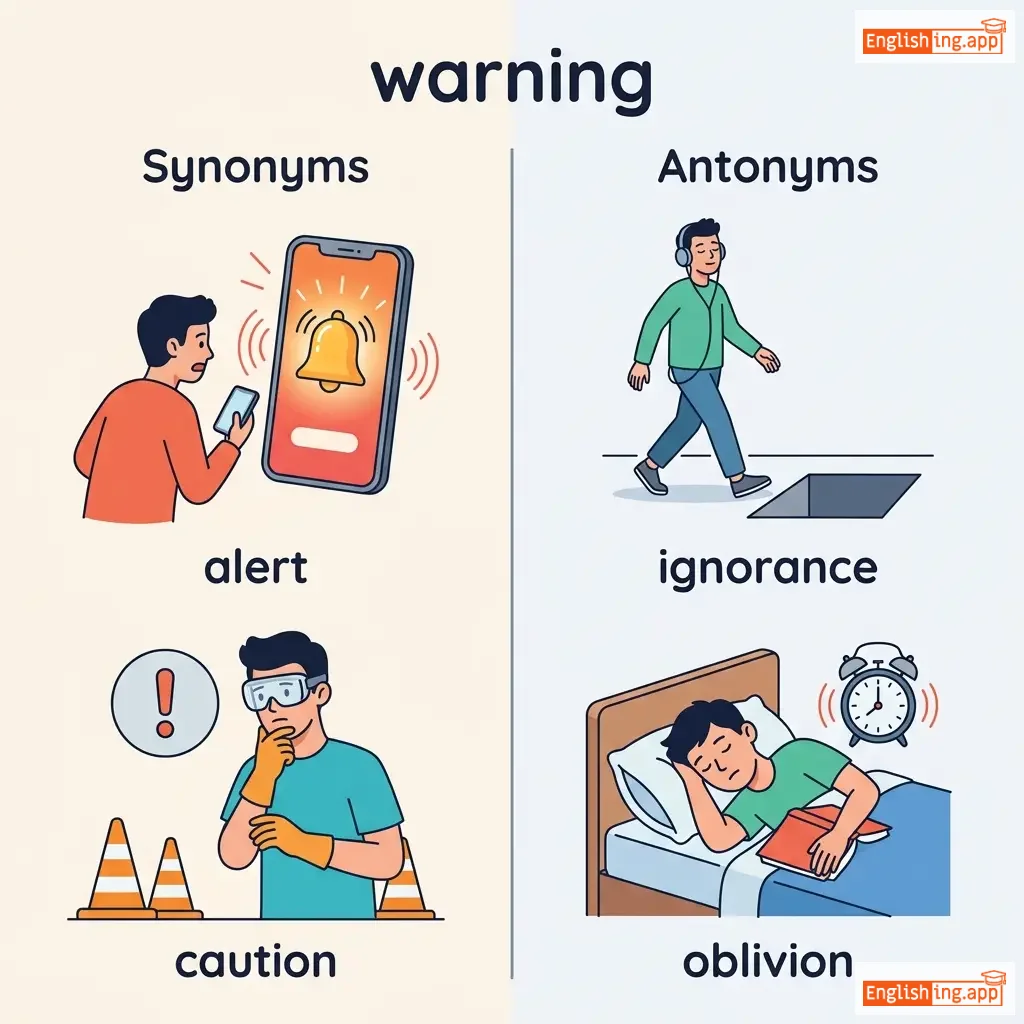
- •••••• | - •••••• | - •••••• |
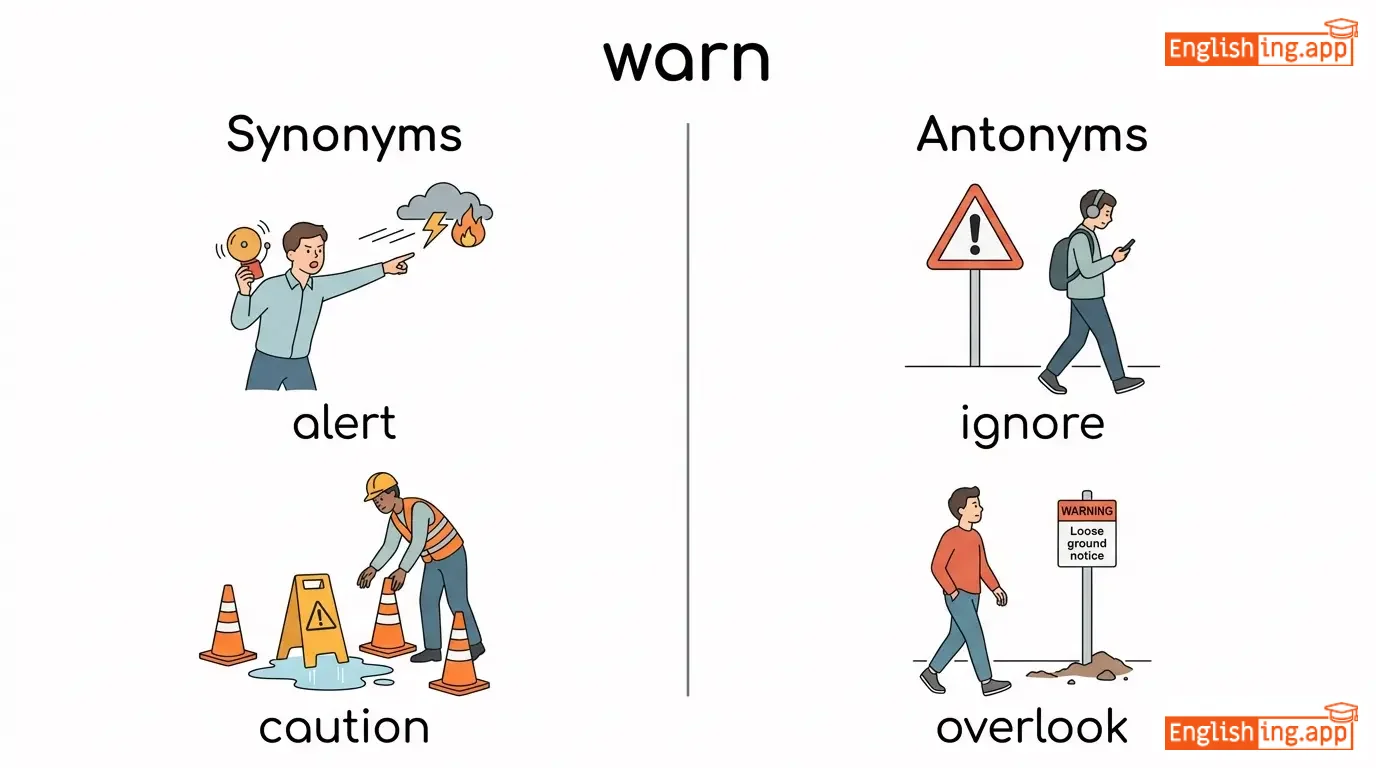
alert, caution, advise, notify, inform
••••••
|
mislead, deceive, ignore, conceal
••••••
|
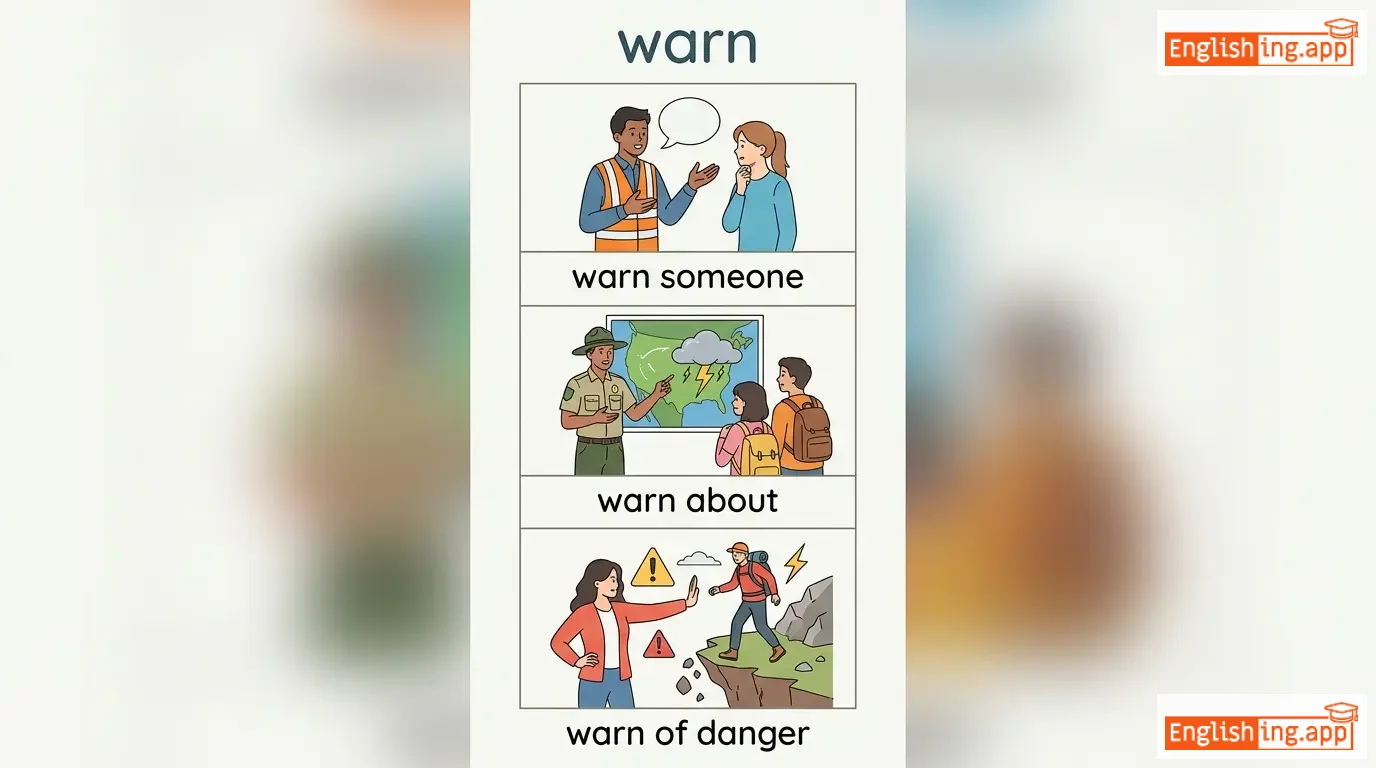
warn against, warn about, warn of danger, warn someone, early warning
••••••
|
No •••••• |
|
#5444
⚠️
|
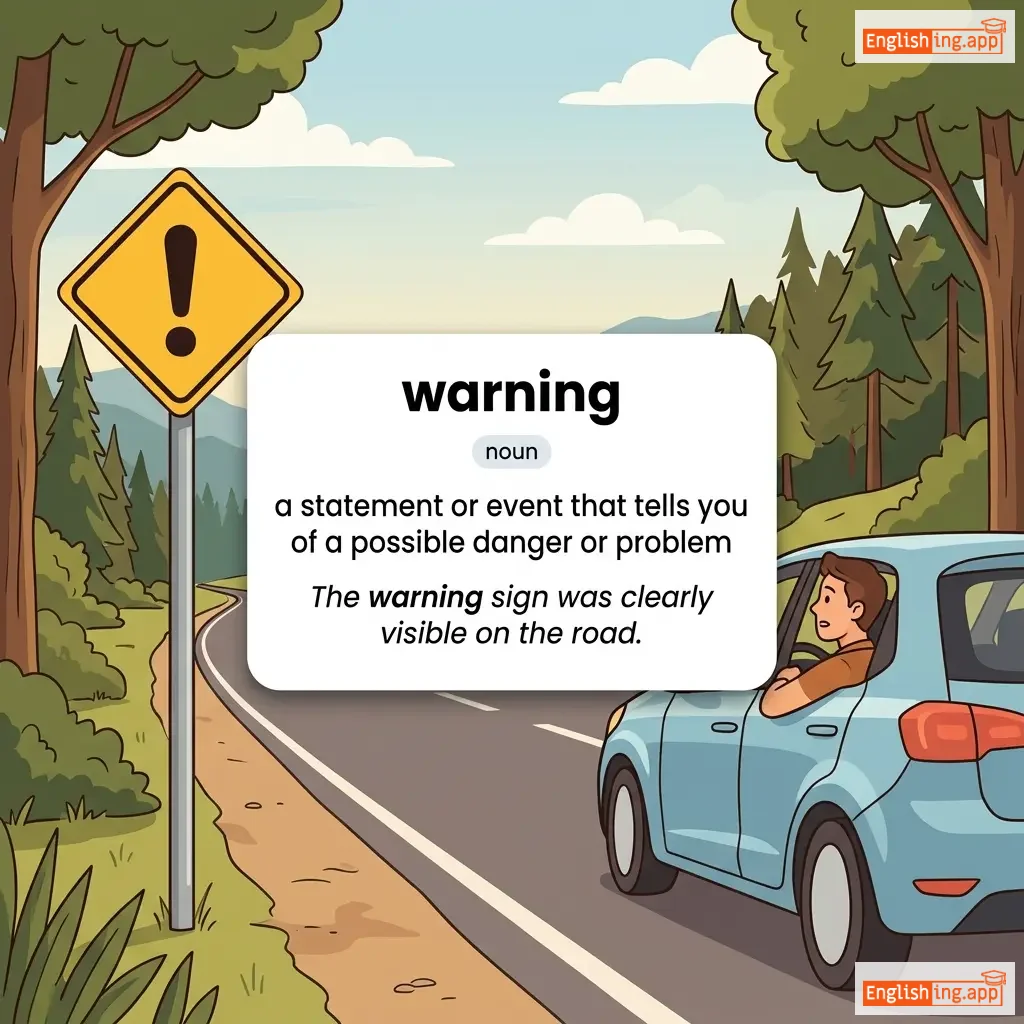
/ˈwɔːnɪŋ/
noun
(ворнинг)
••••••
|
|
предупреждение
preduprezhdenie
••••••
|
- •••••• | - •••••• | - •••••• | - •••••• |
a statement or event that indicates a possible or impending danger, problem, or other unpleasant situation
••••••
|
The weather service issued a severe storm warning.
Метеорологическая служба выпустила предупреждение о сильной буре.
••••••
|
Метеорологическая служба выпустила предупреждение о сильной буре.
Meteorologicheskaya sluzhba vypustila preduprezhdenie o sil'noy bure.
••••••
|
- •••••• | - •••••• | - •••••• |
alert, caution, notice, alarm
••••••
|
assurance, guarantee, safety, security
••••••
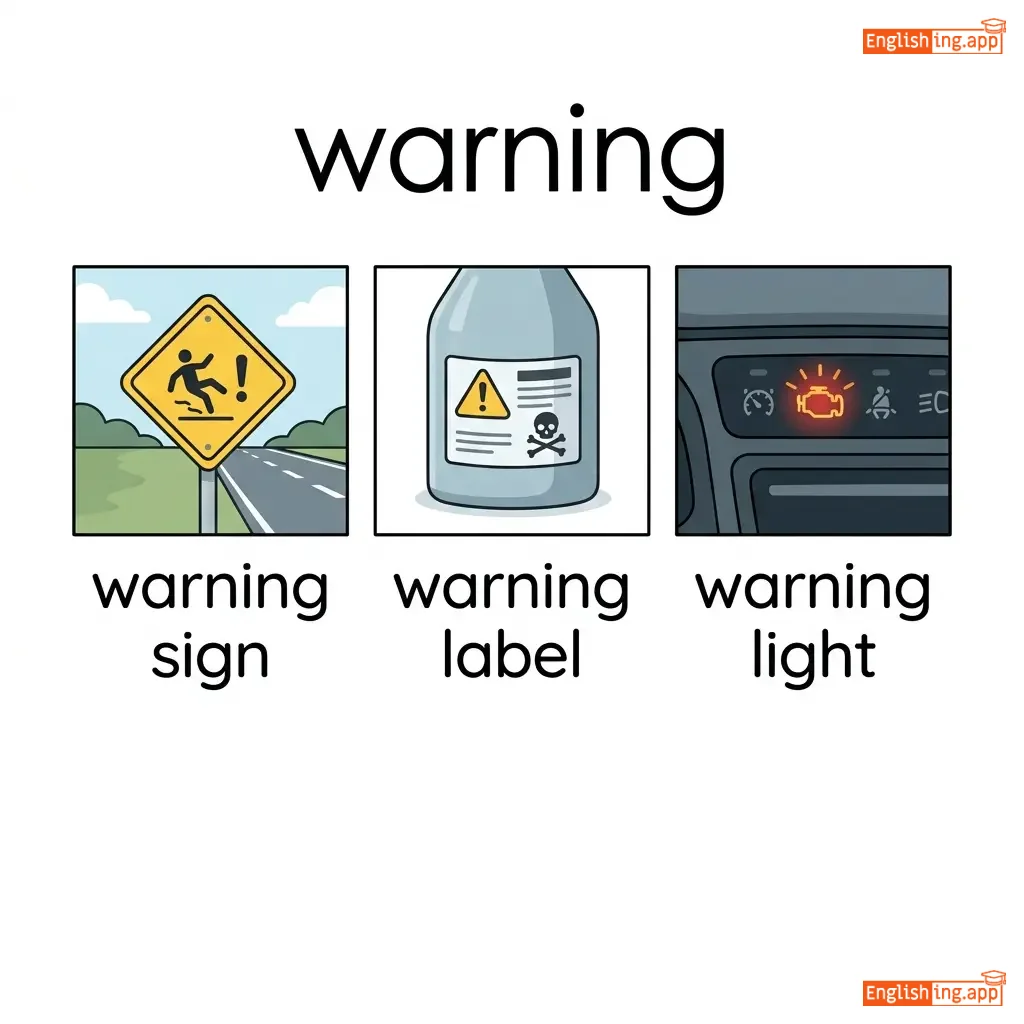
|
warning sign, early warning, final warning, health warning
••••••
|
Preduprezhdenie – это предупреждение, как warning, и означает сигнал о возможной опасности.
••••••
|
|
#5445
📜
|
/ˈwɒrənt/
noun/verb
(вóрэнт)
••••••
|
- •••••• |
ордер
order
••••••
|
warranted
варрентед
••••••
|
warranted
варрентед
••••••
|
warrants
варрантс
••••••
|
warranting
варрэнтинг
••••••
|
As a noun: An official authorization or order. As a verb: To justify or make something necessary.
••••••
|
The judge issued a warrant for his arrest.
Судья выдал ордер на его арест.
••••••
|
Судья выдал ордер на его арест.
Sudiya vydal order na ego arest.
••••••
|
search warrant
ордер на обыск
••••••
|
a legal document authorizing the police to search a place
••••••
|
ордер на обыск
order na obysk
••••••
|
authorization, permit, justification, license
••••••
|
ban, prohibition, denial
••••••
|
arrest warrant, search warrant, warrant issued, warrant action
••••••
|
Полиция использует ордер для обыска 📝
••••••
|
|
#5446
⚔️
|
/ˈwɒriər/
noun
(вориор)
••••••
|
- •••••• |
воин
voin
••••••
|
- •••••• | - •••••• | - •••••• | - •••••• |
a person engaged or experienced in warfare; a brave or experienced fighter
••••••
|
The ancient warrior fought fearlessly to protect his land. |
Древний воин сражался бесстрашно, чтобы защитить свою землю.
Drevniy voin srazhalsya besstrashno, chtoby zashchitit' svoyu zemlyu.
••••••
|
spiritual warrior |
a person who battles against inner weaknesses or strives for personal growth and enlightenment
••••••
|
духовный воин
dukhovnyy voin
••••••
|
fighter, soldier, combatant, champion, hero
••••••
|
coward, pacifist
••••••
|
brave warrior, ancient warrior, warrior spirit, skilled warrior
••••••
|
Воин — это тот, кто борется не только с врагами, но и с собой.
••••••
|
|
#5447
🧼
|
/wɒʃ/
verb
(vosch)
••••••
|
|
мыть
myt
••••••
|
washed
umyt
••••••
|
washed
umyty
••••••
|
washes
moyet
••••••
|
washing
myy
••••••
|
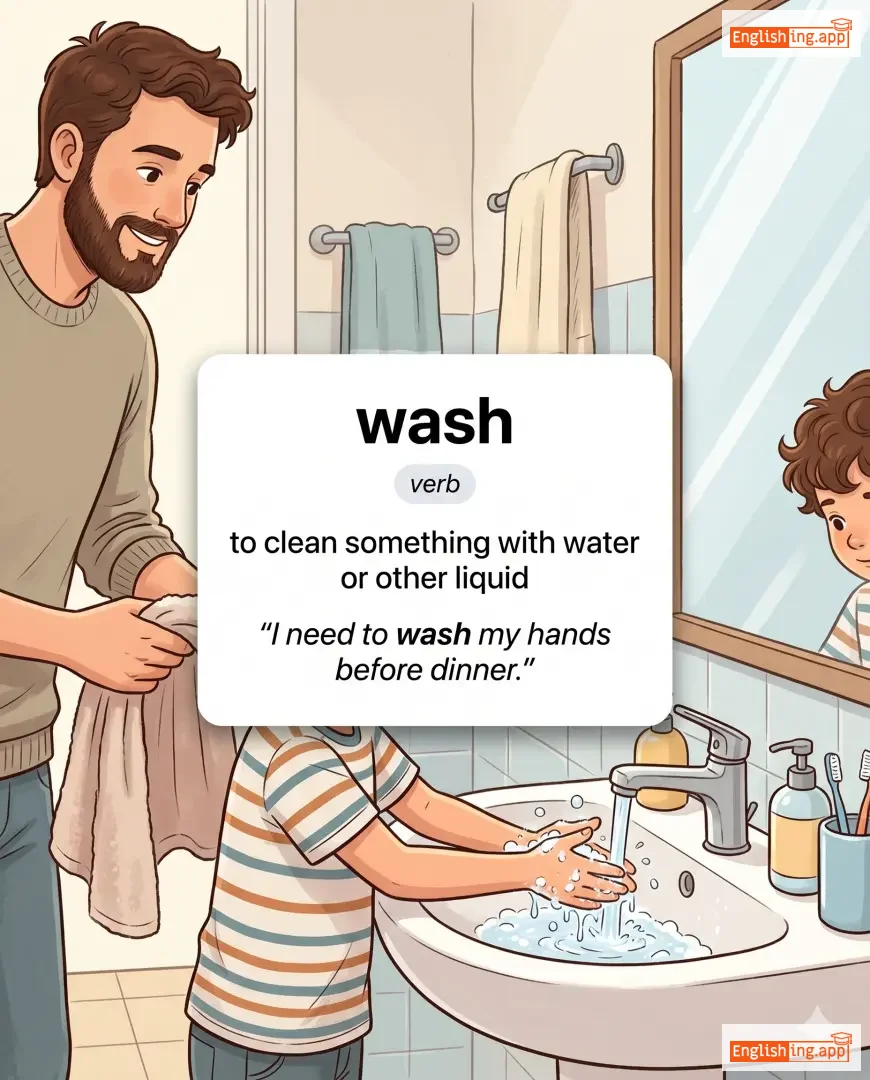
to clean with water; to remove dirt
••••••
|
Please wash your hands before eating.
Пожалуйста, помойте руки перед едой.
••••••
|
Пожалуйста, помойте руки перед едой.
Pozhaluysta, pomoyte ruki pered edoy.
••••••
|
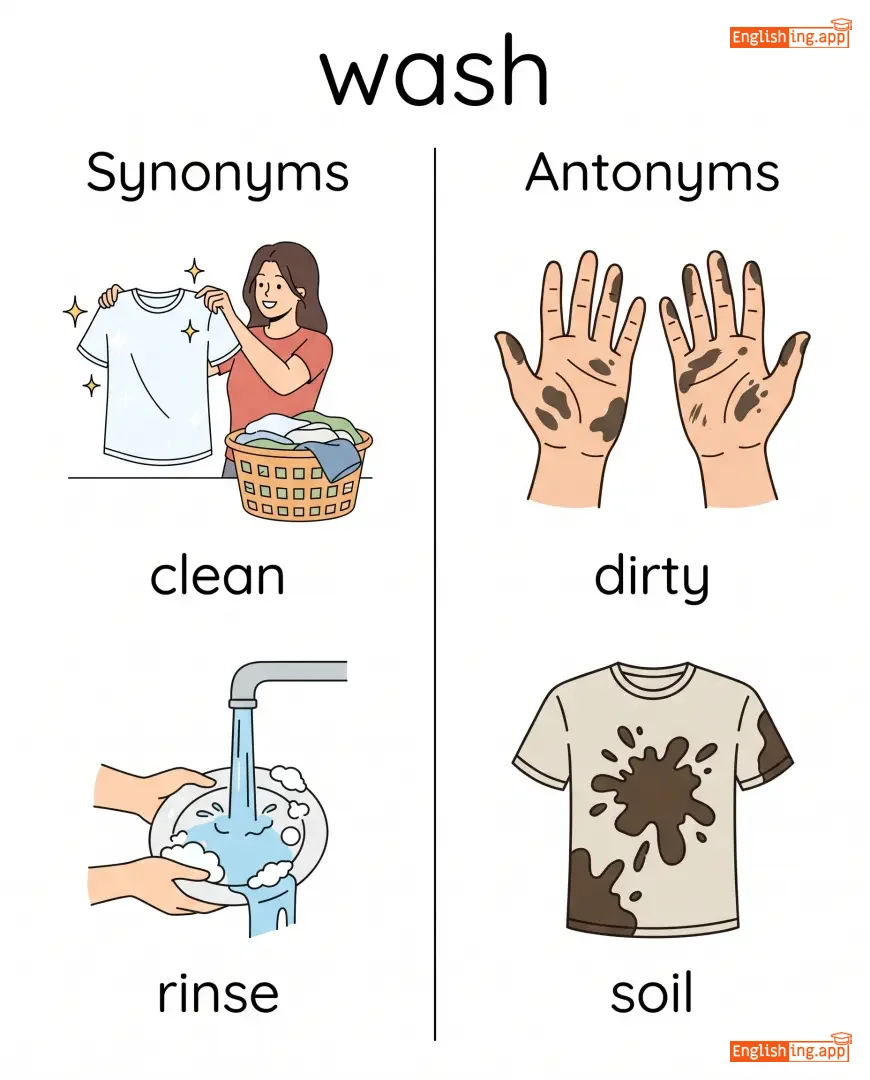
- •••••• | - •••••• | - •••••• |
clean, rinse, scrub, bathe, cleanse
••••••
|
dirty, soil, stain, contaminate
••••••
|
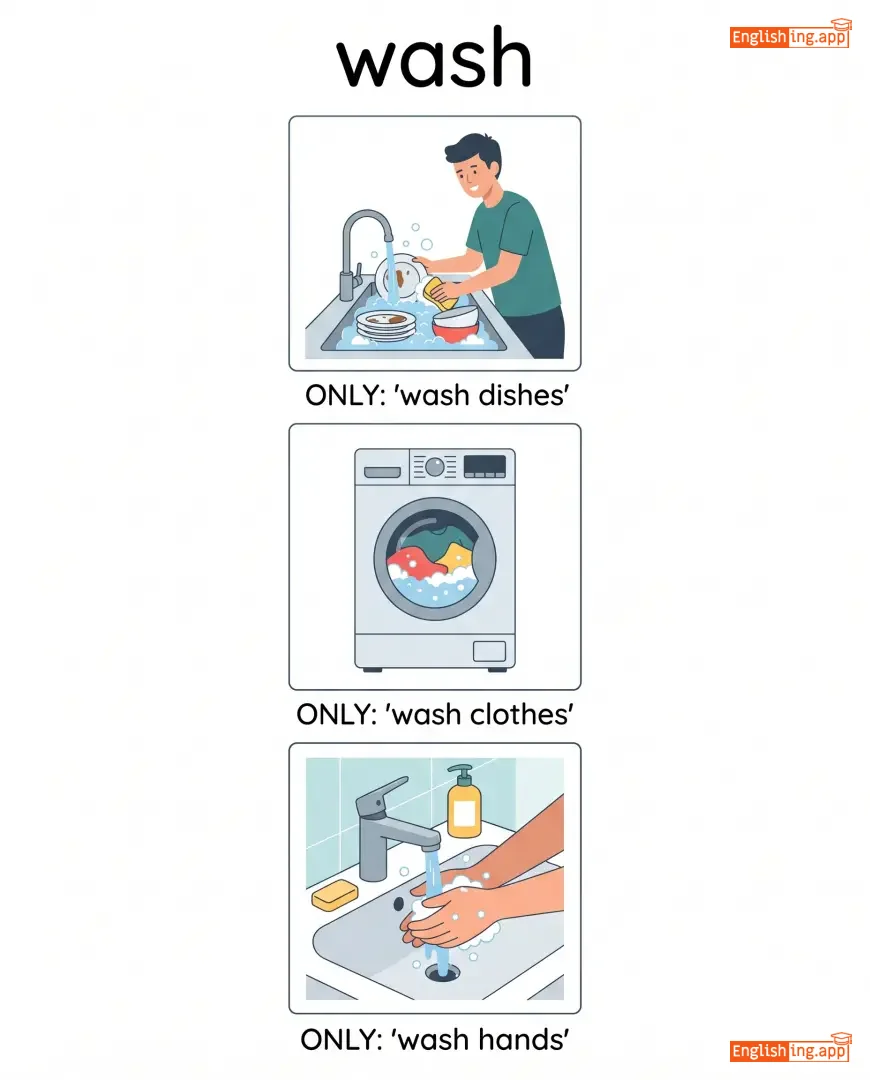
wash hands, wash clothes, wash dishes, thoroughly wash
••••••
|
Think of washing your hands like washing 'myt' (mythical) dirt away.
••••••
|
|
#5448
🧼
|
/ˈwɒʃɪŋ/
noun; gerund
(уошинг)
••••••
|
- •••••• |
стирка
stirka
••••••
|
washed
уошт
••••••
|
washed
уошт
••••••
|
washes
уошиз
••••••
|
washing
уошинг
••••••
|
the act of cleaning with water or other liquid; clothes or items that are being washed
••••••
|
Washing clothes regularly helps maintain hygiene.
уошинг клоуз хелпс мейнтэйн хайджин.
••••••
|
Регулярная стирка одежды помогает поддерживать гигиену.
Regulyarnaya stirka odezhdy pomogaet podderzhivat gigienu
••••••
|
washing one's hands of
уошинг уанз хэндз оф
••••••
|
to refuse responsibility for something
••••••
|
умывать руки
umyvat ruki
••••••
|
cleaning, laundering, rinsing, scrubbing, cleansing
••••••
|
dirtying, soiling, staining
••••••
|
washing clothes, washing machine, hand washing, car washing, daily washing
••••••
|
washing = stirka, wash i chisto
••••••
|
|
#5449
🗑️
|
/weɪst/
verb
(ウェイスト)
••••••
|
|
тратить
tratit'
••••••
|
wasted
ウェイステッド
••••••
|
wasted
ウェイステッド
••••••
|
wastes
ウェイストス
••••••
|
wasting
ウェイスティング
••••••
|
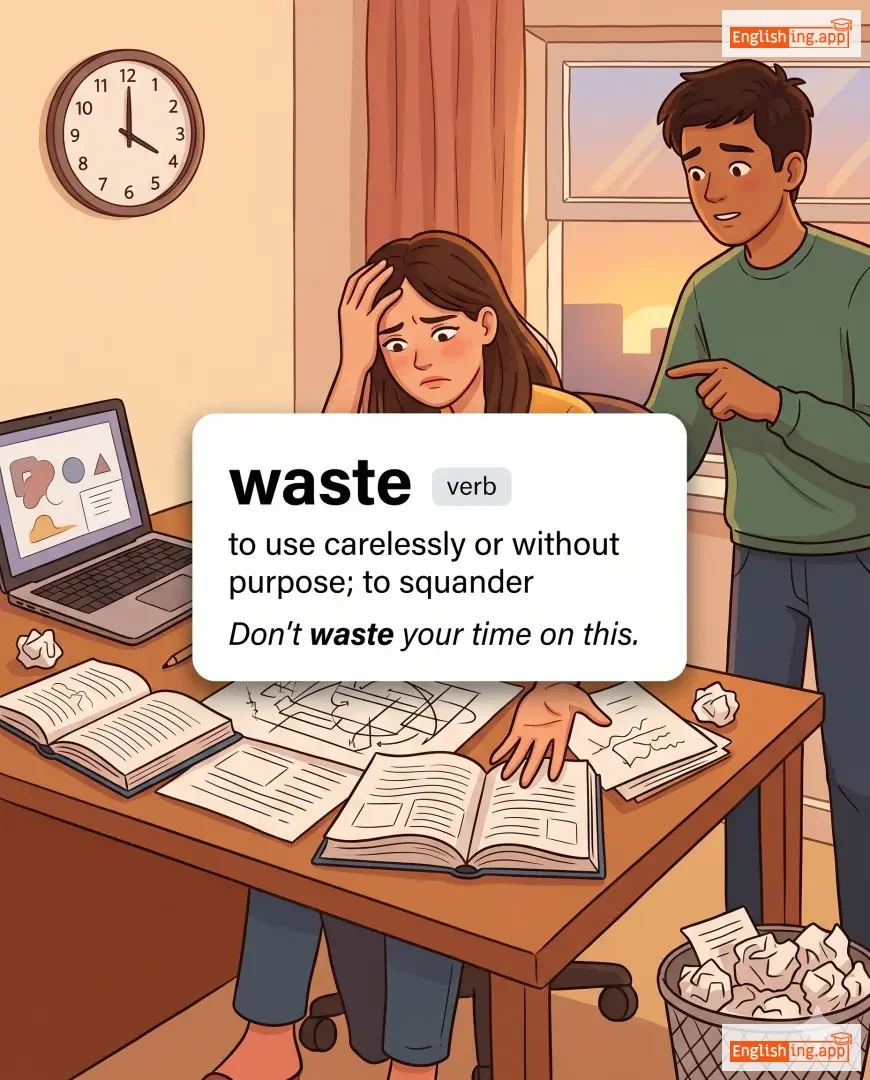
to use carelessly or without purpose; to squander
••••••
|
Don't waste your time on this.
ドント ウェイスト ヨア タイム オン ディス。
••••••
|
Не трать время зря.
Ne trat' vremya zrya.
••••••
|
- •••••• | - •••••• | - •••••• |
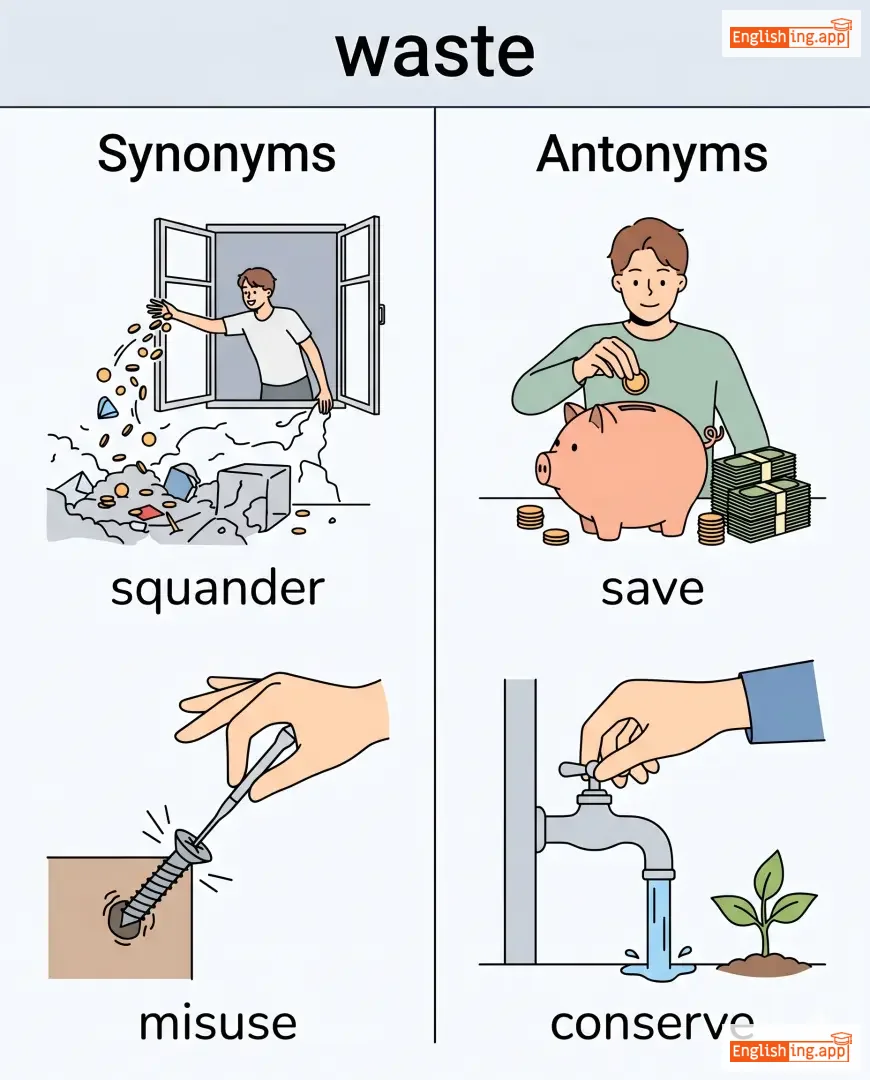
squander, misuse, fritter, throw away
••••••
|
save, conserve, preserve, use wisely
••••••
|
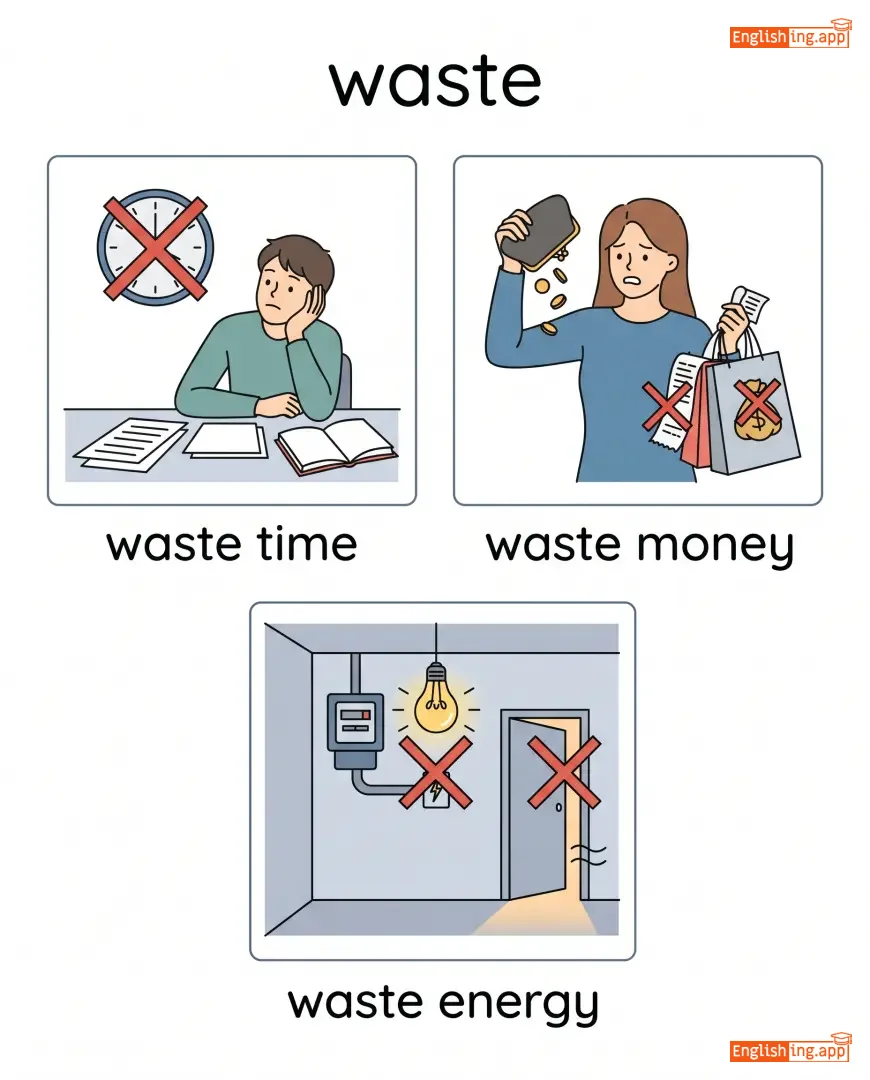
waste time, waste money, waste energy, waste resources, waste opportunity
••••••
|
Тратить — это использовать что-то неэффективно, как тратить деньги на ненужные вещи.
••••••
|
|
#5450
👀
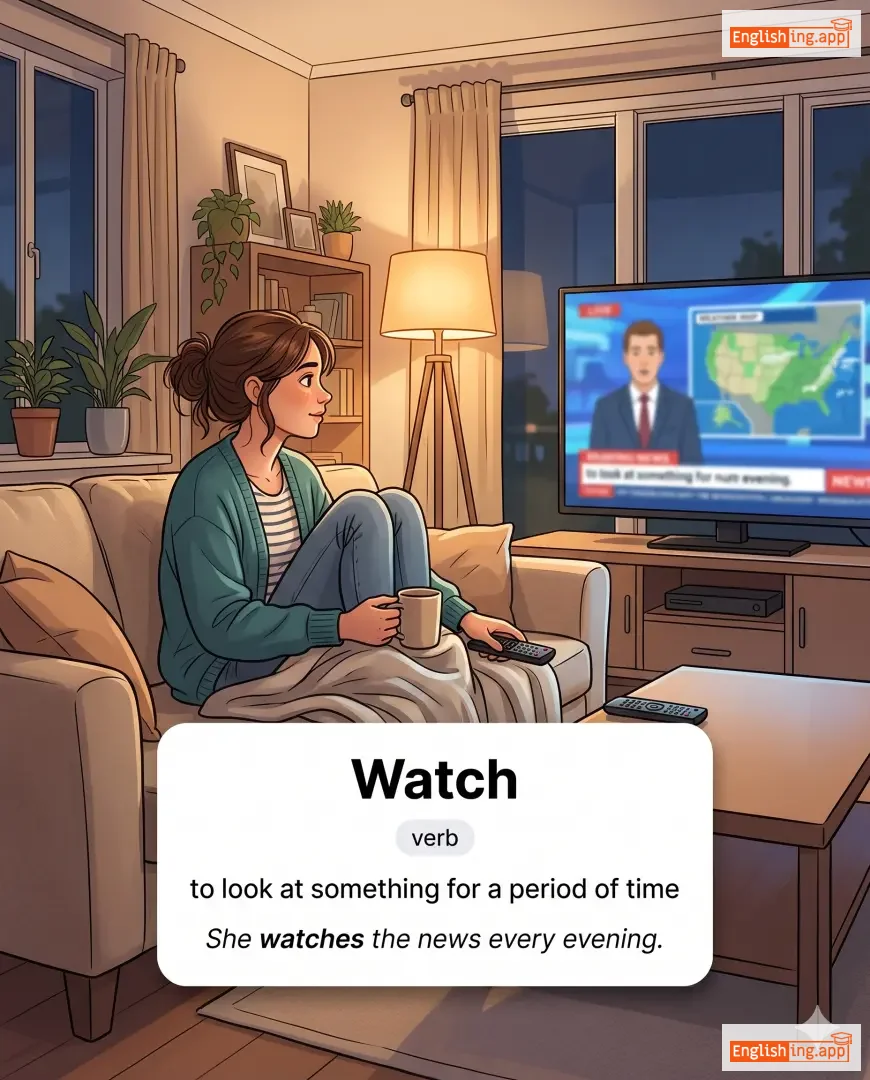
|
/wɒtʃ/
verb
(votch)
••••••
|
|
смотреть
smotret'
••••••
|
watched
votchd
••••••
|
watched
votchd
••••••
|
watches
votchis
••••••
|
watching
watching
••••••
|
to look at or observe attentively; to keep under surveillance
••••••
|
I watch television every evening.
Я смотрю телевизор каждую ночь.
••••••
|
Я смотрю телевизор каждую ночь.
Ya smotryu televizor kazhduyu noch'
••••••
|
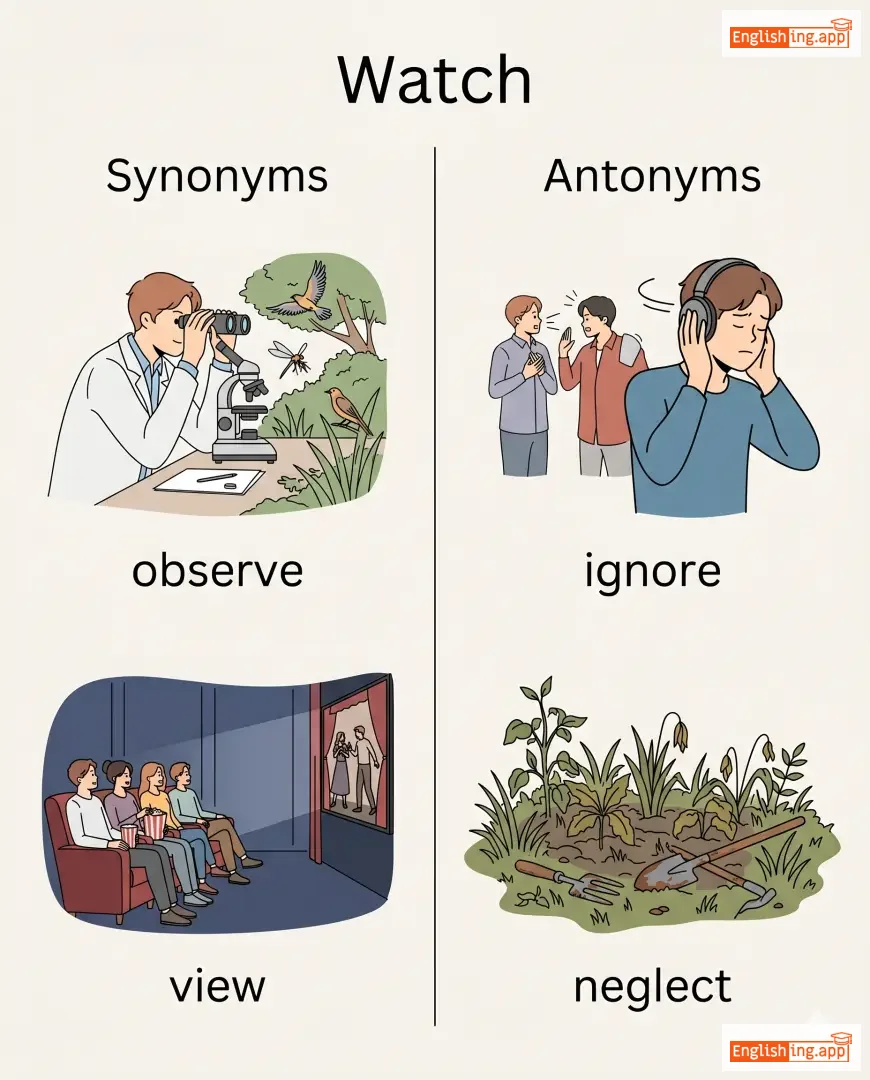
- •••••• | - •••••• | - •••••• |
observe, monitor, view, see
••••••
|
ignore, overlook, neglect
••••••
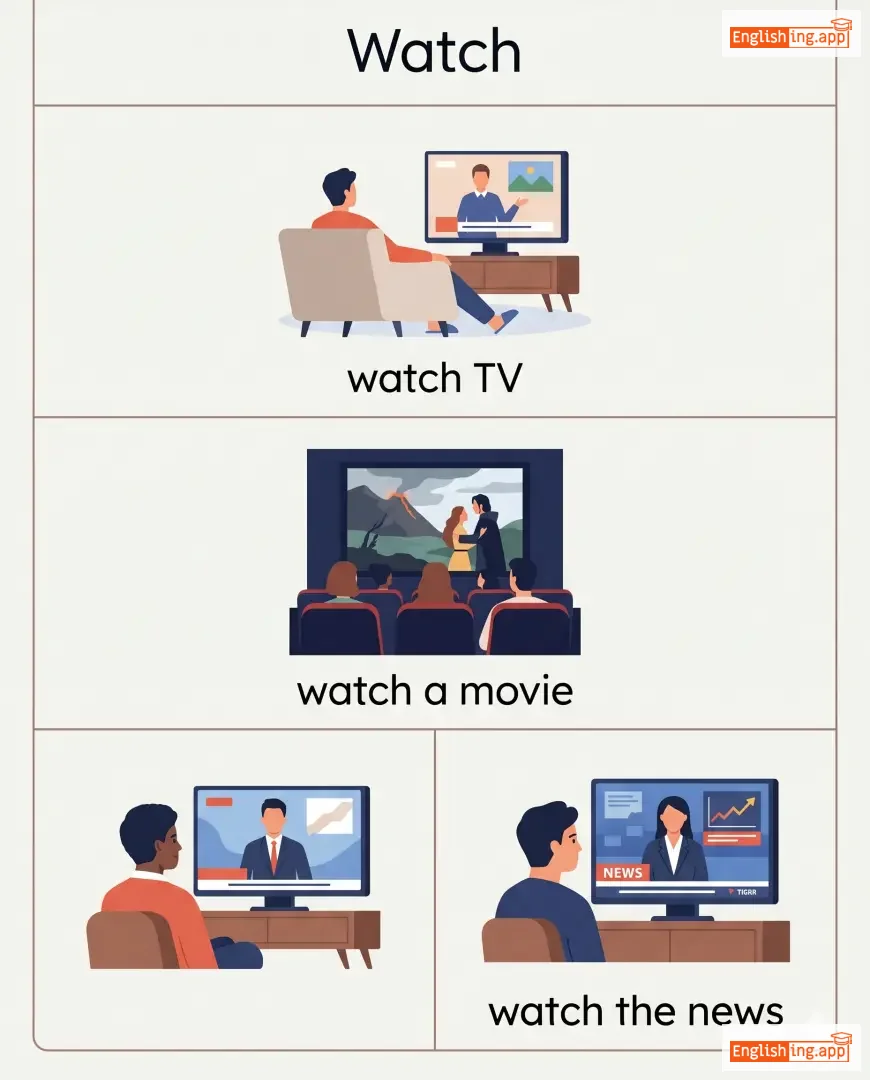
|
watch TV, watch movies, closely watch, carefully watch, constantly watch
••••••
|
Смотреть и наблюдать — оба действия нацелены на видение, но наблюдение включает контроль.
••••••
|
|
#5451
💧
|
/ˈwɔːtər/
verb
(вотер)
••••••
|
|
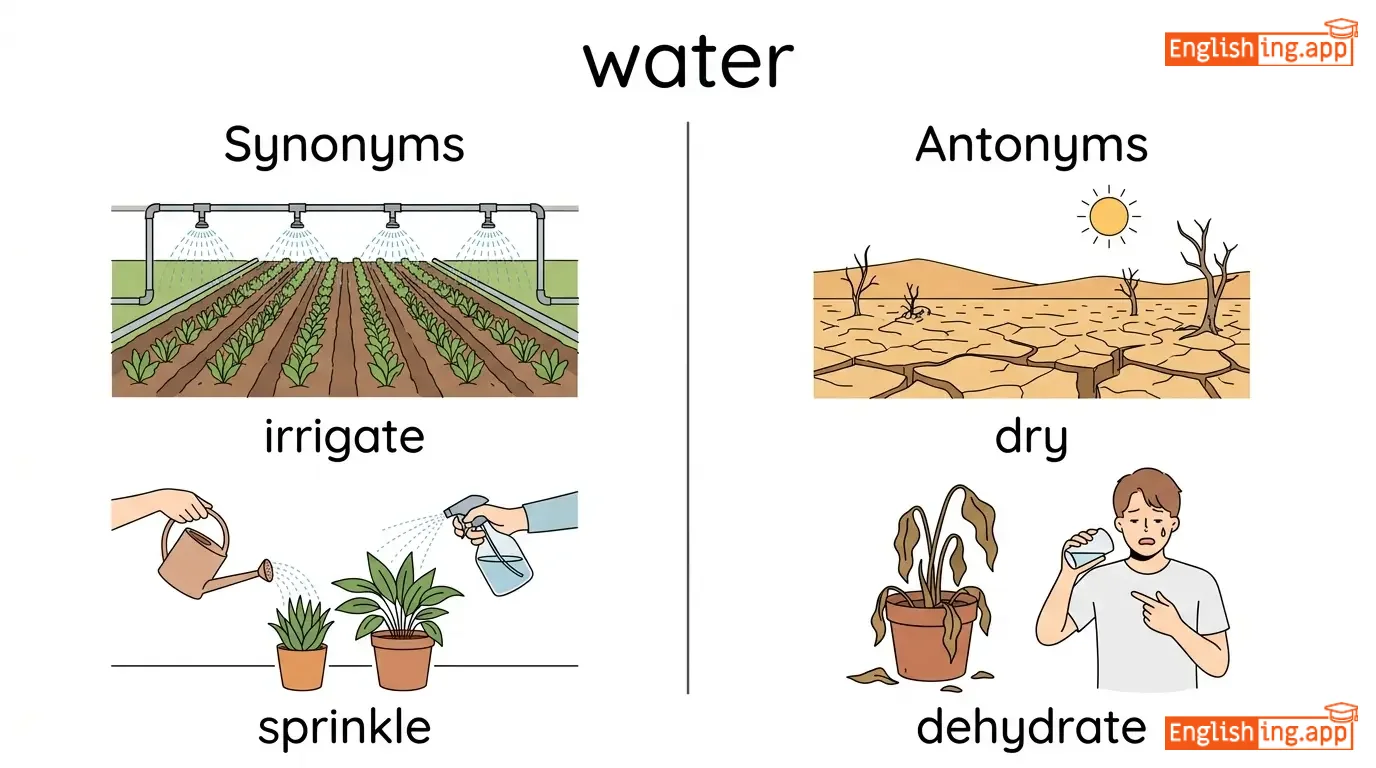
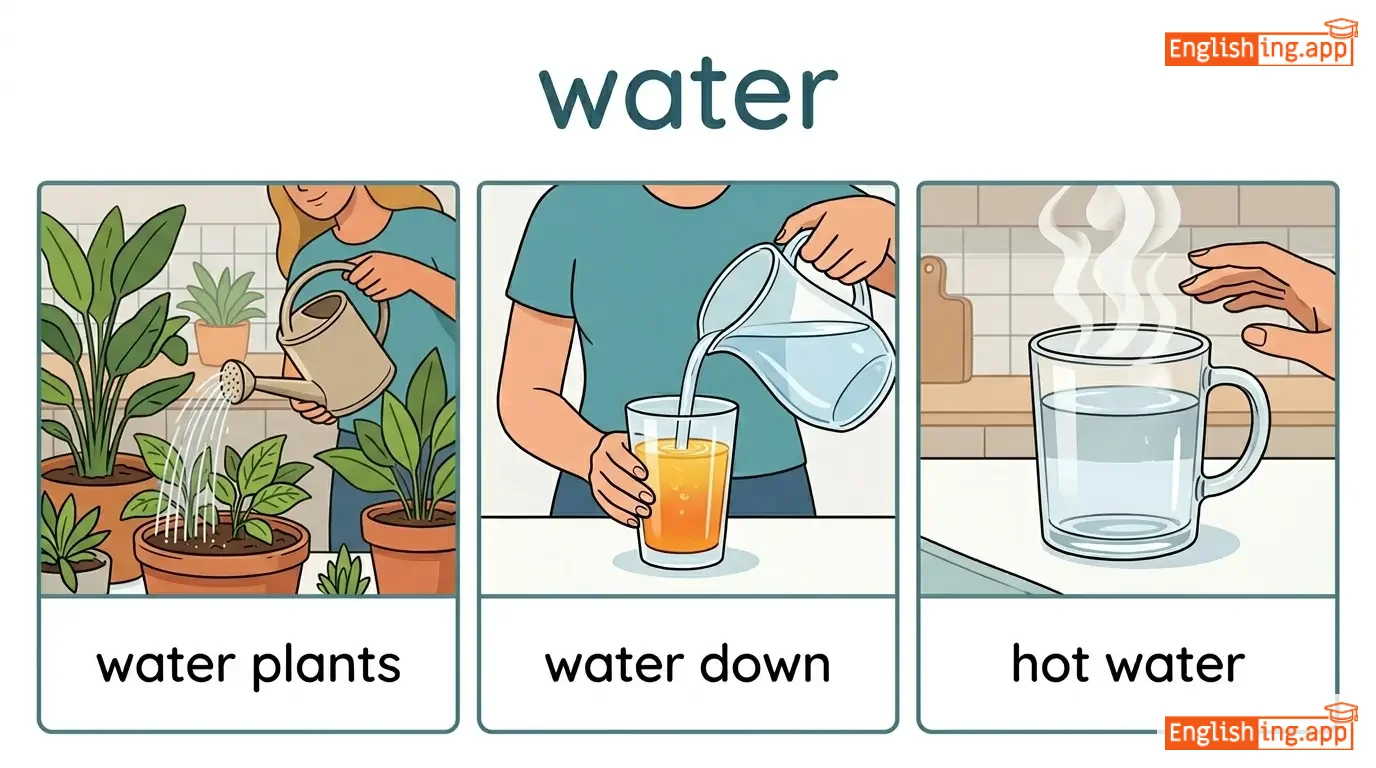
поливать
polivat
••••••
|
watered
вотерд
••••••
|
watered
вотерд
••••••
|
waters
вотерс
••••••
|
watering
вотеринг
••••••
|
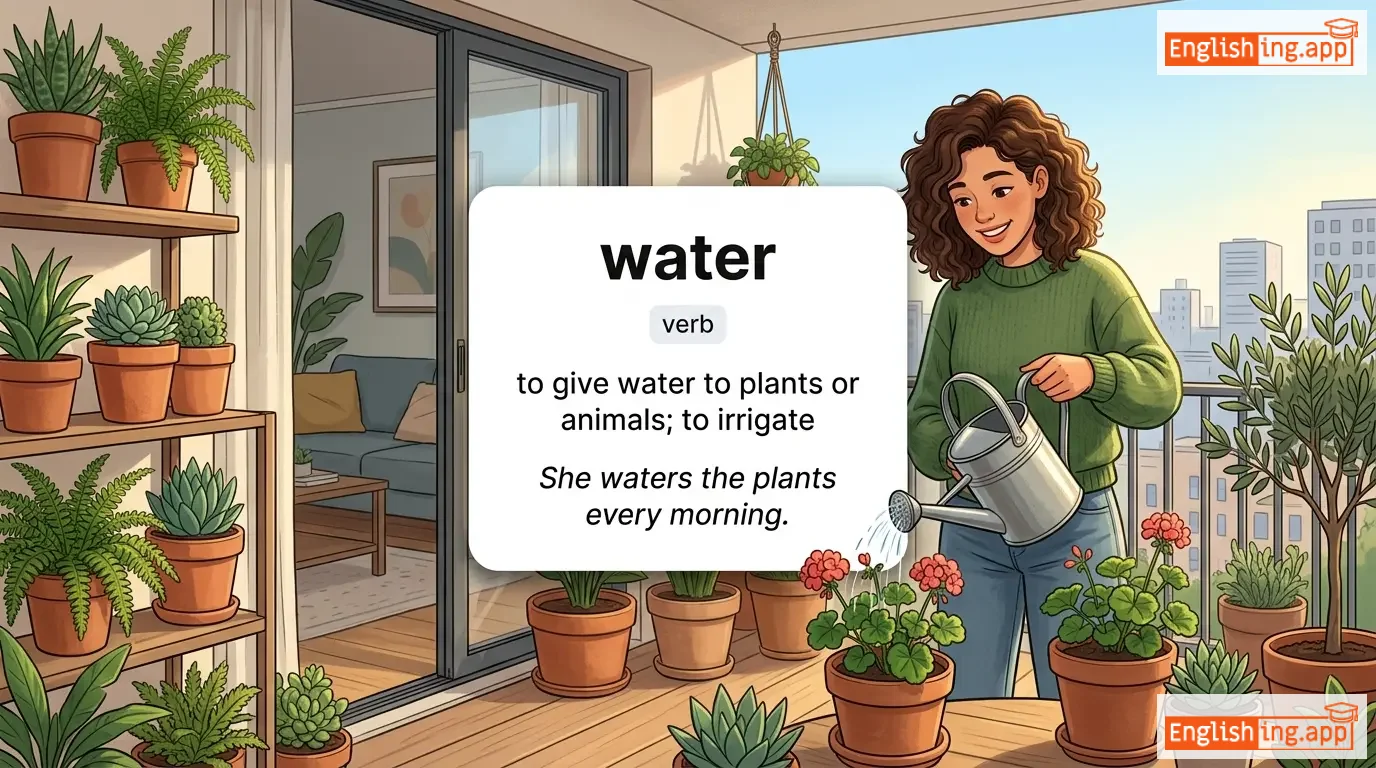
to give water to plants or animals; to irrigate
••••••
|
She waters the plants every morning.
Она поливает растения каждое утро.
••••••
|
Она поливает растения каждое утро.
Ona polivayet rastenija kazhdoe utro
••••••
|
- •••••• | - •••••• | - •••••• |
irrigate, sprinkle, drench, moisten
••••••
|
dry, dehydrate, parch
••••••
|
water plants, water down, hot water, cold water, drinking water, water supply
••••••
|
Поливать растения — это как давать им воду
••••••
|
|
#5452
🏞️
|
/ˈwɔːtərfɔːl/
noun
(Вотерфолл)
••••••
|
- •••••• |
водопад
Voterfoll
••••••
|
- •••••• | - •••••• | - •••••• | - •••••• |
a cascade of water falling from a height, formed when a river or stream flows over a precipice or steep incline
••••••
|
The magnificent waterfall attracts thousands of tourists every year.
Великолепный водопад ежегодно привлекает тысячи туристов.
••••••
|
Этот великолепный водопад ежегодно привлекает тысячи туристов.
Etot Velikolepnyy vodopad ezhegodno privlekaet tysyachi turistov.
••••••
|
- •••••• | - •••••• | - •••••• |
cascade, cataract, falls
••••••
|
drought, dry land, desert
••••••
|
magnificent waterfall, spectacular waterfall, waterfall view
••••••
|
Voda + fall = водопад
••••••
|
|
#5453
👋
|
/weɪv/
verb
(wev)
••••••
|
|
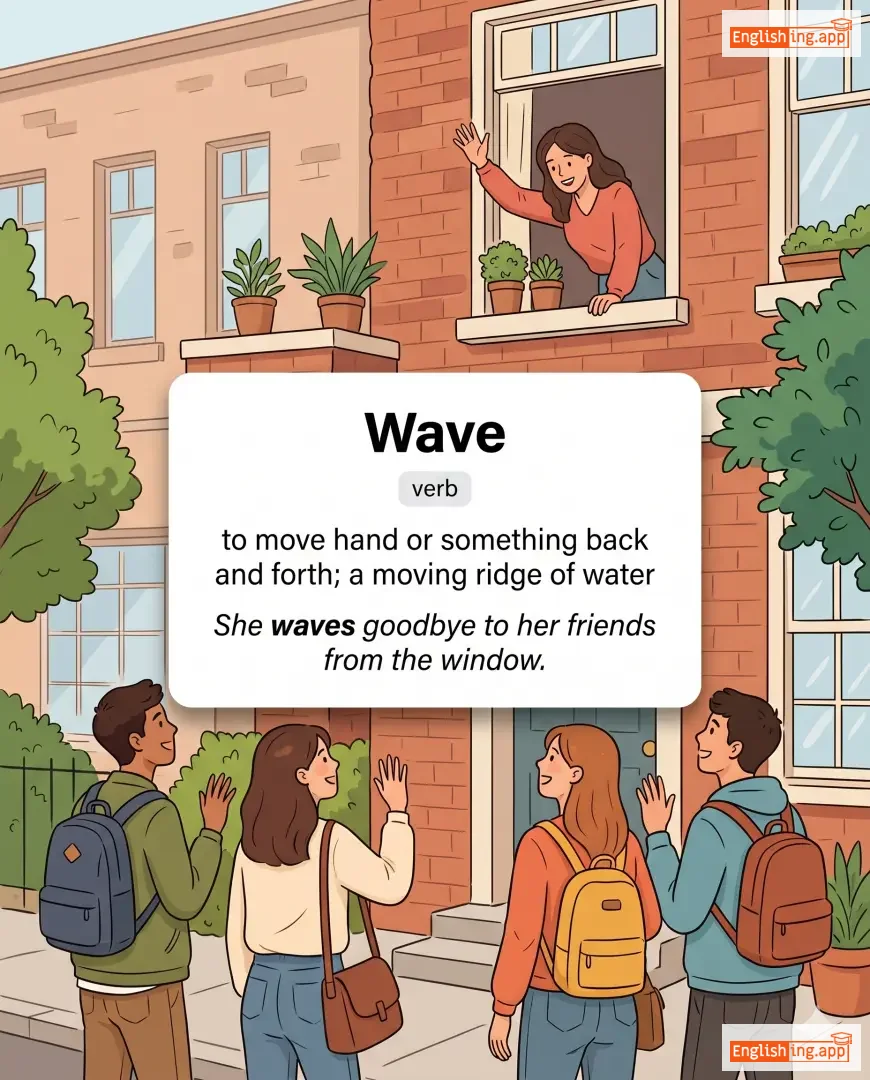
махать
mahat
••••••
|
Waved
weivd
••••••
|
Waved
weivd
••••••
|
Waves
weivs
••••••
|
Waving
weiving
••••••
|
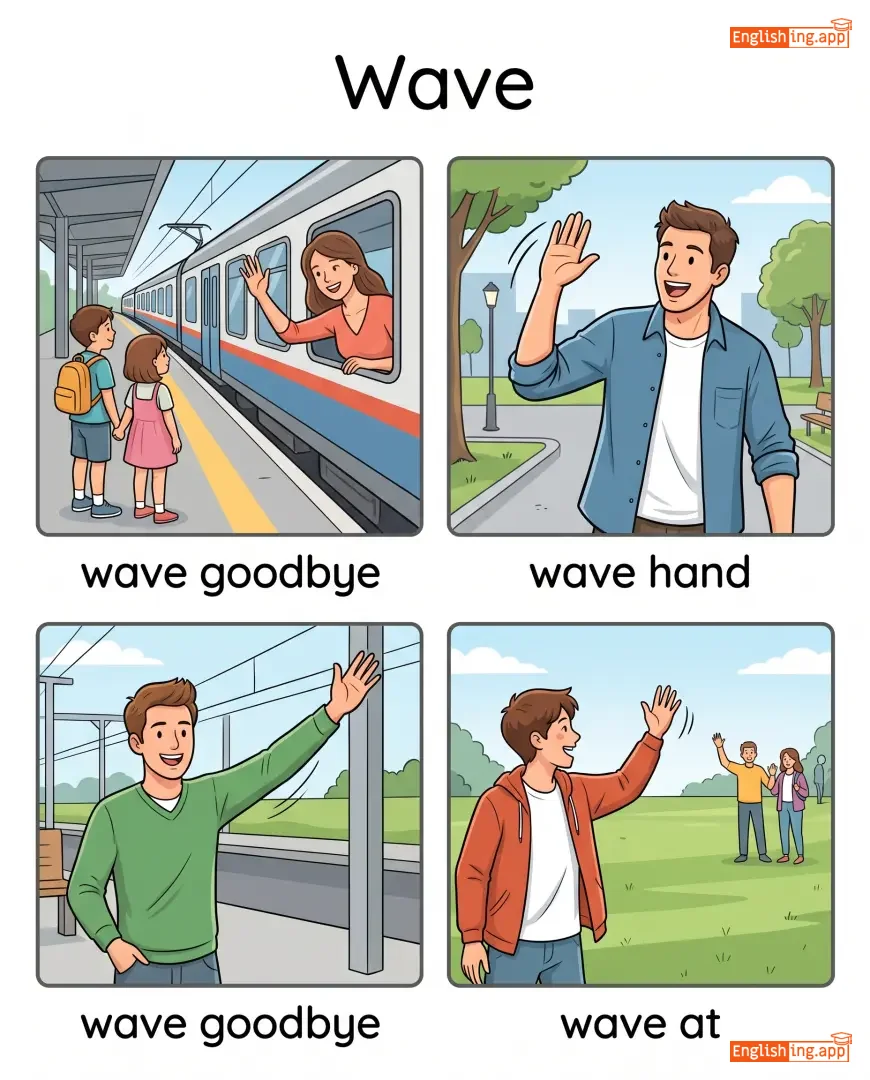
to move hand or something back and forth; a moving ridge of water
••••••
|
She waves goodbye to her friends from the window.
Она машет своим друзьям из окна.
••••••
|
Она машет своим друзьям из окна.
Ona mashet svoim druz'yam iz okna.
••••••
|
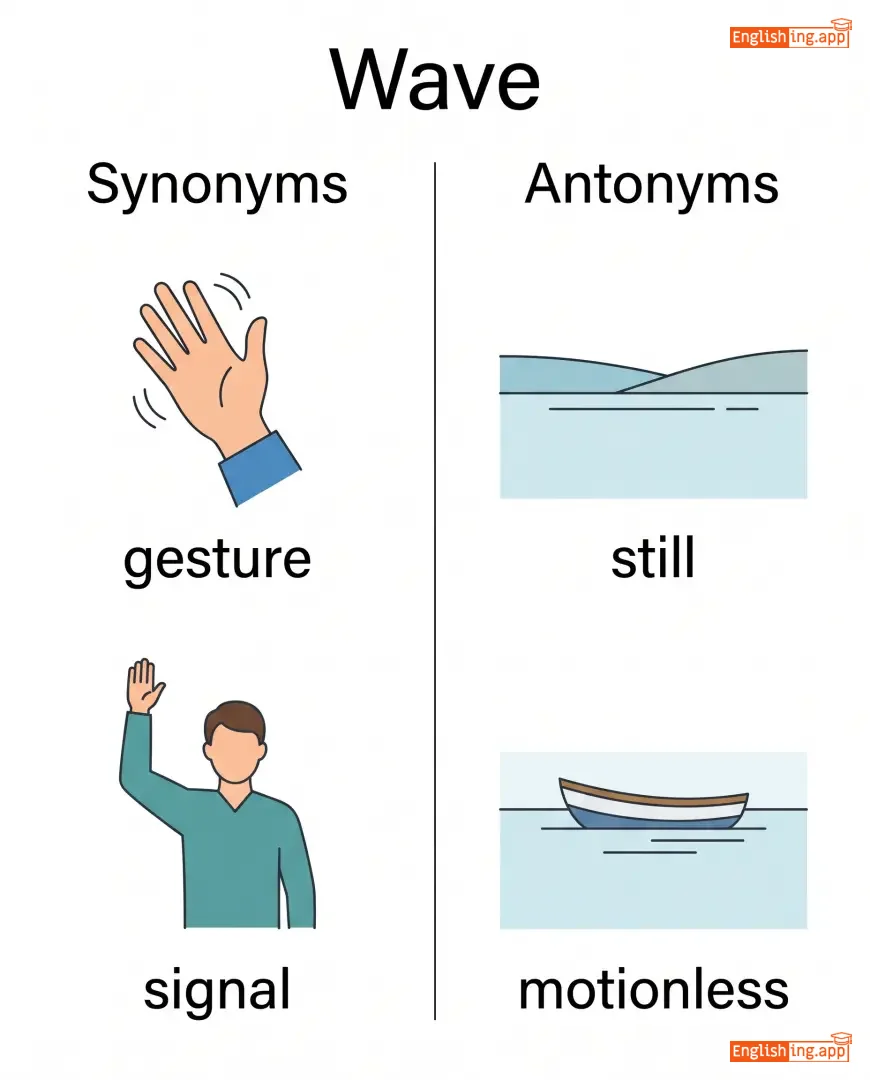
- •••••• | - •••••• | - •••••• |
gesture, signal, greet, undulate
••••••
|
still, motionless, steady, calm
••••••
|
wave goodbye, wave hand, wave at, wave frantically
••••••
|
Представь, что ты машешь рукой, как волна на море.
••••••
|
|
#5454
🛣️
|
/weɪ/
noun
(vay)
••••••
|
- •••••• |
путь / метод
put' / metod
••••••
|
- •••••• | - •••••• | - •••••• | - •••••• |
a path, direction, or method of doing something
••••••
|
He found a new way to solve the problem. |
Он нашел новый способ решения проблемы.
On nashel novyi sposob resheniya problemy.
••••••
|
by the way |
used to introduce a new or additional topic
••••••
|
кстати
kstaty
••••••
|
path, route, road, method, manner
••••••
|
blockage, obstacle, impasse
••••••
|
find a way, make way, on the way, by the way
••••••
|
Way значит путь — запомни 'Автомагистраль' значит большой путь.
••••••
|
|
#5455
👥
|
/wi/
pronoun
(wi)
••••••
|
- •••••• |
мы
my
••••••
|
- •••••• | - •••••• | - •••••• | - •••••• |
used by a speaker to refer to himself or herself and one or more other people
••••••
|
We are going to the park this afternoon.
Мы идем в парк этим днем.
••••••
|
Мы идем в парк этим днем.
My idyom v park etim dnyom.
••••••
|
- •••••• | - •••••• | - •••••• |
us, ourselves, we two, we three
••••••
|
I, you
••••••
|
we are, we need, we can, we love
••••••
|
We are always ‘My’ in Russian!
••••••
|
|
#5456
💪❌
|
/wiːk/
adjective
(wiːk)
••••••
|
- •••••• |
слабый; хрупкий
slaby; khrupkiy
••••••
|
- •••••• | - •••••• | - •••••• | - •••••• |
lacking physical strength; not strong; fragile
••••••
|
After the illness, he felt weak and tired.
После болезни он почувствовал себя слабым и уставшим.
••••••
|
После болезни он почувствовал себя слабым и уставшим.
Posle bolezni on pochuvstvoval sebya slabym i ustavshim.
••••••
|
- •••••• | - •••••• | - •••••• |
feeble, frail, fragile, powerless
••••••
|
strong, powerful, robust, sturdy
••••••
|
weak point, weak signal, feel weak, grow weak
••••••
|
Weak in English sounds like 'wiːk' in Russian, both meaning 'слабый'.
••••••
|
|
#5457
💤
|
/ˈwiːkən/
verb
(vīken)
••••••
|
|
ослабить
oslabit'
••••••
|
weakened
vīkend
••••••
|
weakened
vīkend
••••••
|
weakens
vīkens
••••••
|
weakening
vīkening
••••••
|
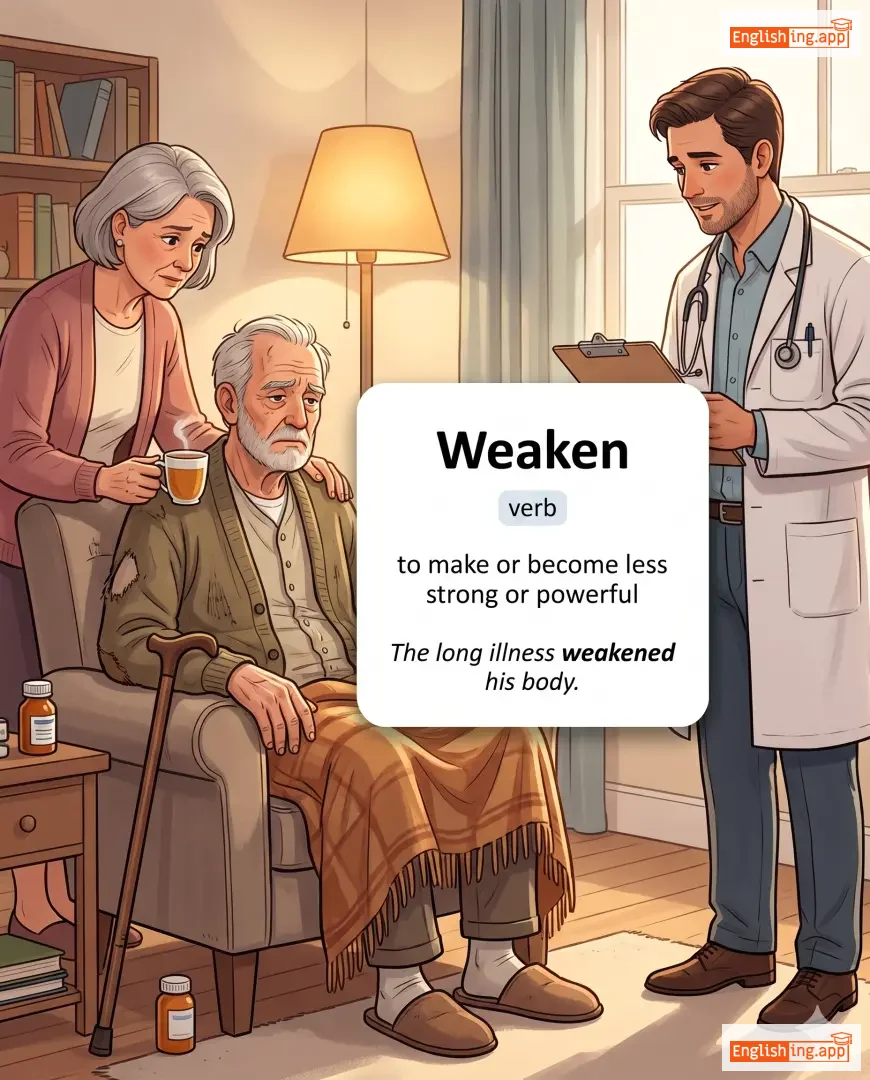
to make or become less strong or powerful
••••••
|
The long illness weakened his body.
De long illness vīkend his body.
••••••
|
Долгая болезнь ослабила его тело.
Dolgaya bolezn' oslabila ego telo.
••••••
|
weaken someone's resolve
vīken someone's rezólv
••••••
|
to make someone less determined or confident
••••••
|
ослабить чью-то решимость
oslabit' ch'yu-to reshimosť
••••••
|
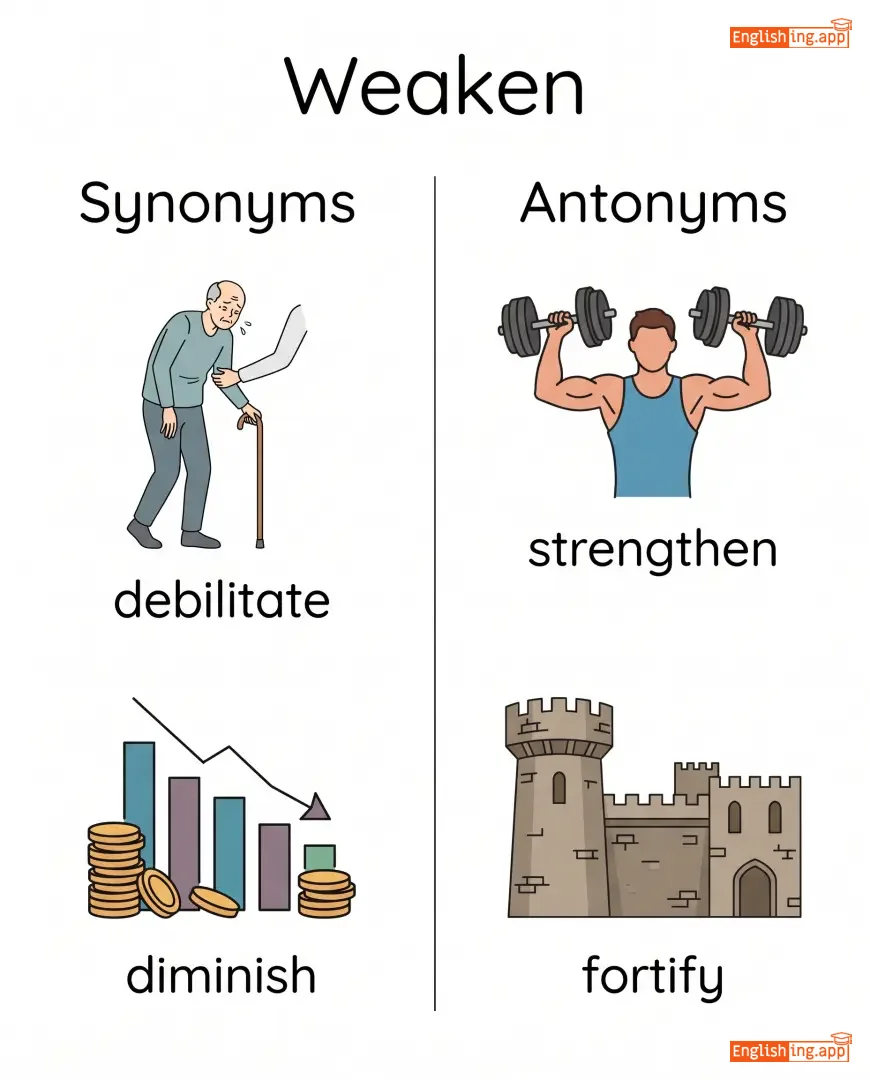
debilitate, diminish, reduce, impair, lessen
••••••
|
strengthen, fortify, empower
••••••
|
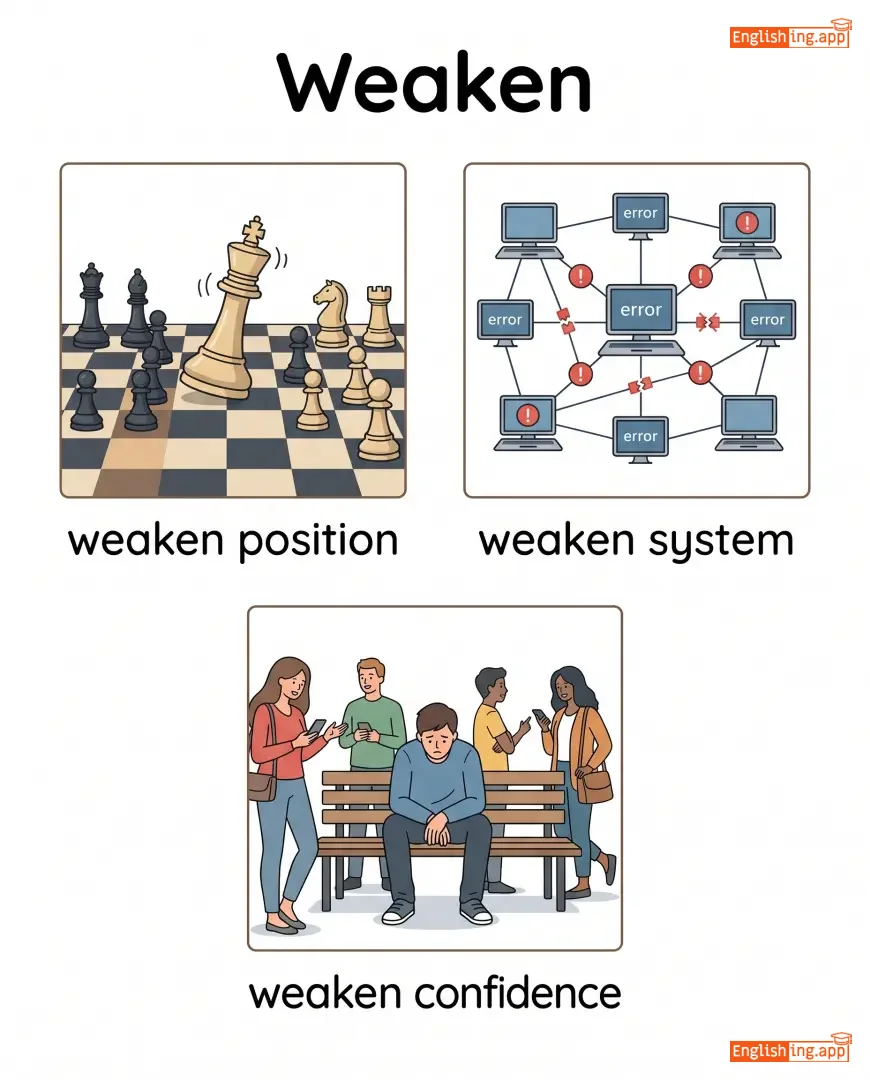
weaken position, weaken system, weaken confidence, weaken economy
••••••
|
Weaken означает ослабить, как болезнь ослабляет тебя.
••••••
|
|
#5458
💧
|
/ˈwiːknəs/
noun
(уикнесс)
••••••
|
- •••••• |
слабость
slabost
••••••
|
- •••••• | - •••••• | - •••••• | - •••••• |
a state of being weak; a flaw or shortcoming in character or structure
••••••
|
His main weakness is his lack of patience. |
Его главная слабость — это отсутствие терпения.
Ego glavnaia slabost' — eto otsutstvie terpeniia.
••••••
|
achilles' heel |
a person's principal weakness or vulnerability
••••••
|
- •••••• |
frailty, flaw, vulnerability, defect, shortcoming
••••••
|
strength, power, resilience
••••••
|
mental weakness, show weakness, personal weakness, weakness for sweets
••••••
|
Weak означает слабый, так что weakness означает слабость — 'ness' обозначает состояние.
••••••
|
|
#5459
💰
|
/wɛlθ/
noun
(вэльθ)
••••••
|
|
богатство
bogatstvo
••••••
|
- •••••• | - •••••• | - •••••• | - •••••• |
an abundance of valuable possessions or money; prosperity
••••••
|
The businessman built his wealth through hard work and smart investments. |
Предприниматель построил свое богатство через тяжелую работу и умные инвестиции.
Predprinimatel' postroil svoyo bogatstvo cherez tyazheluyu rabotu i umnyye investitsii.
••••••
|
wealth of experience |
a large amount of knowledge or skill gained through practice or time
••••••
|
богатство опыта
bogatstvo opyta
••••••
|
riches, fortune, prosperity, affluence
••••••
|
poverty, need, scarcity
••••••
|
accumulate wealth, wealth distribution, create wealth, family wealth
••••••
|
WEALTH означает 'богатство' - 'We Earn And Live Through Hardwork' 💰
••••••
|
|
#5460
💰
|
/ˈwel.θi/
adjective
(вɛлθи)
••••••
|
- •••••• |
богатый; состоятельный; процветающий
bogaty; sostoyatel'nyy; protsvetayushchiy
••••••
|
- •••••• | - •••••• | - •••••• | - •••••• |
having a great deal of money; rich; prosperous
••••••
|
The wealthy businessman donated millions to charity. |
Богатый бизнесмен пожертвовал миллионы на благотворительность.
Bogaty biznesmen pozhertvoval milliony na blagotvoritel'nost'.
••••••
|
- •••••• | - •••••• | - •••••• |
rich, affluent, prosperous, well-off
••••••
|
poor, impoverished, destitute, needy
••••••
|
wealthy family, wealthy individual, become wealthy, extremely wealthy
••••••
|
Процветающий человек всегда делится богатством.
••••••
|
|
#5461
🗡️
|
/ˈwep.ən/
noun
(вэпэн)
••••••
|
- •••••• |
оружие
oruzhiye
••••••
|
- •••••• | - •••••• | - •••••• | - •••••• |
a thing designed or used for inflicting bodily harm or physical damage
••••••
|
The police found a dangerous weapon at the crime scene.
Полиция нашла опасное оружие на месте преступления.
••••••
|
Полиция нашла опасное оружие на месте преступления.
Politsiya nashla opasnoe oruzhiye na meste prestupleniya.
••••••
|
- •••••• | - •••••• | - •••••• |
arm, armament, firearm, tool of violence
••••••
|
shield, protection, defense, peace
••••••
|
deadly weapon, nuclear weapon, weapon of mass destruction, concealed weapon
••••••
|
Оружие — это символ защиты или атаки, предназначенное для причинения вреда.
••••••
|
|
#5462
👕
|
/wɛr/
verb
(вэр)
••••••
|
|
носить
nosit
••••••
|
wore
уор
••••••
|
worn
уорн
••••••
|
wears
вэрз
••••••
|
wearing
вэринг
••••••
|
to have clothing or accessories on one's body
••••••
|
She likes to wear bright colors.
ши лайкс ту вэр браит калерз
••••••
|
Ей нравится носить яркие цвета.
Yey nravitsya nosit' yarkiye tsveta.
••••••
|
- •••••• | - •••••• | - •••••• |
don, put on, sport, carry
••••••
|
remove, take off, undress
••••••
|
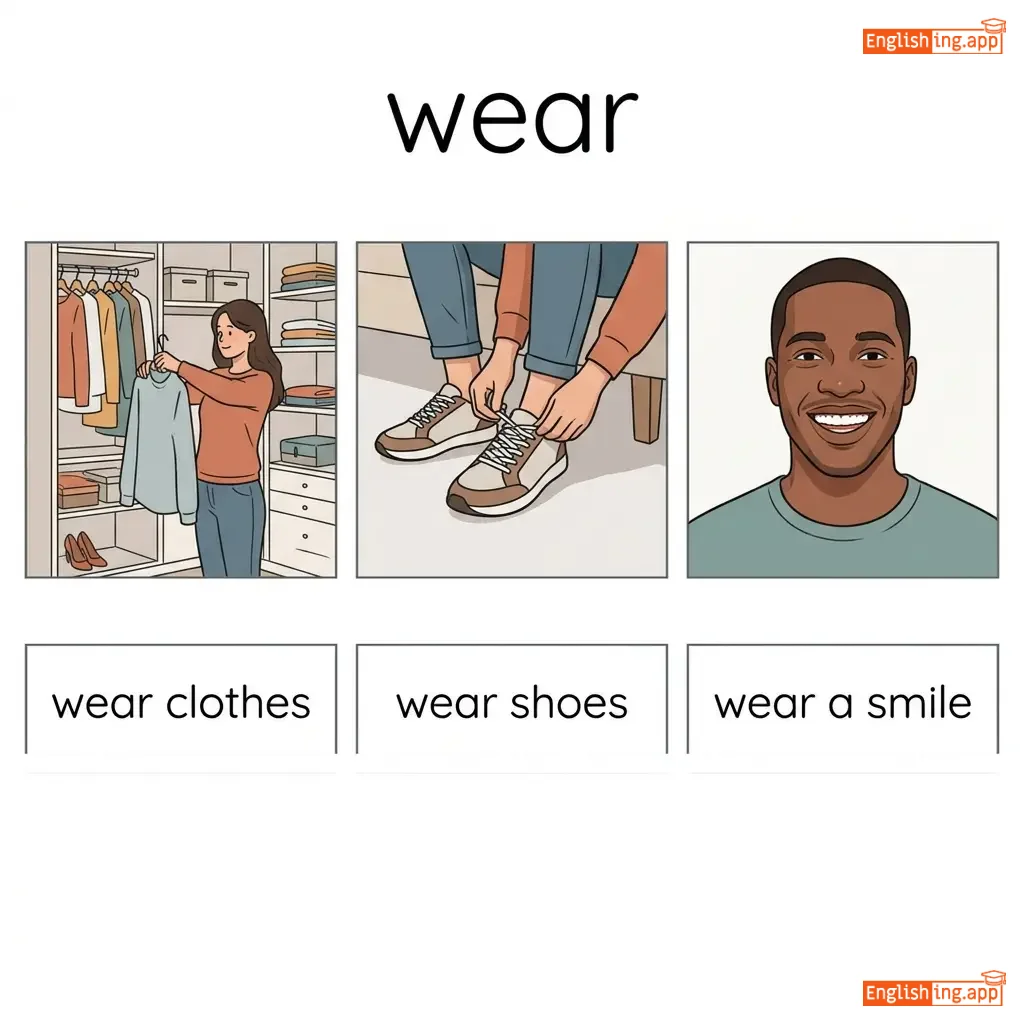
wear clothes, wear jewelry, wear shoes, wear uniform, wear makeup, wear expression
••••••
|
No •••••• |
|
#5463
⛅
|
/ˈwɛðər/
noun
(wɛðər)
••••••
|
|
погода
pogoda
••••••
|
- •••••• | - •••••• | - •••••• | - •••••• |
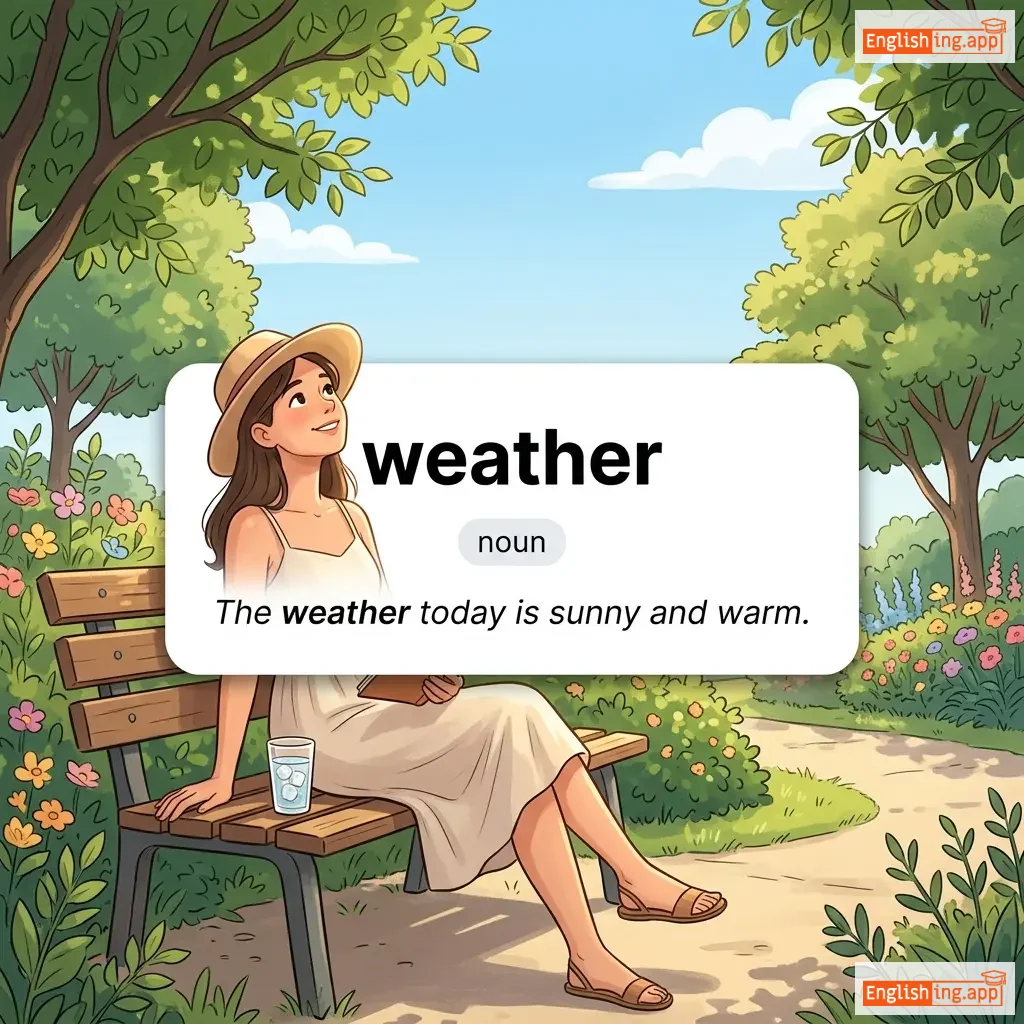
the state of the atmosphere at a particular place and time in terms of heat, cloudiness, dryness, sunshine, wind, rain, etc.
••••••
|
The weather today is sunny and warm. |
Погода сегодня солнечная и тёплая.
Pogoda segodnya solnechnaya i tyoplaya.
••••••
|
under the weather |
feeling unwell or sick
••••••
|
чувствовать себя плохо
chuvstvovat' sebya plokho
••••••
|
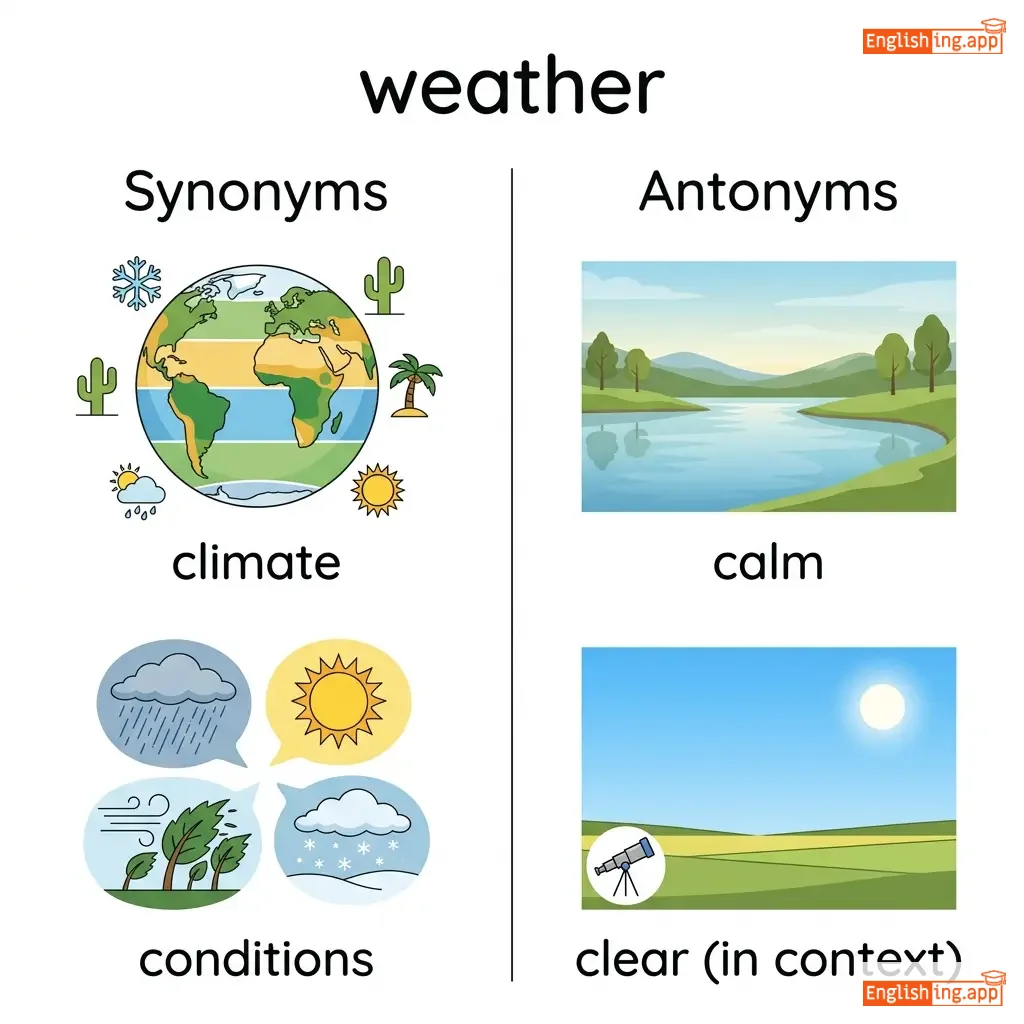
climate, conditions, atmosphere, forecast
••••••
|
calm, clear (in context)
••••••
|
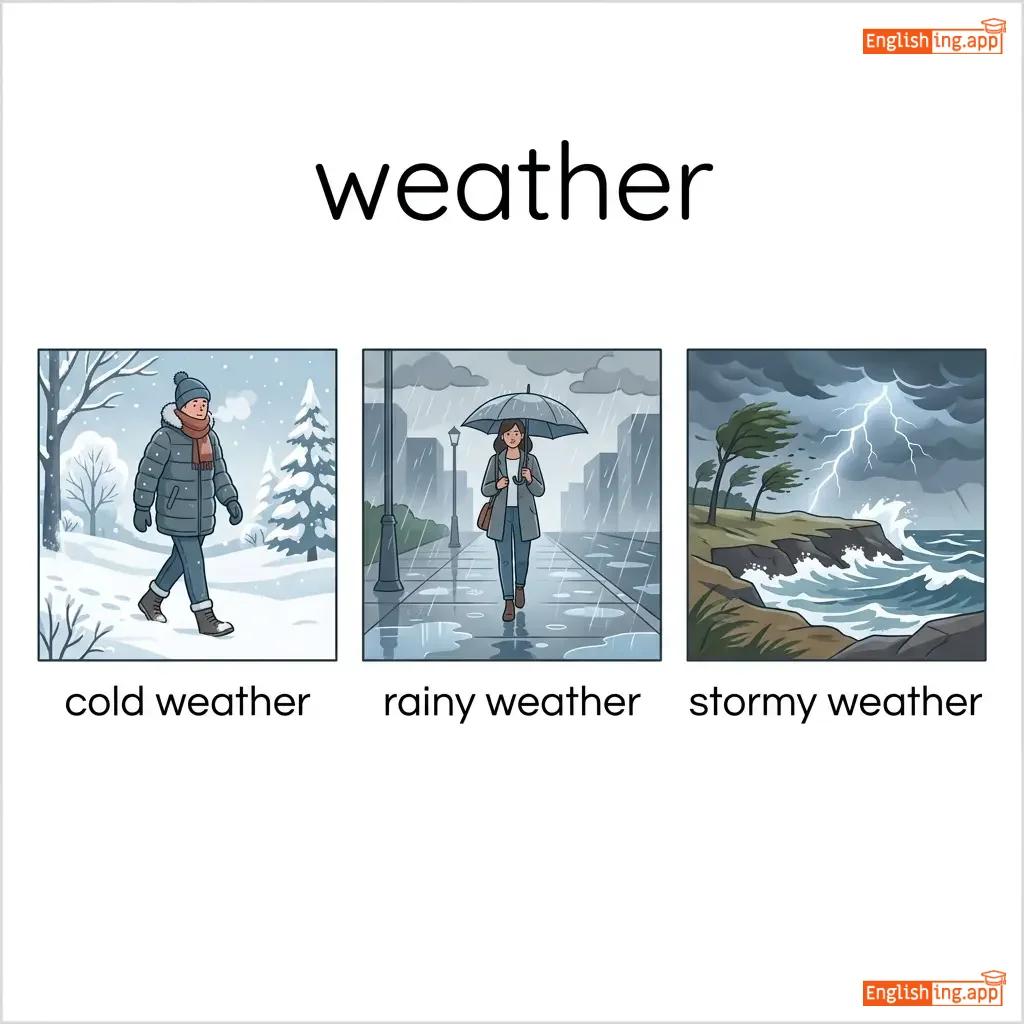
cold weather, rainy weather, stormy weather, fine weather
••••••
|
Погода, как weather, всегда влияет на наш настрой и самочувствие.
••••••
|
|
#5464
🧶
|
/wiːv/
verb
(вив)
••••••
|
- •••••• |
ткань
tkan
••••••
|
wove
вов
••••••
|
woven
вовен
••••••
|
weaves
вивз
••••••
|
weaving
вивинг
••••••
|
to make cloth by interlacing threads or to combine elements into a whole
••••••
|
She weaves beautiful patterns on her loom.
Она ткет красивые узоры на своем ткацком станке.
••••••
|
Она ткет красивые узоры на своем ткацком станке.
Ona tket krasivye uzory na svoem tkatskom stanke.
••••••
|
weave a story
ткет историю
••••••
|
to create a complex or imaginative story
••••••
|
ткет историю
tket istoriyu
••••••
|
interlace, intertwine, knit, braid, spin
••••••
|
unravel, untangle
••••••
|
weave fabric, weave basket, weave pattern, weave story
••••••
|
Weave — как ткать паутину — можно ткать ткань или историю.
••••••
|
|
#5465
💍
|
/wɛd/
verb
(вэд)
••••••
|
- •••••• |
жениться
zhenit'sya
••••••
|
wed
вэд
••••••
|
wed
вэд
••••••
|
weds
вэдс
••••••
|
wedding
вэддинг
••••••
|
to marry someone; to enter into a marriage
••••••
|
They decided to wed in a small ceremony by the beach.
Они решили пожениться на маленькой церемонии на пляже.
••••••
|
Они решили пожениться на маленькой церемонии на пляже.
Oni reshilis' pozhinit'sya na malen'koy tseremonii na plyazhe.
••••••
|
newly wed
недавно поженившиеся
••••••
|
someone who has recently married
••••••
|
недавно поженившиеся
nedavno pozhnivshiesya
••••••
|
marry, unite, join, espouse
••••••
|
divorce, separate
••••••
|
wed someone, plan to wed, wed in church, wed soon
••••••
|
WED означает жениться - Wedding означает WED day 💍
••••••
|
|
#5466
💍
|
/ˈwɛdɪŋ/
noun
(wedding)
••••••
|
- •••••• |
свадьба
svad'ba
••••••
|
- •••••• | - •••••• | - •••••• | - •••••• |
a marriage ceremony, especially considered as including the associated celebrations
••••••
|
They are planning a wedding in the summer. |
Они планируют свадьбу летом.
Oni planiruyut svad'bu letom.
••••••
|
- •••••• | - •••••• | - •••••• |
marriage, nuptials, ceremony, union
••••••
|
divorce, separation
••••••
|
attend a wedding, wedding ceremony, wedding dress, wedding reception
••••••
|
Wedding – Picture a 'svad'ba' that unites hearts!
••••••
|
|
#5467
📅
|
/ˈwɛnzdeɪ/
noun
(уэнздэй)
••••••
|
- •••••• |
среда
sreda
••••••
|
- •••••• | - •••••• | - •••••• | - •••••• |
the fourth day of the week, following Tuesday and preceding Thursday
••••••
|
The meeting has been scheduled for Wednesday afternoon.
Зэ митинг хэз бин скеджулд фор уэнздэй афтернун.
••••••
|
Встреча назначена на среду днём.
vstrecha naznachena na sredu dnyom
••••••
|
Hump Day
Хамп Дэй
••••••
|
Wednesday, viewed as the midpoint of the workweek
••••••
|
середина рабочей недели
seredina rabochey nedeli
••••••
|
midweek, hump day, weekday
••••••
|
Monday, Friday
••••••
|
next Wednesday, last Wednesday, on Wednesday, Wednesday morning
••••••
|
Sreda = середина—Wednesday в середине недели
••••••
|
|
#5468
🌿
|
/wiːd/
noun, verb
(wiːd)
••••••
|
|
сорняк
sornyak
••••••
|
weeded
wiːdəd
••••••
|
weeded
wiːdəd
••••••
|
weeds
wiːdz
••••••
|
weeding
wiːdɪŋ
••••••
|
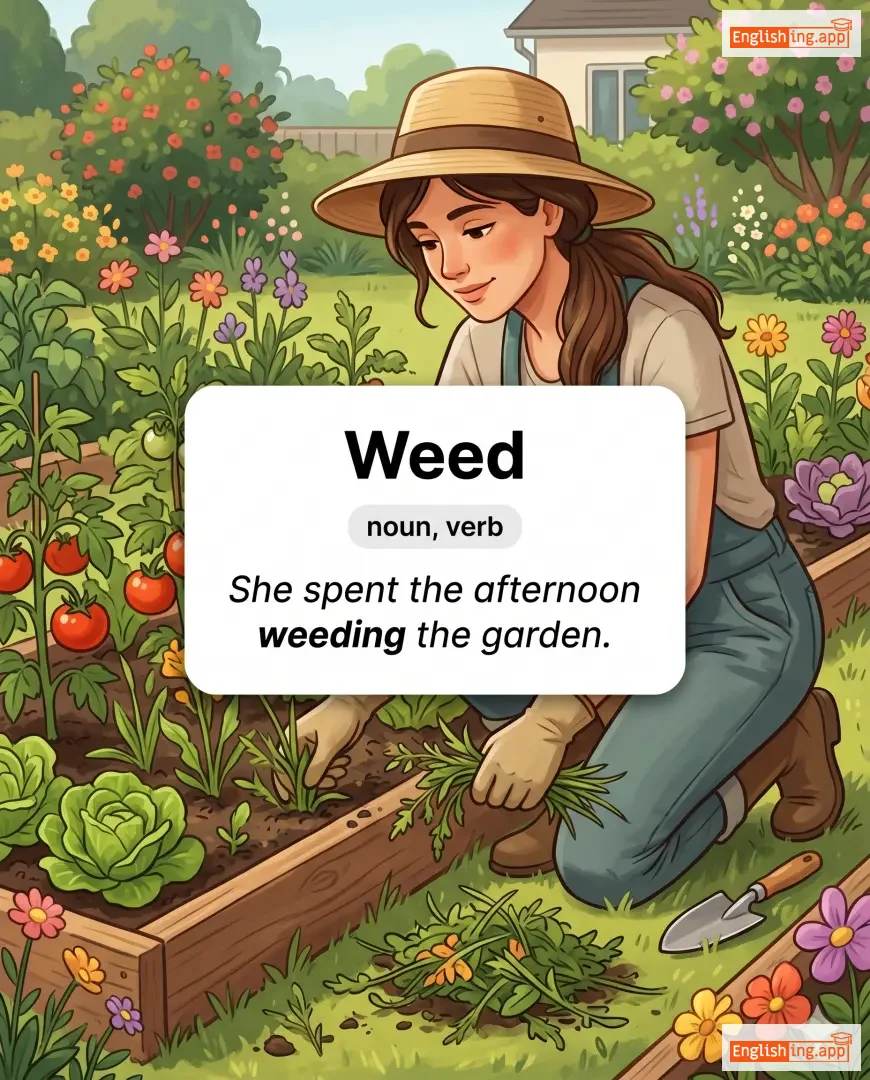
a wild plant growing where it is not wanted, especially among crops; to remove such plants
••••••
|
She spent the afternoon weeding the garden.
Она провела послеобеденное время, вырывая сорняки в саду.
••••••
|
Она провела послеобеденное время, вырывая сорняки в саду.
Ona provela posleobednennoe vremya, vyrivaya sornyaki v sadu.
••••••
|
weed out
выбросить
••••••
|
to remove unwanted or less effective people or things
••••••
|
удалять нежелательных или менее эффективных людей или вещи
udaljat' nezhelatel'nykh ili menee effektivnykh lyudey ili veshchi
••••••
|
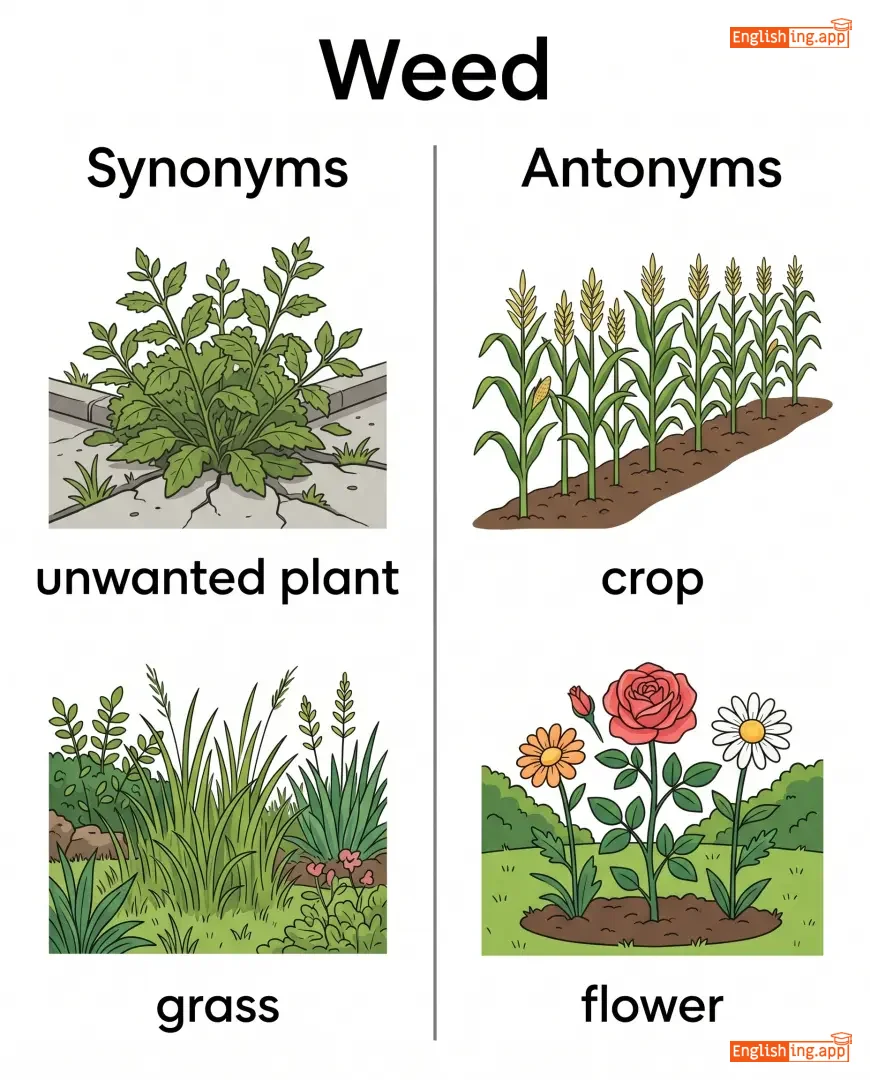
unwanted plant, grass, wild plant, pest plant, herb
••••••
|
crop, flower, plant
••••••
|
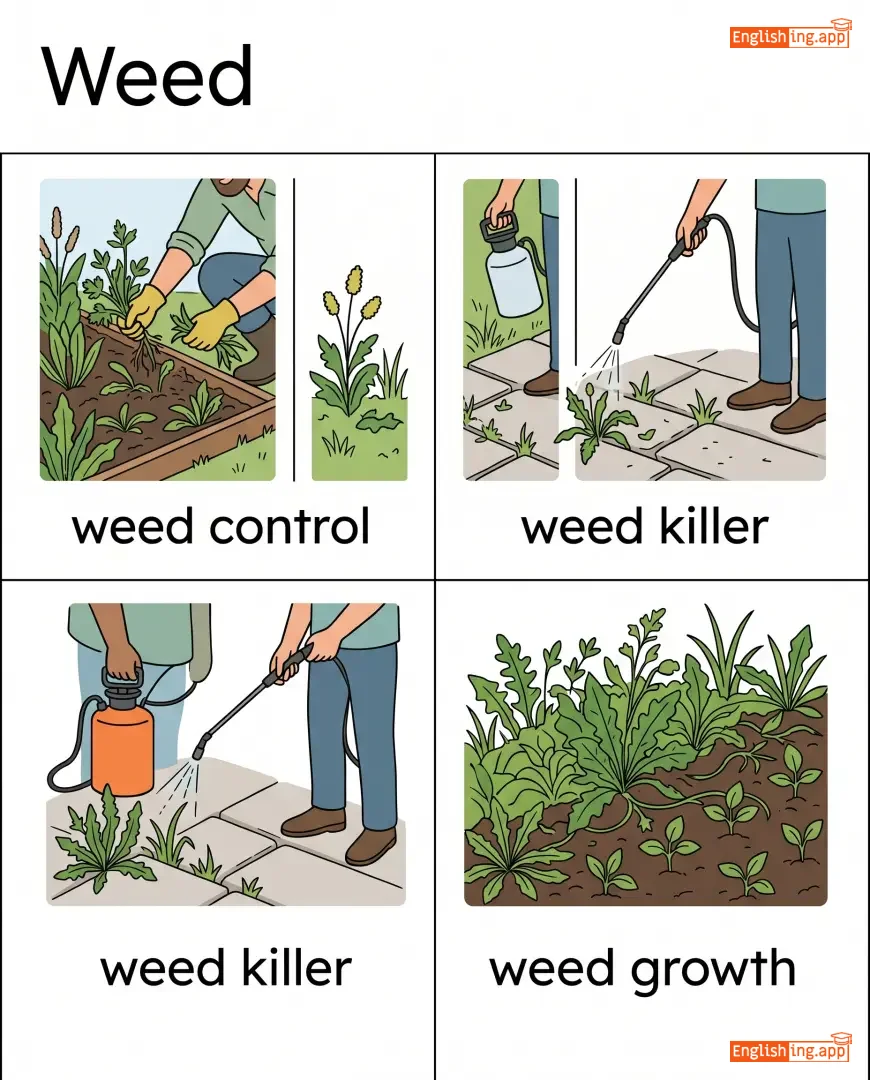
weed control, weed killer, weed growth, pull weeds, weed out
••••••
|
weed = сорняк, вырывать сорняки = очищать сад 🌿
••••••
|
|
#5469
📅
|
/wiːk/
noun
(vik)
••••••
|
- •••••• |
неделя
nedelya
••••••
|
- •••••• | - •••••• | - •••••• | - •••••• |
a period of seven days
••••••
|
I will finish the project by the end of the week. |
Я закончу проект к концу недели.
Ya zakonchu proyekt k kontsu nedeli.
••••••
|
- •••••• | - •••••• | - •••••• |
seven days, workweek, time span
••••••
|
day, month
••••••
|
work week, start of the week, end of the week
••••••
|
Week – 'We' work 'every' week!
••••••
|
|
#5470
🌴
|
/ˈwiːkˌɛnd/
noun
(уикенд)
••••••
|
- •••••• |
выходные
vykhodnye
••••••
|
- •••••• | - •••••• | - •••••• | - •••••• |
the end of the week, typically regarded as Saturday and Sunday
••••••
|
They are planning a trip for the weekend. |
Они планируют поездку на выходные.
Oni planiroyut poyezdku na vykhodnye.
••••••
|
- •••••• | - •••••• | - •••••• |
rest days, holiday, break
••••••
|
workday
••••••
|
spend the weekend, weekend trip, weekend getaway
••••••
|
Weekend – 'We' end our week with fun!
••••••
|
|
#5471
📅
|
/ˈwiːkli/
adverb
(Уикли)
••••••
|
- •••••• |
еженедельно
uikli
••••••
|
- •••••• | - •••••• | - •••••• | - •••••• |
happening or done once every week; every week
••••••
|
I visit my grandmother weekly on Sundays.
Я навещаю бабушку еженедельно по воскресеньям.
••••••
|
Я навещаю бабушку еженедельно по воскресеньям.
Ya naveshayu babushku ezhenedelno po voskresenyam
••••••
|
- •••••• | - •••••• | - •••••• |
every week, once a week, hebdomadally
••••••
|
daily, monthly, annually
••••••
|
weekly meeting, weekly report, weekly basis
••••••
|
Уикли = week + lee; представь что каждая неделя заканчивается именем Lee, и поэтому это еженедельно.
••••••
|
|
#5472
⚖️
|
/weɪ/
verb
(вэй)
••••••
|
|
вешать
veshat
••••••
|
weighed
вэйд
••••••
|
weighed
вэйд
••••••
|
weighs
вэйз
••••••
|
weighing
вэйинг
••••••
|
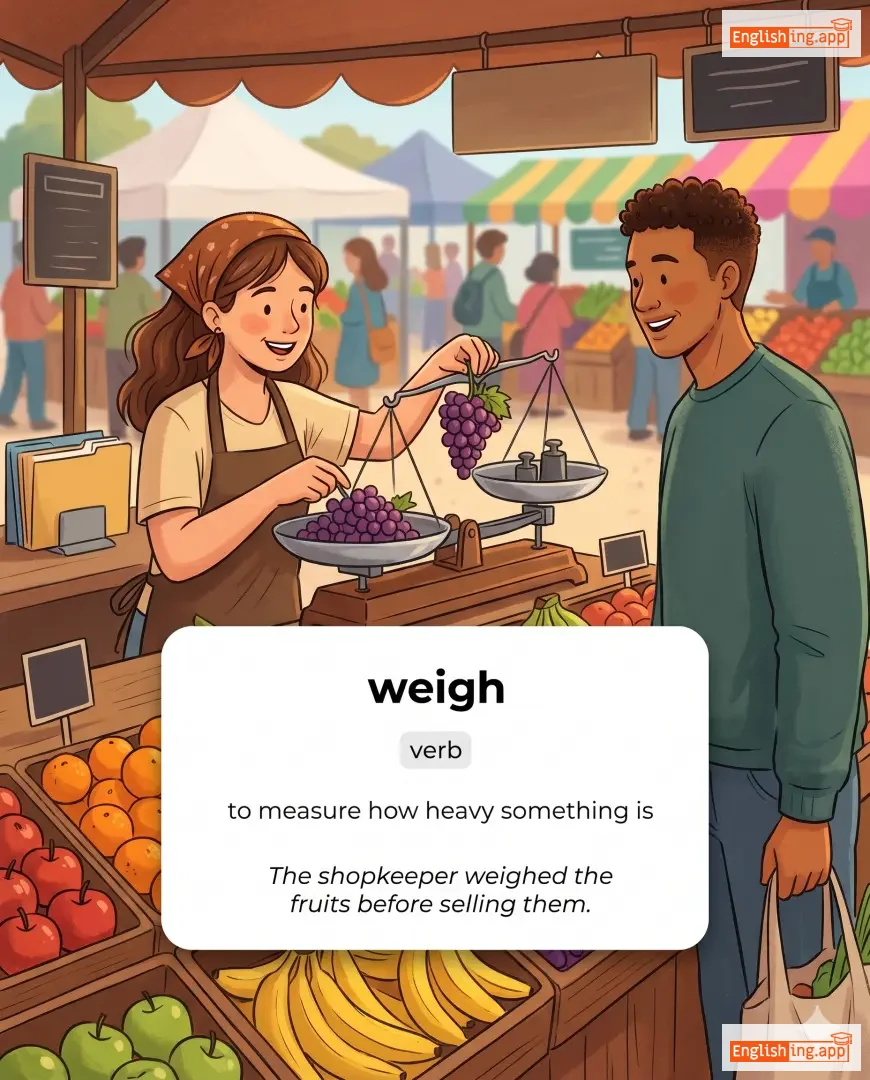
to measure how heavy something is
••••••
|
The shopkeeper weighed the fruits before selling them.
продавец взвесил фрукты перед тем, как их продать.
••••••
|
Продавец взвесил фрукты перед тем, как их продать.
Prodavets vzvesil frukty pered tem, kak ikh prodat.
••••••
|
weigh on someone's mind
весить на чьем-то разуме
••••••
|
to make someone worried or anxious
••••••
|
весить на чьем-то разуме
vesit' na ch'yem-to razume
••••••
|
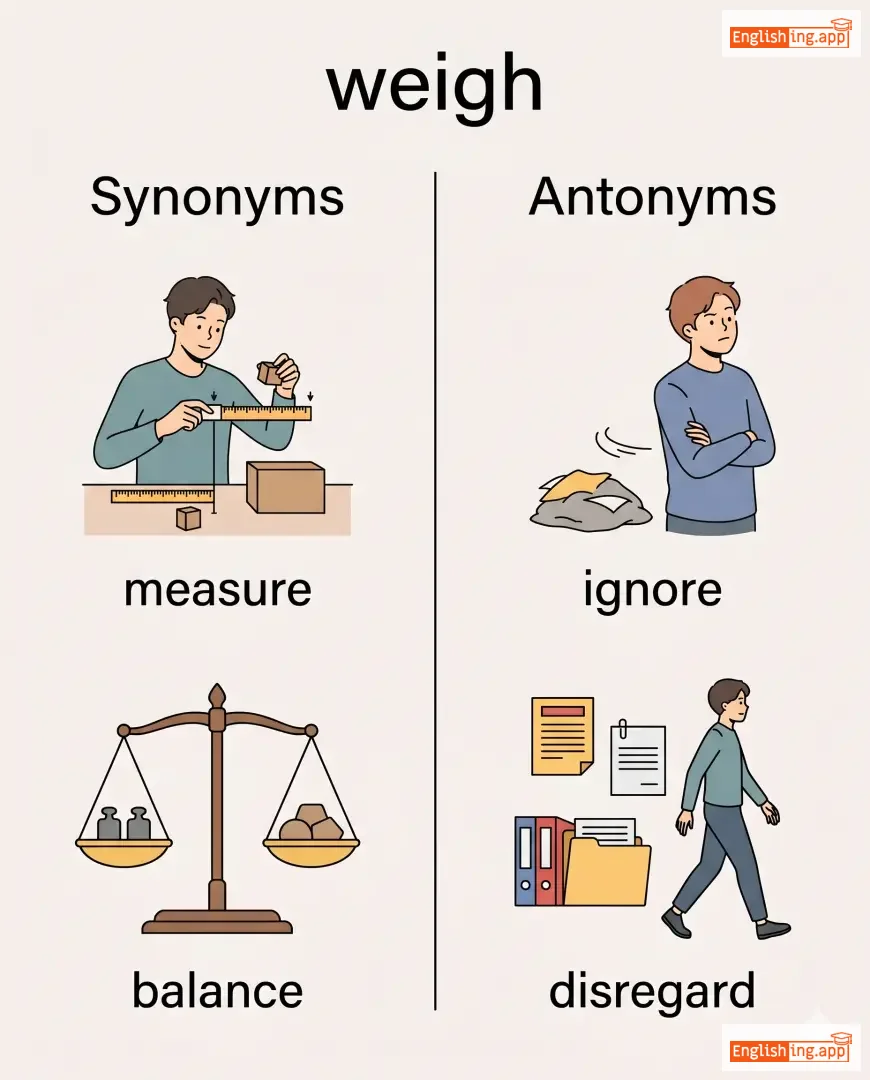
measure, balance, evaluate, calculate
••••••
|
ignore, disregard
••••••
|
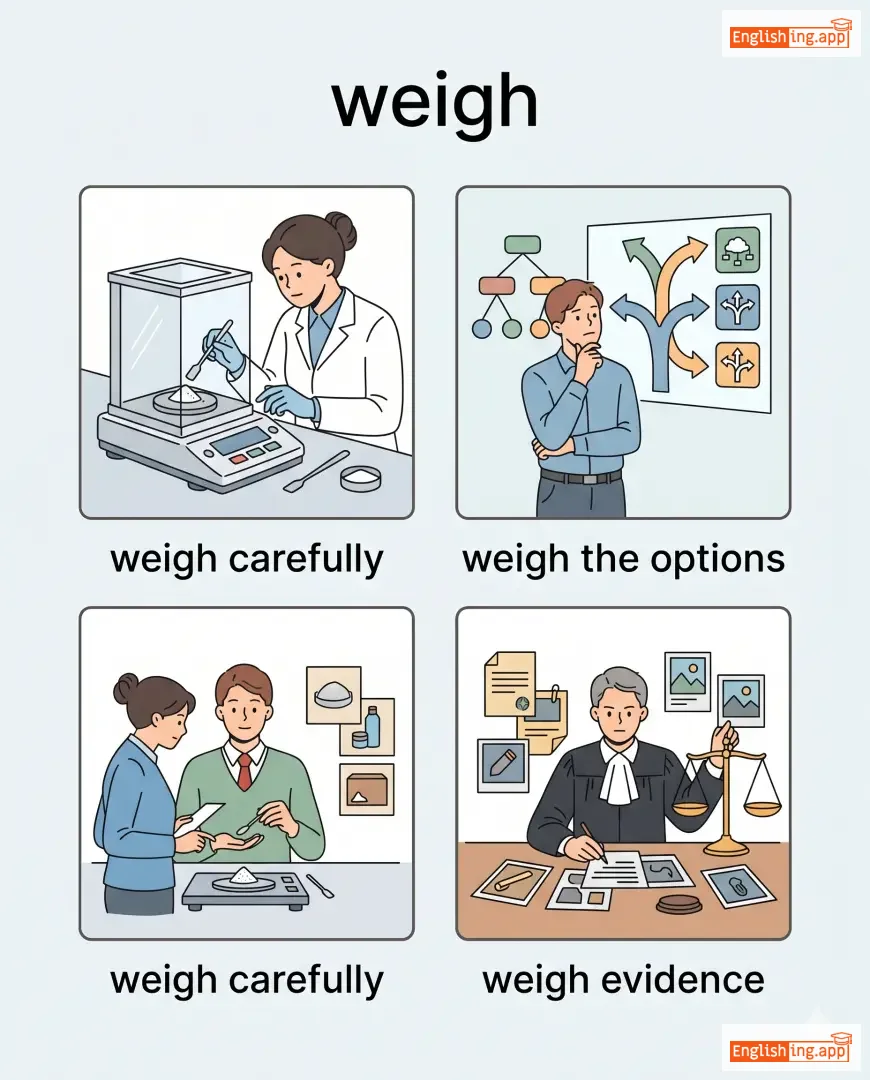
weigh carefully, weigh the options, weigh evidence, weigh anchor
••••••
|
Weigh означает вешать, как когда вы взвешиваете что-то на весах.
••••••
|
|
#5473
⚖️
|
/weɪt/
noun
(вэйт)
••••••
|
- •••••• |
вес
ves
••••••
|
- •••••• | - •••••• | - •••••• | - •••••• |
a measure of how heavy something is
••••••
|
The weight of the package was 10 kilograms. |
Вес пакета был 10 килограммов.
Ves paketa byl 10 kilogrammov.
••••••
|
- •••••• | - •••••• | - •••••• |
mass, heaviness, load
••••••
|
lightness
••••••
|
body weight, weight lifting, weight loss
••••••
|
Вес пакета измеряется в килограммах.
••••••
|
|
#5474
🏋️
|
/ˈweɪtˌlɪftɪŋ/
noun
(вейтлифтинг)
••••••
|
- •••••• |
тяжёлая атлетика
tyazhyolaya atletika
••••••
|
- •••••• | - •••••• | - •••••• | - •••••• |
the sport or activity of lifting heavy weights to build strength and muscle
••••••
|
Weightlifting requires discipline, proper technique, and consistent training.
Вейтлифтинг требует дисциплины и правильной техники.
••••••
|
Тяжёлая атлетика требует дисциплины и правильной техники.
Tyazhyolaya atletika trebuet distsipliny i pravilnoy tekhniki
••••••
|
- •••••• | - •••••• | - •••••• |
powerlifting, strength training, resistance training, lifting weights
••••••
|
inactivity, weakness
••••••
|
Olympic weightlifting, competitive weightlifting, weightlifting training, weightlifting competition
••••••
|
Тяжёлый вес = тяжёлая атлетика (weightlifting)
••••••
|
Vocabulary Quiz
Test your vocabulary by matching words with their translations or meanings.
Login to take the quiz
Comments (0)
Share your thoughts and join the discussion.
Join the discussion by logging in
Login to CommentNo comments yet
Be the first to share your thoughts!