

Обновитесь для доступа ко всему словарю
Получите неограниченный доступ ко всем словам с подпиской Pro
Обновить до ProПеревод
Прошедшее
Причастие прошедшего времени
Третье лицо единственного числа
Герундий
Значение
Пример предложения
Перевод примера предложения
Синонимы
Антонимы
Коллокации
Мнемоника



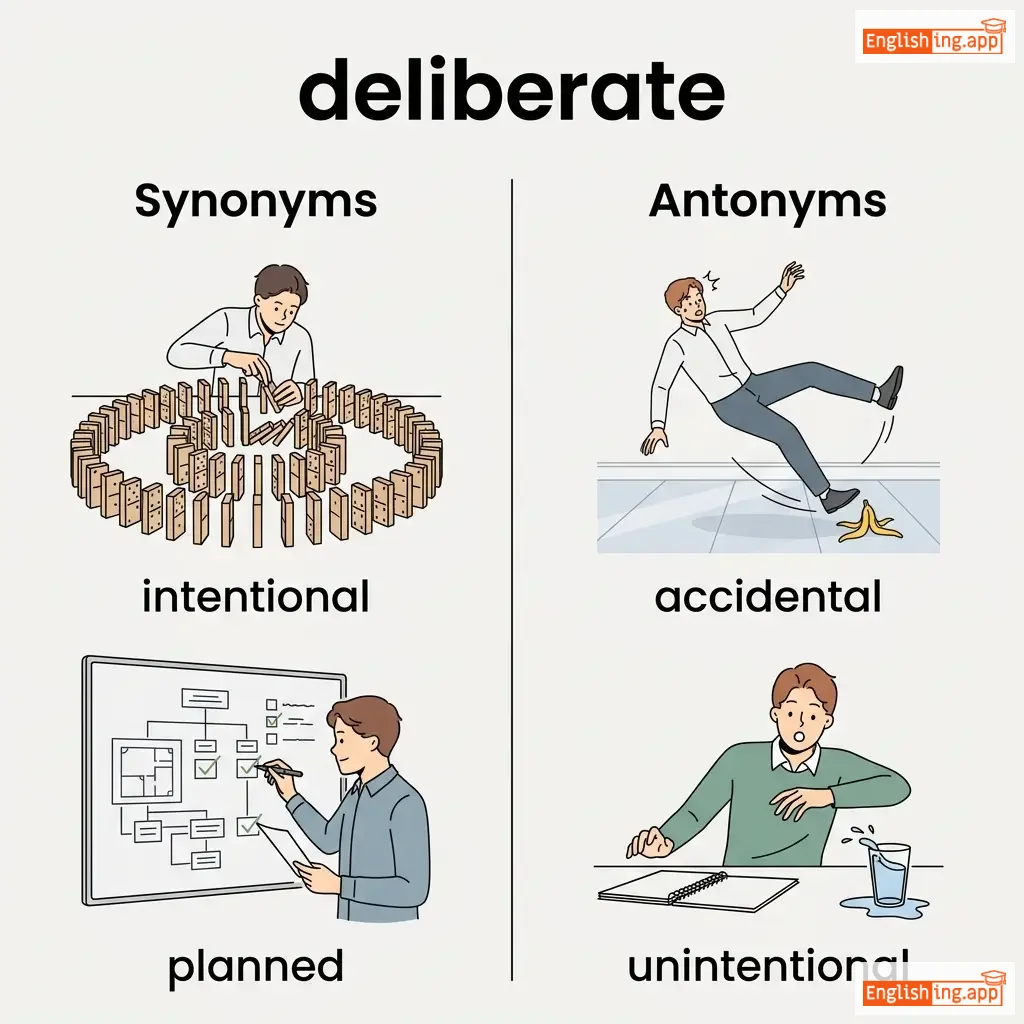
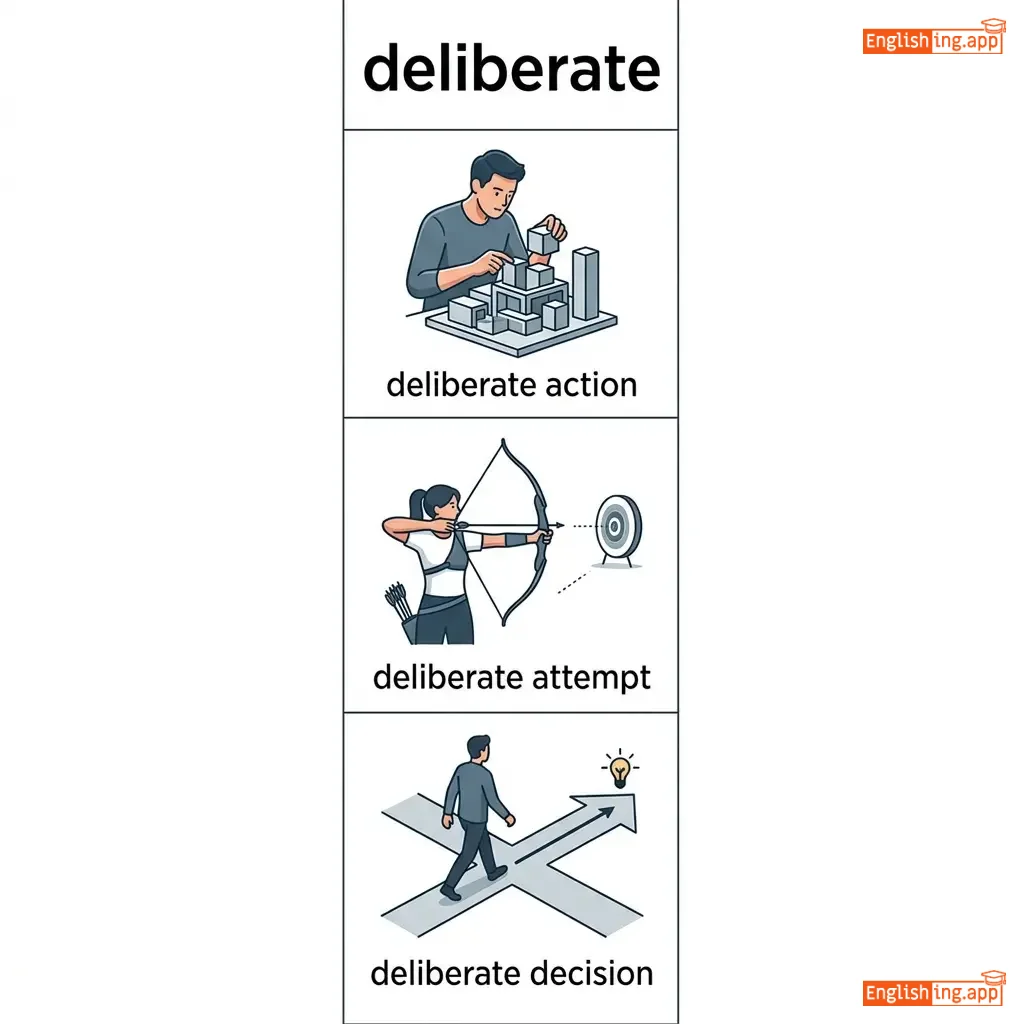
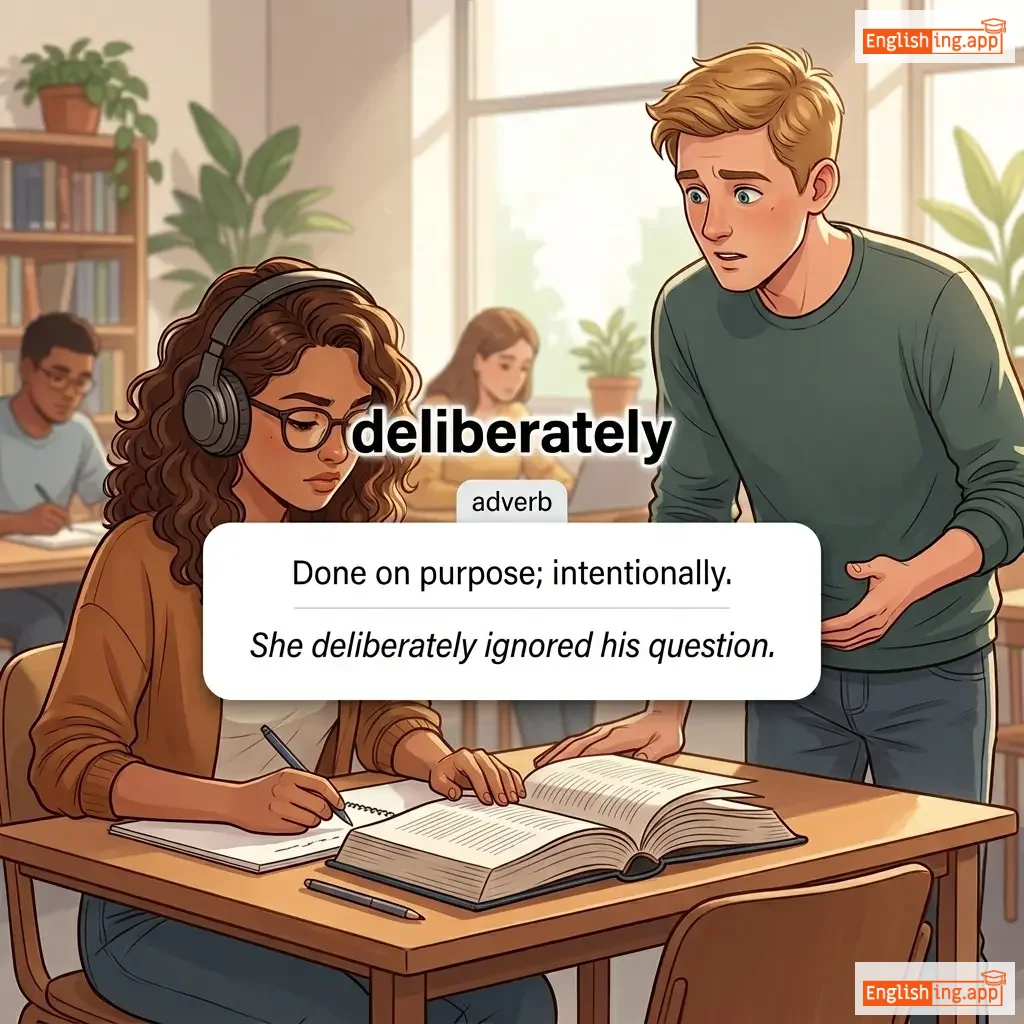
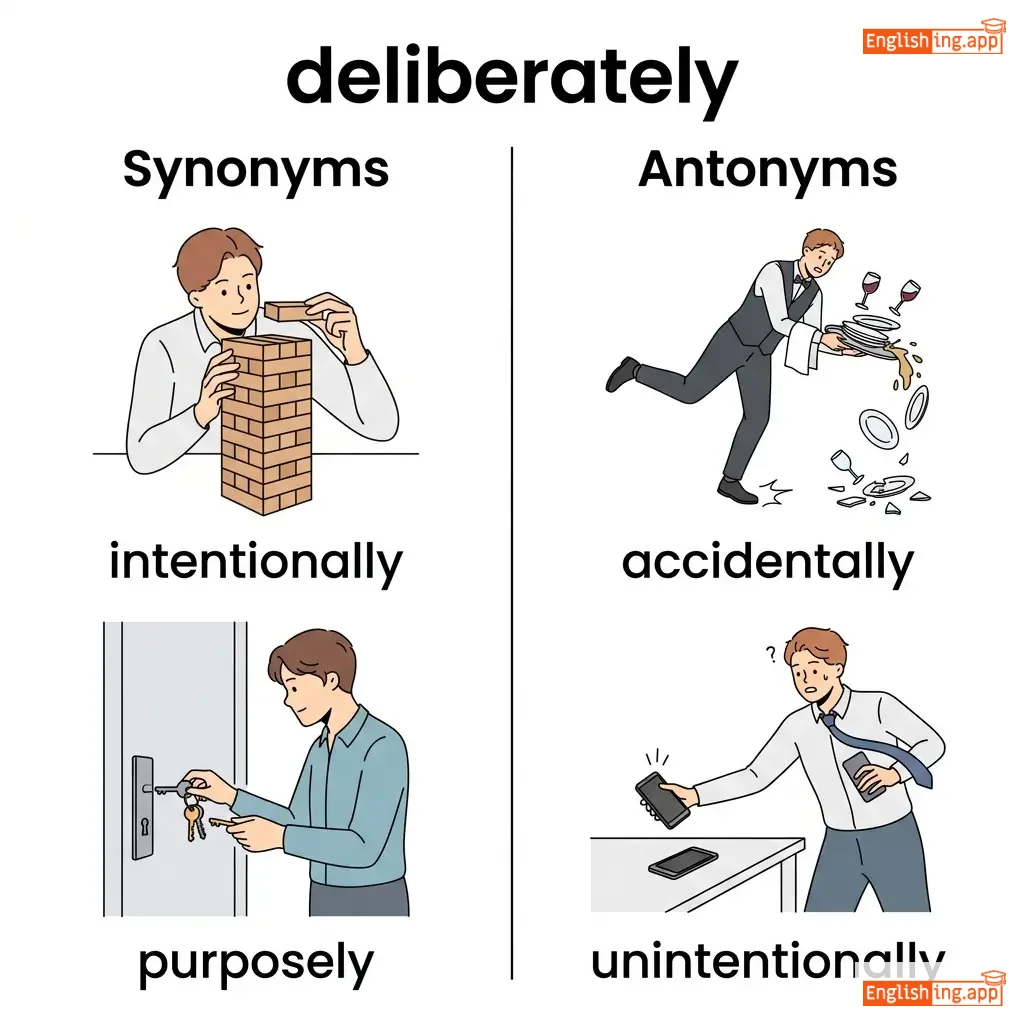

Swipe left or right, or use the buttons. Tap image to zoom.
Обновитесь для доступа ко всем предложениям
Получите неограниченный доступ ко всем предложениям с подпиской Pro
Обновить до ProПеревод примера предложения
Слово
Lesson 31Lesson 31 - Переключатель маски
|
Эмодзи
|
Слово | Images | Перевод | Прошедшее | Причастие прошедшего времени | Третье лицо единственного числа | Герундий | Значение | Пример предложения | Перевод примера предложения | Пример выражения | Значение примера выражения | Перевод примера выражения | Синонимы | Антонимы | Коллокации | Мнемоника |
|---|---|---|---|---|---|---|---|---|---|---|---|---|---|---|---|---|---|
|
#1448
📉
|
/ˈdɛfɪsɪt/
noun
(дефицит)
••••••
|
- •••••• |
дефицит
defitsit
••••••
|
- •••••• | - •••••• | - •••••• | - •••••• |
The amount by which something, especially money, is too small or lacking.
••••••
|
The government is trying to reduce the budget deficit. |
Правительство пытается уменьшить дефицит бюджета.
Pravitel'stvo pytayetsya umenshit' defitsit byudzheta.
••••••
|
trade deficit |
The amount by which a country’s imports exceed its exports.
••••••
|
торговый дефицит
torgovyj defitsit
••••••
|
shortfall, shortage, lack, loss, gap
••••••
|
surplus, excess, profit
••••••
|
budget deficit, trade deficit, current deficit
••••••
|
Дефицит 📉 - дефицит – когда не хватает чего-то, как деньги!
••••••
|
|
#1449
📖
|
/dɪˈfaɪn/
verb
(дефинировать)
••••••
|
- •••••• |
определять
opredelyat'
••••••
|
defined
дефинировал
••••••
|
defined
дефинирован
••••••
|
defines
дефинирует
••••••
|
defining
дефинируя
••••••
|
to explain the meaning of a word, phrase, or concept clearly
••••••
|
The teacher asked the student to define the word 'democracy'.
Учитель попросил студента определить слово 'демократия'.
••••••
|
Учитель попросил студента определить слово 'демократия'.
Uchitel' poprosil studenta opredelit' slovo 'demokratiya'.
••••••
|
define the terms
определить термины
••••••
|
to explain or set the exact meaning of words or conditions
••••••
|
определить термины
opredelit' terminy
••••••
|
explain, describe, clarify, interpret, specify
••••••
|
confuse, obscure
••••••
|
define clearly, define precisely, define role, define meaning
••••••
|
Определять значит 'определять' — как по-русски объяснять значение слова.
••••••
|
|
#1450
✔️
|
/ˈdef.ən.ɪt/
adjective
(дефинит)
••••••
|
- •••••• |
определенный
opredelennyy
••••••
|
- •••••• | - •••••• | - •••••• | - •••••• |
clearly stated or decided; not vague or doubtful
••••••
|
We need a definite plan before starting the project.
Нам нужен определенный план перед началом проекта.
••••••
|
Нам нужен определенный план перед началом проекта.
Nam nuzhen opredelennyy plan pered nachalom proyektu.
••••••
|
definite answer
определенный ответ
••••••
|
a clear and certain reply
••••••
|
определенный ответ
opredelennyy otvet
••••••
|
certain, clear, explicit, precise, fixed
••••••
|
indefinite, vague, uncertain
••••••
|
definite plan, definite answer, definite shape
••••••
|
Определенный, как 'определить', значит что-то, что четко установлено.
••••••
|
|
#1451
✅
|
/ˈdɛfɪnɪtli/
adverb
(definitli)
••••••
|
- •••••• |
определенно
opredelenno
••••••
|
- •••••• | - •••••• | - •••••• | - •••••• |
without any doubt; certainly
••••••
|
I will definitely call you tomorrow. |
Я обязательно позвоню тебе завтра.
Ya obyazatel'no pozvonyu tebe zavtra.
••••••
|
most definitely |
used to strongly agree or emphasize certainty
••••••
|
само собой разумеется
samo soboy razumeyetsya
••••••
|
certainly, surely, undoubtedly, clearly, absolutely
••••••
|
doubtfully, uncertainly
••••••
|
definitely true, definitely not, definitely agree, definitely going
••••••
|
Определенно означает 'без всяких сомнений' – как 'Определенно я пойду'.
••••••
|
|
#1452
📝
|
/ˌdɛfɪˈnɪʃən/
noun
(дефинишн)
••••••
|
- •••••• |
определение
opredelenie
••••••
|
- •••••• | - •••••• | - •••••• | - •••••• |
a statement that explains the meaning of a word or concept
••••••
|
The dictionary gives a clear definition of the word. |
Словарь дает четкое определение этого слова.
Slovar' dayet chotkoye opredeleniye etogo slova.
••••••
|
by definition |
something that is true by its very nature or meaning
••••••
|
по определению
po opredeleniyu
••••••
|
explanation, description, meaning, interpretation
••••••
|
ambiguity, vagueness
••••••
|
clear definition, dictionary definition, precise definition, definition of success
••••••
|
Определение - это как определение, как в словаре, который дает определения.
••••••
|
|
#1453
✊
|
/dɪˈfaɪ/
verb
••••••
|
|
- •••••• |
defied
••••••
|
defied
••••••
|
defies
••••••
|
defying
••••••
|
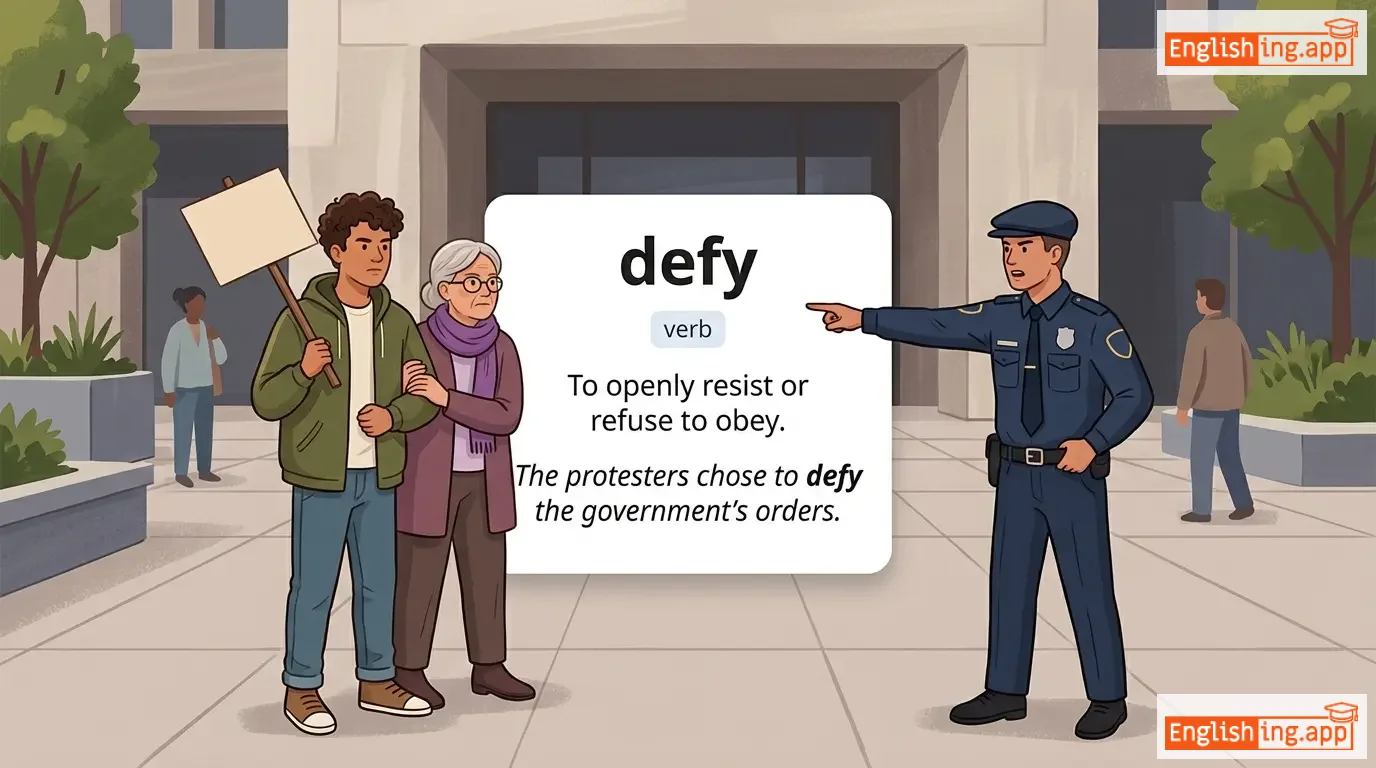
To openly resist or refuse to obey.
••••••
|
The protesters chose to defy the government's orders. |
- •••••• |
defy the odds |
To succeed despite being very unlikely or facing great difficulties.
••••••
|
- •••••• |
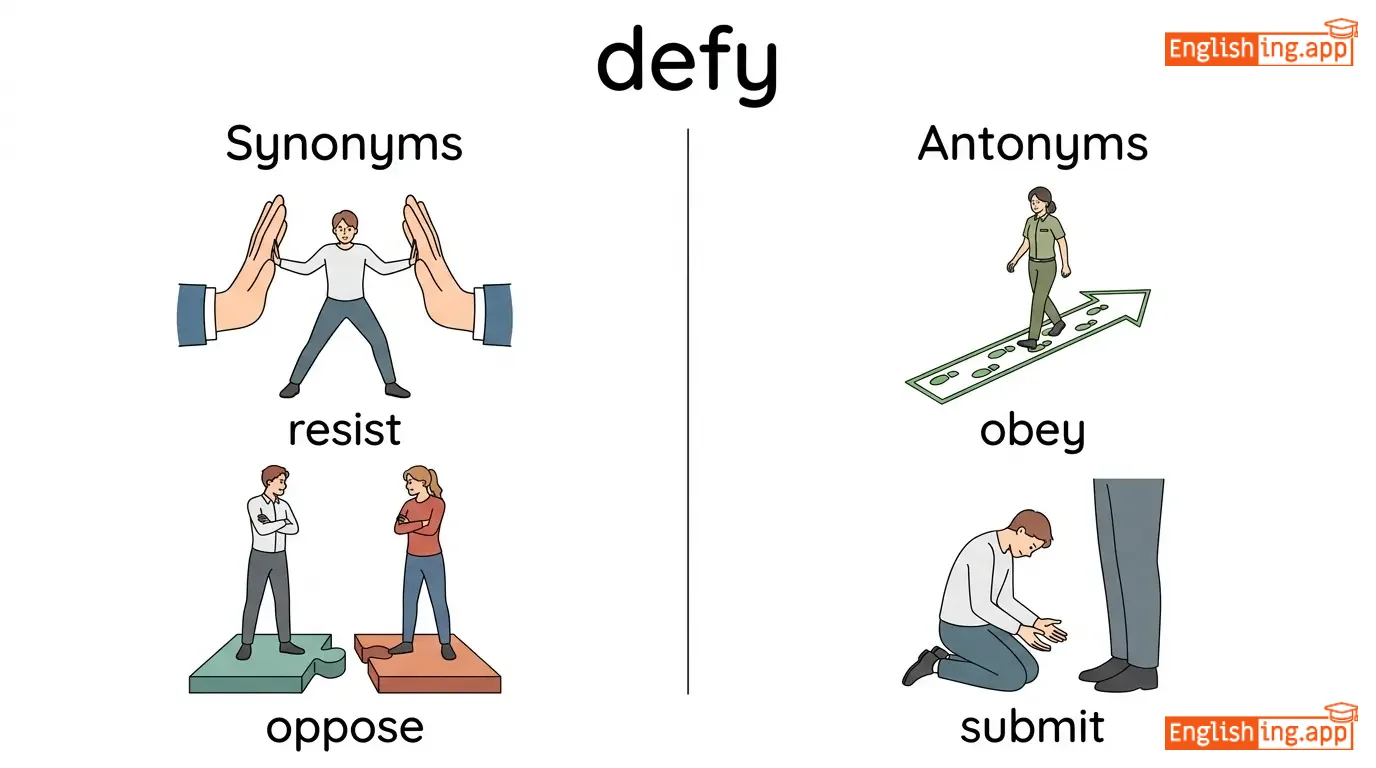
resist, oppose, confront, challenge
••••••
|
obey, submit, yield
••••••
|
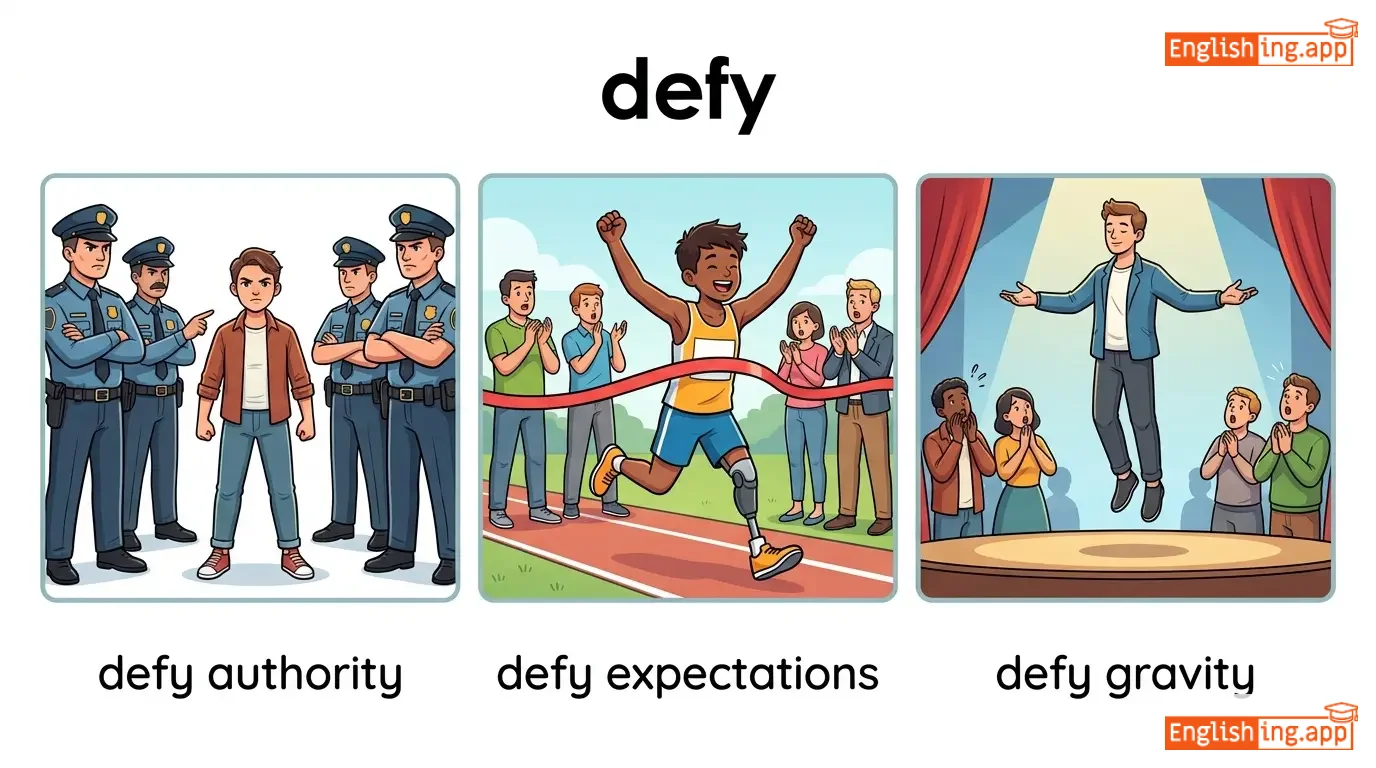
defy authority, defy expectations, defy gravity
••••••
|
No •••••• |
|
#1454
🎓
|
/dɪˈɡriː/
noun
(диˈгри)
••••••
|
- •••••• |
степень / уровень
stepen' / urovne
••••••
|
- •••••• | - •••••• | - •••••• | - •••••• |
an amount or level of something; an academic qualification
••••••
|
She earned a degree in engineering. |
Она получила степень в инженерии.
Ona poluchila stepen' v inzhenerii.
••••••
|
to some degree |
partly, to a certain extent
••••••
|
в определенной степени
v opredelennoy stepeni
••••••
|
level, extent, rank, diploma, qualification
••••••
|
whole, total
••••••
|
high degree, to a degree, academic degree, temperature degree
••••••
|
Степень означает степень, как температура или академическая степень.
••••••
|
|
#1455
⏳
|
/dɪˈleɪ/
verb
(diléi)
••••••
|
- •••••• |
задерживать
zaderzhivat'
••••••
|
delayed
diléed
••••••
|
delayed
diléed
••••••
|
delays
diléz
••••••
|
delaying
diláing
••••••
|
to make something happen later than planned
••••••
|
The flight was delayed due to bad weather.
Рейс был задержан из-за плохой погоды.
••••••
|
Рейс был задержан из-за плохой погоды.
Reys byl zaderzhan iz-za plokhoy pogody.
••••••
|
without delay
без задержки
••••••
|
immediately, without waiting
••••••
|
без задержки
bez zaderzhki
••••••
|
postpone, defer, stall, hinder, procrastinate
••••••
|
advance, expedite, hasten
••••••
|
cause delay, long delay, delay in delivery, unexpected delay
••••••
|
Delay означает задержку, как когда рейс задерживается.
••••••
|
|
#1456
📋
|
/ˈdɛlɪɡət/ (noun), /ˈdɛlɪɡeɪt/ (verb)
noun, verb
(делегировать)
••••••
|
- •••••• |
делегат / делегировать
delegat / delegirovat
••••••
|
delegated
делегировал
••••••
|
delegated
делегирован
••••••
|
delegates
делегирует
••••••
|
delegating
делегируя
••••••
|
as a noun: a person appointed to represent others; as a verb: to entrust a task or responsibility to another
••••••
|
The manager decided to delegate tasks to his team members.
Менеджер решил делегировать задачи своим членам команды.
••••••
|
Менеджер решил делегировать задачи своим членам команды.
Menedzher reshil delegirovat' zadachi svoim chlenam komandy.
••••••
|
delegate authority
делегировать полномочия
••••••
|
to give power or responsibility to someone else
••••••
|
делегировать полномочия
delegirovat' polnomochiya
••••••
|
assign, entrust, representative, envoy
••••••
|
retain, keep, withhold
••••••
|
delegate responsibility, delegate authority, delegate tasks
••••••
|
Delegate = Deli + Gate - передавать задачи
••••••
|
|
#1457
👥
|
/ˌdɛlɪˈɡeɪʃən/
noun
(делегация)
••••••
|
|
делегация
delegatsiya
••••••
|
- •••••• | - •••••• | - •••••• | - •••••• |
the act of giving someone else responsibility for something
••••••
|
The manager made a delegation of tasks to the team. |
Менеджер делегировал задачи команде.
Menedzher delegiroval zadachi komande.
••••••
|
- •••••• | - •••••• | - •••••• |
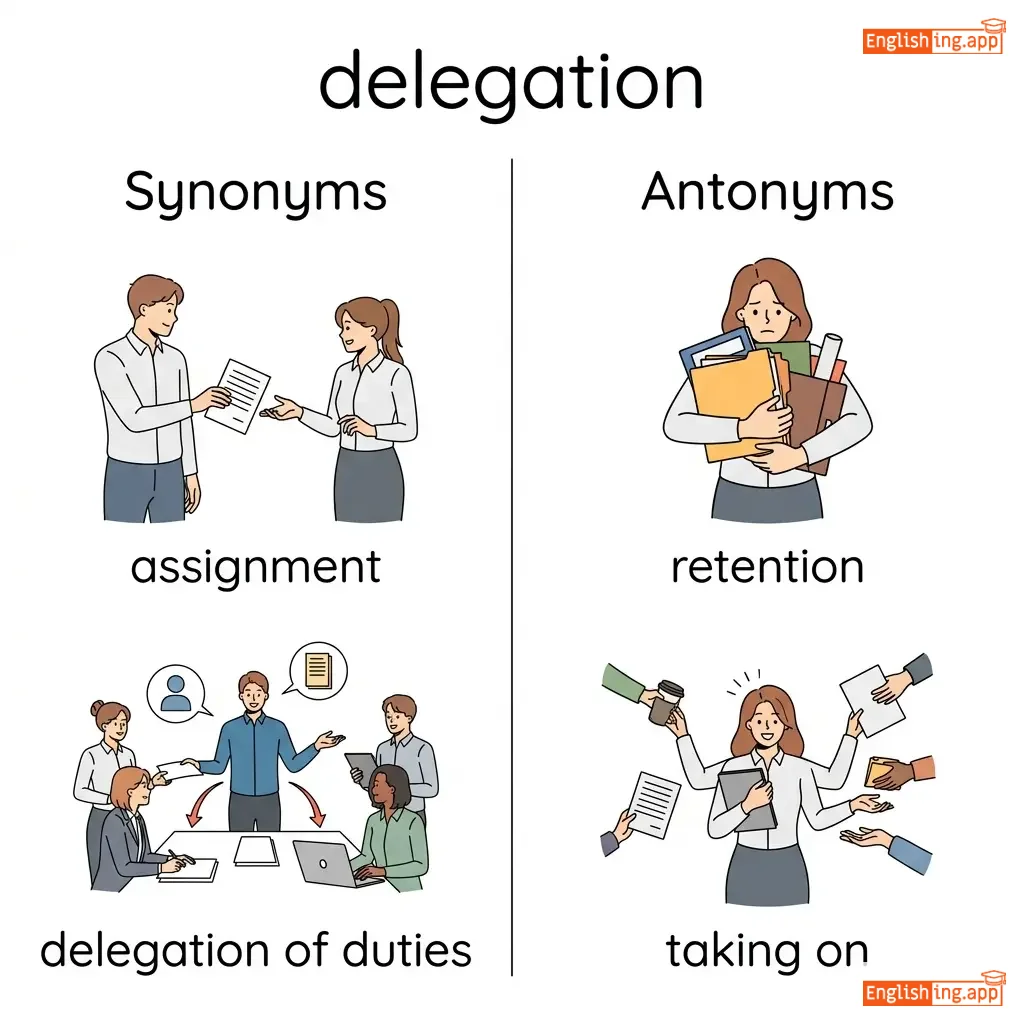
assignment, delegation of duties, responsibility, transfer
••••••
|
retention, taking on, holding
••••••
|
delegation of authority, delegation of tasks, formal delegation
••••••
|
A **делегация (delegation)** is when you **delegate (делегировать)** tasks to others.
••••••
|
|
#1458
🗑️
|
/dɪˈliːt/
verb
(ди-лит)
••••••
|
- •••••• |
удалять/удалить
deleet
••••••
|
deleted
ди-литид
••••••
|
deleted
ди-литид
••••••
|
deletes
ди-литс
••••••
|
deleting
ди-литинг
••••••
|
to remove or erase something, especially written or recorded information
••••••
|
He accidentally deleted all the files from his computer.
Он случайно удалил все файлы на своем компьютере.
••••••
|
Он случайно удалил все файлы на своем компьютере.
On sluchajno udalil vse fayly na svoem kompyutere.
••••••
|
delete from memory
стереть из памяти
••••••
|
to try to forget something unpleasant or unnecessary
••••••
|
стереть из памяти
steret iz pamyati
••••••
|
erase, remove, wipe, cancel, discard
••••••
|
restore, save, keep
••••••
|
delete a file, delete permanently, delete message, delete account
••••••
|
Удали-те файлы = delete: представь, что 'delete' говорит 'удали-те' и отправляет все в корзину
••••••
|
|
#1459
🧠
|
/dɪˈlɪbərət/ (adj), /dɪˈlɪbəreɪt/ (verb)
adjective, verb
(дɪˈлɪбɪрэйт)
••••••
|
|
сознательно сделано / обсудить
soznatel'no sdelano / obsluzhdat'
••••••
|
deliberated
дɪˈлɪбɪрэйтед
••••••
|
deliberated
дɪˈлɪбɪрэйтед
••••••
|
deliberates
дɪˈлɪбɪрэйтс
••••••
|
deliberating
дɪˈлɪбɪрэйтɪнг
••••••
|
done consciously and intentionally; to consider or discuss something carefully
••••••
|
The committee will deliberate on the proposal tomorrow.
Комитет завтра будет обсуждать предложение.
••••••
|
Комитет завтра будет обсуждать предложение.
Komitet zavtra budet obshchatsya predlozheniem.
••••••
|
deliberate attempt
преднамеренная попытка
••••••
|
an intentional or planned effort
••••••
|
преднамеренная попытка
prednamerennaia popytka
••••••
|
intentional, planned, thoughtful, consider
••••••
|
accidental, unintentional, careless
••••••
|
deliberate action, deliberate attempt, deliberate decision, deliberate over
••••••
|
Deliberate - когда обсуждаем план сознательно, на совещании.
••••••
|
|
#1460
🎯
|
/dɪˈlɪb.ər.ət.li/
adverb
(дɪˈлɪбэрэтли)
••••••
|
|
умышленно; преднамеренно; с учетом тщательных размышлений
umishlenno; prednamerenno; s uchetom tchetnykh razmishleniy
••••••
|
- •••••• | - •••••• | - •••••• | - •••••• |
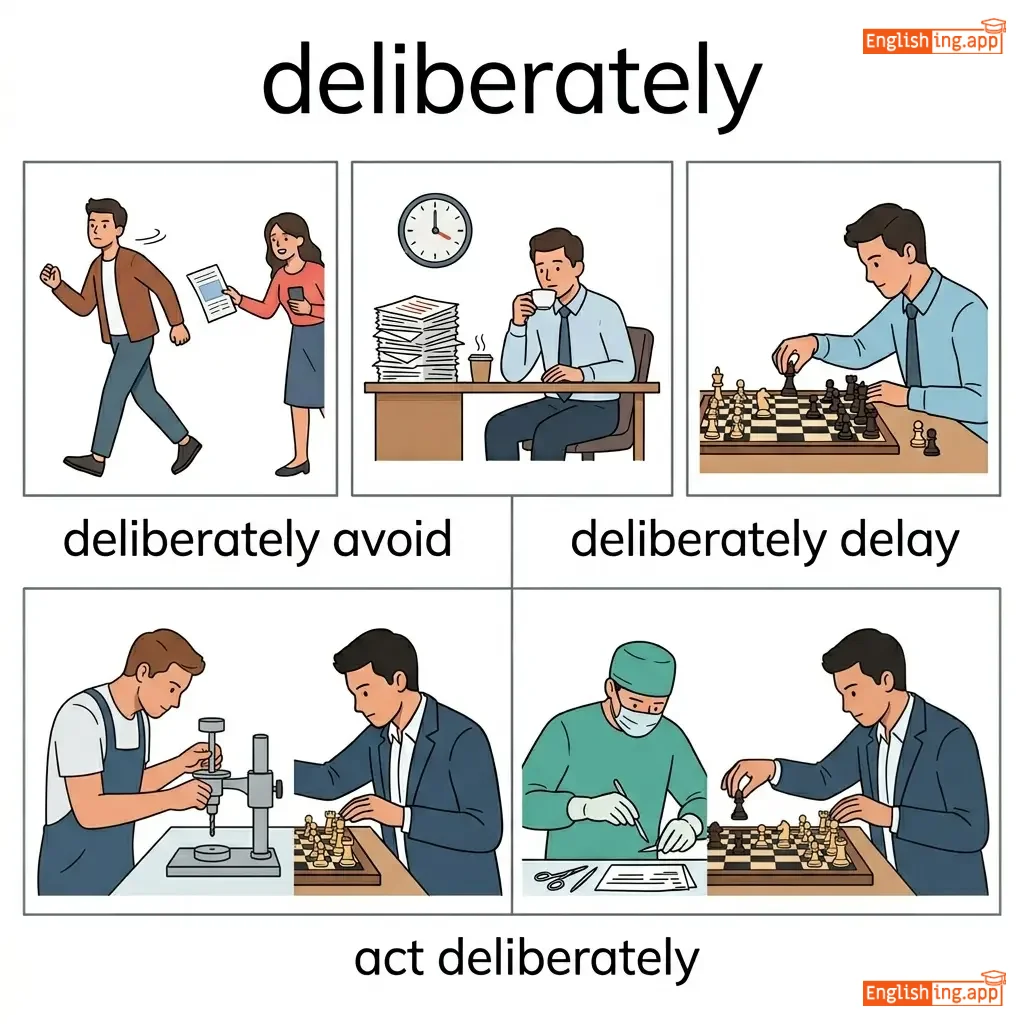
intentionally; on purpose; with careful consideration
••••••
|
He deliberately chose not to answer the question.
Он сознательно выбрал не отвечать на вопрос.
••••••
|
Он сознательно выбрал не отвечать на вопрос.
On soznatel'no vybral ne otvechat' na vopros.
••••••
|
- •••••• | - •••••• | - •••••• |
intentionally, purposely, consciously
••••••
|
accidentally, unintentionally, carelessly
••••••
|
deliberately avoid, deliberately choose, deliberately ignore
••••••
|
Каждое важное решение требует умышленных усилий.
••••••
|
|
#1461
🌸
|
/ˈdɛlɪkət/
adjective
(дэликэт)
••••••
|
- •••••• |
хрупкий
khrupkiy
••••••
|
- •••••• | - •••••• | - •••••• | - •••••• |
Easily broken or damaged; requiring careful handling.
••••••
|
The vase is very delicate, so handle it with care. |
Ваза очень хрупкая, поэтому обращайтесь с ней осторожно.
Vaza ochen' khrupkaya, poetomu obrashchaytes' s ney ostorozhno.
••••••
|
delicate balance |
A situation where small changes can cause serious consequences.
••••••
|
хрупкий баланс
khrupkiy balans
••••••
|
fragile, fine, sensitive, subtle, tender
••••••
|
strong, tough, durable
••••••
|
delicate issue, delicate flower, delicate situation
••••••
|
Delicate 🌸 означает хрупкий – 'Delicate цветок' означает цветок, который легко ломается.
••••••
|
|
#1462
😋
|
/dɪˈlɪʃəs/
adjective
(khappiness)
••••••
|
- •••••• |
счастье
schast'ye
••••••
|
- •••••• | - •••••• | - •••••• | - •••••• |
having a very pleasant taste or smell
••••••
|
The cake was so delicious that everyone asked for a second slice.
Она не могла скрыть свое счастье, когда получила награду.
••••••
|
Она не могла скрыть свое счастье, когда получила награду.
Ona ne mogla skryt' svoe schast'ye, kogda poluchila nagradu.
••••••
|
look delicious
поиск счастья
••••••
|
to appear very tasty or appealing
••••••
|
поиск счастья
poisk schast'ya
••••••
|
tasty, appetizing, savory, delightful, yummy
••••••
|
bland, tasteless, unappetizing
••••••
|
delicious meal, delicious cake, delicious smell, look delicious
••••••
|
Счастье — это всегда искать радость и быть счастливым.
••••••
|
|
#1463
😊
|
/dɪˈlaɪt/
noun, verb
(дилáйт)
••••••
|
- •••••• |
восторг
vostorg
••••••
|
delighted
дилáйтед
••••••
|
delighted
дилáйтед
••••••
|
delights
дилáйтс
••••••
|
delighting
дилáйтинг
••••••
|
great pleasure or joy; to give someone great pleasure
••••••
|
The children were filled with delight when they saw the gifts.
зе чилдрен вер филд виз дилáйт уэн зей соу зе гифтс
••••••
|
Дети были полны восторга, когда увидели подарки.
Deti byli polny vostorga kogda uvideli podarki.
••••••
|
to one's delight
ту уанс дилáйт
••••••
|
to one's great pleasure or happiness
••••••
|
к великой радости кого-то
k velikoy radosti kogoto
••••••
|
joy, pleasure, happiness, bliss, satisfaction
••••••
|
sorrow, disappointment, sadness
••••••
|
great delight, pure delight, delight in, take delight
••••••
|
Delight звучит как ‘восторг’ — и оба приносят радость.
••••••
|
|
#1464
📦
|
/dɪˈlɪvər/
verb
(де-ли-вер)
••••••
|
- •••••• |
доставить
dostavit
••••••
|
delivered
де-лив-ёрд
••••••
|
delivered
де-лив-ёрд
••••••
|
delivers
де-лив-ёрс
••••••
|
delivering
де-лив-ё-ринг
••••••
|
to bring or hand over something to the intended recipient
••••••
|
The courier will deliver the package tomorrow.
Курьер доставит посылку завтра.
••••••
|
Курьер доставит посылку завтра.
Kuryer dostavit posylku zavtra.
••••••
|
deliver the goods
доставить товар
••••••
|
to do what is promised or expected
••••••
|
выполнить обещанное
vypolnit' obeshchannoe
••••••
|
bring, hand over, distribute, convey, supply
••••••
|
withhold, keep, retain
••••••
|
deliver a package, deliver results, deliver a speech, deliver justice
••••••
|
Доставить значит принести что-то, как курьер с посылкой.
••••••
|
|
#1465
🚚
|
/dɪˈlɪvəri/
noun
(дɪˈлɪвəри)
••••••
|
- •••••• |
доставка
dostavka
••••••
|
- •••••• | - •••••• | - •••••• | - •••••• |
the act of taking goods, letters, or packages to people's houses or places of work
••••••
|
The delivery of fresh vegetables arrives every morning. |
Доставка свежих овощей приходит каждое утро.
Dostavka svezhikh ovochay prikhodit kazhdoe utro.
••••••
|
special delivery |
a postal service that ensures faster delivery than usual
••••••
|
специальная доставка
spetsial'naya dostavka
••••••
|
distribution, dispatch, shipment, transport, conveyance
••••••
|
non-delivery, retention, withholding
••••••
|
fast delivery, food delivery, delivery service, home delivery
••••••
|
Доставка еды от Яндекса быстро - Доставка это то же, что и delivery.
••••••
|
|
#1466
📈
|
/dɪˈmænd/
noun, verb
(дemand)
••••••
|
- •••••• |
спрос
spros
••••••
|
demanded
демандед
••••••
|
demanded
демандед
••••••
|
demands
демандс
••••••
|
demanding
демандинг
••••••
|
to ask for something forcefully; the need or desire for goods or services
••••••
|
Workers demanded better wages from the company.
Рабочие потребовали лучших зарплат от компании.
••••••
|
Рабочие потребовали лучших зарплат от компании.
Rabochie potrebovali luchshikh zarplat ot kompanii.
••••••
|
in demand
в спросе
••••••
|
popular or widely desired
••••••
|
в спросе
v sprose
••••••
|
request, ask, require, call for, claim
••••••
|
supply, offer, give
••••••
|
high demand, demand for, meet demand, supply and demand
••••••
|
Если что-то в спросе, значит, это всем нужно
••••••
|
|
#1467
🗳️
|
/dɪˈmɑːkrəsi/
noun
(демократия)
••••••
|
|
демократия
demokratiya
••••••
|
- •••••• | - •••••• | - •••••• | - •••••• |
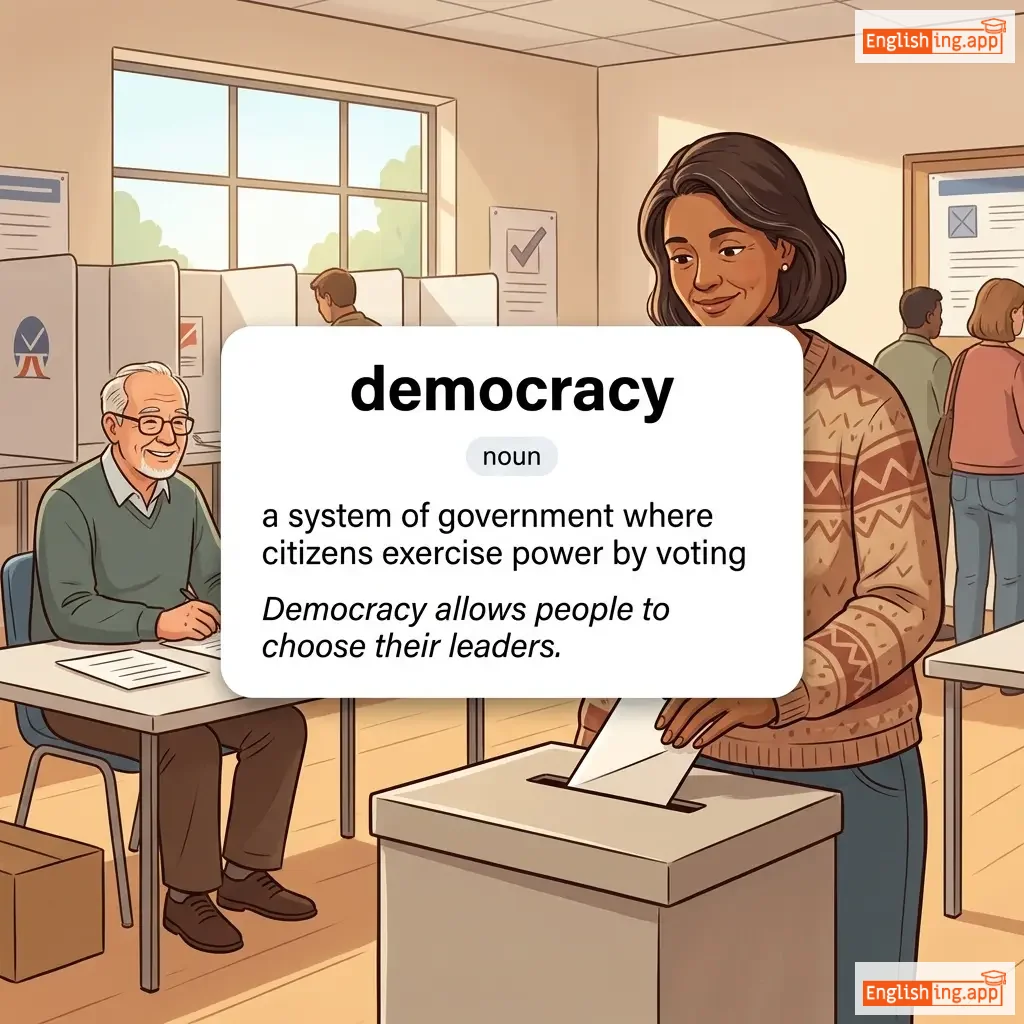
a system of government where citizens exercise power by voting
••••••
|
Democracy allows people to choose their leaders. |
Демократия позволяет людям выбирать своих лидеров.
Demokratiya pozvolyayet lyudyam vybirat' svoikh liderov.
••••••
|
true democracy |
a genuine practice of democratic values
••••••
|
настоящая демократия
nastoyashchaya demokratiya
••••••
|
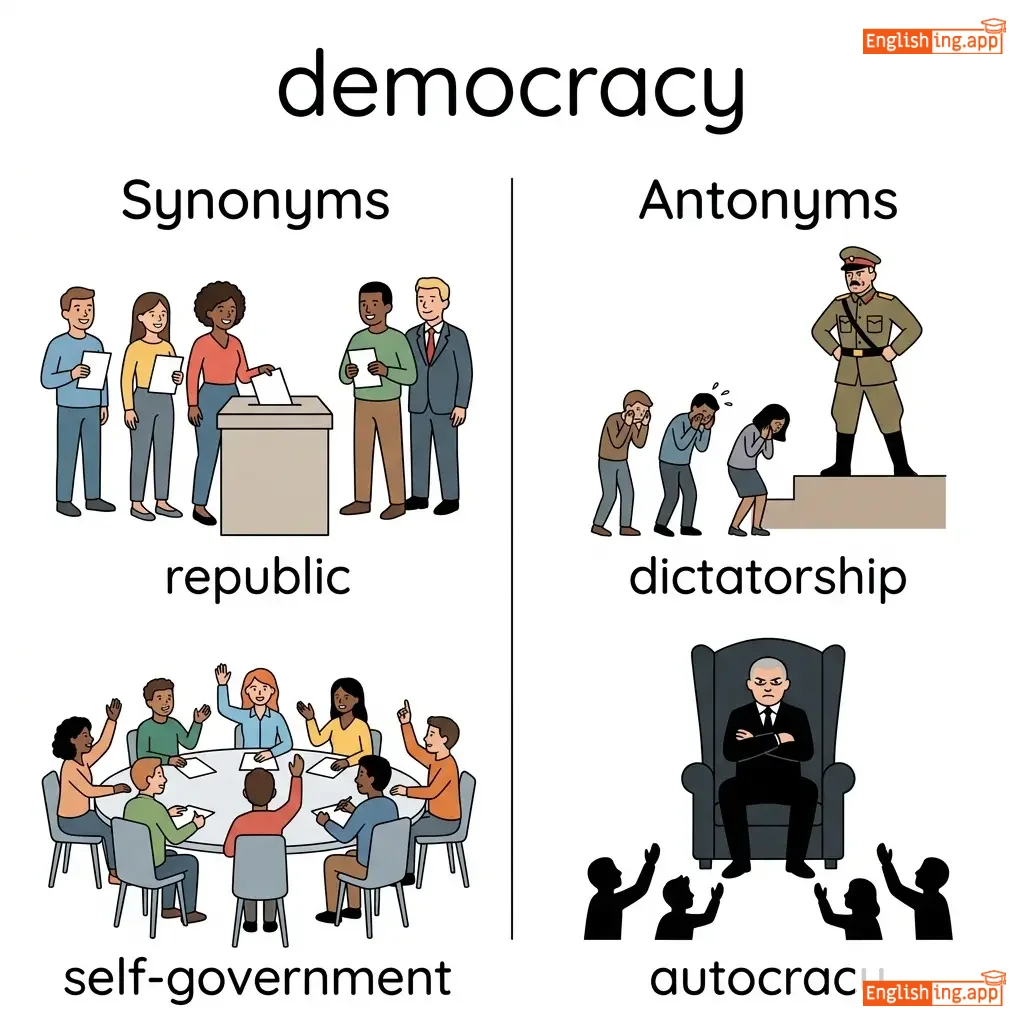
republic, self-government, representative government, popular government
••••••
|
dictatorship, autocracy, monarchy
••••••
|
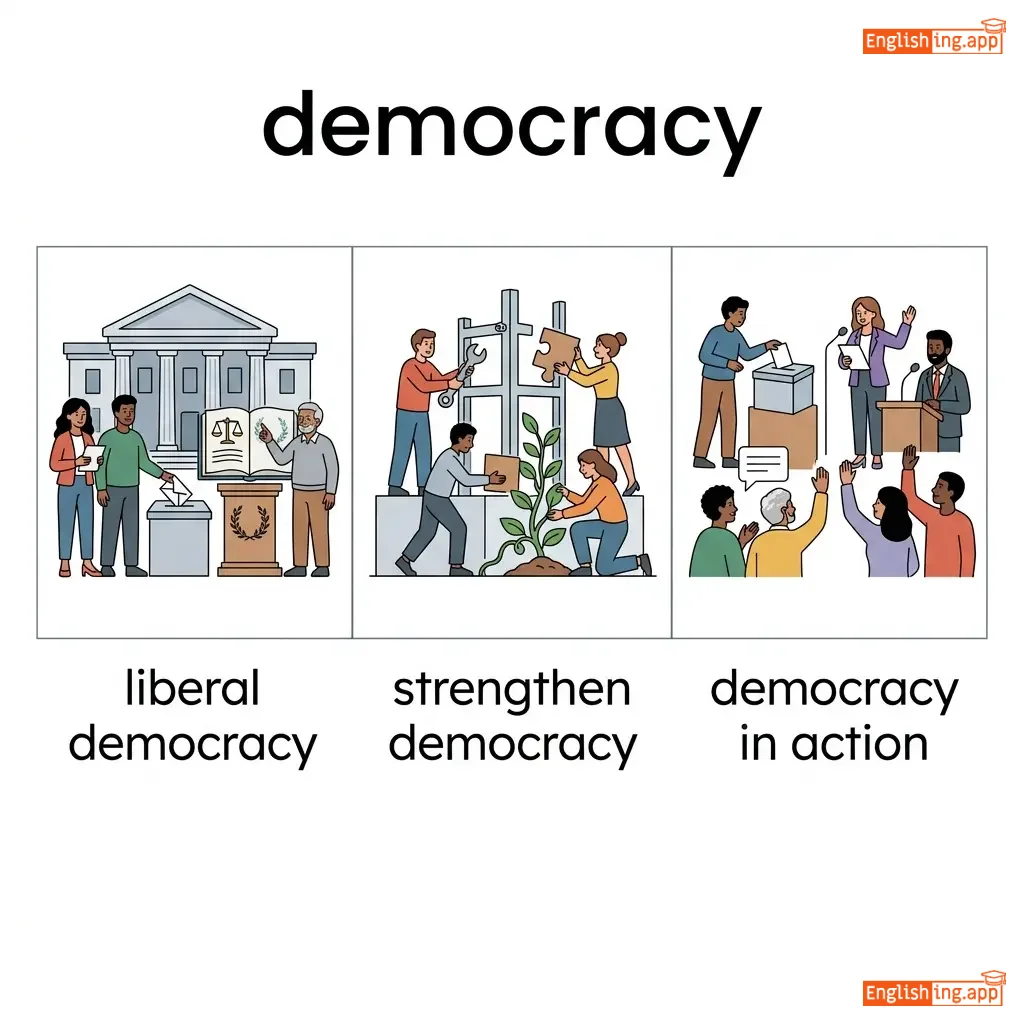
liberal democracy, strengthen democracy, democracy in action, democracy movement
••••••
|
Demo означает народ, cracy означает правление - Демократия = правление народа
••••••
|
|
#1468
🕊️
|
/ˈdɛməˌkræt/
noun
(демократ)
••••••
|
- •••••• |
демократ
demokrat
••••••
|
- •••••• | - •••••• | - •••••• | - •••••• |
a supporter of democracy or a member of the Democratic Party in the US
••••••
|
He is a strong democrat who believes in equal rights. |
Он сильный демократ, который верит в равные права.
On sil'nyy demokrat, kotoryy verit v ravnye prava.
••••••
|
- •••••• | - •••••• | - •••••• |
supporter, liberal, reformer, egalitarian
••••••
|
dictator, autocrat
••••••
|
loyal democrat, leading democrat, democrat leader, true democrat
••••••
|
Demokrat означает сторонника демократии
••••••
|
|
#1469
🗳️
|
/ˌdɛməˈkrætɪk/
adjective
(демократический)
••••••
|
|
демократический
demokraticheskiy
••••••
|
- •••••• | - •••••• | - •••••• | - •••••• |
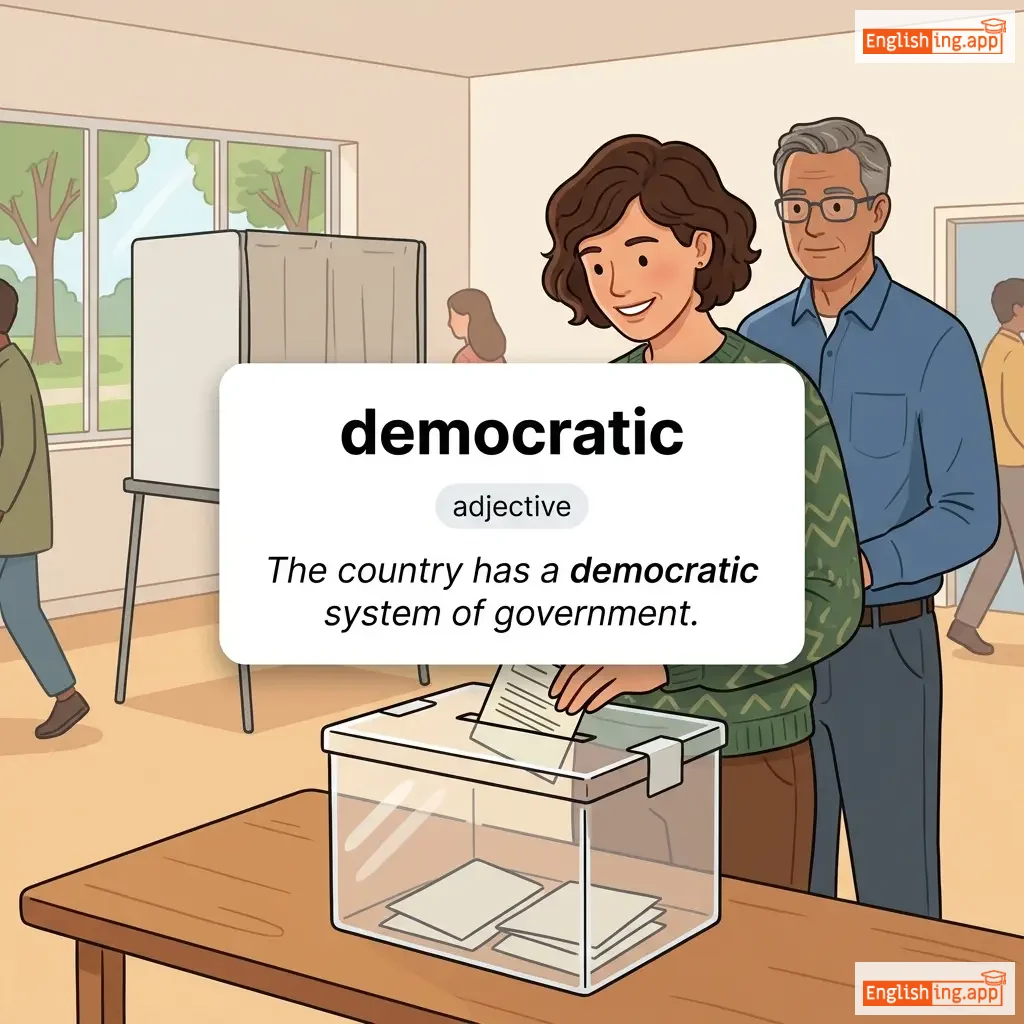
relating to or supporting democracy or its principles; characterized by equality and freedom
••••••
|
The country has a democratic system of government. |
Страна имеет демократическую систему управления.
Strana imeyet demokraticheskuyu sistemu upravleniya.
••••••
|
democratic values |
principles of equality, freedom, and representation in governance
••••••
|
демократические ценности
demokraticheskiye tsennosti
••••••
|
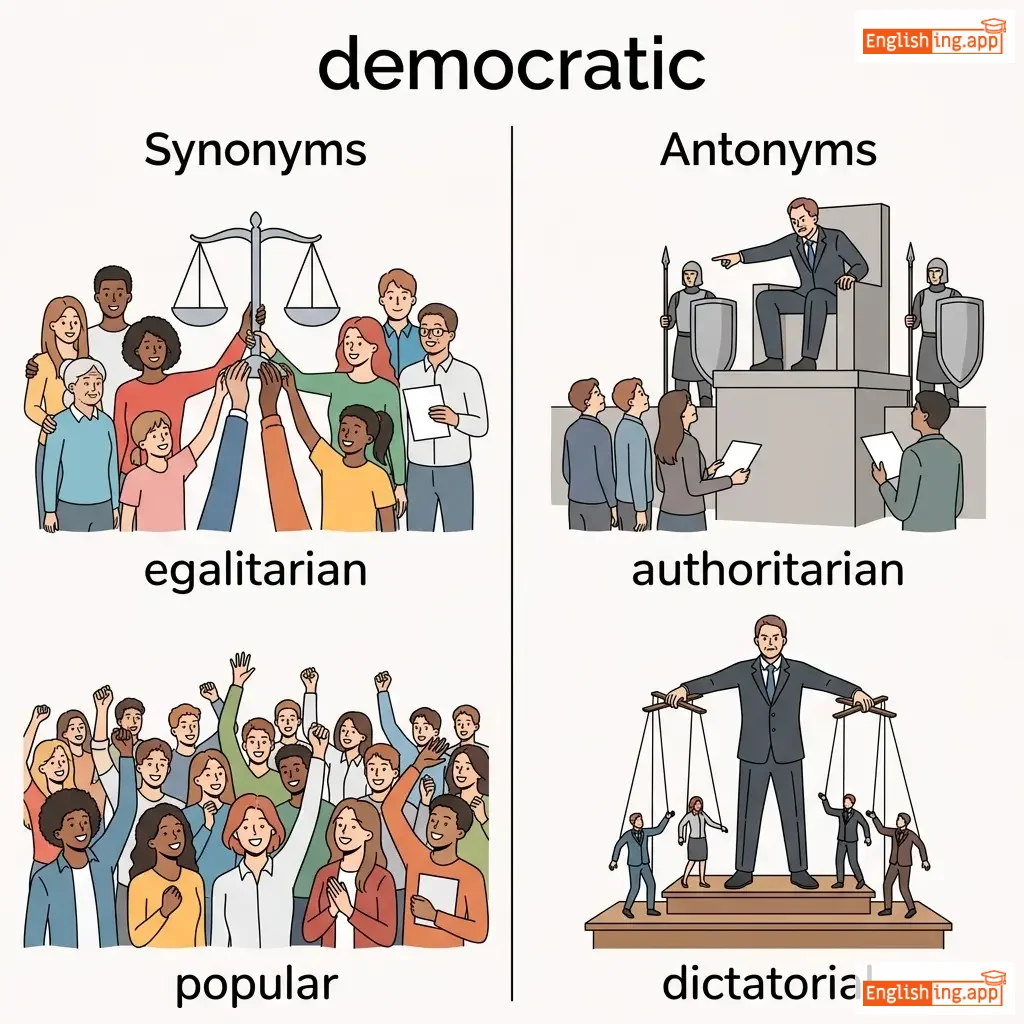
egalitarian, popular, representative, self-governing
••••••
|
authoritarian, dictatorial, autocratic
••••••
|
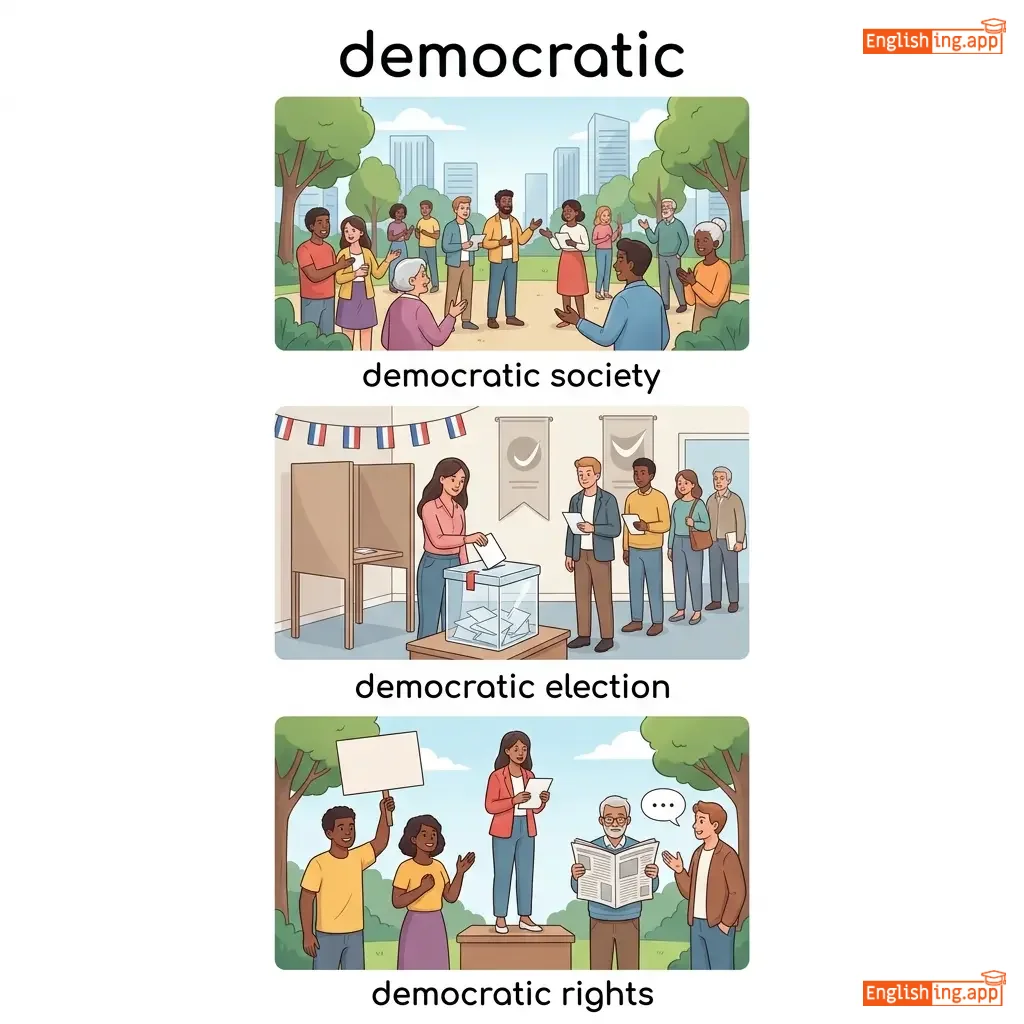
democratic society, democratic election, democratic rights, democratic values
••••••
|
Democratic значит демо (демонстрация) + кратик → Люди голосуют за демократию.
••••••
|
|
#1470
👹
|
/ˈdiːmən/
noun
(демон)
••••••
|
- •••••• |
демон
demon
••••••
|
- •••••• | - •••••• | - •••••• | - •••••• |
an evil spirit or devil
••••••
|
The story was about a demon who haunted the village.
История была о демоне, который терроризировал деревню.
••••••
|
История была о демоне, который терроризировал деревню.
Istoriya byla o demone, kotoryy terroriziroval derevnyu.
••••••
|
- •••••• | - •••••• | - •••••• |
devil, fiend, evil spirit, monster
••••••
|
angel, saint, good spirit
••••••
|
demon possession, demon spirit, evil demon
••••••
|
Демон sounds like 'Demon' - evil spirit
••••••
|
|
#1471
🧑🏫
|
/ˈdɛmənˌstreɪt/
verb
(демонстрейт)
••••••
|
- •••••• |
демонстрировать
demonstrirovat
••••••
|
demonstrated
демонстрейтед
••••••
|
demonstrated
демонстрейтед
••••••
|
demonstrates
демонстрейтс
••••••
|
demonstrating
демонстрейтинг
••••••
|
to clearly show or prove something through evidence, explanation, or action
••••••
|
The teacher demonstrated the experiment to the class.
Учитель продемонстрировал эксперимент классу.
••••••
|
Учитель продемонстрировал эксперимент классу.
Uchitel' prodemonstriroval eksperiment klassu.
••••••
|
demonstrate one's skills
показать свои способности
••••••
|
to show one's abilities through action or performance
••••••
|
показать свои способности
pokazat' svoi sposobnosti
••••••
|
show, exhibit, display, illustrate, prove
••••••
|
hide, conceal, obscure
••••••
|
demonstrate ability, demonstrate skill, demonstrate interest, demonstrate clearly
••••••
|
Demonstrate + Ruv = Рекомендация (Demonst) предсказывает действия
••••••
|
|
#1472
✊
|
/ˌdɛmənˈstreɪʃən/
noun
(демонстрация)
••••••
|
- •••••• |
демонстрация, протест
demonstratsiya, protest
••••••
|
- •••••• | - •••••• | - •••••• | - •••••• |
the act of showing something clearly, or a public protest
••••••
|
The workers organized a demonstration for better wages. |
Рабочие организовали демонстрацию за повышение зарплаты.
Rabochiye organizovali demonstratsiyu za povysheniye zarplaty.
••••••
|
peaceful demonstration |
a non-violent public protest
••••••
|
мирная демонстрация
mirnaya demonstratsiya
••••••
|
protest, rally, march, display, presentation
••••••
|
silence, inaction
••••••
|
street demonstration, public demonstration, demonstration of power, demonstration of skills
••••••
|
Demonstration означает демонстрацию или протест
••••••
|
|
#1473
🙅♂️
|
/dɪˈnaɪəl/
noun
(dih-NAY-uhl)
••••••
|
- •••••• |
отрицание
otritsanie
••••••
|
- •••••• | - •••••• | - •••••• | - •••••• |
a statement that something is not true; the refusal to accept or believe something
••••••
|
His denial of the accusations surprised everyone. |
Его отрицание обвинений удивило всех.
ego otnitsanie obvineniy udivilo vsekh.
••••••
|
in denial |
refusing to accept reality or truth
••••••
|
в отрицании
v otnitsanii
••••••
|
refusal, rejection, contradiction, repudiation
••••••
|
acceptance, confirmation, admission
••••••
|
strong denial, official denial, denial of reality, denial of responsibility
••••••
|
Denial означает отрицание — как 'deny' означает отклонить, так что 'denial' это отклонение реальности.
••••••
|
|
#1474
🔴
|
/dɪˈnəʊt/
verb
(дɪˈнoт)
••••••
|
- •••••• |
означать
oznachat
••••••
|
denoted
денотед
••••••
|
denoted
денотед
••••••
|
denotes
денотс
••••••
|
denoting
денотинг
••••••
|
To be a sign of; to indicate or mean something.
••••••
|
A red flag denotes danger.
Красный флаг означает опасность.
••••••
|
Красный флаг означает опасность.
Krasnyy flag oznachaet opasnost'.
••••••
|
- •••••• | - •••••• | - •••••• |
indicate, signify, represent, express, stand for
••••••
|
conceal, obscure
••••••
|
clearly denote, usually denotes, symbol denotes, denotes importance
••••••
|
Oznachat' значит ставить знак, как красный флаг означает опасность.
••••••
|
|
#1475
📢
|
/dɪˈnaʊns/
verb
(dinans)
••••••
|
- •••••• |
осуждать
osuzhdat
••••••
|
denounced
dinanst
••••••
|
denounced
dinanst
••••••
|
denounces
dinantsez
••••••
|
denouncing
dinantsing
••••••
|
To publicly declare something to be wrong, evil, or condemn strongly.
••••••
|
The leader denounced corruption in his speech.
Лидер осудил коррупцию в своей речи.
••••••
|
Лидер осудил коррупцию в своей речи.
Lider osudil korruptsiyu v svoey rechi.
••••••
|
denounce in no uncertain terms
осуждать недвусмысленно
••••••
|
To condemn very strongly and clearly.
••••••
|
осуждать недвусмысленно
osuzhdat nedvuzmyslenno
••••••
|
condemn, criticize, censure, blame, accuse
••••••
|
praise, approve, endorse
••••••
|
publicly denounce, strongly denounce, denounce corruption, denounce violence
••••••
|
Denounce похоже на 'announce', но означает публичное осуждение чего-то.
••••••
|
|
#1476
🌲
|
/dɛns/
adjective
(денс)
••••••
|
- •••••• |
плотный
plotny
••••••
|
- •••••• | - •••••• | - •••••• | - •••••• |
Closely compacted in substance; having parts crowded together.
••••••
|
The forest was so dense that little sunlight reached the ground. |
Лес был таким плотным, что мало солнечного света достигало земли.
Les byl takim plotnym, chto malo solnechnogo sveta doshchalo zemli.
••••••
|
dense fog |
Thick fog that reduces visibility.
••••••
|
плотный туман
plotnyy tuman
••••••
|
thick, compact, crowded, heavy, solid
••••••
|
thin, sparse, light
••••••
|
dense forest, dense fog, dense population, dense crowd
••••••
|
Dense означает плотный - помни dense forest, означает плотный лес.
••••••
|
|
#1477
⚖️
|
/ˈdɛnsɪti/
noun
(денсити)
••••••
|
- •••••• |
плотность
plotnost
••••••
|
- •••••• | - •••••• | - •••••• | - •••••• |
the degree of compactness or thickness of a substance or object
••••••
|
The density of water is higher than that of air.
Плотность воды выше, чем плотность воздуха.
••••••
|
Плотность воды выше, чем плотность воздуха.
Plotnost' vody vyshe, chem plotnost' vozdukha.
••••••
|
population density
плотность населения
••••••
|
the number of people living per unit area of land
••••••
|
плотность населения
plotnost' naseleniya
••••••
|
thickness, concentration, solidity, compactness, mass
••••••
|
thinness, rarity, emptiness
••••••
|
high density, low density, population density, energy density
••••••
|
Плотность, как плотный — поэтому density это плотность.
••••••
|
|
#1478
🦷
|
/ˈdɛntəl/
adjective
(дентал)
••••••
|
- •••••• |
стоматологический
stomatologicheskiy
••••••
|
- •••••• | - •••••• | - •••••• | - •••••• |
relating to teeth or dentistry
••••••
|
She goes for a dental checkup every six months.
Она проходит дентальный осмотр каждые шесть месяцев.
••••••
|
Она проходит стоматологический осмотр каждые шесть месяцев.
ona prokhodit stomatologicheskiy osmotr kazhdye shest mesyatsev
••••••
|
- •••••• | - •••••• | - •••••• |
oral, odontic, tooth-related, stomatological
••••••
|
non-dental, general
••••••
|
dental care, dental clinic, dental hygiene, dental surgery, dental checkup
••••••
|
Dental = стоматология, зубы и врач
••••••
|
|
#1479
🦷
|
/ˈden.tɪst/
noun
(дентист)
••••••
|
- •••••• |
стоматолог
stomatolog
••••••
|
- •••••• | - •••••• | - •••••• | - •••••• |
a medical professional who treats teeth and oral health
••••••
|
I need to visit the dentist for a regular checkup. |
Мне нужно посетить стоматолога для регулярного осмотра.
Mne nuzhno posetit' stomatologa dlya regulyarnogo osmotra
••••••
|
- •••••• | - •••••• | - •••••• |
dental surgeon, orthodontist, oral surgeon
••••••
|
- •••••• |
visit the dentist, dentist appointment, family dentist, dental clinic
••••••
|
Стоматолог лечит зубы
••••••
|
|
#1480
🚆
|
/dɪˈpɑːrt/
verb
(департ)
••••••
|
- •••••• |
отправляться
depart
••••••
|
departed
департед
••••••
|
departed
департед
••••••
|
departs
департс
••••••
|
departing
департинг
••••••
|
to leave, especially to start a journey
••••••
|
The train will depart at 9 a.m.
зи трейн вил департ эт 9 эй эм
••••••
|
Поезд отправится в 9 утра.
Poezd otpravitsya v nine utro
••••••
|
depart this life
департ зис лайф
••••••
|
a formal or euphemistic way to say 'die'
••••••
|
умереть
uiti iz zhizni
••••••
|
leave, exit, go, withdraw, set off
••••••
|
arrive, stay, remain
••••••
|
depart early, depart station, flight departs, depart suddenly
••••••
|
ДЕПАРТ = DePART: De = от, PART = часть; Представь поезд, который уезжает и забирает часть пути: depart = уйти в путь.
••••••
|
|
#1481
🏢
|
/dɪˈpɑːrtmənt/
noun
(департамент)
••••••
|
- •••••• |
отдел
otdel
••••••
|
- •••••• | - •••••• | - •••••• | - •••••• |
a division of a large organization such as a government, university, or company
••••••
|
She works in the marketing department. |
Она работает в отделе маркетинга.
Ona rabotayet v otdele marketinga.
••••••
|
department store |
a large retail store selling various goods in separate sections
••••••
|
универмаг
univermag
••••••
|
division, section, branch, bureau
••••••
|
whole, entirety
••••••
|
government department, police department, sales department, university department
••••••
|
Отдел = часть большой организации
••••••
|
|
#1482
✈️
|
/dɪˈpɑːrtʃər/
noun
(дɪˈпɑːртʃər)
••••••
|
- •••••• |
отправление, уход
otpravljeniye, ukhod
••••••
|
- •••••• | - •••••• | - •••••• | - •••••• |
the act of leaving a place, especially to start a journey
••••••
|
The plane’s departure was delayed due to fog. |
Отправление самолета было задержано из-за тумана.
Otpravleniye samolyota bylo zaderzhano iz-za tumana.
••••••
|
a sudden departure |
an unexpected or quick exit
••••••
|
внезапный уход
vnezapny ukhod
••••••
|
exit, leave, withdrawal, flight, going
••••••
|
arrival, entry, return
••••••
|
flight departure, departure time, sudden departure, scheduled departure
••••••
|
Departure — это уход, отправление на пути в неизвестность.
••••••
|
|
#1483
🤲
|
/dɪˈpɛnd/
verb
(зависеть)
••••••
|
|
зависеть
zavisit'
••••••
|
depended
зависел
••••••
|
depended
зависело
••••••
|
depends
зависит
••••••
|
depending
завися
••••••
|
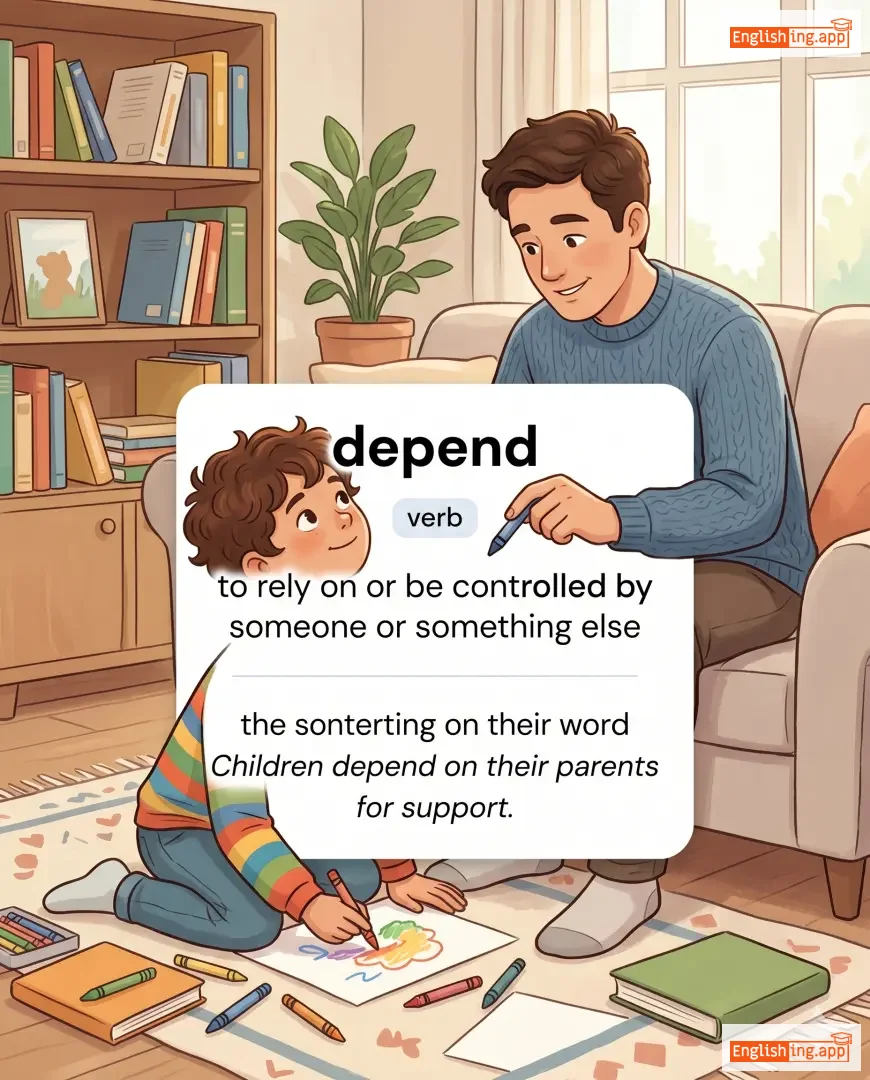
to rely on or be controlled by someone or something else
••••••
|
Children depend on their parents for support.
Дети зависят от своих родителей для поддержки.
••••••
|
Дети зависят от своих родителей для поддержки.
Deti zavisyat ot svoikh roditeley dlya podderzhki.
••••••
|
depend on
зависеть от
••••••
|
to rely on someone or something
••••••
|
зависеть от
zavisit' ot
••••••
|
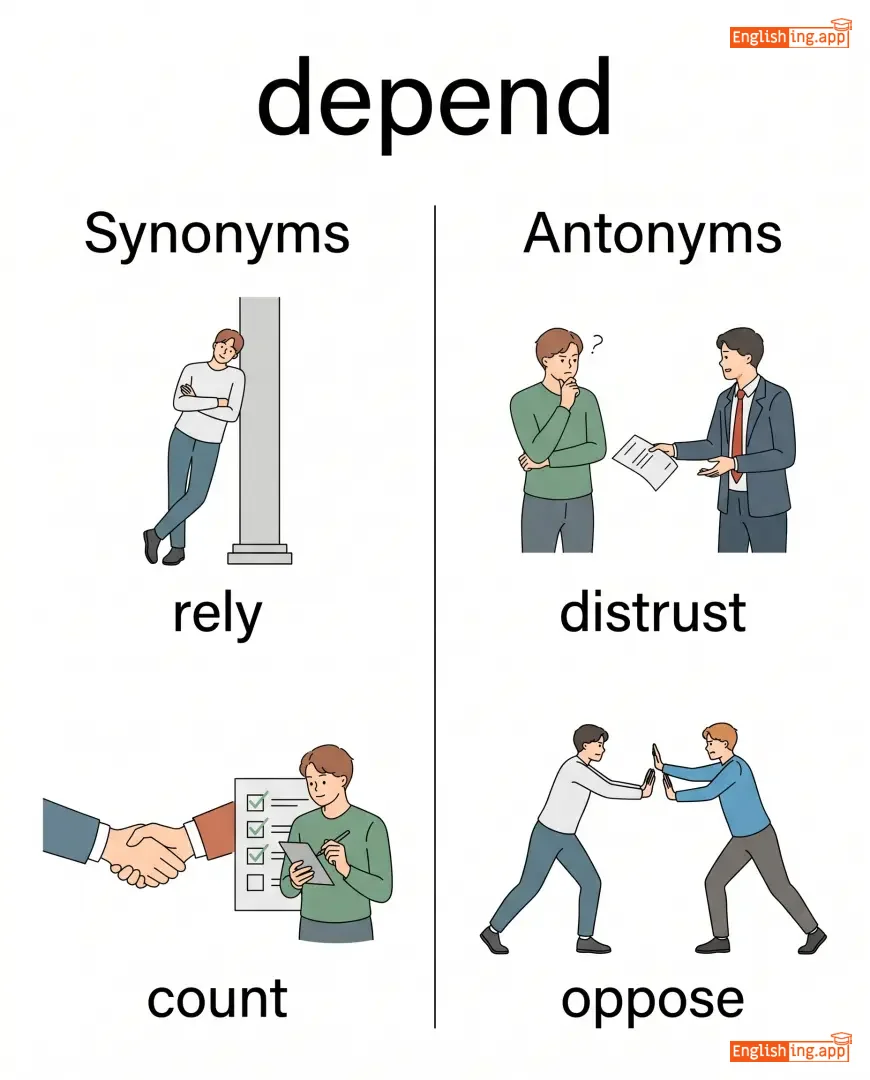
rely, count, trust, hinge
••••••
|
distrust, oppose
••••••
|
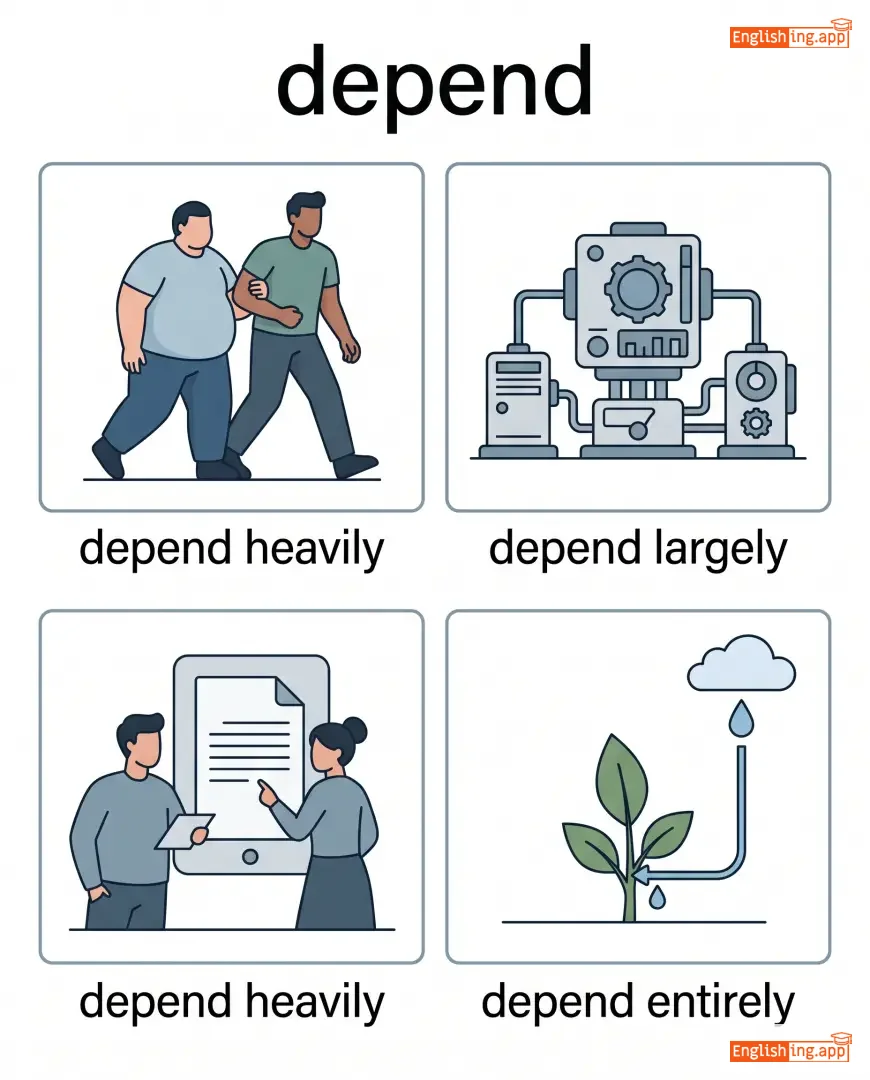
depend heavily, depend largely, depend entirely, depend directly
••••••
|
Depend = Za (за) + viset (висеть) → Я завишу от тебя, я зависим от тебя.
••••••
|
|
#1484
🛡️
|
/dɪˈpɛndəbl/
adjective
(дипендэбл)
••••••
|
- •••••• |
надёжный
nadozhnyy
••••••
|
- •••••• | - •••••• | - •••••• | - •••••• |
able to be trusted or relied on; consistently reliable
••••••
|
She is a dependable colleague who always meets deadlines.
Ши из э дипендэбл коллег ху олвэйз митс дэдлайнз.
••••••
|
Она надёжный коллега, которая всегда соблюдает сроки.
ona nadozhnaya kollega kotoraya vsegda soblyudaet sroki
••••••
|
dependable as clockwork
дипендэбл эз клокворк
••••••
|
extremely reliable and punctual
••••••
|
надёжный как часы
nadozhnyy kak chasy
••••••
|
reliable, trustworthy, consistent, steady, faithful
••••••
|
unreliable, untrustworthy, inconsistent
••••••
|
dependable person, dependable service, dependable source, dependable worker
••••••
|
Dependable = на него можно dependировать
••••••
|
|
#1485
🤝
|
/dɪˈpen.dəns/
noun
(диˈпендəнс)
••••••
|
- •••••• |
зависимость
zavisimost
••••••
|
- •••••• | - •••••• | - •••••• | - •••••• |
the state of relying on or needing someone or something for support; addiction
••••••
|
His dependence on technology made it difficult for him to work without internet. |
Его зависимость от технологий сделала работу без интернета трудной.
Ego zavisimost ot tekhnologiy sdela otkryto trudo bez interneta.
••••••
|
- •••••• | - •••••• | - •••••• |
reliance, addiction, need, dependency
••••••
|
independence, self-reliance, autonomy
••••••
|
drug dependence, economic dependence, complete dependence
••••••
|
Зависимость - всегда близка к аддикции
••••••
|
|
#1486
🧒
|
/dɪˈpɛndənt/
adjective
(дɪˈпɛндəнт)
••••••
|
- •••••• |
зависимый
zavisimyy
••••••
|
- •••••• | - •••••• | - •••••• | - •••••• |
Relying on someone or something else for support or help.
••••••
|
Children are dependent on their parents for care. |
Дети зависят от своих родителей в уходе.
Deti zavisyat ot svoikh roditeley v ukhode.
••••••
|
dependent on |
Relying on someone or something.
••••••
|
зависеть от
zavisit' ot
••••••
|
reliant, needy, subordinate, conditional, subject
••••••
|
independent, self-sufficient, autonomous
••••••
|
dependent on, financially dependent, emotionally dependent
••••••
|
Зависимый означает зависеть - как дети зависят от своих родителей.
••••••
|
|
#1487
🎨
|
/dɪˈpɪkt/
verb
(дипикт)
••••••
|
- •••••• |
изображать
dipikt
••••••
|
depicted
дипиктид
••••••
|
depicted
дипиктид
••••••
|
depicts
дипиктс
••••••
|
depicting
дипиктинг
••••••
|
to represent or show something in a picture, story, or other art form
••••••
|
The painting depicts a beautiful sunset over the sea.
Зе пэйнтинг дипиктс э бьютифул сансет овэр зе си.
••••••
|
Картина изображает красивый закат над морем.
Kartina izobrazhaet krasivyy zakat nad morem
••••••
|
depict in a bad light
депикт ин э бед лайт
••••••
|
to represent someone or something negatively
••••••
|
представлять кого-либо или что-либо в негативном свете
predstavlyat kogo-to ili shto-to v negativnom svete
••••••
|
portray, illustrate, describe, represent, delineate
••••••
|
conceal, hide, distort
••••••
|
depict accurately, depict vividly, depict clearly, depict scene
••••••
|
Dipikt: Ди ПикТ - Два Изображения Показывают Точку
••••••
|
|
#1488
🎖️
|
/dɪˈplɔɪ/
verb
(dih-ploy)
••••••
|
|
развертывать
razvertyvat
••••••
|
deployed
dih-ploy-ed
••••••
|
deployed
dih-ploy-ed
••••••
|
deploys
dih-ploys
••••••
|
deploying
dih-ploy-ing
••••••
|
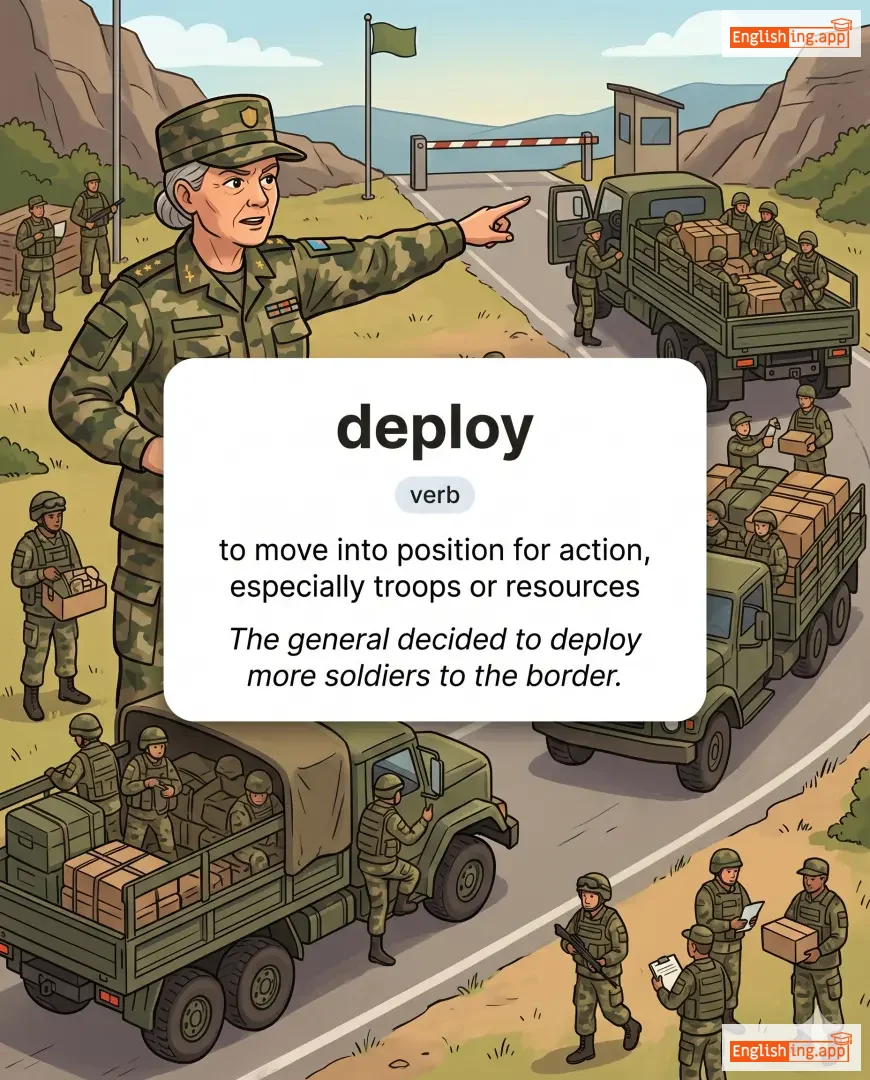
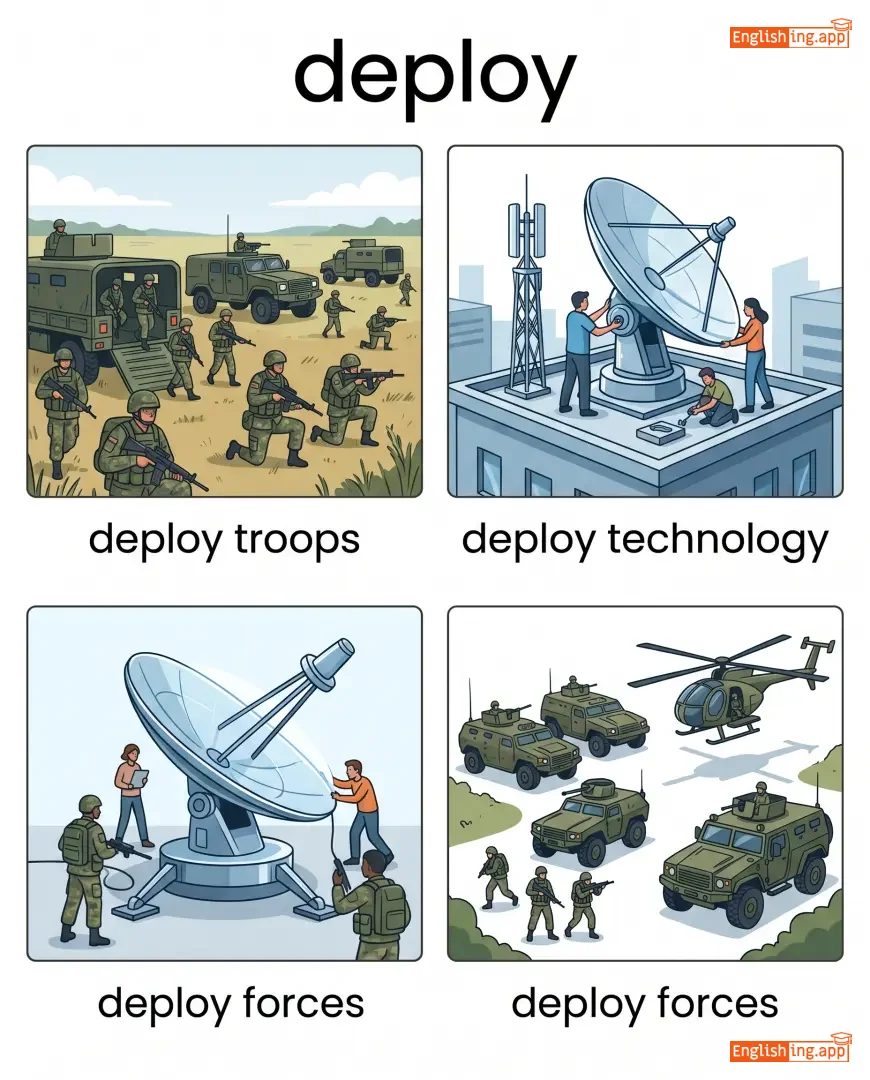
to move into position for action, especially troops or resources
••••••
|
The general decided to deploy more soldiers to the border.
Генерал решил направить больше солдат на границу.
••••••
|
Генерал решил направить больше солдат на границу.
General reshil napravit bolshe soldat na granitsu.
••••••
|
deploy resources
развертывание ресурсов
••••••
|
to effectively use available resources
••••••
|
развертывание ресурсов
razvertyvanie resursov
••••••
|
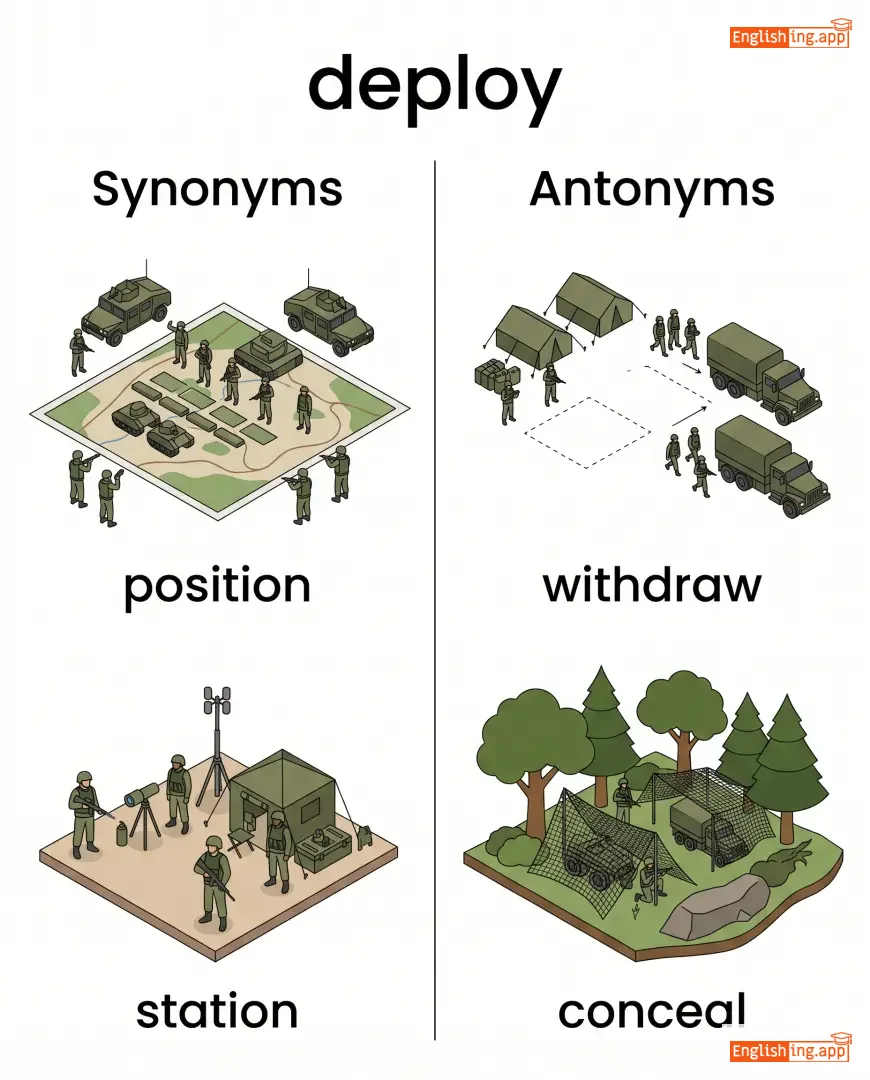
position, station, utilize, employ, arrange
••••••
|
withdraw, conceal
••••••
|
deploy troops, deploy technology, deploy forces, deploy strategy
••••••
|
Развертывать - как развертывать войска, это размещать в нужном месте.
••••••
|
|
#1489
📦
|
/dɪˈplɔɪmənt/
noun
(дɪˈплɔɪмэнт)
••••••
|
|
развертывание
razvertyvanie
••••••
|
- •••••• | - •••••• | - •••••• | - •••••• |
the action of moving or positioning something into place for use
••••••
|
The deployment of the new software was completed successfully. |
Развертывание нового программного обеспечения было успешно завершено.
Razvertyvanie novogo programmogo obespecheniya bylo uspeshno zaversheno.
••••••
|
- •••••• | - •••••• | - •••••• |
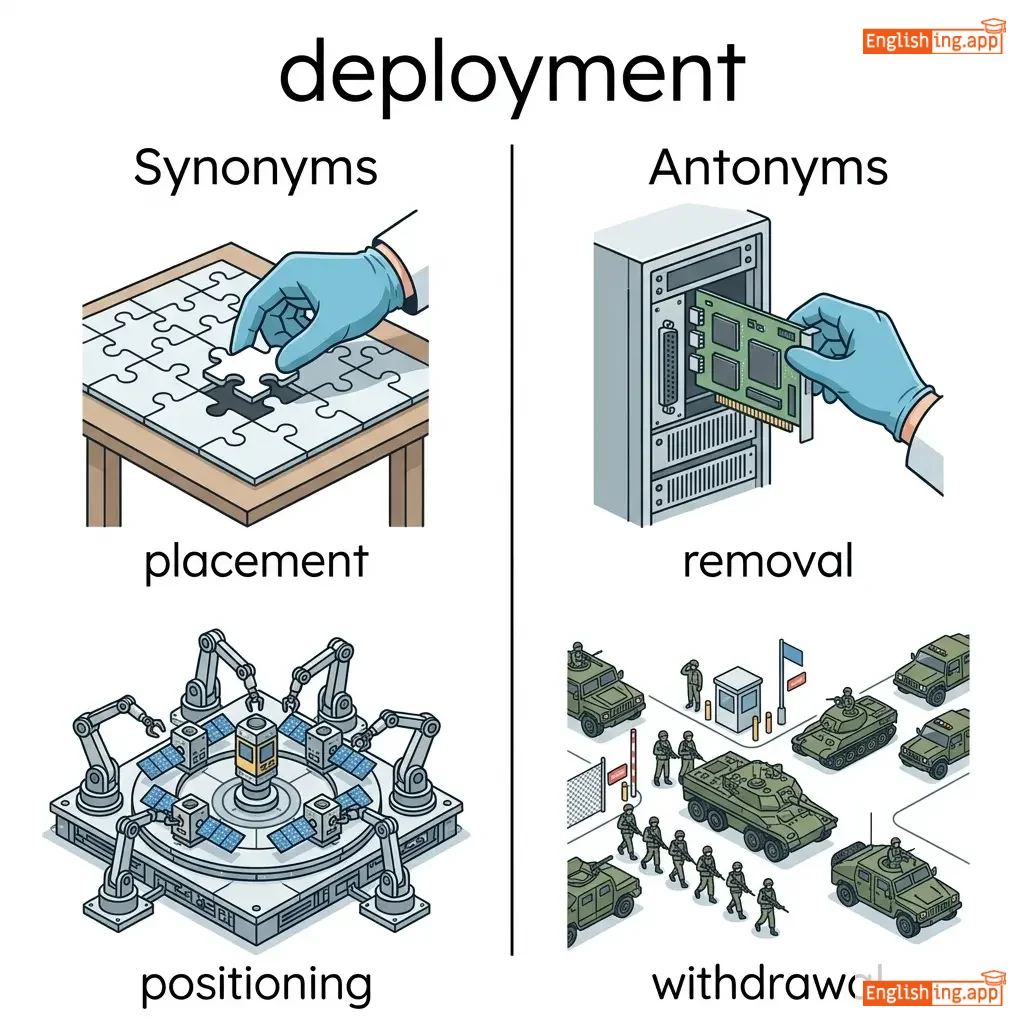
placement, positioning, arrangement, setup
••••••
|
removal, withdrawal
••••••
|
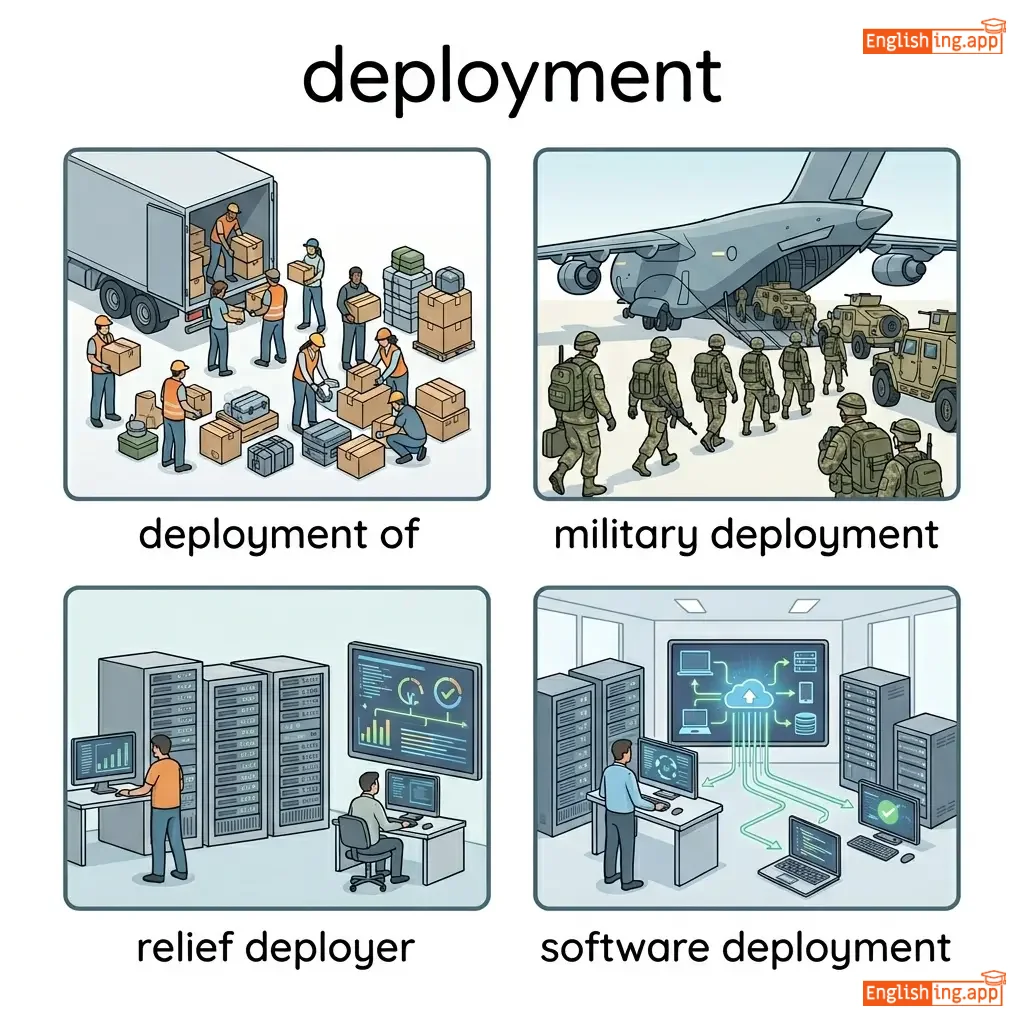
deployment of, military deployment, software deployment
••••••
|
Развертывание программного обеспечения (deployment)
••••••
|
|
#1490
🏦
|
/dɪˈpɑːzɪt/
noun/verb
(депозит)
••••••
|
- •••••• |
депозит, аванс
deposit, avans
••••••
|
deposited
депозирован
••••••
|
deposited
депозирован
••••••
|
deposits
депозитирует
••••••
|
depositing
депонировать
••••••
|
to place money in a bank account, or a sum paid in advance as security; a layer of material left naturally
••••••
|
She deposited $500 into her savings account.
Она внесла 500 долларов на свой сберегательный счет.
••••••
|
Она внесла 500 долларов на свой сберегательный счет.
Ona vnesla 500 dollarov na svoi sberegatel'nyi schet.
••••••
|
security deposit
депозит безопасности
••••••
|
a sum of money held as a guarantee against damage or loss
••••••
|
депозит безопасности
deposit bezopasnosti
••••••
|
payment, down payment, savings, pledge, lodgment
••••••
|
withdrawal, debt
••••••
|
make a deposit, deposit money, deposit account, security deposit
••••••
|
Deposit означает вносить деньги в банк, как депозит или аванс
••••••
|
|
#1491
😞
|
/dɪˈprɛs/
verb
(депресс)
••••••
|
- •••••• |
депрессировать
depressirovat
••••••
|
depressed
депрессирован
••••••
|
depressed
депрессирован
••••••
|
depresses
депрессирует
••••••
|
depressing
депрессируя
••••••
|
To make someone feel sad or without hope; to reduce the level or strength of something.
••••••
|
The gloomy weather tends to depress people.
Мрачная погода часто депрессирует людей.
••••••
|
Мрачная погода часто депрессирует людей.
Mrachnaya pogoda chasto depressiruet lyudey.
••••••
|
press down
нажать вниз
••••••
|
To push something down physically or emotionally.
••••••
|
нажать вниз
nazhat' vnyz
••••••
|
sadden, discourage, lower, weaken, deject
••••••
|
encourage, uplift, inspire
••••••
|
depress the economy, depress the price, deeply depress, depress mood
••••••
|
Depress значит нажать вниз - депрессия тоже заставляет опускаться.
••••••
|
|
#1492
😔
|
/dɪˈprɛst/
adjective
(дɪˈпрɛст)
••••••
|
- •••••• |
депрессия
depressiya
••••••
|
- •••••• | - •••••• | - •••••• | - •••••• |
Feeling very sad and without hope; in a state of unhappiness.
••••••
|
She felt depressed after losing her job. |
Она чувствовала себя депрессивно после потери работы.
Ona chuvstvovala sebya depressivno posle poteri raboty.
••••••
|
feeling blue |
Feeling sad or unhappy.
••••••
|
чувствовать себя грустным
chuvstvovat' sebya grustnym
••••••
|
sad, downcast, gloomy, unhappy, melancholic
••••••
|
happy, cheerful, joyful
••••••
|
deeply depressed, clinically depressed, depressed mood
••••••
|
Депрессия - это когда ты чувствуешь себя грустным, потеряв работу, ты чувствуешь депрессию.
••••••
|
|
#1493
😔
|
/dɪˈprɛʃən/
noun
(депрессия)
••••••
|
- •••••• |
депрессия
depressiya
••••••
|
- •••••• | - •••••• | - •••••• | - •••••• |
A state of severe sadness or hopelessness; also a prolonged downturn in economic activity.
••••••
|
She has been battling depression for several months. |
Она борется с депрессией уже несколько месяцев.
Ona boretsya s depressiyey uzhe neskol'ko mesyatsev.
••••••
|
economic depression |
A long-term downturn in economic activity.
••••••
|
экономическая депрессия
ekonomicheskaya depressiya
••••••
|
melancholy, sadness, gloom, slump, recession
••••••
|
happiness, joy, boom
••••••
|
suffer from depression, clinical depression, deep depression, economic depression
••••••
|
Депрессия = deep + press = сильное давление на разум.
••••••
|
|
#1494
🚫
|
/dɪˈpraɪv/
verb
(дɪˈпрайв)
••••••
|
- •••••• |
лишать
leeshat
••••••
|
deprived
дɪˈпрайвд
••••••
|
deprived
дɪˈпрайвд
••••••
|
deprives
дɪˈпрайвз
••••••
|
depriving
дɪˈпрайвинг
••••••
|
to take something away from someone, or prevent them from having it
••••••
|
The new law may deprive people of their rights.
ðə нью лоʊ ме дɪˈпрайв пипл əв ðɛр раɪтс.
••••••
|
Новый закон может лишить людей их прав.
Novyy zakon mozhet lishit' lyudey ikh prav.
••••••
|
sleep-deprived
слɪп-дɪˈпрайвд
••••••
|
lacking enough sleep
••••••
|
недосып
ne-do-syp
••••••
|
deny, strip, remove, dispossess, rob
••••••
|
grant, give, provide
••••••
|
deprive of rights, deprive someone of, deprive freedom, sleep deprived
••••••
|
Deprive как derive минус; отнять что-то, лишая кого-то их прав
••••••
|
|
#1495
🌊
|
/dɛpθ/
noun
(дэпθ)
••••••
|
- •••••• |
глубина
glubina
••••••
|
- •••••• | - •••••• | - •••••• | - •••••• |
The distance from the top to the bottom of something; the intensity or complexity of a subject.
••••••
|
The diver measured the depth of the ocean trench. |
Ныряльщик измерил глубину океанской впадины.
Nyrjalschik izmeril glubinu okeanskoy vpadyiny.
••••••
|
in depth |
In great detail or thoroughly.
••••••
|
в глубину
v glubinu
••••••
|
deepness, intensity, profoundness, extent, complexity
••••••
|
shallowness, surface, height
••••••
|
great depth, depth of knowledge, emotional depth, depth perception
••••••
|
Depth = глубина = идем вглубь.
••••••
|
|
#1496
👮
|
/ˈdɛpjʊti/
noun
(депьюти)
••••••
|
- •••••• |
заместитель
zamestitel'
••••••
|
- •••••• | - •••••• | - •••••• | - •••••• |
A person appointed as a substitute with power to act.
••••••
|
The deputy will lead the meeting in the manager’s absence.
Депьюти возглавит собрание в отсутствие менеджера.
••••••
|
Заместитель возглавит собрание в отсутствие менеджера.
Zamestitel' vozglavit sobranie v otsutstvie menedzhera.
••••••
|
- •••••• | - •••••• | - •••••• |
assistant, representative, delegate, subordinate, second-in-command
••••••
|
chief, leader, head
••••••
|
deputy manager, deputy minister, deputy director
••••••
|
Deputy означает заместитель, как Deputy Director (заместитель директора).
••••••
|
|
#1497
📜
|
/dɪˈraɪv/
verb
(дерейв)
••••••
|
- •••••• |
получать
poluchat
••••••
|
derived
дерейвд
••••••
|
derived
дерейвд
••••••
|
derives
дерейвс
••••••
|
deriving
дерейвинг
••••••
|
To obtain something from a source.
••••••
|
Many English words derive from Latin.
мэни инглиш вордс дерейв фром латын.
••••••
|
многие английские слова происходят от латинского.
mnogie angliiskie slova proiskhodyat ot latinskogo.
••••••
|
derive benefit
дерейв бенефит
••••••
|
to gain an advantage from something
••••••
|
получить выгоду
poluchit vygodu
••••••
|
obtain, acquire, originate, extract, gain
••••••
|
lose, give, surrender
••••••
|
derive from, derive meaning, derive benefit
••••••
|
Derive значит получить что-то из источника — вспомни 'получить'!
••••••
|
Vocabulary Quiz
Test your vocabulary by matching words with their translations or meanings.
Login to take the quiz
Comments (0)
Share your thoughts and join the discussion.
Join the discussion by logging in
Login to CommentNo comments yet
Be the first to share your thoughts!