

Обновитесь для доступа ко всему словарю
Получите неограниченный доступ ко всем словам с подпиской Pro
Обновить до ProПеревод
Прошедшее
Причастие прошедшего времени
Третье лицо единственного числа
Герундий
Значение
Пример предложения
Перевод примера предложения
Синонимы
Антонимы
Коллокации
Мнемоника
Swipe left or right, or use the buttons. Tap image to zoom.
Обновитесь для доступа ко всем предложениям
Получите неограниченный доступ ко всем предложениям с подпиской Pro
Обновить до ProПеревод примера предложения
Слово
Lesson 111Lesson 111 - Переключатель маски
|
Эмодзи
|
Слово | Images | Перевод | Прошедшее | Причастие прошедшего времени | Третье лицо единственного числа | Герундий | Значение | Пример предложения | Перевод примера предложения | Пример выражения | Значение примера выражения | Перевод примера выражения | Синонимы | Антонимы | Коллокации | Мнемоника |
|---|---|---|---|---|---|---|---|---|---|---|---|---|---|---|---|---|---|
|
#5275
😞
|
/ʌnˈhæp.i.nəs/
noun
(анхаппинесс)
••••••
|
- •••••• |
несчастье
neschastye
••••••
|
- •••••• | - •••••• | - •••••• | - •••••• |
the state of being unhappy; sadness or dissatisfaction
••••••
|
Her constant unhappiness affected everyone around her.
Её постоянное unhappiness влияло на всех вокруг.
••••••
|
Её постоянное несчастье влияло на всех вокруг.
Eyo postoyannoe neschastye vliyalo na vsekh vokrug.
••••••
|
- •••••• | - •••••• | - •••••• |
sadness, misery, gloom, sorrow, distress
••••••
|
happiness, joy, contentment
••••••
|
deep unhappiness, emotional unhappiness, chronic unhappiness
••••••
|
несчастье (neschastye) = not happiness
••••••
|
|
#5276
😔
|
/ʌnˈhæpi/
adjective
(anhepi)
••••••
|
- •••••• |
недовольный или грустный
nedovol'nyy ili grustnyy
••••••
|
- •••••• | - •••••• | - •••••• | - •••••• |
not happy; sad, disappointed, or dissatisfied
••••••
|
He was unhappy with the final decision.
он был anhepi с окончательным решением.
••••••
|
Он был недоволен окончательным решением.
On byl nedovolen okonchatel'nym resheniem.
••••••
|
an unhappy ending
несчастливый конец
••••••
|
a sad or tragic conclusion to a story or event
••••••
|
несчастливый конец
neschastlivyy konets
••••••
|
sad, miserable, gloomy, depressed, dissatisfied
••••••
|
happy, cheerful, content
••••••
|
unhappy with, feel unhappy, unhappy marriage, unhappy ending
••••••
|
Добавь 'un' к happy, и это станет грустным — поэтому unhappy значит грустный 😔
••••••
|
|
#5277
🙄
|
/ʌnˈhɛlpfəl/
adjective
(анхелпфул)
••••••
|
- •••••• |
бесполезный
bespoleznyy
••••••
|
- •••••• | - •••••• | - •••••• | - •••••• |
not providing help or support; making a situation harder rather than easier
••••••
|
His unhelpful attitude slowed down the entire project.
Хиз анхелпфул этитюд слоуд даун зи энтайр проджект.
••••••
|
Его бесполезное отношение замедлило весь проект.
ego bespoleznoye otnosheniye zamedlilo ves proyekt
••••••
|
- •••••• | - •••••• | - •••••• |
uncooperative, useless, obstructive, unsupportive, ineffective
••••••
|
helpful, supportive, cooperative
••••••
|
unhelpful attitude, unhelpful comment, unhelpful response, unhelpful advice
••••••
|
unhelpful = бесполезный, help нет
••••••
|
|
#5278
😔
|
/ʌnˈɒnəd/
adjective
(анонэд)
••••••
|
- •••••• |
непочтённый
nepochtyonnyi
••••••
|
- •••••• | - •••••• | - •••••• | - •••••• |
not respected or given the recognition that is deserved; treated without honor
••••••
|
He felt unhonoured after his years of service were ignored.
Хи фелт анонэд афтер хиз йирз оф сервис уэр игнорд.
••••••
|
Он чувствовал себя непочтённым, когда его годы службы были проигнорированы.
On chuvstvoval sebya nepochtyonnym kogda ego gody sluzhby byli proignorirovany
••••••
|
- •••••• | - •••••• | - •••••• |
disrespected, disregarded, slighted, unacknowledged, ignored
••••••
|
honoured, respected, celebrated
••••••
|
unhonoured service, unhonoured promise, feel unhonoured, remain unhonoured
••••••
|
Нет чести — unhonoured — непочтённый.
••••••
|
|
#5279
⚪
|
/ʌnɪmˈpɔːrtəns/
noun
(анимпортанс)
••••••
|
- •••••• |
незначительность
neznachitelnost
••••••
|
- •••••• | - •••••• | - •••••• | - •••••• |
the state or quality of being insignificant or not important
••••••
|
He dismissed the issue with a sense of unimportance.
Он отверг этот вопрос с чувством незначительности.
••••••
|
Он отверг этот вопрос с чувством незначительности.
On otverg etot vopros s chuvstvom neznachitelnosti
••••••
|
- •••••• | - •••••• | - •••••• |
insignificance, triviality, inconsequence, negligibility
••••••
|
importance, significance, consequence
••••••
|
sense of unimportance, feelings of unimportance, perceived unimportance
••••••
|
Think 'unimportance' as 'незначительность', like a tiny ⚪ in life
••••••
|
|
#5280
🤷
|
/ˌʌnɪmˈpɔːrtənt/
adjective
(анимпо́ртэнт)
••••••
|
- •••••• |
неважный
nevazhnyy
••••••
|
- •••••• | - •••••• | - •••••• | - •••••• |
not having much value, significance, or influence
••••••
|
The detail seemed unimportant compared to the main issue.
Зэ дिटэйл симд анимпо́ртэнт компэ́рд ту зэ мэйн ишью.
••••••
|
Эта деталь казалась неважной по сравнению с основной проблемой.
Eta detal kazalas nevazhnoy po sravneniyu s osnovnoy problemoy
••••••
|
of unimportant matter
оф анимпо́ртэнт мэтэр
••••••
|
something that does not deserve much attention
••••••
|
неважный вопрос
nevazhnyy vopros
••••••
|
insignificant, trivial, minor, negligible, petty
••••••
|
important, significant, crucial
••••••
|
unimportant detail, unimportant issue, seem unimportant, relatively unimportant
••••••
|
Unimportant = неважный — ‘важный’ নেই
••••••
|
|
#5281
🤷
|
/ˌʌnɪnˈfɔːrmd/
adjective
(анинформд)
••••••
|
- •••••• |
неосведомлённый
neosvedomlyonnyy
••••••
|
- •••••• | - •••••• | - •••••• | - •••••• |
lacking knowledge or awareness about a particular subject; not educated or informed
••••••
|
The decision was made by an uninformed committee.
Зэ дисижн воз мейд бай эн анинформд комити.
••••••
|
Решение было принято неосведомлённым комитетом.
resheniye bylo prinyato neosvedomlyonnym komitetom
••••••
|
- •••••• | - •••••• | - •••••• |
ignorant, unaware, uneducated, clueless, ill-informed
••••••
|
informed, knowledgeable, aware
••••••
|
uninformed opinion, uninformed decision, uninformed voter, uninformed public
••••••
|
Uninformed → неосведомлённый = info নেই
••••••
|
|
#5282
😴
|
/ˌʌnˈɪntrəstɪŋ/
adjective
(анинтрэстинг)
••••••
|
- •••••• |
неинтересный
neinteresnyi
••••••
|
- •••••• | - •••••• | - •••••• | - •••••• |
not holding attention or curiosity; boring
••••••
|
The lecture was uninteresting and difficult to stay focused on.
Зэ лекчер уоз анинтрэстинг энд дификалт ту стэй фокусд он.
••••••
|
Лекция была неинтересной и на ней было трудно сосредоточиться.
Lektsiia byla neinteresnoi i na nei bylo trudno sosredotochitsia
••••••
|
- •••••• | - •••••• | - •••••• |
boring, dull, tedious, monotonous, unstimulating
••••••
|
interesting, engaging, fascinating
••••••
|
uninteresting topic, uninteresting story, uninteresting job, uninteresting details
••••••
|
Uninteresting почти как неинтересный — значение совпадает.
••••••
|
|
#5283
😠
|
/ʌnˈkaɪnd/
adjective
(анкэнд)
••••••
|
- •••••• |
жестокий; неласковый
zhestokij; nelaskovyj
••••••
|
- •••••• | - •••••• | - •••••• | - •••••• |
cruel; not nice or caring toward others
••••••
|
It was unkind of him to make fun of her appearance.
Это было жестоко с его стороны — смеяться над её внешностью.
••••••
|
Это было жестоко с его стороны — смеяться над её внешностью.
Eto bylo zhestoko s ego storony — smejat'sja nad ee vneshnost'yu.
••••••
|
- •••••• | - •••••• | - •••••• |
cruel, mean, harsh, nasty
••••••
|
kind, nice, gentle, caring
••••••
|
unkind words, unkind behavior, unkind comment
••••••
|
Unkind в русском языке обозначает жестокость, когда человек не заботится о других.
••••••
|
|
#5284
😠
|
/ʌnˈkaɪndli/
adverb
(анкайндли)
••••••
|
- •••••• |
жестоко
zhestoko
••••••
|
- •••••• | - •••••• | - •••••• | - •••••• |
in a cruel, harsh, or unsympathetic manner
••••••
|
She spoke unkindly about her colleague during the meeting.
ши спок анкайндли эбаут хёр колиг дюринг зэ митинг
••••••
|
Она жестоко говорила о своём коллеге во время встречи.
ona zhestoko govorila o svoyom kollege vo vremya vstrechi
••••••
|
- •••••• | - •••••• | - •••••• |
cruelly, harshly, rudely, coldly, meanly
••••••
|
kindly, gently, compassionately
••••••
|
speak unkindly, treat unkindly, judge unkindly, respond unkindly
••••••
|
Unkindly = без kindness → жестоко
••••••
|
|
#5285
😔
|
/ʌnˈkaɪndnəs/
noun
(анкайнднэс)
••••••
|
- •••••• |
жестокость
zhestokost
••••••
|
- •••••• | - •••••• | - •••••• | - •••••• |
lack of kindness; cruel or inconsiderate behavior
••••••
|
His unkindness hurt her feelings deeply.
Хиз анкайнднэс хёрт хёр филингс дипли.
••••••
|
Его жестокость глубоко ранила её чувства.
Ego zhestokost gluboko ranila ee chuvstva
••••••
|
- •••••• | - •••••• | - •••••• |
cruelty, harshness, meanness, coldness, unfriendliness
••••••
|
kindness, compassion, benevolence
••••••
|
act of unkindness, deliberate unkindness, show unkindness, emotional unkindness
••••••
|
Unkindness звучит жёстко — как жестокость
••••••
|
|
#5286
🔓
|
/ʌnˈlɒk/
verb
(анлок)
••••••
|
- •••••• |
открывать
otkryvat
••••••
|
unlocked
анлокд
••••••
|
unlocked
анлокд
••••••
|
unlocks
анлокс
••••••
|
unlocking
анлокинг
••••••
|
to open something that is locked; to make something accessible or available
••••••
|
She used the key to unlock the door.
ши юзд зэ ки ту анлок зэ дор
••••••
|
Она использовала ключ, чтобы открыть дверь.
Ona ispolzovala klyuch chtoby otkryt dver
••••••
|
unlock potential
анлок потэншал
••••••
|
to make hidden abilities or possibilities available
••••••
|
раскрыть потенциал
raskryt potentsial
••••••
|
open, release, unfasten, free, disengage
••••••
|
lock, secure, fasten
••••••
|
unlock the door, unlock a phone, unlock access, unlock potential
••••••
|
Unlock = открыть, как дверь
••••••
|
|
#5287
😞
|
/ʌnˈlʌki/
adjective
(anlaki)
••••••
|
- •••••• |
неудачник; несчастливый
neudachnik; neschastlivyy
••••••
|
- •••••• | - •••••• | - •••••• | - •••••• |
having bad luck; unfortunate
••••••
|
He was unlucky to miss the winning shot. |
Ему не повезло промахнуться по выигрышному удару.
Emu ne povezlo promakhnut'sya po viigrishnomu udaru.
••••••
|
- •••••• | - •••••• | - •••••• |
unfortunate, hapless, cursed
••••••
|
lucky, fortunate, blessed
••••••
|
unlucky day, unlucky number, unlucky person
••••••
|
Когда ты говоришь 'unlucky', вспомни русское слово 'неудачник', как тот, кому не везет.
••••••
|
|
#5288
🎭
|
/ʌnˈmɑːsk/
verb
(анмаск)
••••••
|
- •••••• |
разоблачать
razoblachat
••••••
|
unmasked
анмаскт
••••••
|
unmasked
анмаскт
••••••
|
unmasks
анмаскс
••••••
|
unmasking
анмаскинг
••••••
|
to remove a mask or covering; to reveal the true identity, nature, or intentions of someone or something
••••••
|
The investigation helped unmask the real culprit behind the crime.
Зе инвестигейшн хелпд анмаск зе риэл калприт бихайнд зе крайм
••••••
|
Расследование помогло разоблачить настоящего виновника преступления.
Rassledovanie pomoglo razoblachat nastoyashchego vinovnika prestupleniya
••••••
|
unmask the truth
анмаск зе трус
••••••
|
to reveal what is really happening or what has been hidden
••••••
|
разоблачить правду
razoblachat pravdu
••••••
|
reveal, expose, disclose, uncover, unveil
••••••
|
conceal, hide, cover
••••••
|
unmask the truth, unmask a fraud, unmask the villain, unmask intentions
••••••
|
UNMASK = разоблачать, маска снята
••••••
|
|
#5289
🔒
|
/ʌnˈmɒdɪfaɪd/
adjective
(анмодифайд)
••••••
|
- •••••• |
неизменённый
neizmenyonnyy
••••••
|
- •••••• | - •••••• | - •••••• | - •••••• |
not changed from its original form or state
••••••
|
The data was used in its unmodified form for analysis.
Данные использовались в анмодифайд виде.
••••••
|
Данные использовались в неизменённом виде для анализа.
dannye ispolzovalis v neizmenyonnom vide dlya analiza
••••••
|
- •••••• | - •••••• | - •••••• |
unchanged, original, intact, raw, plain
••••••
|
modified, altered, changed
••••••
|
unmodified data, unmodified version, remain unmodified, left unmodified
••••••
|
Unmodified = неизменённый, без изменений
••••••
|
|
#5290
🤖
|
/ʌnˈnætʃərəl/
adjective
(аннэчурал)
••••••
|
- •••••• |
неестественный
neestestvennyy
••••••
|
- •••••• | - •••••• | - •••••• | - •••••• |
not existing in nature; artificial; forced
••••••
|
The actor's smile looked unnatural and forced.
Улыбка актёра выглядела аннэчурал и напряжённой.
••••••
|
Улыбка актёра выглядела неестественной и натянутой.
ulybka aktera vyglyadela neestestvennoy i natyanutoy
••••••
|
- •••••• | - •••••• | - •••••• |
artificial, fake, forced
••••••
|
natural, genuine, authentic
••••••
|
unnatural behavior, unnatural smile, unnatural pose
••••••
|
‘Neestestvennyy’ = not natural — ‘ne’ means ‘no’ in Russian!
••••••
|
|
#5291
🤨
|
/ʌnˈnætʃrəli/
adverb
(аннэтчурэли)
••••••
|
- •••••• |
неестественно
neestestvenno
••••••
|
- •••••• | - •••••• | - •••••• | - •••••• |
in a way that is not natural or normal; excessively or strangely
••••••
|
He smiled unnaturally, making everyone feel uncomfortable.
Хи смаилд аннэтчурэли, мейкин эвриуан фил анкамфортабл.
••••••
|
Он улыбнулся неестественно, заставив всех почувствовать неловкость.
On ulybnulsya neestestvenno, zastaviv vsekh pochuvstvovat nelovkost
••••••
|
- •••••• | - •••••• | - •••••• |
artificially, strangely, oddly, abnormally, excessively
••••••
|
naturally, normally, genuinely
••••••
|
unnaturally quiet, unnaturally calm, unnaturally bright, unnaturally pale
••••••
|
Не-естественно = not natural = unnaturally
••••••
|
|
#5292
🚫
|
/ʌnˈnesəserəli/
adverb
(аннессесарили)
••••••
|
- •••••• |
бесполезно
bespolezno
••••••
|
- •••••• | - •••••• | - •••••• | - •••••• |
to a greater extent than is needed; without necessity
••••••
|
Don't worry unnecessarily about the exam. |
Не переживай бесполезно о экзамене.
Ne perezhivay bespolezno o ekzamine.
••••••
|
- •••••• | - •••••• | - •••••• |
needlessly, pointlessly, excessively, superfluously
••••••
|
necessarily, essentially, importantly
••••••
|
unnecessarily complicated, unnecessarily harsh, unnecessarily worried
••••••
|
Представьте, что вы бесполезно тратите время на вещи, которые не важны.
••••••
|
|
#5293
🚫
|
/ʌnˈnɛsəsɛri/
adjective
(an-né-sé-sa-ri)
••••••
|
- •••••• |
ненужный
nenuzhny
••••••
|
- •••••• | - •••••• | - •••••• | - •••••• |
not needed or required
••••••
|
The manager cut all unnecessary expenses to save costs. |
Менеджер сократил все ненужные расходы, чтобы сэкономить средства.
Menedzher sokratil vse nenuzhnye raskhody, chtoby sekonomit' sredstva.
••••••
|
unnecessary evil |
something bad that must be accepted for practical reasons
••••••
|
необходимое зло
neobkhodimoe zlo
••••••
|
needless, redundant, avoidable, unneeded
••••••
|
necessary, essential, required
••••••
|
unnecessary expense, unnecessary risk, unnecessary delay
••••••
|
Ne-nuzhny → Nuzhny ne → ненужный
••••••
|
|
#5294
📦
|
/ʌnˈpæk/
verb
(анпэк)
••••••
|
- •••••• |
распаковывать
raspakovyvat
••••••
|
unpacked
анпэкт
••••••
|
unpacked
анпэкт
••••••
|
unpacks
анпэкс
••••••
|
unpacking
анпэкинг
••••••
|
to remove items from a container; to explain or analyze something in detail
••••••
|
After arriving home, she began to unpack her suitcase.
афтэ эрайвинг хоум, ши бигэн ту анпэк хёр сьюткейс
••••••
|
Приехав домой, она начала распаковывать свой чемодан.
Priekhav domoi, ona nachala raspakovyvat svoi chemodan
••••••
|
unpack the truth
анпэк зэ трус
••••••
|
to reveal or explain the real facts in detail
••••••
|
раскрыть правду
raskryt pravdu
••••••
|
empty, unload, unbox, remove, open
••••••
|
pack, load, fill
••••••
|
unpack luggage, unpack boxes, unpack a suitcase, unpack ideas, unpack details
••••••
|
UNPACK похоже на распаковать — смысл почти одинаковый
••••••
|
|
#5295
💸
|
/ˌʌnˈpeɪd/
adjective
(anpeyd)
••••••
|
- •••••• |
неоплачиваемый; без оплаты
neoplachivaemyy; bez oplaty
••••••
|
- •••••• | - •••••• | - •••••• | - •••••• |
not paid for; without payment or salary
••••••
|
She worked as an unpaid intern for six months. |
Она работала неоплачиваемым стажером в течение шести месяцев.
Ona rabotala neoplachivaemym stazherom v techenie shesti mesyatsev
••••••
|
- •••••• | - •••••• | - •••••• |
outstanding, unsettled, voluntary, free
••••••
|
paid, settled, compensated, salaried
••••••
|
unpaid bills, unpaid work, unpaid leave, unpaid volunteer
••••••
|
Unpaid in Russian means 'неоплачиваемый'; нет зарплаты, только работа.
••••••
|
|
#5296
😣
|
/ʌnˈplɛz.ənt/
adjective
(анплезент)
••••••
|
- •••••• |
неприятный
nepriyatny
••••••
|
- •••••• | - •••••• | - •••••• | - •••••• |
not giving or causing pleasure; disagreeable
••••••
|
The medicine had an unpleasant taste. |
Лекарство имело неприятный вкус.
Lekarstvo imelo nepriyatnyy vkus.
••••••
|
- •••••• | - •••••• | - •••••• |
disagreeable, distasteful, horrible, nasty
••••••
|
pleasant, agreeable, nice, enjoyable
••••••
|
unpleasant experience, unpleasant smell, unpleasant surprise
••••••
|
Неприятный и 'unpleasant' по смыслу одинаковы.
••••••
|
|
#5297
😣
|
/ʌnˈplɛzəntli/
adverb
(анплезэнтли)
••••••
|
- •••••• |
неприятно
nepriyatno
••••••
|
- •••••• | - •••••• | - •••••• | - •••••• |
in a way that causes discomfort, annoyance, or displeasure; in an unfriendly or disagreeable manner
••••••
|
The room was unpleasantly hot during the afternoon.
Зэ рум уоз анплезэнтли хот дюринг зэ афтернун.
••••••
|
Днём в комнате было неприятно жарко.
Dnyom v komnate bylo nepriyatno zharko
••••••
|
- •••••• | - •••••• | - •••••• |
awkwardly, disagreeably, annoyingly, uncomfortably, harshly
••••••
|
pleasantly, agreeably, comfortably
••••••
|
unpleasantly hot, unpleasantly surprised, unpleasantly loud, unpleasantly cold
••••••
|
Unpleasantly = неприятно, оба про дискомфорт
••••••
|
|
#5298
👎
|
/ʌnˈpɒpjʊlə/
adjective
(анпопьюлар)
••••••
|
- •••••• |
непопулярный
nepopulyarnyy
••••••
|
- •••••• | - •••••• | - •••••• | - •••••• |
not liked or supported by many people
••••••
|
The decision was unpopular with the public.
зе десижн воз анпопьюлар уиз зе паблик
••••••
|
Это решение было непопулярным среди общественности.
eto resheniye bylo nepopulyarnym sredi obshchestvennosti
••••••
|
- •••••• | - •••••• | - •••••• |
disliked, unpopularized, unfavored, rejected, unpopularized
••••••
|
popular, favored, well-liked
••••••
|
unpopular opinion, unpopular decision, deeply unpopular, become unpopular
••••••
|
Unpopular = не + популярный
••••••
|
|
#5299
🚀
|
/ʌnˈprɛsɪˌdɛntɪd/
adjective
(unpresidnted)
••••••
|
|
невиданный
nevidanny
••••••
|
- •••••• | - •••••• | - •••••• | - •••••• |
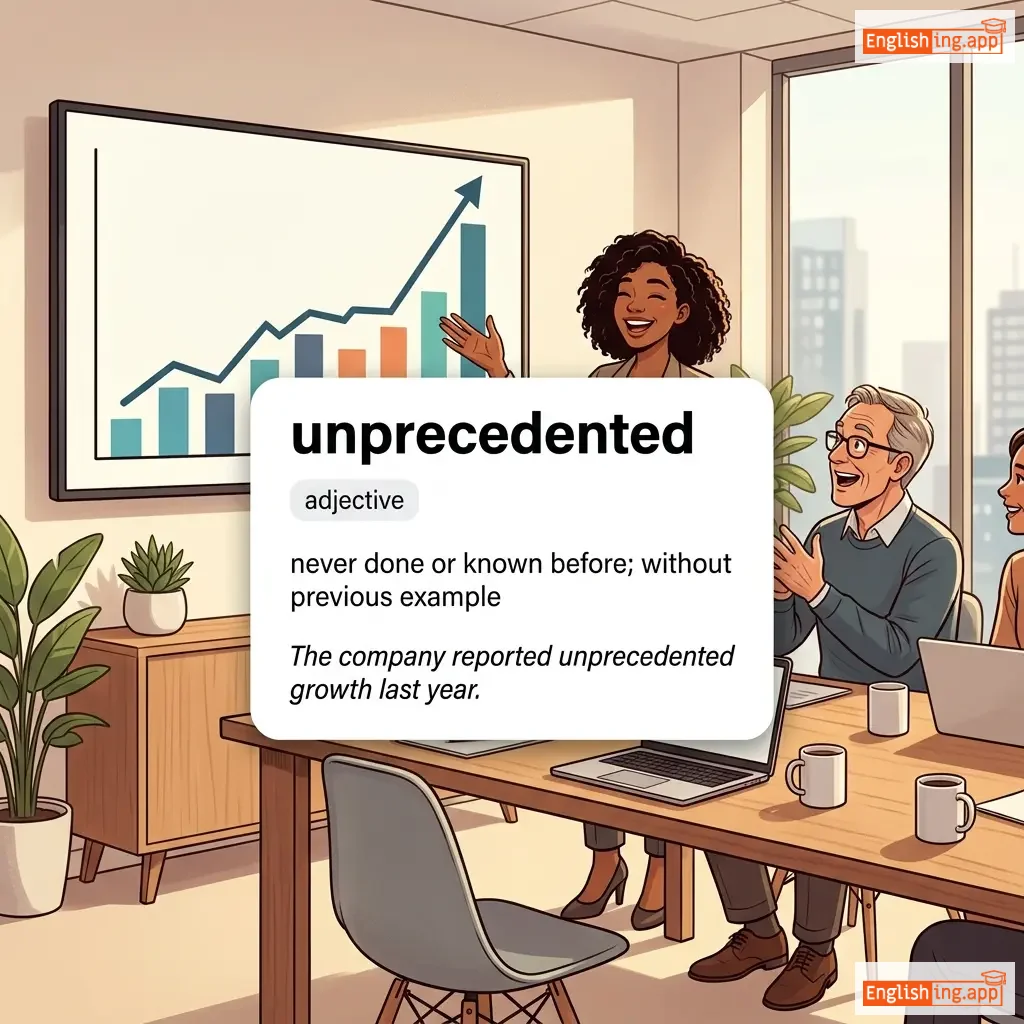
never done or known before; without previous example
••••••
|
The company reported unprecedented growth last year. |
Компания сообщила о беспрецедентном росте в прошлом году.
Kompaniya soobshchila o bespretsedentnom roste v proshlom godu.
••••••
|
of unprecedented scale |
something happening in a size or degree never seen before
••••••
|
масштаб беспрецедентного
masshtab bespretsendentnogo
••••••
|
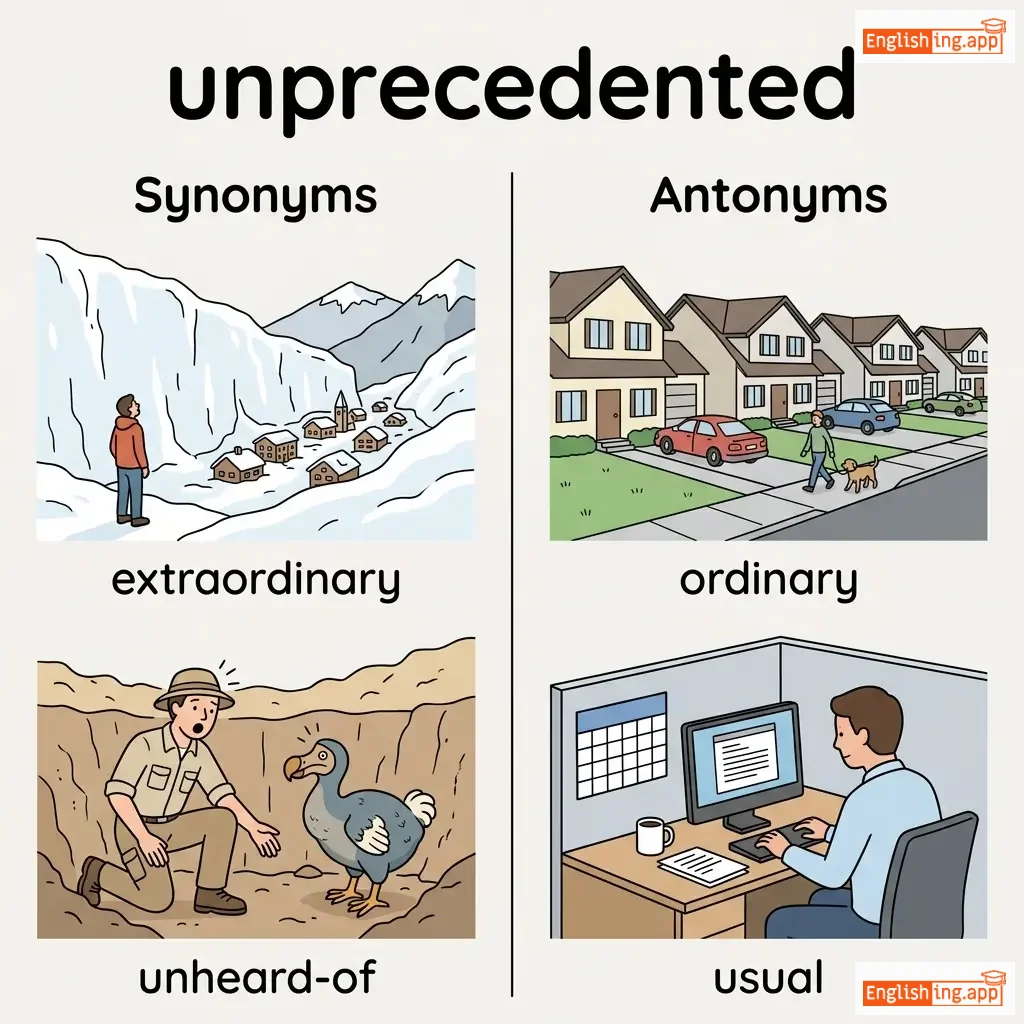
extraordinary, unheard-of, unique, exceptional
••••••
|
ordinary, usual, common
••••••
|
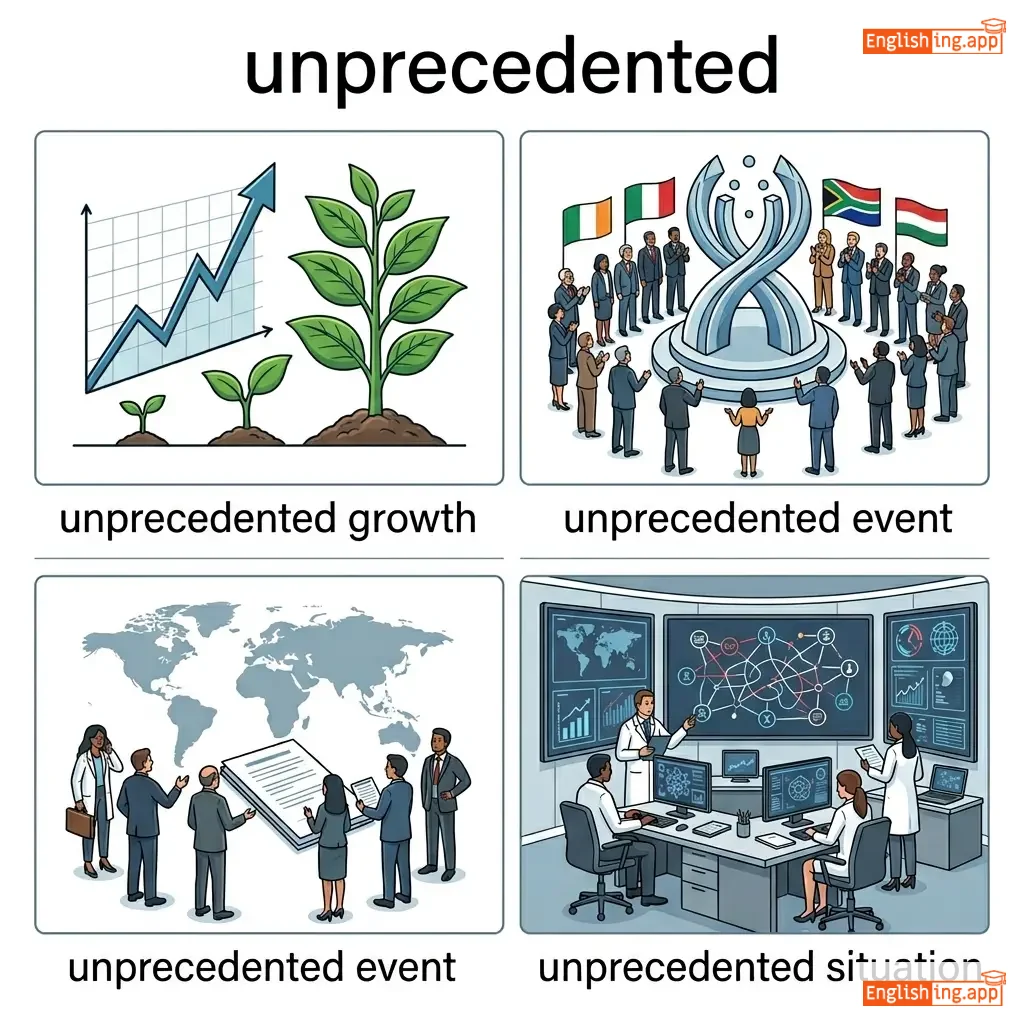
unprecedented growth, unprecedented event, unprecedented situation
••••••
|
Невиданный
••••••
|
|
#5300
🎲
|
/ˌʌnprɪˈdɪktəbəl/
adjective
(анпридиктэбл)
••••••
|
- •••••• |
непредсказуемый
nepredskazuemyy
••••••
|
- •••••• | - •••••• | - •••••• | - •••••• |
not able to be predicted; changing suddenly and unexpectedly
••••••
|
The weather in this region is highly unpredictable.
Зэ уэзэр ин зис риджэн из хайли анпридиктэбл.
••••••
|
Погода в этом регионе очень непредсказуемая.
Pogoda v etom regione ochen nepredskazuemaya
••••••
|
- •••••• | - •••••• | - •••••• |
uncertain, erratic, volatile, unforeseeable, irregular
••••••
|
predictable, consistent, stable
••••••
|
unpredictable behavior, unpredictable weather, unpredictable results, highly unpredictable
••••••
|
Ne + predskazat = нельзя предсказать
••••••
|
|
#5301
🚫
|
/ʌnprəˈfɛʃ.ən.əl/
adjective
(анпрофешнл)
••••••
|
- •••••• |
непрофессиональный
neprofessianalnyi
••••••
|
- •••••• | - •••••• | - •••••• | - •••••• |
not conforming to the standards expected in a particular profession
••••••
|
His unprofessional behavior led to his dismissal from the company. |
Его непрофессиональное поведение привело к его увольнению из компании.
Yego neprofessianalnoe povedenie privedlo k yego uvolneniyu iz kompanii
••••••
|
- •••••• | - •••••• | - •••••• |
inappropriate, improper, unethical, incompetent
••••••
|
professional, appropriate, ethical, competent
••••••
|
unprofessional conduct, unprofessional behavior, unprofessional appearance
••••••
|
непрофессиональный - не соответствующий профессиональным стандартам.
••••••
|
|
#5302
📄
|
/ʌnˈriːdəbl/
adjective
(анридэбл)
••••••
|
- •••••• |
нечитаемый
nechitayemyy
••••••
|
- •••••• | - •••••• | - •••••• | - •••••• |
not able to be read or understood clearly; illegible
••••••
|
The doctor’s handwriting was completely unreadable.
Зе докторз хэндрайтинг воз комплитли анридэбл
••••••
|
Почерк врача был совершенно нечитаемым.
Pocherk vracha byl sovershenno nechitayemym
••••••
|
- •••••• | - •••••• | - •••••• |
illegible, indecipherable, unintelligible, unclear, cryptic
••••••
|
readable, legible, clear
••••••
|
unreadable text, unreadable handwriting, unreadable font, unreadable document
••••••
|
UNREADABLE = не + читаемый
••••••
|
|
#5303
🌫️
|
/ʌnˈrɪəl/
adjective
(анриэл)
••••••
|
- •••••• |
нереальный
nerealnyy
••••••
|
- •••••• | - •••••• | - •••••• | - •••••• |
not real or not based on reality; exaggerated or imaginary
••••••
|
The experience felt unreal after the sudden news.
зи икспириэнс фэлт анриэл афтер зэ садден ньюз
••••••
|
После внезапной новости это ощущалось нереальным.
Posle vnezapnoy novosti eto oshchushchalos nerealnym
••••••
|
- •••••• | - •••••• | - •••••• |
imaginary, unbelievable, fantastic, illusory, surreal
••••••
|
real, realistic, genuine
••••••
|
unreal experience, unreal feeling, unreal expectations, unreal beauty
••••••
|
unreal = не real, значит нереальный
••••••
|
|
#5304
🌫️
|
/ˌʌnriˈælɪti/
noun
(анриэлити)
••••••
|
- •••••• |
нереальность
nerealnost
••••••
|
- •••••• | - •••••• | - •••••• | - •••••• |
the state or quality of being unreal; lack of reality or truth
••••••
|
The dreamlike setting gave the story a sense of unreality.
Сонная атмосфера придала истории ощущение анриэлити.
••••••
|
Сонная атмосфера придала истории ощущение нереальности.
Sonnaya atmosfera pridala istorii oshchushchenie nerealnosti
••••••
|
- •••••• | - •••••• | - •••••• |
illusion, fantasy, falseness, dreaminess
••••••
|
reality, truth, actuality
••••••
|
sense of unreality, feeling of unreality, atmosphere of unreality
••••••
|
Не реальный → нереальность
••••••
|
|
#5305
🤯
|
/ʌnˈriːzənəbəl/
adjective
(анризэнэбл)
••••••
|
- •••••• |
неразумный
nerazumnyi
••••••
|
- •••••• | - •••••• | - •••••• | - •••••• |
not guided by reason or fairness; excessive or extreme beyond what is acceptable
••••••
|
The manager made an unreasonable demand that no one could realistically meet.
Менеджер сделал unreasonable требование.
••••••
|
Менеджер выдвинул неразумное требование.
menedzher vydvinul nerazumnoe trebovanie
••••••
|
unreasonable demands
unreasonable demands
••••••
|
requests that are excessive or unfair
••••••
|
неразумные требования
nerazumnye trebovaniya
••••••
|
irrational, unfair, excessive, illogical, extreme
••••••
|
reasonable, fair, rational
••••••
|
unreasonable demand, unreasonable behavior, unreasonable expectation, unreasonable request
••••••
|
Без разума = неразумный
••••••
|
|
#5306
🪵
|
/ˌʌnrɪˈfaɪnd/
adjective
(анрифаинд)
••••••
|
- •••••• |
неочищенный
neochishchennyy
••••••
|
- •••••• | - •••••• | - •••••• | - •••••• |
not processed or purified; lacking polish or sophistication
••••••
|
The unrefined oil must be processed before it can be used as fuel.
Зэ анрифаинд ойл маст би процессд бифор ит кэн би юзд эз фьюэл.
••••••
|
Неочищенную нефть необходимо переработать перед использованием в качестве топлива.
neochishchennuyu neft neobkhodimo pererabotat pered ispolzovaniem v kachestve topliva
••••••
|
- •••••• | - •••••• | - •••••• |
raw, crude, rough, coarse, natural
••••••
|
refined, polished, processed
••••••
|
unrefined oil, unrefined sugar, unrefined manners, unrefined taste
••••••
|
Unrefined = неочищенный, без очистки.
••••••
|
|
#5307
❓
|
/ˌʌnrɪˈzɒlvd/
adjective
(анризоулвд)
••••••
|
- •••••• |
нерешённый
nereshyonnyi
••••••
|
- •••••• | - •••••• | - •••••• | - •••••• |
not solved or settled; remaining undecided or unclear
••••••
|
The dispute remains unresolved despite several meetings.
Зэ диспьют римейнз анризоулвд деспайт северал митингз.
••••••
|
Спор остаётся нерешённым, несмотря на несколько встреч.
spor ostayotsya nereshyonnym nesmotrya na neskolko vstrech
••••••
|
- •••••• | - •••••• | - •••••• |
unsolved, unsettled, pending, open, undecided
••••••
|
resolved, settled, decided
••••••
|
unresolved issue, unresolved conflict, unresolved problem, unresolved matter
••••••
|
Unresolved = нерешённый, решение не найдено
••••••
|
|
#5308
🗺️
|
/ʌnˈroʊl/
verb
(анрол)
••••••
|
- •••••• |
разворачивать
razvorachivat
••••••
|
unrolled
анролд
••••••
|
unrolled
анролд
••••••
|
unrolls
анролз
••••••
|
unrolling
анроллинг
••••••
|
to open something that is rolled up; to spread out gradually
••••••
|
She unrolled the map on the table to find the route.
Ши анролд зе мэп он зе тейбл ту файнд зе рут.
••••••
|
Она развернула карту на столе, чтобы найти маршрут.
ona razvernula kartu na stole chtoby nayti marshrut
••••••
|
- •••••• | - •••••• | - •••••• |
unfold, open, spread, flatten, unwrap
••••••
|
roll up, fold, coil
••••••
|
unroll a map, unroll a carpet, unroll a scroll, unroll paper
••••••
|
Unroll = раз + roll → развернуть।
••••••
|
|
#5309
👁️🗨️
|
/ʌnˈsiːn/
adjective
(ʌnsiːn)
••••••
|
- •••••• |
невидимый; не замеченный или не видимый ранее
nevidimy; ne zamecheny ili ne vidimy ranee
••••••
|
- •••••• | - •••••• | - •••••• | - •••••• |
not previously seen or noticed; invisible; hidden
••••••
|
The unseen forces of nature can be very powerful. |
Невидимые силы природы могут быть очень мощными.
Nevidimye sily prirody mogut byt' ochen' moshchnymi.
••••••
|
- •••••• | - •••••• | - •••••• |
invisible, hidden, unnoticed, concealed
••••••
|
visible, seen, noticed, apparent
••••••
|
unseen forces, unseen dangers, unseen world
••••••
|
In Russian, 'не видимый' means 'not seen' or 'unseen'.
••••••
|
|
#5310
😶
|
/ʌnˈsəʊʃəbl/
adjective
(ансоушэбл)
••••••
|
- •••••• |
нелюдимый
nelyudimyy
••••••
|
- •••••• | - •••••• | - •••••• | - •••••• |
not enjoying the company of others; avoiding social interaction
••••••
|
He became unsociable after moving to a new city.
Хи бикейм ансоушэбл афтер мувинг ту э нью сити.
••••••
|
После переезда в новый город он стал нелюдимым.
posle pereezda v novyy gorod on stal nelyudimym
••••••
|
- •••••• | - •••••• | - •••••• |
antisocial, withdrawn, introverted, reclusive, aloof
••••••
|
sociable, friendly, outgoing
••••••
|
unsociable behavior, unsociable hours, unsociable person
••••••
|
Un-sociable = не любит людей
••••••
|
|
#5311
🙅♂️
|
/ʌnˈsəʊʃəl/
adjective
(ансоушэл)
••••••
|
- •••••• |
несоциальный
nesotsialnyi
••••••
|
- •••••• | - •••••• | - •••••• | - •••••• |
not enjoying the company of others; avoiding social interaction; contrary to social norms
••••••
|
He prefers unsocial hours so he can work alone without interruptions.
Хи преферс ансоушэл ауэрз со хи кэн уорк элоун.
••••••
|
Он предпочитает несоциальные часы работы, чтобы работать один.
on predpochitaet nesotsialnye chasy raboty chtoby rabotat odin
••••••
|
- •••••• | - •••••• | - •••••• |
asocial, unsociable, withdrawn, solitary, aloof
••••••
|
sociable, outgoing, friendly
••••••
|
unsocial behavior, unsocial hours, unsocial lifestyle, unsocial tendencies
••••••
|
Unsocial = не-социальный (nesotsialnyi).
••••••
|
|
#5312
📦
|
/ʌnˈsoʊld/
adjective
(ансолд)
••••••
|
- •••••• |
непроданный
neprodannyi
••••••
|
- •••••• | - •••••• | - •••••• | - •••••• |
not sold; remaining without a buyer
••••••
|
The unsold goods were returned to the warehouse.
Зэ ансолд гудз уэр ритёрнд ту зэ уэрхаус.
••••••
|
Непроданные товары были возвращены на склад.
neprodannye tovary byli vozvrashcheny na sklad
••••••
|
- •••••• | - •••••• | - •••••• |
unbought, leftover, unsold-out, remaining, idle
••••••
|
sold, purchased, bought
••••••
|
unsold items, unsold goods, unsold stock, unsold inventory
••••••
|
UNSOLD = не продан → непроданный
••••••
|
|
#5313
⚖️
|
/ʌnˈsteɪbəl/
adjective
(anstéibl)
••••••
|
- •••••• |
неустойчивый
neustoychivyy
••••••
|
- •••••• | - •••••• | - •••••• | - •••••• |
likely to change; not steady or secure; unsteady
••••••
|
The unstable economy made people worried about their jobs.
Неустойчивая экономика заставила людей волноваться за свои рабочие места.
••••••
|
Неустойчивая экономика заставила людей волноваться за свои рабочие места.
Neustoychivaya ekonomika zastavila lyudey volnovat'sya za svoi rabochie mesta.
••••••
|
- •••••• | - •••••• | - •••••• |
unsteady, volatile, changeable, fluctuating
••••••
|
stable, steady, secure, firm
••••••
|
unstable economy, unstable relationship, unstable condition
••••••
|
Неустойчивый = Не + устойчивый (неспокойный)
••••••
|
|
#5314
😵💫
|
/ʌnˈstɛdi/
adjective
(анстэди)
••••••
|
- •••••• |
неустойчивый
neustoychivyy
••••••
|
- •••••• | - •••••• | - •••••• | - •••••• |
not firm or stable; likely to change or fail
••••••
|
She felt unsteady on her feet after the long journey.
Ши фэлт анстэди он хёр фитс афтер зэ лонг джёрни.
••••••
|
После долгого путешествия она чувствовала себя неустойчиво.
Posle dolgogo puteshestviya ona chuvstvovala sebya neustoychivo
••••••
|
on unsteady ground
он анстэди граунд
••••••
|
in a risky or uncertain situation
••••••
|
на неустойчивой почве
na neustoychivoy pochve
••••••
|
unstable, shaky, wobbly, insecure, unreliable
••••••
|
steady, stable, firm
••••••
|
unsteady footing, unsteady hands, unsteady pace, unsteady economy
••••••
|
Unsteady = неустойчивый, значит stability нет.
••••••
|
|
#5315
❌
|
/ˌʌnsəkˈsesfl/
adjective
(änsëksësfoul)
••••••
|
- •••••• |
неудачный; провалившийся;
neudachny; provalivshijsya
••••••
|
- •••••• | - •••••• | - •••••• | - •••••• |
not achieving desired aims or results; failing to accomplish a purpose
••••••
|
His unsuccessful attempt to climb the mountain left him disappointed.
His unsuccessful attempt to climb the mountain left him disappointed.
••••••
|
Его неудачная попытка забраться на гору оставила его разочарованным.
Yego neudachnaya popytka zabrat'sya na goru ostavila yego razocharovannym.
••••••
|
- •••••• | - •••••• | - •••••• |
failed, defeated, futile, fruitless
••••••
|
successful, victorious, triumphant, effective
••••••
|
unsuccessful attempt, unsuccessful candidate, unsuccessful business
••••••
|
Помните, что 'неудачный' означает неудачу в русском языке.
••••••
|
|
#5316
🚫
|
/ʌnˈsuːtəbl/
adjective
(ansutebol)
••••••
|
- •••••• |
неподобающий; неподходящий
nepodobayushchiy; nepodkhodyashchiy
••••••
|
- •••••• | - •••••• | - •••••• | - •••••• |
not fitting or appropriate for a particular purpose or situation
••••••
|
This formal dress is unsuitable for a casual beach party.
Это официальное платье не подходит для непринужденной пляжной вечеринки.
••••••
|
Это официальное платье не подходит для непринужденной пляжной вечеринки.
Eto ofitsial'noye plat'ye ne podkhodit dlya neprinuzhdennoy plyazhnoy vecherinki.
••••••
|
- •••••• | - •••••• | - •••••• |
inappropriate, unfit, improper, inadequate
••••••
|
suitable, appropriate, fitting, proper
••••••
|
unsuitable behavior, unsuitable candidate, unsuitable conditions
••••••
|
Russian 'nepodkhodyashchiy' sounds like 'unsuitable'.
••••••
|
|
#5317
🤔
|
/ʌnˈʃʊr/
adjective
(аншур)
••••••
|
- •••••• |
неуверенный
neuverennyi
••••••
|
- •••••• | - •••••• | - •••••• | - •••••• |
not certain or confident; feeling doubt
••••••
|
She felt unsure about the decision.
ши фелт аншур эбаут зэ дисижн
••••••
|
Она была неуверенна в решении.
ona byla neuverenna v reshenii
••••••
|
not sure
нот шур
••••••
|
expressing uncertainty or lack of confidence
••••••
|
не уверен
ne uveren
••••••
|
uncertain, doubtful, hesitant, insecure, undecided
••••••
|
sure, confident, certain
••••••
|
feel unsure, unsure about, unsure whether, remain unsure
••••••
|
Unsure = неуверенный
••••••
|
|
#5318
🚫
|
/ʌnˈtiːtʃəbəl/
adjective
(антитичэбл)
••••••
|
- •••••• |
необучаемый
neobuchaemyy
••••••
|
- •••••• | - •••••• | - •••••• | - •••••• |
not able or willing to learn; resistant to instruction or guidance
••••••
|
He was so stubborn that he became almost unteachable.
Хи уоз со стаборн зэт хи бикейм олмоуст антитичэбл.
••••••
|
Он был таким упрямым, что стал почти необучаемым.
on byl takim upryamym chto stal pochti neobuchaemym
••••••
|
- •••••• | - •••••• | - •••••• |
uneducable, stubborn, inflexible, unreceptive, obstinate
••••••
|
teachable, receptive, flexible
••••••
|
unteachable attitude, unteachable student, become unteachable
••••••
|
Unteachable = необучаемый.
••••••
|
|
#5319
🤯
|
/ʌnˈθɪŋkəbl/
adjective
(анТХинКабл)
••••••
|
- •••••• |
невообразимый
nevoobrazimyy
••••••
|
- •••••• | - •••••• | - •••••• | - •••••• |
impossible to conceive or imagine; beyond belief or consideration
••••••
|
It was unthinkable that such a tragedy could happen in our peaceful town. |
Было невообразимо, что такая трагедия может случиться в нашем мирном городе.
Bylo nevoobrazimo, chto takaya tragediya mozhet sluchit'sya v nashem mirnom gorode.
••••••
|
- •••••• | - •••••• | - •••••• |
inconceivable, unimaginable, impossible, incredible
••••••
|
thinkable, conceivable, imaginable, possible
••••••
|
unthinkable tragedy, unthinkable consequences, unthinkable act
••••••
|
невообразимый – то, что невозможно даже представить.
••••••
|
|
#5320
🤖
|
/ʌnˈθɪŋkɪŋ/
adjective
(антхинкинг)
••••••
|
- •••••• |
необдуманный
neobdumanny
••••••
|
- •••••• | - •••••• | - •••••• | - •••••• |
done without careful thought; automatic or thoughtless
••••••
|
His unthinking remark hurt her feelings.
хиз антхинкинг римарк хёрт хёр филингс
••••••
|
Его необдуманное замечание задело её чувства.
ego neobdumannoe zamechanie zadelo ee chuvstva
••••••
|
- •••••• | - •••••• | - •••••• |
thoughtless, automatic, mindless, impulsive, careless
••••••
|
thoughtful, deliberate, mindful
••••••
|
unthinking reaction, unthinking behavior, unthinking obedience, unthinking response
••••••
|
Unthinking = не думать → необдуманный
••••••
|
|
#5321
🗑️
|
/ʌnˈtaɪdi/
adjective
(ʌnˈtaɪdi)
••••••
|
- •••••• |
беспорядочный; неорганизованный;
besporyadochnyi
••••••
|
- •••••• | - •••••• | - •••••• | - •••••• |
not neat or orderly; messy and disorganized
••••••
|
Her untidy room was filled with clothes scattered everywhere. |
Ее беспорядочная комната была заполнена одеждой, разбросанной повсюду.
ee besporyadochnaya komnata byla zapolnena odezhdoy, razbrosannoy povsyudu.
••••••
|
- •••••• | - •••••• | - •••••• |
messy, disorganized, cluttered, unkempt
••••••
|
tidy, neat, organized, orderly
••••••
|
untidy room, untidy appearance, untidy desk
••••••
|
Беспорядок - Когда все лежит в хаосе
••••••
|
|
#5322
🪢
|
/ʌnˈtaɪ/
verb
(антай)
••••••
|
- •••••• |
развязать
razvyazat
••••••
|
untied
антайд
••••••
|
untied
антайд
••••••
|
unties
антайз
••••••
|
untying
антайинг
••••••
|
to loosen or remove a knot or binding; to release something that is tied
••••••
|
She untied the rope to free the boat.
Ши антайд зе роуп ту фри зе боут.
••••••
|
Она развязала верёвку, чтобы освободить лодку.
ona razvyazala verevku chtoby osvobodit lodku
••••••
|
untie the knot
антай зе нот
••••••
|
to solve a difficult problem
••••••
|
развязать узел
razvyazat uzel
••••••
|
loosen, unfasten, release, undo, free
••••••
|
tie, bind, fasten
••••••
|
untie a knot, untie shoelaces, untie hands, untie rope
••••••
|
untie = узел снять → развязать
••••••
|
|
#5323
❌
|
/ʌnˈtru/
adjective
(ан-ту)
••••••
|
- •••••• |
ложный; неверный
lozhny; neverny
••••••
|
- •••••• | - •••••• | - •••••• | - •••••• |
not true; false; incorrect
••••••
|
His statement about the incident was completely untrue. |
Его заявление о происшествии было совершенно ложным.
Ego zayavlenie o proishestvii bylo sovershenno lozhnym.
••••••
|
- •••••• | - •••••• | - •••••• |
false, incorrect, wrong, inaccurate
••••••
|
true, correct, accurate, right
••••••
|
untrue statement, completely untrue, prove untrue
••••••
|
Ложный - Untrue
••••••
|
|
#5324
🔮
|
/ʌnˈjuː.ʒu.əl/
adjective
(an-yu-zhu-al)
••••••
|
- •••••• |
необычный; странный;
neobychny; stranny
••••••
|
- •••••• | - •••••• | - •••••• | - •••••• |
not typical; strange; different from what is normal
••••••
|
She wore an unusual dress to the party.
Она носила необычное платье на вечеринку.
••••••
|
Она носила необычное платье на вечеринку.
Ona nosila neobychnoye plat'ye na vecherinku.
••••••
|
- •••••• | - •••••• | - •••••• |
strange, odd, peculiar, rare, uncommon
••••••
|
usual, normal, typical, common, ordinary
••••••
|
unusual behavior, unusual circumstances, quite unusual
••••••
|
Unusual sounds like 'необычный', just think of 'не' (not) and 'обычный' (usual)
••••••
|
Vocabulary Quiz
Test your vocabulary by matching words with their translations or meanings.
Login to take the quiz
Comments (0)
Share your thoughts and join the discussion.
Join the discussion by logging in
Login to CommentNo comments yet
Be the first to share your thoughts!