

Обновитесь для доступа ко всему словарю
Получите неограниченный доступ ко всем словам с подпиской Pro
Обновить до ProПеревод
Прошедшее
Причастие прошедшего времени
Третье лицо единственного числа
Герундий
Значение
Пример предложения
Перевод примера предложения
Синонимы
Антонимы
Коллокации
Мнемоника
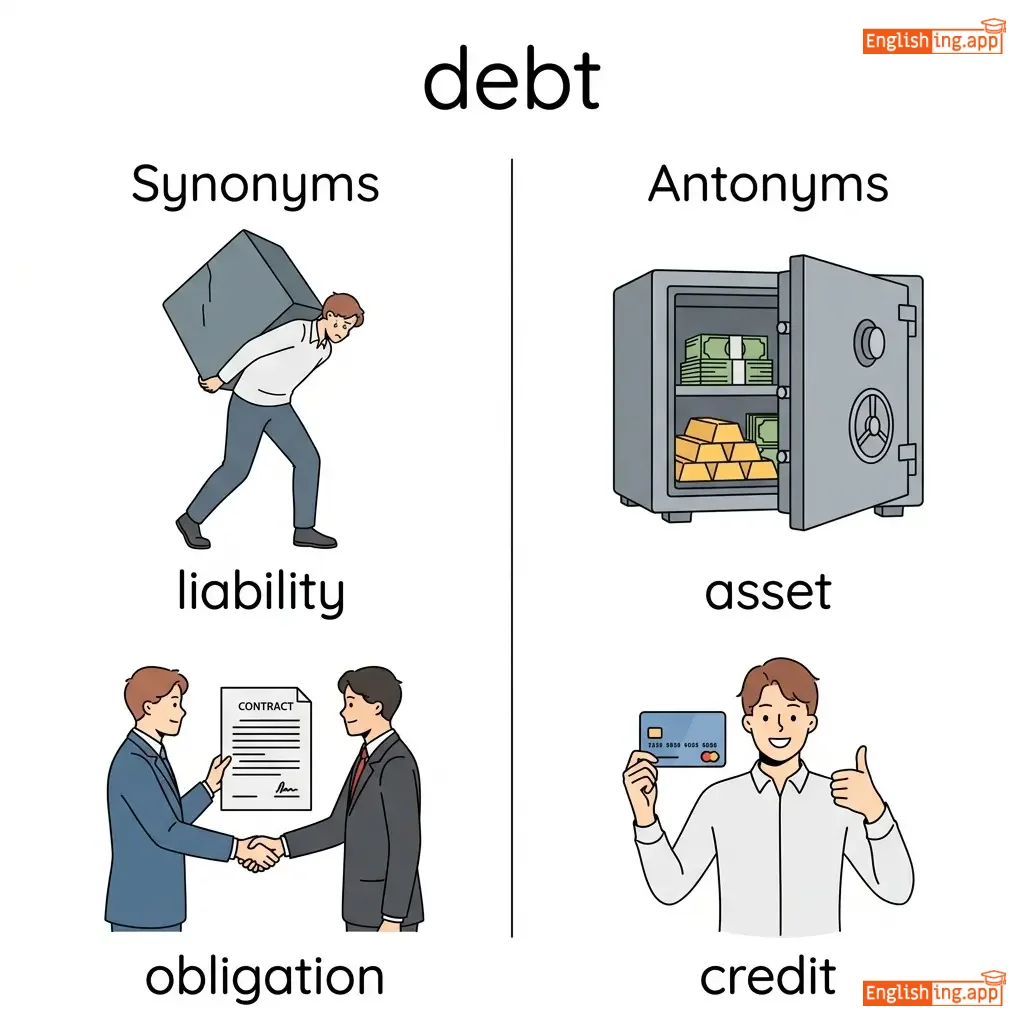
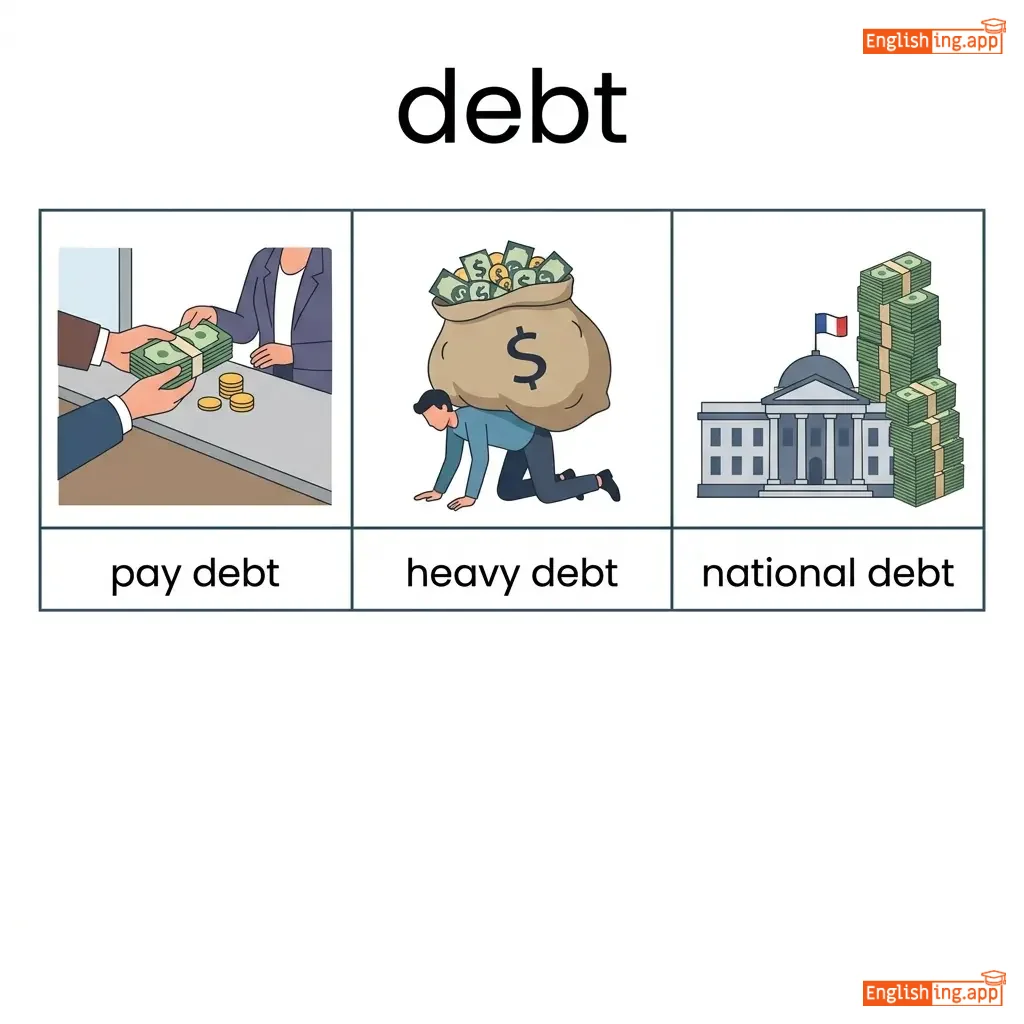
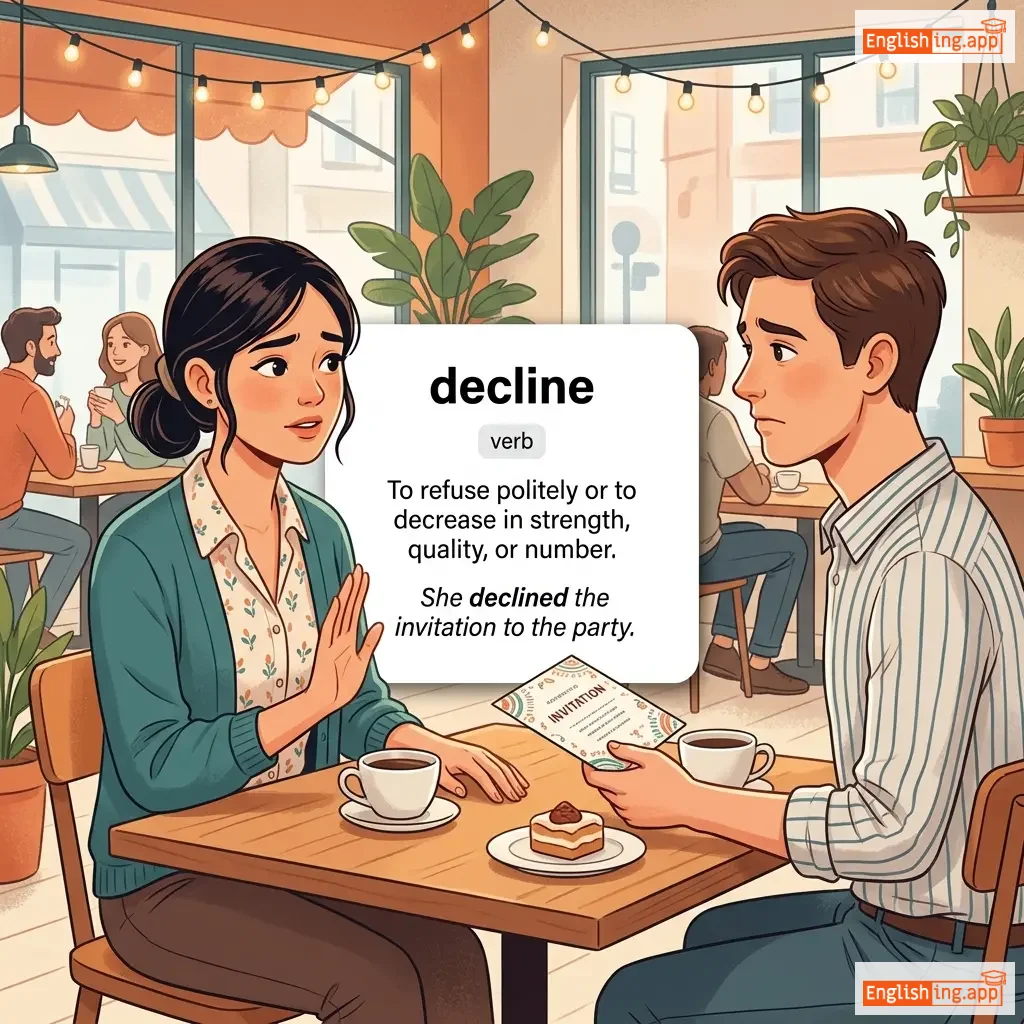
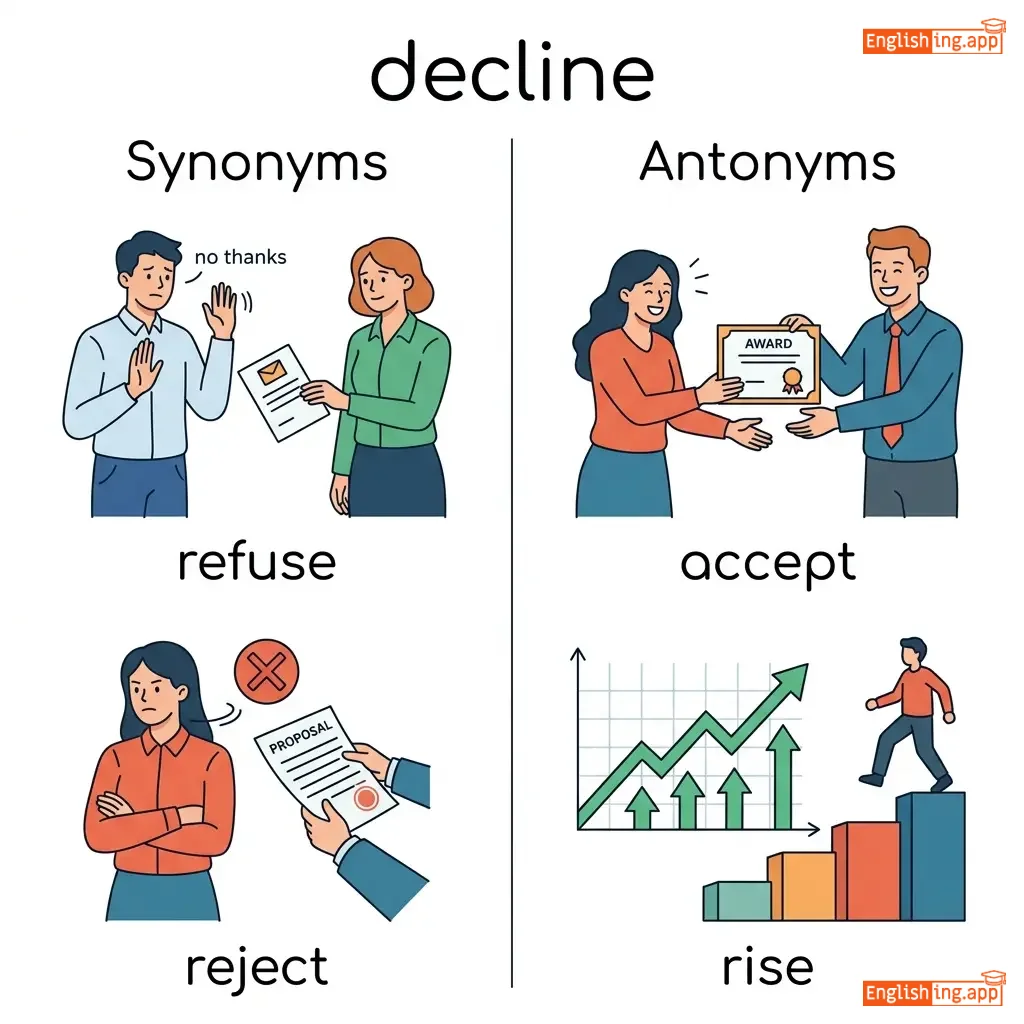

Swipe left or right, or use the buttons. Tap image to zoom.
Обновитесь для доступа ко всем предложениям
Получите неограниченный доступ ко всем предложениям с подпиской Pro
Обновить до ProПеревод примера предложения
Слово
Lesson 30Lesson 30 - Переключатель маски
|
Эмодзи
|
Слово | Images | Перевод | Прошедшее | Причастие прошедшего времени | Третье лицо единственного числа | Герундий | Значение | Пример предложения | Перевод примера предложения | Пример выражения | Значение примера выражения | Перевод примера выражения | Синонимы | Антонимы | Коллокации | Мнемоника |
|---|---|---|---|---|---|---|---|---|---|---|---|---|---|---|---|---|---|
|
#1398
🌑
|
/ˈdɑːrkən/
verb
(даркен)
••••••
|
- •••••• |
затемнять
zatemnyat
••••••
|
darkened
даркенд
••••••
|
darkened
даркенд
••••••
|
darkens
даркенз
••••••
|
darkening
даркенинг
••••••
|
to make or become dark; to reduce brightness or light
••••••
|
The clouds began to darken the sky before the storm.
Зэ клаудз бигэн ту даркен зэ скай бифо зэ сторм.
••••••
|
Облака начали затемнять небо перед бурей.
Oblaka nachali zatemnyat nebo pered burey
••••••
|
darken the mood
даркен зэ муд
••••••
|
to make the atmosphere or feelings more negative or sad
••••••
|
омрачать настроение
omrachat nastroenie
••••••
|
dim, blacken, shade, obscure, dull
••••••
|
brighten, lighten, illuminate
••••••
|
darken the sky, darken a room, darken the mood, darken with age
••••••
|
тёмный = dark, затемнять = darken
••••••
|
|
#1399
🌑
|
/ˈdɑːrk.nəs/
noun
(тьма)
••••••
|
- •••••• |
тьма
t'ma
••••••
|
- •••••• | - •••••• | - •••••• | - •••••• |
The absence of light; the state of being dark.
••••••
|
The room was filled with darkness after the lights went out. |
Комната наполнилась тьмой, когда погасли огни.
Komnata napolnilas t'moy, kogda pogasli ogni.
••••••
|
pitch darkness |
complete absence of light
••••••
|
полная тьма
polnaya t'ma
••••••
|
gloom, shadow, obscurity, night
••••••
|
light, brightness, daylight
••••••
|
in darkness, total darkness, fall into darkness, fear of darkness
••••••
|
Тьма - это когда нет света, и всё вокруг тёмное.
••••••
|
|
#1400
📊
|
/ˈdeɪ.tə/ or /ˈdæt.ə/
noun
(датэ)
••••••
|
- •••••• |
данные
dannye
••••••
|
- •••••• | - •••••• | - •••••• | - •••••• |
Facts, statistics, or information collected for reference or analysis.
••••••
|
The scientists analyzed the data to find patterns. |
Ученые проанализировали данные, чтобы найти закономерности.
Uchonyye proanalizirovali dannye, chtoby nayti zakonomernosti.
••••••
|
data-driven |
based on analysis of information or evidence
••••••
|
основанный на данных
osnovannyy na dannykh
••••••
|
information, facts, statistics, figures
••••••
|
assumptions, guesses
••••••
|
collect data, analyze data, data set, process data
••••••
|
Данные - это как карта для поиска нужных знаний!
••••••
|
|
#1401
💾
|
/ˈdeɪtəbeɪs/
noun
(deytabeis)
••••••
|
- •••••• |
база данных
baza dannykh
••••••
|
- •••••• | - •••••• | - •••••• | - •••••• |
a structured collection of data stored and accessed electronically
••••••
|
The company's customer details are stored in a secure database.
Детали клиентов компании хранятся в защищенной базе данных.
••••••
|
Детали клиентов компании хранятся в защищенной базе данных.
Detali klientov kompanii khranyatsya v zashchishchennoy baze dannykh.
••••••
|
- •••••• | - •••••• | - •••••• |
data store, data system, repository, archive, registry
••••••
|
paper files, disorganization
••••••
|
create database, access database, database management, database server
••••••
|
Data и Base — структурированная база данных для хранения данных 💾
••••••
|
|
#1402
📅
|
/deɪt/
noun/verb
••••••
|
- •••••• | - •••••• |
dated
••••••
|
dated
••••••
|
dates
••••••
|
dating
••••••
|
A particular day of the month or year; also, a social or romantic appointment.
••••••
|
They decided to meet on the date of her birthday. |
- •••••• |
blind date |
a romantic meeting with someone you have not met before
••••••
|
- •••••• |
day, appointment, meeting, outing
••••••
|
indefinite, timeless
••••••
|
set a date, important date, go on a date, due date
••••••
|
No •••••• |
|
#1403
👧
|
/ˈdɔːtər/
noun
(дотер)
••••••
|
- •••••• |
дочь
doch
••••••
|
- •••••• | - •••••• | - •••••• | - •••••• |
a female child in relation to her parents
••••••
|
They are proud of their daughter for graduating college. |
Они гордятся своей дочерью за то, что она закончила колледж.
Oni gordyatsya svoey docher'yu za to, chto ona zakonchila kolledzh.
••••••
|
apple of her father's eye |
a phrase used to describe a beloved daughter
••••••
|
яблоко из глаза ее отца
yabloko iz glaza yeye ottsa
••••••
|
girl child, offspring, child, descendant
••••••
|
son, parent
••••••
|
eldest daughter, only daughter, daughter-in-law, proud daughter
••••••
|
Daughter значит дочь, как яблоко из глаз отца.
••••••
|
|
#1404
🌅
|
/dɔːn/
noun, verb
(дон)
••••••
|
- •••••• |
рассвет
rassvet
••••••
|
dawned
донед
••••••
|
dawned
донед
••••••
|
dawns
донс
••••••
|
dawning
доннинг
••••••
|
The first appearance of light in the sky before sunrise; to begin or become apparent.
••••••
|
Hope began to dawn in her heart after hearing the good news.
Hope began to dawn in her heart after hearing the good news.
••••••
|
Надежда начала рассветать в её сердце после того, как она услышала хорошие новости.
Nadezhda nachala rassvethat' v yejo serdtse posle togo, kak ona uslyshala khoroshie novosti.
••••••
|
crack of dawn
crack of dawn
••••••
|
Very early in the morning.
••••••
|
на рассвете
na rassvete
••••••
|
sunrise, daybreak, morning, beginning, start
••••••
|
sunset, dusk, end
••••••
|
at dawn, before dawn, dawn of a new era, dawn breaks
••••••
|
Dawn означает рассвет, начало нового дня.
••••••
|
|
#1405
🌞
|
/deɪ/
noun
(дэй)
••••••
|
- •••••• |
день
den
••••••
|
- •••••• | - •••••• | - •••••• | - •••••• |
a period of 24 hours or the time between sunrise and sunset
••••••
|
She enjoyed a relaxing day at the beach. |
Она наслаждалась расслабляющим днем на пляже.
Ona naslazhdalas' rasslablyayushchim dnyom na plyazhe.
••••••
|
call it a day |
to stop working for the rest of the day
••••••
|
закончить день
zakonchit' den'
••••••
|
daytime, period, date, occasion
••••••
|
night, darkness
••••••
|
working day, day off, day long, happy day
••••••
|
День - это солнце, которое освещает наш путь.
••••••
|
|
#1406
💀
|
/dɛd/
adjective, noun
(дэд)
••••••
|
- •••••• |
мертвый
mertvyy
••••••
|
- •••••• | - •••••• | - •••••• | - •••••• |
No longer alive; the end of life.
••••••
|
The old tree is completely dead. |
Старое дерево полностью мертво.
Staroye derevo polnost'yu mertvo.
••••••
|
dead end |
A situation with no progress or exit.
••••••
|
тупик
tupik
••••••
|
lifeless, deceased, expired, gone
••••••
|
alive, living, active
••••••
|
dead body, dead silence, dead end, dead serious
••••••
|
Dead это мертвый, все.
••••••
|
|
#1407
⏰
|
/ˈdedlaɪn/
noun
(дэдлайн)
••••••
|
- •••••• |
крайний срок
krajniy srok
••••••
|
- •••••• | - •••••• | - •••••• | - •••••• |
the latest time or date by which something must be completed
••••••
|
We need to finish this project before the deadline. |
Нам нужно закончить этот проект до крайнего срока.
Nam nuzhno zakontchit' etot proyekt do krajnego sroka.
••••••
|
meet the deadline |
to finish something on time
••••••
|
выполнить в срок
vypolnit' v srok
••••••
|
due date, cutoff date, time limit, target date, completion date
••••••
|
delay, extension
••••••
|
tight deadline, project deadline, meet deadline, set a deadline
••••••
|
Крайний срок — это последний момент, когда нужно закончить работу.
••••••
|
|
#1408
☠️
|
/ˈdedli/
adjective
(дедли)
••••••
|
- •••••• |
смертельный
smertel'nyy
••••••
|
- •••••• | - •••••• | - •••••• | - •••••• |
causing or able to cause death; extremely dangerous
••••••
|
The snake's bite is deadly to humans. |
Укус змеи смертелен для людей.
Ukus zmei smertelen dlya lyudey.
••••••
|
deadly serious |
completely serious; not joking
••••••
|
смертельно серьезно
smertel'no seryozno
••••••
|
fatal, lethal, dangerous, mortal, poisonous
••••••
|
harmless, safe, mild
••••••
|
deadly weapon, deadly virus, deadly poison, deadly attack
••••••
|
Deadly означает смертельный — как смерть!
••••••
|
|
#1409
🧏
|
/def/
adjective
(def)
••••••
|
- •••••• |
глухой; с нарушением слуха
glukhoy; s narusheniyem sluha
••••••
|
- •••••• | - •••••• | - •••••• | - •••••• |
unable to hear; having a hearing impairment
••••••
|
The deaf child learned to communicate using sign language.
слепой ребёнок научился общаться с помощью жестового языка.
••••••
|
Глухой ребёнок научился общаться с помощью жестового языка.
Glukhoy rebyonok nauchilsya obshchat'sya s pomoshch'yu zhestovogo yazyka.
••••••
|
- •••••• | - •••••• | - •••••• |
hearing-impaired, hard of hearing
••••••
|
hearing, able to hear
••••••
|
deaf person, deaf community, stone deaf
••••••
|
Глухой человек не слышит, но использует жестовый язык.
••••••
|
|
#1410
🤝
|
/diːl/
verb
••••••
|
- •••••• |
счастье
schast'ye
••••••
|
dealt
••••••
|
dealt
••••••
|
deals
••••••
|
dealing
••••••
|
to distribute or give out something; to handle or manage
••••••
|
He had to deal with many problems at work. |
Она не могла скрыть свое счастье, когда получила награду.
Ona ne mogla skryt' svoe schast'ye, kogda poluchila nagradu.
••••••
|
deal with it |
a phrase used to say one must accept or handle a situation
••••••
|
поиск счастья
poisk schast'ya
••••••
|
handle, manage, cope, distribute, bargain
••••••
|
ignore, neglect, avoid
••••••
|
deal with, business deal, fair deal, deal cards
••••••
|
Счастье - это то, что ты ищешь, когда чувствуешь радость.
••••••
|
|
#1411
💼
|
/ˈdiːlər/
noun
(ди́лер)
••••••
|
- •••••• |
продавец
prodavets
••••••
|
- •••••• | - •••••• | - •••••• | - •••••• |
a person or business that buys and sells goods; someone who distributes
••••••
|
The car dealer offered a discount to attract customers. |
Продавец автомобилей предложил скидку, чтобы привлечь клиентов.
Prodavets avtomobiley predlozhil skidku, chtoby privlech' klientov.
••••••
|
- •••••• | - •••••• | - •••••• |
merchant, trader, vendor, seller, distributor
••••••
|
buyer, customer
••••••
|
car dealer, art dealer, drug dealer, authorized dealer
••••••
|
Dealer означает продавец, который продает и зарабатывает деньги.
••••••
|
|
#1412
💖
|
/dɪr/
adjective
(дир)
••••••
|
- •••••• |
дорогой
dorogoy
••••••
|
- •••••• | - •••••• | - •••••• | - •••••• |
loved or cherished; sometimes used as a polite form of address
••••••
|
She is very dear to her grandparents. |
Она очень дорога своим бабушке и дедушке.
Ona ochen' doroga svoim babushke i dedushke.
••••••
|
oh dear |
an exclamation showing surprise, worry, or sympathy
••••••
|
ох, дорогой
okh, dorogoy
••••••
|
beloved, cherished, precious, valued
••••••
|
hated, disliked
••••••
|
my dear, dear friend, hold dear, oh dear
••••••
|
Дорогой - как Dear на английском, это часто пишется в письмах.
••••••
|
|
#1413
💀
|
/dɛθ/
noun
(дэθ)
••••••
|
- •••••• |
смерть
smert'
••••••
|
- •••••• | - •••••• | - •••••• | - •••••• |
The end of life; the permanent cessation of all vital functions.
••••••
|
The news of his death shocked everyone in the village. |
Новости о его смерти потрясли всех в деревне.
Novosti o yego smerti potryasli vsekh v derevne.
••••••
|
a matter of life and death |
something extremely important or urgent
••••••
|
вопрос жизни и смерти
vopros zhizni i smerti
••••••
|
demise, passing, end, expiration, departure
••••••
|
birth, life, existence
••••••
|
sudden death, tragic death, death penalty, cause of death, near death
••••••
|
Death по-русски это смерть, помни, с смертью все заканчивается.
••••••
|
|
#1414
🗣️
|
/dɪˈbeɪt/
noun, verb
(диˈбэйт)
••••••
|
- •••••• |
дебаты
debaty
••••••
|
debated
диˈбэйтед
••••••
|
debated
диˈбэйтед
••••••
|
debates
диˈбэйтс
••••••
|
debating
диˈбэйтинг
••••••
|
A formal discussion on a particular topic where opposing arguments are presented.
••••••
|
The students prepared well for the school debate.
студенты хорошо подготовились к школьным дебатам.
••••••
|
Студенты хорошо подготовились к школьным дебатам.
Studenty khorosho podgotovilis' k shkol'nym debatam.
••••••
|
open to debate
открыто для дебатов
••••••
|
something that is not certain or can be questioned
••••••
|
открыто для дебатов
otkryto dlya debatov
••••••
|
discussion, argument, dispute, deliberation, dialogue
••••••
|
agreement, harmony, consensus
••••••
|
heated debate, public debate, political debate, debate team, debate club
••••••
|
Debate звучит как 'de' + 'бэйт'. Ты готов к дебатам, когда ты 'de' (+) расскажешь свои аргументы!
••••••
|
|
#1415
🪨
|
/dəˈbriː/
noun
(дебрис)
••••••
|
|
мусор
musor
••••••
|
- •••••• | - •••••• | - •••••• | - •••••• |
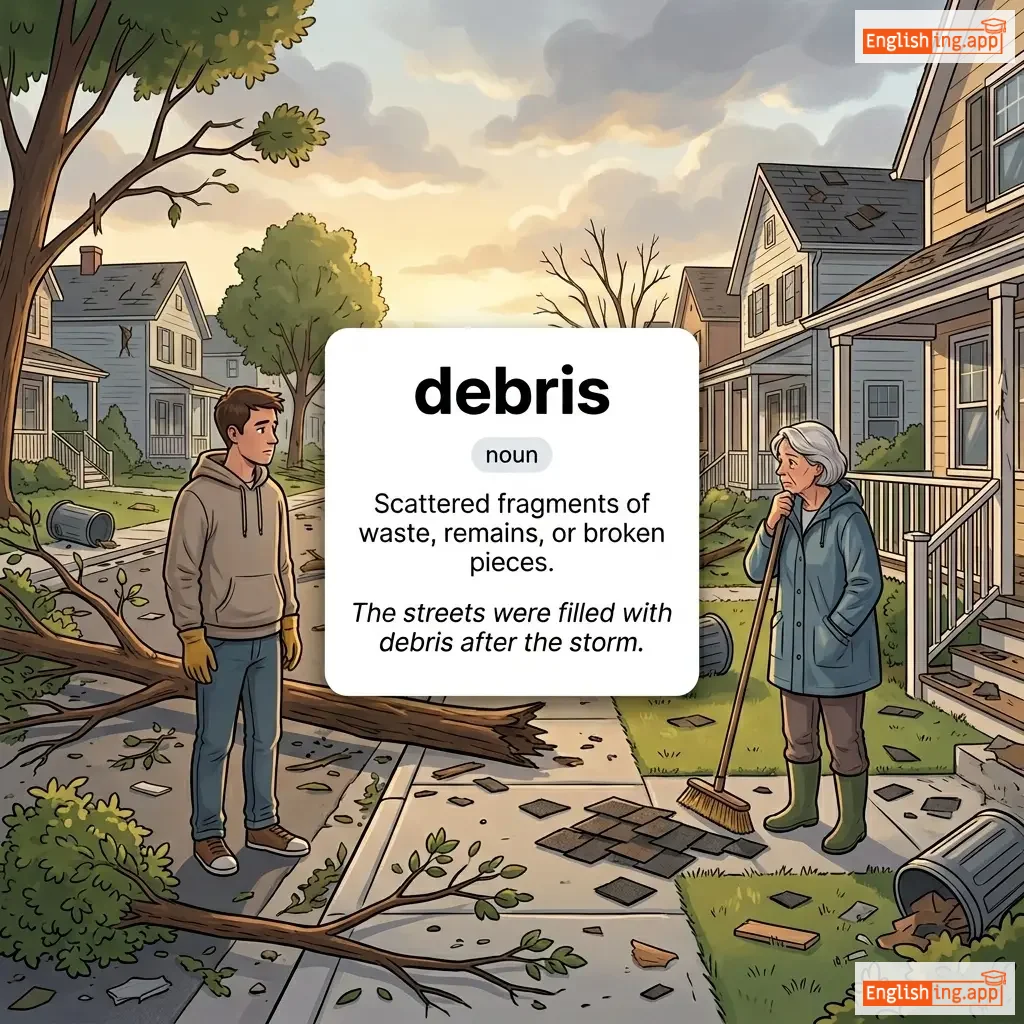
Scattered fragments of waste, remains, or broken pieces.
••••••
|
The streets were filled with debris after the storm.
Улицы были заполнены мусором после бури.
••••••
|
Улицы были заполнены мусором после бури.
Uliцы byli zapolneny musorom posle buri.
••••••
|
clearing the debris
уборка мусора
••••••
|
Removing the remains or waste after destruction.
••••••
|
уборка мусора
uborka musora
••••••
|
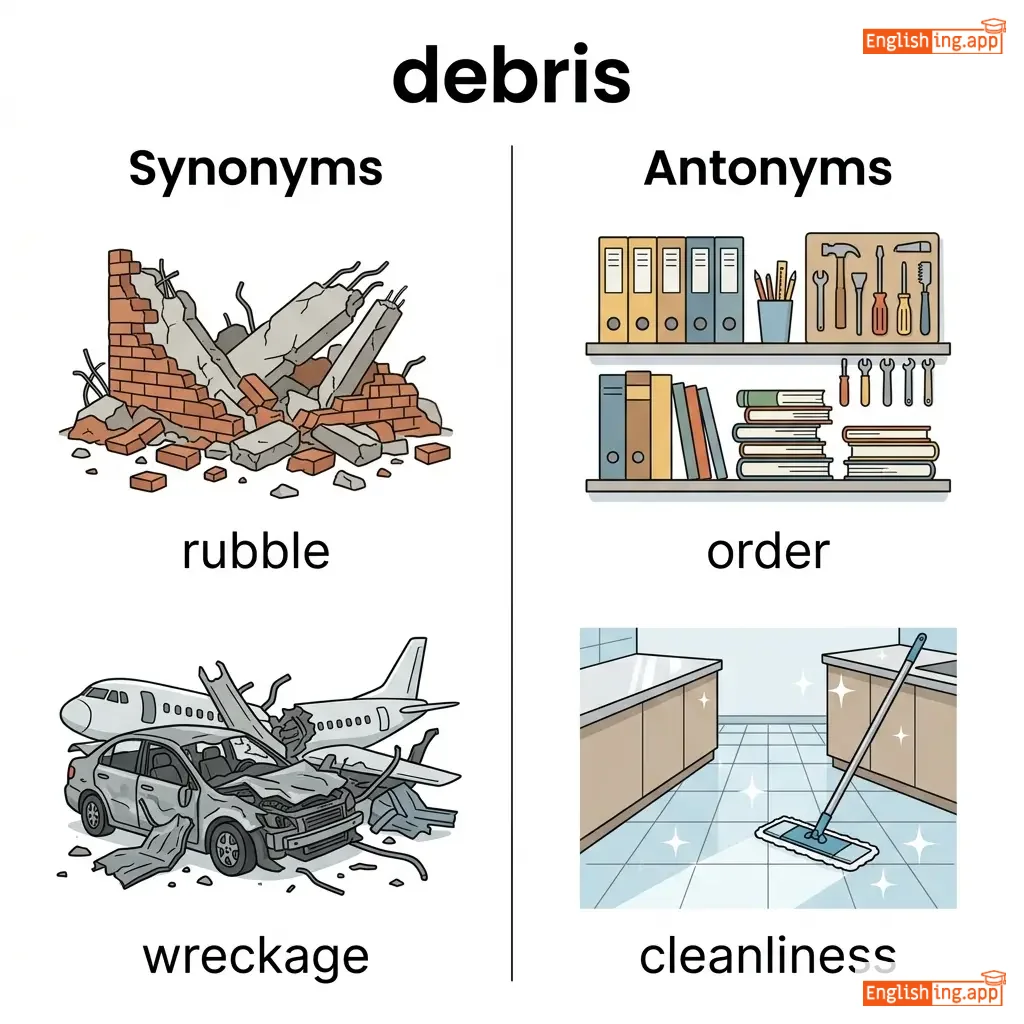
rubble, wreckage, remains, fragments, litter
••••••
|
order, cleanliness, neatness
••••••
|
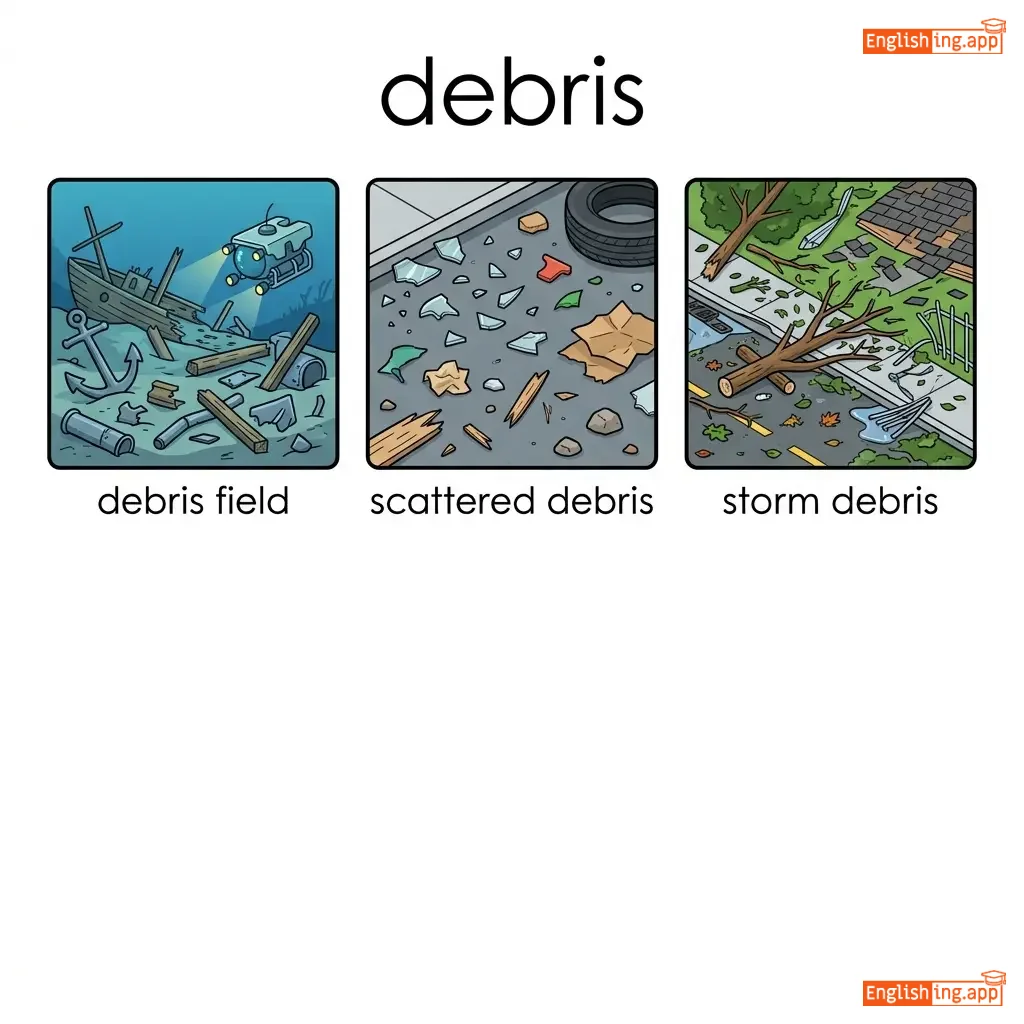
debris field, scattered debris, storm debris, clear debris
••••••
|
После бури мусор (debris) заполнил улицы.
••••••
|
|
#1416
💸
|
/dɛt/
noun
(дэт)
••••••
|
|
долг
dolg
••••••
|
- •••••• | - •••••• | - •••••• | - •••••• |
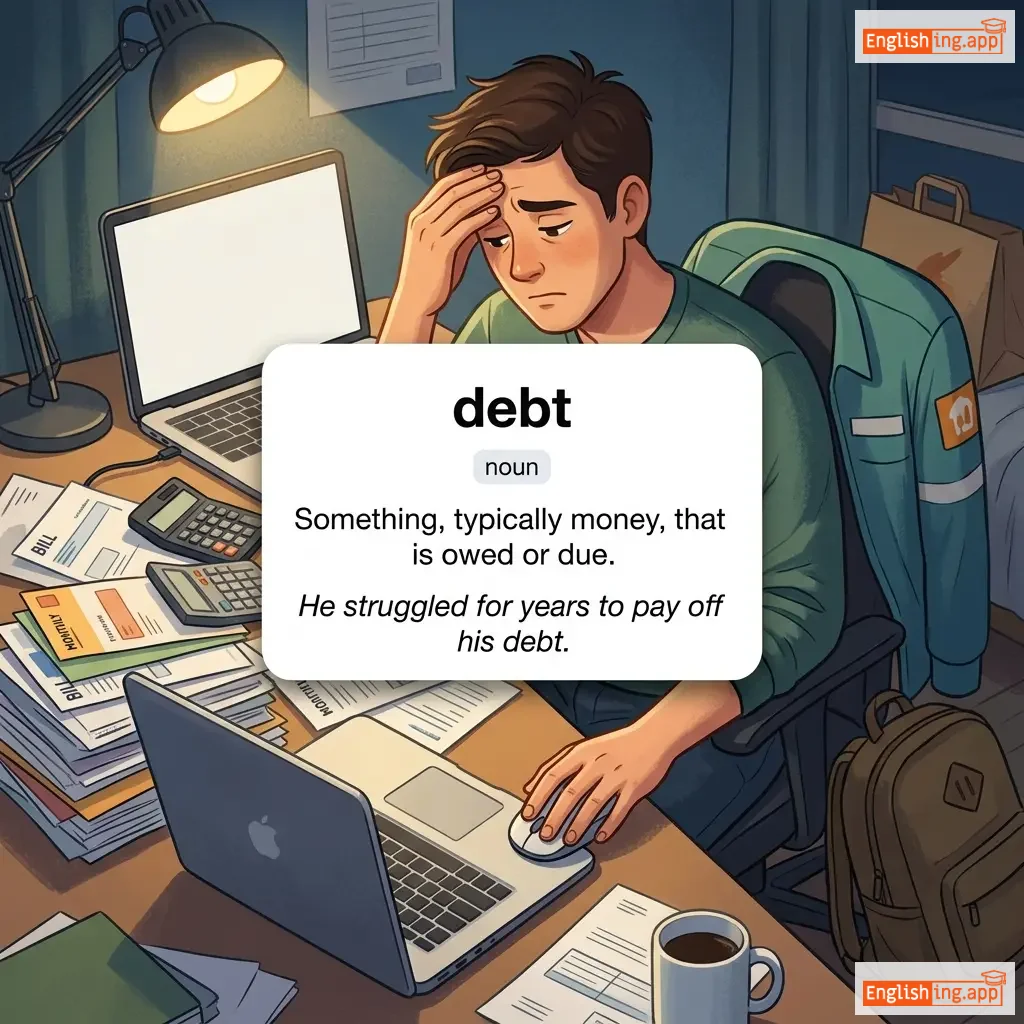
Something, typically money, that is owed or due.
••••••
|
He struggled for years to pay off his debt. |
Он боролся много лет, чтобы погасить свой долг.
On borolsya mnogo let, chtoby pogasit' svoy dolg.
••••••
|
in debt |
to owe money
••••••
|
в долгу
v dolgu
••••••
|
liability, obligation, arrears, dues, loan
••••••
|
asset, credit, surplus
••••••
|
pay debt, heavy debt, national debt, debt relief, debt crisis
••••••
|
Debt означает долг; иногда нужно брать долг, чтобы оплатить дату (date).
••••••
|
|
#1417
🎤
|
/ˈdeɪ.bjuː/
noun, verb
(дебют)
••••••
|
- •••••• |
дебют
debyut
••••••
|
debuted
дебютировал
••••••
|
debuted
дебютировал
••••••
|
debuts
дебютирует
••••••
|
debuting
дебютируя
••••••
|
The first public appearance or performance of someone or something.
••••••
|
The young actor made his debut on the big stage.
Молодой актер дебютировал на большой сцене.
••••••
|
Молодой актер дебютировал на большой сцене.
Molodoy akter debiutiroval na bol'shoy stsene.
••••••
|
make a debut
сделать дебют
••••••
|
To appear or perform publicly for the first time.
••••••
|
сделать дебют
sdelat' debiut
••••••
|
first appearance, introduction, premiere, launch, entrance
••••••
|
retirement, farewell, exit
••••••
|
make debut, debut performance, debut album, debut match
••••••
|
Дебют = ‘Day + But’ – первый день публичного выступления.
••••••
|
|
#1418
📅
|
/ˈdɛkeɪd/
noun
(ˈdɛkeɪd)
••••••
|
- •••••• |
десятилетие
desyatiletie
••••••
|
- •••••• | - •••••• | - •••••• | - •••••• |
A period of ten years.
••••••
|
The country has changed a lot in the past decade.
ðə ˈkʌntri hæz ʧeɪndʒd ə lɒt ɪn ðə pæst dɪˈkeɪd
••••••
|
Страна сильно изменилась за последнее десятилетие.
Strana sil'no izmenilas' za poslednee desyatiletie.
••••••
|
- •••••• | - •••••• | - •••••• |
ten years, period, era, span
••••••
|
moment, instant
••••••
|
past decade, next decade, over a decade, within a decade
••••••
|
Десятилетие — это период в 10 лет, слово 'десять' помогает запомнить.
••••••
|
|
#1419
🦠
|
/dɪˈkeɪ/
verb, noun
(dikei)
••••••
|
- •••••• |
гниение
gnienie
••••••
|
decayed
dikeid
••••••
|
decayed
dikeid
••••••
|
decays
dikeiz
••••••
|
decaying
dikeing
••••••
|
The process of rotting or decomposition; to decline in quality or strength.
••••••
|
The abandoned house slowly began to decay.
Покинутое здание медленно начало разлагаться.
••••••
|
Покинутое здание медленно начало разлагаться.
Pokinutoe zdanie medlenno nachalo razlagatsya.
••••••
|
tooth decay
кариес зубов
••••••
|
The rotting or damage of teeth.
••••••
|
кариес зубов
karies zubov
••••••
|
rot, spoil, decompose, deteriorate, decline
••••••
|
grow, flourish, improve
••••••
|
decay process, tooth decay, rapid decay, slow decay
••••••
|
Decay означает гниение, кариес зубов означает повреждение зубов.
••••••
|
|
#1420
❄️
|
/dɪˈsɛmbər/
noun
(дисембер)
••••••
|
- •••••• |
декабрь
dekabr
••••••
|
- •••••• | - •••••• | - •••••• | - •••••• |
the twelfth and last month of the year in the Gregorian calendar
••••••
|
December is usually cold in many countries.
Декабрь обычно холодный во многих странах.
••••••
|
Декабрь обычно холодный во многих странах.
dekabr obychno kholodnyi vo mnogikh stranakh
••••••
|
- •••••• | - •••••• | - •••••• |
month twelve, twelfth month, year end, winter month
••••••
|
January, summer
••••••
|
December holiday, December weather, late December, early December
••••••
|
Декабрь = December = конец года
••••••
|
|
#1421
🤔
|
/dɪˈsaɪd/
verb
(деци́дировать)
••••••
|
- •••••• |
решать
reshat
••••••
|
decided
деци́дировал
••••••
|
decided
деци́дировал
••••••
|
decides
деци́дирует
••••••
|
deciding
деци́дируя
••••••
|
To make a choice or judgment about something.
••••••
|
She decided to study abroad after graduation.
Она решила учиться за границей после окончания университета.
••••••
|
Она решила учиться за границей после окончания университета.
Ona reshila uchit'sya za granitsey posle okonchaniya universiteta.
••••••
|
make up one's mind
принять решение
••••••
|
to decide after consideration
••••••
|
принять решение
prinyat' reshenie
••••••
|
determine, choose, settle, resolve, conclude
••••••
|
hesitate, delay, waver
••••••
|
decide quickly, decide against, decide whether, decide to go
••••••
|
Reshat = 'Решение' было принято, как слово по-русски 'решать'.
••••••
|
|
#1422
⚖️
|
/dɪˈsɪʒən/
noun
(dɪˈzɪʒən)
••••••
|
- •••••• |
решение
reshenie
••••••
|
- •••••• | - •••••• | - •••••• | - •••••• |
A conclusion or choice made after consideration.
••••••
|
She made a quick decision to accept the job offer. |
Она приняла быстрое решение принять предложение о работе.
Ona prinjala bystroye resheniye prinyat' predlozheniye o rabote.
••••••
|
make a decision |
to come to a conclusion or choice
••••••
|
принять решение
prinyat' resheniye
••••••
|
choice, judgment, conclusion, verdict, resolution
••••••
|
indecision, hesitation, doubt
••••••
|
make a decision, tough decision, final decision, quick decision
••••••
|
Решение значит решение — Принять решение помогает снизить стресс.
••••••
|
|
#1423
✅
|
/dɪˈsaɪsɪv/
adjective
(de-sai-siv)
••••••
|
- •••••• |
решающий
reshayushchiy
••••••
|
- •••••• | - •••••• | - •••••• | - •••••• |
Having the ability to make decisions quickly and effectively; determining the outcome.
••••••
|
Her decisive action saved the company from collapse. |
Ее решающее действие спасло компанию от краха.
Eyo reshayushchee deystviye spaslo kompaniyu ot krakha.
••••••
|
decisive victory |
A win that settles an issue conclusively.
••••••
|
решающая победа
reshayushchaya pobeda
••••••
|
conclusive, resolute, firm, determined, crucial
••••••
|
indecisive, uncertain, hesitant
••••••
|
decisive role, decisive moment, decisive action, decisive factor
••••••
|
Решающий - решай быстро и будь решающим!
••••••
|
|
#1424
🛳️
|
/dɛk/
noun
(dek)
••••••
|
- •••••• |
палуба / платформа
paluba / platforma
••••••
|
- •••••• | - •••••• | - •••••• | - •••••• |
A flat surface or platform, often on a ship or building.
••••••
|
We enjoyed the sunset from the upper deck of the ferry. |
Мы наслаждались закатом с верхней палубы парома.
My naslazhdalis' zakatom s verkhney paluby paroma.
••••••
|
clear the deck |
to prepare for action or to get ready
••••••
|
освободить палубу
osvobodit' palubu
••••••
|
platform, floor, terrace, stage
••••••
|
ground, basement
••••••
|
ship deck, upper deck, deck chair, deck of cards
••••••
|
Палуба на корабле — это как платформа, на которой можно стоять.
••••••
|
|
#1425
📜
|
/ˌdek.ləˈreɪ.ʃən/
noun
(de-klah-rey-shyon)
••••••
|
- •••••• |
декларация; заявление; провозглашение
deklaryatsiya, zayavlenie, proklamatsiya
••••••
|
- •••••• | - •••••• | - •••••• | - •••••• |
a formal or explicit statement or announcement; an official proclamation
••••••
|
The president's declaration of independence marked a historic moment for the nation.
Декларация независимости президента ознаменовала исторический момент для нации.
••••••
|
Декларация независимости президента ознаменовала исторический момент для нации.
Deklaratsiya nezavisimosti prezidenta oznamenovala istorizheskiy moment dlya natsii.
••••••
|
- •••••• | - •••••• | - •••••• |
announcement, proclamation, statement, pronouncement
••••••
|
concealment, silence, secrecy, denial
••••••
|
formal declaration, public declaration, declaration of war
••••••
|
В русском языке слово 'декларация' используется в официальных контекстах.
••••••
|
|
#1426
📢
|
/dɪˈklɛər/
verb
(dɪˈklɛər)
••••••
|
- •••••• |
объявить
ob'yavit'
••••••
|
declared
deklerd
••••••
|
declared
deklerd
••••••
|
declares
deklyers
••••••
|
declaring
deklyering
••••••
|
To announce something formally or officially.
••••••
|
The government declared a state of emergency.
Правительство объявило чрезвычайное положение.
••••••
|
Правительство объявило чрезвычайное положение.
Pravitel'stvo ob'yavilo chrezvychaynoye polozheniye.
••••••
|
declare war
объявить войну
••••••
|
to officially announce the beginning of a war
••••••
|
объявить войну
ob'yavit' voynu
••••••
|
announce, proclaim, state, affirm, disclose
••••••
|
deny, conceal, hide
••••••
|
declare independence, declare victory, declare bankruptcy, declare an emergency
••••••
|
Объявить — это как официальное заявление о важном событии.
••••••
|
|
#1427
📉
|
/dɪˈklaɪn/
verb
••••••
|
|
- •••••• |
declined
••••••
|
declined
••••••
|
declines
••••••
|
declining
••••••
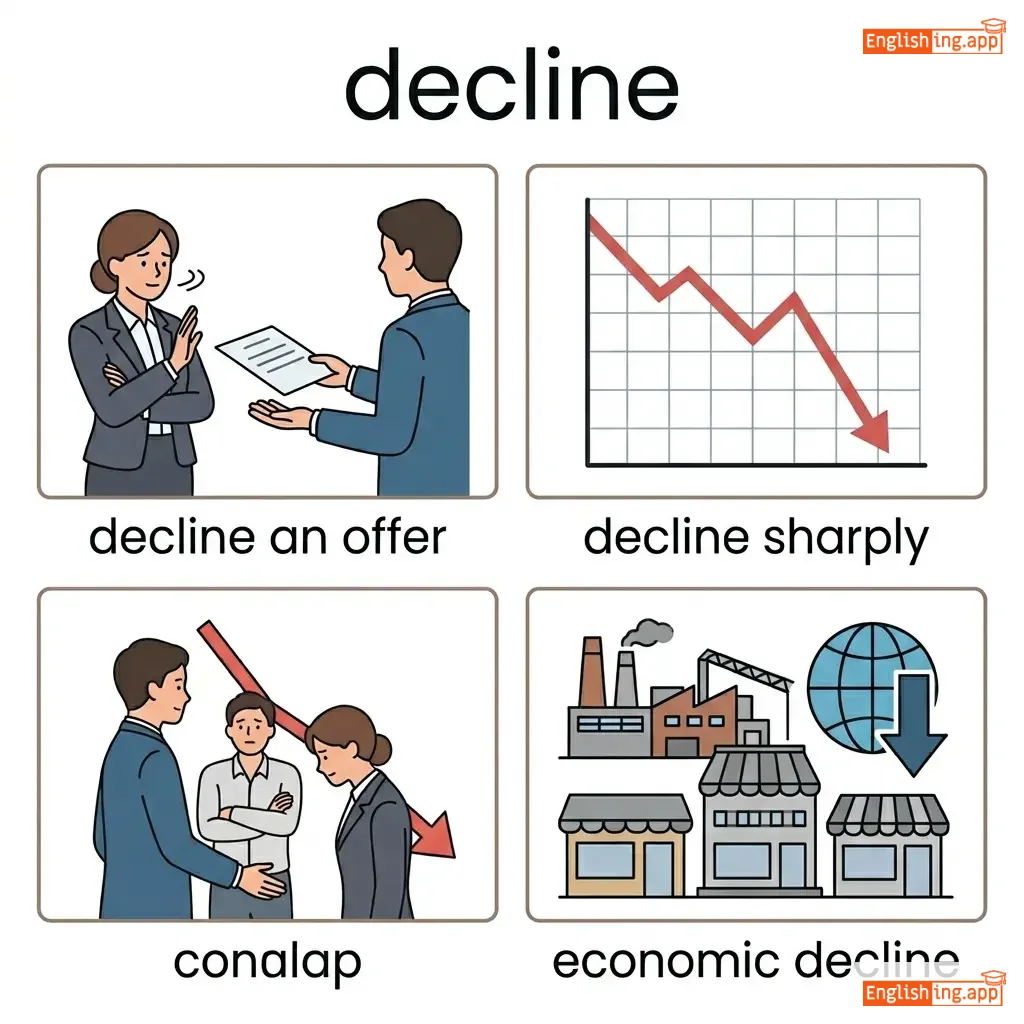
|
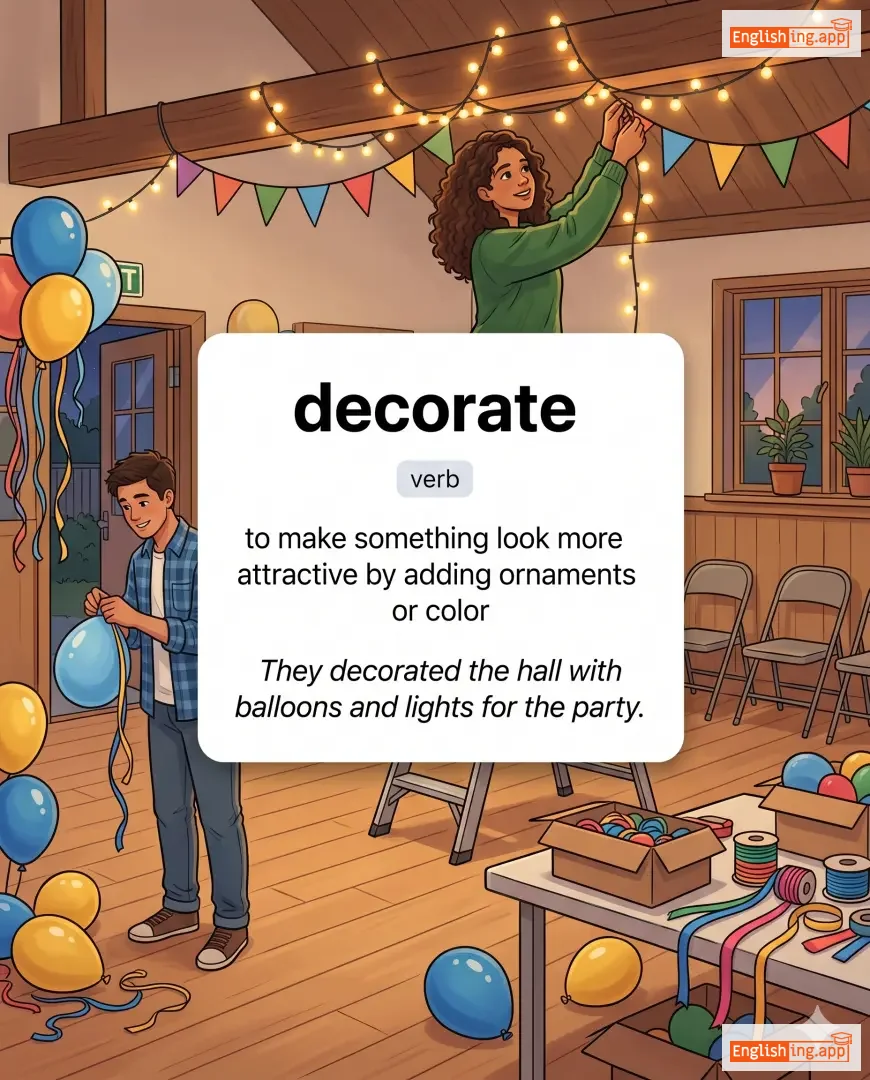
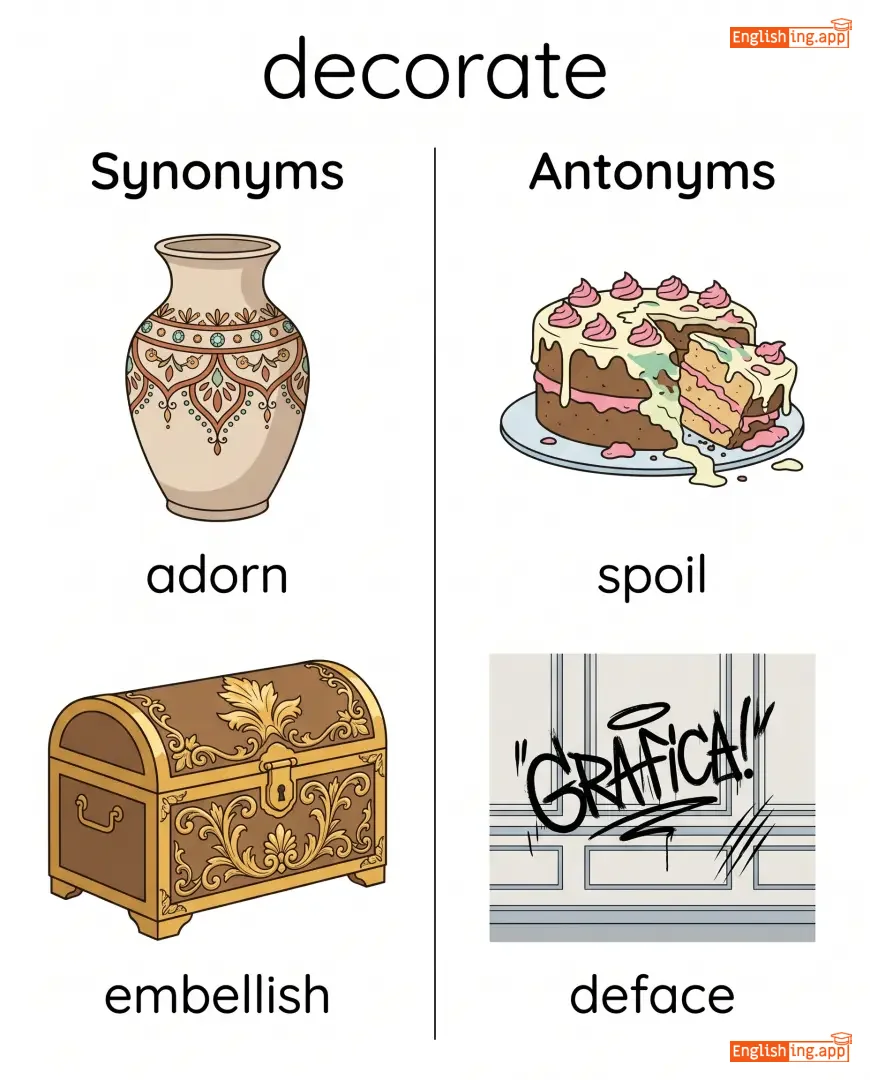
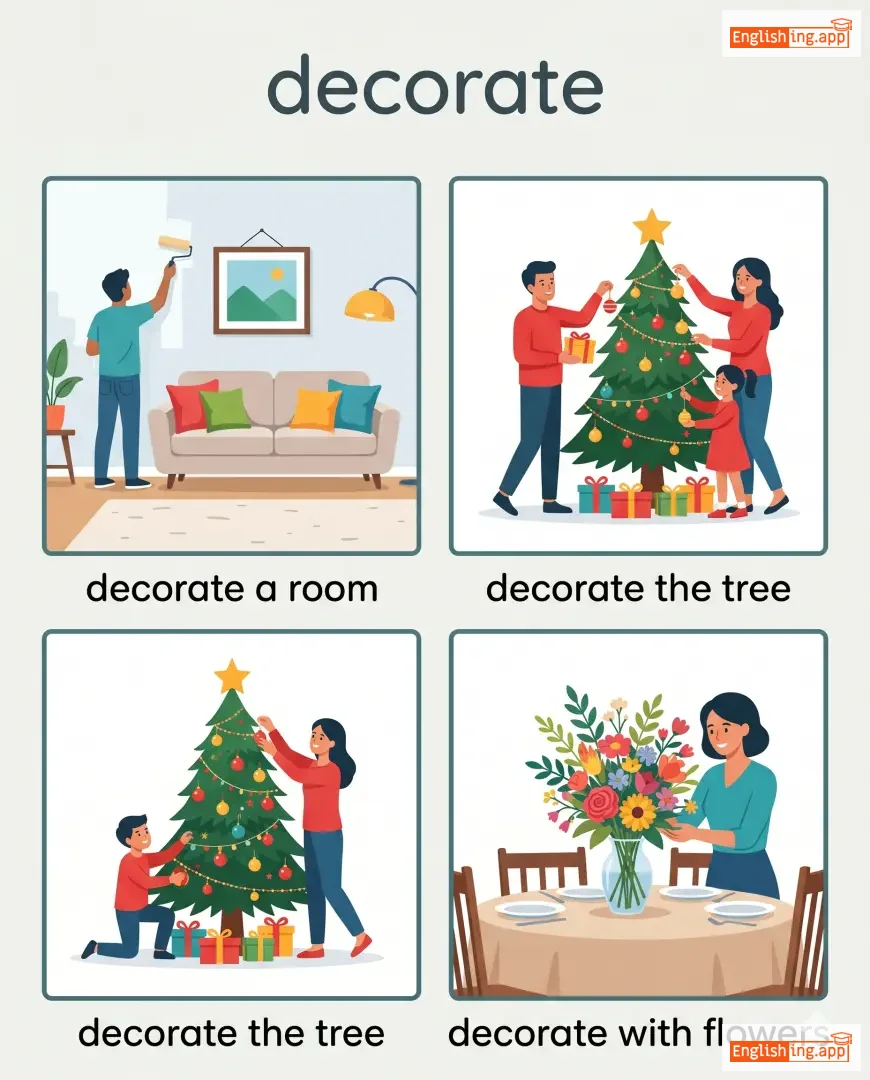
To refuse politely or to decrease in strength, quality, or number.
••••••
|
She declined the invitation to the party. |
- •••••• |
on the decline |
becoming weaker or less important
••••••
|
- •••••• |
refuse, reject, deteriorate, weaken, decrease
••••••
|
accept, rise, increase
••••••
|
decline an offer, decline sharply, economic decline, decline in sales
••••••
|
No •••••• |
|
#1428
🎨
|
/ˈdɛkəreɪt/
verb
••••••
|
|
- •••••• |
decorated
••••••
|
decorated
••••••
|
decorates
••••••
|
decorating
••••••
|
to make something look more attractive by adding ornaments or color
••••••
|
They decorated the hall with balloons and lights for the party. |
- •••••• |
decorate the truth |
to exaggerate or add details to make a story more interesting
••••••
|
- •••••• |
adorn, embellish, beautify, garnish, ornament
••••••
|
spoil, deface, mar
••••••
|
decorate a room, decorate the tree, decorate with flowers, decorate beautifully
••••••
|
No •••••• |
|
#1429
🎨
|
/ˌdek.əˈreɪ.ʃən/
noun
(dekoreyshn)
••••••
|
- •••••• |
декорирование; украшение; приз;
dekorirovaniye, ukrasheniye, priz
••••••
|
- •••••• | - •••••• | - •••••• | - •••••• |
the process or art of decorating something; ornamental items used to beautify
••••••
|
The Christmas decoration transformed the ordinary room into a festive wonderland.
Рождественское украшение превратило обычную комнату в праздничную страну чудес.
••••••
|
Рождественское украшение превратило обычную комнату в праздничную страну чудес.
Rozhdestvenskoye ukrasheniye prevratilo obychnuyu komnatu v prazdnichnuyu stranu chudes.
••••••
|
- •••••• | - •••••• | - •••••• |
ornamentation, embellishment, adornment, beautification
••••••
|
simplicity, plainness, bareness, austerity
••••••
|
home decoration, holiday decoration, interior decoration
••••••
|
Как Рождественская декорация превращает обычную комнату, так и украшения могут преобразить любое место.
••••••
|
|
#1430
⬇️
|
/ˈdiːkriːs/ (noun), /dɪˈkriːs/ (verb)
verb/noun
••••••
|
- •••••• | - •••••• |
decreased
••••••
|
decreased
••••••
|
decreases
••••••
|
decreasing
••••••
|
To become or make something smaller or fewer in number, amount, or degree.
••••••
|
The population of the town has decreased over the years. |
- •••••• |
decrease by half |
to reduce something to 50% of its original size or number
••••••
|
- •••••• |
reduce, diminish, lessen, cut, drop
••••••
|
increase, grow, rise
••••••
|
sharp decrease, gradual decrease, decrease in value, decrease rate
••••••
|
No •••••• |
|
#1431
🙏
|
/ˈdɛdɪkeɪt/
verb
(dedikeit)
••••••
|
- •••••• |
посвящать
posvyashchat
••••••
|
dedicated
dedikiroval
••••••
|
dedicated
dedikirovannyj
••••••
|
dedicates
dedikuet
••••••
|
dedicating
dedikirujushchij
••••••
|
to devote time, effort, or oneself to a particular purpose or person
••••••
|
She dedicated her life to helping the poor.
Она посвятила свою жизнь помощи бедным.
••••••
|
Она посвятила свою жизнь помощи бедным.
Ona posvyatila svoyu zhizn pomoshchi bednym.
••••••
|
dedicate oneself to
посвятить себя
••••••
|
to commit oneself fully to something
••••••
|
посвятить себя чему-то полностью
posvyatit sebya chemu-to polnostyu
••••••
|
devote, commit, allocate, apply, surrender
••••••
|
neglect, ignore, abandon
••••••
|
dedicate time, dedicate effort, dedicate a book, dedicate resources
••••••
|
Dedicate означает посвящать — как если бы вы ‘посвятили’ свой день и усилия чему-то.
••••••
|
|
#1432
💪
|
/ˈdɛdɪˌkeɪtɪd/
adjective
(dedikeɪtɪd)
••••••
|
- •••••• |
посвящённый
posvyashchyonny
••••••
|
- •••••• | - •••••• | - •••••• | - •••••• |
devoted to a cause, task, or purpose
••••••
|
She is a dedicated teacher who goes above and beyond for her students. |
Она преданный учитель, который идёт выше и дальше ради своих студентов.
Ona predannyy uchitel', kotoryy idyot vyshe i dal'she radi svoikh studentov.
••••••
|
- •••••• | - •••••• | - •••••• |
committed, devoted, passionate, loyal
••••••
|
indifferent, apathetic, disinterested
••••••
|
dedicated worker, dedicated employee, dedicated to success
••••••
|
A dedicated person is **посвящённый** to their **purpose (цели)**.
••••••
|
|
#1433
🎯
|
/ˌdɛdɪˈkeɪʃən/
noun
(dedikatsiya)
••••••
|
|
преданность
predannost
••••••
|
- •••••• | - •••••• | - •••••• | - •••••• |
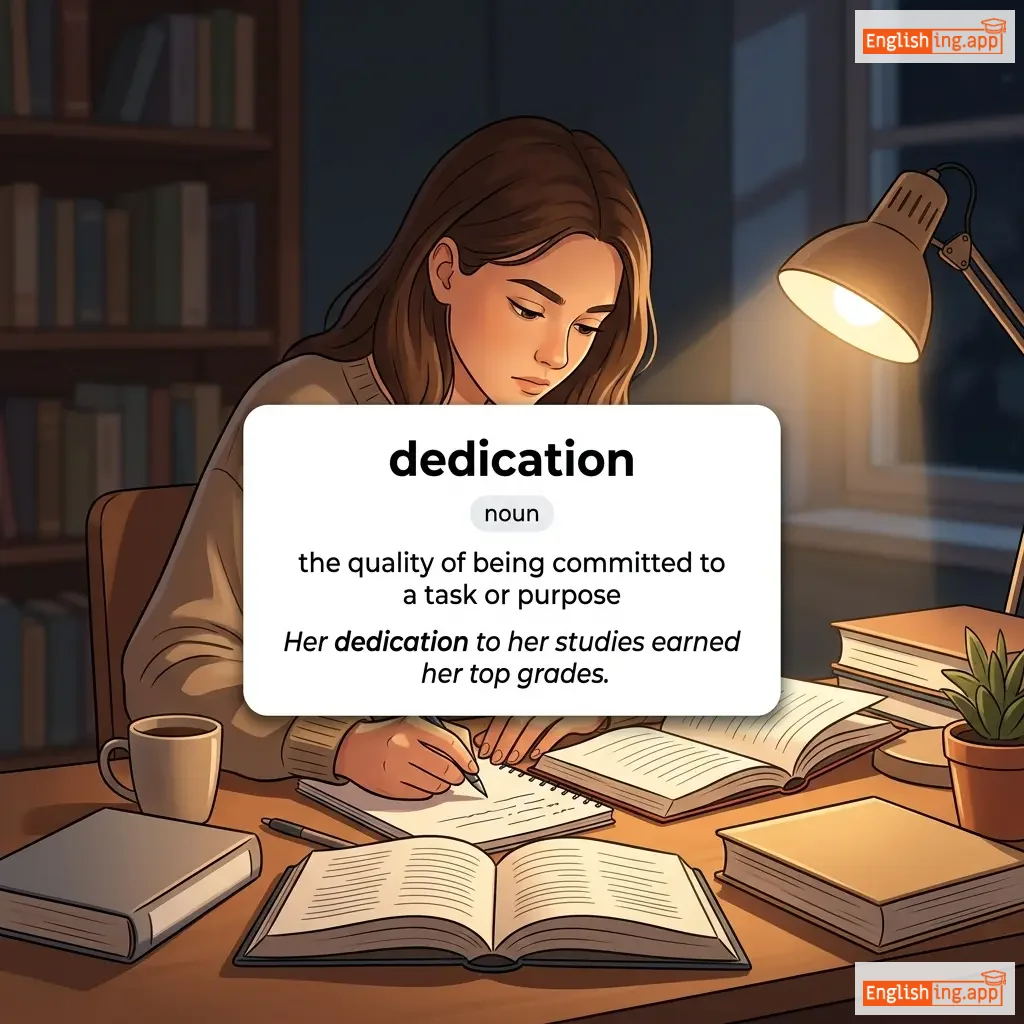
the quality of being committed to a task or purpose
••••••
|
Her dedication to her studies earned her top grades. |
Её преданность учебе принесла ей высшие оценки.
Eyo predannost uchebe prinesla yey vysshie otsenki.
••••••
|
dedication ceremony |
a formal event to dedicate a building or monument
••••••
|
церемония посвящения
tseremoniya posvyashcheniya
••••••
|
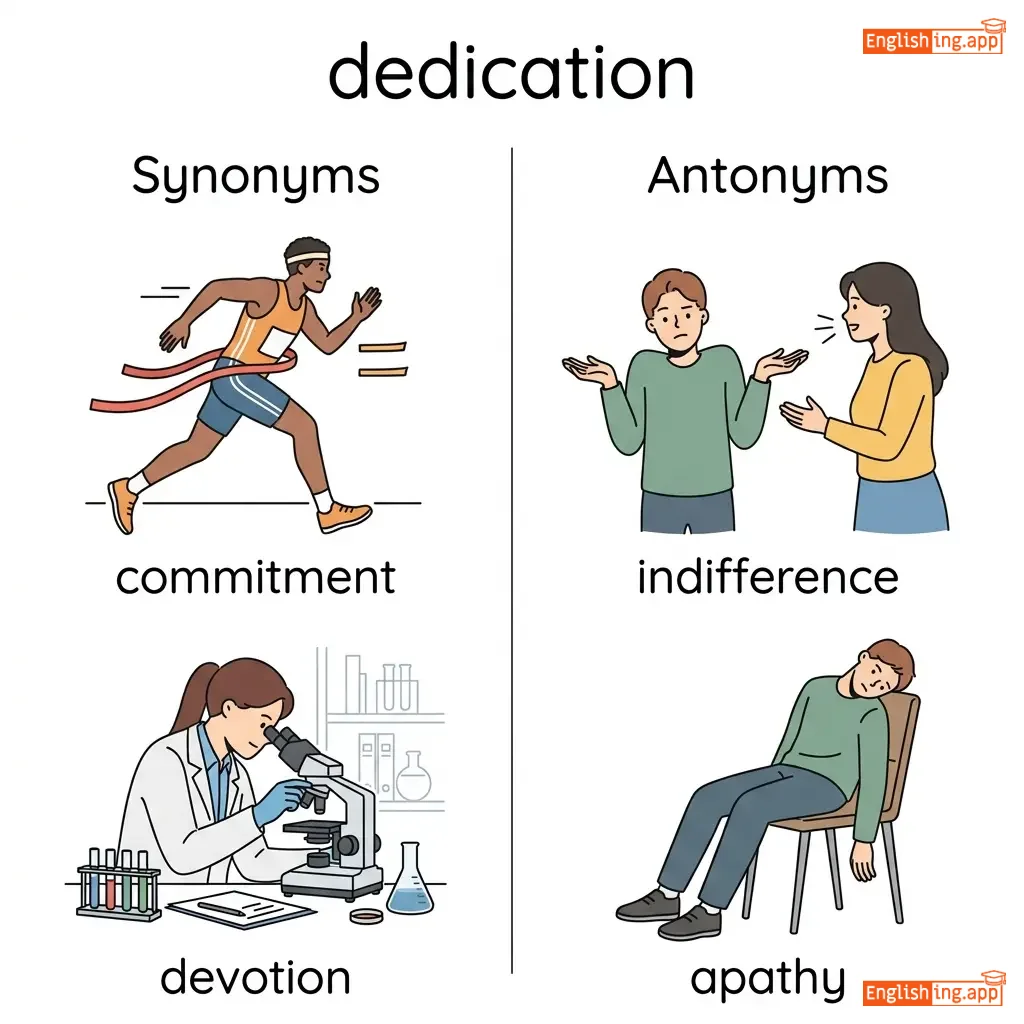
commitment, devotion, perseverance, loyalty, diligence
••••••
|
indifference, apathy, neglect
••••••
|
show dedication, strong dedication, dedication to work, dedication and hard work
••••••
|
Dedication - это как преданность, как у студента, который полностью сосредоточен на учебе.
••••••
|
|
#1434
📄
|
/diːd/
noun
(диːд)
••••••
|
- •••••• |
действие; подвиг; юридический документ;
deystvie, podvig, yuridicheskiy dokument
••••••
|
- •••••• | - •••••• | - •••••• | - •••••• |
an action that is performed intentionally or consciously; a legal document showing ownership
••••••
|
His heroic deed saved the child from drowning in the river. |
Его геройский поступок спас ребенка от утопления в реке.
Ego gerojskiy postupok spas rebenka ot utopleniya v reke.
••••••
|
- •••••• | - •••••• | - •••••• |
action, act, exploit, feat
••••••
|
inaction, neglect, omission
••••••
|
good deed, heroic deed, property deed
••••••
|
Помните 'Deed' как 'действие' или 'поступок', который может быть юридическим или героическим.
••••••
|
|
#1435
⚖️
|
/diːm/
verb
(dīm)
••••••
|
- •••••• |
считать, оценивать
schitat', otsenivat'
••••••
|
deemed
dīmd
••••••
|
deemed
dīmd
••••••
|
deems
dīms
••••••
|
deeming
dīming
••••••
|
to regard or consider in a specified way
••••••
|
The project was deemed a success by the board.
Проект был признан успешным советом.
••••••
|
Проект был признан успешным советом.
Proyekt byl prizan uspeshnym sovetom.
••••••
|
- •••••• | - •••••• | - •••••• |
consider, regard, judge, view, think
••••••
|
ignore, disregard, overlook
••••••
|
deem necessary, deem appropriate, deem fit, deem important
••••••
|
Deem — это как думать о чем-то или оценивать это.
••••••
|
|
#1436
🌊
|
/diːp/
adjective
(хэппинесс)
••••••
|
- •••••• |
счастье
schastye
••••••
|
- •••••• | - •••••• | - •••••• | - •••••• |
extending far down from the top or surface; profound or intense
••••••
|
The lake is very deep in the middle. |
Она не могла скрыть свое счастье, когда получила награду.
Ona ne mogla skryt' svoyo schast'ye, kogda poluchila nagradu.
••••••
|
deep down |
used to describe a person's true feelings or thoughts that may not be expressed openly
••••••
|
поиск счастья
poisk schast'ya
••••••
|
profound, intense, bottomless, vast, thorough
••••••
|
shallow, superficial
••••••
|
deep water, deep sleep, deep thought, deep voice, deep sea
••••••
|
Счастье — когда ты чувствуешь радость внутри
••••••
|
|
#1437
❤️
|
/ˈdiːpli/
adverb
(dīpli)
••••••
|
- •••••• |
глубоко
gluboko
••••••
|
- •••••• | - •••••• | - •••••• | - •••••• |
to a great depth, extent, or intensity
••••••
|
She was deeply moved by the speech. |
Она была глубоко тронута речью.
Ona byla gluboko tronutá rech'yu.
••••••
|
deeply rooted |
firmly established or ingrained
••••••
|
глубоко укоренившийся
gluboko ukorenevshijsya
••••••
|
profoundly, intensely, strongly, greatly
••••••
|
lightly, superficially
••••••
|
deeply moved, deeply concerned, deeply sorry, deeply involved
••••••
|
Deeply значит глубоко — She loves deeply = Она любит глубоко
••••••
|
|
#1438
🦌
|
/dɪr/
noun
(дир)
••••••
|
- •••••• |
олень
olen
••••••
|
- •••••• | - •••••• | - •••••• | - •••••• |
a graceful wild animal with long legs and antlers, often living in forests
••••••
|
A deer ran across the road suddenly. |
Олень внезапно пересек дорогу.
Olen vnezapno peresek dorogu.
••••••
|
- •••••• | - •••••• | - •••••• |
stag, buck, doe, fawn
••••••
|
predator, carnivore
••••••
|
wild deer, deer hunting, herd of deer, deer park
••••••
|
Deer означает олень — Представьте себе оленя, бегущего по лесу (олень бегает по лесу)
••••••
|
|
#1439
⚠️
|
/dɪˈfɔːlt/
noun, verb
(дефолт)
••••••
|
|
невыполнение обязательства
nevyplnenie obyazatel'stva
••••••
|
defaulted
дефолтед
••••••
|
defaulted
дефолтед
••••••
|
defaults
дефолтс
••••••
|
defaulting
дефолтинг
••••••
|
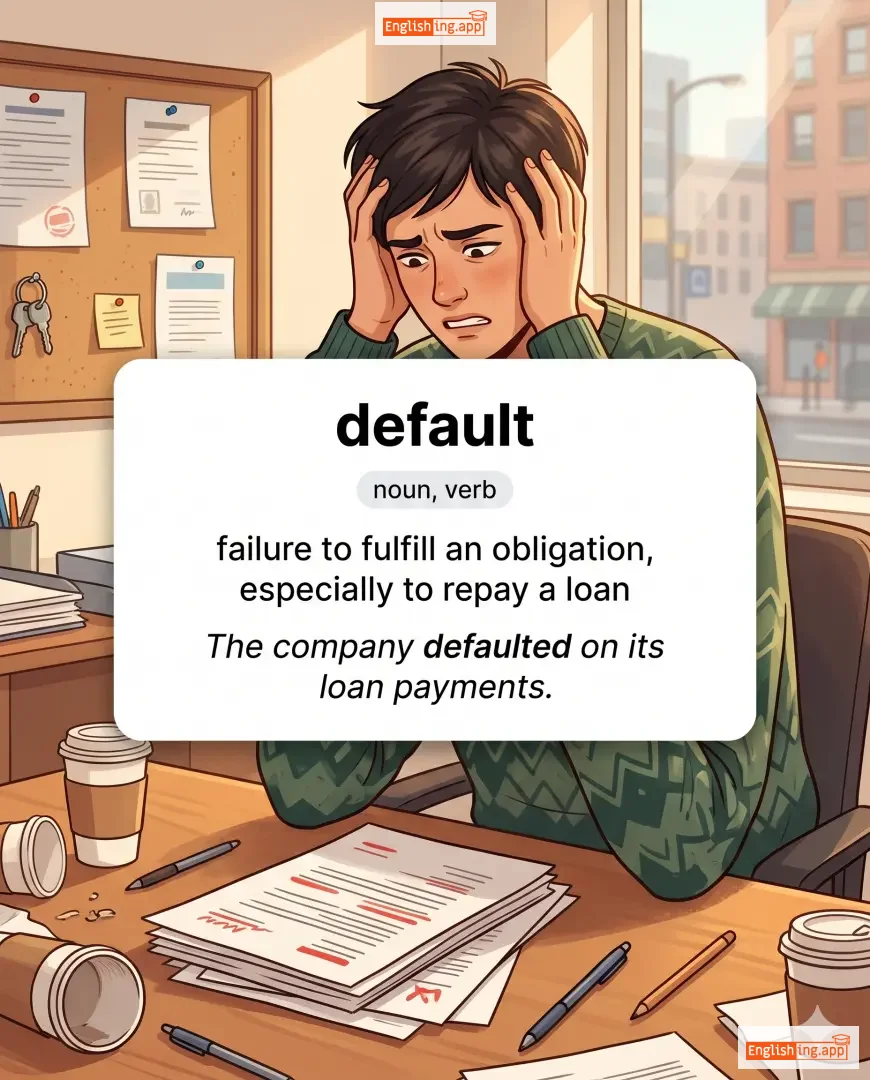
failure to fulfill an obligation, especially to repay a loan
••••••
|
The company defaulted on its loan payments.
Компания не выполнила свои обязательства по платежам по кредиту.
••••••
|
Компания не выполнила свои обязательства по платежам по кредиту.
Kompaniya ne vypolnila svoi obyazatel'stva po platezham po kreditu.
••••••
|
in default
в дефолте
••••••
|
in a state of failing to fulfill an obligation
••••••
|
в невыполнении обязательства
v nevyplnenii obyazatel'stva
••••••
|
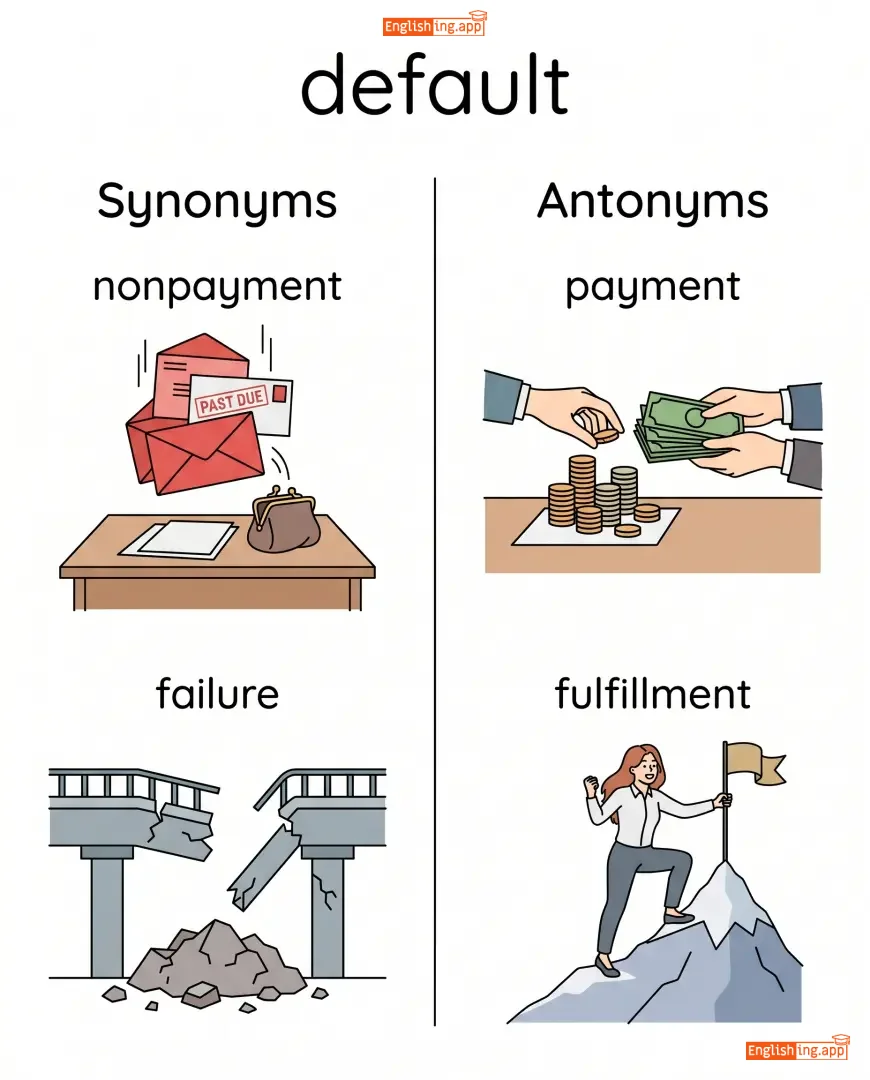
nonpayment, failure, negligence, omission
••••••
|
payment, fulfillment, compliance
••••••
|
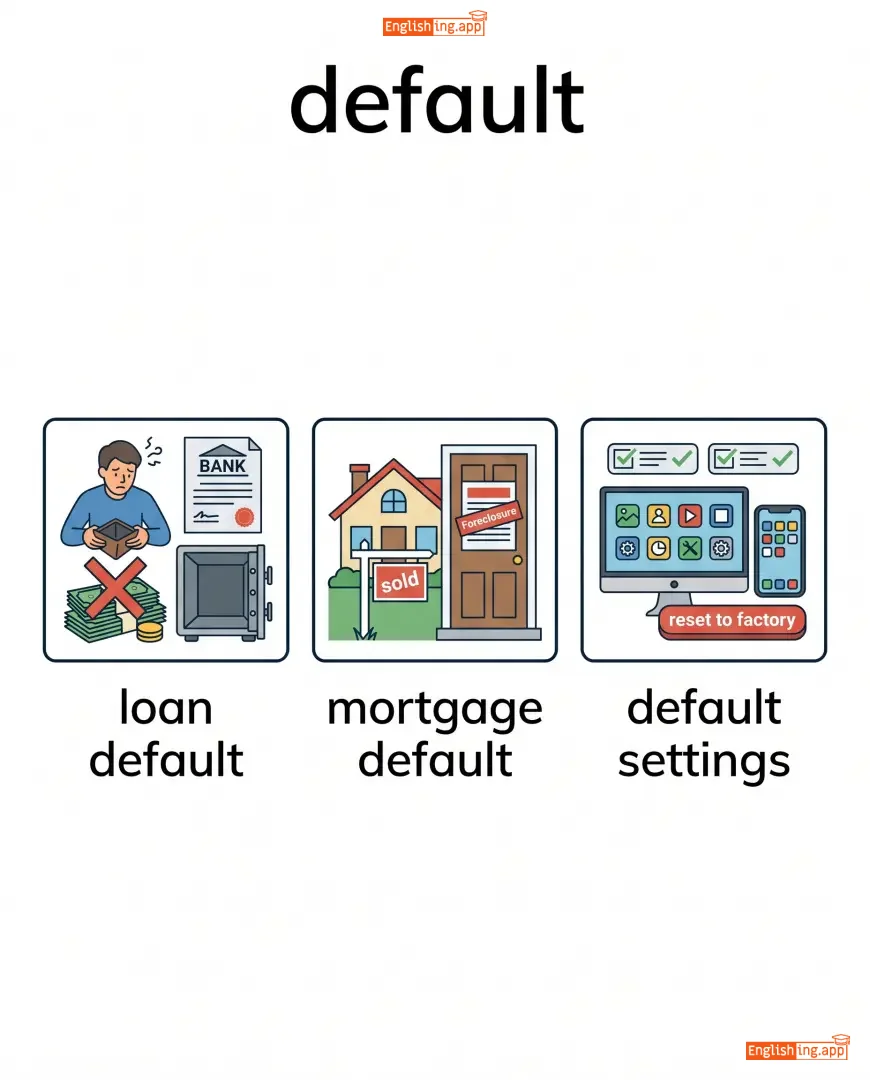
loan default, mortgage default, default settings, default judgment
••••••
|
Default → Отклонение от обязательства
••••••
|
|
#1440
🏆
|
/dɪˈfiːt/
verb
(дефит)
••••••
|
- •••••• |
побеждать
pobezhdat
••••••
|
defeated
дефитед
••••••
|
defeated
дефитед
••••••
|
defeats
дефитс
••••••
|
defeating
дефитинг
••••••
|
to win a victory over someone or something in a competition or battle
••••••
|
Our team defeated their rivals in the final match.
Наша команда победила их соперников в финальном матче.
••••••
|
Наша команда победила их соперников в финальном матче.
Nasha komanda pobedila ikh sopernikov v final'nom matche.
••••••
|
snatch defeat from the jaws of victory
Вырывать поражение из пасти победы
••••••
|
to fail at the last moment when success seemed certain
••••••
|
Вырывать поражение из пасти победы
Vyrivat' porazhenie iz past'i pobedy
••••••
|
conquer, overcome, beat, overpower, vanquish
••••••
|
surrender, lose, yield
••••••
|
defeat the enemy, defeat the purpose, heavy defeat, crushing defeat
••••••
|
Defeat означает поражение: когда команда теряет, она была побеждена.
••••••
|
|
#1441
⚠️
|
/ˈdiːfɛkt/ (noun), /dɪˈfɛkt/ (verb)
noun, verb
(дефект)
••••••
|
- •••••• |
дефект / дезертировать
defekt / dezeritirovat
••••••
|
defected
дефектед
••••••
|
defected
дефектед
••••••
|
defects
дефектс
••••••
|
defecting
дефектинг
••••••
|
A shortcoming, imperfection, or flaw; or to abandon a cause or group for another.
••••••
|
The engineer found a defect in the software code.
Инженер обнаружил дефект в коде программного обеспечения.
••••••
|
Инженер обнаружил дефект в коде программного обеспечения.
Inzhener obnaruzhil defekt v kode programmnogo obespecheniya.
••••••
|
defect from duty
дезертировать с должности
••••••
|
To abandon one's responsibility or loyalty.
••••••
|
дезертировать с должности
dezeritirovat s dolzhnosti
••••••
|
flaw, fault, imperfection, deficiency, weakness
••••••
|
strength, perfection, loyalty
••••••
|
manufacturing defect, genetic defect, defect in design
••••••
|
Defekt = Defekt означает недостаток, дефектировать означает дезертировать.
••••••
|
|
#1442
⚔️
|
/dɪˈfɛnd/
verb
(дефенд)
••••••
|
- •••••• |
защищать
zashchishchat
••••••
|
defended
защитил
••••••
|
defended
защищен
••••••
|
defends
защищает
••••••
|
defending
защищая
••••••
|
To protect someone or something from harm or attack.
••••••
|
The lawyer worked hard to defend her client.
Адвокат усердно работал, чтобы защитить своего клиента.
••••••
|
Адвокат усердно работал, чтобы защитить своего клиента.
Advokat usyerdno rabotal, chtoby zashchitit' svoego kliyenta.
••••••
|
defend one's honor
защищать честь
••••••
|
To protect one’s reputation from criticism or insult.
••••••
|
защищать честь
zashchishchat chest
••••••
|
protect, guard, shield, support, justify
••••••
|
attack, abandon, betray
••••••
|
defend a case, defend the goal, defend human rights
••••••
|
Защищать значит защищать, как адвокат защищает своего клиента.
••••••
|
|
#1443
⚖️
|
/dɪˈfen.dənt/
noun
(дефендант)
••••••
|
- •••••• |
ответчик
otvetchik
••••••
|
- •••••• | - •••••• | - •••••• | - •••••• |
an individual, company, or institution sued or accused in a court of law
••••••
|
The defendant pleaded not guilty to all charges brought against him. |
Ответчик заявил, что он не виновен по всем предъявленным обвинениям.
Otvetchik zayavil, chto on ne vinoven po vseem pred'yavlennym obvineniyam.
••••••
|
- •••••• | - •••••• | - •••••• |
accused, respondent, litigant
••••••
|
plaintiff, prosecutor, accuser
••••••
|
criminal defendant, civil defendant, defendant's rights
••••••
|
Ответчик отвечает за свои действия в суде.
••••••
|
|
#1444
🛡️
|
/dɪˈfɛndər/
noun
(дефендер)
••••••
|
- •••••• |
защитник
zaschitnik
••••••
|
- •••••• | - •••••• | - •••••• | - •••••• |
a person who protects someone or something from harm or attack
••••••
|
The defender blocked the shot and saved the goal. |
Защитник заблокировал удар и спас гол.
Zaschitnik zablokiroval udar i spas gol.
••••••
|
stand as a defender of |
to support or protect something or someone
••••••
|
стоять как защитник чего-то
stoyat kak zashchitnik chego-to
••••••
|
protector, guardian, champion, advocate, supporter
••••••
|
attacker, enemy, opponent
••••••
|
football defender, human rights defender, defender of justice
••••••
|
Защитник — это тот, кто защищает, как защита от нападений.
••••••
|
|
#1445
🛡️
|
/dɪˈfɛns/
noun
(hapines)
••••••
|
|
счастье
schastye
••••••
|
- •••••• | - •••••• | - •••••• | - •••••• |
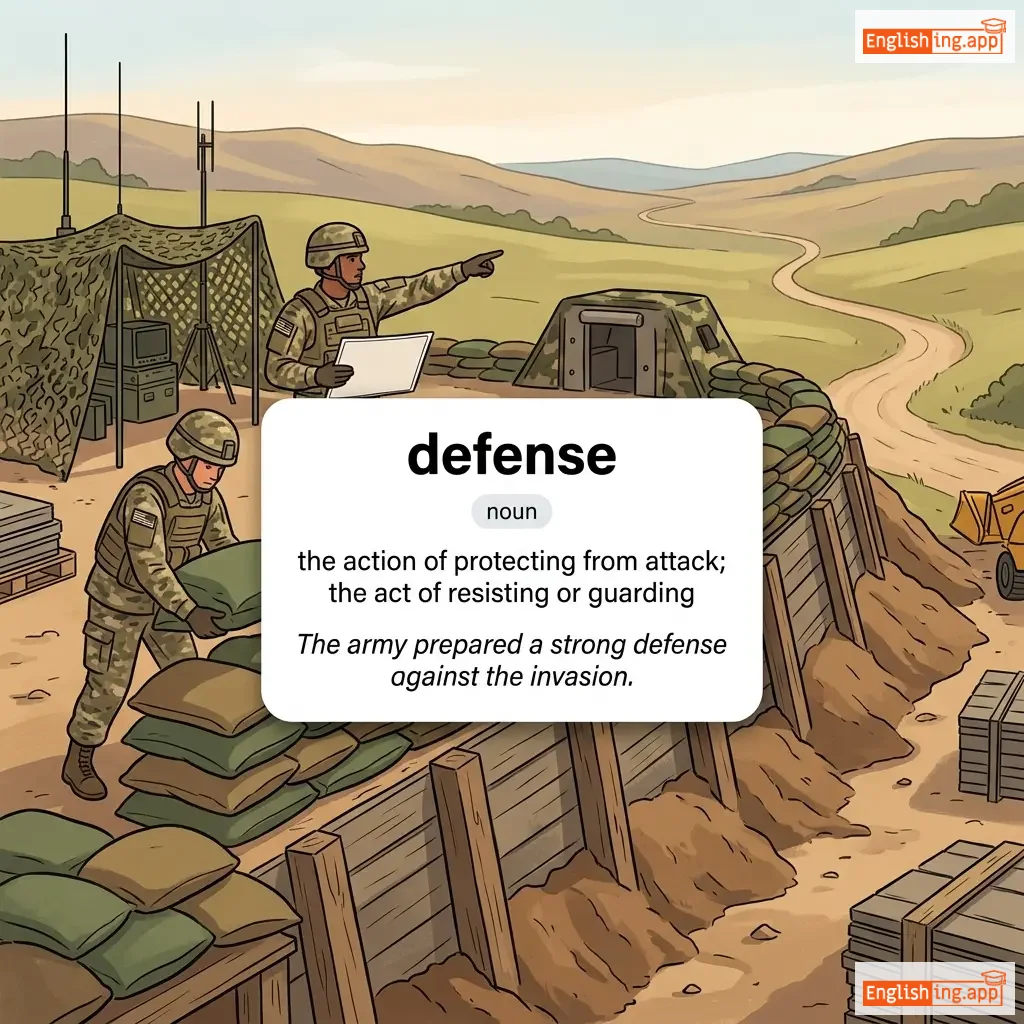
the action of protecting from attack; the act of resisting or guarding
••••••
|
The army prepared a strong defense against the invasion. |
Она не могла скрыть свое счастье, когда получила награду.
Ona ne mogla skryt' svoye schast'ye, kogda poluchila nagradu.
••••••
|
defense mechanism |
an unconscious psychological strategy used to protect oneself from anxiety
••••••
|
поиск счастья
poisk schast'ya
••••••
|
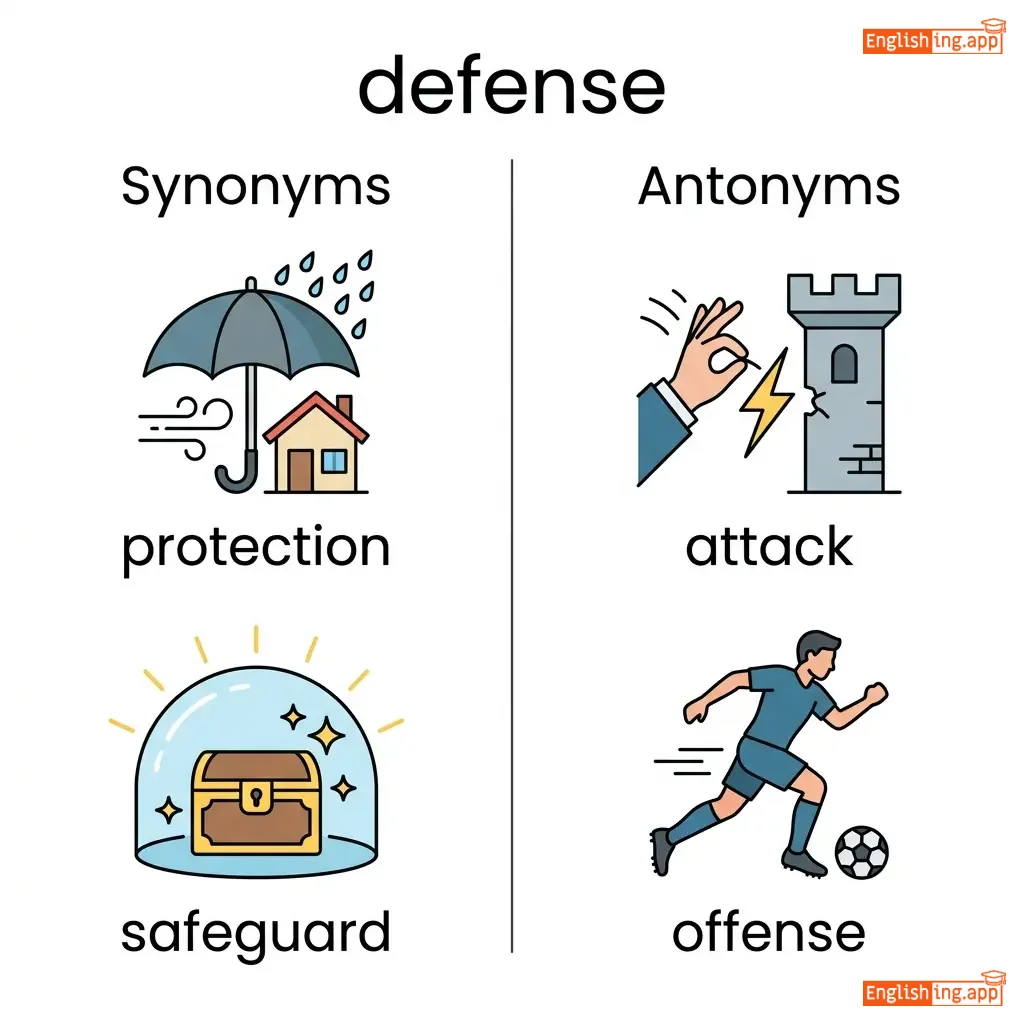
protection, safeguard, security, resistance
••••••
|
attack, offense
••••••
|
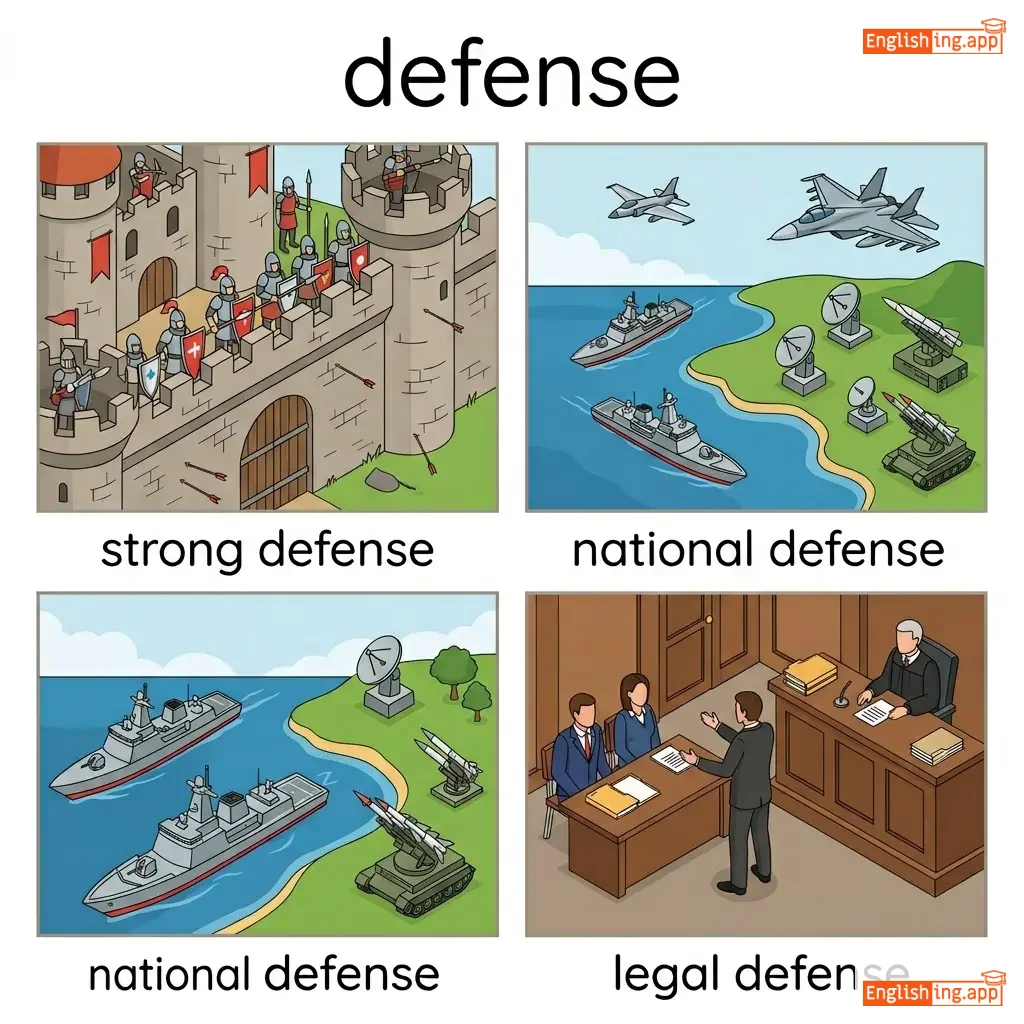
strong defense, national defense, legal defense, defense system
••••••
|
счастье = счастье — ключ к жизни.
••••••
|
|
#1446
🛡️
|
/dɪˈfɛnsɪv/
adjective
(дефенсив)
••••••
|
- •••••• |
защитный
zashchitny
••••••
|
- •••••• | - •••••• | - •••••• | - •••••• |
Intended to protect or defend; behaving in a way to guard against criticism or attack.
••••••
|
He became defensive when asked about his mistake. |
Он стал защитным, когда его спросили о его ошибке.
On stal zashchitnym, kogda ego sprosili o yego oshibke.
••••••
|
defensive stance |
A protective or guarded position in argument or conflict.
••••••
|
защитная позиция
zashchitnaya pozitsiya
••••••
|
protective, guarded, cautious, shielding
••••••
|
offensive, aggressive, open
••••••
|
defensive behavior, defensive mechanism, defensive reaction, defensive stance
••••••
|
Защитный - это как щит 🛡️ - защита от критики.
••••••
|
|
#1447
⚠️
|
/dɪˈfɪʃ.ən.si/
noun
(дефицит)
••••••
|
- •••••• |
дефицит
defitsit
••••••
|
- •••••• | - •••••• | - •••••• | - •••••• |
a lack or shortage of something that is necessary
••••••
|
The doctor diagnosed him with a vitamin D deficiency. |
Врач поставил ему диагноз дефицита витамина D.
Vrach postavil yemu diangnoz defitsita vitamina D.
••••••
|
iron deficiency |
a lack of sufficient iron in the body
••••••
|
дефицит железа
defitsit zheleza
••••••
|
shortage, lack, insufficiency, scarcity, inadequacy
••••••
|
abundance, sufficiency, excess
••••••
|
vitamin deficiency, iron deficiency, nutritional deficiency, deficiency disease
••••••
|
Дефицит значит нехватка – запомни, что 'дефи' значит нехватка, в рыбе ничего нет, так что дефицит.
••••••
|
Vocabulary Quiz
Test your vocabulary by matching words with their translations or meanings.
Login to take the quiz
Comments (0)
Share your thoughts and join the discussion.
Join the discussion by logging in
Login to CommentNo comments yet
Be the first to share your thoughts!