Получите неограниченный доступ ко всем словам с подпиской Pro
Обновить до ProПолучите неограниченный доступ ко всем предложениям с подпиской Pro
Обновить до Pro|
Эмодзи
|
Слово | Images | Перевод | Прошедшее | Причастие прошедшего времени | Третье лицо единственного числа | Герундий | Значение | Пример предложения | Перевод примера предложения | Пример выражения | Значение примера выражения | Перевод примера выражения | Синонимы | Антонимы | Коллокации | Мнемоника |
|---|---|---|---|---|---|---|---|---|---|---|---|---|---|---|---|---|---|
|
🌑
••••••
|
/ˈdɑːrkən/
verb
(даркен)
••••••
|
- •••••• |
затемнять
zatemnyat
••••••
|
darkened
даркенд
••••••
|
darkened
даркенд
••••••
|
darkens
даркенз
••••••
|
darkening
даркенинг
••••••
|
to make or become dark; to reduce brightness or light
••••••
|
The clouds began to darken the sky before the storm.
Зэ клаудз бигэн ту даркен зэ скай бифо зэ сторм.
••••••
|
Облака начали затемнять небо перед бурей.
Oblaka nachali zatemnyat nebo pered burey
••••••
|
darken the mood
даркен зэ муд
••••••
|
to make the atmosphere or feelings more negative or sad
••••••
|
омрачать настроение
omrachat nastroenie
••••••
|
dim, blacken, shade, obscure, dull
••••••
|
brighten, lighten, illuminate
••••••
|
darken the sky, darken a room, darken the mood, darken with age
••••••
|
тёмный = dark, затемнять = darken
••••••
|
|
🌑
••••••
|
/ˈdɑːrk.nəs/
noun
(тьма)
••••••
|
- •••••• |
тьма
t'ma
••••••
|
- •••••• | - •••••• | - •••••• | - •••••• |
The absence of light; the state of being dark.
••••••
|
The room was filled with darkness after the lights went out. |
Комната наполнилась тьмой, когда погасли огни.
Komnata napolnilas t'moy, kogda pogasli ogni.
••••••
|
pitch darkness |
complete absence of light
••••••
|
полная тьма
polnaya t'ma
••••••
|
gloom, shadow, obscurity, night
••••••
|
light, brightness, daylight
••••••
|
in darkness, total darkness, fall into darkness, fear of darkness
••••••
|
Тьма - это когда нет света, и всё вокруг тёмное.
••••••
|
|
📊
••••••
|
/ˈdeɪ.tə/ or /ˈdæt.ə/
noun
(датэ)
••••••
|
- •••••• |
данные
dannye
••••••
|
- •••••• | - •••••• | - •••••• | - •••••• |
Facts, statistics, or information collected for reference or analysis.
••••••
|
The scientists analyzed the data to find patterns. |
Ученые проанализировали данные, чтобы найти закономерности.
Uchonyye proanalizirovali dannye, chtoby nayti zakonomernosti.
••••••
|
data-driven |
based on analysis of information or evidence
••••••
|
основанный на данных
osnovannyy na dannykh
••••••
|
information, facts, statistics, figures
••••••
|
assumptions, guesses
••••••
|
collect data, analyze data, data set, process data
••••••
|
Данные - это как карта для поиска нужных знаний!
••••••
|
|
💾
••••••
|
/ˈdeɪtəbeɪs/
noun
(deytabeis)
••••••
|
- •••••• |
база данных
baza dannykh
••••••
|
- •••••• | - •••••• | - •••••• | - •••••• |
a structured collection of data stored and accessed electronically
••••••
|
The company's customer details are stored in a secure database.
Детали клиентов компании хранятся в защищенной базе данных.
••••••
|
Детали клиентов компании хранятся в защищенной базе данных.
Detali klientov kompanii khranyatsya v zashchishchennoy baze dannykh.
••••••
|
- •••••• | - •••••• | - •••••• |
data store, data system, repository, archive, registry
••••••
|
paper files, disorganization
••••••
|
create database, access database, database management, database server
••••••
|
Data и Base — структурированная база данных для хранения данных 💾
••••••
|
|
📅
••••••
|
/deɪt/
noun/verb
••••••
|
- •••••• | - •••••• |
dated
••••••
|
dated
••••••
|
dates
••••••
|
dating
••••••
|
A particular day of the month or year; also, a social or romantic appointment.
••••••
|
They decided to meet on the date of her birthday. |
- •••••• |
blind date |
a romantic meeting with someone you have not met before
••••••
|
- •••••• |
day, appointment, meeting, outing
••••••
|
indefinite, timeless
••••••
|
set a date, important date, go on a date, due date
••••••
|
No •••••• |
|
👧
••••••
|
/ˈdɔːtər/
noun
(дотер)
••••••
|
- •••••• |
дочь
doch
••••••
|
- •••••• | - •••••• | - •••••• | - •••••• |
a female child in relation to her parents
••••••
|
They are proud of their daughter for graduating college. |
Они гордятся своей дочерью за то, что она закончила колледж.
Oni gordyatsya svoey docher'yu za to, chto ona zakonchila kolledzh.
••••••
|
apple of her father's eye |
a phrase used to describe a beloved daughter
••••••
|
яблоко из глаза ее отца
yabloko iz glaza yeye ottsa
••••••
|
girl child, offspring, child, descendant
••••••
|
son, parent
••••••
|
eldest daughter, only daughter, daughter-in-law, proud daughter
••••••
|
Daughter значит дочь, как яблоко из глаз отца.
••••••
|
|
🌅
••••••
|
/dɔːn/
noun, verb
(дон)
••••••
|
- •••••• |
рассвет
rassvet
••••••
|
dawned
донед
••••••
|
dawned
донед
••••••
|
dawns
донс
••••••
|
dawning
доннинг
••••••
|
The first appearance of light in the sky before sunrise; to begin or become apparent.
••••••
|
Hope began to dawn in her heart after hearing the good news.
Hope began to dawn in her heart after hearing the good news.
••••••
|
Надежда начала рассветать в её сердце после того, как она услышала хорошие новости.
Nadezhda nachala rassvethat' v yejo serdtse posle togo, kak ona uslyshala khoroshie novosti.
••••••
|
crack of dawn
crack of dawn
••••••
|
Very early in the morning.
••••••
|
на рассвете
na rassvete
••••••
|
sunrise, daybreak, morning, beginning, start
••••••
|
sunset, dusk, end
••••••
|
at dawn, before dawn, dawn of a new era, dawn breaks
••••••
|
Dawn означает рассвет, начало нового дня.
••••••
|
|
🌞
••••••
|
/deɪ/
noun
(дэй)
••••••
|
- •••••• |
день
den
••••••
|
- •••••• | - •••••• | - •••••• | - •••••• |
a period of 24 hours or the time between sunrise and sunset
••••••
|
She enjoyed a relaxing day at the beach. |
Она наслаждалась расслабляющим днем на пляже.
Ona naslazhdalas' rasslablyayushchim dnyom na plyazhe.
••••••
|
call it a day |
to stop working for the rest of the day
••••••
|
закончить день
zakonchit' den'
••••••
|
daytime, period, date, occasion
••••••
|
night, darkness
••••••
|
working day, day off, day long, happy day
••••••
|
День - это солнце, которое освещает наш путь.
••••••
|
|
💀
••••••
|
/dɛd/
adjective, noun
(дэд)
••••••
|
- •••••• |
мертвый
mertvyy
••••••
|
- •••••• | - •••••• | - •••••• | - •••••• |
No longer alive; the end of life.
••••••
|
The old tree is completely dead. |
Старое дерево полностью мертво.
Staroye derevo polnost'yu mertvo.
••••••
|
dead end |
A situation with no progress or exit.
••••••
|
тупик
tupik
••••••
|
lifeless, deceased, expired, gone
••••••
|
alive, living, active
••••••
|
dead body, dead silence, dead end, dead serious
••••••
|
Dead это мертвый, все.
••••••
|
|
⏰
••••••
|
/ˈdedlaɪn/
noun
(дэдлайн)
••••••
|
- •••••• |
крайний срок
krajniy srok
••••••
|
- •••••• | - •••••• | - •••••• | - •••••• |
the latest time or date by which something must be completed
••••••
|
We need to finish this project before the deadline. |
Нам нужно закончить этот проект до крайнего срока.
Nam nuzhno zakontchit' etot proyekt do krajnego sroka.
••••••
|
meet the deadline |
to finish something on time
••••••
|
выполнить в срок
vypolnit' v srok
••••••
|
due date, cutoff date, time limit, target date, completion date
••••••
|
delay, extension
••••••
|
tight deadline, project deadline, meet deadline, set a deadline
••••••
|
Крайний срок — это последний момент, когда нужно закончить работу.
••••••
|
|
☠️
••••••
|
/ˈdedli/
adjective
(дедли)
••••••
|
- •••••• |
смертельный
smertel'nyy
••••••
|
- •••••• | - •••••• | - •••••• | - •••••• |
causing or able to cause death; extremely dangerous
••••••
|
The snake's bite is deadly to humans. |
Укус змеи смертелен для людей.
Ukus zmei smertelen dlya lyudey.
••••••
|
deadly serious |
completely serious; not joking
••••••
|
смертельно серьезно
smertel'no seryozno
••••••
|
fatal, lethal, dangerous, mortal, poisonous
••••••
|
harmless, safe, mild
••••••
|
deadly weapon, deadly virus, deadly poison, deadly attack
••••••
|
Deadly означает смертельный — как смерть!
••••••
|
|
🧏
••••••
|
/def/
adjective
(def)
••••••
|
- •••••• |
глухой; с нарушением слуха
glukhoy; s narusheniyem sluha
••••••
|
- •••••• | - •••••• | - •••••• | - •••••• |
unable to hear; having a hearing impairment
••••••
|
The deaf child learned to communicate using sign language.
слепой ребёнок научился общаться с помощью жестового языка.
••••••
|
Глухой ребёнок научился общаться с помощью жестового языка.
Glukhoy rebyonok nauchilsya obshchat'sya s pomoshch'yu zhestovogo yazyka.
••••••
|
- •••••• | - •••••• | - •••••• |
hearing-impaired, hard of hearing
••••••
|
hearing, able to hear
••••••
|
deaf person, deaf community, stone deaf
••••••
|
Глухой человек не слышит, но использует жестовый язык.
••••••
|
|
🤝
••••••
|
/diːl/
verb
••••••
|
- •••••• |
счастье
schast'ye
••••••
|
dealt
••••••
|
dealt
••••••
|
deals
••••••
|
dealing
••••••
|
to distribute or give out something; to handle or manage
••••••
|
He had to deal with many problems at work. |
Она не могла скрыть свое счастье, когда получила награду.
Ona ne mogla skryt' svoe schast'ye, kogda poluchila nagradu.
••••••
|
deal with it |
a phrase used to say one must accept or handle a situation
••••••
|
поиск счастья
poisk schast'ya
••••••
|
handle, manage, cope, distribute, bargain
••••••
|
ignore, neglect, avoid
••••••
|
deal with, business deal, fair deal, deal cards
••••••
|
Счастье - это то, что ты ищешь, когда чувствуешь радость.
••••••
|
|
💼
••••••
|
/ˈdiːlər/
noun
(ди́лер)
••••••
|
- •••••• |
продавец
prodavets
••••••
|
- •••••• | - •••••• | - •••••• | - •••••• |
a person or business that buys and sells goods; someone who distributes
••••••
|
The car dealer offered a discount to attract customers. |
Продавец автомобилей предложил скидку, чтобы привлечь клиентов.
Prodavets avtomobiley predlozhil skidku, chtoby privlech' klientov.
••••••
|
- •••••• | - •••••• | - •••••• |
merchant, trader, vendor, seller, distributor
••••••
|
buyer, customer
••••••
|
car dealer, art dealer, drug dealer, authorized dealer
••••••
|
Dealer означает продавец, который продает и зарабатывает деньги.
••••••
|
|
💖
••••••
|
/dɪr/
adjective
(дир)
••••••
|
- •••••• |
дорогой
dorogoy
••••••
|
- •••••• | - •••••• | - •••••• | - •••••• |
loved or cherished; sometimes used as a polite form of address
••••••
|
She is very dear to her grandparents. |
Она очень дорога своим бабушке и дедушке.
Ona ochen' doroga svoim babushke i dedushke.
••••••
|
oh dear |
an exclamation showing surprise, worry, or sympathy
••••••
|
ох, дорогой
okh, dorogoy
••••••
|
beloved, cherished, precious, valued
••••••
|
hated, disliked
••••••
|
my dear, dear friend, hold dear, oh dear
••••••
|
Дорогой - как Dear на английском, это часто пишется в письмах.
••••••
|
|
💀
••••••
|
/dɛθ/
noun
(дэθ)
••••••
|
- •••••• |
смерть
smert'
••••••
|
- •••••• | - •••••• | - •••••• | - •••••• |
The end of life; the permanent cessation of all vital functions.
••••••
|
The news of his death shocked everyone in the village. |
Новости о его смерти потрясли всех в деревне.
Novosti o yego smerti potryasli vsekh v derevne.
••••••
|
a matter of life and death |
something extremely important or urgent
••••••
|
вопрос жизни и смерти
vopros zhizni i smerti
••••••
|
demise, passing, end, expiration, departure
••••••
|
birth, life, existence
••••••
|
sudden death, tragic death, death penalty, cause of death, near death
••••••
|
Death по-русски это смерть, помни, с смертью все заканчивается.
••••••
|
|
🗣️
••••••
|
/dɪˈbeɪt/
noun, verb
(диˈбэйт)
••••••
|
- •••••• |
дебаты
debaty
••••••
|
debated
диˈбэйтед
••••••
|
debated
диˈбэйтед
••••••
|
debates
диˈбэйтс
••••••
|
debating
диˈбэйтинг
••••••
|
A formal discussion on a particular topic where opposing arguments are presented.
••••••
|
The students prepared well for the school debate.
студенты хорошо подготовились к школьным дебатам.
••••••
|
Студенты хорошо подготовились к школьным дебатам.
Studenty khorosho podgotovilis' k shkol'nym debatam.
••••••
|
open to debate
открыто для дебатов
••••••
|
something that is not certain or can be questioned
••••••
|
открыто для дебатов
otkryto dlya debatov
••••••
|
discussion, argument, dispute, deliberation, dialogue
••••••
|
agreement, harmony, consensus
••••••
|
heated debate, public debate, political debate, debate team, debate club
••••••
|
Debate звучит как 'de' + 'бэйт'. Ты готов к дебатам, когда ты 'de' (+) расскажешь свои аргументы!
••••••
|
|
🪨
••••••
|
/dəˈbriː/
noun
(дебрис)
••••••
|
|
мусор
musor
••••••
|
- •••••• | - •••••• | - •••••• | - •••••• |
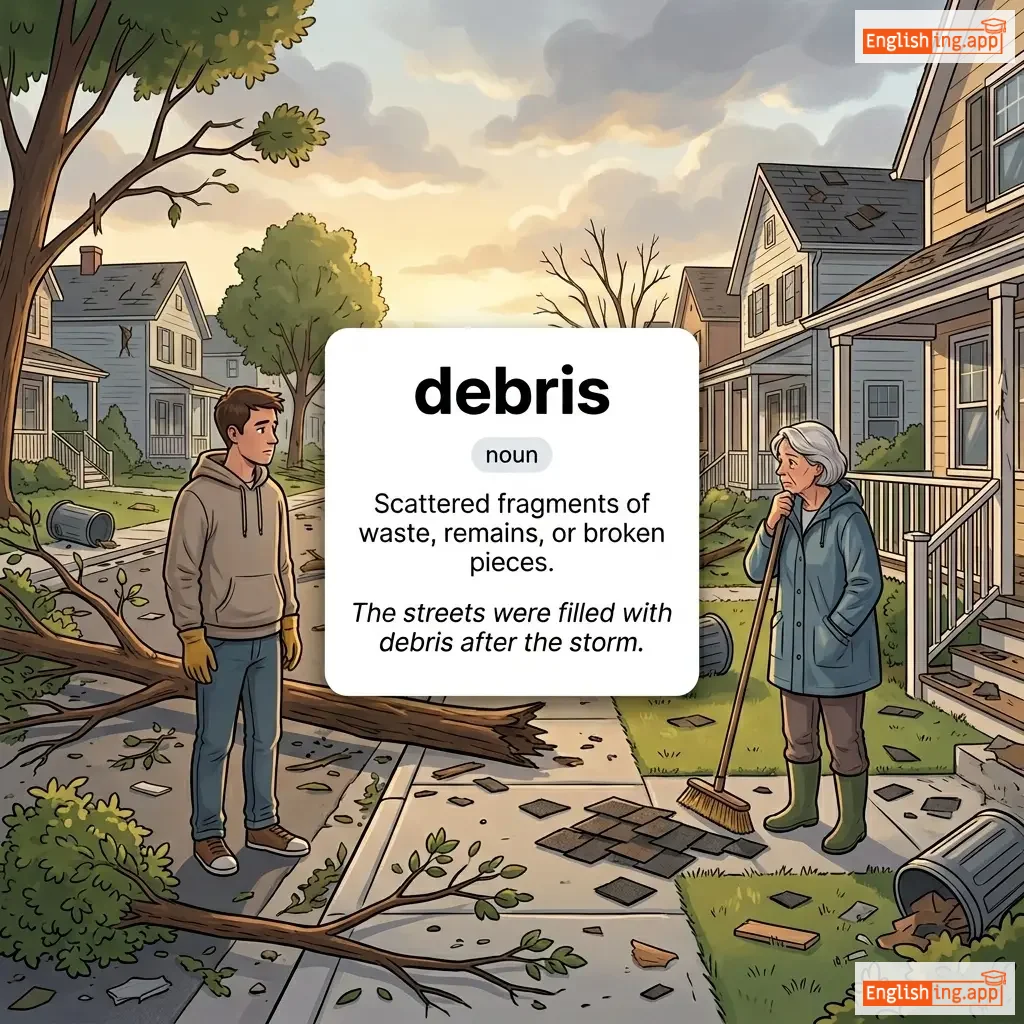
Scattered fragments of waste, remains, or broken pieces.
••••••
|
The streets were filled with debris after the storm.
Улицы были заполнены мусором после бури.
••••••
|
Улицы были заполнены мусором после бури.
Uliцы byli zapolneny musorom posle buri.
••••••
|
clearing the debris
уборка мусора
••••••
|
Removing the remains or waste after destruction.
••••••
|
уборка мусора
uborka musora
••••••
|
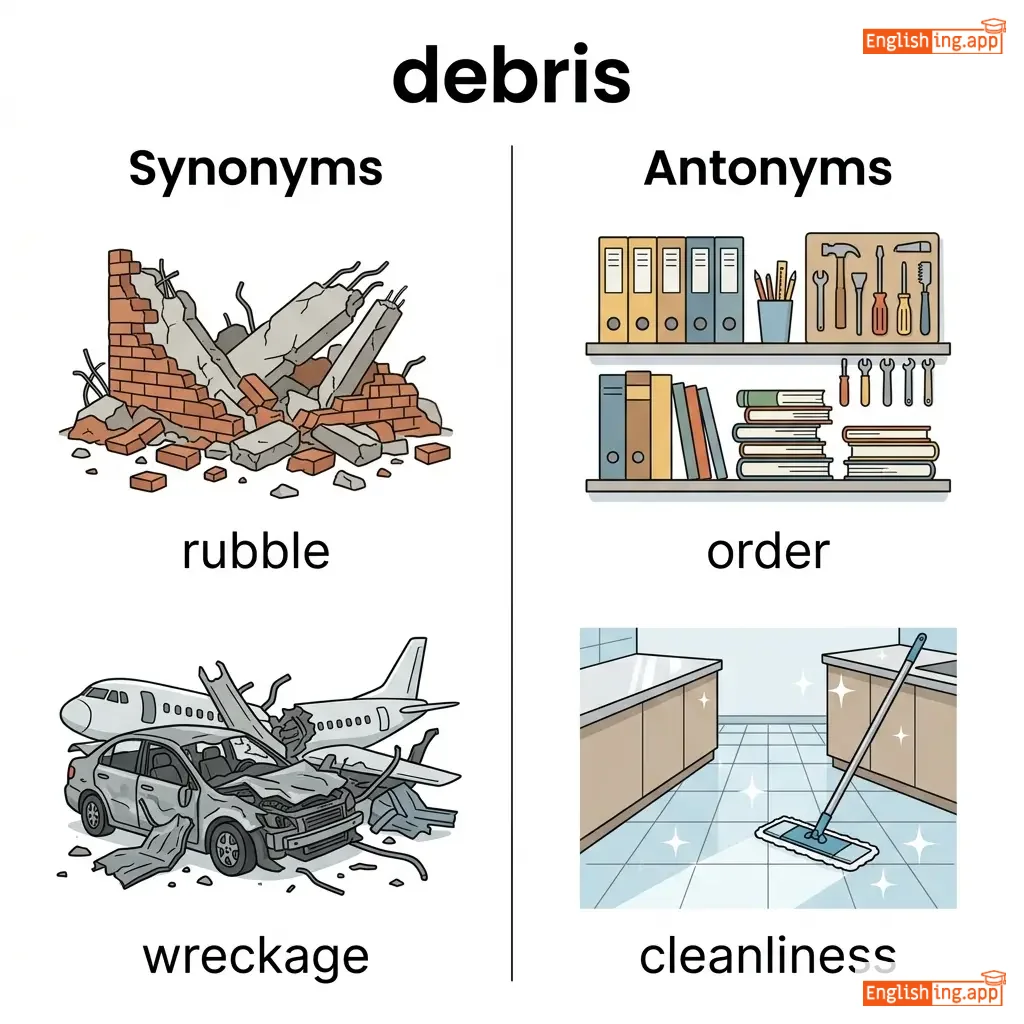
rubble, wreckage, remains, fragments, litter
••••••
|
order, cleanliness, neatness
••••••
|
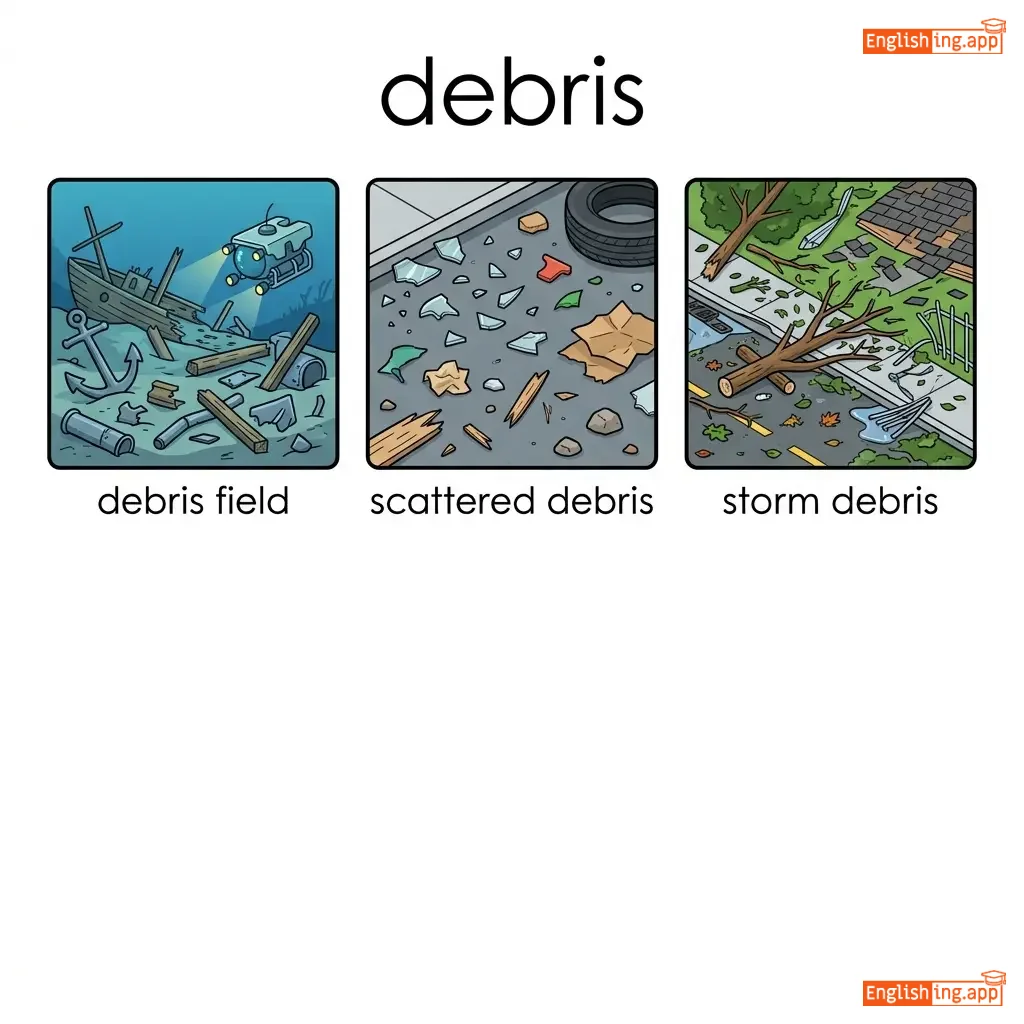
debris field, scattered debris, storm debris, clear debris
••••••
|
После бури мусор (debris) заполнил улицы.
••••••
|
|
💸
••••••
|
/dɛt/
noun
(дэт)
••••••
|

|
долг
dolg
••••••
|
- •••••• | - •••••• | - •••••• | - •••••• |
Something, typically money, that is owed or due.
••••••
|
He struggled for years to pay off his debt. |
Он боролся много лет, чтобы погасить свой долг.
On borolsya mnogo let, chtoby pogasit' svoy dolg.
••••••
|
in debt |
to owe money
••••••
|
в долгу
v dolgu
••••••
|
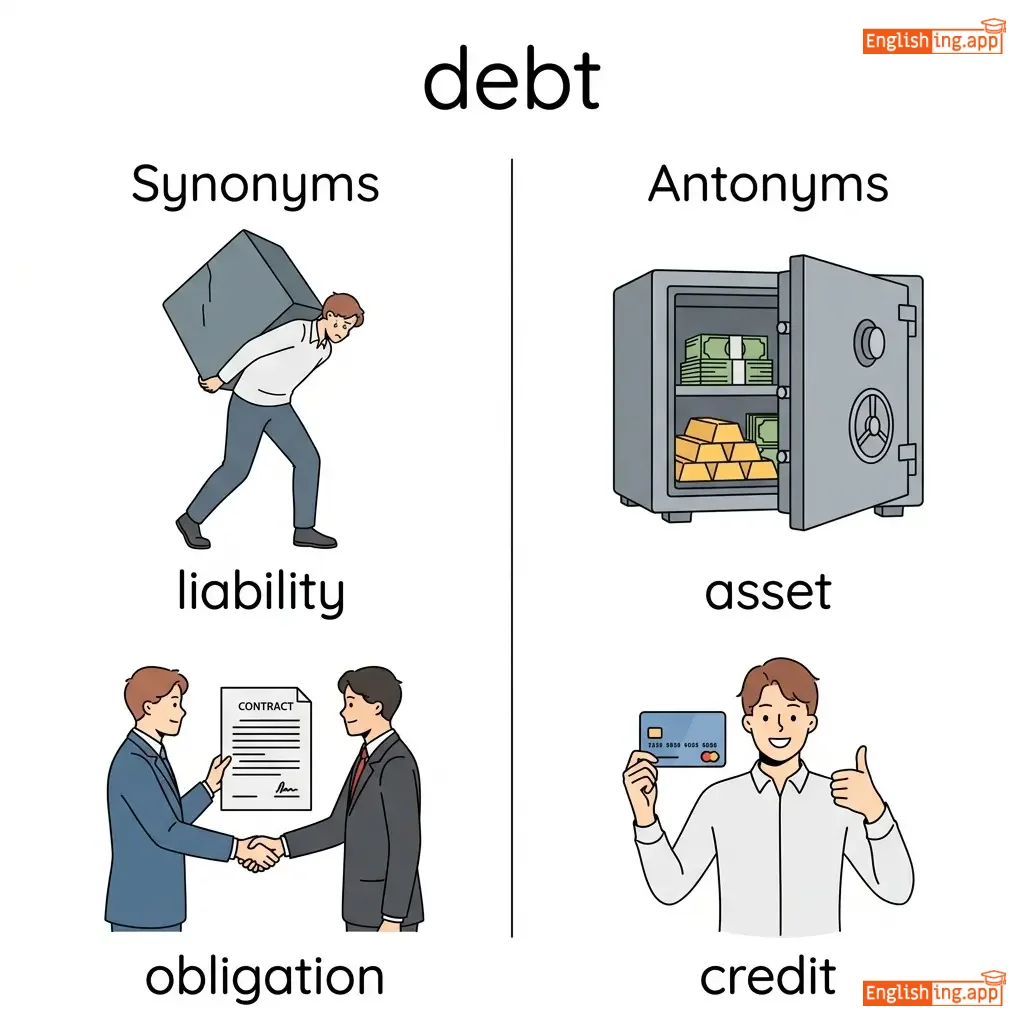
liability, obligation, arrears, dues, loan
••••••
|
asset, credit, surplus
••••••
|
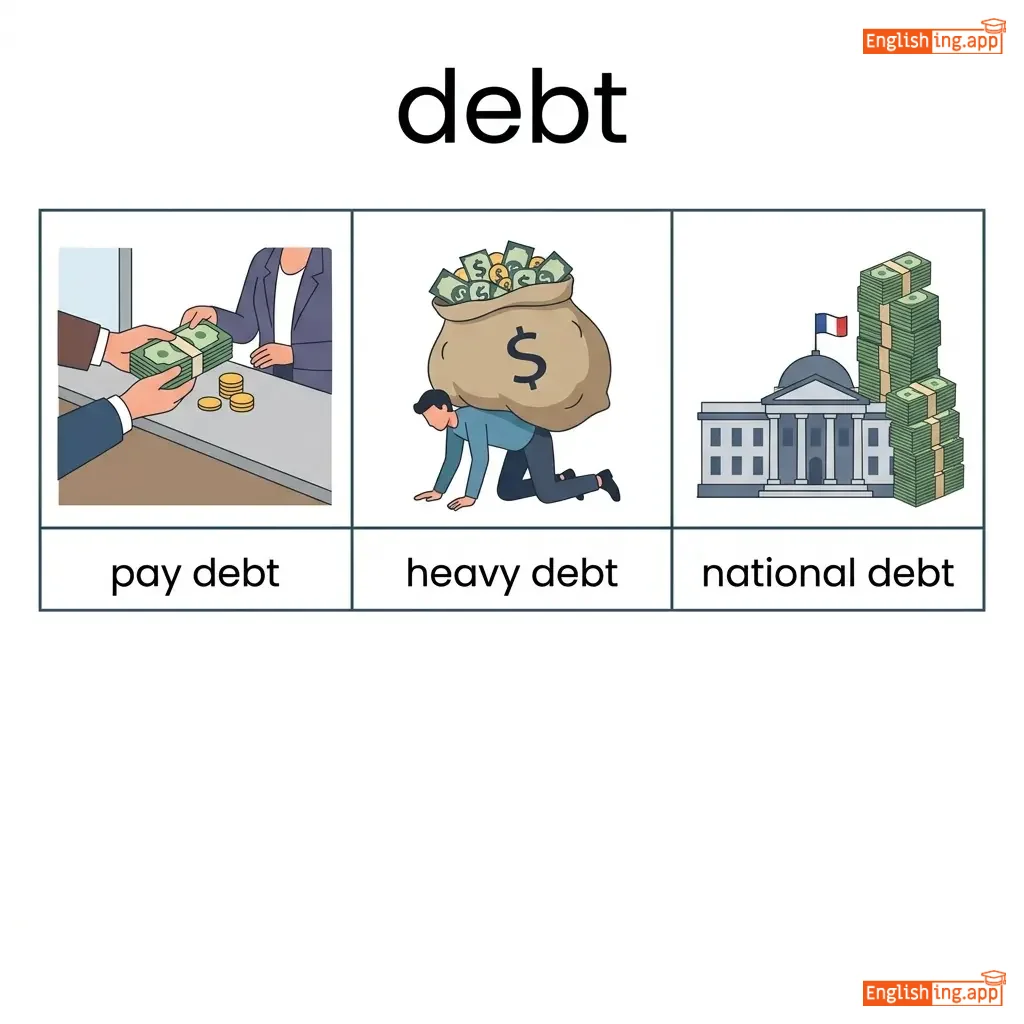
pay debt, heavy debt, national debt, debt relief, debt crisis
••••••
|
Debt означает долг; иногда нужно брать долг, чтобы оплатить дату (date).
••••••
|
|
🎤
••••••
|
/ˈdeɪ.bjuː/
noun, verb
(дебют)
••••••
|
- •••••• |
дебют
debyut
••••••
|
debuted
дебютировал
••••••
|
debuted
дебютировал
••••••
|
debuts
дебютирует
••••••
|
debuting
дебютируя
••••••
|
The first public appearance or performance of someone or something.
••••••
|
The young actor made his debut on the big stage.
Молодой актер дебютировал на большой сцене.
••••••
|
Молодой актер дебютировал на большой сцене.
Molodoy akter debiutiroval na bol'shoy stsene.
••••••
|
make a debut
сделать дебют
••••••
|
To appear or perform publicly for the first time.
••••••
|
сделать дебют
sdelat' debiut
••••••
|
first appearance, introduction, premiere, launch, entrance
••••••
|
retirement, farewell, exit
••••••
|
make debut, debut performance, debut album, debut match
••••••
|
Дебют = ‘Day + But’ – первый день публичного выступления.
••••••
|
|
📅
••••••
|
/ˈdɛkeɪd/
noun
(ˈdɛkeɪd)
••••••
|
- •••••• |
десятилетие
desyatiletie
••••••
|
- •••••• | - •••••• | - •••••• | - •••••• |
A period of ten years.
••••••
|
The country has changed a lot in the past decade.
ðə ˈkʌntri hæz ʧeɪndʒd ə lɒt ɪn ðə pæst dɪˈkeɪd
••••••
|
Страна сильно изменилась за последнее десятилетие.
Strana sil'no izmenilas' za poslednee desyatiletie.
••••••
|
- •••••• | - •••••• | - •••••• |
ten years, period, era, span
••••••
|
moment, instant
••••••
|
past decade, next decade, over a decade, within a decade
••••••
|
Десятилетие — это период в 10 лет, слово 'десять' помогает запомнить.
••••••
|
|
🦠
••••••
|
/dɪˈkeɪ/
verb, noun
(dikei)
••••••
|
- •••••• |
гниение
gnienie
••••••
|
decayed
dikeid
••••••
|
decayed
dikeid
••••••
|
decays
dikeiz
••••••
|
decaying
dikeing
••••••
|
The process of rotting or decomposition; to decline in quality or strength.
••••••
|
The abandoned house slowly began to decay.
Покинутое здание медленно начало разлагаться.
••••••
|
Покинутое здание медленно начало разлагаться.
Pokinutoe zdanie medlenno nachalo razlagatsya.
••••••
|
tooth decay
кариес зубов
••••••
|
The rotting or damage of teeth.
••••••
|
кариес зубов
karies zubov
••••••
|
rot, spoil, decompose, deteriorate, decline
••••••
|
grow, flourish, improve
••••••
|
decay process, tooth decay, rapid decay, slow decay
••••••
|
Decay означает гниение, кариес зубов означает повреждение зубов.
••••••
|
|
❄️
••••••
|
/dɪˈsɛmbər/
noun
(дисембер)
••••••
|
- •••••• |
декабрь
dekabr
••••••
|
- •••••• | - •••••• | - •••••• | - •••••• |
the twelfth and last month of the year in the Gregorian calendar
••••••
|
December is usually cold in many countries.
Декабрь обычно холодный во многих странах.
••••••
|
Декабрь обычно холодный во многих странах.
dekabr obychno kholodnyi vo mnogikh stranakh
••••••
|
- •••••• | - •••••• | - •••••• |
month twelve, twelfth month, year end, winter month
••••••
|
January, summer
••••••
|
December holiday, December weather, late December, early December
••••••
|
Декабрь = December = конец года
••••••
|
|
🤔
••••••
|
/dɪˈsaɪd/
verb
(деци́дировать)
••••••
|
- •••••• |
решать
reshat
••••••
|
decided
деци́дировал
••••••
|
decided
деци́дировал
••••••
|
decides
деци́дирует
••••••
|
deciding
деци́дируя
••••••
|
To make a choice or judgment about something.
••••••
|
She decided to study abroad after graduation.
Она решила учиться за границей после окончания университета.
••••••
|
Она решила учиться за границей после окончания университета.
Ona reshila uchit'sya za granitsey posle okonchaniya universiteta.
••••••
|
make up one's mind
принять решение
••••••
|
to decide after consideration
••••••
|
принять решение
prinyat' reshenie
••••••
|
determine, choose, settle, resolve, conclude
••••••
|
hesitate, delay, waver
••••••
|
decide quickly, decide against, decide whether, decide to go
••••••
|
Reshat = 'Решение' было принято, как слово по-русски 'решать'.
••••••
|
|
⚖️
••••••
|
/dɪˈsɪʒən/
noun
(dɪˈzɪʒən)
••••••
|
- •••••• |
решение
reshenie
••••••
|
- •••••• | - •••••• | - •••••• | - •••••• |
A conclusion or choice made after consideration.
••••••
|
She made a quick decision to accept the job offer. |
Она приняла быстрое решение принять предложение о работе.
Ona prinjala bystroye resheniye prinyat' predlozheniye o rabote.
••••••
|
make a decision |
to come to a conclusion or choice
••••••
|
принять решение
prinyat' resheniye
••••••
|
choice, judgment, conclusion, verdict, resolution
••••••
|
indecision, hesitation, doubt
••••••
|
make a decision, tough decision, final decision, quick decision
••••••
|
Решение значит решение — Принять решение помогает снизить стресс.
••••••
|
|
✅
••••••
|
/dɪˈsaɪsɪv/
adjective
(de-sai-siv)
••••••
|
- •••••• |
решающий
reshayushchiy
••••••
|
- •••••• | - •••••• | - •••••• | - •••••• |
Having the ability to make decisions quickly and effectively; determining the outcome.
••••••
|
Her decisive action saved the company from collapse. |
Ее решающее действие спасло компанию от краха.
Eyo reshayushchee deystviye spaslo kompaniyu ot krakha.
••••••
|
decisive victory |
A win that settles an issue conclusively.
••••••
|
решающая победа
reshayushchaya pobeda
••••••
|
conclusive, resolute, firm, determined, crucial
••••••
|
indecisive, uncertain, hesitant
••••••
|
decisive role, decisive moment, decisive action, decisive factor
••••••
|
Решающий - решай быстро и будь решающим!
••••••
|
|
🛳️
••••••
|
/dɛk/
noun
(dek)
••••••
|
- •••••• |
палуба / платформа
paluba / platforma
••••••
|
- •••••• | - •••••• | - •••••• | - •••••• |
A flat surface or platform, often on a ship or building.
••••••
|
We enjoyed the sunset from the upper deck of the ferry. |
Мы наслаждались закатом с верхней палубы парома.
My naslazhdalis' zakatom s verkhney paluby paroma.
••••••
|
clear the deck |
to prepare for action or to get ready
••••••
|
освободить палубу
osvobodit' palubu
••••••
|
platform, floor, terrace, stage
••••••
|
ground, basement
••••••
|
ship deck, upper deck, deck chair, deck of cards
••••••
|
Палуба на корабле — это как платформа, на которой можно стоять.
••••••
|
|
📜
••••••
|
/ˌdek.ləˈreɪ.ʃən/
noun
(de-klah-rey-shyon)
••••••
|
- •••••• |
декларация; заявление; провозглашение
deklaryatsiya, zayavlenie, proklamatsiya
••••••
|
- •••••• | - •••••• | - •••••• | - •••••• |
a formal or explicit statement or announcement; an official proclamation
••••••
|
The president's declaration of independence marked a historic moment for the nation.
Декларация независимости президента ознаменовала исторический момент для нации.
••••••
|
Декларация независимости президента ознаменовала исторический момент для нации.
Deklaratsiya nezavisimosti prezidenta oznamenovala istorizheskiy moment dlya natsii.
••••••
|
- •••••• | - •••••• | - •••••• |
announcement, proclamation, statement, pronouncement
••••••
|
concealment, silence, secrecy, denial
••••••
|
formal declaration, public declaration, declaration of war
••••••
|
В русском языке слово 'декларация' используется в официальных контекстах.
••••••
|
|
📢
••••••
|
/dɪˈklɛər/
verb
(dɪˈklɛər)
••••••
|
- •••••• |
объявить
ob'yavit'
••••••
|
declared
deklerd
••••••
|
declared
deklerd
••••••
|
declares
deklyers
••••••
|
declaring
deklyering
••••••
|
To announce something formally or officially.
••••••
|
The government declared a state of emergency.
Правительство объявило чрезвычайное положение.
••••••
|
Правительство объявило чрезвычайное положение.
Pravitel'stvo ob'yavilo chrezvychaynoye polozheniye.
••••••
|
declare war
объявить войну
••••••
|
to officially announce the beginning of a war
••••••
|
объявить войну
ob'yavit' voynu
••••••
|
announce, proclaim, state, affirm, disclose
••••••
|
deny, conceal, hide
••••••
|
declare independence, declare victory, declare bankruptcy, declare an emergency
••••••
|
Объявить — это как официальное заявление о важном событии.
••••••
|
|
📉
••••••
|
/dɪˈklaɪn/
verb
••••••
|
|
- •••••• |
declined
••••••
|
declined
••••••
|
declines
••••••
|
declining
••••••
|
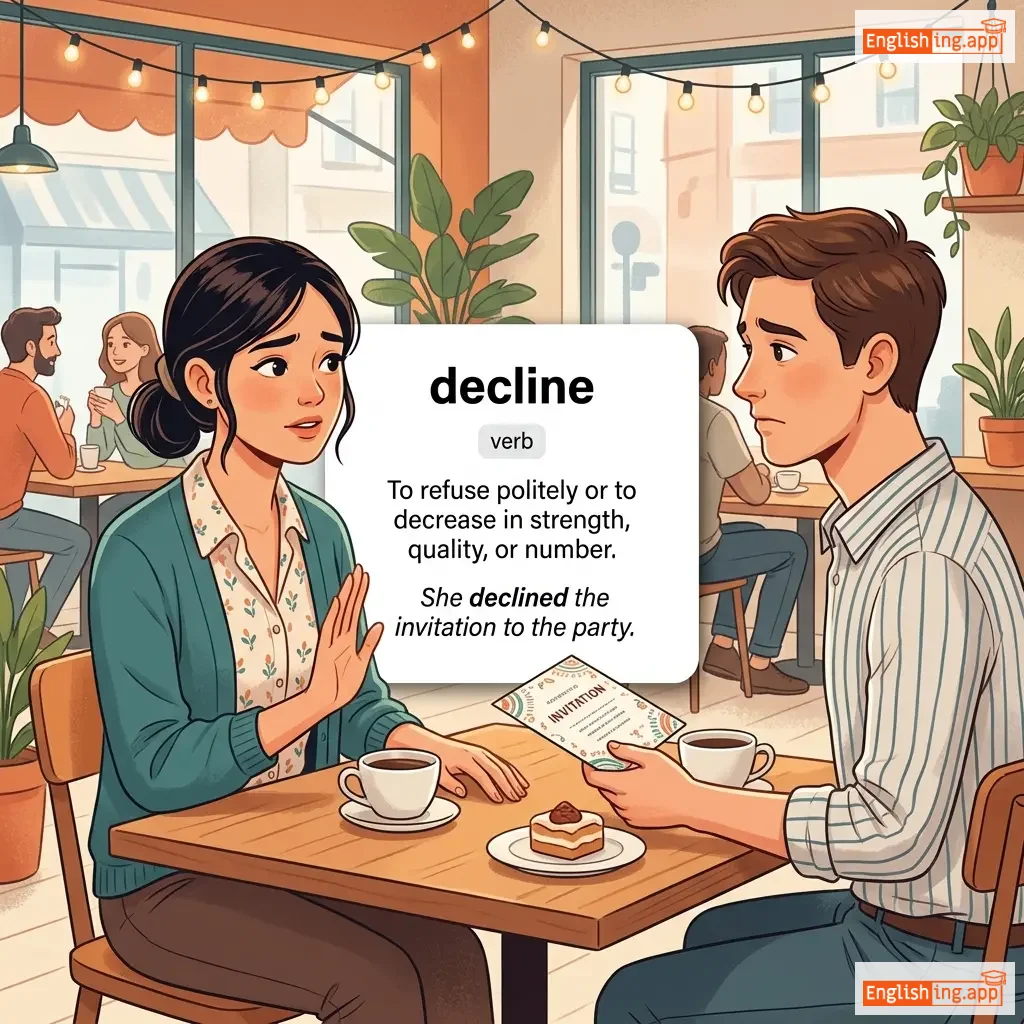
To refuse politely or to decrease in strength, quality, or number.
••••••
|
She declined the invitation to the party. |
- •••••• |
on the decline |
becoming weaker or less important
••••••
|
- •••••• |
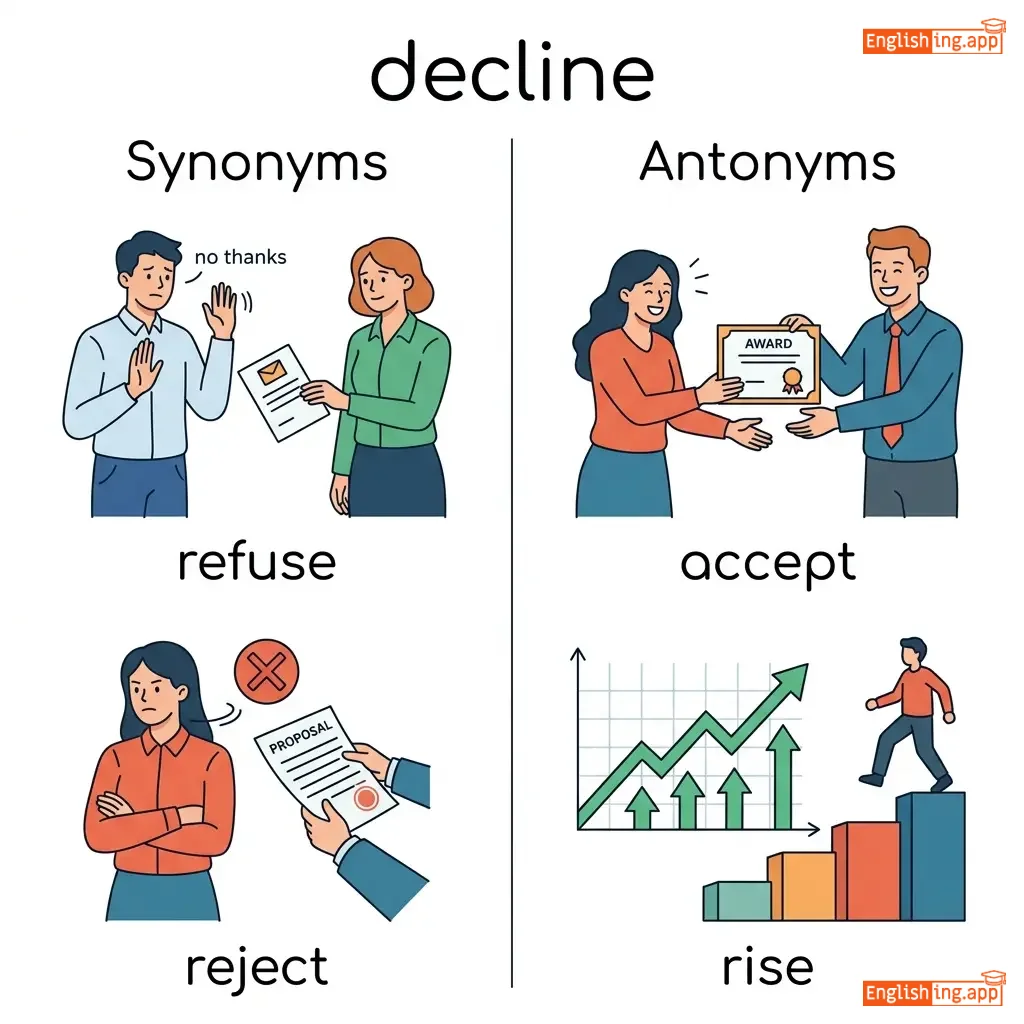
refuse, reject, deteriorate, weaken, decrease
••••••
|
accept, rise, increase
••••••
|
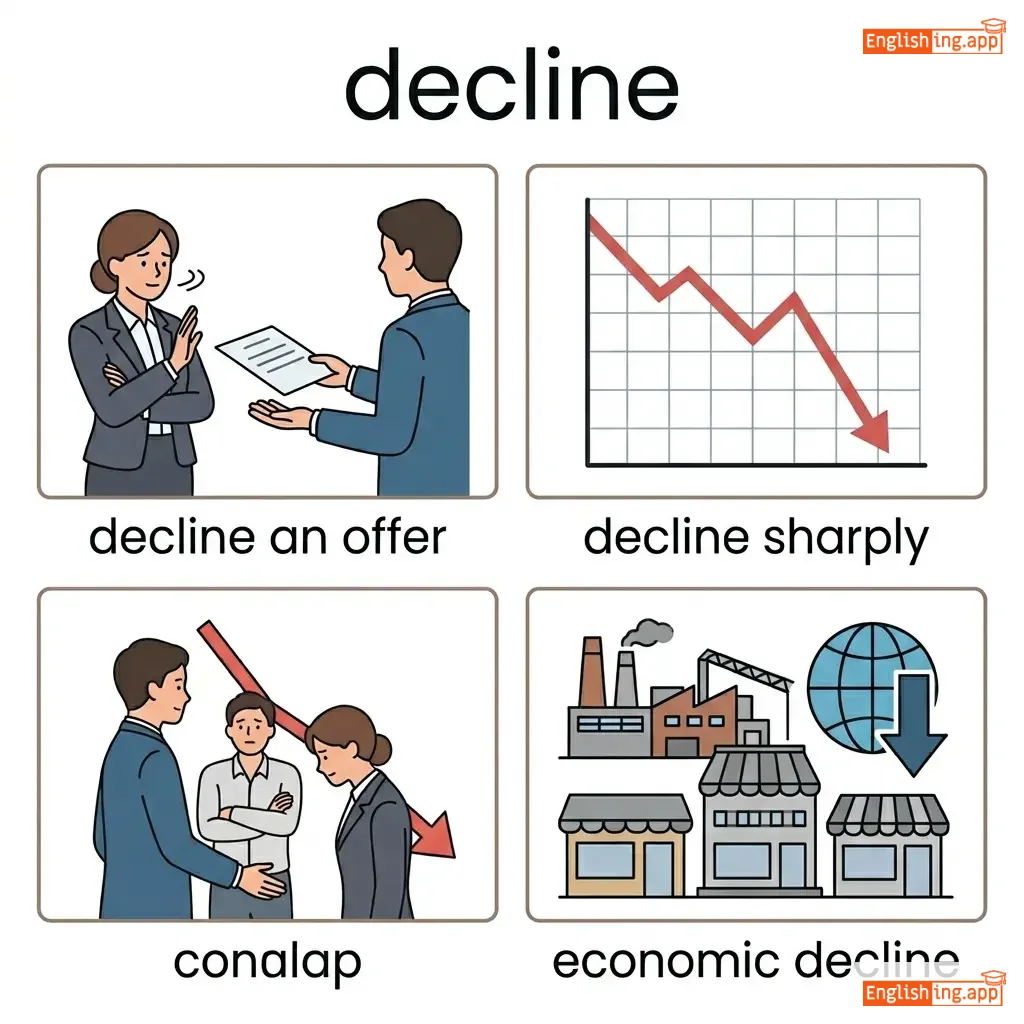
decline an offer, decline sharply, economic decline, decline in sales
••••••
|
No •••••• |
|
🎨
••••••
|
/ˈdɛkəreɪt/
verb
••••••
|
|
- •••••• |
decorated
••••••
|
decorated
••••••
|
decorates
••••••
|
decorating
••••••
|
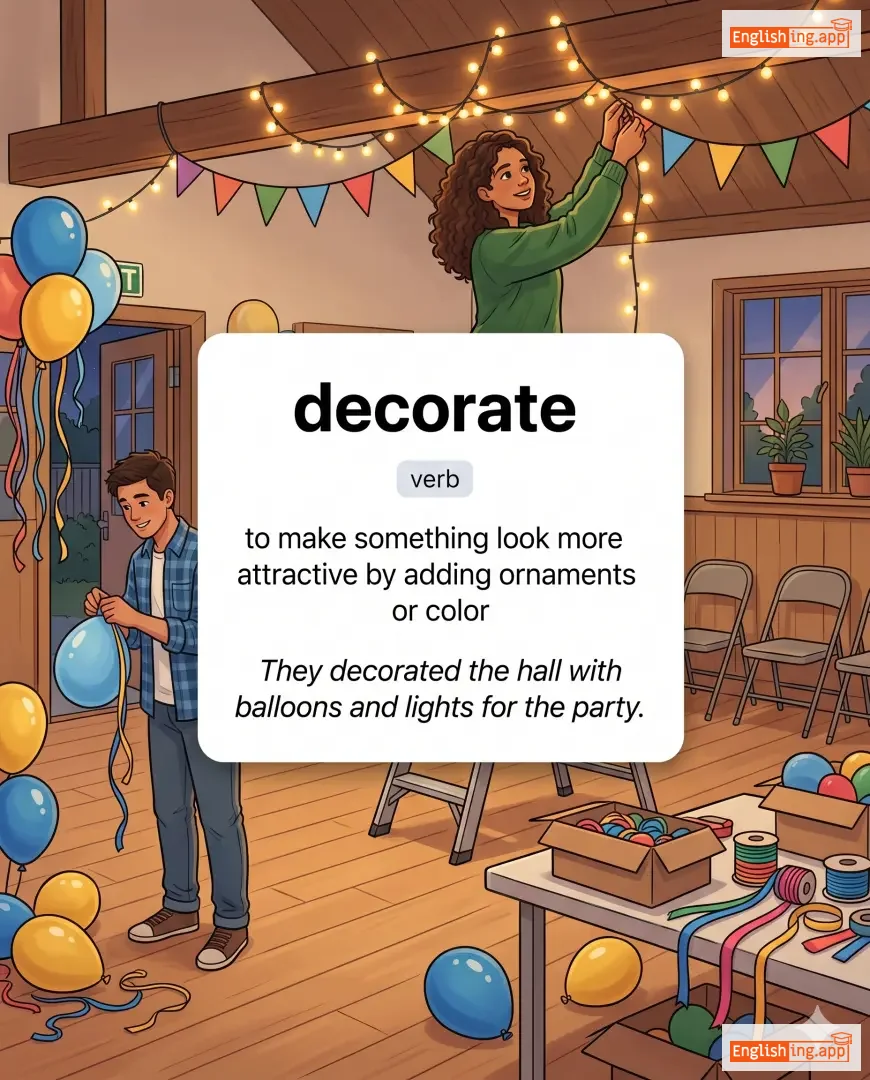
to make something look more attractive by adding ornaments or color
••••••
|
They decorated the hall with balloons and lights for the party. |
- •••••• |
decorate the truth |
to exaggerate or add details to make a story more interesting
••••••
|
- •••••• |
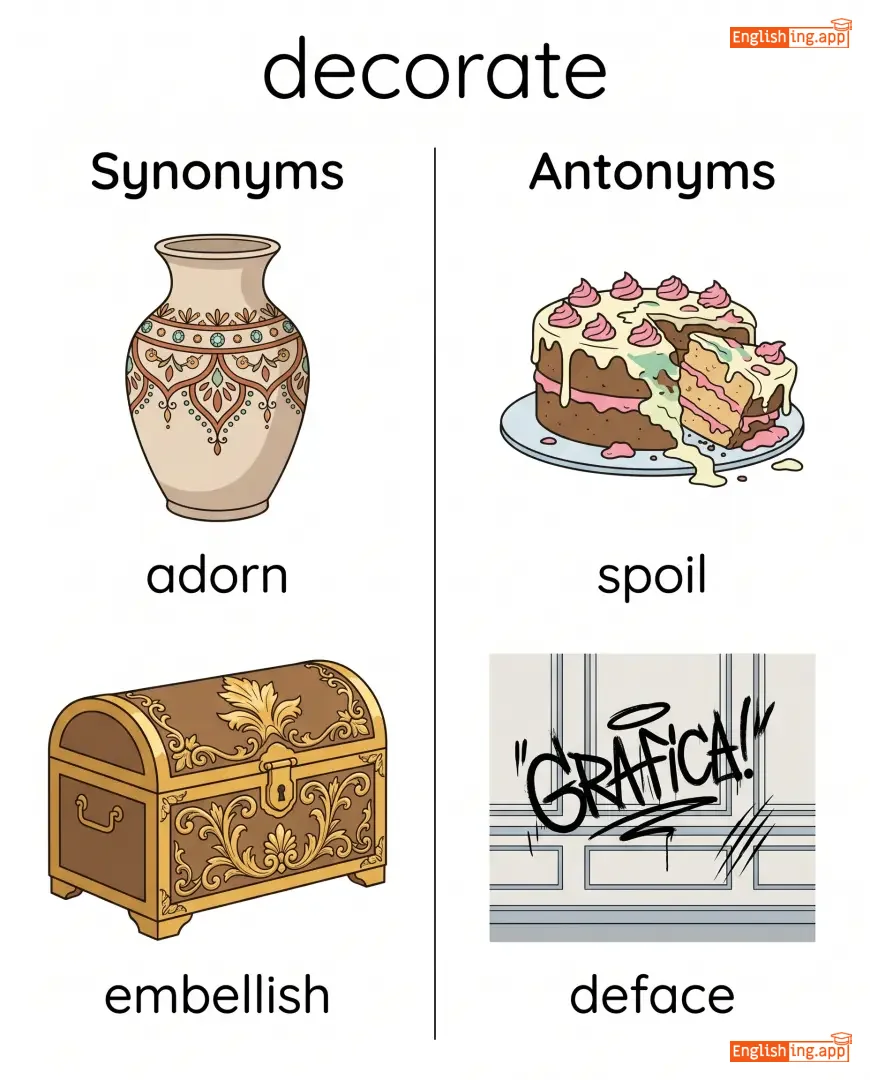
adorn, embellish, beautify, garnish, ornament
••••••
|
spoil, deface, mar
••••••
|
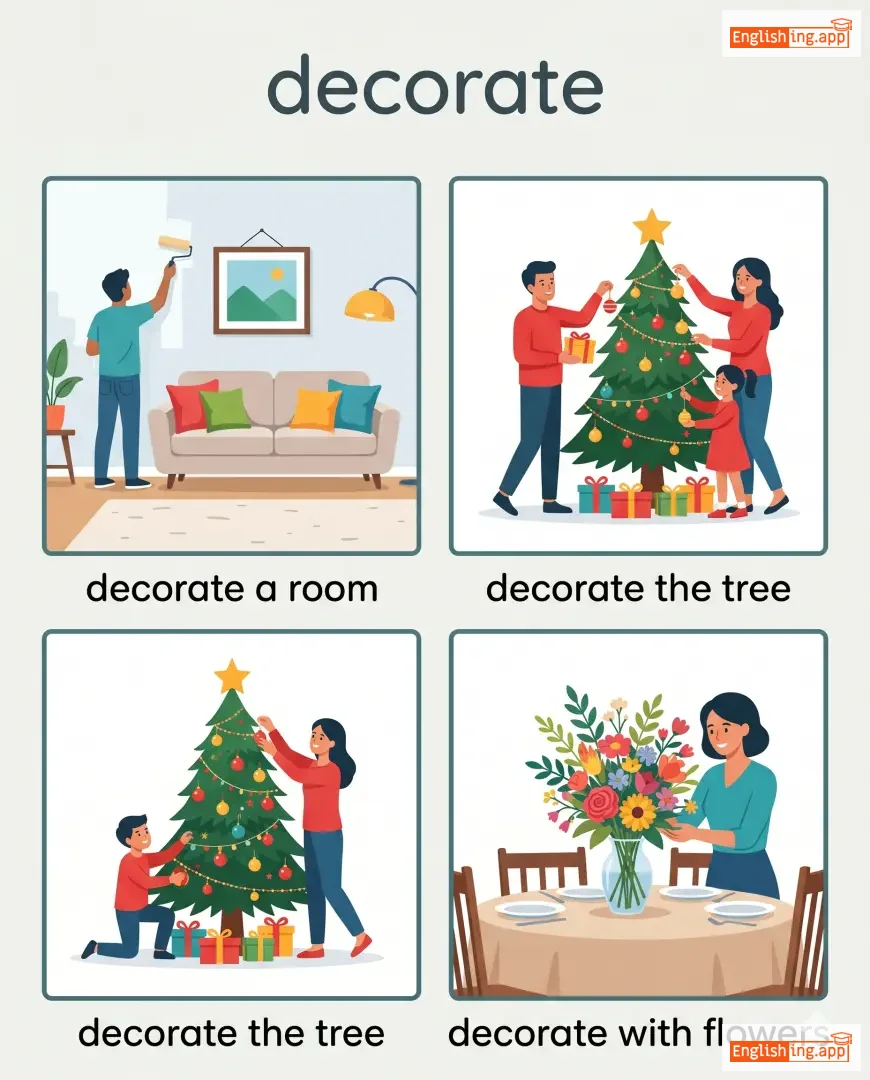
decorate a room, decorate the tree, decorate with flowers, decorate beautifully
••••••
|
No •••••• |
|
🎨
••••••
|
/ˌdek.əˈreɪ.ʃən/
noun
(dekoreyshn)
••••••
|
- •••••• |
декорирование; украшение; приз;
dekorirovaniye, ukrasheniye, priz
••••••
|
- •••••• | - •••••• | - •••••• | - •••••• |
the process or art of decorating something; ornamental items used to beautify
••••••
|
The Christmas decoration transformed the ordinary room into a festive wonderland.
Рождественское украшение превратило обычную комнату в праздничную страну чудес.
••••••
|
Рождественское украшение превратило обычную комнату в праздничную страну чудес.
Rozhdestvenskoye ukrasheniye prevratilo obychnuyu komnatu v prazdnichnuyu stranu chudes.
••••••
|
- •••••• | - •••••• | - •••••• |
ornamentation, embellishment, adornment, beautification
••••••
|
simplicity, plainness, bareness, austerity
••••••
|
home decoration, holiday decoration, interior decoration
••••••
|
Как Рождественская декорация превращает обычную комнату, так и украшения могут преобразить любое место.
••••••
|
|
⬇️
••••••
|
/ˈdiːkriːs/ (noun), /dɪˈkriːs/ (verb)
verb/noun
••••••
|
- •••••• | - •••••• |
decreased
••••••
|
decreased
••••••
|
decreases
••••••
|
decreasing
••••••
|
To become or make something smaller or fewer in number, amount, or degree.
••••••
|
The population of the town has decreased over the years. |
- •••••• |
decrease by half |
to reduce something to 50% of its original size or number
••••••
|
- •••••• |
reduce, diminish, lessen, cut, drop
••••••
|
increase, grow, rise
••••••
|
sharp decrease, gradual decrease, decrease in value, decrease rate
••••••
|
No •••••• |
|
🙏
••••••
|
/ˈdɛdɪkeɪt/
verb
(dedikeit)
••••••
|
- •••••• |
посвящать
posvyashchat
••••••
|
dedicated
dedikiroval
••••••
|
dedicated
dedikirovannyj
••••••
|
dedicates
dedikuet
••••••
|
dedicating
dedikirujushchij
••••••
|
to devote time, effort, or oneself to a particular purpose or person
••••••
|
She dedicated her life to helping the poor.
Она посвятила свою жизнь помощи бедным.
••••••
|
Она посвятила свою жизнь помощи бедным.
Ona posvyatila svoyu zhizn pomoshchi bednym.
••••••
|
dedicate oneself to
посвятить себя
••••••
|
to commit oneself fully to something
••••••
|
посвятить себя чему-то полностью
posvyatit sebya chemu-to polnostyu
••••••
|
devote, commit, allocate, apply, surrender
••••••
|
neglect, ignore, abandon
••••••
|
dedicate time, dedicate effort, dedicate a book, dedicate resources
••••••
|
Dedicate означает посвящать — как если бы вы ‘посвятили’ свой день и усилия чему-то.
••••••
|
|
💪
••••••
|
/ˈdɛdɪˌkeɪtɪd/
adjective
(dedikeɪtɪd)
••••••
|
- •••••• |
посвящённый
posvyashchyonny
••••••
|
- •••••• | - •••••• | - •••••• | - •••••• |
devoted to a cause, task, or purpose
••••••
|
She is a dedicated teacher who goes above and beyond for her students. |
Она преданный учитель, который идёт выше и дальше ради своих студентов.
Ona predannyy uchitel', kotoryy idyot vyshe i dal'she radi svoikh studentov.
••••••
|
- •••••• | - •••••• | - •••••• |
committed, devoted, passionate, loyal
••••••
|
indifferent, apathetic, disinterested
••••••
|
dedicated worker, dedicated employee, dedicated to success
••••••
|
A dedicated person is **посвящённый** to their **purpose (цели)**.
••••••
|
|
🎯
••••••
|
/ˌdɛdɪˈkeɪʃən/
noun
(dedikatsiya)
••••••
|


|
преданность
predannost
••••••
|
- •••••• | - •••••• | - •••••• | - •••••• |
the quality of being committed to a task or purpose
••••••
|
Her dedication to her studies earned her top grades. |
Её преданность учебе принесла ей высшие оценки.
Eyo predannost uchebe prinesla yey vysshie otsenki.
••••••
|
dedication ceremony |
a formal event to dedicate a building or monument
••••••
|
церемония посвящения
tseremoniya posvyashcheniya
••••••
|
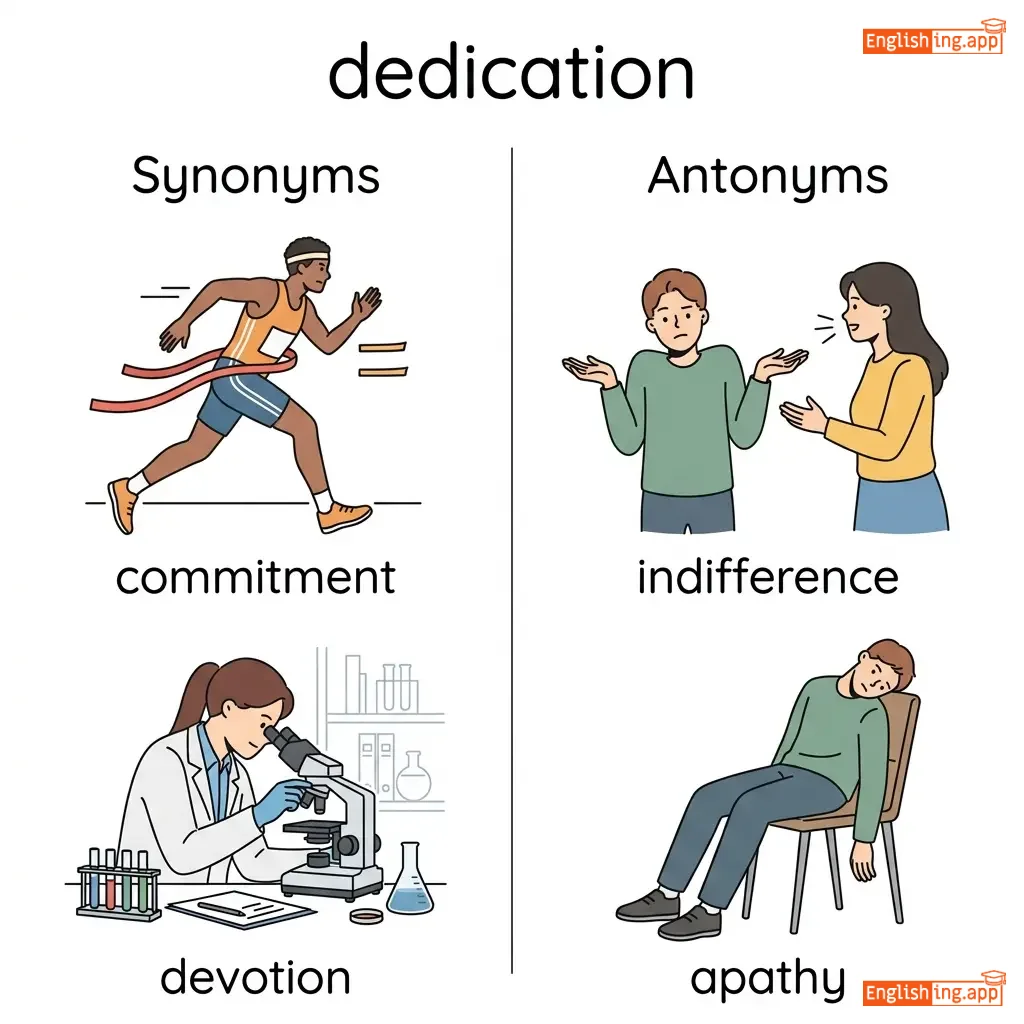
commitment, devotion, perseverance, loyalty, diligence
••••••
|
indifference, apathy, neglect
••••••
|
show dedication, strong dedication, dedication to work, dedication and hard work
••••••
|
Dedication - это как преданность, как у студента, который полностью сосредоточен на учебе.
••••••
|
|
📄
••••••
|
/diːd/
noun
(диːд)
••••••
|
- •••••• |
действие; подвиг; юридический документ;
deystvie, podvig, yuridicheskiy dokument
••••••
|
- •••••• | - •••••• | - •••••• | - •••••• |
an action that is performed intentionally or consciously; a legal document showing ownership
••••••
|
His heroic deed saved the child from drowning in the river. |
Его геройский поступок спас ребенка от утопления в реке.
Ego gerojskiy postupok spas rebenka ot utopleniya v reke.
••••••
|
- •••••• | - •••••• | - •••••• |
action, act, exploit, feat
••••••
|
inaction, neglect, omission
••••••
|
good deed, heroic deed, property deed
••••••
|
Помните 'Deed' как 'действие' или 'поступок', который может быть юридическим или героическим.
••••••
|
|
⚖️
••••••
|
/diːm/
verb
(dīm)
••••••
|
- •••••• |
считать, оценивать
schitat', otsenivat'
••••••
|
deemed
dīmd
••••••
|
deemed
dīmd
••••••
|
deems
dīms
••••••
|
deeming
dīming
••••••
|
to regard or consider in a specified way
••••••
|
The project was deemed a success by the board.
Проект был признан успешным советом.
••••••
|
Проект был признан успешным советом.
Proyekt byl prizan uspeshnym sovetom.
••••••
|
- •••••• | - •••••• | - •••••• |
consider, regard, judge, view, think
••••••
|
ignore, disregard, overlook
••••••
|
deem necessary, deem appropriate, deem fit, deem important
••••••
|
Deem — это как думать о чем-то или оценивать это.
••••••
|
|
🌊
••••••
|
/diːp/
adjective
(хэппинесс)
••••••
|
- •••••• |
счастье
schastye
••••••
|
- •••••• | - •••••• | - •••••• | - •••••• |
extending far down from the top or surface; profound or intense
••••••
|
The lake is very deep in the middle. |
Она не могла скрыть свое счастье, когда получила награду.
Ona ne mogla skryt' svoyo schast'ye, kogda poluchila nagradu.
••••••
|
deep down |
used to describe a person's true feelings or thoughts that may not be expressed openly
••••••
|
поиск счастья
poisk schast'ya
••••••
|
profound, intense, bottomless, vast, thorough
••••••
|
shallow, superficial
••••••
|
deep water, deep sleep, deep thought, deep voice, deep sea
••••••
|
Счастье — когда ты чувствуешь радость внутри
••••••
|
|
❤️
••••••
|
/ˈdiːpli/
adverb
(dīpli)
••••••
|
- •••••• |
глубоко
gluboko
••••••
|
- •••••• | - •••••• | - •••••• | - •••••• |
to a great depth, extent, or intensity
••••••
|
She was deeply moved by the speech. |
Она была глубоко тронута речью.
Ona byla gluboko tronutá rech'yu.
••••••
|
deeply rooted |
firmly established or ingrained
••••••
|
глубоко укоренившийся
gluboko ukorenevshijsya
••••••
|
profoundly, intensely, strongly, greatly
••••••
|
lightly, superficially
••••••
|
deeply moved, deeply concerned, deeply sorry, deeply involved
••••••
|
Deeply значит глубоко — She loves deeply = Она любит глубоко
••••••
|
|
🦌
••••••
|
/dɪr/
noun
(дир)
••••••
|
- •••••• |
олень
olen
••••••
|
- •••••• | - •••••• | - •••••• | - •••••• |
a graceful wild animal with long legs and antlers, often living in forests
••••••
|
A deer ran across the road suddenly. |
Олень внезапно пересек дорогу.
Olen vnezapno peresek dorogu.
••••••
|
- •••••• | - •••••• | - •••••• |
stag, buck, doe, fawn
••••••
|
predator, carnivore
••••••
|
wild deer, deer hunting, herd of deer, deer park
••••••
|
Deer означает олень — Представьте себе оленя, бегущего по лесу (олень бегает по лесу)
••••••
|
|
⚠️
••••••
|
/dɪˈfɔːlt/
noun, verb
(дефолт)
••••••
|
|
невыполнение обязательства
nevyplnenie obyazatel'stva
••••••
|
defaulted
дефолтед
••••••
|
defaulted
дефолтед
••••••
|
defaults
дефолтс
••••••
|
defaulting
дефолтинг
••••••
|
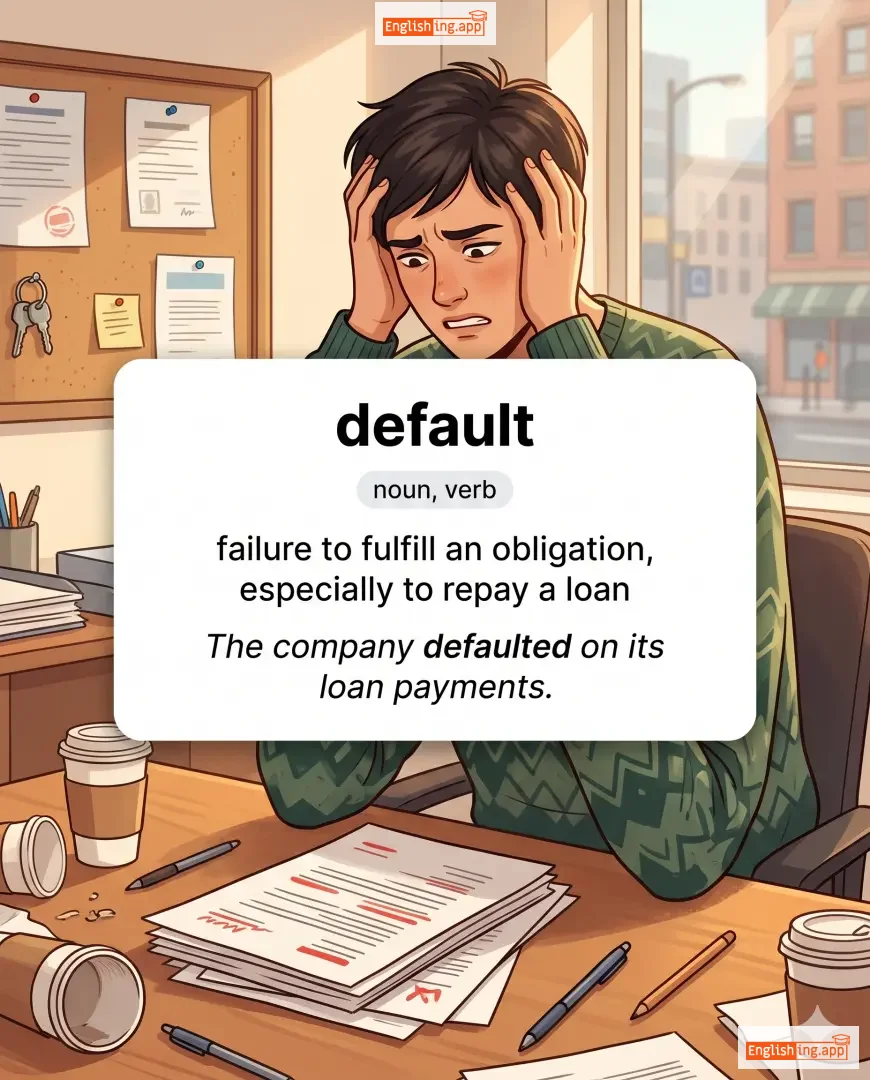
failure to fulfill an obligation, especially to repay a loan
••••••
|
The company defaulted on its loan payments.
Компания не выполнила свои обязательства по платежам по кредиту.
••••••
|
Компания не выполнила свои обязательства по платежам по кредиту.
Kompaniya ne vypolnila svoi obyazatel'stva po platezham po kreditu.
••••••
|
in default
в дефолте
••••••
|
in a state of failing to fulfill an obligation
••••••
|
в невыполнении обязательства
v nevyplnenii obyazatel'stva
••••••
|
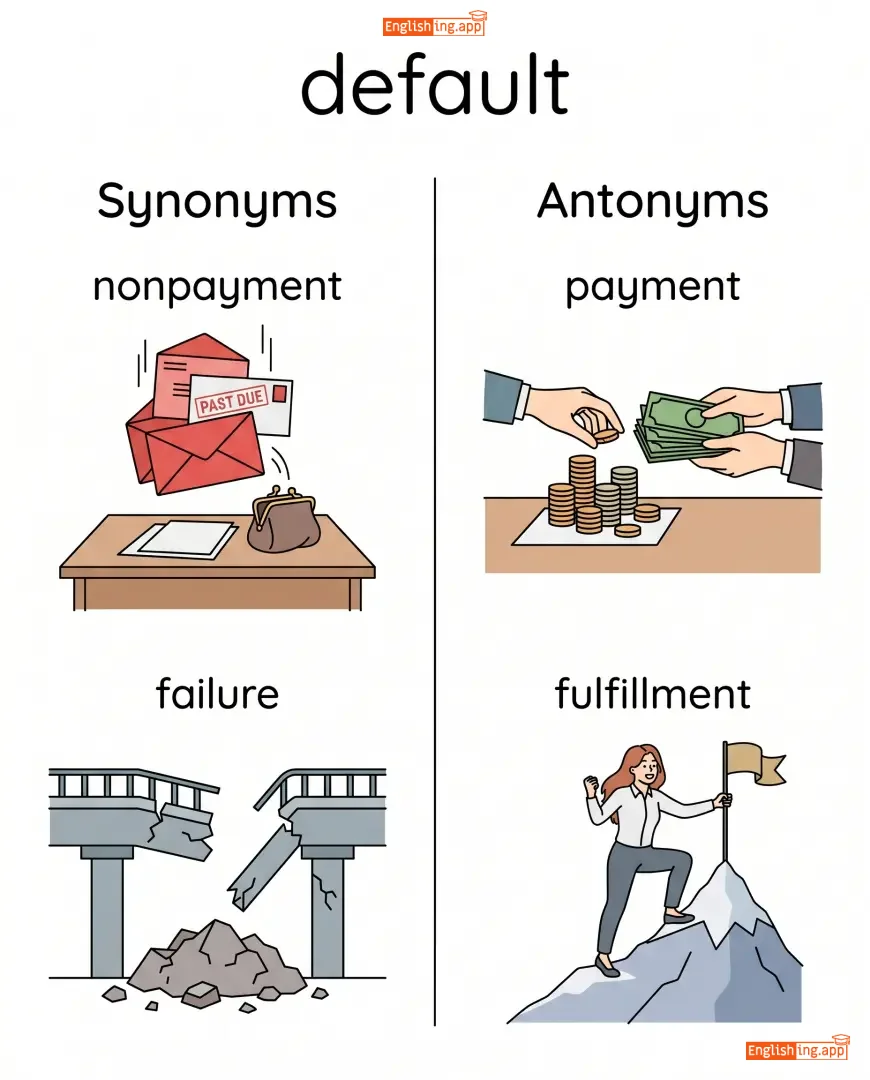
nonpayment, failure, negligence, omission
••••••
|
payment, fulfillment, compliance
••••••
|
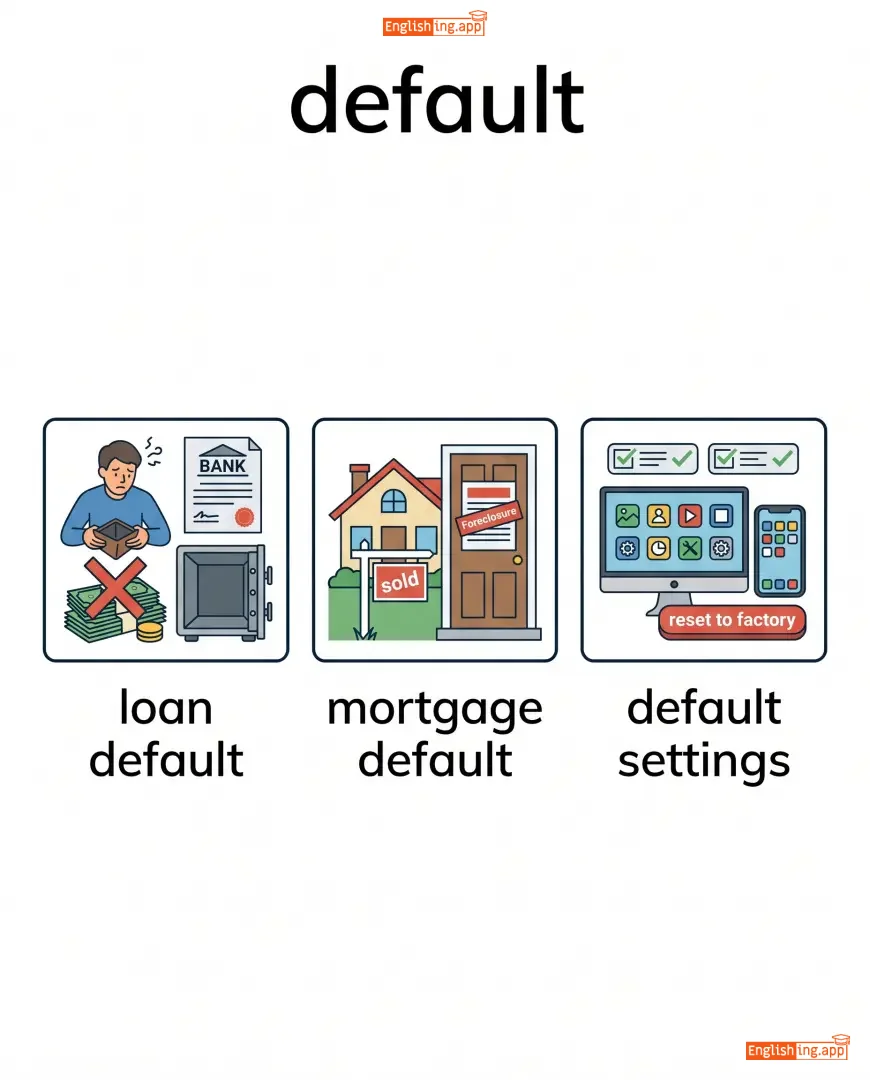
loan default, mortgage default, default settings, default judgment
••••••
|
Default → Отклонение от обязательства
••••••
|
|
🏆
••••••
|
/dɪˈfiːt/
verb
(дефит)
••••••
|
- •••••• |
побеждать
pobezhdat
••••••
|
defeated
дефитед
••••••
|
defeated
дефитед
••••••
|
defeats
дефитс
••••••
|
defeating
дефитинг
••••••
|
to win a victory over someone or something in a competition or battle
••••••
|
Our team defeated their rivals in the final match.
Наша команда победила их соперников в финальном матче.
••••••
|
Наша команда победила их соперников в финальном матче.
Nasha komanda pobedila ikh sopernikov v final'nom matche.
••••••
|
snatch defeat from the jaws of victory
Вырывать поражение из пасти победы
••••••
|
to fail at the last moment when success seemed certain
••••••
|
Вырывать поражение из пасти победы
Vyrivat' porazhenie iz past'i pobedy
••••••
|
conquer, overcome, beat, overpower, vanquish
••••••
|
surrender, lose, yield
••••••
|
defeat the enemy, defeat the purpose, heavy defeat, crushing defeat
••••••
|
Defeat означает поражение: когда команда теряет, она была побеждена.
••••••
|
|
⚠️
••••••
|
/ˈdiːfɛkt/ (noun), /dɪˈfɛkt/ (verb)
noun, verb
(дефект)
••••••
|
- •••••• |
дефект / дезертировать
defekt / dezeritirovat
••••••
|
defected
дефектед
••••••
|
defected
дефектед
••••••
|
defects
дефектс
••••••
|
defecting
дефектинг
••••••
|
A shortcoming, imperfection, or flaw; or to abandon a cause or group for another.
••••••
|
The engineer found a defect in the software code.
Инженер обнаружил дефект в коде программного обеспечения.
••••••
|
Инженер обнаружил дефект в коде программного обеспечения.
Inzhener obnaruzhil defekt v kode programmnogo obespecheniya.
••••••
|
defect from duty
дезертировать с должности
••••••
|
To abandon one's responsibility or loyalty.
••••••
|
дезертировать с должности
dezeritirovat s dolzhnosti
••••••
|
flaw, fault, imperfection, deficiency, weakness
••••••
|
strength, perfection, loyalty
••••••
|
manufacturing defect, genetic defect, defect in design
••••••
|
Defekt = Defekt означает недостаток, дефектировать означает дезертировать.
••••••
|
|
⚔️
••••••
|
/dɪˈfɛnd/
verb
(дефенд)
••••••
|
- •••••• |
защищать
zashchishchat
••••••
|
defended
защитил
••••••
|
defended
защищен
••••••
|
defends
защищает
••••••
|
defending
защищая
••••••
|
To protect someone or something from harm or attack.
••••••
|
The lawyer worked hard to defend her client.
Адвокат усердно работал, чтобы защитить своего клиента.
••••••
|
Адвокат усердно работал, чтобы защитить своего клиента.
Advokat usyerdno rabotal, chtoby zashchitit' svoego kliyenta.
••••••
|
defend one's honor
защищать честь
••••••
|
To protect one’s reputation from criticism or insult.
••••••
|
защищать честь
zashchishchat chest
••••••
|
protect, guard, shield, support, justify
••••••
|
attack, abandon, betray
••••••
|
defend a case, defend the goal, defend human rights
••••••
|
Защищать значит защищать, как адвокат защищает своего клиента.
••••••
|
|
⚖️
••••••
|
/dɪˈfen.dənt/
noun
(дефендант)
••••••
|
- •••••• |
ответчик
otvetchik
••••••
|
- •••••• | - •••••• | - •••••• | - •••••• |
an individual, company, or institution sued or accused in a court of law
••••••
|
The defendant pleaded not guilty to all charges brought against him. |
Ответчик заявил, что он не виновен по всем предъявленным обвинениям.
Otvetchik zayavil, chto on ne vinoven po vseem pred'yavlennym obvineniyam.
••••••
|
- •••••• | - •••••• | - •••••• |
accused, respondent, litigant
••••••
|
plaintiff, prosecutor, accuser
••••••
|
criminal defendant, civil defendant, defendant's rights
••••••
|
Ответчик отвечает за свои действия в суде.
••••••
|
|
🛡️
••••••
|
/dɪˈfɛndər/
noun
(дефендер)
••••••
|
- •••••• |
защитник
zaschitnik
••••••
|
- •••••• | - •••••• | - •••••• | - •••••• |
a person who protects someone or something from harm or attack
••••••
|
The defender blocked the shot and saved the goal. |
Защитник заблокировал удар и спас гол.
Zaschitnik zablokiroval udar i spas gol.
••••••
|
stand as a defender of |
to support or protect something or someone
••••••
|
стоять как защитник чего-то
stoyat kak zashchitnik chego-to
••••••
|
protector, guardian, champion, advocate, supporter
••••••
|
attacker, enemy, opponent
••••••
|
football defender, human rights defender, defender of justice
••••••
|
Защитник — это тот, кто защищает, как защита от нападений.
••••••
|
|
🛡️
••••••
|
/dɪˈfɛns/
noun
(hapines)
••••••
|
|
счастье
schastye
••••••
|
- •••••• | - •••••• | - •••••• | - •••••• |
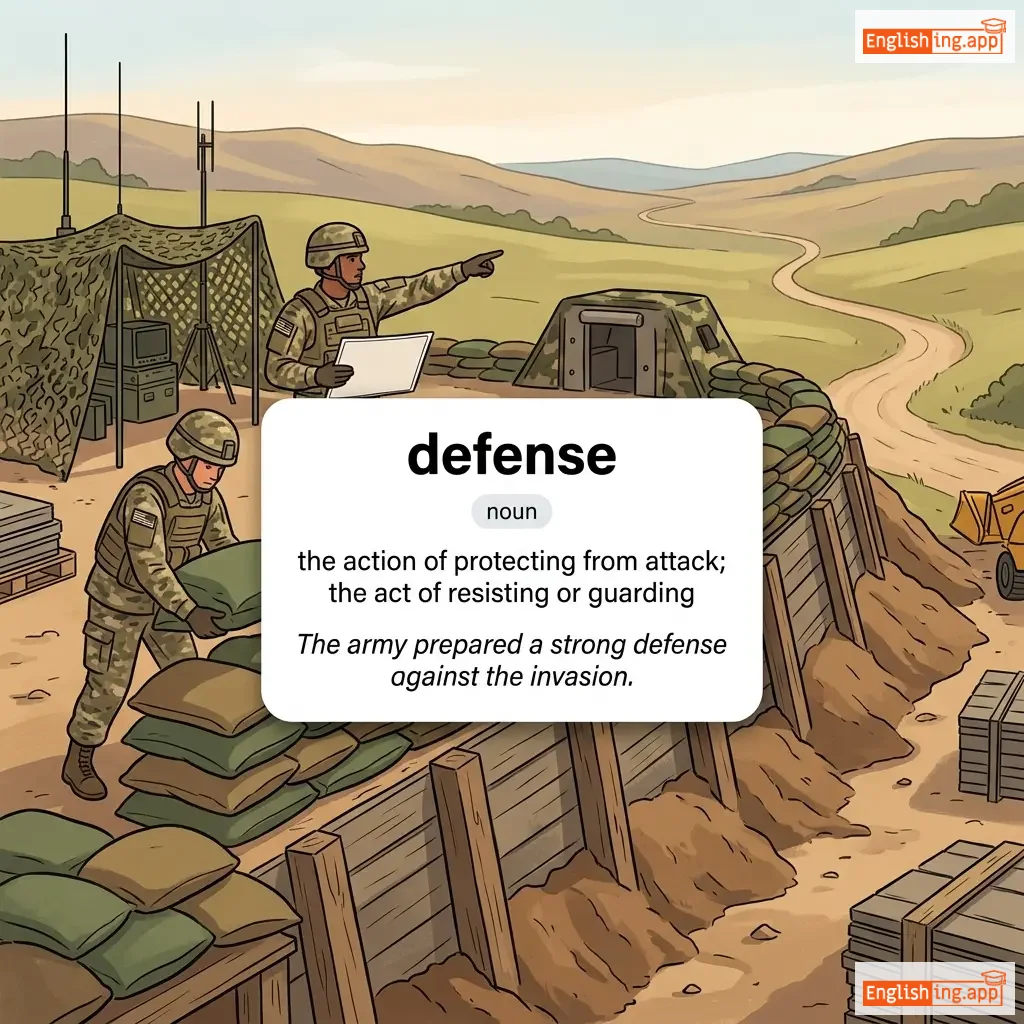
the action of protecting from attack; the act of resisting or guarding
••••••
|
The army prepared a strong defense against the invasion. |
Она не могла скрыть свое счастье, когда получила награду.
Ona ne mogla skryt' svoye schast'ye, kogda poluchila nagradu.
••••••
|
defense mechanism |
an unconscious psychological strategy used to protect oneself from anxiety
••••••
|
поиск счастья
poisk schast'ya
••••••
|
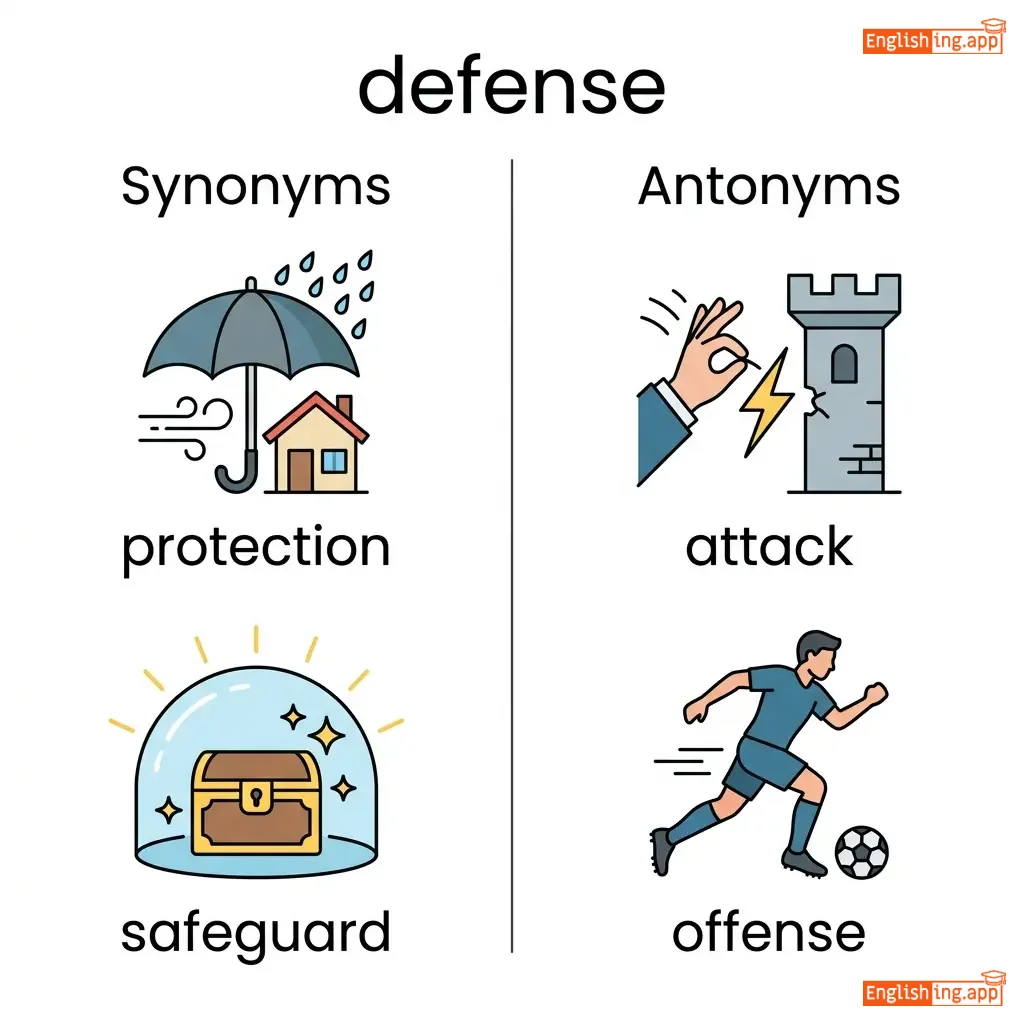
protection, safeguard, security, resistance
••••••
|
attack, offense
••••••
|
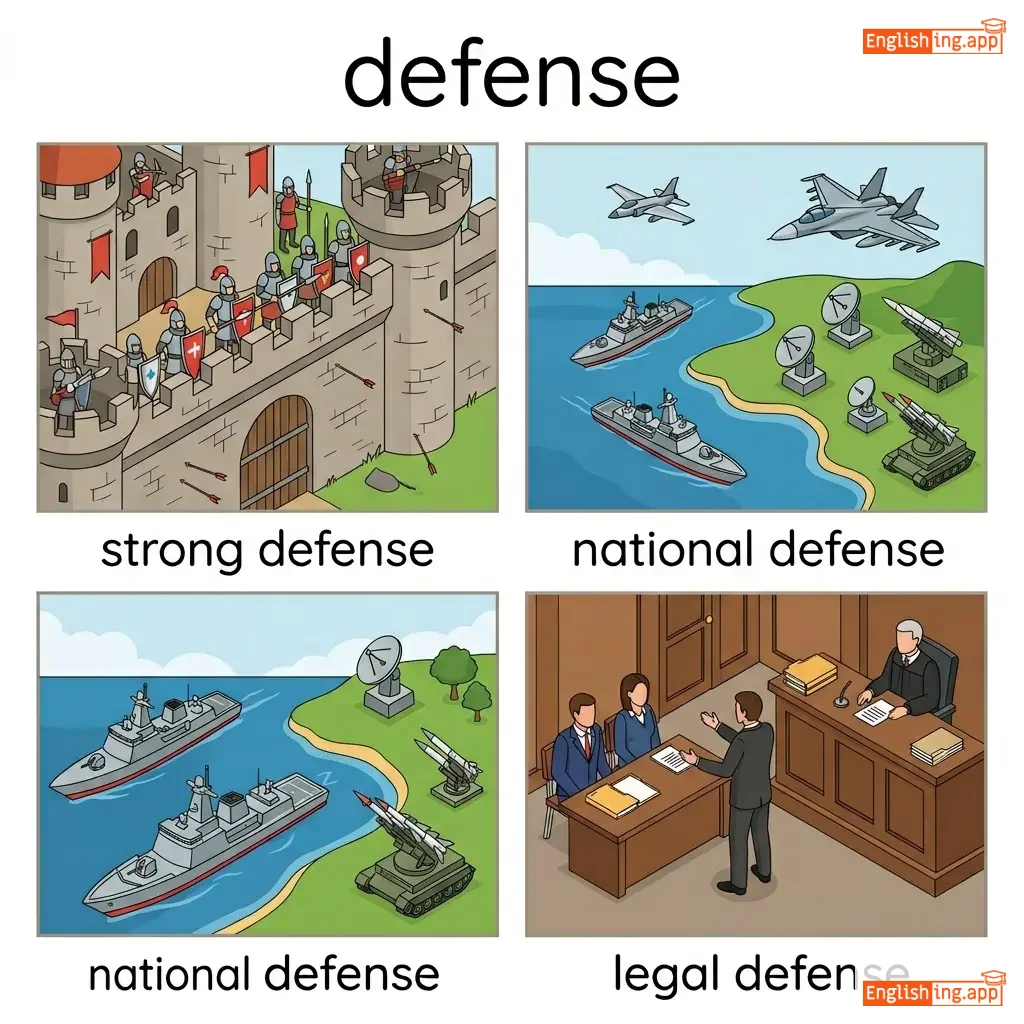
strong defense, national defense, legal defense, defense system
••••••
|
счастье = счастье — ключ к жизни.
••••••
|
|
🛡️
••••••
|
/dɪˈfɛnsɪv/
adjective
(дефенсив)
••••••
|
- •••••• |
защитный
zashchitny
••••••
|
- •••••• | - •••••• | - •••••• | - •••••• |
Intended to protect or defend; behaving in a way to guard against criticism or attack.
••••••
|
He became defensive when asked about his mistake. |
Он стал защитным, когда его спросили о его ошибке.
On stal zashchitnym, kogda ego sprosili o yego oshibke.
••••••
|
defensive stance |
A protective or guarded position in argument or conflict.
••••••
|
защитная позиция
zashchitnaya pozitsiya
••••••
|
protective, guarded, cautious, shielding
••••••
|
offensive, aggressive, open
••••••
|
defensive behavior, defensive mechanism, defensive reaction, defensive stance
••••••
|
Защитный - это как щит 🛡️ - защита от критики.
••••••
|
|
⚠️
••••••
|
/dɪˈfɪʃ.ən.si/
noun
(дефицит)
••••••
|
- •••••• |
дефицит
defitsit
••••••
|
- •••••• | - •••••• | - •••••• | - •••••• |
a lack or shortage of something that is necessary
••••••
|
The doctor diagnosed him with a vitamin D deficiency. |
Врач поставил ему диагноз дефицита витамина D.
Vrach postavil yemu diangnoz defitsita vitamina D.
••••••
|
iron deficiency |
a lack of sufficient iron in the body
••••••
|
дефицит железа
defitsit zheleza
••••••
|
shortage, lack, insufficiency, scarcity, inadequacy
••••••
|
abundance, sufficiency, excess
••••••
|
vitamin deficiency, iron deficiency, nutritional deficiency, deficiency disease
••••••
|
Дефицит значит нехватка – запомни, что 'дефи' значит нехватка, в рыбе ничего нет, так что дефицит.
••••••
|

