|
絵文字
|
単語 | Images | 翻訳 | 過去 | 過去分詞 | 三人称単数 | 動名詞 | 意味 | 例文 | 例文の翻訳 | 表現例 | 表現例の意味 | 表現例の翻訳 | 同義語 | 対義語 | コロケーション | ニーモニック |
|---|---|---|---|---|---|---|---|---|---|---|---|---|---|---|---|---|---|
|
🌑
••••••
|
/ˈdɑːrkən/
verb
(ダークン)
••••••
|
- •••••• |
暗くする
kuraku suru
••••••
|
darkened
ダークンド
••••••
|
darkened
ダークンド
••••••
|
darkens
ダークンズ
••••••
|
darkening
ダークニング
••••••
|
to make or become dark; to reduce brightness or light
••••••
|
The clouds began to darken the sky before the storm.
ザ クラウズ ビガン トゥ ダークン ザ スカイ ビフォア ザ ストーム。
••••••
|
嵐の前に雲が空を暗くし始めた。
arashi no mae ni kumo ga sora o kuraku shi hajimeta
••••••
|
darken the mood
ダークン ザ ムード
••••••
|
to make the atmosphere or feelings more negative or sad
••••••
|
雰囲気を暗くする
funiki o kuraku suru
••••••
|
dim, blacken, shade, obscure, dull
••••••
|
brighten, lighten, illuminate
••••••
|
darken the sky, darken a room, darken the mood, darken with age
••••••
|
暗い(くらい) + する = 暗くする = darken
••••••
|
|
🌑
••••••
|
/ˈdɑːrk.nəs/
noun
(ダークネス)
••••••
|
- •••••• |
暗闇
kurayami
••••••
|
- •••••• | - •••••• | - •••••• | - •••••• |
The absence of light; the state of being dark.
••••••
|
The room was filled with darkness after the lights went out. |
ライトが消えると部屋は暗闇に包まれた。
Raito ga kieru to heya wa kurayami ni tsutsumareta.
••••••
|
pitch darkness |
complete absence of light
••••••
|
完全な暗闇
kanzen na kurayami
••••••
|
gloom, shadow, obscurity, night
••••••
|
light, brightness, daylight
••••••
|
in darkness, total darkness, fall into darkness, fear of darkness
••••••
|
暗闇は光がないとき、周りが暗いことを意味します。
••••••
|
|
📊
••••••
|
/ˈdeɪ.tə/ or /ˈdæt.ə/
noun
(データ)
••••••
|
- •••••• |
データ
deta
••••••
|
- •••••• | - •••••• | - •••••• | - •••••• |
Facts, statistics, or information collected for reference or analysis.
••••••
|
The scientists analyzed the data to find patterns. |
科学者たちはパターンを見つけるためにデータを分析しました。
Kagakusha-tachi wa patān o mitsukeru tame ni dēta o bunseki shimashita.
••••••
|
data-driven |
based on analysis of information or evidence
••••••
|
データ駆動
deta kudō
••••••
|
information, facts, statistics, figures
••••••
|
assumptions, guesses
••••••
|
collect data, analyze data, data set, process data
••••••
|
データ = 解決するために必要な情報を探す手がかり。
••••••
|
|
💾
••••••
|
/ˈdeɪtəbeɪs/
noun
(データベース)
••••••
|
- •••••• |
データベース
dētābēsu
••••••
|
- •••••• | - •••••• | - •••••• | - •••••• |
a structured collection of data stored and accessed electronically
••••••
|
The company's customer details are stored in a secure database.
会社の顧客情報は安全なデータベースに保存されています。
••••••
|
会社の顧客情報は安全なデータベースに保存されています。
Kaisha no kokyaku jōhō wa anzen na dētābēsu ni hozon sareteimasu.
••••••
|
- •••••• | - •••••• | - •••••• |
data store, data system, repository, archive, registry
••••••
|
paper files, disorganization
••••••
|
create database, access database, database management, database server
••••••
|
Data と Base — データを保存するためのデータベース 💾
••••••
|
|
📅
••••••
|
/deɪt/
noun/verb
••••••
|
- •••••• | - •••••• |
dated
••••••
|
dated
••••••
|
dates
••••••
|
dating
••••••
|
A particular day of the month or year; also, a social or romantic appointment.
••••••
|
They decided to meet on the date of her birthday. |
- •••••• |
blind date |
a romantic meeting with someone you have not met before
••••••
|
- •••••• |
day, appointment, meeting, outing
••••••
|
indefinite, timeless
••••••
|
set a date, important date, go on a date, due date
••••••
|
No •••••• |
|
👧
••••••
|
/ˈdɔːtər/
noun
(ドーター)
••••••
|
- •••••• |
娘
musume
••••••
|
- •••••• | - •••••• | - •••••• | - •••••• |
a female child in relation to her parents
••••••
|
They are proud of their daughter for graduating college. |
彼らは大学を卒業した娘を誇りに思っています。
Karera wa daigaku o sotsugyō shita musume o hokori ni omotteimasu.
••••••
|
apple of her father's eye |
a phrase used to describe a beloved daughter
••••••
|
父親の目の中のりんご
chichi no me no naka no ringo
••••••
|
girl child, offspring, child, descendant
••••••
|
son, parent
••••••
|
eldest daughter, only daughter, daughter-in-law, proud daughter
••••••
|
Daughter は娘を意味し、父親の目の中のりんごのようです。
••••••
|
|
🌅
••••••
|
/dɔːn/
noun, verb
(ドーン)
••••••
|
- •••••• |
夜明け
yoake
••••••
|
dawned
ドーンド
••••••
|
dawned
ドーンド
••••••
|
dawns
ドーンズ
••••••
|
dawning
ドーニング
••••••
|
The first appearance of light in the sky before sunrise; to begin or become apparent.
••••••
|
Hope began to dawn in her heart after hearing the good news.
Hope began to dawn in her heart after hearing the good news.
••••••
|
良いニュースを聞いた後、彼女の心に希望が夜明けを迎え始めました。
Yoi nyūsu o kiita ato, kanojo no kokoro ni kibō ga yoake o mukae hajimemashita.
••••••
|
crack of dawn
crack of dawn
••••••
|
Very early in the morning.
••••••
|
夜明け時
yoake ji
••••••
|
sunrise, daybreak, morning, beginning, start
••••••
|
sunset, dusk, end
••••••
|
at dawn, before dawn, dawn of a new era, dawn breaks
••••••
|
Dawnは夜明け、新しい日の始まりです。
••••••
|
|
🌞
••••••
|
/deɪ/
noun
(デイ)
••••••
|
- •••••• |
日
hi
••••••
|
- •••••• | - •••••• | - •••••• | - •••••• |
a period of 24 hours or the time between sunrise and sunset
••••••
|
She enjoyed a relaxing day at the beach. |
彼女はビーチでリラックスした一日を楽しみました。
Kanojo wa bīchi de rirakkusu shita ichinichi o tanoshimimashita.
••••••
|
call it a day |
to stop working for the rest of the day
••••••
|
今日はここまでにしましょう
Kyou wa koko made ni shimashou
••••••
|
daytime, period, date, occasion
••••••
|
night, darkness
••••••
|
working day, day off, day long, happy day
••••••
|
日には太陽が昇り、沈みます。
••••••
|
|
💀
••••••
|
/dɛd/
adjective, noun
(デッド)
••••••
|
- •••••• |
死んだ
shinda
••••••
|
- •••••• | - •••••• | - •••••• | - •••••• |
No longer alive; the end of life.
••••••
|
The old tree is completely dead. |
その古い木は完全に死んでいる。
Sono furui ki wa kanzen ni shindeiru.
••••••
|
dead end |
A situation with no progress or exit.
••••••
|
行き止まり
ikidomari
••••••
|
lifeless, deceased, expired, gone
••••••
|
alive, living, active
••••••
|
dead body, dead silence, dead end, dead serious
••••••
|
Dead は死んだ、終わりだ。
••••••
|
|
⏰
••••••
|
/ˈdedlaɪn/
noun
(デッドライン)
••••••
|
- •••••• |
締め切り
shimekiri
••••••
|
- •••••• | - •••••• | - •••••• | - •••••• |
the latest time or date by which something must be completed
••••••
|
We need to finish this project before the deadline. |
このプロジェクトは締め切り前に終わらせる必要があります。
Kono purojekuto wa shimekiri mae ni owaraseru hitsuyou ga arimasu.
••••••
|
meet the deadline |
to finish something on time
••••••
|
締め切りを守る
shimekiri o mamoru
••••••
|
due date, cutoff date, time limit, target date, completion date
••••••
|
delay, extension
••••••
|
tight deadline, project deadline, meet deadline, set a deadline
••••••
|
締め切りは仕事を終わらせるための最終的な時間です。
••••••
|
|
☠️
••••••
|
/ˈdedli/
adjective
(デッドリー)
••••••
|
- •••••• |
致命的
chimiteki
••••••
|
- •••••• | - •••••• | - •••••• | - •••••• |
causing or able to cause death; extremely dangerous
••••••
|
The snake's bite is deadly to humans. |
蛇の噛み傷は人間にとって致命的です。
Hebi no kamikizu wa ningen ni totte chimiteki desu.
••••••
|
deadly serious |
completely serious; not joking
••••••
|
死ぬほど真剣
shinu hodo shinken
••••••
|
fatal, lethal, dangerous, mortal, poisonous
••••••
|
harmless, safe, mild
••••••
|
deadly weapon, deadly virus, deadly poison, deadly attack
••••••
|
Deadly は致命的、まるで致命的な蛇のようだ!
••••••
|
|
🧏
••••••
|
/def/
adjective
(デフ)
••••••
|
- •••••• |
耳が聞こえない; 聴覚障害がある
mimi ga kikoenai; choukaku shougai ga aru
••••••
|
- •••••• | - •••••• | - •••••• | - •••••• |
unable to hear; having a hearing impairment
••••••
|
The deaf child learned to communicate using sign language.
そのろうの子供は手話を使ってコミュニケーションを学びました。
••••••
|
そのろうの子供は手話を使ってコミュニケーションを学びました。
Sono rō no kodomo wa shuwa o tsukatte komyunikeeshon o manabimashita.
••••••
|
- •••••• | - •••••• | - •••••• |
hearing-impaired, hard of hearing
••••••
|
hearing, able to hear
••••••
|
deaf person, deaf community, stone deaf
••••••
|
デフの人は耳が聞こえない、手話を使う。
••••••
|
|
🤝
••••••
|
/diːl/
verb
••••••
|
- •••••• |
幸せ
shiawase
••••••
|
dealt
••••••
|
dealt
••••••
|
deals
••••••
|
dealing
••••••
|
to distribute or give out something; to handle or manage
••••••
|
He had to deal with many problems at work. |
彼女は賞を受け取ったとき、幸せを隠すことができませんでした。
Kanojo wa shō o uketotta toki, shiawase o kakusu koto ga dekimasen deshita.
••••••
|
deal with it |
a phrase used to say one must accept or handle a situation
••••••
|
幸せを追求する
shiawase o tsuikyū suru
••••••
|
handle, manage, cope, distribute, bargain
••••••
|
ignore, neglect, avoid
••••••
|
deal with, business deal, fair deal, deal cards
••••••
|
幸せは、あなたが幸せを感じるときに追い求めるものです。
••••••
|
|
💼
••••••
|
/ˈdiːlər/
noun
(ディーラー)
••••••
|
- •••••• |
ディーラー
diiraa
••••••
|
- •••••• | - •••••• | - •••••• | - •••••• |
a person or business that buys and sells goods; someone who distributes
••••••
|
The car dealer offered a discount to attract customers. |
車のディーラーは顧客を引き付けるために割引を提供しました。
Kuruma no diiraa wa kokyaku o hikitsukeru tame ni waribiki o teikyō shimashita.
••••••
|
- •••••• | - •••••• | - •••••• |
merchant, trader, vendor, seller, distributor
••••••
|
buyer, customer
••••••
|
car dealer, art dealer, drug dealer, authorized dealer
••••••
|
ディーラーは商品を販売して利益を得る人です。
••••••
|
|
💖
••••••
|
/dɪr/
adjective
(ディア)
••••••
|
- •••••• |
親愛なる
shin'ai naru
••••••
|
- •••••• | - •••••• | - •••••• | - •••••• |
loved or cherished; sometimes used as a polite form of address
••••••
|
She is very dear to her grandparents. |
彼女は祖父母にとって非常に親愛なる存在です。
kanojo wa sofu-bo ni totte hijō ni shin'ai naru sonzai desu.
••••••
|
oh dear |
an exclamation showing surprise, worry, or sympathy
••••••
|
おお、親愛なる
ō, shin'ai naru
••••••
|
beloved, cherished, precious, valued
••••••
|
hated, disliked
••••••
|
my dear, dear friend, hold dear, oh dear
••••••
|
親愛なるは英語のDearのようなものです。手紙に親愛なると書かれます。
••••••
|
|
💀
••••••
|
/dɛθ/
noun
(デス)
••••••
|
- •••••• |
死
shi
••••••
|
- •••••• | - •••••• | - •••••• | - •••••• |
The end of life; the permanent cessation of all vital functions.
••••••
|
The news of his death shocked everyone in the village. |
彼の死のニュースは村のすべての人々を驚かせました。
Kare no shi no nyūsu wa mura no subete no hitobito o odorokasemashita.
••••••
|
a matter of life and death |
something extremely important or urgent
••••••
|
生死にかかわる問題
seishi ni kakawaru mondai
••••••
|
demise, passing, end, expiration, departure
••••••
|
birth, life, existence
••••••
|
sudden death, tragic death, death penalty, cause of death, near death
••••••
|
Deathは日本語で死です。死が来るとすべてが終わります。
••••••
|
|
🗣️
••••••
|
/dɪˈbeɪt/
noun, verb
(デベート)
••••••
|
- •••••• |
討論
tōron
••••••
|
debated
デベーテッド
••••••
|
debated
デベーテッド
••••••
|
debates
デベーツ
••••••
|
debating
デベーティング
••••••
|
A formal discussion on a particular topic where opposing arguments are presented.
••••••
|
The students prepared well for the school debate.
学生たちは学校の討論に十分に準備しました。
••••••
|
学生たちは学校の討論に十分に準備しました。
Gakusei-tachi wa gakkō no tōron ni jūbun ni junbi shimashita.
••••••
|
open to debate
討論に開かれている
••••••
|
something that is not certain or can be questioned
••••••
|
討論に開かれている
Tōron ni hirakarete iru
••••••
|
discussion, argument, dispute, deliberation, dialogue
••••••
|
agreement, harmony, consensus
••••••
|
heated debate, public debate, political debate, debate team, debate club
••••••
|
Debate の音で、ディスカッションが始まる!討論を始める準備ができている。
••••••
|
|
🪨
••••••
|
/dəˈbriː/
noun
(デブリ)
••••••
|
|
瓦礫
goreki
••••••
|
- •••••• | - •••••• | - •••••• | - •••••• |
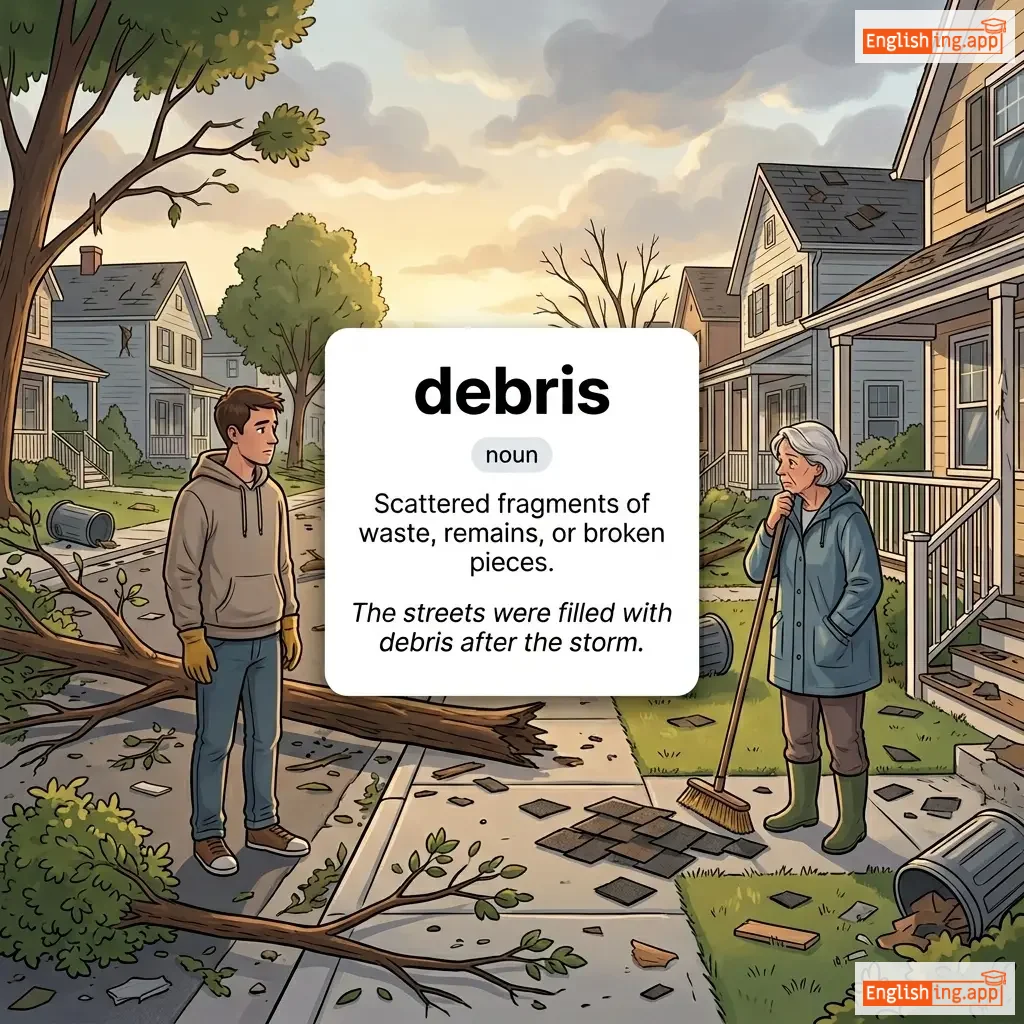
Scattered fragments of waste, remains, or broken pieces.
••••••
|
The streets were filled with debris after the storm.
嵐の後、通りはデブリで埋め尽くされていました。
••••••
|
嵐の後、通りは瓦礫で埋め尽くされていました。
Arashi no ato, toori wa goreki de umetsukusarete imashita.
••••••
|
clearing the debris
デブリの清掃
••••••
|
Removing the remains or waste after destruction.
••••••
|
瓦礫の清掃
Goreki no seisou
••••••
|
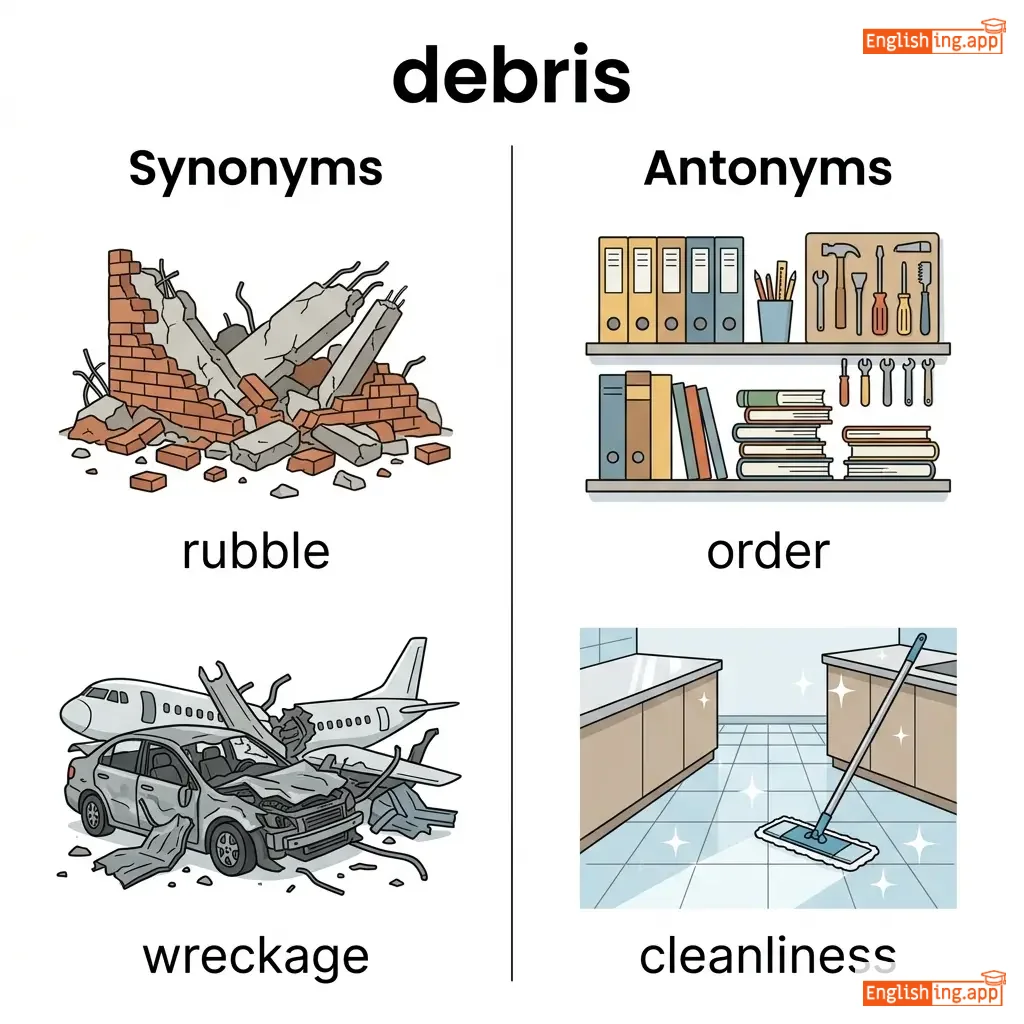
rubble, wreckage, remains, fragments, litter
••••••
|
order, cleanliness, neatness
••••••
|
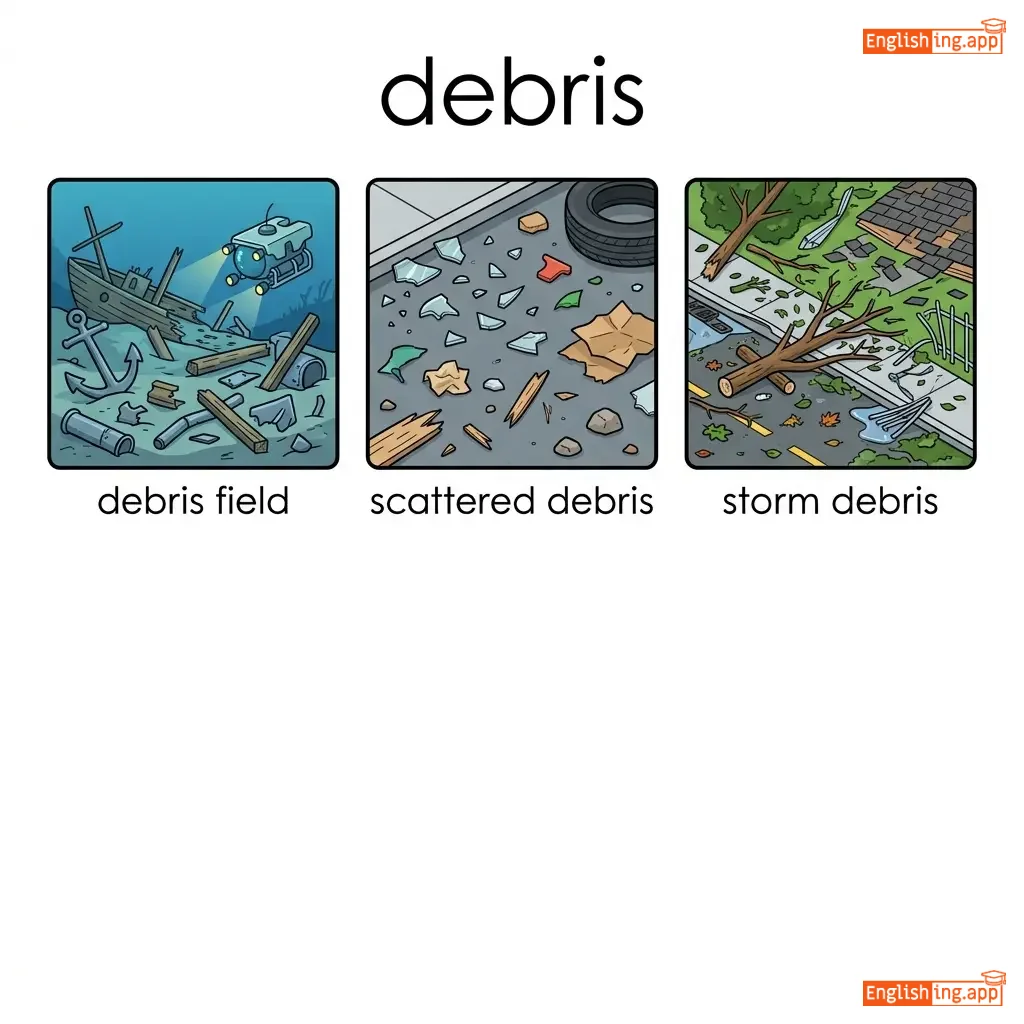
debris field, scattered debris, storm debris, clear debris
••••••
|
嵐の後、デブリ(瓦礫)が通りに散乱していた。
••••••
|
|
💸
••••••
|
/dɛt/
noun
(デット)
••••••
|
|
借金
shakkin
••••••
|
- •••••• | - •••••• | - •••••• | - •••••• |
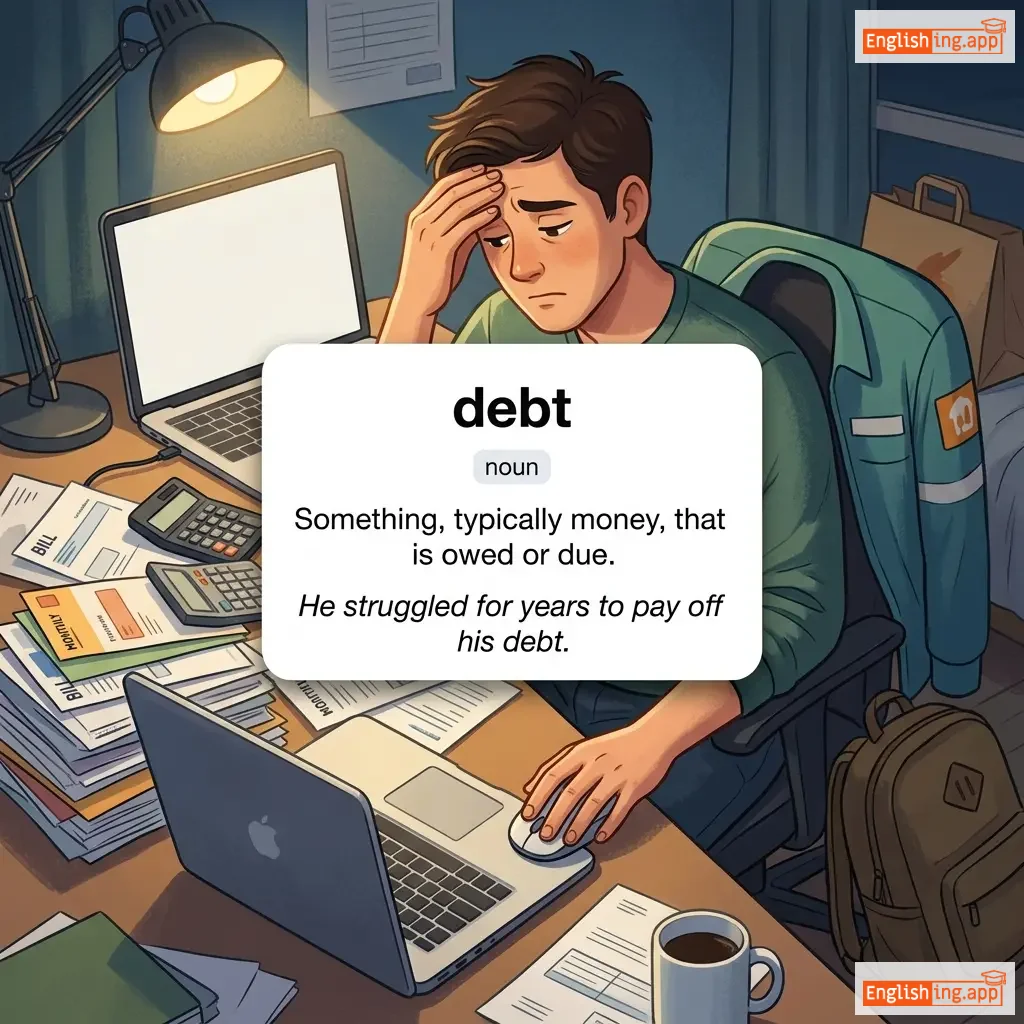
Something, typically money, that is owed or due.
••••••
|
He struggled for years to pay off his debt. |
彼は借金を返すために何年も苦労しました。
Kare wa shakkin o kaesu tame ni nannen mo kurō shimashita.
••••••
|
in debt |
to owe money
••••••
|
借金がある
shakkin ga aru
••••••
|
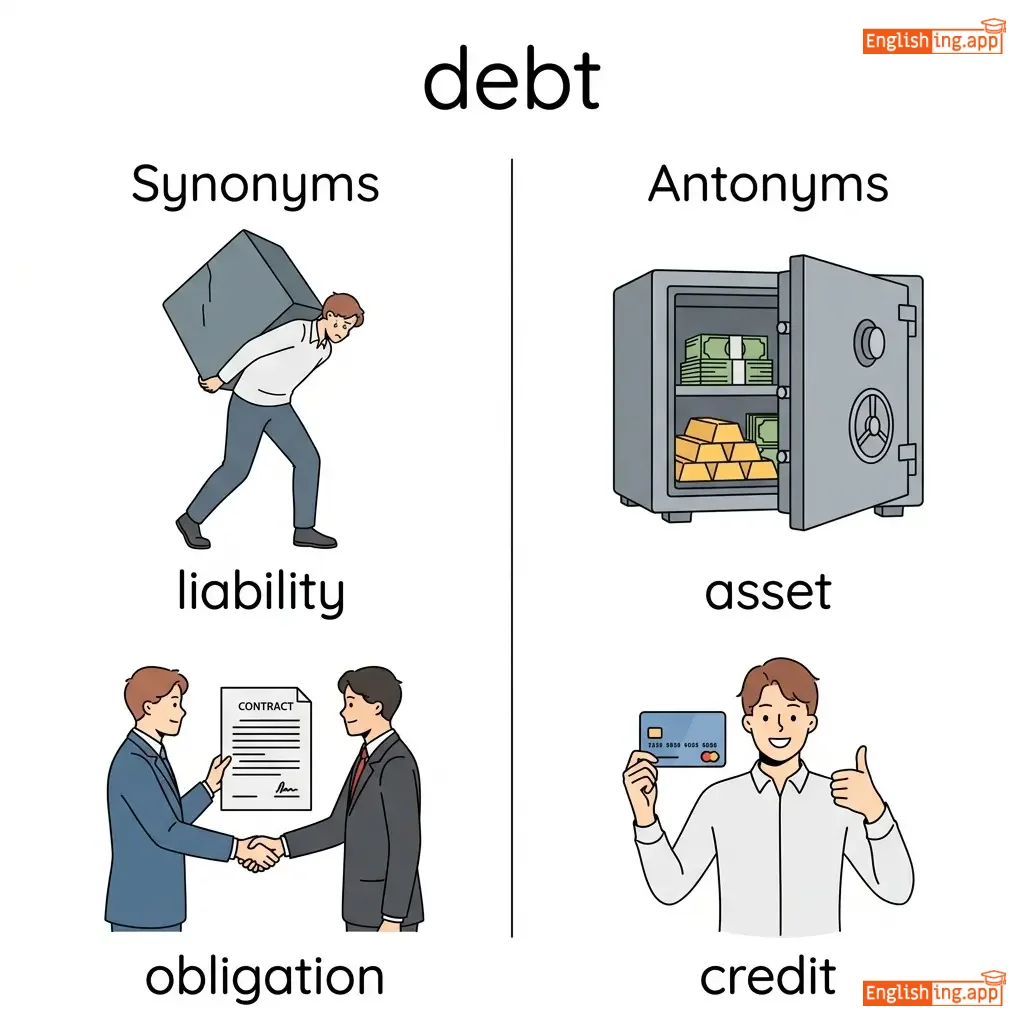
liability, obligation, arrears, dues, loan
••••••
|
asset, credit, surplus
••••••
|
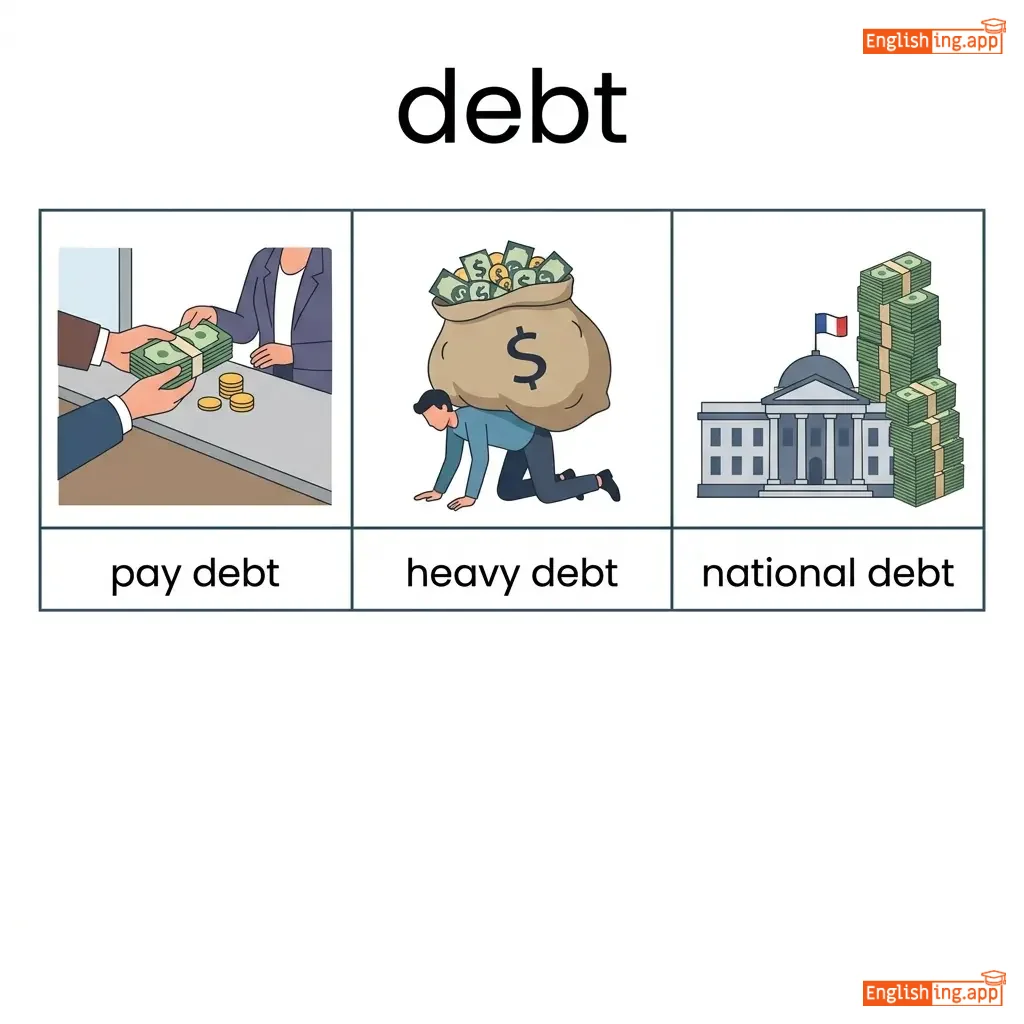
pay debt, heavy debt, national debt, debt relief, debt crisis
••••••
|
Debtは借金を意味します; デート(date)の時、借金が必要になることがあります。
••••••
|
|
🎤
••••••
|
/ˈdeɪ.bjuː/
noun, verb
(デビュー)
••••••
|
- •••••• |
デビュー
debyu
••••••
|
debuted
デビューした
••••••
|
debuted
デビューした
••••••
|
debuts
デビューする
••••••
|
debuting
デビューしている
••••••
|
The first public appearance or performance of someone or something.
••••••
|
The young actor made his debut on the big stage.
若い俳優は大きな舞台でデビューを果たした。
••••••
|
若い俳優は大きな舞台でデビューを果たした。
Wakai haiyū wa ōkina butai de debyu o hatashita.
••••••
|
make a debut
デビューする
••••••
|
To appear or perform publicly for the first time.
••••••
|
デビューする
debyu suru
••••••
|
first appearance, introduction, premiere, launch, entrance
••••••
|
retirement, farewell, exit
••••••
|
make debut, debut performance, debut album, debut match
••••••
|
Debut = ‘De + But’ – 初めての舞台でデビュー。
••••••
|
|
📅
••••••
|
/ˈdɛkeɪd/
noun
(デケイド)
••••••
|
- •••••• |
十年
jūnen
••••••
|
- •••••• | - •••••• | - •••••• | - •••••• |
A period of ten years.
••••••
|
The country has changed a lot in the past decade.
ðə ˈkʌntri hæz ʧeɪndʒd ə lɒt ɪn ðə pæst dɪˈkeɪd
••••••
|
その国は過去10年間で大きく変わりました。
Sono kuni wa kako 10-nenkan de ōkiku kawarimashita.
••••••
|
- •••••• | - •••••• | - •••••• |
ten years, period, era, span
••••••
|
moment, instant
••••••
|
past decade, next decade, over a decade, within a decade
••••••
|
十年(jūnen) はdecadeの意味、10年の区切りを覚えるにはこの言葉を使おう。
••••••
|
|
🦠
••••••
|
/dɪˈkeɪ/
verb, noun
(dikei)
••••••
|
- •••••• |
腐敗
fuhai
••••••
|
decayed
dikeid
••••••
|
decayed
dikeid
••••••
|
decays
dikeiz
••••••
|
decaying
dikeing
••••••
|
The process of rotting or decomposition; to decline in quality or strength.
••••••
|
The abandoned house slowly began to decay.
放棄された家は徐々に腐り始めた。
••••••
|
放棄された家は徐々に腐り始めた。
Houkisareta ie wa jojoni fusari hajimeta.
••••••
|
tooth decay
歯の腐敗
••••••
|
The rotting or damage of teeth.
••••••
|
歯の腐敗
Ha no fuhai
••••••
|
rot, spoil, decompose, deteriorate, decline
••••••
|
grow, flourish, improve
••••••
|
decay process, tooth decay, rapid decay, slow decay
••••••
|
Decayは腐敗、歯の腐敗は歯の損傷を意味する。
••••••
|
|
❄️
••••••
|
/dɪˈsɛmbər/
noun
(ディセンバー)
••••••
|
- •••••• |
12月
juunigatsu
••••••
|
- •••••• | - •••••• | - •••••• | - •••••• |
the twelfth and last month of the year in the Gregorian calendar
••••••
|
December is usually cold in many countries.
12月は多くの国で寒いです。
••••••
|
12月は多くの国で寒いです。
juunigatsu wa ooku no kuni de samui desu
••••••
|
- •••••• | - •••••• | - •••••• |
month twelve, twelfth month, year end, winter month
••••••
|
January, summer
••••••
|
December holiday, December weather, late December, early December
••••••
|
12月 = twelve month = December
••••••
|
|
🤔
••••••
|
/dɪˈsaɪd/
verb
••••••
|
- •••••• | - •••••• |
decided
••••••
|
decided
••••••
|
decides
••••••
|
deciding
••••••
|
To make a choice or judgment about something.
••••••
|
She decided to study abroad after graduation. |
- •••••• |
make up one's mind |
to decide after consideration
••••••
|
- •••••• |
determine, choose, settle, resolve, conclude
••••••
|
hesitate, delay, waver
••••••
|
decide quickly, decide against, decide whether, decide to go
••••••
|
No •••••• |
|
⚖️
••••••
|
/dɪˈsɪʒən/
noun
(ディシジョン)
••••••
|
- •••••• |
決定
kettei
••••••
|
- •••••• | - •••••• | - •••••• | - •••••• |
A conclusion or choice made after consideration.
••••••
|
She made a quick decision to accept the job offer. |
彼女は仕事のオファーを受け入れる迅速な決定を下しました。
Kanojo wa shigoto no ofā o ukeireru jinsoku na kettei o kudashimashita.
••••••
|
make a decision |
to come to a conclusion or choice
••••••
|
決定を下す
kettei o kudasu
••••••
|
choice, judgment, conclusion, verdict, resolution
••••••
|
indecision, hesitation, doubt
••••••
|
make a decision, tough decision, final decision, quick decision
••••••
|
決定は決断 — 決定を下すことでストレスが減ります。
••••••
|
|
✅
••••••
|
/dɪˈsaɪsɪv/
adjective
(ディサイシブ)
••••••
|
- •••••• |
決定的
ketteiteki
••••••
|
- •••••• | - •••••• | - •••••• | - •••••• |
Having the ability to make decisions quickly and effectively; determining the outcome.
••••••
|
Her decisive action saved the company from collapse. |
彼女の決定的な行動が会社を崩壊から救った。
Kanojo no ketteiteki na kōdō ga kaisha o hōkai kara sukutta.
••••••
|
decisive victory |
A win that settles an issue conclusively.
••••••
|
決定的な勝利
ketteiteki na shōri
••••••
|
conclusive, resolute, firm, determined, crucial
••••••
|
indecisive, uncertain, hesitant
••••••
|
decisive role, decisive moment, decisive action, decisive factor
••••••
|
決定的 - 決めて、決定的に勝利する!
••••••
|
|
🛳️
••••••
|
/dɛk/
noun
(dekku)
••••••
|
- •••••• |
デッキ / プラットフォーム
dekki / purattofōmu
••••••
|
- •••••• | - •••••• | - •••••• | - •••••• |
A flat surface or platform, often on a ship or building.
••••••
|
We enjoyed the sunset from the upper deck of the ferry. |
私たちはフェリーの上デッキから夕日を楽しみました。
Watashitachi wa ferī no ue dekki kara yūhi o tanoshimimashita.
••••••
|
clear the deck |
to prepare for action or to get ready
••••••
|
デッキを片付ける
dekki o katadzukeru
••••••
|
platform, floor, terrace, stage
••••••
|
ground, basement
••••••
|
ship deck, upper deck, deck chair, deck of cards
••••••
|
船のデッキは立っていられる場所のようなプラットフォームです。
••••••
|
|
📜
••••••
|
/ˌdek.ləˈreɪ.ʃən/
noun
(dek-rei-rei-shun)
••••••
|
- •••••• |
宣言; 発表; 告知
sengen, happyou, kokuji
••••••
|
- •••••• | - •••••• | - •••••• | - •••••• |
a formal or explicit statement or announcement; an official proclamation
••••••
|
The president's declaration of independence marked a historic moment for the nation.
大統領の独立宣言は、国にとって歴史的な瞬間を意味していました。
••••••
|
大統領の独立宣言は、国にとって歴史的な瞬間を意味していました。
Daitouryou no dokuritsu sengen wa, kuni ni totte rekishiteki na shunkan wo imi shite imashita.
••••••
|
- •••••• | - •••••• | - •••••• |
announcement, proclamation, statement, pronouncement
••••••
|
concealment, silence, secrecy, denial
••••••
|
formal declaration, public declaration, declaration of war
••••••
|
日本語での宣言は重要な公式の発表や通知を指します。
••••••
|
|
📢
••••••
|
/dɪˈklɛər/
verb
(ディクレア)
••••••
|
- •••••• |
宣言する
sengen suru
••••••
|
declared
ディクレアド
••••••
|
declared
ディクレアド
••••••
|
declares
ディクレアス
••••••
|
declaring
ディクレアリング
••••••
|
To announce something formally or officially.
••••••
|
The government declared a state of emergency.
政府は緊急事態を宣言しました。
••••••
|
政府は緊急事態を宣言しました。
Seifu wa kinkyū jitai o sengen shimashita.
••••••
|
declare war
戦争を宣言する
••••••
|
to officially announce the beginning of a war
••••••
|
戦争を宣言する
Sensō o sengen suru
••••••
|
announce, proclaim, state, affirm, disclose
••••••
|
deny, conceal, hide
••••••
|
declare independence, declare victory, declare bankruptcy, declare an emergency
••••••
|
宣言するは大切な発表をすることです。
••••••
|
|
📉
••••••
|
/dɪˈklaɪn/
verb
••••••
|
|
- •••••• |
declined
••••••
|
declined
••••••
|
declines
••••••
|
declining
••••••
|
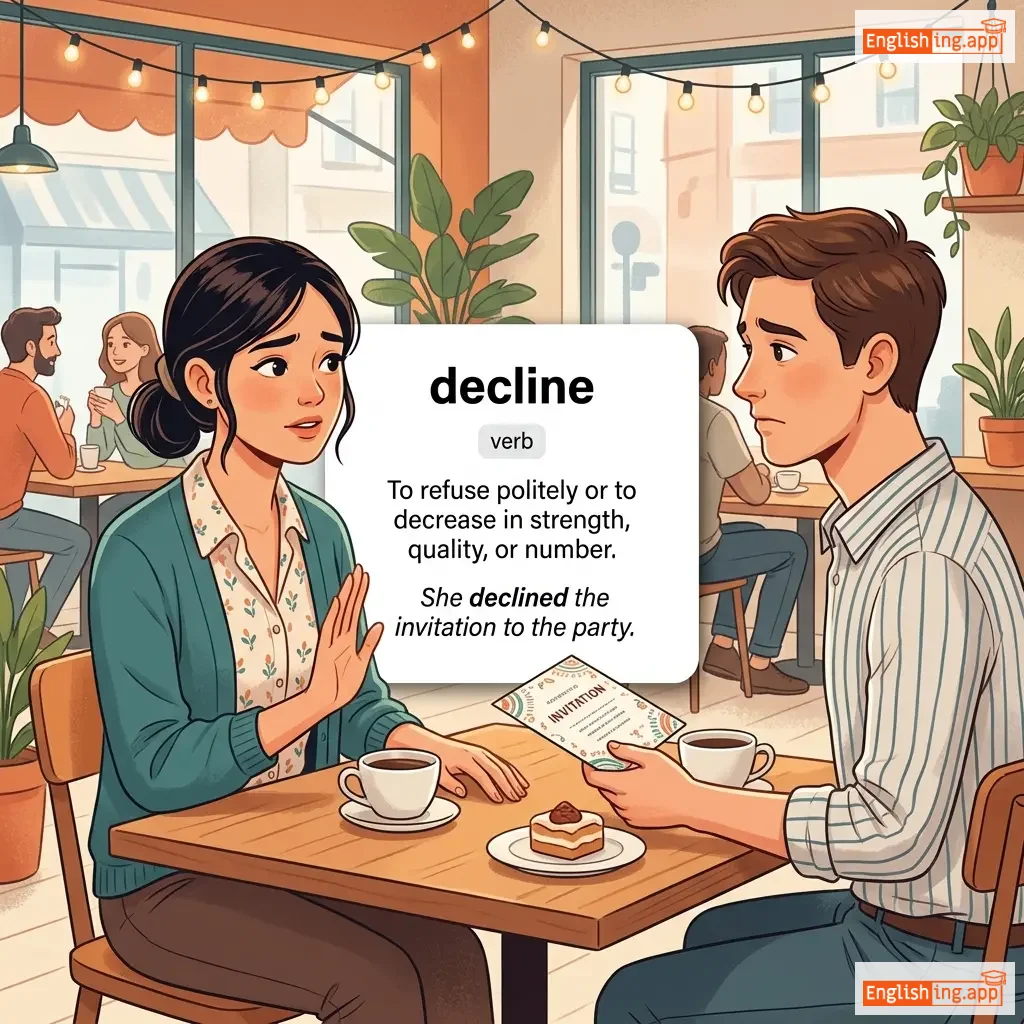
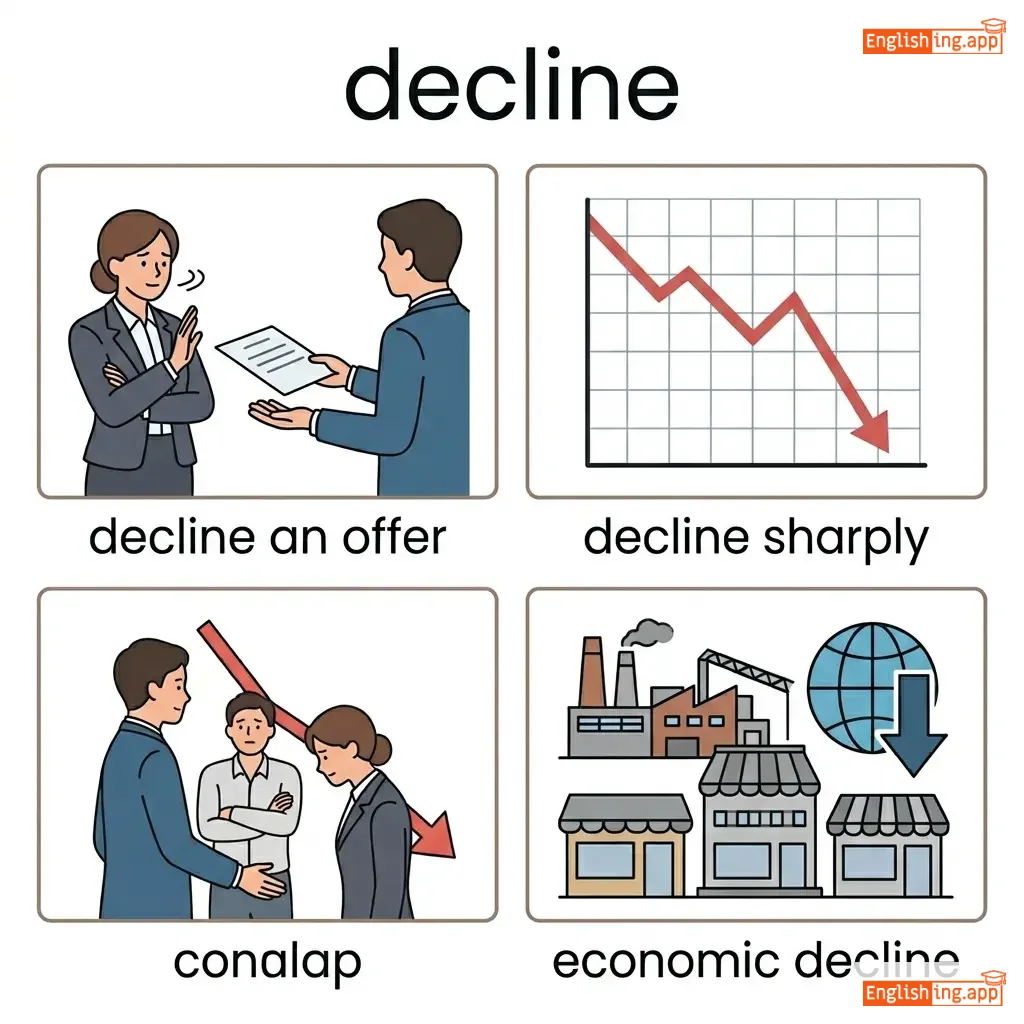
To refuse politely or to decrease in strength, quality, or number.
••••••
|
She declined the invitation to the party. |
- •••••• |
on the decline |
becoming weaker or less important
••••••
|
- •••••• |
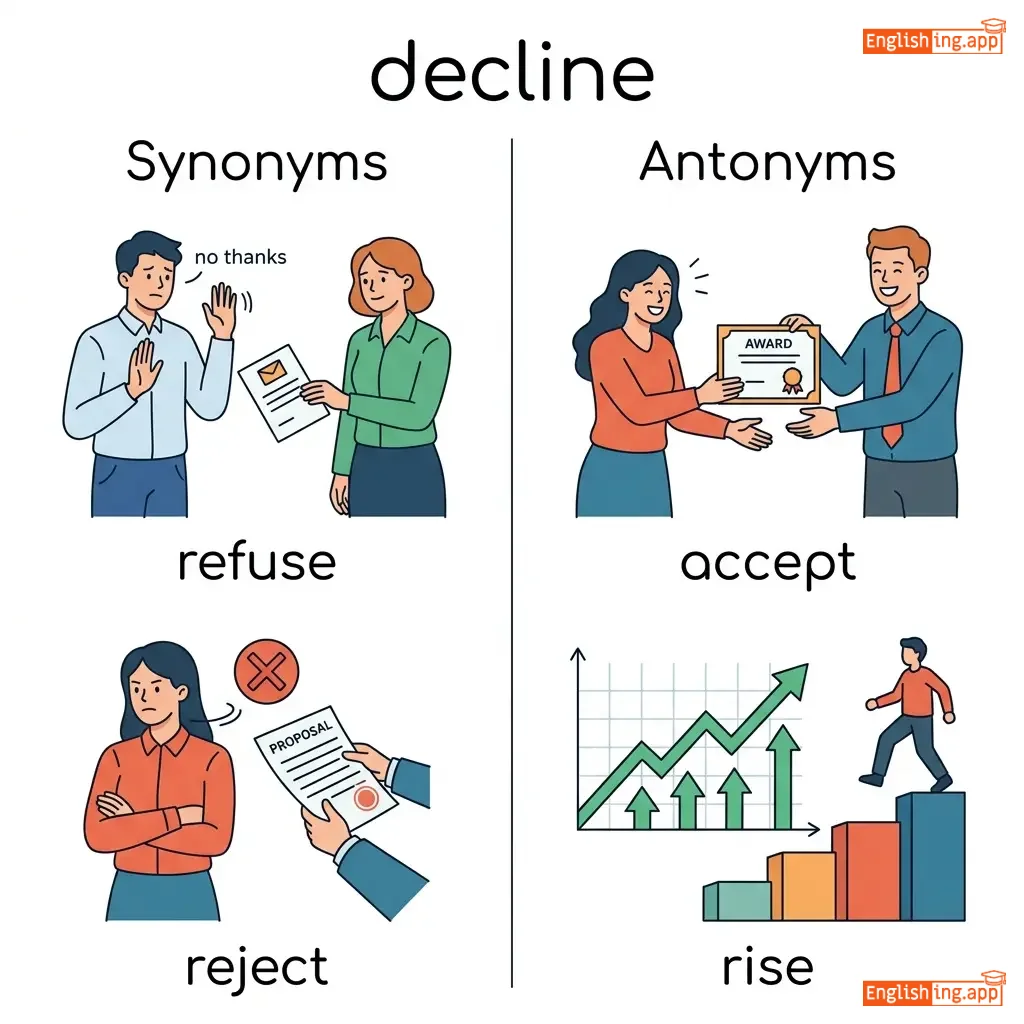
refuse, reject, deteriorate, weaken, decrease
••••••
|
accept, rise, increase
••••••
|
decline an offer, decline sharply, economic decline, decline in sales
••••••
|
No •••••• |
|
🎨
••••••
|
/ˈdɛkəreɪt/
verb
••••••
|
|
- •••••• |
decorated
••••••
|
decorated
••••••
|
decorates
••••••
|
decorating
••••••
|
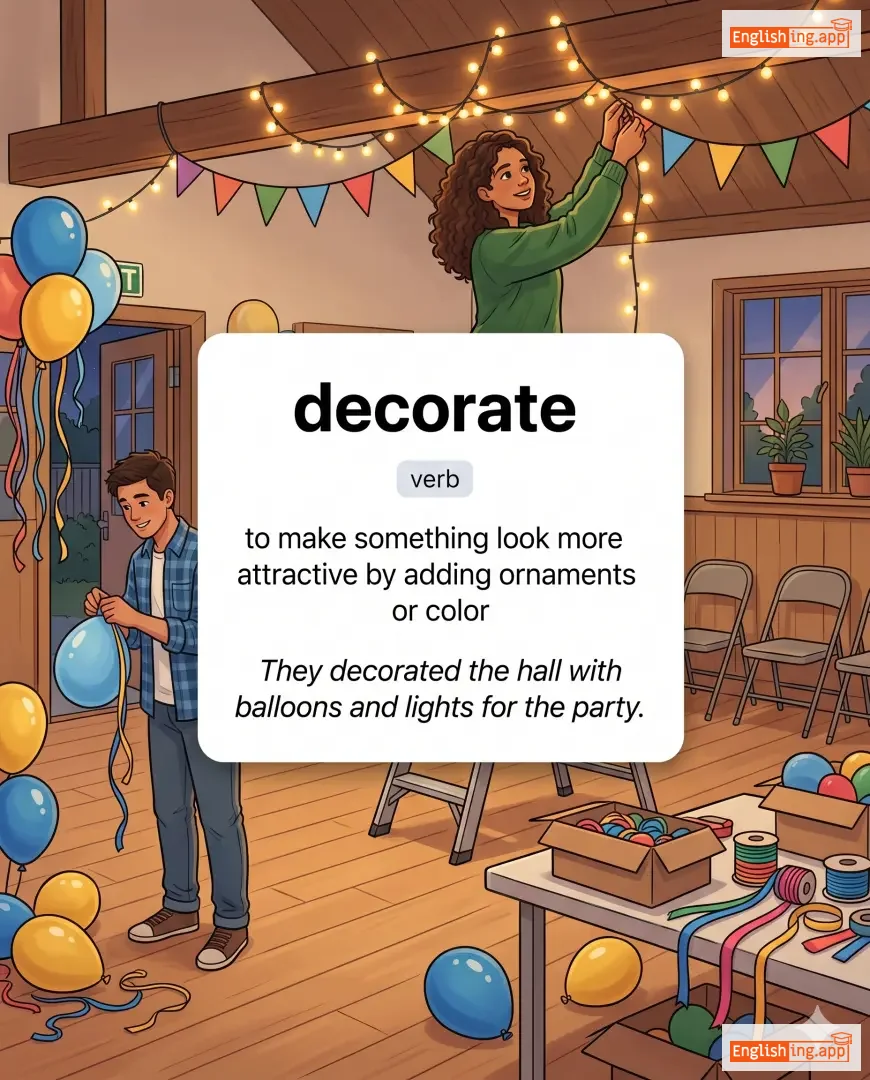
to make something look more attractive by adding ornaments or color
••••••
|
They decorated the hall with balloons and lights for the party. |
- •••••• |
decorate the truth |
to exaggerate or add details to make a story more interesting
••••••
|
- •••••• |
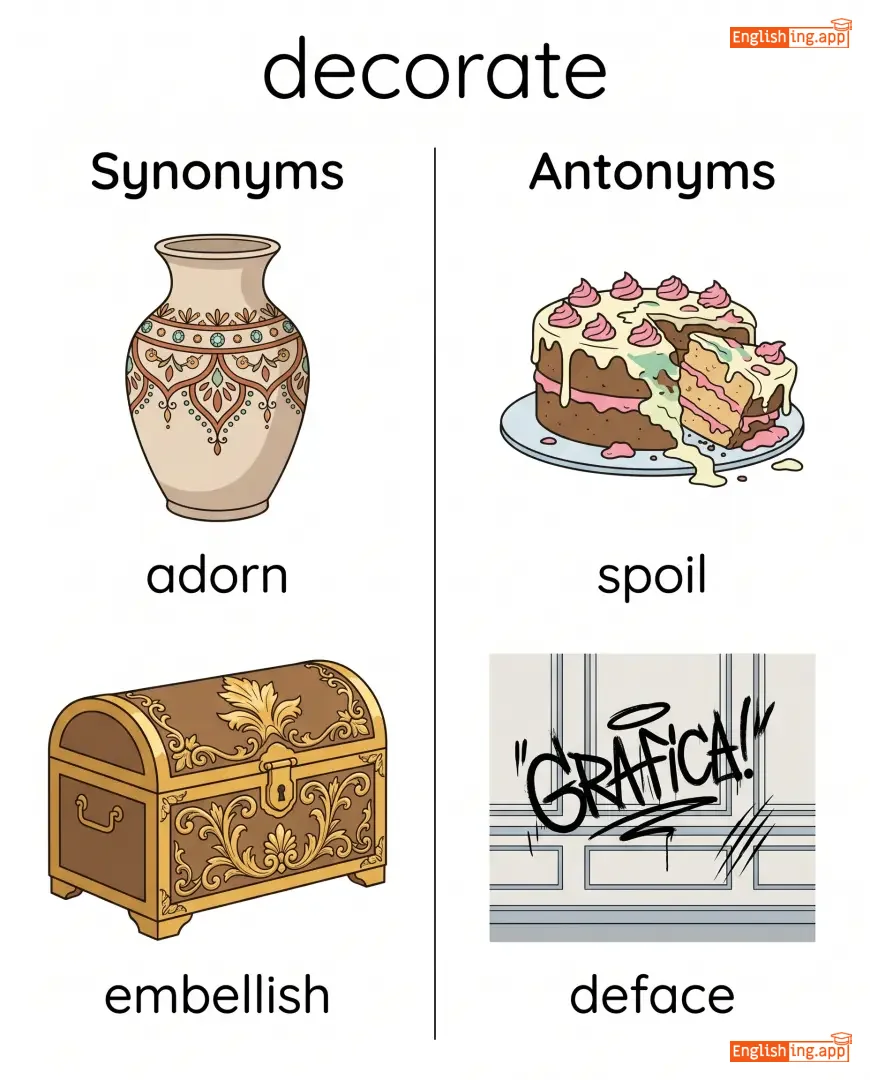
adorn, embellish, beautify, garnish, ornament
••••••
|
spoil, deface, mar
••••••
|
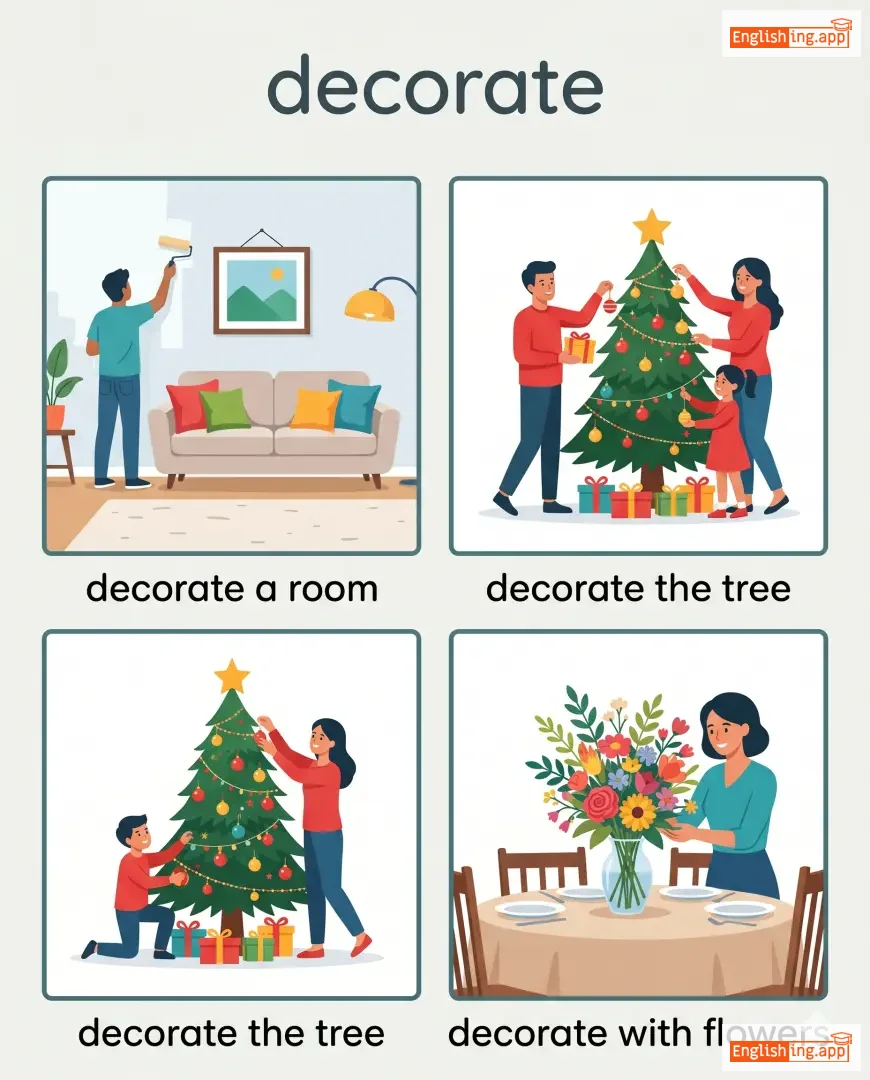
decorate a room, decorate the tree, decorate with flowers, decorate beautifully
••••••
|
No •••••• |
|
🎨
••••••
|
/ˌdek.əˈreɪ.ʃən/
noun
(dekoreishon)
••••••
|
- •••••• |
装飾; 飾り; 賞;
sōshoku, kazari, shō
••••••
|
- •••••• | - •••••• | - •••••• | - •••••• |
the process or art of decorating something; ornamental items used to beautify
••••••
|
The Christmas decoration transformed the ordinary room into a festive wonderland.
クリスマスのデコレーションは、普通の部屋をお祝いのワンダーランドに変えました。
••••••
|
クリスマスのデコレーションは、普通の部屋をお祝いのワンダーランドに変えました。
Kurisumasu no dekoreeshon wa, futsū no heya o oiwai no wandārando ni kaemashita.
••••••
|
- •••••• | - •••••• | - •••••• |
ornamentation, embellishment, adornment, beautification
••••••
|
simplicity, plainness, bareness, austerity
••••••
|
home decoration, holiday decoration, interior decoration
••••••
|
装飾が空間を美しく変えるように、デコレーションは部屋を祝祭に変えます。
••••••
|
|
⬇️
••••••
|
/ˈdiːkriːs/ (noun), /dɪˈkriːs/ (verb)
verb/noun
••••••
|
- •••••• | - •••••• |
decreased
••••••
|
decreased
••••••
|
decreases
••••••
|
decreasing
••••••
|
To become or make something smaller or fewer in number, amount, or degree.
••••••
|
The population of the town has decreased over the years. |
- •••••• |
decrease by half |
to reduce something to 50% of its original size or number
••••••
|
- •••••• |
reduce, diminish, lessen, cut, drop
••••••
|
increase, grow, rise
••••••
|
sharp decrease, gradual decrease, decrease in value, decrease rate
••••••
|
No •••••• |
|
🙏
••••••
|
/ˈdɛdɪkeɪt/
verb
(デディケイト)
••••••
|
- •••••• |
捧げる
sasageru
••••••
|
dedicated
デディケイティッド
••••••
|
dedicated
デディケイティッド
••••••
|
dedicates
デディケイツ
••••••
|
dedicating
デディケイティング
••••••
|
to devote time, effort, or oneself to a particular purpose or person
••••••
|
She dedicated her life to helping the poor.
彼女は貧しい人々を助けるために自分の人生を捧げました。
••••••
|
彼女は貧しい人々を助けるために自分の人生を捧げました。
Kanojo wa mazushii hitobito o tasukeru tame ni jibun no jinsei o sasagemashita.
••••••
|
dedicate oneself to
自分を捧げる
••••••
|
to commit oneself fully to something
••••••
|
何かに全力を捧げる
nanika ni zenryoku o sasageru
••••••
|
devote, commit, allocate, apply, surrender
••••••
|
neglect, ignore, abandon
••••••
|
dedicate time, dedicate effort, dedicate a book, dedicate resources
••••••
|
Dedicate は捧げる — まるで自分の一日と力を何かに捧げているような感じです。
••••••
|
|
💪
••••••
|
/ˈdɛdɪˌkeɪtɪd/
adjective
(デディケイテッド)
••••••
|
- •••••• |
献身的な
kenshinteki na
••••••
|
- •••••• | - •••••• | - •••••• | - •••••• |
devoted to a cause, task, or purpose
••••••
|
She is a dedicated teacher who goes above and beyond for her students. |
彼女は生徒のために上を行き、限界を超えていく献身的な教師です。
Kanojo wa seito no tame ni ue o iki, genkai o koete iku kenshinteki na kyoushi desu.
••••••
|
- •••••• | - •••••• | - •••••• |
committed, devoted, passionate, loyal
••••••
|
indifferent, apathetic, disinterested
••••••
|
dedicated worker, dedicated employee, dedicated to success
••••••
|
A dedicated person is **献身的な (kenshinteki na)** to their **task (仕事)**.
••••••
|
|
🎯
••••••
|
/ˌdɛdɪˈkeɪʃən/
noun
(dedikēshon)
••••••
|
|
献身
kenshin
••••••
|
- •••••• | - •••••• | - •••••• | - •••••• |
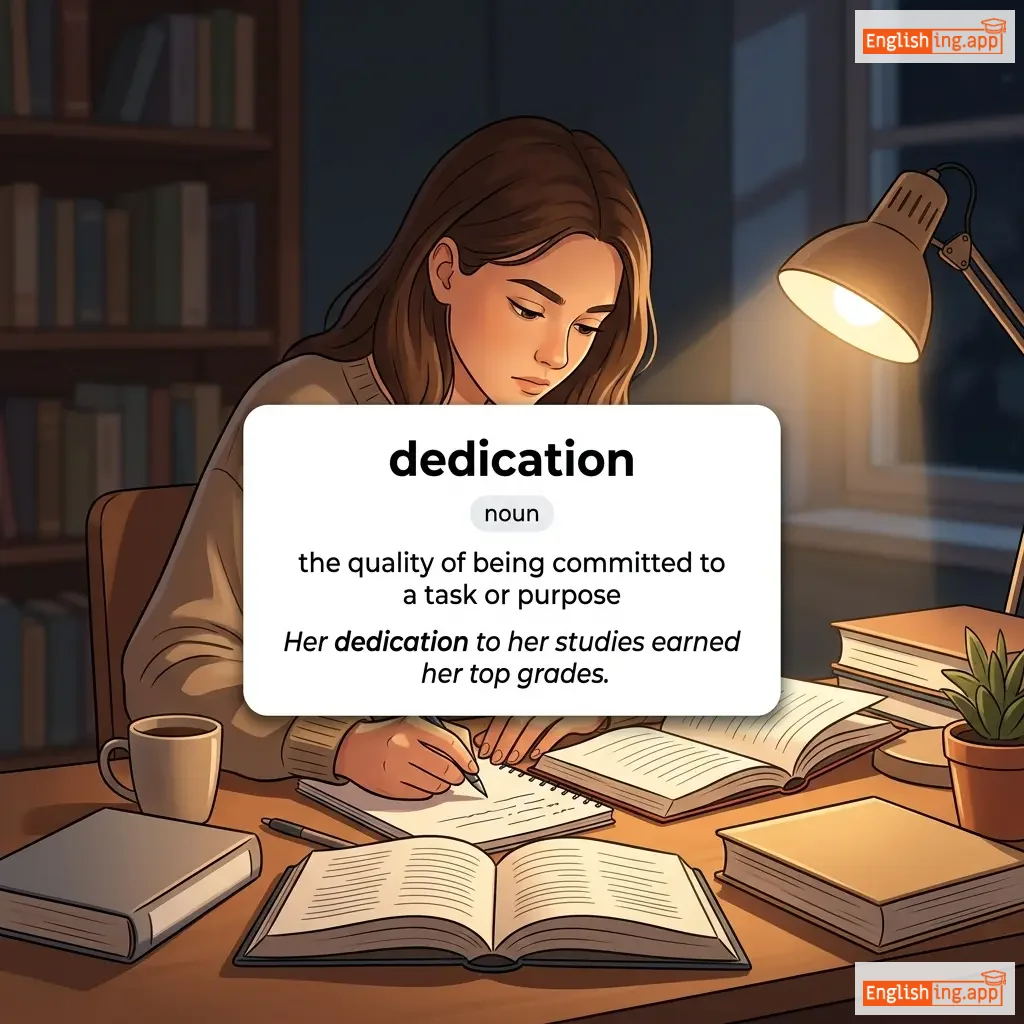
the quality of being committed to a task or purpose
••••••
|
Her dedication to her studies earned her top grades. |
彼女の勉強への献身は、最高の成績を得ることを可能にした。
Kanojo no benkyou e no kenshin wa, saikou no seiseki o eru koto o kanou ni shita.
••••••
|
dedication ceremony |
a formal event to dedicate a building or monument
••••••
|
献身式
kenshin-shiki
••••••
|
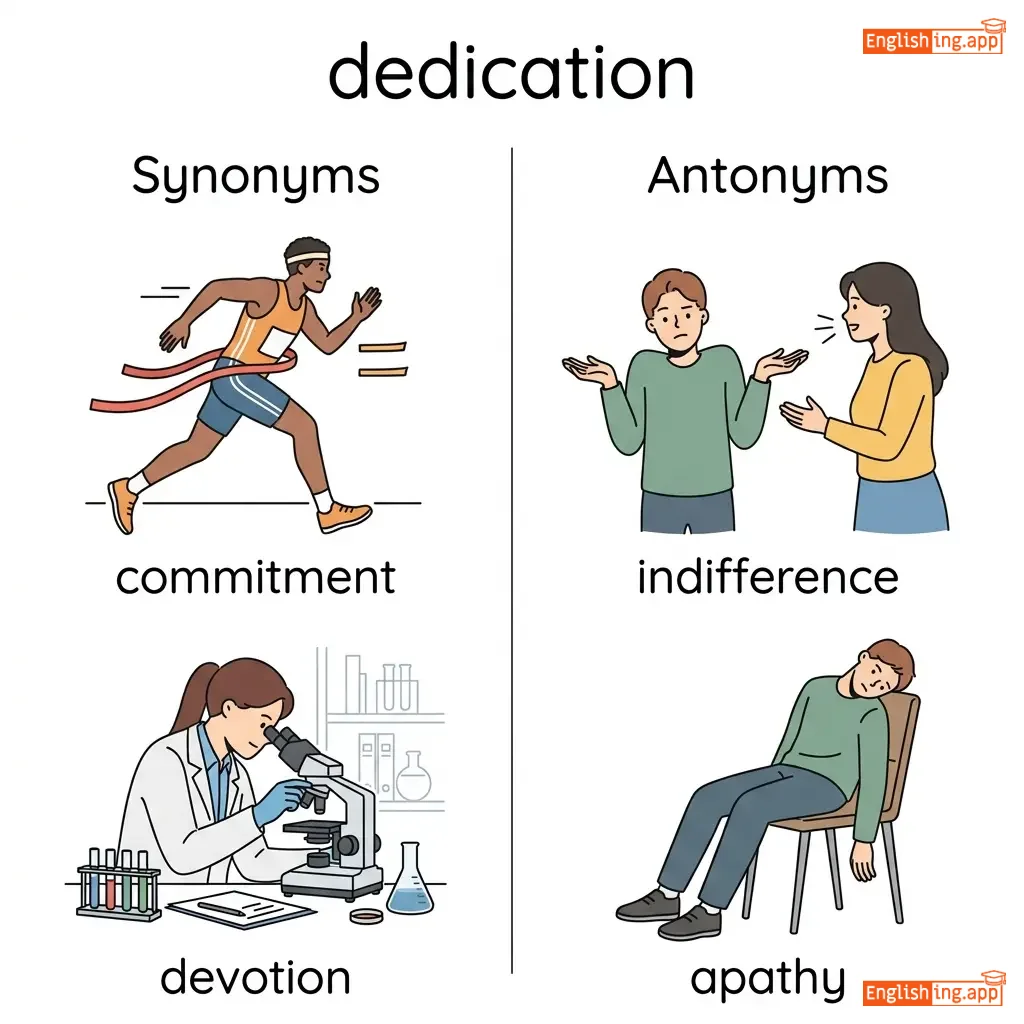
commitment, devotion, perseverance, loyalty, diligence
••••••
|
indifference, apathy, neglect
••••••
|
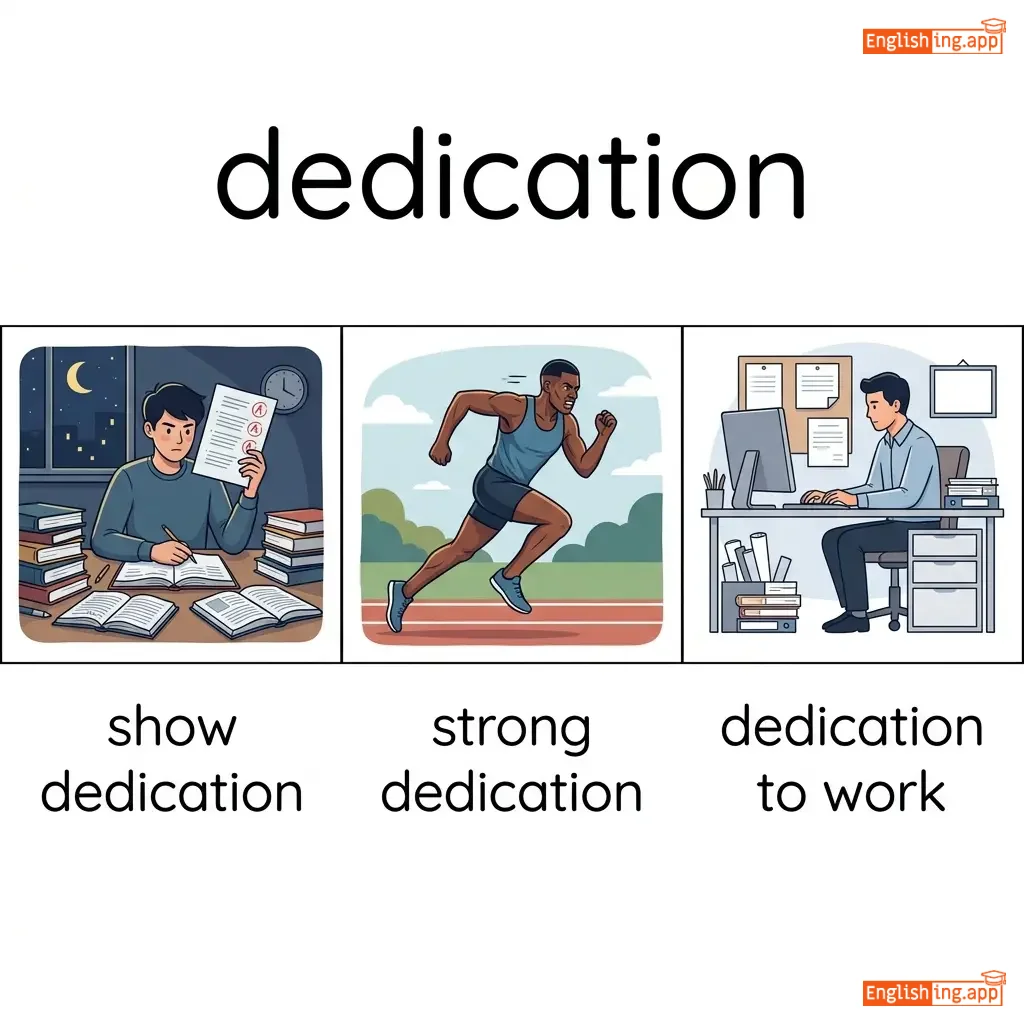
show dedication, strong dedication, dedication to work, dedication and hard work
••••••
|
Dedication は献身のようなもので、勉強に全力を尽くす学生のように。
••••••
|
|
📄
••••••
|
/diːd/
noun
(ディード)
••••••
|
- •••••• |
行為; 偉業; 法的文書;
kōi, igyō, houteki bunsho
••••••
|
- •••••• | - •••••• | - •••••• | - •••••• |
an action that is performed intentionally or consciously; a legal document showing ownership
••••••
|
His heroic deed saved the child from drowning in the river. |
彼の英雄的な行為は子供を川で溺れさせないように救った。
kare no eiyūteki na kōi wa kodomo o kawa de oboresasenai yō ni sukutta.
••••••
|
- •••••• | - •••••• | - •••••• |
action, act, exploit, feat
••••••
|
inaction, neglect, omission
••••••
|
good deed, heroic deed, property deed
••••••
|
'Deed'を'法的文書'または'英雄的行為'として覚えよう。
••••••
|
|
⚖️
••••••
|
/diːm/
verb
(dīm)
••••••
|
- •••••• |
みなす, 判断する
minasu, handan suru
••••••
|
deemed
dīmd
••••••
|
deemed
dīmd
••••••
|
deems
dīms
••••••
|
deeming
dīming
••••••
|
to regard or consider in a specified way
••••••
|
The project was deemed a success by the board.
そのプロジェクトは理事会によって成功だと見なされました。
••••••
|
そのプロジェクトは理事会によって成功だと見なされました。
Sono purojekuto wa rijikai ni yotte seikou da to minasaremashita.
••••••
|
- •••••• | - •••••• | - •••••• |
consider, regard, judge, view, think
••••••
|
ignore, disregard, overlook
••••••
|
deem necessary, deem appropriate, deem fit, deem important
••••••
|
DeemはDreamのようなもので、何かを評価または判断することです。
••••••
|
|
🌊
••••••
|
/diːp/
adjective
(ハピネス)
••••••
|
- •••••• |
幸せ
shiawase
••••••
|
- •••••• | - •••••• | - •••••• | - •••••• |
extending far down from the top or surface; profound or intense
••••••
|
The lake is very deep in the middle. |
彼女は賞を受け取ったとき、幸せを隠すことができませんでした。
Kanojo wa shō o uketotta toki, shiawase o kakusu koto ga dekimasen deshita.
••••••
|
deep down |
used to describe a person's true feelings or thoughts that may not be expressed openly
••••••
|
幸せを追い求める
shiawase o oi motomeru
••••••
|
profound, intense, bottomless, vast, thorough
••••••
|
shallow, superficial
••••••
|
deep water, deep sleep, deep thought, deep voice, deep sea
••••••
|
幸せは心の中の喜び
••••••
|
|
❤️
••••••
|
/ˈdiːpli/
adverb
(dīpuri)
••••••
|
- •••••• |
深く
fukaku
••••••
|
- •••••• | - •••••• | - •••••• | - •••••• |
to a great depth, extent, or intensity
••••••
|
She was deeply moved by the speech. |
彼女はスピーチに深く感動しました。
Kanojo wa supīchi ni fukaku kandō shimashita.
••••••
|
deeply rooted |
firmly established or ingrained
••••••
|
深く根ざした
fukaku nezashita
••••••
|
profoundly, intensely, strongly, greatly
••••••
|
lightly, superficially
••••••
|
deeply moved, deeply concerned, deeply sorry, deeply involved
••••••
|
Deeply は深くを意味します — She loves deeply = 彼女は深く愛しています
••••••
|
|
🦌
••••••
|
/dɪr/
noun
(ディア)
••••••
|
- •••••• |
鹿
shika
••••••
|
- •••••• | - •••••• | - •••••• | - •••••• |
a graceful wild animal with long legs and antlers, often living in forests
••••••
|
A deer ran across the road suddenly. |
一頭の鹿が突然道路を横切った。
Ittō no shika ga totsuzen dōro o yokogitta.
••••••
|
- •••••• | - •••••• | - •••••• |
stag, buck, doe, fawn
••••••
|
predator, carnivore
••••••
|
wild deer, deer hunting, herd of deer, deer park
••••••
|
Deer は鹿を意味します — 森の中を駆け抜ける鹿を想像してください (鹿が森の中を走っています)
••••••
|
|
⚠️
••••••
|
/dɪˈfɔːlt/
noun, verb
(デフォルト)
••••••
|
|
デフォルト
deforuto
••••••
|
defaulted
デフォルテッド
••••••
|
defaulted
デフォルテッド
••••••
|
defaults
デフォルツ
••••••
|
defaulting
デフォルティング
••••••
|
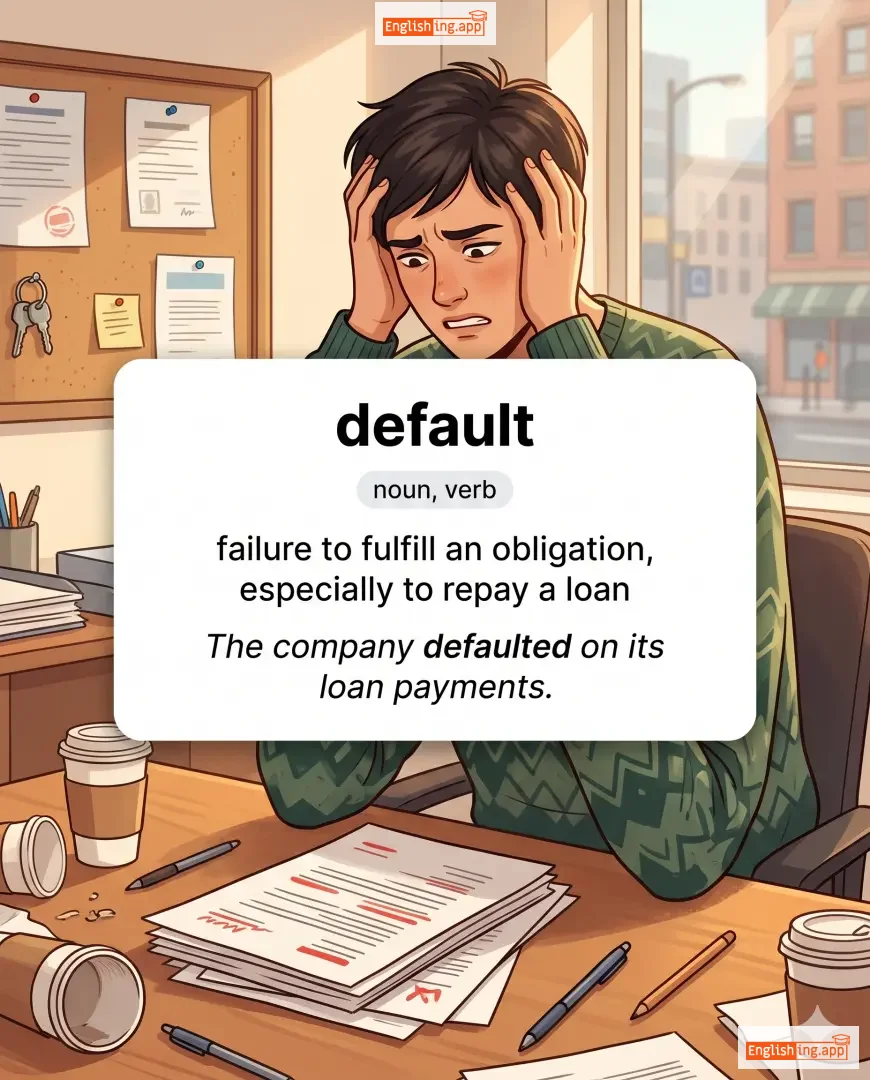
failure to fulfill an obligation, especially to repay a loan
••••••
|
The company defaulted on its loan payments.
会社はローンの支払いでデフォルトしました。
••••••
|
会社はローンの支払いでデフォルトしました。
Kaisha wa rōn no shiharai de deforuto shimashita.
••••••
|
in default
デフォルト中
••••••
|
in a state of failing to fulfill an obligation
••••••
|
デフォルト状態
deforuto jōtai
••••••
|
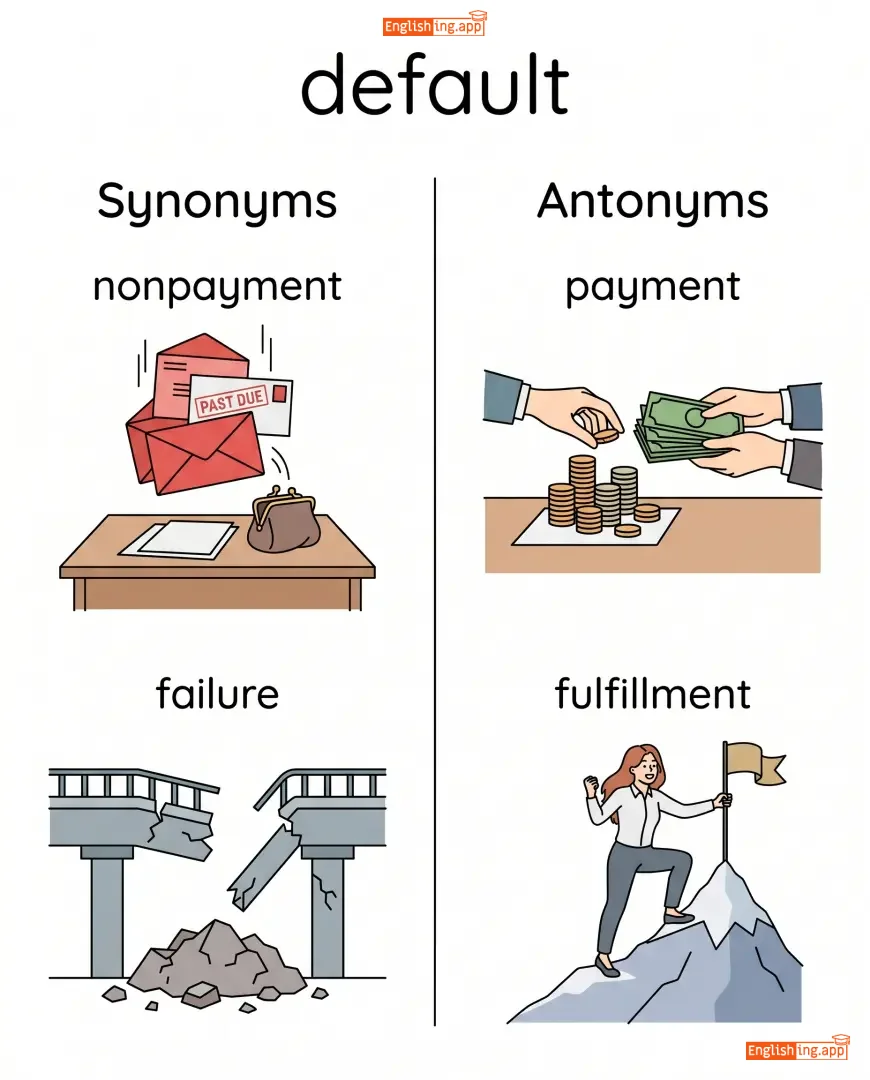
nonpayment, failure, negligence, omission
••••••
|
payment, fulfillment, compliance
••••••
|
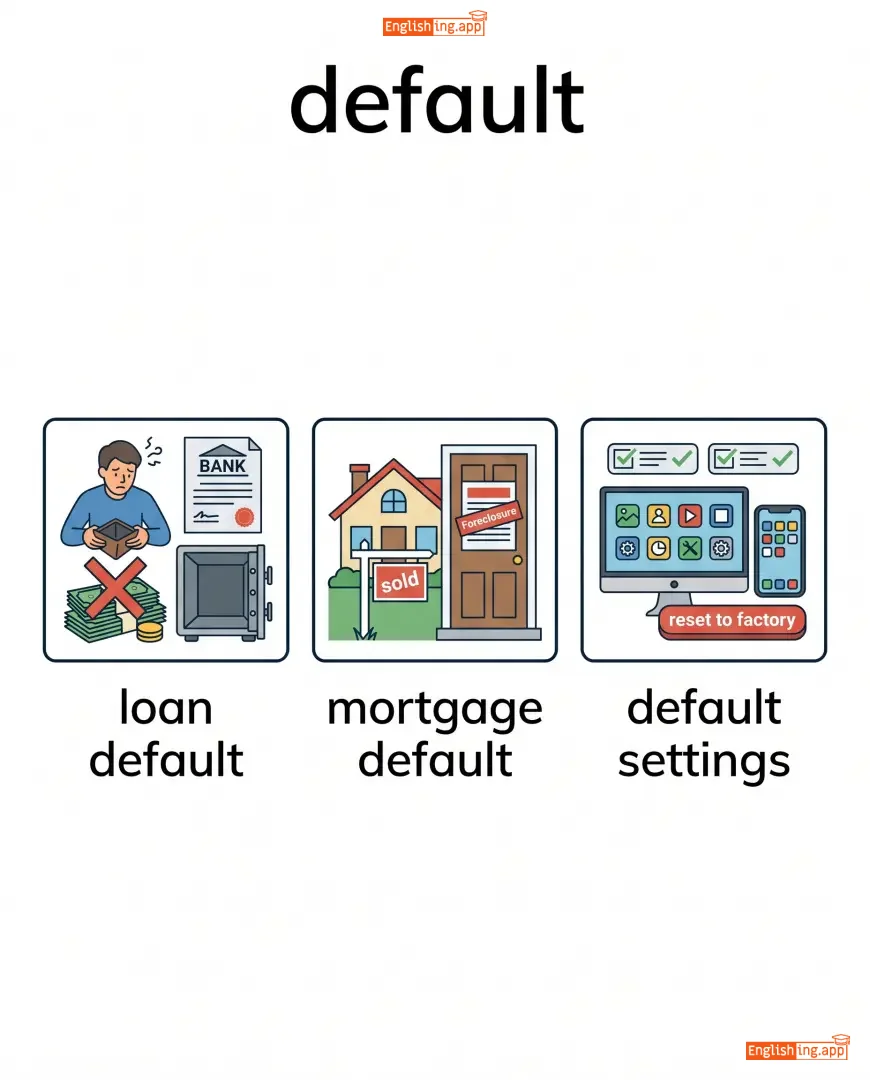
loan default, mortgage default, default settings, default judgment
••••••
|
デフォルト → 借金の返済をしない
••••••
|
|
🏆
••••••
|
/dɪˈfiːt/
verb
(デフィート)
••••••
|
- •••••• |
敗北
haiboku
••••••
|
defeated
デフィーテッド
••••••
|
defeated
デフィーテッド
••••••
|
defeats
デフィーツ
••••••
|
defeating
デフィーティング
••••••
|
to win a victory over someone or something in a competition or battle
••••••
|
Our team defeated their rivals in the final match.
私たちのチームは決勝戦で彼らのライバルを打ち負かしました。
••••••
|
私たちのチームは決勝戦で彼らのライバルを打ち負かしました。
Watashitachi no chīmu wa kesshōsen de karera no raibaru o uchi makashimashita.
••••••
|
snatch defeat from the jaws of victory
勝利の牙から敗北を奪う
••••••
|
to fail at the last moment when success seemed certain
••••••
|
勝利の牙から敗北を奪う
Shōri no kiba kara haiboku o ubau
••••••
|
conquer, overcome, beat, overpower, vanquish
••••••
|
surrender, lose, yield
••••••
|
defeat the enemy, defeat the purpose, heavy defeat, crushing defeat
••••••
|
Defeatは負けを意味します。チームが負けたら、それは敗北です。
••••••
|
|
⚠️
••••••
|
/ˈdiːfɛkt/ (noun), /dɪˈfɛkt/ (verb)
noun, verb
••••••
|
- •••••• | - •••••• |
defected
••••••
|
defected
••••••
|
defects
••••••
|
defecting
••••••
|
A shortcoming, imperfection, or flaw; or to abandon a cause or group for another.
••••••
|
The engineer found a defect in the software code. |
- •••••• |
defect from duty |
To abandon one's responsibility or loyalty.
••••••
|
- •••••• |
flaw, fault, imperfection, deficiency, weakness
••••••
|
strength, perfection, loyalty
••••••
|
manufacturing defect, genetic defect, defect in design
••••••
|
No •••••• |
|
⚔️
••••••
|
/dɪˈfɛnd/
verb
(ディフェンド)
••••••
|
- •••••• |
守る
mamoru
••••••
|
defended
ディフェンドした
••••••
|
defended
ディフェンドされた
••••••
|
defends
ディフェンドする
••••••
|
defending
ディフェンドしている
••••••
|
To protect someone or something from harm or attack.
••••••
|
The lawyer worked hard to defend her client.
弁護士は彼女のクライアントを守るために一生懸命働きました。
••••••
|
弁護士は彼女のクライアントを守るために一生懸命働きました。
Bengoshi wa kanojo no kuraianto wo mamoru tame ni isshoukenmei hatarakimashita.
••••••
|
defend one's honor
名誉を守る
••••••
|
To protect one’s reputation from criticism or insult.
••••••
|
名誉を守る
meiyo wo mamoru
••••••
|
protect, guard, shield, support, justify
••••••
|
attack, abandon, betray
••••••
|
defend a case, defend the goal, defend human rights
••••••
|
守るというのは、弁護士がクライアントを守ることです。
••••••
|
|
⚖️
••••••
|
/dɪˈfen.dənt/
noun
(ディフェンダント)
••••••
|
- •••••• |
被告
hikoku
••••••
|
- •••••• | - •••••• | - •••••• | - •••••• |
an individual, company, or institution sued or accused in a court of law
••••••
|
The defendant pleaded not guilty to all charges brought against him. |
被告は、彼に対するすべての告発に対して無罪を主張しました。
Hikoku wa, kare ni taisuru subete no kokuhatsu ni taishite muzai o shuchou shimashita.
••••••
|
- •••••• | - •••••• | - •••••• |
accused, respondent, litigant
••••••
|
plaintiff, prosecutor, accuser
••••••
|
criminal defendant, civil defendant, defendant's rights
••••••
|
被告は法廷で自分を弁護する役割を果たします。
••••••
|
|
🛡️
••••••
|
/dɪˈfɛndər/
noun
(ディフェンダー)
••••••
|
- •••••• |
ディフェンダー
difendā
••••••
|
- •••••• | - •••••• | - •••••• | - •••••• |
a person who protects someone or something from harm or attack
••••••
|
The defender blocked the shot and saved the goal. |
ディフェンダーはシュートをブロックし、ゴールを守った。
Difendā wa shūto o burokkushi, gōru o mamotta.
••••••
|
stand as a defender of |
to support or protect something or someone
••••••
|
……のディフェンダーとして立つ
...... no difendā toshite tatsu
••••••
|
protector, guardian, champion, advocate, supporter
••••••
|
attacker, enemy, opponent
••••••
|
football defender, human rights defender, defender of justice
••••••
|
ディフェンダーは守る人—まるで守護者のように。
••••••
|
|
🛡️
••••••
|
/dɪˈfɛns/
noun
(ハピネス)
••••••
|
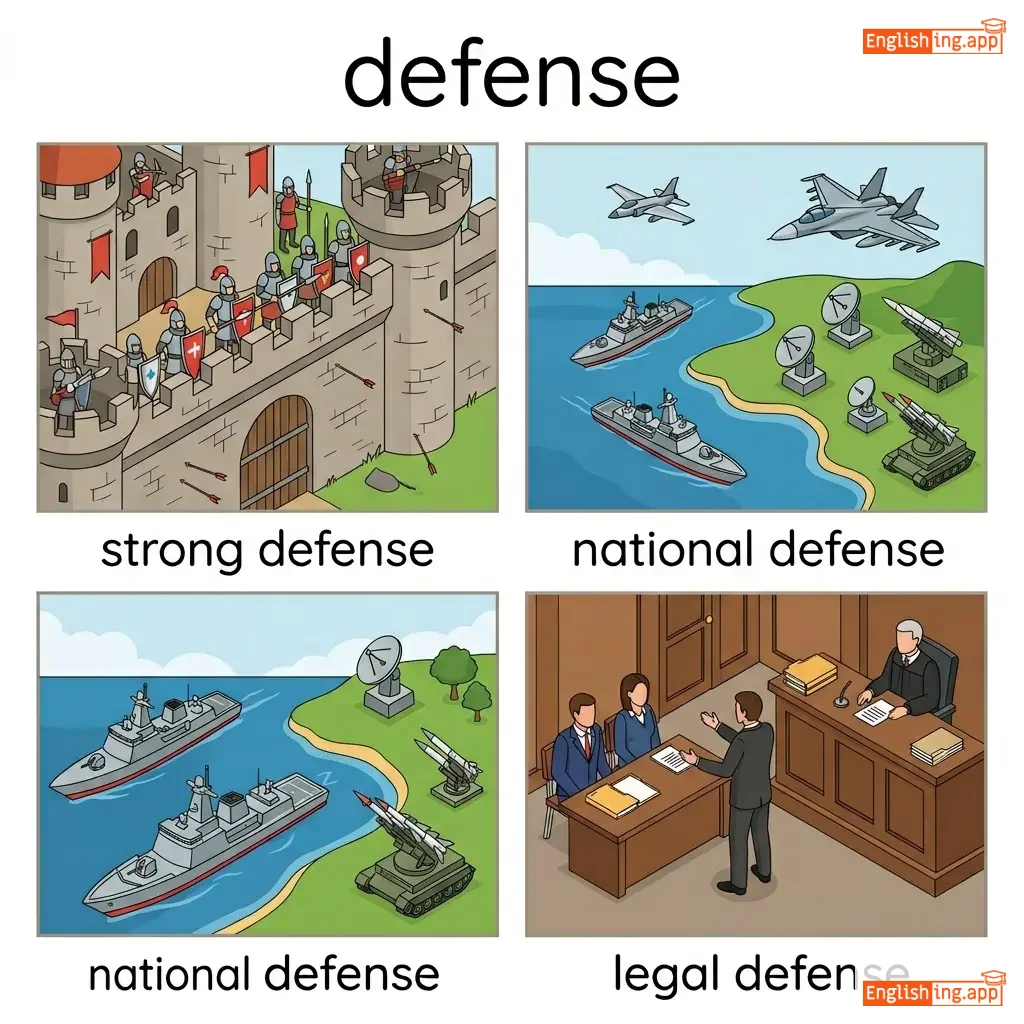
|
幸福
koufuku
••••••
|
- •••••• | - •••••• | - •••••• | - •••••• |
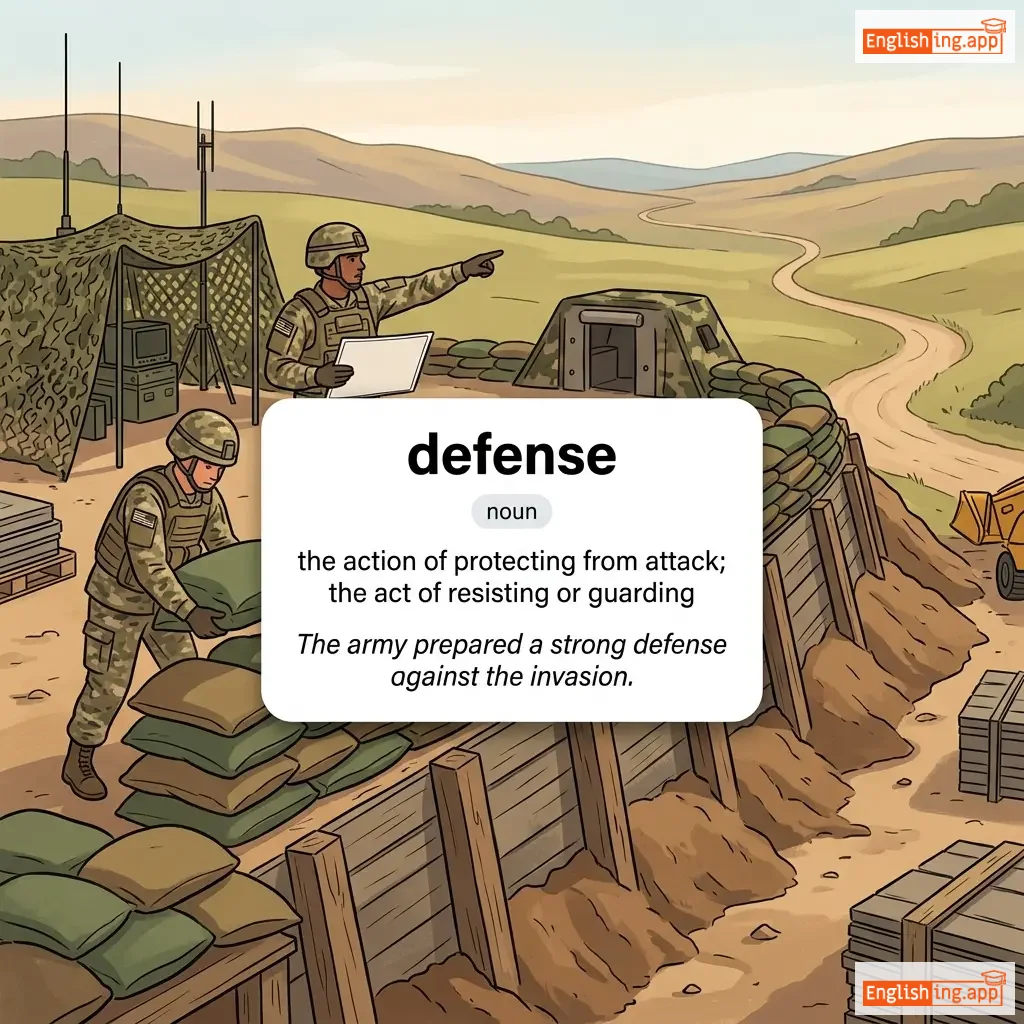
the action of protecting from attack; the act of resisting or guarding
••••••
|
The army prepared a strong defense against the invasion. |
彼女は賞を受け取ったとき、喜びを隠すことができませんでした。
Kanojo wa shō o uketotta toki, yorokobi o kakusu koto ga dekimasen deshita.
••••••
|
defense mechanism |
an unconscious psychological strategy used to protect oneself from anxiety
••••••
|
幸福の追求
Kōfuku no tsuikyū
••••••
|
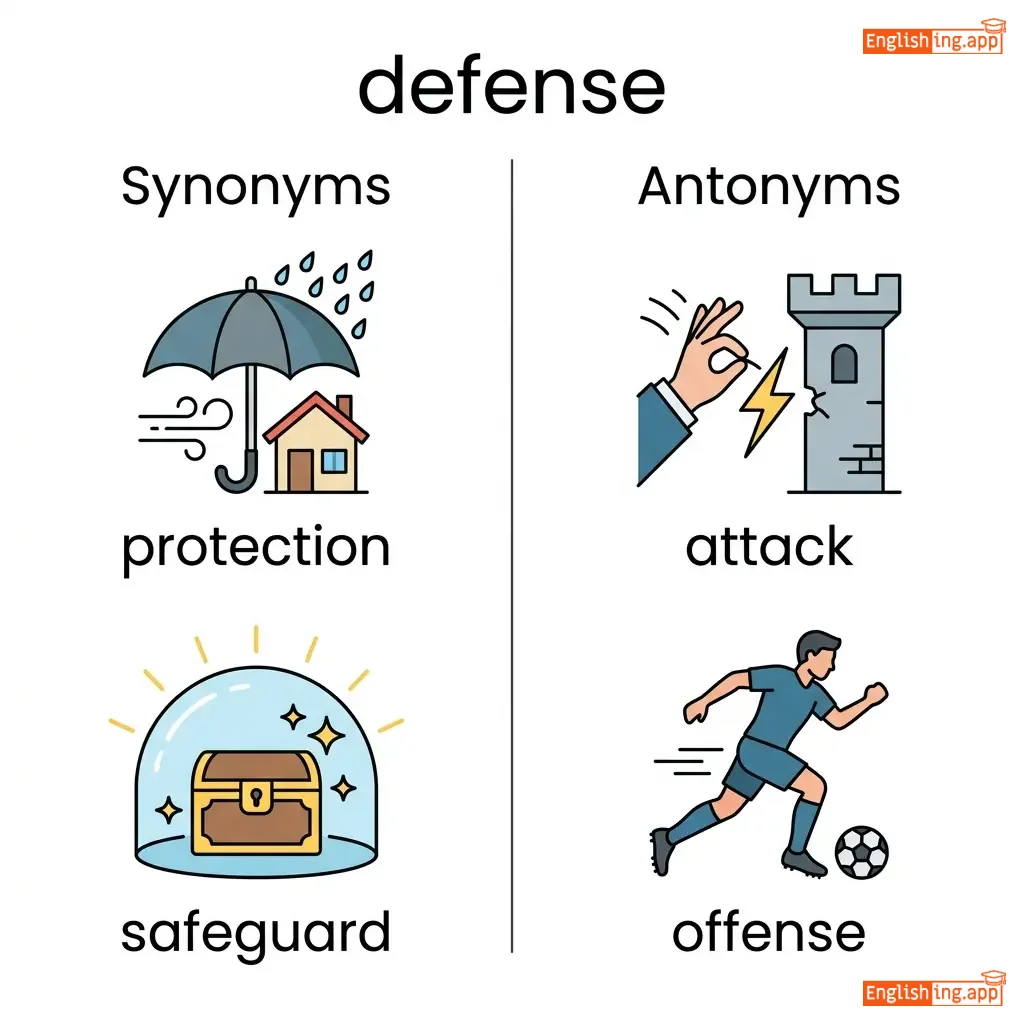
protection, safeguard, security, resistance
••••••
|
attack, offense
••••••
|
strong defense, national defense, legal defense, defense system
••••••
|
幸福 = 幸せを感じる、心の中の平和。
••••••
|
|
🛡️
••••••
|
/dɪˈfɛnsɪv/
adjective
(ディフェンシブ)
••••••
|
- •••••• |
防御的な
bōgyo-teki na
••••••
|
- •••••• | - •••••• | - •••••• | - •••••• |
Intended to protect or defend; behaving in a way to guard against criticism or attack.
••••••
|
He became defensive when asked about his mistake. |
彼は自分のミスについて尋ねられると防御的になった。
Kare wa jibun no misu ni tsuite tazunerareru to bōgyo-teki ni natta.
••••••
|
defensive stance |
A protective or guarded position in argument or conflict.
••••••
|
防御的な姿勢
bōgyo-teki na shisei
••••••
|
protective, guarded, cautious, shielding
••••••
|
offensive, aggressive, open
••••••
|
defensive behavior, defensive mechanism, defensive reaction, defensive stance
••••••
|
防御的なものは盾のように 🛡️ - 批判から自分を守る。
••••••
|
|
⚠️
••••••
|
/dɪˈfɪʃ.ən.si/
noun
(デフィシエンシー)
••••••
|
- •••••• |
欠乏
ketsubou
••••••
|
- •••••• | - •••••• | - •••••• | - •••••• |
a lack or shortage of something that is necessary
••••••
|
The doctor diagnosed him with a vitamin D deficiency. |
医者は彼にビタミンD欠乏症と診断しました。
Isha wa kare ni bitamin D ketsubou shou to shindan shimashita.
••••••
|
iron deficiency |
a lack of sufficient iron in the body
••••••
|
鉄欠乏症
tetsu ketsubou shou
••••••
|
shortage, lack, insufficiency, scarcity, inadequacy
••••••
|
abundance, sufficiency, excess
••••••
|
vitamin deficiency, iron deficiency, nutritional deficiency, deficiency disease
••••••
|
欠乏は不足を意味します – 'デフィ'は不足を意味するので、魚に何もないため、欠乏です。
••••••
|

