|
表情符号
|
单词 | Images | 翻译 | 过去时 | 过去分词 | 第三人称单数 | 动名词 | 含义 | 例句 | 例句翻译 | 示例表达 | 示例表达含义 | 示例表达翻译 | 同义词 | 反义词 | 搭配词 | 助记符 |
|---|---|---|---|---|---|---|---|---|---|---|---|---|---|---|---|---|---|
|
🌑
••••••
|
/ˈdɑːrkən/
verb
(达肯)
••••••
|
- •••••• |
变暗
bian an
••••••
|
darkened
达肯德
••••••
|
darkened
达肯德
••••••
|
darkens
达肯兹
••••••
|
darkening
达肯宁
••••••
|
to make or become dark; to reduce brightness or light
••••••
|
The clouds began to darken the sky before the storm.
云开始在暴风雨前把天空达肯。
••••••
|
暴风雨来临前,乌云开始使天空变暗。
Baofengyu lailin qian wuyun kaishi shi tiankong bian an
••••••
|
darken the mood
达肯 情绪
••••••
|
to make the atmosphere or feelings more negative or sad
••••••
|
使气氛变暗
shi qifen bian an
••••••
|
dim, blacken, shade, obscure, dull
••••••
|
brighten, lighten, illuminate
••••••
|
darken the sky, darken a room, darken the mood, darken with age
••••••
|
暗 = dark, 变暗 = darken
••••••
|
|
🌑
••••••
|
/ˈdɑːrk.nəs/
noun
(黑暗)
••••••
|
- •••••• |
黑暗
hei an
••••••
|
- •••••• | - •••••• | - •••••• | - •••••• |
The absence of light; the state of being dark.
••••••
|
The room was filled with darkness after the lights went out. |
当灯光熄灭后,房间充满了黑暗。
Dang dengguang ximie hou, fangjian chongman le heian.
••••••
|
pitch darkness |
complete absence of light
••••••
|
完全黑暗
wanquan heian
••••••
|
gloom, shadow, obscurity, night
••••••
|
light, brightness, daylight
••••••
|
in darkness, total darkness, fall into darkness, fear of darkness
••••••
|
黑暗是当光不在时,周围都是黑的。
••••••
|
|
📊
••••••
|
/ˈdeɪ.tə/ or /ˈdæt.ə/
noun
(数据)
••••••
|
- •••••• |
数据
shuju
••••••
|
- •••••• | - •••••• | - •••••• | - •••••• |
Facts, statistics, or information collected for reference or analysis.
••••••
|
The scientists analyzed the data to find patterns. |
科学家分析了数据以寻找模式。
Kēxuéjiā fēnxīle shùjù yǐ xúnzhǎo móshì.
••••••
|
data-driven |
based on analysis of information or evidence
••••••
|
数据驱动
shuju qudong
••••••
|
information, facts, statistics, figures
••••••
|
assumptions, guesses
••••••
|
collect data, analyze data, data set, process data
••••••
|
数据就像导航帮助我们找到信息。
••••••
|
|
💾
••••••
|
/ˈdeɪtəbeɪs/
noun
(dèitǎbèi sī)
••••••
|
- •••••• |
数据库
shùjùkù
••••••
|
- •••••• | - •••••• | - •••••• | - •••••• |
a structured collection of data stored and accessed electronically
••••••
|
The company's customer details are stored in a secure database.
公司的客户信息存储在一个安全的数据库中。
••••••
|
公司的客户信息存储在一个安全的数据库中。
Gōngsī de kèhù xìnxī cúnchú zài yīgè ānquán de shùjùkù zhōng.
••••••
|
- •••••• | - •••••• | - •••••• |
data store, data system, repository, archive, registry
••••••
|
paper files, disorganization
••••••
|
create database, access database, database management, database server
••••••
|
Data 和 Base — 存储数据的数据库 💾
••••••
|
|
📅
••••••
|
/deɪt/
noun/verb
••••••
|
- •••••• | - •••••• |
dated
••••••
|
dated
••••••
|
dates
••••••
|
dating
••••••
|
A particular day of the month or year; also, a social or romantic appointment.
••••••
|
They decided to meet on the date of her birthday. |
- •••••• |
blind date |
a romantic meeting with someone you have not met before
••••••
|
- •••••• |
day, appointment, meeting, outing
••••••
|
indefinite, timeless
••••••
|
set a date, important date, go on a date, due date
••••••
|
No •••••• |
|
👧
••••••
|
/ˈdɔːtər/
noun
(dàotè)
••••••
|
- •••••• |
女儿
nǚ'ér
••••••
|
- •••••• | - •••••• | - •••••• | - •••••• |
a female child in relation to her parents
••••••
|
They are proud of their daughter for graduating college. |
他们为女儿毕业于大学而感到骄傲。
tāmen wèi nǚ'ér bìyè yú dàxué ér gǎndào jiāo'ào.
••••••
|
apple of her father's eye |
a phrase used to describe a beloved daughter
••••••
|
父亲眼中的宝贝
fùqīn yǎnzhōng de bǎobèi
••••••
|
girl child, offspring, child, descendant
••••••
|
son, parent
••••••
|
eldest daughter, only daughter, daughter-in-law, proud daughter
••••••
|
Daughter 意味着女儿,像父亲眼中的宝贝。
••••••
|
|
🌅
••••••
|
/dɔːn/
noun, verb
(dawn)
••••••
|
- •••••• |
黎明
liming
••••••
|
dawned
dawned
••••••
|
dawned
dawned
••••••
|
dawns
dawns
••••••
|
dawning
dawning
••••••
|
The first appearance of light in the sky before sunrise; to begin or become apparent.
••••••
|
Hope began to dawn in her heart after hearing the good news.
Hope began to dawn in her heart after hearing the good news.
••••••
|
在听到好消息后,希望在她的心中开始黎明。
Zai tingdao hao xiaoxi hou, xiwang zai ta de xinzhi kaishi liming.
••••••
|
crack of dawn
crack of dawn
••••••
|
Very early in the morning.
••••••
|
黎明时分
liming shifen
••••••
|
sunrise, daybreak, morning, beginning, start
••••••
|
sunset, dusk, end
••••••
|
at dawn, before dawn, dawn of a new era, dawn breaks
••••••
|
Dawn是黎明,新的日子的开始。
••••••
|
|
🌞
••••••
|
/deɪ/
noun
(天)
••••••
|
- •••••• |
天
tian
••••••
|
- •••••• | - •••••• | - •••••• | - •••••• |
a period of 24 hours or the time between sunrise and sunset
••••••
|
She enjoyed a relaxing day at the beach. |
她在海滩上度过了一个轻松的日子。
Ta zai haitan shang duoguo le yige qingsong de tianzi.
••••••
|
call it a day |
to stop working for the rest of the day
••••••
|
今天就到此为止
Jintian jiu dao ci weizhi
••••••
|
daytime, period, date, occasion
••••••
|
night, darkness
••••••
|
working day, day off, day long, happy day
••••••
|
天是太阳升起和落下的时间。
••••••
|
|
💀
••••••
|
/dɛd/
adjective, noun
(dɛd)
••••••
|
- •••••• |
死的
si de
••••••
|
- •••••• | - •••••• | - •••••• | - •••••• |
No longer alive; the end of life.
••••••
|
The old tree is completely dead. |
那棵老树已经完全死了。
Na ke lao shu yijing wanquan si le.
••••••
|
dead end |
A situation with no progress or exit.
••••••
|
死胡同
si hutong
••••••
|
lifeless, deceased, expired, gone
••••••
|
alive, living, active
••••••
|
dead body, dead silence, dead end, dead serious
••••••
|
Dead 就是死的,结束了。
••••••
|
|
⏰
••••••
|
/ˈdedlaɪn/
noun
(dɛdlaɪn)
••••••
|
- •••••• |
最后期限
zuìhòu qīxiàn
••••••
|
- •••••• | - •••••• | - •••••• | - •••••• |
the latest time or date by which something must be completed
••••••
|
We need to finish this project before the deadline. |
我们必须在最后期限之前完成这个项目。
Wǒmen bìxū zài zuìhòu qīxiàn zhīqián wánchéng zhège xiàngmù.
••••••
|
meet the deadline |
to finish something on time
••••••
|
按时完成
ànshí wánchéng
••••••
|
due date, cutoff date, time limit, target date, completion date
••••••
|
delay, extension
••••••
|
tight deadline, project deadline, meet deadline, set a deadline
••••••
|
最后期限意味着你必须按时完成任务。
••••••
|
|
☠️
••••••
|
/ˈdedli/
adjective
(dɛdli)
••••••
|
- •••••• |
致命的
zhìmìng de
••••••
|
- •••••• | - •••••• | - •••••• | - •••••• |
causing or able to cause death; extremely dangerous
••••••
|
The snake's bite is deadly to humans. |
蛇的咬伤对人类致命。
Shé de yǎoshāng duì rénlèi zhìmìng.
••••••
|
deadly serious |
completely serious; not joking
••••••
|
非常严肃
fēicháng yánsù
••••••
|
fatal, lethal, dangerous, mortal, poisonous
••••••
|
harmless, safe, mild
••••••
|
deadly weapon, deadly virus, deadly poison, deadly attack
••••••
|
Deadly 意味着致命的,就像致命的蛇咬一样!
••••••
|
|
🧏
••••••
|
/def/
adjective
(def)
••••••
|
- •••••• |
聋; 听力障碍
lóng; tīnglì zhàng'ài
••••••
|
- •••••• | - •••••• | - •••••• | - •••••• |
unable to hear; having a hearing impairment
••••••
|
The deaf child learned to communicate using sign language.
那个聋哑孩子学会了使用手语进行沟通。
••••••
|
那个聋哑孩子学会了使用手语进行沟通。
Nàgè lóng yǎ háizi xuéhuìle shǐyòng shǒuyǔ jìnxíng gōutōng.
••••••
|
- •••••• | - •••••• | - •••••• |
hearing-impaired, hard of hearing
••••••
|
hearing, able to hear
••••••
|
deaf person, deaf community, stone deaf
••••••
|
聋人无法听见,用手语交流。
••••••
|
|
🤝
••••••
|
/diːl/
verb
••••••
|
- •••••• |
幸福
xìngfú
••••••
|
dealt
••••••
|
dealt
••••••
|
deals
••••••
|
dealing
••••••
|
to distribute or give out something; to handle or manage
••••••
|
He had to deal with many problems at work. |
当她收到奖项时,她无法隐藏自己的幸福。
Dāng tā shōudào jiǎngxiàng shí, tā wúfǎ yǐncáng zìjǐ de xìngfú.
••••••
|
deal with it |
a phrase used to say one must accept or handle a situation
••••••
|
追求幸福
zhuīqiú xìngfú
••••••
|
handle, manage, cope, distribute, bargain
••••••
|
ignore, neglect, avoid
••••••
|
deal with, business deal, fair deal, deal cards
••••••
|
幸福就是你在感到快乐时追求的东西。
••••••
|
|
💼
••••••
|
/ˈdiːlər/
noun
(dìlè)
••••••
|
- •••••• |
经销商
jingxiaoshang
••••••
|
- •••••• | - •••••• | - •••••• | - •••••• |
a person or business that buys and sells goods; someone who distributes
••••••
|
The car dealer offered a discount to attract customers. |
汽车经销商提供了折扣以吸引客户。
Qiche jingxiaoshang tigongle zhekou yi xiqin kehu.
••••••
|
- •••••• | - •••••• | - •••••• |
merchant, trader, vendor, seller, distributor
••••••
|
buyer, customer
••••••
|
car dealer, art dealer, drug dealer, authorized dealer
••••••
|
Dealer意思是经销商,负责销售商品并赚钱。
••••••
|
|
💖
••••••
|
/dɪr/
adjective
(dìr)
••••••
|
- •••••• |
亲爱的
qīn'ài de
••••••
|
- •••••• | - •••••• | - •••••• | - •••••• |
loved or cherished; sometimes used as a polite form of address
••••••
|
She is very dear to her grandparents. |
她在祖父母心中非常亲爱。
tā zài zǔfùmǔ xīnzhōng fēicháng qīn'ài.
••••••
|
oh dear |
an exclamation showing surprise, worry, or sympathy
••••••
|
哦,亲爱的
ó, qīn'ài de
••••••
|
beloved, cherished, precious, valued
••••••
|
hated, disliked
••••••
|
my dear, dear friend, hold dear, oh dear
••••••
|
亲爱的就像英文的Dear,写信时我们会使用'亲爱的'。
••••••
|
|
💀
••••••
|
/dɛθ/
noun
(dɛθ)
••••••
|
- •••••• |
死亡
sǐwáng
••••••
|
- •••••• | - •••••• | - •••••• | - •••••• |
The end of life; the permanent cessation of all vital functions.
••••••
|
The news of his death shocked everyone in the village. |
他的死亡消息震惊了村里所有人。
tā de sǐwáng xiāoxī zhènjīng le cūn lǐ suǒyǒu rén.
••••••
|
a matter of life and death |
something extremely important or urgent
••••••
|
生死攸关的问题
shēngsǐ yōuguān de wèntí
••••••
|
demise, passing, end, expiration, departure
••••••
|
birth, life, existence
••••••
|
sudden death, tragic death, death penalty, cause of death, near death
••••••
|
Death在中文是死亡,记住,死亡来临时一切终结。
••••••
|
|
🗣️
••••••
|
/dɪˈbeɪt/
noun, verb
(dɪˈbeɪt)
••••••
|
- •••••• |
辩论
biànlùn
••••••
|
debated
dɪˈbeɪtɪd
••••••
|
debated
dɪˈbeɪtɪd
••••••
|
debates
dɪˈbeɪts
••••••
|
debating
dɪˈbeɪtɪŋ
••••••
|
A formal discussion on a particular topic where opposing arguments are presented.
••••••
|
The students prepared well for the school debate.
学生们为学校辩论做了充分的准备。
••••••
|
学生们为学校辩论做了充分的准备。
Xuéshēngmen wèi xuéxiào biànlùn zuòle chōngfèn de zhǔnbèi.
••••••
|
open to debate
可以辩论
••••••
|
something that is not certain or can be questioned
••••••
|
可以辩论
kěyǐ biànlùn
••••••
|
discussion, argument, dispute, deliberation, dialogue
••••••
|
agreement, harmony, consensus
••••••
|
heated debate, public debate, political debate, debate team, debate club
••••••
|
Debate 就是当你准备好辩论时, 你可以‘biànlùn’讨论各种问题!
••••••
|
|
🪨
••••••
|
/dəˈbriː/
noun
(碎片)
••••••
|
|
碎片
suipian
••••••
|
- •••••• | - •••••• | - •••••• | - •••••• |
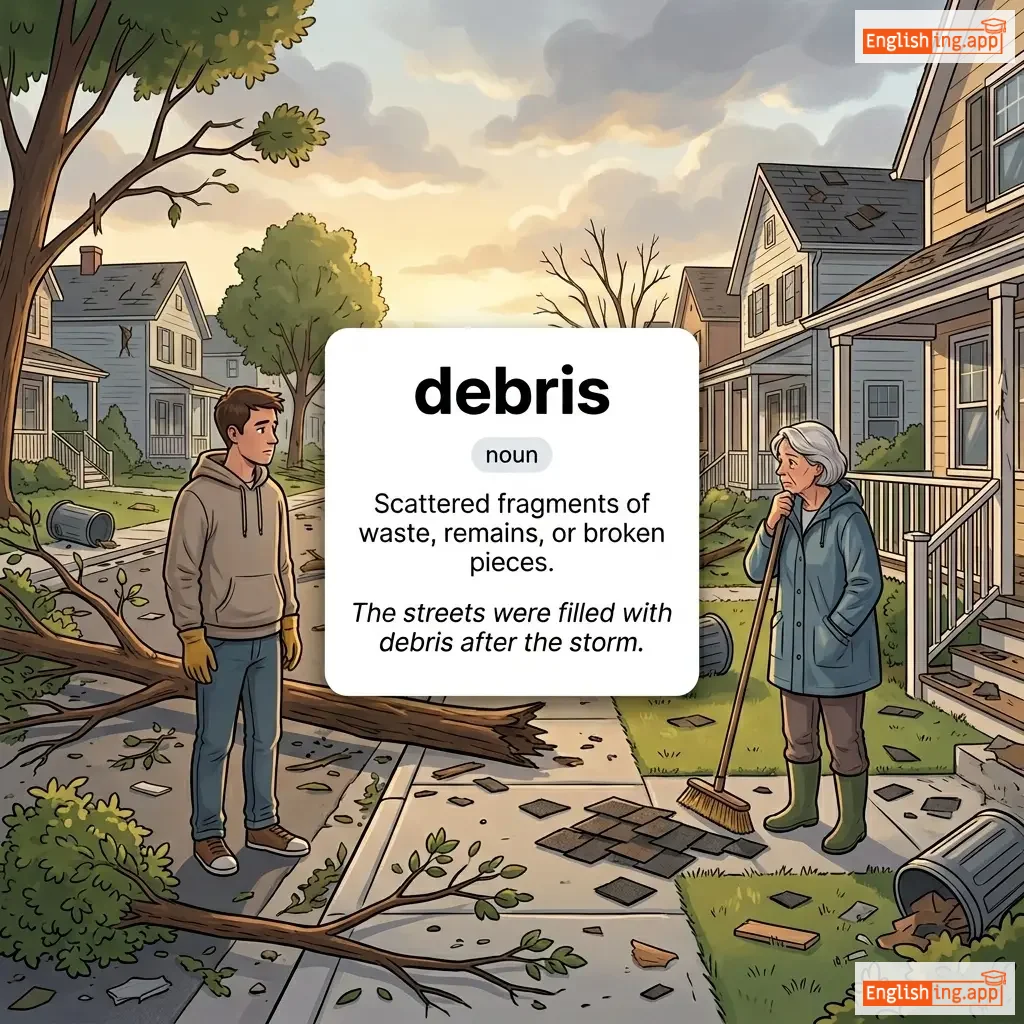
Scattered fragments of waste, remains, or broken pieces.
••••••
|
The streets were filled with debris after the storm.
风暴过后,街道上满是碎片。
••••••
|
风暴过后,街道上满是碎片。
Fengbao guo hou, jiedao shang man shi suipian.
••••••
|
clearing the debris
清理碎片
••••••
|
Removing the remains or waste after destruction.
••••••
|
清理碎片
qingli suipian
••••••
|
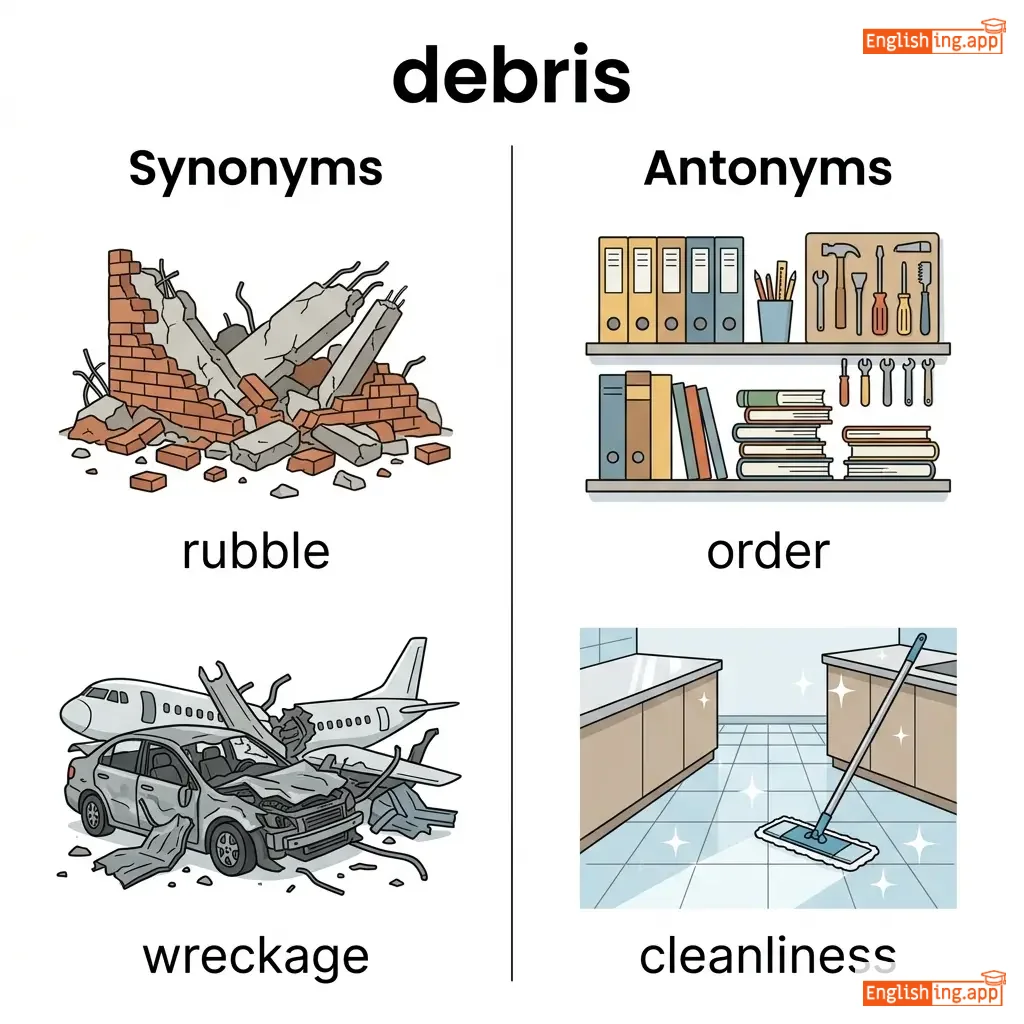
rubble, wreckage, remains, fragments, litter
••••••
|
order, cleanliness, neatness
••••••
|
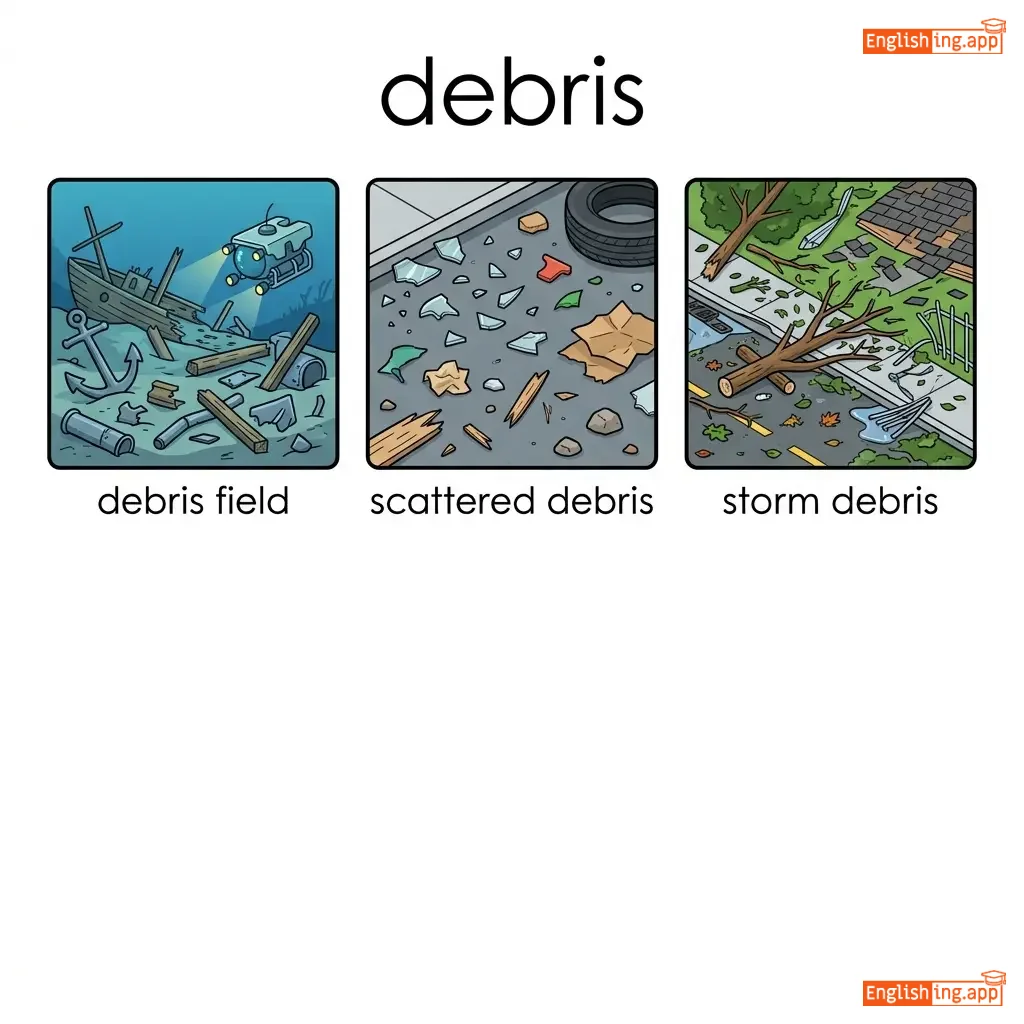
debris field, scattered debris, storm debris, clear debris
••••••
|
风暴过后,碎片(debris)布满街道。
••••••
|
|
💸
••••••
|
/dɛt/
noun
(dɛt)
••••••
|

|
债务
zhàiwù
••••••
|
- •••••• | - •••••• | - •••••• | - •••••• |
Something, typically money, that is owed or due.
••••••
|
He struggled for years to pay off his debt. |
他为偿还债务奋斗了多年。
Tā wèi chánghuán zhàiwù fèndòu le duōnián.
••••••
|
in debt |
to owe money
••••••
|
负债
fùzhài
••••••
|
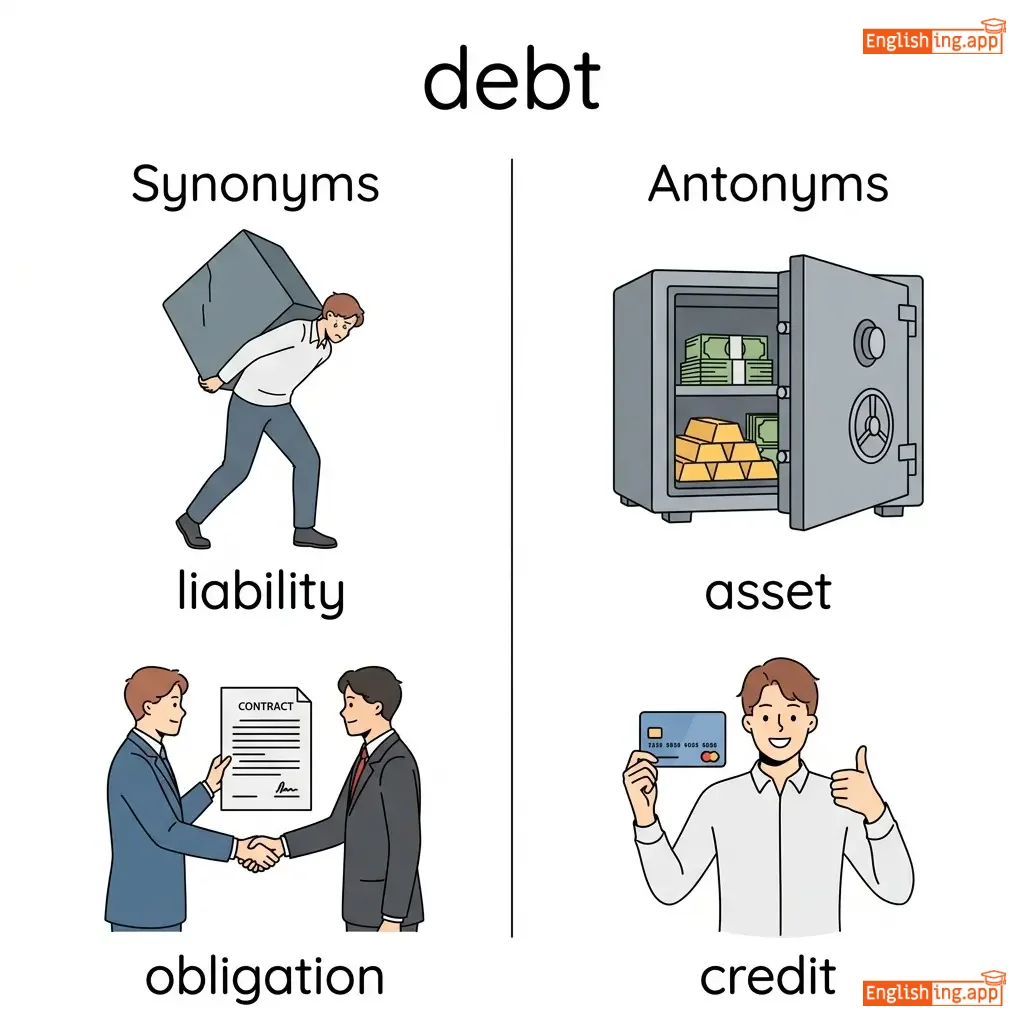
liability, obligation, arrears, dues, loan
••••••
|
asset, credit, surplus
••••••
|
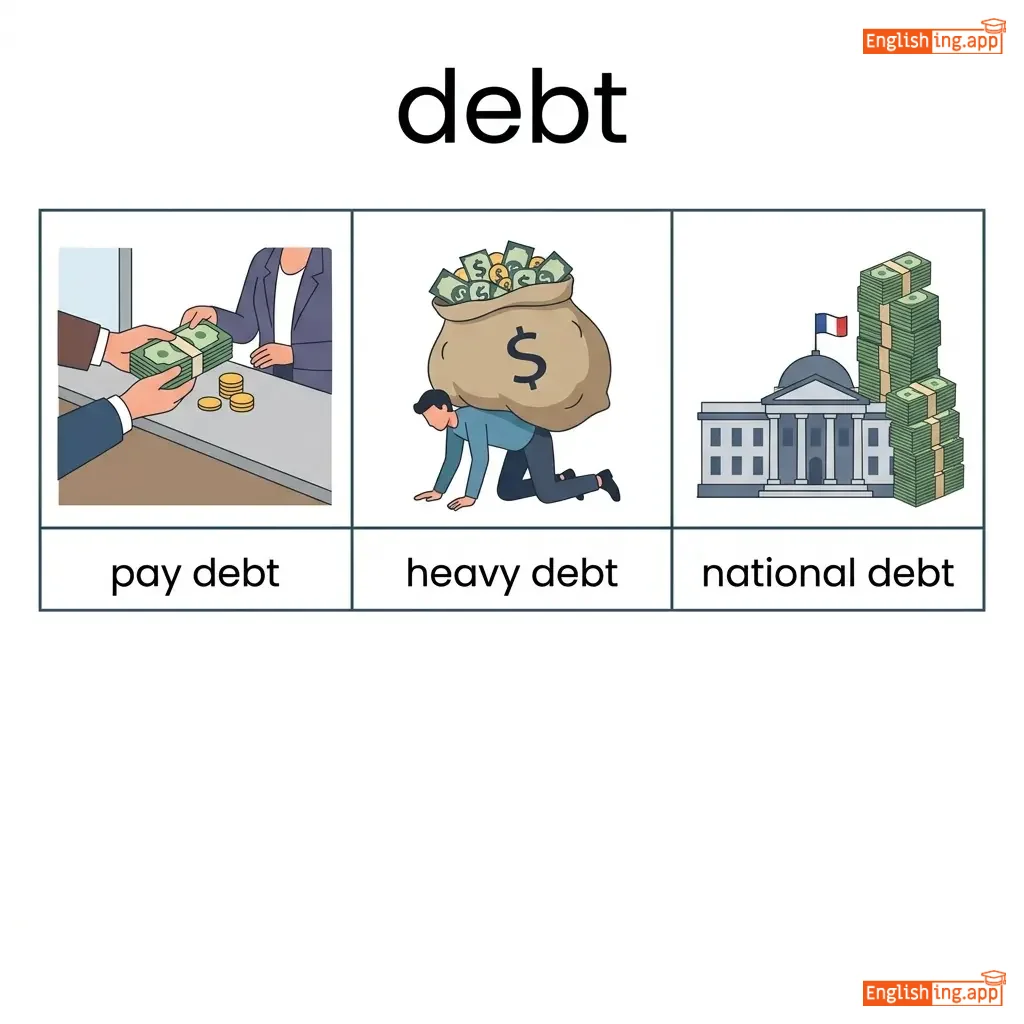
pay debt, heavy debt, national debt, debt relief, debt crisis
••••••
|
Debt 意味着债务;到了一定日期(date),我们有时必须借债。
••••••
|
|
🎤
••••••
|
/ˈdeɪ.bjuː/
noun, verb
(débyù)
••••••
|
- •••••• |
首演
shǒuyǎn
••••••
|
debuted
débyù
••••••
|
debuted
débyù
••••••
|
debuts
débyùs
••••••
|
debuting
débyùing
••••••
|
The first public appearance or performance of someone or something.
••••••
|
The young actor made his debut on the big stage.
年轻演员在大舞台上首次亮相。
••••••
|
年轻演员在大舞台上首次亮相。
Niánqīng yǎnyuán zài dà wǔtái shàng shǒucì liàngxiàng.
••••••
|
make a debut
首次亮相
••••••
|
To appear or perform publicly for the first time.
••••••
|
首次亮相
shǒucì liàngxiàng
••••••
|
first appearance, introduction, premiere, launch, entrance
••••••
|
retirement, farewell, exit
••••••
|
make debut, debut performance, debut album, debut match
••••••
|
Debut = ‘De + But’ – 第一场公开亮相。
••••••
|
|
📅
••••••
|
/ˈdɛkeɪd/
noun
(dɪˈkeɪd)
••••••
|
- •••••• |
十年
shí nián
••••••
|
- •••••• | - •••••• | - •••••• | - •••••• |
A period of ten years.
••••••
|
The country has changed a lot in the past decade.
ðə ˈkʌntri hæz ʧeɪndʒd ə lɒt ɪn ðə pæst dɪˈkeɪd
••••••
|
这个国家在过去的十年里发生了很大变化。
Zhège guójiā zài guòqù de shí nián lǐ fāshēngle hěn dà biànhuà.
••••••
|
- •••••• | - •••••• | - •••••• |
ten years, period, era, span
••••••
|
moment, instant
••••••
|
past decade, next decade, over a decade, within a decade
••••••
|
十年是一个10年的时间段,十 (shí) 和年 (nián) 就像decade的对应。
••••••
|
|
🦠
••••••
|
/dɪˈkeɪ/
verb, noun
(dikei)
••••••
|
- •••••• |
腐烂
fulan
••••••
|
decayed
dikeid
••••••
|
decayed
dikeid
••••••
|
decays
dikeiz
••••••
|
decaying
dikeing
••••••
|
The process of rotting or decomposition; to decline in quality or strength.
••••••
|
The abandoned house slowly began to decay.
废弃的房子开始慢慢腐烂。
••••••
|
废弃的房子开始慢慢腐烂。
Feiqi de fangzi kaishi man man fulan.
••••••
|
tooth decay
牙齿腐烂
••••••
|
The rotting or damage of teeth.
••••••
|
牙齿腐烂
yachi fulan
••••••
|
rot, spoil, decompose, deteriorate, decline
••••••
|
grow, flourish, improve
••••••
|
decay process, tooth decay, rapid decay, slow decay
••••••
|
Decay即腐烂,牙齿腐烂即牙齿的损坏。
••••••
|
|
❄️
••••••
|
/dɪˈsɛmbər/
noun
(迪森伯)
••••••
|
- •••••• |
十二月
shi er yue
••••••
|
- •••••• | - •••••• | - •••••• | - •••••• |
the twelfth and last month of the year in the Gregorian calendar
••••••
|
December is usually cold in many countries.
十二月在许多国家通常很冷。
••••••
|
十二月在许多国家通常很冷。
shi er yue zai xu duo guo jia tong chang hen leng
••••••
|
- •••••• | - •••••• | - •••••• |
month twelve, twelfth month, year end, winter month
••••••
|
January, summer
••••••
|
December holiday, December weather, late December, early December
••••••
|
十二 = twelve, 十二月 = December
••••••
|
|
🤔
••••••
|
/dɪˈsaɪd/
verb
••••••
|
- •••••• | - •••••• |
decided
••••••
|
decided
••••••
|
decides
••••••
|
deciding
••••••
|
To make a choice or judgment about something.
••••••
|
She decided to study abroad after graduation. |
- •••••• |
make up one's mind |
to decide after consideration
••••••
|
- •••••• |
determine, choose, settle, resolve, conclude
••••••
|
hesitate, delay, waver
••••••
|
decide quickly, decide against, decide whether, decide to go
••••••
|
No •••••• |
|
⚖️
••••••
|
/dɪˈsɪʒən/
noun
(dɪˈsɪʒən)
••••••
|
- •••••• |
决定
jueding
••••••
|
- •••••• | - •••••• | - •••••• | - •••••• |
A conclusion or choice made after consideration.
••••••
|
She made a quick decision to accept the job offer. |
她快速决定接受这份工作邀请。
Tā kuàisù juédìng jiēshòu zhè fèn gōngzuò yāoqǐng.
••••••
|
make a decision |
to come to a conclusion or choice
••••••
|
做决定
zuò juédìng
••••••
|
choice, judgment, conclusion, verdict, resolution
••••••
|
indecision, hesitation, doubt
••••••
|
make a decision, tough decision, final decision, quick decision
••••••
|
决定意味着做出决定 — 做决定帮助减轻压力。
••••••
|
|
✅
••••••
|
/dɪˈsaɪsɪv/
adjective
(dì-sāi-sī-fū)
••••••
|
- •••••• |
决定性
juédìngxìng
••••••
|
- •••••• | - •••••• | - •••••• | - •••••• |
Having the ability to make decisions quickly and effectively; determining the outcome.
••••••
|
Her decisive action saved the company from collapse. |
她的决定性行动挽救了公司免于崩溃。
Tā de juédìngxìng xíngdòng wǎnjiùle gōngsī miǎn yú bēngkuì.
••••••
|
decisive victory |
A win that settles an issue conclusively.
••••••
|
决定性胜利
juédìngxìng shènglì
••••••
|
conclusive, resolute, firm, determined, crucial
••••••
|
indecisive, uncertain, hesitant
••••••
|
decisive role, decisive moment, decisive action, decisive factor
••••••
|
决定性 - 决定了,决定胜利!
••••••
|
|
🛳️
••••••
|
/dɛk/
noun
(dèkè)
••••••
|
- •••••• |
甲板 / 平台
jiǎbǎn / píngtái
••••••
|
- •••••• | - •••••• | - •••••• | - •••••• |
A flat surface or platform, often on a ship or building.
••••••
|
We enjoyed the sunset from the upper deck of the ferry. |
我们从渡船的上层甲板上欣赏日落。
Wǒmen cóng dùchuán de shàngcéng jiǎbǎn shàng xīnshǎng rìluò.
••••••
|
clear the deck |
to prepare for action or to get ready
••••••
|
清理甲板
qīnglǐ jiǎbǎn
••••••
|
platform, floor, terrace, stage
••••••
|
ground, basement
••••••
|
ship deck, upper deck, deck chair, deck of cards
••••••
|
船上的甲板像一个平台,你可以站在那里。
••••••
|
|
📜
••••••
|
/ˌdek.ləˈreɪ.ʃən/
noun
(di-kle-rei-shun)
••••••
|
- •••••• |
声明; 宣告; 公告
shengming, xuangao, gonggao
••••••
|
- •••••• | - •••••• | - •••••• | - •••••• |
a formal or explicit statement or announcement; an official proclamation
••••••
|
The president's declaration of independence marked a historic moment for the nation.
总统的独立宣言标志着国家历史性的时刻。
••••••
|
总统的独立宣言标志着国家历史性的时刻。
Zongtong de duli xuanyan biaozhizhe guojia lishi xing de shike.
••••••
|
- •••••• | - •••••• | - •••••• |
announcement, proclamation, statement, pronouncement
••••••
|
concealment, silence, secrecy, denial
••••••
|
formal declaration, public declaration, declaration of war
••••••
|
在中文中,声明常用于正式或官方的场合。
••••••
|
|
📢
••••••
|
/dɪˈklɛər/
verb
(dɪˈklɛər)
••••••
|
- •••••• |
宣布
xuanbu
••••••
|
declared
deklerd
••••••
|
declared
deklerd
••••••
|
declares
deklyers
••••••
|
declaring
deklyering
••••••
|
To announce something formally or officially.
••••••
|
The government declared a state of emergency.
政府宣布了紧急状态。
••••••
|
政府宣布了紧急状态。
Zhengfu xuanbu le jinji zhuangtai.
••••••
|
declare war
宣战
••••••
|
to officially announce the beginning of a war
••••••
|
宣战
Xuan zhan
••••••
|
announce, proclaim, state, affirm, disclose
••••••
|
deny, conceal, hide
••••••
|
declare independence, declare victory, declare bankruptcy, declare an emergency
••••••
|
宣布就像是正式的声明,宣布重要的事情。
••••••
|
|
📉
••••••
|
/dɪˈklaɪn/
verb
••••••
|
|
- •••••• |
declined
••••••
|
declined
••••••
|
declines
••••••
|
declining
••••••
|
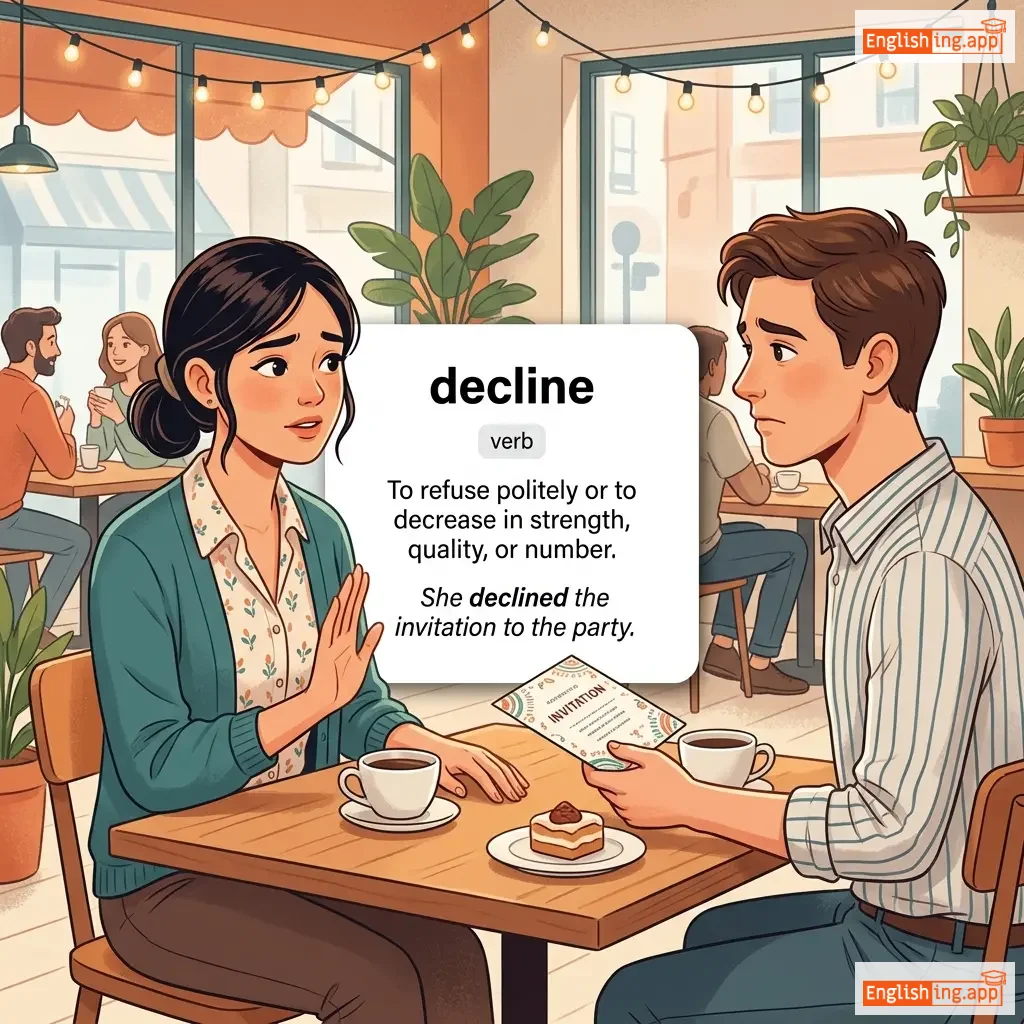
To refuse politely or to decrease in strength, quality, or number.
••••••
|
She declined the invitation to the party. |
- •••••• |
on the decline |
becoming weaker or less important
••••••
|
- •••••• |
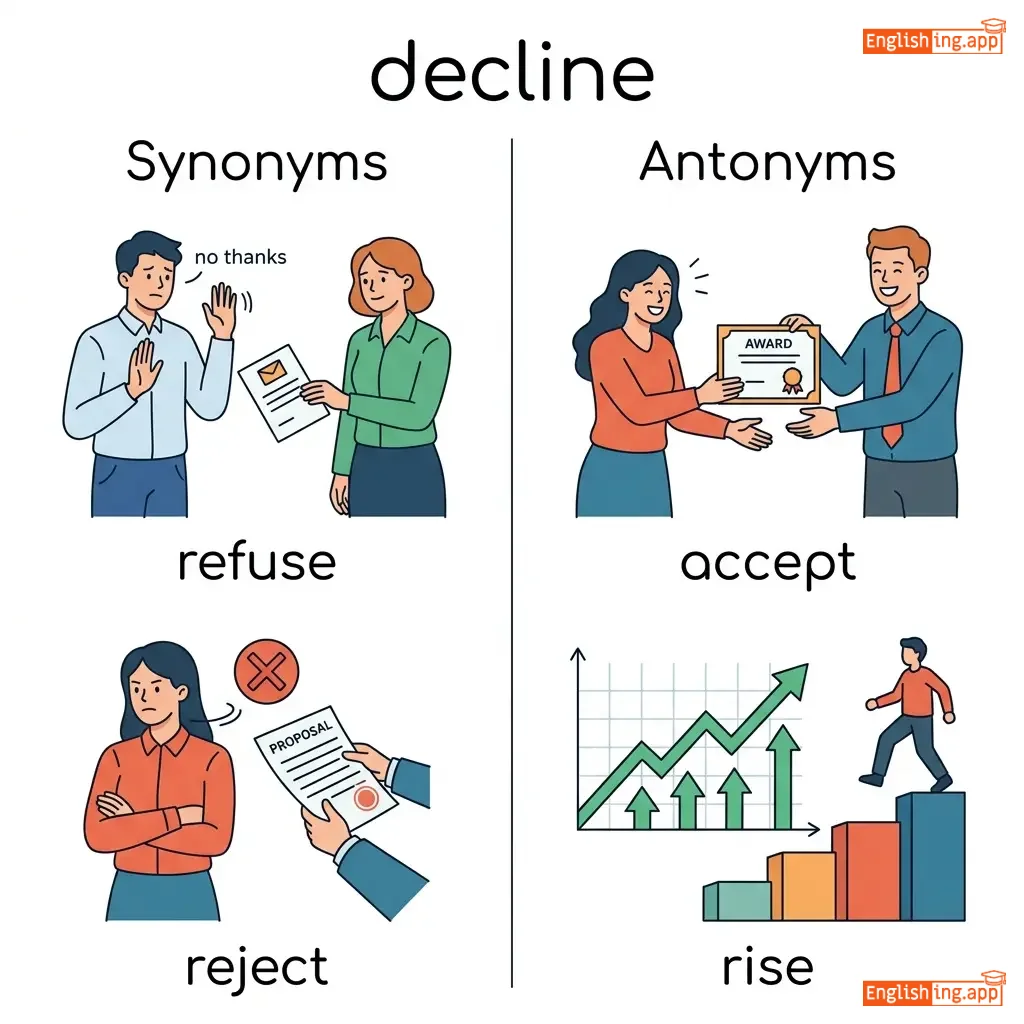
refuse, reject, deteriorate, weaken, decrease
••••••
|
accept, rise, increase
••••••
|
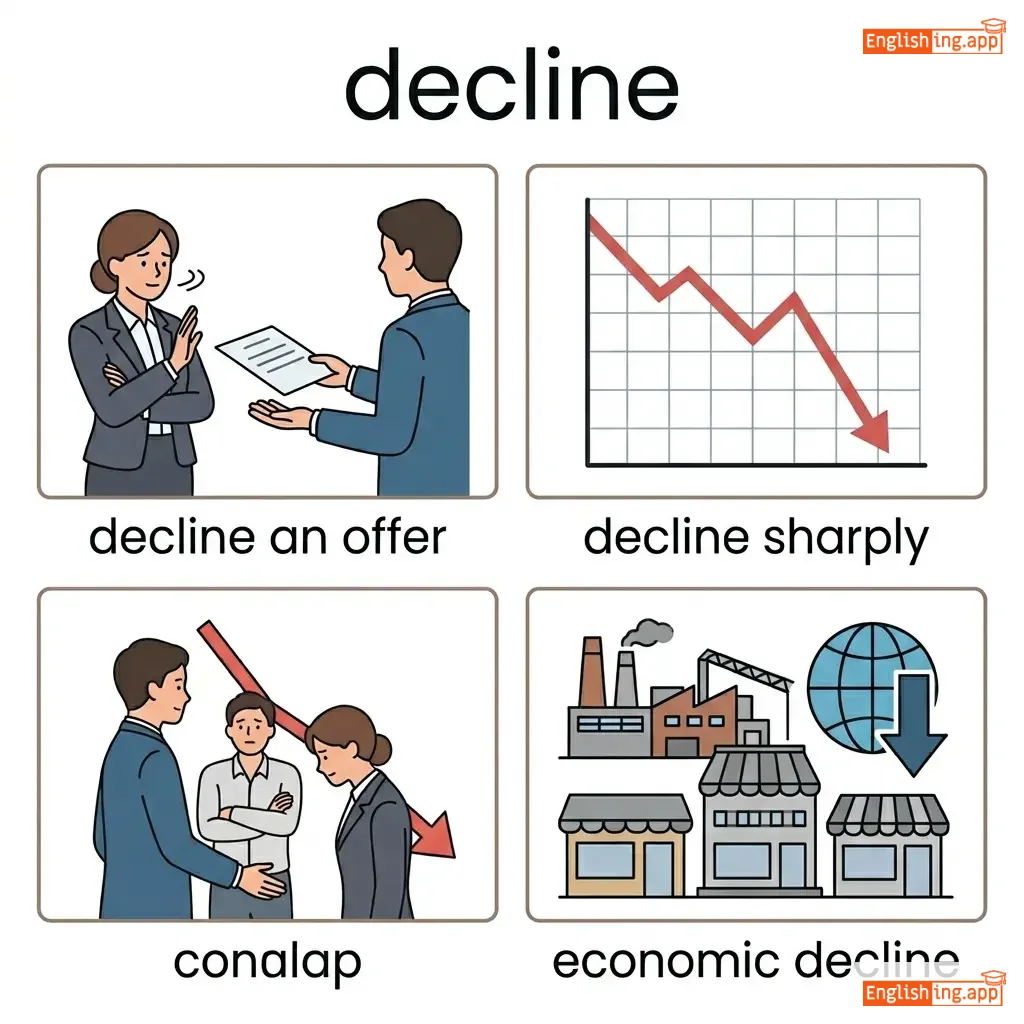
decline an offer, decline sharply, economic decline, decline in sales
••••••
|
No •••••• |
|
🎨
••••••
|
/ˈdɛkəreɪt/
verb
••••••
|
|
- •••••• |
decorated
••••••
|
decorated
••••••
|
decorates
••••••
|
decorating
••••••
|
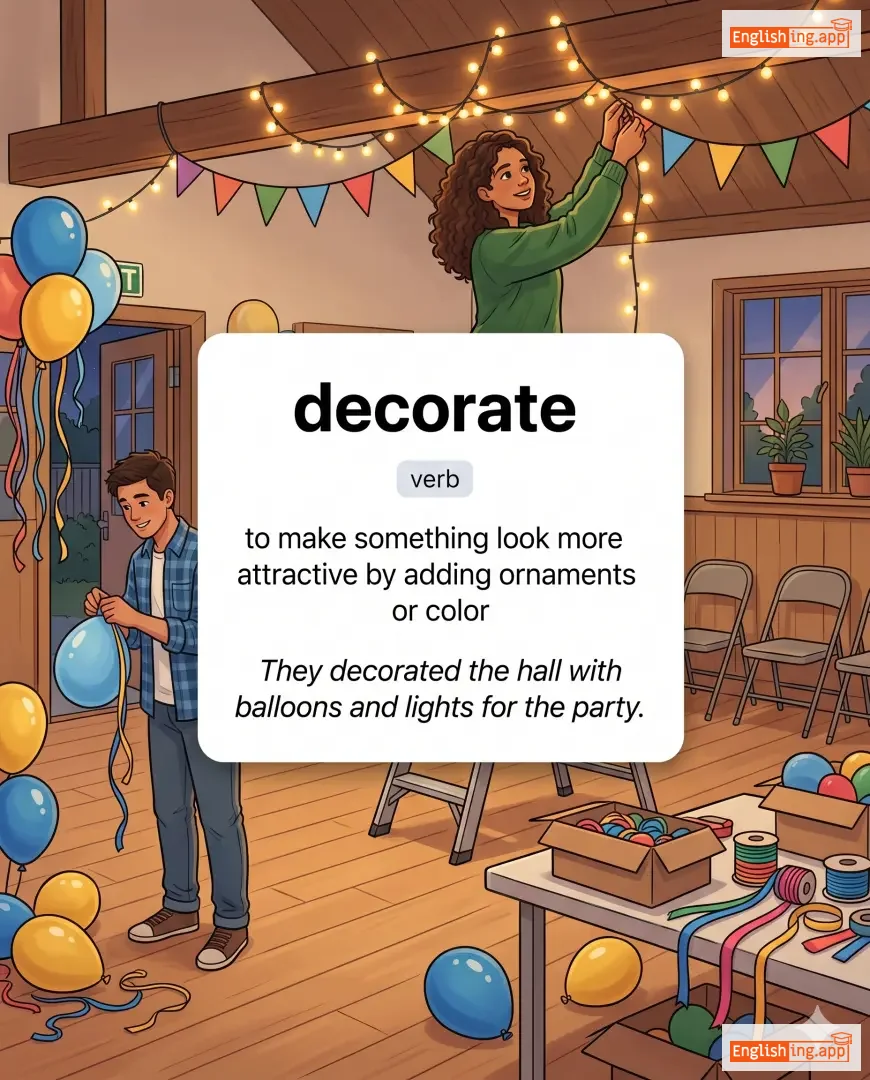
to make something look more attractive by adding ornaments or color
••••••
|
They decorated the hall with balloons and lights for the party. |
- •••••• |
decorate the truth |
to exaggerate or add details to make a story more interesting
••••••
|
- •••••• |
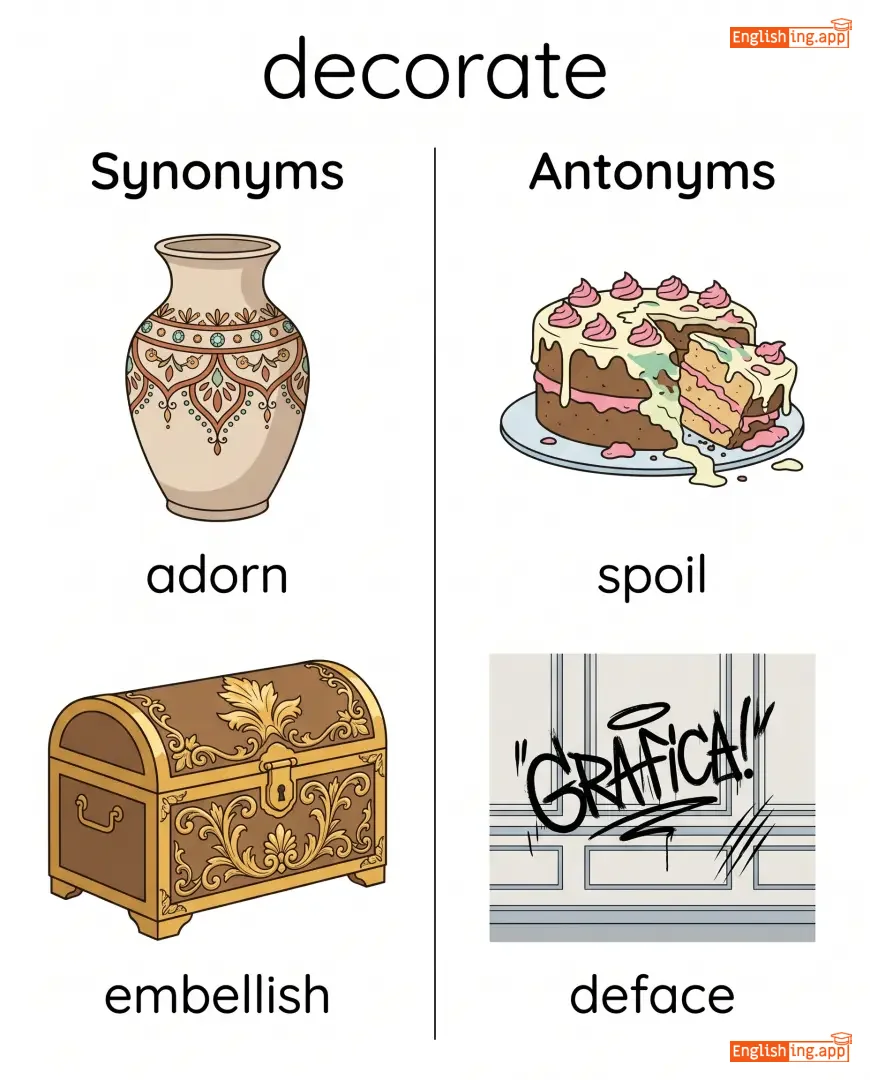
adorn, embellish, beautify, garnish, ornament
••••••
|
spoil, deface, mar
••••••
|
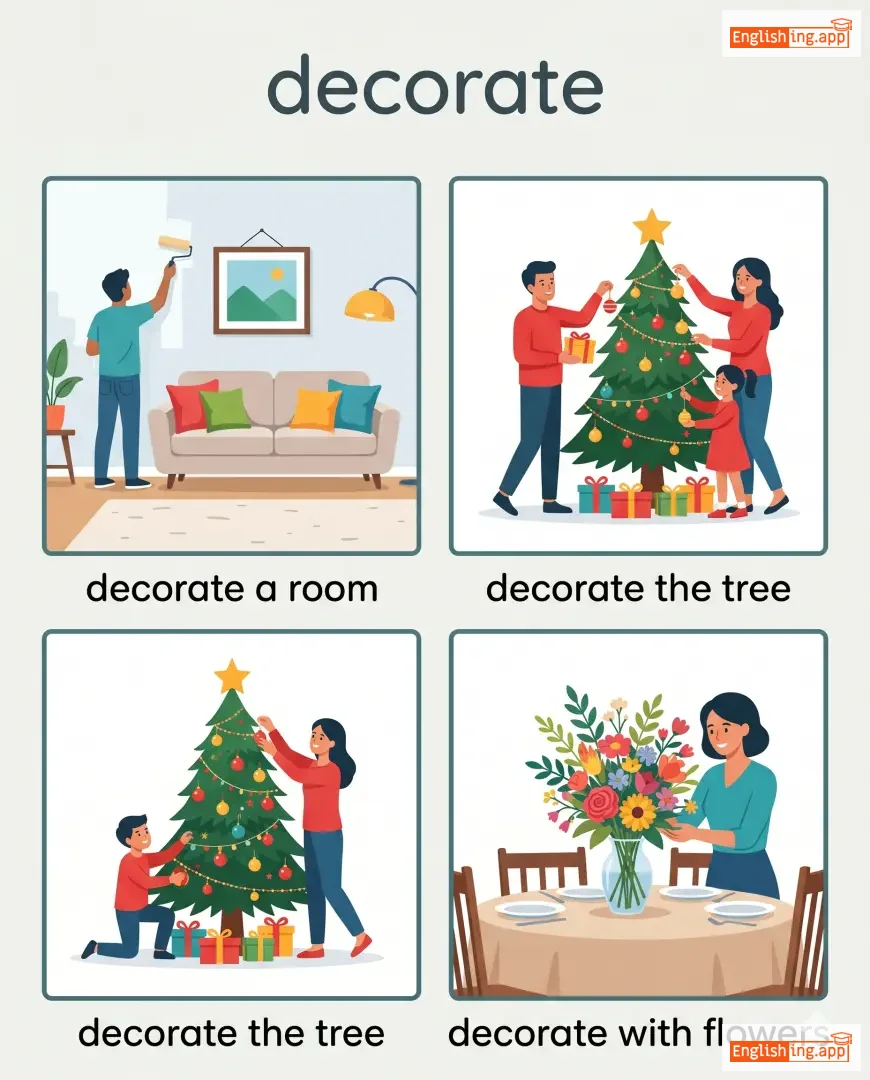
decorate a room, decorate the tree, decorate with flowers, decorate beautifully
••••••
|
No •••••• |
|
🎨
••••••
|
/ˌdek.əˈreɪ.ʃən/
noun
(dèkòulāshēn)
••••••
|
- •••••• |
装饰; 装饰品; 奖项;
zhuangshi, zhuangshipin, jiangxiang
••••••
|
- •••••• | - •••••• | - •••••• | - •••••• |
the process or art of decorating something; ornamental items used to beautify
••••••
|
The Christmas decoration transformed the ordinary room into a festive wonderland.
圣诞装饰把普通房间变成了一个节日奇境。
••••••
|
圣诞装饰把普通房间变成了一个节日奇境。
Shèngdàn zhuāngshì bǎ pǔtōng fángjiān biànchéngle yīgè jiérì qíjìng.
••••••
|
- •••••• | - •••••• | - •••••• |
ornamentation, embellishment, adornment, beautification
••••••
|
simplicity, plainness, bareness, austerity
••••••
|
home decoration, holiday decoration, interior decoration
••••••
|
就像圣诞装饰让房间变得更美,装饰可以提升任何地方的美感。
••••••
|
|
⬇️
••••••
|
/ˈdiːkriːs/ (noun), /dɪˈkriːs/ (verb)
verb/noun
••••••
|
- •••••• | - •••••• |
decreased
••••••
|
decreased
••••••
|
decreases
••••••
|
decreasing
••••••
|
To become or make something smaller or fewer in number, amount, or degree.
••••••
|
The population of the town has decreased over the years. |
- •••••• |
decrease by half |
to reduce something to 50% of its original size or number
••••••
|
- •••••• |
reduce, diminish, lessen, cut, drop
••••••
|
increase, grow, rise
••••••
|
sharp decrease, gradual decrease, decrease in value, decrease rate
••••••
|
No •••••• |
|
🙏
••••••
|
/ˈdɛdɪkeɪt/
verb
(dedikeit)
••••••
|
- •••••• |
奉献
fengxian
••••••
|
dedicated
dedikate
••••••
|
dedicated
dedikate
••••••
|
dedicates
dedikates
••••••
|
dedicating
dedikating
••••••
|
to devote time, effort, or oneself to a particular purpose or person
••••••
|
She dedicated her life to helping the poor.
她献出了自己的生命来帮助穷人。
••••••
|
她献出了自己的生命来帮助穷人。
Ta xianchu le ziji de shengming lai bangzhu qiongren.
••••••
|
dedicate oneself to
献身于
••••••
|
to commit oneself fully to something
••••••
|
全身心投入
quanshenxin touru
••••••
|
devote, commit, allocate, apply, surrender
••••••
|
neglect, ignore, abandon
••••••
|
dedicate time, dedicate effort, dedicate a book, dedicate resources
••••••
|
Dedicate 代表奉献 — 就像你奉献你的一天和能量去做某事。
••••••
|
|
💪
••••••
|
/ˈdɛdɪˌkeɪtɪd/
adjective
(dedikeɪtɪd)
••••••
|
- •••••• |
专心致志
zhuān xīn zhì zhì
••••••
|
- •••••• | - •••••• | - •••••• | - •••••• |
devoted to a cause, task, or purpose
••••••
|
She is a dedicated teacher who goes above and beyond for her students. |
她是一位献身的教师,为她的学生竭尽全力。
Ta shi yi wei xian shen de jiao shi, wei ta de xue sheng jie jin quan li.
••••••
|
- •••••• | - •••••• | - •••••• |
committed, devoted, passionate, loyal
••••••
|
indifferent, apathetic, disinterested
••••••
|
dedicated worker, dedicated employee, dedicated to success
••••••
|
A dedicated person is **专心致志 (zhuān xīn zhì zhì)** to their **task (任务)**.
••••••
|
|
🎯
••••••
|
/ˌdɛdɪˈkeɪʃən/
noun
(dedikāxiàn)
••••••
|

|
献身
xianshen
••••••
|
- •••••• | - •••••• | - •••••• | - •••••• |
the quality of being committed to a task or purpose
••••••
|
Her dedication to her studies earned her top grades. |
她对学习的献身精神使她获得了最高的成绩。
Ta dui xuexi de xianshen jingshen shi ta huodele zuigao de chengji.
••••••
|
dedication ceremony |
a formal event to dedicate a building or monument
••••••
|
献身仪式
xianshen yishi
••••••
|
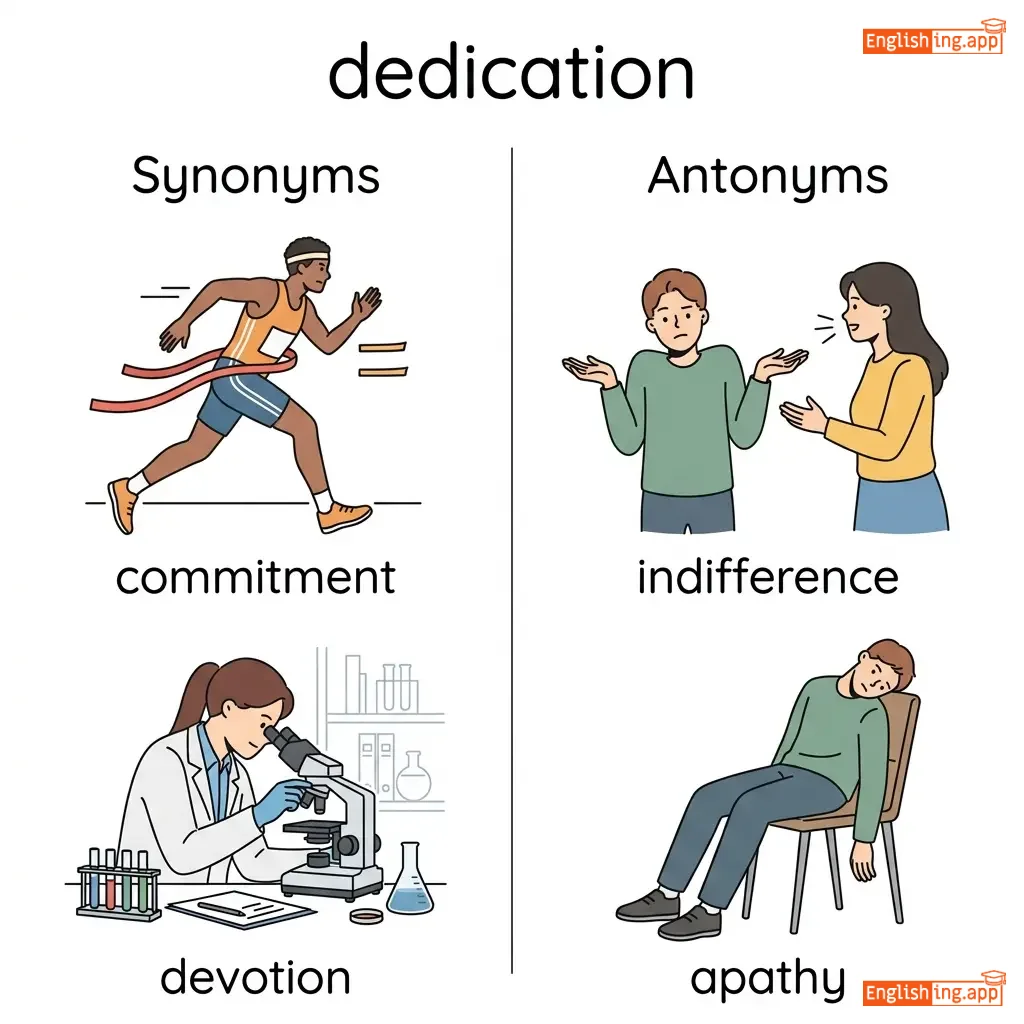
commitment, devotion, perseverance, loyalty, diligence
••••••
|
indifference, apathy, neglect
••••••
|
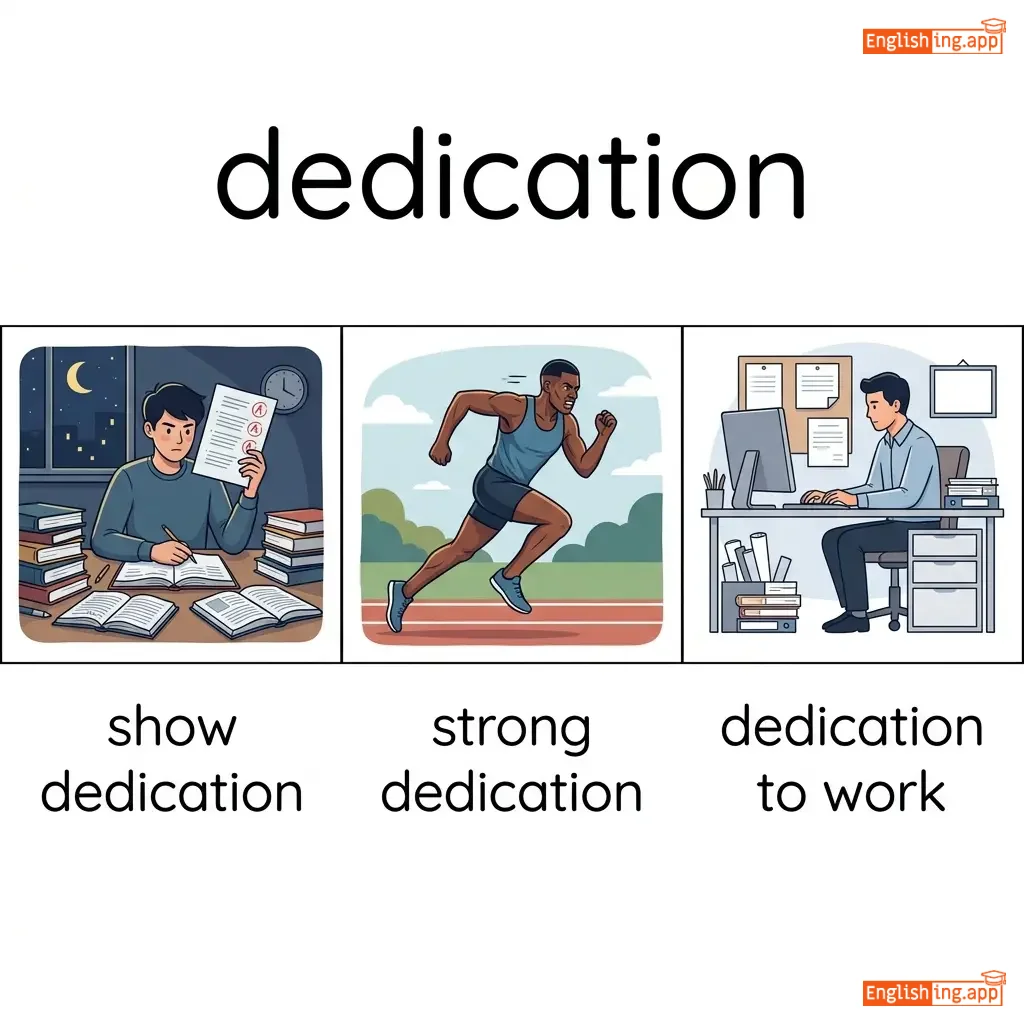
show dedication, strong dedication, dedication to work, dedication and hard work
••••••
|
Dedication 就像是完全献身的学生,他们对自己的目标全心投入。
••••••
|
|
📄
••••••
|
/diːd/
noun
(迪德)
••••••
|
- •••••• |
行为; 壮举; 法律文件;
xíngwéi, zhuàngjǔ, fǎlǜ wénjiàn
••••••
|
- •••••• | - •••••• | - •••••• | - •••••• |
an action that is performed intentionally or consciously; a legal document showing ownership
••••••
|
His heroic deed saved the child from drowning in the river. |
他的英雄行为救了孩子免于在河里溺水。
tā de yīngxióng xíngwéi jiùle háizi miǎn yú zài hé lǐ nìshuǐ.
••••••
|
- •••••• | - •••••• | - •••••• |
action, act, exploit, feat
••••••
|
inaction, neglect, omission
••••••
|
good deed, heroic deed, property deed
••••••
|
记住'Deed'作为'法律文件'或'英雄行为',用中文回忆。
••••••
|
|
⚖️
••••••
|
/diːm/
verb
(dīm)
••••••
|
- •••••• |
认为, 判断
rènwéi, pàn duàn
••••••
|
deemed
dīmd
••••••
|
deemed
dīmd
••••••
|
deems
dīms
••••••
|
deeming
dīming
••••••
|
to regard or consider in a specified way
••••••
|
The project was deemed a success by the board.
该项目被董事会认为是成功的。
••••••
|
该项目被董事会认为是成功的。
Gāi xiàngmù bèi dǒngshìhuì rènwéi shì chénggōng de.
••••••
|
- •••••• | - •••••• | - •••••• |
consider, regard, judge, view, think
••••••
|
ignore, disregard, overlook
••••••
|
deem necessary, deem appropriate, deem fit, deem important
••••••
|
Deem 就像 Dream,意味着评价或认为某件事是对的。
••••••
|
|
🌊
••••••
|
/diːp/
adjective
(海皮尼斯)
••••••
|
- •••••• |
幸福
xìngfú
••••••
|
- •••••• | - •••••• | - •••••• | - •••••• |
extending far down from the top or surface; profound or intense
••••••
|
The lake is very deep in the middle. |
当她收到奖项时,她无法掩饰自己的幸福。
Dāng tā shōu dào jiǎngxiàng shí, tā wúfǎ yǎnshì zìjǐ de xìngfú.
••••••
|
deep down |
used to describe a person's true feelings or thoughts that may not be expressed openly
••••••
|
追求幸福
zhuīqiú xìngfú
••••••
|
profound, intense, bottomless, vast, thorough
••••••
|
shallow, superficial
••••••
|
deep water, deep sleep, deep thought, deep voice, deep sea
••••••
|
幸福是你心中的快乐
••••••
|
|
❤️
••••••
|
/ˈdiːpli/
adverb
(dīpūlì)
••••••
|
- •••••• |
深深地
shēn shēn de
••••••
|
- •••••• | - •••••• | - •••••• | - •••••• |
to a great depth, extent, or intensity
••••••
|
She was deeply moved by the speech. |
她被演讲深深地打动了。
Tā bèi yǎnjiǎng shēn shēn de dǎdòng le.
••••••
|
deeply rooted |
firmly established or ingrained
••••••
|
深深扎根
shēn shēn zhā gēn
••••••
|
profoundly, intensely, strongly, greatly
••••••
|
lightly, superficially
••••••
|
deeply moved, deeply concerned, deeply sorry, deeply involved
••••••
|
Deeply 意味着深深地 — She loves deeply = 她深深地爱着
••••••
|
|
🦌
••••••
|
/dɪr/
noun
(dír)
••••••
|
- •••••• |
鹿
lu
••••••
|
- •••••• | - •••••• | - •••••• | - •••••• |
a graceful wild animal with long legs and antlers, often living in forests
••••••
|
A deer ran across the road suddenly. |
一只鹿突然穿过了马路。
Yī zhī lù túrán chuānguòle mǎlù.
••••••
|
- •••••• | - •••••• | - •••••• |
stag, buck, doe, fawn
••••••
|
predator, carnivore
••••••
|
wild deer, deer hunting, herd of deer, deer park
••••••
|
Deer 意思是鹿 — 想象一只鹿在森林中奔跑 (鹿在森林中奔跑)
••••••
|
|
⚠️
••••••
|
/dɪˈfɔːlt/
noun, verb
(默认)
••••••
|

|
违约
wéiyuē
••••••
|
defaulted
默认ed
••••••
|
defaulted
默认ed
••••••
|
defaults
默认s
••••••
|
defaulting
默认ing
••••••
|
failure to fulfill an obligation, especially to repay a loan
••••••
|
The company defaulted on its loan payments.
公司在贷款支付方面违约。
••••••
|
公司在贷款支付方面违约。
Gōngsī zài dàikuǎn zhīfù fāngmiàn wéiyuē.
••••••
|
in default
违约
••••••
|
in a state of failing to fulfill an obligation
••••••
|
违约状态
wéiyuē zhuàngtài
••••••
|
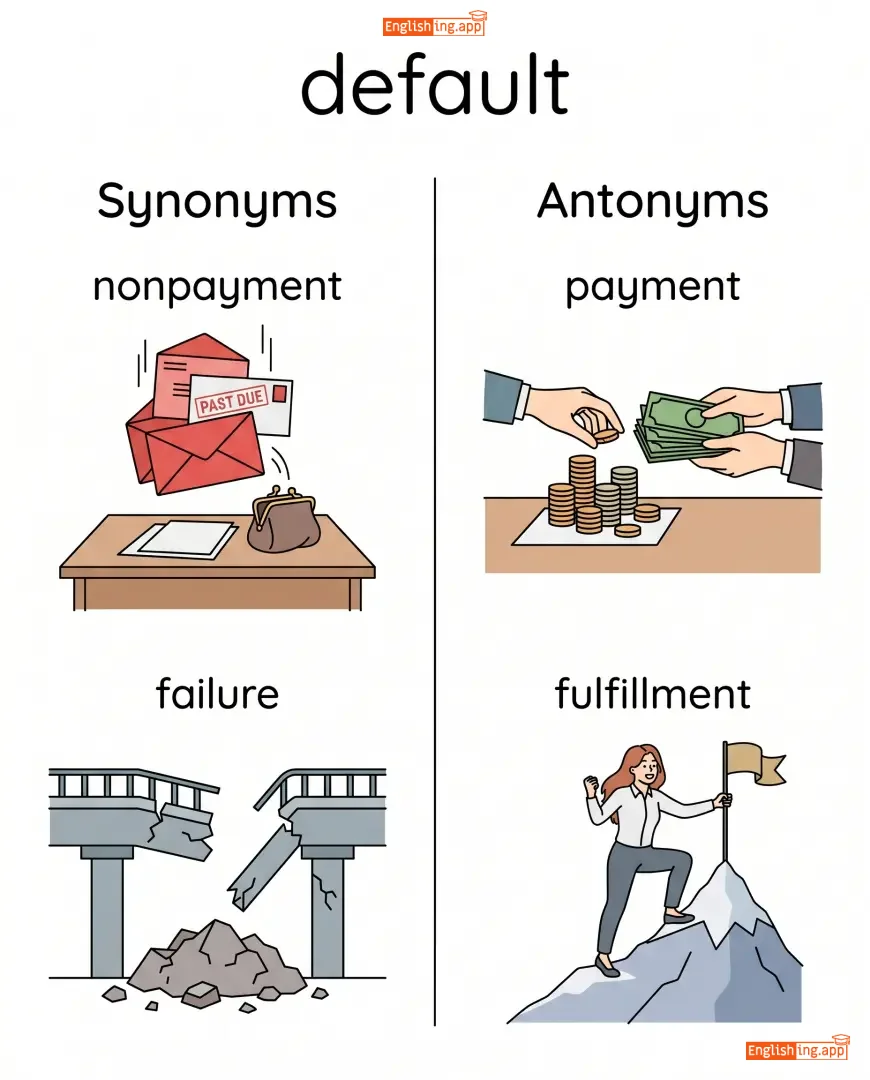
nonpayment, failure, negligence, omission
••••••
|
payment, fulfillment, compliance
••••••
|
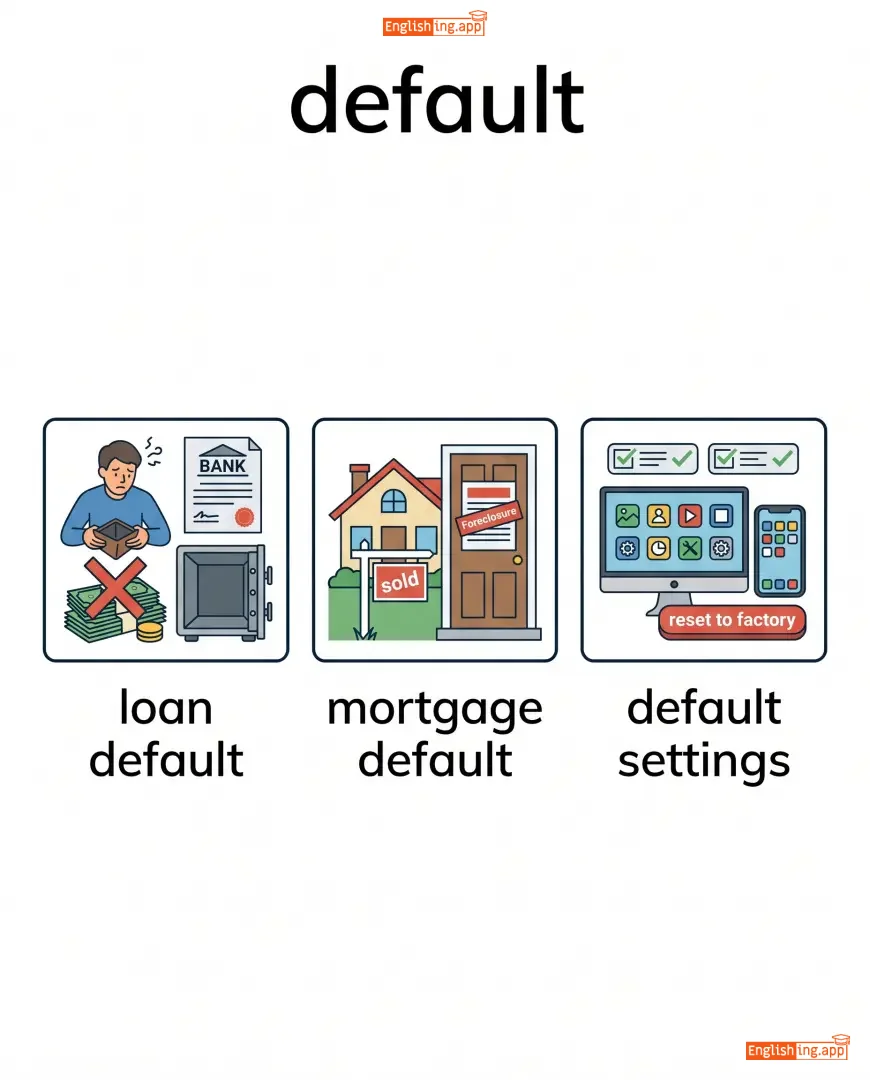
loan default, mortgage default, default settings, default judgment
••••••
|
Default → 不偿还债务
••••••
|
|
🏆
••••••
|
/dɪˈfiːt/
verb
(dɪˈfiːt)
••••••
|
- •••••• |
击败
jī bài
••••••
|
defeated
dɪˈfiːtɪd
••••••
|
defeated
dɪˈfiːtɪd
••••••
|
defeats
dɪˈfiːts
••••••
|
defeating
dɪˈfiːtɪŋ
••••••
|
to win a victory over someone or something in a competition or battle
••••••
|
Our team defeated their rivals in the final match.
我们的团队在决赛中击败了他们的对手。
••••••
|
我们的团队在决赛中击败了他们的对手。
Wǒmen de tuánduì zài juésài zhōng jībài le tāmen de duìshǒu.
••••••
|
snatch defeat from the jaws of victory
从胜利的嘴巴中夺取失败
••••••
|
to fail at the last moment when success seemed certain
••••••
|
从胜利的嘴巴中夺取失败
Cóng shènglì de zuǐbā zhōng duóqǔ shībài
••••••
|
conquer, overcome, beat, overpower, vanquish
••••••
|
surrender, lose, yield
••••••
|
defeat the enemy, defeat the purpose, heavy defeat, crushing defeat
••••••
|
Defeat意味着失败:当你的队伍失利时,它是被击败了。
••••••
|
|
⚠️
••••••
|
/ˈdiːfɛkt/ (noun), /dɪˈfɛkt/ (verb)
noun, verb
••••••
|
- •••••• | - •••••• |
defected
••••••
|
defected
••••••
|
defects
••••••
|
defecting
••••••
|
A shortcoming, imperfection, or flaw; or to abandon a cause or group for another.
••••••
|
The engineer found a defect in the software code. |
- •••••• |
defect from duty |
To abandon one's responsibility or loyalty.
••••••
|
- •••••• |
flaw, fault, imperfection, deficiency, weakness
••••••
|
strength, perfection, loyalty
••••••
|
manufacturing defect, genetic defect, defect in design
••••••
|
No •••••• |
|
⚔️
••••••
|
/dɪˈfɛnd/
verb
(迪芬德)
••••••
|
- •••••• |
辩护
bian hu
••••••
|
defended
辩护了
••••••
|
defended
辩护
••••••
|
defends
辩护
••••••
|
defending
辩护中
••••••
|
To protect someone or something from harm or attack.
••••••
|
The lawyer worked hard to defend her client.
律师努力工作为她的客户辩护。
••••••
|
律师努力工作为她的客户辩护。
Lüshi nuli gongzuo wei ta de kehu bianhu.
••••••
|
defend one's honor
捍卫个人荣誉
••••••
|
To protect one’s reputation from criticism or insult.
••••••
|
捍卫个人荣誉
hanwei geren rongyu
••••••
|
protect, guard, shield, support, justify
••••••
|
attack, abandon, betray
••••••
|
defend a case, defend the goal, defend human rights
••••••
|
辩护就像一个律师为客户辩护一样。
••••••
|
|
⚖️
••••••
|
/dɪˈfen.dənt/
noun
(被告)
••••••
|
- •••••• |
被告
beigao
••••••
|
- •••••• | - •••••• | - •••••• | - •••••• |
an individual, company, or institution sued or accused in a court of law
••••••
|
The defendant pleaded not guilty to all charges brought against him. |
被告对所有对他提出的指控表示不认罪。
Beigao dui suoyou dui ta tichu de zhigong biaoshi bu renzui.
••••••
|
- •••••• | - •••••• | - •••••• |
accused, respondent, litigant
••••••
|
plaintiff, prosecutor, accuser
••••••
|
criminal defendant, civil defendant, defendant's rights
••••••
|
被告在法庭上为自己辩护.
••••••
|
|
🛡️
••••••
|
/dɪˈfɛndər/
noun
(defender)
••••••
|
- •••••• |
防守者
fangshouzhe
••••••
|
- •••••• | - •••••• | - •••••• | - •••••• |
a person who protects someone or something from harm or attack
••••••
|
The defender blocked the shot and saved the goal. |
防守者挡住了射门并拯救了进球。
Fángshǒu zhě dǎng zhùle shèmén bìng zhěngjiùle jìnqiú.
••••••
|
stand as a defender of |
to support or protect something or someone
••••••
|
作为……的防守者站立
zuòwéi... de fángshǒu zhě zhànlì
••••••
|
protector, guardian, champion, advocate, supporter
••••••
|
attacker, enemy, opponent
••••••
|
football defender, human rights defender, defender of justice
••••••
|
Defender在中文中是‘防守者’,像在防守比赛中的角色。
••••••
|
|
🛡️
••••••
|
/dɪˈfɛns/
noun
(哈皮尼斯)
••••••
|
|
幸福
xingfu
••••••
|
- •••••• | - •••••• | - •••••• | - •••••• |
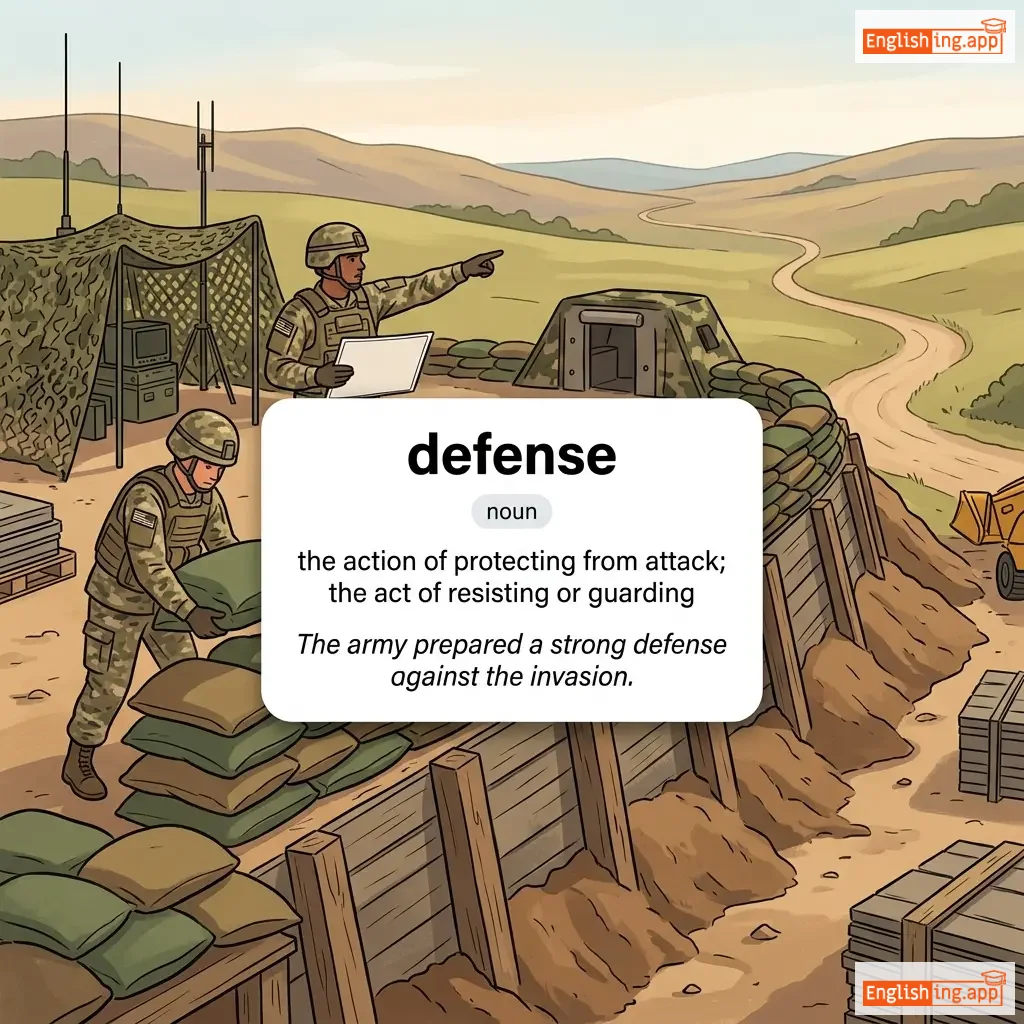
the action of protecting from attack; the act of resisting or guarding
••••••
|
The army prepared a strong defense against the invasion. |
当她收到奖项时,她无法掩饰自己的幸福。
Dāng tā shōudào jiǎngxiàng shí, tā wúfǎ yǎnshì zìjǐ de xìngfú.
••••••
|
defense mechanism |
an unconscious psychological strategy used to protect oneself from anxiety
••••••
|
幸福的追求
Xìngfú de zhuīqiú
••••••
|
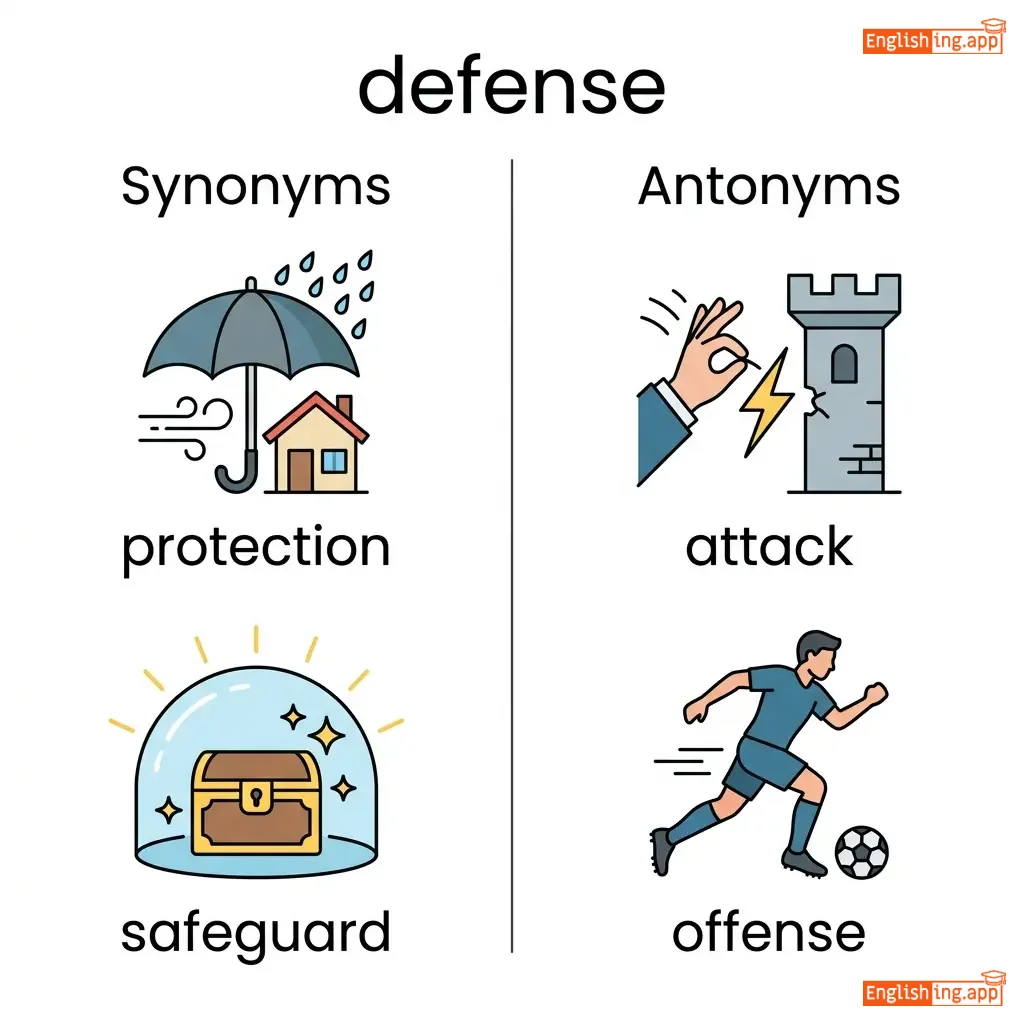
protection, safeguard, security, resistance
••••••
|
attack, offense
••••••
|
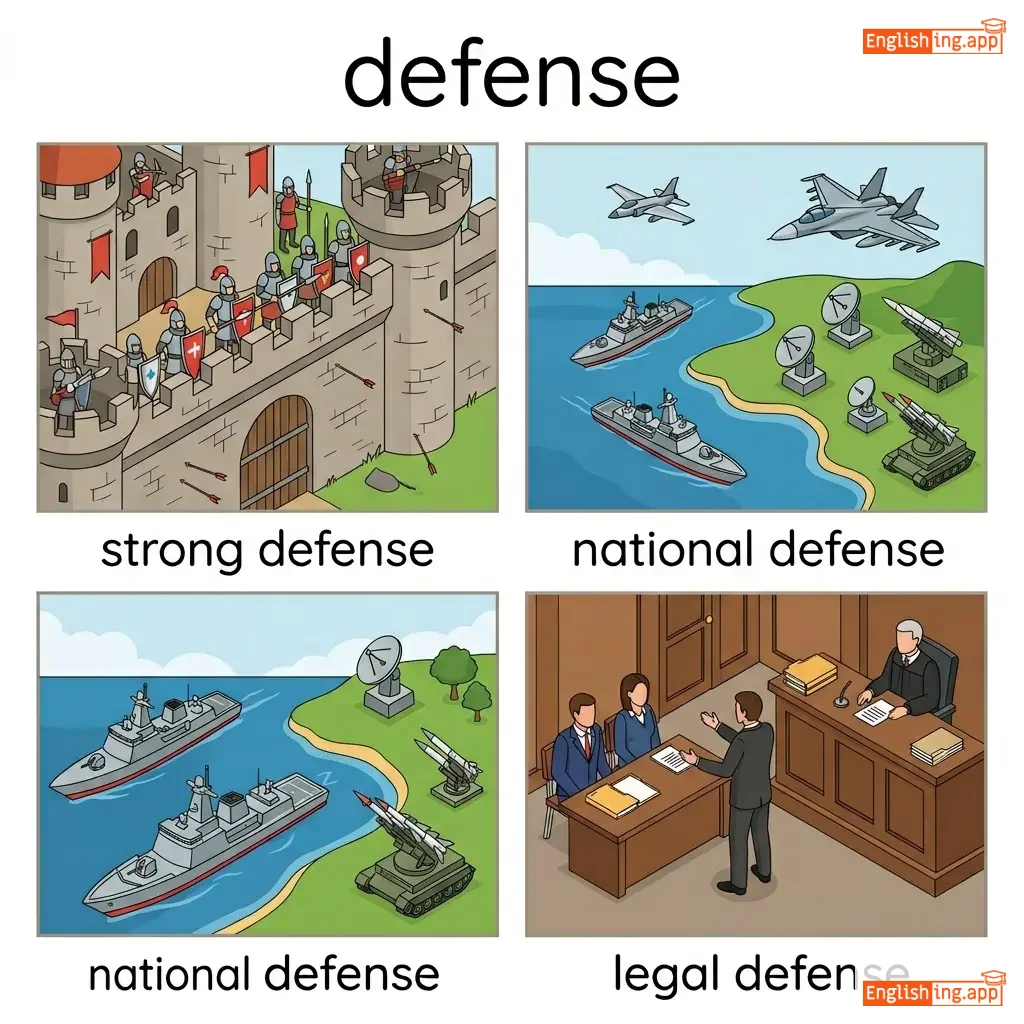
strong defense, national defense, legal defense, defense system
••••••
|
幸福 = 幸福,心灵的快乐。
••••••
|
|
🛡️
••••••
|
/dɪˈfɛnsɪv/
adjective
(防守性)
••••••
|
- •••••• |
防御性的
fángyùxìng de
••••••
|
- •••••• | - •••••• | - •••••• | - •••••• |
Intended to protect or defend; behaving in a way to guard against criticism or attack.
••••••
|
He became defensive when asked about his mistake. |
当被问到他的错误时,他变得防御性强。
Dāng bèi wèn dào tā de cuòwù shí, tā biàn dé fángyùxìng qiáng.
••••••
|
defensive stance |
A protective or guarded position in argument or conflict.
••••••
|
防御姿态
fángyù zītài
••••••
|
protective, guarded, cautious, shielding
••••••
|
offensive, aggressive, open
••••••
|
defensive behavior, defensive mechanism, defensive reaction, defensive stance
••••••
|
防御性就像盾牌 🛡️ - 防止批评。
••••••
|
|
⚠️
••••••
|
/dɪˈfɪʃ.ən.si/
noun
(缺乏)
••••••
|
- •••••• |
缺乏
quefa
••••••
|
- •••••• | - •••••• | - •••••• | - •••••• |
a lack or shortage of something that is necessary
••••••
|
The doctor diagnosed him with a vitamin D deficiency. |
医生诊断他患有维生素D缺乏症。
Yisheng zhenduan ta huanyu weishengsu D quefa zheng.
••••••
|
iron deficiency |
a lack of sufficient iron in the body
••••••
|
缺铁
que tie
••••••
|
shortage, lack, insufficiency, scarcity, inadequacy
••••••
|
abundance, sufficiency, excess
••••••
|
vitamin deficiency, iron deficiency, nutritional deficiency, deficiency disease
••••••
|
缺乏意味着不足 – 记住,'缺'意味着不足,鱼里什么也没有,所以缺乏。
••••••
|

