

Обновитесь для доступа ко всему словарю
Получите неограниченный доступ ко всем словам с подпиской Pro
Обновить до ProПеревод
Прошедшее
Причастие прошедшего времени
Третье лицо единственного числа
Герундий
Значение
Пример предложения
Перевод примера предложения
Синонимы
Антонимы
Коллокации
Мнемоника



Swipe left or right, or use the buttons. Tap image to zoom.
Обновитесь для доступа ко всем предложениям
Получите неограниченный доступ ко всем предложениям с подпиской Pro
Обновить до ProПеревод примера предложения
Слово
Lesson 19Lesson 19 - Переключатель маски
|
Эмодзи
|
Слово | Images | Перевод | Прошедшее | Причастие прошедшего времени | Третье лицо единственного числа | Герундий | Значение | Пример предложения | Перевод примера предложения | Пример выражения | Значение примера выражения | Перевод примера выражения | Синонимы | Антонимы | Коллокации | Мнемоника |
|---|---|---|---|---|---|---|---|---|---|---|---|---|---|---|---|---|---|
|
#862
🧑✈️
|
/ˈkæptɪn/
noun
(кэ́птин)
••••••
|
- •••••• |
капитан
kapitan
••••••
|
- •••••• | - •••••• | - •••••• | - •••••• |
the leader of a team, ship, or group
••••••
|
The captain led his team to victory. |
Капитан привел свою команду к победе.
Kapitan priyel svoyu komandu k pobede.
••••••
|
captain of industry |
a wealthy and powerful business leader
••••••
|
капитан индустрии
kapitan industrii
••••••
|
commander, leader, chief, skipper
••••••
|
follower, subordinate
••••••
|
team captain, ship captain, army captain, captain of industry
••••••
|
Капитан - это тот, кто ведет команду к победе.
••••••
|
|
#863
📸
|
/ˈkæptʃər/
verb
(кэпчер)
••••••
|
- •••••• |
захватывать
zakhvatyvat
••••••
|
captured
кэпчерд
••••••
|
captured
кэпчерд
••••••
|
captures
кэпчерс
••••••
|
capturing
кэпчуринг
••••••
|
to take control of something or someone by force
••••••
|
The soldiers managed to capture the enemy base.
Солдаты смогли захватить вражескую базу.
••••••
|
Солдаты смогли захватить вражескую базу.
Soldaty smogli zakhvatit' vrageskuyu bazu.
••••••
|
capture the moment
захватить момент
••••••
|
to preserve or record a special time or event
••••••
|
поймать момент
poymat' moment
••••••
|
seize, arrest, apprehend, conquer, trap
••••••
|
release, free, liberate
••••••
|
capture the flag, capture attention, capture market, capture image
••••••
|
Захватить = как будто вы держите момент в руке.
••••••
|
|
#864
🚗
|
/kɑːr/
noun
(кар)
••••••
|
- •••••• |
машина
mashina
••••••
|
- •••••• | - •••••• | - •••••• | - •••••• |
a road vehicle with an engine, four wheels, and seats for passengers
••••••
|
She bought a new car last week. |
Она купила новую машину на прошлой неделе.
Ona kupila novuyu mashinu na proshloy nedele.
••••••
|
drive someone up the wall |
to annoy or irritate someone greatly
••••••
|
выводить кого-то из себя
vydovit' kogoto iz sebya
••••••
|
automobile, vehicle, motorcar, ride
••••••
|
bicycle, pedestrian
••••••
|
car accident, car insurance, car seat, new car
••••••
|
Машина - это как car, если машину не починить, она выведет тебя из себя.
••••••
|
|
#865
🌍
|
/ˈkɑːrbən/
noun
(карбон)
••••••
|
|
углерод
uglerod
••••••
|
- •••••• | - •••••• | - •••••• | - •••••• |
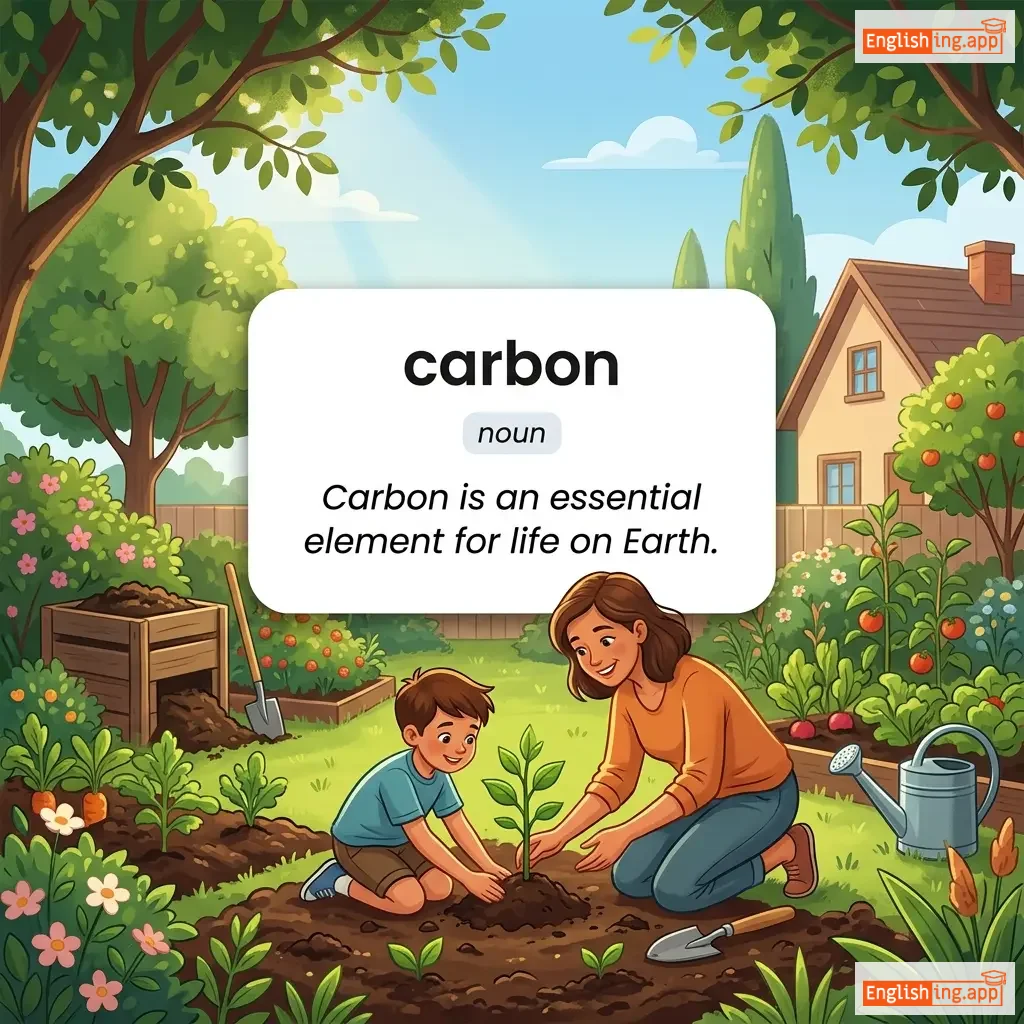
a chemical element found in all living things and used as fuel when combined with oxygen
••••••
|
Carbon is an essential element for life on Earth. |
Углерод является важным элементом для жизни на Земле.
Uglerod yavyayetsya vazhnym elementom dlya zhizni na Zemle
••••••
|
carbon footprint |
the amount of carbon dioxide emissions caused by a person, organization, or activity
••••••
|
углеродный след
uglerodnyy sled
••••••
|
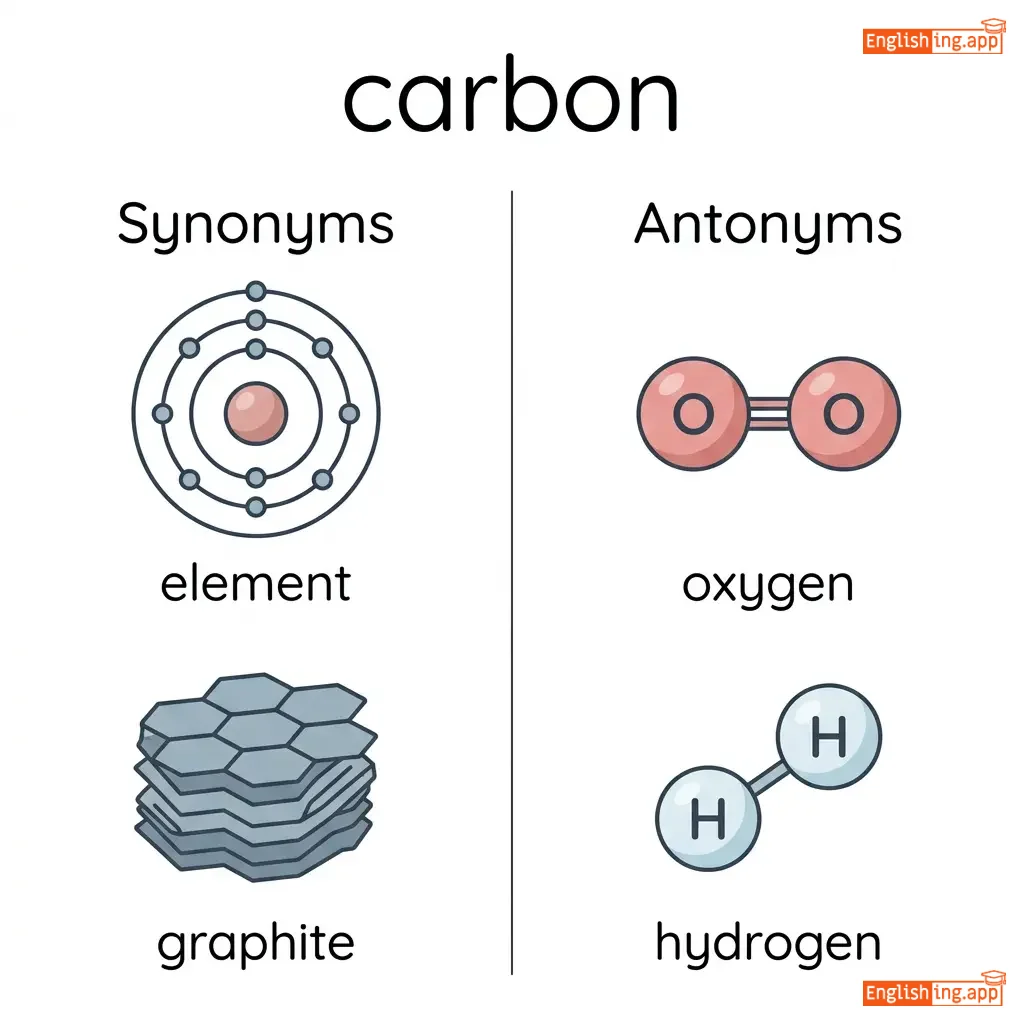
element, graphite, coal, diamond
••••••
|
oxygen, hydrogen
••••••
|
carbon dioxide, carbon footprint, carbon copy, carbon emission
••••••
|
Углерод — основа жизни, без него жизнь невозможна!
••••••
|
|
#866
💳
|
/kɑːrd/
noun
••••••
|
- •••••• | - •••••• | - •••••• | - •••••• | - •••••• | - •••••• |
A small, flat piece of stiff paper or thin cardboard used for various purposes, such as identification, greetings, or playing games.
••••••
|
She handed me her business card after the meeting. |
- •••••• |
play your cards right |
to act in a way that gives you an advantage or success
••••••
|
- •••••• |
ticket, pass, note, voucher, certificate
••••••
|
document, letter
••••••
|
credit card, business card, playing card, membership card
••••••
|
No •••••• |
|
#867
❤️
|
/kɛr/
noun/verb
(ker)
••••••
|
- •••••• |
забота
zabota
••••••
|
cared
kerd
••••••
|
cared
kerd
••••••
|
cares
kers
••••••
|
caring
kering
••••••
|
The process of looking after someone or something; to be concerned or interested.
••••••
|
She took great care of her younger brother.
Она очень заботилась о своем младшем брате.
••••••
|
Она очень заботилась о своем младшем брате.
Ona ochen' zabotilas' o svoem mladshem brate.
••••••
|
take care
беречь
••••••
|
Used to tell someone to be cautious or to say goodbye kindly.
••••••
|
беречь
berech
••••••
|
concern, attention, caution, supervision, protection
••••••
|
neglect, disregard, indifference
••••••
|
take care, health care, child care, care about, intensive care
••••••
|
Care означает заботу, как когда твоя мама говорит: Береги себя, будь осторожен.
••••••
|
|
#868
💼
|
/kəˈrɪər/
noun, verb
(кар'еʁ)
••••••
|
- •••••• |
карьера / профессия
kar'era / professiya
••••••
|
careered
кар'ерд
••••••
|
careered
кар'ерд
••••••
|
careers
кар'ерс
••••••
|
careering
кар'еринг
••••••
|
As a noun: a person’s course of professional life; as a verb: to move swiftly and in an uncontrolled way.
••••••
|
She built a successful career in medicine.
Она построила успешную карьеру в медицине.
••••••
|
Она построила успешную карьеру в медицине.
Ona postroila uspeshnuyu kar'yeru v meditsine.
••••••
|
career path
путь карьеры
••••••
|
The course of one's professional life or progress.
••••••
|
путь карьеры
put' kar'ery
••••••
|
profession, occupation, vocation, livelihood, calling
••••••
|
idleness, unemployment, joblessness
••••••
|
career development, career path, career opportunity, career growth
••••••
|
Career означает профессиональную жизнь → Carry your life through work = карьера.
••••••
|
|
#869
⚠️
|
/ˈkɛr.fəl/
adjective
(keriful)
••••••
|
- •••••• |
осторожный
ostorozhnyy
••••••
|
- •••••• | - •••••• | - •••••• | - •••••• |
Exercising caution or showing concern to avoid mistakes or harm.
••••••
|
He is always careful when crossing the road. |
Он всегда осторожен, когда пересекает дорогу.
On vsegda ostorozhen, kogda peresekaet dorogu.
••••••
|
be careful |
A warning to take caution.
••••••
|
будьте осторожны
bud'te ostorozhny
••••••
|
cautious, vigilant, watchful, attentive, prudent
••••••
|
careless, reckless, negligent
••••••
|
be careful, careful planning, careful consideration, careful study
••••••
|
Careful = Care + Full → Осторожный = Остерегаться ошибок.
••••••
|
|
#870
🤲
|
/ˈkɛərfəli/
adverb
(keh-rf-oo-lee)
••••••
|
- •••••• |
осторожно
o-sto-rozh-no
••••••
|
- •••••• | - •••••• | - •••••• | - •••••• |
In a way that is done with attention to detail and caution to avoid mistakes or harm.
••••••
|
He carefully placed the glass on the table. |
Он осторожно поставил стакан на стол.
On ostorožno postavil stakan na stol.
••••••
|
handle with care |
used as an instruction to treat something delicately
••••••
|
обращаться с осторожностью
obraschatsya s ostorozhnost'yu
••••••
|
cautiously, attentively, gently, meticulously, thoroughly
••••••
|
carelessly, recklessly
••••••
|
listen carefully, handle carefully, plan carefully, watch carefully
••••••
|
Осторожно = осмотрительно и осторожно
••••••
|
|
#871
🤷♂️😰
|
/ˈkeər.ləs/
adjective
(kerles)
••••••
|
- •••••• |
небрежный; халатный; рассеянный; беспечный;
kerles
••••••
|
- •••••• | - •••••• | - •••••• | - •••••• |
not giving sufficient attention or thought to avoiding harm or errors; negligent; inattentive
••••••
|
His careless driving caused a serious accident on the highway.
His kéarles dráivig káusid a sírius aksidén on ze haíwei.
••••••
|
Его небрежное вождение привело к серьезной аварии на шоссе.
Ego nebrezhnoe vozhdenie privelo k serjoznoj avarii na shosse.
••••••
|
- •••••• | - •••••• | - •••••• |
negligent, reckless, inattentive, thoughtless
••••••
|
careful, cautious, attentive, thoughtful
••••••
|
careless mistake, careless driving, careless attitude
••••••
|
care (забота) + less (меньше) = небрежный
••••••
|
|
#872
⚠️
|
/ˈkeərləsli/
adverb
(кэрлесли)
••••••
|
- •••••• |
небрежно
nebrezhno
••••••
|
- •••••• | - •••••• | - •••••• | - •••••• |
without care or attention; in a negligent or reckless manner
••••••
|
He carelessly left the door unlocked.
хи кэрлесли лефт зэ дор анлокд
••••••
|
Он небрежно оставил дверь незапертой.
on nebrezhno ostavil dver nezapertoi
••••••
|
carelessly thrown together
кэрлесли трон тугедер
••••••
|
done hastily without proper planning or care
••••••
|
сделано небрежно
sdelano nebrezhno
••••••
|
negligently, recklessly, heedlessly, inattentively, casually
••••••
|
carefully, attentively, cautiously
••••••
|
carelessly made, carelessly handled, carelessly spoken, carelessly discarded
••••••
|
без care = carelessly = небрежно
••••••
|
|
#873
🚢
|
/ˈkɑːrɡoʊ/
noun
(карго)
••••••
|
- •••••• |
груз
gruz
••••••
|
- •••••• | - •••••• | - •••••• | - •••••• |
goods carried by a ship, plane, or other transport
••••••
|
The ship was loaded with valuable cargo. |
Корабль был загружен ценным грузом.
Korabl' byl zagruzhen tsennym gruzom.
••••••
|
cargo ship |
a ship that carries goods rather than passengers
••••••
|
грузовое судно
gruzovoye sudno
••••••
|
freight, shipment, load, consignment, goods
••••••
|
baggage, passenger
••••••
|
cargo ship, cargo plane, cargo hold, cargo transport
••••••
|
Cargo = Кар (car) и груз — перевозка товаров
••••••
|
|
#874
🧶
|
/ˈkɑːrpɪt/
noun
(картпет)
••••••
|
- •••••• |
ковёр
kovyor
••••••
|
- •••••• | - •••••• | - •••••• | - •••••• |
a thick woven floor covering
••••••
|
They bought a red carpet for the living room. |
Они купили красный ковер для гостиной.
Oni kupili krasnyy kover dlya gostinoy.
••••••
|
roll out the red carpet |
to give someone very special treatment
••••••
|
оказать особое внимание
okazat' osoboye vnimaniye
••••••
|
rug, mat, floorcloth, covering
••••••
|
bare floor, tiles
••••••
|
red carpet, carpet cleaner, carpet shop, wall-to-wall carpet
••••••
|
Carpet означает car от pet — под машиной ковёр!
••••••
|
|
#875
🚗
|
/ˈkærɪdʒ/
noun
(кэридж)
••••••
|
- •••••• |
карета
kareta
••••••
|
- •••••• | - •••••• | - •••••• | - •••••• |
a vehicle, typically a four-wheeled one, used for transporting goods or people, especially in the past
••••••
|
The royal family traveled in a beautiful carriage during parades. |
Королевская семья путешествовала в красивой карете во время парадов.
Korolevskaya sem'ya puteshestvovala v krasivoy karete vo vremya paradov.
••••••
|
- •••••• | - •••••• | - •••••• |
wagon, coach, cart, vehicle
••••••
|
foot, walk
••••••
|
horse-drawn carriage, royal carriage, carriage ride
••••••
|
A Kareta was the royal family's parade car 🚙
••••••
|
|
#876
🚚
|
/ˈkæriər/
noun
(кэриэр)
••••••
|
- •••••• |
перевозчик
perevozchik
••••••
|
- •••••• | - •••••• | - •••••• | - •••••• |
A person or thing that carries, transports, or conveys something; also an organization that provides transport services.
••••••
|
The airline is the largest carrier in the country. |
Авиакомпания является крупнейшим перевозчиком в стране.
Aviakompaniya yavlyaetsya krupneyshim perevozchikom v strane.
••••••
|
- •••••• | - •••••• | - •••••• |
transporter, courier, hauler, deliverer
••••••
|
receiver, consumer
••••••
|
airline carrier, mail carrier, disease carrier, telecom carrier
••••••
|
Carrier означает тот, кто ПЕРЕВОЗИТ.
••••••
|
|
#877
🥕
|
/ˈkærət/
noun
(морковь)
••••••
|
- •••••• |
морковь
morkov
••••••
|
- •••••• | - •••••• | - •••••• | - •••••• |
a long, tapering orange root eaten as a vegetable
••••••
|
She added chopped carrots to the soup. |
Она добавила нарезанную морковь в суп.
Ona dobavila narezannuyu morkov v sup.
••••••
|
carrot and stick |
a policy of offering a combination of rewards and punishment to induce behavior
••••••
|
кнут и пряник
knut i pryanik
••••••
|
vegetable, root, produce, food, plant
••••••
|
fruit, meat
••••••
|
fresh carrot, carrot juice, carrot cake, carrot sticks
••••••
|
Car + root = морковь (morkov) — запомни, морковь растет из земли, как корень от машины!
••••••
|
|
#878
👜
|
/ˈkæri/
verb
(кэри)
••••••
|
- •••••• |
нести
nesti
••••••
|
carried
кэрид
••••••
|
carried
кэрид
••••••
|
carries
кэриз
••••••
|
carrying
кэриинг
••••••
|
To support and move something or someone from one place to another.
••••••
|
She carried the bag across the street.
Она несла сумку через улицу.
••••••
|
Она несла сумку через улицу.
Ona nesla sumku cherez ulitsu.
••••••
|
carry weight
нести тяжесть
••••••
|
to have influence or importance
••••••
|
иметь вес
imet' ves
••••••
|
transport, convey, bear, haul, move
••••••
|
drop, abandon
••••••
|
carry out, carry forward, carry over, carry responsibility
••••••
|
Carry в английском языке - это 'нести' на русском языке. Просто переносим!
••••••
|
|
#879
🛒
|
/kɑːrt/
noun
(карт)
••••••
|
- •••••• |
телега
telega
••••••
|
carted
картед
••••••
|
carted
картед
••••••
|
carts
картс
••••••
|
carting
картинг
••••••
|
a vehicle with wheels that is pulled by a person or animal for carrying goods
••••••
|
The farmer loaded hay onto the cart.
Фермер загрузил сено на телегу.
••••••
|
Фермер загрузил сено на телегу.
Fermyer zagruzil seno na telegu.
••••••
|
put the cart before the horse
поставить телегу перед лошадью
••••••
|
to do things in the wrong order
••••••
|
делать вещи в неправильном порядке
delat' veshchi v nepravil'nom poryadke
••••••
|
wagon, carriage, trolley, barrow, dray
••••••
|
car, truck
••••••
|
shopping cart, horse cart, wooden cart, hand cart
••••••
|
Телега — телега для перевозки урожая.
••••••
|
|
#880
🎨
|
/kɑːrˈtuːn/
noun
(картун)
••••••
|
- •••••• |
мультсериал
multserial
••••••
|
- •••••• | - •••••• | - •••••• | - •••••• |
a humorous or animated drawing, especially one in newspapers or television
••••••
|
Children love watching cartoons on TV. |
Дети любят смотреть мультсериалы по телевизору.
Deti lyubyat smotret' multserialy po televizoru.
••••••
|
- •••••• | - •••••• | - •••••• |
animation, comic, drawing, sketch, caricature
••••••
|
reality, live-action
••••••
|
cartoon show, cartoon character, cartoon series, funny cartoon
••••••
|
Мультсериал — это мульт, который заставляет всех смеяться!
••••••
|
|
#881
📦
|
/keɪs/
noun
(kes)
••••••
|
- •••••• |
случай / ситуация
sluchay / situatsiya
••••••
|
- •••••• | - •••••• | - •••••• | - •••••• |
A particular situation, occurrence, or an instance of something; also a container or covering for something.
••••••
|
In this case, we should wait for further instructions.
В этом случае нам следует дождаться дальнейших инструкций.
••••••
|
В этом случае нам следует дождаться дальнейших инструкций.
V etom sluchaye nam sleduyet dozhdat'sya dal'neyshikh instruktsiy.
••••••
|
in any case
в любом случае
••••••
|
whatever happens; regardless of the situation
••••••
|
в любом случае
v lyubom sluchaye
••••••
|
instance, example, situation, container, box
••••••
|
whole, entirety
••••••
|
in case of, legal case, strong case, special case
••••••
|
Case означает случай, как судебный случай или чехол
••••••
|
|
#882
💵
|
/kæʃ/
noun
(кэш)
••••••
|
- •••••• |
наличные
nalichnye
••••••
|
- •••••• | - •••••• | - •••••• | - •••••• |
money in the form of bills or coins, not checks or credit
••••••
|
She paid the bill in cash.
Она заплатила по счету наличными.
••••••
|
Она заплатила по счету наличными.
Ona zaplatila po schetu nalichnymi.
••••••
|
cash cow
дойная корова
••••••
|
a business or product that generates steady profit
••••••
|
дойная корова
doynaya korova
••••••
|
money, currency, funds, capital, notes
••••••
|
credit, debt
••••••
|
cash payment, cash flow, cash register, cash in hand
••••••
|
Наличные - быстрые деньги, когда расплачиваешься наличными.
••••••
|
|
#883
🎰
|
/kəˈsiːnoʊ/
noun
(казино)
••••••
|
- •••••• |
казино
kazino
••••••
|
- •••••• | - •••••• | - •••••• | - •••••• |
a place where people gamble and play games of chance
••••••
|
They spent the evening playing cards at the casino. |
Они провели вечер, играя в карты в казино.
Oni proveli vecher, igraiia v karty v kazino.
••••••
|
- •••••• | - •••••• | - •••••• |
gambling house, gaming hall, club, betting place
••••••
|
temple, church
••••••
|
casino game, casino table, casino resort, online casino
••••••
|
Казино: ставь деньги, играй и надеяться на удачу!
••••••
|
|
#884
🎭
|
/kæst/
verb/noun
(кæст)
••••••
|
|
бросать, состав актеров
brosat, sostav akterov
••••••
|
cast
кæст
••••••
|
cast
кæст
••••••
|
casts
кæстс
••••••
|
casting
кæстɪŋ
••••••
|
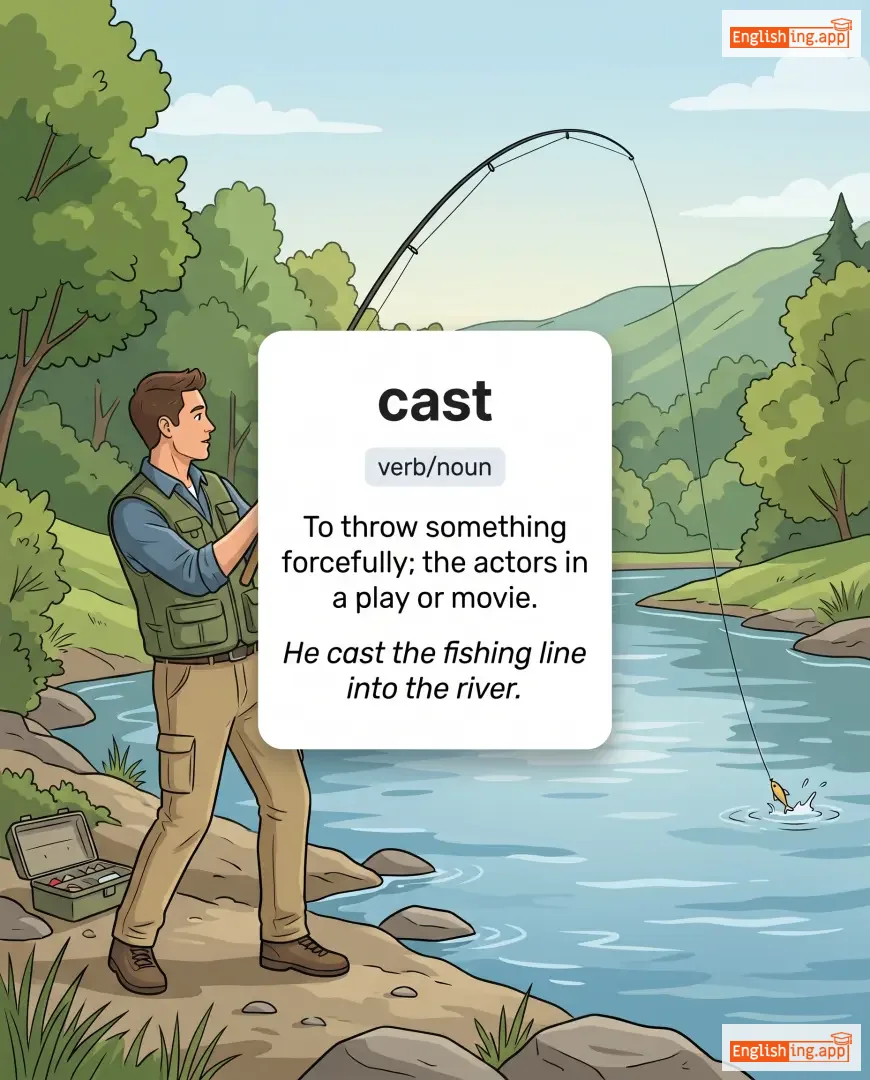
To throw something forcefully; the actors in a play or movie.
••••••
|
He cast the fishing line into the river.
хи кæст ðə фишɪнг лайн ˈинту ðə ривэр.
••••••
|
Он бросил рыболовную леску в реку.
On brosil rybolovnuju lesku v reku.
••••••
|
cast a spell
кæст э спэл
••••••
|
To use magic to influence someone or something.
••••••
|
наложить заклинание
nalozhit' zaklinanie
••••••
|
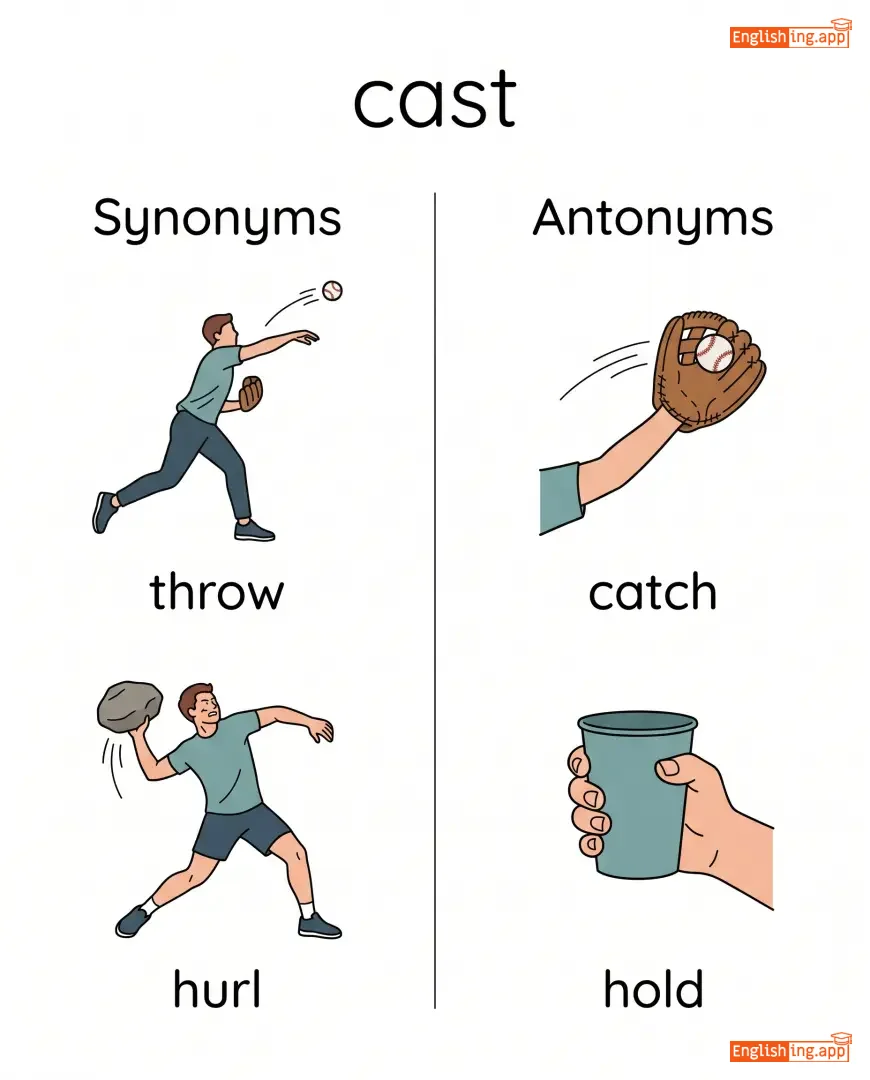
throw, hurl, fling, assign, shape
••••••
|
catch, hold, retain
••••••
|
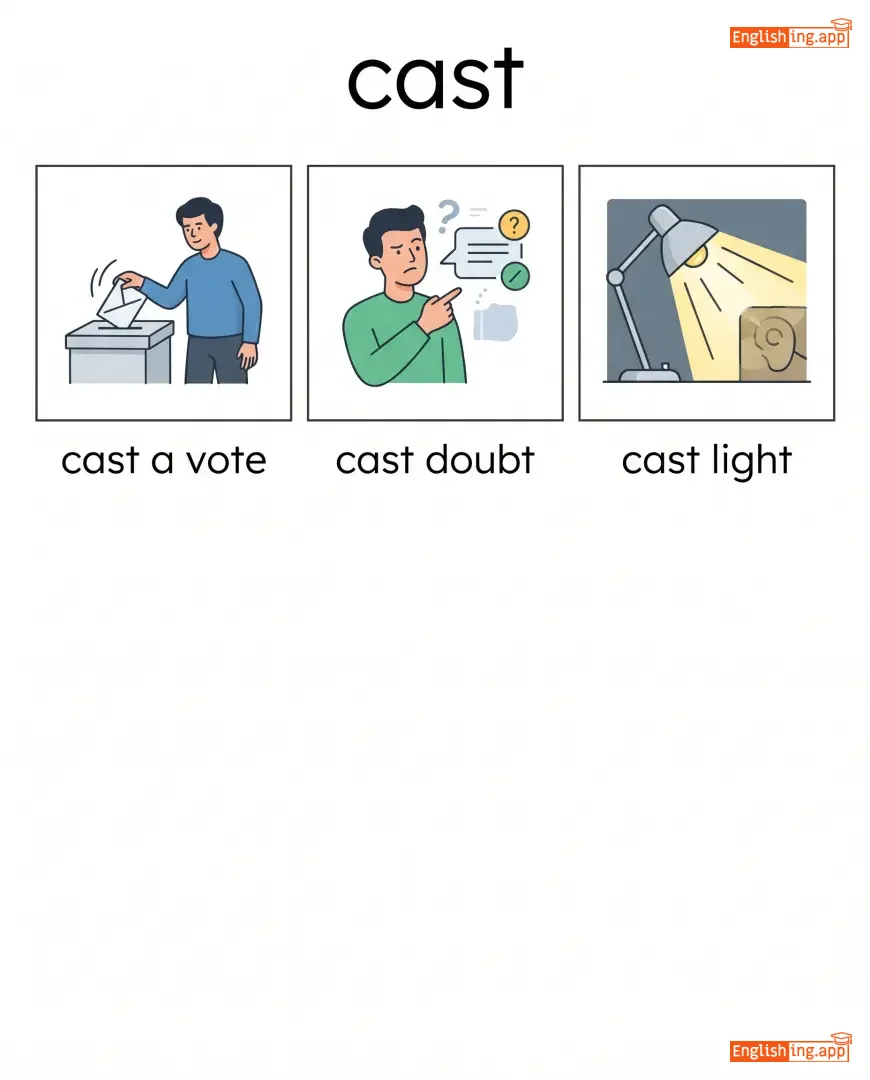
cast a vote, cast doubt, cast light, movie cast
••••••
|
Cast означает бросить что-то или выбрать актеров, как в фильме.
••••••
|
|
#885
🏰
|
/ˈkæs.əl/
noun
(kæsl)
••••••
|
- •••••• |
замок; дворец;
zamok, dvorets
••••••
|
- •••••• | - •••••• | - •••••• | - •••••• |
a large fortified building or set of buildings; a fortress
••••••
|
The medieval castle stood majestically on top of the hill. |
Средневековый замок возвышался величественно на вершине холма.
Srednevekovyy zamok vozvyshalsya velichestvenno na vershine kholma.
••••••
|
- •••••• | - •••••• | - •••••• |
fortress, stronghold, citadel, palace
••••••
|
hut, cottage, simple dwelling
••••••
|
medieval castle, ancient castle, castle walls
••••••
|
Visualize a 'zamok' at the top of a hill.
••••••
|
|
#886
👕
|
/ˈkæʒuəl/
adjective
(kæzual)
••••••
|
- •••••• |
повседневный
povsednevny
••••••
|
- •••••• | - •••••• | - •••••• | - •••••• |
Relaxed and informal in style, manner, or appearance.
••••••
|
He wore casual clothes to the informal gathering.
Он надел повседневную одежду на неформальную встречу.
••••••
|
Он надел повседневную одежду на неформальную встречу.
On nadel povsednevnuju odezhdu na neformal'nuyu vstrechu.
••••••
|
casual acquaintance
случайный знакомый
••••••
|
A person you know but not very well.
••••••
|
случайный знакомый
sluchajnyj znakomyy
••••••
|
informal, relaxed, easygoing, nonchalant, laid-back
••••••
|
formal, serious, strict
••••••
|
casual clothes, casual meeting, casual conversation, casual approach
••••••
|
Повседневный стиль для повседневных встреч
••••••
|
|
#887
🚑
|
/ˈkæʒ.u.əl.ti/
noun
(кæʒ.u.эл.ти)
••••••
|
- •••••• |
жертва; раненый; потеря
zhertva; ranyony; poterya
••••••
|
- •••••• | - •••••• | - •••••• | - •••••• |
a person killed or injured in a war or accident; a victim of circumstances
••••••
|
The hospital treated many casualties from the car accident.
Больница лечила множество жертв автомобильной аварии.
••••••
|
Больница лечила множество жертв автомобильной аварии.
Bol'nitsa lechila mnogochislenno zhertv avtoavarii.
••••••
|
- •••••• | - •••••• | - •••••• |
victim, fatality, injured person, loss
••••••
|
survivor, unharmed person
••••••
|
war casualty, traffic casualty, casualty count
••••••
|
Жертвы аварий - те, кто попал в беду
••••••
|
|
#888
🐱
|
/kæt/
noun
(kæt)
••••••
|
- •••••• |
кот
kot
••••••
|
- •••••• | - •••••• | - •••••• | - •••••• |
a small domesticated carnivorous mammal often kept as a pet
••••••
|
The cat is sleeping on the sofa. |
Кот спит на диване.
Kot spit na divane.
••••••
|
curiosity killed the cat |
being too inquisitive can lead to trouble
••••••
|
любопытство убило кота
lyubopytstvo ubilo kota
••••••
|
feline, kitten, pussy, tomcat
••••••
|
dog, hound
••••••
|
stray cat, pet cat, wild cat, black cat
••••••
|
Cat 🐱 в русском — кот, он любит свою любознательность!
••••••
|
|
#889
📚
|
/ˈkætəlɒɡ/
noun; verb
(кэтэлог)
••••••
|
- •••••• |
каталог
katalog
••••••
|
catalogued
кэтэлогд
••••••
|
catalogued
кэтэлогд
••••••
|
catalogues
кэтэлогс
••••••
|
cataloguing
кэтэлогинг
••••••
|
a complete list of items, typically one in alphabetical or systematic order; to make a systematic list of items
••••••
|
The library decided to catalogue all new books digitally.
Зе лайбрари дисайдэду ту кэтэлог ол нью букс диджитали.
••••••
|
Библиотека решила каталогизировать все новые книги в цифровом виде.
biblioteka reshila katalogizirovat vse novye knigi v tsifrovom vide
••••••
|
- •••••• | - •••••• | - •••••• |
list, register, index, inventory, directory
••••••
|
disorder, chaos
••••••
|
product catalogue, library catalogue, online catalogue, catalogue items, catalogue system
••••••
|
каталог почти как catalogue — значит список
••••••
|
|
#890
🤲
|
/kætʃ/
verb
(кэтч)
••••••
|
|
поймать
poymat'
••••••
|
caught
кот
••••••
|
caught
кот
••••••
|
catches
кэтчиз
••••••
|
catching
кэтчинг
••••••
|
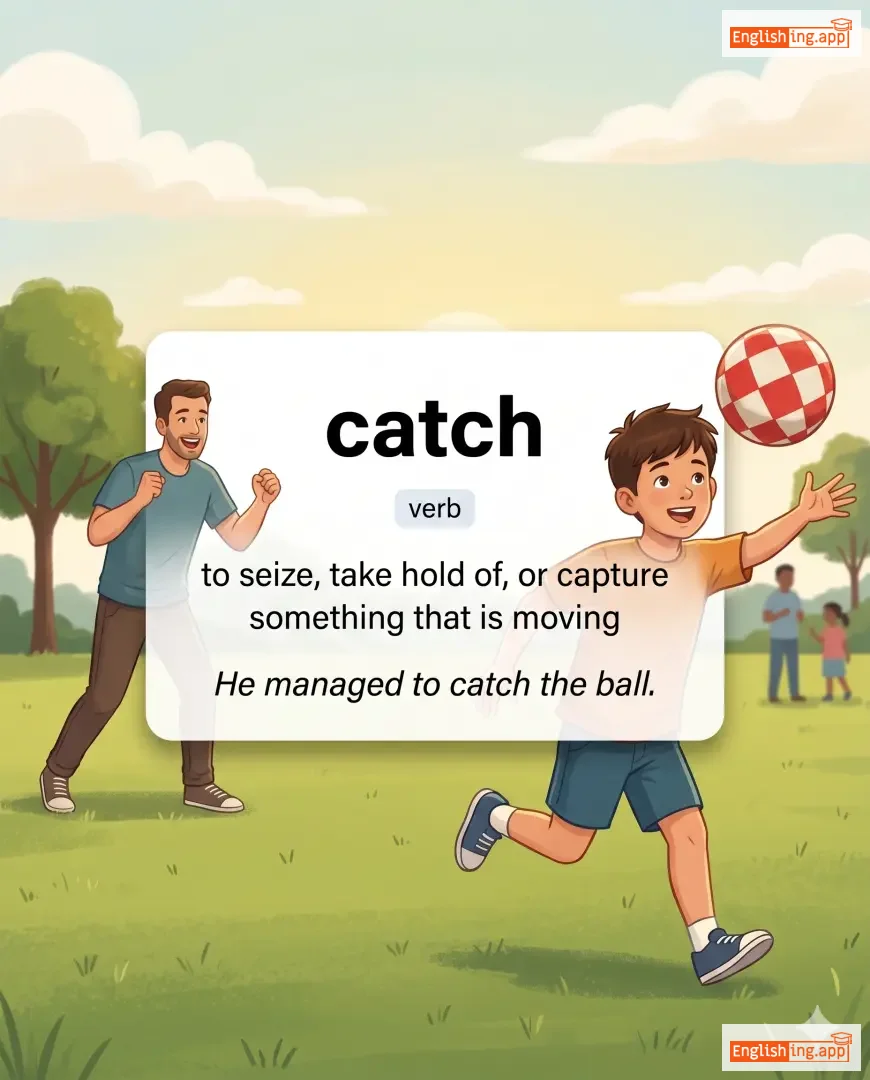
to seize, take hold of, or capture something that is moving
••••••
|
He managed to catch the ball.
хи мэнэджд ту кэтч зэ бол.
••••••
|
Он смог поймать мяч.
On smog poymat' myach.
••••••
|
catch someone's eye
кэтч самванс ай
••••••
|
to attract someone's attention
••••••
|
привлечь чье-то внимание
privlech' ch'ye-to vnimanie
••••••
|
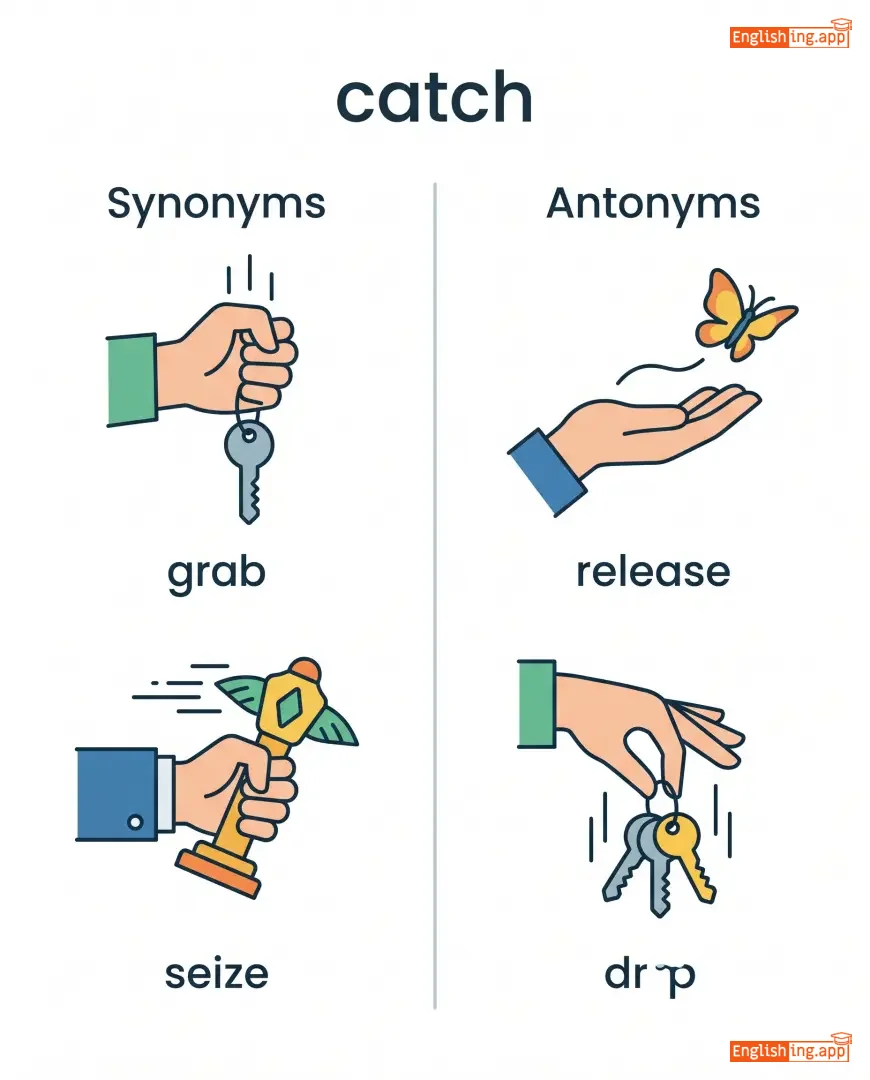
grab, seize, capture, grasp, snatch
••••••
|
release, drop, lose
••••••
|
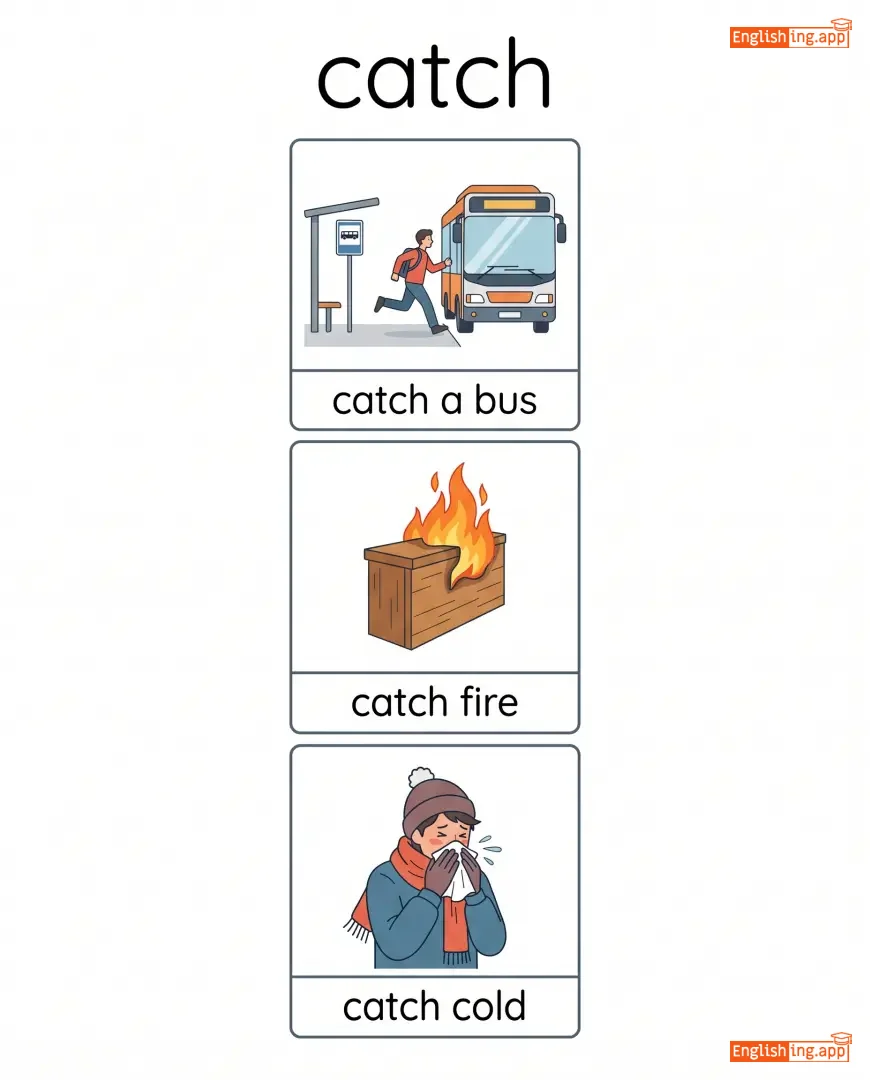
catch a bus, catch fire, catch cold, catch attention
••••••
|
Catch = Поймать – легко запомнить, что Catch - это когда ты ловишь.
••••••
|
|
#891
📂
|
/ˈkætəɡɔːri/
noun
(категория)
••••••
|
- •••••• |
категория
kategorija
••••••
|
- •••••• | - •••••• | - •••••• | - •••••• |
a class or division of things regarded as having particular shared characteristics
••••••
|
Books are arranged by category in the library. |
Книги организованы по категориям в библиотеке.
Knigi organizovany po kategoriyam v biblioteke.
••••••
|
- •••••• | - •••••• | - •••••• |
class, group, type, division, section
••••••
|
individual, unit
••••••
|
product category, age category, main category, different category
••••••
|
Category = категория 📂 - книги организованы по категориям
••••••
|
|
#892
🍽️
|
/ˈkeɪtər/
verb
(кэйтер)
••••••
|
- •••••• |
обслуживать
obsluzhivat
••••••
|
catered
кэйтерд
••••••
|
catered
кэйтерд
••••••
|
caters
кэйтерс
••••••
|
catering
кэйтеринг
••••••
|
To provide food, drinks, or services, usually for an event or group.
••••••
|
The company catered the wedding reception.
Компания организовала ужин на свадебном приеме.
••••••
|
Компания организовала ужин на свадебном приеме.
Kompaniya organizovala uzhin na svadebnom prieme.
••••••
|
cater to
кэйтер ту
••••••
|
To provide what is wanted or needed by someone, often excessively.
••••••
|
обслужить
obsluzhit
••••••
|
provide, supply, serve, furnish, deliver
••••••
|
neglect, ignore
••••••
|
cater for, cater to needs, catering services, cater events
••••••
|
Cater означает 'обслужить' – предоставить еду и напитки на мероприятия.
••••••
|
|
#893
🐄
|
/ˈkætl/
noun
(ˈhæpinəs)
••••••
|
- •••••• |
счастье
schast'ye
••••••
|
- •••••• | - •••••• | - •••••• | - •••••• |
large domesticated animals such as cows and bulls that are kept on a farm for their milk, meat, or hides
••••••
|
The farmer owns a herd of cattle that graze near the river. |
Она не смогла скрыть своего счастья, когда получила награду.
Ona ne smogla skryt' svoego schast'ya, kogda poluchila nagradu.
••••••
|
like cattle |
used to describe people being treated as a group without individuality
••••••
|
поиск счастья
poisk schast'ya
••••••
|
livestock, herd, cows, oxen, bovine
••••••
|
wild animals, pets
••••••
|
herd of cattle, cattle farm, cattle ranch, cattle market
••••••
|
Счастье на русском похоже на 'быть счастливым', запомни это!
••••••
|
|
#894
⚡
|
/kɔːz/
noun/verb
(koz)
••••••
|
- •••••• |
причина / вызывать
prichina / vyzyvat
••••••
|
caused
koz
••••••
|
caused
koz
••••••
|
causes
kozes
••••••
|
causing
kozing
••••••
|
a person or thing that gives rise to an action, phenomenon, or condition; to make something happen
••••••
|
The heavy rain caused flooding in the city.
Сильный дождь вызвал наводнение в городе.
••••••
|
Сильный дождь вызвал наводнение в городе.
Sil'nyy dozhd' vyzval navodneniye v gorode.
••••••
|
lost cause
потерянное дело
••••••
|
a hopeless case; something doomed to fail
••••••
|
потерянное дело
poteryannoye delo
••••••
|
reason, motive, source, trigger, origin
••••••
|
effect, result
••••••
|
cause of death, good cause, lost cause, social cause
••••••
|
Cause означает причина ⚡ – Дождь вызывает наводнение, Cause = Причина
••••••
|
|
#895
⚠️
|
/ˈkɔː.ʃən/
noun
(каушн)
••••••
|
|
предостережение; осторожность
predosterezhenie; ostorozhnost
••••••
|
- •••••• | - •••••• | - •••••• | - •••••• |
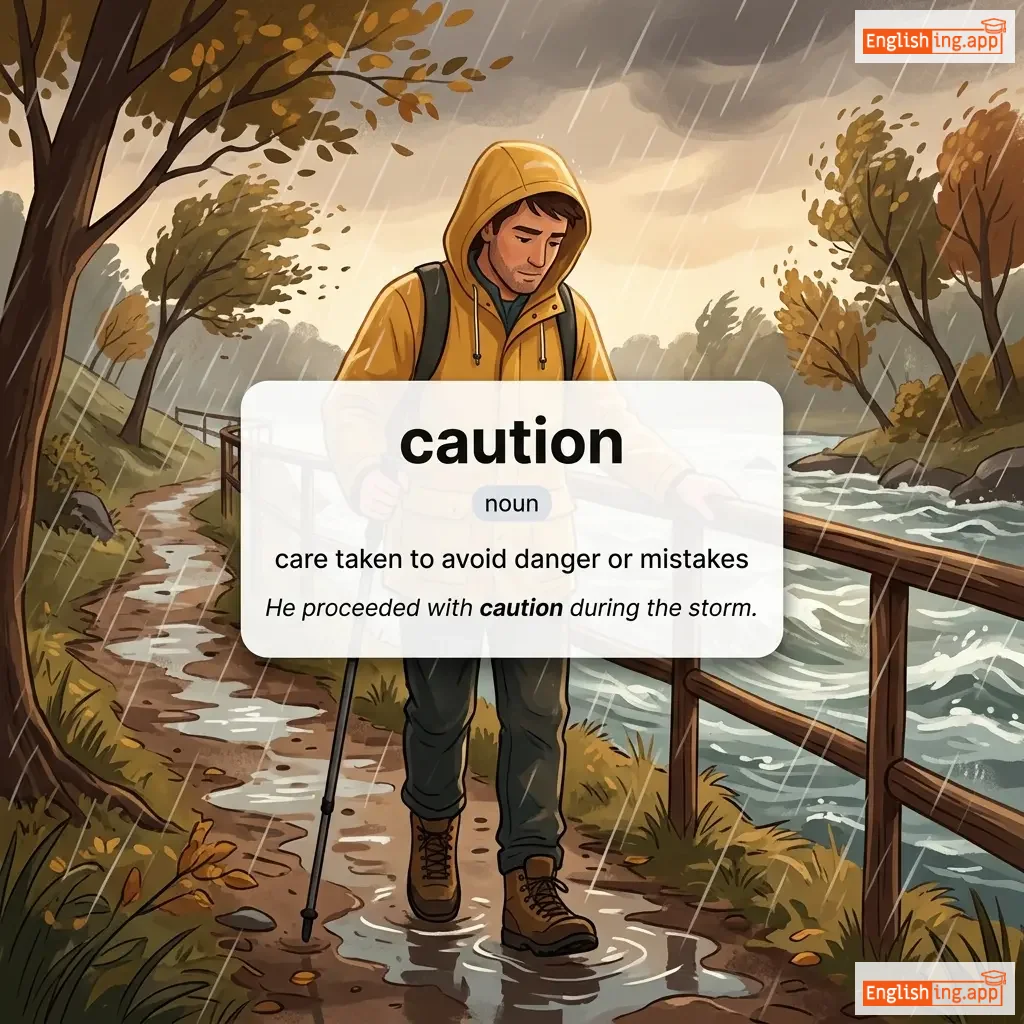
care taken to avoid danger or mistakes; a warning about possible danger or problems
••••••
|
The teacher gave a caution to students about the slippery stairs.
Учитель дал предостережение студентам о скользких ступенях.
••••••
|
Учитель дал предостережение студентам о скользких ступенях.
Uchitel dal predosterezhenie studentam o skol'zkiyakh stupenyakh.
••••••
|
- •••••• | - •••••• | - •••••• |
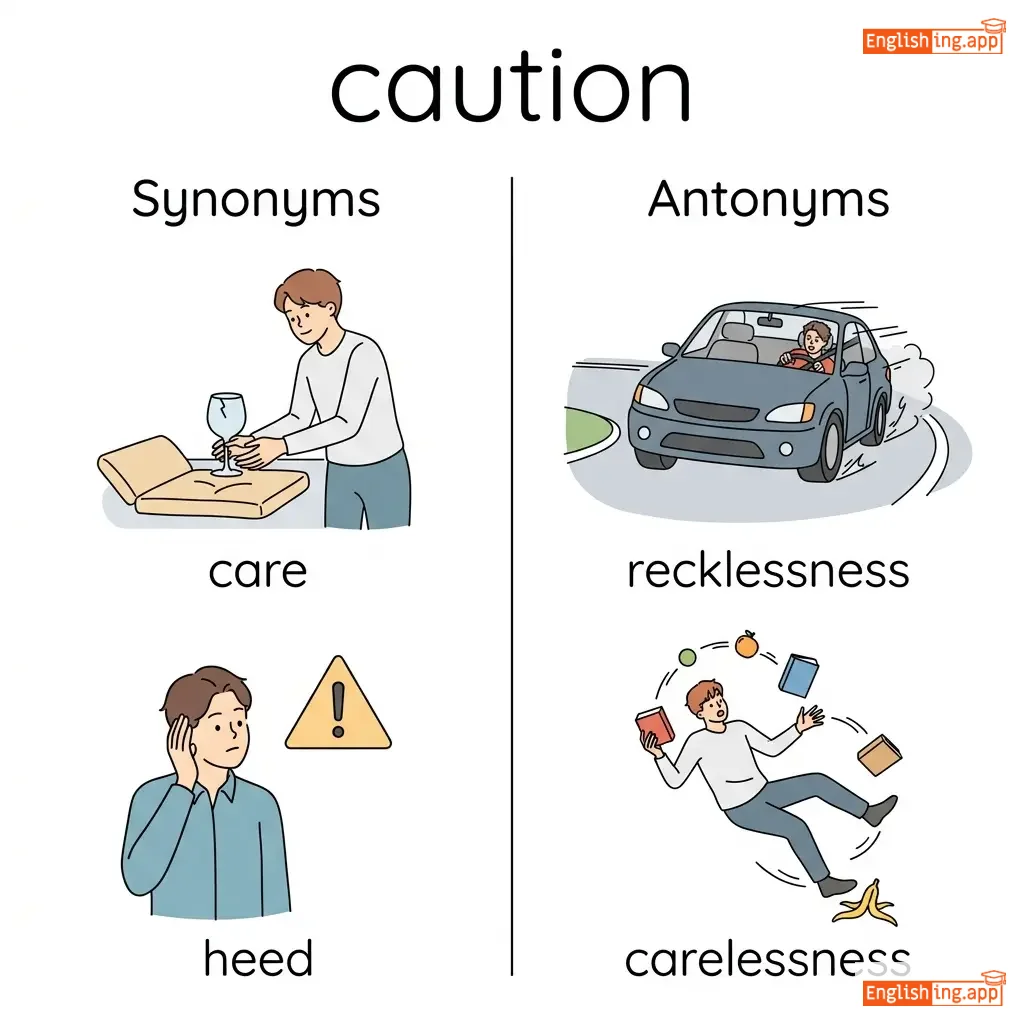
warning, care, prudence, vigilance
••••••
|
recklessness, carelessness, negligence
••••••
|
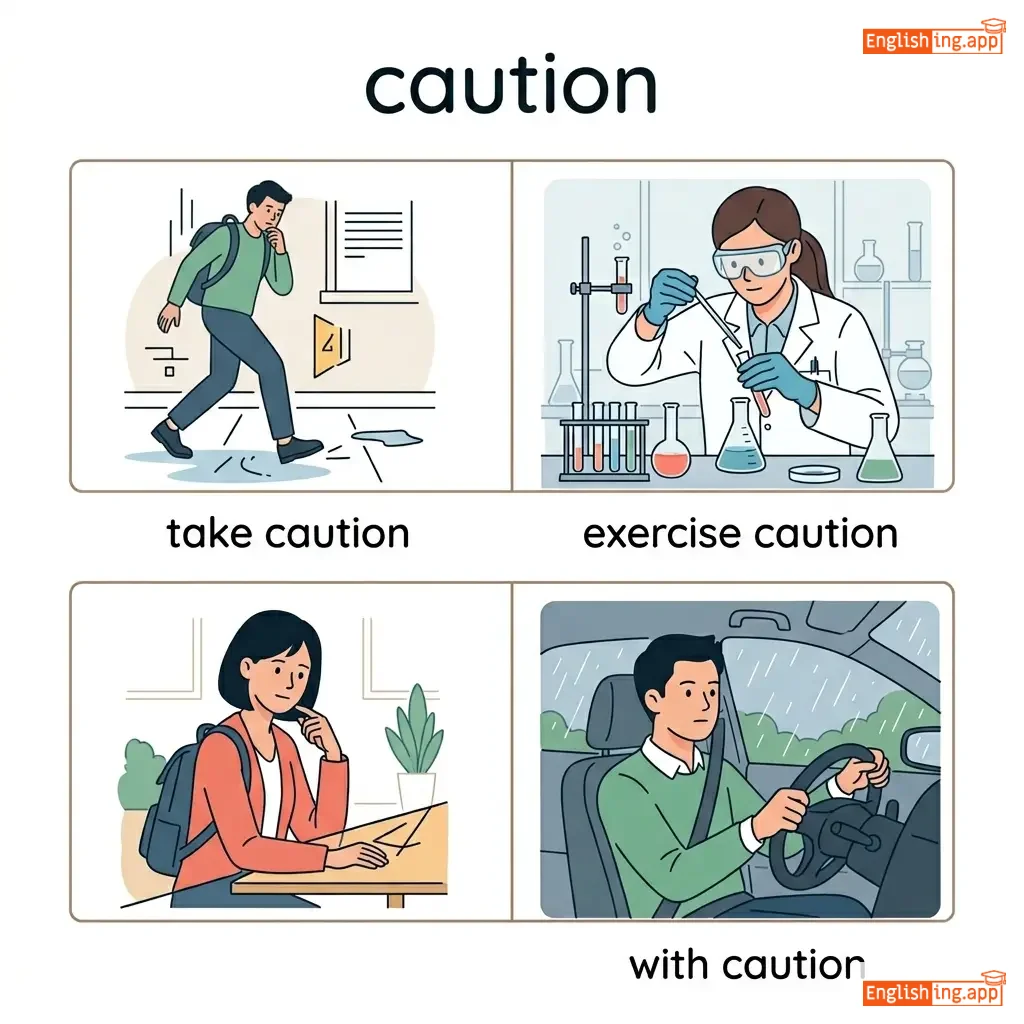
exercise caution, word of caution, proceed with caution
••••••
|
In Russian, 'предостережение' means caution, reminding you of the warning about the slippery stairs.
••••••
|
|
#896
⚠️
|
/ˈkɔːʃənˌɛri/
adjective
(кошэнэри)
••••••
|
- •••••• |
предупредительный
predupreditelnyi
••••••
|
- •••••• | - •••••• | - •••••• | - •••••• |
serving as a warning; intended to prevent problems or mistakes by giving advice or examples
••••••
|
The report offers a cautionary message about unchecked spending.
Зе репорт офферз э кошэнэри мэссидж эбаут анчект спендинг.
••••••
|
Отчёт содержит предупредительное сообщение о неконтролируемых расходах.
Otchet soderzhit predupreditelnoe soobshchenie o nekontroliruemykh raskhodakh
••••••
|
cautionary tale
кошэнэри тэйл
••••••
|
a story used as a warning about potential dangers or mistakes
••••••
|
поучительная история
pouchitelnaya istoriya
••••••
|
warning, preventive, admonitory, forewarning, advisory
••••••
|
encouraging, reassuring, permissive
••••••
|
cautionary tale, cautionary advice, cautionary note, cautionary example
••••••
|
предупреждение = caution—cautionary
••••••
|
|
#897
🛑
|
/ˈkɔːʃəs/
adjective
(кóшус)
••••••
|
- •••••• |
осторожный
ostorozhny
••••••
|
- •••••• | - •••••• | - •••••• | - •••••• |
careful to avoid potential problems or dangers
••••••
|
She was cautious about trusting strangers. |
Она была осторожна, доверяя незнакомцам.
Ona byla ostorozhna, doveryaya neznakomtsam.
••••••
|
- •••••• | - •••••• | - •••••• |
careful, prudent, wary, circumspect
••••••
|
reckless, careless
••••••
|
cautious approach, cautious attitude, be cautious
••••••
|
Cautious means 'careful' + 's' – being careful with strangers
••••••
|
|
#898
🕳️
|
/keɪv/
noun
(кэйв)
••••••
|
- •••••• |
пещера
peshchera
••••••
|
- •••••• | - •••••• | - •••••• | - •••••• |
a large natural underground space in a hill or cliff
••••••
|
The explorers discovered paintings on the walls of the cave. |
Исследователи обнаружили картины на стенах пещеры.
Issledovateli obnaruzhili kartiny na stenakh peshchery.
••••••
|
cave in |
to collapse or give way under pressure
••••••
|
обрушиться
obrushit'sya
••••••
|
cavern, grotto, hollow, den, tunnel
••••••
|
mountain, peak, hilltop
••••••
|
deep cave, dark cave, cave entrance, explore cave
••••••
|
Cave значит пещера — в пещере можно найти много интересного!
••••••
|
|
#899
🛑
|
/siːs/
verb
(sís)
••••••
|
- •••••• |
прекращать
prekrashchat
••••••
|
ceased
síst
••••••
|
ceased
síst
••••••
|
ceases
síses
••••••
|
ceasing
sísing
••••••
|
to bring or come to an end; to stop doing something
••••••
|
The noise ceased as soon as the children went inside.
Шум прекратился, как только дети зашли внутрь.
••••••
|
Шум прекратился, как только дети зашли внутрь.
Shum prekratilsya, kak tol'ko deti zashli vnutr'.
••••••
|
ceasefire
перемирие
••••••
|
an agreement to stop fighting temporarily
••••••
|
перемирие
peremirie
••••••
|
stop, halt, end, discontinue, terminate
••••••
|
continue, persist, proceed
••••••
|
cease operations, cease to exist, cease immediately, cease fire
••••••
|
Cease означает прекращать, как в русском 'прекращать'.
••••••
|
|
#900
♾️
|
/ˈsiːs.ləs/
adjective
(sisləs)
••••••
|
- •••••• |
непрерывный; постоянный
sisles
••••••
|
- •••••• | - •••••• | - •••••• | - •••••• |
continuing without pause or interruption; endless
••••••
|
The ceaseless rain lasted for three days. |
Непрерывный дождь длился три дня.
Nepreryvnyy dozhd' dlilsya tree dnya.
••••••
|
- •••••• | - •••••• | - •••••• |
endless, continuous, perpetual
••••••
|
temporary, intermittent, sporadic
••••••
|
ceaseless effort, ceaseless noise, ceaseless activity
••••••
|
Russian 'не' (not stopping) + 'прерывный' (interrupting)
••••••
|
|
#901
🏠
|
/ˈsiːlɪŋ/
noun
(силɪнг)
••••••
|
- •••••• |
потолок
potolok
••••••
|
- •••••• | - •••••• | - •••••• | - •••••• |
the upper interior surface of a room
••••••
|
The ceiling of the hall was painted beautifully. |
Потолок зала был красиво покрашен.
Potolok zala byl krasivo pokrashen.
••••••
|
hit the ceiling |
to become extremely angry
••••••
|
выйти из себя
vyyti iz sebya
••••••
|
roof, overhead, canopy, cover
••••••
|
floor, ground
••••••
|
high ceiling, low ceiling, ceiling fan, ceiling light
••••••
|
Потолок означает потолок, представьте, что вентилятор на потолке.
••••••
|
|
#902
🎉
|
/ˈsɛlɪˌbreɪt/
verb
(selibret)
••••••
|
|
праздновать
prazdnovat
••••••
|
celebrated
selibreted
••••••
|
celebrated
selibreted
••••••
|
celebrates
selibrets
••••••
|
celebrating
selibretin
••••••
|
to observe an occasion with festivities or respect
••••••
|
They celebrated their wedding anniversary with a party.
Они отпраздновали свою годовщину свадьбы на вечеринке.
••••••
|
Они отпраздновали свою годовщину свадьбы на вечеринке.
Oni otprazdnovali svoyu godovshchinu svad'by na vecherinke.
••••••
|
celebrate in style
праздновать с размахом
••••••
|
to celebrate in an impressive or luxurious way
••••••
|
праздновать с шиком
prazdnovat' s shikom
••••••
|
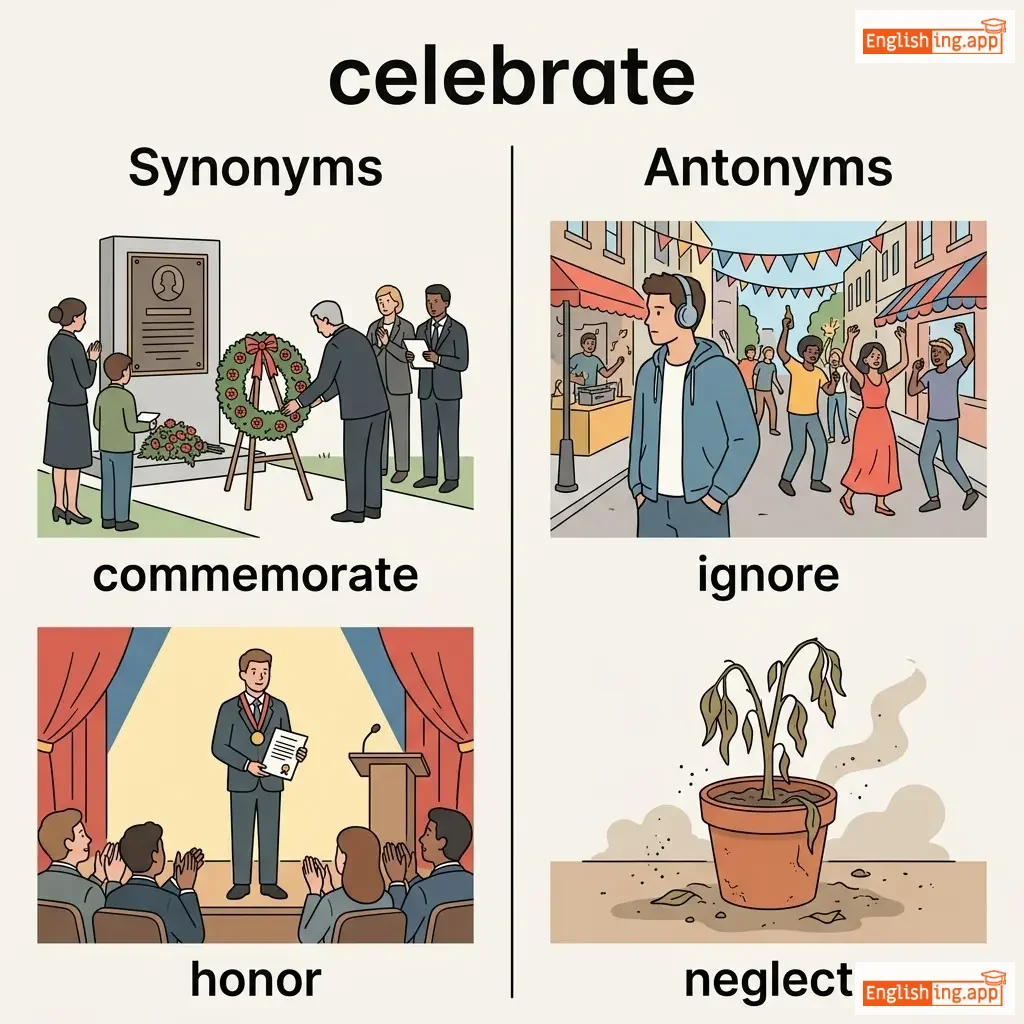
commemorate, honor, observe, rejoice
••••••
|
ignore, neglect
••••••
|
celebrate success, celebrate a birthday, celebrate together, celebrate in style
••••••
|
Праздновать - значит делать это с блеском!
••••••
|
|
#903
🥳
|
/ˌsɛlɪˈbreɪʃən/
noun
(selibréishn)
••••••
|
- •••••• |
празднование
prazdnovanie
••••••
|
- •••••• | - •••••• | - •••••• | - •••••• |
a festive event or activity to honor an occasion
••••••
|
The city held a grand celebration on Independence Day. |
Город устроил грандиозное празднование в День независимости.
Gorod ustroil grandioznoe prazdnovanie v Den' nezavisimosti.
••••••
|
- •••••• | - •••••• | - •••••• |
festivity, party, event, ceremony, gathering
••••••
|
mourning, neglect
••••••
|
birthday celebration, wedding celebration, public celebration, celebration dinner
••••••
|
Celebration – это празднование, как на день рождения!
••••••
|
|
#904
🌟
|
/səˈlɛbrɪti/
noun
(selibrity)
••••••
|
- •••••• |
знаменитость
znamenitost
••••••
|
- •••••• | - •••••• | - •••••• | - •••••• |
a famous person, especially in entertainment or sports
••••••
|
The celebrity was surrounded by fans at the airport. |
Знаменитость была окружена поклонниками в аэропорту.
Znamenitost' byla okruzhena poklonnikami v aeroporte.
••••••
|
celebrity status |
the condition of being widely known and admired
••••••
|
статус знаменитости
status znamenitosti
••••••
|
star, idol, personality, VIP, notable
••••••
|
unknown, nobody
••••••
|
celebrity gossip, celebrity news, celebrity status, celebrity culture
••••••
|
Celebrity - это тот, кого все знают и кто популярен!
••••••
|
|
#905
🔋
|
/sɛl/
noun
(sel)
••••••
|
- •••••• |
клетка / клетка
kletka / kletka
••••••
|
- •••••• | - •••••• | - •••••• | - •••••• |
a small basic unit of life; or a small enclosed space like a prison room
••••••
|
The prisoner was locked in a small cell. |
Заключенного заперли в маленькой камере.
Zaklyuchennogo zaperyli v malen'koy kamere.
••••••
|
cell phone |
a portable mobile phone
••••••
|
мобильный телефон
mobil'nyy telefon
••••••
|
unit, chamber, cubicle, compartment
••••••
|
open space, hall
••••••
|
prison cell, blood cell, cell phone, solar cell
••••••
|
Cell означает клетка, а мобильный телефон называют мобильным телефоном.
••••••
|
|
#906
📱
|
/ˈsɛlˌfoʊn/
noun
(селфоун)
••••••
|
- •••••• |
мобильный телефон
mobilnyi telefon
••••••
|
- •••••• | - •••••• | - •••••• | - •••••• |
a portable telephone that uses a cellular network for wireless communication
••••••
|
She forgot her cellphone at home and couldn’t call anyone.
Ши форгот хер селфоун эт хоум энд куднт кол эниуан.
••••••
|
Она забыла свой мобильный телефон дома и не смогла никому позвонить.
ona zabyla svoi mobilnyi telefon doma i ne smogla nikomu pozvonit
••••••
|
- •••••• | - •••••• | - •••••• |
mobile phone, cell phone, smartphone, handset
••••••
|
landline, desk phone
••••••
|
cellphone battery, cellphone charger, cellphone screen, cellphone number
••••••
|
Cellphone = мобильный телефон—всегда на связи.
••••••
|
|
#907
⚰️
|
/ˈsɛmɪˌtɛri/
noun
(кладбище)
••••••
|
- •••••• |
кладбище
kladbishche
••••••
|
- •••••• | - •••••• | - •••••• | - •••••• |
a place where dead people are buried
••••••
|
The old cemetery is located at the edge of the village. |
Старое кладбище находится на окраине деревни.
Staroye kladbishche nakhoditsya na okraine derevni.
••••••
|
- •••••• | - •••••• | - •••••• |
graveyard, burial ground, necropolis, churchyard
••••••
|
living area, city center
••••••
|
old cemetery, village cemetery, family cemetery, war cemetery
••••••
|
кладбище = Klad-bi-shche, место для покоя усопших
••••••
|
Vocabulary Quiz
Test your vocabulary by matching words with their translations or meanings.
Login to take the quiz
Comments (0)
Share your thoughts and join the discussion.
Join the discussion by logging in
Login to CommentNo comments yet
Be the first to share your thoughts!