

Обновитесь для доступа ко всему словарю
Получите неограниченный доступ ко всем словам с подпиской Pro
Обновить до ProПеревод
Прошедшее
Причастие прошедшего времени
Третье лицо единственного числа
Герундий
Значение
Пример предложения
Перевод примера предложения
Синонимы
Антонимы
Коллокации
Мнемоника
Swipe left or right, or use the buttons. Tap image to zoom.
Обновитесь для доступа ко всем предложениям
Получите неограниченный доступ ко всем предложениям с подпиской Pro
Обновить до ProПеревод примера предложения
Слово
Lesson 71Lesson 71 - Переключатель маски
|
Эмодзи
|
Слово | Images | Перевод | Прошедшее | Причастие прошедшего времени | Третье лицо единственного числа | Герундий | Значение | Пример предложения | Перевод примера предложения | Пример выражения | Значение примера выражения | Перевод примера выражения | Синонимы | Антонимы | Коллокации | Мнемоника |
|---|---|---|---|---|---|---|---|---|---|---|---|---|---|---|---|---|---|
|
#3370
🎬
|
/ˈmuːvi/
noun
(хэппинесс)
••••••
|
- •••••• |
счастье
schastye
••••••
|
- •••••• | - •••••• | - •••••• | - •••••• |
A motion picture or film shown in a cinema or on television.
••••••
|
We watched a movie together last night. |
Она не могла скрыть своего счастья, когда получила награду.
Ona ne mogla skryt' svoego schast'ya, kogda poluchila nagradu.
••••••
|
movie night |
An informal gathering to watch films together.
••••••
|
поиск счастья
poisk schast'ya
••••••
|
film, picture, motion picture, flick
••••••
|
reality, documentary
••••••
|
watch a movie, movie theater, movie star, movie ticket
••••••
|
Счастье похоже на 'счастье' как состояние радости.
••••••
|
|
#3371
😭
|
/ˈmuːvɪŋ/
adjective
(мувинг)
••••••
|
- •••••• |
трогательный
trogatelnij
••••••
|
- •••••• | - •••••• | - •••••• | - •••••• |
causing strong feelings, especially of sympathy or sadness
••••••
|
Her speech was so moving that everyone cried. |
Её речь была настолько трогательной, что все заплакали.
Eyo rech' byla nastol'ko trogatelnoy, chto vse zaplakali.
••••••
|
- •••••• | - •••••• | - •••••• |
touching, emotional, poignant, stirring
••••••
|
unemotional, indifferent, cold
••••••
|
moving speech, moving story, moving moment
••••••
|
Трогательное – это то, что трогает сердце и вызывает слёзы.
••••••
|
|
#3372
👨
|
/ˈmɪstər/
title
(мистер)
••••••
|
- •••••• |
г-н
g-n
••••••
|
- •••••• | - •••••• | - •••••• | - •••••• |
a title used before a man's name
••••••
|
Mr. Rahman is our new teacher. |
Г-н Рахман — наш новый учитель.
G-n Rahman — nash novyy uchitel'.
••••••
|
- •••••• | - •••••• | - •••••• |
sir, mister, gentleman
••••••
|
mrs, ms
••••••
|
Mr President, Mr Smith, Mr Chairman
••••••
|
Г-н значит мистер, используется перед именем мужчины.
••••••
|
|
#3373
👩
|
/ˈmɪsɪz/
title
(миссис)
••••••
|
- •••••• |
миссис
missis
••••••
|
- •••••• | - •••••• | - •••••• | - •••••• |
a title used before a married woman's name
••••••
|
Mrs. Karim is the headmistress of the school. |
Миссис Карим - директор школы.
Missis Karim - direktor shkoly.
••••••
|
- •••••• | - •••••• | - •••••• |
madam, missus, lady
••••••
|
mr, ms
••••••
|
Mrs Smith, Mrs President, Mrs Brown
••••••
|
Миссис для замужних женщин, как Mrs на английском.
••••••
|
|
#3374
👩💼
|
/mɪz/
title
(миз)
••••••
|
- •••••• |
Мисс
Miss
••••••
|
- •••••• | - •••••• | - •••••• | - •••••• |
a title used before a woman's name, regardless of marital status
••••••
|
Ms. Akter will give a speech at the seminar.
Мисс Акктер прочтет речь на семинаре.
••••••
|
Мисс Акктер прочтет речь на семинаре.
Miss Akter prochtyot rech' na seminare.
••••••
|
- •••••• | - •••••• | - •••••• |
madam, miss, lady
••••••
|
mr, mrs
••••••
|
Ms Johnson, Ms Speaker, Ms Director
••••••
|
Miss – это титул для всех женщин.
••••••
|
|
#3375
💯
|
/mʌtʃ/
adjective, adverb, pronoun
(мʌч)
••••••
|
- •••••• |
много
mnogo
••••••
|
- •••••• | - •••••• | - •••••• | - •••••• |
a large amount or degree of something
••••••
|
She doesn’t have much time to finish the project. |
У неё нет много времени, чтобы закончить проект.
U nee net mnogo vremeni, chtoby zakonchit' proyekt.
••••••
|
much ado about nothing |
a lot of fuss about something unimportant
••••••
|
много шума из ничего
mnogo shuma iz nichego
••••••
|
a lot, plenty, abundant, great deal
••••••
|
little, few
••••••
|
too much, much more, much less, so much
••••••
|
Много значит много — Много усилий приносит много успеха!
••••••
|
|
#3376
🪱
|
/mʌd/
noun
(мэд)
••••••
|
- •••••• |
грязь
gryaz
••••••
|
- •••••• | - •••••• | - •••••• | - •••••• |
soft, wet earth or soil
••••••
|
The children were playing in the mud after the rain. |
Дети играли в грязи после дождя.
Deti igrali v gryazi posle dozhdya.
••••••
|
drag someone's name through the mud |
to damage someone's reputation by saying bad things about them
••••••
|
втаскивать чье-то имя в грязь
vtaskivat' ch'yo-to imya v gryaz
••••••
|
dirt, clay, sludge, muck, soil
••••••
|
dust, rock, dry land
••••••
|
mud road, covered in mud, play in the mud, sticky mud
••••••
|
Mud означает грязь — представь себе, как ты играешь в грязи, когда слышишь слово 'muddy'.
••••••
|
|
#3377
🌧️
|
/ˈmʌd.i/
adjective
(мади)
••••••
|
- •••••• |
грязный
gryazny
••••••
|
- •••••• | - •••••• | - •••••• | - •••••• |
covered in or full of mud; unclear or confused
••••••
|
The children came back with muddy shoes after playing outside. |
Дети вернулись с грязными ботинками после игры на улице.
Deti vernulis' s gryaznymi botinkami posle igry na ulitse.
••••••
|
muddy the waters |
to make a situation more confusing or complicated
••••••
|
усложнять ситуацию
uslozhnyat' situatsiyu
••••••
|
dirty, unclear, messy, murky
••••••
|
clean, clear, pure
••••••
|
muddy shoes, muddy ground, muddy water, muddy situation
••••••
|
Muddy означает покрытый грязью – грязный
••••••
|
|
#3378
🔢
|
/ˈmʌl.tɪ.pl̩/
adjective
(мультипл)
••••••
|
- •••••• |
множество; несколько; различные
mnozhestvo; neskol'ko; razlichnye
••••••
|
- •••••• | - •••••• | - •••••• | - •••••• |
having many parts, elements, or members; numerous
••••••
|
She suffered multiple injuries in the accident. |
Она получила несколько травм в аварии.
Ona poluchila neskol'ko travm v avarii.
••••••
|
- •••••• | - •••••• | - •••••• |
numerous, many, several, various, manifold
••••••
|
single, sole, individual, unique
••••••
|
multiple choice, multiple injuries, multiple times
••••••
|
Много значений — это 'мультипл'!
••••••
|
|
#3379
✖️
|
/ˌmʌltɪplɪˈkeɪʃən/
noun
(мультипликейшн)
••••••
|
- •••••• |
умножение
umnozhenie
••••••
|
- •••••• | - •••••• | - •••••• | - •••••• |
the mathematical process of combining numbers to get a product; the act of increasing in number or amount
••••••
|
Multiplication is one of the basic operations taught in elementary mathematics.
Мультипликейшн из уан оф зе бейсик ऑपरेशнс टॉट इन एलिमेंटरी मैथमेटिक्स।
••••••
|
Умножение — одна из основных математических операций.
umnozhenie odna iz osnovnykh matematicheskikh operatsii
••••••
|
multiplication table
мультипликейшн тейбл
••••••
|
a table showing the results of multiplying numbers
••••••
|
таблица умножения
tablitsa umnozheniya
••••••
|
product, multiplication operation, times operation, arithmetic multiplication
••••••
|
division, subtraction
••••••
|
basic multiplication, multiplication table, multiplication problem, multiplication operation
••••••
|
Multiplication = umnozhenie, numbers ko multiple banao
••••••
|
|
#3380
➗
|
/ˈmʌltɪplaɪər/
noun
(малтеплайер)
••••••
|
- •••••• |
мультипликатор
multiplikator
••••••
|
- •••••• | - •••••• | - •••••• | - •••••• |
a number or factor by which another number is multiplied; something that increases the effect or value of something else
••••••
|
In economics, government spending can act as a multiplier for economic growth.
В экономике государственные расходы могут быть multiplier.
••••••
|
В экономике государственные расходы могут служить мультипликатором роста.
v ekonomike gosudarstvennye raskhody mogut sluzhit multiplikatorom rosta
••••••
|
multiplier effect
малтеплайер эффект
••••••
|
the increase in final income arising from any new injection of spending
••••••
|
эффект мультипликатора
effekt multiplikatora
••••••
|
factor, coefficient, amplifier, booster, increaser
••••••
|
divisor, reducer, diminisher
••••••
|
economic multiplier, fiscal multiplier, growth multiplier, multiplier effect
••••••
|
Multiplier → мультипликатор, всё умножает.
••••••
|
|
#3381
✖️
|
/ˈmʌltɪplaɪ/
verb
(мʌлтиплай)
••••••
|
|
умножать
umnozhat
••••••
|
multiplied
мʌлтиплайд
••••••
|
multiplied
мʌлтиплайд
••••••
|
multiplies
мʌлтиплайз
••••••
|
multiplying
мʌлтиплайи́нг
••••••
|
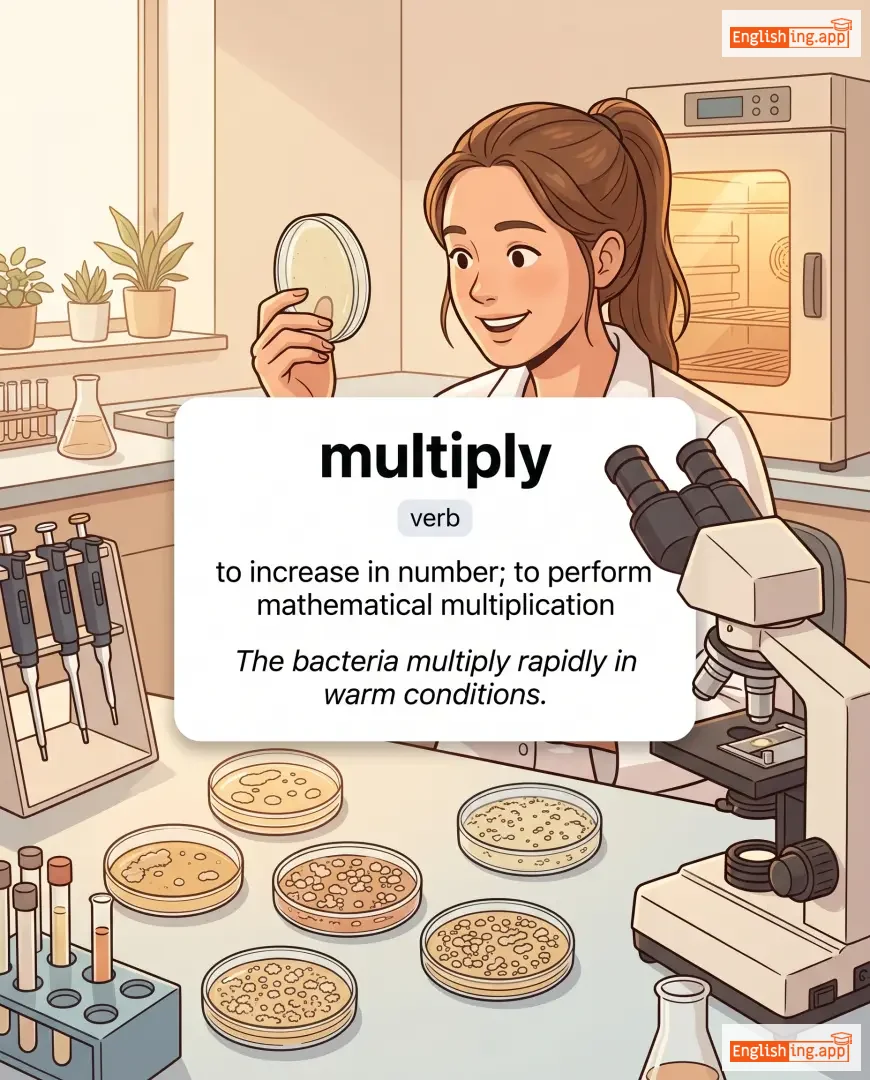
to increase in number; to perform mathematical multiplication
••••••
|
The bacteria multiply rapidly in warm conditions.
Бактерии быстро размножаются в теплых условиях.
••••••
|
Бактерии быстро размножаются в теплых условиях.
Bakterii bistro razmnozhayutsya v teplykh usloviyakh
••••••
|
- •••••• | - •••••• | - •••••• |
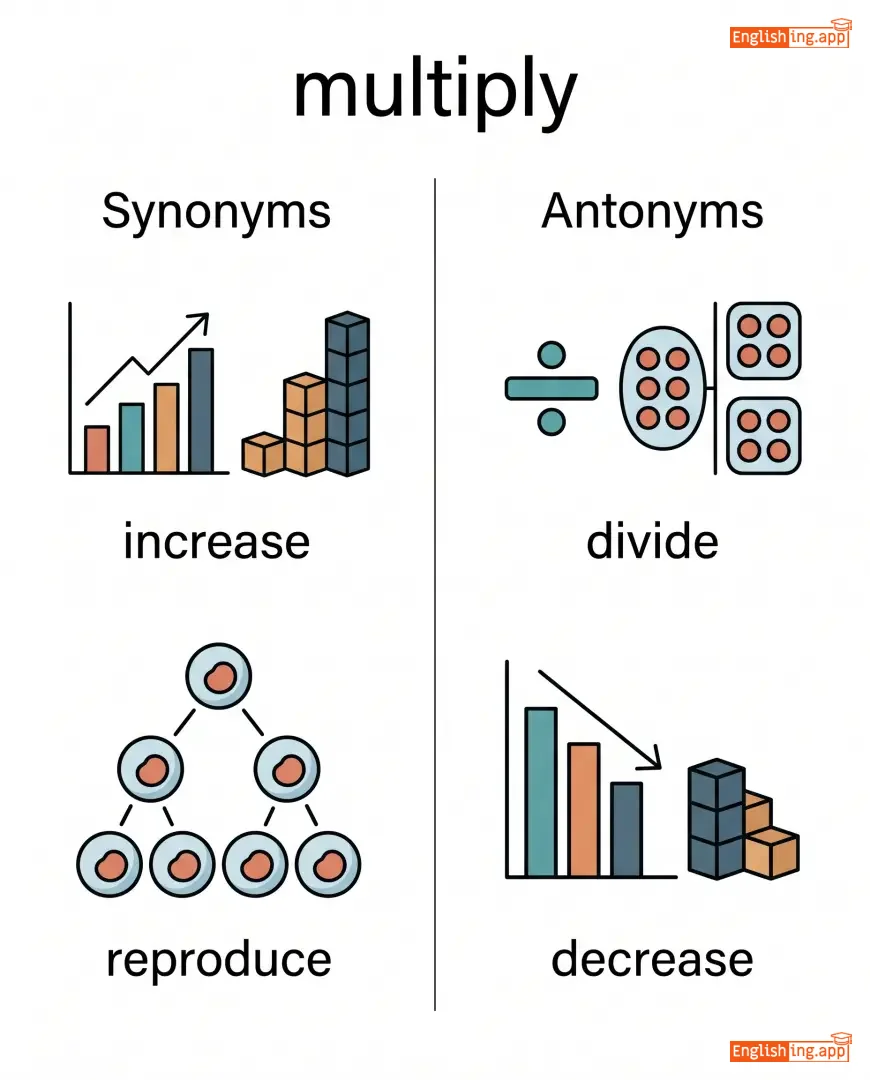
increase, reproduce, grow, expand
••••••
|
divide, decrease, reduce, diminish
••••••
|
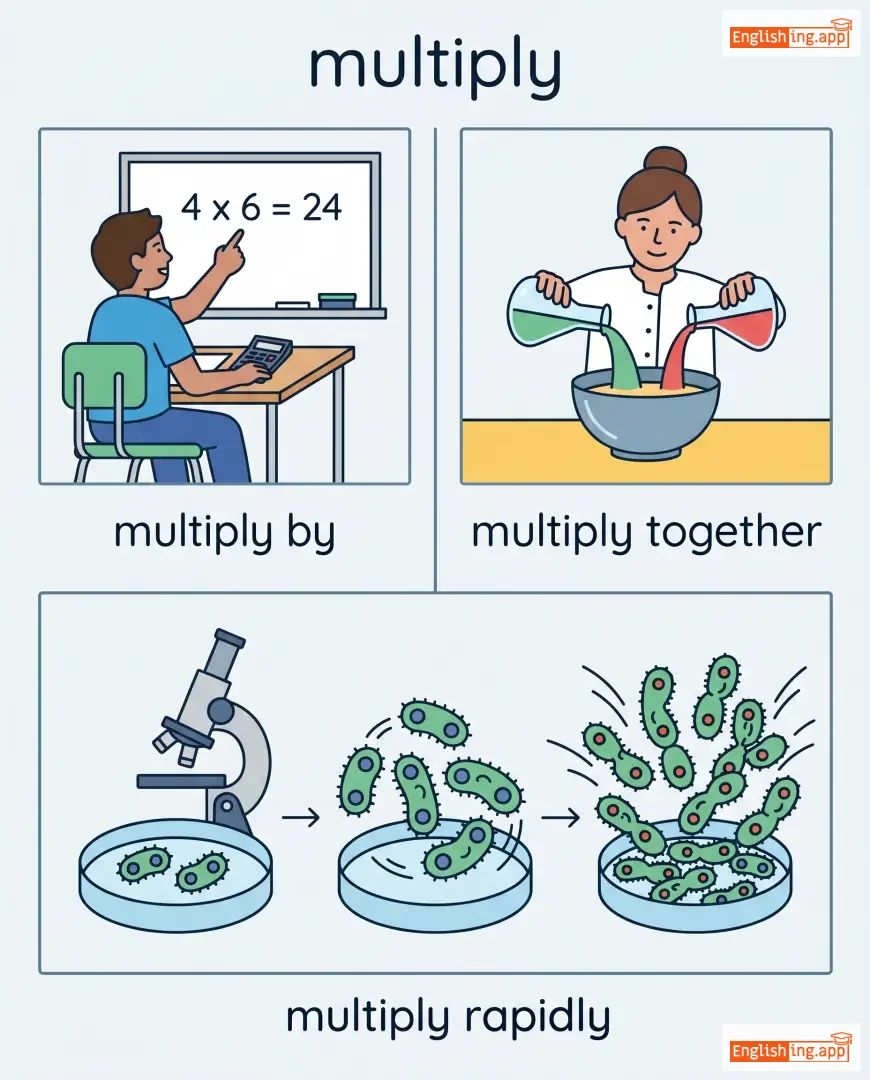
multiply by, multiply together, multiply rapidly, multiply numbers
••••••
|
Умножение похоже на размножение бактерий
••••••
|
|
#3382
🏛️
|
/mjuːˈnɪsɪpəl/
adjective
(мьюˈниˌсипал)
••••••
|
- •••••• |
муниципальный
munitsipalny
••••••
|
- •••••• | - •••••• | - •••••• | - •••••• |
relating to a city or town or its local government
••••••
|
The municipal authority is responsible for maintaining the park. |
Муниципальные власти отвечают за обслуживание парка.
Munitsipal'nye vlasti otvechayut za obsluzhivanie parka.
••••••
|
municipal government |
local government of a city or town
••••••
|
муниципальное правительство
munitsipal'noe pravitel'stvo
••••••
|
civic, local, city, town
••••••
|
federal, national, state
••••••
|
municipal authority, municipal service, municipal law, municipal election
••••••
|
MUNIcipal - муниципальный - от 'муниципалитет', местное правительство города.
••••••
|
|
#3383
🏙️
|
/ˌmjuːnɪsɪˈpæləti/
noun
(мьюнисипалити)
••••••
|
- •••••• |
муниципалитет
munitsipalitet
••••••
|
- •••••• | - •••••• | - •••••• | - •••••• |
a city or town that has its own local government
••••••
|
The municipality is planning to build a new library.
Муниципалитет планирует построить новую библиотеку.
••••••
|
Муниципалитет планирует построить новую библиотеку.
Munitsipalitet planiroyet postroit' novuyu biblioteku.
••••••
|
municipality services
муниципальные услуги
••••••
|
services provided by a city or town authority
••••••
|
муниципальные услуги
munitsipal'nye uslugi
••••••
|
city, town, borough, district
••••••
|
countryside, rural area
••••••
|
municipality council, municipality election, municipality authority
••••••
|
MUNICIPALity = муниципалитет - muni как в городе
••••••
|
|
#3384
🔪
|
/ˈmɜːrdər/
noun, verb
(убийство)
••••••
|
- •••••• |
убийство
ubiystvo
••••••
|
murdered
убил
••••••
|
murdered
убит
••••••
|
murders
убивает
••••••
|
murdering
убивая
••••••
|
the unlawful killing of a person; to kill someone unlawfully and intentionally
••••••
|
The detective investigated the murder that shocked the town.
Детектив расследовал убийство, которое потрясло город.
••••••
|
Детектив расследовал убийство, которое потрясло город.
Detektiv rassledoval ubiystvo, kotoroye potryaslo gorod.
••••••
|
murder will out
убийство выйдет на свет
••••••
|
the truth about a crime will eventually be revealed
••••••
|
убийство выйдет на свет
ubiystvo vyydet na svet
••••••
|
homicide, killing, assassination, slaughter
••••••
|
rescue, save
••••••
|
commit murder, brutal murder, murder case, murder weapon
••••••
|
Murder означает убийство — убийство всегда выходит на свет
••••••
|
|
#3385
💪
|
/ˈmʌsl/
noun
(masl)
••••••
|
- •••••• |
мышца
myshtsa
••••••
|
- •••••• | - •••••• | - •••••• | - •••••• |
a band of fibrous tissue in the body that produces movement; physical strength
••••••
|
He exercises daily to build strong muscles. |
Он тренируется каждый день, чтобы развить сильные мышцы.
On treniruetsya kazhdyy den', chtoby razvit' sil'nye myshcy.
••••••
|
flex your muscles |
to show strength or power
••••••
|
показать свои мышцы
pokazat' svoi myshcy
••••••
|
strength, power, force, sinew
••••••
|
weakness, frailty
••••••
|
muscle strength, muscle pain, muscle building, flex muscles
••••••
|
Muscle значит мышца — Покажи свои мышцы, и все будут в шоке!
••••••
|
|
#3386
🏛️
|
/mjuˈziːəm/
noun
(mjuˈzɪəm)
••••••
|
- •••••• |
музей
muzei
••••••
|
- •••••• | - •••••• | - •••••• | - •••••• |
a building in which objects of historical, scientific, artistic, or cultural interest are stored and exhibited
••••••
|
We visited the art museum to see the new exhibition.
Мы посетили художественный музей, чтобы увидеть новую выставку.
••••••
|
Мы посетили художественный музей, чтобы увидеть новую выставку.
My posetili khudozhestvennyy muzey, chtoby uvidet' novuyu vystavku.
••••••
|
- •••••• | - •••••• | - •••••• |
gallery, exhibition hall, archive, collection
••••••
|
market, store
••••••
|
art museum, history museum, science museum, visit museum
••••••
|
Музей - это место, где встречаются культура и история.
••••••
|
|
#3387
🎶
|
/ˈmjuːzɪk/
noun
(музыка)
••••••
|
- •••••• |
музыка
muzyka
••••••
|
- •••••• | - •••••• | - •••••• | - •••••• |
vocal or instrumental sounds combined to produce harmony, melody, or rhythm
••••••
|
She loves listening to classical music. |
Она любит слушать классическую музыку.
Ona lyubit slushat' klassicheskuyu muzyku.
••••••
|
- •••••• | - •••••• | - •••••• |
melody, tune, composition, song
••••••
|
silence, quiet, stillness
••••••
|
classical music, pop music, music industry, music lover
••••••
|
Music is Muzyka (музыка) - Музыка is the Russian word for music
••••••
|
|
#3388
🎵
|
/ˈmɪzɪkəl/
adjective
(мьюзикал)
••••••
|
- •••••• |
музыкальный
muzykal'nyy
••••••
|
- •••••• | - •••••• | - •••••• | - •••••• |
related to or consisting of music
••••••
|
She has a very musical voice. |
У нее очень музыкальный голос.
U nee ochen' muzykal'nyy golos.
••••••
|
- •••••• | - •••••• | - •••••• |
melodic, harmonic, tuneful, musical
••••••
|
non-musical, tone-deaf
••••••
|
musical talent, musical instrument, musical performance
••••••
|
Musical is like music + AL - Musical is related to music
••••••
|
|
#3389
🎸
|
/mjuːˈzɪʃən/
noun
(мьюˈзишн)
••••••
|
- •••••• |
музыкант
muzykant
••••••
|
- •••••• | - •••••• | - •••••• | - •••••• |
a person who plays a musical instrument or is musically talented
••••••
|
He is a talented musician. |
Он талантливый музыкант.
On talantlivyj muzykant.
••••••
|
- •••••• | - •••••• | - •••••• |
performer, artist, instrumentalist, composer
••••••
|
non-musician, layman
••••••
|
professional musician, talented musician, aspiring musician
••••••
|
Musician is someone who plays Music + IAN (like an artist)
••••••
|
|
#3390
🕌
|
/ˈmʊzlɪm/
noun
(муслим)
••••••
|
- •••••• |
мусульманин
musul'manin
••••••
|
- •••••• | - •••••• | - •••••• | - •••••• |
a follower of Islam
••••••
|
He is a devout Muslim. |
Он верный мусульманин.
On vernyy musul'manin.
••••••
|
- •••••• | - •••••• | - •••••• |
Islamic, believer, follower of Islam
••••••
|
non-Muslim, atheist
••••••
|
devout Muslim, practicing Muslim, Muslim community
••••••
|
Muslim is someone who follows ISLAM
••••••
|
|
#3391
✅
|
/mʌst/
verb
(mast)
••••••
|
- •••••• |
должен
dolzhen
••••••
|
musted
mastil
••••••
|
musted
mastil
••••••
|
musts
masts
••••••
|
musting
mastit
••••••
|
to be required or obligated to
••••••
|
You must complete your homework before you go out.
Ты должен закончить домашку, прежде чем выйти.
••••••
|
Ты должен закончить домашку, прежде чем выйти.
Ty dolzhen zakonchit' domashku, prezhde chem vyiti.
••••••
|
must do
должен делать
••••••
|
something that absolutely needs to be done
••••••
|
должен делать
dolzhen delat'
••••••
|
have to, should, need to, required
••••••
|
can, may, optional
••••••
|
must do, must see, must have
••••••
|
Ты должен это сделать! Это необходимо.
••••••
|
|
#3392
🤝
|
/ˈmjuːtʃuəl/
adjective
(мьютьюал)
••••••
|
- •••••• |
взаимный
vzaimnyy
••••••
|
- •••••• | - •••••• | - •••••• | - •••••• |
felt, shared, or done by two or more people equally
••••••
|
They have mutual respect for each other. |
У них взаимное уважение друг к другу.
U nikh vzaimnoye uvazheniye drug k drugu.
••••••
|
mutual understanding |
shared comprehension between two or more parties
••••••
|
взаимное понимание
vzaimnoye ponimaniye
••••••
|
reciprocal, shared, common, joint, collective
••••••
|
one-sided, unilateral
••••••
|
mutual respect, mutual benefit, mutual agreement
••••••
|
Взаимный означает одинаковый - 'Вза' и 'имный' символизируют одинаковые отношения.
••••••
|
|
#3393
👤
|
/maɪ/
pronoun
(mai)
••••••
|
- •••••• |
мой
moy
••••••
|
- •••••• | - •••••• | - •••••• | - •••••• |
used to indicate possession or ownership
••••••
|
This is my book.
Это моя книга.
••••••
|
Это моя книга.
Eto moya kniga.
••••••
|
- •••••• | - •••••• | - •••••• |
mine, belonging to me
••••••
|
your, theirs
••••••
|
my friend, my house, my idea
••••••
|
Моя книга, это моя собственность!
••••••
|
|
#3394
🙋♂️
|
/maɪˈsɛlf/
pronoun
(майˈсɛлф)
••••••
|
- •••••• |
сам
sam
••••••
|
- •••••• | - •••••• | - •••••• | - •••••• |
used for emphasis or to refer to oneself
••••••
|
I will do it myself.
Я сделаю это сам.
••••••
|
Я сделаю это сам.
Ya sdelayu eto sam.
••••••
|
- •••••• | - •••••• | - •••••• |
me, personally
••••••
|
someone else
••••••
|
do it myself, I taught myself, look after myself
••••••
|
I, MYSELF and I - Сделаю это сам
••••••
|
|
#3395
🕵️♂️
|
/mɪˈstɪəriəs/
adjective
(мистерийес)
••••••
|
|
загадочный
zagadocny
••••••
|
- •••••• | - •••••• | - •••••• | - •••••• |
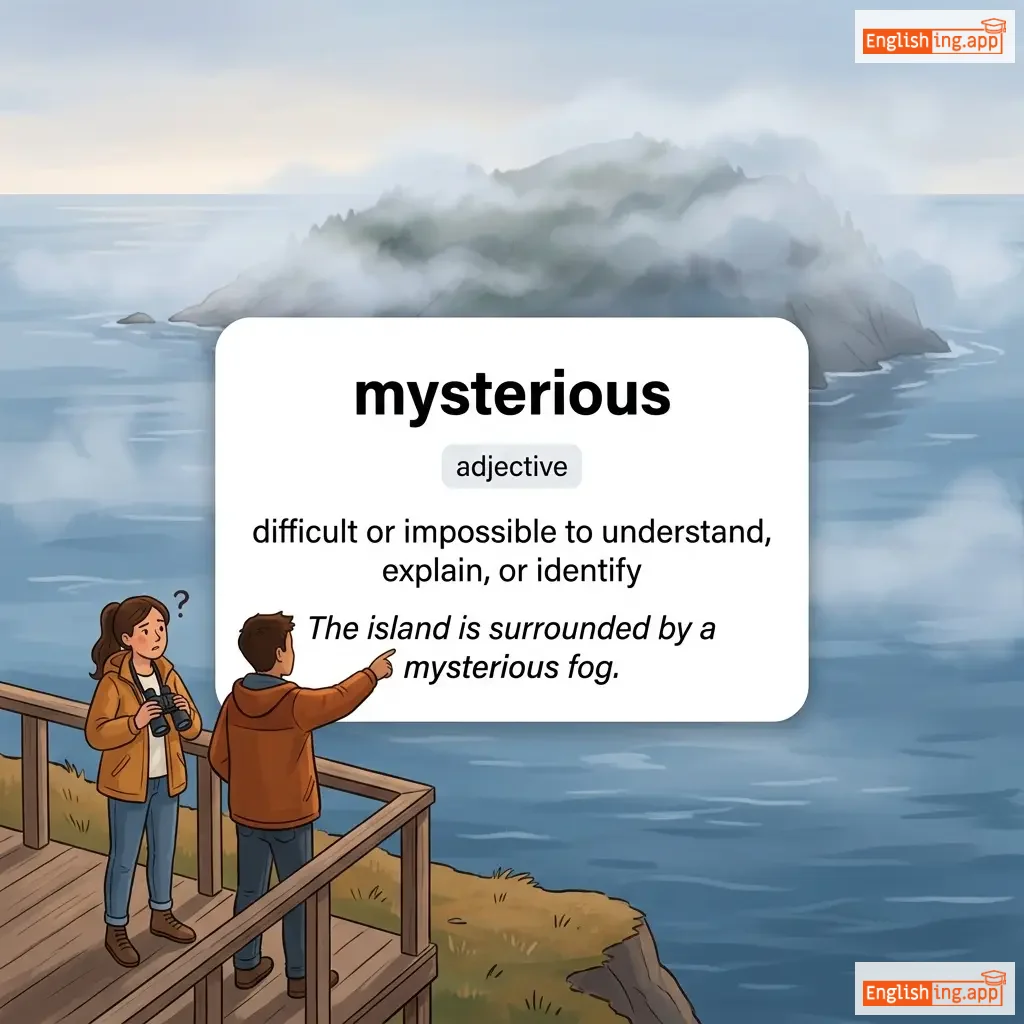
difficult or impossible to understand, explain, or identify
••••••
|
The island is surrounded by a mysterious fog. |
Остров окружен загадочным туманом.
Ostrov okruzhen zagadochnym tumanom.
••••••
|
mysterious ways |
unexpected or unexplainable methods or actions
••••••
|
загадочные способы
zagadocnye sposoby
••••••
|
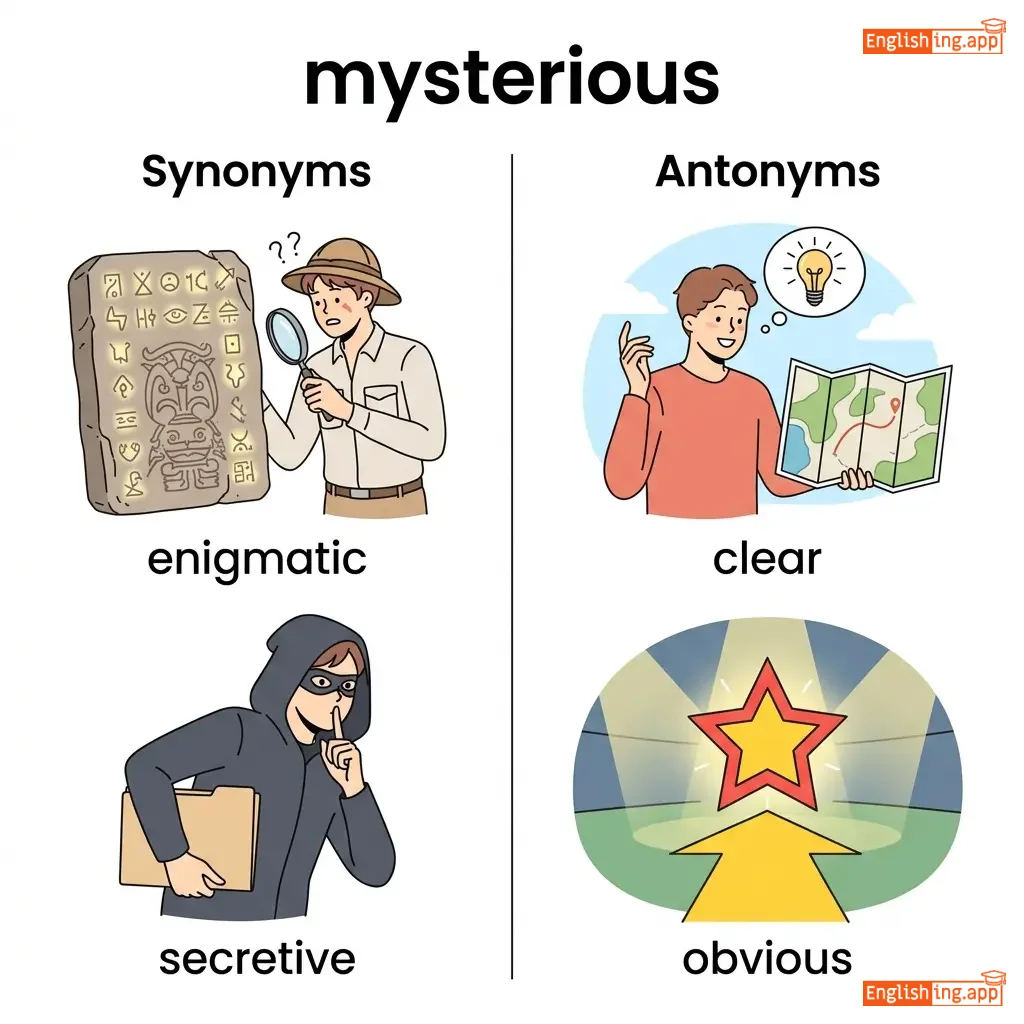
enigmatic, secretive, puzzling, cryptic, obscure
••••••
|
clear, obvious
••••••
|
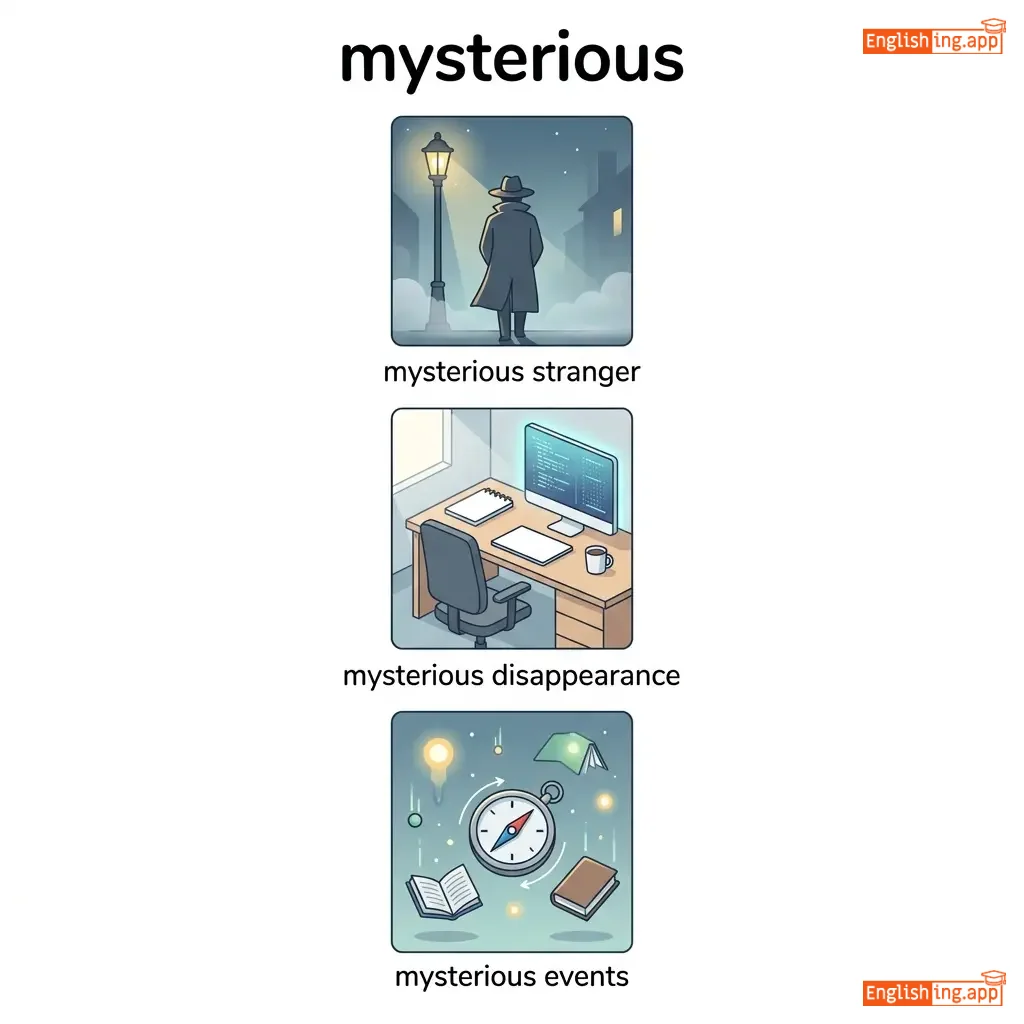
mysterious stranger, mysterious disappearance, mysterious events
••••••
|
Загадочный означает что-то, что связано с загадкой, как мистерии.
••••••
|
|
#3396
🔍
|
/ˈmɪs.tər.i/
noun
(misteri)
••••••
|
- •••••• |
загадка; что-то необъяснимое
zagadka
••••••
|
- •••••• | - •••••• | - •••••• | - •••••• |
something that is difficult or impossible to understand or explain
••••••
|
The disappearance of the plane remains a mystery.
Исчезновение самолета остается загадкой.
••••••
|
Исчезновение самолета остается загадкой.
Ischeznoveniye samolyota ostayotsya zagadkoy.
••••••
|
- •••••• | - •••••• | - •••••• |
puzzle, enigma, riddle, secret
••••••
|
certainty, clarity, solution, answer
••••••
|
solve mystery, unsolved mystery, mystery novel
••••••
|
Загадка, которую никто не может разгадать.
••••••
|
|
#3397
🐉
|
/mɪθ/
noun
(миθ)
••••••
|
- •••••• |
миф
mif
••••••
|
- •••••• | - •••••• | - •••••• | - •••••• |
A traditional story explaining natural or social phenomena, often involving supernatural beings; a widely held but false belief.
••••••
|
The myth of the phoenix tells of a bird reborn from its ashes. |
Миф о фениксе рассказывает о птице, рожденной заново из своих пепелищ.
Mif o fenikse rasskazyvayet o ptitse, rozhdennoy zanovo iz svoikh pepelishch.
••••••
|
myth or reality |
Used when questioning whether something is true or just a belief.
••••••
|
миф или реальность
mif ili real'nost'
••••••
|
legend, tale, folklore, fable, fiction
••••••
|
fact, reality, truth
••••••
|
ancient myth, Greek myth, popular myth, myth about
••••••
|
Миф = неправда, но часто это просто старая история.
••••••
|
|
#3398
📌
|
/neɪl/
noun, verb
(нейл)
••••••
|
- •••••• |
гвоздь
gvozdy
••••••
|
nailed
нейлд
••••••
|
nailed
нейлд
••••••
|
nails
нейлс
••••••
|
nailing
нейлинг
••••••
|
a small metal spike driven into wood or other material, or to fasten or fix something with nails
••••••
|
He nailed the wooden board to the wall.
Он прибил деревянную доску к стене.
••••••
|
Он прибил деревянную доску к стене.
On pribyl derevyannuyu dosku k stene.
••••••
|
hit the nail on the head
попасть в точку
••••••
|
to describe exactly what is causing a situation or problem
••••••
|
точно описать, что вызывает ситуацию или проблему
tochno opisat', chto vyzyvayet situatsiyu ili problemy
••••••
|
pin, tack, spike, fasten, attach
••••••
|
detach, remove, loosen
••••••
|
hammer a nail, nail polish, nail down, nail it
••••••
|
Гвоздь, как крепеж — закрепляем цель точно.
••••••
|
|
#3399
🚼
|
/ˈneɪkɪd/
adjective
(нейкид)
••••••
|
- •••••• |
голый
golyy
••••••
|
- •••••• | - •••••• | - •••••• | - •••••• |
not covered by clothing or without protection
••••••
|
The child was running naked in the yard. |
Ребенок бегал голым во дворе.
Rebenok begal golym vo dvore.
••••••
|
the naked truth |
the complete and unembellished truth
••••••
|
голая правда
golaya pravda
••••••
|
bare, unclothed, exposed, nude
••••••
|
clothed, covered
••••••
|
naked body, naked eye, naked truth
••••••
|
Naked означает голый – если ты без одежды, ты голый.
••••••
|
|
#3400
🏷️
|
/neɪm/
verb
(neim)
••••••
|
|
называть
nazyvat
••••••
|
named
neimd
••••••
|
named
neimd
••••••
|
names
neims
••••••
|
naming
neiming
••••••
|
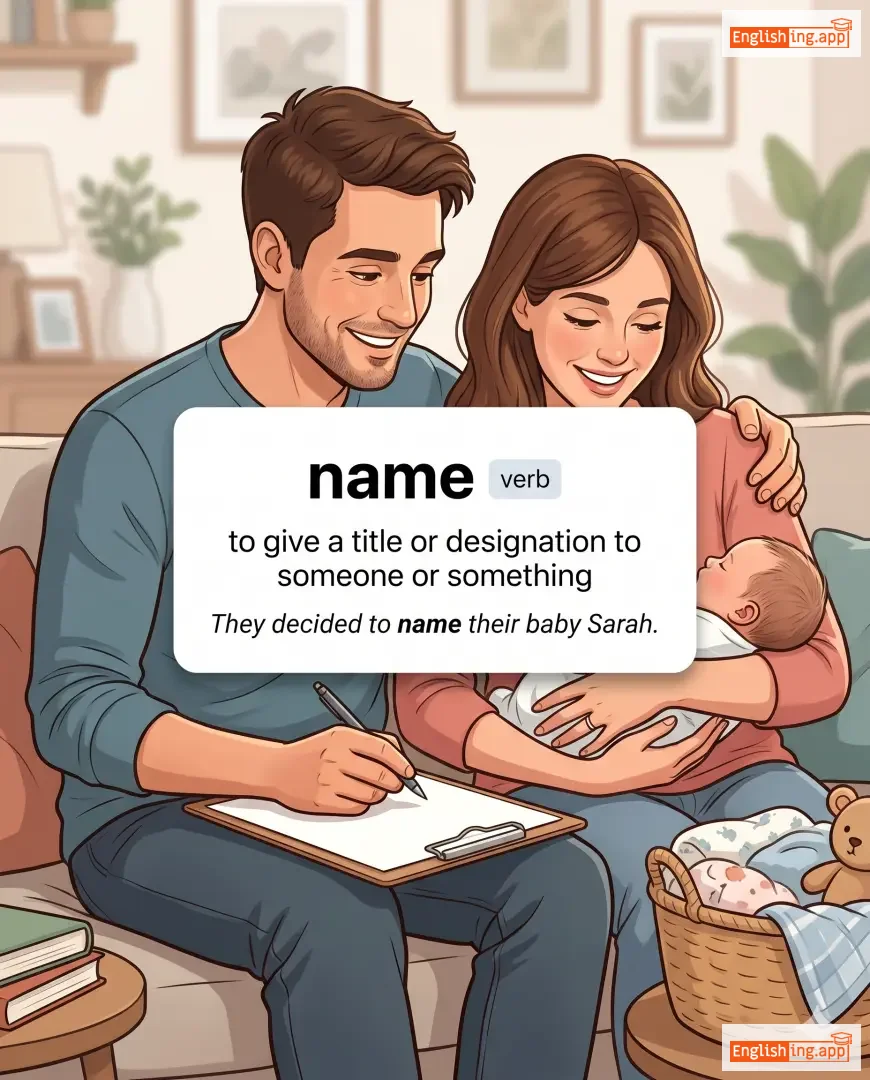
to give a title or designation to someone or something
••••••
|
They decided to name their baby Sarah.
deh deh-sai-dehd tsu neim der beibi sara.
••••••
|
Они решили назвать своего ребенка Сарой.
Oni reshili nazvat' svoego rebenka Saroy
••••••
|
- •••••• | - •••••• | - •••••• |
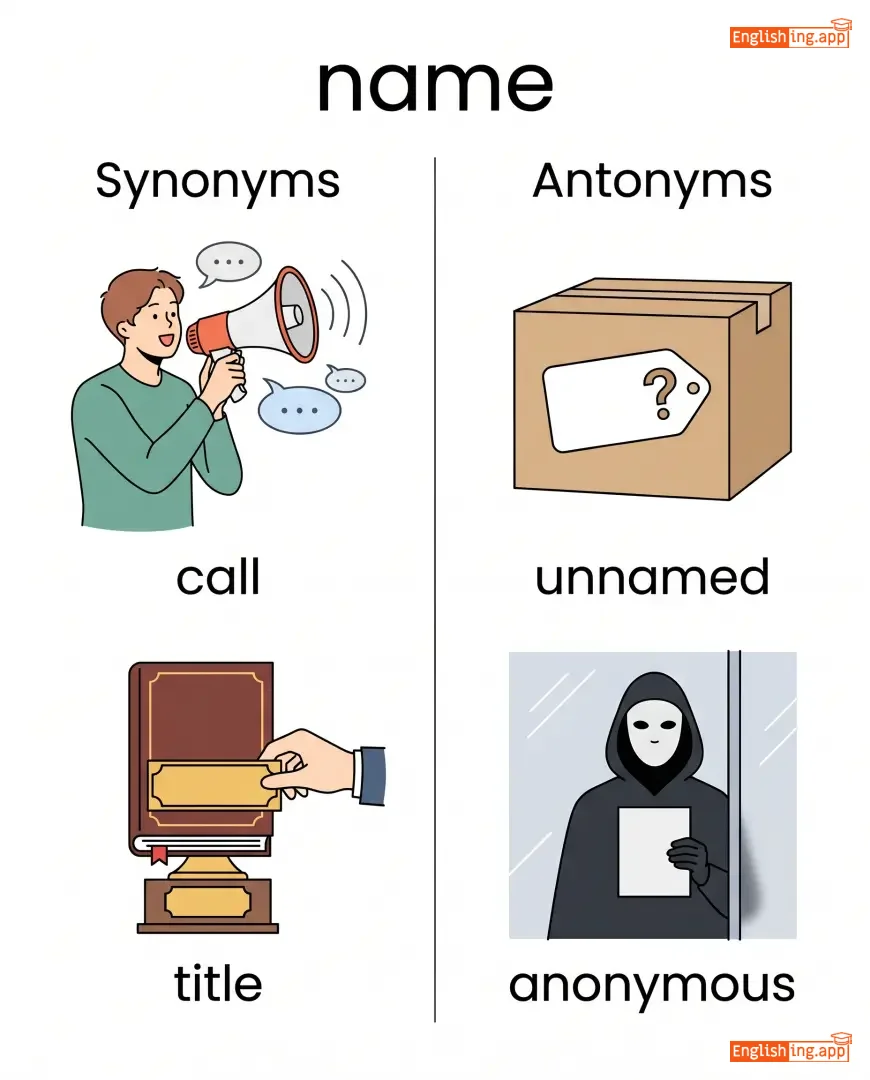
call, title, designate, label
••••••
|
unnamed, anonymous
••••••
|
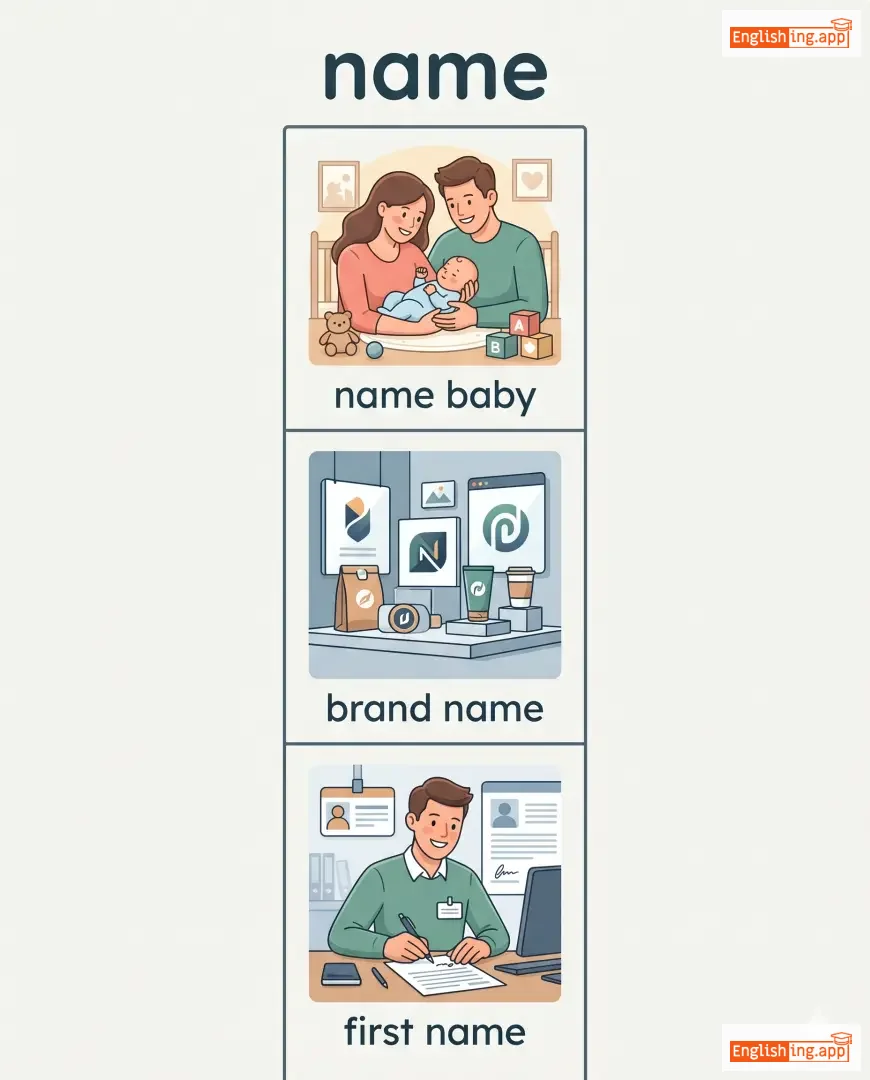
name baby, brand name, first name, last name
••••••
|
Называть = Calling someone with respect!
••••••
|
|
#3401
👉
|
/ˈneɪmli/
adverb
(nejmli)
••••••
|
- •••••• |
а именно; конкретно;
a imenno; konkretnо
••••••
|
- •••••• | - •••••• | - •••••• | - •••••• |
that is to say; specifically; to be precise
••••••
|
Three cities, namely Paris, London, and Rome, were visited.
Три города, а именно Париж, Лондон и Рим, были посещены.
••••••
|
Три города, а именно Париж, Лондон и Рим, были посещены.
Tri goroda, a imenno Parizh, London i Rim, byli poseshcheny.
••••••
|
- •••••• | - •••••• | - •••••• |
specifically, particularly, that is, to wit, viz
••••••
|
generally, broadly, vaguely
••••••
|
namely that, namely the, namely these, namely those
••••••
|
Russian 'а именно' helps you remember 'namely' as specifying examples.
••••••
|
|
#3402
🎤
|
/ˈnæreɪt/
verb
(нарэйт)
••••••
|
- •••••• |
рассказывать
rasskazyvat
••••••
|
narrated
нарэйтэд
••••••
|
narrated
нарэйтэд
••••••
|
narrates
нарэйтс
••••••
|
narrating
нарэйтинг
••••••
|
To tell a story or describe events, often in detail.
••••••
|
She will narrate the events of her journey to the audience.
Она будет рассказывать о событиях своего путешествия аудитории.
••••••
|
Она будет рассказывать о событиях своего путешествия аудитории.
Ona budet rasskazyvat' o sobytiyakh svoego puteshestviya auditorii.
••••••
|
narrate a story
рассказать историю
••••••
|
To tell or describe a story to others.
••••••
|
рассказать историю
rasskazat' istoriyu
••••••
|
tell, recount, describe, relate, detail
••••••
|
conceal, hide
••••••
|
narrate a story, narrate events, narrate experiences, narrate history
••••••
|
Narrate in Russian is рассказывать, similar to saying 'rasskaz' which means to narrate.
••••••
|
|
#3403
📖
|
/næˈreɪʃən/
noun
(nareyshon)
••••••
|
- •••••• |
повествование
povestvovanie
••••••
|
- •••••• | - •••••• | - •••••• | - •••••• |
The act of telling a story or describing events in detail.
••••••
|
The movie’s narration was done by a famous actor.
Наррация фильма была выполнена знаменитым актером.
••••••
|
Наррация фильма была выполнена знаменитым актером.
Narratsiya fil'ma byla vypolnena znamenitym akterom.
••••••
|
voice narration
голосовая наррация
••••••
|
Spoken commentary or storytelling provided through voice.
••••••
|
голосовая наррация
golosovaya narratsiya
••••••
|
storytelling, recounting, commentary, description
••••••
|
silence, quiet
••••••
|
narration of events, narration in movies, narration style, narration voice
••••••
|
Narration на русском — повествование, напоминает рассказ.
••••••
|
|
#3404
📝
|
/ˈnærətɪv/
noun
(нарратив)
••••••
|
- •••••• |
нарратив
narrativ
••••••
|
- •••••• | - •••••• | - •••••• | - •••••• |
A spoken or written account of connected events; a story.
••••••
|
The novel’s narrative explores themes of identity and freedom.
Нарратив романа исследует темы идентичности и свободы.
••••••
|
Нарратив романа исследует темы идентичности и свободы.
Narrativ romana issleduet temy identichnosti i svobody.
••••••
|
control the narrative
контрол зе нарратив
••••••
|
To influence or shape how a story or situation is understood.
••••••
|
контролировать нарратив
kontrolirovat narrativ
••••••
|
story, account, tale, chronicle, description
••••••
|
silence, randomness
••••••
|
narrative style, narrative voice, personal narrative, political narrative
••••••
|
Нарратив = narrate + ive: рассказывай и держи историю живой
••••••
|
|
#3405
↔️
|
/ˈnær.oʊ/
adjective
(нэрроу)
••••••
|
- •••••• |
узкий; ограниченный; ограниченный
uzkiy; ogranichennyy; ogranichennyy
••••••
|
- •••••• | - •••••• | - •••••• | - •••••• |
having a small width; thin; limited in scope; restricted
••••••
|
The narrow street was barely wide enough for two cars. |
Узкая улица едва была достаточно широкой для двух машин.
Uzkaia ulitsa edva byla dostatochno shirokoy dlya dvukh mashin.
••••••
|
- •••••• | - •••••• | - •••••• |
thin, slim, tight, confined
••••••
|
wide, broad, spacious, expansive
••••••
|
narrow street, narrow margin, narrow escape, narrow minded
••••••
|
Узкая дорога ограничивает пространство, как узкие пределы.
••••••
|
|
#3406
😠
|
/ˈnæsti/
adjective
(нэсти)
••••••
|
- •••••• |
неприятный
nepriyatnyy
••••••
|
- •••••• | - •••••• | - •••••• | - •••••• |
very unpleasant, unkind, or offensive
••••••
|
He made a nasty comment about her dress. |
Он сделал неприятный комментарий о её платье.
On sdelal nepriyatnyy kommentariy o yeё plat'ye.
••••••
|
- •••••• | - •••••• | - •••••• |
unpleasant, mean, vile, horrible, rude
••••••
|
pleasant, kind, nice
••••••
|
nasty smell, nasty habit, nasty surprise, nasty weather
••••••
|
Nasty звучит как ‘нэсти’— что означает неприятное или оскорбительное.
••••••
|
|
#3407
🌍
|
/ˈneɪʃən/
noun
(Нэйшн)
••••••
|
- •••••• |
нация
natsiya
••••••
|
- •••••• | - •••••• | - •••••• | - •••••• |
a large group of people united by common descent, history, culture, or language
••••••
|
The nation celebrated its independence day with pride. |
Нация отметила свой день независимости с гордостью.
Natsiya otmetila svoy den' nezavisimosti s gordost'yu.
••••••
|
- •••••• | - •••••• | - •••••• |
country, state, land, realm
••••••
|
individual, province, territory
••••••
|
nation state, powerful nation, united nation, proud nation
••••••
|
Nation = Natsiya - Bol'shaya sem'ya, vse vmeste.
••••••
|
|
#3408
🇳🇱
|
/ˈnæʃənəl/
adjective
(næʃənəl)
••••••
|
- •••••• |
национальный
natsional'nyy
••••••
|
- •••••• | - •••••• | - •••••• | - •••••• |
relating to a nation, especially its culture, language, or government
••••••
|
The national anthem was played at the ceremony.
Национальный гимн был сыгран на церемонии.
••••••
|
Национальный гимн был сыгран на церемонии.
Natsional'nyy gimn byl sygran na tseremonii.
••••••
|
- •••••• | - •••••• | - •••••• |
state, public, governmental, nationalistic
••••••
|
local, regional, individual
••••••
|
national identity, national pride, national team, national government
••••••
|
National is about Natsional'nyy - Natsional'nyy gimn na tseremonii!
••••••
|
|
#3409
🇺🇳
|
/ˈnæʃənəl ˈænθəm/
noun
(нэшнл энтэм)
••••••
|
- •••••• |
государственный гимн
gosudarstvennyi gimn
••••••
|
- •••••• | - •••••• | - •••••• | - •••••• |
an official patriotic song of a country, performed at national events and ceremonies
••••••
|
The national anthem was played before the international match.
Зэ нэшнл энтэм воз плейд бифо зэ интернэшнл матч.
••••••
|
Перед международным матчем прозвучал государственный гимн.
Pered mezhdunarodnym matchem prozvuchal gosudarstvennyi gimn
••••••
|
play the national anthem
плей зэ нэшнл энтэм
••••••
|
to perform a country’s official patriotic song at a formal or public event
••••••
|
исполнять государственный гимн
ispolnyat gosudarstvennyi gimn
••••••
|
state anthem, national song, patriotic anthem, official anthem
••••••
|
foreign anthem, unofficial song
••••••
|
sing the national anthem, play the national anthem, national anthem ceremony, official national anthem
••••••
|
Gimn sounds like hymn—государственный гимн = national anthem
••••••
|
|
#3410
🌍
|
/ˌnæʃəˈnæləti/
noun
(нэйшнэлити)
••••••
|
- •••••• |
национальность
natsional'nost'
••••••
|
- •••••• | - •••••• | - •••••• | - •••••• |
The status of belonging to a particular nation, either by birth or naturalization.
••••••
|
Her nationality is Canadian, though she was born in France. |
Ее национальность канадская, хотя она родилась во Франции.
Yeyo natsional'nost' kanadskaya, khotya ona rodilas' vo Frantsii.
••••••
|
of all nationalities |
Including people from different nations or backgrounds
••••••
|
всех национальностей
vsekh natsional'nostey
••••••
|
citizenship, origin, ethnicity, heritage, identity
••••••
|
statelessness, foreignness
••••••
|
dual nationality, acquire nationality, nationality law, nationality status
••••••
|
Национальность = нация + ленность, показывающая, к какой нации ты принадлежишь.
••••••
|
|
#3411
🇺🇳
|
/ˈnæʃənəli/
adverb
(нэшэнали)
••••••
|
- •••••• |
на национальном уровне
na natsionalnom urovne
••••••
|
- •••••• | - •••••• | - •••••• | - •••••• |
at the level of a whole nation; in a way that involves or affects an entire country
••••••
|
The policy was implemented nationally to ensure equal benefits for all citizens.
Политика была внедрена на национальном уровне, чтобы обеспечить равные выгоды для всех граждан.
••••••
|
Политика была внедрена на национальном уровне, чтобы обеспечить равные выгоды для всех граждан.
Politika byla vnedrena na natsionalnom urovne chtoby obespechit ravnye vygody dlya vsekh grazhdan
••••••
|
- •••••• | - •••••• | - •••••• |
nationwide, countrywide, domestically, federally
••••••
|
locally, regionally
••••••
|
nationally recognized, nationally implemented, nationally important, nationally regulated
••••••
|
нация = nation → вся страна
••••••
|
|
#3412
🌍
|
/ˈneɪʃənˌwaɪd/
adjective, adverb
(не́йшнва́йд)
••••••
|
- •••••• |
по всей стране
po vsey strane
••••••
|
- •••••• | - •••••• | - •••••• | - •••••• |
existing or happening throughout an entire nation
••••••
|
The campaign received nationwide support.
Кампания получила поддержку по всей стране.
••••••
|
Кампания получила поддержку по всей стране.
Kampaniya poluchila podderzhku po vsey strane.
••••••
|
- •••••• | - •••••• | - •••••• |
countrywide, national, across the country, all over the nation
••••••
|
local, regional
••••••
|
nationwide survey, nationwide network, nationwide strike, nationwide coverage
••••••
|
Nation + wide = по всей стране; помни, что 'nationwide' значит по всей стране
••••••
|
|
#3413
🌍
|
/ˈneɪtɪv/
adjective
(нейтив)
••••••
|
- •••••• |
местный
mestnyy
••••••
|
- •••••• | - •••••• | - •••••• | - •••••• |
Belonging to a person by birth; originating in a particular place.
••••••
|
He is a native speaker of Bengali.
Он носитель бенгальского языка.
••••••
|
Он носитель бенгальского языка.
On nositel bengalskogo yazyka.
••••••
|
native land
родная земля
••••••
|
the country where a person was born
••••••
|
родная земля
rodnaya zemlya
••••••
|
indigenous, local, original, natural
••••••
|
foreign, alien
••••••
|
native speaker, native language, native culture, native people
••••••
|
Местный = Родная земля – Носитель языка = Человек, говорящий на языке своей родной земли
••••••
|
|
#3414
🌿
|
/ˈnætʃərəl/
adjective
(нэчурал)
••••••
|
- •••••• |
натуральный
natural'nyy
••••••
|
- •••••• | - •••••• | - •••••• | - •••••• |
existing in or derived from nature; not made or caused by humankind
••••••
|
She prefers to use natural ingredients in her cooking. |
Она предпочитает использовать натуральные ингредиенты в своей кухне.
Ona predpochitayet ispol'zovat' natural'nye ingredienty v svoey kukhne.
••••••
|
- •••••• | - •••••• | - •••••• |
organic, raw, pure, unprocessed
••••••
|
artificial, synthetic, man-made
••••••
|
natural resources, natural beauty, natural selection, natural talent
••••••
|
Natural = Natural'nyy, vse chto prikhodit ot prirody est' natural'nym.
••••••
|
|
#3415
🌪️
|
/ˈnætʃərəl dɪˈzæstər/
noun
(нэчэрэл дизастер)
••••••
|
- •••••• |
стихийное бедствие
stikhiynoye bedstviye
••••••
|
- •••••• | - •••••• | - •••••• | - •••••• |
a catastrophic event caused by natural processes of the Earth that results in significant damage, destruction, or loss of life
••••••
|
The coastal town was devastated by a natural disaster.
Зэ костэл таун уоз дэвэстэйтид бай э нэчэрэл дизастер.
••••••
|
Прибрежный город был разрушен стихийным бедствием.
pribrezhnye gorod byl razrushen stikhiynym bedstviem
••••••
|
- •••••• | - •••••• | - •••••• |
catastrophe, calamity, act of God, natural catastrophe, hazard
••••••
|
blessing, boon
••••••
|
natural disaster relief, natural disaster management, natural disaster response, prone to natural disasters
••••••
|
Природа = стихия, беда = бедствие → стихийное бедствие
••••••
|
|
#3416
🌱
|
/ˈnætʃrəli/
adverb
(néchurali)
••••••
|
- •••••• |
естественно
yestestvenno
••••••
|
- •••••• | - •••••• | - •••••• | - •••••• |
In a way that is normal, expected, or without effort.
••••••
|
He spoke so naturally that everyone felt comfortable.
Он говорил так естественно, что все чувствовали себя комфортно.
••••••
|
Он говорил так естественно, что все чувствовали себя комфортно.
On govoril tak yestestvenno, chto vse chuvstvovali sebya komfortno.
••••••
|
naturally enough
естественно достаточно
••••••
|
Not surprisingly; as expected
••••••
|
естественно достаточно
yestestvenno dostatochno
••••••
|
obviously, surely, normally, effortlessly
••••••
|
unnaturally, artificially
••••••
|
behave naturally, speak naturally, occur naturally, naturally gifted
••••••
|
Естественно — как природа, так же легко.
••••••
|
|
#3417
🌳
|
/ˈneɪ.tʃər/
noun
(природа)
••••••
|
|
природа; естественный мир; характер или основные качества чего-либо
priroda; yestestvennyy mir; kharakter ili osnovnye kachestva chego-libo
••••••
|
- •••••• | - •••••• | - •••••• | - •••••• |
the natural world; the character or basic qualities of something
••••••
|
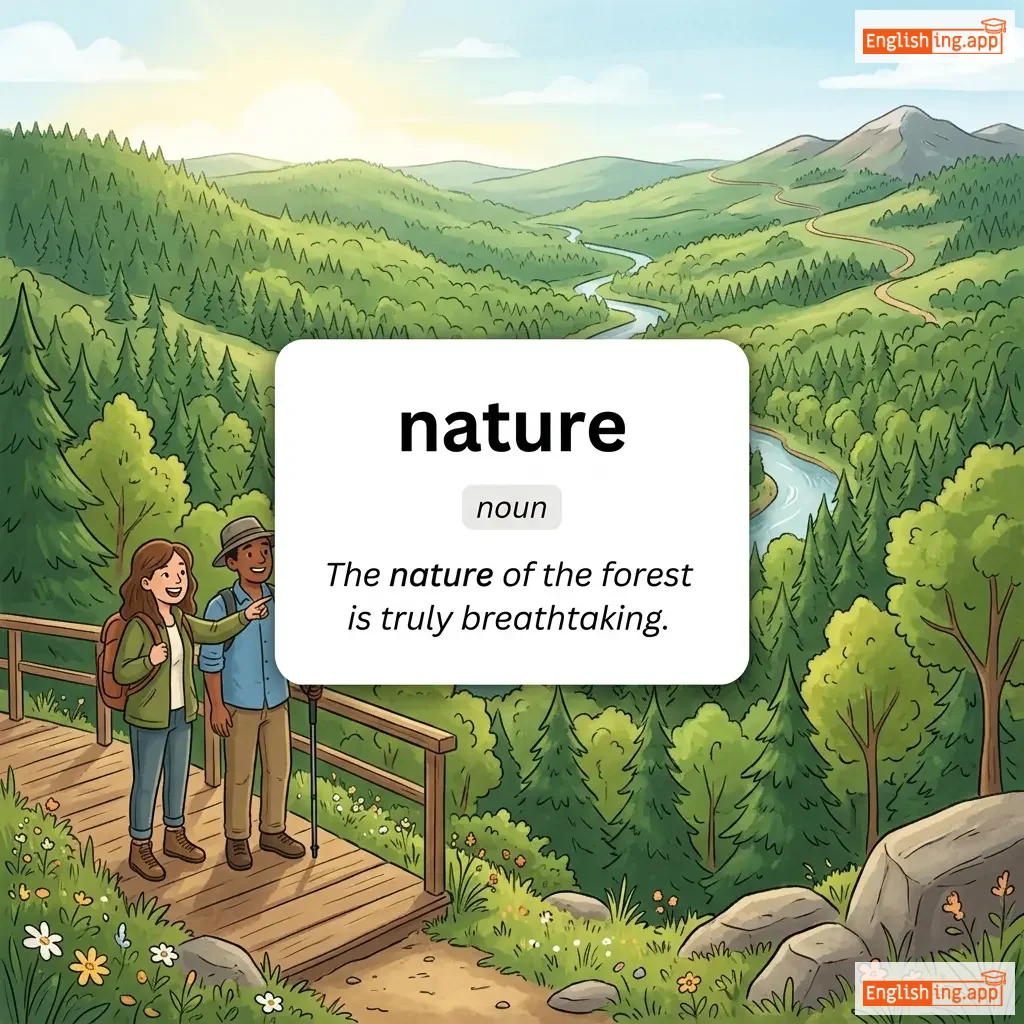
Children should spend more time in nature. |
Дети должны проводить больше времени на природе.
Deti dolzhny provodit' bol'she vremeni na prirode.
••••••
|
- •••••• | - •••••• | - •••••• |
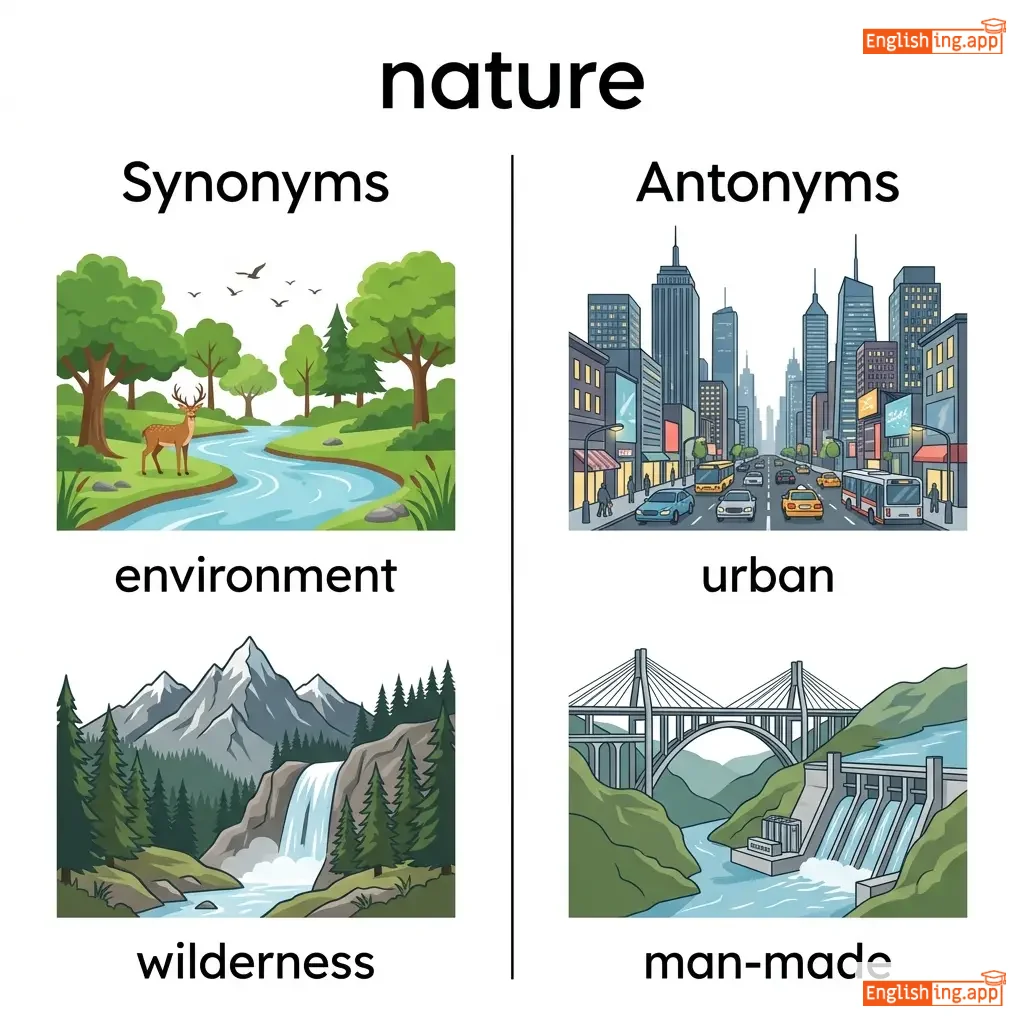
environment, wilderness, outdoors, character
••••••
|
artificiality, civilization, indoors
••••••
|
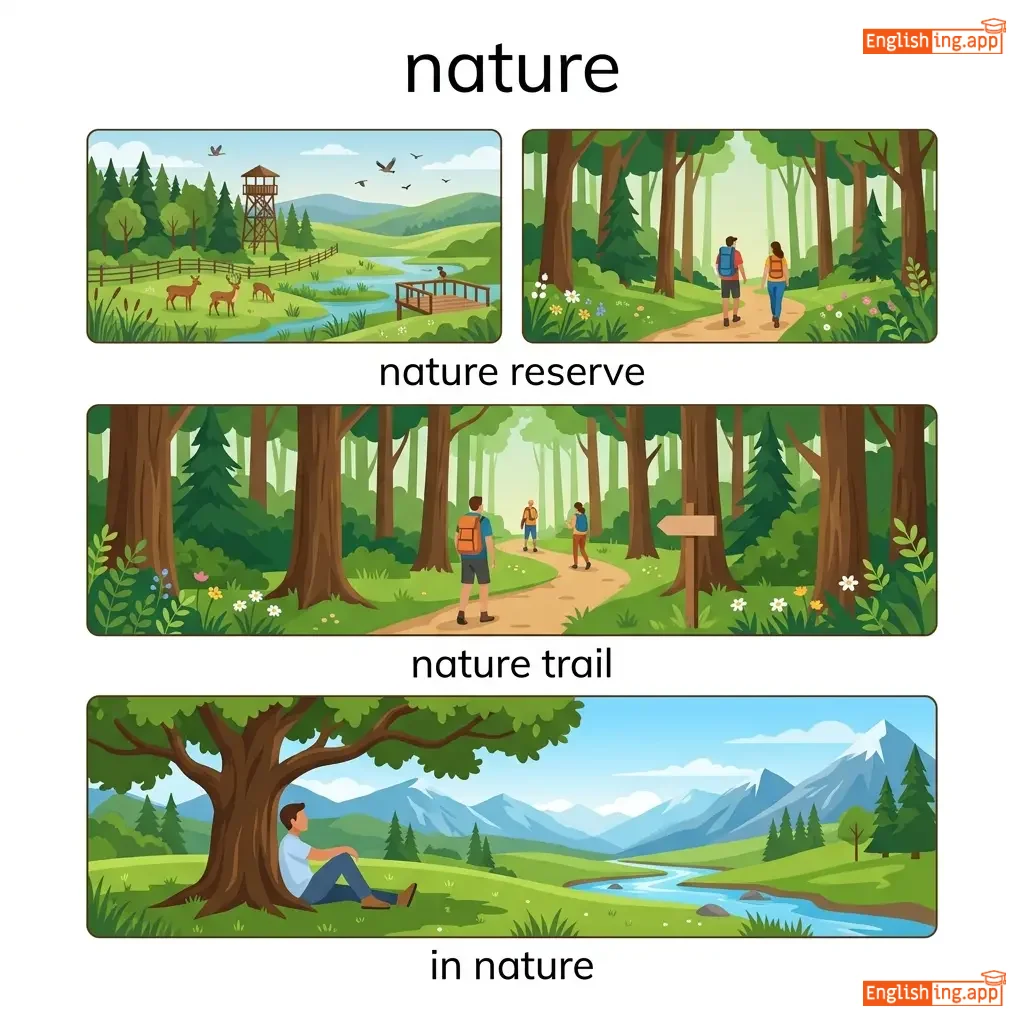
human nature, mother nature, laws of nature
••••••
|
Природа помогает восстановить силы и расслабиться.
••••••
|
Vocabulary Quiz
Test your vocabulary by matching words with their translations or meanings.
Login to take the quiz
Comments (0)
Share your thoughts and join the discussion.
Join the discussion by logging in
Login to CommentNo comments yet
Be the first to share your thoughts!