
🎤interview (インタビュー)

noun, verb
/ˈɪntərvjuː/
面试 (miànshì)

含义

a formal meeting in which one person asks another questions
A meeting of people face to face, especially for consultation.
含义翻译
一个正式的会议,其中一个人向另一个人提问
yī gè zhèngshì de huìyì, qízhōng yī gè rén xiàng lìng yī gè rén tíwèn

例句

She prepared well for the job interview.

她为工作面试做了充分的准备。
Tā wèi gōngzuò miànshì zuòle chōngfèn de zhǔnbèi.

The interview was conducted in a calm and professional manner.

面试以平静和专业的方式进行。
Miànshì yǐ píngjìng hé zhuānyè de fāngshì jìnxíng.

示例表达

exit interview
退出面试
tuìchū miànshì

同义词

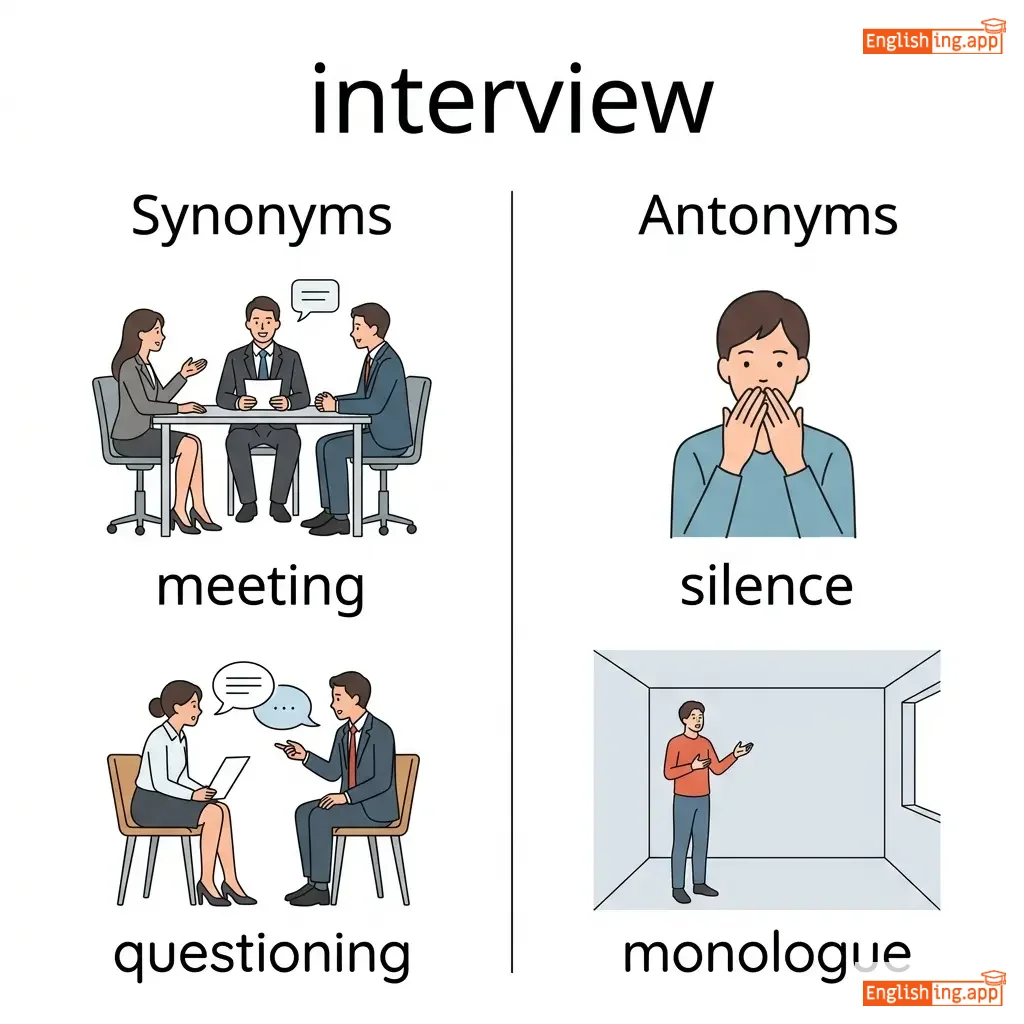
meeting, questioning, discussion, examination, consultation, dialogue
条目 1
meeting, questioning, discussion, examination, consultation
条目 2
discussion, dialogue, examination

反义词

silence, monologue, casual meeting, informal talk, chat
条目 1
silence, monologue
条目 2
casual meeting, informal talk, chat

搭配词

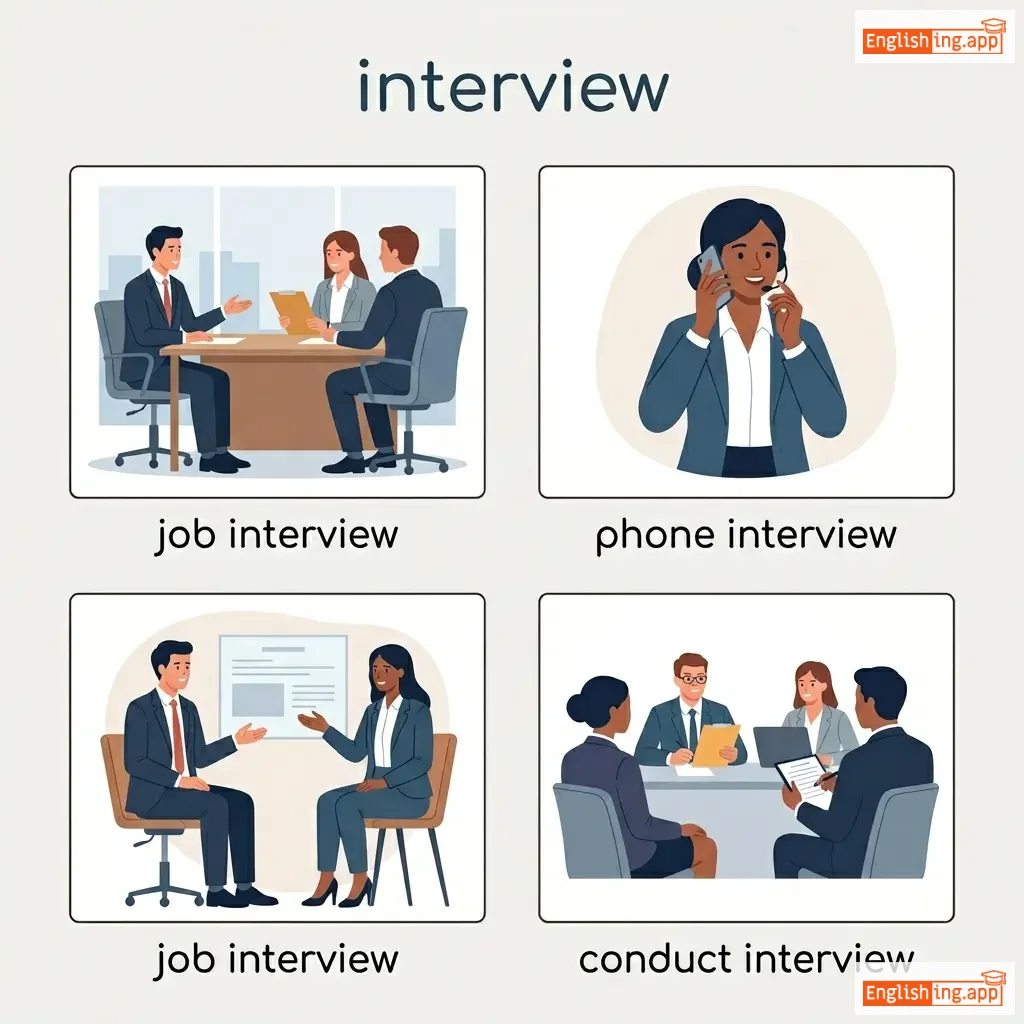
job interview, phone interview, conduct interview, interview process

更多例句

Yes, I had my interview yesterday.

是的,我昨天有面试。
Shì de, wǒ zuótiān yǒu miànshì.

He seems nervous about the interview.

他似乎对面试很紧张。
Ta sihu dui mianshi hen jinzhang.

He is short of confidence in interviews.

他在面试时缺乏自信。
Ta zai mianshi shi quefa zixin.

She's short of confidence for interviews.

她对面试缺乏信心。
Ta dui mianshi quefa xinxin.

She is worried about her interview tomorrow.

她担心明天的面试。
Ta danxin mingtian de mianshi.

They act like professionals during interviews.

在面试时他们表现得很专业。
Zai mianshi shi tamen biaoxian de hen zhuanye.

I was early for the interview and waited outside.

我面试早到了,在外面等候。
Wo mianshi zaodao le, zai waimian denghou.

I was late for the interview, but they still saw me.

虽然我面试迟到了,但他们还是见了我。
Suiran wo mianshi chidao le, dan tamen haishi jianle wo.

She immediately started preparing for the interview.

她立刻开始为面试做准备。
Ta likei kaishi wei mianshi zuo zhunbei.

Hey, Jamal. You had your interview at 10 Minute School yesterday, didn't you?

嘿,贾马尔。你昨天在10分钟学校参加了面试,对吧?
Hēi, Jiǎ mǎ ěr. Nǐ zuótiān zài 10 fēnzhōng xuéxiào cānjiāle miànshì, duì ba?

相关词汇

A person trained to care for the sick; to take care of someone or something.
An unpleasant emotion caused by the belief that someone or something is dangerous.
The upper part of the human body or to lead or be in charge of something.
A series of names, items, or tasks written or printed together; also, to record or register items in...
a strong feeling of wanting something or wishing for something to happen
A settlement of differences in which each side makes concessions; or to weaken or put at risk.

探索更多