

Traducción
Pasado
Participio Pasado
Tercera Persona Singular
Gerundio
Meaning
Oración de Ejemplo
Traducción de Oración de Ejemplo
Synonyms
Antonyms
Colocaciones
Mnemotécnico












Swipe left or right, or use the buttons. Tap image to zoom.
Traducción de Oración de Ejemplo
Palabra
Lesson 25: Mastering the Most Frequent Verbs & TensesLesson 25: Mastering the Most Frequent Verbs & Tenses - Alternar Máscara
|
Emoji
|
Palabra | Images | Traducción | Pasado | Participio Pasado | Tercera Persona Singular | Gerundio | Meaning | Oración de Ejemplo | Traducción de Oración de Ejemplo | Synonyms | Antonyms | Colocaciones | Mnemotécnico |
|---|---|---|---|---|---|---|---|---|---|---|---|---|---|---|
|
#716
🎓
|
/ˈkwɒlɪfaɪ/
verb
(cuálifai)
••••••
|
|
calificar
kalifikar
••••••
|
qualified
cuálifaied
••••••
|
qualified
cuálifaied
••••••
|
qualifies
cuálifaiz
••••••
|
qualifying
cuálifain
••••••
|
to successfully complete a course or pass an exam; to become eligible
••••••
|
She worked hard to qualify for the competition.
shi wuorkd jard tu cuálifai for da competíshon.
••••••
|
Ella trabajó duro para calificar para la competencia.
eya trabaho duro para kalifikar para la kompetensia
••••••
|
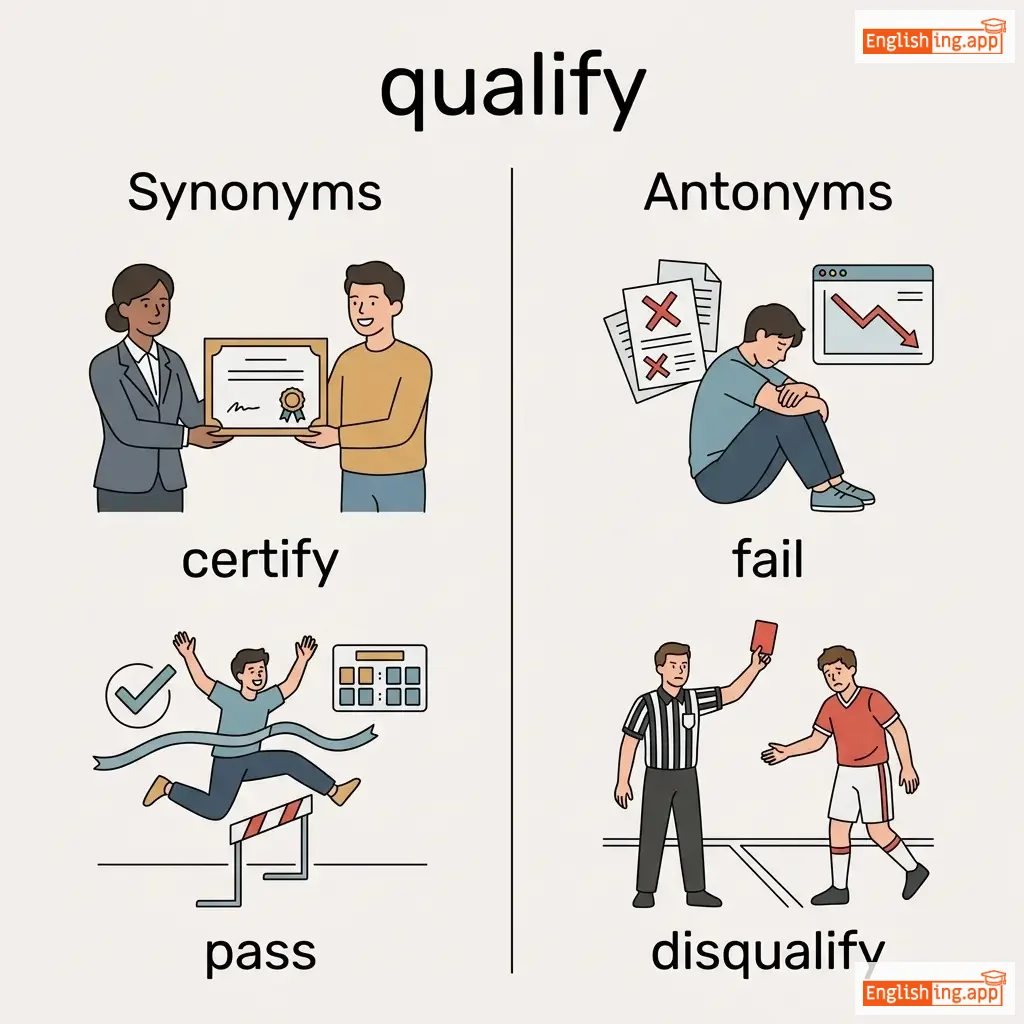
pass, succeed, meet requirements, be eligible
••••••
|
fail, disqualify, be ineligible
••••••
|
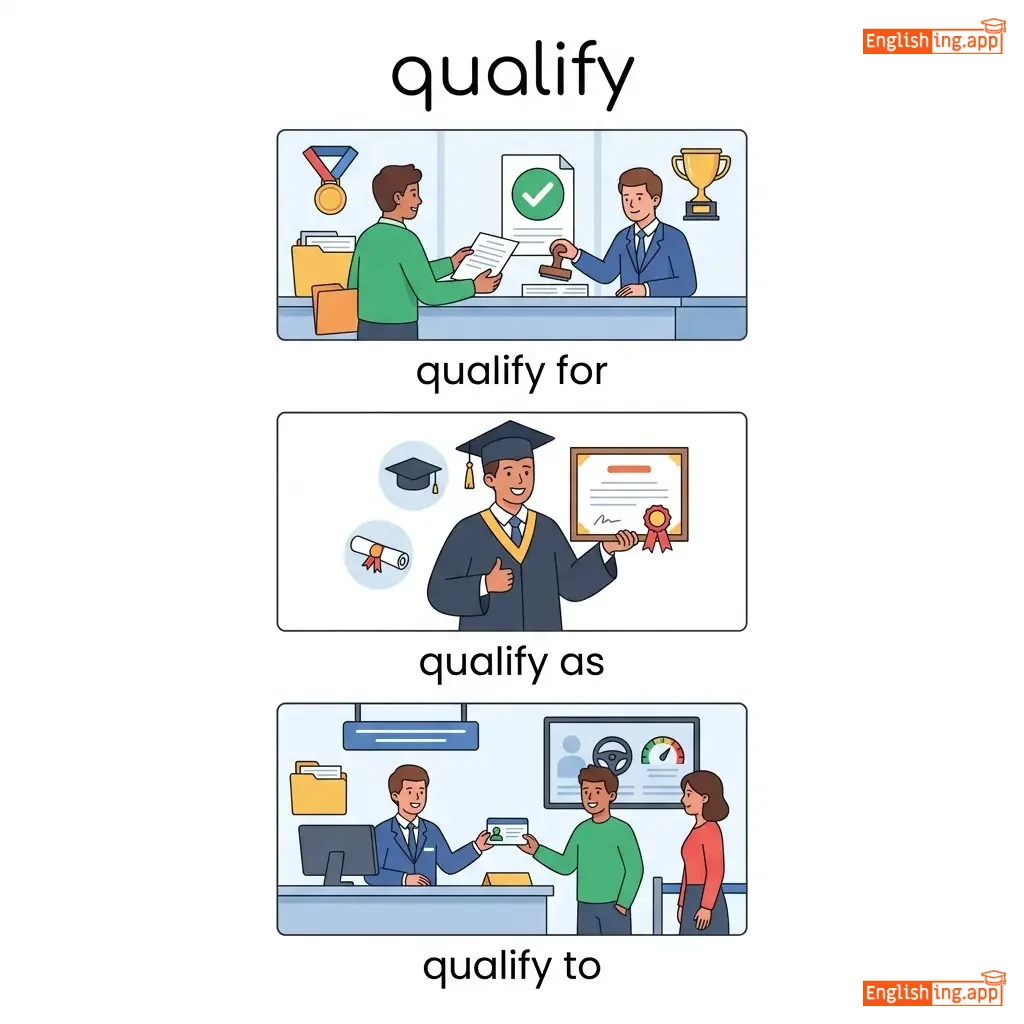
qualify for, qualify as, qualify to, highly qualified, fully qualified
••••••
|
If you 'calificar', you qualify — both make you eligible!
••••••
|
|
#717
🚗
|
/ˌoʊvərˈteɪk/
verb
(ouvérteik)
••••••
|
|
adelantar
adelantar
••••••
|
overtook
ouvértuk
••••••
|
overtaken
ouvérteiken
••••••
|
overtakes
ouvérteiks
••••••
|
overtaking
ouvérteiking
••••••
|
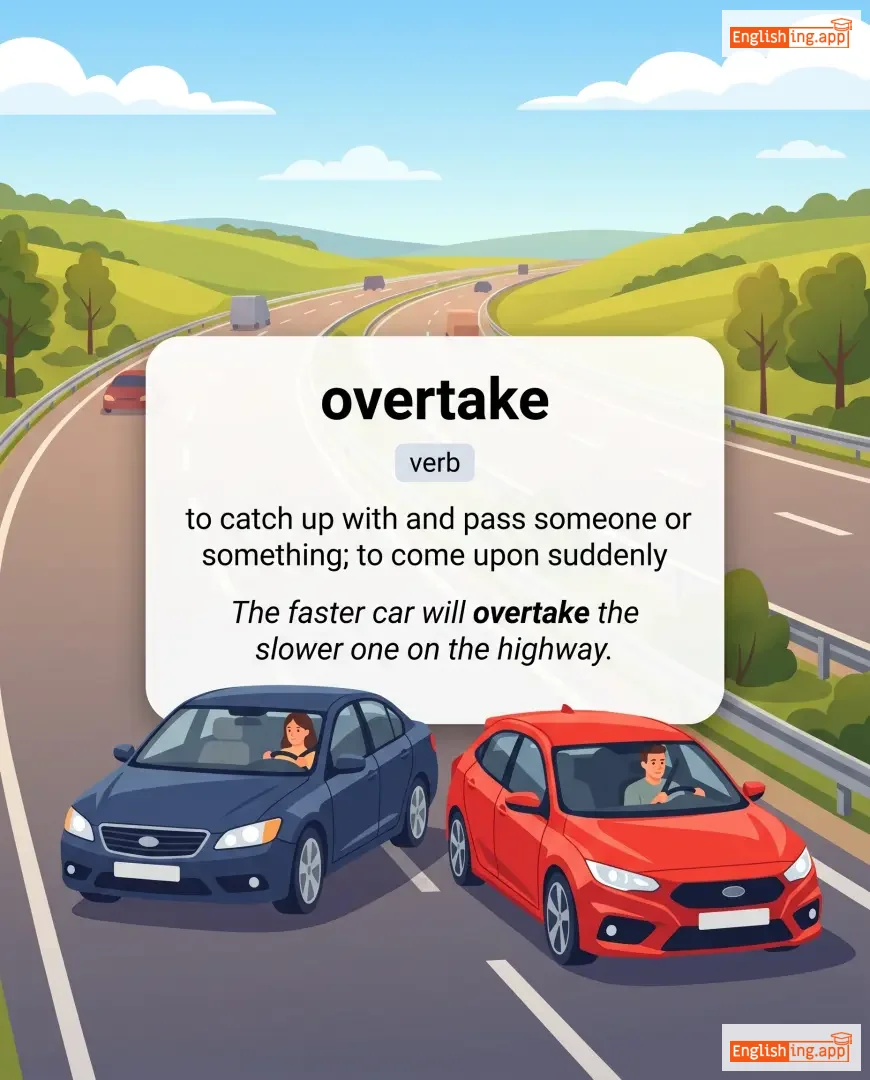
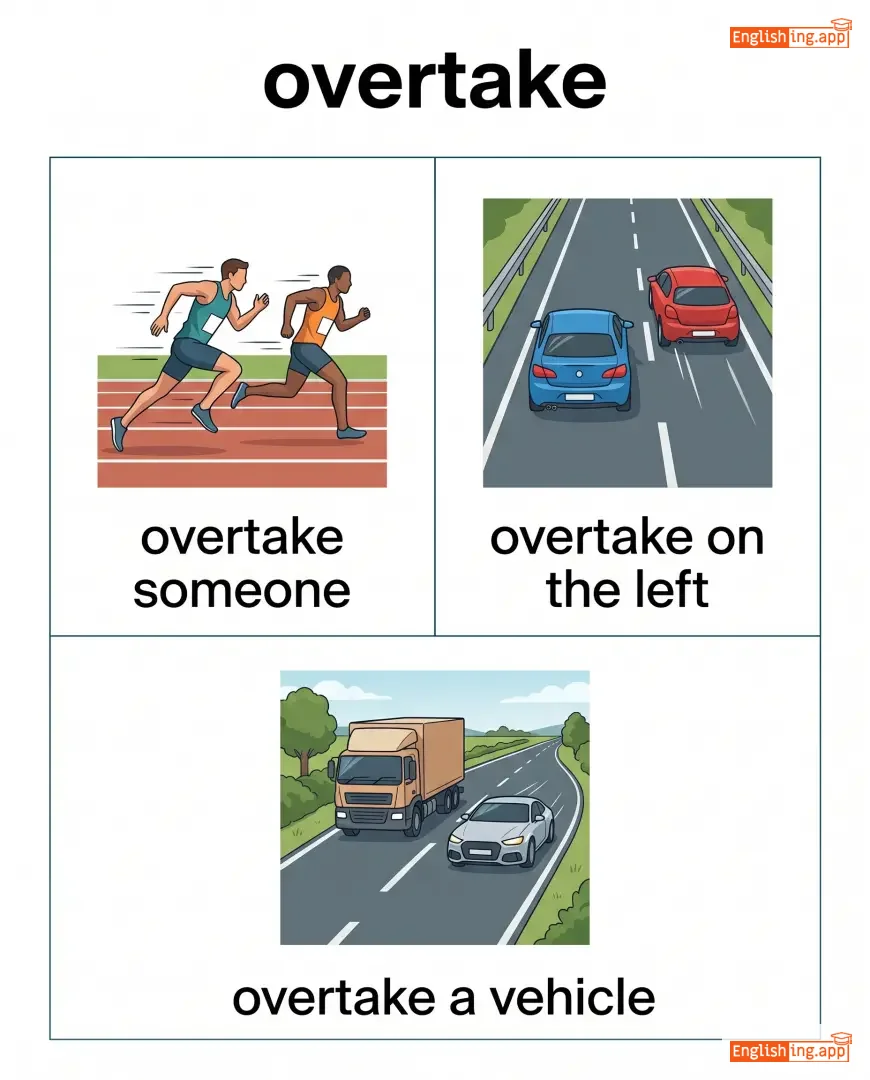
to catch up with and pass someone or something; to come upon suddenly
••••••
|
The faster car will overtake the slower one on the highway.
de fáster kar uil ouvérteik de slóuer uan on de háiuei.
••••••
|
El coche más rápido adelantará al más lento en la autopista.
El coche mas rapido adelantara al mas lento en la autopista.
••••••
|
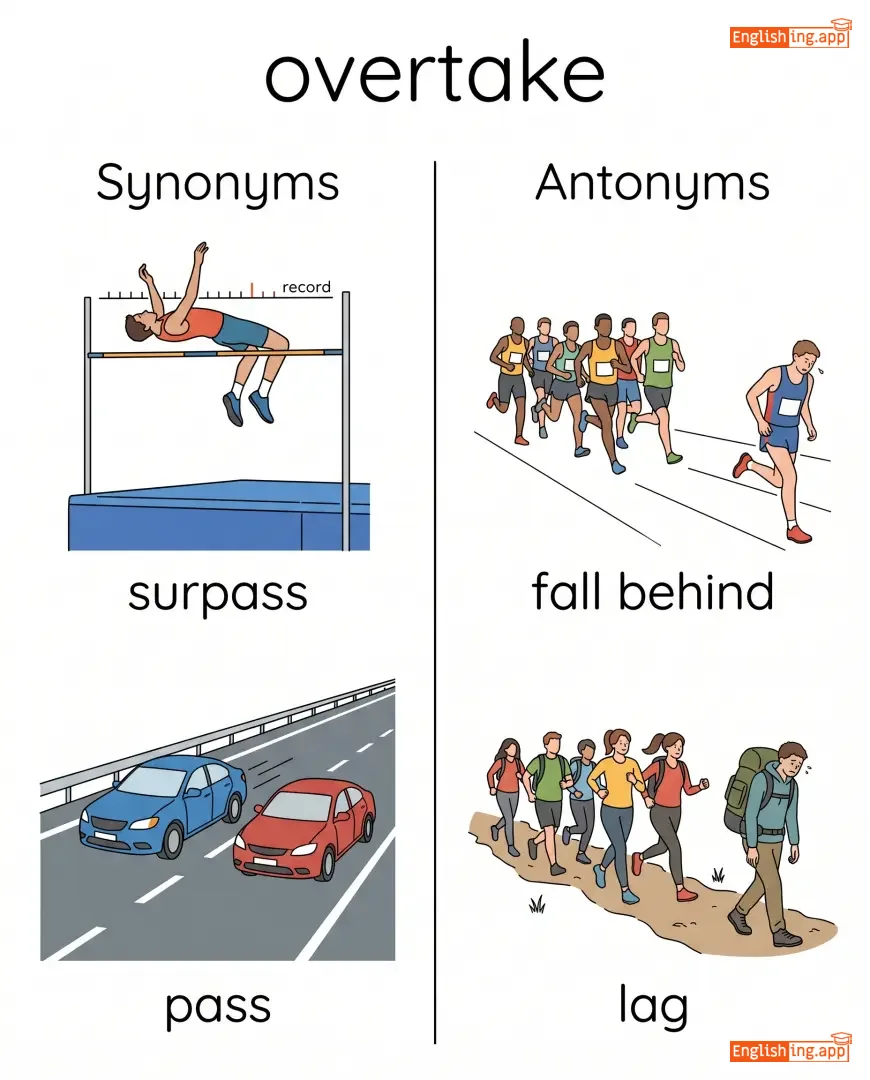
surpass, pass, outrun, exceed
••••••
|
fall behind, lag, trail, follow
••••••
|
overtake someone, overtake on the left, overtake a vehicle, suddenly overtaken
••••••
|
Overtake sounds like 'adelantar', both mean to go ahead.
••••••
|
|
#718
🤲
|
/ˈɔːfər/
verb
(ófer)
••••••
|
|
ofrecer
ofreser
••••••
|
offered
óferd
••••••
|
offered
óferd
••••••
|
offers
ófers
••••••
|
offering
ófering
••••••
|
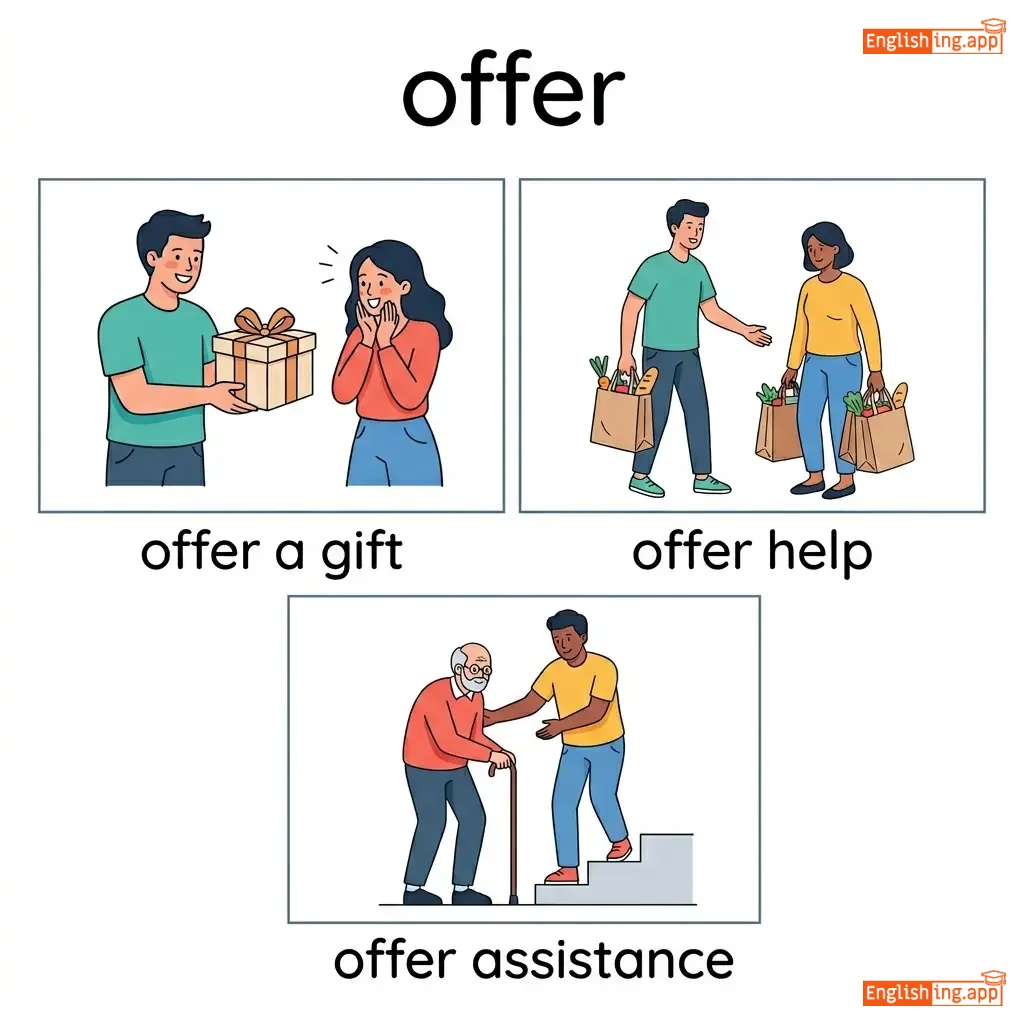
to present something for acceptance or rejection; to propose
••••••
|
She offered to help with the project.
shi óferd tu jelp güiz de próject.
••••••
|
Ella se ofreció a ayudar con el proyecto.
Eya se ofresio a ayudar kon el proyecto
••••••
|
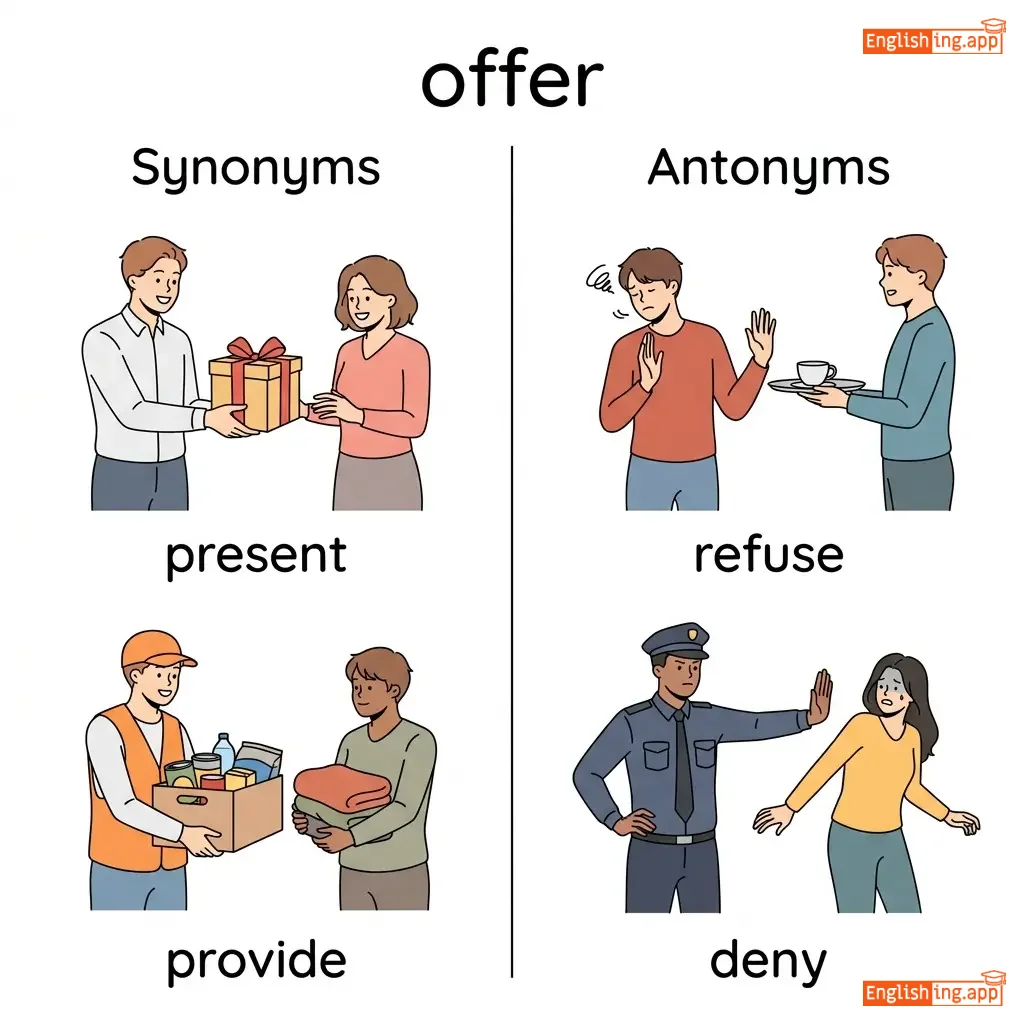
propose, present, provide, suggest
••••••
|
withdraw, refuse, deny, withhold
••••••
|
offer help, offer advice, offer support, make an offer, generous offer
••••••
|
Offer es como 'ofrecer' – suena igual y significa lo mismo.
••••••
|
|
#719
🌅
|
/bɪˈɡɪn/
verb
(beguin)
••••••
|
|
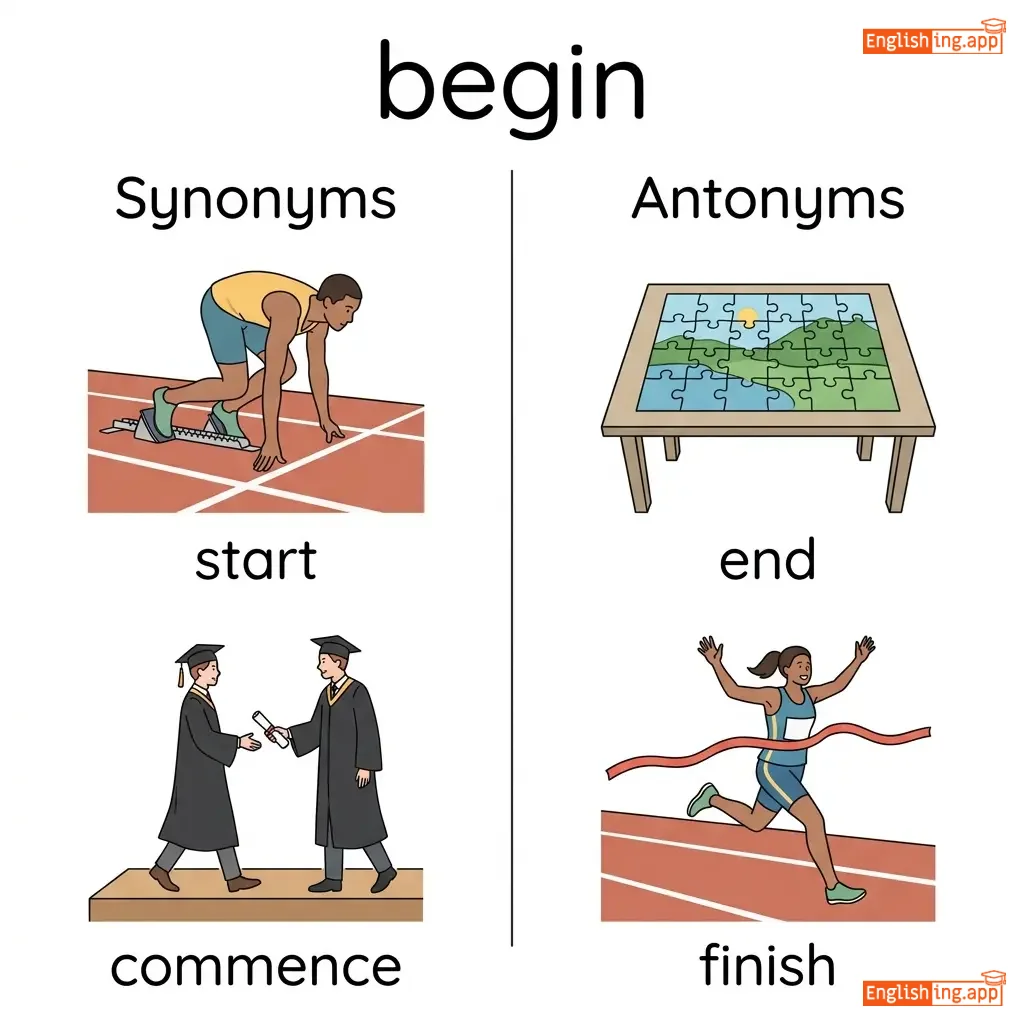
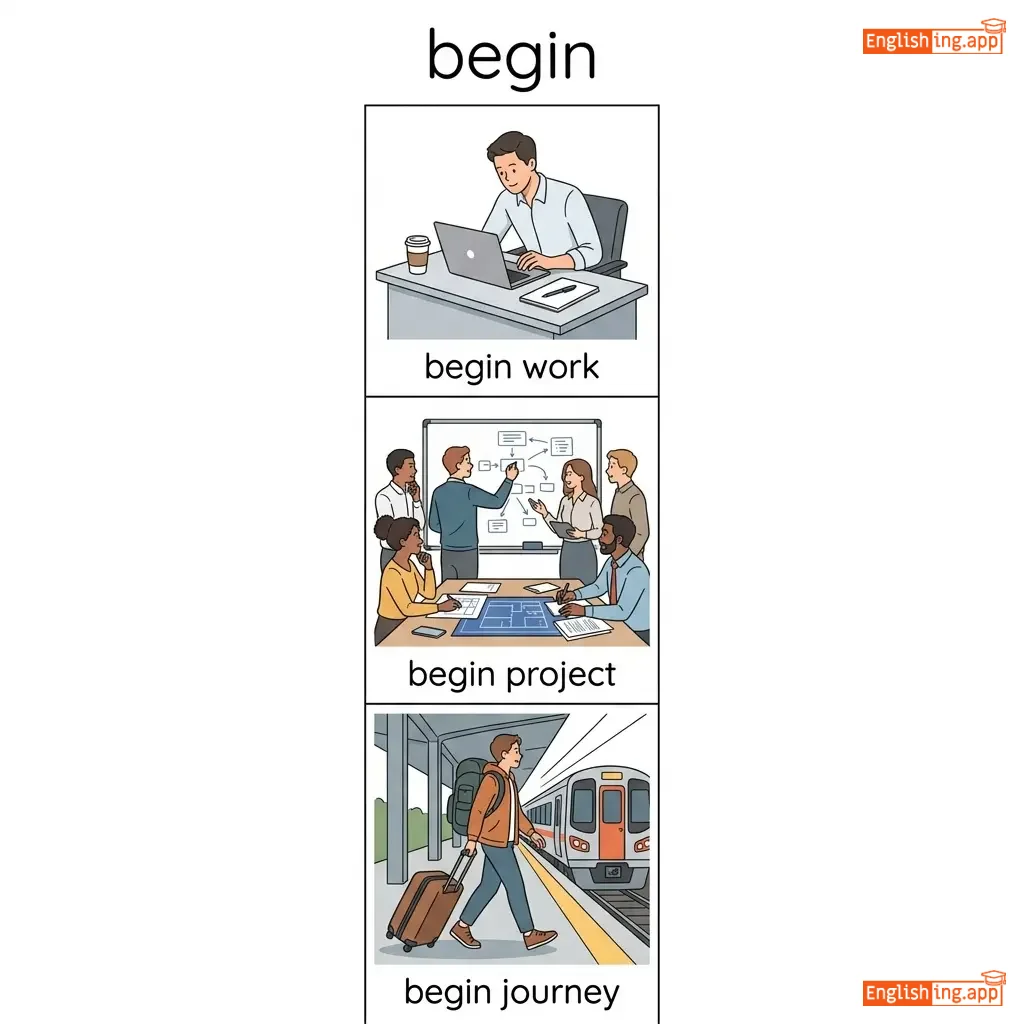
empezar
empezar
••••••
|
began
began
••••••
|
begun
begun
••••••
|
begins
beguins
••••••
|
beginning
beguining
••••••
|
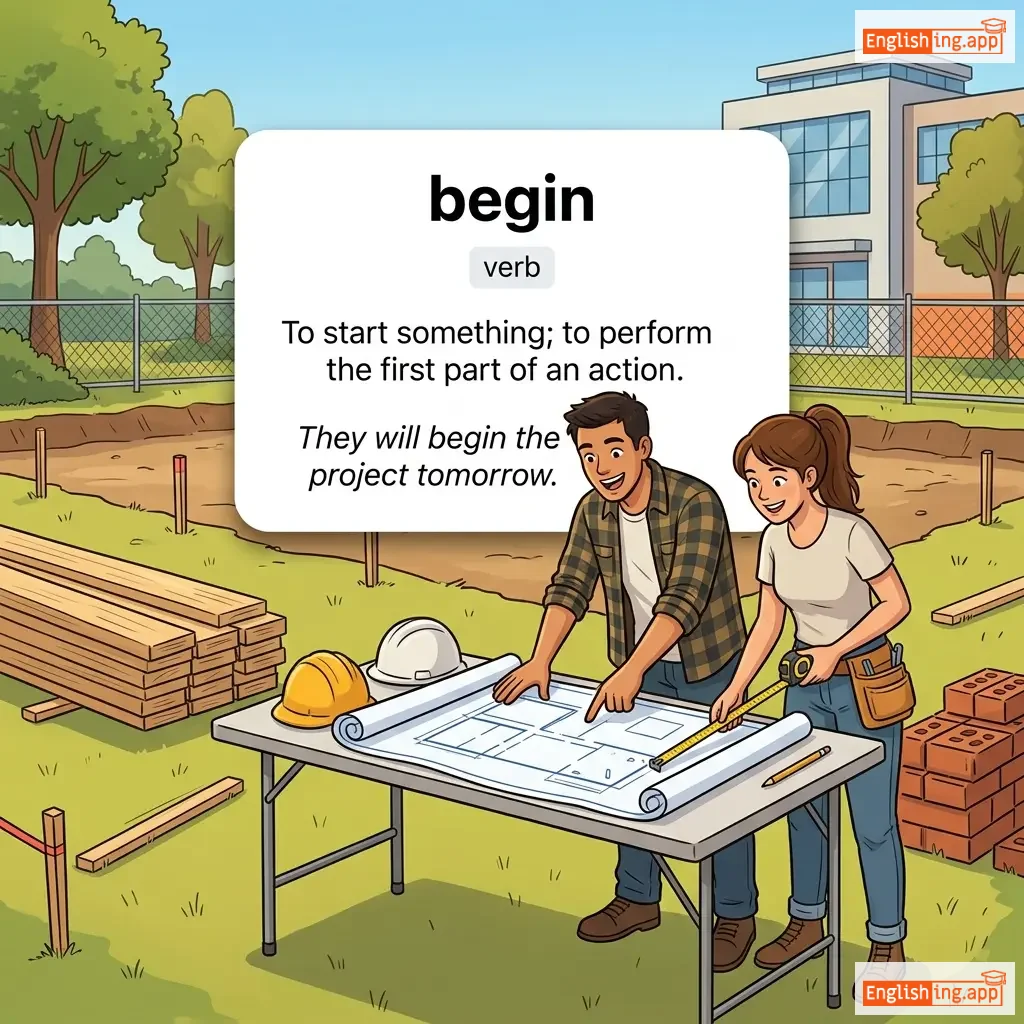
to start doing something; to commence
••••••
|
I will begin my studies tomorrow.
ai wil beguin mai studis tumorou
••••••
|
Comenzaré mis estudios mañana.
comenzare mis estudios manana
••••••
|
start, commence, initiate, launch
••••••
|
end, finish, conclude, stop
••••••
|
begin with, begin to, begin again, new beginning, fresh start
••••••
|
To 'begin' is to 'empezar'—both start something new!
••••••
|
|
#720
💪
|
/ˈstrʌɡəl/
verb
(estrágol)
••••••
|
|
luchar
luchar
••••••
|
struggled
estrágold
••••••
|
struggled
estrágold
••••••
|
struggles
estrágols
••••••
|
struggling
estrágoling
••••••
|
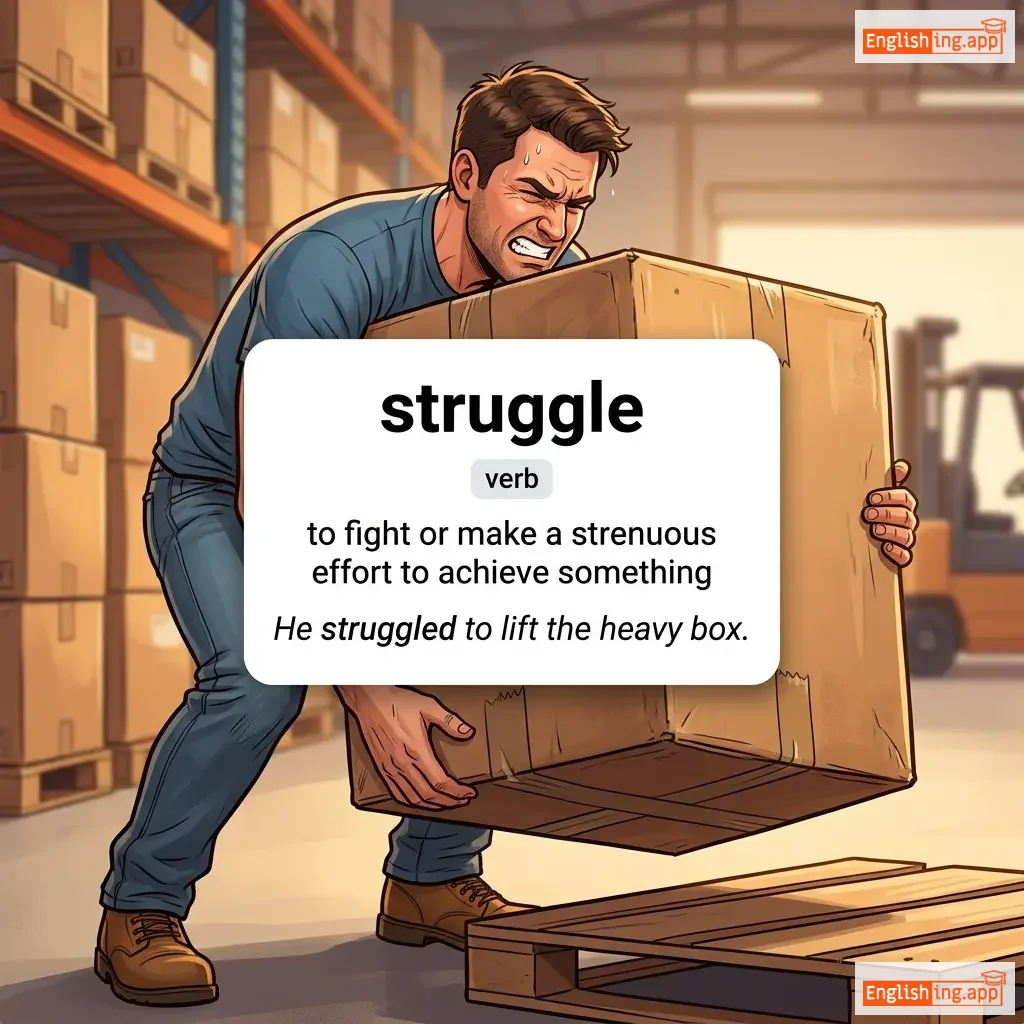
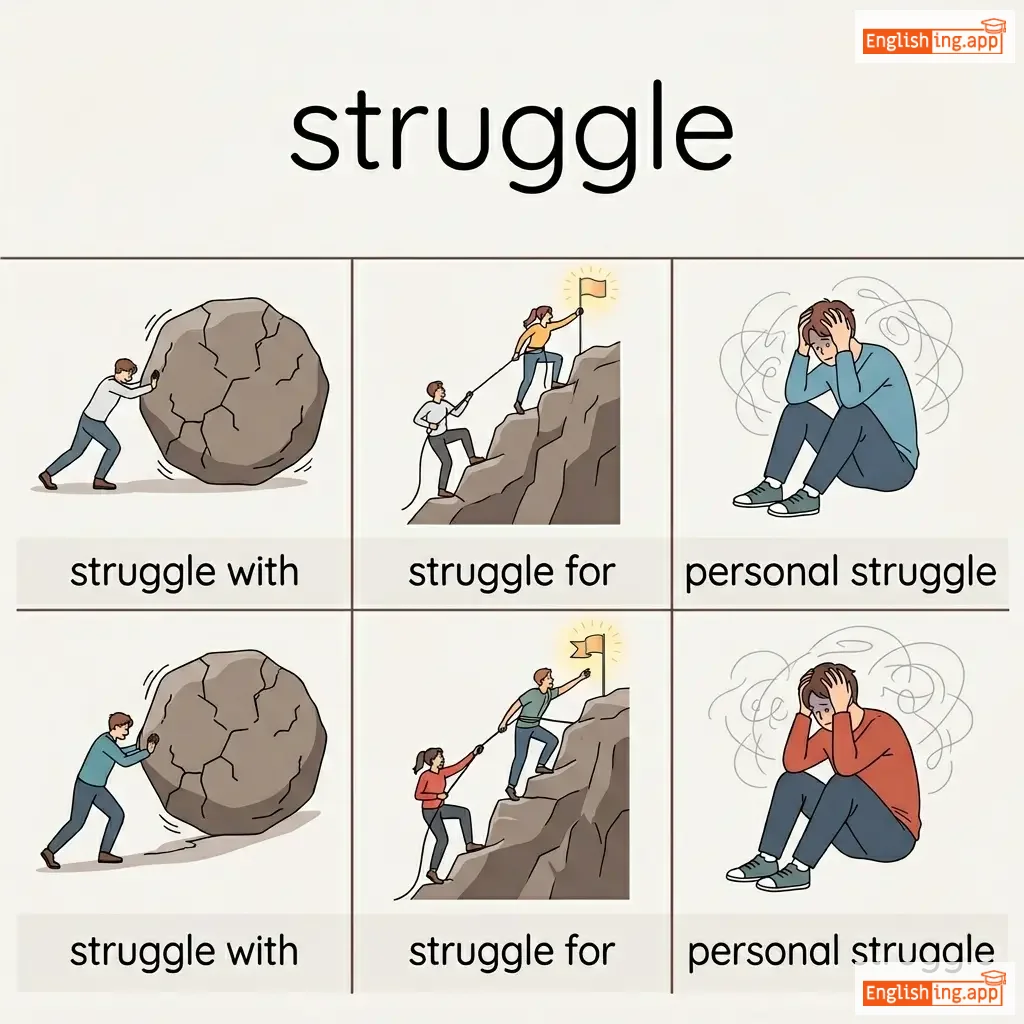
to try very hard to do something when it is difficult; to fight against something
••••••
|
He struggled to lift the heavy box.
ji estrágold tu lift de jevi box.
••••••
|
Luchó por levantar la caja pesada.
lucho por levantar la kaja pesada
••••••
|
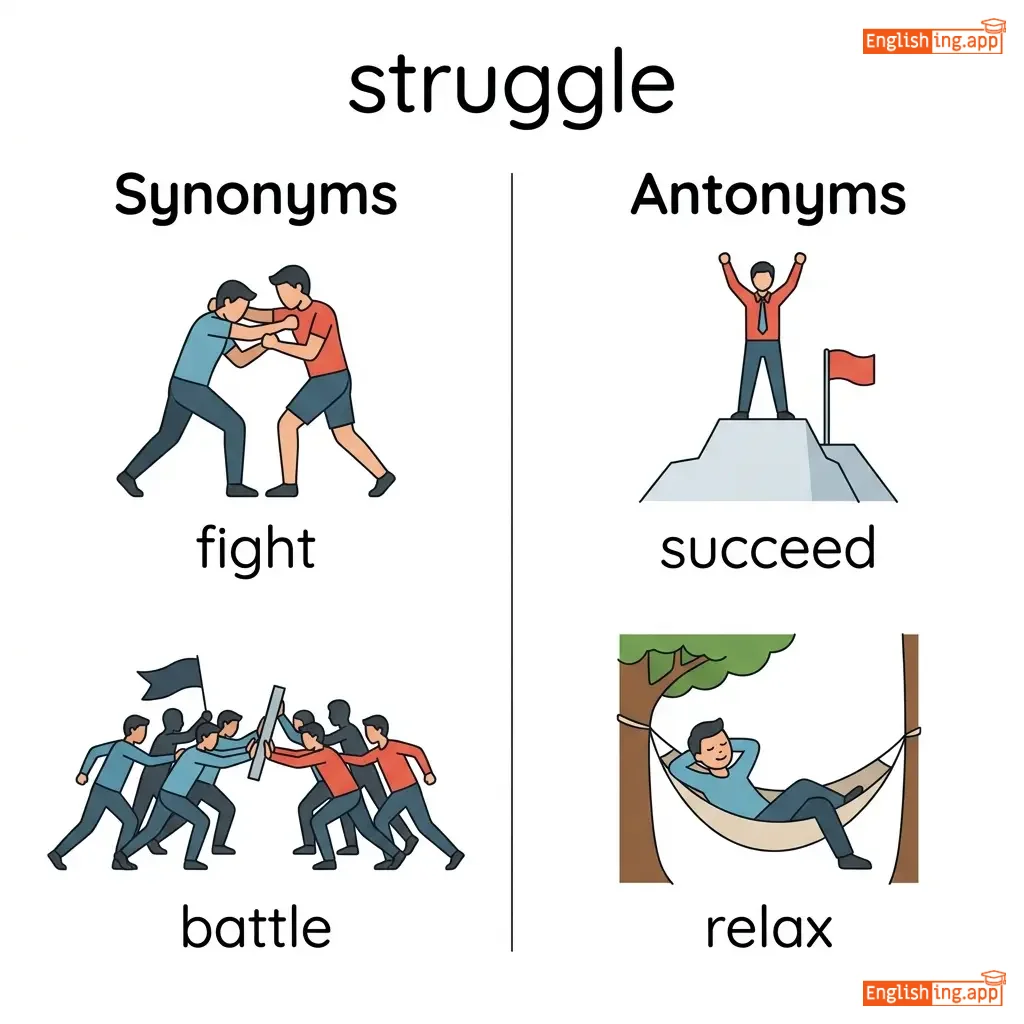
fight, battle, strive, wrestle
••••••
|
succeed, achieve, accomplish
••••••
|
struggle with, struggle against, struggle to, long struggle, constant struggle
••••••
|
If you 'luchar', you fight or struggle in Spanish!
••••••
|
|
#721
🌿
|
/rɪˈfreʃ/
verb
(rifrésh)
••••••
|
|
refrescar
refreskar
••••••
|
refreshed
rifrésht
••••••
|
refreshed
rifrésht
••••••
|
refreshes
rifréshez
••••••
|
refreshing
rifréshing
••••••
|
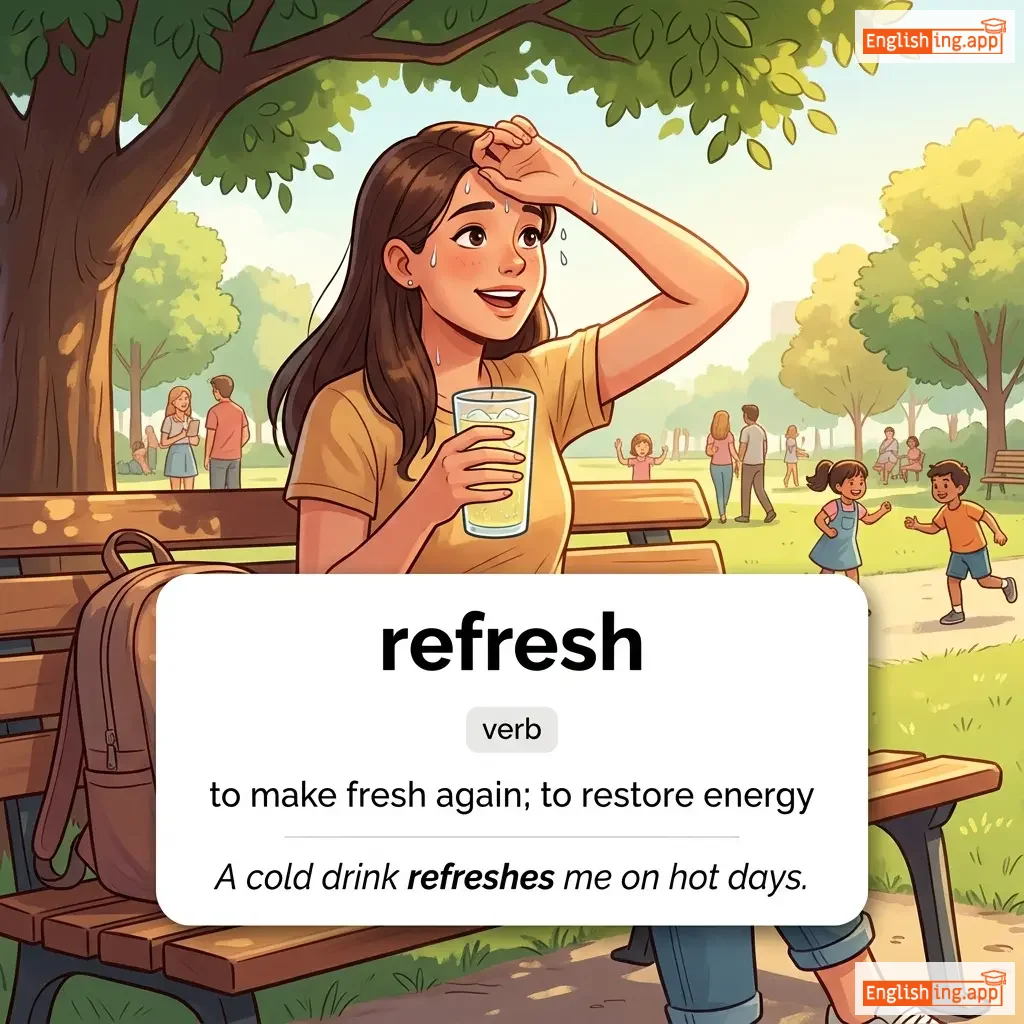
to make fresh again; to restore energy
••••••
|
A cold drink refreshes me on hot days.
a cold drink rifréshez mi on jot deiz
••••••
|
Una bebida fría me refresca en los días calurosos.
una bebida fria me refreska en los dias kalurosos
••••••
|
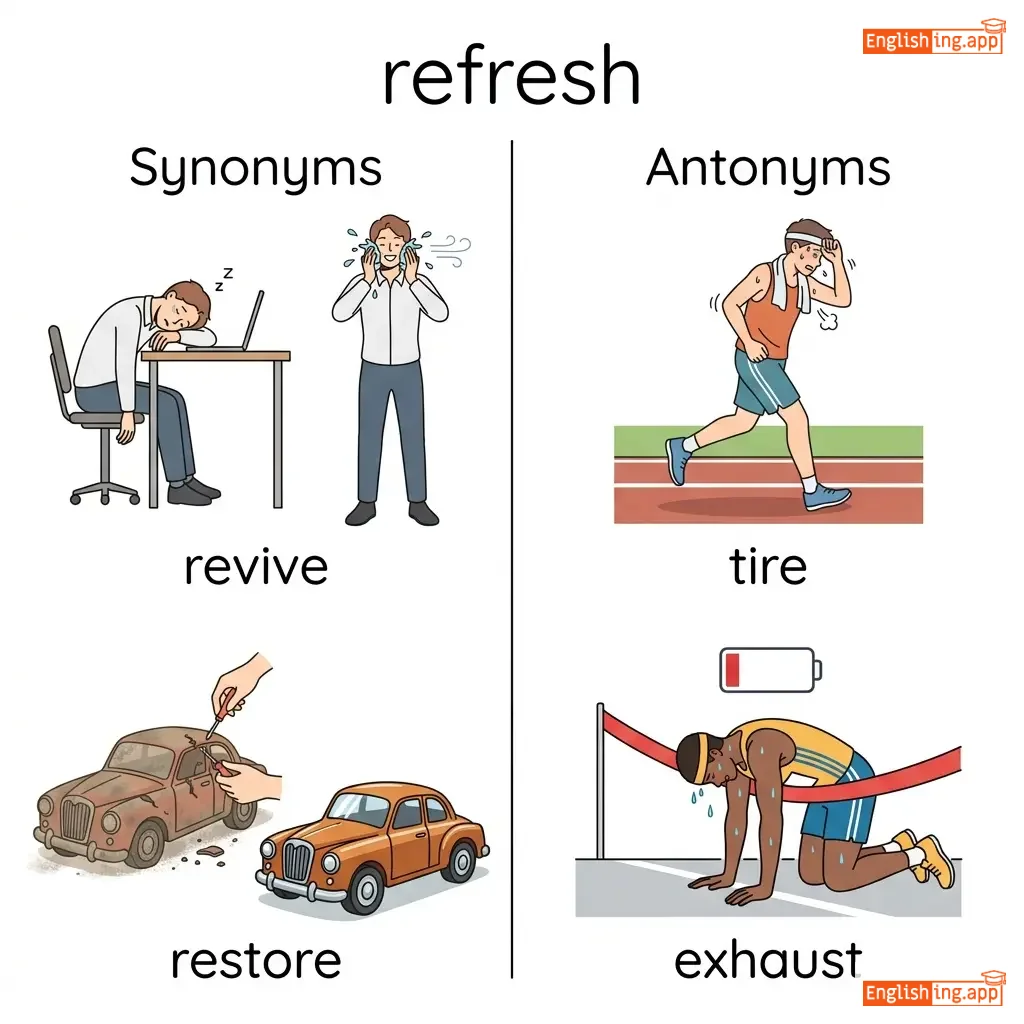
revive, restore, renew, invigorate
••••••
|
tire, exhaust, drain, weaken
••••••
|
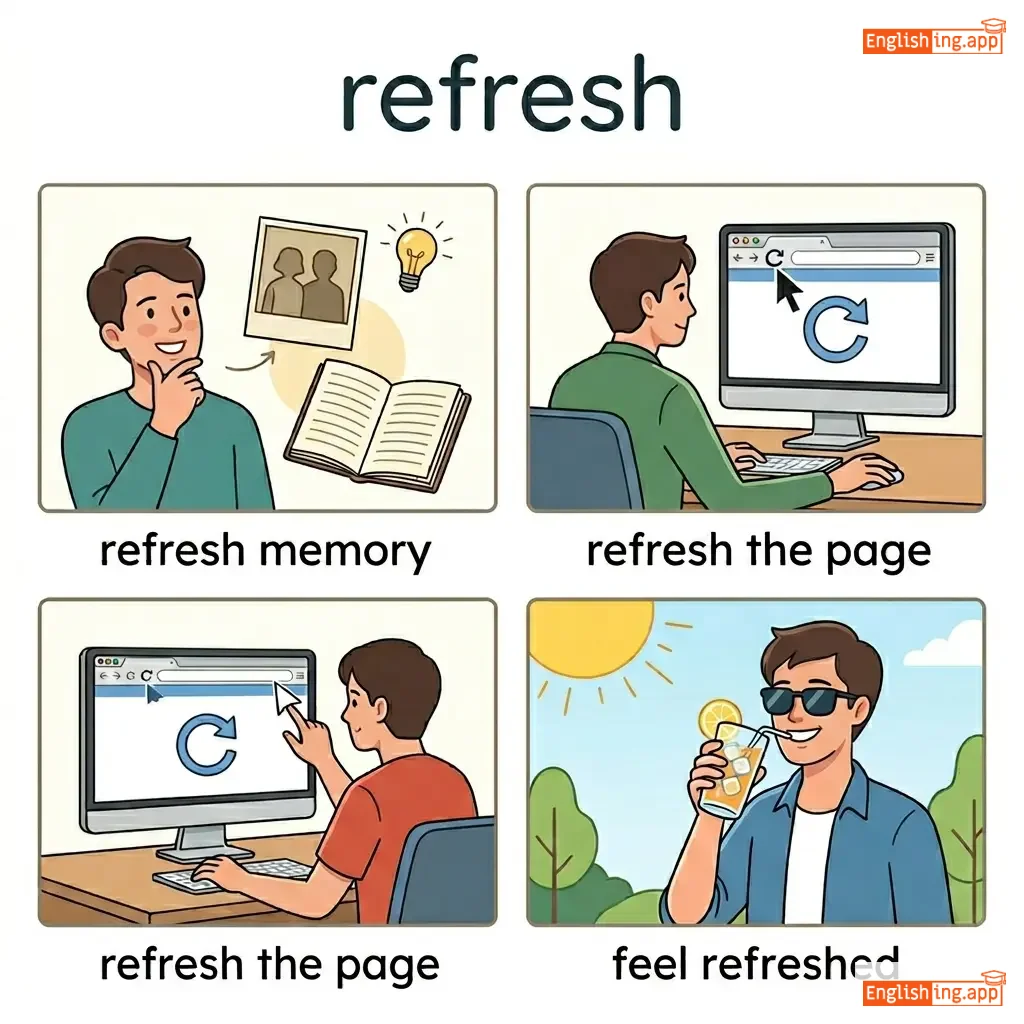
refresh memory, refresh the page, feel refreshed, refreshing drink, refreshing change
••••••
|
Refrescar sounds like refresh — both mean to make cool or new again.
••••••
|
|
#722
📚
|
/kəˈlɛkt/
verb
(colect)
••••••
|
|
recoger
rekoger
••••••
|
collected
colected
••••••
|
collected
colected
••••••
|
collects
colects
••••••
|
collecting
colecting
••••••
|
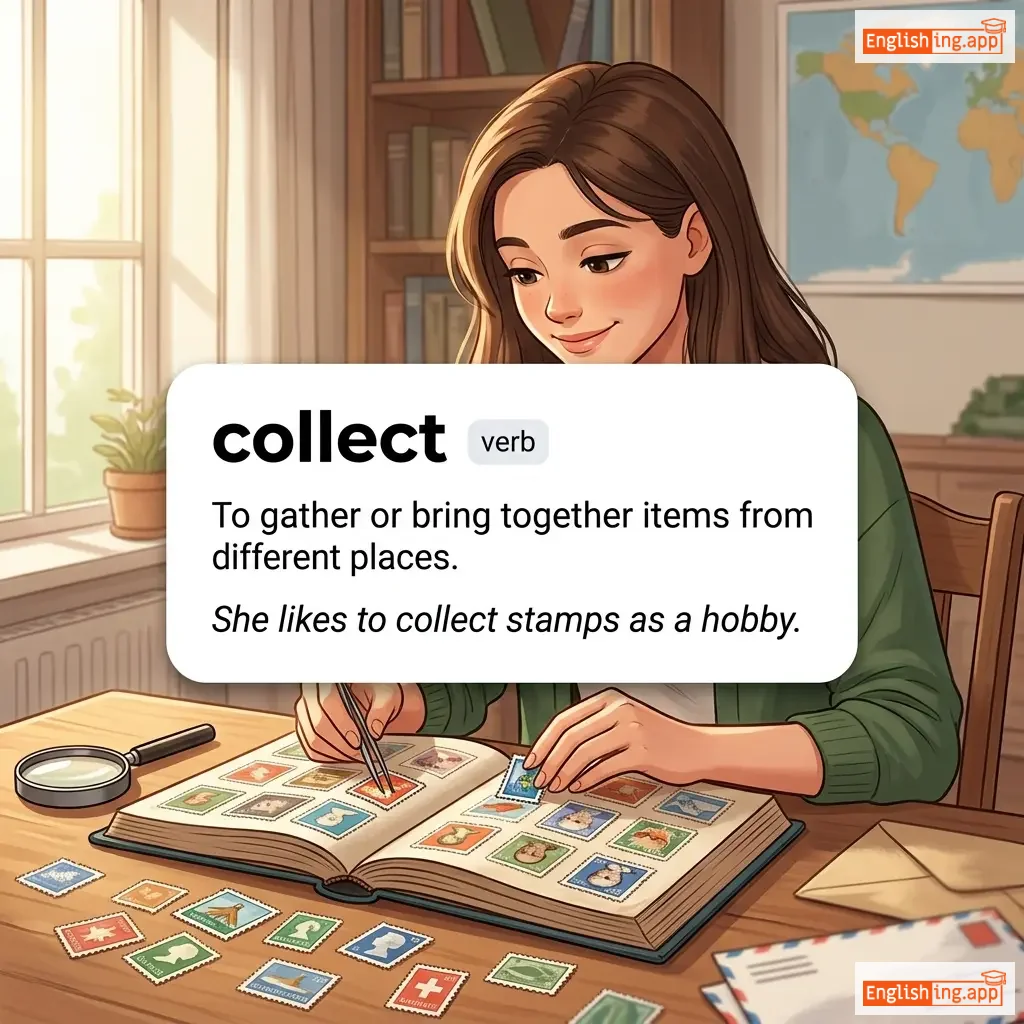
to gather together; to accumulate items
••••••
|
I collect stamps as a hobby.
ai colect stamps as a jobi
••••••
|
Colecciono sellos como pasatiempo.
Koleksono sellos komo pasatiempo
••••••
|
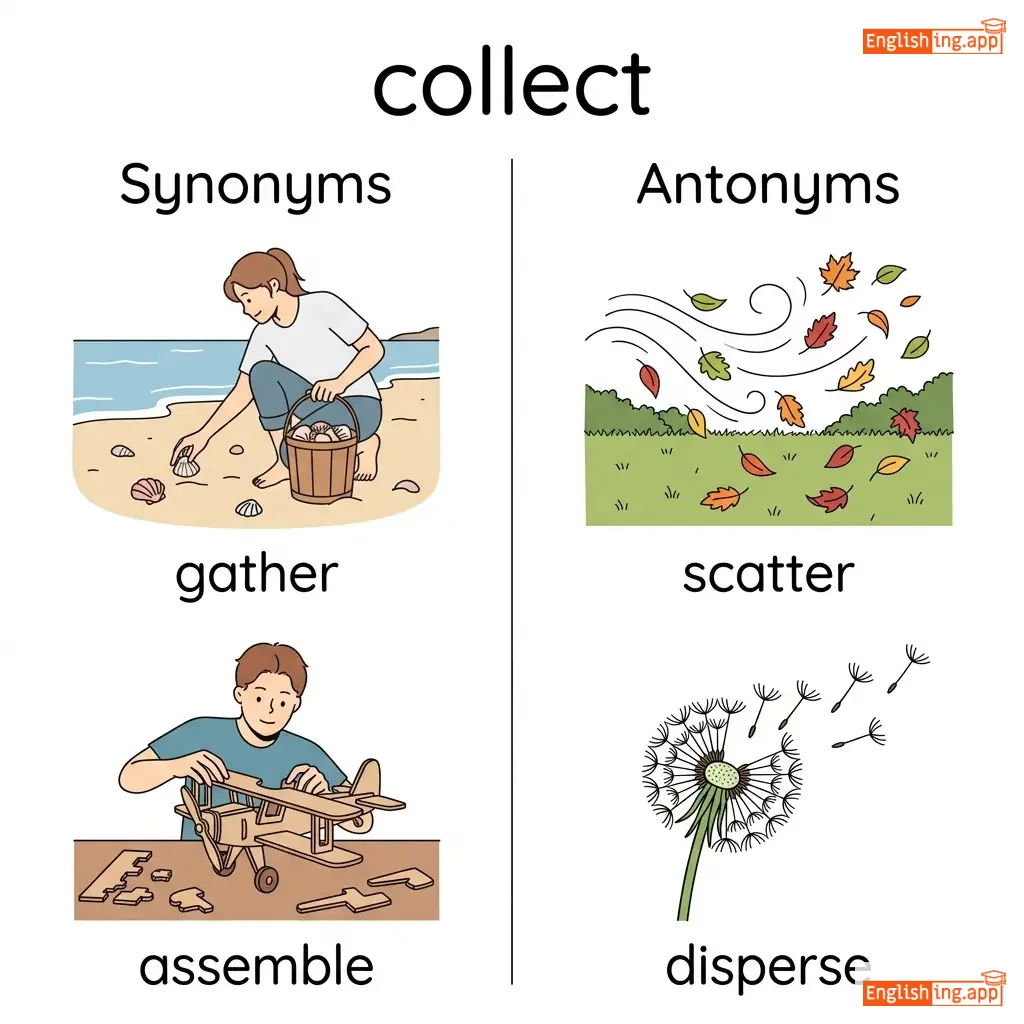
gather, accumulate, assemble, amass
••••••
|
scatter, distribute, disperse, separate
••••••
|
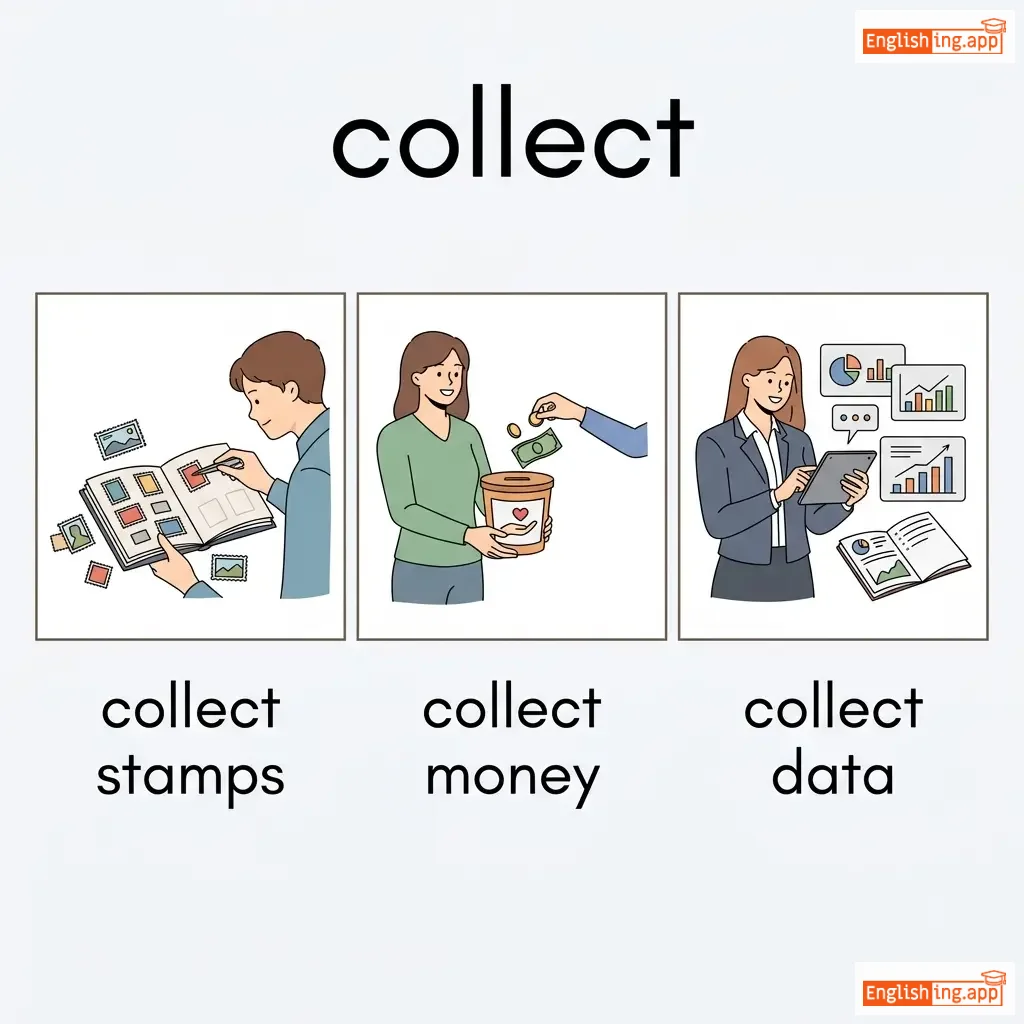
collect data, collect stamps, collect money, collect evidence, stamp collection
••••••
|
Recoger sounds like 'recollect' — to gather things again.
••••••
|
|
#723
🛒
|
/baɪ/
verb
(bai)
••••••
|
|
comprar
komprar
••••••
|
bought
bot
••••••
|
bought
bot
••••••
|
buys
bais
••••••
|
buying
baiing
••••••
|
to purchase something with money
••••••
|
I want to buy a new car.
ai guant tu bai a niu kar
••••••
|
Quiero comprar un coche nuevo.
Kiero komprar un koche nuevo
••••••
|
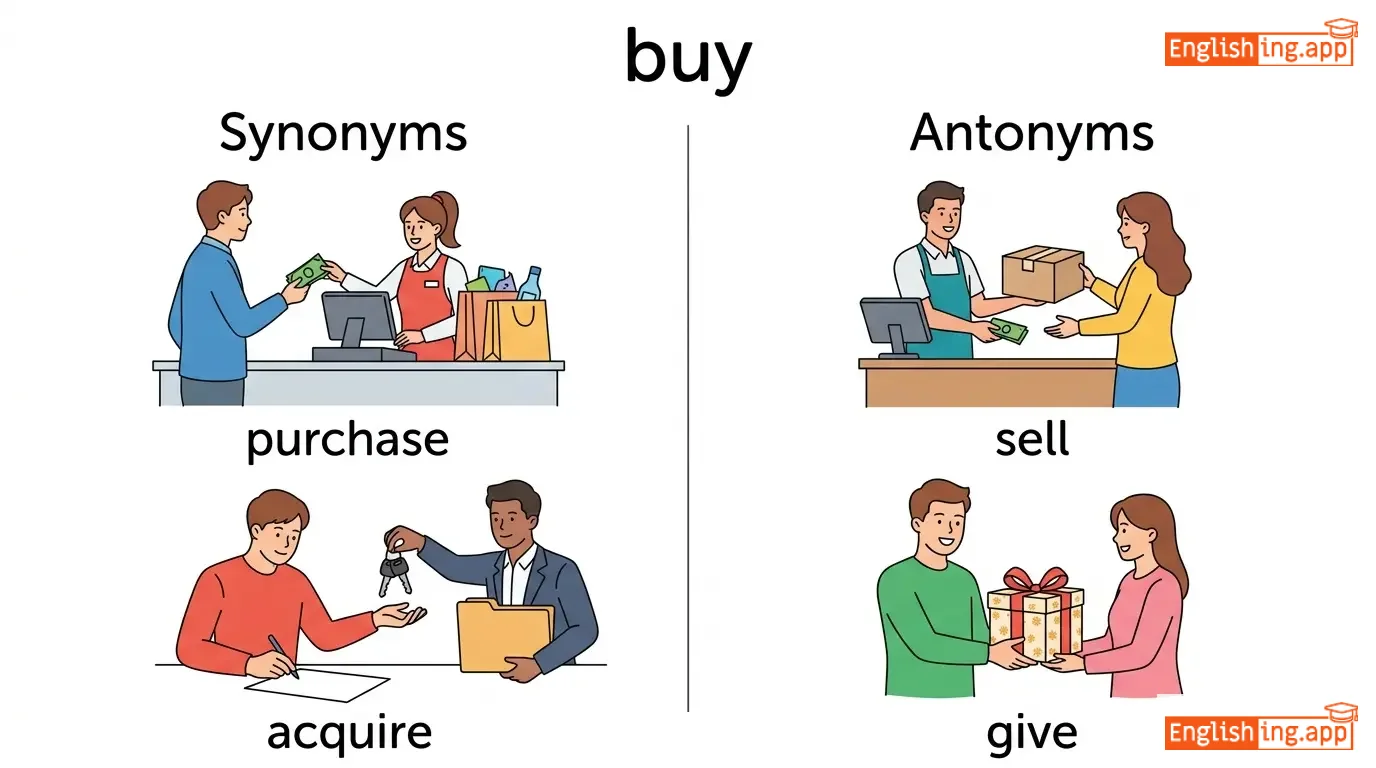
purchase, acquire, obtain
••••••
|
sell, dispose, give away
••••••
|
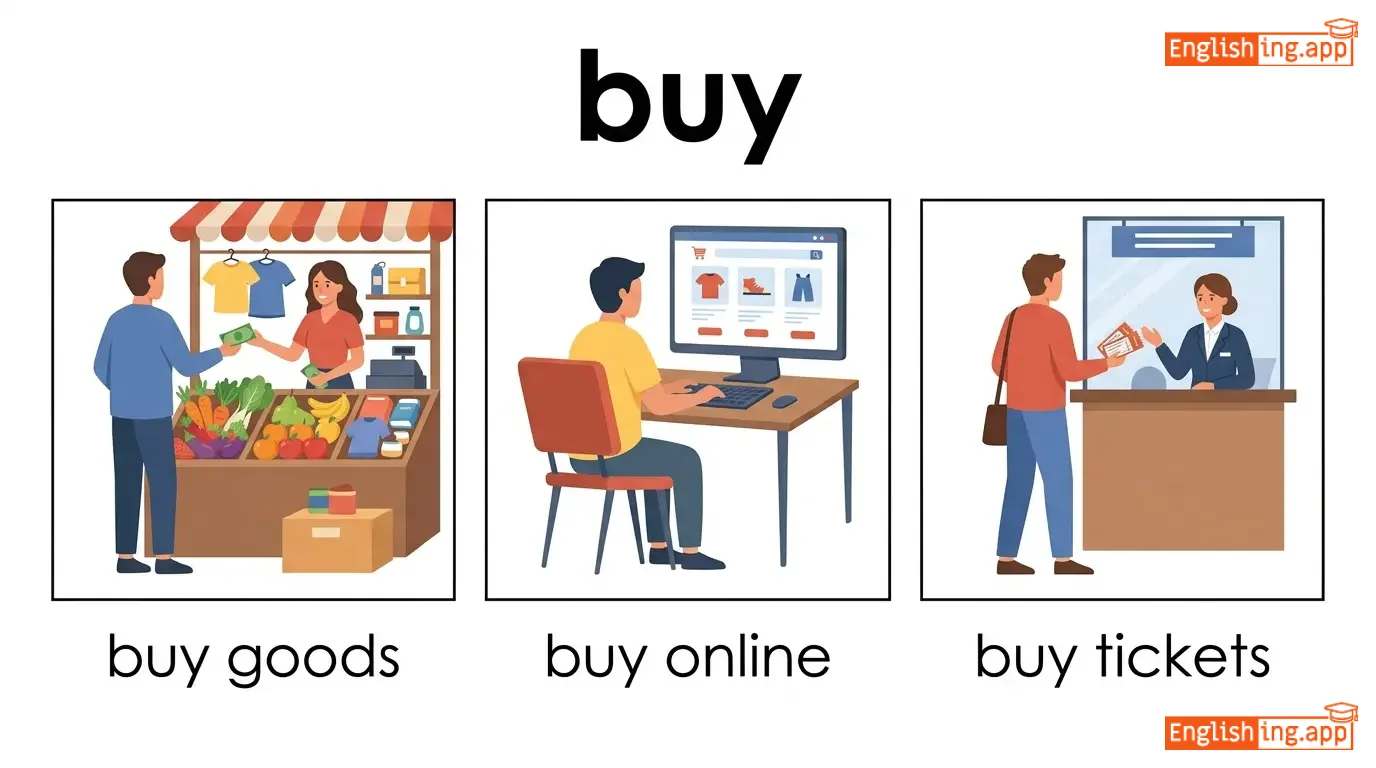
buy online, buy in bulk, buy cheap, impulse buy, panic buying
••••••
|
Buy sounds like 'comprar' – both mean to get something by paying
••••••
|
|
#724
😱
|
/ˈhɔːrɪfaɪ/
verb
(hórrifai)
••••••
|
|
horrorizar
horrorizar
••••••
|
horrified
hórrifaid
••••••
|
horrified
hórrifaid
••••••
|
horrifies
hórrifais
••••••
|
horrifying
hórrifaing
••••••
|
to fill with horror; to shock or disgust greatly
••••••
|
The violent scene horrified the audience.
de vaiolent sin hórrifaid de ódiens
••••••
|
La escena violenta horrorizó al público.
la esena violenta horrorizo al publico
••••••
|
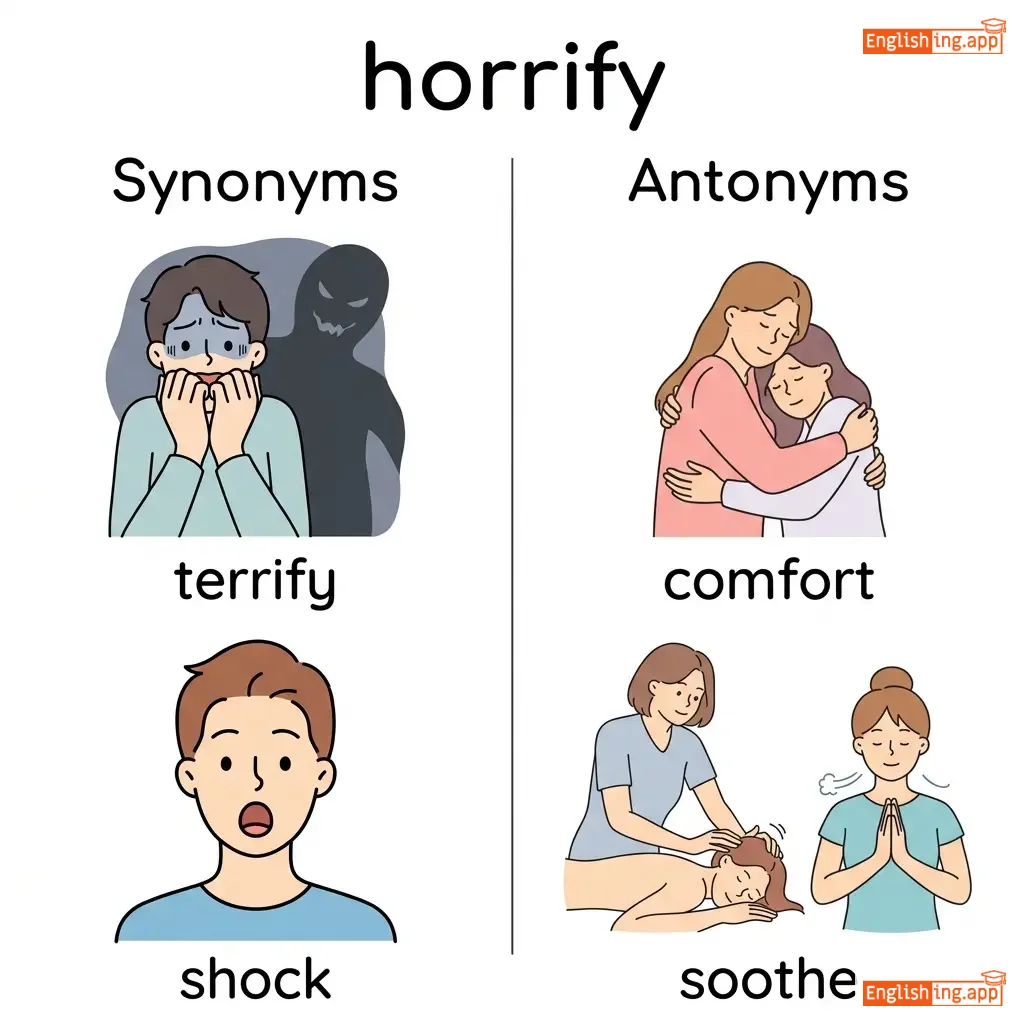
terrify, shock, appall, disgust
••••••
|
comfort, soothe, calm, please
••••••
|
absolutely horrified, deeply horrified, horrifying scene, horrifying experience
••••••
|
Horrify → horrorizar — both share 'horror', so it means to fill with horror.
••••••
|
|
#725
✅
|
/duː/
verb
(du)
••••••
|
|
hacer
aser
••••••
|
did
did
••••••
|
done
don
••••••
|
does
das
••••••
|
doing
duing
••••••
|
to perform an action; to complete a task
••••••
|
I need to do my homework tonight.
ai nid tu du mai jomwerk tunait
••••••
|
Necesito hacer mi tarea esta noche.
Necesito aser mi tarea esta noche
••••••
|
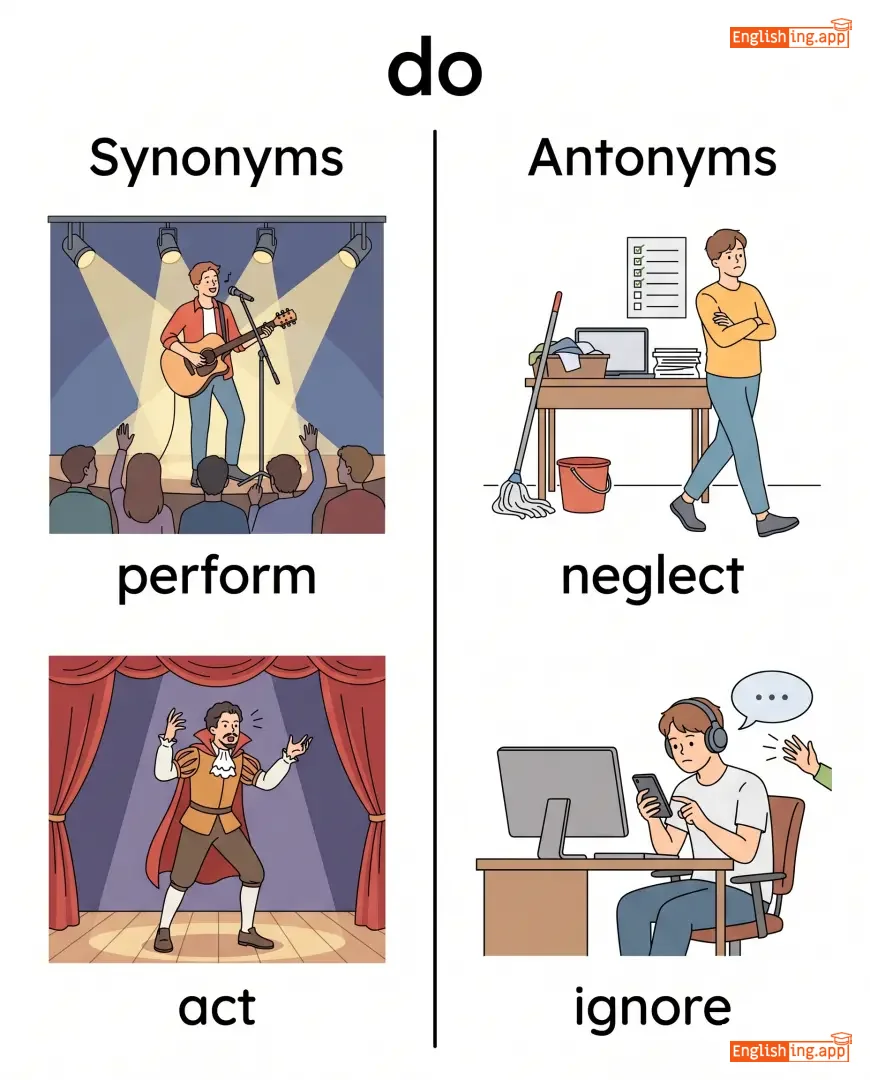
perform, complete, execute, accomplish
••••••
|
undo, avoid, neglect, skip
••••••
|
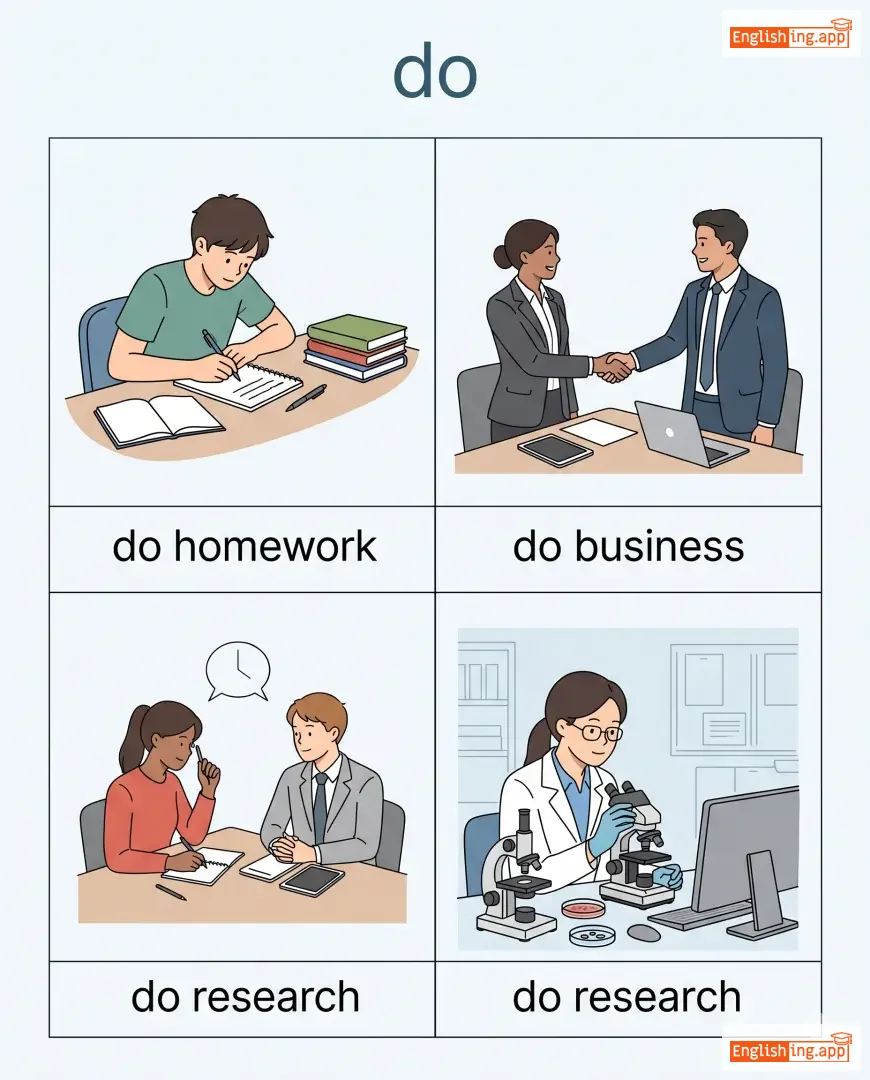
do homework, do business, do well, do your best, get things done
••••••
|
'Do' sounds like 'hacer'—both mean to perform or complete something.
••••••
|
|
#726
🗣️
|
/spiːk/
verb
(spik)
••••••
|
- •••••• |
hablar
hablar
••••••
|
spoke
spouk
••••••
|
spoken
spouken
••••••
|
speaks
spiks
••••••
|
speaking
spiking
••••••
|
to talk; to express thoughts in words; to communicate
••••••
|
She speaks three languages fluently.
shi spiks thri languajes fluently
••••••
|
Ella habla tres idiomas con fluidez.
Eya abla tres idiomas kon fluidez
••••••
|
talk, communicate, express, utter
••••••
|
listen, be silent, stay quiet
••••••
|
speak fluently, speak loudly, speak publicly, public speaking, speak up
••••••
|
To ‘hablar’ is to ‘speak’ — both start conversations and connect people.
••••••
|
|
#727
🚫
|
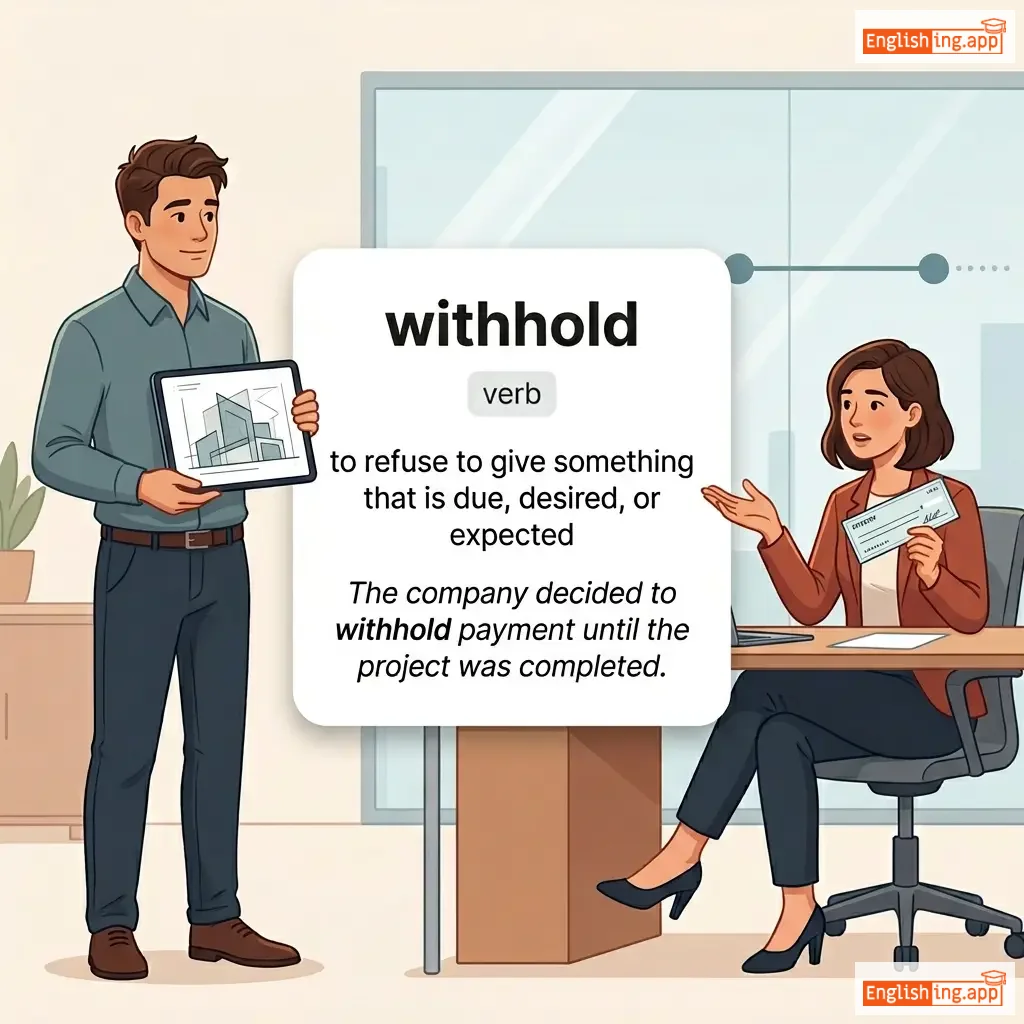
/wɪðˈhoʊld/
verb
(guizjóld)
••••••
|
|
retener
retener
••••••
|
withheld
guizjéld
••••••
|
withheld
guizjéld
••••••
|
withholds
guizjólds
••••••
|
withholding
guizjólding
••••••
|
to refuse to give or keep back something
••••••
|
The company decided to withhold his bonus.
la cómpani disáidid tu guizjóld his bónas
••••••
|
La empresa decidió retener su bono.
la empresa decidio retener su bono
••••••
|
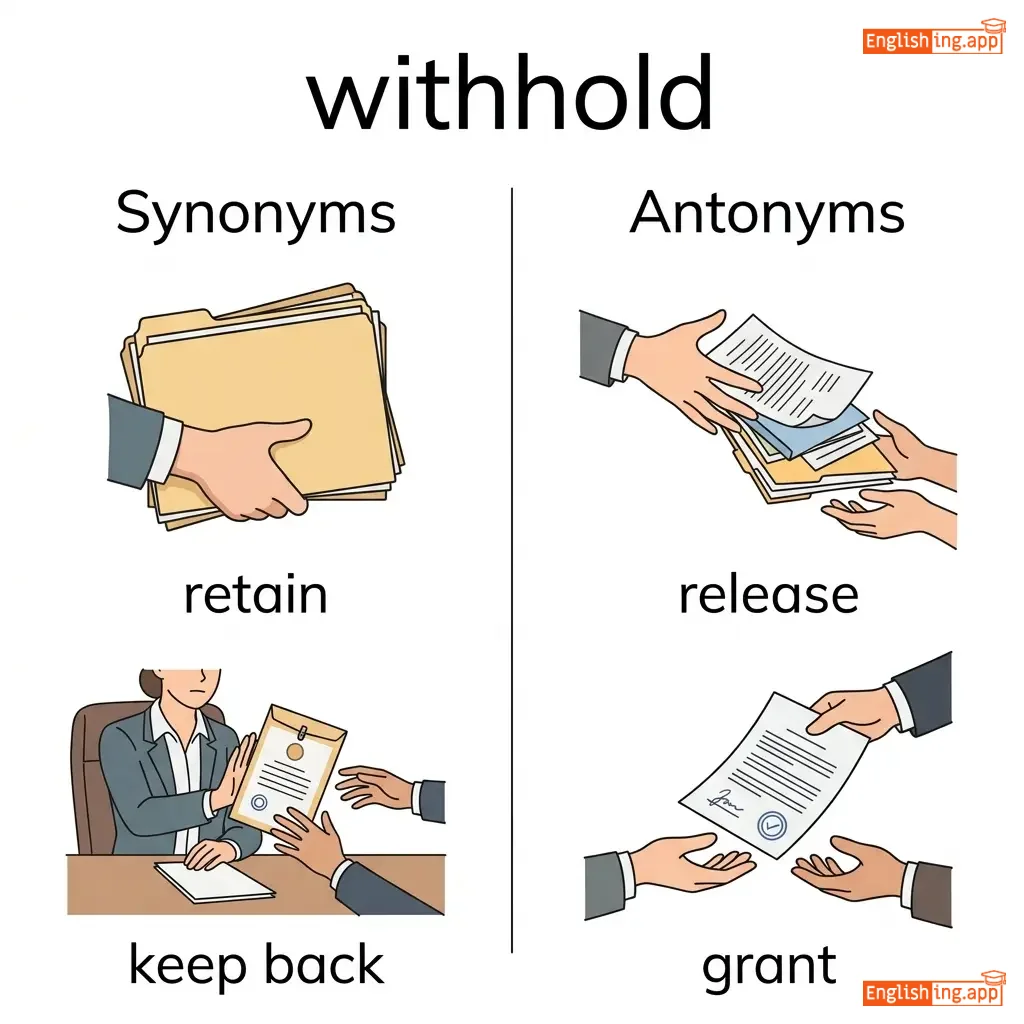
retain, keep back, refuse, deny
••••••
|
give, provide, release, grant
••••••
|
withhold information, withhold payment, withhold consent, withhold judgment
••••••
|
Re-tain or hold back → retener means withhold.
••••••
|
|
#728
🗣️
|
/prəˈfes/
verb
(profés)
••••••
|
|
profesar
profesar
••••••
|
professed
profést
••••••
|
professed
profést
••••••
|
professes
proféses
••••••
|
professing
profésing
••••••
|
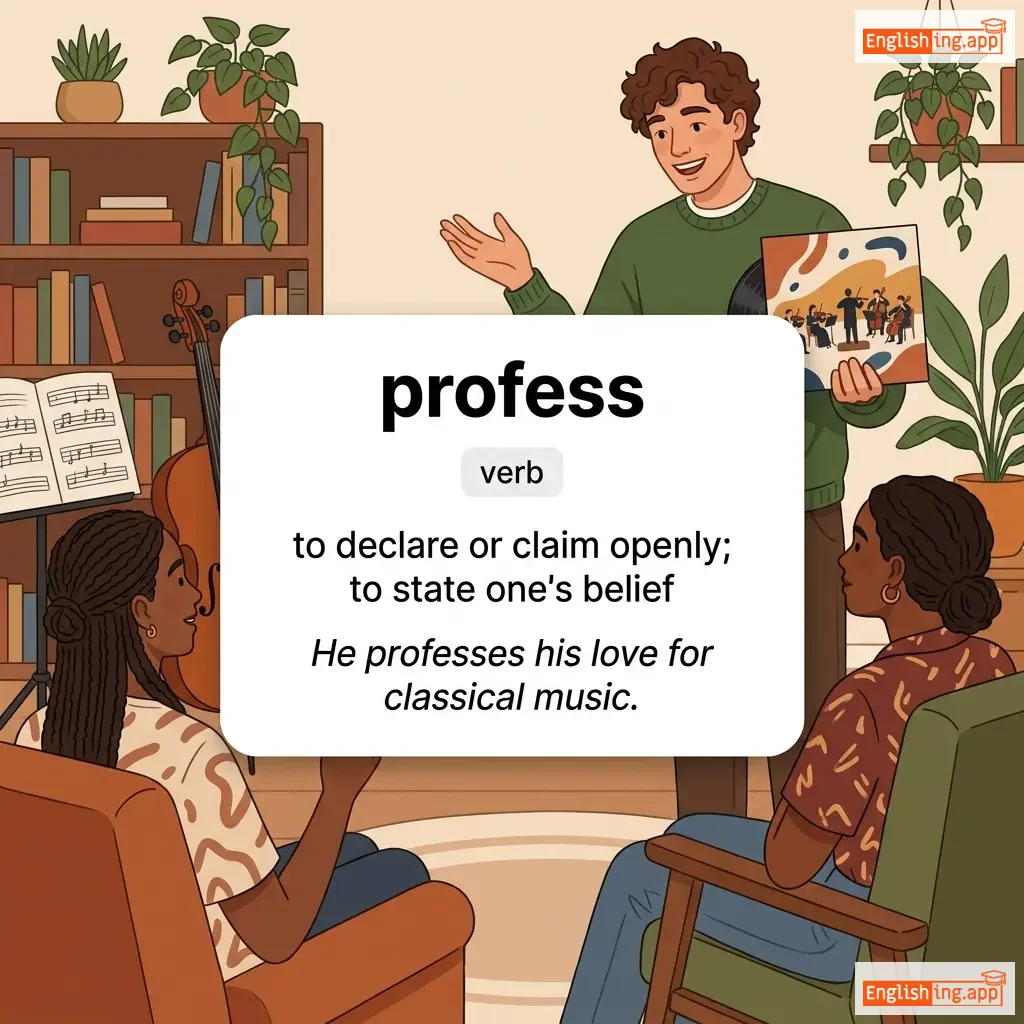
to declare or claim openly; to state one's belief
••••••
|
He professes his love for classical music.
ji proféses his lov for clásikal músik
••••••
|
Él profesa su amor por la música clásica.
El profesa su amor por la musica clasica
••••••
|
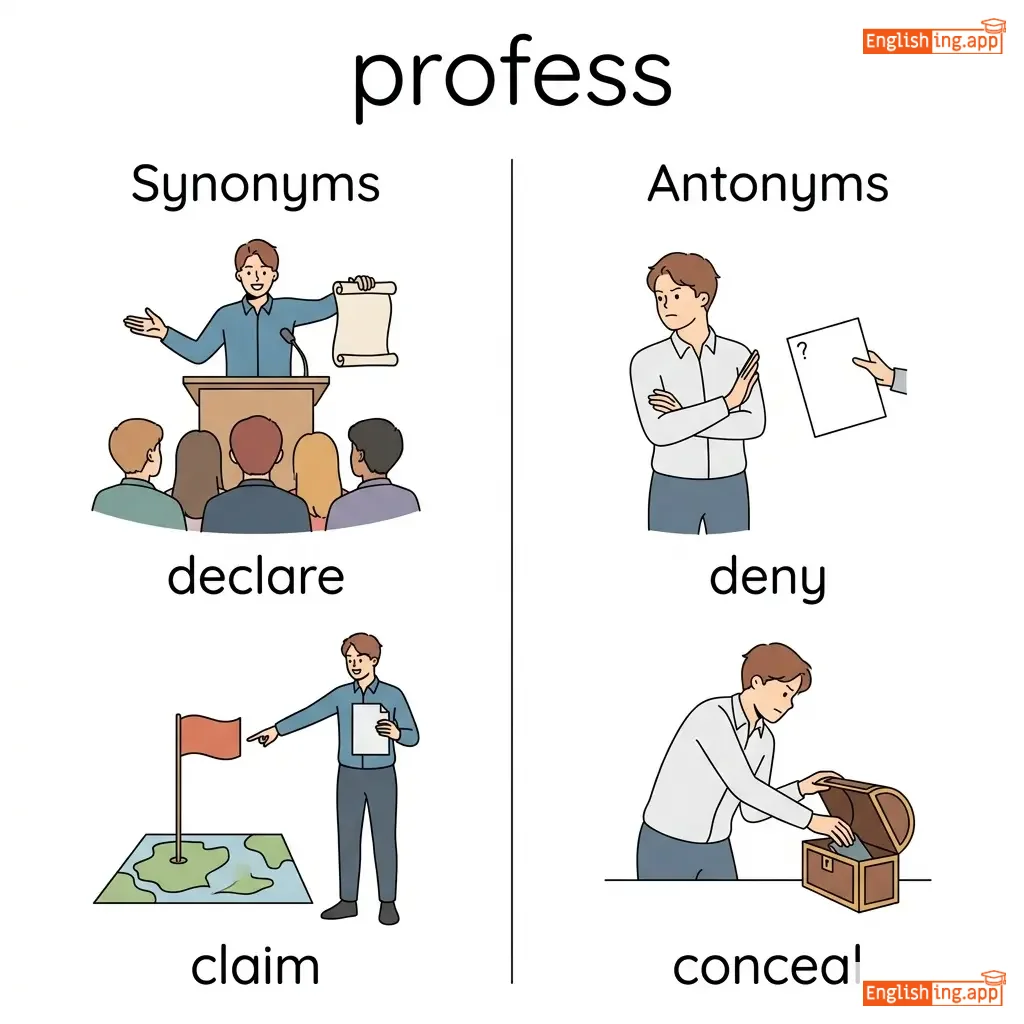
declare, claim, assert, state
••••••
|
deny, conceal, hide
••••••
|
profess faith, profess love, profess ignorance, openly profess
••••••
|
In Spanish 'profesar' sounds like 'profess' — both mean to declare belief or feeling.
••••••
|
|
#729
🔄
|
/ɪksˈtʃeɪndʒ/
verb
(ekschéindj)
••••••
|
|
intercambiar
intercambiar
••••••
|
exchanged
ekschéindjd
••••••
|
exchanged
ekschéindjd
••••••
|
exchanges
ekschéindjes
••••••
|
exchanging
ekschéindjing
••••••
|
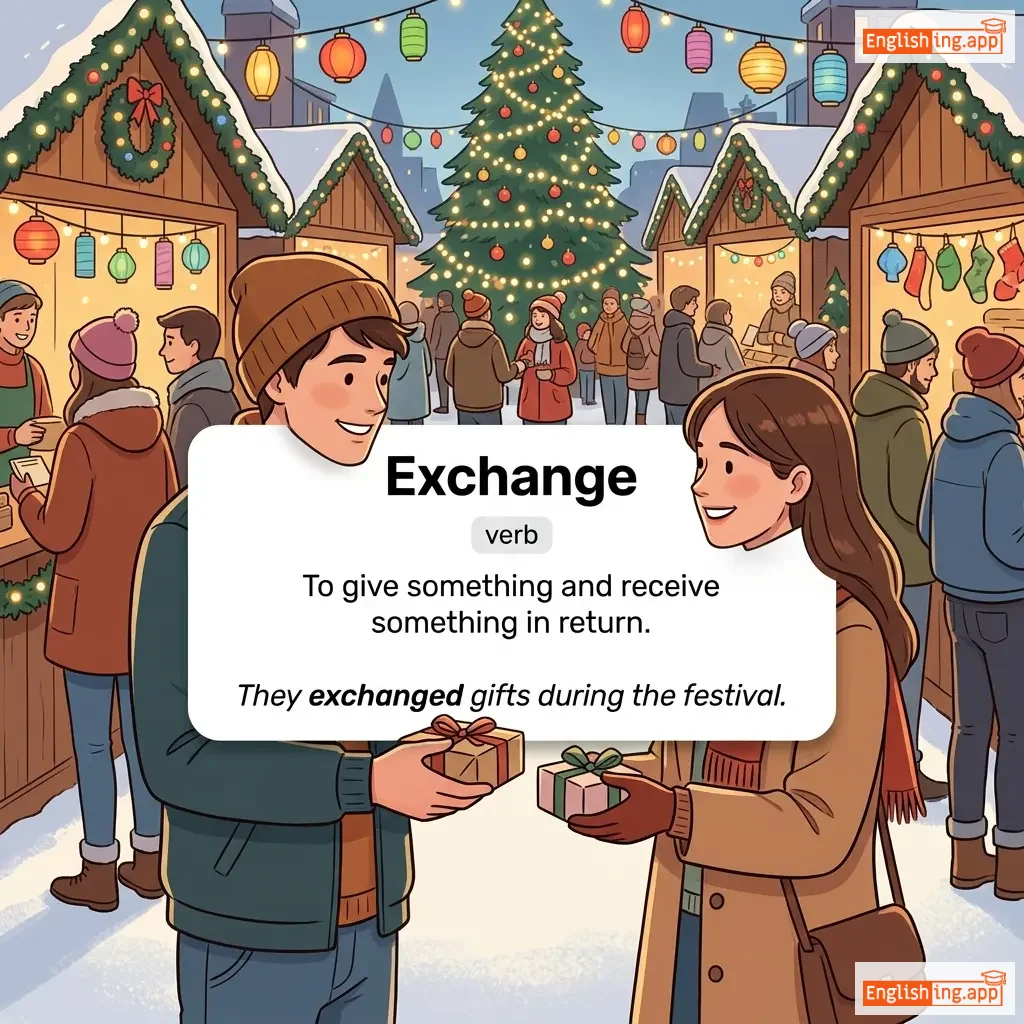
to give something and receive something else; to trade
••••••
|
They decided to exchange gifts during the holiday.
dei desáidid tu ekschéindj gifts durin de jóllidei.
••••••
|
Decidieron intercambiar regalos durante las vacaciones.
Desidieron intercambiar regalos durante las vacaciones.
••••••
|
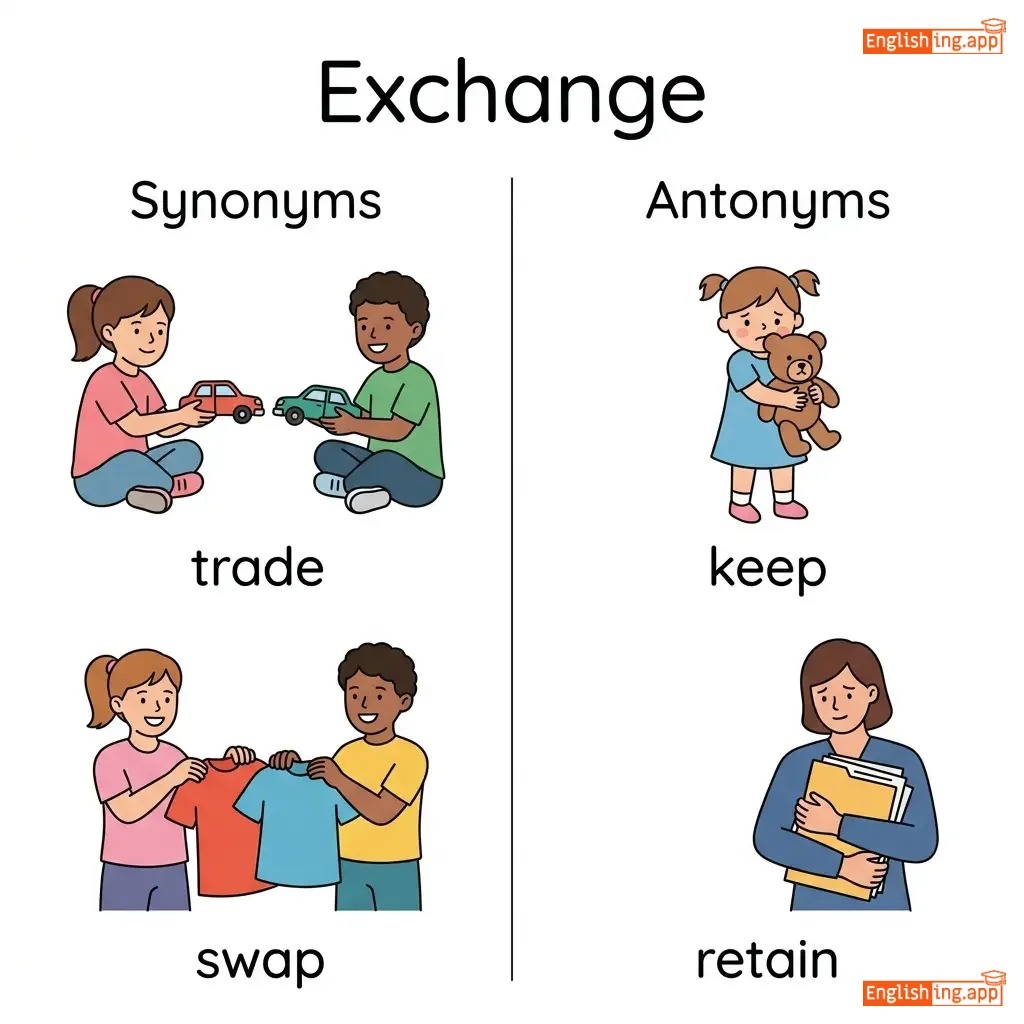
trade, swap, interchange, substitute
••••••
|
keep, retain, hold, maintain
••••••
|
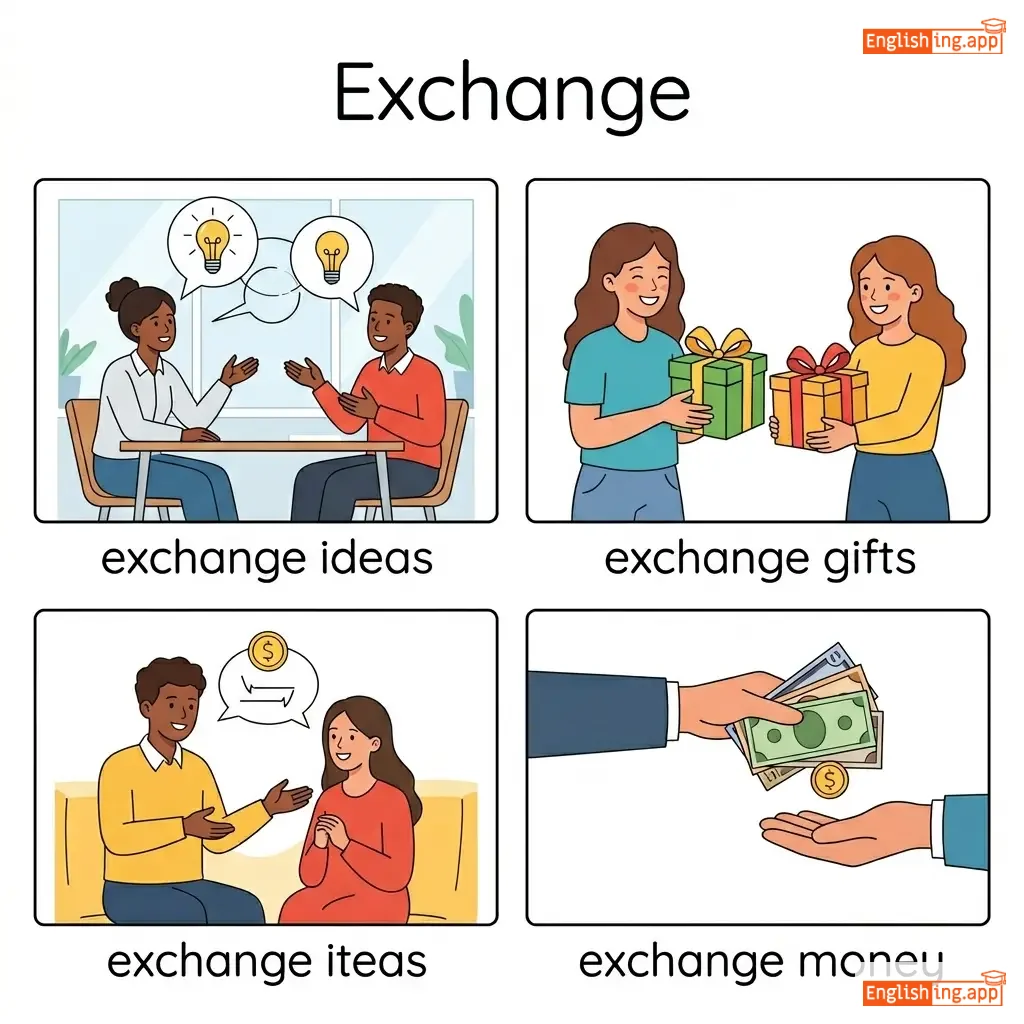
exchange ideas, exchange gifts, exchange words, foreign exchange, exchange rate
••••••
|
Exchange → intercambiar — ‘inter’ means between, like exchanging between people.
••••••
|
|
#730
🤝
|
/ˌɪntərˈækt/
verb
(interáct)
••••••
|
|
interactuar
interactuar
••••••
|
interacted
interácted
••••••
|
interacted
interácted
••••••
|
interacts
interácts
••••••
|
interacting
interácting
••••••
|
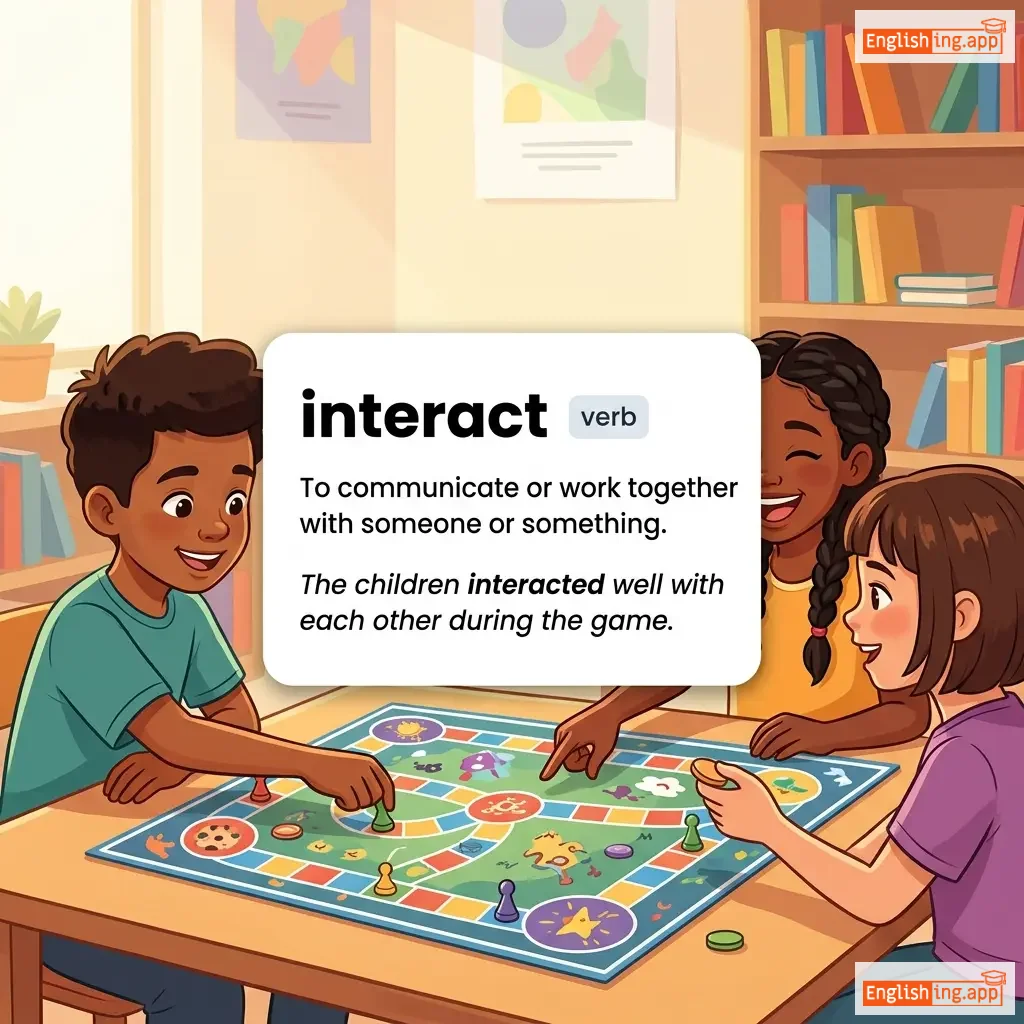
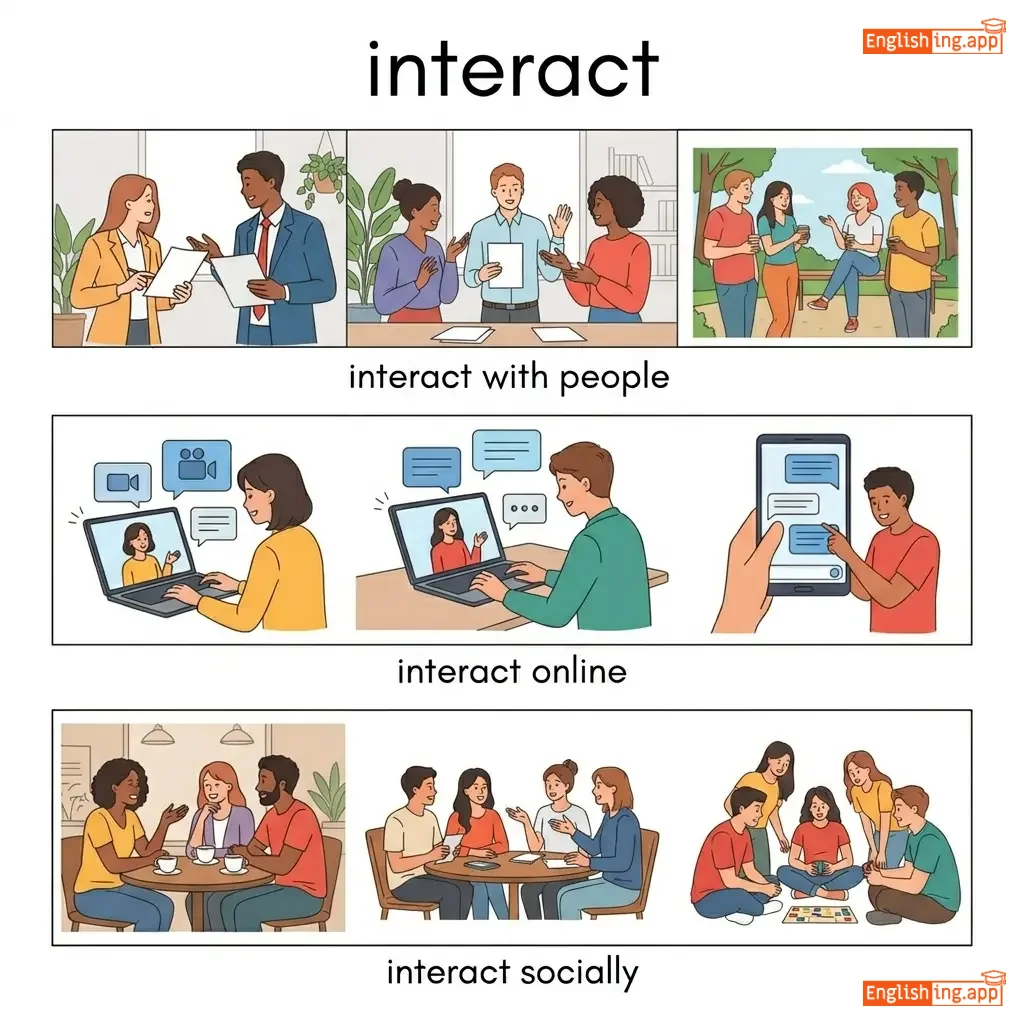
to communicate or work together with someone or something
••••••
|
Students interact with teachers during class discussions.
Estudents interáct with teachers during class discussions.
••••••
|
Los estudiantes interactúan con los profesores durante las discusiones en clase.
Los estudiantes interactuan con los profesores durante las discusiones en clase
••••••
|
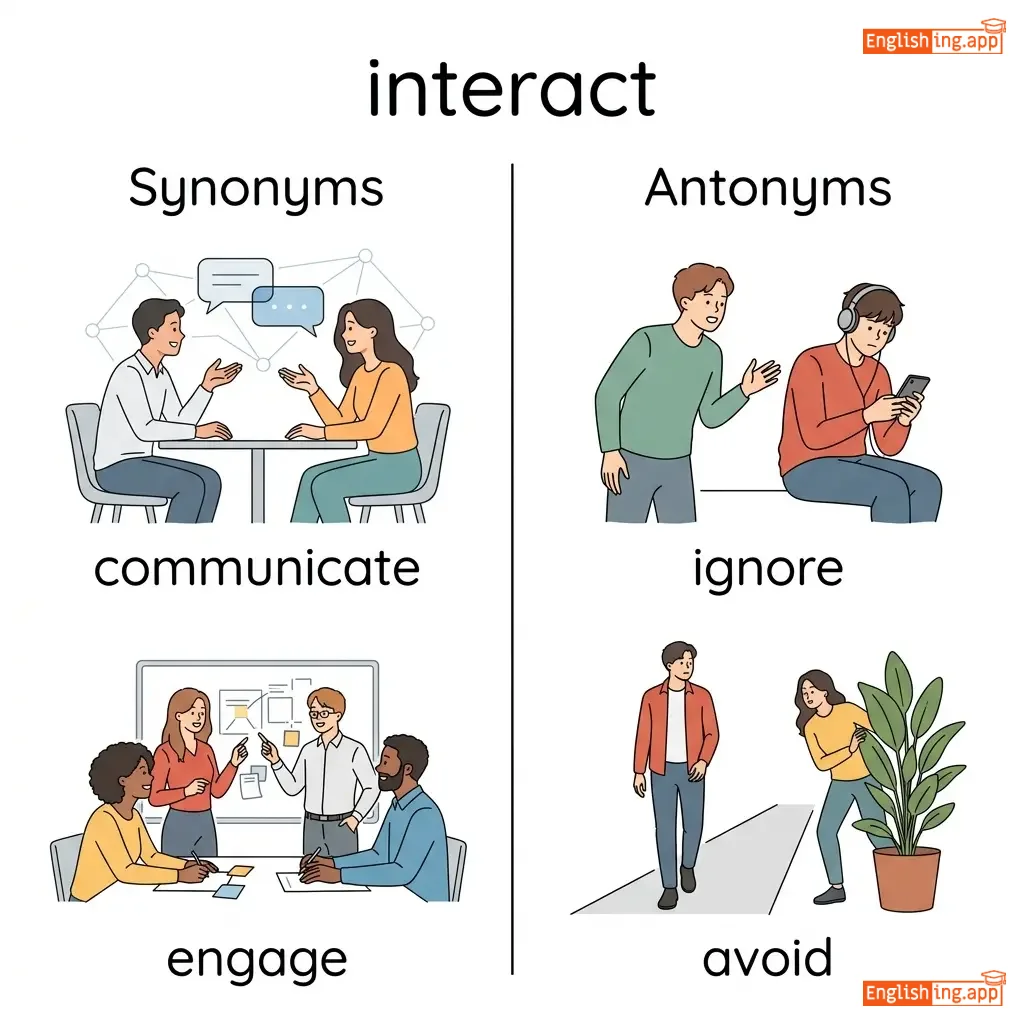
communicate, engage, connect, collaborate
••••••
|
ignore, avoid, isolate
••••••
|
interact with, social interaction, direct interaction, user interaction
••••••
|
Think of 'interactuar' as 'interact' with a Spanish twist.
••••••
|
|
#731
💨
|
/ˈvænɪʃ/
verb
(vánish)
••••••
|
|
desaparecer
desaparecer
••••••
|
vanished
vánisht
••••••
|
vanished
vánisht
••••••
|
vanishes
vánishes
••••••
|
vanishing
vánishing
••••••
|
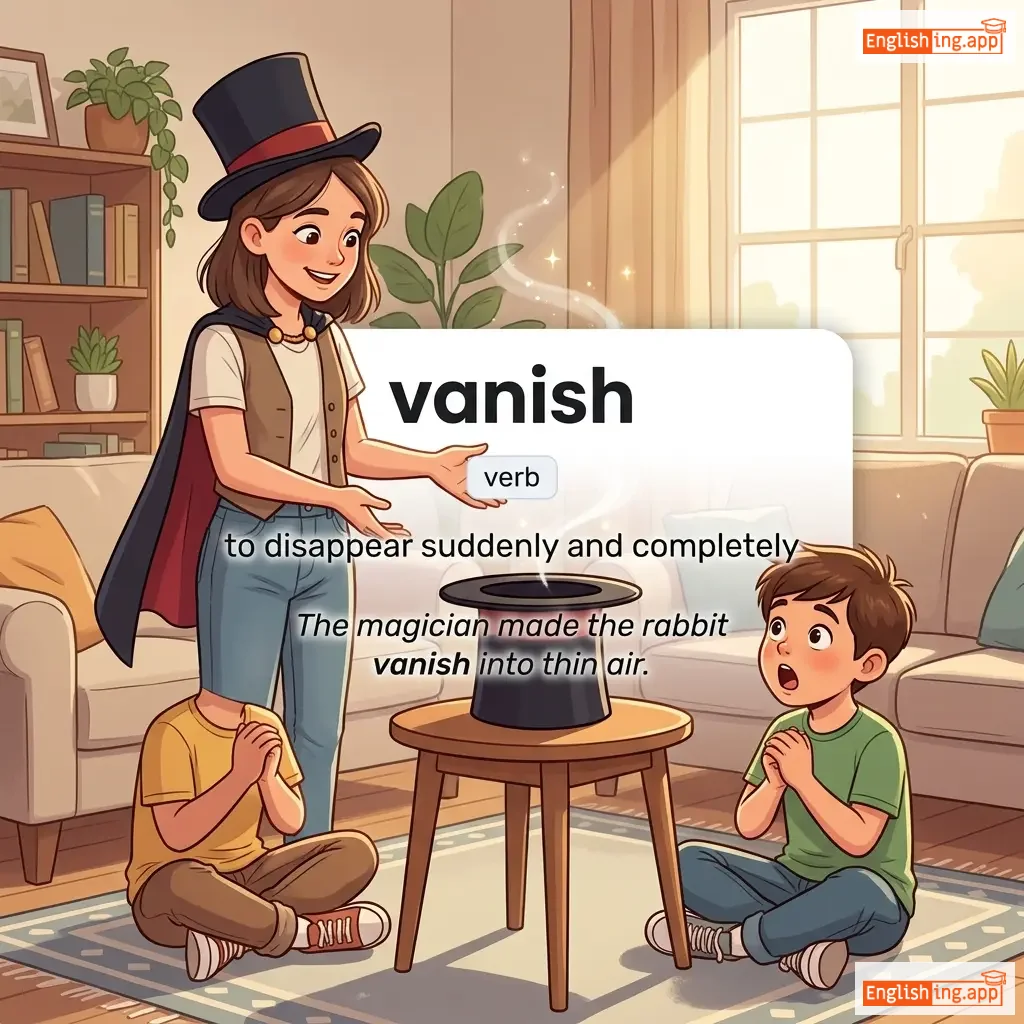
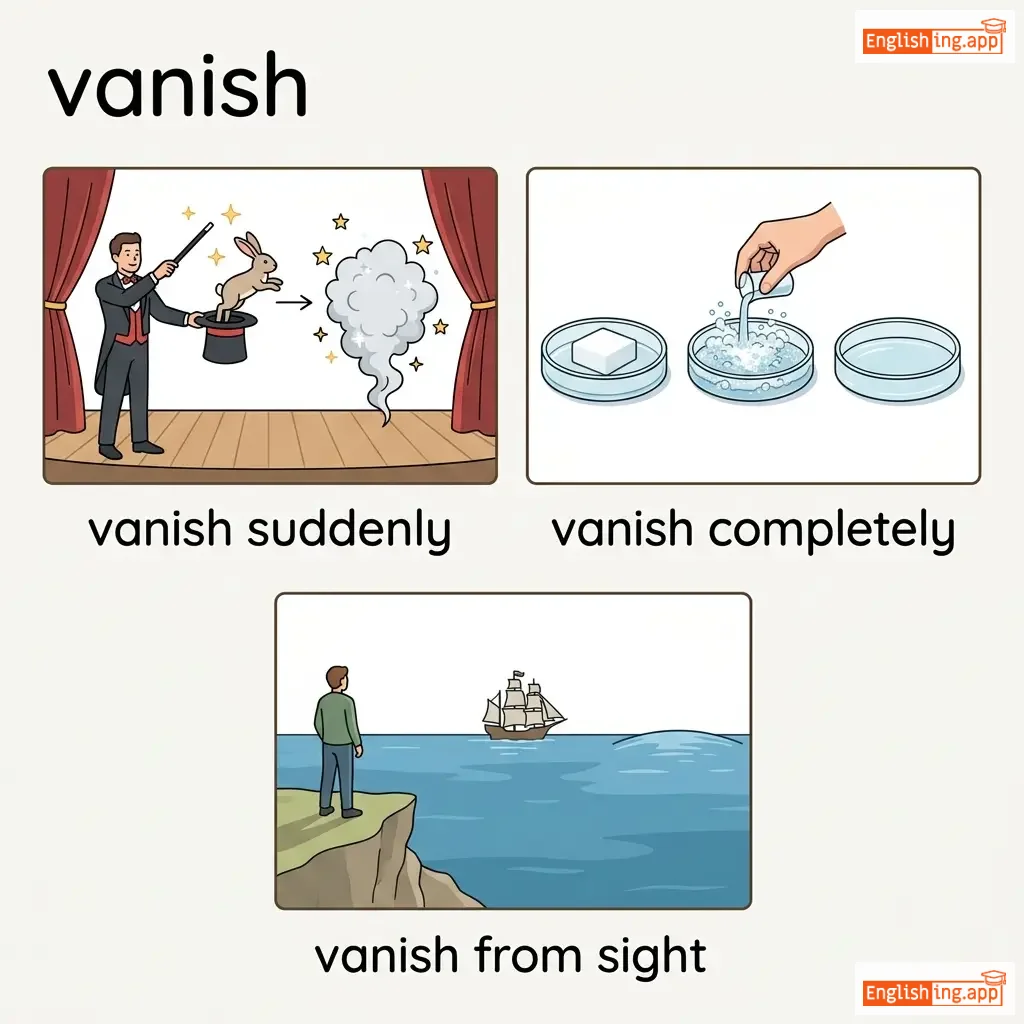
to disappear suddenly; to become invisible
••••••
|
The magician made the rabbit vanish from the hat.
el magishian meid de rabit vánish from de jat
••••••
|
El mago hizo desaparecer al conejo del sombrero.
El mago hizo desaparecer al conejo del sombrero
••••••
|
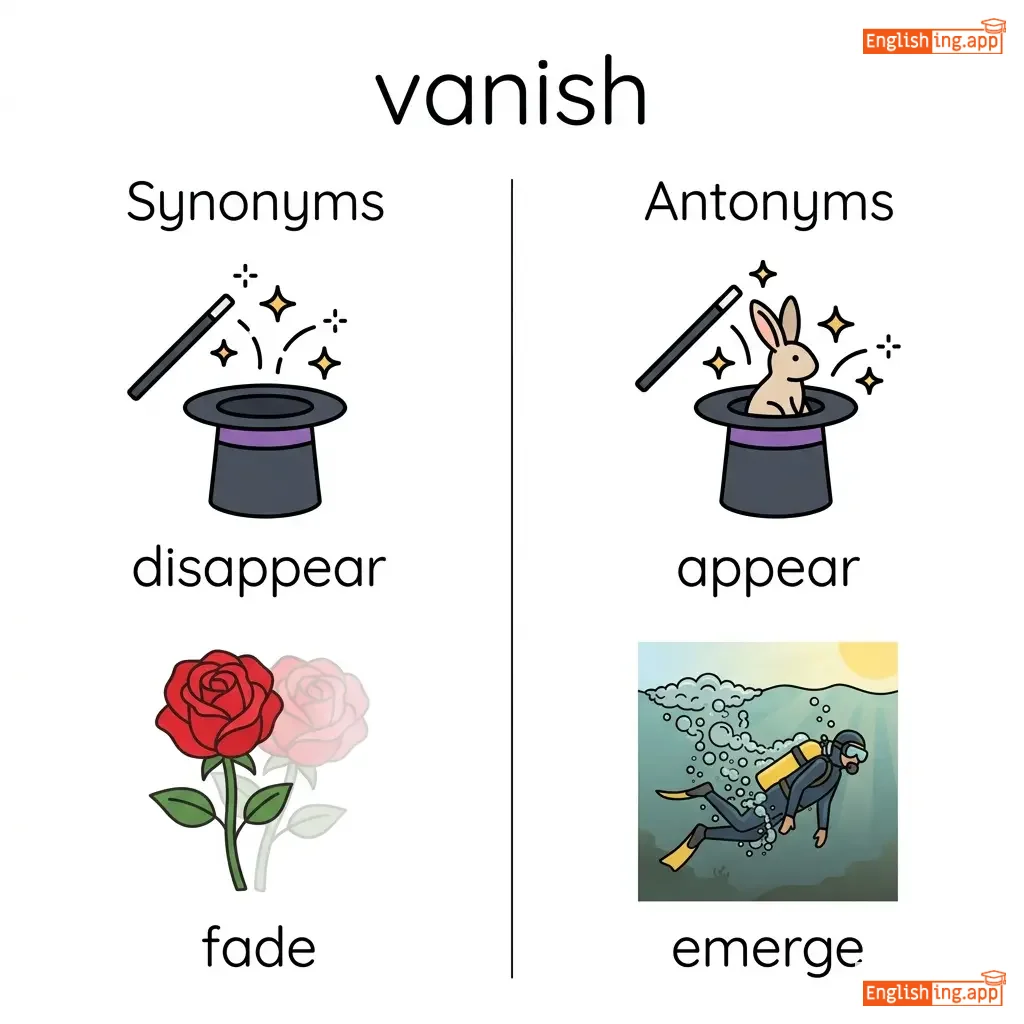
disappear, fade, evaporate, dissolve
••••••
|
appear, emerge, materialize, manifest
••••••
|
vanish completely, vanish suddenly, vanish without trace, vanishing point
••••••
|
If it 'vanish', it 'desaparece' — both mean disappear!
••••••
|
|
#732
🚫
|
/bæn/
verb
(ban)
••••••
|
|
prohibir
prohibir
••••••
|
banned
band
••••••
|
banned
band
••••••
|
bans
bans
••••••
|
banning
baning
••••••
|
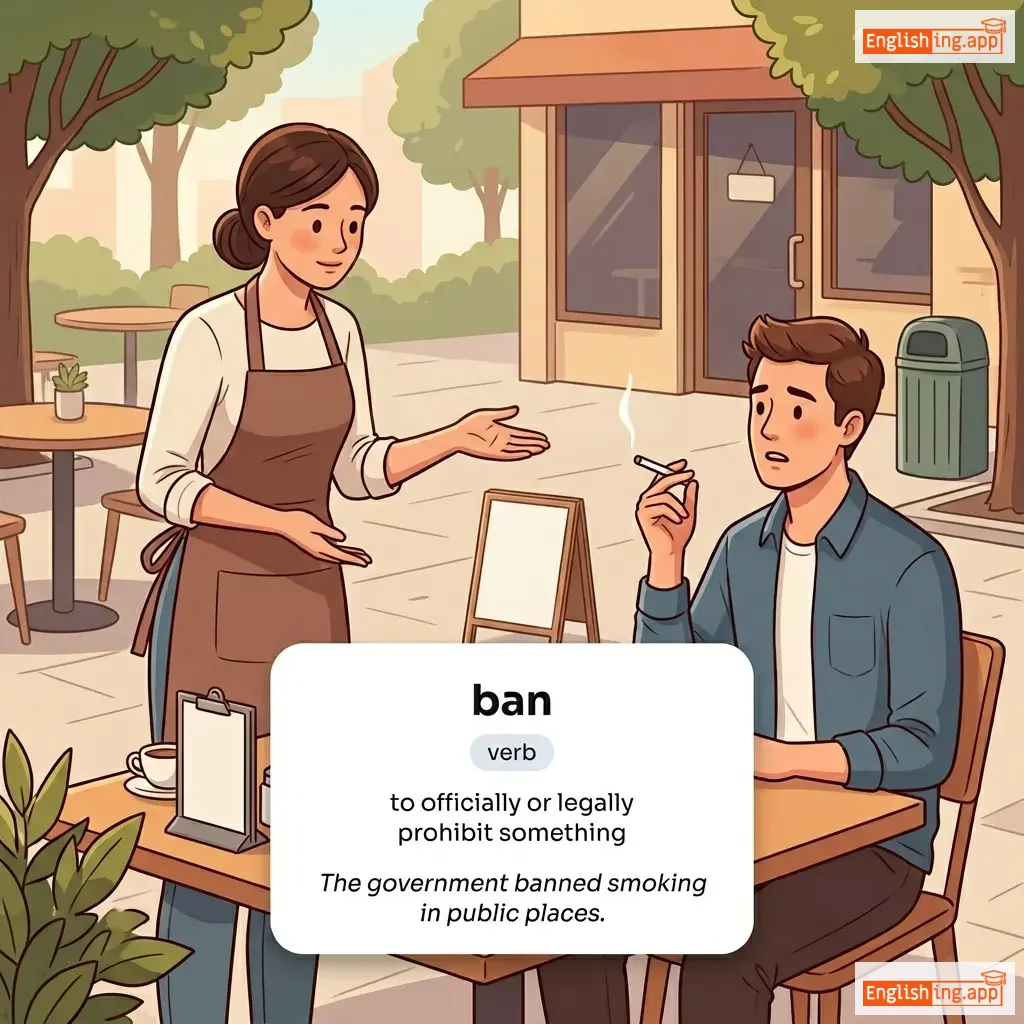
to officially forbid something; to prohibit
••••••
|
The government banned smoking in public places.
ze gavernment band smoking in pablik pleises
••••••
|
El gobierno prohibió fumar en lugares públicos.
El gobierno prohibio fumar en lugares publicos
••••••
|
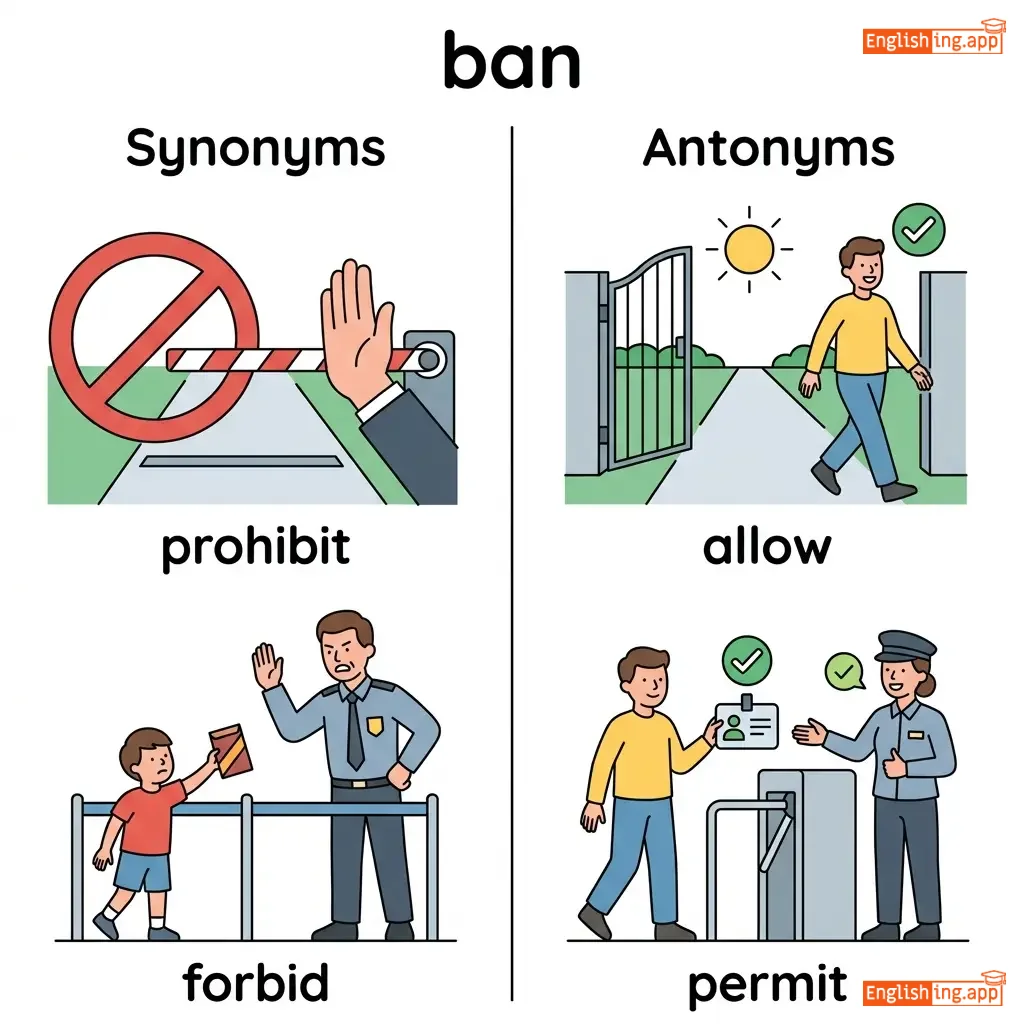
prohibit, forbid, outlaw, bar
••••••
|
allow, permit, authorize, approve
••••••
|
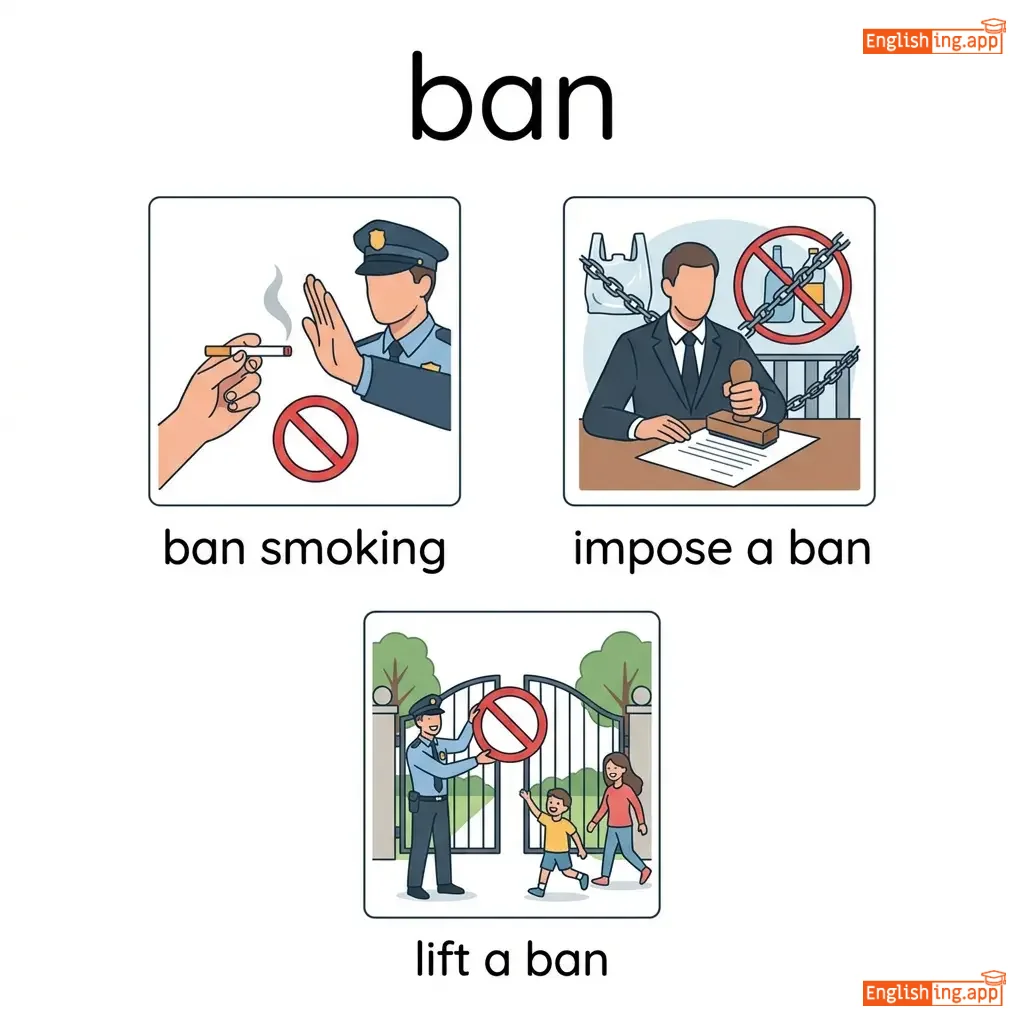
ban smoking, total ban, lift the ban, impose a ban, nationwide ban
••••••
|
‘Ban’ sounds like ‘prohibir’, both stop you from doing something.
••••••
|
|
#733
📈
|
/ɪmˈpruːv/
verb
(imprúv)
••••••
|
- •••••• |
mejorar
mejorar
••••••
|
improved
imprúvd
••••••
|
improved
imprúvd
••••••
|
improves
imprúvs
••••••
|
improving
imprúving
••••••
|
to make or become better; to enhance quality or condition
••••••
|
Regular exercise will improve your health.
régular éxersaiz uil imprúv yór jélz.
••••••
|
El ejercicio regular mejorará tu salud.
El ejercisio regular mejorara tu salud
••••••
|
enhance, better, upgrade, advance
••••••
|
worsen, deteriorate, decline, degrade
••••••
|
improve quality, improve performance, greatly improve, room for improvement
••••••
|
Improve sounds like 'mejorar' — both mean to make things better!
••••••
|
|
#734
⚖️
|
/ɪmˈpoʊz/
verb
(impoús)
••••••
|
|
imponer
imponer
••••••
|
imposed
impoúst
••••••
|
imposed
impoúst
••••••
|
imposes
impoúzes
••••••
|
imposing
impoúsing
••••••
|
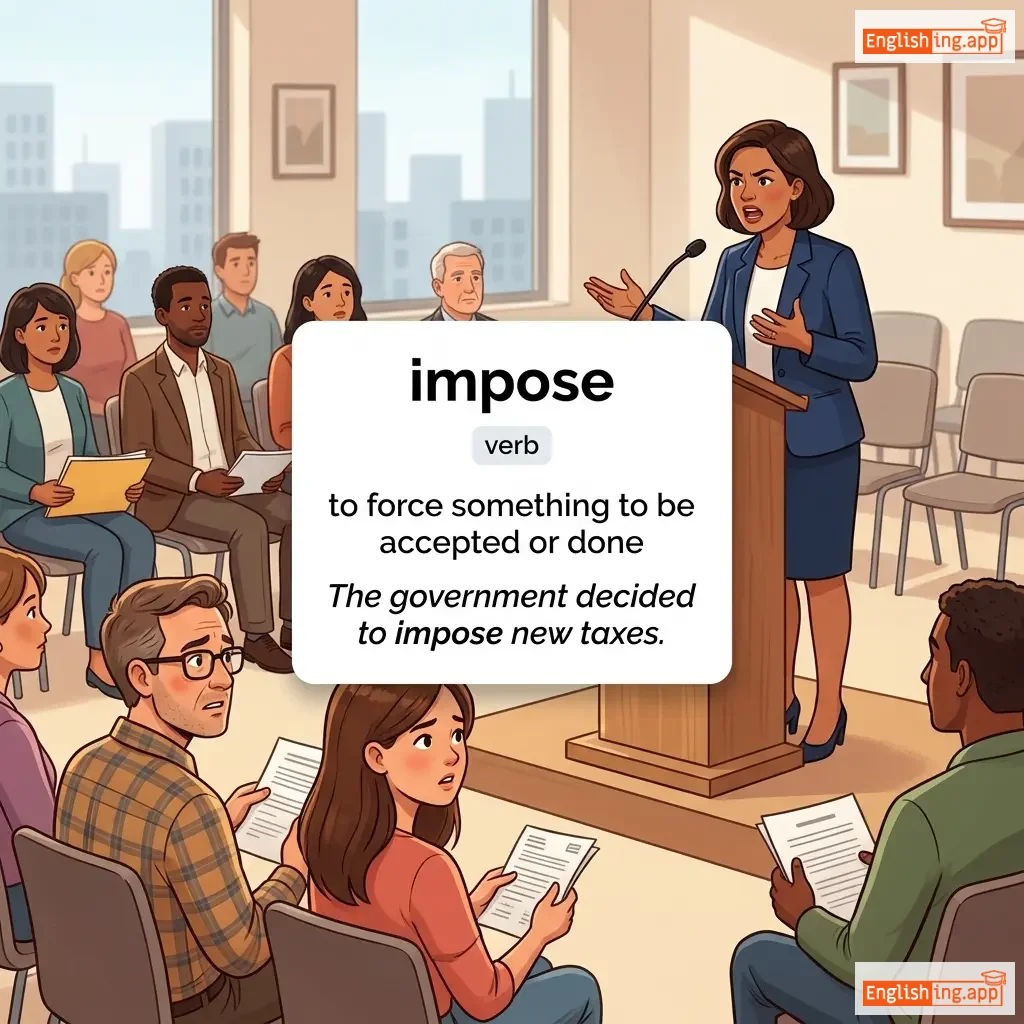
to force someone to accept something; to establish or apply by authority
••••••
|
The government imposed new taxes on luxury goods.
De govérnment impoúst niu táxes on lúxuri gúds.
••••••
|
El gobierno impuso nuevos impuestos sobre los artículos de lujo.
el gobierno impuso nuevos impuestos sobre los articulos de lujo
••••••
|
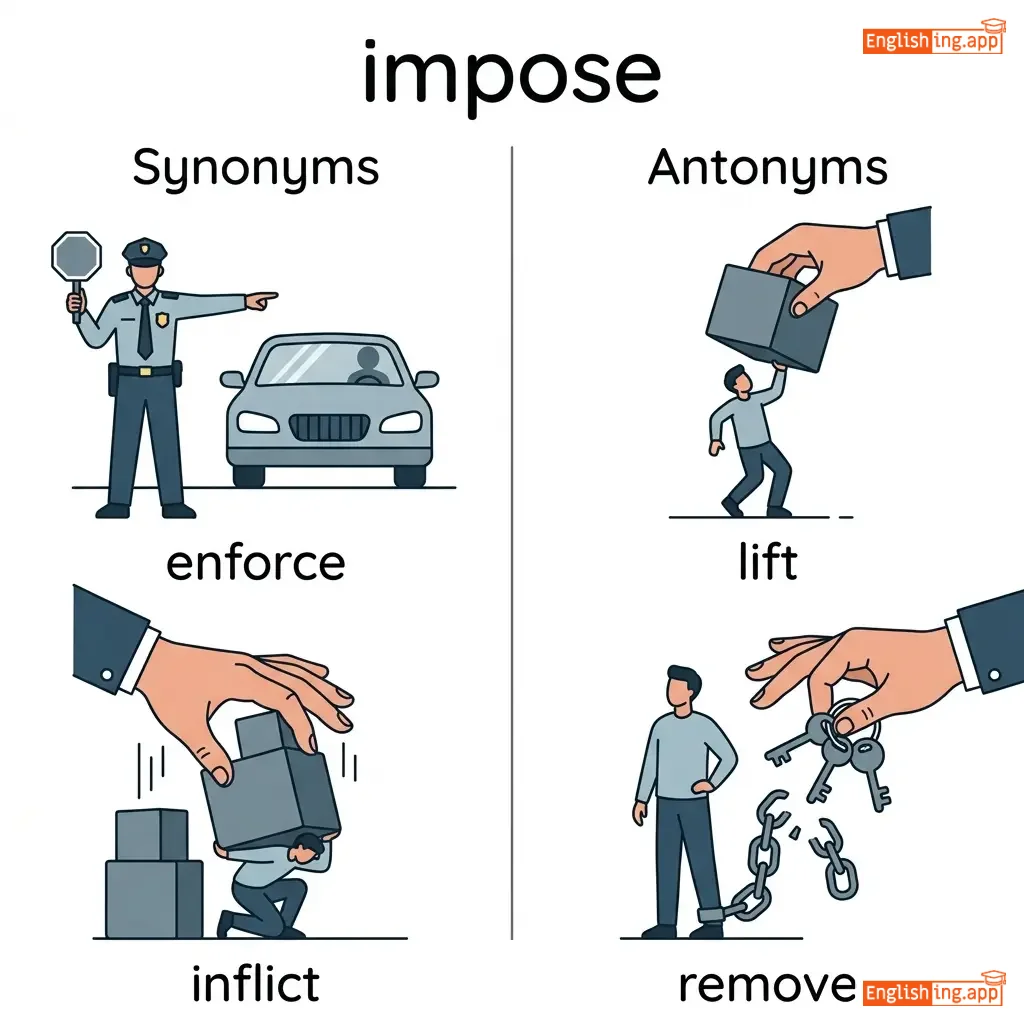
enforce, establish, inflict, apply
••••••
|
remove, lift, withdraw, abolish
••••••
|
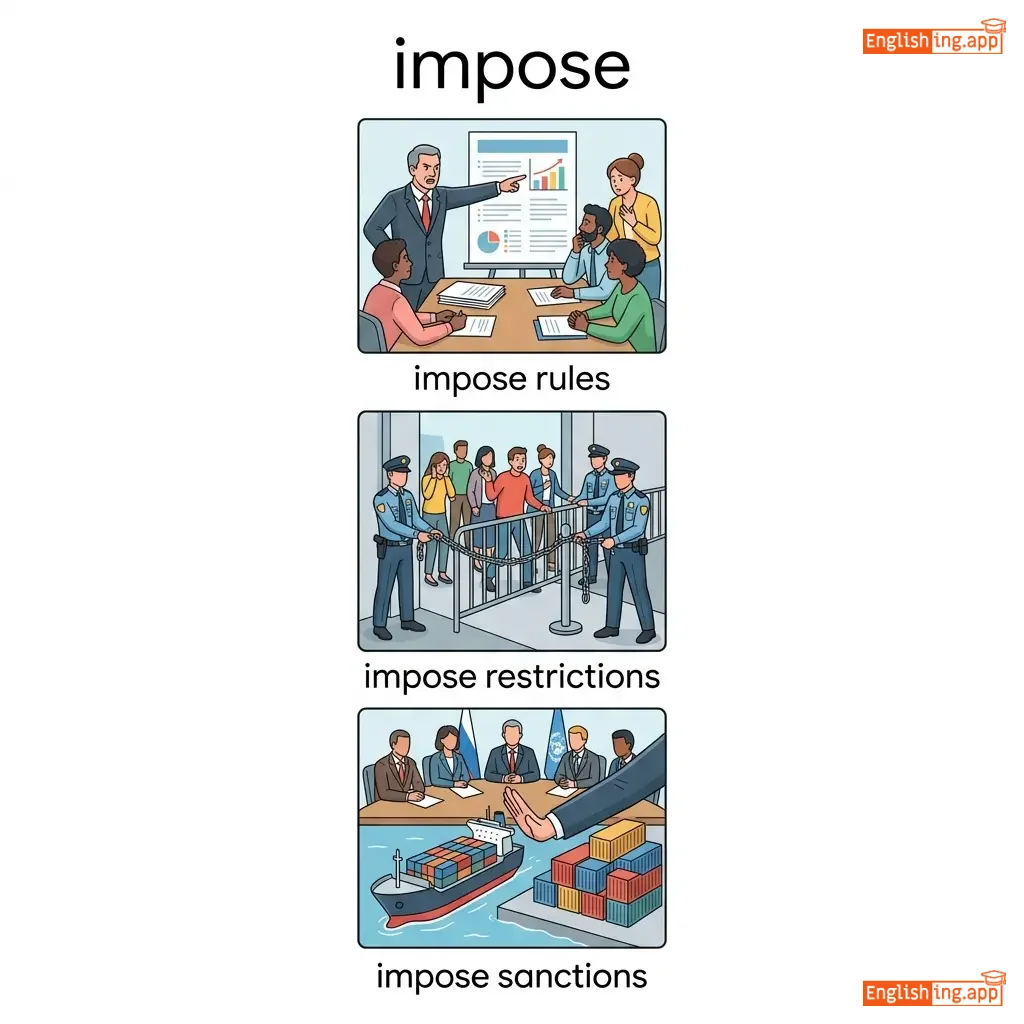
impose restrictions, impose sanctions, impose a fine, impose on someone
••••••
|
To impose is like 'imponer' in Spanish — both start with 'impo' and mean to enforce.
••••••
|
|
#735
⬅️
|
/prɪˈsiːd/
verb
(prisid)
••••••
|
|
preceder
preceder
••••••
|
preceded
presidido
••••••
|
preceded
presidido
••••••
|
precedes
preside
••••••
|
preceding
presidiendo
••••••
|
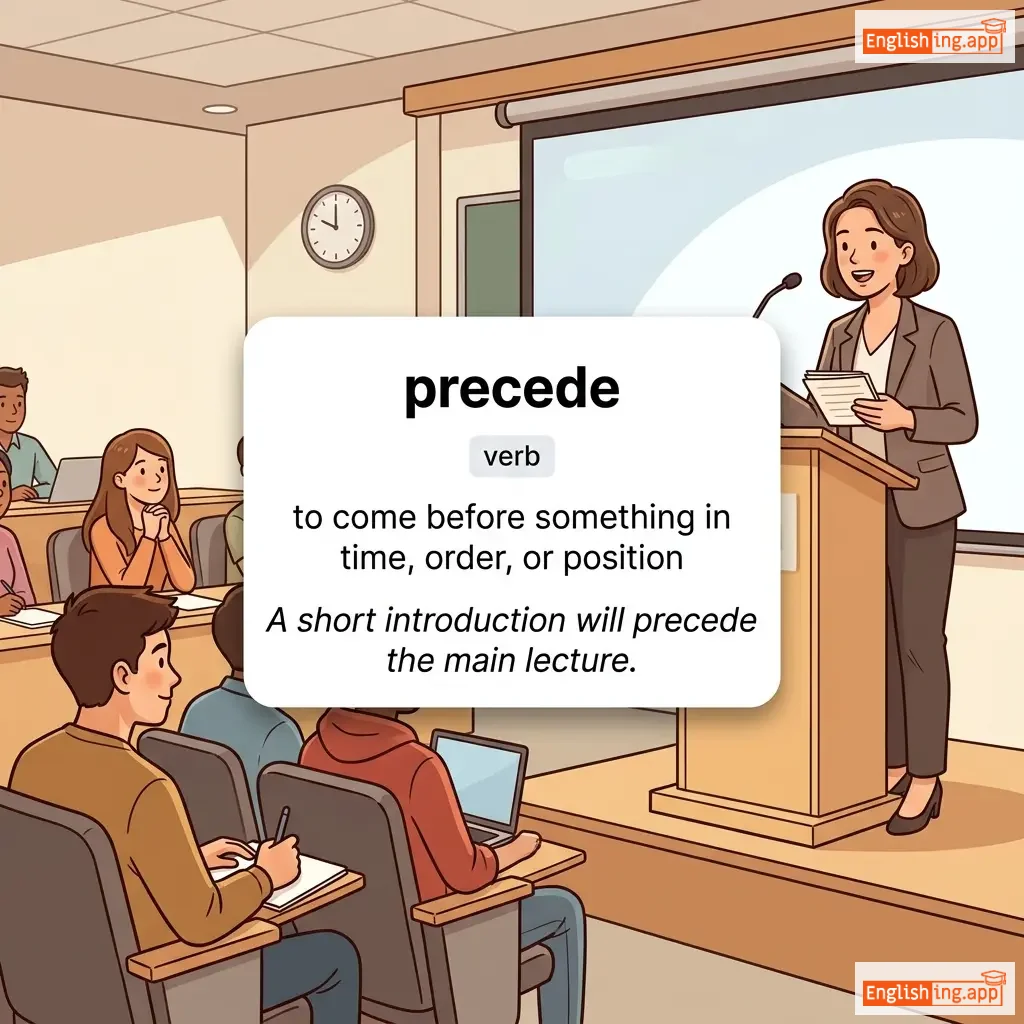
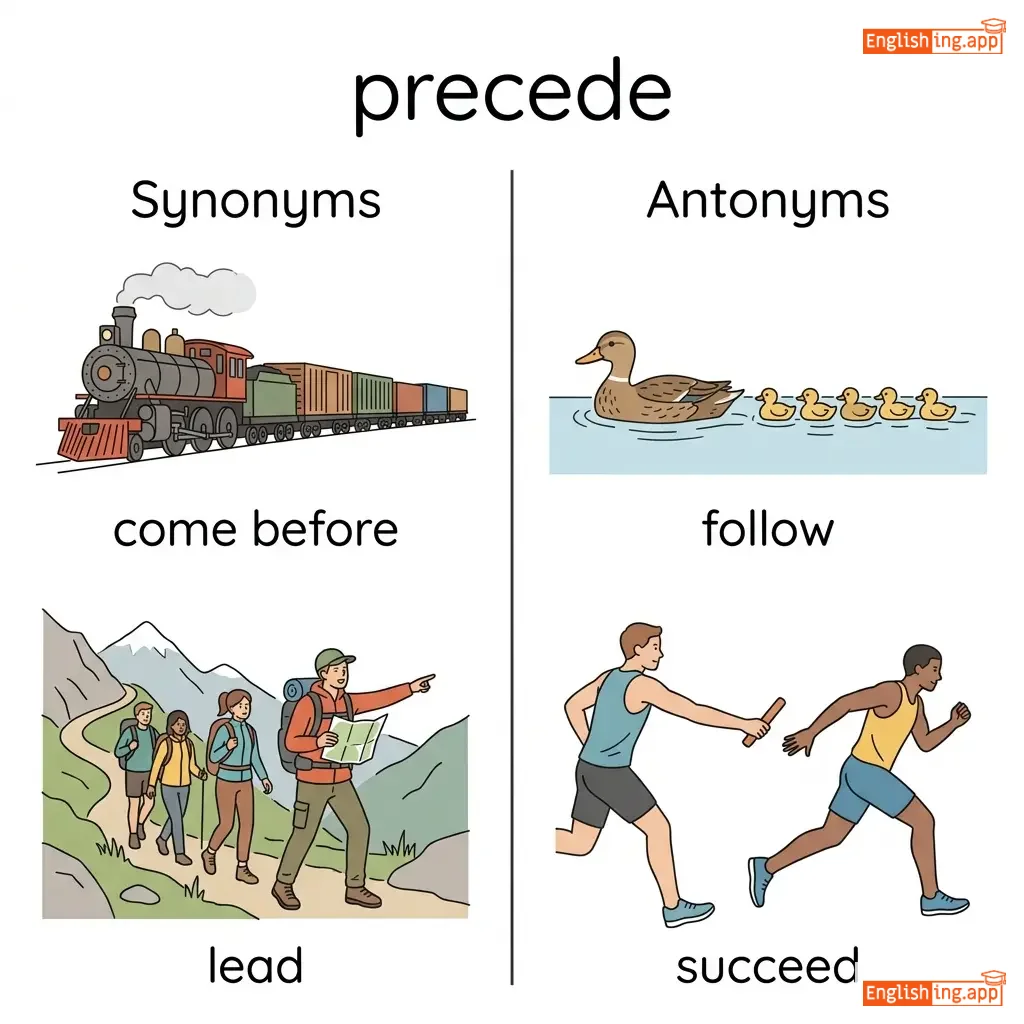
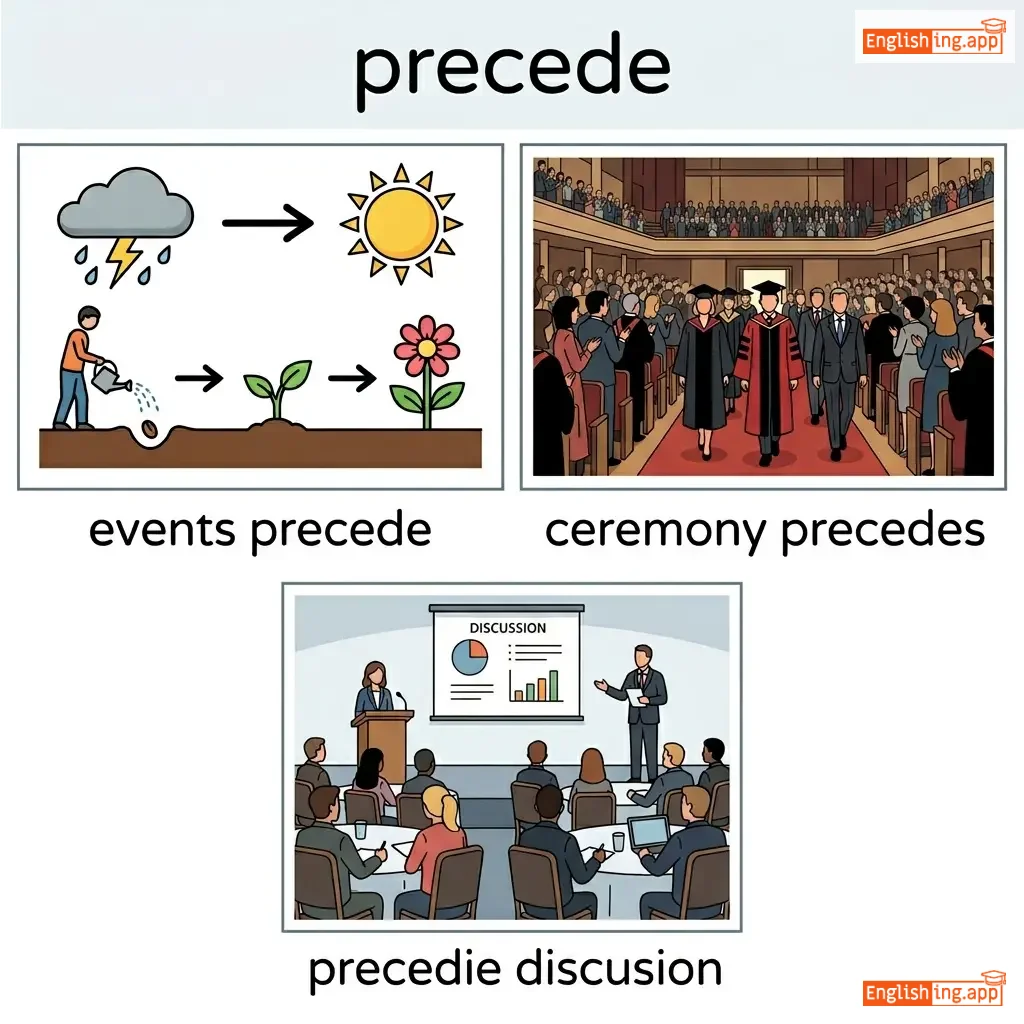
to come before something in time, order, or position
••••••
|
A brief introduction precedes each chapter.
Una breve introducción precede cada capítulo.
••••••
|
Una breve introducción precede cada capítulo.
una breve introduccion precede cada capitulo
••••••
|
come before, lead, antecede, herald
••••••
|
follow, succeed, come after
••••••
|
precede by, immediately precede, precede in time, preceding chapter
••••••
|
No •••••• |
|
#736
🚶
|
/roʊm/
verb
(rom)
••••••
|
|
deambular
deambular
••••••
|
roamed
romd
••••••
|
roamed
romd
••••••
|
roams
roms
••••••
|
roaming
roming
••••••
|
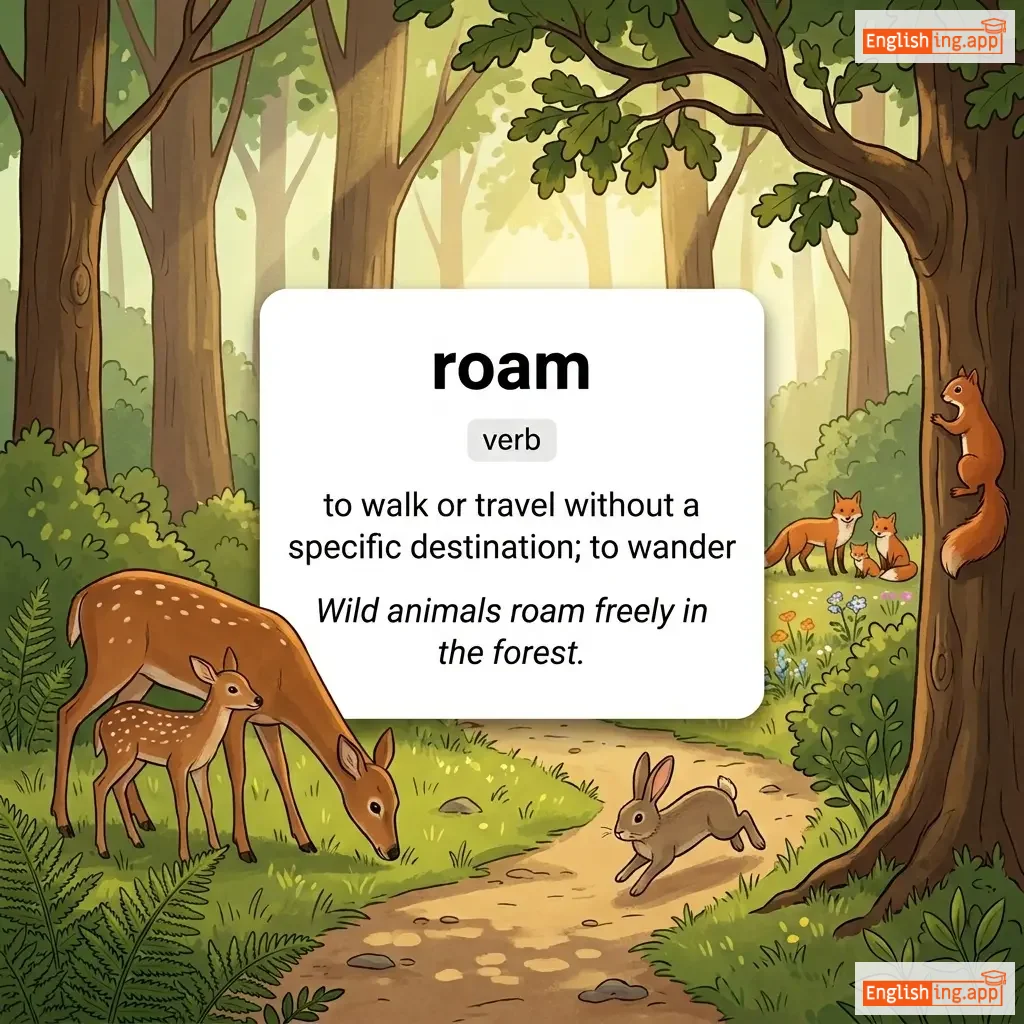
to walk or travel without a specific destination; to wander
••••••
|
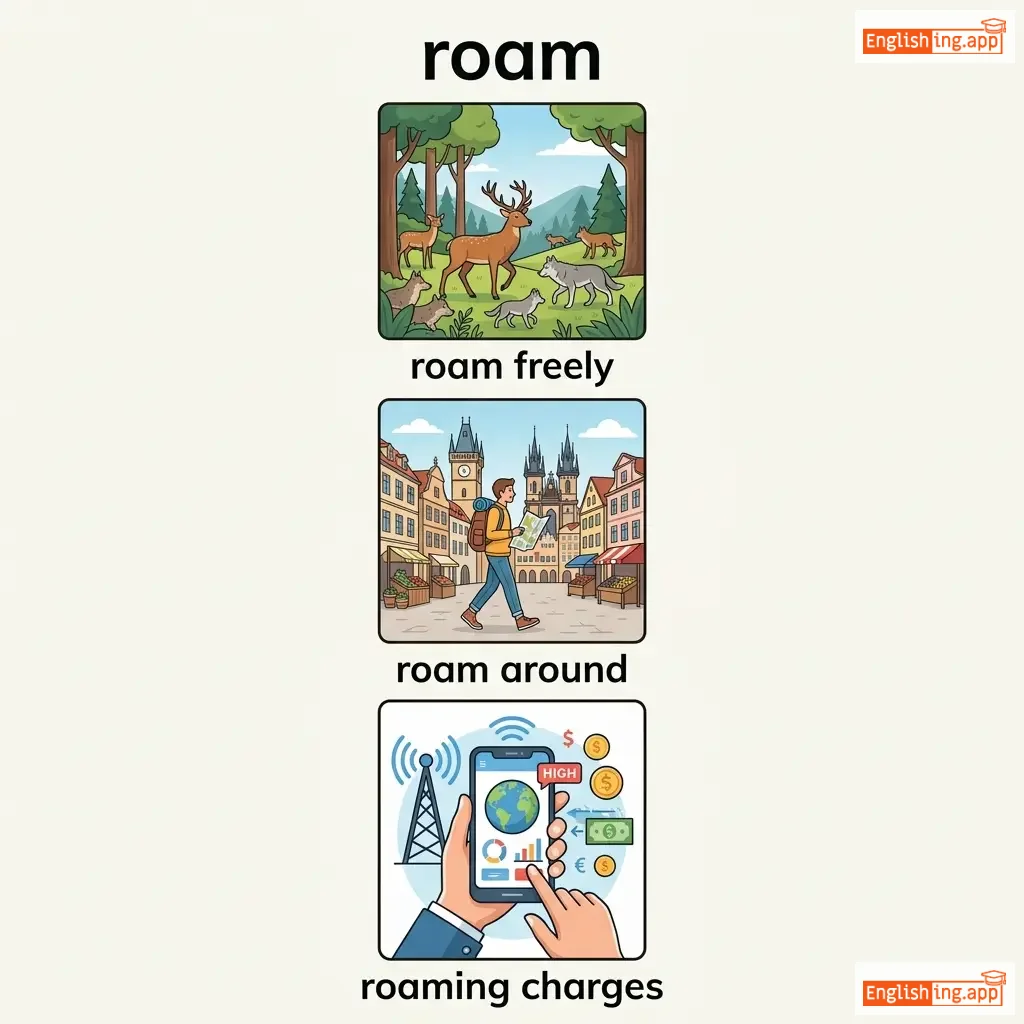
Wild animals roam freely in the forest.
Los animales salvajes deambulan libremente en el bosque.
••••••
|
Los animales salvajes deambulan libremente en el bosque.
Los animales salvajes deambulan libremente en el bosque.
••••••
|
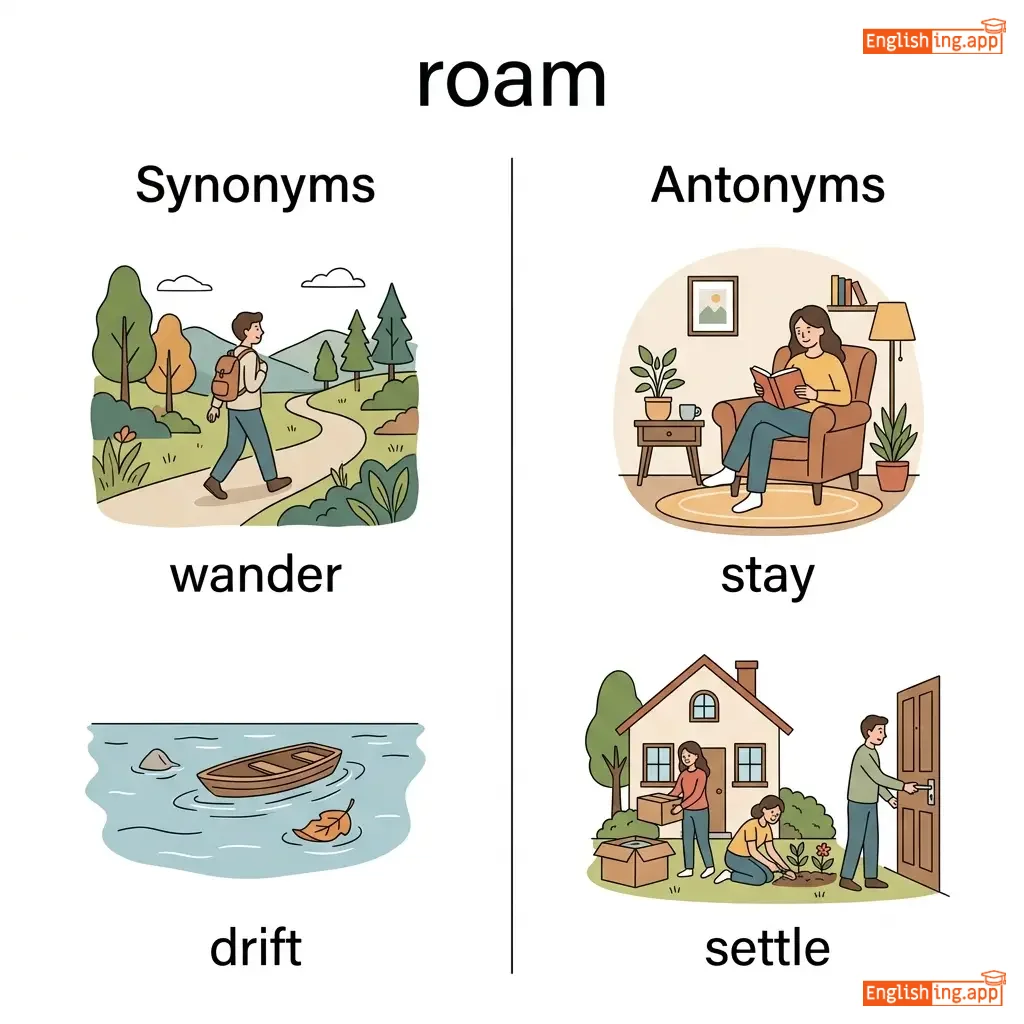
wander, drift, ramble, stroll
••••••
|
stay, settle, remain, anchor
••••••
|
roam freely, roam around, roaming charges, wild animals roam
••••••
|
Deambular en el bosque como un 'roam'!
••••••
|
|
#737
🙏
|
/bɪˈliːv/
verb
(biliv)
••••••
|
|
creer
creer
••••••
|
believed
bilivd
••••••
|
believed
bilivd
••••••
|
believes
bilivs
••••••
|
believing
biliving
••••••
|
to think that something is true; to have faith in
••••••
|
I believe in hard work and dedication.
Ay biliv in hard work and dedication.
••••••
|
Creo en el trabajo duro y la dedicación.
Creo en el trabajo duro y la dedicacion
••••••
|
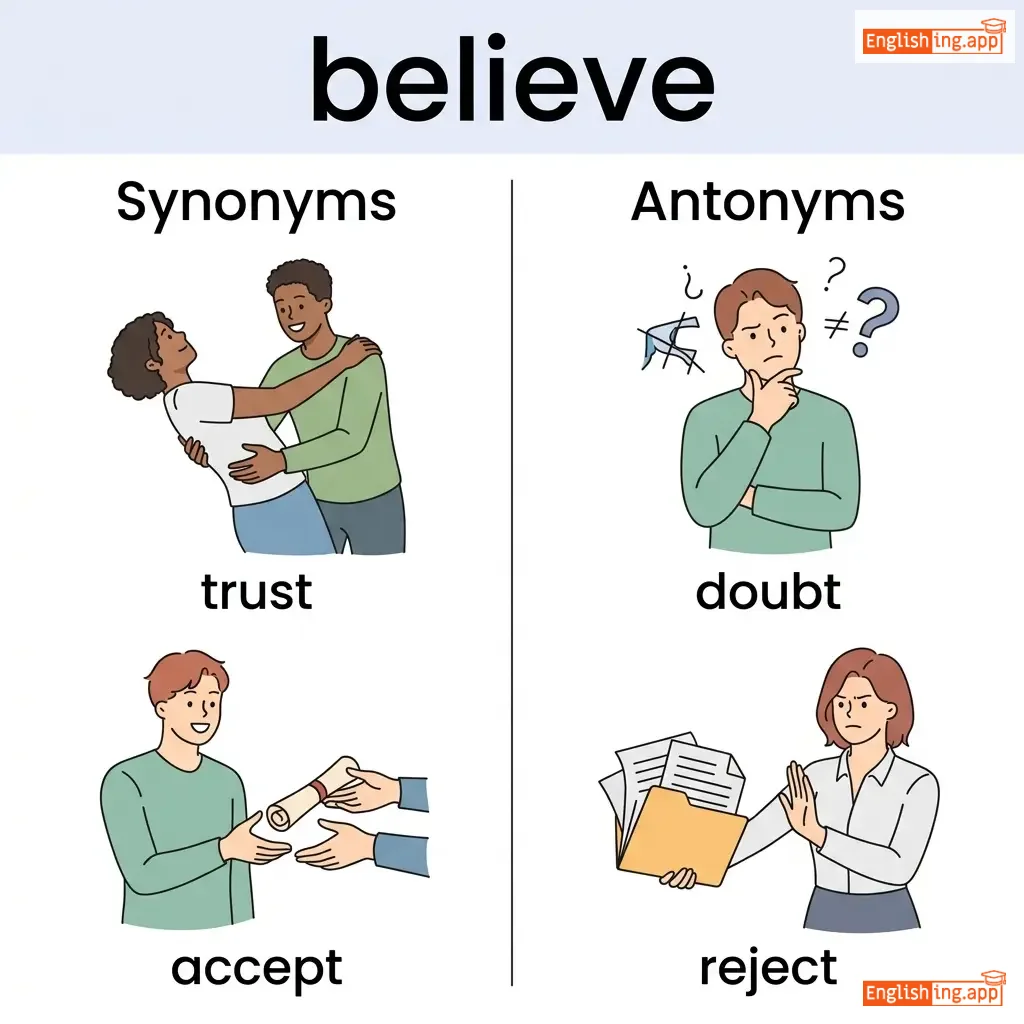
trust, have faith, accept, think
••••••
|
doubt, disbelieve, mistrust, question
••••••
|
believe in, firmly believe, make believe, hard to believe, I believe
••••••
|
Creer (es) = to believe — piensa 'creo' cuando quieras say 'I believe'
••••••
|
|
#738
🏠
|
/liːs/
verb
(līs)
••••••
|
|
arrendar
arrendar
••••••
|
leased
līst
••••••
|
leased
līst
••••••
|
leases
līsez
••••••
|
leasing
līsīng
••••••
|
to rent property or equipment for a specified period
••••••
|
They decided to lease a car for the vacation.
Ellos decidieron arrendar un coche para las vacaciones.
••••••
|
Ellos decidieron arrendar un coche para las vacaciones.
Ellos decidieron arrendar un coche para las vacaciones.
••••••
|
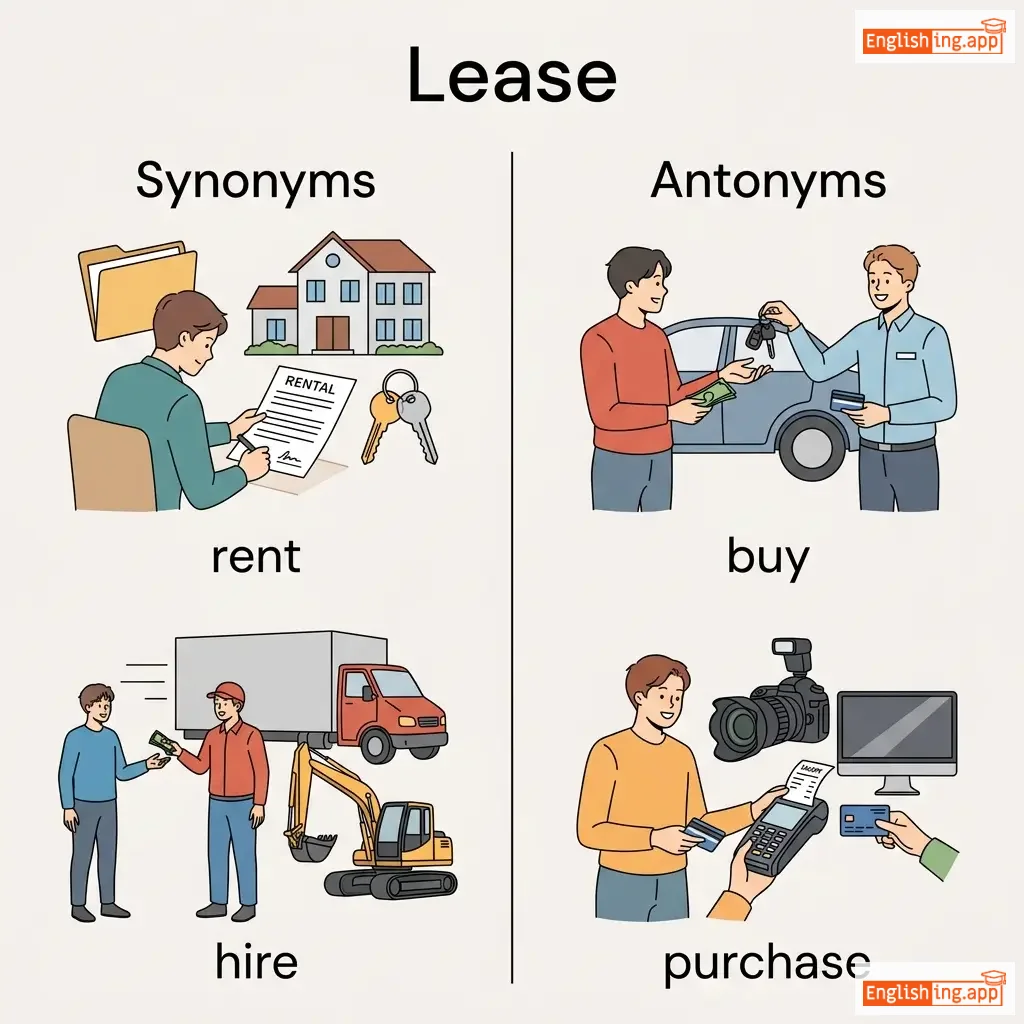
rent, hire, charter
••••••
|
buy, purchase, own
••••••
|
lease agreement, car lease, long-term lease, lease payment, lease out
••••••
|
En español, 'arrendar' es alquilar, que es como 'lease' en inglés.
••••••
|
|
#739
🏛️
|
/ˈɡʌvərn/
verb
(góvern)
••••••
|
|
gobernar
gobernar
••••••
|
governed
góvernd
••••••
|
governed
góvernd
••••••
|
governs
góverns
••••••
|
governing
góverning
••••••
|
to control and direct the public policy and affairs of a state, organization, or people
••••••
|
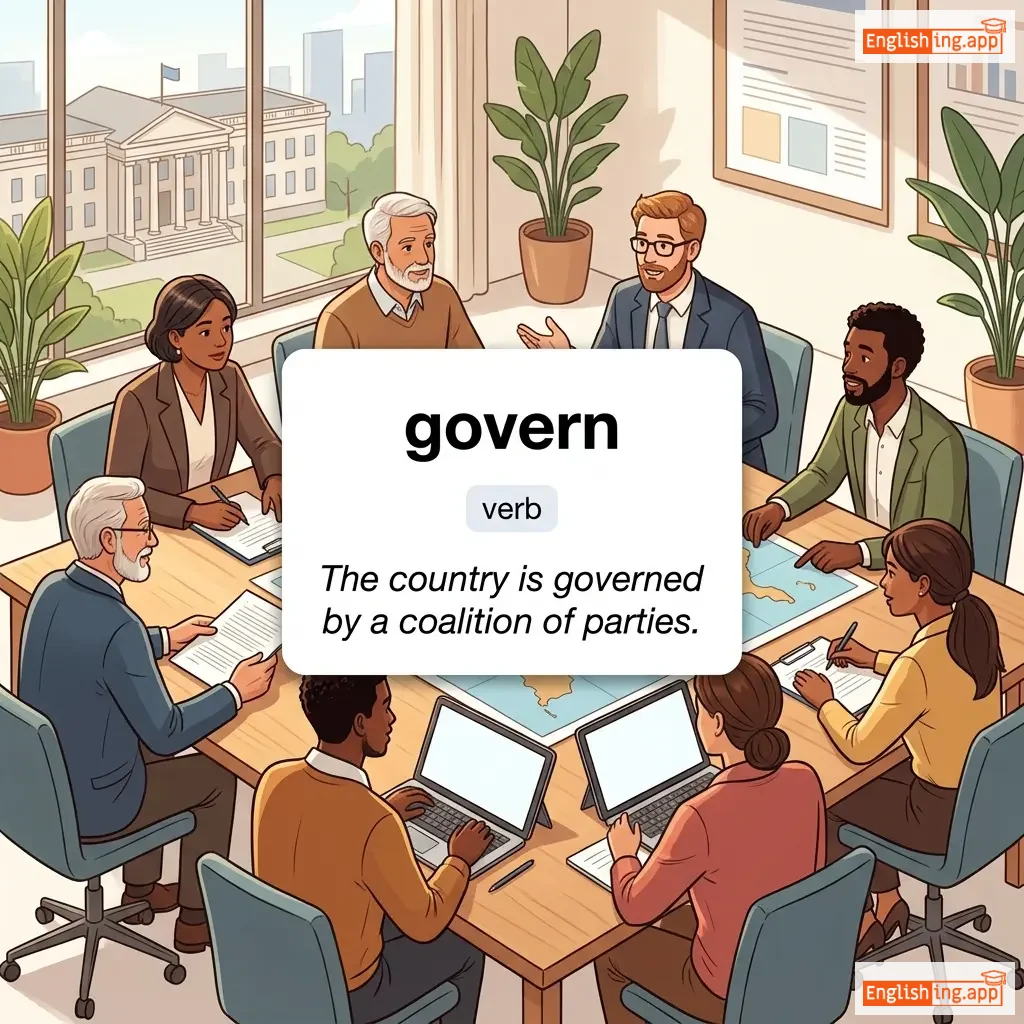
The president governs the country wisely.
El président góverns el cóuntri waisli.
••••••
|
El presidente gobierna el país sabiamente.
el presidente gobierna el pais sabiamente
••••••
|
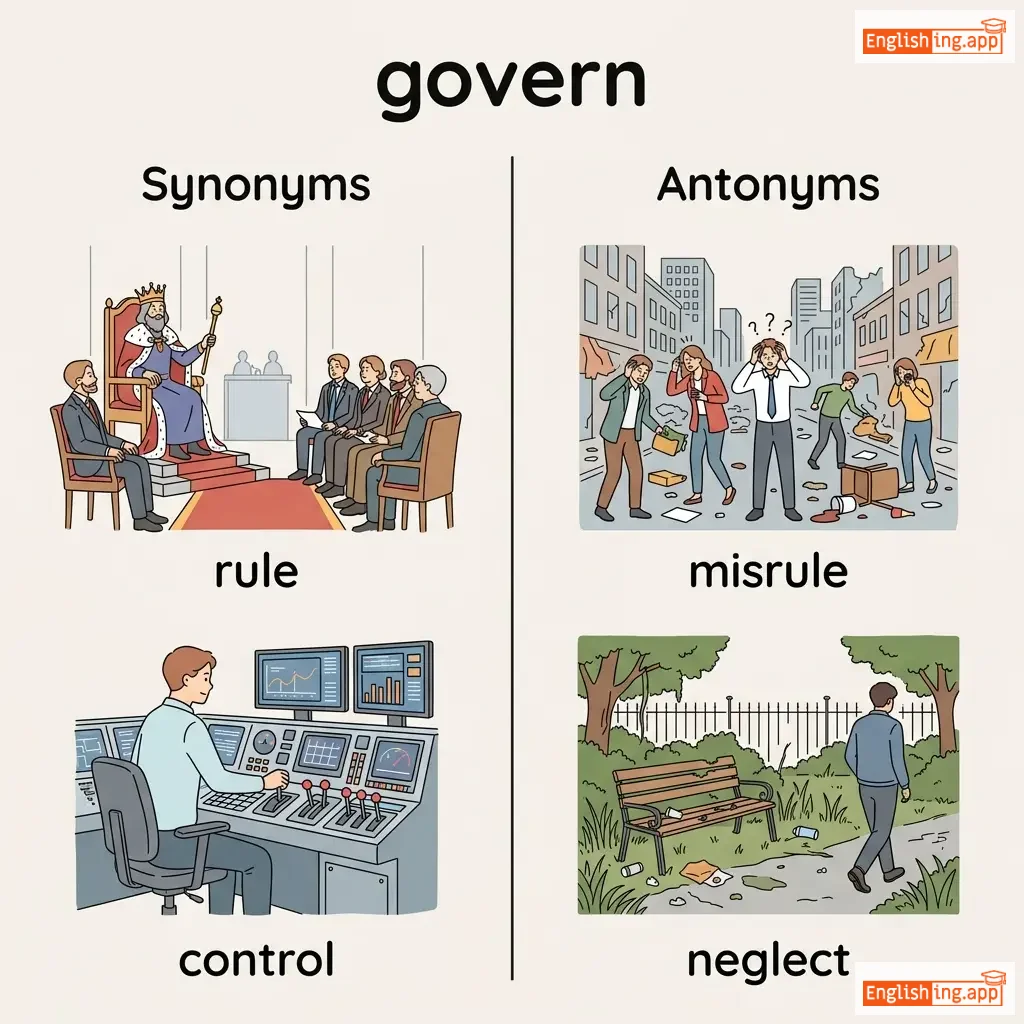
rule, control, manage, lead
••••••
|
obey, follow, submit
••••••
|
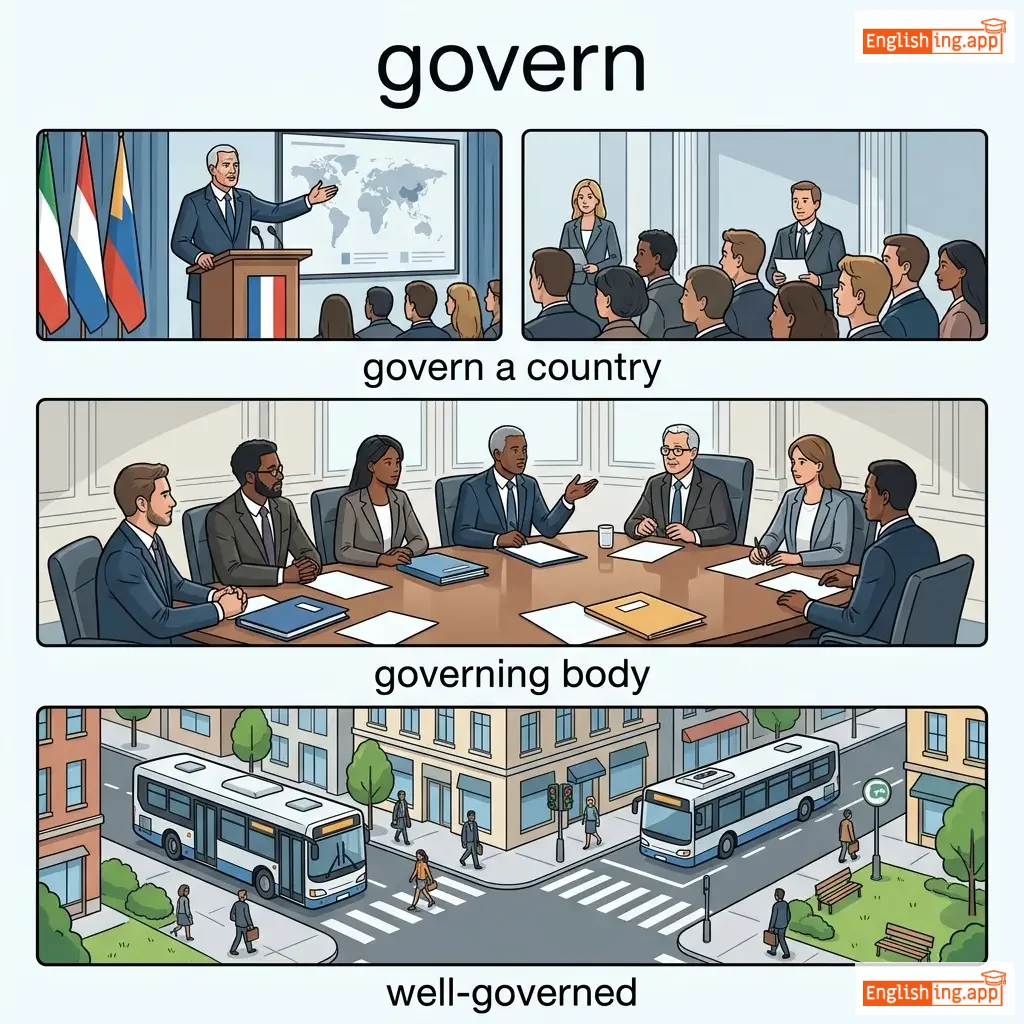
govern wisely, govern effectively, self-govern, governing body, good governance
••••••
|
Govern sounds like 'gobernar'—the act of ruling or managing.
••••••
|
|
#740
🤔
|
/daʊt/
verb
(daut)
••••••
|
|
dudar
dudar
••••••
|
doubted
dauted
••••••
|
doubted
dauted
••••••
|
doubts
dauts
••••••
|
doubting
dauting
••••••
|
to feel uncertain about something; to question
••••••
|
I doubt he will come to the party.
ai daut hi wil kam tu de parti
••••••
|
Dudo que él venga a la fiesta.
Dudo ke el venga a la fiesta
••••••
|
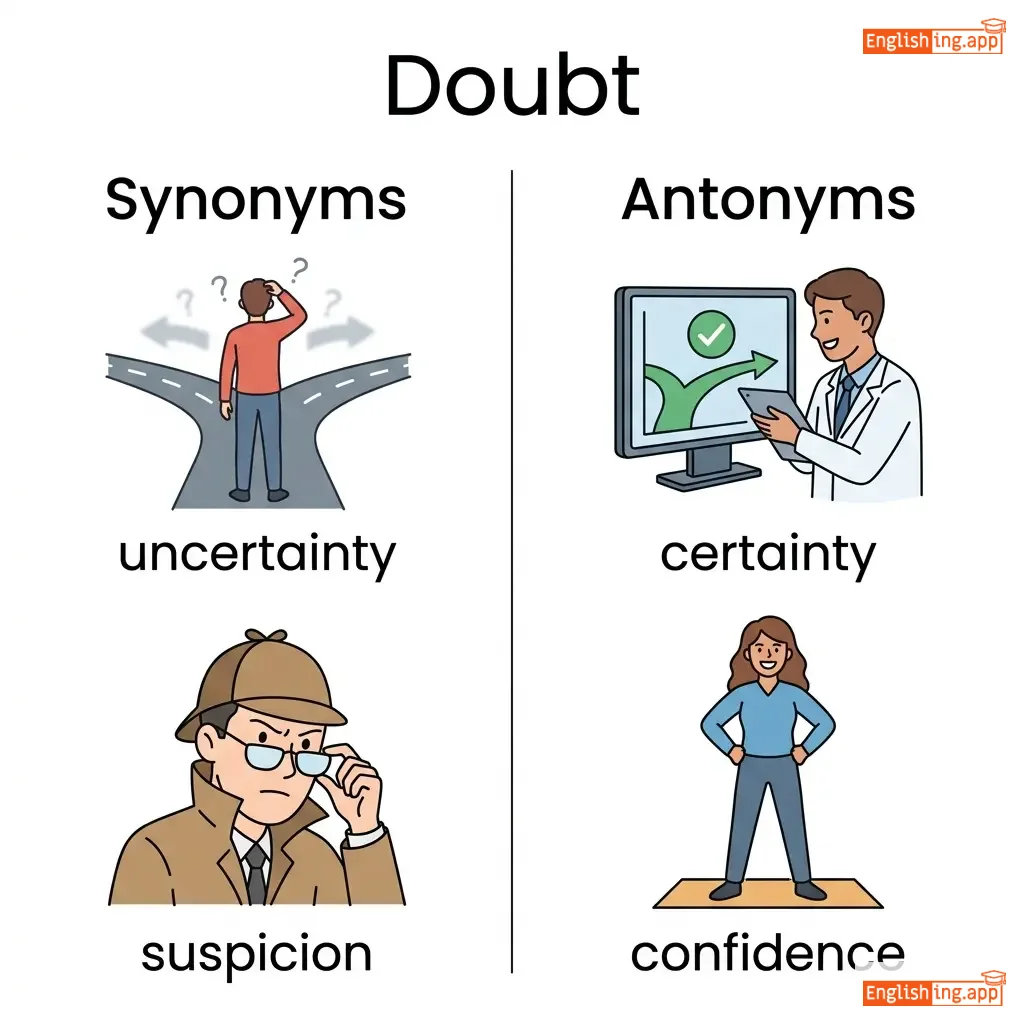
question, suspect, mistrust, hesitate
••••••
|
trust, believe, accept, certainty
••••••
|
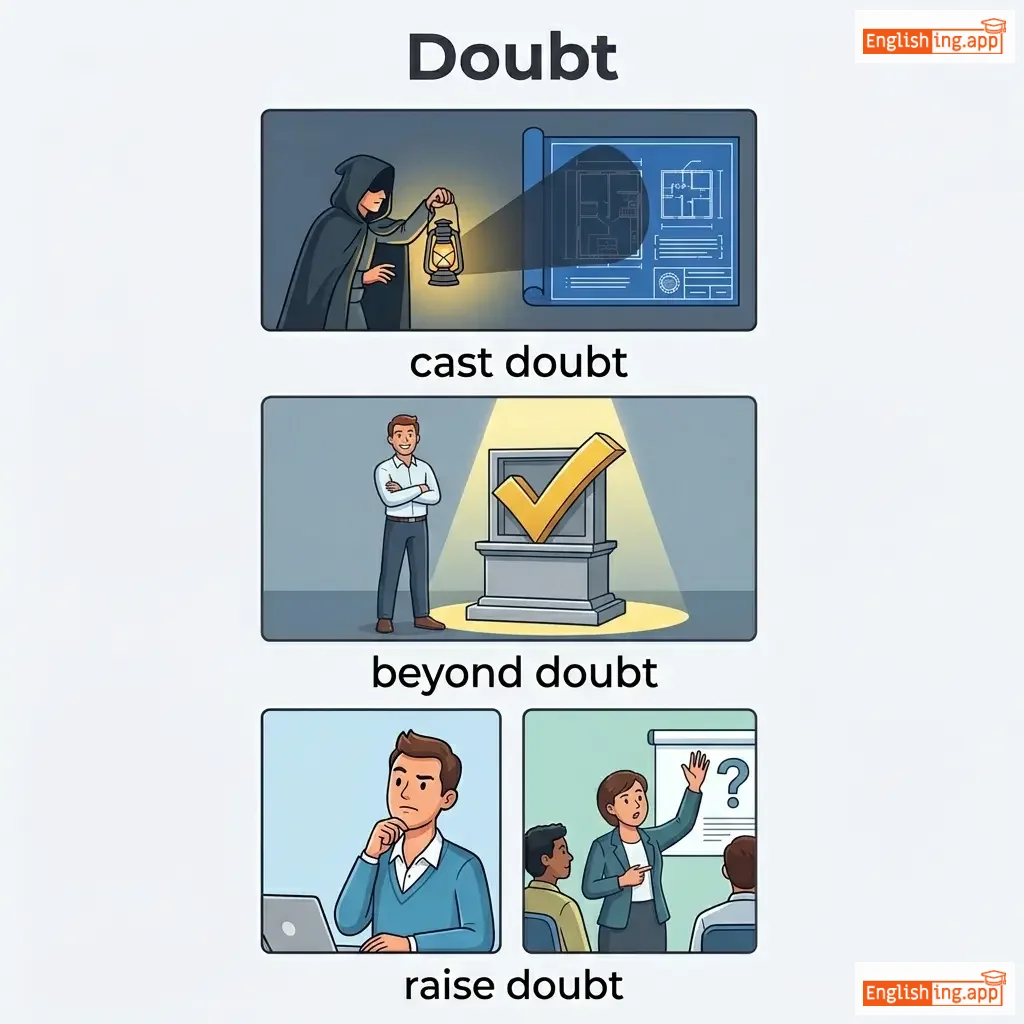
cast doubt, serious doubt, reasonable doubt, without doubt, doubt someone's ability
••••••
|
When you 'dudar', you doubt — both start with 'du'.
••••••
|
|
#741
❓
|
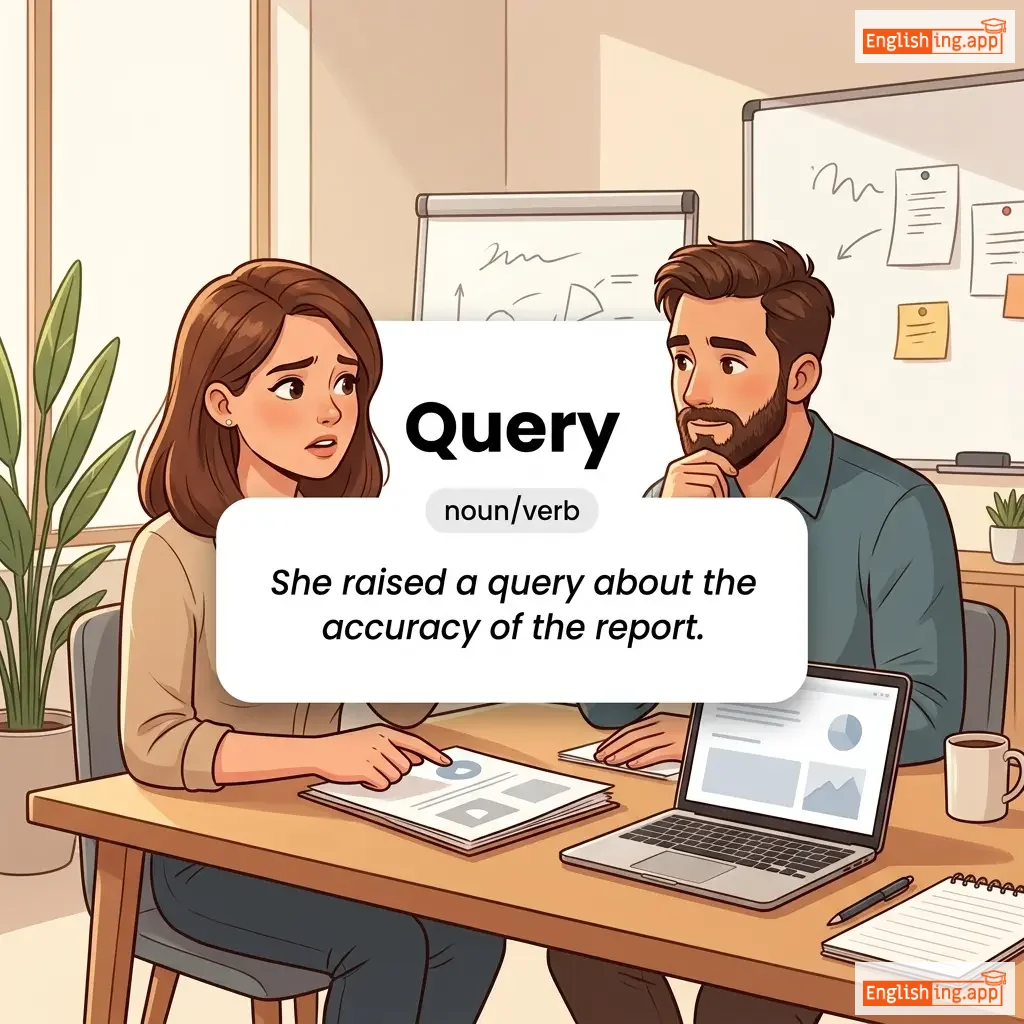
/ˈkwɪəri/
verb
(cuéri)
••••••
|
|
preguntar
preguntar
••••••
|
queried
cuérid
••••••
|
queried
cuérid
••••••
|
queries
cuéris
••••••
|
querying
cuérin
••••••
|
to ask a question; to express doubt about something
••••••
|
The student decided to query the professor about the assignment.
El estudiante decidió cuéri al profesor sobre la tarea.
••••••
|
El estudiante decidió preguntar al profesor sobre la tarea.
El estudiante decidio preguntar al profesor sobre la tarea.
••••••
|
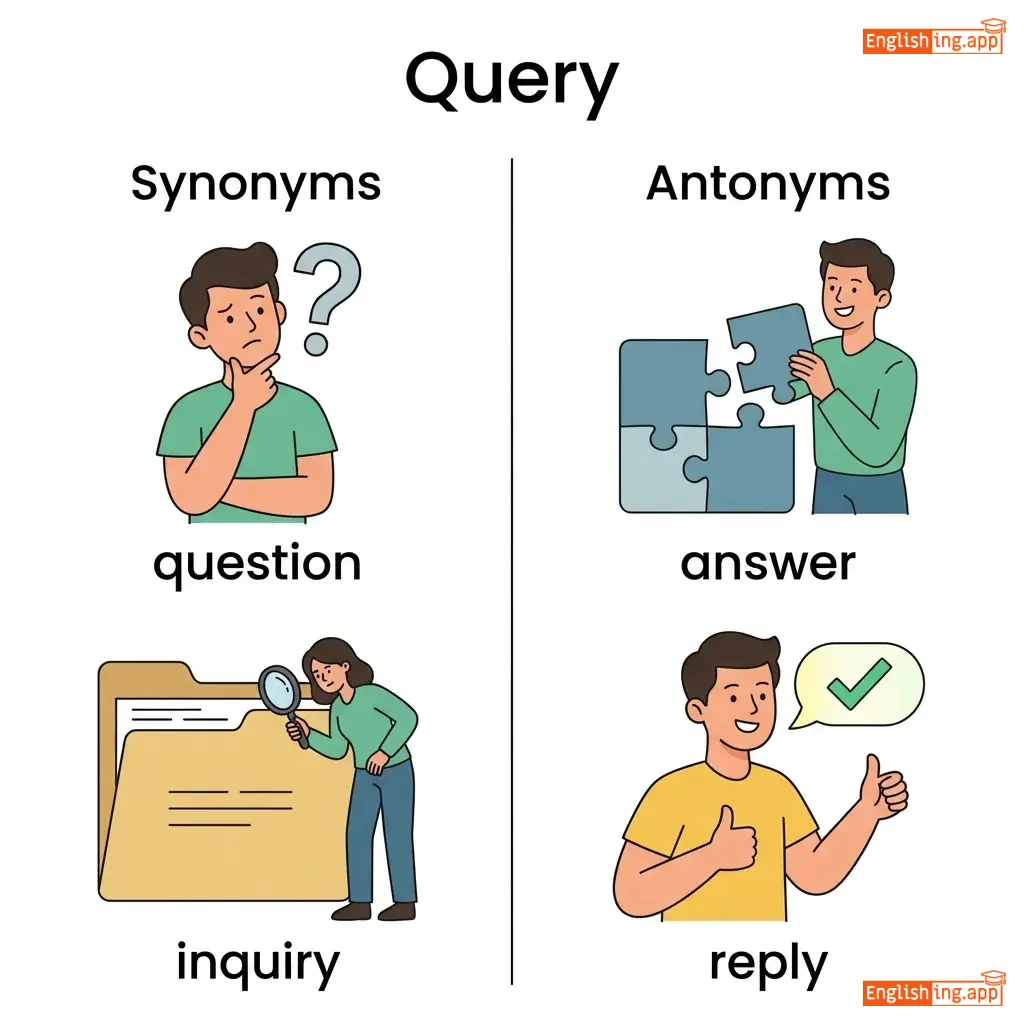
question, ask, inquire, challenge
••••••
|
answer, accept, confirm
••••••
|
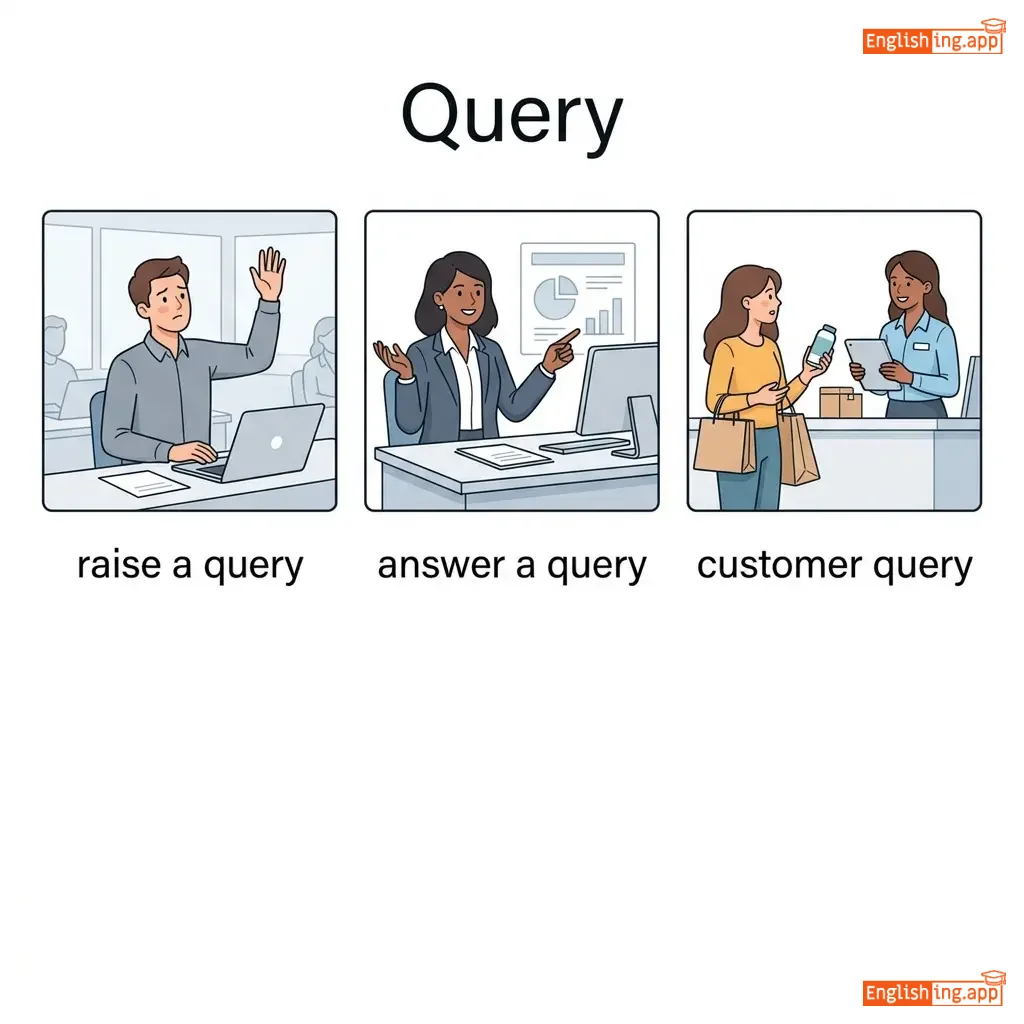
database query, search query, query results, SQL query, query language
••••••
|
Query and ‘preguntar’ both mean to ask — imagine ‘querying’ your Spanish teacher.
••••••
|
|
#742
🤝
|
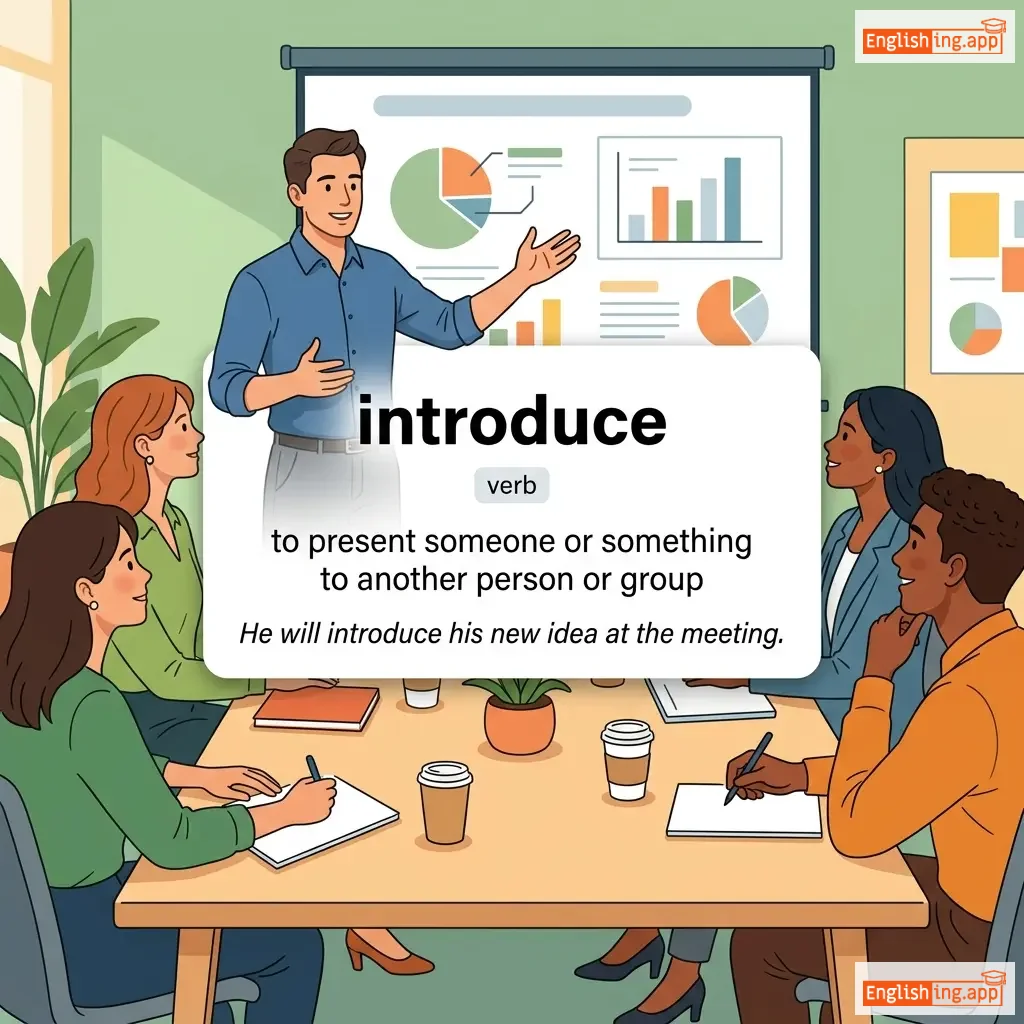
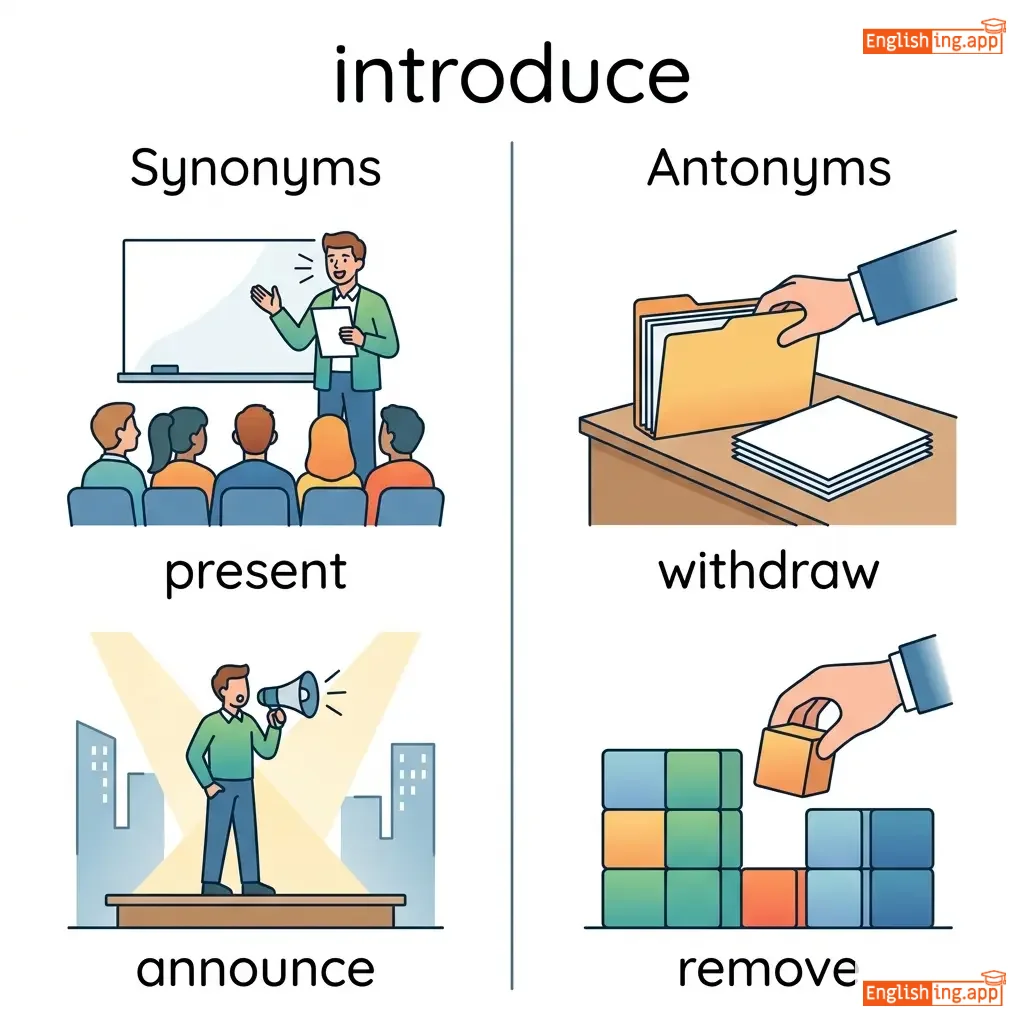
/ˌɪntrəˈduːs/
verb
(introdus)
••••••
|
|
presentar
presentar
••••••
|
introduced
intrudusd
••••••
|
introduced
intrudusd
••••••
|
introduces
intruduses
••••••
|
introducing
intrudusing
••••••
|
to present someone; to bring in for the first time
••••••
|
Let me introduce you to my friend.
let mi introdus yu tu mai frend
••••••
|
Déjame presentarte a mi amigo.
Dejame presentarte a mi amigo
••••••
|
present, acquaint, establish, initiate
••••••
|
conclude, end, remove, withdraw
••••••
|
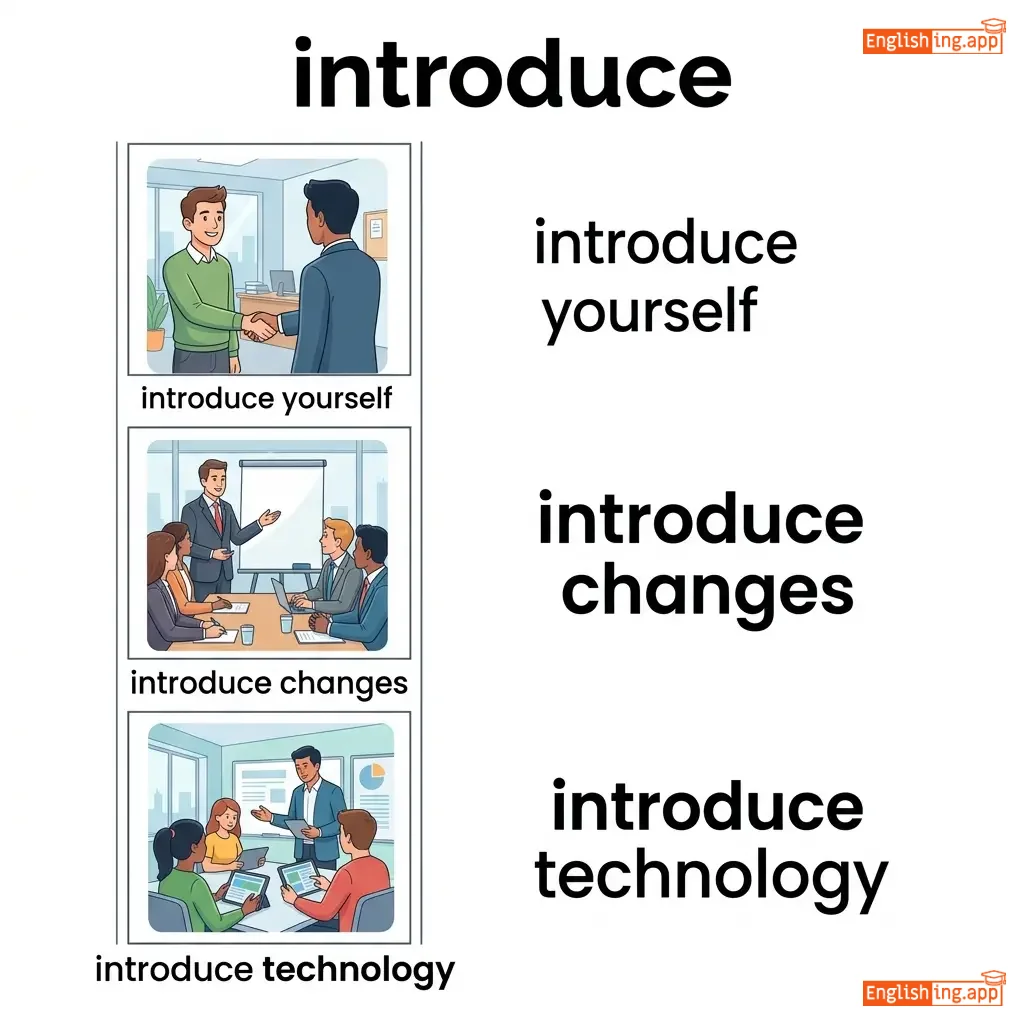
introduce yourself, introduce someone, newly introduced, introduction letter
••••••
|
Introduce sounds like introducir, meaning to present or bring in.
••••••
|
|
#743
🚀
|
/ɪˈnɪʃieɪt/
verb
(inisieit)
••••••
|
|
iniciar
inisiar
••••••
|
initiated
inisieited
••••••
|
initiated
inisieited
••••••
|
initiates
inisieits
••••••
|
initiating
inisieiting
••••••
|
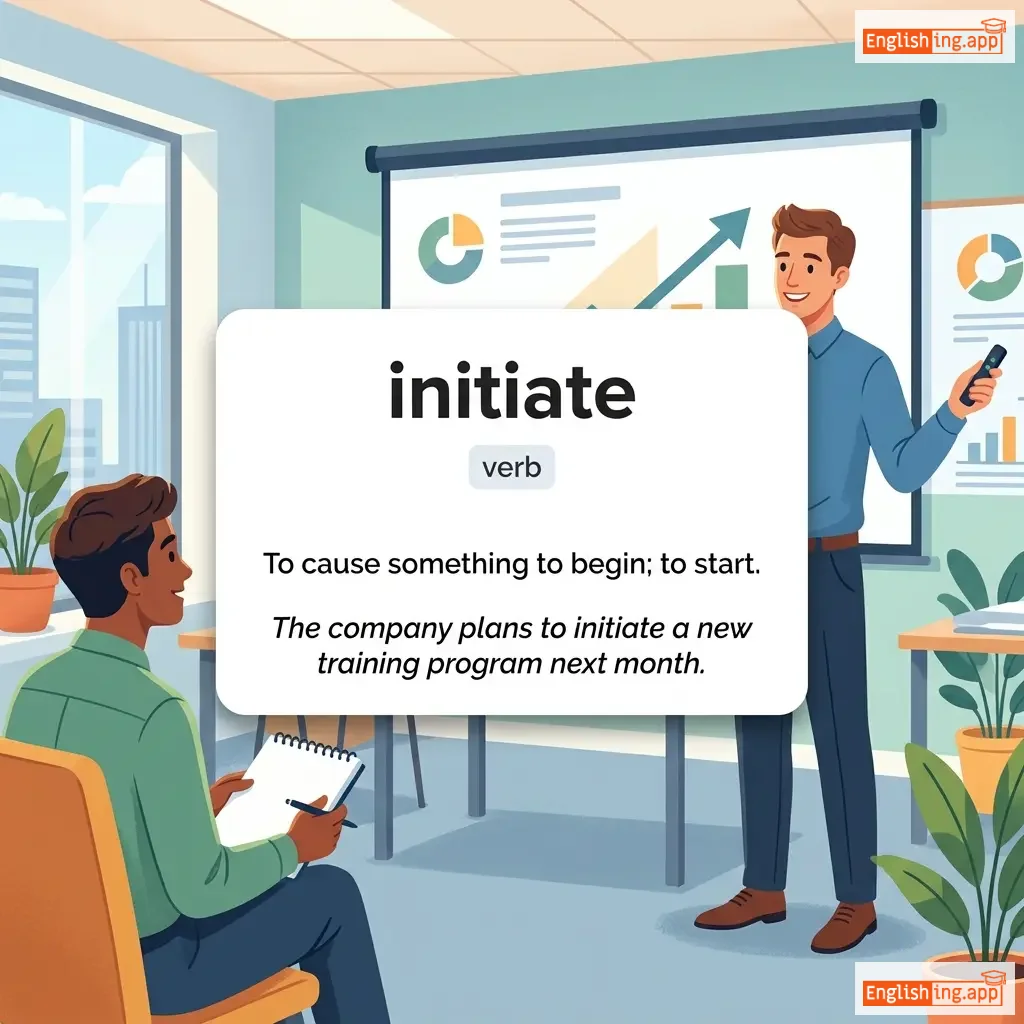
to begin or start; to introduce someone to a new activity
••••••
|
The company will initiate a new training program.
la compania wil inisieit a niu trein ing program
••••••
|
La empresa iniciará un nuevo programa de capacitación.
la empresa iniciara un nuevo programa de capacitacion
••••••
|
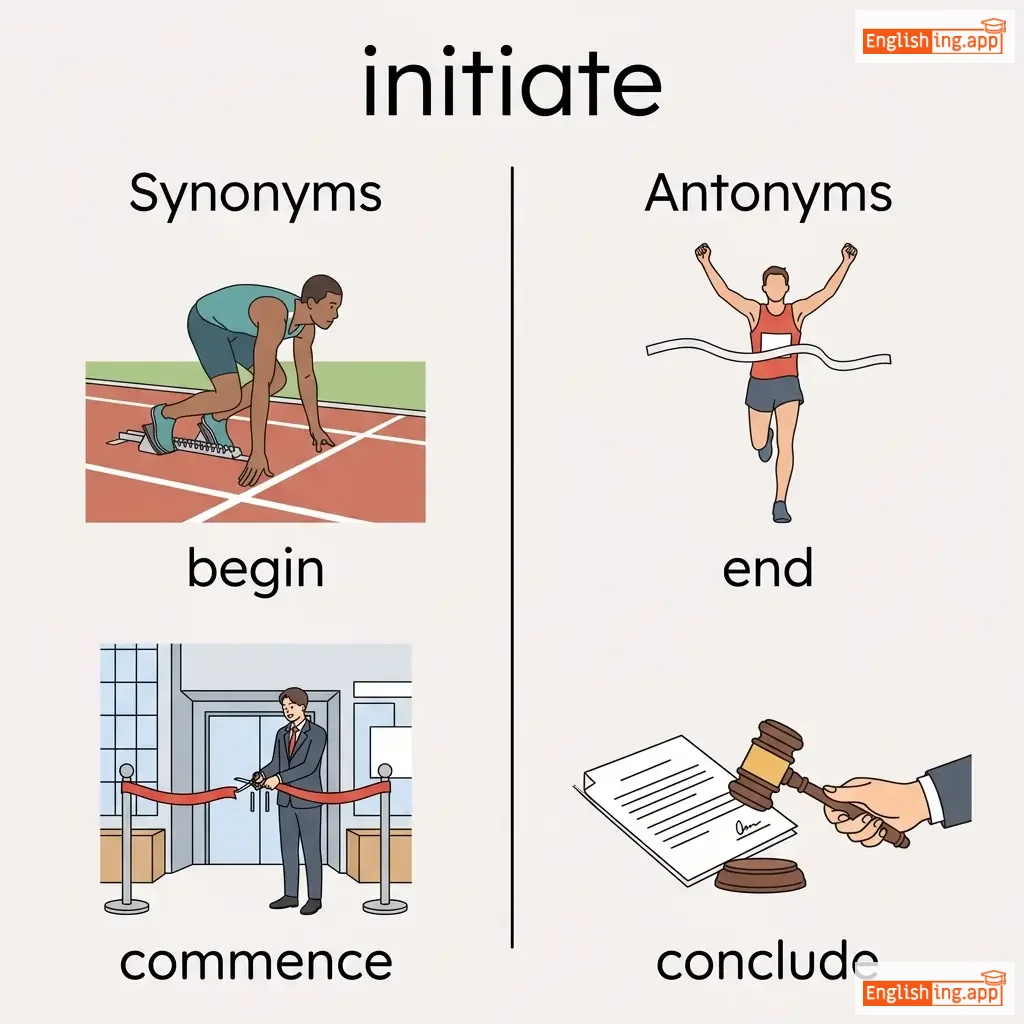
begin, start, launch, commence
••••••
|
end, finish, conclude, terminate
••••••
|
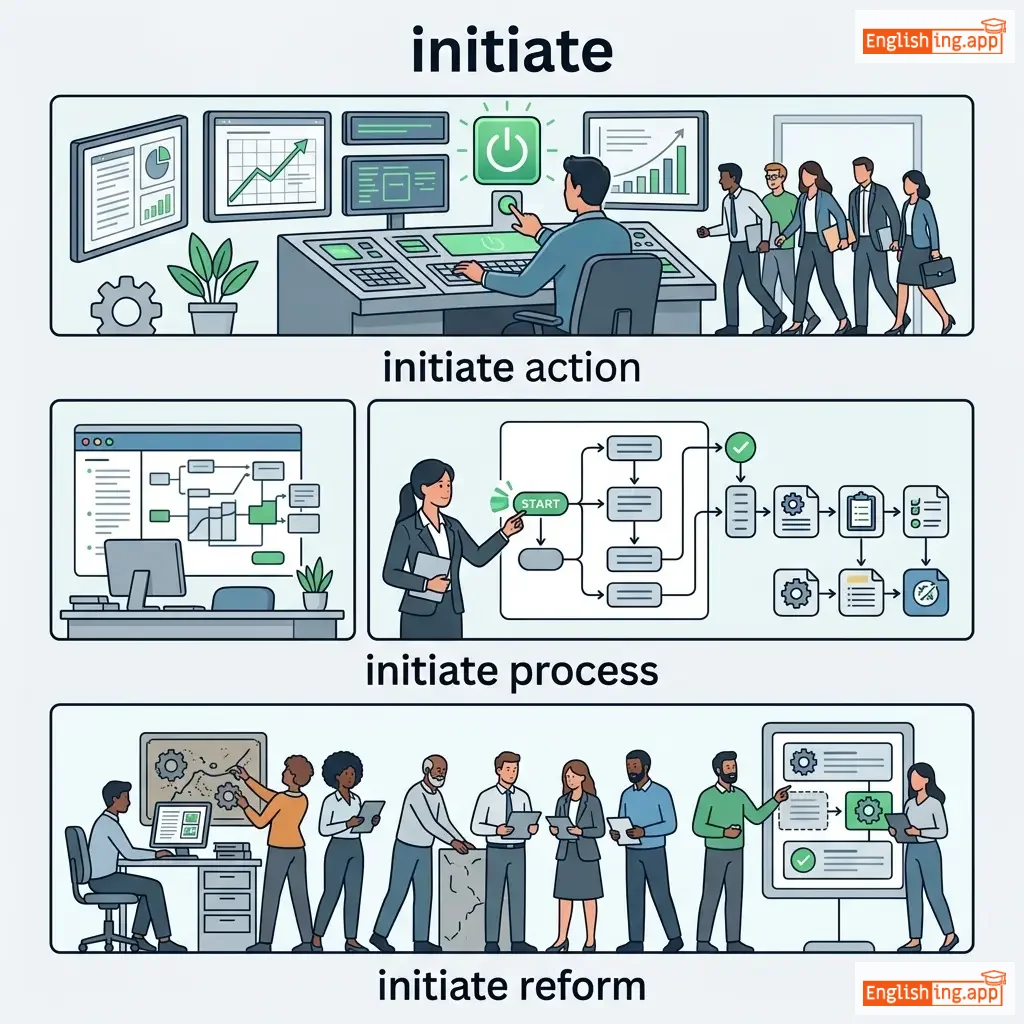
initiate process, initiate contact, initiate action, take the initiative
••••••
|
Initiate sounds like 'iniciar' — both mean to start something.
••••••
|
|
#744
🏠➡️
|
/vəˈkeɪt/
verb
(veikeit)
••••••
|
|
desalojar
desalohar
••••••
|
vacated
veikeited
••••••
|
vacated
veikeited
••••••
|
vacates
veikeits
••••••
|
vacating
veikeiting
••••••
|
to leave a place; to make empty by leaving
••••••
|
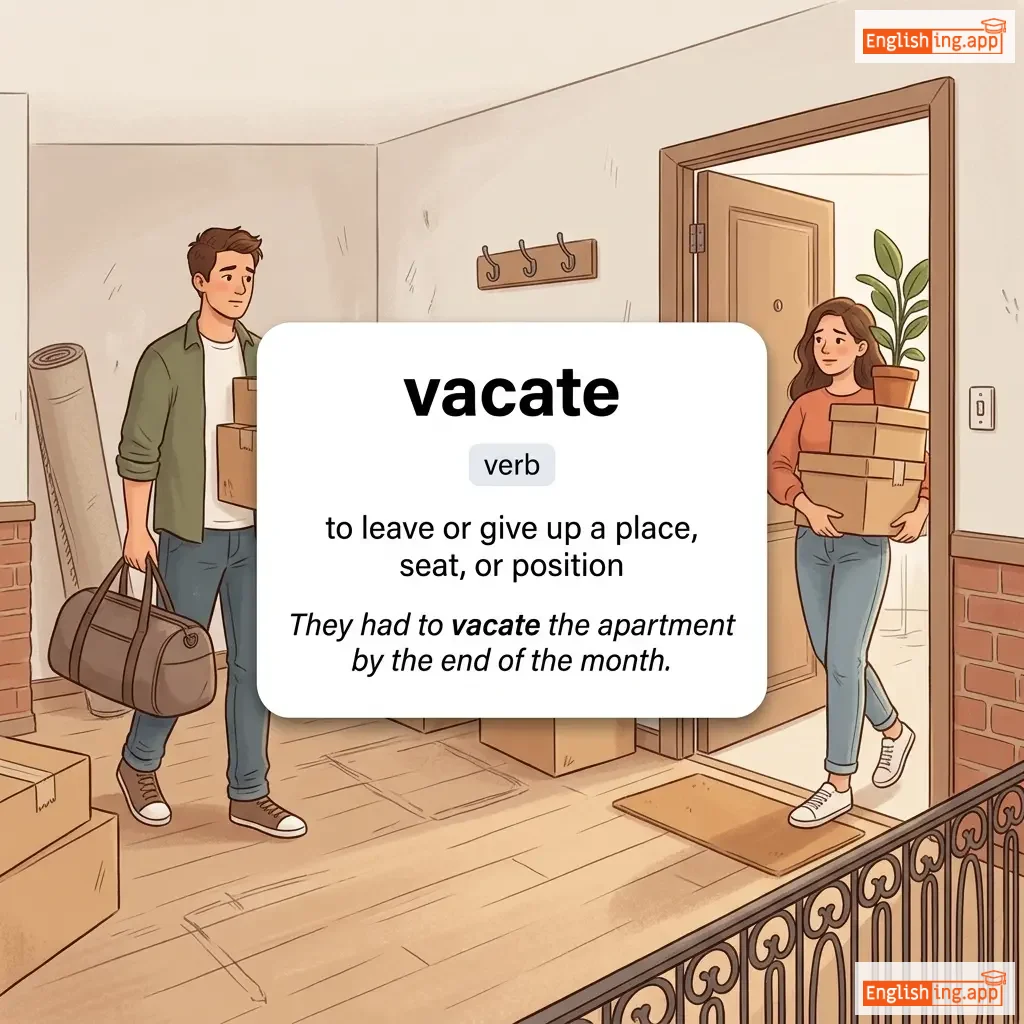
The tenants must vacate the apartment by the end of the month.
ze tenents mast veikeit de apartment bai de end of de manz.
••••••
|
Los inquilinos deben desalojar el apartamento antes de fin de mes.
Los inquilinos deben desalohar el apartamento antes de fin de mes
••••••
|
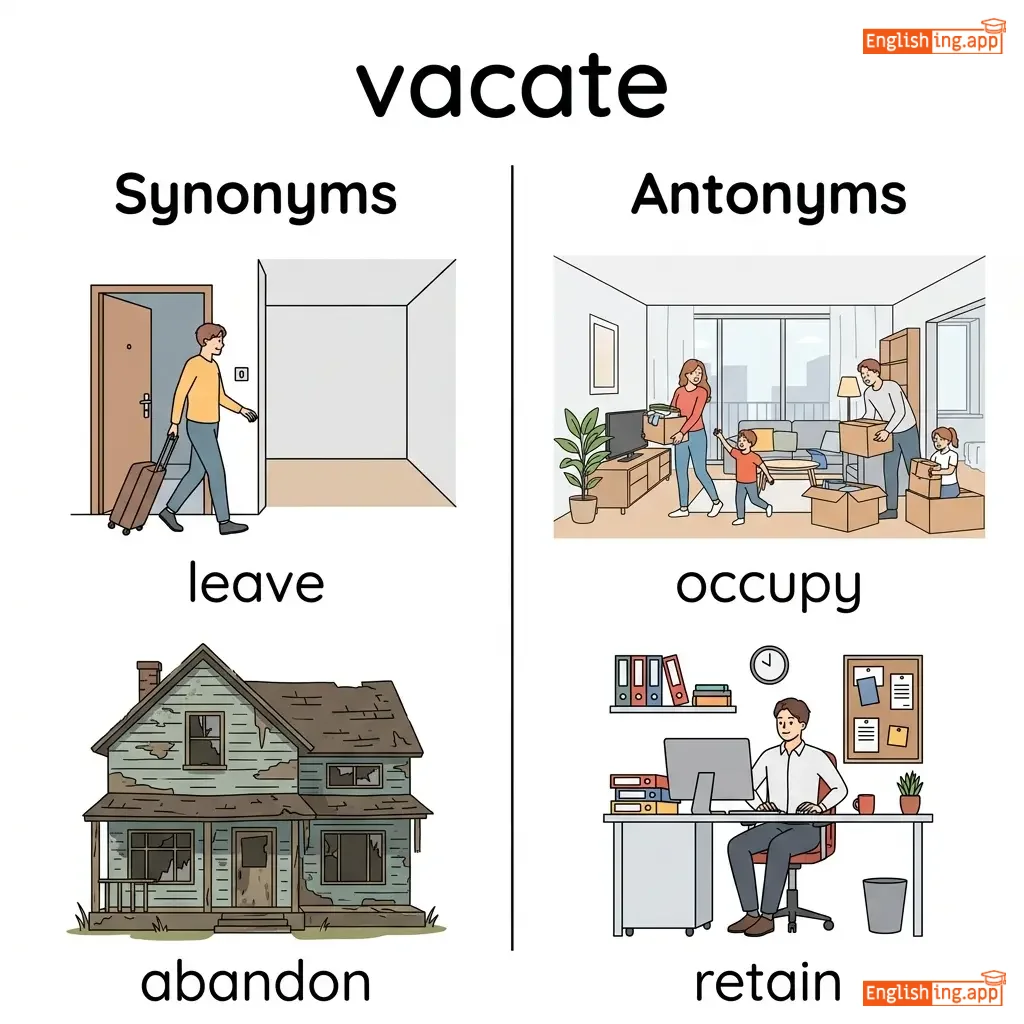
leave, evacuate, abandon, quit, depart
••••••
|
occupy, fill, inhabit, move in
••••••
|
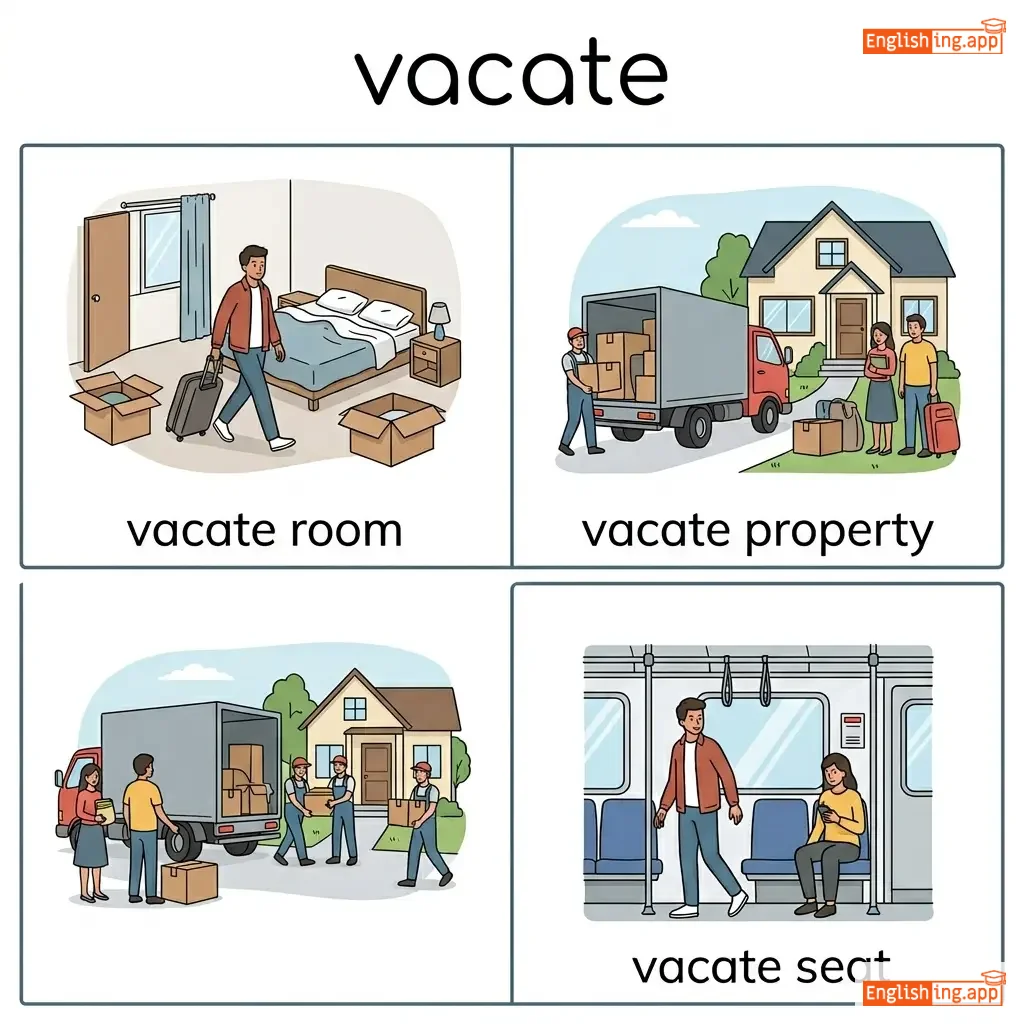
vacate premises, vacate the building, forced to vacate, vacate immediately
••••••
|
Vacate = desalojo → imagine ‘vacant’ after you ‘desalojar’ a room.
••••••
|
|
#745
🏆
|
/wɪn/
verb
(win)
••••••
|
|
ganar
ganar
••••••
|
won
won
••••••
|
won
won
••••••
|
wins
wins
••••••
|
winning
winning
••••••
|
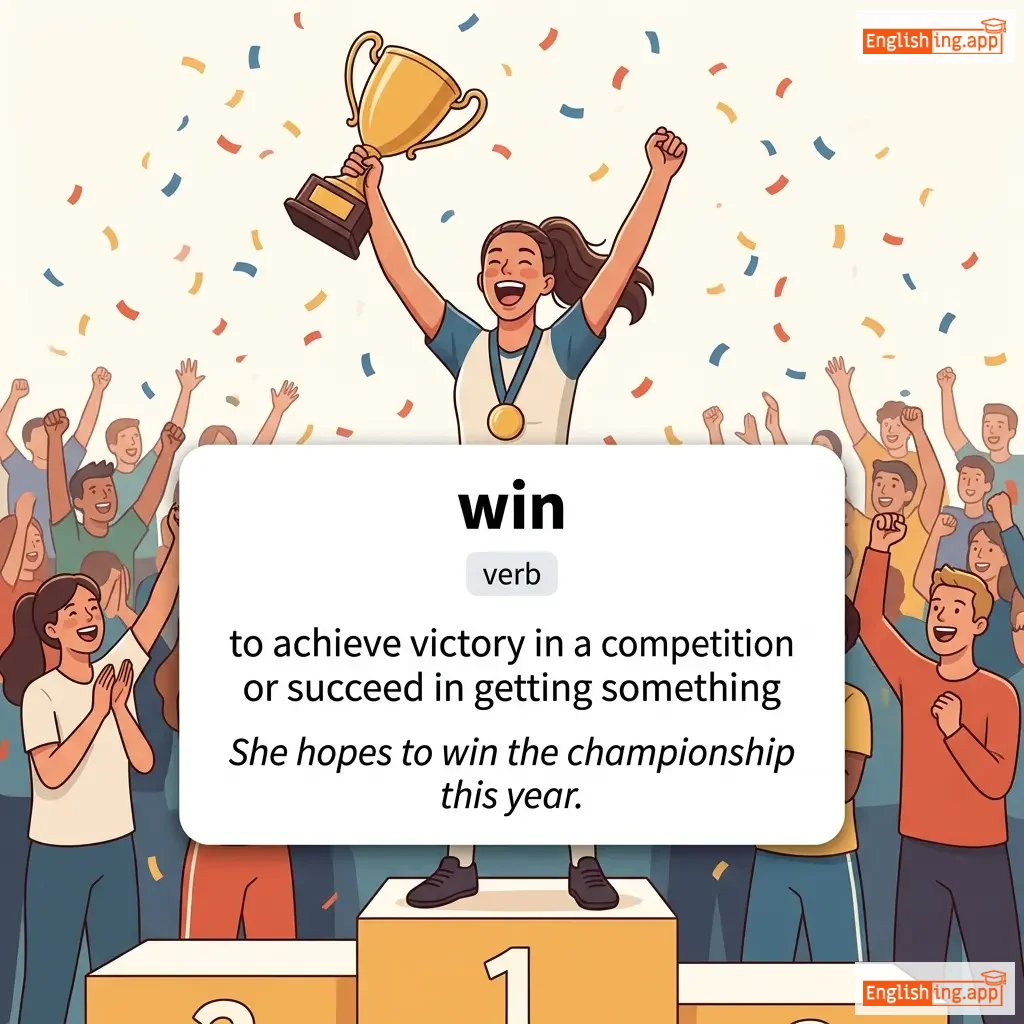
to be successful or victorious in a contest or competition
••••••
|
Our team will win the championship.
Nuestro equipo ganará el campeonato.
••••••
|
Nuestro equipo ganará el campeonato.
Nuestro equipo ganará el campeonato.
••••••
|
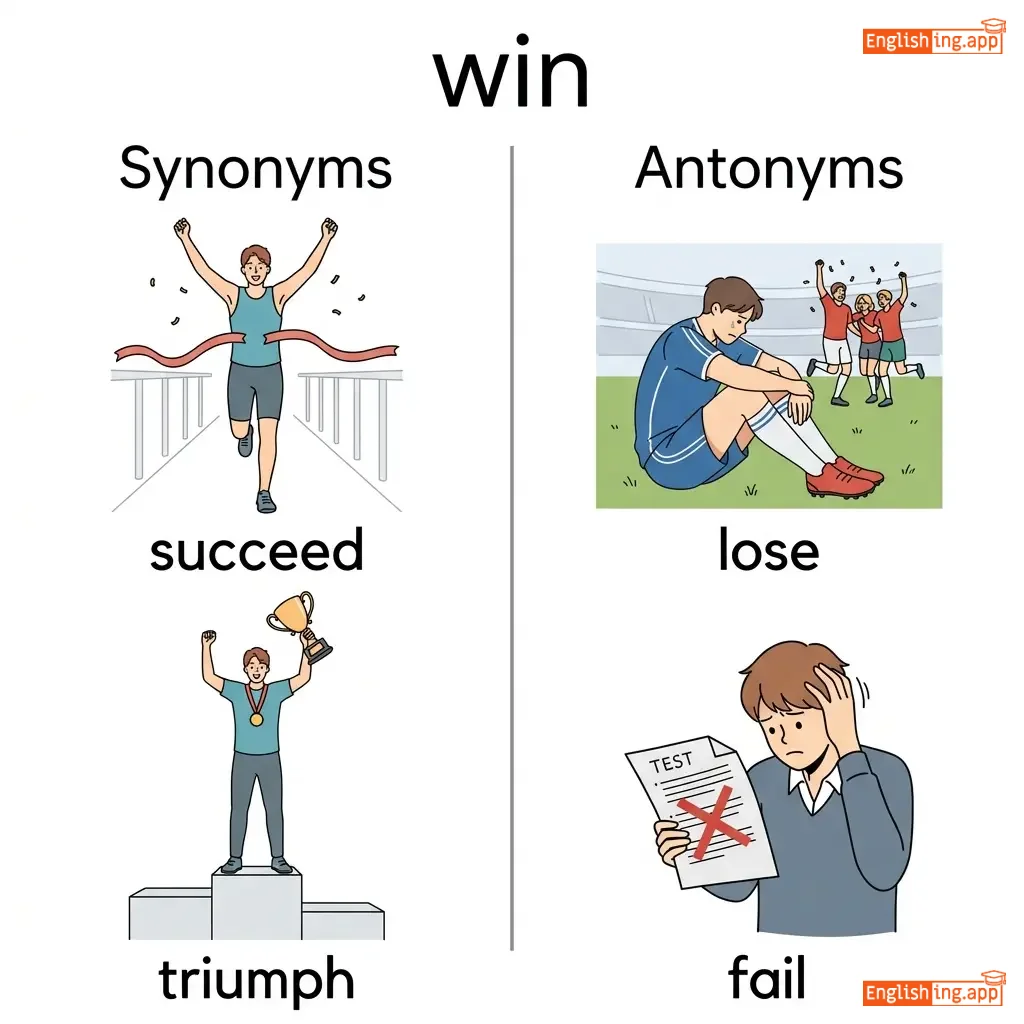
triumph, succeed, conquer, prevail
••••••
|
lose, fail, forfeit, surrender
••••••
|
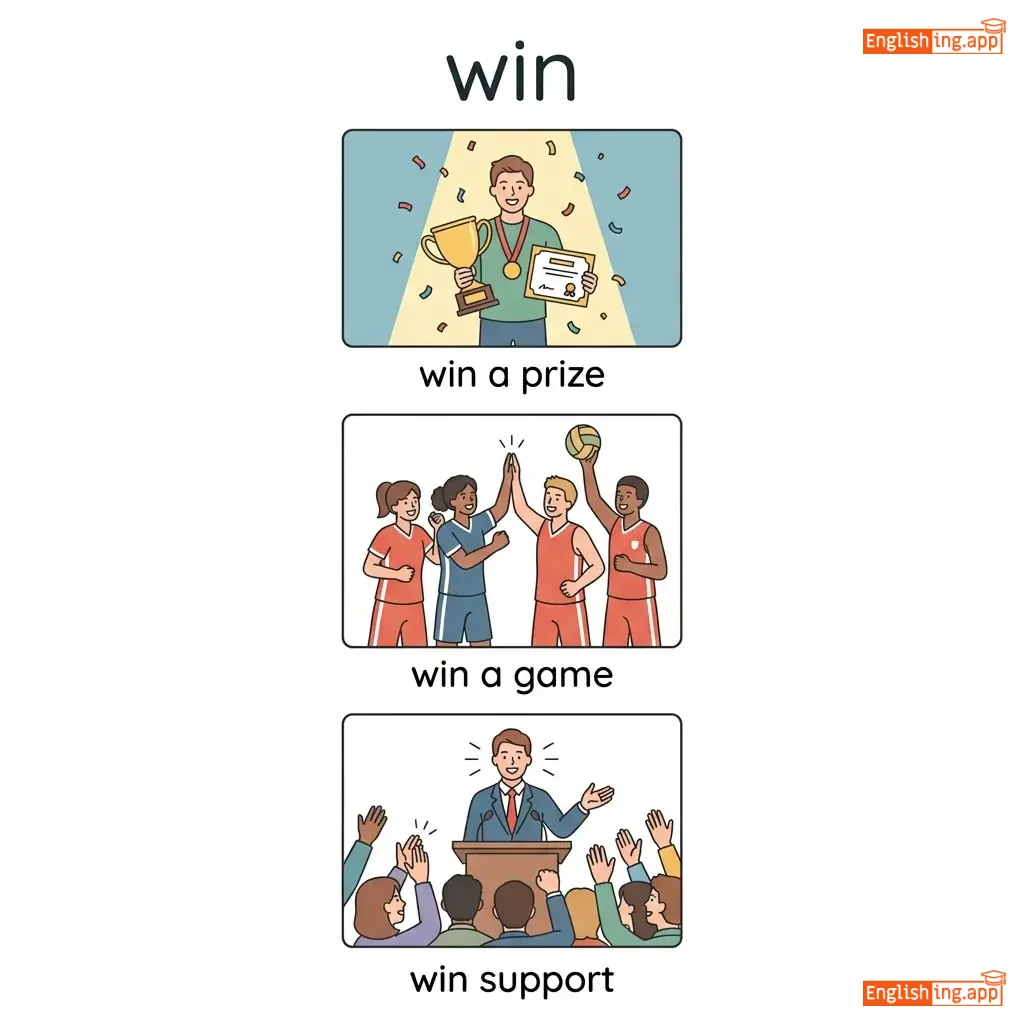
win the game, win easily, win big, win over, winning streak
••••••
|
Para ganar, el equipo debe estar unido.
••••••
|
Vocabulary Quiz
Test your vocabulary by matching words with their translations or meanings.
Login to take the quiz
Comments (0)
Share your thoughts and join the discussion.
Join the discussion by logging in
Login to CommentNo comments yet
Be the first to share your thoughts!