

















Swipe left or right, or use the buttons. Tap image to zoom.
例句翻译
单词
Lesson 7: Mastering the Most Frequent Verbs & TensesLesson 7: Mastering the Most Frequent Verbs & Tenses - 遮罩切换
|
表情符号
|
单词 | Images | 翻译 | 过去时 | 过去分词 | 第三人称单数 | 动名词 | 含义 | 例句 | 例句翻译 | 同义词 | 反义词 | 搭配词 | 助记符 |
|---|---|---|---|---|---|---|---|---|---|---|---|---|---|---|
|
#179
👊
|
/hɪt/
verb
(hit)
••••••
|
- •••••• |
打
da
••••••
|
hit
hit
••••••
|
hit
hit
••••••
|
hits
hits
••••••
|
hitting
hitting
••••••
|
to strike someone or something with force
••••••
|
The ball hit the window.
球击中了窗户。
••••••
|
球击中了窗户。
Qiu ji zhong le chuanghu.
••••••
|
strike, beat, punch, smash
••••••
|
miss, avoid, dodge
••••••
|
hit hard, hit back, hit target, hit record, hit home
••••••
|
打球,撞窗户!
••••••
|
|
#180
💬
|
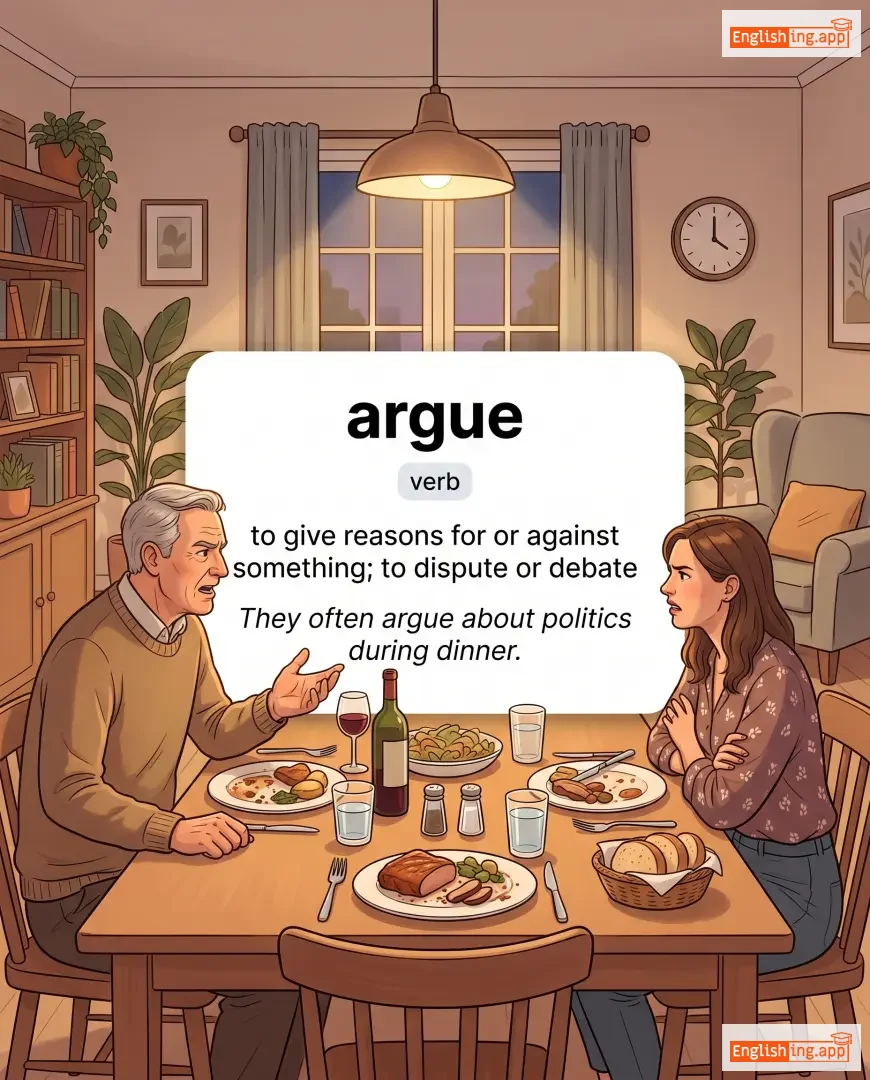
/ˈɑːrɡjuː/
verb
(阿尔吉)
••••••
|
|
争论
zhenglun
••••••
|
argued
阿尔吉德
••••••
|
argued
阿尔吉德
••••••
|
argues
阿尔吉斯
••••••
|
arguing
阿尔吉英
••••••
|
to have a disagreement; to present reasons for or against
••••••
|
They often argue about politics.
他们经常争论政治。
••••••
|
他们经常争论政治。
Tamen jingchang zhenglun zhengzhi.
••••••
|
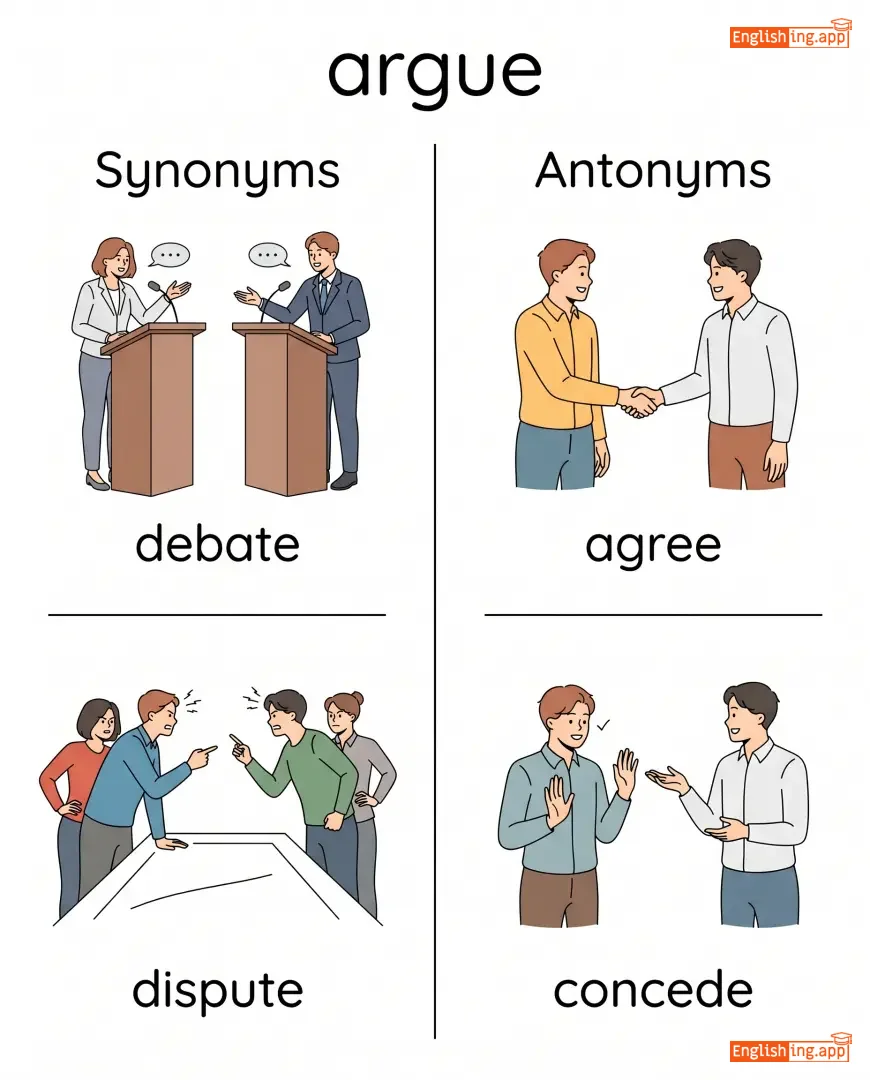
debate, dispute, quarrel, contend
••••••
|
agree, concur, harmonize, accept
••••••
|
argue with, argue about, argue against, argue for, argue fiercely
••••••
|
在政治上争论是常见的
••••••
|
|
#181
🏠
|
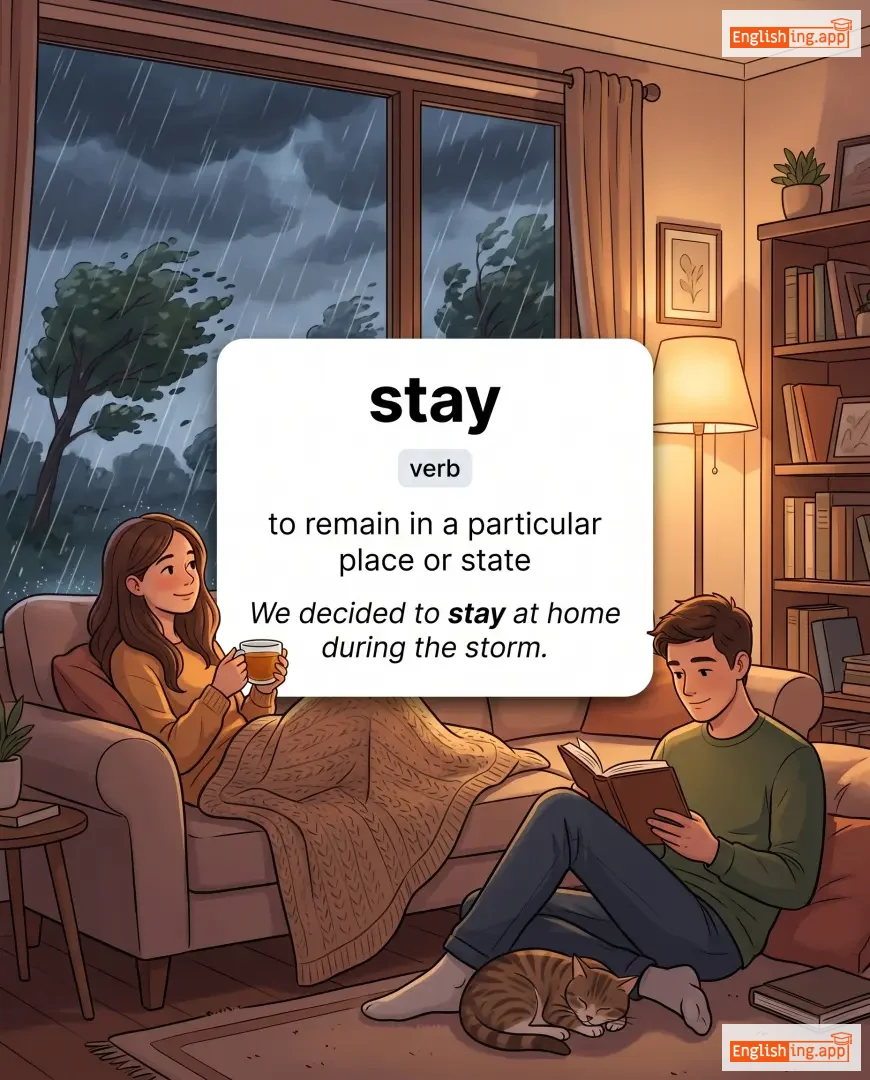
/steɪ/
verb
(sī)
••••••
|
|
停留
tingliu
••••••
|
stayed
sīd
••••••
|
stayed
sīd
••••••
|
stays
sīz
••••••
|
staying
sīng
••••••
|
to remain in the same place; to continue being
••••••
|
Please stay here until I return.
请留在这里直到我回来。
••••••
|
请留在这里直到我回来。
Qǐng liú zài zhèlǐ zhídào wǒ huílái.
••••••
|
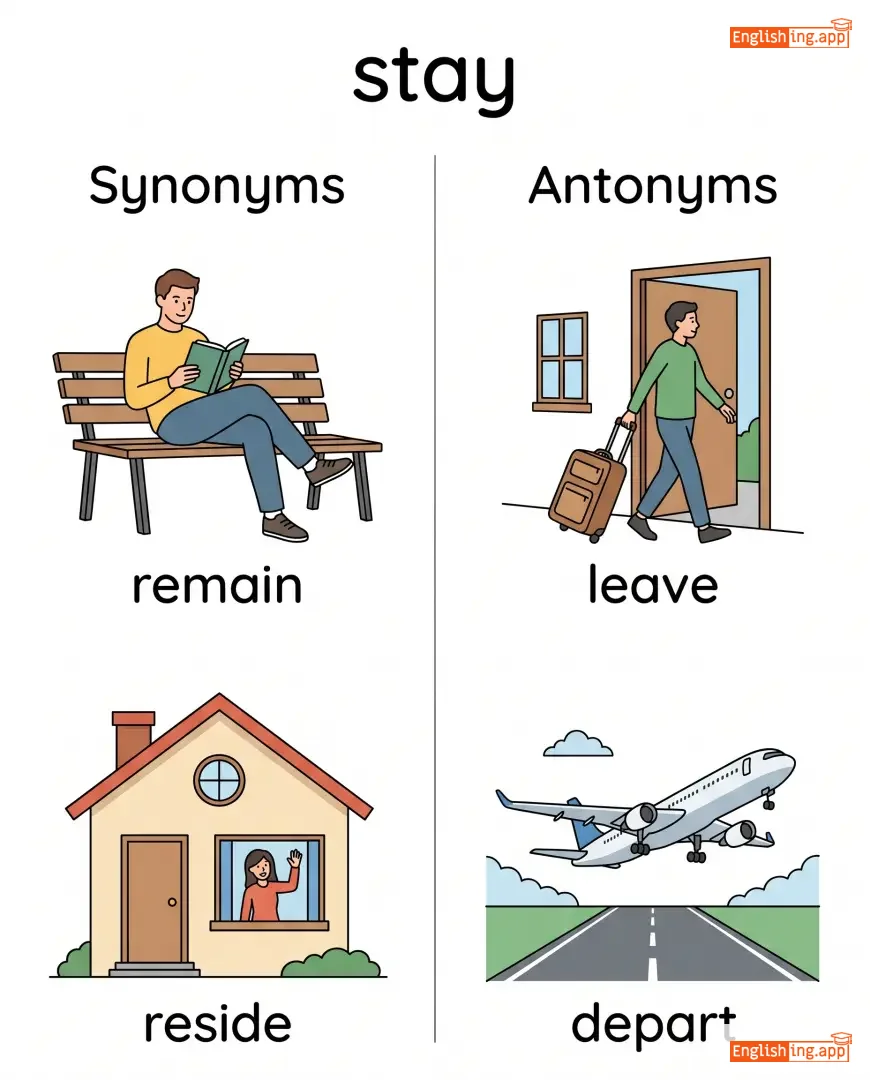
remain, continue, wait, linger
••••••
|
leave, go, depart, move
••••••
|
stay home, stay calm, stay away, stay up, stay put
••••••
|
Stay with 'tingliu' in Chinese, stay in place!
••••••
|
|
#182
🚀
|
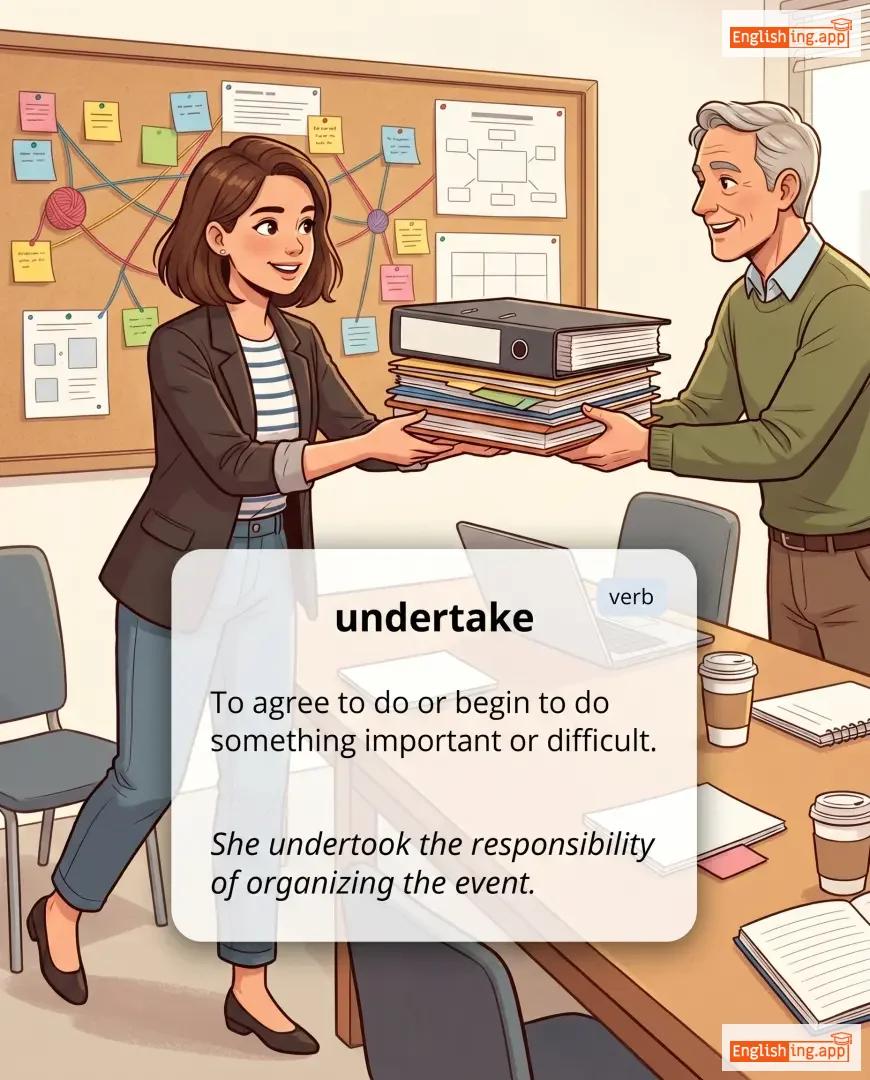
/ˌʌndərˈteɪk/
verb
(ānděrtèik)
••••••
|
|
承担
chéngdān
••••••
|
undertook
ānděrtúk
••••••
|
undertaken
ānděrtèikēn
••••••
|
undertakes
ānděrtèiks
••••••
|
undertaking
ānděrtèiking
••••••
|
to commit to and begin a task or project; to take on responsibility
••••••
|
She decided to undertake a challenging project.
她决定承担一个具有挑战性的项目。
••••••
|
她决定承担一个具有挑战性的项目。
Tā juédìng chéngdān yīgè jùyǒu tiǎozhàn xìng de xiàngmù.
••••••
|
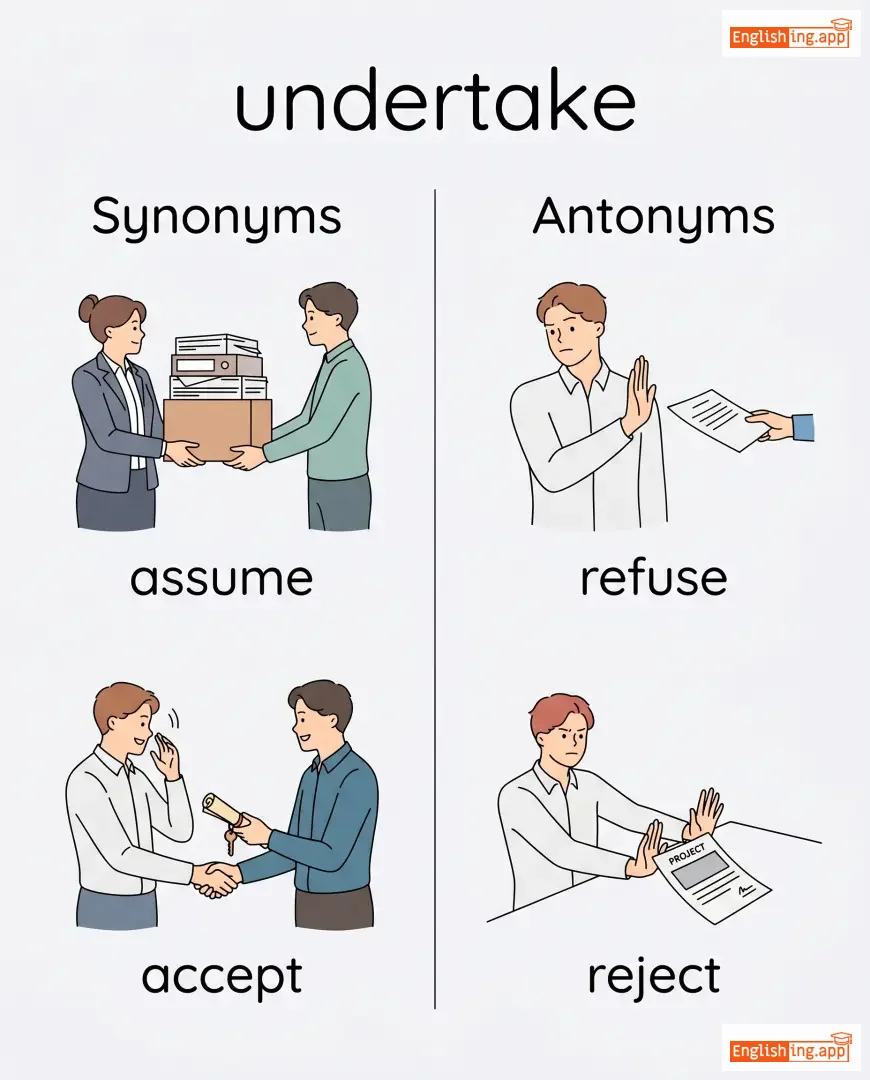
begin, commence, start, embark
••••••
|
abandon, quit, avoid
••••••
|
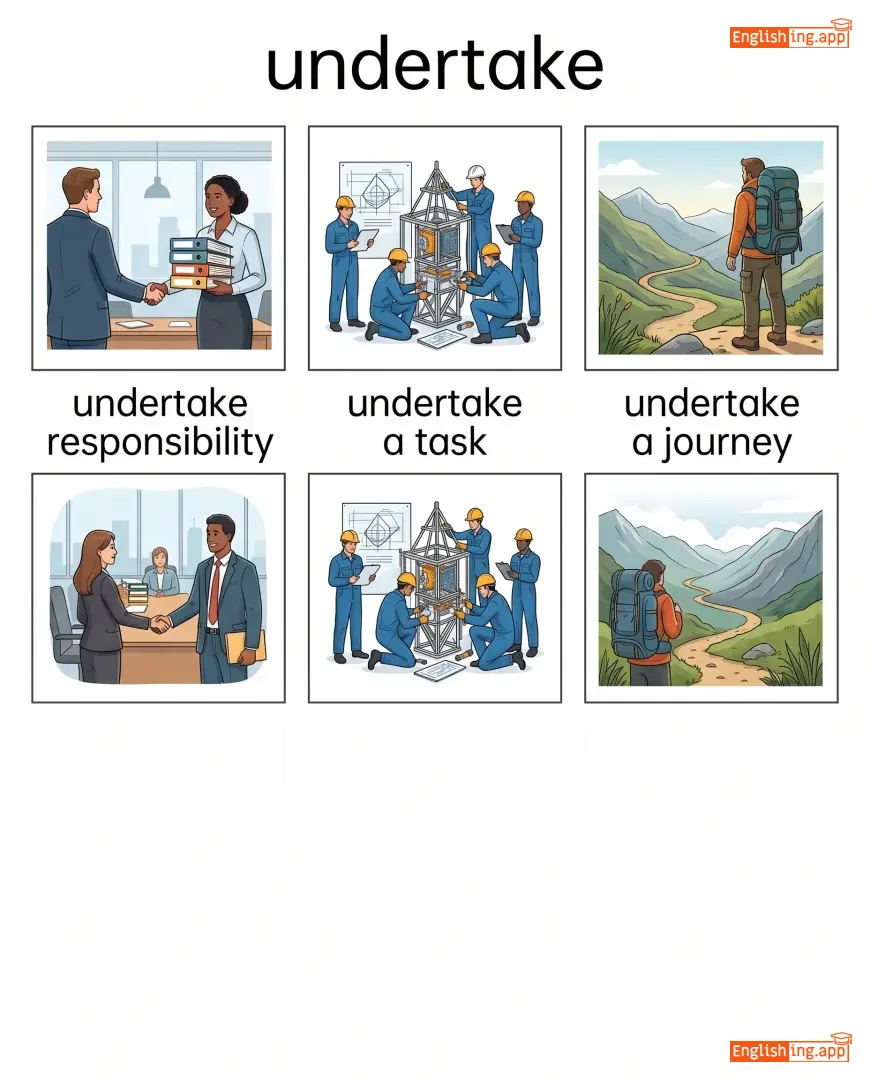
undertake project, undertake responsibility, undertake task, undertake mission, undertake journey
••••••
|
Under + take = Chengdan task
••••••
|
|
#183
🧽
|
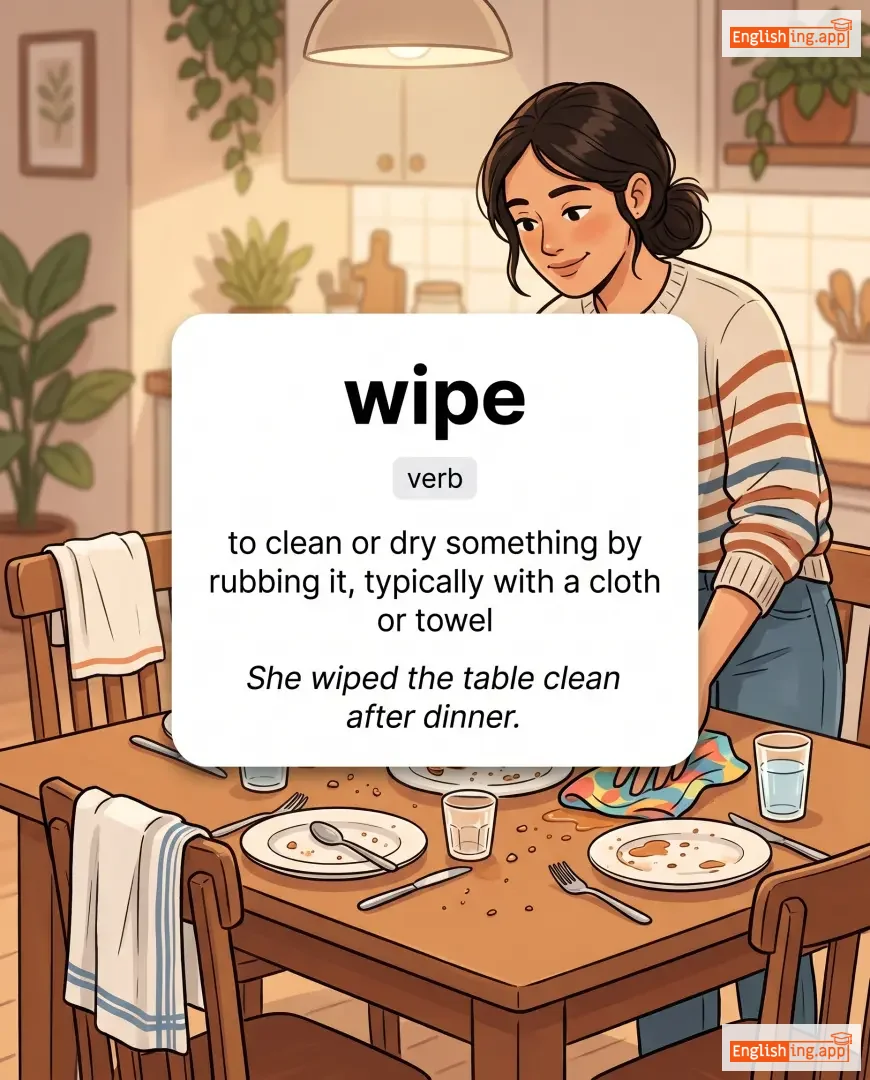
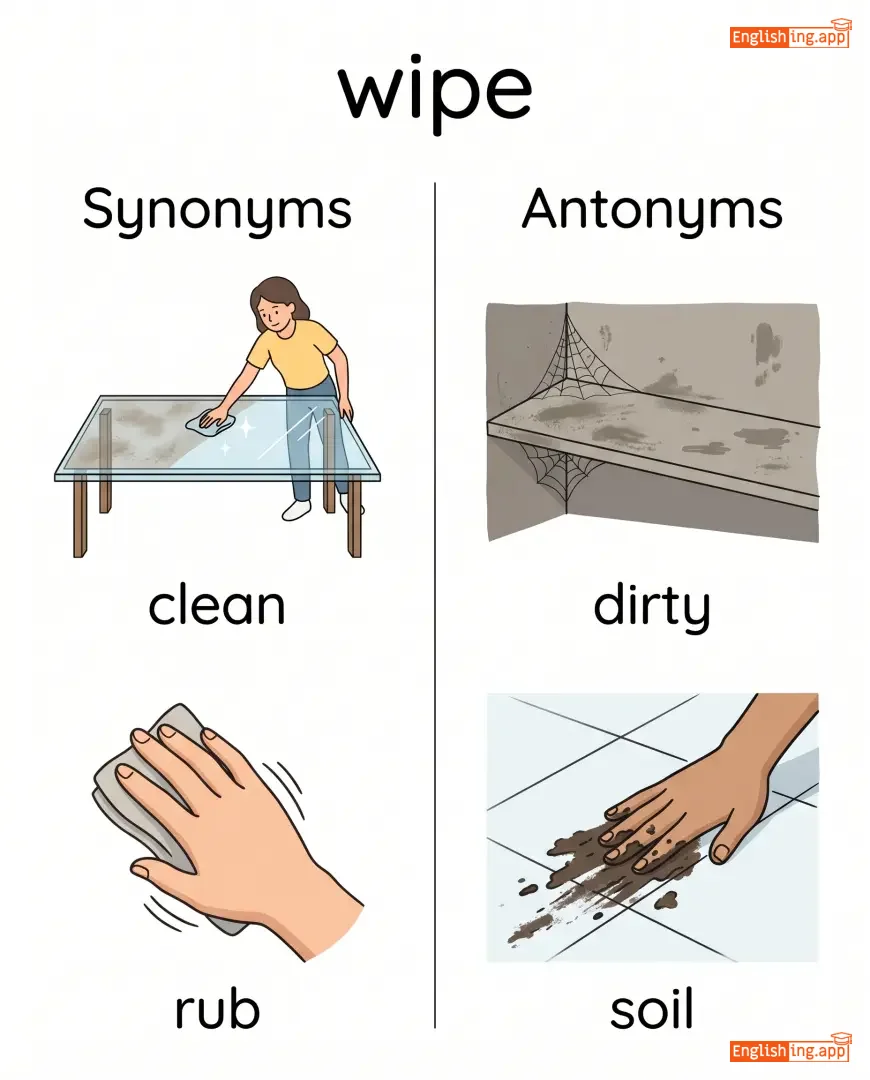
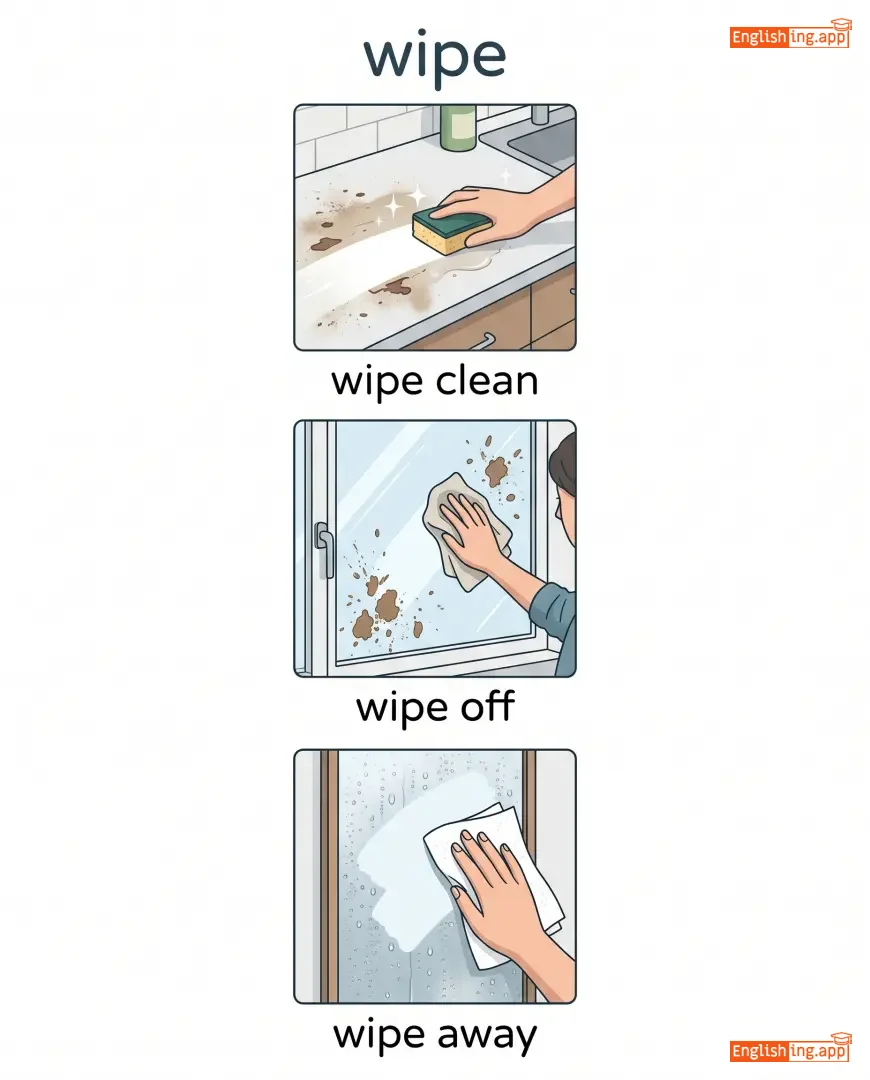
/waɪp/
verb
(wāipǔ)
••••••
|
|
擦拭
cāshì
••••••
|
wiped
wāipǔd
••••••
|
wiped
wāipǔd
••••••
|
wipes
wāipǔs
••••••
|
wiping
wāipɪng
••••••
|
to clean or dry something by rubbing with a cloth or tissue
••••••
|
Please wipe the table clean.
请擦干净桌子。
••••••
|
请擦干净桌子。
Qǐng cā gānjìng zhuōzi.
••••••
|
clean, rub, dry, polish
••••••
|
dirty, soil, stain, mess
••••••
|
wipe clean, wipe away, wipe off, wipe down, wipe out
••••••
|
擦拭桌子让它保持干净。
••••••
|
|
#184
👨🍳
|
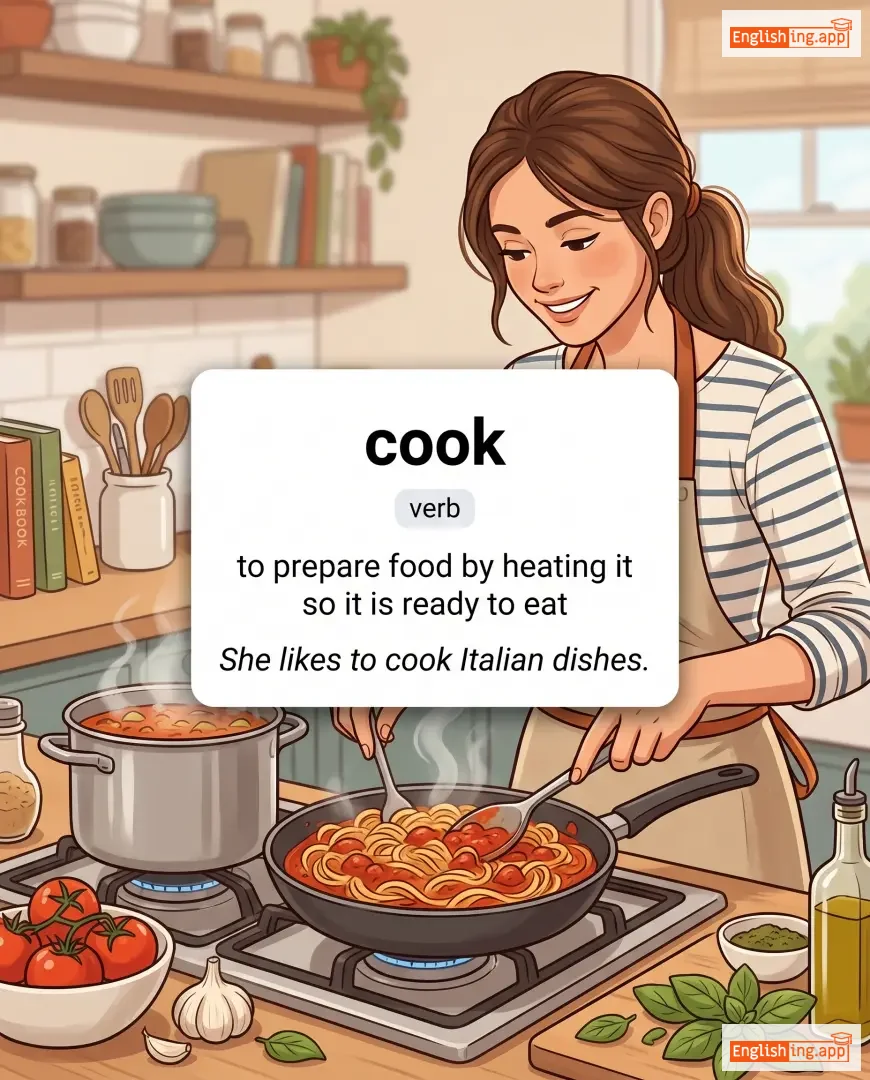
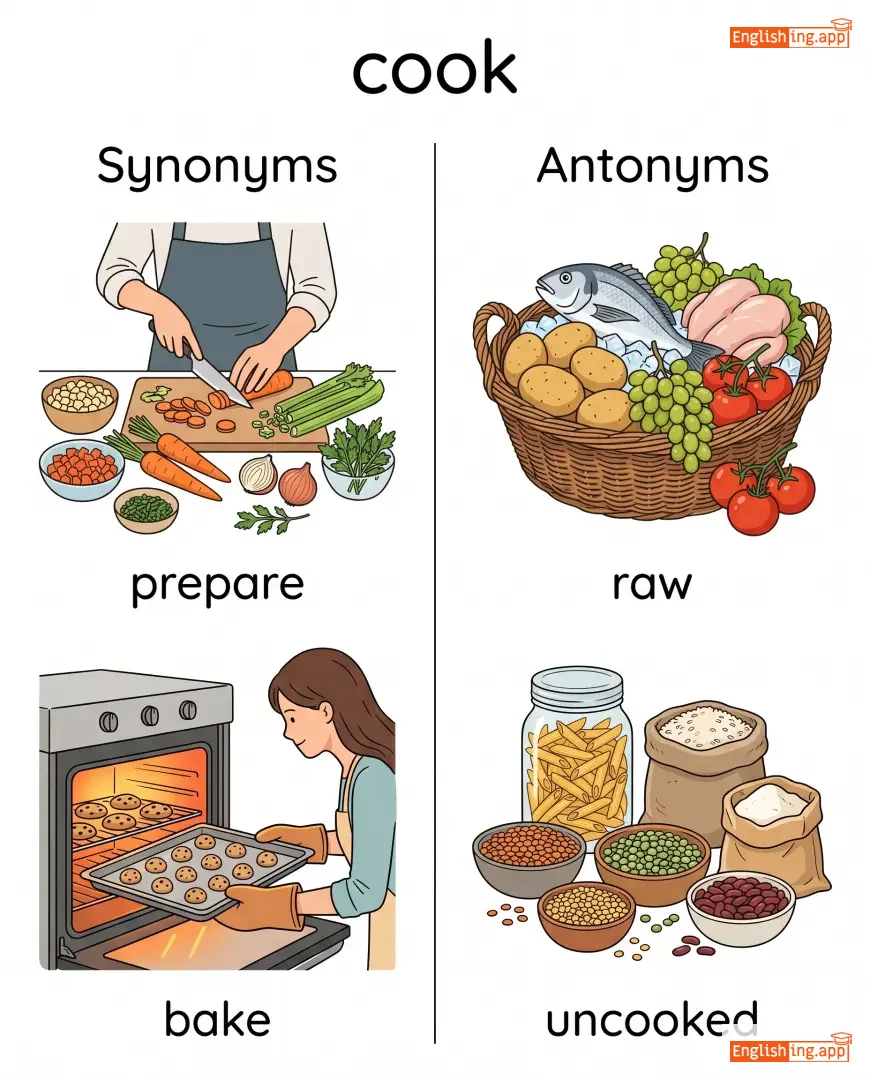
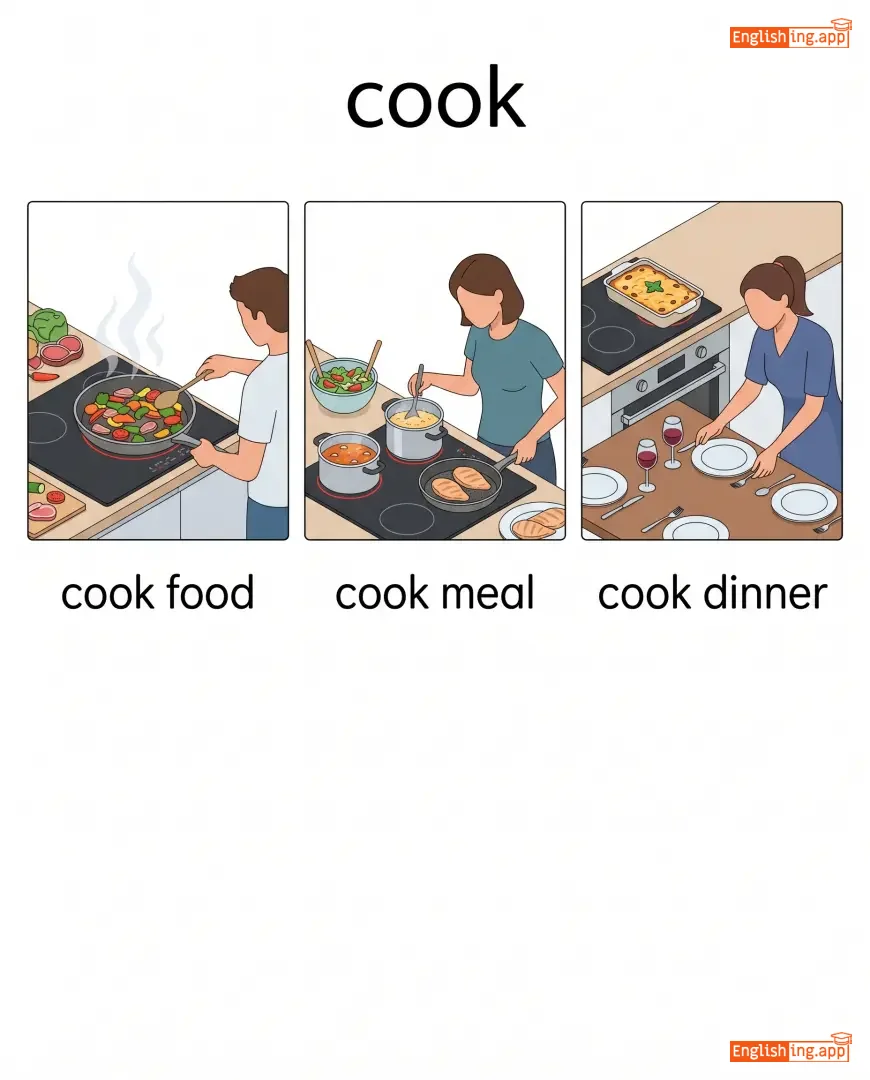
/kʊk/
verb
(kùk)
••••••
|
|
烹饪
pēngrèn
••••••
|
cooked
kùkd
••••••
|
cooked
kùkd
••••••
|
cooks
kùks
••••••
|
cooking
kùkɪŋ
••••••
|
to prepare food by heating; to make food ready to eat
••••••
|
My mother loves to cook traditional dishes.
我妈妈喜欢做传统菜肴。
••••••
|
我妈妈喜欢做传统菜肴。
Wǒ māmā xǐhuān zuò chuántǒng cài yáo.
••••••
|
prepare, bake, fry, boil
••••••
|
eat, consume, order food
••••••
|
cook dinner, cook breakfast, cook meal, cook thoroughly, cook slowly
••••••
|
烹饪 = 做好食物
••••••
|
|
#185
🛡️
|
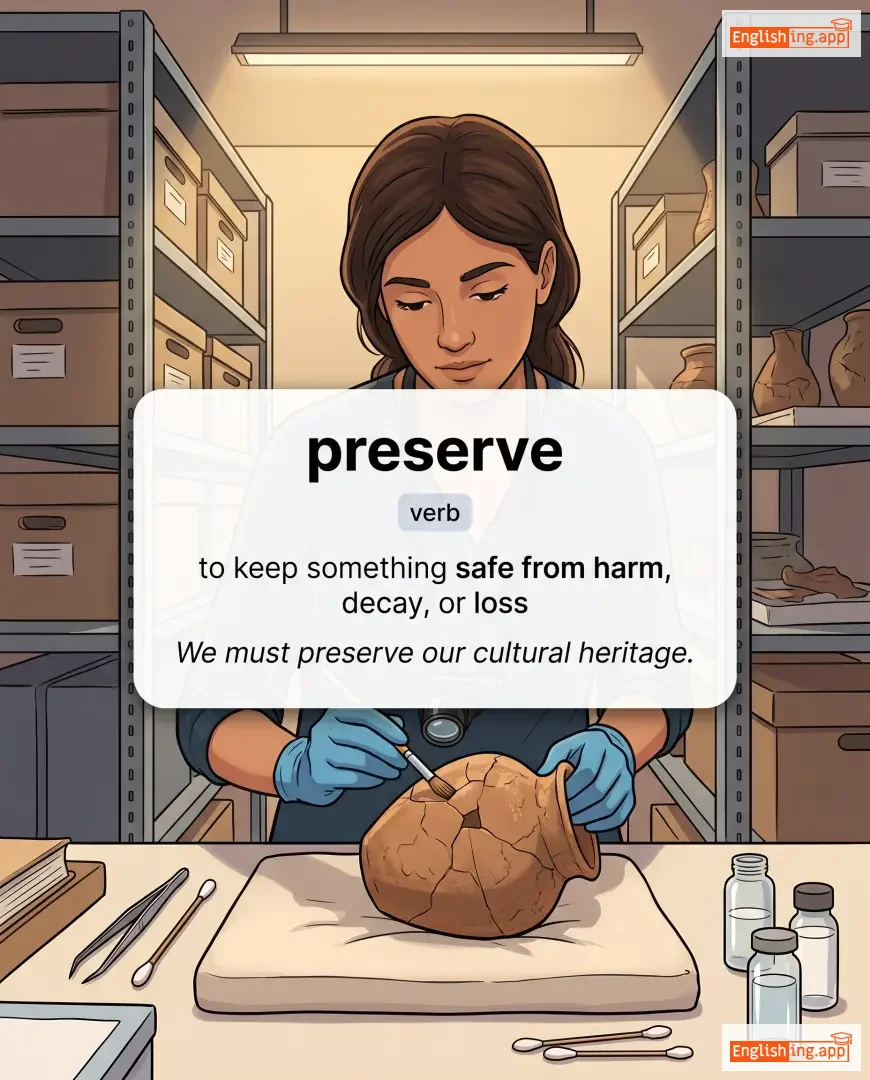
/prɪˈzɜːv/
verb
(prizerb)
••••••
|
|
保护
baohu
••••••
|
preserved
prizerbd
••••••
|
preserved
prizerbd
••••••
|
preserves
prizerbs
••••••
|
preserving
prizerbing
••••••
|
to keep something in its original state; to protect from harm or decay
••••••
|
We must preserve our natural environment.
我们必须保护我们的自然环境。
••••••
|
我们必须保护我们的自然环境。
Women bixu baohu women de ziran huanjing.
••••••
|
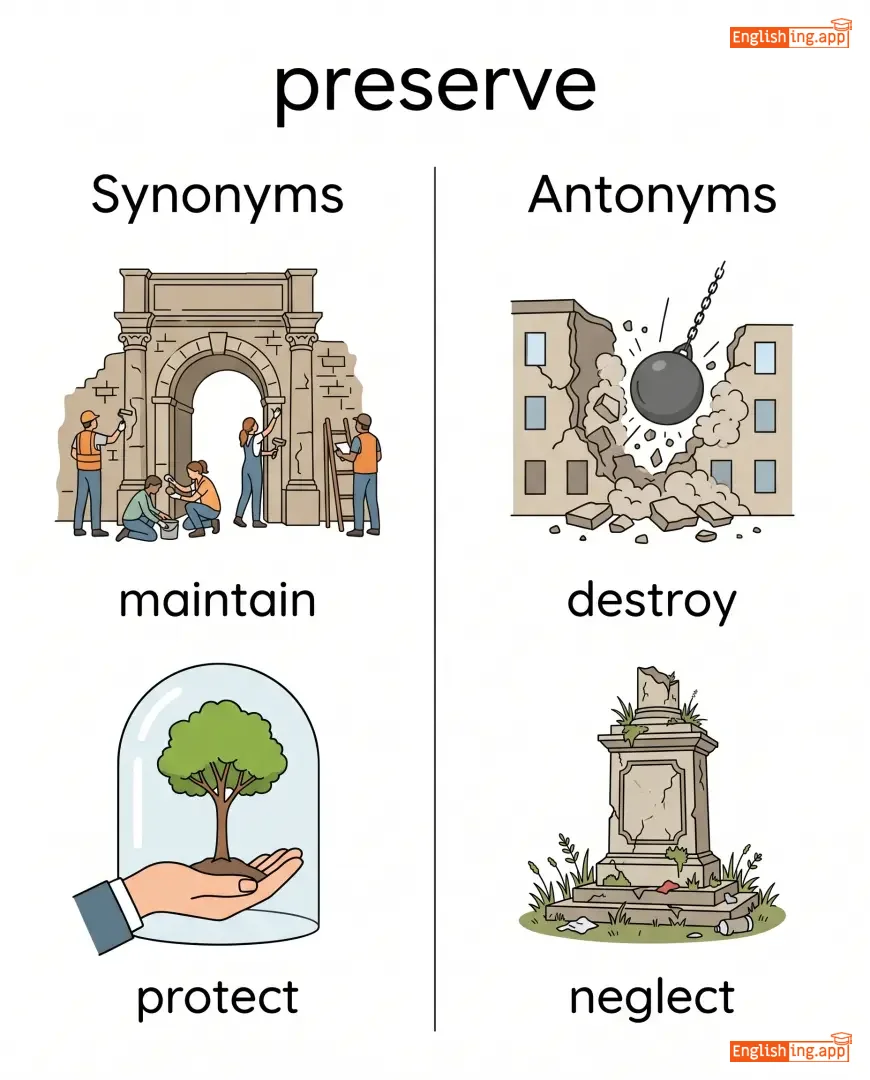
conserve, maintain, protect, save
••••••
|
destroy, damage, ruin, waste
••••••
|
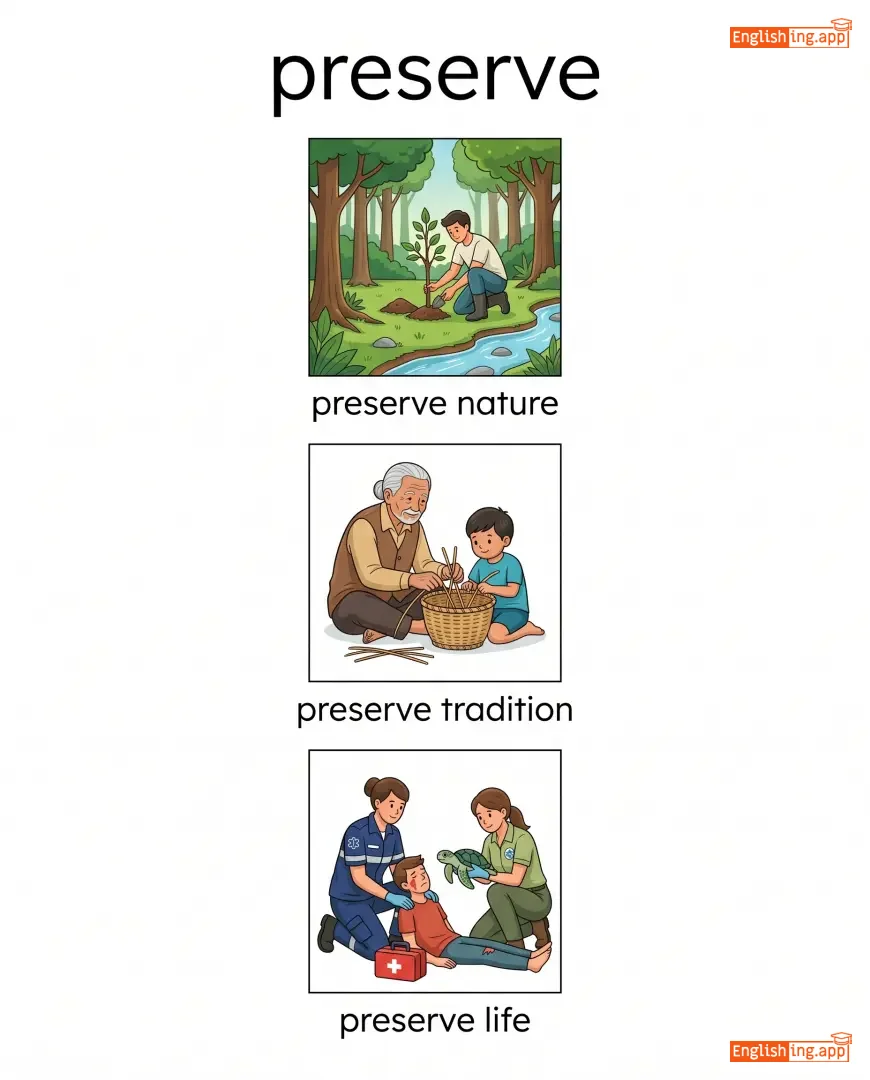
preserve tradition, preserve environment, preserve food, preserve peace, preserve memory
••••••
|
Remember '保护' as 'protect' in Chinese, which aligns with preserving something in its original form.
••••••
|
|
#186
💰
|
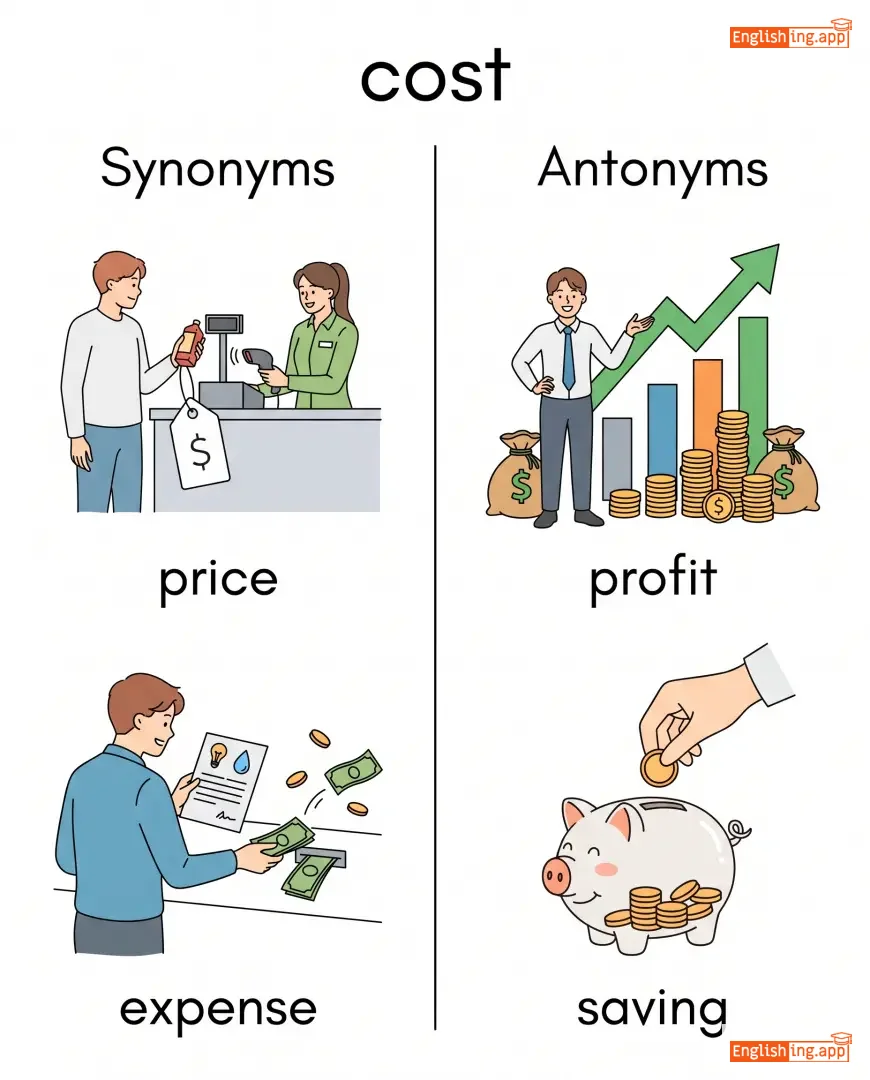
/kɔːst/
verb
(kè sī tè)
••••••
|
|
花费
huā fèi
••••••
|
cost
kè sī tè
••••••
|
cost
kè sī tè
••••••
|
costs
kè sī tè sī
••••••
|
costing
kè sī tè yīng
••••••
|
to have a price of; to require payment; to cause loss
••••••
|
This book will cost twenty dollars.
这本书将花费二十美元。
••••••
|
这本书将花费二十美元。
Zhè běn shū jiāng huāfèi èrshí měiyuán
••••••
|
price, charge, expense, value
••••••
|
earn, profit, gain, save
••••••
|
cost money, cost dearly, cost fortune, cost nothing, cost effectiveness
••••••
|
No •••••• |
|
#187
🧠
|
/ˈmeməraɪz/
verb
(记住)
••••••
|
|
记住
jì zhù
••••••
|
memorized
记住
••••••
|
memorized
记住
••••••
|
memorizes
记住
••••••
|
memorizing
记住
••••••
|
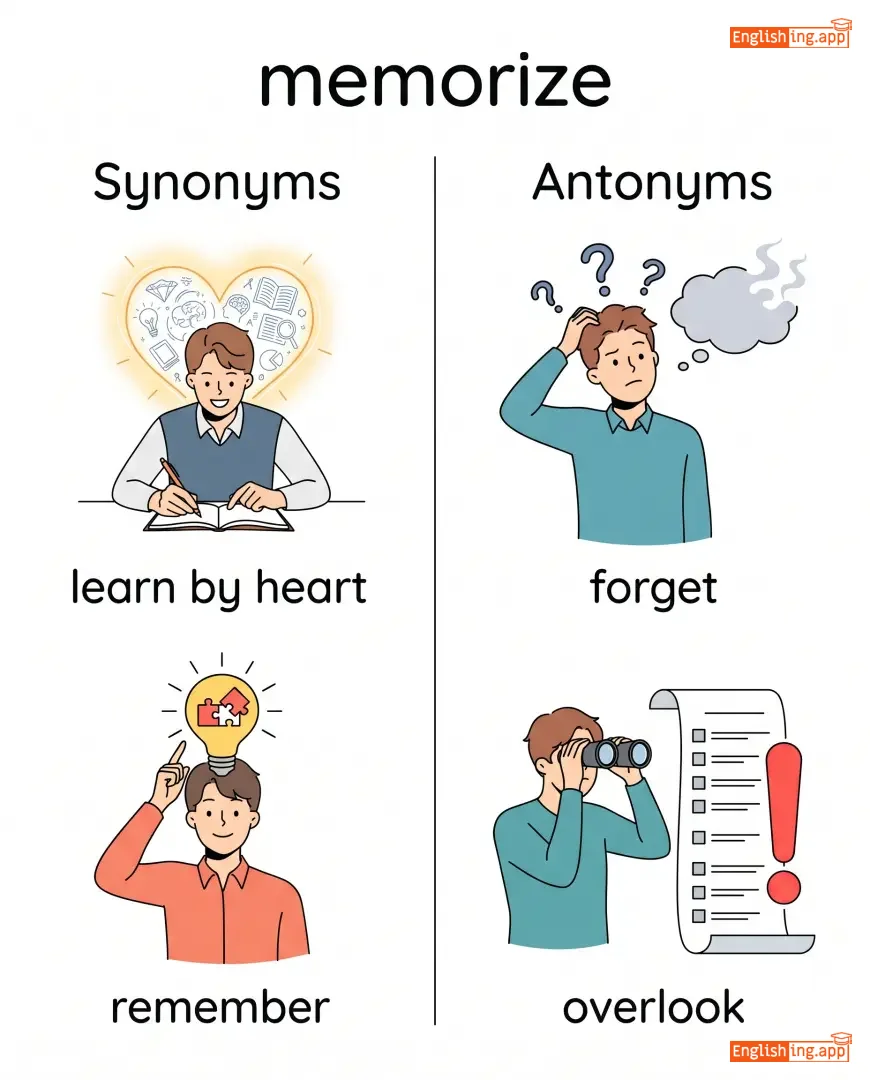
to learn something by heart; to commit to memory
••••••
|
Students need to memorize important formulas for the exam.
学生需要记住重要的公式以备考试。
••••••
|
学生需要记住重要的公式以备考试。
Xuéshēng xūyào jì zhù zhòngyào de gōngshì yǐ bèi kǎoshì.
••••••
|
learn by heart, remember, retain, recall
••••••
|
forget, overlook, neglect
••••••
|
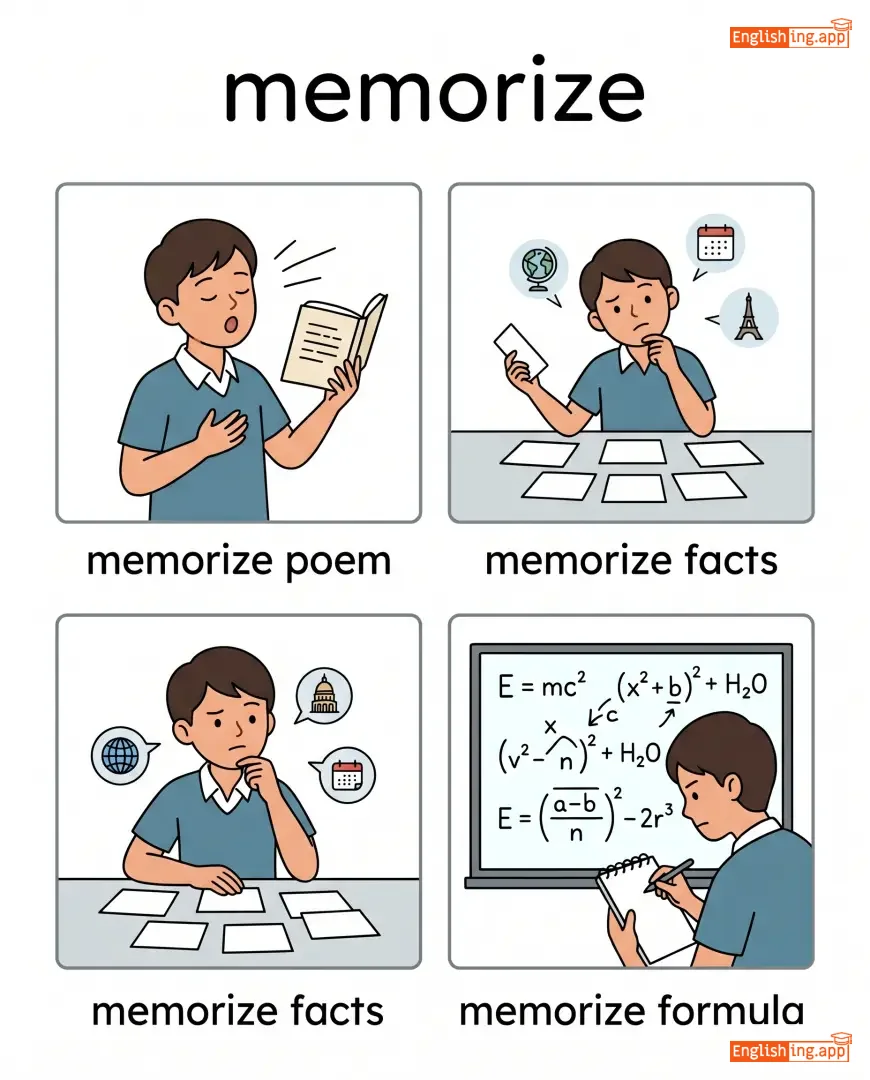
memorize poem, memorize facts, memorize formula, memorize lines, memorize vocabulary
••••••
|
记住是让你记住更快的关键!
••••••
|
|
#188
👥
|
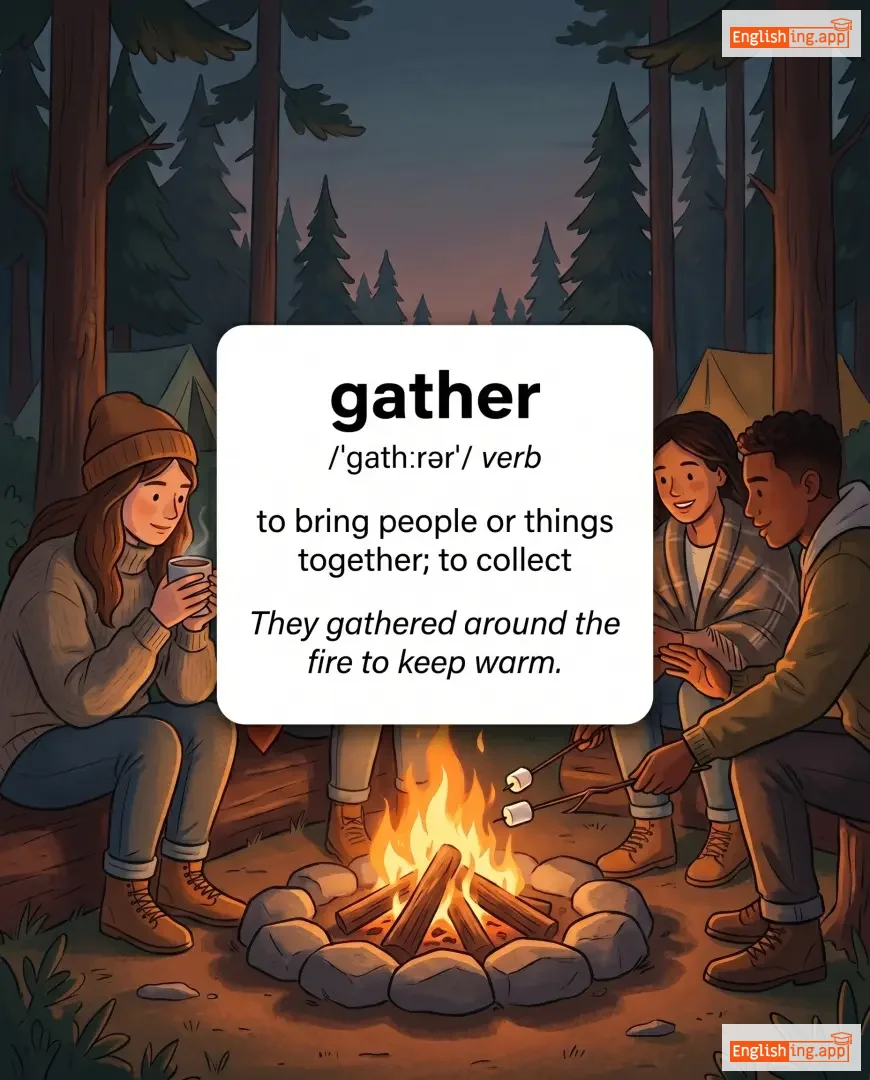
/ˈɡæðər/
verb
(盖瑟)
••••••
|
|
聚集
jùjí
••••••
|
gathered
盖瑟德
••••••
|
gathered
盖瑟德
••••••
|
gathers
盖瑟斯
••••••
|
gathering
盖瑟瑞
••••••
|
to come together or collect in one place; to assemble
••••••
|
People gather in the park for the festival.
人们在公园聚集庆祝节日。
••••••
|
人们在公园聚集庆祝节日。
Rénmen zài gōngyuán jùjí qìngzhù jiérì.
••••••
|
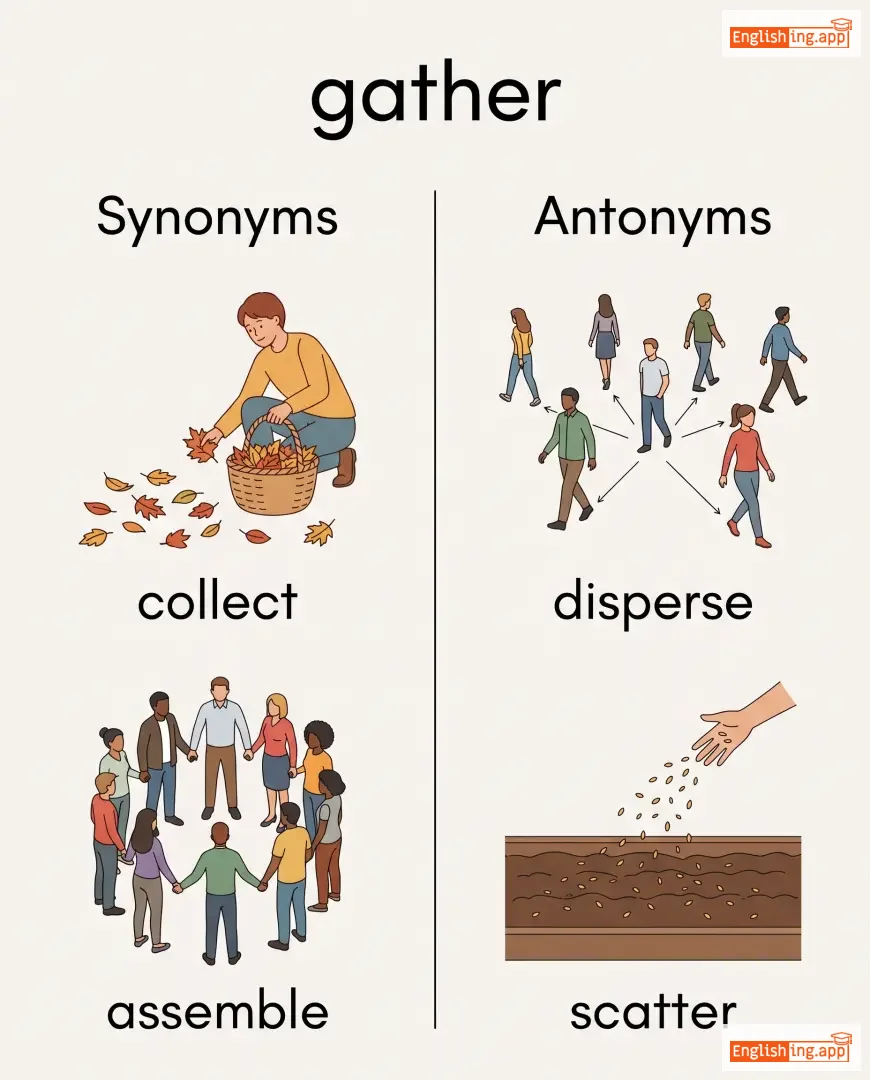
collect, assemble, congregate
••••••
|
scatter, disperse, separate
••••••
|
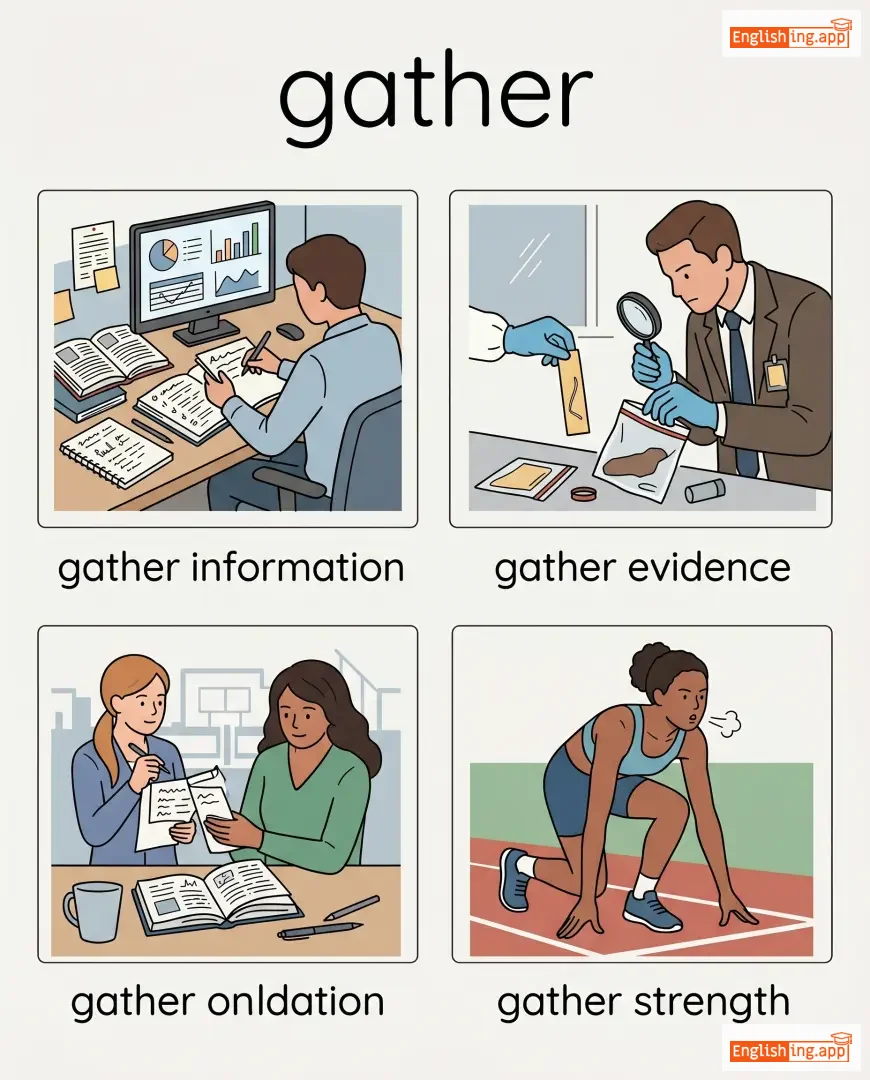
gather around, gather together, gather information, gather courage, gather speed
••••••
|
Gathering means 聚集, like coming together for a celebration.
••••••
|
|
#189
⌨️
|
/taɪp/
verb
(海皮尼斯)
••••••
|
|
打字
dǎ zì
••••••
|
typed
••••••
|
typed
••••••
|
types
••••••
|
typing
••••••
|
to write using a keyboard or typewriter
••••••
|
She can type very fast on the computer.
她可以在电脑上非常快地打字。
••••••
|
她可以在电脑上非常快地打字。
Tā kě yǐ zài diàn nǎo shàng fēi cháng kuài dì dǎ zì.
••••••
|
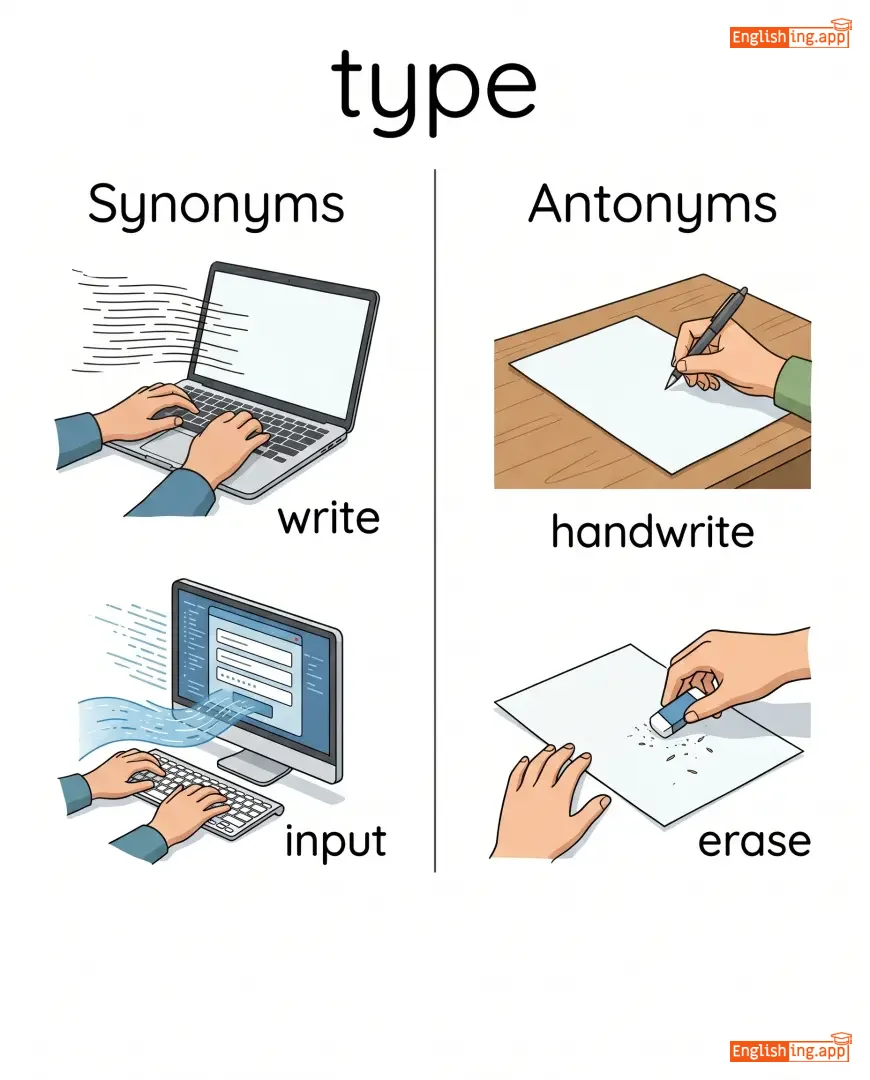
write, input, keyboard
••••••
|
handwrite, erase
••••••
|
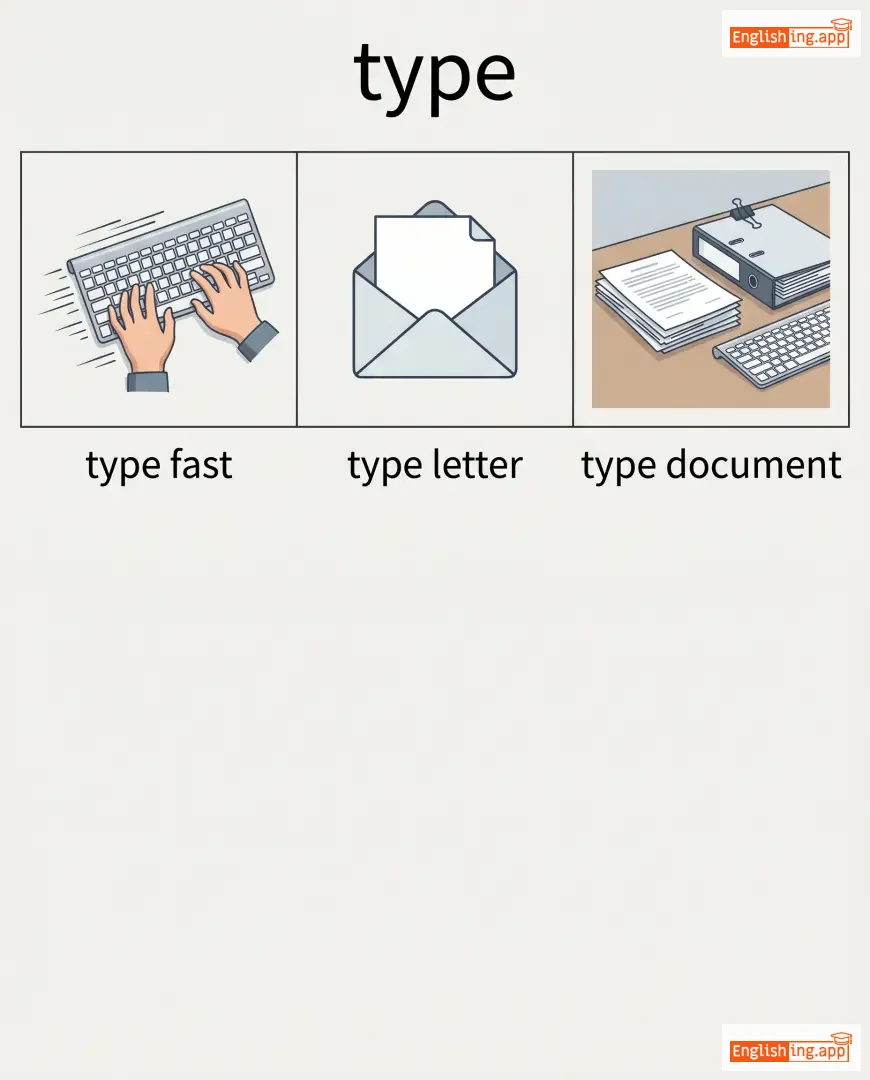
type fast, type letter, type document, type message, type carefully
••••••
|
快速打字像专家一样无比流畅。
••••••
|
|
#190
☀️
|
/bæsk/
verb
(bask)
••••••
|
|
晒太阳
shai taiyang
••••••
|
basked
basked
••••••
|
basked
basked
••••••
|
basks
basks
••••••
|
basking
basking
••••••
|
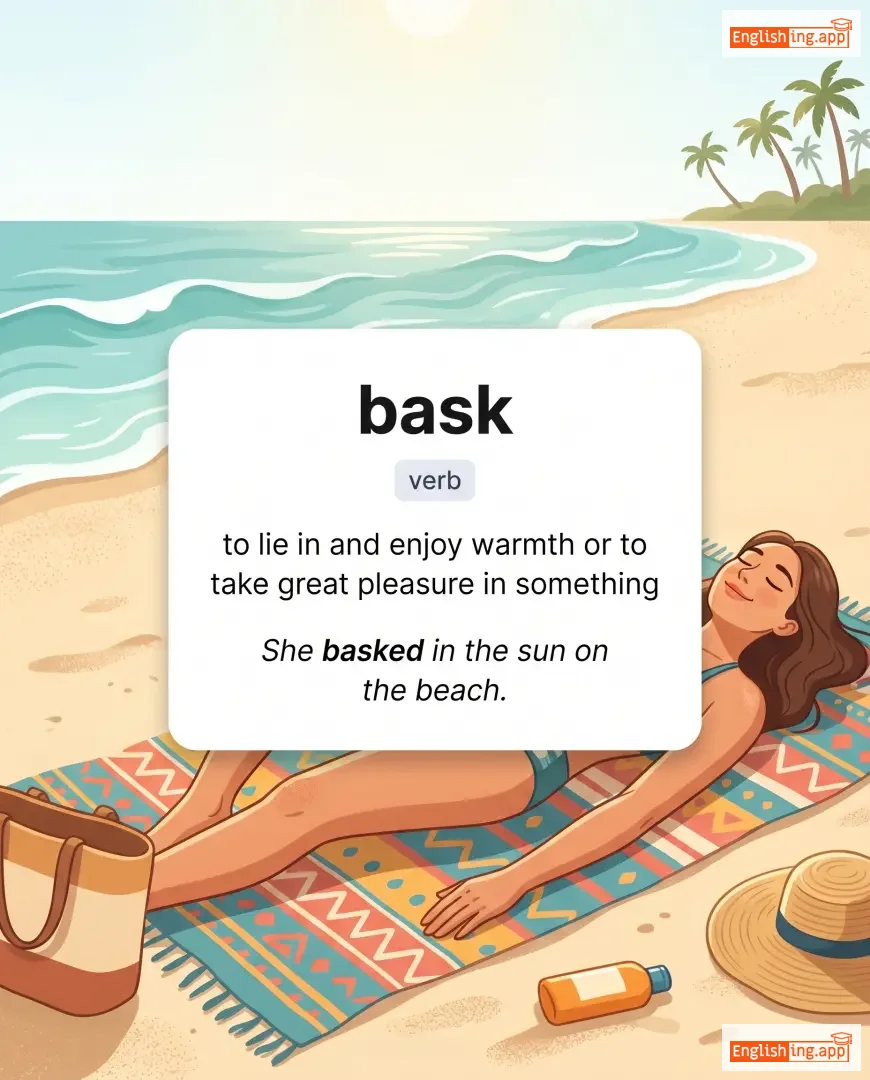
to lie in warmth and light; to enjoy something pleasurable
••••••
|
The cat basks in the sunny window.
猫在阳光明媚的窗台上晒太阳。
••••••
|
猫在阳光明媚的窗台上晒太阳。
Mao zai yangguang mingmei de chuangtai shang shai taiyang
••••••
|
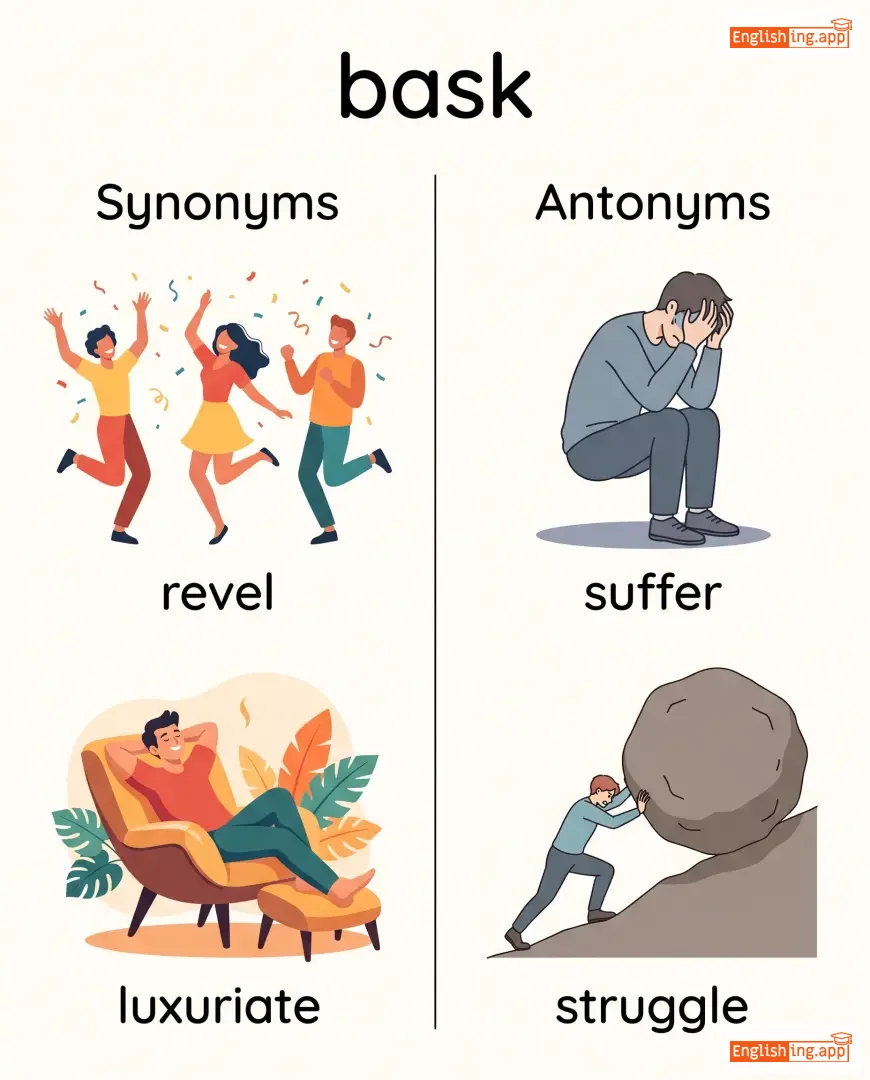
sunbathe, luxuriate, revel, enjoy
••••••
|
shiver, avoid, shun
••••••
|
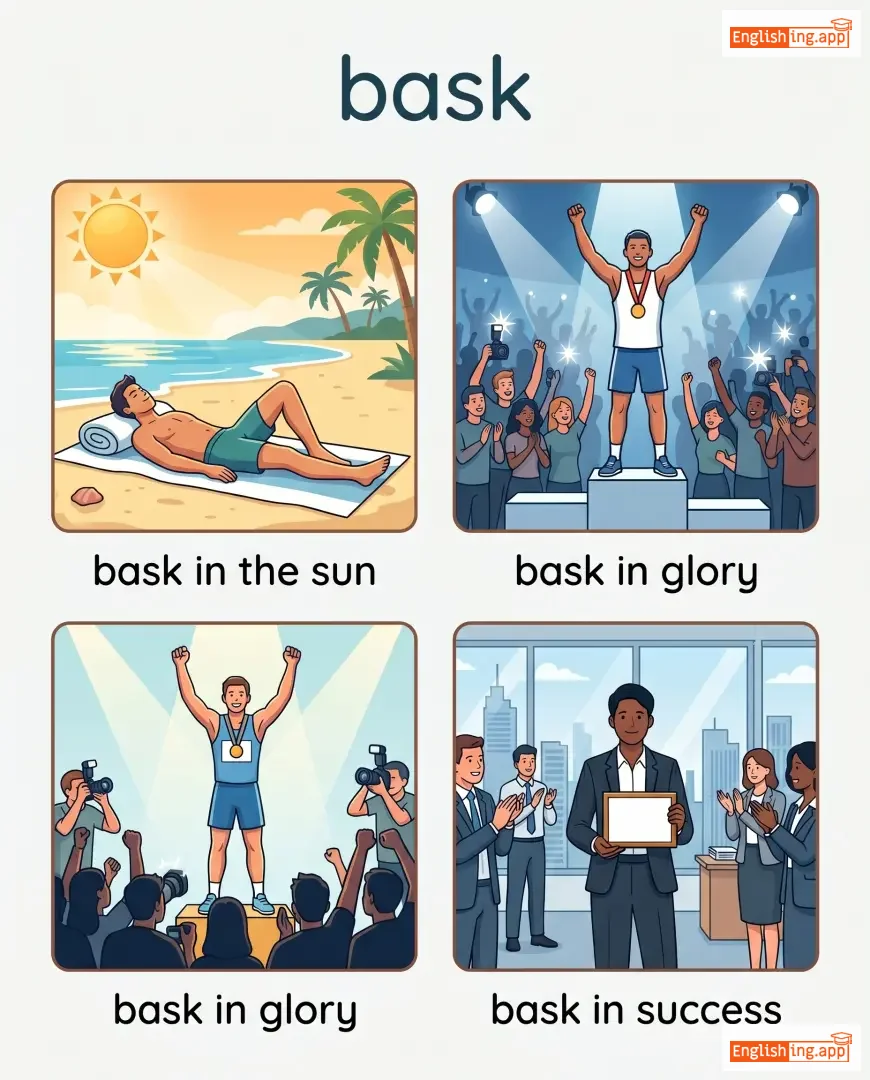
bask in, bask under, bask warmth, bask sunlight, bask glory
••••••
|
Bask,在阳光下享受温暖,就像猫一样
••••••
|
|
#191
🔄
|
/kənˈvɜːrdʒ/
verb
(kənvɜrdʒ)
••••••
|
|
汇合
huìhé
••••••
|
converged
kənvɜrdʒd
••••••
|
converged
kənvɜrdʒd
••••••
|
converges
kənvɜrdʒɪz
••••••
|
converging
kənvɜrdʒɪŋ
••••••
|
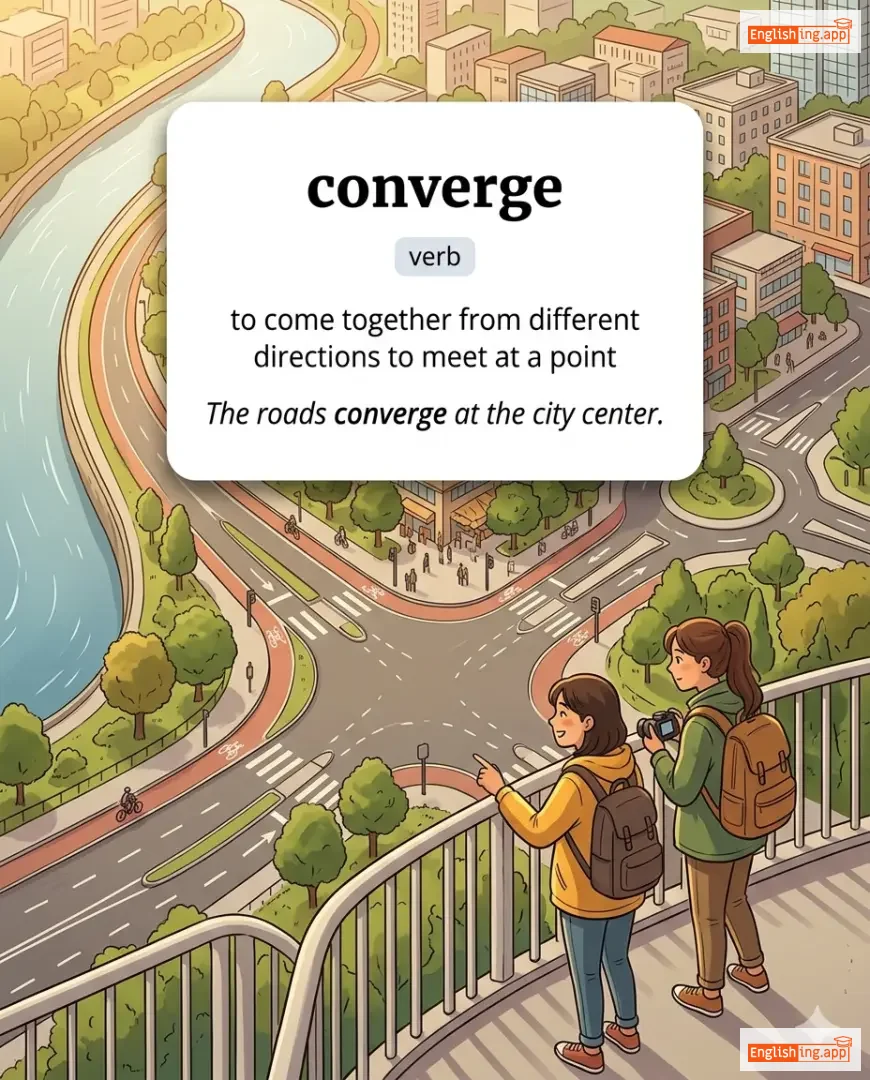
to come together from different directions; to meet at a point
••••••
|
The roads converge at the city center.
这些路在市中心汇合。
••••••
|
这些路在市中心汇合。
Zhèxiē lù zài shì zhōngxīn huìhé.
••••••
|
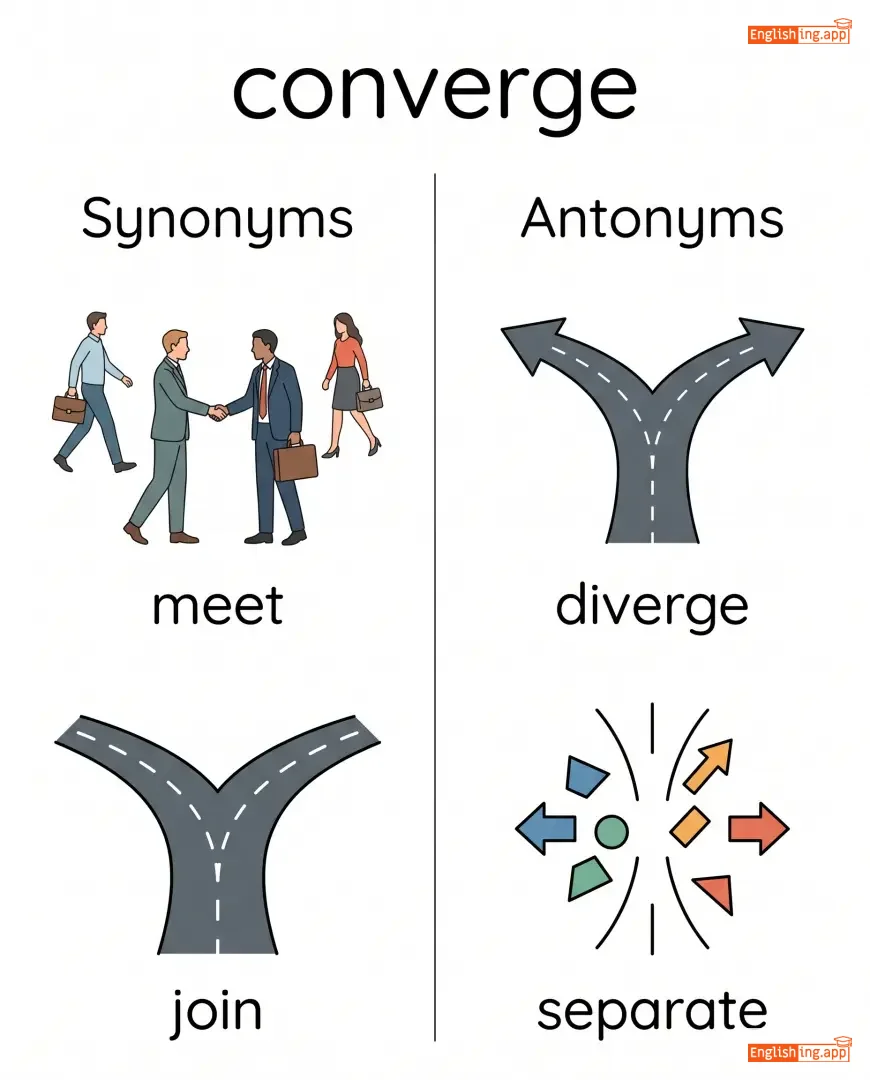
meet, unite, merge, come together, join
••••••
|
diverge, separate, spread, scatter
••••••
|
converge on, converge at, converge together, roads converge, lines converge
••••••
|
想象几条道路在一个中心点汇聚
••••••
|
|
#192
😞
|
/ˌdɪsəˈpɔɪnt/
verb
(迪萨普因特)
••••••
|
|
失望
shīwàng
••••••
|
disappointed
迪萨普因特德
••••••
|
disappointed
迪萨普因特德
••••••
|
disappoints
迪萨普因特斯
••••••
|
disappointing
迪萨普因廷
••••••
|
to fail to fulfill the hopes or expectations of someone; to make someone feel sad or displeased
••••••
|
I hope I won't disappoint you with my performance.
我希望我的表现不会让你失望。
••••••
|
我希望我的表现不会让你失望。
Wǒ xīwàng wǒ de biǎoxiàn bù huì ràng nǐ shīwàng
••••••
|
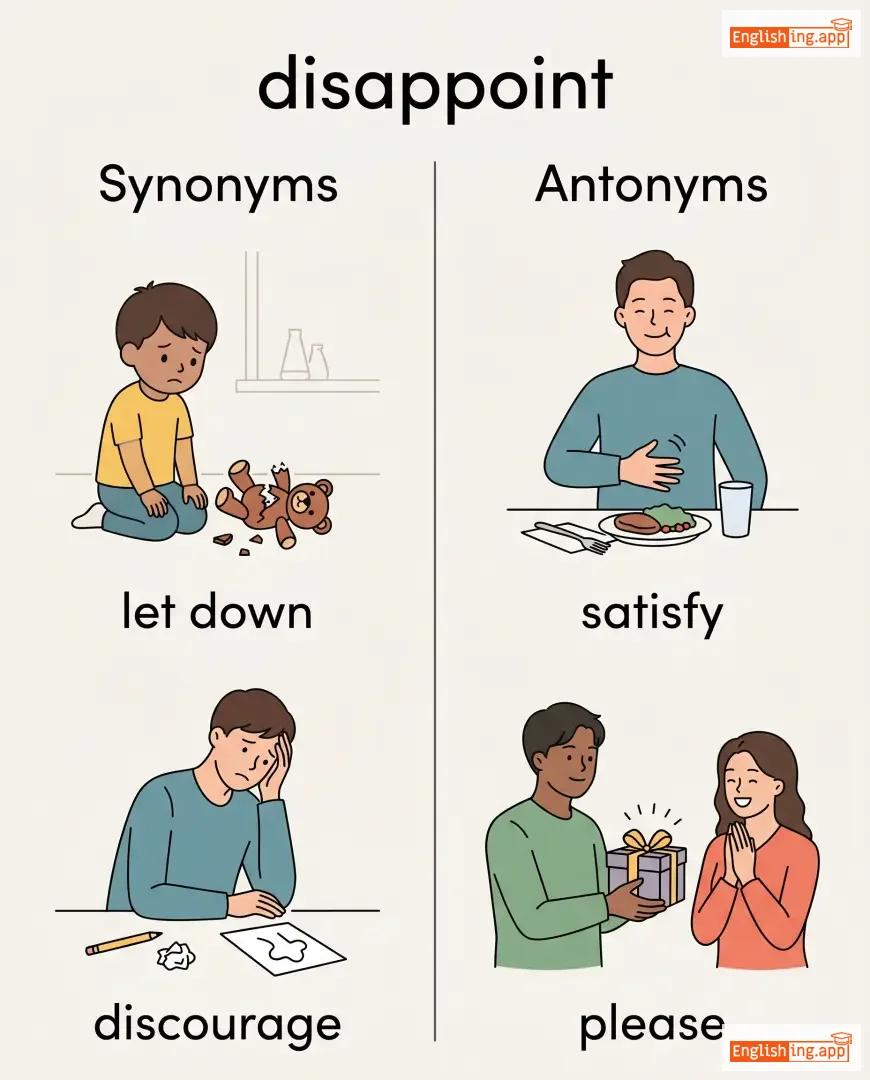
let down, fail, dishearten, sadden
••••••
|
satisfy, please, fulfill, delight
••••••
|
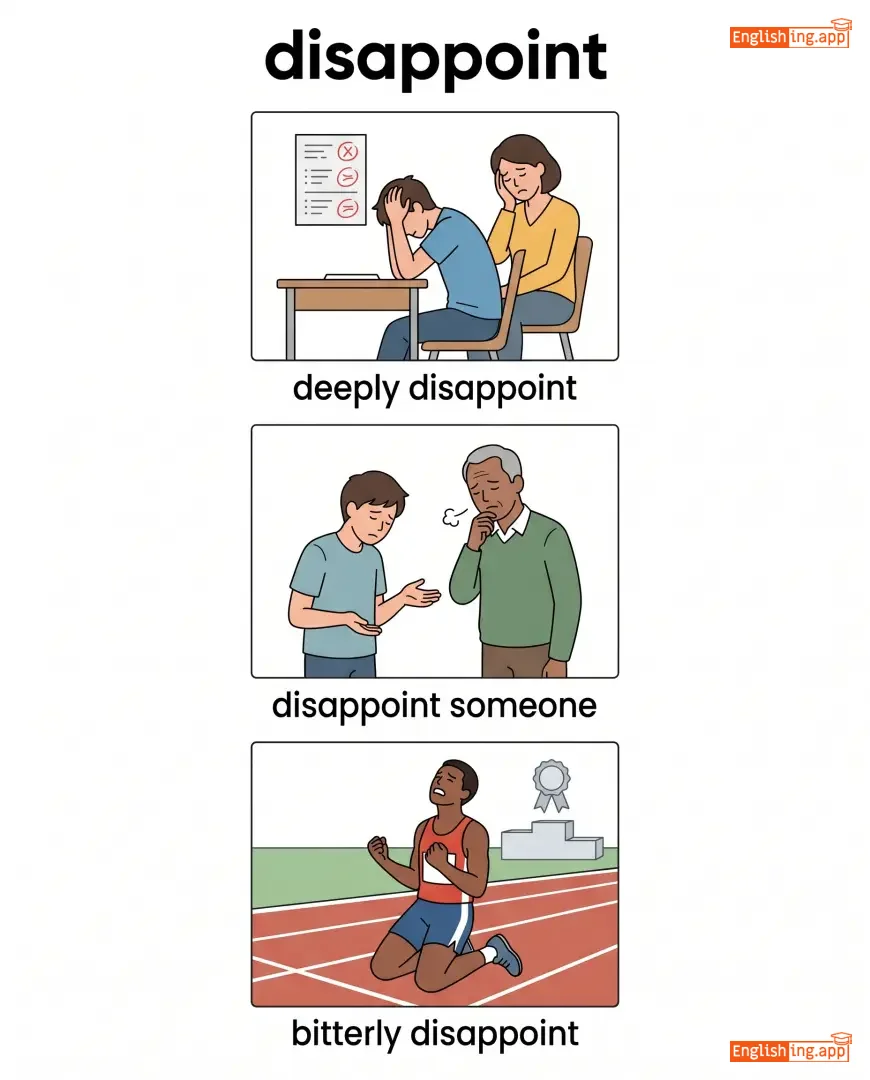
disappoint someone, disappoint fans, disappoint expectations, disappoint hopes, disappoint greatly
••••••
|
失望是未达到期望所带来的情感。
••••••
|
|
#193
🛡️
|
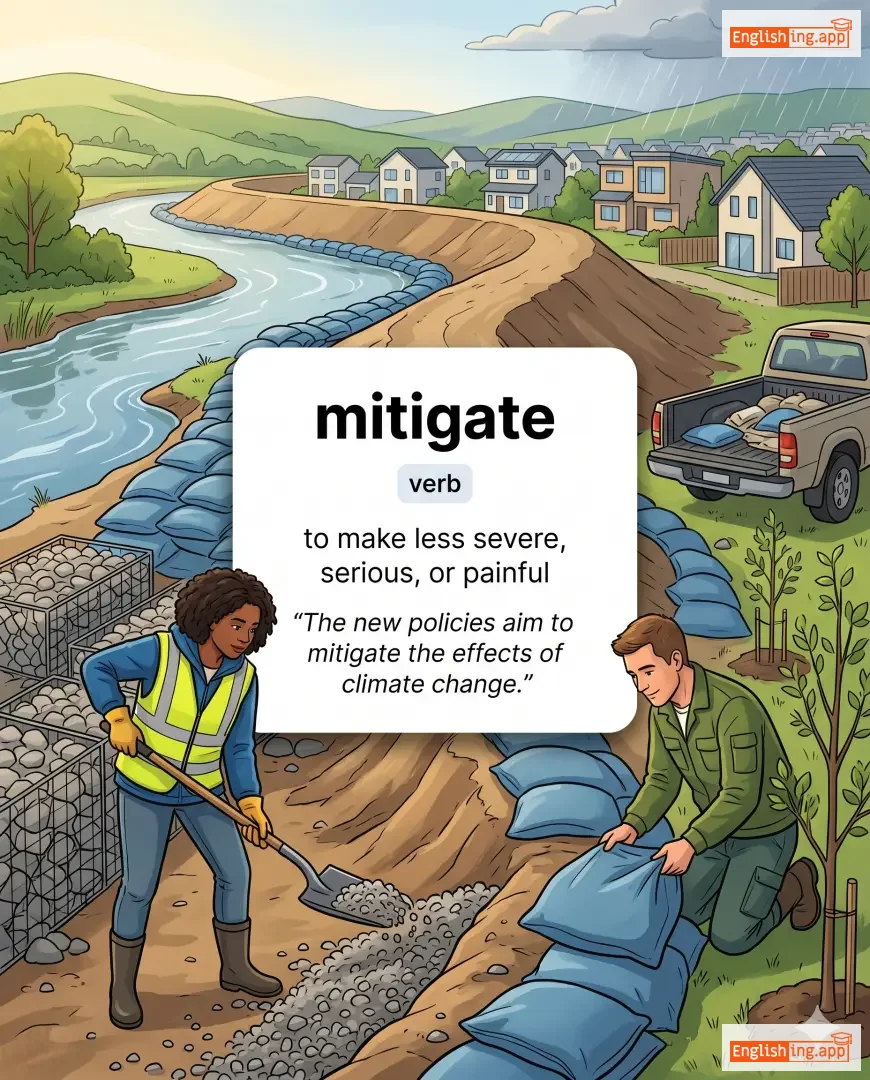
/ˈmɪtɪˌɡeɪt/
verb
(米提盖特)
••••••
|
|
减轻
jianqian
••••••
|
mitigated
米提盖特德
••••••
|
mitigated
米提盖特德
••••••
|
mitigates
米提盖特斯
••••••
|
mitigating
米提盖廷
••••••
|
to make less severe or painful; to reduce the impact of something harmful
••••••
|
The government took steps to mitigate the effects of the drought.
政府采取了措施来减轻干旱的影响。
••••••
|
政府采取了措施来减轻干旱的影响。
Zhengfu caiqule cuoshi lai jianqing ganhan de yingxiang.
••••••
|
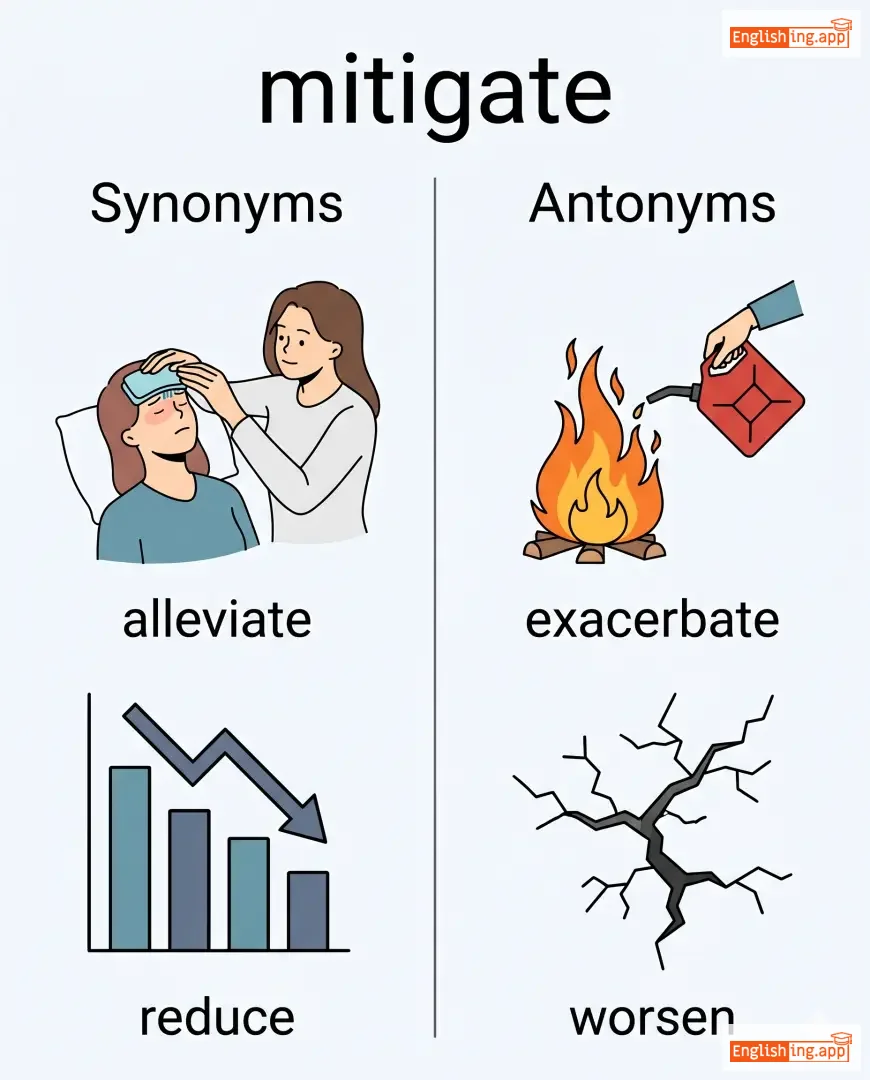
reduce, lessen, diminish, alleviate
••••••
|
aggravate, worsen, intensify, increase
••••••
|
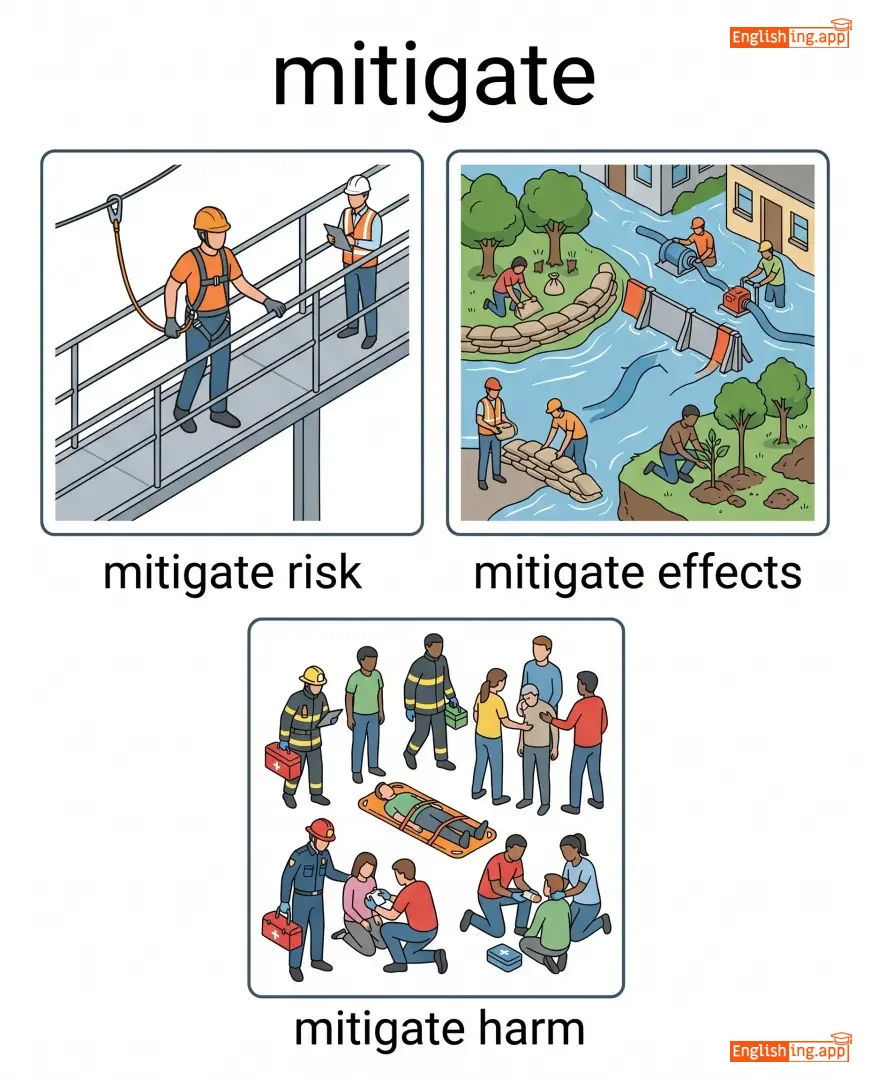
mitigate risk, mitigate damage, mitigate effects, mitigate impact, mitigate consequences
••••••
|
减轻 is like 'mitigate'—both aim to reduce harm.
••••••
|
|
#194
🎣
|
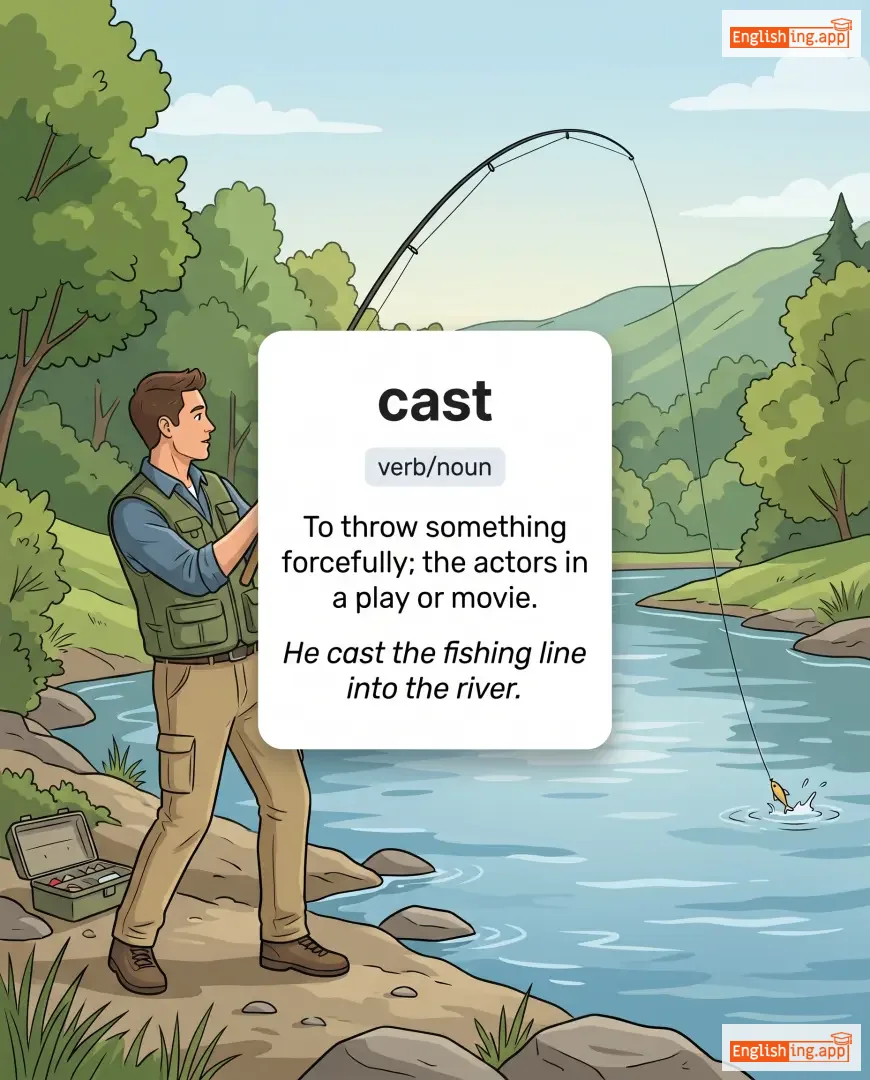
/kæst/
verb
(kæst)
••••••
|
|
投掷
tóu zhí
••••••
|
cast
kæst
••••••
|
cast
kæst
••••••
|
casts
kæsts
••••••
|
casting
kæstɪŋ
••••••
|
to throw; to choose actors for a play; to shape metal
••••••
|
The fisherman casts his line into the water.
渔夫把他的鱼线投进水里。
••••••
|
渔夫把他的鱼线投进水里。
Yúfū bǎ tā de yúxiàn tóu jìn shuǐ lǐ.
••••••
|
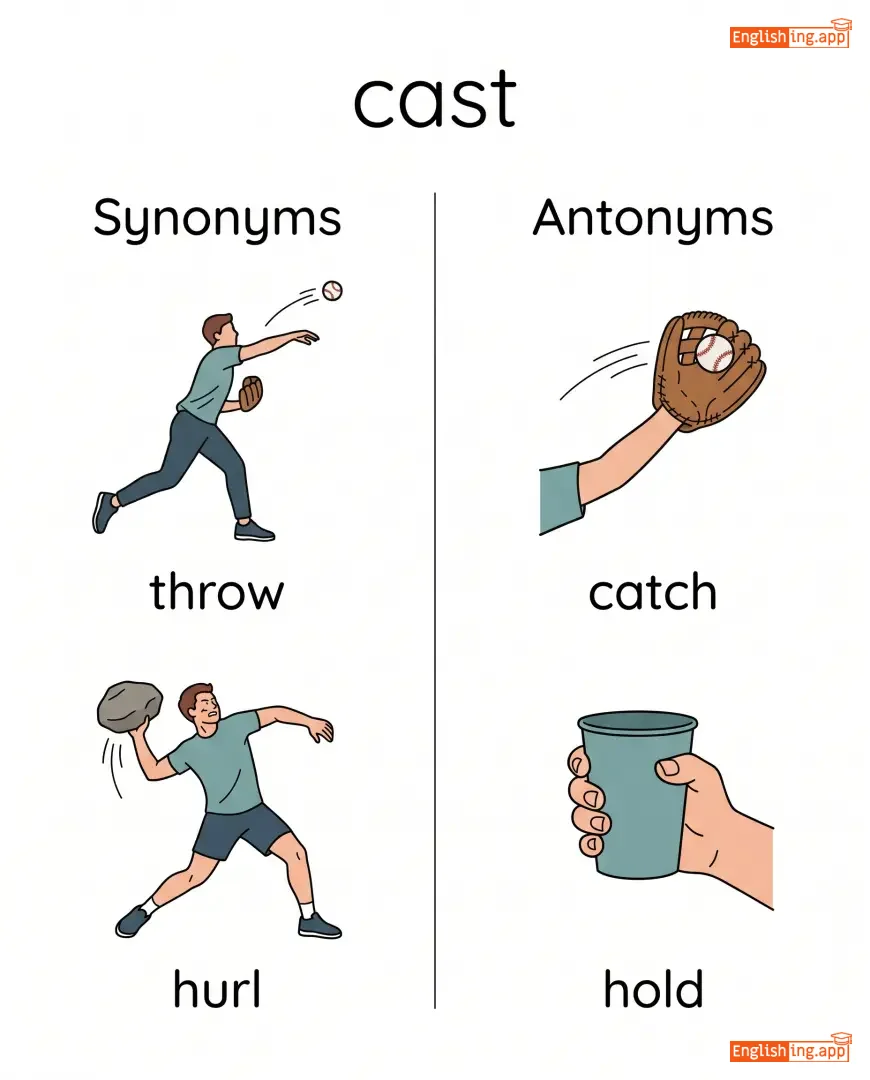
throw, hurl, select, mold
••••••
|
catch, receive, reject
••••••
|
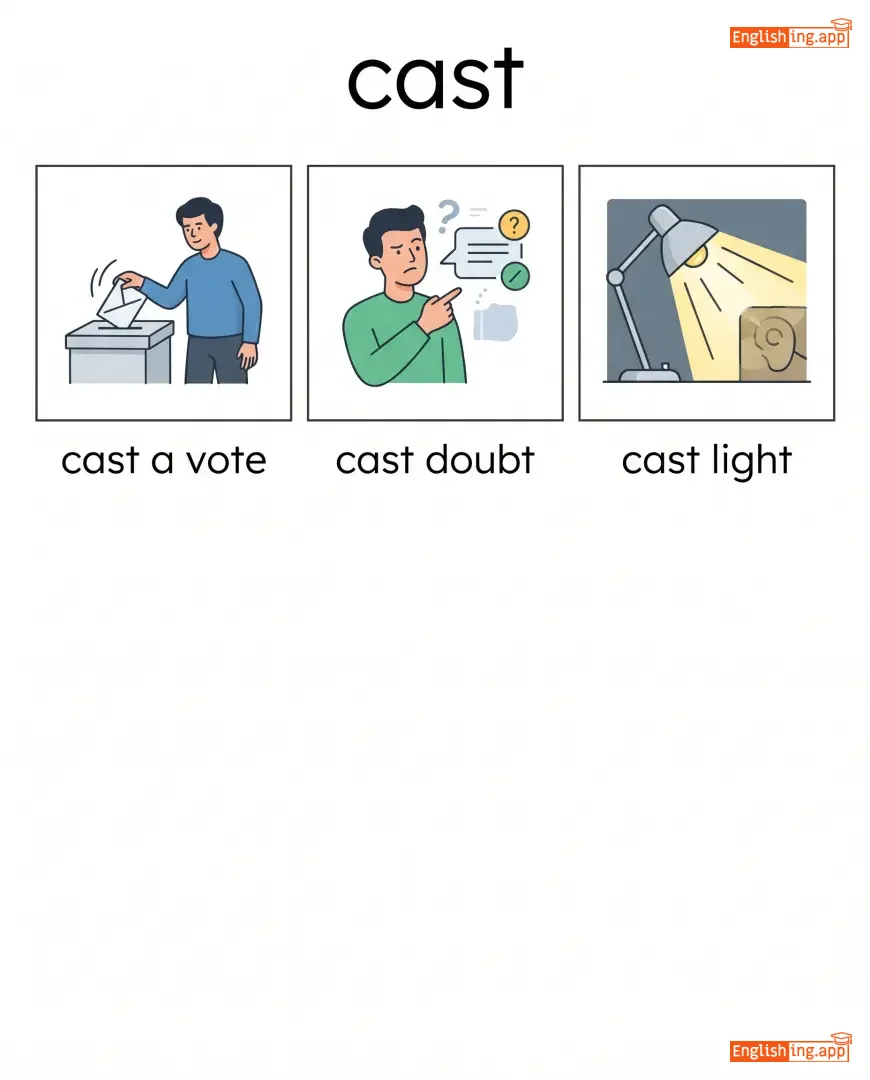
cast shadow, cast doubt, cast spell, cast vote, cast aside
••••••
|
投掷就是cast的意思。
••••••
|
|
#195
⚖️
|
/ˈkɒntrɑːst/
verb
(对比)
••••••
|
|
通过比较显示差异;显著不同
tōngguò bǐjiào xiǎnshì chāyì; xiǎnzhù bùtóng
••••••
|
contrasted
对比过
••••••
|
contrasted
对比过
••••••
|
contrasts
对比
••••••
|
contrasting
对比中
••••••
|
to compare in order to show differences; to be strikingly different
••••••
|
His behavior contrasts sharply with his words.
他的行为与他的言语形成鲜明对比。
••••••
|
他的行为与他的言语形成鲜明对比。
Tā de xíngwéi yǔ tā de yányǔ xíngchéng xiānmíng duìbǐ.
••••••
|
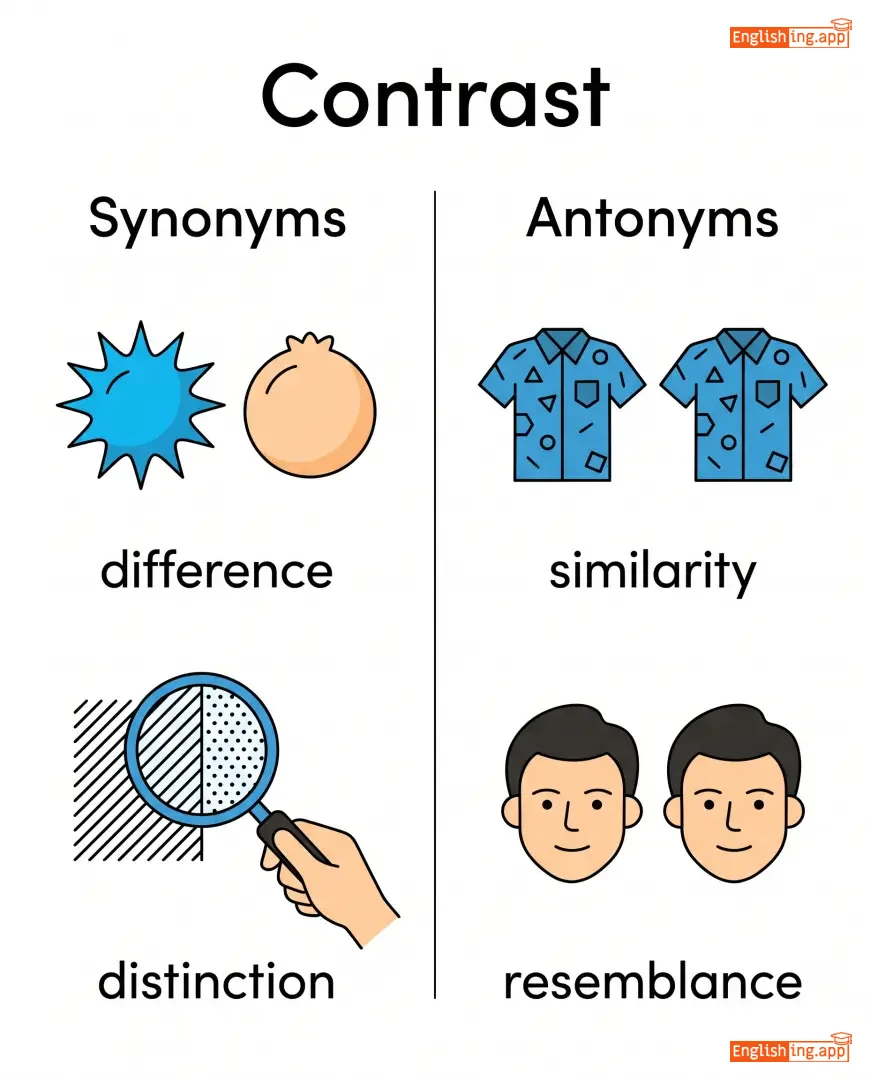
compare, differ, oppose, distinguish
••••••
|
match, agree, harmonize, correspond
••••••
|
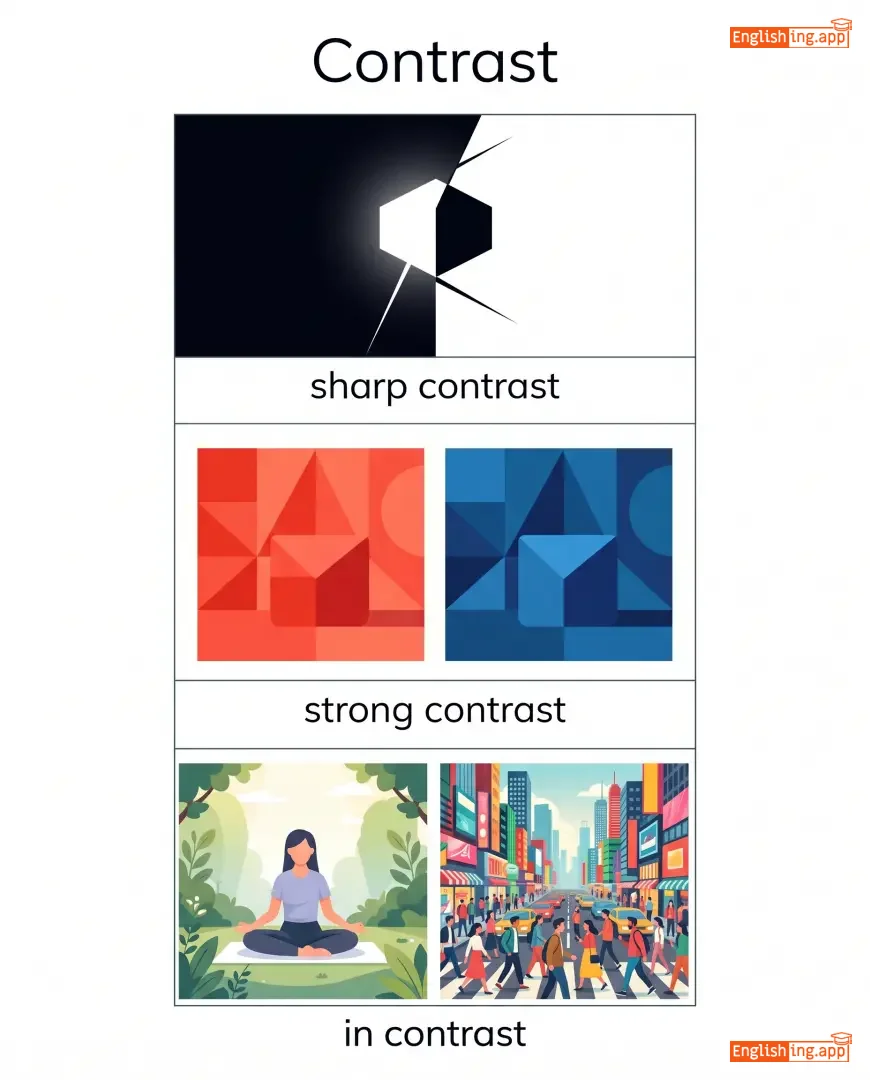
contrast with, contrast sharply, contrast starkly, stark contrast, sharp contrast
••••••
|
‘黑与白之间的对比’
••••••
|
|
#196
😱
|
/skwiːl/
verb
(skwīl)
••••••
|
|
尖叫
jiān jiào
••••••
|
squealed
skwīld
••••••
|
squealed
skwīld
••••••
|
squeals
skwīlz
••••••
|
squealing
skwīlīng
••••••
|
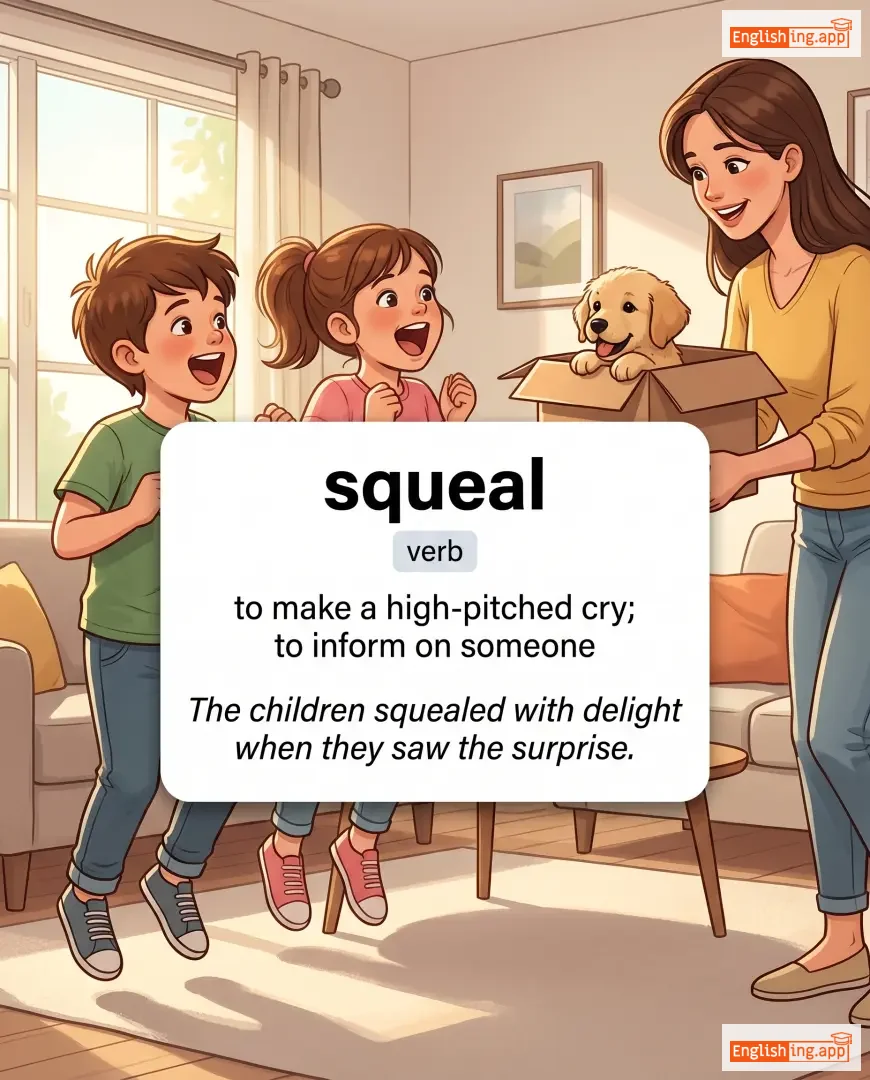
to make a high-pitched cry; to inform on someone
••••••
|
The children squealed with delight when they saw the surprise.
孩子们看到惊喜时高兴地尖叫。
••••••
|
孩子们看到惊喜时高兴地尖叫。
Háizimen kàn dào jīngxǐ shí gāoxìng de jiānjiào.
••••••
|
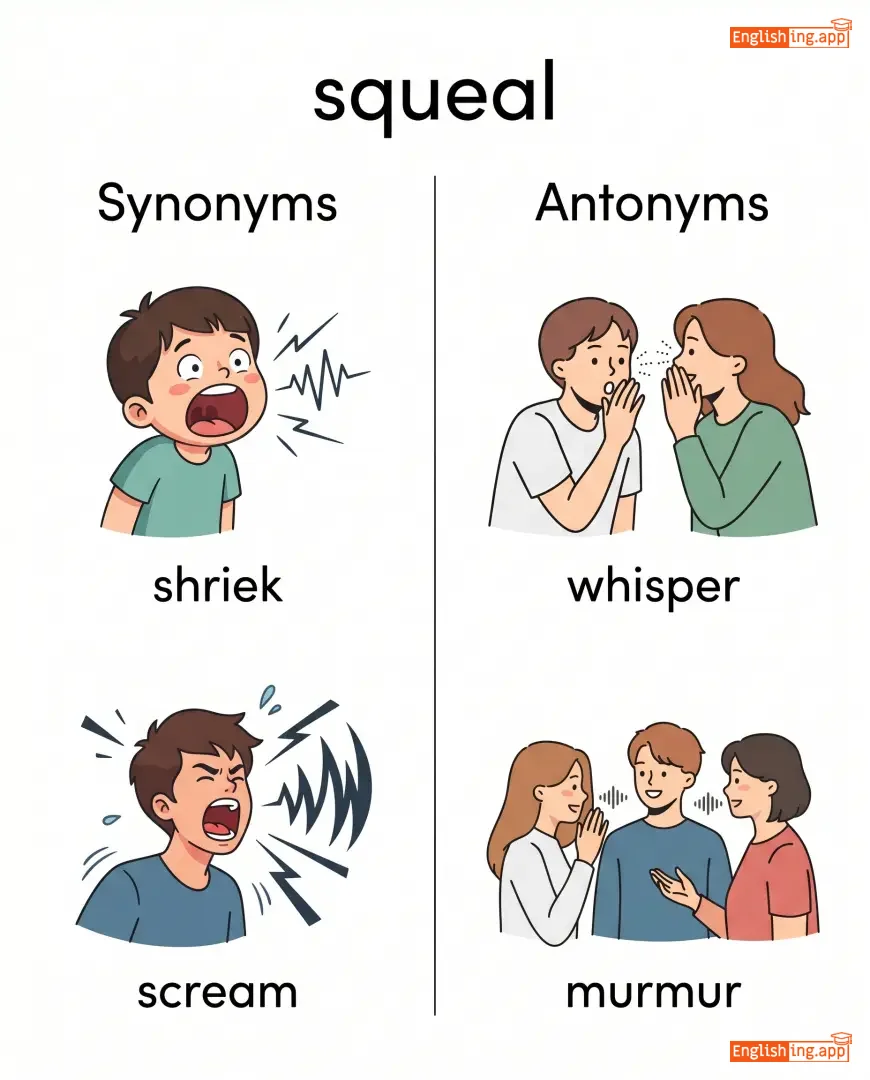
shriek, scream, cry, inform
••••••
|
whisper, murmur, stay silent, keep quiet
••••••
|
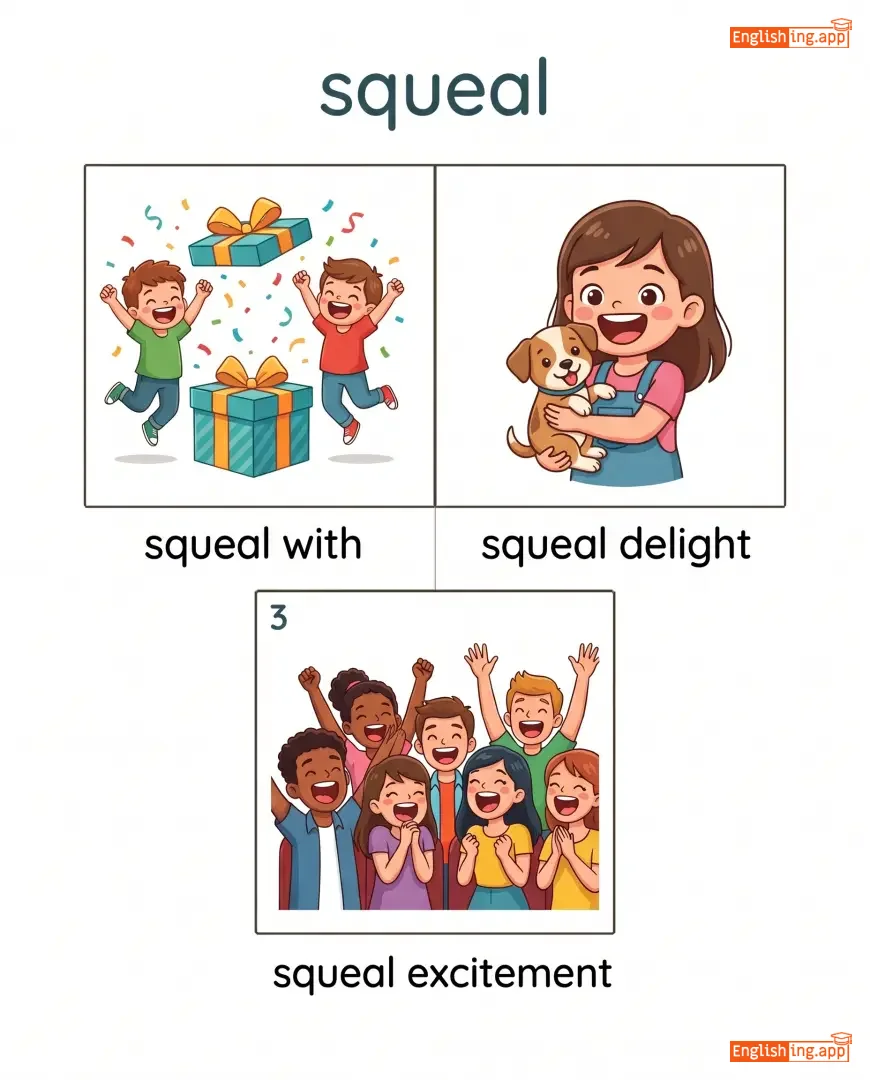
squeal with, squeal delight, squeal excitement, squeal loudly, squeal protest
••••••
|
孩子们高兴时尖叫,就像我们发出‘尖’的声音。
••••••
|
|
#197
🤼
|
/ˈresəl/
verb
(rè sī ěr)
••••••
|
|
摔跤
shuāi jiāo
••••••
|
wrestled
rè sī ěr dé
••••••
|
wrestled
rè sī ěr dé
••••••
|
wrestles
rè sī ěr sī
••••••
|
wrestling
rè sī ěr líng
••••••
|
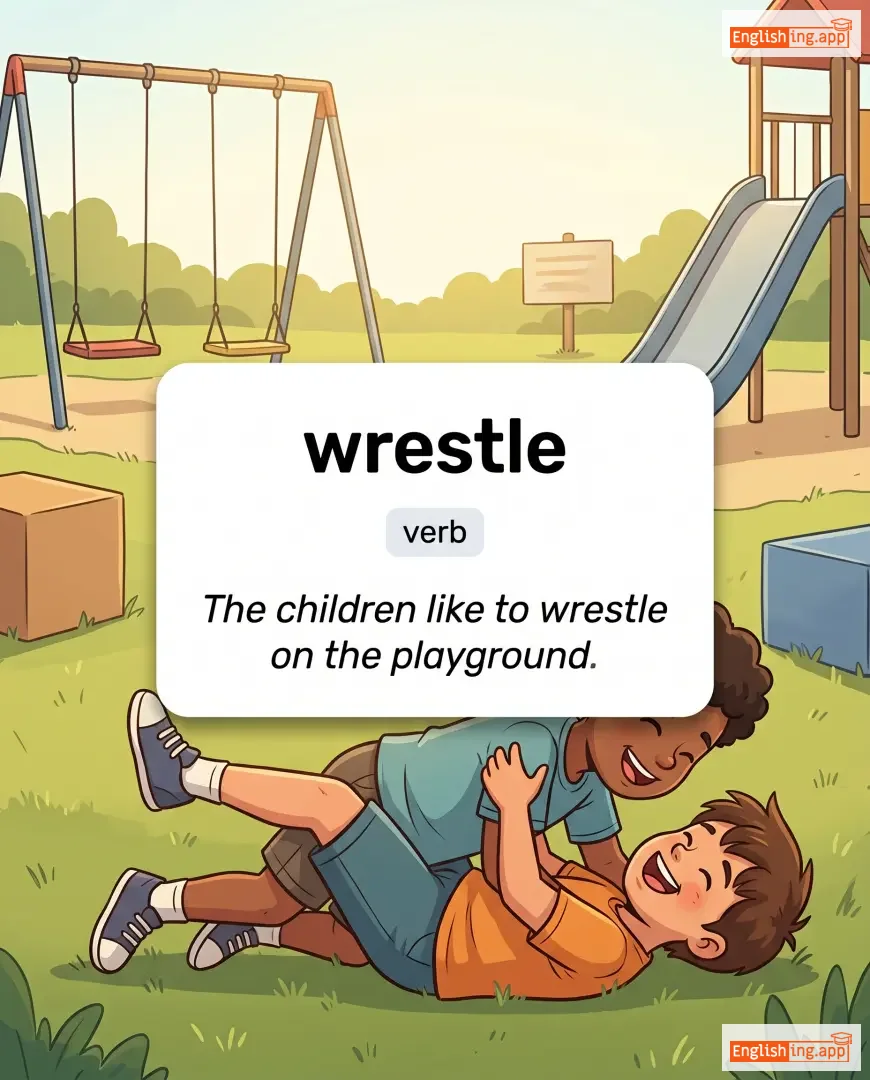
to fight by grappling and trying to throw down an opponent; to struggle with a problem
••••••
|
The children like to wrestle on the playground.
孩子们喜欢在操场上摔跤。
••••••
|
孩子们喜欢在操场上摔跤。
Háizimen xǐhuān zài cāo chǎng shàng shuāi jiāo
••••••
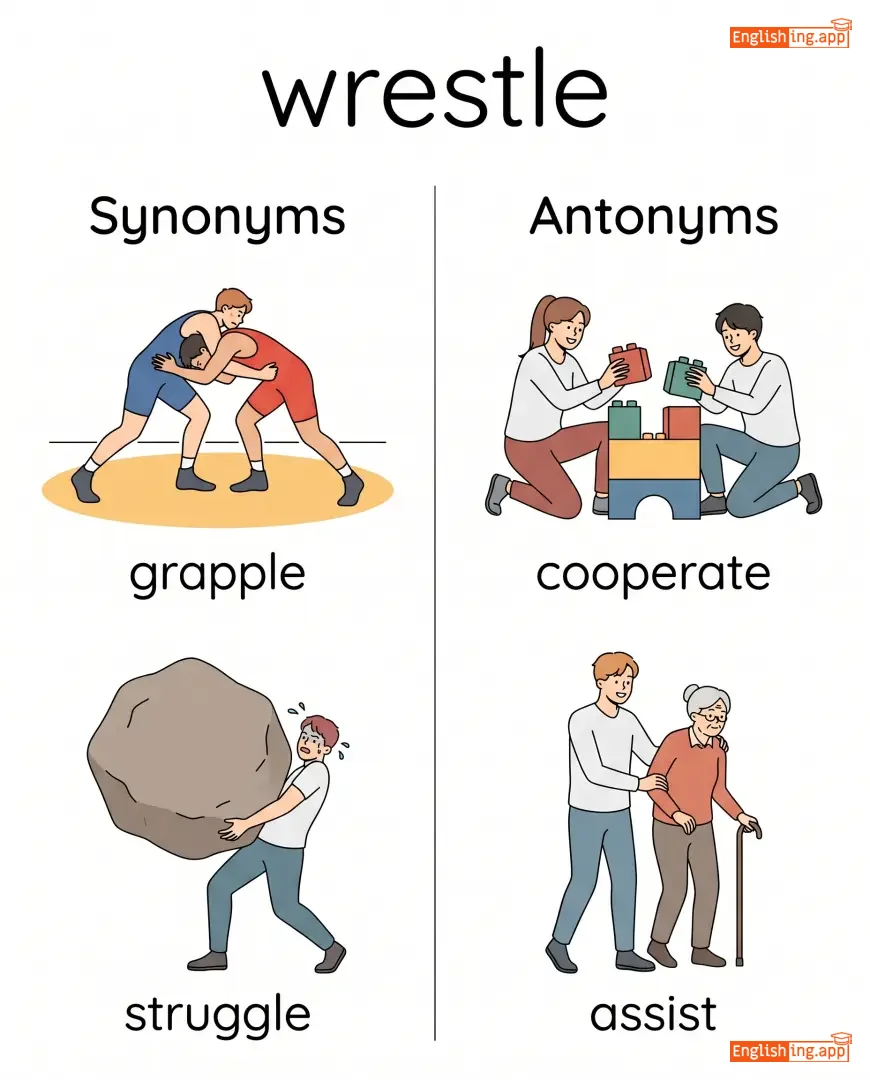
|
grapple, struggle, fight, combat
••••••
|
cooperate, assist, help, surrender
••••••
|
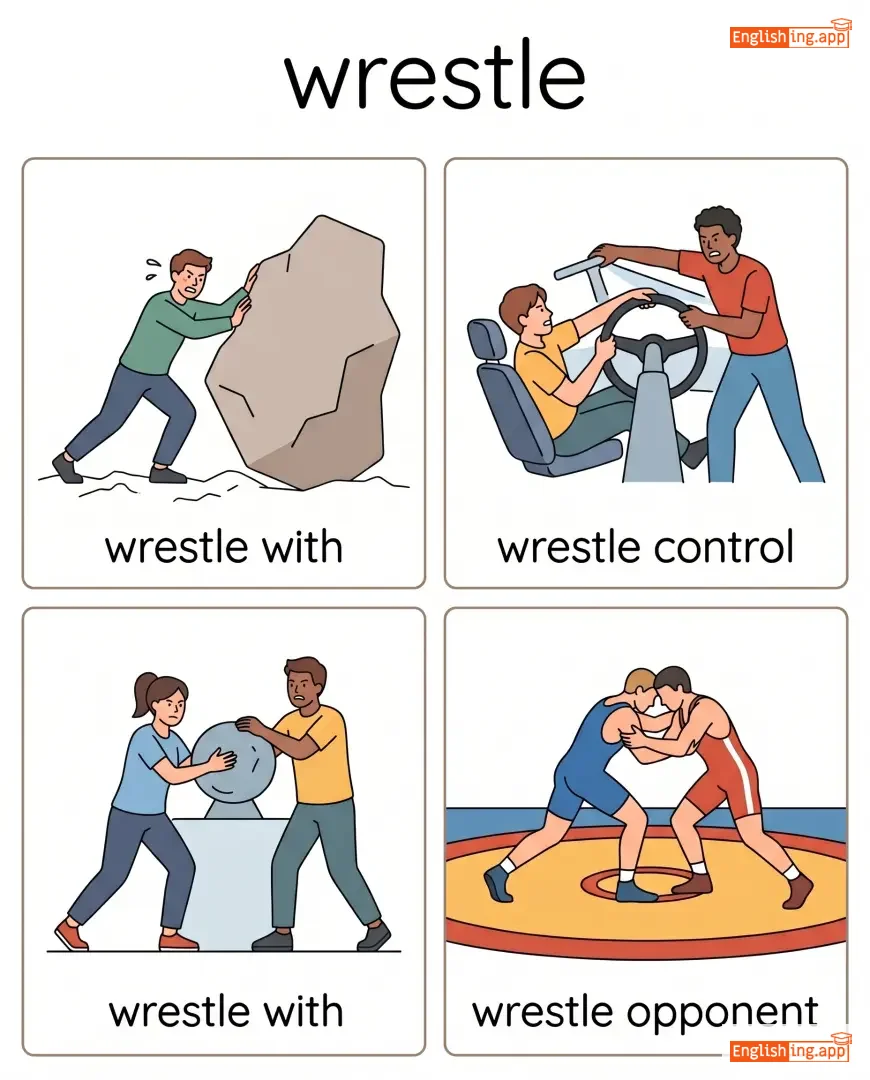
wrestle with, wrestle control, wrestle opponent, wrestle problem, wrestle ground
••••••
|
No •••••• |
|
#198
📉
|
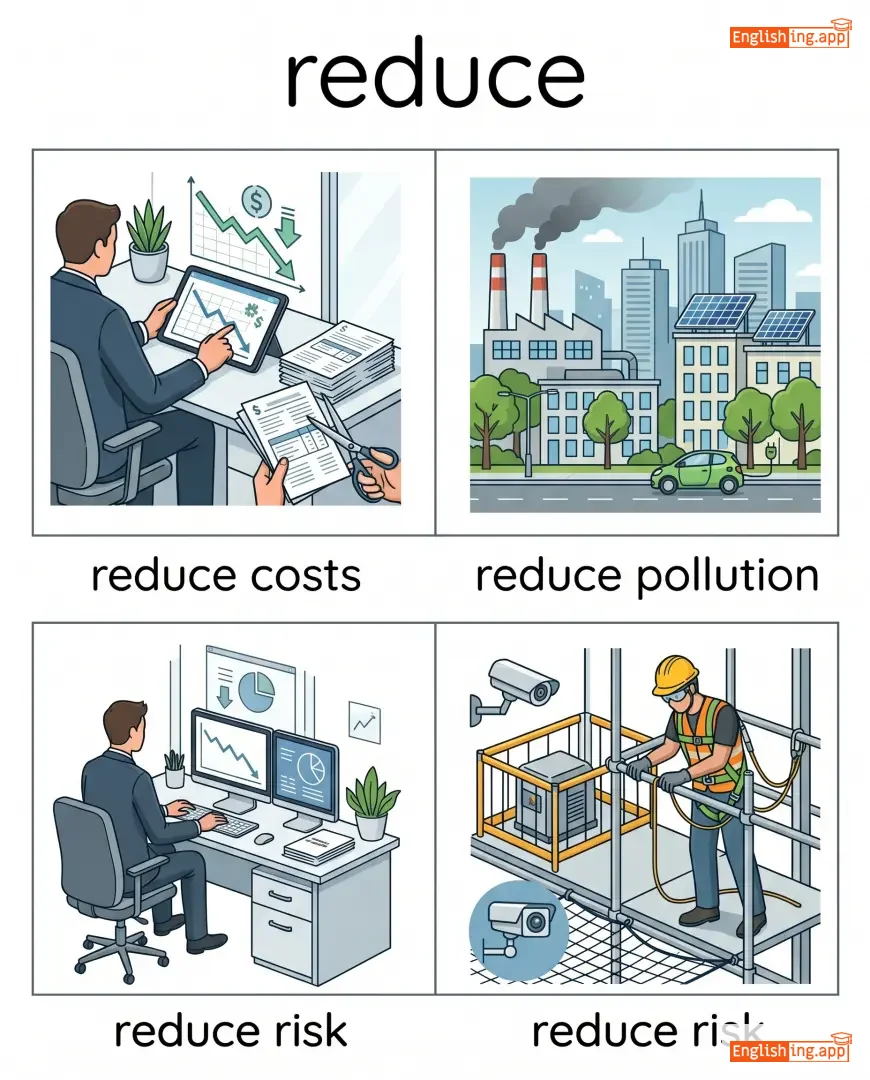
/rɪˈdjuːs/
verb
(瑞丢斯)
••••••
|
|
减少
jianshao
••••••
|
reduced
瑞丢斯特
••••••
|
reduced
瑞丢斯特
••••••
|
reduces
瑞丢斯斯
••••••
|
reducing
瑞丢辛
••••••
|
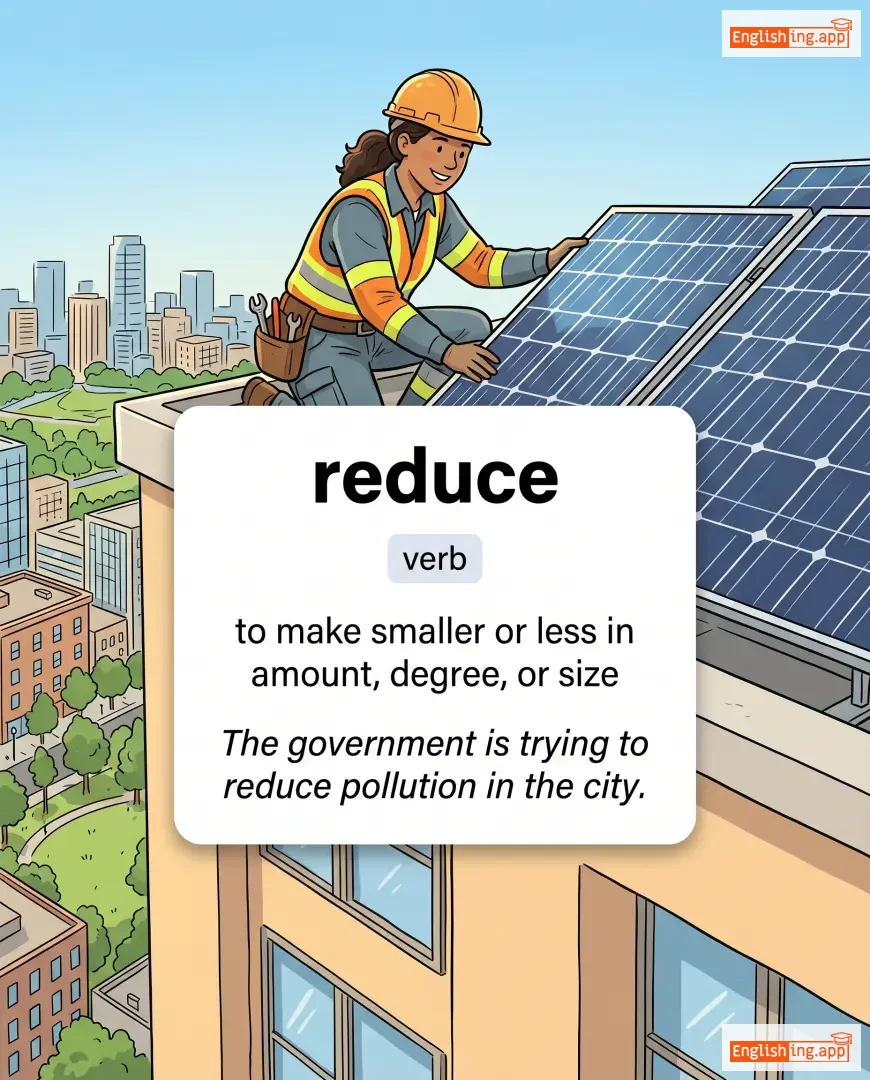
to make smaller in size, amount, or degree; to decrease
••••••
|
We need to reduce our expenses this month.
我们 需要 瑞丢斯 我们 的 开支 这 个月。
••••••
|
我们需要减少本月的开支。
Women xuyao jianshao benyue de kaizhi.
••••••
|
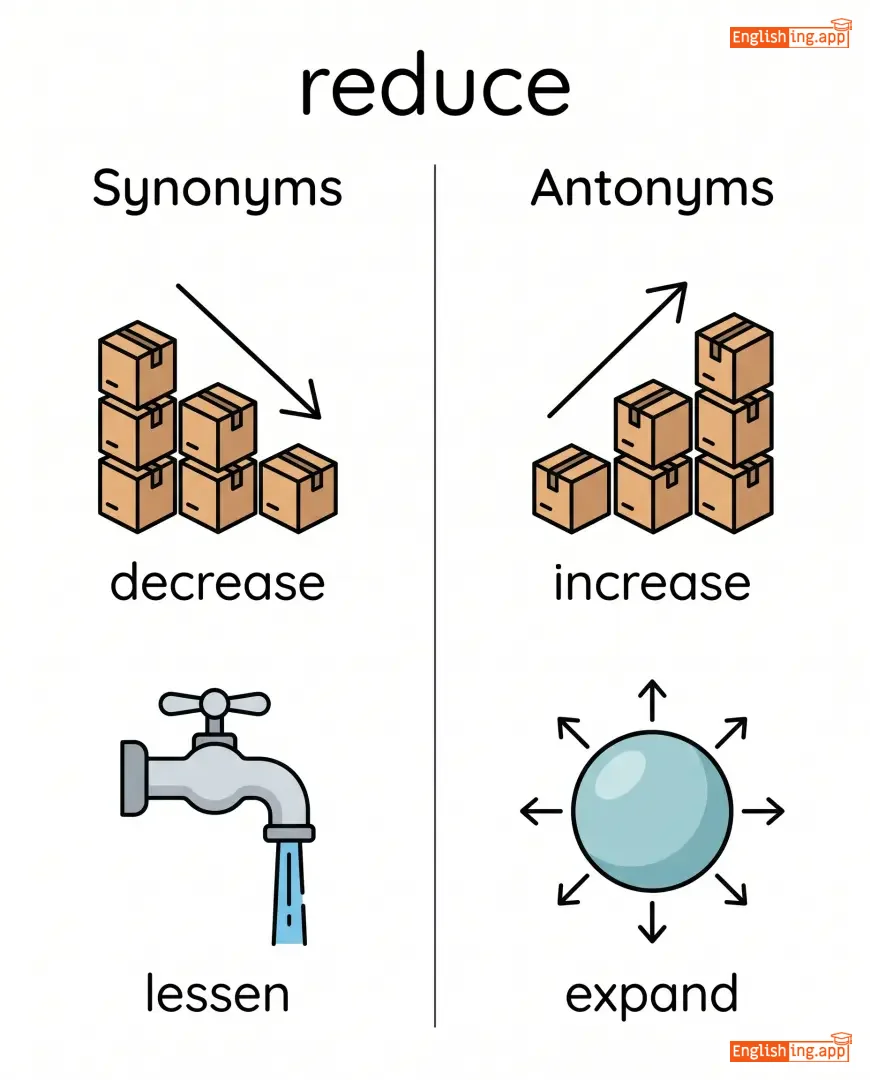
decrease, diminish, lessen, cut
••••••
|
increase, expand, enlarge, raise
••••••
|
reduce cost, reduce risk, reduce size, reduce pressure, reduce emissions
••••••
|
Reduce means 'jianshao' — imagine cutting a giant bill in half to reduce it!
••••••
|
|
#199
🔄
|
/ˈveri/
verb
(维里)
••••••
|
|
变化
biànhuà
••••••
|
varied
维里德
••••••
|
varied
维里德
••••••
|
varies
维里斯
••••••
|
varying
维里英
••••••
|
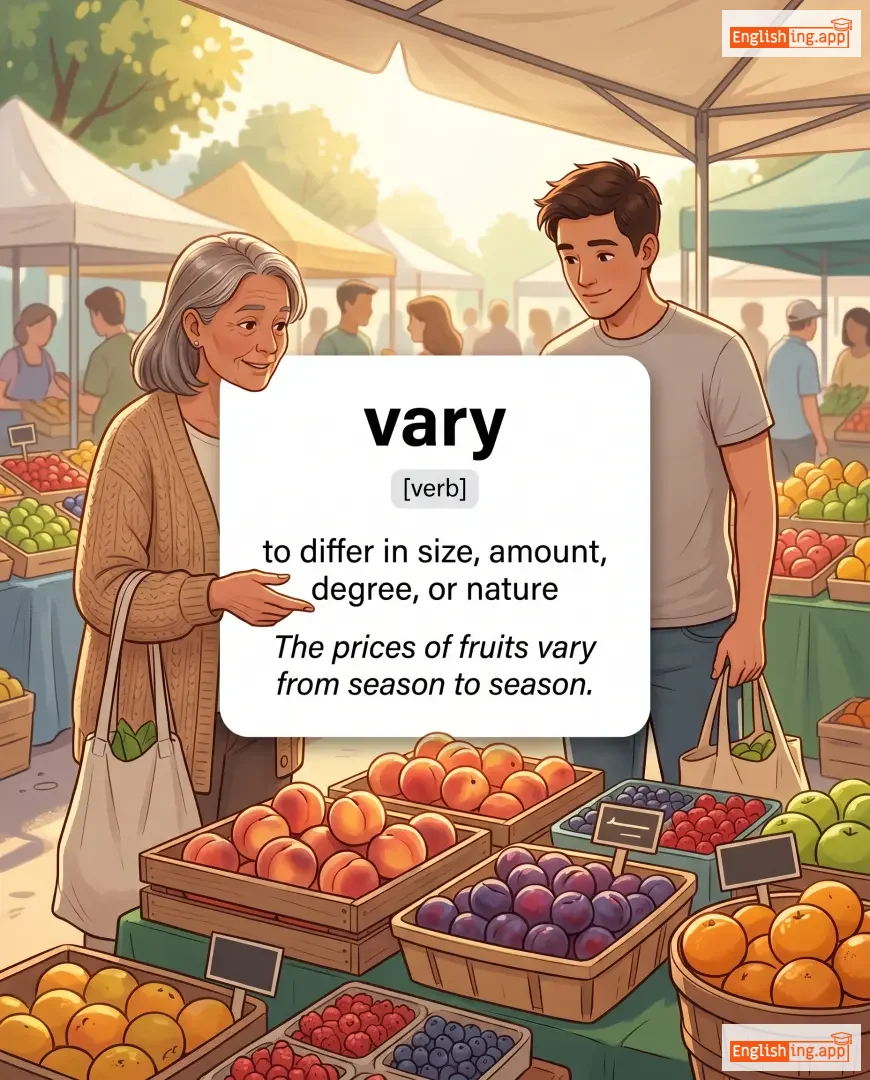
to change or differ; to make different
••••••
|
The weather conditions vary throughout the day.
天气条件整天都在变化。
••••••
|
天气条件整天都在变化。
Tiāqì tiáojiàn zhěngtiān dōu zài biànhuà.
••••••
|
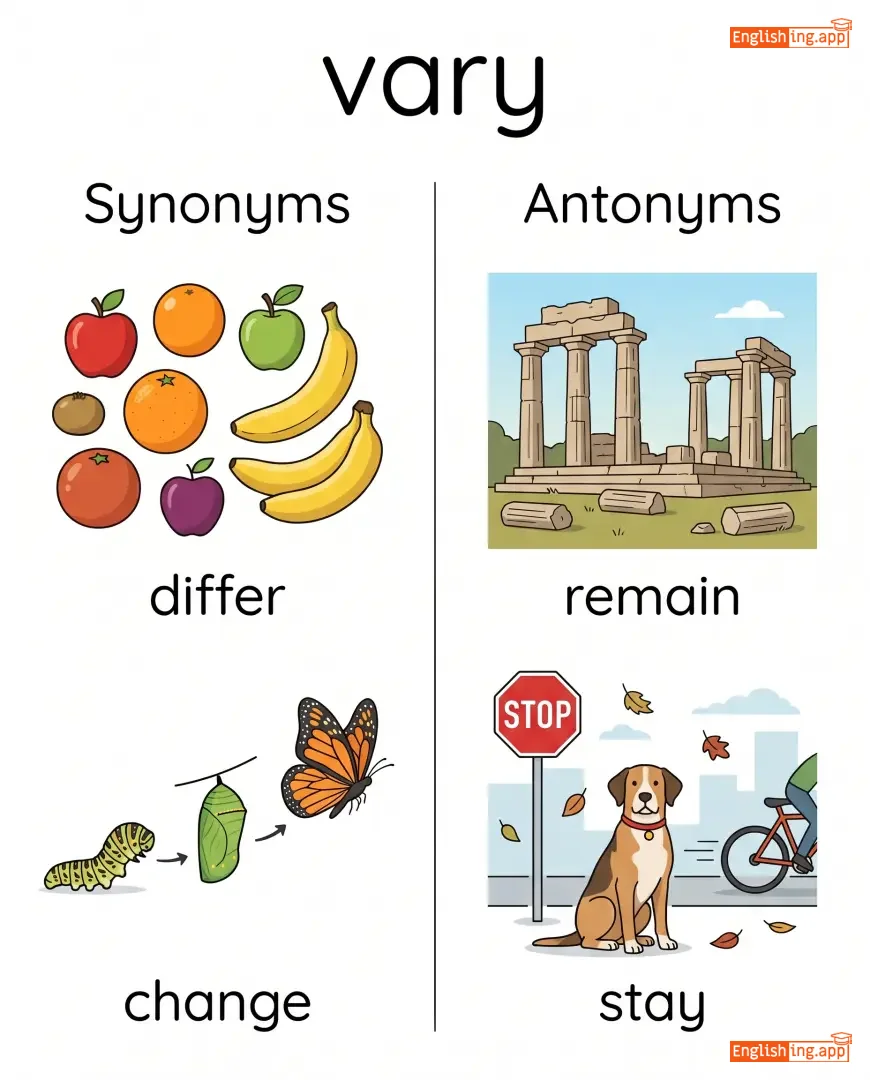
change, differ, fluctuate, modify, alter
••••••
|
remain constant, stay same, stabilize
••••••
|
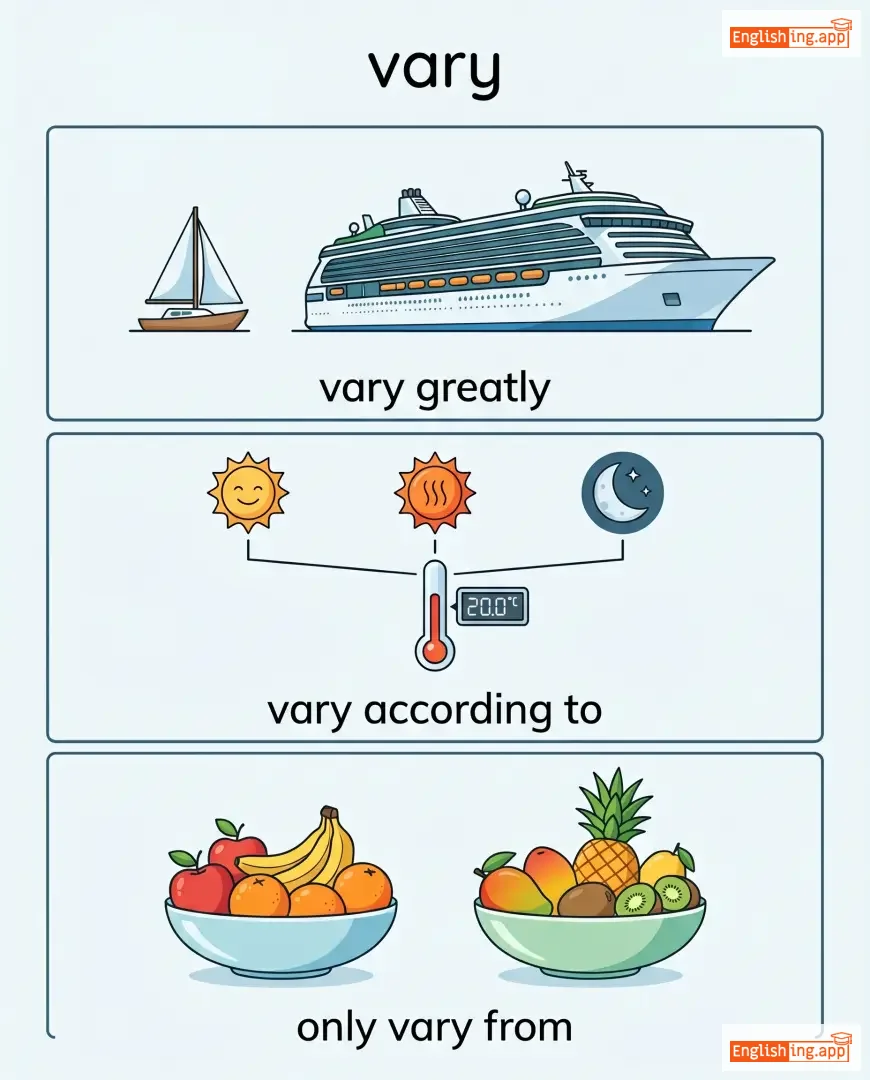
vary widely, vary greatly, vary significantly, vary according, vary from
••••••
|
Vary means change, like how the weather changes continuously throughout the day.
••••••
|
|
#200
🎁
|
/ˈdoʊneɪt/
verb
(捐赠)
••••••
|
|
捐赠
juānzèng
••••••
|
donated
捐赠了
••••••
|
donated
捐赠了
••••••
|
donates
捐赠
••••••
|
donating
捐赠
••••••
|
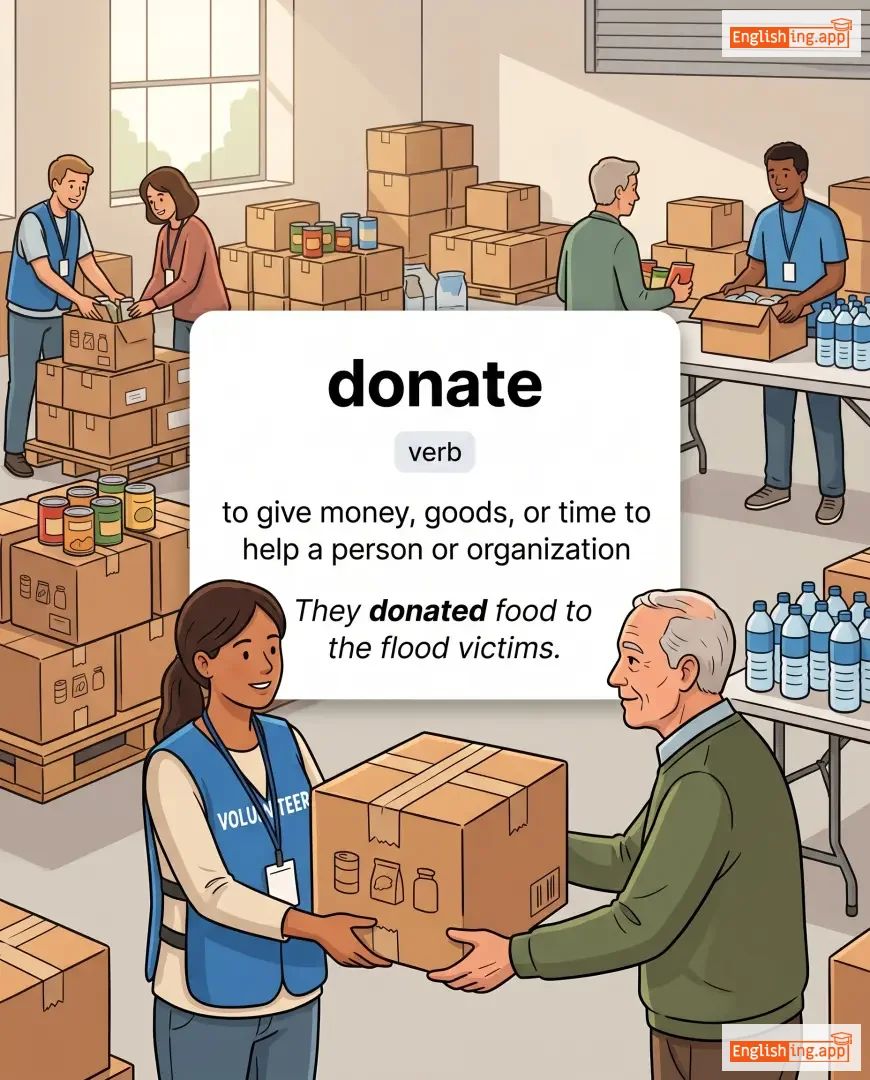
to give money, goods, or time to help others; to contribute
••••••
|
She donates blood every three months.
她每三个月捐一次血。
••••••
|
她每三个月捐一次血。
Tā měi sān gè yuè juān yī cì xuè.
••••••
|
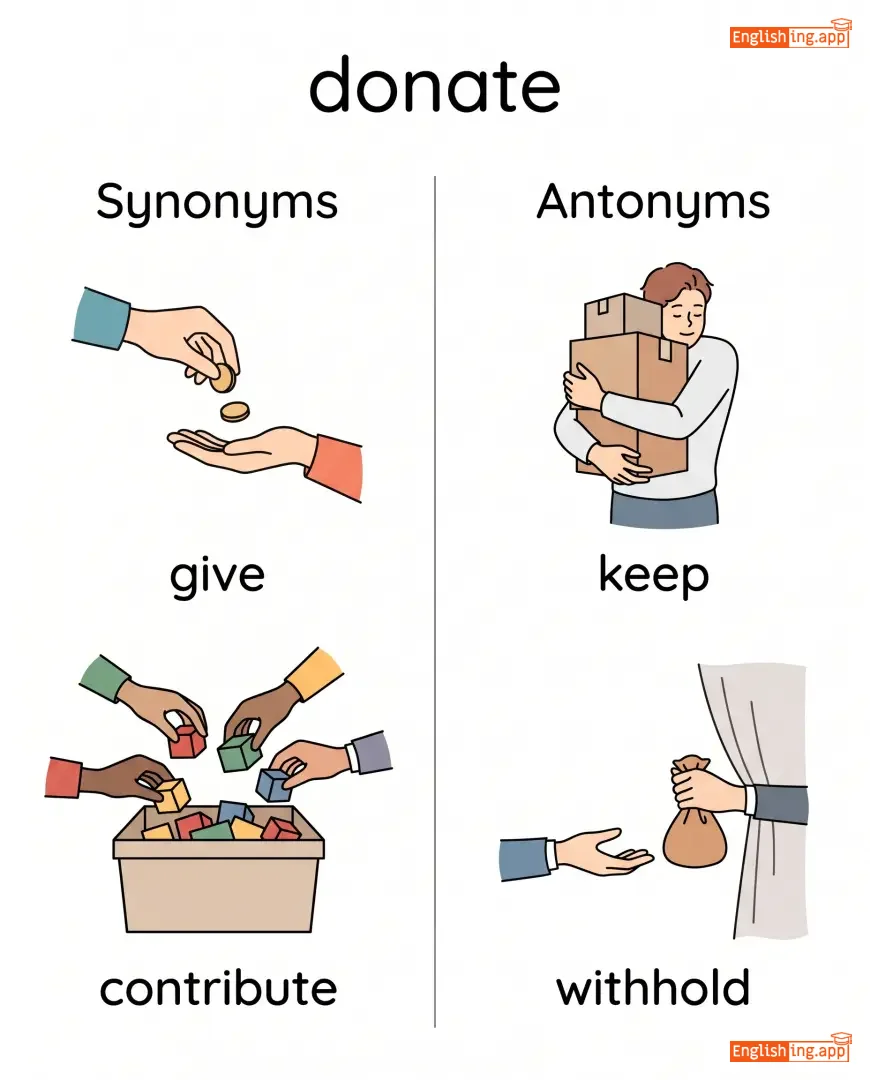
give, contribute, offer, provide
••••••
|
receive, take, keep, withhold
••••••
|
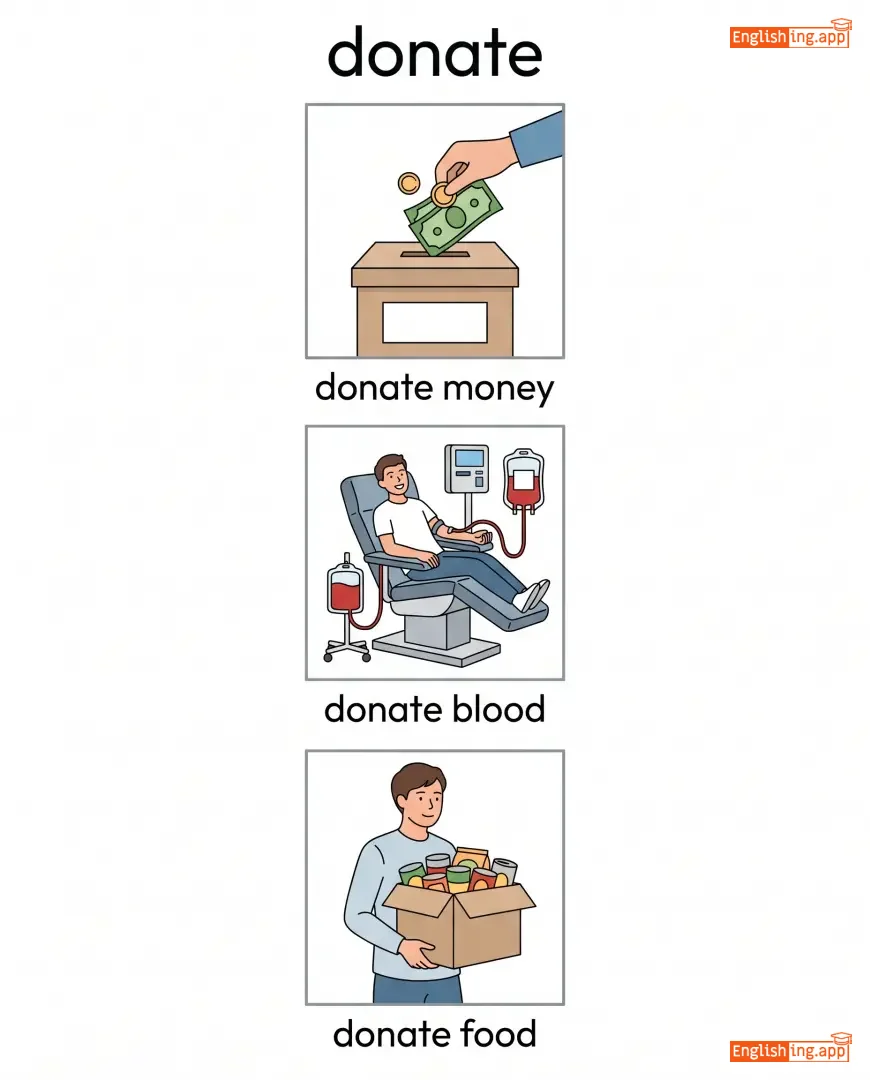
donate money, donate blood, donate time, donate generously, donate charity
••••••
|
捐赠帮助他人就像献血一样!
••••••
|
|
#201
✅
|
/ˈɔːθəraɪz/
verb
(授权)
••••••
|
|
授权
shòuquán
••••••
|
authorized
授权过
••••••
|
authorized
授权过
••••••
|
authorizes
授权
••••••
|
authorizing
授权中
••••••
|
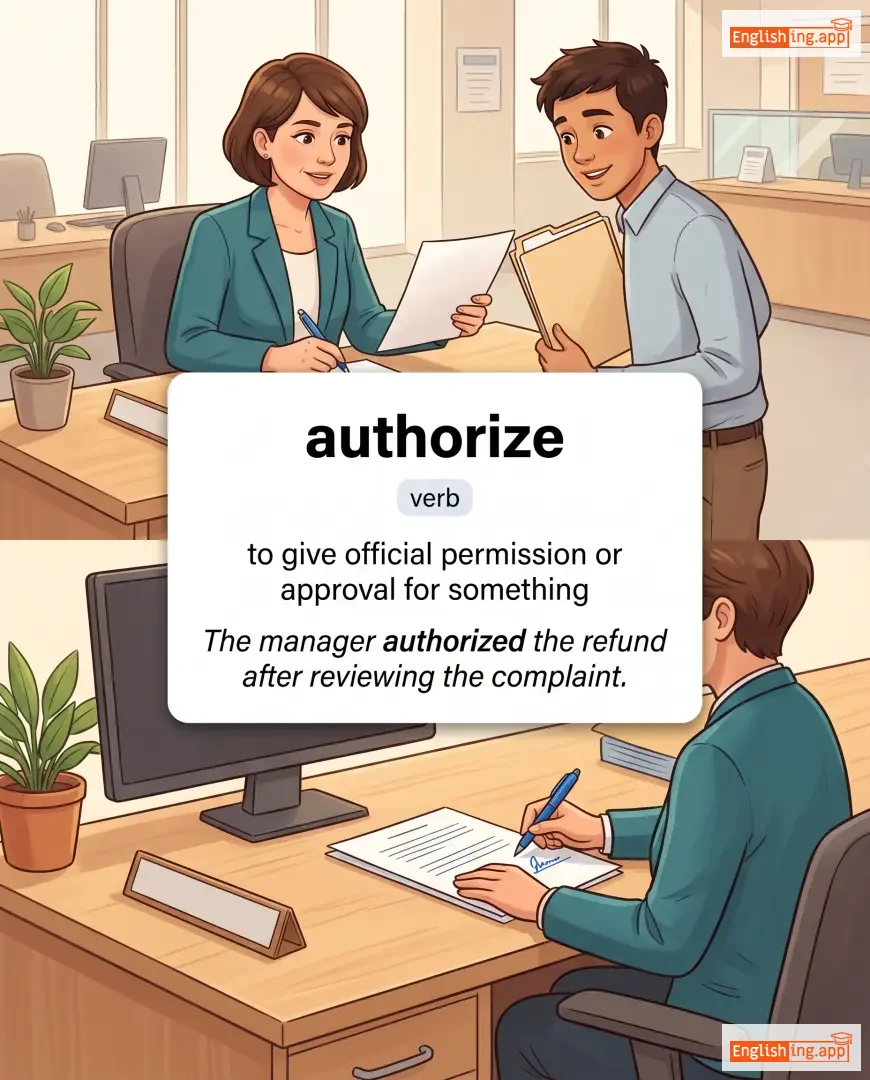
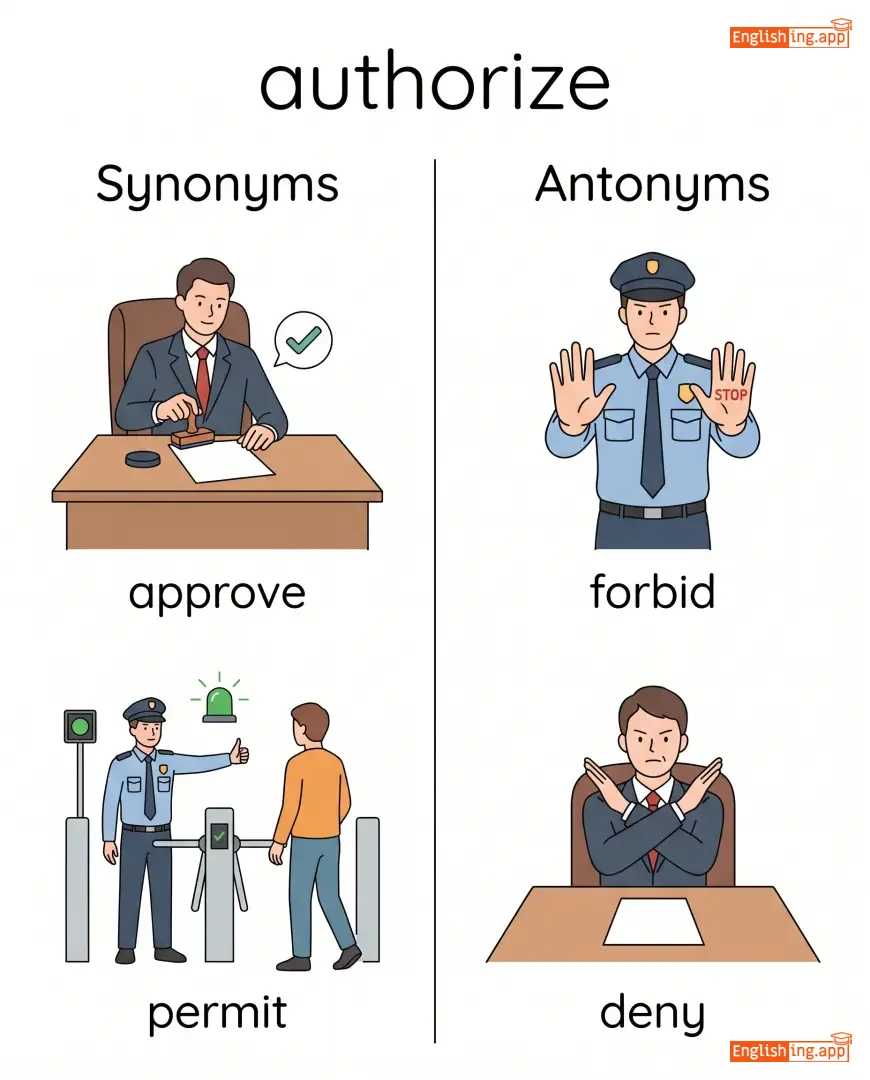
to give official permission or approval for something
••••••
|
The manager will authorize the payment tomorrow.
经理明天将授权付款。
••••••
|
经理明天将授权付款。
Jīnglǐ míngtiān jiāng shòuquán fùkuǎn.
••••••
|
permit, approve, sanction, license
••••••
|
prohibit, forbid, deny, refuse
••••••
|
authorize payment, authorize access, authorize transaction, authorize officially, authorize request
••••••
|
授权是给你官方批准的意思,就像给你一个信任的‘授权’。
••••••
|
|
#202
🦘
|
/liːp/
verb
(lìp)
••••••
|
|
跳跃
tiaoyue
••••••
|
leaped
lìpt
••••••
|
leaped
lìpt
••••••
|
leaps
līps
••••••
|
leaping
līping
••••••
|
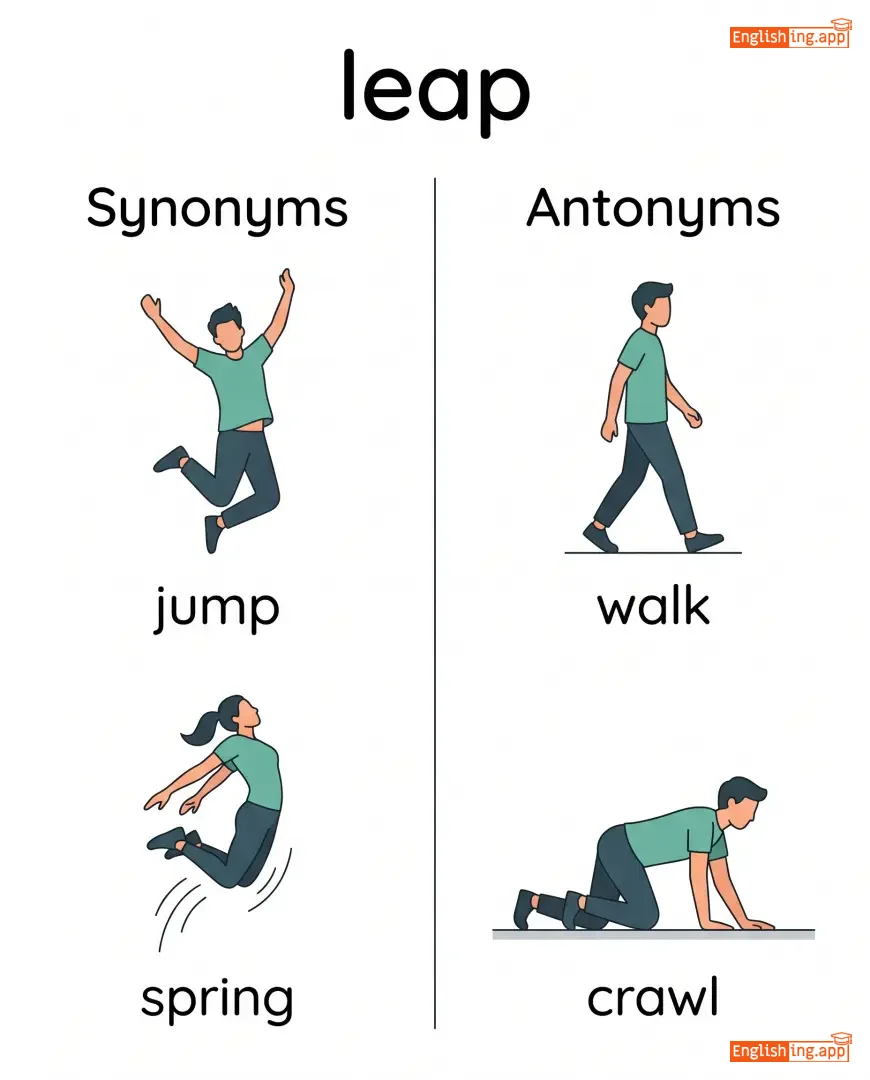
to jump high or far; to move quickly with large steps
••••••
|
The cat leaped onto the table.
猫跳上了桌子。
••••••
|
猫跳上了桌子。
Mao tiao shang le zhuozi.
••••••
|
jump, bound, spring, hop
••••••
|
crawl, walk, stay, remain
••••••
|
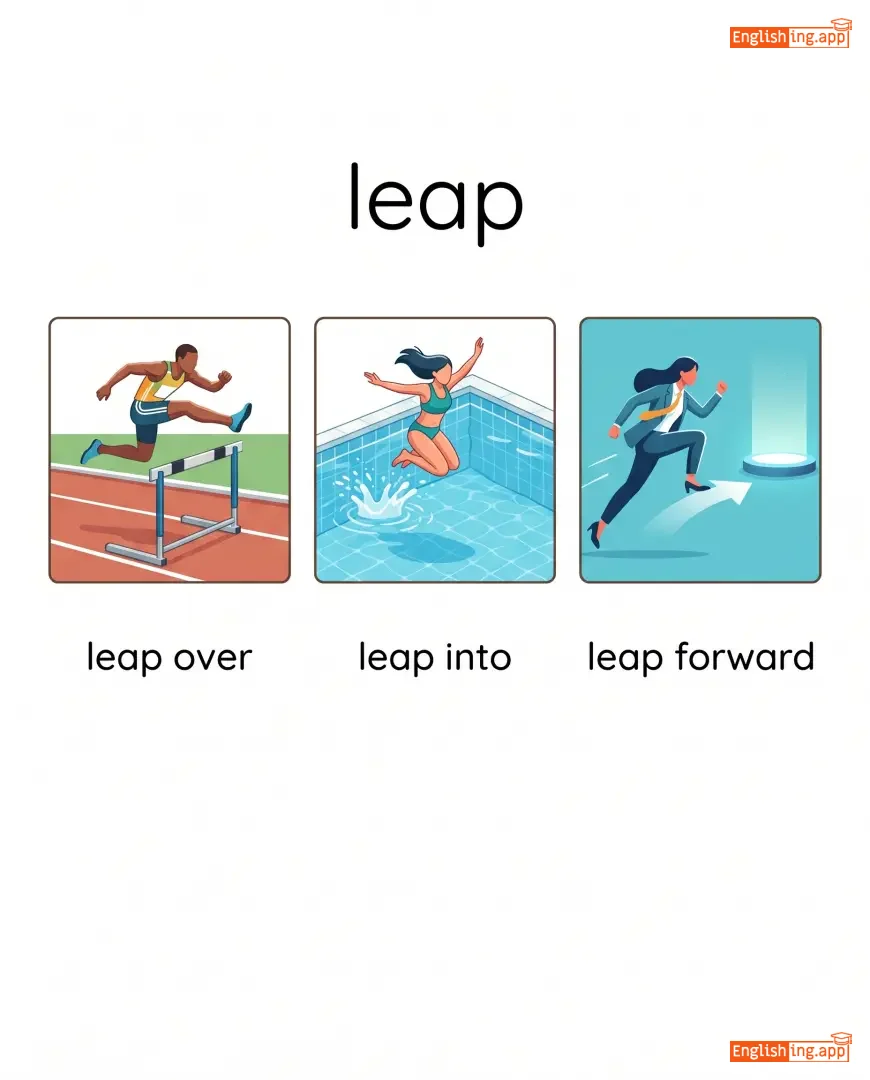
leap forward, leap high, leap over, leap faith, leap opportunity
••••••
|
No •••••• |
|
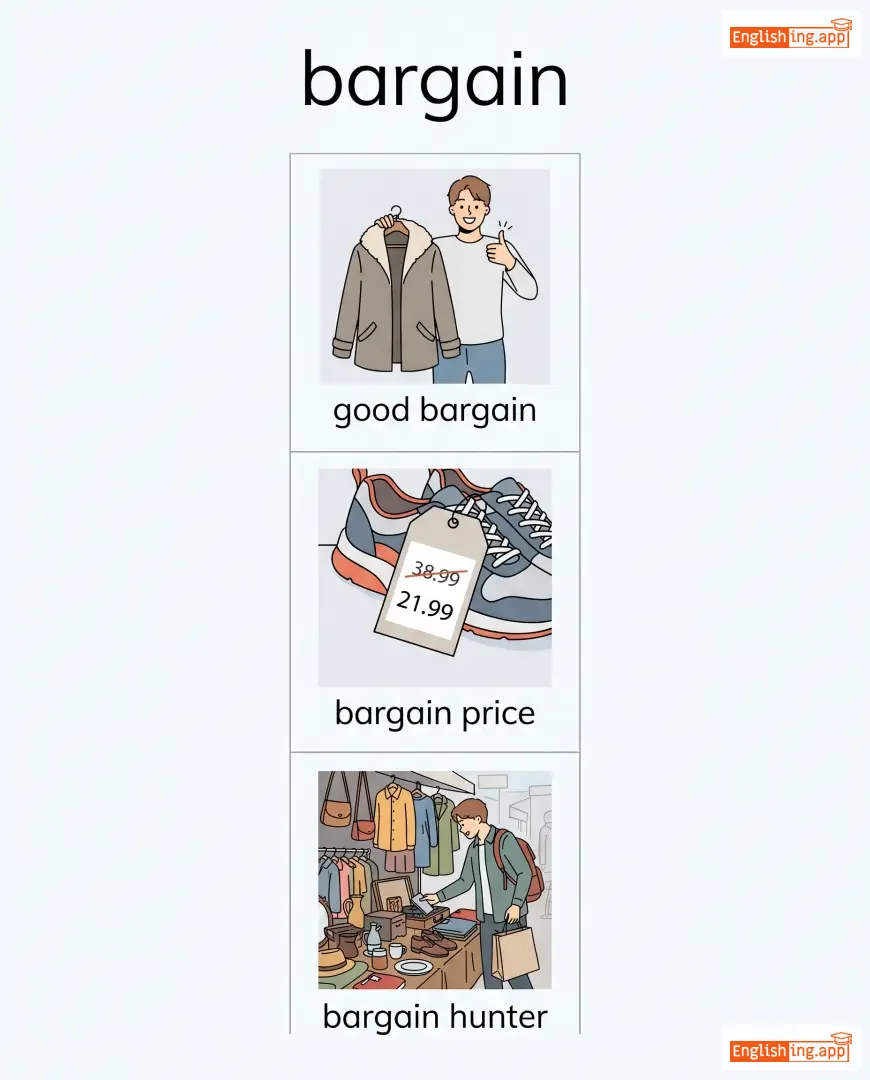
#203
💰
|
/ˈbɑrɡɪn/
verb
(bargain)
••••••
|
|
讨价还价
tǎo jià huán jià
••••••
|
bargained
bargained
••••••
|
bargained
bargained
••••••
|
bargains
bargains
••••••
|
bargaining
bargaining
••••••
|
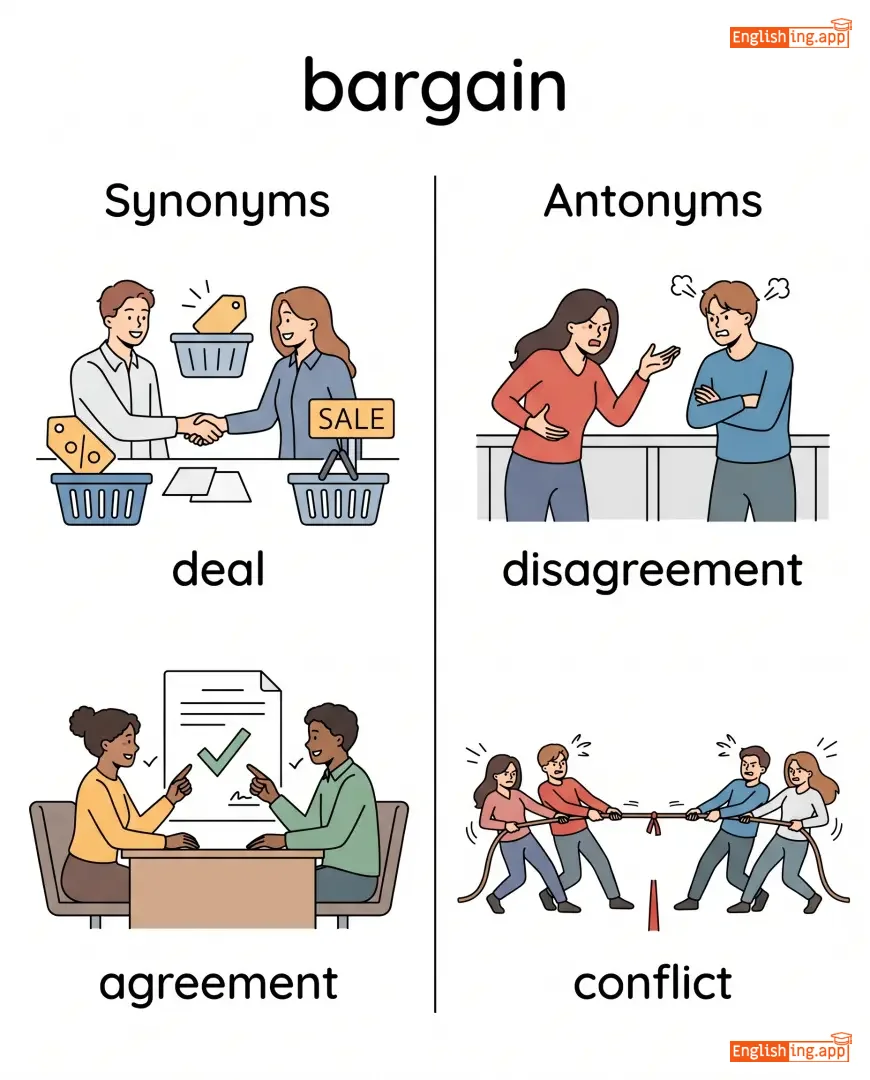
to negotiate terms; to discuss prices; to make a deal
••••••
|
She likes to bargain at the local market.
她喜欢在当地市场讨价还价。
••••••
|
她喜欢在当地市场讨价还价。
Tā xǐhuān zài dāngdì shìchǎng tǎo jià huán jià.
••••••
|
negotiate, haggle, deal, trade
••••••
|
accept, agree, pay full price
••••••
|
bargain for, bargain with, bargain price, bargain hard, bargain hunter
••••••
|
中国市场上总有很多讨价还价的机会。
••••••
|
|
#204
🚫
|
/ˈbænɪʃ/
verb
(bānɪʃ)
••••••
|
|
放逐
fàngzhú
••••••
|
banished
bānɪʃd
••••••
|
banished
bānɪʃd
••••••
|
banishes
bānɪʃes
••••••
|
banishing
bānɪʃing
••••••
|
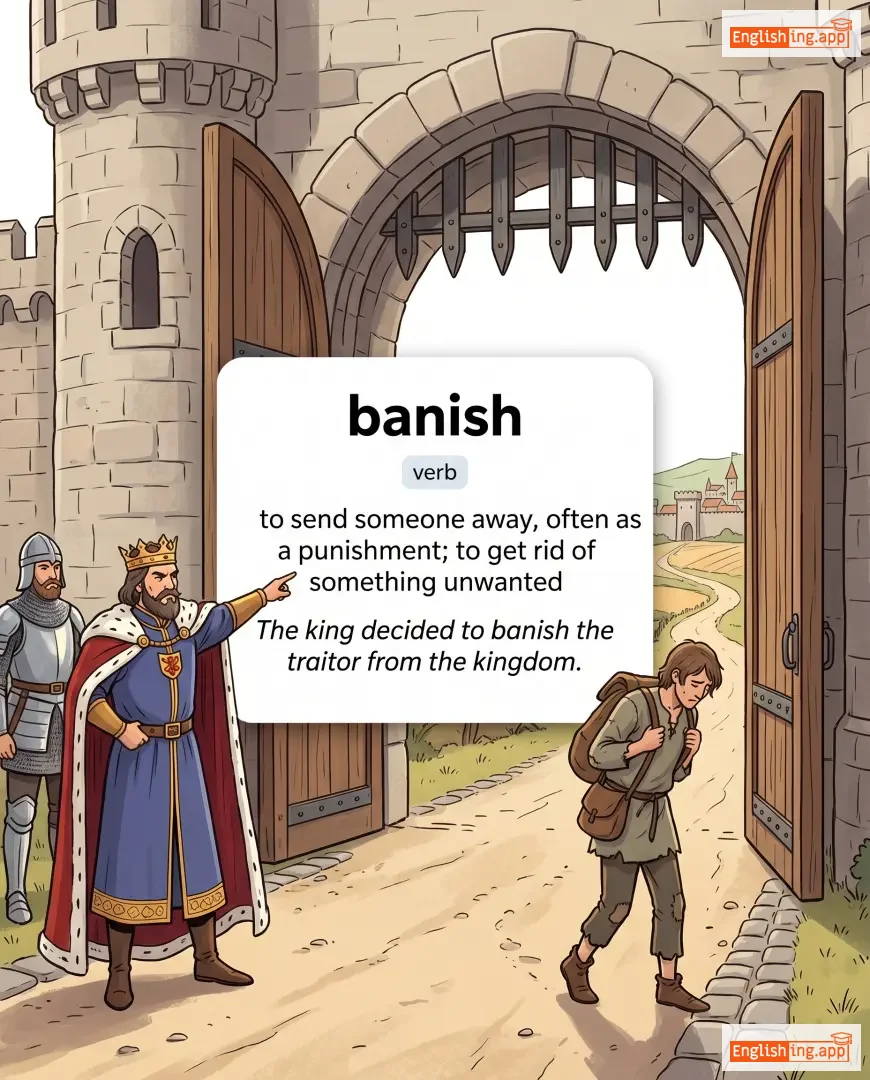
to send someone away from a place as punishment; to get rid of
••••••
|
The king banished the traitor from the kingdom.
国王将叛徒赶出了王国。
••••••
|
国王将叛徒赶出了王国。
Guówáng jiāng pàn tú gān chūle wángguó.
••••••
|
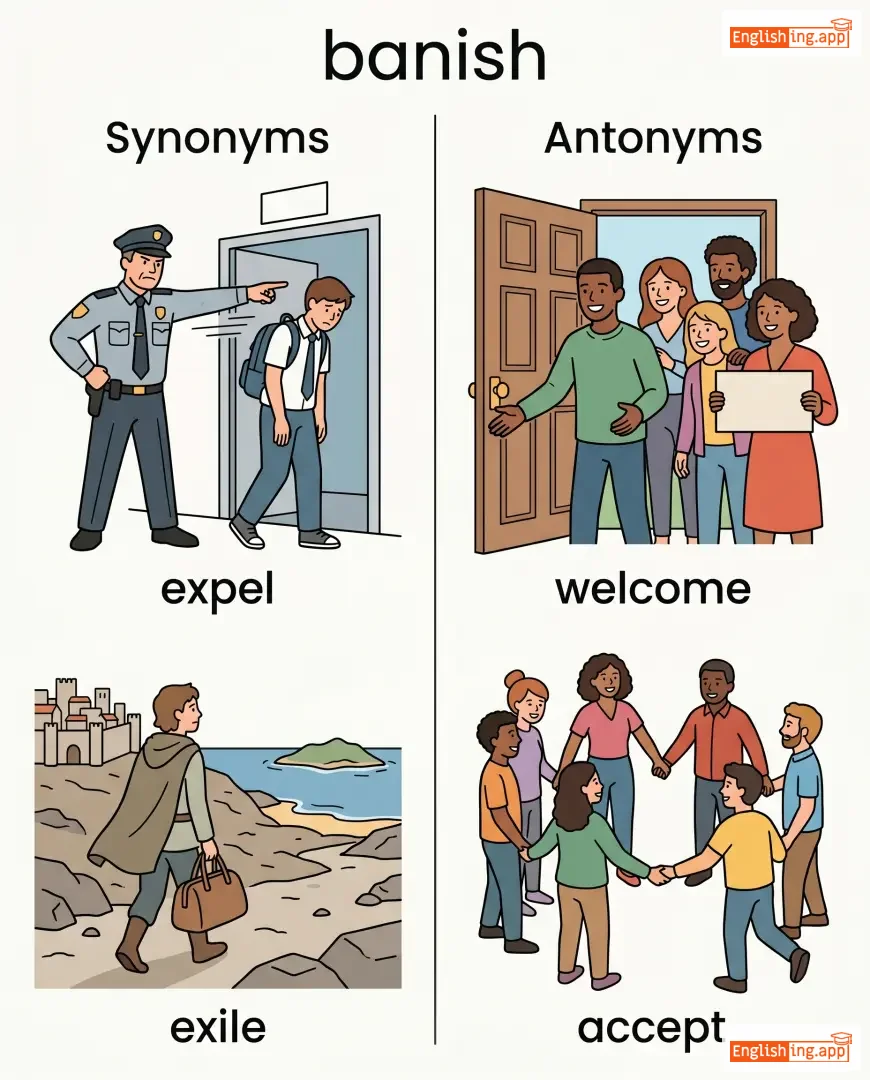
exile, expel, deport, ostracize
••••••
|
welcome, invite, accept
••••••
|
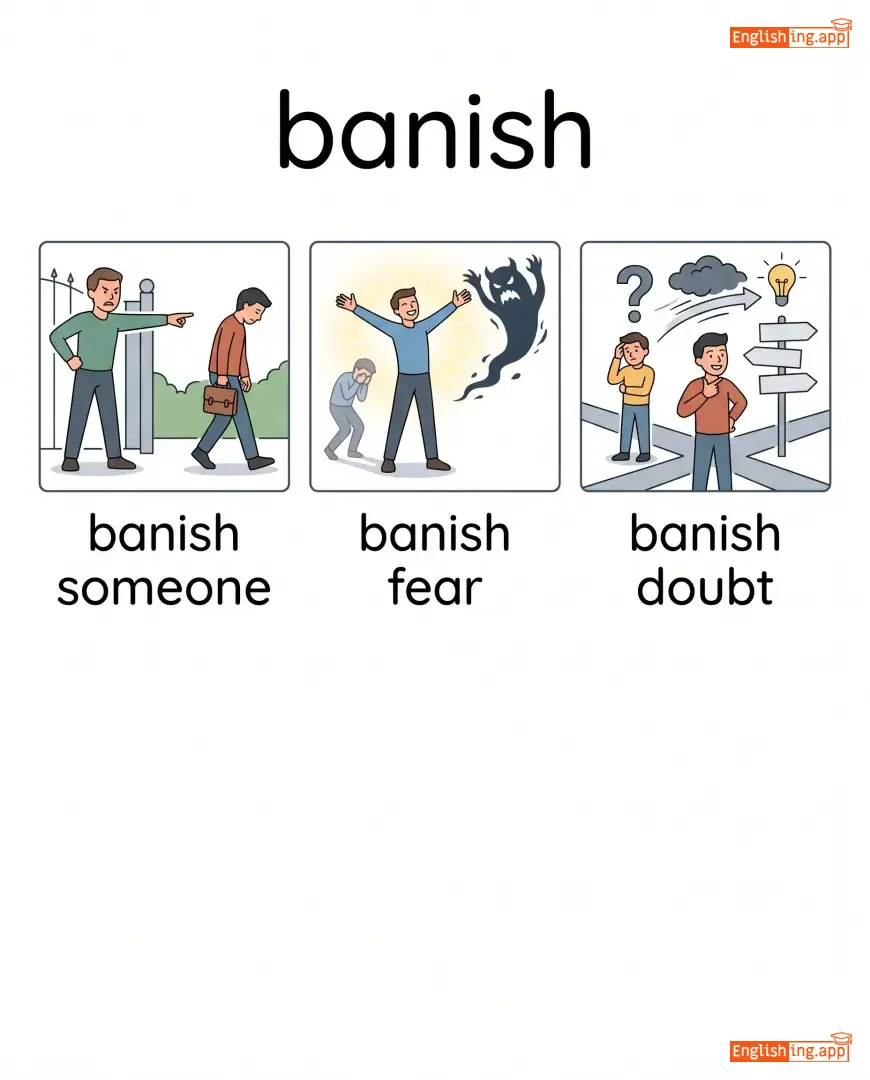
banish from, banish forever, banish thoughts, banish fears, banish completely
••••••
|
国王将叛徒放逐,仿佛把他送往远方作为惩罚。
••••••
|
|
#205
🍳
|
/fraɪ/
verb
(fry)
••••••
|
|
油炸
you zha
••••••
|
fried
chao
••••••
|
fried
chao
••••••
|
fries
chao
••••••
|
frying
chao
••••••
|
to cook food in hot oil or fat
••••••
|
She fries eggs for breakfast every morning.
她每天早晨煎蛋作为早餐。
••••••
|
她每天早晨煎蛋作为早餐。
Ta mei tian zao chen jian dan zuo wei zao can.
••••••
|
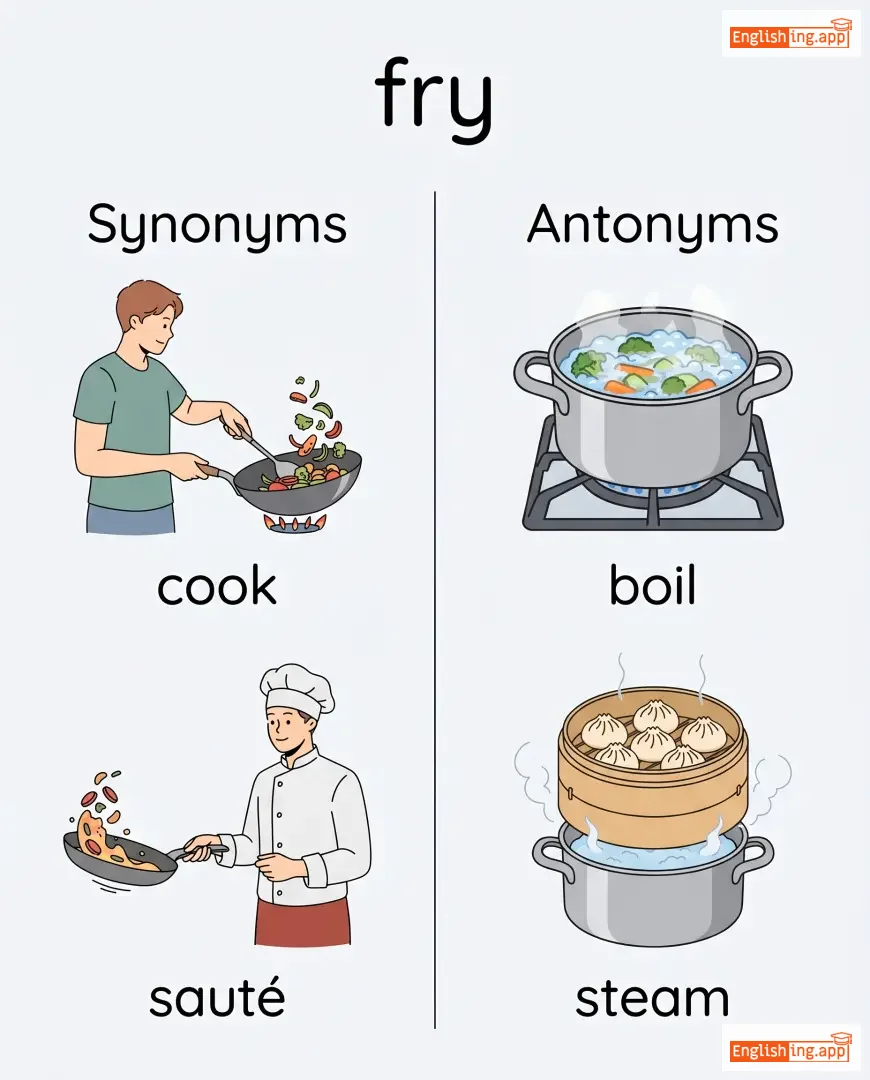
cook, sauté, pan-fry
••••••
|
boil, steam, bake
••••••
|
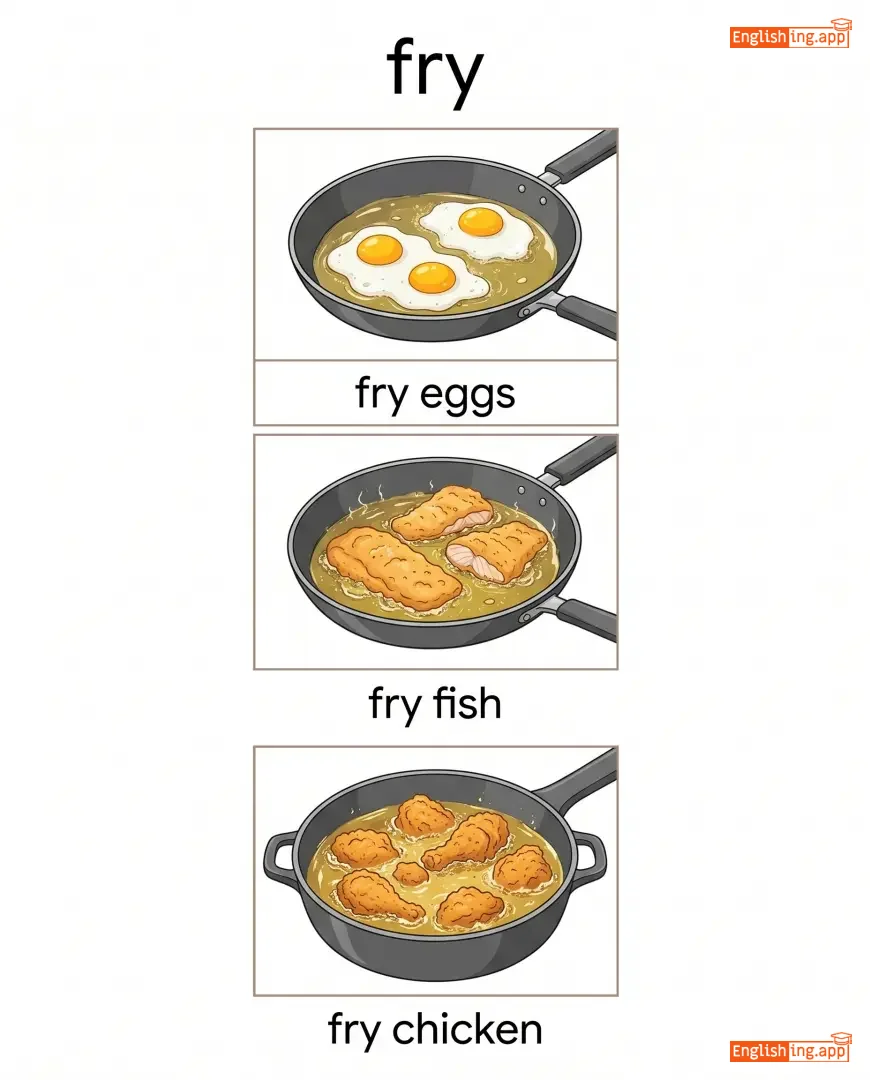
fry eggs, fry fish, fry chicken, fry onions, deep fry
••••••
|
No •••••• |
|
#206
💍
|
/prəˈpoʊz/
verb
(própóu)
••••••
|
|
提议
tíyì
••••••
|
proposed
própóud
••••••
|
proposed
própóud
••••••
|
proposes
própóuses
••••••
|
proposing
própóuzing
••••••
|
to suggest an idea or plan for consideration; to ask someone to marry you
••••••
|
I propose we take a short break.
我提议我们休息一下。
••••••
|
我提议我们休息一下。
wǒ tíyì wǒmen xiūxi yīxià
••••••
|
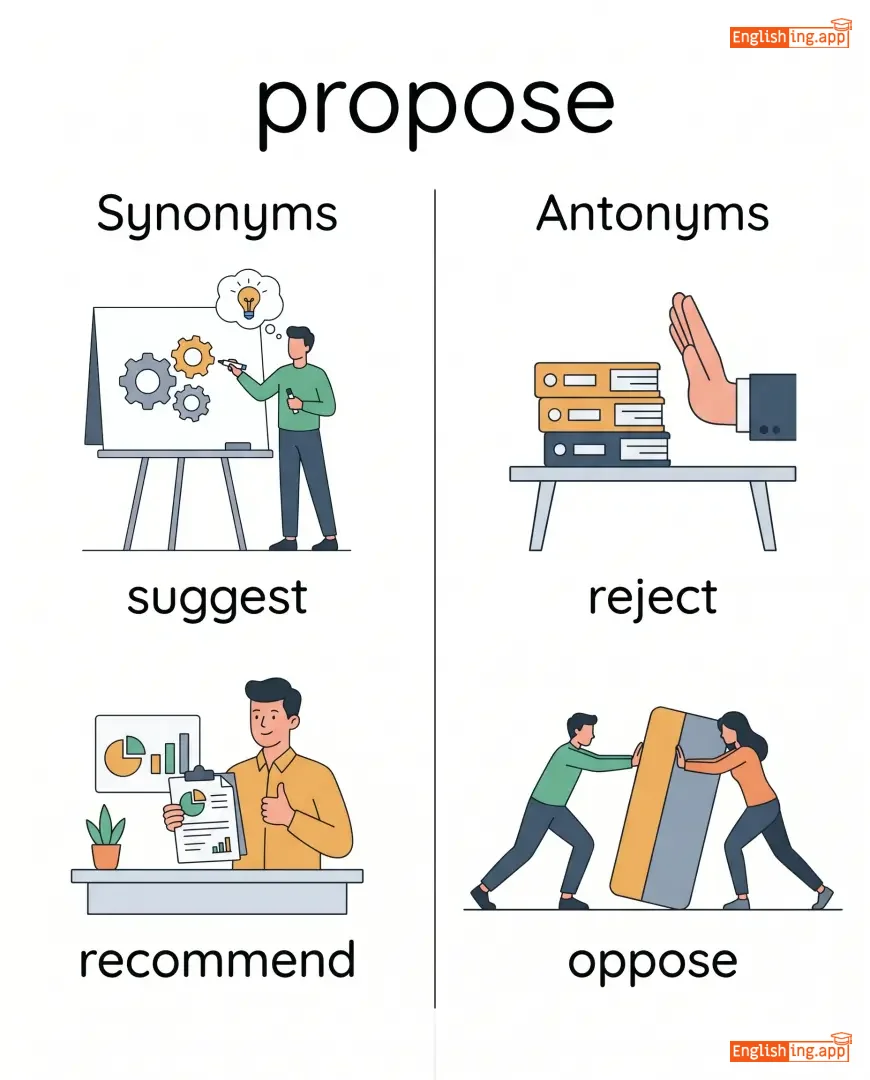
suggest, recommend, offer, present
••••••
|
withdraw, reject, oppose
••••••
|
propose idea, propose solution, propose marriage, propose plan, propose change
••••••
|
提议就是求婚, 提议爱, 不要错过。
••••••
|
|
#207
✋
|
/teɪk/
verb
(teɪk)
••••••
|
|
拿,带
na, dai
••••••
|
took
tʊk
••••••
|
taken
teɪkən
••••••
|
takes
teɪks
••••••
|
taking
teɪkɪŋ
••••••
|
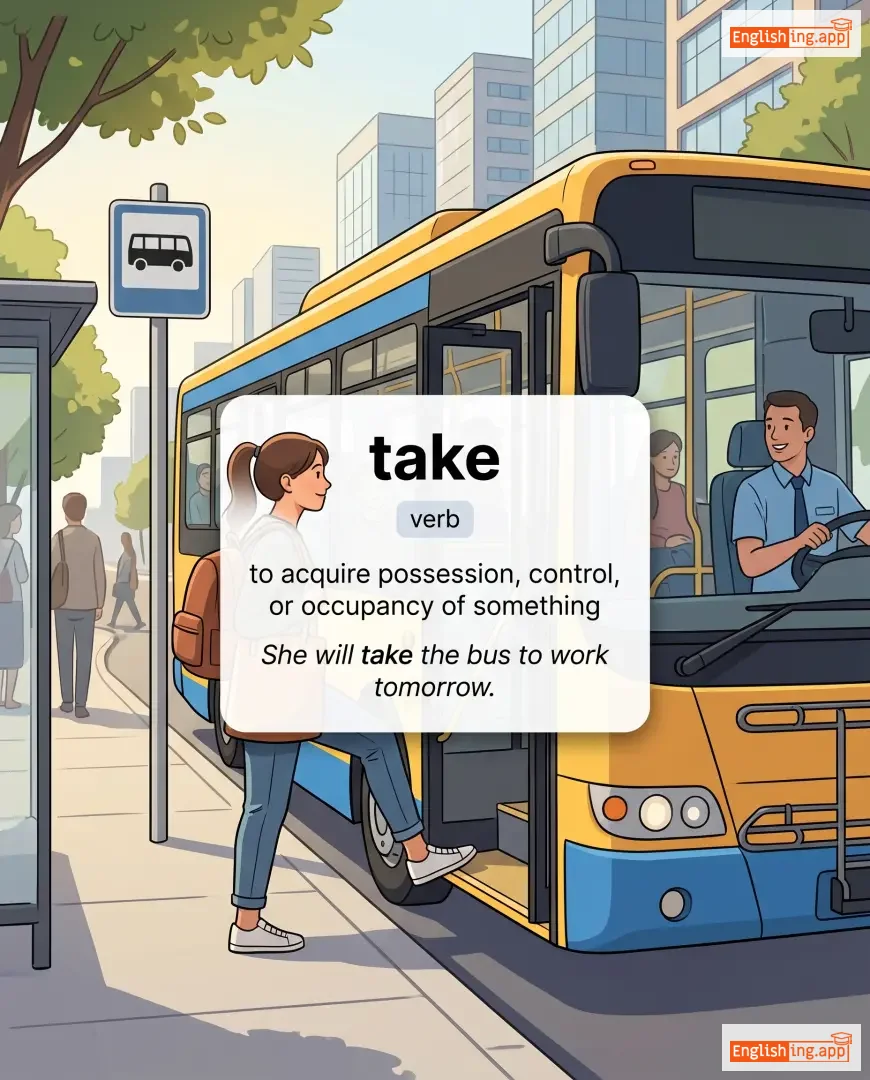
to get possession of; to carry or bring with oneself
••••••
|
Please take this book to the library.
请把这本书带到图书馆。
••••••
|
请把这本书带到图书馆。
Qing ba zhe ben shu dai dao tushuguan.
••••••
|
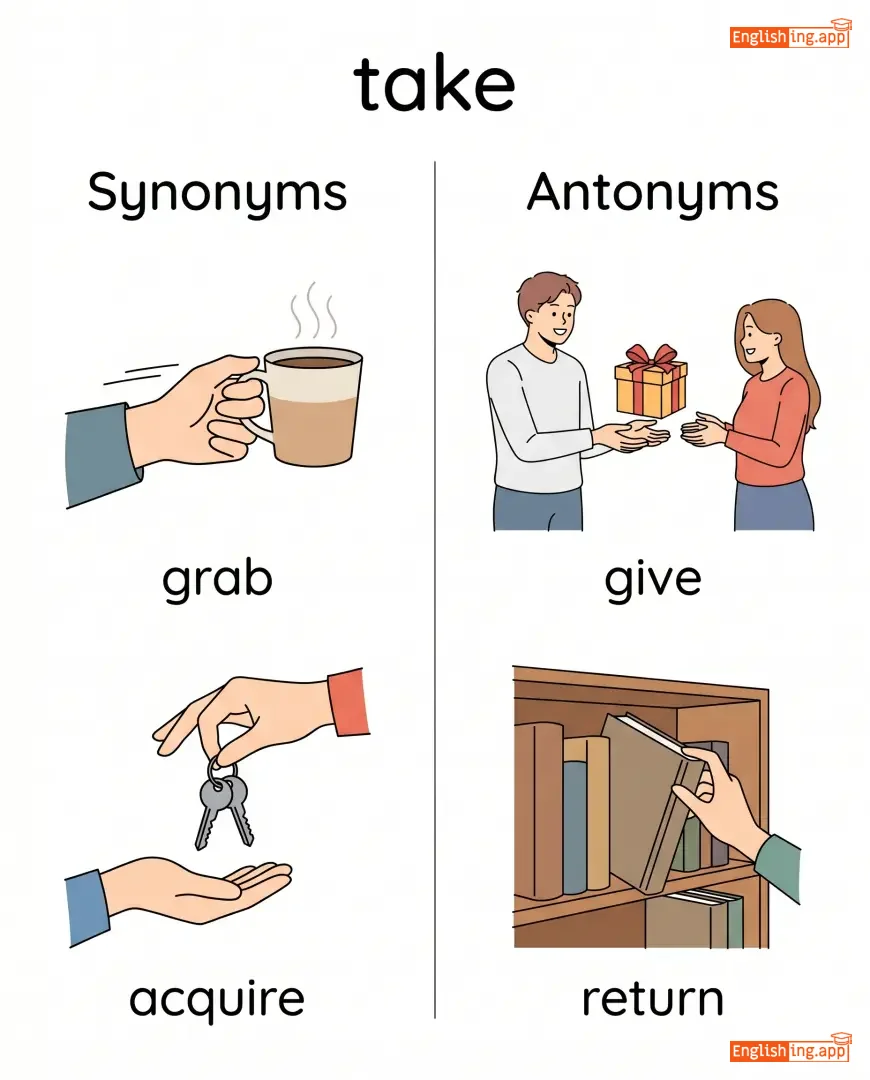
grab, seize, carry, bring
••••••
|
give, leave, put, place
••••••
|
take time, take care, take place, take action, take responsibility
••••••
|
拿起书本带到图书馆,获取知识。
••••••
|
|
#208
🗑️
|
/rɪˈmuːv/
verb
(rímúf)
••••••
|
|
移除
yíchú
••••••
|
removed
rímúfd
••••••
|
removed
rímúfd
••••••
|
removes
rímúfs
••••••
|
removing
rímúfing
••••••
|
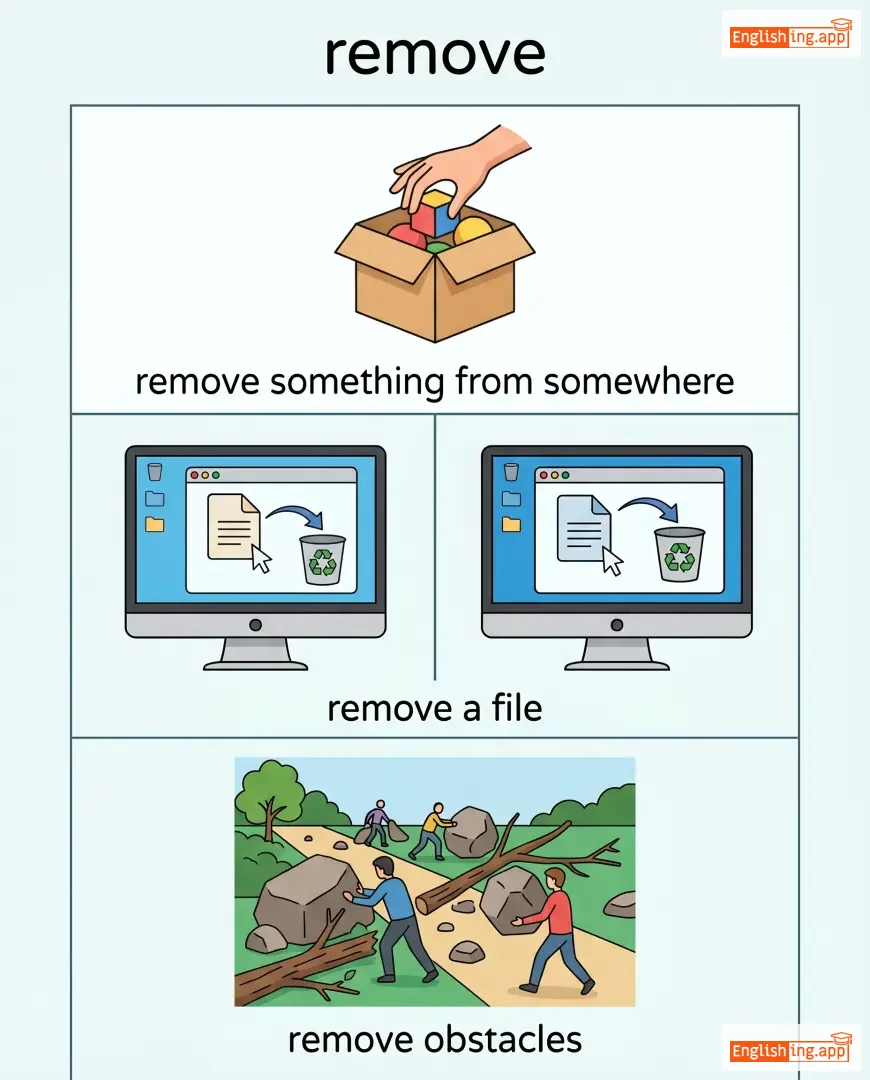
to take something away; to eliminate or delete
••••••
|
Please remove your shoes before entering the house.
请在进入房屋之前脱下鞋子。
••••••
|
请在进入房屋之前脱下鞋子。
Qǐng zài jìnrù fángwū zhīqián tuō xià xiézi.
••••••
|
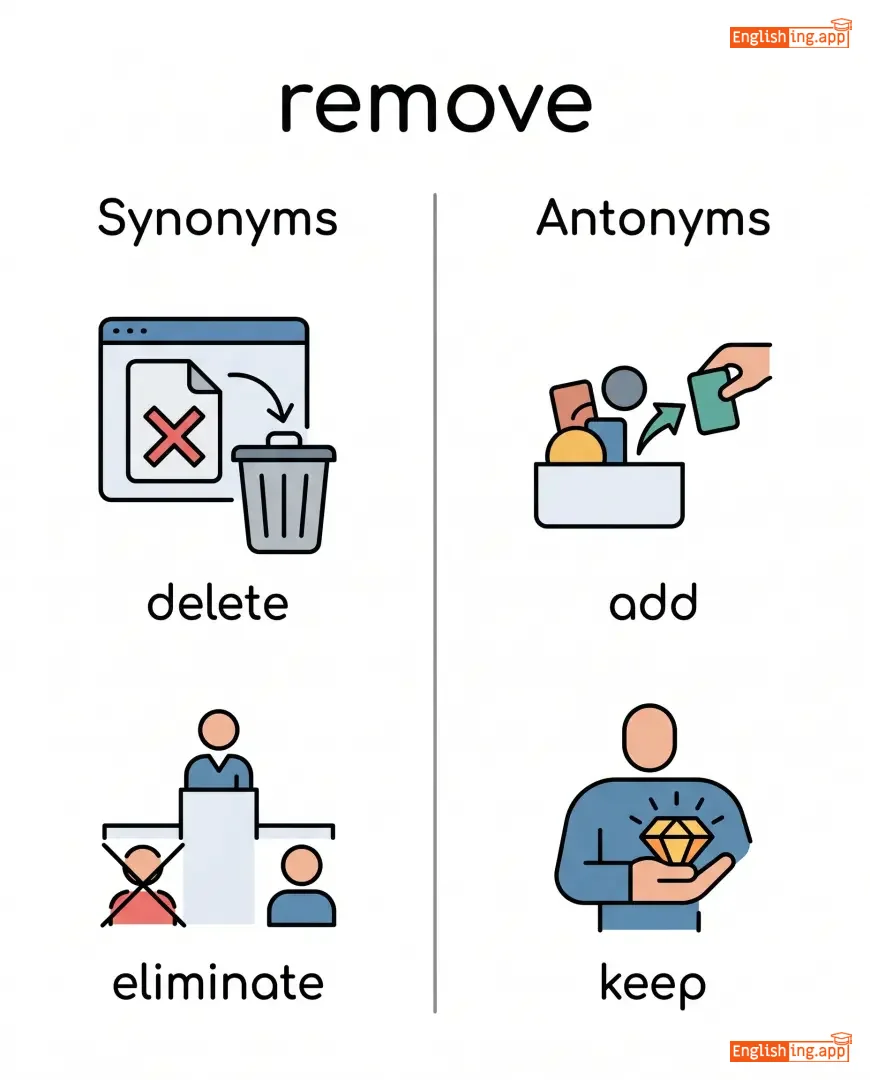
take away, eliminate, delete, extract
••••••
|
add, insert, place, put
••••••
|
remove from, remove completely, remove carefully, remove stains, remove obstacles
••••••
|
移除不需要的东西,这样你就可以走得更远,像走在无障碍的道路上。
••••••
|
Vocabulary Quiz
Test your vocabulary by matching words with their translations or meanings.
Login to take the quiz
Comments (0)
Share your thoughts and join the discussion.
Join the discussion by logging in
Login to CommentNo comments yet
Be the first to share your thoughts!