🧭navigate (ナビゲート)

verb
/ˈnæv.ɪ.ɡeɪt/
ナビゲート (nabigeeto)

意味

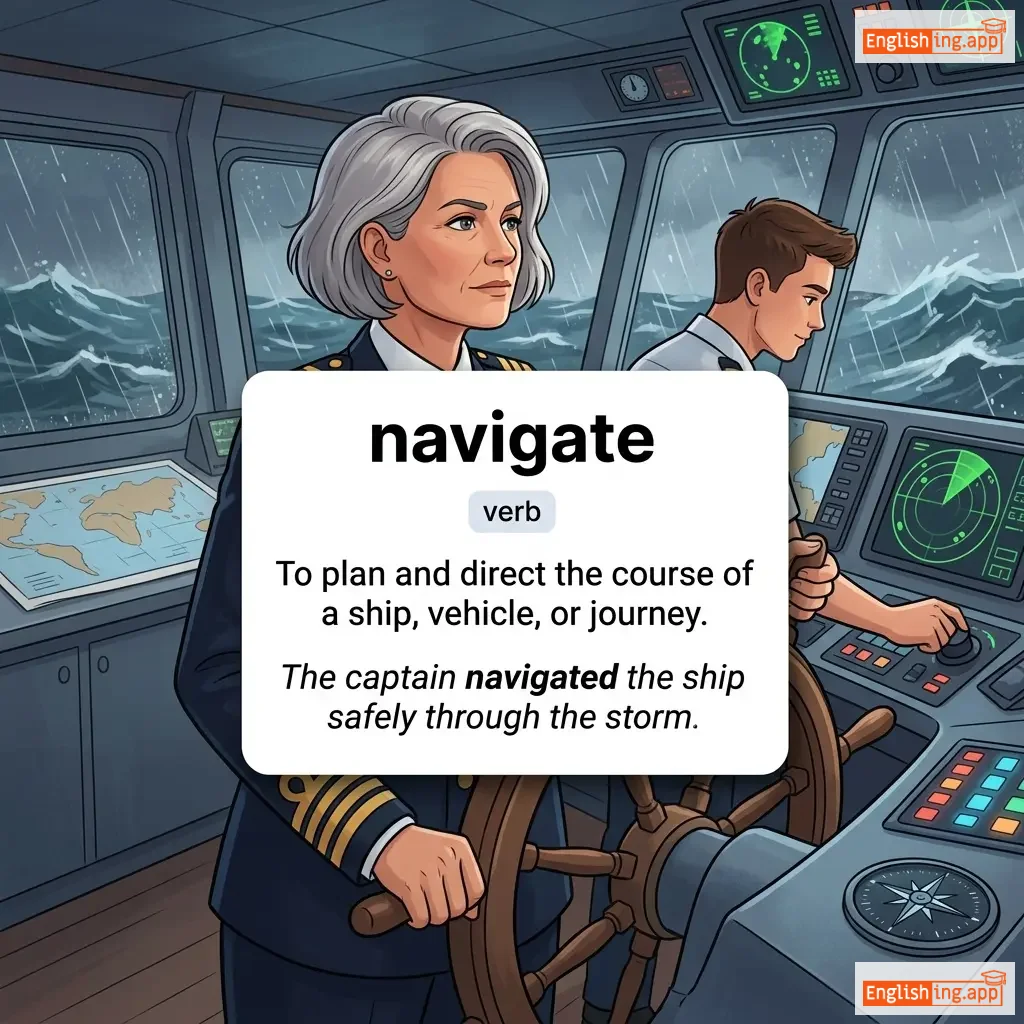
To plan and direct the course of a ship, vehicle, or journey.
To plan and direct the route or course of a ship, aircraft, or other form of transport.
意味の翻訳
船舶、航空機、または他の交通手段のルートやコースを計画して指示すること。
Senpaku, koukuki, matawa hoka no koutsuu shudan no ruuto ya ko-su wo keikaku shite shiji suru koto.

例文

The captain navigated the ship safely through the storm.

The GPS helps navigate complex routes.

GPSは複雑なルートをナビゲートするのに役立ちます。
GPS wa fukuzatsu na ruuto wo nabigeeto suru no ni yakudachimasu.

表現例

navigate through difficulties

同義語

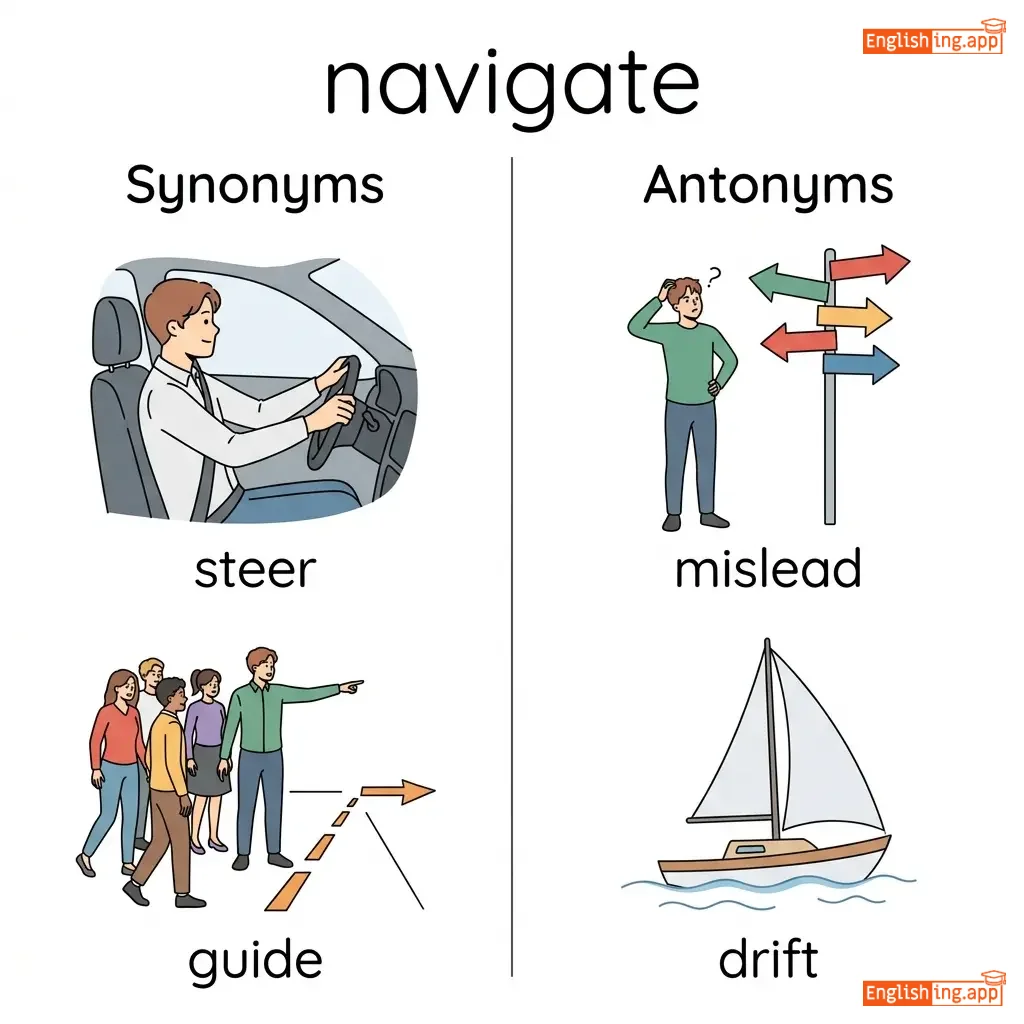
steer, guide, pilot, control, maneuver, direct
エントリー 1
steer, guide, pilot, control, maneuver
エントリー 2
steer, direct

対義語

mislead, drift, lose
エントリー 1
mislead, drift
エントリー 2
drift, lose

コロケーション

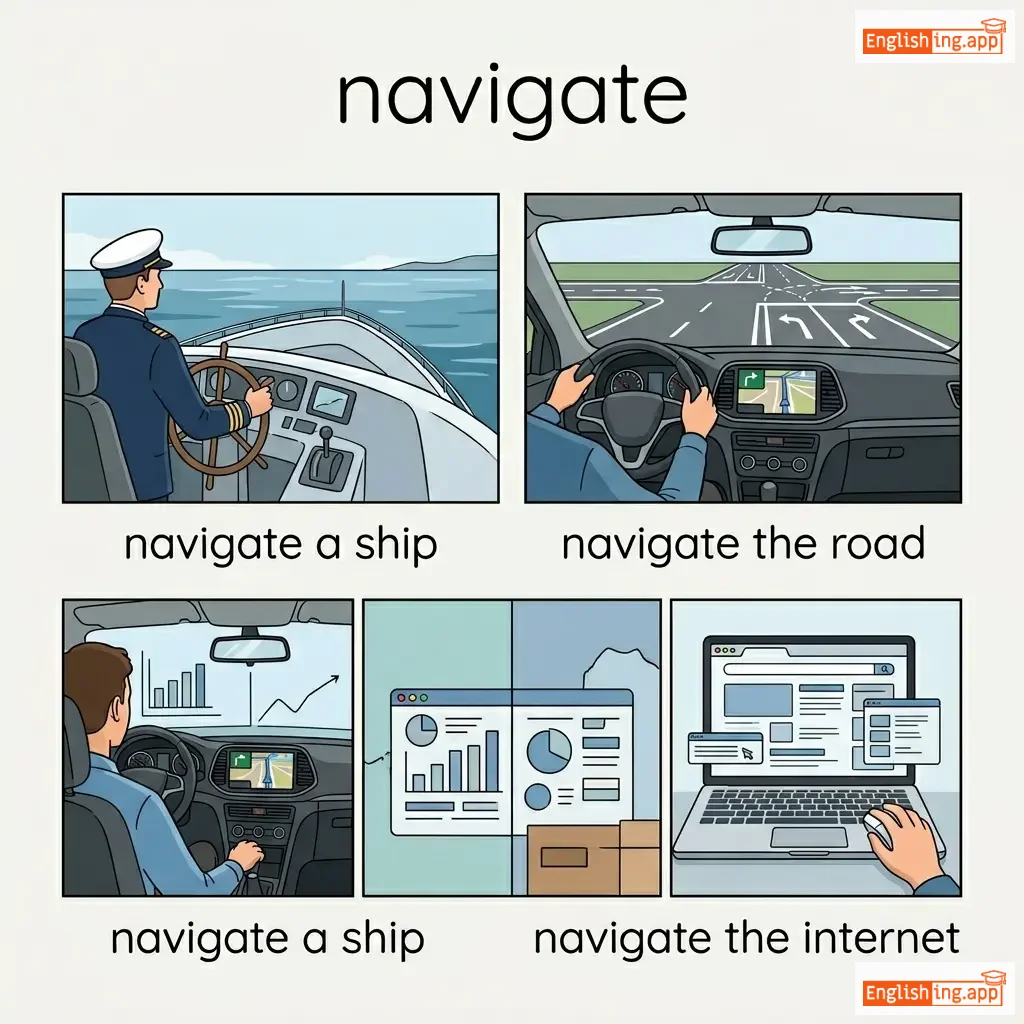
navigate a ship, navigate the road, navigate the internet, navigate through

その他の例文

This map helps us navigate better.

この地図は私たちがよりうまく道を見つけるのに役立ちます。
Kono chizu wa watashitachi ga yori umaku michi o mitsukeru noni yakudachimasu.

A student gets lost on her first day at university trying to find the lecture hall for her morning class because the campus is much bigger than she expected and all the buildings look the same from the outside so she asks a senior student for directions who kindly walks with her to the correct building and shows her how to read the campus map on her phone and by the end of the week she can navigate the entire campus easily

キャンパスが予想以上に広く、外から見るとどの建物も同じように見えるため、朝の授業のための講義室を見つけようとして、大学初日に学生が道に迷い、先輩に道を尋ねると、親切にも正しい建物まで一緒に歩いてくれ、携帯電話でキャンパスマップの読み方を教えてくれ、週の終わりまでには彼女はキャンパス全体を簡単に移動できるようになる
Kyanpasu ga yosou ijou ni hiroi, soto kara miru to dono tatemono mo onaji youni mieru tame, asa no jugyou no tame no kougishitsu wo mitsukeyou to shite, daigaku shonichi ni gakusei ga michi ni mayoi, senpai ni michi wo tazuneru to, shinsetsu nimo tadashii tatemono made issho ni aruite kure, keitaidenwa de kyanpasu mappu no yomikata wo oshiete kure, shuu no owari made niwa kanojo wa kyanpasu zentai wo kantan ni idou dekiru youni naru

A student gets lost on her first day at university trying to find the lecture hall for her morning class because the campus is much bigger than she expected and all the buildings look the same from the outside so she asks a senior student for directions who kindly walks with her to the correct building and shows her how to read the campus map on her phone and by the end of the week she can navigate the entire campus easily feeling grateful for the small act of kindness that made her first day easier.

キャンパスが予想以上に広く、外から見るとどの建物も同じように見えるため、朝の授業のための講義室を見つけようとして、大学初日に学生が道に迷い、先輩に道を尋ねると、親切にも正しい建物まで一緒に歩いてくれ、携帯電話でキャンパスマップの読み方を教えてくれ、週の終わりまでには彼女はキャンパス全体を簡単に移動できるようになり、初日を楽にしてくれた小さな親切に感謝する。
Kyanpasu ga yosou ijou ni hiroi, soto kara miru to dono tatemono mo onaji youni mieru tame, asa no jugyou no tame no kougishitsu wo mitsukeyou to shite, daigaku shonichi ni gakusei ga michi ni mayoi, senpai ni michi wo tazuneru to, shinsetsu nimo tadashii tatemono made issho ni aruite kure, keitaidenwa de kyanpasu mappu no yomikata wo oshiete kure, shuu no owari made niwa kanojo wa kyanpasu zentai wo kantan ni idou dekiru youni nari, shonichi wo raku ni shite kureta chiisana shinsetsu ni kansha suru

関連語彙

to cause someone or something to lose the ability to move or function normally
to go quickly; hasten
To completely destroy or demolish something, especially a building.
To temporarily stop something from being active or valid.
to secretly allow or be involved in a wrongdoing
to place something in a context or interpret it in relation to its surroundings

さらに探索