

ピアノを諦めなかった少女
The Girl Who Never Gave Up on Piano
ニシャは always いつか piano を弾くことを夢見ていました。彼女の aunt は piano の先生でした。
「あなたはピアニストになることを aspire しているの?」と aunt が尋ねました。
「はい!」とニシャは言いました。「その夢を attain したいです。」
「それなら私のクラスに attend しなさい」と aunt は言いました。「でも警告しておくわ——簡単ではないのよ。Anyone でも始められるけど、最後まで続けられる人は少ないの。」
最初の month は awful でした。ニシャは badly 演奏し、指は硬く、basic な音しか覚えられませんでした。
「もう never 出来ない」と彼女は泣きました。「私はこの辺 (around) で一番下手な生徒よ。」
「Never そんなことを言わないで」と aunt は言いました。「誰だって最初は badly 演奏するの。必要な練習の amount はとても多いけど、never 諦めなければ成功するわ。」
ニシャは often 寝る前に練習しました。ときには almost asleep になりながら piano に向かい、手が鍵盤に were attached しているようでした。
三 months 経っても上達はわずかでした。ある日、ニシャはクラスを absent しました。彼女は落ち込んでいたのです。
Aunt は家に来て、「なぜ absent だったの?」と尋ねました。
「だって私は awful なの」とニシャは言いました。「こんなに amount の時間を練習しても、何も変わらないの。Almost 一年経ったけど、まだ badly 弾いてるの。」
「それでもまだピアニストになることを aspire しているの?」と aunt は聞きました。
「Always」とニシャはささやきました。
「じゃあ never 諦めないで。私も何年も badly 弾いていたの。Around のみんなはやめろと言ったけど、私は never 諦めなかった。そして今は教えている。あなたも夢を attain できる。でも簡単だと思っちゃダメ。価値のあるもの (attaining) は簡単じゃないの。」
何年も経って、ニシャは自分も piano の先生になりました。彼女は生徒に言いました:「もし本当に何かを aspire するなら、never 諦めないで。Always 練習し、Always attend クラスに来て。努力の amount を恐れないで。Anyone around が疑っても、夢に attached し続けなさい。そうすればいつか attain できるわ。」
翻訳
過去
過去分詞
三人称単数
動名詞
意味
例文
例文の翻訳
同義語
対義語
コロケーション
ニーモニック
Swipe left or right, or use the buttons. Tap image to zoom.
例文の翻訳
単語
The Girl Who Never Gave Up on PianoThe Girl Who Never Gave Up on Piano - マスクトグル
|
絵文字
|
単語 | Images | 翻訳 | 過去 | 過去分詞 | 三人称単数 | 動名詞 | 意味 | 例文 | 例文の翻訳 | 表現例 | 表現例の意味 | 表現例の翻訳 | 同義語 | 対義語 | コロケーション | ニーモニック |
|---|---|---|---|---|---|---|---|---|---|---|---|---|---|---|---|---|---|
|
#0
🚫
|
/ˈæbsənt/
adjective
(アブセント)
••••••
|
- •••••• |
欠席
kesseki
••••••
|
- •••••• | - •••••• | - •••••• | - •••••• |
not present at a place or event
••••••
|
She was absent from the meeting yesterday.
彼女は昨日会議を欠席していた。
••••••
|
彼女は昨日会議を欠席していた。
Kanojo wa kinou kaigi o kesseki shite ita.
••••••
|
- •••••• | - •••••• | - •••••• |
missing, away, unavailable, absent-minded
••••••
|
present, available
••••••
|
absent from class, absent from work, absent due to illness
••••••
|
欠席 = 授業を欠席している学生を想像して、遅れを取り戻す必要がある!
••••••
|
|
#0
⏳
|
/ˈɔːlmoʊst/
adverb
(オールモースト)
••••••
|
- •••••• |
ほとんど
hotondo
••••••
|
- •••••• | - •••••• | - •••••• | - •••••• |
very nearly, but not exactly or completely
••••••
|
He almost missed the train.
彼はほとんど電車を逃した。
••••••
|
彼はほとんど電車を逃した。
Kare wa hotondo densha o nogashita.
••••••
|
almost there
もうすぐそこ
••••••
|
close to completing or reaching a goal
••••••
|
もうすぐそこ
mōsugu soko
••••••
|
nearly, practically, virtually, approximately, about
••••••
|
completely, entirely, totally
••••••
|
almost done, almost impossible, almost every, almost finished
••••••
|
Almostはほとんどを意味します—"almost there"のように、ゴールに近いことを意味します。
••••••
|
|
#0
♾️
|
/ˈɔːlweɪz/
adverb
(オールウェイズ)
••••••
|
- •••••• |
いつも
itsumo
••••••
|
- •••••• | - •••••• | - •••••• | - •••••• |
at all times; on every occasion
••••••
|
She always wakes up early in the morning.
彼女はいつも朝早く起きます。
••••••
|
彼女はいつも朝早く起きます。
Kanojo wa itsumo asa hayaku okimasu.
••••••
|
as always
いつも通り
••••••
|
as is usual or expected
••••••
|
いつも通り
Itsumo dōri
••••••
|
forever, constantly, perpetually, continually
••••••
|
never, rarely, seldom
••••••
|
always ready, always happy, always late, always available
••••••
|
Always = いつも, いつも (itsumo)。
••••••
|
|
#0
💰
|
/əˈmaʊnt/
noun/verb
(アマウント)
••••••
|
- •••••• |
金額
kingaku
••••••
|
amounted
アマウンテッド
••••••
|
amounted
アマウンテッド
••••••
|
amounts
アマウントス
••••••
|
amounting
アマウティング
••••••
|
a quantity of something, typically the total of a thing or things in number, size, value, or extent
••••••
|
The total amount of money is not enough.
お金の合計額は十分ではありません。
••••••
|
お金の合計額は十分ではありません。
Okane no goukei-gaku wa juubun de wa arimasen.
••••••
|
amount to nothing
amount to nothing
••••••
|
to have no significant result or value
••••••
|
何も意味しない
nanimo imi shinai
••••••
|
quantity, sum, total, volume, measure
••••••
|
lack, zero, nothing
••••••
|
large amount, small amount, total amount
••••••
|
Amount は金額と関連があり、お金の額
••••••
|
|
#0
👤
|
/ˈɛniwʌn/
pronoun
(エニワン)
••••••
|
- •••••• |
誰か
dareka
••••••
|
- •••••• | - •••••• | - •••••• | - •••••• |
any person at all; used to refer to an unspecified person
••••••
|
Does anyone know the answer to this question? |
誰かこの質問の答えを知っていますか?
dareka kono shitsumon no kotae o shitte imasu ka?
••••••
|
anyone's guess |
something that is very difficult to predict or know
••••••
|
誰かの予想
dareka no yosou
••••••
|
somebody, anybody, person, individual, someone
••••••
|
nobody, no one
••••••
|
anyone else, if anyone, hardly anyone, ask anyone
••••••
|
ANYONEは「誰か」を意味します。日本語で言う「誰か」です。
••••••
|
|
#0
🔄
|
/əˈraʊnd/
adverb, preposition
(アラウンド)
••••••
|
- •••••• |
周り
mawari
••••••
|
- •••••• | - •••••• | - •••••• | - •••••• |
situated on every side; in a circular way; approximately
••••••
|
There are many restaurants around the park. |
公園の周りに多くのレストランがあります。
Kōen no mawari ni ōku no resutoran ga arimasu.
••••••
|
turn around |
to move so as to face in the opposite direction
••••••
|
回る
mawaru
••••••
|
about, nearly, nearby, approximately, surrounding
••••••
|
far, away, beyond
••••••
|
look around, move around, all around, turn around
••••••
|
Aroundは周りを意味します - 公園の周りにレストランがあります。
••••••
|
|
#0
😴
|
/əˈsliːp/
adjective
(アスリープ)
••••••
|
- •••••• |
眠っている
nemutte iru
••••••
|
- •••••• | - •••••• | - •••••• | - •••••• |
in a state of sleep
••••••
|
The baby is fast asleep. |
赤ちゃんはぐっすり眠っています。
Akachan wa gussuri netutemasu.
••••••
|
fall asleep |
to begin sleeping
••••••
|
眠りにつく
nemuri ni tsuku
••••••
|
sleeping, dozing, resting, napping
••••••
|
awake, alert
••••••
|
fast asleep, fall asleep, sound asleep
••••••
|
Asleep は眠っている — 'Sleep' は寝ること。
••••••
|
|
#0
🌟
|
/əˈspaɪər/
verb
(アスパイア)
••••••
|
- •••••• |
志す
kokorozasu
••••••
|
aspired
アスパイアード
••••••
|
aspired
アスパイアード
••••••
|
aspires
アスパイアーズ
••••••
|
aspiring
アスパイアリング
••••••
|
to have a strong desire to achieve something
••••••
|
Many students aspire to study abroad.
多くの学生が海外で勉強することを目指しています。
••••••
|
多くの学生が海外で勉強することを目指しています。
Ookuno gakusei ga kaigai de benkyou suru koto o mezashiteimasu.
••••••
|
aspire to greatness
偉大さを目指す
••••••
|
to aim for significant achievement
••••••
|
偉大さを目指す
Idaisa o mezashite
••••••
|
desire, aim, hope, strive, long
••••••
|
doubt, neglect, avoid
••••••
|
aspire to, aspire for success, aspire higher, aspire towards
••••••
|
Aspireは偉大さを目指すことを意味します — 海外で勉強したい学生たちのように。
••••••
|
|
#0
📎
|
/əˈtætʃ/
verb
(アタッチ)
••••••
|
- •••••• |
添付する
tenpu suru
••••••
|
attached
アタッチド
••••••
|
attached
アタッチド
••••••
|
attaches
アタッチズ
••••••
|
attaching
アタッチング
••••••
|
to join or fasten something to another thing
••••••
|
Please attach the document to the email before sending.
送信する前に、ドキュメントをメールに添付してください。
••••••
|
送信する前に、ドキュメントをメールに添付してください。
Sōshin suru mae ni, dokyumento o mēru ni tenpu shite kudasai.
••••••
|
emotionally attached
感情的に結びついている
••••••
|
having strong emotional feelings towards someone or something
••••••
|
感情的に結びついている
kanjōteki ni musubitsuite iru
••••••
|
connect, join, fasten, fix, link
••••••
|
detach, remove, separate
••••••
|
attach a file, attach importance, attach a label, attach responsibility
••••••
|
Attachは物をクリップで付けるようなもの📎。
••••••
|
|
#0
🎯
|
/əˈteɪn/
verb
(アテイン)
••••••
|
- •••••• |
達成する
tassei suru
••••••
|
attained
アテインド
••••••
|
attained
アテインド
••••••
|
attains
アテインズ
••••••
|
attaining
アテイニング
••••••
|
to achieve or reach something
••••••
|
She worked hard to attain her goals.
彼女は目標を達成するために一生懸命働きました。
••••••
|
彼女は目標を達成するために一生懸命働きました。
Kanojo wa mokuhyō o tassei suru tame ni isshōkenmei hatarakimashita.
••••••
|
- •••••• | - •••••• | - •••••• |
achieve, reach, accomplish, obtain
••••••
|
fail, lose, abandon
••••••
|
attain success, attain goals, attain a level
••••••
|
Attain - 目標を達成すること!
••••••
|
|
#0
🎓
|
/əˈtɛnd/
verb
(アテンド)
••••••
|
|
参加する
sanka suru
••••••
|
attended
アテンドしました
••••••
|
attended
アテンドしました
••••••
|
attends
アテンドします
••••••
|
attending
アテンドしている
••••••
|
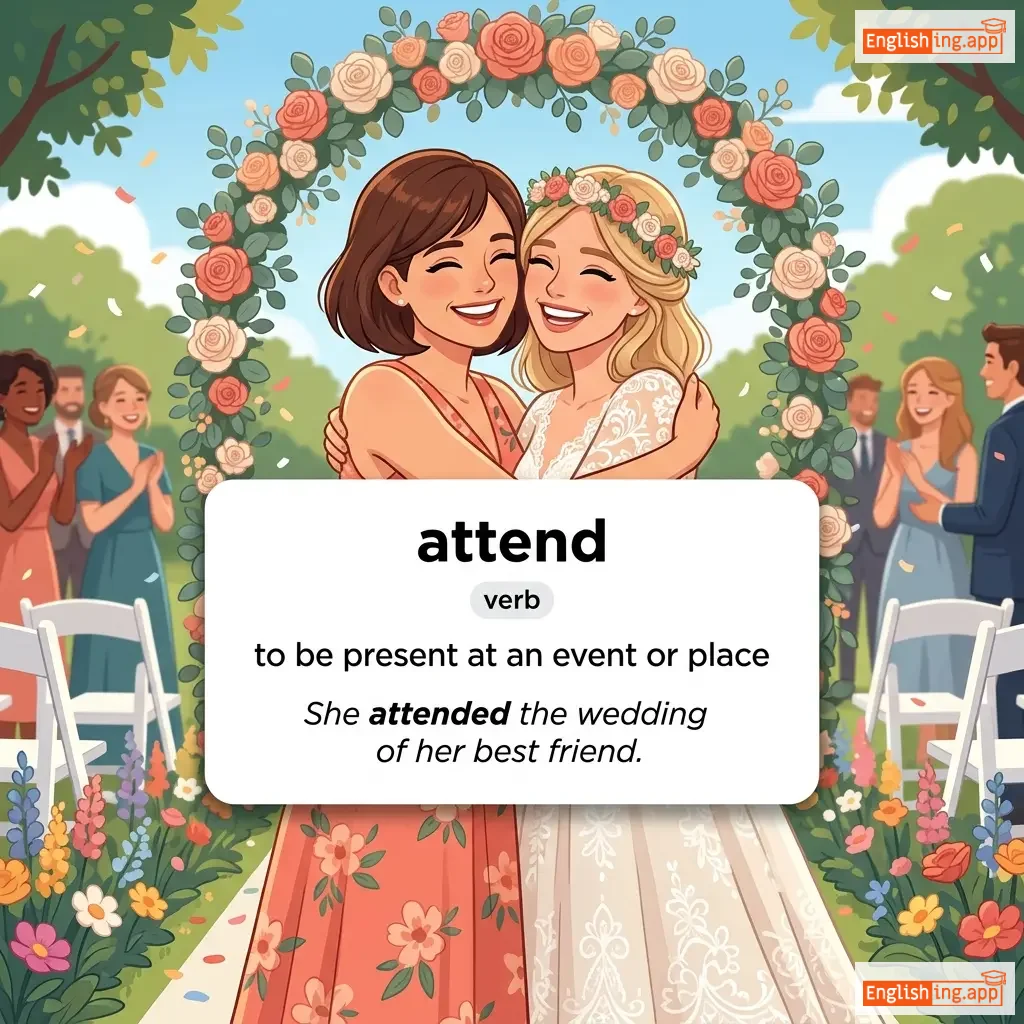
to be present at an event or place
••••••
|
She attended the wedding of her best friend.
彼女は親友の結婚式に出席しました。
••••••
|
彼女は親友の結婚式に出席しました。
Kanojo wa shinyuu no kekkonshiki ni shusseki shimashita.
••••••
|
attend to
アテンドする
••••••
|
to deal with or take care of something
••••••
|
注意を払う
chuui o harau
••••••
|
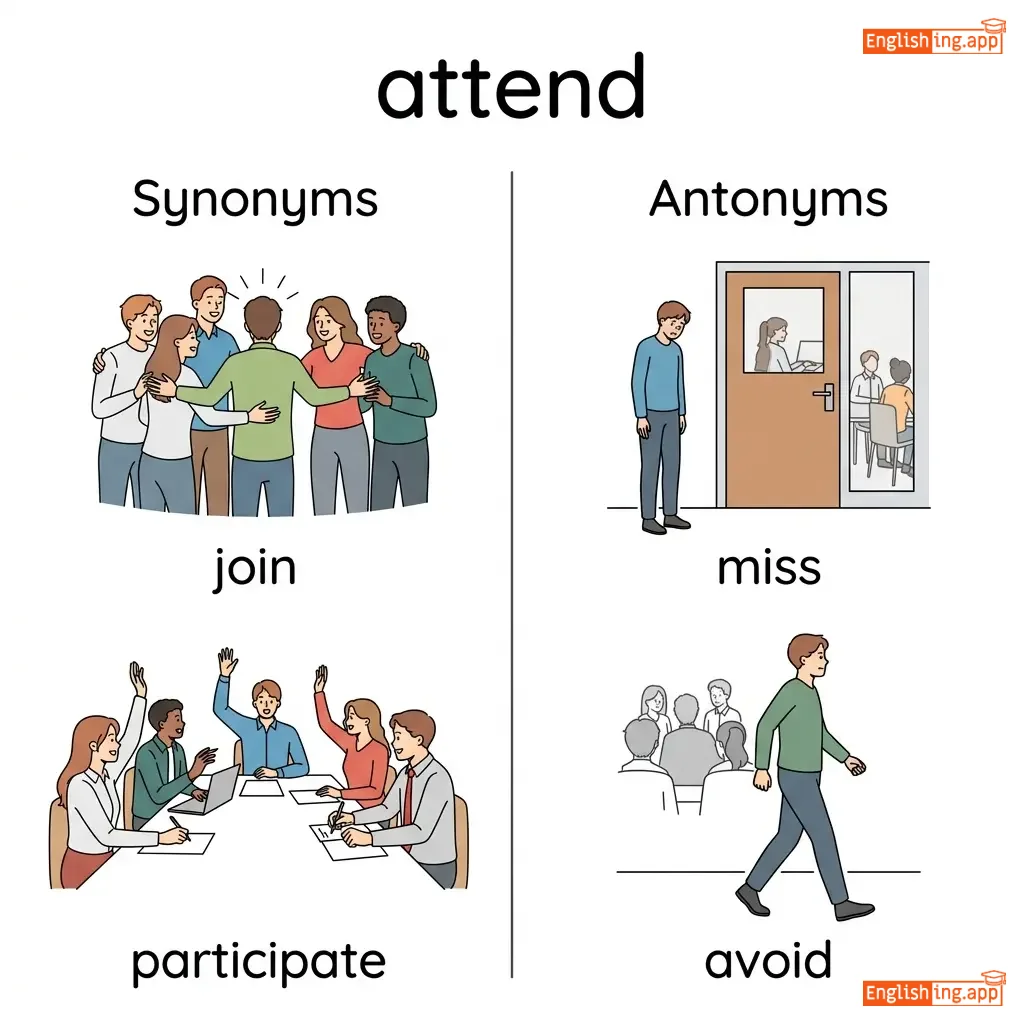
join, participate, visit, appear
••••••
|
miss, avoid, neglect
••••••
|
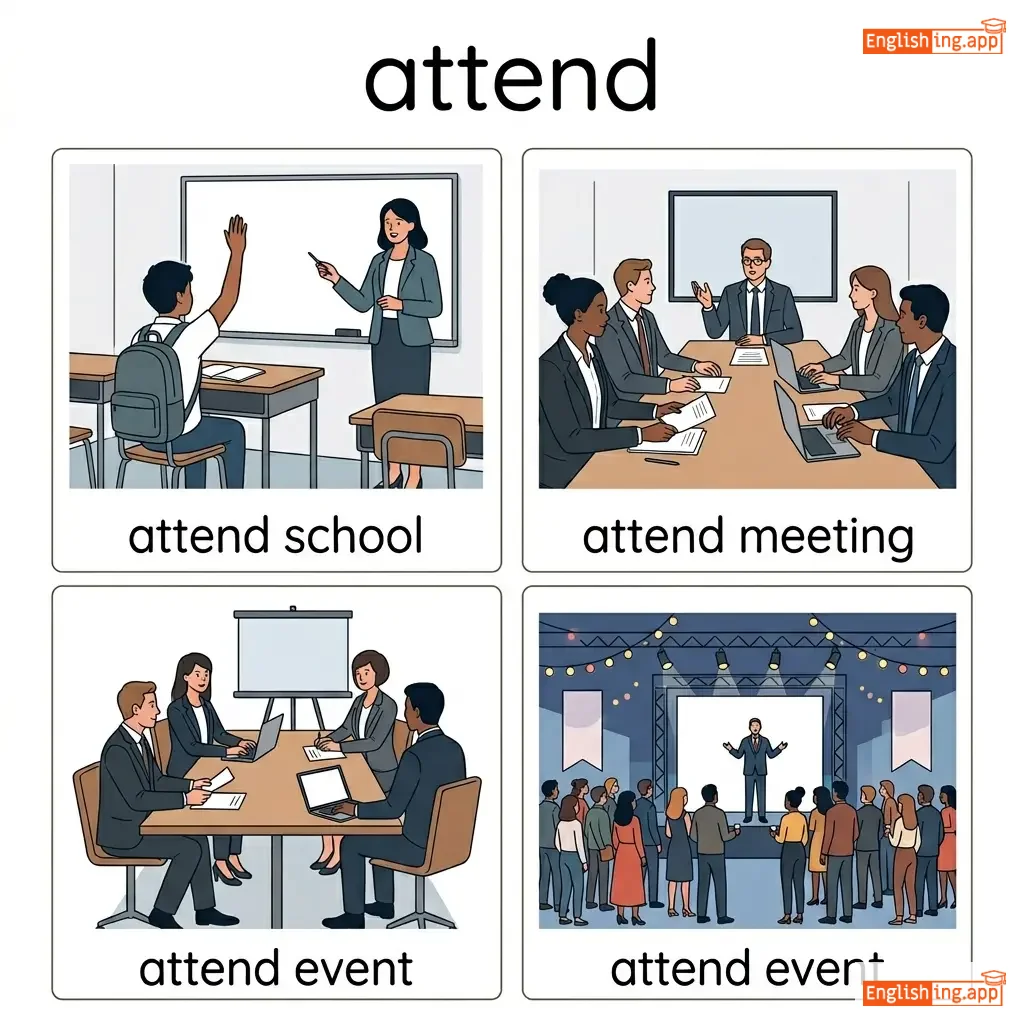
attend school, attend meeting, attend event, attend function
••••••
|
参加するのは、イベントに出席することです。
••••••
|
|
#0
👩🦳
|
/ænt/
noun
(ænt)
••••••
|
- •••••• |
おば
oba
••••••
|
- •••••• | - •••••• | - •••••• | - •••••• |
the sister of your father or mother, or the wife of your uncle
••••••
|
My aunt always gives me gifts on my birthday. |
私の叔母はいつも私の誕生日にプレゼントをくれます。
Watashi no oba wa itsumo watashi no tanjōbi ni purezento o kuremasu.
••••••
|
- •••••• | - •••••• | - •••••• |
relative, family member, guardian
••••••
|
uncle, stranger
••••••
|
dear aunt, loving aunt, aunt and uncle, aunt’s house
••••••
|
おば — あなたに誕生日プレゼントをくれるおばを思い出して。
••••••
|
|
#0
😖
|
/ˈɔːfəl/
adjective
(アフル)
••••••
|
- •••••• |
ひどい
hidoi
••••••
|
- •••••• | - •••••• | - •••••• | - •••••• |
very bad or unpleasant
••••••
|
The weather was awful during our trip. |
旅行中、天気はひどかった。
Ryokō-chū, tenki wa hidokatta.
••••••
|
awful lot |
a great deal or large amount of something
••••••
|
たくさん
takusan
••••••
|
terrible, dreadful, horrible, unpleasant, appalling
••••••
|
wonderful, pleasant, delightful
••••••
|
feel awful, look awful, awful weather, awful mistake
••••••
|
Awfulはひどい、すべてが悪い
••••••
|
|
#0
😞
|
/ˈbædli/
adverb
(バッドリー)
••••••
|
- •••••• |
悪く
waruku
••••••
|
- •••••• | - •••••• | - •••••• | - •••••• |
in a way that is not good; poorly or severely
••••••
|
He performed badly in the exam.
彼は試験でひどい成績を取った。
••••••
|
彼は試験でひどい成績を取った。
Kare wa shiken de hidoi seiseki wo totta.
••••••
|
badly off
困った状態
••••••
|
to be in a poor or difficult situation
••••••
|
困った状況にいる
komatta joukyou ni iru
••••••
|
poorly, severely, inadequately, wrongly, defectively
••••••
|
well, successfully, adequately
••••••
|
badly hurt, badly damaged, badly need, badly affected
••••••
|
Badlyは悪くという意味で、テストで悪い結果を出すときに 'badly done'と言います。
••••••
|
|
#0
🩰
|
/bæˈleɪ/
noun
(バレエ)
••••••
|
- •••••• |
バレエ
ballet
••••••
|
- •••••• | - •••••• | - •••••• | - •••••• |
a highly stylized and artistic form of dance
••••••
|
She has trained for years in classical ballet.
彼女は何年もクラシックバレエを練習してきました。
••••••
|
彼女は何年もクラシックバレエを練習してきました。
Kanojo wa nannen mo kurashikku baree o renshū shite kimashita.
••••••
|
- •••••• | - •••••• | - •••••• |
dance, performance, choreography, art form
••••••
|
stillness, inactivity
••••••
|
classical ballet, ballet dancer, ballet performance
••••••
|
バレエは完璧なバランスを要求する
••••••
|
|
#0
🔑
|
/ˈbeɪsɪk/
adjective
(ベーシック)
••••••
|
- •••••• |
基本的
kibanteki
••••••
|
- •••••• | - •••••• | - •••••• | - •••••• |
forming the most important or simplest part of something
••••••
|
She taught me the basic rules of chess. |
彼女は私にチェスの基本的なルールを教えてくれました。
Kanojo wa watashi ni chesu no kibanteki na ruuru wo oshiete kuremashita.
••••••
|
back to basics |
returning to simple, fundamental principles
••••••
|
基本に戻る
kibun ni modoru
••••••
|
fundamental, essential, primary, simple, elementary
••••••
|
advanced, complex, secondary
••••••
|
basic knowledge, basic needs, basic rules, basic skills
••••••
|
Basicは基本的という意味; 'basic needs = 基本的なニーズ'を覚えておこう。
••••••
|
|
#0
🗓️
|
/mʌnθ/
noun
(月)
••••••
|
- •••••• |
月
tsuki
••••••
|
- •••••• | - •••••• | - •••••• | - •••••• |
a period of about four weeks or one-twelfth of a year
••••••
|
She visits her grandparents once a month. |
彼女は毎月一度、祖父母を訪れます。
Kanojo wa maitsuki ichido, sofubo o otozuremasu.
••••••
|
flavor of the month |
something that is temporarily popular
••••••
|
今月のフレーバー
kongetsu no fureebaa
••••••
|
thirty days, period, lunar month
••••••
|
year, day
••••••
|
next month, this month, per month, monthly payment
••••••
|
月は月 - 毎月、同じ月
••••••
|
|
#0
🚫
|
/ˈnɛvər/
adverb
(ネヴァー)
••••••
|
- •••••• |
決して
kesshite
••••••
|
- •••••• | - •••••• | - •••••• | - •••••• |
at no time in the past or future; not ever
••••••
|
I have never seen such a beautiful sunset. |
私はこんなに美しい夕日を決して見たことがありません。
Watashi wa konna ni utsukushii yūhi o kesshite mita koto ga arimasen.
••••••
|
- •••••• | - •••••• | - •••••• |
not at all, under no circumstances, in no way, by no means
••••••
|
always, ever
••••••
|
never seen, never been, never heard, never thought
••••••
|
NEVER forget to say NO (kesshite) to things that waste time
••••••
|
|
#0
🔁
|
/ˈɔːfən/
adverb
(オフテン)
••••••
|
- •••••• |
しばしば
shibashiba
••••••
|
- •••••• | - •••••• | - •••••• | - •••••• |
frequently, many times
••••••
|
I often visit my grandparents on weekends.
私は週末にしばしば祖父母を訪れます。
••••••
|
私は週末にしばしば祖父母を訪れます。
Watashi wa shūmatsu ni shibashiba sofubo o otozuremasu.
••••••
|
- •••••• | - •••••• | - •••••• |
frequently, regularly, repeatedly, commonly
••••••
|
rarely, seldom, never
••••••
|
often visit, often see, often talk, often hear
••••••
|
オフィスでしばしば (often) 会議があります。
••••••
|
|
#0
🎹
|
/piˈænoʊ/
noun
(ピアノ)
••••••
|
- •••••• |
ピアノ
piano
••••••
|
- •••••• | - •••••• | - •••••• | - •••••• |
a large keyboard musical instrument with black and white keys that produces sound by striking strings with hammers
••••••
|
The little girl practiced piano for one hour every day.
その小さな女の子は毎日1時間、ピアノを練習した。
••••••
|
その小さな女の子は毎日1時間、ピアノを練習した。
sono chiisana onna no ko wa mainichi ichi jikan piano o renshuu shita.
••••••
|
- •••••• | - •••••• | - •••••• |
pianoforte
••••••
|
- •••••• |
play piano, piano lesson, grand piano, upright piano
••••••
|
Picture a P on a piano lid saying ピアノ to remember the Japanese name for piano.
••••••
|
Vocabulary Quiz
Test your vocabulary by matching words with their translations or meanings.
Login to take the quiz
Comments (0)
Share your thoughts and join the discussion.
Join the discussion by logging in
Login to CommentNo comments yet
Be the first to share your thoughts!