

冬の光の下での科学フェア
Science Fair Under the Winter Lights
科学ショーでは、訓練を受けたratを使った特別なデモンストレーションが行われました。 子供たちは、グラフ上でrawデータを読む方法を学びました。 ホール内では、レーザーrayを使って形を描いていました。 ブラフミは言いました、'redライトは必ずしも危険を意味するわけではなく、時には注意を促すだけです。' ジョティは、光るrib構造がランプで作られたモデルを運びました。 チームは最初の失敗の思い出からridすることを決めました。 彼らは、惑星モデルのrimに沿ってソーラーパネルを設置しました。 気候の話では、古い嵐でripするかもしれないテントが言及されました。 スライヤは言いました、'私たちは誰の機会もrobしたくはありません。' 彼らは、帆を上げる方法を示すために頑丈なrodを使用しました。 エコクルーズ用のボートは、川でrowする準備ができていました。 ロボットの車輪には、トラクションを向上させるために追加のrubパッドが取り付けられました。 スピーカーは、科学が未来であるとsayし続けました。 イベントのスケジュールは大きなボードにsetされました。 健康キャンプでは、責任あるsex教育セッションが行われました。 She—ミラを指して—がプログラム全体を調整しました。 ある話では、私たちが河川汚染をsinとして扱う方法が説明されました。 子供たちは床に円を作って一緒にsitしました。 ユニットラボでは、sixの新しいプロジェクトが今日発表されました。 寒い夜には、近くの丘でskiをする夢を見ている近所の子供たちがいます。
翻訳
過去
過去分詞
三人称単数
動名詞
意味
例文
例文の翻訳
同義語
対義語
コロケーション
ニーモニック
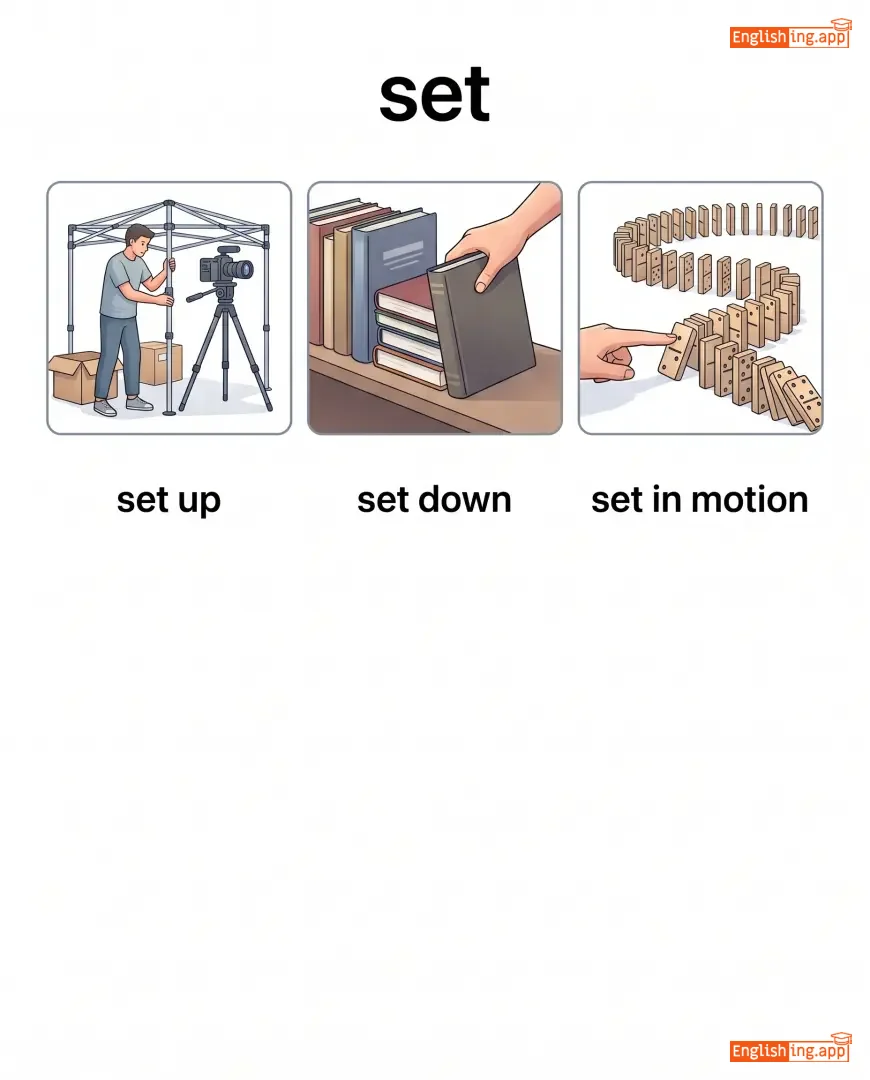
Swipe left or right, or use the buttons. Tap image to zoom.
例文の翻訳
単語
Science Fair Under the Winter LightsScience Fair Under the Winter Lights - マスクトグル
|
絵文字
|
単語 | Images | 翻訳 | 過去 | 過去分詞 | 三人称単数 | 動名詞 | 意味 | 例文 | 例文の翻訳 | 表現例 | 表現例の意味 | 表現例の翻訳 | 同義語 | 対義語 | コロケーション | ニーモニック |
|---|---|---|---|---|---|---|---|---|---|---|---|---|---|---|---|---|---|
|
#0
🐀
|
/ræt/
noun
(レッド)
••••••
|
- •••••• |
ネズミ
nezumi
••••••
|
- •••••• | - •••••• | - •••••• | - •••••• |
a small rodent that resembles a large mouse, often considered a pest
••••••
|
A rat ran across the kitchen floor last night. |
昨晩、ネズミがキッチンの床を走り回っていました。
sakuban, nezumi ga kicchin no yuka o hashirimawatteimashita.
••••••
|
smell a rat |
to suspect that something is wrong or dishonest
••••••
|
ネズミの匂いがする
nezumi no nioi ga suru
••••••
|
rodent, mouse, pest, vermin, creature
••••••
|
pet, friend, ally
••••••
|
rat trap, lab rat, dead rat, sewer rat
••••••
|
ネズミのような匂いがしたら、何かおかしいことがある!
••••••
|
|
#0
🥩
|
/rɔː/
adjective
(ロウ)
••••••
|
- •••••• |
生の; 処理されていない; 自然な状態で; 未熟な
nama no; shori sarete inai; shizen na joutai de; mijuku na
••••••
|
- •••••• | - •••••• | - •••••• | - •••••• |
uncooked; not processed; in natural state; inexperienced
••••••
|
The chef prefers to use raw vegetables in his salads.
シェフはサラダに生野菜を使うのが好きです。
••••••
|
シェフはサラダに生野菜を使うのが好きです。
Shefu wa sarada ni namayasai o tsukau no ga suki desu.
••••••
|
- •••••• | - •••••• | - •••••• |
uncooked, fresh, natural, crude, unprocessed
••••••
|
cooked, processed, refined, prepared
••••••
|
raw material, raw data, raw vegetables, raw meat, raw talent
••••••
|
生の食材が料理にフレッシュな感覚を与えます。
••••••
|
|
#0
🌞
|
/reɪ/
noun
(レイ)
••••••
|
- •••••• |
光線
kōsen
••••••
|
- •••••• | - •••••• | - •••••• | - •••••• |
a narrow beam of light, heat, or radiation
••••••
|
A ray of sunlight broke through the clouds. |
太陽の光線が雲を突き抜けた。
Taiyō no kōsen ga kumo o tsukinuketa.
••••••
|
- •••••• | - •••••• | - •••••• |
beam, beam of light, shaft, streak
••••••
|
darkness, shade, gloom
••••••
|
ray of light, ray of hope, X-ray, laser ray
••••••
|
光線、太陽の光線のように!
••••••
|
|
#0
🔴
|
/red/
adjective
(レッド)
••••••
|
- •••••• |
赤
aka
••••••
|
- •••••• | - •••••• | - •••••• | - •••••• |
having the color of blood or fire; of the color red
••••••
|
She wore a beautiful red dress to the party.
彼女はパーティーに美しい赤いドレスを着ていた。
••••••
|
彼女はパーティーに美しい赤いドレスを着ていた。
Kanojo wa pāti ni utsukushī akai doresu o kite ita.
••••••
|
- •••••• | - •••••• | - •••••• |
scarlet, crimson, cherry, ruby
••••••
|
green, blue, white
••••••
|
red rose, red carpet, red light, red wine
••••••
|
赤は血と火の色です。
••••••
|
|
#0
🦴
|
/rɪb/
noun
(リブ)
••••••
|
- •••••• |
肋骨
rekotsu
••••••
|
- •••••• | - •••••• | - •••••• | - •••••• |
one of the curved bones that form the rib cage in humans and animals, protecting the chest organs
••••••
|
He broke a rib while playing football. |
彼はサッカーをしているときに肋骨を折った。
kare wa sakkā o shite iru toki ni rekotsu o otta
••••••
|
tickle someone's ribs |
to make someone laugh or amuse them
••••••
|
誰かを笑わせる
dareka o warawaseru
••••••
|
bone, framework, structure, support, arc
••••••
|
spine, limb
••••••
|
rib cage, broken rib, pork rib, rib bone
••••••
|
Ribは肋骨を意味します – 覚えておいて、肋骨は私たちの内臓を守っています!
••••••
|
|
#0
🧹
|
/rɪd/
verb
(リッド)
••••••
|
- •••••• |
取り除く
torinozoku
••••••
|
rid
リッド
••••••
|
rid
リッド
••••••
|
rids
リッズ
••••••
|
ridding
リディング
••••••
|
to remove or get rid of something
••••••
|
I need to rid the house of all the clutter.
家の中のすべてのゴミを取り除く必要があります。
••••••
|
家の中のすべてのゴミを取り除く必要があります。
Ie no naka no subete no gomi o torinozoku hitsuyou ga arimasu.
••••••
|
- •••••• | - •••••• | - •••••• |
remove, eliminate, discard, clear
••••••
|
keep, retain, maintain
••••••
|
rid of, rid the house, rid oneself
••••••
|
Rid (取り除く) それは家のゴミを取り除くことです。
••••••
|
|
#0
⚪
|
/rɪm/
noun
(リム)
••••••
|
- •••••• |
縁
fuchi
••••••
|
- •••••• | - •••••• | - •••••• | - •••••• |
the outer edge or border of a circular object
••••••
|
The coffee cup had a chip on its rim. |
コーヒーカップの縁にひびが入っていました。
Kōhī kappu no fuchi ni hibi ga haitte imashita.
••••••
|
on the rim |
at the edge or border of something
••••••
|
縁に
fuchi ni
••••••
|
edge, border, fringe, margin, boundary
••••••
|
center, core
••••••
|
cup rim, wheel rim, glass rim, mountain rim
••••••
|
Rim は縁を意味します – コーヒーカップの縁を見てください。
••••••
|
|
#0
✂️
|
/rɪp/
verb
(リップ)
••••••
|
- •••••• |
裂ける
sakeru
••••••
|
ripped
リップド
••••••
|
ripped
リップド
••••••
|
rips
リップス
••••••
|
ripping
リッピング
••••••
|
to tear something quickly or violently
••••••
|
He accidentally ripped his shirt on the fence.
彼はフェンスでシャツをうっかり裂けてしまいました。
••••••
|
彼はフェンスでシャツをうっかり裂けてしまいました。
Kare wa fensu de shatsu o ukkari sakete shimaimashita.
••••••
|
rip off
rip off
••••••
|
to cheat someone by charging too much
••••••
|
騙す
damasu
••••••
|
tear, split, shred, cut, slash
••••••
|
sew, repair, mend
••••••
|
rip open, rip apart, rip through, rip off
••••••
|
Ripは裂ける音です、衣服に注意して!
••••••
|
|
#0
🦹♂️
|
/rɑːb/
verb
(ロブ)
••••••
|
- •••••• |
強盗する
gōtō suru
••••••
|
robbed
ロブド
••••••
|
robbed
ロブド
••••••
|
robs
ロブス
••••••
|
robbing
ロビング
••••••
|
to steal money or property from a person or place; to commit robbery
••••••
|
The thief tried to rob the bank last night.
泥棒は昨晩銀行を強盗しようとしました。
••••••
|
泥棒は昨晩銀行を強盗しようとしました。
Dorobō wa sakuban ginkō o gōtō shiyō to shimashita.
••••••
|
- •••••• | - •••••• | - •••••• |
steal, burgle, loot, plunder
••••••
|
give, donate, return, restore
••••••
|
rob a bank, rob someone blind, rob of opportunity, armed robbery
••••••
|
強盗は銀行を襲う泥棒のようなものです。
••••••
|
|
#0
🪄
|
/rɒd/
noun
(ロッド)
••••••
|
- •••••• |
金属または木材の細長い棒
kinzoku mata wa mokuzai no hosonagai bō
••••••
|
- •••••• | - •••••• | - •••••• | - •••••• |
a thin straight bar, especially of metal or wood
••••••
|
He used an iron rod to support the structure. |
彼は構造を支えるために鉄のロッドを使いました。
Kare wa kōzō o sasaeru tame ni tetsu no roddo o tsukaimashita.
••••••
|
spare the rod and spoil the child |
if you don’t discipline children, they will become spoiled
••••••
|
棒を使わなければ子供は甘やかされる
Bō o tsukawanakereba kodomo wa amayakasareru
••••••
|
bar, stick, pole, shaft, staff
••••••
|
flex, curve
••••••
|
fishing rod, iron rod, measuring rod, curtain rod
••••••
|
Rodは鉄棒を意味します。鉄棒がなければ構造は立ちません。しつけがなければ子供も育ちません。
••••••
|
|
#0
🚣
|
/raʊ/ (argument), /roʊ/ (line of things)
noun, verb
(ロウ)
••••••
|
- •••••• |
列 / 争い
retsu / arasoi
••••••
|
rowed
ロウド
••••••
|
rowed
ロウド
••••••
|
rows
ロウズ
••••••
|
rowing
ロウイング
••••••
|
A line of things or people; also, a noisy quarrel; to propel a boat with oars.
••••••
|
They had a loud row about money.
彼らはお金について大声で争いました。
••••••
|
彼らはお金について大声で争いました。
Karera wa okane ni tsuite ōgoe de arasoi mashita.
••••••
|
a row to hoe
難しい仕事
••••••
|
a difficult task or responsibility to deal with
••••••
|
難しい仕事
muzukashī shigoto
••••••
|
line, series, quarrel, fight, paddle
••••••
|
agreement, harmony
••••••
|
row of seats, row a boat, loud row
••••••
|
Row を列または争いとして: 'Row' は並びか、喧嘩のこと。
••••••
|
|
#0
👐
|
/rʌb/
verb
(ラブ)
••••••
|
|
擦る
suru
••••••
|
rubbed
ラブド
••••••
|
rubbed
ラブド
••••••
|
rubs
ラブズ
••••••
|
rubbing
ラビング
••••••
|
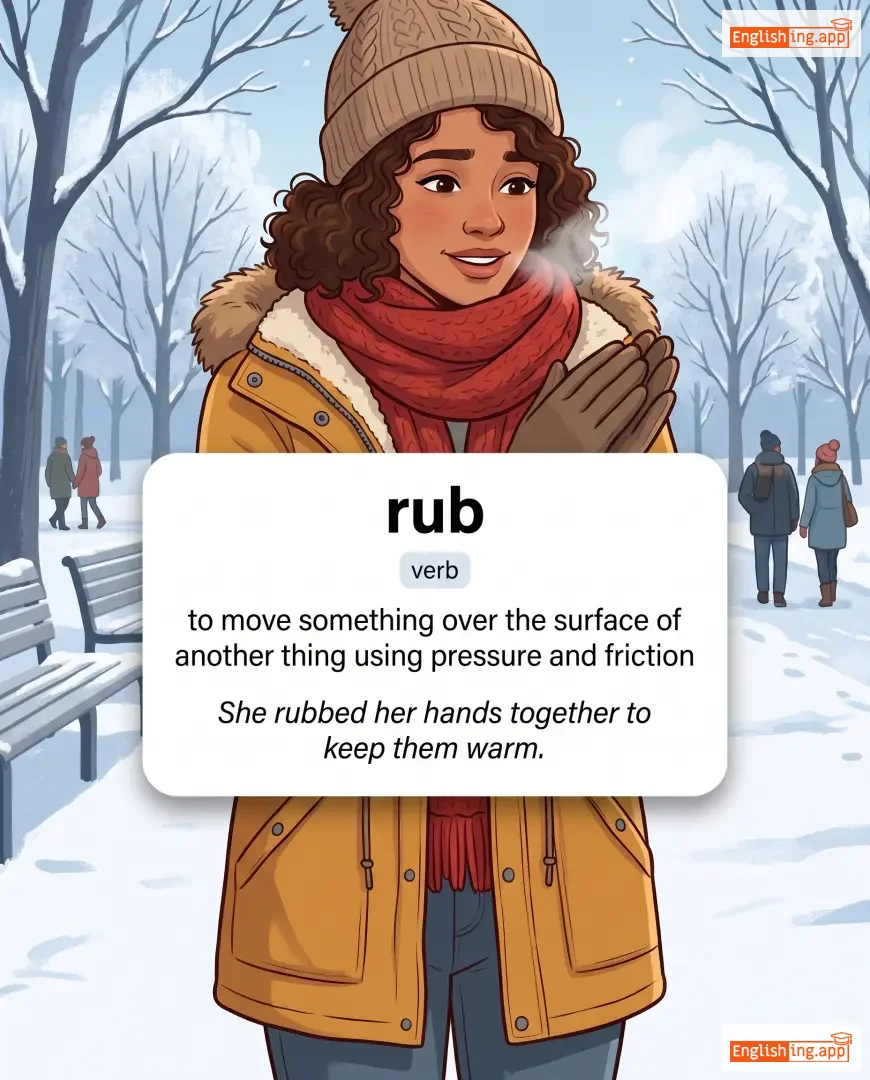
to move something over the surface of another thing using pressure and friction
••••••
|
She rubbed her hands together to keep them warm.
彼女は手をこすり合わせて暖かさを保っていました。
••••••
|
彼女は手をこすり合わせて暖かさを保っていました。
Kanojo wa te o kosuri awasete atatakasa o tamotte imashita.
••••••
|
rub salt in the wound
傷口に塩を擦り込む
••••••
|
to make a bad situation even worse
••••••
|
傷口に塩を擦り込む
Kizuguchi ni shio o surikomu
••••••
|
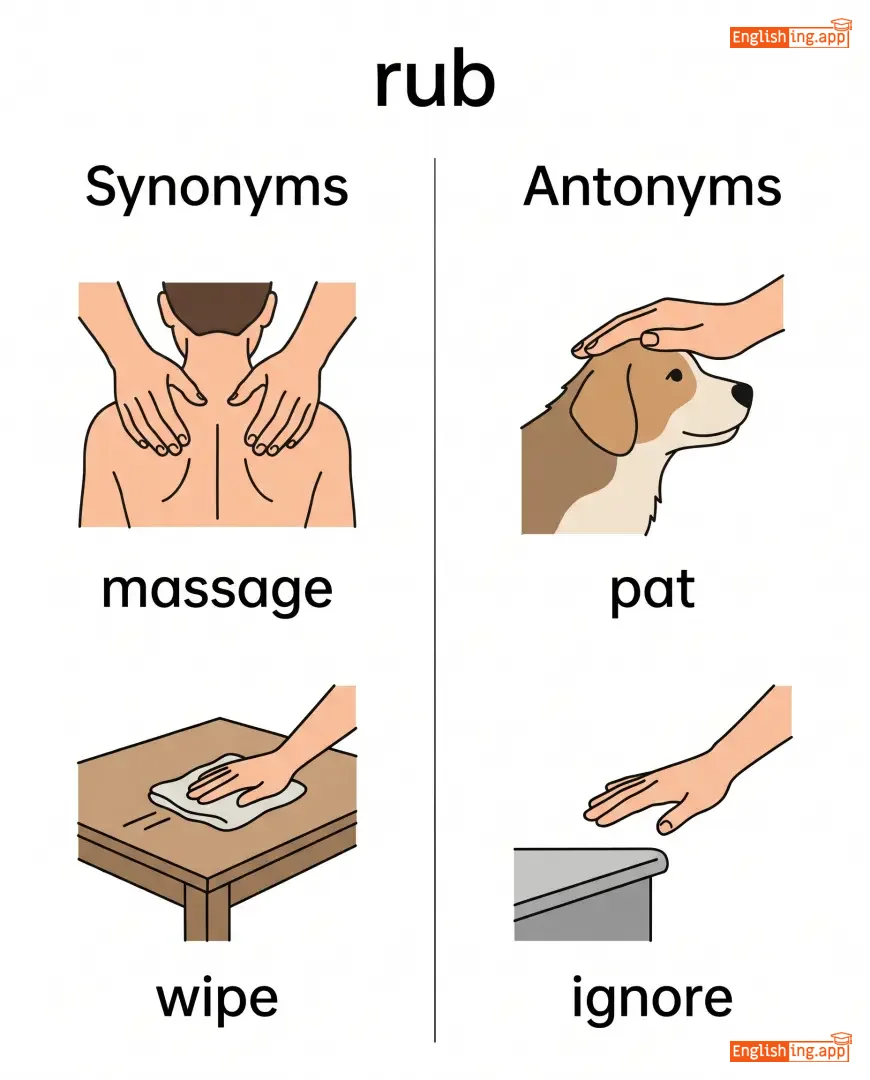
massage, wipe, polish, scrub, stroke
••••••
|
pat, ignore, leave
••••••
|
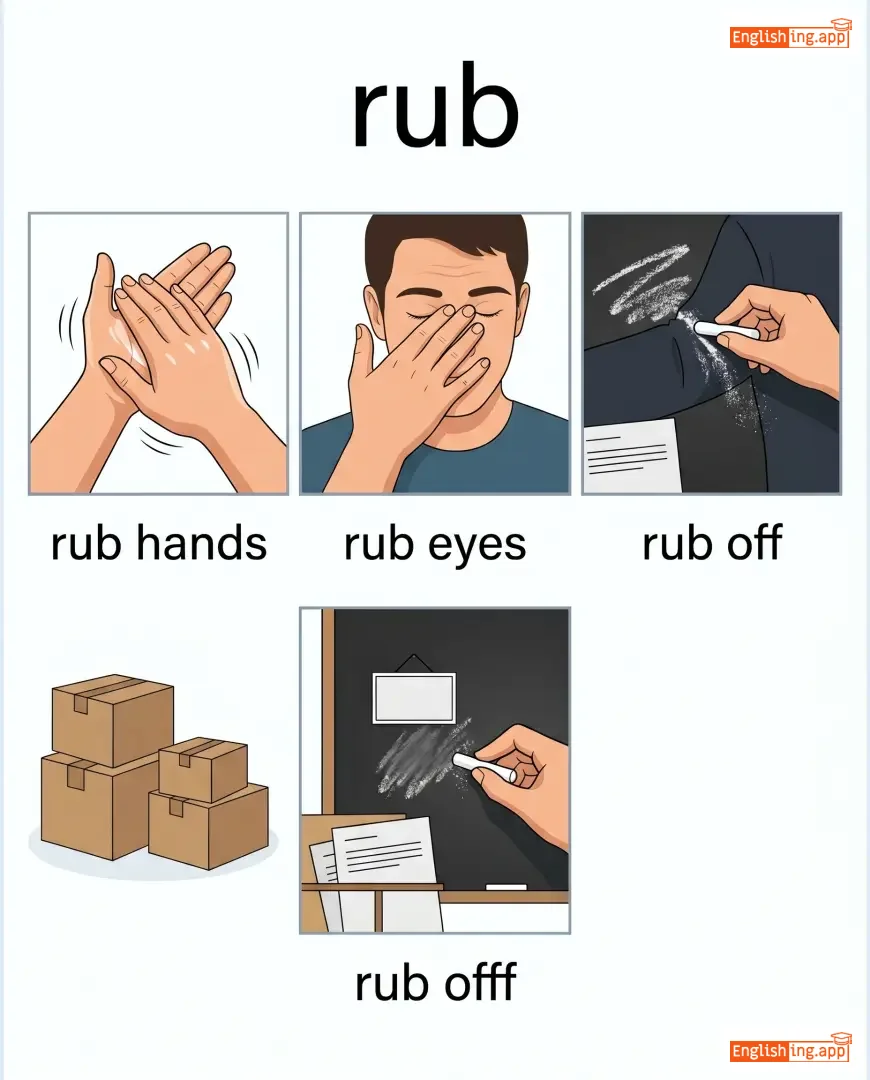
rub hands, rub eyes, rub off, rub out
••••••
|
Rubは擦る意味です — 擦ってピカピカにしましょう。
••••••
|
|
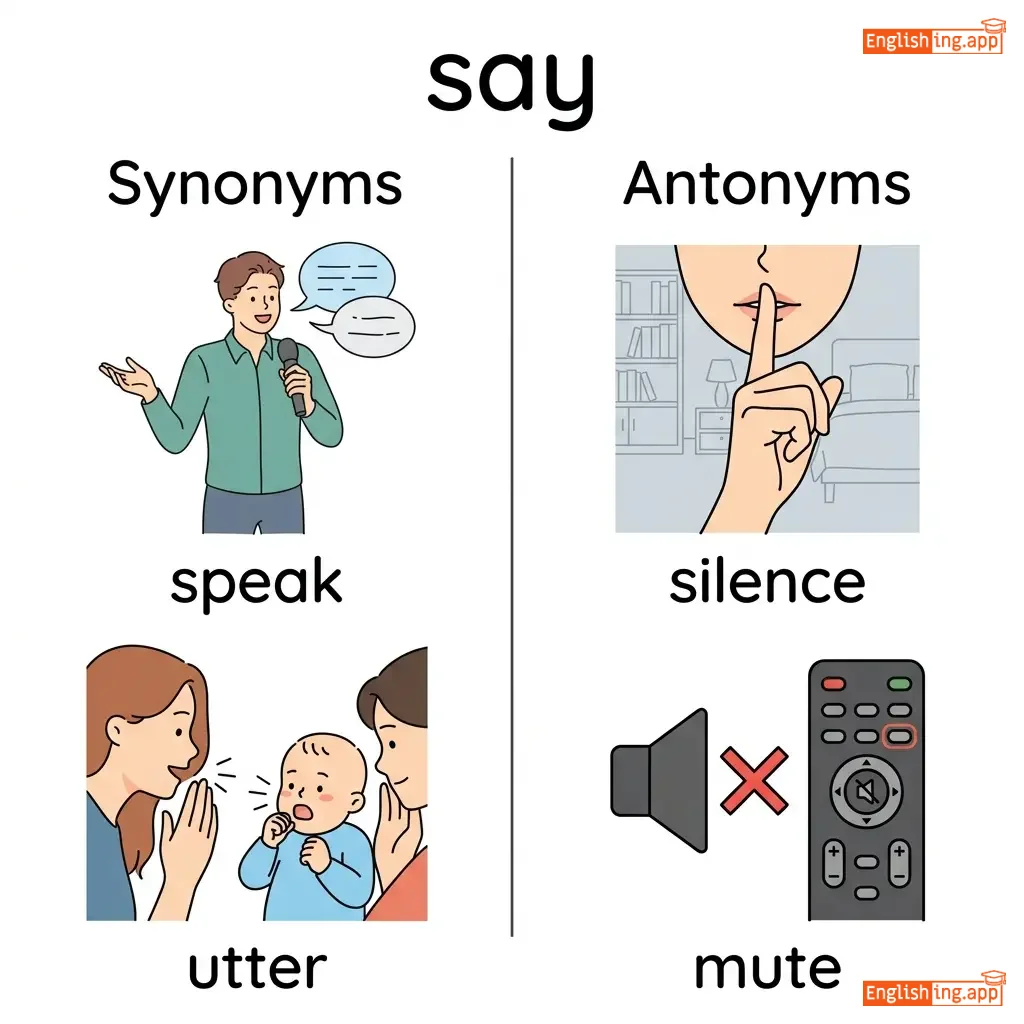
#0
💬
|
/seɪ/
verb
(セイ)
••••••
|
|
言う
iu
••••••
|
said
セイド
••••••
|
said
セイド
••••••
|
says
セイズ
••••••
|
saying
セイイング
••••••
|
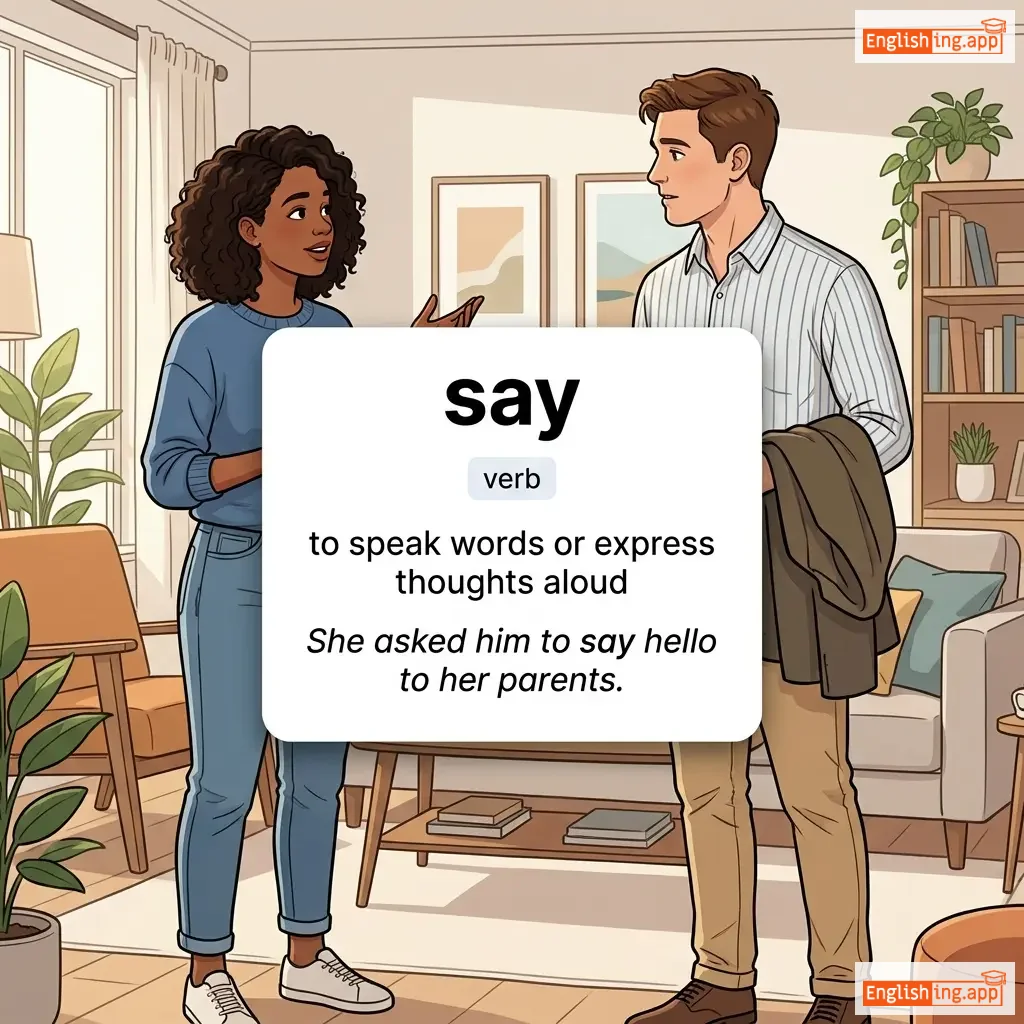
to speak words; to express something in words
••••••
|
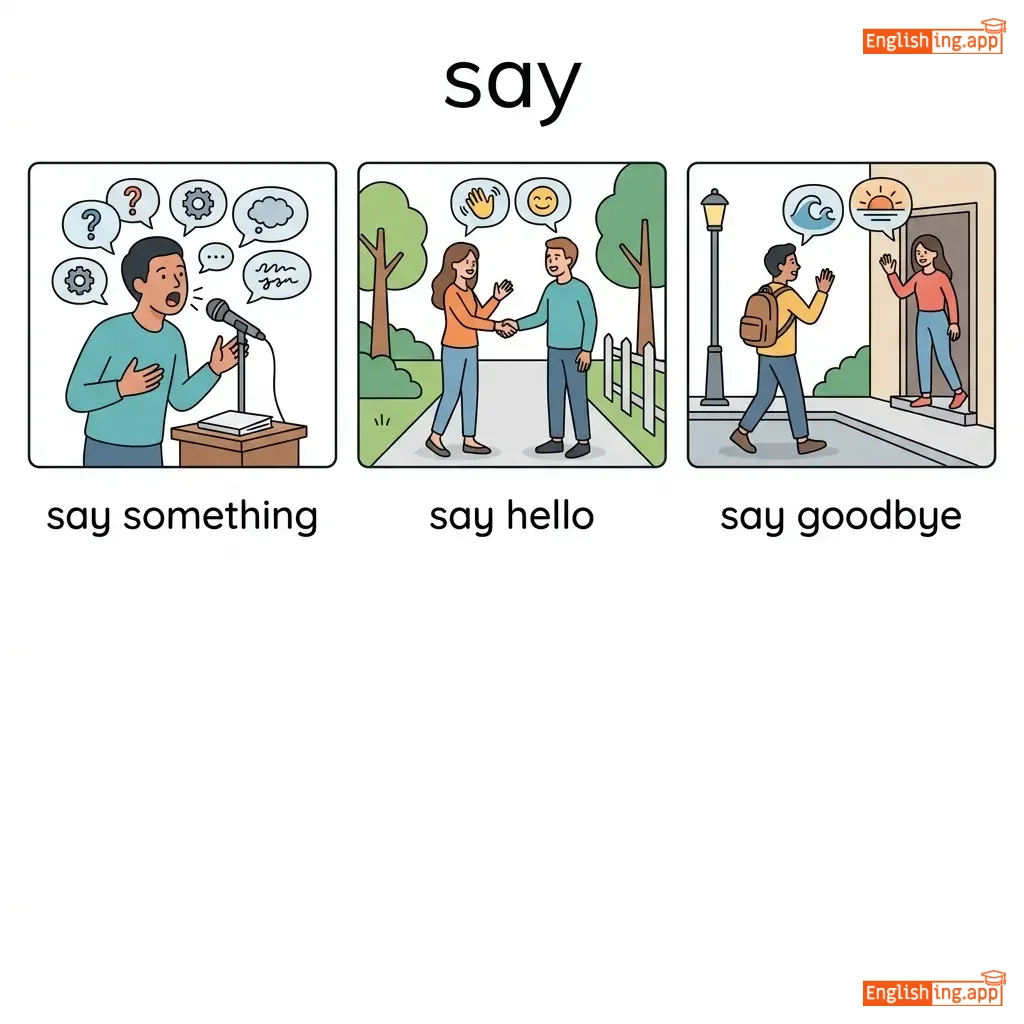
She said hello to me.
シー セイド ハロー トゥー ミー。
••••••
|
彼女は私にハローと言った。
Kanojo wa watashi ni haro to itta.
••••••
|
- •••••• | - •••••• | - •••••• |
speak, tell, express, utter
••••••
|
listen, hear, remain silent
••••••
|
say hello, say goodbye, say something, say yes, say no, say please
••••••
|
In Japanese, 'iu' (言う) sounds like 'you'—when you say something, you 'iu' it.
••••••
|
|
#0
📍
|
/set/
verb
(セット)
••••••
|
|
設置する
secchi suru
••••••
|
set
セット
••••••
|
set
セット
••••••
|
sets
セッツ
••••••
|
setting
セッティング
••••••
|
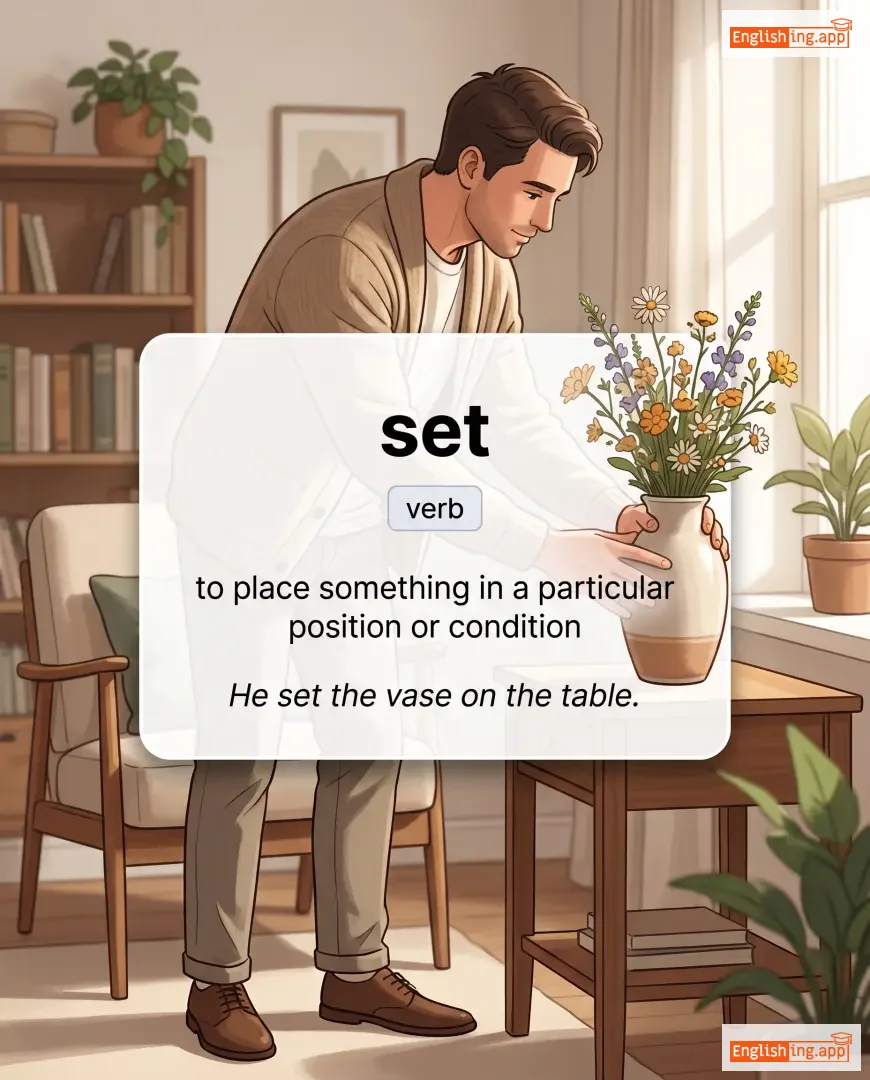
to put or place something in a position; to establish
••••••
|
She set the book on the table.
彼女は本をテーブルに置いた。
••••••
|
彼女は本をテーブルに置いた。
Kanojo wa hon o tēburu ni oita.
••••••
|
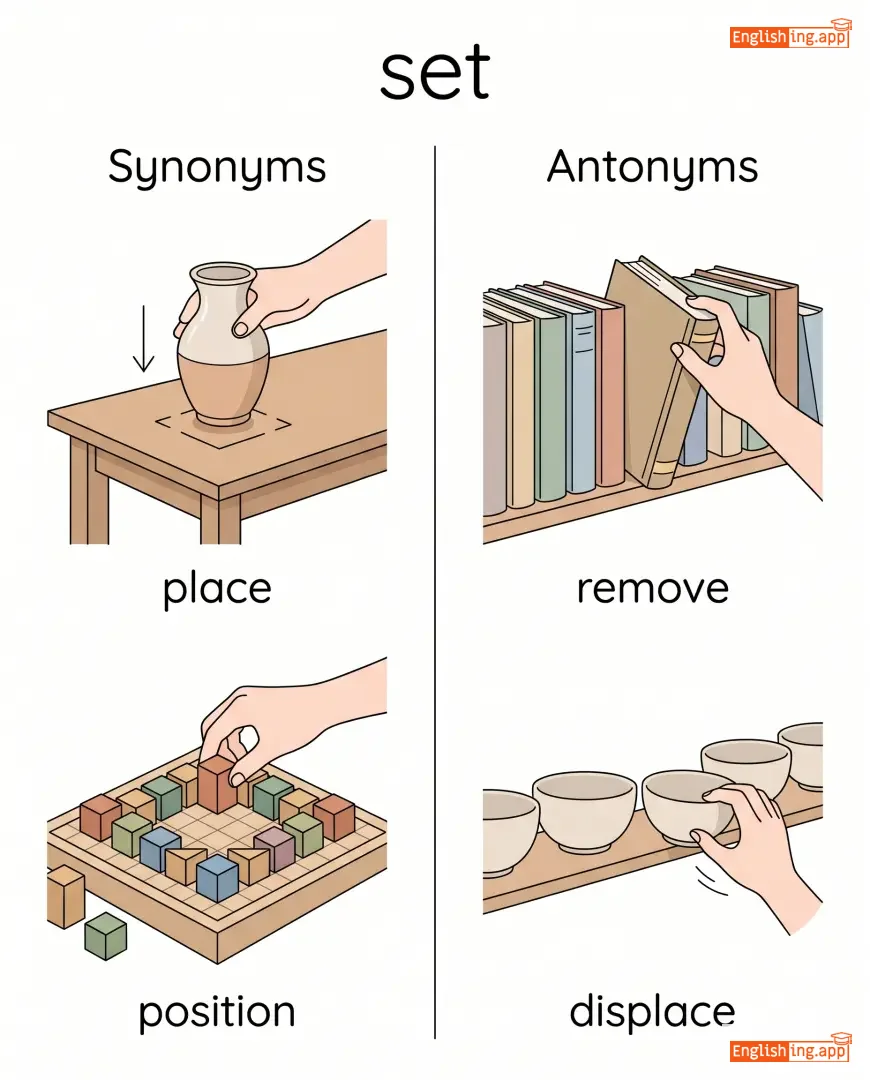
- •••••• | - •••••• | - •••••• |
place, put, position, establish
••••••
|
remove, displace, unset, disturb
••••••
|
set aside, set up, set down, set off, set the table
••••••
|
Set the book on the table, as this is where it belongs.
••••••
|
|
#0
💋
|
/sɛks/
noun
(セックス)
••••••
|
- •••••• |
性別
seibetsu
••••••
|
- •••••• | - •••••• | - •••••• | - •••••• |
the biological distinction between male and female; sexual activity
••••••
|
He was asked about his sex at the doctor's office. |
彼は医者のオフィスで自分の性別について尋ねられました。
Kare wa isha no ofisu de jibun no seibetsu ni tsuite tazuneraremashita.
••••••
|
- •••••• | - •••••• | - •••••• |
gender, sexuality, reproduction
••••••
|
none
••••••
|
sexual activity, sex education, sex drive
••••••
|
Sexuality can be SEXy, but it's also biology!
••••••
|
|
#0
👩
|
/ʃi/
pronoun
(シー)
••••••
|
- •••••• |
彼女
kanojo
••••••
|
- •••••• | - •••••• | - •••••• | - •••••• |
a female person or animal previously mentioned or easily identified
••••••
|
She is going to the market to buy vegetables. |
彼女は市場に行って野菜を買います。
Kanojo wa ichiba ni itte yasai o kaimasu.
••••••
|
- •••••• | - •••••• | - •••••• |
her, this woman, that woman
••••••
|
he, they
••••••
|
she is, she said, she went, she can
••••••
|
彼女 sounds like 'she' in English, both referring to a female.
••••••
|
|
#0
⚖️
|
/sɪn/
noun, verb
(シン)
••••••
|
- •••••• |
罪
tsumi
••••••
|
sinned
シンデッド
••••••
|
sinned
シンデッド
••••••
|
sins
シンズ
••••••
|
sinning
シニン
••••••
|
an immoral act considered to be a transgression against divine law; to commit an offense against religious or moral law
••••••
|
He confessed his sin to the priest.
彼は神父に自分の罪を告白しました。
••••••
|
彼は神父に自分の罪を告白しました。
Kare wa shinpu ni jibun no tsumi wo kokuhaku shimashita.
••••••
|
fall into sin
罪に陥る
••••••
|
to commit immoral or wrong actions
••••••
|
罪に陥る
tsumi ni ochiru
••••••
|
offense, wrongdoing, crime, transgression
••••••
|
virtue, goodness, morality
••••••
|
deadly sin, confess sin, forgive sin, commit sin
••••••
|
罪 (tsumi) という音
••••••
|
|
#0
🪑
|
/sɪt/
verb
(シット)
••••••
|
- •••••• |
座る
suwaru
••••••
|
sat
サット
••••••
|
sat
サット
••••••
|
sits
シッツ
••••••
|
sitting
シッティング
••••••
|
to rest with the body supported by the buttocks, often in a chair or on the ground
••••••
|
Please sit down and relax for a while.
少し座ってリラックスしてください。
••••••
|
少し座ってリラックスしてください。
Sukoshi suwatte rirakkusu shite kudasai.
••••••
|
sit tight
じっと座って
••••••
|
to stay in one place and wait patiently
••••••
|
じっとして
jitto shite
••••••
|
perch, rest, settle, lounge
••••••
|
stand, rise
••••••
|
sit down, sit still, sit comfortably, sit on the chair
••••••
|
座ることで体が楽になり、リラックスする
••••••
|
|
#0
6️⃣
|
/sɪks/
noun
(シックス)
••••••
|
- •••••• |
六
roku
••••••
|
- •••••• | - •••••• | - •••••• | - •••••• |
the number 6
••••••
|
There are six apples on the table.
テーブルにリンゴが六個あります。
••••••
|
テーブルにリンゴが六個あります。
Tēburu ni ringo ga roku ko arimasu.
••••••
|
- •••••• | - •••••• | - •••••• |
half a dozen, sextuple, sixfold
••••••
|
one
••••••
|
six o'clock, six people, six months, six days
••••••
|
Six is 'roku' in Japanese. Remember it as 'Roku apples on the table'.
••••••
|
|
#0
🎿
|
/skiː/
verb
(スキー)
••••••
|
- •••••• |
スキーをする
sukī o suru
••••••
|
skied
スキーした
••••••
|
skied
スキーした
••••••
|
skis
スキーする
••••••
|
skiing
スキーしている
••••••
|
to glide over snow on skis
••••••
|
We went skiing in the Alps last winter.
私たちは昨冬アルプスでスキーをしました。
••••••
|
私たちは昨冬アルプスでスキーをしました。
Watashitachi wa saku fuyu Arupusu de sukī o shimashita.
••••••
|
- •••••• | - •••••• | - •••••• |
snowboard, glide, coast
••••••
|
walk, crawl
••••••
|
ski trip, ski resort, downhill skiing, cross-country skiing
••••••
|
Skiing is 'スキーをする' in Japanese. Ski through the snow-covered mountains!
••••••
|
Vocabulary Quiz
Test your vocabulary by matching words with their translations or meanings.
Login to take the quiz
Comments (0)
Share your thoughts and join the discussion.
Join the discussion by logging in
Login to CommentNo comments yet
Be the first to share your thoughts!