

金融詐欺と闘った弁護士
The Lawyer Who Fought Financial Fraud
アドナンは金融犯罪を専門とする弁護士だった。彼の ethics は強く、決して誠実さを妥協しなかった。ある日、大きな fraud 事件が彼の机に届いた。ある会社が汚職により巨額の損失を incurred していた。アドナンの調査で、関与していたのは fewer そして fifty 人未満の従業員だが、金額は非常に gross であることが明らかになった。スキャンダルが明るみに出た後、CEO は exile(追放)を余儀なくされた。証拠は圧倒的で、文書は犯罪の明確な姿を evoked していた。アドナンは確固たる事件を築くために大きな努力を exert しなければならなかった。これは彼の fifth の主要事件であり、彼は決意に満ちていた。会社の CFO は、アドナンはビジネスを理解していない idiot だと言って告発を否定しようとした。しかしアドナンの調査は徹底していた。彼は fiber 光通信の記録やデジタル通信を分析した。法廷は緊張に包まれ、弁護士たちは行き来しながら (forth) 論争を繰り広げた。弁護側の弁護士は、アドナンが新たな証拠を提示するたびに frowned した。面白い瞬間もあった——会計士が誤ってコーヒーをこぼし、それがあまりに fluid でテーブル全体に広がったのだ。裁判は forty 日間続いた。検察は、経営陣の決定が誠実な従業員にとって fatal だったことを証明した。アドナンの主張は非常に説得力があり、陪審員は容易に有罪を infer できた。彼のクロスエグザミネーションにおける handy なスキルが大いに役立った。証人は、疑わしい現金取引を目撃したと述べた。アドナンは、flesh と血を持つ人々が欲によって苦しんだことを指摘した。最終判決は有罪。会社の幹部は投獄された。アドナンは、ethical な弁護士が強力な犯罪者と戦い、正義を勝ち取ることができると証明した。彼の仕事は、変化を起こそうとする若い弁護士たちにとって大きな励みとなった。
翻訳
過去
過去分詞
三人称単数
動名詞
意味
例文
例文の翻訳
同義語
対義語
コロケーション
ニーモニック
Swipe left or right, or use the buttons. Tap image to zoom.
例文の翻訳
単語
The Lawyer Who Fought Financial FraudThe Lawyer Who Fought Financial Fraud - マスクトグル
|
絵文字
|
単語 | Images | 翻訳 | 過去 | 過去分詞 | 三人称単数 | 動名詞 | 意味 | 例文 | 例文の翻訳 | 表現例 | 表現例の意味 | 表現例の翻訳 | 同義語 | 対義語 | コロケーション | ニーモニック |
|---|---|---|---|---|---|---|---|---|---|---|---|---|---|---|---|---|---|
|
#0
💼
|
/ˈɛθɪk/
noun
(エシック)
••••••
|
- •••••• |
倫理
rinri
••••••
|
- •••••• | - •••••• | - •••••• | - •••••• |
a set of moral principles, especially ones relating to a particular group, system, or profession
••••••
|
He has a strong work ethic and always meets deadlines.
彼は強い労働倫理を持っており、常に締め切りを守ります。
••••••
|
彼は強い労働倫理を持っており、常に締め切りを守ります。
Kare wa tsuyoi rōdō rinri o motte ori, jō ni shimekiri o mamorimasu.
••••••
|
- •••••• | - •••••• | - •••••• |
morality, principles, values, standards
••••••
|
immorality, corruption
••••••
|
ethical behavior, strong work ethic, moral ethics, business ethics
••••••
|
Ethics を理解しよう ‘エシック’ - 仕事に関連する道徳的原則
••••••
|
|
#0
🎶
|
/ɪˈvoʊk/
verb
(イヴォーク)
••••••
|
- •••••• |
呼び起こす
yobikokosu
••••••
|
evoked
イヴォークド
••••••
|
evoked
イヴォークド
••••••
|
evokes
イヴォークス
••••••
|
evoking
イヴォーキング
••••••
|
to bring a feeling, memory, or image into the mind
••••••
|
The old song evoked memories of her childhood.
その古い歌は彼女の子供時代の思い出を呼び起こしました。
••••••
|
その古い歌は彼女の子供時代の思い出を呼び起こしました。
Sono furui uta wa kanojo no kodomojidai no omoide o yobikokoshimashita.
••••••
|
evoke sympathy
同情を呼び起こす
••••••
|
to make someone feel compassion or pity
••••••
|
同情を呼び起こす
dōjō o yobikokosu
••••••
|
arouse, elicit, provoke, stimulate, inspire
••••••
|
suppress, stifle, ignore
••••••
|
evoke memories, evoke feelings, evoke sympathy, evoke laughter
••••••
|
呼び起こすは記憶を蘇らせるように、'イヴォーク'は感情を引き起こす。
••••••
|
|
#0
💪
|
/ɪɡˈzɜːrt/
verb
(エクザート)
••••••
|
|
努力する
doryoku suru
••••••
|
exerted
エクザーテッド
••••••
|
exerted
エクザーテッド
••••••
|
exerts
エクザーツ
••••••
|
exerting
エクザーティング
••••••
|
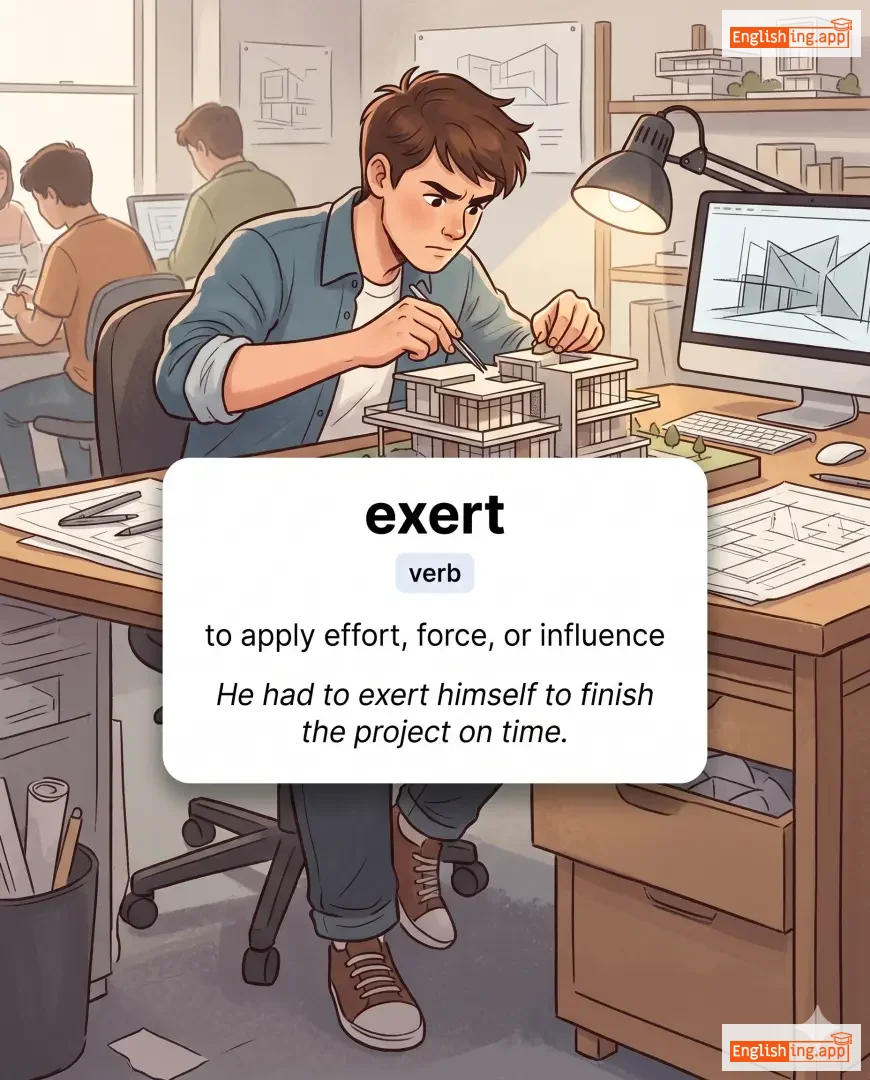
to apply effort, force, or influence
••••••
|
He had to exert himself to finish the project on time.
彼はプロジェクトを時間通りに終わらせるために努力しなければなりませんでした。
••••••
|
彼はプロジェクトを時間通りに終わらせるために努力しなければなりませんでした。
Kare wa purojekuto o jikan-dōri ni owaraseru tame ni doryoku shinakereba narimasen deshita.
••••••
|
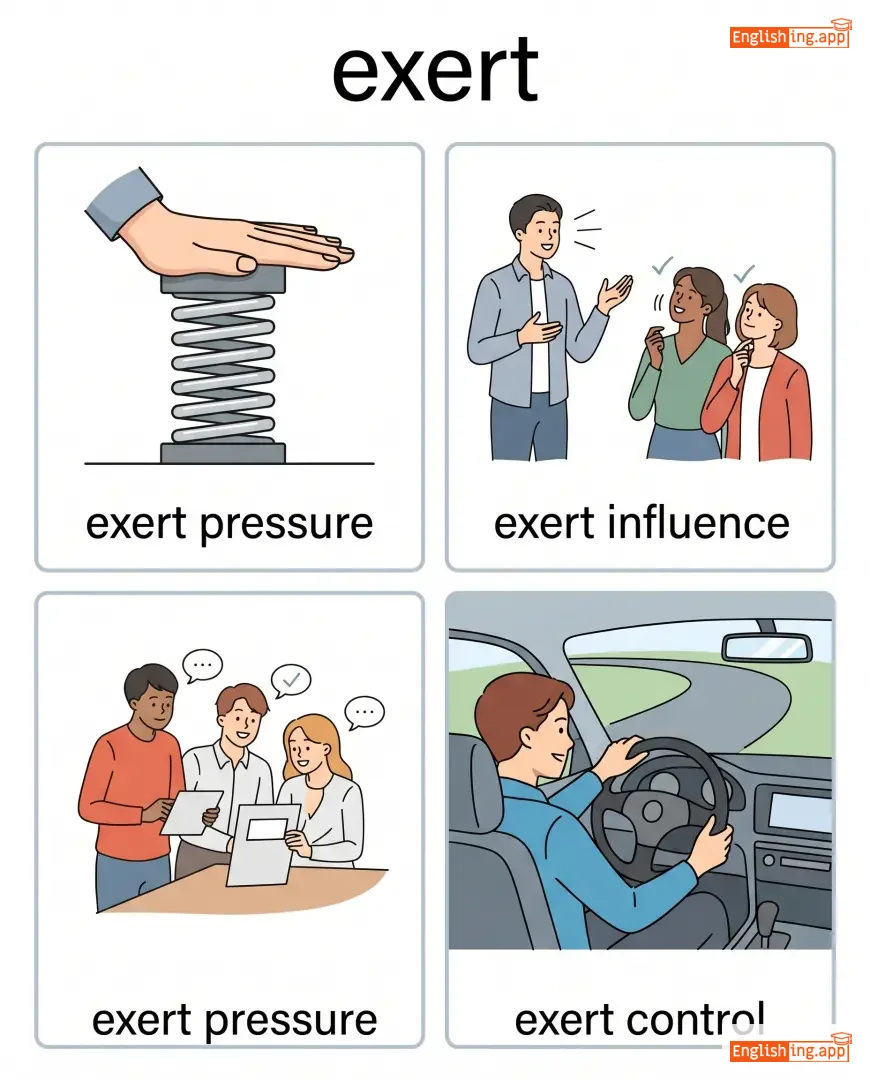
exert control
コントロールを行使する
••••••
|
to use power or influence over something or someone
••••••
|
コントロールを行使する
kontorōru o kōshi suru
••••••
|
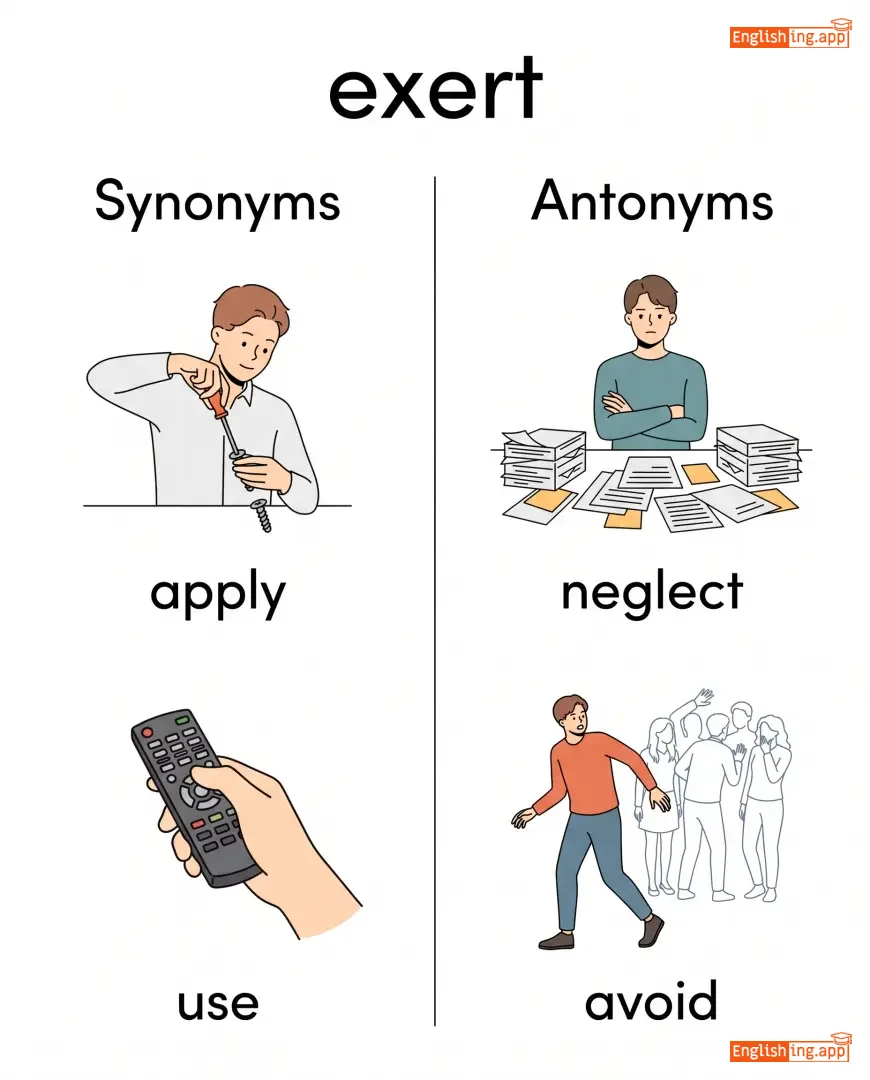
apply, use, exercise, employ, wield
••••••
|
neglect, avoid, ignore
••••••
|
exert pressure, exert influence, exert control, exert effort
••••••
|
EXtra 努力が必要な時は EXert コントロール
••••••
|
|
#0
🏝️
|
/ˈek.saɪl/
noun
(エクザイル)
••••••
|
- •••••• |
亡命
bōmei
••••••
|
- •••••• | - •••••• | - •••••• | - •••••• |
the state of being barred from one's native country; enforced removal from one's homeland
••••••
|
The political leader was forced into exile after the military coup.
軍事クーデターの後、政治的リーダーは亡命を強制された。
••••••
|
軍事クーデターの後、政治的リーダーは亡命を強制された。
Gunji kūdetā no ato, seijiteki rīdā wa bōmei o kyōsei sareta.
••••••
|
- •••••• | - •••••• | - •••••• |
banishment, deportation, expulsion, ostracism
••••••
|
return, homecoming, welcome, inclusion
••••••
|
forced exile, political exile, exile from homeland
••••••
|
Visualize a political leader being forced into exile after a coup.
••••••
|
|
#0
☠️
|
/ˈfeɪtl/
adjective
(フェイタル)
••••••
|
- •••••• |
致命的
chimiteki
••••••
|
- •••••• | - •••••• | - •••••• | - •••••• |
causing death; leading to disaster
••••••
|
The accident proved fatal for the driver. |
その事故は運転手にとって致命的だった。
Sono jiko wa unten-shu ni totte chimiteki datta.
••••••
|
fatal flaw |
a serious weakness that causes failure
••••••
|
致命的な欠陥
chimiteki na kekkan
••••••
|
deadly, lethal, mortal, disastrous
••••••
|
harmless, safe, beneficial
••••••
|
fatal accident, fatal mistake, fatal disease, fatal injury
••••••
|
Fatalは致命的、致命的な選択を避けよう!
••••••
|
|
#0
➖
|
/ˈfjuːər/
determiner/adjective
(フィューア)
••••••
|
- •••••• |
より少ない
yori sukunai
••••••
|
- •••••• | - •••••• | - •••••• | - •••••• |
a smaller number of; not as many
••••••
|
Fewer people attended the meeting than expected. |
予想より少ない人々が会議に出席した。
Yosō yori sukunai hitobito ga kaigi ni shusseki shita.
••••••
|
- •••••• | - •••••• | - •••••• |
less, reduced, diminished, smaller number
••••••
|
more, greater
••••••
|
fewer people, fewer problems, fewer opportunities, fewer hours
••••••
|
Fewerはより少ない、Few + er = より少ない
••••••
|
|
#0
🧵
|
/ˈfaɪbər/
noun
(ファイバー)
••••••
|
- •••••• |
繊維
sen'i
••••••
|
- •••••• | - •••••• | - •••••• | - •••••• |
a thread or filament from which a textile is formed; dietary substance from plants that aids digestion
••••••
|
Fruits and vegetables are high in fiber. |
果物と野菜は繊維が豊富です。
Kudamono to yasai wa sen'i ga hōfu desu.
••••••
|
moral fiber |
strength of character and ability to do what is right
••••••
|
道徳的強さ
dōtokuteki kyōsa
••••••
|
thread, strand, filament, roughage
••••••
|
fluid, liquid
••••••
|
fiber optic, fiber diet, fiber content, natural fiber
••••••
|
繊維は繊維、繊維を食べると消化が良くなる
••••••
|
|
#0
5️⃣
|
/fɪfθ/
adjective
(fifth)
••••••
|
- •••••• |
第五
dai go
••••••
|
- •••••• | - •••••• | - •••••• | - •••••• |
constituting number five in a sequence
••••••
|
She lives on the fifth floor of the building.
彼女はその建物の五階に住んでいます。
••••••
|
彼女はその建物の五階に住んでいます。
Kanojo wa sono tatemono no go-kai ni sundeimasu.
••••••
|
take the fifth
第五を取る
••••••
|
to refuse to answer a question, especially in a legal context
••••••
|
答えるのを拒否する
kotaeru no wo kyohi suru
••••••
|
5th, number five, position five
••••••
|
first, last
••••••
|
fifth floor, fifth grade, fifth time
••••••
|
第五は5番目、五と同じ意味
••••••
|
|
#0
5️⃣0️⃣
|
/ˈfɪfti/
number
(フィフティ)
••••••
|
- •••••• |
五十
goju
••••••
|
- •••••• | - •••••• | - •••••• | - •••••• |
the number 50
••••••
|
The stadium can hold fifty thousand people. |
スタジアムは五万人を収容できます。
Sutajiamu wa goman nin o shūyō dekimasu.
••••••
|
- •••••• | - •••••• | - •••••• |
50
••••••
|
forty-nine, fifty-one
••••••
|
fifty percent, fifty years, fifty dollars
••••••
|
五十 = 五 (5) × 十 (10)
••••••
|
|
#0
🍖
|
/flɛʃ/
noun
(フレッシュ)
••••••
|
- •••••• |
肉
niku
••••••
|
- •••••• | - •••••• | - •••••• | - •••••• |
the soft substance consisting of muscle and fat that is found between the skin and bones of animals or humans
••••••
|
The wound cut deep into the flesh of his arm. |
傷は彼の腕の肉に深く切り込んでいた。
Kizu wa kare no ude no niku ni fukaku kirikonde ita.
••••••
|
in the flesh |
in person, not through pictures or descriptions
••••••
|
実物で
jitsumotsu de
••••••
|
meat, tissue, muscle, body, skin
••••••
|
bone, spirit, soul
••••••
|
human flesh, tender flesh, flesh and blood, flesh wound
••••••
|
Flesh は肉です。Fish と一緒に肉を食べることがあります
••••••
|
|
#0
💧
|
/ˈfluːɪd/
noun/adjective
(フルイド)
••••••
|
- •••••• |
流体
ryūtai
••••••
|
- •••••• | - •••••• | - •••••• | - •••••• |
a substance that can flow easily, such as liquid or gas; smooth and adaptable
••••••
|
The artist's fluid movements impressed the audience. |
アーティストの流れるような動きは観客を感動させました。
Ātisuto no nagareru yō na ugoki wa kankyaku o kandō sasemashita.
••••••
|
go with the fluid |
adapt easily to changes
••••••
|
流れに任せる
nagare ni makaseru
••••••
|
liquid, flowing, smooth, adaptable
••••••
|
solid, rigid, fixed
••••••
|
fluid motion, fluid design, body fluid, fluid system
••••••
|
流体は液体のように、簡単に流れます。
••••••
|
|
#0
➡️
|
/fɔːrθ/
adverb
(フォース)
••••••
|
- •••••• |
前へ
mae e
••••••
|
- •••••• | - •••••• | - •••••• | - •••••• |
forward in place, time, or order
••••••
|
The leader stepped forth to address the crowd. |
リーダーは群衆に向かって前に出ました。
Rīdā wa gunshū ni mukatte mae ni demashita.
••••••
|
and so forth |
and so on; continuing in the same way
••••••
|
そしてそのように
soshite sono yō ni
••••••
|
forward, ahead, onward, out
••••••
|
backward, behind
••••••
|
go forth, set forth, bring forth, come forth
••••••
|
‘forth’ は前に進むことを意味します。
••••••
|
|
#0
4️⃣
|
/ˈfɔːrti/
number
(ハピネス)
••••••
|
- •••••• |
幸せ
shiawase
••••••
|
- •••••• | - •••••• | - •••••• | - •••••• |
the number 40; ten times four
••••••
|
She celebrated her forty years of life with a big party. |
彼女は賞を受け取ったとき、幸せを隠せなかった。
Kanojo wa shō o uketotta toki, shiawase o kakusenakatta.
••••••
|
life begins at forty |
people often find new energy or success when they reach the age of 40
••••••
|
幸せの追求
shiawase no tsuikyū
••••••
|
four tens, XL, 40, forty years
••••••
|
thirty, fifty
••••••
|
forty years old, forty minutes, at forty, around forty
••••••
|
幸せは幸せ、簡単に感じよう!
••••••
|
|
#0
🕵️
|
/frɔːd/
noun
(フロード)
••••••
|
- •••••• |
詐欺
sagi
••••••
|
- •••••• | - •••••• | - •••••• | - •••••• |
A wrongful or criminal deception intended to result in financial or personal gain.
••••••
|
The company collapsed due to massive accounting fraud.
その会社は大規模な会計詐欺のために倒産しました。
••••••
|
その会社は大規模な会計詐欺のために倒産しました。
Sono kaisha wa daikibo na kaikei sagi no tame ni tōsan shimashita.
••••••
|
identity fraud
身元詐欺
••••••
|
The use of another person's personal information without permission for fraudulent purposes.
••••••
|
身元詐欺
Mimoto sagi
••••••
|
deception, scam, trickery, dishonesty, swindle
••••••
|
honesty, truth
••••••
|
commit fraud, insurance fraud, fraud case, fraud detection
••••••
|
Fraudは詐欺の意味です。詐欺をすると友達を失うよ。
••••••
|
|
#0
😒
|
/fraʊn/
verb
(フラウン)
••••••
|
|
しかめっ面
shikametsura
••••••
|
frowned
フラウンド
••••••
|
frowned
フラウンド
••••••
|
frowns
フラウンズ
••••••
|
frowning
フラウニング
••••••
|
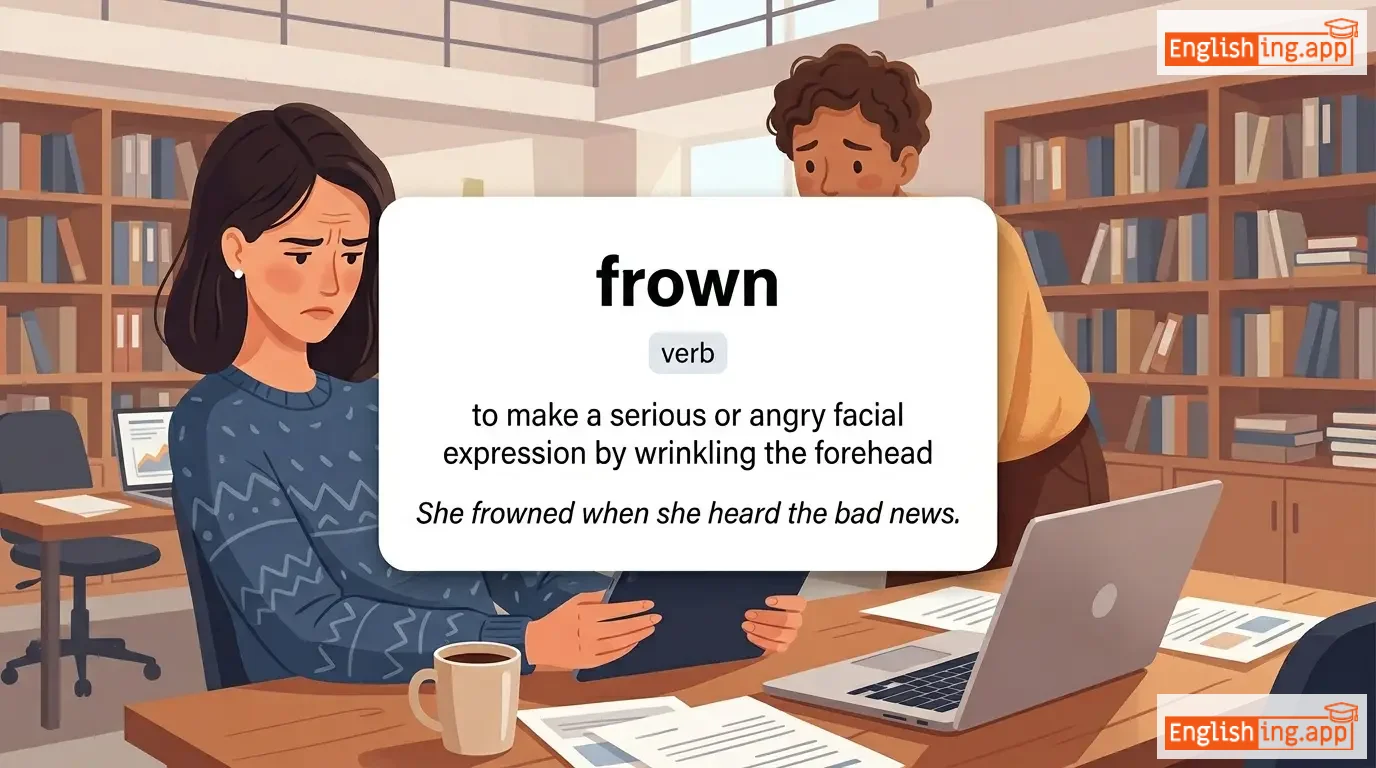
to make a serious or angry facial expression by wrinkling the forehead
••••••
|
She frowned when she heard the bad news.
彼女は悪いニュースを聞いてフラウンした。
••••••
|
彼女は悪いニュースを聞いてしかめっ面をした。
Kanojo wa warui nyuusu o kiite shikametsura o shita.
••••••
|
frown upon
フラウンアップ
••••••
|
to disapprove of something
••••••
|
嫌う
kirau
••••••
|
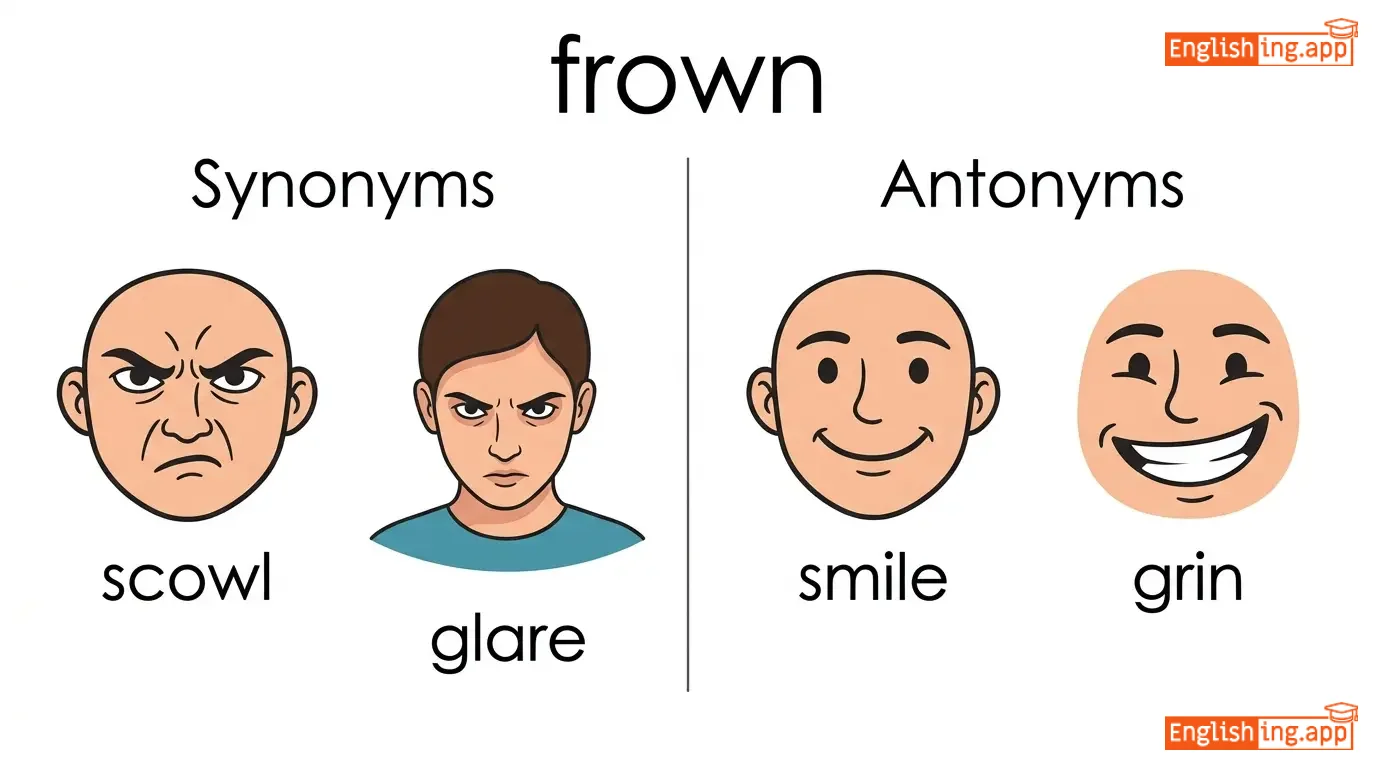
scowl, glare, pout, grimace
••••••
|
smile, grin
••••••
|
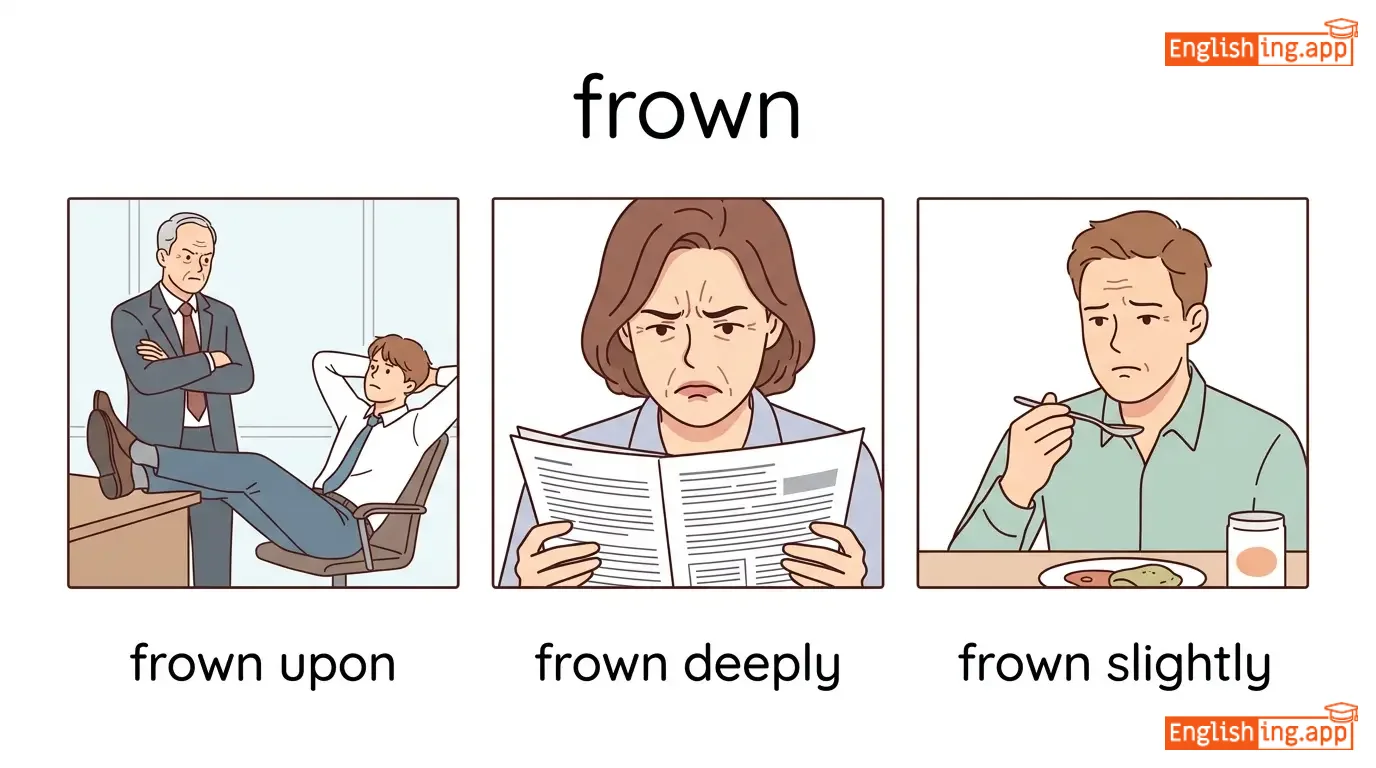
frown upon, frown deeply, frown slightly, frown face
••••••
|
悪いニュースを聞いたら、しかめっ面が出てきます。
••••••
|
|
#0
🤢
|
/ɡroʊs/
adjective
(グロス)
••••••
|
- •••••• |
不快な / 下品な
fukai na / gehin na
••••••
|
- •••••• | - •••••• | - •••••• | - •••••• |
extremely unpleasant or disgusting; total before deductions
••••••
|
He thought the food looked gross, but it tasted fine. |
彼は食べ物が不快に見えると思ったが、味は良かった。
Kare wa tabemono ga fukai ni mieru to omotta ga, aji wa yokatta.
••••••
|
gross out |
to make someone feel disgusted
••••••
|
嫌悪感を与える
ken'okan o ataeru
••••••
|
disgusting, nasty, foul, total, overall
••••••
|
pleasant, clean, net
••••••
|
gross income, gross mistake, gross error
••••••
|
Gross は英語で不快な意味もあります(gross food)。
••••••
|
|
#0
🛠️
|
/ˈhændi/
adjective
(handi)
••••••
|
- •••••• |
使いやすい
tsukaiyasui
••••••
|
- •••••• | - •••••• | - •••••• | - •••••• |
convenient to use or easily accessible; skillful with the hands
••••••
|
This pocket knife is very handy when you go camping. |
このポケットナイフはキャンプの時に非常に便利です。
Kono poketto naifu wa kyanpu no toki ni hijou ni benri desu.
••••••
|
handy with |
skilled or capable in using something
••••••
|
得意
tokui
••••••
|
useful, convenient, practical, accessible, skillful
••••••
|
useless, inconvenient, clumsy
••••••
|
come in handy, very handy, handy tool, handy guide
••••••
|
Handy は使いやすい、手のようにどんな時でも使える。
••••••
|
|
#0
🤪
|
/ˈɪdɪət/
noun
(イディオット)
••••••
|
- •••••• |
バカ
baka
••••••
|
- •••••• | - •••••• | - •••••• | - •••••• |
a person who acts in a way that is considered very stupid or foolish
••••••
|
He acted like an idiot at the party last night.
彼は昨晩のパーティーでイディオットのように振る舞った。
••••••
|
彼は昨晩のパーティーでイディオットのように振る舞った。
Kare wa sakuban no pātī de idotto no yō ni furumatta.
••••••
|
- •••••• | - •••••• | - •••••• |
fool, imbecile, moron, simpleton
••••••
|
genius, intellect, savant
••••••
|
complete idiot, stupid idiot, act like an idiot
••••••
|
Idiot = バカ = いつもバカなことをする人!
••••••
|
|
#0
💸
|
/ɪnˈkɜːr/
verb
(inkā)
••••••
|
- •••••• |
負う
ōu
••••••
|
incurred
inkādo
••••••
|
incurred
inkādo
••••••
|
incurs
inkāsu
••••••
|
incurring
inkāring
••••••
|
To bring upon oneself something undesirable, usually as a result of actions.
••••••
|
He incurred a fine for parking in the wrong place.
彼は間違った場所に駐車して罰金を科せられた。
••••••
|
彼は間違った場所に駐車して罰金を科せられた。
Kare wa machigatta basho ni chūsha shite bakkin o kaserareta.
••••••
|
- •••••• | - •••••• | - •••••• |
suffer, sustain, attract, experience, bring on
••••••
|
avoid, escape, evade
••••••
|
incur debt, incur expense, incur loss, incur penalty
••••••
|
Incur = 行動の結果、負担を負う
••••••
|
|
#0
🤔
|
/ɪnˈfɜːr/
verb
••••••
|
- •••••• | - •••••• |
inferred
••••••
|
inferred
••••••
|
infers
••••••
|
inferring
••••••
|
to conclude or deduce something from evidence and reasoning rather than from explicit statements
••••••
|
From his silence, I inferred that he was not happy with the decision. |
- •••••• |
read between the lines |
to understand an implicit meaning in what is said or written
••••••
|
- •••••• |
deduce, conclude, reason, assume, derive
••••••
|
state, declare, express
••••••
|
infer meaning, infer from evidence, infer result
••••••
|
No •••••• |
Vocabulary Quiz
Test your vocabulary by matching words with their translations or meanings.
Login to take the quiz
Comments (0)
Share your thoughts and join the discussion.
Join the discussion by logging in
Login to CommentNo comments yet
Be the first to share your thoughts!