

2年生の発見
The Sophomore's Discovery
Ayesha はダッカ大学の sophomore でした。彼女の specialty は天文学でしたが、自分を証明することができませんでした。ある夜、彼女はキャンパスの telescope で空を見ていました。彼女は星についての composition を書かなければならなかったのですが、他の学生と比較して自分の知識が secondary だと感じていたため、embarrassed でした。彼女は occasional 成功を収めていましたが、reasonably 自分を弱いと感じていました。Rahman 教授は、この機会は exclusively 彼女のためのものであり、彼女がこの distinction を得るに値する唯一の学生だと言いました。彼女は研究に新しい方法を incorporate しなければなりませんでした。neighboring 部門の学生たちも彼女を手伝いたがっていました。彼女は temporarily フラストレーションを感じていましたが、additionally モラールは向上しました。研究は complicated でしたが、彼女はあきらめませんでした。彼女は、自分が大きなプロジェクトの beneficiary になれることに気づきました。彼女は自分の仕事に対して accountable でなければなりませんでした。彼女は sufficiently 努力し、ある日新しい星を発見しました。彼女が成功したことに whatsoever 疑いはありませんでした。その日、彼女は straighten 立ち上がり、成功の鍵は忍耐であることを理解しました。
翻訳
過去
過去分詞
三人称単数
動名詞
意味
例文
例文の翻訳
同義語
対義語
コロケーション
ニーモニック
Swipe left or right, or use the buttons. Tap image to zoom.
例文の翻訳
単語
The Sophomore's DiscoveryThe Sophomore's Discovery - マスクトグル
|
絵文字
|
単語 | Images | 翻訳 | 過去 | 過去分詞 | 三人称単数 | 動名詞 | 意味 | 例文 | 例文の翻訳 | 表現例 | 表現例の意味 | 表現例の翻訳 | 同義語 | 対義語 | コロケーション | ニーモニック |
|---|---|---|---|---|---|---|---|---|---|---|---|---|---|---|---|---|---|
|
#0
⚖️
|
/əˈkaʊn.tə.bəl/
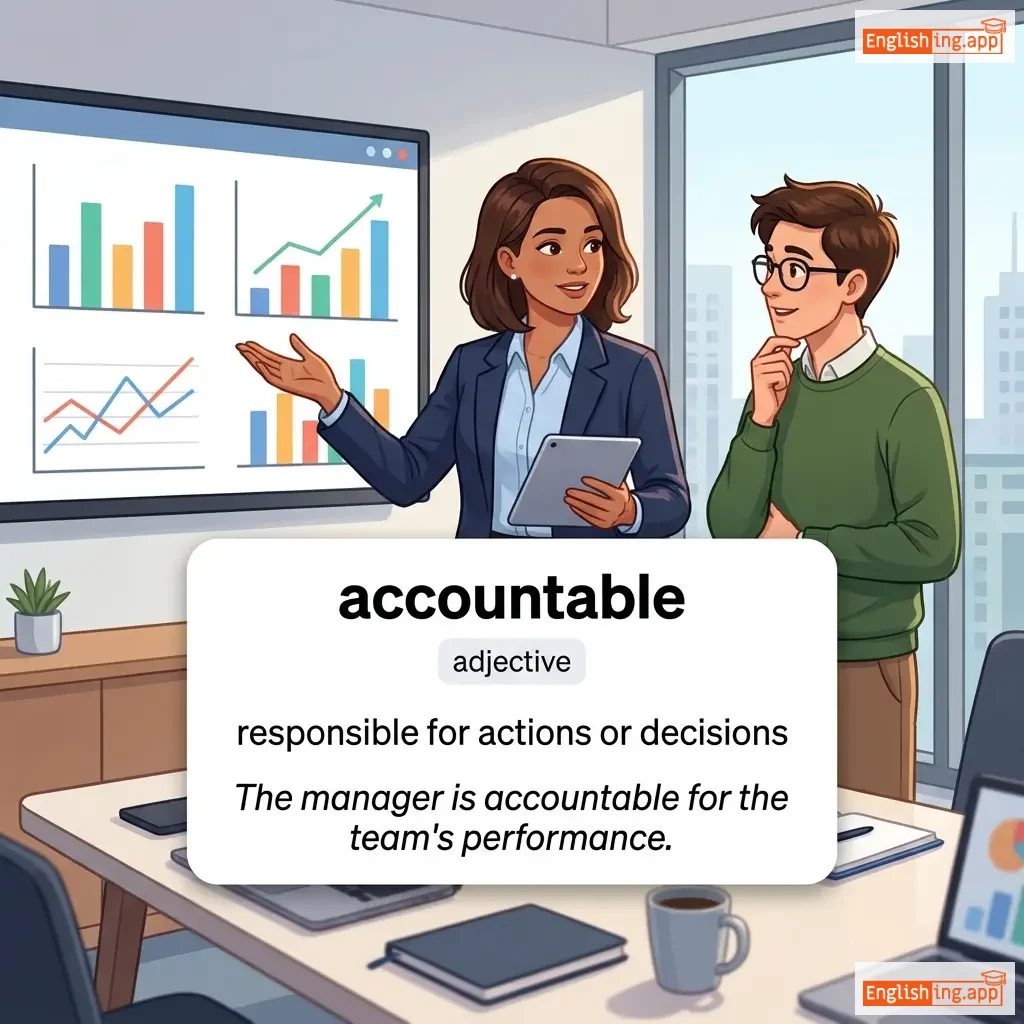
adjective
(アカウンタブル)
••••••
|
|
責任がある; 責任を負う
sekinin ga aru; sekinin o ou
••••••
|
- •••••• | - •••••• | - •••••• | - •••••• |
responsible for your decisions or actions and expected to explain them when you are asked
••••••
|
The government should be held accountable for its policies.
政府はその政策に対して責任を持つべきです。
••••••
|
政府はその政策に対して責任を持つべきです。
Seifu wa sono seisaku ni taishite sekinin o motsu beki desu.
••••••
|
- •••••• | - •••••• | - •••••• |
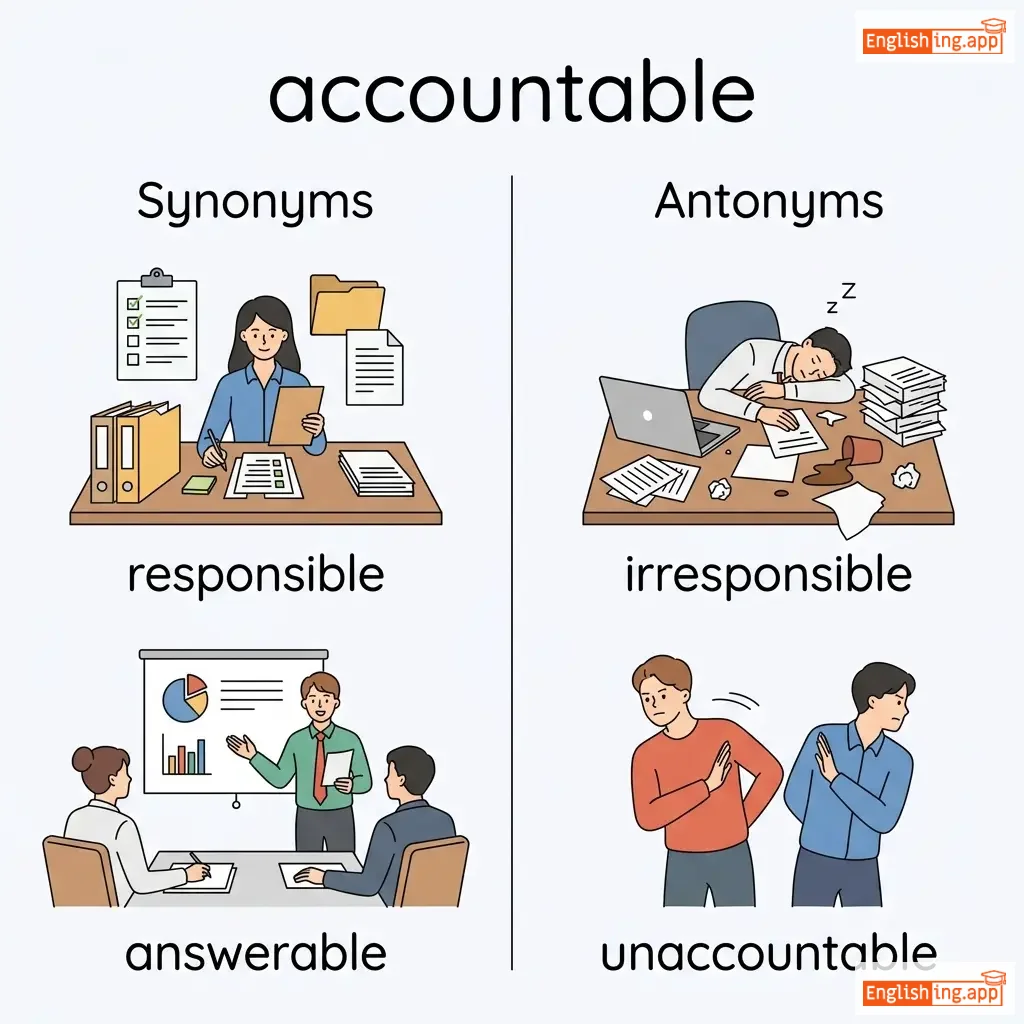
responsible, answerable, liable, culpable
••••••
|
unaccountable, irresponsible, exempt
••••••
|
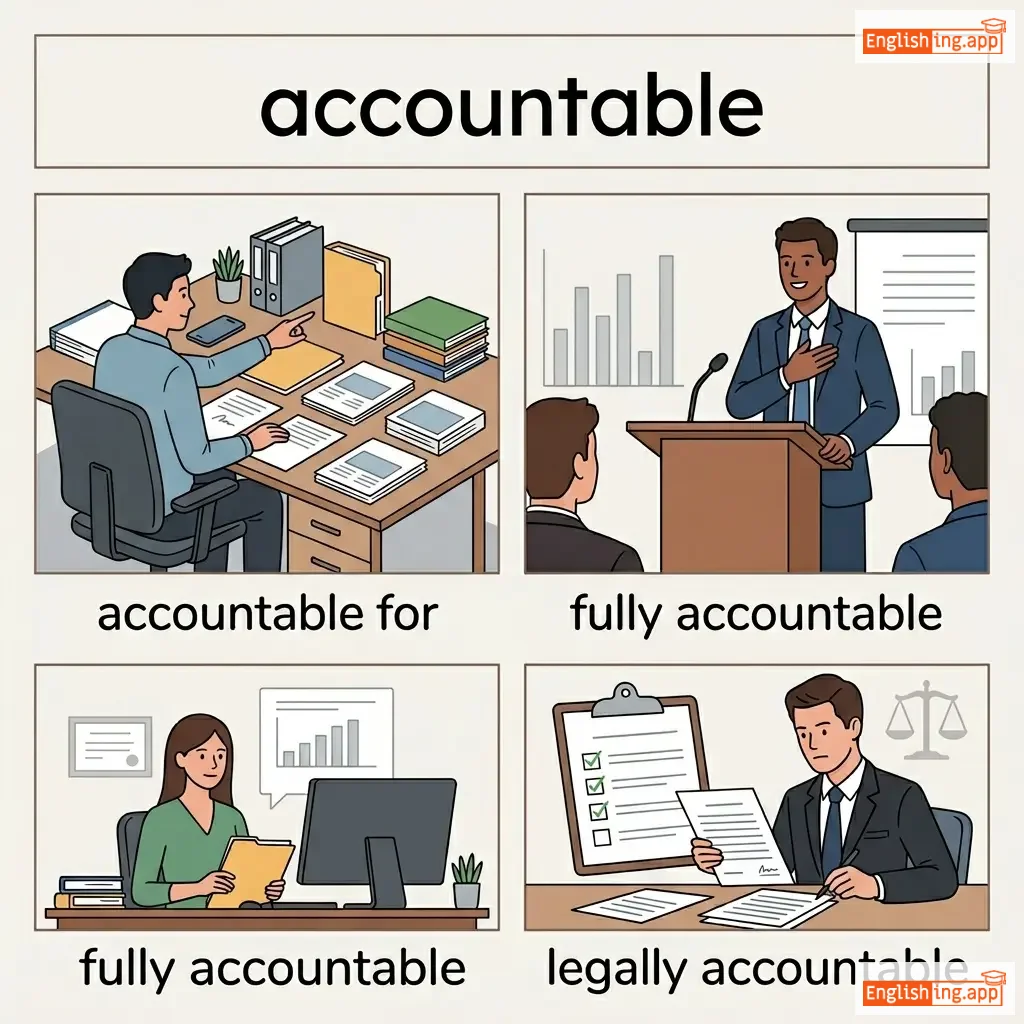
held accountable, accountable for, accountable to
••••••
|
Accountable means being responsible, just like the government being accountable for its actions.
••••••
|
|
#0
➕
|
/əˈdɪʃənəli/
adverb
(アディショナリー)
••••••
|
- •••••• |
さらに
sarani
••••••
|
- •••••• | - •••••• | - •••••• | - •••••• |
in addition to what has been said or done
••••••
|
Additionally, we offer discounts for early bookings.
さらに、私たちは早期予約に対する割引を提供しています。
••••••
|
さらに、私たちは早期予約に対する割引を提供しています。
Sarani, watashitachi wa soki yoyaku ni taisuru waribiki wo teikyou shiteimasu.
••••••
|
- •••••• | - •••••• | - •••••• |
furthermore, moreover, also, as well
••••••
|
however, nevertheless
••••••
|
additionally, additionally offer, additionally provide
••••••
|
Adding a plus sign ➕ shows more details (additionally)
••••••
|
|
#0
🎁
|
/ˌbɛnɪˈfɪʃəri/
noun
(ベネフィシャリー)
••••••
|
- •••••• |
受益者
shūekisha
••••••
|
- •••••• | - •••••• | - •••••• | - •••••• |
a person who receives something, especially money or property, from a will or insurance policy
••••••
|
She is the sole beneficiary of her father’s estate. |
彼女は父親の遺産の唯一の受益者です。
Kanojo wa chichioya no isan no yuiitsu no shūekisha desu.
••••••
|
- •••••• | - •••••• | - •••••• |
recipient, heir, inheritor, grantee
••••••
|
donor, benefactor
••••••
|
sole beneficiary, named beneficiary, policy beneficiary, estate beneficiary
••••••
|
Beneficiary は利益を受ける人、保険の受益者のようなものです。
••••••
|
|
#0
🌀
|
/ˈkɒmplɪˌkeɪtɪd/
adjective
(コンプリケイテッド)
••••••
|
- •••••• |
複雑
fukuzatsu
••••••
|
- •••••• | - •••••• | - •••••• | - •••••• |
consisting of many interconnected parts; difficult to understand
••••••
|
The instructions for the machine are too complicated to follow. |
機械の指示は従うにはあまりにも複雑です。
Kikai no shiji wa shitagau ni wa amari ni mo fukuzatsu desu.
••••••
|
make things complicated |
to make something unnecessarily difficult
••••••
|
物事を複雑にする
monogoto o fukuzatsu ni suru
••••••
|
complex, difficult, intricate, involved, confusing
••••••
|
simple, easy, clear
••••••
|
complicated process, complicated situation, complicated issue, complicated relationship
••••••
|
複雑 = 難しい、数学の問題のように複雑です。
••••••
|
|
#0
🎶
|
/ˌkɒmpəˈzɪʃən/
noun
(コンポジション)
••••••
|
- •••••• |
作曲
sakkyoku
••••••
|
- •••••• | - •••••• | - •••••• | - •••••• |
the act of creating a piece of writing, music, or art; the way parts are arranged
••••••
|
Her composition won first prize in the contest. |
彼女の作曲はコンテストで第一位を獲得しました。
Kanojo no sakkyoku wa kontesuto de dai ichi-i o kakutoku shimashita.
••••••
|
- •••••• | - •••••• | - •••••• |
essay, creation, arrangement, piece, structure
••••••
|
disorder, disorganization
••••••
|
musical composition, written composition, composition skills, composition contest
••••••
|
作曲は創造することを意味します。試験のために作曲を書いて覚えてください。
••••••
|
|
#0
🏅
|
/dɪˈstɪŋkʃən/
noun
••••••
|
- •••••• | - •••••• | - •••••• | - •••••• | - •••••• | - •••••• |
a difference or contrast between similar things or people; excellence that sets someone apart
••••••
|
She graduated with distinction from the university. |
- •••••• |
make a distinction |
to draw a clear difference between things
••••••
|
- •••••• |
difference, contrast, excellence, honor, separation
••••••
|
similarity, sameness, mediocrity
••••••
|
with distinction, fine distinction, make a distinction, subtle distinction
••••••
|
No •••••• |
|
#0
😳
|
/ɪmˈbærəst/
adjective
(エンバラスト)
••••••
|
- •••••• |
恥ずかしい
hazukashii
••••••
|
- •••••• | - •••••• | - •••••• | - •••••• |
feeling awkward, ashamed, or self-conscious about something
••••••
|
He felt embarrassed when he forgot her name. |
彼は彼女の名前を忘れたとき、恥ずかしいと感じた。
Kare wa kanojo no namae o wasureta toki, hazukashii to kanjita.
••••••
|
embarrassed silence |
an uncomfortable quietness after something awkward happens
••••••
|
恥ずかしい沈黙
hazukashii chinmoku
••••••
|
ashamed, awkward, uneasy, flustered, humiliated
••••••
|
confident, proud, relaxed
••••••
|
feel embarrassed, look embarrassed, deeply embarrassed, embarrassed smile
••••••
|
Embarrassed は恥ずかしい – プレゼン中に名前を忘れると恥ずかしい気持ちになる。
••••••
|
|
#0
🔒
|
/ɪkˈskluːsɪvli/
adverb
(イクスクルーシブリー)
••••••
|
- •••••• |
独占的に
dokusenteki ni
••••••
|
- •••••• | - •••••• | - •••••• | - •••••• |
only; not shared with others
••••••
|
This service is available exclusively to premium members. |
このサービスはプレミアムメンバーのみが利用できます。
Kono sābisu wa puremiamu menbā nomi ga riyō dekimasu.
••••••
|
- •••••• | - •••••• | - •••••• |
solely, only, entirely, uniquely, purely
••••••
|
jointly, commonly, generally
••••••
|
exclusively for, available exclusively, exclusively designed, exclusively produced
••••••
|
独占的に - あなた専用!
••••••
|
|
#0
🏢
|
/ɪnˈkɔːpəreɪt/
verb
(インコーポレート)
••••••
|
|
組み込む
kumikomu
••••••
|
incorporated
インコーポレイテッド
••••••
|
incorporated
インコーポレイテッド
••••••
|
incorporates
インコーポレイツ
••••••
|
incorporating
インコーポレイティング
••••••
|
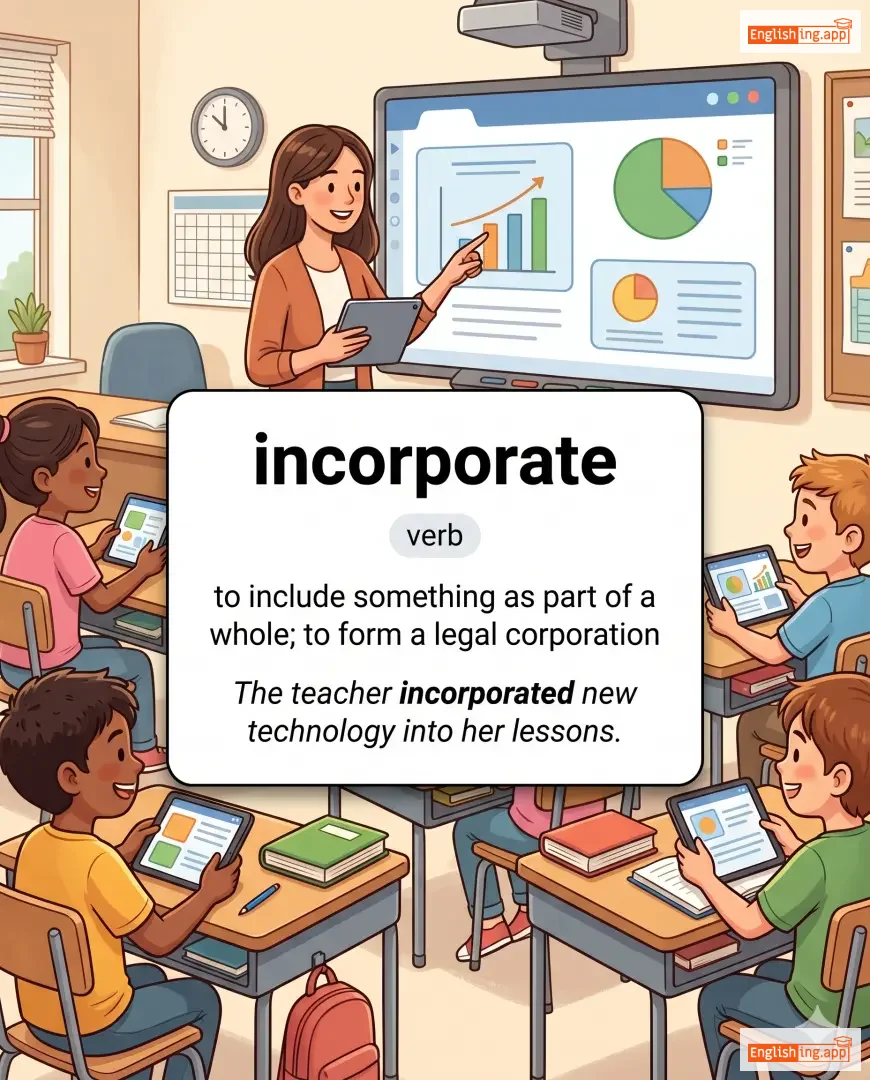
to include something as part of a whole; to form a legal corporation
••••••
|
The teacher incorporated new technology into her lessons.
先生は授業に新しい技術を取り入れました。
••••••
|
先生は授業に新しい技術を取り入れました。
Sensei wa jugyo ni atarashii gijutsu o toriiremashita.
••••••
|
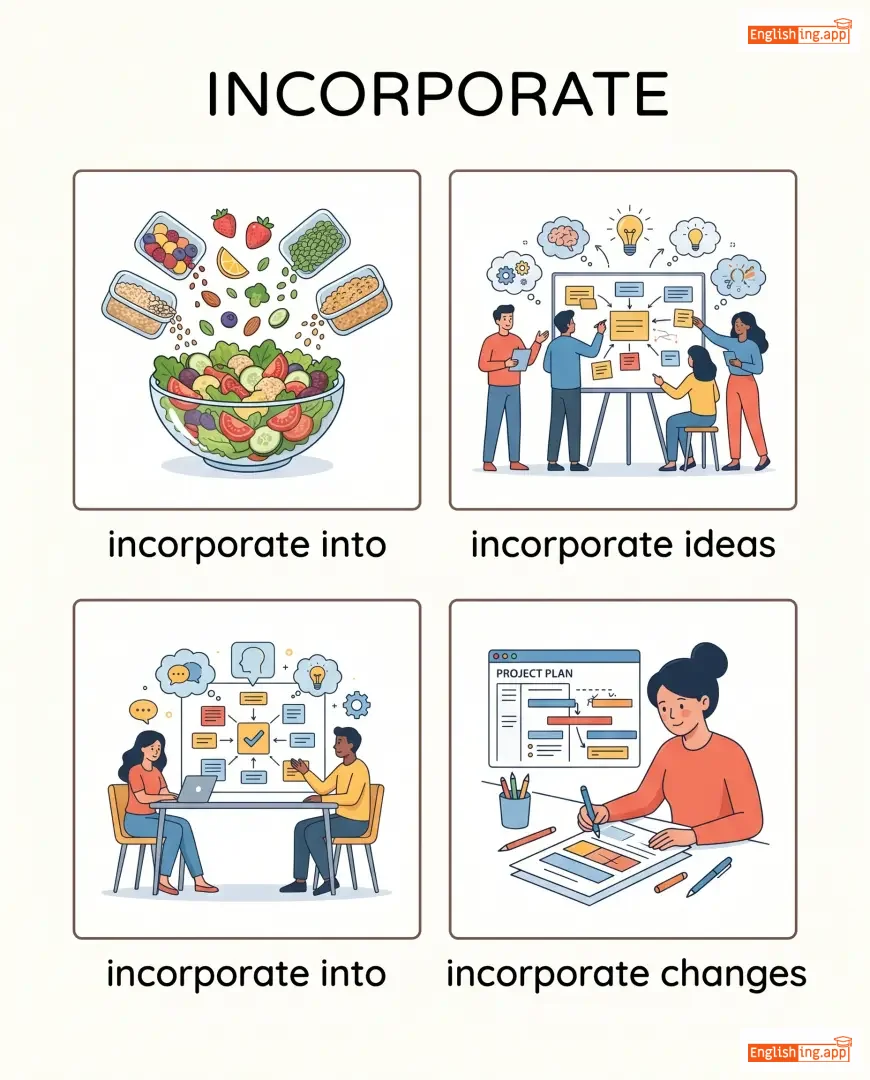
incorporate into
取り入れる
••••••
|
to include something as part of a larger thing
••••••
|
取り入れる
toriireru
••••••
|
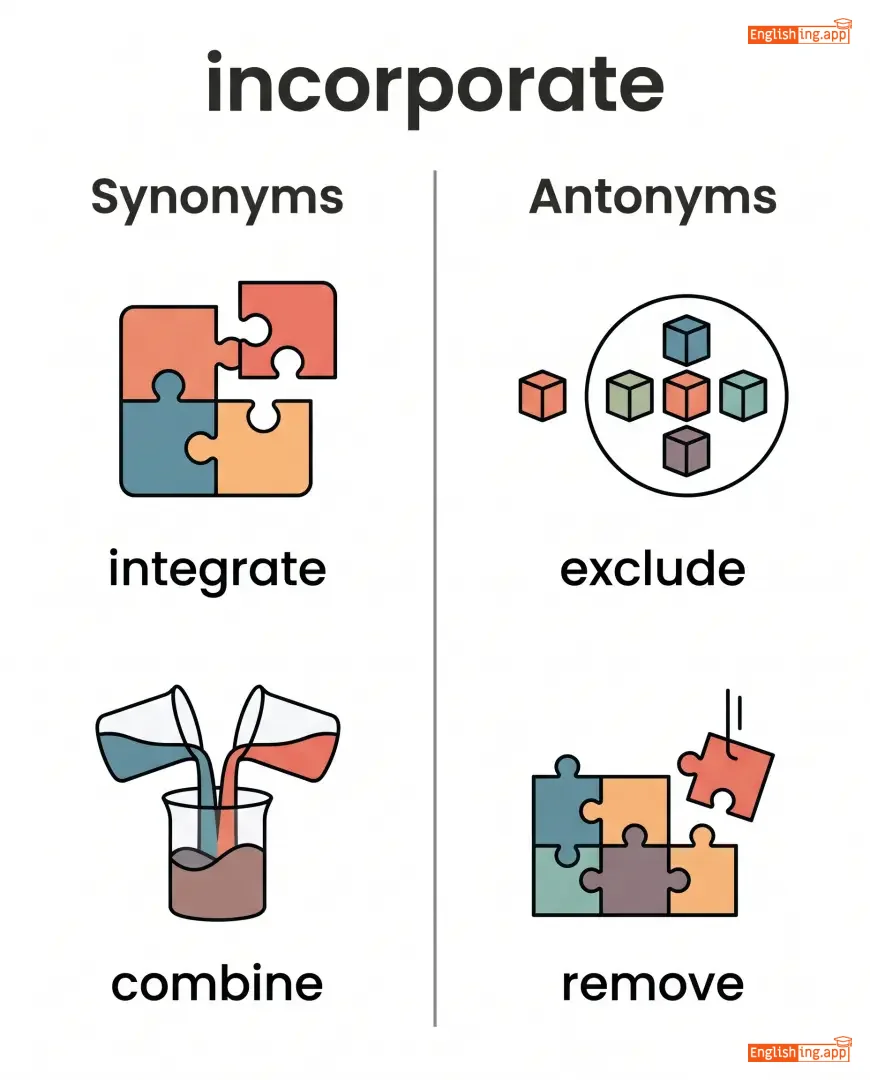
integrate, combine, include, merge, embody
••••••
|
exclude, remove, separate
••••••
|
incorporate into, incorporate ideas, incorporate changes
••••••
|
Incorporateは何かを含める、つまり全体に加えること。
••••••
|
|
#0
🏘️
|
/ˈneɪbərɪŋ/
adjective
(neibering)
••••••
|
- •••••• |
隣接する
rinsetsu suru
••••••
|
- •••••• | - •••••• | - •••••• | - •••••• |
situated near or next to another place; adjacent or nearby.
••••••
|
They visited a neighboring village for the festival.
彼らは祭りのために隣の村を訪れました。
••••••
|
彼らは祭りのために隣の村を訪れました。
Karera wa matsuri no tame ni tonari no mura o otozuremashita.
••••••
|
- •••••• | - •••••• | - •••••• |
adjacent, nearby, adjoining, close, proximate
••••••
|
distant, remote, far
••••••
|
neighboring country, neighboring house, neighboring state, neighboring area
••••••
|
隣接するは近いことを意味するので、隣接した場所は近くにあります。
••••••
|
|
#0
🌦️
|
/əˈkeɪʒənəl/
adjective
(オケイジョナル)
••••••
|
- •••••• |
時々の
tokidoki no
••••••
|
- •••••• | - •••••• | - •••••• | - •••••• |
happening or done sometimes but not regularly or often
••••••
|
He makes occasional visits to his hometown. |
彼は時々故郷に訪れます。
Kare wa tokidoki furusato ni otozuremasu.
••••••
|
occasional table |
a small table used when needed
••••••
|
時々使うテーブル
tokidoki tsukau tēburu
••••••
|
infrequent, irregular, periodic, sporadic, intermittent
••••••
|
regular, constant, frequent
••••••
|
occasional visit, occasional rain, occasional use, occasional meeting
••••••
|
時々のように時々降る雨 – 時々だけ 🌧️
••••••
|
|
#0
⚖️
|
/ˈriː.zən.ə.bli/
adverb
(リーズナブリー)
••••••
|
- •••••• |
合理的に; 適度に;
gōriteki ni; tekido ni;
••••••
|
- •••••• | - •••••• | - •••••• | - •••••• |
in a sensible way; fairly; to a moderate degree
••••••
|
The hotel room was reasonably priced for the location. |
そのホテルの部屋は場所に対して合理的な価格で提供されていました。
Sono hoteru no heya wa basho ni taishite gōriteki na kakaku de teikyō sarete imashita.
••••••
|
- •••••• | - •••••• | - •••••• |
fairly, moderately, sensibly, logically
••••••
|
unreasonably, extremely, irrationally
••••••
|
reasonably priced, reasonably good, reasonably sure
••••••
|
In Japanese, 'gōriteki' relates to reasoning, akin to being reasonable.
••••••
|
|
#0
2️⃣
|
/ˈsekənderi/
adjective
(sekendari)
••••••
|
- •••••• |
二次的
nitsuki no
••••••
|
- •••••• | - •••••• | - •••••• | - •••••• |
Less important than something else; derived from or dependent on something primary.
••••••
|
Safety is our primary concern, while speed is only secondary. |
安全は私たちの最優先事項であり、速度は二次的なものです。
Anzen wa watashitachi no sai yuusen jiko de ari, sokudo wa niji-teki na mono desu.
••••••
|
secondary role |
A role of lesser importance compared to the main one.
••••••
|
二次的な役割
niji-teki na yakuwari
••••••
|
minor, subordinate, auxiliary, less important, dependent
••••••
|
primary, main, chief
••••••
|
secondary school, secondary importance, secondary effect
••••••
|
Secondaryは二次的な ➡ 二次的な役割
••••••
|
|
#0
🎓
|
/ˈsɑːfmɔːr/
noun
(ソフモア)
••••••
|
- •••••• |
二年生
ninen-sei
••••••
|
- •••••• | - •••••• | - •••••• | - •••••• |
a student in their second year of study at a university or high school
••••••
|
He’s a sophomore in college, studying computer science. |
彼は大学で2年生で、コンピュータサイエンスを勉強しています。
Kare wa daigaku de ninen-sei de, konpyūta saiensu o benkyō shiteimasu.
••••••
|
- •••••• | - •••••• | - •••••• |
second-year student
••••••
|
freshman, junior, senior
••••••
|
sophomore year, sophomore student, sophomore class
••••••
|
Sophomoreという言葉は'二年目'を意味し、2年目の学生を表します。
••••••
|
|
#0
🎯
|
/ˈspɛʃəlti/
noun
(su-pe-sha-ru-ti)
••••••
|
- •••••• |
専門
senmon
••••••
|
- •••••• | - •••••• | - •••••• | - •••••• |
a particular area of study, work, or interest; something in which a person or place excels
••••••
|
Her specialty is pediatric medicine.
彼女の専門は小児科医学です。
••••••
|
彼女の専門は小児科医学です。
kanojo no senmon wa shonika igaku desu
••••••
|
house specialty
レストランのスペシャリティ
••••••
|
a dish or item that a restaurant is particularly known for
••••••
|
レストランのスペシャリティ
resutoran no supeshariti
••••••
|
expertise, forte, field, focus, skill
••••••
|
weakness, generality
••••••
|
medical specialty, house specialty, area of specialty, legal specialty
••••••
|
専門 = あなたが特に得意なこと
••••••
|
|
#0
📏
|
/ˈstreɪtən/
verb
(ストレートン)
••••••
|
- •••••• |
整える
totonoeru
••••••
|
straightened
ストレートンド
••••••
|
straightened
ストレートンド
••••••
|
straightens
ストレートンス
••••••
|
straightening
ストレートニング
••••••
|
to make something straight or tidy; to correct or organize
••••••
|
She straightened her hair before the meeting.
会議の前に彼女は髪をストレートにした。
••••••
|
会議の前に彼女は髪を整えた。
Kaigi no mae ni kanojo wa kami o totonoeta.
••••••
|
straighten out
整理する
••••••
|
to resolve a problem or confusion
••••••
|
問題や混乱を解決する
mondai ya konran o kaiketsu suru
••••••
|
align, adjust, organize, fix, arrange
••••••
|
bend, twist
••••••
|
straighten hair, straighten up, straighten out, straighten posture
••••••
|
Straighten = 整える、髪を整えるみたいな感じで。
••••••
|
|
#0
✅
|
/səˈfɪʃəntli/
adverb
(サフィシエントリー)
••••••
|
- •••••• |
十分に
jūbun ni
••••••
|
- •••••• | - •••••• | - •••••• | - •••••• |
to an adequate degree or extent
••••••
|
She studied sufficiently to pass the exam. |
彼女は試験に合格するために十分に勉強した。
Kanojo wa shiken ni gōkaku suru tame ni jūbun ni benkyō shita.
••••••
|
- •••••• | - •••••• | - •••••• |
adequately, enough, satisfactorily
••••••
|
insufficiently, inadequately
••••••
|
sufficiently prepared, sufficiently large, sufficiently skilled
••••••
|
Sufficiently = Just enough to reach the goal, like 'sufficient' = enough!
••••••
|
|
#0
🔭
|
/ˈtɛlɪˌskoʊp/
noun
(望遠鏡)
••••••
|
- •••••• |
望遠鏡
bōenkyō
••••••
|
- •••••• | - •••••• | - •••••• | - •••••• |
An optical instrument used to make distant objects appear closer and larger by collecting and focusing light.
••••••
|
The astronomer used a telescope to observe the distant planets. |
天文学者は遠くの惑星を観察するために望遠鏡を使用しました。
Tenmongakusha wa tōku no wakusei o kansatsu suru tame ni bōenkyō o shiyō shimashita.
••••••
|
turn the telescope on |
to focus on or direct attention toward something
••••••
|
望遠鏡をオンにする
bōenkyō o on ni suru
••••••
|
scope, spyglass, binoculars, glass
••••••
|
microscope, naked eye
••••••
|
powerful telescope, optical telescope, space telescope, through a telescope
••••••
|
望遠鏡で遠くを見れば、telescope の意味がよくわかります。
••••••
|
|
#0
⏳
|
/ˈtɛmpərɛrɪli/
adverb
(テンポラリリー)
••••••
|
- •••••• |
一時的に
ichijiteki ni
••••••
|
- •••••• | - •••••• | - •••••• | - •••••• |
for a limited time; not permanently
••••••
|
The road is closed temporarily for repairs. |
道路は修理のため一時的に閉鎖されています。
Dōro wa shūri no tame ichijiteki ni heisa sareteimasu.
••••••
|
- •••••• | - •••••• | - •••••• |
briefly, momentarily, temporarily, short-term
••••••
|
permanently, forever
••••••
|
temporarily closed, temporarily unavailable, temporarily suspended
••••••
|
Temporary is like a ‘time’ set in the clock – only for a short time!
••••••
|
|
#0
❌
|
/wɒtˈsəʊɛvər/
adverb
(ワットソエヴァ)
••••••
|
- •••••• |
全く
mattaku
••••••
|
- •••••• | - •••••• | - •••••• | - •••••• |
used for emphasis after a negative statement to mean 'at all'
••••••
|
She has no interest in the matter whatsoever.
彼女はその問題に全く興味がありません。
••••••
|
彼女はその問題に全く興味がありません。
Kanojo wa sono mondai ni mattaku kyōmi ga arimasen.
••••••
|
- •••••• | - •••••• | - •••••• |
at all, in any way, in any respect
••••••
|
some, any, much
••••••
|
whatsoever reason, whatsoever means, whatsoever interest
••••••
|
Whatsoever sounds like 'ワットソエヴァ', which can be remembered as '全く' (not at all).
••••••
|
Vocabulary Quiz
Test your vocabulary by matching words with their translations or meanings.
Login to take the quiz
Comments (0)
Share your thoughts and join the discussion.
Join the discussion by logging in
Login to CommentNo comments yet
Be the first to share your thoughts!