

教師の平和への旅
The Teacher's Journey to Peace
サルマはかつてダッカの busy 学校で教えていました。毎日、彼女は pressure や obstacles に直面していました。生徒の成績への心配、校長の要求、保護者の苦情——これらすべてが彼女の人生を ordinary peace から遠ざけていました。
ある日、医者は彼女に言いました。彼女の recovery のためには、しばらくの間 remote な場所で peaceful な環境が必要だと。サルマは最初 regret を感じました——どうして生徒を置いて行けるの?しかし、彼女の mentor であり先輩教師のラヒム先生は reassured しました。「自分が健康でなければ、誰にも良いことを教えることはできませんよ。」
サルマは故郷の村に戻りました。最初の数日はとても lonely に感じました。しかし少しずつ、彼女は小さなことに notice し始めました——朝の鳥の声、静かな池の水、neighbors の素朴な暮らし。年配の neighbor のおばさんが言いました。「人生には patience が必要よ。すべてを overcome するのは possible、ただ時間がかかるだけ。」
村の子どもたちは彼女が教師だと知ると、何か教えてほしいと頼みました。サルマは小さな非公式クラスを始めました。今回は pressure はなく、ただ教える喜びがありました。子どもたちは熱心に彼女の話を聞き、その positive エネルギーがサルマを motivate しました。
3か月後、サルマは自分の精神的な recovery を managed しました。彼女は今 remembers しています。教えることは単なる職業ではなく、情熱なのだと。村で得た lessons は彼女に reminded しました。人生の progress は前に進むことだけでなく、自分自身の平和を pursuing することでもあると。
ダッカに戻ったサルマは、今では違います。彼女は今も教えていますが、今では positive な心で overcome obstacles し、自分に pressure をかけない方法を知っています。この旅は彼女に大切な lesson を与えました——ときには立ち止まることが、前に進む最良の方法なのです。
翻訳
過去
過去分詞
三人称単数
動名詞
意味
例文
例文の翻訳
同義語
対義語
コロケーション
ニーモニック

Swipe left or right, or use the buttons. Tap image to zoom.
例文の翻訳
単語
The Teacher's Journey to PeaceThe Teacher's Journey to Peace - マスクトグル
|
絵文字
|
単語 | Images | 翻訳 | 過去 | 過去分詞 | 三人称単数 | 動名詞 | 意味 | 例文 | 例文の翻訳 | 表現例 | 表現例の意味 | 表現例の翻訳 | 同義語 | 対義語 | コロケーション | ニーモニック |
|---|---|---|---|---|---|---|---|---|---|---|---|---|---|---|---|---|---|
|
#0
📚
|
/ˈlɛsən/
noun
(レッスン)
••••••
|
- •••••• |
レッスン
ressun
••••••
|
- •••••• | - •••••• | - •••••• | - •••••• |
A unit of teaching or something learned through experience.
••••••
|
The teacher explained the lesson clearly. |
先生はレッスンを明確に説明しました。
Sensei wa ressun o meikaku ni setsumei shimashita.
••••••
|
learn a lesson |
to gain knowledge or understanding from a mistake or event
••••••
|
教訓を得る
Kyōkun o eru
••••••
|
class, session, lecture, instruction
••••••
|
ignorance, neglect
••••••
|
math lesson, life lesson, teach a lesson, learn a lesson
••••••
|
レッスンはレッスン📚 — 学んだことを忘れないように!
••••••
|
|
#0
😔
|
/ˈloʊnli/
adjective
(ロンリー)
••••••
|
- •••••• |
孤独
kodoku
••••••
|
- •••••• | - •••••• | - •••••• | - •••••• |
feeling sad because one has no friends or company.
••••••
|
He felt lonely after moving to a new city. |
彼は新しい街に引っ越した後、孤独を感じました。
Kare wa atarashī machi ni hikkoshita ato, kodoku o kanjimashita.
••••••
|
lonely heart |
a person who feels emotionally isolated or unloved
••••••
|
孤独な心
kodoku na kokoro
••••••
|
isolated, alone, solitary, desolate, sad
••••••
|
friendly, sociable, connected
••••••
|
feel lonely, become lonely, lonely night, lonely person
••••••
|
Lonelyは孤独を意味します、孤独な心のように。
••••••
|
|
#0
🛠️
|
/ˈmænɪdʒ/
verb
(マネージ)
••••••
|
|
管理する
kanri suru
••••••
|
managed
マネージド
••••••
|
managed
マネージド
••••••
|
manages
マネージェス
••••••
|
managing
マネージング
••••••
|
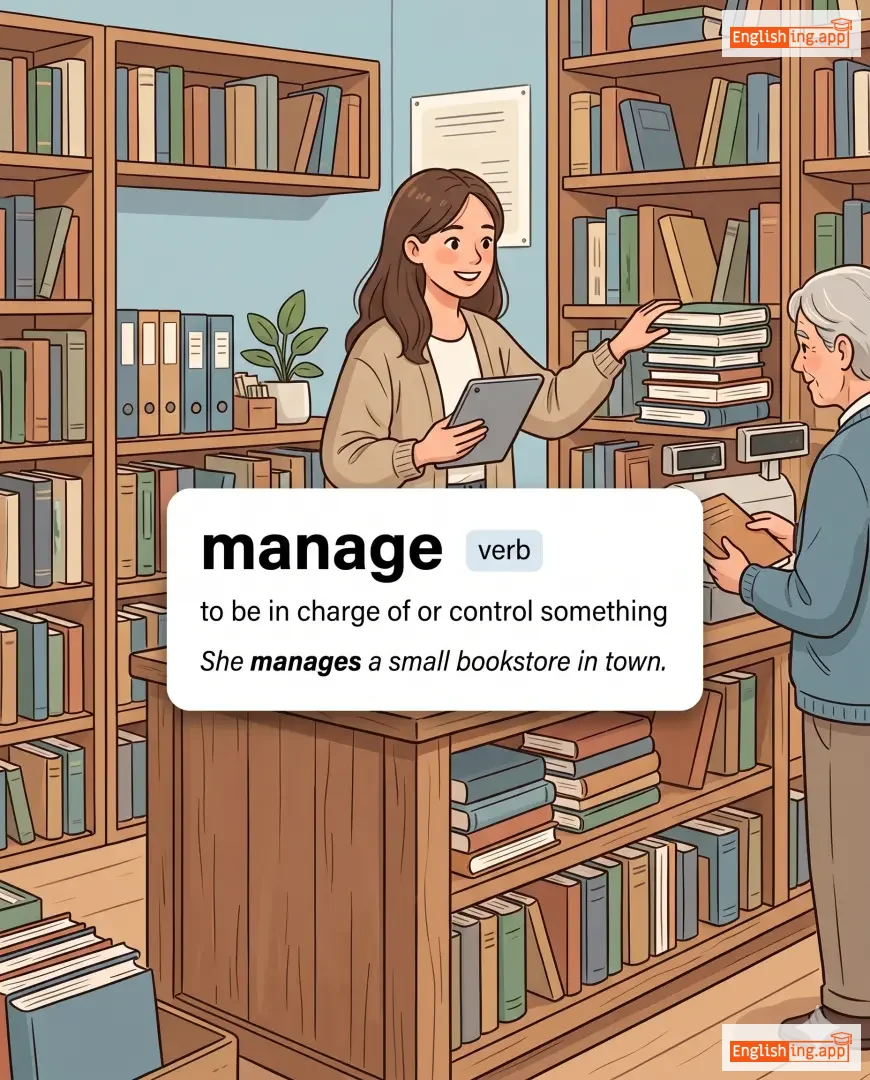
to be in charge of or control something
••••••
|
She manages a small bookstore in town.
彼女は町の小さな書店を経営しています。
••••••
|
彼女は町の小さな書店を経営しています。
Kanojo wa machi no chiisana shoten o keiei shiteimasu.
••••••
|
manage to do
何とかしてする
••••••
|
succeed in doing something, especially with difficulty
••••••
|
何とかしてする
nantoka shite suru
••••••
|
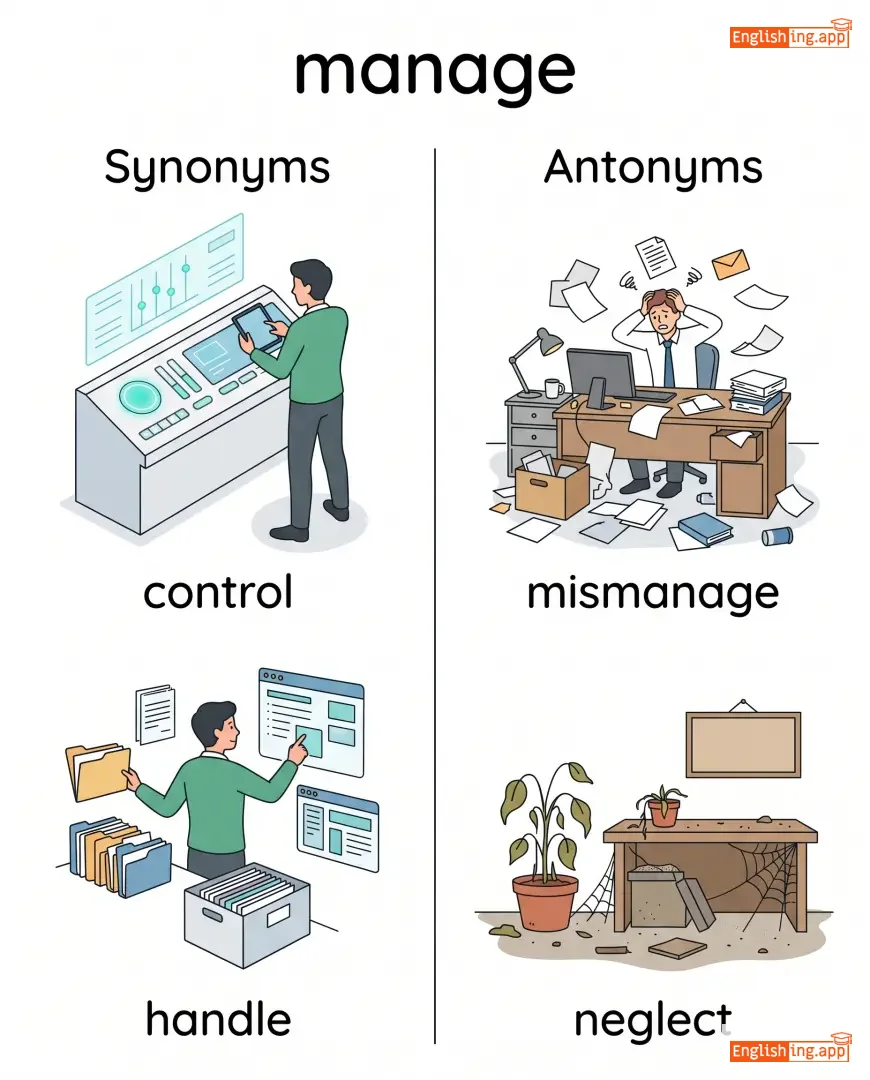
control, handle, supervise, oversee, direct
••••••
|
mismanage, neglect
••••••
|
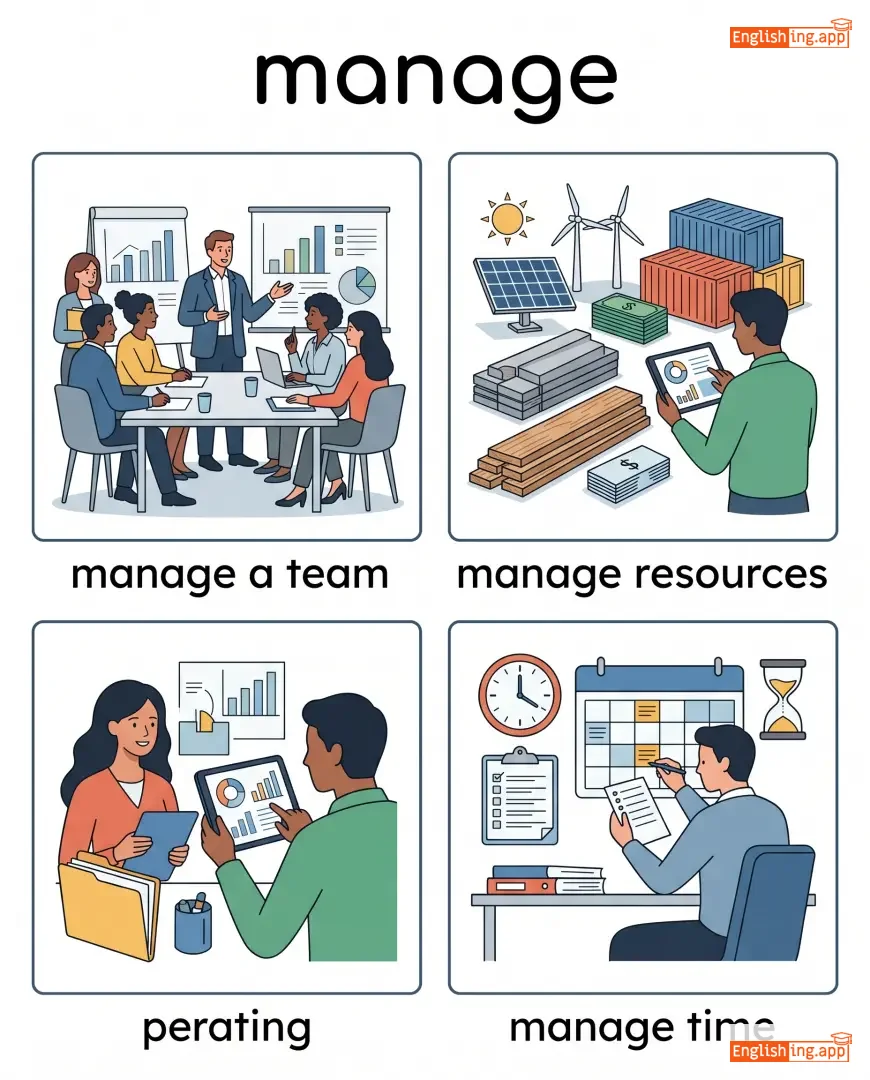
manage a team, manage resources, manage time, manage business
••••••
|
マネージャーはすべてを管理します!
••••••
|
|
#0
👩🏫
|
/ˈmɛntɔːr/
noun
(メンター)
••••••
|
- •••••• |
メンター
mentā
••••••
|
- •••••• | - •••••• | - •••••• | - •••••• |
an experienced person who advises and guides someone less experienced
••••••
|
She acted as a mentor for the new employees. |
彼女は新しい社員のためにメンターとして活動しました。
Kanojo wa atarashī shain no tame ni mentā toshite katsudō shimashita.
••••••
|
mentor-mentee relationship |
a guiding relationship where a mentor advises a mentee
••••••
|
メンター・メンティ関係
mentā mentī kankei
••••••
|
advisor, guide, coach, counselor
••••••
|
student, pupil
••••••
|
trusted mentor, career mentor, mentor program, mentor relationship
••••••
|
メンター、道を示す教師のような存在。
••••••
|
|
#0
🔥
|
/ˈmoʊtɪveɪt/
verb
••••••
|
- •••••• | - •••••• |
motivated
••••••
|
motivated
••••••
|
motivates
••••••
|
motivating
••••••
|
To provide someone with a reason or incentive to do something.
••••••
|
The coach motivated the players to give their best performance. |
- •••••• |
self-motivate |
To inspire oneself to take action or improve.
••••••
|
- •••••• |
encourage, inspire, stimulate, urge, drive
••••••
|
discourage, demotivate
••••••
|
motivate people, motivate employees, motivate to succeed, motivated by
••••••
|
No •••••• |
|
#0
🏘️
|
/ˈneɪbər/
noun
(ネイバー)
••••••
|
- •••••• |
隣人
rinjin
••••••
|
- •••••• | - •••••• | - •••••• | - •••••• |
a person living next door or nearby
••••••
|
My neighbor lent me some sugar when I ran out.
マイ ネイバー レント ミ サム シュガー ウェン アイ ラン アウト。
••••••
|
私の隣人は私が砂糖がなくなった時、砂糖を貸してくれました。
Watashi no rinjin wa watashi ga satō ga nakunatta toki, satō o kashite kuremashita.
••••••
|
- •••••• | - •••••• | - •••••• |
adjacent resident, nearby person, local
••••••
|
stranger, outsider
••••••
|
good neighbor, friendly neighbor, next-door neighbor
••••••
|
Your neighbor never says ‘no’, it’s sweet like sugar!
••••••
|
|
#0
👀
|
/ˈnoʊtɪs/
verb
(ノーティス)
••••••
|
|
気づく
kidzuku
••••••
|
noticed
ノーティスド
••••••
|
noticed
ノーティスド
••••••
|
notices
ノーティセス
••••••
|
noticing
ノーティシング
••••••
|
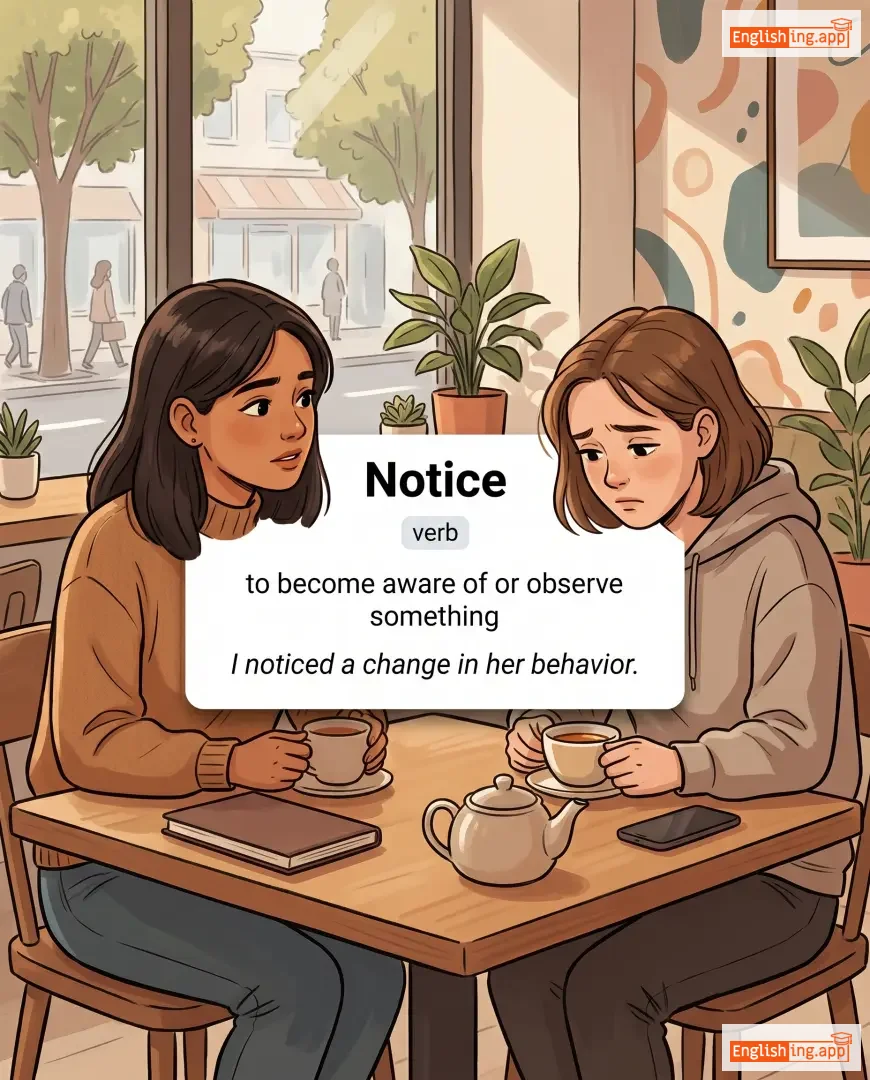
to become aware of or observe something
••••••
|
I noticed a change in her behavior.
私は彼女の行動の変化に気づきました。
••••••
|
私は彼女の行動の変化に気づきました。
Watashi wa kanojo no koudou no henka ni kidzukimashita.
••••••
|
- •••••• | - •••••• | - •••••• |
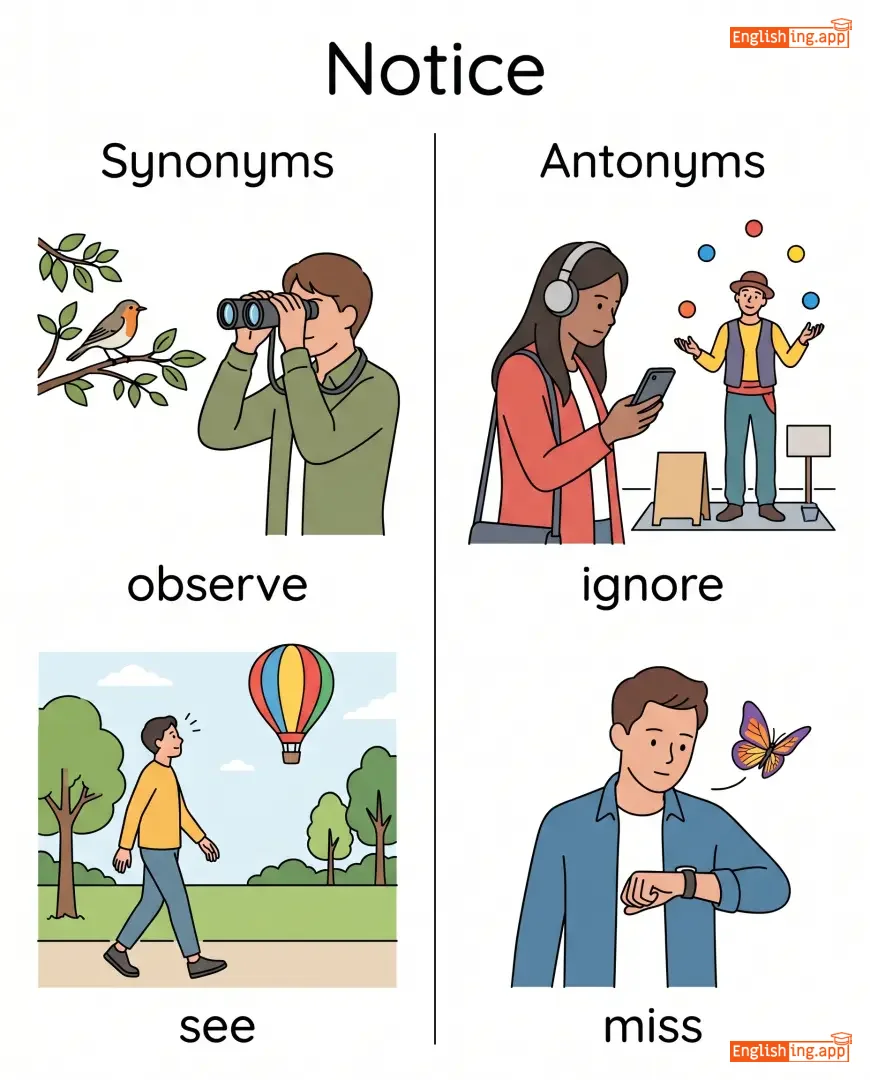
observe, see, spot, detect
••••••
|
ignore, miss, overlook
••••••
|
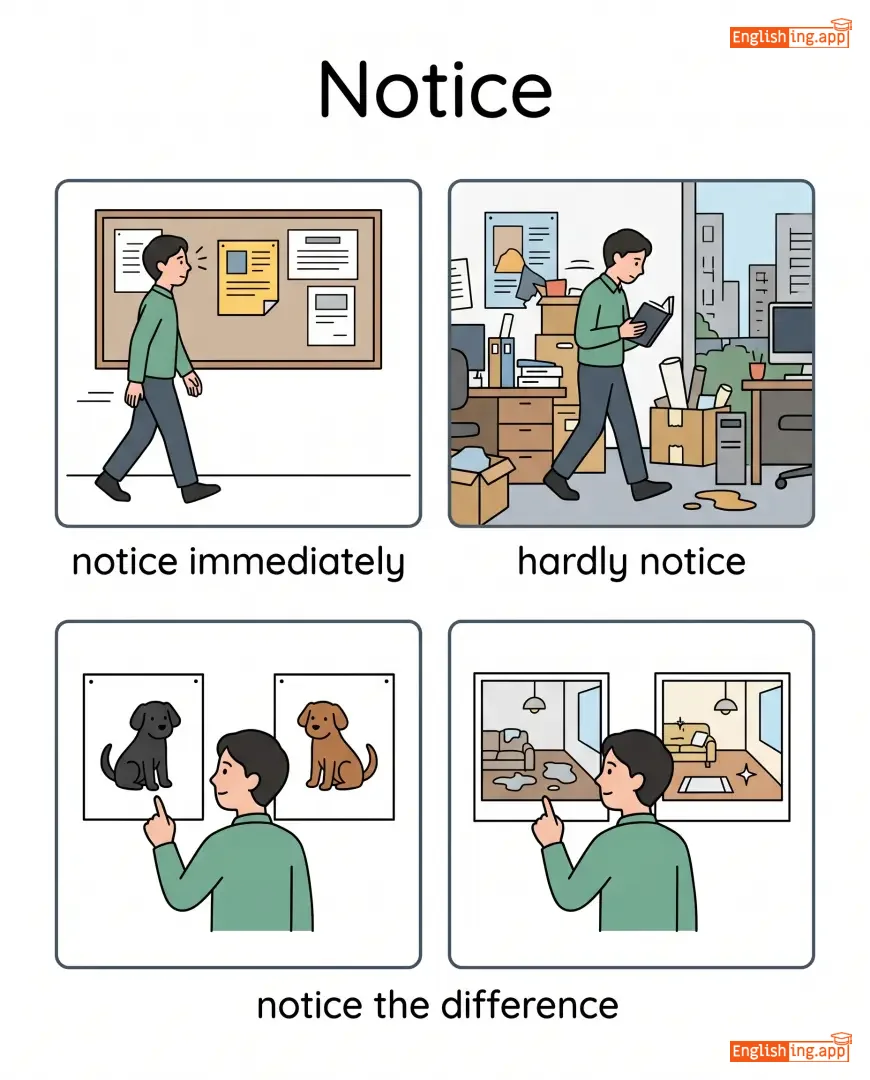
notice immediately, hardly notice, notice the difference, take notice, advance notice
••••••
|
Noticing something is like 'kidzuku' in Japanese, realizing things in an instant!
••••••
|
|
#0
🚧
|
/ˈɒbstəkəl/
noun
(obusutakuru)
••••••
|
- •••••• |
障害
shōgai
••••••
|
- •••••• | - •••••• | - •••••• | - •••••• |
something that blocks your way or prevents progress
••••••
|
Lack of money was the main obstacle to his success. |
お金の不足は彼の成功への主要な障害でした。
okane no fusoku wa kare no seikō e no shuyō na shōgai deshita.
••••••
|
overcome an obstacle |
to deal with and successfully get past a problem or barrier
••••••
|
障害を克服する
shōgai o kokufuku suru
••••••
|
barrier, hurdle, hindrance, block, difficulty
••••••
|
aid, help, support
••••••
|
major obstacle, face an obstacle, overcome obstacle, obstacle course, create obstacle
••••••
|
障害 = 進行を妨げるもの 🚧
••••••
|
|
#0
📘
|
/ˈɔːrdəˌnɛri/
adjective
(オーディナリー)
••••••
|
- •••••• |
普通の
futsuu no
••••••
|
- •••••• | - •••••• | - •••••• | - •••••• |
Common, usual, or not special; something that happens regularly.
••••••
|
She wore an ordinary dress to the party. |
彼女はパーティーに普通のドレスを着て行った。
Kanojo wa paatii ni futsuu no doresu o kite itta.
••••••
|
out of the ordinary |
Something unusual or different from what is normal.
••••••
|
普通ではない
futsuu de wa nai
••••••
|
common, usual, regular, normal, typical
••••••
|
extraordinary, exceptional, unusual
••••••
|
ordinary life, ordinary people, ordinary day, ordinary circumstances
••••••
|
‘Ordinary’ は‘秩序’を意味する—すべてが秩序通り、すべてが普通です。
••••••
|
|
#0
💪
|
/ˌoʊvərˈkʌm/
verb
(オーバーカム)
••••••
|
|
克服する
koku fuku suru
••••••
|
overcame
オーバーケイム
••••••
|
overcome
オーバーカム
••••••
|
overcomes
オーバーカムス
••••••
|
overcoming
オーバーカミング
••••••
|
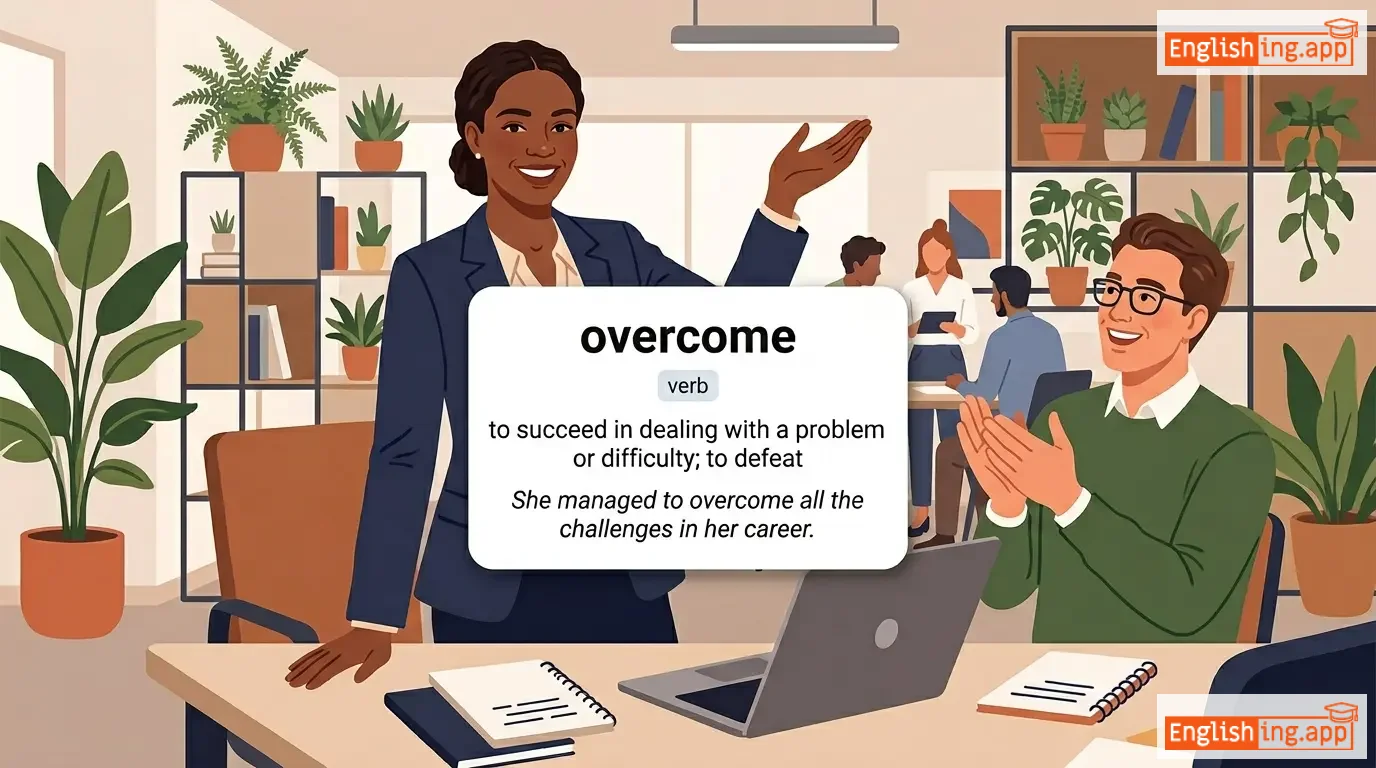
to succeed in dealing with a problem or difficulty; to defeat
••••••
|
She managed to overcome all the challenges in her career.
彼女はキャリアの中ですべての挑戦を克服しました。
••••••
|
彼女はキャリアの中ですべての挑戦を克服しました。
Kanojo wa kyaria no naka de subete no chousen wo kokufuku shimashita.
••••••
|
overcome with emotion
感情に圧倒される
••••••
|
deeply affected by strong feelings
••••••
|
感情に圧倒される
kanjou ni attou sareru
••••••
|
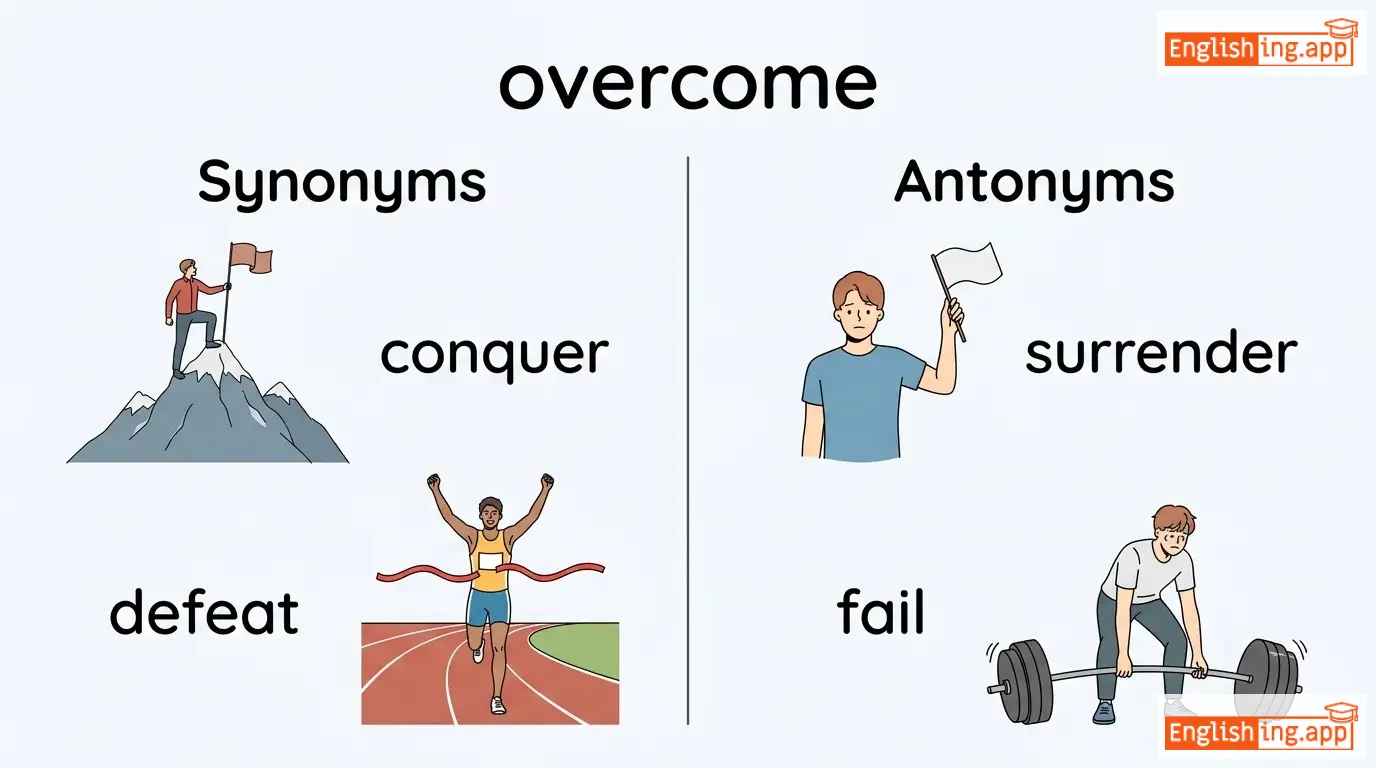
conquer, defeat, prevail, master
••••••
|
surrender, fail
••••••
|
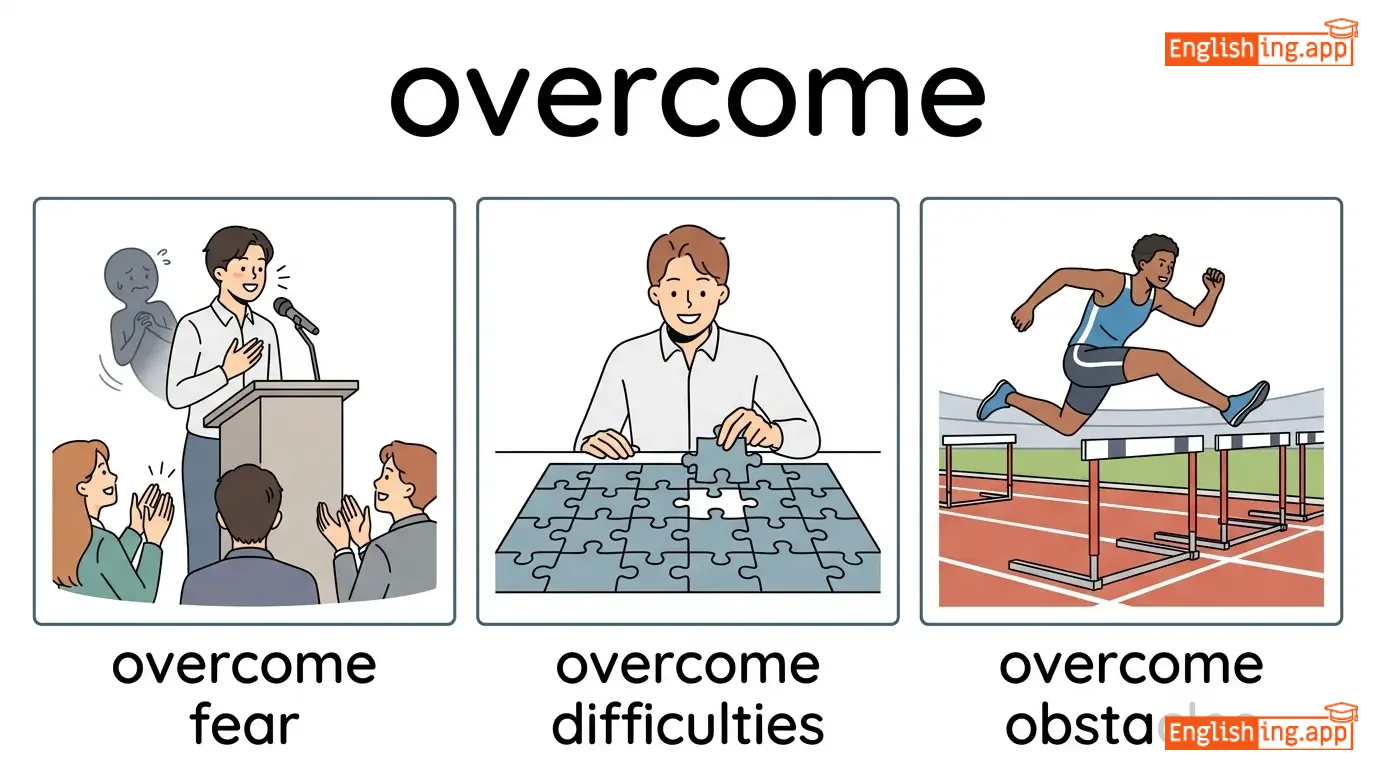
overcome fear, overcome difficulties, overcome obstacles, overcome challenges
••••••
|
克服することは障害を乗り越えること - 問題を解決し、勝利することです。
••••••
|
|
#0
🧘
|
/ˈpeɪ.ʃəns/
noun
(ペイシェンス)
••••••
|
|
忍耐
nintai
••••••
|
- •••••• | - •••••• | - •••••• | - •••••• |
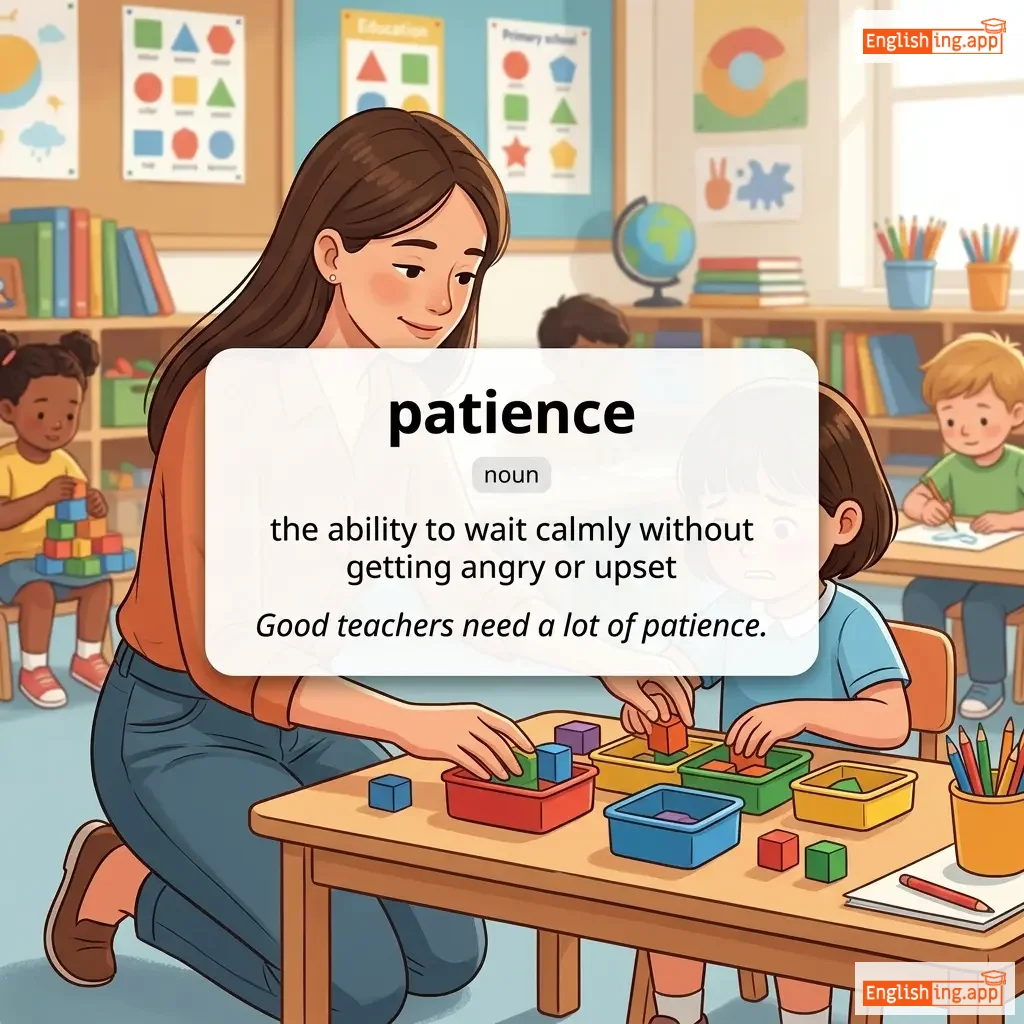
the ability to wait calmly without getting angry or upset
••••••
|
Good teachers need a lot of patience. |
良い教師は多くの忍耐を必要とします。
Yoi kyōshi wa ōku no nintai o hitsuyō to shimasu.
••••••
|
lose patience |
to become annoyed because of delay or difficulty
••••••
|
忍耐を失う
nintai o ushinau
••••••
|
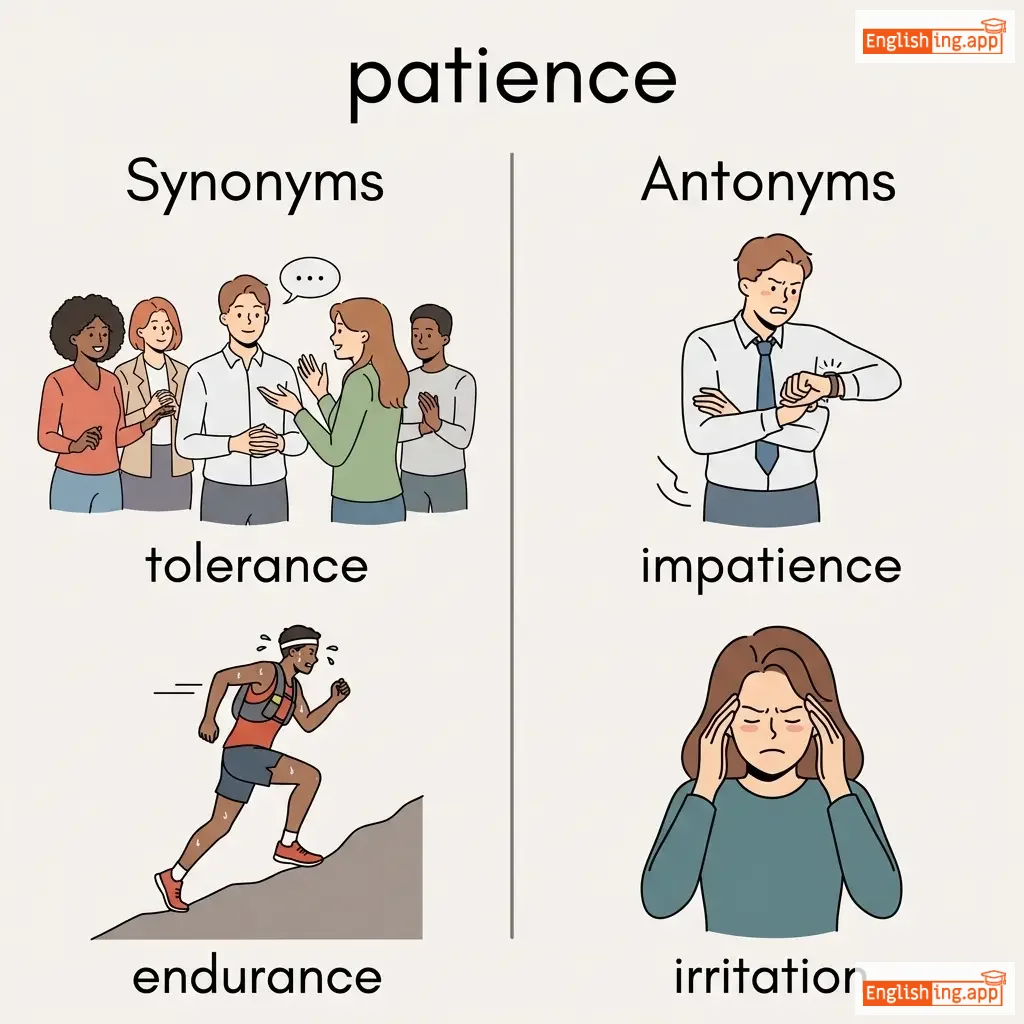
tolerance, endurance, calmness, perseverance, forbearance
••••••
|
impatience, irritation, frustration
••••••
|
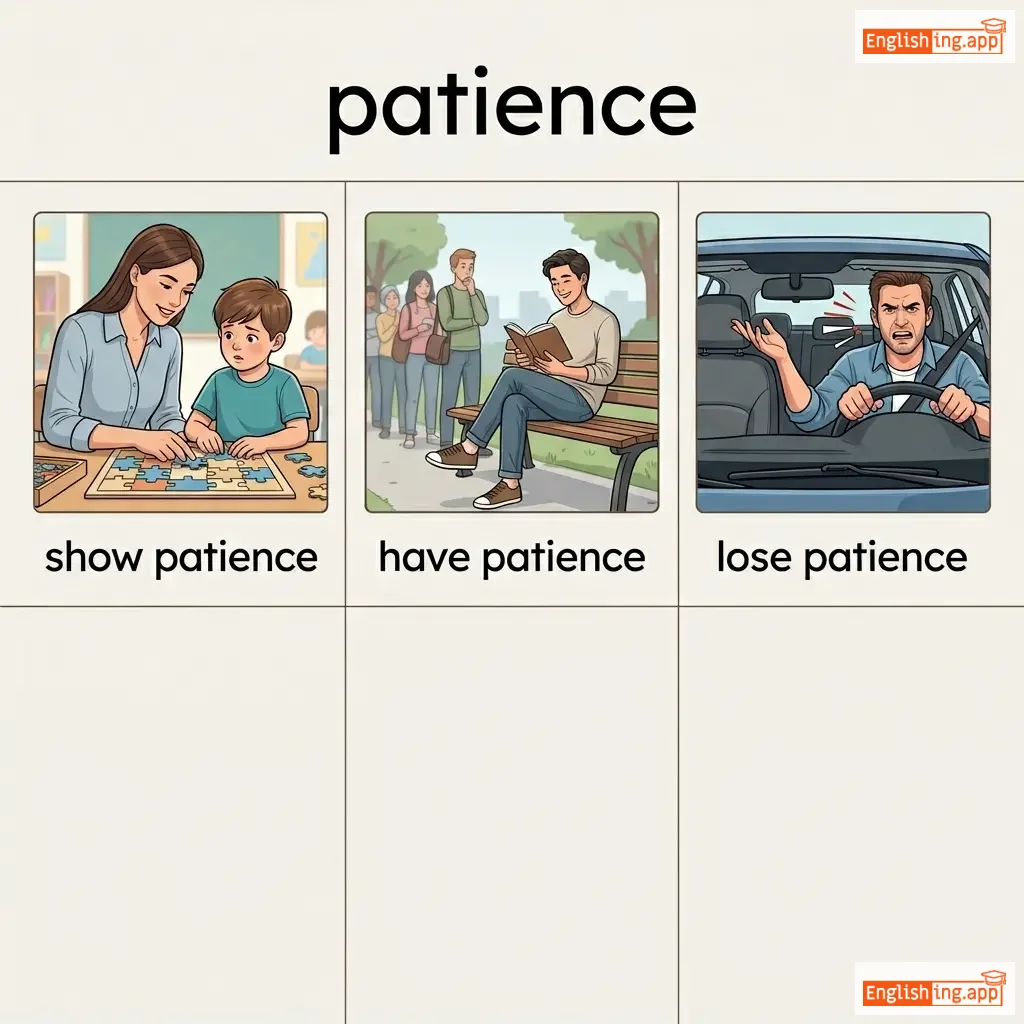
show patience, have patience, lose patience, test patience
••••••
|
忍耐は、静かに待っている患者のようです。
••••••
|
|
#0
☮️
|
/ˈpiːsfl/
adjective
(ハピネス)
••••••
|
- •••••• |
幸せ
shiawase
••••••
|
- •••••• | - •••••• | - •••••• | - •••••• |
free from disturbance; calm and tranquil
••••••
|
The village remained peaceful even during the festival. |
彼女は賞を受け取ったとき、幸せを隠すことができませんでした。
Kanojo wa shō o uketotta toki, shiawase o kakusu koto ga dekimasen deshita.
••••••
|
peaceful coexistence |
a situation in which different groups live together without conflict
••••••
|
幸せの追求
Shiawase no tsuikyū
••••••
|
calm, serene, tranquil, restful, quiet
••••••
|
chaotic, violent, disturbed
••••••
|
peaceful life, peaceful protest, peaceful solution, peaceful environment
••••••
|
幸せ = みんなが求めているもの
••••••
|
|
#0
➕
|
/ˈpɒzɪtɪv/
adjective
(pozitibu)
••••••
|
|
ポジティブ
pojitibu
••••••
|
- •••••• | - •••••• | - •••••• | - •••••• |
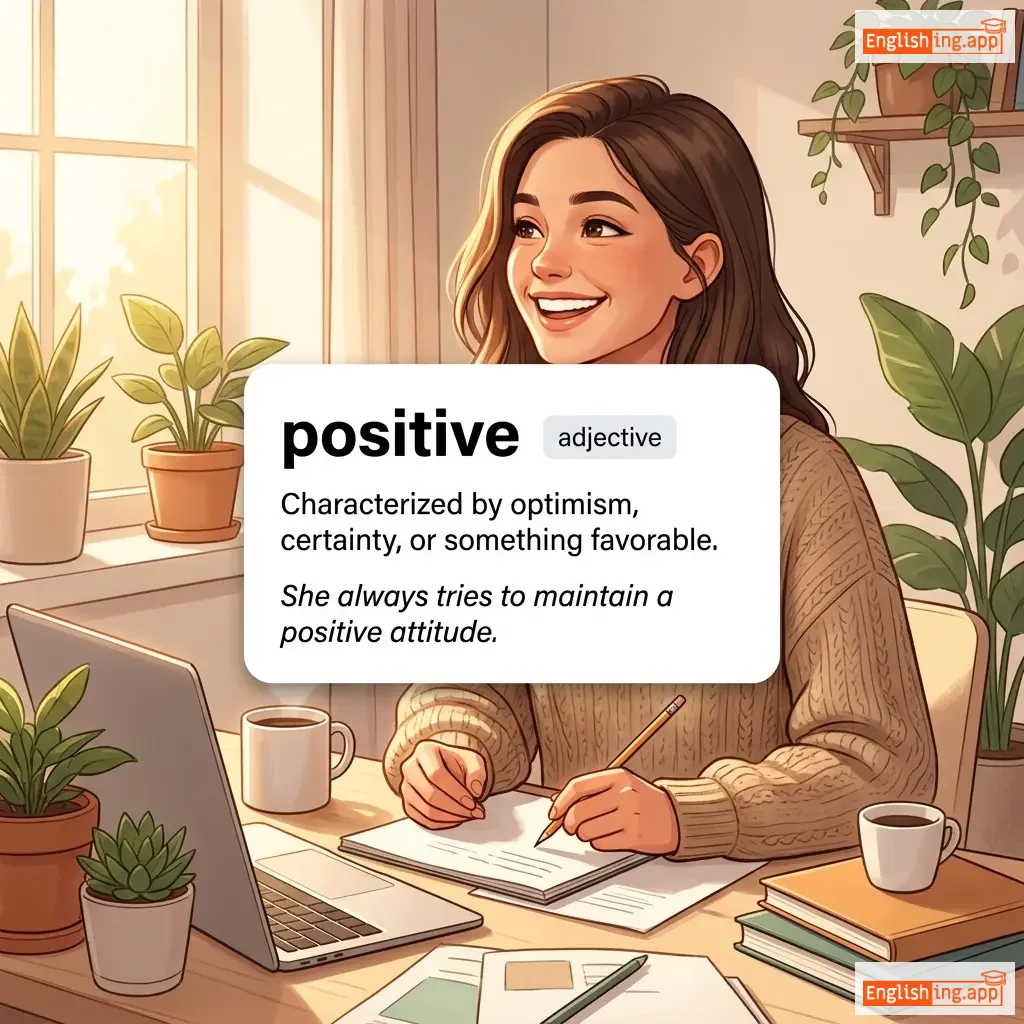
Characterized by optimism, certainty, or something favorable.
••••••
|
She always tries to maintain a positive attitude. |
彼女はいつもポジティブな態度を保とうとしています。
Kanojo wa itsumo pojitibu na taido o tamotsu to shiteimasu.
••••••
|
positive thinking |
focusing on the good aspects and expecting favorable outcomes
••••••
|
ポジティブシンキング
pojitibu shinkingu
••••••
|
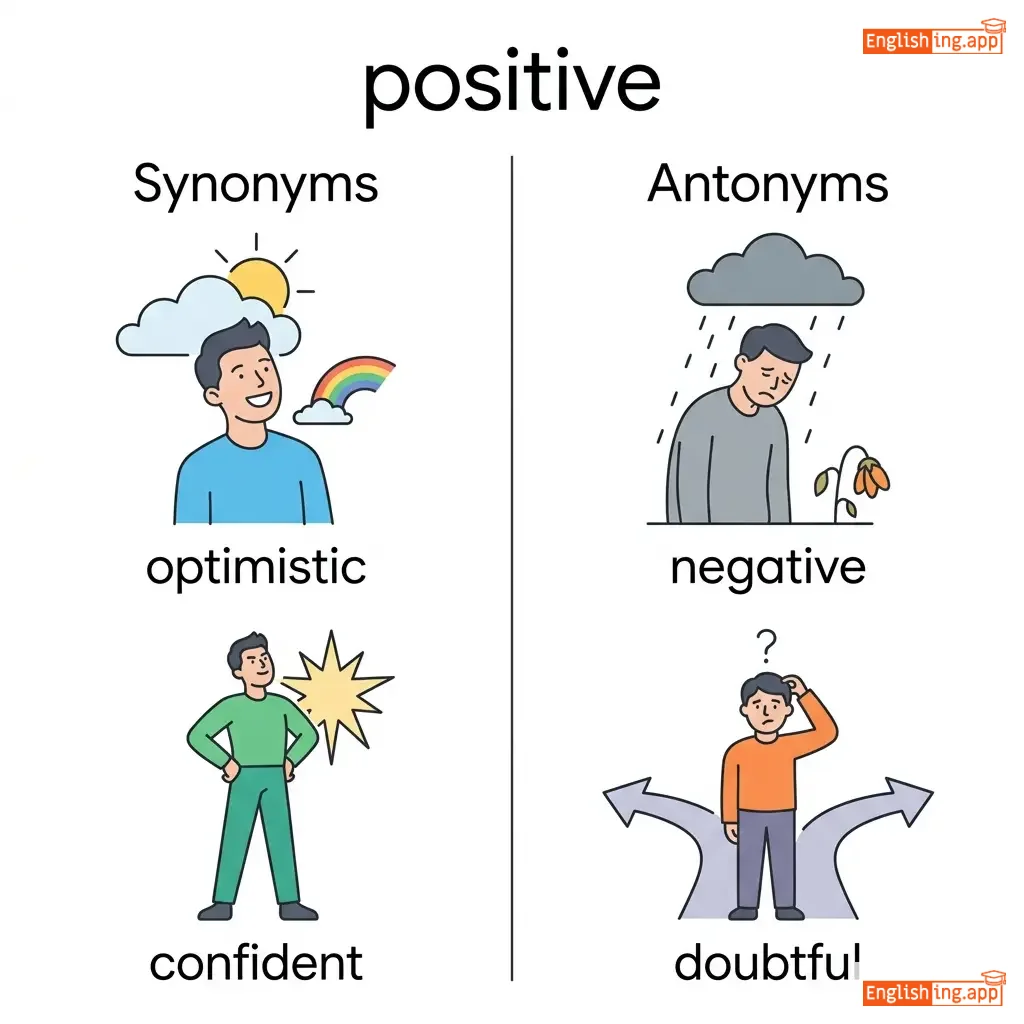
optimistic, confident, assured, constructive, certain
••••••
|
negative, doubtful, pessimistic
••••••
|
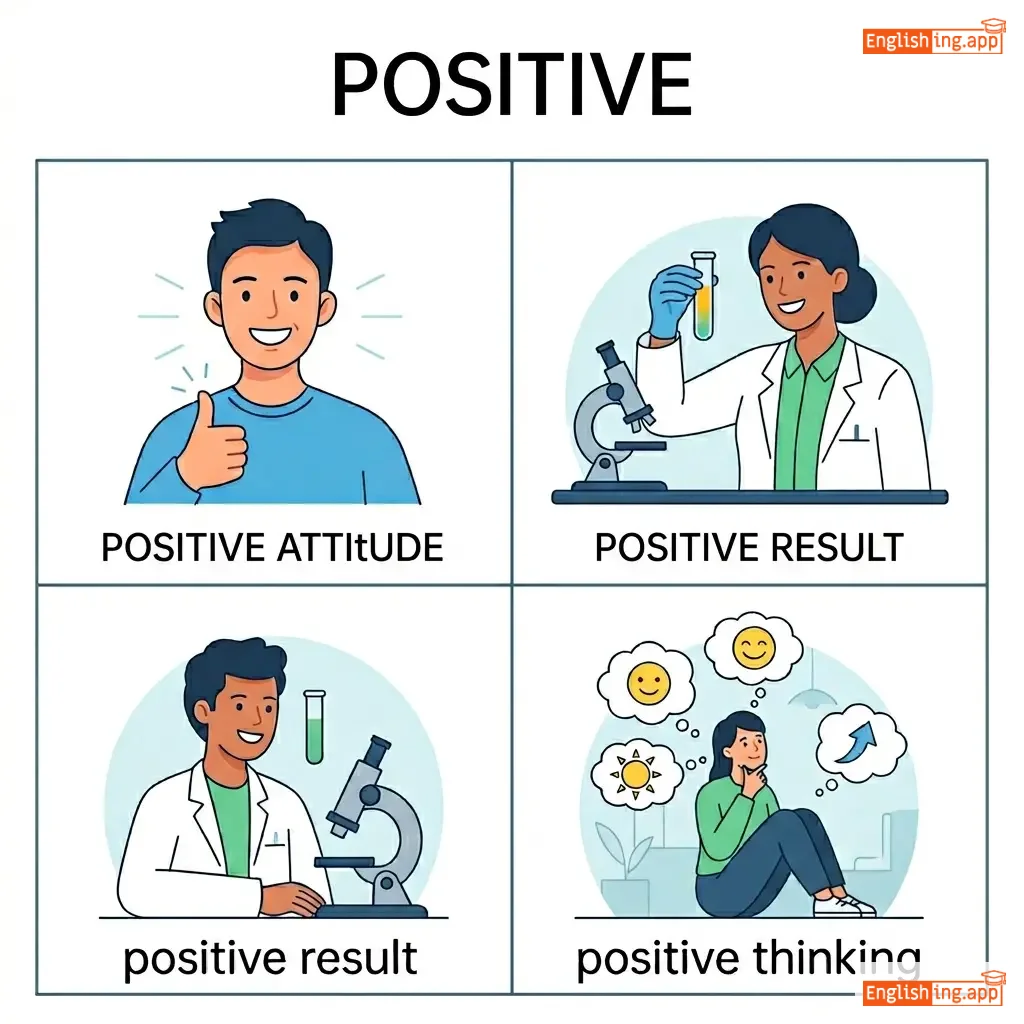
positive attitude, positive result, positive thinking, positive feedback, positive impact
••••••
|
ポジティブは良い結果を生む!何事もポジティブに考えて前向きに!
••••••
|
|
#0
✨
|
/ˈpɒsəbl̩/
adjective
(ポッシブル)
••••••
|
- •••••• |
可能
kanou
••••••
|
- •••••• | - •••••• | - •••••• | - •••••• |
Able to be done or achieved.
••••••
|
Anything is possible if you work hard.
一生懸命働けば、何でも可能です。
••••••
|
一生懸命働けば、何でも可能です。
Isshoukenmei hataraakeba, nandemo kanou desu.
••••••
|
make it possible
それを可能にする
••••••
|
To cause something to happen or be achievable.
••••••
|
それを可能にする
sore wo kanou ni suru
••••••
|
feasible, achievable, attainable, doable
••••••
|
impossible, unachievable, unattainable
••••••
|
as soon as possible, possible solution, possible outcome
••••••
|
Possibleは日本語で「可能」, 頑張れば何でも可能!
••••••
|
|
#0
💥
|
/ˈprɛʃər/
noun/verb
(プレッシャー)
••••••
|
- •••••• |
プレッシャー
puresshā
••••••
|
pressured
プレッシャード
••••••
|
pressured
プレッシャード
••••••
|
pressures
プレッシャーズ
••••••
|
pressuring
プレッシャリング
••••••
|
the force applied to something or the feeling of stress or tension
••••••
|
The pressure of the situation made him nervous.
その状況のプレッシャーは彼を緊張させました。
••••••
|
その状況のプレッシャーは彼を緊張させました。
Sono jōkyō no puresshā wa kare wo kinchou sasemashita.
••••••
|
under pressure
プレッシャーの中で
••••••
|
feeling stressed or forced to perform
••••••
|
プレッシャーの中で
Puresshā no naka de
••••••
|
stress, tension, force
••••••
|
relaxation, ease
••••••
|
high pressure, pressure to succeed, under pressure, pressure point
••••••
|
プレッシャー (Pressure) は常にプレッシャーの中で感じるもの
••••••
|
|
#0
📈
|
/ˈprəʊɡrɛs/ (noun), /prəˈɡrɛs/ (verb)
noun, verb
(プログレス)
••••••
|
|
進歩
shinpo
••••••
|
progressed
プログレスド
••••••
|
progressed
プログレスド
••••••
|
progresses
プログレスズ
••••••
|
progressing
プログレッシング
••••••
|
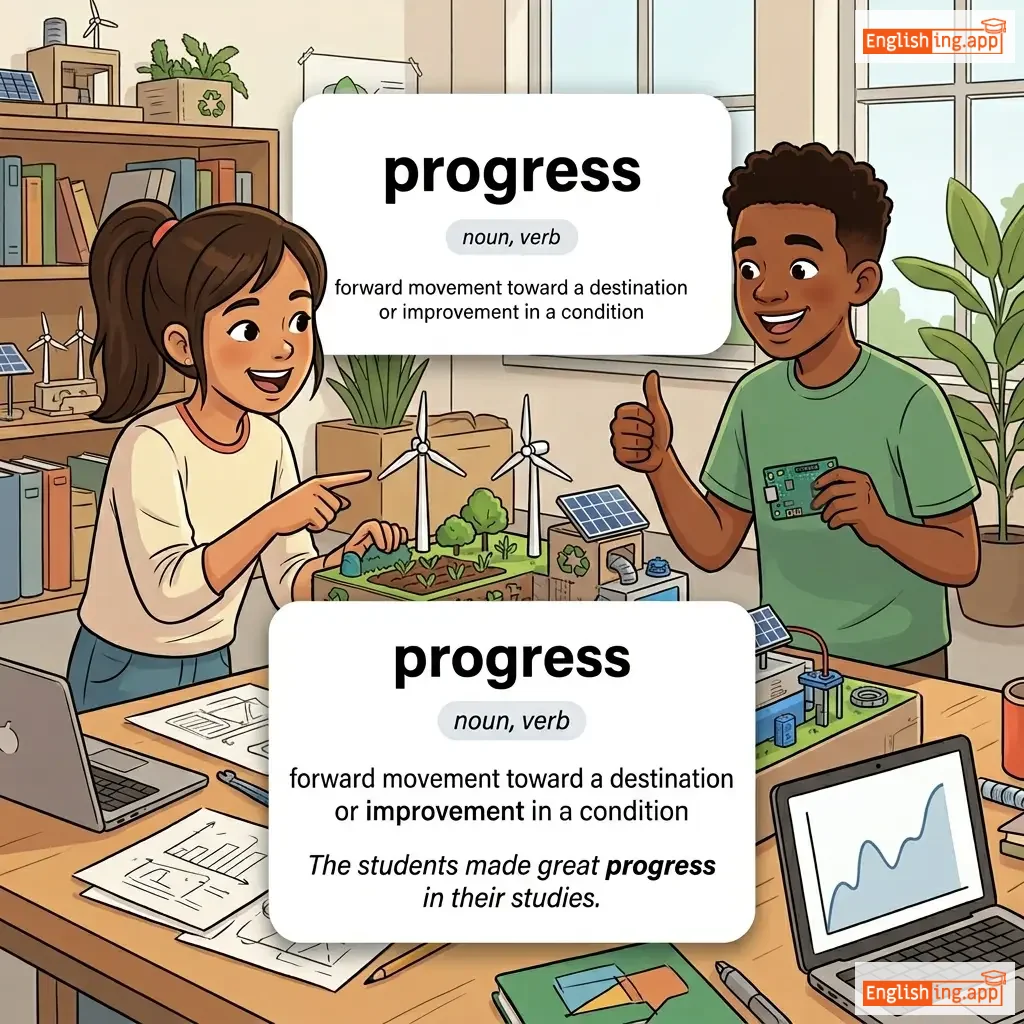
forward movement toward a destination or improvement in a condition
••••••
|
The students made great progress in their studies.
学生たちは学業で大きな進歩を遂げました。
••••••
|
学生たちは学業で大きな進歩を遂げました。
Gakusei-tachi wa gakugyou de ookina shinpo wo togemashita.
••••••
|
work in progress
作業中
••••••
|
something that is still being developed or unfinished
••••••
|
作業中
Sagyou-chuu
••••••
|
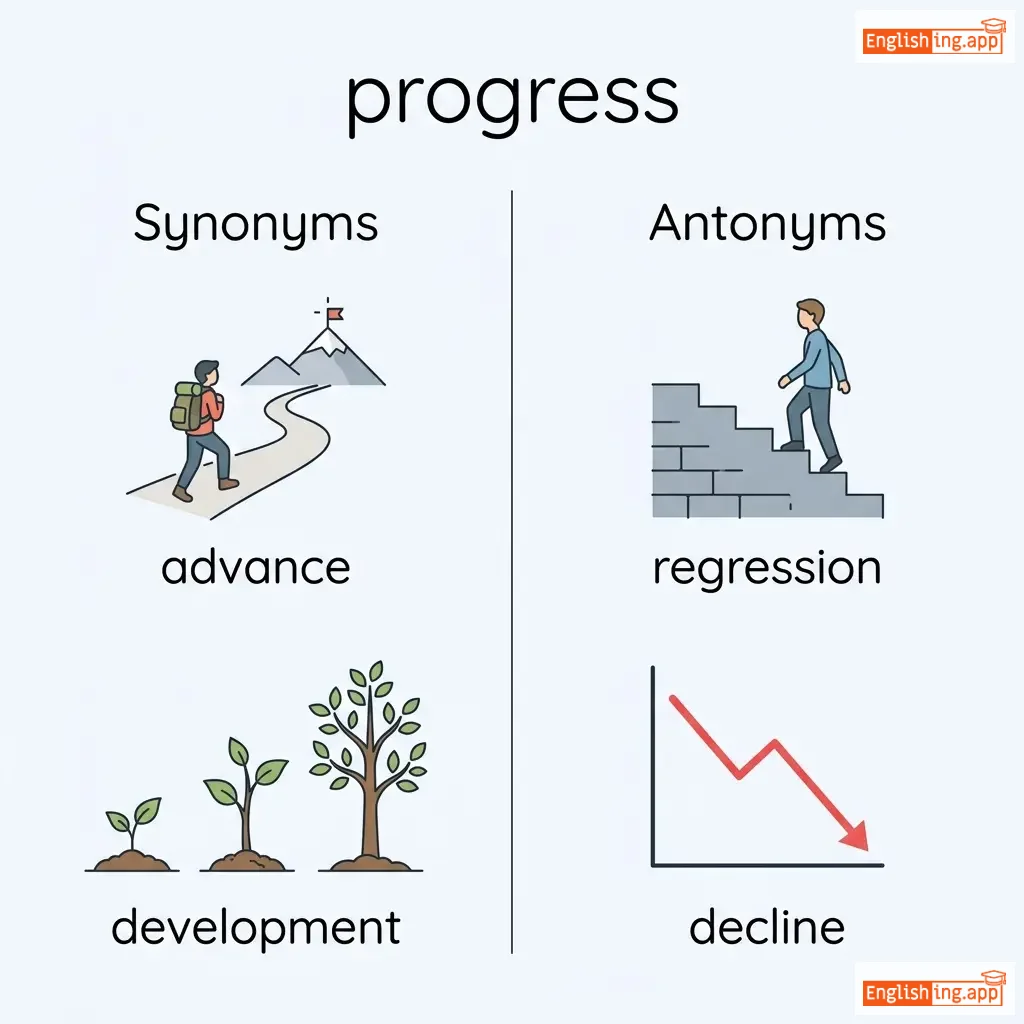
advance, development, improvement, growth, headway
••••••
|
regression, decline, setback
••••••
|
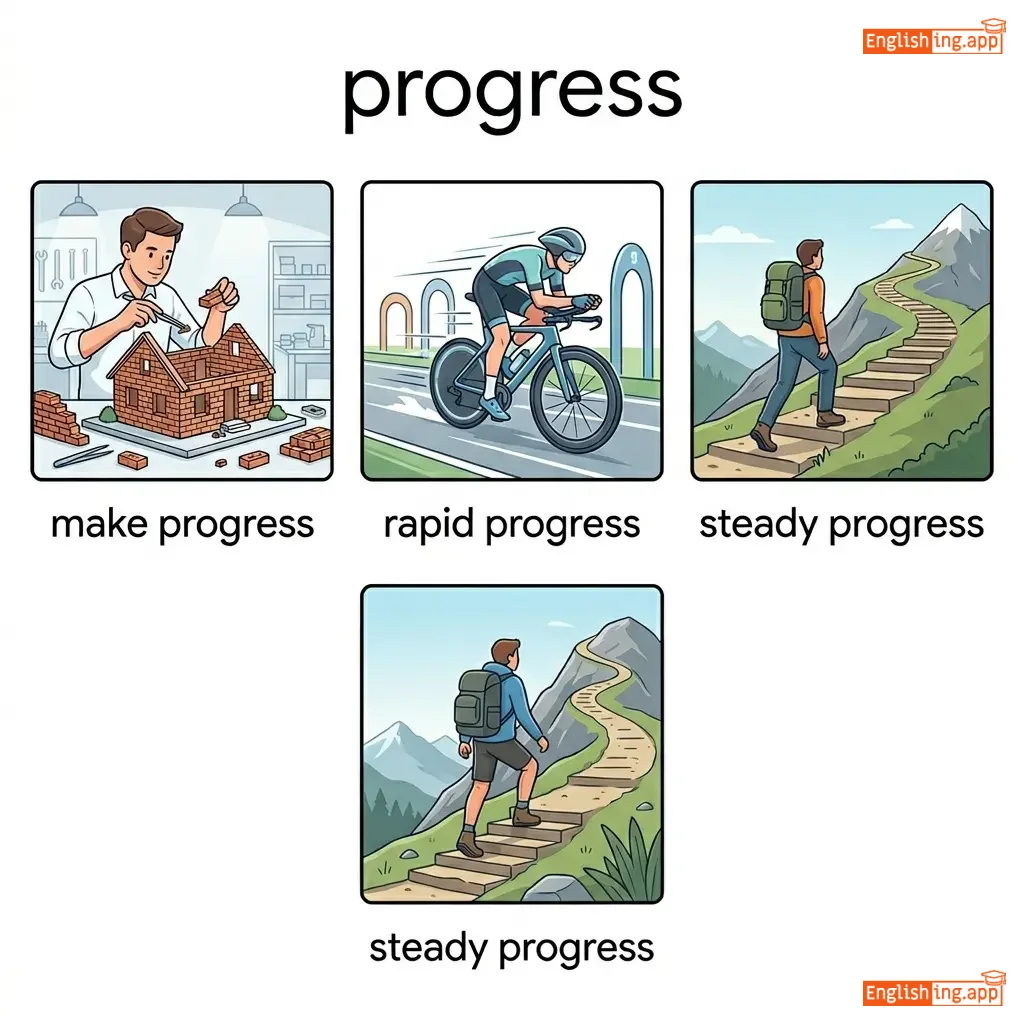
make progress, rapid progress, steady progress, slow progress
••••••
|
Progress = Pro + gress = 前進する (進歩)
••••••
|
|
#0
🏃♀️
|
/pərˈsuː/
verb
(パースュー)
••••••
|
- •••••• |
追求する
tsuikyū suru
••••••
|
pursued
パースユード
••••••
|
pursued
パースユード
••••••
|
pursues
パースユーズ
••••••
|
pursuing
パースユーイング
••••••
|
to follow or chase with the intent to catch or achieve something
••••••
|
She decided to pursue her dreams of becoming a doctor.
彼女は医者になるという夢を追い求めることに決めました。
••••••
|
彼女は医者になるという夢を追い求めることに決めました。
Kanojo wa isha ni naru to iu yume o oimotomeru koto ni kimemashita.
••••••
|
- •••••• | - •••••• | - •••••• |
chase, seek, follow, strive
••••••
|
abandon, neglect, avoid
••••••
|
pursue a goal, pursue a career, pursue happiness, pursue success
••••••
|
医者になるためには、自分の夢を追い求める (tsuikyū suru) 必要があります。
••••••
|
|
#0
🤗
|
/ˌriːəˈʃʊr/
verb
(リアシュア)
••••••
|
- •••••• |
安心させる
anshin saseru
••••••
|
reassured
リアシュアード
••••••
|
reassured
リアシュアード
••••••
|
reassures
リアシュアーズ
••••••
|
reassuring
リアシュアリング
••••••
|
to say or do something to remove someone's doubts or fears
••••••
|
The teacher reassured the students before the exam.
教師は試験前に生徒を安心させました。
••••••
|
教師は試験前に生徒を安心させました。
Kyōshi wa shiken mae ni seito o anshin sasemashita.
••••••
|
- •••••• | - •••••• | - •••••• |
comfort, encourage, console, support, calm
••••••
|
alarm, worry, upset
••••••
|
reassure someone, reassured by, reassured that
••••••
|
Reassure は '安心させる' という意味—教師が試験前に生徒を安心させました。
••••••
|
|
#0
🛌
|
/rɪˈkʌvəri/
noun
(リカバリー)
••••••
|
- •••••• |
回復
kaifuku
••••••
|
- •••••• | - •••••• | - •••••• | - •••••• |
the process of recovering or returning to a normal state
••••••
|
The patient is in recovery after the surgery.
患者は手術後、回復中です。
••••••
|
患者は手術後、回復中です。
Kanja wa shujutsu go, kaifuku-chu desu.
••••••
|
- •••••• | - •••••• | - •••••• |
restoration, rehabilitation, healing
••••••
|
decline, deterioration
••••••
|
make a recovery, in recovery, full recovery
••••••
|
回復は健康を取り戻すことと同じ (Kaifuku wa kenko wo torimodosu koto to onaji)
••••••
|
|
#0
😔
|
/rɪˈɡrɛt/
verb
(リグレット)
••••••
|
- •••••• |
後悔する
kōkai suru
••••••
|
regretted
リグレットッド
••••••
|
regretted
リグレットッド
••••••
|
regrets
リグレッツ
••••••
|
regretting
リグレッティング
••••••
|
to feel sad or disappointed about something that has happened or been done
••••••
|
I deeply regret saying those harsh words to her.
私は彼女にその厳しい言葉を言ったことを深く後悔しています。
••••••
|
私は彼女にその厳しい言葉を言ったことを深く後悔しています。
Watashi wa kanojo ni sono kibishii kotoba o itta koto o fukaku kōkai shiteimasu.
••••••
|
express regret
後悔を表現する
••••••
|
to show that you are sorry about something
••••••
|
後悔を表現する
kōkai o hyōgen suru
••••••
|
lament, repent, remorse, rue
••••••
|
rejoice, celebrate, delight
••••••
|
regret deeply, express regret, feel regret, lifelong regret
••••••
|
後悔するのは、失ったものに対する深い反省の気持ちを持つこと
••••••
|
|
#0
😌
|
/rɪˈliːf/
noun
(リリーフ)
••••••
|
- •••••• |
安心; 安堵; 支援
anshin, ando, shien
••••••
|
- •••••• | - •••••• | - •••••• | - •••••• |
a feeling of comfort after worry or distress; assistance given to those in need
••••••
|
She felt great relief when the exam was over.
試験が終わったとき、彼女は大きな安堵感を感じました。
••••••
|
試験が終わったとき、彼女は大きな安堵感を感じました。
Shiken ga owatta toki, kanojo wa ookina andokan o kanjimashita.
••••••
|
- •••••• | - •••••• | - •••••• |
comfort, ease, assistance, aid
••••••
|
anxiety, worry, stress, burden
••••••
|
pain relief, relief work, great relief, tax relief
••••••
|
安心感=安堵感!
••••••
|
|
#0
💭
|
/rɪˈmembə/
verb
(リメンバー)
••••••
|
|
覚える
oboeru
••••••
|
remembered
リメンバード
••••••
|
remembered
リメンバード
••••••
|
remembers
リメンバーズ
••••••
|
remembering
リメンバーリング
••••••
|
to bring a past event back into one's mind; to keep in memory
••••••
|
I remember my first day at school.
私は学校の最初の日を覚えています。
••••••
|
私は学校の最初の日を覚えています。
Watashi wa gakkou no saisho no hi o oboeteimasu.
••••••
|
- •••••• | - •••••• | - •••••• |
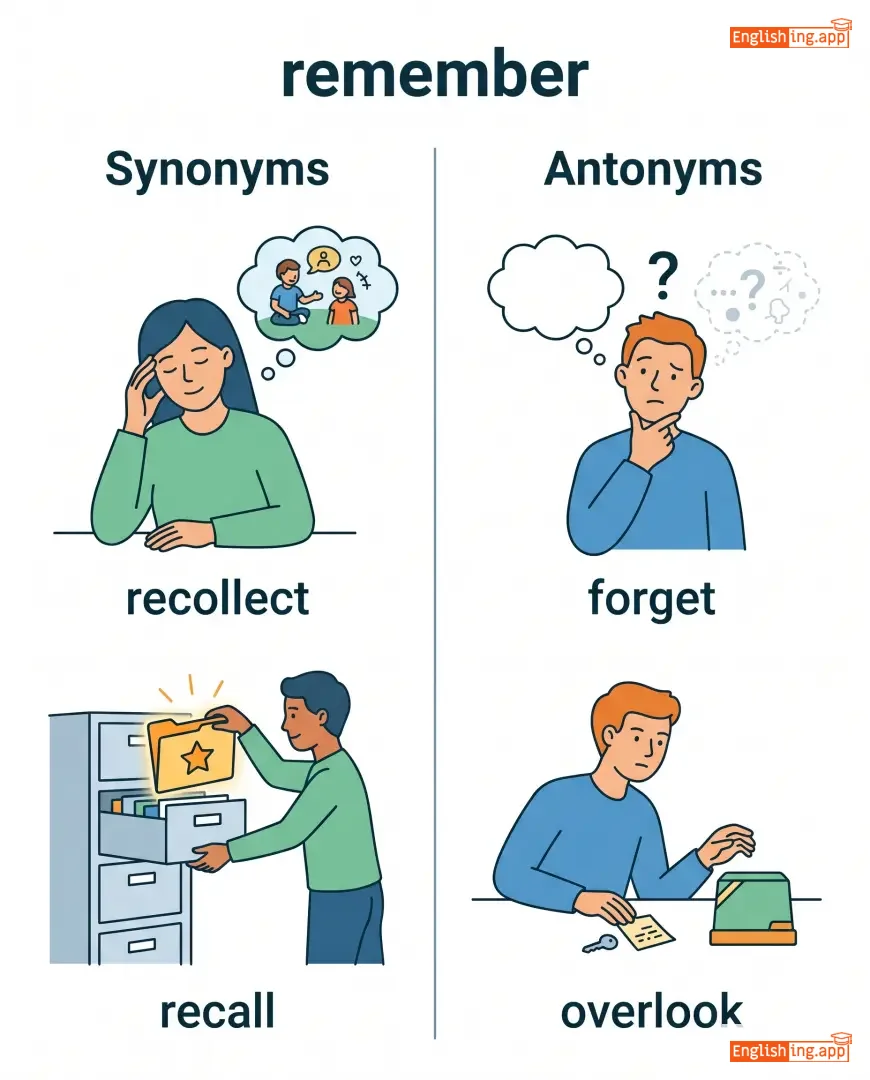
recall, recollect, reminisce, retain
••••••
|
forget, overlook, ignore
••••••
|
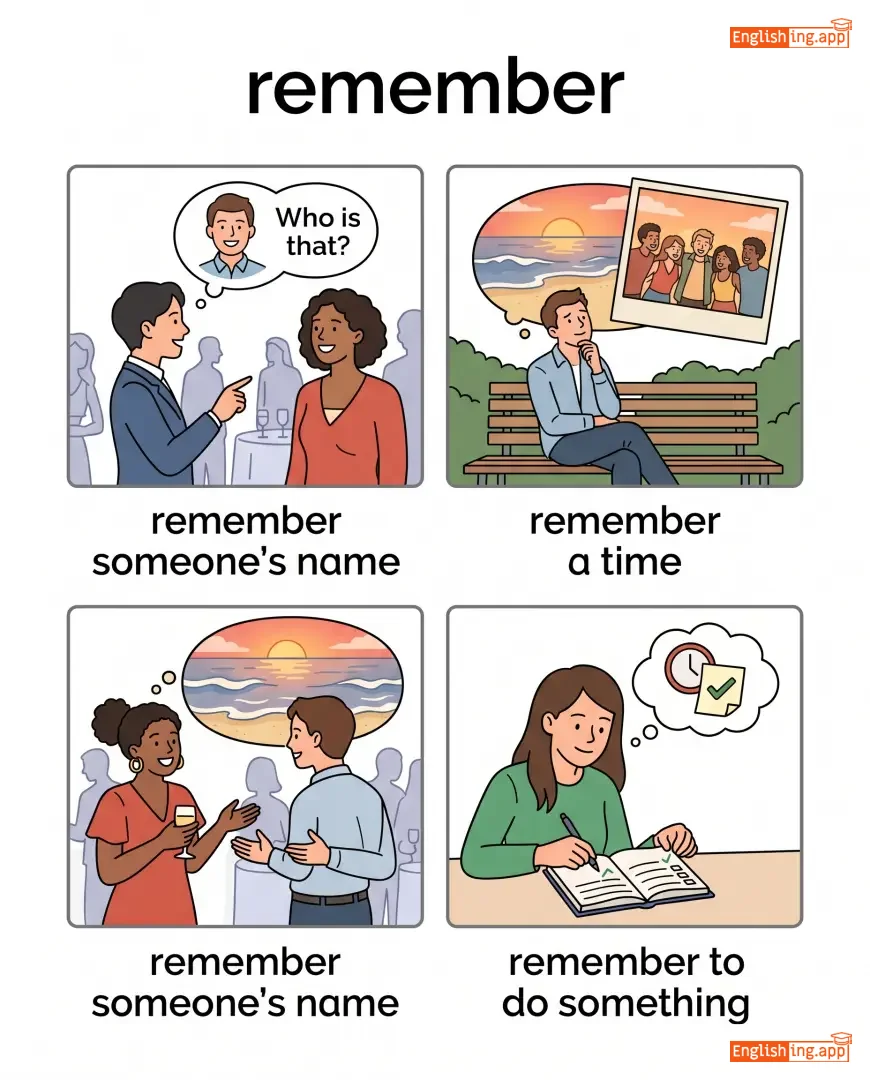
remember clearly, remember well, remember to do, remember when
••••••
|
学校の最初の日を覚えておいて!
••••••
|
|
#0
🔔
|
/rɪˈmaɪnd/
verb
(リマインド)
••••••
|
- •••••• |
思い出させる
omoidasaseru
••••••
|
reminded
リマインデッド
••••••
|
reminded
リマインデッド
••••••
|
reminds
リマインズ
••••••
|
reminding
リマインディング
••••••
|
to cause someone to remember something
••••••
|
Please remind me to call her tomorrow.
明日彼女に電話するのをリマインドして下さい。
••••••
|
明日彼女に電話するのをリマインドして下さい。
Ashita kanojo ni denwa suru no o rimaindo shite kudasai.
••••••
|
- •••••• | - •••••• | - •••••• |
alert, notify, jog memory, prompt
••••••
|
forget, neglect
••••••
|
remind someone of something, remind to do something
••••••
|
リマインドは英語の'remind'と似ている、思い出させる!
••••••
|
|
#0
🌍
|
/rɪˈmoʊt/
adjective
(リモート)
••••••
|
- •••••• |
遠隔
enkaku
••••••
|
- •••••• | - •••••• | - •••••• | - •••••• |
Situated far from the main centers of population; distant.
••••••
|
They stayed in a remote village during their trip. |
彼らは旅行中に遠隔の村に泊まりました。
Karera wa ryokouchuu ni enkaku no mura ni tomarimashita.
••••••
|
remote possibility |
A very unlikely chance.
••••••
|
遠隔の可能性
enkaku no kanousei
••••••
|
distant, faraway, isolated, secluded, outlying
••••••
|
near, close, central
••••••
|
remote area, remote control, remote access, remote work
••••••
|
Remoteは'遠隔'に似ていて、遠くからでも操作できることを示しています。
••••••
|
Vocabulary Quiz
Test your vocabulary by matching words with their translations or meanings.
Login to take the quiz
Comments (0)
Share your thoughts and join the discussion.
Join the discussion by logging in
Login to CommentNo comments yet
Be the first to share your thoughts!