

コミュニケーションの力
The Power of Communication
ニシャットは communication の専門家で、企業向けのトレーニングを行っていました。彼女の専門は、人々に効果的に communicate し、明確に express して自分の message を伝える方法を教えることでした。
彼女は、多くの才能ある人々が communication スキルの不足によって遅れを取っていることに気づきました。彼らは良い仕事ができても、自分の考えを articulate することができません。Conversations では不安を感じ、discussions に参加するのを恐れていました。
ニシャットは総合的なトレーニングプログラムを設計しました。最初の lesson は listening でした。「良い communication は listening から始まります」と彼女は言いました。「正しく listen すれば、よりよく understand でき、よりよく respond できます。」
彼女は学生たちに、明確な speech の仕方、自信を持った voice の使い方を教えました。Verbal communication は単なる言葉ではなく、声のトーン、速度、明瞭さなどすべてを含みます。
学生たちは dialogues を練習し、さまざまなシナリオをロールプレイしました。営業プレゼン、面接、発表など、それぞれの場面で焦点は明確な communication にありました。
ニシャットはボディ language の重要性も強調しました。「Communication は単なる speaking ではありません」と彼女は説明しました。「姿勢、ジェスチャー、アイコンタクト——これらも communicate する message なのです。」
彼女は linguistic 多様性についても talked しました。バングラデシュにはさまざまな languages や方言があります。効果的な communicators は、聞き手に応じて適応できます。
プログラムの重要なモジュールの1つは fluent communication でした。ためらわずに speak し、スムーズに conversations を進める方法です。
学生たちは次第に自信を持つようになりました。彼らは、プロの会議で interact する方法、難しい conversations を乗り越える方法、説得力のある language を使う方法を学びました。
ニシャットのトレーニングを終えた後、学生たちのキャリアは大きく向上しました。今では、自信を持って会議で speak し、プレゼンを行い、効果的に communicate して自分のアイデアを伝えられるようになりました。
ある学生は後にこう言いました。「Communication スキルが私のキャリアを変えました。今では自分の考えを明確に express でき、他人の話を積極的に listen し、建設的な dialogues に参加できます。これらのスキルは職業生活だけでなく、私生活にも役立っています。」
現在、ニシャットはさまざまな組織でワークショップを開催しています。彼女は言います。「効果的な communication は最も重要なスキルです。明確に speak し、注意深く listen し、思慮深く respond できると、より良い人間関係を築けます。Verbal と非 verbal communication の両方が重要です。あなたの voice、speech、language——すべてが大切です。Fluent communication は単に速い speaking という意味ではなく、明確で、自信があり、効果的であることを意味します。すべての conversation はチャンスであり、すべての dialogue はつながりの機会です。Communicate の方法を understand すれば、無限の可能性が開けます。優れた communicators は、より良いリーダー、チームメンバー、専門家になります。彼らは自分のビジョンを express し、複雑なアイデアを articulate し、誰とでも効果的に interact できます。これが communication の力です。それは練習によって磨かれる linguistic スキルであり、生涯にわたって価値があります。」
ニシャットのトレーニングプログラムは、個人の communication 能力だけでなく、組織全体の communication 文化も変えています。チームが効果的に communicate できると、協力が深まり、生産性が上がり、成功が訪れます。彼女の仕事は、良い communication がすべての成果の基盤であり、このスキルを習得することが未来への投資であることを証明しています。
翻訳
過去
過去分詞
三人称単数
動名詞
意味
例文
例文の翻訳
同義語
対義語
コロケーション
ニーモニック


Swipe left or right, or use the buttons. Tap image to zoom.
例文の翻訳
単語
The Power of CommunicationThe Power of Communication - マスクトグル
|
絵文字
|
単語 | Images | 翻訳 | 過去 | 過去分詞 | 三人称単数 | 動名詞 | 意味 | 例文 | 例文の翻訳 | 表現例 | 表現例の意味 | 表現例の翻訳 | 同義語 | 対義語 | コロケーション | ニーモニック |
|---|---|---|---|---|---|---|---|---|---|---|---|---|---|---|---|---|---|
|
#0
🗣️
|
/ɑːrˈtɪkjʊlət/
verb/adjective
••••••
|
- •••••• | - •••••• |
articulated
••••••
|
articulated
••••••
|
articulates
••••••
|
articulating
••••••
|
to express thoughts or ideas clearly; having the ability to speak fluently and clearly
••••••
|
She was able to articulate her ideas during the meeting. |
- •••••• |
articulate a vision |
to clearly express or describe a goal or plan
••••••
|
- •••••• |
express, convey, enunciate, pronounce, clarify
••••••
|
mumble, mutter, unclear
••••••
|
articulate clearly, articulate ideas, articulate words, articulate speech
••••••
|
No •••••• |
|
#0
💬
|
/kəˈmjuː.nɪ.keɪt/
verb
••••••
|
- •••••• | - •••••• |
communicated
••••••
|
communicated
••••••
|
communicates
••••••
|
communicating
••••••
|
to share or exchange information, ideas, or feelings
••••••
|
They used gestures to communicate across the noisy room. |
- •••••• |
communicate clearly |
to express oneself in a way that others can easily understand
••••••
|
- •••••• |
convey, express, share, transmit, inform
••••••
|
conceal, suppress
••••••
|
communicate effectively, communicate directly, communicate through, communicate clearly
••••••
|
No •••••• |
|
#0
📞
|
/kəˌmjuː.nɪˈkeɪ.ʃən/
noun
(コミュニケーション)
••••••
|
|
コミュニケーション
komyunikeeshon
••••••
|
- •••••• | - •••••• | - •••••• | - •••••• |
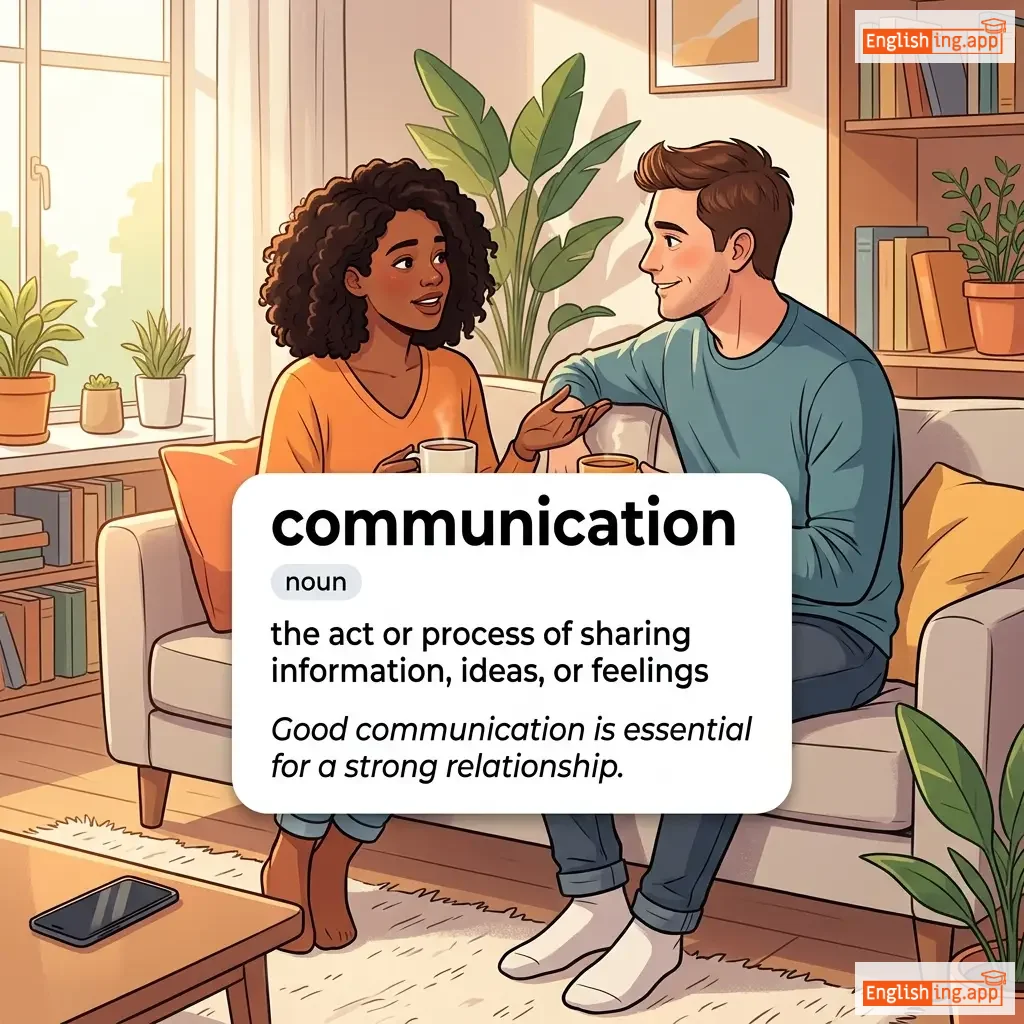
the act or process of sharing information, ideas, or feelings
••••••
|
Good communication is essential for a strong relationship. |
良いコミュニケーションは強い関係には不可欠です。
Yoi komyunikeeshon wa tsuyoi kankei ni wa fukaketsu desu.
••••••
|
lines of communication |
the channels or methods by which people communicate
••••••
|
コミュニケーションライン
komyunikeeshon rain
••••••
|
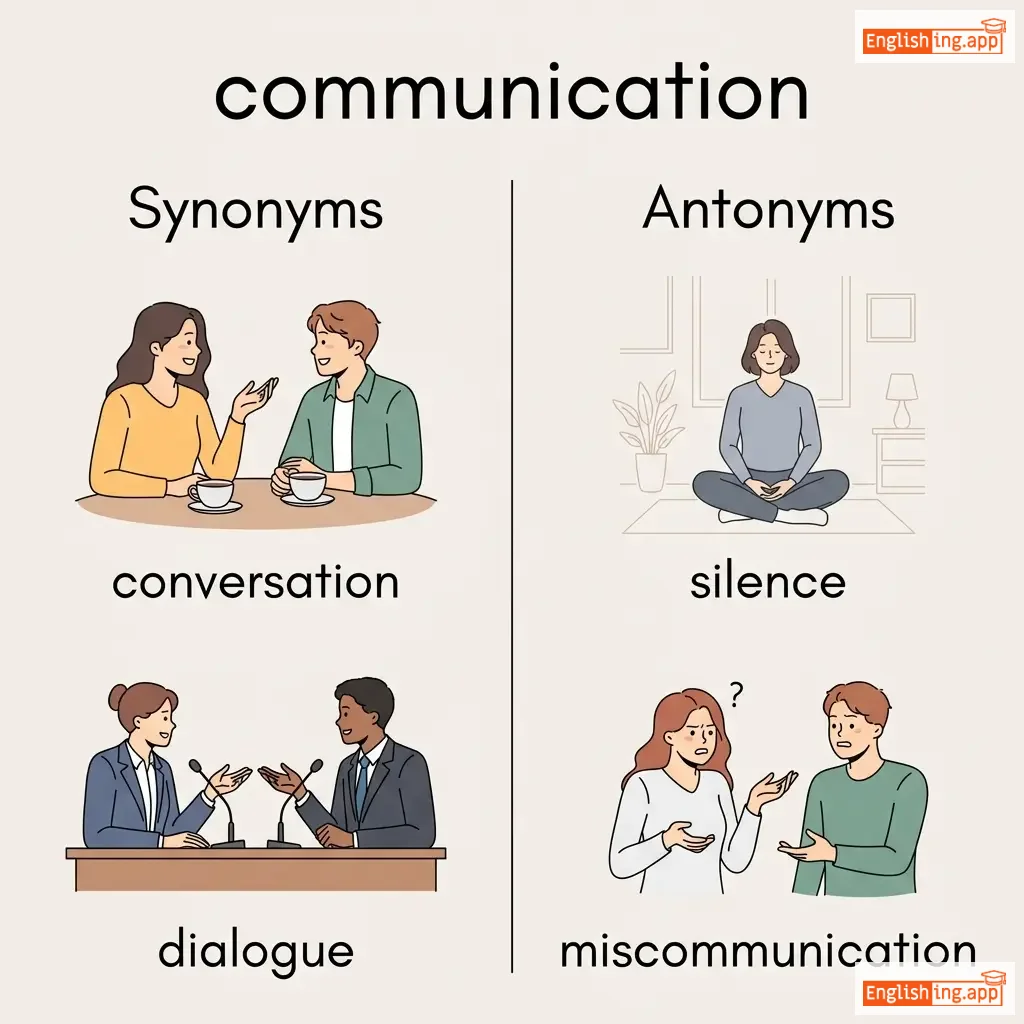
conversation, dialogue, exchange, correspondence, contact
••••••
|
silence, miscommunication
••••••
|
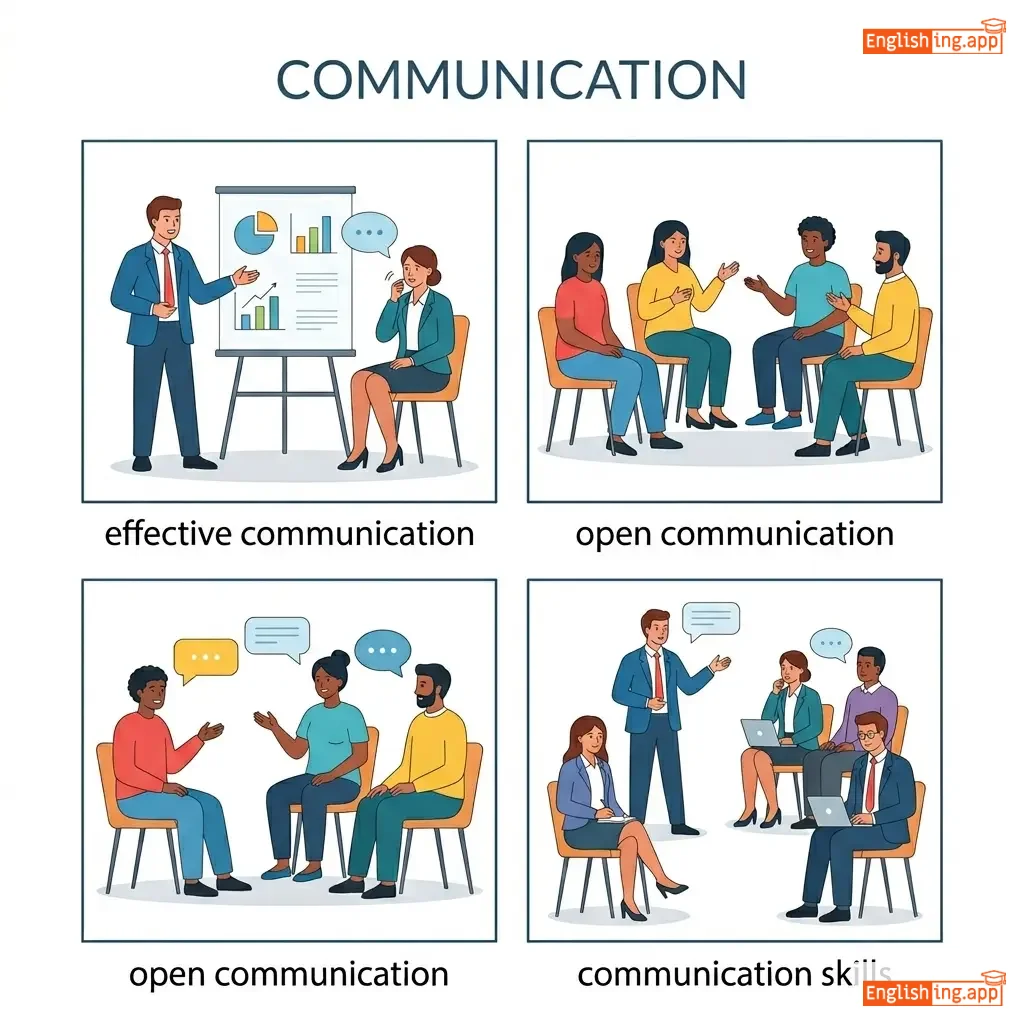
effective communication, open communication, communication skills, communication barrier
••••••
|
コミュニケーション = コミュニティ + 行動 = 社会での情報交換
••••••
|
|
#0
💬
|
/ˌkɒnvəˈseɪʃn/
noun
(kɔnˈvɚseɪʃən)
••••••
|
- •••••• |
会話
kaiga
••••••
|
- •••••• | - •••••• | - •••••• | - •••••• |
an informal talk between two or more people, in which ideas, feelings, and thoughts are exchanged
••••••
|
We had a long conversation about future plans. |
私たちは未来の計画について長い会話をしました。
Watashitachi wa mirai no keikaku ni tsuite nagai kaiwa o shimashita.
••••••
|
make conversation |
to talk with someone to appear polite, often about trivial things
••••••
|
会話をする
kaiwa o suru
••••••
|
dialogue, talk, discussion, chat, exchange
••••••
|
silence, quiet, muteness
••••••
|
casual conversation, phone conversation, deep conversation, conversation starter
••••••
|
会話とはアイデアと考えを共有することです。
••••••
|
|
#0
🗣️
|
/ˈdaɪəlɔːɡ/
noun
(ダイアログ)
••••••
|
- •••••• |
対話
taiwa
••••••
|
- •••••• | - •••••• | - •••••• | - •••••• |
A conversation between two or more people, or a discussion aimed at reaching understanding.
••••••
|
The two countries engaged in a dialogue to resolve their differences. |
二国は自国の違いを解決するために対話を行いました。
Nikoku wa jikoku no chigai o kaiketsu suru tame ni taiwa o okonai mashita.
••••••
|
open dialogue |
A transparent and constructive conversation.
••••••
|
開かれた対話
Hirakareta taiwa
••••••
|
conversation, discussion, talk, exchange, communication
••••••
|
silence, monologue
••••••
|
constructive dialogue, political dialogue, open dialogue
••••••
|
ダイアログ = conversation → 日本語で映画のダイアログ = 対話。
••••••
|
|
#0
💬
|
/dɪˈskʌs/
verb
(ディスカス)
••••••
|
- •••••• |
話し合う
hanashiau
••••••
|
discussed
ディスカスト
••••••
|
discussed
ディスカスト
••••••
|
discusses
ディスカスズ
••••••
|
discussing
ディスカスイング
••••••
|
To talk about something with another person or group in detail.
••••••
|
We need to discuss the project before finalizing it.
プロジェクトを最終決定する前に、それを話し合う必要があります。
••••••
|
プロジェクトを最終決定する前に、それを話し合う必要があります。
Purojekuto o saishū kettei suru mae ni, sore o hanashiau hitsuyō ga arimasu.
••••••
|
discuss matters
問題を話し合う
••••••
|
to talk about issues or problems
••••••
|
問題を話し合う
Mondai o hanashiau
••••••
|
talk, debate, confer, deliberate, examine
••••••
|
ignore, avoid
••••••
|
discuss a plan, discuss issues, discuss openly, discuss further
••••••
|
話し合うことは、何かについて他の人と詳しく話すことです。
••••••
|
|
#0
💬
|
/ɪkˈsprɛs/
verb
(エクスプレス)
••••••
|
- •••••• |
表現する
hyougensuru
••••••
|
expressed
エクスプレスド
••••••
|
expressed
エクスプレスド
••••••
|
expresses
エクスプレッセズ
••••••
|
expressing
エクスプレッシング
••••••
|
to convey a thought, feeling, or idea in words, actions, or other forms
••••••
|
She expressed her gratitude with a warm smile.
彼女は温かい笑顔で感謝の気持ちを表現しました。
••••••
|
彼女は温かい笑顔で感謝の気持ちを表現しました。
Kanojo wa atatakai egao de kansha no kimochi wo hyougen shimashita.
••••••
|
express yourself
自分を表現する
••••••
|
to communicate one's thoughts and feelings openly
••••••
|
自分を表現する
Jibun wo hyougen suru
••••••
|
convey, communicate, articulate, state, voice
••••••
|
suppress, conceal, hide
••••••
|
express feelings, express gratitude, express concern, express clearly
••••••
|
表現するのは、あなたの心の声を伝えることです。
••••••
|
|
#0
🗣️
|
/ˈfluːənt/
adjective
(フルーエント)
••••••
|
- •••••• |
流暢
ryūchō
••••••
|
- •••••• | - •••••• | - •••••• | - •••••• |
Able to speak, write, or express oneself smoothly and easily.
••••••
|
She is fluent in both English and Spanish. |
彼女は英語とスペイン語の両方で流暢に話します。
Kanojo wa eigo to Supeingo no ryōhō de ryūchō ni hanashimasu.
••••••
|
fluent speaker |
Someone who speaks a language smoothly and naturally.
••••••
|
流暢な話者
ryūchō na hanasha
••••••
|
articulate, expressive, eloquent, smooth, proficient
••••••
|
inarticulate, hesitant, awkward
••••••
|
fluent speaker, fluent English, fluent in, become fluent
••••••
|
Fluentは流れる水のように、流暢に話すことです。
••••••
|
|
#0
🤝
|
/ˌɪntərˈækt/
verb
(インタラクト)
••••••
|
|
インタラクトする
intarakuto suru
••••••
|
interacted
インタラクテッド
••••••
|
interacted
インタラクテッド
••••••
|
interacts
インタラクツ
••••••
|
interacting
インタラクティング
••••••
|
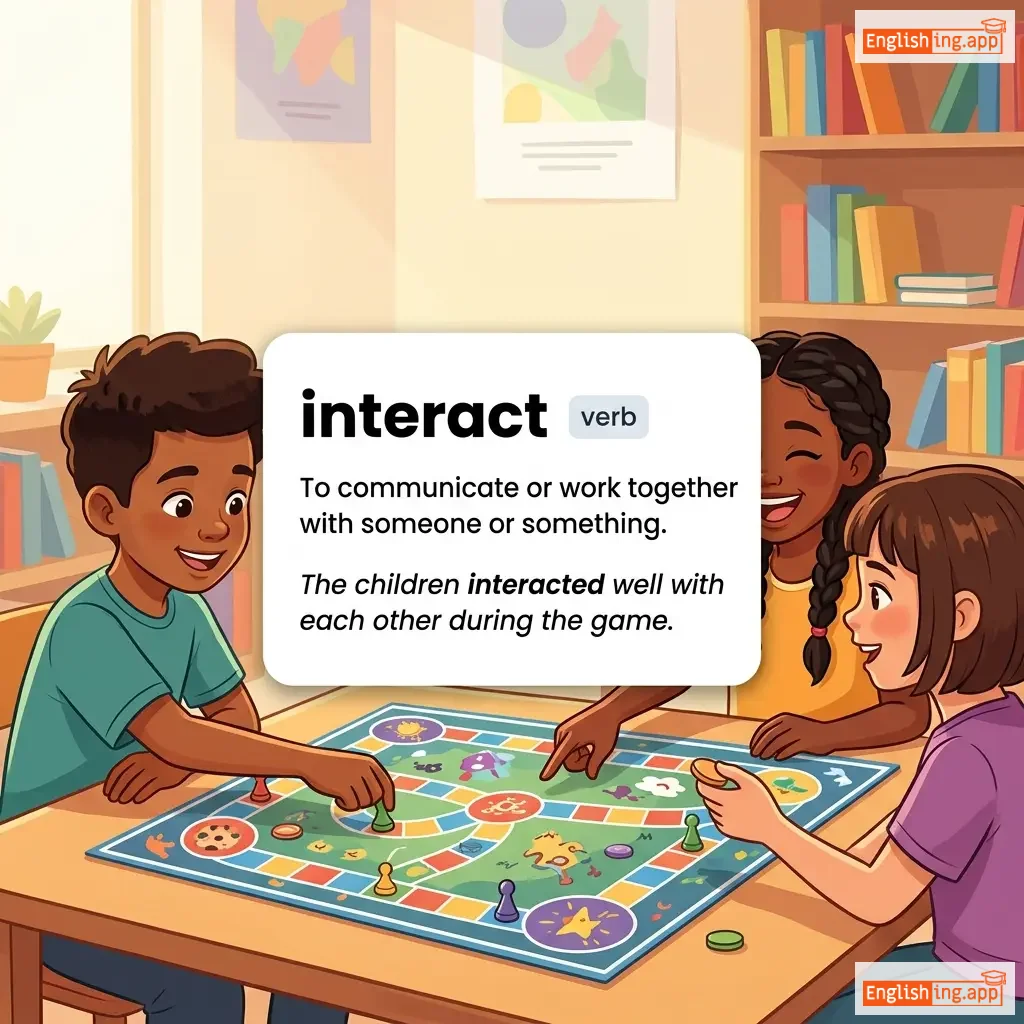
To communicate or work together with someone or something.
••••••
|
The children interacted well with each other during the game.
子供たちはゲーム中にお互いにうまくインタラクトしました。
••••••
|
子供たちはゲーム中にお互いにうまくインタラクトしました。
Kodomotachi wa gēmu-chū ni otagai ni umaku intarakuto shimashita.
••••••
|
interact with
インタラクトする
••••••
|
to communicate or engage with someone or something
••••••
|
インタラクトする
intarakuto suru
••••••
|
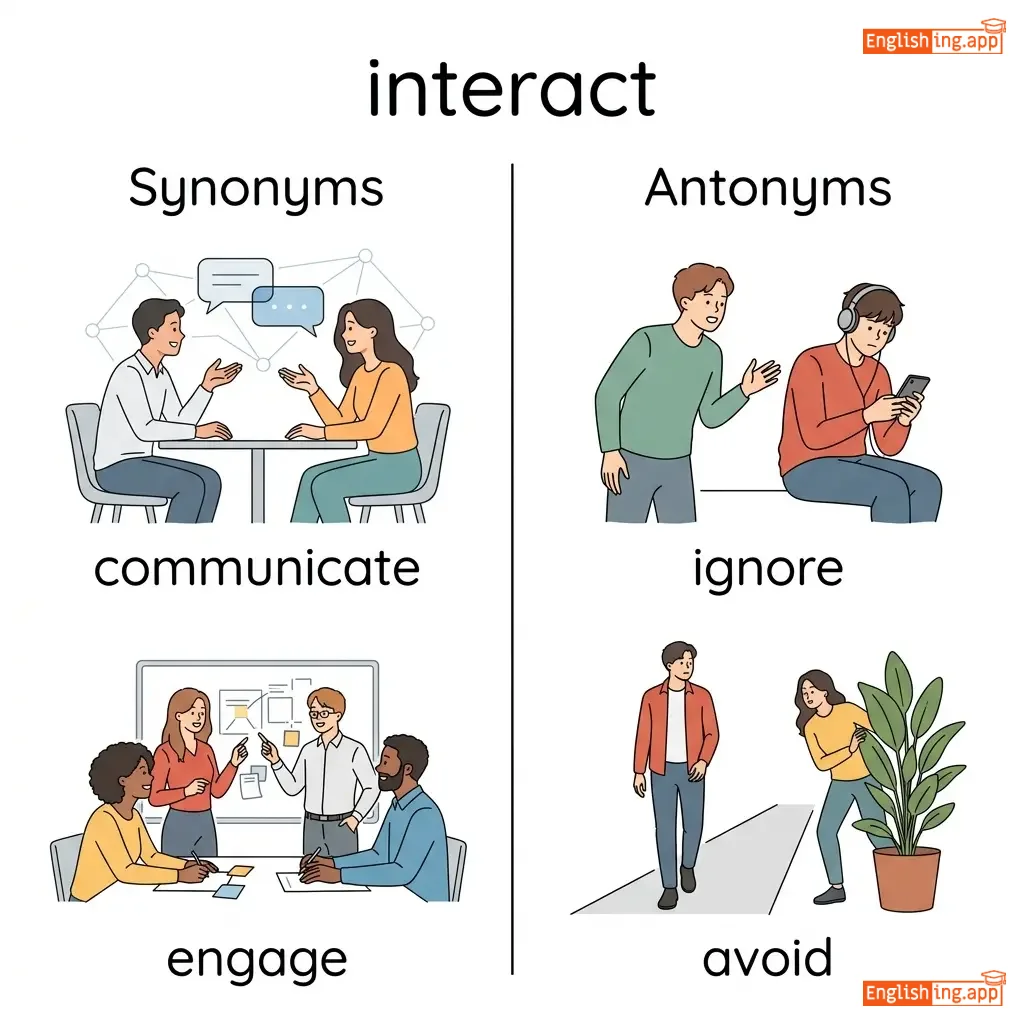
communicate, engage, connect, collaborate
••••••
|
ignore, avoid
••••••
|
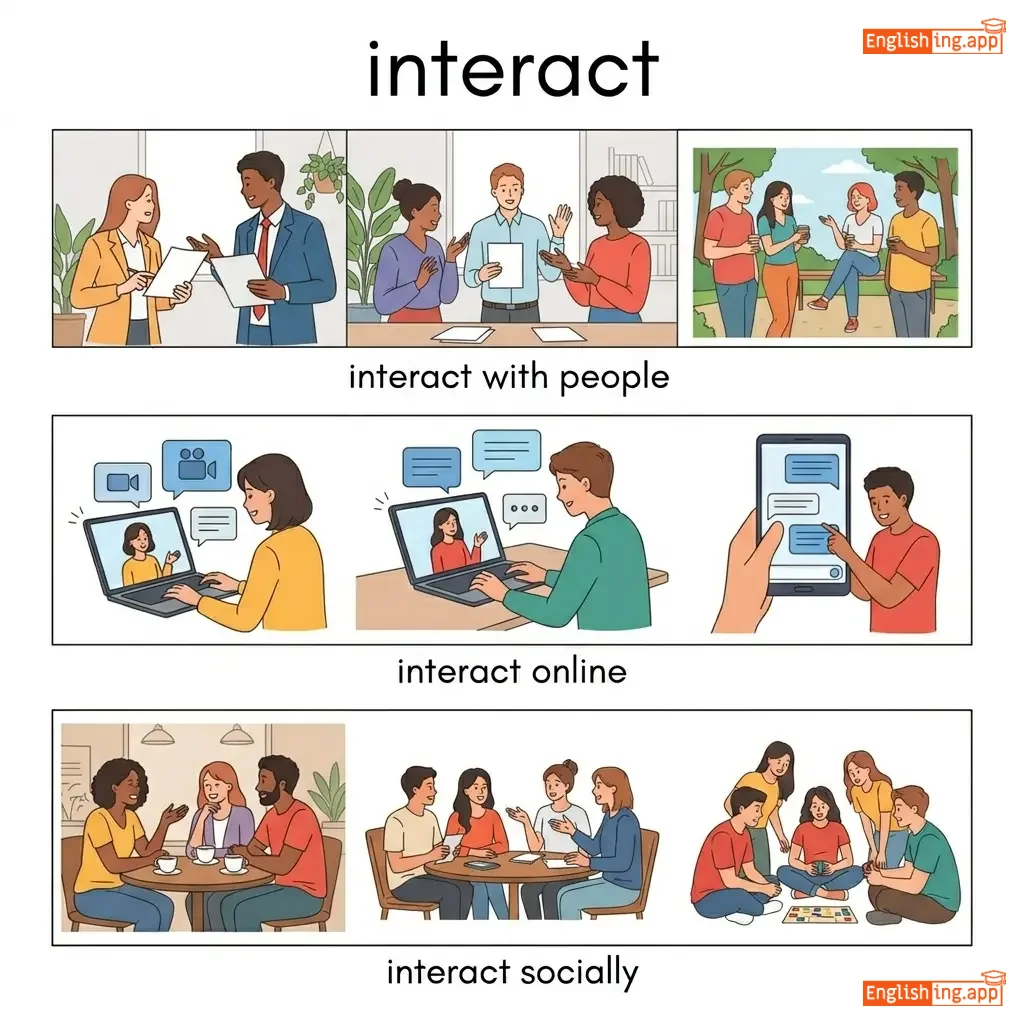
interact with people, interact online, interact socially
••••••
|
インタラクトするは、ゲーム中に他の人とインタラクトするようなものです。
••••••
|
|
#0
🗣️
|
/ˈlæŋɡwɪdʒ/
noun
(ラングウィッジ)
••••••
|
|
言語
gengo
••••••
|
- •••••• | - •••••• | - •••••• | - •••••• |
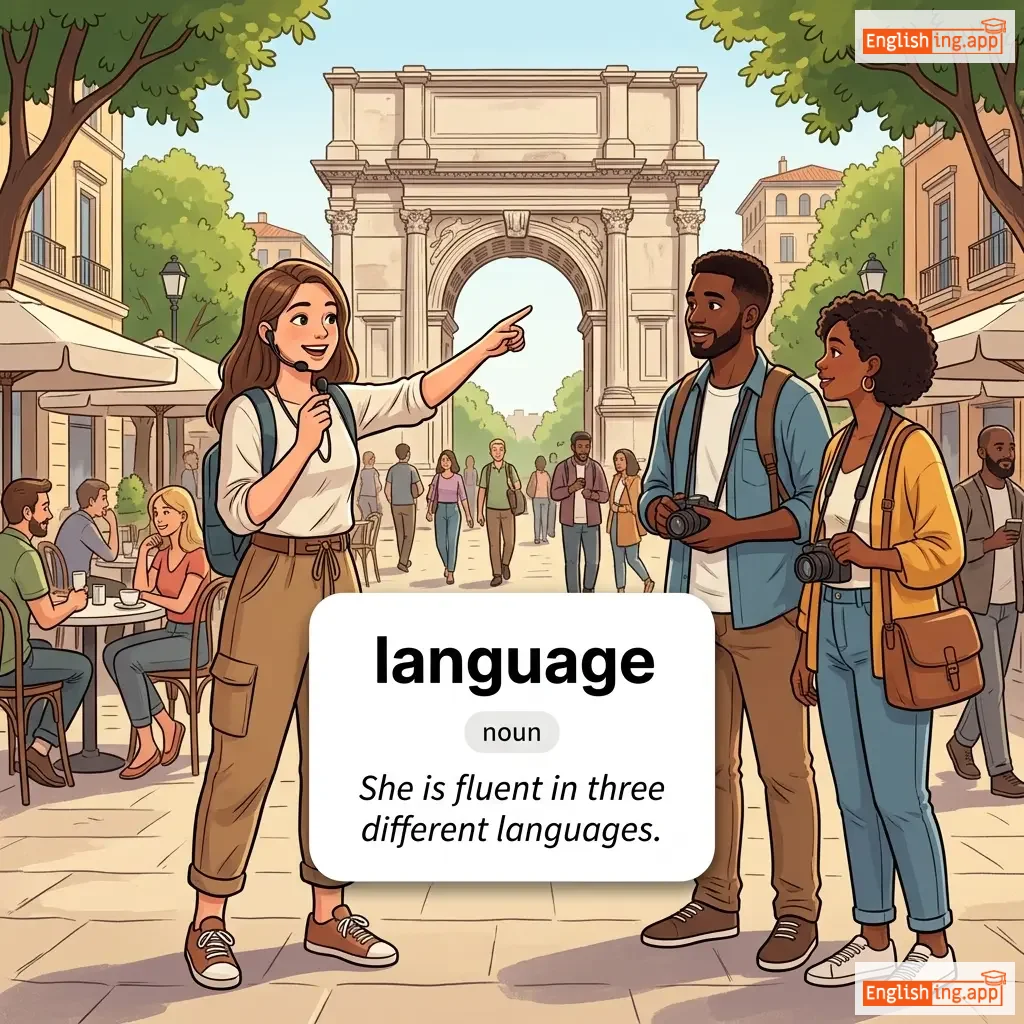
the system of communication used by a particular community, including spoken and written words
••••••
|
She is fluent in three different languages.
彼女は三つの異なる言語に堪能です。
••••••
|
彼女は三つの異なる言語に堪能です。
Kanojo wa mittsu no kotonaru gengo ni tannou desu.
••••••
|
mother tongue
母国語
••••••
|
a person's native language
••••••
|
母国語
bokokugo
••••••
|
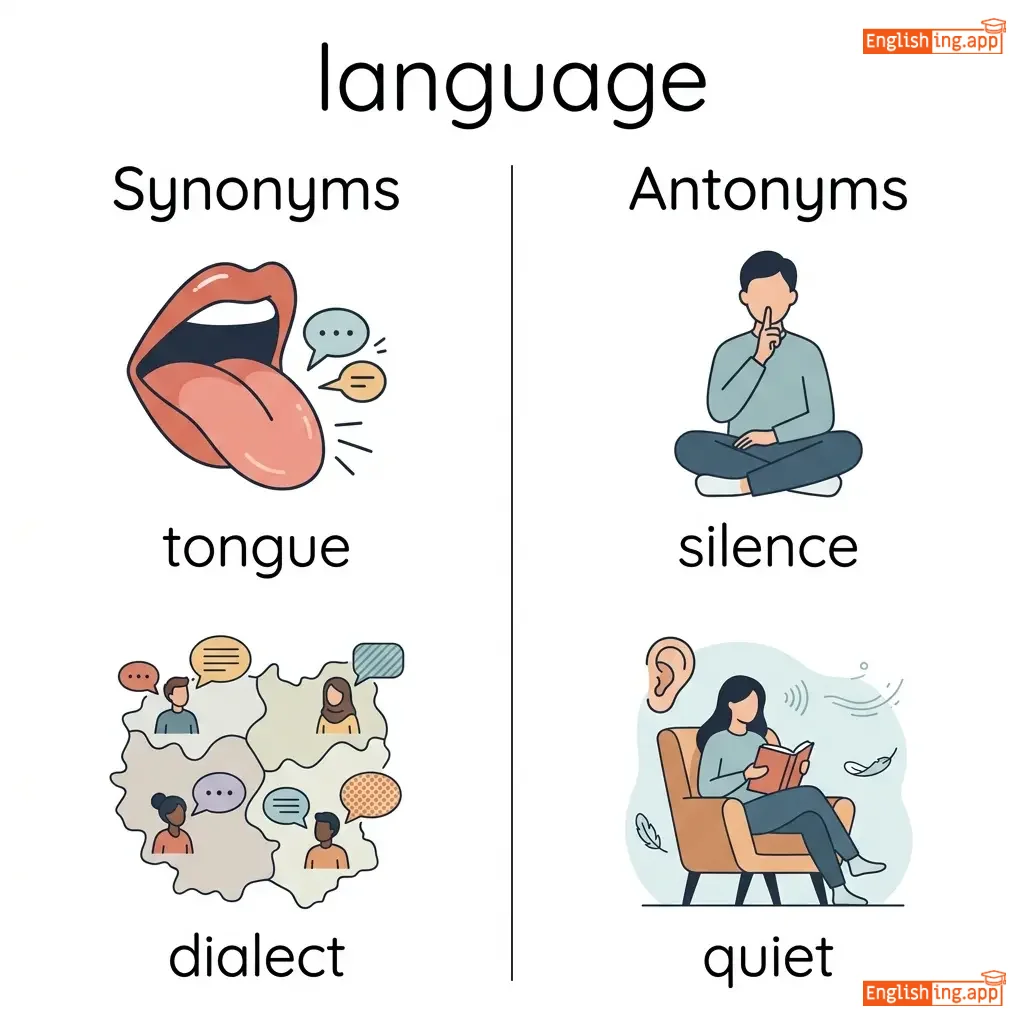
tongue, dialect, speech, lingo, communication
••••••
|
silence, quiet
••••••
|
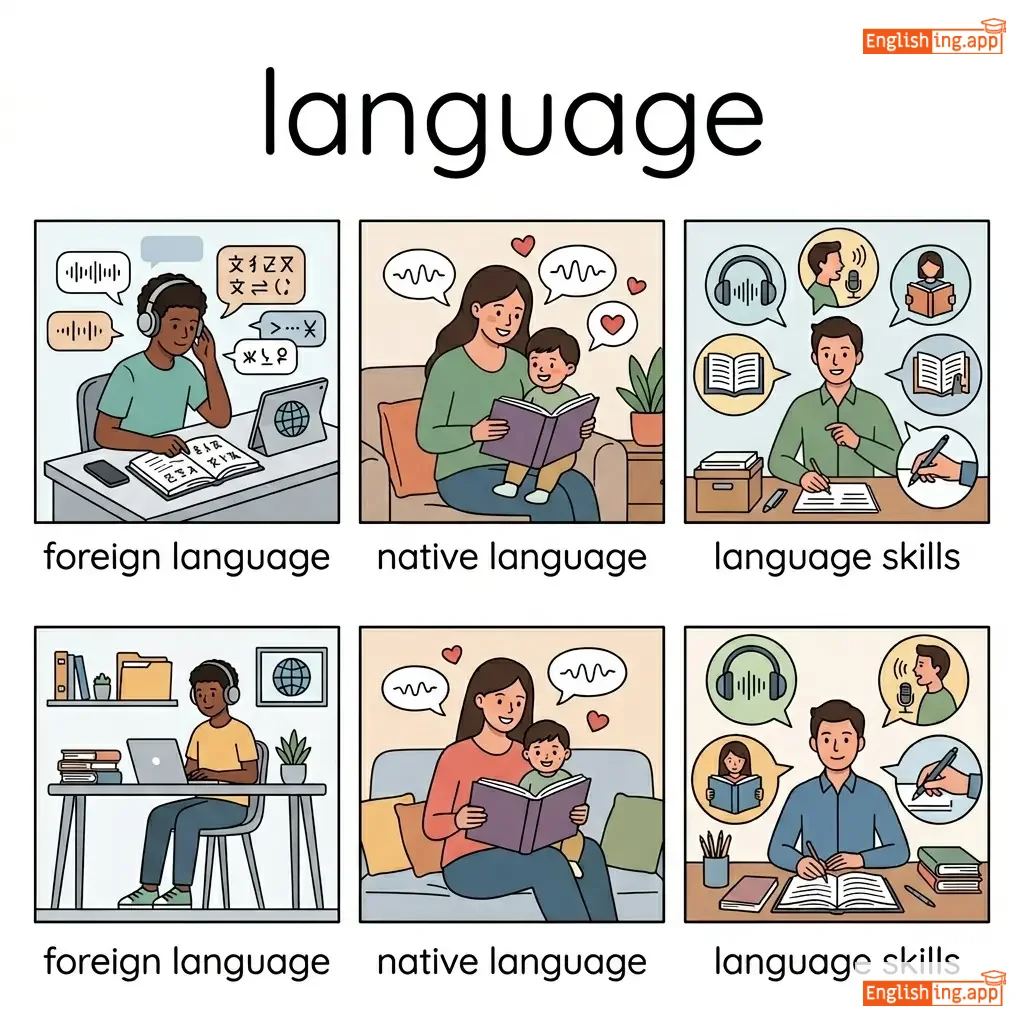
foreign language, native language, language skills, language barrier
••••••
|
LANGUAGEは‘言語’を意味します – 日本語で言語、英語で language
••••••
|
|
#0
📚
|
/lɪŋˈɡwɪstɪk/
adjective
(リンギウィスティック)
••••••
|
|
言語的
gengo teki
••••••
|
- •••••• | - •••••• | - •••••• | - •••••• |
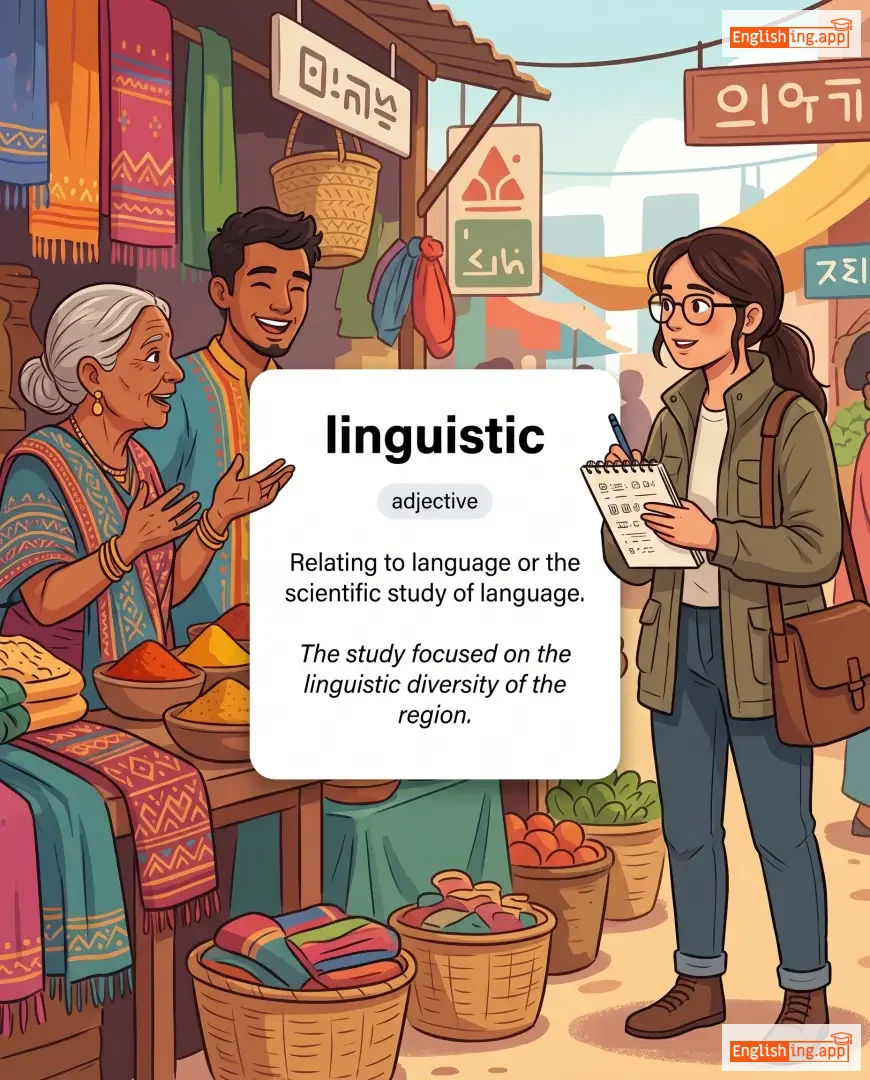
Relating to language or the scientific study of language.
••••••
|
The study focused on the linguistic diversity of the region.
その研究は地域の言語的多様性に焦点を当てました。
••••••
|
その研究は地域の言語的多様性に焦点を当てました。
Sono kenkyū wa chiiki no gengoteki tayōsei ni shōten o atemashita.
••••••
|
- •••••• | - •••••• | - •••••• |
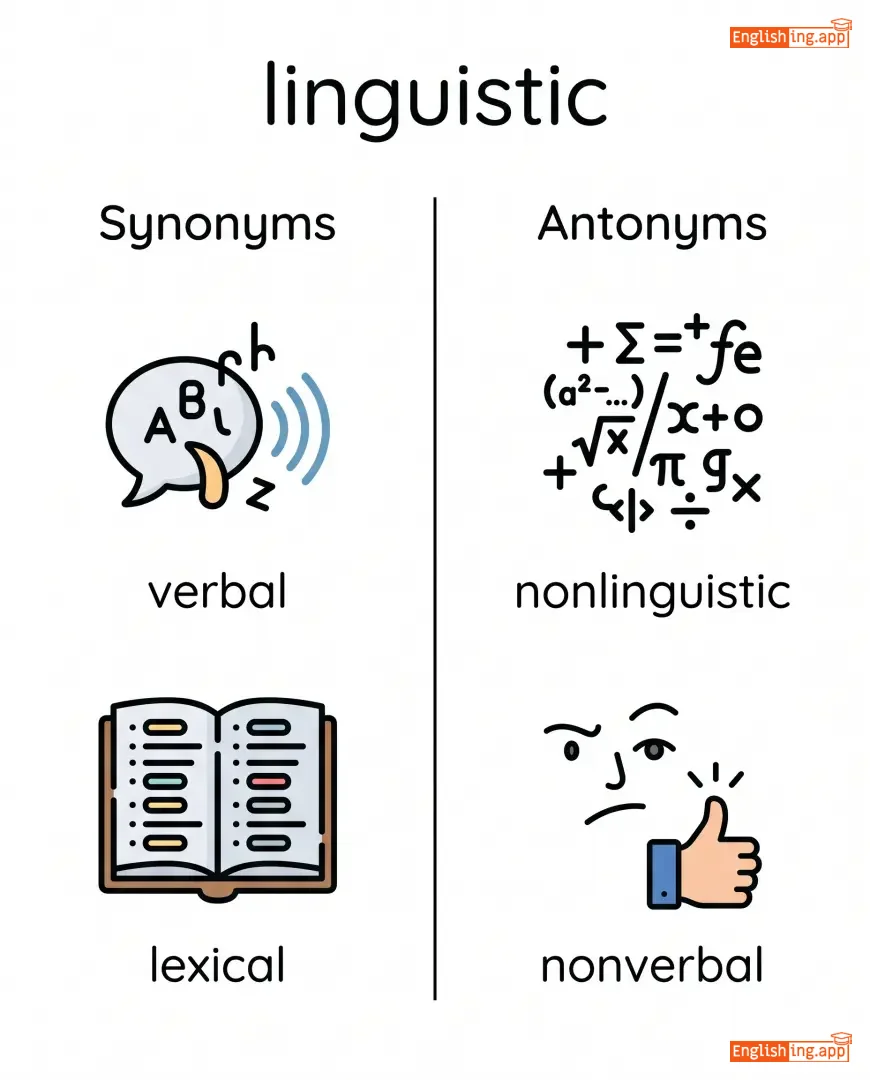
verbal, lexical, grammatical, philological
••••••
|
nonlinguistic, nonverbal
••••••
|
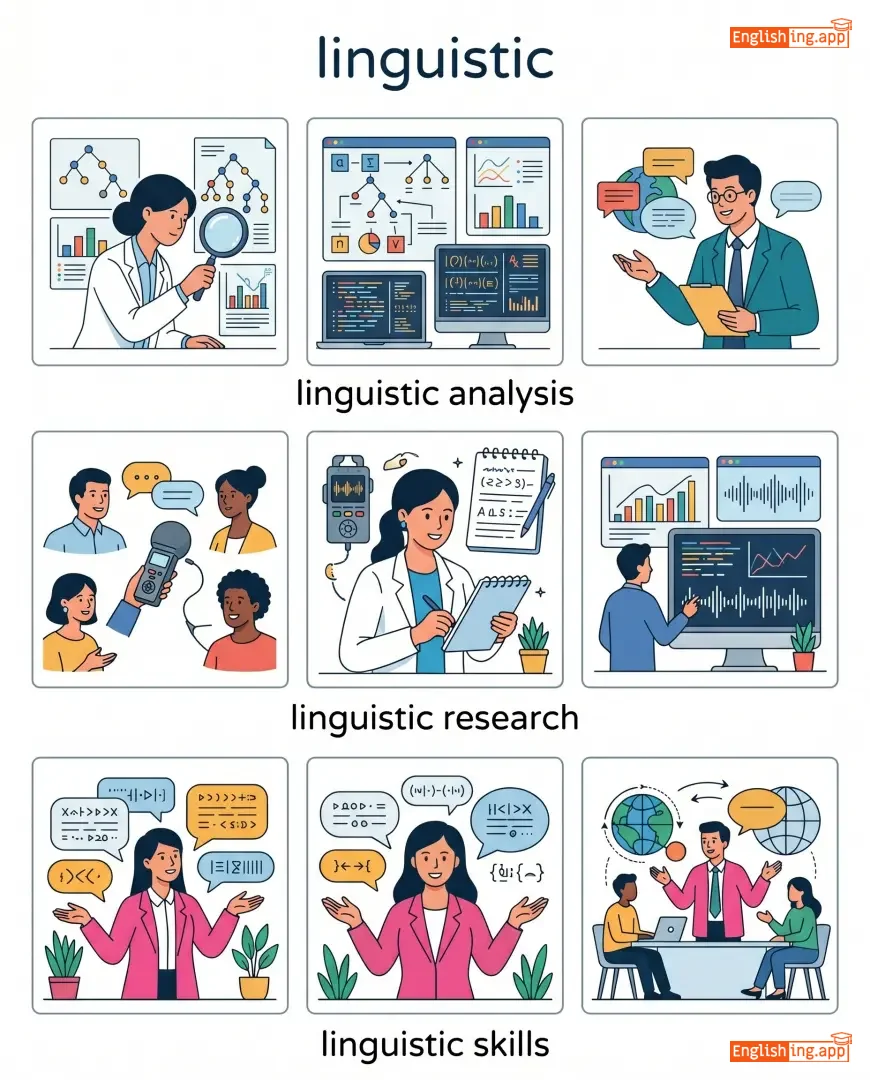
linguistic analysis, linguistic research, linguistic skills, linguistic diversity
••••••
|
言語的 = 言語 + 的 = 言語に関係
••••••
|
|
#0
👂
|
/ˈlɪs.ən/
verb
(リスン)
••••••
|
|
聞く
kiku
••••••
|
listened
リスンド
••••••
|
listened
リスンド
••••••
|
listens
リスンズ
••••••
|
listening
リスニング
••••••
|
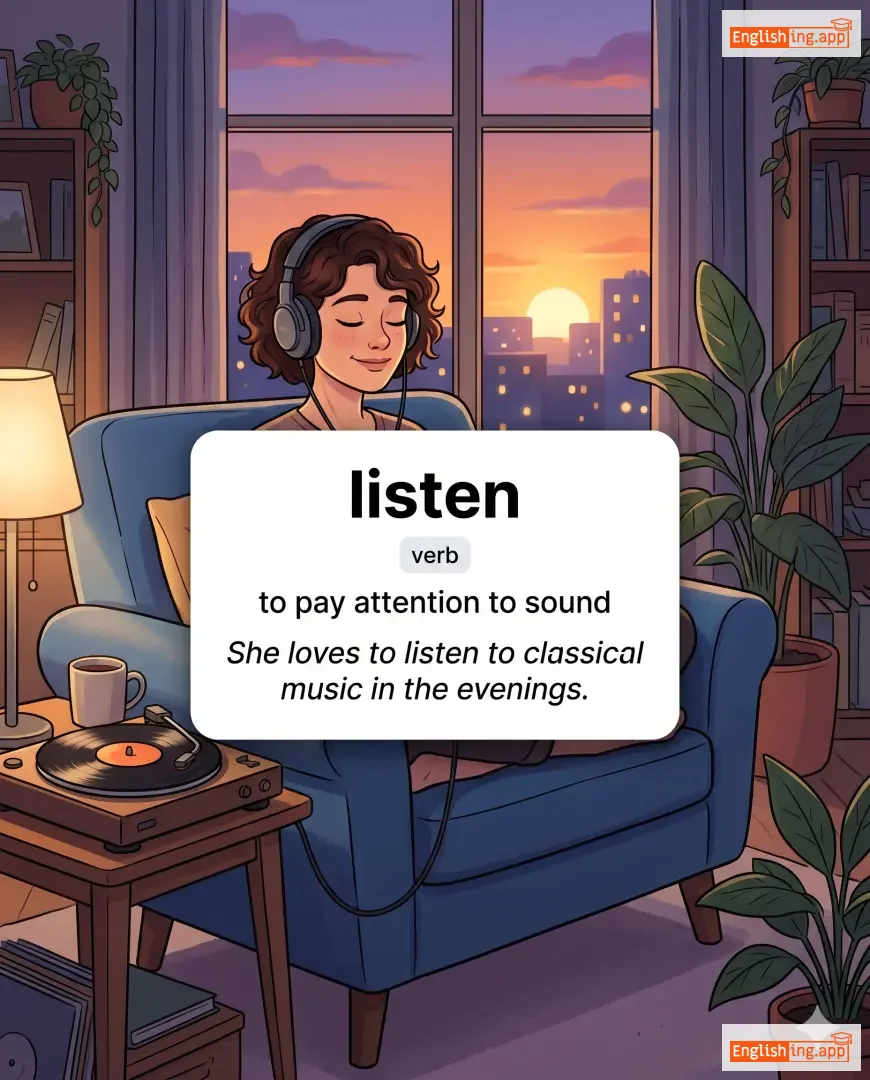
to pay attention to sound
••••••
|
She loves to listen to classical music in the evenings.
彼女は夕方にクラシック音楽を聞くのが好きです。
••••••
|
彼女は夕方にクラシック音楽を聞くのが好きです。
Kanojo wa yūgata ni kurashikku ongaku o kiku no ga suki desu.
••••••
|
listen up
聞いて
••••••
|
used to tell people to pay attention
••••••
|
聞いて
kiite
••••••
|
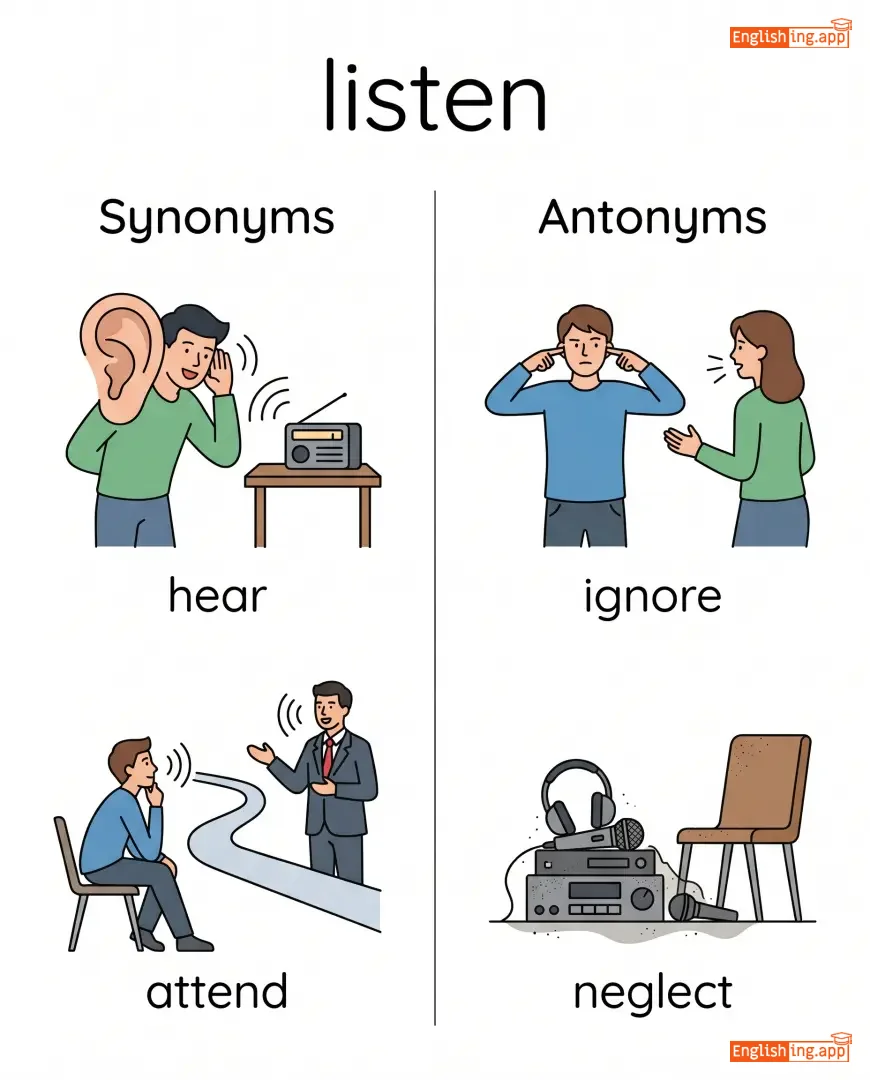
hear, attend, heed, concentrate, pay attention
••••••
|
ignore, neglect, disregard
••••••
|
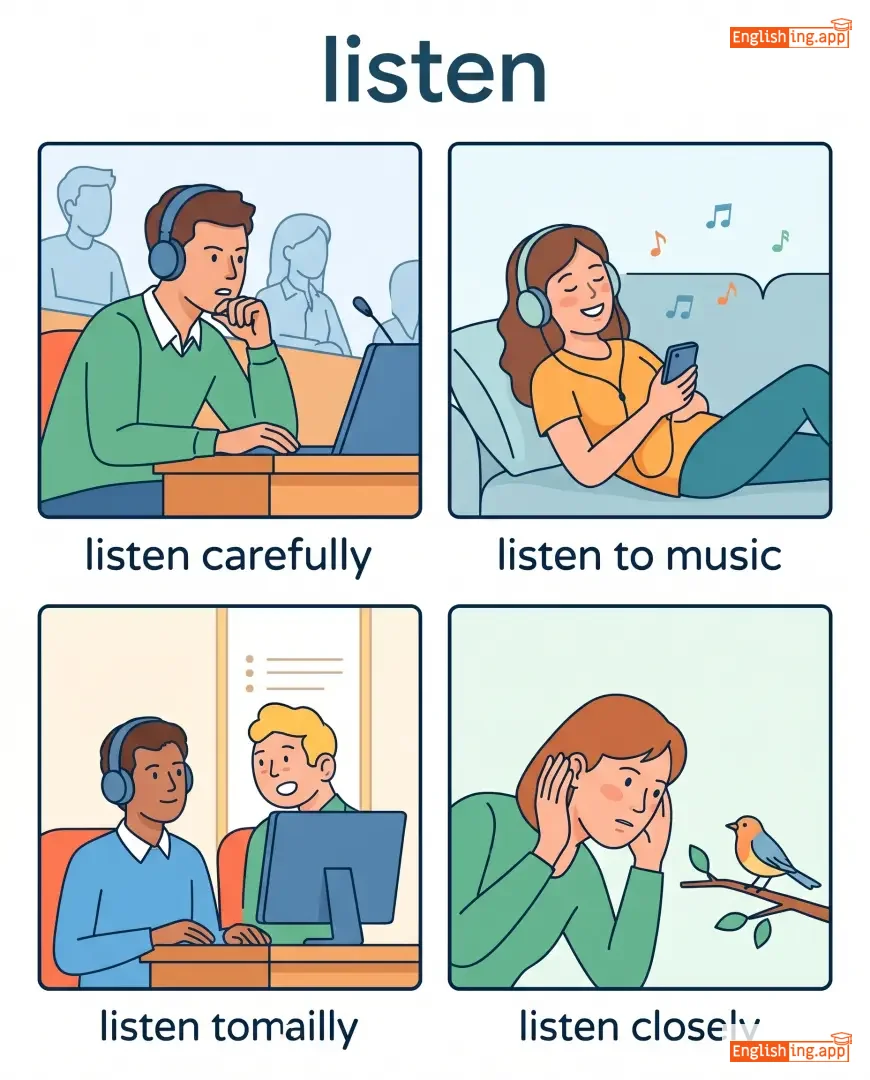
listen carefully, listen to music, listen closely, listen in
••••••
|
👂 Listen は聞く – ママの声を聞いて!
••••••
|
|
#0
📩
|
/ˈmɛsɪdʒ/
noun
(メッセージ)
••••••
|
- •••••• |
メッセージ
messeji
••••••
|
- •••••• | - •••••• | - •••••• | - •••••• |
A piece of information sent or communicated from one person to another.
••••••
|
I received a message from my friend yesterday. |
昨日、友達からメッセージを受け取りました。
Kinō, tomodachi kara mesēji o uketorimashita.
••••••
|
get the message |
To understand the meaning or implication of something
••••••
|
メッセージを理解する
messeji o rikai suru
••••••
|
note, communication, letter, text, notification
••••••
|
silence, quiet
••••••
|
send a message, receive a message, leave a message, important message
••••••
|
MESSAGEはメッセージ—覚えておいて:'SMSはメッセージです'
••••••
|
|
#0
💬
|
/rɪˈspɒnd/
verb
(レスポンド)
••••••
|
|
応答する
ōtō suru
••••••
|
responded
レスポンデッド
••••••
|
responded
レスポンデッド
••••••
|
responds
レスポンズ
••••••
|
responding
レスポンディング
••••••
|
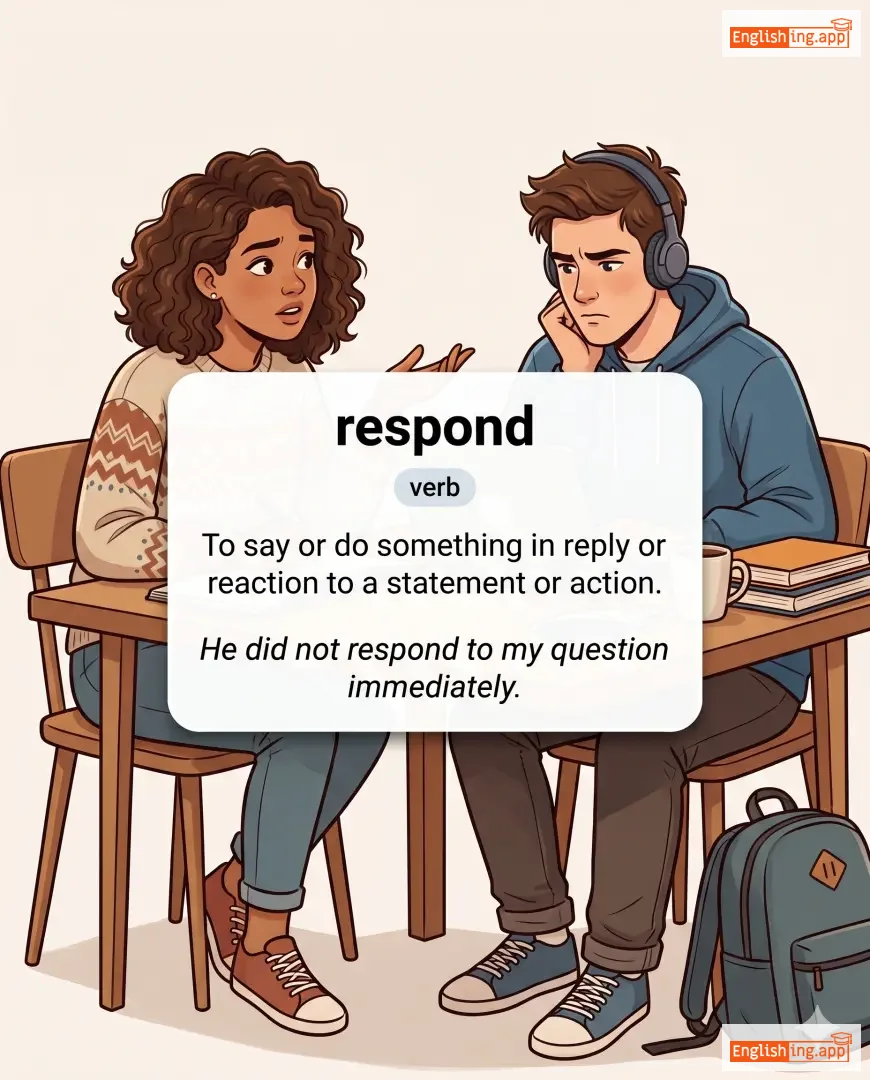
To say or do something in reply or reaction to a statement or action.
••••••
|
He did not respond to my question immediately.
彼は私の質問にすぐに返答しませんでした。
••••••
|
彼は私の質問にすぐに返答しませんでした。
Kare wa watashi no shitsumon ni sugu ni hentō shimasen deshita.
••••••
|
respond to treatment
治療に反応する
••••••
|
To show improvement after receiving medical treatment.
••••••
|
治療に反応する
Chiryō ni hannō suru
••••••
|
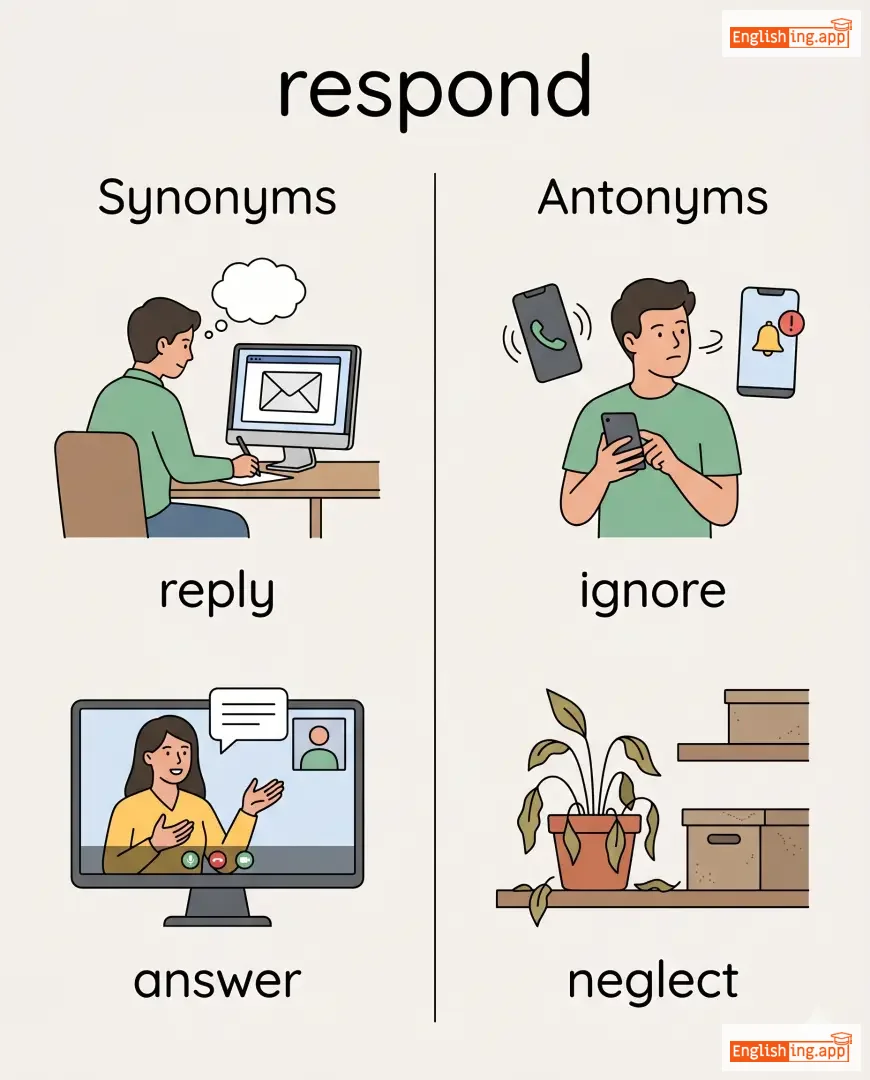
reply, answer, react, acknowledge, retort
••••••
|
ignore, neglect, disregard
••••••
|
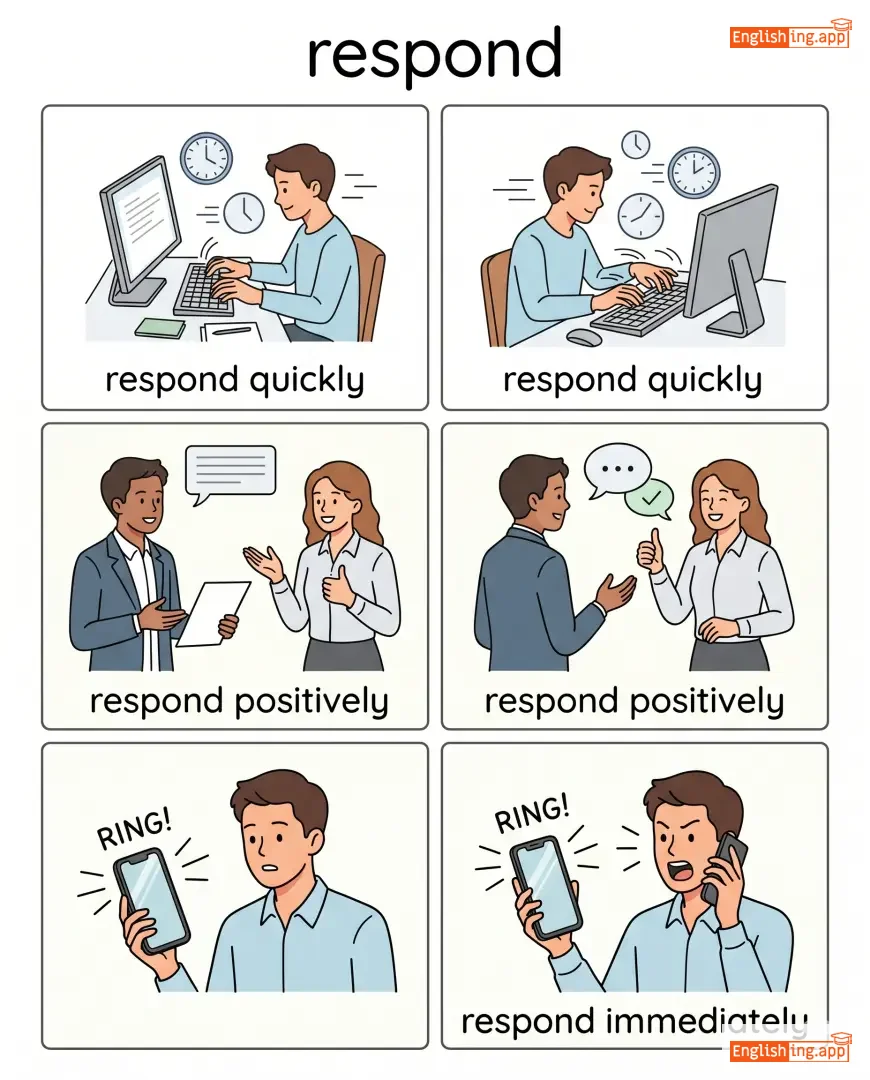
respond quickly, respond positively, respond immediately, respond appropriately
••••••
|
応答する、つまり質問に答えるための応答。
••••••
|
|
#0
🗣️
|
/spiːk/
verb
(スピーク)
••••••
|
- •••••• |
話す
hanasu
••••••
|
spoke
スポーク
••••••
|
spoken
スポークン
••••••
|
speaks
スピークス
••••••
|
speaking
スピーキング
••••••
|
to say something in order to convey information or express feelings
••••••
|
She speaks five languages fluently.
彼女は五か国語を流暢に話します。
••••••
|
彼女は五か国語を流暢に話します。
Kanojo wa go kakkokugo wo ryuuchou ni hanashimasu.
••••••
|
speak out
声を上げて言う
••••••
|
to express one's opinion clearly and openly
••••••
|
意見を明確に表現する
iken wo meikaku ni hyougen suru
••••••
|
talk, converse, utter, communicate
••••••
|
be silent, mute, keep quiet
••••••
|
speak up, speak to, speak about, speak highly
••••••
|
Speak = 'S' for 'Say', 'P' for 'Project'.
••••••
|
|
#0
🎤
|
/spiːtʃ/
noun
(スピーチ)
••••••
|
- •••••• |
スピーチ; 演説;
supīchi; enzetsu
••••••
|
- •••••• | - •••••• | - •••••• | - •••••• |
formal address or discourse delivered to an audience; the expression of thoughts in spoken words
••••••
|
The president gave an inspiring speech to the nation. |
大統領は国民に向けて感動的なスピーチをしました。
Daitōryō wa kokumin ni mukete kandō-teki na supīchi o shimashita.
••••••
|
- •••••• | - •••••• | - •••••• |
address, oration, discourse, talk
••••••
|
silence, muteness
••••••
|
keynote speech, public speech, acceptance speech, farewell speech
••••••
|
Speech in Japanese: Connecting hearts with the power of words.
••••••
|
|
#0
💬
|
/tɔːk/
verb
(トーク)
••••••
|
|
話す
hanasu
••••••
|
talked
トークド
••••••
|
talked
トークド
••••••
|
talks
トークス
••••••
|
talking
トーキング
••••••
|
to speak; to communicate by speaking; to discuss
••••••
|
Let's talk about your future plans.
レットス トーク アバウト ヨア フューチャー プランズ。
••••••
|
あなたの未来の計画について話しましょう。
Anata no mirai no keikaku ni tsuite hanashimashou
••••••
|
- •••••• | - •••••• | - •••••• |
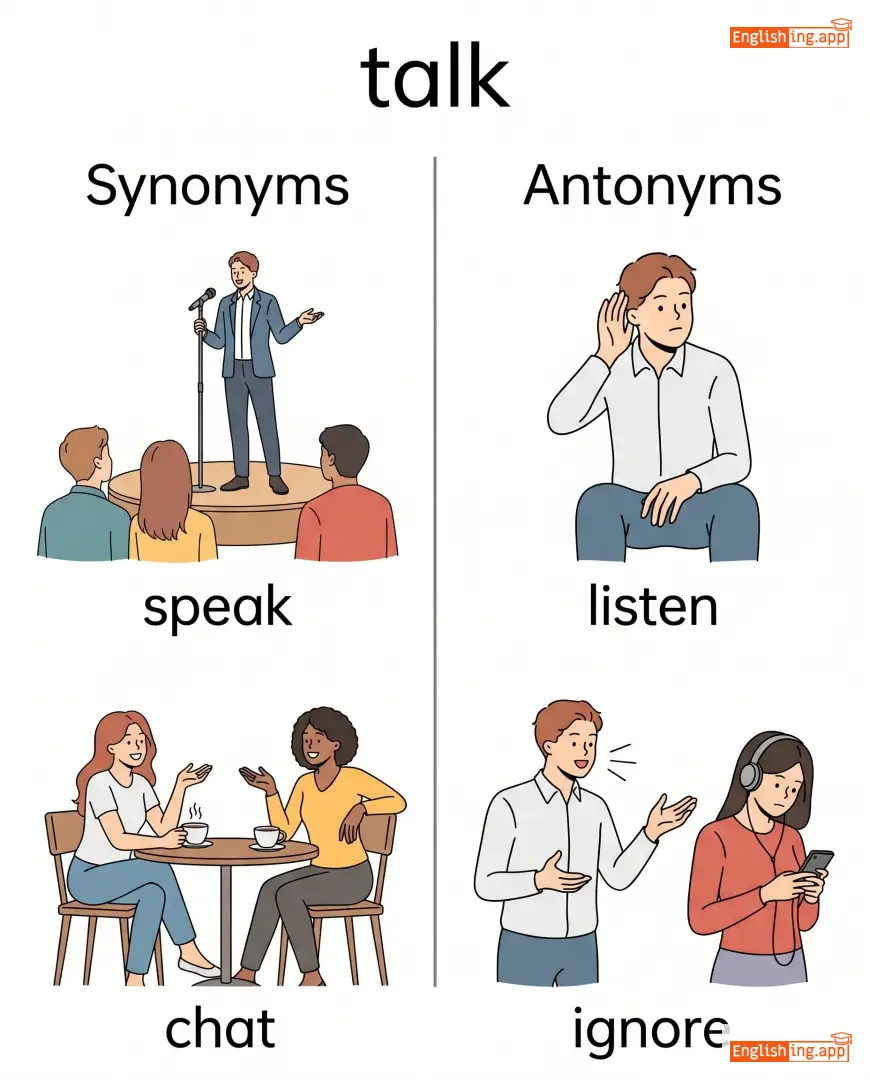
speak, communicate, converse, discuss
••••••
|
listen, be silent, stay quiet
••••••
|
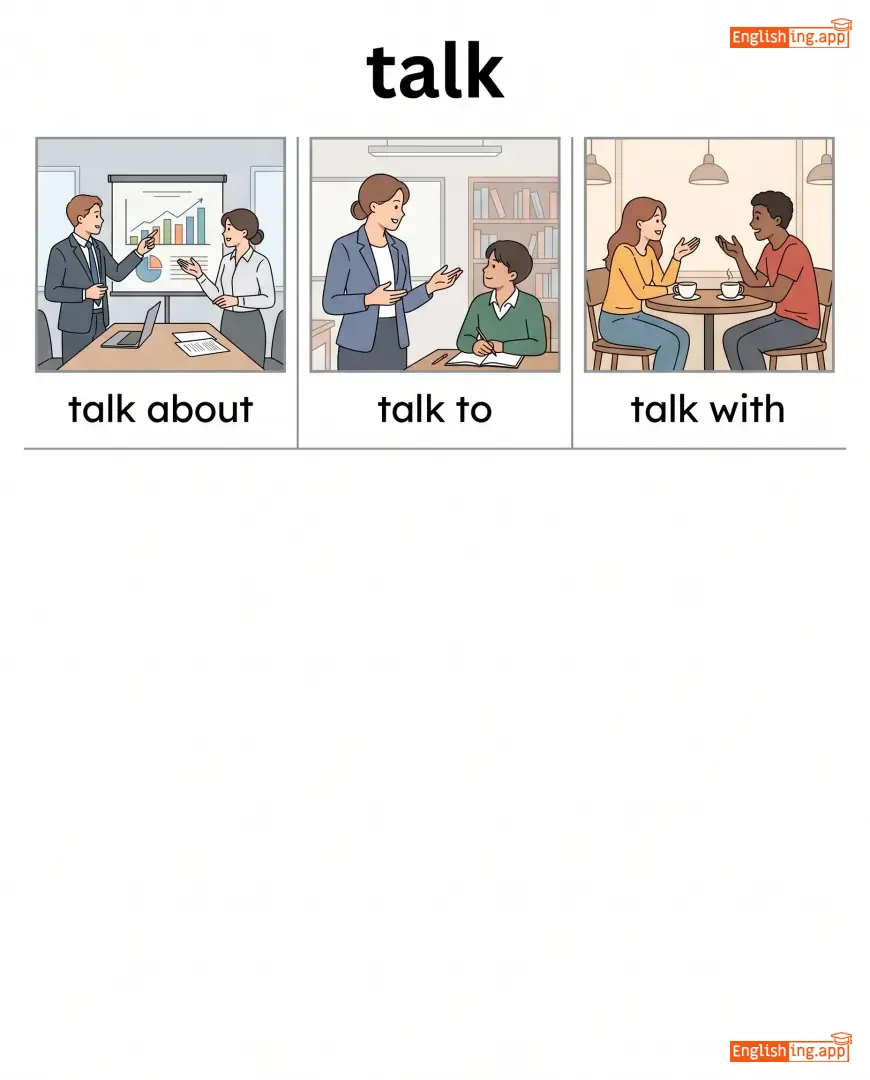
talk about, talk to, talk over, small talk, talk shop
••••••
|
No •••••• |
|
#0
🤔
|
/ˌʌndərˈstænd/
verb
(アンダースタンド)
••••••
|
|
理解する
rikai suru
••••••
|
understood
アンダーストゥード
••••••
|
understood
アンダーストゥード
••••••
|
understands
アンダースタンズ
••••••
|
understanding
アンダースタンディング
••••••
|
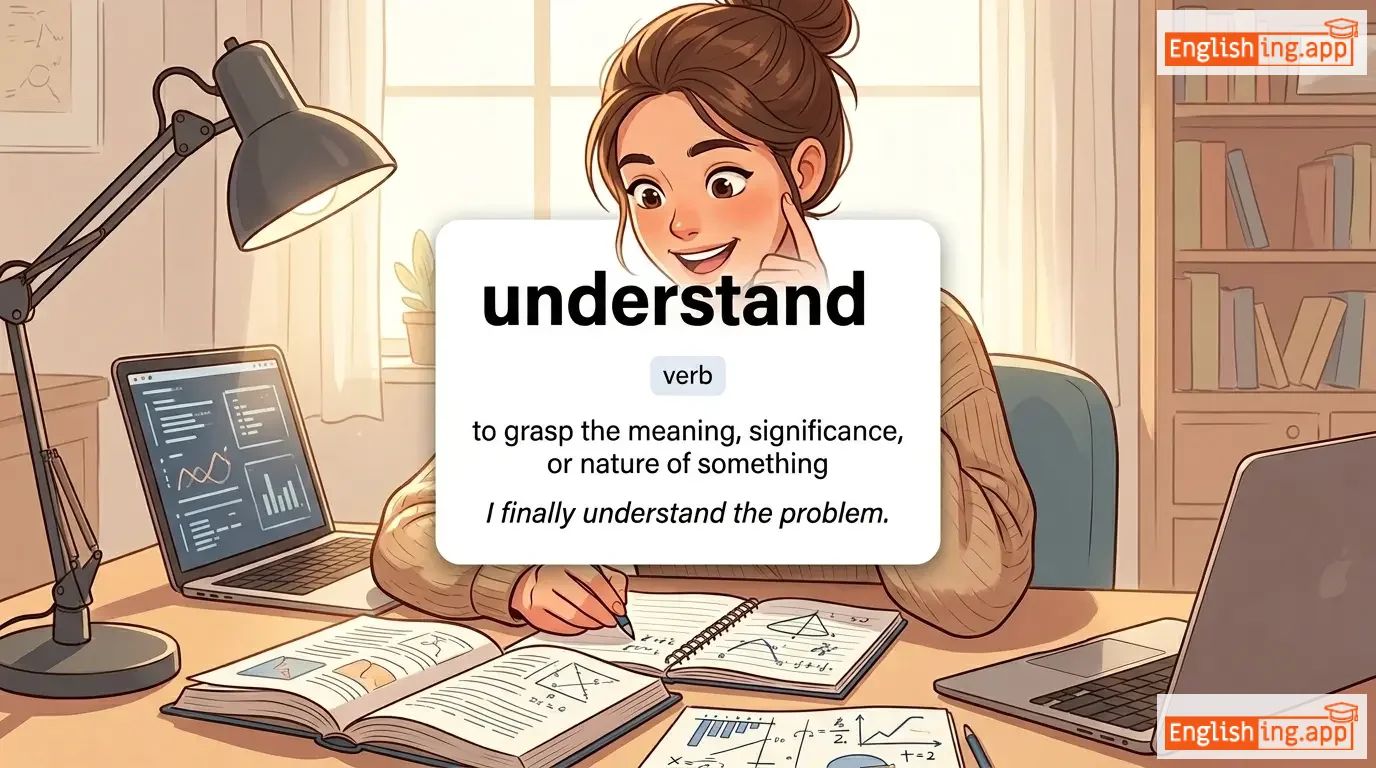
to grasp the meaning, significance, or nature of something
••••••
|
I finally understand the problem.
私はついに問題を理解しました。
••••••
|
私はついに問題を理解しました。
Watashi wa tsuini mondai o rikai shimashita.
••••••
|
understand the situation
状況を理解する
••••••
|
to grasp the full context or details of a situation
••••••
|
状況を理解する
jōkyō o rikai suru
••••••
|
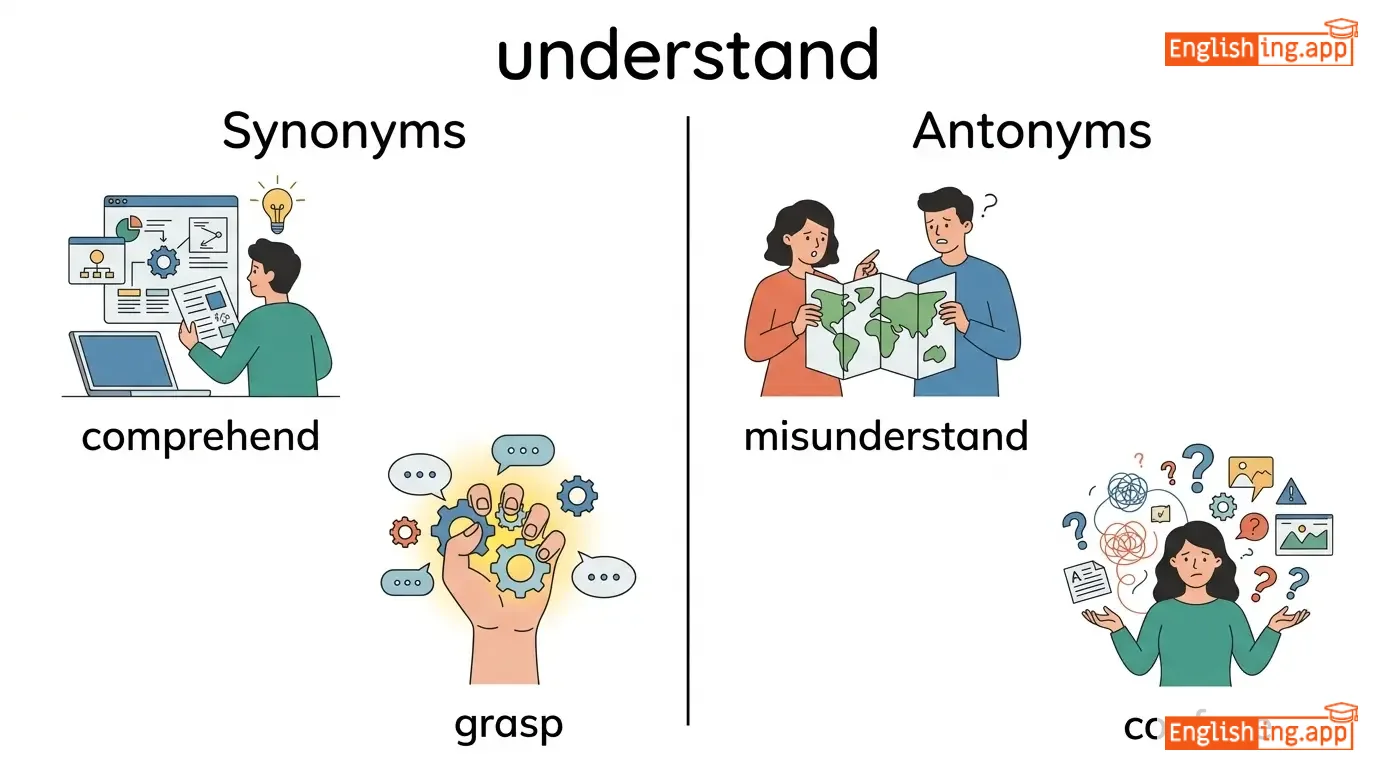
comprehend, grasp, perceive, realize
••••••
|
misunderstand, confuse
••••••
|
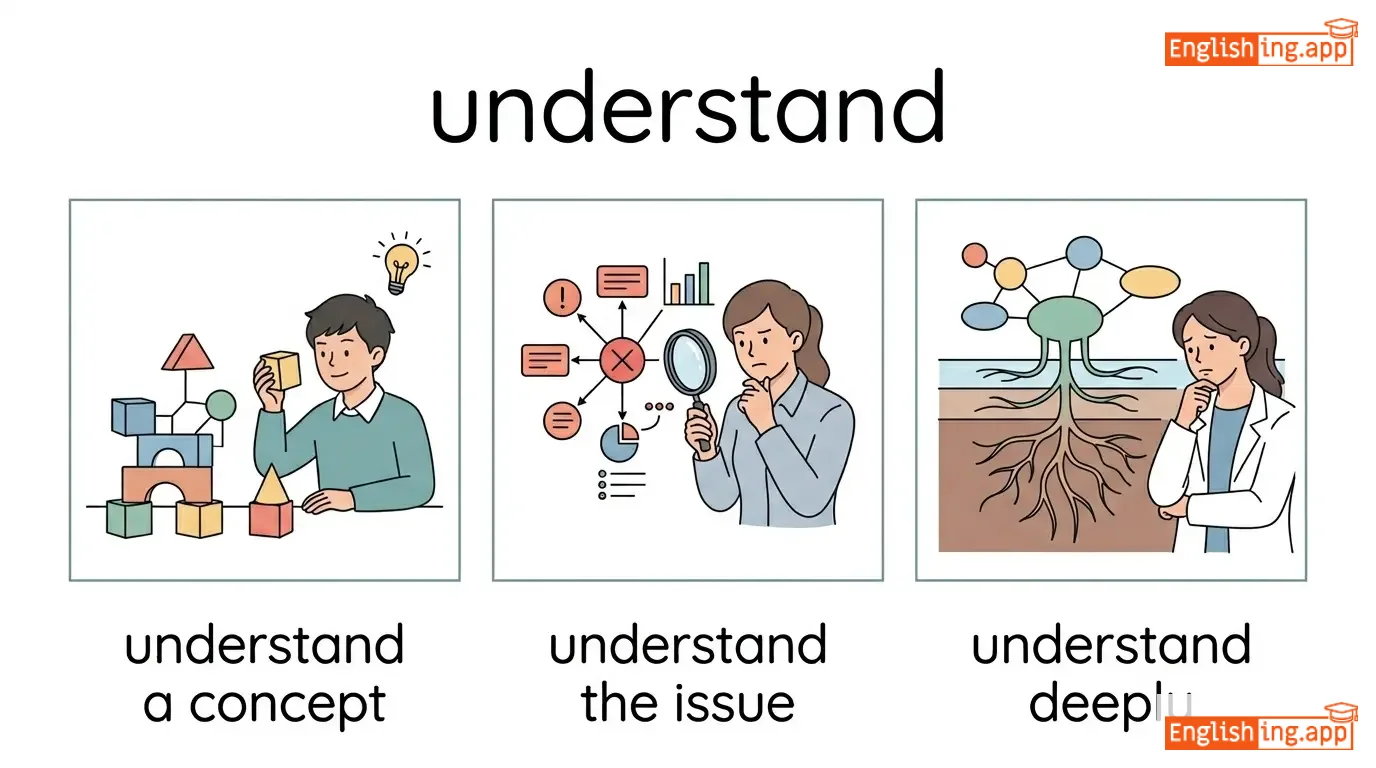
understand a concept, understand the issue, understand deeply
••••••
|
UNDERSTAND – Under the stand, I can grasp what's going on!
••••••
|
|
#0
🗣️
|
/ˈvɜː.bəl/
adjective
(ヴァーバル)
••••••
|
|
口頭の
kōtō no
••••••
|
- •••••• | - •••••• | - •••••• | - •••••• |
relating to words or speech rather than writing or action
••••••
|
They had a verbal agreement instead of a written one. |
彼らは書面による契約ではなく、口頭での契約を結んだ。
Karera wa shomen ni yoru keiyaku de wa naku, kōtō de no keiyaku o musunda.
••••••
|
verbal abuse |
the use of words to insult or hurt someone
••••••
|
口頭での虐待
kōtō de no gyakutai
••••••
|
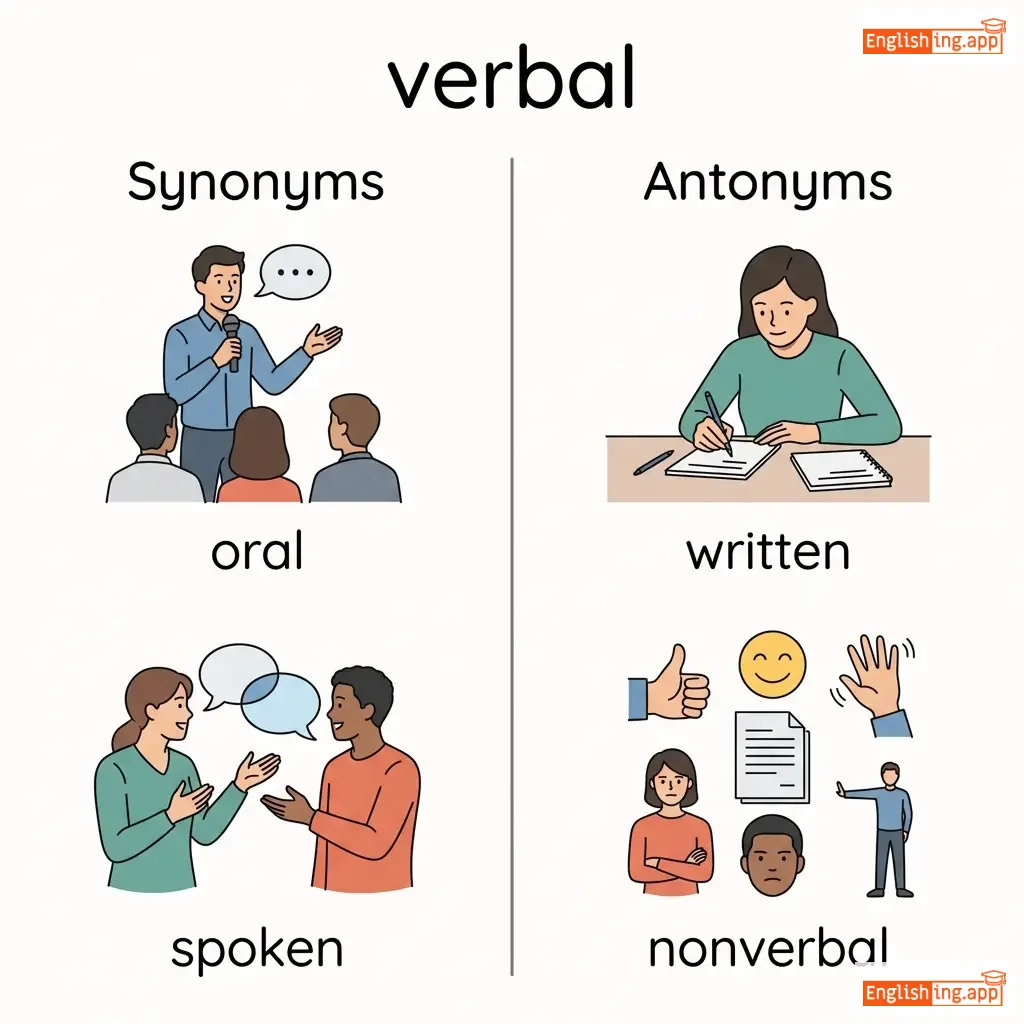
oral, spoken, expressed, linguistic
••••••
|
written, nonverbal
••••••
|
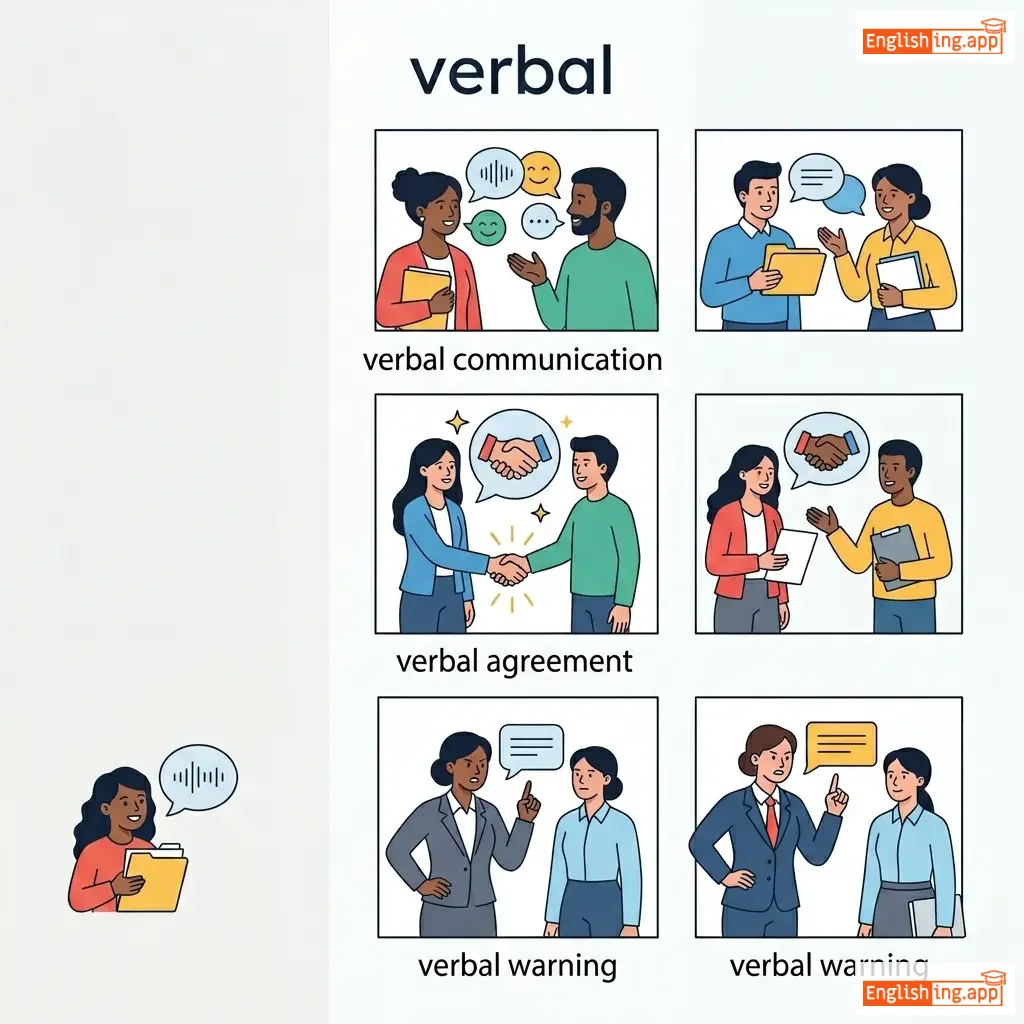
verbal communication, verbal agreement, verbal warning, verbal abuse
••••••
|
Verbalは言葉に関連しています—‘verb’という単語を考えて、だから verbal = 言葉に関係している!
••••••
|
|
#0
🗣️
|
/vɔɪs/
noun
(boisu)
••••••
|
- •••••• |
声
koe
••••••
|
- •••••• | - •••••• | - •••••• | - •••••• |
the sound produced by the vocal cords; the ability to speak or express oneself
••••••
|
She has a beautiful voice that captivates the audience. |
彼女には観客を魅了する美しい声があります。
Kanojo ni wa kankyaku o miryō suru utsukushī koe ga arimasu.
••••••
|
find your voice |
to begin expressing your thoughts or opinions
••••••
|
自分の声を見つける
jibun no koe o mitsukeru
••••••
|
sound, speech, tone, vocalization
••••••
|
silence, muteness
••••••
|
loud voice, soft voice, speak with voice
••••••
|
VOICE - 自分の声を見つける (voice - jibun no koe o mitsukeru) 自分を表現しよう
••••••
|
Vocabulary Quiz
Test your vocabulary by matching words with their translations or meanings.
Login to take the quiz
Comments (0)
Share your thoughts and join the discussion.
Join the discussion by logging in
Login to CommentNo comments yet
Be the first to share your thoughts!