

古代の秘密を発見した鉱夫
The Miner Who Discovered Ancient Secrets
サイフはnorthern地域で働くminerだった。彼の仕事は地下から鉱物を採掘することだった。それはminorな作業ではなく、危険で厳しい仕事だった。ある日、掘削中に彼の道具が硬いものに当たった。彼のmouthは驚きで開いた。そこには古代の遺物があったのだ。彼の感情はmixedで、興奮と恐怖が入り混じっていた。遺物は部分的にnakedで、岩の層の間から見えていた。監督は作業員たちに調査の前に日々のquotaを終えるよう指示した。しかしサイフは我慢できなかった。彼は慎重にpunchツールを使って物体を解放した。それはpatchesの泥と錆に覆われていた。彼がそれを掃除すると、nastyな匂いが立ち上った——古代の腐敗の匂いだった。仲間たちは彼を狂っていると思ったが、彼は監督にpleadedして考古学者を呼ぶよう頼んだ。その発見は重要なもので、古代文明のnaval遺物だった。専門家たちが到着し、体系的な発掘を開始した。面白い出来事として、ある考古学者が誤ってpurseを落とし、硬貨が坑道中に転がったことがあった。サイフはそれを拾うのを手伝った。発見の中には、1つあたり約poundの重さの陶器片があった。Other発見には道具や宝飾品も含まれていた。これは普通の採掘現場ではなく、まさに考古学的な金鉱だった。鉱山会社は研究者のために操業を調整する必要があった。Mounting証拠は、ここがかつて古代の港であったことを示していた。研究者たちはonionsや穀物などの交易の痕跡を発見した。すべてが記録され、最小の品までnicheカテゴリに分類された。作業は元の場所を超えて拡大された。近くのranchの所有者も、自分の土地で同様の遺物を見つけたと報告した。サイフの発見は彼の人生を変えた。単なるminerから地元の英雄へ、彼は考古学ツアーのガイドとなった。博物館は彼のために展示を設けた。サイフは自分の日常的な仕事がこのような発見につながるとは想像もしなかった。惑星がorbitを回るように、時に予期せぬことが完璧に重なり合うのだ。彼の物語は、細部への注意と好奇心が驚くべき発見を導くことを証明した。
翻訳
過去
過去分詞
三人称単数
動名詞
意味
例文
例文の翻訳
同義語
対義語
コロケーション
ニーモニック


Swipe left or right, or use the buttons. Tap image to zoom.
例文の翻訳
単語
The Miner Who Discovered Ancient SecretsThe Miner Who Discovered Ancient Secrets - マスクトグル
|
絵文字
|
単語 | Images | 翻訳 | 過去 | 過去分詞 | 三人称単数 | 動名詞 | 意味 | 例文 | 例文の翻訳 | 表現例 | 表現例の意味 | 表現例の翻訳 | 同義語 | 対義語 | コロケーション | ニーモニック |
|---|---|---|---|---|---|---|---|---|---|---|---|---|---|---|---|---|---|
|
#0
⛏️
|
/ˈmaɪnə(r)/
noun
(マイナー)
••••••
|
- •••••• |
鉱夫
kōfu
••••••
|
- •••••• | - •••••• | - •••••• | - •••••• |
a person who works in a mine, extracting minerals or other resources
••••••
|
The miner worked in the coal mine for many years. |
鉱夫は長年、石炭鉱で働いていました。
Kōfu wa naganen, sekitan kō de hataraite imashita.
••••••
|
- •••••• | - •••••• | - •••••• |
excavator, digger, prospector
••••••
|
- •••••• |
coal miner, gold miner, miner's lamp
••••••
|
KŌFU sounds like MINER – they work in a KŌzan (mine).
••••••
|
|
#0
🔹
|
/ˈmaɪ.nər/
adjective/noun
(マイナー)
••••••
|
- •••••• |
小さい / 未成年
chiisai / misenen
••••••
|
- •••••• | - •••••• | - •••••• | - •••••• |
less important, serious, or significant; a person under the legal age
••••••
|
Luckily, the accident caused only minor injuries. |
幸運にも、事故は軽いけがだけを引き起こしました。
kouun ni mo, jiko wa karui kega dake o hikiokoshimashita.
••••••
|
minor detail |
an unimportant or insignificant detail
••••••
|
小さな詳細
chiisana shousai
••••••
|
small, slight, insignificant, subordinate
••••••
|
major, important, significant
••••••
|
minor issue, minor injury, minor role, minor detail
••••••
|
Minor は小さいという意味 - Major はその反対。Minor は小さいか重要でないという意味。
••••••
|
|
#0
🌀
|
/mɪkst/
adjective
(ミックスド)
••••••
|
- •••••• |
混合された
kongou sareta
••••••
|
- •••••• | - •••••• | - •••••• | - •••••• |
consisting of different elements or having varied opinions or feelings
••••••
|
The audience had mixed reactions to the film. |
観客は映画に対して混合した反応を示しました。
Kankyaku wa eiga ni taishite kongō shita hannō o shimeshimashita.
••••••
|
mixed feelings |
having both positive and negative emotions about something
••••••
|
混合した感情
kongō shita kanjō
••••••
|
blended, combined, diverse, varied, assorted
••••••
|
uniform, pure, similar
••••••
|
mixed reaction, mixed group, mixed culture, mixed opinion
••••••
|
混合 = mixされた感情!
••••••
|
|
#0
🧗
|
/maʊnt/
verb
(マウント)
••••••
|
- •••••• |
取り付ける
toritsukeru
••••••
|
mounted
マウンテッド
••••••
|
mounted
マウンテッド
••••••
|
mounts
マウンツ
••••••
|
mounting
マウンティング
••••••
|
to climb up, rise, or fix something in place
••••••
|
They plan to mount a camera on the wall.
ゼイ プラン トゥ マウント ア カメラ オン ザ ウォール。
••••••
|
彼らは壁にカメラを取り付ける予定です。
Karera wa kabe ni kamera wo toritsukeru yotei desu.
••••••
|
mount an attack
マウント アン アタック
••••••
|
to launch or initiate an attack
••••••
|
攻撃を仕掛ける
kougeki wo shikakeru
••••••
|
climb, rise, ascend, fix, install
••••••
|
dismount, descend, remove
••••••
|
mount a horse, mount a camera, mount pressure, mount an attack
••••••
|
Mount は マウント と似ていて、どちらも取り付ける意味がある。
••••••
|
|
#0
👄
|
/maʊθ/
noun
(maʊθ)
••••••
|
- •••••• |
口
kuchi
••••••
|
- •••••• | - •••••• | - •••••• | - •••••• |
the opening in the face used for eating, speaking, and breathing
••••••
|
She covered her mouth when she yawned. |
彼女はあくびをしたとき、口を覆った。
Kanojo wa akubi o shita toki, kuchi o ōtta.
••••••
|
word of mouth |
information spread through verbal communication
••••••
|
口から口へ
kuchi kara kuchi e
••••••
|
opening, lips, cavity, jaw
••••••
|
silence, closure
••••••
|
open mouth, shut mouth, mouth of a river, mouth full
••••••
|
口は口、食べることも話すことも呼吸することも口から。
••••••
|
|
#0
🚼
|
/ˈneɪkɪd/
adjective
(ネイキッド)
••••••
|
- •••••• |
裸
hadaka
••••••
|
- •••••• | - •••••• | - •••••• | - •••••• |
not covered by clothing or without protection
••••••
|
The child was running naked in the yard. |
その子は庭で裸で走っていた。
Sono ko wa niwa de hadaka de hashitte ita.
••••••
|
the naked truth |
the complete and unembellished truth
••••••
|
裸の真実
hadaka no shinjitsu
••••••
|
bare, unclothed, exposed, nude
••••••
|
clothed, covered
••••••
|
naked body, naked eye, naked truth
••••••
|
Nakedは裸を意味します – 衣服がないと、あなたは裸です。
••••••
|
|
#0
😠
|
/ˈnæsti/
adjective
(ナスティ)
••••••
|
- •••••• |
嫌な
iya na
••••••
|
- •••••• | - •••••• | - •••••• | - •••••• |
very unpleasant, unkind, or offensive
••••••
|
He made a nasty comment about her dress. |
彼は彼女のドレスについて嫌なコメントをしました。
Kare wa kanojo no doresu ni tsuite iya na komento o shimashita.
••••••
|
- •••••• | - •••••• | - •••••• |
unpleasant, mean, vile, horrible, rude
••••••
|
pleasant, kind, nice
••••••
|
nasty smell, nasty habit, nasty surprise, nasty weather
••••••
|
Nastyは‘ナスティ’のように聞こえる—嫌なまたは不快な意味です。
••••••
|
|
#0
🚢
|
/ˈneɪvəl/
adjective
(ネイヴァル)
••••••
|
- •••••• |
海軍の
kaigun no
••••••
|
- •••••• | - •••••• | - •••••• | - •••••• |
relating to a country's navy or military ships
••••••
|
The country invested heavily in naval defense. |
その国は海軍防衛に多額の投資をしました。
Sono kuni wa kaigun bōei ni tagaku no tōshi o shimashita.
••••••
|
naval forces |
a nation's warships and related military strength
••••••
|
海軍力
kaigun ryoku
••••••
|
maritime, seafaring, oceanic, military
••••••
|
civilian, land-based
••••••
|
naval base, naval battle, naval defense, naval fleet
••••••
|
Navalは海軍を意味します — NavyとBattleを合わせてNavalを覚えましょう!
••••••
|
|
#0
🌱
|
/niːʃ/
noun
(ニッチ)
••••••
|
|
ニッチ
nicchi
••••••
|
- •••••• | - •••••• | - •••••• | - •••••• |
a comfortable or suitable position in life or employment
••••••
|
He has found his niche in the marketing industry. |
彼はマーケティング業界で自分のニッチを見つけました。
Kare wa maketingu gyoukai de jibun no nicchi wo mitsukemashita.
••••••
|
- •••••• | - •••••• | - •••••• |
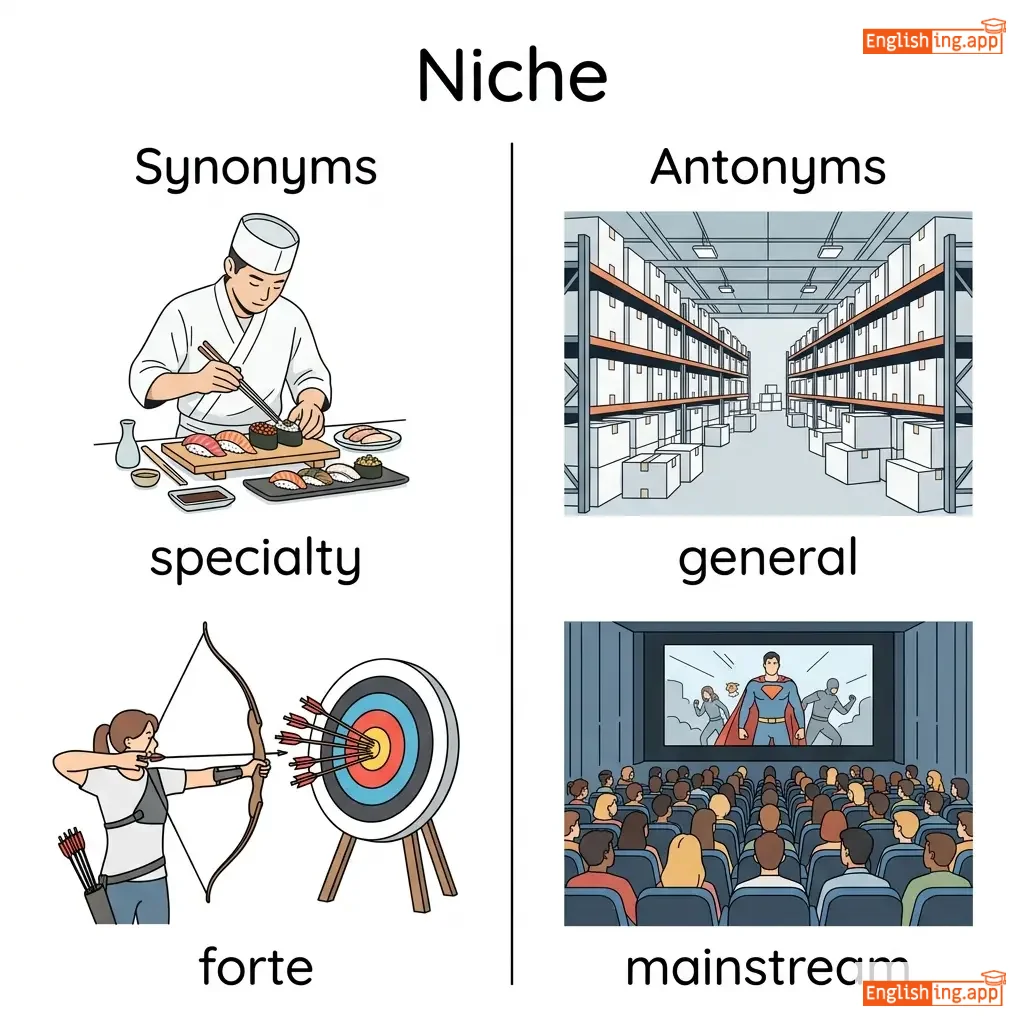
specialty, forte, domain, area
••••••
|
general, mainstream
••••••
|
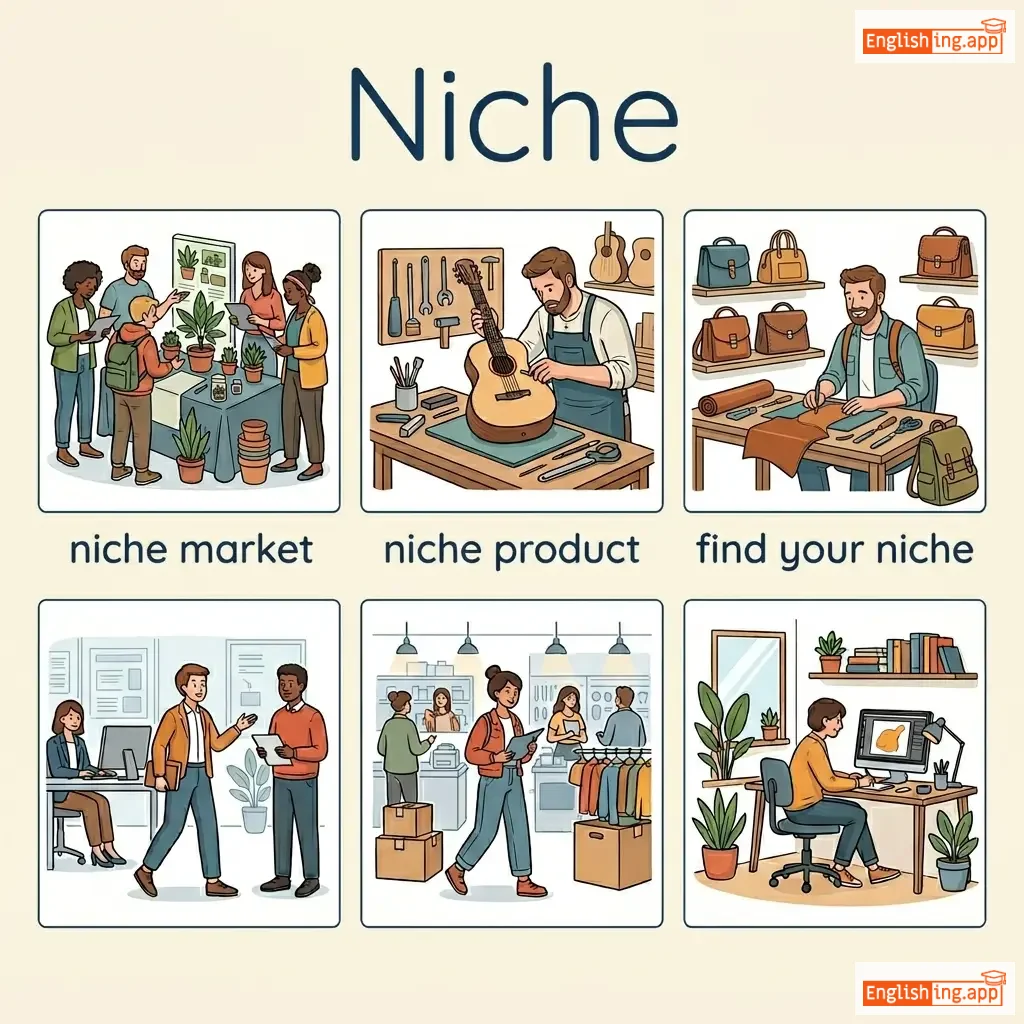
niche market, niche product, find your niche
••••••
|
マーケティング業界での自分の居場所
••••••
|
|
#0
🧭
|
/nɔːrθ/
noun
(ノース)
••••••
|
- •••••• |
北
kita
••••••
|
- •••••• | - •••••• | - •••••• | - •••••• |
the direction toward the top of a map or the opposite of south
••••••
|
We traveled north to reach the mountains. |
私たちは山に到達するために北へ向かって旅しました。
Watashitachi wa yama ni tōtatsu suru tame ni kita e mukatte tabimashita.
••••••
|
- •••••• | - •••••• | - •••••• |
up, northern direction
••••••
|
south, downward
••••••
|
north pole, north wind, go north, head north
••••••
|
North is UP on a map, just like 'Kita' (北) is UP in Japanese!
••••••
|
|
#0
🧅
|
/ˈʌnjən/
noun
(オニオン)
••••••
|
- •••••• |
玉ねぎ
tamanegi
••••••
|
- •••••• | - •••••• | - •••••• | - •••••• |
a round vegetable with a strong smell and flavor, usually used in cooking
••••••
|
I chopped an onion to make the soup. |
私はスープを作るために玉ねぎを切りました。
Watashi wa sūpu o tsukuru tame ni tamanegi o kirimashita.
••••••
|
- •••••• | - •••••• | - •••••• |
bulb, leek, shallot
••••••
|
garlic, herb
••••••
|
chop an onion, onion soup, onion ring
••••••
|
玉ねぎ - 玉ねぎを切ると涙が出る!
••••••
|
|
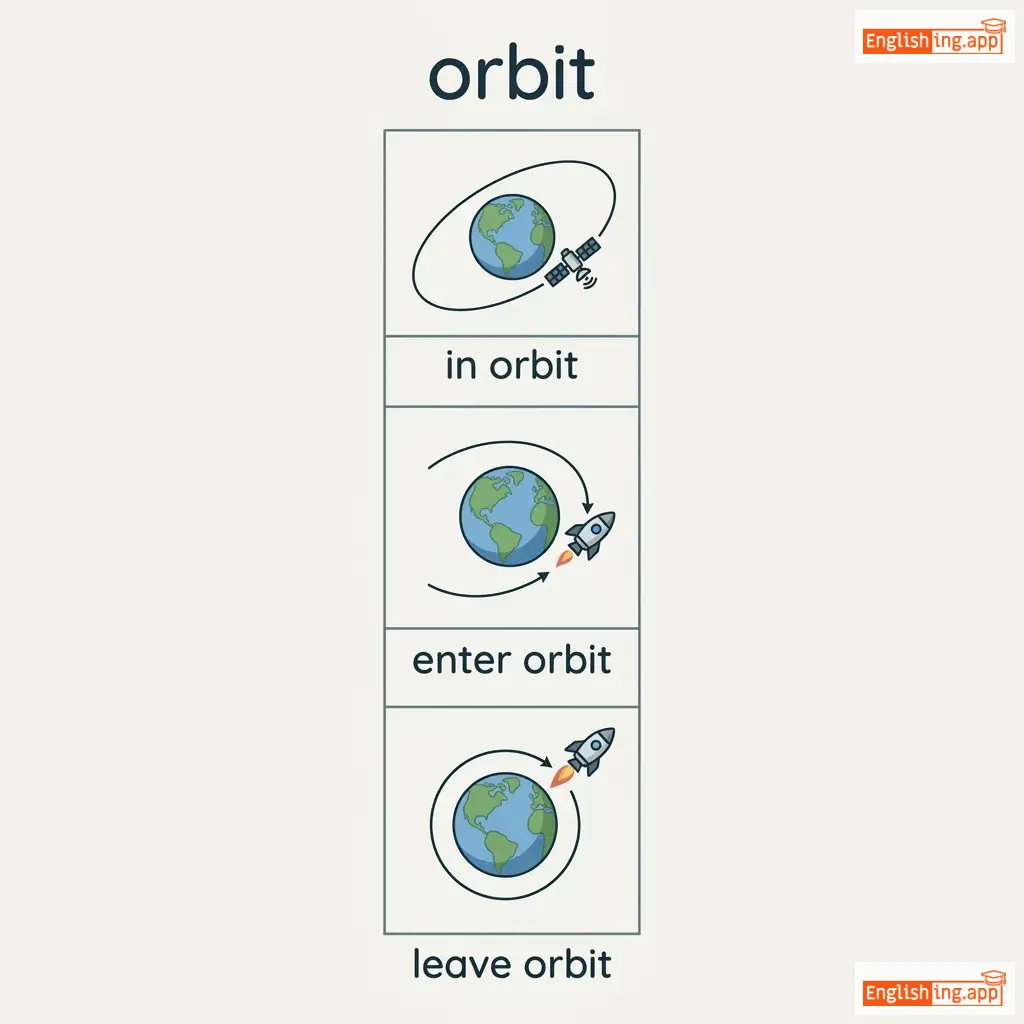
#0
🪐
|
/ˈɔːbɪt/
noun
(オービット)
••••••
|
|
軌道
kidou
••••••
|
- •••••• | - •••••• | - •••••• | - •••••• |
the curved path that a planet, satellite, or object follows around another body in space
••••••
|
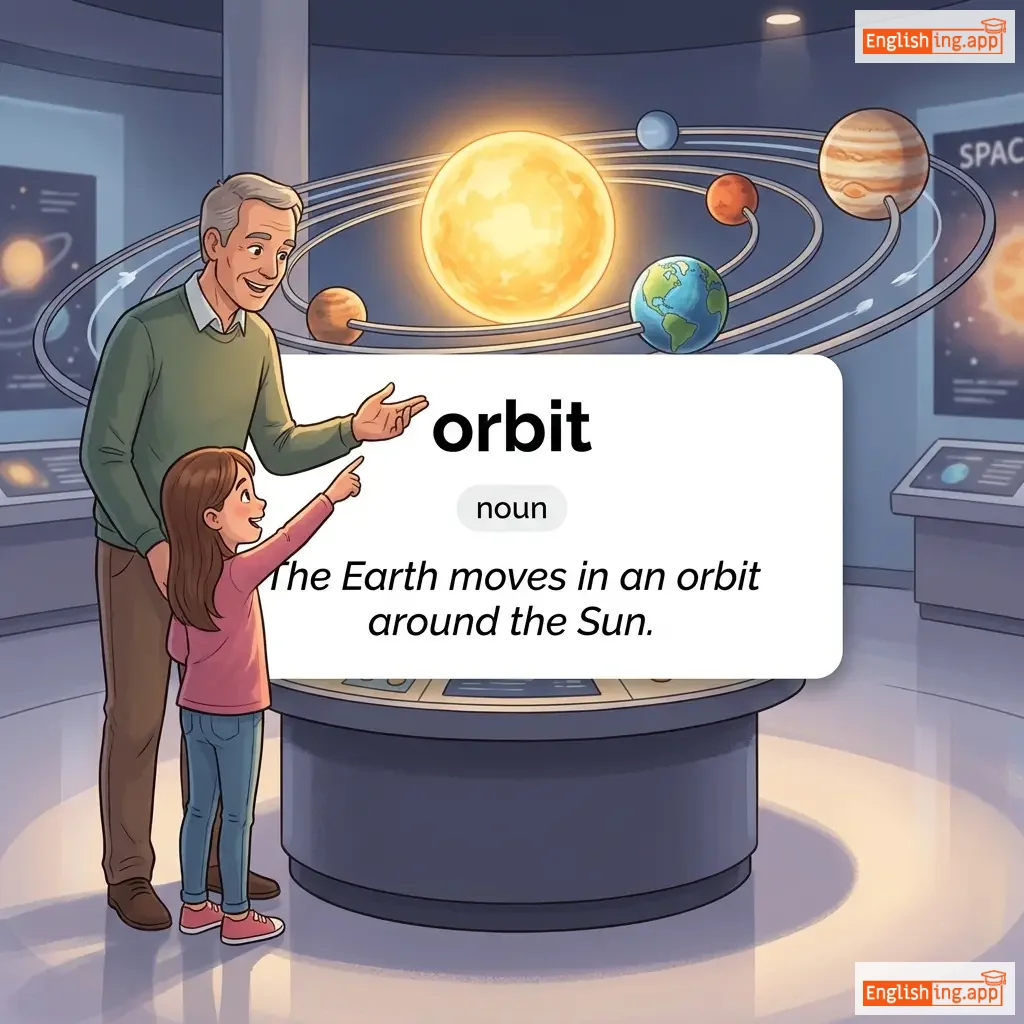
The Earth moves in an orbit around the Sun.
地球は太陽の周りを軌道で回ります。
••••••
|
地球は太陽の周りを軌道で回ります。
Chikyuu wa taiyou no mawari o kidou de mawarimasu.
••••••
|
in orbit
軌道上
••••••
|
circling around a planet or celestial body
••••••
|
軌道上
kidoujou
••••••
|
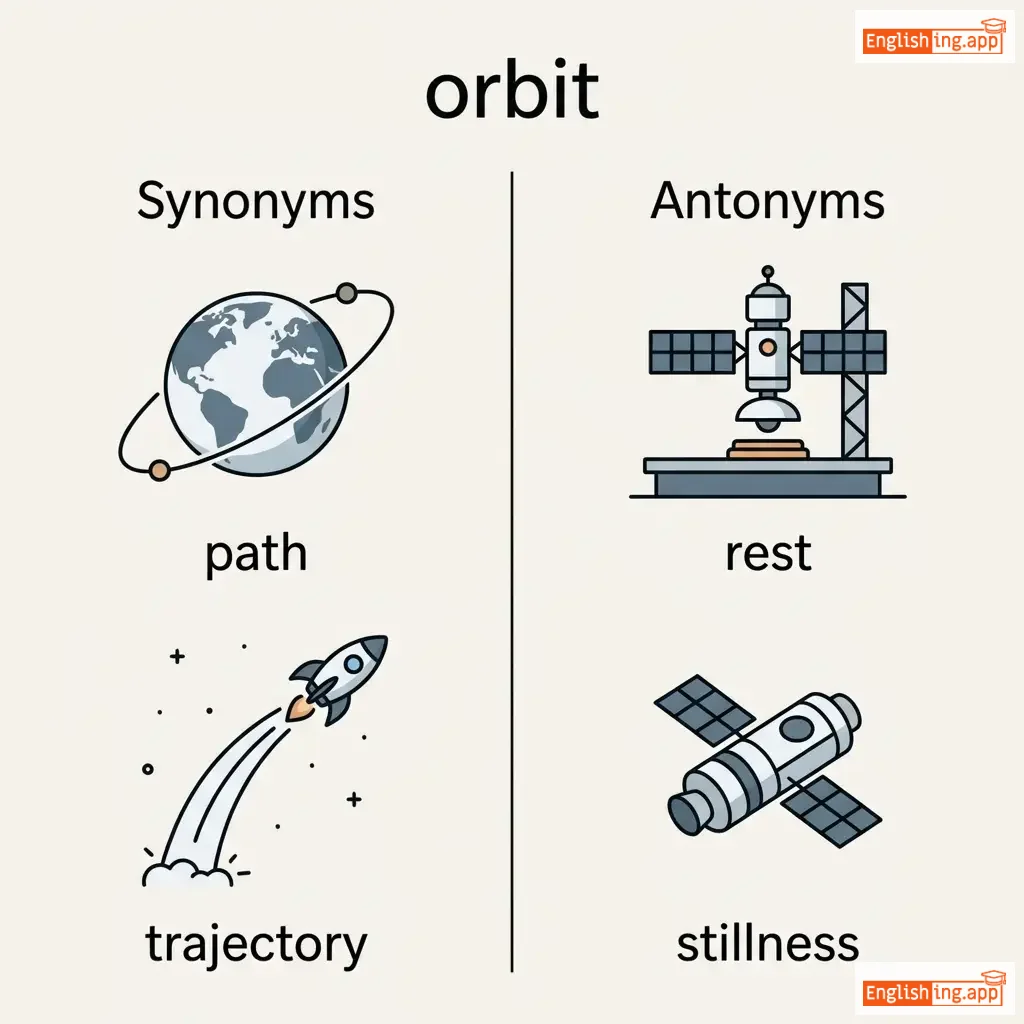
path, trajectory, revolution, circuit
••••••
|
rest, stillness
••••••
|
in orbit, enter orbit, leave orbit, orbit around
••••••
|
軌道 = kidou, 地球は太陽の周りを軌道で回ります。
••••••
|
|
#0
🔄
|
/ˈʌðər/
adjective
(アザー)
••••••
|
- •••••• |
他の
hoka no
••••••
|
- •••••• | - •••••• | - •••••• | - •••••• |
used to refer to something different from the one already mentioned or known
••••••
|
I don't want this one, I will take the other one. |
これを欲しくない、他のを取るつもりだ。
Kore o hoshikunai, hoka no o toru tsumori da.
••••••
|
the other side of the coin |
the opposite aspect of a situation
••••••
|
コインの裏面
Koin no uramen
••••••
|
alternative, different, another, else
••••••
|
same, identical
••••••
|
the other side, the other person, the other day
••••••
|
Other、何か新しい、でも違うものを選べ!
••••••
|
|
#0
🩹
|
/pætʃ/
noun
(パッチ)
••••••
|
- •••••• |
パッチ
patch
••••••
|
- •••••• | - •••••• | - •••••• | - •••••• |
a small piece of material used to mend a hole; a small area of something different
••••••
|
She sewed a patch over the hole in her jeans. |
彼女はジーンズの穴にパッチを縫い付けました。
Kanojo wa jīnzu no ana ni patchi o nuitsukemashita.
••••••
|
- •••••• | - •••••• | - •••••• |
repair, mend, piece, cover
••••••
|
hole, tear, damage, opening
••••••
|
eye patch, sew patch, cloth patch
••••••
|
ジーンズの穴を修理するために使うパッチ。
••••••
|
|
#0
🙏
|
/pliːd/
verb
(purīdo)
••••••
|
|
嘆願する
tengansuru
••••••
|
pleaded
purīdedo
••••••
|
pleaded
purīdedo
••••••
|
pleads
purīdz
••••••
|
pleading
purīdingu
••••••
|
to make an emotional appeal; to present a case in court
••••••
|
She pleaded for mercy.
彼女は慈悲を乞いました。
••••••
|
彼女は慈悲を乞いました。
Kanojo wa jihi o koi-mashita.
••••••
|
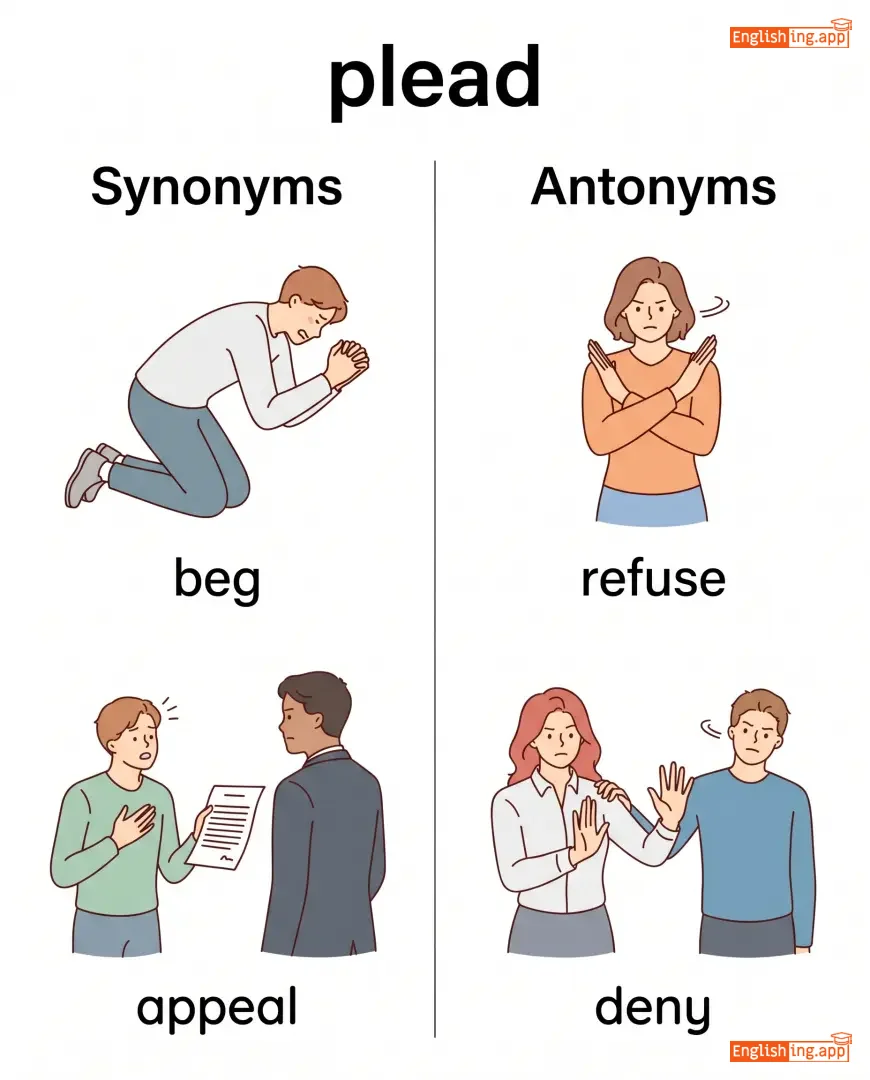
- •••••• | - •••••• | - •••••• |
beg, entreat, implore, appeal
••••••
|
demand, order, command
••••••
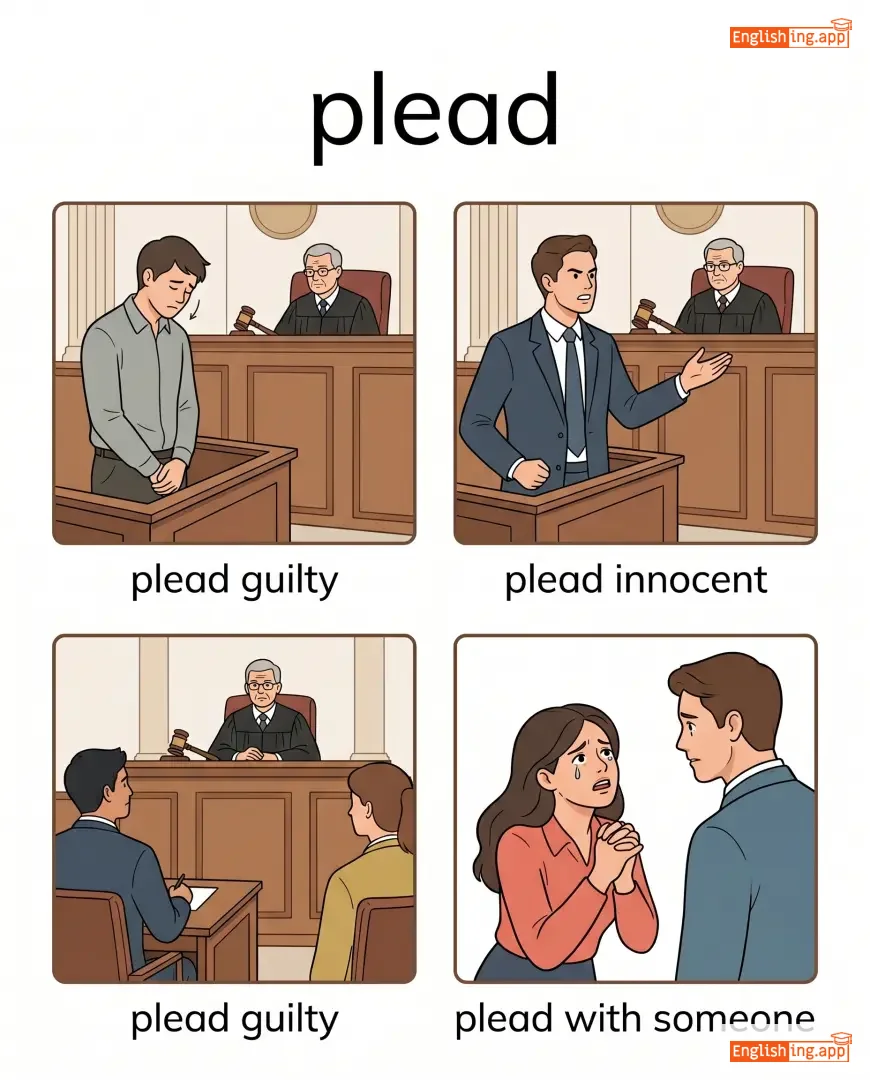
|
plead guilty, plead for, earnestly plead, plead case
••••••
|
Imagine pleading in court as 'tengansuru' for mercy.
••••••
|
|
#0
💷
|
/paʊnd/
noun, verb
(パウンド)
••••••
|
- •••••• |
ポンド
pondo
••••••
|
pounded
パウンデッド
••••••
|
pounded
パウンデッド
••••••
|
pounds
パウンズ
••••••
|
pounding
パウンディング
••••••
|
a unit of weight equal to 16 ounces or a unit of currency
••••••
|
The price of the book is five pounds.
その本の価格は5ポンドです。
••••••
|
その本の価格は5ポンドです。
Sono hon no kakaku wa go pondo desu.
••••••
|
- •••••• | - •••••• | - •••••• |
lb (pound as weight), sterling (pound as currency)
••••••
|
ounce
••••••
|
pound of meat, pound sterling, pound weight, pound cake
••••••
|
ポンドは、重さとお金の単位です!
••••••
|
|
#0
🥊
|
/pʌntʃ/
verb
(パンチ)
••••••
|
- •••••• |
殴る
naguru
••••••
|
punched
パンチド
••••••
|
punched
パンチド
••••••
|
punches
パンチズ
••••••
|
punching
パンチング
••••••
|
to hit someone or something hard with your fist
••••••
|
He punched the wall in frustration.
彼はフラストレーションで壁を殴った。
••••••
|
彼はフラストレーションで壁を殴った。
Kare wa furasutorēshon de kabe o nagutta.
••••••
|
pack a punch
パンチを加える
••••••
|
to have a strong effect or impact
••••••
|
強い影響を与える
tsuyoi eikyō o ataeru
••••••
|
hit, strike, smack, blow, thump
••••••
|
caress, pat
••••••
|
throw a punch, punch hard, punch bag, pack a punch
••••••
|
‘punch’ を考えてみて、壁を殴るような力強い影響!
••••••
|
|
#0
👛
|
/pɜːrs/
noun
(パース)
••••••
|
- •••••• |
財布
saifu
••••••
|
- •••••• | - •••••• | - •••••• | - •••••• |
a small bag used by women to carry money and personal items
••••••
|
She kept her wallet in her purse.
彼女は財布をバッグに入れました。
••••••
|
彼女は財布をバッグに入れました。
Kanojo wa saifu o baggu ni iremashita.
••••••
|
tighten the purse strings
バッグのひもを締める
••••••
|
to spend less money and be economical
••••••
|
バッグのひもを締める
Baggu no himo o shimeru
••••••
|
handbag, wallet, pouch, clutch
••••••
|
backpack, sack
••••••
|
open the purse, lose a purse, designer purse, leather purse
••••••
|
Purse = 財布でお金と物を入れる
••••••
|
|
#0
📊
|
/ˈkwəʊtə/
noun
(クォータ)
••••••
|
|
割り当て, 定額
wariate, teigaku
••••••
|
- •••••• | - •••••• | - •••••• | - •••••• |
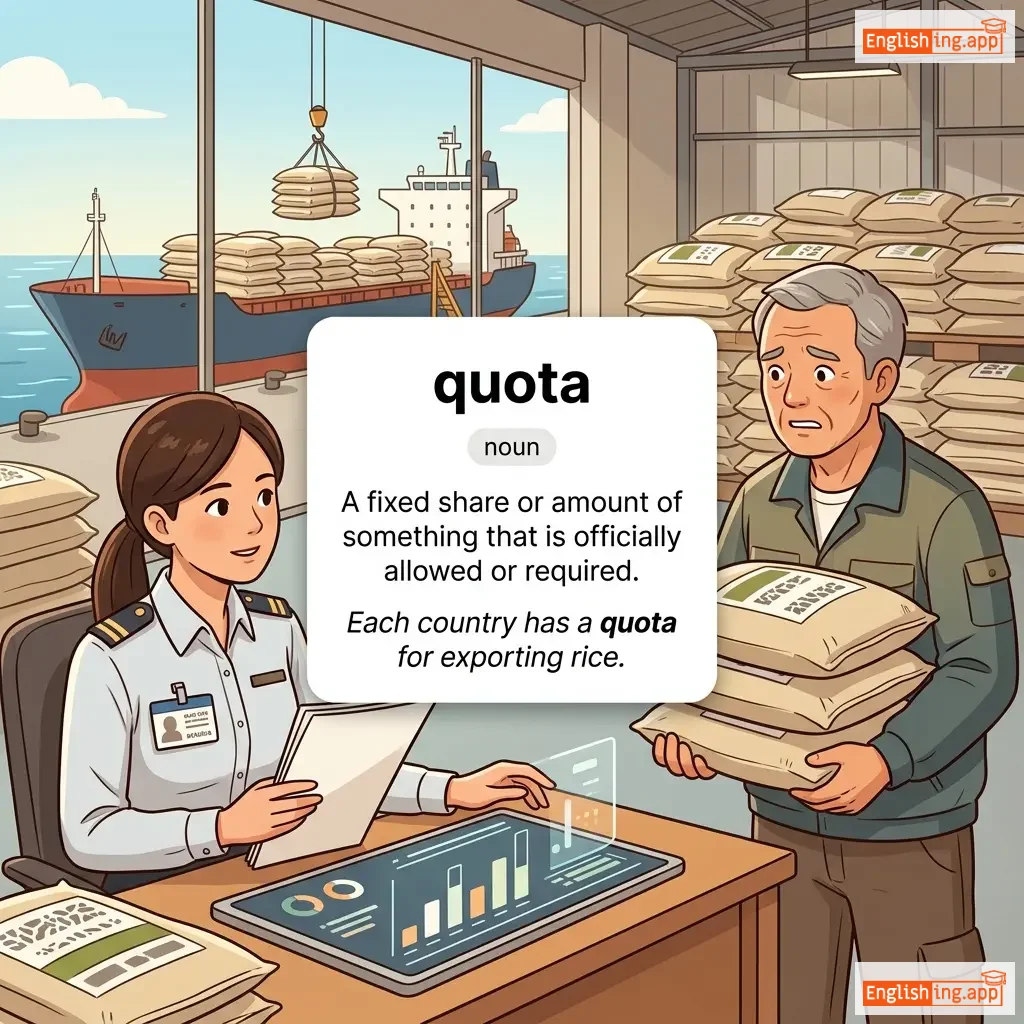
A fixed share or amount of something that is officially allowed or required.
••••••
|
Each country has a quota for exporting rice.
イーチ カントリー ハズ ア クォータ フォー エクスポーティング ライス。
••••••
|
各国には、米の輸出に関する割り当てがあります。
Kakoku ni wa, kome no yushutsu ni kansuru wariate ga arimasu.
••••••
|
- •••••• | - •••••• | - •••••• |
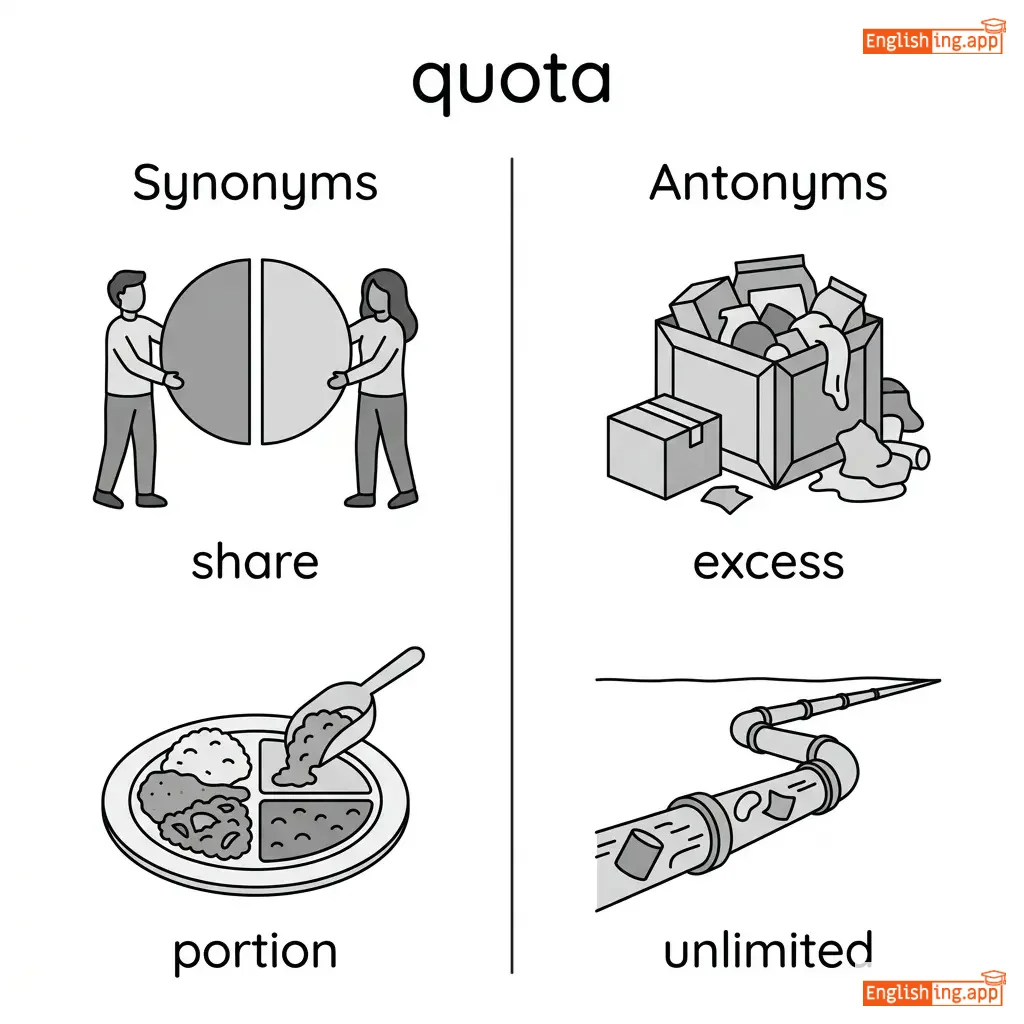
share, portion, allotment, limit, allowance
••••••
|
excess, unlimited
••••••
|
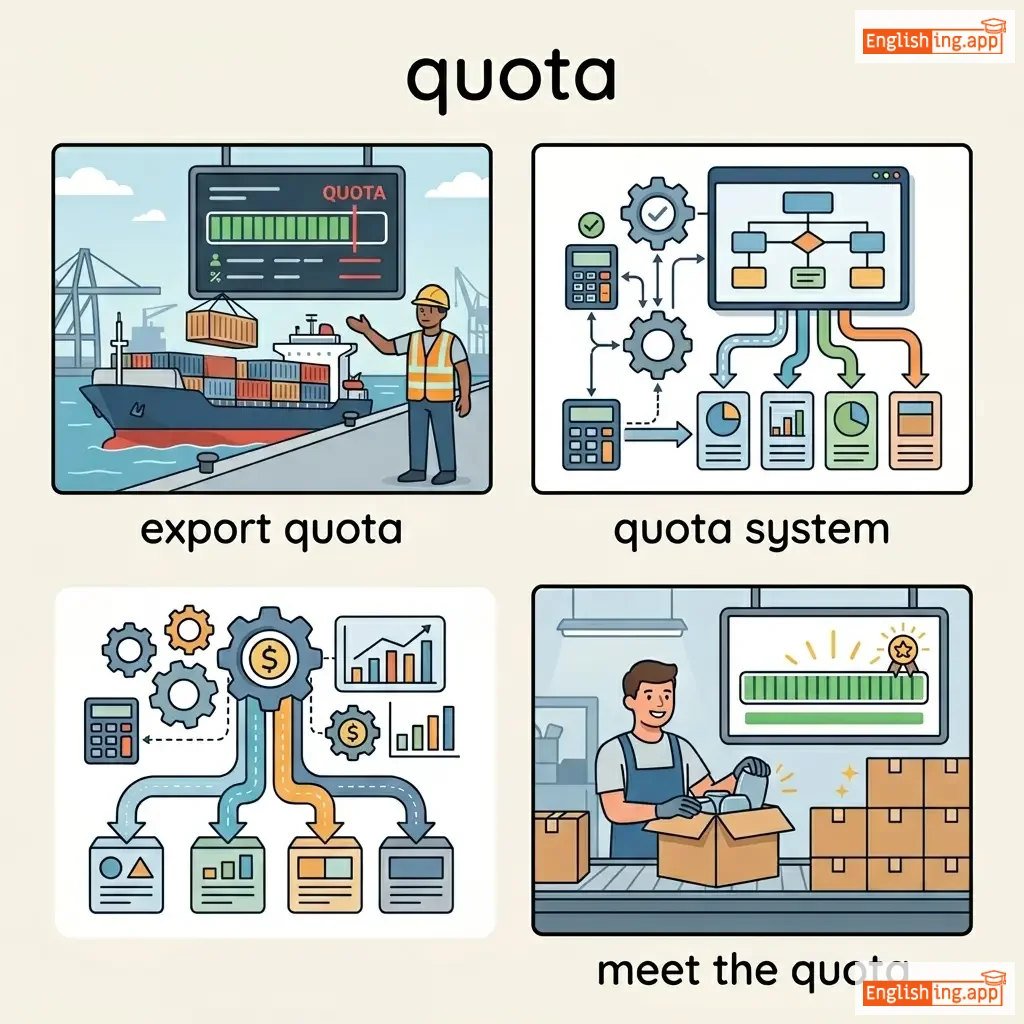
export quota, quota system, meet the quota, annual quota
••••••
|
割り当て = カット + 部分 - 固定された部分が割り当てられます。
••••••
|
|
#0
🐄
|
/ræntʃ/
noun
(ランチ)
••••••
|
- •••••• |
牧場
bokujou
••••••
|
- •••••• | - •••••• | - •••••• | - •••••• |
a large farm where animals such as cattle or sheep are raised
••••••
|
They own a huge cattle ranch in Texas. |
彼らはテキサスで巨大な牧場を所有しています。
Karera wa Tekisasu de kyodaina bokujou o shoyū shiteimasu.
••••••
|
- •••••• | - •••••• | - •••••• |
farm, homestead, estate, pasture, plantation
••••••
|
factory, city, urban area
••••••
|
cattle ranch, sheep ranch, ranch house, horse ranch
••••••
|
ランチはただのソースではなく、牛や羊を育てる牧場です! 🐄
••••••
|
Vocabulary Quiz
Test your vocabulary by matching words with their translations or meanings.
Login to take the quiz
Comments (0)
Share your thoughts and join the discussion.
Join the discussion by logging in
Login to CommentNo comments yet
Be the first to share your thoughts!