

自分の土地を守った女性
The Woman Who Defended Her Land
マヤはdistant村の平凡な女性で、彼女の人生がdilemmaに陥るとは知らなかった。彼女の家族は小さな土地を持っており、そこでは人々のdensityが高く、皆が平和に暮らしていた。ある日、強大な会社がこの土地が自分たちのものであると主張する書類をdepositedした。マヤは、彼らがコミュニティをdestroyしようとしていることを理解した。会社の弁護士たちは条件をdictateしようとしたが、マヤは自分の権利をdismissするつもりはなかった。家族には祖母からもらったdiamondの指輪があり、法的defenseのためにそれを売った。Despite財政的なdeficitにもかかわらず、マヤは戦うことを決意した。彼女は人々がより良いものをdeservedしていることを知っており、誰も彼らの権利をdepriveすることはできない。法廷でdisputeが始まり、会社の弁護士はマヤの証拠をdiscardしようとした。裁判官は、すべての書類を適切にdisposeする必要があると言った。マヤの弁護士は、土地所有権のdescentが明確であると主張した。家族のdignityがかかっていた。裁判中、マヤは一度娘の誕生日をシンプルなdessertで祝った。彼女の焦点は正義を得ることだけだった。マヤの決意を見て、多くの村人がdescendedして支援を示した。最終的に裁判官はマヤに有利な判決を下し、会社は誰が何を所有するかをdictateできないと言った。マヤは、despite障害があっても、勇気があれば正義を得ることが可能であることを証明した。
翻訳
過去
過去分詞
三人称単数
動名詞
意味
例文
例文の翻訳
同義語
対義語
コロケーション
ニーモニック
Swipe left or right, or use the buttons. Tap image to zoom.
例文の翻訳
単語
The Woman Who Defended Her LandThe Woman Who Defended Her Land - マスクトグル
|
絵文字
|
単語 | Images | 翻訳 | 過去 | 過去分詞 | 三人称単数 | 動名詞 | 意味 | 例文 | 例文の翻訳 | 表現例 | 表現例の意味 | 表現例の翻訳 | 同義語 | 対義語 | コロケーション | ニーモニック |
|---|---|---|---|---|---|---|---|---|---|---|---|---|---|---|---|---|---|
|
#0
🛡️
|
/dɪˈfɛns/
noun
(ハピネス)
••••••
|
|
幸福
koufuku
••••••
|
- •••••• | - •••••• | - •••••• | - •••••• |
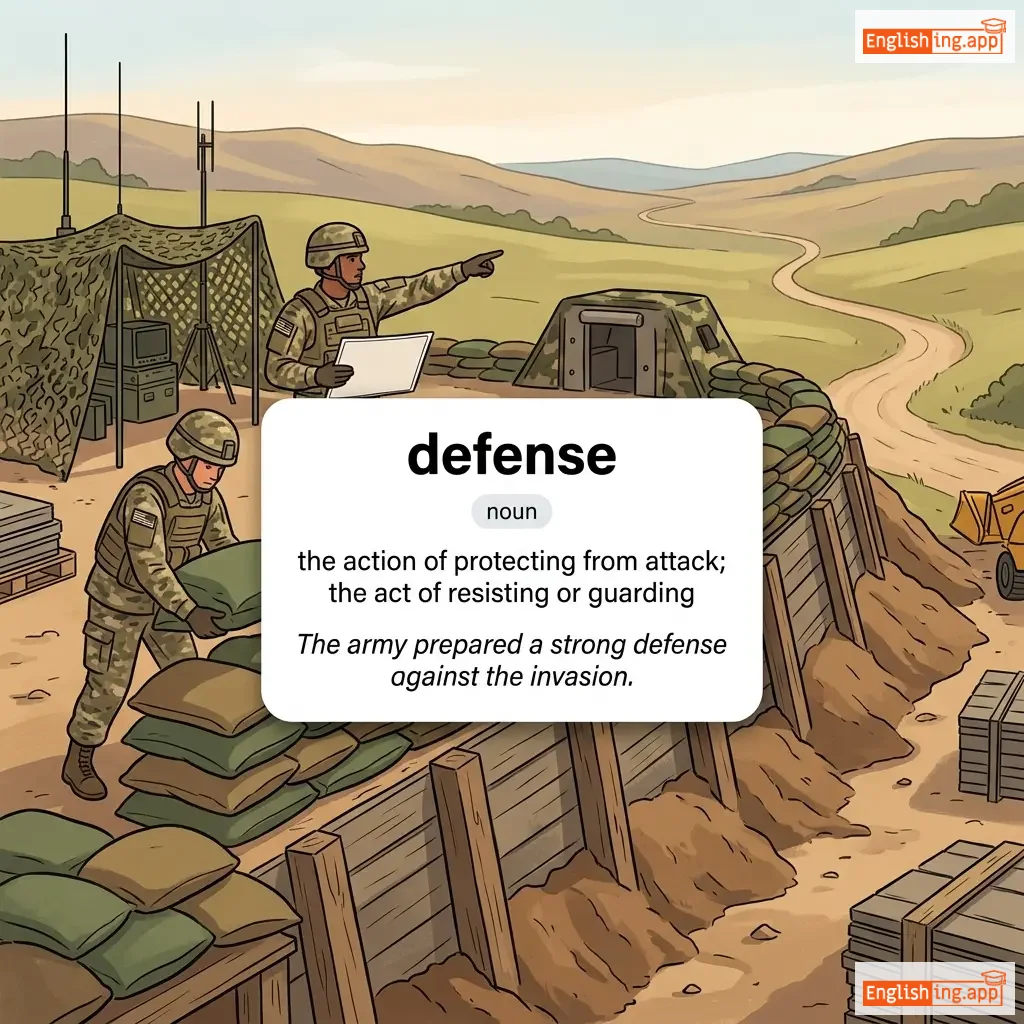
the action of protecting from attack; the act of resisting or guarding
••••••
|
The army prepared a strong defense against the invasion. |
彼女は賞を受け取ったとき、喜びを隠すことができませんでした。
Kanojo wa shō o uketotta toki, yorokobi o kakusu koto ga dekimasen deshita.
••••••
|
defense mechanism |
an unconscious psychological strategy used to protect oneself from anxiety
••••••
|
幸福の追求
Kōfuku no tsuikyū
••••••
|
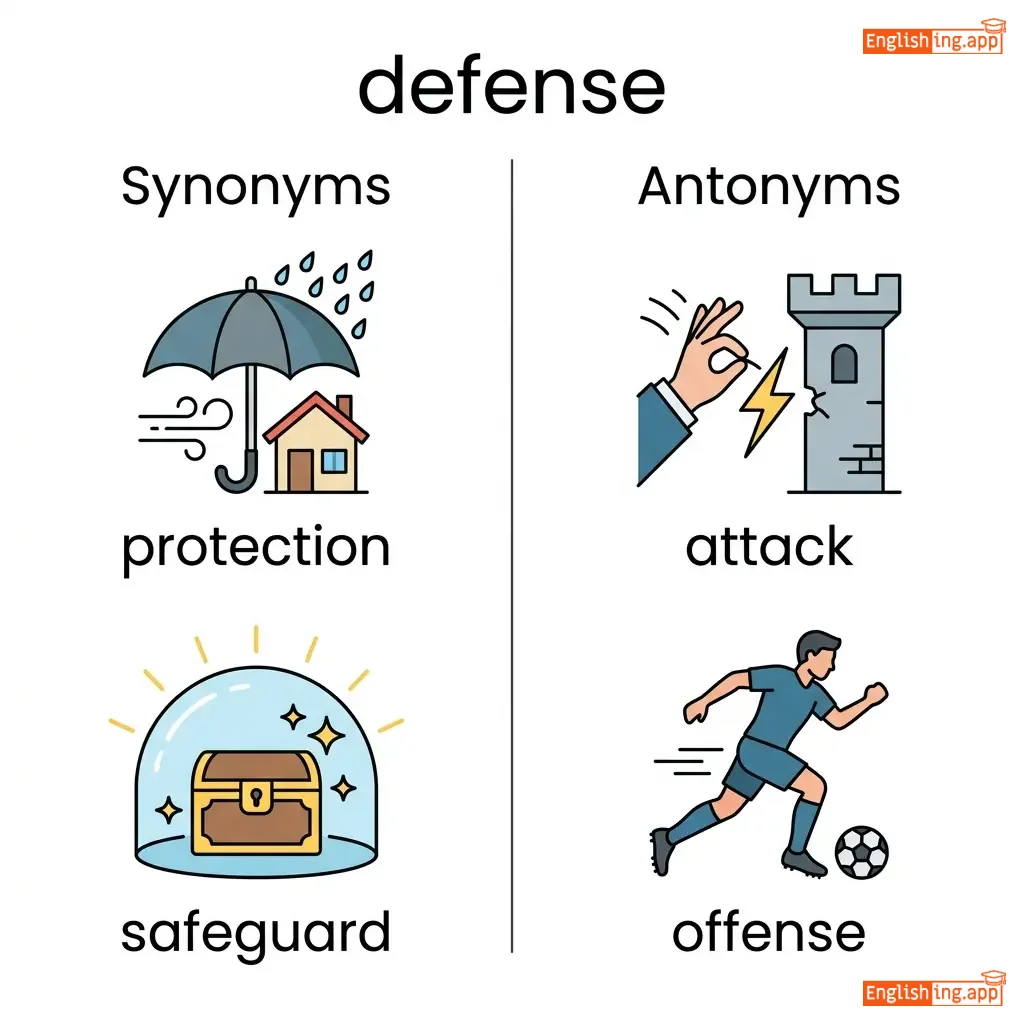
protection, safeguard, security, resistance
••••••
|
attack, offense
••••••
|
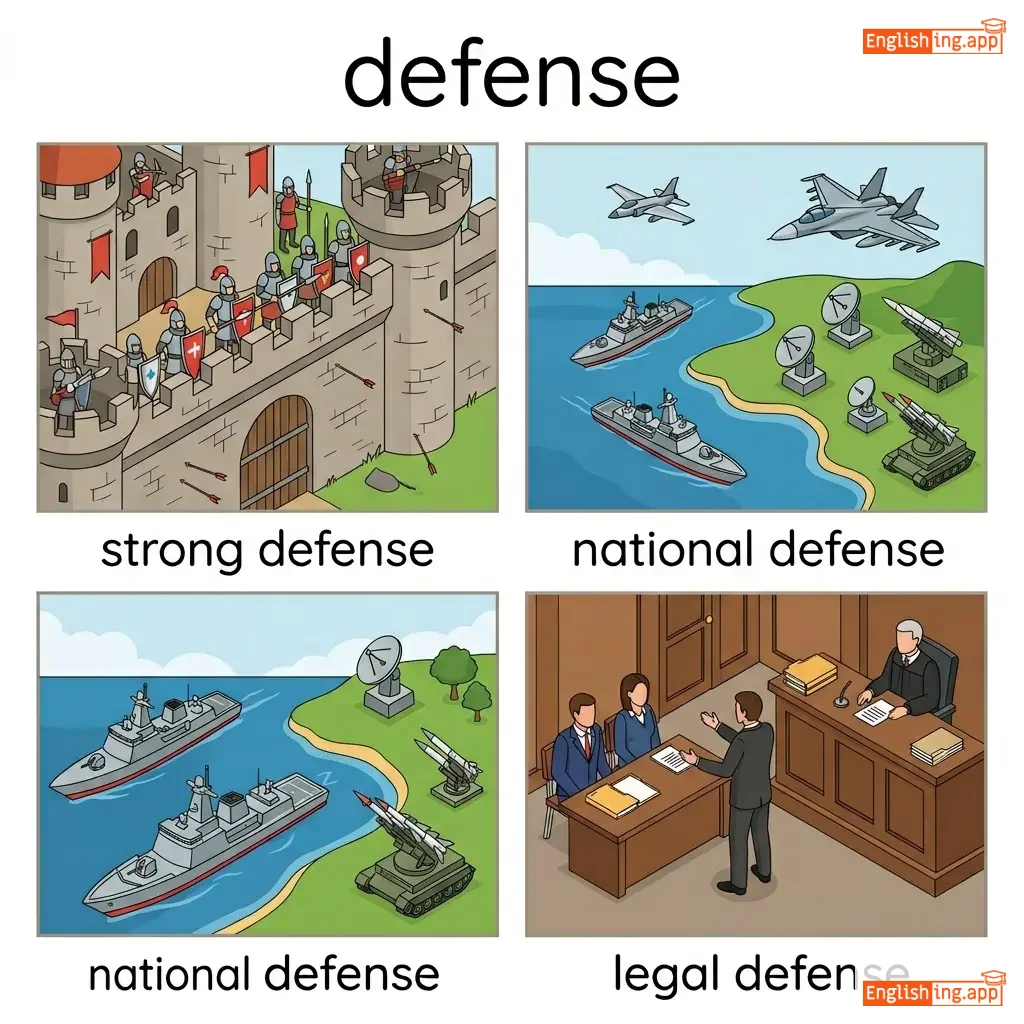
strong defense, national defense, legal defense, defense system
••••••
|
幸福 = 幸せを感じる、心の中の平和。
••••••
|
|
#0
📉
|
/ˈdɛfɪsɪt/
noun
(デフィシット)
••••••
|
- •••••• |
赤字
akaji
••••••
|
- •••••• | - •••••• | - •••••• | - •••••• |
The amount by which something, especially money, is too small or lacking.
••••••
|
The government is trying to reduce the budget deficit. |
政府は予算赤字を減らそうとしています。
Seifu wa yosan akaji o herasō to shiteimasu.
••••••
|
trade deficit |
The amount by which a country’s imports exceed its exports.
••••••
|
貿易赤字
bōeki akaji
••••••
|
shortfall, shortage, lack, loss, gap
••••••
|
surplus, excess, profit
••••••
|
budget deficit, trade deficit, current deficit
••••••
|
赤字 📉 – 赤字は何かが足りない、例えばお金が足りない時に使われます。
••••••
|
|
#0
⚖️
|
/ˈdɛnsɪti/
noun
(デンシティ)
••••••
|
- •••••• |
密度
mitsudo
••••••
|
- •••••• | - •••••• | - •••••• | - •••••• |
the degree of compactness or thickness of a substance or object
••••••
|
The density of water is higher than that of air.
水の密度は空気よりも高い。
••••••
|
水の密度は空気よりも高い。
Mizu no mitsudo wa kūki yori mo takai.
••••••
|
population density
人口密度
••••••
|
the number of people living per unit area of land
••••••
|
人口密度
jinkō mitsudo
••••••
|
thickness, concentration, solidity, compactness, mass
••••••
|
thinness, rarity, emptiness
••••••
|
high density, low density, population density, energy density
••••••
|
密度(mitsudo)は、density(デンシティ)と同じです。
••••••
|
|
#0
🏦
|
/dɪˈpɑːzɪt/
noun/verb
(デポジット)
••••••
|
- •••••• |
預金, 手付金
yokin, tetsukekin
••••••
|
deposited
デポジットした
••••••
|
deposited
デポジットした
••••••
|
deposits
デポジットする
••••••
|
depositing
デポジットする
••••••
|
to place money in a bank account, or a sum paid in advance as security; a layer of material left naturally
••••••
|
She deposited $500 into her savings account.
彼女は貯金口座に500ドルを預けました。
••••••
|
彼女は貯金口座に500ドルを預けました。
Kanojo wa chokin kouza ni 500 doru wo azukemashita.
••••••
|
security deposit
保証金
••••••
|
a sum of money held as a guarantee against damage or loss
••••••
|
保証金
hoshōkin
••••••
|
payment, down payment, savings, pledge, lodgment
••••••
|
withdrawal, debt
••••••
|
make a deposit, deposit money, deposit account, security deposit
••••••
|
Depositは銀行にお金を預けること、手付金や保証金として使います
••••••
|
|
#0
🚫
|
/dɪˈpraɪv/
verb
••••••
|
- •••••• | - •••••• |
deprived
••••••
|
deprived
••••••
|
deprives
••••••
|
depriving
••••••
|
to take something away from someone, or prevent them from having it
••••••
|
The new law may deprive people of their rights. |
- •••••• |
sleep-deprived |
lacking enough sleep
••••••
|
- •••••• |
deny, strip, remove, dispossess, rob
••••••
|
grant, give, provide
••••••
|
deprive of rights, deprive someone of, deprive freedom, sleep deprived
••••••
|
No •••••• |
|
#0
⬇️
|
/dɪˈsɛnd/
verb
••••••
|
- •••••• | - •••••• |
descended
••••••
|
descended
••••••
|
descends
••••••
|
descending
••••••
|
To move or fall downward; to come or go down from a higher place.
••••••
|
The hikers descended the steep mountain path. |
- •••••• |
descend into chaos |
To fall into disorder or confusion
••••••
|
- •••••• |
drop, fall, decline, lower, sink
••••••
|
ascend, rise, climb
••••••
|
descend slowly, descend rapidly, descend into
••••••
|
No •••••• |
|
#0
⛰️
|
/dɪˈsɛnt/
noun
(ディセント)
••••••
|
- •••••• |
降下 / 祖先
kōka / sosen
••••••
|
- •••••• | - •••••• | - •••••• | - •••••• |
the action of moving downward, falling, or dropping; ancestry or origin
••••••
|
The climbers began their descent from the mountain peak. |
登山者は山頂から降下を始めました。
Tōzansha wa sanchō kara kōka o hajimemashita.
••••••
|
descent into chaos |
a situation deteriorating into disorder or confusion
••••••
|
混乱への降下
konran e no kōka
••••••
|
decline, drop, fall, ancestry, lineage
••••••
|
ascent, rise, progress
••••••
|
rapid descent, steep descent, descent into, descent from
••••••
|
Descentは下に行くことを意味します - descent = down sent (下に送る)
••••••
|
|
#0
🏅
|
/dɪˈzɜːrv/
verb
(ディˈザーヴ)
••••••
|
- •••••• |
値する
kesuru
••••••
|
deserved
ディˈザーヴド
••••••
|
deserved
ディˈザーヴド
••••••
|
deserves
ディˈザーヴズ
••••••
|
deserving
ディˈザーヴィング
••••••
|
To be worthy of something, usually a reward or punishment.
••••••
|
She worked hard and deserves recognition.
彼女は一生懸命働き、認められる価値がある。
••••••
|
彼女は一生懸命働き、認められる価値がある。
Kanojo wa isshōkenmei hataraki, mitomerareru kachi ga aru.
••••••
|
get what you deserve
得るべきものを得る
••••••
|
Receive the outcome that is merited by your actions.
••••••
|
得るべきものを得る
Eru beki mono o eru
••••••
|
merit, earn, warrant, justify, be entitled to
••••••
|
forfeit, lose
••••••
|
deserve praise, deserve attention, deserve respect
••••••
|
値するは努力の結果: 一生懸命働けば、得るべきものを得られる。
••••••
|
|
#0
💪
|
/dɪˈspaɪt/
preposition
(ディスパイト)
••••••
|
- •••••• |
にもかかわらず
nimo kakawarazu
••••••
|
- •••••• | - •••••• | - •••••• | - •••••• |
Without being affected by; in spite of.
••••••
|
He continued his work despite the difficulties. |
困難にもかかわらず、彼は仕事を続けました。
Konnan nimo kakawarazu, kare wa shigoto wo tsuzukemashita.
••••••
|
despite all odds |
Even though there were many challenges.
••••••
|
すべてにもかかわらず
subete nimo kakawarazu
••••••
|
in spite of, regardless of, notwithstanding
••••••
|
because of, due to
••••••
|
despite difficulties, despite opposition, despite criticism
••••••
|
Despite は 'despite fight' の意味で、そして続けて働く。
••••••
|
|
#0
🍰
|
/dɪˈzɜːrt/
noun
(デザート)
••••••
|
- •••••• |
デザート
dezāto
••••••
|
- •••••• | - •••••• | - •••••• | - •••••• |
the sweet course eaten at the end of a meal
••••••
|
We had ice cream for dessert after dinner. |
夕食後にデザートとしてアイスクリームを食べました。
Yūshoku go ni dezāto to shite aisukurīmu o tabemashita.
••••••
|
just deserts |
what one deserves, usually punishment
••••••
|
正当な報い
seitou na mukui
••••••
|
sweet, pudding, confection, pastry, treat
••••••
|
main course, appetizer
••••••
|
chocolate dessert, delicious dessert, dessert menu, frozen dessert
••••••
|
夕食後にデザートが来る - 甘くておいしい!
••••••
|
|
#0
💥
|
/dɪˈstrɔɪ/
verb
(ディストロイ)
••••••
|
|
破壊する
hakai suru
••••••
|
destroyed
ディストロイド
••••••
|
destroyed
ディストロイド
••••••
|
destroys
ディストロイズ
••••••
|
destroying
ディストロイング
••••••
|
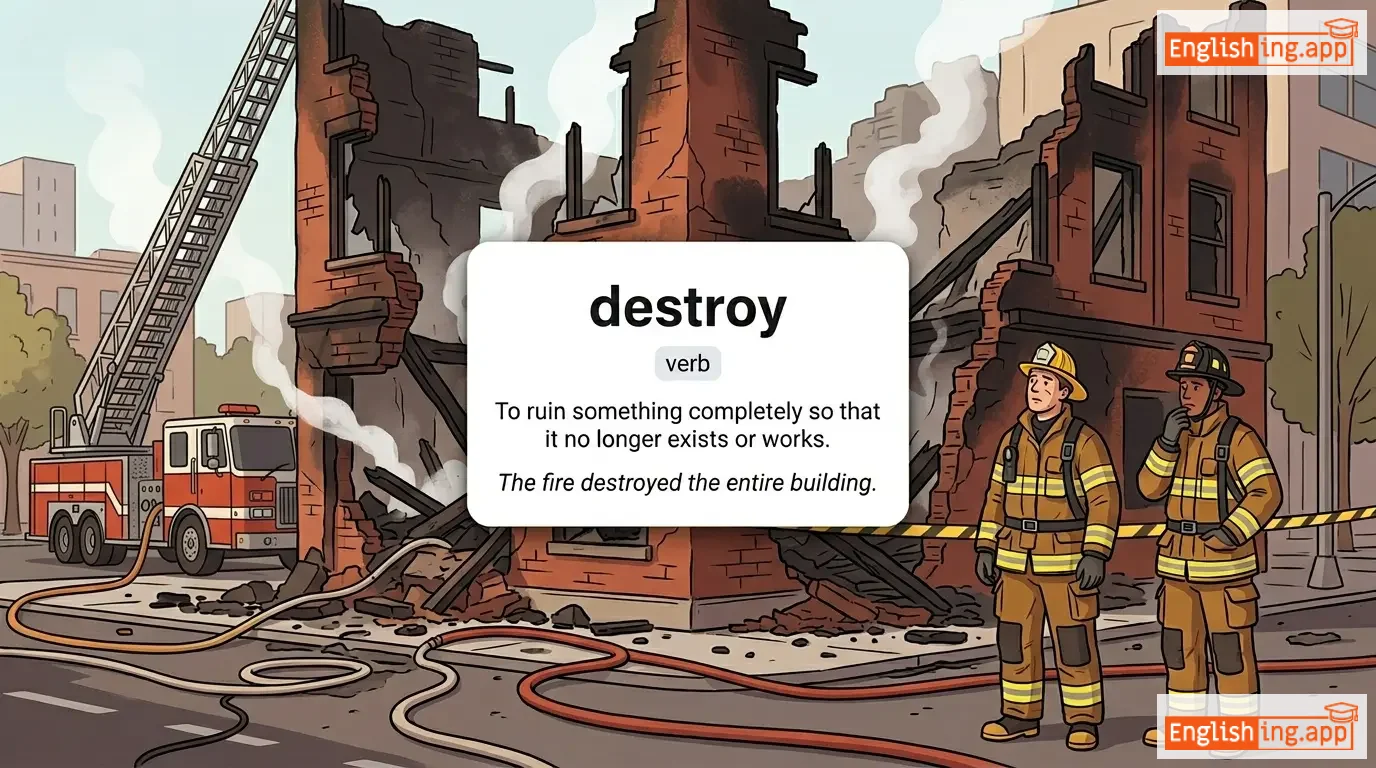
To ruin something completely so that it no longer exists or works.
••••••
|
The fire destroyed the entire building.
火事が建物全体を破壊した。
••••••
|
火事が建物全体を破壊した。
Kaji ga tatemono zentai o hakai shita.
••••••
|
self-destroy
セルフ・デストロイ
••••••
|
To cause one's own ruin.
••••••
|
セルフ・デストロイ
serufu desutoroi
••••••
|
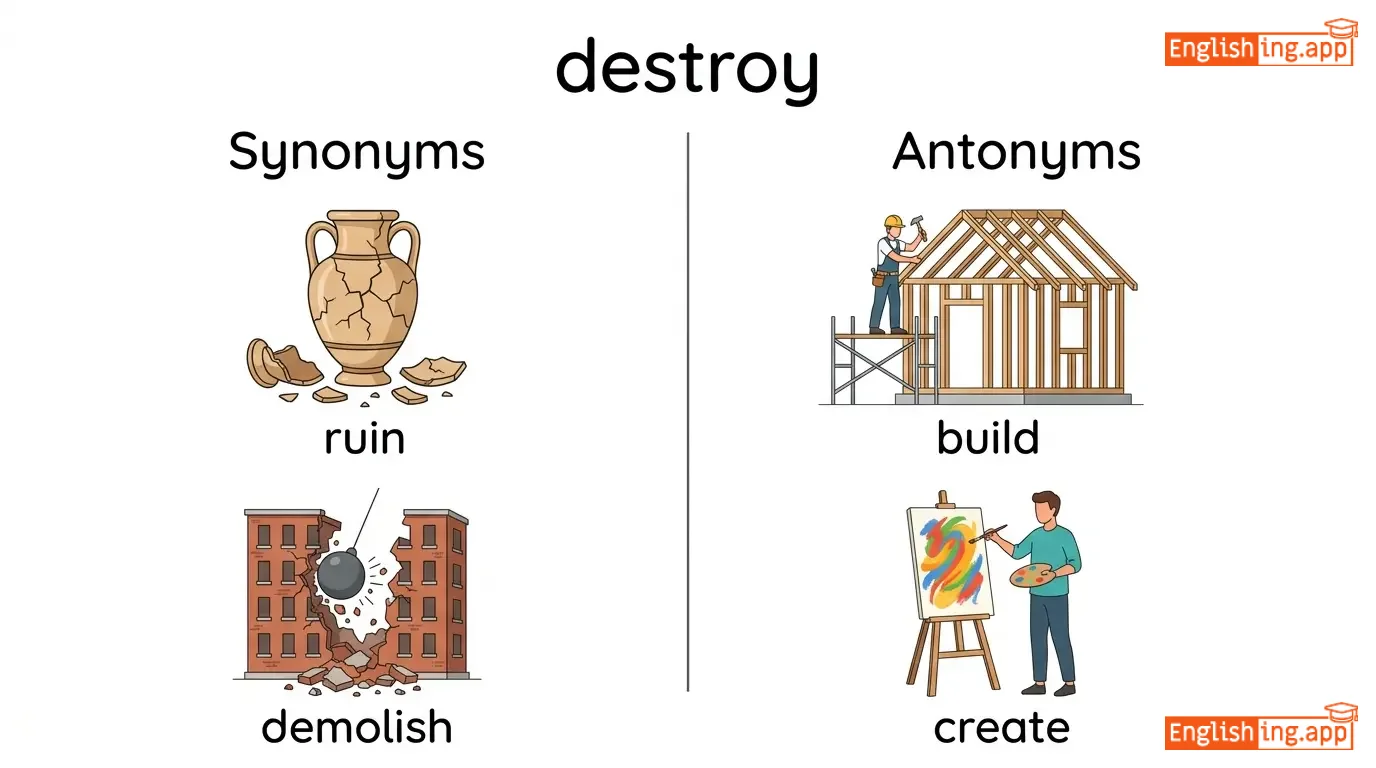
ruin, demolish, wreck, annihilate, obliterate
••••••
|
build, create, repair
••••••
|
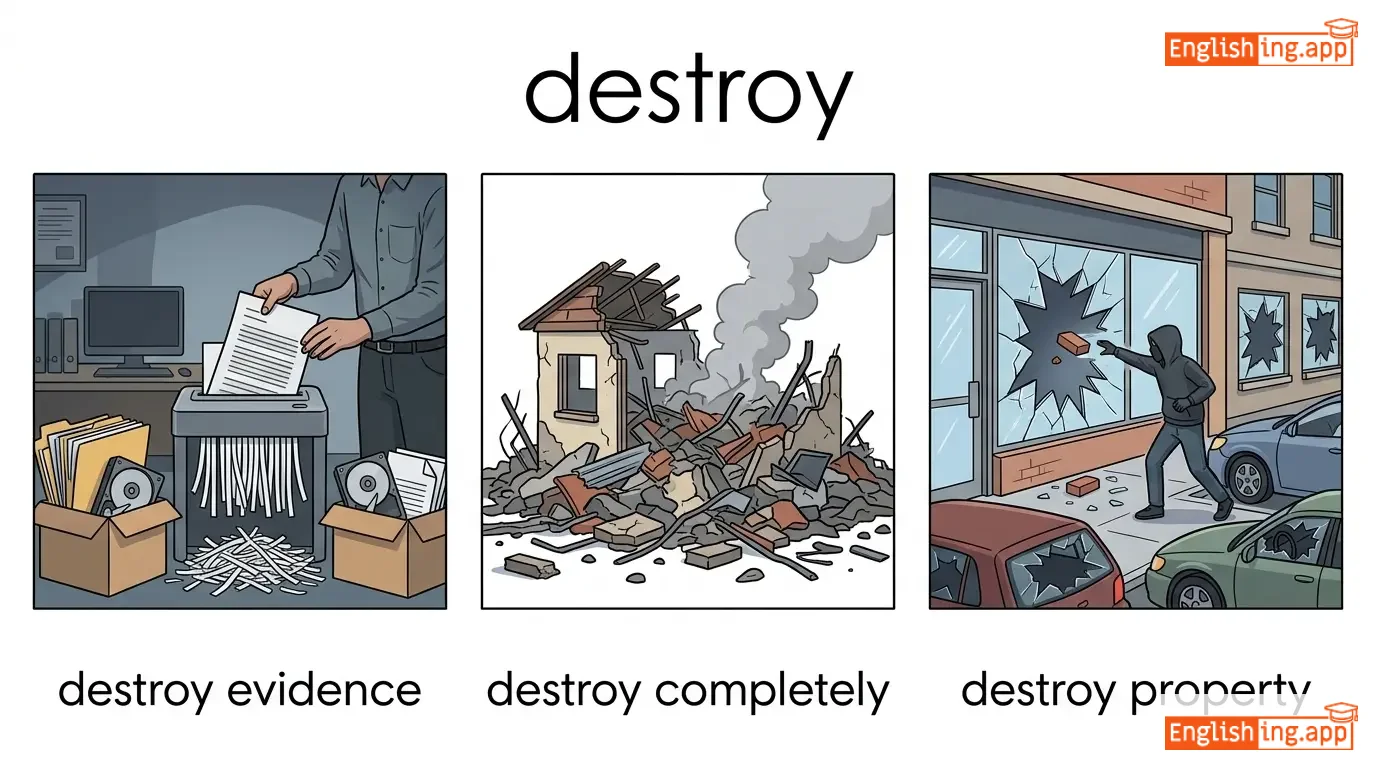
destroy evidence, destroy completely, destroy property, destroy reputation
••••••
|
破壊することはすべてを壊すことであり、火災のように建物を壊すようなものです。
••••••
|
|
#0
💎
|
/ˈdaɪəmənd/
noun
(daɪəmənd)
••••••
|
- •••••• |
ダイヤモンド
daiyamondo
••••••
|
- •••••• | - •••••• | - •••••• | - •••••• |
a precious hard stone, usually clear and colorless, valued as a gemstone
••••••
|
She wore a beautiful diamond necklace at the party. |
彼女はパーティーで美しいダイヤモンドのネックレスを着けていた。
Kanojo wa pāti de utsukushī daiyamondo no nekkuresu o tsukete ita.
••••••
|
diamond in the rough |
a person or thing with potential or talent but lacking polish or refinement
••••••
|
原石のダイヤモンド
genseki no daiyamondo
••••••
|
gem, jewel, crystal, stone, treasure
••••••
|
rock, pebble
••••••
|
diamond ring, diamond necklace, diamond mine, diamond shape
••••••
|
ダイヤモンドは月のように輝く
••••••
|
|
#0
📜
|
/dɪkˈteɪt/
verb
(ディクテート)
••••••
|
|
口述する
kōjutsu suru
••••••
|
dictated
ディクテーテッド
••••••
|
dictated
ディクテーテッド
••••••
|
dictates
ディクテーツ
••••••
|
dictating
ディクテイティング
••••••
|
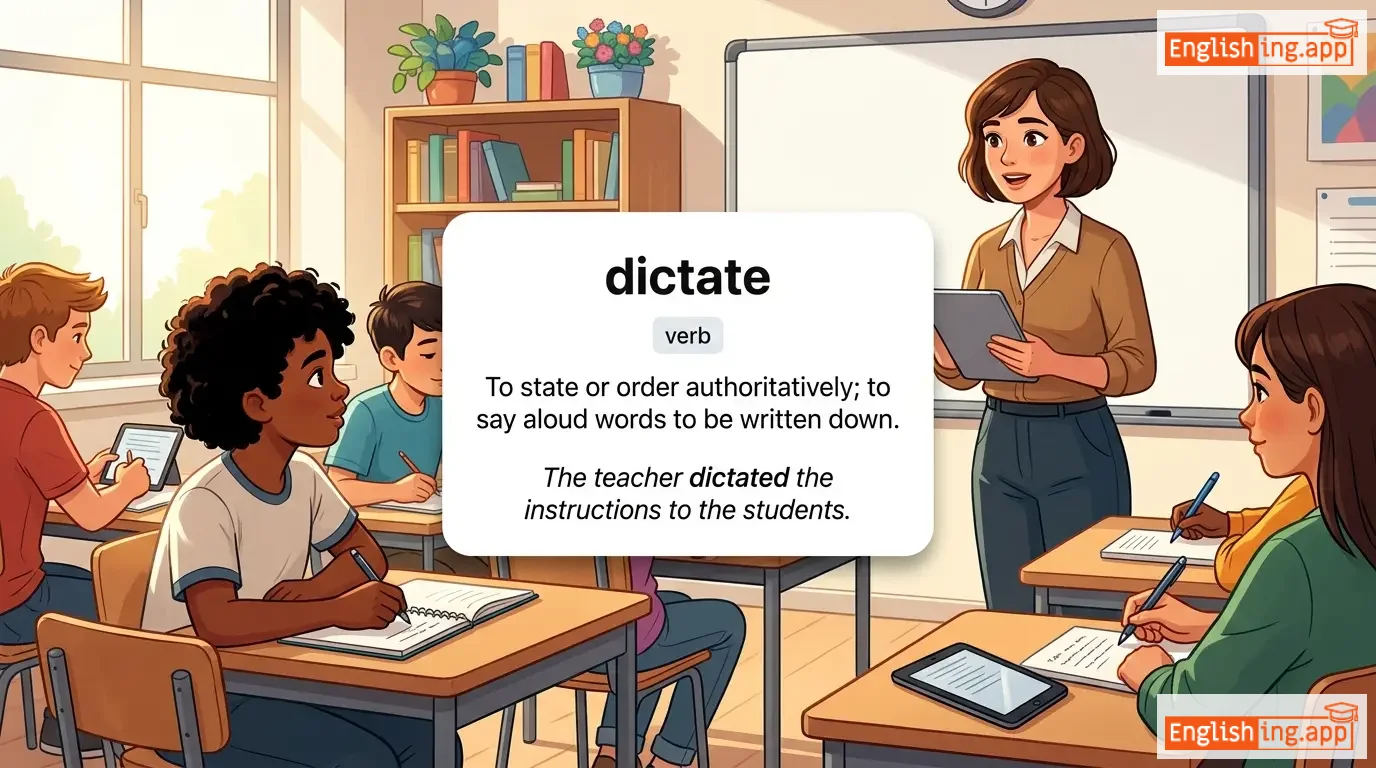
To state or order authoritatively; to say aloud words to be written down.
••••••
|
The teacher dictated the instructions to the students.
先生は学生に指示を口述しました。
••••••
|
先生は学生に指示を口述しました。
Sensei wa gakusei ni shiji o kōjutsu shimashita.
••••••
|
dictate terms
条件を口述する
••••••
|
To impose rules or conditions on others.
••••••
|
条件を口述する
Jōken o kōjutsu suru
••••••
|
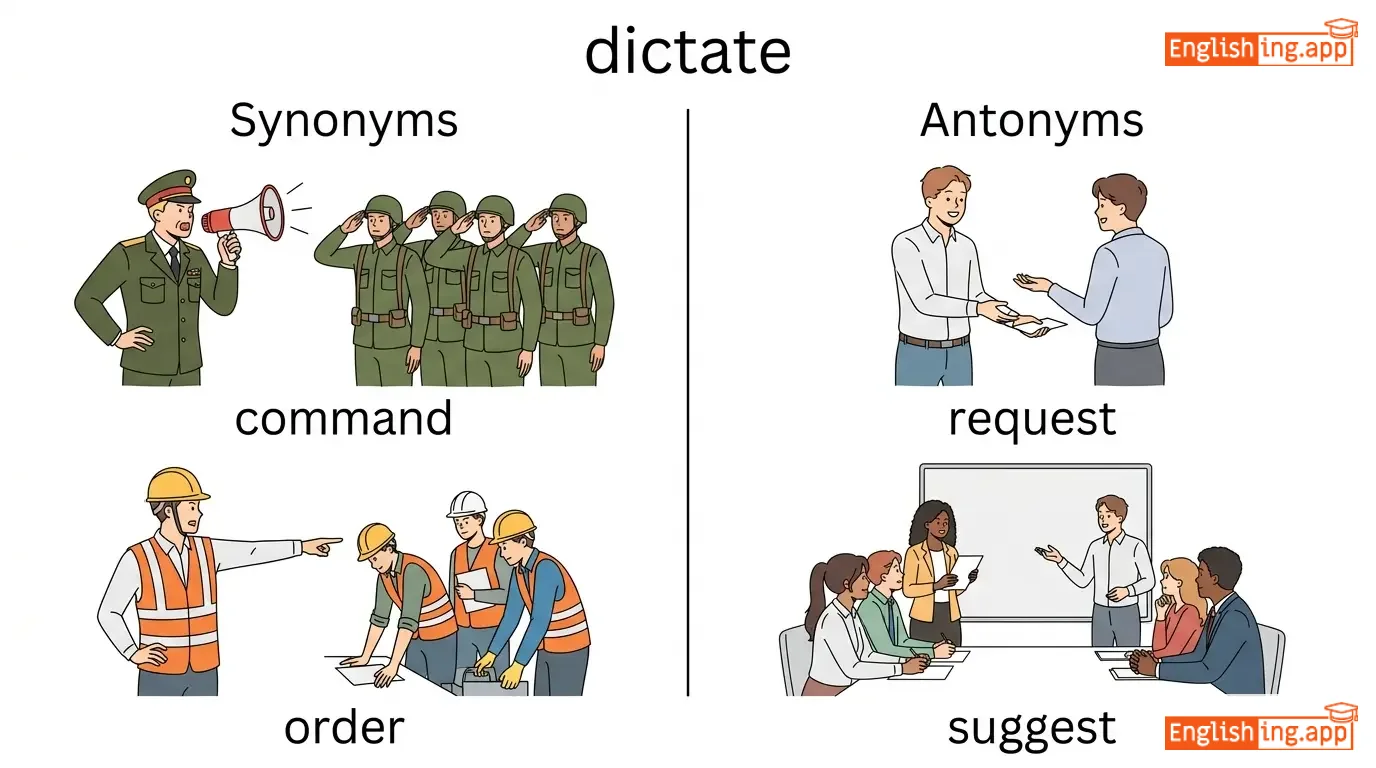
command, order, prescribe, decree
••••••
|
request, suggest
••••••
|
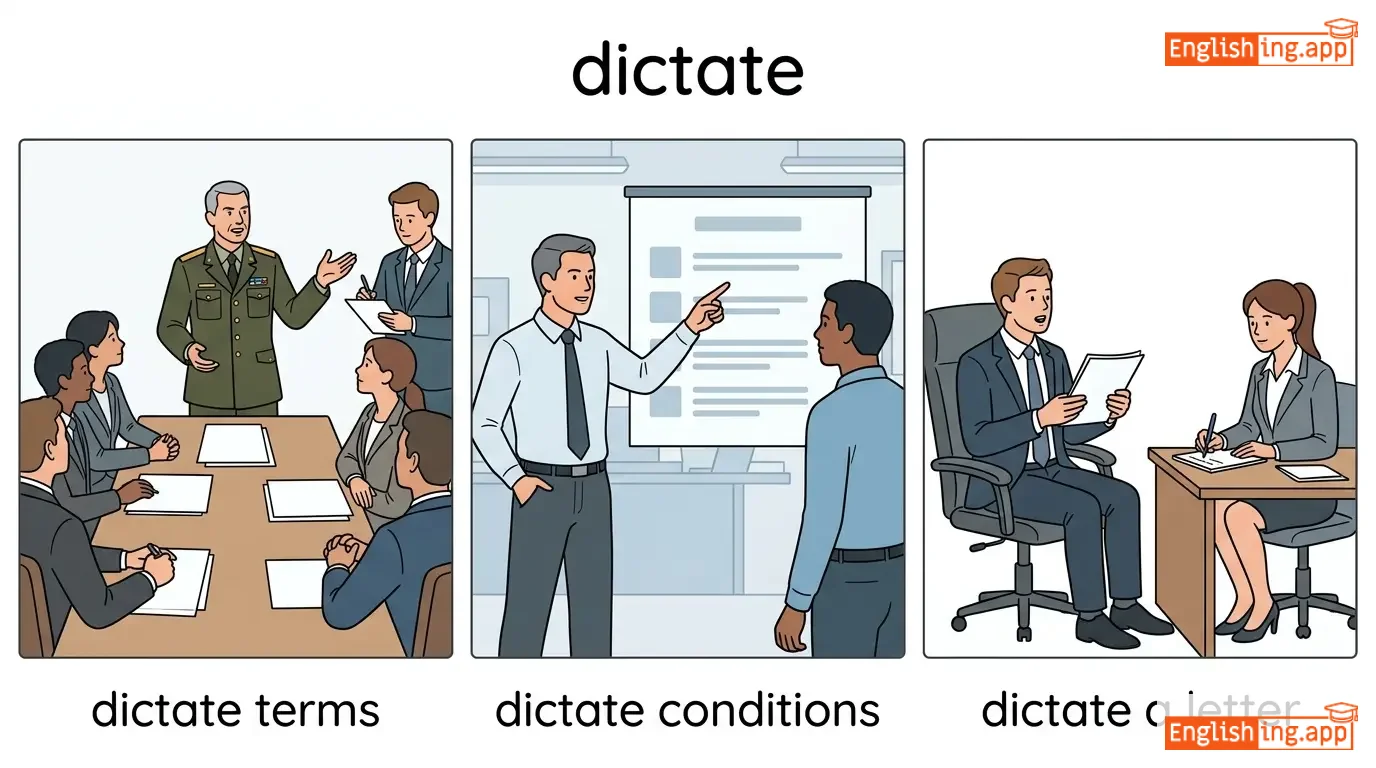
dictate terms, dictate conditions, dictate a letter
••••••
|
口述する = 声に出して書かせる
••••••
|
|
#0
🕊️
|
/ˈdɪɡnəti/
noun
(ディグニティ)
••••••
|
- •••••• |
尊厳
songen
••••••
|
- •••••• | - •••••• | - •••••• | - •••••• |
the state or quality of being worthy of respect or honor
••••••
|
He faced the difficult situation with calm and dignity. |
彼は冷静さと尊厳を持って困難な状況に立ち向かいました。
Kare wa reisei sa to songen wo motte konnan na joukyou ni tachimukaimashita.
••••••
|
maintain one's dignity |
to behave respectfully and with self-control even in difficult situations
••••••
|
尊厳を保つ
songen wo tamotsu
••••••
|
honor, self-respect, grace, pride, nobility
••••••
|
disgrace, humiliation, shame
••••••
|
human dignity, personal dignity, loss of dignity, with dignity
••••••
|
'尊厳' は名誉を意味します — '尊'の中に'厳'を見つけて!
••••••
|
|
#0
🤔
|
/daɪˈlɛmə/
noun
(ディレマ)
••••••
|
|
ジレンマ
jirenma
••••••
|
- •••••• | - •••••• | - •••••• | - •••••• |
A situation in which a difficult choice has to be made between two or more alternatives.
••••••
|
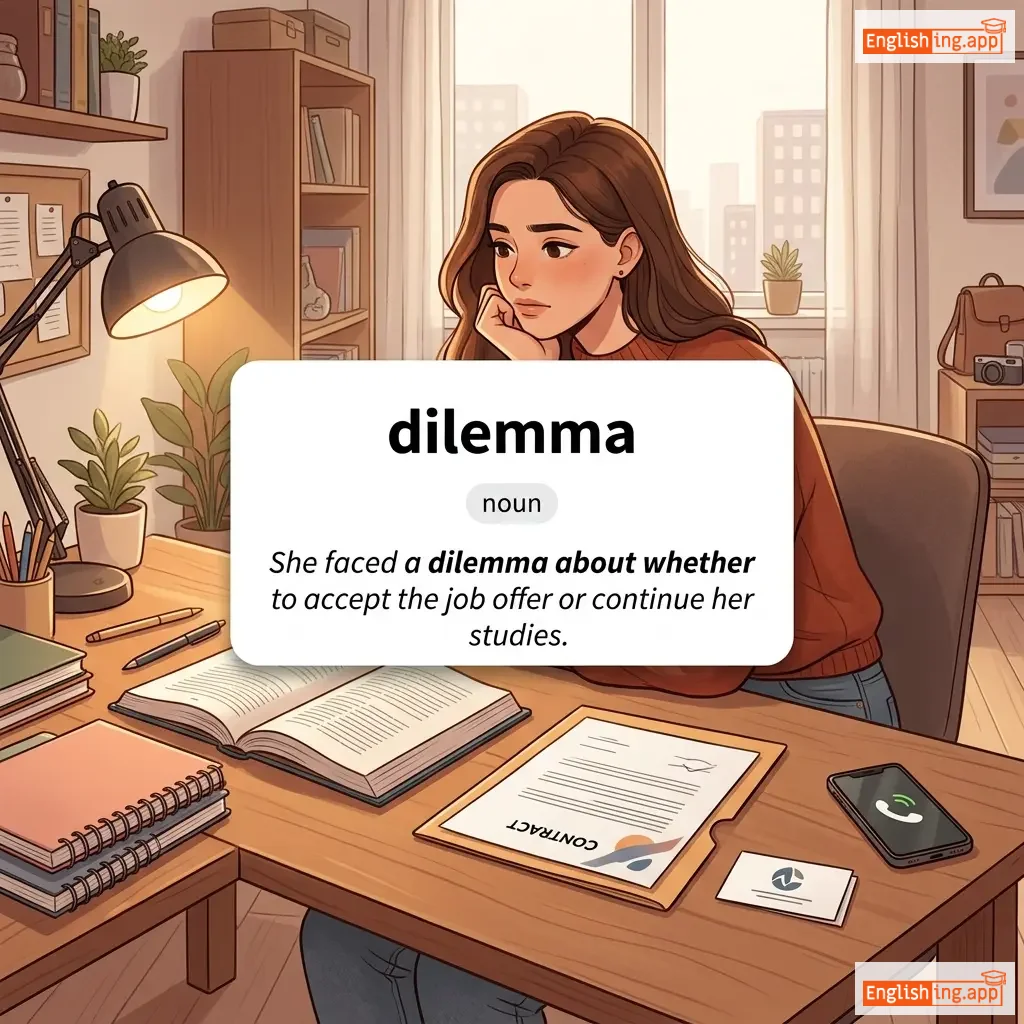
She faced a dilemma about whether to accept the job offer or continue her studies. |
彼女は仕事のオファーを受け入れるか、学業を続けるかというジレンマに直面していました。
Kanojo wa shigoto no ofā o ukeireru ka, gakugyō o tsuzukeru ka to iu jirenma ni chokumen shiteimashita.
••••••
|
moral dilemma |
A difficult choice involving a conflict of moral principles.
••••••
|
道徳的ジレンマ
dōtoku-teki jirenma
••••••
|
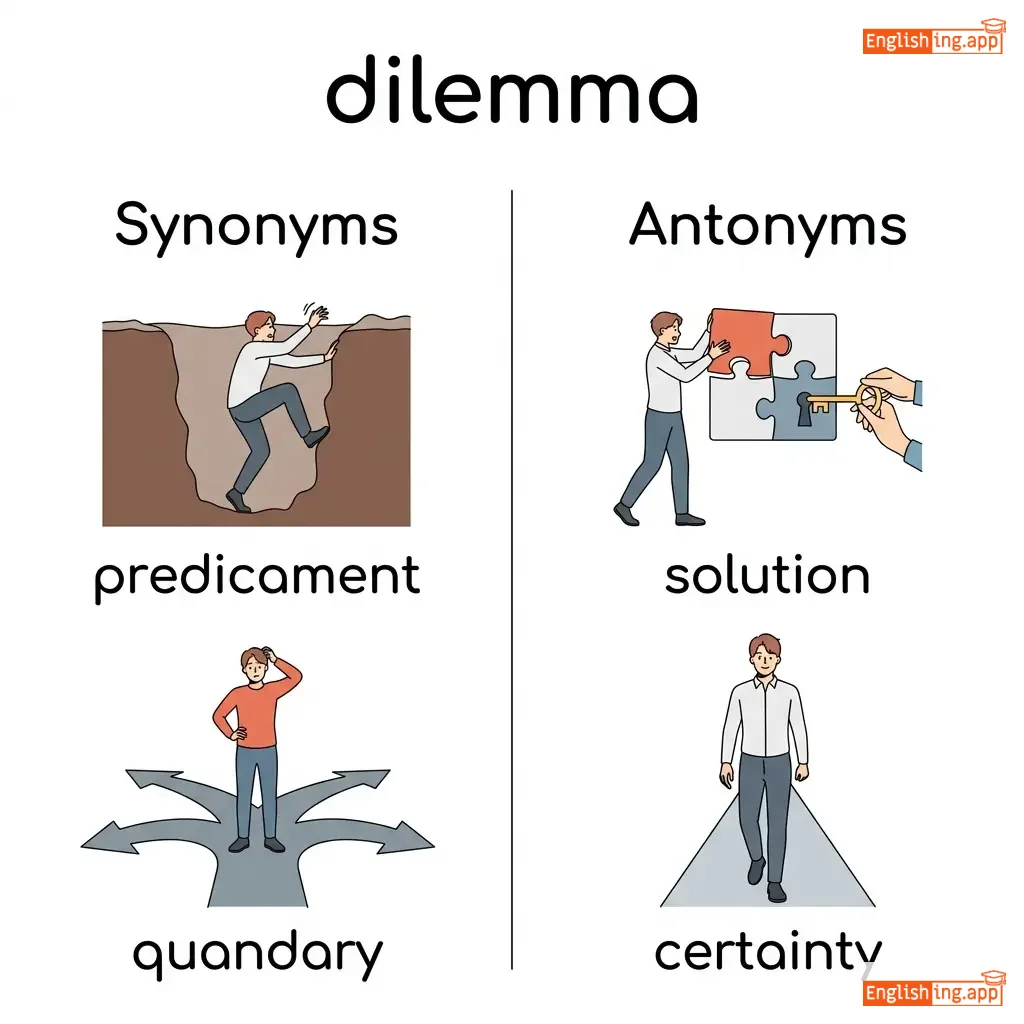
predicament, quandary, problem, difficulty
••••••
|
solution, certainty, clarity
••••••
|
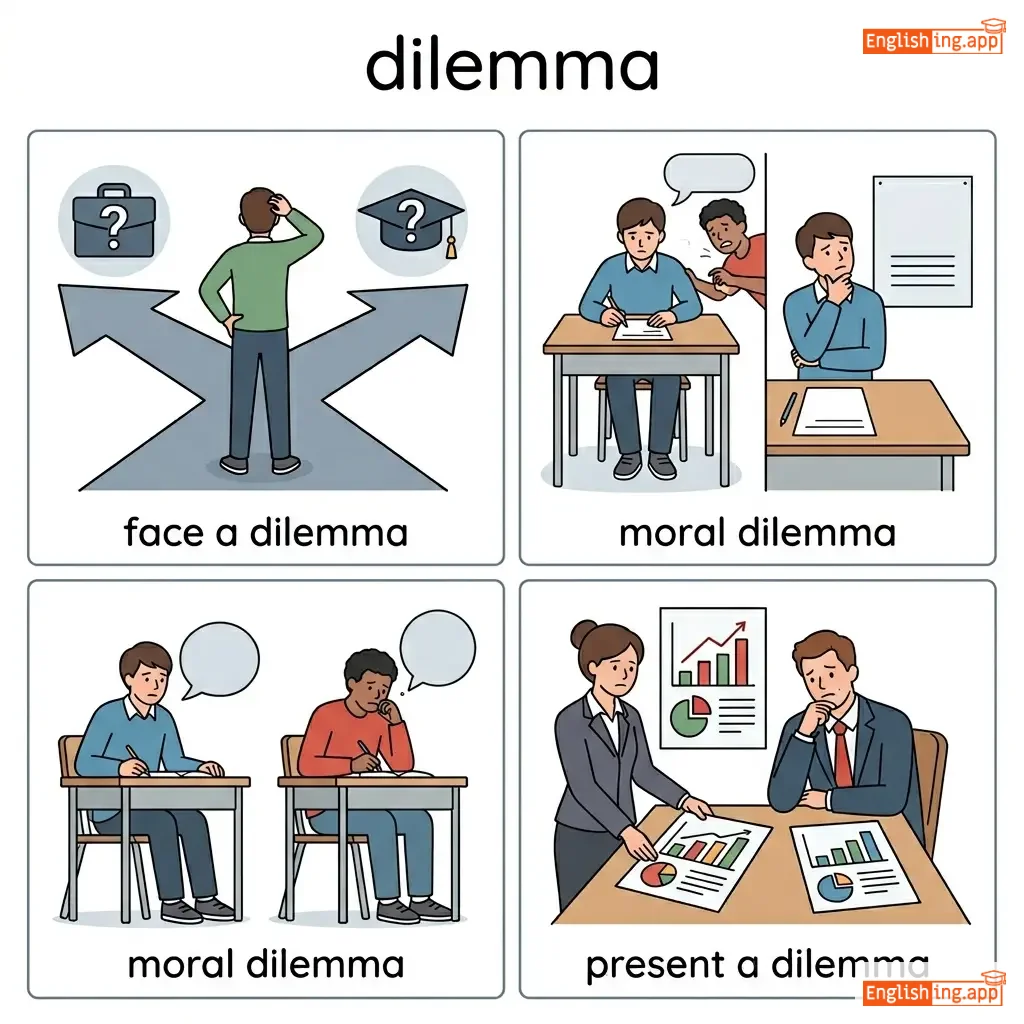
face a dilemma, moral dilemma, present a dilemma
••••••
|
Dilemma は di (二) + lemma (選択) = 二つの難しい選択肢。
••••••
|
|
#0
🗑️
|
/dɪsˈkɑːrd/
verb
(ディスカード)
••••••
|
- •••••• |
捨てる
suteru
••••••
|
discarded
ディスカードッド
••••••
|
discarded
ディスカードッド
••••••
|
discards
ディスカードス
••••••
|
discarding
ディスカードイング
••••••
|
to throw away something that is no longer needed
••••••
|
She decided to discard the old clothes.
彼女は古い服を捨てることに決めました。
••••••
|
彼女は古い服を捨てることに決めました。
Kanojo wa furui fuku wo suteru koto ni kimemashita.
••••••
|
discard old habits
古い習慣を捨てる
••••••
|
to stop following old behaviors or practices
••••••
|
古い習慣を捨てる
furui shuukan wo suteru
••••••
|
abandon, throw away, remove, get rid of
••••••
|
keep, retain, preserve
••••••
|
discard clothes, discard waste, discard items, discard habits
••••••
|
Discardはカードを捨てる意味です 🗑️
••••••
|
|
#0
🚪
|
/dɪsˈmɪs/
verb
(ディスミス)
••••••
|
|
解雇する, 却下する
kaiko suru, kyakka suru
••••••
|
dismissed
ディスミスド
••••••
|
dismissed
ディスミスド
••••••
|
dismisses
ディスミセズ
••••••
|
dismissing
ディスミッシング
••••••
|
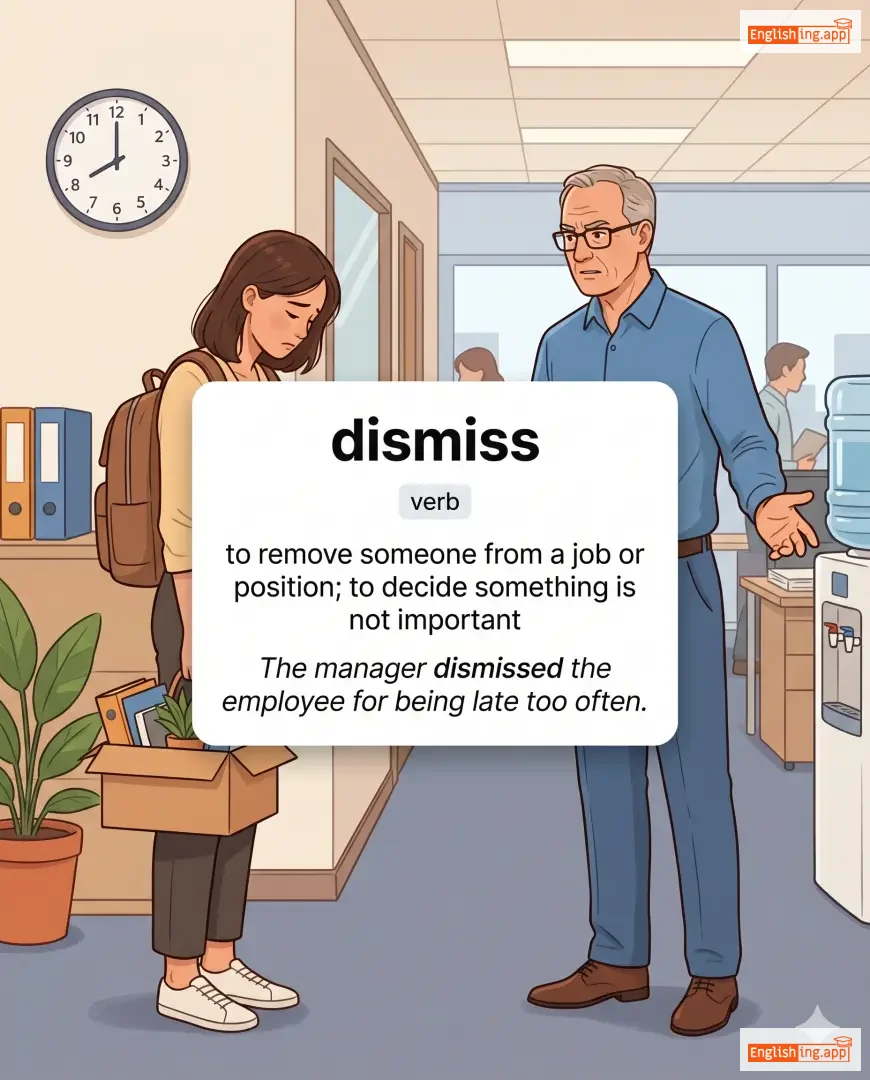
to remove someone from a job or position; to decide something is not important
••••••
|
The manager dismissed the employee for being late too often.
マネージャーは遅刻が多すぎるため、従業員を解雇しました。
••••••
|
マネージャーは遅刻が多すぎるため、従業員を解雇しました。
Manējā wa chikoku ga ōsugiru tame, jūgyōin o kaiko shimashita.
••••••
|
dismiss out of hand
即座に却下する
••••••
|
to reject something immediately without considering it
••••••
|
即座に却下する
sokuzani kyakka suru
••••••
|
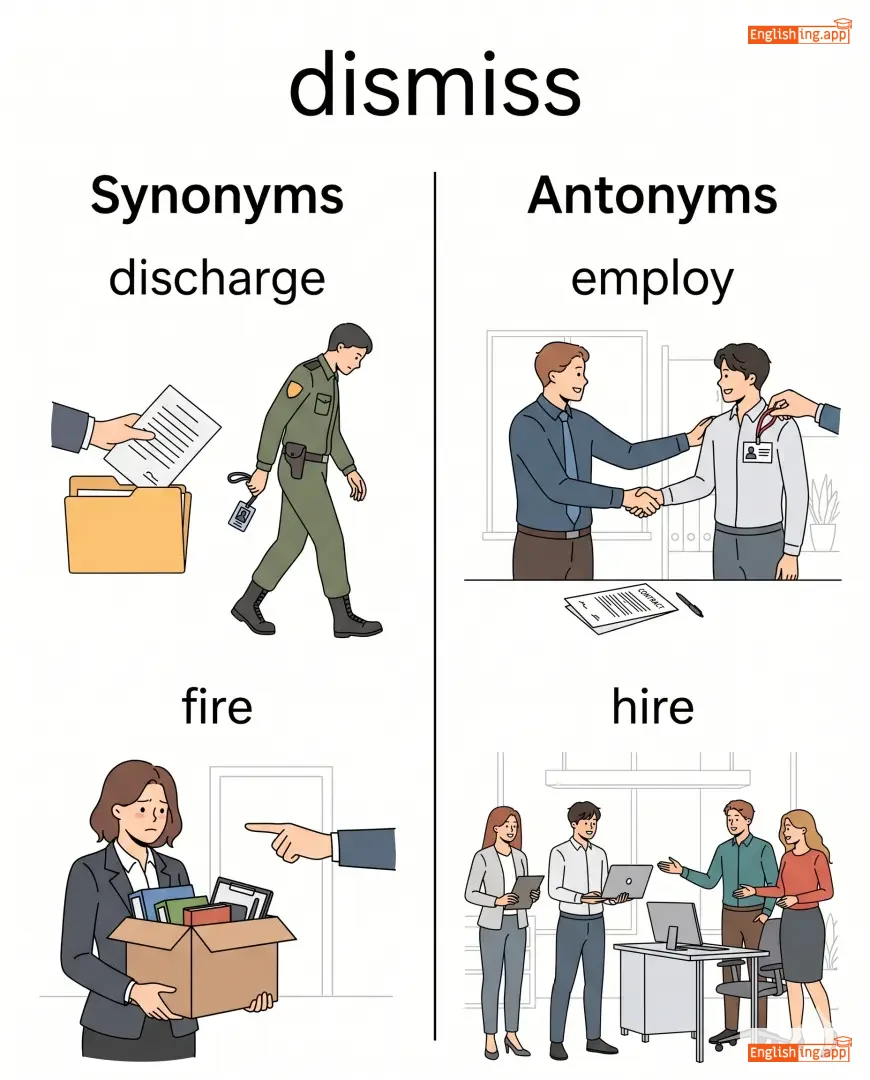
discharge, fire, release, reject, expel
••••••
|
employ, hire, accept
••••••
|
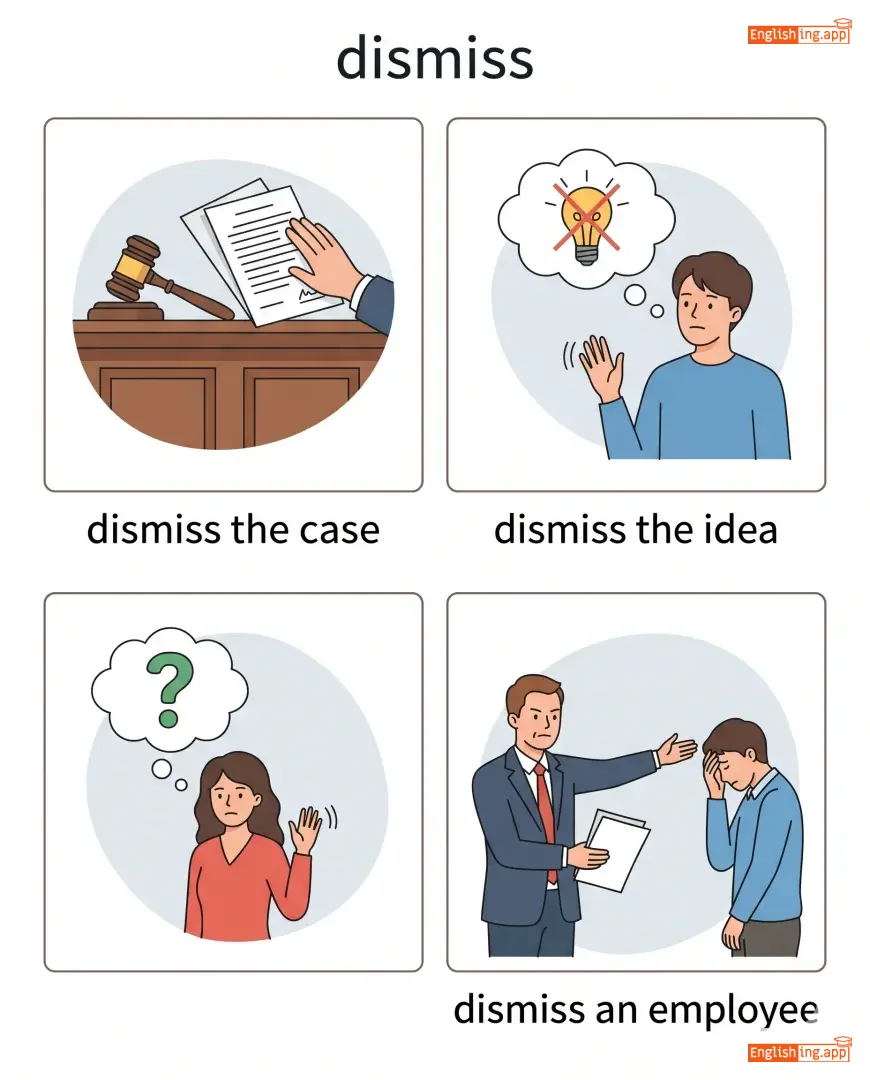
dismiss the case, dismiss the idea, dismiss an employee, dismiss charges
••••••
|
Dis + Miss = 解雇する
••••••
|
|
#0
🗑️
|
/dɪˈspoʊz/
verb
(ディスポーズ)
••••••
|
- •••••• |
処分する
shobun suru
••••••
|
disposed
ディスポーズド
••••••
|
disposed
ディスポーズド
••••••
|
disposes
ディスポーズズ
••••••
|
disposing
ディスポーズイング
••••••
|
To get rid of something, or to arrange or incline towards something.
••••••
|
He disposed of the old furniture responsibly.
彼は古い家具を責任を持って処分しました。
••••••
|
彼は古い家具を責任を持って処分しました。
Kare wa furui kagu o sekinin o motte shobun shimashita.
••••••
|
dispose of
処分する
••••••
|
to throw away or get rid of something
••••••
|
処分する
shobun suru
••••••
|
discard, throw away, eliminate, arrange, incline
••••••
|
keep, retain, preserve
••••••
|
dispose of waste, properly dispose, dispose quickly, dispose carefully
••••••
|
Dispose = 何かを処分する、無駄なものを捨てるように。
••••••
|
|
#0
⚔️
|
/dɪˈspjuːt/
noun/verb
(ディスピュート)
••••••
|
- •••••• |
争い, 論争
arasoi, ronsou
••••••
|
disputed
ディスピューテッド
••••••
|
disputed
ディスピューテッド
••••••
|
disputes
ディスピューツ
••••••
|
disputing
ディスピューティング
••••••
|
a disagreement or argument about something important
••••••
|
The two countries are in dispute over the border issue.
二国間で国境問題について争いが続いています。
••••••
|
二国間で国境問題について争いが続いています。
Nikokukan de kokkyou mondai ni tsuite arasoi ga tsuzuiteimasu.
••••••
|
settle a dispute
争いを解決する
••••••
|
to resolve a disagreement
••••••
|
争いを解決する
arasoi o kaiketsu suru
••••••
|
conflict, quarrel, argument, debate, disagreement
••••••
|
agreement, harmony, peace
••••••
|
trade dispute, legal dispute, border dispute, dispute resolution
••••••
|
Disputeは 'dis' + 'put' → 一緒にいない → 争いや論争の意味
••••••
|
|
#0
🌄
|
/ˈdɪstənt/
adjective
(ディスタント)
••••••
|
- •••••• |
遠い
tooi
••••••
|
- •••••• | - •••••• | - •••••• | - •••••• |
far away in space or time
••••••
|
They could see the distant mountains from their home. |
彼らは家から遠くの山々を見ることができた。
Karera wa ie kara tooku no yamayama o miru koto ga dekita.
••••••
|
distant relative |
a relative who is not closely related
••••••
|
遠い親戚
tooi shinseki
••••••
|
far, remote, faraway, detached, aloof
••••••
|
near, close, friendly
••••••
|
distant land, distant memory, distant future, distant relative
••••••
|
Distant は distance と似ている—距離があるところに、distant がある。
••••••
|
Vocabulary Quiz
Test your vocabulary by matching words with their translations or meanings.
Login to take the quiz
Comments (0)
Share your thoughts and join the discussion.
Join the discussion by logging in
Login to CommentNo comments yet
Be the first to share your thoughts!