

希望の錨
Anchors of Hope
サイクロン後、私たちの救助船は小さなチャンドプール港にanchorを下ろしました。水はまだ濁っており、川が家々の中のすべての悲しみをabsorbしようとしているかのようでした。リマは災害がどれほど深く皆にaffectしたかを感じました。それでも、彼女はafraidではなく、皆の士気を高めるために笑顔を見せました。彼らは壊れた道路をacrossしてボートを進めました。彼らの最初のactionは、高齢者を安全な場所に移動させることでした。ボランティアの少年たちは一日中activeでした。彼らは現地のactualな状況でリストを更新しました。上級職員は新しいチームにすぐにadviseをしなければならないと言いました。組織のrescueチームは橋の下から家族を引き出しました。カリム・バイの庭に仮のshelterが作られました。リマは崩れたbridgeを見つめ、深く息を吸いました。洪水は、多くの家のdamageがまだ湿っていることを意味しました。それでも、彼らは毎家庭にsupplyの食料を届け続けました。彼らは各victimの名前、年齢、必要事項を記録しました。近隣のsquadが新しいボートで到着しました。ラジオでurgentなメッセージが鳴り、次の嵐の可能性について警告しました。そこで、彼らは近隣の村に迅速にcooperateするよう求めました。リマは医療班に、負傷者をすぐにassistするように言いました。最後に、海洋部門の軽量ボートが地域全体を巡回しました。
翻訳
過去
過去分詞
三人称単数
動名詞
意味
例文
例文の翻訳
同義語
対義語
コロケーション
ニーモニック
Swipe left or right, or use the buttons. Tap image to zoom.
例文の翻訳
単語
Anchors of HopeAnchors of Hope - マスクトグル
|
絵文字
|
単語 | Images | 翻訳 | 過去 | 過去分詞 | 三人称単数 | 動名詞 | 意味 | 例文 | 例文の翻訳 | 表現例 | 表現例の意味 | 表現例の翻訳 | 同義語 | 対義語 | コロケーション | ニーモニック |
|---|---|---|---|---|---|---|---|---|---|---|---|---|---|---|---|---|---|
|
#0
🧽
|
/əbˈzɔːrb/
verb
(アブゾーブ)
••••••
|
- •••••• |
吸収する
きゅうしゅうする
••••••
|
absorbed
アブゾーブド
••••••
|
absorbed
アブゾーブド
••••••
|
absorbs
アブゾーブス
••••••
|
absorbing
アブゾービング
••••••
|
to take in or soak up a liquid, energy, or information
••••••
|
The sponge absorbed all the water.
スポンジは水をすべて吸収しました。
••••••
|
スポンジは水をすべて吸収しました。
Suponji wa mizu o subete kyūshū shimashita.
••••••
|
absorbed in thought
考えにふける
••••••
|
deeply engaged or preoccupied with one's thoughts
••••••
|
考えにふける
Kangae ni fukeru
••••••
|
soak, consume, engross, assimilate, take in
••••••
|
release, emit, repel
••••••
|
absorb energy, absorb impact, absorb information
••••••
|
吸収する + orb = orb(ボール)はすべてを吸収します。
••••••
|
|
#0
➡️
|
/əˈkrɒs/
preposition/adverb
(アクロス)
••••••
|
- •••••• |
横断する
oudan suru
••••••
|
- •••••• | - •••••• | - •••••• | - •••••• |
From one side to the other side of something.
••••••
|
He ran across the street to catch the bus. |
彼はバスに乗るために通りを横断した。
Kare wa basu ni noru tame ni toori o oudanshita.
••••••
|
across the board |
affecting everyone or everything equally
••••••
|
全体にわたって
zentai ni watatte
••••••
|
over, through, beyond, opposite
••••••
|
along, within
••••••
|
run across, go across, look across, spread across
••••••
|
Acrossは横断すること。道路を横断するのは、片側からもう片側へ行くこと。
••••••
|
|
#0
⚡
|
/ˈækʃən/
noun
(アクション)
••••••
|
- •••••• |
アクション
akushon
••••••
|
- •••••• | - •••••• | - •••••• | - •••••• |
The process of doing something, typically to achieve a goal.
••••••
|
The government took immediate action to control inflation. |
政府はインフレーションを抑制するために迅速に行動を起こした。
Seifu wa infurēshon o yokusei suru tame ni jinsoku ni kōdō o okoshita.
••••••
|
take action |
to do something to achieve an effect
••••••
|
行動を起こす
kōdō o okosu
••••••
|
deed, operation, measure, step, effort
••••••
|
inaction, rest
••••••
|
take action, legal action, direct action, military action
••••••
|
アクションは何かをすること、アクション映画のヒーローのように。
••••••
|
|
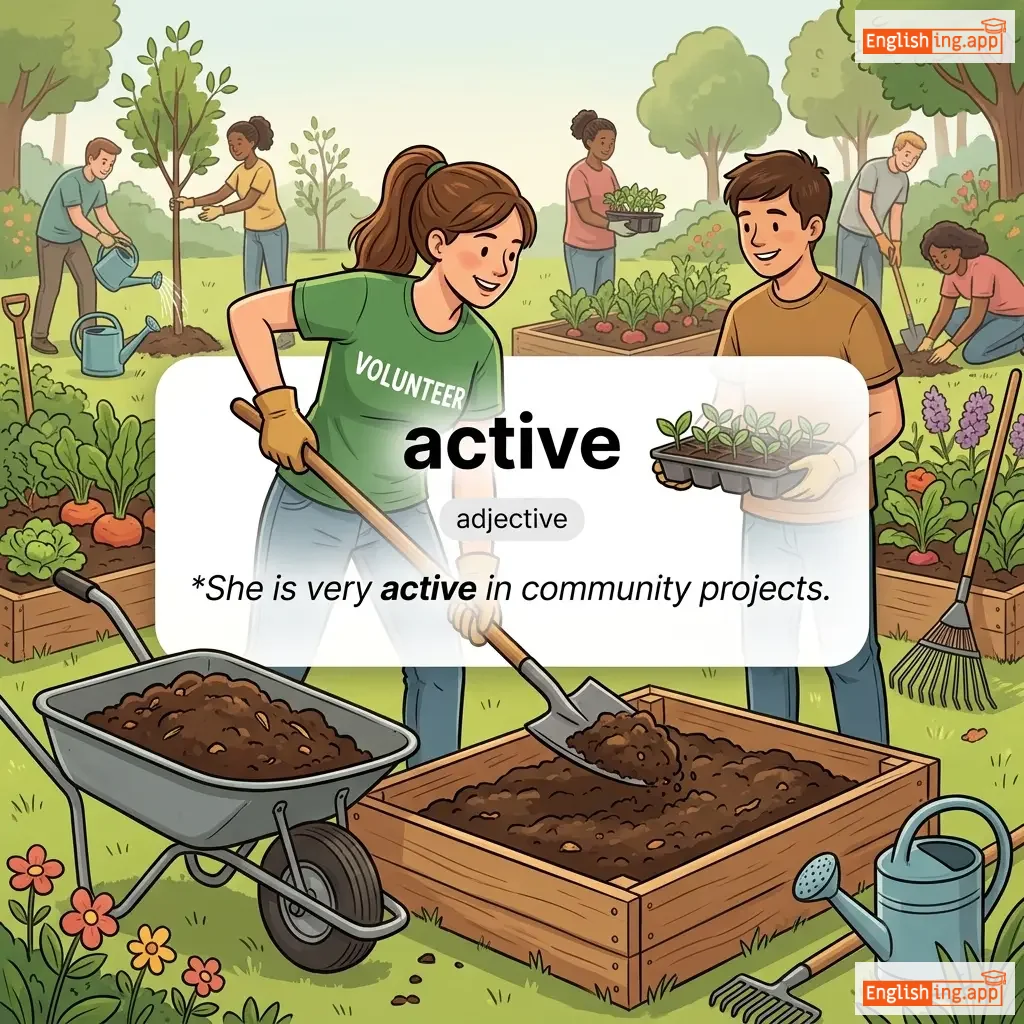
#0
🏃
|
/ˈæktɪv/
adjective
(アクティブ)
••••••
|
|
アクティブな
akutibu na
••••••
|
- •••••• | - •••••• | - •••••• | - •••••• |
Engaging or ready to engage in physically energetic pursuits; taking action rather than being passive.
••••••
|
She is very active in community projects. |
彼女はコミュニティプロジェクトに非常にアクティブです。
Kanojo wa komyuniti purojekuto ni hijō ni akutibu desu.
••••••
|
active duty |
A period of full-time military service.
••••••
|
アクティブな義務
akutibu na gimu
••••••
|
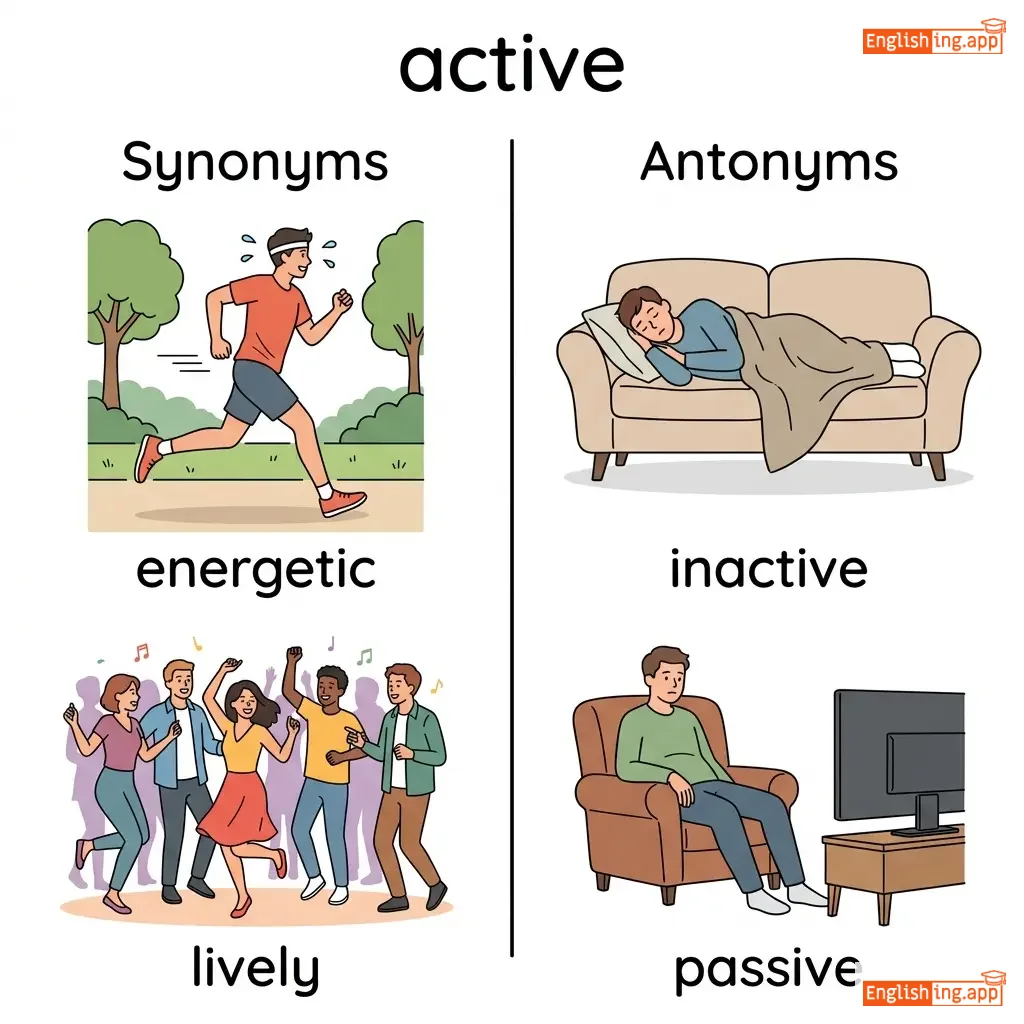
energetic, lively, dynamic, vigorous, busy
••••••
|
inactive, passive, idle
••••••
|
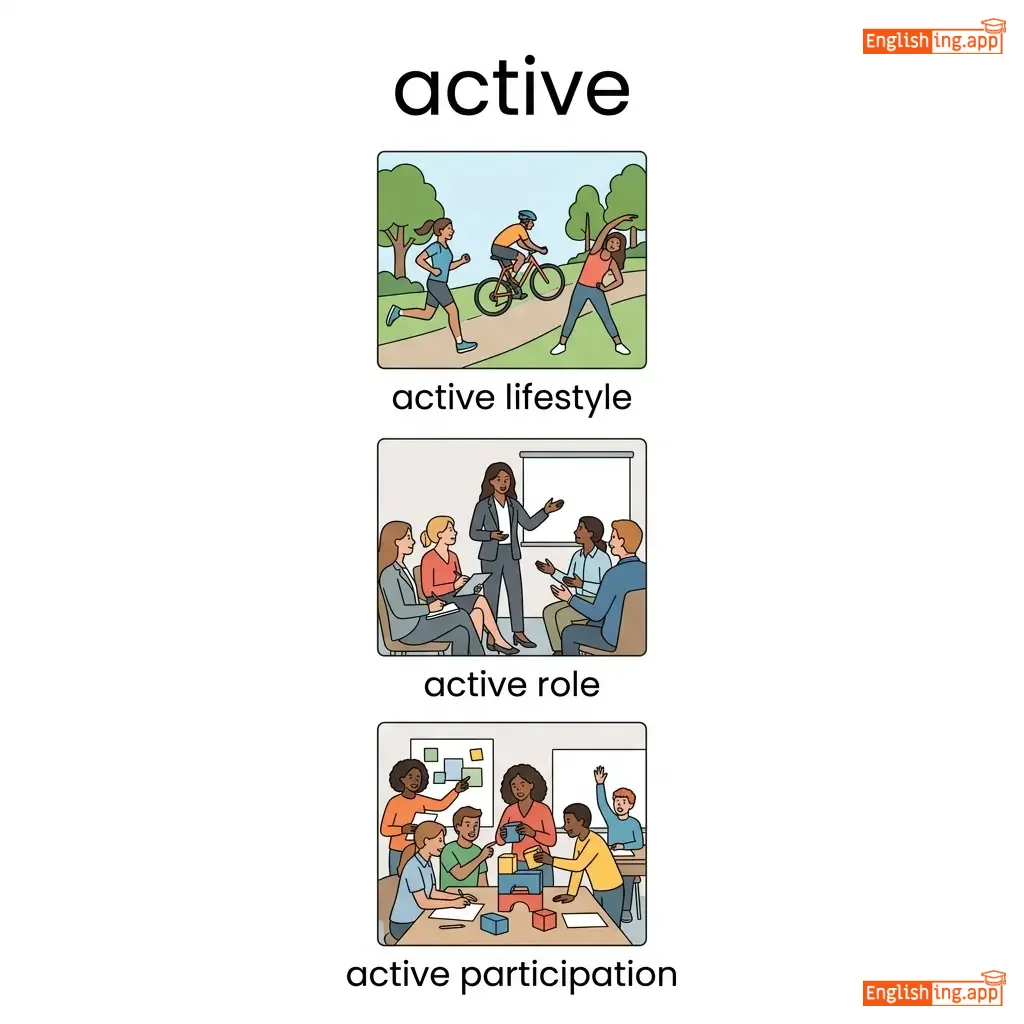
active lifestyle, active role, active participation, active engagement
••••••
|
Activeはアクティブを意味し、Facebookでアクティブであれば、誰でもオンラインだと知っているのと同じです。
••••••
|
|
#0
✅
|
/ˈæktʃuəl/
adjective
(アクチュアル)
••••••
|
- •••••• |
実際の
jissai no
••••••
|
- •••••• | - •••••• | - •••••• | - •••••• |
real and existing, not just imagined or supposed
••••••
|
The actual cost was higher than expected. |
実際のコストは予想より高かった。
Jissai no kosuto wa yosō yori takakatta.
••••••
|
in actual fact |
used to emphasize that something is really true
••••••
|
実際には
jissai ni wa
••••••
|
real, genuine, factual, true, authentic
••••••
|
fake, false, imaginary
••••••
|
actual cost, actual reason, actual situation, actual fact
••••••
|
Actualは実際のを意味する—実際には本当に真実を強調する
••••••
|
|
#0
🗣️
|
/ədˈvaɪz/
verb
(アドバイズ)
••••••
|
- •••••• |
アドバイスする
adobaisu suru
••••••
|
advised
アドバイズド
••••••
|
advised
アドバイズド
••••••
|
advises
アドバイゼズ
••••••
|
advising
アドバイジング
••••••
|
to recommend what should be done; to give advice
••••••
|
The doctor advised him to rest for a week.
医者は彼に1週間休むようにアドバイスした。
••••••
|
医者は彼に1週間休むようにアドバイスした。
Isha wa kare ni 1-shūkan yasumu yō ni adobaisu shita.
••••••
|
advise against
アドバイスアゲインスト
••••••
|
to recommend not doing something
••••••
|
何かをしないようにアドバイスする
nanika o shinai yō ni adobaisu suru
••••••
|
recommend, suggest, counsel, urge
••••••
|
discourage, forbid
••••••
|
strongly advise, advise caution, advise against, legally advise
••••••
|
Advise は「アドバイスする」と言う意味で、助言をすることです。
••••••
|
|
#0
🌦️
|
/əˈfɛkt/
verb
(アフェクト)
••••••
|
- •••••• |
影響する
eikyo suru
••••••
|
affected
アフェクトされた
••••••
|
affected
アフェクトされた
••••••
|
affects
アフェクトする
••••••
|
affecting
アフェクトしている
••••••
|
to influence or make a difference to something
••••••
|
The weather can greatly affect our mood.
天気は私たちの気分に大きな影響を与えることがある。
••••••
|
天気は私たちの気分に大きな影響を与えることがある。
Tenki wa watashitachi no kibun ni ookina eikyo o ataeru koto ga aru.
••••••
|
affect deeply
深く影響する
••••••
|
to have a strong emotional impact
••••••
|
深く影響する
fukaku eikyo suru
••••••
|
influence, impact, change, alter, sway
••••••
|
ignore, neglect
••••••
|
affect mood, affect decision, affect performance, affect outcome
••••••
|
Affectは私たちの気持ちに影響を与える、まるで風のように。
••••••
|
|
#0
😨
|
/əˈfreɪd/
adjective
(afureido)
••••••
|
- •••••• |
怖がっている
kowagatteiru
••••••
|
- •••••• | - •••••• | - •••••• | - •••••• |
feeling fear or anxiety; worried that something undesirable will happen
••••••
|
She was afraid of the dark. |
彼女は暗闇を怖がっていた。
Kanojo wa kurayami o kowagatteita.
••••••
|
afraid of one's own shadow |
extremely timid or nervous
••••••
|
自分の影を恐れる
jibun no kage o osoreru
••••••
|
fearful, scared, frightened, anxious, nervous
••••••
|
brave, confident, fearless
••••••
|
afraid of, terribly afraid, afraid to ask, afraid that
••••••
|
Afraidは怖がっているという意味—暗闇の中で怖がっているところを想像してください。
••••••
|
|
#0
⚓
|
/ˈæŋkər/
noun, verb
(アンカー)
••••••
|
- •••••• |
アンカー
ankā
••••••
|
anchored
アンカード
••••••
|
anchored
アンカード
••••••
|
anchors
アンカーズ
••••••
|
anchoring
アンカリング
••••••
|
a heavy object used to hold a ship in place; also to secure firmly
••••••
|
The ship dropped its anchor near the shore.
船は岸近くにアンカーを投げた。
••••••
|
船は岸近くにアンカーを投げた。
Fune wa kishi chikaku ni ankā o nageta.
••••••
|
anchor of hope
希望のアンカー
••••••
|
something that provides stability and confidence
••••••
|
希望のアンカー
Kibou no ankā
••••••
|
mooring, fastener, stabilizer, support, mainstay
••••••
|
drift, release, instability
••••••
|
drop anchor, lift anchor, anchor point, news anchor
••••••
|
アンカーは船を固定します。希望のアンカー:人生の安定性。
••••••
|
|
#0
🤲
|
/əˈsɪst/
verb
(アシスト)
••••••
|
- •••••• |
助ける
tasukeru
••••••
|
assisted
アシステッド
••••••
|
assisted
アシステッド
••••••
|
assists
アシスタス
••••••
|
assisting
アシスティング
••••••
|
to help or support someone in doing something
••••••
|
The nurse will assist the doctor during the surgery.
看護師は手術中に医者をアシストします。
••••••
|
看護師は手術中に医者をアシストします。
Kangoshi wa shujutsuchu ni isha wo ashisuto shimasu.
••••••
|
assist in
アシストイン
••••••
|
to help someone with something
••••••
|
助ける
tasukeru
••••••
|
help, support, aid, facilitate, encourage
••••••
|
hinder, obstruct
••••••
|
assist someone, assist with, assist in, assist greatly
••••••
|
アシストは、友達を手伝うことです。
••••••
|
|
#0
🌉
|
/brɪdʒ/
noun
(ブリッジ)
••••••
|
- •••••• |
橋
hashi
••••••
|
- •••••• | - •••••• | - •••••• | - •••••• |
A structure built to span a physical obstacle, such as a river or road, for the purpose of providing passage.
••••••
|
The bridge connects the two cities across the river. |
橋は川を越えて二つの都市を繋げています。
Hashi wa kawa o koete futatsu no toshi o tsunageteimasu.
••••••
|
burn one's bridges |
To eliminate all possibilities of retreat; to commit oneself completely.
••••••
|
橋を燃やす
Hashi o moyasu
••••••
|
overpass, viaduct, crossing, span, walkway
••••••
|
barrier, obstacle
••••••
|
cross a bridge, build a bridge, bridge over, suspension bridge, stone bridge
••••••
|
Bridge は橋 🌉 - 橋を使って川を渡ることができます。
••••••
|
|
#0
🤝
|
/kəʊˈɒpəreɪt/
verb
••••••
|
- •••••• | - •••••• |
cooperated
••••••
|
cooperated
••••••
|
cooperates
••••••
|
cooperating
••••••
|
to work together with others to achieve a common goal
••••••
|
The two companies agreed to cooperate on the new project. |
- •••••• |
cooperate with someone |
to work jointly or helpfully with a person or group
••••••
|
- •••••• |
collaborate, assist, work together, team up
••••••
|
compete, resist
••••••
|
cooperate fully, cooperate closely, cooperate with, refuse to cooperate
••••••
|
No •••••• |
|
#0
💥
|
/ˈdæmɪdʒ/
verb
(ダメージ)
••••••
|
- •••••• |
損害
sonnai
••••••
|
damaged
ダメージド
••••••
|
damaged
ダメージド
••••••
|
damages
ダメージズ
••••••
|
damaging
ダメージング
••••••
|
To cause physical harm to something.
••••••
|
The storm damaged several houses in the village.
嵐が村のいくつかの家を壊しました。
••••••
|
嵐が村のいくつかの家を壊しました。
Arashi ga mura no ikutsu ka no ie wo kowashimashita.
••••••
|
beyond repair
修復不可能
••••••
|
So badly damaged that it cannot be fixed.
••••••
|
修復不可能
shūfuku fukanō
••••••
|
harm, spoil, break, ruin, destroy
••••••
|
repair, fix, improve
••••••
|
damage control, serious damage, cause damage, property damage
••••••
|
損害は破壊を意味します。嵐で家が壊れたように。
••••••
|
|
#0
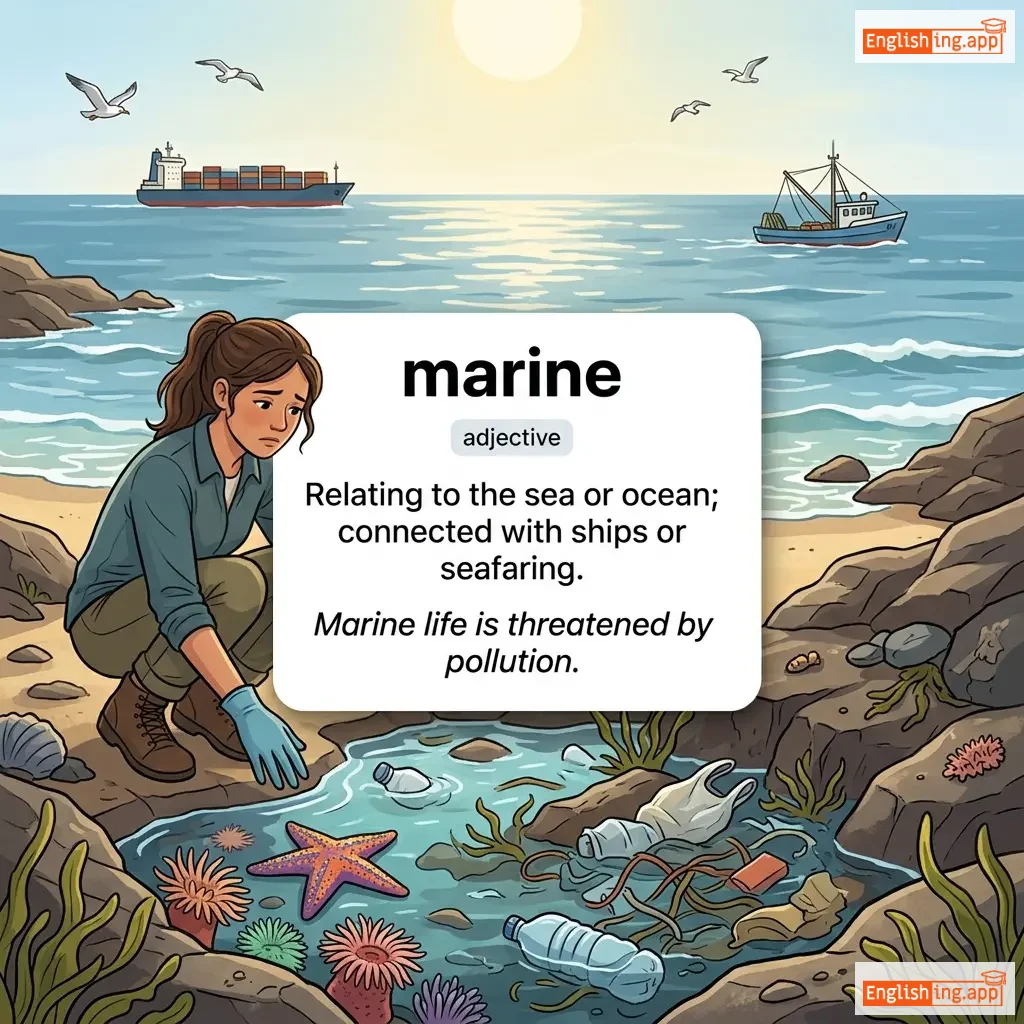
🌊
|
/məˈriːn/
adjective
(マリーン)
••••••
|
|
海洋の
kaiyō no
••••••
|
- •••••• | - •••••• | - •••••• | - •••••• |
Relating to the sea or ocean; connected with ships or seafaring.
••••••
|
Marine life is threatened by pollution.
海洋生物は汚染の脅威にさらされています。
••••••
|
海洋生物は汚染の脅威にさらされています。
Kaiyō seibutsu wa osen no kyōi ni sarareteimasu.
••••••
|
- •••••• | - •••••• | - •••••• |
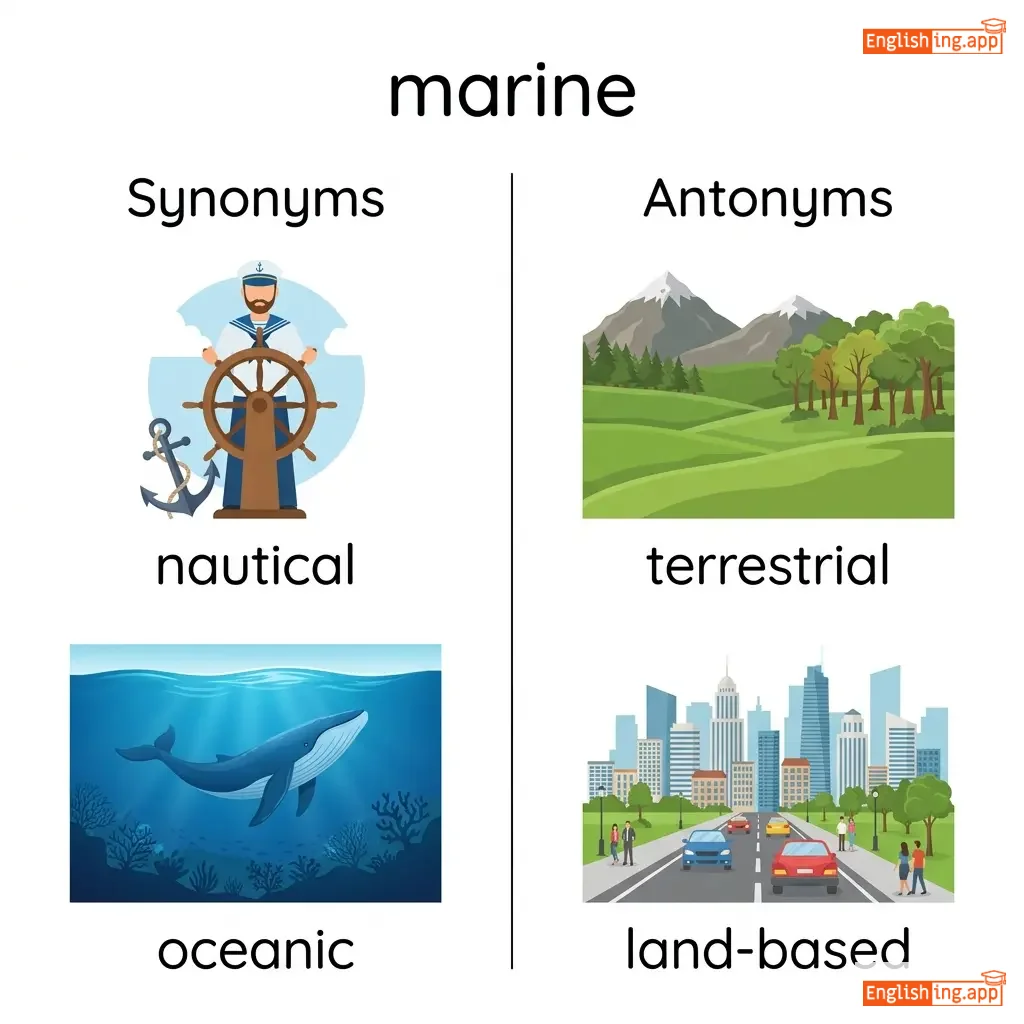
nautical, oceanic, naval, maritime
••••••
|
terrestrial, land-based
••••••
|
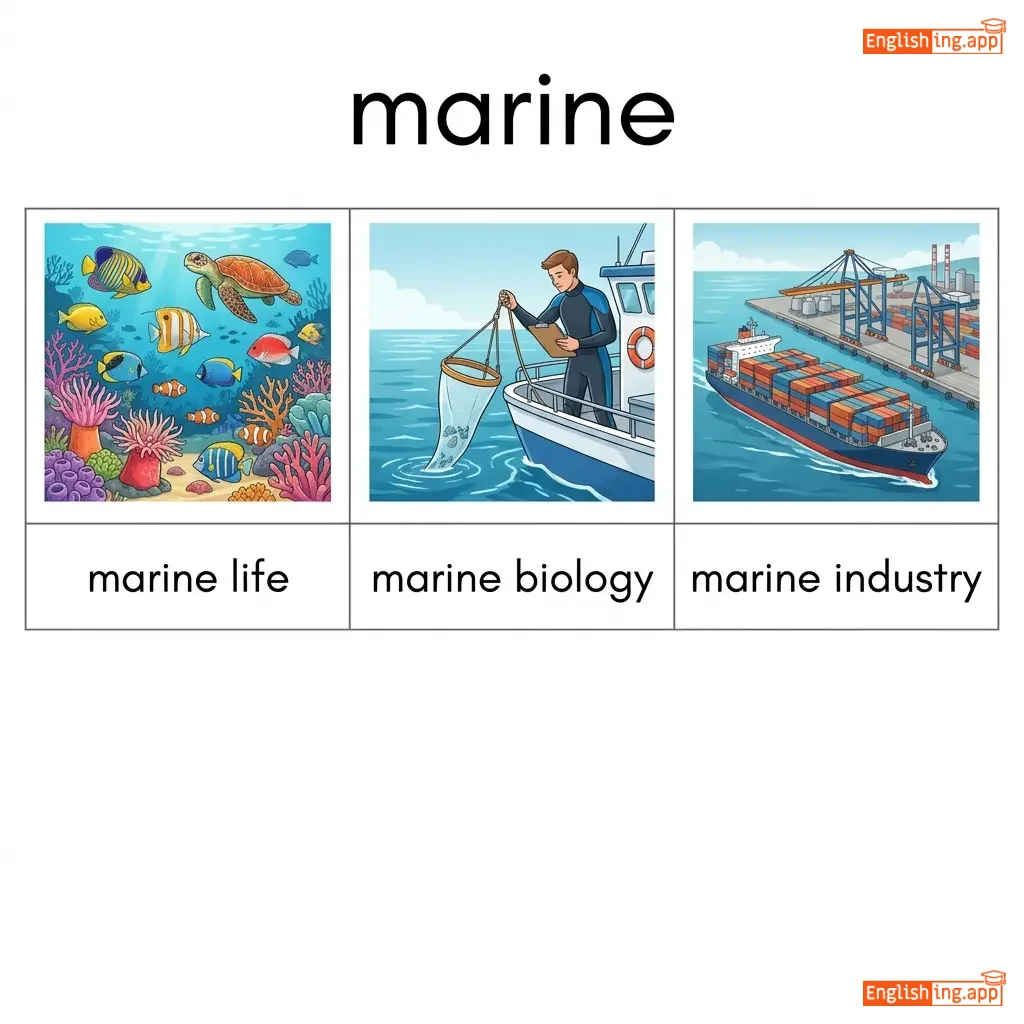
marine life, marine biology, marine industry, marine animals
••••••
|
Marine は海洋に関することです、例えば海洋公園や海洋生物の話。
••••••
|
|
#0
🛟
|
/ˈrɛskjuː/
verb
(レスキュー)
••••••
|
|
救助する
kyūjo suru
••••••
|
rescued
レスキュード
••••••
|
rescued
レスキュード
••••••
|
rescues
レスキューズ
••••••
|
rescuing
レスキューイング
••••••
|
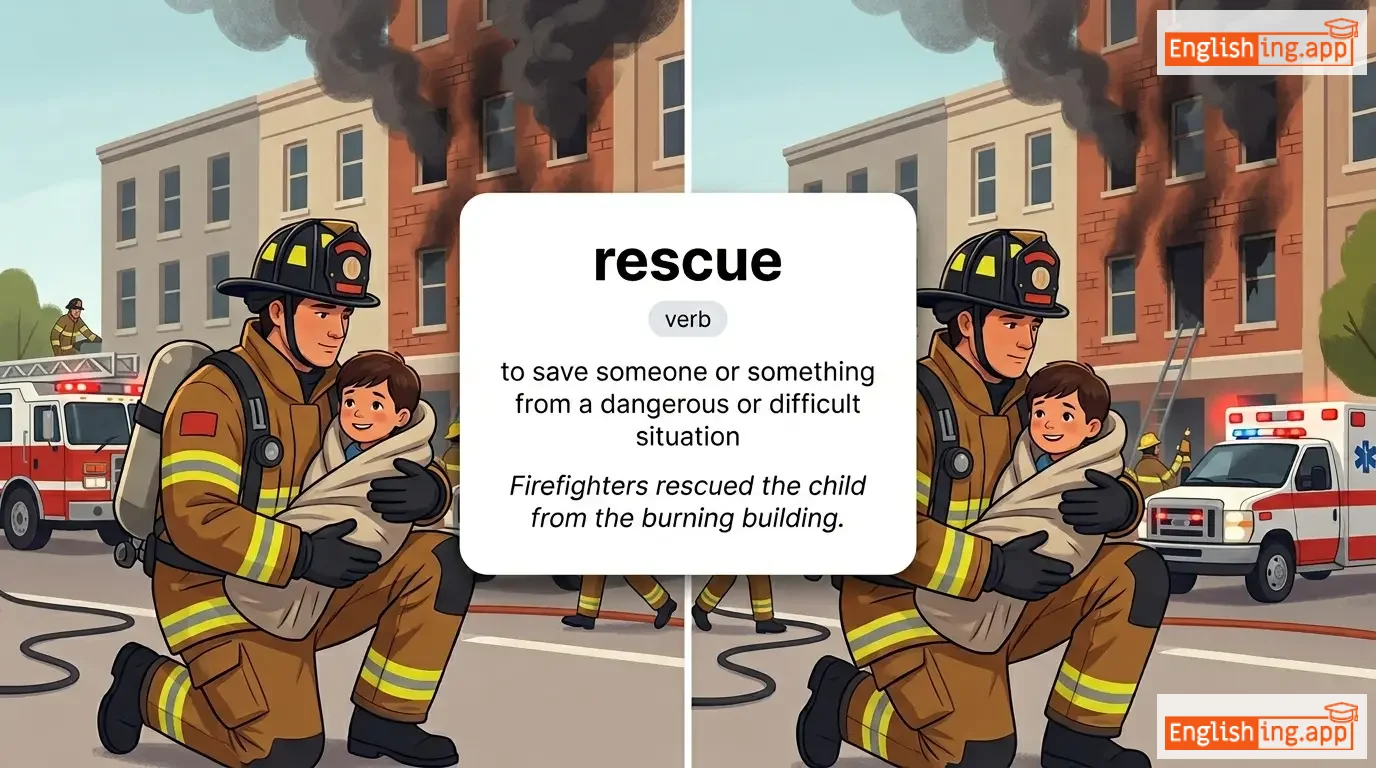
to save someone or something from a dangerous or difficult situation
••••••
|
Firefighters rescued the child from the burning building.
消防士は燃えている建物から子供を救出しました。
••••••
|
消防士は燃えている建物から子供を救出しました。
Shōbōshi wa moete iru tatemono kara kodomo o kyūshutsu shimashita.
••••••
|
come to the rescue
救助に来る
••••••
|
to help someone in trouble or in need
••••••
|
救助に来る
kyūjo ni kuru
••••••
|
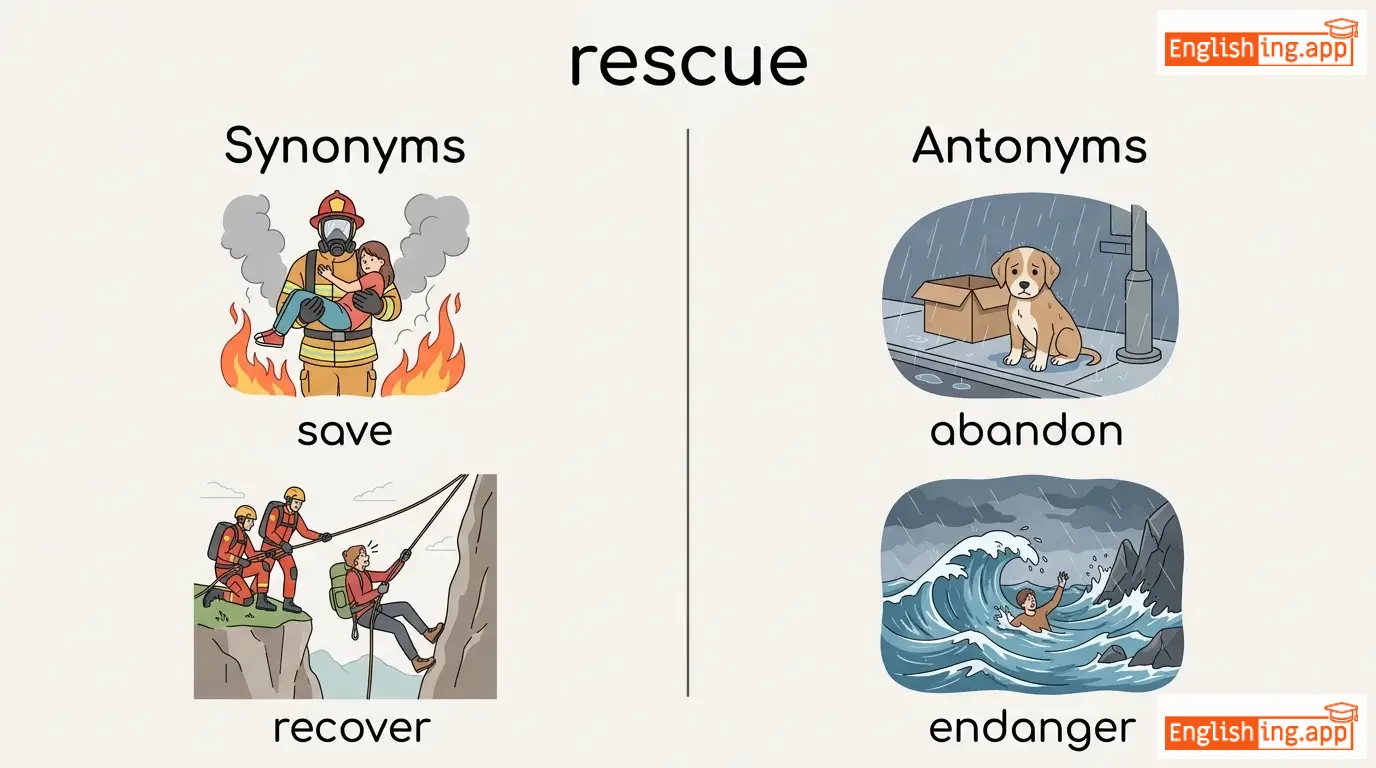
save, recover, free, deliver, retrieve
••••••
|
abandon, endanger, trap
••••••
|
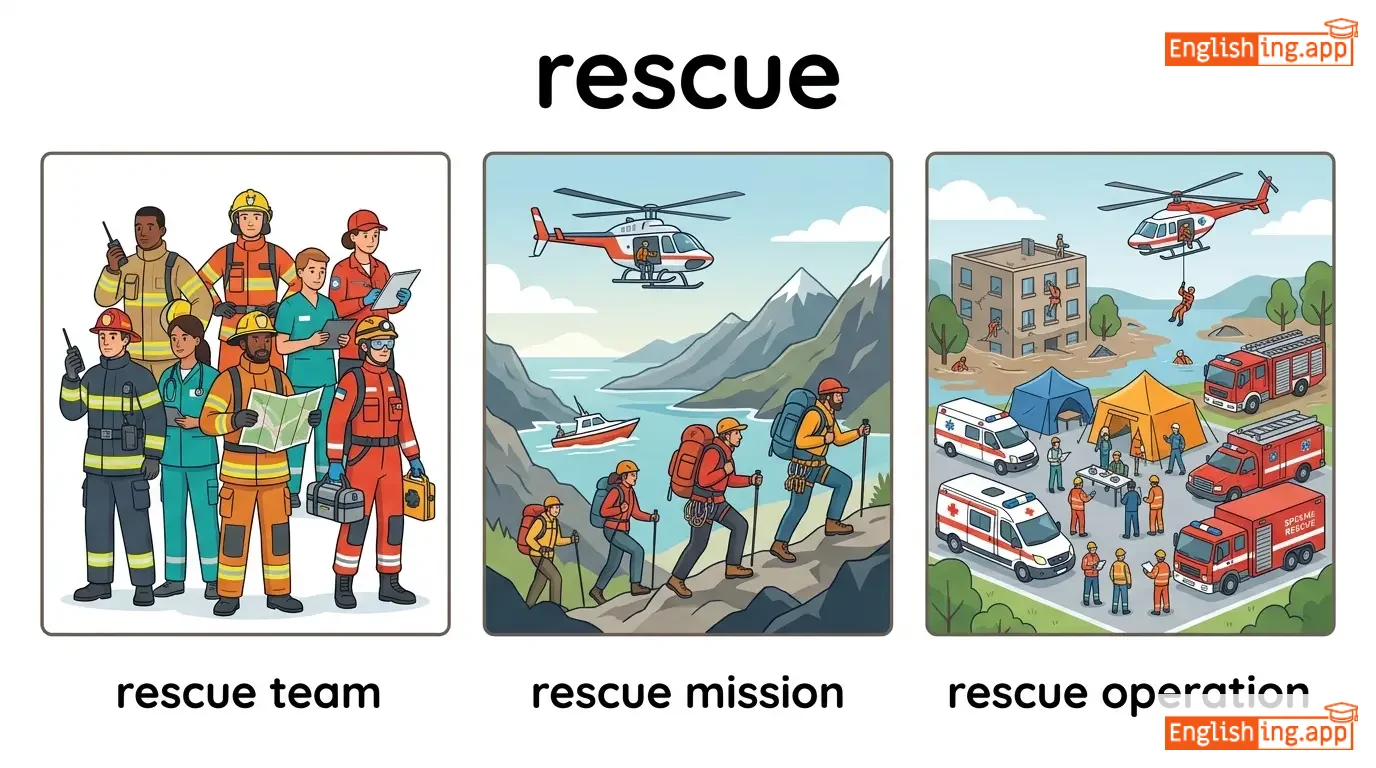
rescue team, rescue mission, rescue operation, emergency rescue
••••••
|
Rescueは'リスクを取って救う'という意味 — 覚えておいて 🛟
••••••
|
|
#0
🏠
|
/ˈʃel.tər/
noun
(シェルター)
••••••
|
- •••••• |
避難所
hinanjo
••••••
|
- •••••• | - •••••• | - •••••• | - •••••• |
a place giving temporary protection from bad weather or danger
••••••
|
The hikers found shelter in a cave during the heavy rain.
ザ ハイカーズ ファウンド シェルター イン ア ケイブ デュアリング ザ ヘビー レイン。
••••••
|
ハイカーたちは大雨の間、洞窟の中に避難所を見つけた。
haika tachi wa oame no aida dokutsu no naka ni hinanjo o mitsuketa.
••••••
|
- •••••• | - •••••• | - •••••• |
refuge, sanctuary, protection, haven
••••••
|
exposure, danger, vulnerability, openness
••••••
|
seek shelter, provide shelter, emergency shelter
••••••
|
Hinanjyo sounds like ‘he none joy’—no joy outside, so take shelter inside.
••••••
|
|
#0
👥
|
/skwɒd/
noun
(スクワッド)
••••••
|
- •••••• |
チーム
chiimu
••••••
|
- •••••• | - •••••• | - •••••• | - •••••• |
a small group of people organized for a specific purpose or task, often in the military or sports
••••••
|
The football squad trained hard before the championship match. |
サッカーチームはチャンピオンシップの試合の前に一生懸命練習した。
Sakkaa chiimu wa chanpionship no shiai no mae ni isshoukenmei renshuu shita.
••••••
|
squad goals |
an ideal or admirable group of friends or team that others aspire to be like
••••••
|
チーム目標
chiimu mokuhyou
••••••
|
team, crew, group, unit, party
••••••
|
individual, loner
••••••
|
football squad, police squad, squad member, training squad
••••••
|
チーム = 一緒に働くグループ、サッカーチームのように。
••••••
|
|
#0
📦
|
/səˈplaɪ/
noun
••••••
|
|
- •••••• | - •••••• | - •••••• | - •••••• | - •••••• |
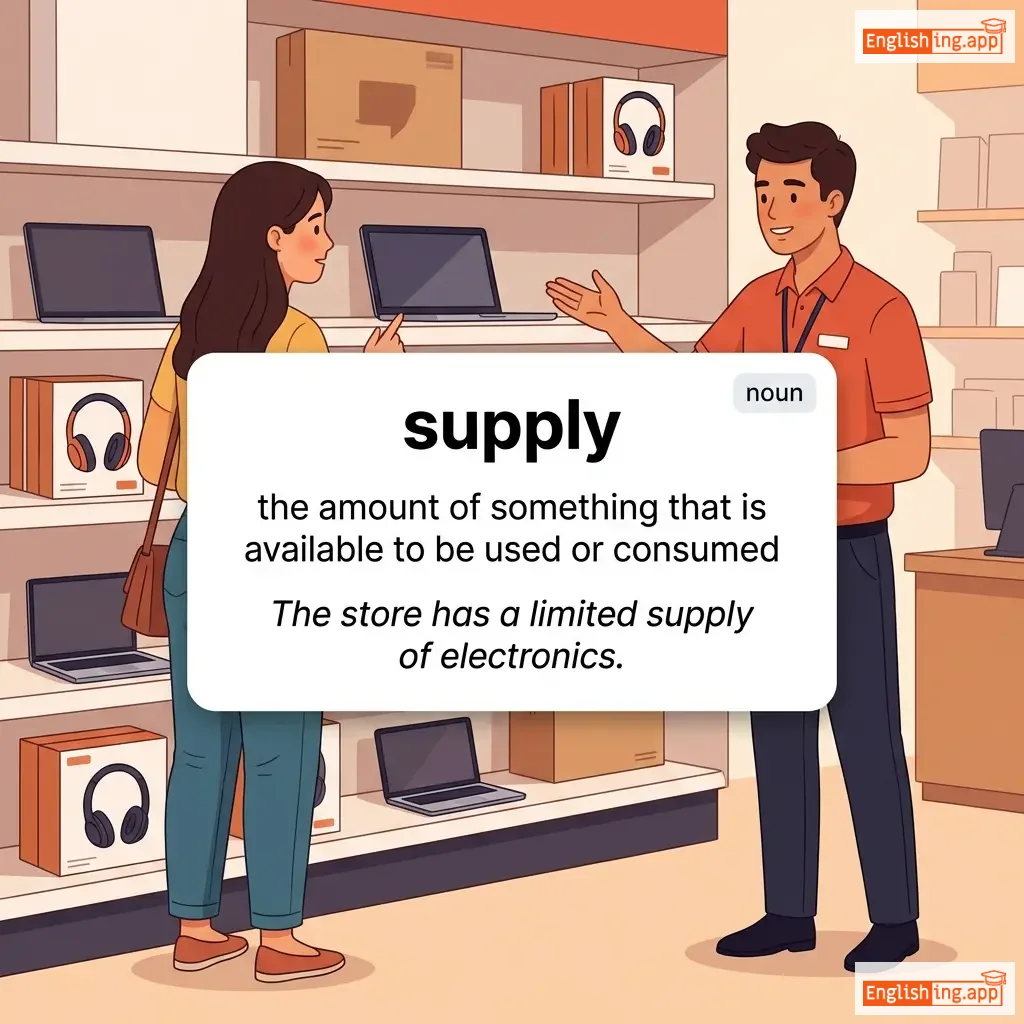
the amount of something that is available to be used or consumed
••••••
|
The store has a limited supply of electronics. |
- •••••• | - •••••• | - •••••• | - •••••• |
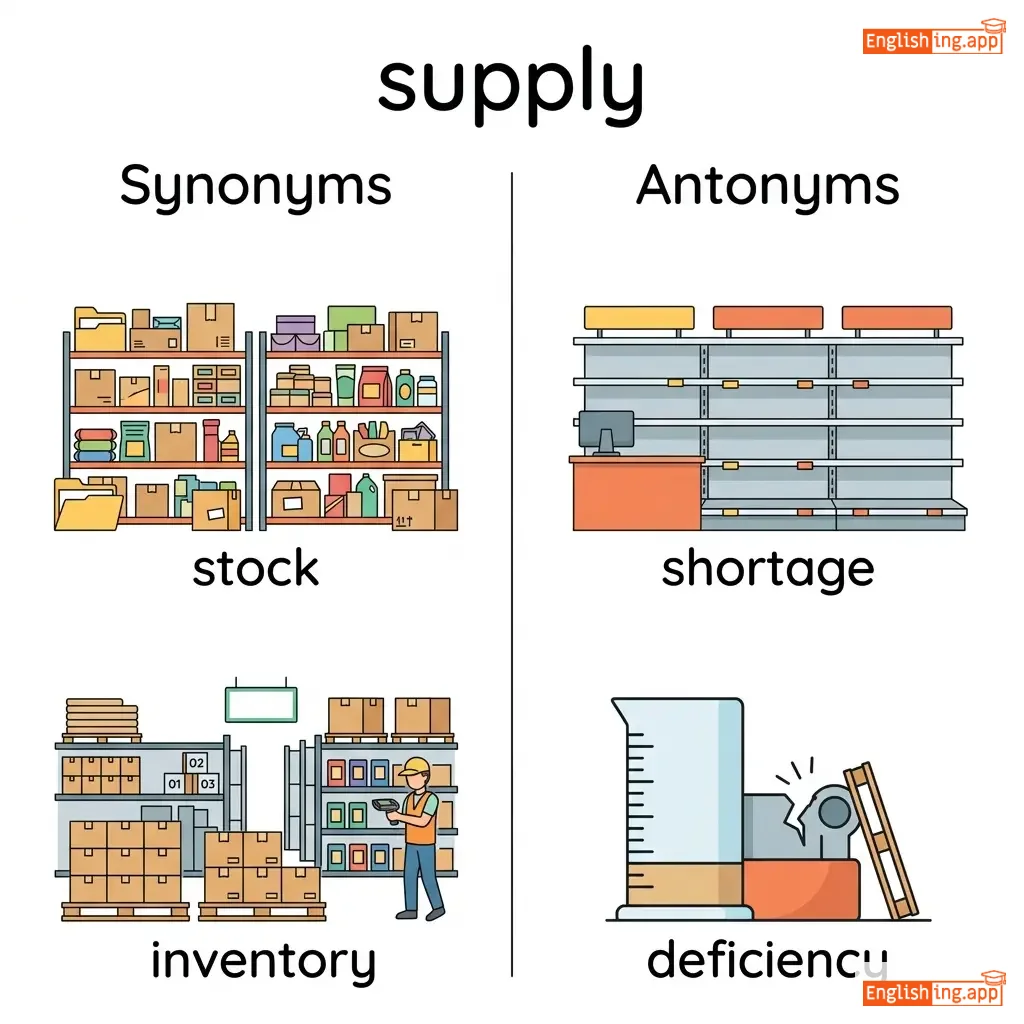
stock, inventory, provision, reserve
••••••
|
shortage, deficiency
••••••
|
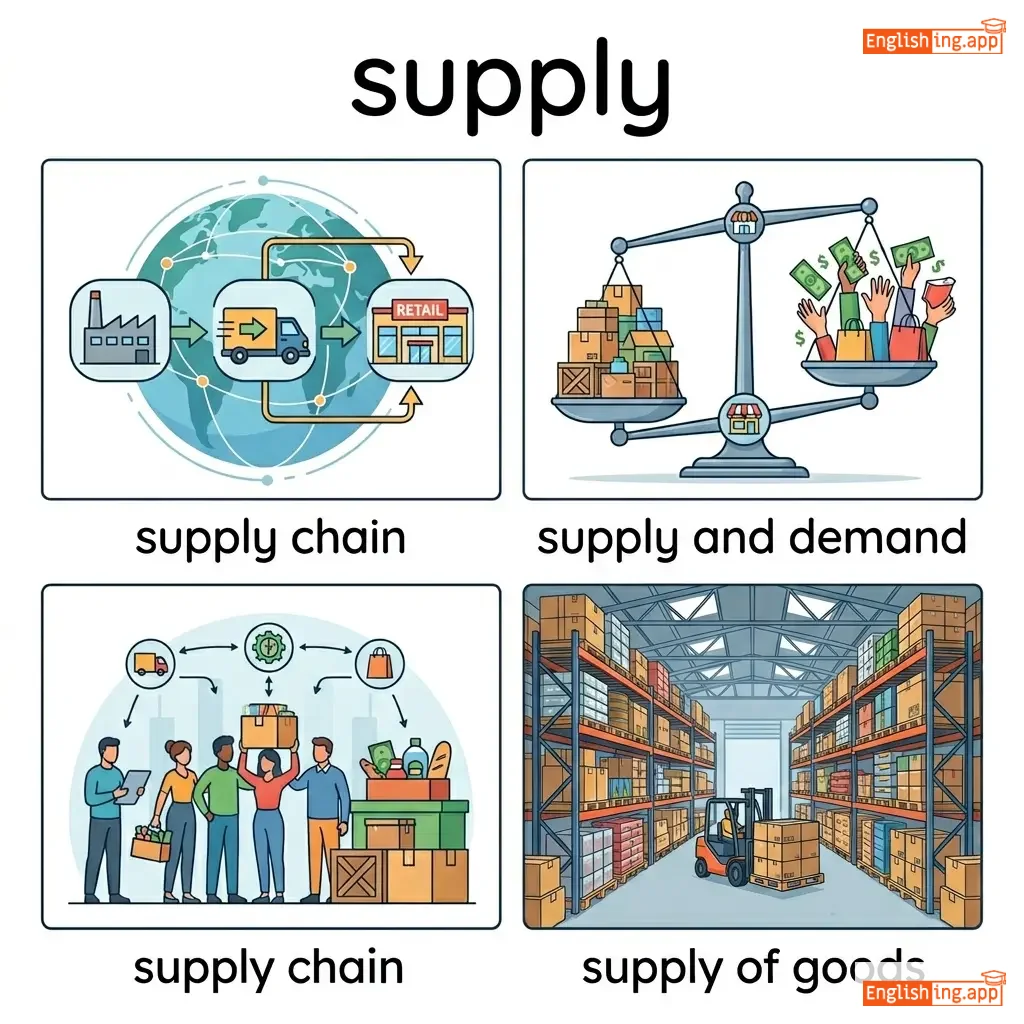
supply chain, supply and demand, supply of goods, supply shortage
••••••
|
No •••••• |
|
#0
🚨
|
/ˈɜːrdʒənt/
adjective
(ʊʁʒənt)
••••••
|
- •••••• |
緊急
kinkyuu
••••••
|
- •••••• | - •••••• | - •••••• | - •••••• |
Requiring immediate action or attention.
••••••
|
She sent an urgent message to her manager.
彼女はマネージャーに緊急のメッセージを送った。
••••••
|
彼女はマネージャーに緊急のメッセージを送った。
Kanojo wa manejā ni kinkyū no messeeji o okutta.
••••••
|
urgent need
緊急の必要
••••••
|
a strong necessity that must be addressed immediately
••••••
|
緊急の必要
kinkyū no hitsuyō
••••••
|
critical, pressing, immediate, essential
••••••
|
nonessential, trivial, minor
••••••
|
urgent request, urgent matter, urgent care, urgent meeting
••••••
|
緊急はすぐに対応が必要な状況を示す言葉です。
••••••
|
|
#0
😢
|
/ˈvɪk.tɪm/
noun
(ヴィクティム)
••••••
|
- •••••• |
犠牲者
giseisha
••••••
|
- •••••• | - •••••• | - •••••• | - •••••• |
a person who suffers harm, injury, or death as a result of an event or action
••••••
|
The victim was taken to the hospital immediately. |
犠牲者はすぐに病院に運ばれました。
Giseisha wa sugu ni byōin ni hakobaremashita.
••••••
|
- •••••• | - •••••• | - •••••• |
casualty, sufferer, target, prey
••••••
|
perpetrator, aggressor, attacker
••••••
|
crime victim, accident victim, victim support
••••••
|
The Japanese word '犠牲者' (giseisha) sounds similar to 'victim' and means the same.
••••••
|
Vocabulary Quiz
Test your vocabulary by matching words with their translations or meanings.
Login to take the quiz
Comments (0)
Share your thoughts and join the discussion.
Join the discussion by logging in
Login to CommentNo comments yet
Be the first to share your thoughts!