

午後の整列会議
Afternoon Alignment Meeting
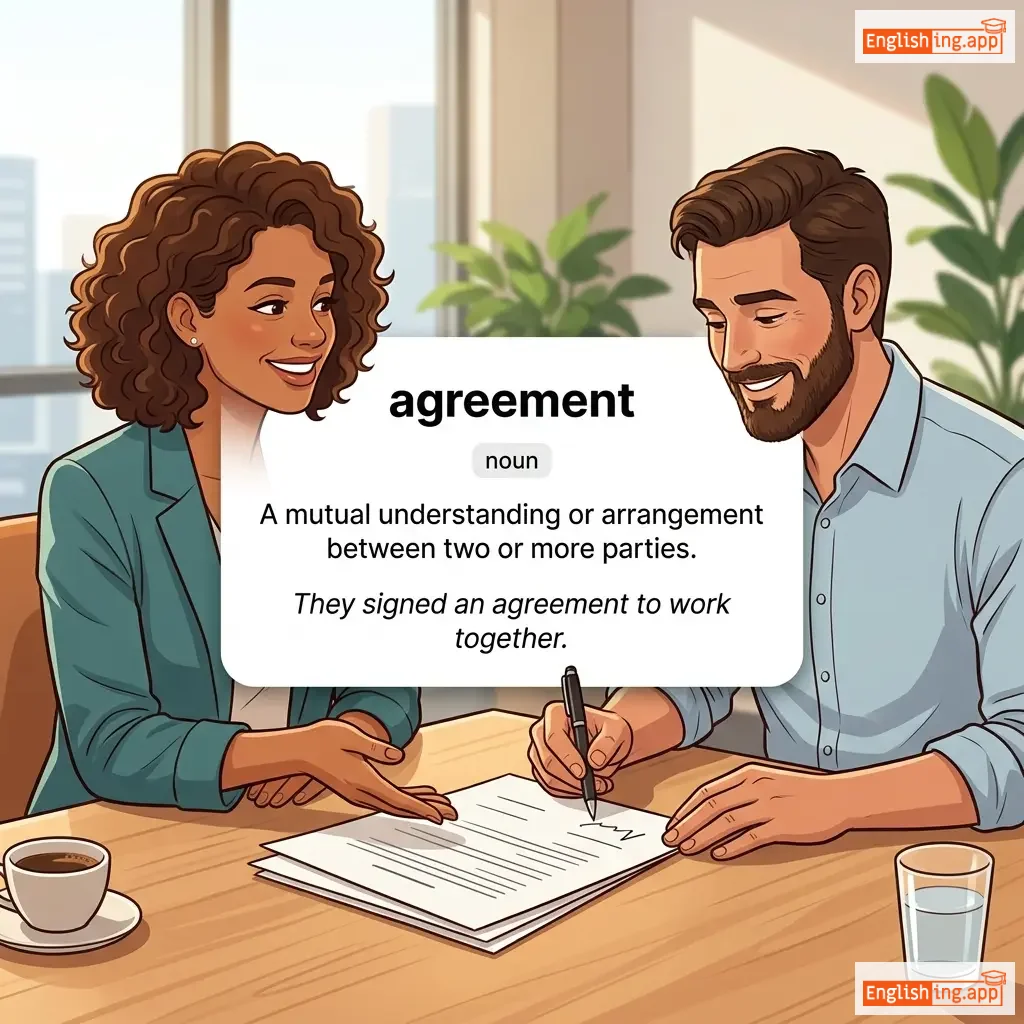
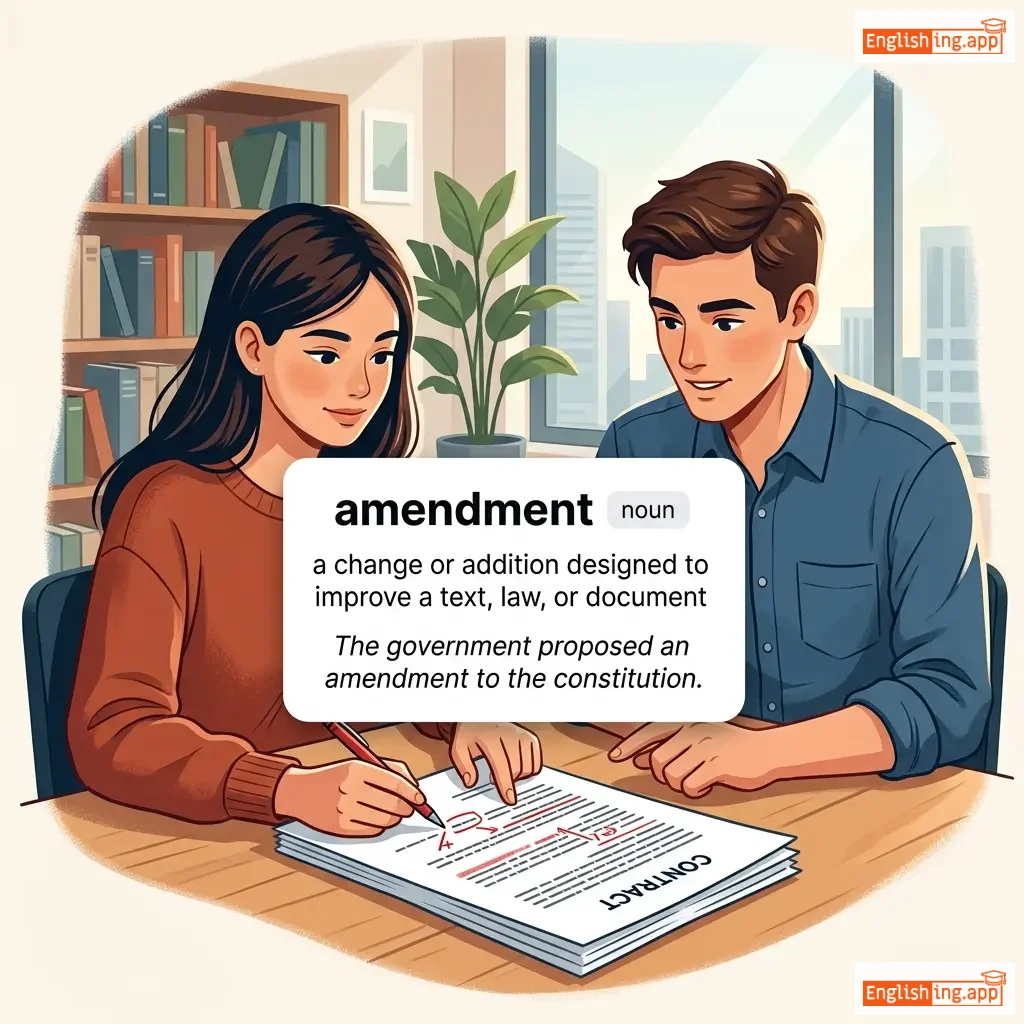
川の会議への admission は無料でした。 ジョンは言った、'ここで参加することは大きな advantage です。' 年配の女性は水への affection を共有しました。 彼らは過去の洪水の aftermath をレビューしました。 afternoon に医師たちは川の健康について議論しました。 Afterward、彼らは外に出てセンサーを調整しました。 皆さんは効果的な agreement に署名しました。 ボランティアたちは作業の alignment を確認しました。 ある企業が allegedly 川を汚染したと説明しました。 基金はボランティアに適度な allowance を提供しました。 子供たちは川のほとりで alongside 歌いました。 健康チームは近くに ambulance を配置しました。 計画に小さな amendment が加えられました。 anonymous 寄付者が静かに貢献しました。 工場のオーナーが廃棄物に対して apologize しました。 新しい展示は非常に appealing に見えました。 多くの applicant が川のプロジェクトを提出しました。 委員会は arbitrary な決定は行わないと言いました。 すべての人が川の価値について同じ assertion をしました。 全員が川を回復させるための assurance をしました。
翻訳
過去
過去分詞
三人称単数
動名詞
意味
例文
例文の翻訳
同義語
対義語
コロケーション
ニーモニック
Swipe left or right, or use the buttons. Tap image to zoom.
例文の翻訳
単語
Afternoon Alignment MeetingAfternoon Alignment Meeting - マスクトグル
|
絵文字
|
単語 | Images | 翻訳 | 過去 | 過去分詞 | 三人称単数 | 動名詞 | 意味 | 例文 | 例文の翻訳 | 表現例 | 表現例の意味 | 表現例の翻訳 | 同義語 | 対義語 | コロケーション | ニーモニック |
|---|---|---|---|---|---|---|---|---|---|---|---|---|---|---|---|---|---|
|
#0
🎟️
|
/ədˈmɪʃən/
noun
(アドミッション)
••••••
|
- •••••• |
入場
nyūjō
••••••
|
- •••••• | - •••••• | - •••••• | - •••••• |
The process or fact of being allowed to enter a place or join an organization.
••••••
|
The admission fee to the museum is five dollars.
博物館の入場料は5ドルです。
••••••
|
博物館の入場料は5ドルです。
Hakubutsukan no nyūjō-ryō wa 5 doru desu.
••••••
|
free admission
無料入場
••••••
|
Entry without cost.
••••••
|
無料入場
muryō nyūjō
••••••
|
entry, access, acceptance, enrollment
••••••
|
exclusion, denial, rejection
••••••
|
admission fee, admission test, admission process, admission ticket
••••••
|
Admission = 入場、許可される入場。
••••••
|
|
#0
💡
|
/ədˈvæntɪdʒ/
noun
(アドバンテージ)
••••••
|
- •••••• |
利点
riten
••••••
|
- •••••• | - •••••• | - •••••• | - •••••• |
a condition or circumstance that puts one in a favorable position
••••••
|
Having strong communication skills is a great advantage in business. |
強力なコミュニケーションスキルはビジネスにおいて大きな利点です。
Kyouryoku na komyunikeeshon sukiru wa bijinesu ni oite ookina riten desu.
••••••
|
take advantage of |
to make good use of something
••••••
|
利点を活用する
riten o katsuyou suru
••••••
|
benefit, edge, asset, gain, upper hand
••••••
|
disadvantage, drawback, handicap
••••••
|
competitive advantage, great advantage, take advantage, clear advantage
••••••
|
Advantage の意味は「利点」—'Ad van' はレースで一位、それが利点!
••••••
|
|
#0
❤️
|
/əˈfɛkʃən/
noun
••••••
|
- •••••• | - •••••• | - •••••• | - •••••• | - •••••• | - •••••• |
a gentle feeling of fondness or liking
••••••
|
She showed great affection for her younger brother. |
- •••••• |
public display of affection |
an act of showing love or fondness openly in public
••••••
|
- •••••• |
fondness, love, tenderness, warmth, attachment
••••••
|
hatred, dislike, indifference
••••••
|
deep affection, show affection, affection for, affection toward
••••••
|
No •••••• |
|
#0
🌪️
|
/ˈɑːftərmɑːθ/
noun
(アフターマス)
••••••
|
- •••••• |
影響
eikyo
••••••
|
- •••••• | - •••••• | - •••••• | - •••••• |
the consequences or aftereffects of an event or situation, especially a disastrous one
••••••
|
The aftermath of the earthquake was devastating. |
地震の影響は壊滅的でした。
Jishin no eikyō wa kaimetsu-teki deshita.
••••••
|
- •••••• | - •••••• | - •••••• |
consequence, result, outcome, repercussion
••••••
|
cause, origin
••••••
|
aftermath of disaster, in the aftermath, deal with the aftermath
••••••
|
Aftermath is the effect after an event like the result after a storm
••••••
|
|
#0
🌞
|
/ˌæftərˈnuːn/
noun
(アフタヌーン)
••••••
|
- •••••• |
午後
gogo
••••••
|
- •••••• | - •••••• | - •••••• | - •••••• |
The part of the day between noon and evening.
••••••
|
We met in the afternoon for coffee. |
私たちは午後にコーヒーを飲みに会いました。
Watashitachi wa gogo ni kōhī o nomi ni aimashita.
••••••
|
Good afternoon |
A polite greeting used in the afternoon.
••••••
|
こんにちは
konnichiwa
••••••
|
midday, daytime, p.m., after lunch
••••••
|
morning, evening
••••••
|
in the afternoon, sunny afternoon, afternoon tea, afternoon meeting
••••••
|
After + Noon = 正午後の時間 = 午後.
••••••
|
|
#0
⏰
|
/ˈæftərwərd/
adverb
(アフターウィアード)
••••••
|
- •••••• |
その後
sono ato
••••••
|
- •••••• | - •••••• | - •••••• | - •••••• |
at a later time; subsequently
••••••
|
We went to dinner and watched a movie afterward.
私たちは夕食に行き、その後映画を見ました。
••••••
|
私たちは夕食に行き、その後映画を見ました。
Watashitachi wa yūshoku ni iki, sono ato eiga o mimashita.
••••••
|
- •••••• | - •••••• | - •••••• |
later, subsequently, thereafter, next, then
••••••
|
before, earlier, previously
••••••
|
soon afterward, shortly afterward, day afterward
••••••
|
Afterwardはその後という意味 — 夕食後に映画を見るみたいに。
••••••
|
|
#0
✍️
|
/əˈɡriː.mənt/
noun
(アグリーメント)
••••••
|
|
契約
keiyaku
••••••
|
- •••••• | - •••••• | - •••••• | - •••••• |
A mutual understanding or arrangement between two or more parties.
••••••
|
They signed an agreement to work together.
彼らは一緒に働くための契約に署名しました。
••••••
|
彼らは一緒に働くための契約に署名しました。
Karera wa issho ni hataraku tame no keiyaku ni shomei shimashita.
••••••
|
gentlemen's agreement
紳士協定
••••••
|
An informal and non-binding agreement based on trust.
••••••
|
紳士協定
Shinshi kyoutei
••••••
|
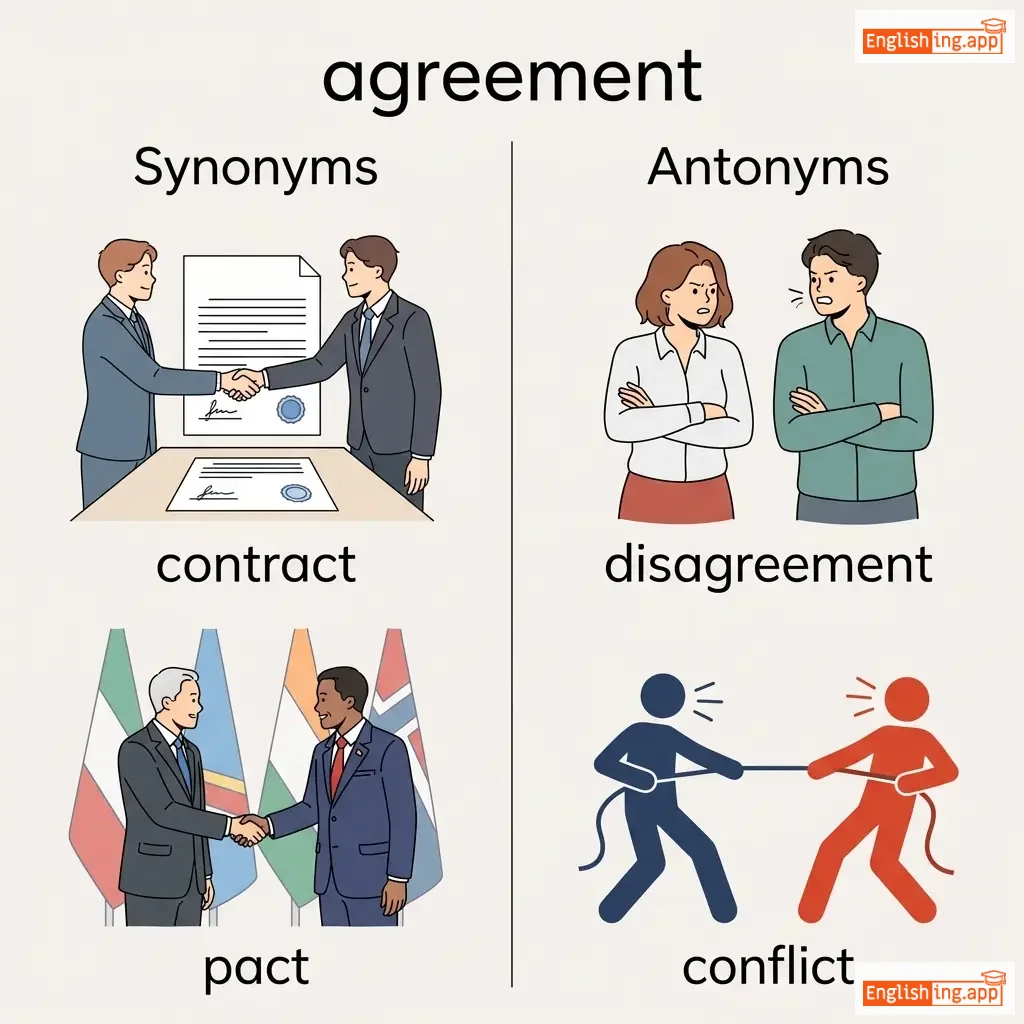
contract, pact, deal, settlement, accord
••••••
|
disagreement, conflict, dispute
••••••
|
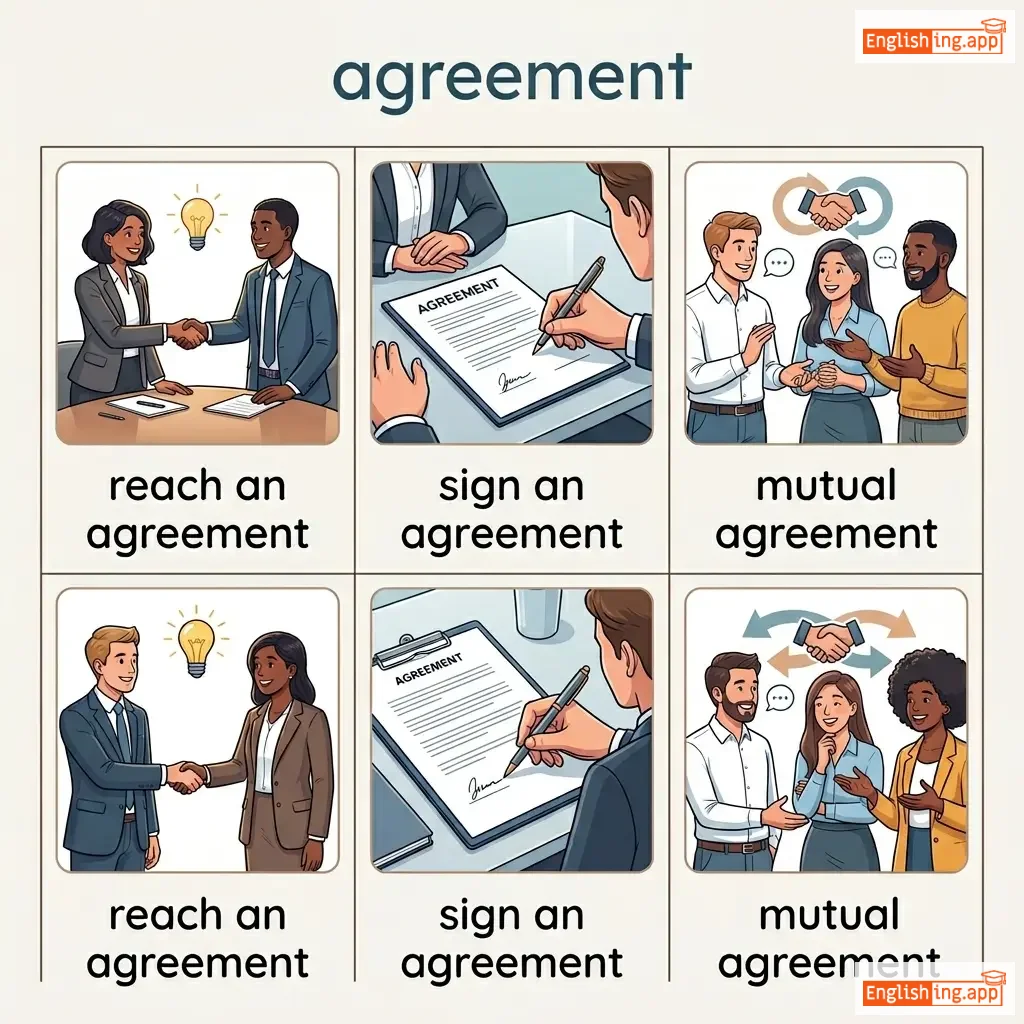
reach an agreement, sign an agreement, mutual agreement, agreement between
••••••
|
'Agreement' は契約という意味 — 二人で契約にサインすれば完了!
••••••
|
|
#0
🔧
|
/əˈlaɪnmənt/
noun
(アライメント)
••••••
|
- •••••• |
整列
seiretsu
••••••
|
- •••••• | - •••••• | - •••••• | - •••••• |
arrangement in a straight line or in proper position
••••••
|
The alignment of the planets was perfect for the celestial event. |
惑星の整列は天体イベントのために完璧でした。
Wakusei no seiretsu wa tentaibento no tame ni kanpeki deshita.
••••••
|
- •••••• | - •••••• | - •••••• |
arrangement, positioning, coordination, alignment
••••••
|
misalignment, disorder
••••••
|
alignment of forces, proper alignment, alignment with goals
••••••
|
Aligning objects in the right alignment always makes everything perfect
••••••
|
|
#0
🕵️♂️
|
/əˈlɛdʒɪdli/
adverb
(アレジェドリー)
••••••
|
- •••••• |
伝えられたところによると
tsutaerareta tokoro ni yoru to
••••••
|
- •••••• | - •••••• | - •••••• | - •••••• |
used to say that something is claimed to be true, though not proven
••••••
|
He was allegedly involved in the robbery. |
彼は伝えられたところによると強盗に関与していた。
Kare wa tsutaerareta tokoro ni yoru to gōtō ni kan'yo shite ita.
••••••
|
- •••••• | - •••••• | - •••••• |
reportedly, supposedly, apparently, seemingly
••••••
|
undoubtedly, certainly
••••••
|
allegedly involved, allegedly responsible, allegedly stolen, allegedly committed
••••••
|
'Allegedly' は '伝えられたところによると' という意味で、何かが真実だとされているけれども証明はされていないことを表します。
••••••
|
|
#0
💰
|
/əˈlaʊəns/
noun
(アラワンス)
••••••
|
- •••••• |
手当
teate
••••••
|
- •••••• | - •••••• | - •••••• | - •••••• |
a sum of money paid regularly to a person; permission to do something
••••••
|
Children receive a weekly allowance for helping with chores. |
子供たちは家事の手伝いをすることで週刊手当を受け取ります。
Kodomotachi wa kaji no tetsudai wo suru koto de shuukan teate wo uketorimasu.
••••••
|
- •••••• | - •••••• | - •••••• |
stipend, payment, allocation, quota
••••••
|
prohibition, ban, restriction
••••••
|
monthly allowance, pocket allowance, travel allowance
••••••
|
子供たちの手当
••••••
|
|
#0
👥
|
/əˈlɔːŋ.saɪd/
adverb
(アロングサイド)
••••••
|
- •••••• |
隣で; 一緒に;
tonari de; issho ni;
••••••
|
- •••••• | - •••••• | - •••••• | - •••••• |
beside; next to; together with
••••••
|
She walked alongside her friend through the park. |
彼女は公園で友達と一緒に歩いた。
Kanojo wa kōen de tomodachi to issho ni aruita.
••••••
|
- •••••• | - •••••• | - •••••• |
beside, next to, together with, parallel to
••••••
|
apart, separately, away from
••••••
|
work alongside, stand alongside, run alongside, walk alongside
••••••
|
Japanese '隣で' and English 'alongside' both mean 'next to'.
••••••
|
|
#0
🚑
|
/ˈæmbjʊləns/
noun
(救急車)
••••••
|
- •••••• |
救急車
kyūkyūsha
••••••
|
- •••••• | - •••••• | - •••••• | - •••••• |
A specially equipped vehicle used to transport sick or injured people to the hospital.
••••••
|
The ambulance rushed to the accident site within minutes.
救急車は数分で事故現場に到着しました。
••••••
|
救急車は数分で事故現場に到着しました。
Kyūkyūsha wa sū-fun de jiko genba ni tōchaku shimashita.
••••••
|
- •••••• | - •••••• | - •••••• |
emergency vehicle, rescue van, paramedic vehicle
••••••
|
none, null
••••••
|
call an ambulance, ambulance service, ambulance siren, ambulance driver
••••••
|
救急車 🚑 緊急対応—'事故が起きた時、救急車がすぐに来ます。'
••••••
|
|
#0
📜
|
/əˈmɛndmənt/
noun
(ハピネス)
••••••
|
|
幸せ
shiawase
••••••
|
- •••••• | - •••••• | - •••••• | - •••••• |
a change or addition designed to improve a text, law, or document
••••••
|
The government proposed an amendment to the constitution. |
彼女は賞を受け取ったとき、自分の幸せを隠せませんでした。
Kanojo wa shou wo uketotta toki, jibun no shiawase wo kakusemasendeshita.
••••••
|
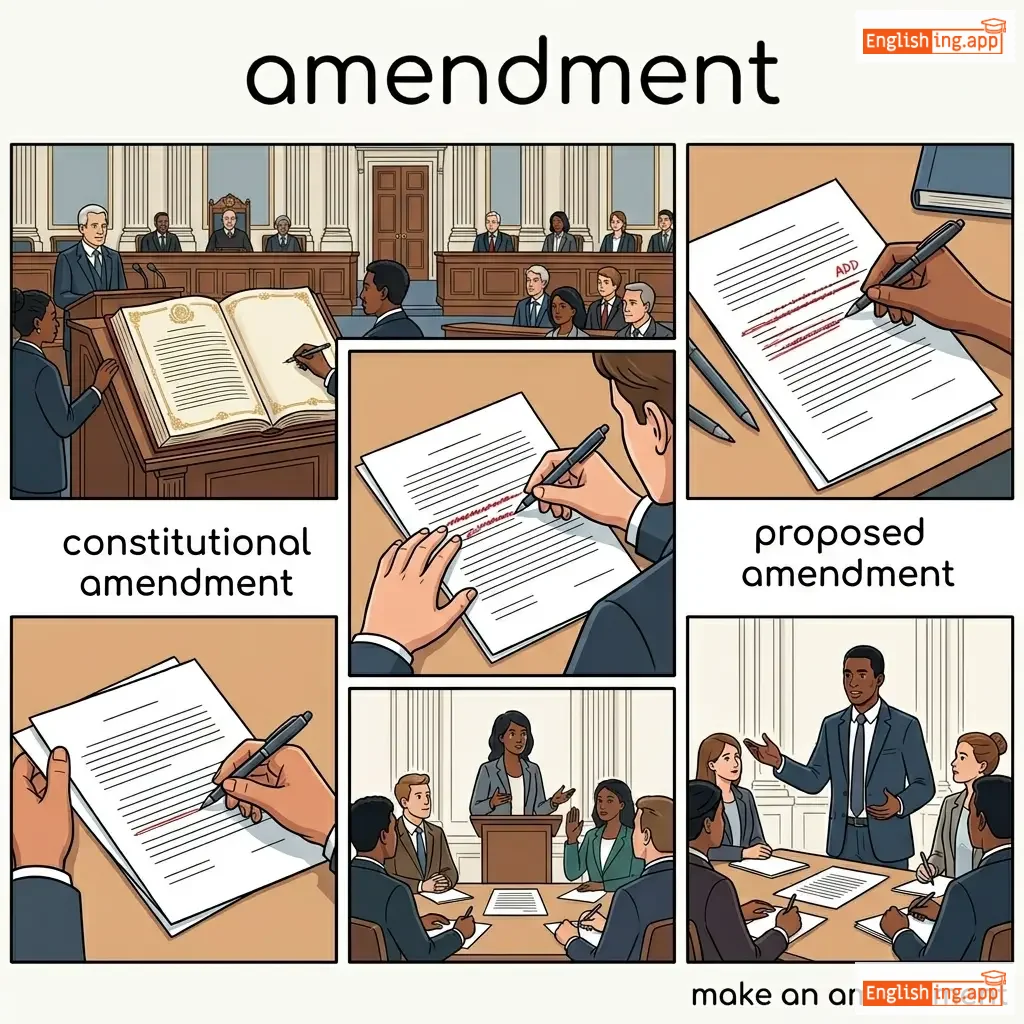
make an amendment |
to officially change or correct a document or law
••••••
|
幸せを追求する
shiawase wo tsuikyuu suru
••••••
|
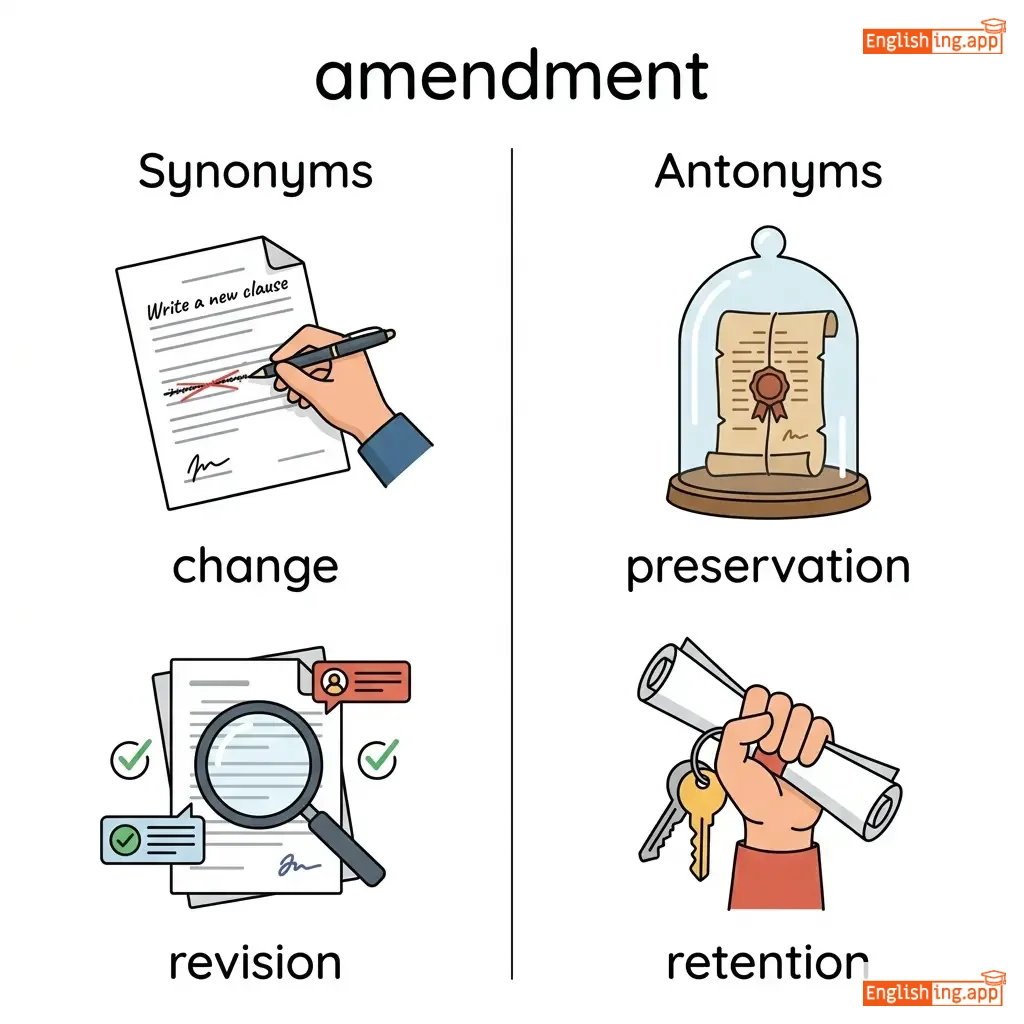
change, revision, modification, correction, adjustment
••••••
|
preservation, retention
••••••
|
constitutional amendment, proposed amendment, make an amendment, amendment bill
••••••
|
幸せ = 幸せを見つける喜び
••••••
|
|
#0
👤
|
/əˈnɒnɪməs/
adjective
(匿名)
••••••
|
- •••••• |
匿名
tokumei
••••••
|
- •••••• | - •••••• | - •••••• | - •••••• |
without a name; not identified by name
••••••
|
The donation was made by an anonymous benefactor.
寄付は匿名の支援者によって行われました。
••••••
|
寄付は匿名の支援者によって行われました。
Kifu wa tokumei no shien-sha ni yotte okonawaremashita.
••••••
|
anonymous tip
匿名のヒント
••••••
|
information given without revealing the identity of the informant
••••••
|
匿名のヒント
tokumei no hint
••••••
|
nameless, unidentified, unknown, incognito
••••••
|
named, identified
••••••
|
anonymous source, anonymous donor, remain anonymous, anonymous letter
••••••
|
匿名は名前なしを意味します - 名前がなければ匿名です。
••••••
|
|
#0
🙏
|
/əˈpɒlədʒaɪz/
verb
(アポロジャイズ)
••••••
|
- •••••• |
謝罪する
shazai suru
••••••
|
apologized
アポロジャイズド
••••••
|
apologized
アポロジャイズド
••••••
|
apologizes
アポロジャイズズ
••••••
|
apologizing
アポロジャイジング
••••••
|
to say sorry for something wrong you have done
••••••
|
He apologized for being late to the meeting.
彼は会議に遅れたことを謝罪しました。
••••••
|
彼は会議に遅れたことを謝罪しました。
Kare wa kaigi ni okureta koto o shazai shimashita.
••••••
|
apologize sincerely
誠実に謝罪する
••••••
|
to express genuine regret for a mistake or wrongdoing
••••••
|
誠実に謝罪する
seijitsu ni shazai suru
••••••
|
regret, repent, ask forgiveness, express remorse
••••••
|
accuse, blame, deny
••••••
|
apologize for mistake, apologize sincerely, apologize publicly
••••••
|
謝罪は、間違えたときに言う 'すみません' という意味です。
••••••
|
|
#0
😍
|
/əˈpiː.lɪŋ/
adjective
(アピールリング)
••••••
|
- •••••• |
魅力的な; 面白い; 楽しい
miryokuteki na; omoshiroi; tanoshii
••••••
|
- •••••• | - •••••• | - •••••• | - •••••• |
attractive; interesting; pleasing
••••••
|
The colorful garden looks very appealing to visitors.
色とりどりの庭は訪問者に非常に魅力的に見えます。
••••••
|
色とりどりの庭は訪問者に非常に魅力的に見えます。
Irotoridori no niwa wa hōmonsha ni hijō ni miryokuteki ni miemasu.
••••••
|
- •••••• | - •••••• | - •••••• |
attractive, charming, alluring, enticing
••••••
|
repulsive, unattractive, disgusting
••••••
|
appealing idea, appealing offer, visually appealing
••••••
|
Appealing sounds like 'miryokuteki' – this colorful garden looks very miryokuteki (appealing).
••••••
|
|
#0
📝
|
/ˈæplɪkənt/
noun
(アプリカント)
••••••
|
- •••••• |
応募者
ōbosha
••••••
|
- •••••• | - •••••• | - •••••• | - •••••• |
a person who applies for something, such as a job or a position
••••••
|
The applicant was interviewed for the position. |
応募者はそのポジションのために面接されました。
Ōbosha wa sono pojishon no tame ni mensetsu saremashita.
••••••
|
- •••••• | - •••••• | - •••••• |
candidate, contender, petitioner, seeker
••••••
|
employer, recruiter
••••••
|
job applicant, applicant form, qualified applicant
••••••
|
An applicant is someone who applies (ōbo suru) for a position.
••••••
|
|
#0
🎲
|
/ˈɑːrbɪˌtrɛri/
adjective
(アービトラリー)
••••••
|
- •••••• |
任意の
nin'i no
••••••
|
- •••••• | - •••••• | - •••••• | - •••••• |
based on random choice or personal whim, rather than reason or system
••••••
|
The teacher's arbitrary grading upset many students. |
教師の任意の採点は多くの学生を困らせました。
Kyoushi no nin'i no saiten wa ooku no gakusei o komarase mashita.
••••••
|
- •••••• | - •••••• | - •••••• |
random, capricious, whimsical, subjective, inconsistent
••••••
|
rational, logical, systematic
••••••
|
arbitrary decision, arbitrary rule, arbitrary action
••••••
|
Arbitraryは任意の—自由に選択する感じをイメージしよう!
••••••
|
|
#0
🗣️
|
/əˈsɜːʃən/
noun
(アサーション)
••••••
|
- •••••• |
主張
shuchou
••••••
|
- •••••• | - •••••• | - •••••• | - •••••• |
a confident and forceful statement of fact or belief
••••••
|
Her assertion that she was right was met with silence.
彼女の自分が正しいというアサーションは、沈黙とともに受け入れられました。
••••••
|
彼女の自分が正しいという主張は、沈黙とともに受け入れられました。
Kanojo no jibun ga tadashii to iu shuchou wa, chinmoku to tomo ni ukeireraremashita.
••••••
|
- •••••• | - •••••• | - •••••• |
declaration, statement, claim, affirmation
••••••
|
denial, rejection, doubt
••••••
|
strong assertion, make an assertion, assertion of rights
••••••
|
Assertion - 主張、assertすることから、力強い主張 (claim)が生まれる。
••••••
|
|
#0
✅
|
/əˈʃʊərəns/
noun
(アシュアランス)
••••••
|
|
保証
hoshō
••••••
|
- •••••• | - •••••• | - •••••• | - •••••• |
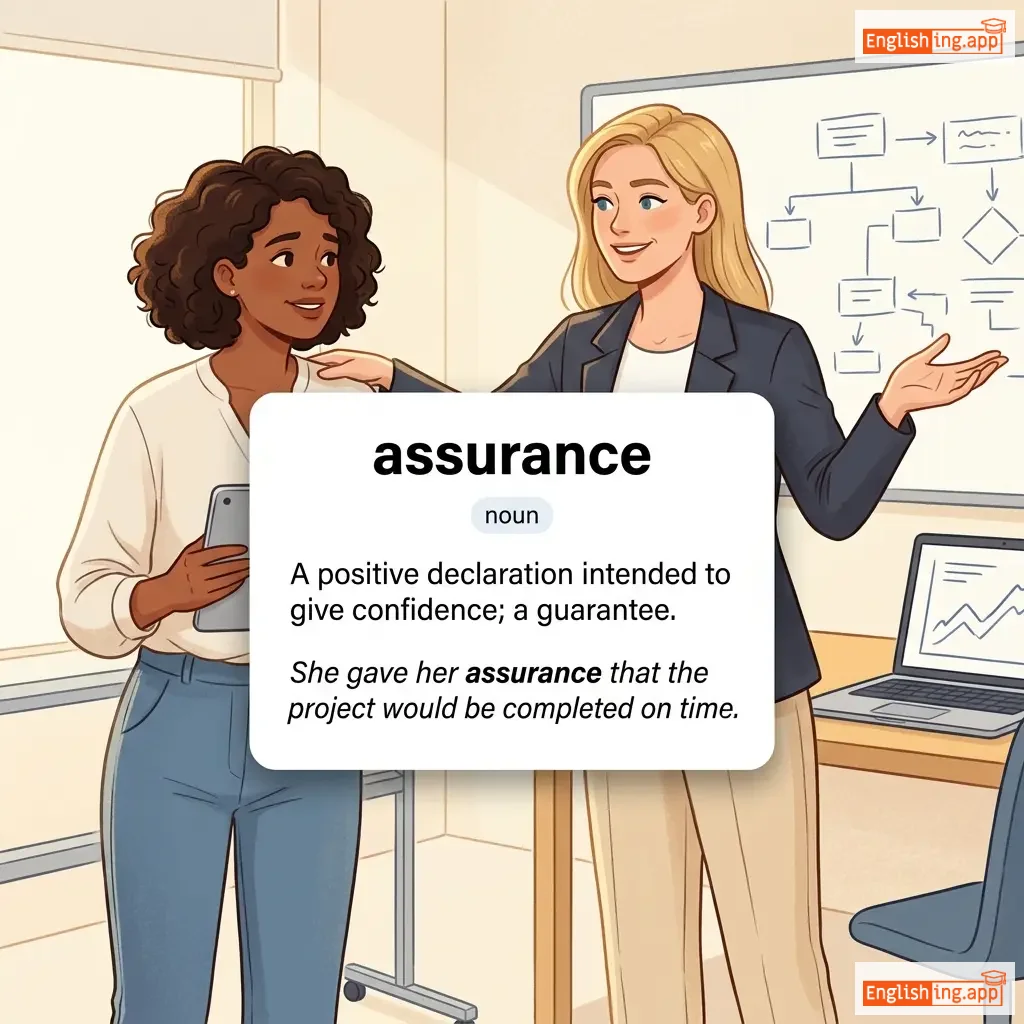
A positive declaration intended to give confidence; a guarantee.
••••••
|
She gave her assurance that the project would be completed on time.
彼女はプロジェクトが時間通りに完了することを保証しました。
••••••
|
彼女はプロジェクトが時間通りに完了することを保証しました。
Kanojo wa purojekuto ga jikan dōri ni kanryō suru koto o hoshō shimashita.
••••••
|
rest assured
安心してください
••••••
|
be certain and without worry
••••••
|
安心してください
Anshin shite kudasai
••••••
|
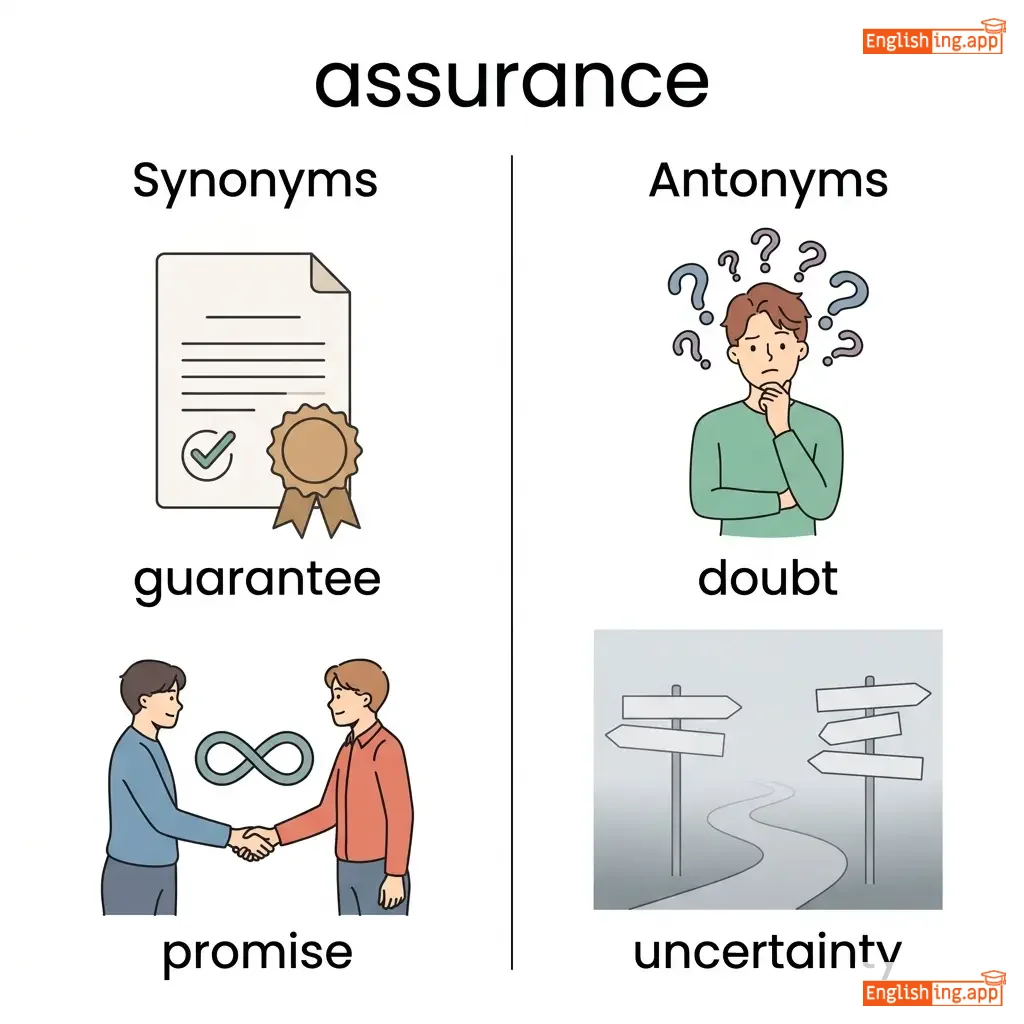
guarantee, promise, pledge, confidence
••••••
|
doubt, uncertainty
••••••
|
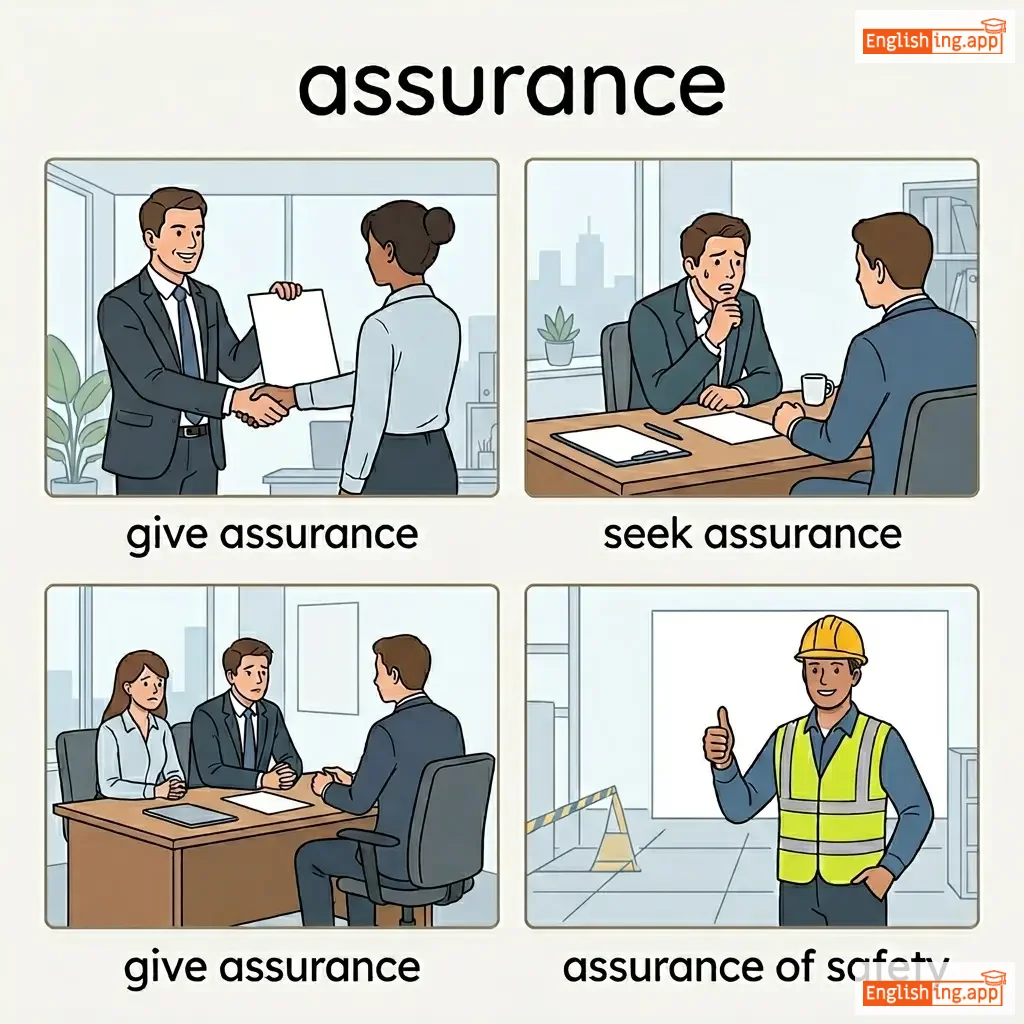
give assurance, seek assurance, assurance of safety
••••••
|
保証は'安心' - 確信と安心を与えます。
••••••
|
Vocabulary Quiz
Test your vocabulary by matching words with their translations or meanings.
Login to take the quiz
Comments (0)
Share your thoughts and join the discussion.
Join the discussion by logging in
Login to CommentNo comments yet
Be the first to share your thoughts!