

シティキャンバスパレード
City Canvas Parade
ダッカのコミュニティセンターは今日、officeで賑わっていました。若い主催者たちは新しいonline展示を準備していました。各グループには、自分たちのストーリーを発表するための三つのoptionが与えられました。Riyaは、彼らが自分たちのアートのoriginについて話せば、もっと人々は興味を持つだろうと言いました。彼らは、各アーティストのoutputビデオをレビューしていました。Rubelは訪問者のために情報のpacketを組み立てました。Munaはスケッチ用の好きなpencilを手に持っていました。夕方には、何百人ものpeopleがセンターに流れ込んできました。彼らはキュレーターのスピーチ前に一時間のperiodを設けました。委員会は健康policyの更新を読み上げ、全員が規則を守るようにしました。地元のpoliceチームも手伝いに来ました。大きなposterがドアに掛けられ、プログラムのためのQRコードが表示されていました。Riyaはボランティアにゲストにnotifyするよう指示しました。フェアが始まると、皆はnormalなペースで進み始めました。ギャラリーの道は少しnarrowだったので、ボランティアは人々に列を作って歩くように頼みました。隣の部屋では子供たちのために小さなmuseumツアーが組まれていました。外の庭では、街のルーツを展示するnature写真ショーが開かれました。午後8時、輝くアートのparadeが始まりました。ボランティアは安全のためにpatrolを続けました。最後に、地元のplayerグループがタブラのビートで夜を締めくくりました。
翻訳
過去
過去分詞
三人称単数
動名詞
意味
例文
例文の翻訳
同義語
対義語
コロケーション
ニーモニック

Swipe left or right, or use the buttons. Tap image to zoom.
例文の翻訳
単語
City Canvas ParadeCity Canvas Parade - マスクトグル
|
絵文字
|
単語 | Images | 翻訳 | 過去 | 過去分詞 | 三人称単数 | 動名詞 | 意味 | 例文 | 例文の翻訳 | 表現例 | 表現例の意味 | 表現例の翻訳 | 同義語 | 対義語 | コロケーション | ニーモニック |
|---|---|---|---|---|---|---|---|---|---|---|---|---|---|---|---|---|---|
|
#0
🏛️
|
/mjuˈziːəm/
noun
(ミュージアム)
••••••
|
- •••••• |
博物館
hakubutsukan
••••••
|
- •••••• | - •••••• | - •••••• | - •••••• |
a building in which objects of historical, scientific, artistic, or cultural interest are stored and exhibited
••••••
|
We visited the art museum to see the new exhibition.
私たちは新しい展示を見るために美術館を訪れました。
••••••
|
私たちは新しい展示を見るために美術館を訪れました。
Watashitachi wa atarashī tenji o miru tame ni bijutsukan o otozuremashita.
••••••
|
- •••••• | - •••••• | - •••••• |
gallery, exhibition hall, archive, collection
••••••
|
market, store
••••••
|
art museum, history museum, science museum, visit museum
••••••
|
博物館で文化や歴史に触れる。
••••••
|
|
#0
↔️
|
/ˈnær.oʊ/
adjective
(ナロー)
••••••
|
- •••••• |
狭い; 限定された; 狭まった
semai; gentei sareta; sematta
••••••
|
- •••••• | - •••••• | - •••••• | - •••••• |
having a small width; thin; limited in scope; restricted
••••••
|
The narrow street was barely wide enough for two cars. |
その狭い道は2台の車が通るにはほとんど十分な広さがありませんでした。
Sono semai michi wa 2 dai no kuruma ga tooru ni wa hotondo juubun na hirosa ga arimasen deshita.
••••••
|
- •••••• | - •••••• | - •••••• |
thin, slim, tight, confined
••••••
|
wide, broad, spacious, expansive
••••••
|
narrow street, narrow margin, narrow escape, narrow minded
••••••
|
狭い道では2台の車が通るにはギリギリだと感じる、まるで制限されたような感覚です。
••••••
|
|
#0
🌳
|
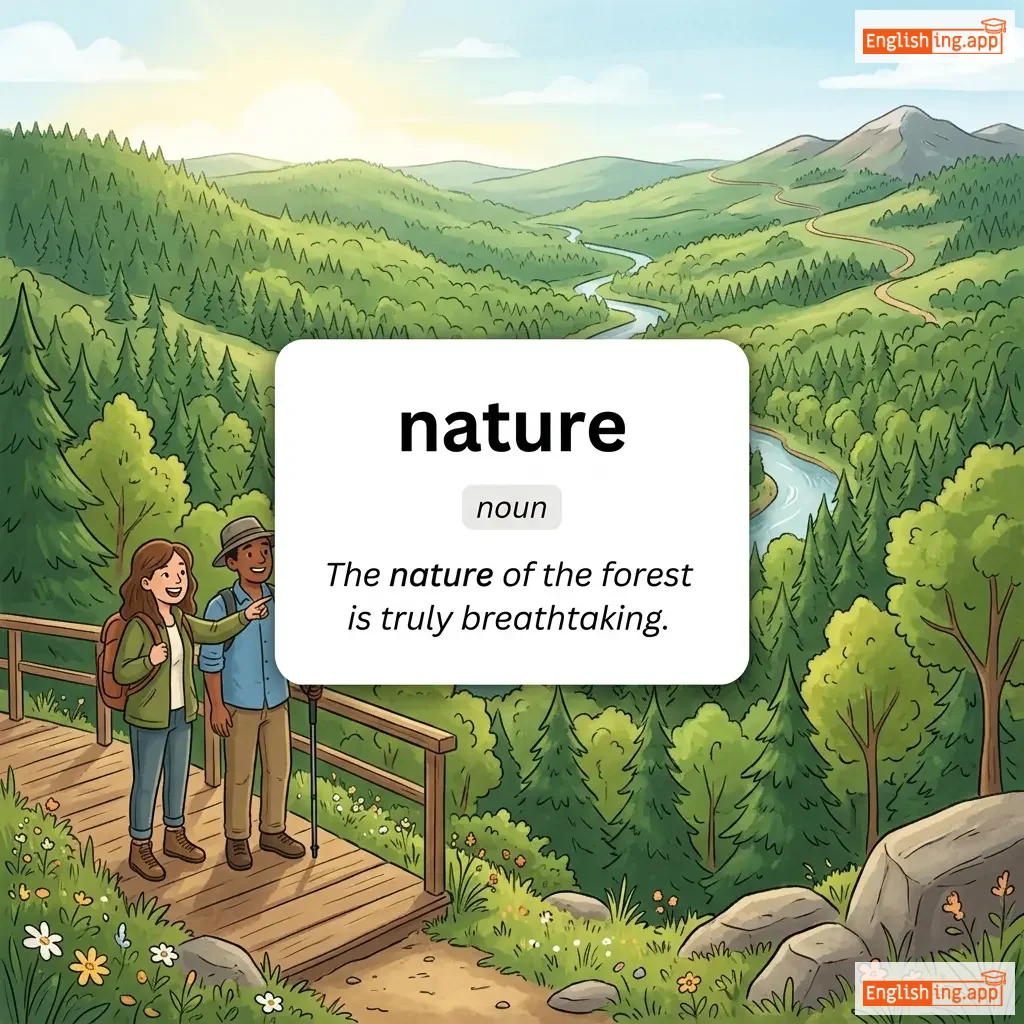
/ˈneɪ.tʃər/
noun
(ネイチャー)
••••••
|
|
自然; 自然界; 何かの基本的な特性や質
shizen; shizenkai; nanika no kihonteki na tokusei ya shitsu
••••••
|
- •••••• | - •••••• | - •••••• | - •••••• |
the natural world; the character or basic qualities of something
••••••
|
Children should spend more time in nature. |
子供たちはもっと自然の中で過ごすべきです。
Kodomo-tachi wa motto shizen no naka de sugosu beki desu.
••••••
|
- •••••• | - •••••• | - •••••• |
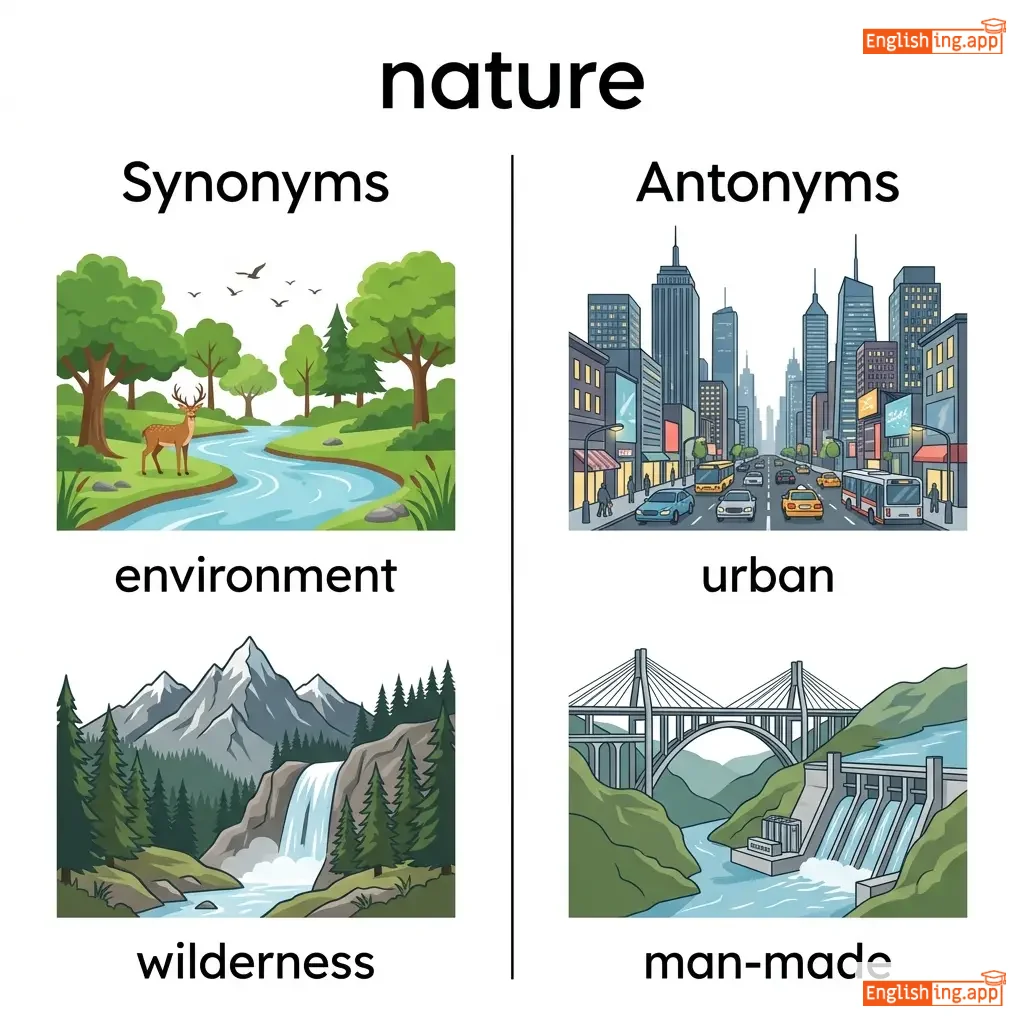
environment, wilderness, outdoors, character
••••••
|
artificiality, civilization, indoors
••••••
|
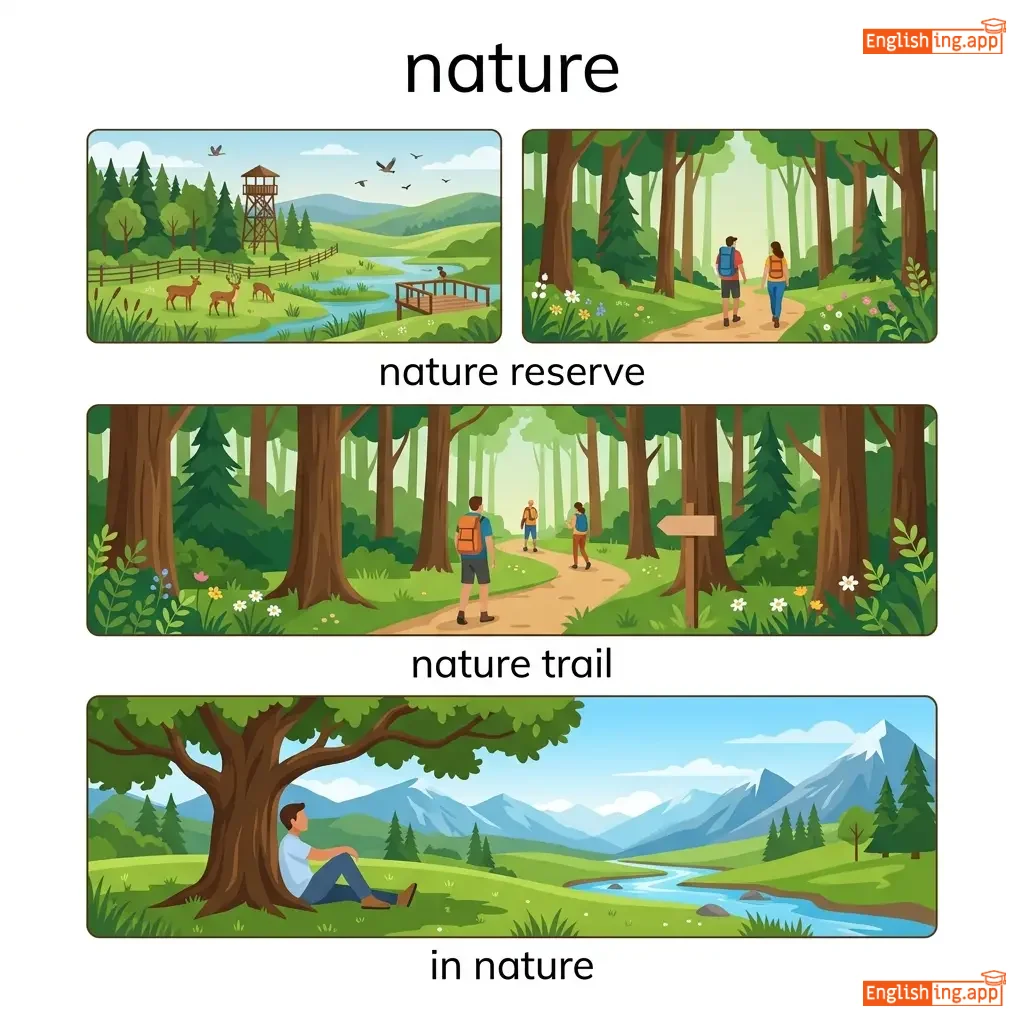
human nature, mother nature, laws of nature
••••••
|
自然の中で過ごすことが心をリフレッシュさせてくれる。
••••••
|
|
#0
📏
|
/ˈnɔː.məl/
adjective
(ノーマル)
••••••
|
- •••••• |
正常
seijou
••••••
|
- •••••• | - •••••• | - •••••• | - •••••• |
conforming to a standard; usual, typical, or expected
••••••
|
It is normal to feel nervous before an interview. |
面接前に緊張するのは正常です。
Mensetsu mae ni kinchou suru no wa seijou desu.
••••••
|
back to normal |
returning to a usual or typical state
••••••
|
正常に戻る
seijou ni modoru
••••••
|
usual, ordinary, typical, standard, regular
••••••
|
abnormal, unusual, strange
••••••
|
normal life, normal situation, normal condition, back to normal
••••••
|
Normal = 正常, すべてが正常📏
••••••
|
|
#0
📢
|
/ˈnoʊtɪfaɪ/
verb
(ノーティファイ)
••••••
|
- •••••• |
通知する
tsuuchisuru
••••••
|
notified
ノーティファイド
••••••
|
notified
ノーティファイド
••••••
|
notifies
ノーティファイズ
••••••
|
notifying
ノーティファイング
••••••
|
to inform someone officially about something
••••••
|
The manager will notify the staff about the schedule change.
マネージャーはスタッフにスケジュールの変更について通知します。
••••••
|
マネージャーはスタッフにスケジュールの変更について通知します。
Maneejaa wa sutaffu ni sukejuuru no henko ni tsuuchi shimasu.
••••••
|
notify of
通知する
••••••
|
to inform about something specific
••••••
|
通知する
tsuuchisuru
••••••
|
inform, alert, announce, communicate
••••••
|
hide, conceal
••••••
|
notify immediately, notify customers, notify authorities, notify in writing
••••••
|
Notify とは知らせること — 通知が来ると誰でもわかります。
••••••
|
|
#0
🏢
|
/ˈɒf.ɪs/
noun
(オフィス)
••••••
|
- •••••• |
オフィス
ofisu
••••••
|
- •••••• | - •••••• | - •••••• | - •••••• |
a room or building where people work, usually at desks
••••••
|
She left the office early to attend a family event.
彼女は家族のイベントに出席するために早くオフィスを出ました。
••••••
|
彼女は家族のイベントに出席するために早くオフィスを出ました。
Kanojo wa kazoku no ibento ni shusseki suru tame ni hayaku ofisu wo demashita.
••••••
|
hold office
役職に就く
••••••
|
to be in a position of authority or responsibility
••••••
|
役職に就く
yakushoku ni tsuku
••••••
|
workplace, bureau, department, agency, company
••••••
|
home, outdoors
••••••
|
office building, office hours, office desk, office staff
••••••
|
オフィスは仕事の場所;オフィスで人々はいつも働きます。
••••••
|
|
#0
💻
|
/ˈɒnˌlaɪn/
adjective/adverb
(オンライン)
••••••
|
- •••••• |
オンライン
onrain
••••••
|
- •••••• | - •••••• | - •••••• | - •••••• |
connected to or available through the internet
••••••
|
I prefer shopping online rather than going to stores.
私はお店に行くよりもオンラインで買い物をする方が好きです。
••••••
|
私はお店に行くよりもオンラインで買い物をする方が好きです。
Watashi wa omise ni iku yori mo onrain de kaimono wo suru hou ga suki desu.
••••••
|
- •••••• | - •••••• | - •••••• |
internet-based, digital, connected, virtual
••••••
|
offline, disconnected
••••••
|
online shopping, online services, online education, online access
••••••
|
Onrain sounds like online with a Japanese twist!
••••••
|
|
#0
⚖️
|
/ˈɒpʃən/
noun
(オプション)
••••••
|
- •••••• |
選択肢
sentakushi
••••••
|
- •••••• | - •••••• | - •••••• | - •••••• |
A choice or possibility available among alternatives.
••••••
|
You have the option to pay by card or cash. |
カードまたは現金で支払うオプションがあります。
Kaado mata wa genkin de shiharau opushon ga arimasu.
••••••
|
keep your options open |
Avoid committing to one choice too early.
••••••
|
選択肢を開いておく
Sentakushi wo hiraita oku
••••••
|
choice, alternative, possibility, selection, preference
••••••
|
obligation, compulsion, necessity
••••••
|
have option, choose option, better option
••••••
|
オプションは複数の選択肢から選ぶことを意味します。
••••••
|
|
#0
🌄
|
/ˈɒr.ɪ.dʒɪn/
noun
(オリジン)
••••••
|
- •••••• |
起源
kigen
••••••
|
- •••••• | - •••••• | - •••••• | - •••••• |
the point or place where something begins or is created
••••••
|
The river has its origin in the mountains.
その川は山々に起源を持っています。
••••••
|
その川は山々に起源を持っています。
Sono kawa wa yamayama ni kigen o motteimasu.
••••••
|
point of origin
起源点
••••••
|
the place where something starts
••••••
|
起源点
kigendian
••••••
|
beginning, source, root, start, genesis
••••••
|
end, conclusion
••••••
|
country of origin, place of origin, origin story, unknown origin
••••••
|
Origin は起源を意味します 🌄 — 川の起源を覚えることで、言葉を覚えるのが簡単になります。
••••••
|
|
#0
🏭
|
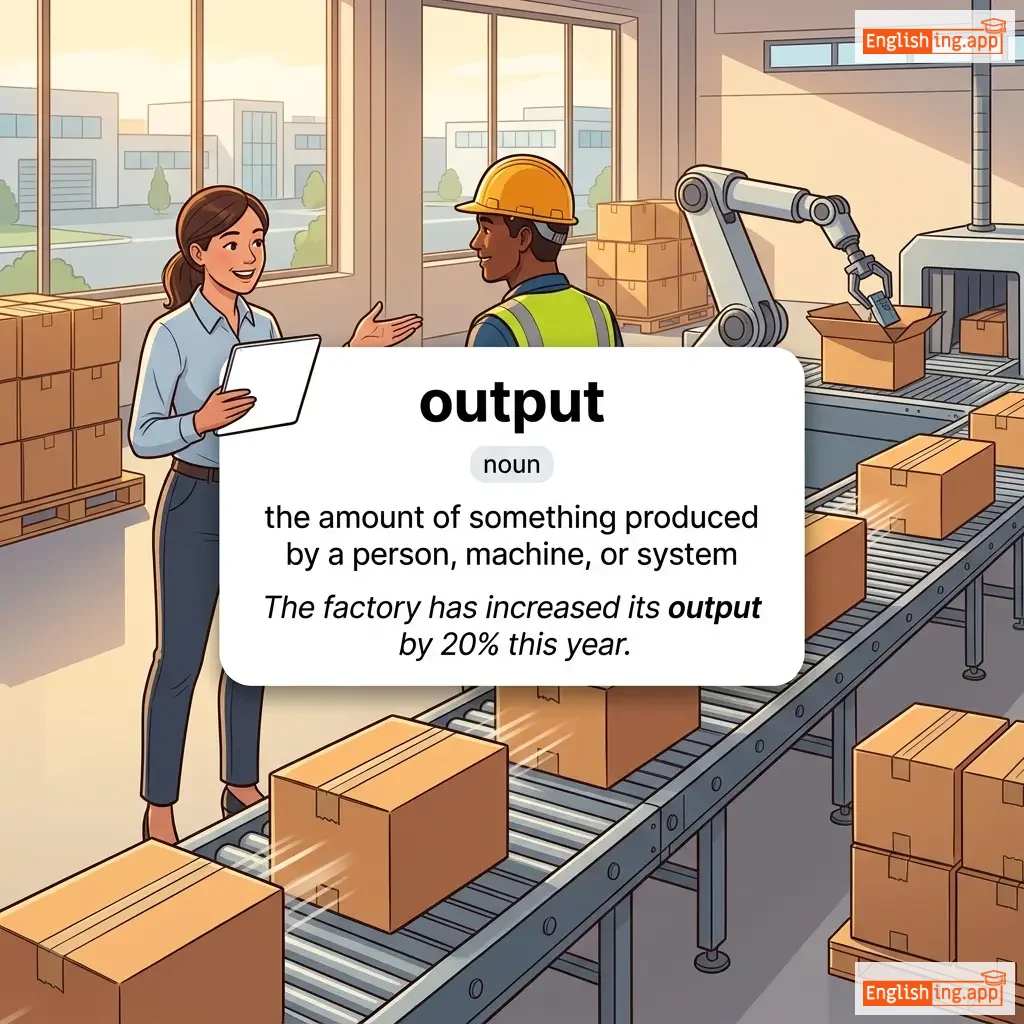
/ˈaʊtpʊt/
noun
(アウトプット)
••••••
|
|
生産
seisan
••••••
|
- •••••• | - •••••• | - •••••• | - •••••• |
the amount of something produced by a person, machine, or system
••••••
|
The factory has increased its output by 20% this year. |
工場は今年20%生産量を増加させました。
Koujou wa kotoshi 20% seisanryou wo zouka sasemashita.
••••••
|
high output |
producing a large amount or quantity
••••••
|
高生産
kouseisan
••••••
|
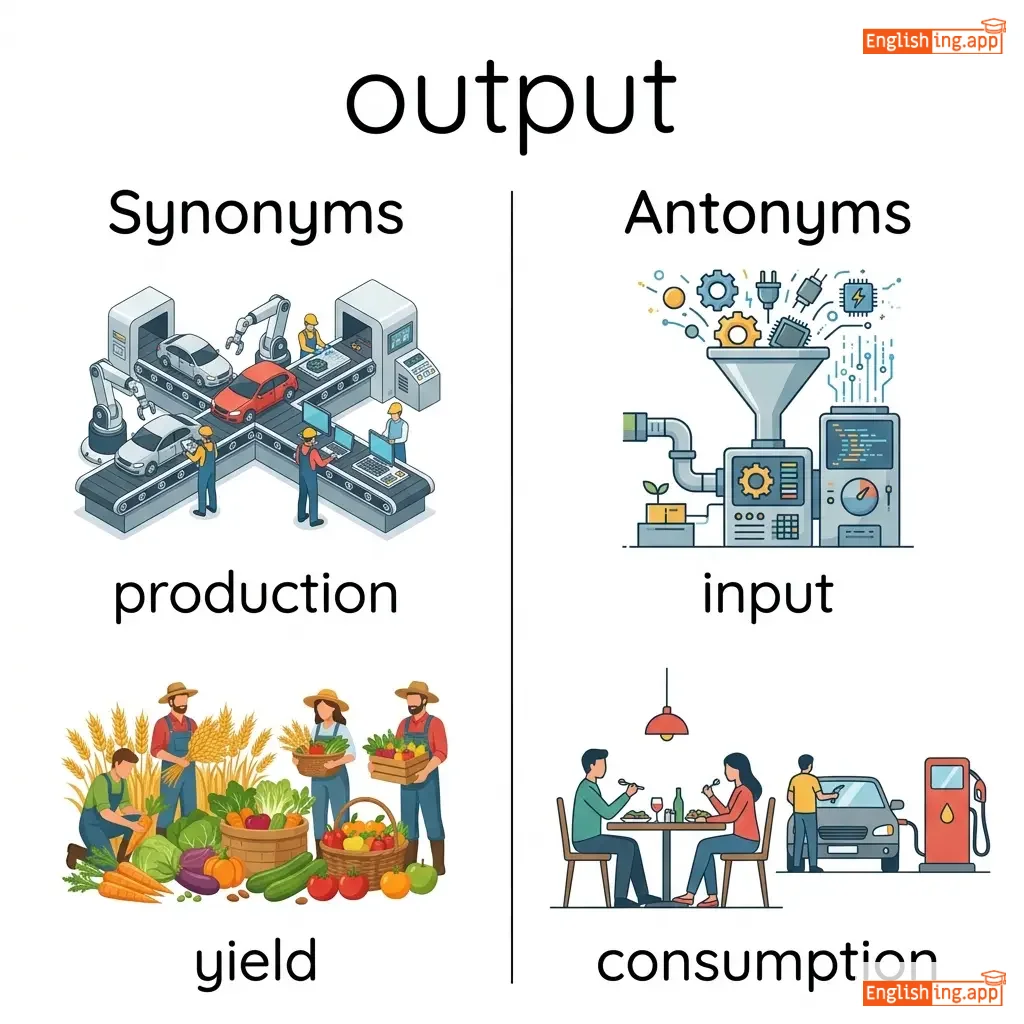
production, yield, product, result, performance
••••••
|
input, consumption
••••••
|
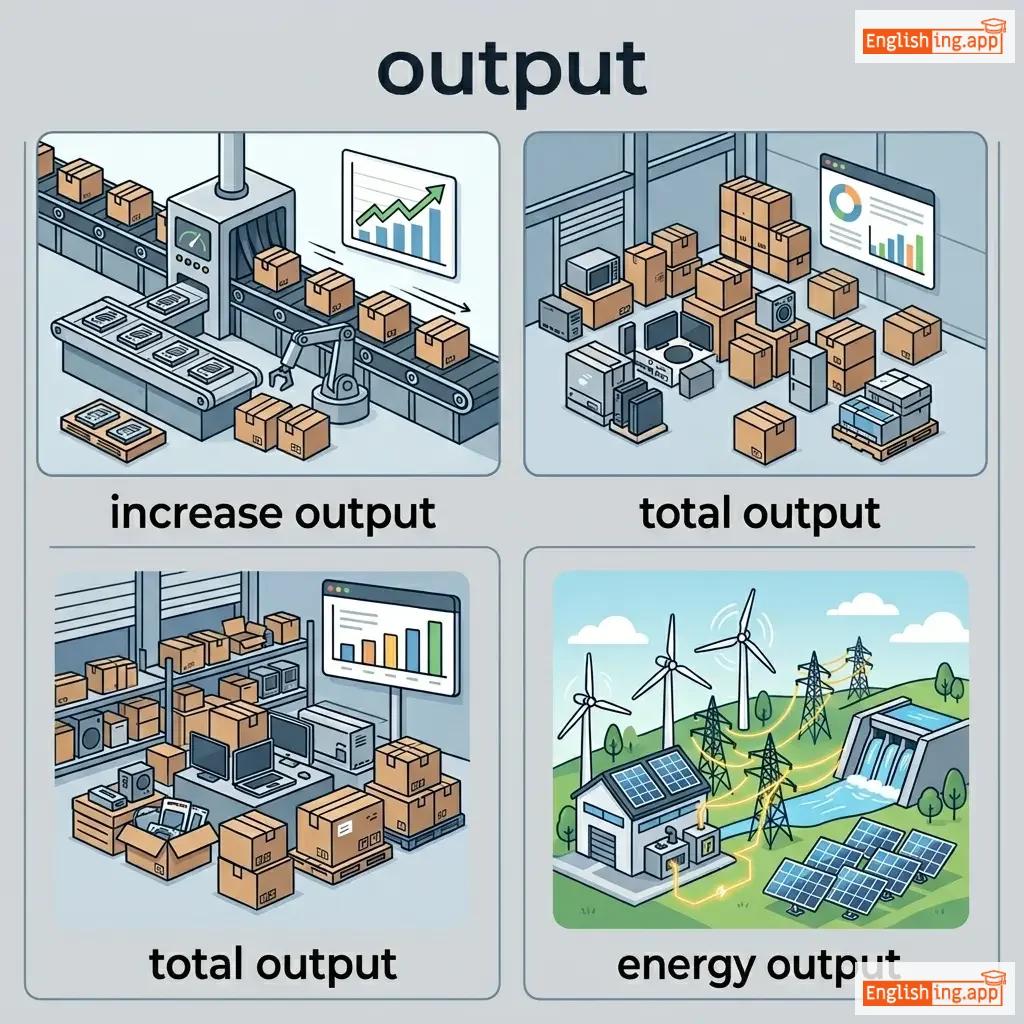
increase output, total output, energy output, data output
••••••
|
Out + Put は ‘生産’ の意味 — 生産!
••••••
|
|
#0
📦
|
/ˈpæk.ɪt/
noun
(パケット)
••••••
|
- •••••• |
パケット
paketto
••••••
|
- •••••• | - •••••• | - •••••• | - •••••• |
a small package or container holding items or information
••••••
|
He bought a packet of biscuits from the shop. |
彼は店でビスケットのパケットを買いました。
Kare wa mise de bisuketto no paketto o kaimashita.
••••••
|
- •••••• | - •••••• | - •••••• |
package, parcel, bundle, sachet, pouch
••••••
|
bulk, load
••••••
|
packet of chips, packet of biscuits, packet of seeds, small packet
••••••
|
パケットは英語の‘packet’と同じです — ビスケットのパケットはみんな知っています。
••••••
|
|
#0
🎖️
|
/pəˈreɪd/
verb
(パレード)
••••••
|
|
パレードする, 公開する
parēdo suru, kōkai suru
••••••
|
paraded
パレードした
••••••
|
paraded
パレードした
••••••
|
parades
パレードします
••••••
|
parading
パレードしている
••••••
|
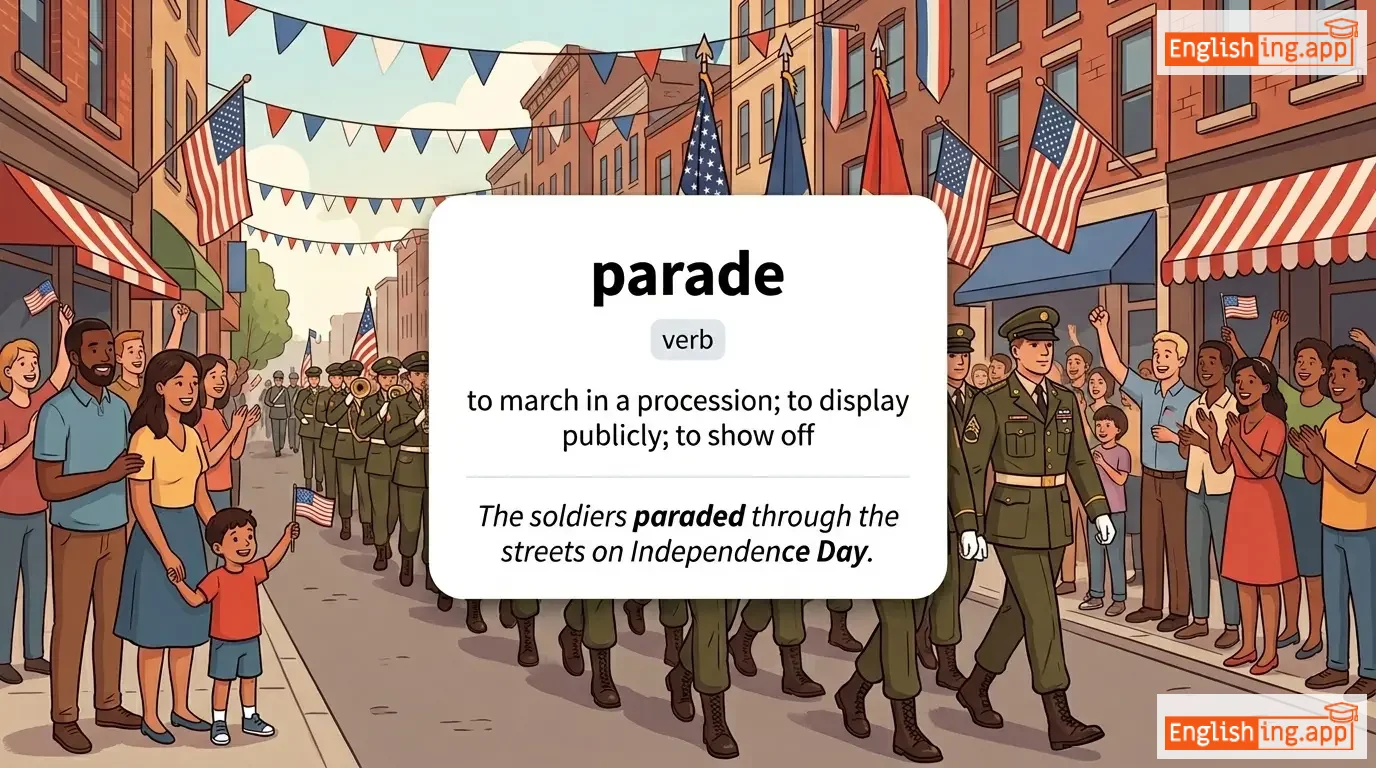
to march in a procession; to display publicly; to show off
••••••
|
The soldiers paraded through the streets on Independence Day.
独立記念日に兵士たちが通りでパレードした。
••••••
|
独立記念日に兵士たちが通りでパレードした。
Dokuritsu kinenbi ni heishitachi ga tōri de parēdo shita.
••••••
|
- •••••• | - •••••• | - •••••• |
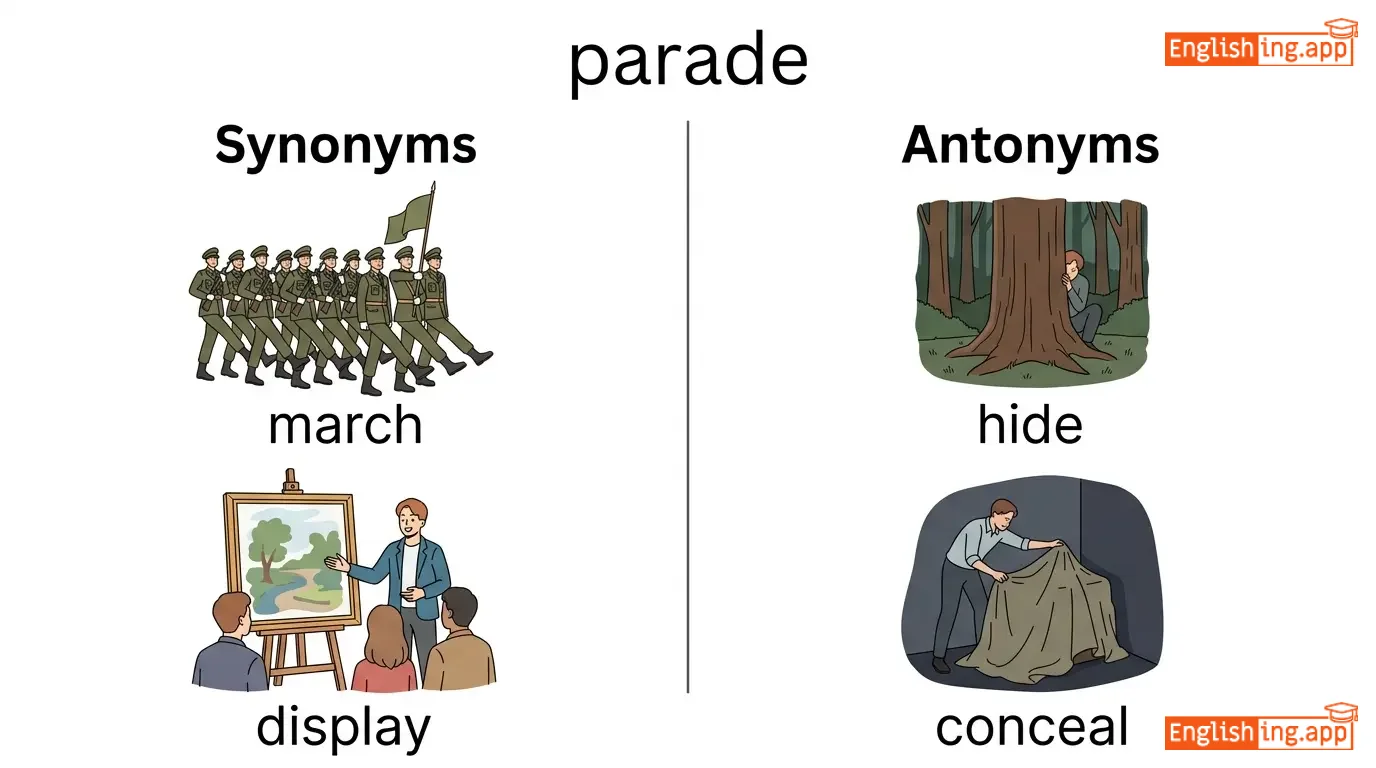
march, display, show, demonstrate
••••••
|
hide, conceal, withdraw, retreat
••••••
|
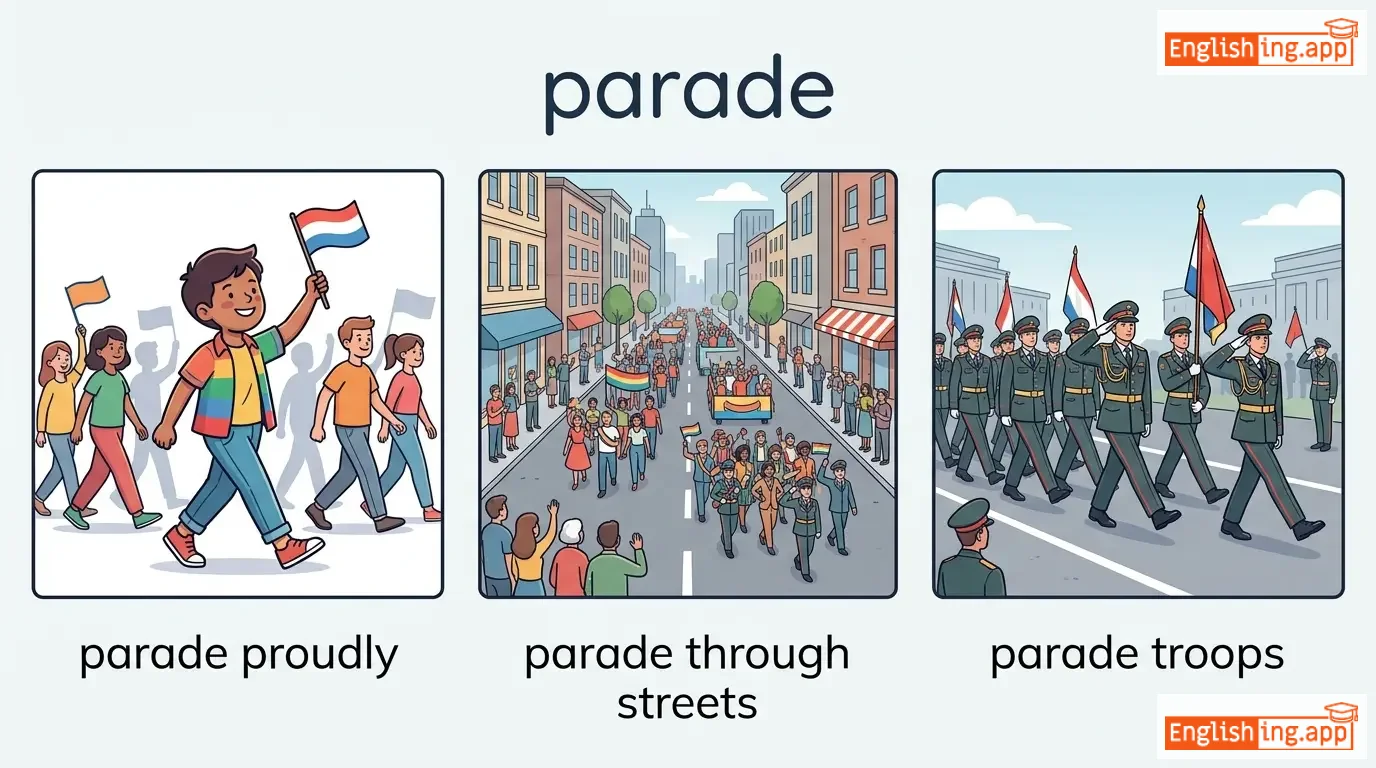
parade proudly, parade through streets, parade troops, parade around, parade success
••••••
|
兵士たちはパレードをして、見る人々に力を示す。
••••••
|
|
#0
🚓
|
/pəˈtroʊl/
verb
(パトロール)
••••••
|
- •••••• |
パトロールする
patorōru suru
••••••
|
patrolled
パトロールした
••••••
|
patrolled
パトロールした
••••••
|
patrols
パトロールする
••••••
|
patrolling
パトロールしている
••••••
|
to move around an area to watch or guard it
••••••
|
The police patrol the streets at night to ensure safety.
警察は夜に街をパトロールして安全を確保しています。
••••••
|
警察は夜に街をパトロールして安全を確保しています。
Keisatsu wa yoru ni machi o patorōru shite anzen o kakuho shiteimasu.
••••••
|
on patrol
パトロール中
••••••
|
engaged in patrolling duties
••••••
|
パトロール中
patorōru-chū
••••••
|
guard, watch, monitor, inspect, survey
••••••
|
ignore, neglect, overlook
••••••
|
police patrol, border patrol, night patrol, patrol car
••••••
|
Patrol は巡回を意味する — **パトロール** する 🚓
••••••
|
|
#0
✏️
|
/ˈpɛnsəl/
noun
••••••
|
- •••••• | - •••••• | - •••••• | - •••••• | - •••••• | - •••••• |
an instrument for writing or drawing, typically made of wood with a graphite core
••••••
|
He drew a picture with a pencil. |
- •••••• |
pencil in |
to make a tentative plan or appointment
••••••
|
- •••••• |
writing tool, crayon, stylus, marker
••••••
|
pen, ink, marker pen
••••••
|
sharpen a pencil, pencil drawing, pencil sketch, pencil case
••••••
|
No •••••• |
|
#0
👥
|
/ˈpiːpl/
noun
(pīpuru)
••••••
|
- •••••• |
人々
hitobito
••••••
|
- •••••• | - •••••• | - •••••• | - •••••• |
a group of human beings collectively
••••••
|
The people in the town gathered for the festival.
町の人々は祭りのために集まりました。
••••••
|
町の人々は祭りのために集まりました。
Machi no hitobito wa matsuri no tame ni atsumarimashita.
••••••
|
- •••••• | - •••••• | - •••••• |
humans, individuals, persons, citizens
••••••
|
animals, non-humans
••••••
|
people's choice, common people, local people, young people
••••••
|
People in a PEE (人々) group gather together
••••••
|
|
#0
⏳
|
/ˈpɪərɪəd/
noun
(ピリオド)
••••••
|
- •••••• |
期間
kikan
••••••
|
- •••••• | - •••••• | - •••••• | - •••••• |
a length or portion of time
••••••
|
The meeting will last for a period of two hours. |
会議は2時間の期間続きます。
Kaigi wa 2 jikan no kikan tsudzukimasu.
••••••
|
- •••••• | - •••••• | - •••••• |
duration, span, interval, stretch
••••••
|
moment, instant
••••••
|
long period, short period, indefinite period
••••••
|
Period = ピリ (ピリオド) 時間
••••••
|
|
#0
🏅
|
/ˈpleɪər/
noun
(プレイヤー)
••••••
|
- •••••• |
選手
senshu
••••••
|
- •••••• | - •••••• | - •••••• | - •••••• |
a person who participates in a game or sport
••••••
|
The player scored the winning goal. |
選手は決勝ゴールを決めました。
Senshu wa kesshō gōru o kimemashita.
••••••
|
- •••••• | - •••••• | - •••••• |
athlete, competitor, participant, sportsperson
••••••
|
non-player, spectator
••••••
|
professional player, skilled player, football player, basketball player
••••••
|
Player = プレイ (play) + ヤー (ya), プレイヤーはスポーツをプレイする人
••••••
|
|
#0
👮
|
/pəˈliːs/
noun
(ポリス)
••••••
|
- •••••• |
警察
keisatsu
••••••
|
- •••••• | - •••••• | - •••••• | - •••••• |
a body of officers representing the civil authority of government
••••••
|
The police arrived quickly to investigate the scene.
警察はすぐに現場に到着して調査を行いました。
••••••
|
警察はすぐに現場に到着して調査を行いました。
Keisatsu wa sugu ni genba ni tōchaku shite chōsa o okonaimashita.
••••••
|
- •••••• | - •••••• | - •••••• |
law enforcement, constabulary, cops, authorities
••••••
|
criminals, offenders
••••••
|
police officer, police station, police force
••••••
|
警察が守る、'ケイ' のポリス!
••••••
|
|
#0
📋
|
/ˈpɒl.ə.si/
noun
(ポリシー)
••••••
|
|
方針
hōshin
••••••
|
- •••••• | - •••••• | - •••••• | - •••••• |
a course of action adopted by a government, organization, or individual
••••••
|
The company has a strict policy against smoking. |
その会社は喫煙に対して厳格な方針を持っています。
Sono kaisha wa kitsuen ni taishite genkaku na hōshin o motteimasu.
••••••
|
- •••••• | - •••••• | - •••••• |
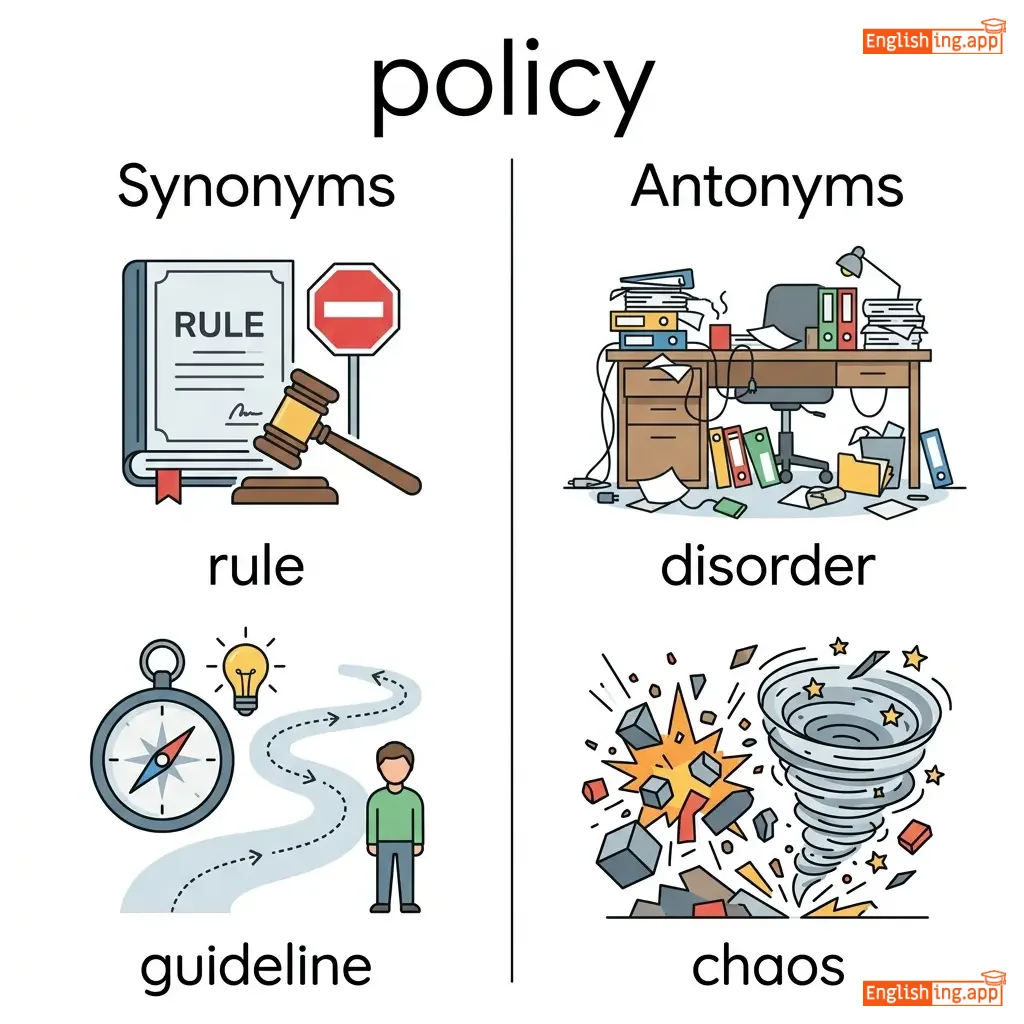
strategy, plan, procedure, guidelines
••••••
|
chaos, disorder, improvisation
••••••
|
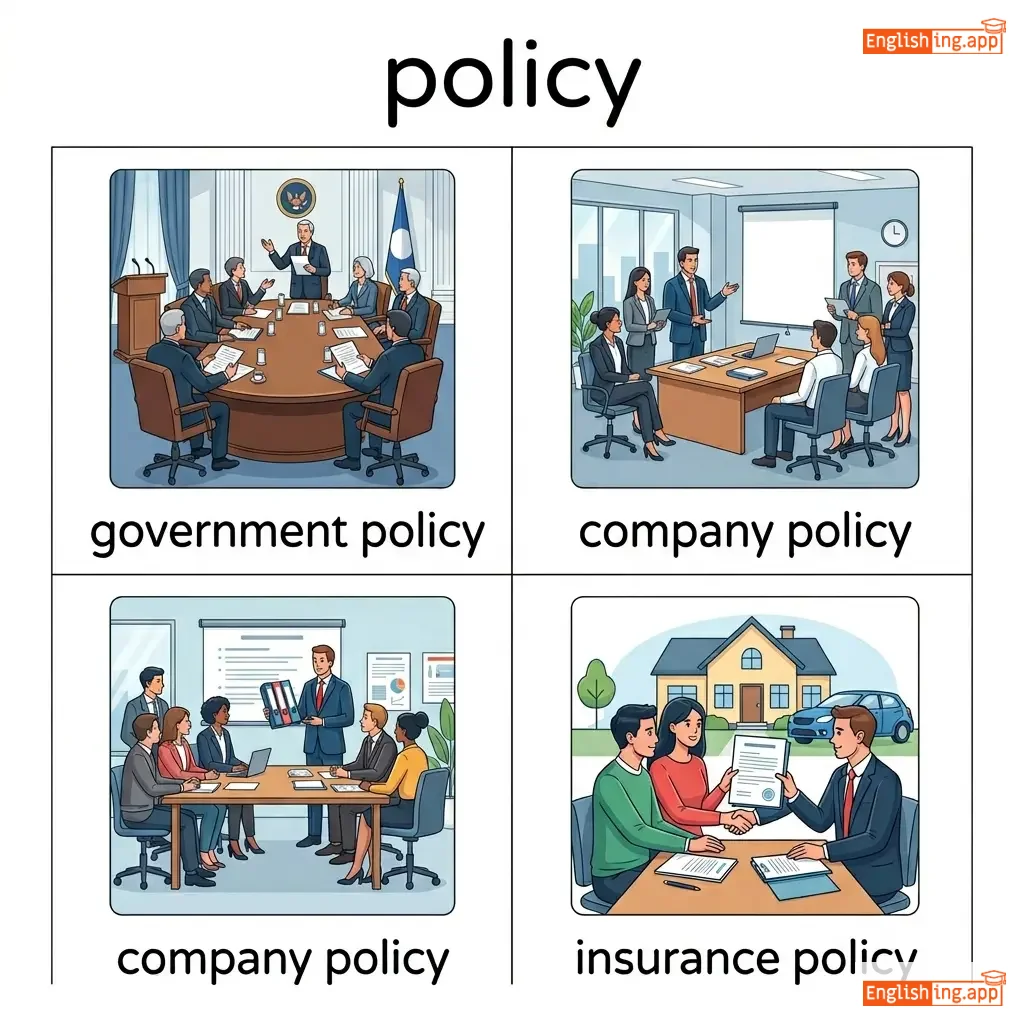
foreign policy, company policy, insurance policy
••••••
|
方針 (hōshin) - Think of the policy like a rule book guiding the actions of a business.
••••••
|
|
#0
🪧
|
/ˈpoʊstər/
noun
(ハピネス)
••••••
|
- •••••• |
ポスター
posutā
••••••
|
- •••••• | - •••••• | - •••••• | - •••••• |
a large printed picture or notice that is put on a wall for decoration or to advertise something
••••••
|
They put up a movie poster outside the theater.
彼らは映画館の外に映画のポスターを貼った。
••••••
|
彼らは映画館の外に映画のポスターを貼った。
Karera wa eigakan no soto ni eiga no posutā o hatta.
••••••
|
- •••••• | - •••••• | - •••••• |
placard, sign, banner, notice, print
••••••
|
booklet, pamphlet
••••••
|
movie poster, wall poster, advertising poster, campaign poster
••••••
|
ポスターは壁に貼られるもの — 壁に貼って、ポスター!
••••••
|
Vocabulary Quiz
Test your vocabulary by matching words with their translations or meanings.
Login to take the quiz
Comments (0)
Share your thoughts and join the discussion.
Join the discussion by logging in
Login to CommentNo comments yet
Be the first to share your thoughts!