

レストランを救ったシェフ
The Chef Who Saved a Restaurant
ラーフルは才能あるシェフで、倒産寸前のレストランに加わった。現実は stark ― ビジネスは崩壊寸前だった。キッチンはひどい状態で、古い stove と壊れた機器があった。仕入れ業者は支払いが遅れていたため、納品を stall し始めた。ラーフルはビジネスを正しい方向に steer しなければならないと知っていた。初日は混乱しており、ウェイターがスープを spilled し、冷蔵庫の中の食材が spoil し始めた。ラーフルは困難にもかかわらず、自分の計画に stick し続けた。彼はキッチンを再編し、スタッフに適切な技術を教えた。面白い出来事は、ラーフルがオイルを spray しようとしたとき、ノズルが詰まり、オイルがあちこちに spray されたことだった。彼は掃除をして、衛生基準に stand firm であり続けた。メニューは一新され、看板料理の steak が人気になった。ラーフルは皿を stare するだけで、何が間違っているか分かった。食材は正しく stack され、stock は効率的に管理された。キッチンの story は口コミで広まった。値上げは当初 steep だったが、品質がそれを正当化した。ラーフルは飲み物の演出に straws を使い、上品な印象を加えた。VIP ゲストがプライベートディナーのためにレストランの高級 suite を予約した。インテリアデザイナーが古い塗装を stripped して改装した。ラーフルはどんな stuff も乱れないようにした。調理中、キッチンは still ― 集中そのものだった。レストランは大成功を収め、人々は数週間前から予約しなければならなかった。ラーフルは情熱と努力が倒れかけたビジネスを蘇らせることを証明した。彼の story は他の苦戦するレストラン経営者を励ました。
翻訳
過去
過去分詞
三人称単数
動名詞
意味
例文
例文の翻訳
同義語
対義語
コロケーション
ニーモニック
Swipe left or right, or use the buttons. Tap image to zoom.
例文の翻訳
単語
The Chef Who Saved a RestaurantThe Chef Who Saved a Restaurant - マスクトグル
|
絵文字
|
単語 | Images | 翻訳 | 過去 | 過去分詞 | 三人称単数 | 動名詞 | 意味 | 例文 | 例文の翻訳 | 表現例 | 表現例の意味 | 表現例の翻訳 | 同義語 | 対義語 | コロケーション | ニーモニック |
|---|---|---|---|---|---|---|---|---|---|---|---|---|---|---|---|---|---|
|
#0
☕
|
/spɪl/
verb
(スピル)
••••••
|
- •••••• |
こぼす
kobosu
••••••
|
spilled
スピルド
••••••
|
spilled
スピルド
••••••
|
spills
スピルズ
••••••
|
spilling
スピリング
••••••
|
to cause liquid to flow or fall out of a container by accident
••••••
|
Be careful not to spill your coffee.
コーヒーをこぼさないように気を付けて。
••••••
|
コーヒーをこぼさないように気を付けて。
Koohii wo kobosanai you ni ki wo tsukete.
••••••
|
spill the beans
ビーンズをこぼす
••••••
|
to reveal a secret
••••••
|
秘密を漏らす
himitsu wo morasu
••••••
|
pour, leak, overflow, splash, slosh
••••••
|
contain, hold
••••••
|
spill water, spill oil, spill over, coffee spill
••••••
|
Spill するとこぼれてしまう!気をつけて!
••••••
|
|
#0
💔
|
/spɔɪl/
verb
(スポイル)
••••••
|
- •••••• |
台無しにする
dainashi ni suru
••••••
|
spoiled
スポイルド
••••••
|
spoiled
スポイルド
••••••
|
spoils
スポイルズ
••••••
|
spoiling
スポイリング
••••••
|
to damage or ruin something
••••••
|
The rain spoiled the outdoor event.
雨が屋外イベントを台無しにした。
••••••
|
雨が屋外イベントを台無しにした。
Ame ga okugai ibento o dainashi ni shita.
••••••
|
- •••••• | - •••••• | - •••••• |
ruin, damage, mar, destroy
••••••
|
preserve, protect
••••••
|
spoil food, spoil plans, spoil someone
••••••
|
台無しにするは何かを損なうこと、雨によって台無しにされたイベントのように。
••••••
|
|
#0
💦
|
/spreɪ/
verb
(スプレー)
••••••
|
- •••••• |
スプレーする
supuree suru
••••••
|
sprayed
スプレード
••••••
|
sprayed
スプレード
••••••
|
sprays
スプレイズ
••••••
|
spraying
スプレーイング
••••••
|
to apply liquid to something in a fine mist
••••••
|
She sprayed perfume on her wrist before leaving.
彼女は出かける前に手首に香水をスプレーしました。
••••••
|
彼女は出かける前に手首に香水をスプレーしました。
Kanojo wa dekakeru mae ni tekubi ni kōsui o supurē shimashita.
••••••
|
spray and pray
スプレーと祈り
••••••
|
to use a broad and unfocused approach hoping for success
••••••
|
スプレーと祈り
supurē to inori
••••••
|
mist, sprinkle, scatter, splash, atomize
••••••
|
collect, absorb, dry
••••••
|
spray paint, spray bottle, spray water, spray perfume
••••••
|
Spray はスプレーすること — 'スプレーで広がる香り!'
••••••
|
|
#0
📚
|
/stæk/
verb
••••••
|
- •••••• | - •••••• |
stacked
••••••
|
stacked
••••••
|
stacks
••••••
|
stacking
••••••
|
to arrange things in a neat pile or one on top of another
••••••
|
He stacked the books neatly on the shelf. |
- •••••• |
stack up |
to accumulate or increase over time
••••••
|
- •••••• |
pile, heap, arrange, load, assemble
••••••
|
scatter, spread, disorganize
••••••
|
stack of papers, stack shelves, stack boxes, neatly stacked
••••••
|
No •••••• |
|
#0
🛑
|
/stɔːl/
verb, noun
(ストール)
••••••
|
- •••••• |
止める, 屋台
tomeru, yatai
••••••
|
stalled
ストールド
••••••
|
stalled
ストールド
••••••
|
stalls
ストールス
••••••
|
stalling
ストーリング
••••••
|
to stop or cause to stop temporarily; a small shop or stand
••••••
|
The car stalled on the way to the office.
車はオフィスに向かう途中で停まった。
••••••
|
車はオフィスに向かう途中で停まった。
Kuruma wa ofisu ni mukau tochu de tomatta.
••••••
|
- •••••• | - •••••• | - •••••• |
delay, stop, halt, linger
••••••
|
move, proceed
••••••
|
stall a car, market stall, food stall, engine stalled
••••••
|
Stallは車を止めるか、マーケットの屋台です!
••••••
|
|
#0
🧍
|
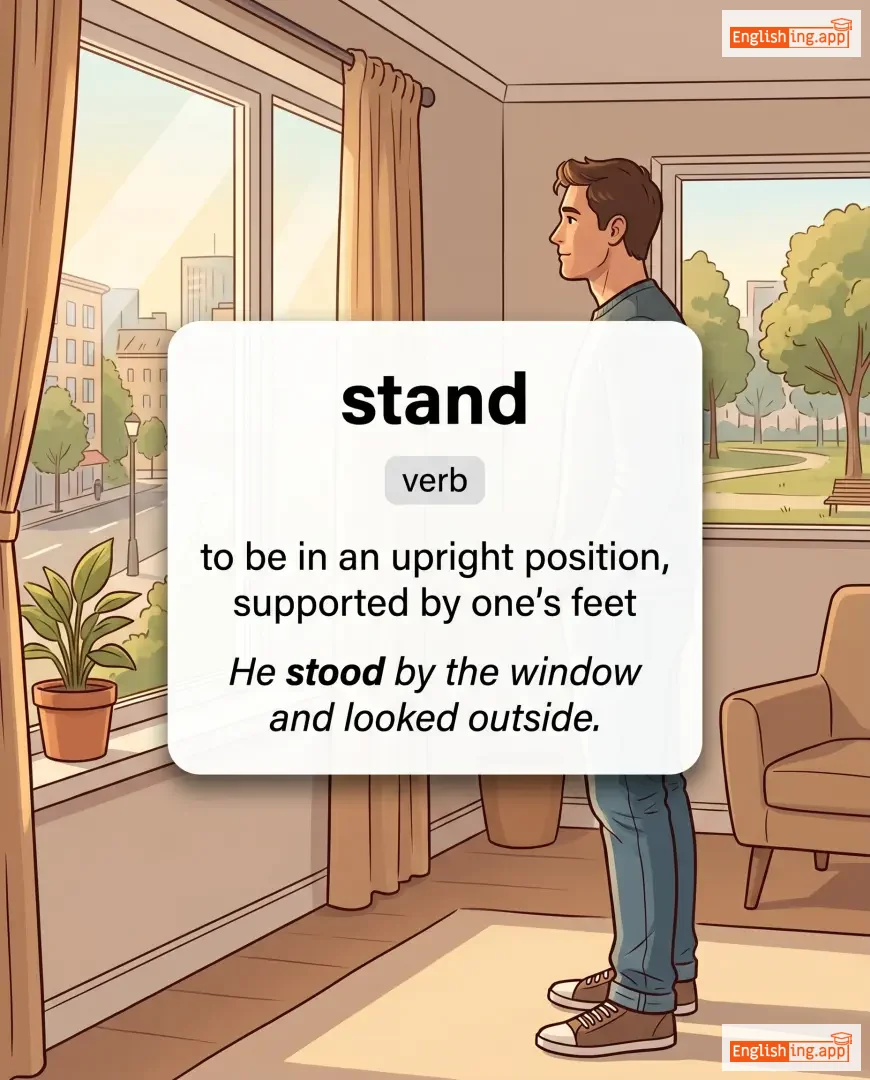
/stænd/
verb
(立つ)
••••••
|
|
立つ
tatsu
••••••
|
stood
立った
••••••
|
stood
立った
••••••
|
stands
立つ
••••••
|
standing
立っている
••••••
|
to be in an upright position; to tolerate or endure
••••••
|
Please stand up when the teacher enters.
先生が入る時に立ってください。
••••••
|
先生が入る時に立ってください。
Sensei ga hairu toki ni tatte kudasai.
••••••
|
- •••••• | - •••••• | - •••••• |
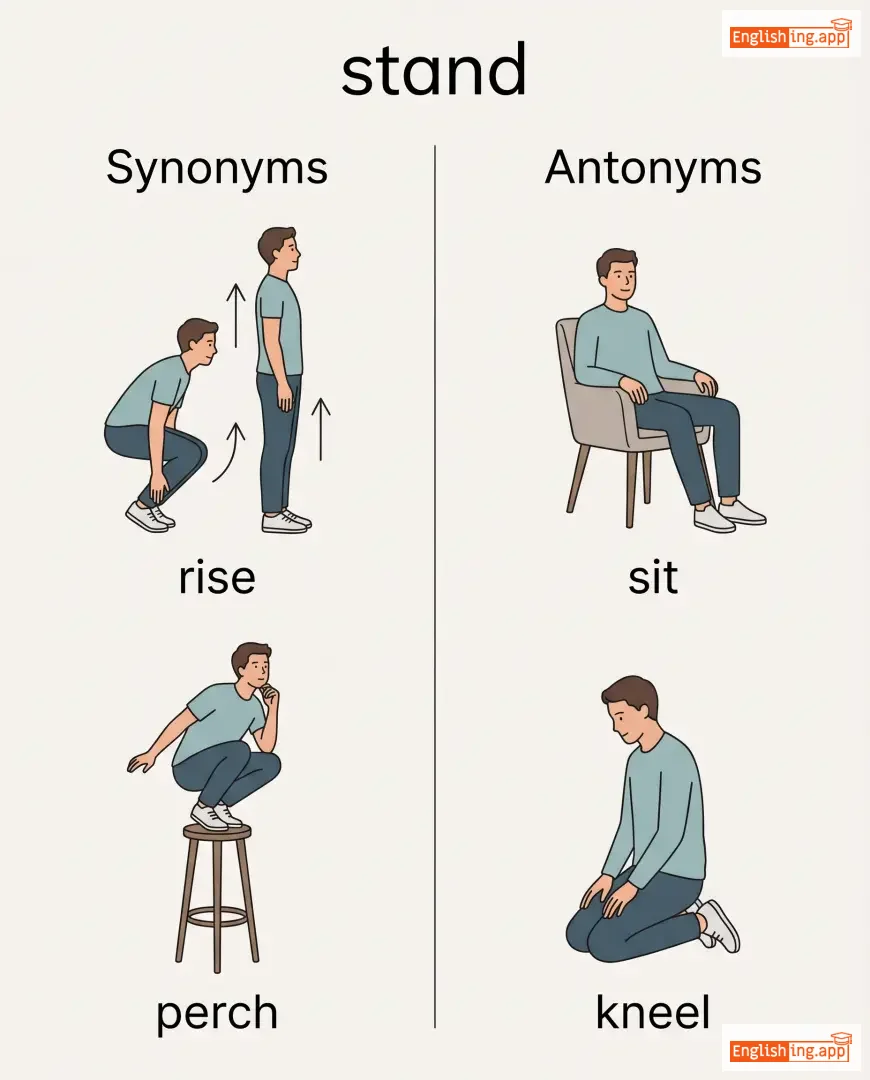
rise, upright, endure, tolerate
••••••
|
sit, lie, fall, collapse
••••••
|
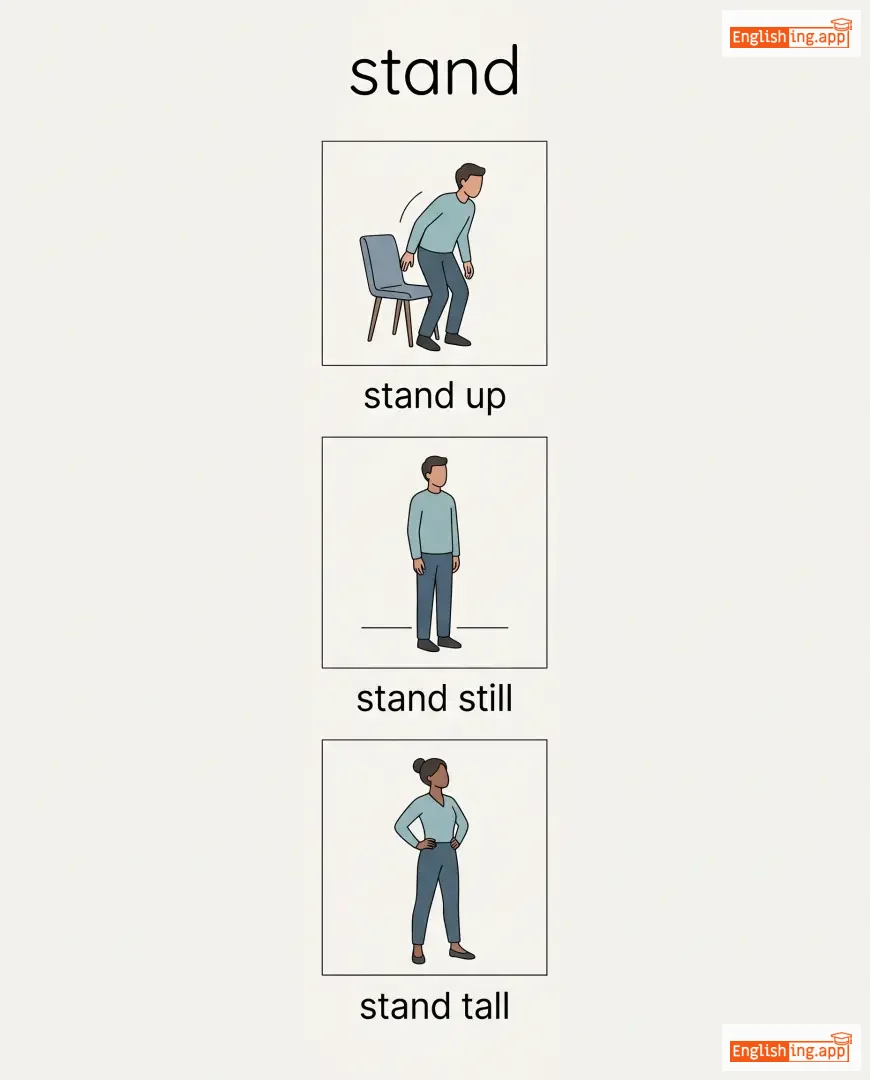
stand up, stand still, stand by, stand for, take a stand
••••••
|
立つ!兵士のように忍耐強く。
••••••
|
|
#0
👀
|
/stɛə/
verb
(ステア)
••••••
|
- •••••• |
じっと見る
jitto miru
••••••
|
stared
ステアード
••••••
|
stared
ステアード
••••••
|
stares
ステアーズ
••••••
|
staring
ステアリング
••••••
|
to look at something with a fixed gaze
••••••
|
She stared at the painting for hours.
彼女は何時間も絵をじっと見つめていました。
••••••
|
彼女は何時間も絵をじっと見つめていました。
Kanojo wa nanjikan mo e o jitto mitsumete imashita.
••••••
|
stare someone down
誰かをじっと見つめて、相手が目をそらすまで
••••••
|
to look at someone intensely until they look away
••••••
|
誰かをじっと見つめて、相手が目をそらすまで
Dareka o jitto mitsumete, aite ga me o sorasu made
••••••
|
gaze, glance, look, peer
••••••
|
ignore, avert
••••••
|
stare at, stare down, stare in awe
••••••
|
When you stare, your eyes stay still for a long time!
••••••
|
|
#0
⚫
|
/stɑːrk/
adjective
(スターク)
••••••
|
- •••••• |
厳しい、鋭い
kibishii, surudoi
••••••
|
- •••••• | - •••••• | - •••••• | - •••••• |
Severe, sharp, or clearly defined; plain and without any decoration.
••••••
|
The stark contrast between poverty and wealth was evident in the city.
貧困と富の間の鮮明な対比は街中で明らかだった。
••••••
|
貧困と富の間の鮮明な対比は街中で明らかだった。
Hinkon to tomi no aida no senmei na taibi wa machi naka de akiraka datta.
••••••
|
stark reality
厳しい現実
••••••
|
The harsh or unpleasant truth.
••••••
|
厳しい現実
Kibishii genjitsu
••••••
|
severe, harsh, bleak, plain, absolute
••••••
|
soft, mild, decorated
••••••
|
stark contrast, stark difference, stark reality, stark warning
••••••
|
スタークは白と黒の強い対比のように感じる。
••••••
|
|
#0
🥩
|
/steɪk/
noun
(ステーキ)
••••••
|
- •••••• |
ステーキ
suteeki
••••••
|
- •••••• | - •••••• | - •••••• | - •••••• |
a thick slice of meat, typically beef, cooked by grilling or frying
••••••
|
He ordered a grilled steak with vegetables. |
彼は野菜と一緒にグリルされたステーキを注文しました。
Kare wa yasai to issho ni guriru sareta suteeki wo chuumon shimashita.
••••••
|
rare steak |
steak cooked lightly so that it remains red inside
••••••
|
レアステーキ
rea suteeki
••••••
|
meat slice, beef, chop, fillet
••••••
|
vegetable dish, vegan meal
••••••
|
grilled steak, beef steak, juicy steak, steak sauce
••••••
|
ステーキ — ジューシーで味わい深い肉の象徴!
••••••
|
|
#0
⛰️
|
/stiːp/
adjective
(スティープ)
••••••
|
- •••••• |
急な, 高すぎる
kyū na, takasugiru
••••••
|
- •••••• | - •••••• | - •••••• | - •••••• |
Having a sharp inclination or high slope; also can mean excessive (as in price).
••••••
|
The hikers climbed a steep mountain trail. |
ハイカーたちは急な山道を登った。
Haikā-tachi wa kyū na yamamichi o nobotta.
••••••
|
a steep price |
Very high or excessive cost.
••••••
|
高すぎる価格
takasugiru kakaku
••••••
|
sharp, precipitous, abrupt, high, costly
••••••
|
gentle, flat, moderate
••••••
|
steep hill, steep slope, steep climb, steep price
••••••
|
Steepはsteep hill = 急な坂、steep price = 高すぎる価格です。
••••••
|
|
#0
🛞
|
/stɪə(r)/
verb
(スティア)
••••••
|
- •••••• |
操縦する
soujusu
••••••
|
steered
スティアード
••••••
|
steered
スティアード
••••••
|
steers
スティアーズ
••••••
|
steering
スティアリング
••••••
|
to guide or control the movement of a vehicle, vessel, or person
••••••
|
He steered the car carefully through the narrow street.
彼は狭い通りを慎重に車をステアしました。
••••••
|
彼は狭い通りを慎重に車をステアしました。
Kare wa semai toori wo shinchou ni kuruma wo sutea shimashita.
••••••
|
steer clear of
クリアステア
••••••
|
to avoid someone or something
••••••
|
避ける
sakeru
••••••
|
guide, direct, navigate, control, pilot
••••••
|
neglect, ignore
••••••
|
steer the ship, steer the conversation, steer direction
••••••
|
操縦は運転のようなものです — 操縦する時に、あなたは道を示しています 🚗
••••••
|
|
#0
🖊️
|
/stɪk/
verb
(スティック)
••••••
|
- •••••• |
くっつく
kuttsuku
••••••
|
stuck
スタック
••••••
|
stuck
スタック
••••••
|
sticks
スティックス
••••••
|
sticking
スティキング
••••••
|
to adhere or attach something to a surface
••••••
|
The glue will stick to the paper.
グルーは紙にくっつくでしょう。
••••••
|
グルーは紙にくっつくでしょう。
Guru wa kami ni kuttsuku deshou.
••••••
|
stick to the plan
計画を守る
••••••
|
to follow the plan without changing course
••••••
|
計画を守る
Keikaku o mamoru
••••••
|
adhere, cling, fasten, bond
••••••
|
detach, remove
••••••
|
stick to, stick with, stick out, stick together
••••••
|
くっつくもののように、計画も変更せずに守らなければならない。
••••••
|
|
#0
🕊️
|
/stɪl/
adjective
(スティル)
••••••
|
- •••••• |
静かな
shizukana
••••••
|
- •••••• | - •••••• | - •••••• | - •••••• |
not moving or making a sound
••••••
|
The water was still, reflecting the sky. |
水は静かで、空を反射していた。
Mizu wa shizuka de, sora wo hansha shiteita.
••••••
|
still waters run deep |
quiet or calm people often have deep thoughts or feelings
••••••
|
静かな水は深い
shizukana mizu wa fukai
••••••
|
motionless, calm, quiet, serene
••••••
|
moving, noisy, restless
••••••
|
still life, still water, still moment, still image
••••••
|
静かな水のように、静かにして深く考えよう。
••••••
|
|
#0
📦
|
/stɒk/
noun, verb
(sutokku)
••••••
|
- •••••• |
在庫
zaiko
••••••
|
stocked
sutokku do
••••••
|
stocked
sutokku do
••••••
|
stocks
sutokusu
••••••
|
stocking
sutokkingu
••••••
|
a supply of goods kept for sale or use; to keep or fill with goods
••••••
|
The shop stocks a wide variety of products.
その店はさまざまな製品を在庫しています。
••••••
|
その店はさまざまな製品を在庫しています。
Sono mise wa samazama na seihin o zaiko shiteimasu.
••••••
|
take stock of
在庫を取る
••••••
|
to carefully examine and evaluate a situation
••••••
|
状況を評価する
joukyou o hyouka suru
••••••
|
inventory, supply, reserve, goods, merchandise
••••••
|
shortage, depletion
••••••
|
stock market, stock price, stock exchange, stock level
••••••
|
在庫は店に商品を保管すること
••••••
|
|
#0
📖
|
/ˈstɔːri/
noun
(ストーリー)
••••••
|
- •••••• |
物語
monogatari
••••••
|
- •••••• | - •••••• | - •••••• | - •••••• |
a narrative of real or imaginary events
••••••
|
She told a fascinating story about her travels.
彼女は旅行についての魅力的なストーリーを話しました。
••••••
|
彼女は旅行についての魅力的なストーリーを話しました。
Kanojo wa ryokō ni tsuite no miryokuteki na sutōrī o hanashimashita.
••••••
|
- •••••• | - •••••• | - •••••• |
tale, narrative, account, chronicle
••••••
|
nonfiction, truth
••••••
|
tell a story, hear a story, read a story, great story
••••••
|
物語の中にストーリーがある - A monogatari has a story inside.
••••••
|
|
#0
🔥
|
/stoʊv/
noun
(sutōbu)
••••••
|
- •••••• |
ストーブ
sutōbu
••••••
|
- •••••• | - •••••• | - •••••• | - •••••• |
a kitchen appliance used for cooking food by applying heat
••••••
|
She cooked dinner on the gas stove. |
彼女はガスストーブで夕食を作った。
Kanojo wa gasu sutōbu de yūshoku o tsukutta
••••••
|
- •••••• | - •••••• | - •••••• |
cooktop, range, burner
••••••
|
refrigerator, freezer
••••••
|
gas stove, electric stove, wood stove, cook on the stove
••••••
|
ストーブは料理を温めるために使われる。
••••••
|
|
#0
🥤
|
/strɔː/
noun
(ストロー)
••••••
|
- •••••• |
ストローまたは茎
sutorō mata wa kuki
••••••
|
- •••••• | - •••••• | - •••••• | - •••••• |
a thin tube for sucking up liquids; dried stalks of grain plants
••••••
|
She drank the juice through a straw. |
彼女はストローでジュースを飲んだ。
Kanojo wa sutorō de jūsu o nonda.
••••••
|
the last straw |
the final problem that makes a situation unbearable
••••••
|
最後の一滴
saigo no itteki
••••••
|
hay, stalk, tube, reed
••••••
|
liquid, metal
••••••
|
drink with straw, straw hat, straw mat, straw house
••••••
|
ストローで飲む 🥤, でも最後の一滴は我慢の限界!
••••••
|
|
#0
🪚
|
/strɪp/
verb
(ストリップ)
••••••
|
- •••••• |
剥がす / 脱ぐ
hagasu / nugu
••••••
|
stripped
ストリップト
••••••
|
stripped
ストリップト
••••••
|
strips
ストリップス
••••••
|
stripping
ストリッピング
••••••
|
to remove coverings or layers from something; to undress
••••••
|
He had to strip the old paint from the wall.
彼は壁から古いペンキを剥がさなければならなかった。
••••••
|
彼は壁から古いペンキを剥がさなければならなかった。
Kare wa kabe kara furui penki wo hagasanakereba naranakatta.
••••••
|
strip away
ストリップアウェイ
••••••
|
to gradually remove something
••••••
|
剥がす
hagasu
••••••
|
remove, peel, undress, bare, dismantle
••••••
|
cover, dress, clothe
••••••
|
strip off, strip down, strip away, strip bare
••••••
|
Stripは剥がすという意味、'strip club'では人々が服を脱ぐことを覚えておいてください。
••••••
|
|
#0
🛍️
|
/stʌf/
noun
(スタッフ)
••••••
|
- •••••• |
物
mono
••••••
|
- •••••• | - •••••• | - •••••• | - •••••• |
a collection of things or materials, typically unspecified or uncountable
••••••
|
She packed all her stuff into the suitcase. |
彼女はすべての物をスーツケースに詰め込んだ。
Kanojo wa subete no mono wo suutsukeesu ni tsumekonda.
••••••
|
- •••••• | - •••••• | - •••••• |
things, items, belongings, materials
••••••
|
nothing, void
••••••
|
personal stuff, pack stuff, useful stuff
••••••
|
Stuff = 必要な物を全部スーツケースに詰め込んで!
••••••
|
|
#0
🏨
|
/swiːt/
noun
(スイート)
••••••
|
- •••••• |
スイート
suīto
••••••
|
- •••••• | - •••••• | - •••••• | - •••••• |
a set of rooms designated for one person's or family's use or for a particular purpose
••••••
|
They stayed in the presidential suite at the hotel. |
彼らはホテルの大統領スイートに宿泊していました。
Karera wa hoteru no daitōryō suīto ni shukuhaku shite imashita.
••••••
|
- •••••• | - •••••• | - •••••• |
set, series, apartment, chambers, rooms
••••••
|
single room, dormitory
••••••
|
hotel suite, luxury suite, software suite, office suite
••••••
|
スイートは、ホテルの最上級の部屋のセットのようなものです。
••••••
|
Vocabulary Quiz
Test your vocabulary by matching words with their translations or meanings.
Login to take the quiz
Comments (0)
Share your thoughts and join the discussion.
Join the discussion by logging in
Login to CommentNo comments yet
Be the first to share your thoughts!