

川辺のレシピとレンガの夢
River Recipes and Brick Dreams
川辺の村のシェフたちは、歴史的な pork レシピをどのようにもっと持続可能にできるかを議論していた。 彼らは言った:「川の sake のために、私たちはスパイスと代替タンパク質を使おう。」 雨でステージの階段が少し slip りやすくなったとき、ボランティアたちは板に砂をまいた。 学生たちは最後の登録 slot を取るために並んだ。 たとえ浮かぶ台が夢を suck い取るように見えても、彼らは笑顔を絶やさなかった。 子どもたちは古いポスターを tuck して新しいバナーを掛けた。 ugly なプラスチックのドラム缶を見つけると、すぐにきれいにした。 ひげを生やした芸術家は自分の beard を拭きながら言った:「今年は違う年になる。」 丸い belly をしたおじさんが笑いながらみんなにたっぷりの料理を振る舞った。 科学者たちは川の水面 below から植物を引き上げて調べた。 村の主催者は祖父の古い bible からの言葉を読んだ。 職人たちは竹の blade で新しい装飾品を彫った。 集会のあと、落ち葉に覆われた野原はまるで blank なキャンバスのようだった。 夜の最後の光の中で、ドローンの信号が空で blink していた。 寛大な blond 観光客が銀の装飾品を寄付した。 調整 board が翌日の作業リストを作成した。 村長は笑って言った:「今日は少し boast してもいいね。」 その後みんなで短い break を取った。 魚の breed に関するワークショップが若者たちに刺激を与えた。 最後に彼らは素朴な brick で川沿いの道を整えた。
翻訳
過去
過去分詞
三人称単数
動名詞
意味
例文
例文の翻訳
同義語
対義語
コロケーション
ニーモニック
Swipe left or right, or use the buttons. Tap image to zoom.
例文の翻訳
単語
River Recipes and Brick DreamsRiver Recipes and Brick Dreams - マスクトグル
|
絵文字
|
単語 | Images | 翻訳 | 過去 | 過去分詞 | 三人称単数 | 動名詞 | 意味 | 例文 | 例文の翻訳 | 表現例 | 表現例の意味 | 表現例の翻訳 | 同義語 | 対義語 | コロケーション | ニーモニック |
|---|---|---|---|---|---|---|---|---|---|---|---|---|---|---|---|---|---|
|
#0
🧔
|
/bɪəd/
noun
••••••
|
- •••••• | - •••••• | - •••••• | - •••••• | - •••••• | - •••••• |
the hair growing on the lower part of a man's face
••••••
|
He decided to grow a beard during his vacation. |
- •••••• |
beard the lion in his den |
to confront someone powerful or dangerous in their own territory
••••••
|
- •••••• |
facial hair, whiskers, goatee, stubble
••••••
|
clean-shaven, bare face
••••••
|
long beard, thick beard, grow a beard, trim beard
••••••
|
No •••••• |
|
#0
🤰
|
/ˈbɛli/
noun
(ベリー)
••••••
|
- •••••• |
お腹
onaka
••••••
|
- •••••• | - •••••• | - •••••• | - •••••• |
The front part of the human body below the chest; stomach or abdomen.
••••••
|
He rubbed his belly after the big meal. |
彼は大きな食事の後、お腹を擦った。
Kare wa ōkina shokuji no ato, onaka o sutta.
••••••
|
belly laugh |
A loud, hearty laugh.
••••••
|
大笑い
ōwarai
••••••
|
stomach, abdomen, tummy, gut
••••••
|
back, spine
••••••
|
big belly, belly fat, belly button
••••••
|
Belly はお腹を意味します。食べ過ぎるとお腹 (belly) が膨らみます。
••••••
|
|
#0
⬇️
|
/bɪˈloʊ/
preposition
(biro)
••••••
|
- •••••• |
下
shita
••••••
|
- •••••• | - •••••• | - •••••• | - •••••• |
At a lower level or position than something else.
••••••
|
The basement is below the ground floor. |
地下室は一階の下にあります。
Chikashitsu wa ikkai no shita ni arimasu.
••••••
|
below the belt |
Unfair or cruel remark or action.
••••••
|
ベルトの下
Beruto no shita
••••••
|
under, beneath, underneath, lower
••••••
|
above, over, higher
••••••
|
below average, below the surface, below zero
••••••
|
Belowは下を意味します。何かがあなたの下にあると思い描いてください。
••••••
|
|
#0
📖
|
/ˈbaɪbəl/
noun
(バイブル)
••••••
|
- •••••• |
聖書
seisho
••••••
|
- •••••• | - •••••• | - •••••• | - •••••• |
the Christian scriptures consisting of the Old and New Testaments; also used for any authoritative book
••••••
|
She reads the Bible every morning. |
彼女は毎朝聖書を読みます。
Kanojo wa mai asa seisho o yomimasu.
••••••
|
- •••••• | - •••••• | - •••••• |
scripture, holy book, testament, gospel
••••••
|
none
••••••
|
Bible study, Bible verse, Bible story
••••••
|
Bible = 聖書, 聖書は神聖な本であることを覚えておきましょう。
••••••
|
|
#0
🔪
|
/bleɪd/
noun
(bureido)
••••••
|
- •••••• |
刃
ha
••••••
|
- •••••• | - •••••• | - •••••• | - •••••• |
the flat cutting edge of a tool, knife, or weapon
••••••
|
The blade of the knife was very sharp.
ナイフの刃はとても鋭かった。
••••••
|
ナイフの刃はとても鋭かった。
Naifu no ha wa totemo surudakatta.
••••••
|
on the blade's edge
刃の端で
••••••
|
in a very risky or dangerous position
••••••
|
非常に危険な位置にいる
hijou ni kiken na ichi ni iru
••••••
|
edge, sword, cutter, razor
••••••
|
handle, blunt side
••••••
|
knife blade, razor blade, sharp blade, blade of grass
••••••
|
刃はbladeの意味—'刃が切る'覚えておいて。
••••••
|
|
#0
📄
|
/blæŋk/
adjective
(ブランク)
••••••
|
- •••••• |
空白
kuhaku
••••••
|
- •••••• | - •••••• | - •••••• | - •••••• |
showing no expression or containing nothing written, printed, or recorded.
••••••
|
Her face went blank when she heard the bad news. |
悪いニュースを聞いたとき、彼女の顔は空白になった。
Warui nyuusu o kiita toki, kanojo no kao wa kuhaku ni natta.
••••••
|
a blank slate |
a fresh start with no previous record or experience.
••••••
|
白紙の状態
hakushi no joutai
••••••
|
empty, vacant, expressionless, plain, void
••••••
|
filled, expressive, occupied
••••••
|
blank page, blank look, blank screen, blank form
••••••
|
Blankは空白を意味します — 試験で空白の用紙を提出すると、落ちます!
••••••
|
|
#0
😉
|
/blɪŋk/
verb
(ブリンク)
••••••
|
- •••••• |
まばたきする
mabataki suru
••••••
|
blinked
ブリンクド
••••••
|
blinked
ブリンクド
••••••
|
blinks
ブリンクス
••••••
|
blinking
ブリンキング
••••••
|
to close and open the eyes quickly.
••••••
|
She blinked rapidly to clear the dust from her eyes.
彼女は目からほこりを取り除くために素早く瞬きをした。
••••••
|
彼女は目からほこりを取り除くために素早く瞬きをした。
Kanojo wa me kara hokori o torinozoku tame ni subayaku mabataki shita.
••••••
|
in the blink of an eye
一瞬のうちに
••••••
|
very quickly; almost instantly.
••••••
|
一瞬のうちに
isshun no uchi ni
••••••
|
wink, flicker, flutter, flash, twinkle
••••••
|
stare, gaze
••••••
|
blink rapidly, blink lights, blink away tears, blink twice
••••••
|
Blink はまばたきする — まばたきすることで、ほこりが消えます!
••••••
|
|
#0
👱♀️
|
/blɒnd/
adjective
••••••
|
- •••••• | - •••••• | - •••••• | - •••••• | - •••••• | - •••••• |
having light-colored hair, typically pale yellow or golden.
••••••
|
She has long blond hair that shines in the sunlight. |
- •••••• |
blond moment |
a temporary lapse in concentration or judgment.
••••••
|
- •••••• |
fair-haired, light-haired, golden, pale-haired
••••••
|
dark-haired, brunette
••••••
|
blond hair, blond boy, blond woman, natural blond
••••••
|
No •••••• |
|
#0
📋
|
/bɔːrd/
noun
••••••
|
- •••••• | - •••••• | - •••••• | - •••••• | - •••••• | - •••••• |
a flat, thin, rectangular piece of material such as wood; also a group of people managing an organization
••••••
|
The board decided to increase the budget. |
- •••••• |
on board |
to be part of a team or involved in a project
••••••
|
- •••••• |
plank, panel, committee, council
••••••
|
individual, disorganization
••••••
|
board meeting, board of directors, wooden board, on board
••••••
|
No •••••• |
|
#0
🏆
|
/boʊst/
verb
(bōsuto)
••••••
|
|
自慢する
jiman suru
••••••
|
boasted
bōsutedo
••••••
|
boasted
bōsutedo
••••••
|
boasts
bōsutozu
••••••
|
boasting
bōsuting
••••••
|
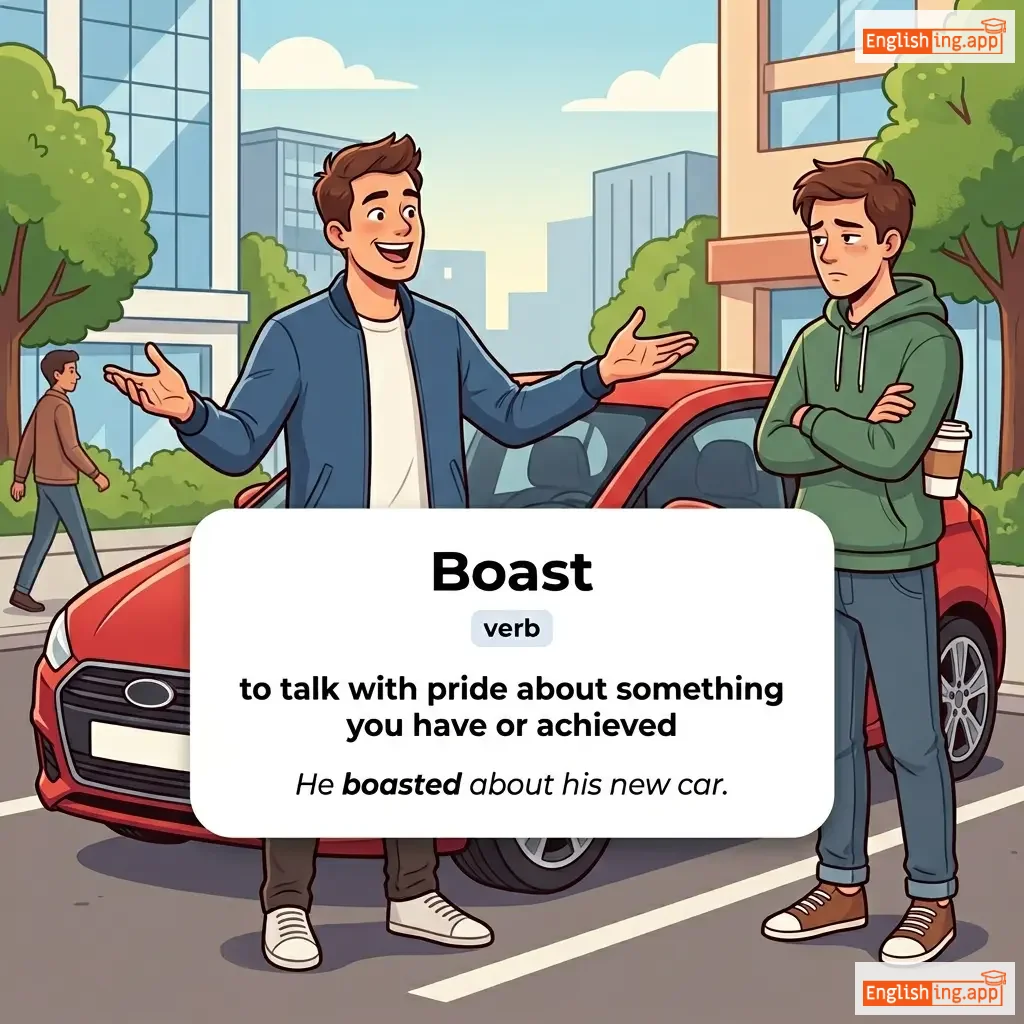
to talk with pride about something you have or achieved
••••••
|
He boasted about his new car.
彼は新しい車を自慢していました。
••••••
|
彼は新しい車を自慢していました。
Kare wa atarashī kuruma o jiman shite imashita.
••••••
|
boast about
自慢する
••••••
|
to talk proudly about something
••••••
|
自慢する
jiman suru
••••••
|
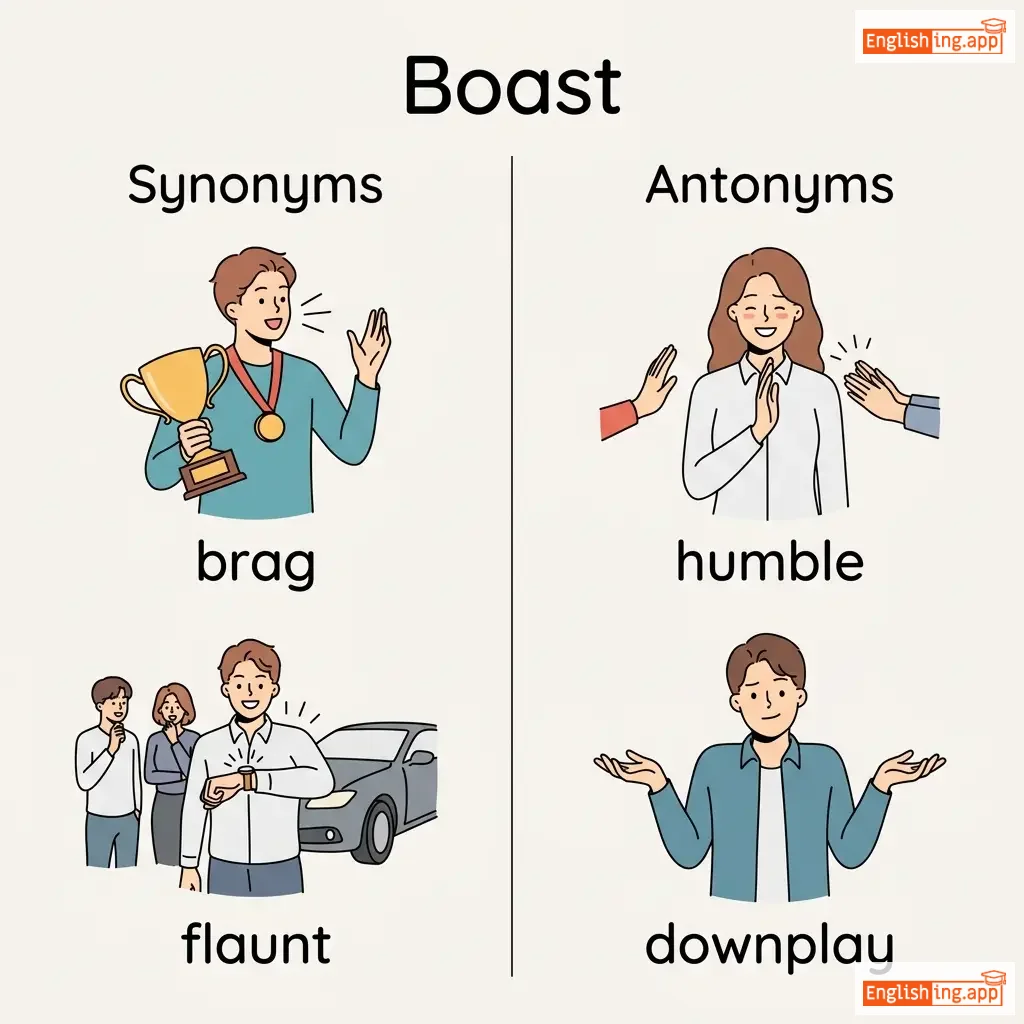
brag, flaunt, praise, show off
••••••
|
humble, downplay
••••••
|
boast about, boast of, boast great, boast success
••••••
|
Boastは、自分の成果を誇らしげに話すこと、ボスのように。
••••••
|
|
#0
💔
|
/breɪk/
verb, noun
(ブレイク)
••••••
|
|
壊す / 休憩
kowasu / kyūkei
••••••
|
broke
ブローク
••••••
|
broken
ブロークン
••••••
|
breaks
ブレイクス
••••••
|
breaking
ブレイキング
••••••
|
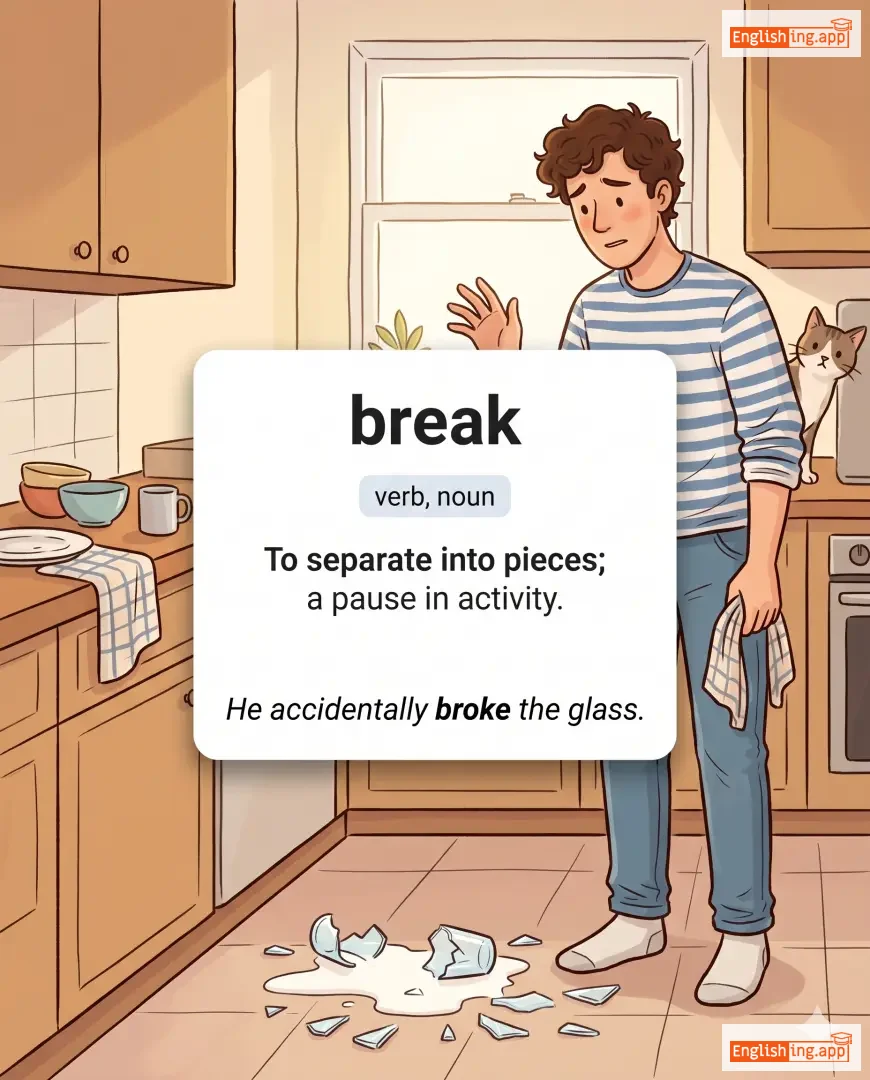
To separate into pieces; a pause in activity.
••••••
|
He accidentally broke the glass.
ヒー アクシデンタリー ブローク ザ グラス。
••••••
|
彼はうっかりガラスを割ってしまった。
Kare wa ukkari garasu o watte shimatta.
••••••
|
take a break
テイク ア ブレイク
••••••
|
to rest for a short time
••••••
|
休憩を取る
kyūkei o toru
••••••
|
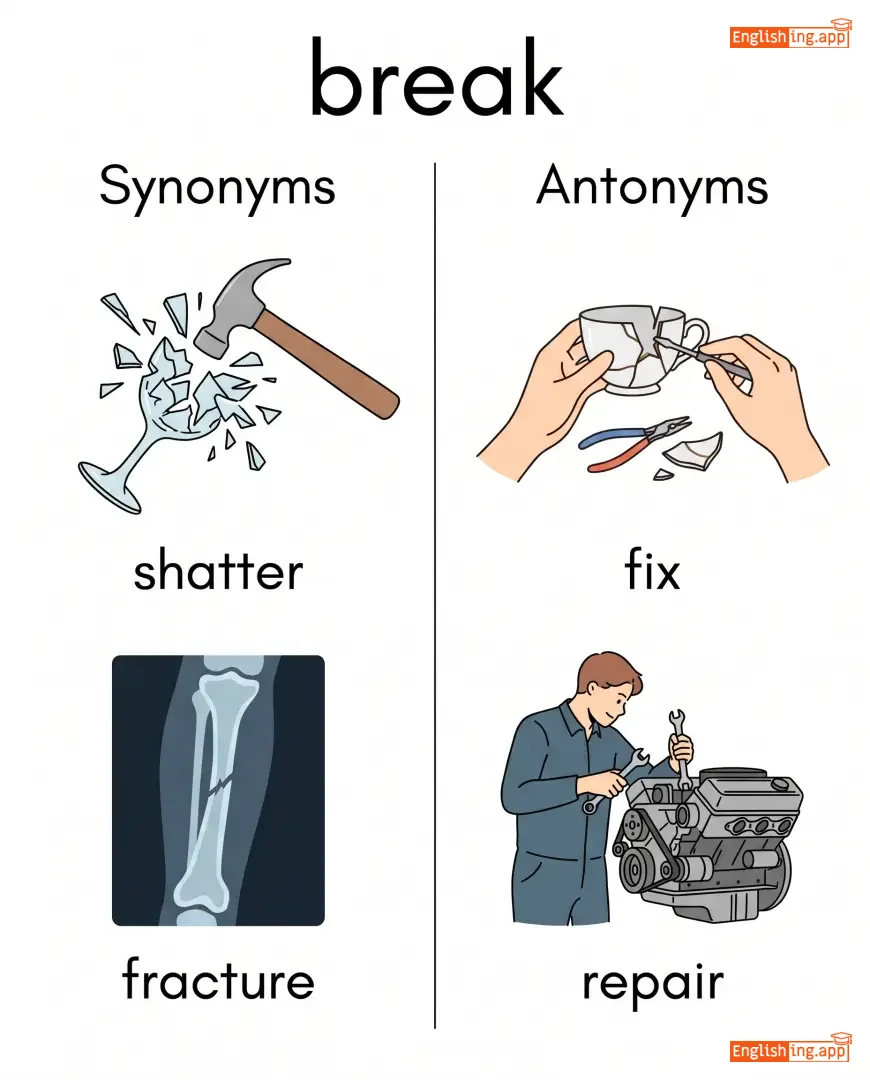
shatter, fracture, smash, pause, recess
••••••
|
fix, repair, continue
••••••
|
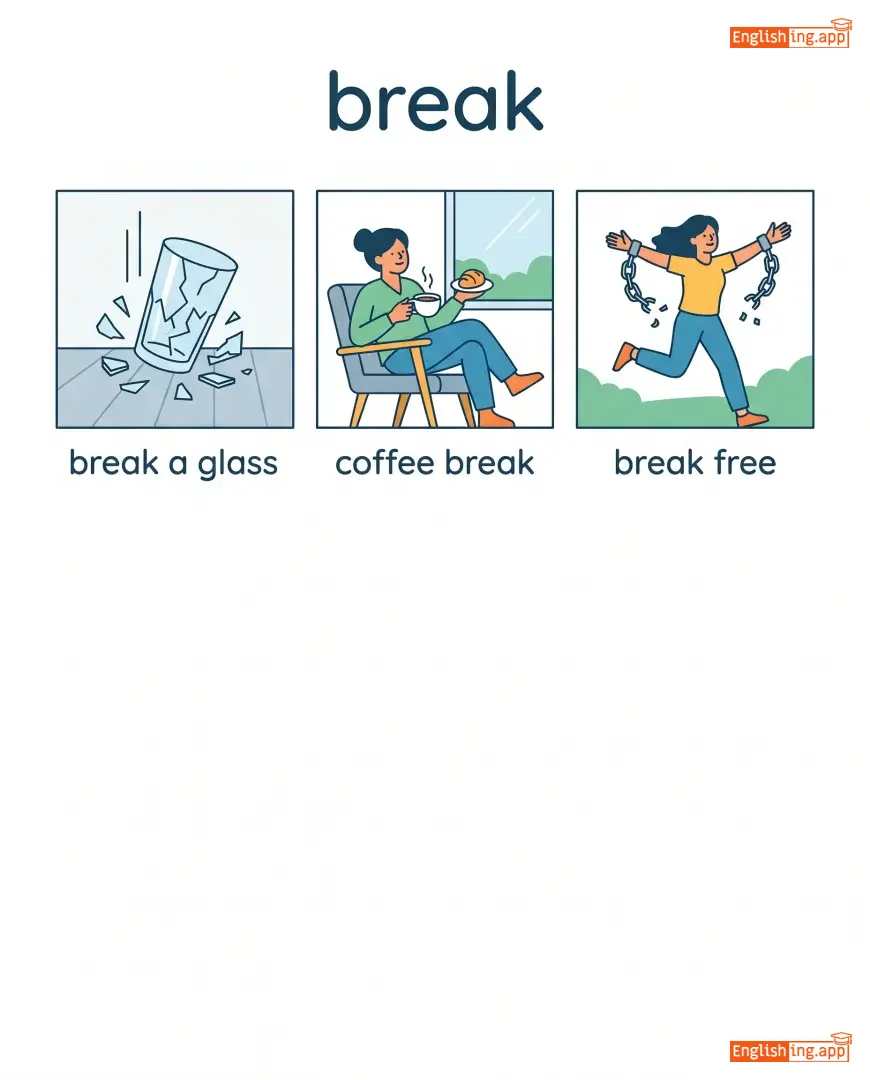
break a glass, coffee break, break free, break the law
••••••
|
Breakは壊す、またBreakは休憩。
••••••
|
|
#0
🐎
|
/briːd/
verb, noun
(buriido)
••••••
|
|
繁殖する、品種
hanshoku suru, hinshu
••••••
|
bred
bred
••••••
|
bred
bred
••••••
|
breeds
buriidzu
••••••
|
breeding
buriidingu
••••••
|
To cause an animal to reproduce; to raise or train; a type or variety of animal or plant.
••••••
|
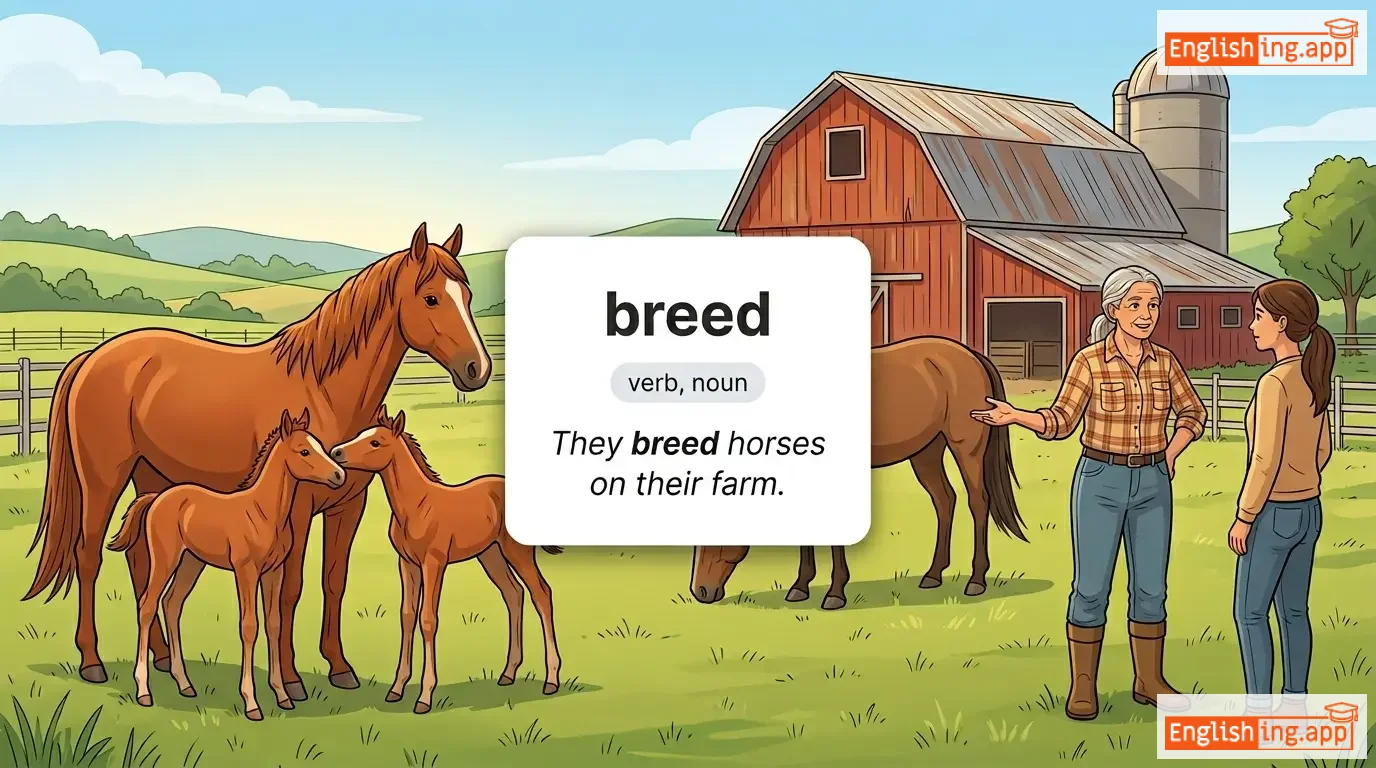
They breed horses on their farm.
彼らは農場で馬を育てています。
••••••
|
彼らは農場で馬を育てています。
Karera wa nōjō de uma o sodateています。
••••••
|
born and bred
生まれ育った
••••••
|
Used to indicate someone's native origin and upbringing.
••••••
|
生まれ育った
umare sodatta
••••••
|
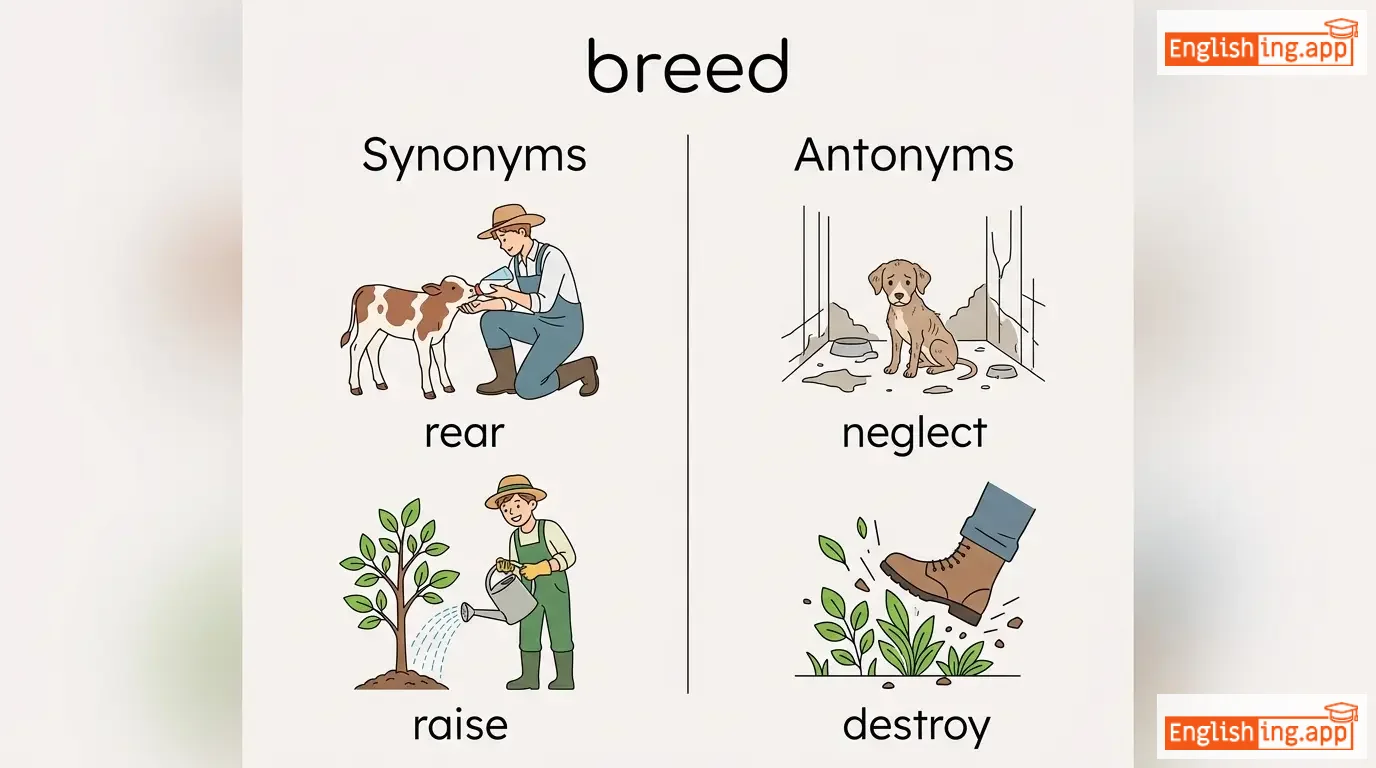
rear, raise, cultivate, reproduce, nurture
••••••
|
neglect, destroy, kill
••••••
|
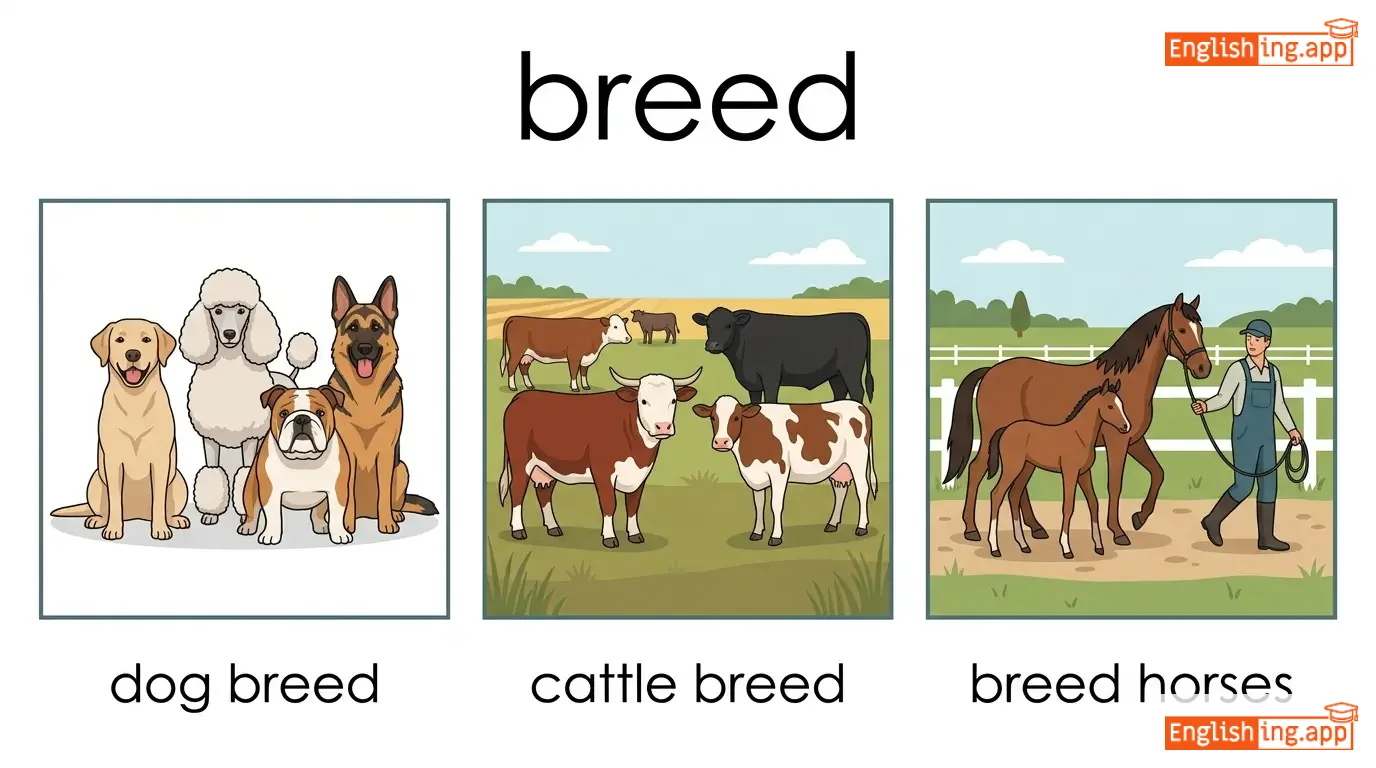
dog breed, cattle breed, breed horses, breed success
••••••
|
Breed は品種を意味します—犬の品種; Breed は生まれ育った意味もあります。
••••••
|
|
#0
🧱
|
/brɪk/
noun
(ブリック)
••••••
|
- •••••• |
レンガ
renga
••••••
|
- •••••• | - •••••• | - •••••• | - •••••• |
A rectangular block of clay or similar material used in building walls and other structures.
••••••
|
The workers laid brick after brick to build the wall. |
作業員たちは壁を作るためにレンガを一つ一つ積み上げていった。
Sagyouin-tachi wa kabe o tsukuru tame ni renga o hitotsu hitotsu tsumiagete itta.
••••••
|
thick as a brick |
Used to describe someone who is very stupid or slow to understand.
••••••
|
レンガのように鈍い
renga no yō ni nibui
••••••
|
block, stone, tile, slab, cube
••••••
|
void, gap
••••••
|
brick wall, brick house, brick building, red brick, brick by brick
••••••
|
レンガ = レンガ 🧱 - レンガで壁が作られる。
••••••
|
|
#0
🥩
|
/pɔːrk/
noun
(ハピネス)
••••••
|
- •••••• |
幸せ
shiawase
••••••
|
- •••••• | - •••••• | - •••••• | - •••••• |
the flesh of a pig used as food
••••••
|
He doesn't eat pork for religious reasons. |
彼女は賞を受け取ったとき、幸せを隠せませんでした。
Kanojo wa shō wo uketotta toki, shiawase wo kakusemasen deshita.
••••••
|
- •••••• | - •••••• | - •••••• |
pig meat, swine, bacon, ham, meat
••••••
|
beef, chicken, lamb
••••••
|
pork chop, roast pork, pork sausage, pork ribs
••••••
|
Happiness = 幸せ — 毎日が幸せな瞬間!
••••••
|
|
#0
❤️
|
/seɪk/
noun
(seik)
••••••
|
- •••••• |
ため
tame
••••••
|
- •••••• | - •••••• | - •••••• | - •••••• |
for the purpose or reason of something
••••••
|
He did it for the sake of his family.
彼は家族のためにそれをしました。
••••••
|
彼は家族のためにそれをしました。
Kare wa kazoku no tame ni sore o shimashita.
••••••
|
for the sake of
のために
••••••
|
for the purpose of achieving something
••••••
|
のために
no tame ni
••••••
|
purpose, reason, benefit, interest
••••••
|
hindrance, obstacle, disadvantage
••••••
|
for the sake of, for the sake of love, for the sake of peace
••••••
|
Sake-家族のために - 家族のためにそれをしよう!
••••••
|
|
#0
👟
|
/slɪp/
verb
(スリップ)
••••••
|
- •••••• |
滑る
suberu
••••••
|
slipped
スリップド
••••••
|
slipped
スリップド
••••••
|
slips
スリップス
••••••
|
slipping
スリッピング
••••••
|
to lose balance or fall while moving, or to accidentally slide from a position
••••••
|
She slipped on the wet floor and fell.
彼女は濡れた床で滑って転んだ。
••••••
|
彼女は濡れた床で滑って転んだ。
Kanojo wa nureta yuka de subette koronda.
••••••
|
- •••••• | - •••••• | - •••••• |
slide, fall, stumble, trip
••••••
|
stand, stabilize, remain
••••••
|
slip on ice, slip down, slip away, slip through
••••••
|
Slipping on a slippery floor is a 'slip' in the story of your day.
••••••
|
|
#0
🕳️
|
/slɒt/
noun
(スロット)
••••••
|
- •••••• |
スロット
surotto
••••••
|
- •••••• | - •••••• | - •••••• | - •••••• |
a narrow opening into which something fits or is placed
••••••
|
Insert the card into the slot to open the door. |
カードをスロットに挿入して、ドアを開けてください。
Kaado o surotto ni sōnyū shite, doa o akete kudasai.
••••••
|
time slot |
a specific time period allocated for an activity
••••••
|
時間枠
jikan waku
••••••
|
groove, opening, hole, niche, position
••••••
|
blockage, closure
••••••
|
time slot, memory slot, parking slot, machine slot
••••••
|
スロットはカードを入れる場所で、ドアが開きます!
••••••
|
|
#0
🍼
|
/sʌk/
verb
(サク)
••••••
|
- •••••• |
吸う
suu
••••••
|
sucked
サクド
••••••
|
sucked
サクド
••••••
|
sucks
サックス
••••••
|
sucking
サキング
••••••
|
to draw something into the mouth by using the lips and tongue
••••••
|
The baby began to suck her thumb.
赤ちゃんは親指を吸い始めた。
••••••
|
赤ちゃんは親指を吸い始めた。
Akachan wa oyayubi o sui hajimeta.
••••••
|
suck it up
サクイットアップ
••••••
|
to accept something unpleasant without complaining
••••••
|
それを受け入れる
sore o ukeireru
••••••
|
sip, draw, ingest, slurp
••••••
|
spit, expel
••••••
|
suck up, suck out, suck in, suck on
••••••
|
赤ちゃんは親指を吸う、‘吸う’で覚えよう。
••••••
|
|
#0
🛏️
|
/tʌk/
verb
(タック)
••••••
|
- •••••• |
タック
takku
••••••
|
tucked
タックド
••••••
|
tucked
タックド
••••••
|
tucks
タックス
••••••
|
tucking
タッキング
••••••
|
to push or fold something neatly into a particular place
••••••
|
She tucked the blanket around the baby to keep him warm.
彼女は赤ちゃんの周りに毛布をタックして温かく保ちました。
••••••
|
彼女は赤ちゃんの周りに毛布をタックして温かく保ちました。
Kanojo wa akachan no mawari ni moufu wo takku shite atatakai ni tamotsu mashita.
••••••
|
tuck in
タックイン
••••••
|
to make someone comfortable in bed by arranging the blankets
••••••
|
寝かせる
nekasero
••••••
|
insert, fold, stuff, push, adjust
••••••
|
unfold, pull out, open
••••••
|
tuck in bed, tuck away, tuck under, neatly tucked
••••••
|
Tuckはタック、毛布をタックして寝かせる 🌙
••••••
|
|
#0
😰
|
/ˈʌɡ.li/
adjective
(アグリー)
••••••
|
- •••••• |
醜い; 嫌悪すべき; 恐ろしい
minikui; ken'o subeki; osoroshii
••••••
|
- •••••• | - •••••• | - •••••• | - •••••• |
unpleasant or repulsive in appearance; morally reprehensible
••••••
|
The old building looked ugly after years of neglect. |
長年の放置の後、その古い建物は醜く見えました。
naganen no hōchi no ato, sono furui tatemono wa miniku miemashita.
••••••
|
- •••••• | - •••••• | - •••••• |
hideous, unsightly, repulsive, unattractive
••••••
|
beautiful, attractive, pretty, lovely
••••••
|
ugly duckling, ugly truth, ugly situation
••••••
|
Ugly in Japanese makes you say 'minikui' when something looks bad.
••••••
|
Vocabulary Quiz
Test your vocabulary by matching words with their translations or meanings.
Login to take the quiz
Comments (0)
Share your thoughts and join the discussion.
Join the discussion by logging in
Login to CommentNo comments yet
Be the first to share your thoughts!