

タウンホールグリーン集会
Town Hall Green Rally
朝、平和的なmobがタウンホールでバナーを掲げました。 市長は敬意を表してnodし、彼らの話を聞きました。 彼らは宣言しました、'政府は私たちの川をnor壊さないだろう。' 群衆は叫びました、'私たちは黙っていませんnot!' 庭で育てたnutスナックが広場で配られました。 いくつかの看板は警告しました:'odd時間にも監視を続けてください。' 警察は道路の一車線をoff封鎖しました。 カウントダウンの後、全員がone voiceと叫びながら手を上げました。 集会後、彼らはより環境に優しい政策をoptすることを誓いました。 Jonakiは言いました、'our力は団結にあります。' 学生たちは誓いました、'私たちは解決策なしでoutには行きません。' 企業代表者は、まだowe補償を認めました。 記者たちは急いでpadノートを取り出しました。 主婦たちはお互いに肩にpatをして安心感を与えました。 選挙で選ばれた代表者は、より良い環境支援per capitaを約束しました。 農家たちは、土地を守るためにpigの作業からの話を共有しました。 三番目のグループの子供たちは署名を集めるためにpinバッジを配りました。 音楽トラックが突然pop国歌を流しました。 ボランティア弁護士は、pro bonoサービスの波を発表しました。 最後に、みんなが集めたプラスチックをリサイクル箱にputしました。
翻訳
過去
過去分詞
三人称単数
動名詞
意味
例文
例文の翻訳
同義語
対義語
コロケーション
ニーモニック
Swipe left or right, or use the buttons. Tap image to zoom.
例文の翻訳
単語
Town Hall Green RallyTown Hall Green Rally - マスクトグル
|
絵文字
|
単語 | Images | 翻訳 | 過去 | 過去分詞 | 三人称単数 | 動名詞 | 意味 | 例文 | 例文の翻訳 | 表現例 | 表現例の意味 | 表現例の翻訳 | 同義語 | 対義語 | コロケーション | ニーモニック |
|---|---|---|---|---|---|---|---|---|---|---|---|---|---|---|---|---|---|
|
#0
👥
|
/mɒb/
noun
(モブ)
••••••
|
- •••••• |
暴徒; 暴力的に行動するグループ
bōtō; bōryoku-teki ni kōdō suru gurūpu
••••••
|
- •••••• | - •••••• | - •••••• | - •••••• |
a large crowd of people; a group that acts in a violent way
••••••
|
An angry mob gathered outside the building.
An angry mob gathered outside the building.
••••••
|
怒った暴徒が建物の外に集まった。
Okotta bōtō ga tatemono no soto ni atsumatta.
••••••
|
- •••••• | - •••••• | - •••••• |
crowd, gang, horde, rabble
••••••
|
individual, order, peace
••••••
|
angry mob, mob rule, mob violence
••••••
|
Mobの暴力的な力がグループを暴徒に変える
••••••
|
|
#0
👍
|
/nɒd/
verb
(ノッド)
••••••
|
|
うなずく
unazuku
••••••
|
nodded
ノッデッド
••••••
|
nodded
ノッデッド
••••••
|
nods
ノッズ
••••••
|
nodding
ノッディング
••••••
|
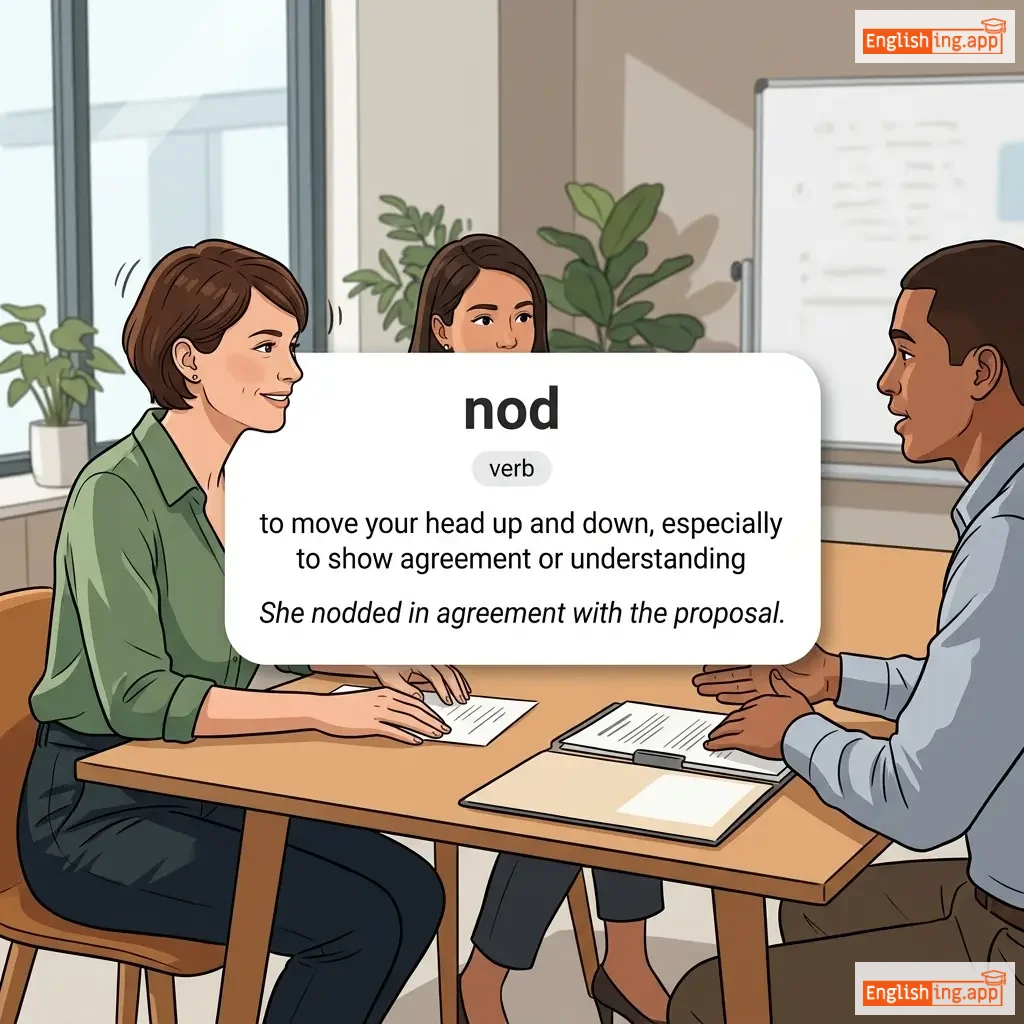
to move one's head down and up to show agreement or acknowledgment
••••••
|
She nodded in agreement with the proposal.
彼女は提案に同意してうなずいた。
••••••
|
彼女は提案に同意してうなずいた。
Kanojo wa teian ni dōi shite unazuita.
••••••
|
- •••••• | - •••••• | - •••••• |
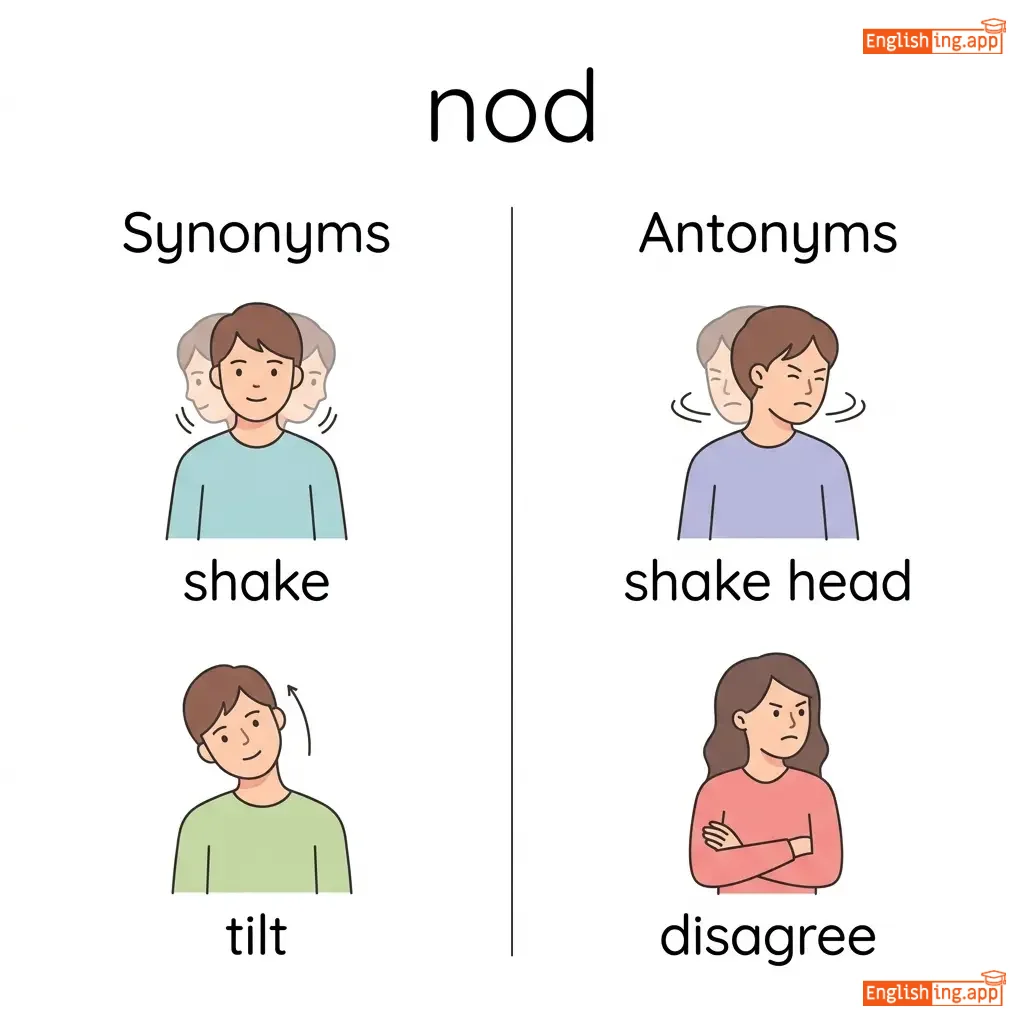
agree, acknowledge, approve, confirm
••••••
|
shake, disagree, deny
••••••
|
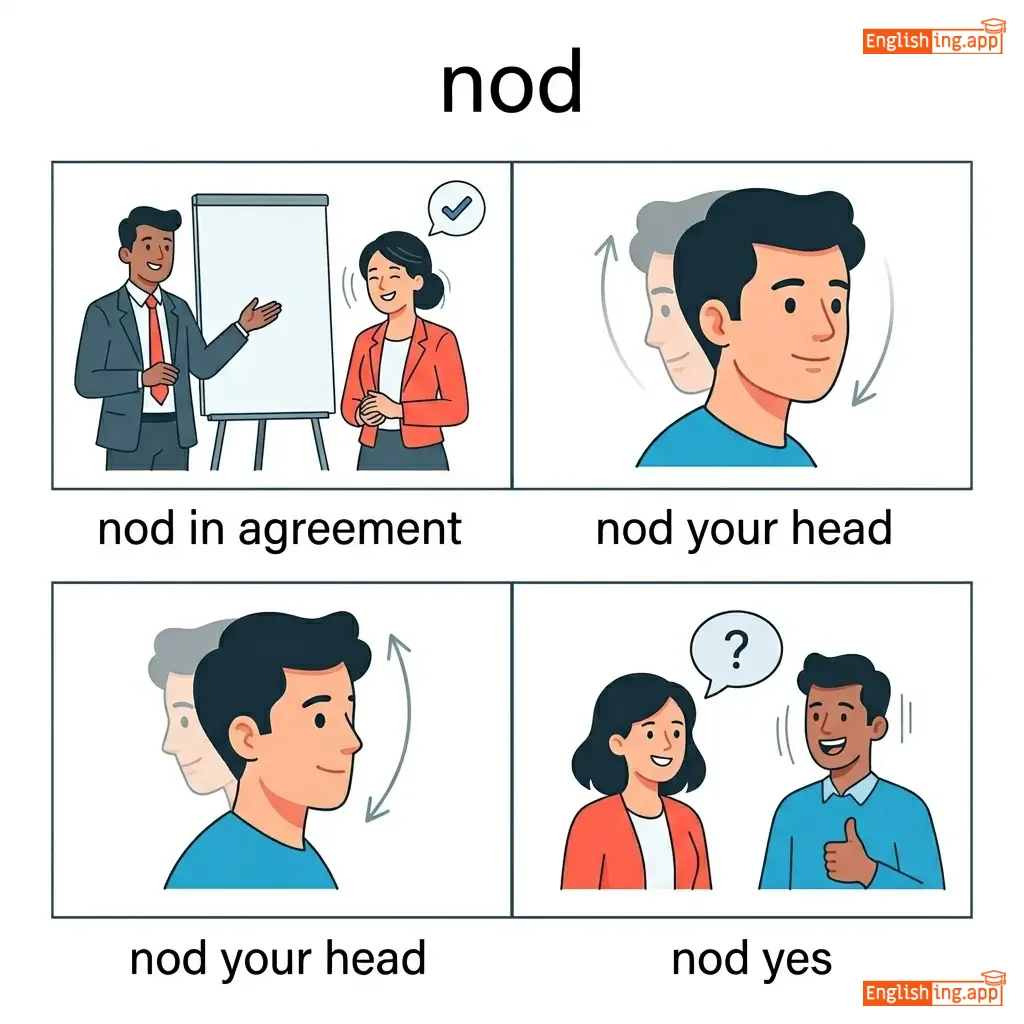
nod agreement, nod slowly, nod approvingly, nod politely, nod understanding
••••••
|
うなずいて、同意のサイン
••••••
|
|
#0
🚫➡️🚫
|
/nɔːr/
conjunction
(ノア)
••••••
|
- •••••• |
またはない
mata wa nai
••••••
|
- •••••• | - •••••• | - •••••• | - •••••• |
used to introduce a negative clause after a negative statement
••••••
|
He didn't call, nor did he send a message. |
彼は電話をかけなかったし、メッセージも送らなかった。
Kare wa denwa o kakenakatta shi, messeeji mo okurakanakatta.
••••••
|
- •••••• | - •••••• | - •••••• |
and not, neither
••••••
|
and, or
••••••
|
nor did, nor have
••••••
|
Nor - 'Not' after a negative statement.
••••••
|
|
#0
🚫
|
/nɒt/
adverb
(ノット)
••••••
|
- •••••• |
いいえ
iie
••••••
|
- •••••• | - •••••• | - •••••• | - •••••• |
used to make a word or phrase negative
••••••
|
I do not like spicy food. |
私は辛い食べ物が好きではありません。
Watashi wa karai tabemono ga suki de wa arimasen.
••••••
|
- •••••• | - •••••• | - •••••• |
no, never
••••••
|
yes
••••••
|
not sure, not at all, not yet, not going
••••••
|
Not (いいえ) – 'Iie' means saying no or denying.
••••••
|
|
#0
🥜
|
/nʌt/
noun
(ナット)
••••••
|
- •••••• |
ナッツ
nattsu
••••••
|
- •••••• | - •••••• | - •••••• | - •••••• |
a hard-shelled fruit that contains a seed, or a small metal piece used in machinery
••••••
|
She ate a peanut, which is a type of nut. |
彼女はピーナッツを食べました、それはナッツの一種です。
Kanojo wa pīnattsu wo tabemashita, sore wa nattsu no isshu desu.
••••••
|
- •••••• | - •••••• | - •••••• |
seed, kernel, shell
••••••
|
fruit, vegetable
••••••
|
eat nuts, nut shell, nutcracker
••••••
|
Nut is like a nattsu, tough to crack but worth the effort!
••••••
|
|
#0
🤔
|
/ɒd/
adjective
(オッド)
••••••
|
- •••••• |
奇妙
kimyou
••••••
|
- •••••• | - •••••• | - •••••• | - •••••• |
different from what is usual or expected; strange or peculiar
••••••
|
He has some odd habits that surprise everyone. |
彼は皆を驚かせる奇妙な習慣を持っています。
Kare wa mina wo odokaseru kimyou na shuukan wo motteimasu.
••••••
|
odd one out |
something or someone that is different from the rest
••••••
|
黒い羊
kuroi hitsuji
••••••
|
strange, unusual, peculiar, weird, irregular
••••••
|
normal, usual, regular
••••••
|
odd number, odd job, odd behavior, odd coincidence
••••••
|
Oddは奇妙を意味します (kimyou); Odd = 奇妙。
••••••
|
|
#0
⏹️
|
/ɔːf/
adverb
(オフ)
••••••
|
- •••••• |
オフ
ofu
••••••
|
- •••••• | - •••••• | - •••••• | - •••••• |
away from a place, position, or time; not functioning
••••••
|
He turned off the light before leaving the room. |
彼は部屋を出る前に電気をオフにしました。
Kare wa heya wo deru mae ni denki wo ofu ni shimashita.
••••••
|
off the record |
something said privately and not intended for publication
••••••
|
オフ・ザ・レコード
ofu za rekodo
••••••
|
away, removed, disconnected, distant
••••••
|
on, connected, attached
••••••
|
turn off, switch off, go off, keep off
••••••
|
オフは、光を消すように、すべてが暗くなることを意味します。
••••••
|
|
#0
1️⃣
|
/wʌn/
pronoun, noun, adjective
(ワン)
••••••
|
- •••••• |
一
ichi
••••••
|
- •••••• | - •••••• | - •••••• | - •••••• |
the number equivalent to the sum of zero and one; a single person or thing
••••••
|
Only one student answered the question.
ただ一人の学生が質問に答えました。
••••••
|
ただ一人の学生が質問に答えました。
Tada hitori no gakusei ga shitsumon ni kotaemashita.
••••••
|
one of a kind
一種類の
••••••
|
unique; very special
••••••
|
一種類の
isshurui no
••••••
|
single, individual, sole, unique
••••••
|
many, multiple
••••••
|
one day, one time, one person, one chance
••••••
|
ONEは一の意味 1️⃣ — 'isshurui no' 覚えてください
••••••
|
|
#0
🫴
|
/ɒpt/
verb
(オプト)
••••••
|
- •••••• |
選ぶ
erabu
••••••
|
opted
オプテッド
••••••
|
opted
オプテッド
••••••
|
opts
オプツ
••••••
|
opting
オプティング
••••••
|
to choose or decide to do something instead of something else
••••••
|
Many students opt to study abroad for better opportunities.
多くの学生がより良い機会のために海外で学ぶことを選択します。
••••••
|
多くの学生がより良い機会のために海外で学ぶことを選択します。
Ooku no gakusei ga yori yoi kikai no tame ni kaigai de manabu koto o sentaku shimasu.
••••••
|
opt for
オプト フォー
••••••
|
to choose one thing instead of another
••••••
|
選ぶ
erabu
••••••
|
choose, select, decide, pick, prefer
••••••
|
reject, decline, refuse
••••••
|
opt for, opt out, opt in, opt against
••••••
|
Optからオプト — 選ぶことがoptにあたる。
••••••
|
|
#0
🏡
|
/aʊər/
pronoun
(アウアー)
••••••
|
- •••••• |
私たちの
watashitachi no
••••••
|
- •••••• | - •••••• | - •••••• | - •••••• |
belonging to or associated with the speaker and one or more other people
••••••
|
This is our house. |
これは私たちの家です。
Kore wa watashitachi no ie desu.
••••••
|
- •••••• | - •••••• | - •••••• |
ours, belonging to us, our own
••••••
|
their, your
••••••
|
our family, our team, our responsibility
••••••
|
私たち (watashitachi) は、これは私たちの (watashitachi no) 家だと言っています。
••••••
|
|
#0
➡️
|
/aʊt/
adverb
(アウト)
••••••
|
- •••••• |
外
soto
••••••
|
- •••••• | - •••••• | - •••••• | - •••••• |
moving or appearing away from the inside or center; not at home or present
••••••
|
He stepped out of the room quietly. |
彼は静かに部屋を出ました。
Kare wa shizukani heya o demashita.
••••••
|
out of the blue |
happening unexpectedly
••••••
|
突然
totsuzen
••••••
|
outside, away, absent, beyond
••••••
|
in, inside
••••••
|
out of control, out of reach, out of stock, out of time
••••••
|
Outは外を意味します - サッカーでは、選手がアウトになると外に出ます。
••••••
|
|
#0
💳
|
/oʊ/
verb
(オウ)
••••••
|
|
借りがある
kari ga aru
••••••
|
owed
オウド
••••••
|
owed
オウド
••••••
|
owes
オウズ
••••••
|
owing
オウイング
••••••
|
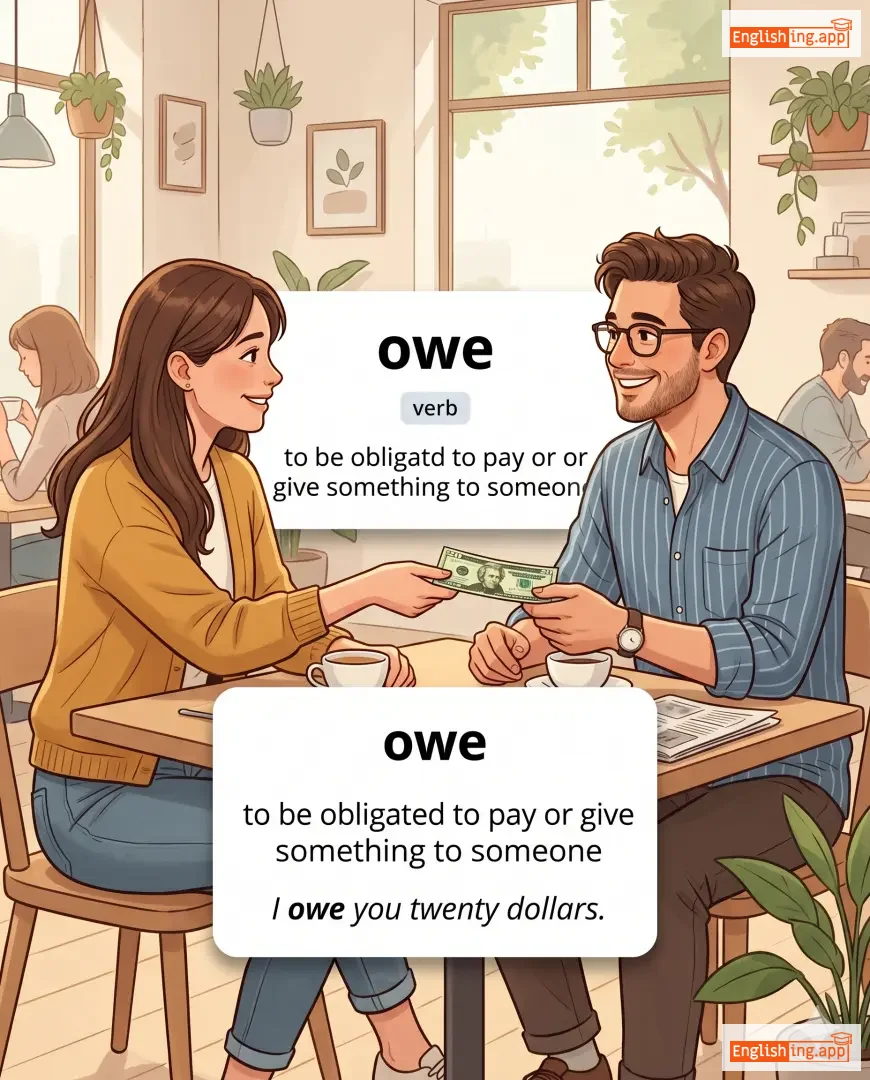
to be under obligation to pay or repay; to be indebted
••••••
|
I owe my success to my parents' support.
私は両親の支援のおかげで成功しました。
••••••
|
私は両親の支援のおかげで成功しました。
Watashi wa ryoushin no shien no okage de seikou shimashita.
••••••
|
- •••••• | - •••••• | - •••••• |
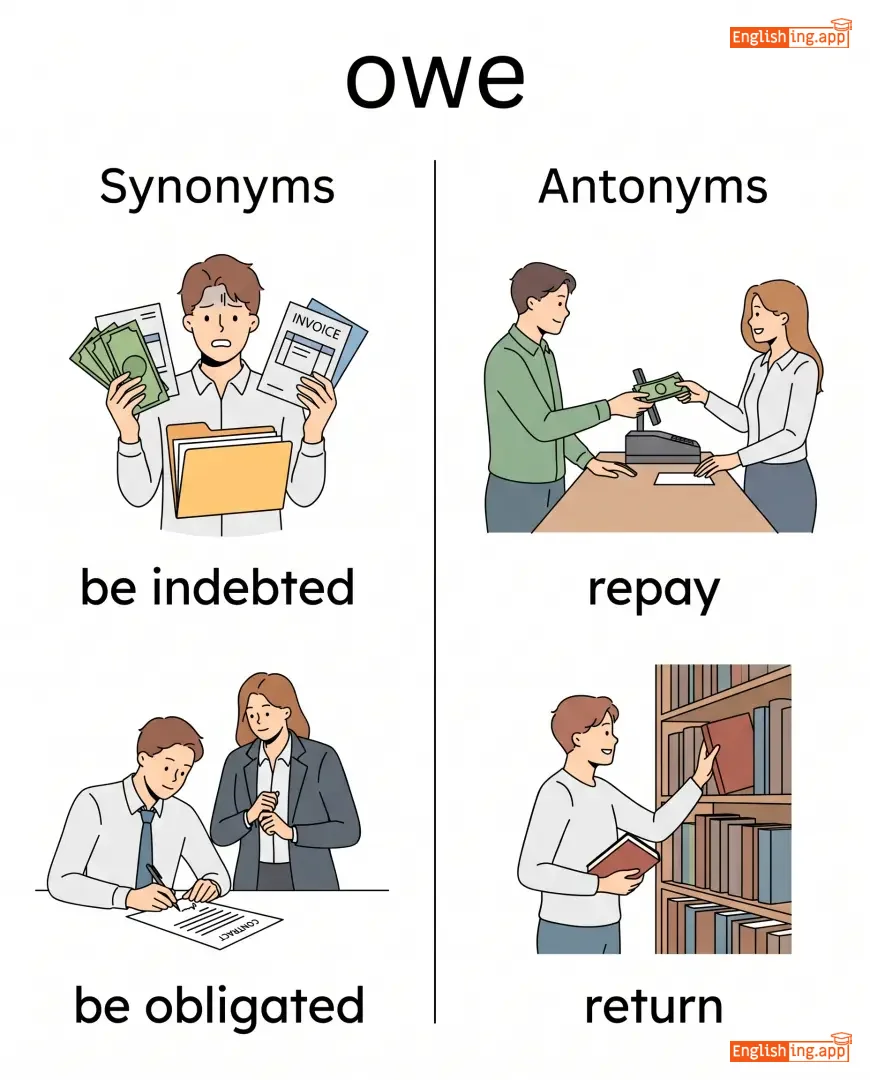
be indebted, be obligated, be liable, be in debt
••••••
|
own, possess, have, collect
••••••
|
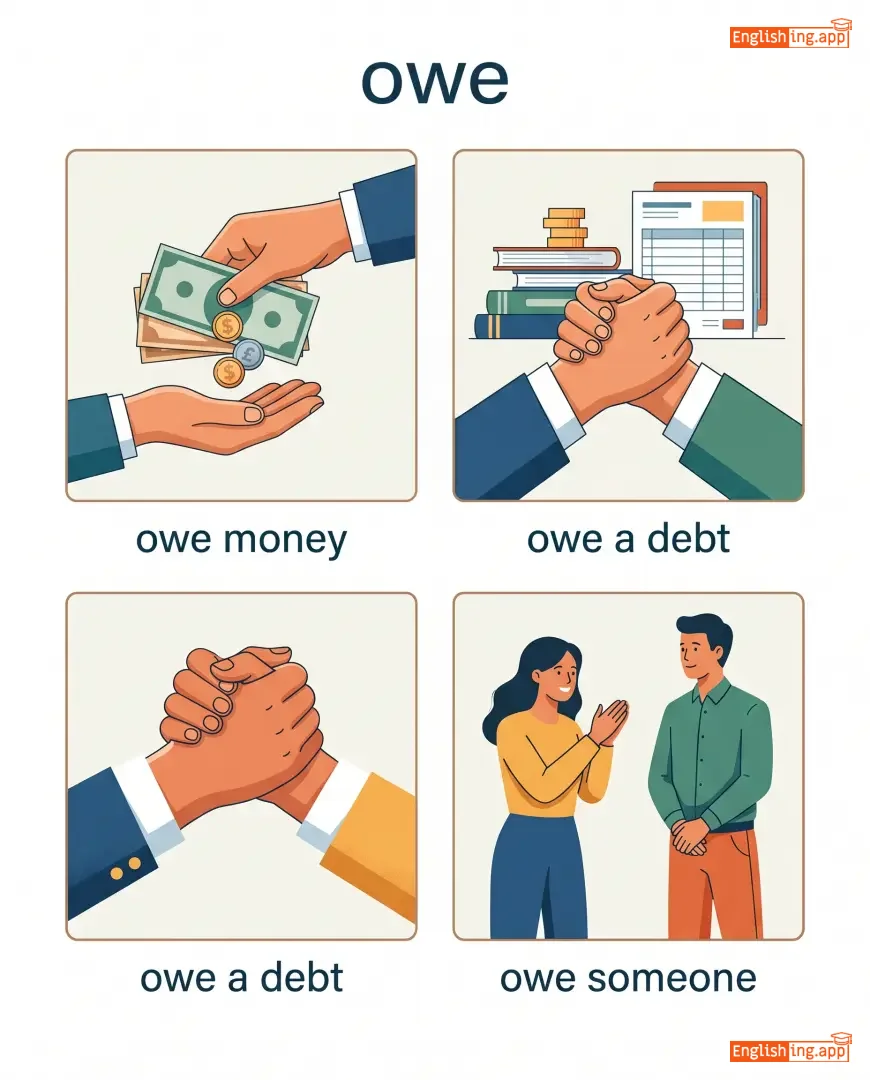
owe money, owe debt, owe favor, owe gratitude
••••••
|
借りがあることは、何かを返さなければならないことを意味します。
••••••
|
|
#0
📒
|
/pæd/
noun
(パッド)
••••••
|
- •••••• |
パッド
paddo
••••••
|
- •••••• | - •••••• | - •••••• | - •••••• |
a small cushion or block of soft material; also a set of sheets of paper fastened together
••••••
|
He wrote her phone number on a yellow pad.
彼は黄色いパッドに彼女の電話番号を書いた。
••••••
|
彼は黄色いパッドに彼女の電話番号を書いた。
Kare wa kiiroi paddo ni kanojo no denwa bangō o kaita.
••••••
|
notepad
メモ帳
••••••
|
a small notebook for writing notes
••••••
|
メモ帳
memochou
••••••
|
cushion, mat, block, notebook, sheet
••••••
|
hardboard, rough surface
••••••
|
writing pad, note pad, knee pad, shoulder pad
••••••
|
Padはクッションにもノートにも使える!
••••••
|
|
#0
🤚
|
/pæt/
verb
••••••
|
- •••••• | - •••••• |
patted
••••••
|
patted
••••••
|
pats
••••••
|
patting
••••••
|
to touch someone or something gently, often to show affection or approval
••••••
|
She gently patted the dog on its head. |
- •••••• |
pat on the back |
praise or approval for someone's achievement
••••••
|
- •••••• |
tap, stroke, caress, touch
••••••
|
hit, slap, strike
••••••
|
pat on the back, pat dry, pat gently, pat down
••••••
|
No •••••• |
|
#0
💵
|
/pɜːr/
preposition
(パー)
••••••
|
- •••••• |
人あたり
hito atari
••••••
|
- •••••• | - •••••• | - •••••• | - •••••• |
for each, according to
••••••
|
The tickets are priced at $20 per person. |
チケットは1人あたり20ドルの価格です。
Chiketto wa hitori atari 20 doru no kakaku desu.
••••••
|
- •••••• | - •••••• | - •••••• |
for each, per unit, by
••••••
|
none
••••••
|
per person, per hour, per day
••••••
|
Per person is 人あたり in Japanese
••••••
|
|
#0
🐷
|
/pɪɡ/
noun
(ピッグ)
••••••
|
- •••••• |
豚
buta
••••••
|
- •••••• | - •••••• | - •••••• | - •••••• |
a farm animal with a snout used for digging and a curly tail; kept for meat such as pork or bacon
••••••
|
The pig rolled happily in the mud. |
豚は泥の中で楽しそうに転がっていた。
Buta wa doro no naka de tanoshisō ni korogatte ita.
••••••
|
when pigs fly |
something that will never happen
••••••
|
豚が飛ぶ時
Buta ga tobu toki
••••••
|
hog, swine, boar, piglet
••••••
|
human, angel
••••••
|
pig farm, pig meat, pig pen, pig feed
••••••
|
豚 🐷 は豚を意味する — 豚の貯金箱でお金を貯める!
••••••
|
|
#0
📍
|
/pɪn/
noun
(ピン)
••••••
|
- •••••• |
ピン
pin
••••••
|
- •••••• | - •••••• | - •••••• | - •••••• |
a small thin piece of metal used to fasten or hold things together
••••••
|
She used a pin to attach the note to the board. |
彼女はボードにメモを留めるためにピンを使った。
Kanojo wa boodo ni memo o tomeru tame ni pin o tsukatta.
••••••
|
pin something down |
to clearly identify or define something
••••••
|
何かを明確に定義する
nanika o meikaku ni teigi suru
••••••
|
needle, tack, clip, fastener
••••••
|
loosen, detach
••••••
|
safety pin, hair pin, pin board, pin code
••••••
|
ピンは小さな金属片を意味する — ピン Point In Note!
••••••
|
|
#0
🎈
|
/pɒp/
verb
(ポップ)
••••••
|
- •••••• |
弾ける
hikeru
••••••
|
popped
ポップド
••••••
|
popped
ポップド
••••••
|
pops
ポップス
••••••
|
popping
ポッピング
••••••
|
to make a short, sharp sound, or to burst or break with such a sound
••••••
|
The balloon popped when I accidentally pricked it with a pin.
風船は、私が間違ってピンで刺したときに破裂しました。
••••••
|
風船は、私が間違ってピンで刺したときに破裂しました。
Fūsen wa, watashi ga machigatte pin de sashita toki ni hakiretsu shimashita.
••••••
|
- •••••• | - •••••• | - •••••• |
burst, explode, snap, crack
••••••
|
quiet, silence
••••••
|
pop the balloon, pop the cork, pop up, pop out
••••••
|
Pop the balloon, ちょうど 'ポップ' (poppu) 風船を破裂させるように!
••••••
|
|
#0
🏅
|
/prəʊ/
noun
(プロ)
••••••
|
- •••••• |
プロフェッショナル
purofesshonaru
••••••
|
- •••••• | - •••••• | - •••••• | - •••••• |
a professional, especially in sports; or a person who is in favor of something
••••••
|
He plays tennis like a pro. |
彼はプロのようにテニスをプレーします。
Kare wa puro no yō ni tenisu o purē shimasu.
••••••
|
pros and cons |
the advantages and disadvantages of something
••••••
|
賛否両論
sanpi ryōron
••••••
|
expert, professional, specialist, master
••••••
|
amateur, beginner, novice
••••••
|
like a pro, go pro, pro player, pro gamer
••••••
|
Proはプロフェッショナルを意味します — 'Proプレイヤーはプロの選手です'.
••••••
|
|
#0
📍
|
/pʊt/
verb
(プット)
••••••
|
|
置く
oku
••••••
|
put
プット
••••••
|
put
プット
••••••
|
puts
プッツ
••••••
|
putting
プッティング
••••••
|
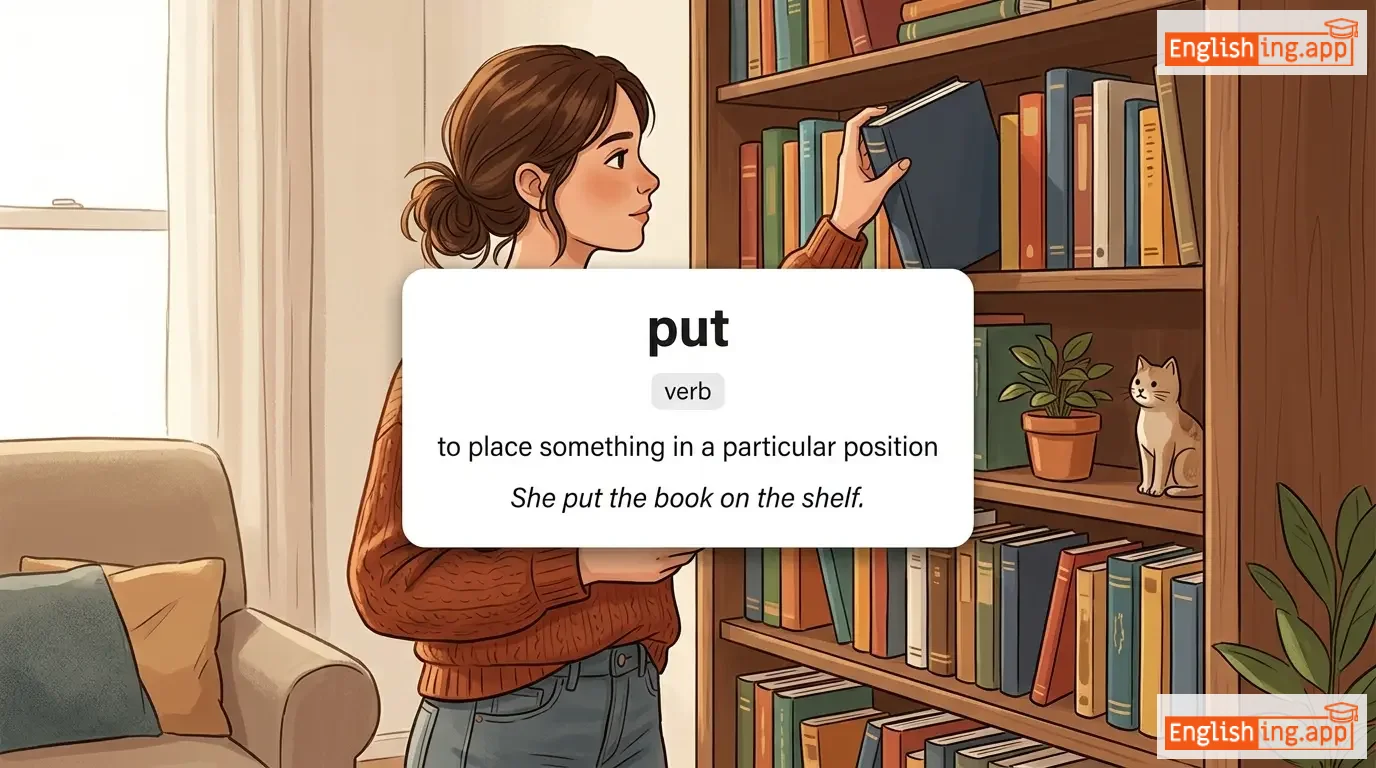
to place something in a particular position; to move to a location
••••••
|
Please put the book on the table.
本をテーブルに置いてください。
••••••
|
本をテーブルに置いてください。
Hon o teeburu ni oite kudasai.
••••••
|
- •••••• | - •••••• | - •••••• |
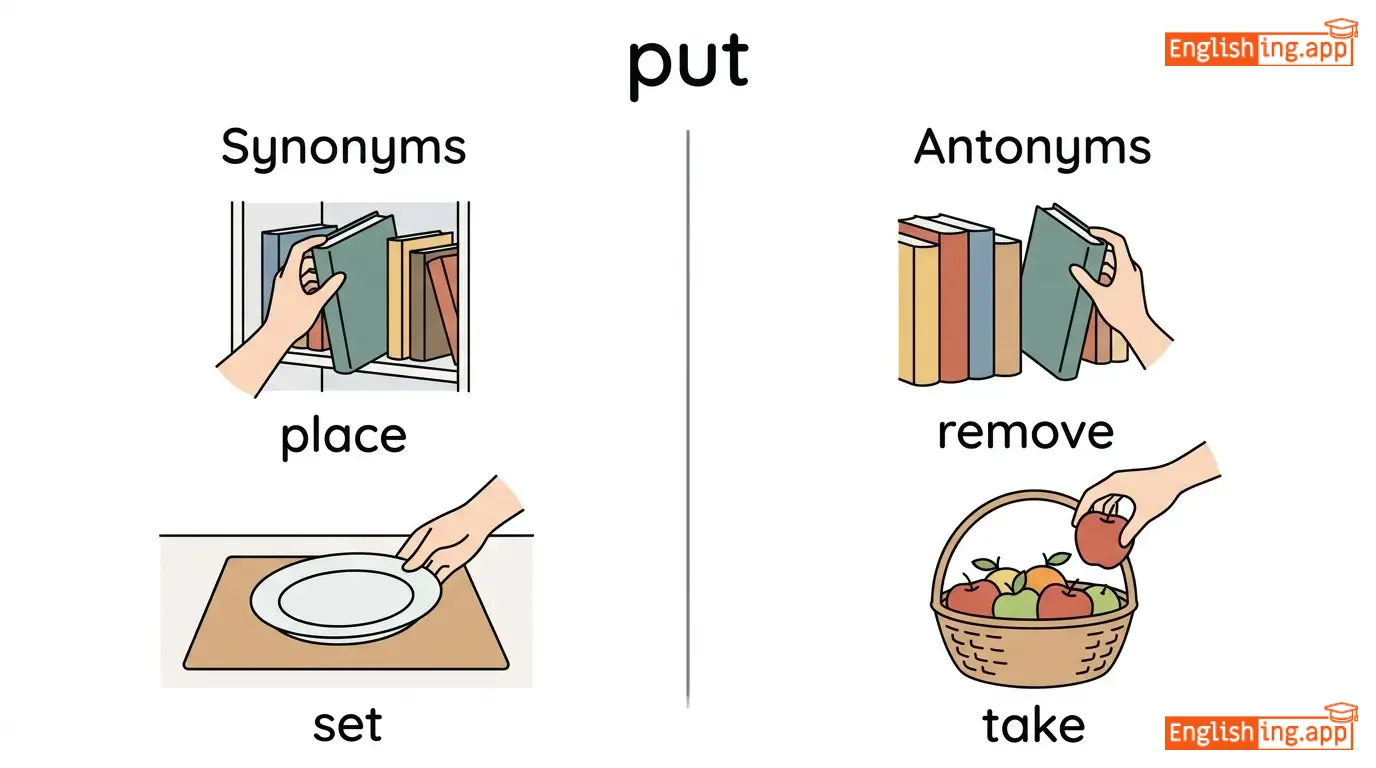
place, set, position, lay
••••••
|
remove, take, lift, withdraw
••••••
|
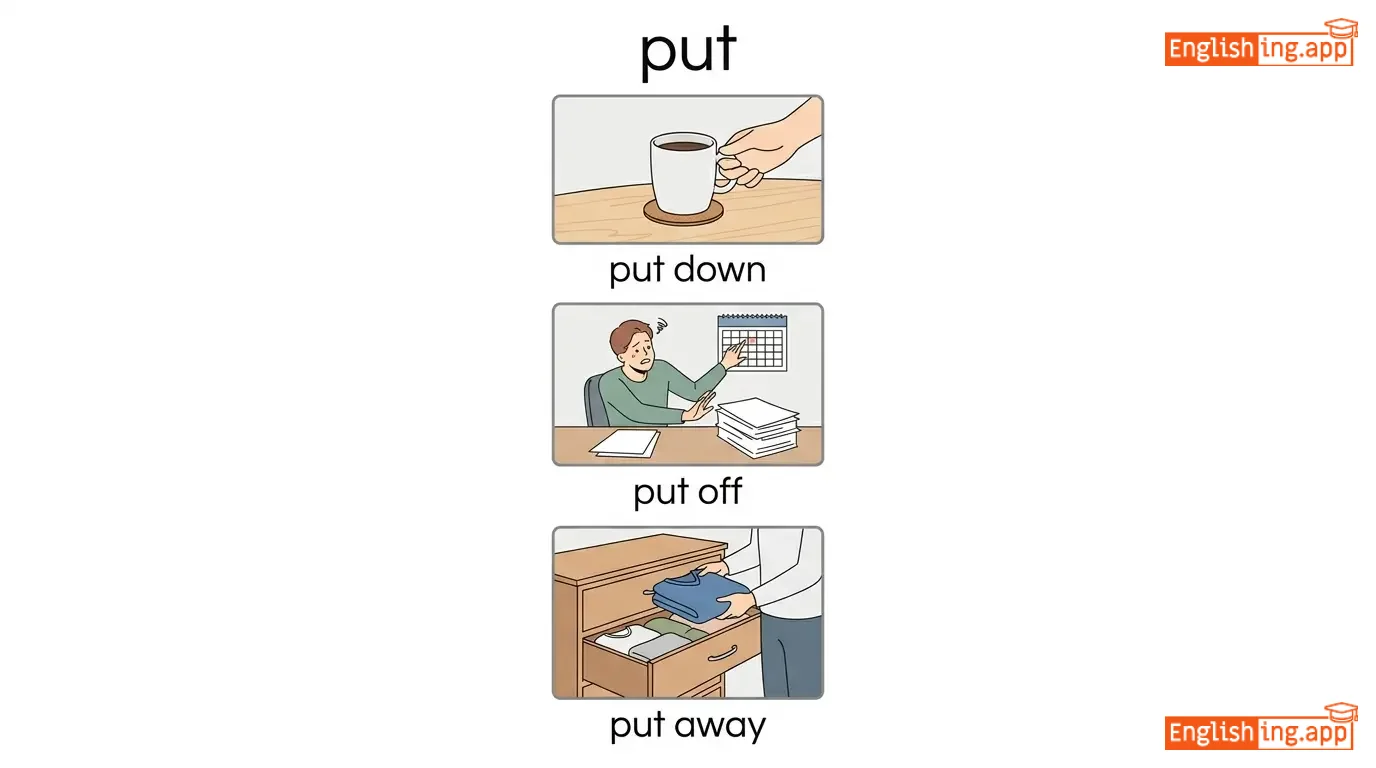
put down, put away, put together, put forward, put pressure, put effort
••••••
|
‘Put’ and ‘置く’ are both used for placing objects.
••••••
|
Vocabulary Quiz
Test your vocabulary by matching words with their translations or meanings.
Login to take the quiz
Comments (0)
Share your thoughts and join the discussion.
Join the discussion by logging in
Login to CommentNo comments yet
Be the first to share your thoughts!