

戦士たちへの国会の誓い
Parliament Pledge for Fighters
包摂的な martial アーツのショーがバングラ文学館の中庭を照らした。parliament の青年委員会の secretary が自ら来場し、この situation が皆の目を開かせたと語った。3年前に disability を負った individual のアビルは、standing で堂々と演技を始めた。starting シークエンスから、彼は体の figure を優雅に保っていた。近くでは inspector が手続きを investigate し続けていた。記者たちは国会が今後 collaborate するのかと尋ねた。「この取り組みの charge を引き受けます」と secretary は答え、古い規則には irrelevant な障壁が多く、unable な人々を排除していたと指摘した。トゥリンは微笑み、「我が国に私たちの成功に匹敵する comparative 例はありません」と言った。ショーの途中でアビルの仲間たちは象徴的な trap からの救出劇を披露した。worried だった母親たちは拍手喝采を送った。secretary は来週 parliament に新たな提案を提出すると約束した。チームは古い trophy を掲げ、「これはまだ始まりにすぎません」と宣言した。最後に観客は、障がい者アスリートのための全国的なトレーニングセンター設立が続くと聞いた。
翻訳
過去
過去分詞
三人称単数
動名詞
意味
例文
例文の翻訳
同義語
対義語
コロケーション
ニーモニック

Swipe left or right, or use the buttons. Tap image to zoom.
例文の翻訳
単語
Parliament Pledge for FightersParliament Pledge for Fighters - マスクトグル
|
絵文字
|
単語 | Images | 翻訳 | 過去 | 過去分詞 | 三人称単数 | 動名詞 | 意味 | 例文 | 例文の翻訳 | 表現例 | 表現例の意味 | 表現例の翻訳 | 同義語 | 対義語 | コロケーション | ニーモニック |
|---|---|---|---|---|---|---|---|---|---|---|---|---|---|---|---|---|---|
|
#0
⚡
|
/tʃɑːrdʒ/
verb
(チャージ)
••••••
|
- •••••• |
請求する/告発する
seikyū suru/kokuhatsu suru
••••••
|
charged
チャージド
••••••
|
charged
チャージド
••••••
|
charges
チャージズ
••••••
|
charging
チャージング
••••••
|
to demand payment; to formally accuse; to rush forward aggressively
••••••
|
The store charges extra for home delivery.
その店はホームデリバリーに追加料金を課します。
••••••
|
その店はホームデリバリーに追加料金を課します。
Sono mise wa hōmu deribarī ni tsuika ryōkin o kashimasu.
••••••
|
charge someone with
誰かを告発する
••••••
|
to accuse someone of a crime
••••••
|
誰かを告発する
dareka o kokuhatsu suru
••••••
|
bill, accuse, attack, command
••••••
|
free, acquit, retreat
••••••
|
charge money, charge fee, charge battery, charge with crime
••••••
|
携帯電話にチャージ(charge)がない場合、請求書を支払う必要があります。
••••••
|
|
#0
🤝
|
/kəˈlæbəreɪt/
verb
(コラボレート)
••••••
|
|
共同作業する
kyoudou sagyou suru
••••••
|
collaborated
コラボレーテッド
••••••
|
collaborated
コラボレーテッド
••••••
|
collaborates
コラボレーツ
••••••
|
collaborating
コラボレーティング
••••••
|
To work jointly with others, especially on an intellectual or creative project.
••••••
|
The two companies decided to collaborate on a new project.
二つの会社は新しいプロジェクトでコラボレートすることに決めました。
••••••
|
二つの会社は新しいプロジェクトでコラボレートすることに決めました。
Futatsu no kaisha wa atarashii purojekuto de korabo-re-to suru koto ni kimemashita.
••••••
|
collaborate with
誰かとコラボレートする
••••••
|
to work together with someone
••••••
|
誰かと一緒に働く
dareka to issho ni hataraku
••••••
|
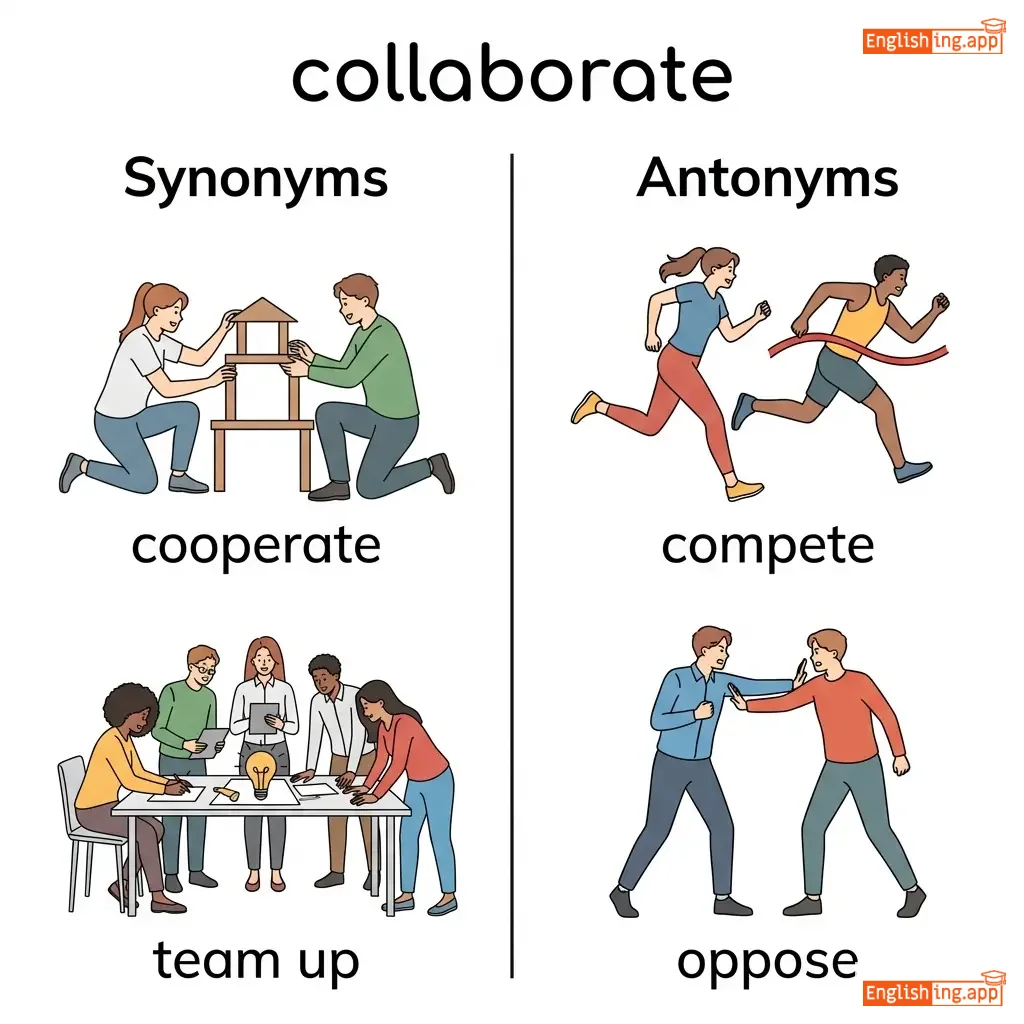
cooperate, team up, work together, join forces, partner
••••••
|
compete, oppose, resist
••••••
|
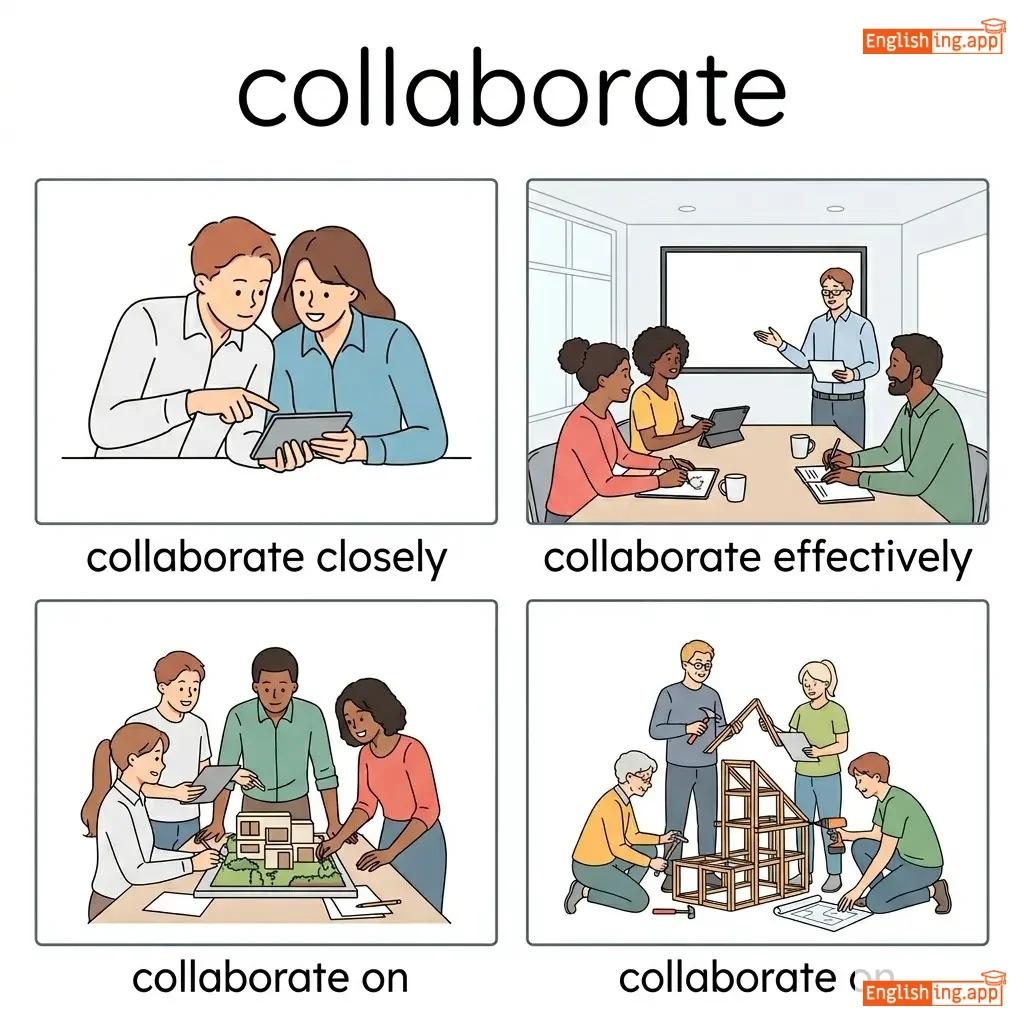
collaborate closely, collaborate effectively, collaborate on, collaborate with
••••••
|
コラボレートは、他の人と一緒に創造的なプロジェクトをすることです。
••••••
|
|
#0
📊
|
/kəmˈpærətɪv/
adjective
(コンパラティブ)
••••••
|
- •••••• |
比較の
hikaku no
••••••
|
- •••••• | - •••••• | - •••••• | - •••••• |
Measured or considered by comparison; relative.
••••••
|
She lives in comparative comfort after moving to the city.
シー リブズ イン コンパラティブ コンフォート アフター ムービング トゥ ザ シティ。
••••••
|
彼女は都市に引っ越した後、比較的快適に暮らしている。
kanojo wa toshi ni hikkoshita ato hikakuteki kaiteki ni kurashite iru
••••••
|
comparative advantage
コンパラティブ アドバンテージ
••••••
|
The ability of a country or company to produce goods or services at a lower opportunity cost than others
••••••
|
比較優位
hikaku yui
••••••
|
relative, proportional, measured, evaluative
••••••
|
absolute, definite, fixed
••••••
|
comparative study, comparative analysis, comparative comfort, comparative advantage
••••••
|
‘比較’ (hikaku) means comparison—so comparative = 比較の (hikaku no).
••••••
|
|
#0
♿
|
/ˌdɪs.əˈbɪl.ə.ti/
noun
(ディサビリティ)
••••••
|
- •••••• |
障害
shougai
••••••
|
- •••••• | - •••••• | - •••••• | - •••••• |
a physical or mental condition that limits a person's movements, senses, or activities
••••••
|
Despite his physical disability, he became a successful athlete in wheelchair racing.
身体的な障害にもかかわらず、彼は車椅子レースで成功したアスリートになりました。
••••••
|
身体的な障害にもかかわらず、彼は車椅子レースで成功したアスリートになりました。
Shintai-teki na shougai ni mo kakawarazu, kare wa kuruma isu rēsu de seikou shita asurīto ni narimashita.
••••••
|
- •••••• | - •••••• | - •••••• |
impairment, handicap, limitation, incapacity
••••••
|
ability, capability, strength, enablement
••••••
|
learning disability, physical disability, disability rights
••••••
|
障害は挑戦の始まり
••••••
|
|
#0
🔢
|
/ˈfɪɡjər/
noun
(フィギュア)
••••••
|
- •••••• |
数字、形、重要な人物
sūji, katachi, jūyō na jinbutsu
••••••
|
- •••••• | - •••••• | - •••••• | - •••••• |
a number, shape, or person of importance; also a representation in drawing or sculpture
••••••
|
The report included several important figures.
レポートにはいくつかの重要なフィギュアが含まれていました。
••••••
|
レポートにはいくつかの重要なフィギュアが含まれていました。
Repōto ni wa ikutsuka no jūyō na figyua ga fukuma rete imashita.
••••••
|
figure out
解決する
••••••
|
to understand or solve something
••••••
|
解決する
kaiketsu suru
••••••
|
number, shape, person, digit, form
••••••
|
text, word
••••••
|
key figure, public figure, important figure, figure prominently
••••••
|
Figure は数字や形かもしれません - Remember, figures are numbers or shapes
••••••
|
|
#0
👤
|
/ˌɪndɪˈvɪdʒuəl/
noun/adjective
(インディビジュアル)
••••••
|
- •••••• |
個人
kojin
••••••
|
- •••••• | - •••••• | - •••••• | - •••••• |
A single human being as distinct from a group; relating to one person.
••••••
|
Each individual has the right to freedom of speech. |
各個人には表現の自由がある。
Kaku kojin ni wa hyōgen no jiyū ga aru.
••••••
|
individual rights |
Legal or moral entitlements held by each person.
••••••
|
個人の権利
Kojin no kenri
••••••
|
person, human, being, entity, character
••••••
|
group, collective, community
••••••
|
individual rights, individual needs, individual cases, individual effort
••••••
|
Individual は個人 - Individual 👤 は一人の人。
••••••
|
|
#0
🕵️
|
/ɪnˈspɛktər/
noun
(インスペクター)
••••••
|
- •••••• |
検査官
kensa kan
••••••
|
- •••••• | - •••••• | - •••••• | - •••••• |
An official employed to ensure regulations are obeyed or standards are met.
••••••
|
The inspector carefully checked the restaurant's kitchen for hygiene standards. |
検査官はレストランのキッチンを衛生基準に従って慎重に確認しました。
Kensakan wa resutoran no kicchin o eisei kijun ni shitagatte shinchou ni kakunin shimashita.
••••••
|
under the inspector's eye |
Closely monitored or supervised by an authority.
••••••
|
検査官の目の下で
Kensakan no me no shita de
••••••
|
examiner, officer, auditor, overseer, supervisor
••••••
|
worker, employee
••••••
|
police inspector, health inspector, building inspector
••••••
|
検査官はすべてを確認して、すべてが規則に従っていることを保証します。
••••••
|
|
#0
🔍
|
/ɪnˈvɛs.tɪ.ɡeɪt/
verb
(インヴェスティゲート)
••••••
|
- •••••• |
調査する
chousa suru
••••••
|
investigated
インヴェスティゲイテッド
••••••
|
investigated
インヴェスティゲイテッド
••••••
|
investigates
インヴェスティゲイツ
••••••
|
investigating
インヴェスティゲイティング
••••••
|
to carry out a systematic inquiry to discover facts or information
••••••
|
The police will investigate the incident thoroughly.
警察は事件を徹底的に調査するでしょう。
••••••
|
警察は事件を徹底的に調査するでしょう。
Keisatsu wa jiken o tetteiteki ni chousa suru deshou.
••••••
|
investigate a case
事件を調査する
••••••
|
to examine or look into a specific case
••••••
|
事件を調査する
jiken o chousa suru
••••••
|
examine, probe, inspect, explore, analyze
••••••
|
ignore, overlook
••••••
|
investigate crime, investigate a complaint, investigate thoroughly
••••••
|
調査するとは事件の中で事実を探すことです。
••••••
|
|
#0
🚫
|
/ɪˈrɛləvənt/
adjective
(イレレバント)
••••••
|
- •••••• |
無関係
mukankei
••••••
|
- •••••• | - •••••• | - •••••• | - •••••• |
Not connected with or related to the matter at hand
••••••
|
His comment was completely irrelevant to the discussion.
彼のコメントは議論にまったく関係ありませんでした。
••••••
|
彼のコメントは議論にまったく関係ありませんでした。
Kare no komento wa giron ni mattaku kankei arimasen deshita.
••••••
|
irrelevant detail
無関係な詳細
••••••
|
Information that does not matter in the context
••••••
|
無関係な詳細
mukankei na shousai
••••••
|
unrelated, immaterial, extraneous, insignificant
••••••
|
relevant, important, significant
••••••
|
irrelevant comment, irrelevant detail, irrelevant information, irrelevant answer
••••••
|
Irrelevant は話題に関連しないことを意味します。試験で無関係な答えを出すようなものです。
••••••
|
|
#0
⚔️
|
/ˈmɑːrʃəl/
adjective
(マーシャル)
••••••
|
- •••••• |
軍事的な
gunjiteki na
••••••
|
- •••••• | - •••••• | - •••••• | - •••••• |
Related to war, soldiers, or military life.
••••••
|
The country imposed martial law during the crisis. |
その国は危機の間に戒厳令を施行した。
Sono kuni wa kiki no aida ni kaigenrei o shikō shita.
••••••
|
martial law |
Military control of an area, usually during emergencies.
••••••
|
戒厳令
kaigenrei
••••••
|
military, warlike, soldierly, combative
••••••
|
civil, peaceful
••••••
|
martial law, martial arts, martial spirit, martial training
••••••
|
Martialは '戒厳令' を意味します—軍が支配する時です。
••••••
|
|
#0
🏛️
|
/ˈpɑːrləmənt/
noun
(パーラメント)
••••••
|
- •••••• |
議会
gikai
••••••
|
- •••••• | - •••••• | - •••••• | - •••••• |
the highest legislative body in a country
••••••
|
The bill was passed in parliament after a long debate. |
その法案は議会で長時間の議論の後に通過しました。
Sono hōan wa gikai de chō jikan no giron no ato ni tsūka shimashita.
••••••
|
hung parliament |
a parliament where no single party has a majority
••••••
|
掛け議会
kakegikai
••••••
|
assembly, legislature, congress, house, senate
••••••
|
dictatorship, monarchy
••••••
|
parliament session, member of parliament, dissolve parliament, pass through parliament
••••••
|
パーラメント(parlamento)=国の重要な決定を行う場所 🏛️
••••••
|
|
#0
⏱️
|
/ˈsekənd/
noun
••••••
|
- •••••• | - •••••• | - •••••• | - •••••• | - •••••• | - •••••• |
a unit of time equal to one sixtieth of a minute; also the position after first
••••••
|
He finished the race in second place. |
- •••••• |
in a second |
very quickly; almost immediately
••••••
|
- •••••• |
moment, instant, rank, position
••••••
|
first, last
••••••
|
second chance, second place, second time
••••••
|
No •••••• |
|
#0
📋
|
/ˈsɛkrəteri/
noun
••••••
|
- •••••• | - •••••• | - •••••• | - •••••• | - •••••• | - •••••• |
a person employed to handle correspondence and manage routine tasks for an individual or organization
••••••
|
The secretary scheduled the meeting for tomorrow. |
- •••••• | - •••••• | - •••••• | - •••••• |
assistant, clerk, administrator, executive
••••••
|
boss, employer
••••••
|
office secretary, personal secretary, company secretary, secretary role
••••••
|
No •••••• |
|
#0
🌍
|
/ˌsɪtʃʊˈeɪʃən/
noun
(シチュエーション)
••••••
|
- •••••• |
状況
joukyou
••••••
|
- •••••• | - •••••• | - •••••• | - •••••• |
a set of circumstances or state of affairs at a particular time
••••••
|
The situation at work became difficult after the new policies were introduced.
新しいポリシーが導入された後、職場の状況は難しくなりました。
••••••
|
新しいポリシーが導入された後、職場の状況は難しくなりました。
Atarashii porishī ga dōnyū sareta ato, shokuba no joukyou wa muzukashiku narimashita.
••••••
|
in a tight situation
困難な状況にある
••••••
|
to be in a difficult or challenging circumstance
••••••
|
困難な状況にある
konnan na joukyou ni aru
••••••
|
condition, circumstance, state, scenario
••••••
|
none
••••••
|
critical situation, emergency situation, business situation
••••••
|
状況 (Joukyou) - どんな状況でも冷静に対処しよう!
••••••
|
|
#0
🧍
|
/ˈstændɪŋ/
noun/adjective
(スタンディング)
••••••
|
- •••••• |
地位 / 評判
chii / hyoban
••••••
|
- •••••• | - •••••• | - •••••• | - •••••• |
status, reputation, or position; also the act of being upright on the feet
••••••
|
He has high standing in the community for his charity work. |
彼はその慈善活動のため、コミュニティで高い評価を得ています。
Kare wa sono jizen katsudou no tame, komyuniti de takai hyouka wo eteimasu.
••••••
|
of good standing |
having a good reputation or status
••••••
|
良い評価
yoi hyouka
••••••
|
status, reputation, position, rank, stature
••••••
|
disrepute, dishonor, disgrace
••••••
|
social standing, legal standing, good standing, standing order
••••••
|
Standing は立っていることを意味し、また社会での評価や地位にも関連しています。
••••••
|
|
#0
🚀
|
/ˈstɑːtɪŋ/
verb
(スターティング)
••••••
|
- •••••• |
始める
hajimeru
••••••
|
- •••••• | - •••••• | - •••••• |
starting
スターティング
••••••
|
beginning to do or experience something
••••••
|
She is starting a new job next week.
彼女は来週、新しい仕事を始める。
••••••
|
彼女は来週、新しい仕事を始める。
Kanojo wa raishuu, atarashii shigoto o hajimeru.
••••••
|
starting from scratch
ゼロから始める
••••••
|
to begin from the very beginning without any advantage
••••••
|
ゼロから始める
Zero kara hajimeru
••••••
|
beginning, commencing, initiating, launching, opening
••••••
|
ending, finishing, concluding
••••••
|
starting point, starting line, starting salary, starting date
••••••
|
始める — 新しい冒険の始まりのようなものです!
••••••
|
|
#0
🪤
|
/træp/
verb
(トラップ)
••••••
|
- •••••• |
罠にかける
wana ni kakeru
••••••
|
trapped
トラップド
••••••
|
trapped
トラップド
••••••
|
traps
トラップス
••••••
|
trapping
トラッピング
••••••
|
to catch or hold something or someone so they cannot escape
••••••
|
The fox was trapped in a cage.
ザ・フォックス ワズ トラップド イン ア ケイジ
••••••
|
狐は檻に閉じ込められていた。
Kitsune wa ori ni tojikomere rarete ita.
••••••
|
fall into a trap
フォール インツ ア トラップ
••••••
|
to be tricked or deceived into a bad situation
••••••
|
罠に落ちる
wana ni ochiru
••••••
|
catch, ensnare, imprison, capture, confine
••••••
|
free, release, liberate
••••••
|
set a trap, mouse trap, fall into a trap, trap animal
••••••
|
罠にかけるは罠に落ちることのようなもの 🪤
••••••
|
|
#0
🏆
|
/ˈtroʊfi/
noun
(トロフィー)
••••••
|
- •••••• |
トロフィー
torofī
••••••
|
- •••••• | - •••••• | - •••••• | - •••••• |
An object awarded as a prize for a victory or achievement.
••••••
|
She proudly displayed the trophy she won in the competition. |
彼女はコンペティションで勝ったトロフィーを誇らしげに展示しました。
Kanojo wa konpetishon de katta torofī o hokorashige ni tenji shimashita.
••••••
|
trophy wife |
A young attractive wife regarded as a status symbol for her husband.
••••••
|
トロフィー妻
torofī tsuma
••••••
|
award, prize, cup, medal, reward
••••••
|
loss, failure
••••••
|
win a trophy, display a trophy, trophy winner, trophy cabinet
••••••
|
トロフィー = トロフィー 🏆、成功や達成の象徴
••••••
|
|
#0
❌
|
/ʌnˈeɪ.bəl/
adjective
(アンエイブル)
••••••
|
- •••••• |
できない
dekinai
••••••
|
- •••••• | - •••••• | - •••••• | - •••••• |
lacking the power, skill, or means to do something
••••••
|
He was unable to attend the meeting. |
彼は会議に出席できませんでした。
Kare wa kaigi ni shusseki dekimasen deshita.
••••••
|
- •••••• | - •••••• | - •••••• |
incapable, powerless, helpless
••••••
|
able, capable, competent
••••••
|
unable to help, unable to understand, unable to cope
••••••
|
Unable = できない (dekinai means 'unable' in Japanese, sounds similar)
••••••
|
|
#0
😟
|
/ˈwɜːrid/
adjective
(ワーリッド)
••••••
|
- •••••• |
心配
shinpai
••••••
|
- •••••• | - •••••• | - •••••• | - •••••• |
feeling anxious or concerned about something
••••••
|
She was worried about the upcoming exam. |
彼女は迫る試験について心配していた。
Kanojo wa semaru shiken ni tsuite shinpai shite ita.
••••••
|
- •••••• | - •••••• | - •••••• |
anxious, concerned, uneasy, troubled
••••••
|
calm, relaxed
••••••
|
worried about, feel worried, get worried, look worried
••••••
|
Worried sounds like 'worry' – Visualize someone pacing and thinking about a looming test.
••••••
|
Vocabulary Quiz
Test your vocabulary by matching words with their translations or meanings.
Login to take the quiz
Comments (0)
Share your thoughts and join the discussion.
Join the discussion by logging in
Login to CommentNo comments yet
Be the first to share your thoughts!