

若き政治家
The Young Politician
若きリーダー、アルマンは彼の政治的agendaに取り組んでいました。彼の主な目的は、貧しい人々に不公平に課せられた古い都市法をabolishすることでした。彼はこれが簡単な仕事ではないことを知っていました。彼の政治的academyの教師たちは、どのようにして人々の心をつかむかを教えてくれました。彼は市長と会い、自分の提案を提出しました。市長は最初はagreeしませんでした。アルマンは彼のallyとともに公開ミーティングを組織しました。そこで彼は皆に自分の計画を示しました。彼はこの法が都市の発展に対する大きな障害であると言いました。人々は彼のスピーチに感動し、彼をadmireし始めました。市長は市民の圧力を感じ始めました。彼はアルマンに再び会うように頼みました。今度は市長はアルマンのadviceを聞くことに同意しました。彼はこのaffairが都市にとって重要であることを理解しました。アルマンは市長を納得させ、この法律をamendすることで都市に多くの改善がもたらされると説明しました。市長は最終的に同意し、その法律を変更するために新しい法案を通しました。アルマンの指導の下、都市は新しい日へとahead進んでいきました。
翻訳
過去
過去分詞
三人称単数
動名詞
意味
例文
例文の翻訳
同義語
対義語
コロケーション
ニーモニック



Swipe left or right, or use the buttons. Tap image to zoom.
例文の翻訳
単語
The Young PoliticianThe Young Politician - マスクトグル
|
絵文字
|
単語 | Images | 翻訳 | 過去 | 過去分詞 | 三人称単数 | 動名詞 | 意味 | 例文 | 例文の翻訳 | 表現例 | 表現例の意味 | 表現例の翻訳 | 同義語 | 対義語 | コロケーション | ニーモニック |
|---|---|---|---|---|---|---|---|---|---|---|---|---|---|---|---|---|---|
|
#0
✂️
|
/əˈbɑː.lɪʃ/
verb
(アボリッシュ)
••••••
|
- •••••• |
廃止する
haishi suru
••••••
|
abolished
アボリッシュド
••••••
|
abolished
アボリッシュド
••••••
|
abolishes
アボリッシュズ
••••••
|
abolishing
アボリッシング
••••••
|
to formally put an end to a system, practice, or institution
••••••
|
The government decided to abolish the old tax system.
政府は古い税制を廃止することを決定しました。
••••••
|
政府は古い税制を廃止することを決定しました。
Seifu wa furui zeisei o haishi suru koto o kettei shimashita.
••••••
|
abolish slavery
奴隷制度を廃止する
••••••
|
to officially end the system of slavery
••••••
|
奴隷制度を廃止する
Dorei seido o haishi suru
••••••
|
end, eliminate, terminate, annul, eradicate
••••••
|
establish, maintain
••••••
|
abolish slavery, abolish law, abolish practice
••••••
|
ABOLISHはABOL (abol) すべて終了する (shūryō suru)
••••••
|
|
#0
🚪
|
/ˈæbsəns/
noun
(æbsens)
••••••
|
- •••••• |
不在
fuzai
••••••
|
- •••••• | - •••••• | - •••••• | - •••••• |
the state of being away from a place or person
••••••
|
His absence from the meeting was noticed by everyone. |
会議における彼の不在は誰にも気づかれました。
Kaigi ni okeru kare no fuzai wa dare ni mo kizukaremashita.
••••••
|
absence makes the heart grow fonder |
being away from someone makes you appreciate them more
••••••
|
不在が心をより温かくする
Fuzai ga kokoro o yori atatakaku suru
••••••
|
nonappearance, lack, nonexistence, vacancy
••••••
|
presence, attendance, appearance
••••••
|
long absence, unexplained absence, absence from work
••••••
|
Absenceを日本語で表すと'不在'。発音が似ている!
••••••
|
|
#0
🏫
|
/əˈkædəmi/
noun
(アカデミー)
••••••
|
- •••••• |
アカデミー
akademī
••••••
|
- •••••• | - •••••• | - •••••• | - •••••• |
an institution of learning or training
••••••
|
He enrolled in a military academy. |
彼は軍事アカデミーに入学しました。
Kare wa gunji akademī ni nyūgaku shimashita.
••••••
|
- •••••• | - •••••• | - •••••• |
school, institute, college, university
••••••
|
none,
••••••
|
military academy, sports academy, music academy, national academy
••••••
|
アカデミーは学びの場所です 🎓。覚えておいてください: アカデミー = 学校に 'cademy' を追加したもの。
••••••
|
|
#0
✅
|
/əkˈsɛpt/
verb
(アクセプト)
••••••
|
|
受け入れる
ukeireru
••••••
|
accepted
アクセプテッド
••••••
|
accepted
アクセプテッド
••••••
|
accepts
アクセプツ
••••••
|
accepting
アクセプティング
••••••
|
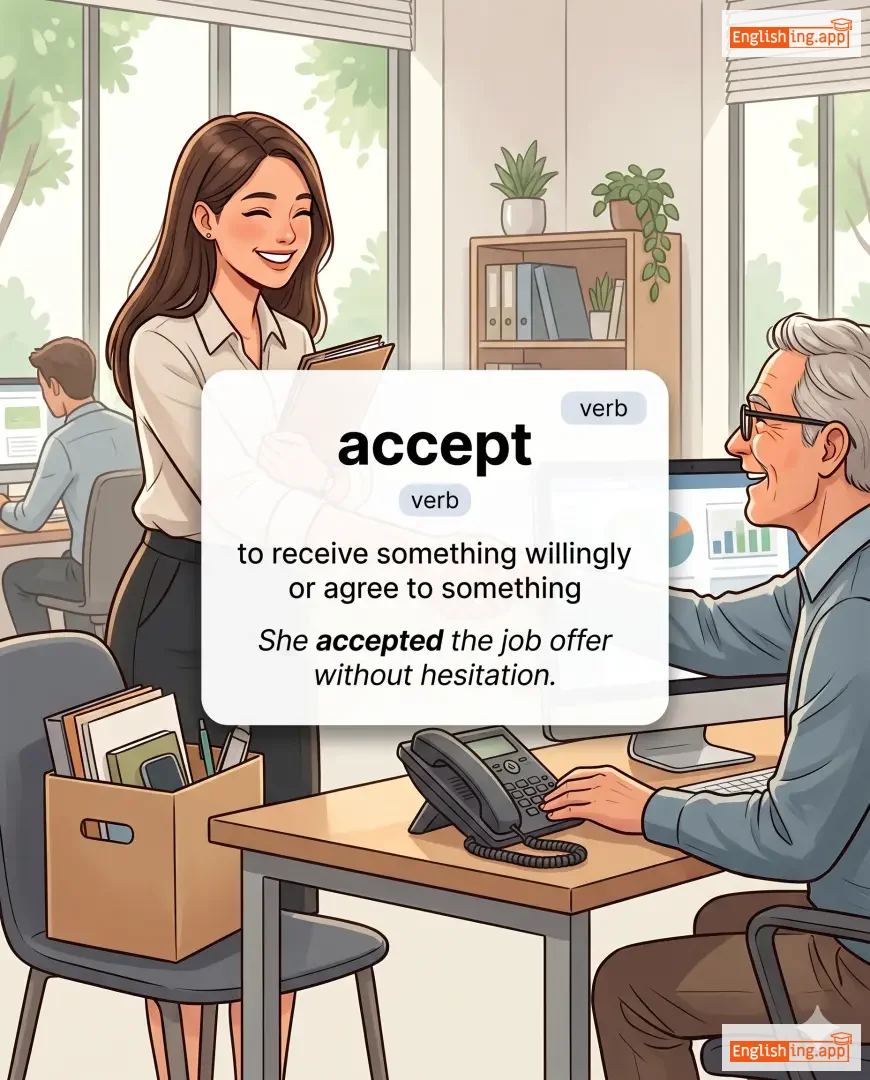
to receive something willingly or agree to something
••••••
|
She accepted the job offer without hesitation.
彼女はためらうことなく仕事のオファーを受け入れた。
••••••
|
彼女はためらうことなく仕事のオファーを受け入れた。
Kanojo wa tamerau koto naku shigoto no ofā o ukeireta.
••••••
|
accept responsibility
責任を受け入れる
••••••
|
to acknowledge and take responsibility for something
••••••
|
責任を受け入れる
sekinin o ukeireru
••••••
|
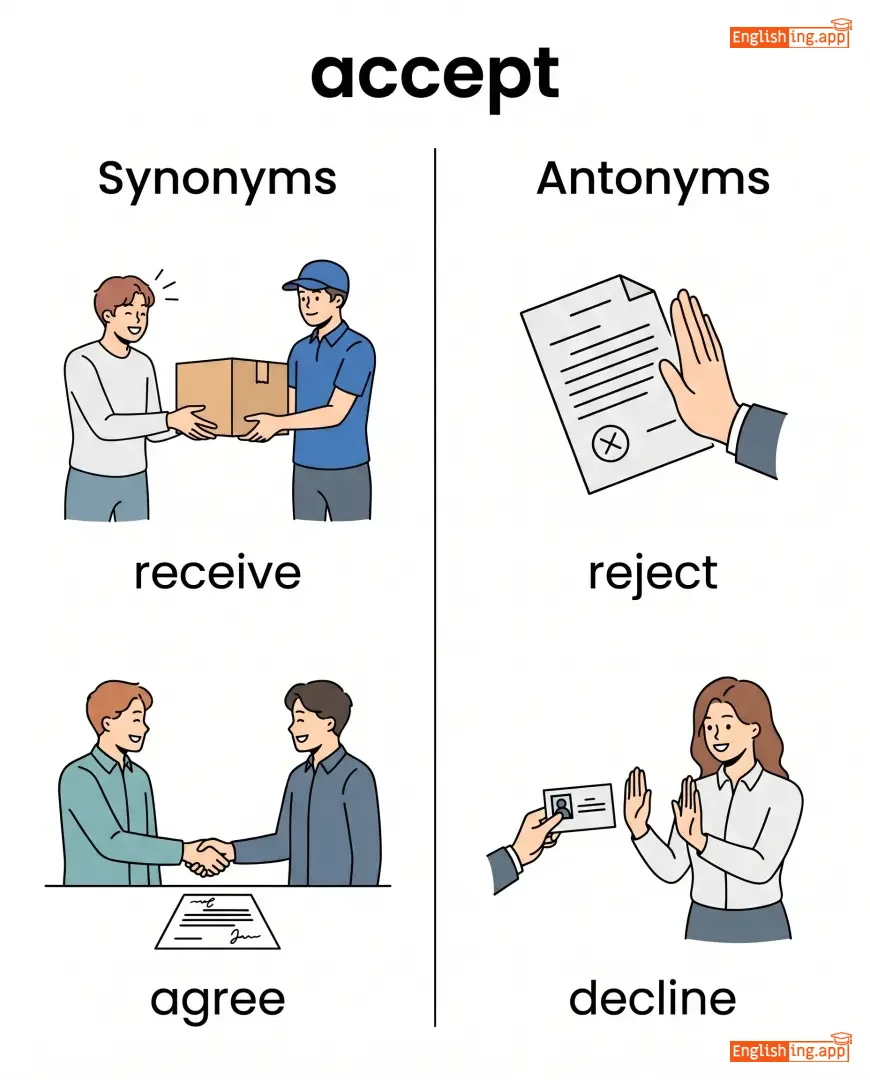
receive, agree, approve, consent
••••••
|
reject, decline, refuse
••••••
|
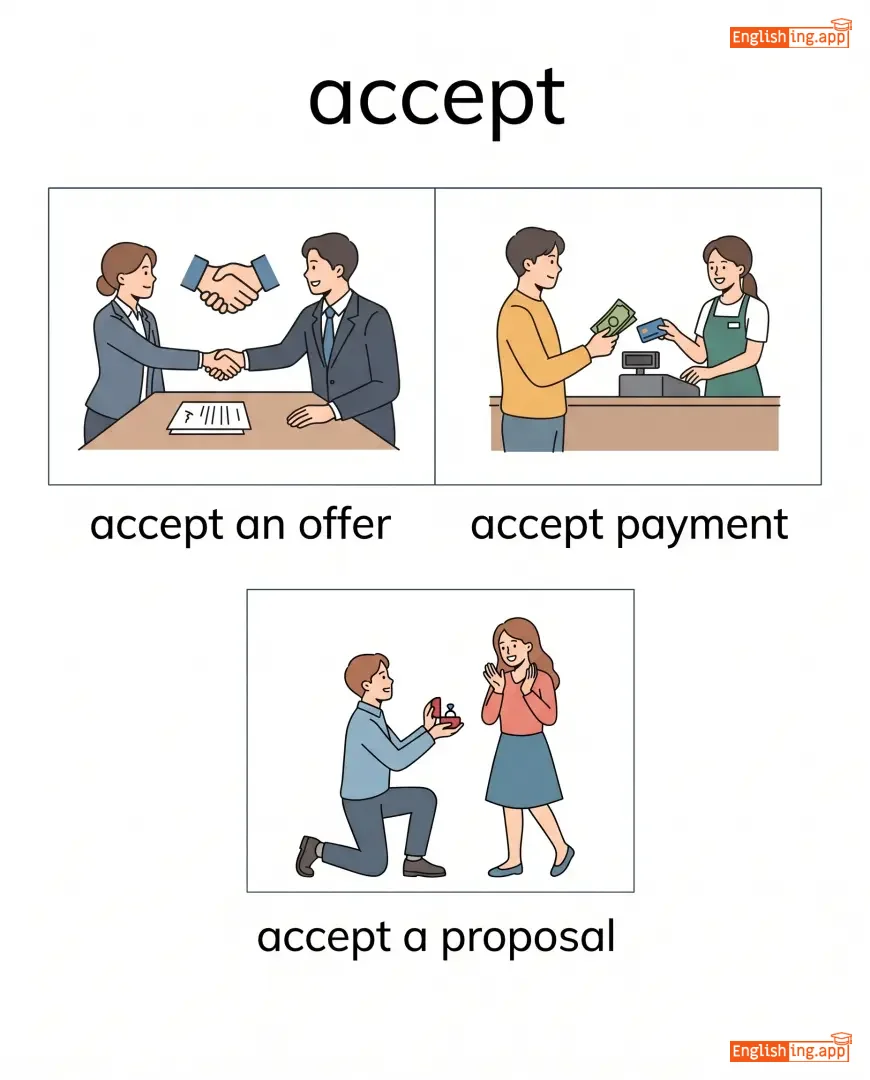
accept an offer, accept payment, accept a proposal, accept responsibility
••••••
|
新しい仕事のオファーを受け入れるのは、次のステップを踏み出すこと
••••••
|
|
#0
🔑
|
/ˈæksɛs/
noun/verb
(アクセス)
••••••
|
- •••••• |
アクセス
akusesu
••••••
|
accessed
アクセスト
••••••
|
accessed
アクセスト
••••••
|
accesses
アクセセス
••••••
|
accessing
アクセシング
••••••
|
the ability to enter or use something; to reach or use something
••••••
|
Students have free access to the library.
学生は図書館への無料アクセスがあります。
••••••
|
学生は図書館への無料アクセスがあります。
Gakusei wa toshokan e no muryou akusesu ga arimasu.
••••••
|
gain access
アクセスを得る
••••••
|
to succeed in entering or using something
••••••
|
アクセスを得る
akusesu o eru
••••••
|
entry, approach, admission, connection
••••••
|
denial, exclusion
••••••
|
have access, provide access, gain access, limited access
••••••
|
アクセスは知識の扉を開ける鍵 🔑 です。
••••••
|
|
#0
🧷
|
/ədˈhɪər/
verb
(アディア)
••••••
|
|
付着する、従う
fuchaku suru, shitagau
••••••
|
adhered
アディアード
••••••
|
adhered
アディアード
••••••
|
adheres
アディアーズ
••••••
|
adhering
アディアリング
••••••
|
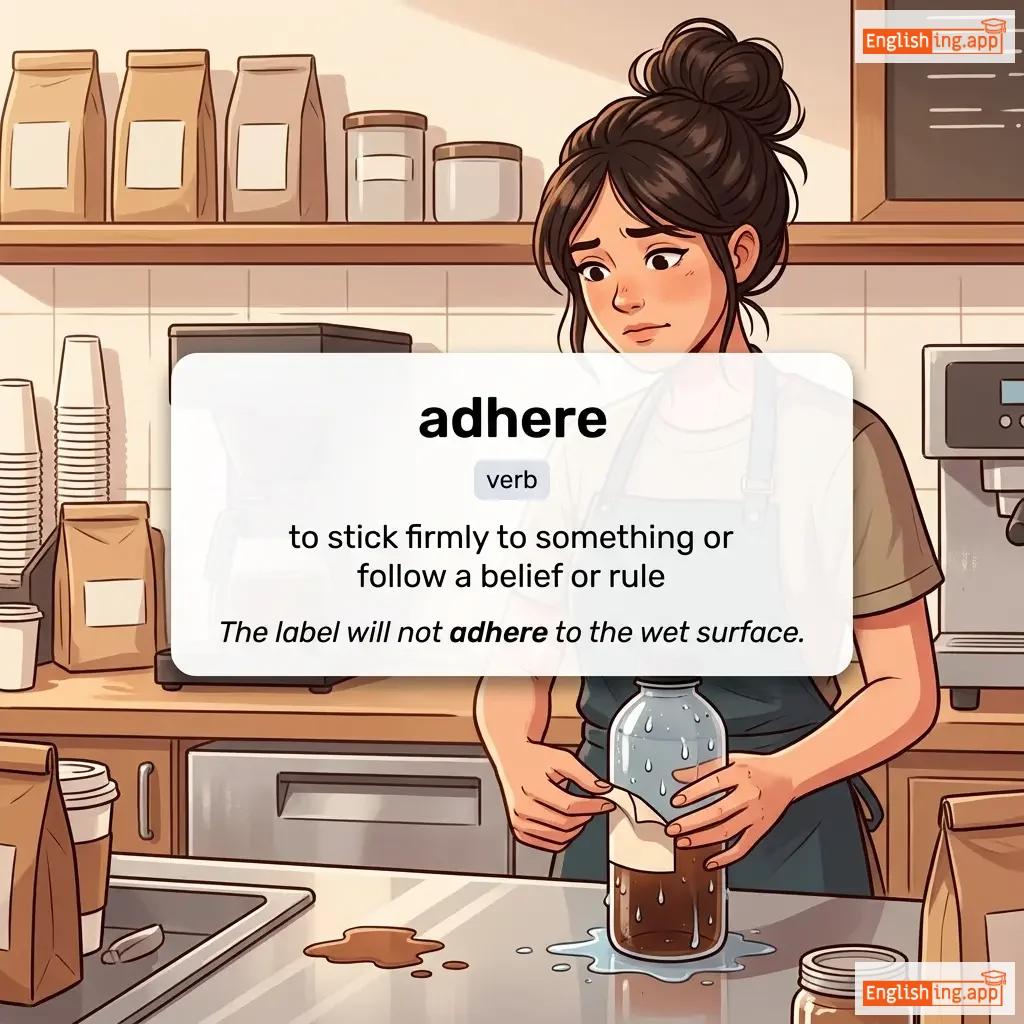
to stick firmly to something or follow a belief or rule
••••••
|
The label will not adhere to the wet surface.
ラベルは濡れた表面に付着しません。
••••••
|
ラベルは濡れた表面に付着しません。
Raberu wa nureta hyōmen ni fuchaku shimasen.
••••••
|
adhere to rules
ルールに従う
••••••
|
to strictly follow rules or principles
••••••
|
規則に従う
kisoku ni shitagau
••••••
|
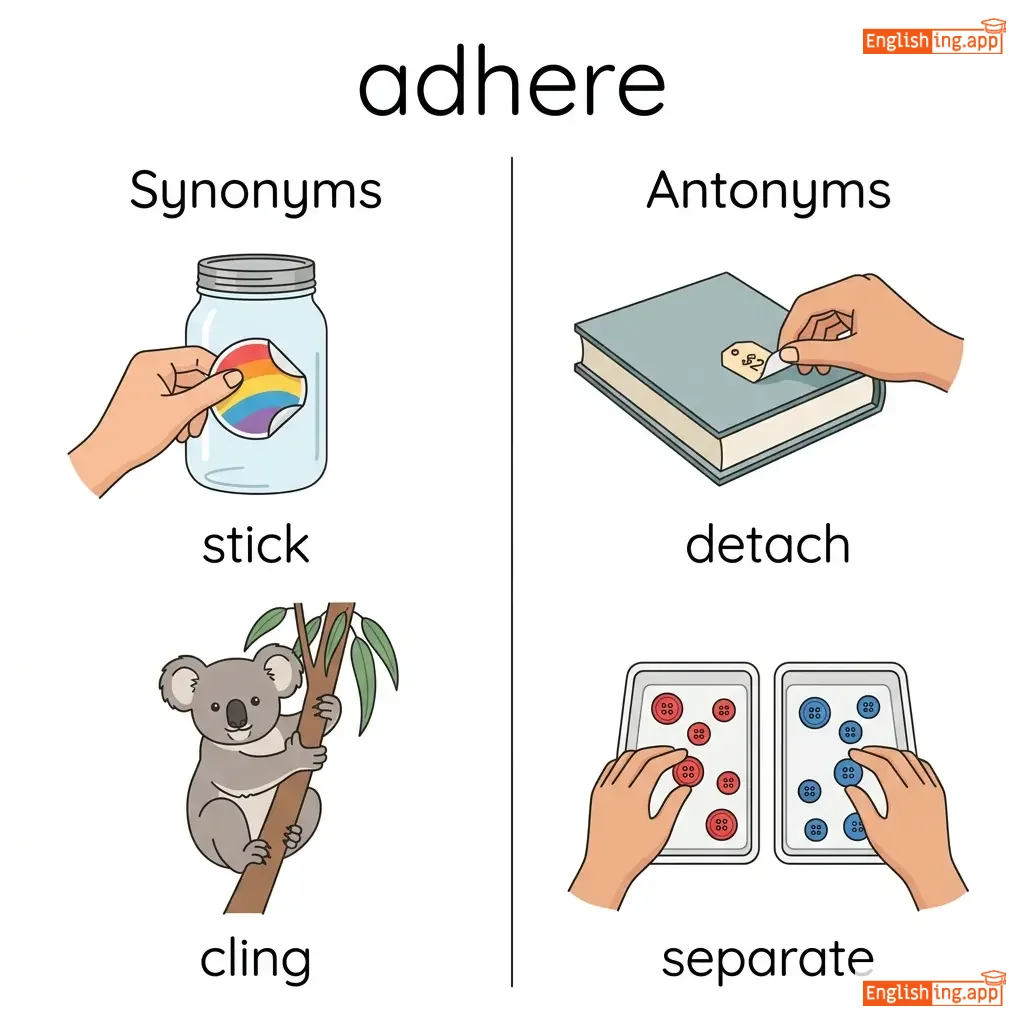
stick, cling, attach, comply, follow
••••••
|
detach, separate, ignore
••••••
|
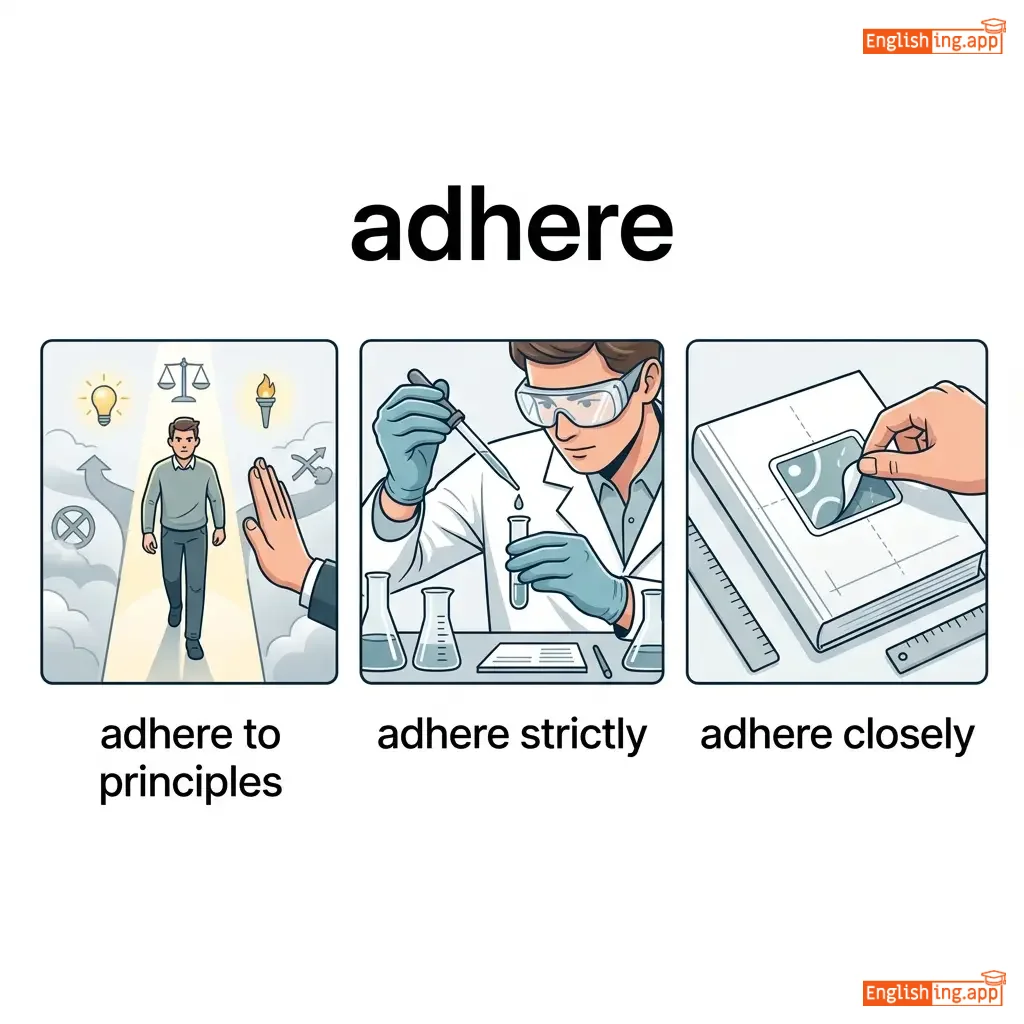
adhere to principles, adhere strictly, adhere closely, adhere firmly
••••••
|
Adhere は貼り付けるようなもの、まるで接着剤が何かに付着するように。
••••••
|
|
#0
⚙️
|
/əˈdʒʌst/
verb
(アジャスト)
••••••
|
- •••••• |
調整する
chousei suru
••••••
|
adjusted
アジャステッド
••••••
|
adjusted
アジャステッド
••••••
|
adjusts
アジャスツ
••••••
|
adjusting
アジャスティング
••••••
|
to change something slightly to make it more suitable or effective
••••••
|
She adjusted the mirror to see the road clearly.
彼女は鏡を調整して道路をはっきり見えました。
••••••
|
彼女は鏡を調整して道路をはっきり見えました。
Kanojo wa kagami wo chousei shite, douro wo hakkiri miemashita.
••••••
|
adjust to
調整する
••••••
|
to get used to a new situation
••••••
|
適応する
tekiou suru
••••••
|
modify, alter, adapt, regulate
••••••
|
disturb, disarrange, upset
••••••
|
adjust settings, adjust position, adjust speed, adjust focus
••••••
|
調整=少し変更して適応する
••••••
|
|
#0
😍
|
/ədˈmaɪər/
verb
(エイドマイア)
••••••
|
- •••••• |
賞賛する
shōsan suru
••••••
|
admired
エイドマイアード
••••••
|
admired
エイドマイアード
••••••
|
admires
エイドマイアーズ
••••••
|
admiring
エイドマイアリング
••••••
|
To respect, appreciate, or look up to someone or something.
••••••
|
I really admire her dedication to education.
私は本当に彼女の教育への献身を賞賛します。
••••••
|
私は本当に彼女の教育への献身を賞賛します。
Watashi wa hontōni kanojo no kyōiku e no kenshin o shōsan shimasu.
••••••
|
admire from afar
遠くから賞賛する
••••••
|
To respect or like someone without approaching them directly.
••••••
|
遠くから賞賛する
tōku kara shōsan suru
••••••
|
respect, appreciate, praise, value, esteem
••••••
|
despise, dislike, scorn
••••••
|
admire greatly, admire deeply, admire the beauty, admire courage
••••••
|
賞賛するはadmireの意味 – 私は彼女を遠くから賞賛します。
••••••
|
|
#0
💡
|
/ədˈvaɪs/
noun
••••••
|
|
- •••••• | - •••••• | - •••••• | - •••••• | - •••••• |
a suggestion or recommendation about what someone should do
••••••
|
She gave me good advice about managing money. |
- •••••• |
take someone's advice |
to follow the suggestion or recommendation given by someone
••••••
|
- •••••• |
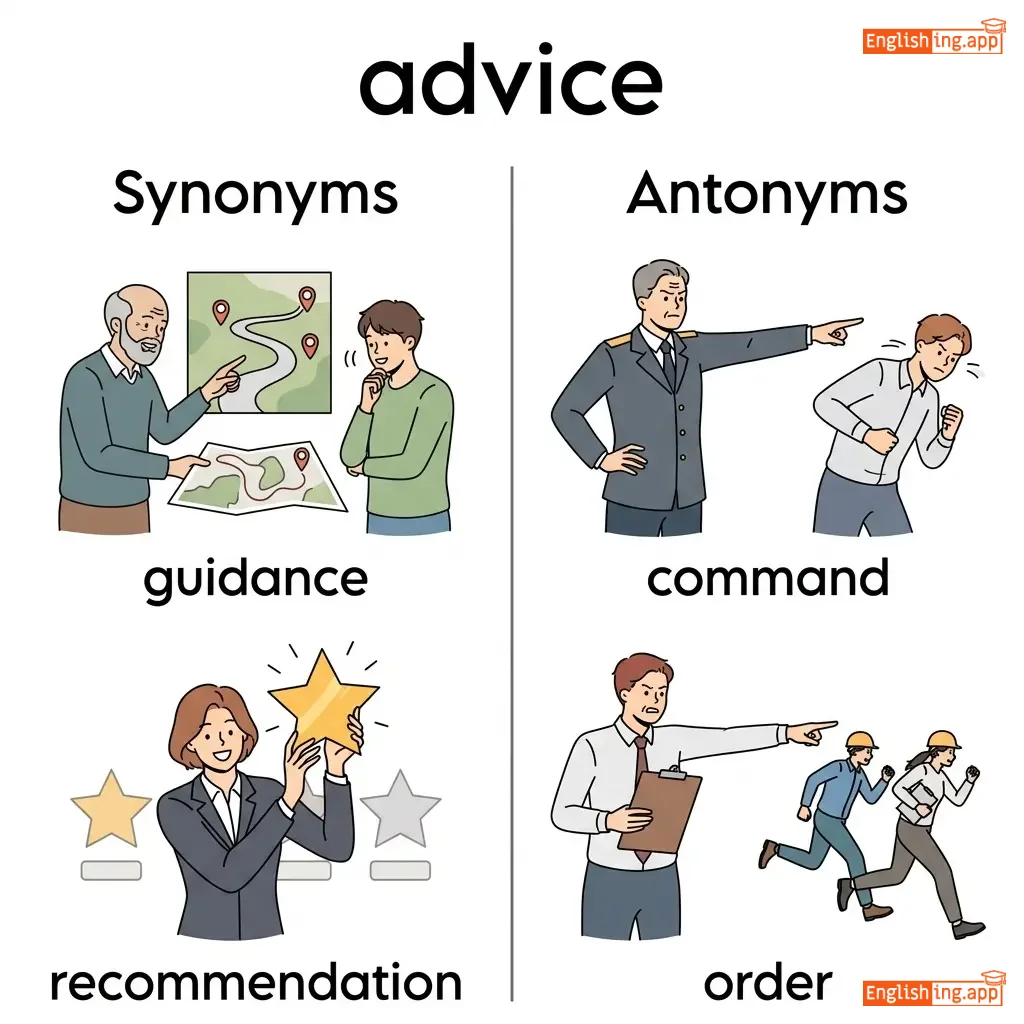
guidance, recommendation, counsel, tip, suggestion
••••••
|
command, order
••••••
|
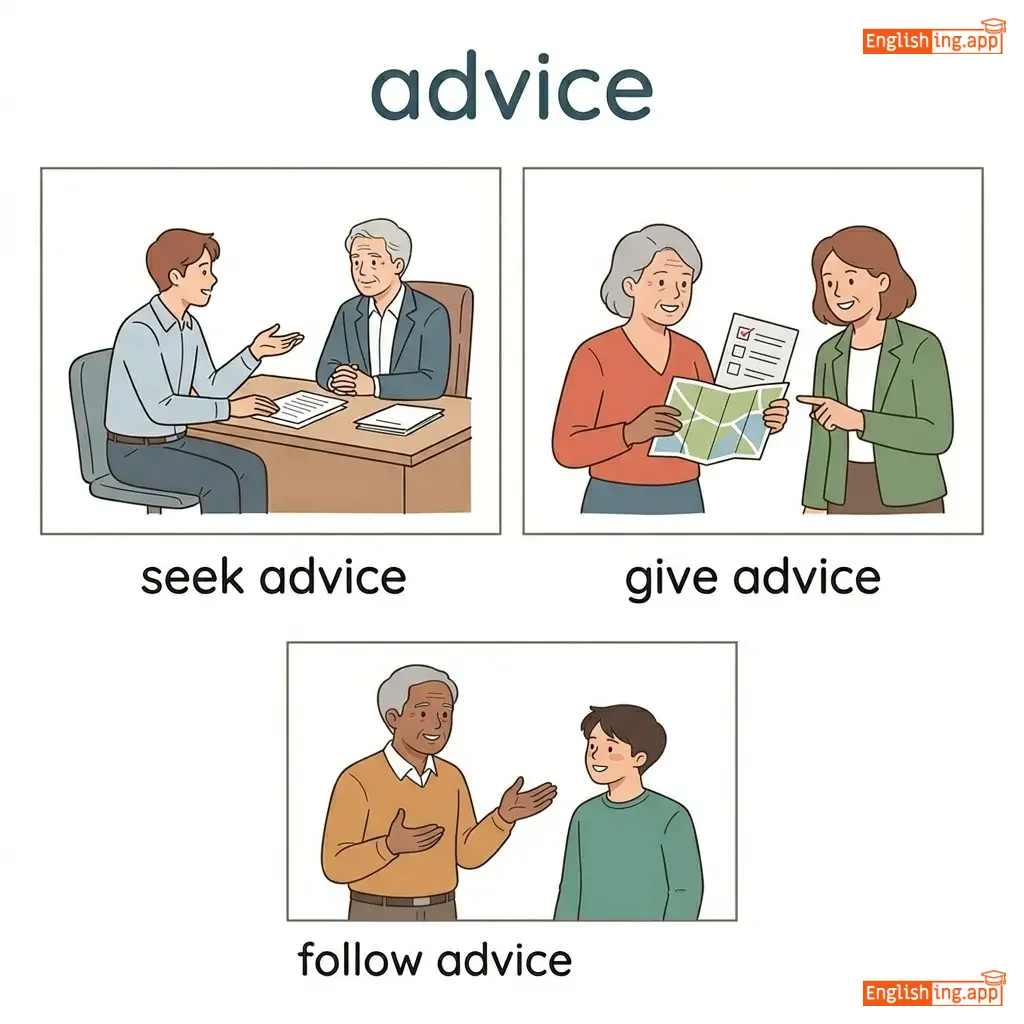
seek advice, give advice, follow advice, professional advice
••••••
|
No •••••• |
|
#0
💌
|
/əˈfɛər/
noun
(アフェア)
••••••
|
- •••••• |
事件 / 関係
jiken / kankei
••••••
|
- •••••• | - •••••• | - •••••• | - •••••• |
an event, situation, or relationship, often one that is private or romantic
••••••
|
The scandal became the most talked-about affair of the year.
そのスキャンダルはその年で最も話題になったアフェアになった。
••••••
|
そのスキャンダルはその年で最も話題になった事件になった。
Sono sukyandaru wa sono toshi de mottomo wadai ni natta jiken ni natta.
••••••
|
love affair
恋愛アフェア
••••••
|
a romantic or sexual relationship, often secret
••••••
|
恋愛関係
renai kankei
••••••
|
incident, matter, event, relationship
••••••
|
certainty, indifference
••••••
|
family affairs, political affairs, love affair, personal affair
••••••
|
Affairは事件を意味します – 恋愛のaffairは恋愛の事件を意味します。
••••••
|
|
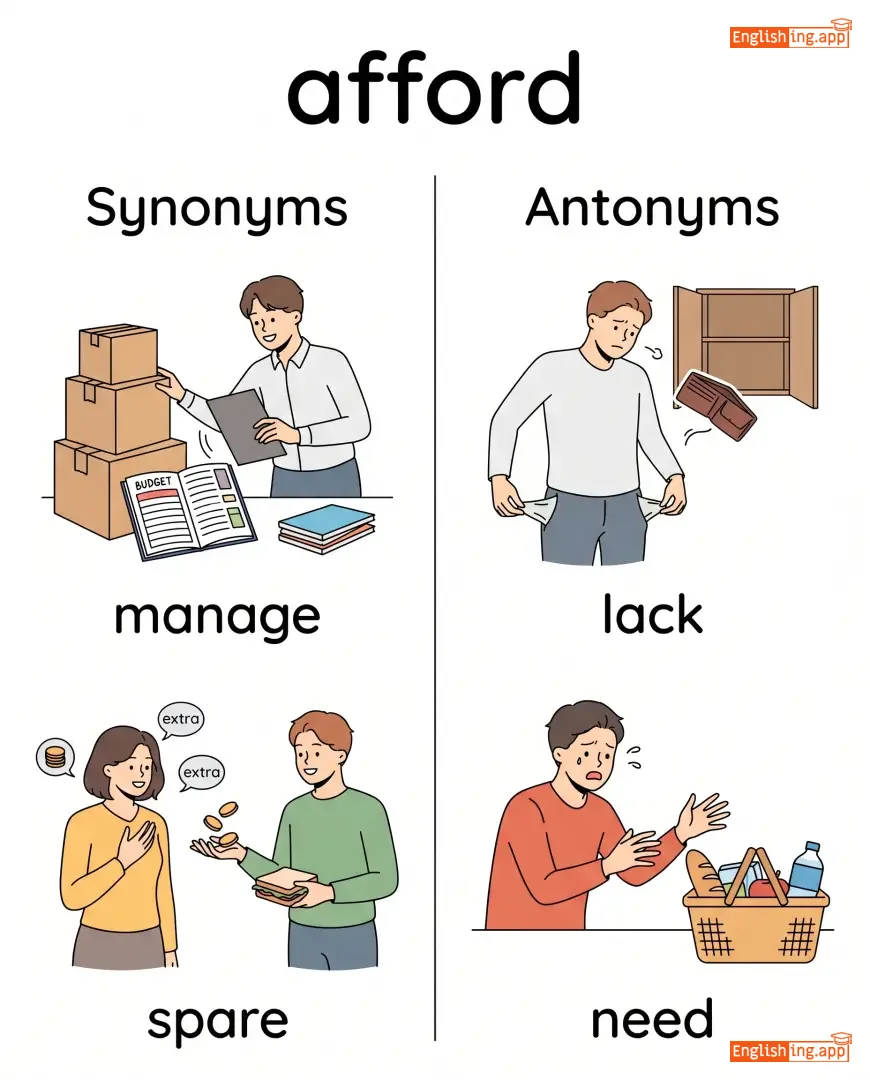
#0
💳
|
/əˈfɔːrd/
verb
(アフォード)
••••••
|
|
余裕がある
yoyū ga aru
••••••
|
afforded
アフォーデッド
••••••
|
afforded
アフォーデッド
••••••
|
affords
アフォーズ
••••••
|
affording
アフォーディング
••••••
|
to have enough money or resources to buy or do something
••••••
|
We can’t afford to buy a new car right now.
今は新しい車を買う余裕がありません。
••••••
|
今は新しい車を買う余裕がありません。
Ima wa atarashī kuruma o kau yoyū ga arimasen.
••••••
|
afford to lose
失う余裕がある
••••••
|
to be in a position where one can risk or bear the loss
••••••
|
失う余裕がある
ushinau yoyū ga aru
••••••
|
manage, spare, provide, allow
••••••
|
lack, need, require
••••••
|
can afford, afford to buy, afford the cost, afford a house
••••••
|
Afford 日本語で—もし車を買う余裕があれば、すべてのものを afford できます。
••••••
|
|
#0
🏢
|
/ˈeɪ.dʒən.si/
noun
(エージェンシー)
••••••
|
- •••••• |
エージェンシー
e-jenshī
••••••
|
- •••••• | - •••••• | - •••••• | - •••••• |
An organization or business that provides a particular service.
••••••
|
She works at a travel agency. |
彼女は旅行代理店で働いています。
Kanojo wa ryokō dairi-ten de hataraiteimasu.
••••••
|
advertising agency |
A company that creates and manages advertisements for clients.
••••••
|
広告代理店
kōkoku dairi-ten
••••••
|
organization, firm, bureau, office, service
••••••
|
individual, client, customer
••••••
|
government agency, real estate agency, news agency, travel agency
••••••
|
Agencyは'組織'を意味します—'エージェンシーでサービスが提供される'と覚えましょう
••••••
|
|
#0
📋
|
/əˈdʒɛndə/
noun
••••••
|
- •••••• | - •••••• | - •••••• | - •••••• | - •••••• | - •••••• |
A list of items to be discussed or acted upon in a meeting or plan.
••••••
|
The manager reviewed the agenda before the meeting began. |
- •••••• |
hidden agenda |
A secret motive or plan behind someone's actions.
••••••
|
- •••••• |
schedule, plan, program, timetable, itinerary
••••••
|
disorganization, randomness
••••••
|
meeting agenda, set the agenda, hidden agenda
••••••
|
No •••••• |
|
#0
🕵️
|
/ˈeɪ.dʒənt/
noun
(エージェント)
••••••
|
- •••••• |
エージェント
ējento
••••••
|
- •••••• | - •••••• | - •••••• | - •••••• |
A person who acts on behalf of another person or organization.
••••••
|
The real estate agent showed us several houses.
不動産エージェントは私たちにいくつかの家を見せてくれました。
••••••
|
不動産エージェントは私たちにいくつかの家を見せてくれました。
Fudōsan ējento wa watashitachi ni ikutsuka no ie o misete kuremashita.
••••••
|
secret agent
秘密のエージェント
••••••
|
A spy working for a government or organization.
••••••
|
秘密のエージェント
Himitsu no ējento
••••••
|
representative, delegate, envoy, broker, spy
••••••
|
principal, client, customer
••••••
|
travel agent, real estate agent, sports agent, insurance agent
••••••
|
エージェントは他のために働く、秘密のエージェントもその一つです。
••••••
|
|
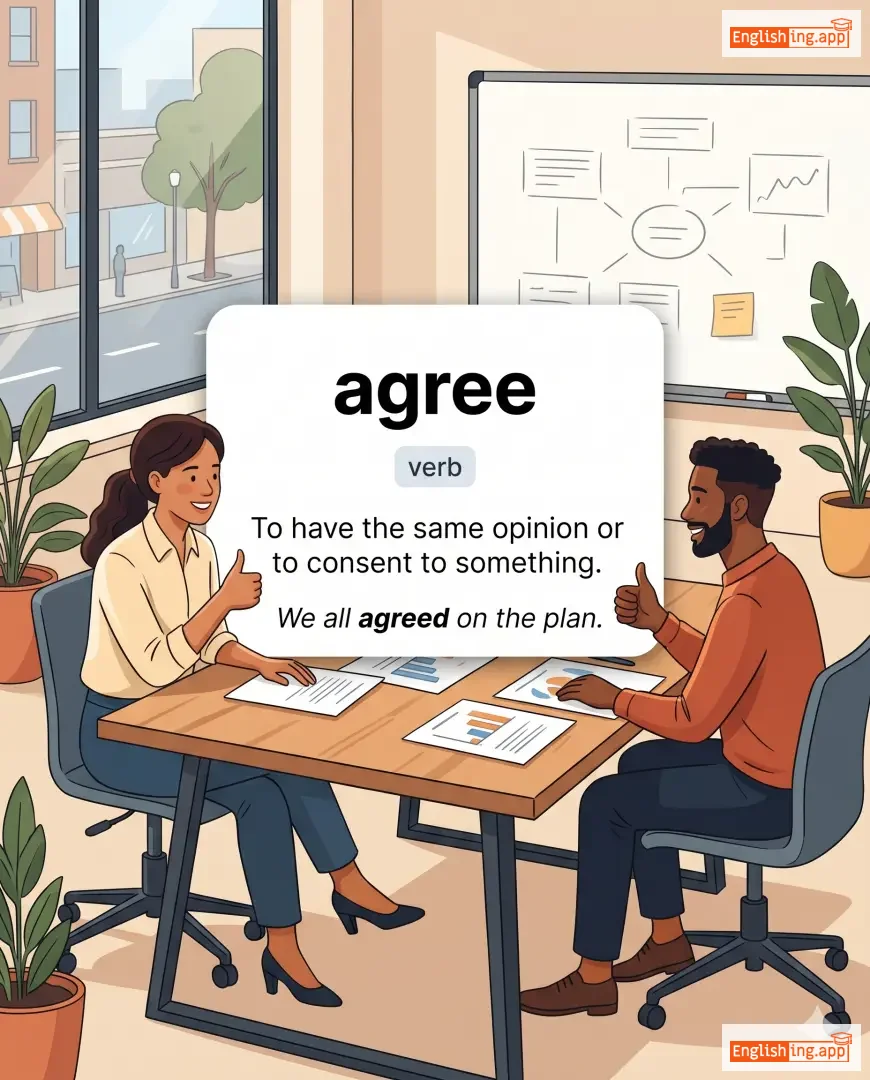
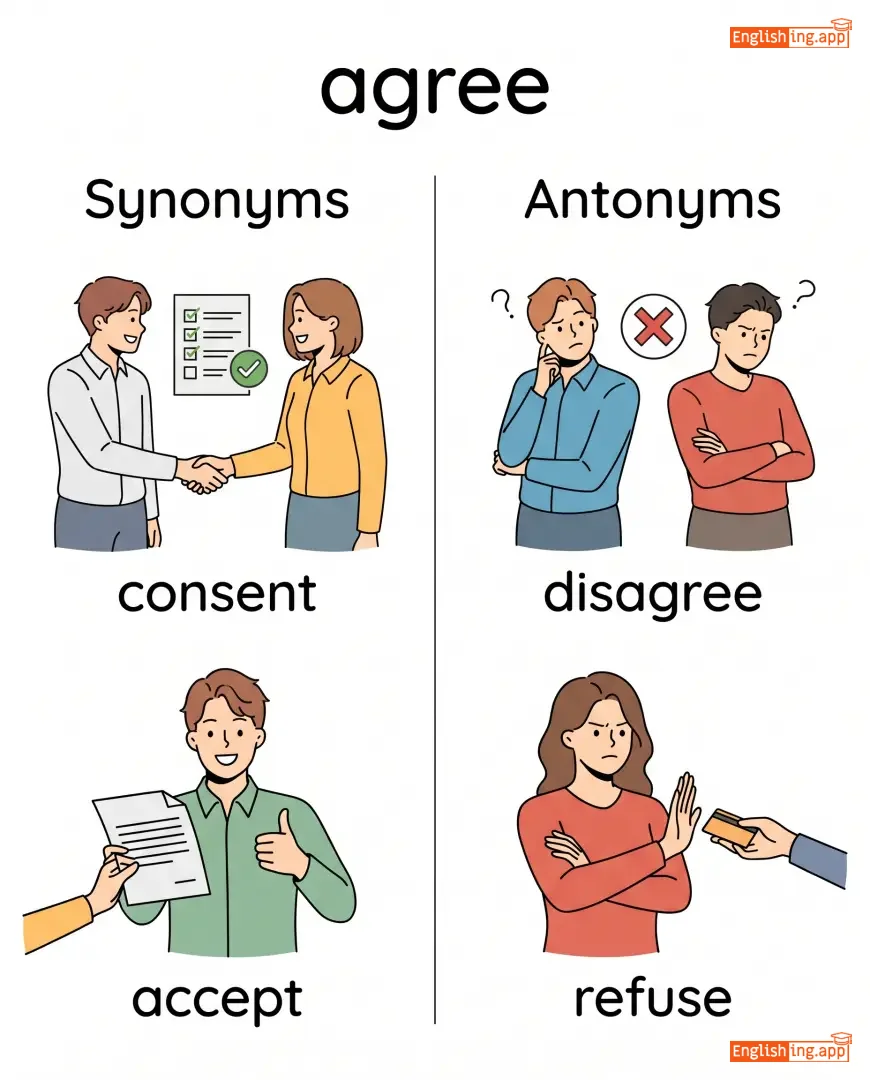
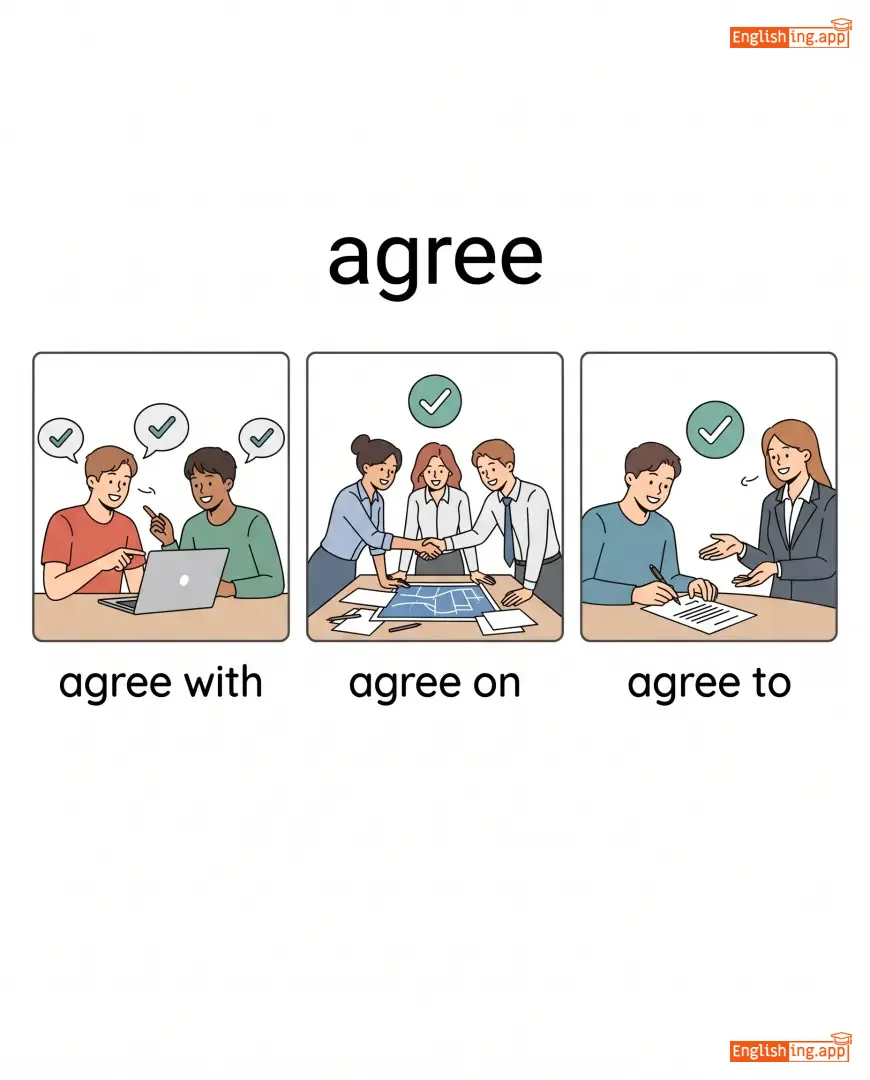
#0
👍
|
/əˈɡriː/
verb
(アグリー)
••••••
|
|
同意する
dōi suru
••••••
|
agreed
アグリード
••••••
|
agreed
アグリード
••••••
|
agrees
アグリーズ
••••••
|
agreeing
アグリーイング
••••••
|
To have the same opinion or to consent to something.
••••••
|
We all agreed on the plan.
私たちは皆、計画に同意しました。
••••••
|
私たちは皆、計画に同意しました。
Watashitachi wa mina, keikaku ni dōi shimashita.
••••••
|
agree to disagree
同意して同意しない
••••••
|
To accept different opinions without conflict.
••••••
|
同意して同意しない
Dōi shite dōi shinai
••••••
|
consent, accept, approve, concur, assent
••••••
|
disagree, refuse, oppose
••••••
|
agree with, agree on, agree to, strongly agree
••••••
|
'Agree' は同意するという意味です — みんなでうなずいて同意するときのように。
••••••
|
|
#0
➡️
|
/əˈhɛd/
adverb
(アヘッド)
••••••
|
- •••••• |
前に
mae ni
••••••
|
- •••••• | - •••••• | - •••••• | - •••••• |
in front; in advance; before someone or something in position or progress
••••••
|
She walked ahead of the group. |
彼女はグループの前に歩いていた。
Kanojo wa guruupu no mae ni aruite ita.
••••••
|
go ahead |
to proceed or continue
••••••
|
進んで
susunde
••••••
|
forward, forth, onward, in front
••••••
|
behind, backward
••••••
|
ahead of time, go ahead, plan ahead, look ahead
••••••
|
前に (ahead) は '進んで ➡️'
••••••
|
|
#0
🩹
|
/eɪd/
noun, verb
(エイド)
••••••
|
- •••••• |
援助
enjo
••••••
|
aided
エイデッド
••••••
|
aided
エイデッド
••••••
|
aids
エイデス
••••••
|
aiding
エイディング
••••••
|
help or support, typically of a practical nature
••••••
|
The volunteers provided aid to the flood victims.
ボランティアは洪水の被害者に援助を提供しました。
••••••
|
ボランティアは洪水の被害者に援助を提供しました。
Borantia wa kōzui no higaisha ni enjo o teikyō shimashita.
••••••
|
first aid
応急処置
••••••
|
emergency medical treatment given immediately
••••••
|
応急処置
ōkyū shochi
••••••
|
help, support, assistance, relief, guidance
••••••
|
hindrance, obstruction
••••••
|
foreign aid, financial aid, medical aid, aid in
••••••
|
援助はすぐに手助けすること。
••••••
|
|
#0
🎯
|
/eɪm/
verb
(エイム)
••••••
|
- •••••• |
狙う
nerau
••••••
|
aimed
エイムド
••••••
|
aimed
エイムド
••••••
|
aims
エイムズ
••••••
|
aiming
エイミング
••••••
|
to direct a weapon, object, or effort at a target; to intend or plan
••••••
|
He aimed the ball at the goal.
彼はゴールに向かってボールを狙った。
••••••
|
彼はゴールに向かってボールを狙った。
Kare wa gōru ni mukatte bōru o neratta.
••••••
|
aim high
高く狙う
••••••
|
to set ambitious goals
••••••
|
高く狙う
takaku nerau
••••••
|
target, direct, focus, aspire, intend
••••••
|
neglect, ignore
••••••
|
aim at, aim for, aim high, aim to achieve
••••••
|
Aimは🎯狙う意味、'狙う AIM'を覚えてね。
••••••
|
|
#0
🤝
|
/ˈælaɪ/
verb
(アライ)
••••••
|
- •••••• |
味方
mikata
••••••
|
allied
アライド
••••••
|
allied
アライド
••••••
|
allies
アライズ
••••••
|
allying
アライング
••••••
|
To unite or form a connection or partnership with another person, group, or nation.
••••••
|
The two countries decided to ally against their common enemy.
二国は共通の敵に対して連携することを決定した。
••••••
|
二国は共通の敵に対して連携することを決定した。
Nikoku wa kyōtsū no teki ni taishite renkei suru koto o kettei shita.
••••••
|
ally with
と一緒に連携する
••••••
|
To form a partnership or alliance with someone.
••••••
|
と一緒に連携する
to issho ni renkei suru
••••••
|
associate, unite, partner, combine, join
••••••
|
oppose, resist, separate
••••••
|
ally with, strong ally, loyal ally, ally against
••••••
|
AllyはAll + I、誰かと一緒に味方になることを意味します。
••••••
|
|
#0
✍️
|
/əˈmɛnd/
verb
••••••
|
|
- •••••• |
amended
••••••
|
amended
••••••
|
amends
••••••
|
amending
••••••
|
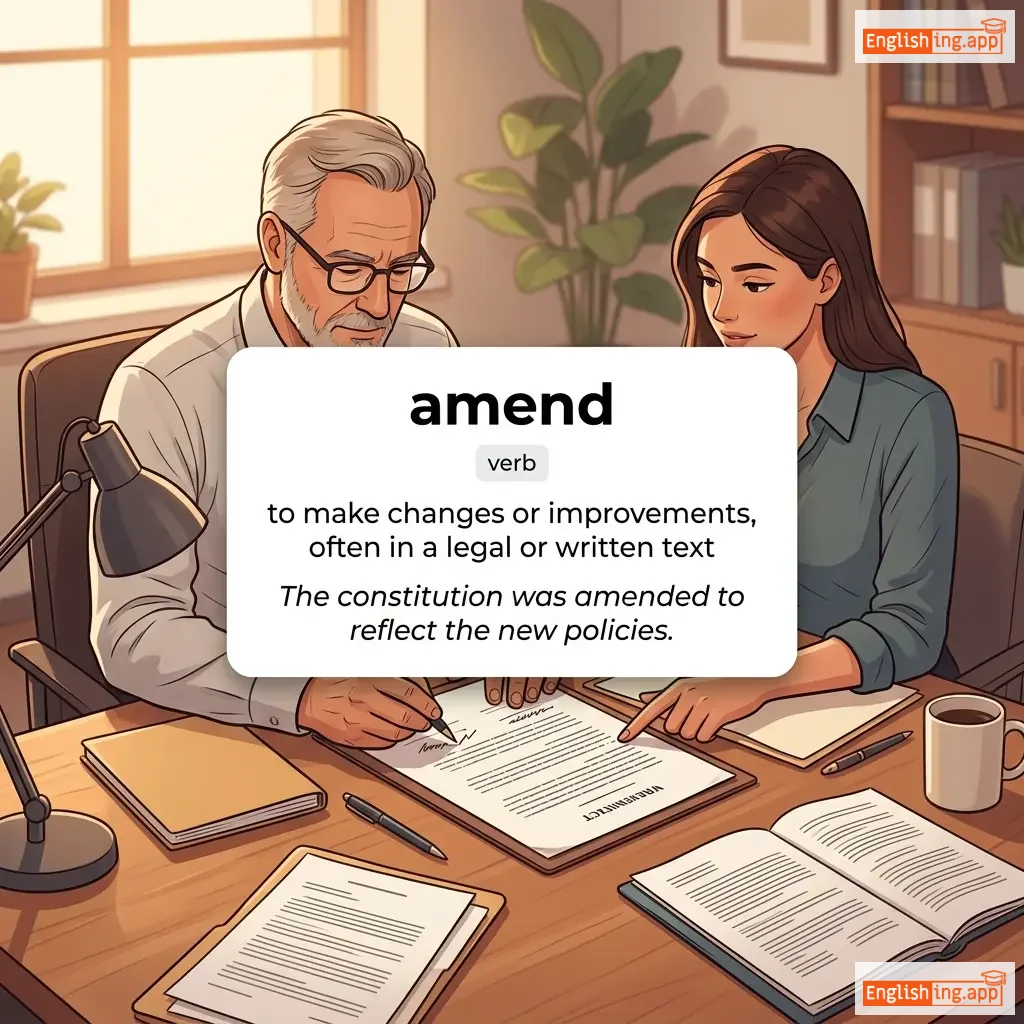
to make changes or improvements, often in a legal or written text
••••••
|
The constitution was amended to reflect the new policies. |
- •••••• |
make amends |
to do something to show you are sorry for a wrong you have done
••••••
|
- •••••• |
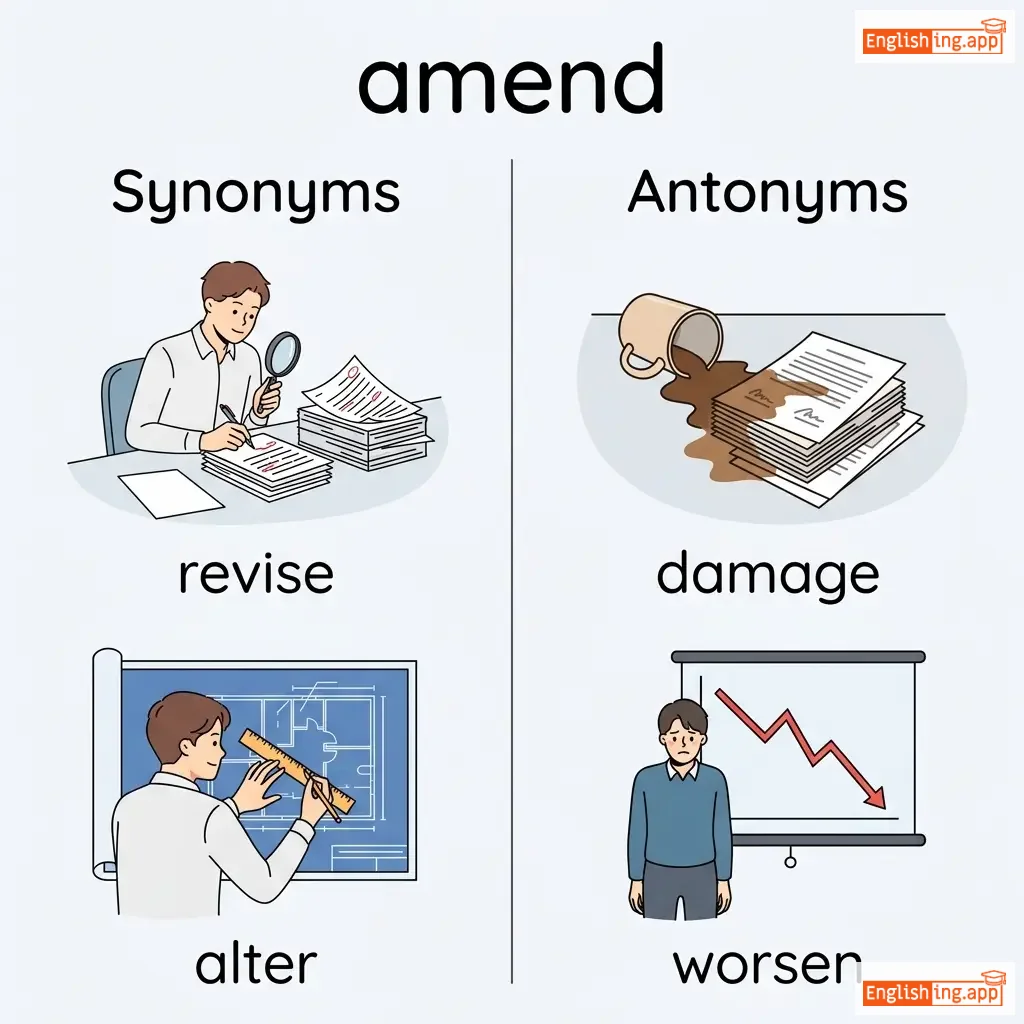
revise, alter, modify, adjust, improve
••••••
|
damage, worsen, harm
••••••
|
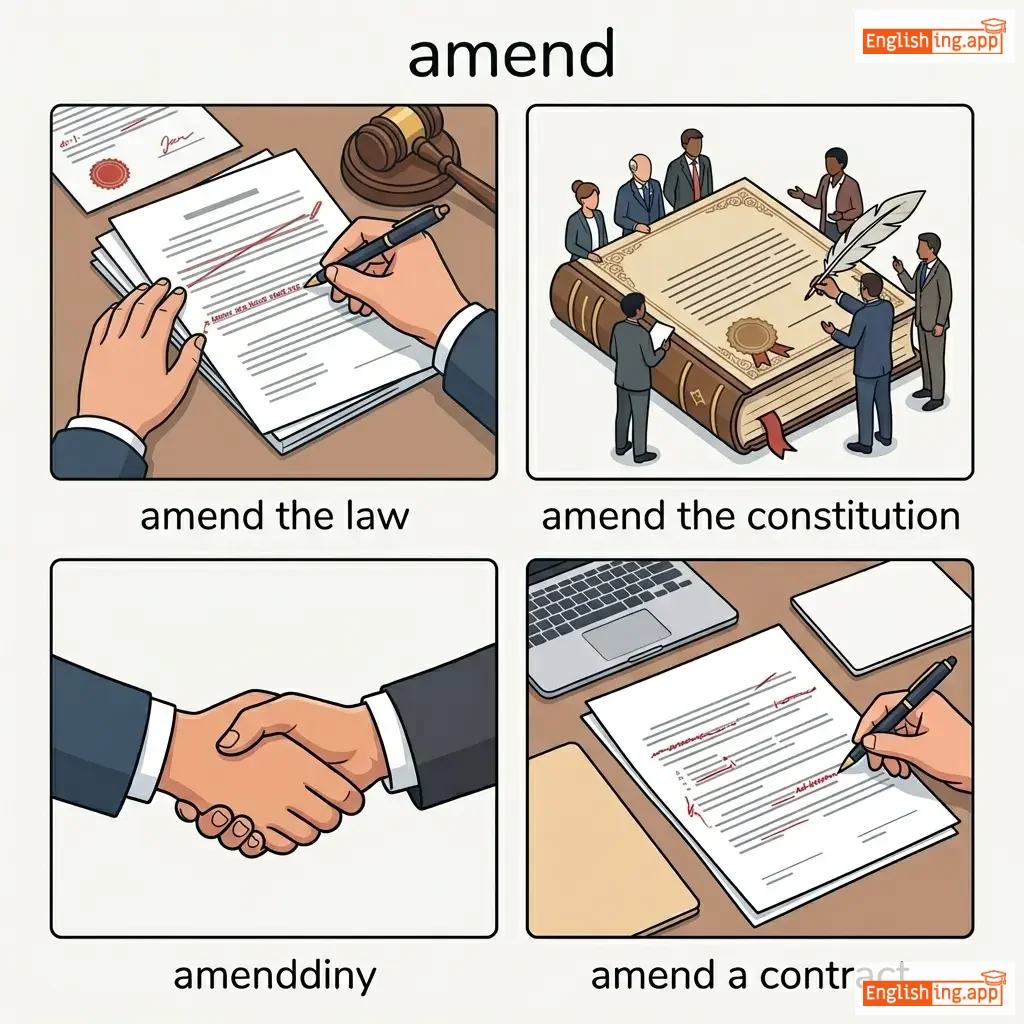
amend the law, amend the constitution, amend a contract
••••••
|
No •••••• |
Vocabulary Quiz
Test your vocabulary by matching words with their translations or meanings.
Login to take the quiz
Comments (0)
Share your thoughts and join the discussion.
Join the discussion by logging in
Login to CommentNo comments yet
Be the first to share your thoughts!