

ロボットと川のハッカソン
Robots and Rivers Hackathon
彼らは新しいボードゲームの唯一の die を回してセッションを始めました。 各参加者はセンサーをテストするために湖の水を dip しなければなりませんでした。 ロボットはトラックを走り、白い dot を追いかけていました。 MCはフェスティバルの歌を dubbing してボーカルループに入れていました。 締め切りは90分だったので、すべての作業は夕方までに due しなければなりませんでした。 各チームは2人組の duo として働いていました。 このプロジェクトは街のために新しいエネルギー era を始めることができます。 ブリーフィングは「etc を除いて、核心的なアイデアを理解してください。」で終了しました。 参加者はサイバービジョンゴーグルに人工 eye モジュールを取り付けました。 ランチではみんなで fat-free スープを楽しみました。 トレーナーは入場料として少額の fee を集めました。 ロボットがタスクを完了したとき、few 分だけが残っていました。 Jewel は言いました、「for 私たちの川のために、この技術を持ってきました。」 Jione のジャケットにある柔らかい fur の襟はみんなを驚かせました。 多様性を祝うために、彼らのチームは「gay Binary」という名前を付けました。 イベントではバンドがライブ gig を行いました。 長いセッションの後、みんなは強い gut feeling の成功を感じました。 地元の guy Rifat は実際の作業を見て、彼らを応援しました。 彼らは学校の校庭に積まれた乾いた hay の上に座り、次のステップを計画しました。 コーディネーターは微笑んで言いました、「her handwriting はクリスタルのように明瞭です。」
翻訳
過去
過去分詞
三人称単数
動名詞
意味
例文
例文の翻訳
同義語
対義語
コロケーション
ニーモニック

Swipe left or right, or use the buttons. Tap image to zoom.
例文の翻訳
単語
Robots and Rivers HackathonRobots and Rivers Hackathon - マスクトグル
|
絵文字
|
単語 | Images | 翻訳 | 過去 | 過去分詞 | 三人称単数 | 動名詞 | 意味 | 例文 | 例文の翻訳 | 表現例 | 表現例の意味 | 表現例の翻訳 | 同義語 | 対義語 | コロケーション | ニーモニック |
|---|---|---|---|---|---|---|---|---|---|---|---|---|---|---|---|---|---|
|
#0
⚰️
|
/daɪ/
verb
(ダイ)
••••••
|
|
死ぬ
shinu
••••••
|
died
ダイド
••••••
|
died
ダイド
••••••
|
dies
ダイズ
••••••
|
dying
ダイイング
••••••
|
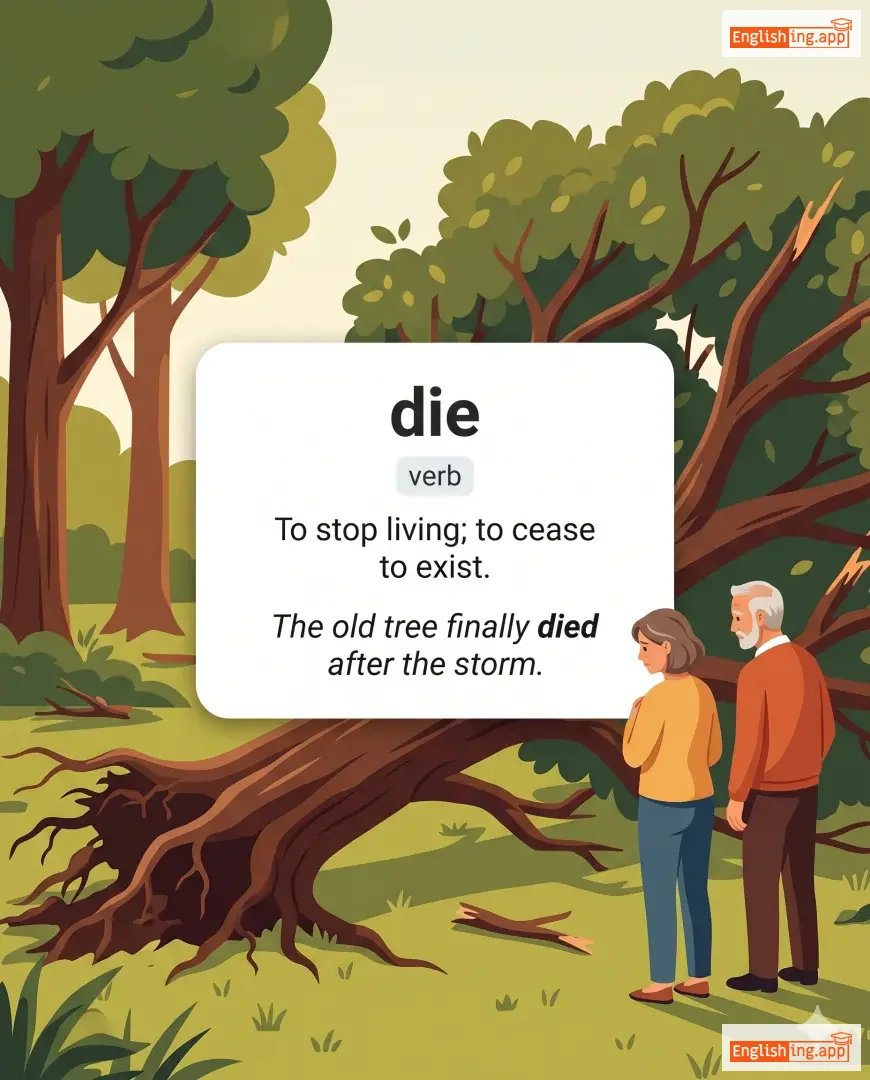
To stop living; to cease to exist.
••••••
|
The old tree finally died after the storm.
ザ・オールド・ツリー・ファイナリー・ダイド・アフター・ザ・ストーム。
••••••
|
古い木は嵐の後、最終的に死にました。
Furui ki wa arashi no ato, saishū-teki ni shinimashita.
••••••
|
die hard
ダイ・ハード
••••••
|
To disappear or change very slowly, if at all
••••••
|
非常にゆっくり変化する
Hijō ni yukkuri henka suru
••••••
|
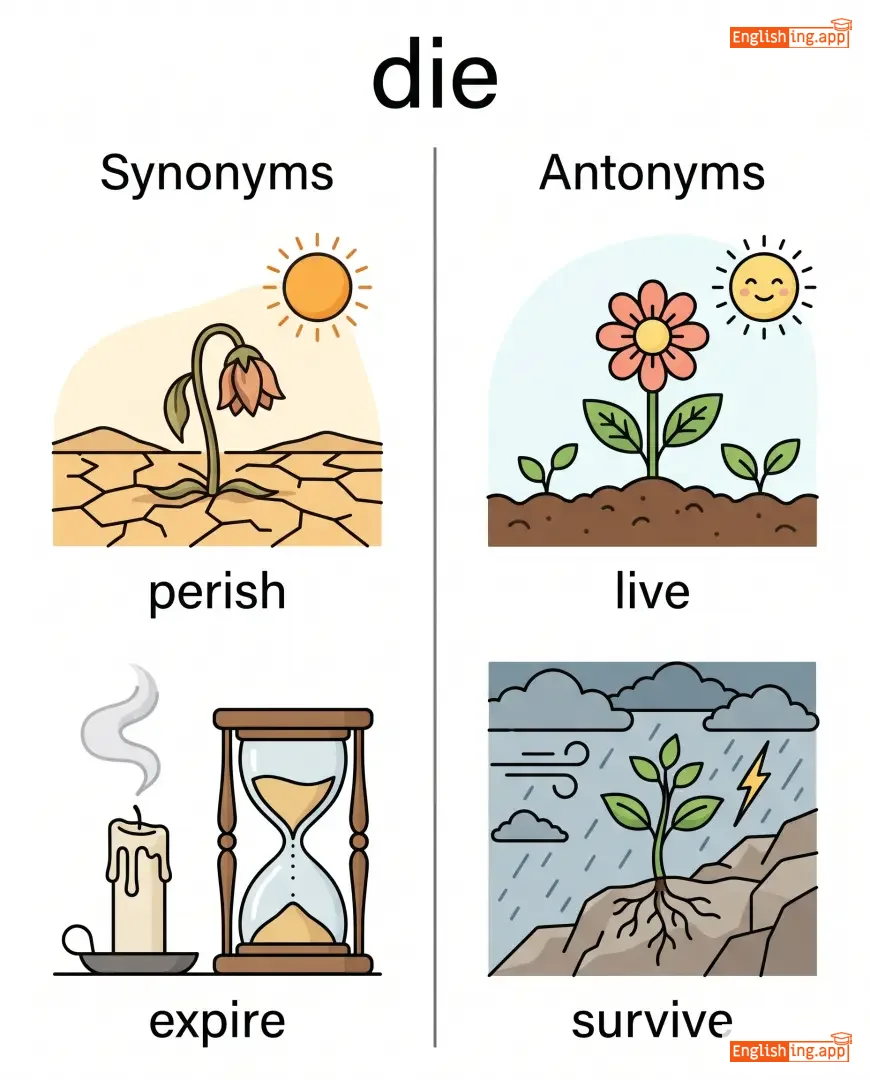
perish, expire, pass away, cease, decease
••••••
|
live, survive, exist
••••••
|
die young, die peacefully, die suddenly, die from
••••••
|
Die は死ぬという意味です、覚えておいて: 'Dieして永遠に生きる'
••••••
|
|
#0
🥣
|
/dɪp/
verb
(ディップ)
••••••
|
- •••••• |
浸す
shimesu
••••••
|
dipped
ディップド
••••••
|
dipped
ディップド
••••••
|
dips
ディップス
••••••
|
dipping
ディッピング
••••••
|
to put something quickly into a liquid and take it out again
••••••
|
She dipped her bread into the soup.
彼女はパンをスープに浸しました。
••••••
|
彼女はパンをスープに浸しました。
Kanojo wa pan o sūpu ni shimeshima-shita.
••••••
|
dip your toes in
新しいことを慎重に試す
••••••
|
to try something new carefully or slowly
••••••
|
新しいことを慎重に試す
atarashī koto o shinchō ni tamesu
••••••
|
immerse, submerge, sink, plunge, dunk
••••••
|
lift, raise, dry
••••••
|
dip in water, dip sauce, dip stick, dip temperature
••••••
|
スープにパンを浸す – これがDIP!
••••••
|
|
#0
🔴
|
/dɒt/
noun
(ドット)
••••••
|
- •••••• |
点
ten
••••••
|
- •••••• | - •••••• | - •••••• | - •••••• |
a small round mark or spot
••••••
|
She drew a red dot on the paper. |
彼女は紙に赤い点を描きました。
Kanojo wa kami ni akai ten o kakimashita.
••••••
|
connect the dots |
to understand the relationship between different facts
••••••
|
点をつなぐ
ten o tsunagu
••••••
|
spot, speck, point, mark, stain
••••••
|
blank, void
••••••
|
dot pattern, dot matrix, red dot, connect dots
••••••
|
Dot は点を意味します — Google.com の各ドメインで見かける点のように!
••••••
|
|
#0
🎬
|
/dʌb/
verb
(ダブ)
••••••
|
- •••••• |
吹き替え
fukikae
••••••
|
dubbed
ダブド
••••••
|
dubbed
ダブド
••••••
|
dubs
ダブス
••••••
|
dubbing
ダビング
••••••
|
to give a name or label to something; to add a soundtrack to a film or recording
••••••
|
The movie was dubbed into several languages for international release.
その映画は国際公開のためにいくつかの言語に吹き替えられました。
••••••
|
その映画は国際公開のためにいくつかの言語に吹き替えられました。
Sono eiga wa kokusai koukai no tame ni ikutsu ka no gengo ni fukikaeraremashita.
••••••
|
- •••••• | - •••••• | - •••••• |
name, label, dub over, voice over
••••••
|
misname, unlabel
••••••
|
dub a movie, dub in a voice, dub over a film
••••••
|
映画で声を吹き替えることを考えてみてください!
••••••
|
|
#0
📅
|
/djuː/
adjective
(dyu)
••••••
|
- •••••• |
期限 / 期日
kigen / kijitsu
••••••
|
- •••••• | - •••••• | - •••••• | - •••••• |
expected at a certain time or required by a certain date
••••••
|
The rent is due on the first of every month. |
家賃は毎月の1日に支払い期限があります。
Yachin wa maitsuki no 1-nichi ni shiharai kigen ga arimasu.
••••••
|
due date |
the final day something must be completed or paid
••••••
|
期限日
kigenbi
••••••
|
expected, scheduled, payable, owed, anticipated
••••••
|
unexpected, optional, unnecessary
••••••
|
due date, due payment, due process, due respect
••••••
|
‘Due’は‘期限’を意味します。期日までに支払うことを忘れずに!
••••••
|
|
#0
🎶
|
/ˈdjuːəʊ/
noun
(デュオ)
••••••
|
- •••••• |
デュオ
duo
••••••
|
- •••••• | - •••••• | - •••••• | - •••••• |
a pair of people or things, especially in music or entertainment
••••••
|
The musical duo performed their latest hit at the concert. |
その音楽デュオはコンサートで最新のヒットを演奏しました。
Sono ongaku duo wa konsāto de saishin no hitto o ensō shimashita.
••••••
|
- •••••• | - •••••• | - •••••• |
pair, couple, team, twosome
••••••
|
solo, individual
••••••
|
musical duo, comedy duo, famous duo
••••••
|
A duo is two people working together, just like two instruments in harmony!
••••••
|
|
#0
⏳
|
/ˈɪərə/
noun
(エラ)
••••••
|
- •••••• |
時代
jidai
••••••
|
- •••••• | - •••••• | - •••••• | - •••••• |
a long and distinct period of history with a particular feature or characteristic
••••••
|
The invention of the internet marked a new era in communication. |
インターネットの発明は、通信における新しい時代の幕開けを意味しました。
Intānetto no hatsumei wa, tsūshin ni okeru atarashī jidai no makuake o imi shimashita.
••••••
|
end of an era |
the close of a significant period in history or someone's life
••••••
|
時代の終わり
jidai no owari
••••••
|
age, epoch, period, time, generation
••••••
|
moment, instant, short-term
••••••
|
modern era, digital era, new era, Victorian era
••••••
|
時代はデジタル時代のように、特別な期間を表す言葉です。
••••••
|
|
#0
➕
|
/ɛtˈsɛtərə/
abbreviation
(エトセトラ)
••••••
|
- •••••• |
など
nado
••••••
|
- •••••• | - •••••• | - •••••• | - •••••• |
Used to indicate additional, similar items in a list that are not mentioned.
••••••
|
The shop sells fruits, vegetables, dairy, etc. |
店では果物、野菜、乳製品などが販売されています。
Mise de wa kudamono, yasai, nyūseihin nado ga hanbai sareteimasu.
••••••
|
- •••••• | - •••••• | - •••••• |
and so on, and the rest, and others
••••••
|
none
••••••
|
etc., and so on, etcetera list
••••••
|
etc = など ➕ = 他のものもある
••••••
|
|
#0
👁️
|
/aɪ/
noun
(アイ)
••••••
|
- •••••• |
目
me
••••••
|
- •••••• | - •••••• | - •••••• | - •••••• |
the organ in the head through which people and animals see
••••••
|
She closed her eyes and went to sleep. |
彼女は目を閉じて、寝ました。
Kanojo wa me o tojite, nemashita.
••••••
|
keep an eye on |
to watch carefully or look after
••••••
|
目を光らせる
me o hikaraseru
••••••
|
vision, sight, gaze, view, look
••••••
|
blindness, neglect
••••••
|
eye contact, eye color, keep an eye, eye for detail
••••••
|
Eyeは'目'を意味し、'Keep an eye'は'目を光らせる'という意味です。
••••••
|
|
#0
🍔
|
/fæt/
adjective, noun
(ファット)
••••••
|
- •••••• |
太っている
futotteiru
••••••
|
- •••••• | - •••••• | - •••••• | - •••••• |
having a lot of excess flesh; a natural oily substance in animal bodies
••••••
|
Eating too much fast food can make you fat. |
ファストフードを食べ過ぎると太ることがあります。
Fasuto fūdo o tabesugiru to futoru koto ga arimasu.
••••••
|
fat chance |
a sarcastic way of saying that something is very unlikely
••••••
|
太ったチャンス
futotta chansu
••••••
|
overweight, plump, obese, chubby
••••••
|
thin, slim, lean
••••••
|
fat person, fat content, fat belly, fat salary
••••••
|
Fat = 太っている, もっと食べて太りましょう!
••••••
|
|
#0
💵
|
/fiː/
noun
(フィ)
••••••
|
- •••••• |
料金
ryoukin
••••••
|
- •••••• | - •••••• | - •••••• | - •••••• |
A payment made for a service or privilege.
••••••
|
The lawyer charged a high fee for his services. |
弁護士は彼のサービスに高い料金を請求した。
Bengoshi wa kare no sābisu ni takai ryōkin o seikyū shita.
••••••
|
service fee |
An amount charged for providing a service
••••••
|
サービス料
Sābisu ryō
••••••
|
charge, cost, payment, price
••••••
|
free, gift
••••••
|
pay a fee, membership fee, tuition fee, service fee
••••••
|
Feeは料金 - レストランではよくサービス料を払います
••••••
|
|
#0
✋
|
/fjuː/
adjective
(フュー)
••••••
|
- •••••• |
少数
shousuu
••••••
|
- •••••• | - •••••• | - •••••• | - •••••• |
A small number of; not many.
••••••
|
Only a few students attended the class.
ほんの少しの学生がクラスに出席しました。
••••••
|
ほんの少しの学生がクラスに出席しました。
Honno sukoshi no gakusei ga kurasu ni shusseki shimashita.
••••••
|
a lucky few
幸運な少数
••••••
|
A small number of fortunate people.
••••••
|
幸運な少数
kouun na shousuu
••••••
|
some, several, a handful, a small number
••••••
|
many, numerous, plenty
••••••
|
a few days, very few, few people, quite a few
••••••
|
Fewは少ない、'幸運な少数' という意味で、ほんの少しのラッキーな人たち。
••••••
|
|
#0
🎁
|
/fɔːr/
preposition
(フォー)
••••••
|
- •••••• |
のために
no tame ni
••••••
|
- •••••• | - •••••• | - •••••• | - •••••• |
used to indicate purpose, destination, or recipient
••••••
|
This gift is for you. |
このギフトはあなたのためです。
Kono gifuto wa anata no tame desu.
••••••
|
for good |
permanently
••••••
|
永遠に
eien ni
••••••
|
on behalf of, in favor of, because of, intended for
••••••
|
against, anti
••••••
|
for example, for instance, for sale, for life
••••••
|
For は 'のために' を意味し、'Gift for you' は 'あなたのためのギフト' を意味します。
••••••
|
|
#0
🐾
|
/fɜːr/
noun
(ファー)
••••••
|
- •••••• |
毛皮
kegawa
••••••
|
- •••••• | - •••••• | - •••••• | - •••••• |
the thick hair covering the skin of certain animals
••••••
|
The cat’s fur is soft and shiny. |
猫の毛皮は柔らかくて光沢があります。
Neko no kegawa wa yawarakakute, koutaku ga arimasu.
••••••
|
make someone's fur fly |
to cause anger or conflict
••••••
|
誰かを怒らせる
Dareka o okoraseru
••••••
|
hair, coat, pelt, fleece, hide
••••••
|
skin, baldness
••••••
|
fur coat, animal fur, soft fur, fur trade
••••••
|
毛皮とは、猫のような動物の柔らかな毛のことです。
••••••
|
|
#0
🏳️🌈
|
/ɡeɪ/
adjective
(ゲイ)
••••••
|
- •••••• |
ゲイ
gei
••••••
|
- •••••• | - •••••• | - •••••• | - •••••• |
sexually attracted to people of the same sex; also used to mean cheerful or lively
••••••
|
He came out as gay during college. |
彼は大学でゲイであることをカミングアウトした。
Kare wa daigaku de gei de aru koto o kamingu auto shita.
••••••
|
- •••••• | - •••••• | - •••••• |
homosexual, queer, cheerful, lively
••••••
|
straight, sad
••••••
|
gay rights, gay community, gay marriage, openly gay
••••••
|
ゲイは日本語でもそのまま、レインボーフラッグ (🏳️🌈) を思い出して
••••••
|
|
#0
🎤
|
/ɡɪɡ/
noun
(ギグ)
••••••
|
- •••••• |
ミュージシャン、バンド、またはエンターテイナーによるライブパフォーマンス;または一時的な仕事
gig
••••••
|
- •••••• | - •••••• | - •••••• | - •••••• |
A live performance by a musician, band, or entertainer; also a temporary job.
••••••
|
The band has a gig at the local club tonight. |
今晩、バンドは地元のクラブでギグを行います。
Konban, bando wa jimoto no kurabu de gigu o okonimasu.
••••••
|
one-off gig |
a single temporary job or performance
••••••
|
単発のギグ
tanpatsu no gigu
••••••
|
performance, show, job, act, engagement
••••••
|
unemployment, absence
••••••
|
play a gig, land a gig, weekend gig, local gig
••••••
|
Gig はライブパフォーマンスや一時的な仕事を意味します。
••••••
|
|
#0
🫃
|
/ɡʌt/
noun/verb
(ɡʌt)
••••••
|
- •••••• |
胃 / 勇気
i / yūki
••••••
|
gutted
ɡʌtɪd
••••••
|
gutted
ɡʌtɪd
••••••
|
guts
ɡʌts
••••••
|
gutting
ɡʌtɪŋ
••••••
|
The stomach or belly; also used for courage, instinct, or to remove the inside of something.
••••••
|
He had the guts to stand up for his beliefs.
彼は自分の信念を守る勇気を持っていました。
••••••
|
彼は自分の信念を守る勇気を持っていました。
Kare wa jibun no shinnen o mamoru yūki o motte imashita.
••••••
|
spill your guts
自分の内臓を吐き出す
••••••
|
To reveal personal secrets or feelings.
••••••
|
秘密を漏らす
himitsu o morasu
••••••
|
stomach, belly, courage, instinct, bravery
••••••
|
cowardice, fear
••••••
|
gut feeling, gut reaction, strong guts, gut instinct
••••••
|
Gutは胃と勇気を意味します — 勇気があればgutsもある!
••••••
|
|
#0
👨
|
/ɡaɪ/
noun
(ガイ)
••••••
|
- •••••• |
男
otoko
••••••
|
- •••••• | - •••••• | - •••••• | - •••••• |
an informal term for a man; sometimes used to refer to a person in general
••••••
|
That guy over there is my best friend. |
あの男は私の親友です。
Ano otoko wa watashi no shinyū desu.
••••••
|
good guy |
a person who is kind and decent
••••••
|
良い男
yoi otoko
••••••
|
man, fellow, dude, chap, lad
••••••
|
woman, lady
••••••
|
that guy, some guy, young guy, nice guy, guy next door
••••••
|
Guy は男を意味します — 映画には常に良い男が登場します。
••••••
|
|
#0
🐄
|
/heɪ/
noun
(ヘイ)
••••••
|
- •••••• |
干し草
hoshigusa
••••••
|
- •••••• | - •••••• | - •••••• | - •••••• |
grass that has been cut, dried, and stored for use as animal feed
••••••
|
The cows were eating hay in the barn. |
牛たちは納屋で干し草を食べていました。
Ushitachi wa noya de hoshigusa o tabete imashita.
••••••
|
make hay while the sun shines |
take advantage of a good opportunity while it lasts
••••••
|
日が照っている間に干し草を作る
Hi ga tette iru aida ni hoshigusa o tsukuru
••••••
|
fodder, straw, dried grass, silage, forage
••••••
|
grain, seed
••••••
|
bale of hay, hay field, haystack, dry hay
••••••
|
HAYは干し草を意味します 🐄 — 'ヘイ、牛!'と言うと、干し草を食べに来ます!
••••••
|
|
#0
👩
|
/hɜːr/
pronoun
(ハー)
••••••
|
- •••••• |
彼女
kanojo
••••••
|
- •••••• | - •••••• | - •••••• | - •••••• |
used to refer to a female person or animal already mentioned or easily identified
••••••
|
I saw her at the park yesterday. |
昨日公園で彼女を見ました。
Kinō kōen de kanojo o mimashita.
••••••
|
give her a hand |
to help her
••••••
|
彼女に手を貸す
kanojo ni te o kasu
••••••
|
herself, that woman, the girl
••••••
|
him, his
••••••
|
her book, her house, with her, for her
••••••
|
Her は '彼女' を意味します(女性に関して)- 覚えておいてください:'Her house' は '彼女の家' を意味します
••••••
|
Vocabulary Quiz
Test your vocabulary by matching words with their translations or meanings.
Login to take the quiz
Comments (0)
Share your thoughts and join the discussion.
Join the discussion by logging in
Login to CommentNo comments yet
Be the first to share your thoughts!