

進歩を評価した経済学者
The Economist Who Evaluated Progress
リザは開発研究を専門とする economic アナリストでした。彼女の役割は政府のプログラムを evaluate することでした。市民が eligible かどうかを調査しました。労働市場の dynamics は複雑でした。多くの人がまともな employer を見つけるのに苦労しました。リザのアプローチは entirely データ主導でした。彼女は詳細なレポートを封筒入りの envelopes で省に送っていました。失業率が上昇し続けると状況は escalate する可能性がありました。リザは雇用創出の可能性を estimate しました。危機の際には、政府は洪水地域から産業を evacuate しなければなりませんでした。経済的ストレスは精神的健康に影響する external 要因でした。政策の結果は時に fabulous、時に失望でした。概念は一般の人々に familiar である必要がありました。政治家にはイデオロギーに沿った favorite 政策がありました。Feminist 経済学者は平等な機会を主張しました。若者は仕事を得るために fighting することに疲れていました。政策発表は fireworks のようで、華やかですが短命でした。市民は財政に心配して foreheads に手を当てました。Formerly 繁栄していた産業は衰退しました。卒業生の fraction しか良質な仕事を見つけられませんでした。経済の崩壊は社会的 fragments を残しました。問題は frequent でした—失業、インフレ、貧困。Freshman 経済学者が革新的な解決策を提案しました。リザは経済的課題を新たな frontier と見なしました。彼女の function は政策と現実のギャップを橋渡しすることでした。経済で gambling することは危険です。上昇する gasoline 価格はすべての人に影響しました。開発は持続可能な雇用を generate するべきです。一部の人々は雇用危機を機会の genocide に例えました。成功例は glorious ですが、稀です。政策立案者はより多くの goodness と思いやりを示す必要があります。Governor は新しい経済パッケージを発表しました。プレゼンテーションの Graphics は明確な不平等を示しました。リザは貢献の機会に grateful でした。彼女の仕事は、一般市民に利益をもたらすより良い経済政策の形成に役立ちました。
翻訳
過去
過去分詞
三人称単数
動名詞
意味
例文
例文の翻訳
同義語
対義語
コロケーション
ニーモニック
Swipe left or right, or use the buttons. Tap image to zoom.
例文の翻訳
単語
The Economist Who Evaluated ProgressThe Economist Who Evaluated Progress - マスクトグル
|
絵文字
|
単語 | Images | 翻訳 | 過去 | 過去分詞 | 三人称単数 | 動名詞 | 意味 | 例文 | 例文の翻訳 | 表現例 | 表現例の意味 | 表現例の翻訳 | 同義語 | 対義語 | コロケーション | ニーモニック |
|---|---|---|---|---|---|---|---|---|---|---|---|---|---|---|---|---|---|
|
#0
💰
|
/ˌiːkəˈnɒmɪk/
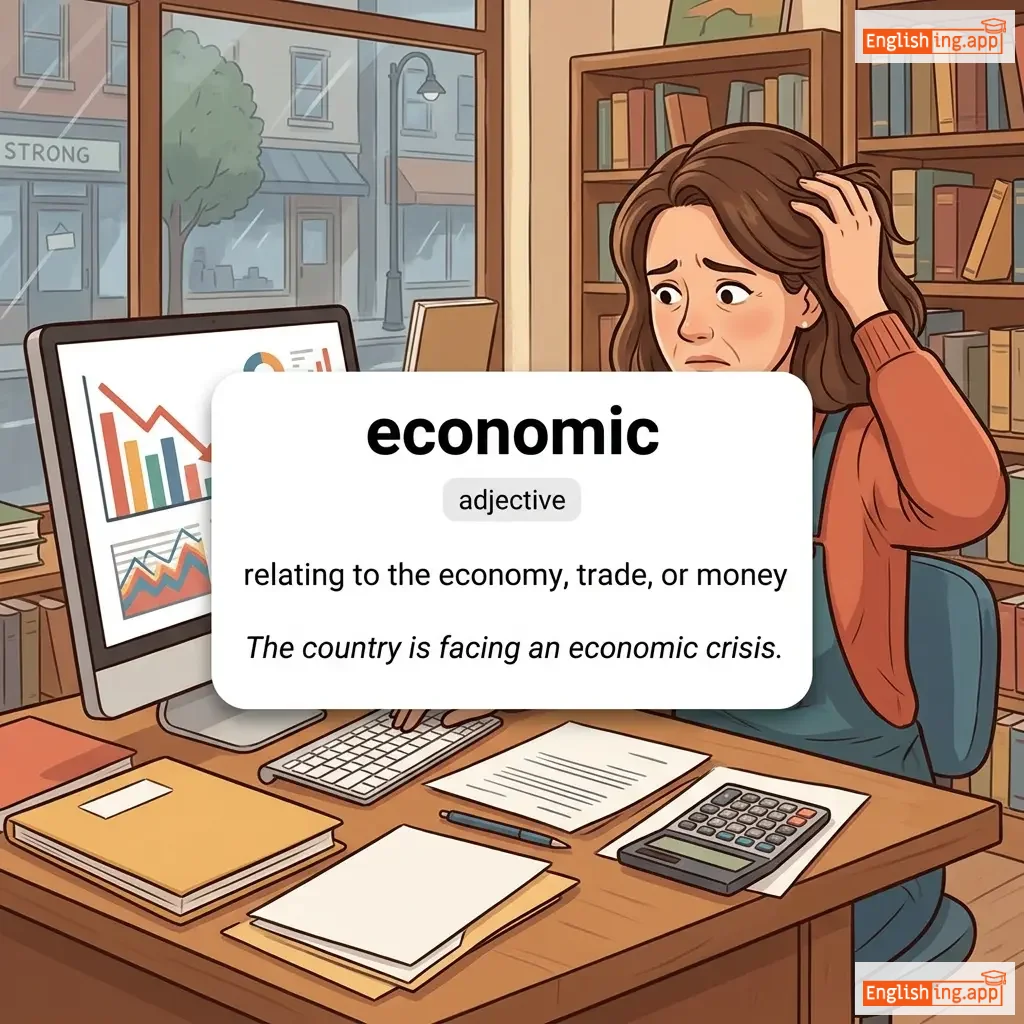
adjective
(エコノミック)
••••••
|
|
経済的
keizaiteki
••••••
|
- •••••• | - •••••• | - •••••• | - •••••• |
relating to the economy, trade, or money
••••••
|
The country is facing an economic crisis. |
その国は経済危機に直面しています。
Sono kuni wa keizai kiki ni chokumen shiteimasu.
••••••
|
economic growth |
increase in a country's production and wealth
••••••
|
経済成長
keizai seichou
••••••
|
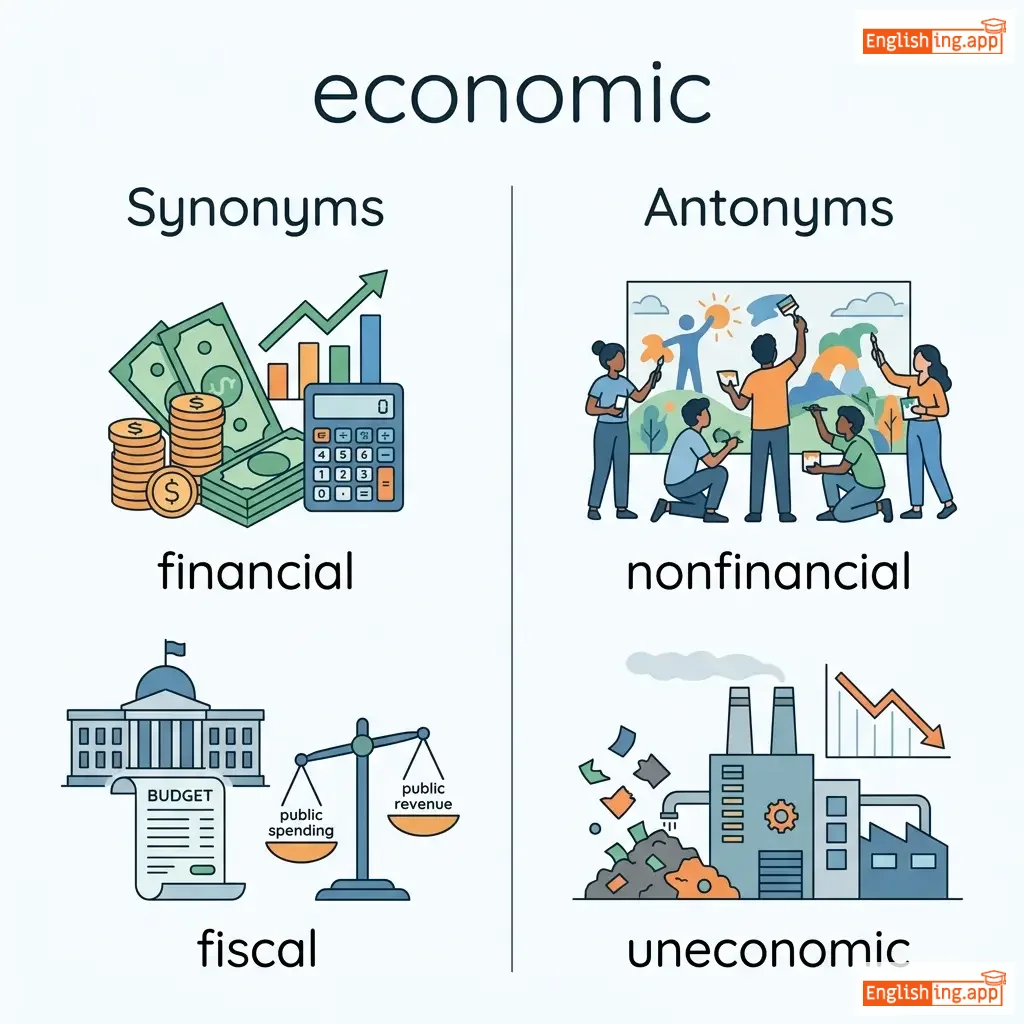
financial, fiscal, commercial, monetary
••••••
|
nonfinancial, uneconomic
••••••
|
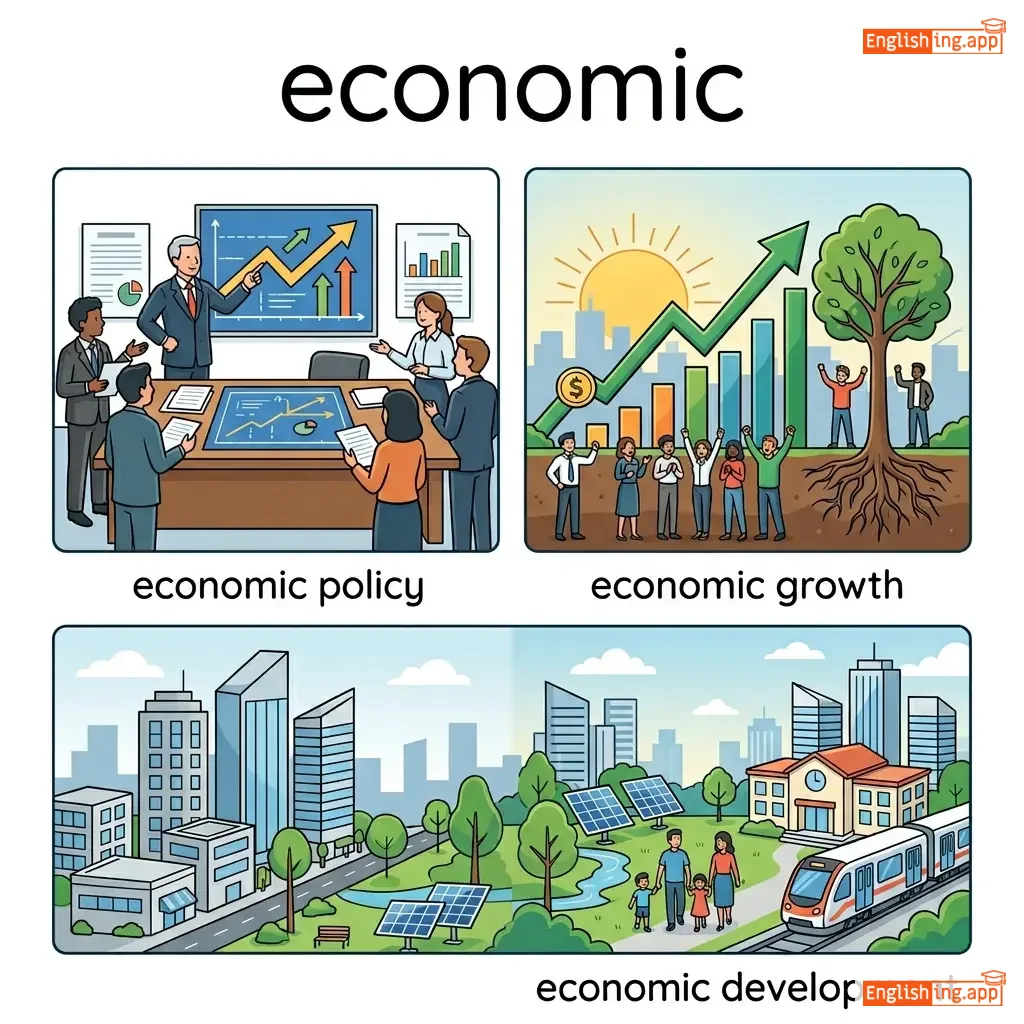
economic policy, economic growth, economic development, economic crisis
••••••
|
Economic = 経済的 💰, '経' は経済、'済' は支援の成長。
••••••
|
|
#0
✅
|
/ˈɛlɪdʒəbl/
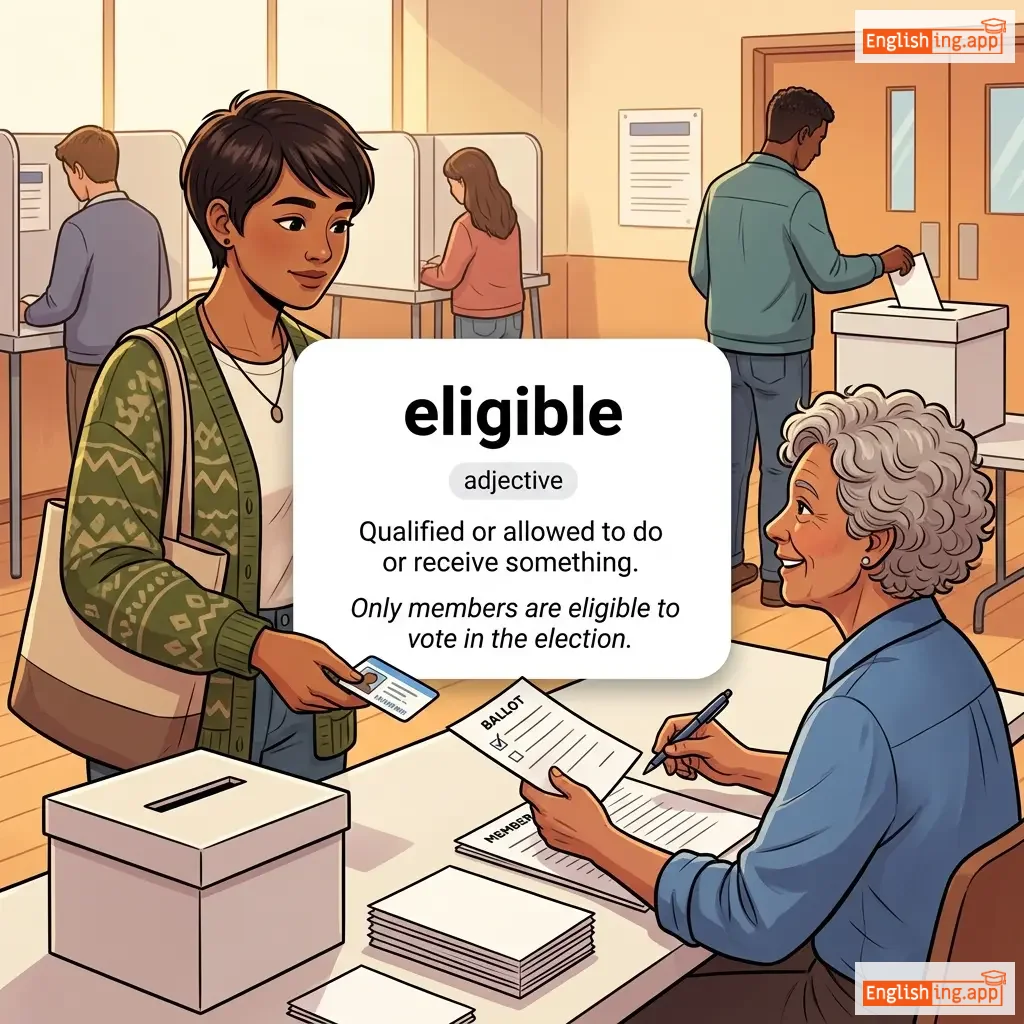
adjective
(エリジブル)
••••••
|
|
適格な
tekikaku na
••••••
|
- •••••• | - •••••• | - •••••• | - •••••• |
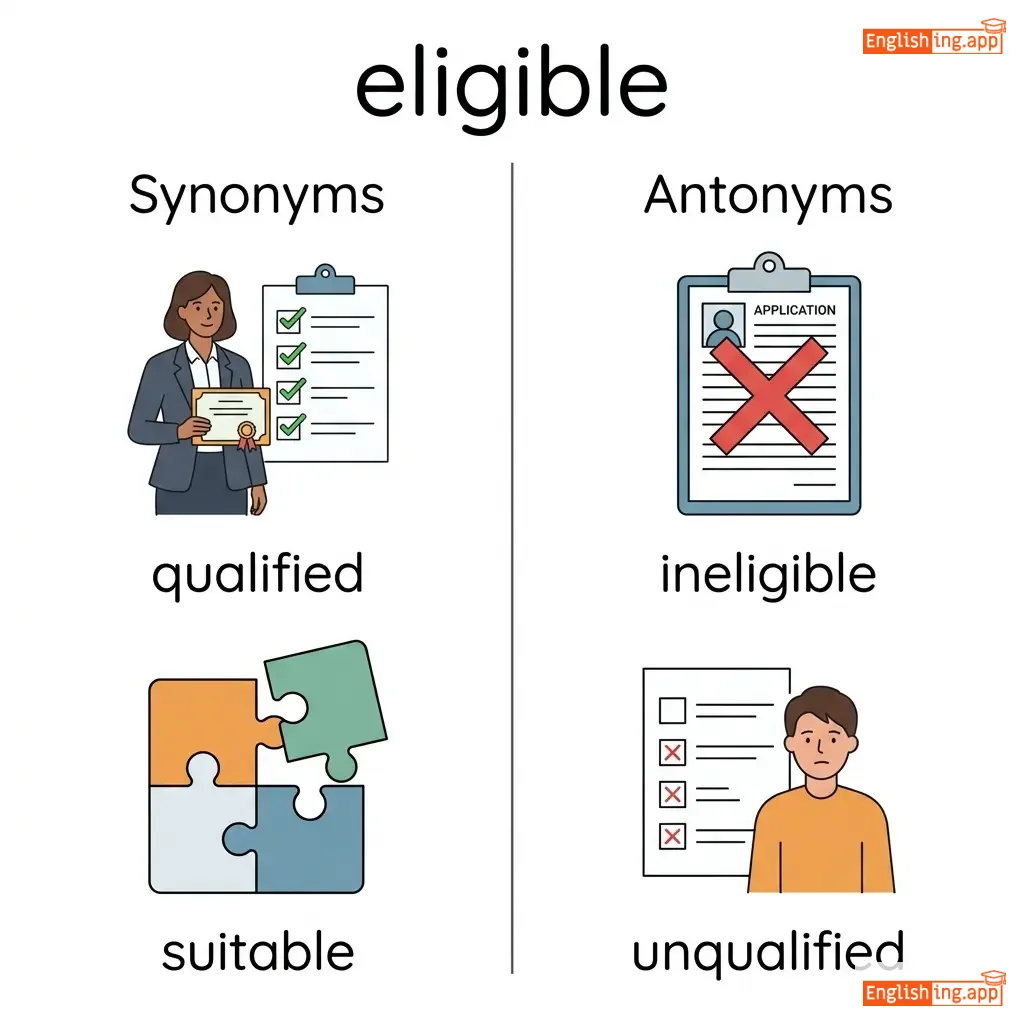
Qualified or allowed to do or receive something.
••••••
|
Only members are eligible to vote in the election. |
選挙で投票する資格があるのは会員のみです。
Senkyo de tōhyō suru shikaku ga aru no wa kaiin nomi desu.
••••••
|
eligible bachelor |
a man considered suitable for marriage
••••••
|
適格な独身男性
tekikaku na dokushin dansei
••••••
|
qualified, suitable, entitled, acceptable
••••••
|
ineligible, unqualified, unsuitable
••••••
|
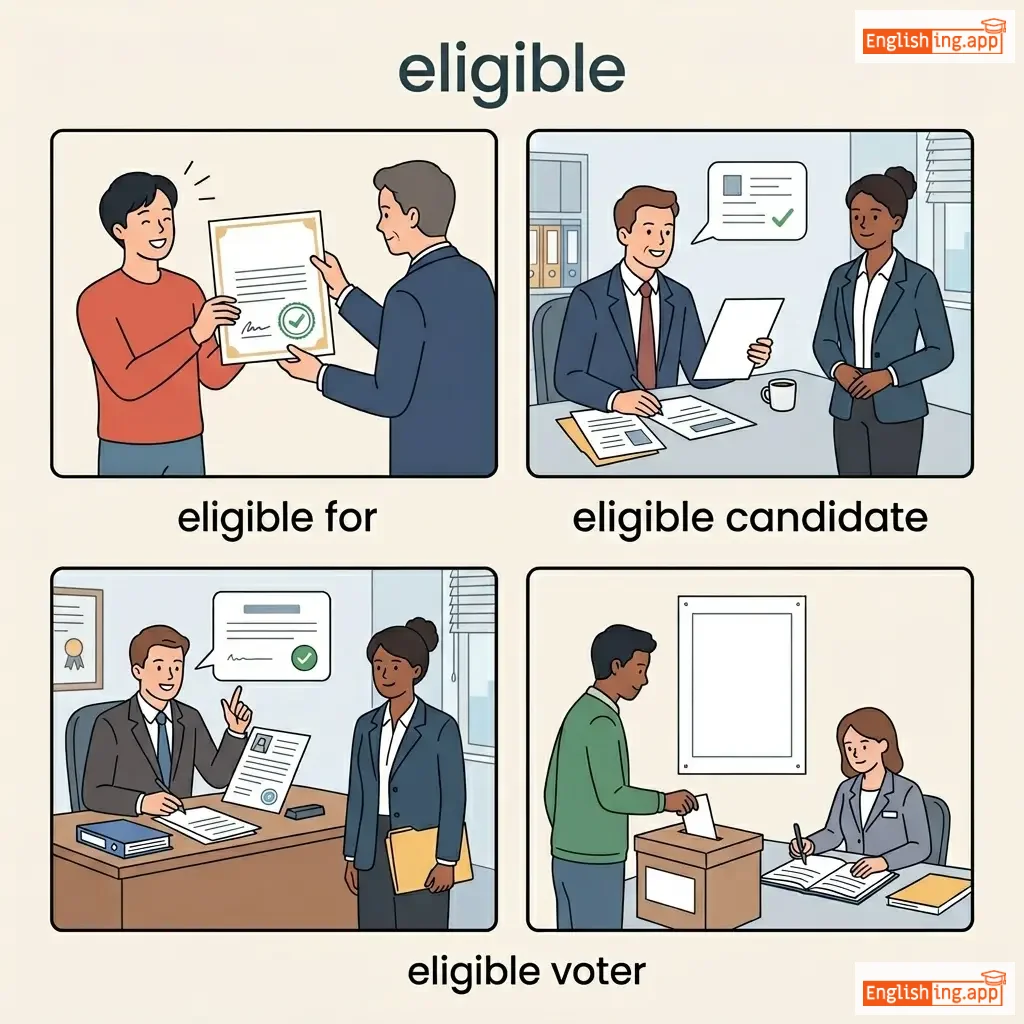
eligible for, eligible candidate, eligible voter, eligible participant
••••••
|
Eligibleは、試験に合格すれば、適格になることを意味します。
••••••
|
|
#0
👔
|
/ɪmˈplɔɪər/
noun
(エンプロイヤー)
••••••
|
- •••••• |
雇用者
koyōsha
••••••
|
- •••••• | - •••••• | - •••••• | - •••••• |
A person or organization that hires and pays people to work.
••••••
|
The employer promised better benefits to attract skilled workers. |
雇用者は熟練した労働者を引き付けるために、より良い福利厚生を約束しました。
Koyōsha wa jukuren shita rōdōsha o hikitsukeru tame ni, yori yoi fukuri kōsei o yakusoku shimashita.
••••••
|
good employer |
An employer who treats employees fairly and provides good conditions.
••••••
|
良い雇用者
Yoi koyōsha
••••••
|
boss, manager, proprietor, recruiter, company
••••••
|
employee, worker
••••••
|
large employer, potential employer, current employer, future employer
••••••
|
Employerは雇用者、つまり雇う人です。
••••••
|
|
#0
🔄
|
/ɪnˈtaɪərli/
adverb
(エンタアーリー)
••••••
|
- •••••• |
完全に
kanzen ni
••••••
|
- •••••• | - •••••• | - •••••• | - •••••• |
Completely or wholly.
••••••
|
She is entirely responsible for the project. |
彼女はそのプロジェクトに完全に責任があります。
Kanojo wa sono purojekuto ni kanzen ni sekinin ga arimasu.
••••••
|
entirely up to |
Completely dependent on someone or something
••••••
|
完全に依存
kanzen ni izon
••••••
|
completely, fully, wholly, absolutely
••••••
|
partly, partially, incompletely
••••••
|
entirely responsible, entirely new, entirely different, not entirely
••••••
|
完全には全く意味 — '完全'が'完全に'にあることを覚えて!
••••••
|
|
#0
✉️
|
/ˈɛnvəloʊp/
noun
(エンベロープ)
••••••
|
- •••••• |
封筒
fūtō
••••••
|
- •••••• | - •••••• | - •••••• | - •••••• |
a flat paper container used to enclose a letter or document
••••••
|
She sealed the letter in an envelope and posted it. |
彼女は手紙を封筒に入れて、郵送しました。
Kanojo wa tegami o fūtō ni irete, yūsō shimashita.
••••••
|
push the envelope |
to go beyond normal limits; to innovate or take risks
••••••
|
限界を超える
genkai o koeru
••••••
|
wrapper, cover, packet, casing, container
••••••
|
uncovering, exposure
••••••
|
seal an envelope, open an envelope, address an envelope, brown envelope
••••••
|
Envelope は封筒です 📬 — 手紙を‘封筒に入れて’送ることを覚えてください。
••••••
|
|
#0
📈
|
/ˈɛskəleɪt/
verb
(エスカレート)
••••••
|
|
エスカレート
esukarēto
••••••
|
escalated
エスカレーテッド
••••••
|
escalated
エスカレーテッド
••••••
|
escalates
エスカレーツ
••••••
|
escalating
エスカレーティング
••••••
|
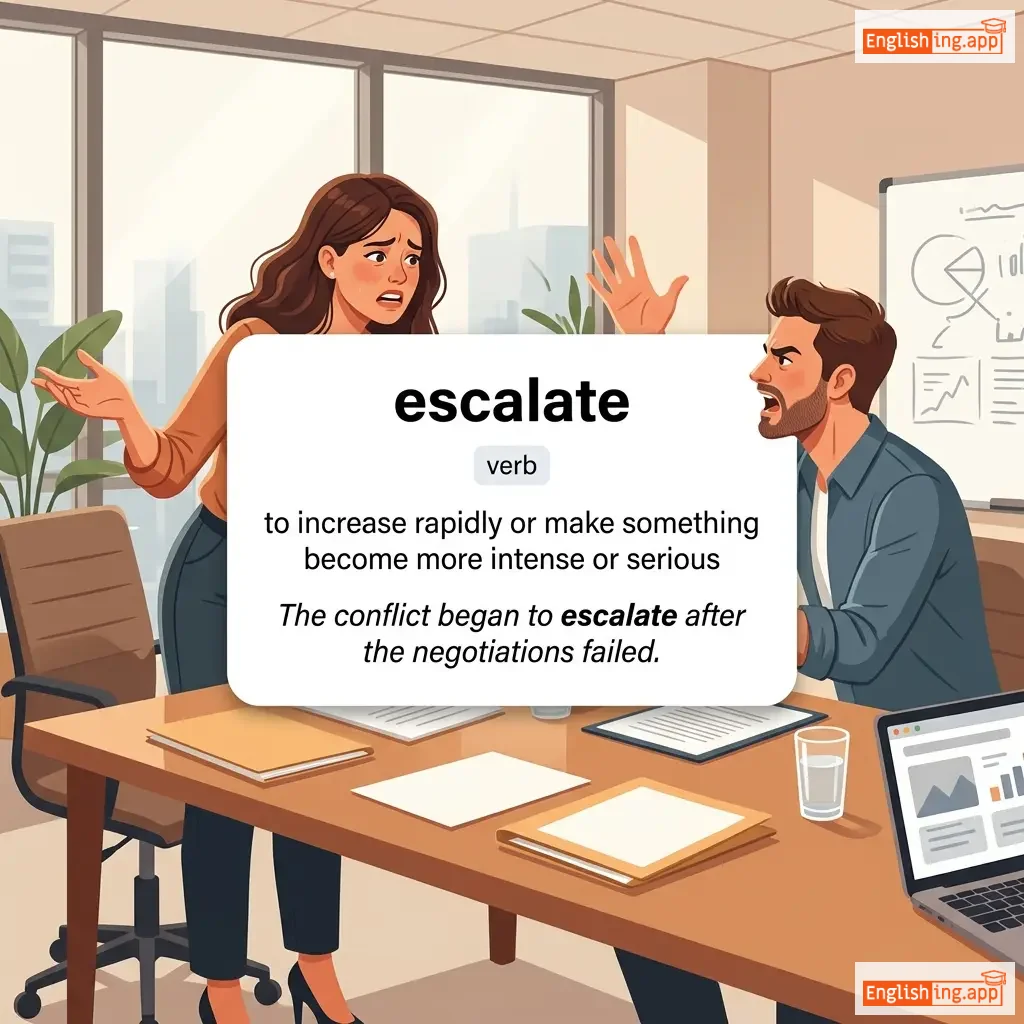
to increase rapidly or make something become more intense or serious
••••••
|
The conflict began to escalate after the negotiations failed.
交渉が失敗した後、紛争はエスカレートし始めた。
••••••
|
交渉が失敗した後、紛争はエスカレートし始めた。
Kōshō ga shippai shita ato, funsō wa esukarēto shihajimeta.
••••••
|
escalate the situation
状況をエスカレートさせる
••••••
|
to make a problem or conflict more serious
••••••
|
状況をエスカレートさせる
jōkyō o esukarēto saseru
••••••
|
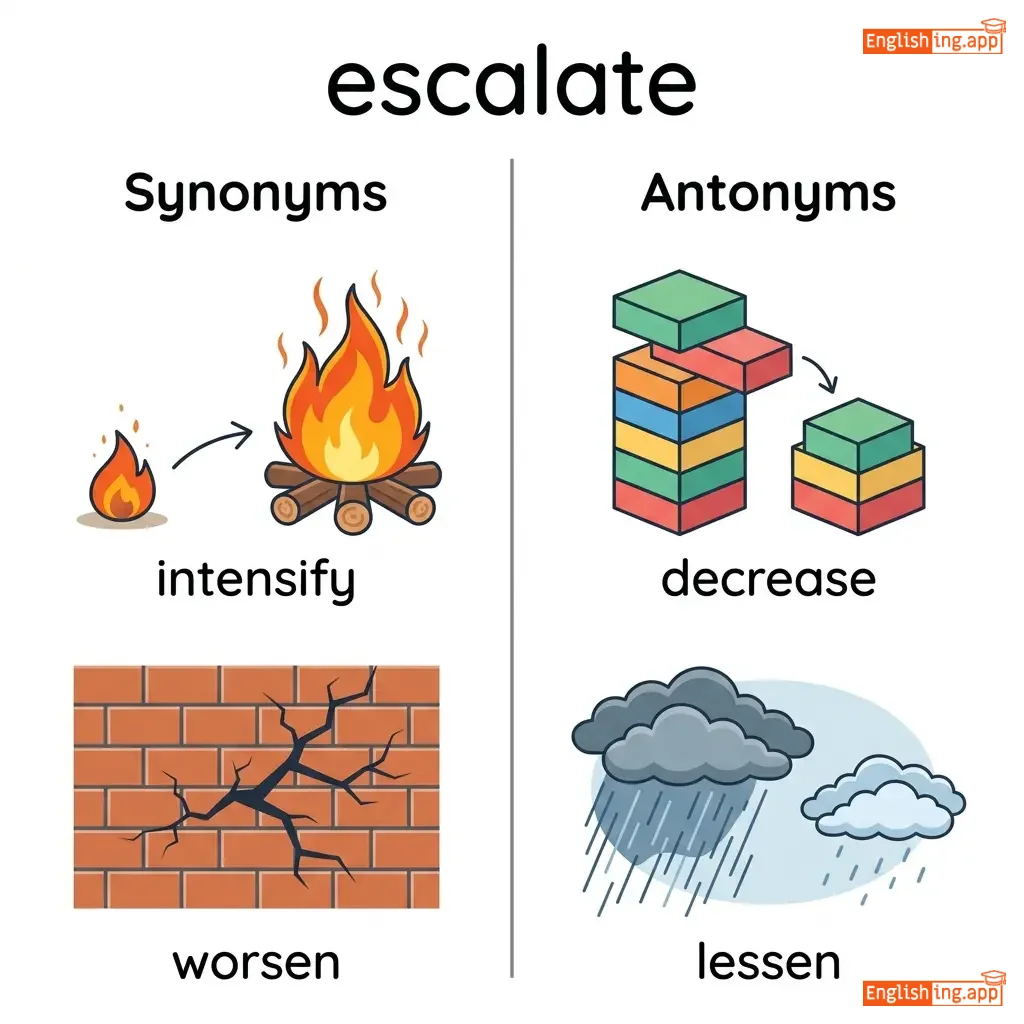
intensify, worsen, amplify, heighten, increase
••••••
|
decrease, lessen, reduce
••••••
|
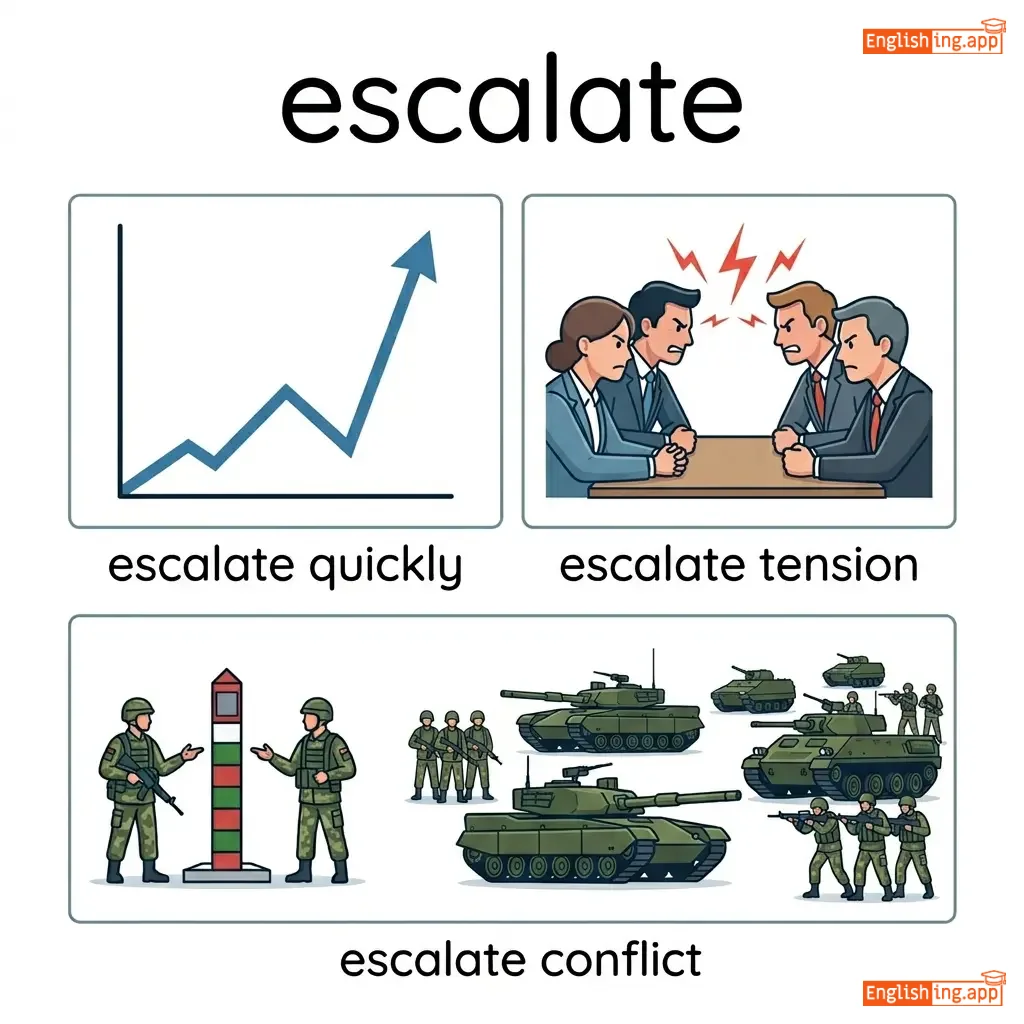
escalate quickly, escalate tension, escalate conflict, escalate costs
••••••
|
エスカレーターで上がる、エスカレートは増加や強化を意味する
••••••
|
|
#0
📊
|
/ˈɛstɪˌmeɪt/
verb
(エスティメイト)
••••••
|
- •••••• |
見積もる
mitsumoru
••••••
|
estimated
エスティメイテッド
••••••
|
estimated
エスティメイテッド
••••••
|
estimates
エスティメイツ
••••••
|
estimating
エスティメイティング
••••••
|
To roughly calculate or judge the value, number, quantity, or extent of something.
••••••
|
The engineer estimated the cost of the project at $5 million.
エンジニアはプロジェクトのコストを500万ドルと見積もりました。
••••••
|
エンジニアはプロジェクトのコストを500万ドルと見積もりました。
Enjinia wa purojekuto no kosuto o 500-man doru to mitsumorimashita.
••••••
|
rough estimate
ラフ見積もり
••••••
|
An approximate calculation
••••••
|
ラフ見積もり
Rafu mitsumori
••••••
|
calculate, assess, evaluate, appraise, guess
••••••
|
measure exactly, determine
••••••
|
make an estimate, accurate estimate, cost estimate, estimate value
••••••
|
見積もりは大まかな計算のようなものです、見積もり 📊
••••••
|
|
#0
🚨
|
/ɪˈvækjueɪt/
verb
(エヴァキュエイト)
••••••
|
- •••••• |
避難する
hinan suru
••••••
|
evacuated
エヴァキュエイテッド
••••••
|
evacuated
エヴァキュエイテッド
••••••
|
evacuates
エヴァキュエイツ
••••••
|
evacuating
エヴァキュエイティング
••••••
|
To remove people from a dangerous place to safety.
••••••
|
The residents were ordered to evacuate the building after the fire alarm.
火災警報後、住民は建物から避難するよう命じられました。
••••••
|
火災警報後、住民は建物から避難するよう命じられました。
Kasai keihou go, jumin wa tatemono kara hinan suru you meijiraremashita.
••••••
|
evacuate the premises
施設を避難させる
••••••
|
To leave a building or area immediately for safety reasons.
••••••
|
施設を避難させる
Shisetsu o hinan saseru
••••••
|
clear, empty, vacate, withdraw
••••••
|
occupy, stay
••••••
|
evacuate building, evacuate area, evacuate residents, emergency evacuate
••••••
|
Eva + Queue みんな避難 - 避難する
••••••
|
|
#0
📊
|
/ɪˈvæljueɪt/
verb
(イヴァリュエイト)
••••••
|
- •••••• |
評価する
hyoukasuru
••••••
|
evaluated
イヴァリュエイテッド
••••••
|
evaluated
イヴァリュエイテッド
••••••
|
evaluates
イヴァリュエイツ
••••••
|
evaluating
イヴァリュエイティング
••••••
|
To assess or judge the value, quality, or significance of something.
••••••
|
The teacher will evaluate the students’ projects tomorrow.
教師は明日学生のプロジェクトを評価します。
••••••
|
教師は明日学生のプロジェクトを評価します。
Kyoushi wa ashita gakusei no purojekuto wo hyoukasuru.
••••••
|
evaluate the situation
状況を評価する
••••••
|
to carefully consider all aspects before deciding
••••••
|
状況を評価する
Joukyou wo hyoukasuru
••••••
|
assess, judge, appraise, analyze, review
••••••
|
ignore, neglect
••••••
|
evaluate performance, evaluate results, evaluate options
••••••
|
評価するは評価する → 試験の評価
••••••
|
|
#0
🌐
|
/ɪkˈstɜrnəl/
adjective
(エクスターナル)
••••••
|
- •••••• |
外部の
gaibu no
••••••
|
- •••••• | - •••••• | - •••••• | - •••••• |
situated on or relating to the outside of something; coming from outside
••••••
|
The external factors affected the company's growth. |
外部要因が会社の成長に影響を与えました。
Gaibu yōin ga kaisha no seichō ni eikyō o ataemashita.
••••••
|
external affairs |
matters concerning foreign relations
••••••
|
外交問題
gaikō mondai
••••••
|
outer, outside, foreign, exterior
••••••
|
internal, inner
••••••
|
external factors, external affairs, external pressure
••••••
|
External は外部を意味します、例えば外部ハードドライブのように。
••••••
|
|
#0
✨
|
/ˈfæbjələs/
adjective
(ファビュラス)
••••••
|
- •••••• |
素晴らしい
subarashii
••••••
|
- •••••• | - •••••• | - •••••• | - •••••• |
Extremely good or wonderful; almost unbelievable
••••••
|
She looked fabulous in her new dress. |
彼女は新しいドレスで素晴らしく見えた。
Kanojo wa atarashī doresu de subarashiku mieta.
••••••
|
fabulous fortune |
an extremely large amount of wealth
••••••
|
素晴らしい富
subarashii tomi
••••••
|
marvelous, amazing, incredible, astonishing, wonderful
••••••
|
ordinary, mediocre, dull
••••••
|
fabulous job, fabulous idea, fabulous wealth, look fabulous
••••••
|
素晴らしいは素敵な意味で、素晴らしい富を意味します。
••••••
|
|
#0
🙂
|
/fəˈmɪliər/
adjective
(ファミリア)
••••••
|
- •••••• |
お馴染みの
onajimi no
••••••
|
- •••••• | - •••••• | - •••••• | - •••••• |
Well known or easily recognized from previous experience.
••••••
|
The town looked familiar to me after so many years. |
何年も後、この町は私にはお馴染みのように感じました。
Nan-nen mo ato, kono machi wa watashi ni wa onajimi no yō ni kanjimashita.
••••••
|
familiar face |
Someone you recognize but may not know personally.
••••••
|
お馴染みの顔
onajimi no kao
••••••
|
well-known, recognizable, acquainted, common, usual
••••••
|
unfamiliar, unknown, strange
••••••
|
familiar face, familiar voice, look familiar, become familiar
••••••
|
FamiliarとFamily – お馴染みの顔
••••••
|
|
#0
⭐
|
/ˈfeɪvərɪt/
adjective, noun
(フェイヴァリット)
••••••
|
- •••••• |
お気に入り
okiniiri
••••••
|
- •••••• | - •••••• | - •••••• | - •••••• |
Preferred over all others; something or someone especially liked.
••••••
|
Chocolate is my favorite ice cream flavor. |
チョコレートは私のお気に入りのアイスクリームのフレーバーです。
Chokorēto wa watashi no okiniiri no aisukurīmu no furēbā desu.
••••••
|
play favorites |
To give unfair advantage to one person over others.
••••••
|
お気に入りを作る
okiniiri o tsukuru
••••••
|
preferred, beloved, liked, best, choice
••••••
|
hated, disliked
••••••
|
favorite song, favorite color, all-time favorite, crowd favorite
••••••
|
お気に入りはあなたが最も好きなもの、例えばお気に入りの映画。
••••••
|
|
#0
♀️
|
/ˈfɛmənɪst/
noun
(フェミニスト)
••••••
|
- •••••• |
フェミニスト
feministo
••••••
|
- •••••• | - •••••• | - •••••• | - •••••• |
a person who supports equal rights and opportunities for women and men
••••••
|
She proudly calls herself a feminist and fights for gender equality. |
彼女は誇りを持って自分をフェミニストだと言い、ジェンダー平等のために戦っています。
Kanojo wa hokori o motte jibun o feminisuto da to ii, jendā byōdō no tame ni tatakatteimasu.
••••••
|
feminist movement |
a social campaign for women's rights and equality
••••••
|
フェミニスト運動
feminisuto undō
••••••
|
activist, advocate, campaigner, reformer
••••••
|
sexist, chauvinist
••••••
|
feminist movement, feminist theory, feminist perspective, feminist writer
••••••
|
フェミニスト = 女性の権利を支持する活動家 — ‘フェミ’ + ‘ニスト’ でフェミニスト!
••••••
|
|
#0
⚔️
|
/ˈfaɪtɪŋ/
noun/verb
(ファイティング)
••••••
|
- •••••• |
戦い
tatakai
••••••
|
- •••••• | - •••••• | - •••••• |
fighting
ファイティング
••••••
|
the act of engaging in a physical or verbal conflict
••••••
|
The soldiers were fighting bravely on the battlefield.
兵士たちは戦場で勇敢に戦っていました。
••••••
|
兵士たちは戦場で勇敢に戦っていました。
Heishi-tachi wa senjō de yūkan ni tatakatte imashita.
••••••
|
keep fighting
戦い続けろ
••••••
|
to continue making effort despite challenges
••••••
|
戦い続けろ
tatakai tsudzukero
••••••
|
battle, combat, struggle, conflict, contest
••••••
|
peace, harmony, agreement
••••••
|
stop fighting, fighting spirit, fighting chance, fighting back
••••••
|
試験の時間、戦い続けろは諦めないこと – 戦い続けろ
••••••
|
|
#0
🎆
|
/ˈfaɪəˌwɜːk/
noun
(ファイヤーワーク)
••••••
|
- •••••• |
花火
hanabi
••••••
|
- •••••• | - •••••• | - •••••• | - •••••• |
a device that explodes or creates a display of lights and sounds, often used in celebrations
••••••
|
The fireworks lit up the sky during the New Year's Eve celebration. |
花火は新年の前夜祭で空を照らしました。
Hanabi wa shinnen no zenya-sai de sora o terashimashita.
••••••
|
- •••••• | - •••••• | - •••••• |
sparkler, roman candle, display, pyrotechnics
••••••
|
whimper, silence
••••••
|
colorful fireworks, fireworks display, fireworks show
••••••
|
花火が上がると、心が弾けるような気持ちになる!
••••••
|
|
#0
👩
|
/ˈfɔːrˌhɛd/ or /ˈfɔːrɪd/
noun
(fōreddo)
••••••
|
- •••••• |
額
atama
••••••
|
- •••••• | - •••••• | - •••••• | - •••••• |
The part of the face above the eyebrows.
••••••
|
She wiped the sweat from her forehead. |
彼女は額から汗を拭いました。
Kanojo wa atama kara ase o fukimashita.
••••••
|
sweat on one's forehead |
A sign of hard work, nervousness, or exertion.
••••••
|
額の汗
atama no ase
••••••
|
brow, temple, face, skull, cranium
••••••
|
chin, jaw
••••••
|
high forehead, wrinkled forehead, broad forehead, kiss on the forehead
••••••
|
Forehead は日本語で額。額の汗 = 努力の証!
••••••
|
|
#0
⏮️
|
/ˈfɔːrmərli/
adverb
(フォーマーリー)
••••••
|
- •••••• |
以前は; 以前
izen wa; izen
••••••
|
- •••••• | - •••••• | - •••••• | - •••••• |
in the past; previously; at an earlier time
••••••
|
The building was formerly a school but is now a community center. |
その建物は以前は学校でしたが、今はコミュニティセンターです。
Sono tatemono wa izen wa gakkou deshita ga, ima wa komyuniti sentaa desu.
••••••
|
- •••••• | - •••••• | - •••••• |
previously, earlier, before, once, in the past
••••••
|
currently, now, presently, lately, recently
••••••
|
formerly known as, formerly owned by, formerly called
••••••
|
Formerly - 以前は学校だったが、今は別のものに変わった。
••••••
|
|
#0
➗
|
/ˈfrækʃən/
noun
(フラクション)
••••••
|
- •••••• |
分数
bunsuu
••••••
|
- •••••• | - •••••• | - •••••• | - •••••• |
A small part of something; in mathematics, a number that represents part of a whole.
••••••
|
Only a small fraction of the population attended the event.
人口のほんの一部だけがイベントに参加しました。
••••••
|
人口のほんの一部だけがイベントに参加しました。
Jinkou no honno ichibu dake ga ibento ni sanka shimashita.
••••••
|
a fraction of
の一部
••••••
|
A very small part of something
••••••
|
の一部
no ichibu
••••••
|
portion, segment, piece, part
••••••
|
whole, entirety
••••••
|
small fraction, significant fraction, fraction of time, fraction of cost
••••••
|
Fraction は分数 ➗ 1/2, 1/4 など
••••••
|
|
#0
🧩
|
/ˈfræɡmənt/
noun
(フラグメント)
••••••
|
- •••••• |
断片
danpen
••••••
|
- •••••• | - •••••• | - •••••• | - •••••• |
a small piece broken off something larger
••••••
|
He found a fragment of ancient pottery near the river. |
彼は川の近くで古代の陶器の断片を見つけました。
Kare wa kawa no chikaku de kodai no tōki no danpen o mitsukemashita.
••••••
|
in fragments |
broken into small pieces
••••••
|
断片として
danpen toshite
••••••
|
piece, shard, particle, portion, bit
••••••
|
whole, entirety
••••••
|
glass fragment, bone fragment, sentence fragment, broken fragment
••••••
|
断片 = '断'は割れるという意味、'片'は小さな部分です。
••••••
|
Vocabulary Quiz
Test your vocabulary by matching words with their translations or meanings.
Login to take the quiz
Comments (0)
Share your thoughts and join the discussion.
Join the discussion by logging in
Login to CommentNo comments yet
Be the first to share your thoughts!