

川辺の希望に満ちた夜
Hopeful Night Along the River
川の研究キャンプでは、博物館の firearm が安全に保管されていた。 科学者たちは魚の genetic 多様性について議論した。 芸術家たちは光と音で川の苦境を graphic に表現した。 彼らは、川の引力と gravity が彼らの想像力を常に刺激すると語った。 開発プロジェクトは村人たちを greatly 励ました。 川沿いの新しいタロイモの栽培は急速に growing している。 鳥たちの habitat を守るために木が植えられた。 コースの途中で、彼らは本当に halfway に来たことに気づいた。 わずか handful のチームが夜通し現場を警備した。 ボランティアたちは川の歌を歌いながら happily 働いた。 研究者たちは周囲の hearing パターンを検査した。 曇りの日には、波が heavily 桟橋に打ちつけた。 地元の教師たちは川についての helpful な授業を行った。 ミラは、自分が herself 学んだことをみんなに教えると言った。 彼女の兄は、himself が川に対して責任を持たなければならないと答えた。 子どもたちは、川が戻ってくることをとても hopeful に思っていた。 技術チームは水中の過剰な hormone 汚染を検出した。 かつて hostage だった記者は慎重に言葉を選んだ。 それでも、彼らは hostile なメッセージを広めなかった。 最終討論では、川の再生のための新しい housing デザインが紹介された。
翻訳
過去
過去分詞
三人称単数
動名詞
意味
例文
例文の翻訳
同義語
対義語
コロケーション
ニーモニック
Swipe left or right, or use the buttons. Tap image to zoom.
例文の翻訳
単語
Hopeful Night Along the RiverHopeful Night Along the River - マスクトグル
|
絵文字
|
単語 | Images | 翻訳 | 動名詞 | 意味 | 例文 | 例文の翻訳 | 表現例 | 表現例の意味 | 表現例の翻訳 | 同義語 | 対義語 | コロケーション | ニーモニック |
|---|---|---|---|---|---|---|---|---|---|---|---|---|---|---|
|
#0
🔫
|
/ˈfaɪərɑːm/
noun
(ファイアアーム)
••••••
|
- •••••• |
火器
kaki
••••••
|
- •••••• |
a weapon capable of firing a projectile using gunpowder or other propellant
••••••
|
The police found a hidden firearm during the investigation.
警察は調査中に隠された銃器を発見しました。
••••••
|
警察は調査中に隠された銃器を発見しました。
Keisatsu wa chousa-chuu ni kakusareta kiki o hakken shimashita.
••••••
|
- •••••• | - •••••• | - •••••• |
weapon, gun, rifle, pistol
••••••
|
peace, safety, security
••••••
|
firearm possession, illegal firearm, firearm use
••••••
|
火器(kaki)は銃や武器の一種、必ず使う前に安全確認
••••••
|
|
#0
🧬
|
/dʒəˈnɛtɪk/
adjective
(ジェネティック)
••••••
|
|
遺伝的
identeki
••••••
|
- •••••• |
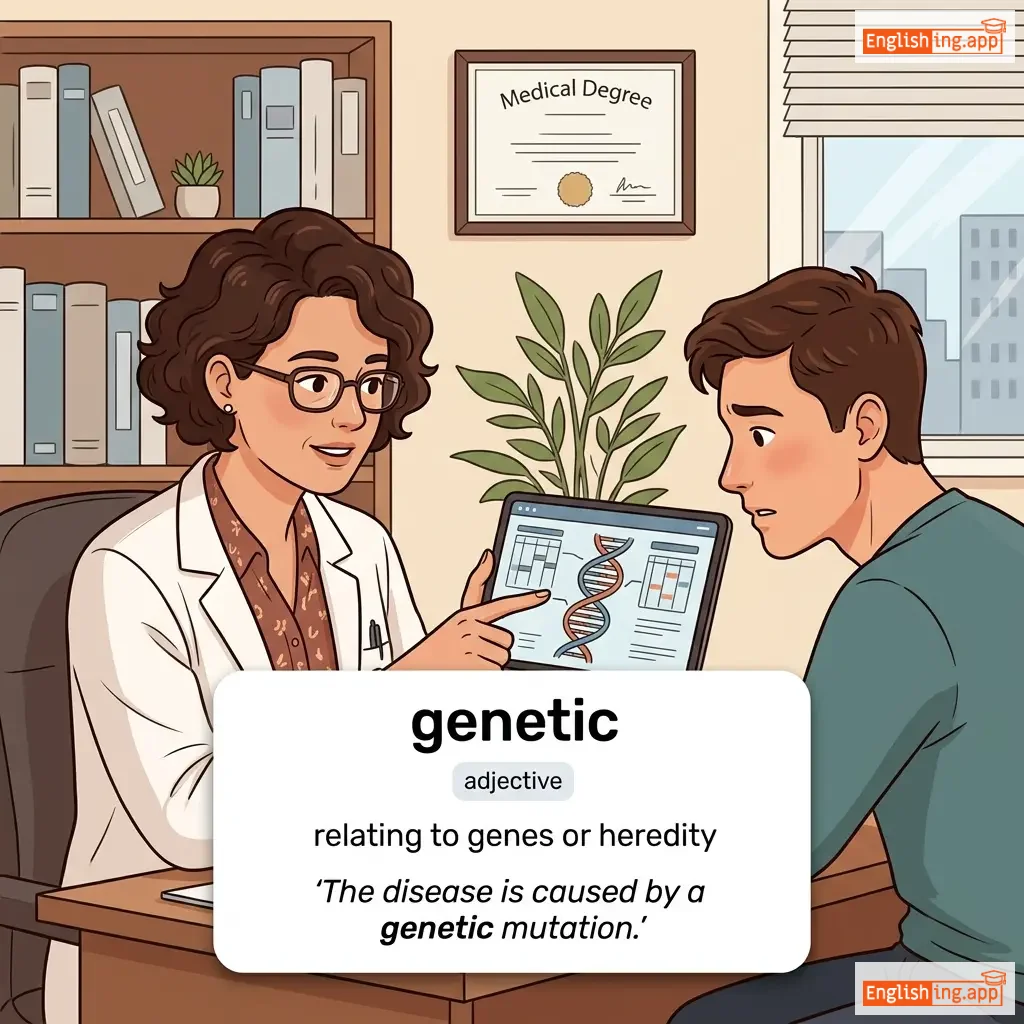
relating to genes or heredity
••••••
|
The disease is caused by a genetic mutation.
その病気は遺伝的変異によって引き起こされます。
••••••
|
その病気は遺伝的変異によって引き起こされます。
sono byōki wa iden teki hen'i ni yotte hikiokosaremasu.
••••••
|
genetic makeup
遺伝的構造
••••••
|
the set of genes that make up an individual
••••••
|
遺伝的構造
iden teki kōzō
••••••
|
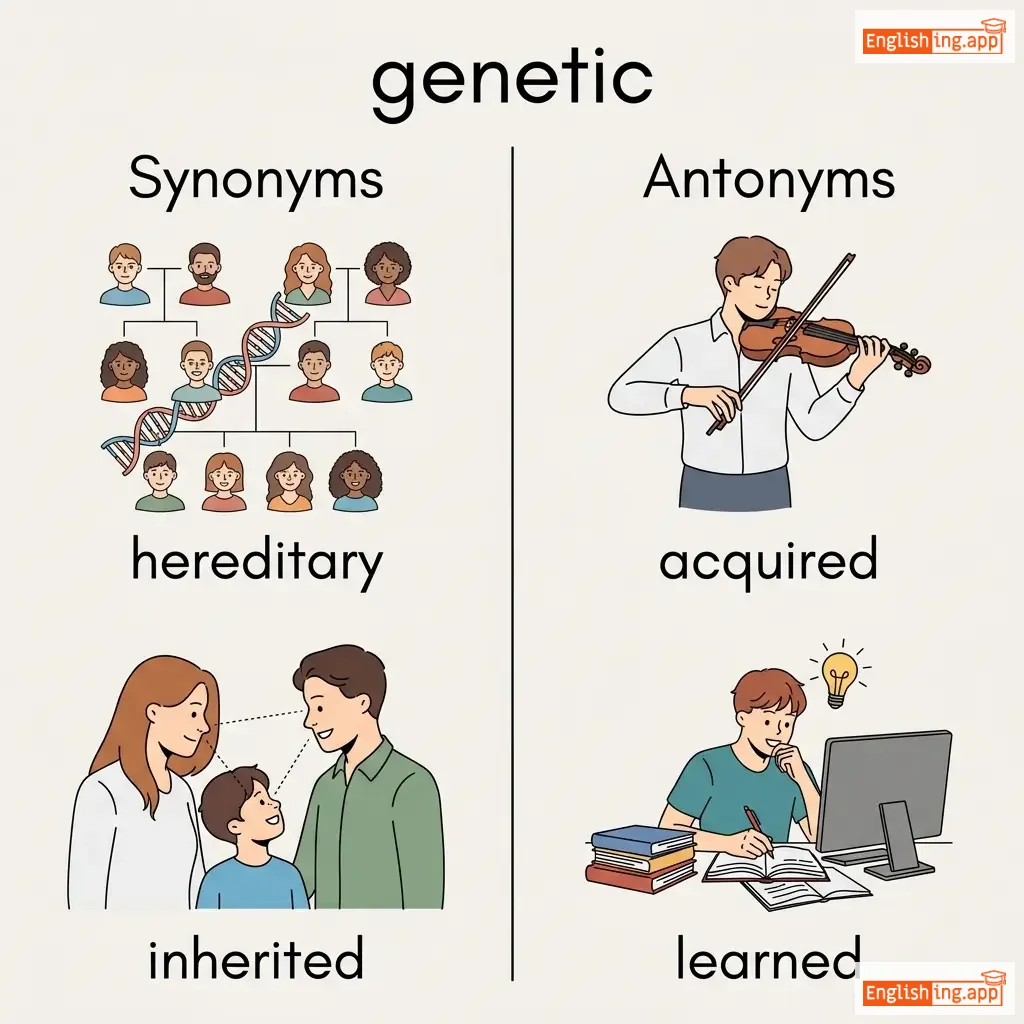
hereditary, inherited, biological, genomic
••••••
|
acquired, learned
••••••
|
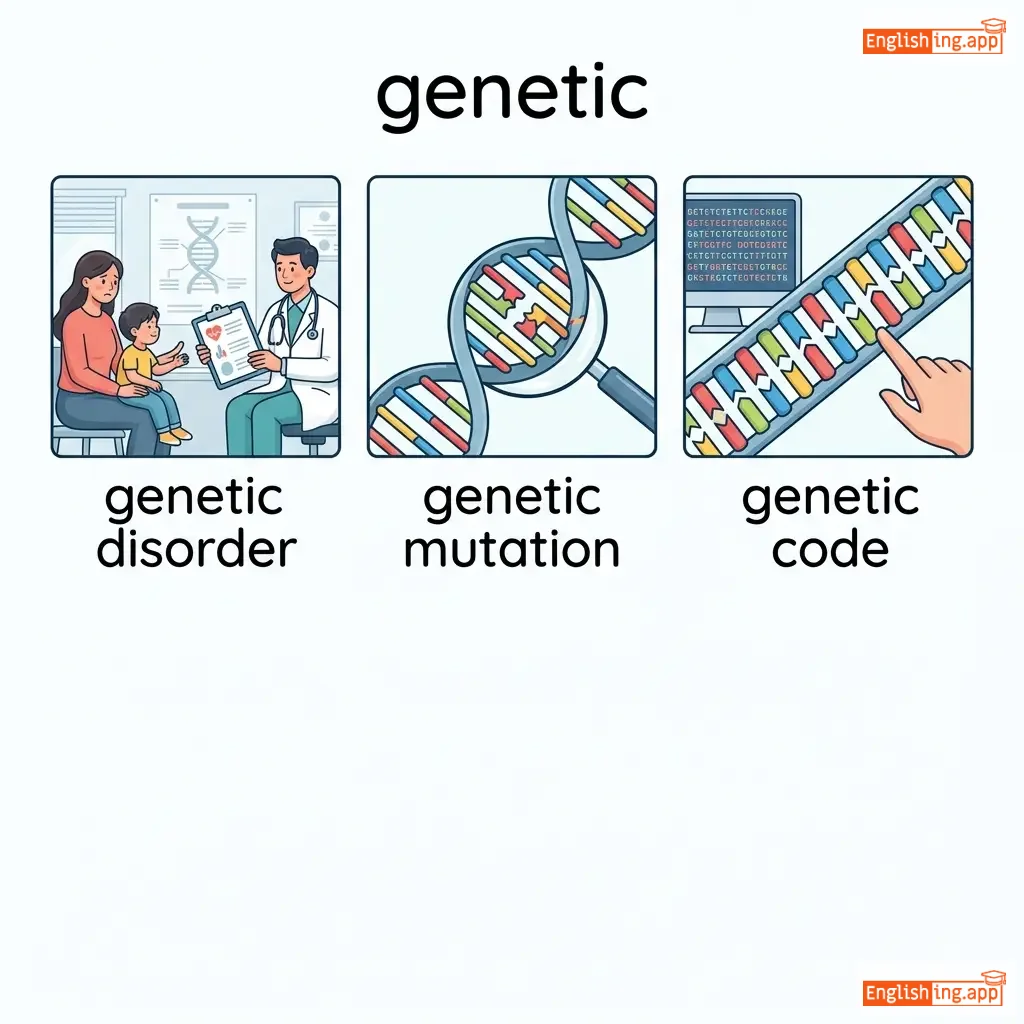
genetic disorder, genetic mutation, genetic code, genetic makeup
••••••
|
GENは遺伝的に関連しており、ジェネティックがその意味です。
••••••
|
|
#0
🎨
|
/ˈɡræf.ɪk/
adjective
••••••
|
- •••••• | - •••••• | - •••••• |
Relating to visual art, especially involving drawing, design, or vivid description.
••••••
|
The movie contained graphic scenes of violence. |
- •••••• |
graphic details |
Explicit and vivid description of events or images, often shocking.
••••••
|
- •••••• |
illustrative, vivid, pictorial, descriptive, explicit
••••••
|
vague, dull, unclear
••••••
|
graphic design, graphic novel, graphic content, graphic details
••••••
|
No •••••• |
|
#0
🌍
|
/ˈɡrævəti/
noun
••••••
|
|
- •••••• | - •••••• |
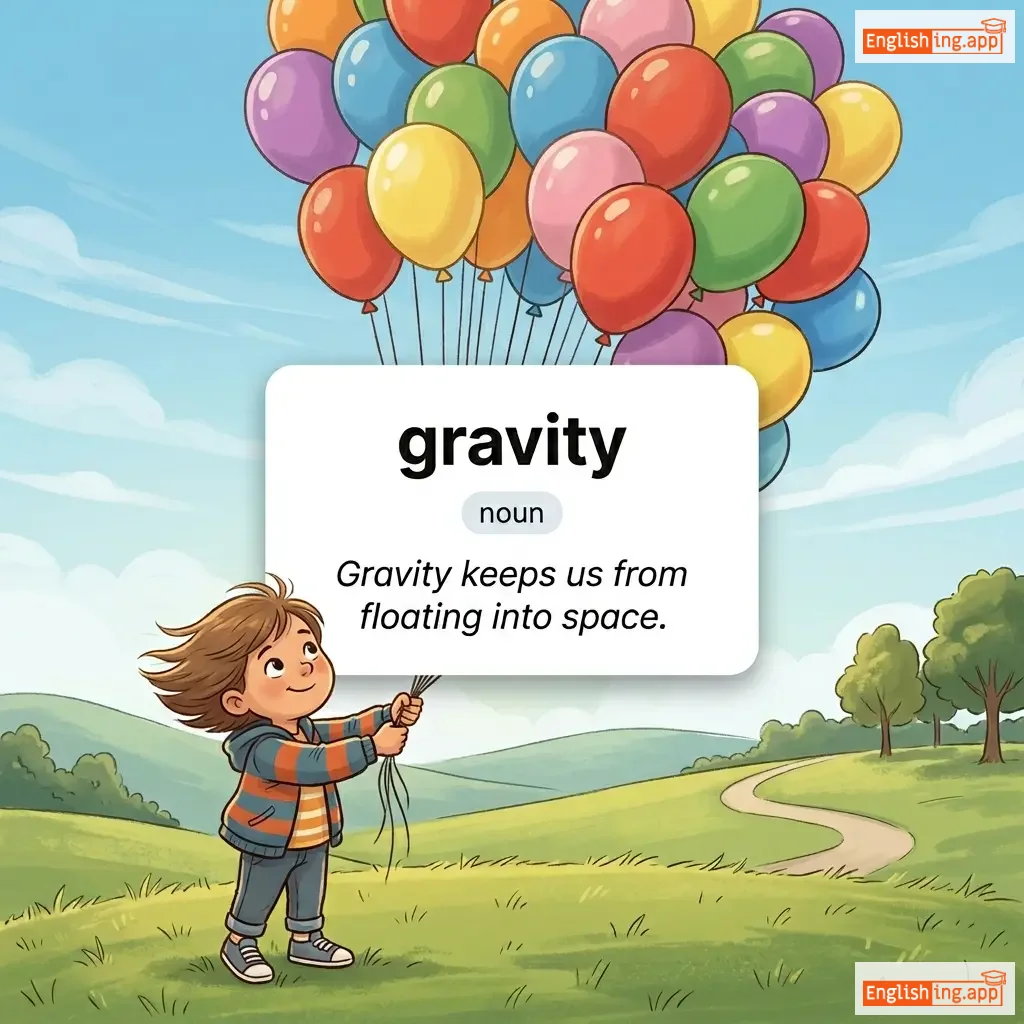
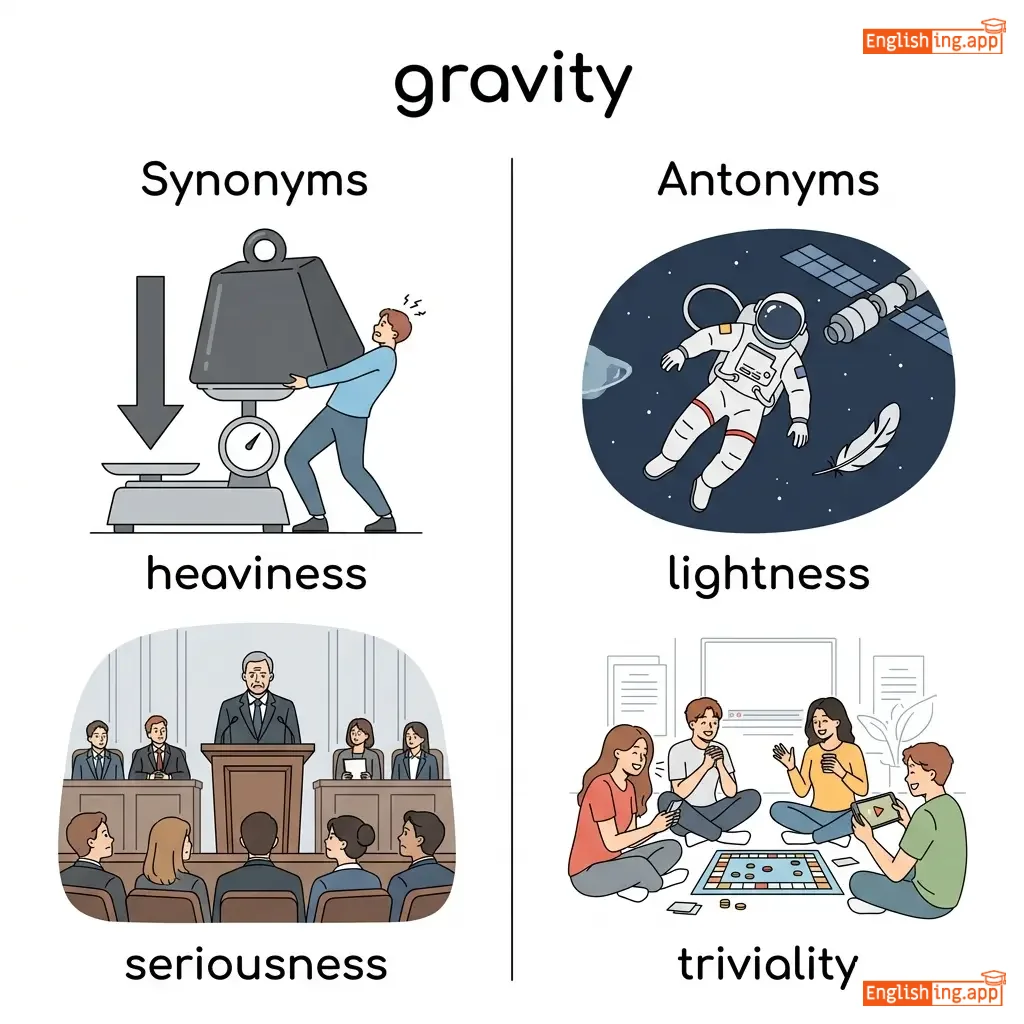
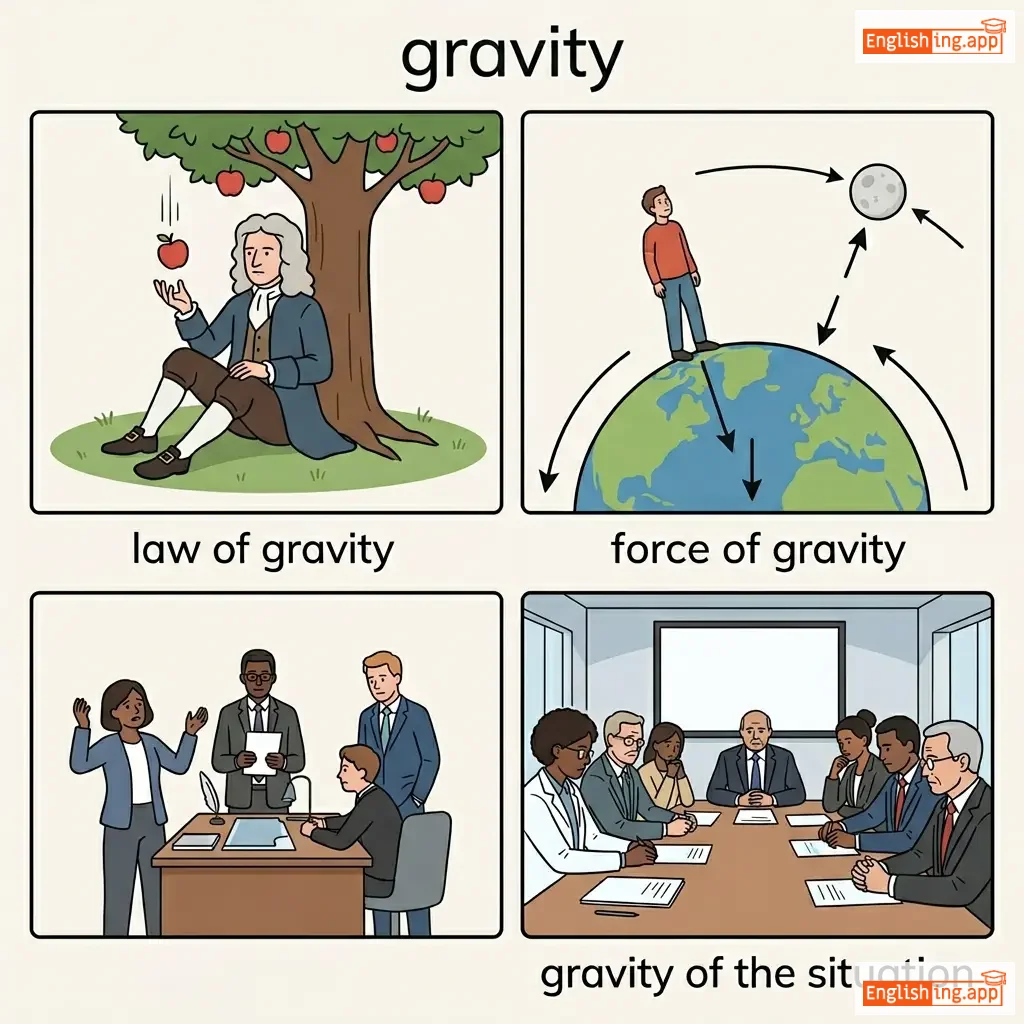
The natural force that attracts objects toward the center of the earth; seriousness or importance.
••••••
|
Gravity keeps us from floating into space. |
- •••••• |
gravity of the situation |
The seriousness or importance of a situation.
••••••
|
- •••••• |
heaviness, seriousness, weight, force
••••••
|
lightness, triviality
••••••
|
law of gravity, force of gravity, gravity of the situation
••••••
|
No •••••• |
|
#0
💫
|
/ˈɡreɪtli/
adverb
(グレイトリー)
••••••
|
- •••••• |
非常に
hijou ni
••••••
|
- •••••• |
to a large extent or degree; very much
••••••
|
She was greatly admired by her students.
彼女は生徒たちから非常に賞賛されました。
••••••
|
彼女は生徒たちから非常に賞賛されました。
Kanojo wa seitotachi kara hijou ni shousan saremashita.
••••••
|
- •••••• | - •••••• | - •••••• |
extremely, immensely, highly, deeply, significantly
••••••
|
slightly, barely, hardly
••••••
|
greatly improve, greatly appreciate, greatly benefit, greatly influence
••••••
|
Greatly は非常に、大きな程度で!
••••••
|
|
#0
🌿
|
/ˈɡroʊ.ɪŋ/
verb
(グローイング)
••••••
|
- •••••• |
増加している
zōkashite iru
••••••
|
growing
グローイング
••••••
|
continuously increasing or developing
••••••
|
There is a growing demand for renewable energy.
再生可能エネルギーへの需要が増加しています。
••••••
|
再生可能エネルギーへの需要が増加しています。
Saisei kanō enerugī e no juyō ga zōka shiteimasu.
••••••
|
- •••••• | - •••••• | - •••••• |
developing, expanding, increasing, rising
••••••
|
shrinking, decreasing, declining
••••••
|
growing demand, growing concern, growing population, growing economy
••••••
|
Growingは増加しているという意味です、再生可能エネルギーの需要が増加しているのように。
••••••
|
|
#0
🌿
|
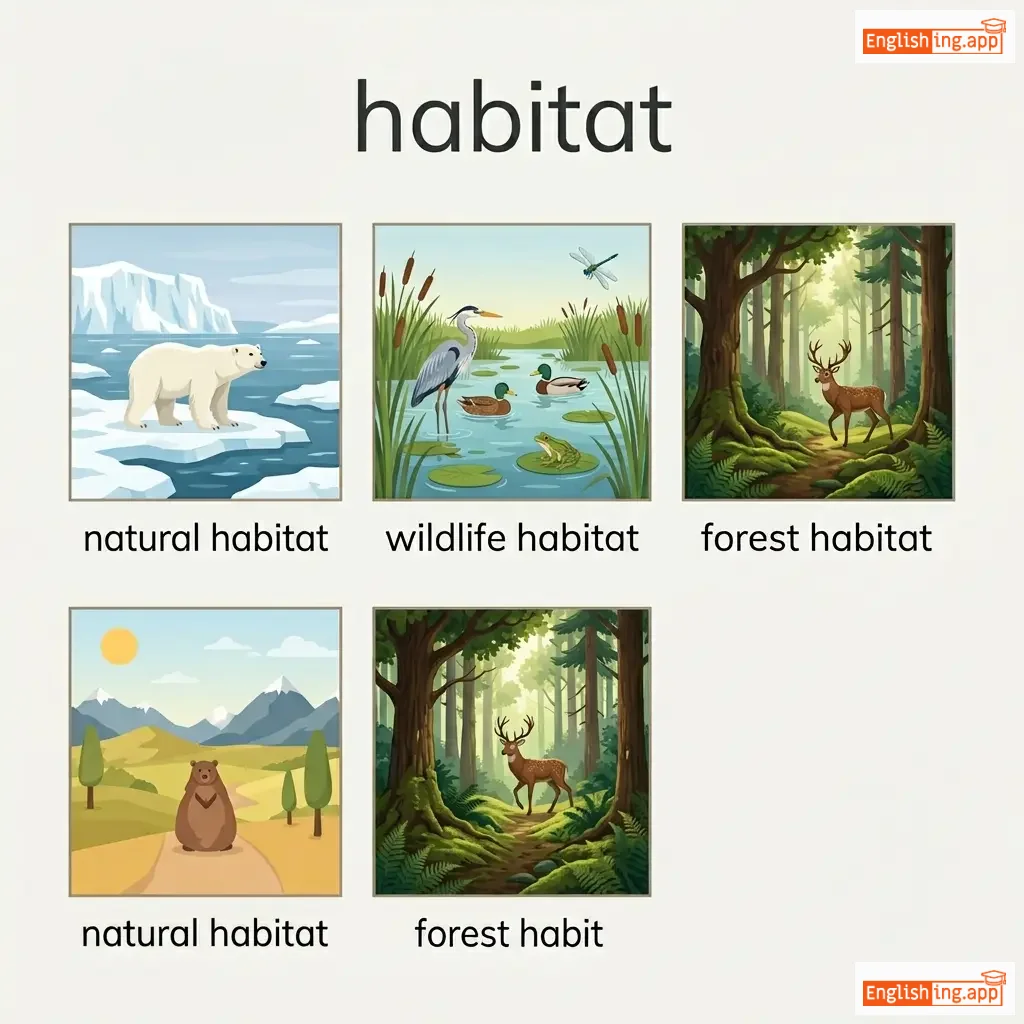
/ˈhæbɪˌtæt/
noun
(ハビタット)
••••••
|
|
生息地
seikokuchi
••••••
|
- •••••• |
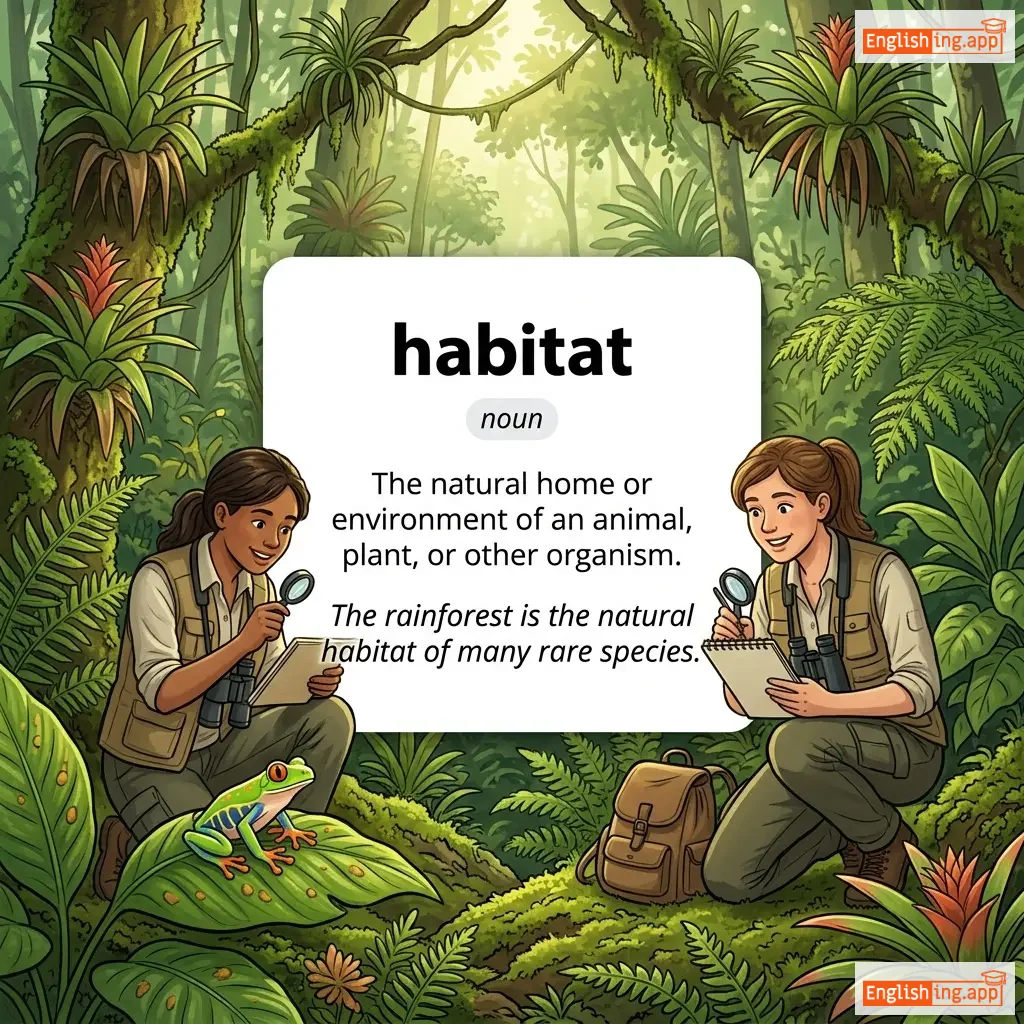
The natural home or environment of an animal, plant, or other organism.
••••••
|
The rainforest is the natural habitat of many rare species. |
熱帯雨林は多くの希少種の自然な生息地です。
Nettai urin wa ōku no kishō-shu no shizen na seikokuchi desu.
••••••
|
- •••••• | - •••••• | - •••••• |
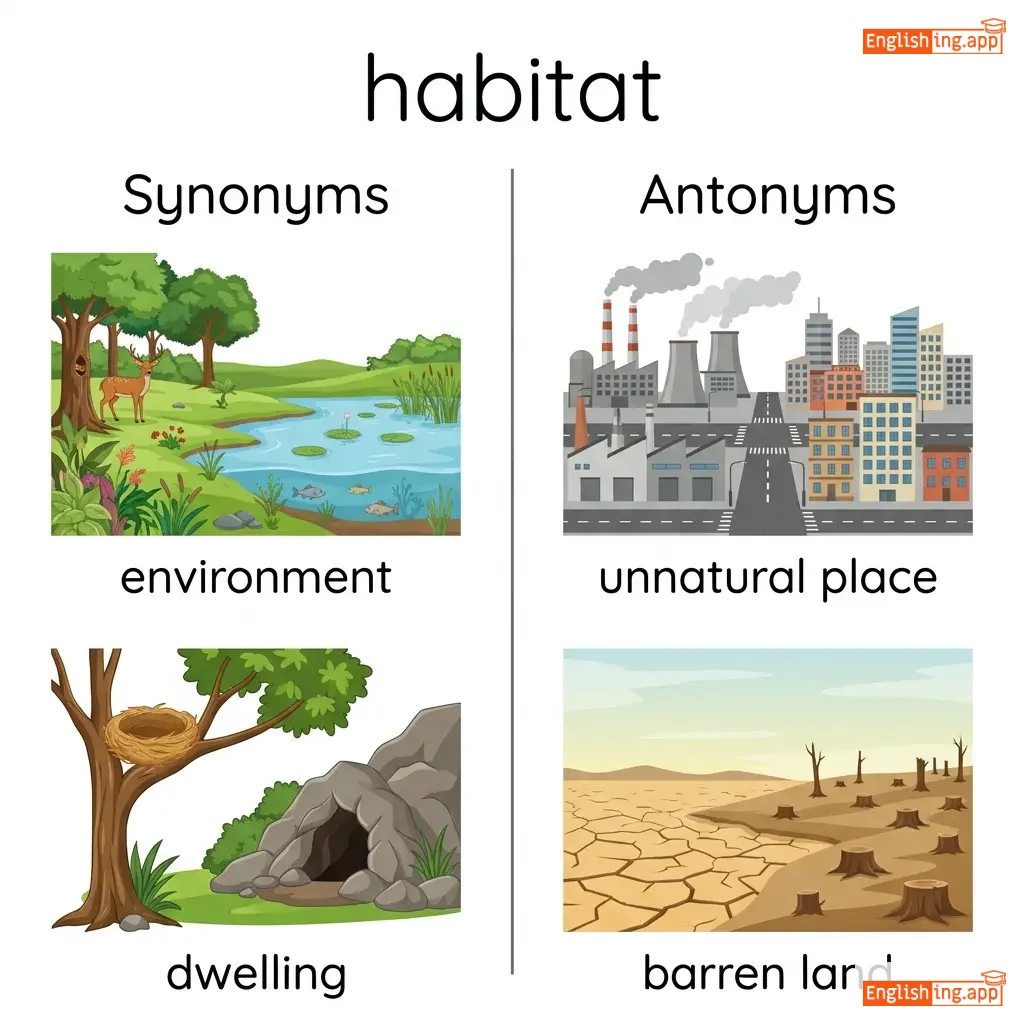
environment, dwelling, territory, ecosystem, surroundings
••••••
|
unnatural place, barren land
••••••
|
natural habitat, wildlife habitat, forest habitat, marine habitat
••••••
|
Habit + at → 生活する場所 = 生息地。
••••••
|
|
#0
↔️
|
/ˌhæfˈweɪ/
adverb
(ハーフウェイ)
••••••
|
- •••••• |
途中で
tochū de
••••••
|
- •••••• |
at or to a point equal in distance between two points
••••••
|
We met halfway between the two towns. |
私たちは二つの町の間の途中で会いました。
Watashitachi wa futatsu no machi no aida no tochū de aimashita.
••••••
|
meet halfway |
to compromise or find a middle ground
••••••
|
妥協する
dakyō suru
••••••
|
in the middle, midway, partway, center
••••••
|
completely, fully
••••••
|
halfway point, halfway through, halfway house, meet halfway
••••••
|
途中で = 途中の道で会う、妥協して途中で会いましょう!
••••••
|
|
#0
✋
|
/ˈhænd.fʊl/
noun
(ハンドフル)
••••••
|
- •••••• |
ひと握り
hito nigiri
••••••
|
- •••••• |
the amount of something that can be held in one hand; a small number
••••••
|
She took a handful of nuts. |
彼女はひと握りのナッツを取った。
kanojo wa hito nigiri no nattsu o totta.
••••••
|
a handful |
a small number of people or things; someone difficult to manage
••••••
|
少数の人々や物;扱いにくい人
shōsū no hitobito ya mono; atsukai nikui hito
••••••
|
few, small amount, little, portion
••••••
|
many, plenty
••••••
|
a handful of, only a handful, just a handful
••••••
|
ひと握りで簡単に覚えられる
••••••
|
|
#0
😊
|
/ˈhæpɪli/
adverb
(ハピリー)
••••••
|
- •••••• |
幸せに
shiawase ni
••••••
|
- •••••• |
in a happy manner; with pleasure or satisfaction
••••••
|
The children played happily in the garden. |
子供たちは庭で幸せに遊びました。
Kodomotachi wa niwa de shiawase ni asobimashita.
••••••
|
- •••••• | - •••••• | - •••••• |
joyfully, cheerfully, gladly, merrily
••••••
|
sadly, unhappily
••••••
|
live happily, happily married, smile happily, happily ever after
••••••
|
Happy + ly は幸せに行動することを意味します - 例えば 😊 子供たちは幸せに遊んでいます。
••••••
|
|
#0
👂
|
/ˈhɪərɪŋ/
noun
(ヒアリング)
••••••
|
- •••••• |
ヒアリング / 聴覚
hīringu / chōkaku
••••••
|
- •••••• |
the ability to perceive sounds or an official meeting to listen to arguments or evidence
••••••
|
The judge scheduled a hearing for next week. |
裁判官は来週のヒアリングを予定しています。
Saibankan wa raishū no hīringu o yotei shiteimasu.
••••••
|
hard of hearing |
having partial hearing loss
••••••
|
部分的な聴力低下
bubun-teki na chōryoku teika
••••••
|
listening, audition, perception, trial, meeting
••••••
|
deafness, silence
••••••
|
court hearing, public hearing, hearing aid, hearing loss
••••••
|
Hearing はヒアリングの意味 – 裁判所でヒアリングを行い、耳で聴くことができます 👂
••••••
|
|
#0
⬇️
|
/ˈhev.ɪ.li/
adverb
(ヘヴィリー)
••••••
|
- •••••• |
激しく; 強く
hageshiku; tsuyoku
••••••
|
- •••••• |
with great weight; to a great degree; intensely
••••••
|
It rained heavily throughout the night.
イット・レインド・ヘヴィリー・スルーアウト・ザ・ナイト。
••••••
|
夜通し激しく雨が降った。
yo-dō-shi hageshiku ame ga futta.
••••••
|
- •••••• | - •••••• | - •••••• |
intensely, severely, greatly, substantially, densely
••••••
|
lightly, gently, slightly, minimally
••••••
|
heavily armed, heavily loaded, heavily populated, heavily dependent
••••••
|
Heavyは重いので、Heavilyはとても重いです。
••••••
|
|
#0
🤝
|
/ˈhelp.fəl/
adjective
(ハピネス)
••••••
|
- •••••• |
役立つ; 有益な
yakudatsu; yuueki na
••••••
|
- •••••• |
giving or providing assistance; useful; beneficial
••••••
|
She was very helpful in organizing the event.
彼女はイベントの準備に非常に役立ちました。
••••••
|
彼女はイベントの準備に非常に役立ちました。
kanojo wa ibento no junbi ni hijō ni yakudachimashita
••••••
|
- •••••• | - •••••• | - •••••• |
useful, beneficial, supportive, accommodating
••••••
|
unhelpful, harmful, obstructive, hindering
••••••
|
helpful advice, helpful person, helpful tip, helpful service
••••••
|
Yakudatsu na to dōni ikimasu!
••••••
|
|
#0
👩
|
/hɜːrˈsɛlf/
pronoun
(ハーセルフ)
••••••
|
- •••••• |
自分自身
jibun jishin
••••••
|
- •••••• |
used to refer to a female person as the object of a verb or preposition when she is the subject
••••••
|
She prepared the meal all by herself.
彼女は一人で食事を作った。
••••••
|
彼女は一人で食事を作った。
Kanojo wa hitori de shokuji o tsukutta.
••••••
|
by herself
一人で
••••••
|
alone, without help
••••••
|
一人で
hitori de
••••••
|
on her own, alone, independently, solo, unaided
••••••
|
together, with others
••••••
|
by herself, for herself, to herself, herself alone
••••••
|
Her SELF は '自分自身' という意味です — 思い出して、herself は自分で何かをすることを意味します。
••••••
|
|
#0
🙋♂️
|
/hɪmˈself/
pronoun
(ヒムセルフ)
••••••
|
- •••••• |
自分自身
jibun jishin
••••••
|
- •••••• |
Used to emphasize that a male person does something by his own effort.
••••••
|
He fixed the car himself. |
彼は自分自身で車を修理しました。
Kare wa jibun jishin de kuruma o shūri shimashita.
••••••
|
by himself |
alone, without help
••••••
|
自分で
jibun de
••••••
|
alone, personally, individually, on his own
••••••
|
together, with others
••••••
|
by himself, for himself, himself alone
••••••
|
Himself は 'He 自分自身 self' です – 'self' は自分を意味します。
••••••
|
|
#0
🌟😊
|
/ˈhoʊpfəl/
adjective
(ホープフル)
••••••
|
- •••••• |
希望に満ちた
kibou ni michita
••••••
|
- •••••• |
feeling or inspiring optimism about a future event; confident; optimistic
••••••
|
He remained hopeful despite the challenges.
彼は挑戦にもかかわらず希望を持ち続けました。
••••••
|
彼は挑戦にもかかわらず希望を持ち続けました。
Kare wa chōsen ni mo kakawarazu kibou o mochitsuzukemashita.
••••••
|
- •••••• | - •••••• | - •••••• |
optimistic, positive, confident
••••••
|
hopeless, pessimistic, despairing
••••••
|
hopeful sign, remain hopeful, hopeful outlook
••••••
|
希望の力で前に進む
••••••
|
|
#0
🧬
|
/ˈhɔːrmoʊn/
noun
(ホルモン)
••••••
|
- •••••• |
ホルモン
horumon
••••••
|
- •••••• |
a chemical substance produced in the body that influences how the body grows or functions
••••••
|
Insulin is a hormone that controls blood sugar levels.
インスリンは血糖値をコントロールするホルモンです。
••••••
|
インスリンは血糖値をコントロールするホルモンです。
Insurin wa kettōchi o kontorōru suru horumon desu.
••••••
|
- •••••• | - •••••• | - •••••• |
chemical, secretion, enzyme, messenger
••••••
|
none, null
••••••
|
growth hormone, sex hormone, hormone levels
••••••
|
ホルモン:体内で化学反応を起こし、体をコントロールする!
••••••
|
|
#0
⛓️
|
/ˈhɑːstɪdʒ/
noun
(ホステージ)
••••••
|
- •••••• |
人質
hitojichi
••••••
|
- •••••• |
A person seized or held as security for the fulfillment of a condition.
••••••
|
The rebels took several people as hostages. |
反乱者たちは何人かを人質として取った。
Hanranshatachi wa nan-nin ka wo hitojichi to shite totta.
••••••
|
held hostage |
Kept under control against one’s will
••••••
|
人質に取る
Hitojichi ni toru
••••••
|
captive, prisoner, detainee, pawn
••••••
|
liberated, free
••••••
|
take hostage, release hostage, held hostage
••••••
|
Hostage = Hitojichi, 'Host'のように人質を取る
••••••
|
|
#0
😠
|
/ˈhɒstaɪl/
adjective
(ホスタイル)
••••••
|
- •••••• |
敵対的
tekitai-teki
••••••
|
- •••••• |
showing or feeling opposition, dislike, or hatred
••••••
|
The soldiers entered a hostile territory. |
兵士たちは敵対的な領土に入った。
Heishitachi wa tekitai-teki na ryōdo ni haitta.
••••••
|
hostile takeover |
an acquisition of a company opposed by the company's management
••••••
|
敵対的買収
tekitai-teki baishū
••••••
|
aggressive, antagonistic, unfriendly, opposed, bitter
••••••
|
friendly, peaceful, supportive
••••••
|
hostile environment, hostile forces, hostile attitude, hostile takeover
••••••
|
敵対的 – 敵のようなホスト
••••••
|
|
#0
🏠
|
/ˈhaʊzɪŋ/
noun
(ハウジング)
••••••
|
- •••••• |
住宅
jūtaku
••••••
|
- •••••• |
buildings or structures where people live; accommodation
••••••
|
The government is working to provide affordable housing for everyone. |
政府はすべての人々に手頃な住宅を提供するために努力しています。
Seifu wa subete no hitobito ni tegorona jūtaku o teikyō suru tame ni doryoku shiteimasu.
••••••
|
public housing |
housing provided by the government for low-income families
••••••
|
公共住宅
kōkyō jūtaku
••••••
|
accommodation, residence, dwelling, shelter, lodging
••••••
|
homelessness, eviction
••••••
|
affordable housing, housing project, housing policy, housing shortage
••••••
|
Housingは住む場所、住宅、つまり住まいのこと。
••••••
|
Vocabulary Quiz
Test your vocabulary by matching words with their translations or meanings.
Login to take the quiz
Comments (0)
Share your thoughts and join the discussion.
Join the discussion by logging in
Login to CommentNo comments yet
Be the first to share your thoughts!