

川のために立つ
Standing Tall for the River
川の曲がり角でイルカの tail が現れました。 地元の人々は古い洪水の tale を語りました。 新しい洪水タワーは非常に tall でした。 地域の tank から純粋な水が配布されました。 ボランティアたちは紙と tape で地図を描きました。 過去の写真がみんなの目に tear をもたらしました。 一団の teen 学生たちが川からプラスチックを集めました。 彼らは川辺の木々を tend し続けています。 大きな tent がキャンプを日差しから守りました。 会議では、一部のリスクが長期的な term 影響を持つ可能性があると警告しました。 ボランティアたちは、以前よりも目的を持って than 行動する必要があると言いました。 'この川は that 強さの象徴です、' 会長は宣言しました。 'them がいなければ成功しません、' 村人たちは自分たちの仲間について言いました。 'then から、私たちは本当の変化を始めます、' 大統領は加えました。 子供たちは they が毎晩見守ることを約束しました。 砂袋は堤防の thin 辺を強化しました。 '私たちは this をやることができます、' チーム全体が叫びました。 Thus、会議は常設委員会を設立することを決定しました。 tide に関するデータはセンサーを通じて分析されました。 ボランティアたちは夜まで till 清掃を完了しました。
翻訳
過去
過去分詞
三人称単数
動名詞
意味
例文
例文の翻訳
同義語
対義語
コロケーション
ニーモニック
Swipe left or right, or use the buttons. Tap image to zoom.
例文の翻訳
単語
Standing Tall for the RiverStanding Tall for the River - マスクトグル
|
絵文字
|
単語 | Images | 翻訳 | 過去 | 過去分詞 | 三人称単数 | 動名詞 | 意味 | 例文 | 例文の翻訳 | 表現例 | 表現例の意味 | 表現例の翻訳 | 同義語 | 対義語 | コロケーション | ニーモニック |
|---|---|---|---|---|---|---|---|---|---|---|---|---|---|---|---|---|---|
|
#0
🐕
|
/teɪl/
noun
(teyl)
••••••
|
- •••••• |
尾
obi
••••••
|
- •••••• | - •••••• | - •••••• | - •••••• |
the rear part of an animal that extends from the back or bottom
••••••
|
The dog wagged its tail happily when it saw its owner. |
犬は飼い主を見て嬉しそうに尾を振った。
Inu wa kainushi wo mite ureshisou ni obi wo futta.
••••••
|
- •••••• | - •••••• | - •••••• |
rear, end, appendage
••••••
|
head, front
••••••
|
dog tail, long tail, wagging tail, tail feathers
••••••
|
Obi = tail in Japanese, and both wag with joy!
••••••
|
|
#0
📖
|
/teɪl/
noun
(テイル)
••••••
|
- •••••• |
物語
monogatari
••••••
|
- •••••• | - •••••• | - •••••• | - •••••• |
a narrative of imaginary events, especially one that is presented as true
••••••
|
The old man told a tale of his adventures. |
その老人は冒険の物語を話した。
Sono rōjin wa bōken no monogatari o hanashita.
••••••
|
tall tale |
an exaggerated story, often one that is not true
••••••
|
大げさな話
ōgesa na hanashi
••••••
|
story, narrative, legend, fable
••••••
|
fact, truth
••••••
|
fairy tale, tall tale, bedtime tale
••••••
|
物語 (monogatari) は想像力から生まれる - A tale born from imagination
••••••
|
|
#0
📏
|
/tɔːl/
adjective
(トール)
••••••
|
- •••••• |
高い
takai
••••••
|
- •••••• | - •••••• | - •••••• | - •••••• |
having a greater than average height
••••••
|
He is the tallest player on the team. |
彼はチームで一番高い選手です。
Kare wa chiimu de ichiban takai senshu desu.
••••••
|
tall order |
a difficult or challenging task
••••••
|
難しい仕事
muzukashii shigoto
••••••
|
high, lofty, towering, elevated
••••••
|
short, small, low
••••••
|
tall building, tall person, tall story, tall tree
••••••
|
Tall は高い、タワーのように高い。
••••••
|
|
#0
🚙
|
/tæŋk/
noun
••••••
|
- •••••• | - •••••• | - •••••• | - •••••• | - •••••• | - •••••• |
a large, heavy military vehicle that moves on tracks and is armed with weapons
••••••
|
The army sent tanks to the front lines. |
- •••••• | - •••••• | - •••••• | - •••••• |
armored vehicle, combat vehicle, war machine
••••••
|
car, bicycle
••••••
|
military tank, battle tank, army tank
••••••
|
No •••••• |
|
#0
📼
|
/teɪp/
noun
(テープ)
••••••
|
- •••••• |
テープ
teepu
••••••
|
- •••••• | - •••••• | - •••••• | - •••••• |
a long, narrow strip of material, often sticky on one side, used for fastening or sticking things together
••••••
|
I need some tape to seal this box. |
この箱を封をするためにテープが必要です。
Kono hako o fuu o suru tame ni teepu ga hitsuyou desu.
••••••
|
- •••••• | - •••••• | - •••••• |
adhesive, sticky tape, masking tape, sellotape
••••••
|
scissors, unstick
••••••
|
scotch tape, masking tape, duct tape, adhesive tape
••••••
|
Tape it up to seal it tight!
••••••
|
|
#0
💧
|
/tɪər/ (noun: liquid) /tɛər/ (verb: rip)
verb, noun
••••••
|
|
- •••••• |
tore
••••••
|
torn
••••••
|
tears
••••••
|
tearing
••••••
|
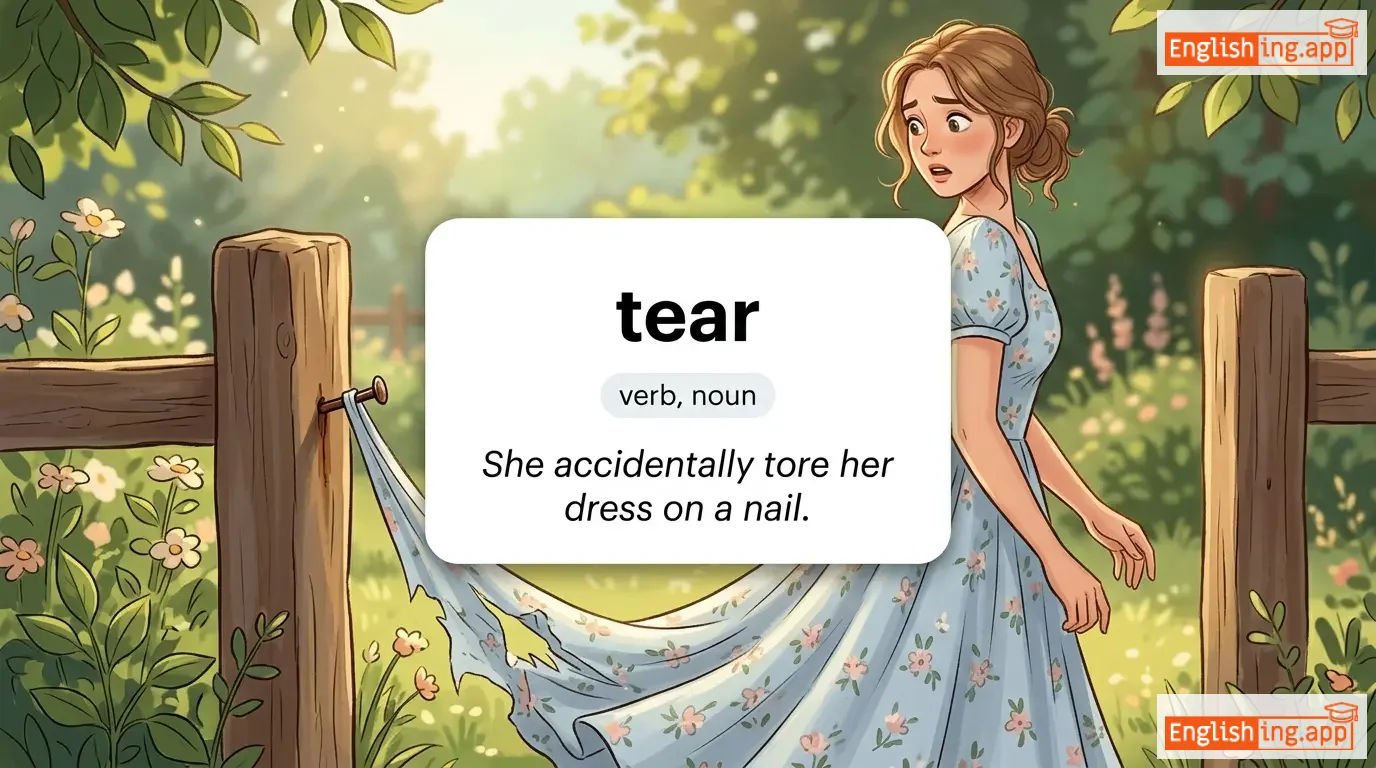
As a verb: to pull apart or rip something. As a noun: a drop of clear salty liquid produced by glands in your eyes.
••••••
|
She accidentally tore her dress on a nail. |
- •••••• |
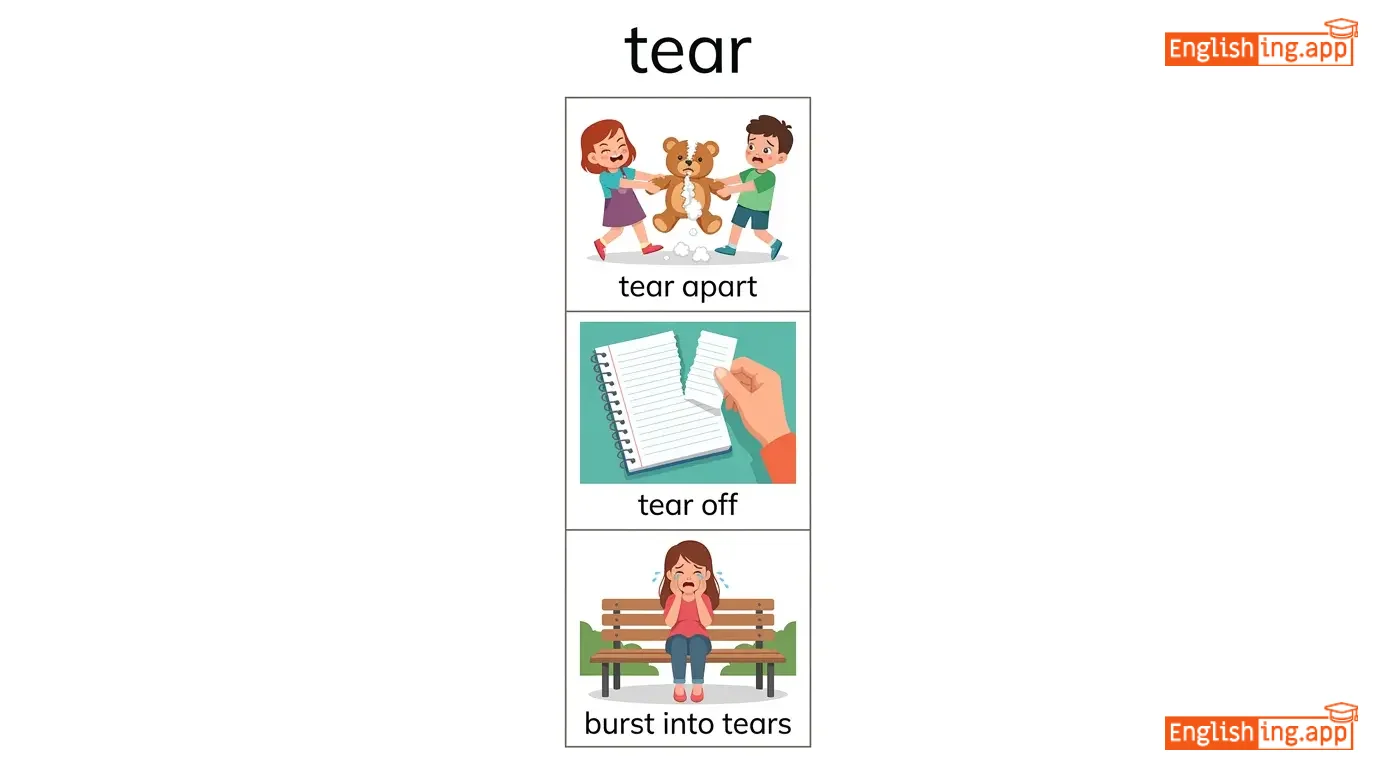
tear apart |
To destroy, separate, or damage severely.
••••••
|
- •••••• |
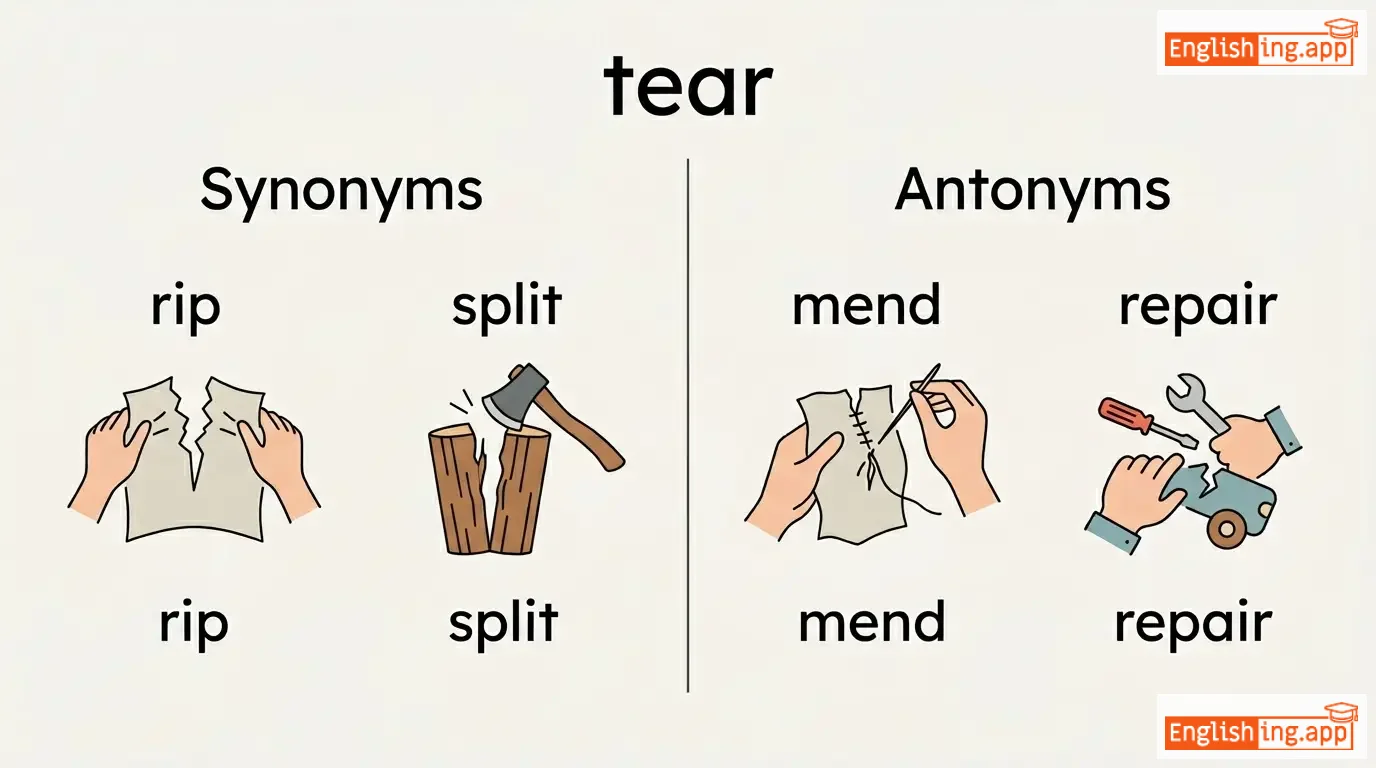
rip, split, shred, rend, pull
••••••
|
mend, repair
••••••
|
tear apart, tear off, burst into tears, tear down
••••••
|
No •••••• |
|
#0
🧑🦱
|
/tiːn/
noun
(ティーンエイジャー)
••••••
|
- •••••• |
ティーンエイジャー
tiin'eijaa
••••••
|
- •••••• | - •••••• | - •••••• | - •••••• |
a person aged between 13 and 19 years.
••••••
|
He's a teenager who loves sports.
彼はスポーツが好きなティーンエイジャーです。
••••••
|
彼はスポーツが好きなティーンエイジャーです。
Kare wa supootsu ga sukina tiin'eijaa desu.
••••••
|
- •••••• | - •••••• | - •••••• |
adolescent, young person, minor
••••••
|
adult, senior, elder
••••••
|
teen years, teen life, teenage
••••••
|
Teen is the age when you are 'teen' years old!
••••••
|
|
#0
🌱
|
/tɛnd/
verb
(テンド)
••••••
|
- •••••• |
傾向がある/世話をする
keikou ga aru/sewa o suru
••••••
|
tended
テンデッド
••••••
|
tended
テンデッド
••••••
|
tends
テンドス
••••••
|
tending
テンディング
••••••
|
To regularly behave in a particular way or to take care of something.
••••••
|
She tends to wake up early in the morning.
彼女は朝早く起きる傾向があります。
••••••
|
彼女は朝早く起きる傾向があります。
Kanojo wa asa hayaku okiru keikou ga arimasu.
••••••
|
tend to
傾向がある
••••••
|
To be likely to do something or to have a certain characteristic.
••••••
|
傾向がある
keikou ga aru
••••••
|
care for, look after, lean, incline, nurture
••••••
|
ignore, neglect
••••••
|
tend to, tend animals, tend plants, tend carefully
••••••
|
Tendは傾向、または世話をする意味です。
••••••
|
|
#0
⛺
|
/tent/
noun
(テント)
••••••
|
- •••••• |
テント
tento
••••••
|
- •••••• | - •••••• | - •••••• | - •••••• |
a portable shelter made of cloth or canvas; military accommodation
••••••
|
The soldiers set up their tent in the military camp.
兵士たちは軍のキャンプでテントを設置した。
••••••
|
兵士たちは軍のキャンプでテントを設置した。
Heishitachi wa gun no kyanpu de tento o secchi shita.
••••••
|
- •••••• | - •••••• | - •••••• |
shelter, pavilion, canvas shelter
••••••
|
permanent structure, building
••••••
|
military tent, field tent, tent camp, army tent
••••••
|
In Japanese, 'テント' (tento) is a direct borrowing from the English word 'tent'. Imagine soldiers setting up their 'tento'!
••••••
|
|
#0
📚
|
/tɜːm/
noun
(ターム)
••••••
|
- •••••• |
用語
yōgo
••••••
|
- •••••• | - •••••• | - •••••• | - •••••• |
a word or phrase used to describe a thing or to express a concept
••••••
|
The term 'machine learning' is commonly used in technology. |
「機械学習」という用語は、技術分野で広く使われています。
'Kikai gakushū' to iu yōgo wa, gijutsu bun'ya de hiroku tsukawareteimasu.
••••••
|
- •••••• | - •••••• | - •••••• |
expression, phrase, label, designation
••••••
|
ambiguity, vagueness
••••••
|
technical term, common term, legal term
••••••
|
TERM used to mark something - ‘用語’ is used to describe something.
••••••
|
|
#0
🔼
|
/ðæn/
conjunction
(ザン)
••••••
|
- •••••• |
より
yori
••••••
|
- •••••• | - •••••• | - •••••• | - •••••• |
used to introduce the second element in a comparison
••••••
|
She is taller than her brother.
彼女は彼女の兄よりも背が高い。
••••••
|
彼女は彼女の兄よりも背が高い。
Kanojo wa kanojo no ani yori mo se ga takai.
••••••
|
- •••••• | - •••••• | - •••••• |
more than, compared to, as opposed to
••••••
|
less than
••••••
|
greater than, more than, better than
••••••
|
Than means you compare one thing with another
••••••
|
|
#0
👉
|
/ðæt/
pronoun
(ðæt)
••••••
|
- •••••• |
それ
sore
••••••
|
- •••••• | - •••••• | - •••••• | - •••••• |
used to identify a specific person or thing observed or heard
••••••
|
That is my book on the table.
それは私の本です、テーブルの上に。
••••••
|
それは私の本です、テーブルの上に。
Sore wa watashi no hon desu, tēburu no ue ni.
••••••
|
- •••••• | - •••••• | - •••••• |
this, it, the one
••••••
|
those, these
••••••
|
that book, that person, that idea
••••••
|
That - それ (Sore) 本はテーブルの上
••••••
|
|
#0
👥
|
/ðɛm/
pronoun
(ðɛm)
••••••
|
- •••••• |
彼ら
karera
••••••
|
- •••••• | - •••••• | - •••••• | - •••••• |
used to refer to people or things previously mentioned or easily identified
••••••
|
I saw them at the park yesterday. |
昨日、公園で彼らを見かけました。
Kinō, kōen de karera o mikakemashita.
••••••
|
- •••••• | - •••••• | - •••••• |
they, those, these
••••••
|
none
••••••
|
see them, tell them, help them
••••••
|
彼ら (them) はどこにでもいます!
••••••
|
|
#0
⏳
|
/ðɛn/
adverb
(zen)
••••••
|
- •••••• |
それから
sorekara
••••••
|
- •••••• | - •••••• | - •••••• | - •••••• |
at that time; next in order of time or place
••••••
|
We went to the park, and then we had lunch.
公園に行って、その後昼食をとりました。
••••••
|
公園に行って、その後昼食をとりました。
Kōen ni itte, sono ato chūshoku o torimashita.
••••••
|
back then
その時
••••••
|
used to refer to a time in the past
••••••
|
その時
sono toki
••••••
|
afterward, subsequently, later, next
••••••
|
before
••••••
|
then what, then go, then what happened
••••••
|
それから (then) 過去の時間を思い出すために
••••••
|
|
#0
👫
|
/ðeɪ/
pronoun
(ðeɪ)
••••••
|
- •••••• |
彼ら
karera
••••••
|
- •••••• | - •••••• | - •••••• | - •••••• |
used to refer to people or things previously mentioned or easily identified
••••••
|
They are going to the park. |
彼らは公園に行きます。
Karera wa kōen ni ikimasu.
••••••
|
- •••••• | - •••••• | - •••••• |
them, those, these
••••••
|
I, we
••••••
|
they are, they have, they will
••••••
|
They are our friends - 彼らは私たちの友達です。
••••••
|
|
#0
📏
|
/θɪn/
adjective
(θin)
••••••
|
- •••••• |
薄い; 細い
usui; hosoi
••••••
|
- •••••• | - •••••• | - •••••• | - •••••• |
having little thickness; not thick; slender
••••••
|
She wore a thin jacket in the cold weather.
彼女は寒い天気で薄いジャケットを着ていました。
••••••
|
彼女は寒い天気で薄いジャケットを着ていました。
kanojo wa samui tenki de usui jaketto o kite imashita
••••••
|
- •••••• | - •••••• | - •••••• |
slender, slim, narrow, skinny
••••••
|
thick, fat, wide, broad
••••••
|
thin layer, thin ice, thin air, thin line
••••••
|
薄いと細い — 紙のように薄い。
••••••
|
|
#0
📖
|
/ðɪs/
pronoun
(ディス)
••••••
|
- •••••• |
これ
kore
••••••
|
- •••••• | - •••••• | - •••••• | - •••••• |
used to refer to a person or thing that is close or near in space, time, or thought
••••••
|
This is my favorite book. |
これは私のお気に入りの本です。
Kore wa watashi no okiniiri no hon desu.
••••••
|
- •••••• | - •••••• | - •••••• |
this one, here, these
••••••
|
that, those
••••••
|
this book, this place, this idea
••••••
|
これ (kore) はあなたの近くにあるものを指すときに使います。
••••••
|
|
#0
➡️
|
/ðʌs/
adverb
(ðʌs)
••••••
|
- •••••• |
このように
kono you ni
••••••
|
- •••••• | - •••••• | - •••••• | - •••••• |
as a result or consequence of something previously stated
••••••
|
He was late, thus he missed the meeting. |
彼は遅れたので、このように会議を欠席しました。
Kare wa okureta node, kono you ni kaigi o kesseki shimashita.
••••••
|
- •••••• | - •••••• | - •••••• |
therefore, hence, accordingly, so
••••••
|
however, nevertheless
••••••
|
thus far, thus far as, thus it is
••••••
|
このようにして、解決策を見つけよう。
••••••
|
|
#0
🌊
|
/taɪd/
noun
(taɪd)
••••••
|
- •••••• |
潮の干満
shio no kanman
••••••
|
- •••••• | - •••••• | - •••••• | - •••••• |
the regular rise and fall of the sea caused by the moon and sun's gravity; a powerful flow or movement
••••••
|
The fisherman waited for the tide to come in. |
漁師は潮の干満が来るのを待っていました。
Gyoshi wa shio no kanman ga kuru no o matte imashita.
••••••
|
turn the tide |
to cause a reversal of fortune or change in direction
••••••
|
潮流を変える
chōryū o kaeru
••••••
|
current, flow, surge, stream, wave
••••••
|
ebb, stillness, stagnation
••••••
|
high tide, low tide, rising tide, ebb tide
••••••
|
潮の干満 = 海の周期的な変化 - 潮の干満は時間とともに繰り返し来る。
••••••
|
|
#0
⏰
|
/tɪl/
preposition
(ティル)
••••••
|
- •••••• |
まで
made
••••••
|
- •••••• | - •••••• | - •••••• | - •••••• |
up to the time of; until
••••••
|
She waited till midnight for his call.
彼女は彼の電話を夜中まで待ちました。
••••••
|
彼女は彼の電話を夜中まで待ちました。
Kanojo wa kare no denwa o yonaka made machimashita.
••••••
|
- •••••• | - •••••• | - •••••• |
until, up to, before, pending
••••••
|
after, since
••••••
|
till now, till late, till tomorrow, wait till
••••••
|
Till は 'まで' を意味します — 夜中まで電話を待つ。
••••••
|
Vocabulary Quiz
Test your vocabulary by matching words with their translations or meanings.
Login to take the quiz
Comments (0)
Share your thoughts and join the discussion.
Join the discussion by logging in
Login to CommentNo comments yet
Be the first to share your thoughts!