

De pie para el río
Standing Tall for the River
Apareció la tail de un delfín en la curva del río. Los lugareños contaron un tale de antiguas inundaciones. La nueva torre de inundación se erguía tall de manera impresionante. Se distribuyó agua pura desde el tank comunitario. Los voluntarios dibujaron mapas con papel y tape. Las fotos del pasado trajeron una tear a los ojos de todos. Un grupo de estudiantes teen recogió plástico del río. Siguen tendiendo los árboles a orillas del río. Las grandes tents daban sombra al campamento del sol. La reunión advirtió que algunos riesgos tienen efectos a largo term. Los voluntarios dijeron que necesitaban actuar con más propósito than antes. 'Este río es that símbolo de fortaleza', declaró el presidente. 'Sin them no podemos tener éxito', dijeron los aldeanos sobre sus aliados. 'A partir de then, comenzaremos un verdadero cambio', añadió el presidente. Los niños prometieron que they vigilarían cada noche. Las bolsas de arena reforzaron los bordes thin del terraplén. 'Podemos hacer this', gritó todo el equipo. Thus, la reunión decidió formar un comité permanente. Se analizaron los datos de la tide a través de sensores. Los voluntarios trabajaron till la noche para terminar la limpieza.
Traducción
Pasado
Participio Pasado
Tercera Persona Singular
Gerundio
Meaning
Oración de Ejemplo
Traducción de Oración de Ejemplo
Synonyms
Antonyms
Colocaciones
Mnemotécnico
Swipe left or right, or use the buttons. Tap image to zoom.
Traducción de Oración de Ejemplo
Palabra
Standing Tall for the RiverStanding Tall for the River - Alternar Máscara
|
Emoji
|
Palabra | Images | Traducción | Pasado | Participio Pasado | Tercera Persona Singular | Gerundio | Meaning | Oración de Ejemplo | Traducción de Oración de Ejemplo | Example Expression | Significado de Expresión de Ejemplo | Traducción de Expresión de Ejemplo | Synonyms | Antonyms | Colocaciones | Mnemotécnico |
|---|---|---|---|---|---|---|---|---|---|---|---|---|---|---|---|---|---|
|
#0
🐕
|
/teɪl/
noun
(teyl)
••••••
|
- •••••• |
cola
kola
••••••
|
- •••••• | - •••••• | - •••••• | - •••••• |
the rear part of an animal that extends from the back or bottom
••••••
|
The dog wagged its tail happily when it saw its owner. |
El perro movió su cola felizmente cuando vio a su dueño.
El perro movió su kola felizmente cuando vio a su dueño.
••••••
|
- •••••• | - •••••• | - •••••• |
rear, end, appendage
••••••
|
head, front
••••••
|
dog tail, long tail, wagging tail, tail feathers
••••••
|
Cola = tail in Spanish, and both are wagged with joy!
••••••
|
|
#0
📖
|
/teɪl/
noun
(teɪl)
••••••
|
- •••••• |
cuento
cuento
••••••
|
- •••••• | - •••••• | - •••••• | - •••••• |
a narrative of imaginary events, especially one that is presented as true
••••••
|
The old man told a tale of his adventures. |
El anciano contó un cuento de sus aventuras.
El anciano contó un cuento de sus aventuras.
••••••
|
tall tale |
an exaggerated story, often one that is not true
••••••
|
cuento exagerado
cuento exagerado
••••••
|
story, narrative, legend, fable
••••••
|
fact, truth
••••••
|
fairy tale, tall tale, bedtime tale
••••••
|
cuento (cuento) contado desde la imaginación, donde todo es posible - A tale told from imagination, where everything is possible
••••••
|
|
#0
📏
|
/tɔːl/
adjective
(tól)
••••••
|
- •••••• |
alto
alto
••••••
|
- •••••• | - •••••• | - •••••• | - •••••• |
having a greater than average height
••••••
|
He is the tallest player on the team. |
Él es el jugador más alto del equipo.
El es el jugador más alto del equipo.
••••••
|
tall order |
a difficult or challenging task
••••••
|
una tarea difícil
una tarea difícil
••••••
|
high, lofty, towering, elevated
••••••
|
short, small, low
••••••
|
tall building, tall person, tall story, tall tree
••••••
|
Tall significa alto, como la torre más alta.
••••••
|
|
#0
🚙
|
/tæŋk/
noun
(tank)
••••••
|
- •••••• |
tanque
tanke
••••••
|
- •••••• | - •••••• | - •••••• | - •••••• |
a large, heavy military vehicle that moves on tracks and is armed with weapons
••••••
|
The army sent tanks to the front lines.
El ejercito envio tanques a las lineas del frente.
••••••
|
El ejército envió tanques a las líneas del frente.
El ejercito envio tanques a las lineas del frente
••••••
|
- •••••• | - •••••• | - •••••• |
armored vehicle, combat vehicle, war machine
••••••
|
car, bicycle
••••••
|
military tank, battle tank, army tank
••••••
|
Imagine a tank with a big sign that reads TANQUE, a friendly bridge between English tank and Spanish tanque
••••••
|
|
#0
📼
|
/teɪp/
noun
(teyp)
••••••
|
- •••••• |
cinta
cinta
••••••
|
- •••••• | - •••••• | - •••••• | - •••••• |
a long, narrow strip of material, often sticky on one side, used for fastening or sticking things together
••••••
|
I need some tape to seal this box. |
Necesito algo de cinta para sellar esta caja.
Necesito algo de cinta para sellar esta caja.
••••••
|
- •••••• | - •••••• | - •••••• |
adhesive, sticky tape, masking tape, sellotape
••••••
|
scissors, unstick
••••••
|
scotch tape, masking tape, duct tape, adhesive tape
••••••
|
Tape it up to seal it tight!
••••••
|
|
#0
💧
|
/tɪər/ (noun: liquid) /tɛər/ (verb: rip)
verb, noun
(tír)
••••••
|
|
lágrima / rasgar
lagrima / rasgar
••••••
|
tore
tór
••••••
|
torn
torn
••••••
|
tears
tírs
••••••
|
tearing
tíring
••••••
|
As a verb: to pull apart or rip something. As a noun: a drop of clear salty liquid produced by glands in your eyes.
••••••
|
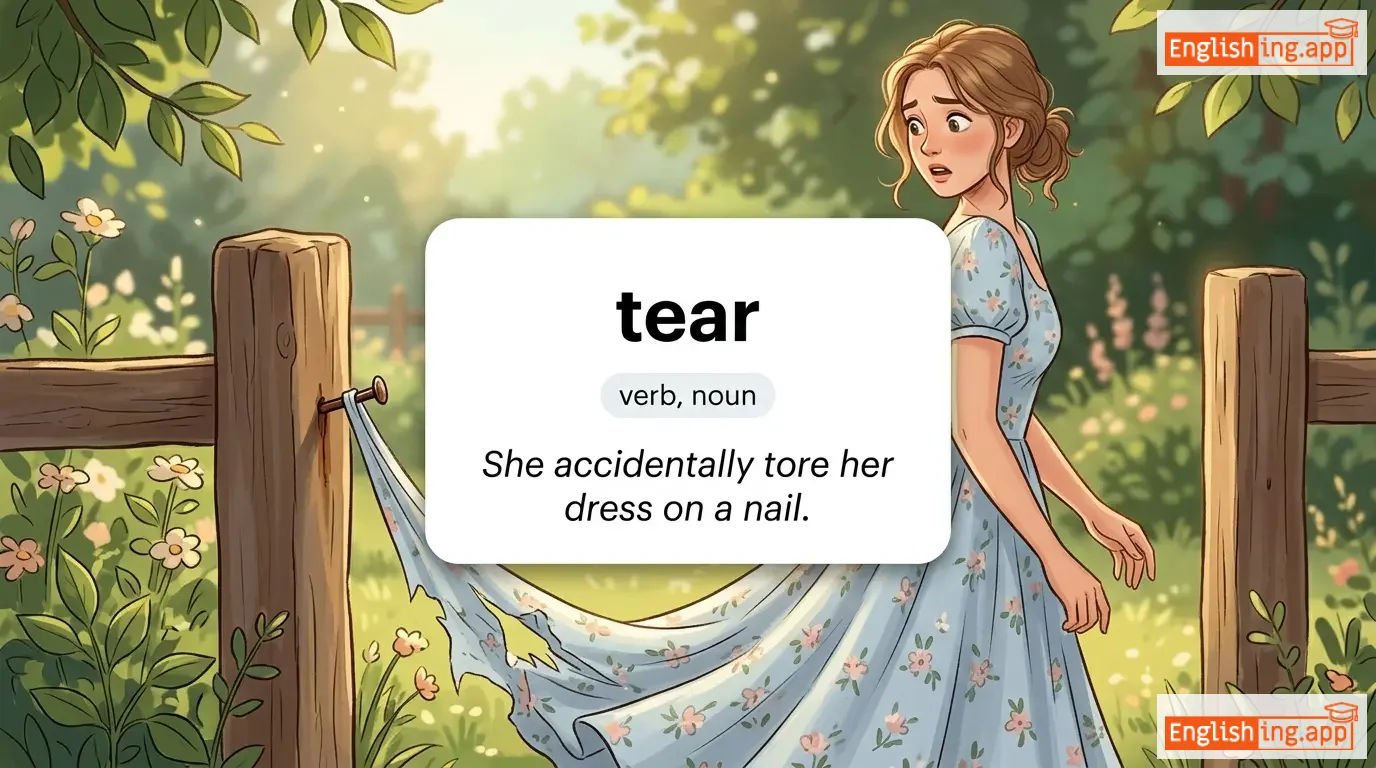
She accidentally tore her dress on a nail.
Ella accidentalmente rompió su vestido con un clavo.
••••••
|
Ella accidentalmente rompió su vestido con un clavo.
Ella accidentalmente rompió su vestido con un clavo.
••••••
|
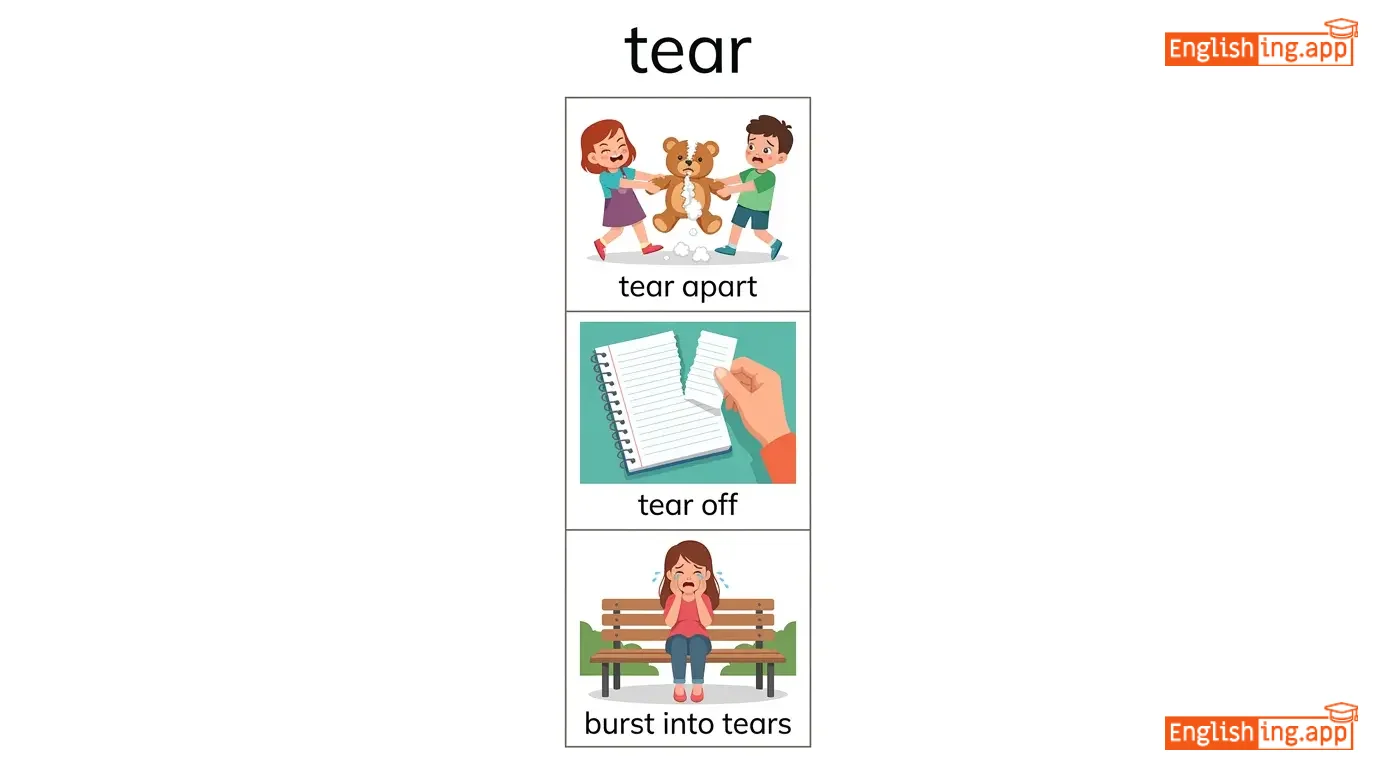
tear apart
tear apart
••••••
|
To destroy, separate, or damage severely.
••••••
|
desgarrar
desgarrar
••••••
|
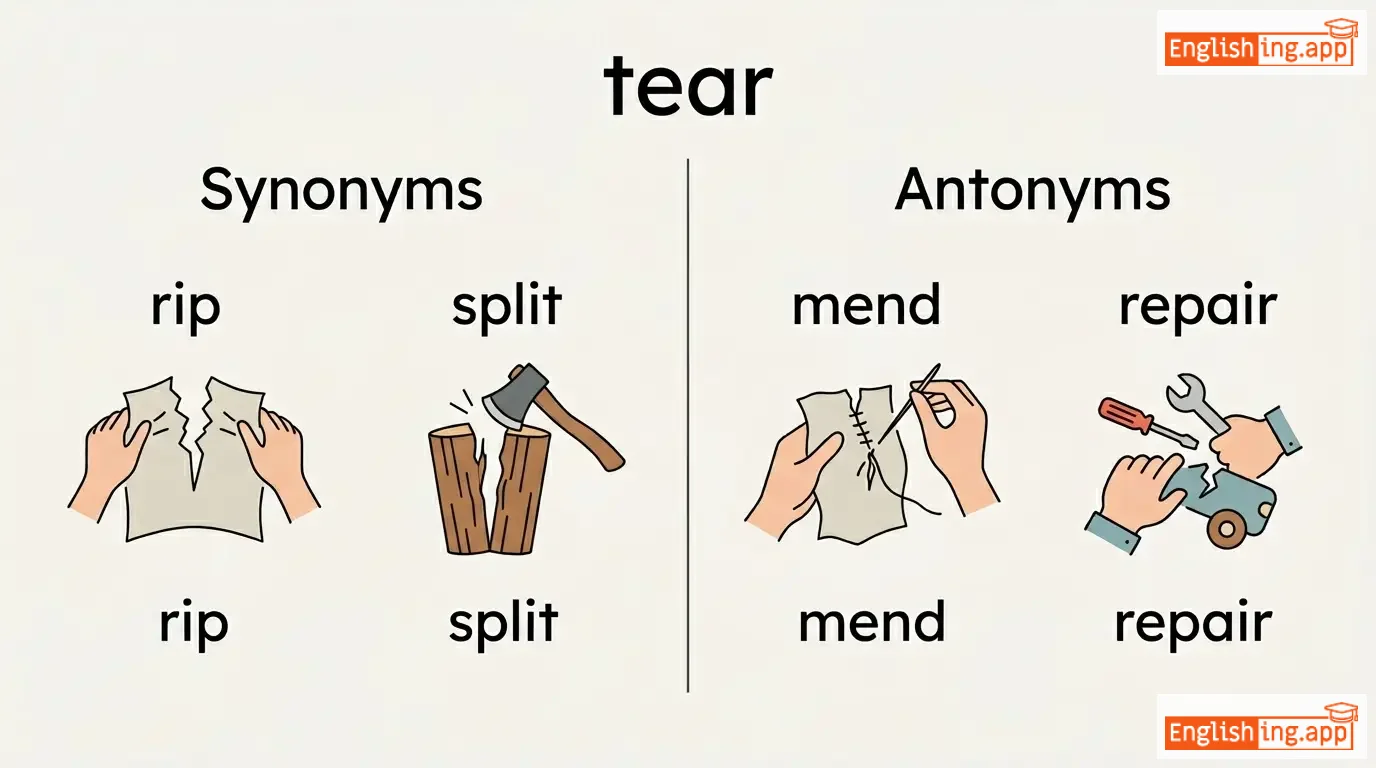
rip, split, shred, rend, pull
••••••
|
mend, repair
••••••
|
tear apart, tear off, burst into tears, tear down
••••••
|
Tear en inglés significa lágrimas (lagrima) y rasgar (rasgar) algo
••••••
|
|
#0
🧑🦱
|
/tiːn/
noun
(tíner)
••••••
|
- •••••• |
adolescente
adolescente
••••••
|
- •••••• | - •••••• | - •••••• | - •••••• |
a person aged between 13 and 19 years.
••••••
|
He's a teenager who loves sports.
Él es un adolescente que ama los deportes.
••••••
|
Él es un adolescente que ama los deportes.
El es un adolescente que ama los deportes.
••••••
|
- •••••• | - •••••• | - •••••• |
adolescent, young person, minor
••••••
|
adult, senior, elder
••••••
|
teen years, teen life, teenage
••••••
|
Teen is the age when you are 'teen' years old!
••••••
|
|
#0
🌱
|
/tɛnd/
verb
(tend)
••••••
|
- •••••• |
tender/cuidar
tender/cuidar
••••••
|
tended
tended
••••••
|
tended
tended
••••••
|
tends
tends
••••••
|
tending
tending
••••••
|
To regularly behave in a particular way or to take care of something.
••••••
|
She tends to wake up early in the morning.
ella tiende a despertar temprano en la mañana.
••••••
|
Ella tiende a despertarse temprano en la mañana.
Ella tiende a despertarse temprano en la mañana.
••••••
|
tend to
tener la tendencia de
••••••
|
To be likely to do something or to have a certain characteristic.
••••••
|
tener la tendencia de
tener la tendencia de
••••••
|
care for, look after, lean, incline, nurture
••••••
|
ignore, neglect
••••••
|
tend to, tend animals, tend plants, tend carefully
••••••
|
Tend es similar a tendencia: algo habitual o relacionado con el cuidado.
••••••
|
|
#0
⛺
|
/tent/
noun
(tént)
••••••
|
- •••••• |
tienda
tienda
••••••
|
- •••••• | - •••••• | - •••••• | - •••••• |
a portable shelter made of cloth or canvas; military accommodation
••••••
|
The soldiers set up their tent in the military camp.
Los soldados montaron su tienda en el campamento militar.
••••••
|
Los soldados montaron su tienda en el campamento militar.
Los soldados montaron su tienda en el campamento militar.
••••••
|
- •••••• | - •••••• | - •••••• |
shelter, pavilion, canvas shelter
••••••
|
permanent structure, building
••••••
|
military tent, field tent, tent camp, army tent
••••••
|
A 'tienda' is a shop or a tent in Spanish; imagine shopping for shelter in a tent!
••••••
|
|
#0
📚
|
/tɜːm/
noun
(tɜːrm)
••••••
|
- •••••• |
término
termino
••••••
|
- •••••• | - •••••• | - •••••• | - •••••• |
a word or phrase used to describe a thing or to express a concept
••••••
|
The term 'machine learning' is commonly used in technology. |
El término 'aprendizaje automático' se usa comúnmente en la tecnología.
El termino 'aprendizaje automatico' se usa comunmente en la tecnologia.
••••••
|
- •••••• | - •••••• | - •••••• |
expression, phrase, label, designation
••••••
|
ambiguity, vagueness
••••••
|
technical term, common term, legal term
••••••
|
TERM to mark a concept - ‘término’ is the term used to describe a thing.
••••••
|
|
#0
🔼
|
/ðæn/
conjunction
(than)
••••••
|
- •••••• |
que
que
••••••
|
- •••••• | - •••••• | - •••••• | - •••••• |
used to introduce the second element in a comparison
••••••
|
She is taller than her brother.
Ella es más alta que su hermano.
••••••
|
Ella es más alta que su hermano.
Ella es más alta que su hermano.
••••••
|
- •••••• | - •••••• | - •••••• |
more than, compared to, as opposed to
••••••
|
less than
••••••
|
greater than, more than, better than
••••••
|
Than means you compare one thing with another
••••••
|
|
#0
👉
|
/ðæt/
pronoun
(ðæt)
••••••
|
- •••••• |
ese
ese
••••••
|
- •••••• | - •••••• | - •••••• | - •••••• |
used to identify a specific person or thing observed or heard
••••••
|
That is my book on the table.
Ese es mi libro en la mesa.
••••••
|
Ese es mi libro en la mesa.
Ese es mi libro en la mesa.
••••••
|
- •••••• | - •••••• | - •••••• |
this, it, the one
••••••
|
those, these
••••••
|
that book, that person, that idea
••••••
|
That - Esto (Esto) está sobre la mesa
••••••
|
|
#0
👥
|
/ðɛm/
pronoun
(ðɛm)
••••••
|
- •••••• |
ellos
ellos
••••••
|
- •••••• | - •••••• | - •••••• | - •••••• |
used to refer to people or things previously mentioned or easily identified
••••••
|
I saw them at the park yesterday. |
Los vi a ellos en el parque ayer.
Los vi a ellos en el parque ayer.
••••••
|
- •••••• | - •••••• | - •••••• |
they, those, these
••••••
|
none
••••••
|
see them, tell them, help them
••••••
|
Ellos (them) son fáciles de recordar en cualquier lugar.
••••••
|
|
#0
⏳
|
/ðɛn/
adverb
(zen)
••••••
|
- •••••• |
entonces
entonces
••••••
|
- •••••• | - •••••• | - •••••• | - •••••• |
at that time; next in order of time or place
••••••
|
We went to the park, and then we had lunch.
Fuimos al parque, y luego comimos.
••••••
|
Fuimos al parque, y luego comimos.
Fuimos al parque, y luego comimos.
••••••
|
back then
en ese entonces
••••••
|
used to refer to a time in the past
••••••
|
en ese entonces
en ese entonces
••••••
|
afterward, subsequently, later, next
••••••
|
before
••••••
|
then what, then go, then what happened
••••••
|
Entonces (then) para recordar el tiempo en el pasado
••••••
|
|
#0
👫
|
/ðeɪ/
pronoun
(ðeɪ)
••••••
|
- •••••• |
ellos
ellos
••••••
|
- •••••• | - •••••• | - •••••• | - •••••• |
used to refer to people or things previously mentioned or easily identified
••••••
|
They are going to the park. |
Ellos van al parque.
Ellos van al parque.
••••••
|
- •••••• | - •••••• | - •••••• |
them, those, these
••••••
|
I, we
••••••
|
they are, they have, they will
••••••
|
They are our friends - Ellos son nuestros amigos.
••••••
|
|
#0
📏
|
/θɪn/
adjective
(θin)
••••••
|
- •••••• |
delgado; estrecho
delgado; estrecho
••••••
|
- •••••• | - •••••• | - •••••• | - •••••• |
having little thickness; not thick; slender
••••••
|
She wore a thin jacket in the cold weather.
Ella llevaba una chaqueta delgada en el clima frío.
••••••
|
Ella llevaba una chaqueta delgada en el clima frío.
ella llevaba una chaqueta delgada en el clima frio
••••••
|
- •••••• | - •••••• | - •••••• |
slender, slim, narrow, skinny
••••••
|
thick, fat, wide, broad
••••••
|
thin layer, thin ice, thin air, thin line
••••••
|
delgado y estrecho, como una hoja de papel.
••••••
|
|
#0
📖
|
/ðɪs/
pronoun
(dis)
••••••
|
- •••••• |
esto
esto
••••••
|
- •••••• | - •••••• | - •••••• | - •••••• |
used to refer to a person or thing that is close or near in space, time, or thought
••••••
|
This is my favorite book. |
Este es mi libro favorito.
Este es mi libro favorito.
••••••
|
- •••••• | - •••••• | - •••••• |
this one, here, these
••••••
|
that, those
••••••
|
this book, this place, this idea
••••••
|
Recuerda 'esto' como lo más cercano a ti en espacio o pensamiento.
••••••
|
|
#0
➡️
|
/ðʌs/
adverb
(zas)
••••••
|
- •••••• |
así
asi
••••••
|
- •••••• | - •••••• | - •••••• | - •••••• |
as a result or consequence of something previously stated
••••••
|
He was late, thus he missed the meeting. |
Llegó tarde, así que se perdió la reunión.
Llego tarde, asi que se perdio la reunion.
••••••
|
- •••••• | - •••••• | - •••••• |
therefore, hence, accordingly, so
••••••
|
however, nevertheless
••••••
|
thus far, thus far as, thus it is
••••••
|
Así se concluye el tema.
••••••
|
|
#0
🌊
|
/taɪd/
noun
(taɪd)
••••••
|
- •••••• |
marea
marea
••••••
|
- •••••• | - •••••• | - •••••• | - •••••• |
the regular rise and fall of the sea caused by the moon and sun's gravity; a powerful flow or movement
••••••
|
The fisherman waited for the tide to come in. |
El pescador esperó a que llegara la marea.
El pescador esperó a que llegara la marea.
••••••
|
turn the tide |
to cause a reversal of fortune or change in direction
••••••
|
cambiar la marea
cambiar la marea
••••••
|
current, flow, surge, stream, wave
••••••
|
ebb, stillness, stagnation
••••••
|
high tide, low tide, rising tide, ebb tide
••••••
|
Marea = el flujo de la marea - marea va y viene con el tiempo.
••••••
|
|
#0
⏰
|
/tɪl/
preposition
(til)
••••••
|
- •••••• |
hasta
hasta
••••••
|
- •••••• | - •••••• | - •••••• | - •••••• |
up to the time of; until
••••••
|
She waited till midnight for his call.
Ella esperó hasta la medianoche por su llamada.
••••••
|
Ella esperó hasta la medianoche por su llamada.
Ella esperó hasta la medianoche por su llamada.
••••••
|
- •••••• | - •••••• | - •••••• |
until, up to, before, pending
••••••
|
after, since
••••••
|
till now, till late, till tomorrow, wait till
••••••
|
Till significa 'hasta' — espera hasta la medianoche para recibir la llamada.
••••••
|
Vocabulary Quiz
Test your vocabulary by matching words with their translations or meanings.
Login to take the quiz
Comments (0)
Share your thoughts and join the discussion.
Join the discussion by logging in
Login to CommentNo comments yet
Be the first to share your thoughts!