

Ensayo de escenario a medianoche
Midnight Stage Rehearsal
Fuera del estudio, los niños gritaron 'hey' para dar la bienvenida a los artistas. Durante el ensayo, un boom de luz accidentalmente hit el poste del escenario. El director Nahid pidió al elenco que compartiera un hug grupal. La productora Nargis se rió, 'huh, nunca he visto tanta energía.' El aire en el set estaba frío, así que pusieron una máquina de ice para el vapor. La actriz Ria estuvo ill ayer, pero ahora se siente fuerte. El escritor dijo, 'its heart es la amistad.' Se hicieron bromas sobre la fuerte línea de jaw del camarógrafo Sam. Un dron voló por encima en estilo jet. El ingeniero de sonido Yahya compartió consejos de mezcla de su amigo, un respetado compositor Jew. La luz roja key iluminó toda la escena. Los bailarines usaron tiza para lay un círculo en el suelo. Antes de la escena de lucha, todos estiraron sus músculos de leg. Cerraron la tapa del set lid y guardaron los accesorios. El maquillador ajustó el tono audaz de lip. Un carpintero cortó un log de madera para construir el fondo rápidamente. Se agregó una nueva lot de momentos cómicos para la audiencia. Incluso tarde en la noche, nadie se sintió low de energía. El director de la obra dijo: 'Cuando me pongo emocional, me vuelvo un poco mad, pero sigo adelante.' Añadió: 'El próximo May llevamos este show de gira.'
Traducción
Pasado
Participio Pasado
Tercera Persona Singular
Gerundio
Meaning
Oración de Ejemplo
Traducción de Oración de Ejemplo
Synonyms
Antonyms
Colocaciones
Mnemotécnico
Swipe left or right, or use the buttons. Tap image to zoom.
Traducción de Oración de Ejemplo
Palabra
Midnight Stage RehearsalMidnight Stage Rehearsal - Alternar Máscara
|
Emoji
|
Palabra | Images | Traducción | Pasado | Participio Pasado | Tercera Persona Singular | Gerundio | Meaning | Oración de Ejemplo | Traducción de Oración de Ejemplo | Example Expression | Significado de Expresión de Ejemplo | Traducción de Expresión de Ejemplo | Synonyms | Antonyms | Colocaciones | Mnemotécnico |
|---|---|---|---|---|---|---|---|---|---|---|---|---|---|---|---|---|---|
|
#0
👋
|
/heɪ/
interjection
(¡Hey!)
••••••
|
- •••••• |
¡Hey!
hey
••••••
|
- •••••• | - •••••• | - •••••• | - •••••• |
used to attract attention, express surprise, or greet someone
••••••
|
Hey, how are you doing today? |
¡Hey, cómo estás hoy?
¡Hey, cómo estás hoy?
••••••
|
- •••••• | - •••••• | - •••••• |
hello, hi, yo, hiya, greetings
••••••
|
goodbye, farewell
••••••
|
hey there, hey you, hey guys, hey man
••••••
|
¡Hey! significa ¡Hola! o cuando necesitas atraer la atención de alguien.
••••••
|
|
#0
💥
|
/hɪt/
verb
(hit)
••••••
|
- •••••• |
golpear
golpear
••••••
|
hit
hit
••••••
|
hit
hit
••••••
|
hits
hits
••••••
|
hitting
hitting
••••••
|
to strike someone or something with force
••••••
|
He accidentally hit the ball into the window.
él accidentalmente golpeó la pelota contra la ventana.
••••••
|
él accidentalmente golpeó la pelota contra la ventana.
Él accidentalmente golpeó la pelota contra la ventana.
••••••
|
hit the nail on the head
dar en el clavo
••••••
|
to describe a situation or problem exactly
••••••
|
dar en el clavo
dar en el clavo
••••••
|
strike, smack, beat, punch, knock
••••••
|
miss, avoid, dodge
••••••
|
hit hard, hit the target, hit the road, hit record
••••••
|
Hit significa golpear, piensa en el béisbol cuando golpeas la pelota para hacer un jonrón
••••••
|
|
#0
🤗
|
/hʌɡ/
verb
(हग)
••••••
|
- •••••• |
abrazar
abrazar
••••••
|
hugged
हगड
••••••
|
hugged
हगड
••••••
|
hugs
हग्स
••••••
|
hugging
हगिंग
••••••
|
to hold someone tightly in your arms to show affection or comfort
••••••
|
She hugged her friend before leaving for the airport.
शी हगड हर फ्रेंड बिफोर लीविंग फॉर द एयरपोर्ट।
••••••
|
Ella abrazó a su amiga antes de irse al aeropuerto.
Ella abrazo a su amiga antes de irse al aeropuerto.
••••••
|
a bear hug
ए बेयर हग
••••••
|
a very tight and affectionate hug
••••••
|
un fuerte abrazo
un fuerte abrazo
••••••
|
embrace, cuddle, hold, squeeze, clasp
••••••
|
ignore, release, separate
••••••
|
give a hug, warm hug, tight hug, hug someone, big hug
••••••
|
Hug significa abrazar, con el corazón.
••••••
|
|
#0
🤔
|
/hʌ/
interjection
(ja)
••••••
|
- •••••• |
¿Qué dijiste?
¿Qué dijiste?
••••••
|
- •••••• | - •••••• | - •••••• | - •••••• |
used to express confusion, surprise, or that you did not hear something
••••••
|
Huh? What did you say? |
¿Ja? ¿Qué dijiste?
¿Ja? ¿Qué dijiste?
••••••
|
- •••••• | - •••••• | - •••••• |
what, pardon, eh, really, oh
••••••
|
none, silence
••••••
|
say huh, huh expression, confused huh, huh reaction
••••••
|
Si no entiendes algo, usa 'Huh?' — significa '¿Qué dijiste?'
••••••
|
|
#0
🧊
|
/aɪs/
noun
(áis)
••••••
|
- •••••• |
hielo
yelo
••••••
|
- •••••• | - •••••• | - •••••• | - •••••• |
frozen water, a solid form of water
••••••
|
The lake was covered with thick ice in winter. |
El lago estaba cubierto de grueso hielo en invierno.
El lago estaba cubierto de grueso hielo en invierno.
••••••
|
break the ice |
to start a conversation in a social situation
••••••
|
romper el hielo
romper el hielo
••••••
|
frost, snow, glacier, icicle
••••••
|
heat, fire
••••••
|
ice cubes, ice cream, ice skating, thin ice
••••••
|
Ice = Hielo, como en el helado 🍦
••••••
|
|
#0
🤒
|
/ɪl/
adjective
(il)
••••••
|
- •••••• |
enfermo
enfermo
••••••
|
- •••••• | - •••••• | - •••••• | - •••••• |
Not in good health; sick or unwell.
••••••
|
He has been feeling ill since yesterday. |
Ha estado sintiéndose enfermo desde ayer.
Ha estado sintiéndose enfermo desde ayer.
••••••
|
ill at ease |
feeling uncomfortable or uneasy
••••••
|
malestar
malestar
••••••
|
sick, unwell, unhealthy, ailing
••••••
|
healthy, well, fine
••••••
|
feel ill, fall ill, ill health, ill effects
••••••
|
Ill significa enfermo, recuerda 'ill' es igual a enfermo 🤒.
••••••
|
|
#0
🔗
|
/ɪts/
pronoun
(its)
••••••
|
- •••••• |
su
su
••••••
|
- •••••• | - •••••• | - •••••• | - •••••• |
Belonging to or associated with a thing previously mentioned.
••••••
|
The company changed its logo last year.
La compañía cambió su logo el año pasado.
••••••
|
La compañía cambió su logo el año pasado.
La compañía cambió su logo el año pasado.
••••••
|
- •••••• | - •••••• | - •••••• |
belonging, owned by, related to
••••••
|
others, theirs
••••••
|
its value, its name, its purpose, its role
••••••
|
Its significa su, como en 'dog its tail' significa la cola de su perro.
••••••
|
|
#0
🦷
|
/dʒɔː/
noun
(yao)
••••••
|
- •••••• |
mandíbula
mandibula
••••••
|
- •••••• | - •••••• | - •••••• | - •••••• |
the lower movable bone of the face that holds the teeth; the mouth area used for chewing and talking
••••••
|
The dentist examined my jaw for any signs of pain.
El dentista examinó mi mandíbula en busca de signos de dolor.
••••••
|
El dentista examinó mi mandíbula en busca de signos de dolor.
El dentista examino mi mandibula en busca de signos de dolor.
••••••
|
drop one's jaw
dejar caer la mandíbula
••••••
|
to be extremely surprised or shocked
••••••
|
quedarse extremadamente sorprendido o asombrado
quedarse extremadamente sorprendido o asombrado
••••••
|
chin, mouth, mandible, muzzle, jowl
••••••
|
skull, cranium
••••••
|
strong jaw, clenched jaw, jaw pain, square jaw, lower jaw
••••••
|
Mandíbula (Jaw) significa mandíbula — ¡la mandíbula se mueve cuando hablamos o masticamos!
••••••
|
|
#0
✈️
|
/dʒɛt/
noun, verb
(hápiness)
••••••
|
- •••••• |
felicidad
felicidad
••••••
|
jetted
••••••
|
jetted
••••••
|
jets
••••••
|
jetting
••••••
|
A fast aircraft powered by jet engines; to travel by jet plane.
••••••
|
They jetted off to Paris for the weekend.
Ella no pudo ocultar su felicidad cuando recibió el premio.
••••••
|
Ella no pudo ocultar su felicidad cuando recibió el premio.
Ella no pudo ocultar su felicidad cuando recibió el premio.
••••••
|
jet set
búsqueda de la felicidad
••••••
|
wealthy people who travel frequently for pleasure
••••••
|
búsqueda de la felicidad
búsqueda de la felicidad
••••••
|
airplane, aircraft, plane, flyer
••••••
|
propeller plane, subsonic flight
••••••
|
jet engine, private jet, jet plane, jet lag
••••••
|
Felicidad suena a felice, ¡como en la cima de un festival!
••••••
|
|
#0
✡️
|
/dʒuː/
noun
(yu)
••••••
|
- •••••• |
judío
judio
••••••
|
- •••••• | - •••••• | - •••••• | - •••••• |
a person whose religion is Judaism or who is of Jewish descent
••••••
|
He is a Jew by heritage and follows Jewish customs. |
Él es judío por herencia y sigue las costumbres judías.
Él es judío por herencia y sigue las costumbres judías.
••••••
|
- •••••• | - •••••• | - •••••• |
Hebrew, Israelite, Semite, Jewish person
••••••
|
gentile, non-Jew
••••••
|
Jewish community, practicing Jew, observant Jew
••••••
|
Judío suena como 'Jew', de la religión judía
••••••
|
|
#0
🔑
|
/kiː/
noun
(ki)
••••••
|
- •••••• |
llave
llave
••••••
|
- •••••• | - •••••• | - •••••• | - •••••• |
A small piece of shaped metal used to open or close locks, or something crucial and essential.
••••••
|
She lost the key to her apartment. |
Ella perdió la llave de su apartamento.
Ella perdio la llave de su apartamento.
••••••
|
key to success |
the essential factor in achieving success
••••••
|
clave del éxito
clave del exito
••••••
|
essential, crucial, vital, main, important
••••••
|
unimportant, trivial, minor
••••••
|
house key, car key, key role, key point, key factor
••••••
|
Llave, la clave para abrir cualquier puerta del éxito.
••••••
|
|
#0
📖
|
/leɪ/
verb
(léi)
••••••
|
|
poner
poner
••••••
|
laid
leid
••••••
|
laid
leid
••••••
|
lays
leis
••••••
|
laying
leyendo
••••••
|
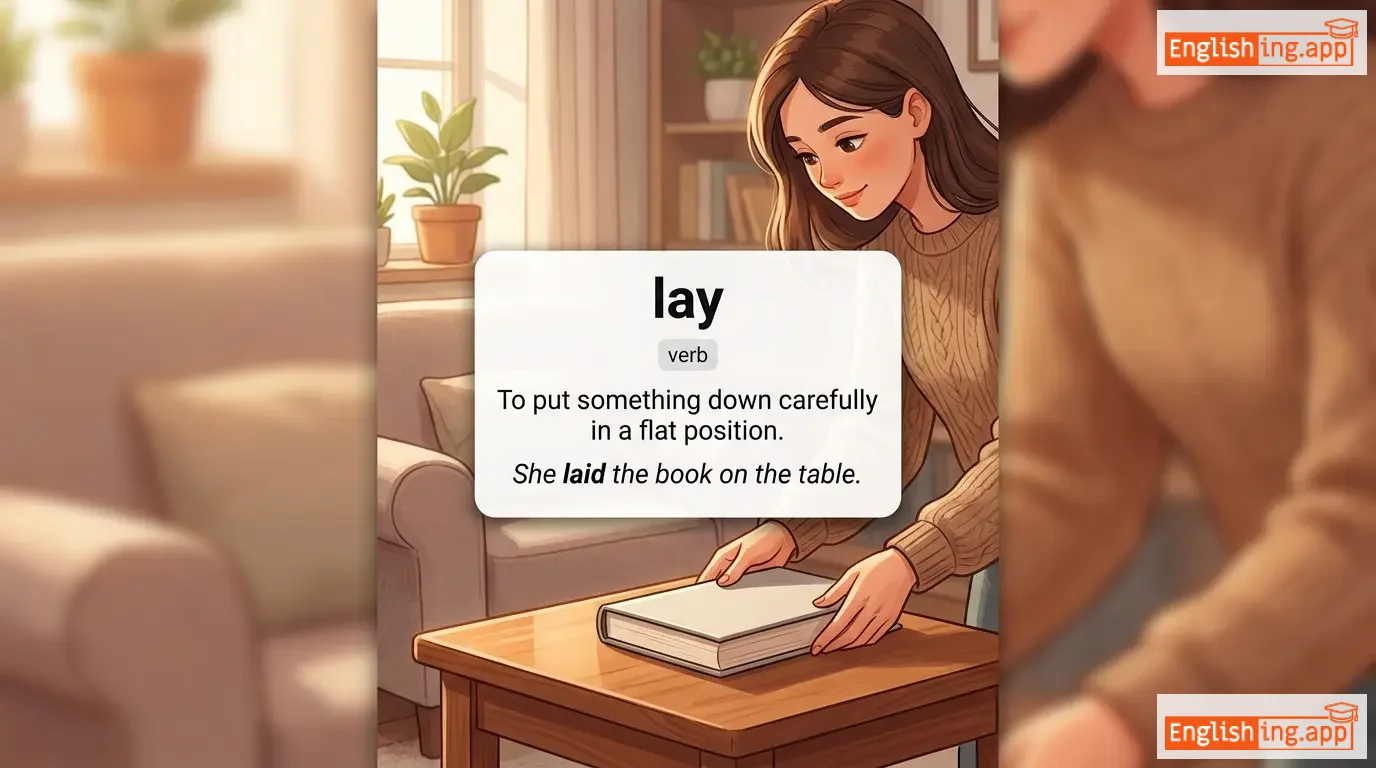
To put something down carefully in a flat position.
••••••
|
She laid the book on the table.
Ella puso el libro sobre la mesa.
••••••
|
Ella puso el libro sobre la mesa.
Ella puso el libro sobre la mesa.
••••••
|
lay the foundation
poner los cimientos
••••••
|
to establish the base or groundwork
••••••
|
poner los cimientos
poner los cimientos
••••••
|
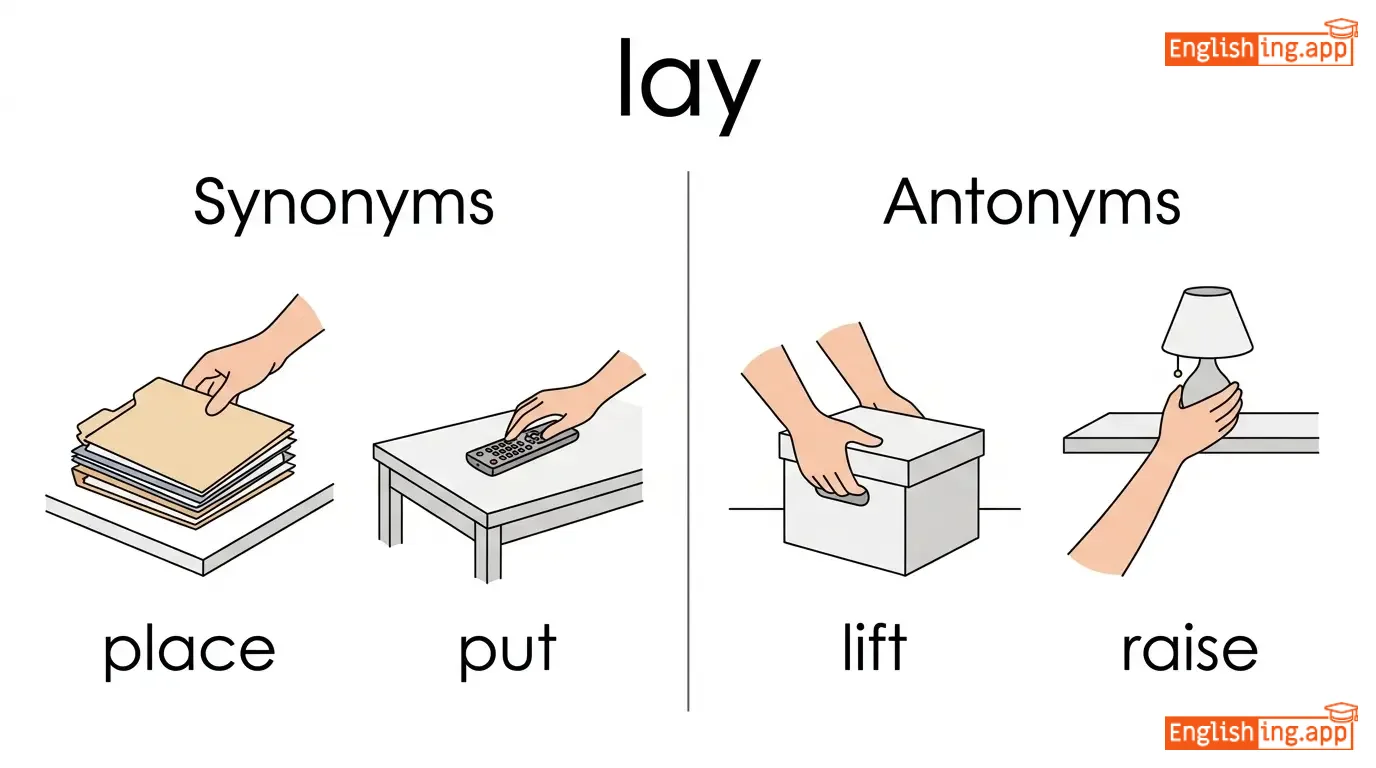
place, put, set, position, deposit
••••••
|
lift, raise
••••••
|
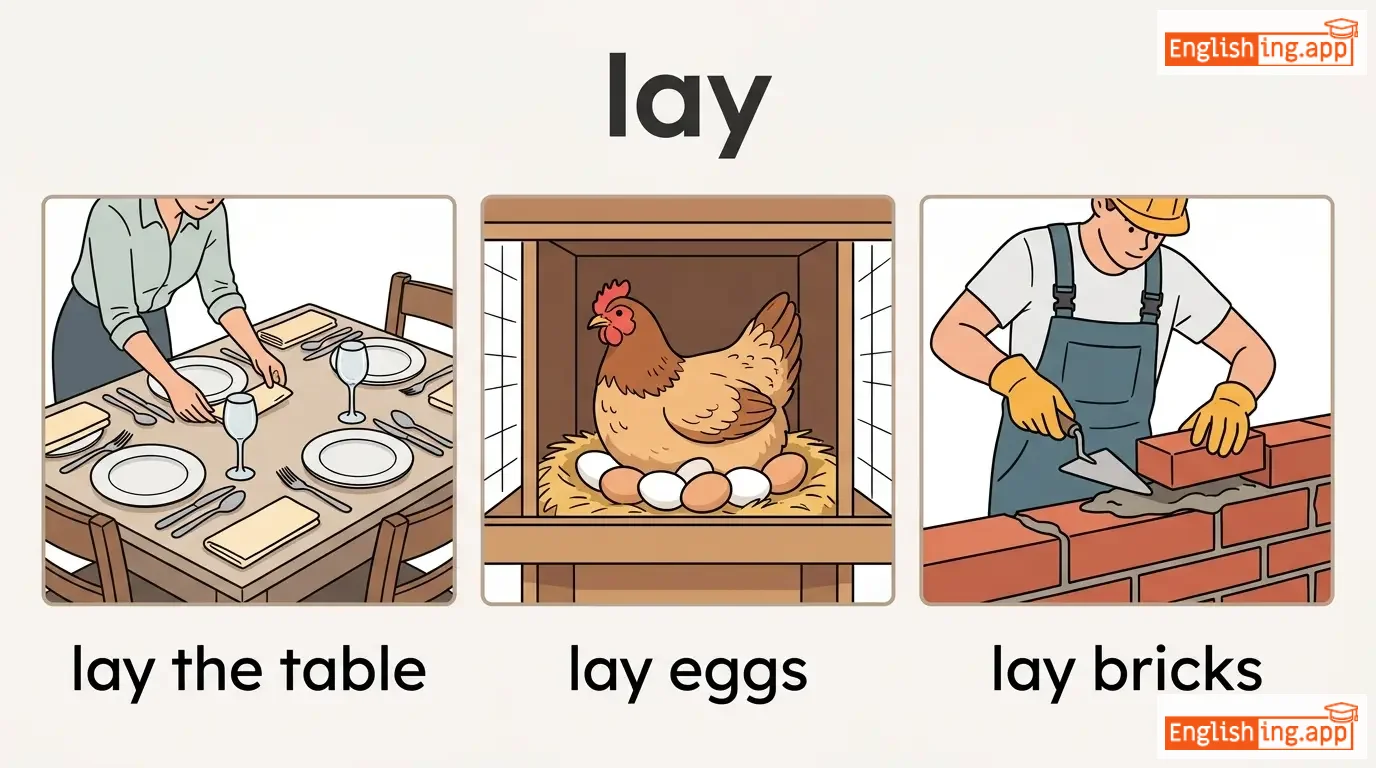
lay the table, lay eggs, lay bricks, lay emphasis
••••••
|
Lay significa poner, como 'Ella lay el libro sobre la mesa'
••••••
|
|
#0
🦵
|
/lɛɡ/
noun
(leg)
••••••
|
- •••••• |
pierna
pierna
••••••
|
- •••••• | - •••••• | - •••••• | - •••••• |
one of the limbs on which a person or animal walks and stands
••••••
|
He injured his leg while playing football.
Se lastimó la pierna mientras jugaba al fútbol.
••••••
|
Se lastimó la pierna mientras jugaba al fútbol.
Se lastimó la pierna mientras jugaba al fútbol.
••••••
|
stretch your legs
estirar las piernas
••••••
|
to walk around after sitting for a long time
••••••
|
caminar después de estar sentado mucho tiempo
caminar después de estar sentado mucho tiempo
••••••
|
limb, shank, appendage, extremity
••••••
|
arm, wing
••••••
|
leg injury, leg pain, leg muscles, broken leg
••••••
|
Leg significa pierna, en fútbol la 'pierna de apoyo' es la que te ayuda a sostenerte.
••••••
|
|
#0
🥫
|
/lɪd/
noun
(lid)
••••••
|
- •••••• |
tapa
tapa
••••••
|
- •••••• | - •••••• | - •••••• | - •••••• |
a cover for the top of a container
••••••
|
She closed the lid tightly on the jar. |
Ella cerró el tapa del tarro con fuerza.
Ella cerró el tapa del tarro con fuerza.
••••••
|
keep a lid on |
to control or limit something
••••••
|
mantener bajo control
mantener bajo control
••••••
|
cover, cap, top, seal, closure
••••••
|
opening, uncover
••••••
|
jar lid, pot lid, plastic lid, lift the lid
••••••
|
El tapa mantiene todo bajo control, ¡como el lid!
••••••
|
|
#0
👄
|
/lɪp/
noun
(lip)
••••••
|
- •••••• |
labio
labio
••••••
|
- •••••• | - •••••• | - •••••• | - •••••• |
either of the two soft edges of the mouth
••••••
|
She smiled and bit her lower lip nervously. |
Ella sonrió y mordió su labio inferior con nerviosismo.
Ella sonrió y mordió su labio inferior con nerviosismo.
••••••
|
bite your lip |
to keep from saying something or showing emotion
••••••
|
morderse el labio
morderse el labio
••••••
|
mouth edge, rim, border, edge
••••••
|
interior, inside
••••••
|
lower lip, upper lip, lip balm, lip movement
••••••
|
👄 Lip significa labio – labial, ¡los labios son clave!
••••••
|
|
#0
🌲
|
/lɒɡ/
noun, verb
(log)
••••••
|
|
tronco, registro
tronco, registro
••••••
|
logged
logado
••••••
|
logged
logado
••••••
|
logs
logs
••••••
|
logging
loggeando
••••••
|
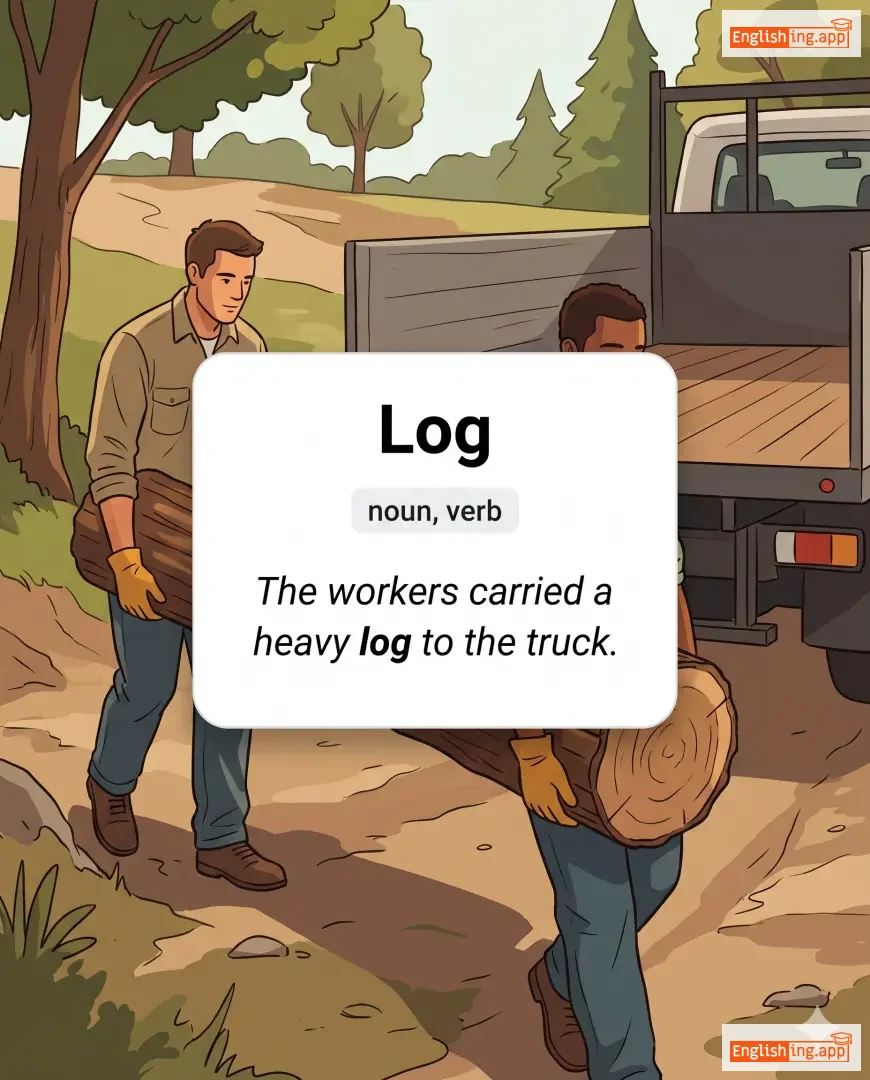
A part of the trunk or a large branch of a tree that has fallen or been cut off; also to record information systematically.
••••••
|
The workers carried a heavy log to the truck.
Los trabajadores llevaron un tronco pesado al camión.
••••••
|
Los trabajadores llevaron un tronco pesado al camión.
Los trabajadores llevaron un tronco pesado al camión.
••••••
|
sleep like a log
dormir como un tronco
••••••
|
to sleep very deeply and soundly
••••••
|
dormir como un tronco
dormir como un tronco
••••••
|
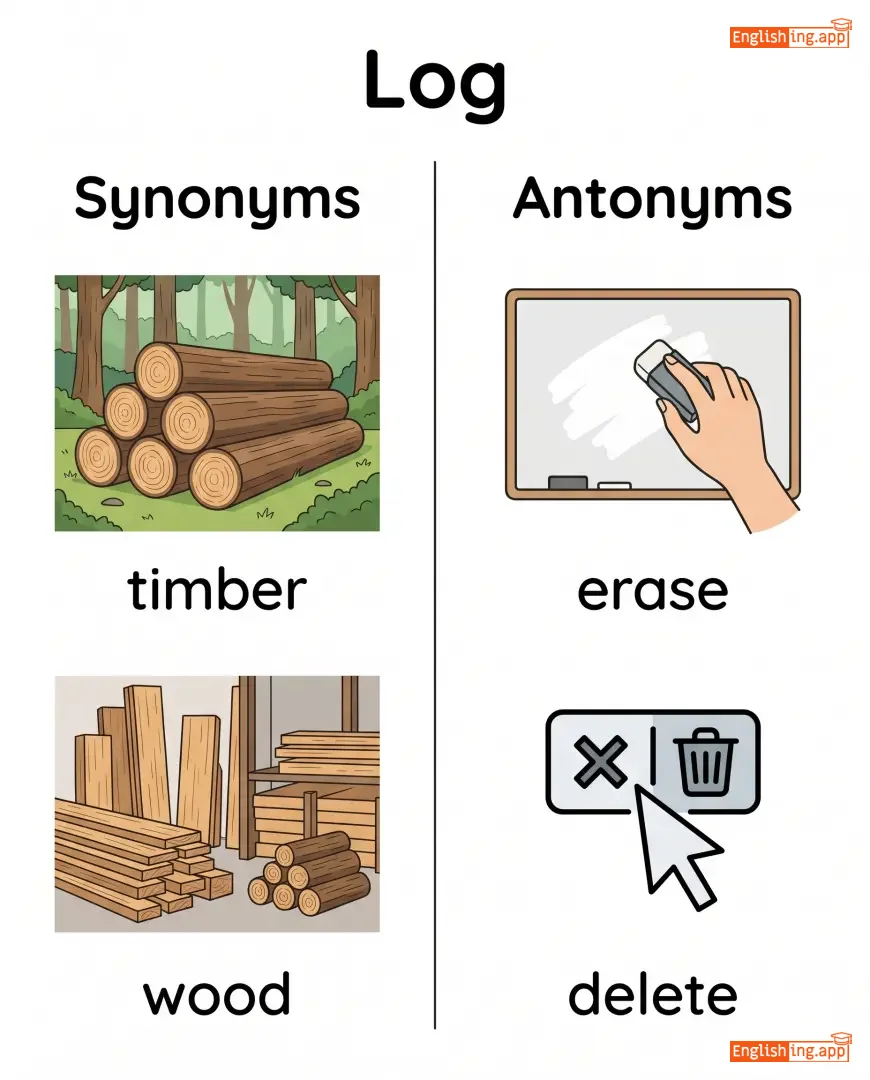
timber, wood, record, register, journal
••••••
|
erase, delete
••••••
|
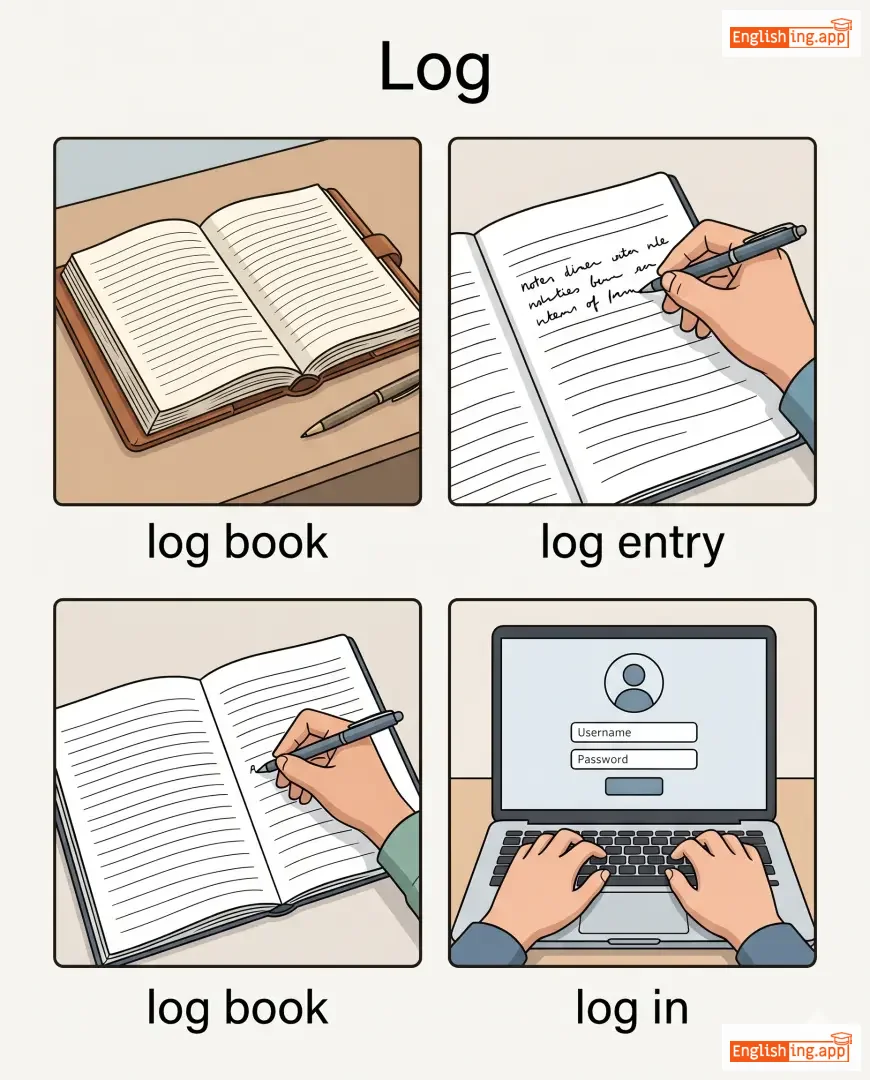
log book, log entry, log in, log data
••••••
|
Log (log) es un tronco, y al hacer login (log in), registras algo.
••••••
|
|
#0
📦
|
/lɒt/
noun
(lót)
••••••
|
- •••••• |
un montón
un monton
••••••
|
- •••••• | - •••••• | - •••••• | - •••••• |
A large number or amount; a group or portion.
••••••
|
She bought a lot of books at the fair.
Ella compró un montón de libros en la feria.
••••••
|
Ella compró un montón de libros en la feria.
Ella compro un monton de libros en la feria.
••••••
|
cast one's lot with
apostar por alguien
••••••
|
to join or support a person or group
••••••
|
apostar por alguien
apostar por alguien
••••••
|
batch, group, quantity, portion, set
••••••
|
few, little, scarcity
••••••
|
a lot of, whole lot, parking lot, building lot
••••••
|
Lot significa un montón, como un montón de boletos en una rifa.
••••••
|
|
#0
⬇️
|
/loʊ/
adjective
(ló)
••••••
|
- •••••• |
bajo
bajo
••••••
|
- •••••• | - •••••• | - •••••• | - •••••• |
Small in amount, degree, or position; not high.
••••••
|
The river is at its lowest level in years. |
El río está en su nivel más bajo en años.
El rio esta en su nivel mas bajo en anos.
••••••
|
low profile |
avoiding public attention or staying unnoticed
••••••
|
perfil bajo
perfil bajo
••••••
|
small, slight, short, minimal, weak
••••••
|
high, tall, strong
••••••
|
low price, low level, low energy, low profile
••••••
|
Low significa bajo — recuerda que la flecha ⬇️ va hacia abajo.
••••••
|
|
#0
😡
|
/mæd/
adjective
(mad)
••••••
|
- •••••• |
enojado / loco
enojado / loco
••••••
|
- •••••• | - •••••• | - •••••• | - •••••• |
Very angry, insane, or foolish.
••••••
|
She was mad at her brother for breaking the vase. |
Ella estaba enojada con su hermano por romper el jarrón.
Ella estaba enojada con su hermano por romper el jarrón.
••••••
|
mad as a hatter |
completely crazy
••••••
|
loco como una cabra
loco como una cabra
••••••
|
angry, furious, insane, crazy, irate
••••••
|
calm, sane
••••••
|
mad at, go mad, mad idea, mad world
••••••
|
Mad significa estar muy enojado, o como cuando alguien pierde el control y se vuelve loco.
••••••
|
|
#0
🌸
|
/meɪ/
modal verb, noun
(mei)
••••••
|
- •••••• |
puede ser / mes de mayo
puede ser / mes de mayo
••••••
|
- •••••• | - •••••• | - •••••• | - •••••• |
Used to express possibility, permission, or uncertainty; also the name of the fifth month of the year.
••••••
|
You may leave early if you finish your work. |
Puedes irte temprano si terminas tu trabajo.
Puedes irte temprano si terminas tu trabajo.
••••••
|
come what may |
No matter what happens.
••••••
|
pase lo que pase
pase lo que pase
••••••
|
might, perhaps, can, possibility
••••••
|
cannot, must not
••••••
|
may occur, may happen, may I, month of May
••••••
|
¡En mayo, todo puede ser posible!
••••••
|
Vocabulary Quiz
Test your vocabulary by matching words with their translations or meanings.
Login to take the quiz
Comments (0)
Share your thoughts and join the discussion.
Join the discussion by logging in
Login to CommentNo comments yet
Be the first to share your thoughts!