

午夜舞台彩排
Midnight Stage Rehearsal
在工作室外,孩子们大声喊着'hey'来迎接艺术家。 在彩排过程中,一次灯光爆炸不小心hit了舞台柱子。 导演Nahid要求演员们分享一个集体的hug。 制片人Nargis笑了,' huh,我从未见过这么多的能量。' 片场的空气很冷,所以他们启动了ice机器来制造雾气。 演员Ria昨天ill,但现在感觉很强壮。 作家说,' its heart是友谊。' 他们开玩笑说摄影师Sam有着强壮的jaw线条。 一架无人机在jet风格中在空中盘旋。 音响工程师Yahya与他的朋友——一位受人尊敬的Jew作曲家分享了混音技巧。 红色的key灯光照亮了整个场景。 舞者们用粉笔在地上lay了一个圆圈。 在打斗场景之前,每个人都拉伸了自己的leg肌肉。 他们关上了lid并把道具收起来。 化妆师调整了大胆的lip色调。 木匠切了一段log木材,快速建起了背景。 为观众增加了一些新的lot喜剧时刻。 即使在深夜,没有人感到low的能量。 剧作家说:'当我变得情绪化时,我有点mad,但我继续前进。' 他补充道:'下个May我们将把这部剧带到巡演。'

Swipe left or right, or use the buttons. Tap image to zoom.
例句翻译
单词
Midnight Stage RehearsalMidnight Stage Rehearsal - 遮罩切换
|
表情符号
|
单词 | Images | 翻译 | 过去时 | 过去分词 | 第三人称单数 | 动名词 | 含义 | 例句 | 例句翻译 | 示例表达 | 示例表达含义 | 示例表达翻译 | 同义词 | 反义词 | 搭配词 | 助记符 |
|---|---|---|---|---|---|---|---|---|---|---|---|---|---|---|---|---|---|
|
#0
👋
|
/heɪ/
interjection
(嘿)
••••••
|
- •••••• |
嘿
hei
••••••
|
- •••••• | - •••••• | - •••••• | - •••••• |
used to attract attention, express surprise, or greet someone
••••••
|
Hey, how are you doing today? |
嘿,你今天怎么样?
Hēi, nǐ jīntiān zěnme yàng?
••••••
|
- •••••• | - •••••• | - •••••• |
hello, hi, yo, hiya, greetings
••••••
|
goodbye, farewell
••••••
|
hey there, hey you, hey guys, hey man
••••••
|
嘿,就像是用来引起注意或者打招呼的词。
••••••
|
|
#0
💥
|
/hɪt/
verb
(hit)
••••••
|
- •••••• |
打
da
••••••
|
hit
hit
••••••
|
hit
hit
••••••
|
hits
hits
••••••
|
hitting
hitting
••••••
|
to strike someone or something with force
••••••
|
He accidentally hit the ball into the window.
他不小心把球打进了窗户。
••••••
|
他不小心把球打进了窗户。
Ta bu xiaoxin ba qiu da jin le chuanghu.
••••••
|
hit the nail on the head
一针见血
••••••
|
to describe a situation or problem exactly
••••••
|
一针见血
Yi zhen jian xue
••••••
|
strike, smack, beat, punch, knock
••••••
|
miss, avoid, dodge
••••••
|
hit hard, hit the target, hit the road, hit record
••••••
|
Hit意味着打,想象你打高尔夫球将它击入洞中。
••••••
|
|
#0
🤗
|
/hʌɡ/
verb
(哈格)
••••••
|
- •••••• |
拥抱
yōng bào
••••••
|
hugged
哈格德
••••••
|
hugged
哈格德
••••••
|
hugs
哈格斯
••••••
|
hugging
哈金
••••••
|
to hold someone tightly in your arms to show affection or comfort
••••••
|
She hugged her friend before leaving for the airport.
她在去机场前拥抱了她的朋友。
••••••
|
她在去机场前拥抱了她的朋友。
Tā zài qù jīchǎng qián yōng bào le tā de péngyǒu.
••••••
|
a bear hug
一个熊抱
••••••
|
a very tight and affectionate hug
••••••
|
一个紧紧的拥抱
Yí gè jǐn jǐn de yōng bào
••••••
|
embrace, cuddle, hold, squeeze, clasp
••••••
|
ignore, release, separate
••••••
|
give a hug, warm hug, tight hug, hug someone, big hug
••••••
|
Hug 意味着用心去拥抱。
••••••
|
|
#0
🤔
|
/hʌ/
interjection
(哈?)
••••••
|
- •••••• |
你说什么?
nǐ shuō shénme?
••••••
|
- •••••• | - •••••• | - •••••• | - •••••• |
used to express confusion, surprise, or that you did not hear something
••••••
|
Huh? What did you say? |
哈?你说什么?
Hā? Nǐ shuō shénme?
••••••
|
- •••••• | - •••••• | - •••••• |
what, pardon, eh, really, oh
••••••
|
none, silence
••••••
|
say huh, huh expression, confused huh, huh reaction
••••••
|
如果没听清,可以说 'Huh?' — 就是'你说什么?'
••••••
|
|
#0
🧊
|
/aɪs/
noun
(āi sī)
••••••
|
- •••••• |
冰
bing
••••••
|
- •••••• | - •••••• | - •••••• | - •••••• |
frozen water, a solid form of water
••••••
|
The lake was covered with thick ice in winter. |
湖面在冬天被厚厚的冰覆盖。
hú miàn zài dōng tiān bèi hòu hòu de bīng fù gài.
••••••
|
break the ice |
to start a conversation in a social situation
••••••
|
打破冰层
dǎ pò bīng céng
••••••
|
frost, snow, glacier, icicle
••••••
|
heat, fire
••••••
|
ice cubes, ice cream, ice skating, thin ice
••••••
|
Ice = 冰, 就像冰淇淋 🍦
••••••
|
|
#0
🤒
|
/ɪl/
adjective
(il)
••••••
|
- •••••• |
生病
shengbing
••••••
|
- •••••• | - •••••• | - •••••• | - •••••• |
Not in good health; sick or unwell.
••••••
|
He has been feeling ill since yesterday. |
他从昨天开始感觉不舒服。
Ta cong zuotian kaishi ganjue bushi fu.
••••••
|
ill at ease |
feeling uncomfortable or uneasy
••••••
|
不舒服
bushi fu
••••••
|
sick, unwell, unhealthy, ailing
••••••
|
healthy, well, fine
••••••
|
feel ill, fall ill, ill health, ill effects
••••••
|
Ill 就是生病,记住 'ill' 就是生病 🤒.
••••••
|
|
#0
🔗
|
/ɪts/
pronoun
(its)
••••••
|
- •••••• |
它的
tā de
••••••
|
- •••••• | - •••••• | - •••••• | - •••••• |
Belonging to or associated with a thing previously mentioned.
••••••
|
The company changed its logo last year.
公司去年更改了它的标志。
••••••
|
公司去年更改了它的标志。
Gōngsī qùnián gēnggǎi le tā de biāozhì.
••••••
|
- •••••• | - •••••• | - •••••• |
belonging, owned by, related to
••••••
|
others, theirs
••••••
|
its value, its name, its purpose, its role
••••••
|
Its 意味着它的 — 就像 'dog its tail' 意味着狗的尾巴。
••••••
|
|
#0
🦷
|
/dʒɔː/
noun
••••••
|
- •••••• | - •••••• | - •••••• | - •••••• | - •••••• | - •••••• |
the lower movable bone of the face that holds the teeth; the mouth area used for chewing and talking
••••••
|
The dentist examined my jaw for any signs of pain. |
- •••••• |
drop one's jaw |
to be extremely surprised or shocked
••••••
|
- •••••• |
chin, mouth, mandible, muzzle, jowl
••••••
|
skull, cranium
••••••
|
strong jaw, clenched jaw, jaw pain, square jaw, lower jaw
••••••
|
No •••••• |
|
#0
✈️
|
/dʒɛt/
noun, verb
(海皮尼斯)
••••••
|
- •••••• |
幸福
xìngfú
••••••
|
jetted
••••••
|
jetted
••••••
|
jets
••••••
|
jetting
••••••
|
A fast aircraft powered by jet engines; to travel by jet plane.
••••••
|
They jetted off to Paris for the weekend.
她收到奖项时无法掩饰自己的幸福。
••••••
|
她收到奖项时无法掩饰自己的幸福。
Tā shōudào jiǎngxiàng shí wúfǎ yǎnshì zìjǐ de xìngfú.
••••••
|
jet set
追求幸福
••••••
|
wealthy people who travel frequently for pleasure
••••••
|
追求幸福
zhuīqiú xìngfú
••••••
|
airplane, aircraft, plane, flyer
••••••
|
propeller plane, subsonic flight
••••••
|
jet engine, private jet, jet plane, jet lag
••••••
|
幸福是生活中最美的礼物。
••••••
|
|
#0
✡️
|
/dʒuː/
noun
(朱)
••••••
|
- •••••• |
犹太人
yóu tài rén
••••••
|
- •••••• | - •••••• | - •••••• | - •••••• |
a person whose religion is Judaism or who is of Jewish descent
••••••
|
He is a Jew by heritage and follows Jewish customs. |
他是犹太人,继承了犹太传统并遵守犹太习俗。
Tā shì yóu tài rén, jì chéng le yóu tài chuántǒng bìng zūn shǒu yóu tài xí sú.
••••••
|
- •••••• | - •••••• | - •••••• |
Hebrew, Israelite, Semite, Jewish person
••••••
|
gentile, non-Jew
••••••
|
Jewish community, practicing Jew, observant Jew
••••••
|
犹太人就是Jew,来自犹太教
••••••
|
|
#0
🔑
|
/kiː/
noun
(ki)
••••••
|
- •••••• |
钥匙
yaoshi
••••••
|
- •••••• | - •••••• | - •••••• | - •••••• |
A small piece of shaped metal used to open or close locks, or something crucial and essential.
••••••
|
She lost the key to her apartment. |
她丢失了她公寓的钥匙。
Ta diushi le ta gongyu de yaoshi.
••••••
|
key to success |
the essential factor in achieving success
••••••
|
成功的钥匙
Chenggong de yaoshi
••••••
|
essential, crucial, vital, main, important
••••••
|
unimportant, trivial, minor
••••••
|
house key, car key, key role, key point, key factor
••••••
|
钥匙是打开成功之门的关键。
••••••
|
|
#0
📖
|
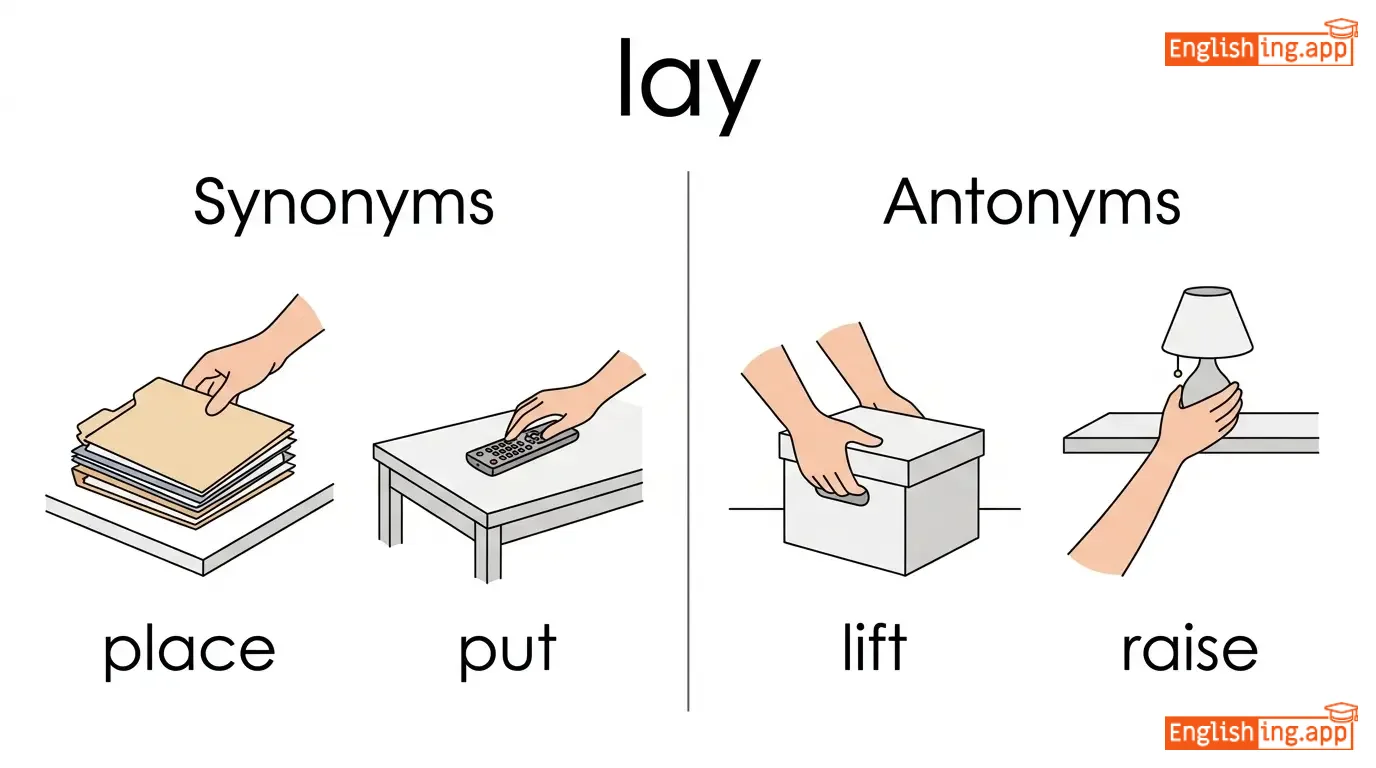
/leɪ/
verb
(lei)
••••••
|
|
放置
fangzhi
••••••
|
laid
laid
••••••
|
laid
laid
••••••
|
lays
leis
••••••
|
laying
leiing
••••••
|
To put something down carefully in a flat position.
••••••
|
She laid the book on the table.
她把书放在桌子上。
••••••
|
她把书放在桌子上。
Ta ba shu fang zai zhuozi shang.
••••••
|
lay the foundation
奠定基础
••••••
|
to establish the base or groundwork
••••••
|
奠定基础
dianding jichu
••••••
|
place, put, set, position, deposit
••••••
|
lift, raise
••••••
|
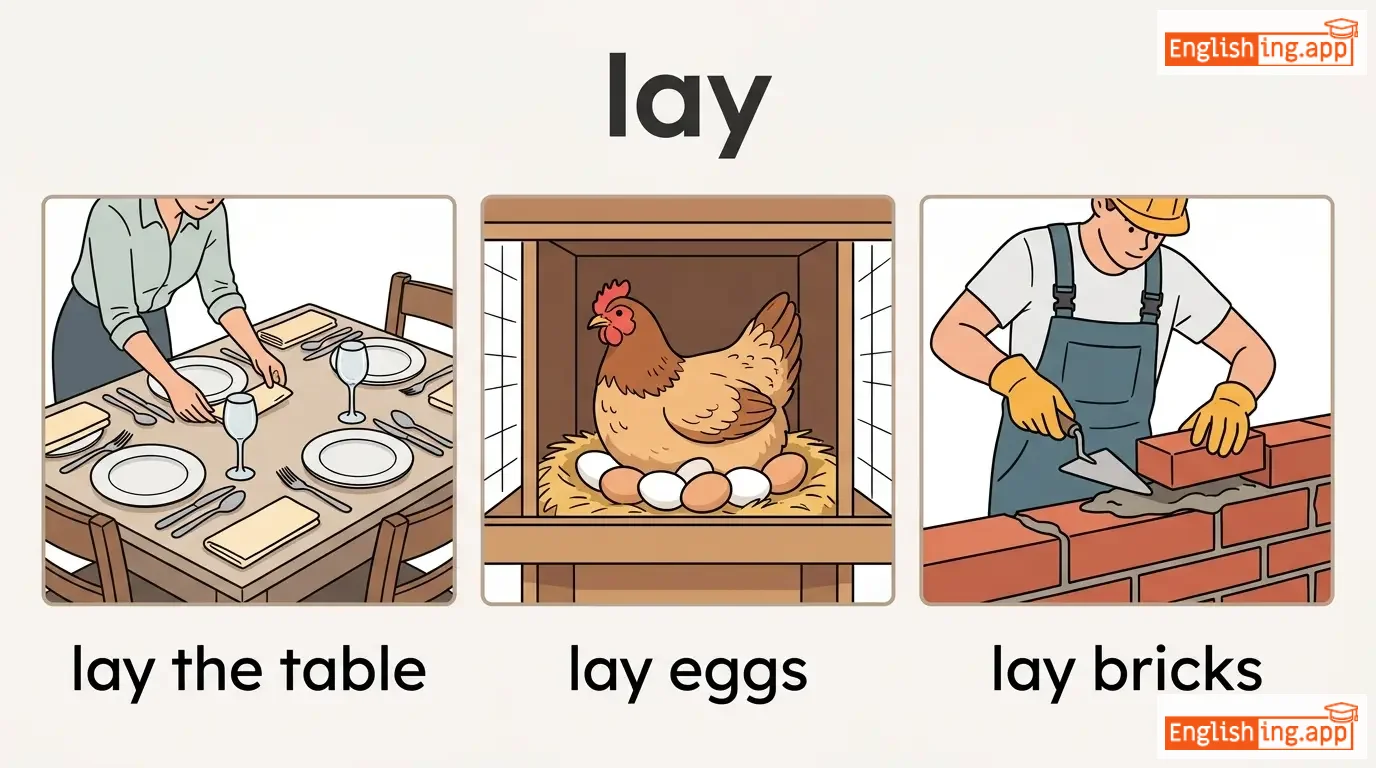
lay the table, lay eggs, lay bricks, lay emphasis
••••••
|
Lay 代表放置, 就像 '她 lay 书在桌子上'
••••••
|
|
#0
🦵
|
/lɛɡ/
noun
(leg)
••••••
|
- •••••• |
腿
tui
••••••
|
- •••••• | - •••••• | - •••••• | - •••••• |
one of the limbs on which a person or animal walks and stands
••••••
|
He injured his leg while playing football.
他在踢足球时伤到了腿。
••••••
|
他在踢足球时伤到了腿。
Ta zai ti zuqiu shi shangdao le tui.
••••••
|
stretch your legs
伸展双腿
••••••
|
to walk around after sitting for a long time
••••••
|
长时间坐着后走动
chang shijian zuozhe hou zoudong
••••••
|
limb, shank, appendage, extremity
••••••
|
arm, wing
••••••
|
leg injury, leg pain, leg muscles, broken leg
••••••
|
Leg 代表腿,在足球中'长腿'是指快速奔跑的能力。
••••••
|
|
#0
🥫
|
/lɪd/
noun
(lid)
••••••
|
- •••••• |
盖子
gàizi
••••••
|
- •••••• | - •••••• | - •••••• | - •••••• |
a cover for the top of a container
••••••
|
She closed the lid tightly on the jar. |
她紧紧地盖上了瓶盖。
Tā jǐn jǐn de gài shàngle pínggài.
••••••
|
keep a lid on |
to control or limit something
••••••
|
控制住
kòngzhì zhù
••••••
|
cover, cap, top, seal, closure
••••••
|
opening, uncover
••••••
|
jar lid, pot lid, plastic lid, lift the lid
••••••
|
盖子控制一切,像lid一样!
••••••
|
|
#0
👄
|
/lɪp/
noun
(lip)
••••••
|
- •••••• |
嘴唇
zuǐchún
••••••
|
- •••••• | - •••••• | - •••••• | - •••••• |
either of the two soft edges of the mouth
••••••
|
She smiled and bit her lower lip nervously. |
她微笑着紧张地咬了下嘴唇。
Tā wéixiào zhe jǐnzhāng de yǎo le xià zuǐchún.
••••••
|
bite your lip |
to keep from saying something or showing emotion
••••••
|
咬嘴唇
yǎo zuǐchún
••••••
|
mouth edge, rim, border, edge
••••••
|
interior, inside
••••••
|
lower lip, upper lip, lip balm, lip movement
••••••
|
👄 Lip 代表嘴唇 – 嘴唇上抹口红,别忘记了!
••••••
|
|
#0
🌲
|
/lɒɡ/
noun, verb
(log)
••••••
|
|
原木, 记录
yuánmù, jìlù
••••••
|
logged
登录
••••••
|
logged
登录
••••••
|
logs
日志
••••••
|
logging
登录
••••••
|
A part of the trunk or a large branch of a tree that has fallen or been cut off; also to record information systematically.
••••••
|
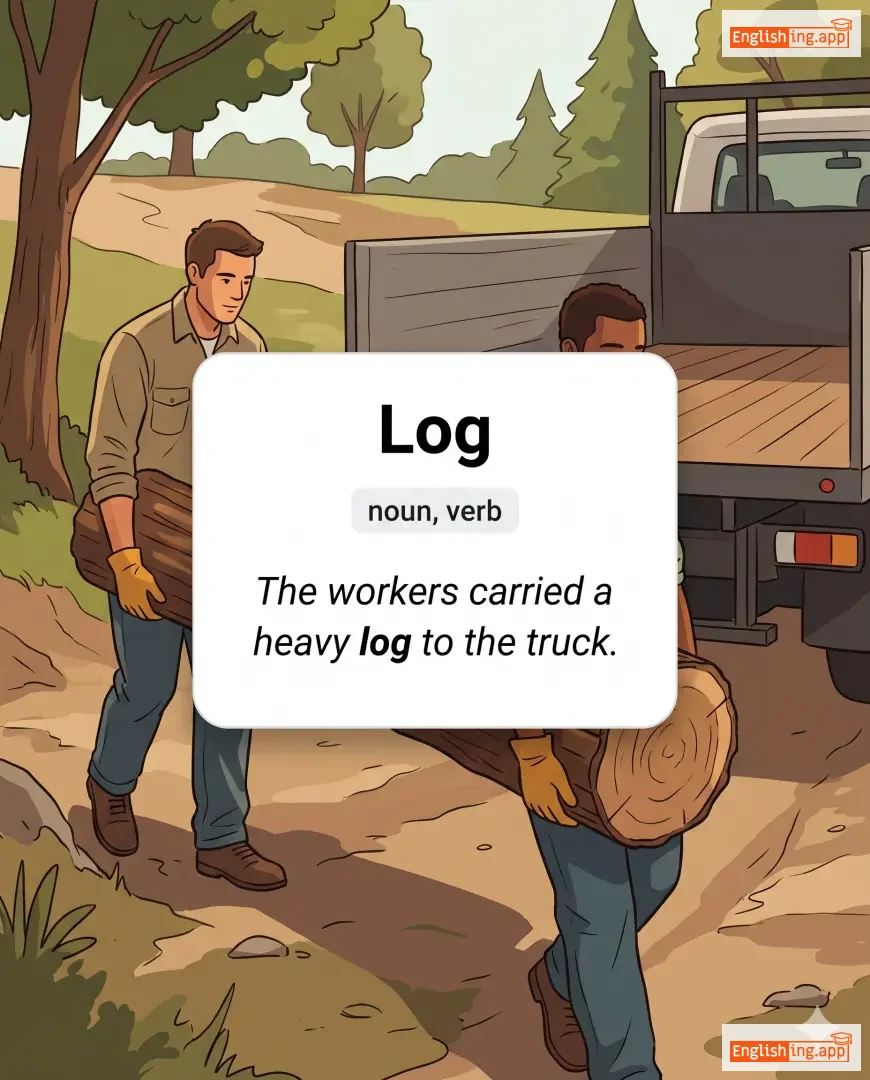
The workers carried a heavy log to the truck.
工人们将一根重木头搬到卡车上。
••••••
|
工人们将一根重木头搬到卡车上。
Gōngrénmen jiāng yī gēn zhòng mùtou bān dào kǎchē shàng.
••••••
|
sleep like a log
像木头一样睡觉
••••••
|
to sleep very deeply and soundly
••••••
|
像木头一样睡觉
xiàng mùtou yīyàng shuìjiào
••••••
|
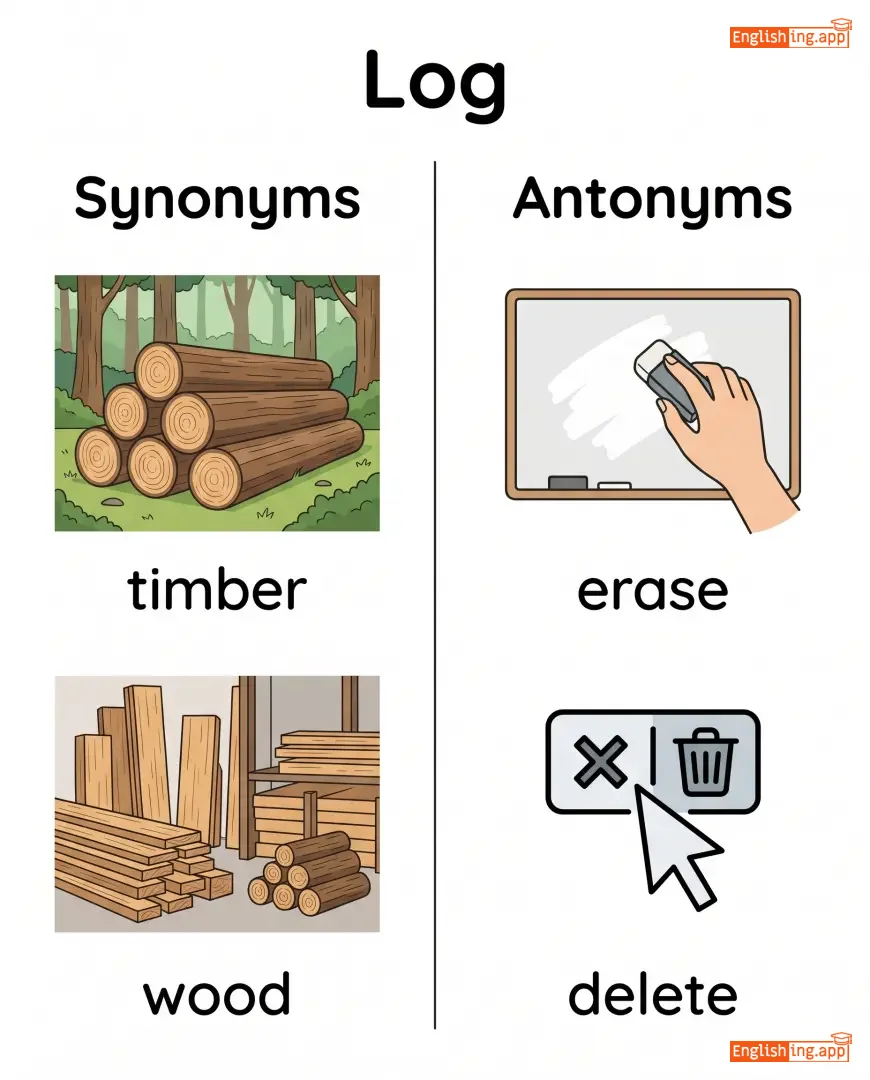
timber, wood, record, register, journal
••••••
|
erase, delete
••••••
|
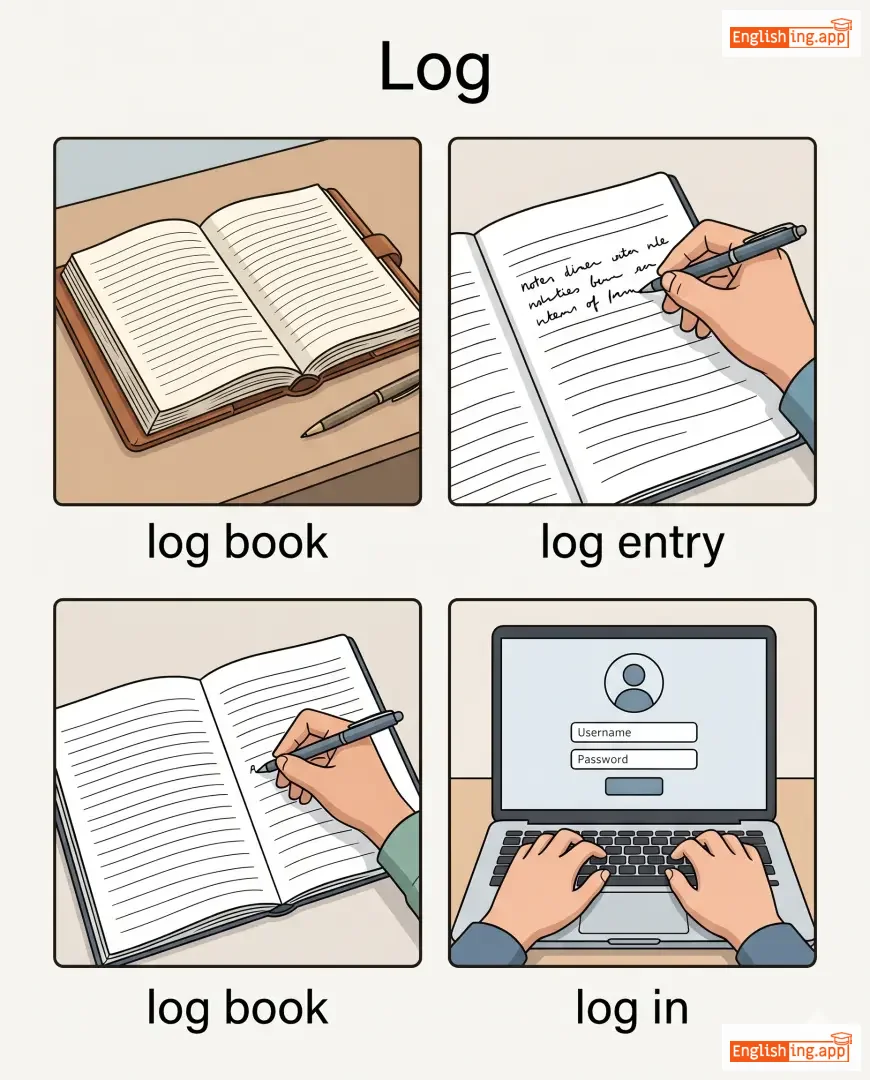
log book, log entry, log in, log data
••••••
|
Log (log) 是原木,登录 (login) 时会记录信息。
••••••
|
|
#0
📦
|
/lɒt/
noun
(lot)
••••••
|
- •••••• |
许多
xuduo
••••••
|
- •••••• | - •••••• | - •••••• | - •••••• |
A large number or amount; a group or portion.
••••••
|
She bought a lot of books at the fair.
她在集市上买了很多书。
••••••
|
她在集市上买了很多书。
Ta zai jishi shang mai le henduo shu.
••••••
|
cast one's lot with
把自己的命运交给某人
••••••
|
to join or support a person or group
••••••
|
把自己的命运交给某人
Ba ziji de mingyun jiao gei mou ren
••••••
|
batch, group, quantity, portion, set
••••••
|
few, little, scarcity
••••••
|
a lot of, whole lot, parking lot, building lot
••••••
|
Lot表示很多,比如彩票中的许多号码。
••••••
|
|
#0
⬇️
|
/loʊ/
adjective
(lóu)
••••••
|
- •••••• |
低
dī
••••••
|
- •••••• | - •••••• | - •••••• | - •••••• |
Small in amount, degree, or position; not high.
••••••
|
The river is at its lowest level in years. |
这条河已经多年处于最低水平。
Zhè tiáo hé yǐjīng duō nián chǔyú zuì dī shuǐpíng.
••••••
|
low profile |
avoiding public attention or staying unnoticed
••••••
|
低调
dīdiào
••••••
|
small, slight, short, minimal, weak
••••••
|
high, tall, strong
••••••
|
low price, low level, low energy, low profile
••••••
|
Low 意味着低 — 记住,箭头 ⬇️ 指向下方。
••••••
|
|
#0
😡
|
/mæd/
adjective
(mad)
••••••
|
- •••••• |
生气 / 疯狂
shengqi / fengkuang
••••••
|
- •••••• | - •••••• | - •••••• | - •••••• |
Very angry, insane, or foolish.
••••••
|
She was mad at her brother for breaking the vase. |
她因弟弟打破花瓶而生气。
Ta yin didi dapokhua ping er shengqi.
••••••
|
mad as a hatter |
completely crazy
••••••
|
疯狂如疯帽子
fengkuang ru fengmaozi
••••••
|
angry, furious, insane, crazy, irate
••••••
|
calm, sane
••••••
|
mad at, go mad, mad idea, mad world
••••••
|
Mad 在中文中意味着愤怒或疯狂,就像当一个人失去控制时。
••••••
|
|
#0
🌸
|
/meɪ/
modal verb, noun
(méi)
••••••
|
- •••••• |
可能 / 五月
keneng / wu yue
••••••
|
- •••••• | - •••••• | - •••••• | - •••••• |
Used to express possibility, permission, or uncertainty; also the name of the fifth month of the year.
••••••
|
You may leave early if you finish your work. |
如果你完成工作,你可以早点离开。
Rúguǒ nǐ wánchéng gōngzuò, nǐ kěyǐ zǎodiǎn líkāi.
••••••
|
come what may |
No matter what happens.
••••••
|
不管发生什么
bùguǎn fāshēng shénme
••••••
|
might, perhaps, can, possibility
••••••
|
cannot, must not
••••••
|
may occur, may happen, may I, month of May
••••••
|
五月,任何事情都有可能!
••••••
|
Vocabulary Quiz
Test your vocabulary by matching words with their translations or meanings.
Login to take the quiz
Comments (0)
Share your thoughts and join the discussion.
Join the discussion by logging in
Login to CommentNo comments yet
Be the first to share your thoughts!